



Medium length hairstyles for women over 50 work because they live in a useful little middle ground. A cut that lands somewhere between the chin and collarbone gives you movement, but it does not drag the roots flat or hang so long that it starts looking tired by noon. That balance matters more than people think.
Hair changes shape over time. Sometimes it gets finer at the temples. Sometimes the crown loses lift. Sometimes gray strands come in coarser and drier than the rest. The right medium-length cut notices those shifts and works with them instead of fighting them.
That is why the best shoulder-grazing styles are so specific: a blunt collarbone line when you want density, cheekbone layers when you want softness, a rounded bob when you want polish, a shag when you want texture to do the work. Small changes in length, layer placement, and parting can make the whole haircut feel lighter, sharper, or fuller.
Why These Cuts Keep Showing Up in Good Salons
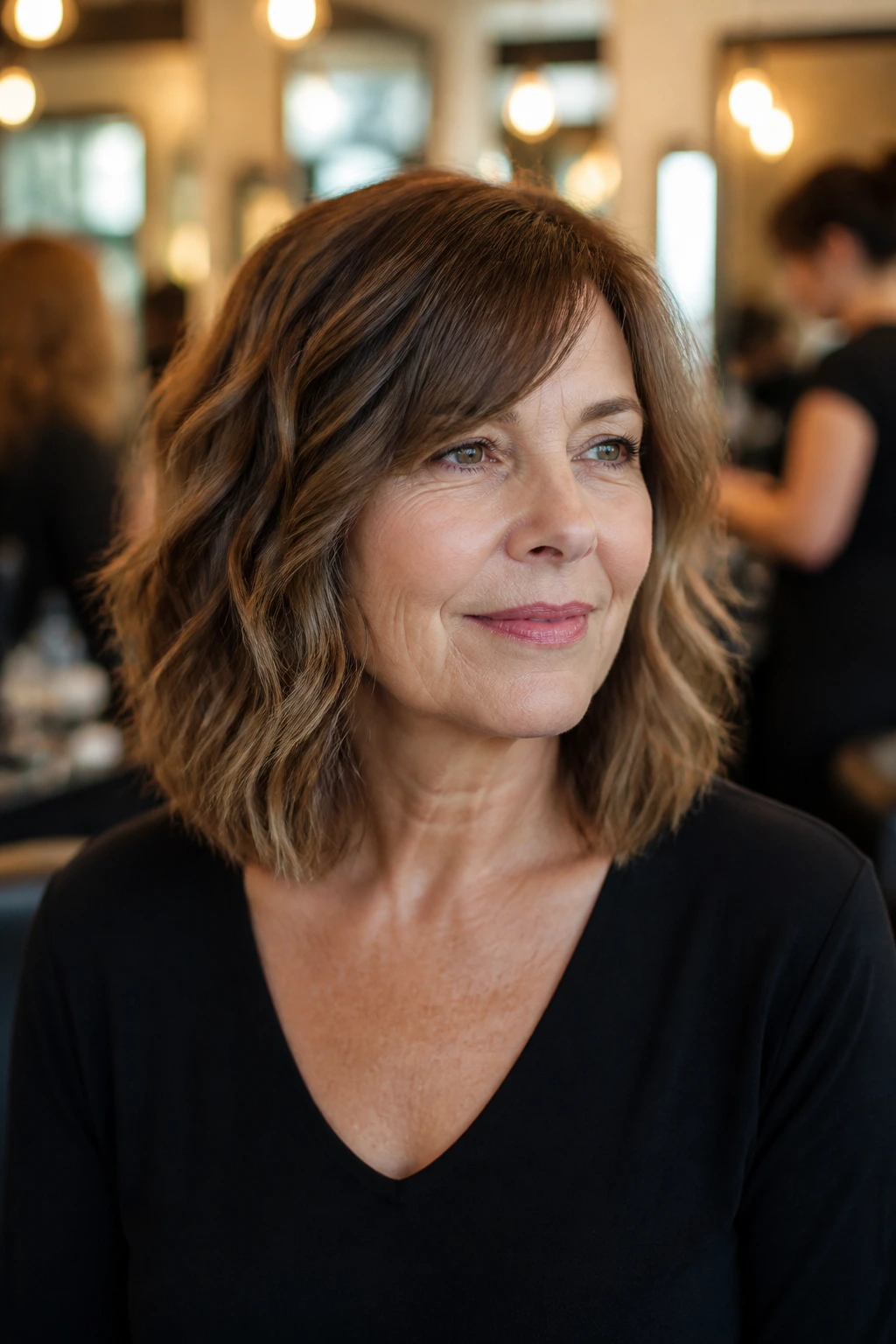
-
They keep enough weight at the ends: That extra little bit of length helps hair lie better around the neck and shoulders instead of puffing out like a triangle.
-
They make thinning hair look less sparse: A blunt edge at the collarbone or just below it often reads fuller than a heavily layered cut with wispy ends.
-
They work with glasses and earrings: Hair that sits at the jaw, cheekbone, or collarbone leaves room for frames, hoops, and drop earrings instead of swallowing them.
-
They are easier to reshape between trims: A medium cut can be tucked, waved, clipped, pinned, or brushed smooth without needing a fresh salon appointment every week.
-
They suit different textures without looking forced: Straight, wavy, curly, silver, coarse, fine — the same length range can be adjusted in very different ways without losing the overall feel.
-
They keep the neck and jawline visible: That little bit of openness around the face matters. It softens features without hiding them, and that is often the sweet spot.
How to Choose the Right Cut for Fine, Thick, Curly, or Straight Hair
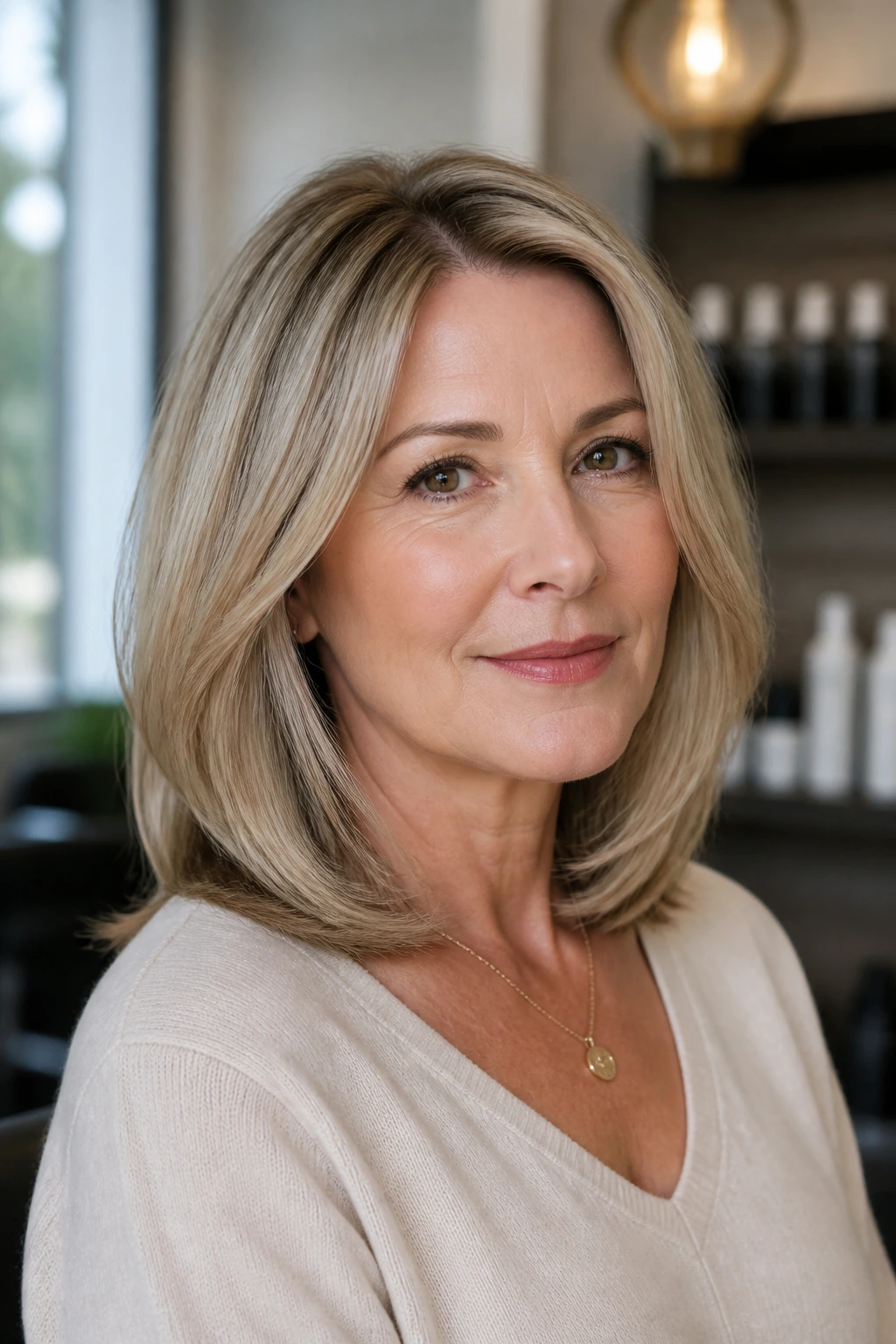
A medium haircut is not one haircut. It is a length zone, and the real decision is where the weight lives. That is the part many salon consultations skip, and then people wonder why the photo on the screen looked easy while the actual cut feels wrong.
Fine Hair
Fine hair usually does better with a blunt outline and fewer short layers. Too many layers can leave the bottom looking see-through, which is a dead giveaway that the haircut is doing too much. Ask for shape around the face, not a lot of texture through the back.
Thick Hair
Thick hair needs room to move. Internal layering, point cutting, and a little removal through the underneath can stop the ends from kicking out like a broom. The goal is not to thin the life out of it; the goal is to let it sit closer to the head.
Curly Hair
Curly hair should be shaped by curl pattern, not by a ruler. If the salon cuts it dry or mostly dry, the stylist can see where each curl lands and avoid that dreaded mushroom shape. A rounded silhouette usually works better than a hard, square edge.
Straight Hair
Straight hair can go sleek or soft, but it needs a decision. If you want movement, the movement has to be built in with long layers or a subtle angle; if you want density, keep the line cleaner and let the ends carry the style.
A good stylist will also talk about how you wear it. Side part, center part, air-dry, blow-dry, clip it back, wear it loose — those details matter more than a flattering photo on your phone. Bring one or two pictures, sure. Bring a realistic sense of your mornings too.
1. The Collarbone Lob With Tucked-Behind-Ear Ends
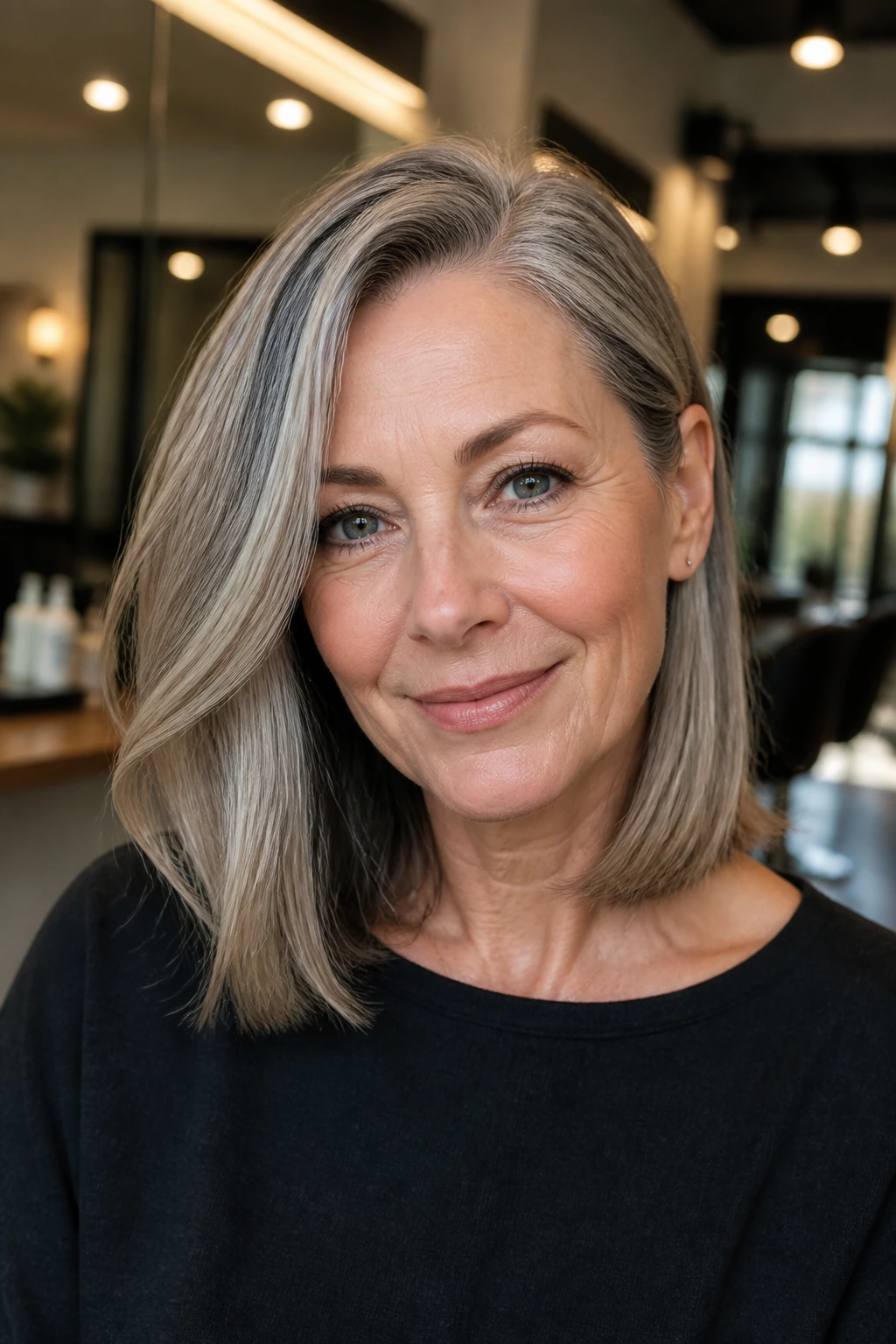
This is the haircut I’d hand to someone who wants to look put together without looking like she spent half an hour wrestling a round brush. The collarbone lob sits right in that sweet spot where the hair still swings, but it has enough weight to behave. Tuck one side behind the ear, leave the other side loose, and the whole thing gets a little lift without needing a dramatic cut.
Why It Works
The collarbone is the magic point here. Hair that lands there can skim the neck, catch a bend, and still be long enough for a low clip or a quick twist. That makes it easier to live with on a rushed morning, which is the real test nobody talks about.
A clean perimeter keeps the ends looking dense. If your hair has started to feel thinner at the bottom, that blunt edge can make a bigger difference than extra layers ever will. The best version is not stiff; it has a soft line, maybe with a slight face frame that starts below the cheekbone.
A Few Useful Details
- Keep the ends blunt, not shredded.
- Ask for the longest point to hit the collarbone or just below it.
- Style with a 1.25-inch curling iron if you want a bend, not a curl.
- A side tuck looks especially good with glasses and simple earrings.
Best tip: blow-dry the front pieces forward first, then sweep them back. It gives the cut a little lift at the roots instead of flattening everything against the side of your face.
2. Soft Face-Framing Layers That Start at the Cheekbones

Want movement without giving up the bulk that makes hair look healthy? Start the layers higher on the face and leave the back more solid. Cheekbone layers do a neat job of softening the face, especially if your hair tends to fall straight and make the whole shape feel heavy.
The shortest piece should not jump up too high. That is the mistake that turns a flattering frame into a choppy mess. I like layers that hit around the cheekbone or just below it, then drift longer as they move toward the jaw. The effect is light, not wispy.
This cut is useful with reading glasses, because the layers don’t compete with frames. They sit around them. If you wear your hair behind your ears a lot, these layers still hold their shape and keep the sides from looking flat and stuck.
What to Tell the Stylist
- Keep the perimeter long enough to brush the shoulders.
- Start the shortest face-framing piece near the cheekbone.
- Blend the layers into the front, not through the whole head.
- Avoid over-thinning the ends.
There’s a nice little side effect here: when the front moves, the jaw looks a touch softer. Not hidden. Softer. That is a better goal.
3. Curtain Bangs on a Shoulder-Grazing Cut

Curtain bangs earn their keep because they do two jobs at once. They open the face, and they blur the forehead line without locking you into a heavy fringe. On a shoulder-grazing cut, they can make the whole style look fresher in a way that feels low drama, not fussy.
The trick is length. If the bangs are too short, they can feel like a separate haircut sitting on top of the rest of the hair. If they graze the brows and sweep into the cheekbones, they start acting like part of the cut. That’s the version that flatters glasses, softens strong brows, and makes a center part look intentional.
Curtain bangs also buy you flexibility. On days when you want them out of the way, you can split them and tuck them back. On days when you want shape, a quick round-brush blow-dry or a Velcro roller at the front gives that little bend people always think takes more work than it does.
How to Style the Bend
- Blow-dry the bangs side to side, not straight down.
- Use a small round brush or a medium Velcro roller.
- Keep product light at the roots so the front does not collapse.
- Trim them before they get past the cheekbone and start hanging in the eyes.
If you’ve never liked blunt bangs, this is the gentler answer. It frames the face without trapping it.
4. Feathered Layers for Heavy, Thick Hair
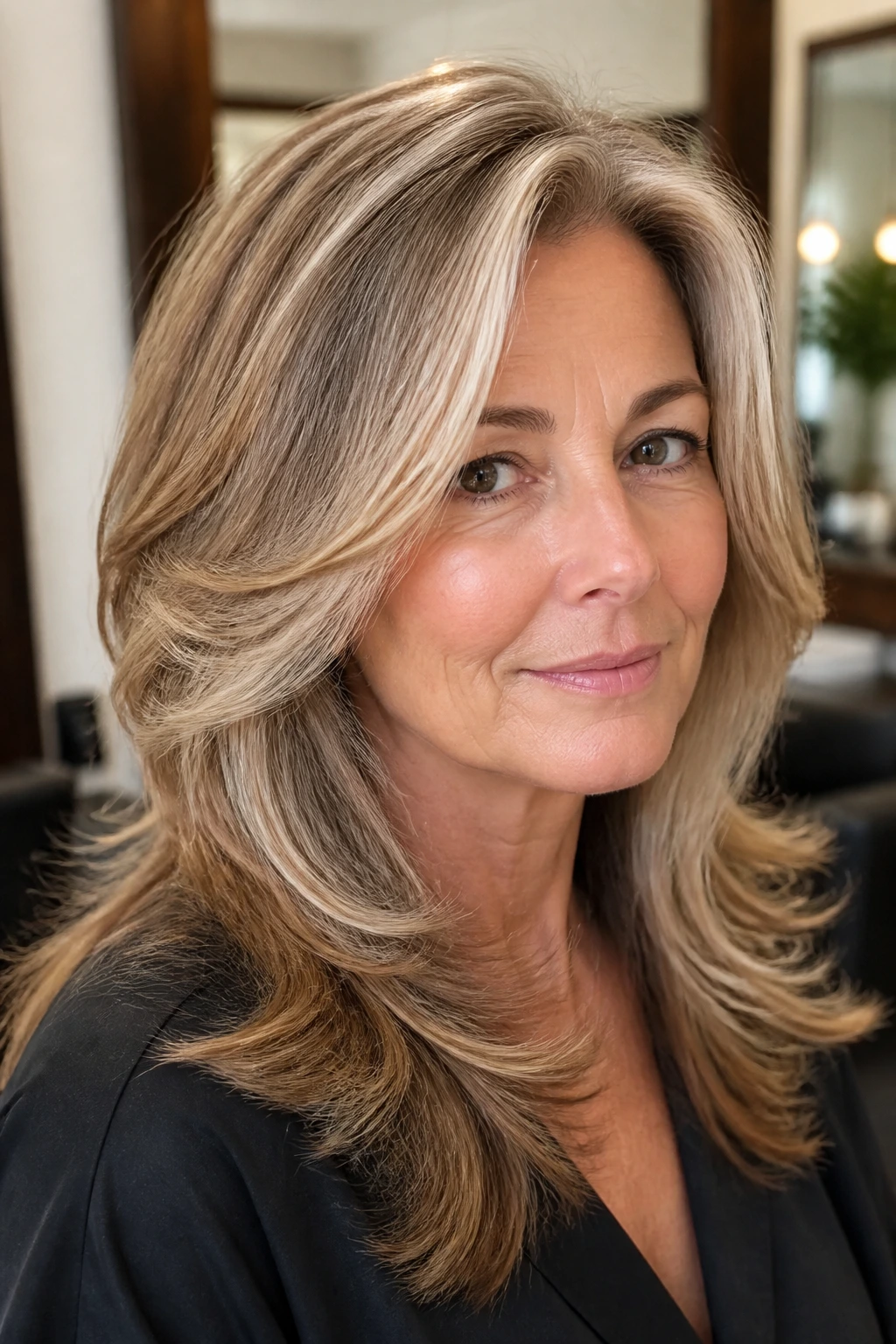
Heavy hair can look luxurious on paper and boxy in real life. Feathered layers solve that by taking weight out of the right places, especially through the sides and lower half of the cut. The result is airier movement, less helmet, and a shape that doesn’t try to sit in one single block.
A good feathered cut does not remove bulk everywhere. That would be a mess. The best version keeps enough length to let the ends swing, then softens the inside so the hair can move instead of sitting like a shelf. If your hair gets puffier when it dries, this kind of layering can stop the ends from feeling like a wall.
The feathering should look soft even when the hair is brushed out. If you can see obvious holes in the shape, the layers were cut too aggressively. Ask for long, tapering layers and a clean bottom edge.
Quick Clues It’s the Right Fit
- Your hair takes forever to dry because there is so much of it.
- Your ends feel heavy but your roots feel fine.
- You want shape around the face without losing shoulder length.
- You like the idea of a blowout that moves rather than sits.
My preference: keep this one brushed smooth on some days and a little tousled on others. Feathered layers look best when they are not trying too hard.
5. The Modern Shag With a Soft Fringe
The shag got updated a long time ago, and the best modern versions are much kinder than the old rock-and-roll haircut people picture. You still get texture, but the edges are softer, the fringe is lighter, and the crown volume is placed where it makes the face look awake instead of overdone.
This cut shines on hair with a little natural bend. If your hair already forms a wave, the shag wakes it up fast. If your hair is straighter, a few bends with a wand and a dab of texture spray can bring it to life. The important part is the layering pattern: shorter pieces around the crown, longer lengths around the shoulders, and a fringe that doesn’t sit like a shelf.
It’s also one of the few styles that looks better with a bit of mess. That’s not a bug. It means you can air-dry most of the way, rough it up with your fingers, and stop before every strand has been coaxed into place.
A shag can go wrong when the layers are too disconnected. Then it starts feeling choppy in a bad way. Ask for softness through the fringe and face frame, not just random texture.
6. The Blunt Midi With a Deep Side Part

A blunt midi is the haircut I reach for when someone wants the ends to look thick. Clean, simple, and direct. No frills. No muddy texture. Just a solid line that sits around the shoulders or a touch below, with a deep side part to keep the whole shape from feeling severe.
The side part matters more than people think. It creates lift at the crown, especially on hair that has started to lie flatter at the top. It also breaks up a blunt line so the cut feels polished instead of helmet-like. If your hair is fine or medium, this shape often looks denser than a layered cut because the bottom edge stays intact.
This one is especially good if you like a straighter finish. A paddle brush, a smoothing cream, and a cool shot from the dryer are usually enough. You do not need a complicated routine.
Best for
- Fine to medium hair that needs the ends to look fuller.
- Straight or slightly wavy hair.
- Anyone who likes a crisp outline and quick styling.
- People who want volume at the crown without heavy teasing.
The blunt midi has a calm kind of confidence. It does not try to flirt with the eye. It just looks deliberate.
7. The Angled Lob That Narrows Toward the Jaw
An angled lob gives you shape without losing too much length in the front. The back sits a little shorter, the front drifts longer, and the whole haircut points the eye downward in a way that can make the neck look longer and the jaw look cleaner. Done well, it feels smart and easy. Done too steeply, it starts looking dated.
That angle is helpful if your face is round, square, or just soft around the jawline. The longer front pieces create a vertical line, which is often enough to sharpen the silhouette without making the haircut severe. I like this better when the angle is gentle rather than dramatic. You want movement, not a wedge.
Style it with a soft bend through the mid-lengths and leave the very ends smooth. If the front flips out too much, the angle loses its calm shape. A quick pass with a flat iron, turned slightly inward at the bottom, keeps the outline clean.
It’s a good cut if you like structure but hate stiffness. That’s the whole point.
8. Long Layers for Natural Waves
Waves can be a gift or a nuisance depending on how the cut handles them. Long layers are the answer when you want the wave pattern to show itself without turning the hair into a puffed-up triangle. The layers keep the bends from bunching, but they leave enough length for the wave to fall in a soft line.
The biggest mistake with wavy hair is over-layering the top. That often makes the crown frizzy while the bottom goes flat. Keep the layers long, starting around the cheek or collarbone, and let the texture do the rest. A little mousse at the roots, a light cream through the mids, and a diffuse-dry on low heat can pull the whole thing together.
This is one of those cuts that looks best when it is not overworked. If your hair naturally bends, don’t fight it with a brush once it’s half dry. Scrunching, finger-combing, and a touch of serum at the ends usually do more good than a lengthy blowout.
What helps most
- Long layers keep the wave from collapsing into a single mass.
- A center or off-center part both work; choose the one that gives more lift.
- Diffuse only until 80 percent dry, then stop touching it.
- Use a clip at the roots while the hair cools if you want a little extra height.
Waves look expensive when they look relaxed. Not messy. Relaxed.
9. The Curly Shoulder-Length Cut With a Rounded Shape
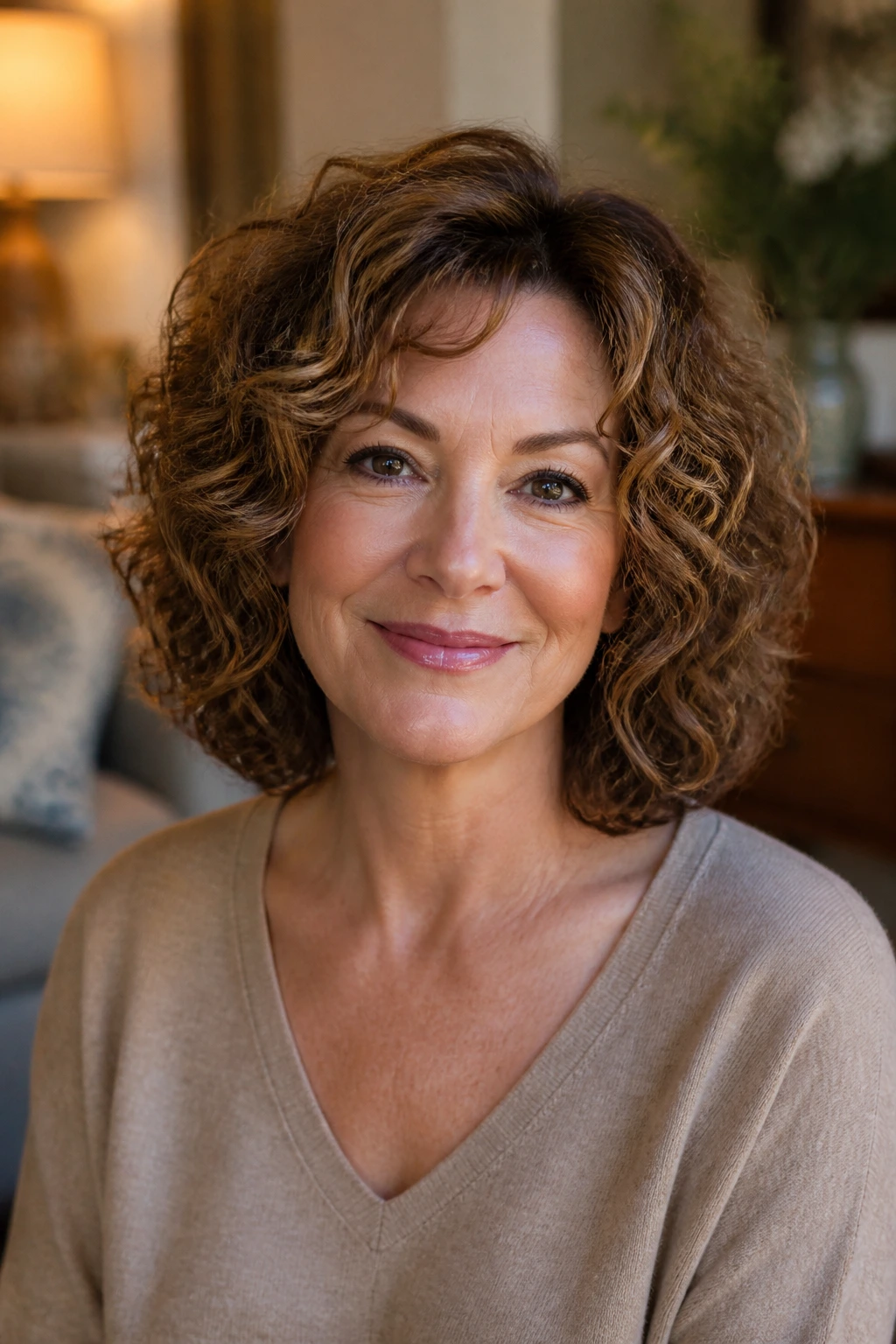
Curly hair at shoulder length needs shape, not weight. If the outline turns boxy, the curls stack into a triangle that widens at the sides and hangs low at the bottom. A rounded cut keeps the silhouette softer, so the curls can sit around the face instead of marching straight down like a curtain.
This is the cut that benefits most from being shaped with the curls in mind. Dry cutting works beautifully, or at least cutting when the curls are mostly dry and showing their own pattern. That lets the stylist see where the curls spring up and where they hang a little longer. The goal is a curve that follows the head and lifts around the crown without stealing length from the bottom.
Keep the layers gentle. Curly hair already has enough movement. Too many short layers can make the top explode while the ends fray. A rounded shoulder-length shape gives you the room to wear the hair loose, half-up, or clipped back without losing the curl pattern.
If your curls are a little dry, use leave-in conditioner and a cream or gel that dries with a soft cast. That cast can be scrunched out once the hair is dry. Clean shape. Soft feel. Good combo.
10. Internal Layers for Thick Hair That Needs Less Bulk
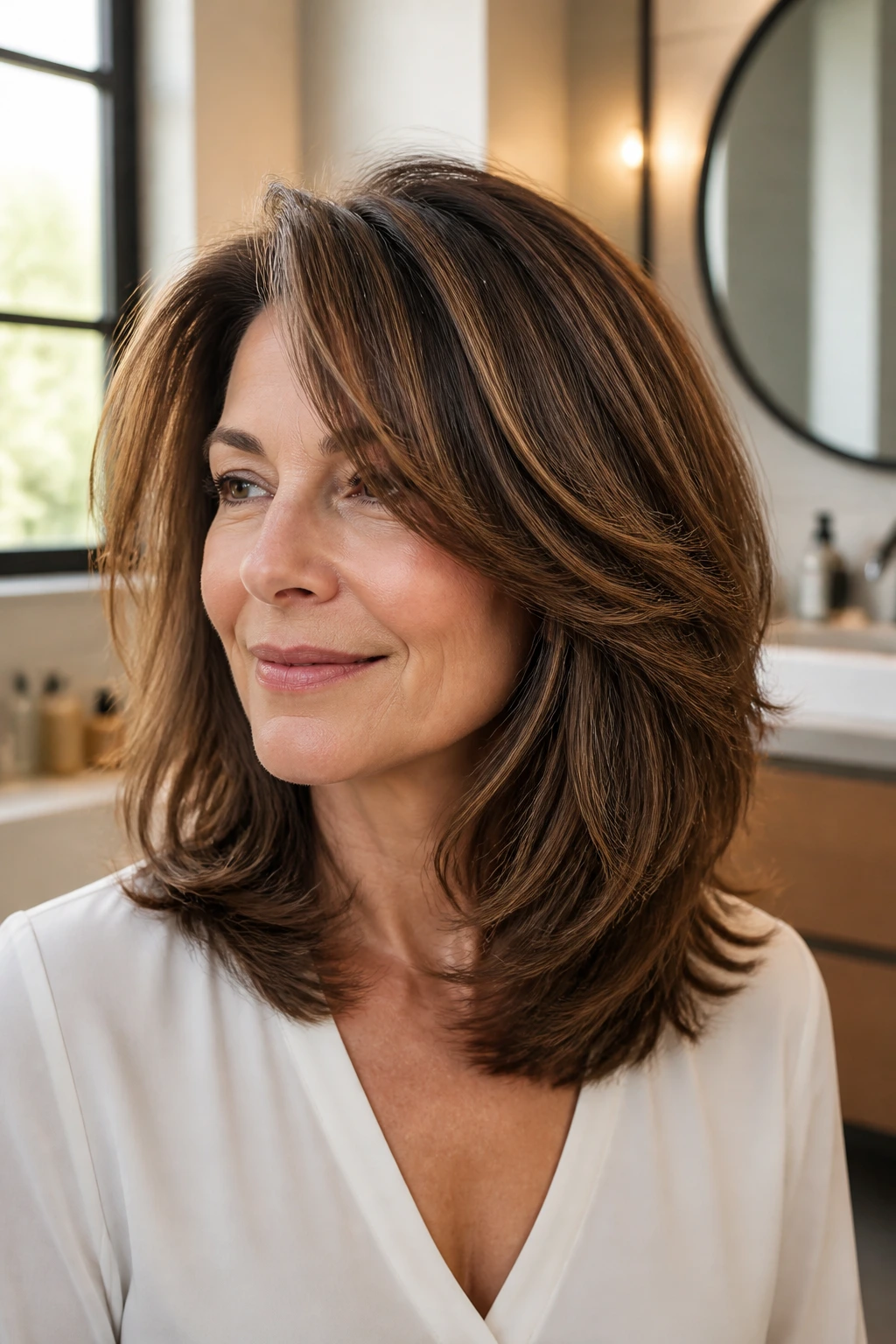
Thick hair does not always need visible layers. Sometimes it needs internal layers — the kind that lighten the inside of the haircut while leaving the outside line looking full and neat. That approach stops the hair from ballooning out at the sides, which is what makes thick mid-length cuts feel puffy and hard to manage.
I like this option when someone wants shoulder length but hates the feeling of heavy hair sitting on the neck. Internal layers remove some of that bulk from underneath, so the top can fall more smoothly. The surface still looks healthy and dense. The inside just does less work.
A razor can help in the right hands, but it is not the only answer. Point cutting and careful sectioning often do a cleaner job, especially if the hair is coarse or frizz-prone. Ask for bulk removal where the hair stacks thickest, not random thinning all over the head.
Signs this cut would help
- Your hair feels heavy even right after a wash.
- Your ends flip out because there is too much weight fighting for the same space.
- Your blow-dry takes forever.
- Ponytails feel bulky at the base.
This is one of those haircuts you appreciate more after three weeks than on day one. It gets easier to live with, not just prettier in the salon chair.
11. Choppy Ends for Fine Hair That Needs Lift

Fine hair needs a little movement, but not so much layering that the ends start looking moth-eaten. Choppy ends can help when they’re done with restraint. The base stays blunt enough to read as full, while the very ends get a bit of texture so the hair doesn’t fall flat like a board.
The important part is balance. If the stylist shreds the ends too much, the cut will look thinner, not lighter. You want tiny changes at the perimeter, maybe some soft point cutting, not a heavy-handed razor pass. That creates separation and a little swing without sacrificing the illusion of density.
This is a nice choice if you like air-drying, because fine hair often dries smoother when it has just enough texture built in. A root-lifting mousse, a quick rough dry, and a light spray at the ends can do more than a round brush marathon.
And no, it does not need a ton of product. Fine hair can look greasy fast. One small dab too many and the whole style collapses.
12. A Silver-Friendly Cut With Clean Lines and Shine
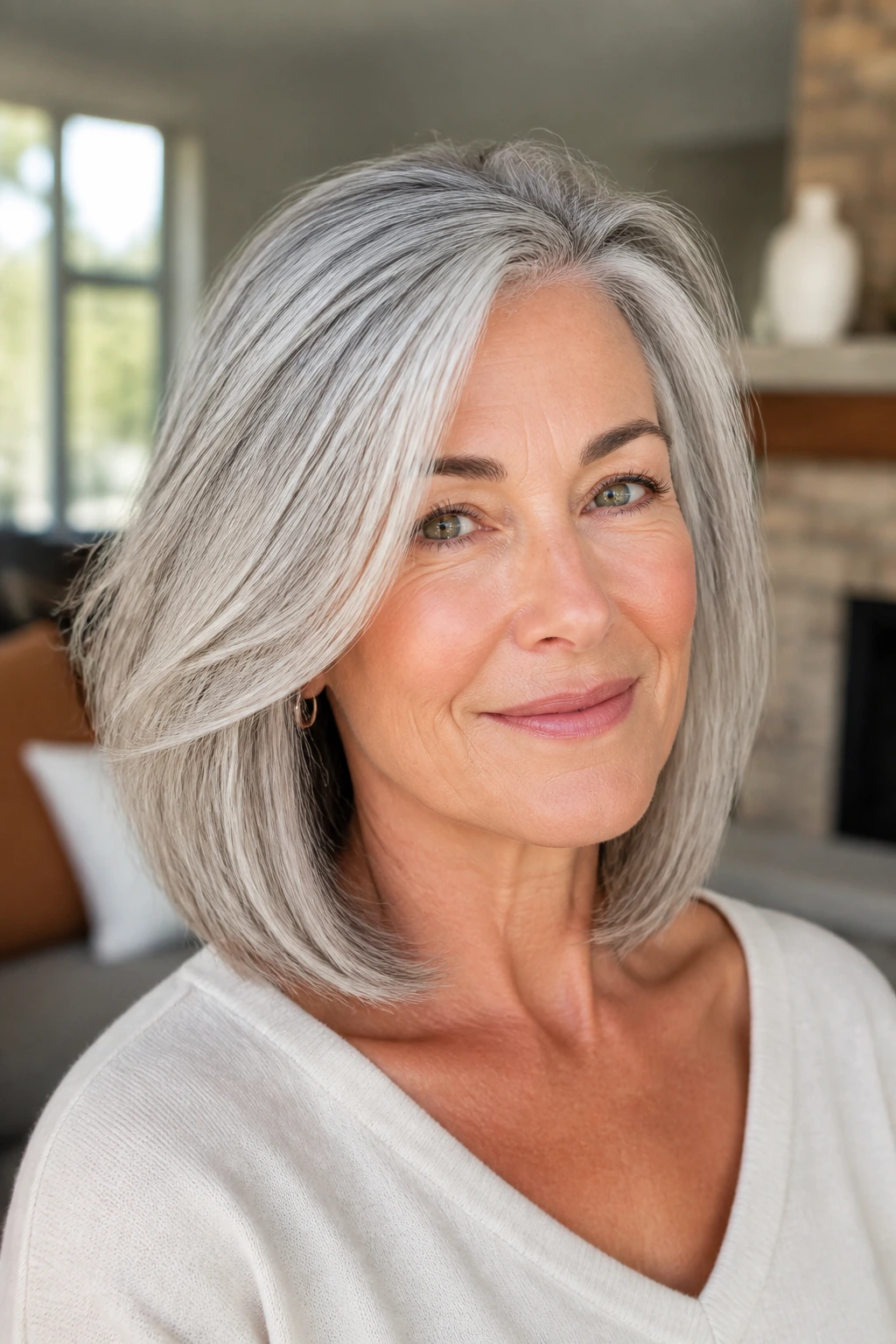
Gray and silver hair usually looks best when the cut respects the texture. That texture may be smoother in some spots and wirier in others, and the shape needs to stay clean enough that the color can do its work. A polished mid-length cut with a clear line around the shoulders or collarbone gives silver hair a crisp frame.
Why does this matter? Because gray hair often shows every frayed end. A sloppy cut makes the texture look dry. A sharp edge and a well-placed part make the hair look intentional, even when the strand pattern has changed. That’s why I prefer simple shapes here over lots of overdone layers.
A soft side part or a middle part both work, but the cut should stay clean around the face. If the hair tends to yellow, a violet shampoo once every week or two can help. If it is naturally coarse, a lightweight smoothing cream or a few drops of serum on the mids and ends keeps the shine from going dull.
The haircut should not fight the color. It should let the color read clearly.
13. Sleek Straight Mid-Length Hair With Invisible Layers
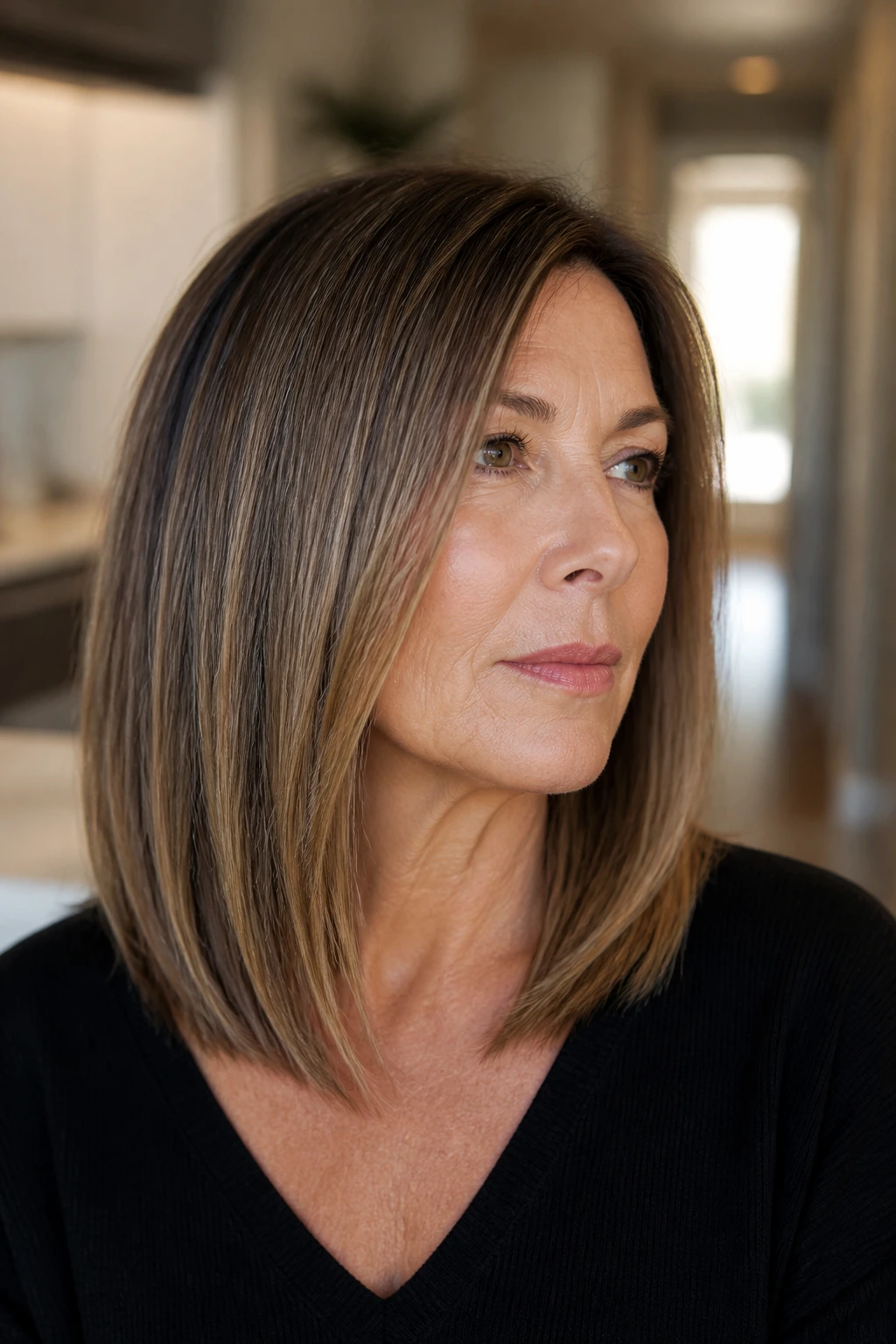
Straight hair can carry a lot of structure without looking stiff, and that’s where invisible layers come in. The outside line stays calm and clean, while a few internal cuts keep the shape from looking too heavy. You get movement without the obvious choppiness that some straight hair really does not need.
A sleek mid-length cut works best when the ends are even and the layers are hidden inside the shape. That keeps the hair from splitting into separate pieces when you blow-dry it smooth. If you already have naturally straight hair, this is one of the lowest-drama options on the list. It can look expensive with almost no effort, which is more useful than sounding fancy about it.
Use a paddle brush for the finish and aim the dryer downward so the cuticle lies flat. A tiny amount of serum goes on the mids and ends only. Put it near the scalp and the whole thing turns limp in ten minutes.
This is not the cut for someone who wants a lot of texture. It’s for someone who wants line, shine, and easy mornings.
14. Side-Swept Volume and a Lifted Crown

Flat hair at the crown is one of those little annoyances that can make the whole head feel tired. A side-swept medium cut helps because it gives the roots somewhere to go. The part shifts volume off center, the front sweeps across the forehead, and the top stops looking pasted down.
This style is especially good if you wear your hair behind your ears a lot or if one side tends to fall flatter than the other. A deep side part, a bit of root-lift spray, and a quick blow-dry while lifting the roots with a round brush can build a small but visible lift. You don’t need towering volume. You need enough to make the shape look alive.
The front pieces should graze the cheekbones and then taper into the sides. That keeps the sweep soft. If the bangs area is cut too short, the look gets choppy fast. Too long, and the lift disappears.
A fast styling cue
Blow-dry the part in the opposite direction first, let it cool, then flip it back. That tiny trick gives the roots a nudge they’ll keep for most of the day.
15. Long Bangs That Blend Into the Sides
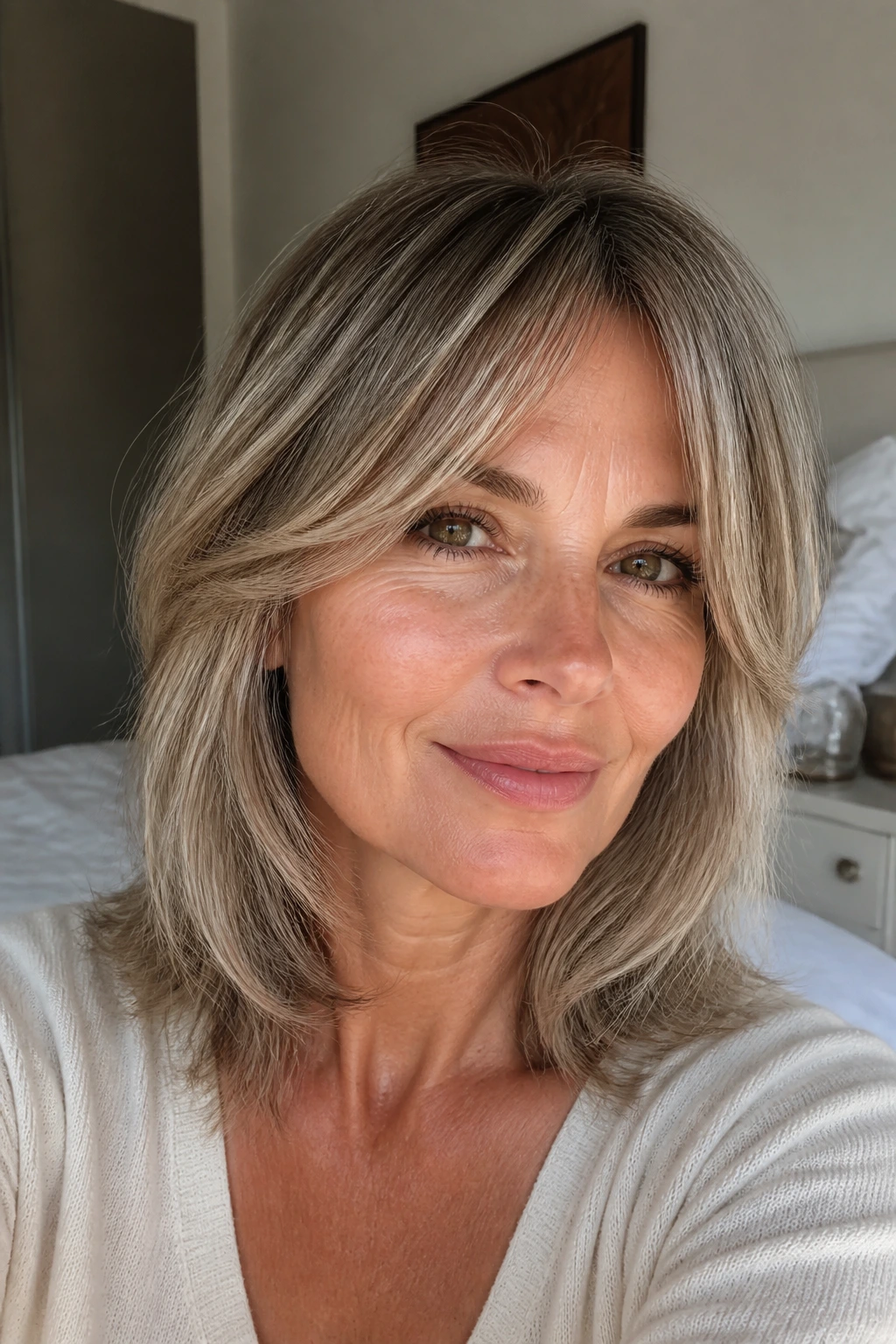
Long bangs are for people who want face-framing without signing up for a full fringe routine. They can soften the forehead, help balance a longer face, and make medium-length hair feel more finished. The best part is how easily they disappear into the sides when you want them out of the way.
These bangs should live somewhere between the eyebrow and cheekbone, then taper into the rest of the cut. They’re excellent with ponytails, half-up styles, and loose hair worn with a side tuck. If you wear glasses, they can sit above or around the frames without crowding them, which is more useful than most people expect.
The maintenance is lighter than blunt bangs, but not zero. You’ll still want regular trims so they don’t get heavy and split in the middle. A quick bend with a small round brush is enough most days. The whole point is movement, not perfection.
If you’ve been afraid of bangs because you think they’re all or nothing, this is the softer door in.
16. The Wash-and-Go Mid-Length Cut
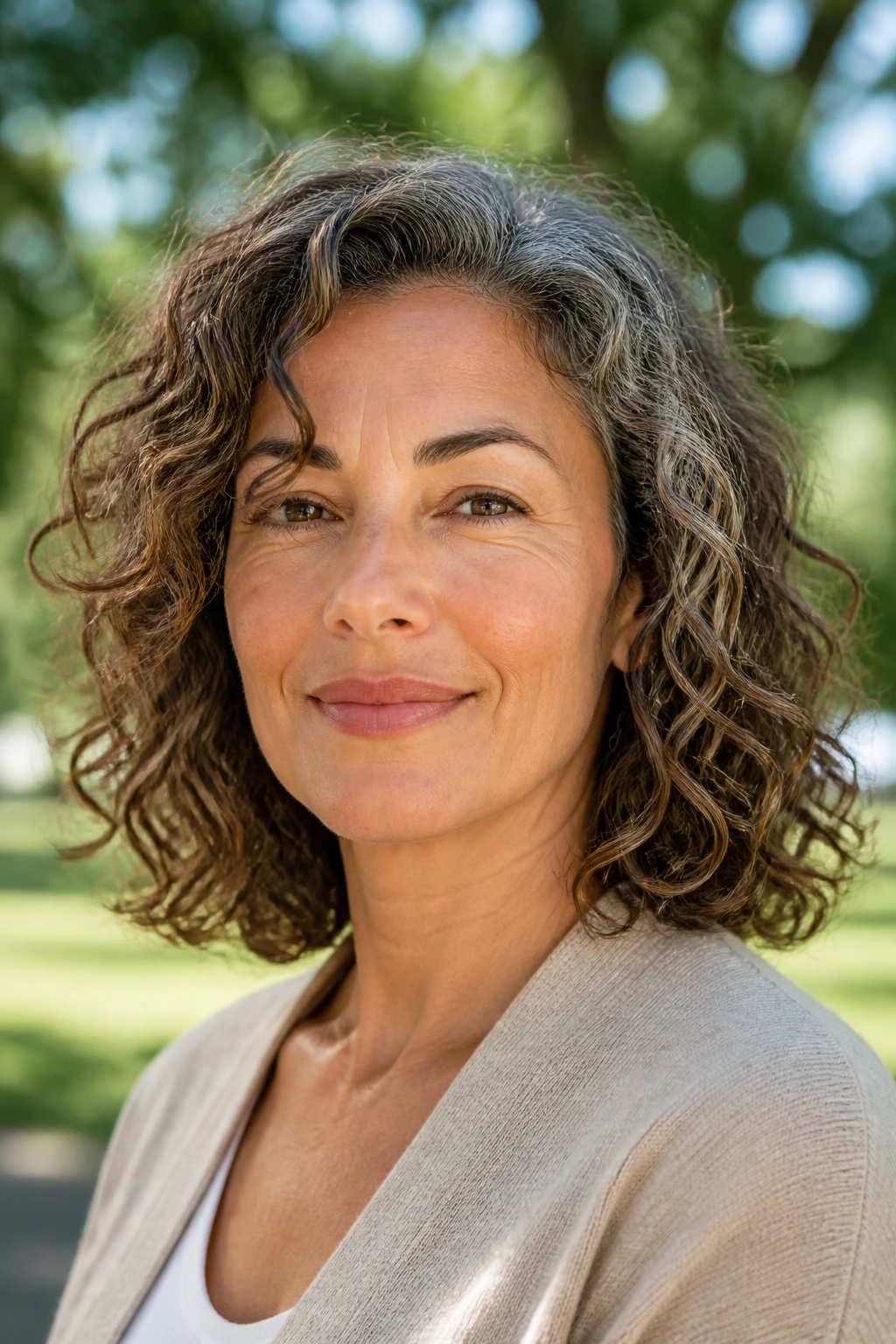
Some cuts are built for blowouts. Others are built for real life. The wash-and-go mid-length cut belongs to the second camp. It relies on the hair’s own bend or curl pattern and uses shape, not constant styling, to make the hair look intentional.
This style works best when the cut is tailored to how your hair behaves on its own. A wavy pattern needs different layers than a curlier one. Straight hair with a few bends needs a different perimeter than coarse hair that frizzes in humidity. The cut should feel like it was made for the way your hair falls after a shower, not the way it looks after an hour with hot tools.
Leave-in conditioner, a small amount of curl cream or air-dry lotion, and a little scrunching are usually enough. Once the hair starts to dry, stop touching it. That is where people mess this up — they keep fiddling, and the texture breaks apart.
If your morning routine needs to be short, ask for a shape that still looks good when slightly imperfect. That is the real test.
17. The Soft Rounded Bob That Sits Between Jaw and Shoulder
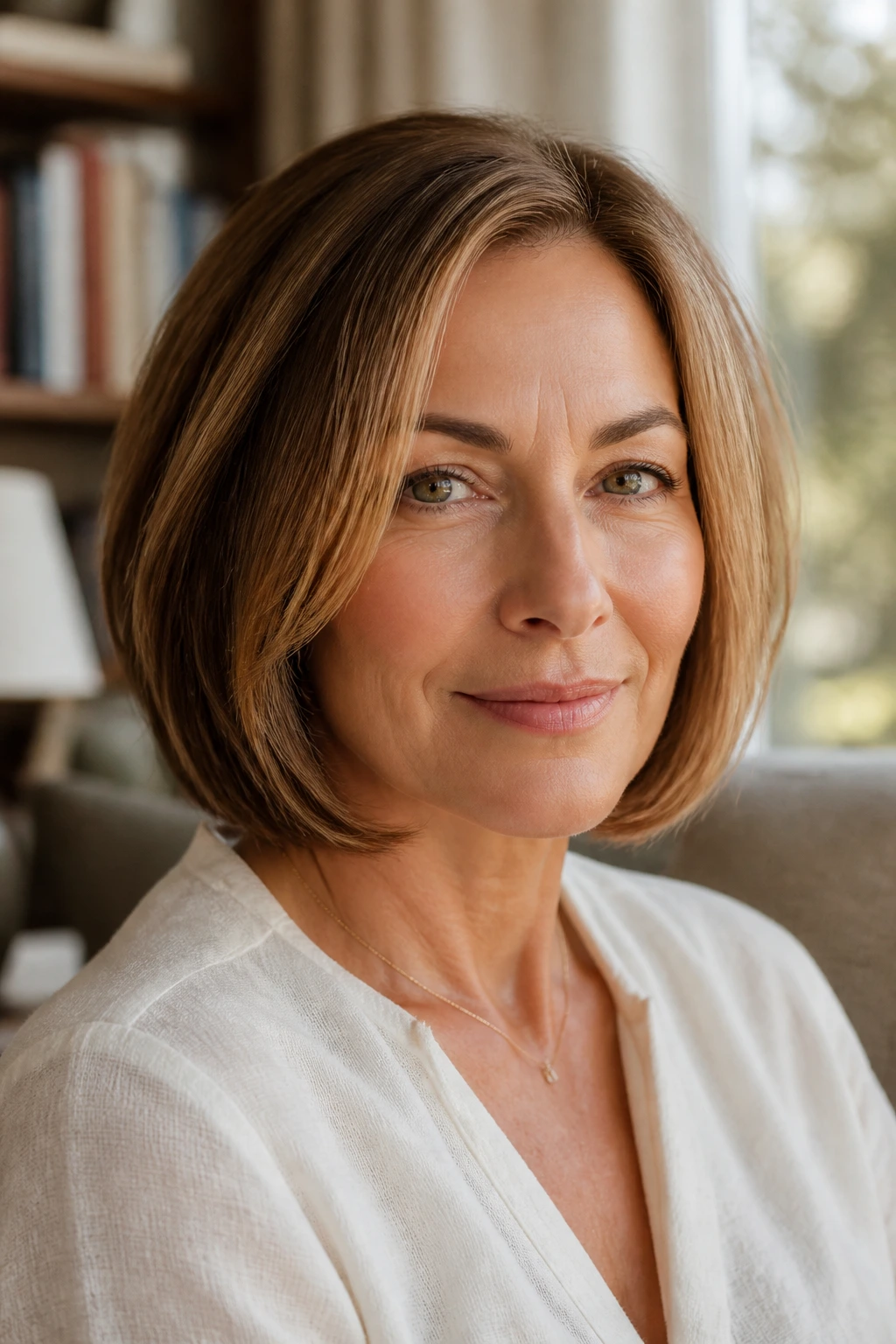
A soft rounded bob has the kind of shape that looks neat without feeling severe. The outline curves gently inward, so the ends sit close to the head instead of flaring outward. On medium-length hair, that rounded shape can soften the jaw, sharpen the neck line, and make the whole cut look more finished.
This is a strong choice if you want a little structure. Not a helmet. Structure. The shape works especially well on straight or slightly wavy hair, and it can be adjusted with a round brush or a gentle under-turn at the ends. The line should stay soft enough that the bob doesn’t read as boxy.
If you’ve been living in longer layers and want something that feels cleaner, this is a nice bridge. It still reaches the shoulders or just above them, so it keeps the flexibility of medium length. But the rounded edge gives it more presence.
The best versions don’t look over-styled. They look like the hair naturally falls into place, which is usually the whole point.
Why These Cuts Age Well Without Looking Fussy

The best medium-length hairstyles for women over 50 do not chase youth in some plastic, overprocessed way. They work because they pay attention to the parts of the face and hair that actually change: the crown, the temples, the jawline, the ends. A cut that softens one edge and strengthens another usually does more than a cut that tries to hide everything.
That is why blunt ends, cheekbone layers, side parts, and shoulder-grazing lengths keep showing up. They give shape where hair can start to sag, and they leave enough room for movement where the face needs it. A little lift at the crown matters. So does a clean line at the bottom. So does not over-thinning the ends just because a stylist owns a texturizing razor.
There’s also a simple practical truth here. Medium hair is easier to clip up, easier to wave, easier to smooth, and easier to grow out if you want to change course. It gives you options without making you work for every single one.
And that matters. Hair should not feel like a second job.
Essential Tools and Products for Styling Medium Hair
You do not need a shelf full of gadgets. You need the few things that actually change what the hair does once it is dry.
- Blow dryer with a concentrator nozzle: Directs airflow so you can smooth the cuticle and keep the ends from frizzing out.
- Medium round brush: Good for bending curtain bangs, rounding a bob, and giving the roots a small lift.
- Paddle brush: Best for straight, blunt, or sleek styles that need control more than bounce.
- 1.25-inch curling iron or wand: Creates soft bends and loose waves without turning the style into ringlets.
- Lightweight mousse: Helps fine or wavy hair hold shape at the root without feeling sticky.
- Heat protectant spray: Use it before any hot tool; medium-length hair often sits right at the point where heat damage shows at the ends first.
- Texturizing spray: Handy for shaggy cuts, choppy ends, and styles that need separation at the tips.
- Smoothing cream or serum: Use a small amount on the mids and ends for straight or silver hair that needs shine.
- Dry shampoo: Useful at the crown on day two or three, especially if the roots flatten while the ends stay fine.
- Sectioning clips: Small but useful when you want a cleaner blow-dry or bang trim.
How to Wear These Styles With Glasses, Earrings, and Necklines
Presentation: Keep the part where it helps the cut most, not where habit puts it. A center part suits blunt mids and rounded bobs, while a soft side part flatters side-swept layers and curtain bangs. Tucking one side behind the ear instantly shows the shape of a lob or angled cut without needing more styling.
Accessories: Glasses usually look best with hair that clears the temples and leaves some movement around the frame. Small hoops, drop earrings, and studs all work with medium hair, but larger earrings stand out more when the sides are tucked or layered away from the cheeks.
Best Necklines: Open collars, V-necks, scoop necks, and boat necks all play nicely with shoulder-grazing hair because they leave space around the jaw and neck. A very high neckline can make the ends feel crowded unless the hair is clipped or tucked back.
Styling Finish: Pick the finish that matches the haircut instead of forcing every style into the same mold. A shag wants piecey texture, a blunt midi wants polish, and a curly shoulder cut wants definition without stiffness. The cut should look like it belongs on your head, not on a mood board.
Smart Ways to Personalize the Same Mid-Length Cut
Volume Boost: Ask for a deeper side part, a little lift through the crown, and shorter face-framing layers if your roots lie flat. That combination gives the eye more height without turning the haircut into a teased-up costume.
Softness Upgrade: Keep the edges longer and the layers more gradual if you want the cut to feel gentler around the face. This works especially well with glasses, because the hair stays out of the frame without looking chopped.
Texture Boost: If your hair is wavy or a bit bendy, ask for point-cut ends or a shaggier perimeter. That adds separation, which helps the style hold movement after air-drying or a quick wand pass.
Silver Shine: For gray or white hair, a clean line and regular glossing do more than extra layers ever will. The cut should make the color look deliberate. If the ends are rough, the shine disappears fast.
Low-Effort Version: Build the style around what happens after a towel dry. If you hate heat tools, tell the stylist to keep the shape readable when air-dried with leave-in conditioner and a little cream. That single detail can save you a lot of resentment later.
Common Mistakes That Flatten a Good Haircut
The most common mistake is taking too much weight out of fine hair. It sounds flattering to ask for “movement,” but if the ends get too thin, the haircut starts looking stringy in daylight. The fix is a blunt or softly blunt outline with only a few strategic layers.
Another problem is cutting thick hair all one length and hoping it will behave. It usually doesn’t. The bottom swells, the sides puff, and the whole shape sits away from the head. Internal layers or careful bulk removal underneath solve that without wrecking the silhouette.
Bang mistakes are easy to spot. Too short, and they need constant trimming. Too heavy, and they swallow the face. Curtain bangs and long side bangs usually give you more room to breathe.
Product placement matters too. Heavy cream at the roots can sink a pretty good blowout in less than an hour. Keep rich products from the scalp down unless your hair is very dry and coarse. Even then, use less than you think.
The last one is waiting too long for a trim. Medium hair can grow into a rounded, shapeless mass faster than a pixie or a long cut. If the shape is built around the collarbone or jaw, a trim every 6 to 8 weeks keeps it from wandering off course.
Variations and Adaptations to Try
Soft and Feathered: Keep the length around the collarbone and ask for light feathering through the sides. This softens a strong jawline and gives straight or medium-texture hair a little more swing without piling on short layers.
Bold and Blunt: Go for a single, clean line at the shoulders or collarbone with almost no visible layering. This version suits fine hair especially well because the ends look dense and intentional, and the styling routine stays short.
Curl-Friendly Shape: Let the curls set the outline, then ask for a rounded silhouette that follows the way the hair springs. This keeps shoulder-length curls from widening too much at the sides and makes the whole cut easier to refresh between washes.
Silver and Sleek: Pair a clean mid-length line with a side part and a smoothing finish. Gray hair often looks sharpest when the cut is simple and the shine is kept up with a lightweight serum or gloss treatment.
Low-Maintenance Air-Dry: Build the haircut around your natural bend and keep the layers long enough to dry in a stable shape. This one works well if you want the hair to fall into place with leave-in conditioner and a bit of scrunching, not a full styling session.
Fringe Without the Commitment: Add long bangs that blend into the sides instead of a blunt fringe. You get face framing and softness, but you still have the option to pin them back or tuck them away on busy mornings.
Keeping the Shape Fresh Between Salon Visits
A medium-length cut holds up better when you treat the first day and the tenth day differently. On wash day, get the roots dry first. If the crown stays damp too long, the hair collapses before you even leave the bathroom. A little root clip while the hair cools can help, especially on blunt cuts and side-swept styles.
Between washes, dry shampoo is more useful at the crown than all over the head. Spray it in a few short bursts, wait a minute, then massage it in with your fingertips. If you dump it through the ends, the hair turns dusty. The ends usually need a touch of serum or cream, not powder.
Sleeping matters too. A loose clip, a low silk scrunchie, or a pillowcase that cuts down on friction can keep the ends from flipping or roughing up overnight. Curly and wavy cuts often do better when you pineapple the hair loosely or twist the front pieces away from the face.
For trimming, think in terms of shape loss, not just length. If the front pieces start hanging in your eyes, the blunt edge begins to blur, or the back looks too heavy, it is time. For many medium cuts, that lands somewhere around 6 to 8 weeks, though curly shapes sometimes stretch a little longer and blunt mids need a closer watch.
Frequently Asked Questions
What medium-length haircut is best if my hair has gotten finer?
A blunt lob or blunt midi usually gives the best illusion of fullness because the ends stay dense. If you add layers, keep them long and soft so the bottom does not go see-through.
Are bangs a bad idea after 50?
Not if they’re the right bangs. Curtain bangs and long side bangs can soften the face and work around glasses better than a heavy blunt fringe, which tends to need more maintenance.
Should I choose layers or one length?
If your hair is thick, some layering often helps it sit closer to the head. If your hair is fine, a cleaner outline with fewer layers usually looks fuller.
Can gray hair handle a shag or textured cut?
Yes, but keep the texture controlled. Gray strands can be dry or wiry, so a soft shag or feathered cut works better than a heavily shredded one.
What if my hair flips out at the ends?
That usually means the weight line is fighting the way your hair falls. A round brush, a little inward bend with a flat iron, or a shape that ends at the collarbone can calm it down.
How often should medium hair be trimmed?
Most medium cuts need a trim every 6 to 8 weeks to keep the line sharp. Curly cuts can sometimes go a little longer, but fringe and face-framing pieces usually need earlier cleanup.
Is a center part or side part better?
A center part works well with blunt mids, curtain bangs, and rounded bobs. A side part gives more lift and softens flatter roots, so it helps when the crown feels limp.
Can I air-dry medium-length hair and still have it look finished?
Yes, if the haircut is built for that. Long layers, a wash-and-go shape, and a lightweight cream or mousse can give the hair enough structure that it dries with shape instead of chaos.
The Cuts That Earn Their Keep
The best medium-length hairstyles for women over 50 are the ones that make the hair easier to wear, not harder to manage. That may sound plain, but it’s the truth most salon glossies skip. A great cut doesn’t ask you to fight your texture every morning. It gives the hair a shape that still makes sense by lunchtime.
Some days that means a blunt collarbone lob. Some days it means curtain bangs, a rounded bob, or a shag that lets your waves do the heavy lifting. The common thread is not age. It’s shape, balance, and a little honesty about how real hair behaves once it leaves the salon chair.
Pick the version that suits your texture, your routine, and the way your hair falls when you’re not paying attention to it. That is the haircut that keeps paying off.
