



Shoulder-grazing hair has a bad habit of looking either too careful or too forgotten. One minute it feels fresh and swingy; the next, it’s hanging there like you meant to book a trim and ran out of steam. That’s exactly why medium length hairstyles for women over 40 can be such a smart place to land. When the cut is built with the right weight line, the hair still moves, still frames the face, and still feels like hair — not a project.
The sweet spot is usually somewhere between the jaw and the collarbone, though the exact point matters more than the label. Fine hair needs a different shape than thick hair. Gray hair does its own thing. Hair that used to air-dry obediently can start puffing at the ends or flattening at the crown, and a medium-length cut has to work with that, not pretend it isn’t happening.
That’s the part a lot of generic hairstyle lists miss. A mid-length cut after 40 isn’t about hiding anything. It’s about choosing a shape that keeps its line when hair gets a little drier, a little finer, a little wavier, or a little more stubborn than it used to be. The best ones do that without asking for a salon blowout every Thursday.
Why These Mid-Length Cuts Keep Working
They sit in the density sweet spot: Hair at the collarbone keeps enough weight in the ends that fine strands don’t drift into frizz and puff, but it’s not so long that it drags the whole style flat.
They make room for changing texture: Gray hair, heat styling, and hormonal shifts can all change how hair lies. A medium cut gives those changes somewhere to go instead of turning them into a mess at the shoulders.
They still tie back without drama: A claw clip, low twist, or half-up knot works when the length lands between the chin and the top of the chest. You’re not losing versatility by cutting shorter.
They soften the face without swallowing it: Front pieces at the jaw, cheekbone, or collarbone can lift the eye line and keep the cut from feeling boxy or severe.
They grow out better than a sharp short cut: Miss a salon visit by a few weeks and most medium cuts still look intentional, especially if the perimeter is clean.
They fit real routines: Air-dryers, round-brush people, diffuser fans, and “I own one good brush and that’s it” people can all find a shape here that behaves.
1. The Collarbone Lob With Soft Face-Framing Layers
The collarbone lob is the style I reach for when someone wants shape without a lot of fuss. It sits right where the neck ends and the shoulders begin, so it has enough length to tuck, wave, or pin back, but it doesn’t drag the face downward the way longer hair sometimes does. The soft layers around the front keep it from feeling blunt in a boring way.
The best part is the balance. The outline stays clean, which helps the hair look full, while the front pieces hit around the cheekbone or jaw to soften the sides of the face. That little bit of graduation matters more than people think. Without it, a lob can look like a blunt sheet; with it, the hair moves when you turn your head.
What to ask for at the salon
Ask for a collarbone-length cut with light face-framing layers and a perimeter that stays solid. If your hair is fine, keep the layers subtle and let the density live at the bottom. If your hair is thick, ask for internal removal through the mid-lengths so the ends do not feel bulky.
I like this style on hair that needs a little life but doesn’t want to look overworked. A round brush and a 1.25-inch curling iron can finish it, but it also air-dries nicely with a dab of cream and a twist of the fingers.
2. The Blunt Lob With a Deep Side Part
A blunt lob is the loudest quiet haircut in the room. No choppy ends. No over-layered fluff. Just a straight, firm line that makes the hair look thicker than it is, which is why this one shows up again and again on women whose hair has thinned a bit at the front or through the crown.
The deep side part does a lot of the heavy lifting here. It gives one side a little lift at the root and lets the other side fall softly across the cheekbone. That asymmetry keeps the cut from feeling stiff. If you wear glasses, this shape is especially good because the clean line of the lob doesn’t fight with the frames.
- Best on fine to medium hair that wants density at the ends.
- Works well if you like a polished finish and don’t want a lot of layering.
- Easy to style with a paddle brush and a single bend at the ends.
- Looks sharper if the perimeter lands just below the jaw or at the top of the collarbone.
I’d skip this one if your hair is very thick and puffy through the ends unless your stylist removes bulk carefully inside the cut. A blunt lob with too much internal weight can turn into a triangle, and that shape is nobody’s friend.
3. The Curtain Bang Midi With Loose Ends
Can bangs work after 40 without turning into a daily wrestling match? Yes — if they’re curtain bangs and they start long enough to sweep, not stab. The trick is keeping the fringe soft at the cheekbones and letting the rest of the hair fall to the shoulders or just below.
This cut is especially nice when the forehead feels like a feature you want to soften a little without hiding it. Curtain bangs split the difference. They break up the front of the haircut, pull attention to the eyes, and give even a plain T-shirt and jeans outfit a little structure around the face.
What to ask for
Ask for curtain bangs that start around the cheekbone and blend into shoulder-length layers. If your cowlicks are strong, tell your stylist where the hair pushes naturally so the fringe can be cut with that in mind. That small conversation saves a week of annoyance later.
The loose ends matter too. Don’t let the bottom get too feathery. A little movement is good; shredded ends make the whole style look tired. This is one of those cuts that rewards a round brush, but it does not demand one every single day.
4. The Textured Shoulder Shag
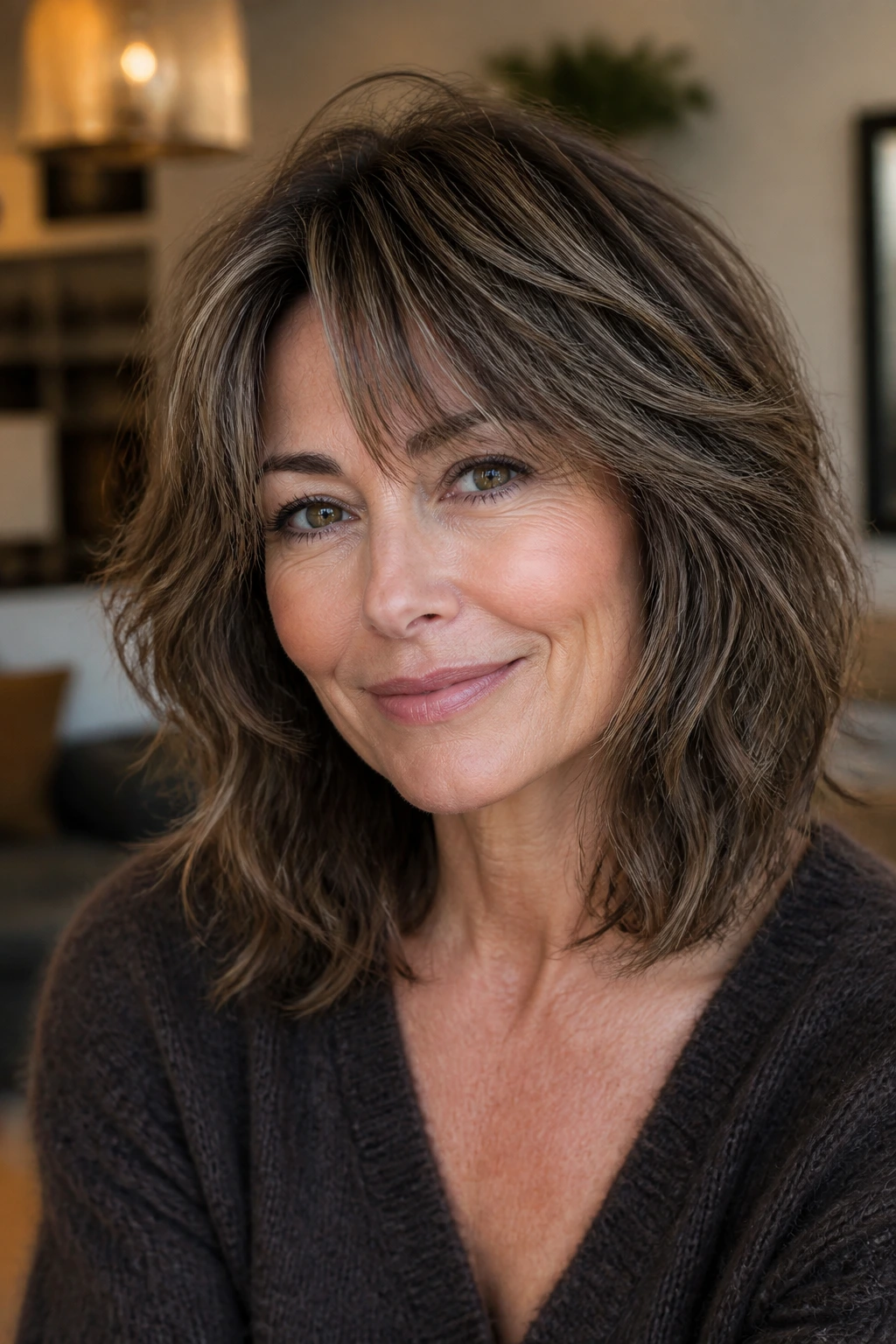
If your hair dries with random bends and a little attitude, the shoulder shag can make that look intentional. It has more piecey movement than a blunt lob and less fuss than a full blown modern shag. Think shoulder length, but with shape in the crown and air around the face.
What I like here is that it doesn’t try to force symmetry onto hair that already has personality. The layers are there to support the texture, not bulldoze it. If your hair has a wave that starts at the jaw and gets wider at the ends, this cut can pull the whole shape back into line.
A few things make it work:
- Keep the shortest layers around the cheekbone or just below.
- Let the perimeter stay long enough to keep weight through the bottom.
- Use a small amount of mousse or foam at the roots before diffusing.
- Finish with a texturizing spray, not a heavy oil.
This is the cut for people who want hair that looks better a little imperfect. It can be deliberately messy. It can also be surprisingly elegant when smoothed at the crown and left loose at the ends.
5. The Polished Shoulder-Length Blowout Layers
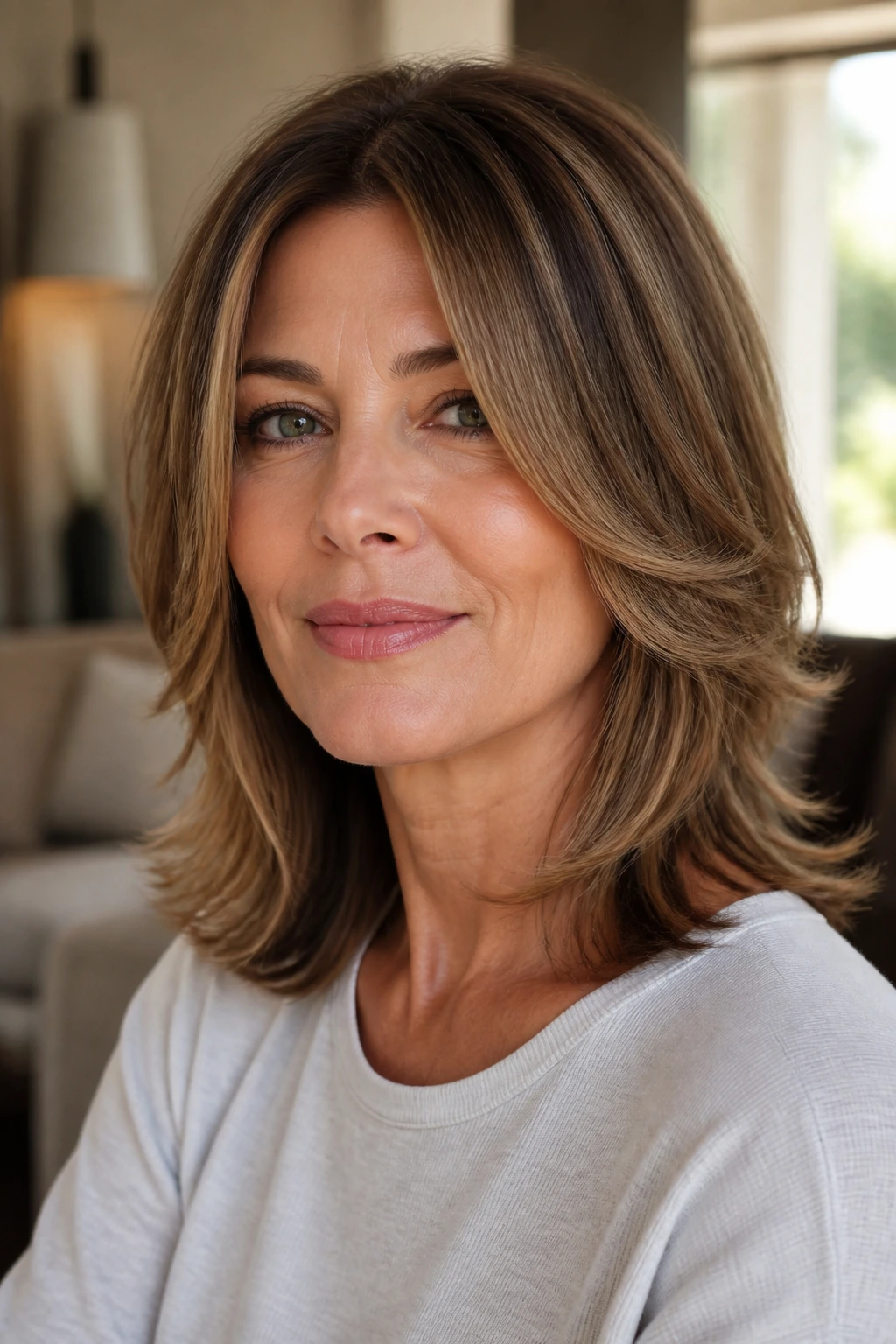
Some people want smooth, full hair that looks like it had a proper blowout even when it didn’t. This is that cut. It lands at the shoulders, carries soft layers through the mid-lengths, and leaves enough room around the face for movement without making the silhouette too feathered.
The magic here is weight placement. The ends stay substantial, which keeps the style from collapsing, while the upper layers give the crown a little lift. On hair that has become flatter over the years, that combination is a lifesaver. The cut looks finished even before you touch a hot brush.
This style loves a round brush and a blow-dryer nozzle. It also loves a velcro roller set while the hair cools, which is one of those old-school habits people ignore until they see the difference. The result is a shoulder-length shape that looks deliberate and slightly lifted, not stiff.
If your hair tends to show every bend and crease, this is a good place to live. It forgives a rough sleep, a humid day, and the occasional “I only had seven minutes” blow-dry. That’s a useful haircut.
6. The Soft Wave Cut With Invisible Layers
Invisible layers are the opposite of those obvious choppy layers that announce themselves from across the room. You feel them more than you see them. The cut still looks mostly one length, but the internal shaping gives waves somewhere to fall so the hair doesn’t puff out like a triangle.
This is a strong choice if your hair has soft natural wave or if you like to add bend with a curling iron but hate a stacked, layered look. The cut keeps the line clean from the front, then lets the mid-lengths carry the movement. That means you can wear it smooth one day and wavy the next without the whole thing changing personality.
A good stylist will cut this with the hair’s natural texture in mind. If the hair is overly thinned at the bottom, the style can lose its shape. If it’s too heavy through the interior, the wave gets trapped and the hair looks bulky. The sweet spot is subtle and hard to fake.
I like this one on anyone who wants movement without obvious layer marks. It’s quiet in the best way.
7. The Angled Lob That Tucks Behind the Ear
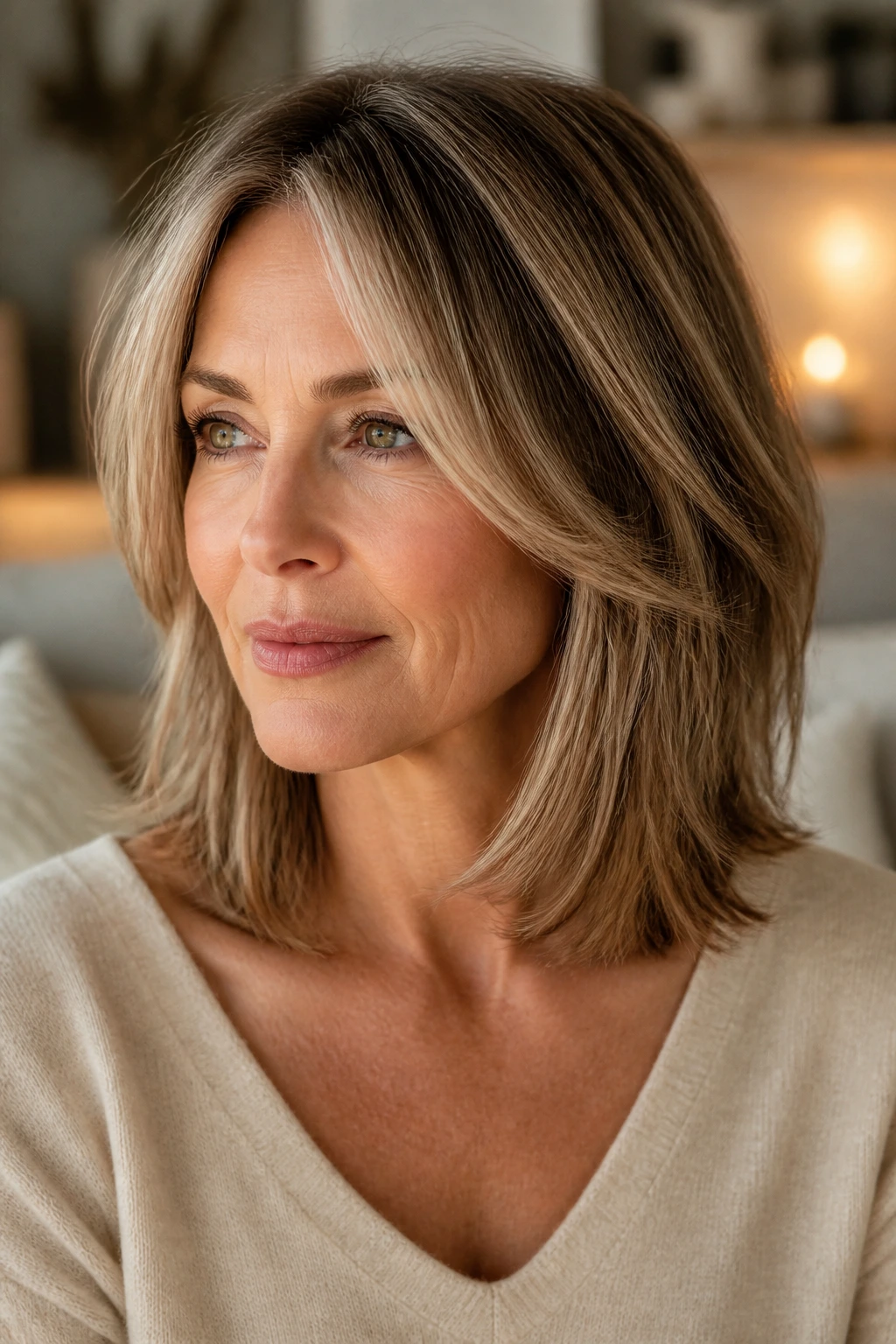
A slight angle can do a lot. The back sits a touch shorter, the front hangs a little longer, and the whole style starts to look cleaner around the jaw. It’s not a dramatic A-line. It’s a gentler shift that gives the hair a bit of edge without making it feel severe.
This cut is especially handy if you tuck one side behind your ear all the time. Some haircuts fight that habit. This one seems made for it. The longer front pieces fall neatly, the ear tuck shows off the cheekbone, and the back keeps enough structure that the style still reads as a cut, not a grow-out.
It also plays nicely with glasses and earrings. There’s enough movement near the face that the look feels finished, but not so much that every accessory turns into a battle. If you want a shape that looks tidy on workdays and slightly undone on weekends, this is a good bet.
I’d ask the stylist not to over-angle it. Two inches of difference is usually enough. More than that can start to feel dated fast.
8. The Sleek Straight Midi With a Subtle Bend
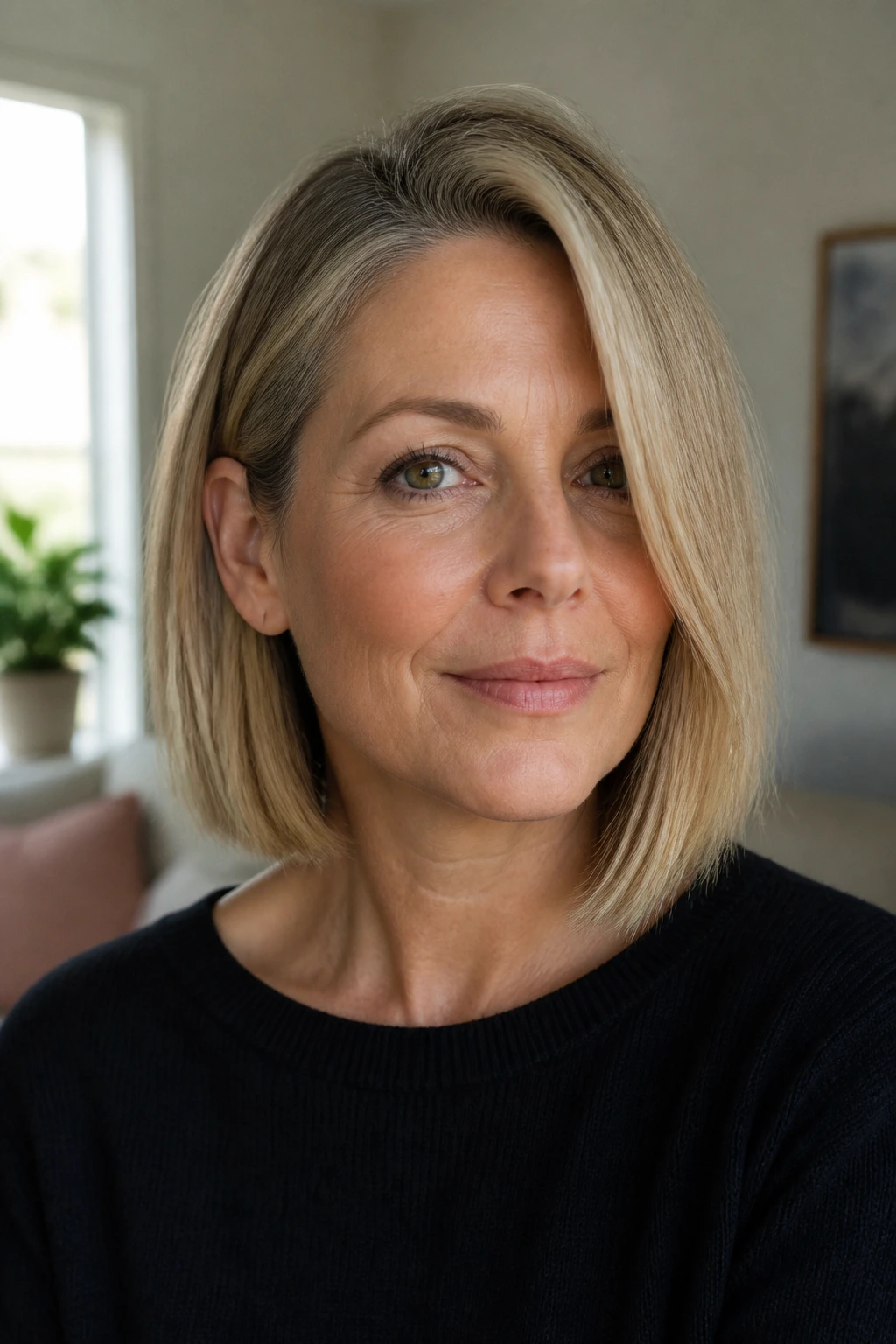
Sleek doesn’t have to mean flat. In fact, the best sleek midi cuts keep the ends a little soft so the hair doesn’t look like a sheet of paper glued to the head. The length usually lands around the collarbone, and the only real movement comes from a small bend at the ends.
That bend matters. It keeps the line modern and stops the cut from looking stiff, especially on straight hair that already wants to lie close to the head. A flat iron passed through in one or two smooth strokes is enough. You do not need to chase a pin-straight finish from roots to ends unless that’s your thing.
Best ways to wear it
- Middle part for a clean, long line down the center.
- Side part for a softer frame around the face.
- Tucked behind one ear for a minimal, sharp look.
- Worn with a little serum on the ends, not through the whole head.
This is one of the easiest styles to keep looking expensive without a lot of effort. The trick is restraint. Too much oil, too much heat, or too much layering and the whole thing loses its edge.
9. The Flipped-Out Ends and Cheekbone Layers
There’s something a little cheerful about flipped-out ends. Not childish. Just lively. The shape hits the shoulders, the front pieces skim the cheekbones, and the ends kick out just enough to catch movement when you turn your head.
This style works especially well if your face benefits from a little lift around the cheek area. The layered front draws the eye upward, while the flip at the bottom keeps the cut from settling into a heavy block. It has a touch of retro energy, but not the dated kind. More like a good late-afternoon blowout that kept its nerve.
A medium round brush or a flat iron with a small wrist turn will create the flip. If your hair resists that shape, set the ends warm and let them cool curled outward in clips for a few minutes. That small bit of cooling makes the bend last longer than people expect.
I like this haircut on hair that has a bit of natural body but needs direction. It gives the hair a reason to move.
10. The Rounded Curly Cut to the Collarbone
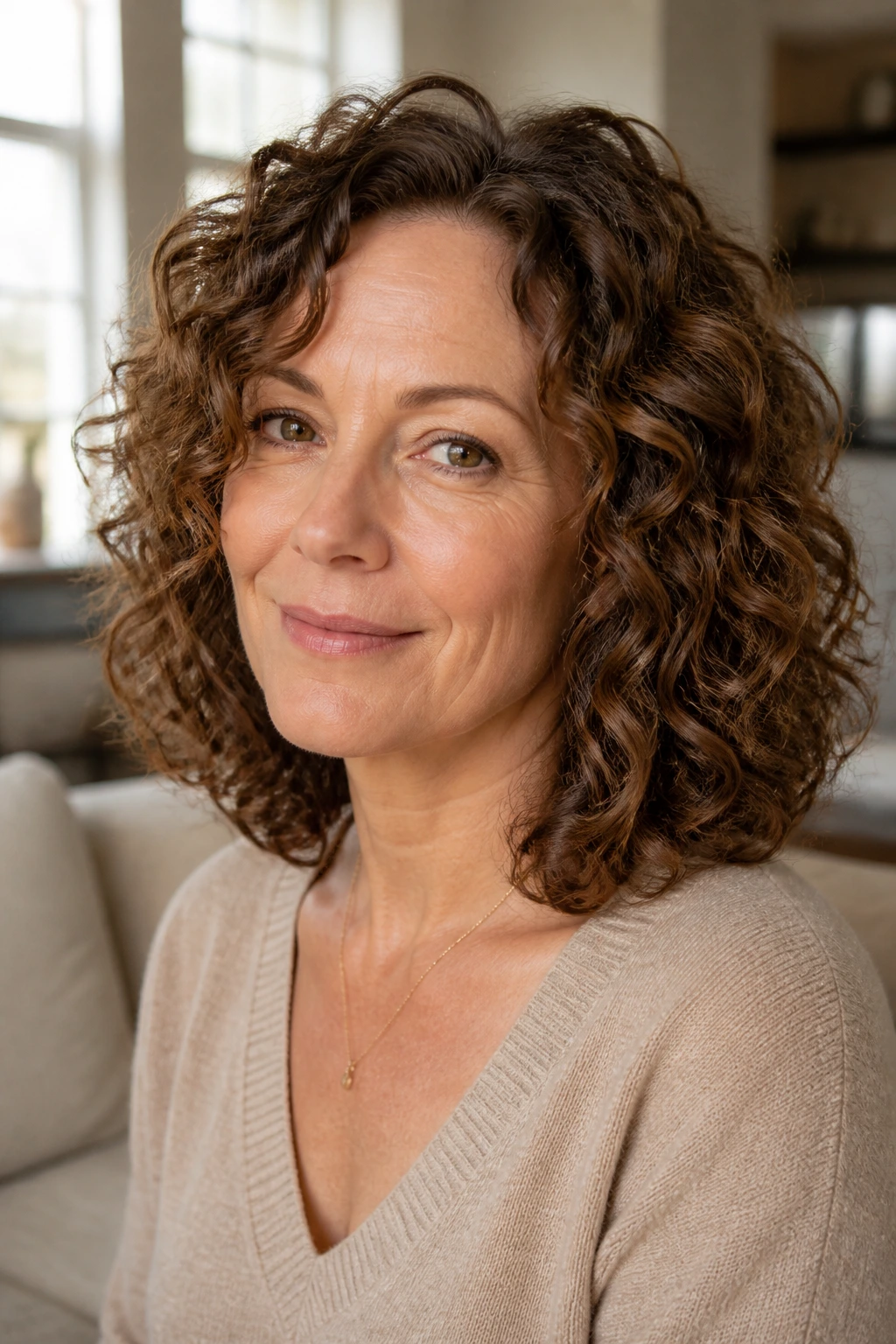
Curly hair often looks best when the shape follows the curve of the head instead of fighting it. A rounded collarbone cut keeps the silhouette balanced, which helps curls avoid the dreaded triangle that happens when the bottom gets too wide and the top gets too flat.
The real skill here is in the layers. They need to support the curl pattern without breaking it up into frizz. A curl-by-curl dry cut, or a cut made on hair worn in its natural state, usually gives the cleanest result. When curls are cut wet and stretched too much, the length can surprise you later.
What makes it work
- The perimeter stays soft and rounded, not boxy.
- Layers are placed to keep lift at the crown.
- The length lands around the collarbone so the curls have room to spring.
- Diffuser drying helps the shape set without roughing up the cuticle.
This is a haircut that rewards patience and punishes rough handling. If you scrub towels over it or rake through it dry, it will protest. If you respect the pattern, it looks full, soft, and controlled all at once.
11. The Deep Side-Part Layered Cut
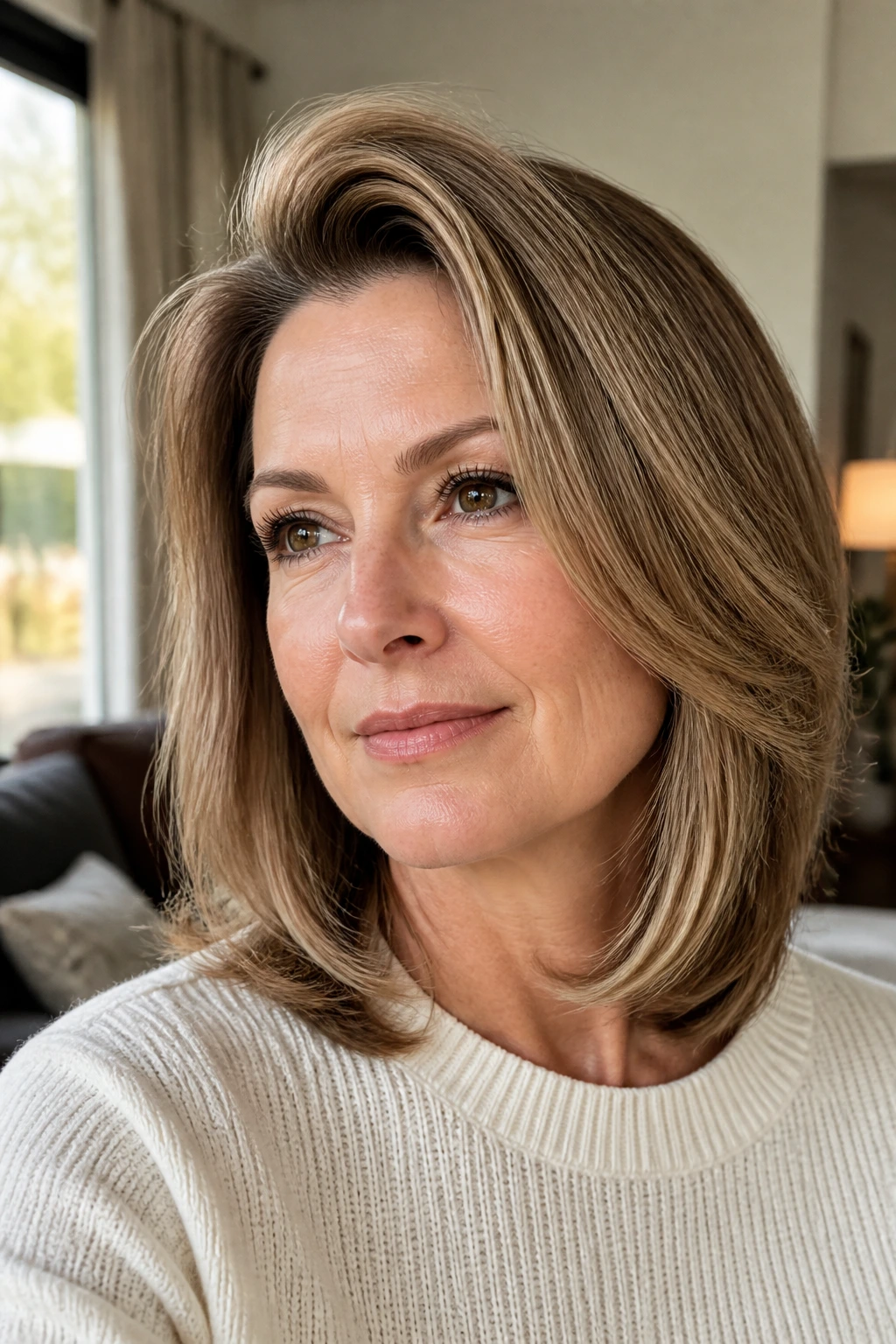
If your roots lie flat no matter what you do, a deep side part can feel like cheating — in the best way. It creates lift instantly, gives one side of the hair more volume, and makes medium length layers look fuller because the shape starts with asymmetry rather than perfect balance.
The cut itself usually stays around shoulder length, with long layers that move away from the face. What changes the whole mood is the parting line. It can make a plain cut look intentional, and it gives the face a diagonal line that feels stronger than a center part on some people.
This is especially useful for women whose hair has thinned at the crown or whose hairline has changed a little. The side part shifts the attention without needing a ton of product. A little root spray, a lift at the scalp with a dryer, and the whole thing wakes up.
It’s not a shy haircut. Good. Some days hair needs a little attitude.
12. The Shoulder-Length Cut With Long Feathered Bangs
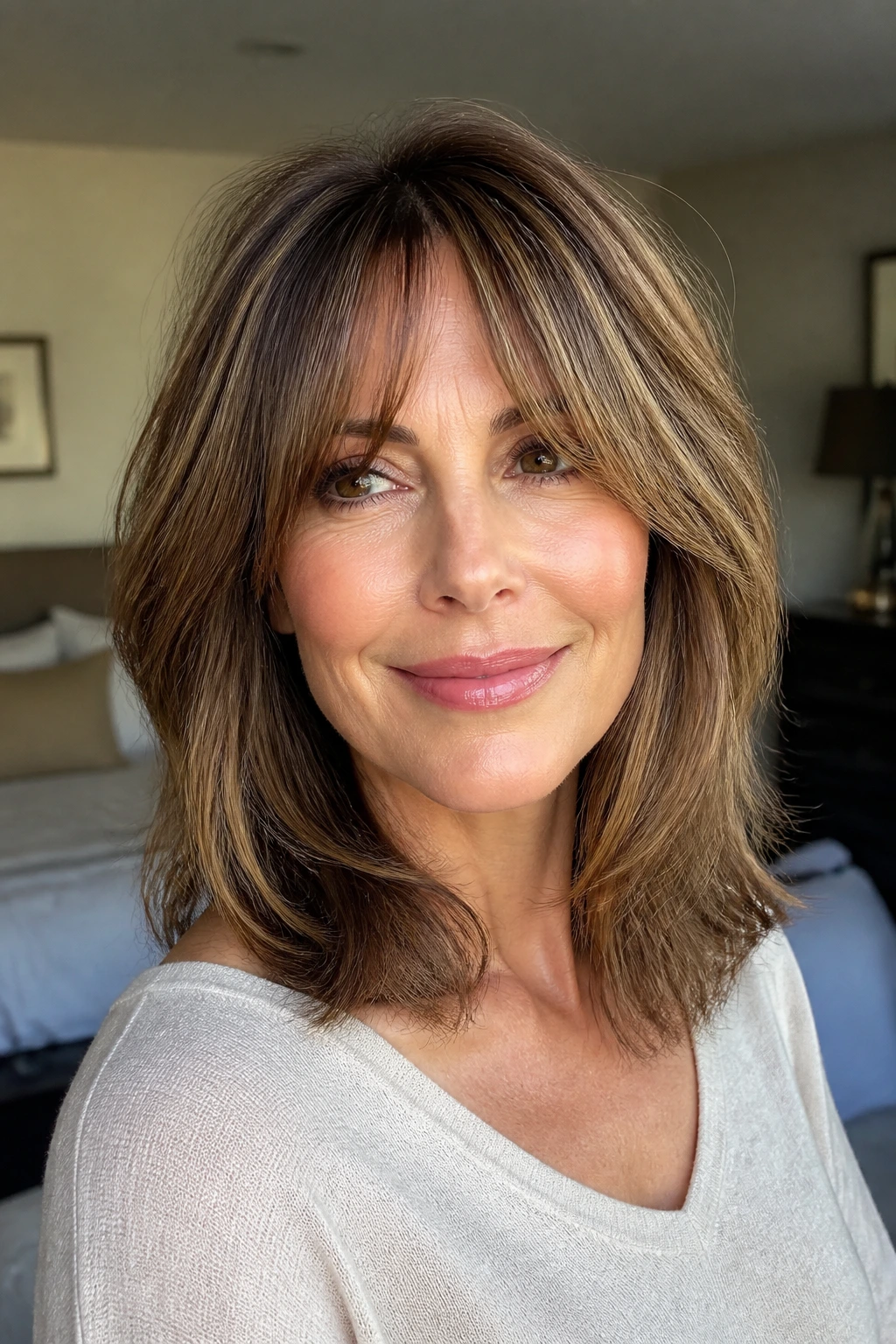
Long feathered bangs are a softer cousin to curtain bangs. They start lower, blend more gradually, and keep the forehead open while still giving the face some movement. The rest of the cut usually sits at the shoulders or just below, which keeps the fringe from feeling disconnected.
I like this option when someone wants a little face framing but doesn’t want the maintenance of a shorter bang. Feathered bangs grow out more gracefully than blunt fringe, and they’re easier to tuck into a ponytail or twist back on busy days. That matters.
The feathering should be gentle, not wispy to the point of nothing. Too much thinning around the front makes the haircut look tired fast. A few soft layers are enough to break up the line and keep the fringe from sitting like a curtain over the eyes.
If you wear your hair half up often, this cut works hard for you. The bangs still soften the front, and the longer length in back keeps the whole style anchored.
13. The Modern Wolf-Lite for Medium Hair
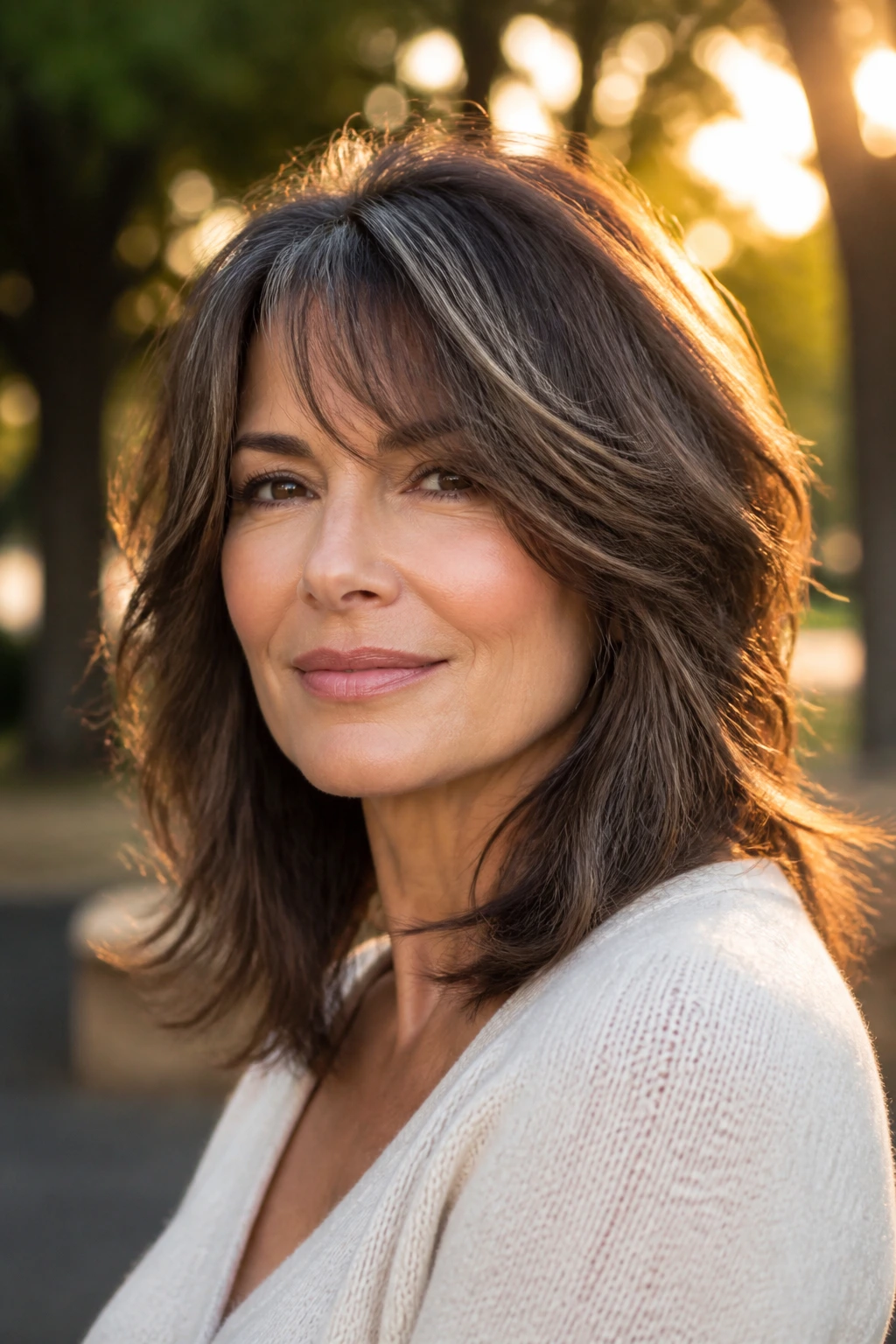
The wolf cut gets talked about like it’s all edge and no practicality, which is unfair. A toned-down version can be one of the most useful medium styles around, especially if your hair has texture and you want something with motion. The crown gets a little lift, the sides stay softer, and the ends taper without turning into a fringe cloud.
This version is lighter and less dramatic than the full shag-wolf crossover. That makes it easier to wear in real life. You still get that slightly cool, broken-up shape, but the cut doesn’t swallow the face or demand a massive styling routine.
It works best when the stylist keeps the layers controlled. Ask for movement, not chaos. If your hair is fine, too many short layers can leave you with see-through ends. If your hair is thick, the internal shaping can take weight out in a useful way, especially around the occipital area where the hair tends to balloon.
This one is not for someone who wants a neat, classic silhouette. It’s for someone who likes a little roughness in the shape. Just enough.
14. The Clavicut With Internal Layers
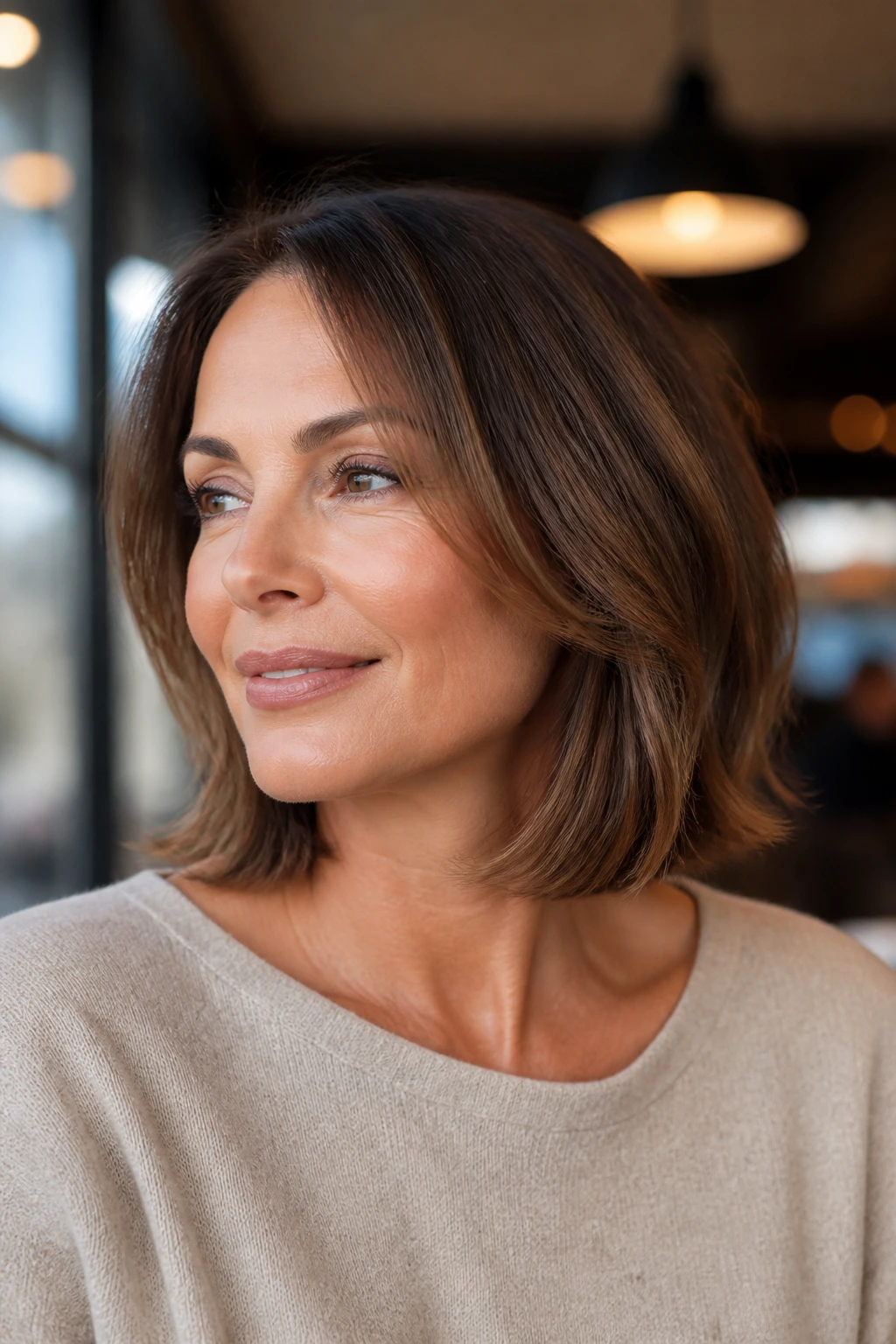
The clavicut is one of those haircuts that sounds simple because it is simple — and that’s a strength. It lands at the clavicle, usually in a clean one-length line, but with hidden internal layers that keep the shape from becoming heavy or stiff. From the front, it looks polished. In motion, it has enough give to feel modern.
I like this cut when someone wants hair that can do almost anything without looking like it’s trying too hard. It can be blown smooth, air-dried into a little bend, or tucked into a low clip. Because the outline stays so clean, the style often outgrows itself better than more chopped-up cuts.
The internal layers make the difference for thick or dense hair. They take out some of the bulk inside the shape without wrecking the perimeter. That means the ends still look full, which is the part most people want to keep.
If you’ve had too many layered cuts that felt hollow at the bottom, this is a smart reset.
15. The Claw-Clip-Ready Textured Midi
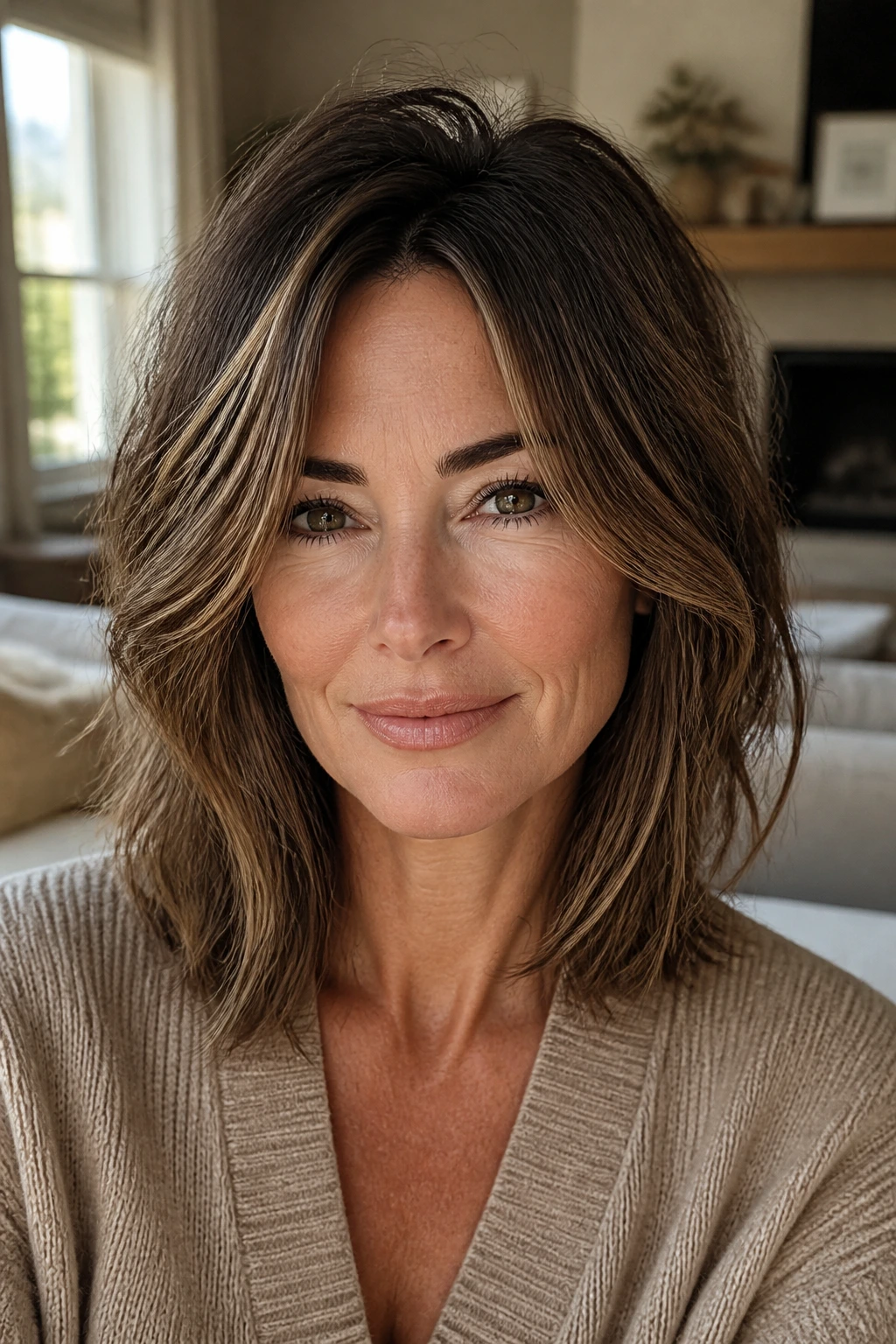
Some haircuts are judged by how they look in a mirror. This one should also be judged by how it behaves at 3 p.m. when you want it off your neck. A claw-clip-ready midi keeps enough length to pull back easily, but it has front pieces and texture that still look good when the hair is down.
The best versions hit a little below the shoulders, with soft shaping around the face and enough density through the ends to make the shape feel real. When you twist it up, the shorter front pieces loosen around the temples and ears instead of snapping out in odd little spikes. That detail matters more than people think.
It’s a good choice for busy days, travel, or anyone who gets annoyed when a haircut only looks good one way. You can wear it smooth, bend the ends under, or let it air-dry and clip it back later. The style has built-in flexibility.
This is one of the most useful medium length hairstyles for women over 40 if your routine changes from day to day. The haircut should serve the schedule, not the other way around.
16. The Soft Rounded Cut With Airy Ends
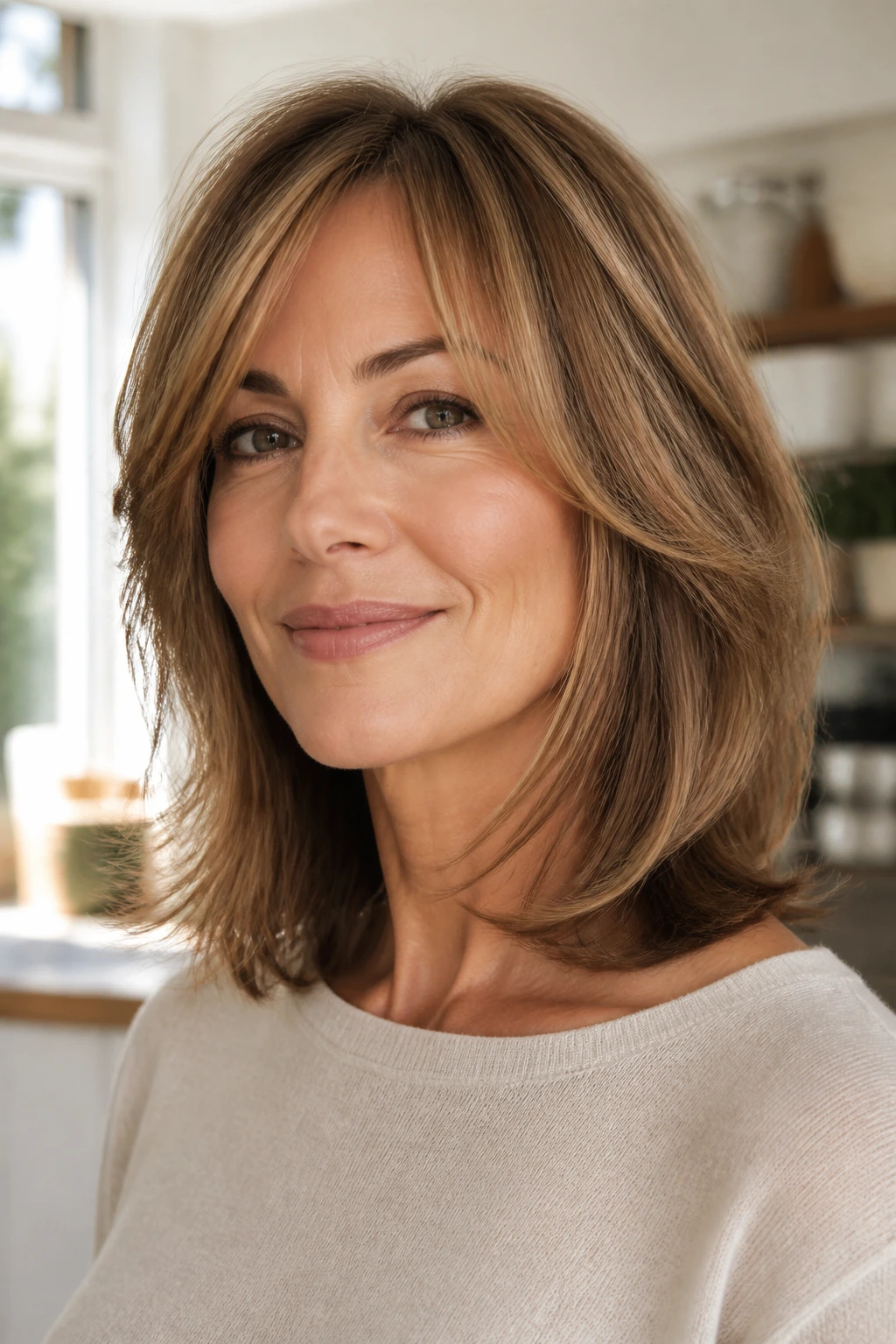
The soft rounded cut is the quiet closer of the bunch. It follows the head shape, keeps the length around the shoulders, and uses very light texturing at the ends so the hair doesn’t feel heavy or boxy. It’s one of the easiest ways to make medium hair look healthy without making it look overstyled.
What I like most is the finish. The cut doesn’t scream for attention. It just sits well. On coarse hair, that roundness keeps the shape from splaying outward at the sides. On finer hair, it gives the ends enough softness that they don’t look sliced off.
This style is especially good if you like a softer face frame but do not want bangs. A few longer pieces around the front do the job without building a whole fringe routine into your life. That can be a relief.
It’s a straightforward haircut, but not a boring one. There’s a difference.
How to Pick the Right Medium-Length Shape for Your Face and Hair Texture
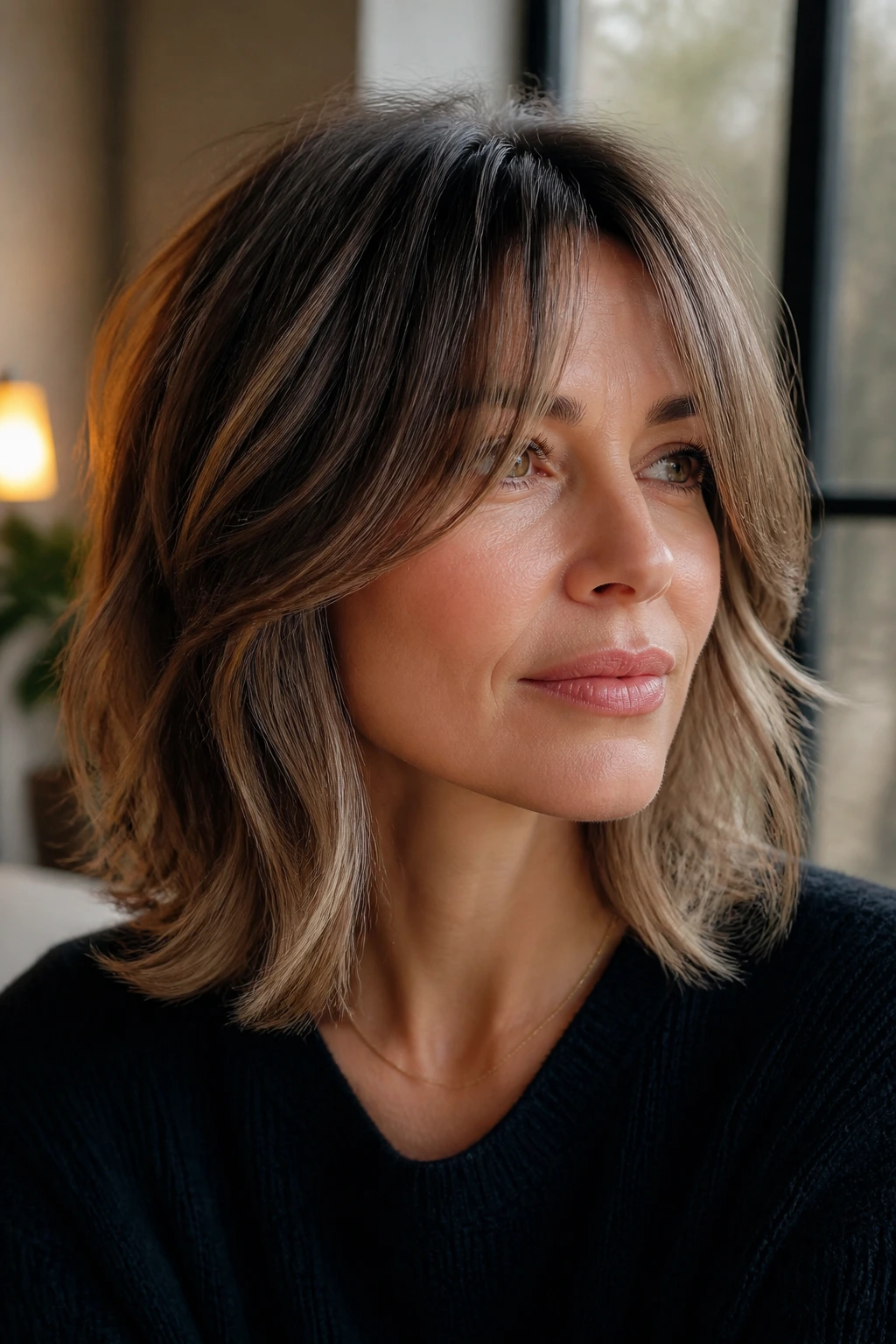
The best haircut is the one that matches the hair you actually have, not the hair in a photo you saved three salons ago. Fine hair, thick hair, curls, waves, and gray strands all behave differently at medium length, and the shape has to respect that or it will turn into work.
If your hair is fine or has thinned a little
A blunt perimeter or a soft clavicut usually wins here. Too many short layers can make the ends look stringy, especially if the hair is already lightweight. I’d favor a shape that keeps density at the bottom and adds lift with a side part, face frame, or a little root styling rather than aggressive layering.
If your hair is thick or bulky
You want internal removal, not just thinning shears waved around near the ends. Thick hair looks best when the silhouette is clean and the inside of the cut is tailored so it doesn’t flare out. Angled lobs, soft shags, and rounded cuts all work if the weight is handled properly.
If your hair is wavy or curly
Look for cuts that follow the natural bend. A rounded curly cut or a soft shag can keep the pattern intact and prevent the triangle effect. Ask how the stylist plans to cut it — wet, dry, stretched, or curl by curl — because that changes the result more than the name of the style does.
If you wear glasses, air-dry, or skip heat tools
Choose cuts that leave space around the face and don’t rely on perfect blow-drying to look finished. Curtain bangs, long feathered bangs, and collarbone lobs are kind. They still read well when the hair dries on its own and you only touch up the front pieces.
One thing I’d say plainly: bring photos that show the same texture as yours. Length is not enough. A style on straight hair can behave like a different haircut on wavy hair, and vice versa.
Styling Tools and Products That Make Mid-Length Hair Behave
You do not need a bathroom full of gadgets. You need the right few things and a clear idea of what they do.
- A blow-dryer with a nozzle: Directs air down the hair shaft and keeps the cuticle smoother.
- A medium round brush, about 1 to 1.5 inches: Gives bend at the ends without making the style puffy.
- A flat brush or paddle brush: Good for sleek midi cuts and smoothing the top layer.
- A 1.25-inch curling iron or wand: Useful for soft waves, flipped ends, and face-framing bends.
- A wide-tooth comb: Gentle on wavy and curly hair when it’s damp.
- Root-lift mousse or spray: Helps medium cuts avoid collapse at the crown.
- Heat protectant: Non-negotiable if you use hot tools more than once a week.
- Light cream or serum: Best on the ends only; too much at the roots flattens everything.
- Texturizing spray: Useful for shaggier styles and second-day hair.
- Sectioning clips: Make blow-drying less chaotic and keep the top layer out of the way.
If you only buy three things, buy heat protectant, a decent brush, and a product that matches your texture — mousse for lift, cream for smoothness, or spray for separation. The rest helps, but those three make the difference you feel in the mirror.
The Styling Moves That Buy You Ten Extra Minutes
The easiest way to ruin a good medium cut is to overwork it. Hair at this length usually looks better with a few smart moves than with a long styling routine that starts to fray by lunchtime.
Root Lift: Flip the crown upside down for a few seconds while drying, then smooth the top back into place with the nozzle pointing downward. That tiny bit of lift stops the haircut from sitting flat against the scalp.
Bend, Don’t Curl: For lobs and clavicut shapes, wrap only the last inch or two of the hair around a wand or round brush. Full curls can make the style feel fussy. A gentle bend is enough.
Product at the Ends First: A pea-sized amount of cream or serum on the mid-lengths and ends gives polish without weight. Put it near the roots and the whole style drops.
Second-Day Reset: Mist the mid-lengths lightly with water, twist two or three sections around your fingers, and hit them with warm air for 20 seconds. That revives the shape better than drenching the whole head.
Use the Part as a Tool: A side part can build lift. A center part can make a blunt cut look cleaner. Change it on purpose, not by accident.
A haircut that behaves is usually a haircut that was styled with less force, not more.
Common Mistakes That Make Mid-Length Hair Look Wider or Older
The cut itself matters, but so does the way it’s handled. A good shape can still go sideways if the wrong habits sneak in.
Too many short layers: The hair gets fluffy at the sides and see-through at the ends. The fix is a stronger perimeter with softer internal shaping, not more slicing.
Ignoring the crown: Flat roots make the whole style look tired, even if the ends are freshly cut. A little root spray or a proper blow-dry at the scalp fixes more than most people think.
Using too much oil or cream: The hair turns limp fast, especially at collarbone length. Start with less than you think you need and keep the product off the top half of the head.
Asking for “low maintenance” without describing your routine: That phrase means nothing by itself. Tell the stylist whether you air-dry, blow-dry, diffuse, or use hot tools twice a week. The cut should follow the routine.
Letting bangs get too short: Short fringe at medium length can feel abrupt and date the whole shape quickly. Long curtain or feathered bangs usually grow out better and are easier to live with.
Skipping trims for too long: The ends start to fray, the line weakens, and the style loses its shape. Medium length needs maintenance, just not constant maintenance.
I’ve seen more bad medium cuts caused by poor upkeep than by bad hair. That’s the annoying truth.
Variations and Alternative Approaches to Try
The Fine-Hair Lift: Keep the length at the collarbone with a blunt or near-blunt edge, then add lift with a side part and root spray. This keeps the ends visually dense and avoids the see-through look that can happen when fine hair gets too many layers.
The Thick-Hair Tamer: Use a clavicut or angled lob with internal removal through the mid-lengths. The perimeter stays clean, but the inside of the haircut has room to breathe, which keeps it from ballooning at the shoulders.
The Curl-Friendly Shape: Ask for a rounded cut made on your natural curl pattern, with layers placed where the curl needs space. This version is all about preventing bulk at the bottom and keeping the crown from lying flat.
The Gray-Hair Brightener: A shoulder-length blowout cut or soft rounded midi works well when gray strands are coarser than the rest. The smooth outline keeps the texture from looking unruly, and a light glossing cream helps the silver pieces look intentional.
The No-Heat Version: Choose a soft wave cut or curtain bang midi that air-dries well. A little leave-in conditioner, a scrunch, and a hands-off dry gives you shape without needing a blow dryer every morning.
The Glasses-Friendly Shape: Go for a collarbone lob, side part, or long feathered bangs. These keep the front pieces from crowding the frames and let the glasses sit in the face instead of fighting the haircut.
Keeping the Cut Fresh Between Salon Visits
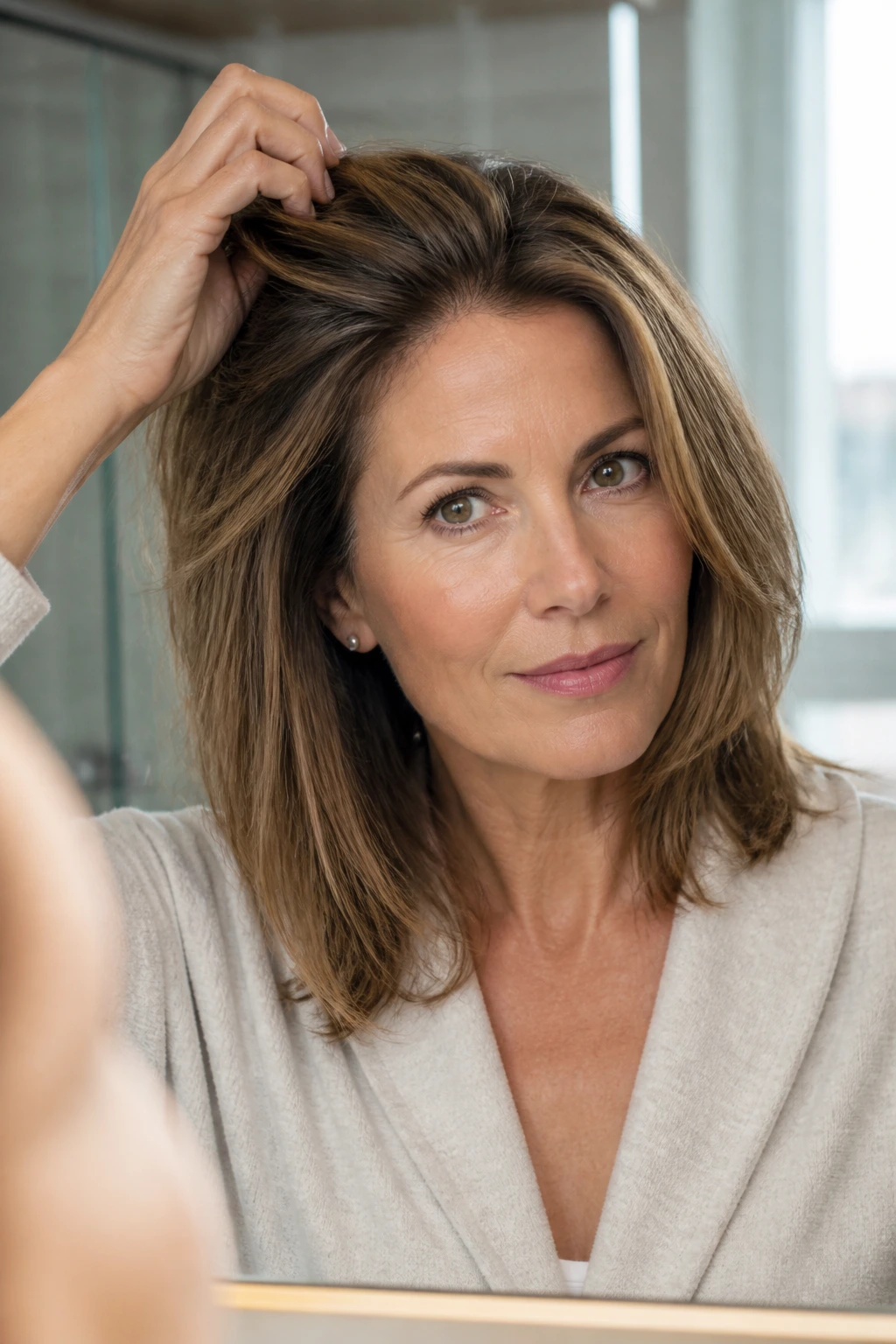
Medium hair usually looks best when the ends stay clean and the face framing stays visible. That means trims matter. For most of these styles, 8 to 10 weeks is a good trim window. If you wear bangs, especially curtain or feathered bangs, a fringe tidy-up every 3 to 4 weeks keeps them from hanging in your eyes or splitting in the wrong place.
If your hair is color-treated or naturally gray and on the drier side, a weekly mask can help the length stay smooth. I’d use it once a week, leave it on for 5 to 10 minutes, and focus from the ears down. More than that can soften fine hair too much.
Dry shampoo can stretch a blowout by a day or two, but it works best when you use it before the roots look greasy. A light mist at the crown, then a minute to sit, then a brush-through. Too much too soon and the hair starts to feel dusty.
If you heat-style often, a clarifying wash every 2 to 4 weeks helps remove the film that builds up from sprays, creams, and dry shampoo. Hair that feels limp even after washing usually needs that reset more than it needs another product.
Questions People Ask Before They Cut Their Hair
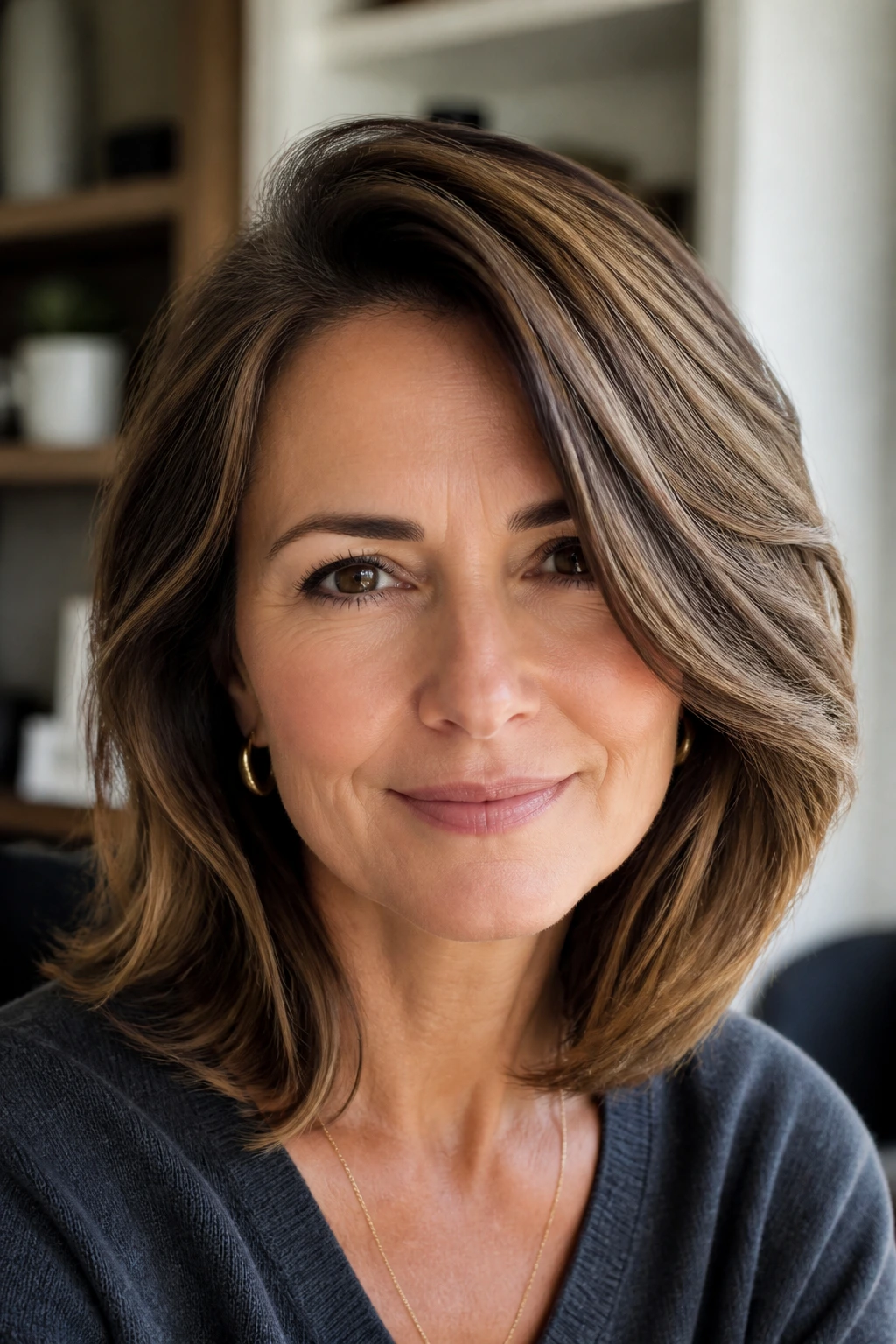
What length counts as medium hair after 40?
Usually anything from just below the chin to the collarbone falls into medium length. The exact point matters less than the shape, because a chin-length bob and a collarbone cut can serve very different goals.
Is a blunt cut or layered cut better for fine hair?
For fine hair, a blunt or near-blunt line usually wins because it keeps the ends looking thicker. Layers can help if they’re subtle and placed well, but too many of them can make the hair look sparse fast.
Do curtain bangs make you look younger?
They can soften the face and make a cut feel lighter, which people often read as fresher. The bigger benefit is that they break up the front of the haircut without the harshness of a short blunt fringe.
Can I wear a medium-length cut if my hair is curly?
Absolutely, and curls often look better at this length than very long hair. The key is a curl-friendly shape that keeps the perimeter rounded and the layers controlled so the silhouette doesn’t widen at the bottom.
How often should I trim medium hair?
Every 8 to 10 weeks keeps most shoulder-length cuts in shape. If you wear bangs, trim those sooner so they don’t collapse into your eyes or split apart awkwardly.
What if my hair is gray and feels coarse?
Choose a cut with a smooth outline and enough weight in the ends to keep the texture from spreading out. A light smoothing cream and a weekly conditioning mask help, but the haircut itself does most of the work.
Can I still put medium hair up?
Yes, and that’s one of the reasons these cuts stay useful. A low twist, half-up knot, or claw clip works best when the front pieces are long enough to stay loose around the face.
How do I tell a stylist I want something low maintenance?
Say what your mornings look like. If you air-dry, say that. If you use a round brush once a week and nothing else, say that too. The more honest you are about your routine, the more likely the cut will fit your life.
The Shape That Keeps Working

The best medium length hairstyles for women over 40 don’t fight your hair. They give it a shape that still makes sense when the texture changes, the schedule gets busy, or you simply do not feel like standing in front of a mirror for twenty minutes before coffee. That’s why these cuts last. They have range.
A good shoulder-length cut can look polished, shaggy, soft, sharp, airy, or sleek without moving out of its lane. That flexibility is the whole point. If you choose the length and the weight line with your texture in mind, you end up with hair that looks like it belongs to you — not to a trend board.
Bring one photo, one honest description of your routine, and one clear idea of how much styling you’ll actually do. The rest is just matching the shape to the hair you have, and that part gets easier every time you sit in the chair.
