



When people start hunting for wedding hairstyles for bridesmaids and medium length hair, the real wish is usually much simpler: something that holds shape, looks tidy in group photos, and does not need a hip-length mane to work. Medium-length hair is a sweet spot for that. It has enough length to twist, braid, pin, and tuck, but it does not drag the style down the way very long hair sometimes does once the pins start to loosen.
That length also gives you room to play. A shoulder-grazing lob can become a soft faux bob. A collarbone cut can turn into a low knot with a wrapped base. Even hair that stops right at the shoulders can be coaxed into a proper wedding shape if you choose the right texture, a few strategic pins, and a style that respects the hair’s actual length instead of fighting it.
The mistake I see most often is chasing a style that looks gorgeous on a mannequin but collapses the second a real person blinks, laughs, or steps into a humid church foyer. Bridesmaid hair has a job to do. It needs to sit through photos, hugs, dancing, and a long day of being touched by well-meaning relatives. So the best styles are the ones that look polished without asking the hair to do gymnastics. You’ll see exactly what I mean in the first few options.
Why You’ll Love This Collection
-
Built for shoulder-skimming hair: These styles rely on twists, braids, tucked ends, and controlled texture, so medium-length hair can look finished without pretending it’s longer than it is.
-
Easy to adjust for a whole bridal party: The same hairstyle can be worn looser on fine hair, tighter on thick hair, or with a different accessory so the group looks coordinated instead of copy-pasted.
-
Friendly to different dress necklines: You’ll find options that clear a high neck, soften a strapless gown, and sit neatly beside one-shoulder or halter dresses.
-
Good for both polished and relaxed weddings: Some of these read clean and formal. Others have a softer, lived-in edge that suits garden ceremonies, barn venues, and outdoor receptions.
-
Works with natural texture or heat styling: Straight, wavy, curly, and coily hair can all land in this range with the right prep. A good texture spray does a lot of the heavy lifting.
-
Does not need a suitcase full of tools: Most of these styles come together with a curling iron, a tail comb, pins, elastics, and a flexible-hold hairspray that does not freeze the hair into a helmet.
Why Medium-Length Hair Is Such a Good Base for Bridesmaid Styles
Medium hair behaves. That’s the simplest way to say it.
It is long enough to hold a braid or a low bun, but short enough that a twist can stay compact instead of drooping after an hour and a half of photos. Long hair sometimes needs serious padding, a donut, or a hidden mesh to keep its shape. Medium length often needs none of that. A few well-placed pins and a little grit in the hair are enough.
There’s another upside people overlook. Medium-length hair tends to show the shape of the style more clearly. You can actually see the line of a twist, the curve of a braid, the lift at the crown, and the tucked ends at the nape. On very long hair, those details can disappear under their own weight. Here, they stay visible.
And yes, that matters in photos. Group shots, especially, reward clean silhouettes. If every bridesmaid’s hair has some structure—loose at the front, controlled at the back, a little shine at the ends—the whole group looks intentional without everyone wearing the same exact thing.
1. Polished Low Twisted Chignon
A low twisted chignon is the style I reach for when the dress is already doing a lot. Lace back? Statement sleeves? Beaded neckline? This keeps the hair low and tidy while still giving you a soft shape at the nape.
Why it works: The twist gathers medium-length hair into a compact knot without needing much length, and that’s the whole trick. You get the look of an updo without the swollen bulk that can happen when someone tries to force a long-hair bun onto shoulder-length strands. A light mist of texture spray at the roots gives the pins something to grab.
How to build it: Start with loose waves or a blowout with a bend at the ends. Part the hair where it flatters the face, then split the back into two sections. Twist each side toward the center, cross them, and pin them low at the nape. Tuck the ends under with U-pins so the shape stays round rather than knotty.
A pearl pin or a small crystal comb can sit just above the twist. Keep it small. This is not the style for a giant clip that pulls the eye away from the dress.
2. Soft Side-Part Waves
Some weddings need a bridesmaid style that looks calm, not stiff. Soft side-part waves do that job beautifully, especially on collarbone-length hair that wants to fall naturally.
Why it works: Medium-length hair holds a wave with less drop than longer hair, so you can get that brushed-out, old-Hollywood feeling without the style getting too heavy. A deep side part also gives the hair instant shape around the face, which keeps the style from looking flat in the front.
Curl sections away from the face with a 1¼-inch iron, let the curls cool completely, then brush them out with a wide boar-bristle brush or even your fingers if the hair is fine. A tiny amount of shine spray on the ends is enough. Too much product makes the waves separate in a greasy way. Nobody wants that.
This style pairs well with one-shoulder dresses and strapless necklines because the hair sits off to one side and leaves room for earrings to show.
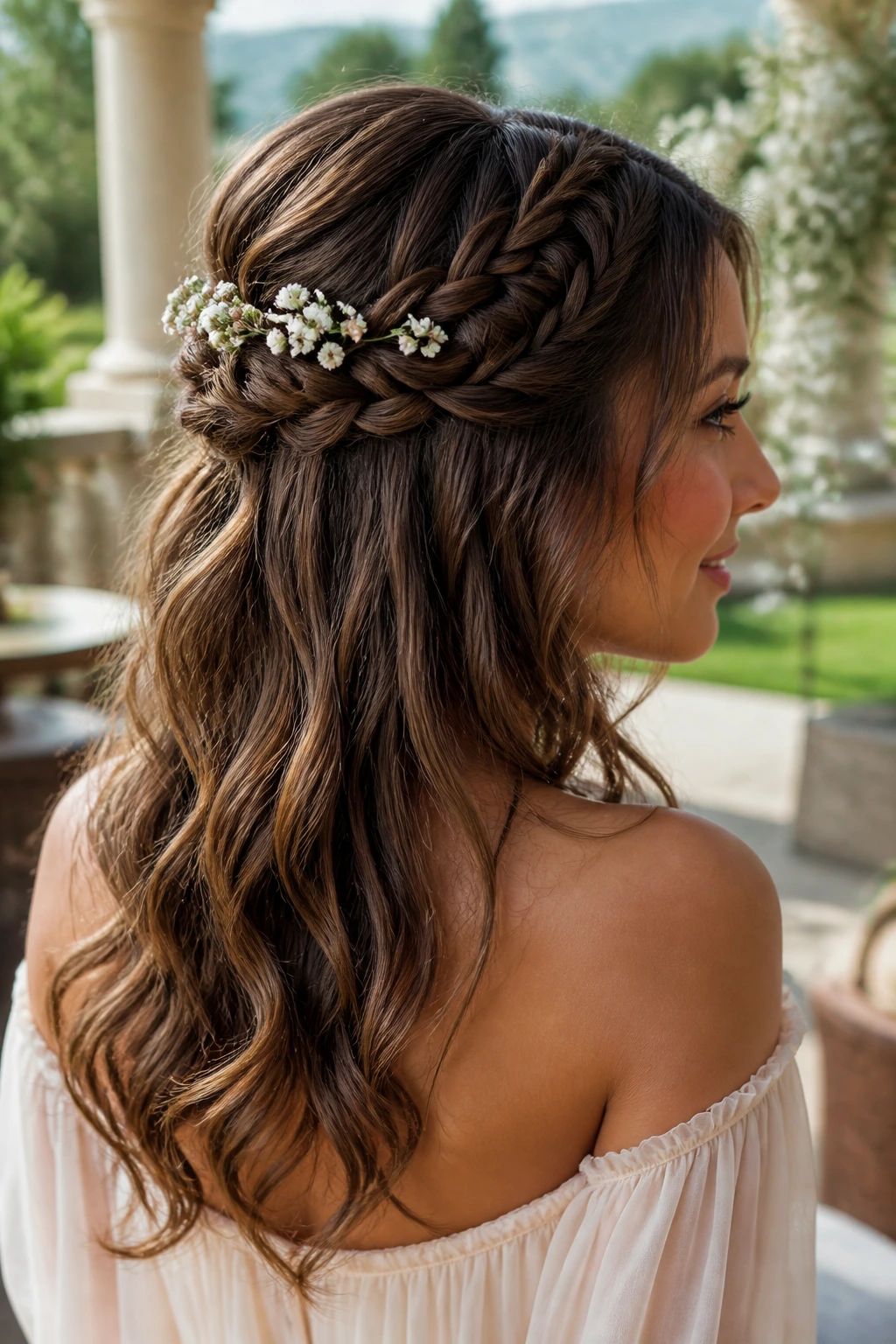
3. Braided Half-Up Crown
A braided half-up crown has a quietly romantic feel without leaning sugary. On medium hair, it gives just enough structure to look deliberate while leaving the rest of the hair loose and movable.
How to make it work: Start with second-day hair or add texture spray if the hair is freshly washed. That little bit of grit matters. Braid each side from the temple back toward the crown, then secure the braids together with a clear elastic or small pin set. If the braid pieces are too slippery, they’ll puff out and the crown will lose its clean line.
Best details to watch
- Pull the braids a little wider after securing them if you want a softer, fuller look.
- Leave the front pieces barely loose around the cheekbones.
- Curl the lower half in large sections so the hair moves as one soft shape instead of a dozen tiny curls.
Tiny flowers, baby’s breath, or a narrow metallic comb sit well here. Big accessories fight the braid.
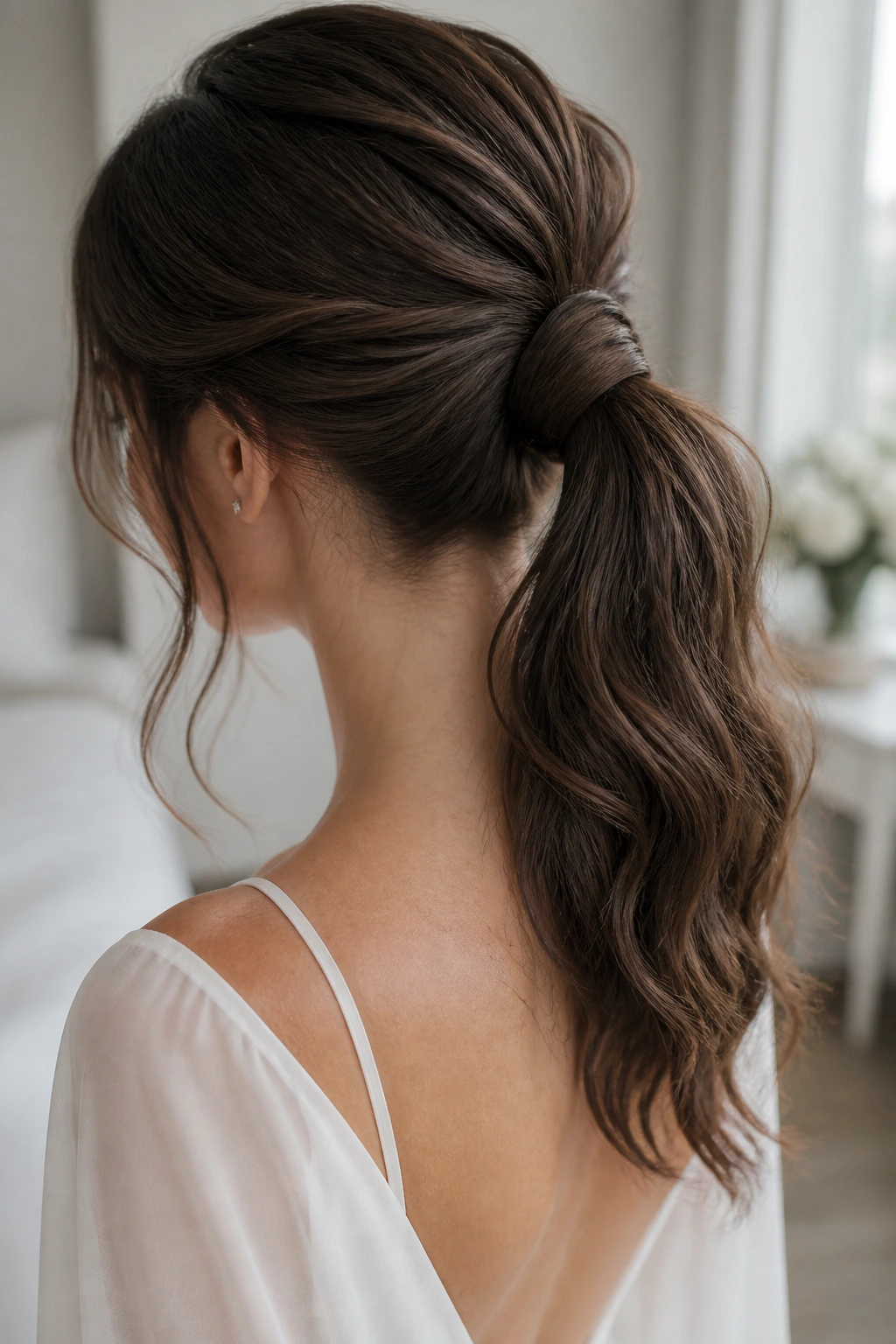
4. Wrapped-Base Textured Ponytail
A bridesmaid ponytail can look cheap if it is done with no thought. It can also look expensive, which is the version I prefer, when the base is hidden and the texture is controlled.
Why it works: Medium-length hair has enough length to create a low or mid ponytail with a wrapped elastic, but not so much length that the pony drags down by the end of dinner. The style keeps the neckline open and lets the hair move when the bridesmaid turns her head, which looks nice in motion shots.
Tease the crown lightly for lift, gather the hair at the nape or just above it, and hide the elastic with a thin strand from underneath. Curl the tail in loose bends instead of tight ringlets. The finish should look soft, not pageant-y.
This is one of the best choices for modern bridesmaid dresses with clean lines. It also works if the bridal party wants matching styles but different accessories. One person can wear a ribbon, another a pearl wrap, another nothing at all.
5. Faux Bob with Loose Ends
A faux bob is for the bridesmaid who wants to look polished and a little unexpected. It is especially useful when the hair is medium length but the dress or vibe calls for a shorter silhouette.
Why it works: Medium hair is the perfect length for creating the illusion of a bob because the ends can be rolled under and pinned without a huge amount of excess. If the hair is too long, the shape gets clumsy. If it’s too short, there isn’t enough to tuck. Medium length lands right in the middle.
Start with smooth waves or a soft blowout. Tuck the ends under at the nape and pin them in a curved line so the eye reads a bob shape from the back and sides. Leave a few face-framing pieces loose. They keep the look from feeling too rigid.
A faux bob loves vintage-inspired weddings, satin dresses, and a little shine spray. It does not love wind, so a few hidden pins along the lower edge help more than people think.
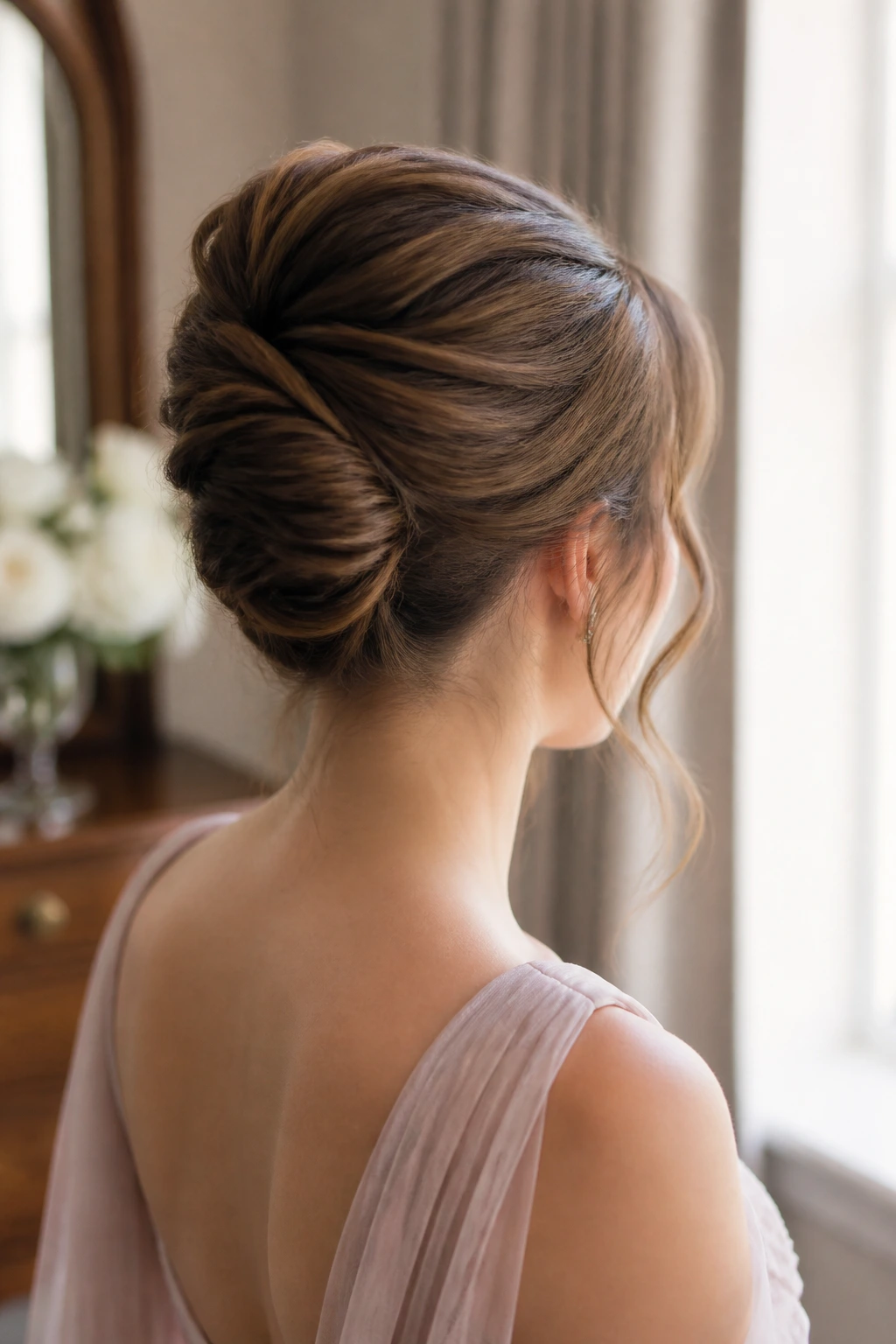
6. Soft French Twist
People hear “French twist” and imagine something severe. It does not have to be. A soft version on medium-length hair can look elegant without feeling old-fashioned.
The key is not to smooth every strand into place. Leave a little texture at the crown and a few soft pieces near the ears. Twist the hair upward from the nape, fold the length inward, and pin vertically so the shell of the twist stays secure. If the hair is layered, the shorter pieces can be tucked into the center with small pins instead of forcing them to behave.
This style suits formal venues, satin gowns, and bridesmaid dresses with open backs. It also works when the bridal party needs a uniform look that still lets each person’s face shape stay visible. Keep the finish neat but not lacquered. That’s the sweet spot.
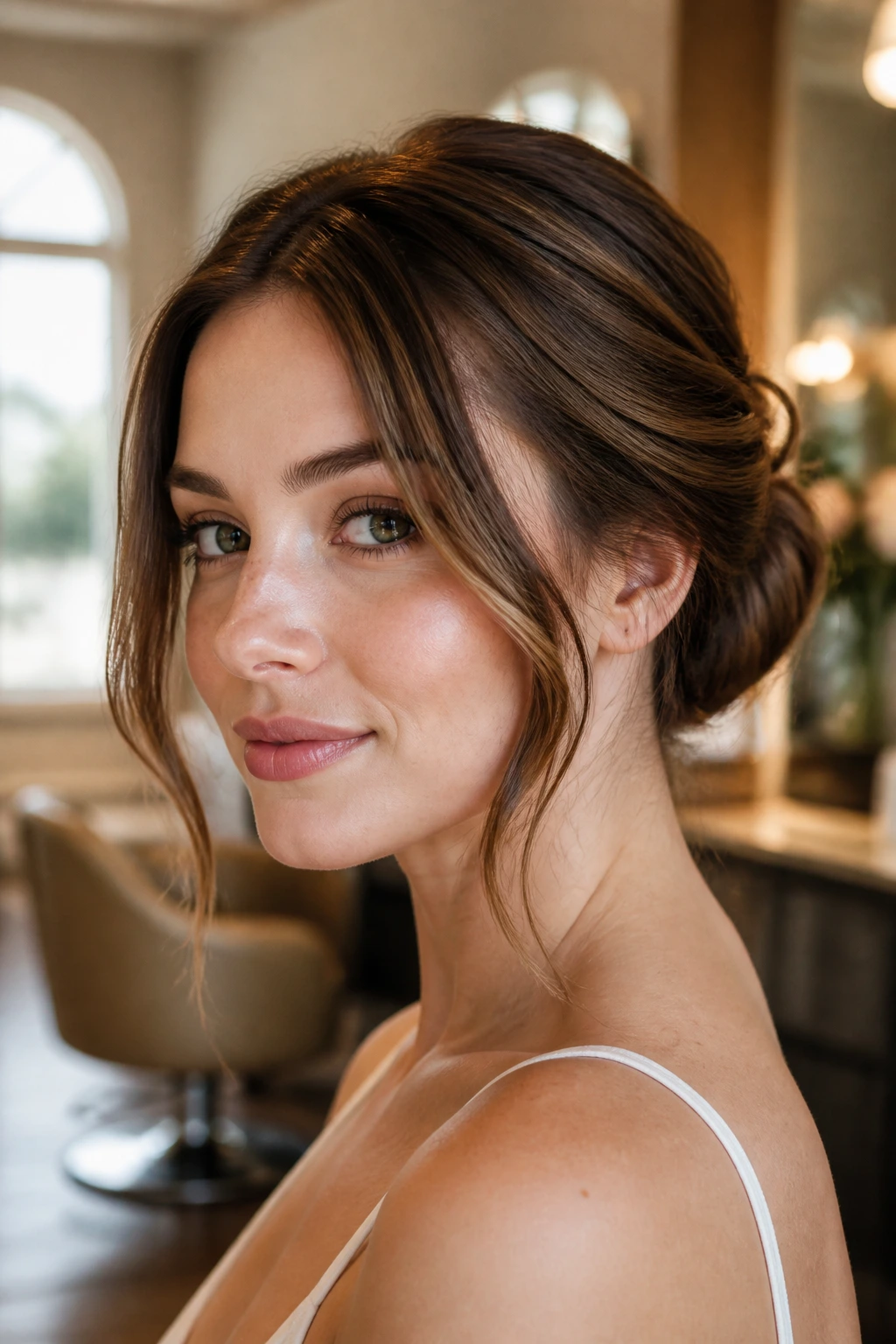
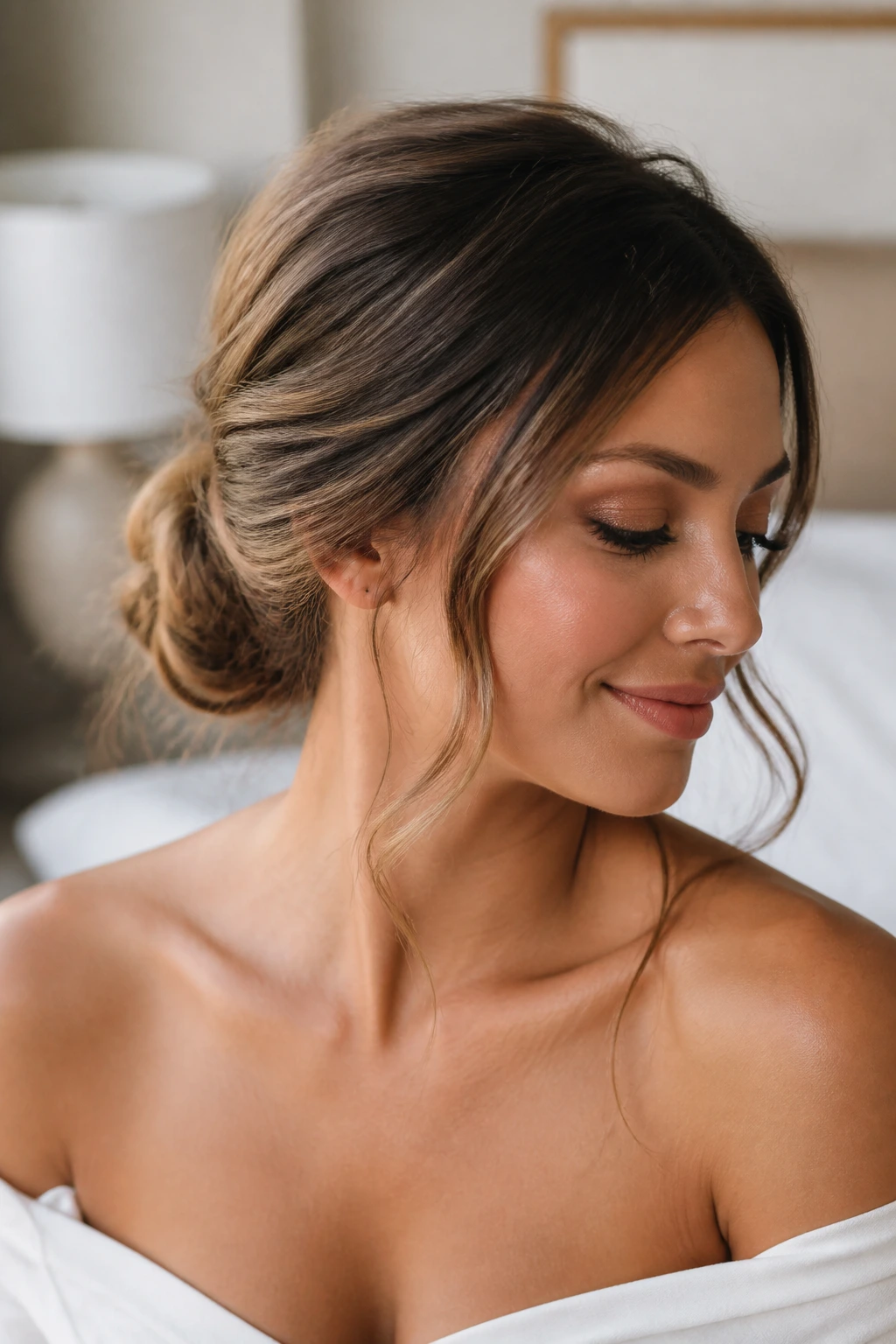
7. Messy Low Bun with Face-Framing Pieces
This is the style that saves a lot of weddings.
A messy low bun on medium hair can look soft and expensive if you give it just enough structure. It can also look like the hair gave up if you skip the prep. So the difference matters.
Why it works: The bun sits low, so the length doesn’t have to fight gravity. The face-framing pieces soften the look and keep the style from feeling too severe around the cheekbones. With medium hair, the bun stays compact, which means it usually lasts longer than the same style built on very long hair.
Twist the back section into a loose knot, pin the sides in layers, and leave two thin pieces out at the front. Curl those front pieces away from the face, then mist everything with a flexible hairspray. If the bun starts to look too flat, pinch it gently at the top and loosen just a few strands. Don’t tear at it. That just makes frizz.
This one is a wedding workhorse. It pairs with almost any dress, and it survives a long reception better than most styles in the pile.
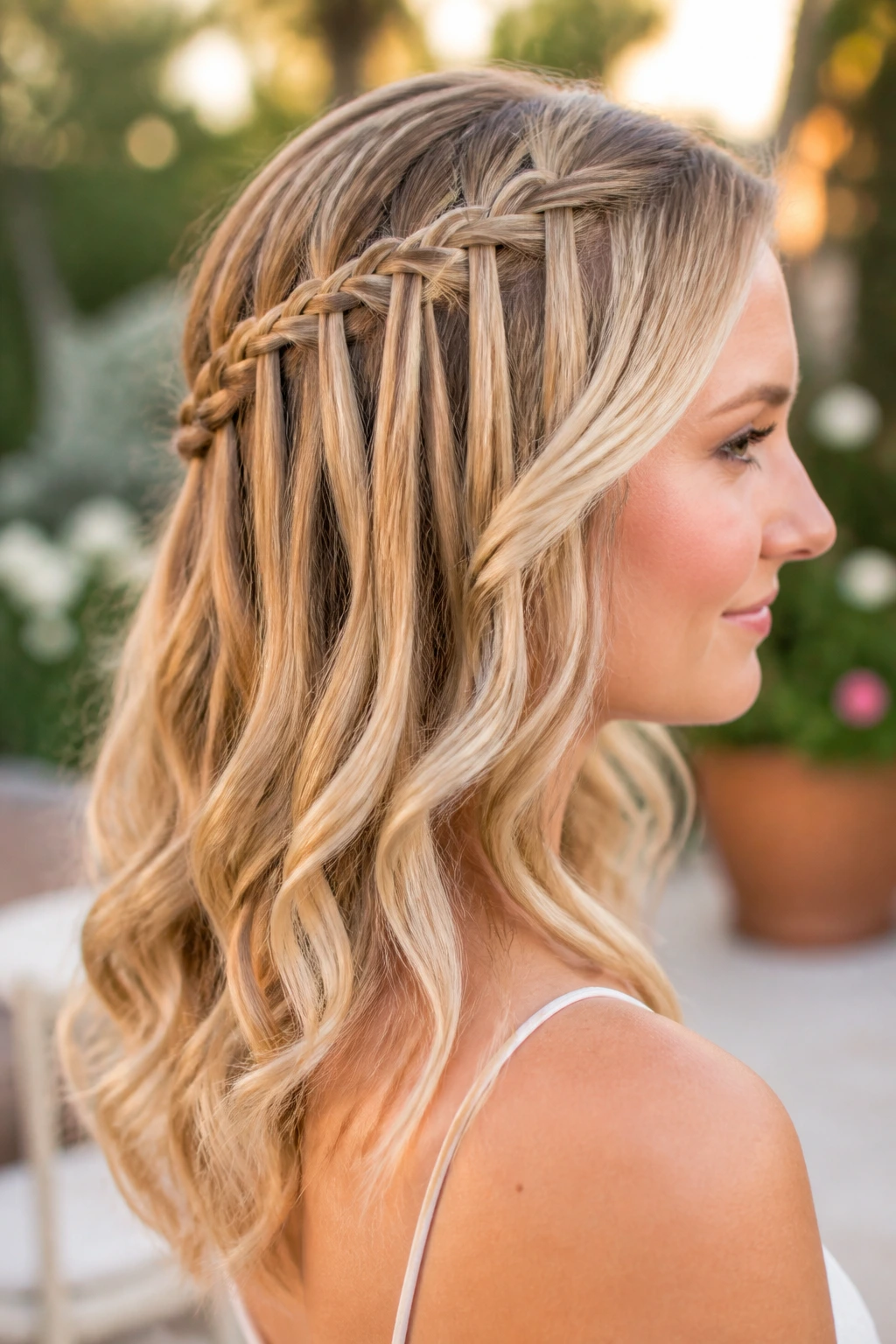
8. Waterfall Braid Half-Up
A waterfall braid gives medium-length hair a little motion. It looks detailed without taking over the whole head, which is exactly why it works so well for bridesmaids.
How it reads in real life: The braid creates a pretty line across the head, and the dropped strands keep the style soft. On medium hair, those strands are short enough to fall cleanly into the rest of the hair instead of looking stringy. That’s the difference between a braid that looks intentional and a braid that looks unfinished.
The best version starts with curled or waved hair. A straight waterfall braid on medium hair can feel thin unless the hair is very dense. Braid from one side toward the back, dropping a piece each time, then secure the end under the top layer with a hidden pin. Keep the lower half brushed out gently so it moves as one piece.
Tiny florals, narrow pins, or a small comb sit well above the braid. Leave the accessory subtle, because the braid already does enough visual work.
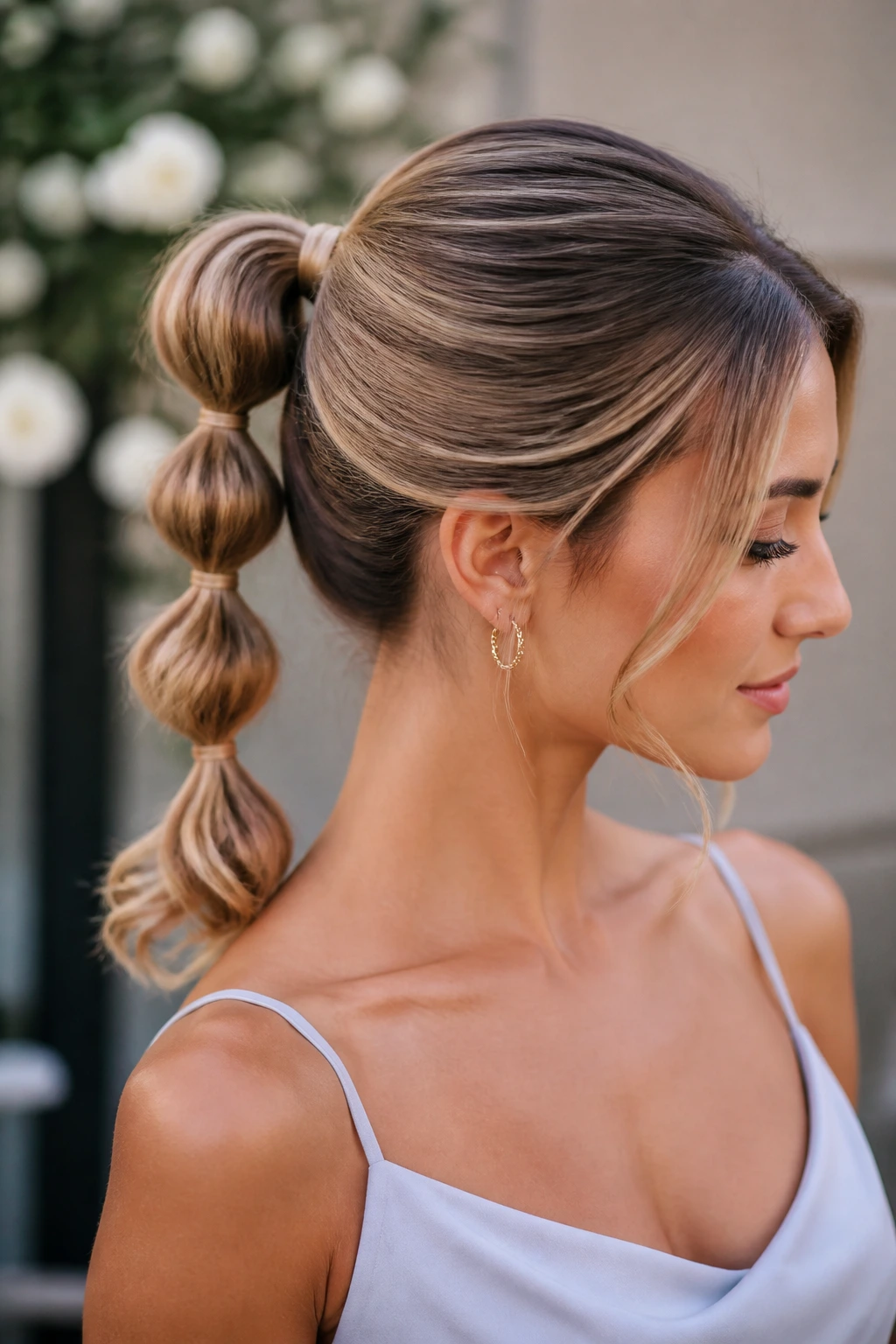
9. Bubble Ponytail for Collarbone Length
A bubble ponytail is more playful than most wedding styles, but on medium-length hair it can look surprisingly refined. It has shape. It has rhythm. It also keeps the hair off the neck, which matters when the event is warm or the dress is close at the collar.
Use clear elastics every two or three inches down the ponytail, then gently tug each section into a rounded bubble. If the hair is fine, tease each section lightly before you stretch it. If the hair is thick, you may not need much teasing at all.
What to watch
- Keep the crown smooth so the style doesn’t drift into cheerleader territory.
- Wrap the first elastic with a strand of hair for a cleaner finish.
- Curl the tail ends so the last section doesn’t look chopped off.
This style works best on dresses with simple necklines and on bridal parties that want something a little less traditional. It’s a good one for younger bridesmaids too, as long as the rest of the styling stays polished.
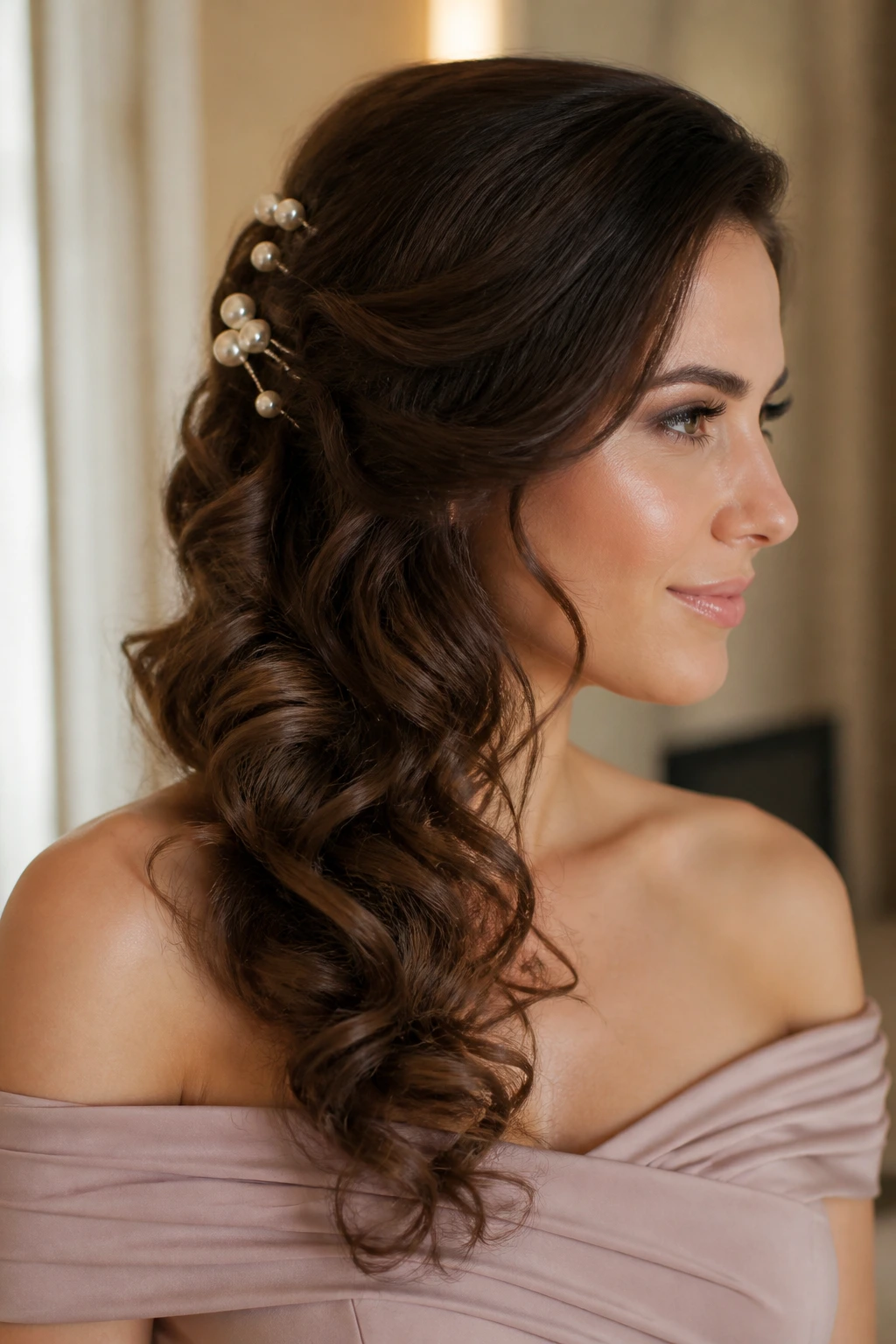
10. Side-Swept Curls with Pearl Pins
Side-swept curls are one of those styles that look easy until you try to do them well. Then the balance becomes obvious. The hair has to feel soft, but not messy. Structured, but not frozen. Medium length handles that balance nicely.
Part the hair deeply to one side, curl it all in the same direction, and sweep the heavier side over one shoulder. Secure the back with a few hidden pins, then place pearl pins or a small comb where the hair gathers. That gives the style a focal point without making it loud.
This is a strong choice for asymmetrical dresses and off-the-shoulder gowns because it lets the neckline stay visible on one side. It also works when the bridal party wants a romantic look that still feels grown-up. Keep the curls brushed into waves rather than leaving them too ringleted. The result sits flatter, in a good way, and moves better when the person turns.
11. Rope-Braid Halo
A rope-braid halo feels a little more modern than a standard crown braid. It has cleaner lines, and medium hair keeps the shape compact.
Take two front sections, twist each one tightly in the same direction, then wrap them around each other in the opposite direction. That’s the rope effect. Bring each side back around the head and pin them so the join disappears behind the ear or under a low twist at the back. If the hair is layered, a touch of pomade on the fingertips helps hold the shorter bits in place.
This style is especially useful when the bridesmaid dress has a lot of detail at the bodice. It keeps the hair controlled and out of the way without looking plain. A few soft tendrils can stay around the face, but keep them narrow. If they get too thick, the halo loses its shape.
12. Knotted Half-Up Knot
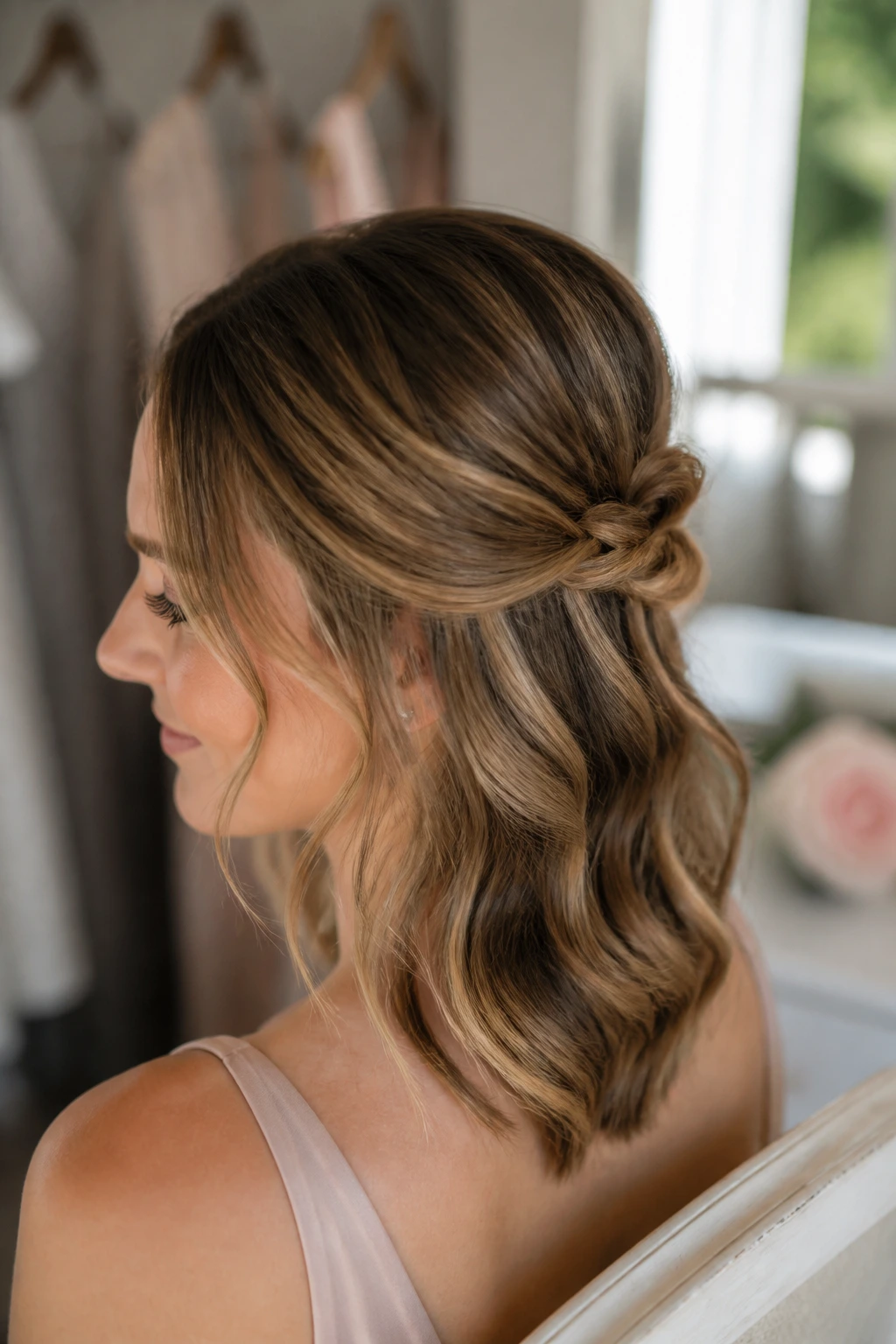
A knotted half-up style is one of the quickest ways to make medium-length hair feel wedding-ready. It works because the knot looks deliberate even though the technique is simple.
Pull back the top half of the hair, split it into two sections, tie them over one another, and pin the knot flat against the back of the head. Then curl the lower half into soft bends or loose waves. The trick is to keep the knot small and centered. A giant knot tends to sag and look awkward on medium hair.
This is a good style for bridal parties that want a unified shape with not a lot of fuss. It suits square necklines, simple satin dresses, and minimalist ceremonies. If the hair is slippery, texturizing spray at the crown matters more than hairspray at the end. Grip first. Hold second.
13. Sleek Center-Part with Tucked Ends
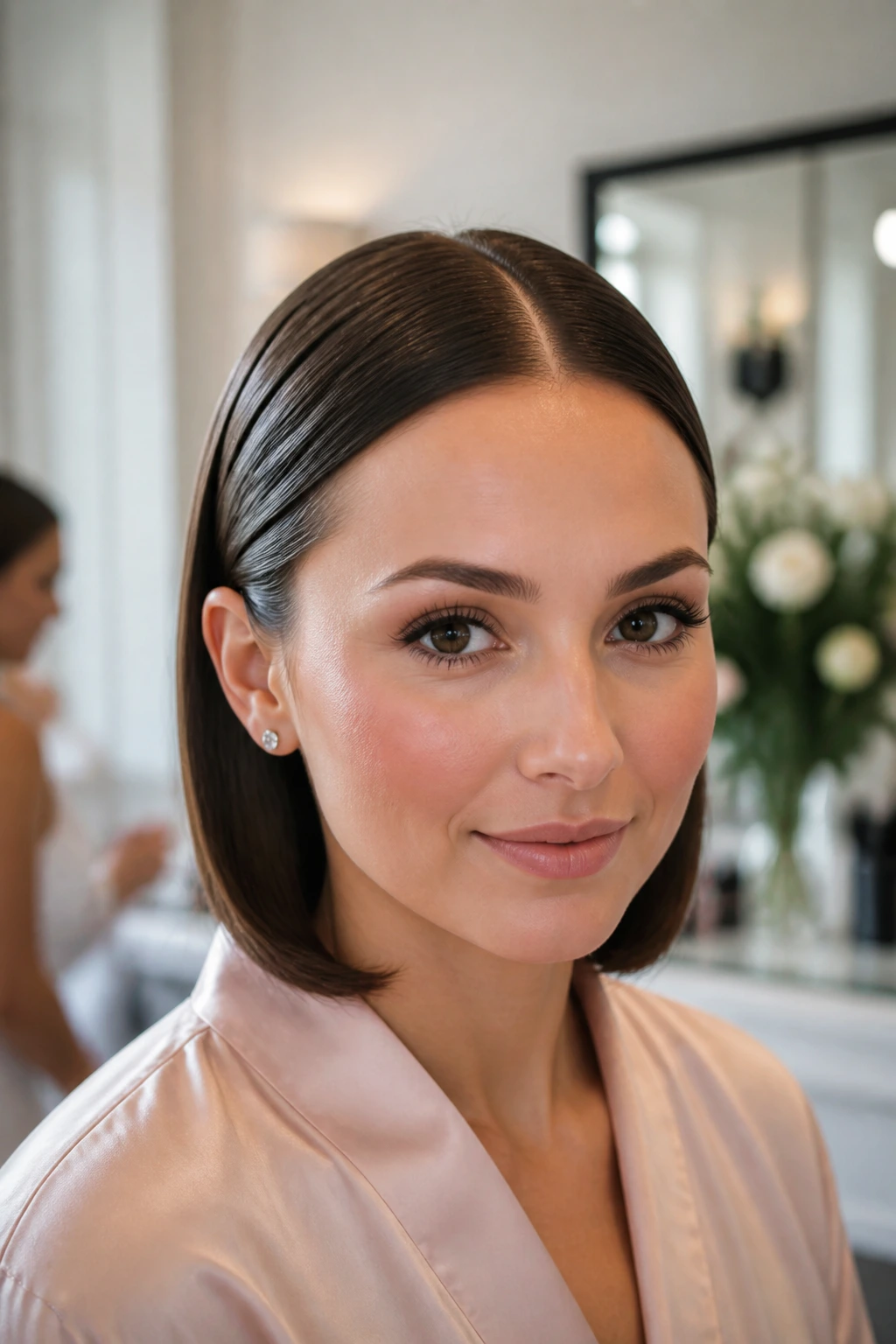
Not every bridesmaid needs curls. Sometimes the cleanest move is a smooth center part and neatly tucked ends.
This style works best when the hair is straight or smoothed with a flat iron. Part it dead center, apply a light smoothing cream, and tuck the ends under at the nape or just behind the ears, depending on the shape you want. The surface should look glossy, but not wet. Wet-looking hair in wedding photos often reads harsher than people expect.
It’s a sharp choice for modern weddings, sculptural dresses, and very neat bouquets. The hairstyle gives strong lines and a quiet kind of polish. It also holds up well when the bridesmaids are wearing statement earrings, because the hair does not compete.
If you’re using this style on layered medium hair, pin the shorter layers flat beneath the top panel. Short pieces love to pop out at the nape, and that can ruin the clean finish fast.
14. Romantic Lob Waves with a Clip
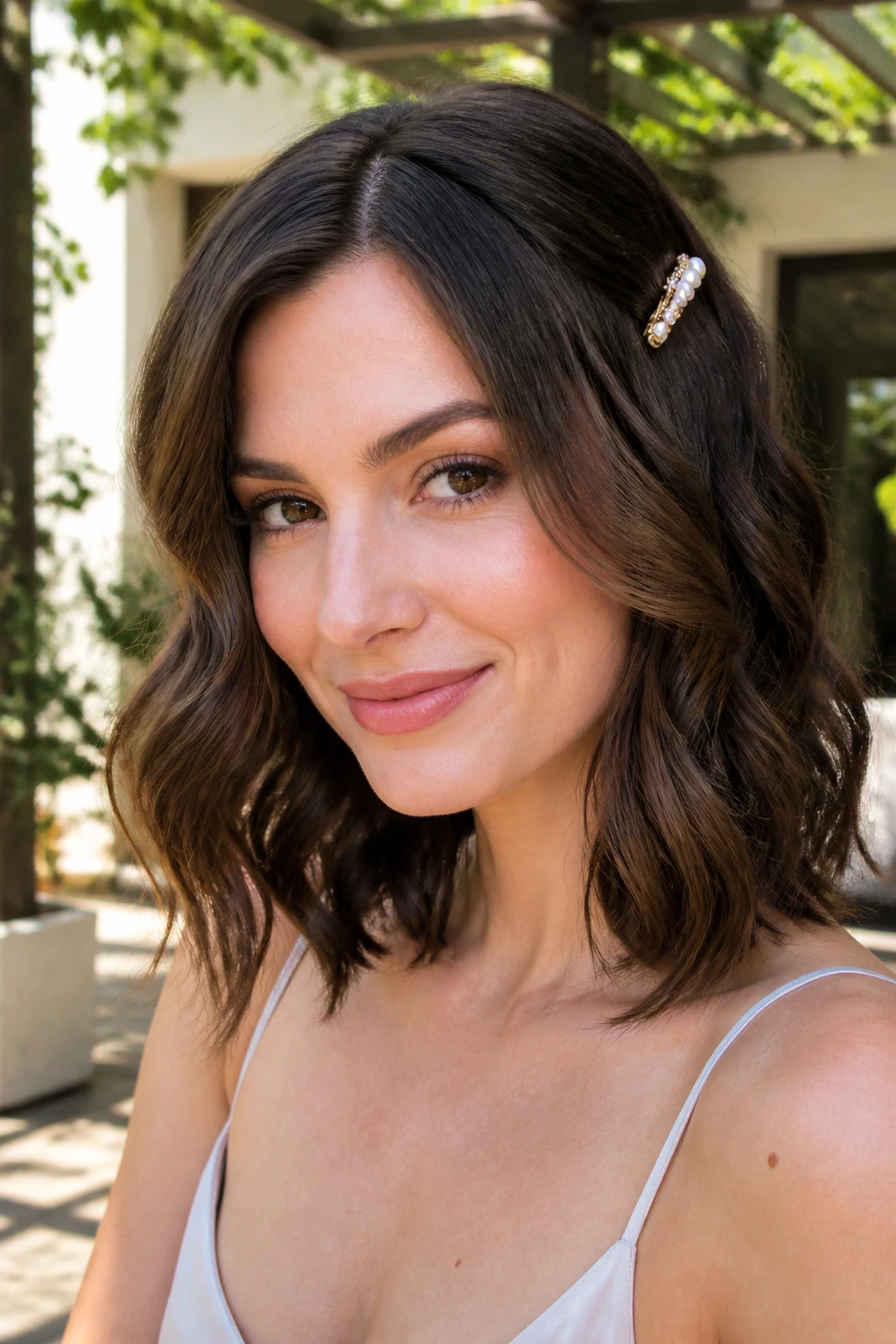
A lob with waves is one of the easiest styles to make look intentional. If the cut already sits around the collarbone or a little above, you’re halfway there.
Use a medium curling iron or a flat iron bend to create broad, soft waves. Don’t curl every piece from root to tip. Leave the ends a little straighter if the hair naturally falls that way. It keeps the result from looking overworked. Then add one beautiful clip on the side, not a handful of them. One piece with some shape is enough.
This is the style for bridesmaids who want hair down but still want to look dressed up. It works especially well with satin, silk, and clean-cut dresses because it brings a little movement to an otherwise simple outfit. A clip with pearls or brushed gold gives the whole look a finished edge.
15. Braided Low Bun with Ribbon Tie
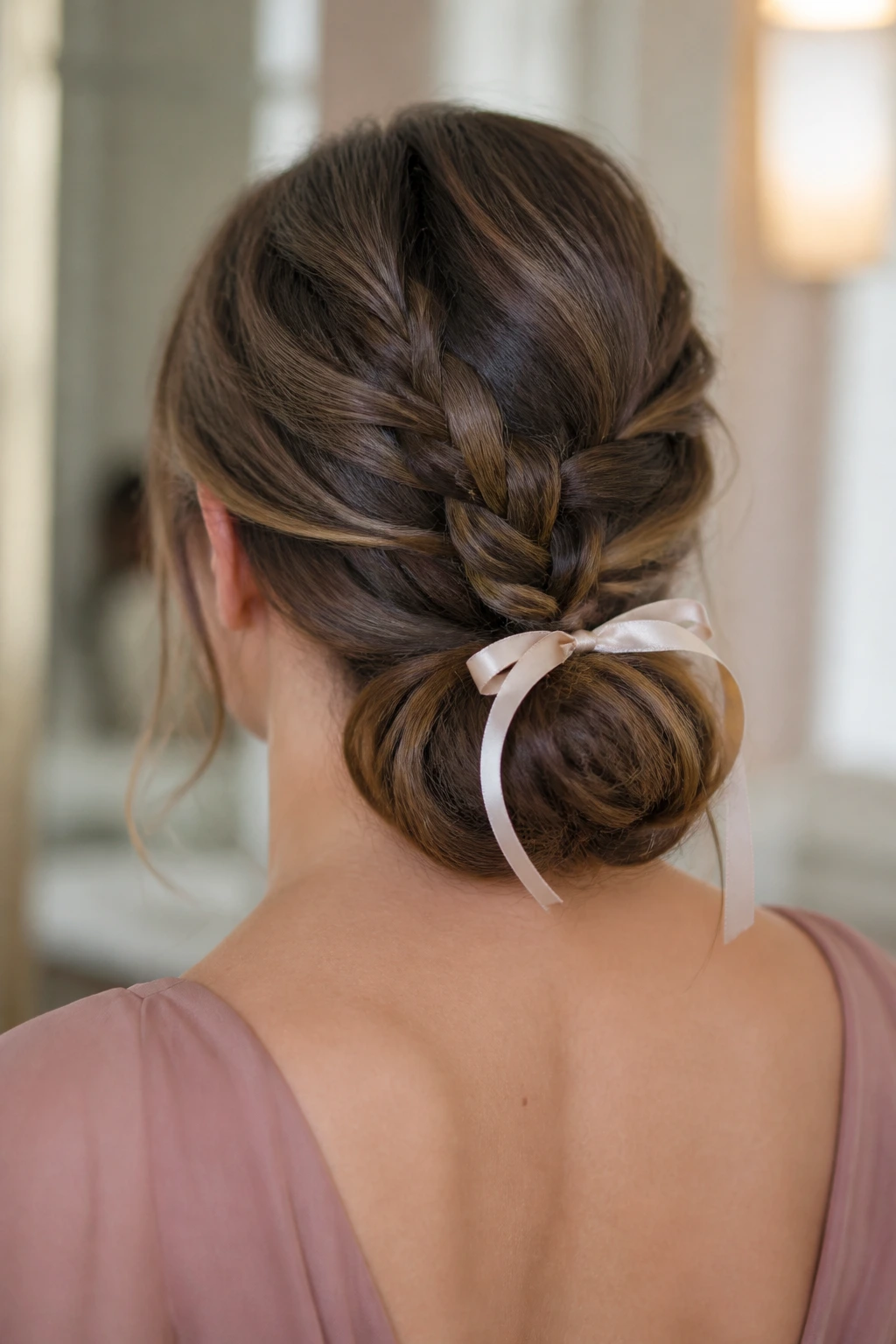
A braid feeding into a low bun gives medium hair enough visual detail to feel special, while a ribbon keeps the finish soft.
Start with a loose braid from the crown or one side of the head, then gather the rest into a bun at the nape. Secure it, then wrap a ribbon around the base or tie it into a small bow. The ribbon should be narrow enough not to bulk up the bun. Wide ribbon can overwhelm medium hair fast.
This style makes sense when the bridal party wants a matching theme but not a rigid, identical look. Change the ribbon color to suit the palette, or keep the braid tighter on some bridesmaids and looser on others. The silhouette stays the same. The mood shifts a little.
It also photographs well from the back, which matters more than people admit. Guests spend a lot of time looking at the backs of dresses and the shape of the hair while the bride walks down the aisle. Small detail. Big payoff.
16. Twisted Crown into a Low Pony
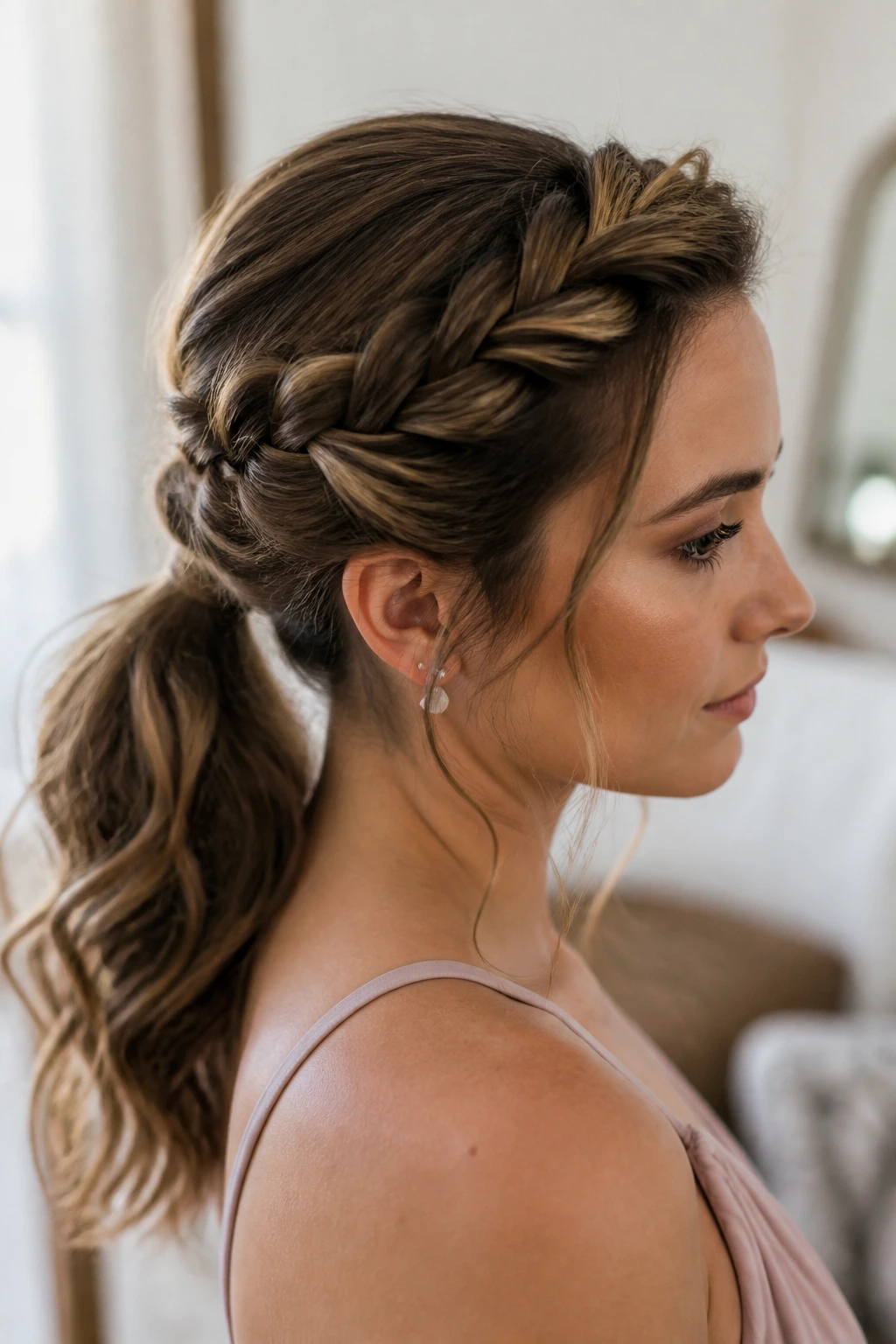
This is one of my favorite middle-ground styles because it feels polished without being precious.
Twist small sections from each temple back toward the crown, then gather the rest into a low ponytail. The twisted crown gives the front shape. The ponytail keeps the look relaxed and wearable. On medium-length hair, the pony sits at just the right weight—not too thin, not too bulky.
You can keep the pony smooth for a cleaner feel, or curl the tail slightly for softness. Either way, the style is useful when the dress has lots going on at the bodice or sleeves. It clears the face and lets the outfit stay in charge.
A good trick here is to leave the twist slightly looser than you think you should. Tight twists can pull hard at the temples and make the face look pinched in photos. A softer twist sits better and still holds.
17. Voluminous Blowout with a Barrette
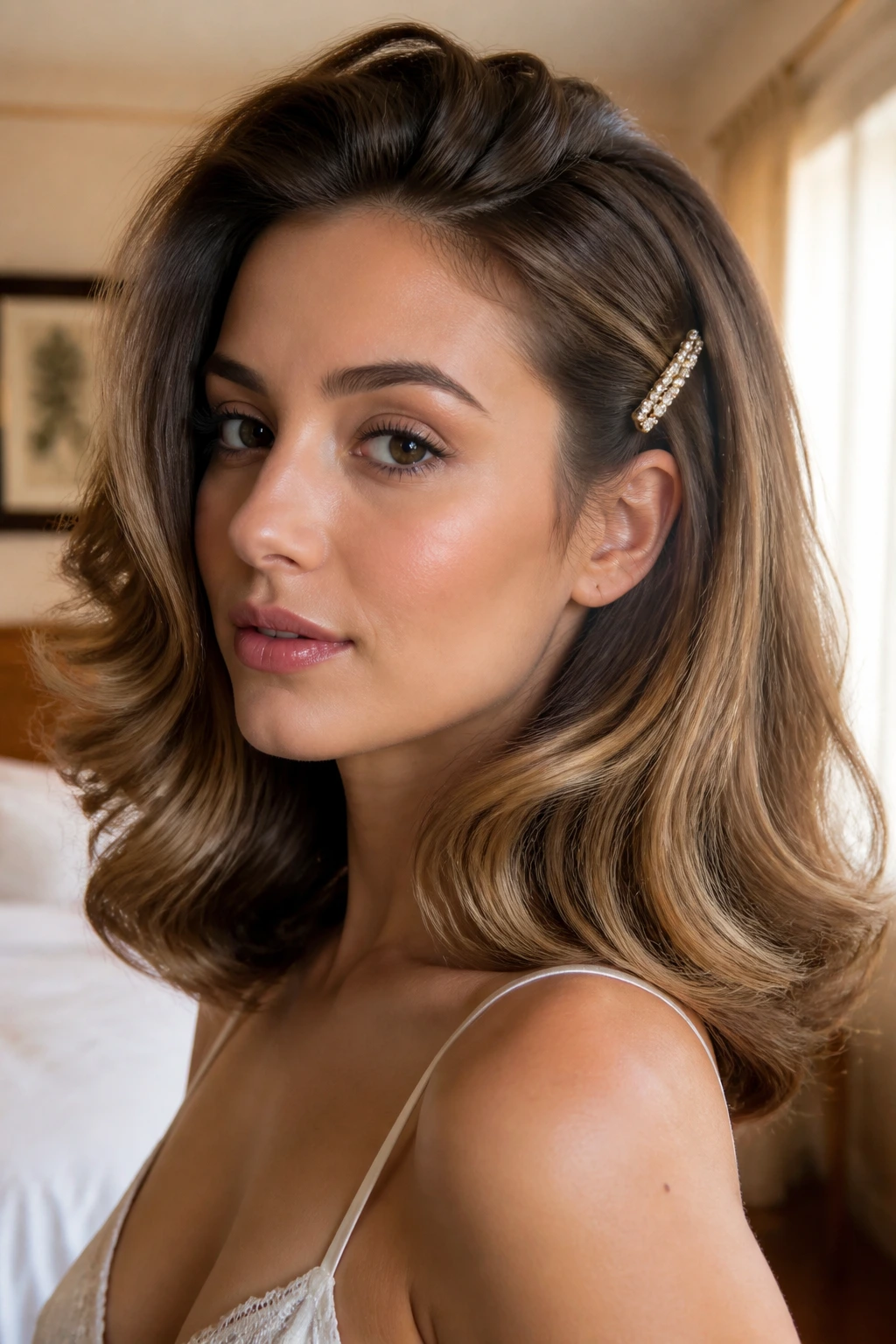
Some bridesmaid hair should move. A voluminous blowout does that job. It keeps medium-length hair down and glossy while still looking intentional enough for a formal event.
Use a round brush or large rollers to build lift at the roots and bend through the ends. The sides should skim the face, not stick flat to the head. A single barrette, clipped just behind one ear, keeps the front from feeling too loose. That’s the line I like here: hair down, but with one firm point of control.
This style suits structured gowns, sleek dresses, and bridal parties that want to look elegant without having everyone pinned up. It also flatters layers better than many updos do, because the cut gets to show itself instead of disappearing into a knot.
Humidity is the weakness here. A light anti-frizz serum on the mids and ends helps, but don’t pile it near the roots or the blowout will collapse early.
18. Double Twists into a Soft Bun
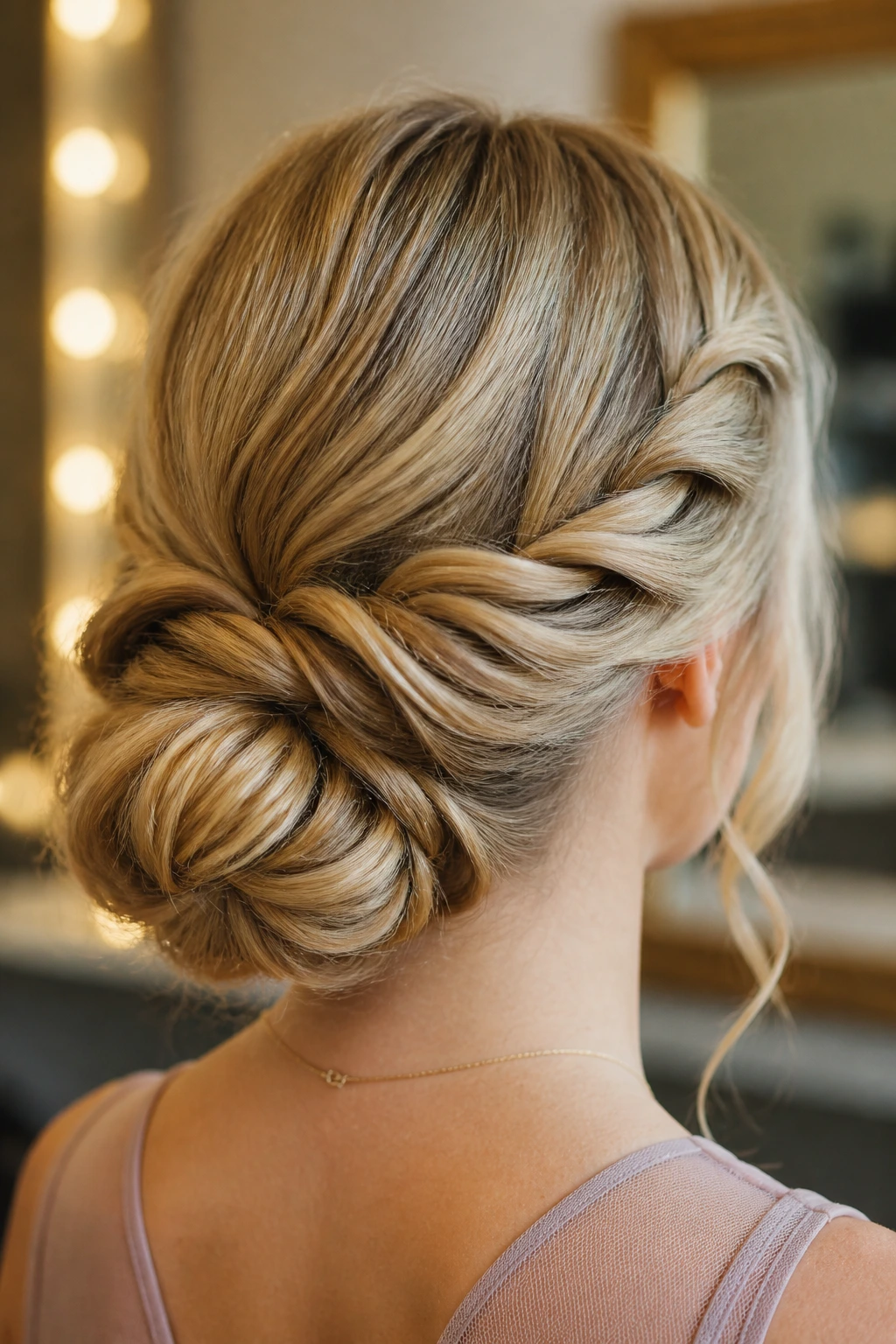
Two twists can do more work than one big section. On medium hair, that means better hold and a neater shape.
Take two front pieces, twist them back separately, then join them into a soft bun at the nape. The double entry gives the style a little architectural detail without making it fussy. It’s especially helpful if the hair has layers that don’t want to stay in one clean section.
Why this one survives a long event
- The twists distribute tension instead of yanking from one point.
- The bun stays close to the head, so it doesn’t sag as much.
- Loose face pieces can be left out without destroying the structure.
A few decorative pins at the join make it feel finished. Keep the bun soft around the edges. If every strand is sealed down tight, the style loses its wedding softness and starts to look formal in the wrong way.
19. S-Pattern Glam Waves
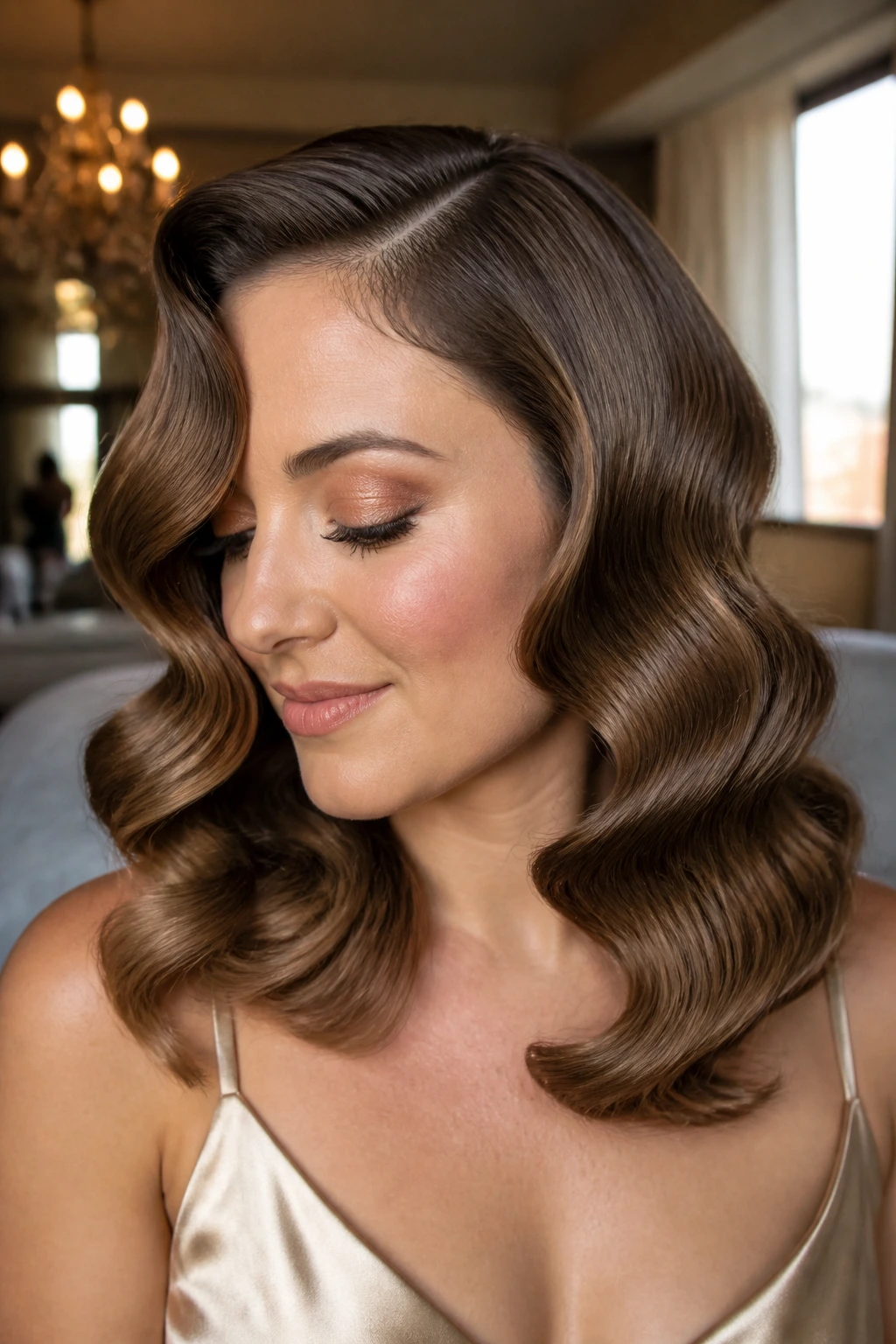
S-waves are for the bridesmaid who wants movement with a little more shape than regular loose curls. They have a smooth, sculpted curve that looks especially good on medium-length hair because the wave pattern stays visible.
Set the hair in alternating directions with a curling iron, pin the curls to cool, then brush them into soft S-shaped bends using a paddle brush and a comb. This is not a style to rush. The cooling step matters. If you brush too soon, the wave collapses into a vague puff and the clean pattern disappears.
This style works best for formal evening weddings, beaded dresses, and simple necklines that can support a more glamorous hair finish. A deep side part gives it more personality. Center parts can work too, but the result is calmer, less dramatic.
Use a flexible spray, not a crunchy one. S-waves need touchable movement. If they stiffen up, the whole point is gone.
20. Lace Braid into a Low Knot
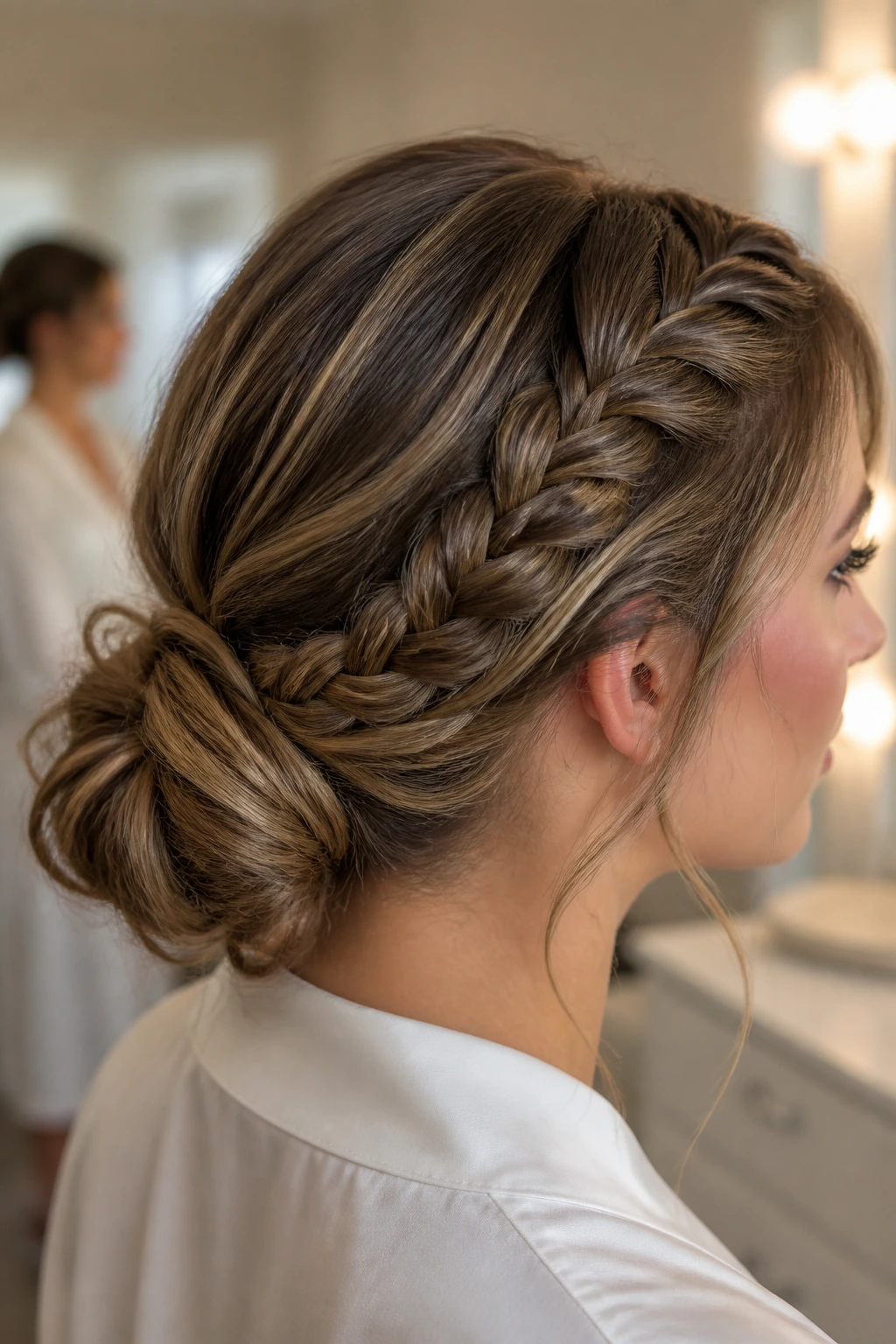
A lace braid is similar to a French braid, but one side gets dropped in only one direction, which creates a softer edge. That detail makes it lovely for medium-length bridesmaid hair.
Start at one side near the temple and braid along the hairline, feeding in small pieces as you move toward the back. Stop when you reach the opposite side, then gather the rest into a low knot. The braid gives the style a line; the knot keeps it grounded. Together, they look finished without feeling overworked.
This is a good option if the bridal party wants one detail that reads clearly from the front. It also works when the dress neckline is open and the hair needs to balance it visually. A braid plus knot combination gives enough shape to frame the face and enough calm to let the dress stay visible.
A little texture at the root helps the braid stay visible. Too much smoothing makes the braid disappear into the head.
21. Minimalist Tucked-Under Illusion Bob
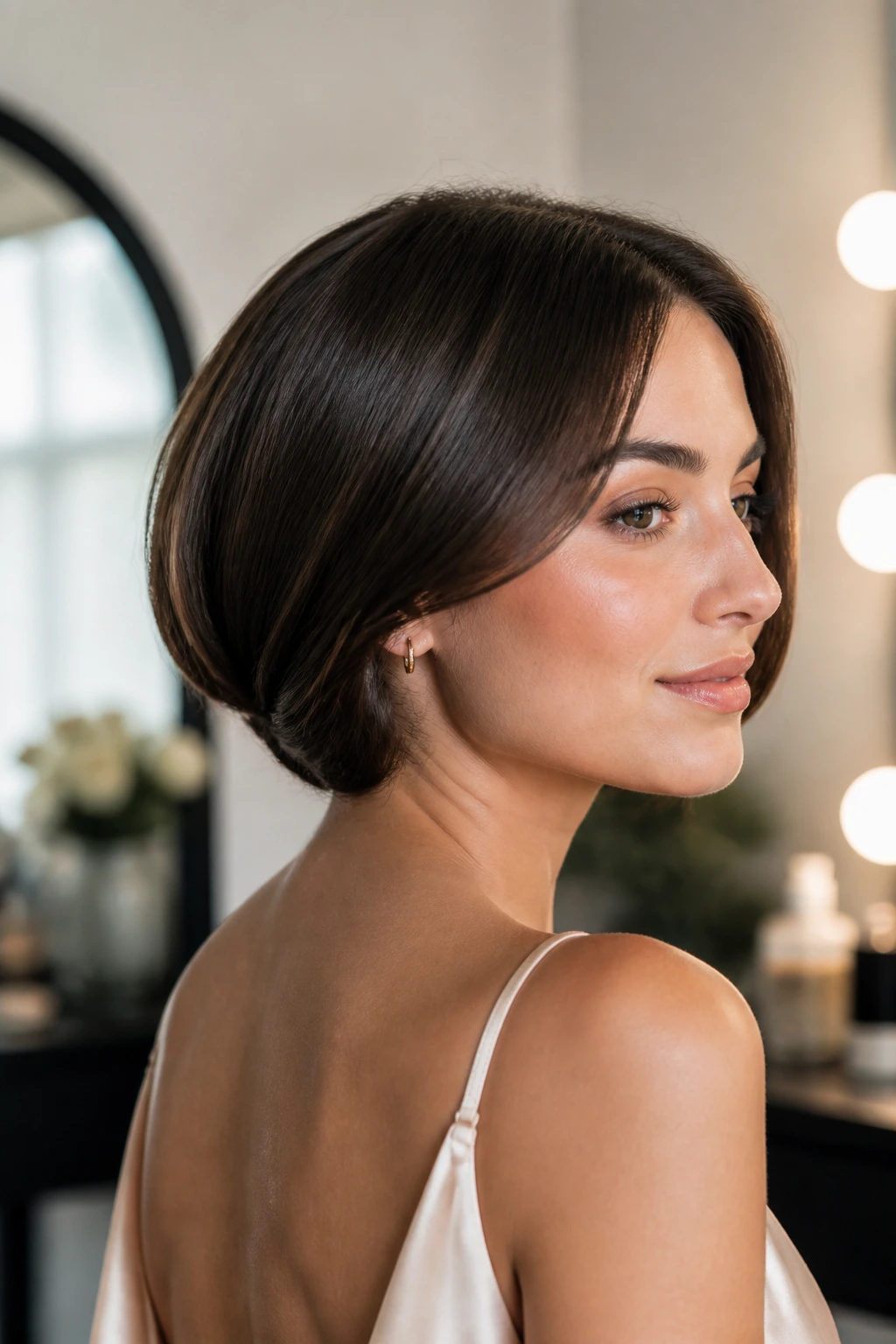
The illusion bob is pure cleverness. You tuck the length under, hide the pins, and walk away looking like you have a shorter cut that was styled on purpose.
This works especially well with medium-length hair because there’s just enough length to roll under cleanly without a lot of extra bulk. Smooth the hair, create a soft bend through the ends, then tuck and pin the bottom edge inward at the nape or just behind the ears. The finish should look clean from the side and from the back.
It’s a smart pick for bridesmaid dresses with sharp tailoring, high necks, or very modern lines. The hairstyle keeps the focus on the outfit and the face. If you want a little softness, leave one narrow piece around the front. If you want the cleanest look possible, keep everything tucked.
The illusion bob is not forgiving on very layered ends unless the layers are pinned carefully. So if the cut is choppy, build the style with more pins and a touch of smoothing cream.
What Makes These Styles Work So Well on Medium Hair
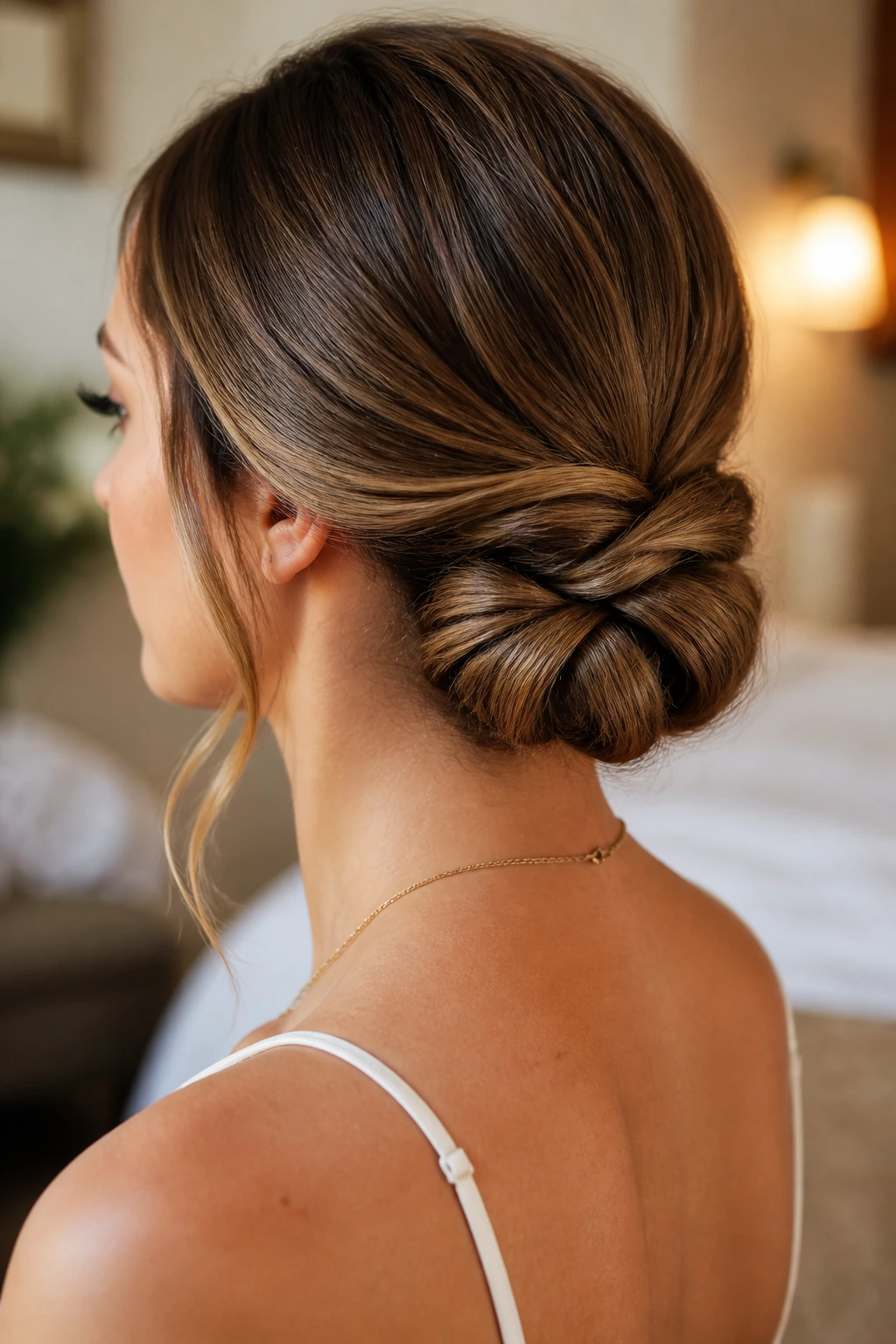
Medium hair gives you a useful middle ground. It holds shape better than very long hair and offers more styling room than a true short cut. That means you can create movement without chasing length that is not there, which is where a lot of wedding styles go wrong.
For bridesmaids, that balance matters. The hair has to look finished from a distance, but it also has to survive real life: hugs, dancing, weather, and the occasional overenthusiastic aunt. A good medium-length style keeps the silhouette readable and the weight low enough that the pins do not start sliding.
There’s also a practical advantage. Medium hair often needs fewer hidden supports. You can make a low bun, a twisted crown, or a faux bob with fewer donuts, fewer padding pieces, and less product than you’d need on longer hair. That usually means the style feels lighter on the head, which people notice by hour four whether they mean to or not.
Essential Equipment for These Styles
-
1-inch curling iron or wand: Best for defined waves, bent ends, and styles that need a little body without giant curls.
-
1¼-inch curling iron: Handy for softer bridesmaid waves and blowout-style bends that should look relaxed, not tight.
-
Tail comb: Use this for clean parts, teasing at the crown, and slipping sections into place without making them bulky.
-
Bobby pins in two shades: Dark pins for dark hair, blonde pins for light hair. Matching the pin color to the hair keeps the style from looking dotted with hardware.
-
U-pins: These hold buns and twists more softly than standard bobby pins, especially for thicker medium hair.
-
Mini elastics: Needed for braids, bubble ponytails, and wrapped ponytails. Keep a few extra in a pocket. They vanish.
-
Texturizing spray: Adds grit to freshly washed hair so braids and twists can actually hold.
-
Flexible-hold hairspray: Strong enough to set the style, soft enough to avoid that crackly finish that makes people touch their hair all night.
-
Heat protectant: Use this before any curling or flat-ironing. Skipping it is a bad trade.
-
Teasing brush or fine-bristle backcombing brush: Helpful when a style needs crown lift or a little padding at the roots.
-
Smoothing cream or light serum: Use sparingly on the ends or flyaways. A pea-sized amount is usually enough.
-
Decorative pins, combs, ribbon, or barrette: Match these to the dress and jewelry instead of treating them like an afterthought.
Smart Product and Accessory Picks
Hair product choices matter more than most people think on wedding mornings. A strong styling plan can still fall apart if the hair is too slippery, too clean, or too soft for the shape you’re trying to build.
Start with texture. If the hair is fine or freshly washed, a dry texture spray or volumizing mousse gives it a little grip before any curling happens. If the hair is coarse, a smoothing cream at the ends helps the finish look intentional instead of frizzy. The goal is not to drown the hair in product. The goal is to give each section one clear job.
Accessories need the same kind of care. A pearl comb can make a half-up style feel elegant in seconds, but a huge rhinestone piece can drag a medium-length style down and make it look busy. Narrow ribbon works better than wide ribbon on most medium hair. Small flowers stay put better than large blooms. If the accessory has weight, test it before the wedding day. Pretty things are not always practical things.
One more thing: if extensions are part of the plan, pick them early and match the tone in daylight. Medium hair often needs only a small amount of fill—maybe one or two clip-in pieces for a ponytail or bun. A full set can be too much unless the bride wants a lot of volume across the whole party.
How to Match the Style to Dresses, Necklines, and Bridesmaid Roles
A good bridesmaid hairstyle does not live alone. It sits beside the dress, the neckline, the bouquet, and the rest of the bridal party, and it should respect all of them.
Neckline match: Higher necklines usually look better with low buns, tucked styles, or anything that clears the shoulders. Strapless and sweetheart dresses can carry softer waves, side-swept styles, or a half-up braid because the hair helps frame the open top half of the dress. One-shoulder dresses usually benefit from hair pulled toward the opposite side so the line of the dress stays visible.
Accessory match: Pearl pins, narrow combs, and small floral pieces suit soft braids and waves. Sleek styles can handle a stronger barrette or metallic clip. If the jewelry is loud, keep the hair quieter. If the earrings are tiny, the hair can do a little more work.
Role balance: The maid of honor can wear the same silhouette as the rest of the bridal party with one slight change—a deeper side part, a fuller crown, or a more visible accessory. That keeps the group coordinated while giving one person a small point of distinction. It’s a better move than changing the entire hairstyle.
Trial Runs, Prep, and Sectioning Strategy
A wedding hairstyle looks much better when it has been tested once before the event. I’d never wing a style like a French twist or a faux bob on the morning itself unless the hair is very cooperative and the plan is simple.
Wash timing matters. For most of these styles, day-old hair is easier to work with than freshly washed hair because it grips pins better. If the hair must be washed, dry it fully and add texture product before styling. Damp roots and hot tools are a bad mix. They slow everything down and make the style weaker.
Sectioning is where people rush and pay for it later. Take small, even sections for waves. For updos, create clear front, crown, and nape zones before you start twisting. The more clearly you divide the hair, the easier it is to keep the shape balanced. If one side is already fuller than the other, the asymmetry will show once the pictures are taken.
Do a trial run with the actual accessories if you can. A pearl comb can sit beautifully in one style and slide right out of another. Better to know that before the ceremony than after the processional line has already started moving.
Additional Tips and Finishing Touches
Texture Boost: If the hair feels too soft, mist the roots with texture spray and rough-dry for 30 seconds before styling. That tiny bit of grip makes braids and twists hold longer than another round of hairspray ever will.
Volume Fix: Lift the crown with a tail comb and a couple of hidden pins instead of loading the whole style with teasing. Too much backcombing can make the hair look fuzzy by the reception.
Gloss Trick: Put a drop of shine serum on the palms, rub your hands together, and skim only the mids and ends. Never smooth it over the roots unless you want the style to collapse.
Custom Finish: Change the mood with one detail: a velvet ribbon for a softer wedding, a pearl pin for classic settings, a slim metallic barrette for modern gowns, or a tiny fresh flower tucked near the ear for outdoor ceremonies.
Hair Type Tweaks: Fine hair benefits from root lift and smaller sections. Thick hair usually needs fewer curls and more pinning. Curly hair often looks best when the natural pattern is refined instead of flattened out completely.
Common Mistakes to Avoid
The biggest mistake is building a style on hair that is too clean and too soft. Freshly washed hair can be slippery as glass, and bobby pins will slide right through it. If you need the wash, use texture spray, a little mousse, and enough drying time to give the hair some bite.
Another common problem is over-curling medium-length hair into tiny spirals and then brushing it hard. The result turns puffy fast. Soft wedding waves should look like waves, not like separate corkscrews fighting each other. Use larger sections, let the curls cool, and brush gently.
People also pin in straight lines too often. That is how buns loosen. Cross the pins in different directions so they lock the hair from more than one angle. A style can look neat from the outside and still be weak inside, and that weakness usually shows up during the first hour of photos.
And then there’s the accessory problem. A large comb, a heavy floral piece, or a thick ribbon can drag medium hair down and flatten the whole silhouette. If the hair is not very dense, keep the accessory small or anchor it with extra pins before the event starts.
Variations and Adaptations to Try
Soft and Airy Version: Leave a little more hair down around the face and loosen the braid or twist slightly after pinning. This fits outdoor weddings, softer dress shapes, and anyone who wants movement instead of polish-first styling.
Clean and Formal Version: Smooth the top section harder, keep the part precise, and pin every loose end under control. This works well with satin gowns, ballroom settings, and black-tie dress codes.
Curly-Hair Friendly Version: Let curls keep their shape where they want to. Use twists and pins around the crown, but don’t fight the natural texture into a completely straight plan. The result feels more alive and usually lasts longer.
Fine-Hair Boost Version: Add a few clip-in fill pieces near the nape or crown, then keep the style compact. Fine hair often looks best in smaller shapes with tight pinning instead of oversized buns that reveal too much scalp.
Shorter-Lob Version: Use more tucked ends, narrower braids, and smaller buns. A lob can handle wedding styling just fine, but it tends to look best when the shape is neat and close to the head.
Statement-Accessory Version: Keep the hairstyle simple and let one strong piece do the work. A crystal barrette, a pearl comb, or a satin bow can carry the look if the hairstyle itself is clean.
Make-Ahead, Touch-Up, and End-of-Day Care
Some parts of bridesmaid hair can be handled before the wedding morning, and that saves a lot of stress. You can test curls, prep accessories, and even practice the sectioning a day or two ahead. If the style depends on waves, setting the hair in curls and letting them cool completely before brushing is a useful rehearsal step. It shows you exactly how much the hair will relax.
For the actual wedding day, pack a tiny touch-up kit. A few bobby pins, a small comb, a travel-size hairspray, one or two mini elastics, and a shine product are enough. That kit should fit in a clutch or sit with the bridesmaid’s personal items so nobody has to rummage through a makeup bag at the wrong moment.
Most of these styles hold well through ceremony and photos, and a pinned-up version often makes it to the reception with only one quick correction. The styles that wear down first are the ones with loose waves or soft half-up sections. Those usually need a light reset near the temples or a fresh mist at the ends after a few hours.
At the end of the night, take the style down carefully. Don’t yank hidden pins out in a hurry. Loosen the structure one pin at a time, then finger-comb the hair before brushing. If the hair was sprayed heavily, a little dry shampoo the next morning helps absorb the leftover product and makes cleanup easier.
Frequently Asked Questions
Can medium-length hair really hold a wedding updo?
Yes, as long as the style respects the length instead of fighting it. Low buns, twists, faux bobs, and tucked styles are usually the strongest choices because they keep the weight close to the head.
What if my hair is layered and won’t stay pinned?
Use smaller sections and more pins, not bigger chunks. Short layers slip out when they’re forced into one heavy twist, so build the style in layers and secure the loose pieces as you go.
Do all bridesmaids need the exact same hairstyle?
No, and that often looks worse anyway. A better approach is matching the silhouette or the finish—soft wave, low twist, side part—while letting each person’s texture and face shape guide the exact placement.
Can I do these styles on freshly washed hair?
You can, but it is not the easiest path. Fresh hair often needs texture spray, mousse, or a bit of root grit before it will hold braids, twists, or pins without sliding around.
What if my medium hair is very fine?
Choose styles that stay compact, like a low chignon, tucked illusion bob, or wrapped ponytail. A small amount of clip-in fill can help, but the real key is pinning into sections that have been given some texture first.
How do I keep curls from dropping before the reception ends?
Let each curl cool fully before brushing it out, and use flexible-hold spray rather than a heavy, sticky one. Warm curls fall. Cooled curls stay in shape much longer.
Are hair extensions necessary for bridesmaid styles on medium hair?
Not always. Many of these looks work fine without them. Extensions make the result fuller, especially for ponytails and buns, but the haircut itself is already enough for most of the styles in this collection.
Which styles work best with strong winds or outdoor ceremonies?
Lower, tighter styles usually win there—twists, buns, tucked looks, and side-swept styles with hidden pins. Loose half-up shapes can work too, but they need more hold at the temples and a little extra spray.
A Style That Holds Its Shape
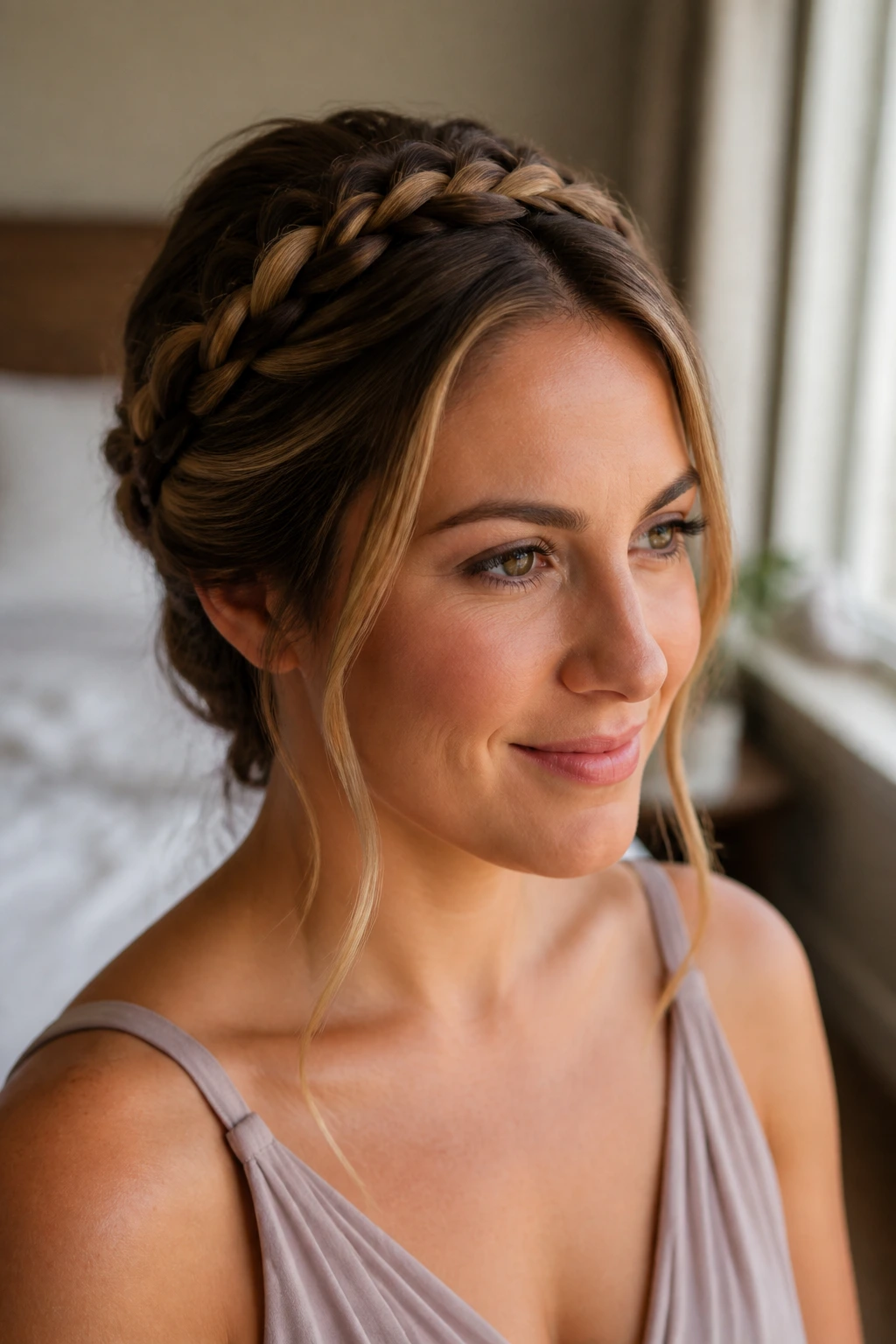
The best bridesmaid hairstyle is the one that stays pretty when the room gets loud. Medium-length hair gives you more than enough room to build something elegant, and it does not demand the kind of upkeep very long hair often does. That’s why these styles work: they respect the length instead of pretending it is something else.
Pick the shape that fits the dress, the weather, and the hair texture in front of you. Keep the accessories small enough to support the look, not overpower it. And if a style feels too complicated to pin on a real head, trust that instinct and choose the cleaner version. Wedding mornings are not the time for heroic hair decisions.
