



Brides with naturally wavy hair start with a head start most people miss. The hair already has bend, lift, and movement baked into it, which means you are not fighting a flat canvas on the wedding morning; you are shaping texture that wants to live. The sweet spot is that middle ground between polished and undone — the kind of wave that still looks soft after a veil comes off, a hug leaves a few pieces out of place, and the room gets warmer than expected.
That is why beach wave looks for brides with wavy hair keep showing up in good salons and better trial runs. They can be airy and romantic, but they do not have to look fragile. A skilled stylist can push them toward glossy and glam, or keep them loose enough to feel like your hair, only better behaved. The same natural wave can carry a pearl comb, a cathedral veil, a garden flower pin, or nothing at all.
The catch is balance. Too much cream and the wave goes slack. Too much spray and the hair turns dry and sticky before the vows. Bridal hair lives or dies on prep, section size, and how well the style matches the dress neckline, veil, and weather. Get those things right, and the result is not “just beachy hair.” It is a wedding style that still has movement when the cake is cut.
Why These Looks Earn a Place in the Trial Run
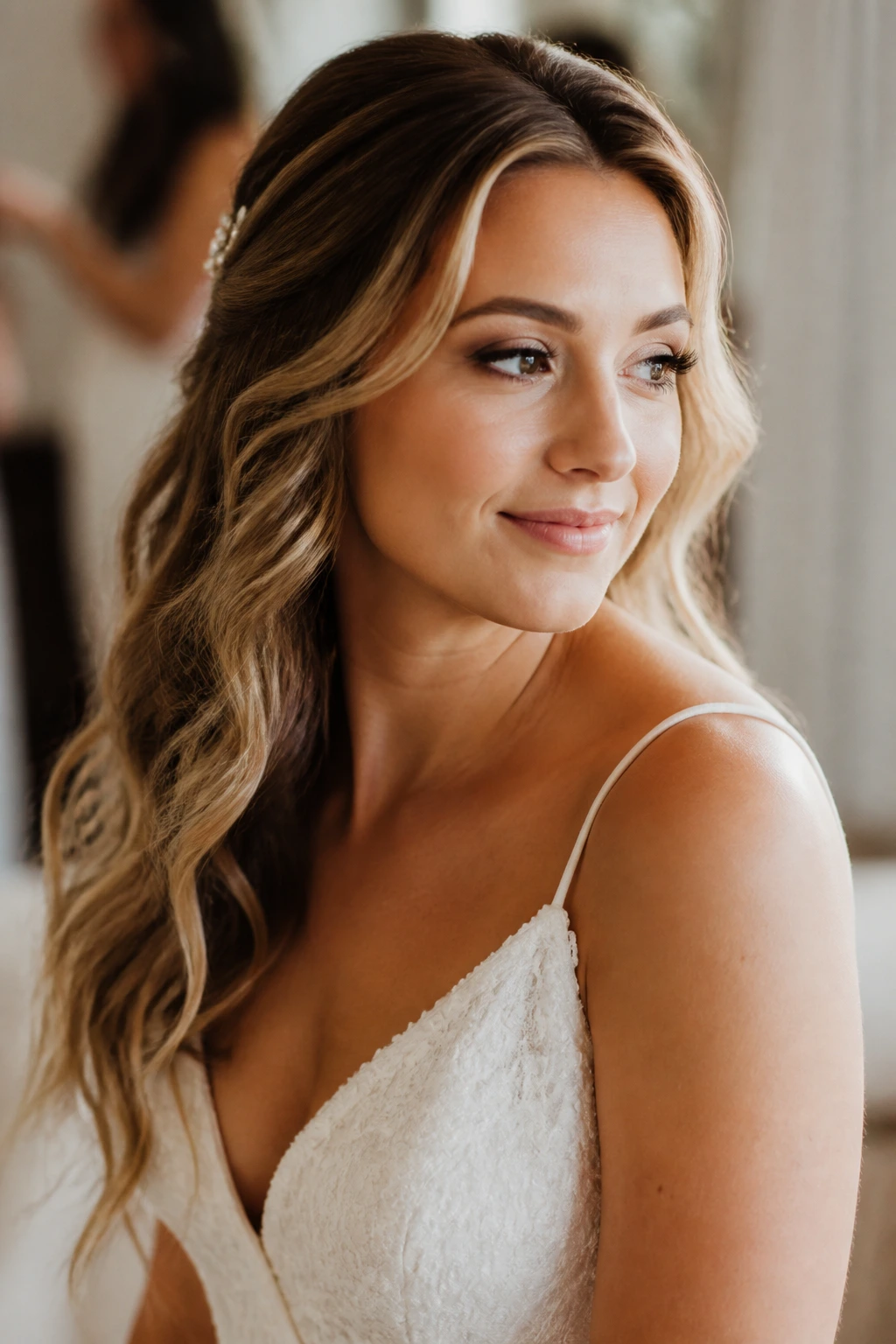
-
Built for natural bend: Every look here works with wavy hair’s own shape, so you spend less time forcing a curl pattern that your hair will fight by lunch.
-
Room for a veil: Several of these styles leave a clean anchor point at the crown, the temples, or just above the nape, which matters more than most brides expect.
-
Easy to dress up or down: The same wave can feel soft and barely-there with a simple dress or more formal with a comb, ribbon, or pinned twist.
-
Less brittle than tight curls: Loose wave patterns move when you walk, sit, and hug people, so the hair does not look frozen in place in every photo.
-
Friendly to different lengths: Bob, lob, shoulder-length hair, and long layers all have a place in this collection, which saves a lot of trial-run frustration.
-
Better in real life: These looks hold up when you are changing rooms, moving around for portraits, and pulling a veil on and off. That matters. A lot.
Why Beach Waves and Wavy Hair Work So Well for Brides
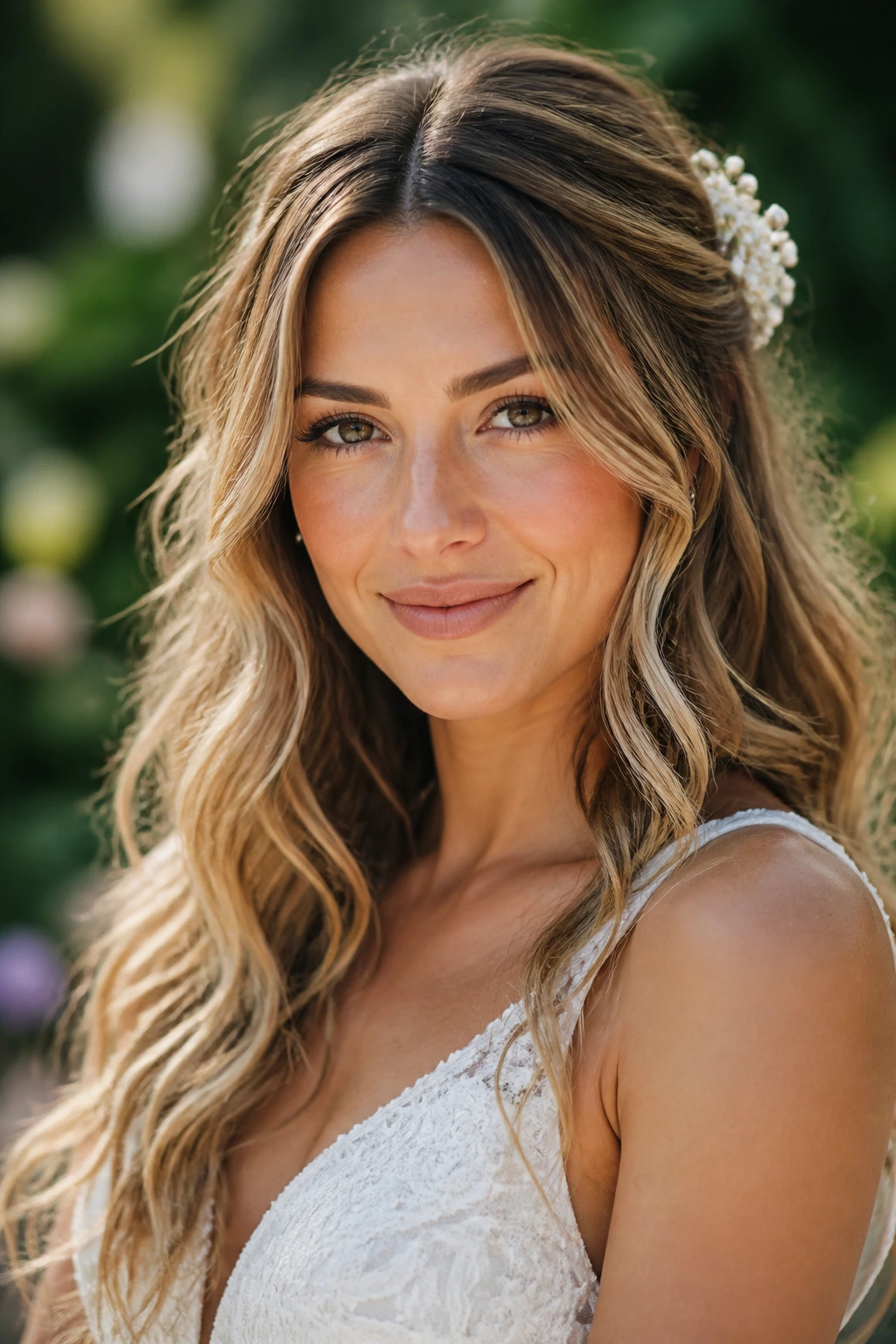
Wavy hair already carries shape in the mid-lengths and ends, so a bridal beach wave can look finished without looking overworked. That is the big win. Straight hair often needs more heat and more product to fake this texture; wavy hair can usually get there with less manipulation, which means less puff at the root and fewer broken-up ends later in the day.
A good wedding wave also gives you options around the face. You can keep the front sections soft and loose for a gentler frame, twist them back for more structure, or tuck one side behind the ear so earrings do some of the talking. That flexibility is one reason this texture photographs so well from different angles — not because it is flashy, but because it has shape when the camera catches it in profile.
And yes, profile matters. A wave that looks pretty from the front but collapses along the side reads thin in side shots, especially if the hair is fine. A bridal beach wave with the right amount of bend through the ends keeps the outline interesting all the way around the head. That is the difference between “cute hair” and a real bridal style.
The part nobody says out loud
If the hair is already wavy, do not bury it under too much smoothing cream before styling. That is how you get limp roots and fuzzy ends. A tiny amount of prep product near the mids is enough; the base needs grip, not slipperiness.
What Makes a Bridal Wave Hold Through the Ceremony and Dancing
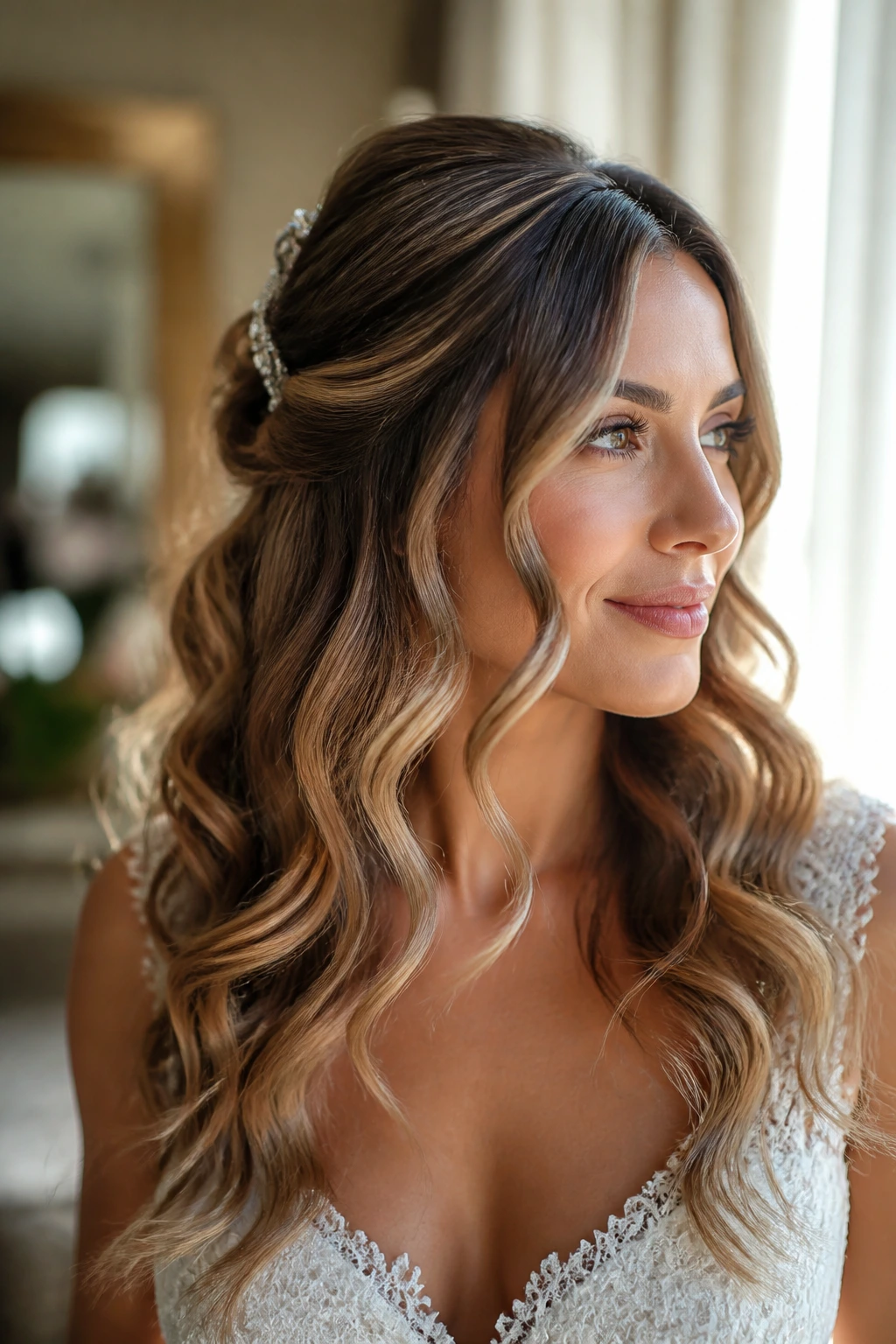
A bridal wave fails for one of three reasons: the sections were too big, the hair never cooled fully, or the finish products were chosen for shine instead of hold. The fix is annoyingly old-school. Smaller sections, slower cooling, and a light hand with the final spray.
The best wedding waves are usually built on hair that is dry, sectioned cleanly, and set in the same general direction with a few intentional alternations. That little change in direction keeps the pattern from collapsing into one wide bend. It also gives the hair a more lived-in look, which is exactly what “beach wave” should mean here — not salt-stiff and crunchy, but soft and touchable.
The hold factors that actually matter
-
Cool-down time: Let each curled section cool fully before brushing or pinning it. Warm hair forgets shape fast.
-
Product order: Heat protectant first, then a light mousse or spray at the roots if needed, then texture spray after shaping. Not the other way around.
-
Section size: One-inch sections give more hold than random, chunky pieces. That is especially true at the crown.
-
Finish choice: Flexible hairspray keeps movement. Heavy lacquer can lock the wave into a stiff shell.
-
Weather plan: Humidity calls for a touch more grip at the root and a little less oil on the ends. Dry air wants a tiny bit more shine.
Essential Tools for Styling Bridal Waves
-
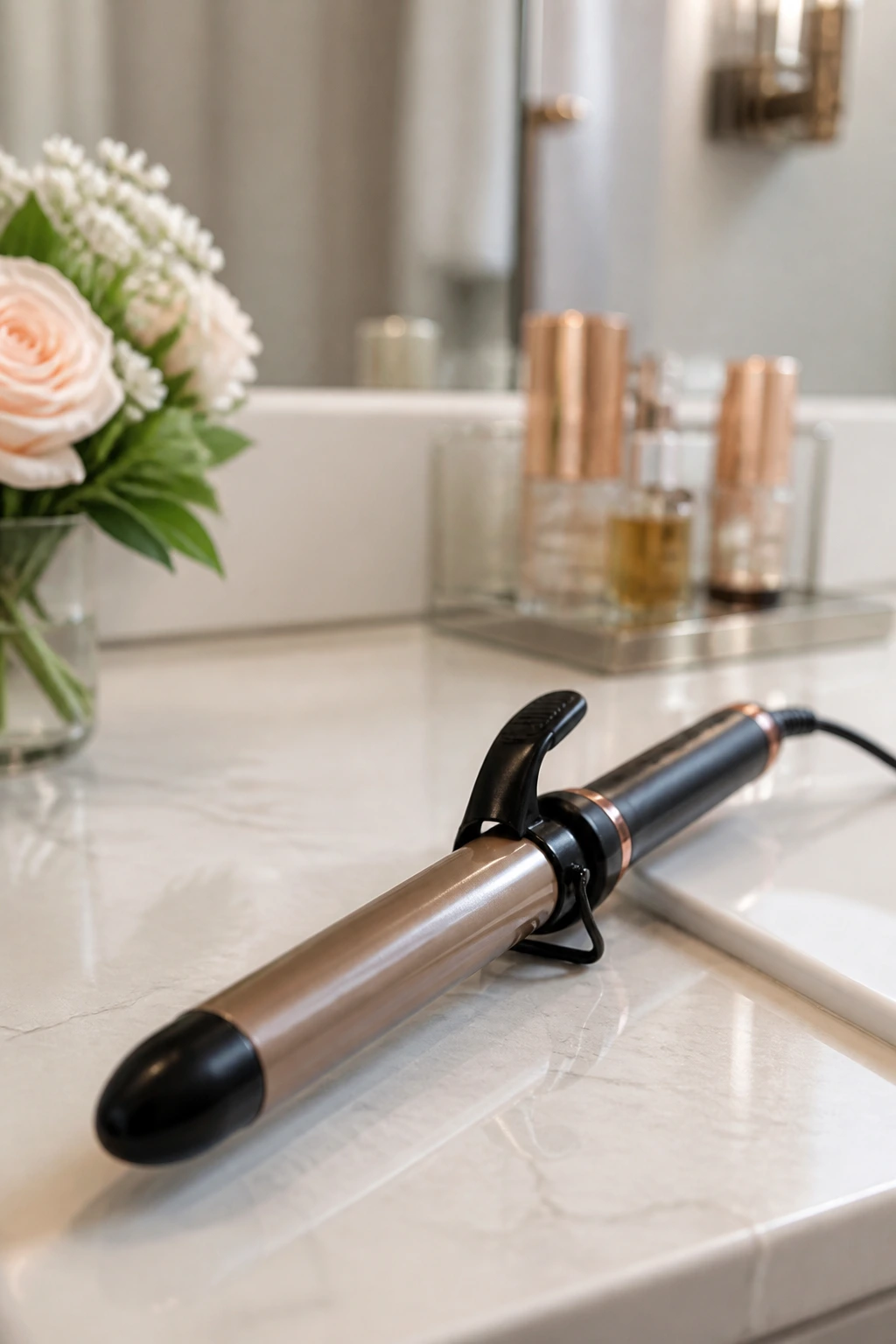
1-inch curling iron or wand: Best for shoulder-length hair or for brides who want a tighter wave that can be brushed out later.
-
1.25-inch curling iron or wand: Softer and looser; this is the safer pick for medium to long hair.
-
Heat protectant spray: Use it on dry hair before any hot tool touches it. Skipping this is not a clever shortcut.
-
Sectioning clips: These keep the crown organized and stop the back from turning into a tangle while you work.
-
Duckbill clips or pin curl clips: Useful for letting each wave cool in place without flattening.
-
Tail comb: Helps create a clean part and tidy temple sections.
-
Boar bristle brush or soft paddle brush: Best for gently brushing out the set without turning it to fuzz.
-
Texturizing spray: Adds grip and separation after the waves are formed.
-
Flexible-hold hairspray: Keeps the style in place without making the hair hard to the touch.
-
Hairpins and U-pins: Non-negotiable for twists, pins, veils, and any half-up shape.
-
Diffuser attachment: Handy if your natural wave needs shaping before hot tools come out.
-
Shine serum or lightweight oil: Use on the ends only, and use less than you think.
How to Prep Wavy Hair Before the First Section Is Touched
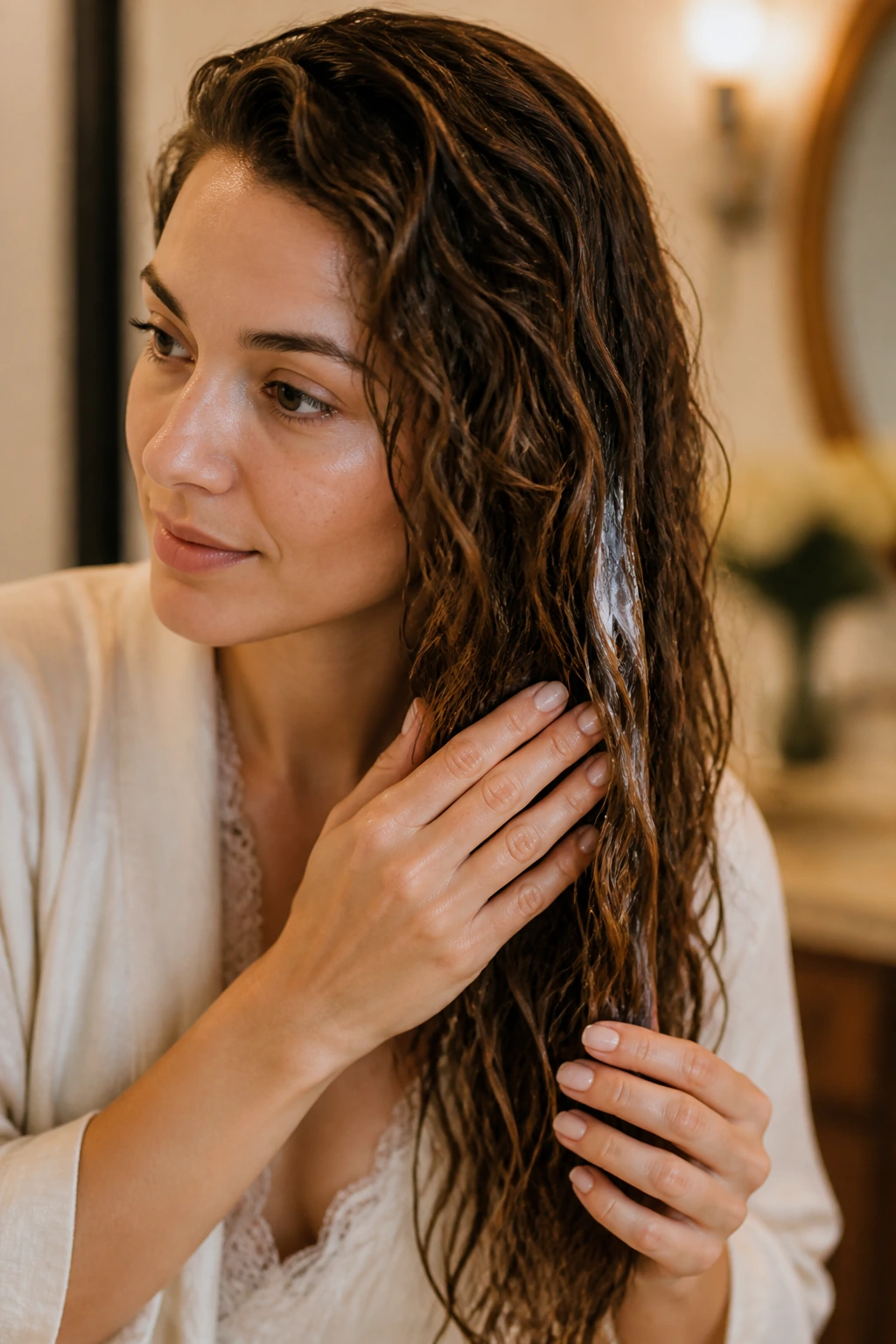
Freshly washed hair is not always a gift for bridal waves. If your hair is fine, silky, or slippery, same-day washing can make the style slide out before the first toast. Many stylists prefer hair that was washed the day before and dried with a little texture still in it. That gives pins and spray something to grip.
A light leave-in and heat protectant are usually enough at the start. Heavy conditioner near the roots is a mistake if you want the style to last. Keep conditioner from the ears down, rinse well, and let the roots stay a little airy. That is the part people forget, and it is the reason the crown sometimes goes flat halfway through portraits.
If your natural wave needs encouragement, use a diffuser and scrunch only until the hair is about 80 percent dry. Do not over-dry it into a puffball. You want shape, not frizz. Then let the hair settle before you start setting the bridal wave pattern.
How to Choose the Right Wave for Your Dress and Veil
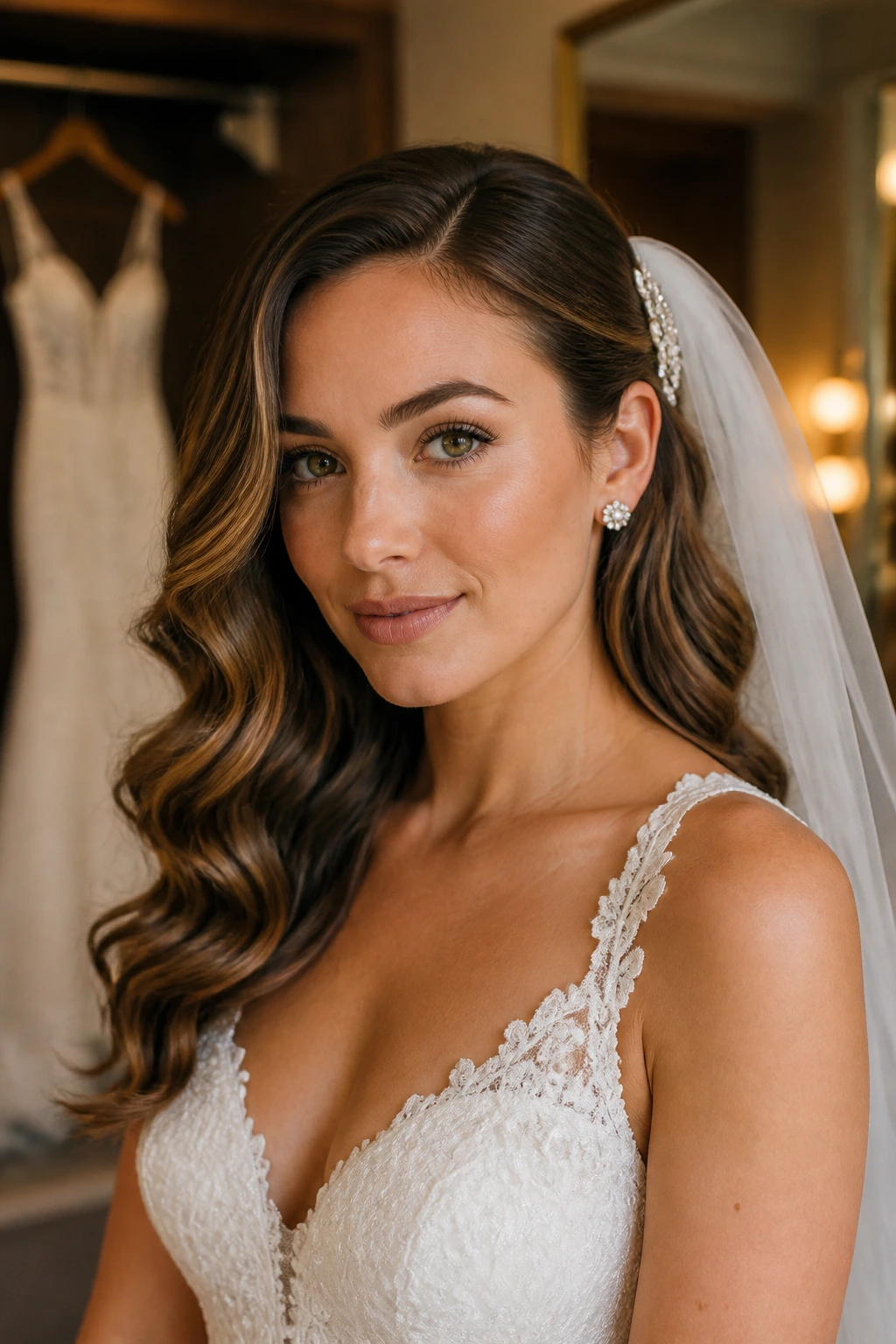
A strapless gown can carry more hair around the face and shoulders. A high neckline usually looks cleaner with hair pinned back at one side or lifted into a half-up shape. That is the basic rule, and it saves a lot of second-guessing in front of the mirror.
Veils matter too. A comb veil wants a stable place to sit, usually at the crown or just behind a twist. A blusher or softer veil can work with more loose texture around the top. If the hairstyle has no anchor point, the veil will tug the wave down. That is not a mystery; it is physics.
Quick matching notes
-
Simple dress, detailed hair: Pick a more textured wave or a side sweep.
-
Detailed dress, simple hair: Choose a cleaner center part or lower wave pattern.
-
Long veil: Leave a firmer base under the comb.
-
No veil: You can push the texture looser and let accessory placement do more work.
-
Outdoor ceremony: Favor pinned sections and a style that still looks good if the breeze moves it around.
1. Soft Brushed-Out Surf Waves
These are the easygoing bride waves that never look accidental. The curl pattern starts with a 1.25-inch iron, gets pinned while cool, then is brushed into a soft S-shape that sits close to the head and opens up at the ends. On wavy hair, that brush-out is the whole point. It keeps the texture loose, but not fuzzy.
The style works best when the front pieces are left a touch straighter near the root. That keeps the crown from puffing up like it has an opinion. It also makes the wave read as bridal instead of beach-vacation casual, which is a useful distinction when there is tulle involved.
Best for
- Simple gowns with clean lines
- Brides who want movement without visible curl spirals
- Hair that holds a set but softens fast when overhandled
A light side part can make this shape feel more romantic. Center part, side part, either can work. The important thing is the brushed-out finish and the fact that the ends still have some bend. If the wave disappears into straight hair at the bottom, the whole look feels unfinished.
2. Deep Side-Part Glam Waves
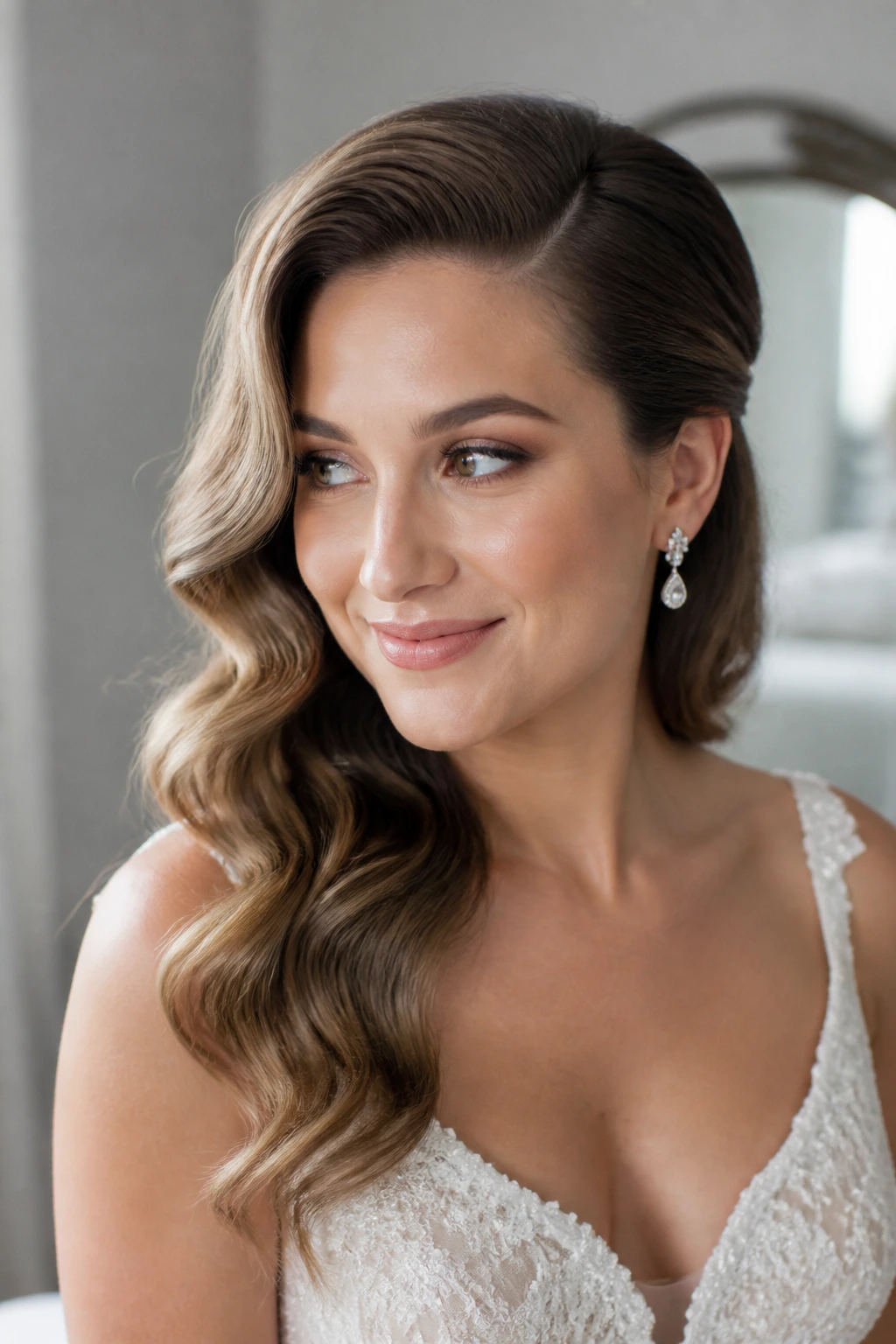
A deep side part changes the entire mood of bridal waves. Suddenly the hair has sweep, shadow, and a little old-Hollywood shape, even if the texture itself stays beachy. This is one of the best choices for brides who want softness but not sweetness.
The deeper part lifts one side of the face and lets the heavier side fall in a clean line over the shoulder. That creates movement in photos and gives earrings a place to show off. On wavy hair, the trick is to smooth only the root area near the part and let the mids stay airy. Too much smoothing and the style turns flat; too little and the part looks messy instead of purposeful.
Where it shines
- Off-the-shoulder dresses
- Statement earrings
- Square or oval face shapes that benefit from a little diagonal line
If you want the style to survive hugs and dancing, pin one side just behind the ear with a hidden bobby pin and a dab of texture spray. It sounds small. It is not. That pin keeps the shape from sliding open later.
3. Half-Up Twisted Crown Waves
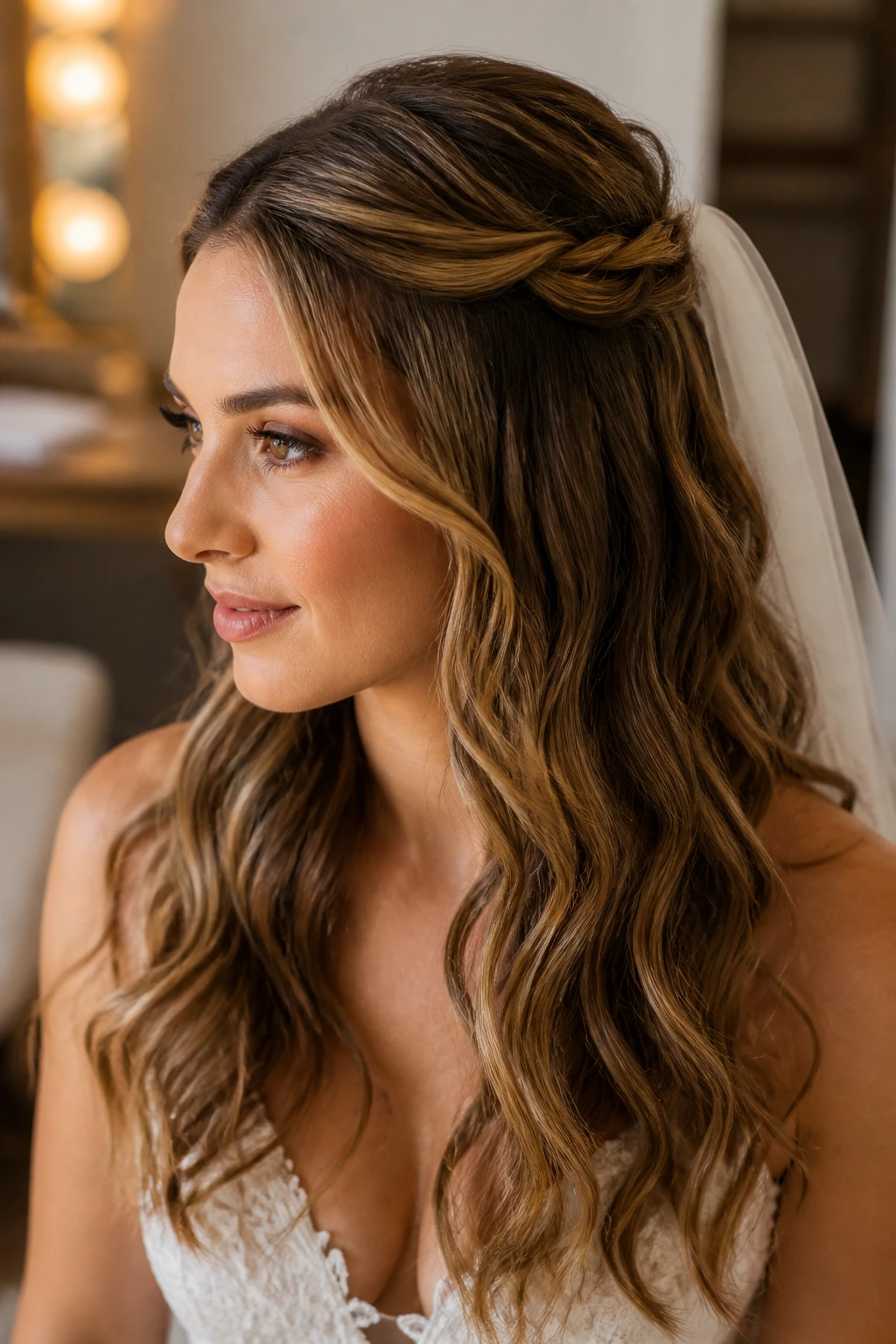
This is the look for brides who want their hair down, but not all the way down. Two twisted sections from the temples meet at the back of the head, creating a soft crown that leaves the rest of the waves free. It shows off wavy texture while making room for a veil or a hair vine.
What I like about this style is the contrast. The top stays tidy, almost tailored, while the lengths remain loose and touchable. That mix keeps the look from feeling too dressed up or too casual. On naturally wavy hair, the twist grips well because the hair already has some tooth to it.
How to make it feel balanced
- Keep the twists low and slightly loose.
- Leave a few face-framing pieces out if the dress neckline is simple.
- Anchor the back with crossed pins so the style does not wobble when the veil comes off.
If you are wearing a cathedral veil, ask for the twist to sit just under the comb, not above it. That gives the veil somewhere firm to live without crushing the crown.
4. Low Textured Chignon With Wave Pieces
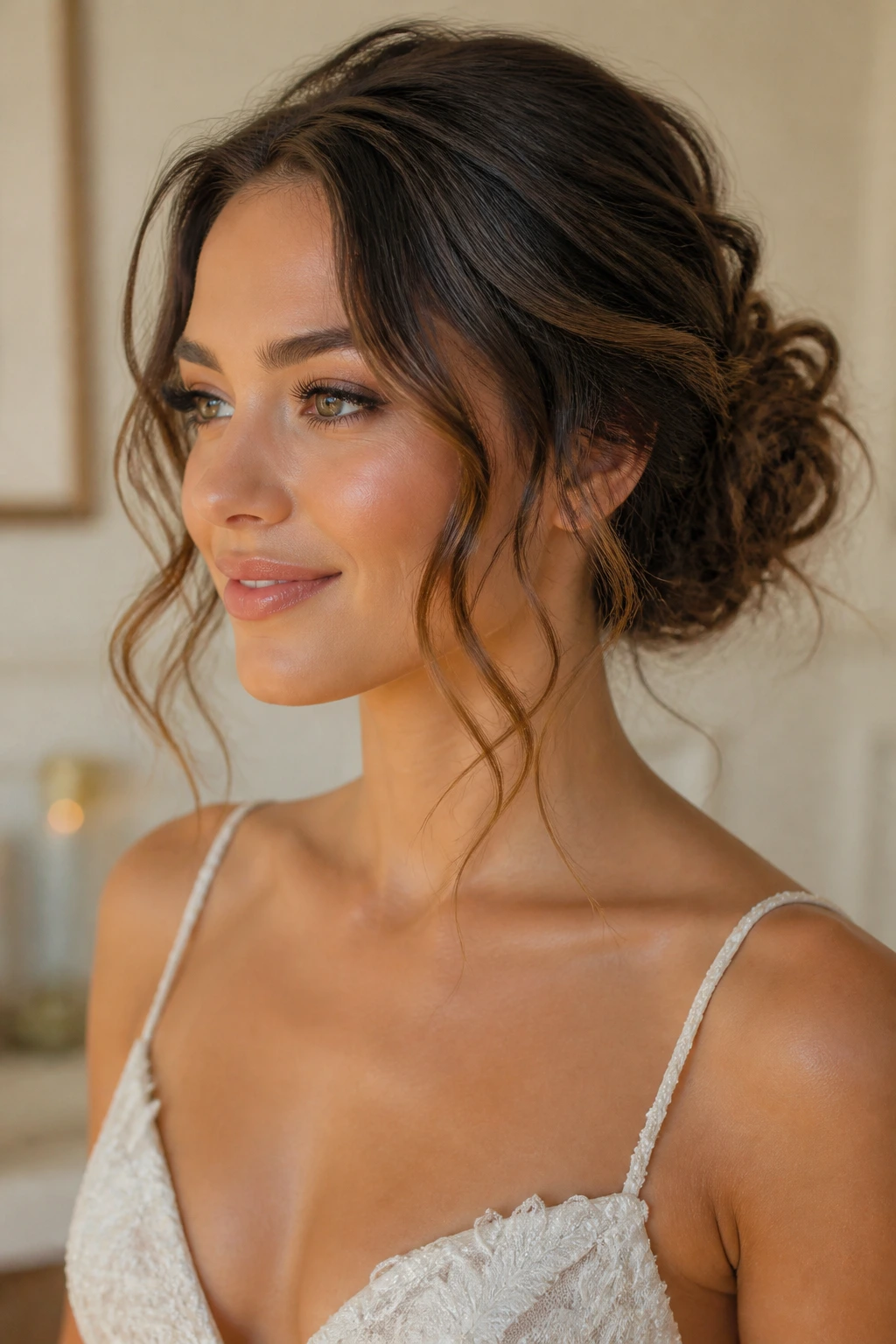
A low chignon can sound formal and stiff, but this version keeps the wedding wave visible at the edges. The hair is gathered low, twisted into a soft knot, and then finished with a few waved pieces left free around the cheeks and nape. That is the detail that stops it from looking too severe.
This look is especially kind to wavy hair that frizzes if it is worn loose for too long. You get the shape of a bun without losing the personality of the texture. A little bend at the ends of the face-framing strands keeps the whole style from looking overly polished. I prefer this with satin or crepe gowns; the contrast feels clean.
If you want it softer, let a few shorter layers escape near the ears. If you want it more formal, smooth those back and let the bun carry the structure.
5. Braided Halo With Loose Lengths
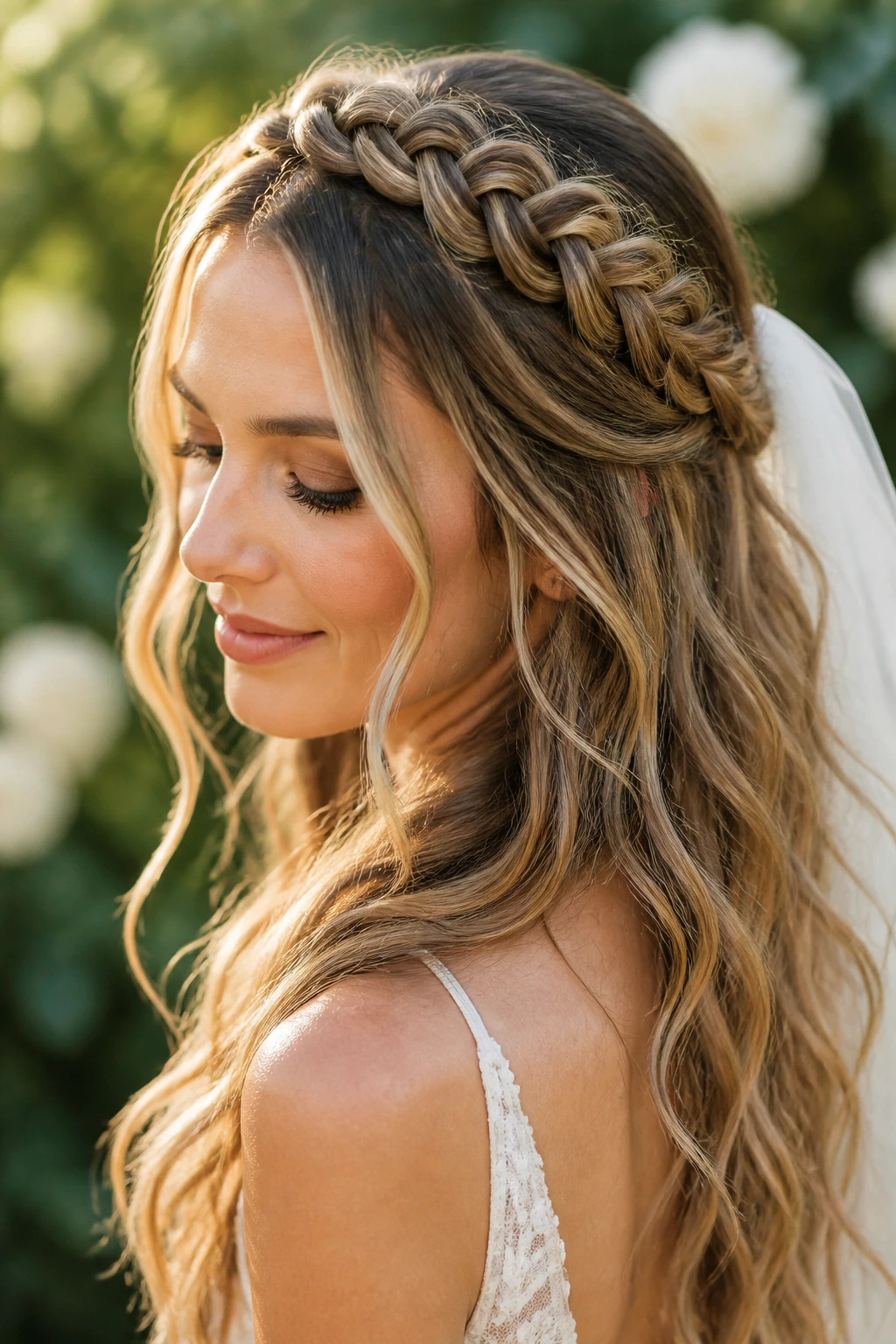
A braided halo gives you structure without making the hair feel pinned down. The braid wraps along the top or sides of the head, then the rest of the waves fall loosely beneath it. On brides with wavy hair, this is a smart way to add interest without stacking too much product on the lengths.
The braid does a nice job of controlling the top area, which is where a lot of natural wave gets frisky in humid air. The loose lengths keep the look from turning severe. It also works well with veils that attach low, because the braid can sit above the comb and still leave room for movement underneath.
Best pairing notes
- Garden ceremony or outdoor venue
- Lace gowns with some detail at the neckline
- Brides who want texture but not a full updo
The braid does not need to be thick to work. In fact, a smaller, tighter braid around the crown usually looks better on medium hair because it sits closer to the head and does not steal all the attention from the waves below.
6. Waterfall Braid Over Natural Waves
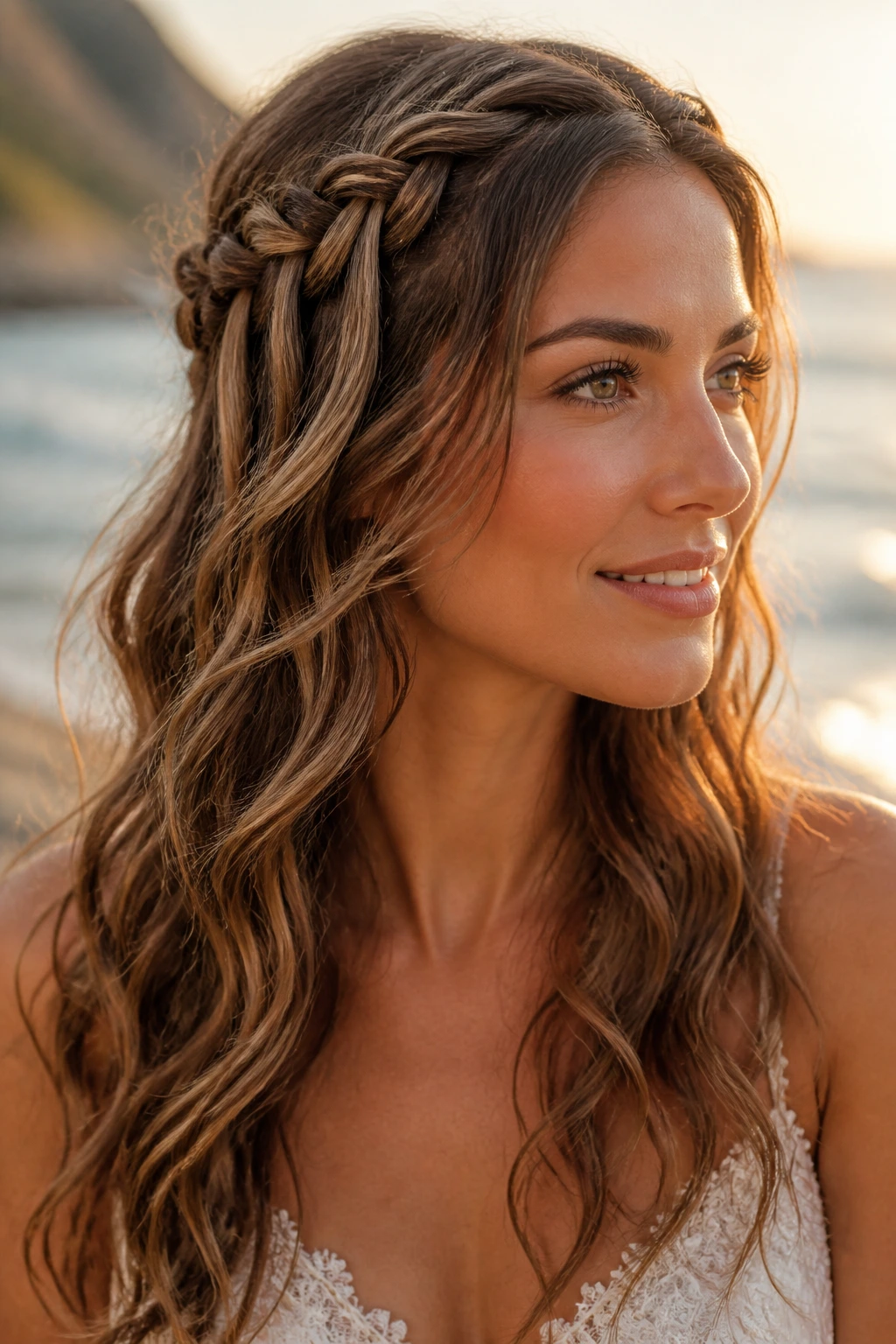
Waterfall braids are the bridal equivalent of a well-cut hem. They add shape where you need it and let the rest of the style flow. A braid sweeps across one side of the head, with sections dropping through the braid as if they were released on purpose, not by accident.
This look is especially flattering when the natural wave is already soft and well-defined. The braid creates a focal point near the face, then the loose hair carries the texture down the back. It works best when the lower lengths are curled in the same direction and then finger-separated, not brushed hard.
A good waterfall braid should feel like a framed window, not a helmet.
That means the braid should lie close to the head and stop before it gets too chunky. If your hair is very dense, keep the braid fairly narrow. If the hair is fine, loosen the braid just a bit after pinning so it reads from a distance.
7. Sleek Roots, Airy Ends
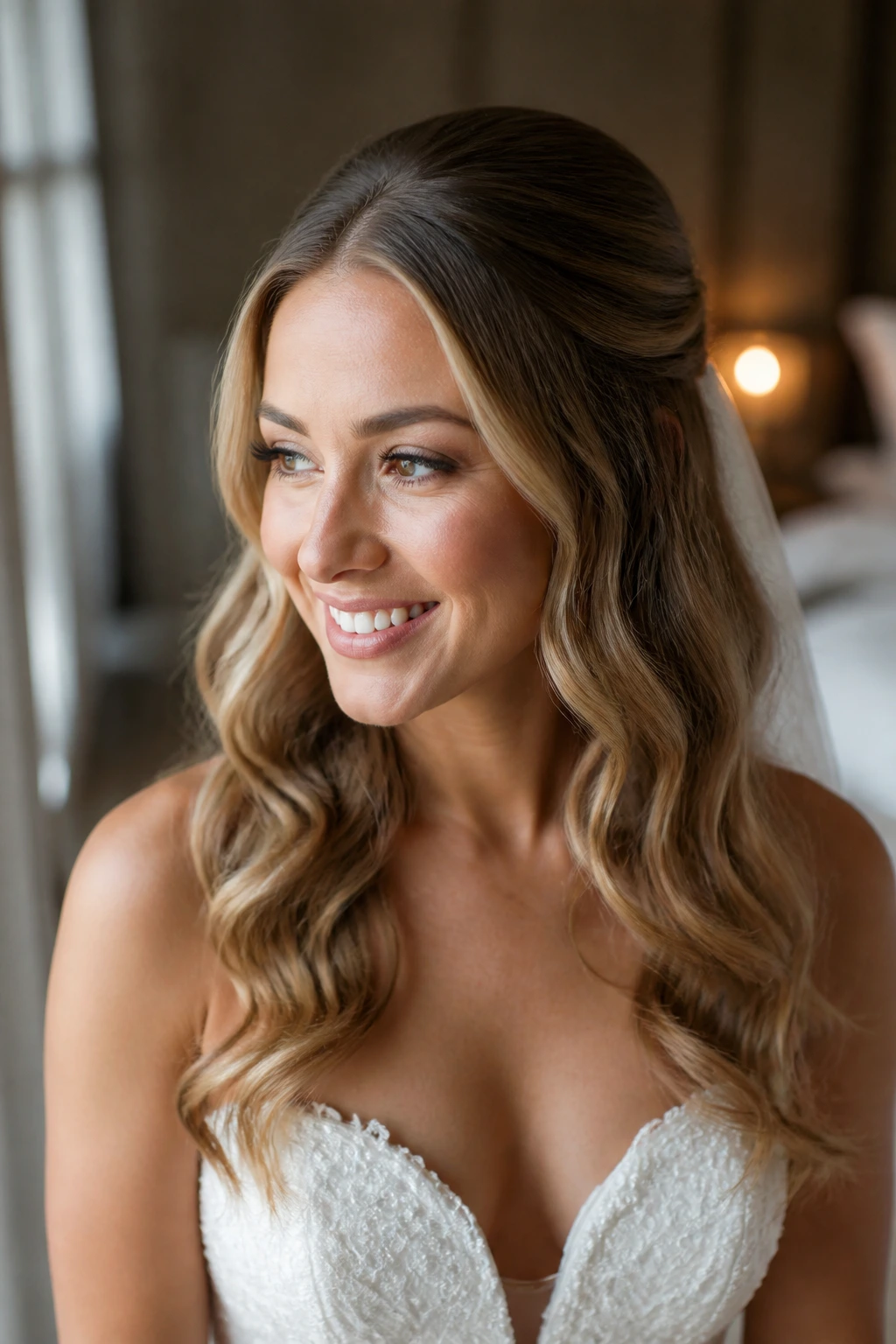
This is the bride who likes control near the crown and movement at the hemline. The roots are smoothed with a brush and a light spray, while the lengths are set into loose waves that stay soft and open. The contrast is sharp in a good way.
I reach for this look when the dress is modern, the jewelry is clean, and the bride does not want the hair to compete with the neckline. The sleek root keeps flyaways from taking over, which is useful for long ceremonies and indoor lighting. The airy ends keep it from looking severe.
What makes it different
- Root polish at the top
- Loose, brushed texture through the bottom half
- Very good for fine-to-medium hair that falls flat if over-curled
If there is a veil, place it so the comb sits just behind the smooth crown. That lets the hair keep its clean line while the ends move freely once the veil comes off.
8. High Half-Up Ponytail With Volume
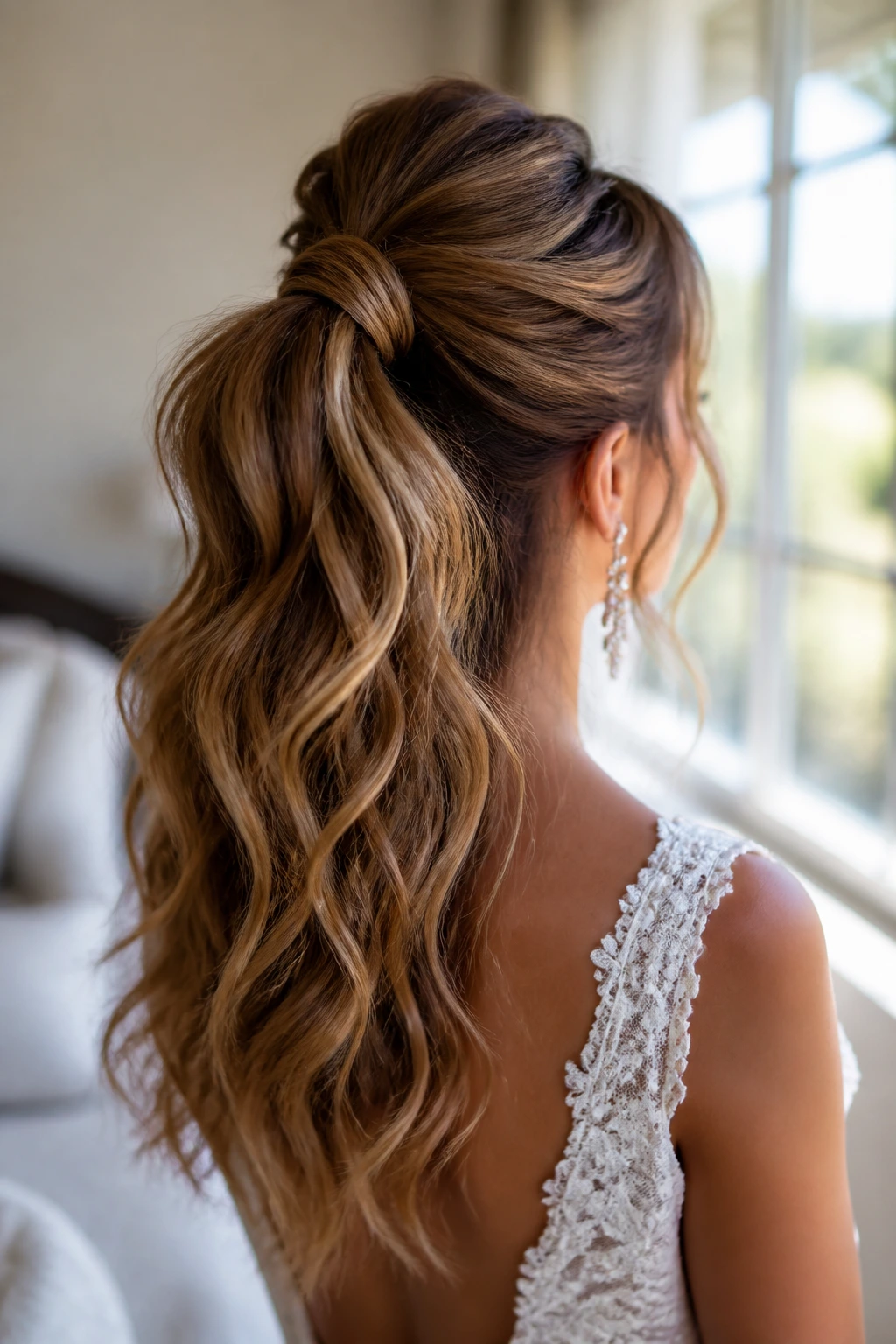
A high half-up pony can sound playful, but with the right wave pattern it becomes surprisingly elegant. The top section gets lifted at the crown, wrapped around itself or covered with a small strand, and the remaining hair falls in wide, soft waves. It gives height without the weight of a full updo.
This is a useful choice for brides with longer wavy hair because it keeps the face open and the length visible. The wave also reads clearly from the back, which matters if the dress has buttons or an open back. A little tease at the roots helps, but do not go wild. Bridal volume should look deliberate, not like the hair was startled.
A wrapped base is cleaner than a visible elastic. No contest.
If you are wearing a veil, the half-up section can create a natural anchor point. If you are not, a pearl clip or narrow satin bow can sit right at the wrap and make the style feel finished.
9. Floral-Pinned Mermaid Waves
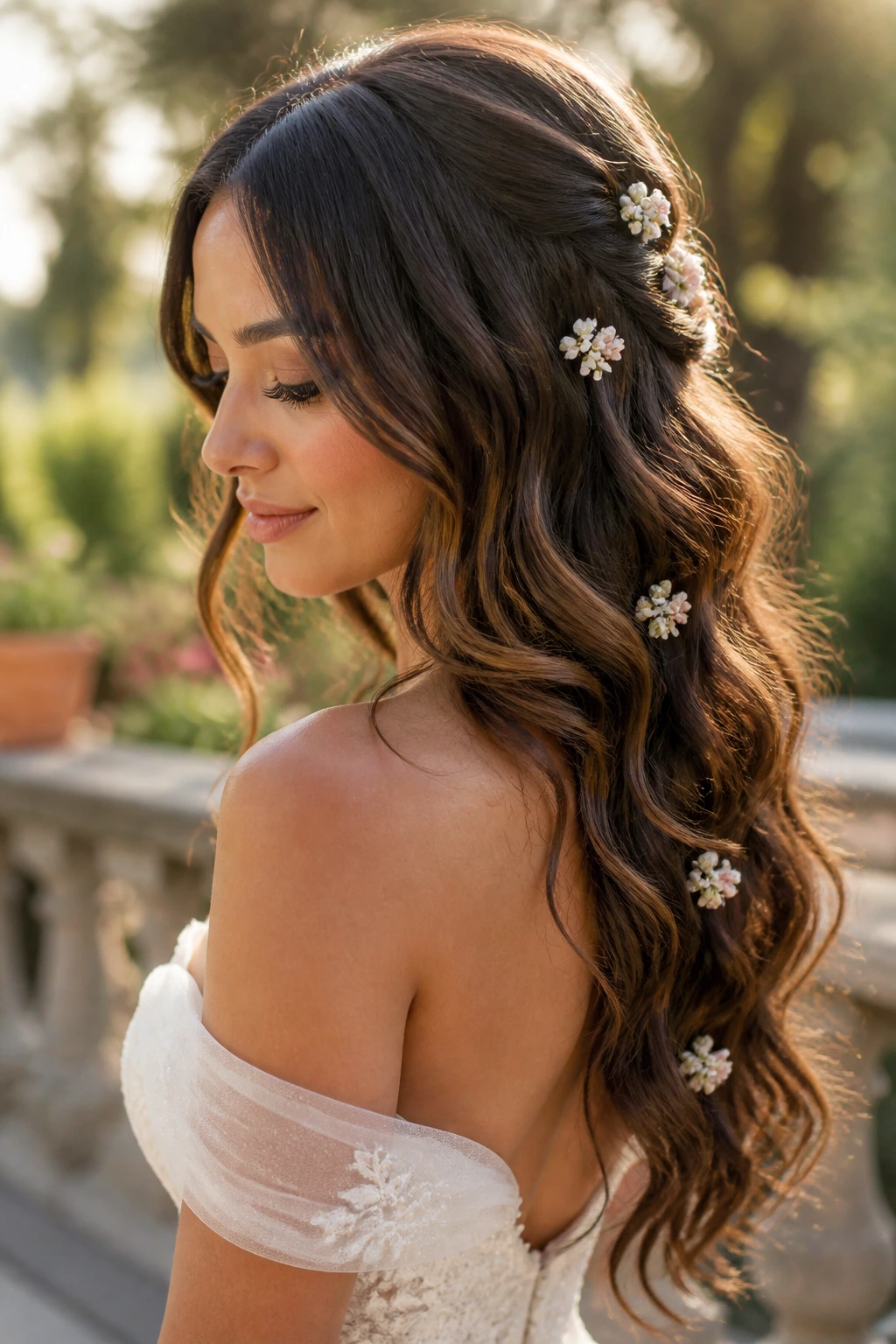
This is the look for brides who want hair that feels like it wandered in from a sea cliff but still belongs in a formal room. The waves are long, loose, and layered, with small floral pins or sprigs tucked where the shape already bends. Nothing about it should look too arranged.
The trick with floral-pinned waves is restraint. One line of tiny blooms or a few separated pins is usually better than crowding the whole head. Wavy hair already has enough movement; the flowers should punctuate it, not bury it. This works especially well with boho dresses, outdoor ceremonies, and brides who want texture to stay visible after the veil comes off.
Use it when
- Hair is long enough to show a real wave cascade
- The bouquet or floral design is soft and natural
- You want a romantic look that still leaves the hair loose
If the flowers are fresh, keep them in water until the last possible minute. If they are faux, choose small pieces with lightweight stems so they do not drag the wave down.
10. One-Shoulder Side Sweep
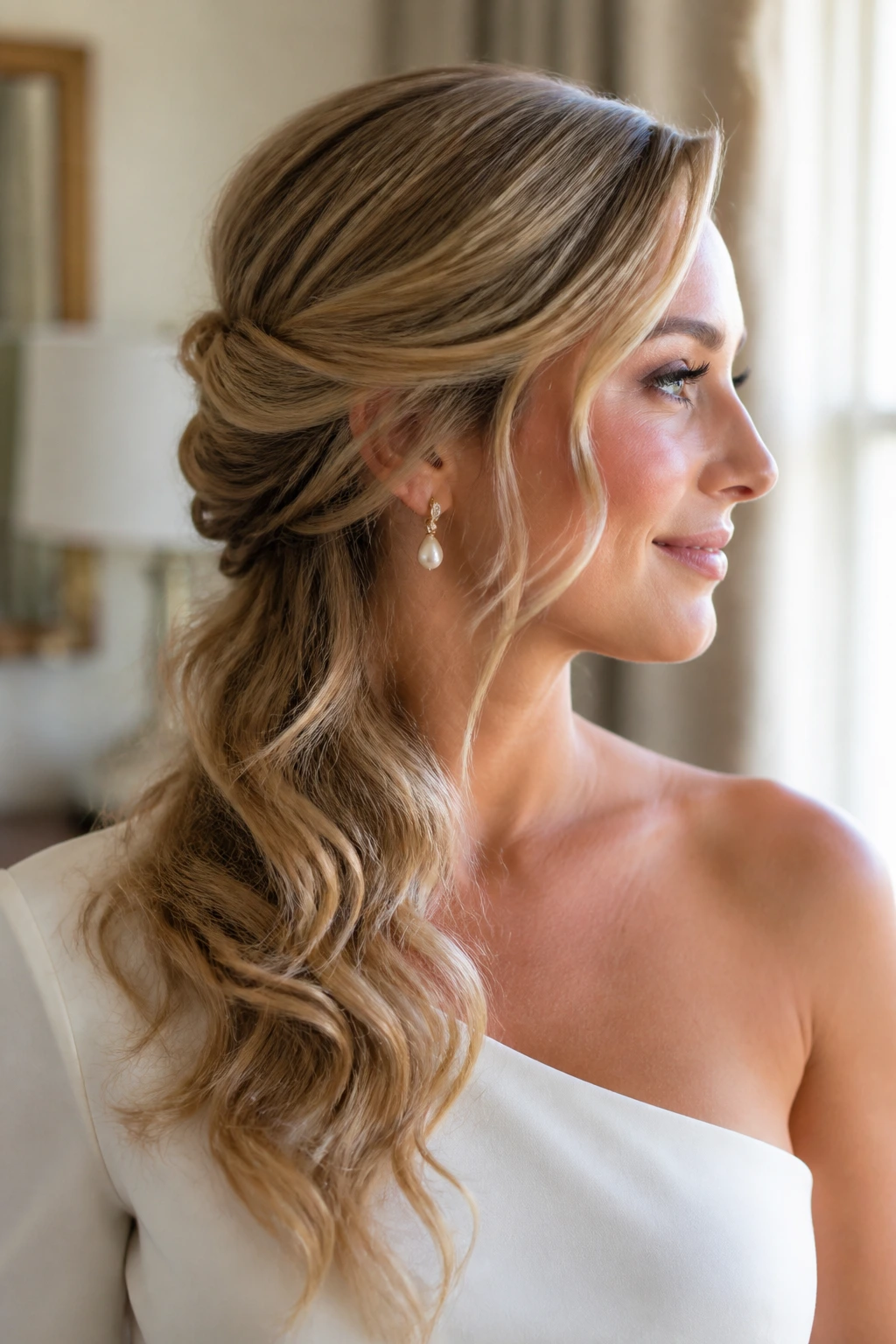
A one-shoulder sweep is one of the oldest tricks in bridal styling, and it still works because it changes the body line instantly. All the hair is guided to one side, pinned low behind the ear or at the nape, then let to spill in soft waves over one shoulder. It feels polished, but not stiff.
This style flatters wavy hair because the natural bend helps the sweep stay open and soft. Straight hair often needs a lot more effort to keep the side from collapsing. Wavy hair gives you a better starting shape. Pair it with an asymmetrical dress, a gown with one detailed shoulder, or a neckline that needs room.
A small comb or a few hidden pins can secure the back without killing the movement. That matters. The point is to make the shoulder line look intentional, not to glue the hair in place.
11. Bubble-Braid Accent With Waves
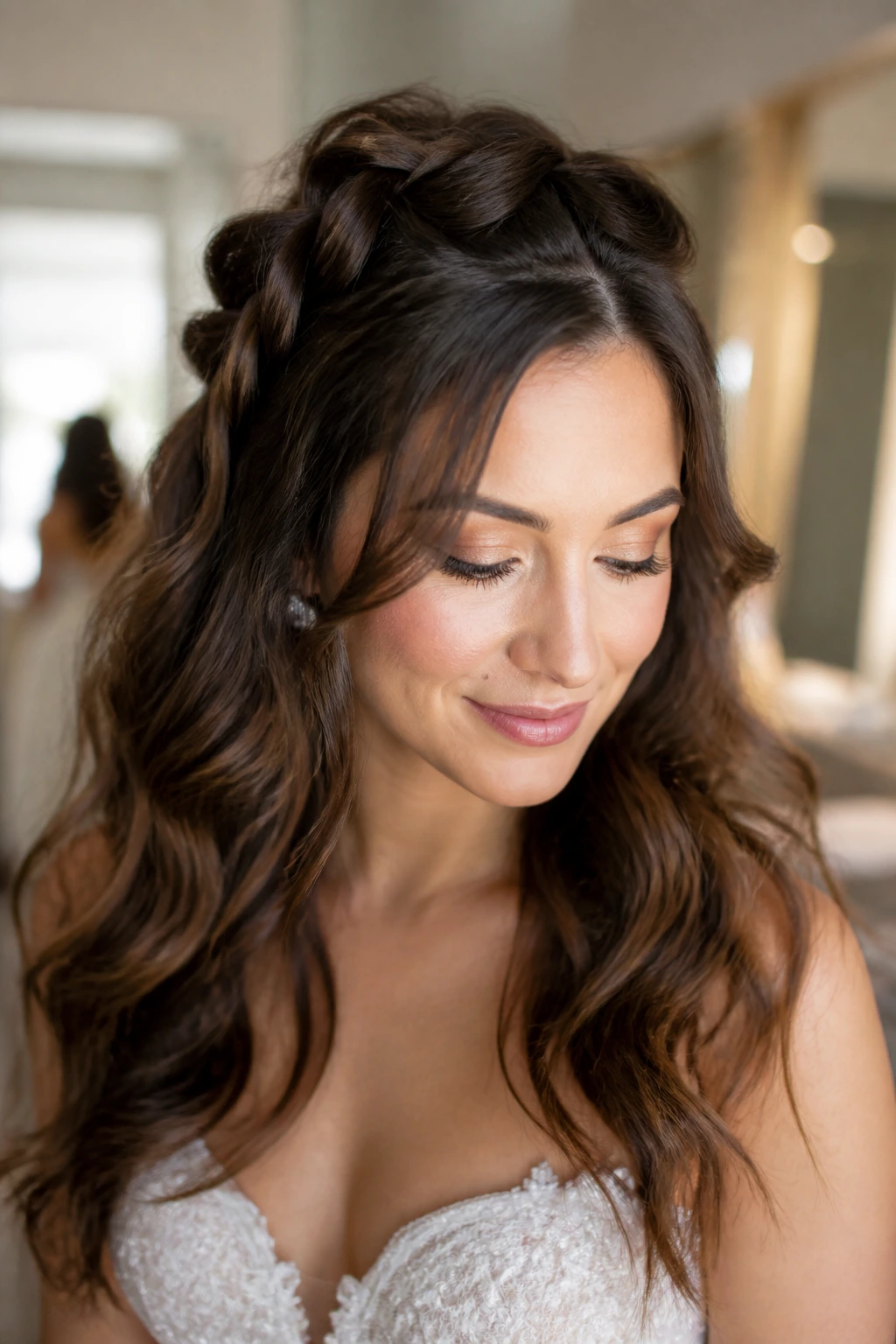
Bubble braids can look trendy in the wrong hands, but a single soft bubble-braid accent can be very bridal. The braid starts at the crown or temple, then gets gently puffed into rounded sections before melting into the rest of the waves. It adds a modern touch without taking over the whole head.
What I like here is the rhythm. The rounded braid sections give the eye something to follow, then the loose waves soften the line so it does not feel too stiff. On wavy hair, the transition between braid and wave is smoother because the texture already has a slight bend. That makes the whole style feel less engineered.
A small caution
Do not make the bubbles huge. Oversized sections look costume-like fast. Keep them modest, and let the rest of the hair stay soft and brushed out. This look pairs especially well with sleek gowns, sharp cutouts, or brides who want one unexpected detail without a full style shift.
12. Bob-Length Airy Wedding Waves
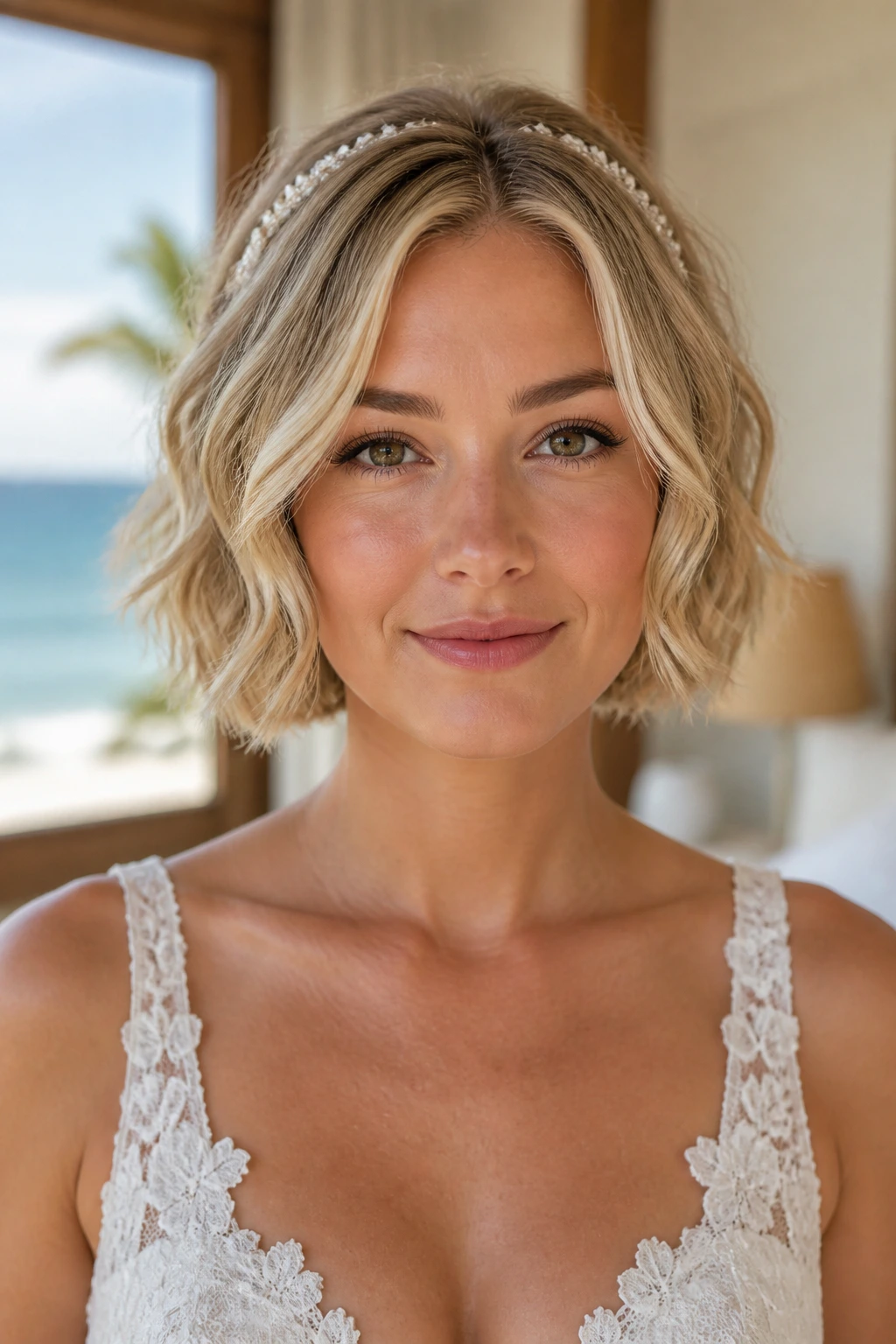
Shorter hair can do beach waves beautifully, and a bob is often the proof. The shape sits around the jaw or just below it, with loose bends that make the hair feel fuller and more animated. On a wedding day, that kind of movement can be more striking than a longer style that has been overworked into submission.
The important part is scale. A bob should not be curled like long hair. Smaller sections, a smaller iron, and a lighter brush-out keep the wave from getting puffy. If the bob ends at the chin, tuck one side behind the ear or add a slim pin to keep the outline sharp. If it falls at the collarbone, let the wave swing a little more freely.
This is a strong choice for brides who want earrings, collarbone, and makeup to show. The hair stays part of the look, but it does not swallow the face.
13. Collarbone Lob With a Tucked Side
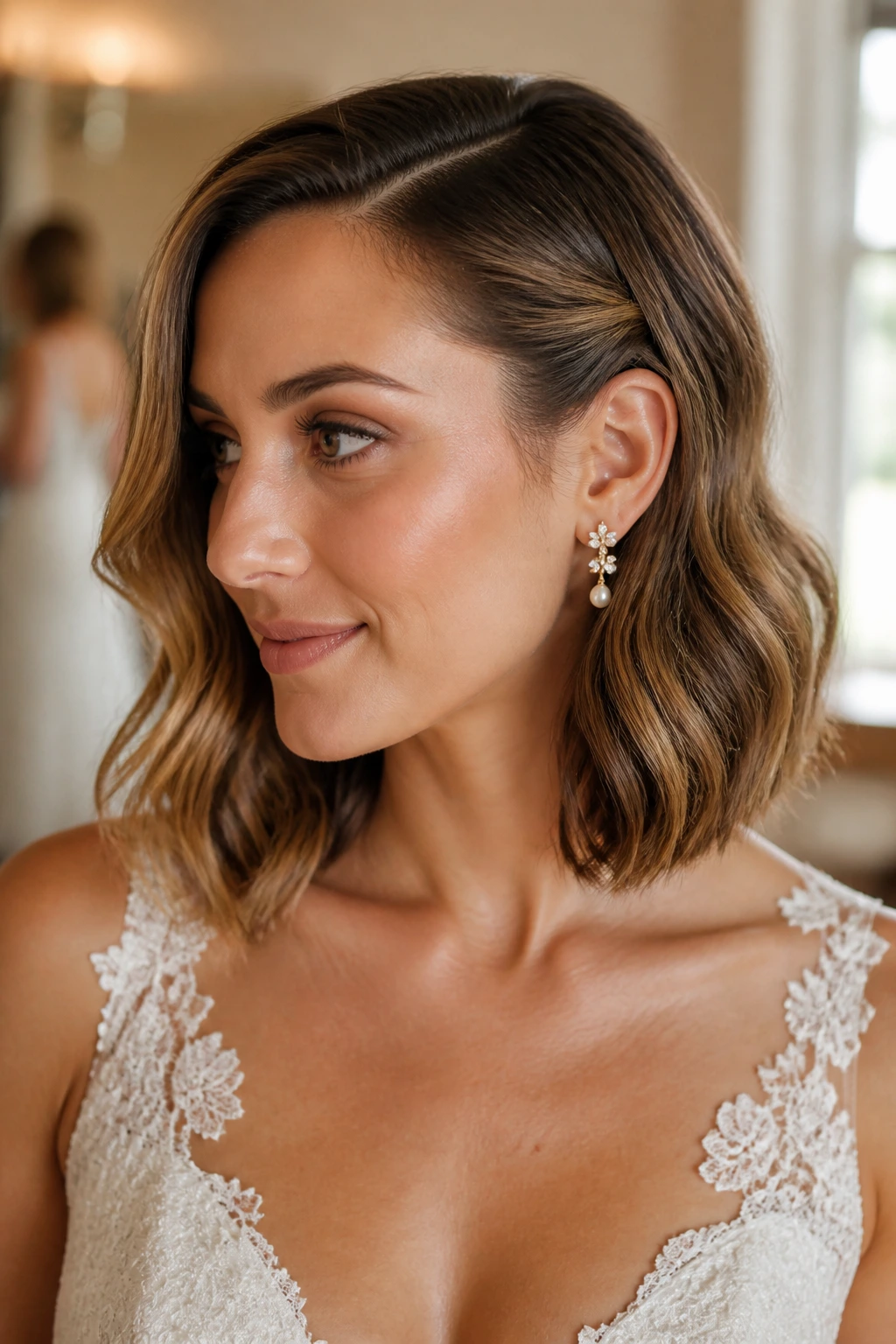
A collarbone-length lob is the sweet spot for brides who want enough hair to wave, but not so much that the style feels heavy. Tucking one side behind the ear cleans up the shape, opens the cheekbones, and lets the loose side carry the softness. That small asymmetry does a lot of work.
The best version keeps the front pieces slightly more polished than the back. That way, the tucked side looks crisp while the wave through the lengths stays soft and touchable. If the hair is thick, this style can be weighty in a good way. If it is fine, use a root-lift spray or a light backcomb at the crown to stop the shape from collapsing.
A slim hairpin or a small accessory over the tucked side is enough. Do not pile on three different clips. The lob already has a clean line; let it breathe.
14. Veil-Ready Pinback Waves
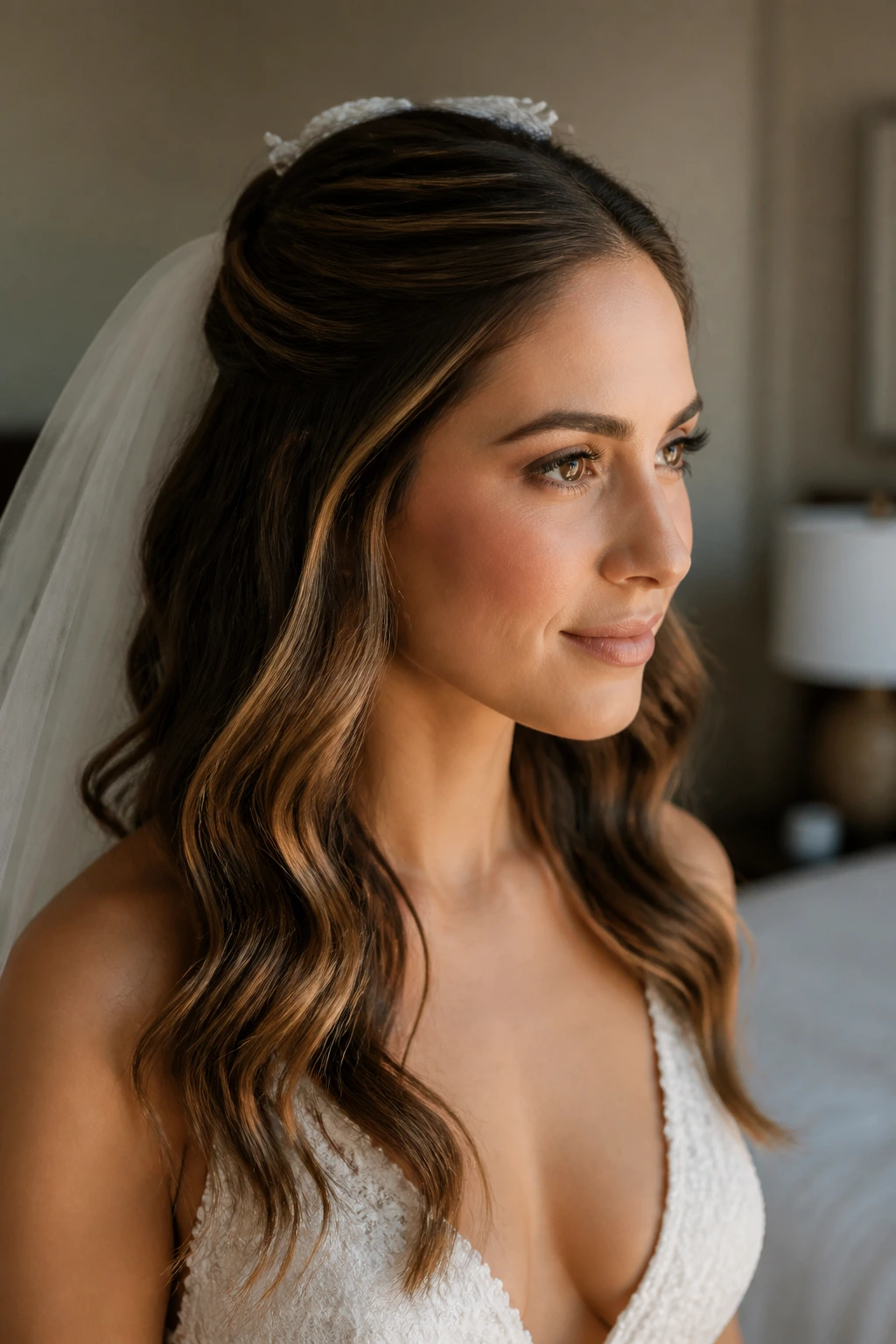
Not every bride wants the hair to disappear under the veil, and pinback waves solve that cleanly. The front sections are lightly pinned away from the face, usually at the temples or just above the ears, while the rest of the waves stay loose. That leaves a firm base for the veil comb and keeps the crown from puffing.
This is one of the safest options if you know the veil will come off after the ceremony. The style still looks like a complete hairstyle on its own. Once the veil is removed, the pinned pieces keep the front from drooping into the cheeks. It is a small structural trick, but it saves a lot of post-ceremony fuss.
If you want the look softer, leave a few curved tendrils near the jawline. If you want more polish, smooth those back and let the pinned detail be almost invisible.
15. Soft Glam S-Waves With a Polished Finish
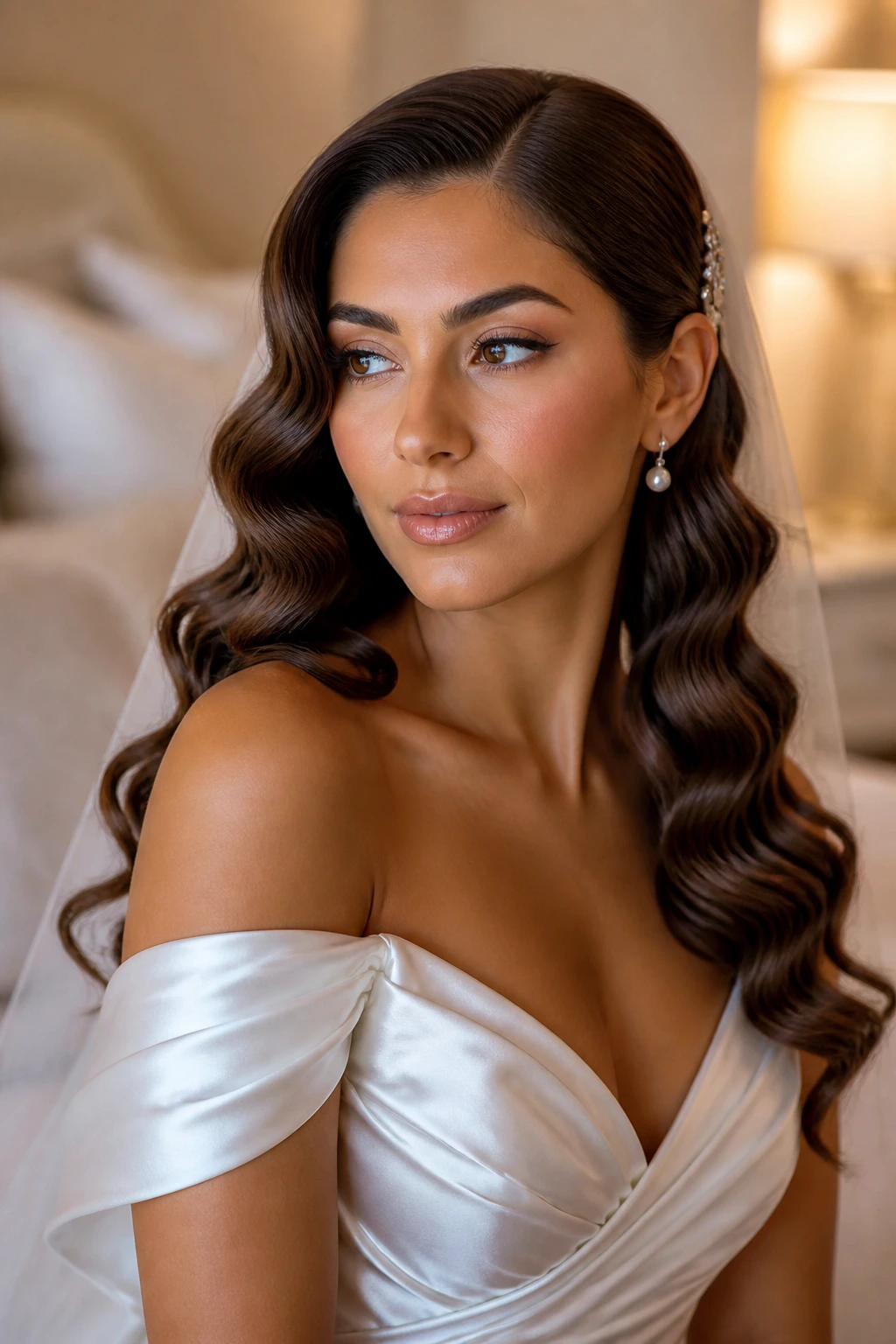
S-waves are the more refined cousin of the casual beach wave. They have a visible rhythm — bend, curve, bend — but the finish stays smooth and glossy rather than rough and broken. This makes them a strong match for brides who want texture but also want the hair to feel dressed up.
The best S-waves are built in smaller panels and then brushed carefully so the shape stays readable. On wavy hair, this can be a gorgeous way to show off natural movement without leaning too far into messy texture. It is especially nice with satin, silk, and minimalist gowns because the hair has enough shape to hold its own.
Who should choose this
- Brides who like structure more than “lived-in” texture
- Medium to long hair
- Formal settings where a cleaner finish makes sense
If your hair tends to frizz in humidity, this style benefits from a very light anti-humidity spray at the ends. Keep it light. Too much and the wave starts to stick together.
16. Messy Low Pony With Ribbon
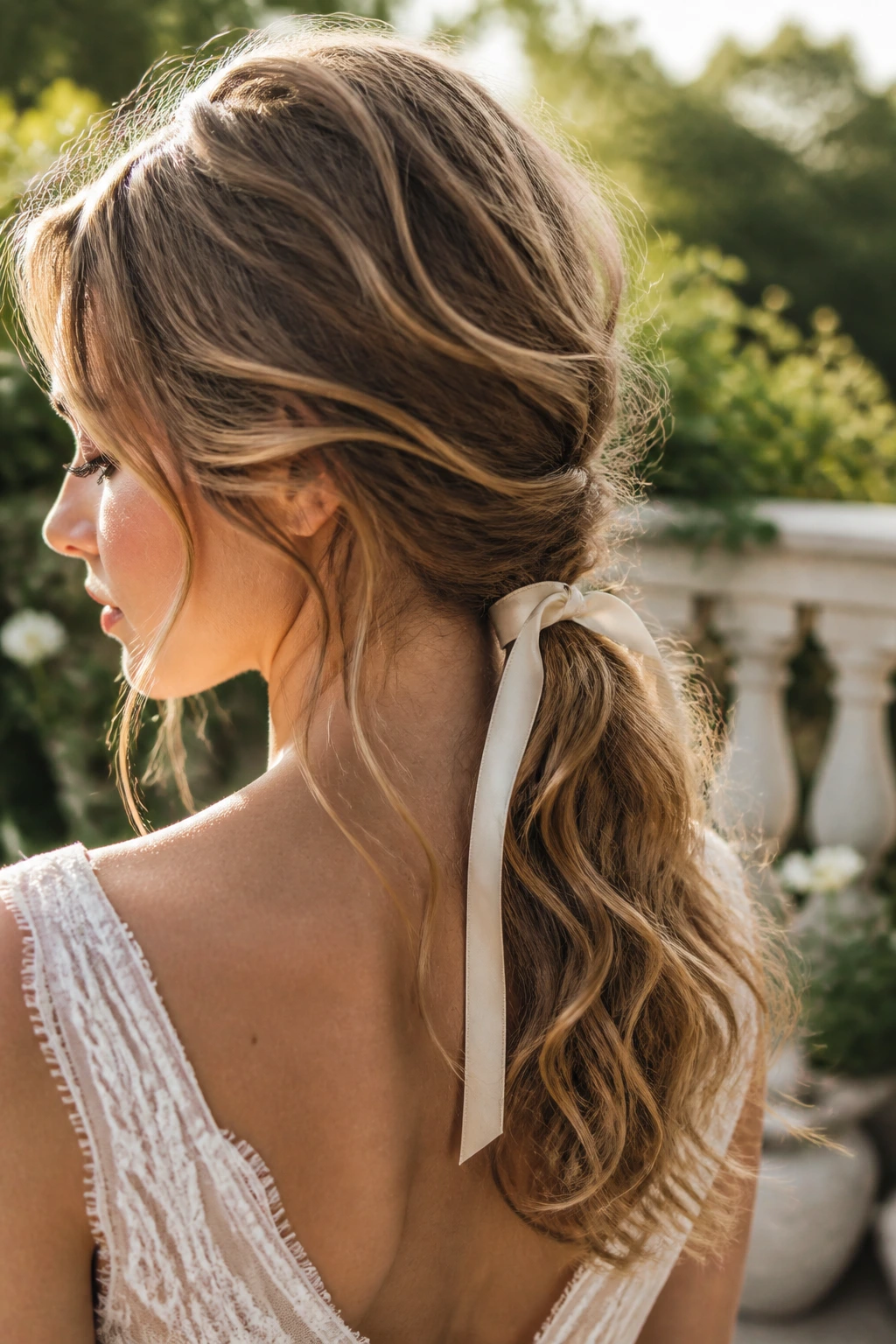
A low ponytail can feel bridal if the texture is handled with care. The base sits at the nape, the lengths are waved and softly loosened, and a ribbon wraps the elastic or trails from the knot. The result is relaxed, but not casual in the sloppy sense.
This works well for brides who do not want hair on the shoulders but still want movement. Wavy hair makes the pony look fuller, especially if the base is wrapped with a strand or set with a little lift at the crown. The ribbon matters more than people think; a narrow satin ribbon can make the whole style feel finished in one move.
I like this for daytime ceremonies, rehearsal dinners that turn into dressy evenings, and dresses with open backs. The hair stays low enough to show the gown, but it still moves when you turn your head.
17. Crown-Volume Cascade With Lifted Roots
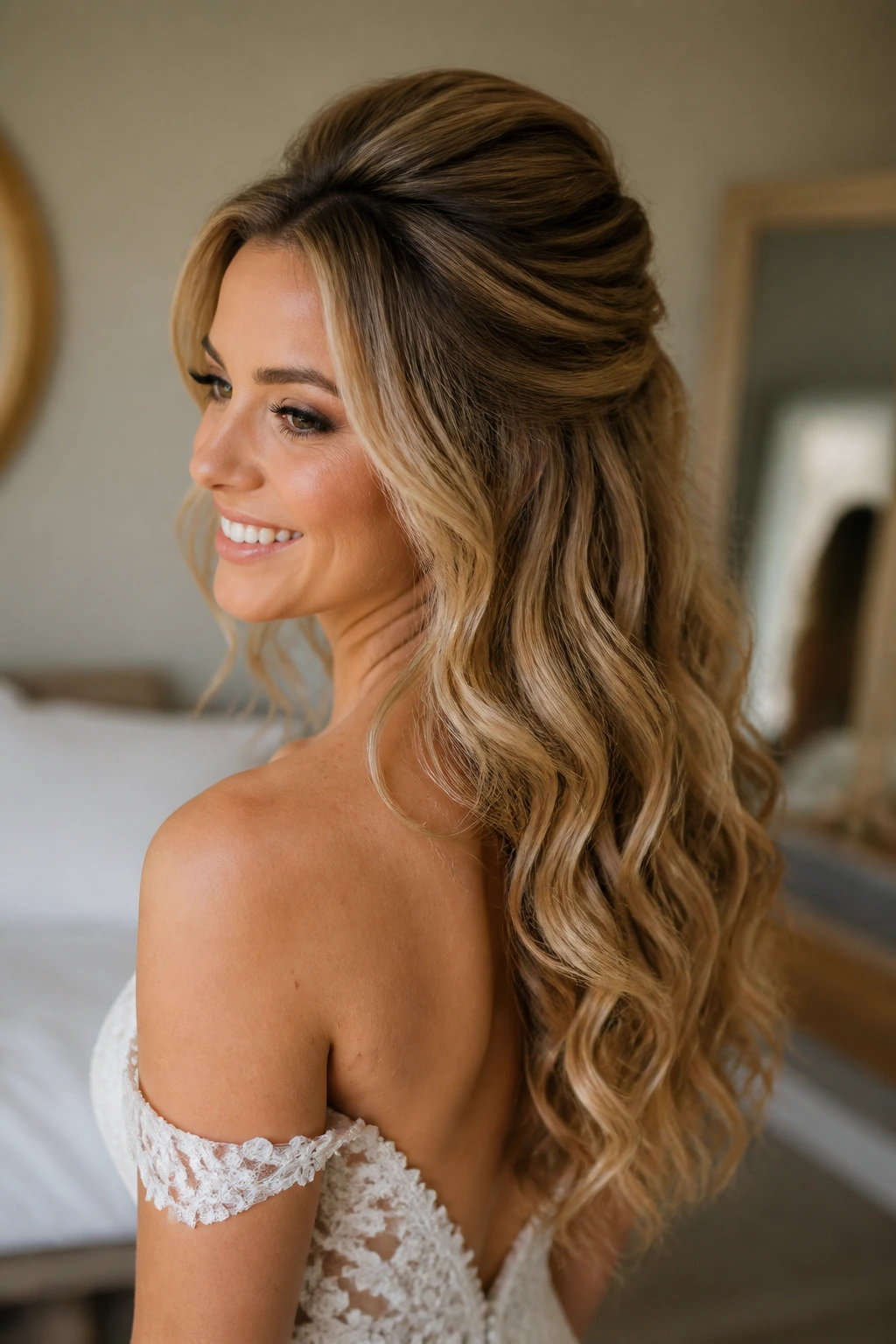
Some brides need the top of the head to feel a little grander. This style gives them that. The crown is lifted with light teasing, a mousse or root spray, and careful pinning, then the lengths spill in soft waves that stay open through the back and shoulders.
The point is not height for the sake of height. It is balance. If the dress has a fitted bodice or the face is longer, a little crown volume can keep the proportions from feeling heavy at the bottom. On wavy hair, the lengths already help; the crown just needs enough support to stand up beside them.
Best for
- Brides with longer faces
- Gowns that need a little visual lift above the neckline
- Hair that is dense enough to hold a little shaping at the root
Keep the tease under the smooth top layer. You want lift, not visible damage. If the crown looks puffy in the mirror, smooth it down with the back of a brush and reset.
18. Center-Part Minimalist Waves
A center part can be ruthless in the wrong setting. Here, though, it gives the style a calm, modern line that works beautifully with natural wave. The hair falls in balanced curtains on each side, with the texture doing the softening. No drama needed.
This look suits brides who want the dress, the veil, or the makeup to take the spotlight without the hair vanishing completely. It also works well with symmetry-heavy gowns and clean necklines. If you have strong facial features or a sharp bone structure, the center part can frame them in a way that feels elegant without being precious.
The wave should start below the cheekbone for the cleanest effect. If it begins too high, the face can look busy. If it starts too low, the top feels flat. That middle zone is where the style lands.
19. Twisted Low Bun With Face-Framing Waves
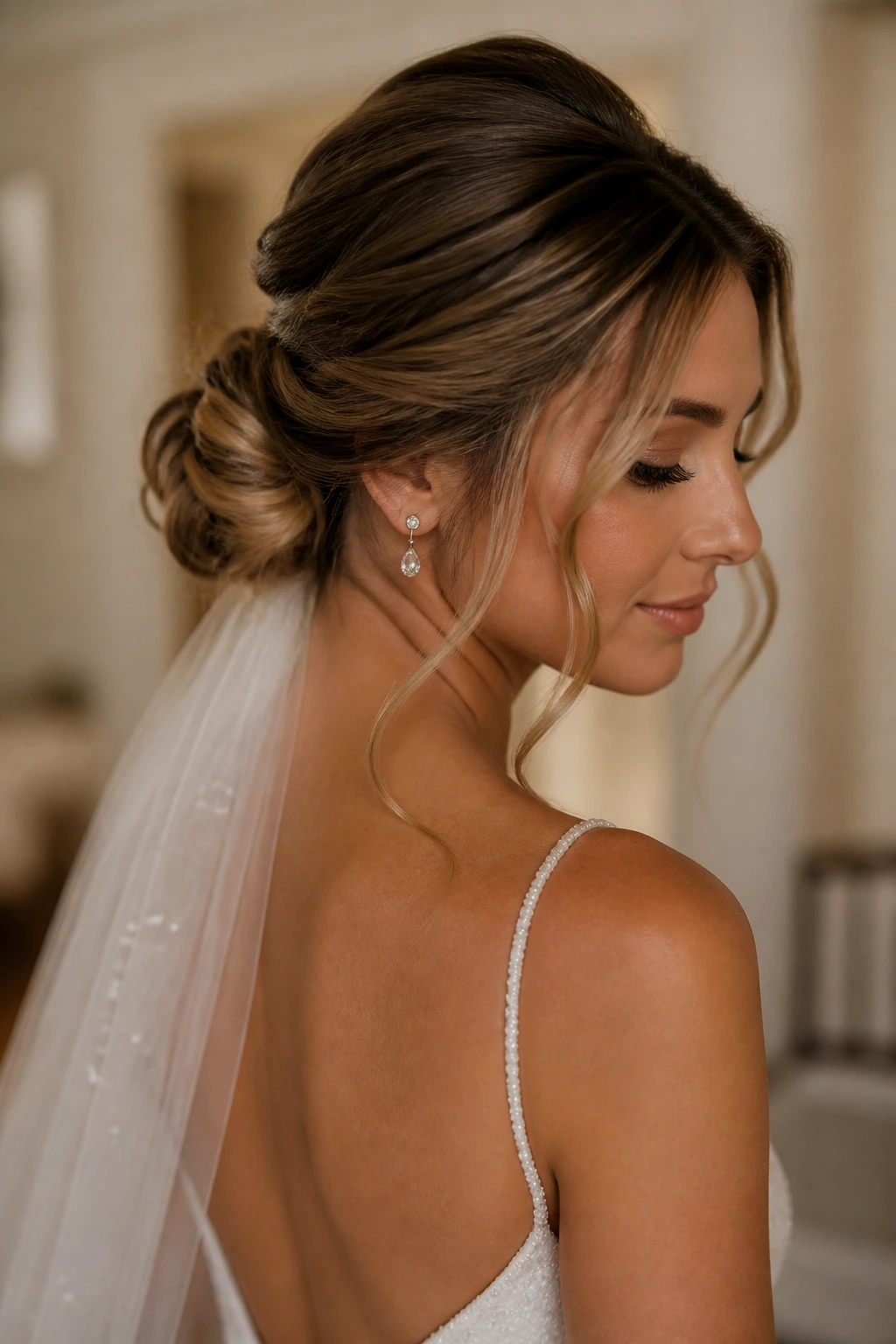
This is the compromise for brides who want their hair up but do not want a tight, formal bun. Two front pieces stay loose and waved, while the rest of the hair twists into a low bun near the nape. The face-framing pieces keep the style soft. The bun keeps it practical.
It is one of the smartest looks for long ceremonies, warm rooms, and dresses with detail at the back. The face pieces catch light and movement, while the bun keeps the neckline clear. On naturally wavy hair, the front pieces do not need much help. They already carry enough bend to sit beautifully once curled or refreshed with a wand.
If you are wearing a veil, this bun makes a strong anchor. If not, a comb, pearl pin, or tiny flowers can sit at the bun and finish the shape without clutter.
20. Pearl-Comb Accent Waves
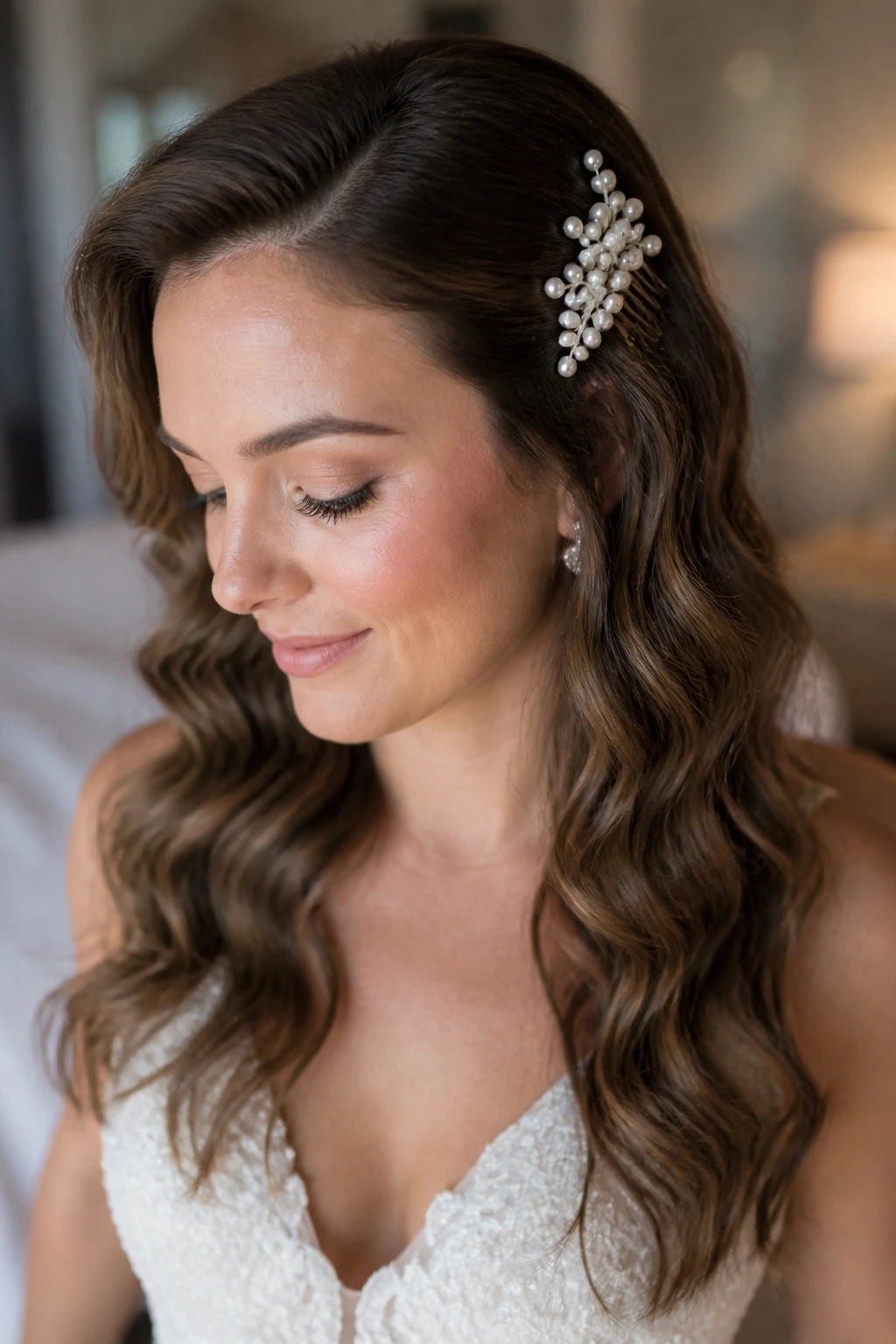
A pearl comb can do a lot for a wave style without asking for much from the hair. Slide it into one side or tuck it near the back of a half-up section, and suddenly the whole look reads as bridal. The trick is to let the accessory speak without burying the wave underneath it.
This is a good choice when the hair itself is already doing enough. Brides with wavy hair often do not need an elaborate structure; they need one smart detail. A pearl comb gives the wave a focal point, especially if the dress is simple or the earrings are understated.
Small styling note
Keep the surrounding hair soft and finger-separated, not brushed into a blur. The contrast between the polished comb and the loose wave is what makes this feel special. If the comb is heavy, pin it from beneath with crossed bobby pins so it stays put.
21. Glossy S-Wave Glam With Smooth Ends
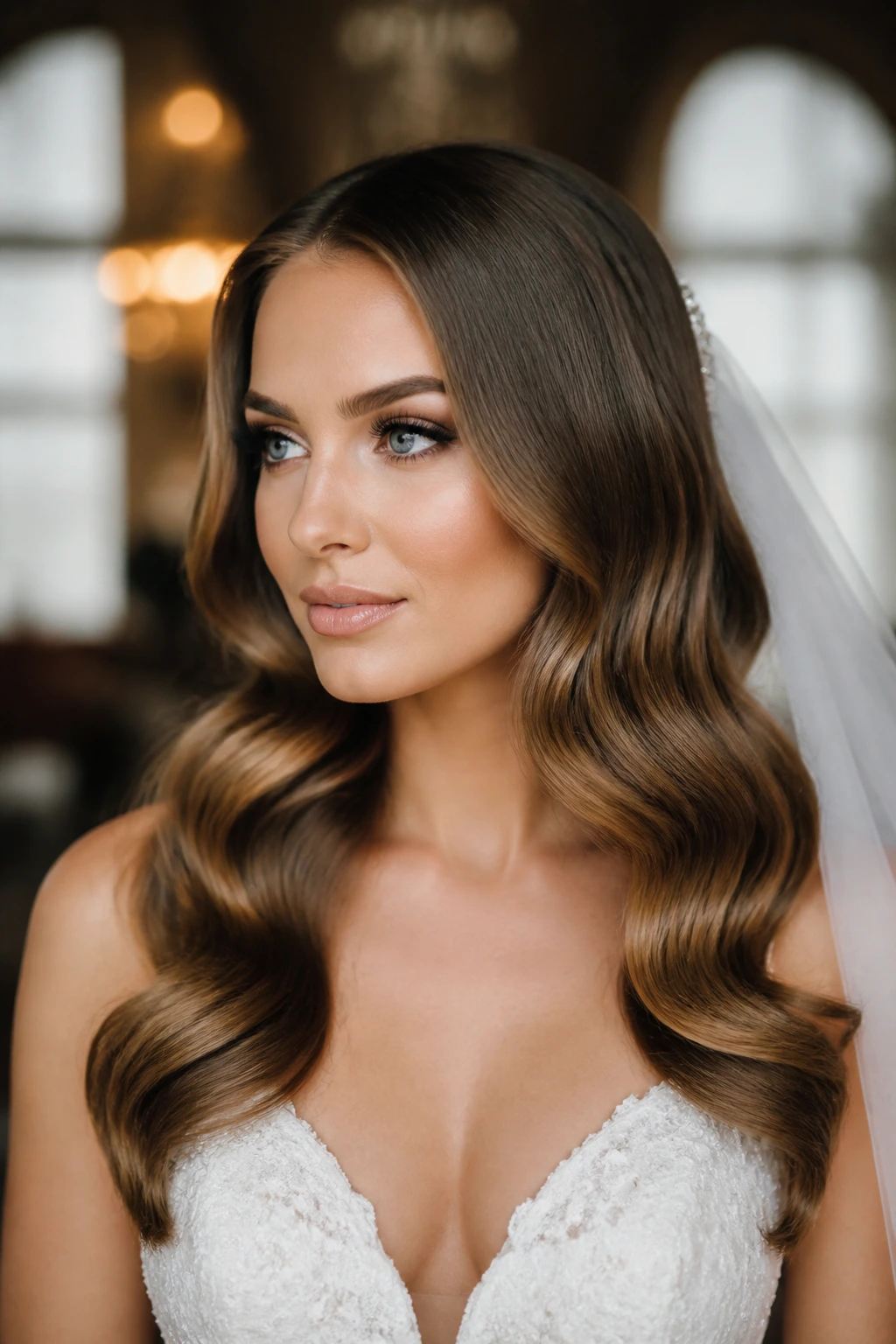
This version leans more evening than beach, but it still belongs here because the wave pattern is loose and wearable. The hair is shaped into smooth S-curves with controlled shine, then the ends are kept sleek rather than fuzzy. It is a cleaner, more dressed-up cousin of the looser bridal wave.
This look works when the bride wants to feel polished from the first look all the way to the reception. The shine gives it formality. The wave keeps it from feeling helmet-like. Wavy hair can do this beautifully if the finish product is light and the hair is set with care rather than sprayed into stiffness.
I reach for this when the dress is structured, the venue is indoors, and the bride wants photos that look a little more editorial without losing movement. That is a narrow lane, but it is a good one.
22. Rustic Braid-Weave With Loose Lengths
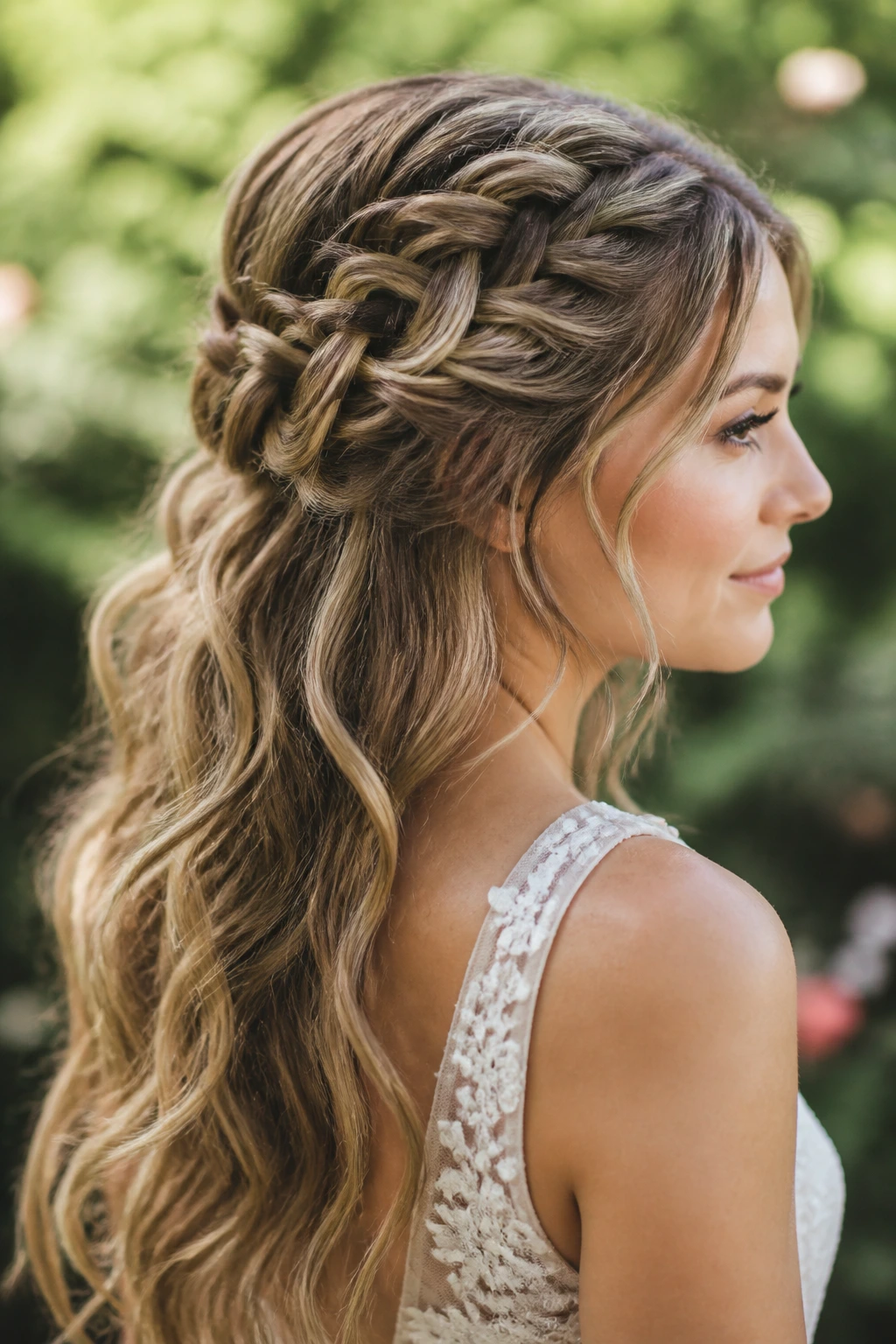
A braid-weave style takes the idea of a loose braid and pushes it into softer territory. Instead of a single obvious braid, sections are woven back through the crown or side and then allowed to disappear into long waves. The result feels textured and slightly rustic, which is perfect for outdoor settings.
The best version keeps the braid pieces narrow and the waves soft. That way the braid reads as an accent, not a second hairstyle. On wavy hair, the transition from braid to wave is smoother because the texture is already there. You do not need to fake a lot of volume to make it work.
It pairs especially well with relaxed dresses, sleeves with lace, or a bouquet that is less structured. If the flowers are loose and the setting is casual in the best way, this style fits right in.
23. Outdoor-Proof Windswept Waves
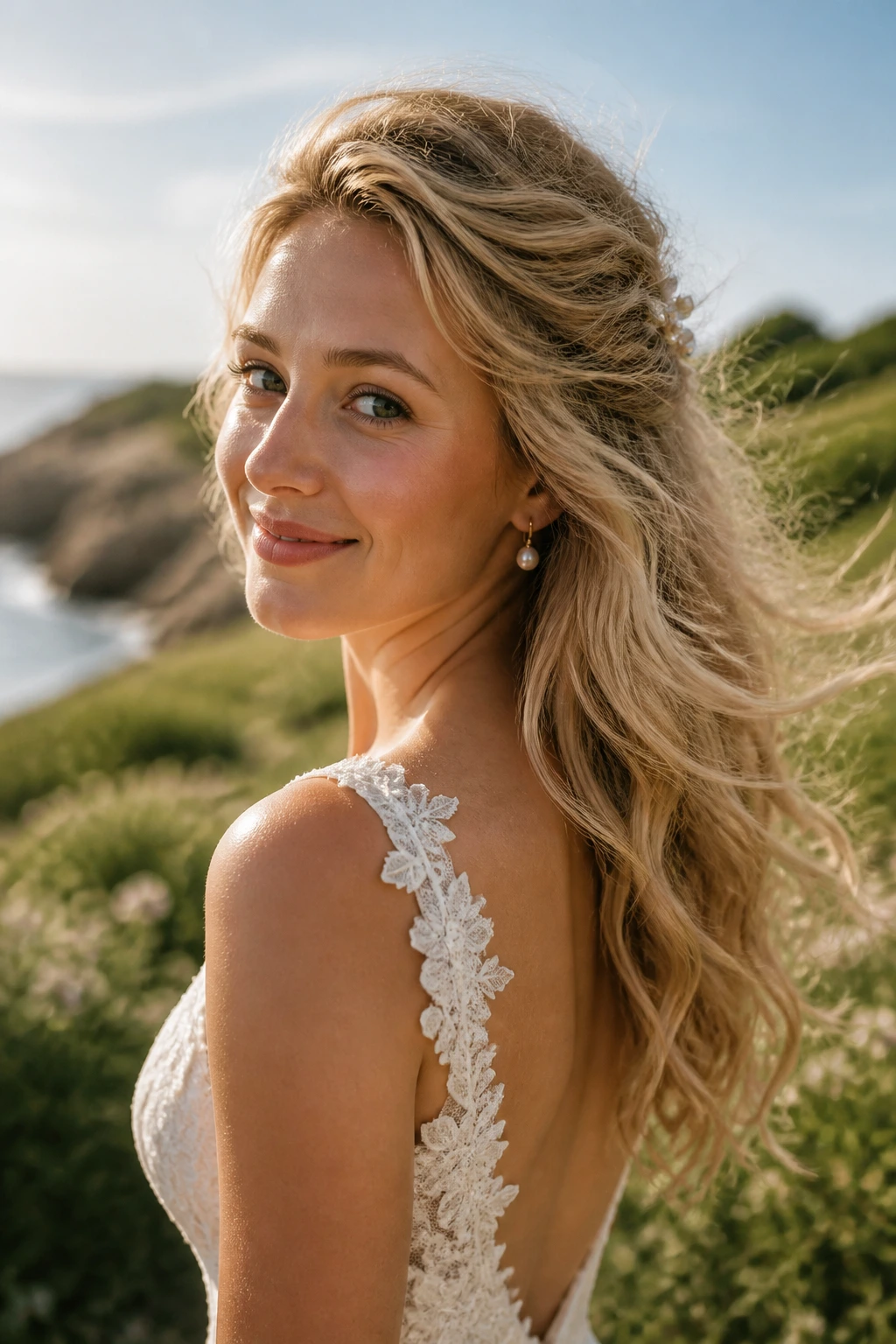
Some looks are made for perfect air. This one is made for breezes, warm lawns, and a ceremony site where the wind does not care about your plans. The waves are shaped with a little more hold at the root, the top sections are pinned more firmly, and the finish is left soft enough that a gust does not ruin it.
The secret is restraint with product and seriousness with pinning. You want the waves to look touchable, but not fragile. A strong hold spray at the crown, a little extra clip work near the temples, and a shape that already looks good slightly moved all help. That way the hair survives the environment instead of fighting it.
This is the style I would choose first for a cliffside, garden, or beach ceremony. It knows where it is. That matters.
24. Reception-Ready Tousled Wave Refresh
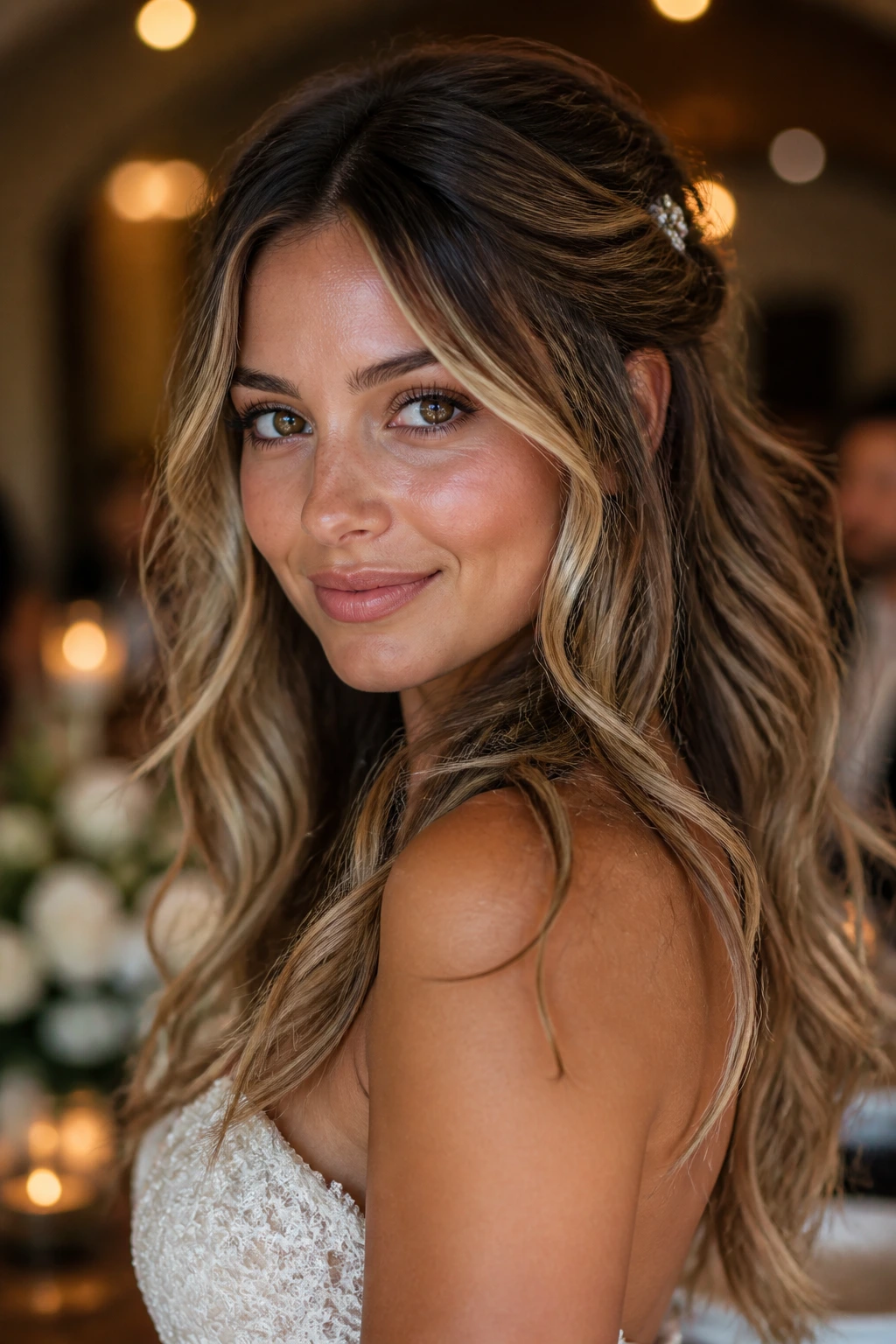
This is the look that starts one way and loosens into something even better later. The hair begins with controlled waves and secure pins, then gets finger-fluffed, tucked, or partially reworked after the ceremony so the reception version feels a little freer. Brides with wavy hair are especially good candidates for this, because the natural texture can take a reset without looking broken.
The appeal here is simple: you do not have to choose between “ceremony neat” and “dance-floor easy.” The structure can change with the day. A veil comes off, a few pins come out, maybe the front gets loosened, and the wave turns more casual without losing its shape.
It is not a dramatic style change. That is the point.
Keep a tiny touch-up kit nearby, and make sure whoever is helping with the hair knows which pins should stay and which can come out. A good reception refresh is more about removal than addition.
How to Keep the Style Fresh From Vows to Last Dance
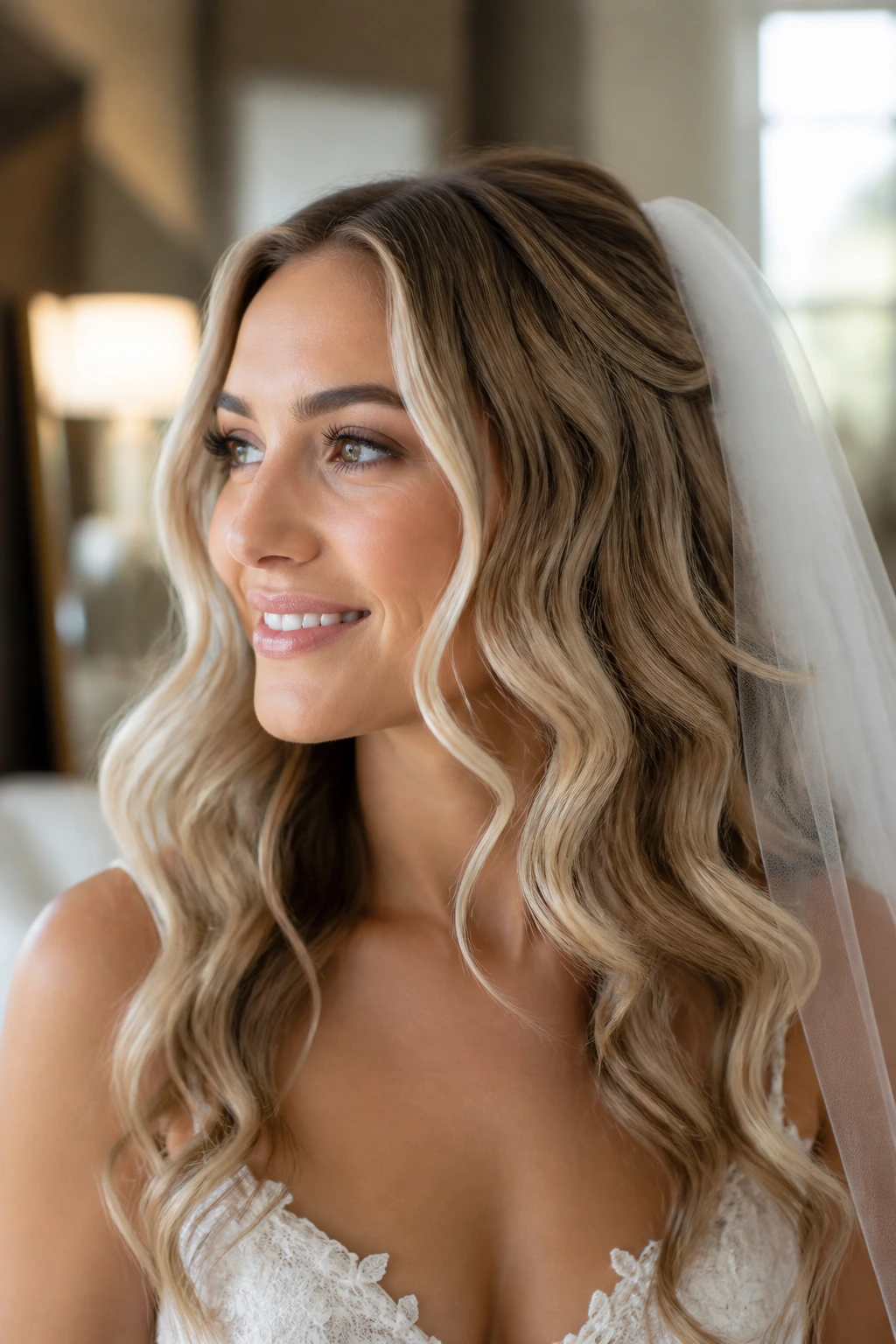
Bridal waves last better when they are treated like a shape, not a helmet. Do not run your fingers through them every five minutes. That sounds obvious, but wedding-day nerves make people touch their hair constantly. Each swipe pulls oils into the front pieces and breaks the wave apart.
A small touch-up kit goes a long way. Include a few bobby pins that match your hair color, a travel-size flexible spray, blotting papers for the forehead area, and a slim comb or brush. If the roots start to soften, lift the top layer and spray underneath rather than dousing the outside. That keeps the finish cleaner and avoids the shiny, sticky look that shows up in indoor light.
Best-use timing
- Before photos: Make sure the front pieces are shaped and the veil anchor is secure.
- After the ceremony: Re-pin the sides if they loosened while hugging people.
- Before dancing: Loosen only the pieces meant to move. Leave the structure alone.
- At the end of the night: Finger-comb, do not brush hard.
If the venue is humid, keep a small towel or blotting paper nearby for the neck and hairline. Sweat at the nape travels upward fast, and once the roots start slipping, the whole style gets harder to save.
Common Slip-Ups That Flatten Bridal Waves
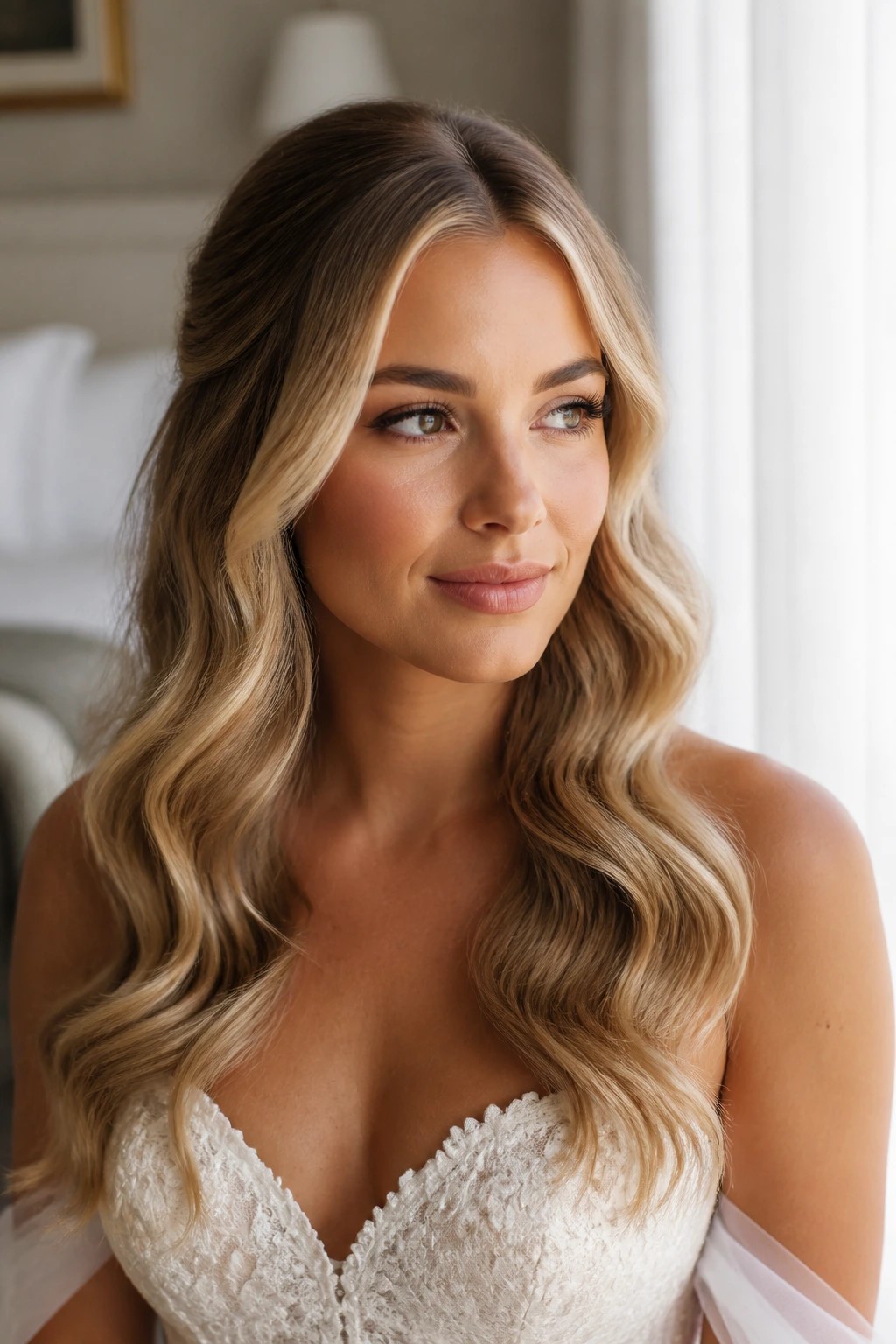
The biggest mistake is over-smoothing the hair before styling. It seems harmless. It is not. If the roots are too slick, pins slide, the wave loses grip, and the style starts drifting within an hour. Use enough product to protect and shape, not enough to make the hair feel coated.
Another common error is curling too large a section. Big chunks look efficient, but they do not hold the same way small, evenly heated sections do. The wave falls into one wide bend, and the hair looks less detailed in photos. Smaller sections take longer, yes, but they stay visible much longer too.
Other easy mistakes to avoid
- Brushing too soon: Warm curls get flattened before they set.
- Too much oil at the end: It can make the wave separate in a greasy way.
- Ignoring the veil anchor: If the comb has no stable base, it drags the crown down.
- Using the same hold for every hair type: Fine hair needs different support than coarse hair.
And a pet peeve of mine: brides sometimes ask for “messy” when they really want soft. Messy is not the same thing as textured. Soft still needs shape. If the hair looks accidental, it was underplanned.
Variations and Adaptations to Try
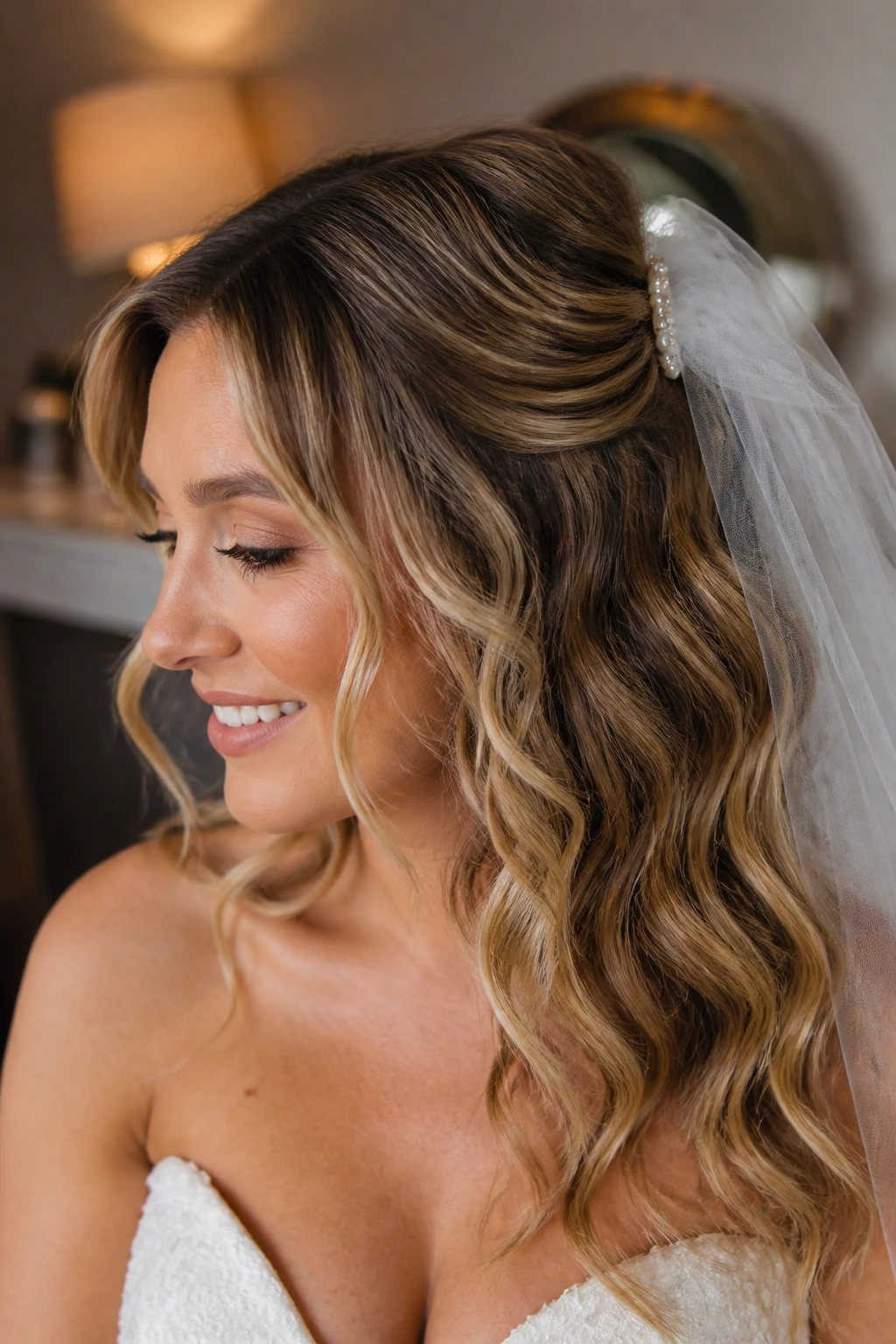
Humidity-Ready Bridal Wave: Ask for smaller sections, a firmer root spray, and a slightly tighter curl pattern that can relax as the day goes on. This is the version for warm weather, open-air ceremonies, or any room where the air feels heavy.
Veil-First Build: Start by deciding where the comb sits, then build the wave around that anchor point. The style looks cleaner because the veil placement is designed into it instead of added later like an afterthought.
Short-Hair Bridal Bend: For bobs and lobs, use a smaller iron and keep the wave lower through the ends. The result is less “Hollywood curl” and more soft bend, which suits shorter lengths better.
Flower-Accent Garden Version: Swap heavy accessories for a few tiny pins or one narrow floral piece placed where the wave already curves. The texture stays visible, and the flowers do not overwhelm the shape.
Minimalist Satin Finish: If the dress is sleek and the jewelry is simple, keep the wave cleaner and add only a small amount of shine serum to the ends. That keeps the whole style modern rather than overly romantic.
Aftercare, Touch-Ups, and Next-Day Wear
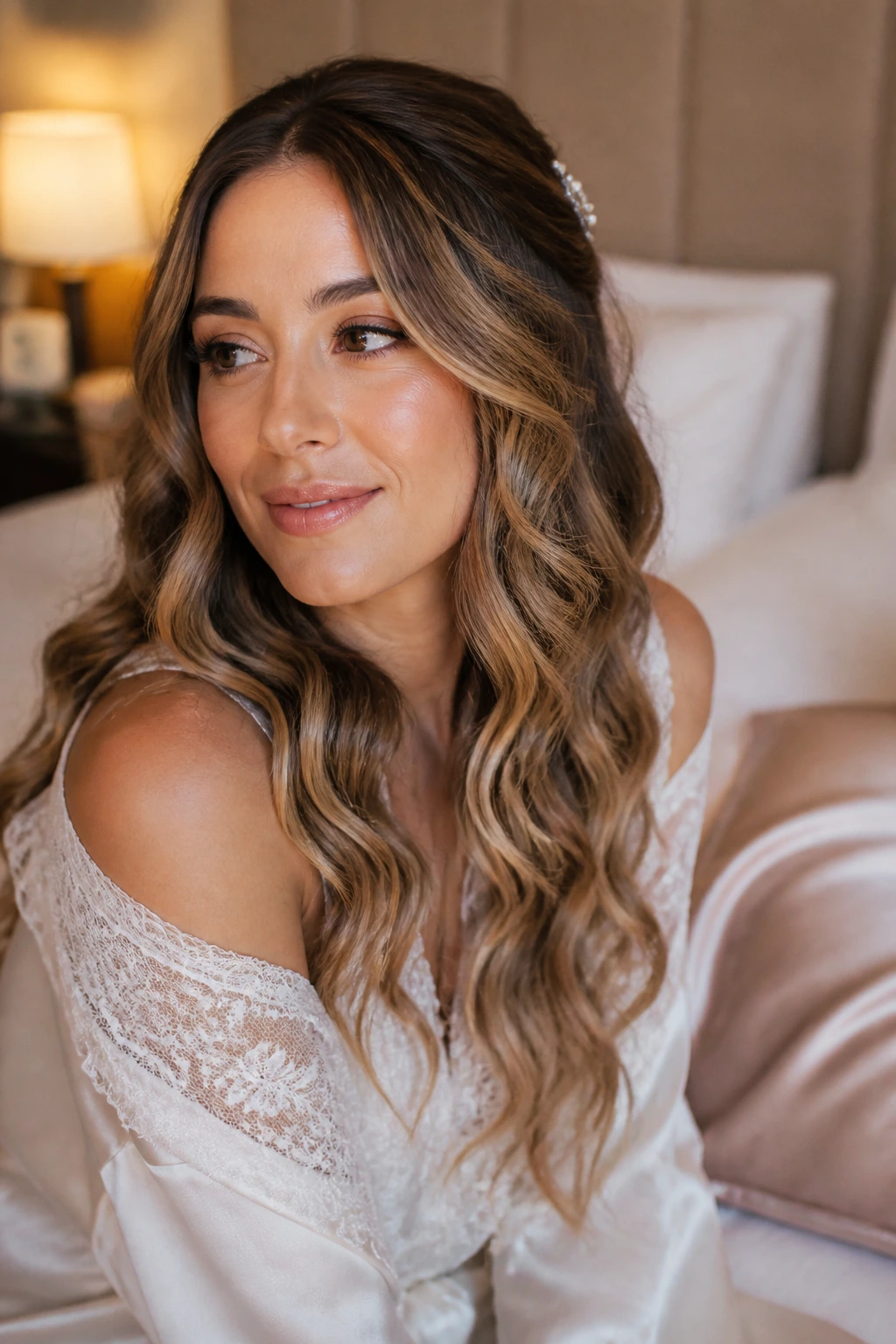
Most bridal waves will keep their shape for the full day if they are set well, but they do not need to look frozen from hour one to hour twelve. A little natural loosening is part of the appeal. What you want to prevent is collapse at the crown and stringiness at the ends.
If you plan to keep the style for brunch or travel the next day, sleep on a silk pillowcase and gather the hair loosely into a low braid or two soft twists. Do not smash it into a tight bun. That creates bends in the wrong place, especially at the front pieces. If the wave still looks decent in the morning, revive it with a little dry shampoo at the roots and a finger-scrunch through the lengths.
For the actual wedding day, think in terms of checkpoints rather than fixes. Check the veil pin before photos. Check the sides before the ceremony. Check the front pieces before the first dance. Small corrections prevent the “why is my hair doing that?” moment later.
Frequently Asked Questions
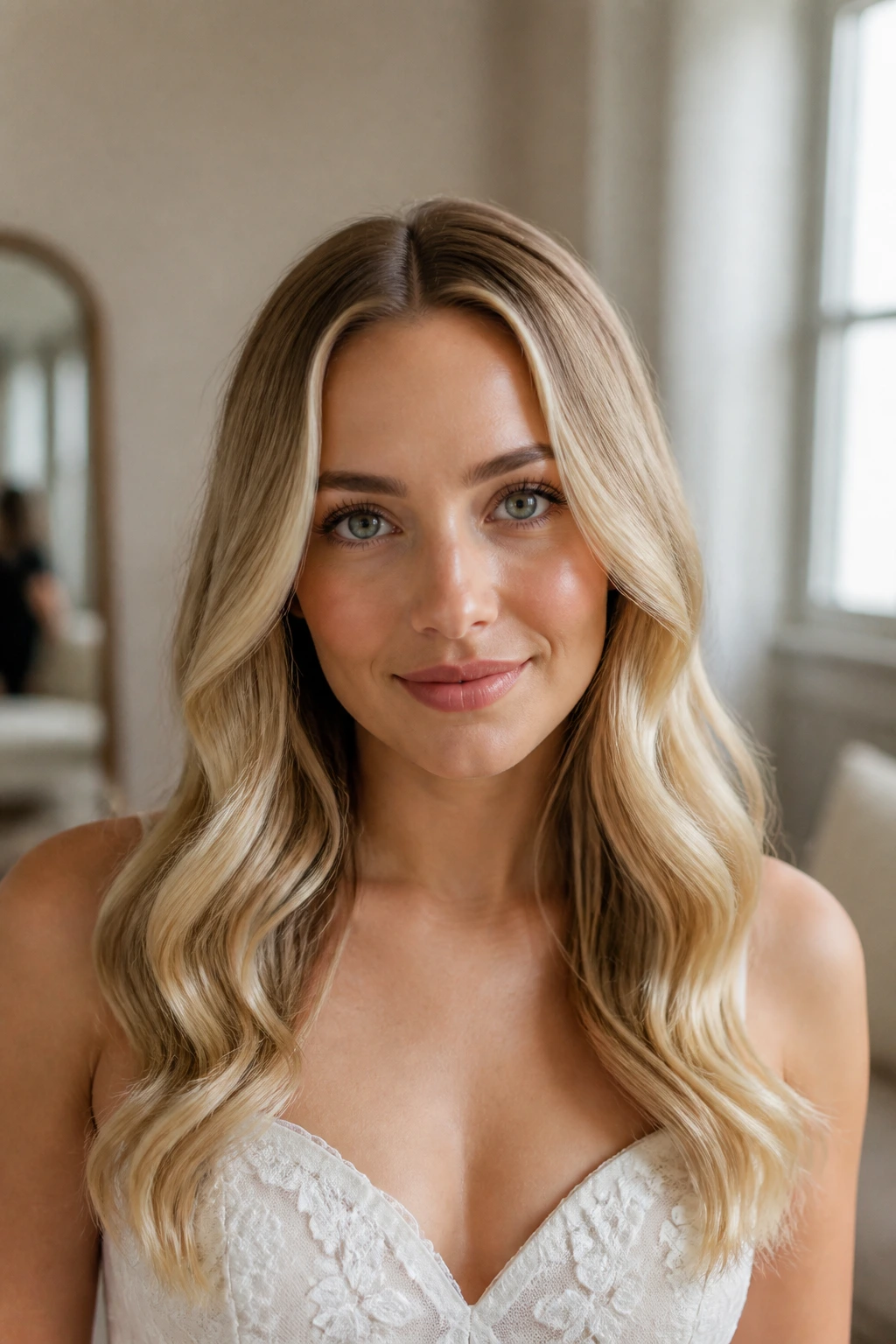
Can brides with naturally wavy hair wear beach waves without using a curling iron?
Yes, and sometimes that is the better route. If your natural wave is strong, a diffuser, a little mousse, and a few strategic pin curls can shape the hair without loading it with heat. The key is to give the wave direction and polish, not force it into a new texture.
What iron size works best for bridal beach waves?
A 1.25-inch iron is the safest starting point for medium to long hair because it makes a looser bend that can be brushed out later. If the hair is shorter or finer, a 1-inch iron gives more control and better hold.
How do I keep waves from falling flat under a veil?
Build a firm base first. The comb needs to sit into a section that has grip, usually at the crown or just behind a twist, and that area should be pinned securely with crossed bobby pins if needed. If the veil is heavy, do not place it in a section that is too soft.
Should I wash my hair the day of the wedding?
Usually not, unless your hair gets oily fast or your stylist specifically wants a fresh wash. Hair that was washed the day before often has better grip, less slip, and more staying power for pins and spray.
What if my hair frizzes instead of forming soft waves?
That usually means the hair was over-dried, over-brushed, or overworked with heat. Use a heat protectant, work in smaller sections, let each section cool completely, and keep finishing products light. A bit of frizz control cream only on the ends can help, but too much will flatten the texture.
Do I need extensions for these looks?
Not always. Extensions help when the bride wants more fullness, longer length, or a thicker braid or half-up style. If your hair already has decent density and holds shape well, you may not need them at all.
Which of these styles works best with a high neckline?
A low textured chignon, a pinback wave, or a side sweep usually works best because they keep the neck area clean. You can still leave soft pieces around the face, but the overall shape should stay lifted or controlled.
Can short bobs really pull off wedding beach waves?
Absolutely. A bob with soft bends can look sharp and modern, and it often feels fresher than forcing a short cut into long-hair curls. The trick is to keep the wave pattern scaled to the length so it does not turn fluffy.
How early should I do a hair trial?
Early enough to make changes without panic. A trial that leaves room for one more adjustment is worth more than a perfect photo that only exists in the mirror. Bring your veil, earrings, and hair accessories if you can.
A Wave That Still Looks Like You
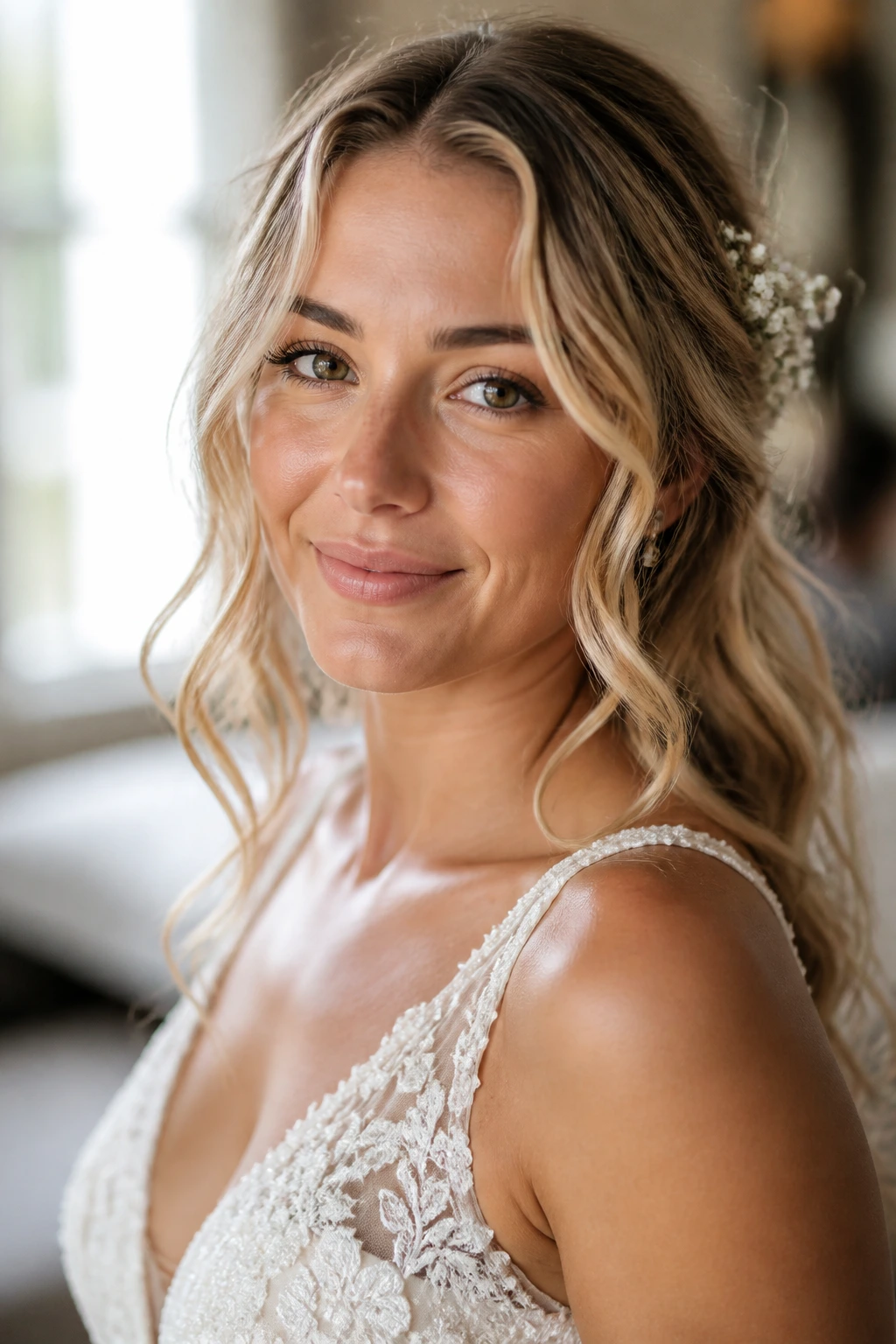
The nicest thing about bridal beach waves on wavy hair is that they do not ask you to become a different person for the day. They refine what is already there. That is a better deal than a style that only survives in photos or only survives in theory.
Pick the version that suits your dress, your veil, and the way your hair actually behaves when humidity enters the room. The right wave is not the one that looks most dramatic on a mannequin head. It is the one that still feels right when the pins come out, the music gets louder, and you are halfway through the night with your hair still moving the way you wanted it to.
