



The best prom hairstyles for a soft polished look are the ones that still move when you laugh. Hair that’s too stiff cracks at the hairline by the end of photos; hair that’s too soft drops before you’ve even left the house. The sweet spot sits in the middle: controlled, shiny, and gently shaped, with enough give that it doesn’t look frozen the second you turn your head.
That balance matters because prom is a long night. You sit, stand, dance, hug people, adjust straps, and climb in and out of cars. A style with a strong anchor at the nape, brushed-out curls, or a clean half-up twist survives all of that better than something sprayed into a shell. And the nicest part is that “polished” does not have to mean severe. A soft finish can still feel romantic, light, and very deliberate.
If you want hair that looks finished without looking overworked, start with movement at the ends and control at the roots. That’s the whole trick. The styles below live in that space, and each one handles a different hair length, neckline, and level of styling confidence.
Why These Prom Hairstyles Earn Their Keep
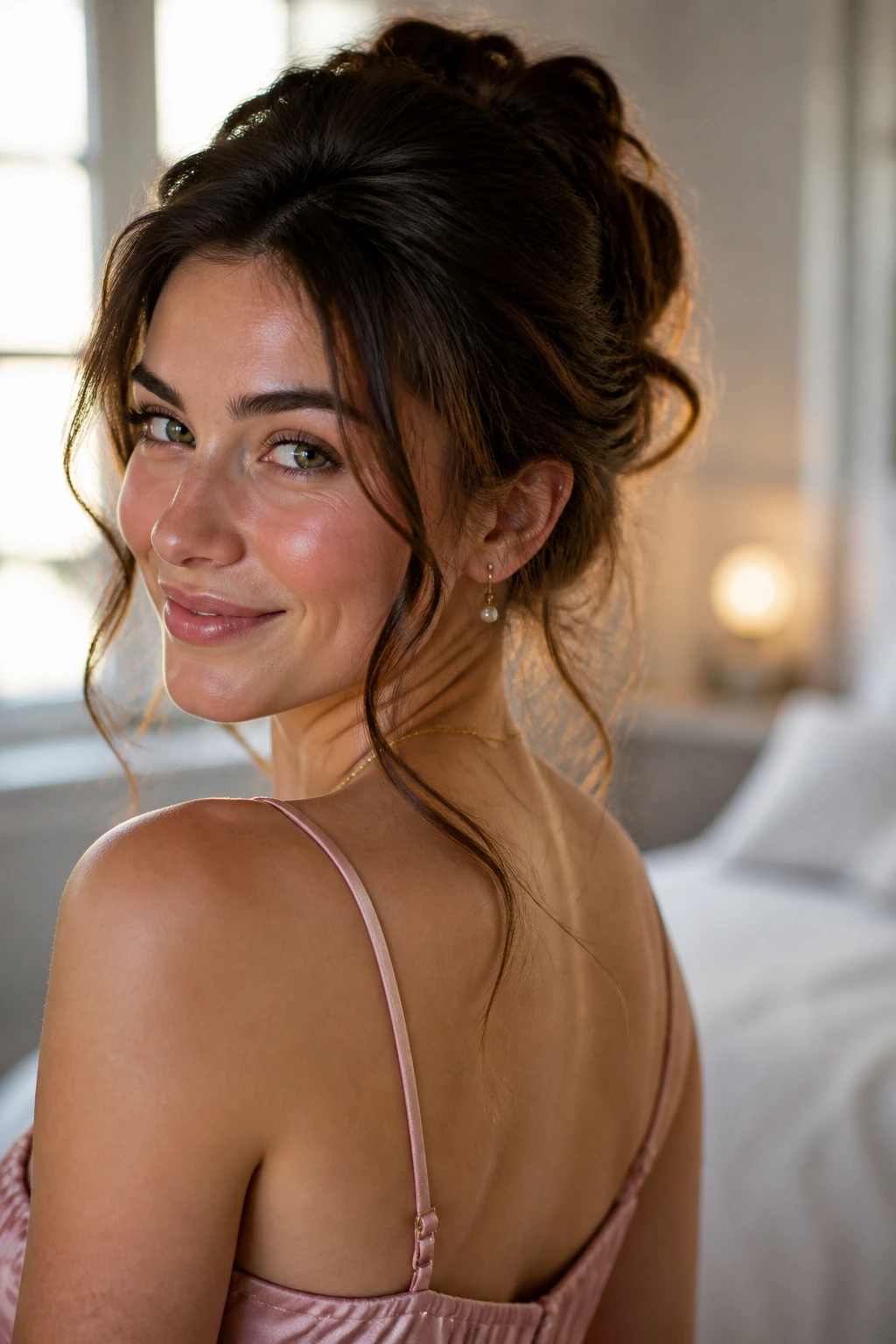
-
Soft edges, strong shape: Each style keeps the outline tidy while leaving a few pieces loose around the face or ends, so the hair looks styled instead of pasted down.
-
Built to last through a long night: Low anchors, secure pins, and brushed-out curls hold up better when you’re sitting, dancing, and moving between hot rooms and cool hallways.
-
Easy to match with a dress: These prom hairstyles work with strapless necklines, halters, one-shoulder dresses, and higher necks because they can go up, half-up, or off to one side.
-
Flexible for different hair types: Fine hair, thick hair, straight hair, and curls all have a place here. The main difference is where you put the volume and how much product you use.
-
Soft enough to feel youthful: A polished style can go wrong fast if it starts looking too tight. These looks keep a little air around the face and crown, which keeps them from feeling heavy.
-
Photo-ready without looking overdone: Flash, indoor light, and movement all show the same thing: a style with shine, shape, and a little texture reads cleaner than a helmet of spray.
1. Soft Old-Hollywood Waves
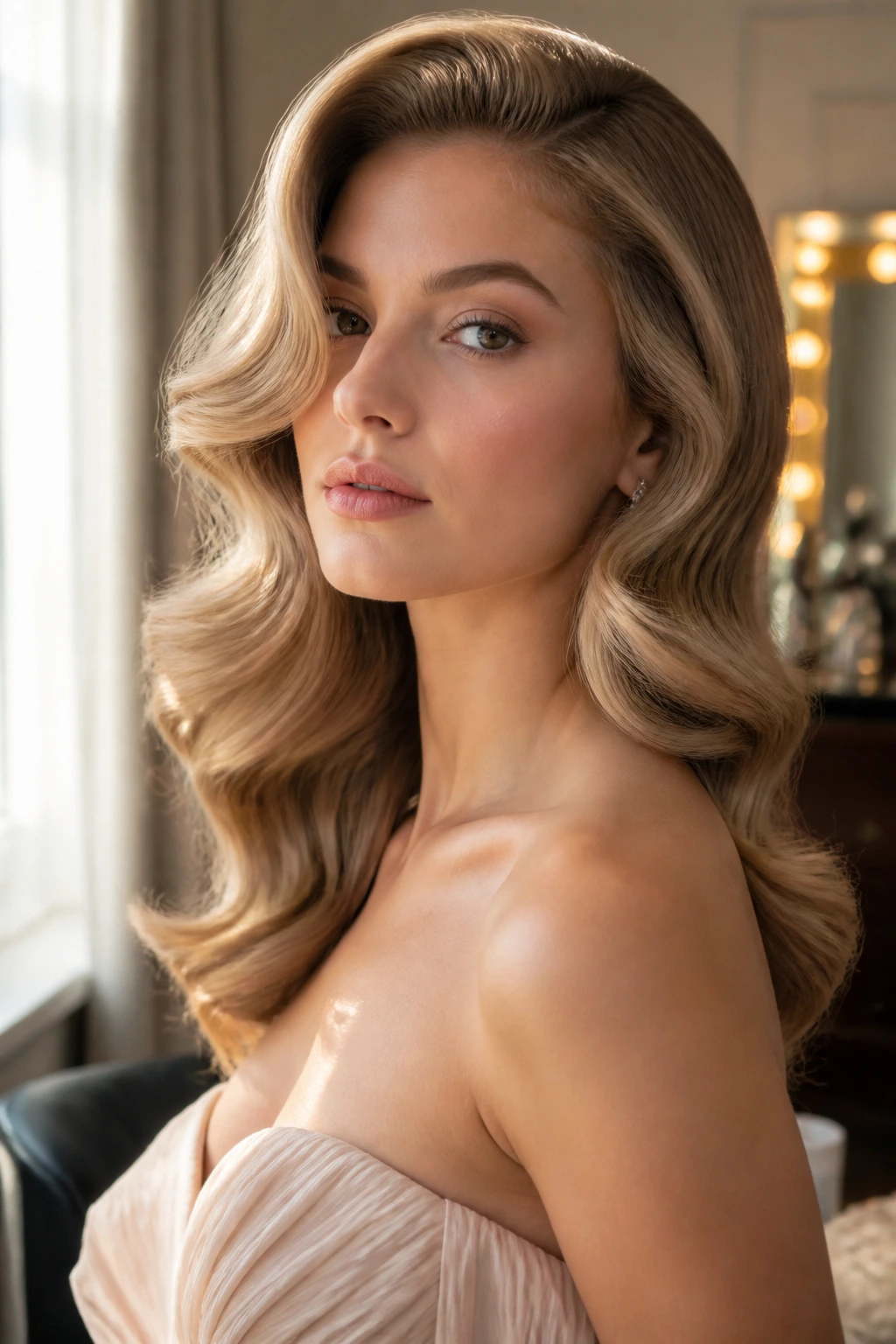
Old-Hollywood waves are the safest bet when you want hair that looks expensive without shouting for attention. The wave pattern is smooth and sculpted, but the brushed-out finish keeps it from feeling rigid. It’s one of those prom hairstyles that can lean glamorous or soft depending on how much you brush it out.
What makes it work
Use a 1.25-inch curling iron or wand and curl sections away from the face on the front half of the head. Let each curl cool before you touch it; if you brush hot curls, they collapse into a vague bend. Clip the curls up while they cool for 8 to 10 minutes if your hair is hard to hold.
A deep side part gives this style its shape. The part should feel intentional, not dramatic for the sake of it. I like to smooth the top with a boar-bristle brush and a tiny bit of shine serum on the ends only, because too much oil at the roots turns the whole look limp.
Quick details that matter
- Curl in sections about 1 to 1½ inches wide.
- Keep the front pieces slightly larger so the face frame looks soft.
- Brush the finished waves with a paddle brush, then shape them with your fingers.
- Finish with a flexible-hold hairspray, not the stiff stuff that makes the hair feel papery.
One small tip: tuck one side behind the ear and secure it with a hidden pin if your dress has a strong neckline. It keeps the front open and shows off the wave pattern.
2. Half-Up Twist With Face-Framing Pieces
Want your hair off your shoulders without losing that soft movement around your face? This is the answer. A half-up twist gives you lift at the crown and a little polish through the top, while the rest of the hair stays down and relaxed.
The best version starts with soft curls or a clean blowout. Twist a section from each temple back toward the crown, then secure them with two crossed bobby pins or a small clear elastic hidden underneath. Leave the twist slightly loose so it doesn’t look pulled tight against the scalp. That looseness is the whole point.
Face-framing pieces should fall around the cheekbones or just below the jaw. If your layers are short, curl those front pieces away from the face with a small iron and let them cool in your hand for a few seconds before releasing them. If your hair is fine, mist the crown with texturizing spray first so the twist has something to grip.
This style is one of the easiest to wear with a sweetheart or strapless dress. It keeps the top neat, which helps the dress do its job, but it still looks youthful because the bottom half moves freely.
One warning: do not pull the twist too far back. The second the hair gets stretched tight, the style loses its softness and starts looking severe.
3. Low Chignon With Loose Tendrils
A low chignon is what I reach for when the dress has an open back or the jewelry needs space to breathe. It sits quietly at the nape, which gives the whole look a very clean line, and the loose tendrils stop it from feeling too formal. If you want polished with a little softness left in the frame, this is a strong one.
Gather the hair at the nape, slightly off-center if you want a less traditional shape. Twist it into a compact bun, then secure it with U-pins and regular bobby pins placed in a crisscross pattern. That pinning method matters more than people realize; it keeps the bun from drifting apart once you start moving around.
Pull out two thin front pieces before you secure the bun. Curl them with a 1-inch iron and let them cool against your hand for a few seconds so they keep a gentle bend, not a sharp spring. If your hair is slippery, work in a tiny amount of mousse at the roots and a light texturizing spray through the mid-lengths.
This style looks especially good when the bun itself is not perfect. A little softness in the coil makes the whole thing feel less formal and more wearable. Tight chignons can look beautiful, but they can also feel unforgiving. This version has room to move.
4. Polished Blowout With Bouncy Ends
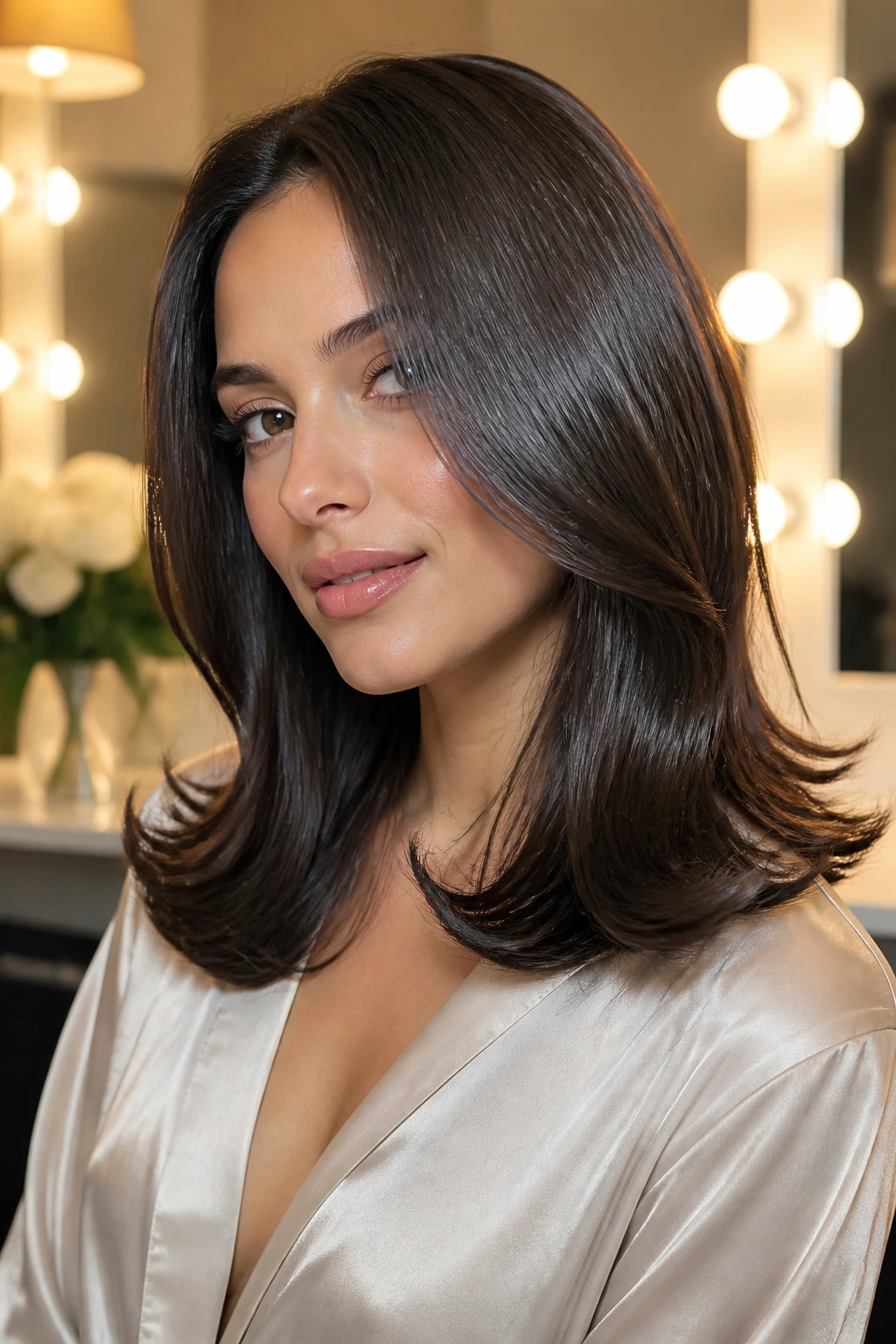
A blowout is not the lazy option. Done well, it can look cleaner than curls because the shape is smoother and the ends sit in a controlled bend instead of forming separate spirals. For a soft polished look, that matters.
Start with damp hair and apply heat protectant plus a lightweight volumizing mousse at the roots. Blow-dry with a concentrator nozzle and a round brush, lifting the roots first and then turning the brush under at the ends. The ends should curve, not flip hard. If they turn into a sharp curl, the blowout starts looking too retro and a little dated.
This is the style for shoulder-length hair and long layers. It gives you movement without stealing the show from your dress or makeup. If your hair is very fine, clip the crown up in sections and use a cool shot at the end to set the shape. If your hair is thick, work in smaller sections and keep the brush moving so the hair doesn’t frizz.
I also like to set the front pieces in large Velcro rollers for 10 to 15 minutes while getting dressed. That one step gives the top a little lift and keeps the face frame from collapsing before you leave.
One small note: use shine spray sparingly. You want a clean glow, not the look of fresh oil at the roots.
5. Braided Crown With Soft Ends
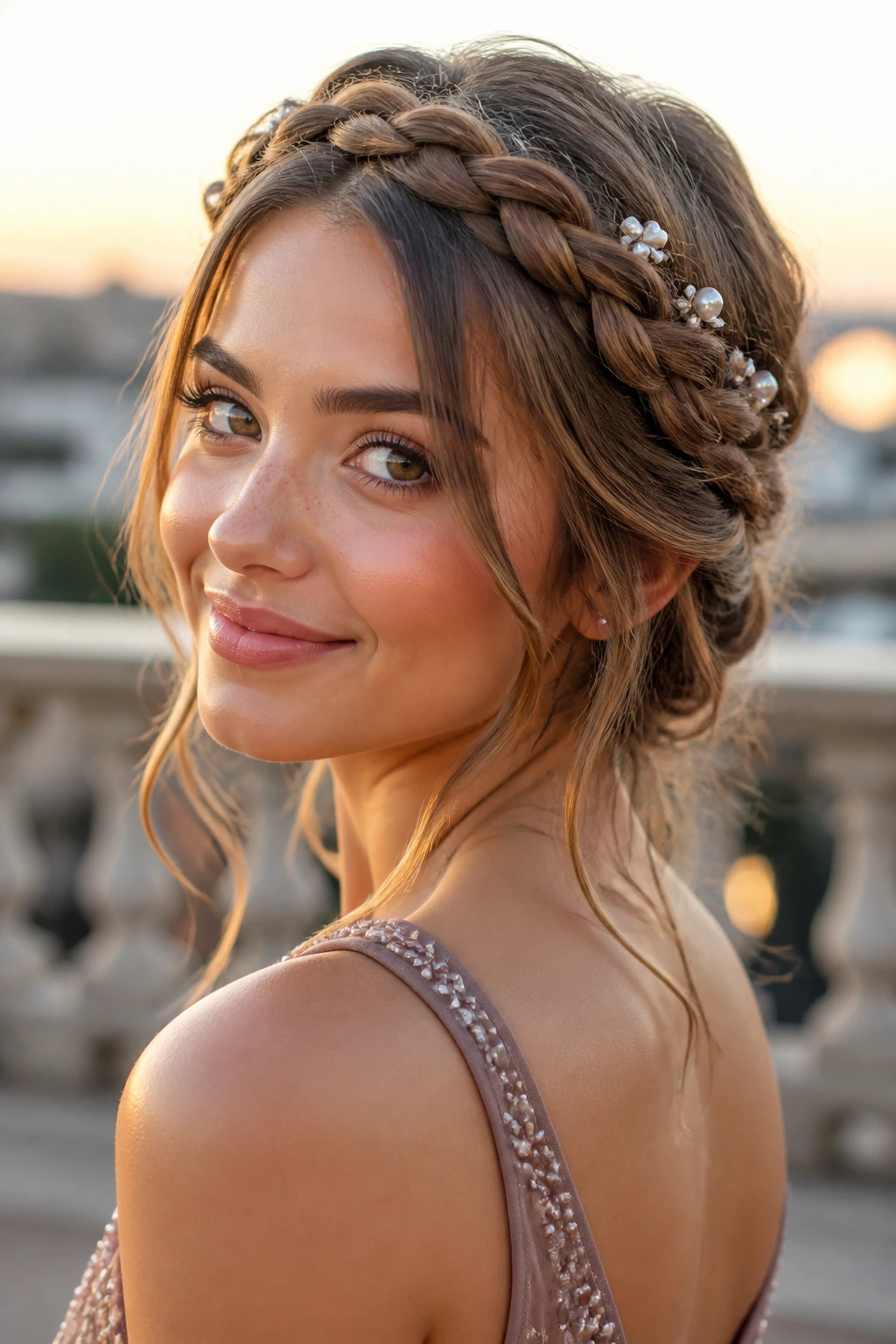
A braided crown can sound a little too bridal if it’s done tightly, but a looser version is gorgeous for prom. It brings detail around the head without making the style feel heavy. The braid creates structure; the loose ends keep it soft.
Instead of making the braid stiff, braid a section from each side of the head and cross them across the crown, or braid one side and sweep it back into a half-up finish. Loosen the braid gently with your fingers afterward. That “pancaking” step is what takes it from school dance to polished evening hair.
Let the ends fall in soft waves or a low curled tail. If you leave the lower hair too straight, the braid starts to feel disconnected from the rest of the style. The contrast can work, but here the goal is flow.
A few tiny pearl pins tucked near the braid can make this look feel finished without turning it into an accessory moment. Keep the pins small. Big extras fight with the braid and make the whole thing look crowded.
If your hair is layered, spray the shorter pieces lightly with hairspray before braiding. It keeps them from popping out halfway through the night, and nobody wants to be fighting a frizz halo near the dance floor.
6. Sleek Low Ponytail With a Wrapped Base
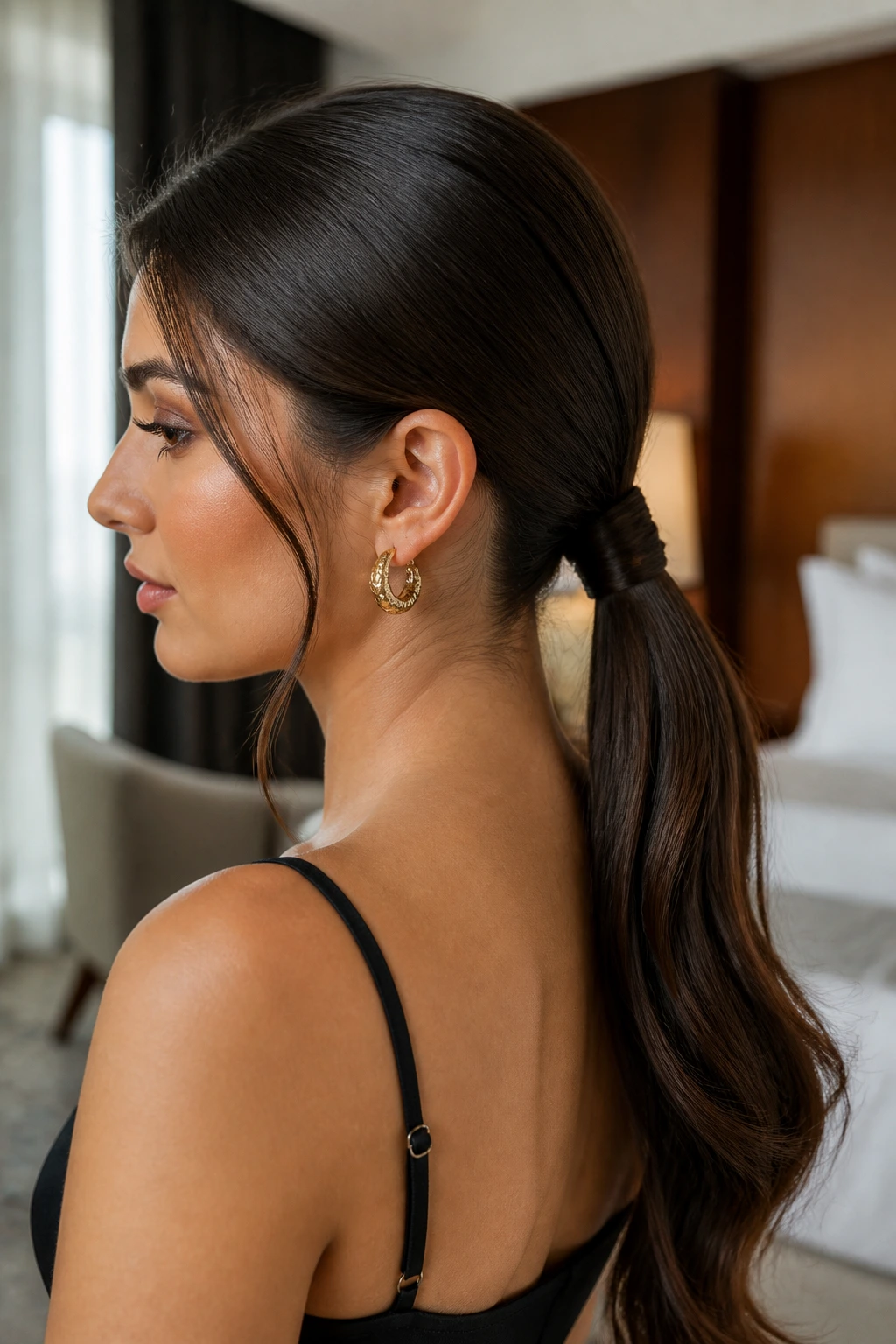
A sleek low ponytail is one of my favorite choices when the dress is detailed or the jewelry is doing most of the work. The crown stays smooth, the ponytail keeps some motion, and the wrapped base makes it look deliberate instead of thrown together in a hurry.
Use a smoothing cream or light gel at the hairline, then brush the hair back with a boar-bristle brush until the top is flat and clean. Secure the ponytail at the nape. Then take a small strand from underneath, wrap it around the elastic, and pin it under the tail with a hidden bobby pin. That tiny wrap matters. It’s the difference between a gym pony and a prom pony.
The tail itself can stay straight, curled under, or softly waved. I like a loose bend through the lengths so the ponytail doesn’t hang like a rope. If your hair is long and thick, split the tail into two sections, curl each one, and then let them fall together. They’ll sit lighter and move better.
This style loves statement earrings. It also behaves well with one-shoulder dresses because it keeps the front open and lets the neckline stay visible. The only thing to watch is the crown: if you smooth it too hard, the style can look flat from the side.
7. Side-Swept Glam Waves
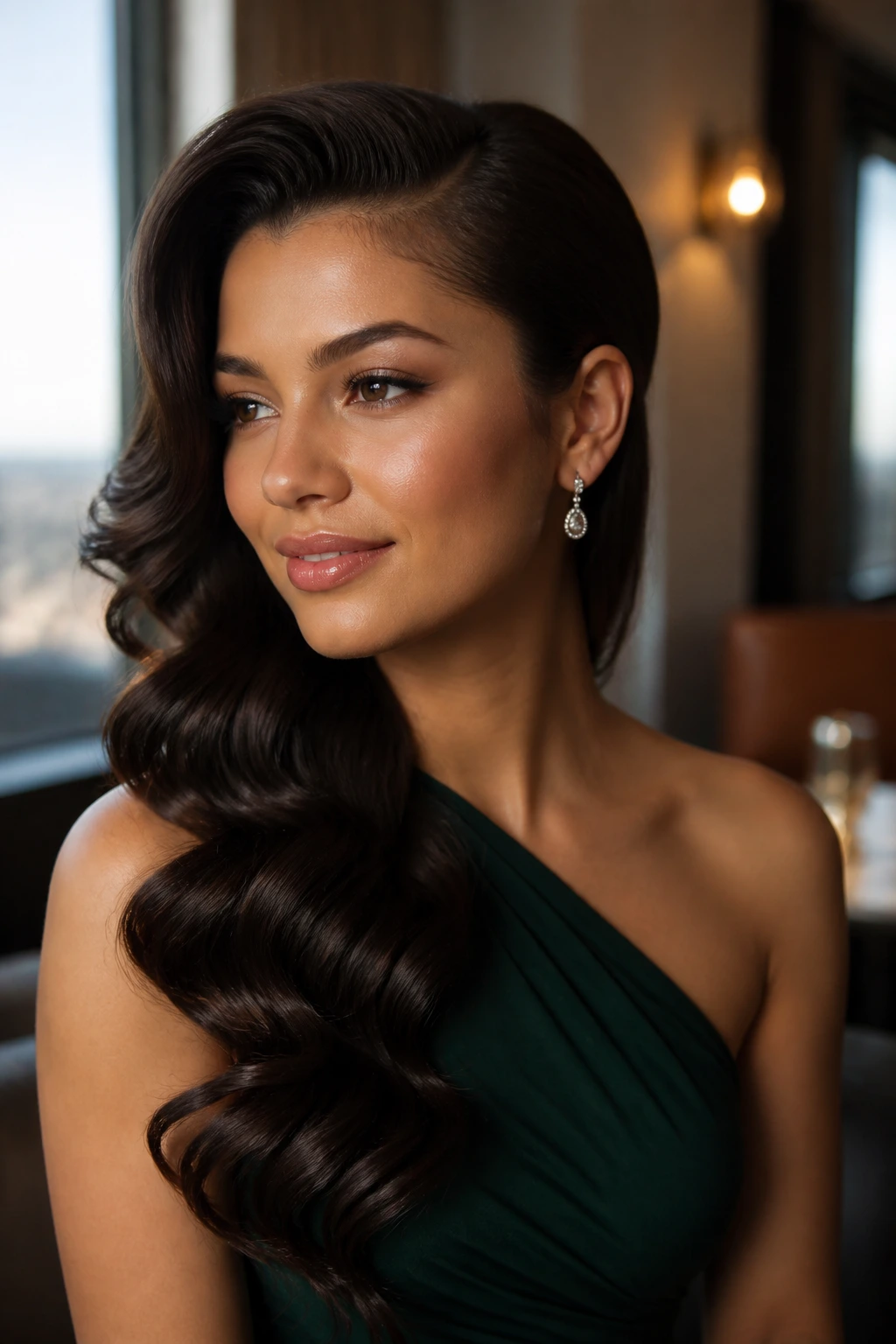
Side-swept waves have a little more drama than centered styles, and that’s exactly why they work. The shape is soft, but the side part creates a clear line that makes the whole look feel intentional. If you want something that slides neatly over one shoulder, this is the one.
A deep side part should sit just above the highest point of your eyebrow arch. That part placement keeps the style balanced, which matters more than people think. Too shallow and the wave looks accidental. Too deep and the hair starts to collapse on one side.
Curl the hair in large sections with a 1.25- to 1.5-inch iron so the wave opens up when you brush it out. Then sweep the fuller side forward over one shoulder and pin the back side low near the nape. That hidden pin keeps the style from wandering through the night.
This style is especially good with asymmetrical dresses and gowns that already have a visual line built in. The hair should echo that line, not compete with it. A few misty tendrils around the face make the whole thing feel softer, which is the point here. You want glamour, yes. You do not want the hair to look like it’s trying too hard.
8. Textured French Twist
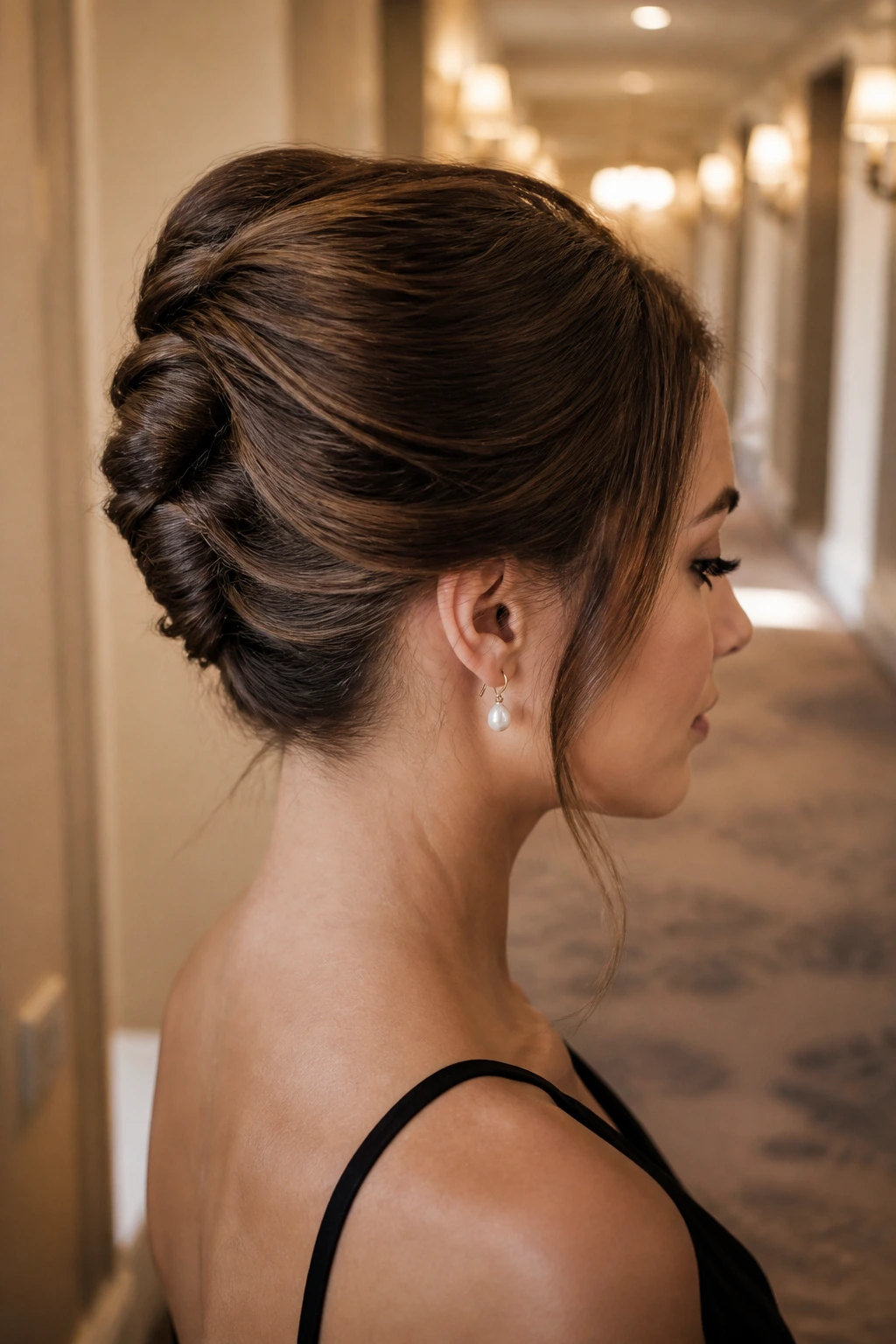
A French twist can turn severe fast, so the trick is to keep the texture alive. Think of it as a French twist with room to breathe, not a museum piece. When the top has a little lift and the sides are slightly loose, the style reads elegant instead of stiff.
Work in texturizing spray first, especially if your hair is fine or freshly washed. Gather the hair low at the back, twist it upward, and tuck the ends inside with a long pin or several bobby pins. Leave the shape a little rounded instead of making it too flat against the head. A flat twist can look sharp in a way that does not belong at prom.
I like to leave one or two tiny pieces near the temples soft enough to move. Not enough to look messy. Just enough to keep the face from feeling boxed in.
A French twist is also one of the best choices when you want a dress with detail in the back to show off. The hair stays off the neck, the silhouette looks clean, and the style can survive hours of sitting and standing. If you can see every pin from across the room, it’s too tight. Back up and loosen it a touch.
9. Bubble Ponytail With Soft Volume
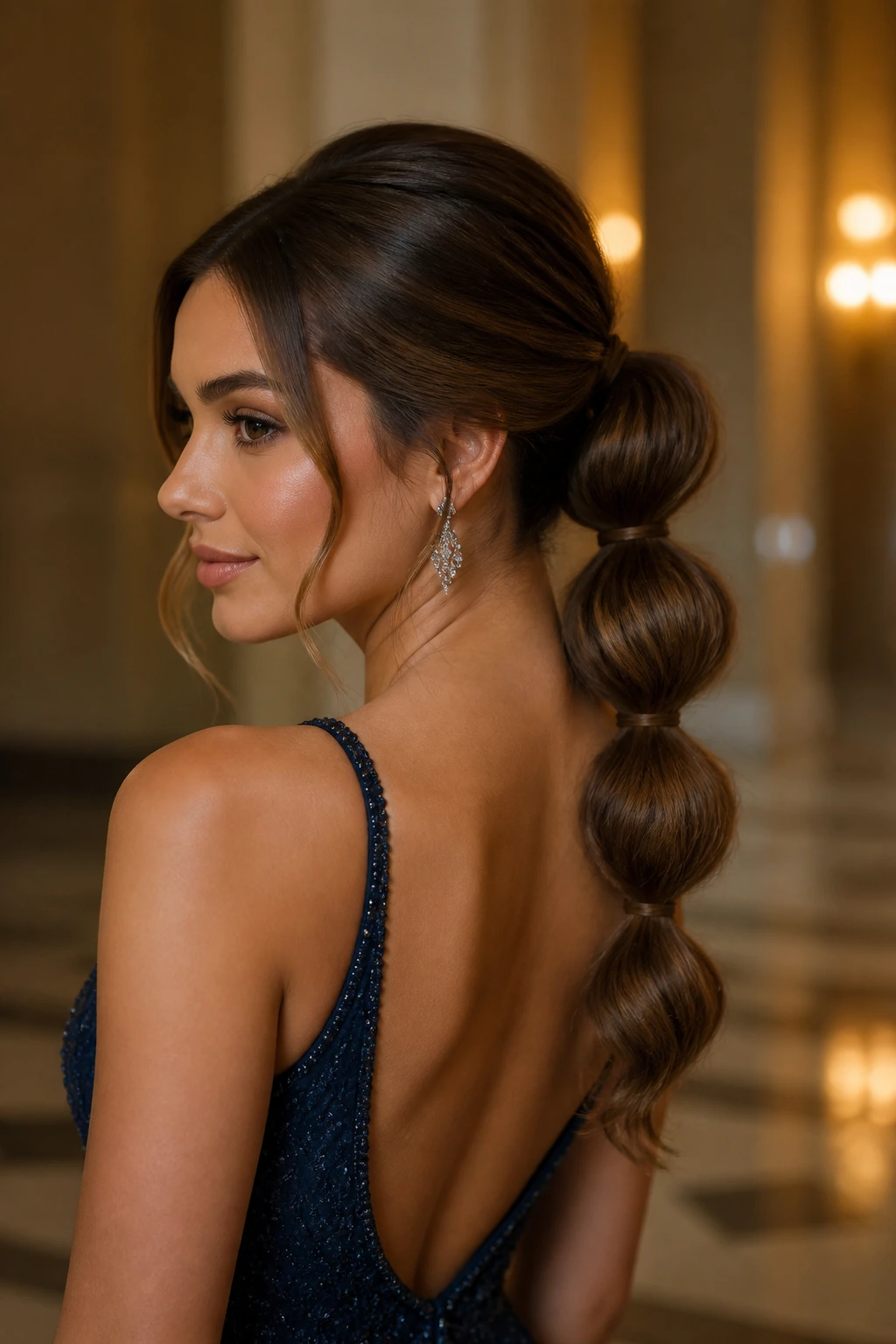
A bubble ponytail can go sporty in a hurry, but the soft version is a different story. Pull each section out a little, and the shape starts to look playful and polished instead of athletic. It has the right kind of movement for prom because the pony keeps its shape while still bouncing.
Start with a ponytail at the mid-back or low nape. Add clear elastics every 2 to 3 inches, then gently tug each section outward to form soft bubbles. Don’t yank. You want rounded sections, not stuffed sausages. That visual difference matters more than it sounds like it should.
If your hair is fine, backcomb each bubble just a little before pulling it out. If your hair is thick, smooth the outside with a brush and let the volume come from the fullness you already have. A satin ribbon woven through the base can soften the look and make it feel more formal.
How to keep it balanced
- Use a small elastic at the top so the crown stays tidy.
- Keep the bubbles even, but not identical.
- Curl the ends slightly so the tail finishes with movement.
- Finish with flexible hairspray, then smooth flyaways with a clean spoolie.
This is the style for someone who wants structure without a bun. It also works well if you know you’ll be dancing, because the ponytail stays anchored and the bubbles don’t collapse easily.
10. Half-Up Knot
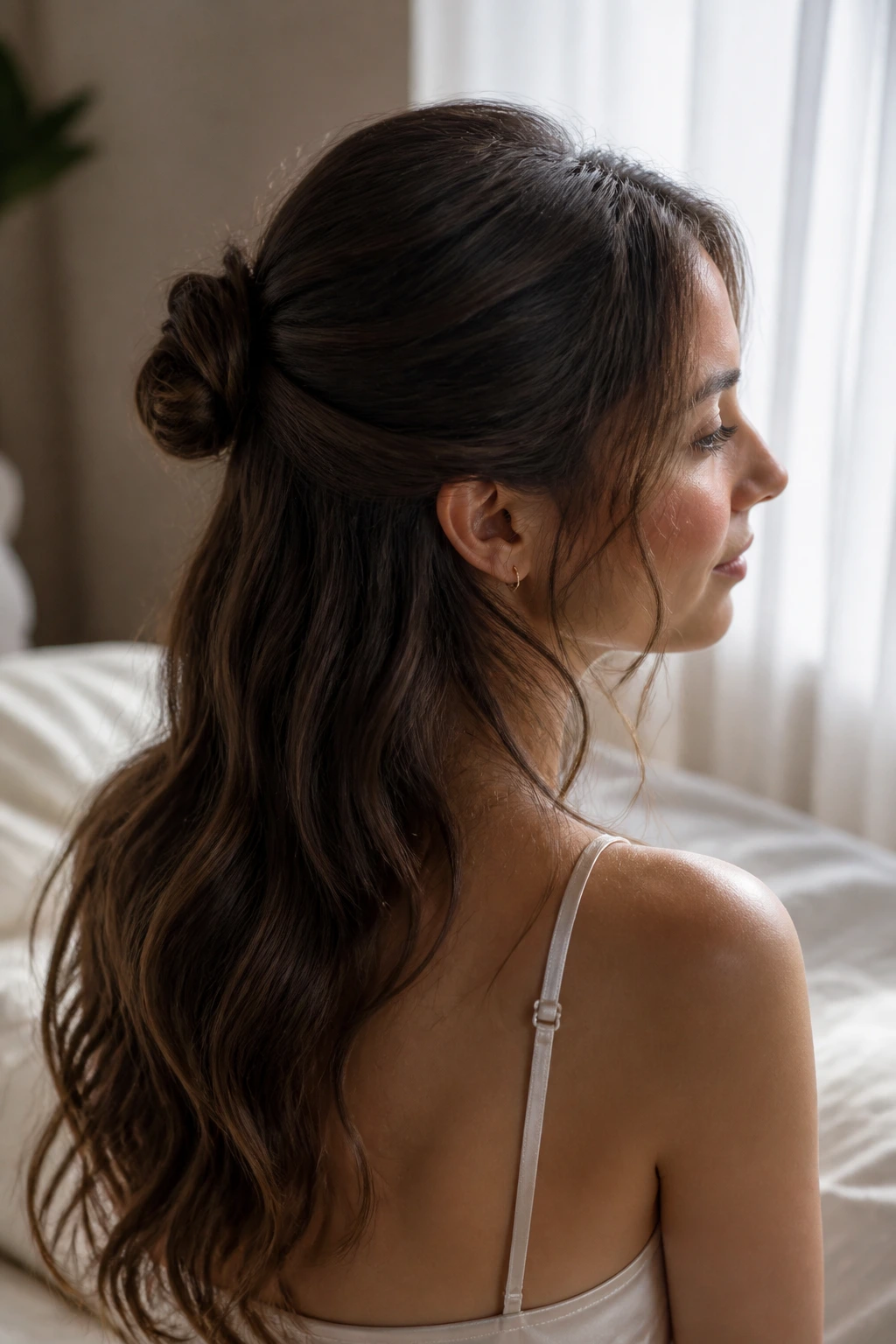
A half-up knot gives you a little lift without making the top of the head look crowded. It’s one of those styles that feels easy in theory and very specific in practice. The knot has to sit in the right place, or it can look childish fast.
Gather only the top third of the hair — not the whole crown — and tie it into a small knot or looped bun at the back of the head. Keep it compact. A knot that gets too large starts to fight the rest of the style, and then the shape goes top-heavy. The lower hair should still feel like the main event.
This works especially well on hair that has natural wave or a medium bend because the loose lengths carry the softness while the knot creates the polish. On straight hair, add a few loose waves first so the contrast is not too sharp. On thick hair, use one hidden elastic and several pins rather than trying to force the knot into place with one giant tie.
The best part is how flexible it is. A half-up knot can sit with a sweetheart neckline, an off-the-shoulder dress, or even a dress with thin straps that needs a little hair away from the collarbone. Keep the front pieces soft and the knot slightly textured, and it lands in the right zone.
11. Loose Mermaid Braid
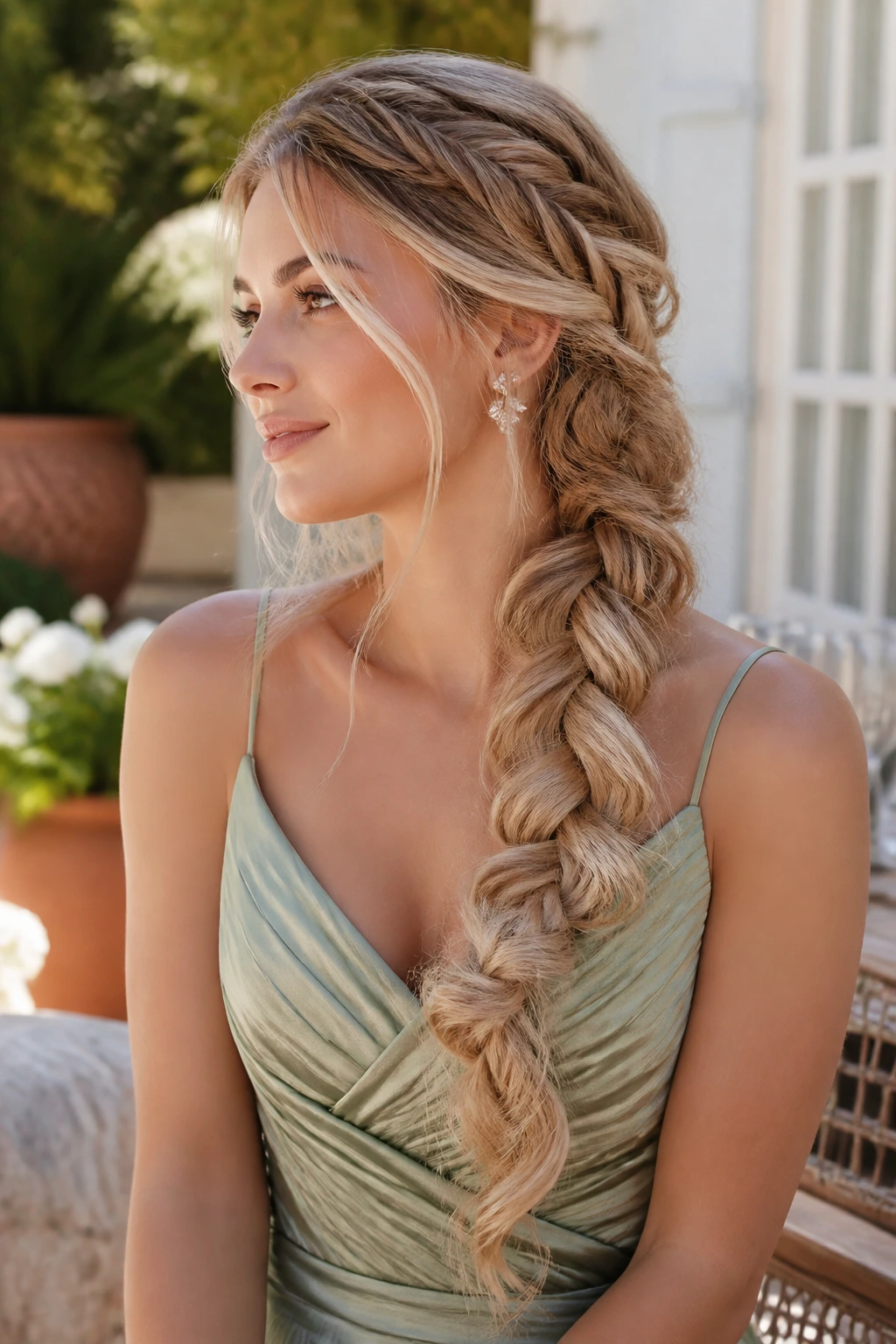
A loose mermaid braid is what happens when a braid stops trying to look tidy and starts looking romantic. It gives long hair a pretty, flowing shape, but the loosened sections and soft waves keep it from feeling rigid. This is a strong choice if you want your hair down without letting it turn into a curtain.
Start with waves through the lengths. A braid made on straight hair can look flat and heavy, and that works against the whole point. Once the texture is there, braid from just below the crown or from one side into a low, loose braid. Tug the braid gently to open it up, then smooth the top so the crown still looks polished.
If your hair is layered, expect shorter pieces to escape. Good. That is part of the look. Just make sure the escaped pieces are soft and intentional, not pieces that keep slipping because the braid is too tight. If you need more grip, mist the hair with dry texture spray before you braid.
A mermaid braid is especially nice with long dresses that have movement of their own. The braid echoes that softness. It also works well with clip-in extensions, because the braid hides the join better than straight styles do.
One honest note: if your hair is very short or blunt-cut, this may not be the one. The shape needs length to read properly.
12. Curtain Bang Blowout
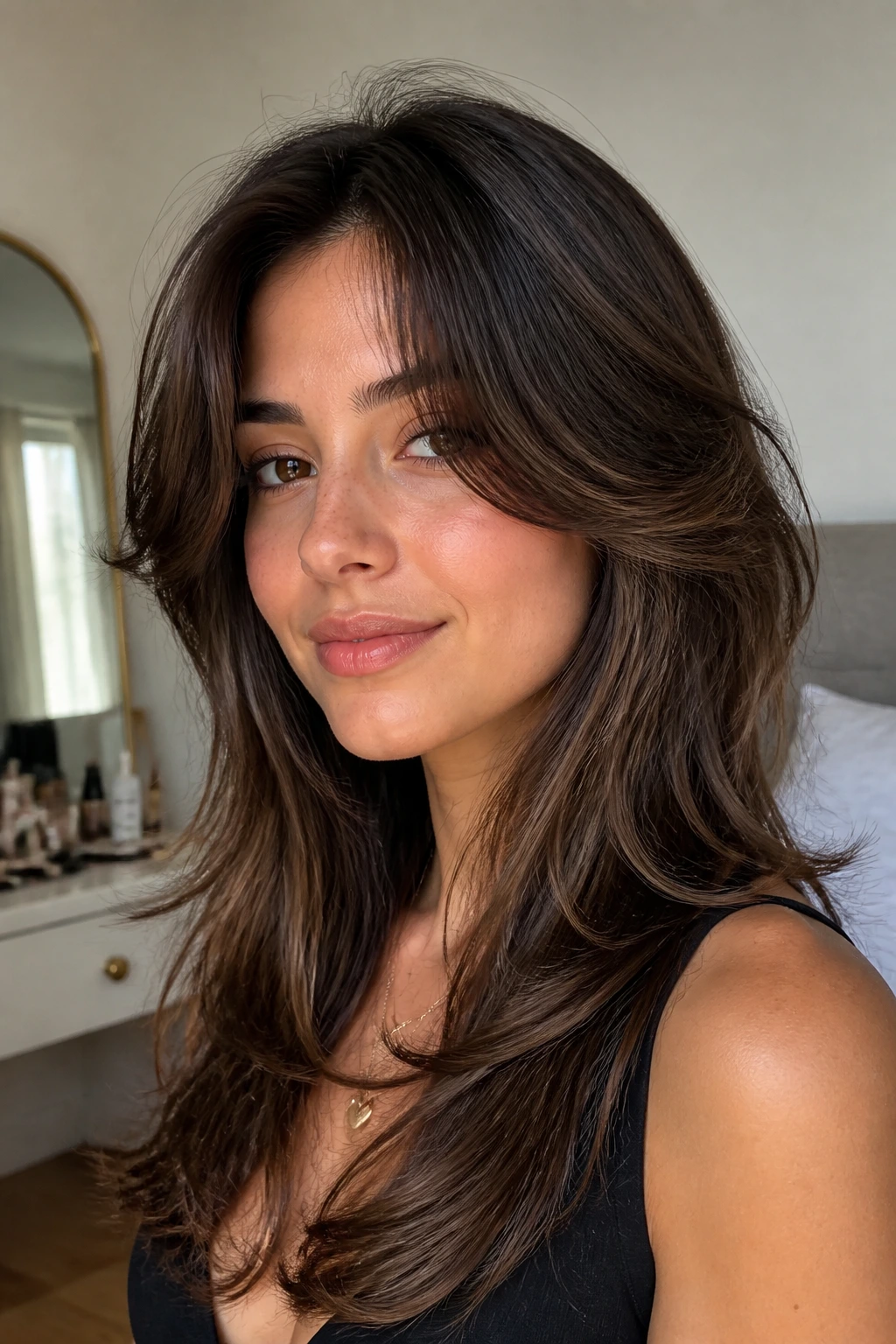
Curtain bangs can make a prom style look effortlessly finished when they’re handled with a little care. The trick is to make the bangs sit, not split. You want them to sweep away from the face in soft curves, then blend into the rest of the hair instead of hanging like a separate fringe.
Use a round brush or a small Velcro roller on the bangs while the blow-dryer is still warm. Roll them away from the face, then pin them briefly while they cool. That cooling time helps the shape stick. If you skip it, the bangs settle back into their natural bend and lose the lift that makes the style pretty.
The rest of the hair can be a clean blowout, soft waves, or a straight finish with beveled ends. Curtain bangs work because they frame the face without closing it in. They’re especially good if you want cheekbone definition without a full updo.
A tiny bit of dry shampoo at the root can help if the bangs separate too much. Do not pile on oil or heavy cream here. Bangs show every mistake first.
This style is one of the easiest ways to make medium-length hair look deliberate. It doesn’t need a big accessory. The shape itself does the work.
13. Twisted Halo Half-Up
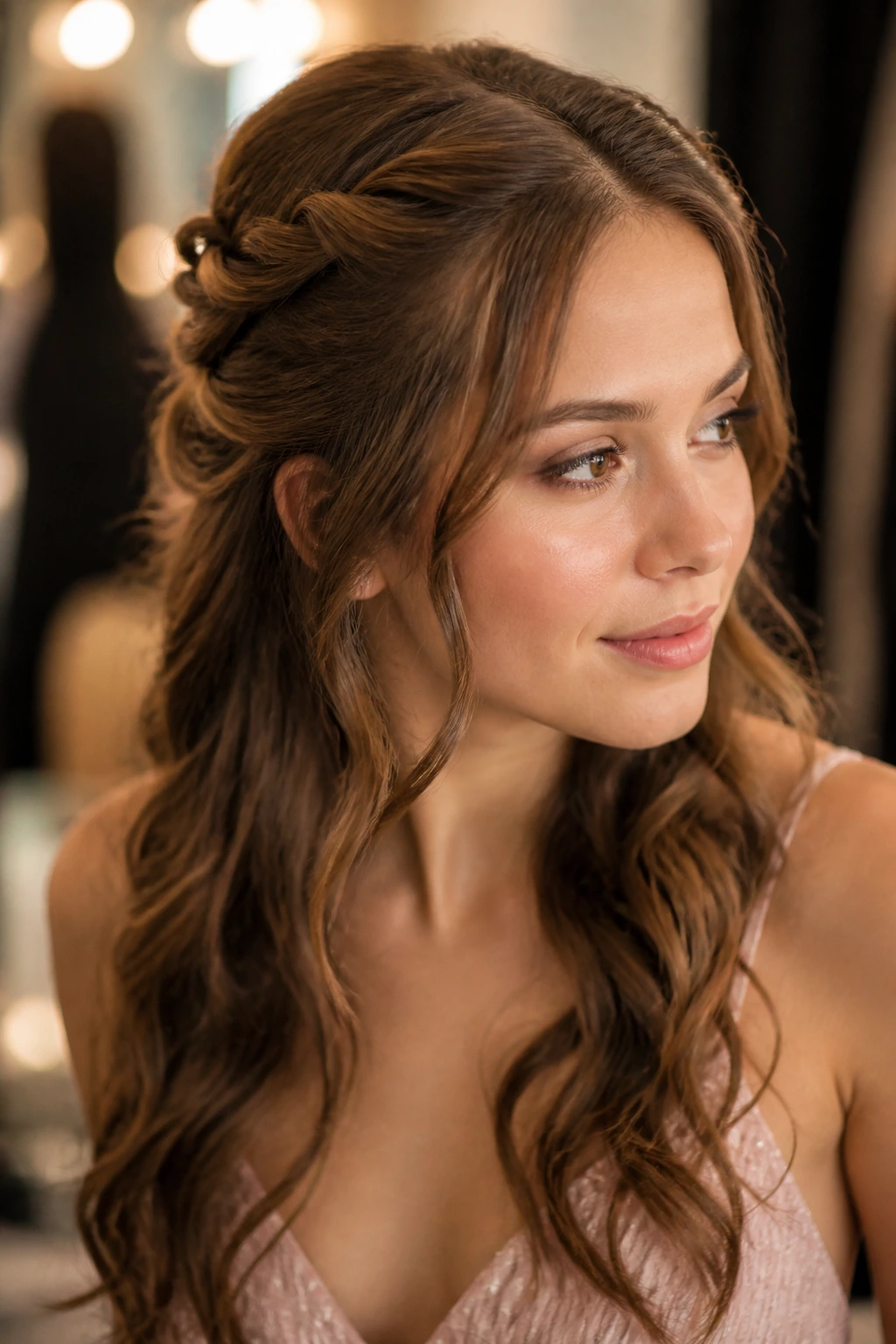
Twisted halo half-up styles sit somewhere between romantic and clean, which is why they work so well for prom. They frame the face gently, keep the top under control, and still leave the lengths free. The effect is polished, but not in a way that feels locked down.
Take a section from each side of the head near the temples, twist them back, and secure both twists where they meet. The twists should be about 1 to 1½ inches wide so they show up without looking chunky. After you pin them, loosen the edges slightly with your fingers. That keeps the halo soft and airy.
This style is a good answer if you’re growing out bangs or if you want the front of the face to feel cleaner without going full updo. It also behaves well with waves, because the twists contrast with the movement in the lower half. If your hair is thick, use two pins at each anchor point. If it’s fine, rough up the sections first with a bit of dry texture spray so they don’t slip.
The halo should sit high enough to show the shape but low enough that it doesn’t feel like a crown. There’s a narrow gap there, and that gap is where the style looks best. Too high, and it starts to read pageant. Too low, and the shape gets lost.
14. Low Bun With Braided Detail
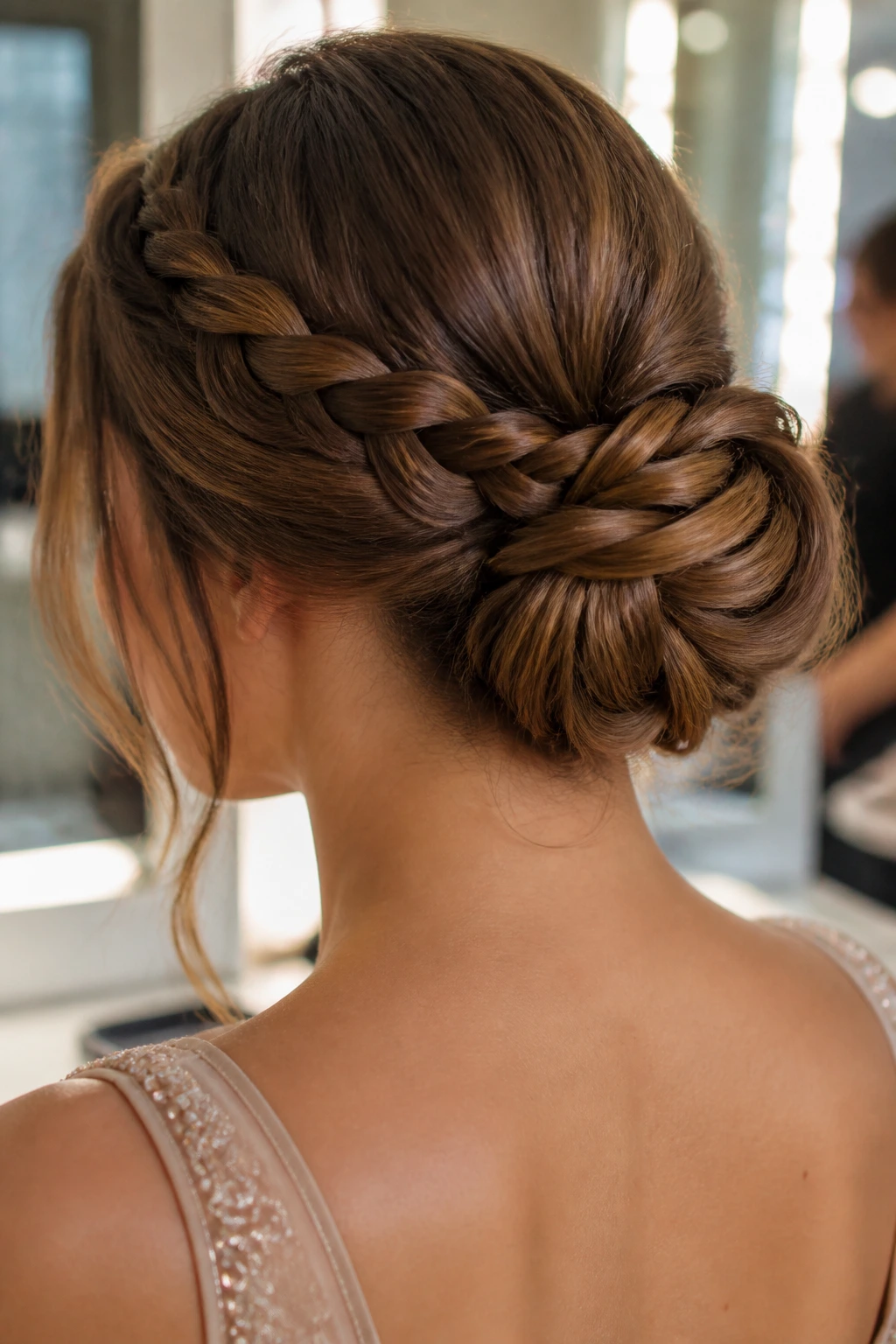
A low bun with braided detail is one of those styles that looks more complex than it is. A small braid wrapped into a bun adds texture, but the bun itself stays neat and low, which keeps the silhouette calm. If you want something polished enough for a formal dress but softer than a strict chignon, this is a solid pick.
You can feed a side braid into the bun or wrap a braid around the outside edge. Either way, keep the braid loose enough that the plaits show. Tight braids can make the style feel too controlled. Soft braids give it movement.
A bun donut can help if your hair is fine or if you want a little more shape at the back. I’d skip it on thick hair unless you need the support. Thick hair already gives the bun plenty of body, and too much padding can make the style sit strangely on the head.
The nicest thing about this look is how it handles the back of a dress. Lace, open seams, beading, a cutout — all of that becomes visible instead of getting buried under hair. That’s the sort of detail people notice in a room, even if they can’t quite say why.
Pin the braid end underneath the bun, not across the top. It keeps the surface clean.
15. Side-Parted Glam Curls
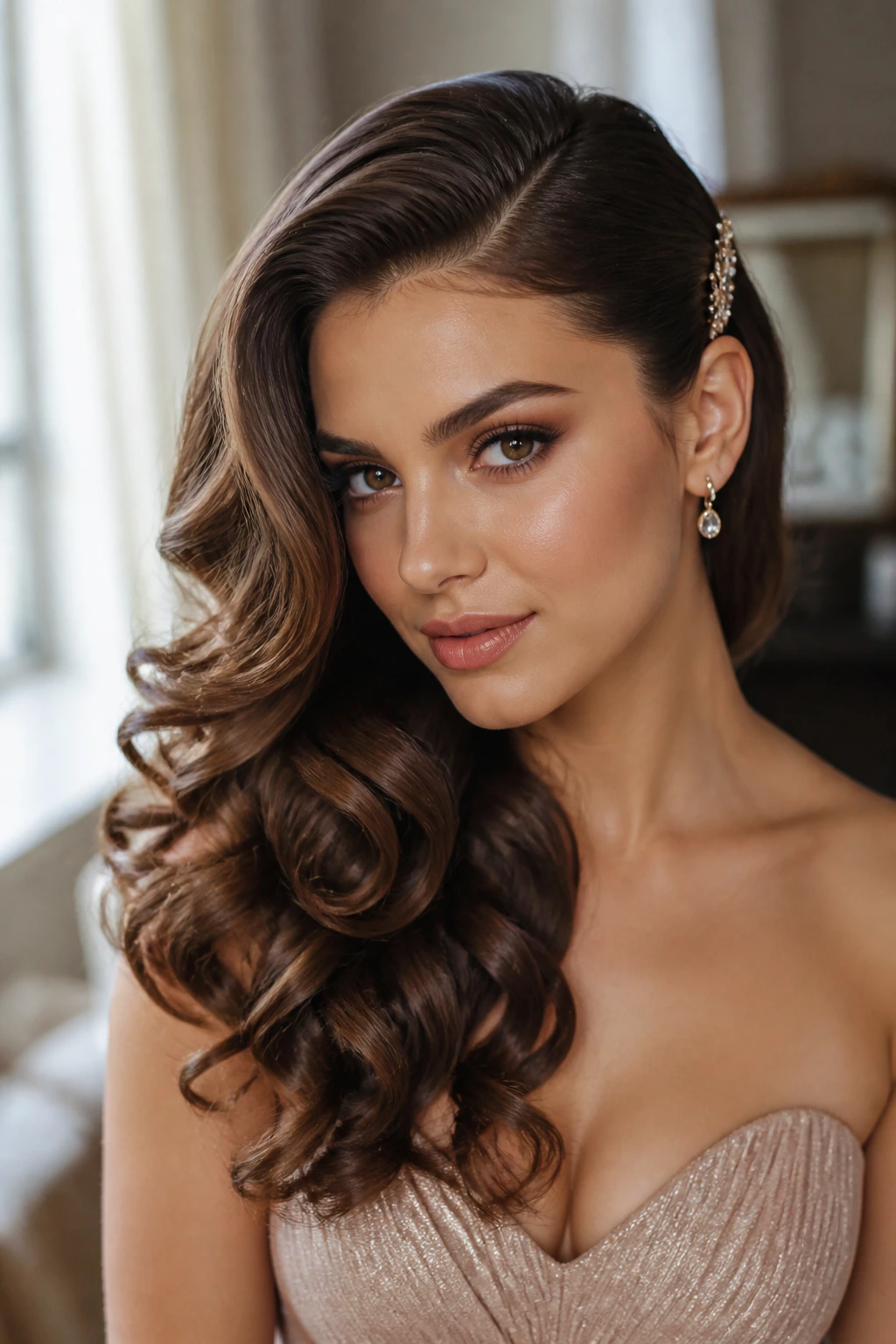
Side-parted glam curls are for the person who wants bigger shape, but not harsher shape. Compared with brushed-out waves, these curls keep more of their body, so the style feels fuller and a little more dramatic. The side part gives everything direction, which keeps the volume from looking random.
Set the hair in large curls with a 1.25-inch iron, then let the curls cool fully before brushing the ends lightly. Sweep the heavier side forward and pin the opposite side back if you want the face fully open. The part should be deep enough to create lift at the crown, but not so deep that it throws the style off balance.
This version works especially well if your dress is simple and the hair is supposed to carry more of the visual weight. It also flatters layered cuts because the layers break up the curl pattern in a nice way. If your hair tends to fall flat at the roots, clip the top section up after setting it and let it cool for 10 minutes. That one step makes the crown sit better.
A small amount of shine spray on the lengths keeps the curls from looking dry under indoor light. Just stay away from the roots. The root area should look clean, not glossy enough to reflect the room.
16. Ribbon-Tied Ponytail
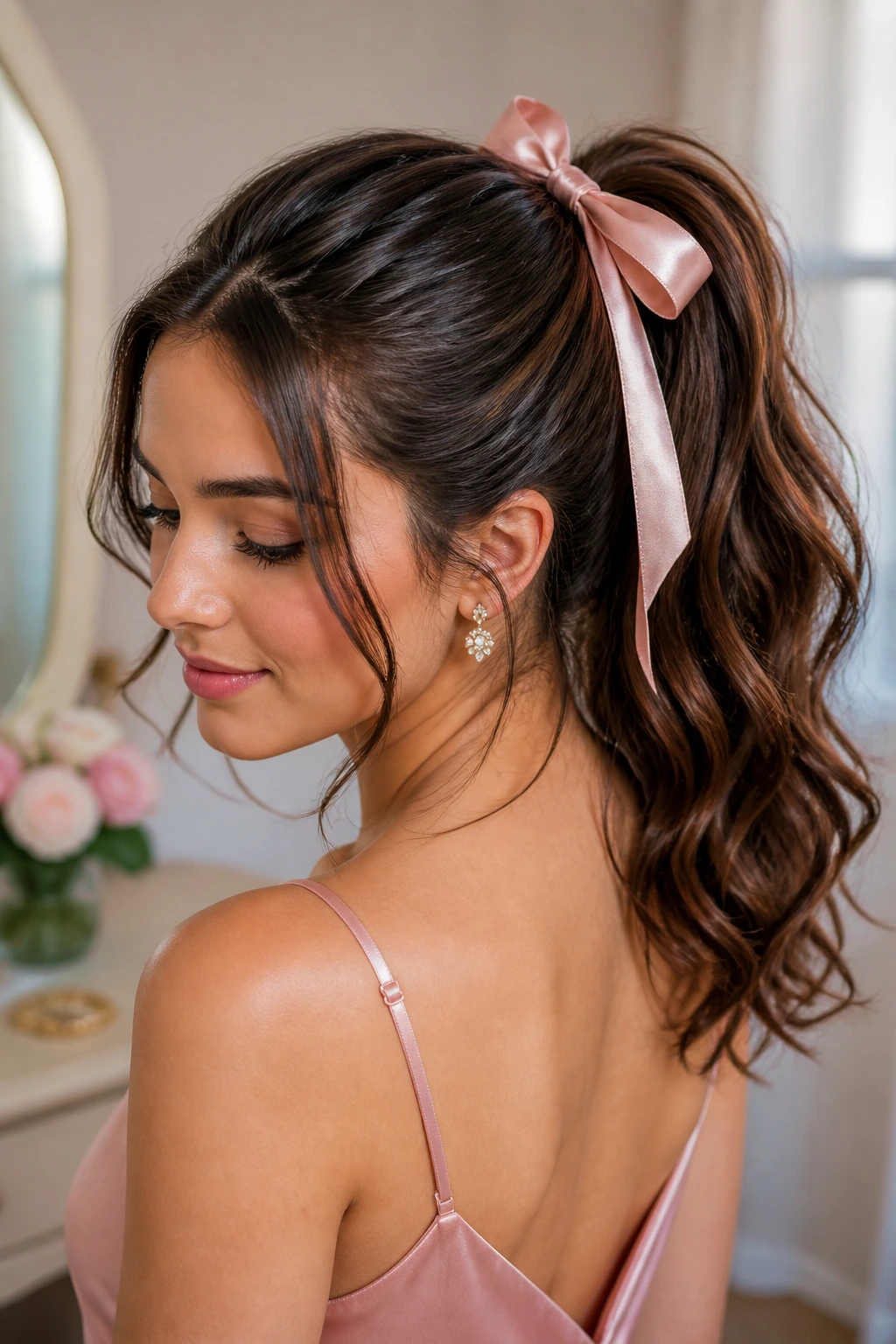
A ribbon-tied ponytail can look sweet or sleek depending on the ribbon and the finish on the hair. For prom, I like it with soft waves through the tail and a ribbon that matches either the dress or one of the dress accents. The ribbon becomes part of the outfit, not an afterthought.
Start with a mid or high ponytail. If you want it more polished, smooth the crown before tying it off. If you want it softer, leave a little lift at the top and gently pull the sides loose. Curl the tail before you add the ribbon so the waves keep their shape; if you tie the ribbon first, it can crush the bend.
Keep the ribbon tails short enough that they don’t swing wildly when you move. Long tails can look pretty in the mirror and annoying in motion. Satin works well because it reads formal without looking shiny in a cheap way.
This style is lovely with off-the-shoulder dresses and minimalist silhouettes. The hair feels dressed up, but it doesn’t take over the whole outfit. That’s a very useful line to walk.
One practical tip: tie the ribbon after the ponytail is secure, then anchor the knot with one hidden pin underneath so it doesn’t shift.
17. Soft Updo With Mini Braids
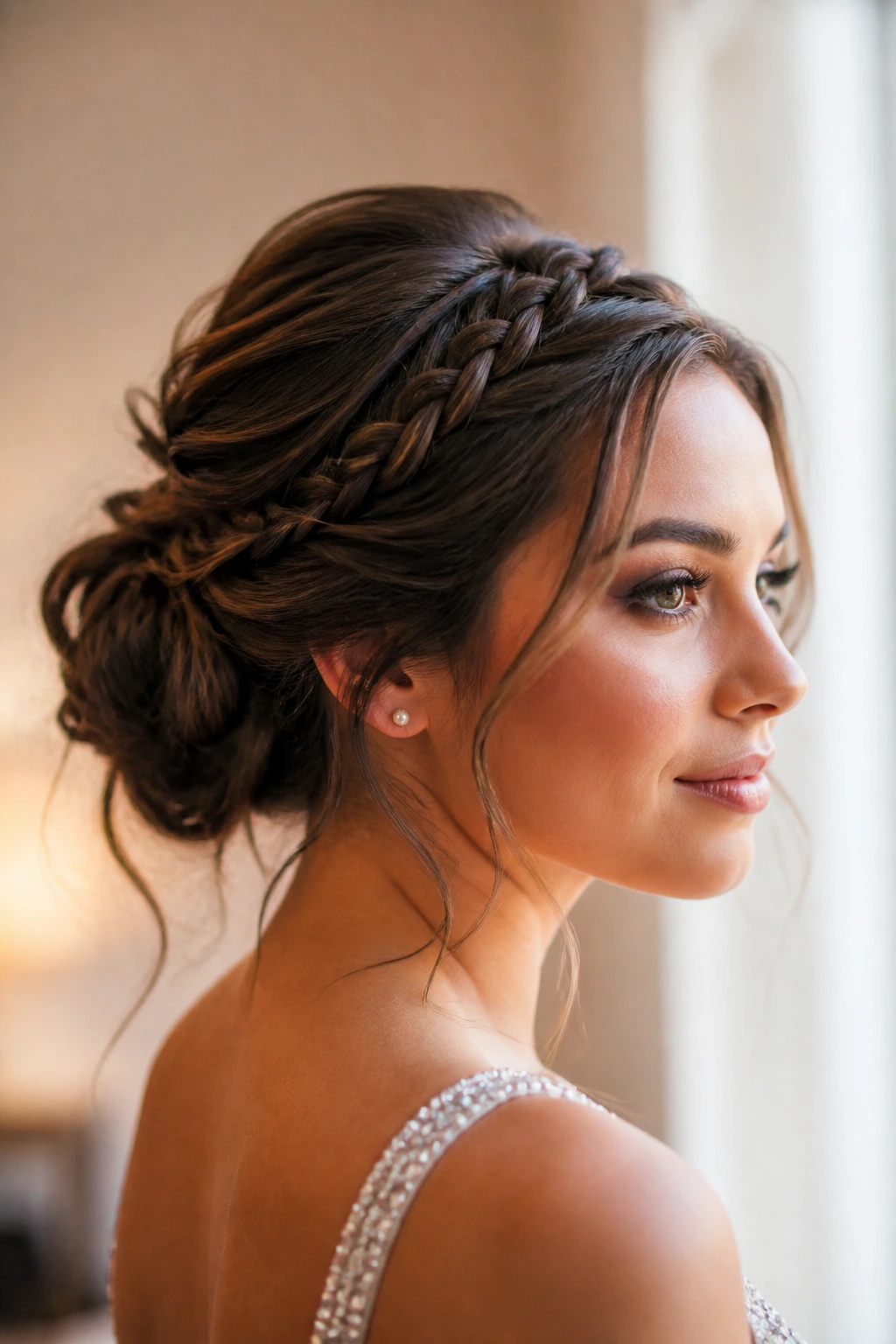
Soft updos with mini braids are for the person who wants detail up close and calm shape from a distance. Tiny braids woven into an updo add texture where a plain bun might feel too plain, but the overall style stays quiet and elegant. It’s a good compromise between ornate and easy.
The trick is restraint. Make two or three small braids, not six. Too many braids start to crowd the head and make the style feel busier than it needs to be. Fold them into a low twist or a loose bun, then pin the ends underneath so the surface looks smooth.
This is one of the best choices for thick hair because the braids tame the bulk without flattening it. On fine hair, it helps to use a little texture spray first so the braids have grip. If your hair is layered, braid the longest pieces and leave the shorter ones to blend into the twist.
I also like this style for dresses with decorative shoulders, because the braids echo the detail without competing with it. If the dress is simple, the braids become the texture point. If the dress is busy, they act like a soft frame.
Keep the braids thin. That’s where the polish comes from.
18. Voluminous Top Knot With Loose Pieces
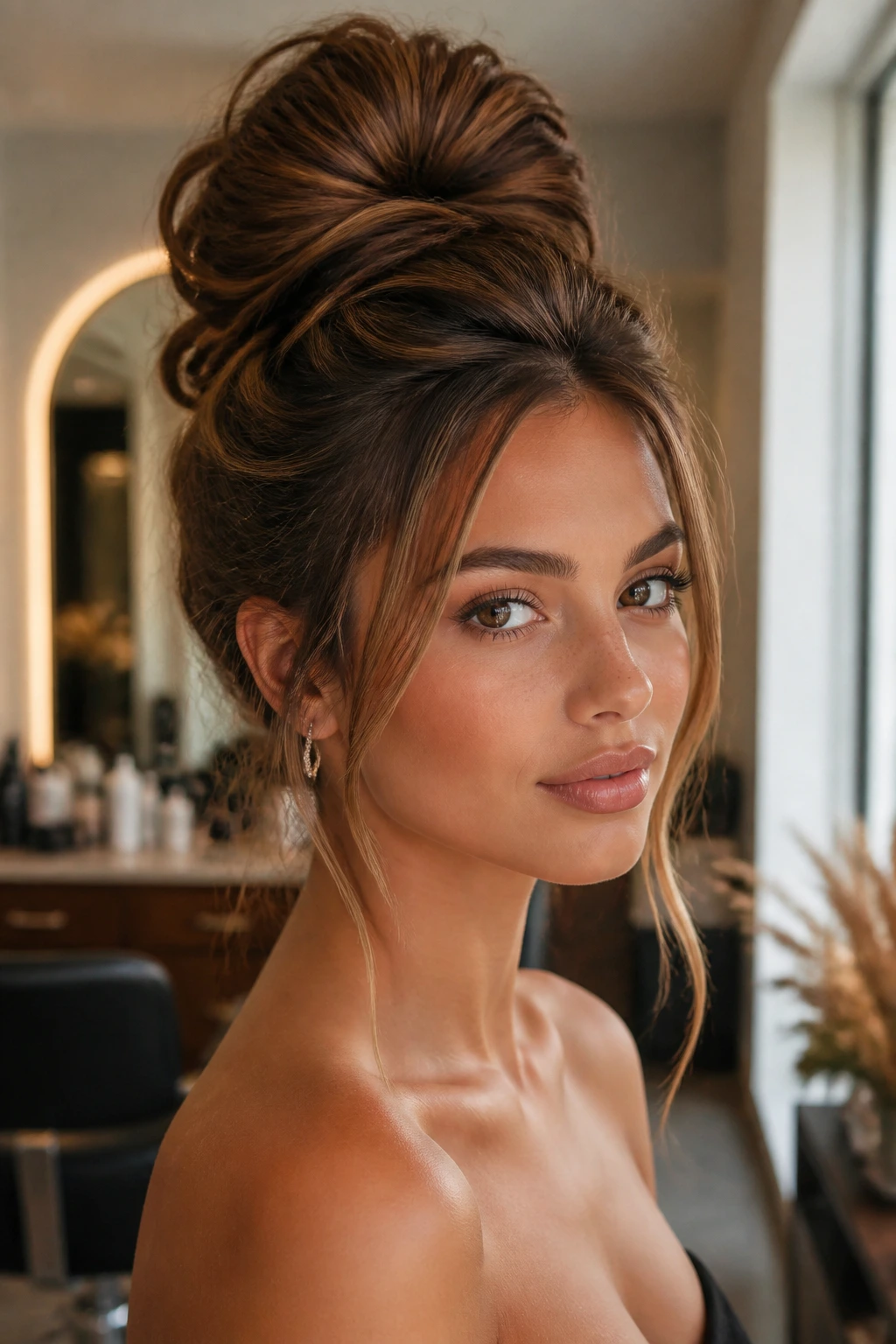
A voluminous top knot can look too casual fast, so the prom version needs a little more shape and a little less speed. The goal is height with softness, not the tight ballerina knot that can feel severe. If your dress is strapless or halter, this style gives your neck a clean line and keeps the whole look light.
Backcomb the crown lightly, then gather the hair into a high ponytail. Twist it into a soft knot, but do not pull every strand tight. Leave a couple of front pieces loose and maybe one small wisp at the nape if your hairline suits it. The loose pieces are not an accident; they are the part that keeps the bun from looking formal in a stiff way.
This style works well when you want to show earrings or a dramatic neckline. It also behaves nicely if you know you’ll be dancing, because the hair is anchored high and away from the shoulders. On very fine hair, a little bun padding hidden inside can help the knot hold its shape. On very thick hair, keep the knot compact so it doesn’t feel heavy on your head.
If the knot starts to lean after pinning, stop and repin. A lopsided top knot is a pain to fix once makeup is on.
19. Short-Hair Sculpted Waves
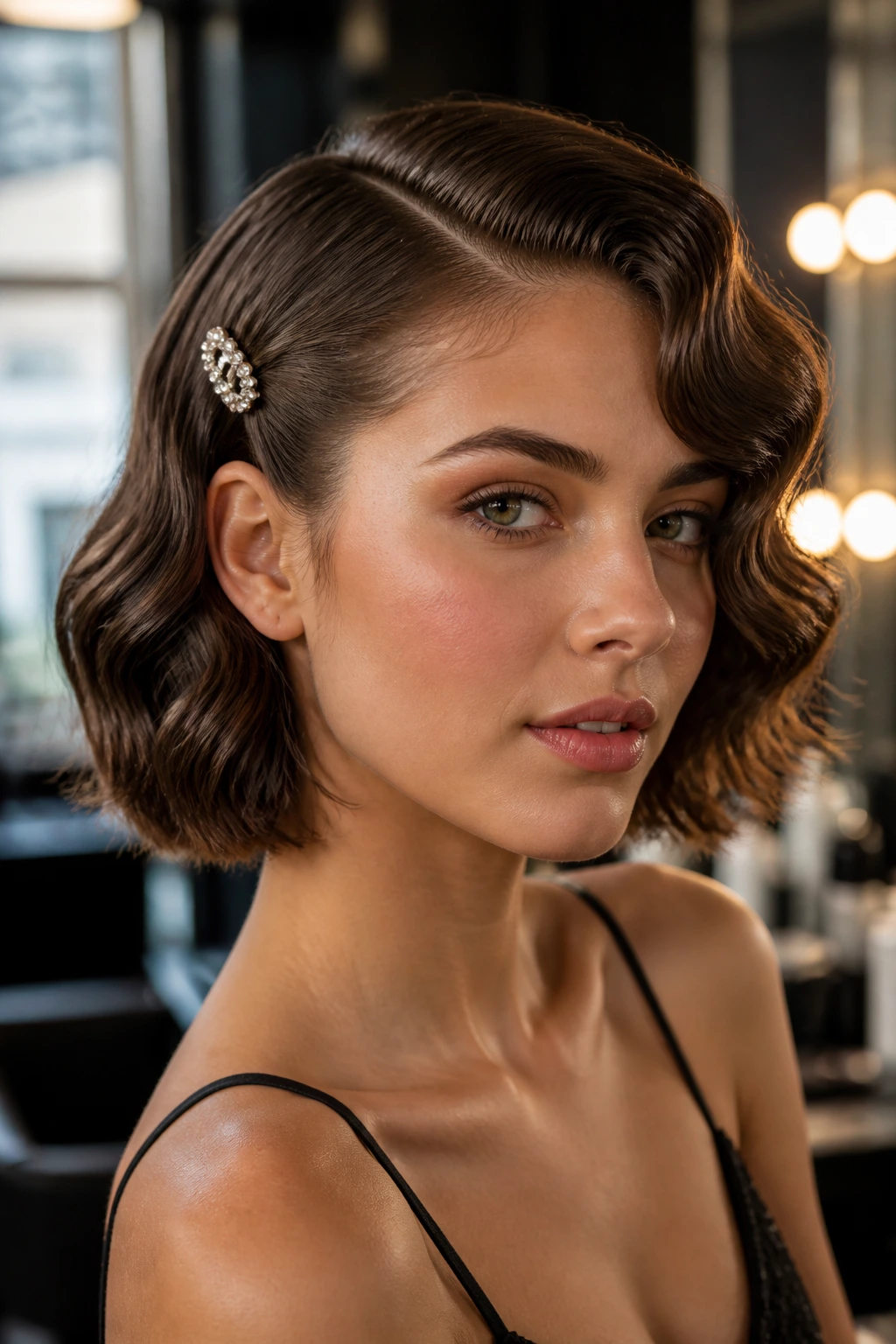
Short hair deserves its own prom plan. A bob or lob can look incredibly polished when the waves are controlled and the part is crisp. The shape is smaller, yes, but that does not make it any less formal.
Use a 1-inch curling iron or flat iron to create soft S-waves through the sections. Work with smaller pieces than you would on long hair, and clip each bend while it cools. That cooling step matters even more on short hair because there isn’t as much length to hide a weak curl.
A deep side part gives the style shape, and a tucked side with one small decorative pin keeps it from feeling too simple. I like the ends to be beveled slightly under rather than left blunt and straight. That little curve at the bottom softens the whole cut.
Short hair benefits from shine spray more than big accessories. One pin or comb is enough. Too many pieces can make the cut look crowded, especially if the dress already has a lot going on.
If your bob is very blunt, use a smoothing cream first so the wave pattern doesn’t fight the edge of the cut. Short hair can be polished in a very clean way; it just needs exactness.
20. Floral-Pinned Soft Waves
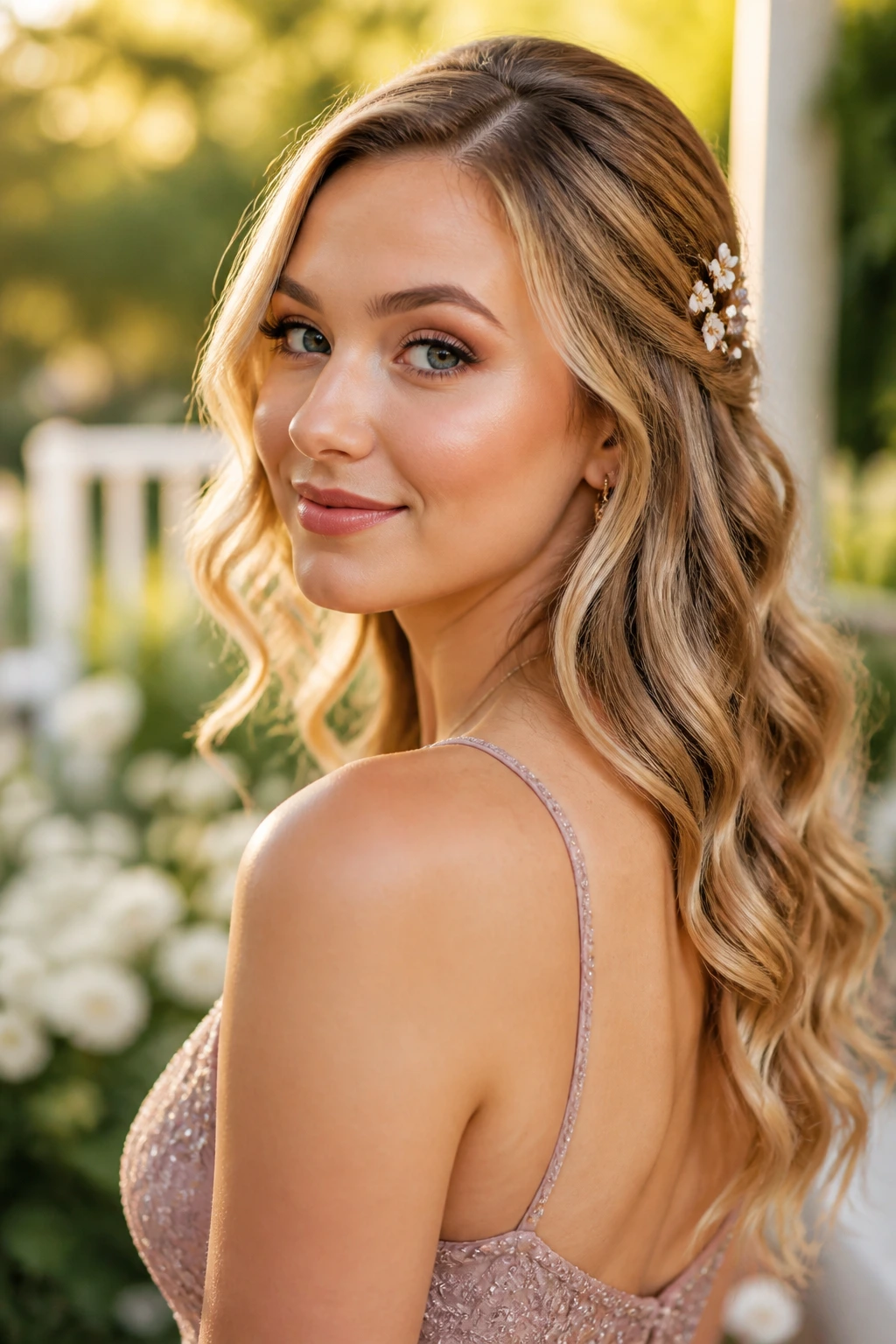
Soft waves with tiny floral or pearl pins are a nice final answer when you want the hair to feel romantic without drifting into costume territory. The base should still be quiet: loose waves, a clean part, and a shape that already looks finished before the accessory goes in. The pins are the accent, not the whole story.
Place one or two small pins on the heavier side of a side part, or tuck a few near the nape if you want the front to stay clean. Keep the flowers tiny. Oversized blooms can take the look out of prom and into themed event territory, which is probably not what you want unless the dress is already very playful.
This style works especially well with simple gowns because the accessories give the hair a little personality. It also pairs nicely with soft makeup — a satin blush, clean lashes, and maybe a glossy lip. When the hair stays loose and the embellishment stays small, the whole look reads polished instead of busy.
A final tip: keep the number of decorative pieces low. Two pins usually look better than six. Enough is enough.
Why a Soft Polished Finish Works on Prom Night
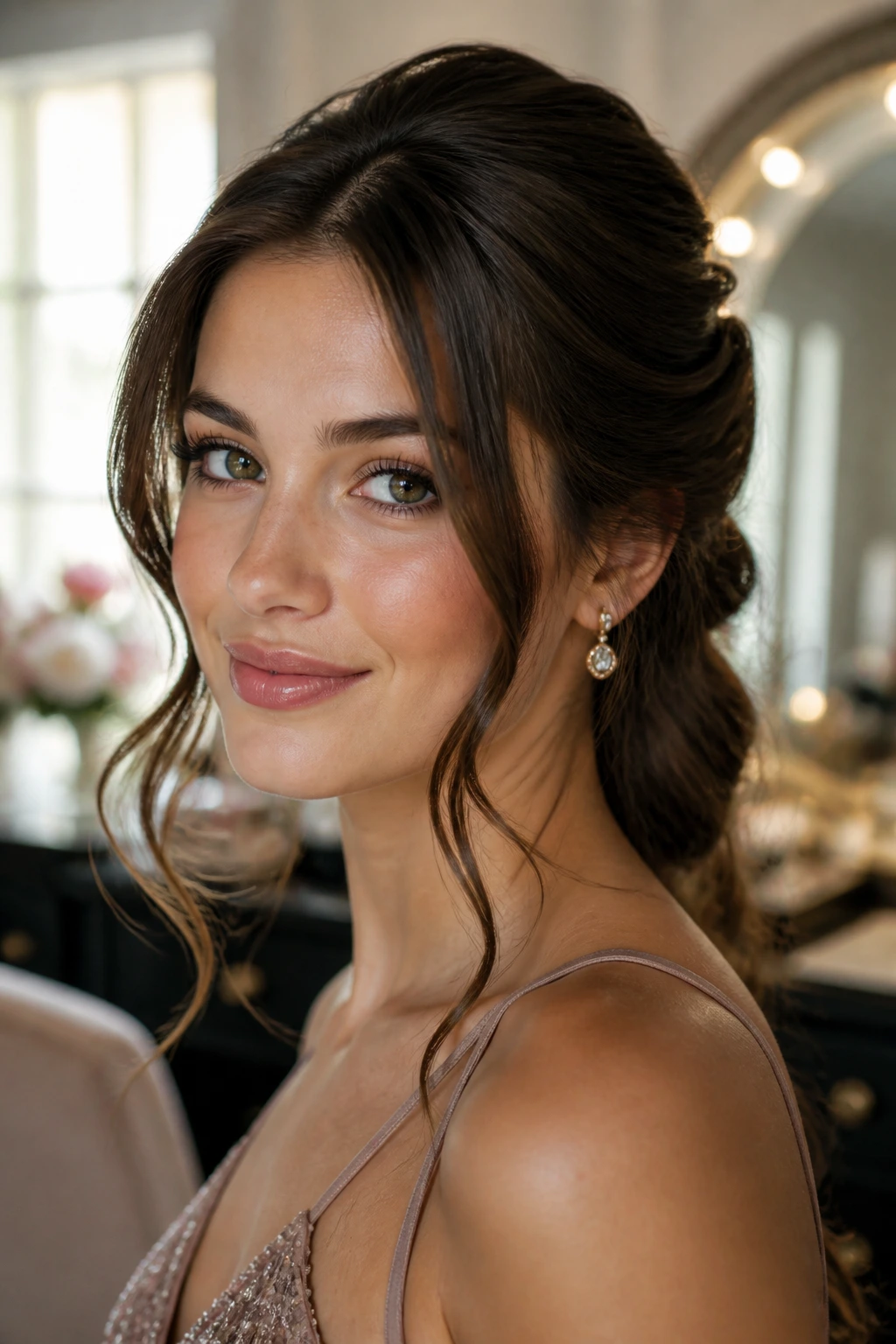
There’s a reason soft polished hair keeps showing up for formal events: it survives motion. Hair that’s too taut starts to show stress at the temples, while hair that’s too loose loses shape the minute a warm room and a little dancing get involved. The styles above sit in a middle zone that holds up without looking overcontrolled.
Softness also buys you some forgiveness. A curl that drops a little still looks intentional if the rest of the style is balanced. A twist that loosens a touch after an hour can look more relaxed, not ruined. That matters on a long night when no one wants to be fixing their hair every twenty minutes.
And there’s a visual reason, too. Shine, shape, and a few loose pieces near the face make the whole look feel current without chasing a trend that will feel dated by the time you get home. I trust a style that has a clean outline, but I trust it more when the face frame can move.
Essential Tools for These Prom Hairstyles
-
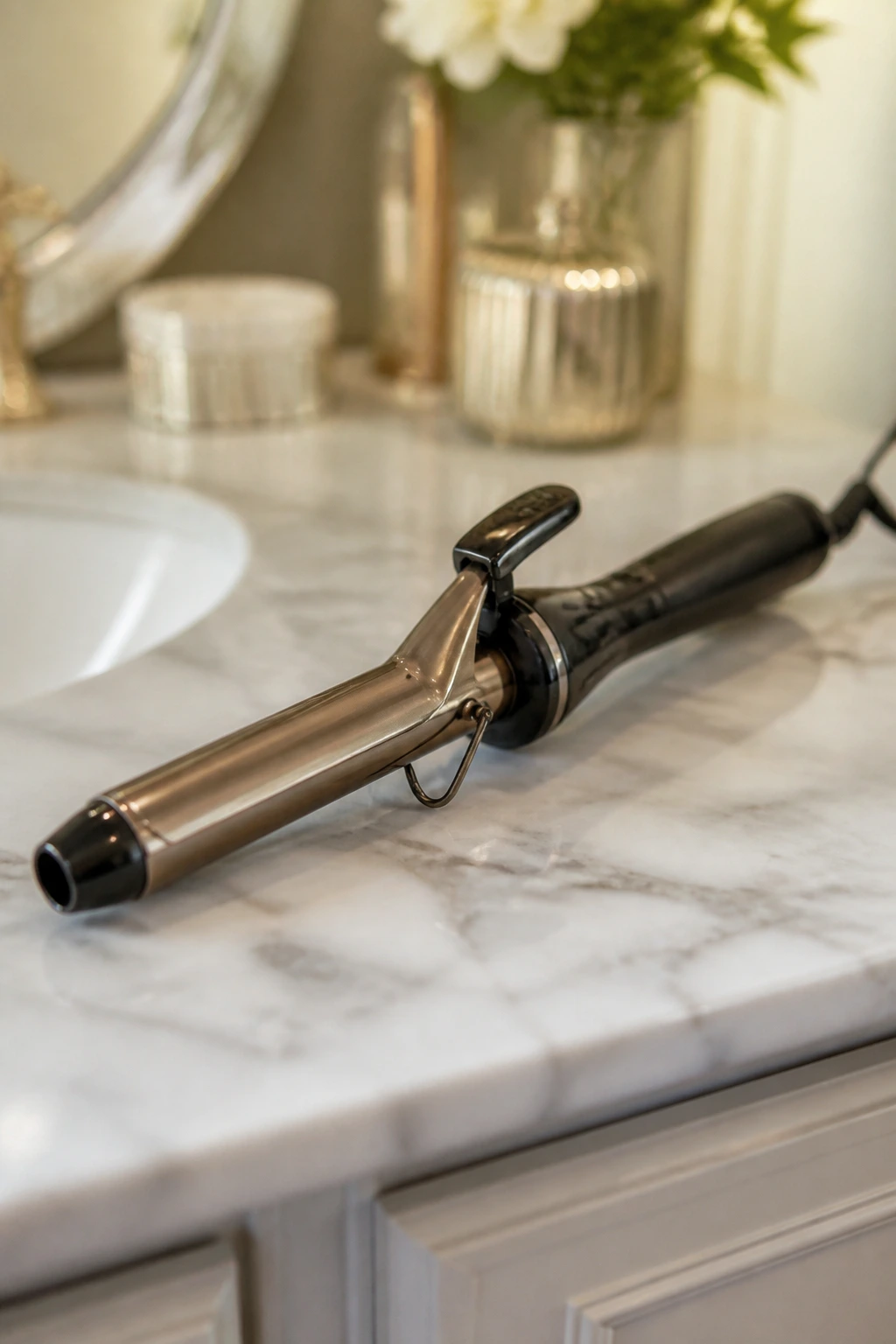
1-inch curling iron or wand: Best for face-framing pieces, short hair, and softer curls that need a tighter set.
-
1.25-inch curling iron: The most useful size for brushed-out waves and glam curls that need movement, not tiny spirals.
-
Blow-dryer with concentrator nozzle: Helps you direct air at the roots and smooth the cuticle without blowing every strand loose.
-
Round brush: Gives the blowout shape and helps bangs or crown pieces sit with bend instead of puff.
-
Boar-bristle brush: Smooths the top, blends curls, and tamps down flyaways without making the style look flat.
-
Tail comb: Lets you make a clean part and section the hair without dragging through the curls.
-
Duckbill clips: Hold curls in place while they cool and make half-up sections easier to manage.
-
Bobby pins and U-pins: Bobby pins handle general security; U-pins are better for buns and French twists because they hold without crushing.
-
Clear elastics: Useful for ponytails, bubbles, and hidden anchor points when you want the tie to disappear.
-
Flexible-hold hairspray: Keeps the style moving while still locking in the shape. Extra-strong spray can make hair feel hard and crunchy.
-
Heat protectant: Non-negotiable if you’re using hot tools. Spray it evenly before curling or blow-drying.
-
Texture spray or dry shampoo: Gives fine or freshly washed hair some grip so pins and twists stay put.
-
Shine serum or light oil: Best on the ends only. A pea-sized amount is enough for most hair lengths.
Prom Hair Products and Accessories That Do the Job
The smartest shopping for prom hair starts with the finish you want, not the bottle that sounds fancy. Fine hair needs grip before shine. Thick hair needs control before gloss. Curly hair needs definition before smoothing. Buy with that order in mind and you’ll spend less money on products that sit unused in a drawer.
For fine hair, choose a lightweight mousse, a texture spray that does not feel sticky, and a flexible hairspray that dries fast. Heavy creams and rich oils tend to collapse the crown and make curls fall sooner. If you want volume, buy a small root-lift spray or a volumizing powder for the crown, then use it sparingly. A little goes a long way.
For thick or coarse hair, the shopping list changes. You want a smoothing cream, a stronger brush, and pins that have enough grip to hold weight. Cheap pins can bend open in thick hair, which is frustrating in a very specific way. If your hair is dense, don’t skimp on the pins. Good bobby pins and U-pins are worth it.
Accessories should match the scale of the hairstyle. Thin ribbons, small pearl pins, and petite combs usually look more polished than oversized clips. Big pieces can work, but they need a very simple base style or the whole thing starts competing with itself. I’d rather see one well-placed pin than six pieces fighting for attention.
If you’re buying extensions, pick the texture first and the length second. Extensions that match your natural wave pattern are easier to hide than ones that are a perfect color match but the wrong feel. That’s a lesson people learn the hard way.
How to Match These Prom Hairstyles to Your Dress and Makeup
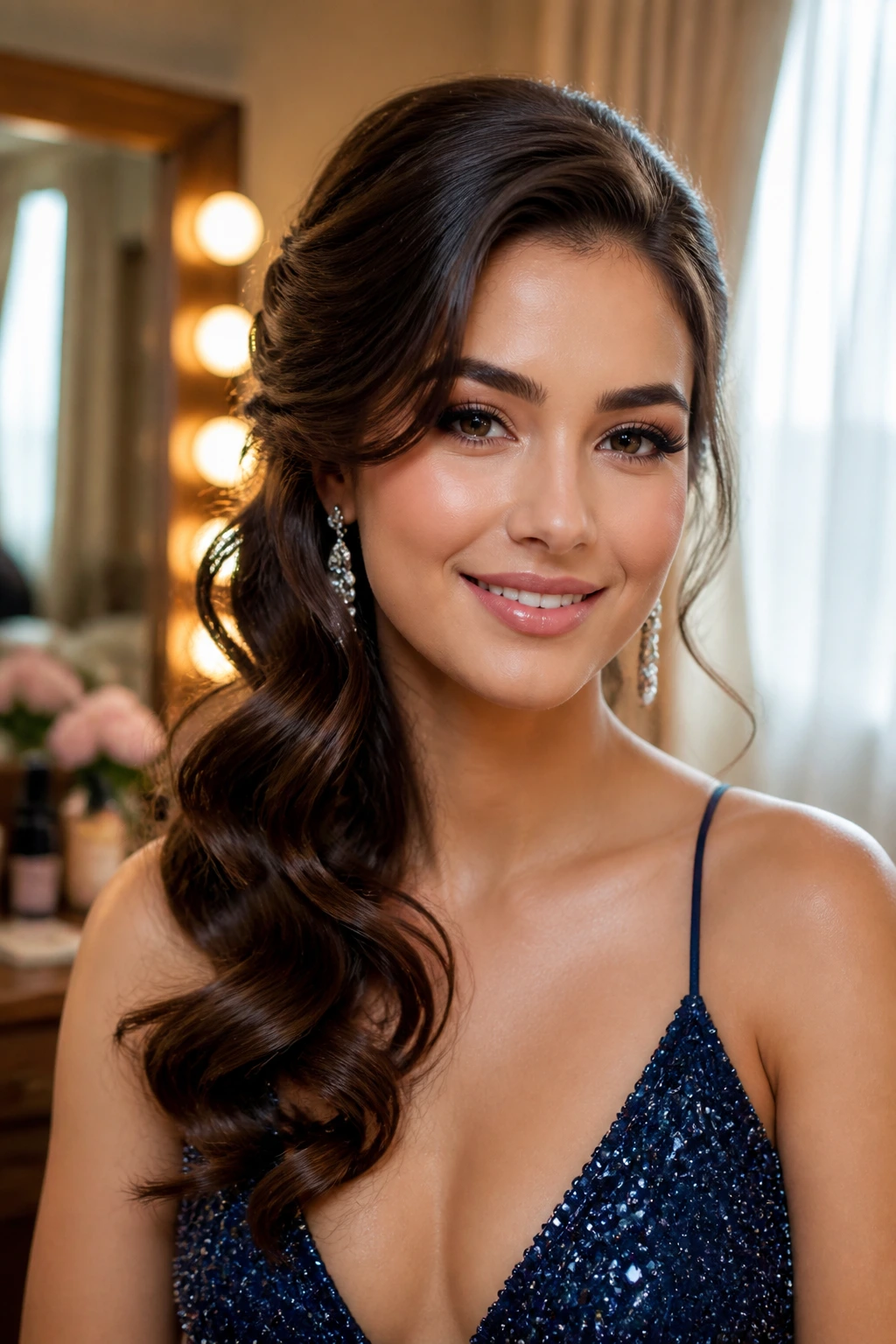
Neckline: High necklines and dresses with strong collars usually look best with hair up, slicked back, or pinned off the shoulders. One-shoulder dresses do well with side-swept styles or a low ponytail that leaves the exposed shoulder clean. Strapless dresses give you the most room, so half-up styles and soft waves both make sense.
Jewelry: If the earrings are the star, keep the hair tucked or lifted enough to show them. Long drop earrings look excellent with low buns, sleek ponytails, and side-swept waves. If you’re wearing a necklace with structure or sparkle, pull the hair away from the collarbone so the chain doesn’t get lost under it.
Makeup: A soft polished hairstyle usually wants makeup that matches the same level of finish. Satin skin, clean lashes, and a blush that looks like actual color instead of product tend to sit well beside these styles. If the hair is full and glossy, you can go a little bolder on the eyes. If the hair is minimal and sleek, keep the makeup softer so the whole look doesn’t feel heavy.
Hair accessories: Pick one accent and let it do the work. A ribbon, a few pins, or one comb is enough for most of these styles. If the dress already has beading or lace at the shoulder, keep the hair quieter. If the dress is plain, the hair can carry a little more decoration.
Extra Shine, Lift, and Hold Without the Crunch
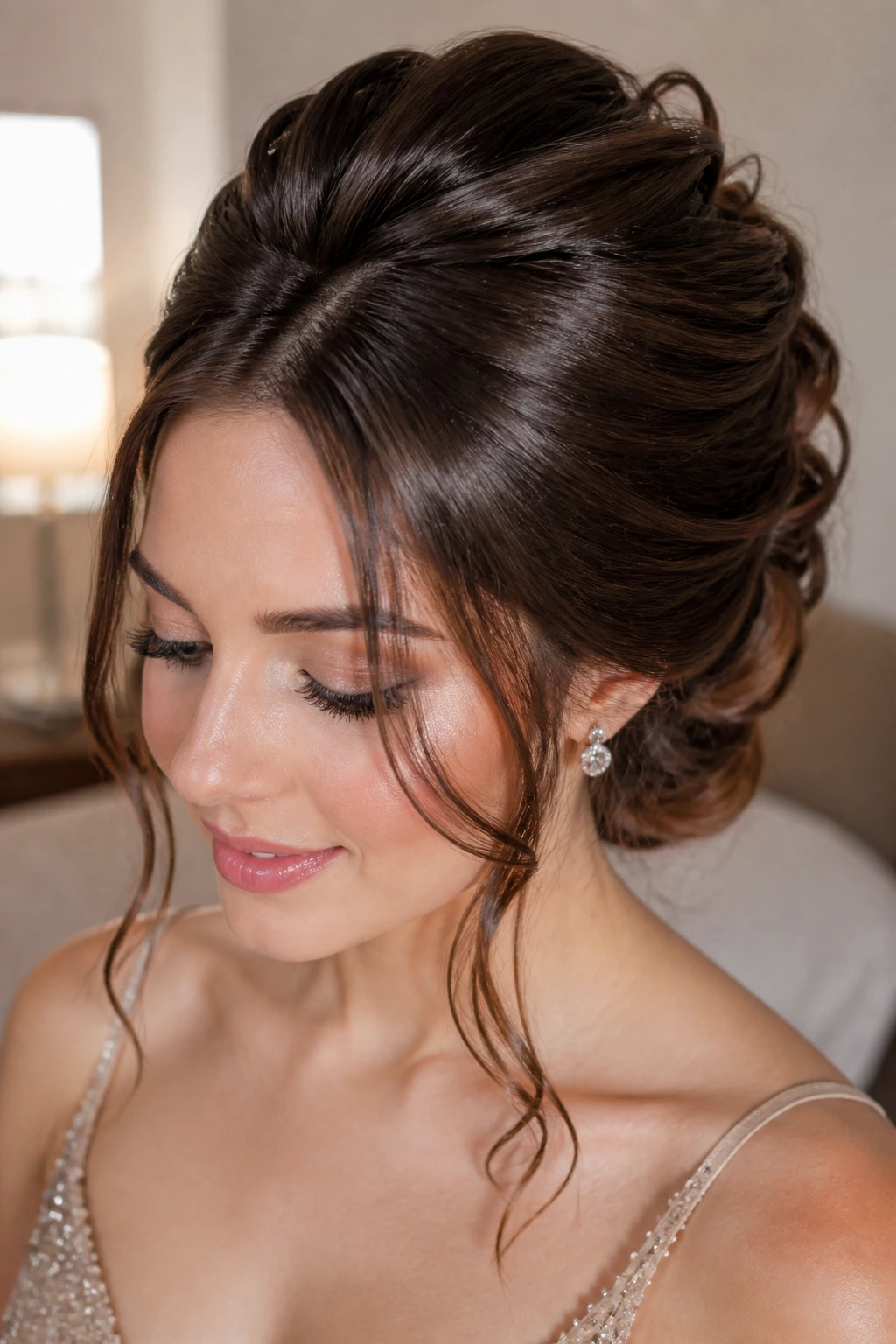
Longevity: Set curls with clips while they cool, even if you’re in a hurry. Ten extra minutes of cooling can be the difference between hair that holds shape and hair that slides flat by dinner. If you’re doing a blowout, let the roots cool in lifted sections before you touch them.
Volume: Put lift where it matters most — usually the crown and the front of the part. A tiny bit of backcombing under the top layer works better than loading the whole head with product. You want the surface smooth and the support underneath. That’s the cleanest way to build height.
Gloss: Warm a pea-sized drop of serum between your palms and smooth it only through the mid-lengths and ends. If the roots get shiny, the hair can look greasy under flash or bright indoor lights. A little gloss at the edges is enough.
Touch-up kit: Pack 4 to 6 bobby pins, a travel hairspray, one small comb, and a couple of clear elastics. If you’re wearing a ribbon or flower pins, carry one spare. A style emergency at prom is rarely dramatic; it’s usually one piece sliding out where it shouldn’t.
Make-it-yours: Add a center part if you want a softer, more modern line. Add a deep side part if the dress needs more shape. Swap curls for bends if your hair is thick and the look is starting to feel too heavy. Small changes make a bigger difference than people expect.
Night-Before Prep, Same-Day Timing, and Touch-Up Fixes
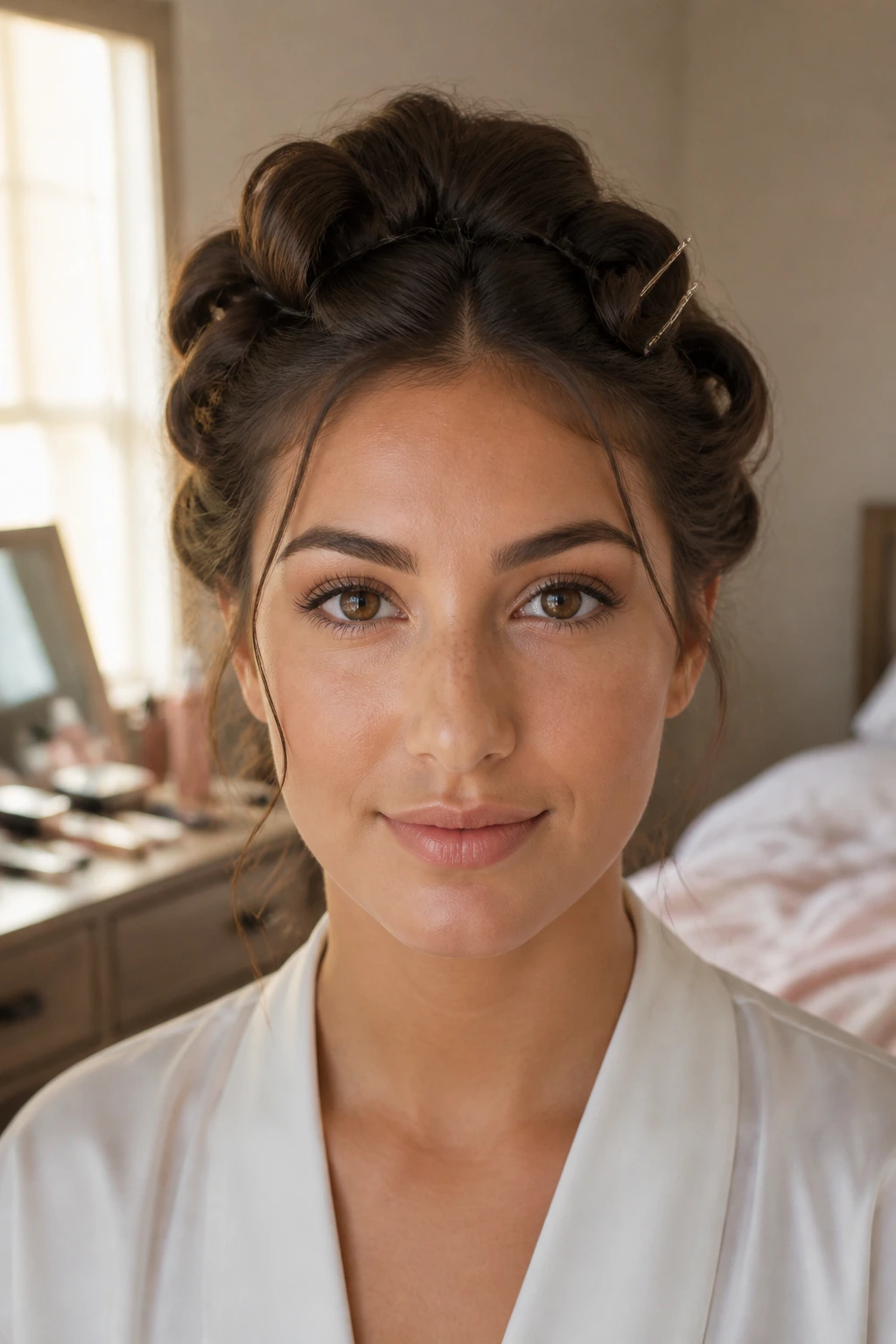
A good prom hairstyle starts before the curling iron is hot. If your hair is fine and slippery, washing it the night before usually helps because the hair has time to lose that too-clean feel. If your hair is coarse or curly, a light wash two days before can make it easier to shape without making it frizzy. The goal is a little grit, not dirt.
Trial the style ahead of time if you can. A practice run shows you whether your pins hold, whether the face pieces fall where you want them, and whether the part sits in the right place. That saves a lot of panic on the actual day. You do not want to discover at 5:30 p.m. that your bobby pins are a joke.
Here’s a clean timing plan that works for most styles:
- 24 hours before: wash if needed, condition the ends lightly, and let the hair dry fully.
- 2 to 4 hours before leaving: set curls or do the blowout while the room is calm and you can work in sections.
- 30 to 45 minutes before you go: finish the shape, pin any loose pieces, and let the whole style settle.
- 10 minutes before stepping out: mist lightly with spray, check the nape, and smooth the hairline with a clean comb.
If you’re sleeping on a finished style, a satin pillowcase or loose silk scarf helps preserve the shape. For curls, a loose braid can keep them from tangling. For updos, pin any soft pieces in place before bed and release them when you’re ready.
If something drops, fix that one section. Don’t rebuild the whole hairstyle unless you have to. Small repairs are faster and look cleaner.
Variations and Adaptations to Try
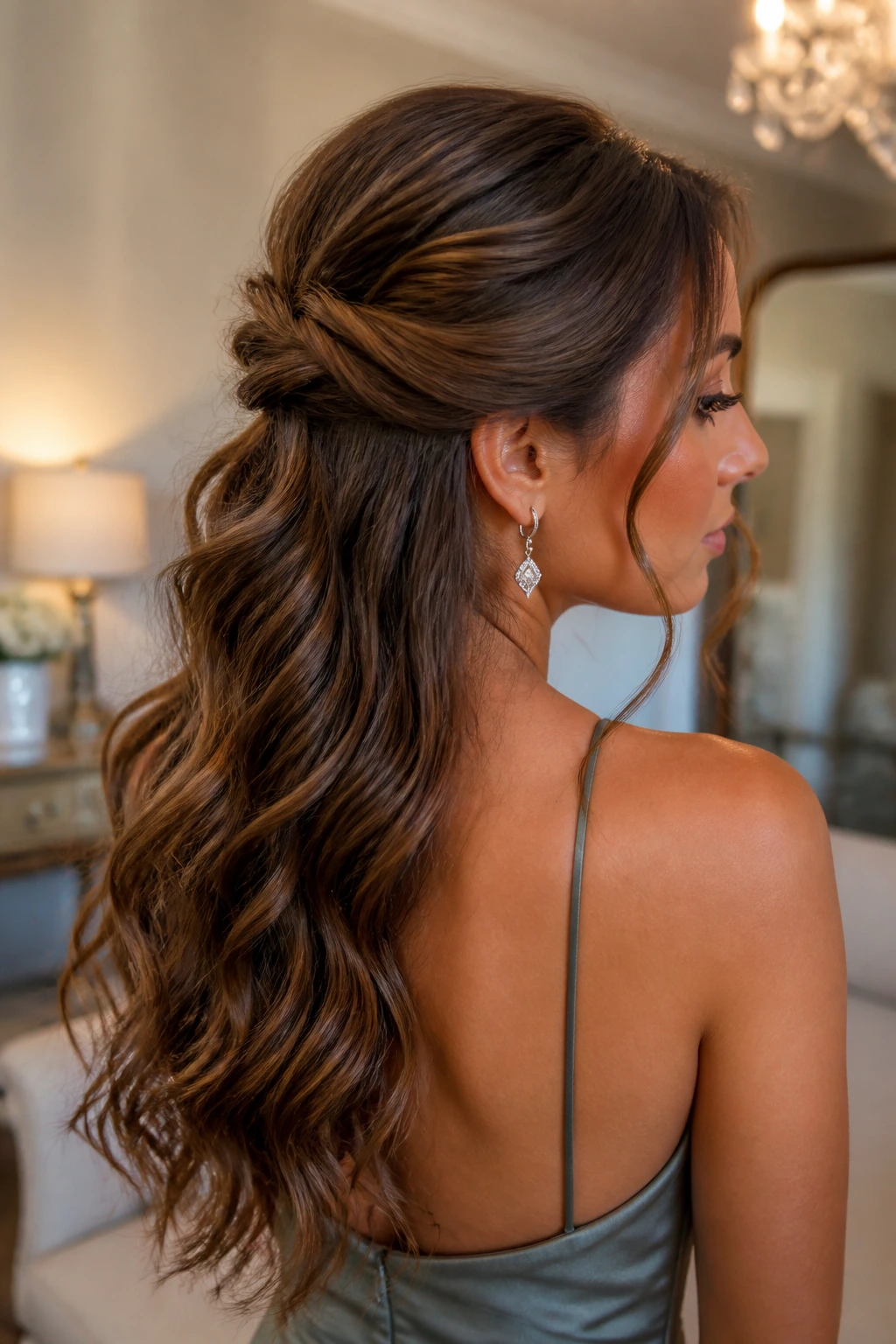
Fine-Hair Lift Edit: Use a root-lift mousse, smaller curling sections, and a few extra pins hidden under the top layer. Fine hair usually loses shape first at the crown, so build support there and keep the ends light. A half-up twist or low ponytail often works better than a heavy full updo.
Thick-Hair Control Edit: Start with smoothing cream and a strong blow-dry, then choose styles with low anchors like buns, ponytails, or twists. Thick hair can support more structure, but it also needs more pins than most people expect. Use U-pins wherever possible because they hold weight without crushing the shape.
Curly-Hair Definition Edit: Keep your natural curl pattern, but define it with leave-in conditioner and a light gel before shaping. A low bun, halo twist, or half-up style can keep curls polished without flattening them. If you want a softer look, separate the curls only after they’re fully dry so they don’t frizz out.
Short-Hair Sculpted Edit: Use finger waves, bevel the ends slightly, and add one pin or comb instead of multiple accessories. Short hair looks most polished when every bend has a purpose. A bob or lob does not need more decoration to look formal; it needs cleaner shaping.
No-Heat Overnight Edit: Set the hair in braids, flexi rods, or pin curls the night before, then brush and shape it the next day. This works well if your hair is fragile or if you don’t want hot tools near it. The result is usually softer than a heat-set curl, which can be a good thing for prom.
Accessory-First Edit: Build the style around one ribbon, comb, or cluster of pins. Keep the base hair simple and let the accessory carry the personality. This version is useful if the dress is minimal and you want one clear detail that people remember.
Common Mistakes That Flatten the Look
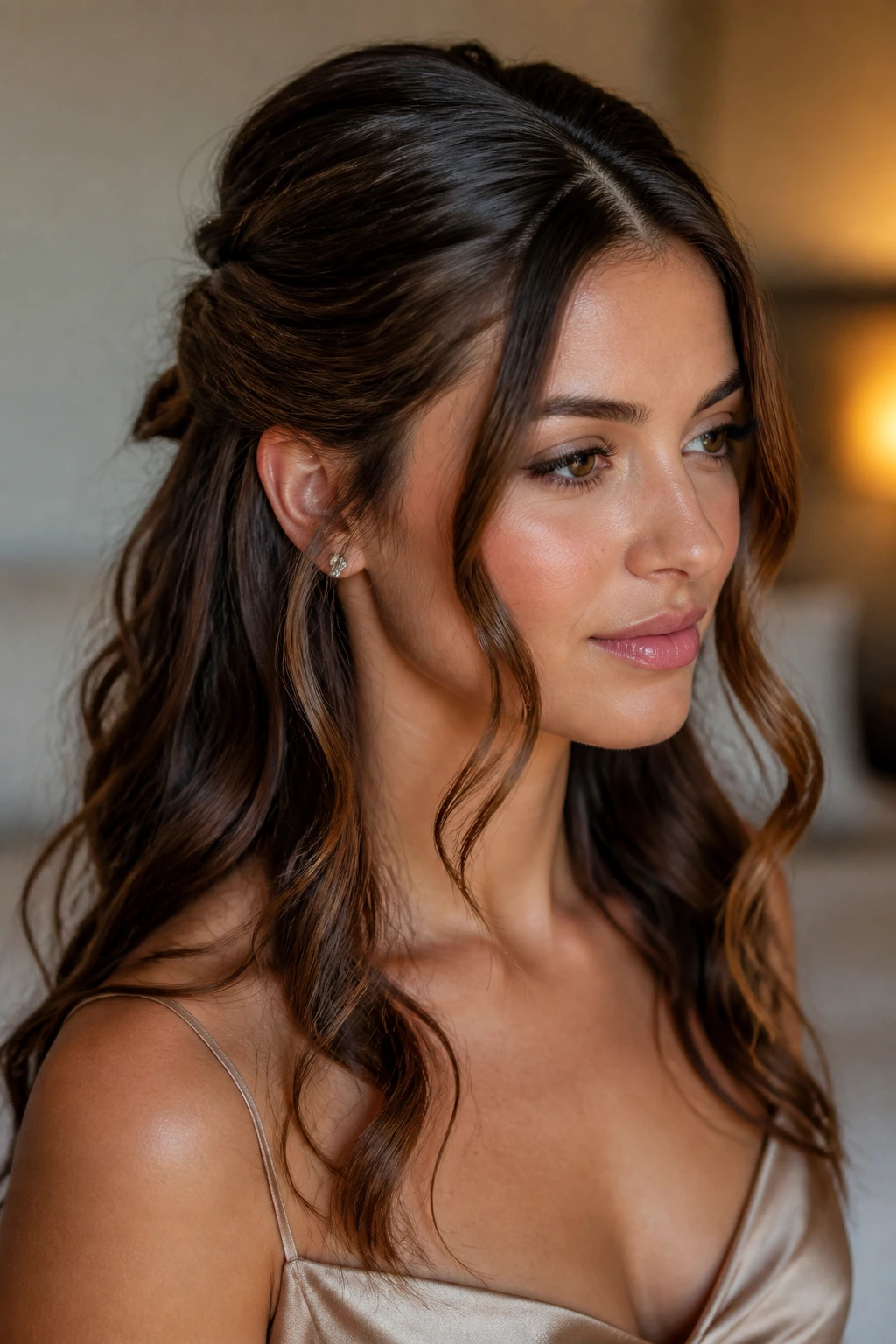
Starting with hair that’s too clean: Freshly washed hair can be slippery, which makes pins slide and curls fall faster. If your hair does not hold shape well, wash it the day before and use a little texture spray or dry shampoo at the roots.
Using too much oil or serum: A glossy finish is nice. Greasy roots are not. Keep serum on the ends and use the smallest amount that smooths the frizz, or the style can collapse before you leave for the venue.
Skipping the cooling step: Hot curls look great for about six minutes, then they drop. Clip each curl or let it cool in your hand before brushing it out. That one pause is boring, but it matters.
Pulling the hair too tight: Tight temples and a dragged-back crown can look sharp, and not in a good way. A soft polished style should still leave some movement around the face and a little ease at the hairline.
Choosing a style that fights the dress: A strong high collar and a lot of hair around the neck can look crowded. A detailed neckline plus a full crown braid can feel too busy. Match the silhouette of the hair to the silhouette of the dress.
Skipping the practice run: Hair often behaves differently than you expect once you add earrings, makeup, or humidity. A trial gives you a chance to see whether the style needs more pins, a deeper part, or less product.
Prom Hair Questions People Ask First
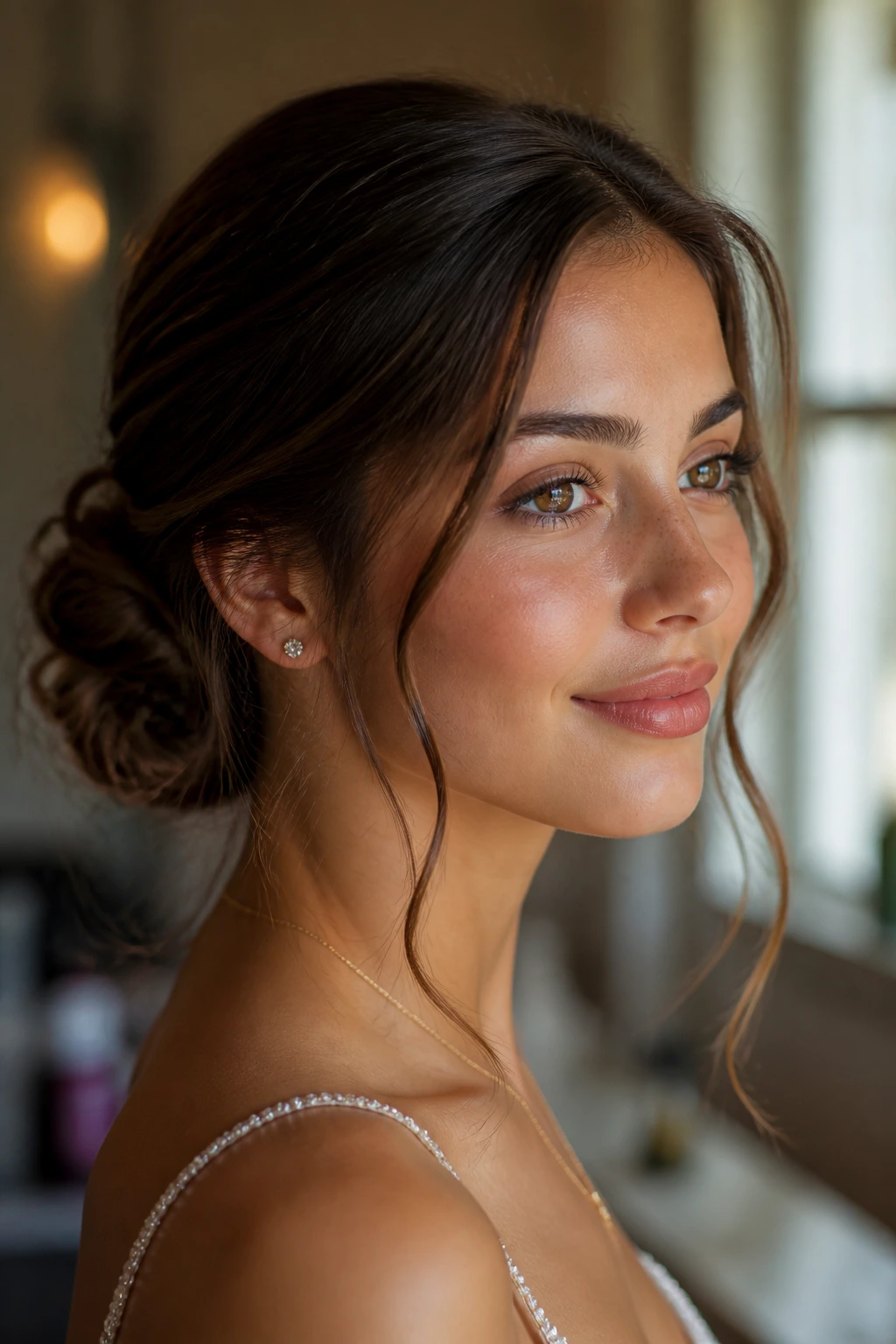
Can I do these styles on clean hair?
Yes, but some styles hold better on hair that was washed the day before. If your hair is fine or silky, a little natural buildup helps with grip. If you must wash it the same day, use mousse or texture spray so the style has some hold.
What if my curls fall fast?
Use smaller sections, clip the curls while they cool, and skip heavy oils until the very end. A flexible hairspray layered in two light passes usually works better than one heavy spray. If your hair is stubborn, try a half-up or low ponytail style instead of full-length loose curls.
Do I need extensions for prom hair?
Not always. Extensions help if you want more length, fullness, or a bigger braid, but plenty of these prom hairstyles work on natural hair alone. If you do use them, match the texture as closely as the color.
What’s best for short hair?
Sculpted waves, side parts, tucked sides, and one strong accessory usually give short hair the most polish. A bob with a clean wave pattern can look more expensive than a complicated style forced onto too little length. Keep the finish simple and exact.
How do I keep bobby pins hidden?
Insert them with the wavy side down when you want grip, and place them where the hair overlaps. Cross two pins in an X if a section feels loose. Matching the pin color to your hair helps, but placement matters more.
Should I choose a center part or a side part?
Pick the part that works with your dress and the shape of the style. A center part feels calm and balanced; a side part adds lift and a little drama. If you already have strong earrings or a one-shoulder dress, a side part can help the whole look feel finished.
Can I wear a ponytail and still look formal?
Absolutely. A wrapped low ponytail, ribbon-tied ponytail, or bubble ponytail can look very polished if the crown is clean and the elastic is hidden. The shape matters more than the category.
What if the weather is damp?
Choose a style with more structure and less loose volume at the roots. Low buns, sleek ponytails, and half-up twists tend to hold better than high-volume blowouts in humidity. Bring a travel hairspray and avoid touching the crown once it’s set.
Final Sweep
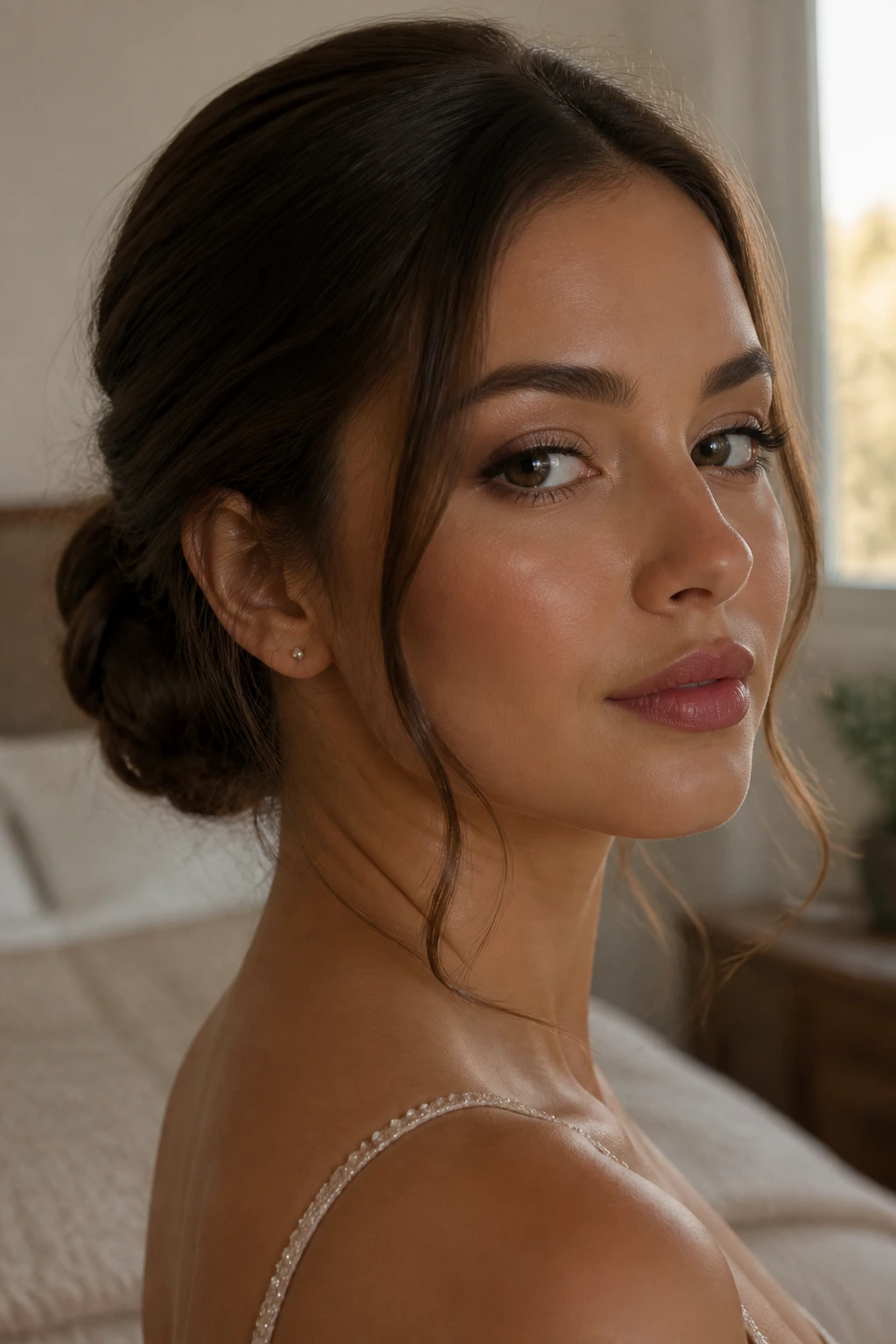
Soft polished prom hair works because it respects movement. That’s the part a lot of styles miss. The hair should feel shaped, not trapped; finished, not frozen; soft at the edges and steady where it counts.
The smartest choice is the one that fits your dress, your hair texture, and how much time you want to spend in a mirror before leaving. A clean low bun, brushed-out wave, or half-up twist can all land in the same polished zone if the part, pins, and finish are handled well. Get those details right, and the style will carry itself the rest of the night.
