



The best short haircuts for older women do one thing better than long, heavy hair ever can: they put the shape back where the hairline, the jaw, and the nape actually live. A good short cut doesn’t hide a face. It frames it. That’s the whole trick, and it’s why a sharp little pixie, a soft bob, or a cropped shag can look more intentional than inches of polished length that keeps falling flat by noon.
Hair changes, too. Gray can come in coarser. Fine hair can lose lift at the crown. Thick hair can puff out around the ears if the cut is too blunt or too heavy. So the answer is not “go shorter and hope for the best.” The answer is balance. A clean neckline, a little weight removed in the right places, and a fringe that lands where your face needs it most can change the whole read of the cut.
And that’s the part too many salon photos miss. A chic short style has to work from the front, the side, and the back — not just in the mirror with perfect light and fresh product. If a cut still looks good after you tuck it behind one ear, put on glasses, and live your life for a few days, that’s the one worth keeping.
Why Short Haircuts for Older Women Work So Well on Real Hair
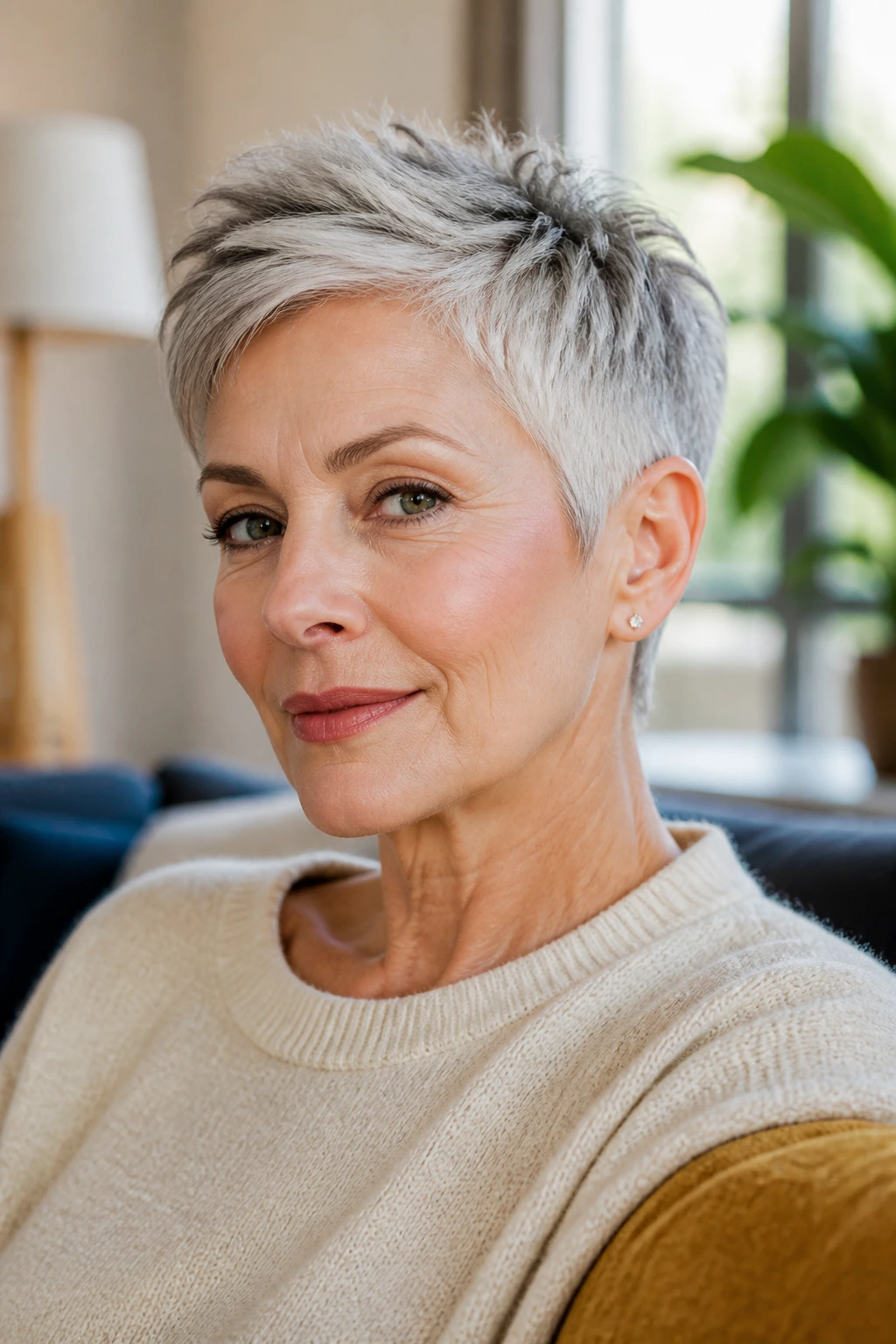
They lift the face without asking hair to do a job it can’t do anymore. A short shape can create height at the crown, show the cheekbone, and clean up the neck in a way long layers often can’t once the hair starts to thin or lose its spring.
Gray and silver hair look sharper with a real outline. When the cut has a clear edge — a jawline bob, a tapered pixie, a neat nape — the color reads on purpose instead of looking fuzzy at the ends.
They cut down the daily fight. A good short haircut can go from damp hair to finished in 8 to 12 minutes with a vent brush, a little mousse, and a dab of paste. That matters more than people admit.
They’re easier to adjust around glasses, earrings, and necklines. A fringe can sit above the frames, a side piece can tuck neatly, and the back can stay tidy under collars and scarves.
They work with texture instead of pretending texture does not exist. Fine hair, coarse hair, wave, curl, and coil all need different shape, but short styles make those differences easier to manage, not harder.
1. Side-Swept Pixie with a Soft Nape Taper
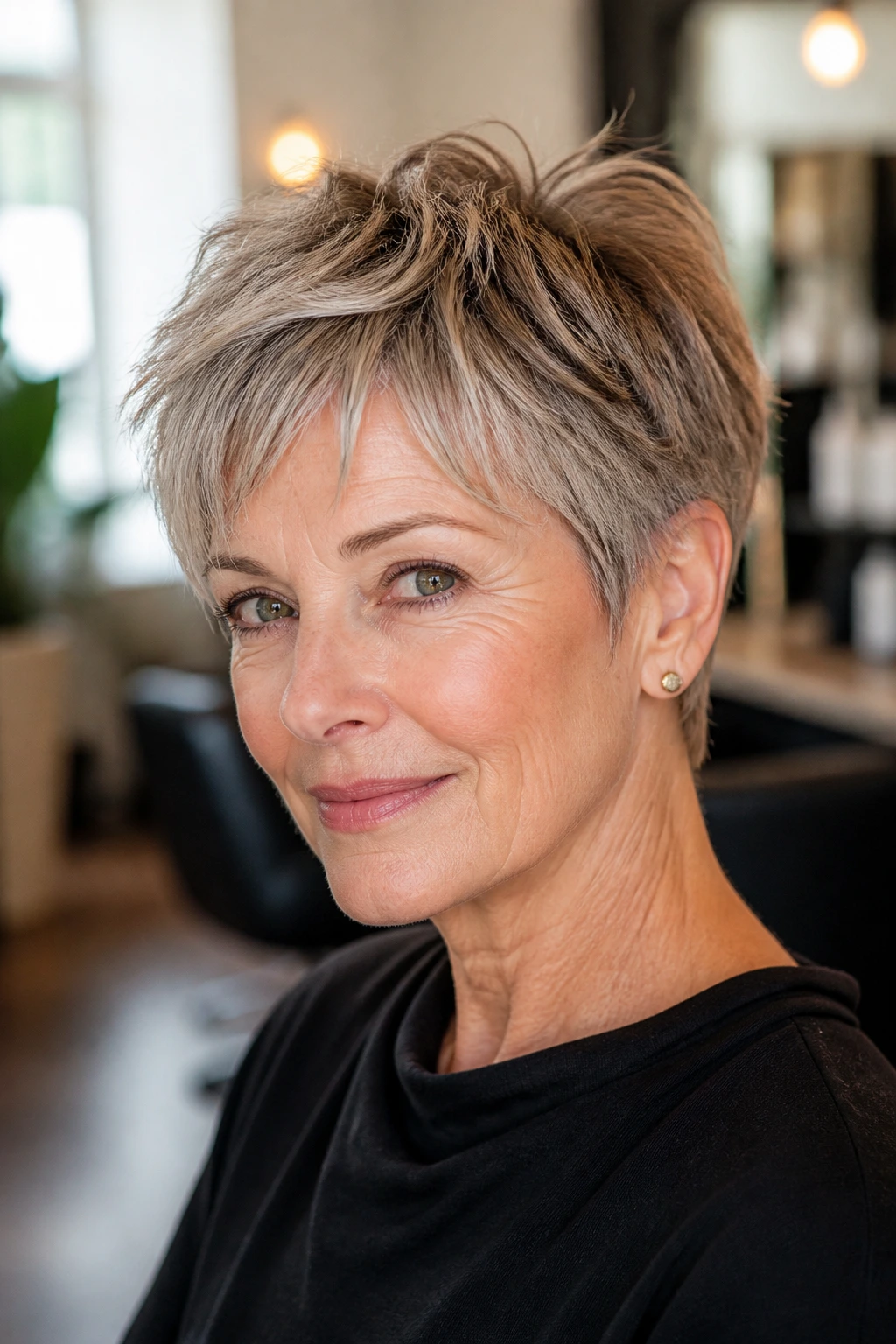
A side-swept pixie is the haircut I reach for when someone wants short hair but does not want to feel exposed. The longer fringe softens the forehead, the top keeps enough length to move, and the tapered nape keeps the whole thing from turning boxy. It’s tidy without looking rigid.
Ask for 2 to 3 inches on top, ears partly covered or fully exposed depending on preference, and a fringe that sweeps across one side instead of sitting straight down. The key detail is the nape: keep it close and clean so the head shape looks intentional from behind. If you wear glasses, this cut can be a gift, because the front doesn’t fight the frames.
Best for
- Fine hair that needs a little lift without a lot of styling.
- Women who like a neat silhouette but still want softness around the face.
- Anyone whose crown tends to flatten by midday.
A pea-sized amount of lightweight cream is usually enough. Work it through damp hair, then blow-dry the fringe in the opposite direction first and sweep it back into place. That small move gives the top a better bend and keeps the front from sticking flat to the forehead.
2. Choppy Textured Crop with Piecey Crown
If your hair has started to lie down like it’s tired, this crop wakes it up. Choppy layers at the top create little flashes of movement instead of one solid helmet shape, and that’s exactly why this cut works on fine or medium hair that needs a little mischief.
The best version is not shredded to bits. You want texture, not holes. Ask for a blunt-ish outline around the ears and neckline, then choppier shaping through the crown and fringe area. That combination keeps the cut from looking too airy at the ends, which is where many short crops go wrong.
A matte paste or soft wax works better than shiny cream here. Warm a tiny amount between your fingers, pinch the ends, and let a few pieces break forward over the forehead. It should look touchable, not styled into one frozen shape. This cut is especially good if you hate spending ten minutes with a round brush. Finger-drying is enough.
3. Jaw-Length French Bob
A French bob at the jaw has a little attitude. It sits right where the jawline turns, and that is why it can look so clean on mature faces — it gives the face a clear edge without dragging the eye down the neck.
The line matters. Ask for a bob that grazes the jaw rather than stops above it, with the ends kept fairly full. A tiny bit of movement is fine, but the charm of this cut is in the edge. If you want a fringe, keep it soft and short enough to skim the brows instead of hiding them. A heavy bang can make the whole thing feel strict.
This one likes straight or slightly wavy hair best. Air-dry it with a smoothing cream if your texture is calm, or wrap the front sections around a round brush and bend the ends under just a touch. The result is crisp but not sharp. That difference matters.
4. Chin-Length Layered Bob
The chin-length bob is the safe place people land when they want short hair that still gives them options. But “safe” does not have to mean dull. A few carefully placed layers under the surface can stop the ends from looking like a blunt block and give the whole shape a little swing.
I like this cut for women whose cheeks feel fuller or whose face is a little rounder, because the length lands below the widest part of the face and creates a cleaner line. The bob can still be tucked behind one ear. It can still be curled under for polish. It just has more breathing room than a strict jaw bob.
Ask for long internal layers, not a choppy stacked mess. The outer line should stay tidy. Too many short layers at chin length can make the ends look thin and fussy, and that is a pain to style. A side part usually helps, especially if your crown has started to flatten.
5. Stacked Bob with Crown Lift
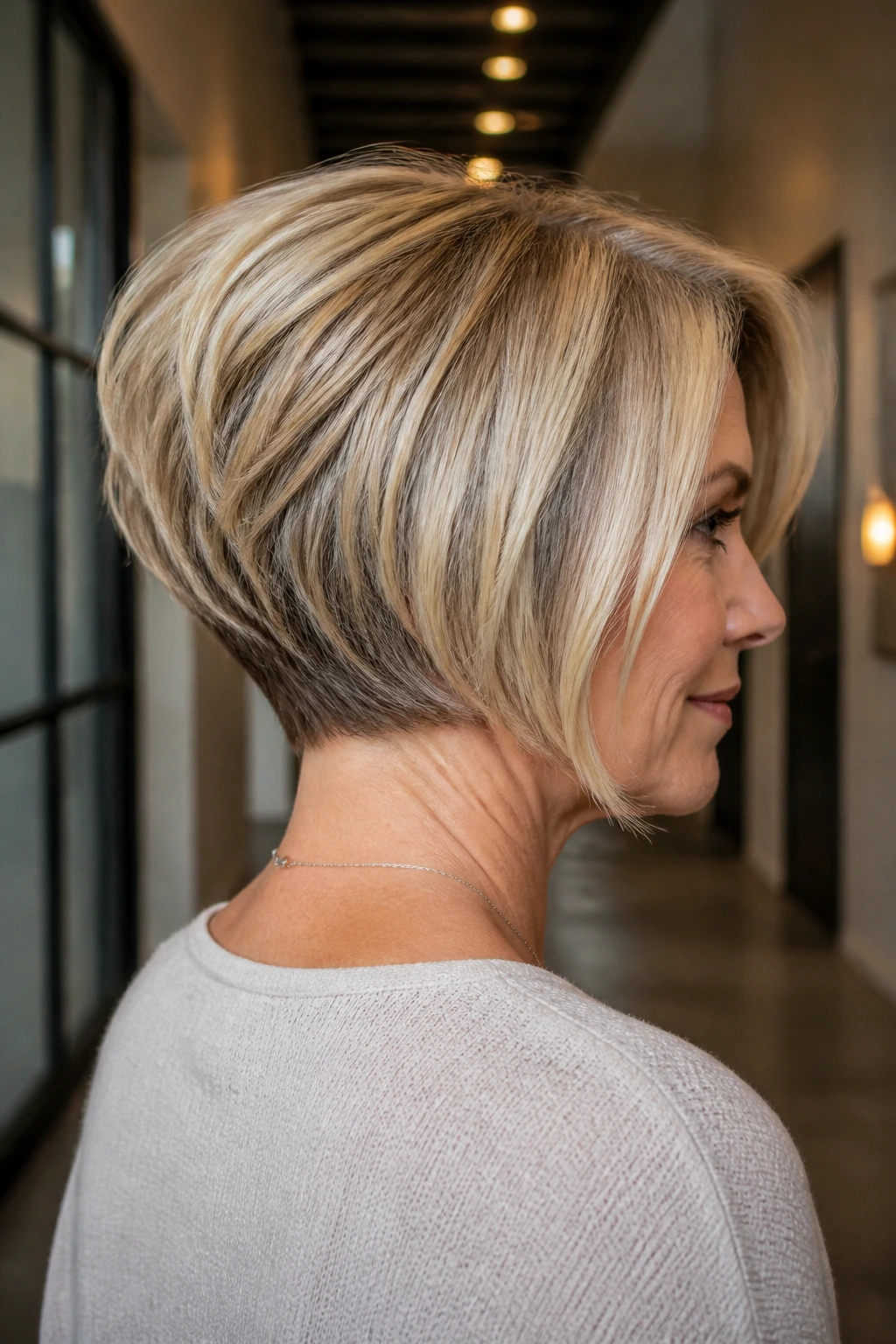
A stacked bob is all about the back of the head, and that is why it works so well on hair that has gone limp at the crown. The graduation in the back lifts the shape from underneath, so the style does some of the volume work before you even touch a brush.
The trick is keeping the stack controlled. If it is too steep, the back can puff out like a triangle. If it is too soft, you lose the lift. Ask for a rounded, stacked back with a longer front that falls toward the chin. That gives the haircut a nice curve when you turn your head.
This is one of the better short haircuts for older women who want polish without fuss. A quick round-brush blowout at the roots, a little volumizing spray at the crown, and a light finishing mist are usually enough. It looks especially good when the neck is visible and the back neckline is trimmed clean.
6. Bixie Cut
The bixie sits between a bob and a pixie, which is exactly why so many people keep coming back to it. It has more length than a classic pixie, less bulk than a bob, and enough softness around the ears to feel wearable instead of severe.
That middle ground matters if you’re nervous about going very short. The top can stay a little longer, often around 3 to 4 inches, while the sides stay cropped and the nape gets tapered. The result reads modern without looking aggressively edited. It grows out better than a super-short pixie, too, which is a real plus if you do not want to be back in the chair every four weeks.
It’s also forgiving on texture. Fine hair gets lift. Thick hair gets shape. Wavy hair gets movement. Just do not ask for too much length everywhere, or it turns into an awkward mini-bob with no real point of view. The bixie needs contrast.
7. Feathered Crop That Moves Instead of Sits
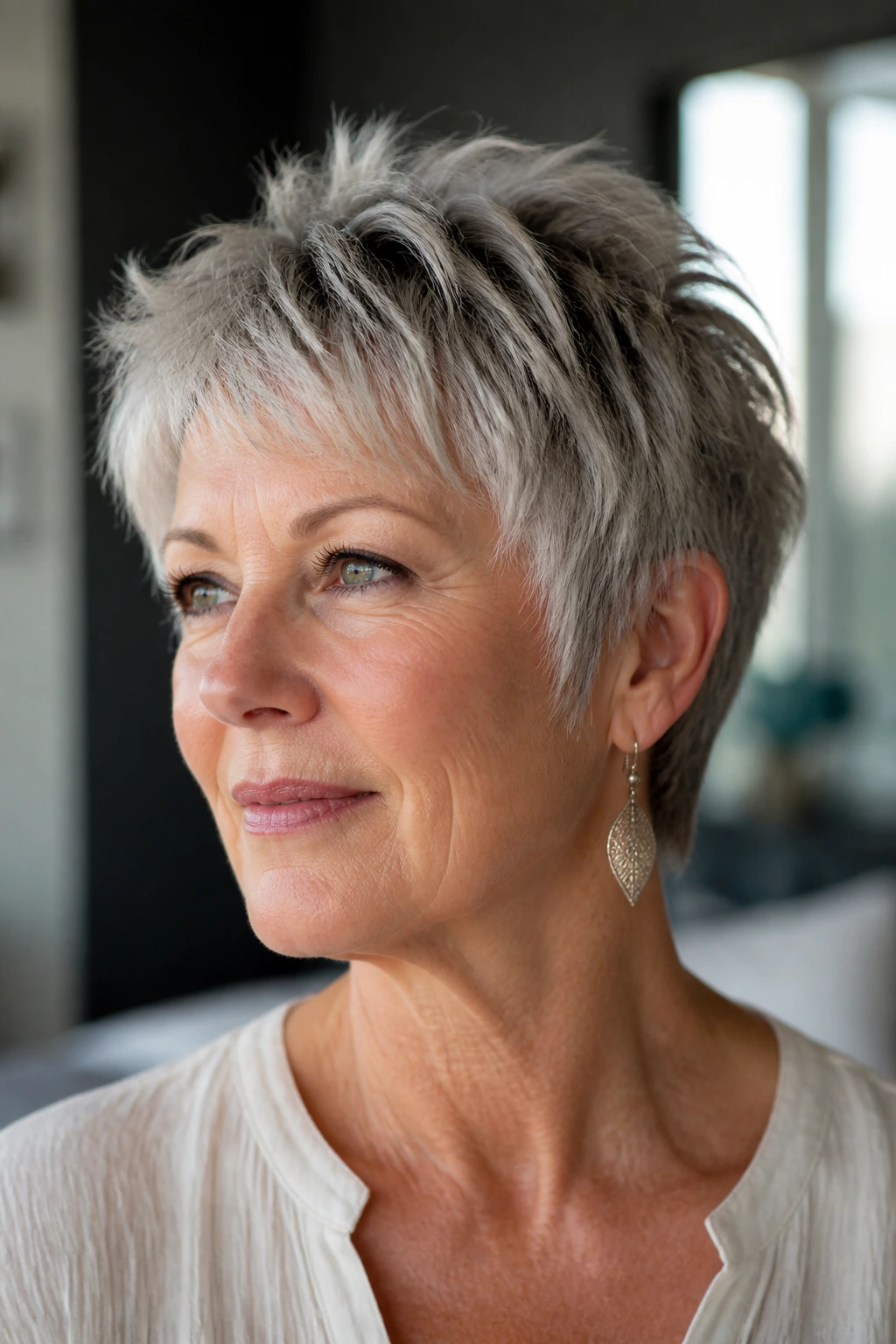
A feathered crop can look soft in a way that a blunt cut never will. The edges break up just enough to keep the hair from sitting like a cap, and that softness is useful when the hair has become finer or when the ends need a lighter hand.
This cut works best when the feathering happens in the right places: temples, crown, and just around the perimeter. You do not want the whole head thinned out. That’s how feathered cuts end up wispy and tired. Ask the stylist to keep enough weight at the outline so the haircut still has presence.
A light mousse and a vent brush are usually enough to get it moving. Blow-dry in sections, then shake the hair loose with your fingers. The finished shape should have a bit of air in it, not a hard line. If you like a soft, feminine short cut that does not feel too buttoned-up, this one belongs high on the list.
8. Wedge Cut with a Clean Nape
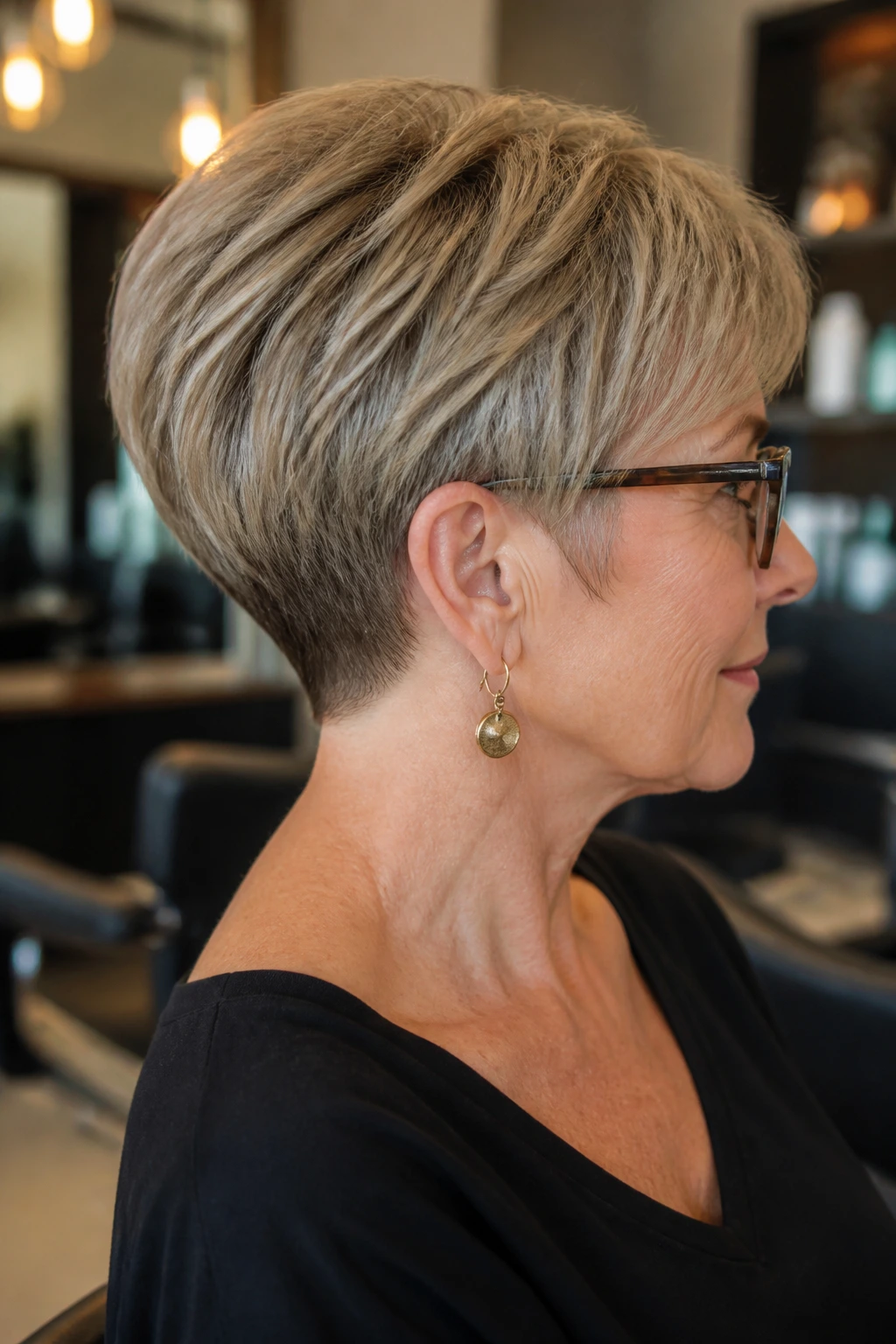
The wedge cut has a very specific personality. It is crisp, rounded through the back, and tidy at the neckline, which makes it one of the strongest choices if you like a haircut that always looks put together. There is a reason this shape has stayed around for so long.
What makes it work is the rear curve. The back is stacked or rounded just enough to give lift, while the nape stays close and clean. That contrast gives the profile a polished line. If you wear glasses or love earrings, the wedge keeps the hair away from both without feeling spiky.
It suits straight or slightly wavy hair best. On very curly hair, the shape needs more customization or it can flare out. On fine hair, a wedge can look fuller than a blunt bob because the graduation builds that body in the back. It is not a shy haircut. It has opinions.
9. Curly Crop with Tapered Sides
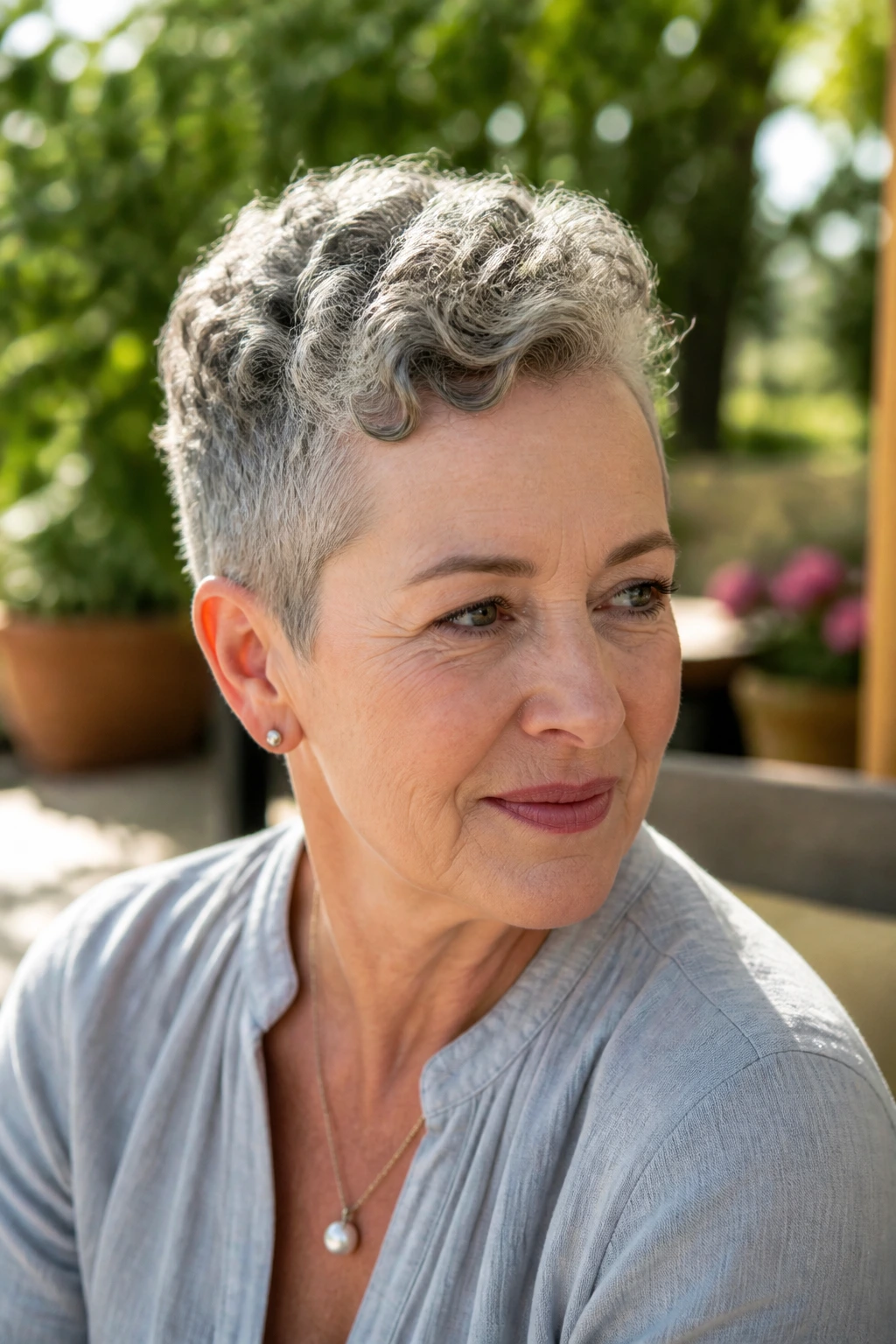
Curly hair above the shoulders changes the whole game. Leave too much bulk on the sides and the shape widens into a triangle. Cut it too blunt and you lose the curl pattern. The tapered curly crop gets around both problems by keeping the sides and nape tighter while leaving enough length on top for the curls to spring up.
This is one of those cuts that should be shaped with the curl pattern in mind, not against it. A dry cut or a curl-by-curl approach usually gives the cleanest result because shrinkage is real. Very real. A curl that looks chin-length when wet may sit two inches shorter once it dries, and that needs to be accounted for.
Use gel or curl cream on soaking-wet hair, then diffuse on low or medium. The goal is defined, rounded shape, not frizz fighting frizz. A tapered crop lets older women with curls keep the texture they like while removing the bulk that makes shorter cuts feel wide at the cheeks.
10. Silver Shag with Wispy Fringe
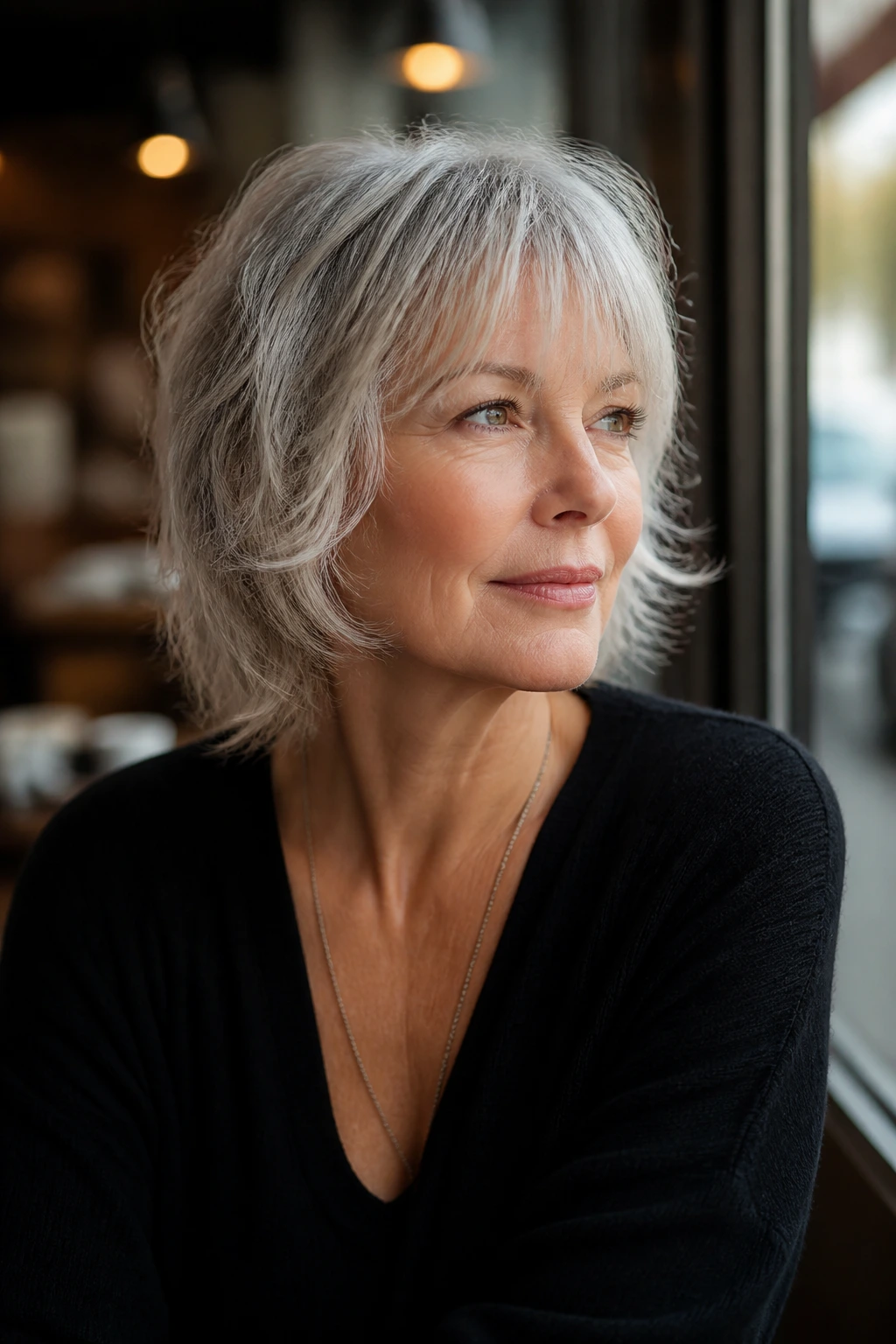
A silver shag can look messy in the wrong hands and spectacular in the right ones. The difference is the layers. When the layers are cut with intent, the shape gives gray hair movement, edge, and a little lift around the face without asking for a formal blowout.
The fringe is the part that usually sells it. Keep it wispy and broken, not thick and straight across. That soft front lets silver strands catch the light without looking like a curtain. The layers around the cheekbone and jaw help the haircut breathe, especially if the hair has a touch of wave.
This cut shines on women who want texture more than polish. It suits hair that already has some bend, because the shag can work with that natural movement instead of flattening it. If your gray hair has gotten a little wiry, the shag is often kinder than a blunt cut — it hides the irregular texture instead of fighting it.
11. Long Pixie with Ear-Length Sides
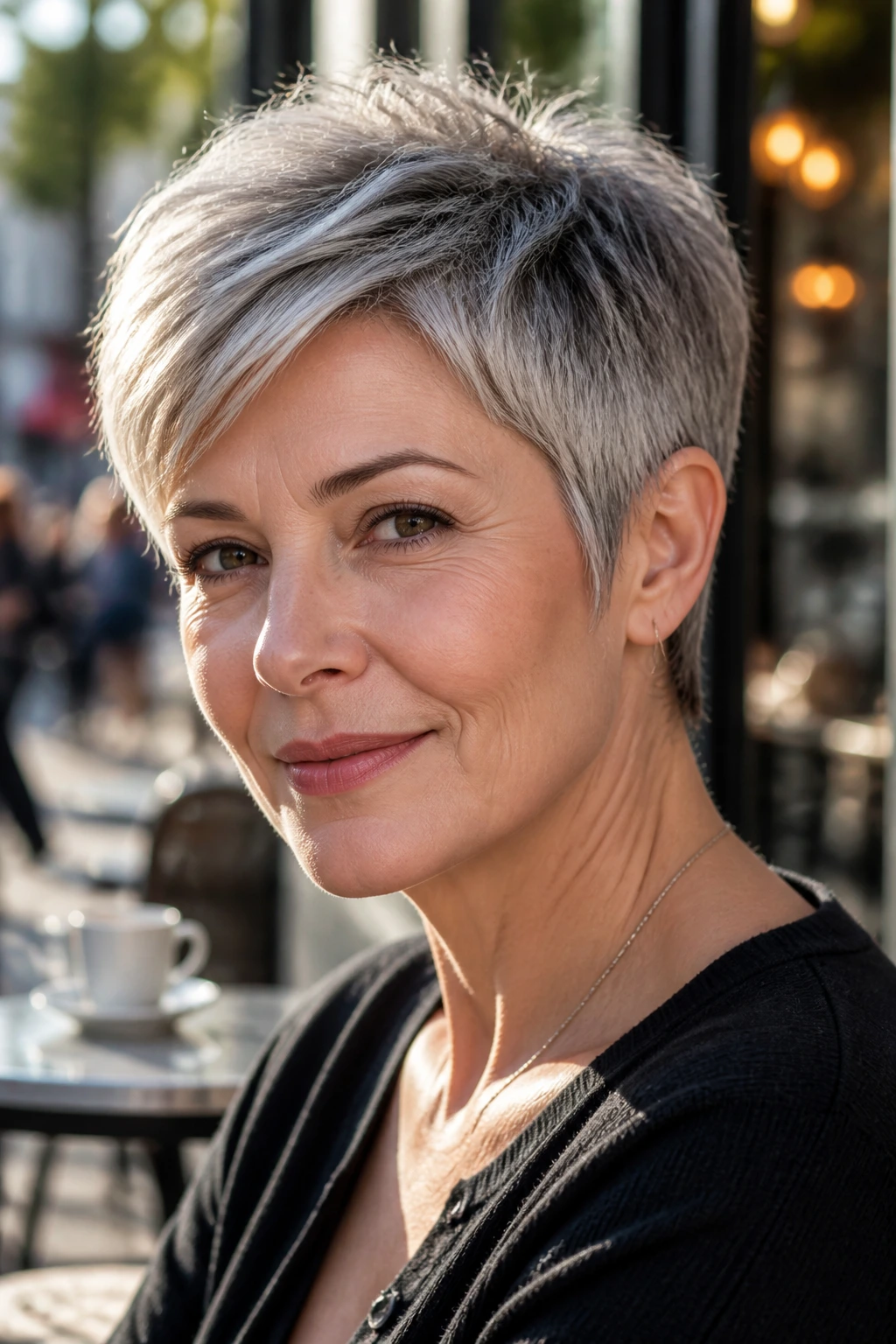
A long pixie is the haircut for someone who likes short hair but still wants enough length to tuck behind the ear or sweep across the forehead. It gives you the ease of a crop with a little more room to play, which is handy if you are easing into shorter hair for the first time.
Keep the top around 3 to 4 inches, the sides grazing the ears, and the nape tapered so the back does not bulge out. The length around the face can be shifted depending on whether you want softness at the cheek or more openness around the eyes. That flexibility is the whole point.
It’s a smart bridge cut, too. If you’ve been wearing a bob and want to go shorter without jumping straight to a very cropped pixie, this is the path I’d trust. It also behaves well on hair that has some body but not a lot of density.
12. Curtain-Bang Bob
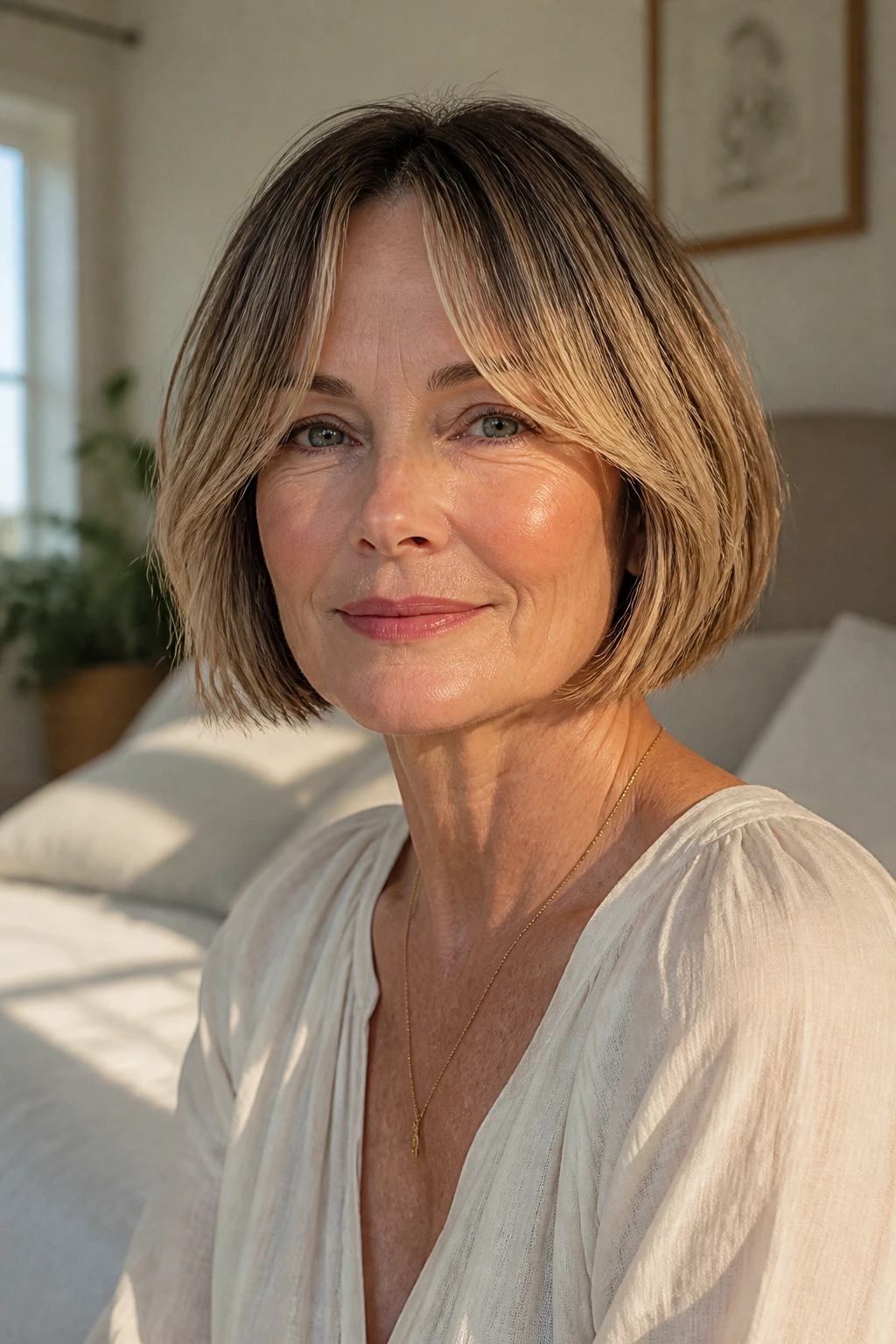
Curtain bangs can do a lot of quiet work. They split the front line, draw the eye inward, and soften the forehead without covering the whole face. On a bob that falls around the chin or just below it, the effect is relaxed but still clean.
This style is especially useful if your face feels longer than it used to or if you want something that does not pull straight back from the hairline. The bangs open around the brow, which keeps the cut from feeling boxed in. A side part or a soft center part both work, depending on how much symmetry you like.
The maintenance is the catch. Curtain bangs need trimming more often than the rest of the cut, and they need a little attention in the morning so they do not split in awkward places. A round brush or a quick bend with a blow-dryer nozzle is usually enough. Worth it, if you like the look.
13. Ear-Grazing Crop with a Strong Outline
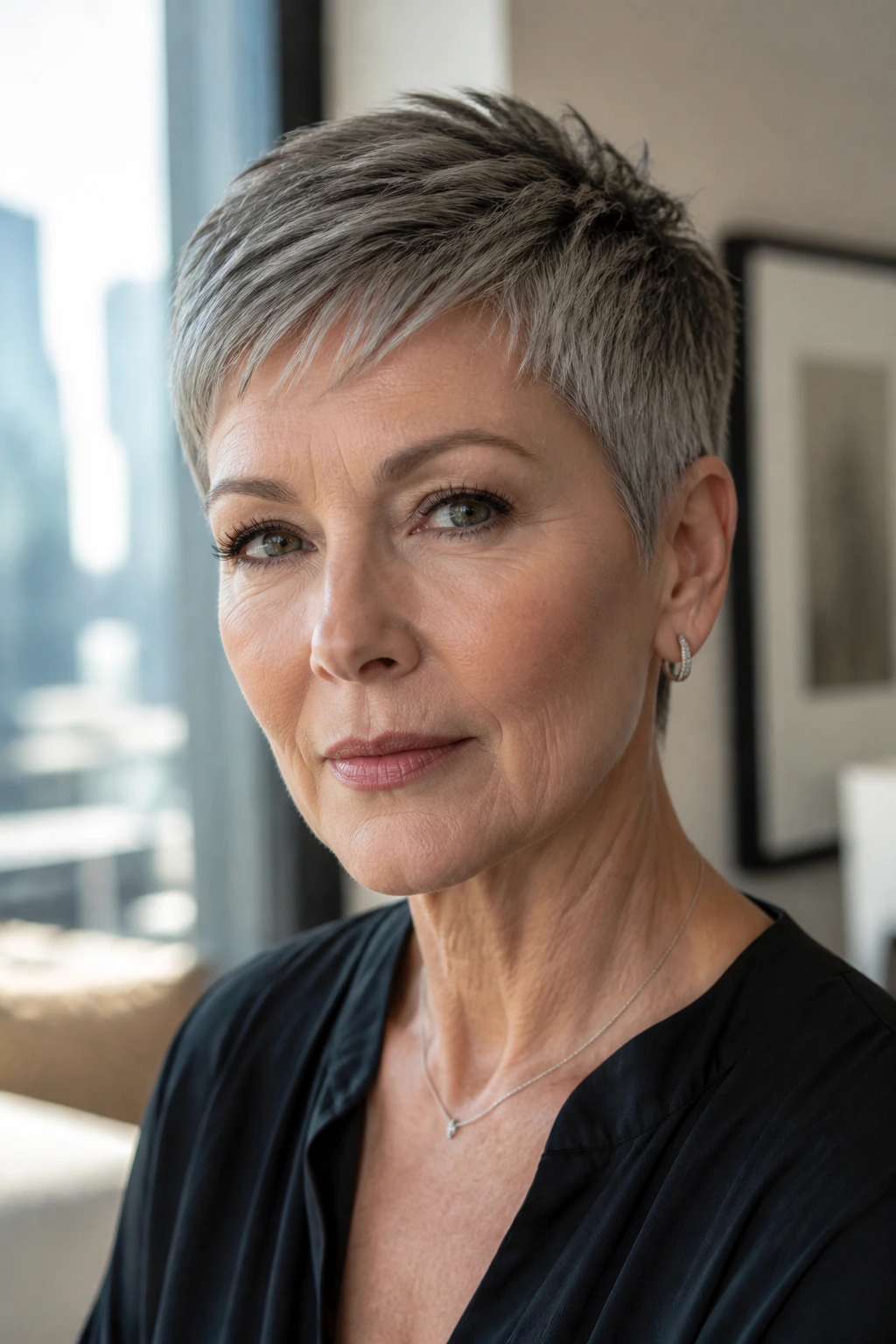
This is the cut for women who want the ears and neck to be part of the style. Ear-grazing crops feel sharp, clean, and very intentional. They are not shy, which is exactly why they can look so modern when they are cut with care.
The sides should hug the head rather than flare out. Keep the top slightly longer so there is somewhere to push the hair forward, back, or to the side. If the neckline is too rough, the whole cut loses its polish fast. That edge needs to be clean.
This style suits thick hair surprisingly well because the shorter length removes bulk. It also works on active women who want something that stays in place without a lot of fuss. A light pomade or styling cream is usually enough. If you like a bold, neat, close-to-the-head silhouette, this cut has range.
14. Angled Bob with a Longer Front
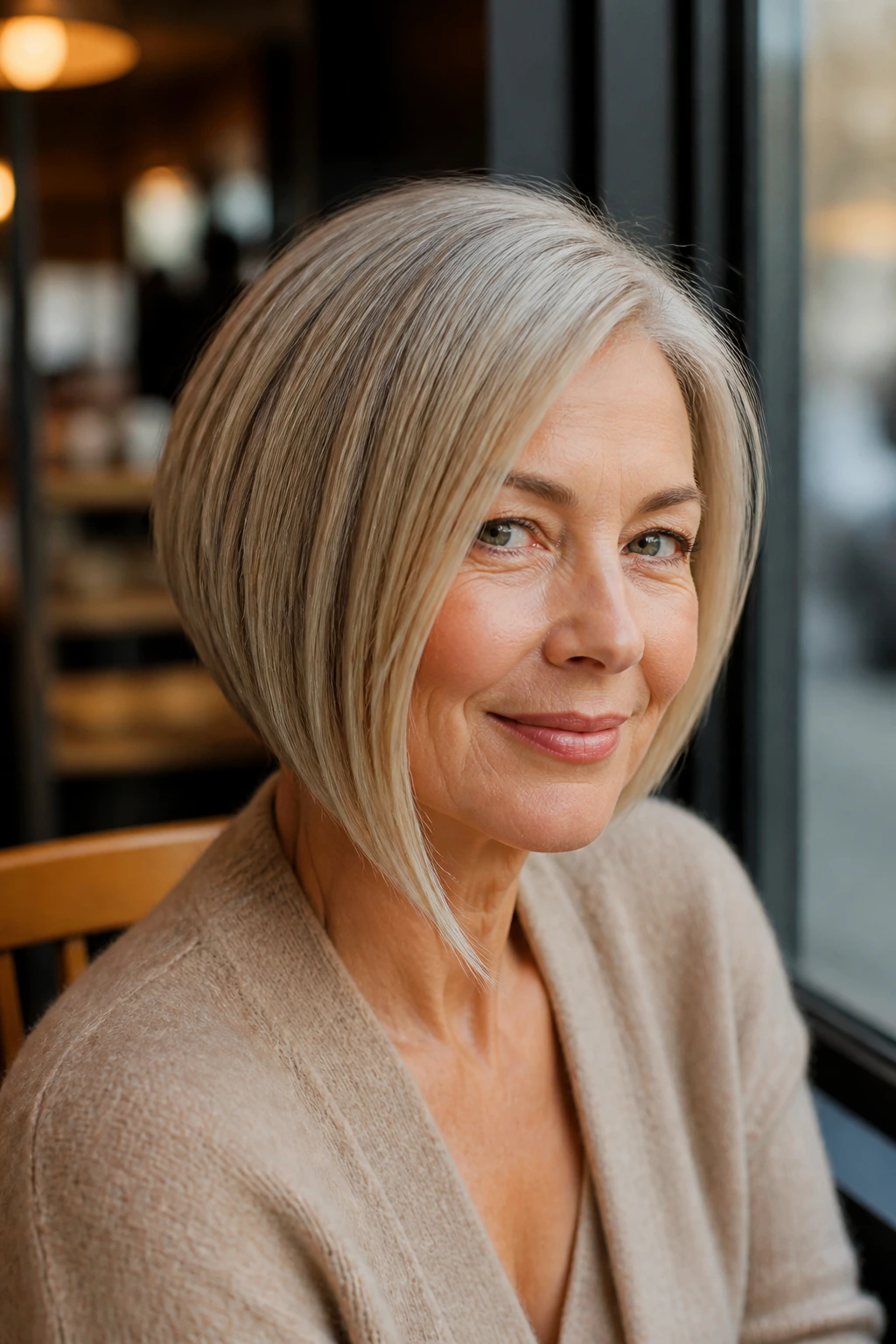
An angled bob does one thing beautifully: it directs the eye. The shorter back keeps the haircut tidy, while the longer front pieces fall toward the chin or collarbone and create a diagonal line that feels clean and modern.
That angle is useful if you want to soften a square jaw or lengthen a rounder face. The shape does not need to be dramatic to work. A gentle angle, with the front only a bit longer than the back, often looks better than an extreme slant. Too much angle and the cut starts to look like a design project instead of a haircut.
This is one of my favorites for women who want a short cut that still feels elegant when it’s tucked behind one ear. It also pairs well with a side part and a bit of root lift. The line of the bob does the visual work; your styling doesn’t have to.
15. Undercut Pixie for Dense Hair
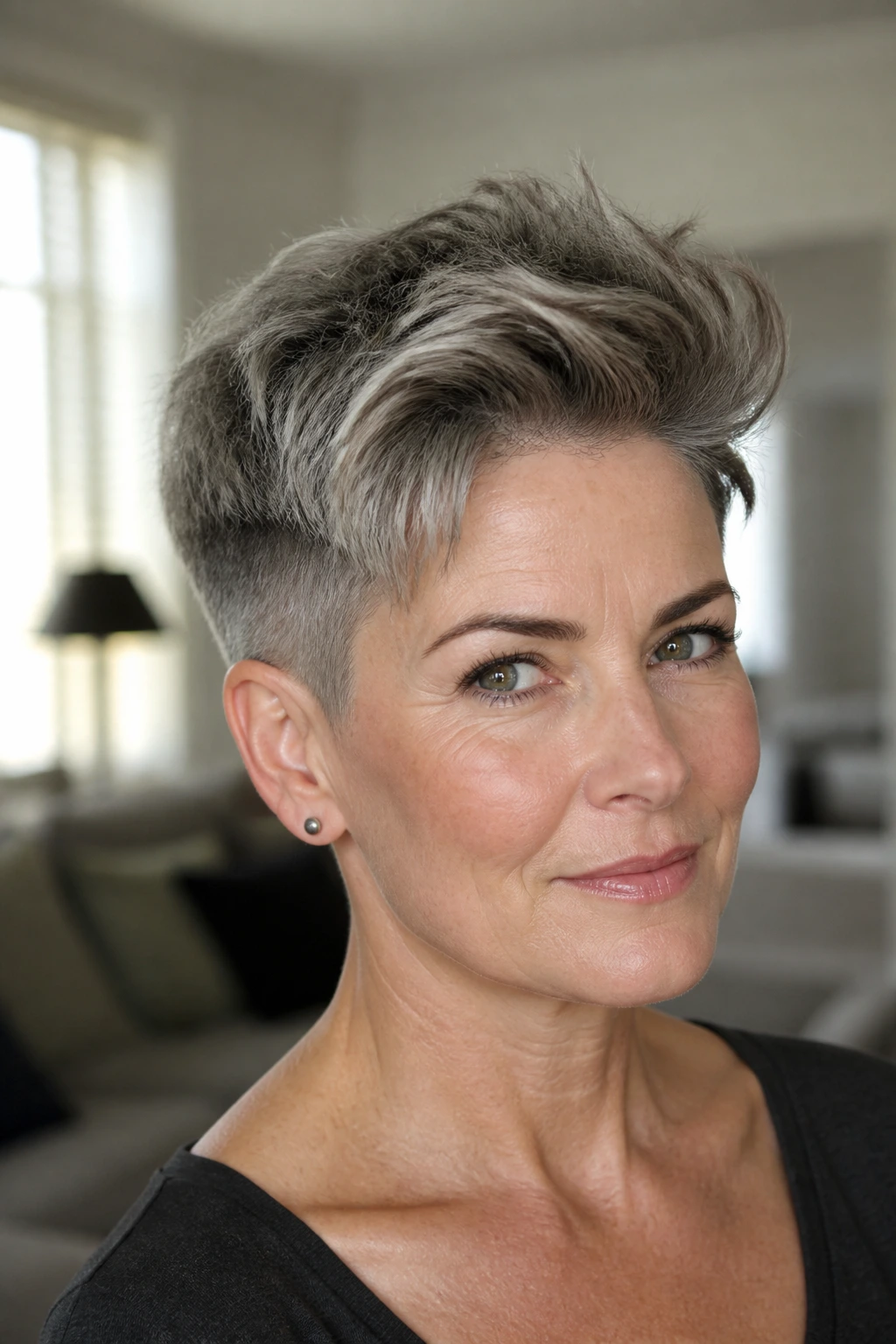
Dense hair can look gorgeous short, but it can also turn into a triangle if the underside is not reduced. That’s where the undercut pixie earns its keep. The hidden or visible undercut removes bulk at the nape and sometimes around the sides, while the top stays long enough to shape.
This is not a tiny haircut. It is a controlled haircut. The top can still have 3 inches or more, and that length gives you room to push it to one side, spike it softly, or smooth it back. The undercut just keeps the whole head from ballooning.
I like this cut for thick, coarse, or wavy hair that needs structure more than reduction. It does need maintenance, because the grow-out shows at the edges fast. But if your hair has a habit of puffing wider than you want, an undercut can save the silhouette.
16. Tapered Natural-Coil Cut
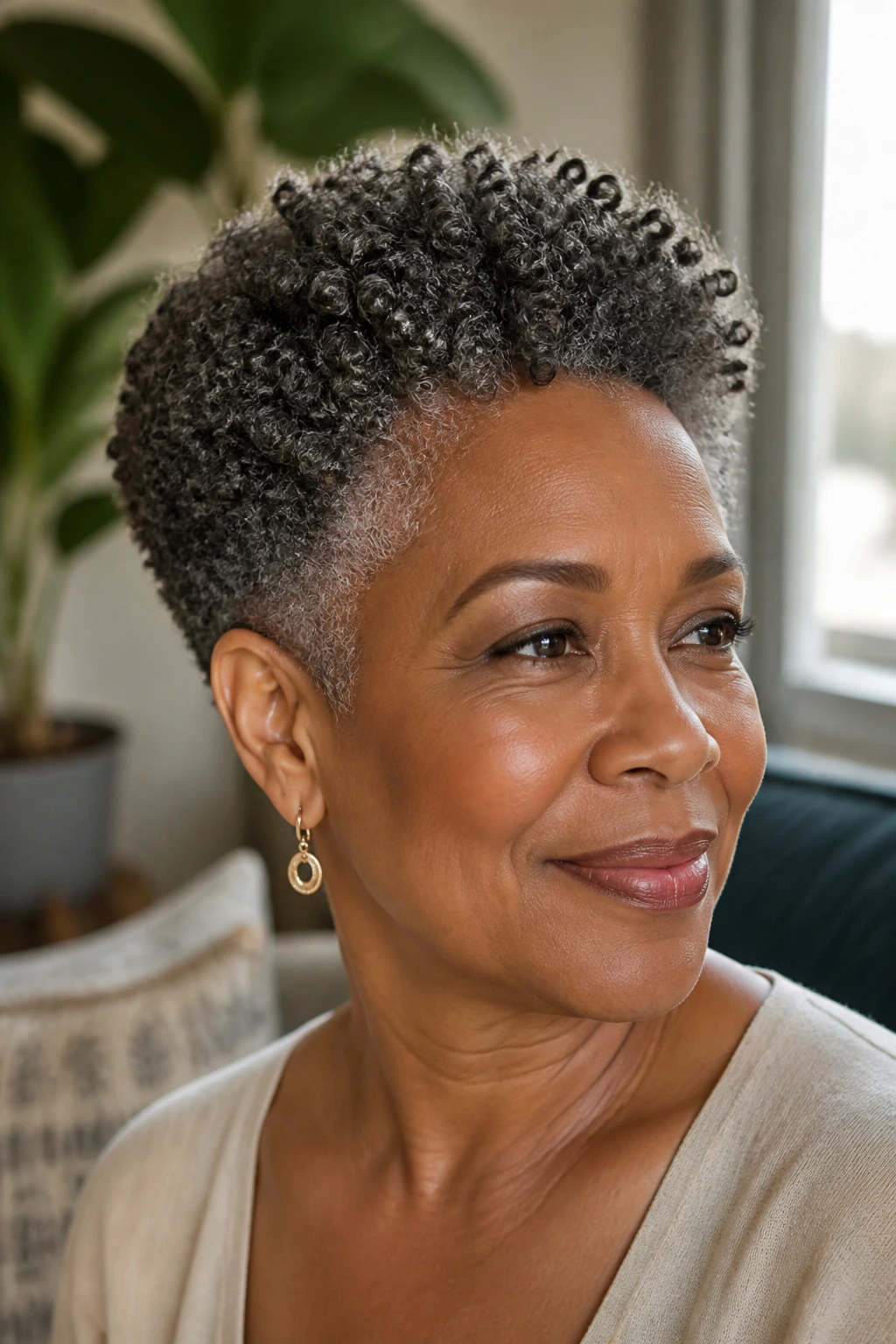
Coily hair needs a different conversation. The point is not to shrink it into submission. The point is to shape it so the curls or coils sit in a rounded form that follows the head instead of fighting it.
A tapered natural-coil cut keeps the sides and nape shorter while leaving more length at the crown and top. That creates a soft, lifted outline and lets the hair keep its texture. Dry cutting or cutting in its natural state matters here, because shrinkage can change everything. A coil that looks one length wet may sit much shorter once it dries.
Use leave-in conditioner, a cream, and a little gel if you want more hold. Then stop touching it. That last part sounds small, but it changes everything. Coils look best when they are set and left alone. If you have been told short hair and coily hair do not mix, this cut proves the opposite.
17. Razored Shaggy Bob
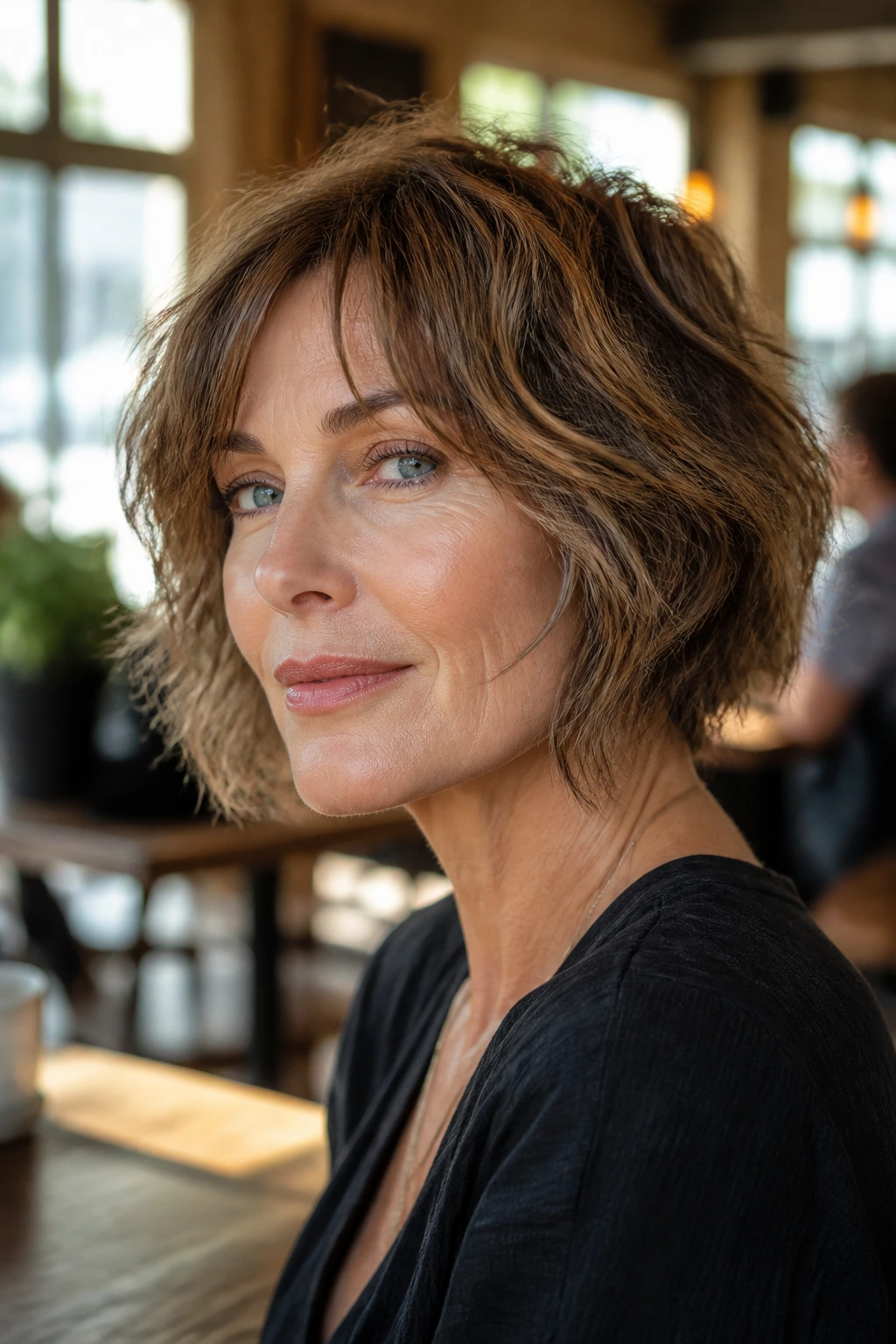
A razored shaggy bob sits in that sweet spot between polished and undone. It keeps enough length to feel like a bob, but the razor or slide-cut ends break the line up so the hair can move instead of lying in a hard block.
This cut works best on wavy hair or medium-density hair that can take some texture. The shape should still have a clear perimeter. I do not love a shaggy bob that gets thinned so much it turns stringy. The best version has soft ends and cheekbone pieces, not holes.
A mousse at the roots and a little scrunching at the ends usually get the job done. Air-drying can be enough if your wave is cooperative. The appeal here is easy texture. It looks like you know exactly what you are doing, even when you mostly just ran your fingers through it and went.
18. Swept-Back Crop with a Lifted Front
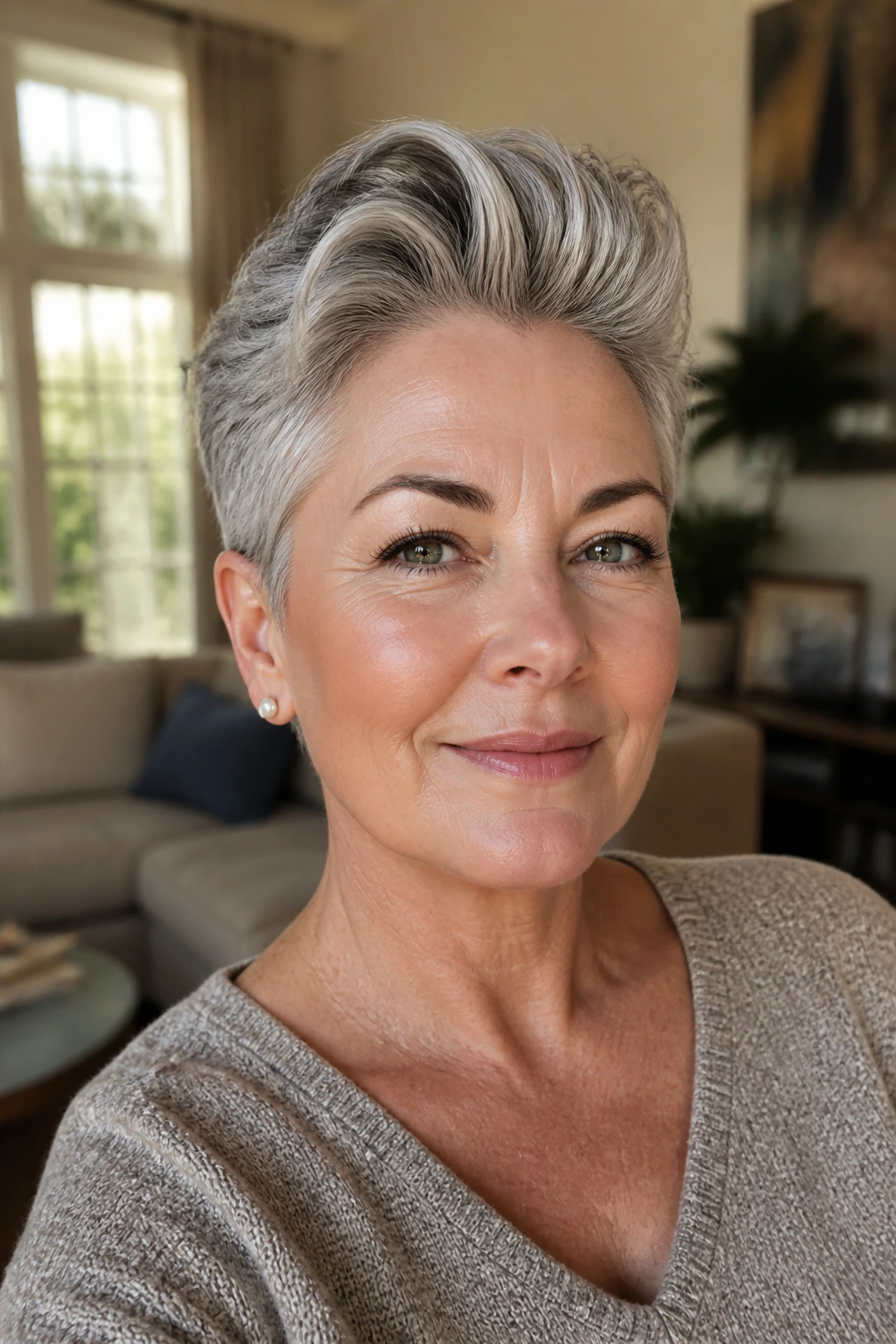
A swept-back crop changes the whole mood of short hair. Instead of falling forward, the top is directed away from the face, which shows off the brows, the eyes, and the shape of the forehead. It has a clean, confident feel without needing a lot of length.
This one works especially well if you have good bone structure or you wear strong frames. Ask for closely tapered sides and enough length on top to push back with your fingers. The front should not be too short. If it is, the shape loses that lifted effect and starts looking unfinished.
Use a light cream or a small amount of pomade, then blow-dry the front upward and back with your fingers or a small brush. The finish can be soft or sleek depending on how much hold you use. It is one of the easiest ways to make short hair feel crisp without becoming stiff.
19. Rounded Blunt Bob with Soft Ends
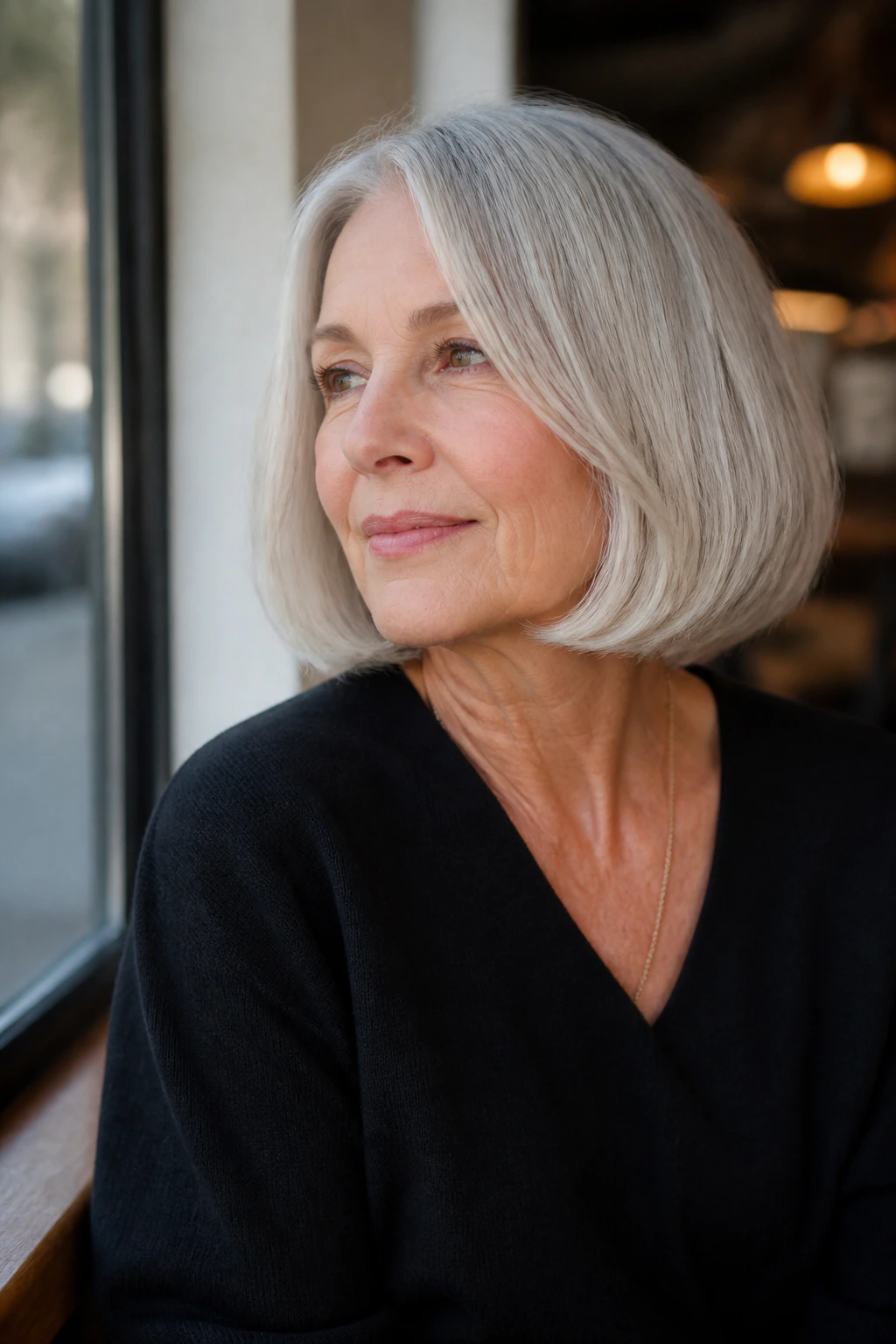
A rounded blunt bob gives you the discipline of a strong line with just enough softness at the ends to keep it from feeling severe. The perimeter stays full, which is useful on straight hair that needs structure, and the rounded shape hugs the jaw rather than hanging away from it.
This cut is a good answer if you like tidy hair that does not need much rearranging during the day. It can be center-parted for a cleaner look or side-parted if you want a little asymmetry. The softness comes from tiny interior adjustments, not from obvious layers.
It is especially nice on hair that frizzes at the ends. The blunt line gives control, while the rounded finish keeps it from feeling helmet-like. If you want a short cut that can look neat in five minutes and still hold up when the weather is rude, this is a strong place to start.
Choosing Short Haircuts for Older Women by Texture and Density
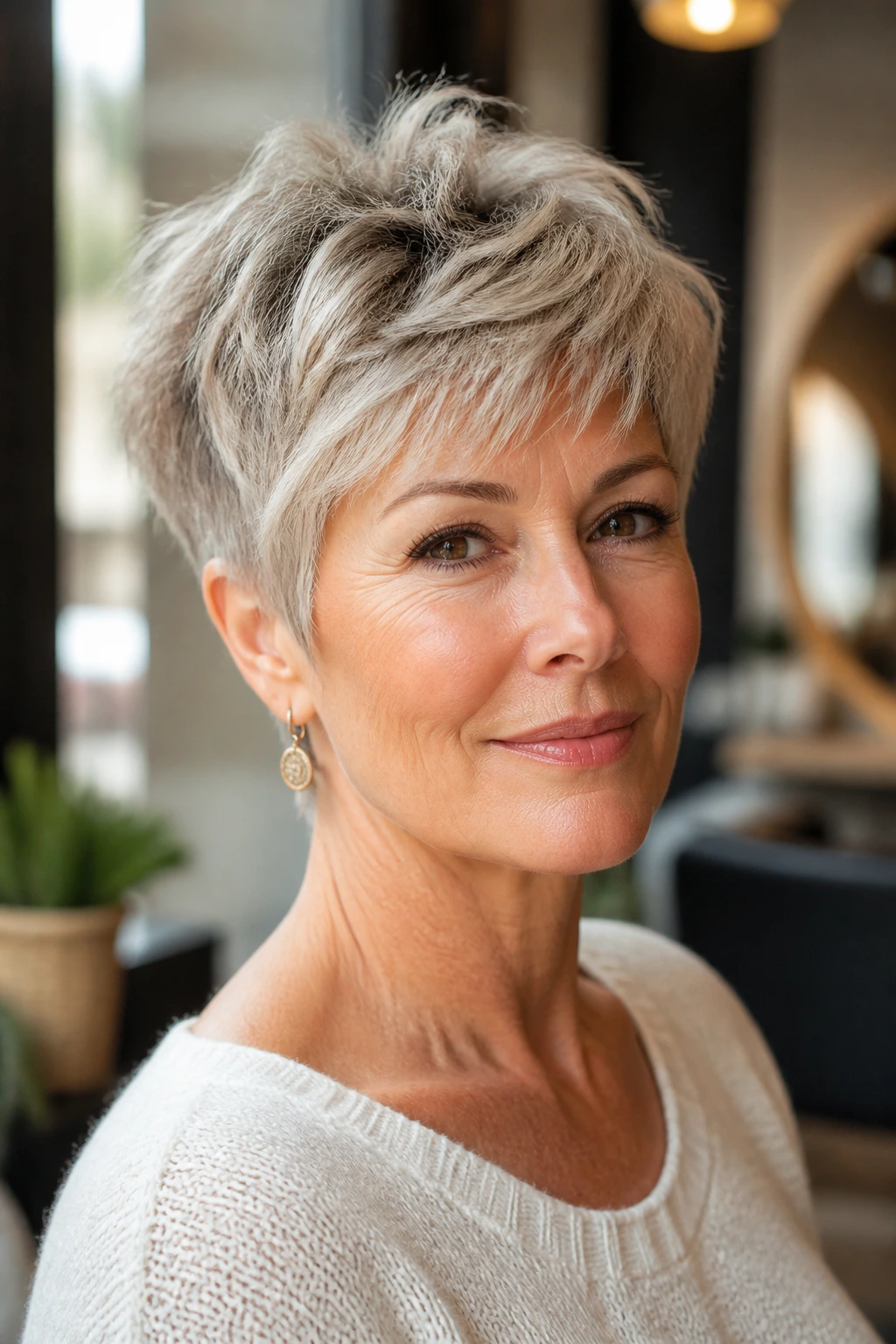
The smartest way to pick from these styles is to stop thinking first about age and start thinking about what your hair does on an ordinary Tuesday. Fine hair needs support at the root and not too much thinning at the ends. Thick hair needs weight removed where it swells, not just chopped shorter and hoped for. Curly hair needs shape cut into the pattern, not over it.
That’s why the same haircut can behave very differently on two heads. A pixie with a soft nape can look airy on one person and too flat on another. A jaw-length bob can look crisp on straight hair and bulky on dense wave if the interior is not adjusted. The name of the cut is only the starting point.
Face shape matters, sure, but not in the cartoonish way people sometimes talk about it. If you wear glasses, want to show your neck, hate styling, or need a fringe to settle around a cowlick, those details count just as much as cheekbones. They may count more. Hair lives in the real world, and the real world has collars, humidity, and bad lighting.
How to Ask for the Cut Without Losing the Shape in Translation
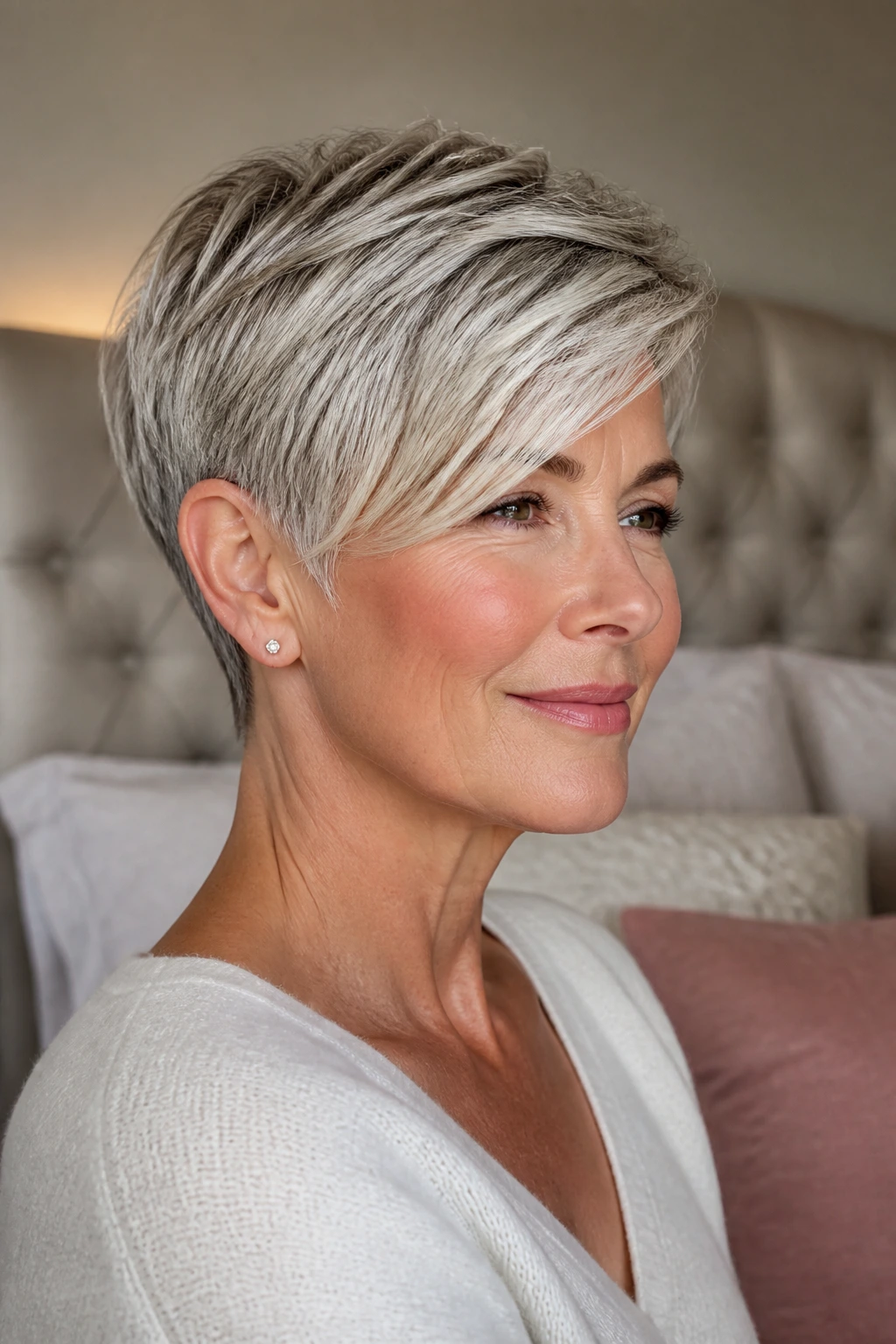
Bring photos, yes, but bring the right ones. I’d rather see one photo from the front and one from the side than six front-facing shots that hide the neckline. The back matters. The nape matters. Tell the stylist which part you like in each photo, because “I want this one” can mean four different things by the time the cape comes off.
Be specific about how the hair has to live. Say whether you tuck it behind one ear, wear glasses, air-dry, blow-dry, or need it done in under 10 minutes. That is not fussing. That is the brief. A short haircut can only be chic if it fits the time you actually spend on it.
Name the trouble spots, too. Cowlick at the crown. Swirl at the nape. Thin temples. Hair that flips out right at the jaw. Those details are the difference between a cut that looks tailored and one that looks like a good idea from the wrong angle. Good stylists want that information. It saves everyone trouble later.
Common Mistakes That Make a Short Cut Age Fast
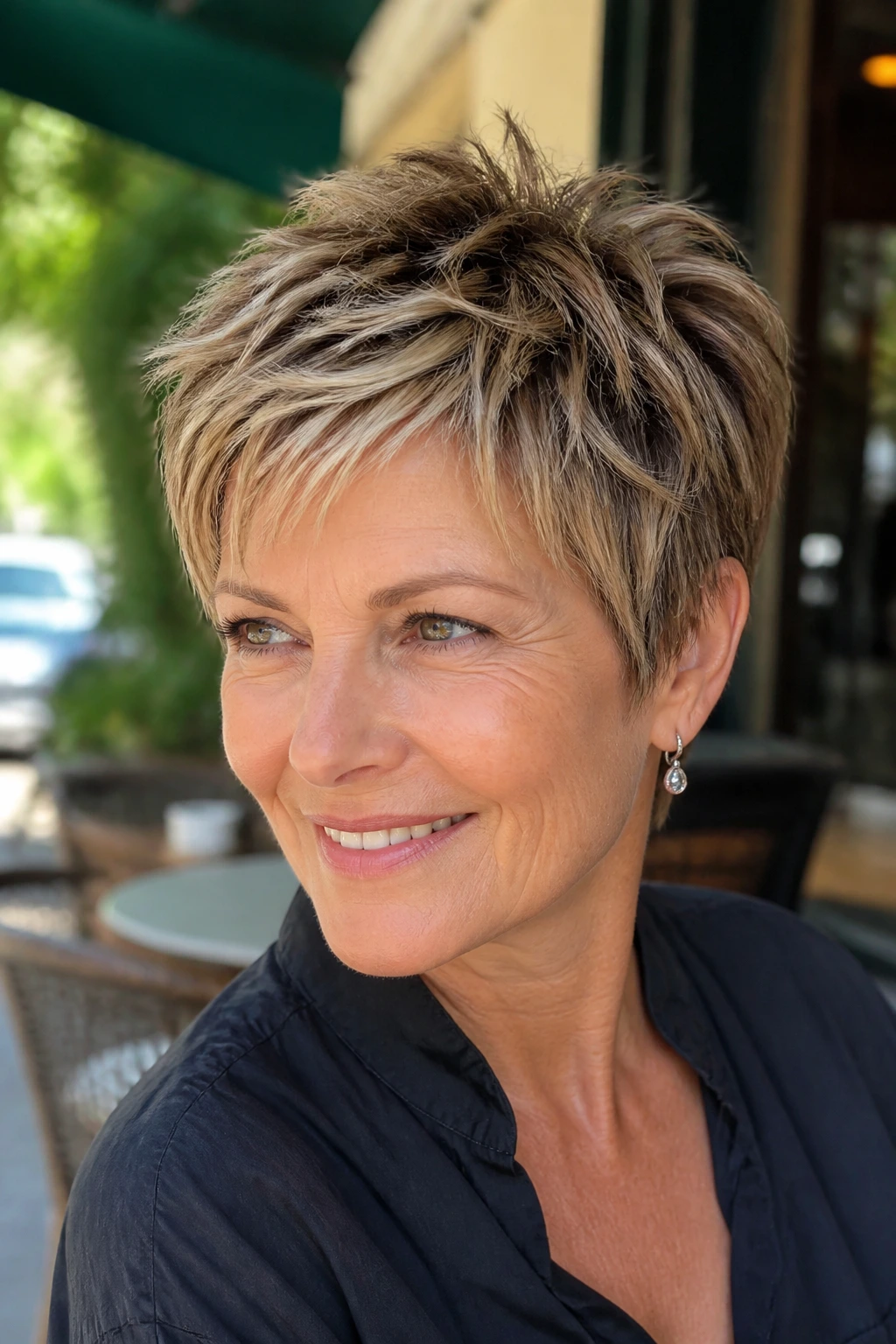
Going too short too fast is the mistake that causes the most regret. If you ask for a very cropped pixie when you actually want softness around the face, the cut can feel exposed before you’ve had time to adjust. Start with a bixie or a long pixie if you’re unsure. You can always take more off later.
Over-thinning fine hair is another one. A razor can be useful, but too much texture on sparse hair makes the ends see-through. The fix is a cleaner outline with only a little internal texturing. Fine hair usually needs shape more than it needs stripping.
Ignoring the grow-out pattern shows up fast around the nape and temples. A haircut may look neat the day you leave the salon and then split into odd corners two weeks later if the edges were not planned well. Ask how the cut will sit at week four, not just day one.
Using heavy cream on a light cut makes piecey styles collapse. If the hair is short and fine, a thick moisturizer or too much oil can flatten the crown and make the ends stick together. Start with a pea-sized amount. You can add more. You cannot easily take it back.
Letting bangs get too long is one of those quiet problems that sneaks up on people. Once the fringe starts touching the eyes, the whole cut can look tired. A quick bang trim or a small point-cut refresh keeps the face open.
Variations for Fine Hair, Thick Hair, Curls, and Silver Strands
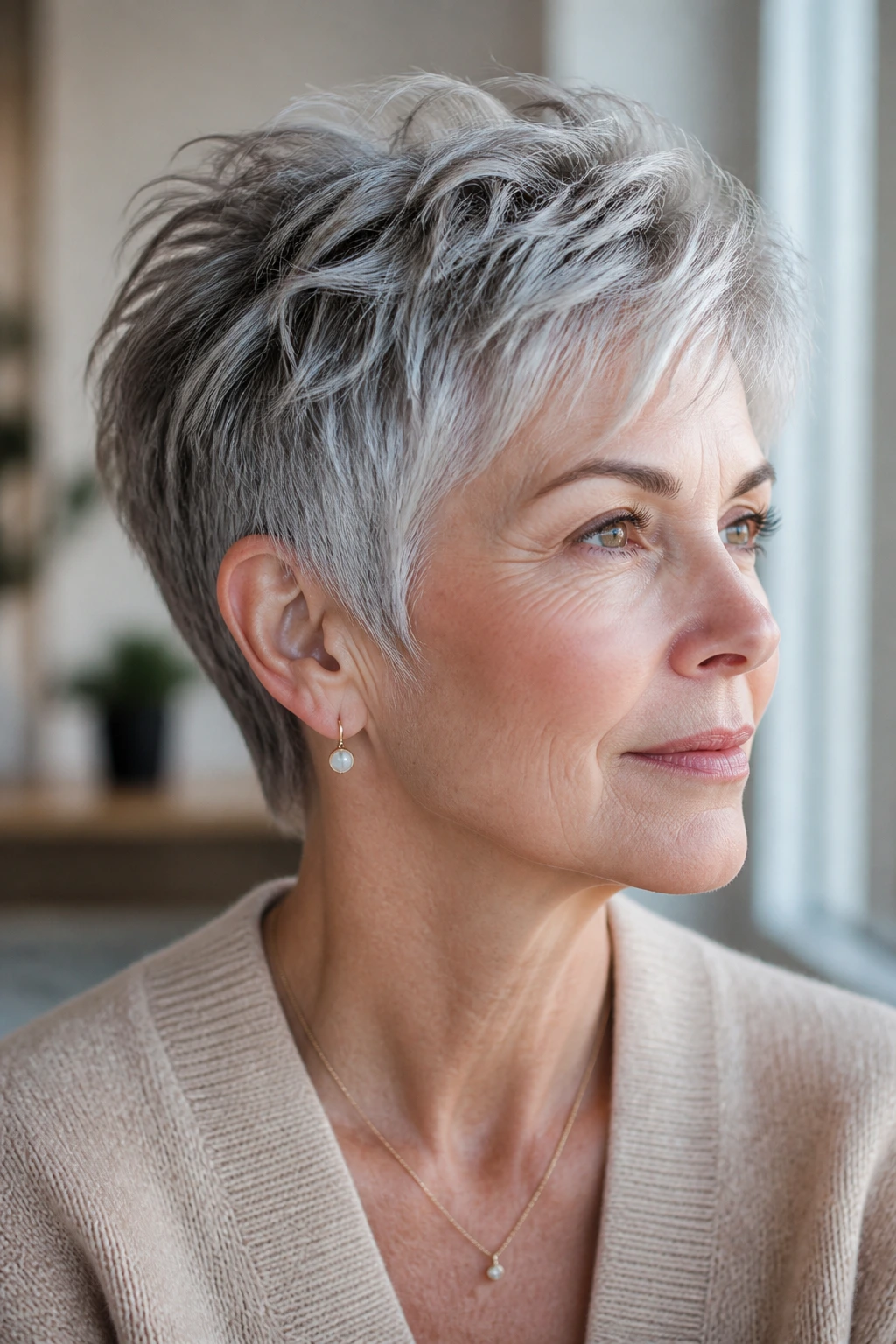
The Five-Minute Morning Version trims the styling down to almost nothing. Think long pixie, rounded bob, or chin-length cut with soft interior layers. These shapes air-dry well and only need a quick pass with a brush or fingers, which makes them a good fit if your routine is already full before breakfast.
The Silver-Showcase Version leans into gray or white hair with texture and movement. A silver shag, textured crop, or feathered pixie can make the color look deliberate instead of diffuse. This version usually looks better with a little pieceiness, because the texture gives the silver something to catch on.
The Curl-Respecting Version keeps the structure close to the curl pattern. Tapered sides, longer crown pieces, and dry shaping are the heart of it. If your curls shrink a lot, you want a cut that looks right once fully dry, not one that only behaves in the mirror after the wash.
The Grow-Out-Friendly Version matters for anyone who does not want constant trims. Bixies, long pixies, and angled bobs are the easiest to live with as they soften. They keep their outline longer and do not turn into chaos as fast. That matters if you prefer fewer salon visits or want a softer transition after a big haircut.
The Glasses-Friendly Version keeps fringe and side pieces out of the frames. Side-swept pixies, curtain-bang bobs, and long pixies usually work well because they frame rather than collide. The best glasses-friendly cut does not cover the frames. It gives them room.
What to Bring to the Salon and Keep at Home
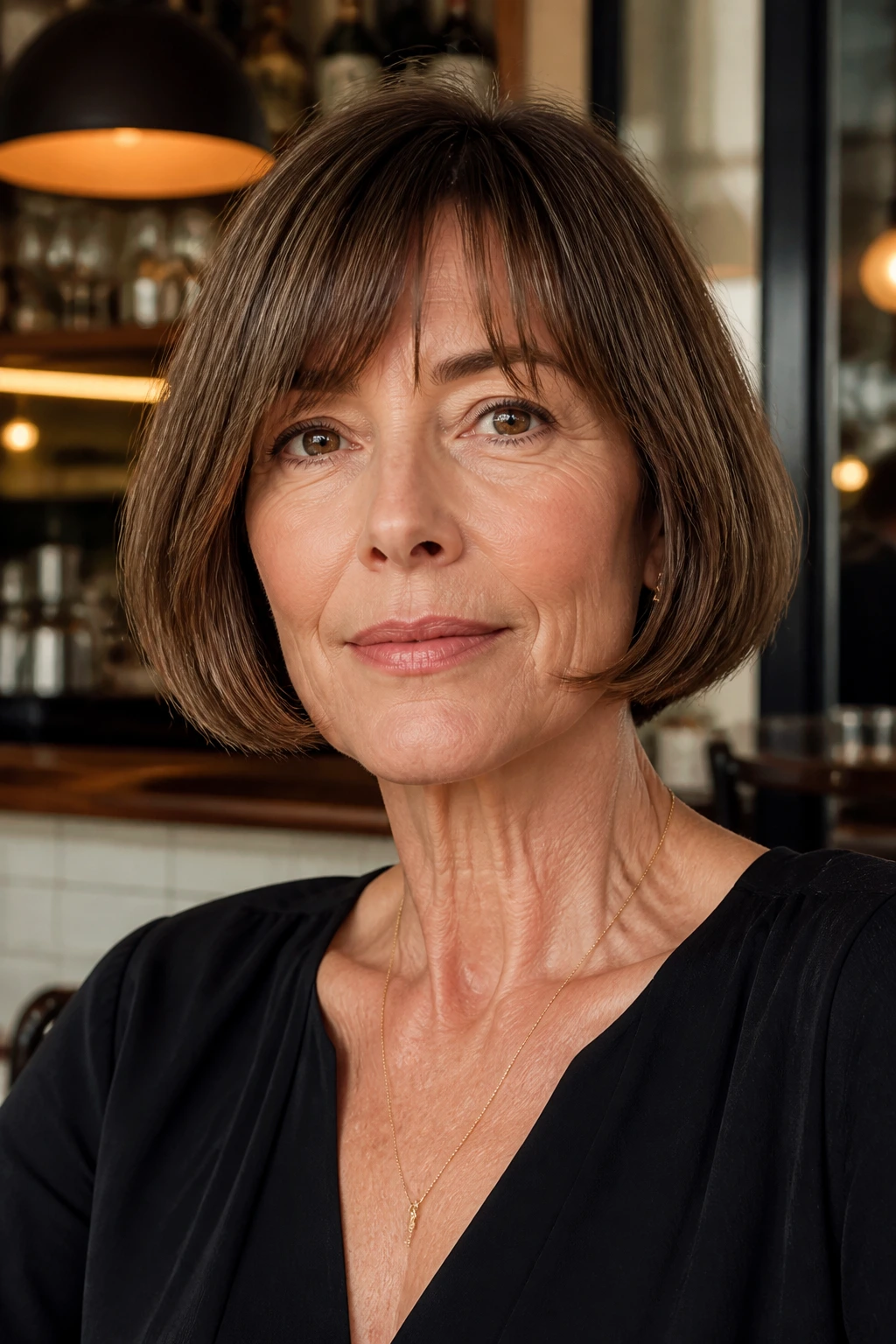
- Two or three reference photos — Bring one front view and one side or back view so the stylist can see the neckline, fringe, and crown shape.
- A small vent brush — This is the fastest tool for short hair that needs lift without a long blowout.
- A 1-inch round brush — Useful for smoothing bangs, bending bob ends under, and giving the crown a little root lift.
- A blow-dryer with a nozzle — The nozzle matters more than people think; it directs the air and keeps the cut from frizzing out.
- A diffuser — Essential if you have waves or curls and want the shape to stay intact.
- Lightweight mousse — Good for volume without the heavy, sticky feel that can flatten fine hair.
- Styling cream or paste — Pick one depending on texture: cream for softness, paste for piecey definition.
- Heat protectant — Short hair still needs it, especially around the fringe and top where heat gets concentrated.
- Hair clips — Helpful for sectioning the top while you dry the sides and nape first.
- A hand mirror — Not glamorous, but useful when you want to check the back neckline at home.
Keeping Short Haircuts for Older Women Fresh Between Salon Visits
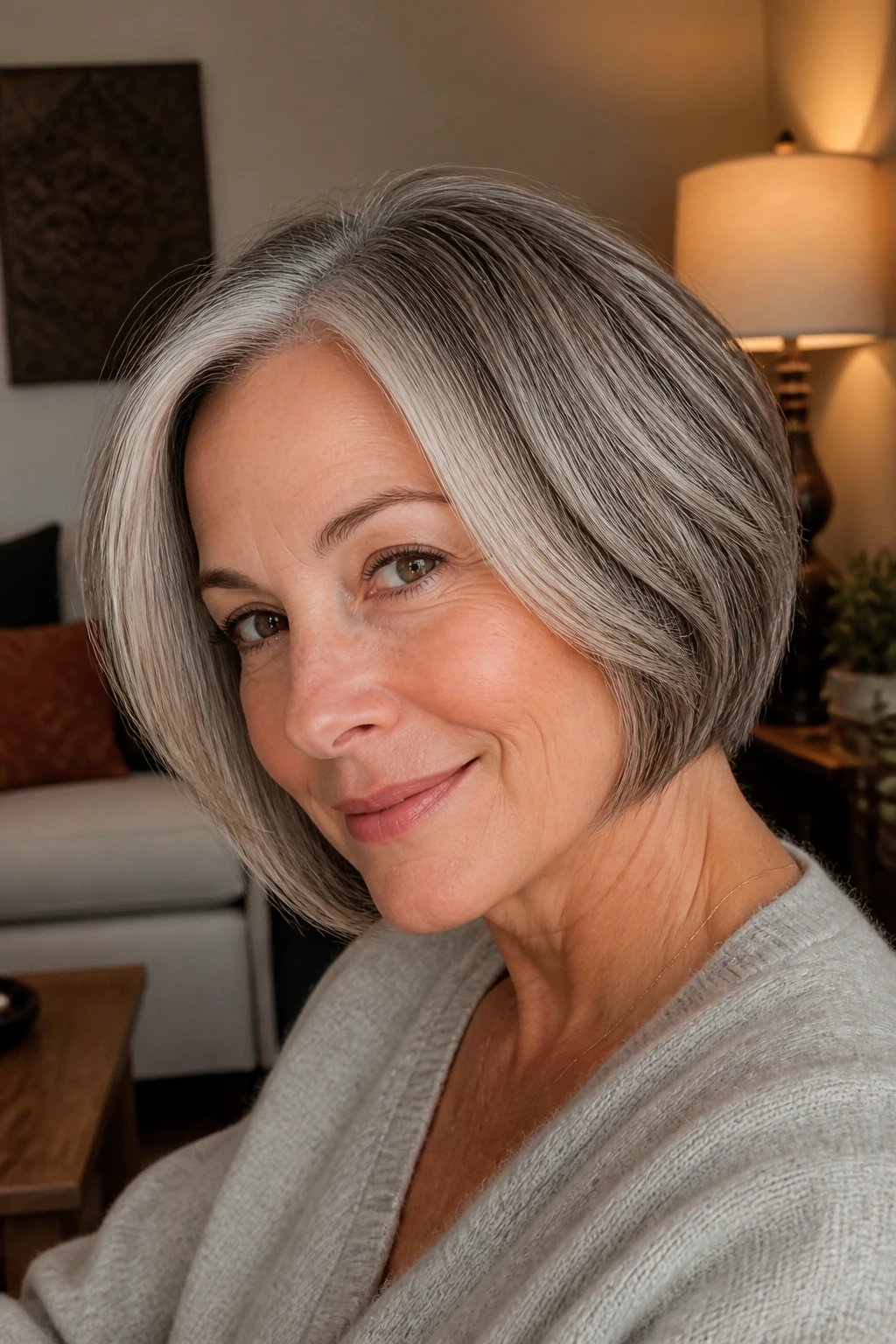
Short hair asks for regular maintenance. Not frantic maintenance. Just honest maintenance. Pixies and crops usually need a shape-up every 4 to 6 weeks, because the fringe and nape show growth fast. Bobs can often stretch to 6 to 8 weeks, especially if the line is softer and the ends aren’t razor sharp.
Product buildup shows up more quickly on short hair than people expect. A mousse, paste, or cream can sit on the roots and make fine hair feel limp after a few days. A clarifying shampoo every 2 to 4 weeks helps, especially if you use styling products every morning. Don’t overdo it if your hair is dry; once every couple of weeks is enough for most heads.
At night, a satin pillowcase helps the cut keep its shape. It sounds small. It isn’t. Fringe won’t stick up as much, and the nape won’t get crushed in the same way it does on cotton. If your hair is curly or coily, a light wrap or pineapple-style tie can keep the crown from flattening.
Questions People Ask Before Going Short
Which short haircut is easiest to live with every day?
A long pixie or a chin-length bob usually wins that contest. Both give you shape without demanding a full styling routine, and both can survive a rough hair day better than a very cropped cut.
Will short hair make my face look rounder?
It can, if the cut stops at the widest part of the face and has no lift at the crown. A side-swept fringe, a little height on top, or an angled line usually solves that. The cut is the issue, not the length by itself.
What short style works best with glasses?
Side-swept pixies, curtain-bang bobs, and long pixies tend to behave well around frames. The goal is to keep the fringe from sitting right on the lenses and to leave a little space at the temples.
Do older women with fine hair need layers?
Some, yes — but not a lot. Fine hair usually needs controlled texture or a clean outline, not aggressive thinning. Too many layers can make the ends look sparse faster than you’d like.
What if my hair is thick and puffy?
Choose a cut that removes weight through the interior or under the surface: stacked bobs, undercut pixies, or tapered crops. The shape should reduce bulk before it hits the jaw or ears.
How often do short cuts need trimming?
Most pixies need a trim every 4 to 5 weeks if you want them to stay sharp. Bobs can go longer, usually 6 to 8 weeks, depending on how precise the line is.
Can gray hair handle a short, textured cut?
Yes, and often better than long hair can. Gray hair usually shows shape and movement beautifully, especially in shags, crops, and feathered pixies where the texture has room to show.
What if I grow it out and hate the in-between stage?
Ask for a grow-out plan before the cut starts. A bixie, long pixie, or angled bob gives you a softer path because the shape changes more gradually instead of jumping from one silhouette to another.
The Short Cut That Keeps Paying Off
The best short haircut is the one that still makes sense when you are tired, when the weather is bad, and when you have exactly six minutes before you need to leave the house. That is the test I trust. Not the salon mirror. Not the first-day photo. The ordinary Tuesday.
What makes these cuts useful is that they do not all chase the same effect. Some sharpen the jaw. Some soften the forehead. Some build volume at the crown. Some let gray hair look crisp instead of fuzzy. Once you know which problem your hair actually has, the right cut gets easier to spot.
Pick the shape that fits your texture first, then let the stylist adjust the fringe, neckline, and crown. That’s where the good work happens, and it’s the part that keeps the haircut looking like it belongs to you.
