



Short hair can look sharp, soft, expensive, playful, and polished all at once. The right glam short hairstyles for older women do that rare thing a good haircut should do: they make the face look brighter without looking fussy, and they give silver, salt-and-pepper, or highlighted hair a shape that feels deliberate from the front, the side, and the back. A clean neckline helps. So does a little lift at the crown. And when the cut is doing the heavy lifting, you stop fighting your hair every morning.
That’s the part a lot of people miss. Short hair is not about giving up length; it’s about choosing where the attention goes. A pixie with a side sweep sends the eye to the eyes. A bob with a crisp perimeter makes gray strands look like design, not damage. A soft shag takes the edge off a strong jawline or a wide forehead without burying the face in layers. The best cuts have a little rhythm in them. Not chaos. Rhythm.
These are the short styles that do that well, especially if you want polish without helmet-like stiffness. Some are neat and tailored. Some lean airy and feathered. Some have a little drama in the fringe or the crown, which is usually where short hair gets its glamour anyway.
Why These Cuts Earn Their Place
Face-framing matters: A few well-placed inches around the cheekbones or temples can soften lines, sharpen eyes, and keep short hair from feeling severe.
Silver hair looks richer with shape: Gray and white strands catch light fast, so a good cut gives that brightness somewhere to go instead of letting it flatten out.
Fine hair gets lift without bulk: Shorter lengths remove drag, and the right layering keeps the roots from collapsing by noon.
Glasses work better with the right edge: Tucked sides, side sweeps, and cropped bangs stop frames from fighting the haircut.
Styling stays practical: Most of these looks need a round brush, a blow-dryer, or a bit of paste — not a half hour of effort and a prayer.
They dress up easily: A side part, a dab of shine serum, and an earring with a little swing can take a short cut from ordinary to polished fast.
1. Feathered Pixie With Side Sweep
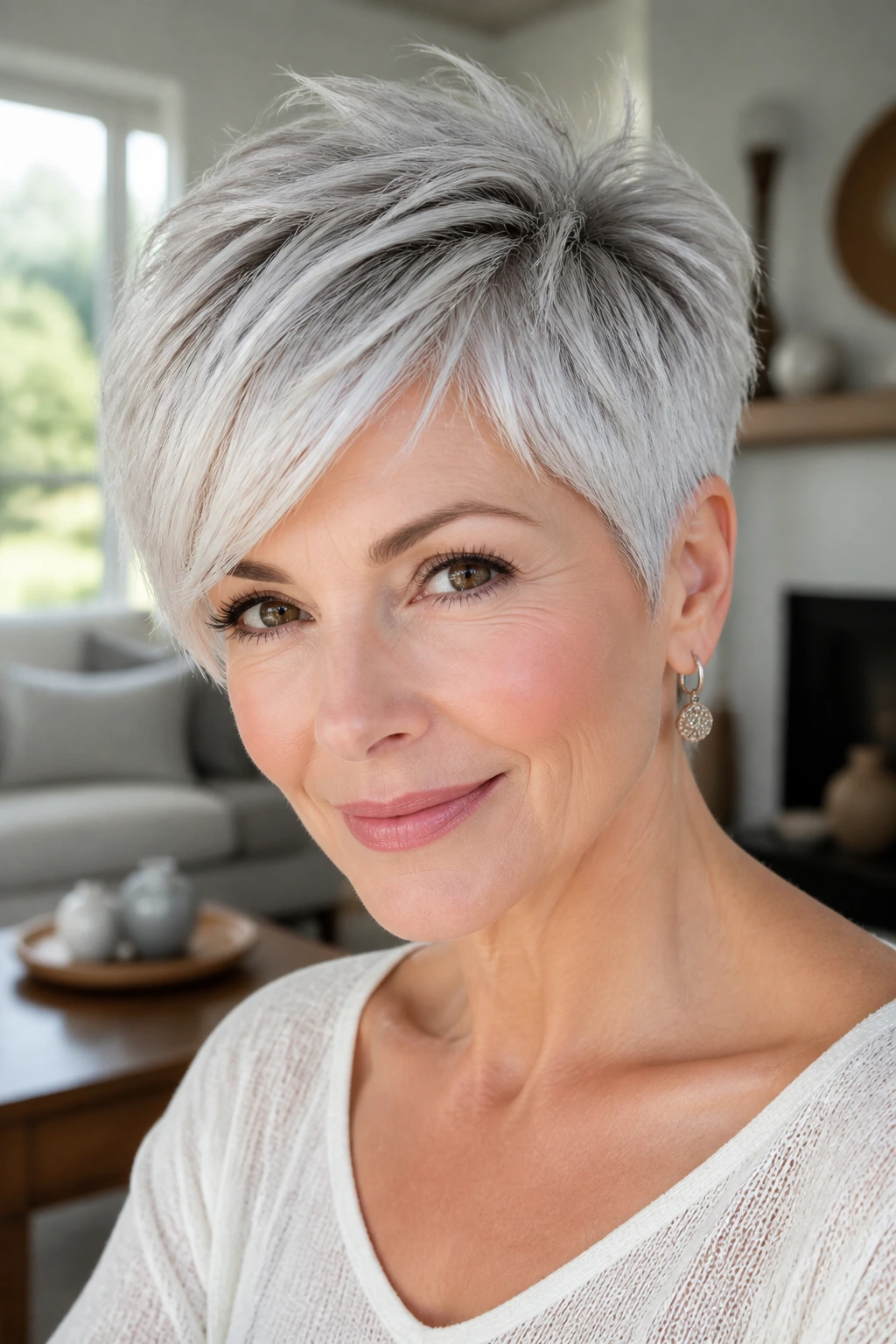
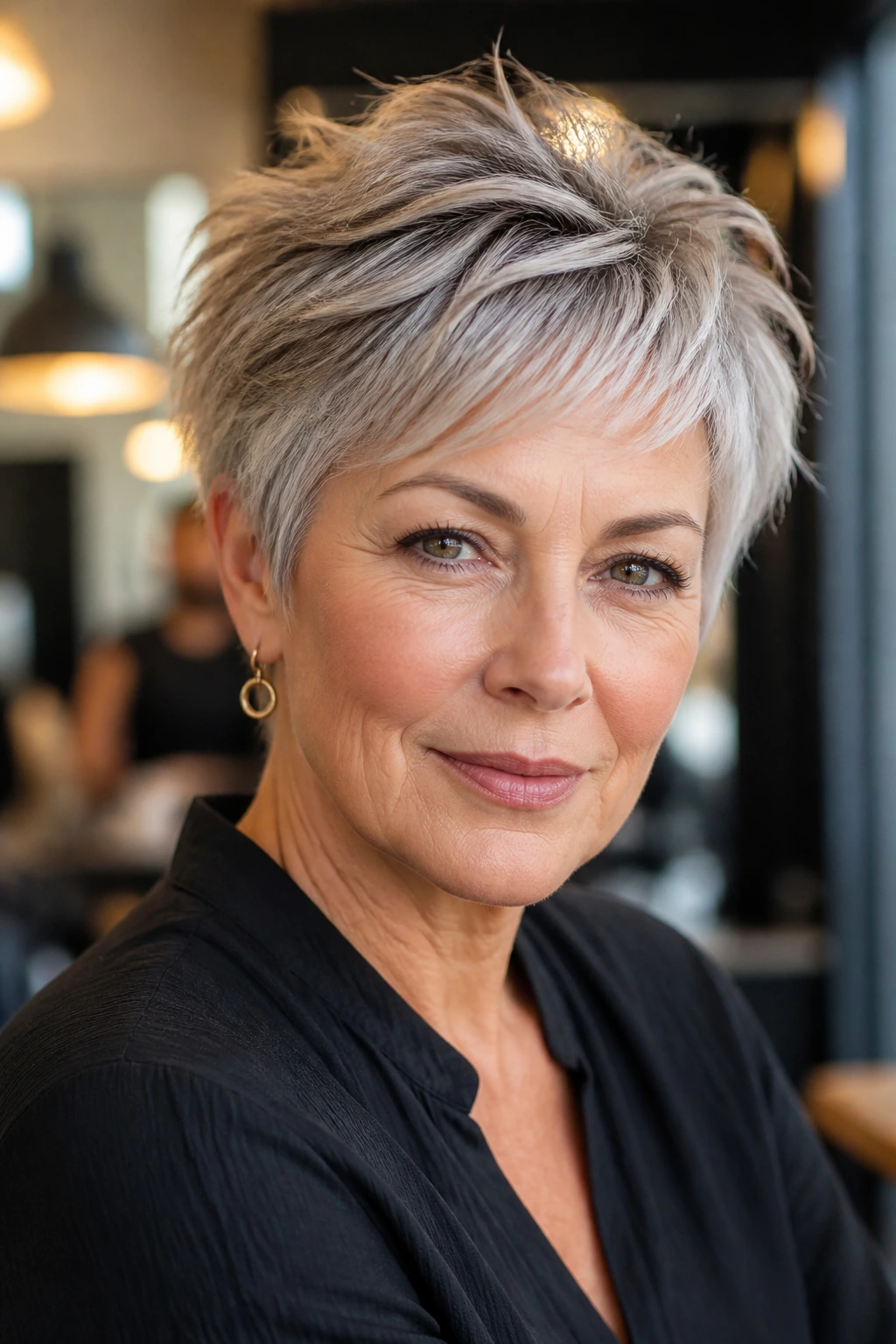
A feathered pixie with a long side sweep has that clean, airy look that never feels heavy around the face. The top stays soft and mobile, while the nape is trimmed close enough to keep the whole shape tidy. On silver or salt-and-pepper hair, the feathering makes the color read almost luminous instead of flat.
Why It Flatters
The shape works because it keeps the volume where you want it: a little lift at the crown, a little softness across the forehead, and nothing bulky at the ears. If your hair tends to lie flat, this cut gives it somewhere to go. If your hair is fine but stubborn, the shorter layers stop it from hanging like a wet napkin by 3 p.m.
- Ask for longer top layers, about 2 to 3 inches, so the fringe can sweep instead of sticking straight up.
- Keep the sides tapered, not shaved tight, if you want the look to stay feminine and soft.
- Use a pea-size dab of lightweight paste on dry hair and push the top diagonally across the forehead.
- A quick pass with a small round brush at the crown adds enough bend to make the cut look deliberate.
Best tip: Blow-dry the front in the opposite direction first, then sweep it back. That tiny reset at the root gives the style its lift.
2. French Bob With Soft Fringe
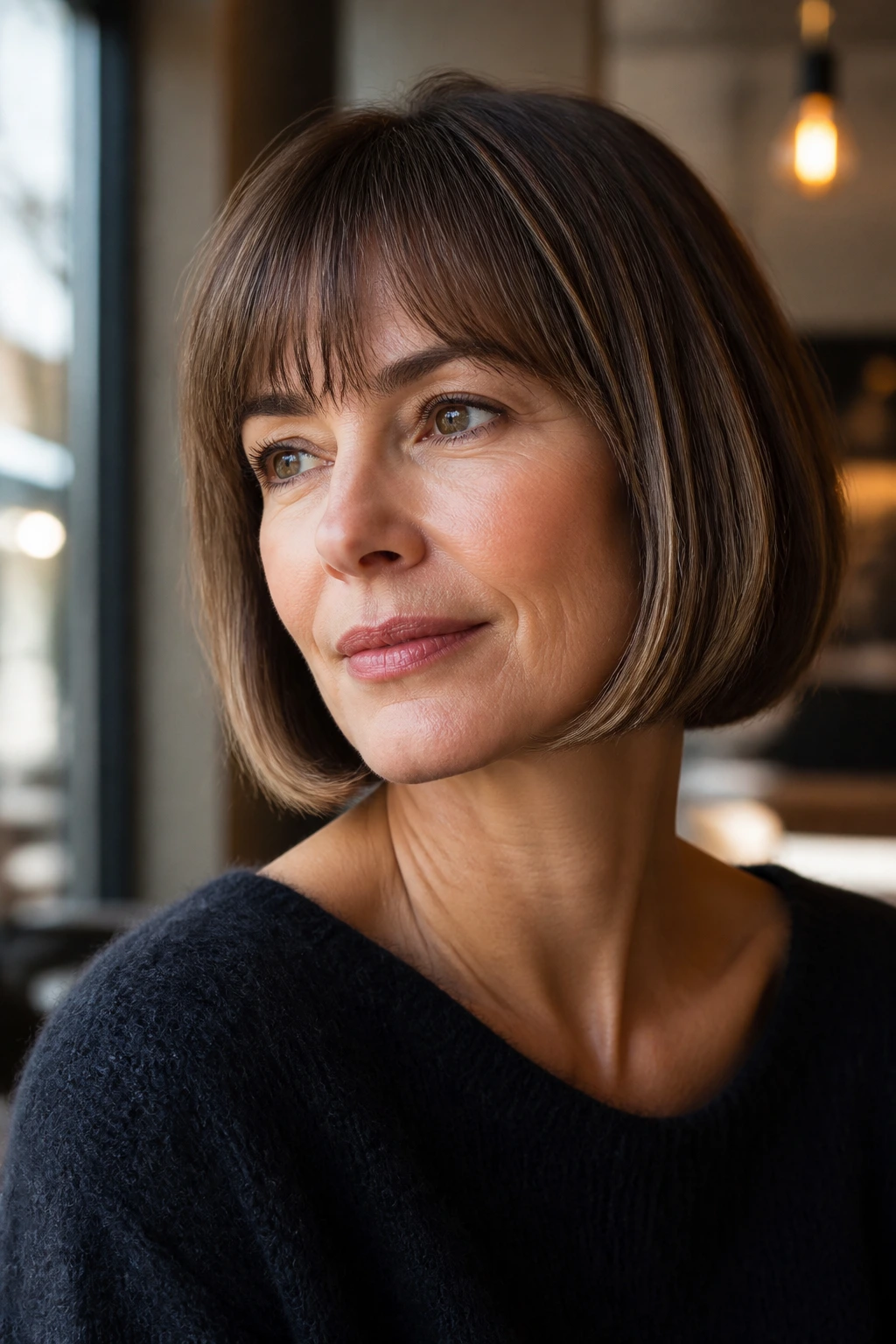
A French bob sits at the jaw or just below it, and the soft fringe makes it feel relaxed instead of rigid. The ends usually turn under a little, which gives the haircut a polished curve without the hard edge of a blunt bob. It’s one of those styles that looks especially good with red lipstick, a knit collar, or a pair of simple hoops.
The glamour here comes from restraint. The line is clean. The fringe skims the brow instead of sitting like a shelf. And because the length stops around the jaw, the neck looks longer and the face gets a neat frame without a lot of fuss.
This cut works best when the hair has some natural bend or can be coaxed with a 1-inch round brush. If you like a lived-in finish, skip the stiff hairspray. A little smoothing cream on the ends is enough.
3. Stacked Bob With Lifted Back
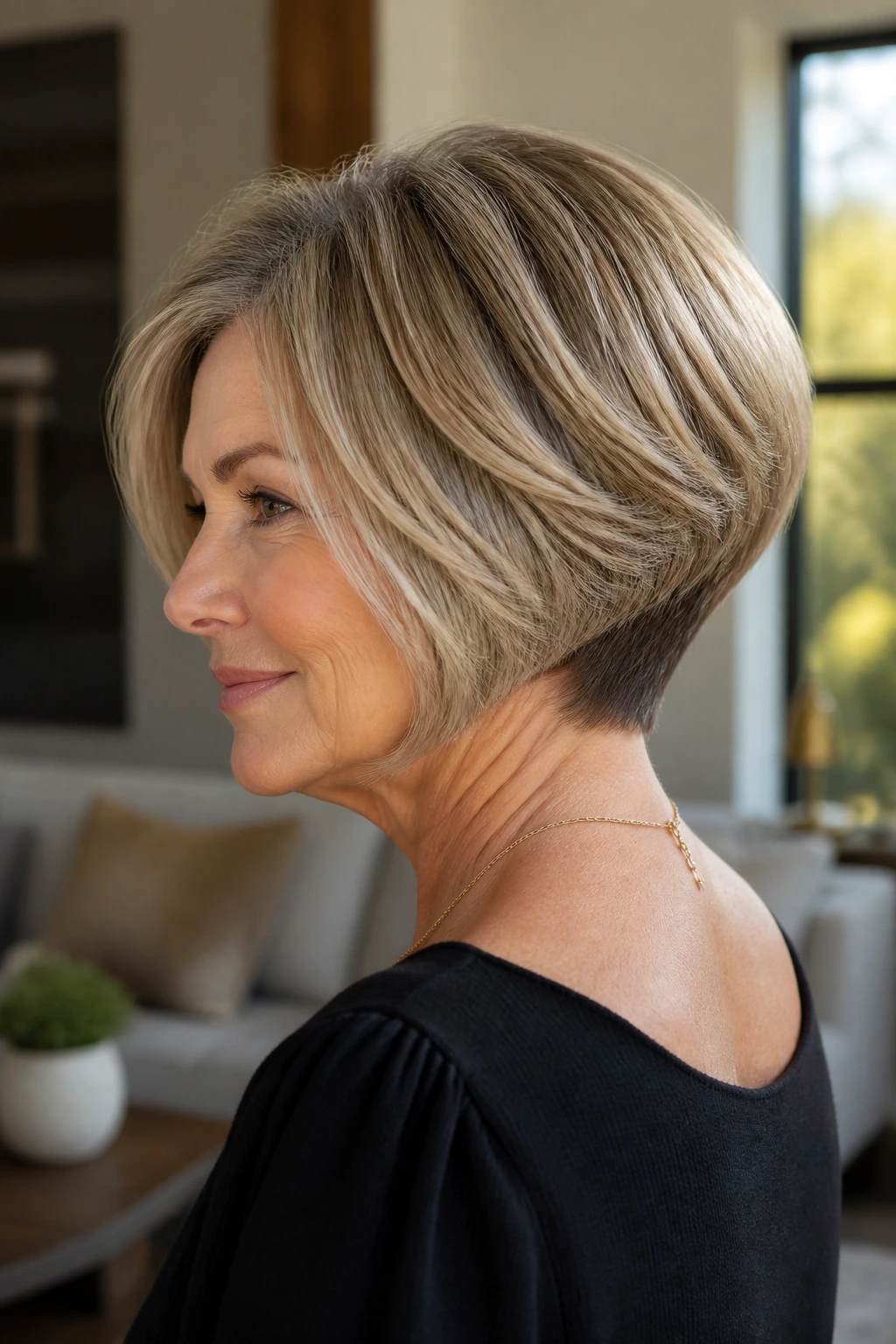
Imagine a bob that does a little architectural work at the back of the head. That’s the stacked bob. The layers build toward the nape, creating lift where fine hair often collapses, and the front stays slightly longer so the face still gets softness.
This cut is a very good answer for hair that looks flat in photos. The stacking creates a visible curve from profile view, which is one of those details people notice even if they can’t name it. The back sits neatly against the neck, and the front can be tucked behind the ear when you want more structure.
What Makes It Different
The cut does not depend on heavy product. It depends on shape. A round brush and a quick blow-dry at the crown usually get you there, and if your hair is thick, the stacking removes enough bulk to keep the bob from puffing out like a triangle.
- Best for straight to lightly wavy hair.
- Ask for graduation in the back and a softer, longer front.
- Finish with a light mist of flexible hairspray, not something sticky.
A stacked bob can feel a little older-school if it’s cut too square. Keep the edges soft, and it reads modern fast.
4. Bixie Cut
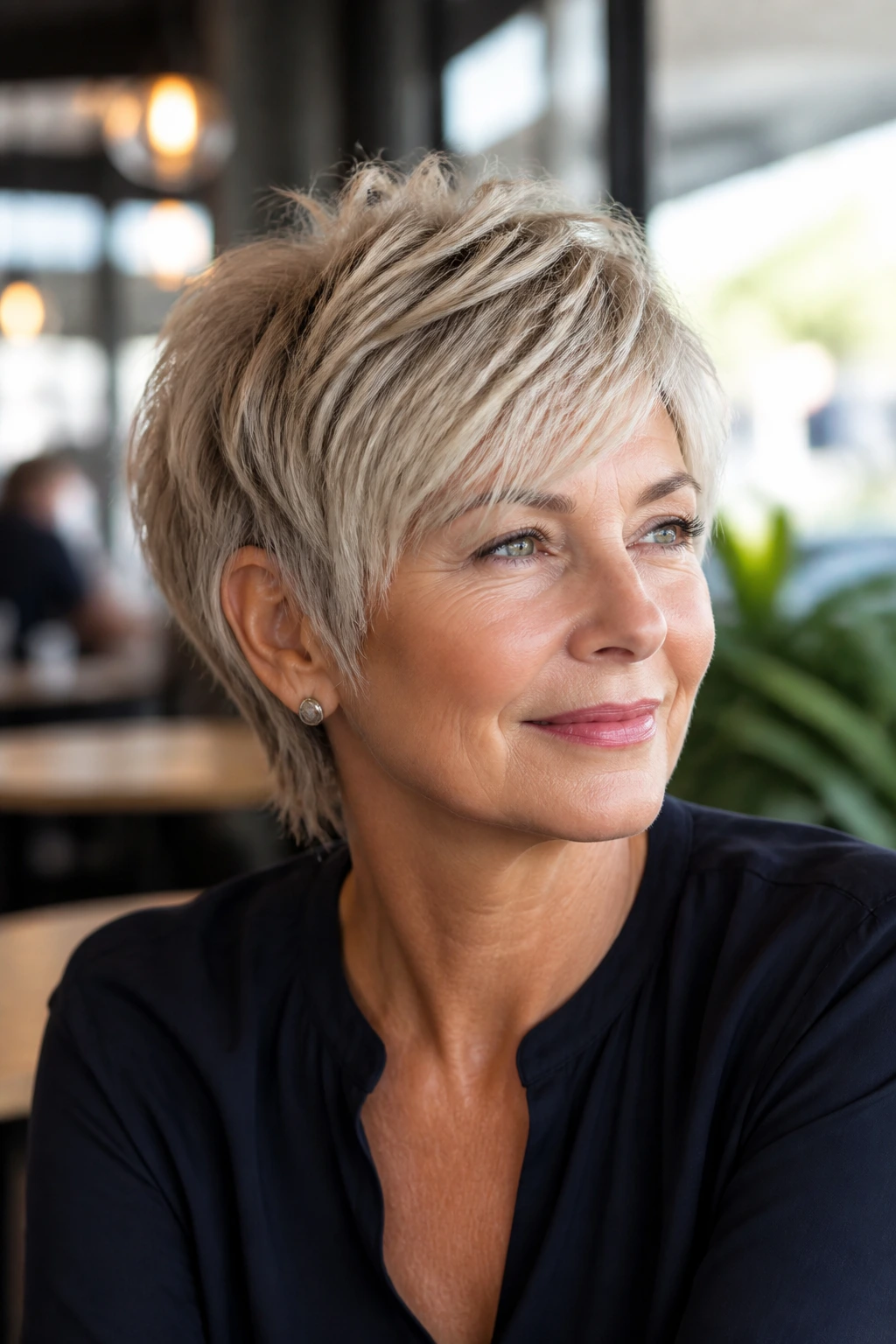
The bixie — part bob, part pixie — is the haircut for anyone who wants short hair but not a severe crop. The ears stay partly covered, the crown has some movement, and the nape sits short enough to keep the neck clean. It’s a very useful cut if you want something stylish that won’t demand perfect styling every morning.
Why It Works
There’s a sweet spot in the length. Too short, and some faces get too exposed. Too long, and the shape starts to wobble. The bixie lands in the middle, which makes it easy to wear with glasses, earrings, or a side part that doesn’t fight the natural growth pattern.
It also handles mixed texture well. If the top is a little wavy and the sides are smoother, that contrast gives the cut energy. Add a touch of mousse at the roots, rough-dry it, and the whole thing comes alive without much effort.
How to Wear It
Push the front forward for a softer look, or sweep it sideways for more polish. Either way, keep the ends piecey. A bixie looks wrong when it’s packed with too much cream.
5. Curly Crop With Defined Ringlets
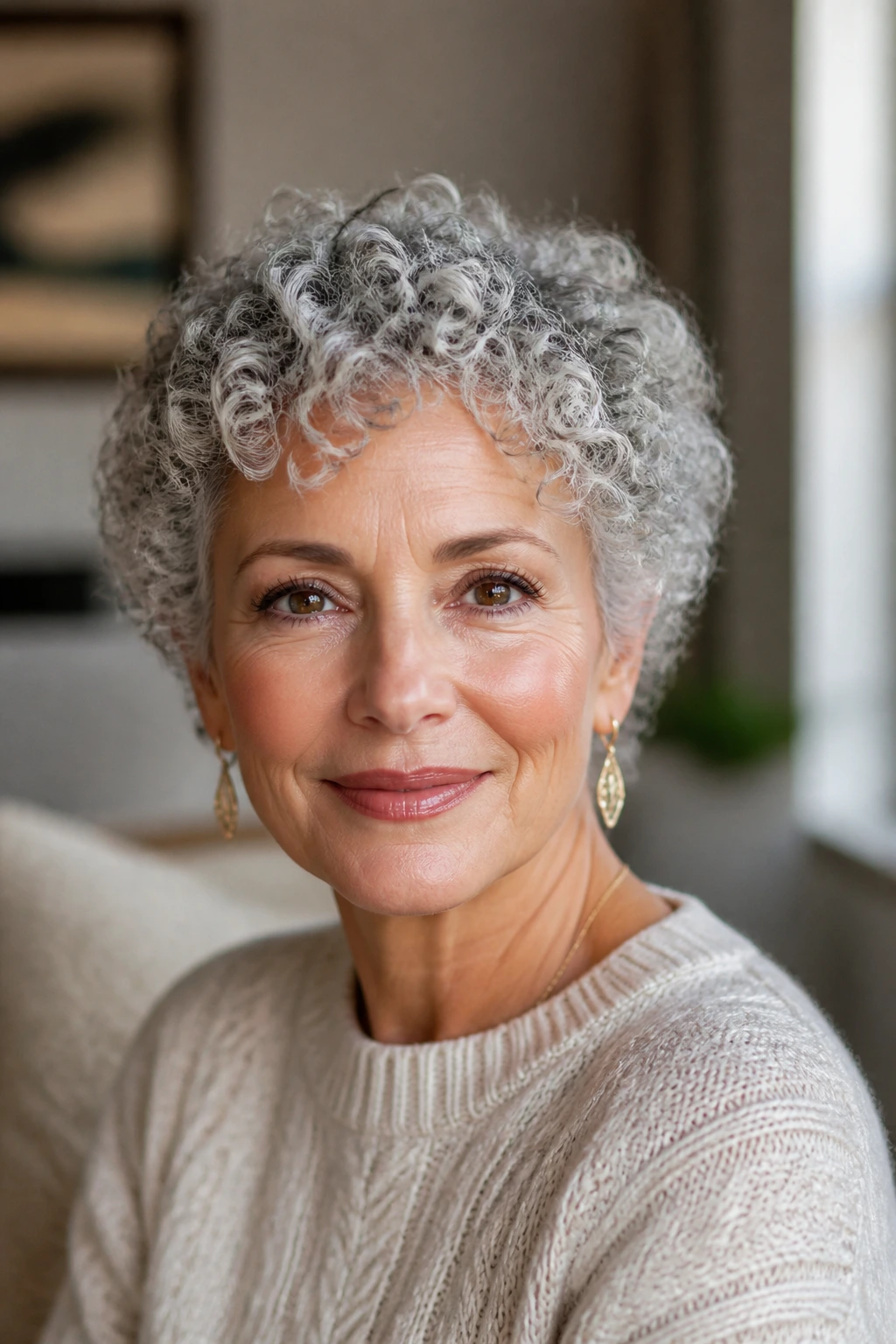
A curly crop can look very elegant when it’s cut short enough to let the curls stack instead of hanging. The shape is rounded, the sides are neat, and the top has enough room for the curls to spring up rather than stretch down. On gray curls, this style has a lovely silver halo effect around the face.
The key is not to over-layer it. Too many short pieces can make curls frizz outward in every direction, and that turns controlled shape into puff. A good curly crop keeps some weight at the perimeter so the curls cluster together and show off their pattern.
Styling note: Apply curl cream to soaking-wet hair, scrunch with a microfiber towel, and let it air-dry or diffuse on low heat. Once it’s dry, break up any crunchy spots with a drop of oil on your fingertips.
This is one of the few short styles that can look dressy with almost no heat. Curl pattern does the work. You just need to stop it from getting frayed.
6. Asymmetrical Chin-Length Bob
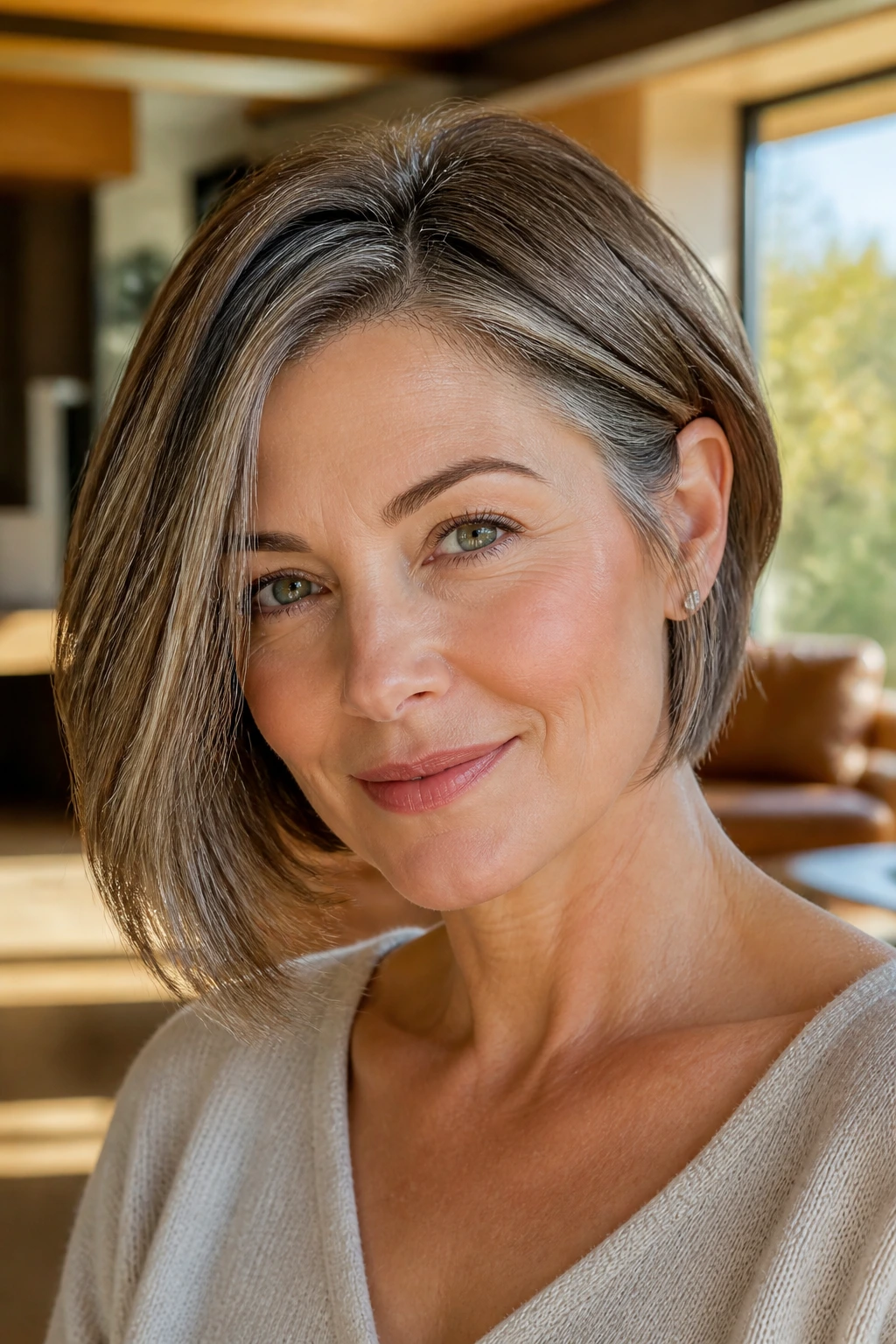
A slightly longer side on one end gives a chin-length bob a little motion and a lot of personality. It feels modern without being loud, and the diagonal line draws the eye downward in a way that can lengthen the neck and sharpen the jaw. If you like clean shapes but not a haircut that sits still, this is a strong choice.
The asymmetry does not need to be dramatic. Even half an inch of difference can shift the whole mood. One side can skim the chin while the other tucks just behind the ear. That small imbalance is enough to keep the cut from looking too predictable.
A side part helps. So does a flat iron bend through the ends if your hair is straight. Keep the finish glossy, not puffy. This style lives or dies on that edge.
7. Layered Shag Bob
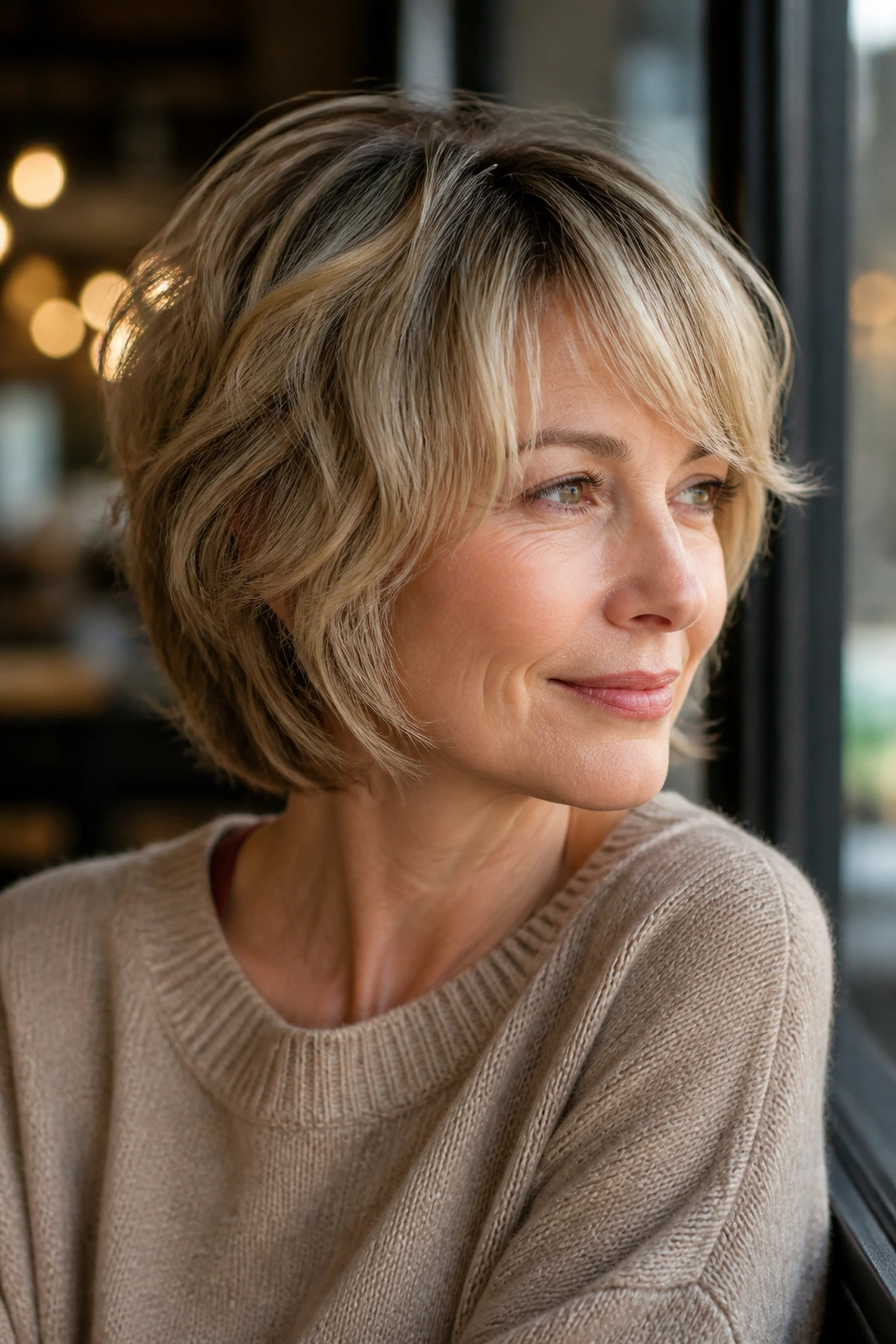
The layered shag bob has a little swing in every direction, which is exactly why it works on hair that wants movement but not long length. It’s shorter than a classic shag, but it keeps enough texture around the crown and cheekbones to feel lively. Think of it as the haircut version of a good blazer with the sleeves pushed up.
Why It Feels Fresh
The shaggy layers stop the haircut from looking too solid. That matters when the hair starts getting finer or the natural wave becomes less cooperative. Instead of forcing it smooth, the cut lets the texture show.
- Ask for soft, invisible layers, not chunky steps.
- Keep the front pieces around the cheekbones so the shape stays flattering.
- Use texturizing spray at the ends, then scrunch once or twice.
A layered shag bob is especially good if you do not want to wrestle with a round brush every morning. It looks better when it’s a little imperfect. That is part of the charm.
8. Sleek Jaw-Length Blunt Bob
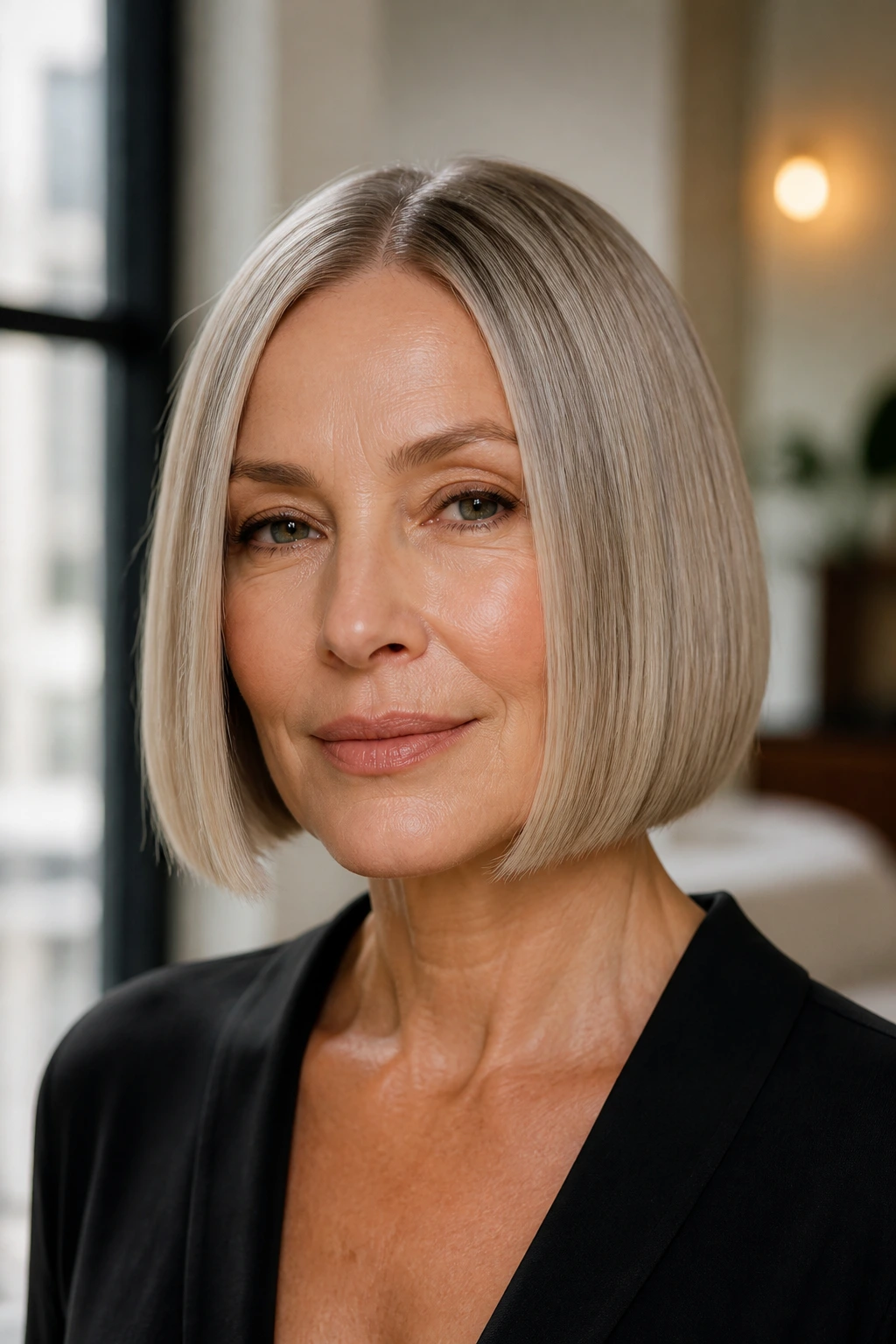
A blunt bob at the jaw has a crispness that feels clean and expensive-looking, especially on straight or slightly wavy hair. There’s no confusion about the line. It lands, it frames the face, and it gives glossy gray or highlighted strands a neat edge.
Compared with layered styles, this one is stricter. That’s the point. If your hair is thick and you want it to look controlled, the blunt line keeps it from spreading outward. If your hair is fine, the cut can still work, but only if the ends are kept sharp and healthy-looking.
A center part gives it a sleek, modern vibe. A deep side part softens it. Either way, a flat iron on the very ends — not the whole head — can keep the perimeter tidy. Don’t pile on too much serum. One drop too many and the haircut starts looking greasy.
9. Wedge Cut With Crown Volume
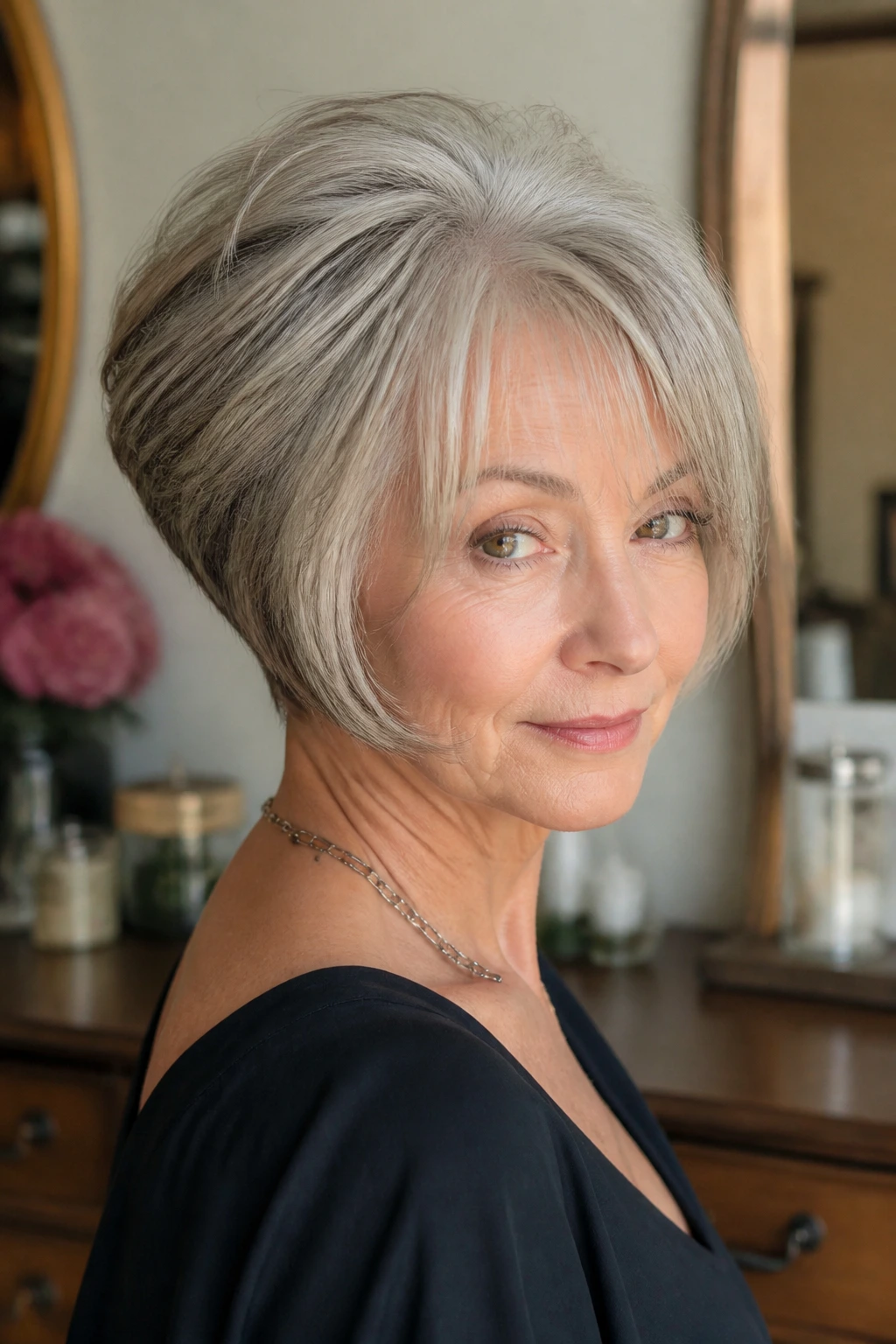
The wedge cut is back in a smarter, softer form. The back is stacked and rounded, the crown gets a little height, and the front usually lands around the cheek or jaw. When it’s cut well, it looks structured without being stiff, which is the whole trick.
This style is worth a look if your hair tends to grow downward and cling to the head. The wedge’s lifted back gives the illusion of density. That’s useful. It creates a full profile even when the actual hair count is modest.
Quick Shape Notes
- Best on straight or lightly wavy hair.
- Keep the nape snug so the silhouette stays clean.
- Ask for soft graduation, not a hard shelf at the back.
The wedge can skew dated if the layers are too blunt. What saves it is softness around the face and a little movement in the front. Done right, it feels sharp rather than nostalgic.
10. Long Pixie With Tucked Sides
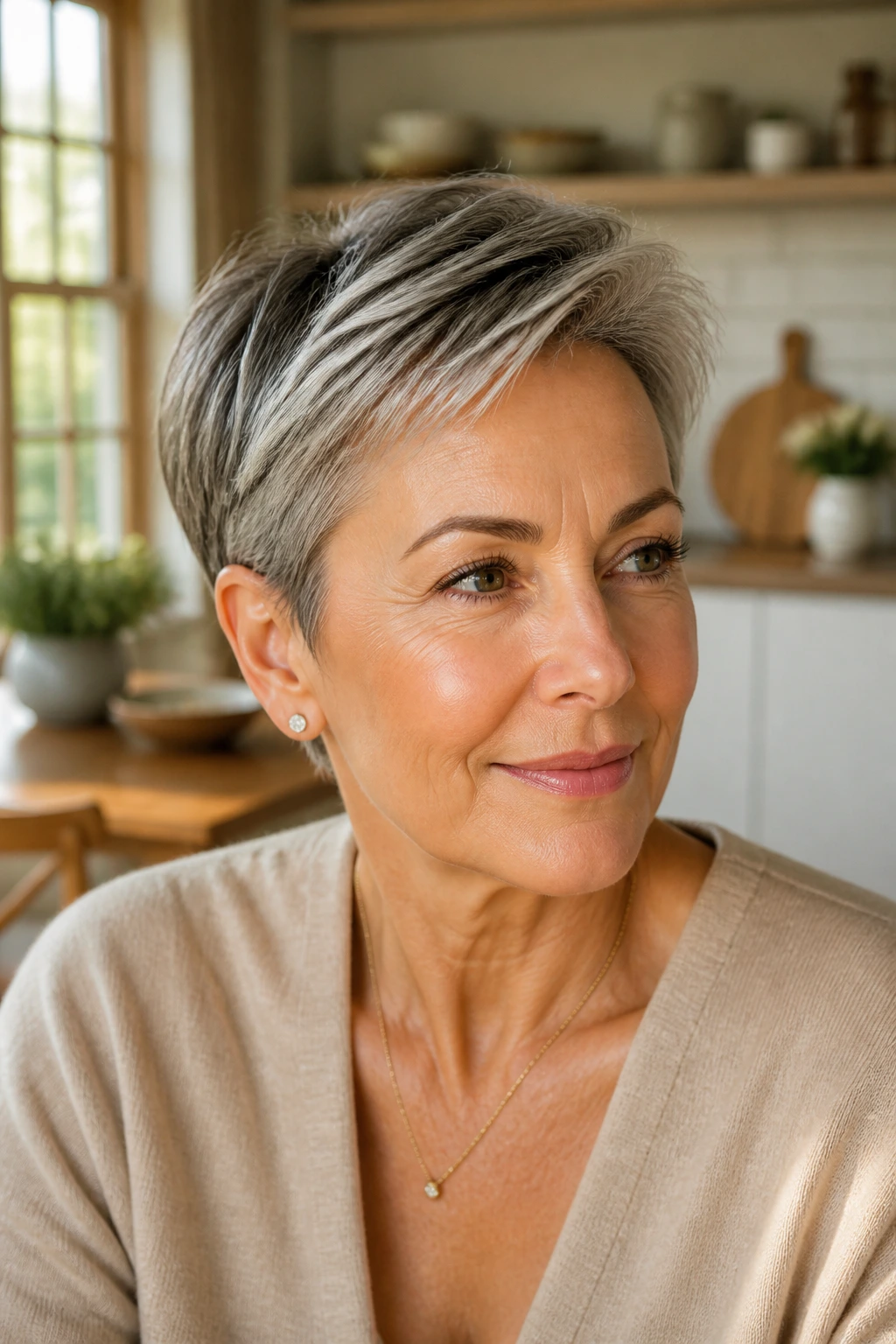
A long pixie gives you the practicality of short hair with enough length to tuck behind the ear or sweep across the forehead. The sides stay slim, the top stays flexible, and the overall effect is neat without being severe. It’s a smart haircut if you want to keep some styling room.
What Makes It Useful
The extra length on top means you can change the part, bend the fringe, or create a small quiff if you’re feeling bold. On the days when you want a quieter look, just smooth it down with a light cream and tuck one side. That range is half the appeal.
The back and sides should stay close enough to keep the shape polished. Too much bulk there ruins the line fast. A good long pixie feels balanced from the side, where the head shape matters more than people think.
Try it with glasses. The tucked side clears the frame, and the top piece gives the face some motion. It’s a tidy little haircut, and I mean that in the best way.
11. Side-Parted Bob With Face Layers
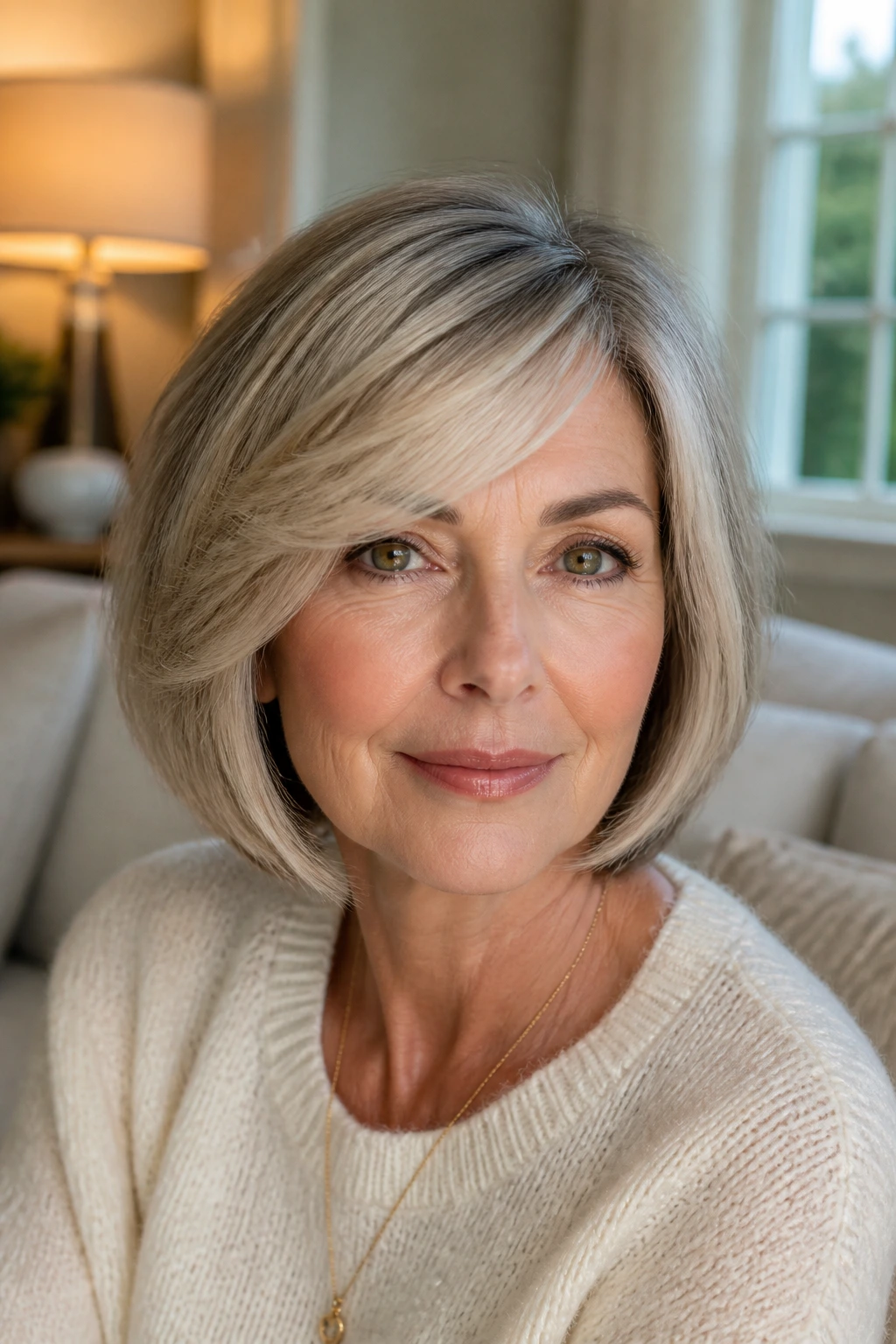
A side part can change a bob more than most people expect. Move the part a little off-center, add a few face-framing layers, and the haircut picks up softness around the cheekbones instead of sitting in a straight band. That matters when you want the style to flatter, not just behave.
The best part is how easily it adjusts. Wear it sleek for a polished day. Bend the ends under with a brush for dinner. Let the front pieces fall loose when you want the face to look a touch softer around the temples.
This is a good haircut for someone whose features feel strong and want a little framing, not covering. The side part breaks up symmetry in a flattering way. It keeps the look from becoming too boxy.
12. Textured Crop With Piecey Ends
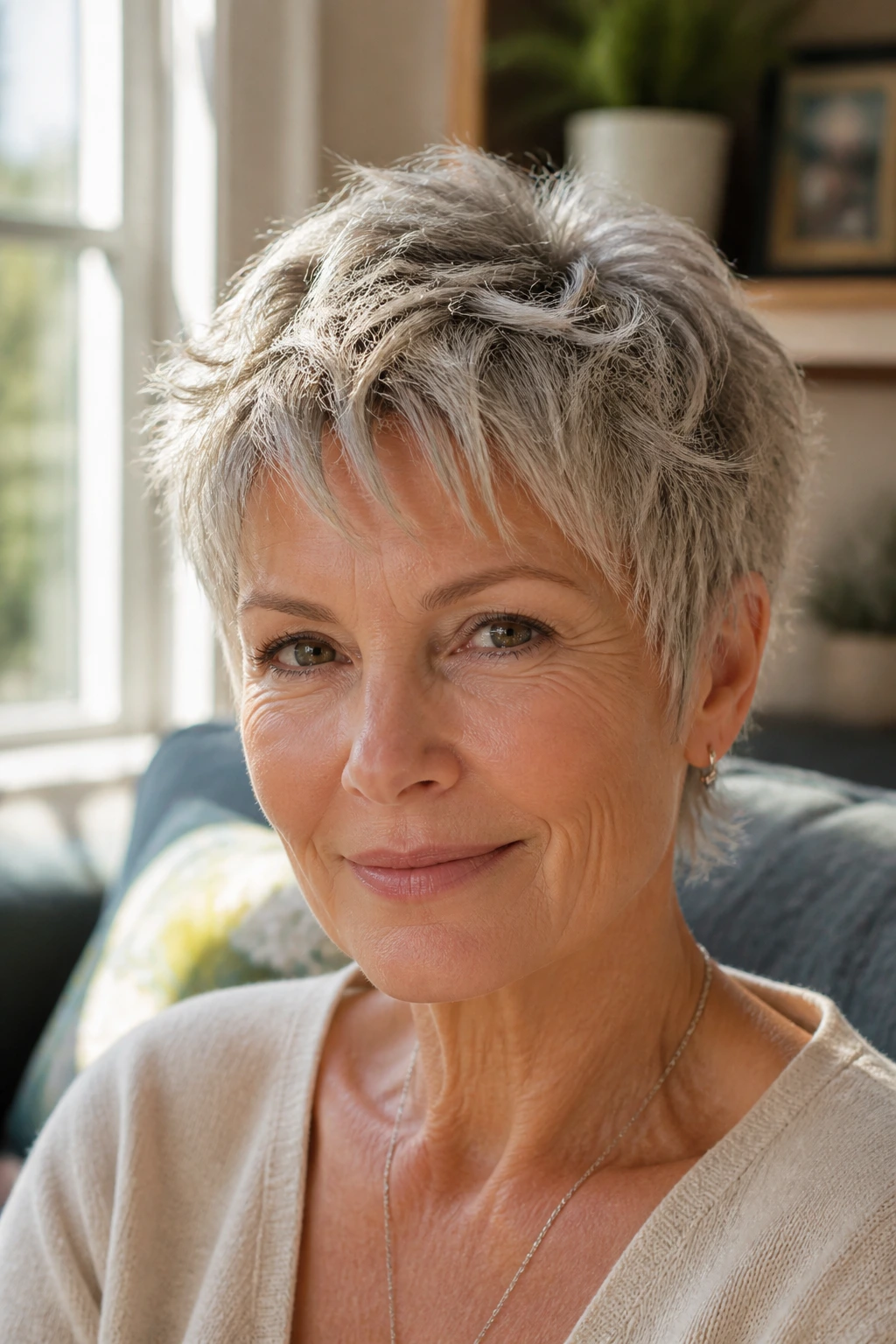
A textured crop is short, smart, and a little bit cheeky if you let it be. The ends are carved into small pieces rather than left as one solid mass, so the haircut gets movement instead of a helmet shape. It’s especially good when you want something modern and easy to restyle after a nap, a workout, or a humid walk to the car.
Unlike smooth crops, this one survives a bit of mess. That is the selling point. You can rough it up with a dry shampoo spray, pinch a few pieces near the crown, and be done. If your hair is naturally fine, the texture makes it look fuller. If it’s thick, the piecey ends stop it from looking blocky.
Keep the product light. Heavy wax will glue the pieces together and make the whole thing slump. A matte paste works better here than a glossy cream.
13. Soft Undercut Pixie
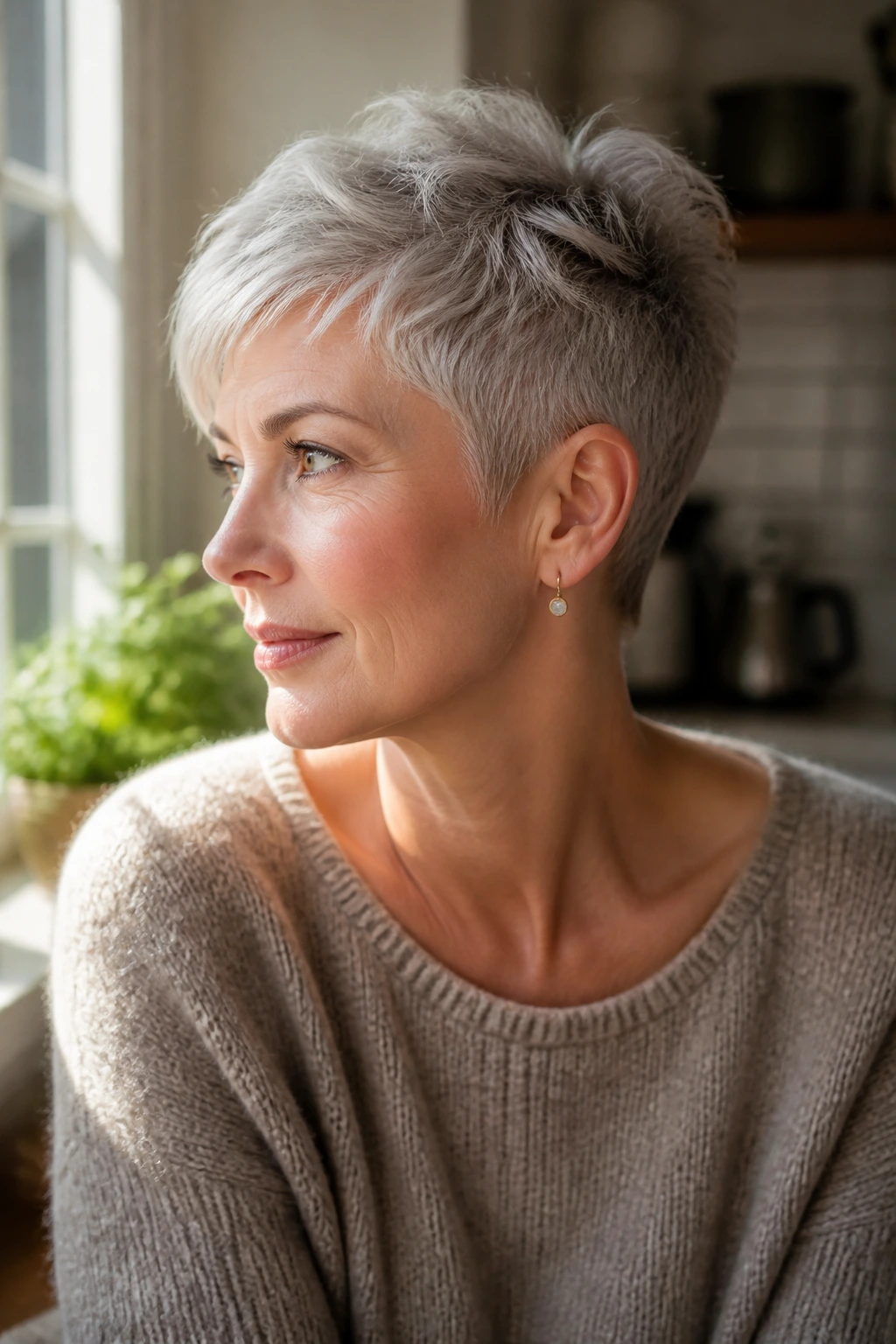
A soft undercut pixie sounds bold, but it doesn’t have to look severe. The neckline and lower sides are clipped shorter, which removes bulk and keeps the shape close to the head, while the top stays longer and more movable. It’s a nice option when hair at the nape gets fuzzy or bulky fast.
Why It Helps
The undercut solves a very practical problem: thick hair that mushrooms at the neck. By removing some of that weight underneath, the top lies better and the style looks cleaner for longer. If you’ve ever had a pixie puff out after two days, this is one answer.
- Great for dense hair or strong growth at the nape.
- Ask for an undercut that stays hidden when the hair falls over it.
- Style the top with a small amount of mousse or paste, depending on how polished you want the finish.
The best versions keep the top soft and feminine. A hard edge everywhere can feel too harsh. Softness on top, control underneath. That’s the balance.
14. Rounded Bob With Full Bangs
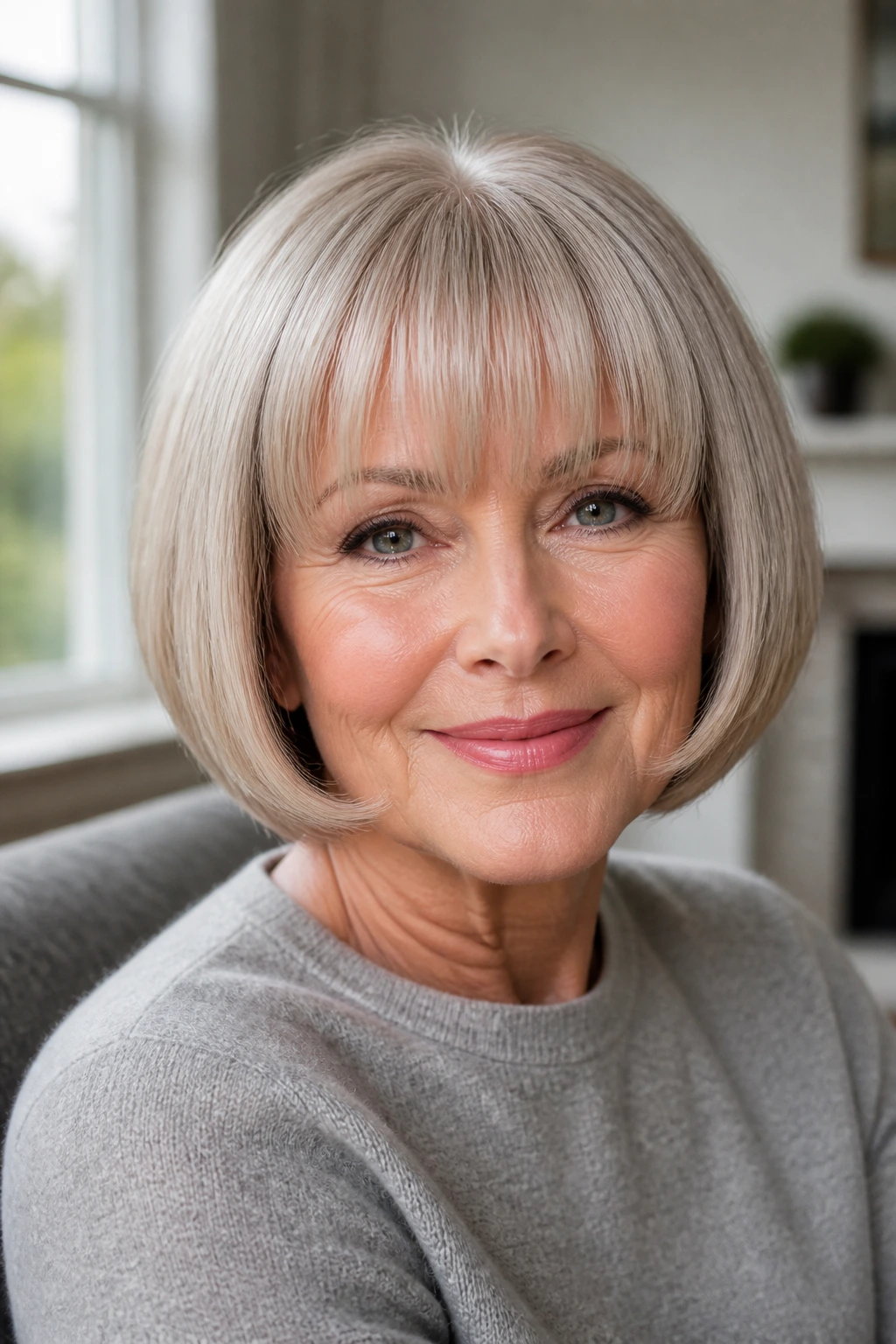
A rounded bob with full bangs has a storybook feel when it’s done right. The overall shape curves gently around the head, the bangs sit across the forehead, and the ends usually tuck in a little at the jaw. It works especially well if you want a haircut that feels finished even when you skip heavy styling.
The bangs are the big move here. They cover more forehead than a wispy fringe, which can be useful if the upper face feels long. But they need airiness at the ends so they do not sit like a solid curtain. A little texture through the fringe keeps the style light enough to move.
This cut looks best with shine. Gray hair, in particular, can carry that polished surface well. A flat brush, a low heat blow-dry, and a dab of smoothing cream are usually enough.
15. Wavy Bob With Air-Dried Texture

If your hair has a natural wave, a chin-to-jaw bob can turn that bend into the whole style. The trick is not to bully it straight. Let the wave settle into a soft pattern, and the haircut reads relaxed, pretty, and a little expensive without trying hard.
A Practical Hair Day Cut
This style saves time on days when heat styling feels like too much. Scrunch in a little curl cream or wave foam, part it where it naturally falls, and let it dry. The wave should clump in soft bends, not frizz into a halo.
- Best when the hair has some bend from root to end.
- Ask for layers only where the wave needs release.
- Keep a small diffuser nearby for damp weather days.
A wavy bob can go wrong if the layers are too short around the crown. Then the top puffs while the ends go flat. Keep the cut balanced, and it looks carefree instead of messy.
16. Short Shag With Curtain Bangs
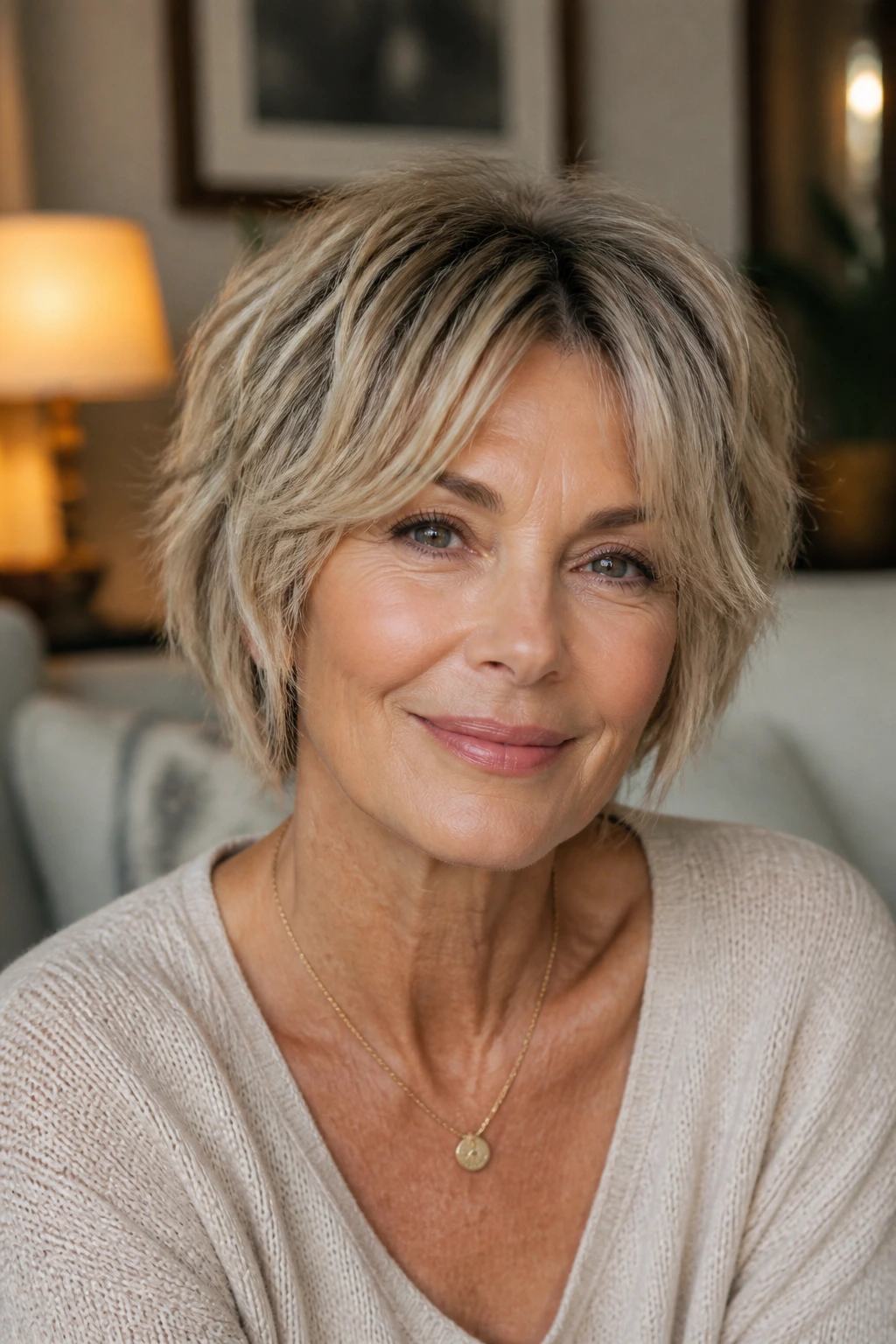
A short shag with curtain bangs gives you movement at the sides and a little softness right where the face opens up. The bangs split at the center and taper outward, which helps frame the eyes without closing off the forehead. It’s a nice compromise for anyone who wants some fringe but not a heavy bang.
This style is built for texture. The layers around the crown and temples create motion, and the curtain fringe keeps the front from feeling blunt. If you wear glasses, the bangs can be trimmed just long enough to avoid crowding the frames. That small detail matters more than people think.
How to Style It
Blow-dry the fringe first, using your fingers or a small round brush to bend it away from the center. Let the rest of the hair stay a little undone. A short shag looks best when the pieces are separated, not molded into one shape.
17. Classic Pageboy Remix
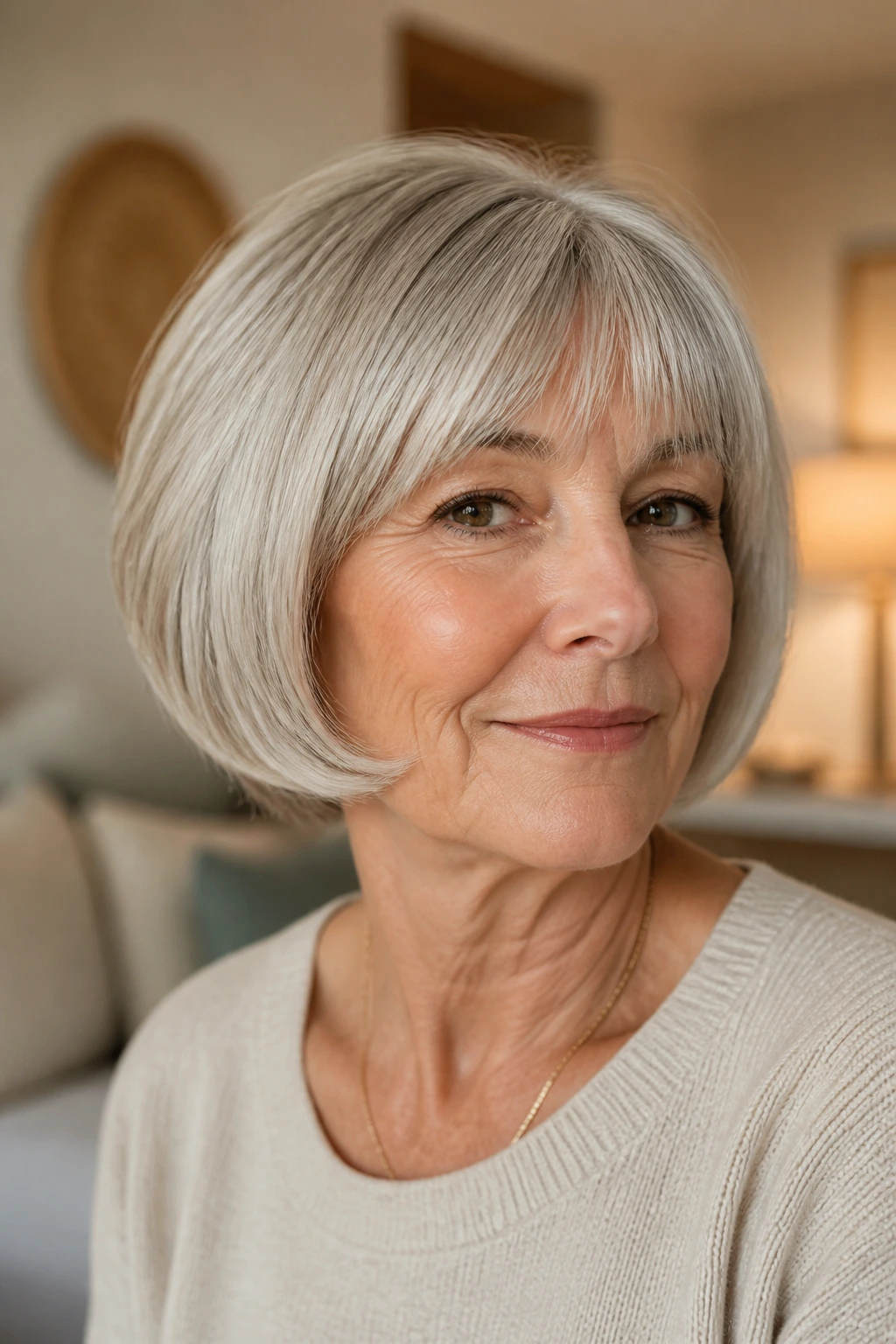
The pageboy has had many lives, and the current version is softer around the edges. The ends curve under, the outline is tidy, and the length usually sits between the jaw and the top of the neck. When you want something neat and graphic without the stiffness of a blunt cut, this is a smart place to land.
The remix part is important. A modern pageboy should have a little movement through the crown or front so it doesn’t look frozen in place. That can come from a side part, a slight undercut, or subtle internal layers that keep the hair from ballooning.
This style loves smooth hair. It also likes shine sprays and a brush with firm bristles. A rough finish fights the whole idea. Keep it sleek, and it reads refined fast.
18. Cropped Cut With Nape Taper
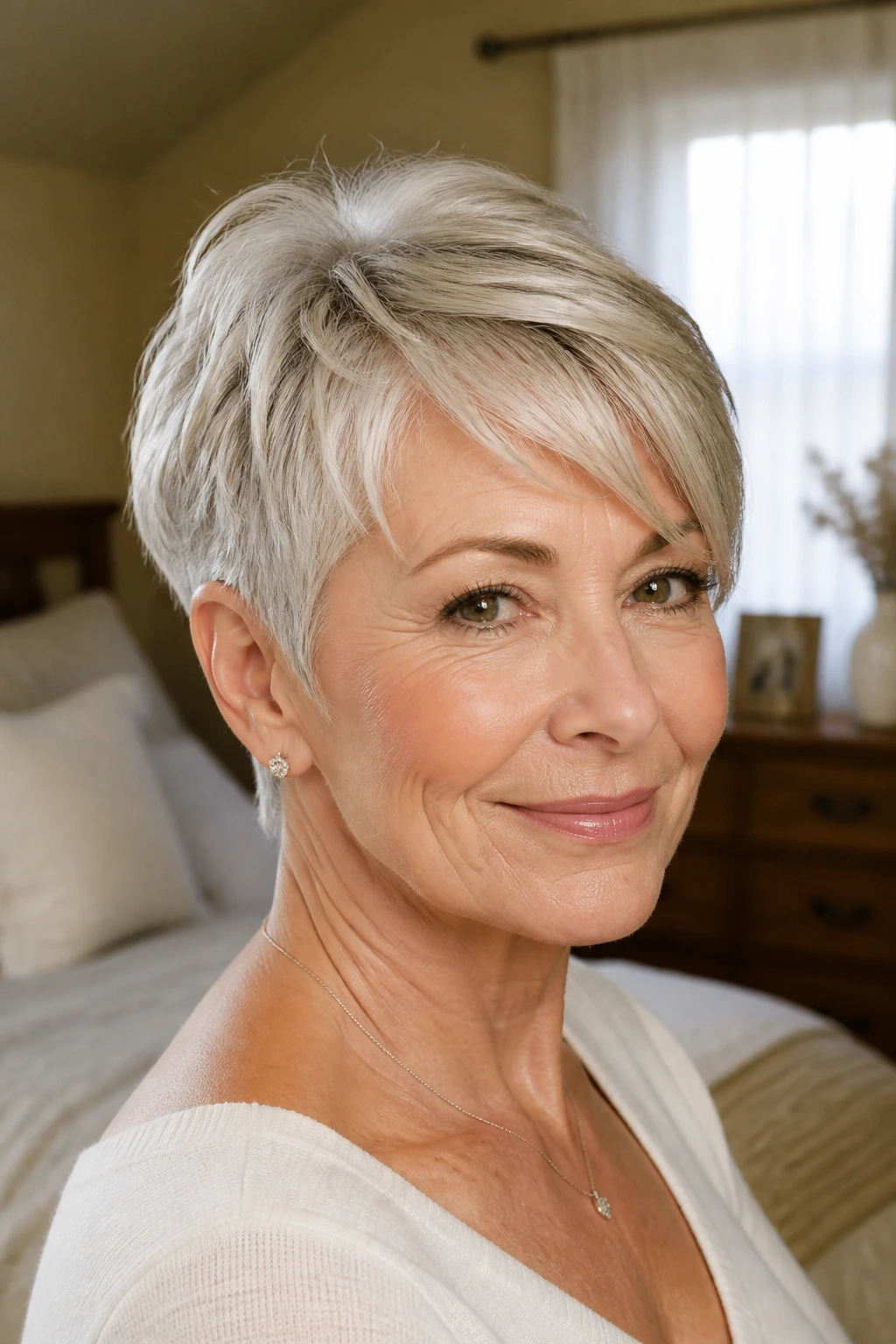
A cropped cut with a tapered nape is one of those understated shapes that looks better the longer you stare at it. The back hugs the neck, the top stays a bit fuller, and the sides can be kept soft or tight depending on how much edge you want. It’s neat, but not dull.
The taper at the neckline is the detail that makes it work. It cleans up the silhouette, especially if your hair grows fast at the back or gets fuzzy after a week. From behind, the cut stays tidy. From the side, the little increase in length toward the crown keeps the head shape from looking flat.
Wear it with a side sweep if you want more softness. Wear it brushed forward if you want the face to look sharper. It’s a flexible little cut, which is more useful than people admit.
19. Glam Quiff Pixie
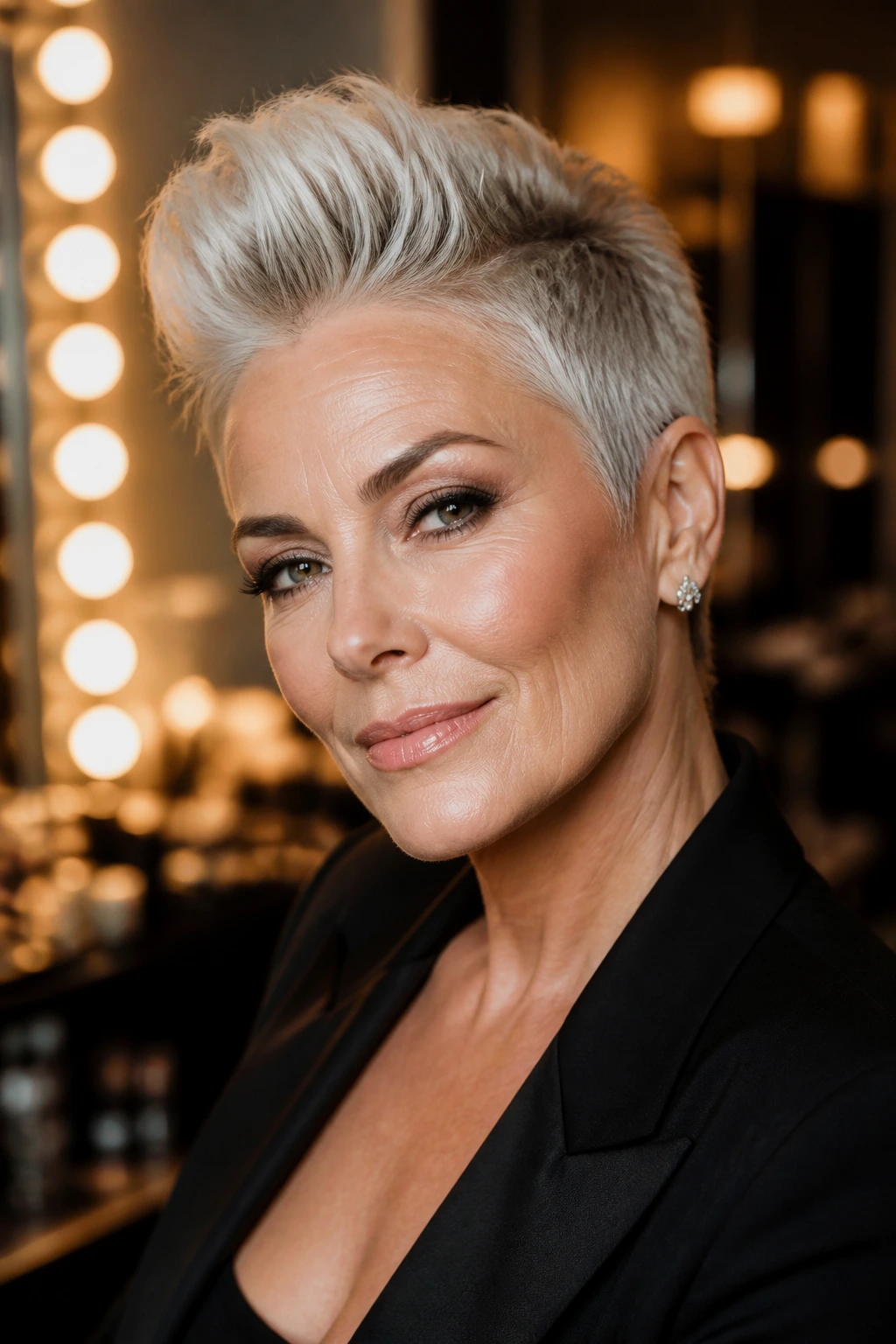
A quiff pixie brings a little lift and drama without crossing into costume territory. The front is styled up and back, the sides stay compact, and the crown gets enough height to make the whole head look energized. On a good day, it has that faintly red-carpet feel.
Why the Shape Matters
The quiff is all about direction. Hair that normally lies flat is encouraged upward and back, which opens the face and makes the eyes feel more central. That can be especially good if your features are strong and you want the haircut to echo that strength.
- Use mousse at the roots before drying.
- Set the front with a small round brush or your fingers.
- Finish with flexible hairspray, not shellac.
The quiff works best when the sides stay tight. If the sides puff out too much, the shape loses its lift. Keep the outline slim and the front intentional.
20. Layered Bob for Fine Hair
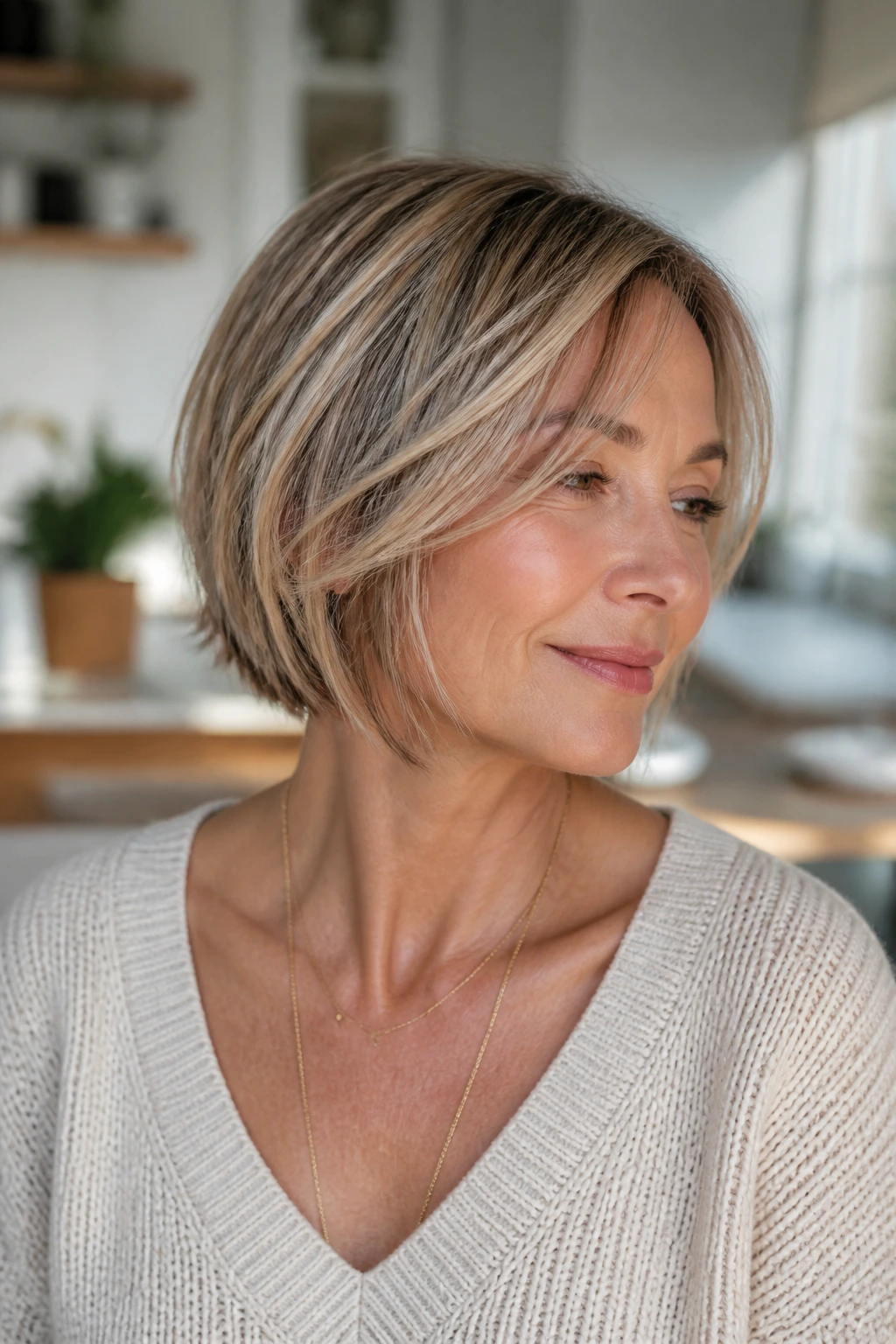
Fine hair needs a bob that understands its limits. Too many layers and it goes wispy. Too little and it collapses. A layered bob made for fine hair keeps the perimeter full enough to look healthy, while the internal layers remove just enough weight to create movement and avoid that flat, draped look.
The best versions usually stop around the chin or just below it. That gives the hair a chance to sit with some swing. A slight angle from back to front can help too, especially if the hair is straight and tends to stick to the head.
A root-lifting spray at the crown is worth using here. So is a round brush with a medium barrel. This cut does not need a mountain of product. It needs a little support in the right place.
21. Salt-and-Pepper Crop With Glossy Finish
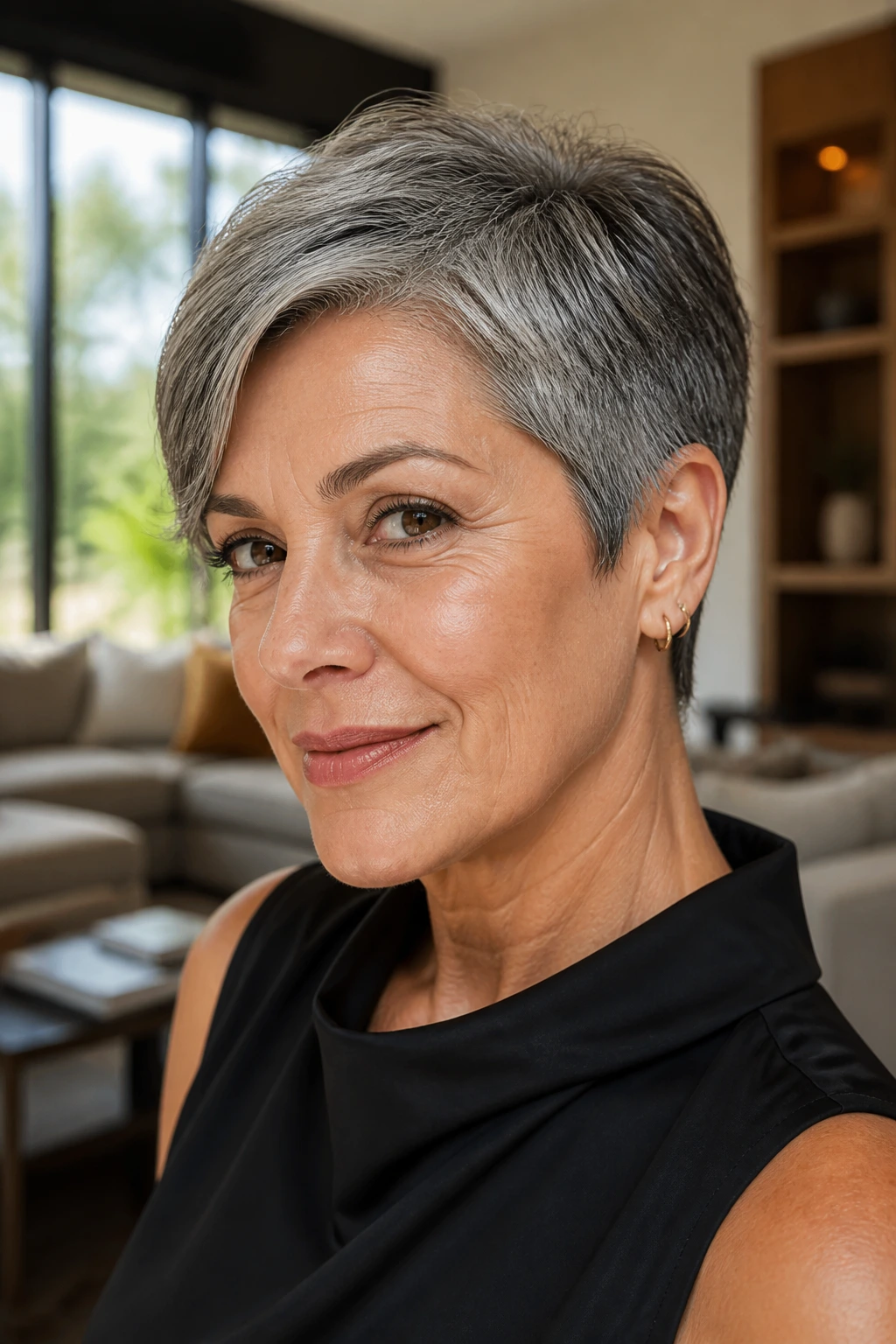
Salt-and-pepper hair can look fantastic in a cropped shape because the contrast in the color gives the cut built-in dimension. Add a glossy finish, and the strands catch light in a way that feels intentional, not accidental. This is one of those looks that can seem plain in a photograph and gorgeous in person when the shine is right.
A Good Color Story Helps
You do not need full dye coverage for this to work. A clear gloss, a silvery toner, or a soft blending service can keep the color from looking dry or patchy. On the right hair, a crop like this looks elegant with almost no volume at all, because the color already does some of the visual work.
- Keep the shape tight at the neckline.
- Use shine spray sparingly so the hair reflects light, not grease.
- A side part often makes the salt-and-pepper pattern look richer.
This is a very honest haircut. No hiding. No pretending. That’s part of why it can look so good.
22. Chin-Length Cut With Deep Side Part
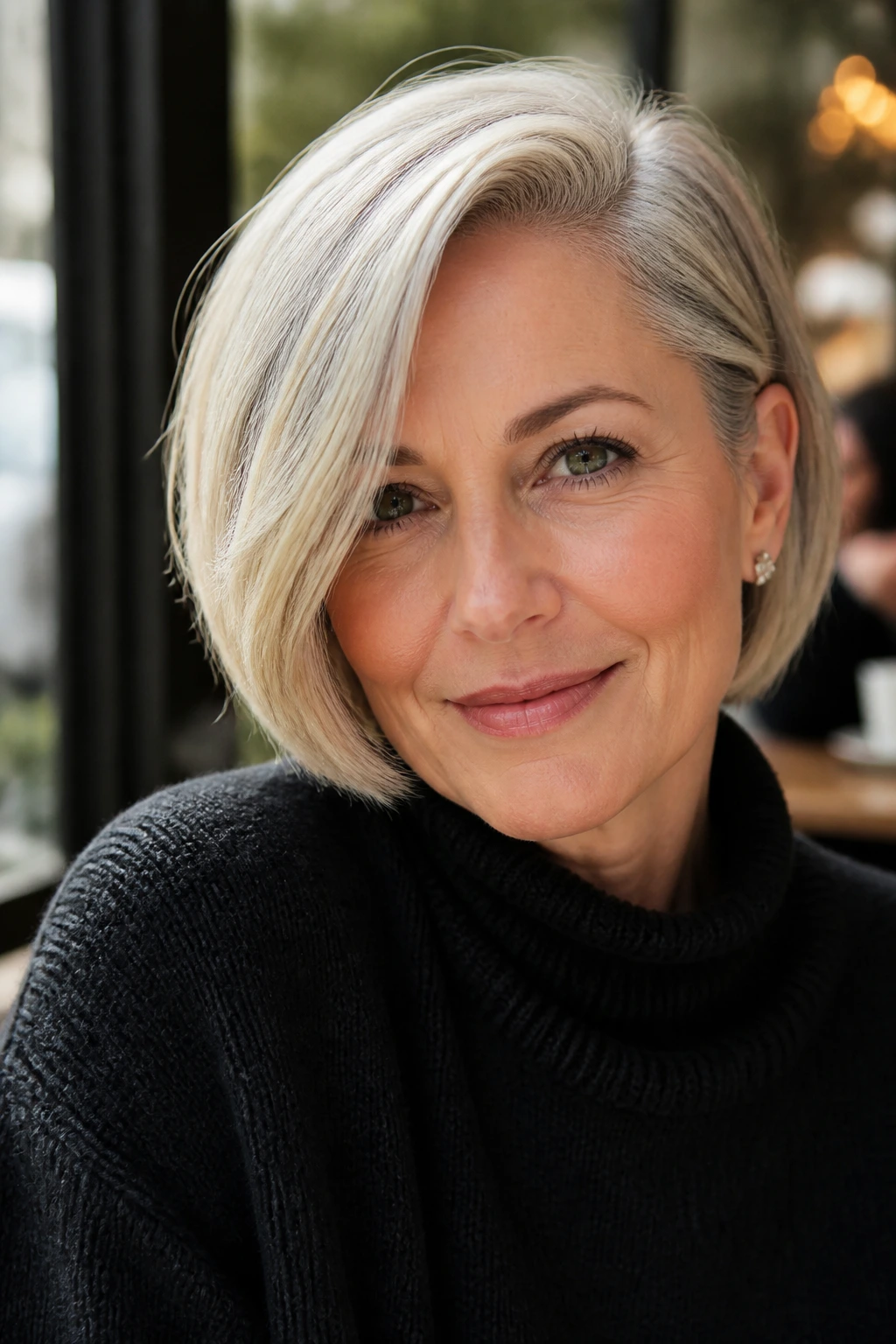
A deep side part changes the whole mood of a chin-length cut. One side sits closer to the head, the other swings softly across the forehead or cheekbone, and the result is a shape that feels a little glamorous without needing much heat. It’s a useful option for anyone who wants balance around a wide forehead, a round face, or a strong jaw.
What to Watch For
The part should sit far enough over that the front has room to fall. Too shallow, and the haircut loses its angle. Too deep, and it can hide the face more than it flatters it. There’s a sweet spot, and your stylist should be willing to adjust it by half an inch at a time.
A blow-dry with a side-lift at the roots usually gets this into place. Once dry, tuck the heavier side behind one ear or leave it loose. Both versions work. The cut carries itself.
23. Swoopy Bob With Face-Framing Layers
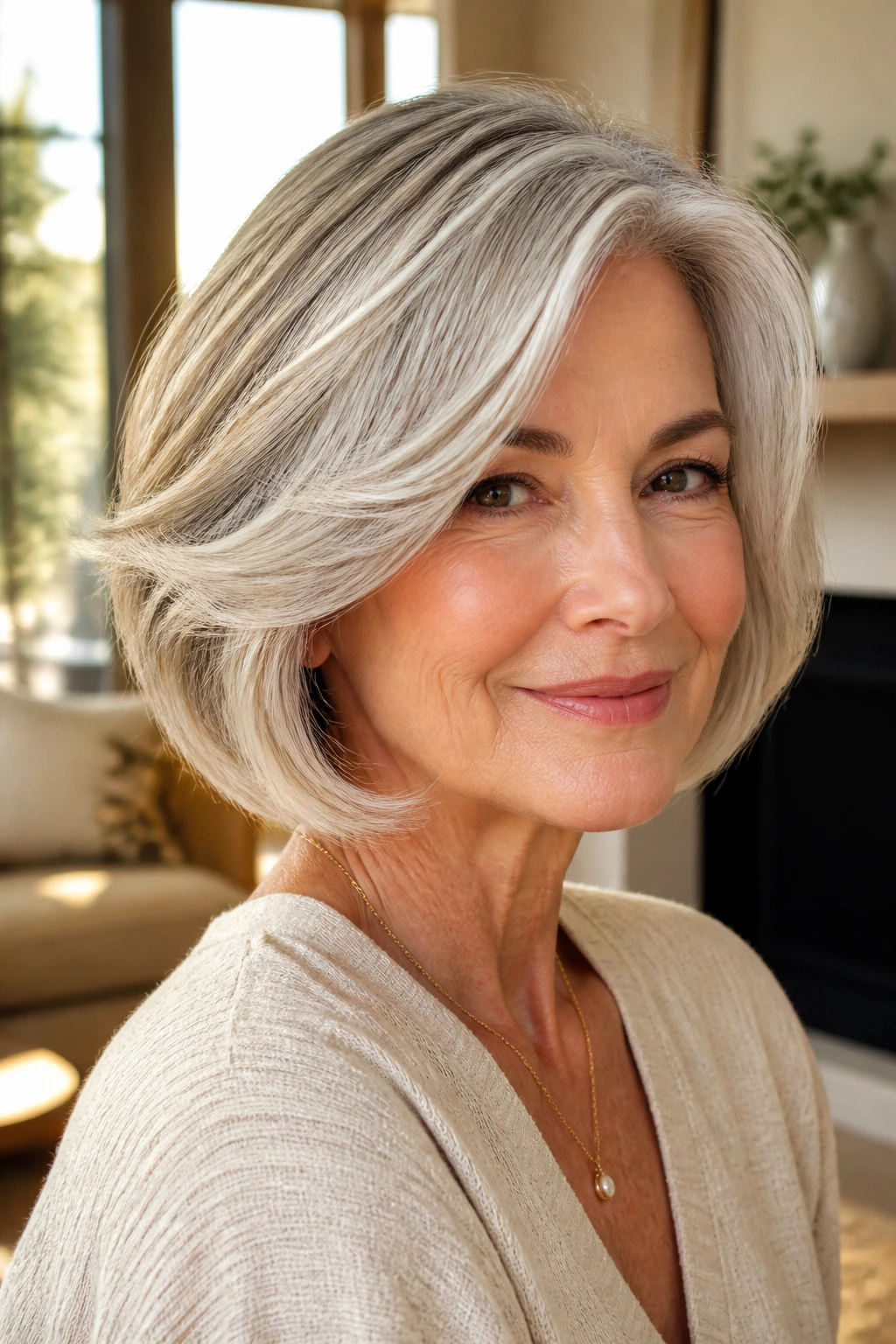
A swoopy bob has movement you can see from across the room. The front pieces curve away from the face, the mid-lengths stay light, and the shape feels soft without being fluffy. It’s a very good option if you want a haircut that looks styled even when you’ve only spent ten minutes on it.
The face-framing layers matter more than they sound. They keep the front from sitting in one straight curtain and let the bob bend around the cheekbones. That can be useful if your jawline feels sharper than you’d like or if you want a little softness near the mouth and chin.
A large round brush or a quick flat-iron bend through the ends brings out the swoop. Keep the product light. This cut wants movement, not stiffness.
24. Ear-Tucked Pixie With Soft Nape
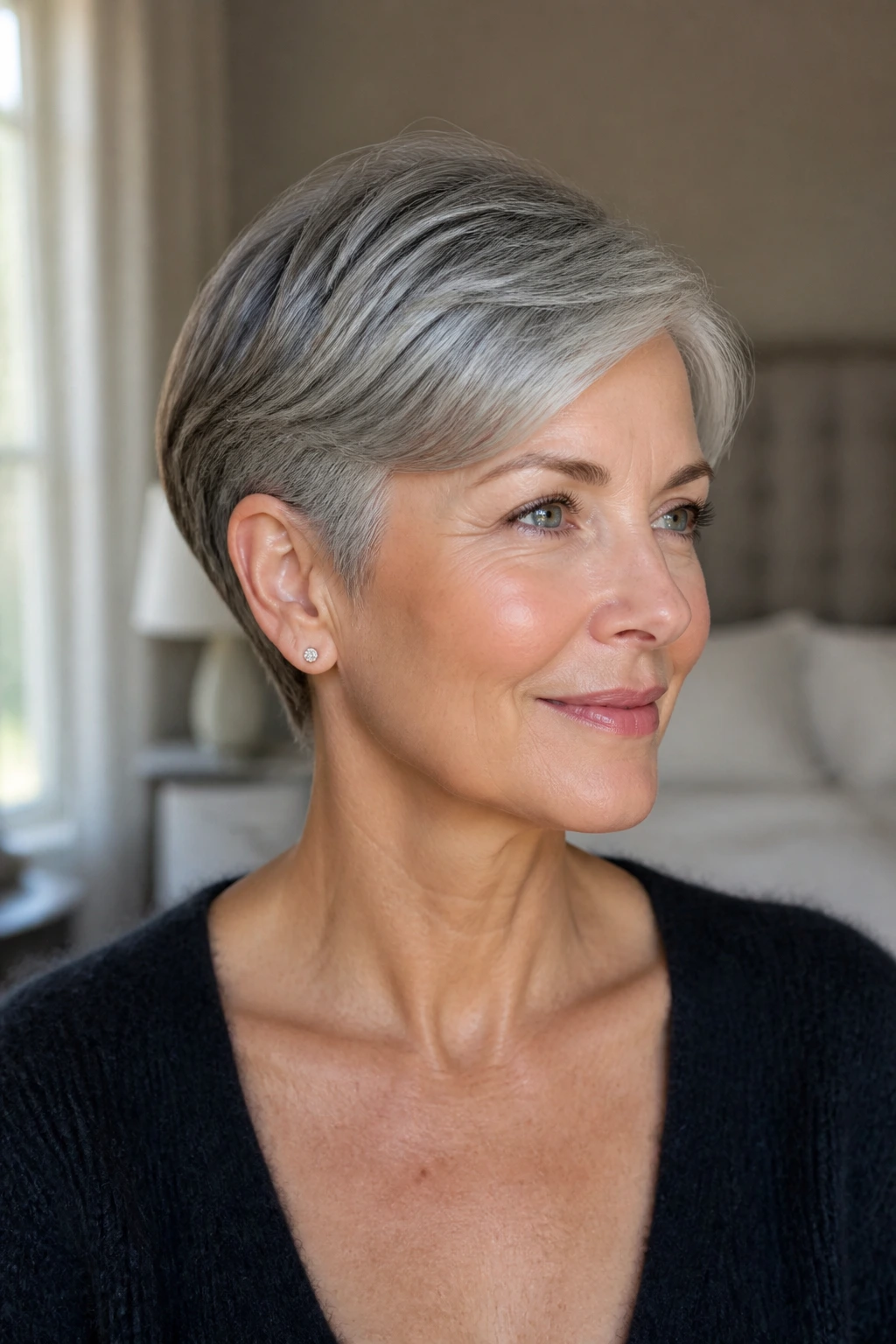
An ear-tucked pixie is one of the simplest styles in the group, but it can look incredibly neat when the outline is good. The sides are short enough to tuck cleanly, the nape stays soft and close, and the top has just enough length to move with the part. It’s elegant in a quiet way.
The tuck is the point. It opens the face, shows the jawline, and gives earrings a chance to do their job. If you wear studs, the cut feels crisp. If you wear a drop earring, the whole look suddenly has more swing.
This style is best when the nape is trimmed every few weeks. Once the back grows out, the clean effect disappears fast. Tiny maintenance, big payoff.
25. Airy Layered Bob With Flipped Ends
An airy layered bob with flipped ends has a bit of bounce, which is a fine thing to have in a short cut. The ends kick outward instead of curling under, and that small flip gives the style a lively finish that feels polished rather than overly controlled. It’s a good closing note for this list because it sits right between neat and playful.
Why It Feels Glamorous
The flip catches the eye at the jawline and neckline, which keeps the haircut from sinking into the shoulders. That matters when you want the face to stay open. A side part, a round brush, and a little heat at the ends are usually enough to make the shape come forward.
- Best on straight to slightly wavy hair.
- Ask for light layers, not choppy ones.
- Finish with a dab of shine cream on the ends.
The flip should look intentional, not retro for the sake of retro. Keep it soft, and the style stays modern.
What Makes a Short Cut Read as Glam Instead of Fussy
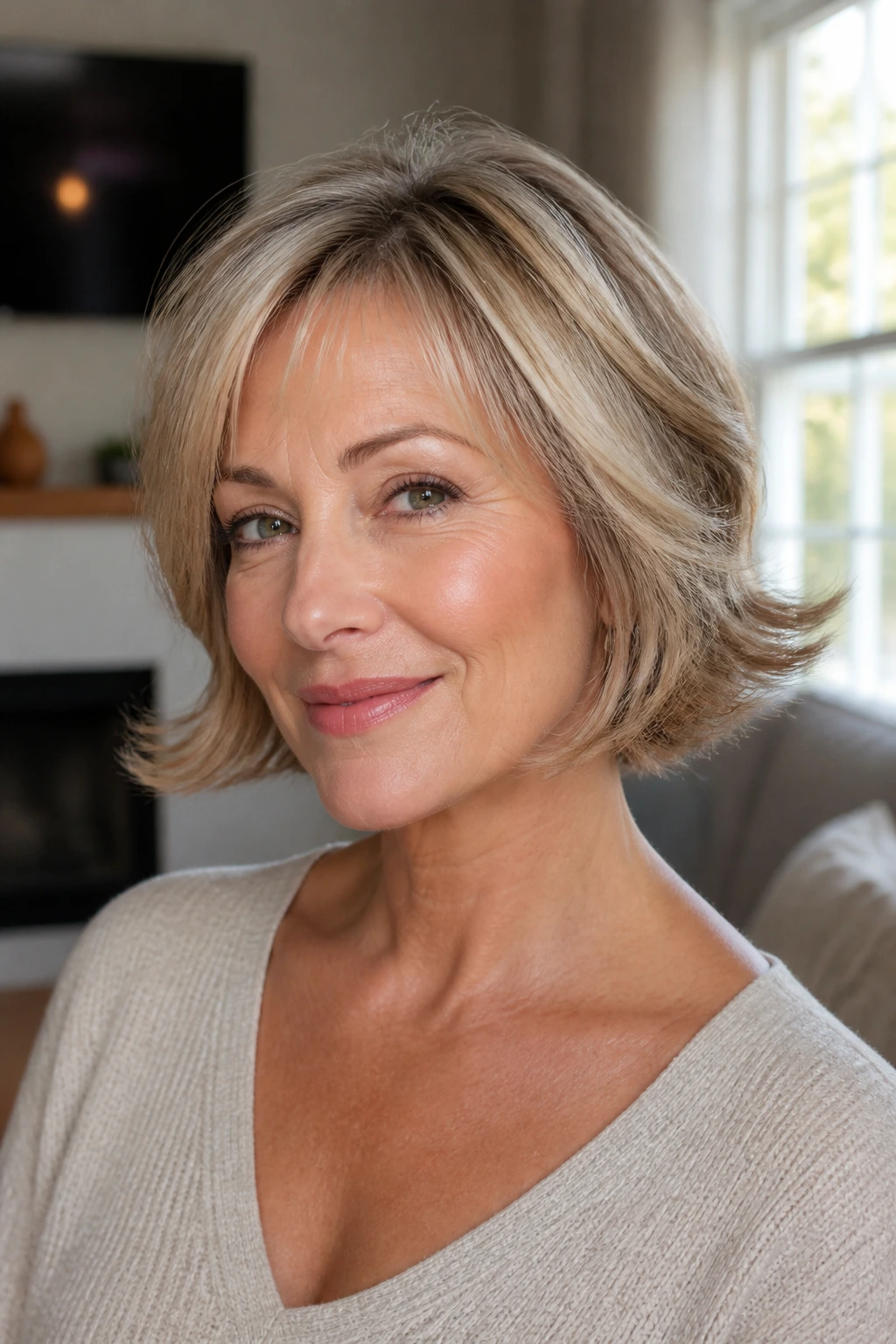
Glam short hair is not about making the style bigger and bigger until it sits on the head like a helmet. It’s about line, shine, and movement. A cut that hugs the nape cleanly, gives the crown a little lift, and leaves the front with one good sweep usually reads more refined than a lot of longer styles that need constant rescue.
Shape matters more than length here. A jaw-length bob can look sharper than shoulder hair if the perimeter is clean. A pixie can look more elegant than a layered lob if the crown has enough body and the neckline is kept neat. Silver and white hair, in particular, reward a shape that lets light move through the top and around the temples.
There’s also the matter of contrast. Short hair looks richer when you pair softness and precision. A soft fringe with a crisp nape. A curved bob with a blunt edge. A textured top with a clean sideburn area. That contrast keeps the haircut from feeling bland, and bland is the thing to avoid. Always.
The Tools That Keep Short Hair Polished
- Blow dryer with a nozzle attachment — directs air at the roots and helps set the shape without roughing up the cuticle.
- Small round brush, about 1 to 1.5 inches — useful for pixies, bangs, and bobs that need a little bend at the ends.
- Paddle brush — good for smoothing a bob fast when you want a flatter, sleeker finish.
- Vent brush — dries short layers quickly and helps create lift without overworking the hair.
- Lightweight mousse — gives crown support without making fine hair sticky.
- Heat protectant spray — worth using any time you touch a hot tool to the front or fringe.
- Texturizing spray or dry shampoo — helps piece out short layers and adds grip on day two.
- Flexible hairspray — keeps the style in place without turning it stiff and crunchy.
- Light pomade or paste — best for pixies, quiffs, and ear-tucked styles that need separation.
- Shine serum or gloss spray — use a tiny amount on the ends or surface to make gray or highlighted hair look finished.
- Sectioning clips — not glamorous, but very helpful when you’re blow-drying short layers in a neat way.
- Hand mirror — essential for checking the nape, which is where many short styles lose their polish first.
How to Ask for the Shape You Actually Want
A good short haircut starts before the scissors touch the hair. Tell the stylist where you want the length to sit: above the ear, at the jaw, just below the jaw, or long enough to tuck. That sounds simple, but it saves a lot of confusion. “Short” can mean five different things in five different chairs.
Bring one or two photos, but make sure the hair in the photo looks like yours in density and texture. A photo of a thick, glossy bob won’t help much if your hair is fine and wavy. Better to show the shape you want and point to the parts that matter: the neckline, the bangs, the crown, the amount of layering. That is the useful part.
Say whether you want to spend ten minutes styling or almost none. Ask how often the cut will need trimming to keep its shape. If you wear glasses, say so. If your hair swirls at the crown or kicks up at the nape, say that too. Those details change the cut more than people expect.
Smart Product and Color Choices for Shine, Lift, and Movement
The best short styles often need less product, not more, and that surprises people. Fine hair in particular can collapse under heavy creams, so a mousse at the roots and a lighter finish on the ends usually beats a thick styling butter every time. If your hair is coarse or very dry, a smoothing cream can help, but keep it to the mid-lengths and ends.
Color matters too. A clear gloss can make silver hair look brighter and more reflective. Soft highlights around the crown or face can add depth to a pixie or bob without making the cut busy. If your natural gray has gone streaky in a way you do not love, blending services can soften that line while still keeping the hair dimensional.
Choose products with a purpose. Volumizing spray for flat crowns. Paste for piecey pixies. Smoothing cream for blunt bobs. Shine spray for polished side parts. The trick is not owning more bottles. It’s knowing which bottle you reach for first.
How to Wear These Looks With Glasses, Earrings, and Collars
Presentation: Keep the line of the haircut visible. Tuck one side behind the ear, part the hair off-center, or leave the fringe light enough that it doesn’t cover the eyes. Short hair looks best when the face can breathe.
Accessories: Glasses, small hoops, studs, and long earrings all change the mood. A pixie with a side sweep loves a bold frame. A bob with a clean jawline looks good beside simple earrings and a collar that sits close to the neck. If you wear a scarf, let the haircut stay neat rather than fluffy.
Proportions: Strong jawlines like soft fringe or face layers. Longer faces often do well with bangs or a rounded bob. Wider cheeks can handle side volume or a diagonal part. That said, a good cut can bend the rules a little if the silhouette is balanced.
Finish: Use the finish to match the moment. Air-dried texture for casual days. A little round-brush polish for errands and dinners. Shine spray on the crown and ends when you want the style to look deliberate. It doesn’t take much.
Small Styling Moves That Make a Big Difference
Root Lift: Put mousse or root spray at the crown before drying, then lift the hair straight up with the brush for a few seconds. That tiny bit of support keeps short hair from sitting too close to the scalp.
Texture Control: If the ends look too neat, rub a pinhead amount of paste between your fingertips and pinch just the last inch. That gives a bob or pixie a cleaner, more modern edge.
Gloss Factor: A little shine spray over the top layer makes gray and highlighted hair look cared for, but only a little. Too much and it turns slick in a bad way. A mist, not a soak.
Accessory Move: A single barrette, side clip, or tucked-behind-the-ear moment can change the whole haircut. Short hair loves one visible detail. It doesn’t need a pile of them.
Make-It-Yours: If you prefer softness, bend the ends under. If you want edge, flip them out. If you want less forehead, let the fringe fall forward. Three small changes, three different moods.
Mistakes That Make Short Hair Work Against You
Overcutting the crown: If the top is taken too short, the hair stands up and looks fuzzy instead of lifted. Ask for height, not a spiky top.
Too much heavy product: A little paste can sharpen a pixie. A lot of cream can flatten the entire shape. If the hair feels sticky, you’ve already used too much.
Ignoring the neckline: The back grows fast, and a fuzzy nape ruins the clean line of short hair. Regular trims matter more here than they do with longer cuts.
Bangs that are too thick: Heavy fringe can crowd the forehead and make the face look smaller than it is. A lighter fringe or a side sweep often flatters more.
Choosing a cut that fights your texture: Straight hair and curls do not behave the same way in a cropped shape. If the style depends on daily heat you won’t actually use, it will annoy you by the second week.
Not planning for glasses or earrings: Short hair around the ears needs to leave room for frames, temples, and jewelry. A few millimeters change the whole balance.
Ways to Adapt the Looks for Fine, Curly, or Silver Hair
Soft Volume for Fine Hair: Choose a bob or pixie with light layering and a strong outline. The perimeter gives the hair substance, and the layers stop it from falling flat. Heavy thinning shears are usually a bad idea here.
Curl-Friendly Shape: Keep the crop rounded and let the curls stack naturally. Ask for dry cutting if your stylist knows how to do it, because curly hair often springs up more than expected once it dries.
Silver-First Finish: Use a gloss, a purple-toned conditioner now and then, and a cut that shows off the shimmer. Silver hair can look dry fast, so the shape should be clean enough to look intentional even on low-product days.
Glasses-Soft Fringe: If frames sit high on your face, go for a side sweep or curtain bang instead of a full straight fringe. That keeps the brow area open and stops the haircut from crowding the lenses.
Low-Heat Version: Ask for a style that works with air-drying. Wavy bobs, shags, and textured crops can all do this well if the layers are cut to follow the natural bend.
Essential Equipment for Short Hair That Stays Neat
- Salon scissors or a trusted stylist — the shape is too important to DIY badly.
- Blow dryer with a concentrator nozzle — helps direct lift where you want it.
- 1-inch or 1.5-inch round brush — ideal for short layers, fringe, and tucked ends.
- Paddle brush — useful for sleeker bob finishes.
- Wide-tooth comb — good for curly crops and for parting hair without roughing it up.
- Light mousse or root spray — gives body without heavy residue.
- Heat protectant — especially helpful if you use a flat iron on the front.
- Dry shampoo — useful for day-two volume and oil control at the crown.
- Flexible hairspray — keeps movement while holding the overall shape.
- Light pomade or paste — best for pixies, quiffs, and piecey texture.
- Shine spray or serum — use sparingly for a polished surface.
- Hand mirror — the nape and sides need checking; the bathroom mirror alone misses things.
How to Keep the Shape Between Trims
Short hair does not forgive neglect for long. Pixies usually need a trim every 4 to 6 weeks if you want the edges to stay crisp. Bobs can stretch to 6 to 8 weeks, depending on how fast your hair grows and how sharp the outline is meant to be. If the cut has bangs or a strong nape, you’ll notice the growth sooner.
Night care matters too. Sleep on a satin pillowcase if your hair gets rough at the ends. If the top flattens overnight, mist the roots lightly in the morning and re-dry them for 30 seconds with your fingers lifting at the crown. That tiny reset works better than adding more product to old product.
Wash frequency depends on texture. Fine hair often needs washing more often because oil shows fast. Curly or coarse hair can usually go a bit longer, but the shape may need a little water or leave-in spray at the front to wake it up. If a cut looks too short or too puffy between appointments, that’s usually a sign the maintenance interval is too long, not a sign the haircut failed.
Frequently Asked Questions
What short hairstyle makes fine hair look fuller?
A stacked bob, a layered bob with a clean perimeter, or a long pixie with crown lift usually gives the best result. The key is keeping enough weight at the ends so the hair doesn’t look wispy while using layers only where they add movement.
Are bangs a good idea for older women with short hair?
Yes, but the type of bang matters. Soft fringe, side-swept bangs, or curtain bangs usually work better than a heavy, blunt line because they keep the forehead open and soften the face.
How short is too short if I wear glasses?
Too short is any cut that crowds the temples or hides the frame line. You want room around the ears, a clear side view, and enough fringe control that the glasses and hair aren’t fighting for the same space.
Can a short cut still look glamorous if I don’t style it every morning?
Yes, if the shape is cut well. A good pixie or bob should look decent with a quick finger dry and a little product at the right places. If it only looks good after 25 minutes with hot tools, it’s not the right cut for your routine.
What should I ask for if my hair has a strong cowlick at the crown?
Tell the stylist exactly where the cowlick pushes and ask for a shape that works with it, not against it. A little extra length or a slightly different part can tame the lift without flattening the whole top.
Do gray and silver hair need different products?
Usually, yes. Silver hair often benefits from a gloss or shine spray because the color can look dry if the surface is dull. Purple conditioner can help if the gray has yellow tones, but use it lightly so the hair doesn’t go flat or violet.
How often should I trim a pixie or cropped cut?
Every 4 to 6 weeks is the sweet spot for most pixies. If the neckline grows fast or the fringe starts hanging in your eyes, you’re overdue.
What if my bob flips out instead of turning under?
That usually means the ends were cut or dried in a way that encourages outward movement. A round brush, a little tension while blow-drying, and a smoother finish at the perimeter can pull it back under. Some flips are cute, though, so don’t fight one if it suits the cut.
Can curly hair work in a short glamorous style, or will it just puff up?
Curly hair works very well in short cuts when the shape respects the curl pattern. A rounded crop or a curly bob with enough length for the curls to stack will look polished; too many short layers will turn it into frizz.
The Cut That Carries the Room
The best short hairstyles for older women do not try to hide age, texture, or movement. They use those things. A good pixie shows off the eyes. A clean bob makes silver strands look sharp. A textured crop gives you energy without requiring a blowout every morning. That’s the real appeal.
Choose the shape that matches your hair’s habits, not the one that asks your hair to become a stranger. If the neckline needs to be neat, keep it neat. If the crown needs lift, give it lift. And if your favorite part of getting dressed is the earrings, glasses, or collar that sits next to the haircut, let the cut support that instead of competing with it.
The nicest short hair always looks like someone made a decision on purpose. That’s the look worth chasing.
