



Funky short haircuts have a habit of looking louder on the street than they do in the mirror—and that’s the charm. A clean nape, a jagged fringe, a shaved temple, a blunt line hitting at the jaw: those details do the talking before your outfit even gets a chance. Long hair can whisper rebellion. Short hair tends to grin and slam the door.
That’s why the best edgy cuts are never just “short.” They’re shaped. They’re cropped with intent. They have a fringe that hits the brow at the right spot, a side that falls heavy on purpose, or a crown that’s left choppy so it moves instead of sitting there like a helmet. If you’ve ever left a salon with a short cut that felt safe, you already know the difference. Safe is forgettable. Shape is a personality.
The good news is that the range is wider than people think. Some of these looks are almost severe—clean, cropped, and close to the head. Others are deliberately messy, with soft razored ends and bits that stick out in a way that looks artful rather than careless. And because short hair exposes the bones of a cut, the tiniest choices matter: a 1-inch difference in fringe length, a sharper taper at the neckline, a deeper side part. Those small decisions change the whole mood.
Why This Collection Stands Out
-
Shape does the heavy lifting: These cuts lean on silhouette, not just length, so they still look intentional when you skip a full styling session.
-
Texture gets a vote: There’s a version here for straight, wavy, curly, and coily hair, because “short” means something different once the hair starts moving.
-
Edge without costume: The point isn’t to look like you raided a trend board. The point is to land on a cut that feels sharp in real life, not only in photos.
-
Salon language included: You’ll see the terms that matter at the chair—nape, weight line, undercut, micro fringe, disconnected length—so you can ask for the right thing.
-
Low length, high attitude: A few of these cuts are close-cropped and dramatic; others are softer on top but still carry enough bite to avoid the usual polite short-hair look.
-
Easy to personalize: Color, texture paste, a blunt bang, a shaved temple, or a deep side part can change the feel of the same haircut fast.
1. Micro Pixie with Choppy Fringe
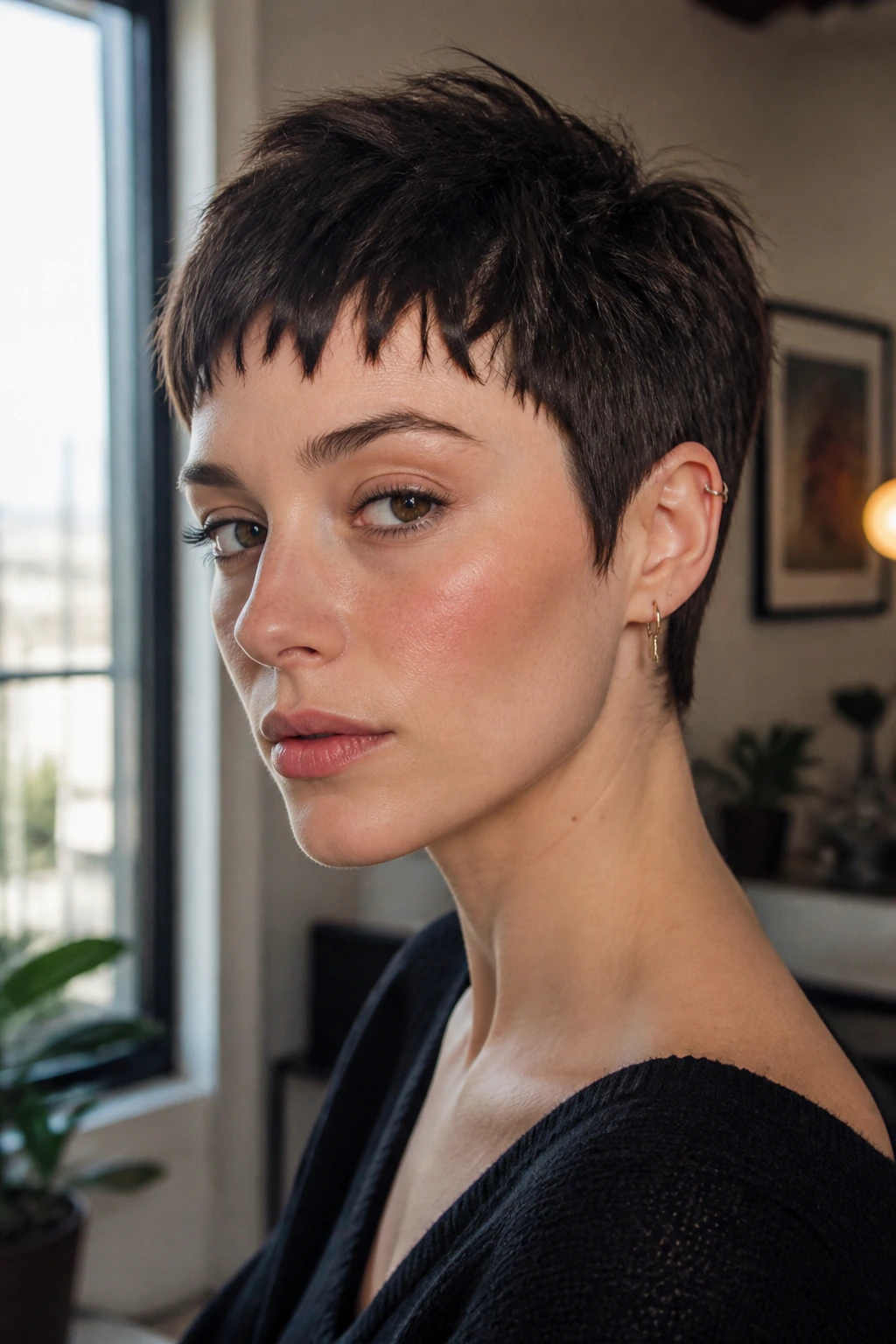
A micro pixie with a choppy fringe is the cut people notice after the second glance. The first glance catches the shortness. The second notices the irregular bangs, the broken-up top, and the way the edges refuse to sit in one neat line. It has a little French-girl attitude, but sharper. Less sweet. More “I’m not here to smooth anything over.”
Why It Works
The magic is in the contrast: the sides stay close and tidy, while the top and fringe carry all the movement. That makes the face look more open without sacrificing texture. If your hair is fine, the shorter length keeps the ends from flopping flat. If it’s thick, the choppy fringe stops the cut from turning into a block.
A good micro pixie needs a stylist who can cut with restraint. Too much texturizing and it turns wispy. Too little and the fringe lands like a shelf. Ask for soft point-cutting through the top, with the fringe left irregular rather than blunt.
What to Ask For
- Short sides and back, with the neckline cleaned up
- Fringe that lands just above or on the brows
- A textured top cut to move in tiny pieces, not one solid shape
- Enough length at the crown to lift with paste, not enough to collapse
Pro tip: If your hair grows straight forward at the hairline, keep the fringe a hair longer than you think. It will spring up once it dries.
2. The Undercut Pixie with a Long Top
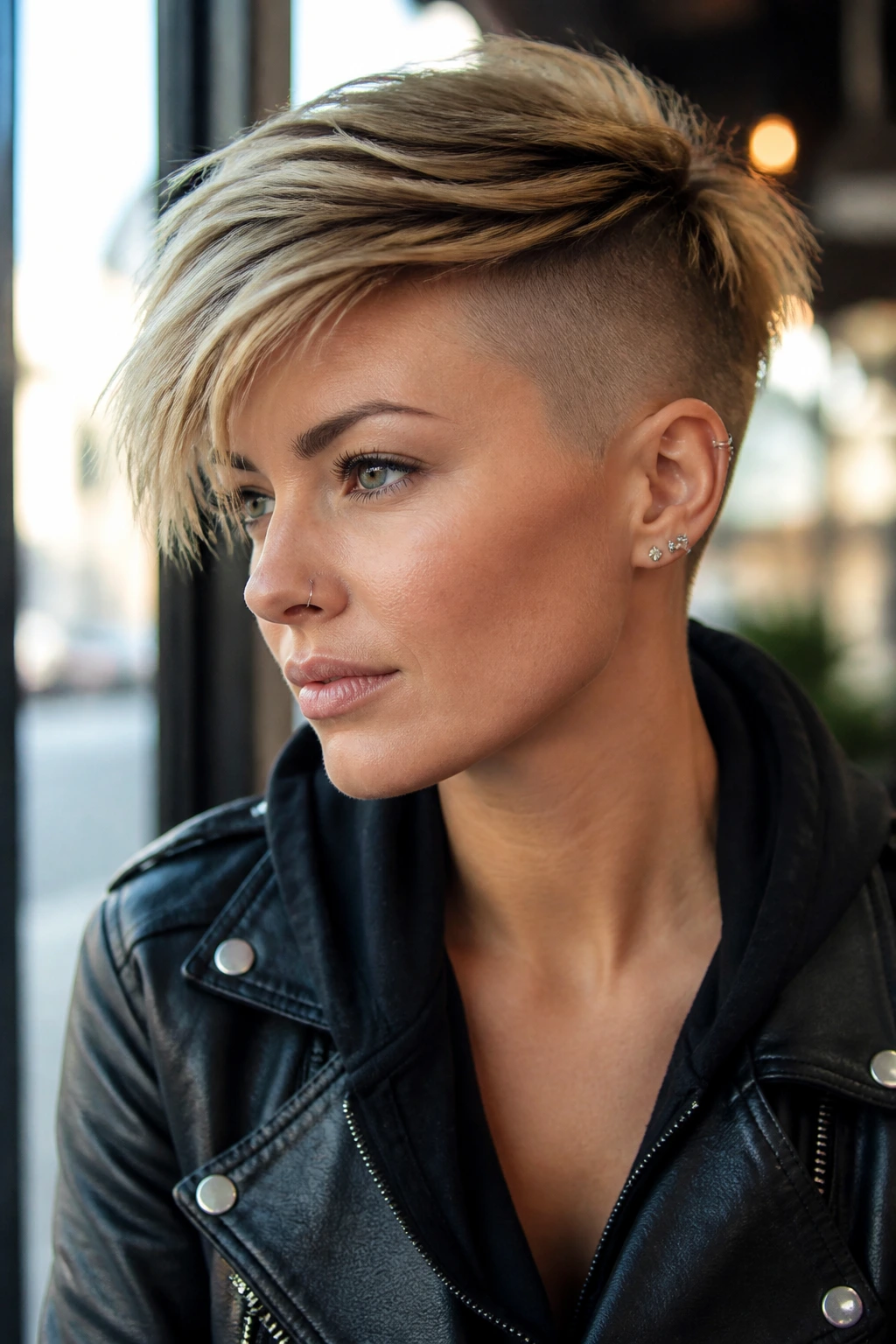
This one is blunt about its intentions. The undercut removes bulk from the sides and back, while the top stays long enough to sweep, spike, or fall forward with a little drama. If you like haircuts that change personality depending on how you style them, this is a strong pick.
The reason it works so well is that it creates a real difference between the visible top and the hidden underneath. That disconnect gives the cut a sharper outline, especially when the top is blown up and forward. It also helps thick hair behave. A lot of thick-haired women don’t need more length. They need less volume in the right places.
Keep the undercut clean if you want the look to stay intentional. A fuzzy grow-out at the nape can make the whole thing look unfinished fast. This cut likes contrast. It does not love compromise.
3. Asymmetrical Bob with a Side-Swept Edge
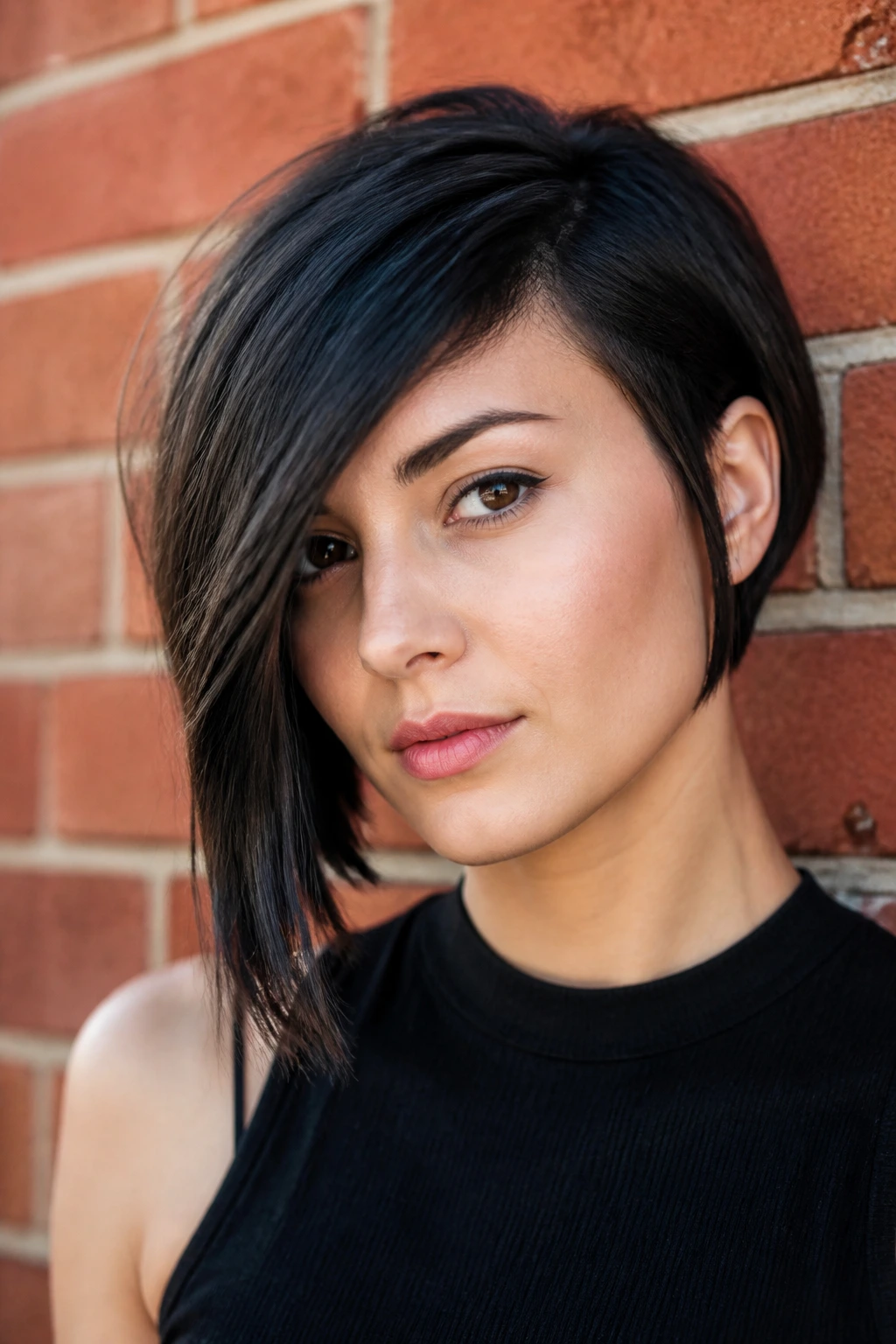
Why does an asymmetrical bob read edgy even when it’s only slightly uneven? Because the eye catches the imbalance immediately. One side skims the jaw. The other side lands lower, often brushing the collarbone or sitting just under the chin. That tiny mismatch changes the whole mood.
How to Wear It
Let the heavier side fall naturally instead of tucking it behind the ear all day. The best version of this cut uses weight to frame one cheekbone while keeping the opposite side lighter and more open. If your hair is straight, the line will look clean and graphic. If it’s wavy, the unevenness gives the movement something useful to do.
Ask for a blunt perimeter with soft interior layers if you want the shape to move. If you prefer something sharper, keep the line more precise and style it with a flat brush or a quick pass of the iron. A side part can deepen the asymmetry without needing a dramatic length difference.
4. Blunt French Bob with Micro Bangs
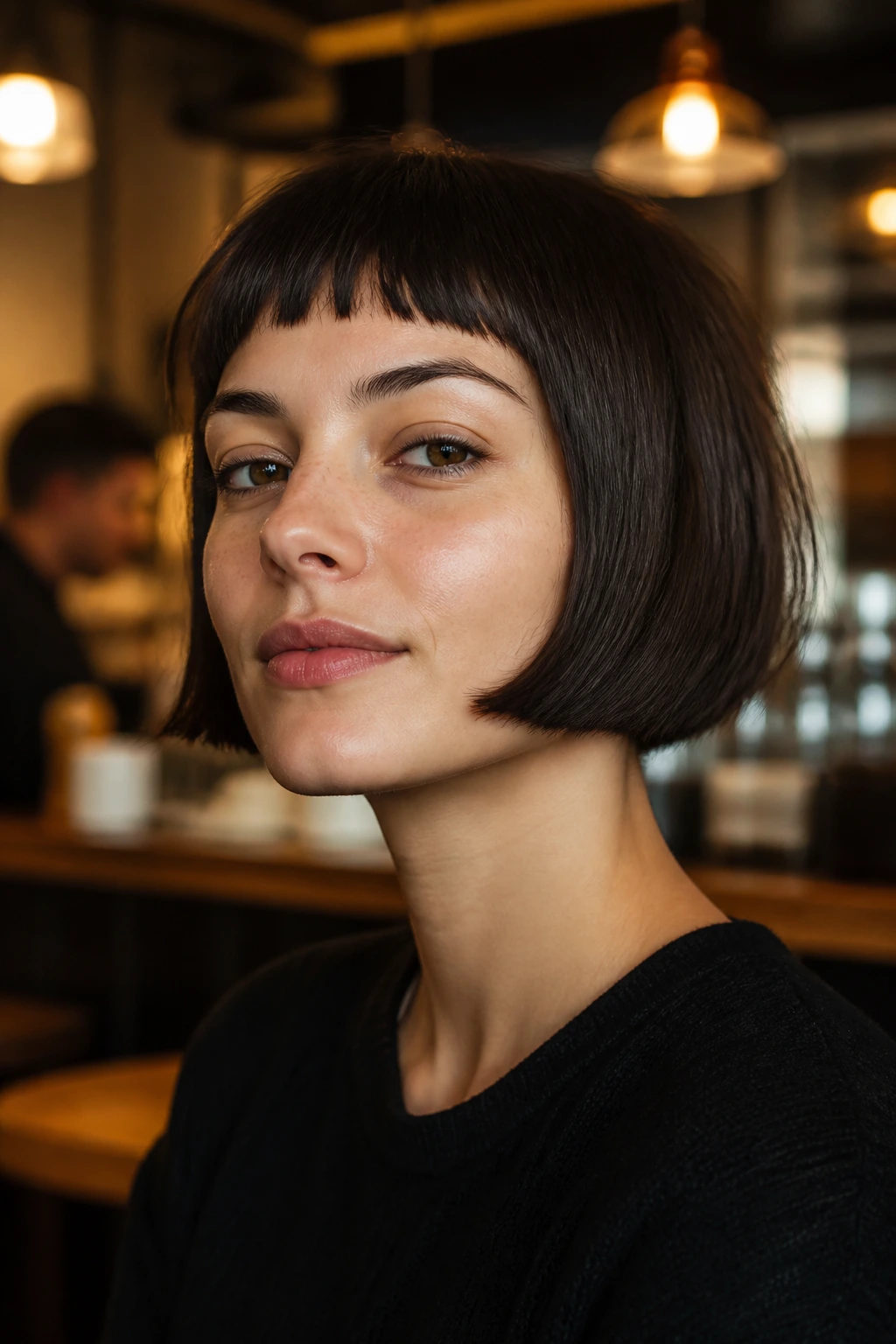
A blunt French bob with micro bangs can look polished in the most slightly rebellious way. The jawline gets framed. The forehead gets a little exposed. And those tiny bangs—short enough to feel deliberate, not accidental—turn the whole cut into something with a point of view.
This one is best when the perimeter is crisp and the bangs stay compact. If the ends are too feathered, the bob starts to lose its architecture. The right version sits around the cheekbone or jaw, with a blunt line that makes the hair look denser than it is. That matters if your hair is fine and you want short hair that still has presence.
A little bend in the hair helps. Too much curl and the precision goes soft. Too much product and the bangs get sticky. A light cream or a dab of wax on dry ends is usually enough.
5. Shaggy Bixie with Feathered Ends
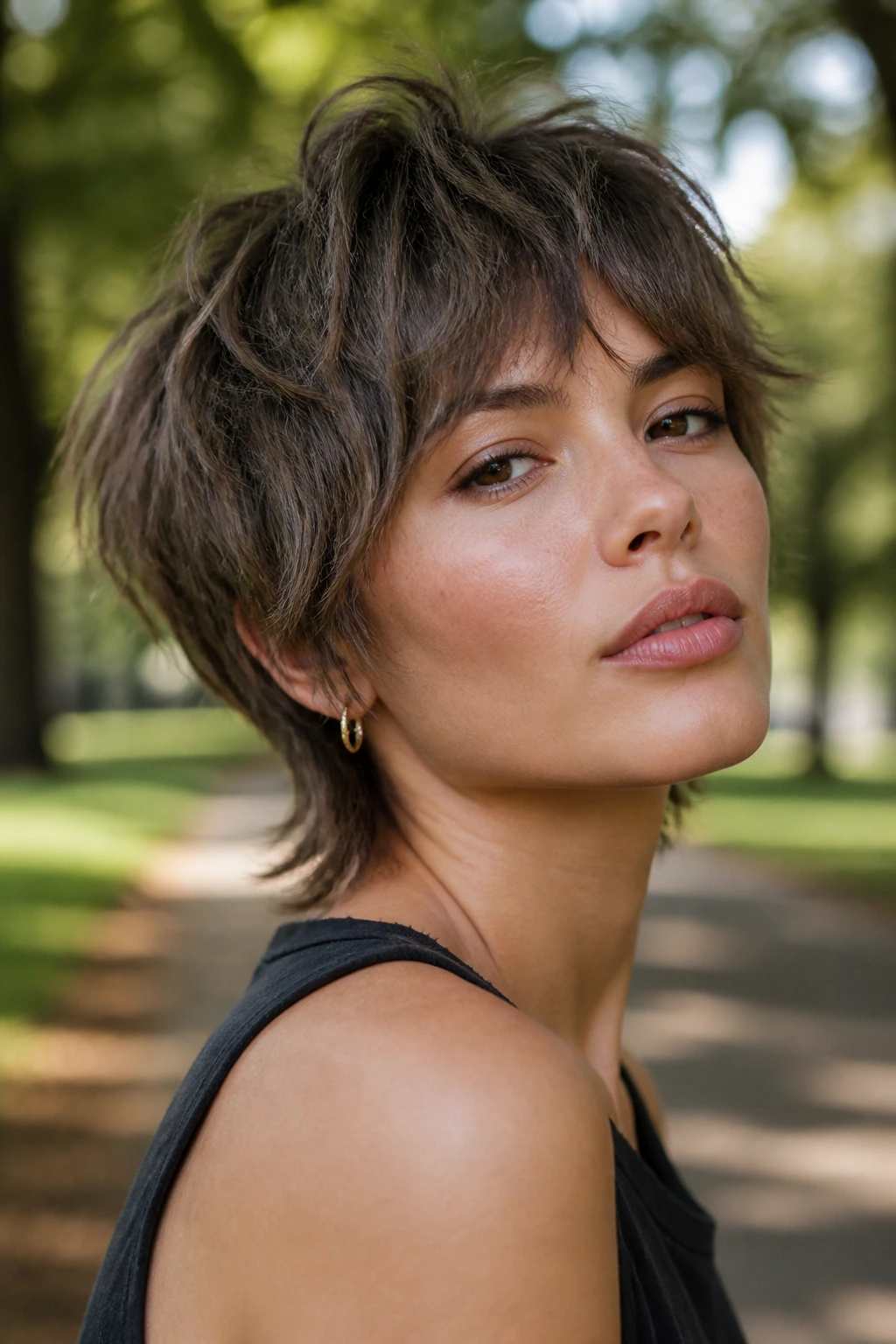
A bixie—the hybrid between a bob and a pixie—already has attitude. Add shaggy layers and feathered ends, and the cut becomes looser, messier, and more lived-in. It’s the haircut for someone who likes the idea of short hair but doesn’t want every strand sitting in formation.
The feathering matters. It stops the silhouette from getting too boxy, especially around the cheek and jaw. Ask for short crown layers, softened nape length, and pieces around the face that break up the line rather than creating one heavy edge. On wavy hair, this cut practically styles itself with a diffuser and a little mousse. On straight hair, a texture spray gives it enough grip.
There’s a reason this look ages well as it grows out. The shaggy structure means the shape doesn’t collapse the moment it loses a quarter inch. That is a gift.
6. Wolf Cut Crop
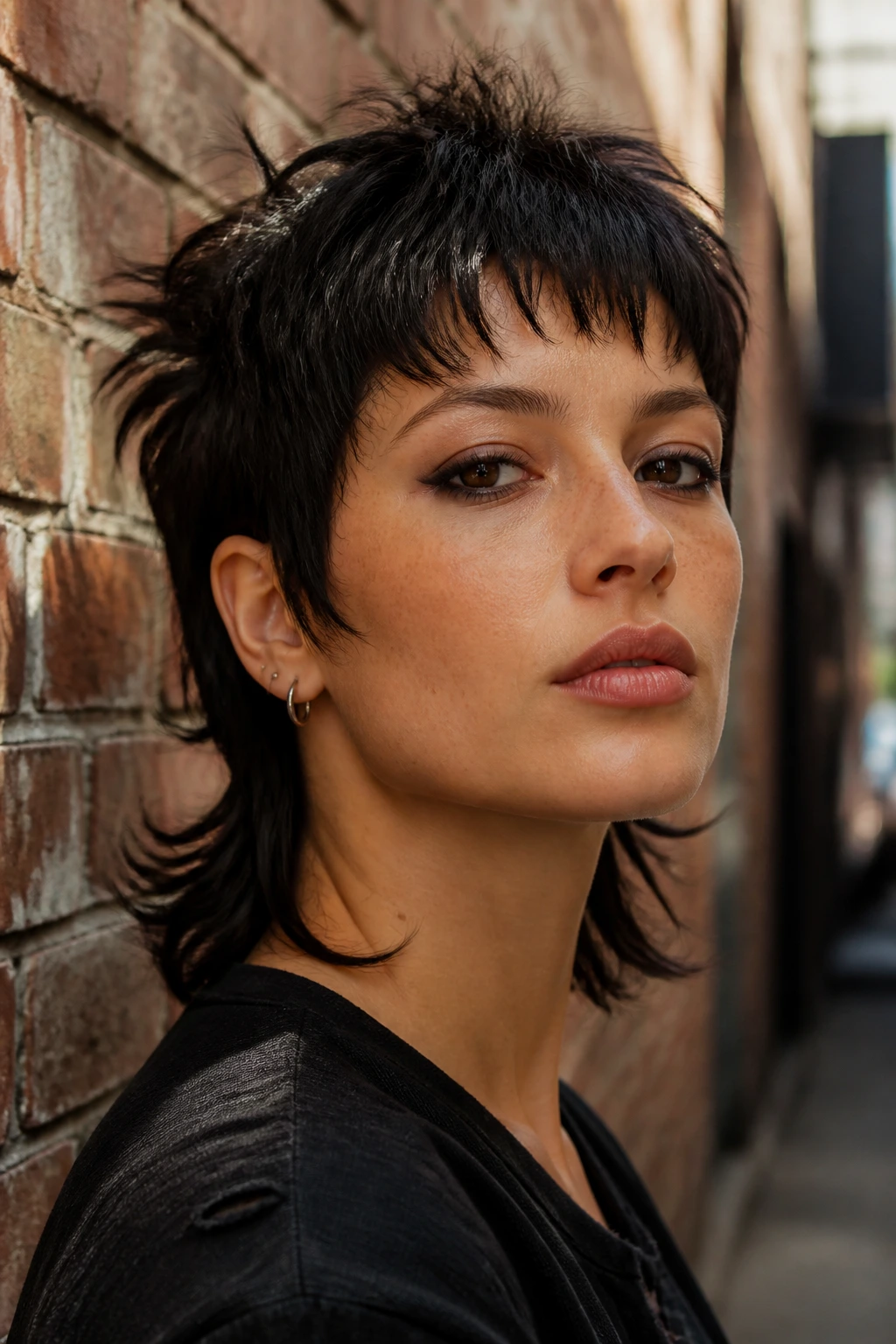
The wolf cut crop is what happens when a shag and a mullet meet in a smaller, tighter frame. The top stays choppy and lifted. The back keeps a little length. The result feels unruly in a good way, like the haircut has its own weather system.
It works because the layers stack in a deliberate mess. Shorter pieces at the crown create lift, while the longer back keeps the silhouette from turning too puffy. It’s a smart cut if you want movement without a perfect shape. And if you have thick hair, the wolf cut crop can remove enough bulk to make your head feel lighter.
Wear it with a center part for a softer, almost indie look, or push it off to one side for a more asymmetrical edge. A matte paste on the ends keeps it piecey. A glossing cream makes it look more polished. Same cut. Different attitude.
7. Curly Tapered Pixie
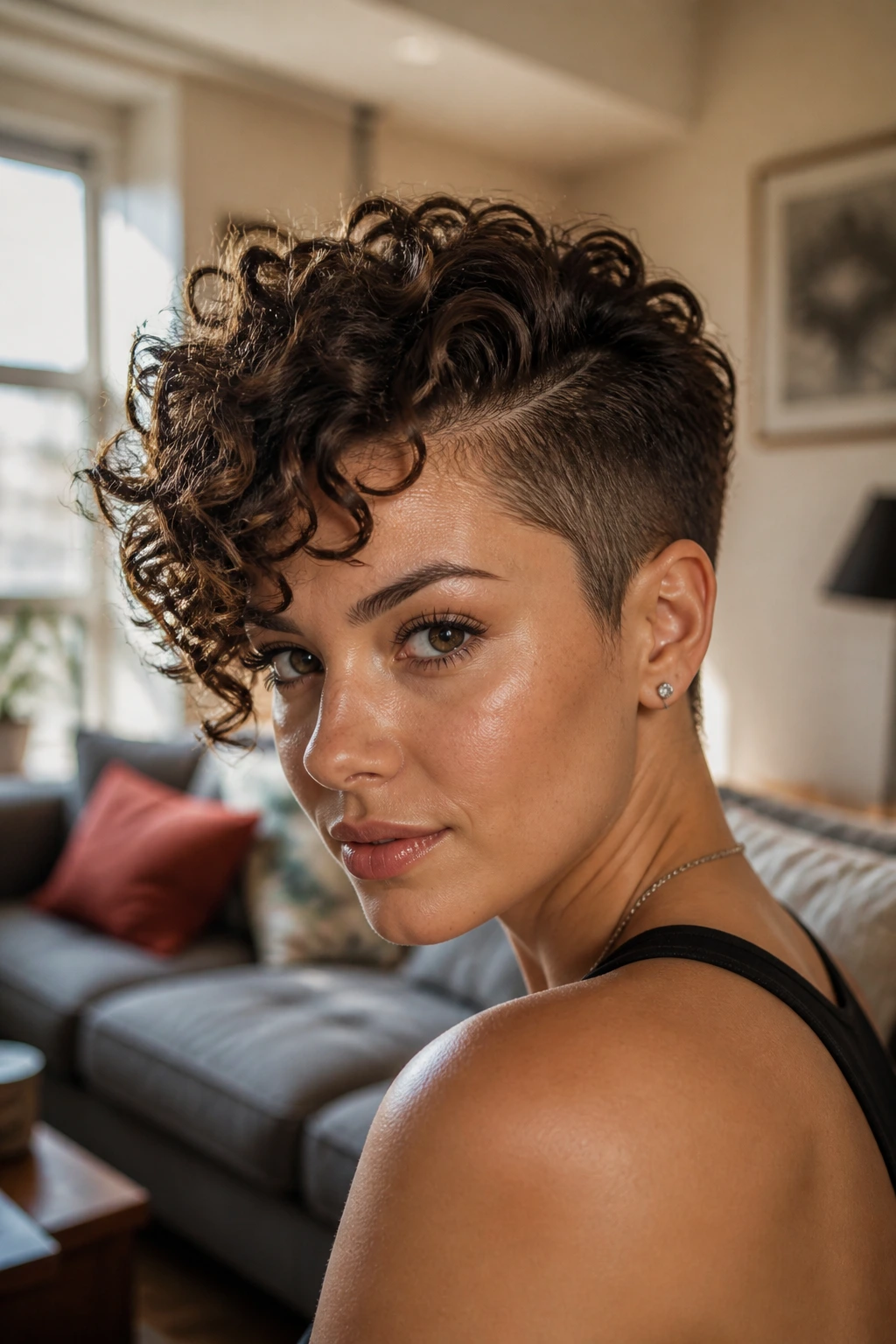
Curly hair and short cuts can be a nightmare when the shape isn’t planned. A tapered pixie fixes that by keeping the sides and back close while leaving enough length on top for the curls to spring instead of squeeze. Done well, it looks elegant in a rough-edged kind of way.
The taper is what saves the silhouette. Without it, the sides can puff out and the whole cut turns into a mushroom. Ask for the nape to be carved in gently and the top left long enough for your curl pattern to show, not force itself flat. Dry cutting is often better here, because curls lie about their length when they’re wet. They always do.
A curl cream and diffuser are your best friends. Heavy waxes will weigh the top down. And if your curls are tight, leaving a little extra length around the crown can keep the outline from shrinking into nothing.
8. Buzz Cut with Graphic Design
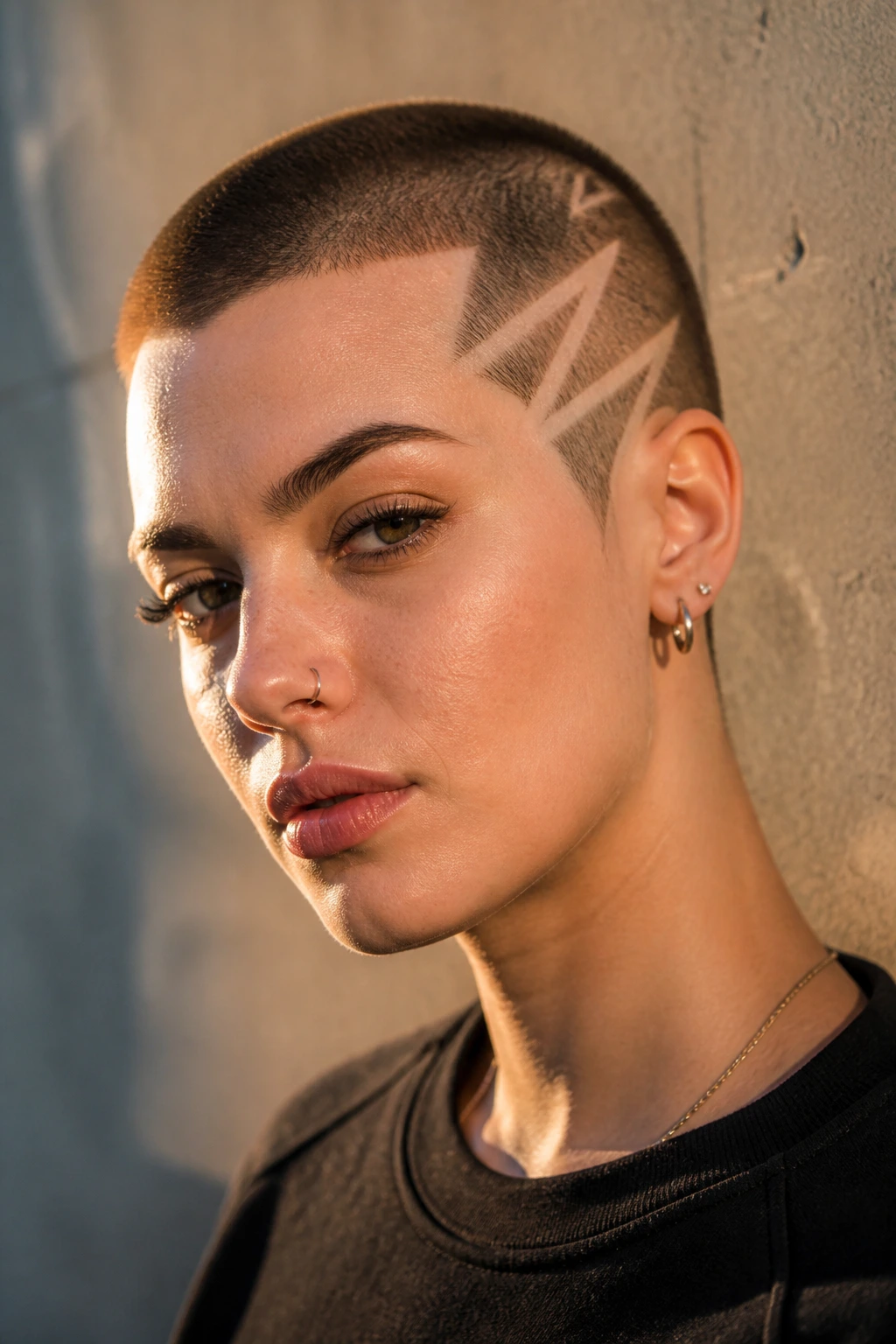
A buzz cut with a graphic design is as direct as hair gets. No pretending. No hiding. The clipped length puts your face on full display, and the design—an etched line, a geometric shape, a shaved curve—becomes the whole point.
This cut is for women who want the shortest possible canvas with the biggest possible attitude. The design can be simple or intricate, but the clean fade around it matters more than people think. If the surrounding clipper work isn’t neat, the pattern loses its edge fast. It starts looking like a mistake instead of a choice.
Color can help, too. A bleached patch, a dark underlayer, or even a subtle tonal shift can make the design read better. Maintenance is frequent. Clippers grow-out shows fast. But if you like a look that’s honest about itself, this is hard to beat.
9. Side-Swept Undercut Bob
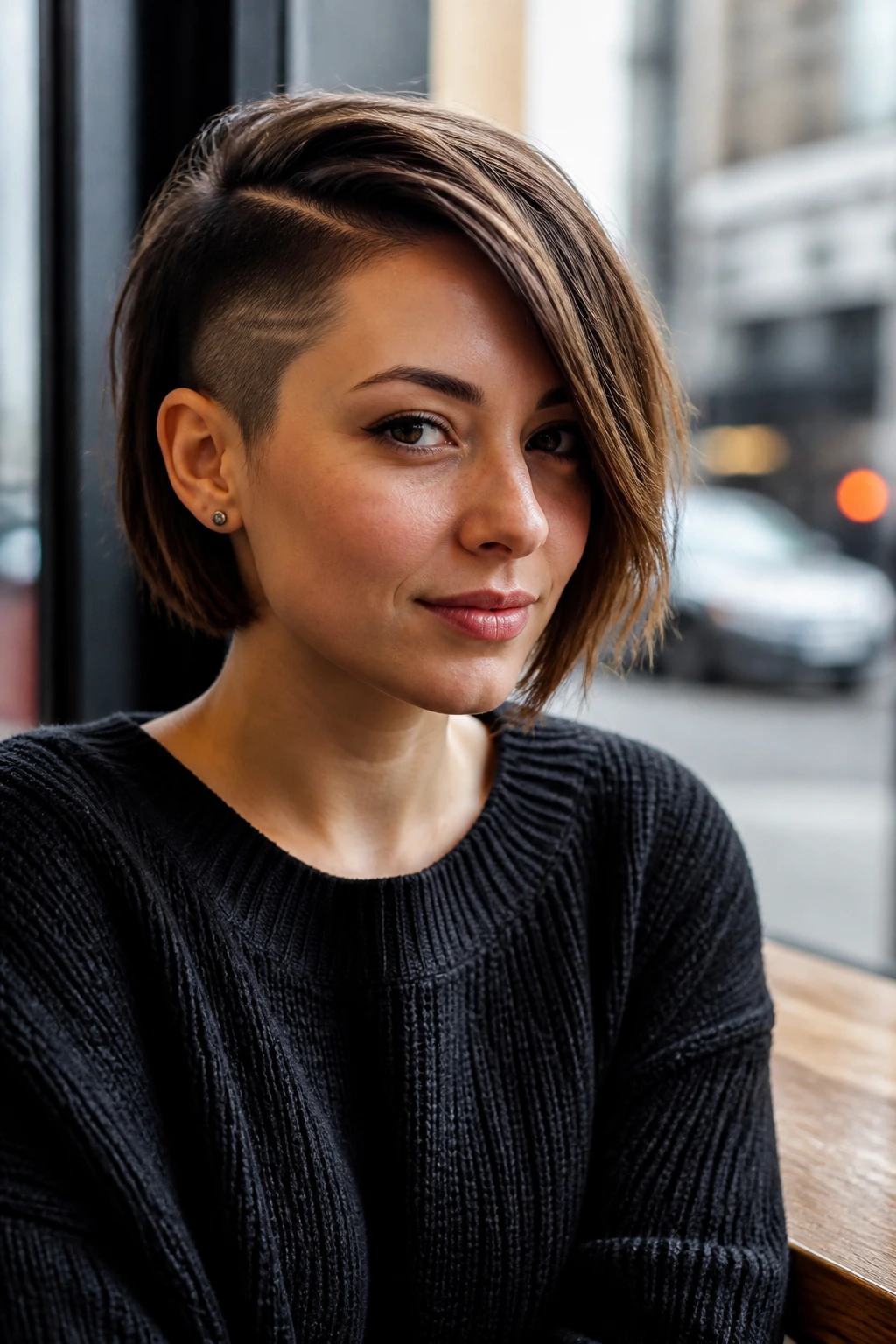
The side-swept undercut bob is a useful little contradiction. From one side, it looks like a classic bob with movement and polish. From the other, the shaved or closely clipped section underneath gives it a more aggressive line. That hidden detail changes how the hair falls.
What Makes It Different
You get two personalities in one haircut. The longer side can be tucked, waved, or blown out with a round brush. The undercut removes weight so the bob doesn’t balloon out near the jaw. That’s especially handy if your hair is dense and you’re tired of fighting the sides.
Ask for the undercut to stay low enough that you can cover it when you want to, and high enough that it actually removes bulk. A side part helps show off the length difference. So does ear tuck styling—just on one side. Not both. That’s too polite for this cut.
10. Mullet Pixie
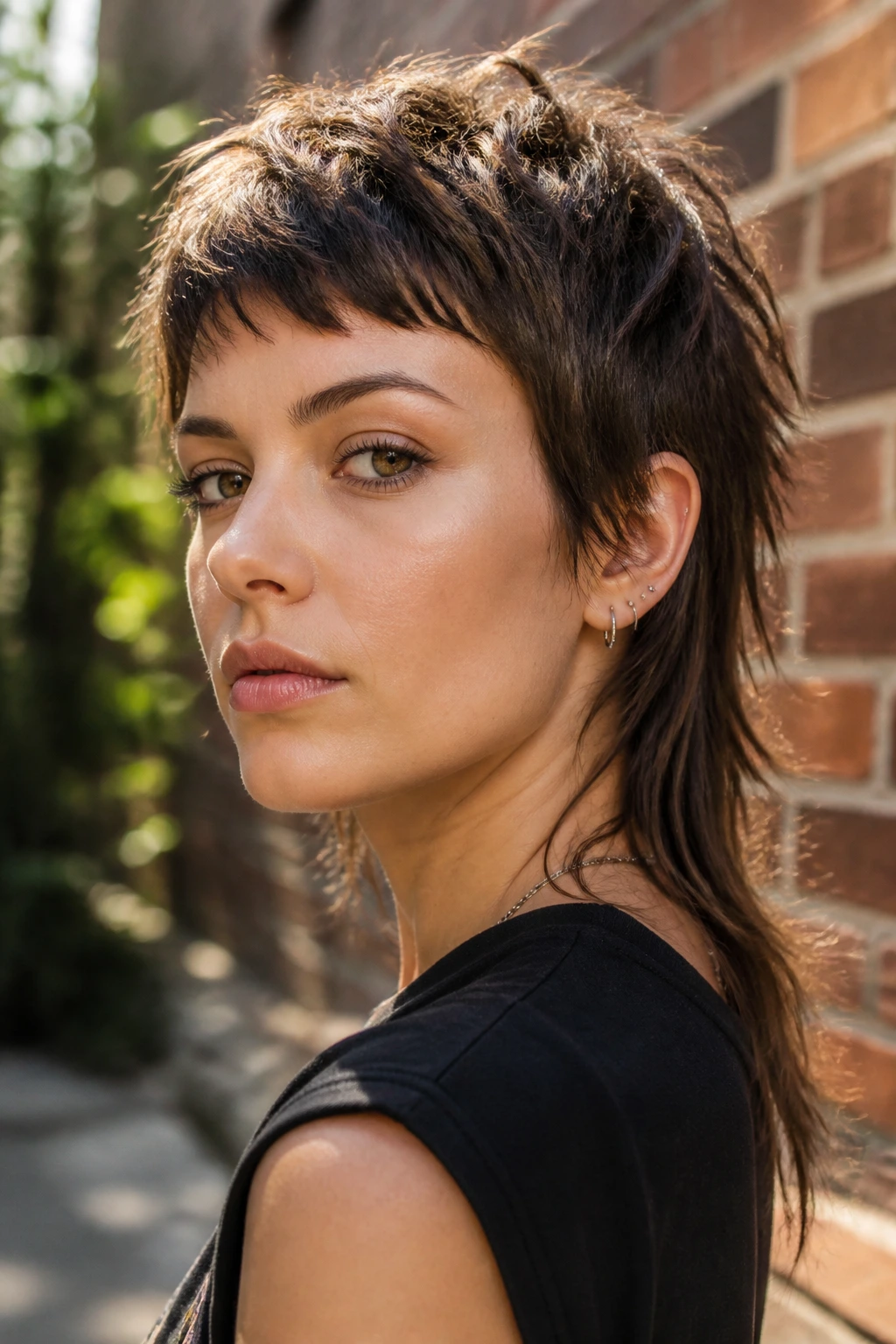
The mullet pixie is for people who want short hair with a little rebellion built in. The front and top stay cropped and energetic, while the back keeps a tail of length that softens the whole thing. It’s sharp without being severe. Slightly unruly. That’s the charm.
The key is balance. If the back gets too long, the haircut slips into a full mullet. If the front gets too short, it can look too severe and lose the playful contrast. A good mullet pixie has a visible transition between the crown and the nape, but the layers still connect. Think choppy, not chopped off.
Styling is easy if you keep it rough. A little mousse at the root, a quick blast with the dryer, and a finger-combed finish usually gets you there. If you over-smooth it, the shape goes sleepy. This cut likes tension.
11. Razor-Cut Bob with Wispy Ends
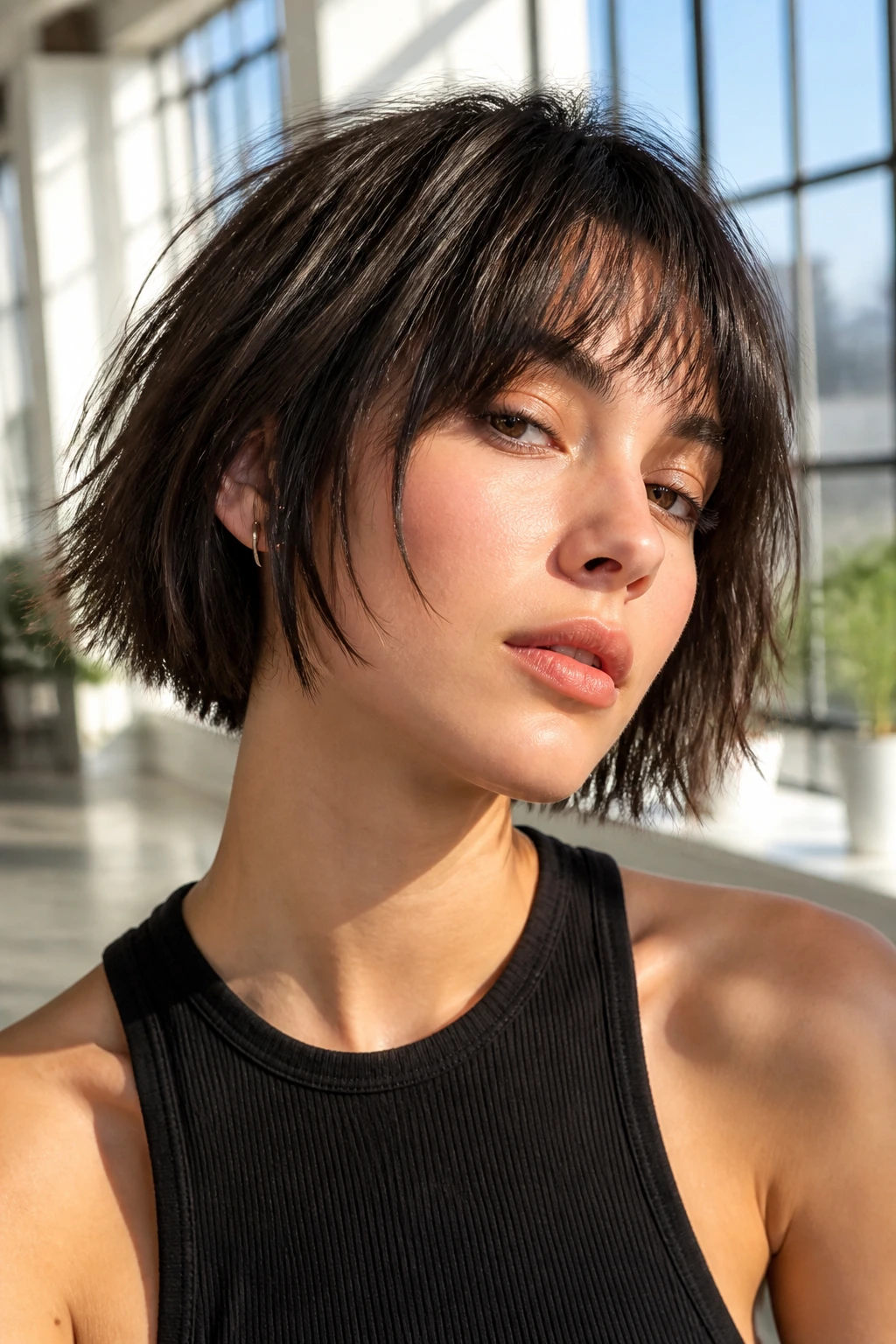
A razor-cut bob has a softer edge than a blunt bob, but don’t confuse soft with harmless. The razor gives the ends a thinner, more broken line, which makes the whole cut move with a bit of smoke around it. It’s a good choice when you want the bob shape but not the tidy, exact feeling of a salon-perfect rectangle.
The wispy ends help on hair that’s heavy or slightly coarse. They break up the density so the bob doesn’t sit like a shelf around the face. If your hair is straight, the razor can create nice movement. If it’s wavy, the cut can look almost liquid when it dries with texture cream.
One caution: a razor cut needs a careful hand. Too much blade work and the ends get frayed. The right version looks airy, not damaged.
12. Layered Crop with Baby Bangs
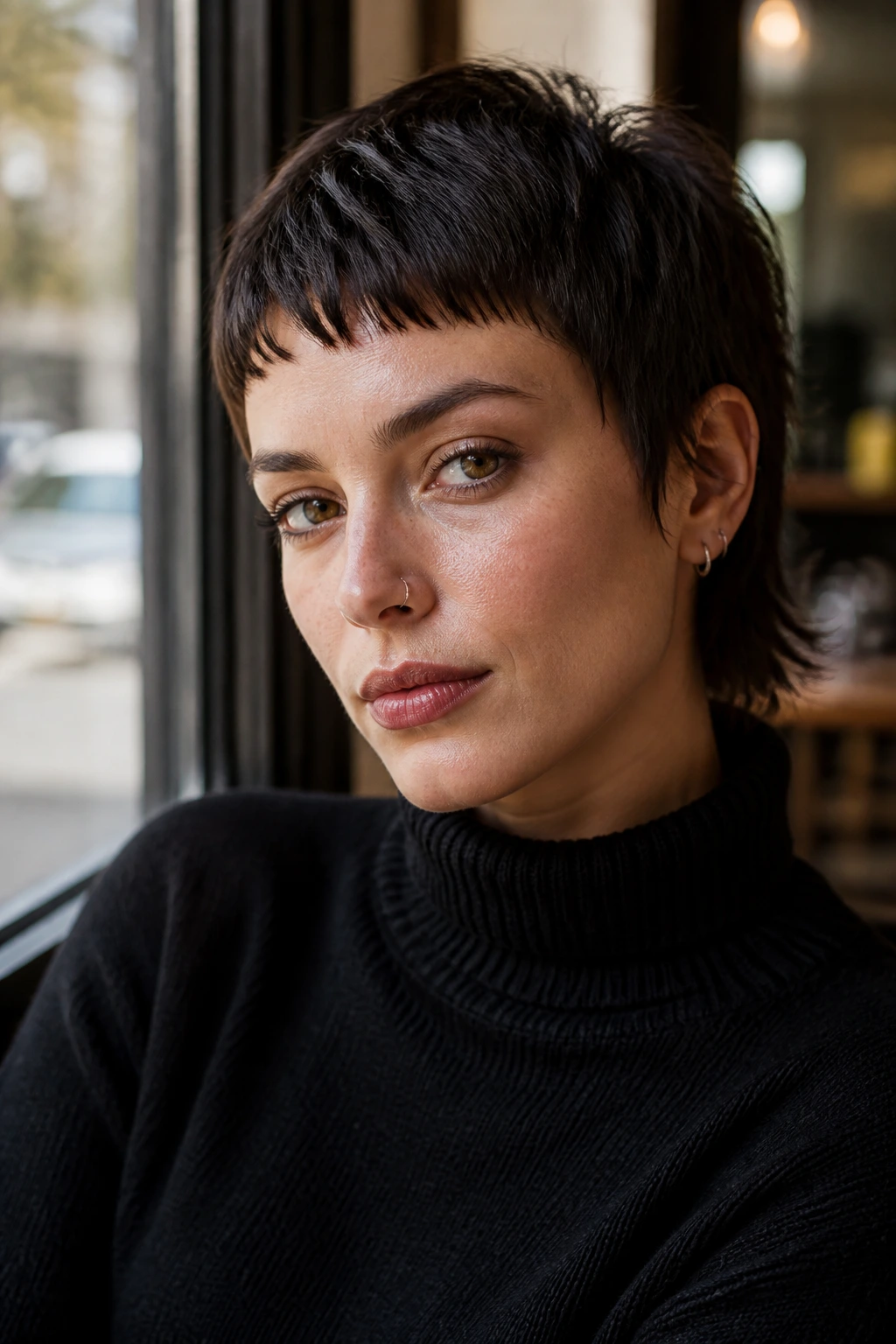
Baby bangs are not shy. Pair them with a layered crop and the whole haircut takes on a sharp, graphic feel that’s more fashion-forward than cute. The bangs land high on the forehead, which means the eyes and cheekbones get more attention. That’s either your favorite thing or your least favorite thing. There’s rarely a middle ground.
How to Get the Most From It
Keep the layers tight around the crown so the top doesn’t flatten into a cap. The crop works best when there’s enough texture to keep the baby bangs from feeling pasted on. If your forehead cowlicks, tell your stylist. A tiny fringe can kick sideways fast if it’s not cut with the growth pattern in mind.
This cut looks especially good with matte styling products. Shine can make it feel costume-like. Dry texture gives it bite. And if you’re nervous about going this short at the front, ask for the bangs slightly longer on the first cut. You can always shorten them later.
13. Curly Mohawk Fade
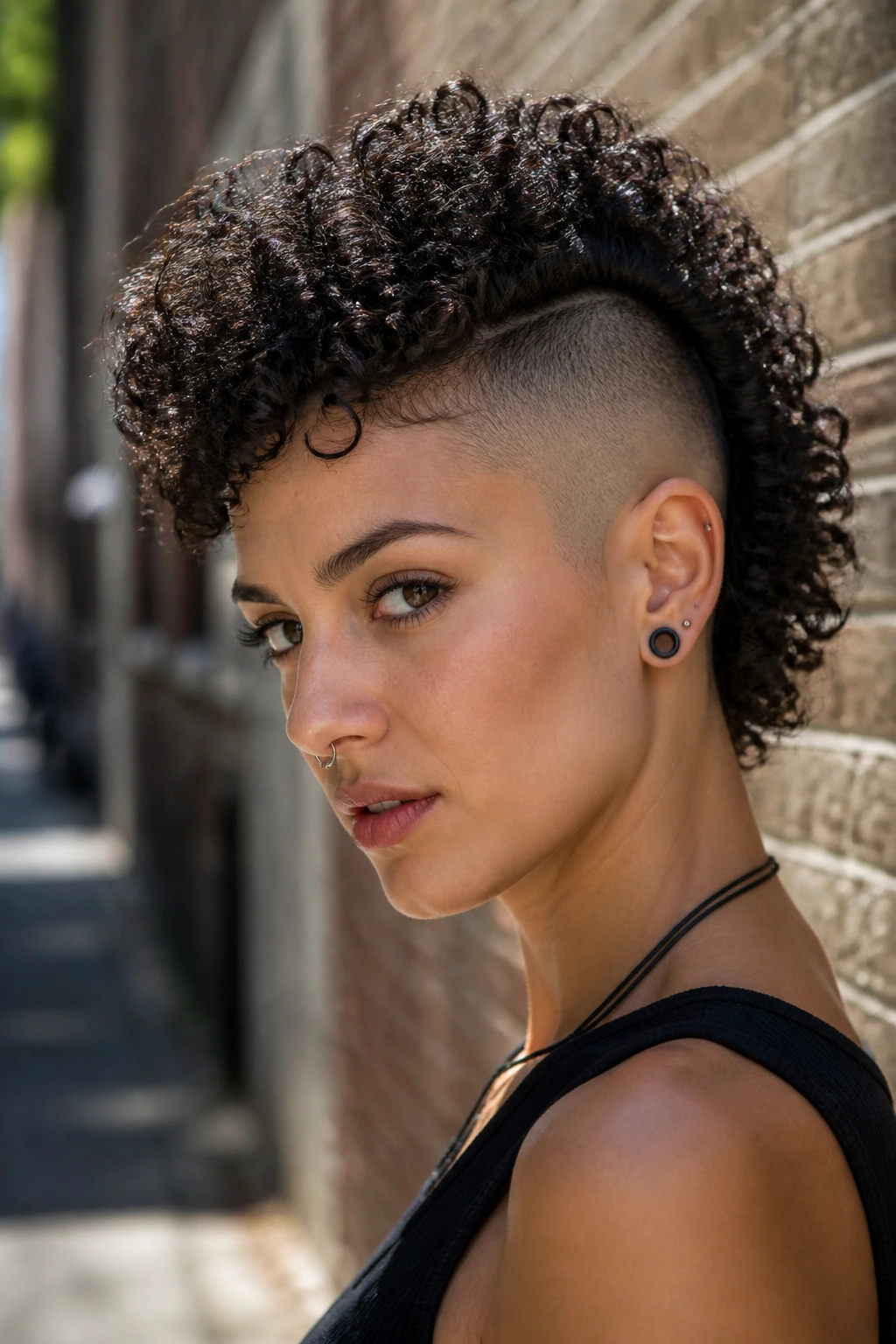
A curly mohawk fade is bold without being blunt about it. The sides are clipped tight, sometimes down to a fade that disappears into the skin, while the curls stay full through the center strip from front to back. The shape naturally pulls the eye upward, which is why it reads so sharply.
Curly hair makes this cut better. Straight hair can wear it, sure, but curls give the center ridge real presence. The important part is keeping the curl strip defined with moisture, because dry curls lose shape and frizz into the fade. A cream or gel mix works well here, and a diffuser helps the top stand up instead of puff sideways.
If you want the look but not the full commitment, keep the sides a little longer and let the center be only slightly taller. It still has the mohawk energy. Just less drama at the grow-out.
14. Slicked-Back Crop
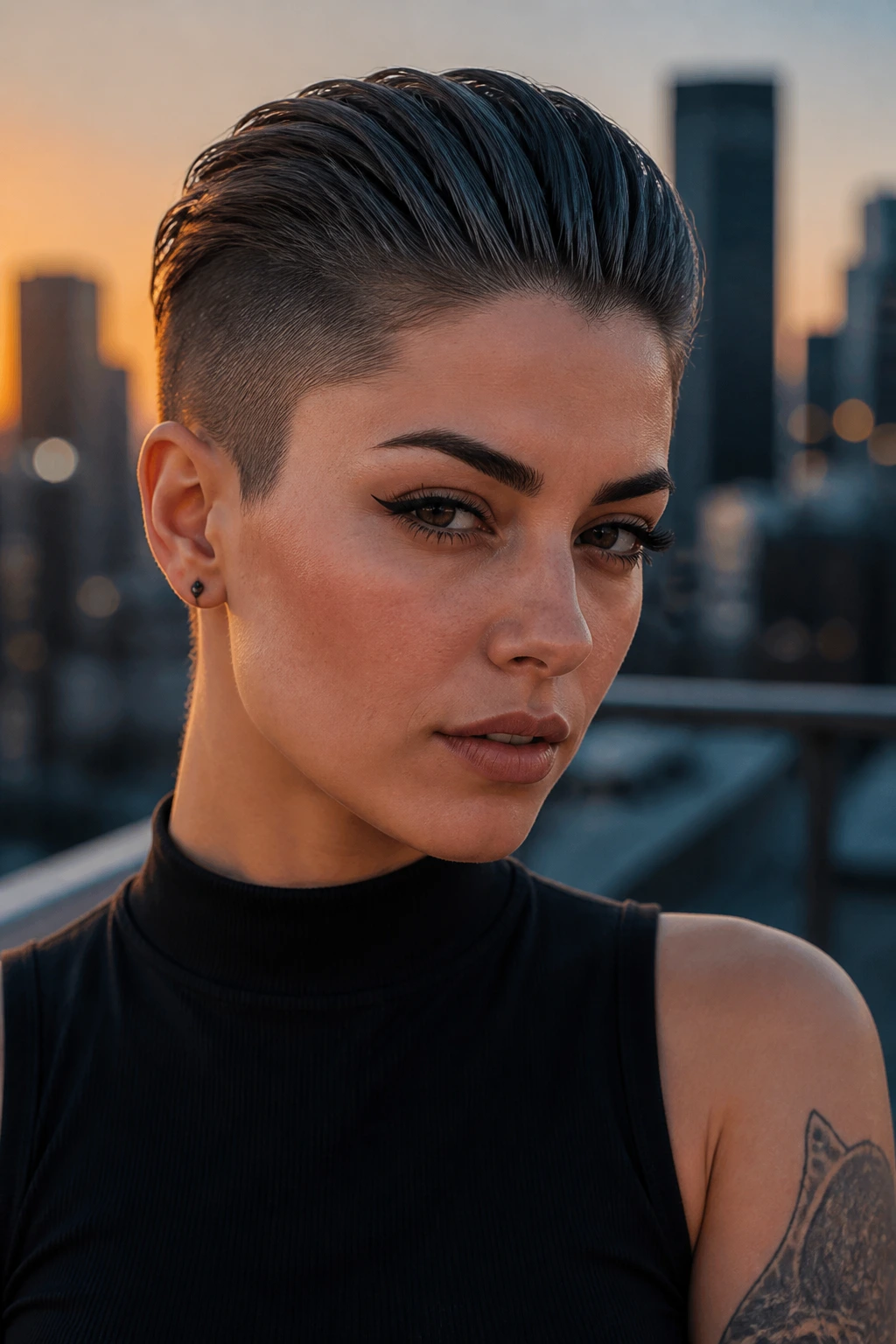
The slicked-back crop looks expensive in the old-fashioned sense of the word—clean lines, no fuss, and a face-first silhouette that doesn’t apologize. The top is short enough to comb back or over with gel, while the sides stay neat and close. It’s a great cut for nights out, but it can also look very sharp with a plain T-shirt and hoops.
What matters here is the head shape. Slicked-back styles show everything. A good crown, a clean hairline, and a neckline that’s trimmed properly all matter more than in a shaggy cut. If the crop is too long on top, it starts to puff. Too short, and you lose the slick-back effect entirely.
Use a strong gel for a wet finish or a styling cream for something softer. Either way, the front should be combed back in one smooth motion, not teased into tiny spikes. That’s the difference between sleek and confused.
15. Tapered Bowl Cut
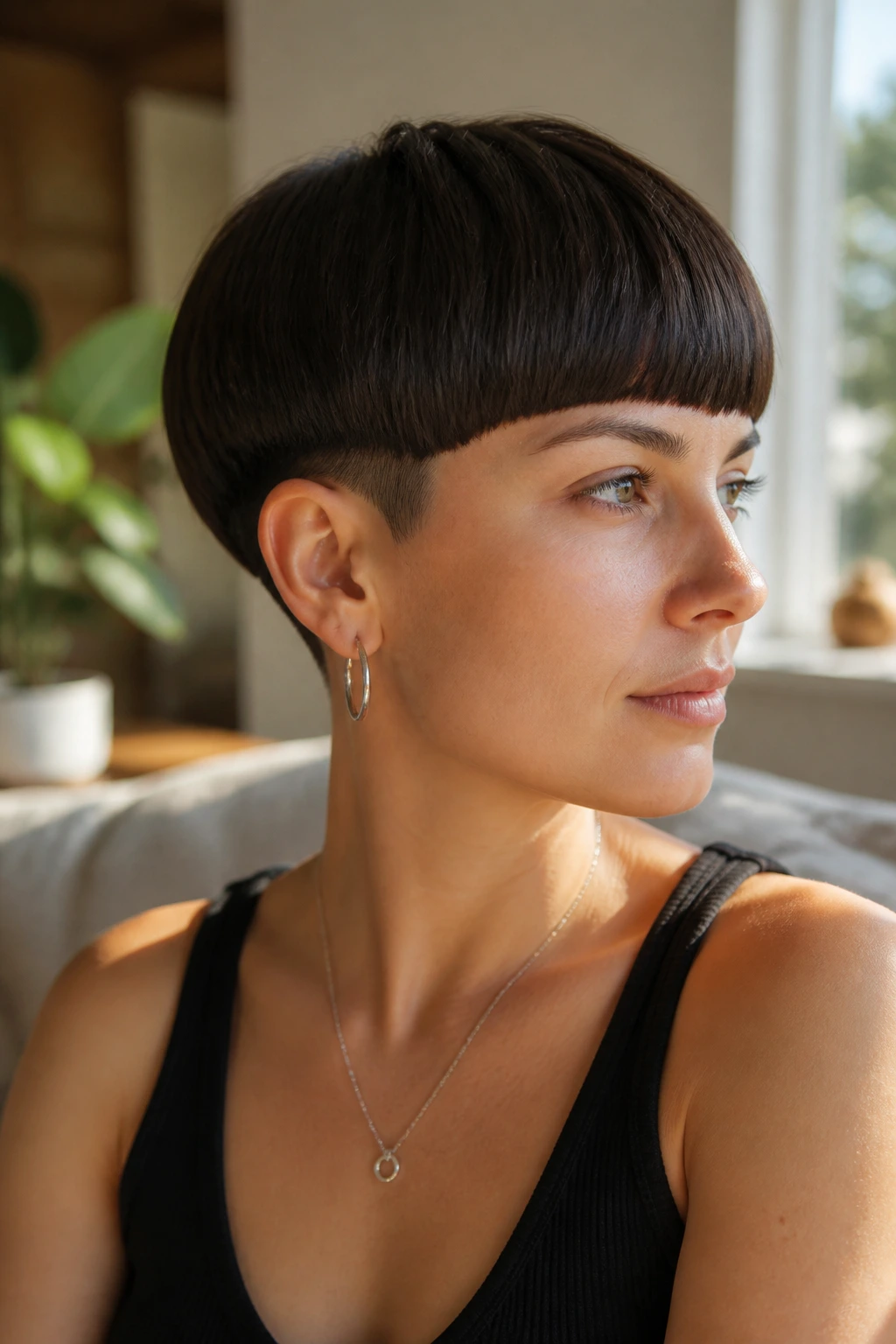
A tapered bowl cut sounds more severe than it usually looks, which is part of why it works. The round perimeter gives the haircut a graphic shape, while the taper at the nape and sides keeps it from landing like a helmet. Done right, it feels strange in the best way.
Why bother with a bowl shape at all? Because it puts the emphasis on line. It frames the eyes and forehead, then lets the rest fall in a clean curve. A tapered version softens the old-school edge with a cleaner neckline and a bit more movement under the ears. It’s especially striking on straight hair, where the line can stay crisp.
Ask for the perimeter to stay full, but not heavy. That means the stylist should remove bulk underneath without thinning the top into fluff. It’s a precise cut. Precision is the whole point.
16. Messy Spiky Pixie
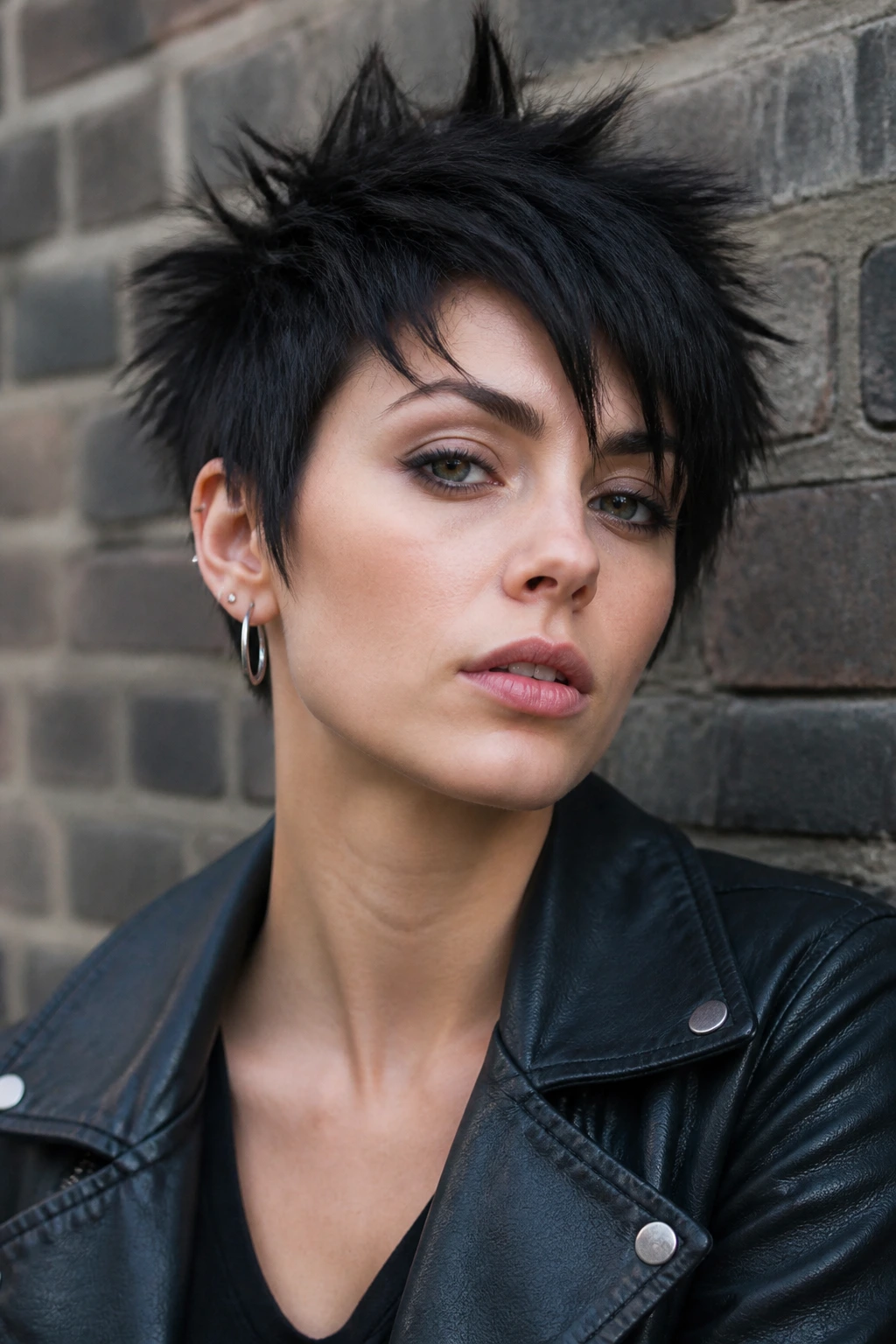
The messy spiky pixie is a little more punk than polished, and that’s exactly why it stays interesting. The top is short enough to stand up in small pieces, while the sides stay close and clean. It doesn’t need symmetry. In fact, it looks better when a few pieces tilt in the wrong direction.
A good spiky pixie depends on texture in the cut, not only the product. If the hair is cut too bluntly, the spikes sit in clumps. If it’s layered too much, the shape disappears. The sweet spot is short, choppy pieces at the crown and slightly longer bits at the front for direction.
Use a pea-sized amount of matte paste on dry hair and pinch the top upward with your fingers. Don’t rake it through like you’re combing a dog. That flattens the lift and takes away the point of the style.
17. Feathered 70s Short Shag
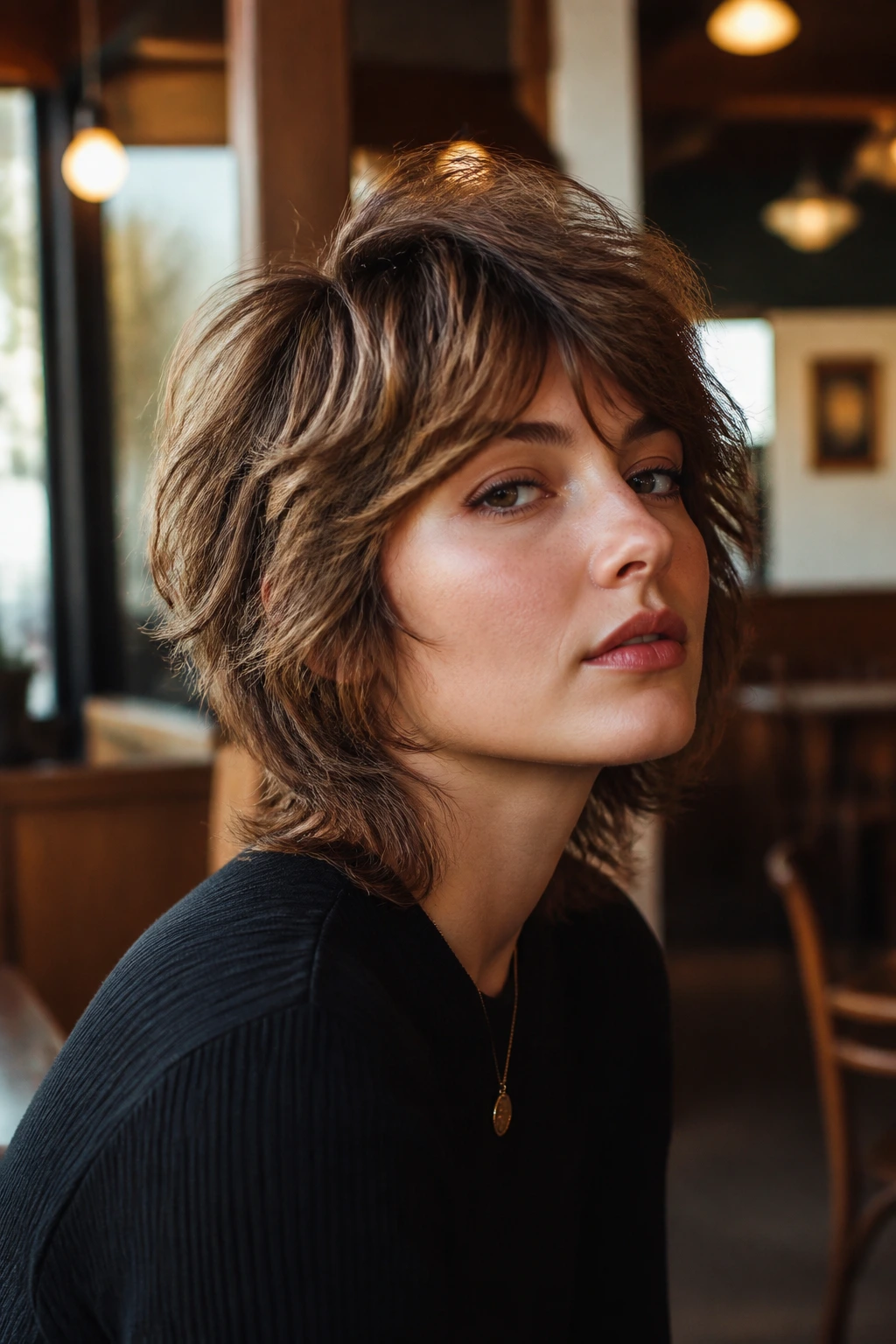
The feathered short shag is one of those cuts that keeps coming back because it solves a real problem: how to make short hair feel soft without making it boring. The layers fall away from the face, the crown gets lift, and the ends look broken-up in a way that creates movement all over the head.
There’s a little retro here, but not in a costume way. The feathering around the cheeks and neck gives the haircut air, which means it doesn’t sit heavy even when the hair is dense. On waves, it looks easy. On straighter textures, a round brush or a rough blow-dry can pull the layers into shape fast.
This is a good cut if you want edge that isn’t severe. It looks a bit undone, but there’s structure underneath. That’s the sweet spot people chase and rarely name.
18. Mushroom Cut with Micro Fringe
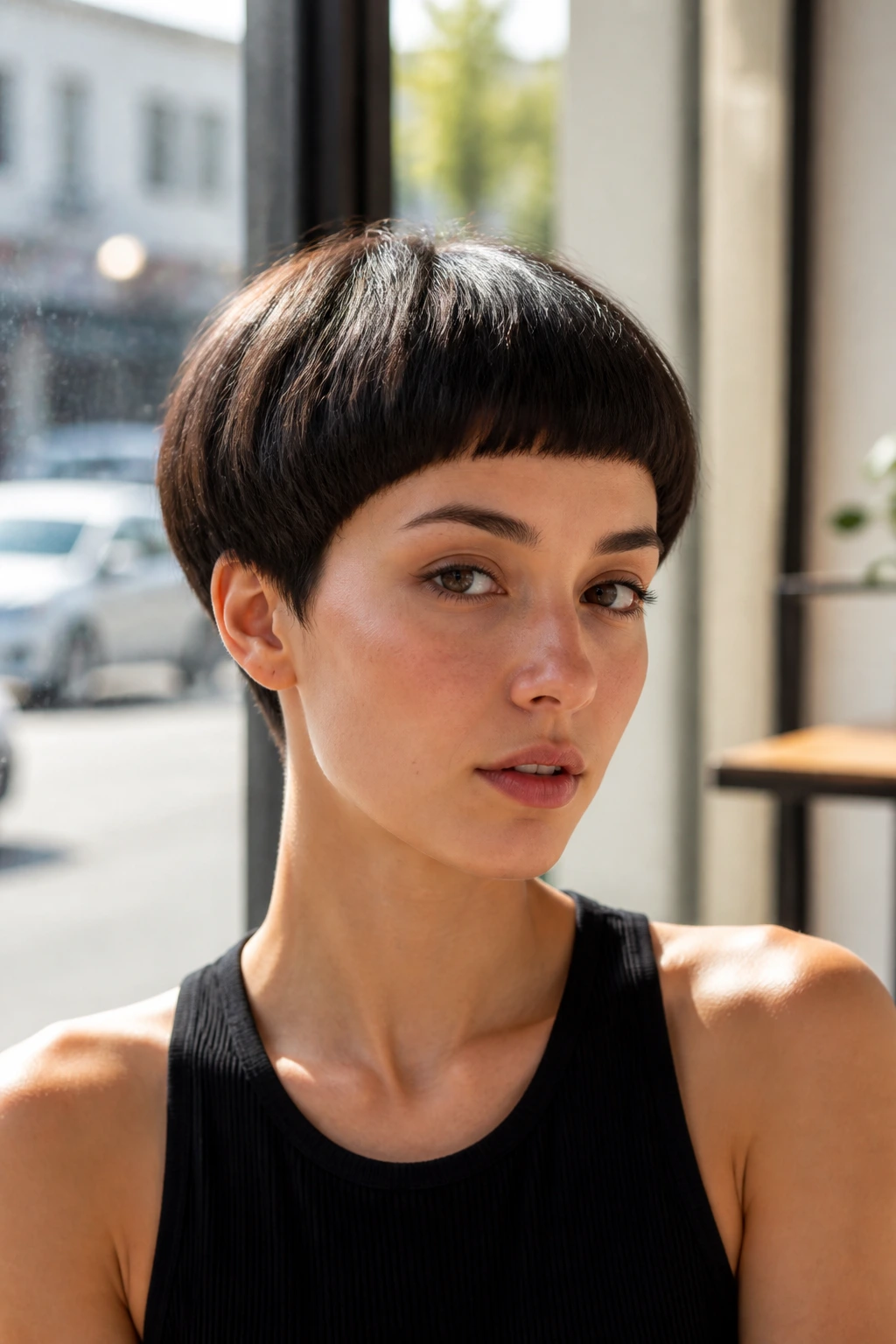
The mushroom cut gets a bad reputation from old photos, but the modern version can be weird, sharp, and genuinely cool. Keep the shape rounded, shorten the interior, and pair it with a micro fringe. Suddenly the cut reads more fashion-editor than childhood memory.
Why It Works
The rounded outline creates a strong silhouette, which is useful on straight or slightly wavy hair. The micro fringe keeps the top visually tight so the shape doesn’t balloon upward. If you want the look to feel current, the key is keeping the perimeter clean and the texture slightly broken—not polished to a mirror finish.
This is not a haircut for everyone, and that’s part of its appeal. It has personality built in. If your face is very long, leaving a touch more length at the sides can help balance the shape. If your hair is thick, ask for internal debulking so the bowl doesn’t become too dense.
19. Ear-Length Crop with Sideburn Detail
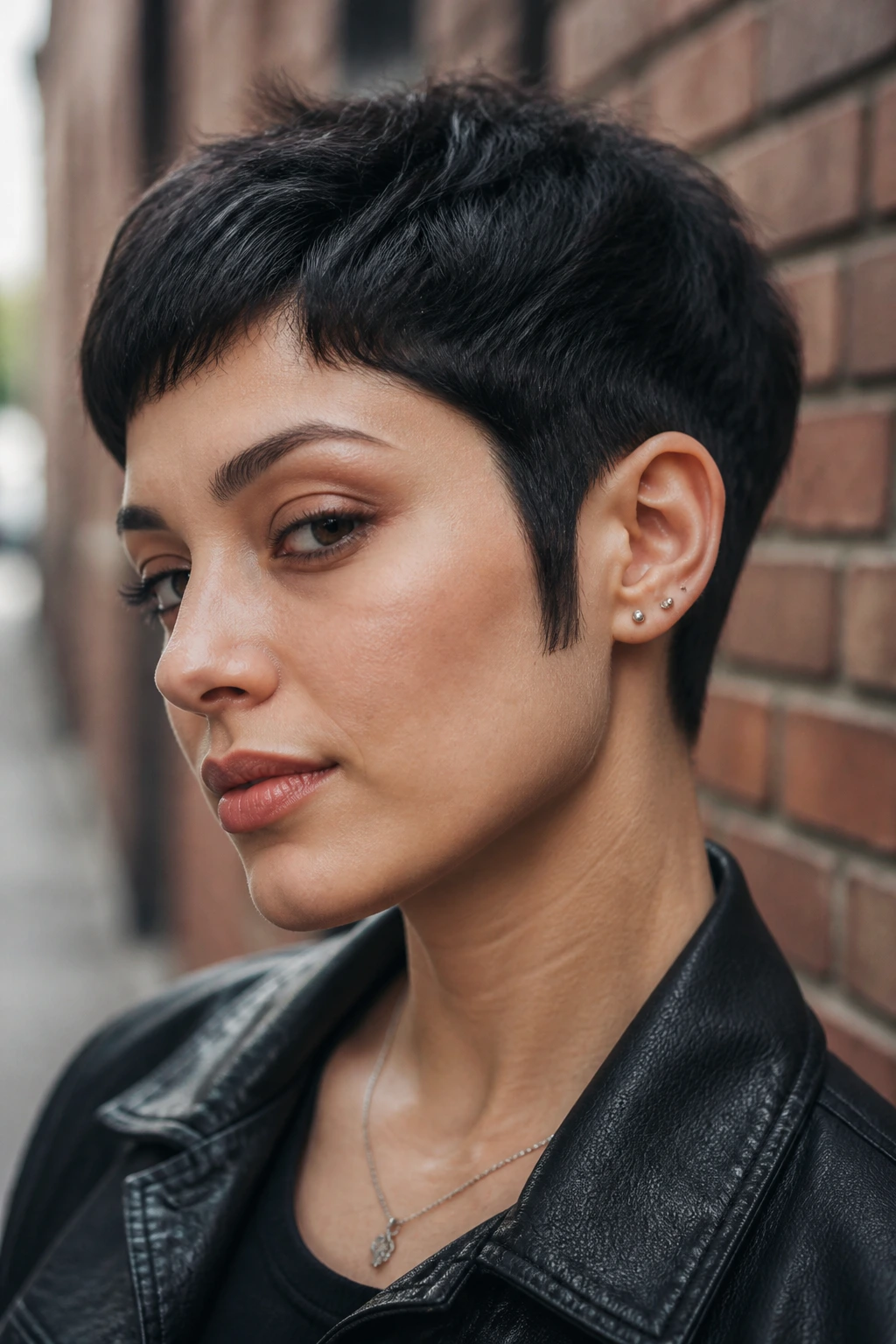
An ear-length crop with sideburn detail is one of the sleeper cuts on this list. It looks simple at first. Then you notice the carved sideburns, the clean line around the ears, and the way the length stops right where the jaw starts to do interesting things.
This style works because the sideburn detail acts like punctuation. It sharpens the cut without needing a shaved design or an extreme fringe. The crop itself can be blunt, piecey, or slightly layered, depending on how much movement you want. If your hair is straight, the ear-length shape reads crisp. If it’s wavy, the sideburns keep the cut from drifting too casual.
It’s a smart option if you want edge but still need a haircut that can be tucked behind the ear or worn under a beanie without collapsing.
20. Two-Tone Peekaboo Pixie
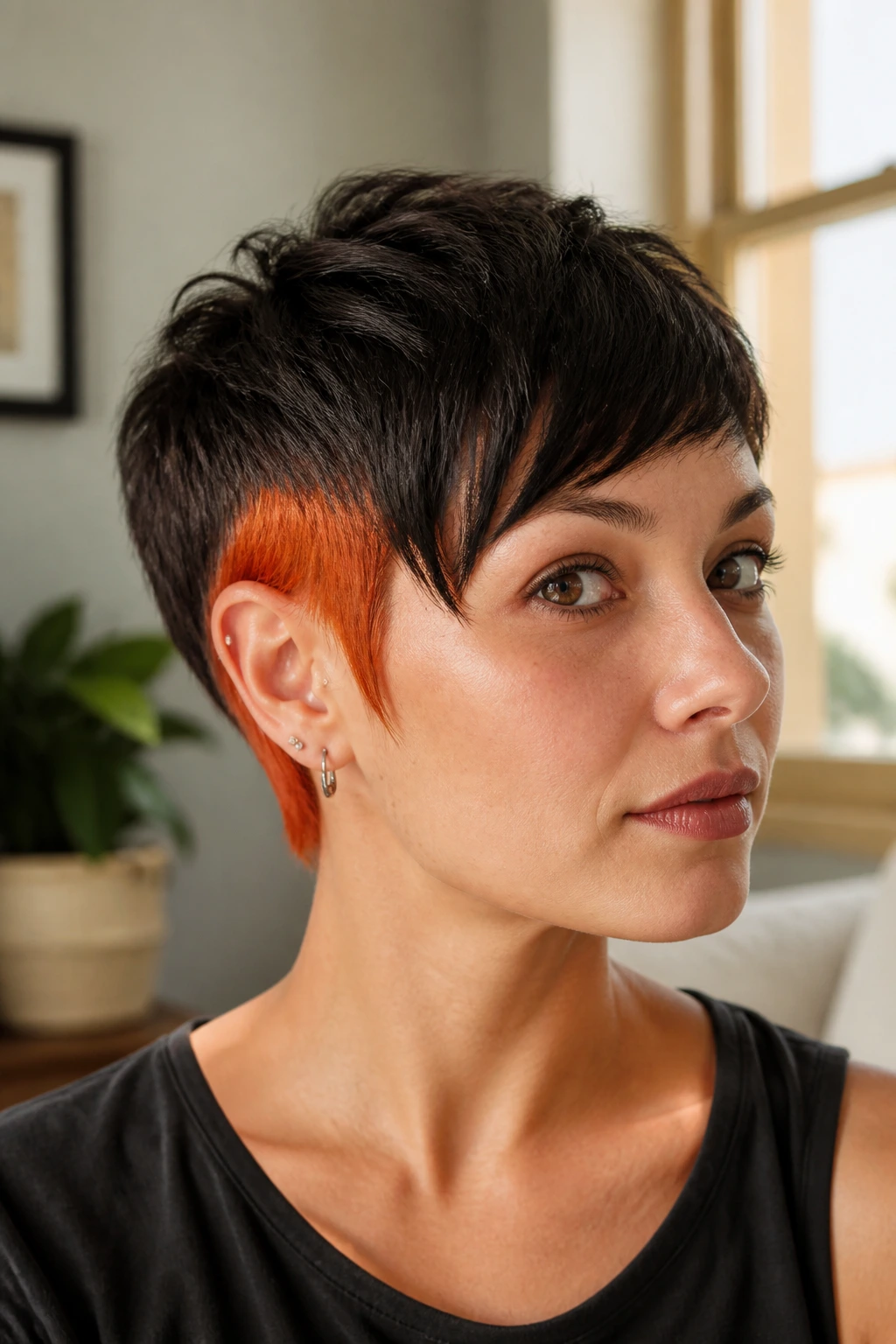
A two-tone peekaboo pixie is for someone who wants color to do some of the heavy lifting. The surface layer can stay dark, natural, or muted, while a brighter shade hides underneath and flashes when the hair moves or gets tucked behind the ear. That surprise is the fun part.
Color placement matters more than brightness. A neon strip under a flat pixie can look too obvious if it’s too wide. A narrow panel under the top layer creates a cleaner peekaboo effect. Think of it as a controlled reveal, not a full-on billboard.
The cut itself should stay compact so the color shows in the right places. Short textured pieces at the crown and a slightly longer fringe make the contrast easier to see. Maintenance depends on the dye choice, but the haircut usually grows out with enough shape to keep the color looking intentional for a while.
21. Disconnected Bob
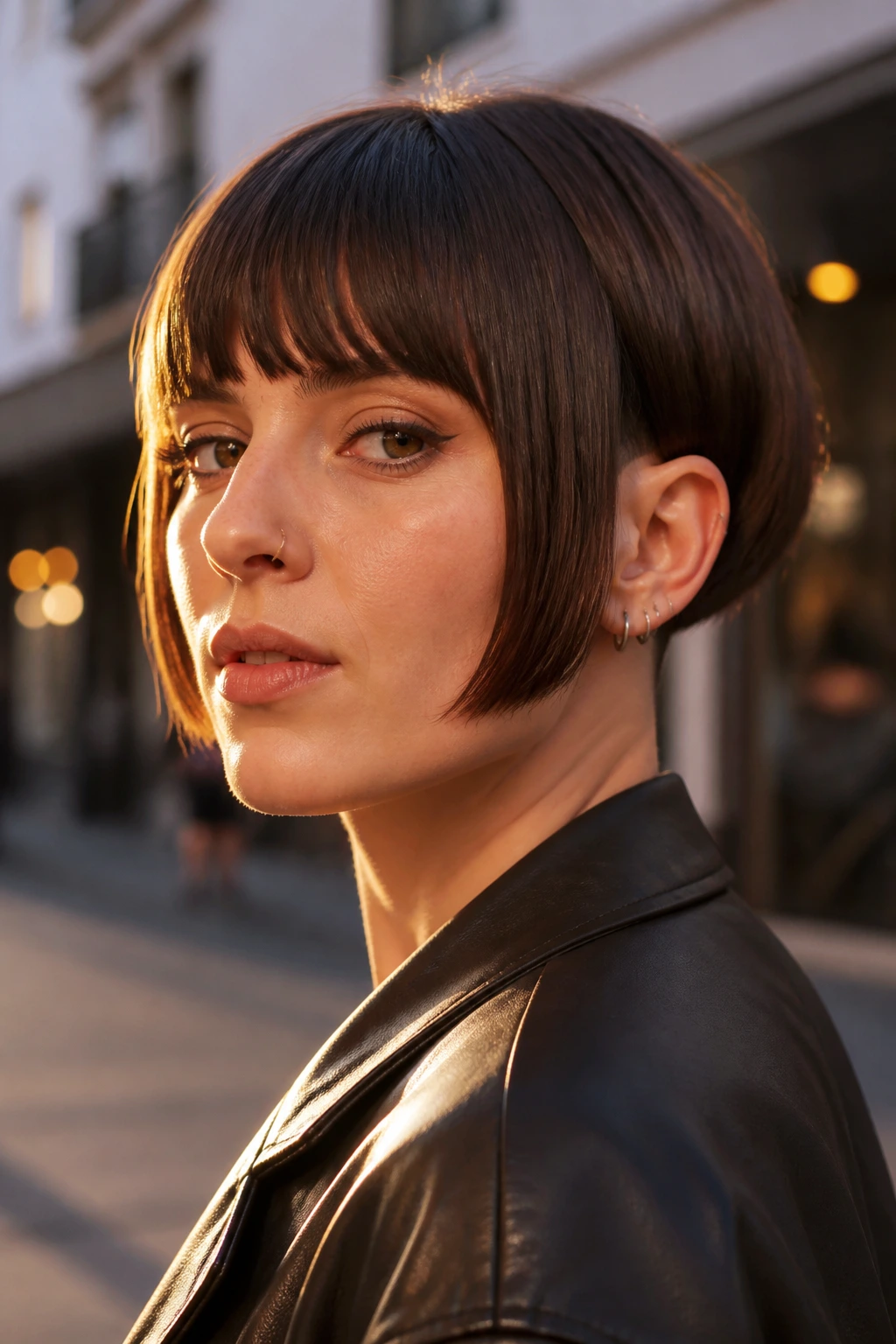
The disconnected bob has a split personality in the best possible way. One layer sits close and neat. Another layer falls longer and more visible, without a gradual blend between them. That sharp break creates edge instantly, even if the overall length is still bob-like and wearable.
What Makes It Different
Most bobs rely on a smooth transition from short to long. This one doesn’t. The separation is the point. It gives the cut a kind of architectural tension, especially when the top layer is tucked or styled back and the lower layer hangs loose.
It’s a strong pick if your hair is thick, because the disconnection can remove weight without making the whole head puff out. Ask your stylist to be precise about where the visible line should sit. If the break is too high, the cut can look choppy in a bad way. Too low, and you lose the effect.
22. Curly Bob with Shaved Nape
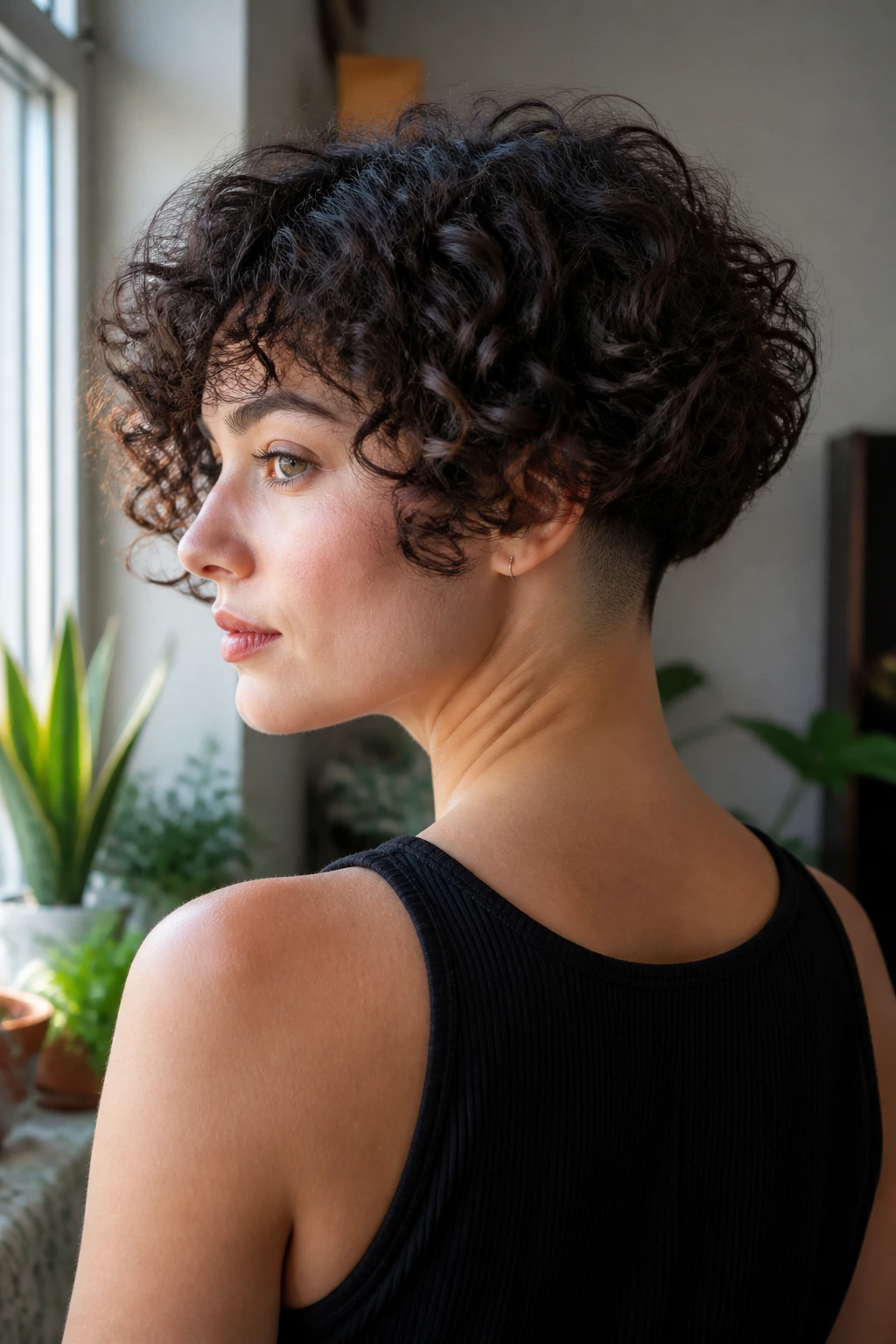
The curly bob with a shaved nape is one of my favorites for women who want clean structure under a lot of texture. From the front, you get a full, rounded bob. From the back, the shaved nape removes bulk and gives the curls room to sit instead of stacking up like a triangle.
That hidden undercut changes the entire wear pattern. It lets the curls fall better, especially if your hair tends to collect weight at the neckline. It also makes the grow-out less annoying. The bob keeps its visible shape while the nape can be cleaned up before it gets shaggy.
Ask for the shaved section to stay low and tight so it doesn’t show unless the hair moves. The result is practical, but not plain. That’s a useful combination.
23. Faux Hawk Crop
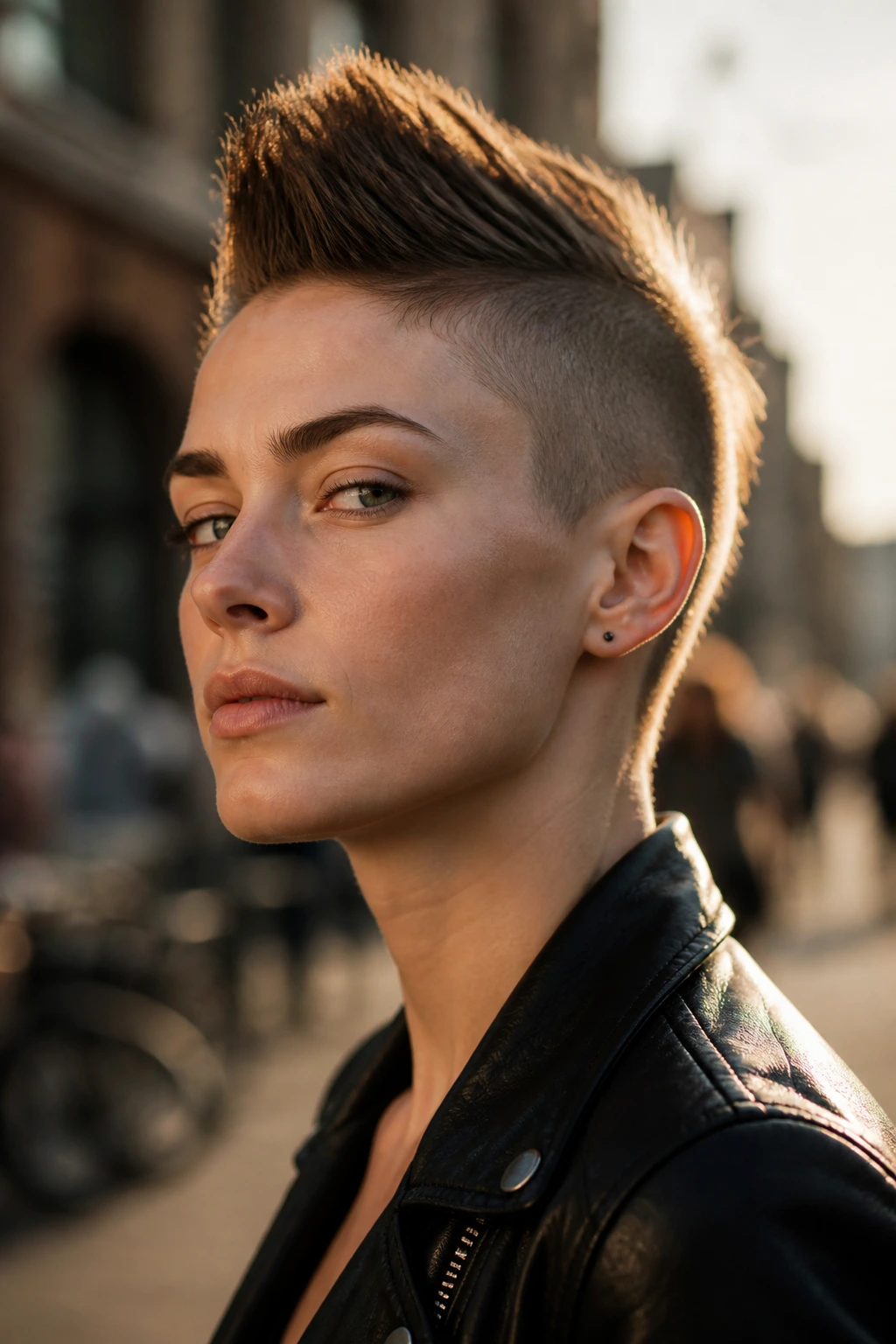
A faux hawk crop gives you mohawk energy without shaving the sides down to nothing. The center ridge is left longer and styled upward or forward, while the sides are clipped short enough to keep the shape clean. It reads daring, but it’s easier to grow out than a true mohawk.
The reason this cut works is that it directs the eye in one line. Up the center. That shape looks sharper if the sides are reduced enough to create a clear contrast, but not so short that the whole cut becomes harsh. If your hair is thick, the faux hawk crop is a nice way to remove bulk and keep some height.
Use a matte product if you want the texture to look rough and punky. Use a gel if you want the center to stay more sculpted. Either way, the top should feel intentional, not exploded.
24. Piecey Crop with Long Side Fringe
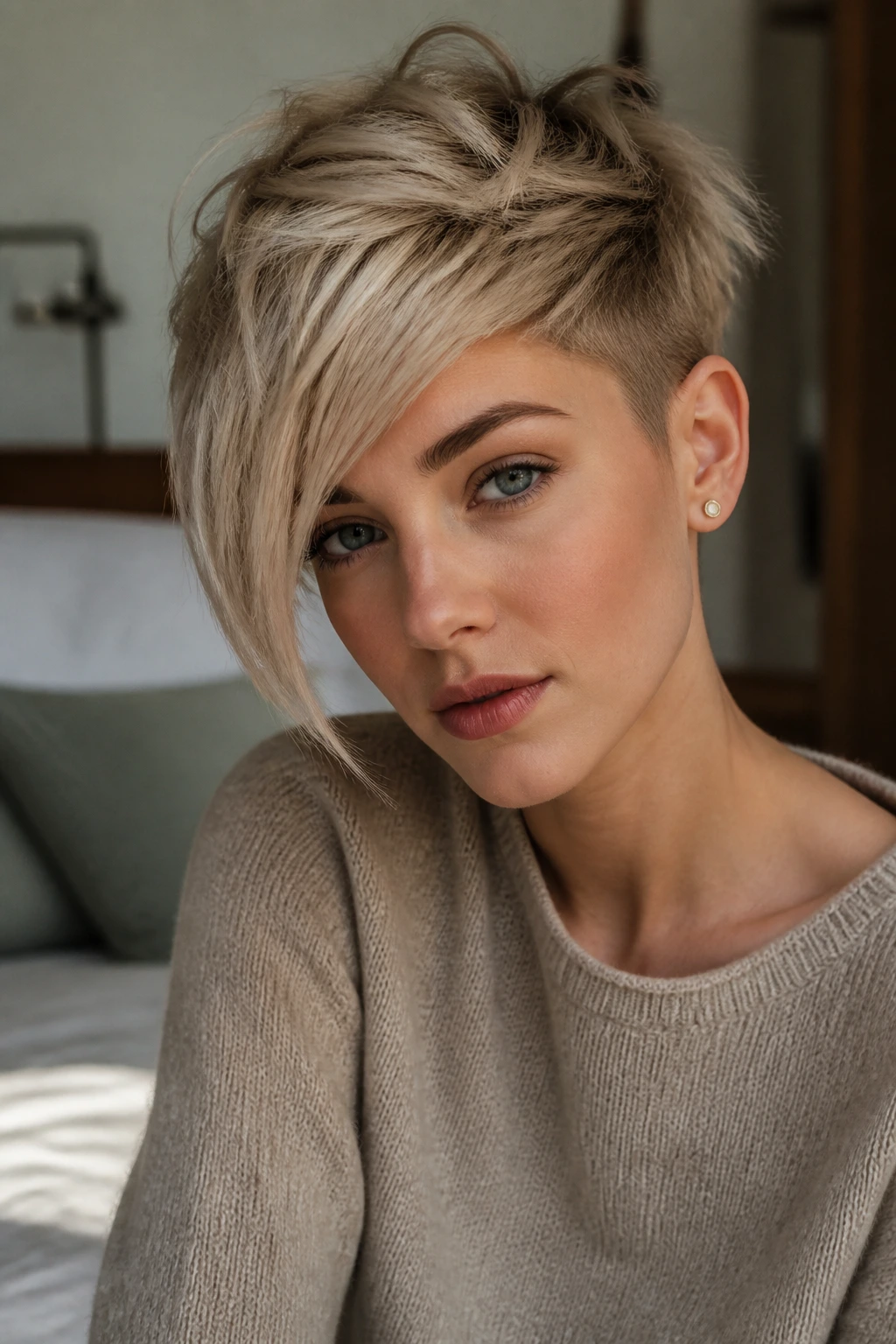
A piecey crop with a long side fringe is the haircut equivalent of a side-eye. It’s short, but one longer section falls across the face and changes the mood. The fringe softens the cut without making it nice, which is a useful trick.
How to Wear It
The key is keeping the crop underneath short enough that the side fringe has something to fall over. If everything is the same length, the cut loses its asymmetry and just becomes a short layered style. Ask for the fringe to start deeper at the crown so it sweeps rather than droops.
This cut works well when you like to switch the direction of your part. Wear the fringe over the left side one day, then flip it the next. It changes the whole face frame. A texture spray helps the shorter layers stay separate, while a light cream keeps the longer fringe from looking stringy.
25. Hime-Inspired Short Cut
A Hime-inspired short cut takes the old courtly idea—short layers around the face, longer pieces near the back—and shrinks it into a sharper, more modern shape. The contrast between the front and back is what gives it attitude. It’s structured, a little theatrical, and unapologetically specific.
The important part is clean separation. The face-framing sections should be precise, not mushy. If they’re too blended, the style loses its identity. Some versions use blunt cheek-length pieces with a longer bob behind them; others keep the back cropped while leaving the sides more deliberate. Either way, the haircut needs definition.
This one looks especially good when the ends are smooth and the line is visible. If the hair is very wavy, a brief flat-iron pass at the front can help the contrast show. Otherwise, the effect can blur before it has a chance to register.
26. Mini Mullet with Face-Framing Pieces
The mini mullet is less outrageous than the word suggests. The front stays cropped and tidy, the face-framing pieces soften the cheekbones, and the back keeps a little extra length so the cut doesn’t stop abruptly at the ears. It’s a smarter, softer version of the classic mullet shape.
The face-framing pieces are the reason this works on real people. They take the cut from “party joke” to something wearable with actual clothes and actual errands. The back still gives you that slight rebellious tail, but the front keeps the haircut connected to the face.
Ask for the front to stay shorter than the back by enough to be visible, but not so much that the difference feels cartoonish. A little texture through the crown helps the top move. Too much smoothing, and the cut loses its wink.
27. Cropped Afro with Shape-Up
A cropped afro with a crisp shape-up is pure geometry. The hair stays short enough to emphasize texture and density, while the line-up around the hairline and temples brings the whole shape into focus. The contrast between soft texture and sharp edges is what makes it hit.
The cut should respect the natural curl pattern, not fight it. A good crop leaves enough length for the hair to spring, but trims the outline so the head shape reads cleanly from every angle. If the line-up is too harsh or too high, it can look disconnected. If it’s too soft, the shape gets lost.
Moisture matters here. A leave-in and a light oil on the ends keep the crop from looking dry. And yes, regular shaping matters too. The line-up is half the haircut.
28. Short Wet-Look Sculpted Cut
A short wet-look sculpted cut is what you reach for when you want short hair to feel intentional enough to pass for art. The hair is styled close to the head with shine, direction, and a controlled shape that looks sleek instead of stiff. It can be finger-waved, side-parted, swept back, or curved around the ear.
This cut lives or dies on product choice. A light gel gives a more flexible sheen. A stronger gel or mousse combo gives more hold. The trick is not drowning the hair. Too much product makes the ends clump and the scalp look greasy. Too little, and the sculpted shape slides apart before you leave the house.
The best version highlights the hairline and the curve of the head. It’s bold, yes, but in a clean, architectural way. And when the light hits that glossy surface, the whole cut looks almost carved.
Why Short, Edgy Cuts Work on the Head You Actually Have
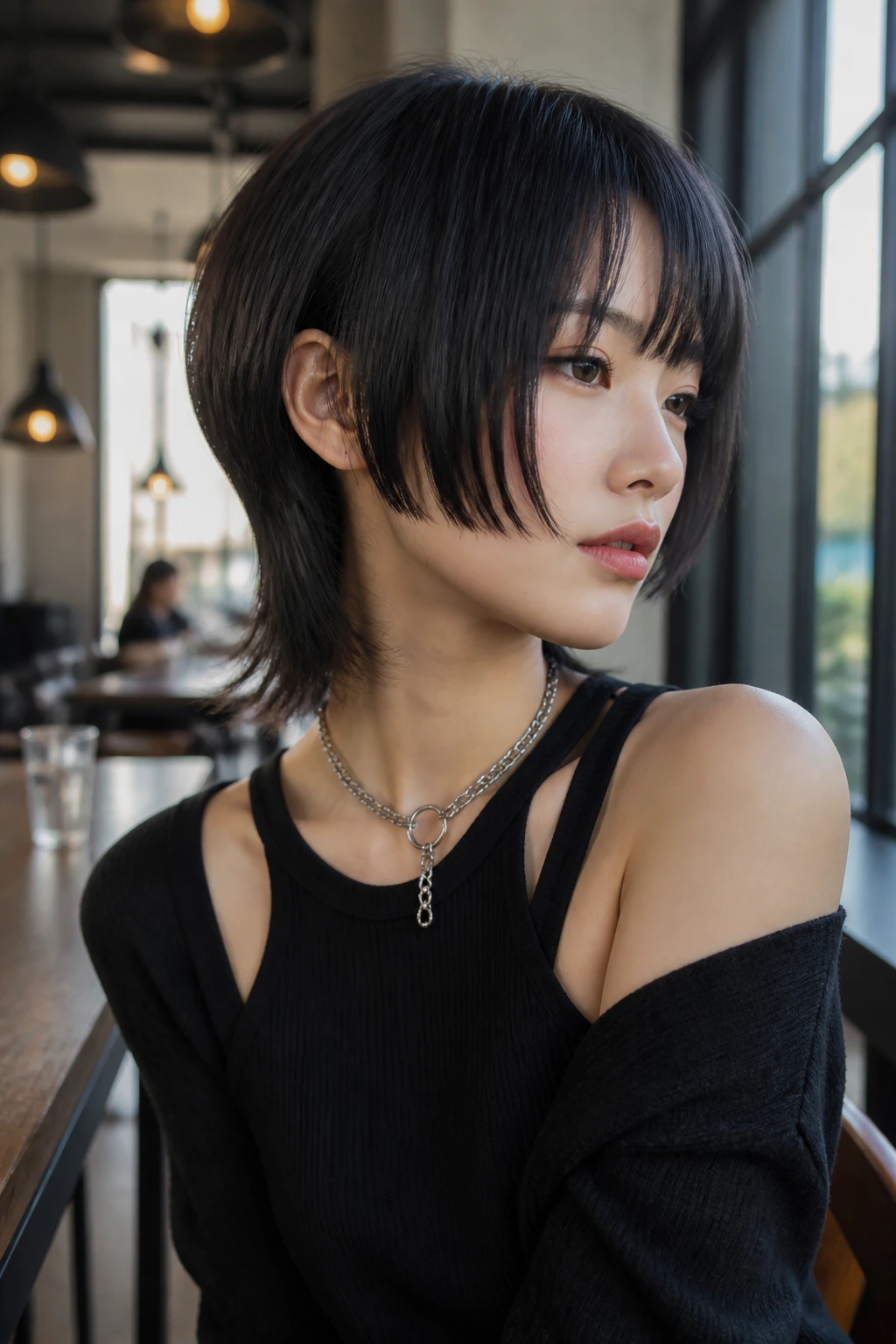
The best funky short haircuts aren’t picked from a list of fantasy faces. They’re chosen for the head you’ve got: your crown, your cowlicks, your density, your ears, your neckline, your curl pattern. That sounds obvious, but a lot of people skip it and end up blaming the haircut instead of the fit.
Short hair gives you less room to hide a bad shape. That’s not a downside. It’s a filter. A clean taper at the nape can make the whole profile look tidier. A stronger fringe can balance a long forehead. A heavier side can soften a sharp jaw. A shaved section can remove bulk in places where the hair keeps swelling no matter what you do. The trick is not to force the hair into a trend. It’s to make the trend obey your actual texture.
Tools That Keep a Short Cut Looking Sharp

- Hair scissors or salon shears: For tiny trim cleanup only if you know what you’re doing; cheap kitchen scissors will chew the ends.
- Fine-tooth comb and tail comb: Useful for parting, sectioning, and keeping the fringe in line while you dry.
- Vent brush or small round brush: A vent brush helps rough-dry short hair fast, while a small round brush gives the top lift.
- Blow dryer with concentrator nozzle: The nozzle matters. It points the air where you want it instead of blasting the whole head into frizz.
- Diffuser: Best for curls, waves, and short shags that need shape without being flattened.
- Matte paste or clay: Ideal for piecey pixies, crops, and spiky looks.
- Light gel or styling cream: Better for slicked-back cuts, wet looks, and curly styles that need control.
- Texturizing spray: Useful when the cut needs separation without a sticky finish.
- Section clips: Small, cheap, and worth having when the top and fringe need separate handling.
- Edge trimmer or professional clippers: Handy for maintaining a nape or undercut between salon visits, though many people should leave the first shaping to a stylist.
How to Choose the Right Funky Short Haircut for Your Texture and Face
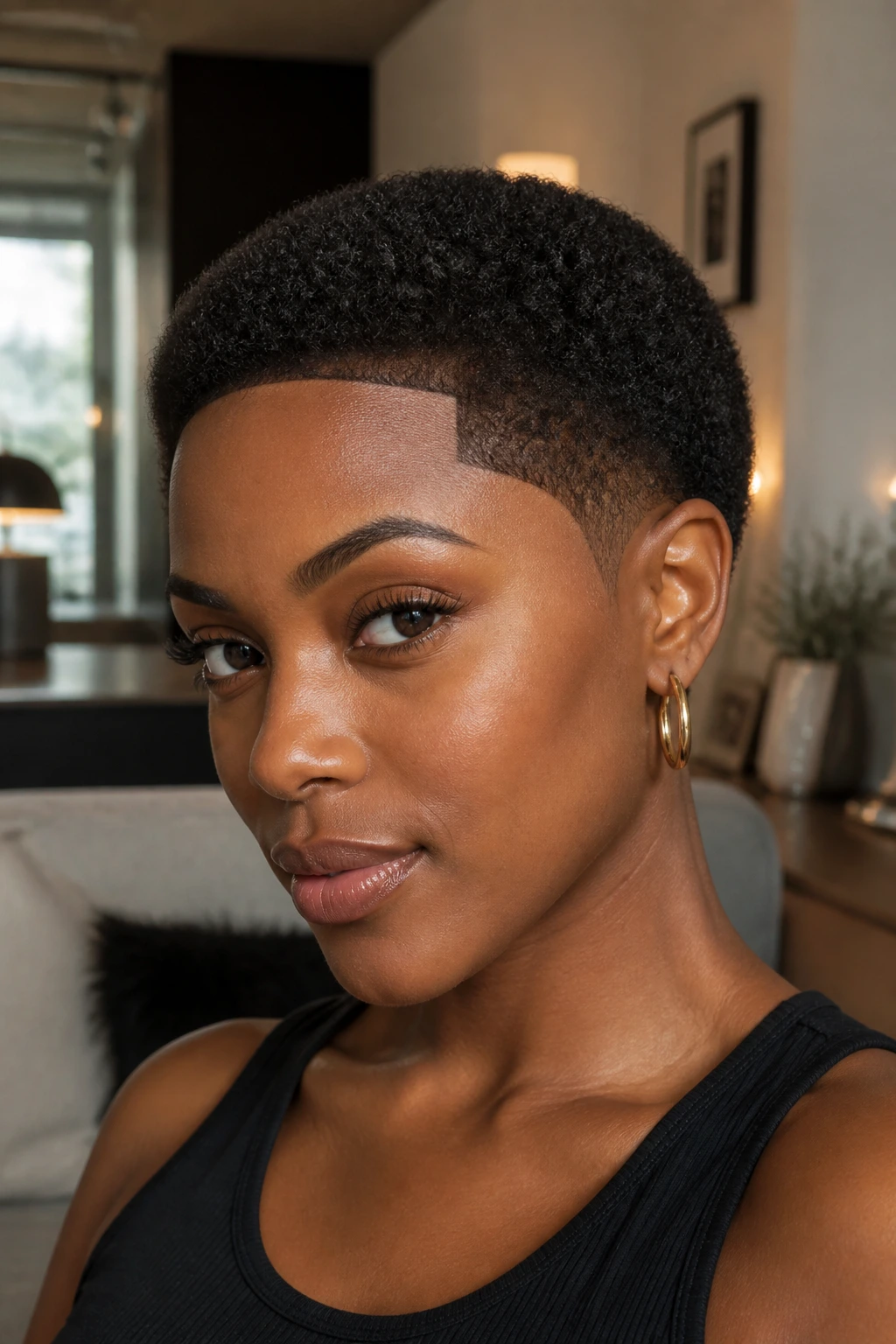
Fine hair usually benefits from blunt lines, cropped pixies, and bobs with a solid perimeter. Too many layers can make the hair disappear. If you want movement, keep the layers short and controlled so the ends don’t look thin.
Thick hair tends to love undercuts, shags, wolf crops, and tapered shapes that remove weight in the right spots. If the haircut is too one-length, the bulk collects at the sides and the silhouette turns heavy. The fix is usually internal debulking, not more length.
Curly and coily hair needs enough shape at the top to keep the curl pattern visible. Dry cutting often helps because curls shrink as they dry, and wet cuts can lie to everyone in the room. A good stylist will leave enough length to show movement while trimming the outline so it doesn’t balloon.
Cowlicks and growth patterns are the wild cards. If the hair kicks forward at the crown, a super-short fringe may need more length than you expected. If a nape swirl pushes hair up, a tight undercut can help it behave. There’s no shame in designing around the cowlick. Fighting it is the expensive option.
Face shape matters less than people pretend, but it still counts. Shorter fringe and volume at the sides can balance a longer face. Extra height on top can elongate a round face if that’s what you want. A heavy jawline often looks better with soft pieces around the cheek and ear rather than a hard line right at the chin.
How to Explain the Look at the Salon
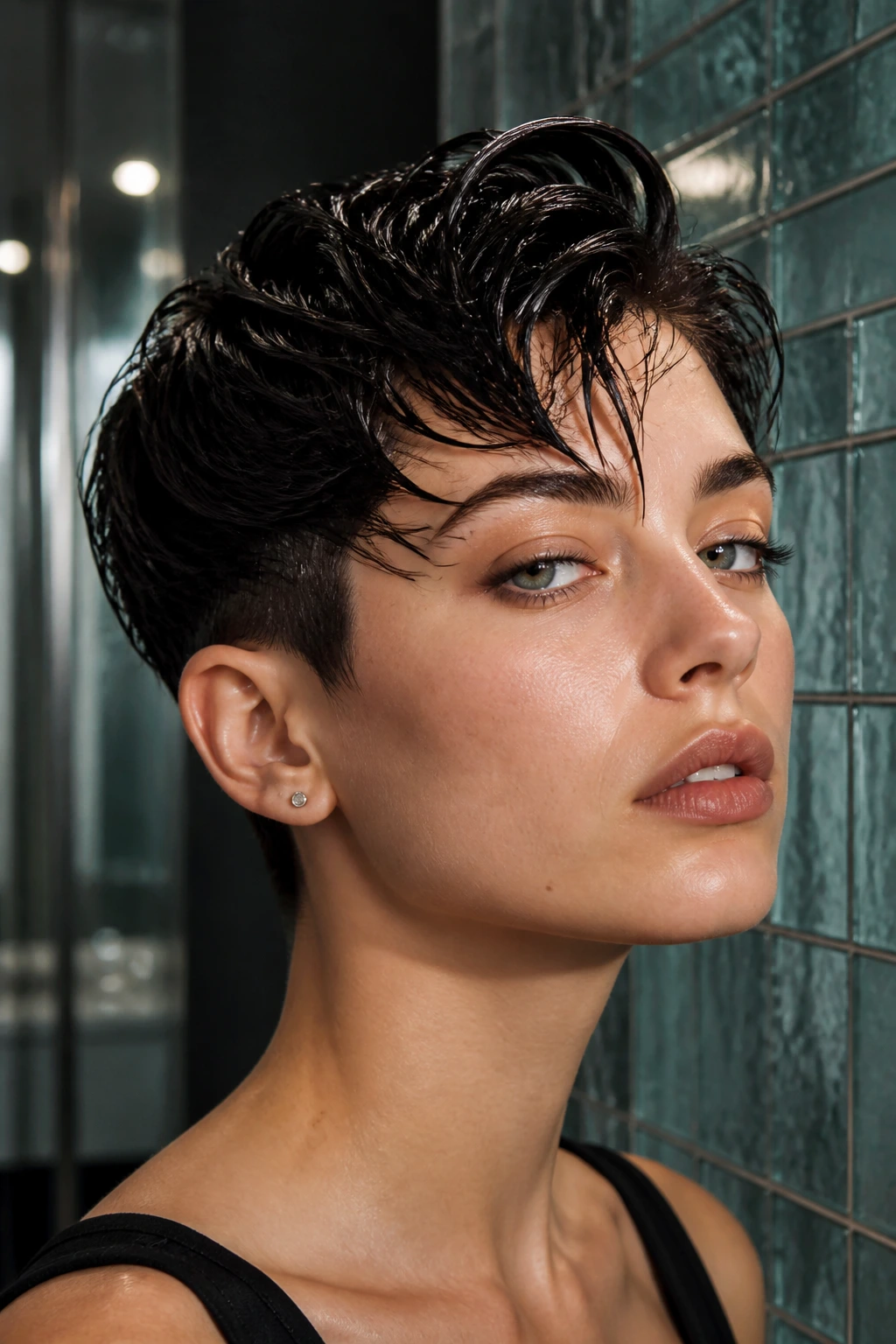
Bring pictures. Three, not twenty. One for the front shape, one for the side profile, and one for the neckline is better than a pile of random screenshots that all disagree with each other. The point isn’t to copy one face exactly. It’s to show the parts you care about.
Use plain language. Say where you want the hair to sit: above the brow, at the jaw, skimming the ear, shaved at the nape, longer on one side, tighter at the temples. Those details matter more than a trendy haircut name if the stylist hasn’t heard the same name the same way you mean it.
Also say what you do not want. If you hate bangs in your eyes, say that. If you want to tuck one side, say that. If you refuse to blow-dry every day, that changes the cut. A good stylist can work with bluntness. They cannot work with mind reading.
How to Style These Cuts Without Overthinking Them
Short hair is easiest when the product matches the shape. Matte paste or clay gives pixies, crops, and faux hawks separation. Gel gives slicked-back and wet-look styles their hold. Cream or mousse helps shaggy, curly, and wavy cuts keep softness without floating apart.
For most of these cuts, dry the roots first. Start at the crown and push the hair in the direction you want it to live. That matters more than polishing every strand. Once the top has shape, use your fingers or a small brush to direct the fringe and sides.
Air-dry: Best for shaggy, curly, and bixie shapes when you want texture to stay loose.
Blow-dry: Better for blunt bobs, slicked crops, and asymmetrical cuts that need a cleaner line.
Day-two refresh: A little water on the fringe, a tiny bit of paste on the ends, and a quick blast from the dryer usually brings the shape back faster than starting from scratch.
Common Mistakes That Make a Short Edgy Cut Look Flat
Choosing a cut that ignores the cowlick. If your crown fights forward and the fringe keeps splitting, the haircut wasn’t designed for the growth pattern. The fix is to adjust the length and direction before the scissors come out.
Over-thinning thick hair. Some stylists go wild with texturizing shears and leave the ends fuzzy. The hair looks wispy for a week, then puffs out in all the wrong places. A better fix is targeted removal of bulk, not random thinning.
Using the wrong product finish. Shine spray on a spiky pixie can make it look greasy. Matte clay on a slicked-back crop can make it look dusty. Match the finish to the shape.
Letting the neckline grow too long. Short hair depends on the outline. Once the nape starts blurring, the haircut loses its edge fast. A tidy neckline is not optional on these looks.
Ignoring the grow-out plan. Some styles, especially undercuts and micro bangs, need maintenance every 4 to 8 weeks. If you let them wander too long, the original shape gets harder to recover.
Bringing one blurry inspiration photo. If the picture is dark, filtered, or shot from one weird angle, the stylist may miss the key line. Show the front, side, and back whenever possible.
Easy Ways to Personalize the Same Cut
Color Blocking: A dark base with a lighter panel under the top layer makes pixies and bobs look more graphic. Keep the placement narrow if you want the effect to flash only when the hair moves.
Soft Punk: Leave the cut sharp, then style it with a little more movement and less product. This works well for women who want edge without a stiff finish.
Office-Friendly Edge: Keep the lines clean but avoid super-short bangs or shaved designs. A side-swept bob, tapered pixie, or textured crop still reads bold without making every room feel like a statement.
Curly Emphasis: If your hair bends or coils, choose a version that keeps the top long enough to show the pattern. The shape should support the curl, not flatten it into obedience.
Low-Maintenance Version: Ask for a cut that grows out in a useful way—shaggy bixie, short shag, or side-swept crop. Those styles hold their shape longer and don’t demand a constant trim cycle.
Keeping the Shape Between Salon Visits
Short hair needs a maintenance rhythm. Most of these cuts look best with a trim every 4 to 8 weeks, depending on how fast your hair grows and how precise the line is. A buzz cut, micro fringe, or undercut usually wants the tighter end of that window. A shaggy bixie or wolf crop can stretch longer before it starts to lose its edge.
At night, a silk pillowcase helps keep the top from flattening into a bent shape. A bonnet can help too, especially if your hair is curly or heavily texturized. If the fringe kinks while you sleep, mist it lightly in the morning and dry it with your fingers instead of soaking the whole head.
If you color the hair, keep an eye on the grow-out line. Two-tone pixies and peekaboo panels can look intentionally sharp when fresh and slightly accidental once the roots stretch too far. A root touch-up or toner keeps the contrast where it belongs. For shaved sections, even a quick cleanup with clippers around the edges can buy you another week or two before the shape gets fuzzy.
9 Questions People Actually Ask Before Going Short
Will a funky short haircut work if my hair is thick?
Yes, but the cut needs weight removed in the right places. Undercuts, tapered sides, shag layers, and disconnected shapes usually work better than one-length crops that leave the bulk sitting on the head.
What if I have fine hair and want it to look edgy, not limp?
Go for blunt lines, compact shapes, and a little lift at the crown. Fine hair usually benefits from a strong outline more than from too many layers, which can make the ends look see-through.
How do I know if I can pull off micro bangs?
Start by looking at your growth pattern and forehead height. If the hairline kicks up hard or you hate daily styling, a slightly longer fringe may be smarter. Micro bangs need confidence and a trim schedule.
Can I make a short edgy cut work at a job with a dress code?
Usually, yes. The trick is to keep the shape clean and the color natural, then save the more dramatic styling for after work. A textured pixie or asymmetrical bob is easier to tone down than a shaved design.
How often will I need trims?
For short cuts with strong shape, plan on 4 to 6 weeks if you want them crisp. If the cut is more textured and forgiving, 6 to 8 weeks may be enough. The more precise the line, the faster it shows grow-out.
Can I grow out a buzz or pixie without hating every stage?
You can, but you need a plan. The transition looks better when the top is shaped into a short crop or bixie instead of being left to grow into a shapeless mop. Ask for grow-out shaping, not just “let it grow.”
What if I hate styling my hair every morning?
Choose a cut that lives on its own shape, not on repeated heat styling. Shaggy crops, bixies, and tapered pixies usually need less daily work than blunt bobs or slicked-back styles.
Is it okay to cut curly hair short?
Absolutely, but it should be cut with the curl pattern in mind. Dry cutting or curl-specific shaping often gives a better result because the final shape depends on how the curls sit once they shrink.
Should I bring one inspiration photo or several?
Bring several. One photo tells a story about a single angle; three photos tell the stylist where the shape, fringe, and neckline should land. That saves a lot of awkward compromise.
Sharp Shapes, Real Personality
Short hair doesn’t have to be polite, and frankly, it usually looks better when it isn’t. The strongest funky short haircuts work because they use line, texture, and contrast in a way that feels deliberate from every angle. That’s the part people remember. Not the length. The shape.
A cut with edge gives you room to play. You can keep it matte and messy, glossy and sculpted, clipped and severe, or soft with just enough bite to keep things interesting. Once the shape is right, the rest is styling. And styling is easy when the haircut already knows what it wants.
If you’re ready to take short hair beyond “cute,” start with the silhouette, not the trend label. The right shape will still look good when it grows out a little, and that’s usually the real test.
