



Curls don’t need taming so much as they need a shape that respects the way they move. When a style ignores shrinkage, density, and the difference between a loose wave and a tight coil, you get the same old mess: a flat crown, a puffy halo, a side that refuses to stay where it’s told. The curl pattern isn’t the problem. The haircut or styling choice usually is.
That’s why curly hairstyles for women can’t be treated like a one-size-fits-all menu. A wash-and-go on shoulder-length ringlets has a different job than a sleek low bun on thick coily hair. A shag needs the layers in the right place. A high puff needs the crown lifted without turning the front into a helmet. The details matter. A lot.
The good looks here don’t hide curls. They frame them, stretch them, pin them, or let them sit high and proud. Some are fast. Some need a few more pins and a bit of patience. All of them work with texture instead of against it, which is the whole point.
Why This Mix of Curly Hairstyles Covers So Much Ground
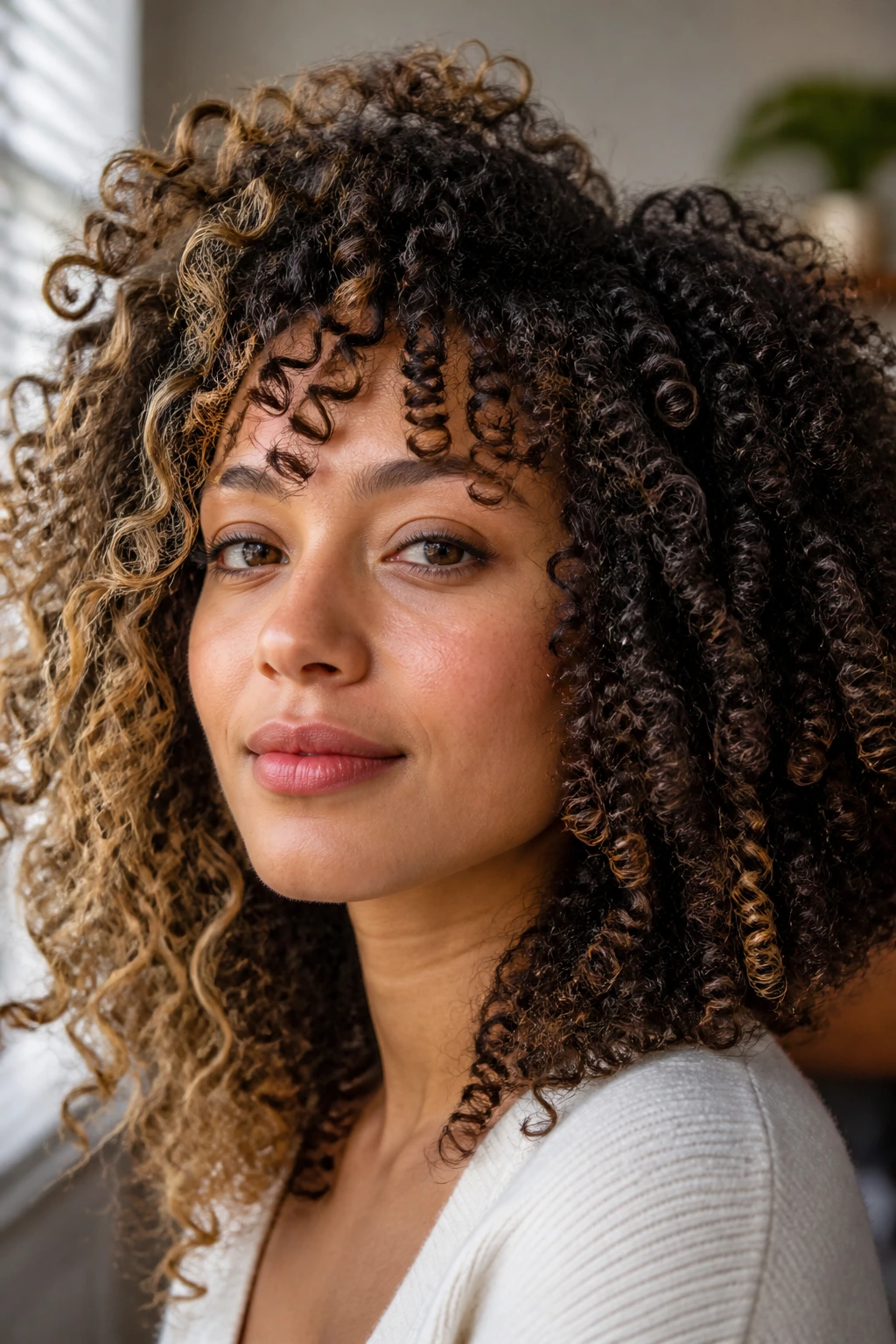
- Different curl patterns are actually represented: Loose waves, springy ringlets, and dense coils all get styles that fit how they naturally fall.
- You’re not stuck with one length: There are options here for cropped cuts, shoulder-length curls, and long hair that needs weight control.
- Some looks are meant for day two hair: A few of these styles look better after the curls have settled a bit, which is good news if wash day is not happening.
- There are polished and casual options: A claw-clip twist and a ribboned half-up do not send the same message, and that’s useful.
- The accessory load stays realistic: Pins, a satin scrunchie, a clip, or a scarf can do more than another bottle of product.
- Humidity gets taken seriously: The styles here lean on shape, hold, and placement, which matters when the air turns damp and curls start negotiating with gravity.
How to Choose a Style by Curl Pattern, Density, and Length
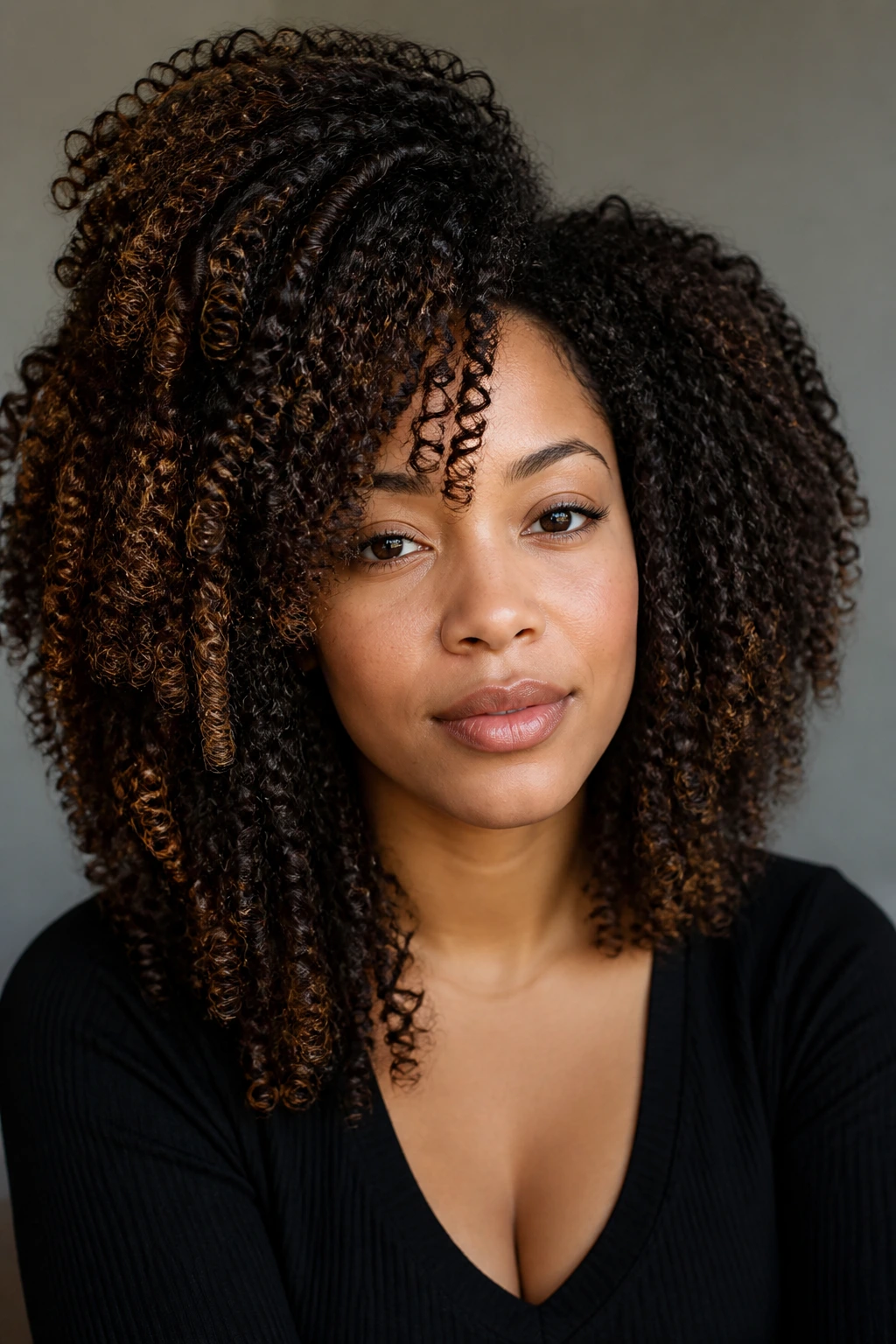
The easiest mistake with curly hair is picking a style because it looks good on a photo and ignoring what the hair does at 2 inches of shrinkage and one hour of wear. A style that looks soft on a loose wave can balloon on a dense coil. A style that stays neat on fine curls can collapse on heavy hair. So the first filter is not “Do I like it?” It’s “Will my hair actually hold this shape?”
Loose waves and ringlets
If your hair sits around 2a to 3a, styles that lean on movement usually look best: the defined wash-and-go, the side-part bob, the curtain-bang lob, and the ribboned half-up. These textures tend to show off shape without needing a lot of pinning, but they also lose definition fast if you overload them with heavy cream.
Dense curls and coily hair
If you’re working with 3c to 4c texture, volume is a feature, not a problem. High puffs, twist-out crowns, finger coils, side-swept fro shapes, and mohawk-inspired styles make more sense than styles that ask every strand to lie flat. The trick is not to erase the texture. It’s to guide it.
Short, medium, and long cuts
Short curls usually need control near the scalp and definition at the front. Medium lengths can do almost anything, which is both a blessing and a trap. Long curls are beautiful, but they can drag a style down if the roots are too loose or the top section is too heavy. In practice, the best curly hairstyle is the one that gives your crown a job and your ends a place to land.
1. Defined Wash-and-Go
A good wash-and-go is not a lazy style. It’s a controlled one. The hair is left loose, but the curl pattern is set on purpose, usually while the strands are soaking wet and still ready to accept product evenly. Done well, it looks like the curls decided to behave on their own.
Why It Works
This style works because it lets the curl pattern stay intact from root to end. You get volume, movement, and that clean ringlet separation that looks expensive even when the routine is simple. The real trick is the product layer: leave-in for slip, then gel or mousse for hold, then a hands-off dry-down. If you touch it too soon, the frizz shows up like it owns the place.
The best wash-and-gos usually start with hair so wet it drips onto the shirt. Not damp. Wet. That’s when curls clump together cleanly and the product spreads without patches.
What to Watch For
- Use a lightweight leave-in so the curl isn’t weighed down at the crown.
- Apply gel with the praying-hands method, then scrunch upward to encourage shape.
- Diffuse on low heat if you want root lift; air-drying gives a softer, looser finish.
- Don’t separate curls until they’re fully dry unless you enjoy puff.
A defined wash-and-go is one of the few styles that can look intentionally polished even when the rest of the morning is chaos. That’s worth keeping in rotation.
2. Side-Part Curly Bob
A curly bob gets sharp the second the part moves off-center. The whole cut suddenly has direction. The hair falls across one side of the face, the opposite side opens up, and the shape stops feeling round in a generic way.
Why It Works
The side part breaks up width and gives the bob a little drama without needing heat or a lot of product. On jaw-length curls, it can soften the face and make the haircut look fuller at the ends, which is usually where a bob wins or loses. The cut works especially well when the ends are clean and the curl pattern is allowed to bounce rather than puff.
This is one of those styles that looks best when the root on the heavy side gets a tiny lift. A duckbill clip at the root while the hair dries makes a real difference. Small thing. Big payoff.
A side-part bob is also one of the easiest curly hairstyles for women who want structure without giving up texture. It reads neat, not stiff.
3. Pineapple High Puff
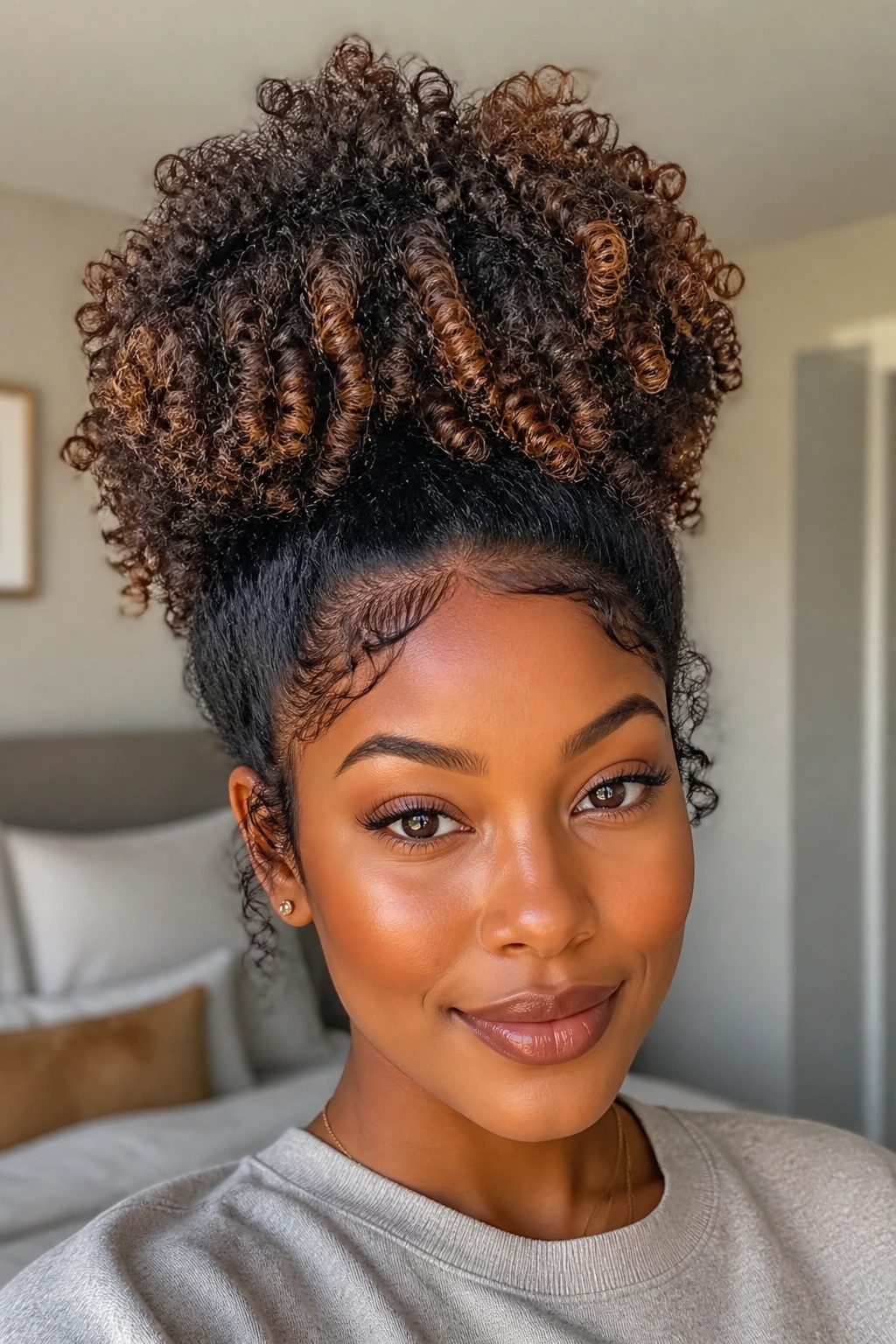
The pineapple high puff has a very specific energy: lifted, airy, and slightly mischievous. The hair is gathered high at the crown, so the curls pile upward instead of collapsing around the neck, and the ends keep their shape while the top gets all the attention.
Why It Works
This style is a gift for second- or third-day hair. The curls no longer need to be perfect; they just need to be corralled into a shape that looks intentional. A satin scrunchie or a snag-free elastic is the difference between a puff that holds and one that starts snapping strands by lunch.
The best version leaves a little softness at the hairline. Too much tension and the puff starts to look severe. Too little tension and it sinks. A brush can smooth the perimeter, but don’t flatten the front completely. The lift at the root is the whole point.
Best For
- Dense curls that want height.
- Busy days when you need the hair off your neck.
- Hair that’s already stretched a bit from a twist-out or braid-out.
If you like volume and you don’t mind your hair acting like it has opinions, this one earns its keep fast.
4. Half-Up Crown Twist
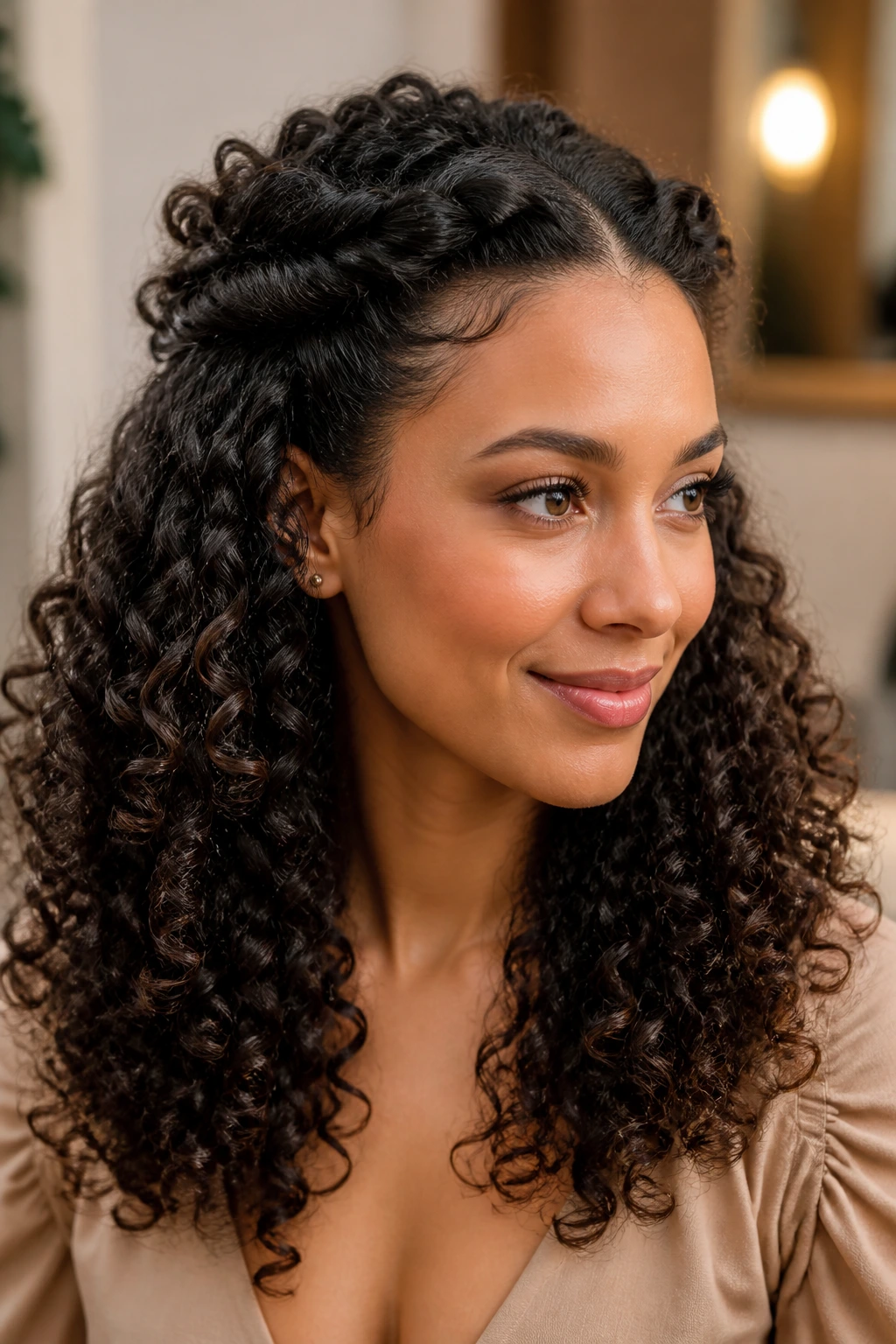
Half-up styles can look plain when they’re done lazily. A crown twist fixes that. The front sections get twisted or rope-braided back from the temples, then pinned where the back of the head starts to round. The rest stays down and loose.
Why It Works
It keeps the face open without taking away the length or the curl shape. That’s useful on days when you want your curls visible but not fully in your face. The front twist also handles frizz well, which makes this style practical in humid weather or on hair that’s not freshly washed.
The shape matters more than the exact braid pattern. Keep the twist low enough that it frames the head, not so high that it turns into a tiny crown sitting awkwardly on top. A couple of bobby pins hidden under the twist will hold better than one oversized clip.
This is the kind of style that looks like you spent longer on it than you did. Always nice.
5. Curly Shag with Face-Framing Layers
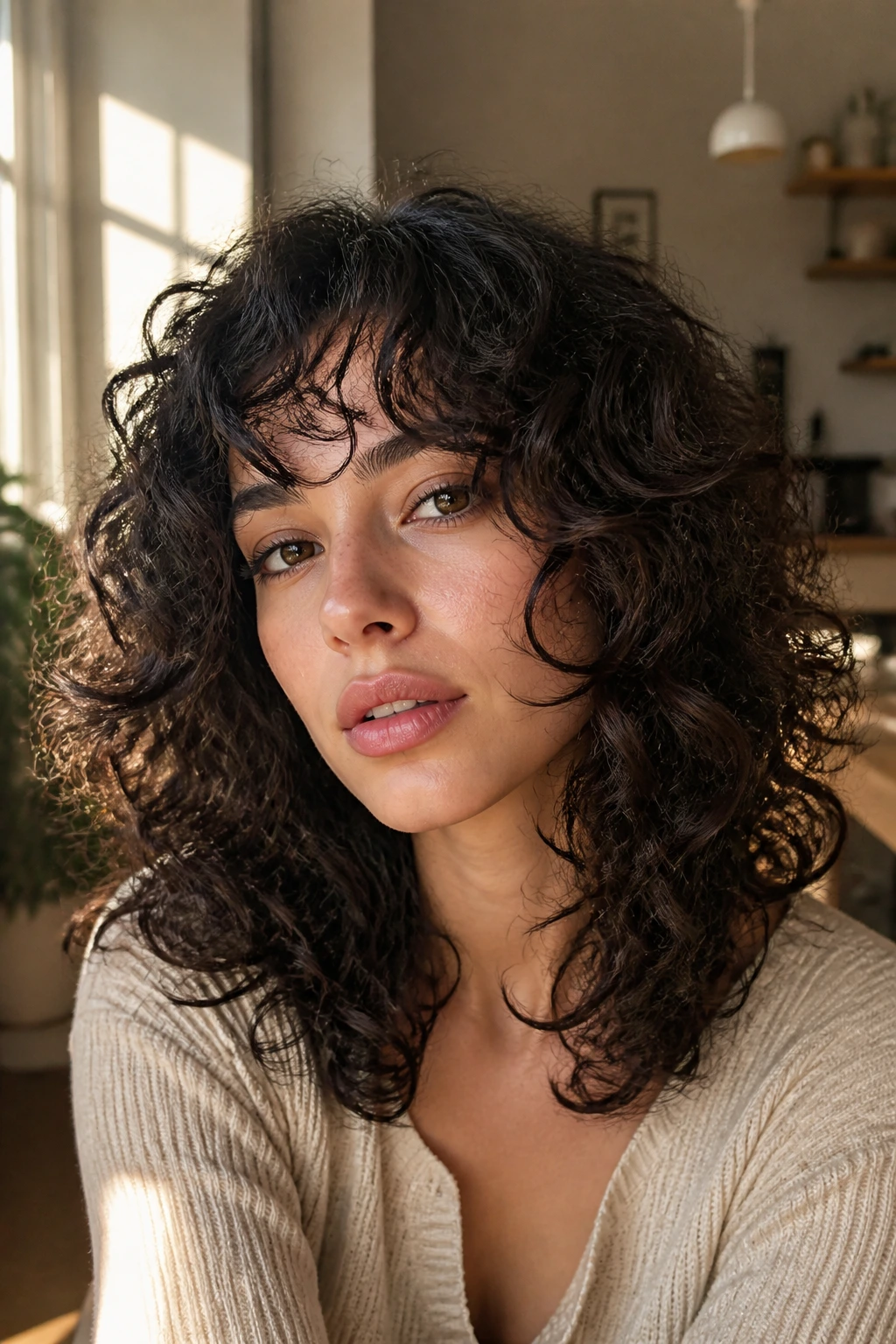
If your curls have ever looked triangle-shaped, the haircut is probably the issue, not the texture. A curly shag fixes that by removing bulk in the right places and keeping length around the perimeter where the hair can still move.
Why It Works
The shag is built on layered softness. Face-framing pieces around the cheekbone or jaw create movement, while shorter layers at the crown keep the top from going flat. On curly hair, that means less boxiness and more shape. The cut also helps dense curls sit with each other instead of stacking into a heavy mass.
Where the Layers Should Land
A good curly shag does not need to be shredded to death. That’s the mistake. The layers should fall where the curl wants to bend naturally, not where a random razor decided to cut. Around the face, the shortest pieces should be long enough to tuck behind the ear if you want them out of the way. Too short and they spring up like springs.
This is a cut that rewards a stylist who cuts curls dry or cuts with the curl pattern in mind. The shape should look alive, not aggressive.
6. Sleek Low Bun with Curly Ends
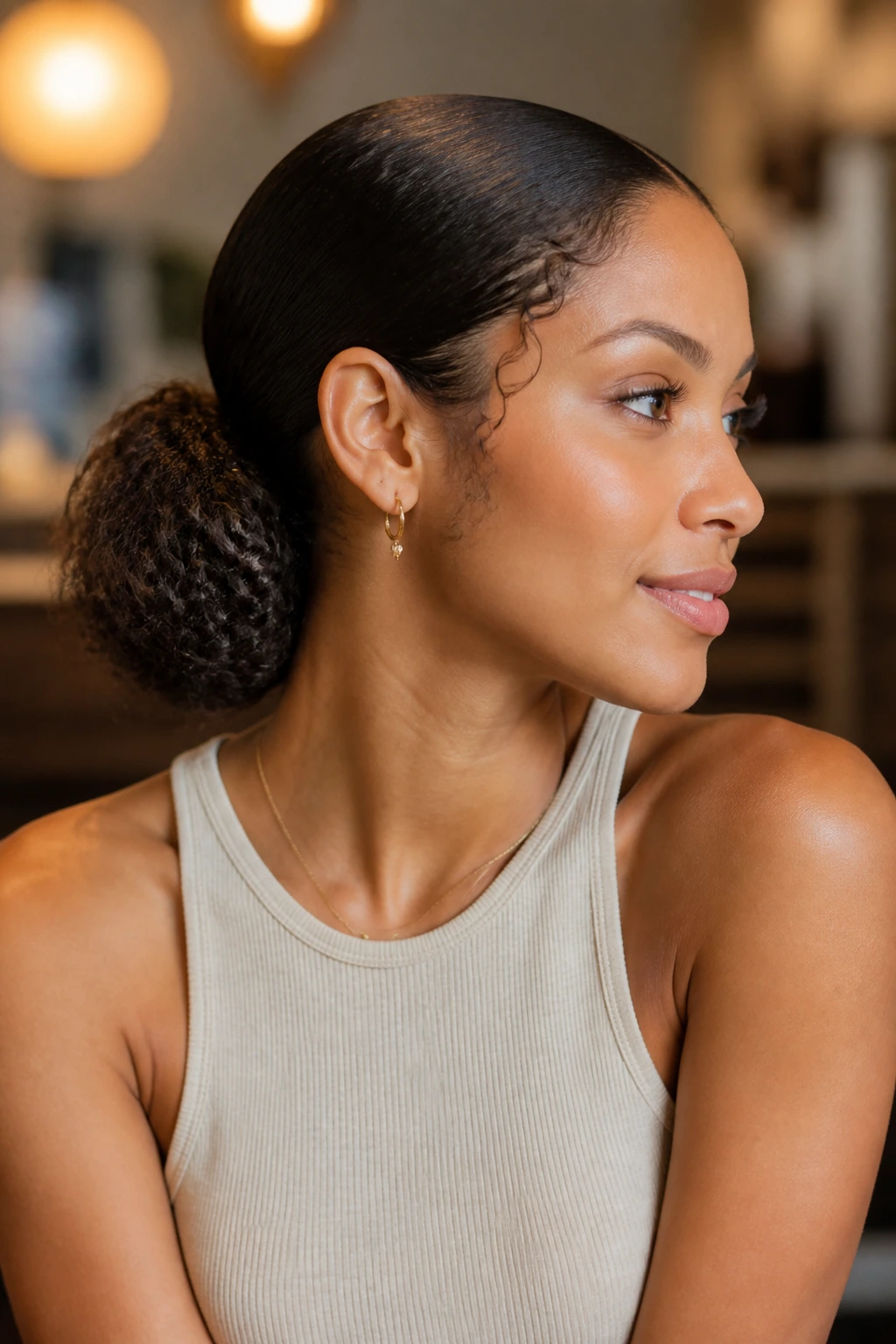
A low bun with curly ends is one of the nicest compromises in curly styling. The crown gets smooth. The bun sits at the nape. The ends are left a little curly or tucked in a way that still shows texture, so the style doesn’t lose all its character.
Why It Works
The low placement keeps the style grounded and stable. That matters if your hair is thick or if you need something that survives a long day without turning into a puffed-up mess. A smoothing cream or a small amount of gel at the hairline can help, but the bun itself should not be plastered down until it looks wet.
I like this style because it respects curl texture instead of pretending the hair is straight. The bun can be neat while the ends stay soft, and that contrast is the whole charm. It’s one of the few updos that works at a dinner table and in a grocery aisle.
A few pins tucked under the bun will hold better than overwrapping the elastic ten times. Hair has a breaking point. Don’t test it.
7. Finger-Coiled Curly Pixie
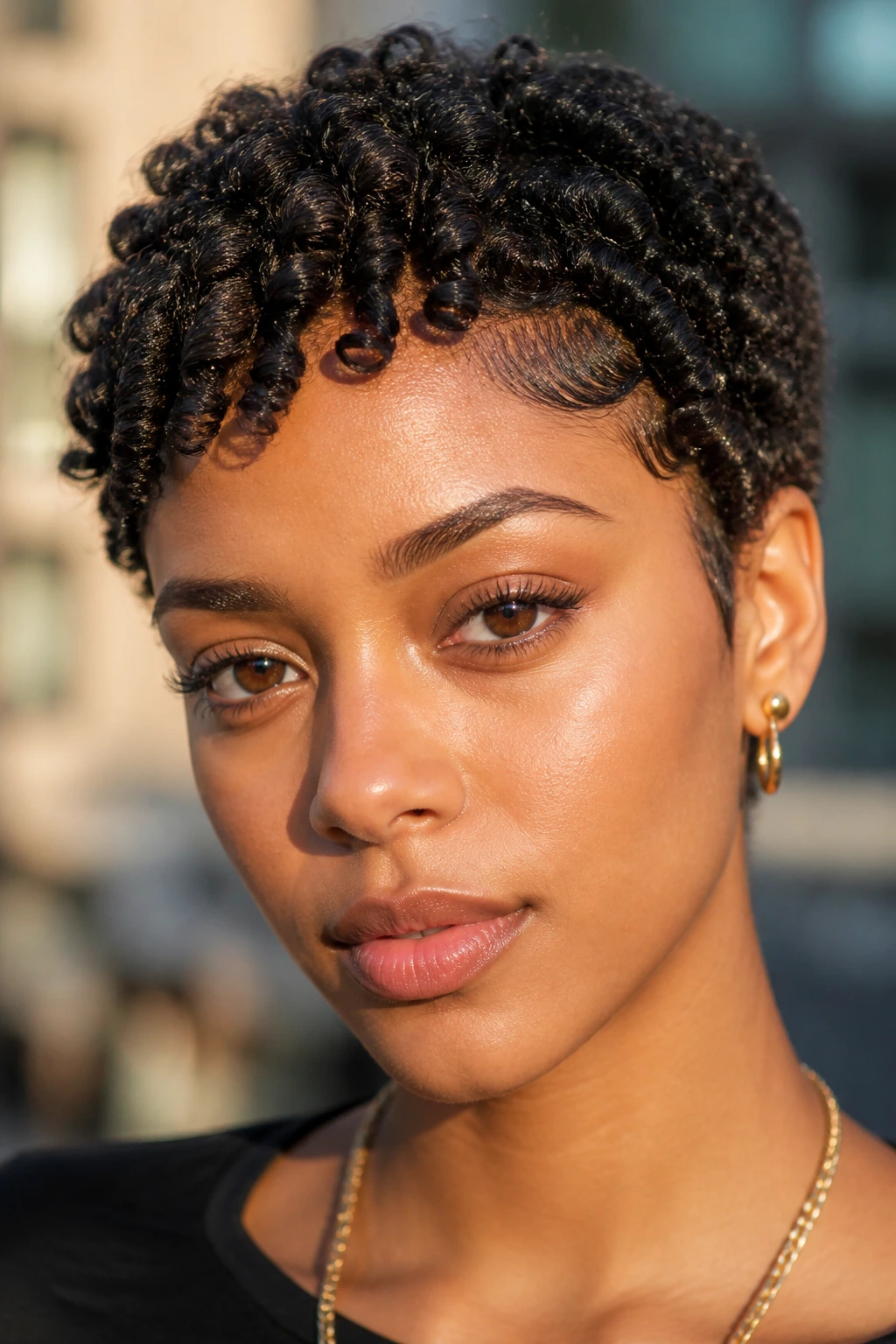
Short curls can be fussy if they’re left to their own devices, but finger coils give them direction. Each tiny coil gets shaped by hand, so the whole cut reads deliberate instead of fuzzy. It’s a very close-up style. Every curl counts.
Why It Works
A pixie cut with finger coils thrives on definition at the front and top. If the sides are shorter, the top can be shaped with just a little gel and a lot of patience. This style works especially well on hair that likes to shrink upward, because the coils hold the visual length better than loose curls do.
It does take time, though. There’s no magic trick. You twist a small section around your finger until it springs into a neat coil, then let it set. The reward is that the style lasts longer than you’d expect, especially if you sleep in a satin bonnet and avoid touching it during the day.
Best For
- Short natural cuts.
- Hair that needs structure near the hairline.
- Anyone who wants the texture to read clearly, not vaguely.
8. Deep Side Part with a One-Side Tuck
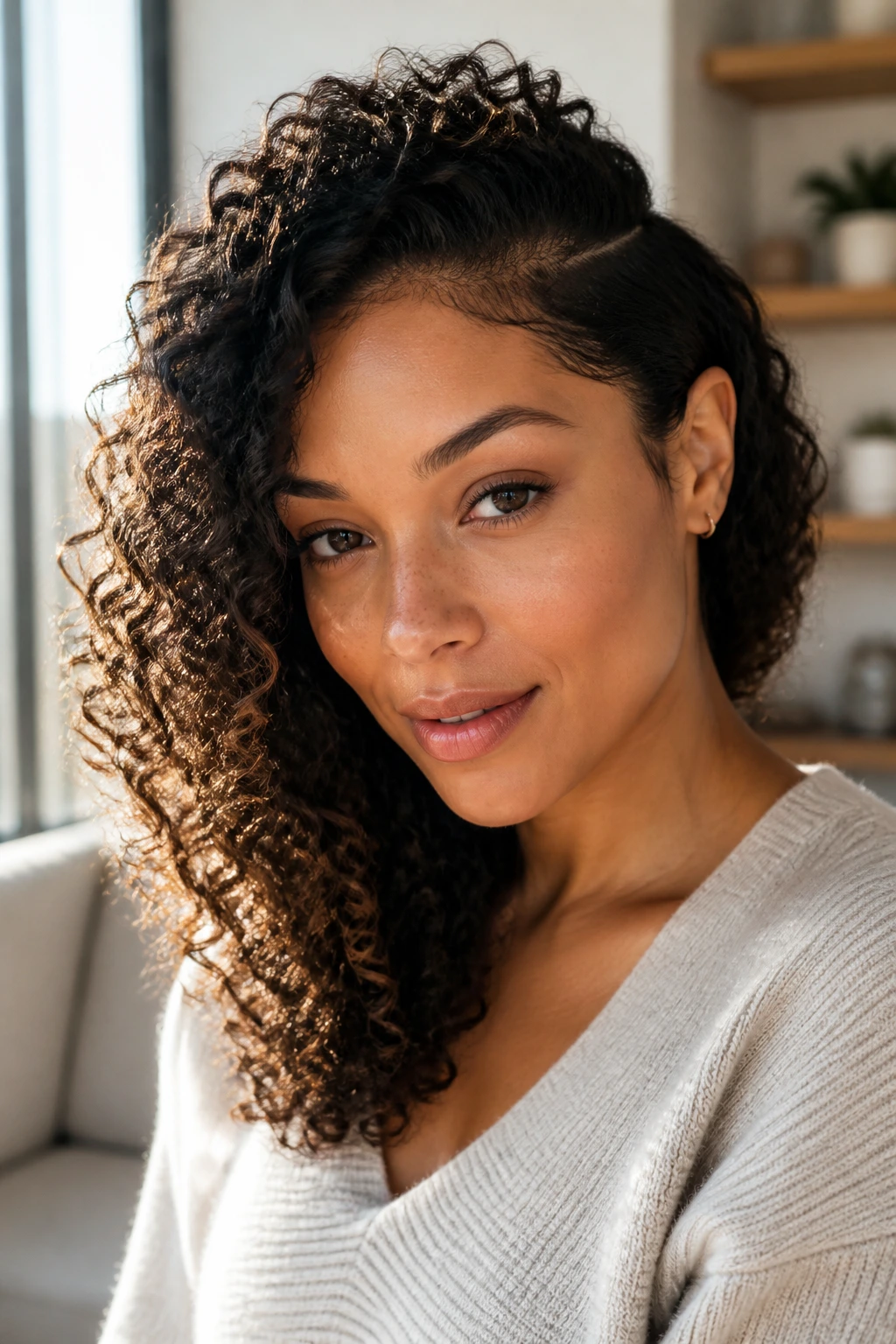
This one sounds simple because it is simple, but the effect is strong. A deep side part creates instant shape, and tucking one side behind the ear or pinning it back changes the balance of the whole style.
Why It Works
The side that stays down gives you volume. The side that gets tucked gives you clean lines. Together, they create a shape that feels deliberate, not accidental. That asymmetry is flattering on a lot of face shapes because it stops the curls from sitting evenly all around the head like a helmet.
The tucked side is also the place for a good earring. A small hoop, a drop earring, even a plain stud changes the read of the style. The hair doesn’t have to do all the work.
This is a good pick if you want something that takes under five minutes but still looks thought out. Brush the part clean, tuck one side, fluff the other, and stop before you overwork it.
9. Braided Front Halo with Loose Curls
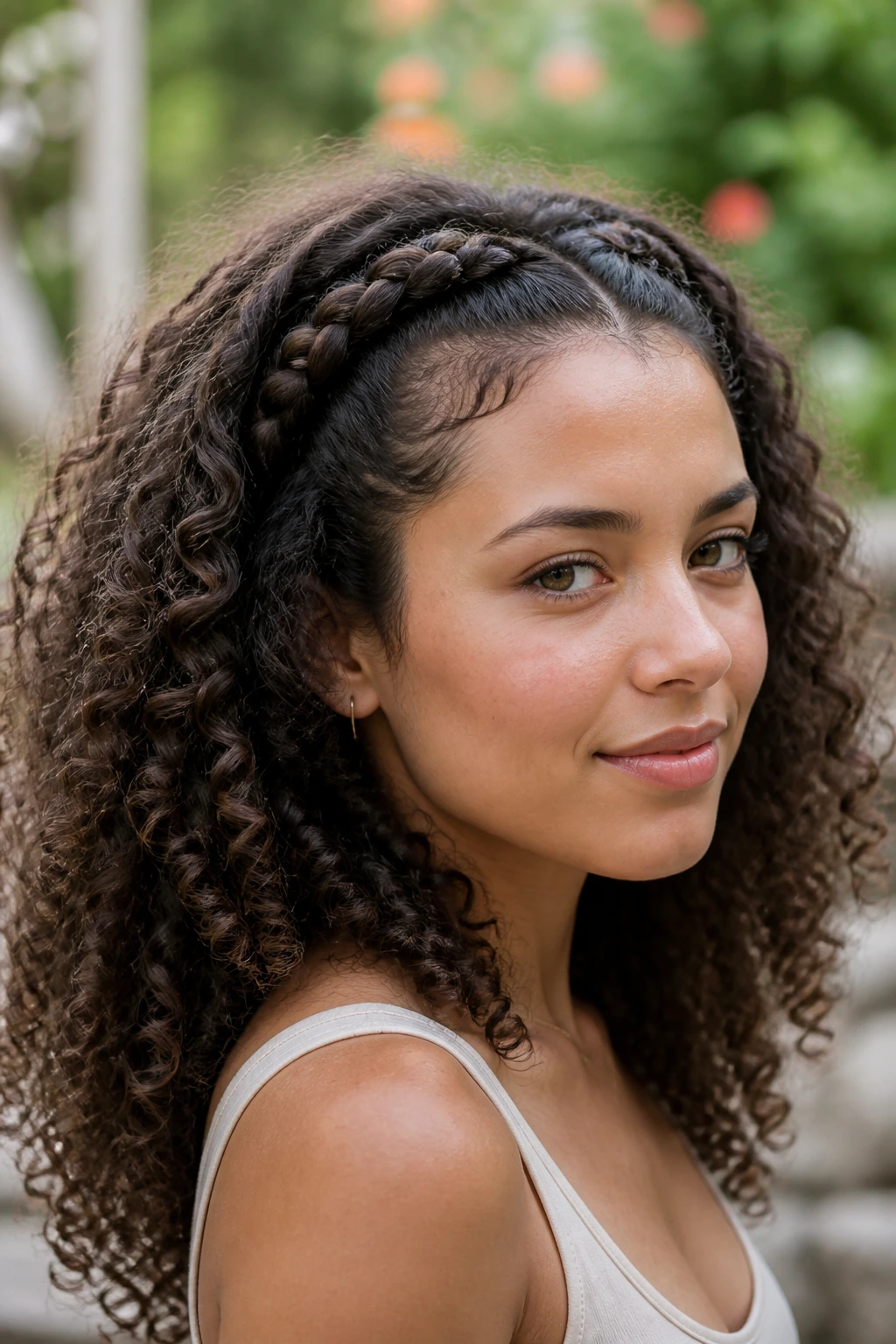
A tiny braid along the front hairline can make the rest of the curls behave better. It pulls the face-framing strands back without flattening the whole head, which is why this style is useful for growing-out bangs or frizzy front pieces.
Why It Works
The braid acts like a boundary line. It keeps the front neat while the rest of the curls keep their volume. If your curls tend to separate around the face first, this gives them a job. It also takes pressure off the rest of the style because the front no longer needs to be perfect.
Tiny Braid, Big Payoff
A single braid on each side, pinned into the back, is enough. You do not need a full milkmaid braid unless that’s the look you want. The braid should sit close to the scalp and stop before it turns bulky. If it puffs up, a little water on the fingertips and a touch of cream can smooth it.
This one is especially useful when the top layer of hair has grown out unevenly. The braid hides the awkward in-between stage and makes the loose curls underneath look intentional.
10. Claw-Clip Twist-Up
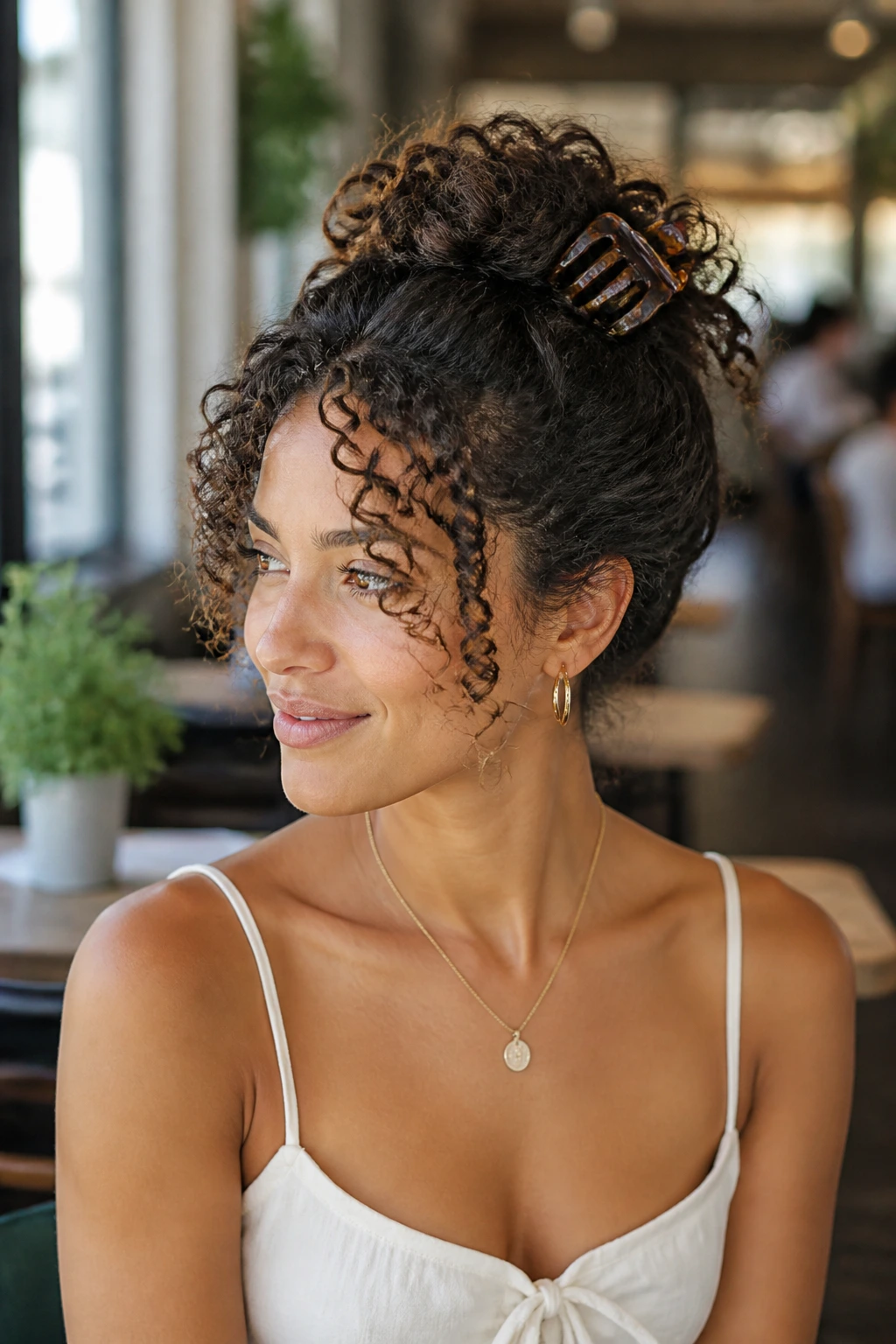
The claw-clip twist-up has survived every era for a reason: it works. Twist the hair upward once or twice, catch it with a clip, and let the ends fan out or tuck in depending on how polished you want it.
Why It Works
The clip holds the bulk without flattening the curl pattern the way a tight elastic can. That matters on thick or dense hair, which tends to hate being squeezed into a tiny shape. The twist also creates a vertical line, so the style feels lifted even when the hair is off the neck.
What makes this look better than a random clip job is the front. Leave a few curls around the face. Smooth the crown just enough that it looks intentional. And use a clip that actually grips the hair; decorative clips that slip are useless after the first hour.
This is one of my favorite low-effort curly hairstyles because it doesn’t ask the hair to be something else. It just asks it to fold up and cooperate.
11. Curly Ponytail with a Wrapped Base
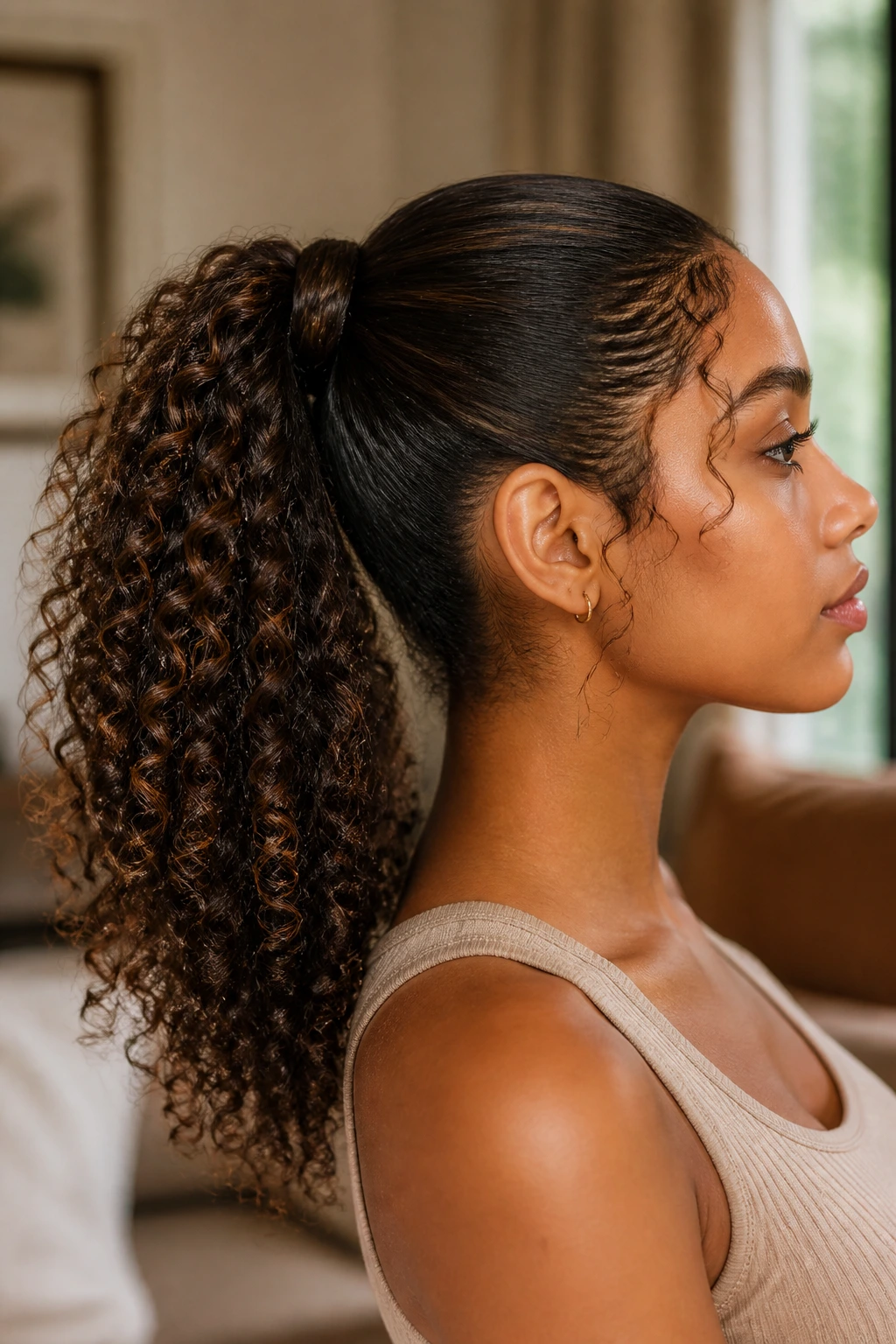
A curly ponytail is only basic if you style it badly. Wrap a small section of hair around the elastic, keep the crown smooth but not stiff, and let the ponytail itself stay big and textured. That’s a real hairstyle, not an afterthought.
Why It Works
The wrapped base hides the elastic and makes the ponytail look finished. The curl pattern in the tail gives movement, which keeps the whole thing from reading flat. On thick hair, a mid-height ponytail sits better than a super-high one because it doesn’t fight the weight of the hair as much.
The front is where the difference happens. A soft brush can smooth flyaways, but don’t overbrush. A slicked crown with a thick, textured tail is a better contrast than a fully flattened head. If the hair is very long, scrunch the tail a little after securing it so the curls don’t hang limp.
This style can swing casual or polished depending on the accessories. A plain elastic makes it sporty. A wrapped base and a clean part make it look more finished.
12. Space Buns on Coily Hair
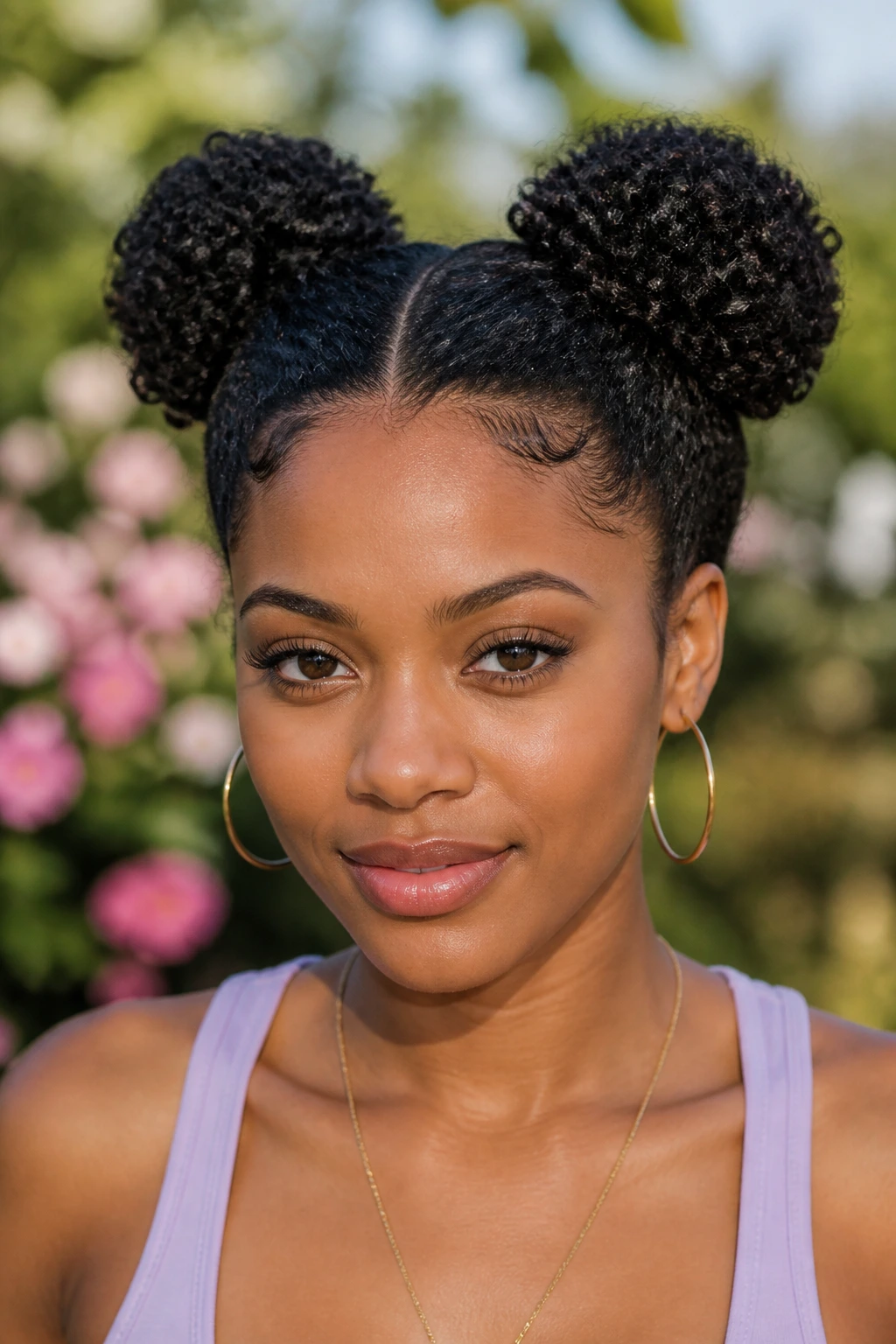
Space buns are playful, sure, but they’re also practical when the hair is dense and wants to take up room. Two buns split the volume, keep the ends protected, and stop the crown from feeling too heavy.
Why It Works
Coily hair gives space buns a lot of body, which is half the point. The style looks best when each bun is slightly imperfect and rounded, not pulled so tight that the scalp shows everywhere. A center part gives symmetry, but the buns themselves do not need to be identical. Hair isn’t a math problem.
Where This Style Wins
- Humid days when loose curls will swell.
- Hair that’s in a stretched or twist-out state.
- Situations where you want the ends contained without losing texture.
A small amount of gel on the parting and a satin scrunchie at the base helps the style stay in place. If the buns feel too severe, pull a few curls loose around the temples. That changes the mood fast.
13. Shoulder-Length Curly Lob with Curtain Bangs
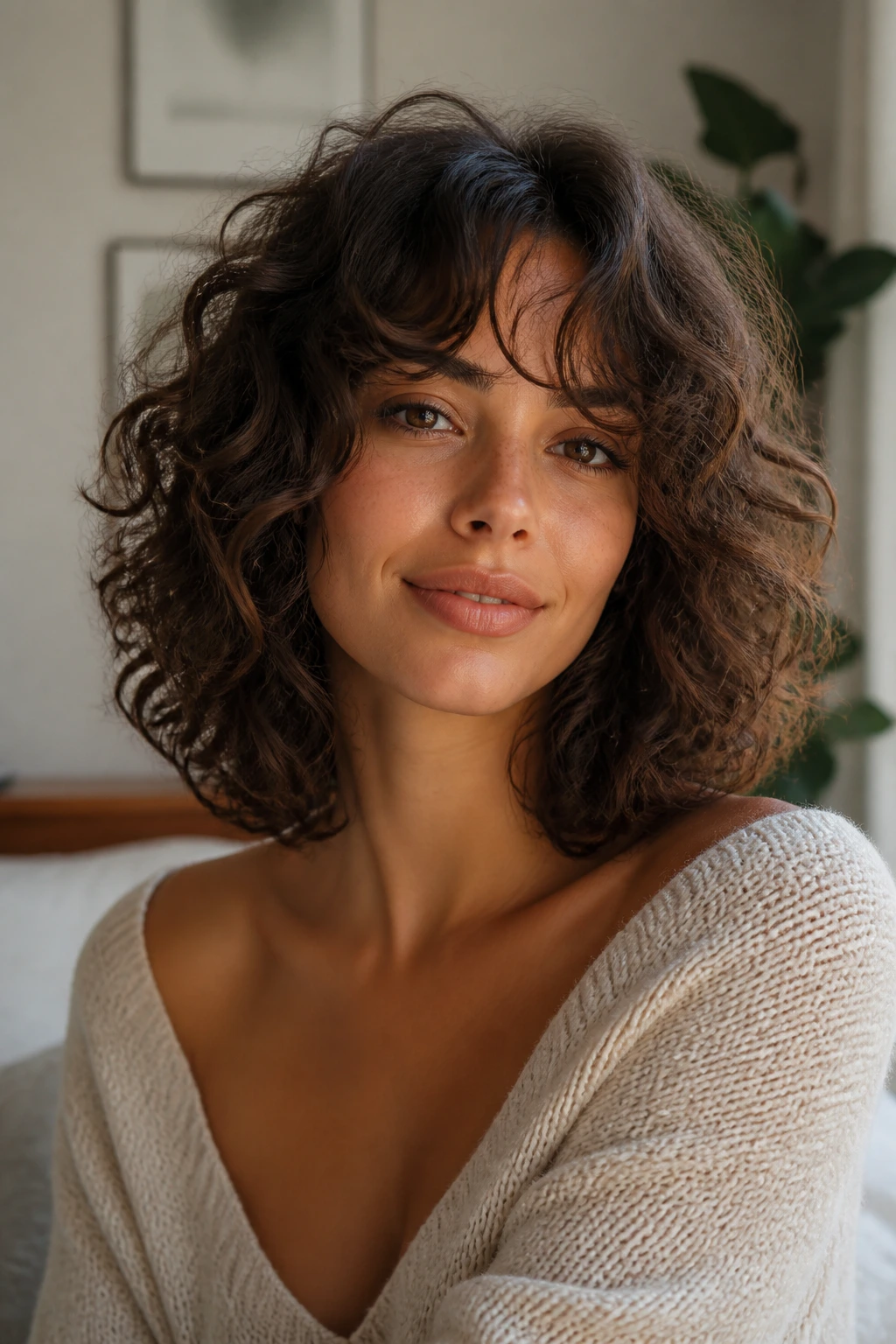
A lob with curtain bangs is one of those cuts that can look soft or sharp depending on the styling. The length hits the shoulders or just above them, and the bangs open in the middle and drift to either side, so the face stays framed without being boxed in.
Why It Works
The shoulder-length cut keeps enough weight in the hair for the curls to hang well, but not so much that they collapse. The curtain bangs break up the front and give the style movement around the eyes. On curl patterns with some spring, the bangs soften nicely without sitting in the face all day.
Cut It With Shrinkage in Mind
The bangs should be cut longer than you think. That sounds obvious until you watch them spring up after drying. If the length is wrong, the whole front section can turn into a hard fringe instead of a soft frame. Dry cutting or cutting while the hair is in its natural state usually gives a better result.
This is a good choice if you want a shape that stays flattering even when the curls are not freshly washed.
14. Scarf-Wrapped Curly Updo
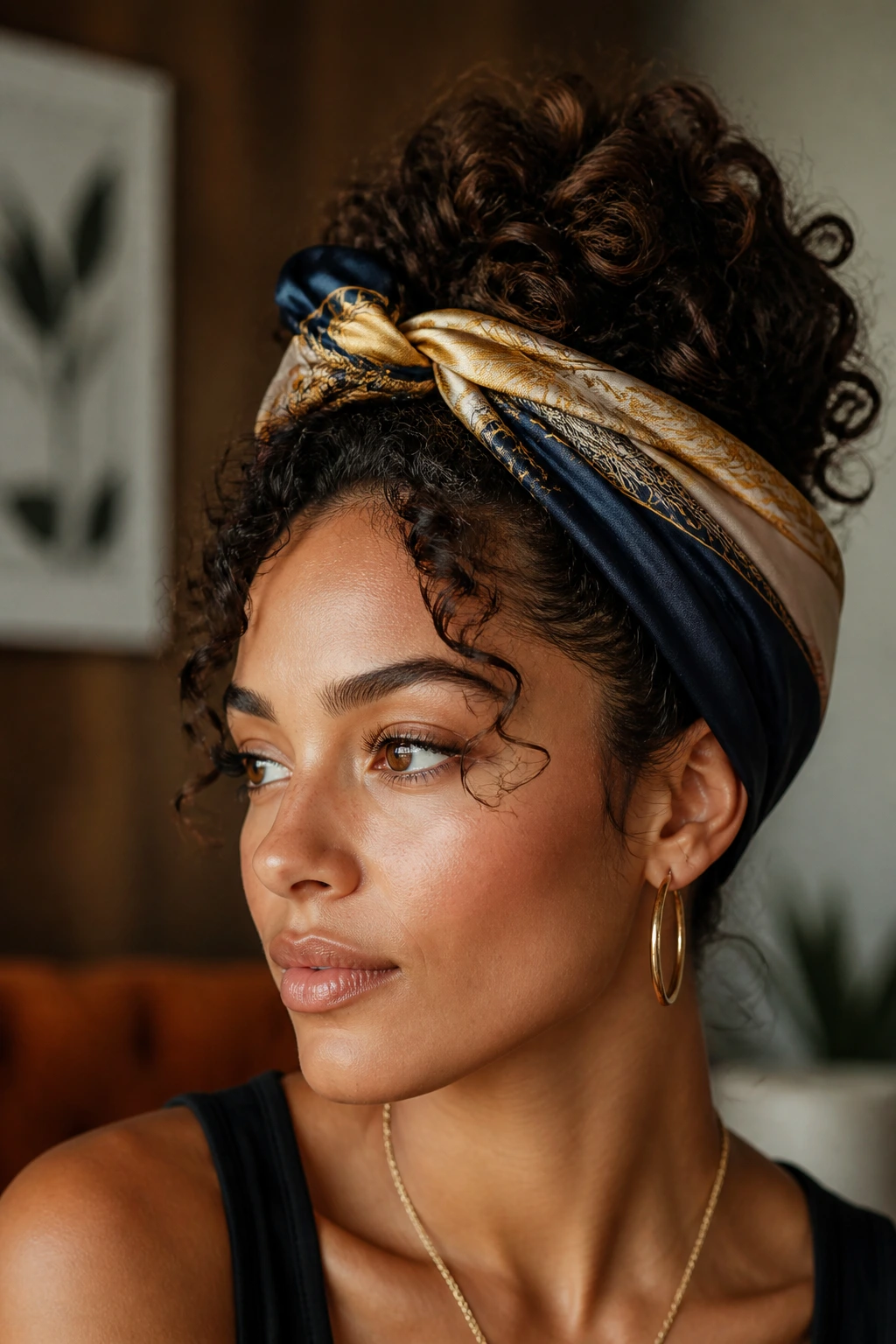
A scarf changes the whole look faster than another pin ever will. Wrapped around a bun, puff, or tucked-up curl set, it adds color, keeps the front tidy, and gives the updo a more finished edge.
Why It Works
The scarf does more than decorate. It helps anchor the style, especially at the hairline and nape, where curls can start slipping first. A silk or satin scarf is kinder to the hair than a rough cotton one, and a wider scarf tends to sit more securely than a skinny strip that keeps sliding.
This style has a nice range. Tie the scarf low and it feels relaxed. Wrap it higher and it starts to look more deliberate. The best part is that you can keep the curls visible while controlling the parts that tend to puff up first.
If you’re working with an updo that feels too plain, the scarf is the fastest fix.
15. Wet-Look Defined Curls
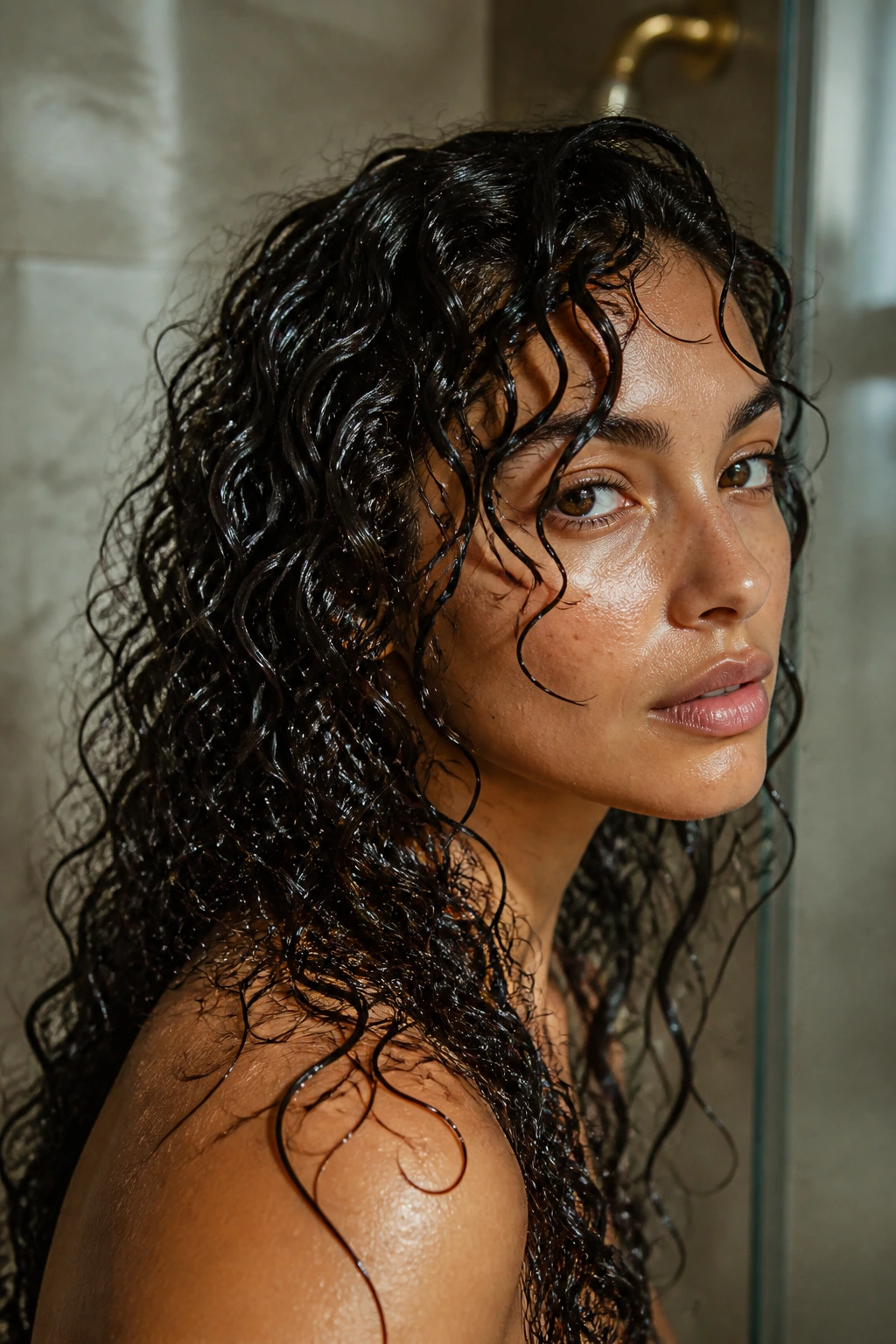
The wet look is not about making your hair soggy forever. It’s about pushing shine and definition so far that the curls look sculpted. Done well, it has a glossy finish and a clean, modern shape. Done badly, it just looks greasy. The difference is product and restraint.
Why It Works
This style needs a strong-hold gel or cream-gel on soaking-wet hair. The water helps distribute the product evenly, and the gel locks the curls into a defined pattern as they dry. You want separation and sheen, not fluff. A diffuser can help if you want the roots set without disturbing the shine.
The trick is not to scrunch it to death. Apply the product, smooth the top lightly, and let the curl clumps do the rest. Once dry, do not pick it apart too much. That’s how the shine gets ruined.
This is a strong choice for evenings, photos, or any time you want the curls to look sharp rather than airy.
16. Voluminous Side-Swept Fro
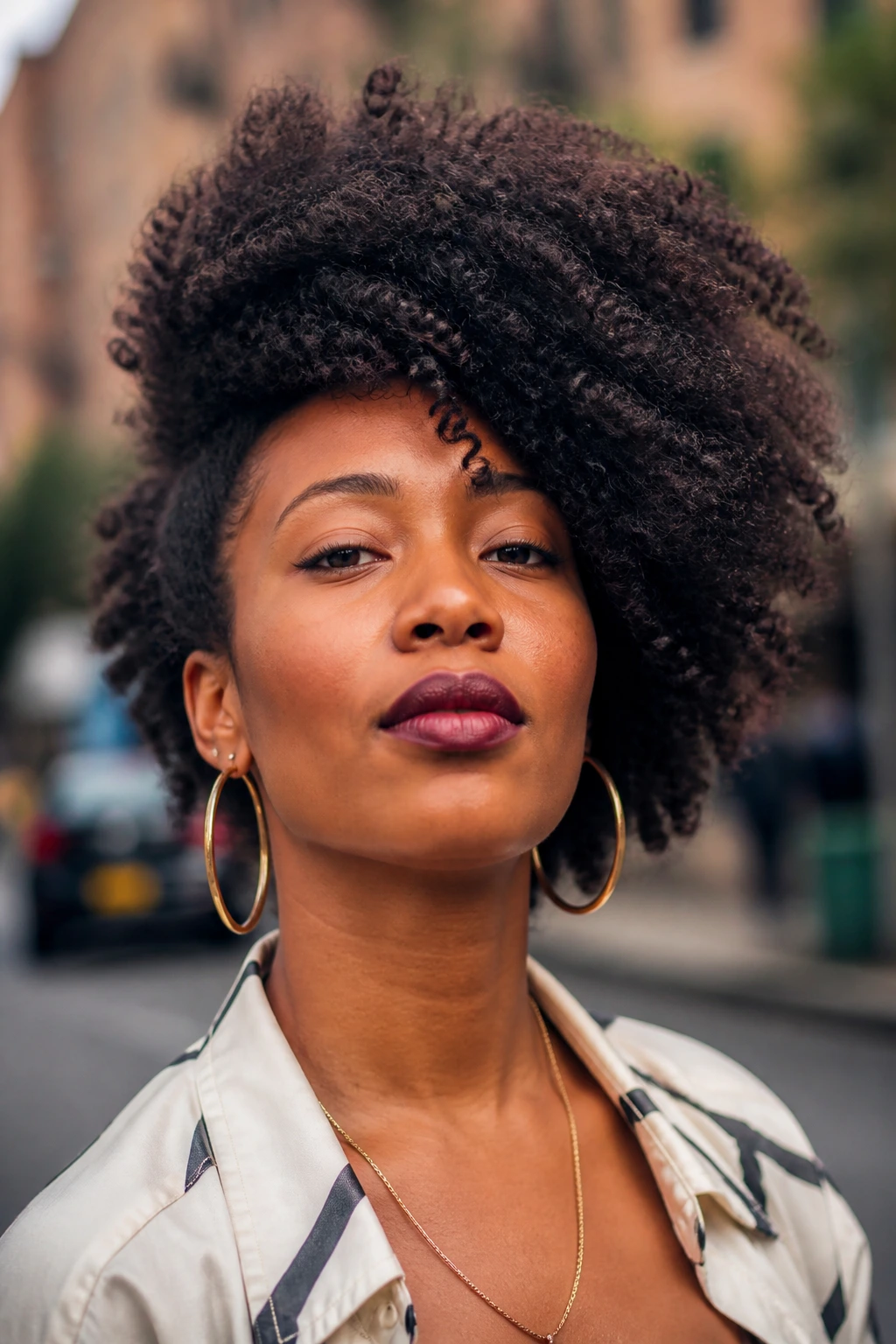
A side-swept fro has presence. It takes volume and turns it into shape, letting one side carry more weight while the other side gets guided back or up. The look is bold without needing a complicated set of steps.
Why It Works
The side sweep breaks the round outline that a fro can sometimes settle into. A pick at the roots gives height, and a clean side part gives direction. If one side is pinned back loosely, the eyes go straight to the center and the volume reads as intentional, not accidental.
This is one of the best styles for dense coils because it uses shrinkage instead of fighting it. The hair gets room to expand, but the sweep keeps it from spreading too far in every direction. A touch of cream on the ends and a little lift at the roots is usually enough.
It’s the kind of style that looks strong in a T-shirt and just as good with a dress.
17. Twist-Out Crown Style
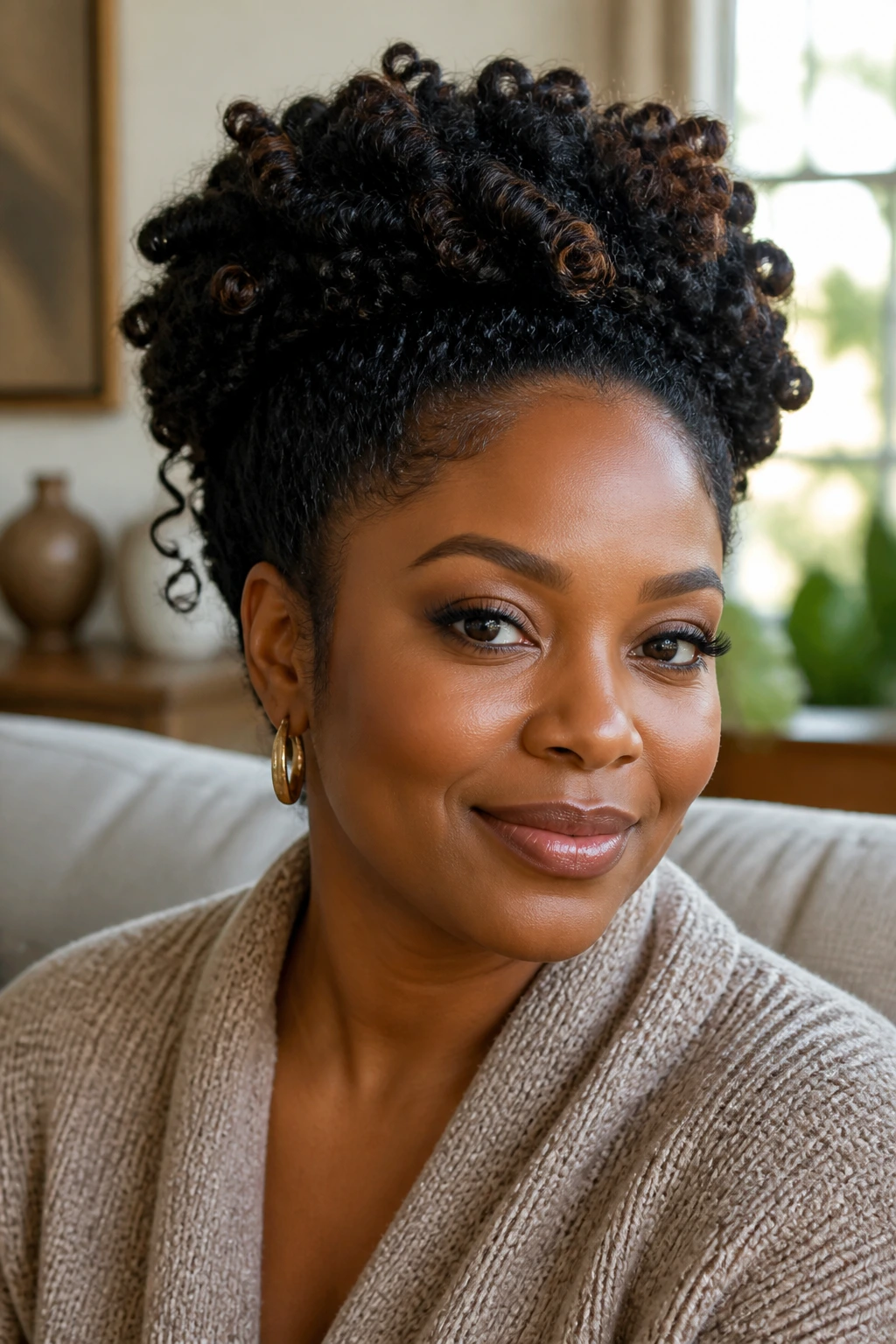
A twist-out crown style takes the texture from a twist-out and turns it into a shape that frames the top of the head, almost like a soft halo. It’s part structure, part volume, and part clever pinning.
Why It Works
Twist-outs already give the hair shape and stretch. Pulling the front or crown section back adds lift and keeps the style from falling into the eyes. The result is neat without going stiff. You get the texture from the twist-out and the face opening from the crown placement.
How to Keep the Crown from Collapsing
Start with twists that are fully dry. Half-dry twists will collapse fast once pinned. When you take them down, separate them gently, then pin only the top or front section back with hidden bobby pins. If the crown is heavy, a tiny clip at the base of the twist-out can help hold the lift.
This is a smart choice when you want to look styled without losing the softness of the curls underneath.
18. Curly Mohawk with Tapered Sides
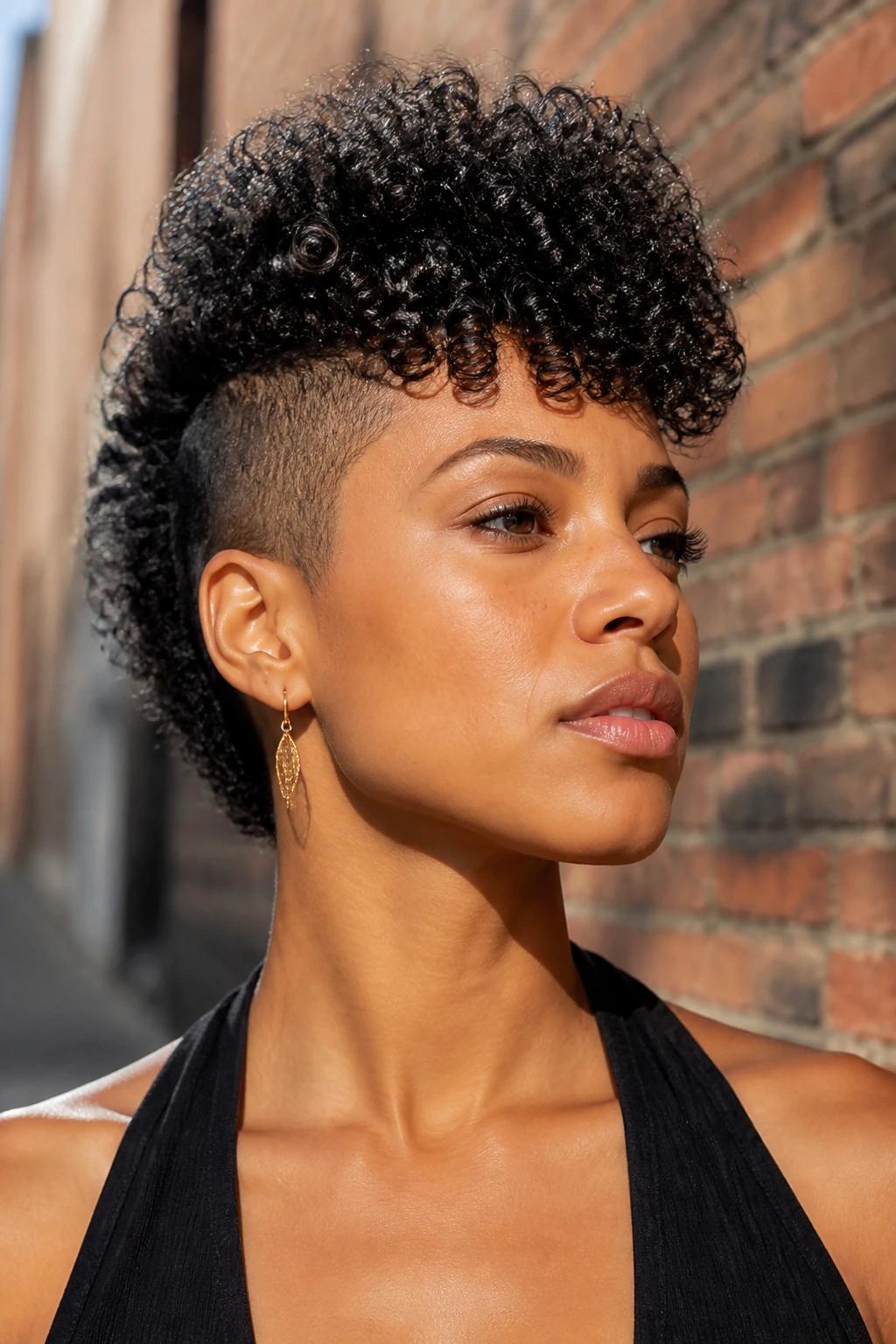
This is the one for people who like a little edge. The sides are kept close or slicked down, while the center strip of curls stands up and forward. It gives shape, height, and a clean contrast that can look sharp in a way softer styles don’t.
Why It Works
The mohawk shape draws the eye vertically, which can make the whole face look longer and the curls look fuller. On tapered cuts, the shape is almost built in. On longer hair, the sides can be pinned or smoothed back to fake the effect without a true cut.
The key is not overloading the top section with product. You want defined curls, not a hard shell. A bit of gel on the sides, a curl cream or mousse on the center, and a gentle lift at the root are enough. If the top starts looking flat, a root clip while it dries can save it.
This style is not shy. That’s the point.
19. Romantic Half-Up with a Ribbon
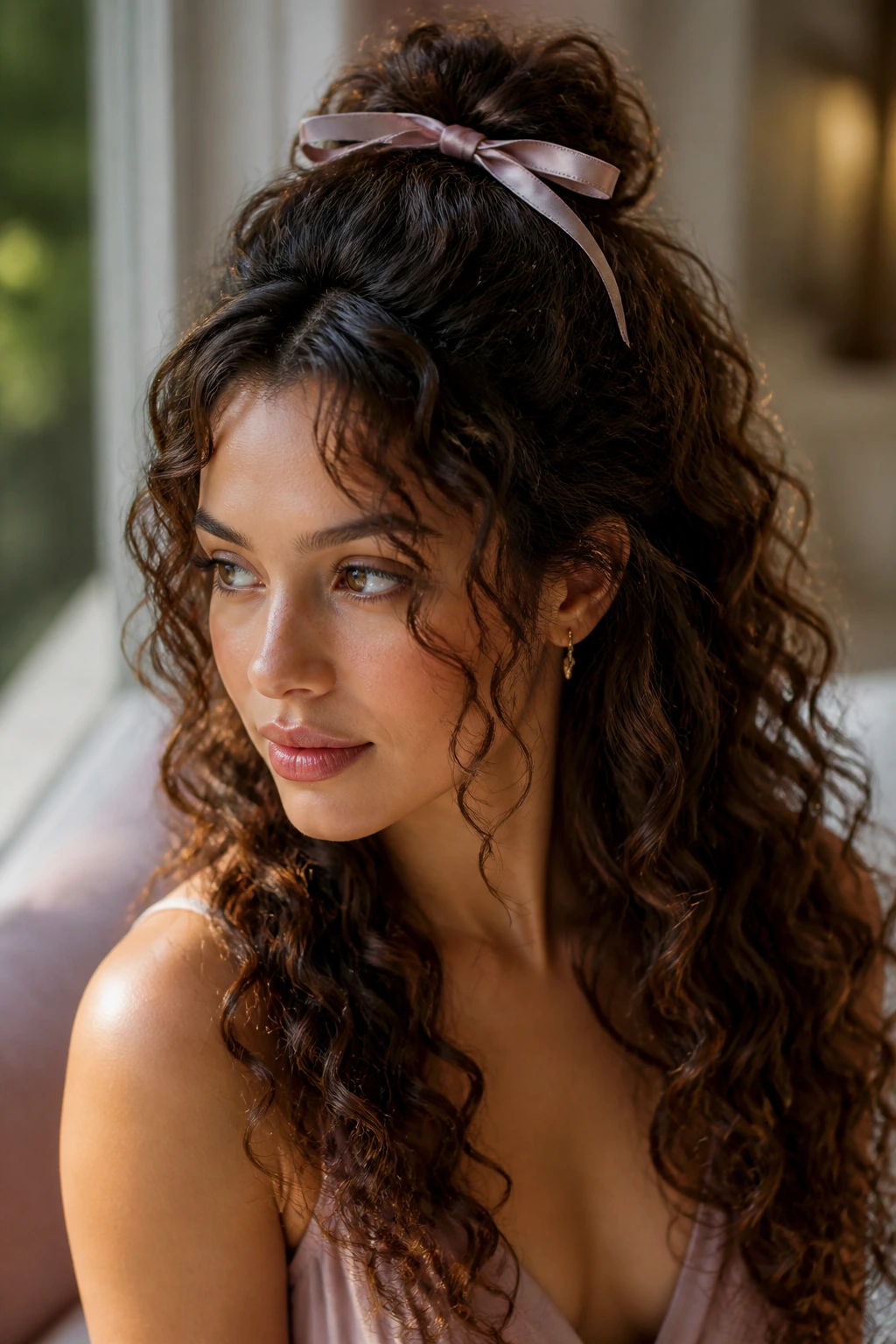
A half-up style can lean sweet or fussy. The ribbon changes that. Tie the gathered section with a narrow satin ribbon or velvet tie, and the curls below stay soft while the top gets just enough detail to feel special.
Why It Works
The half-up shape keeps the front open and the curls loose around the shoulders, which makes it good for medium to long hair. The ribbon adds a finish that a plain elastic cannot. It also gives the style a little movement; when you walk, the ribbon shifts slightly and keeps the whole look from feeling rigid.
The best version leaves enough hair down that the curl pattern still reads. If the top section is too large, the bottom can feel thin. Too small, and the ribbon looks like an afterthought. Split the difference. That balance is where this style lives.
It works for dinners, events, or days when you want your curls to look cared for without turning the whole thing into a formal updo.
How to Make Curly Hairstyles Hold Without Crunchy Hair
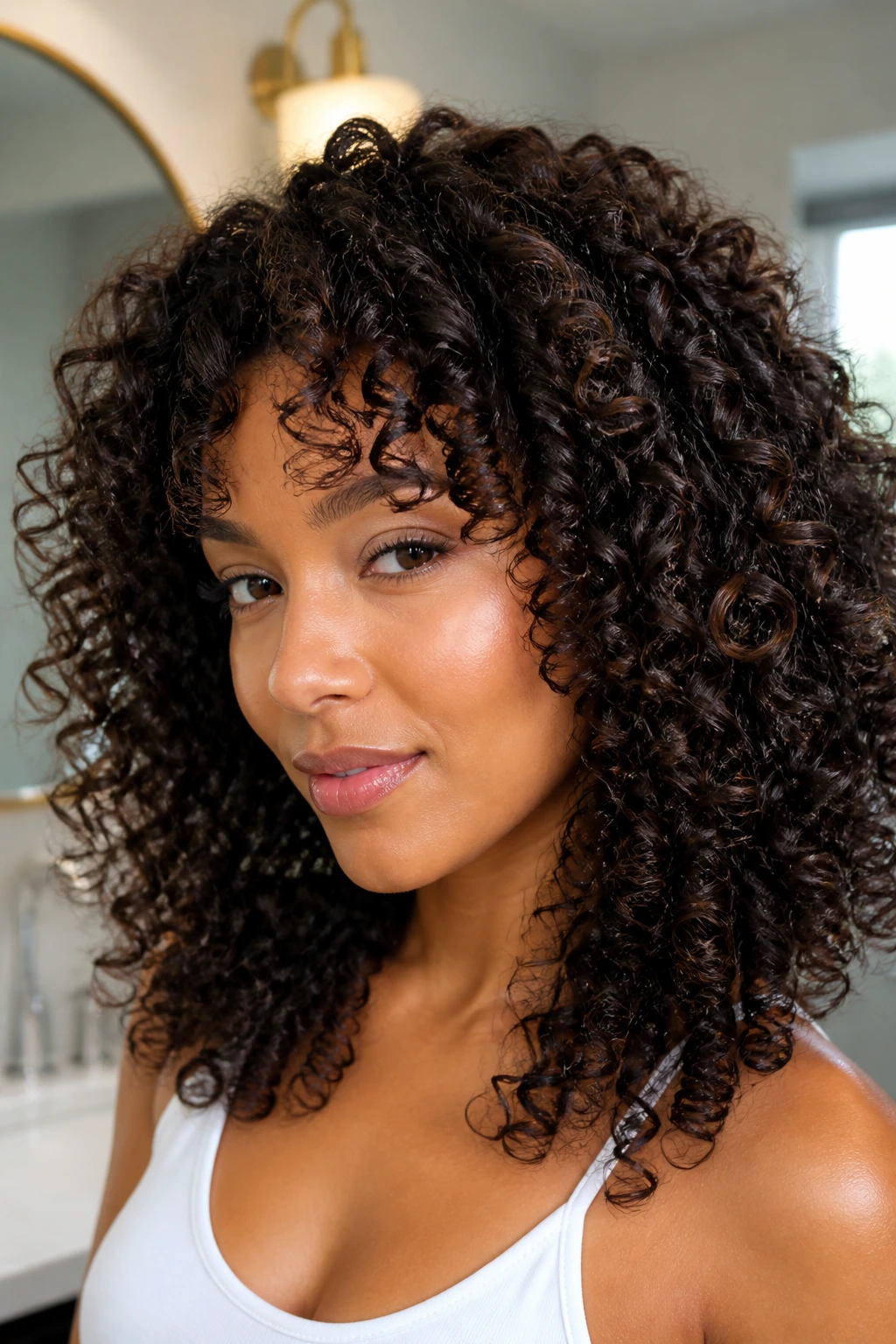
Start with more water than you think you need. Curls set better when they’re wet enough for the product to coat every strand. Damp hair can work for some styles, but if you want a defined wash-and-go or a clean twist-out, water gives you the slip that keeps clumps from turning into frizz. If the hair starts drying while you style, mist it again. No heroics.
Pick one job for each product. Leave-in should soften and detangle. Gel should hold. Cream should add slip or moisture, not bury the curl under a heavy film. When people complain that curly styles get greasy or limp, this is usually why. Too many softeners. Not enough hold. Or the hold gets put on too late, after the curl pattern has already started to fall apart.
Dry the style without fussing with it. Diffuse on low heat, or leave it alone while it air-dries. Touching, fluffing, and checking on it every ten minutes breaks the set before it finishes. If you need volume, clip the roots while they dry. That gives lift without disturbing the curl lengths.
Break the cast only when the hair is dry. If you use a gel that dries hard, scrunch it out after the set is fully dry and cool. A tiny drop of lightweight oil on the palms can soften the finish, but too much makes the hair look dull. The goal is movement, not stiffness.
Essential Tools and Products for Curly Hairstyles
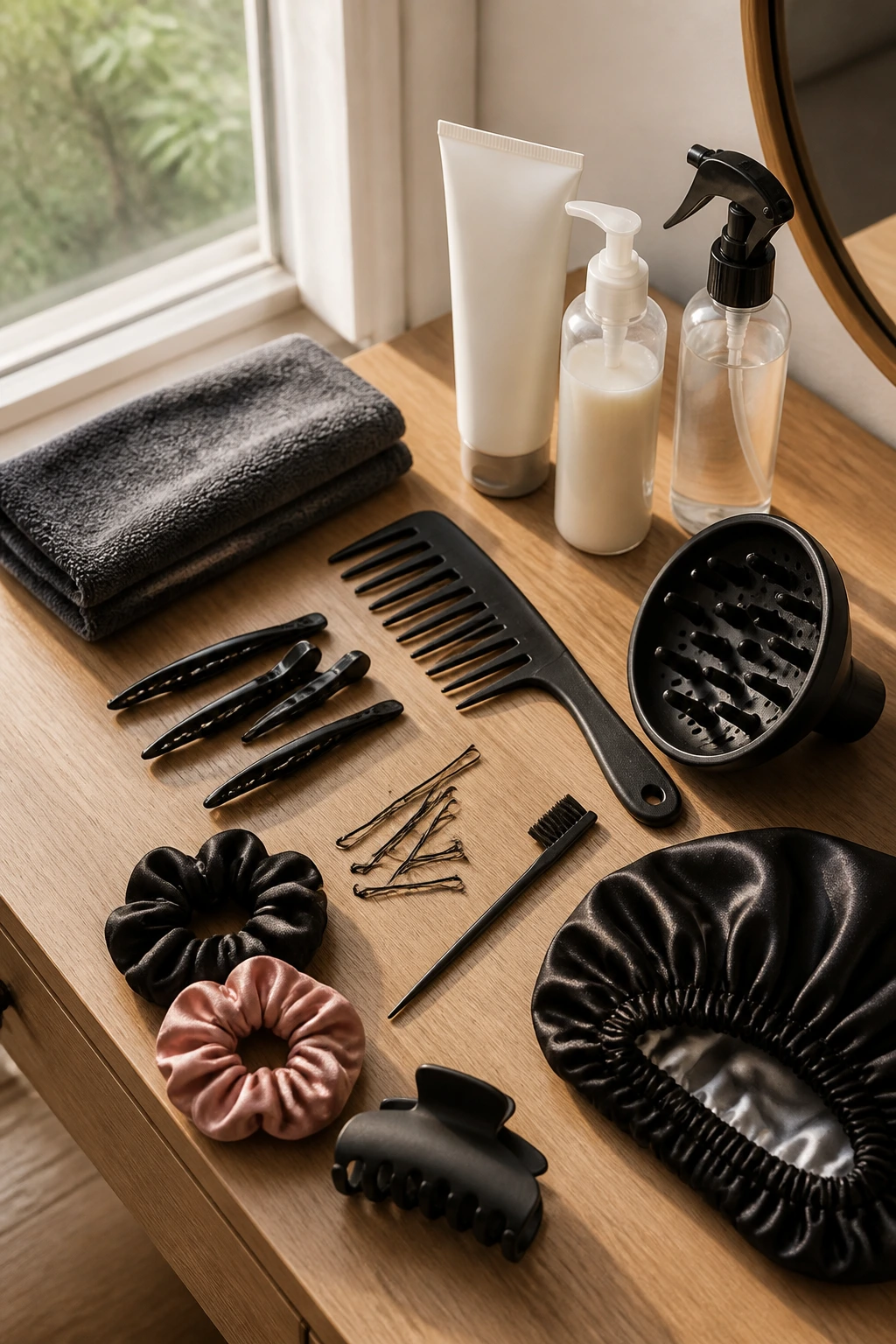
- Wide-tooth comb: Best for detangling in the shower or on soaked hair without tearing through the curl pattern.
- Microfiber towel or cotton T-shirt: Helps soak up water without roughing up the cuticle the way a bath towel can.
- Spray bottle: Useful for refreshing day-two curls, rewetting sections, or reviving a part before restyling.
- Duckbill clips or root clips: Handy for lifting the crown while drying a wash-and-go, bob, or lob.
- Bobby pins: The unsung hero for twists, braids, buns, and half-up looks that need hidden support.
- Satin scrunchies: Better than tight elastics when you want to avoid dents and breakage.
- Claw clip with real grip: Look for one that can actually hold thick hair; flimsy decorative clips slip fast.
- Diffuser attachment: Good for setting roots, speeding up dry time, and keeping curl shape intact.
- Leave-in conditioner: Adds slip before styling and helps the hair stay flexible.
- Mousse or gel: Mousse gives lighter hold and softness; gel gives sharper definition and better humidity resistance.
- Edge brush or soft styling brush: Useful for smoothing the hairline without flattening the whole head.
- Satin bonnet or scarf: Keeps overnight friction down and helps styles last past one sleep cycle.
How to Wear These Curly Styles for Workdays, Weekends, and Events
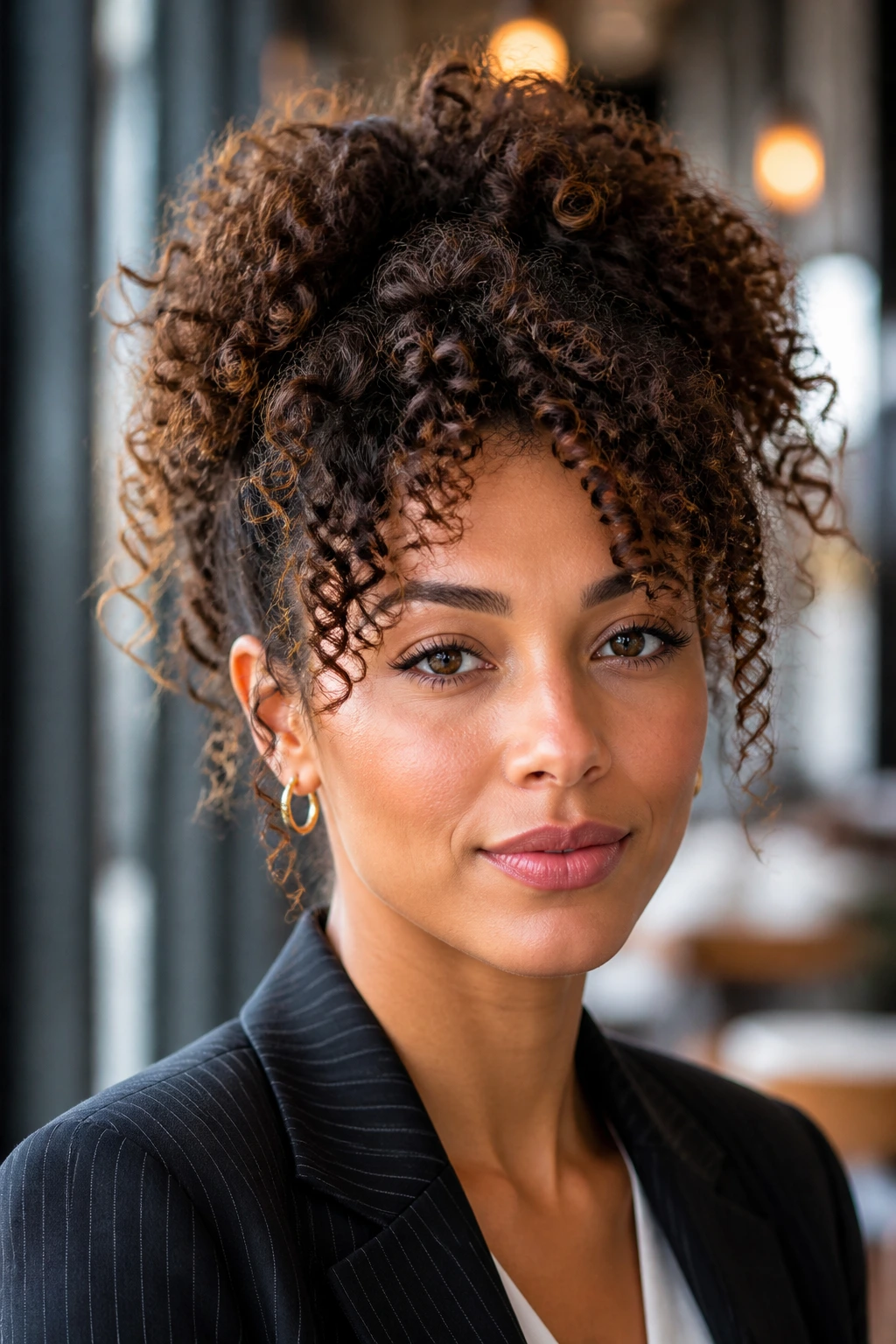
Presentation: For workdays, the neatest styles usually win: a low bun, a side-part bob, a crown twist, or a polished ponytail with a wrapped base. For events, bring in height, shine, or accessories. A ribbon, scarf, or deep side part can change the mood fast without changing the whole shape.
Outfit Pairing: High-volume styles like the high puff, side-swept fro, and mohawk like collars, simple necklines, and earrings that don’t fight for attention. Softer styles—wash-and-gos, curtain-bang lobs, half-up ribbon looks—sit nicely with knitwear, blouses, and anything with a neckline that frames the face.
Scale: If you want a style to look smaller and cleaner, smooth the crown and tighten the base. If you want it to read bigger, clip the roots, fluff the ends, and keep the part loose. The same ponytail can look sporty or polished depending on how much lift you leave at the crown.
Weather Fit: Wind tends to mess with loose front pieces first. Humidity goes after definition and root shape. On humid days, braid the front, choose a style with a tighter base, or use gel on the perimeter. On dry days, you can get away with softer shape and lighter hold.
How to Keep the Shape Fresh Between Wash Days
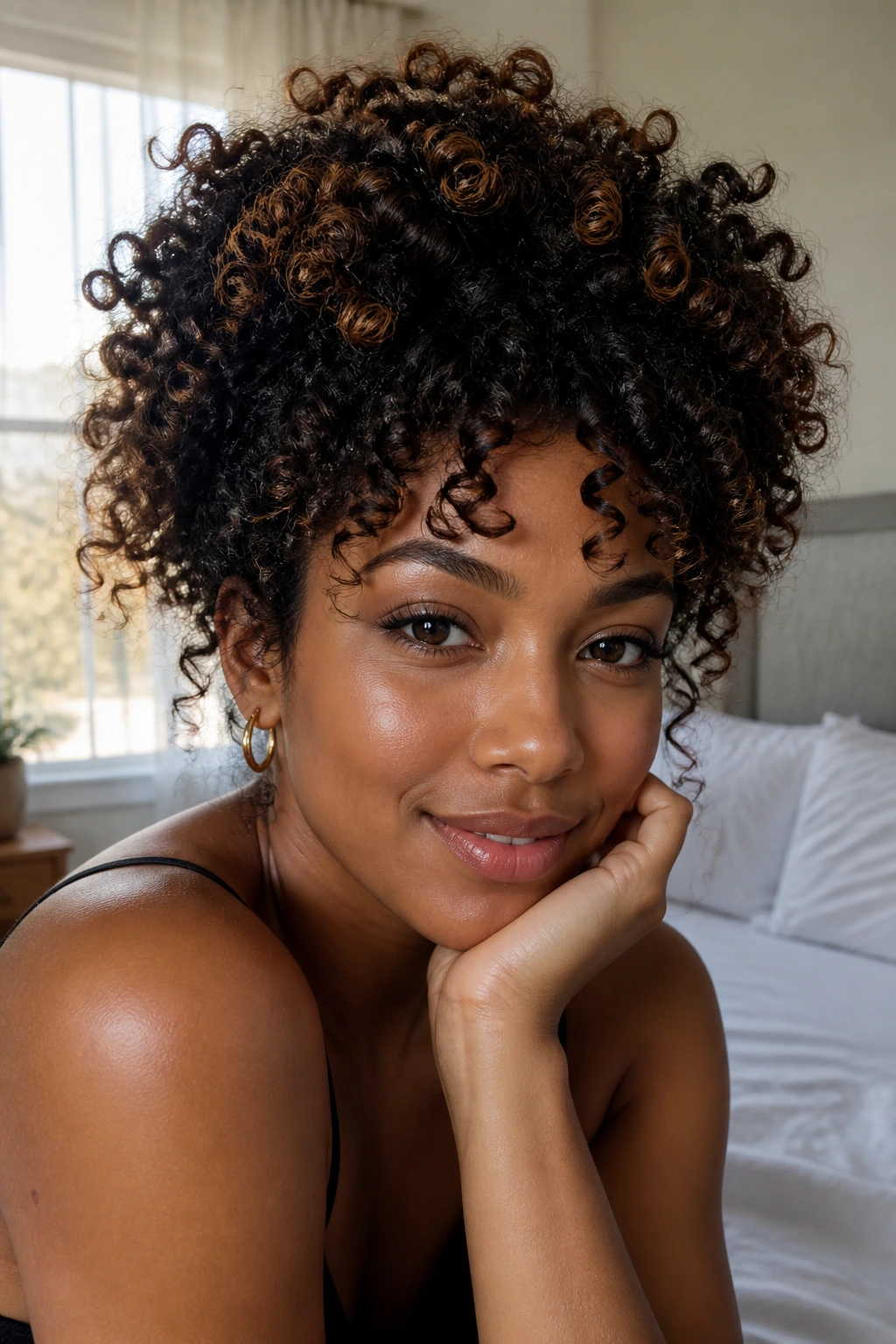
Most curly styles look best for three to five days if they’re set well and protected at night. If you’re working with a strong gel cast, a twist-out, or a pinned updo, you can often stretch that a bit longer. The style doesn’t need a full reset every morning. It needs a small amount of care.
Sleep on satin or silk, not cotton. A bonnet, scarf, or satin pillowcase reduces friction and keeps the front from frizzing into a cloud. For loose styles, the pineapple method works well: gather the curls loosely at the crown with a satin scrunchie so the lengths don’t get crushed. For buns and updos, a few pins can stay in place overnight if the style was built with enough tension to begin with.
In the morning, do not drench the whole head unless you want to start over. Mist the frizzy sections lightly, smooth the perimeter with wet hands, and re-clip the root if the crown has flattened. For styles with a visible curl pattern, a tiny bit of leave-in on the palms can revive the ends. If the hair feels rough, a touch of mousse on the outer layer works better than piling on cream.
Once the style stops responding to a mist and a quick reshape, that’s your cue to restyle or wash. Pushing a dead style another two days usually just creates more work.
Variations and Adaptations to Try
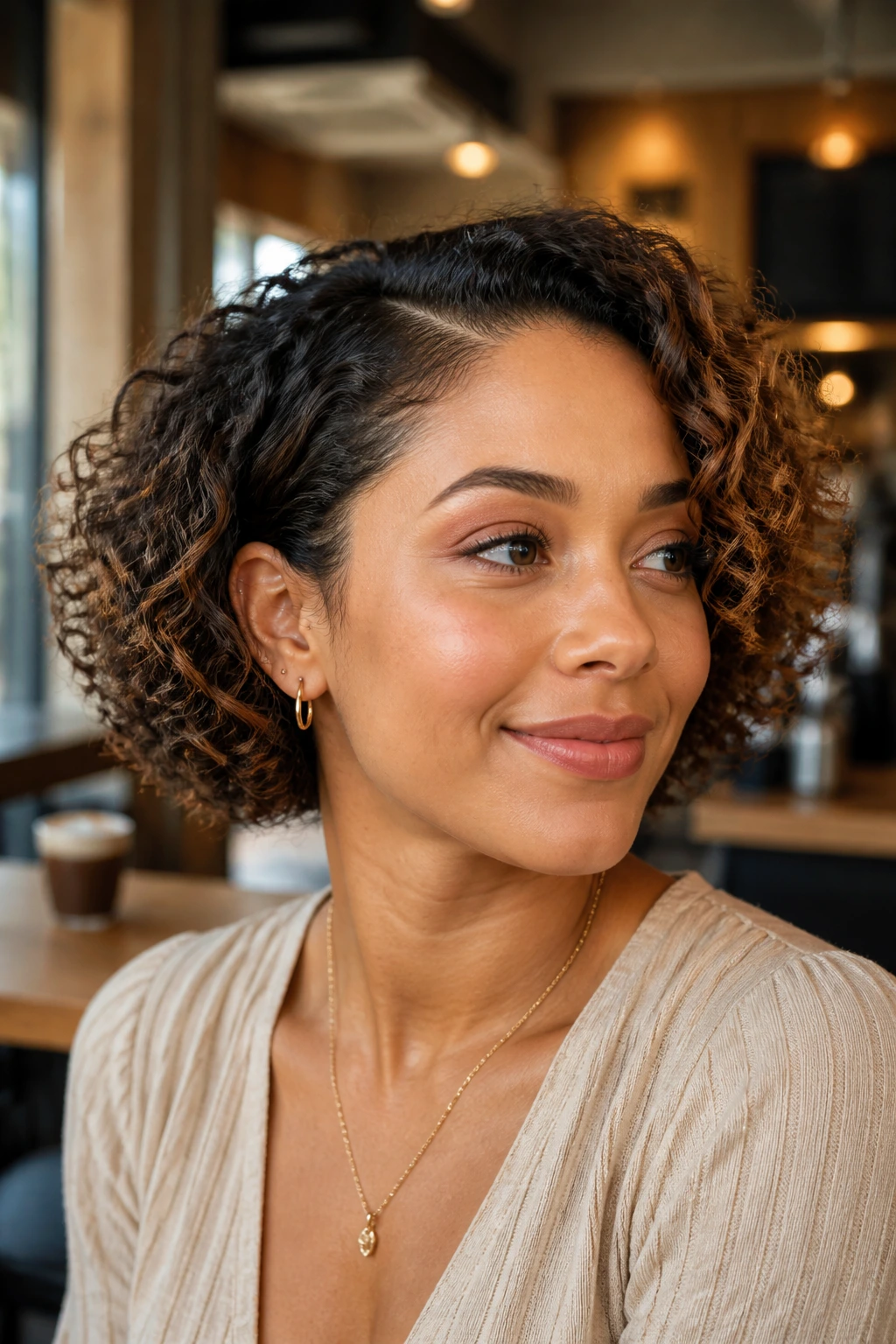
Fine-Hair Lift Version: If your curls are fine or easily weighed down, swap heavy creams for mousse and keep oils off the crown. Styles like the side-part bob, wash-and-go, and ribboned half-up usually hold better when the root stays light.
Thick-Coil Control Version: For dense hair, use stronger hold at the perimeter and choose styles that distribute the volume instead of squeezing it. High puffs, space buns, curly mohawks, and low buns work because they give the hair room to expand without looking accidental.
Heat-Free Stretch Version: If shrinkage is making everything sit too short, stretch the hair first with braids, twists, or banding. That gives you more length to work with for ponytails, half-up looks, and lob shapes. The style reads cleaner when the base is stretched a little.
Soft Formal Version: For weddings, dinners, or dressier settings, add one accessory and keep the silhouette simple. A ribbon, scarf, metallic pin, or pearl clip can turn a basic half-up or low bun into something that looks deliberate without getting fussy.
Busy-Morning Version: If you need speed, stick to styles with one anchor point: the claw-clip twist, the high puff, the wrapped ponytail, or the one-side tuck. These can be done in under ten minutes once you know where your hands need to go.
Common Mistakes That Flatten Curly Hair
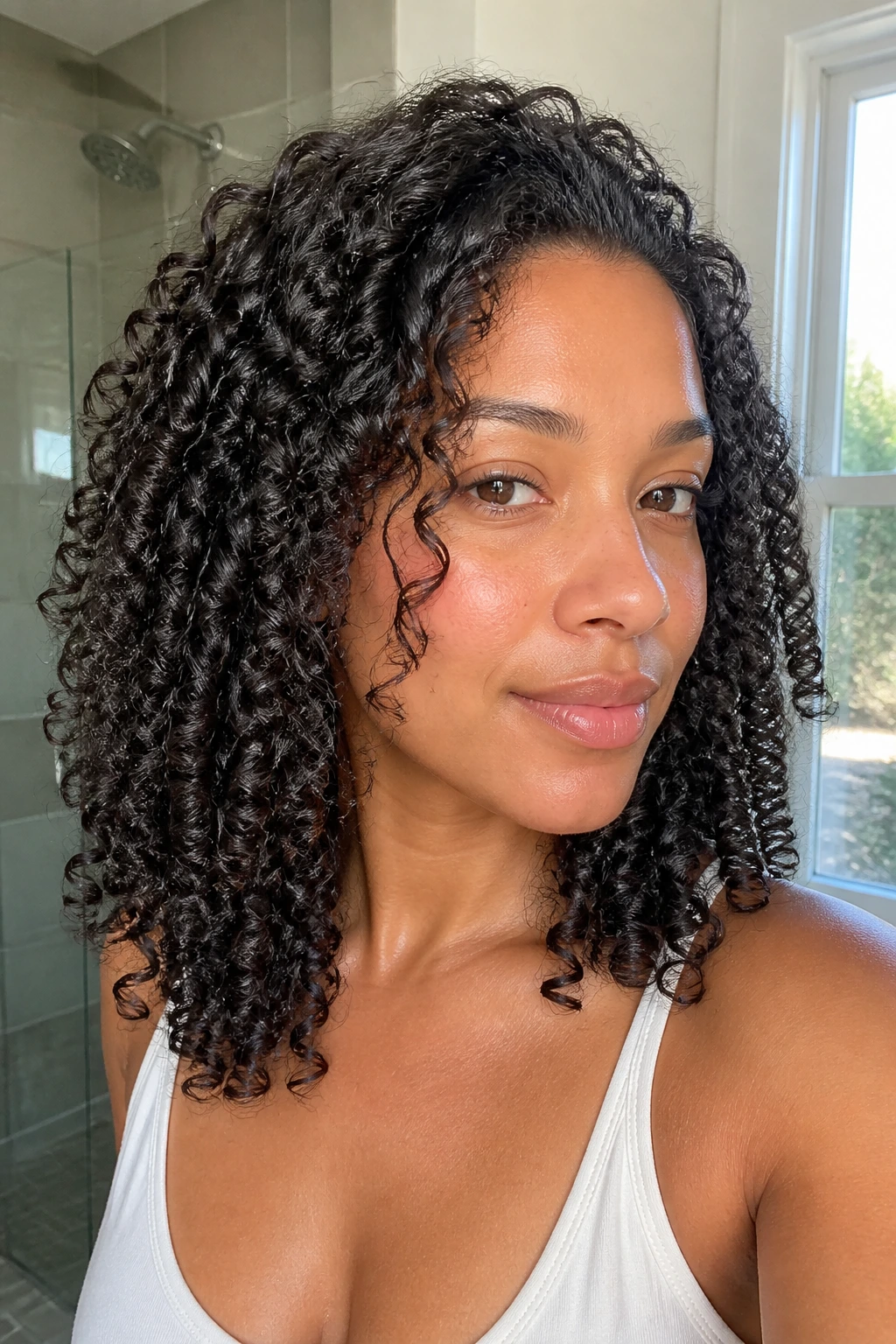
- Styling hair that’s already drying out: Dry curls grab product unevenly and frizz at the top first. Fix it by rewetting sections before you twist, scrunch, or apply hold.
- Using too much oil before hold product: Heavy oils can stop gel or mousse from coating the strand, which leaves curls soft in the wrong way. Put hold first, oil last, and only a little.
- Touching the style before it sets: This is the fastest way to ruin definition. If the curls are still cool or slightly damp, keep your hands out of them.
- Flattening the crown too hard: A slick crown can look good in photos, but if it’s crushed too tight it makes the whole style look small. Leave a little lift at the roots.
- Skipping shape maintenance at night: A bonnet or scarf is not optional if you want curls to last more than one day. Cotton pillowcases strip the shape and rough up the outside layer.
- Choosing a style that fights the cut: A bob that’s too blunt, bangs that are too short, or a bun that’s too tight can all work against shrinkage. Pick a style that fits the haircut you already have.
Frequently Asked Questions About Curly Hairstyles for Women
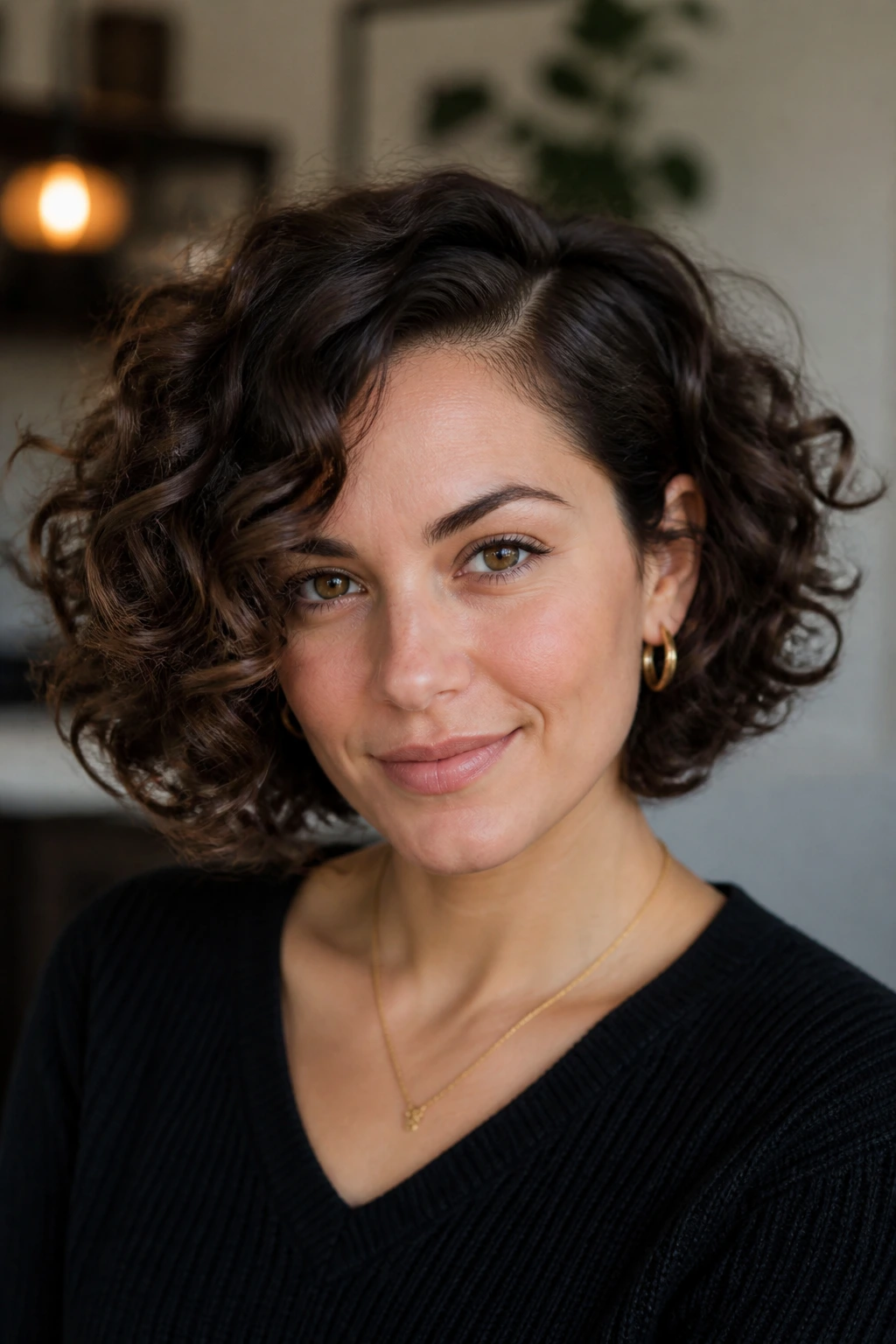
Which curly hairstyle lasts the longest?
The styles with the most structure usually last the longest: low buns, pineapple puffs, claw-clip twists, and twist-out crowns. Anything built with a strong base and protected at night can make it through several days with only light refreshing.
What if my curls frizz up fast after styling?
You probably need more hold or a better dry-down. Apply gel or mousse while the hair is wetter, then leave it alone until it’s fully dry before separating or fluffing. Frizz that starts at the crown usually means the roots were touched too soon.
Can these styles work on short curly hair?
Yes, but the shapes change. Short hair does well with finger coils, a cropped side part, a tiny puff, or a clipped-back front section. If the hair is too short for a ponytail or bun, lean on definition and accessories instead of forcing length.
What’s better for curly hairstyles: gel or mousse?
Gel gives firmer hold and better humidity resistance. Mousse gives softness and lighter movement. If your curls need structure, start with gel. If they’re fine and flatten easily, mousse may feel better.
How do I keep my crown from going flat?
Use root clips while the hair dries, or set the roots in the opposite direction of how they normally fall. A diffuser on low heat can also help. The crown goes flat when the hair dries in one compressed direction and never gets lift again.
Can I do these styles on second-day hair?
Absolutely. High puffs, claw-clip twists, side parts, braided front halos, and ribboned half-ups often work better after the hair has settled a little. Second-day hair usually grips pins and elastics better too.
How do I make a bun look full instead of tiny?
Puff out the bun after securing it, and don’t pull the hair through the elastic too tightly. If the bun still looks small, wrap the ends around a loose base or use a few pins to spread the shape slightly.
What’s the best way to sleep on a curly hairstyle?
Use a satin bonnet or scarf, or sleep on a satin pillowcase if the style is too bulky for a bonnet. For loose curls, the pineapple method keeps the lengths from getting crushed. For updos, pins should be secure enough that you don’t need to rebuild the whole style in the morning.
Curls That Stay Themselves
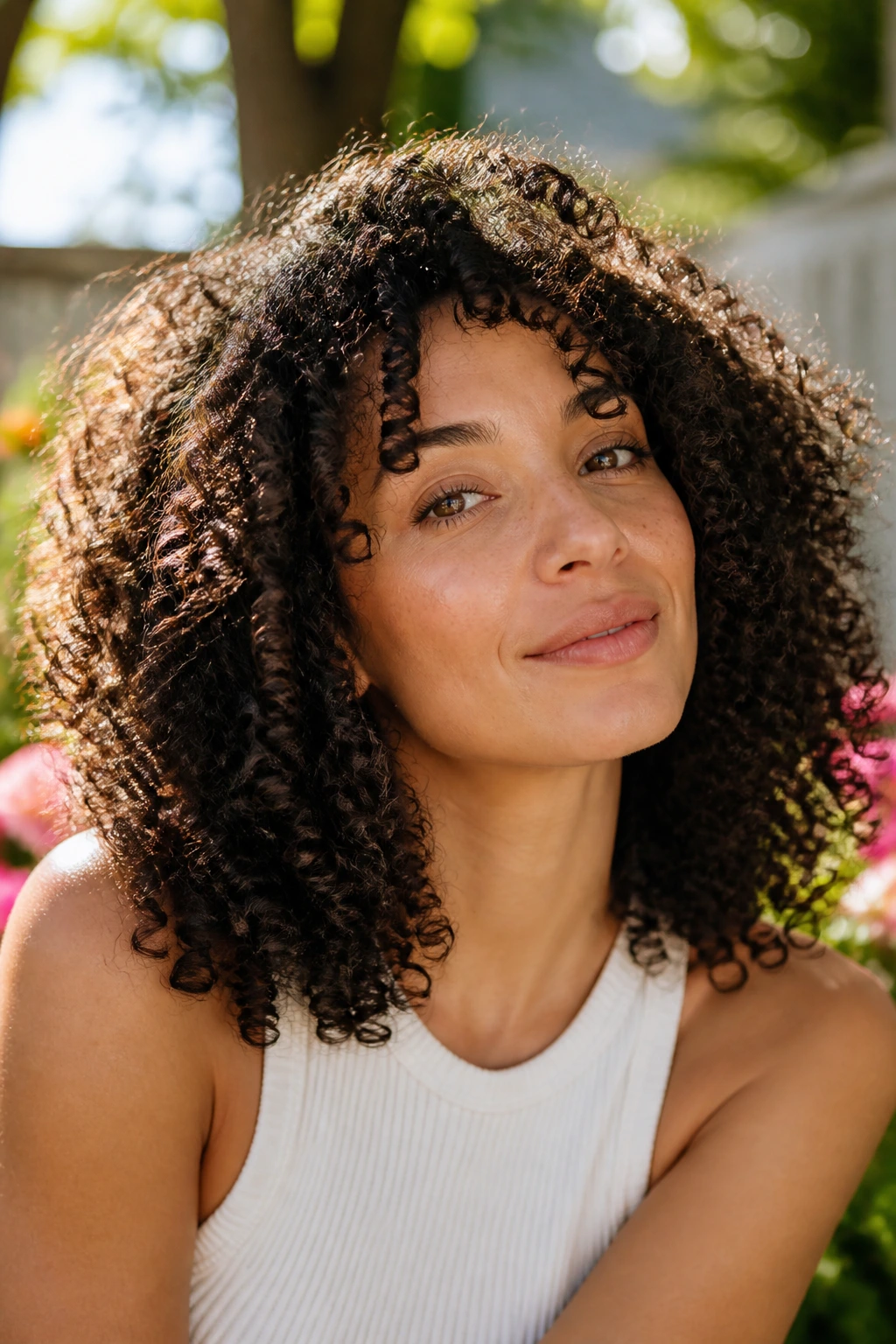
The best curly hairstyles don’t force your hair into silence. They give it shape, a little structure, and enough support to keep going past the first hour. A good bob, puff, twist, or wash-and-go should still look like curls when you’re done with it, not like you fought the texture into submission.
Pick the style that matches what your hair already does well, then nudge it in the direction you want. That usually means a better part, a little lift at the roots, or one smart accessory rather than a pile of extra product. Curls respond to that kind of honesty.
And once you find the few styles that suit your length and pattern, keep them close. Those are the ones that become habits, not experiments.
