



Curly hairstyles for summer work best when they stop arguing with the weather. A style that looks neat in an air-conditioned bathroom can lose the plot ten minutes later on a hot sidewalk, in a crowded train, or the second your neck starts to warm up. That’s why the smartest warm-weather curls are built around shape, lift, and a little strategic restraint.
There’s a reason some looks survive humidity while others turn into a puff of opinions. Curls already have their own structure; summer asks them to stay off the neck, cut down on friction, and hold up after a little sweat. If you keep forcing them into sleekness they don’t want, you spend the day fixing flyaways. If you work with the natural bend, the whole thing gets easier.
The styles below are the ones I reach for when the air feels sticky and my patience for hot tools is low. Some are quick. Some look polished enough for dinner. A few are the kind of styles that make you feel a little more put together than you actually are, which is a very useful trick in warm weather.
Why These Styles Hold Up When the Air Gets Sticky
-
They lift hair off the neck: When the nape is free, you stop fighting sweat and rubbing all day, and the style stays neater for longer.
-
They use curl shape instead of flattening it: A good summer style lets coils, ringlets, and waves keep their movement, which means less puffing and less collapse.
-
They work on day-two hair: Slightly lived-in curls usually behave better in heat than freshly washed hair that’s still too soft to hold a shape.
-
They leave room for accessories: Scarves, clips, pins, and scrunchies do a lot of the heavy lifting here, and they give you a fast way to change the look.
-
They don’t require a full blowout: If you’ve ever watched a flat-ironed style give up at noon, you already know why heat-free options matter.
-
They scale up or down easily: The same base idea can look casual with a loose pin or sharper with a tighter part and a cleaner finish.
1. High Pineapple Puff
A high pineapple puff is the summer answer to “I want my curls up, but I still want them to look like my curls.” The magic is in the height. Pulling the hair up toward the crown keeps your neck open, lets the curls spill forward, and gives even a simple outfit a little shape without trying too hard.
Why it works in heat
A high pineapple does three useful things at once: it protects the curl pattern, it keeps friction away from the ends, and it lets the root area breathe. That last part matters more than people think. When the back of your head is pressed against a chair, a car seat, or a damp collar, curls flatten fast.
- Best on medium to long curls, though shorter hair can do a mini version.
- Works well on second-day or third-day hair with a mist of water and leave-in.
- Looks fuller when you flip the head upside down before gathering it.
The move I like most is leaving the curls loose enough that the puff still reads soft. If you yank everything tight, it starts to look like a workout ponytail. Keep the base secure with a satin scrunchie, smooth the sides with your palms, and let the crown stay a little airy. That softness is what makes the whole thing feel wearable instead of severe.
2. Curly Bob with Airy Ends
A curly bob earns its spot in hot weather because it dries faster, sits lighter on the shoulders, and doesn’t spend the day collecting sweat at the nape. The trick is not to over-control it. A bob looks best when the ends stay loose and the shape has a little breathing room, not when every curl is lacquered into place.
If your bob tends to puff wide, shift the part slightly off-center and concentrate a bit more product at the outer layer, not the whole head. A light mousse or curl cream, then a few scrunches with a microfiber towel, usually gives enough hold without making the shape stiff. You want the ends to swing a little.
This cut-and-style combo also does something sneaky: it makes summer styling feel manageable. Less hair means less drying time, fewer pins, and fewer chances for a style to collapse under its own weight. And honestly, that matters when you’d rather leave the house than spend forty minutes negotiating with a diffuser.
3. Braided Halo Updo
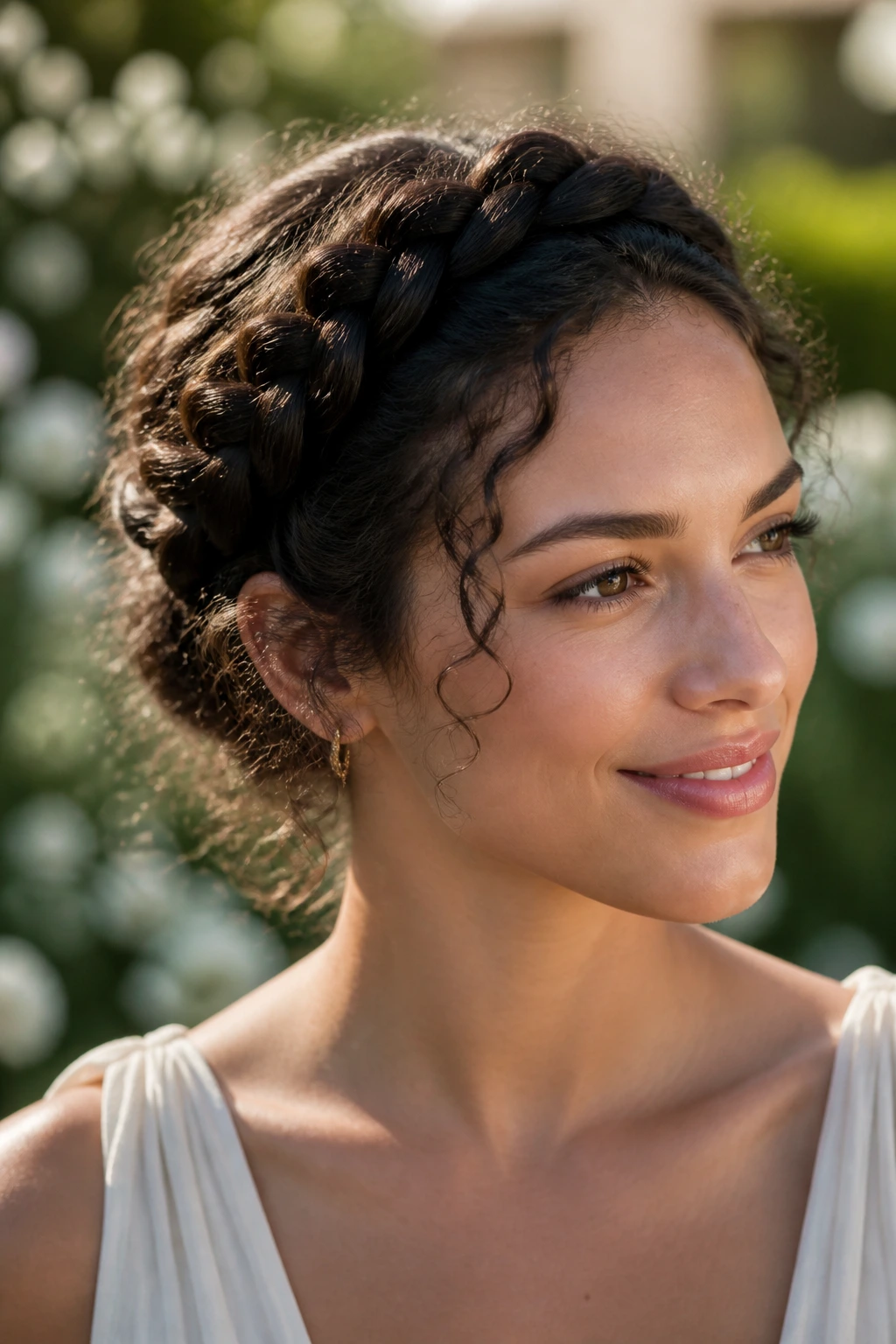
What if you want your curls off your neck without burying them inside a tight bun? A braided halo updo solves that neatly. It wraps the hair around the head like a crown, so the curls stay tucked in place while the style still looks textured and deliberate.
How to pin the halo
Start with hair that has a little grip. Freshly washed curls can be too slippery, so the style often works better on hair that’s been dry for a few hours or lightly refreshed with water and leave-in. Make two loose braids or flat twists from the temples back, then pin them across the crown and down toward the nape with bobby pins that match your hair color.
- Use pins with a firm grip, not the flimsy kind that bend after one wear.
- Leave a few curls out near the ears if you want the style to feel softer.
- Tuck the ends under well, because loose tails have a habit of sneaking out by lunch.
The best part is how cool it feels. The hair is up, but the style still has movement and texture, which keeps it from looking overly formal. That balance is why this one works for weddings, patio dinners, and any day when you want your curls contained but not crushed.
4. Claw-Clip French Twist for Curls
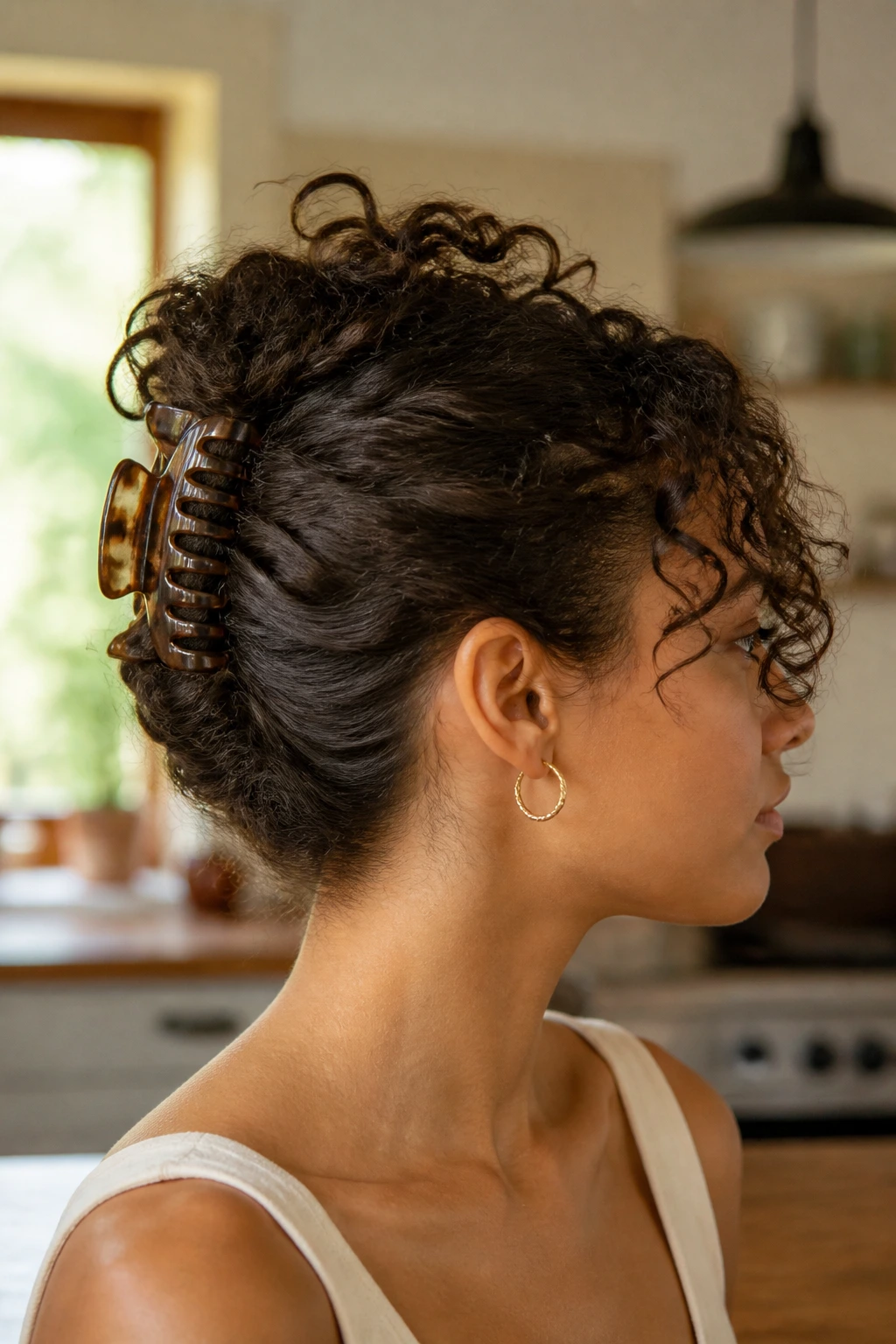
You know those days when your hair is halfway between “I styled it” and “I gave up”? The claw-clip French twist lives right there, and that’s why it gets so much wear. It’s fast, it keeps the weight off your shoulders, and with curly hair it looks better when it’s a little loose around the edges.
The main thing is choosing a clip that can actually hold curl density. Thin plastic clips snap shut around three strands and then surrender. A larger clip with a strong spring and deeper teeth handles thicker curls far better. Twist the hair upward, tuck the ends in, and let a few curls spill at the top or sides. That spill is not a mistake. It keeps the twist from looking overdone.
I prefer this style when the day is long and I don’t want to think about my hair again. It survives errands, office air-conditioning, and a quick change of clothes without needing a redo. If you want it smoother, pull the front sections back before twisting. If you want it softer, leave the hairline alone and let the curls frame the face.
5. Side-Swept Wet-Look Curls
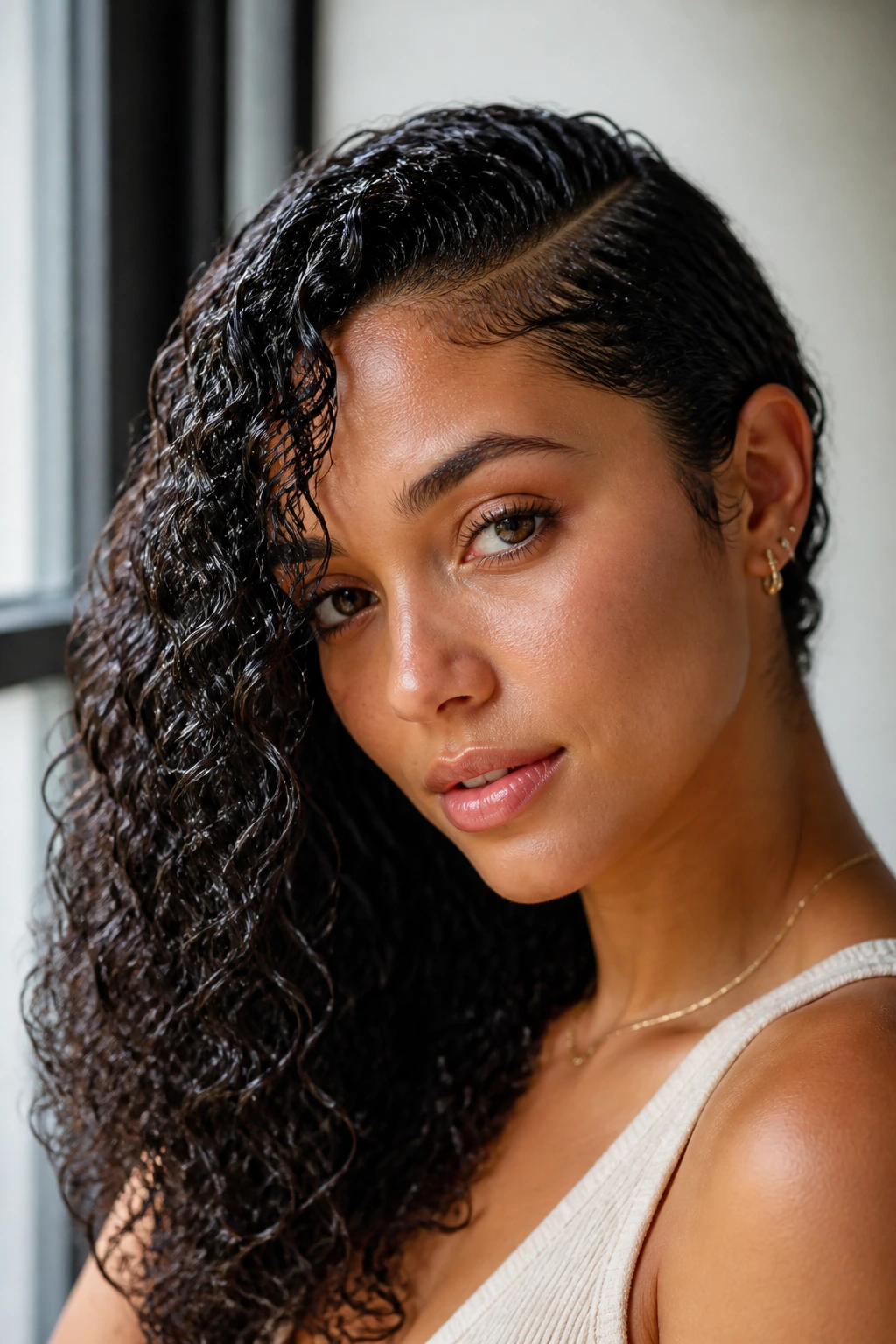
There’s a sharp little confidence to side-swept wet-look curls. The style says you’re not trying to fight humidity; you’re using shine and definition to make humidity look intentional. When it’s done well, the curls sit glossy and sculpted on one side with enough movement at the ends that the whole thing doesn’t go stiff.
This is one of those styles where product choice matters more than quantity. Use enough gel or strong-hold cream to define the curl clumps, but not so much that the hair turns into a helmet. Comb everything into a deep side part, then rake the product through with your fingers or a wide-tooth comb so the sectioning stays visible. Let the roots stay close to the scalp for that sleek finish.
The payoff is that the style holds shape even when the weather is unhelpful. A wet-look finish does not hide frizz; it turns frizz into part of the texture story. That’s the point. If your curls are already cut in layers or you have natural volume at the crown, this style gives you a polished shape without forcing the hair to become something else.
6. Low Curly Bun with Face-Framing Pieces
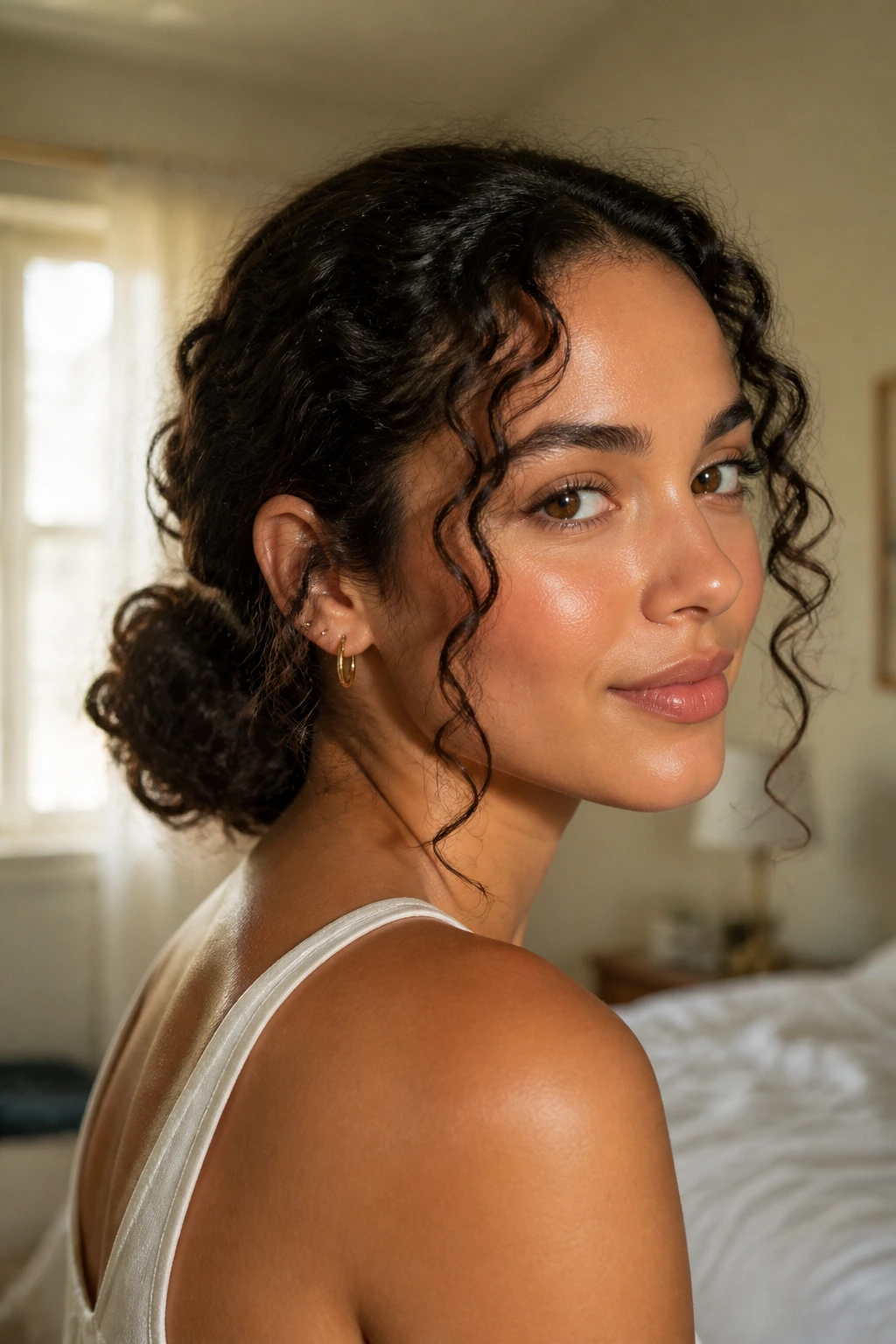
A low curly bun is the opposite of dramatic, which is exactly why it works. It sits at the nape, keeps the heavy part of the hair from moving around all day, and leaves enough curl around the face to stop the style from feeling too strict. Compared with a high bun, it feels calmer and a little more grounded.
Unlike a high puff, this one puts the weight low, so it’s easier on the scalp if your hair is thick or long. Gather the curls loosely at the back, twist them into a bun, and pin them in a way that keeps the shape rounded rather than flattened. Then pull out two or three thin face-framing pieces. Those pieces soften the line of the style and keep it from reading too formal.
I’d choose this for a dinner, a workday, or any day you want your hair to look under control without losing all texture. If your curls are especially dense, split the bun into two smaller knots and pin them together. It sounds fussy. It isn’t. It just sits better.
7. Two-Strand Twist-Out Ponytail
A twist-out ponytail has a nice middle ground to it. The twists give you definition near the roots, the ponytail keeps the length off your back, and the whole style still looks like your hair, not a shiny substitute. It’s one of those styles that reads more finished than a plain ponytail because the texture is built in.
Why it earns a spot in summer
Two-strand twists hold shape better than loose curls alone, which matters when the air is damp. Twist the front or the entire head in medium sections, let the twists set, then gather them into a ponytail with a satin scrunchie. You can leave the ends free for a fuller look, or tuck them under if you want a neater shape.
This one is particularly useful if your curls frizz fast at the crown. The twists keep the top organized while the ponytail keeps the style from getting bulky. It’s a good compromise when you want a cleaner outline but don’t want to smooth your curls flat. And frankly, that compromise is often the sweet spot.
8. Space Buns on Defined Curls
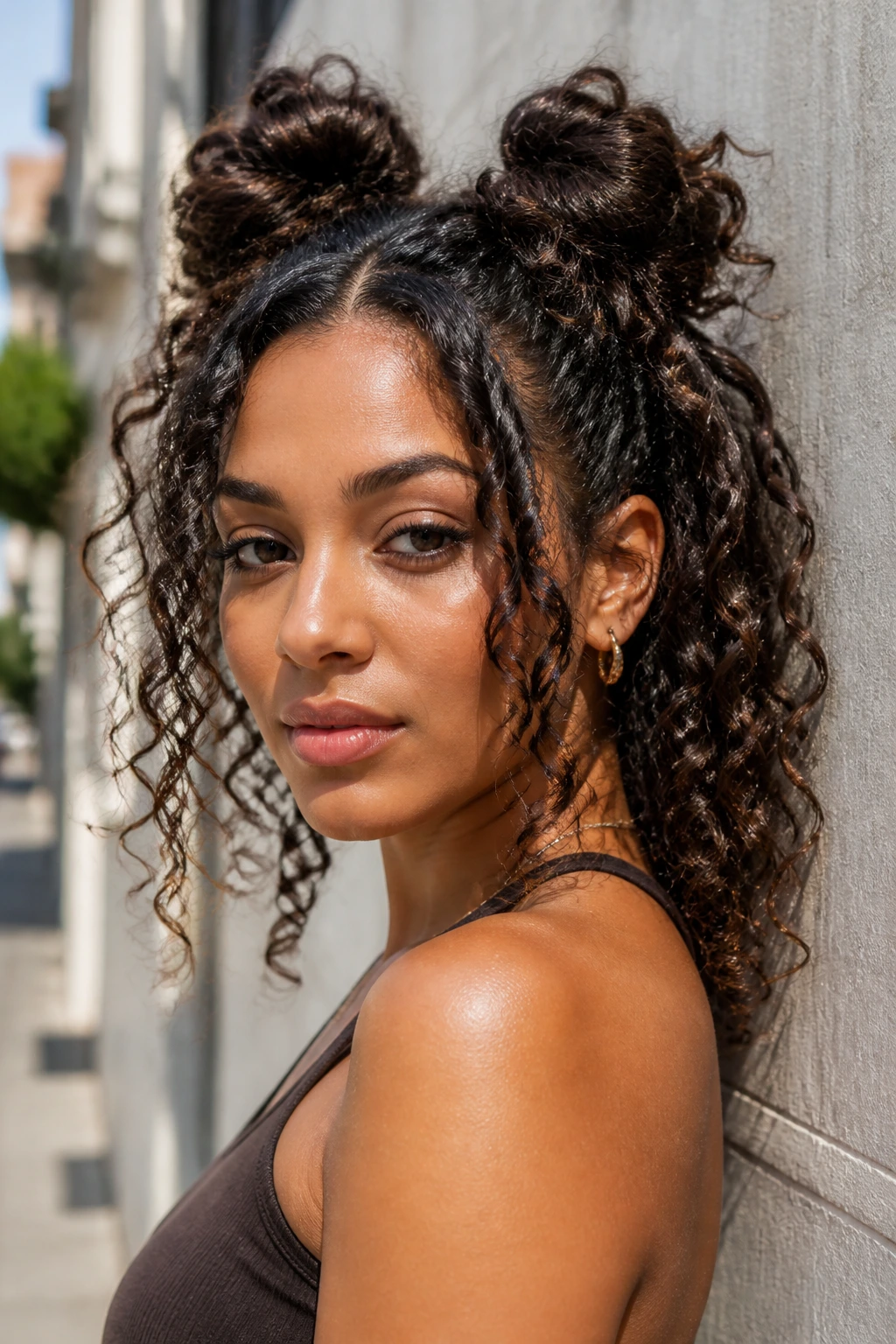
Space buns on curly hair are playful without looking childish, which is harder to pull off than people admit. The trick is keeping the buns small enough that they don’t pull the scalp tight and leaving enough curl free around the face and nape to keep the style from turning into two hard little knobs.
Start with defined curls, then split the hair into two high sections. Twist each side into a bun, but don’t crush the curls completely. Let a few ends poke out. That little irregularity makes the style feel lived-in rather than staged. If your hair is thick, make the buns a little lower and wider so they sit securely.
This works best on medium to long curls, especially when you want a style that stays out of your face but still has some personality. It’s also a smart choice for humid days because the top half of your hair is controlled, which means less frizz where people actually see it first.
9. Bubble Ponytail for Dense Curls
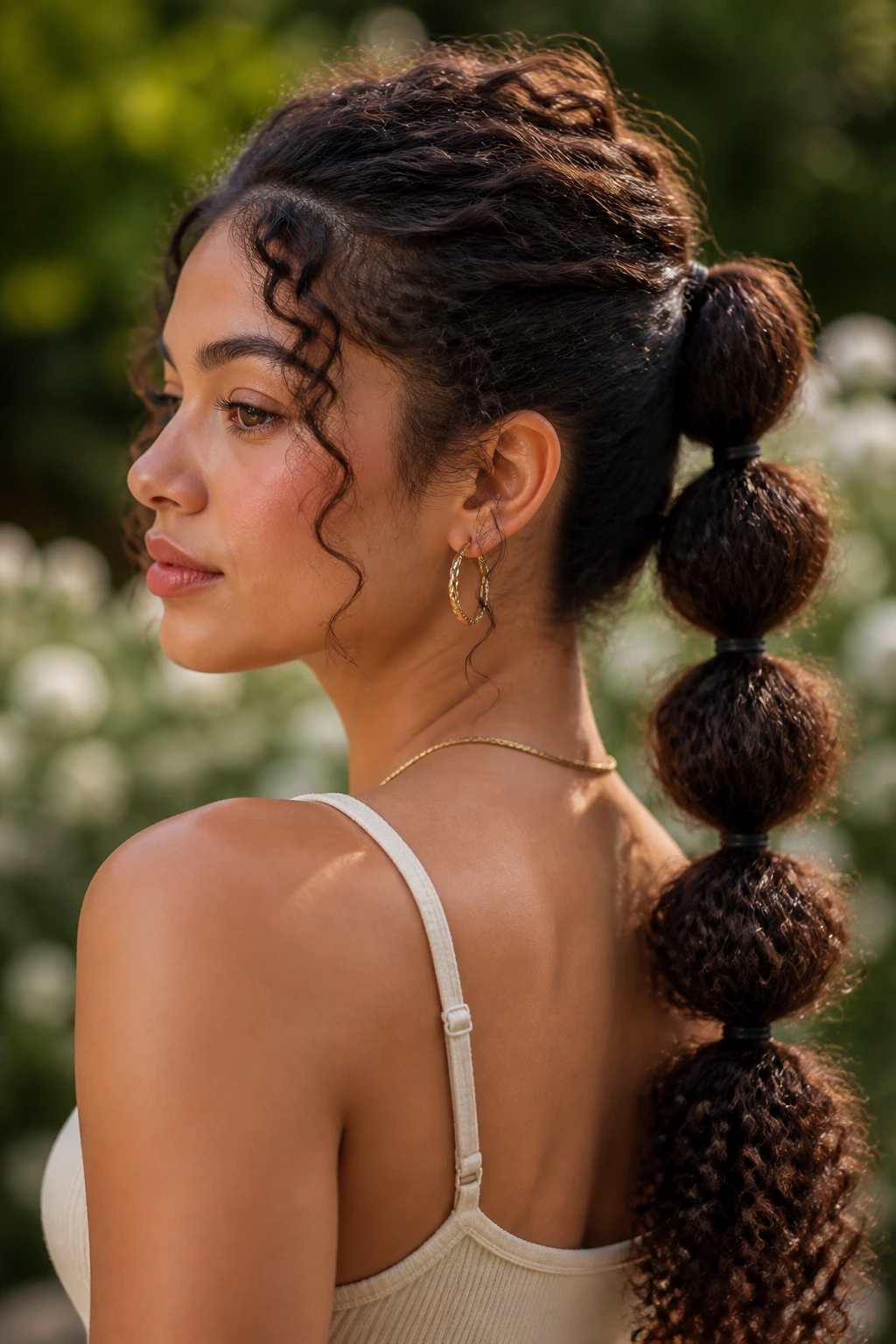
A bubble ponytail turns thickness into part of the design. Instead of fighting a long, heavy ponytail, you break the length into rounded sections with small elastics and let each bubble puff outward. On dense curls, that shape looks deliberate and keeps the style from collapsing into a single, tired rope by noon.
The sectioning matters. Start with a smooth base ponytail, then add elastics every few inches down the length. Gently pull each section outward so it puffs into a rounded shape. Don’t yank too hard or you’ll distort the curl pattern and make the bubbles uneven. A little tension goes a long way.
I like this one because it makes long hair feel contained without flattening it. You get movement, but not a bunch of hair swinging against your back in hot weather. If your curls are heavy, anchor the base with two stacked elastics. That extra support keeps the whole thing from sliding.
10. Curly Shag with a Deep Side Part
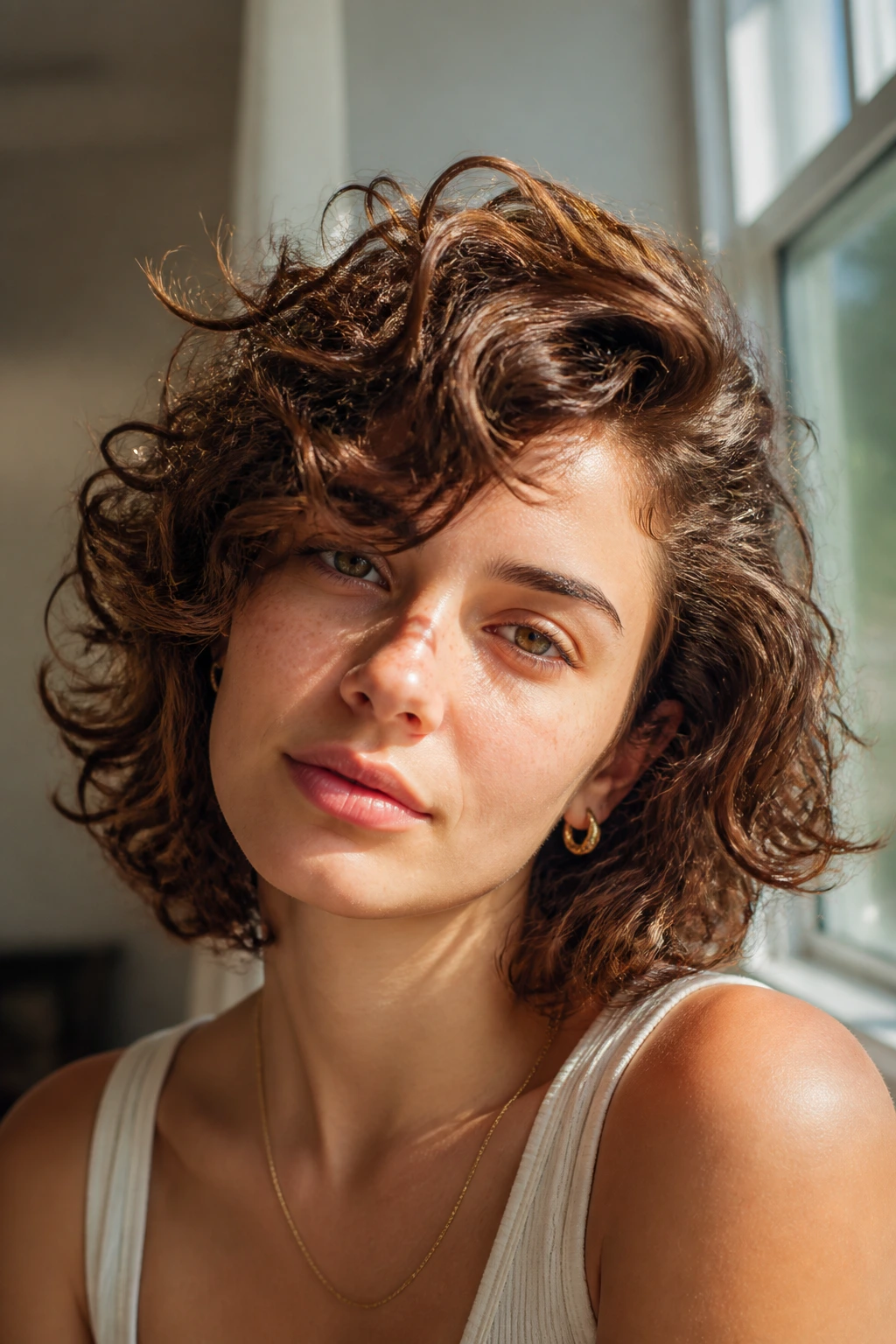
A curly shag is a summer haircut that does half the styling work for you. The layers keep the curls from forming a heavy triangle, and the deep side part gives the hair enough shift that it doesn’t sit on your head like a single block. In hot weather, that lighter structure matters.
The reason this shape works so well is simple: it lets air move through the layers. When curls are cut to fall in different lengths, they dry faster and keep some lift instead of clumping into a dense mass. A side part also gives the front more motion, which keeps the style from looking flat at the roots.
This is one of the rare styles that looks better when it isn’t too polished. A touch of mousse, a quick scrunch, and a bit of root lift with your fingers is enough. If your hair tends to shrink a lot, the side part can stretch the shape visually and keep the style from feeling too short. That small detail makes a bigger difference than people expect.
11. Mini Twist-Out with Loose Ends
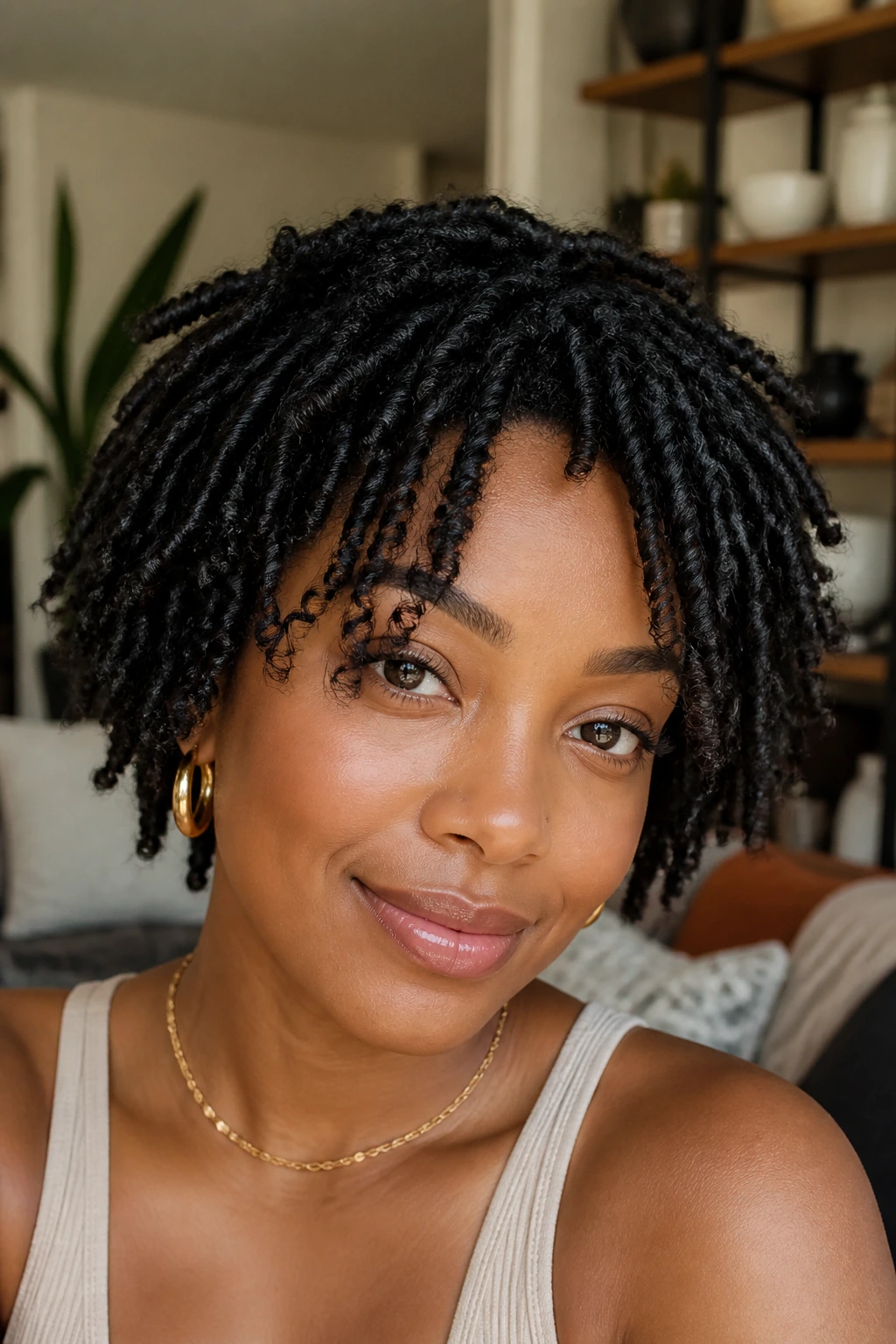
A mini twist-out is for the days when you want definition without stiffness. Smaller twists give the curls more structure, but leaving the ends loose keeps the style from looking over-engineered. It’s a smart compromise when the weather is unreliable and you want the shape to hang on longer than a wash-and-go.
Best when your curls shrink a lot
Small sections matter here. The smaller the twist, the more defined the result, but also the longer the set time, so this is the style to plan ahead for. Once the twists are dry, unwind them carefully with a little oil on your fingertips, then separate only where the hair naturally wants to split. If you force too much separation, the style turns fuzzy fast.
I’d reach for this on a weekend or before an event because it rewards patience. The payoff is a soft, springy shape with less frizz at the roots than a loose curl set. Letting the ends stay a bit freer keeps the whole look from getting boxy. That one choice changes the silhouette more than most styling creams do.
12. Flat-Twist Mohawk
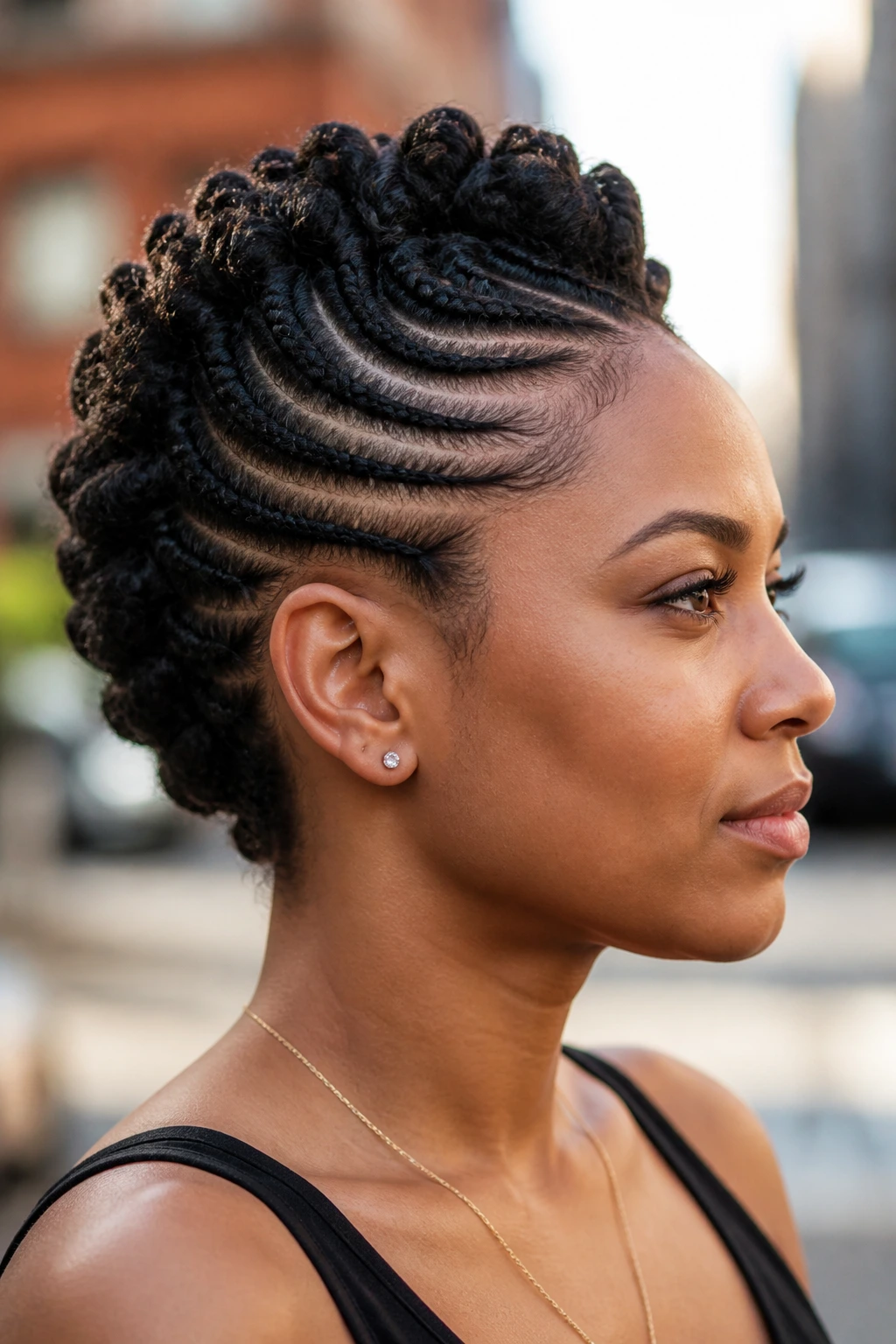
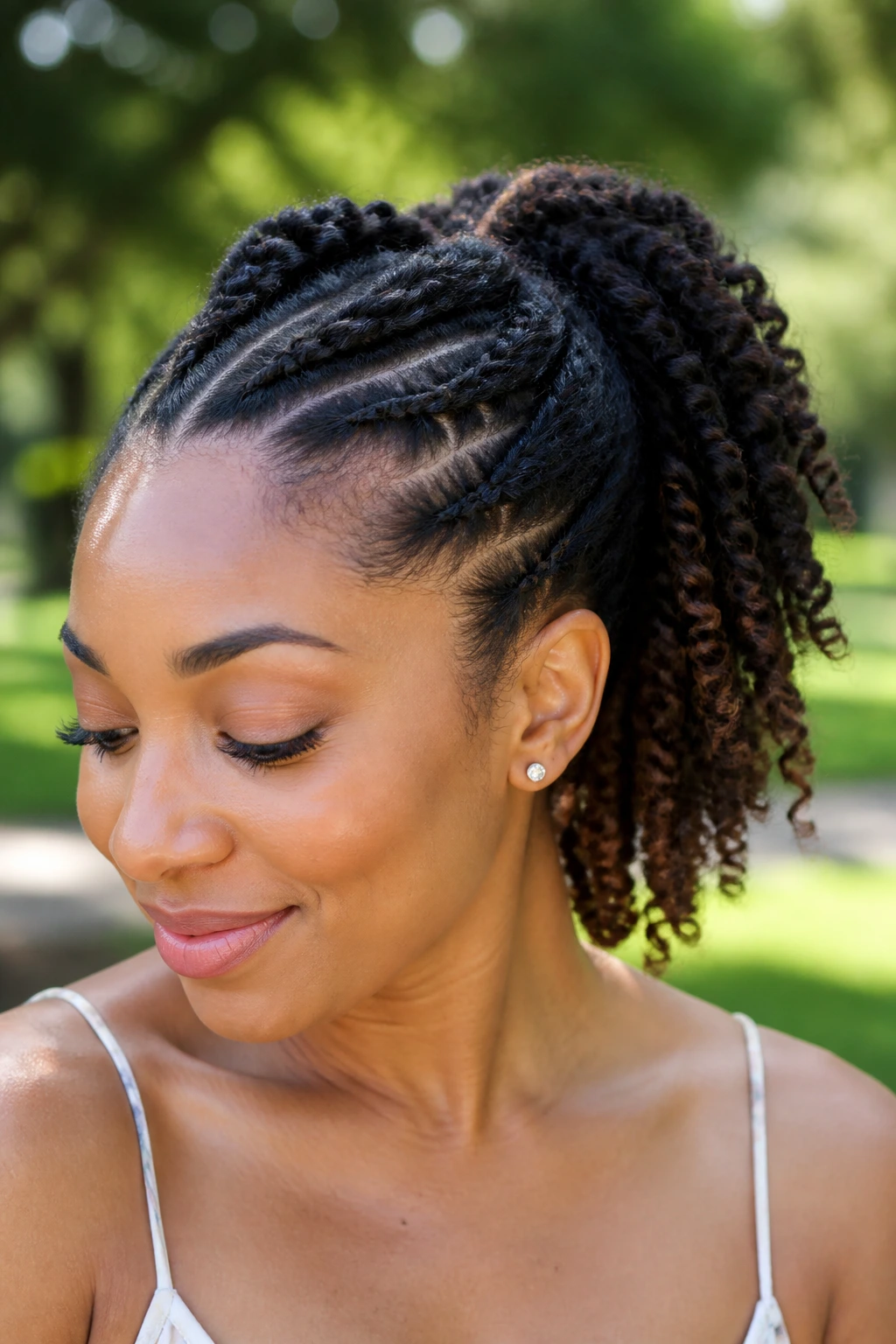
A flat-twist mohawk has edge without heat, which is a useful combination when you want your curls up and your neckline open. The sides are twisted or slicked close to the scalp, and the center section stays full, high, and textured. The result is sharp, but not severe.
This style works because it creates contrast. Tight sides make the middle section look even fuller, so the curls get a built-in lift without needing a blowout. It also keeps the sides from puffing out in humidity, which is where a lot of curly styles lose their shape first.
Use firm bobby pins and a light gel near the part lines if you want the mohawk ridge to stay clean. If you want it softer, leave the front twists a little wider and pull a curl or two loose near the ears. That little bit of looseness makes the whole style feel more wearable for daytime.
13. Scarf-Wrapped Puff
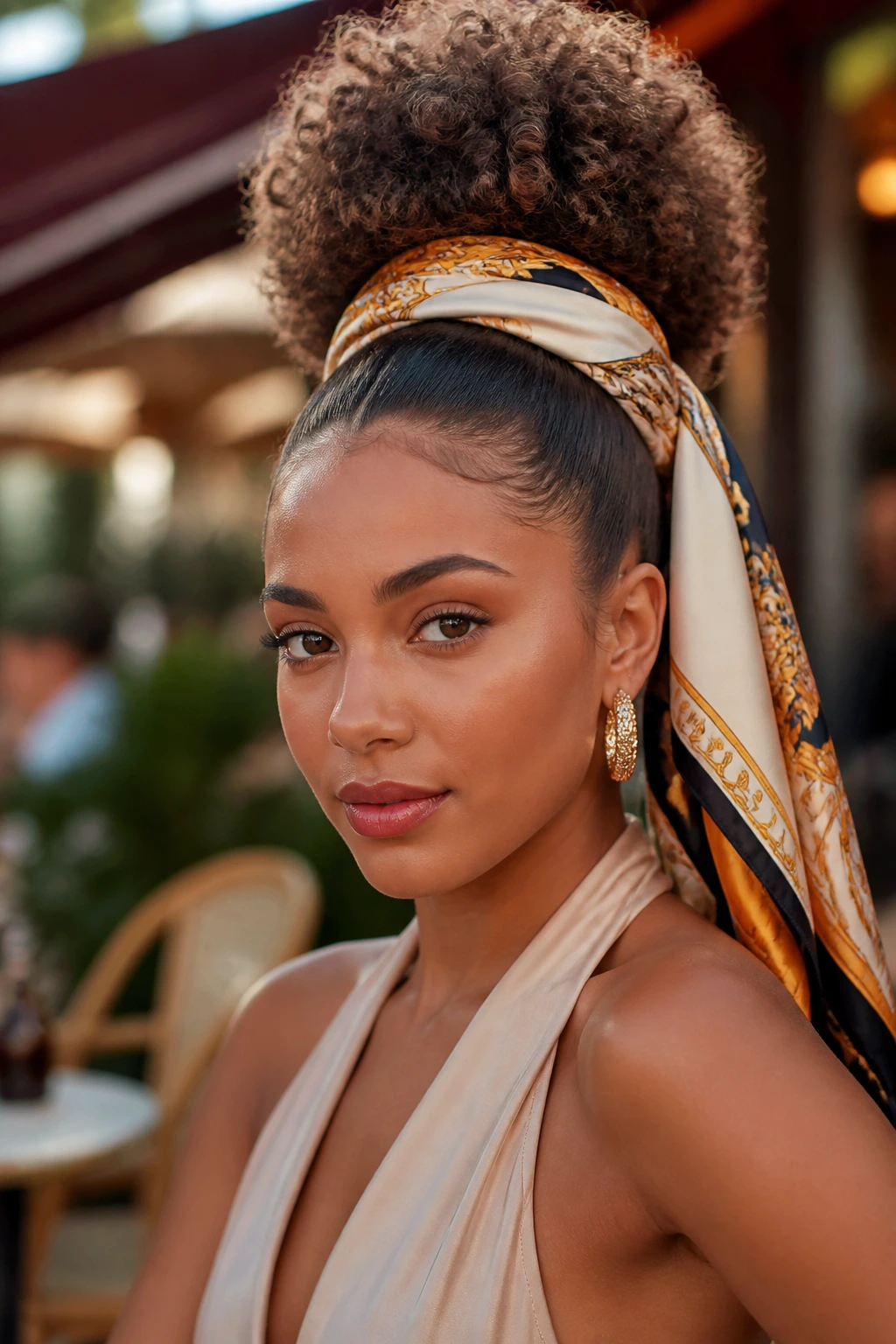
A scarf-wrapped puff is one of those styles that looks more thoughtful than it actually is. The puff gives you the volume, the scarf gives you control, and together they keep the front of the hair neat while the curls stay free at the back or crown. It’s a good answer when you want to get dressed and go.
The scarf matters more than people think. A silk or satin scarf slides less against the hairline, which helps keep frizz down and avoids the weird denting that rough cotton can leave behind. Tie it around the base of the puff, then let the tail fall to one side or tuck it in for a cleaner finish. Patterned scarves make the look feel brighter; solid ones keep it more understated.
This is also a good style for a second or third day refresh. If the roots need a little help, mist them lightly, smooth the edges, and let the scarf hold everything in place while you finish the rest of getting ready. Fast. Easy. Not boring.
14. Braided Front, Loose Back
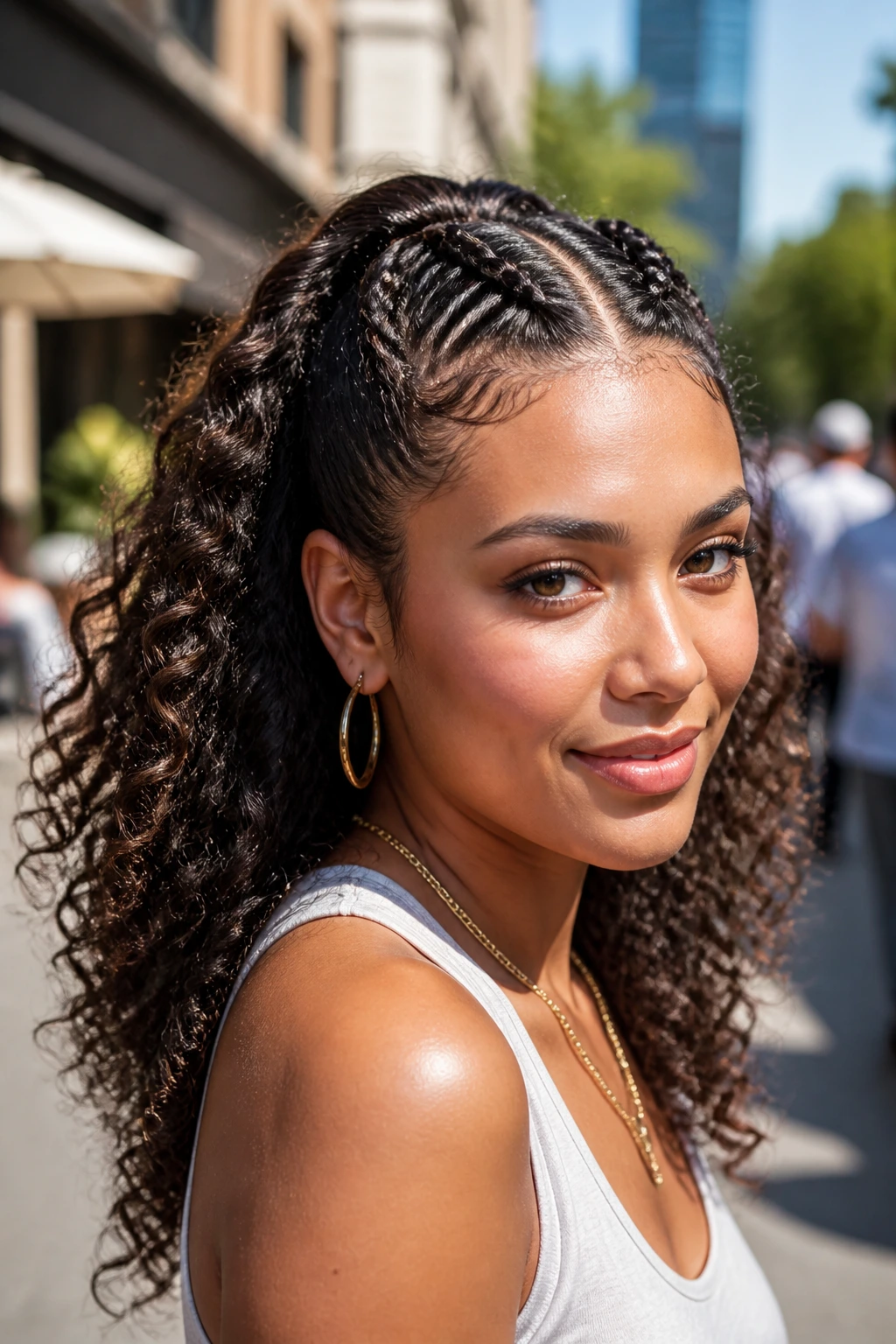
Braiding only the front section is a neat way to solve the part of summer styling that usually gets annoying first: hair falling into your face. Two braids, cornrows, or chunky side braids across the front keep the hairline controlled while the back stays loose and curly, so you don’t lose all the volume.
Compared with a full braid style, this one feels lighter and gives you more of your curl pattern on display. It also stretches the time between wash days because the front stays put while the back can be refreshed on its own. If your hairline tends to frizz or puff up quickly, this is one of the easiest ways to keep the style looking deliberate.
I like this for everyday wear because it gives you a little structure without committing the whole head to braids. And if you’re wearing sunglasses or a hat, the front braids keep the curls from crowding the face. Small fix. Big payoff.
15. Finger-Coiled Pixie Shape
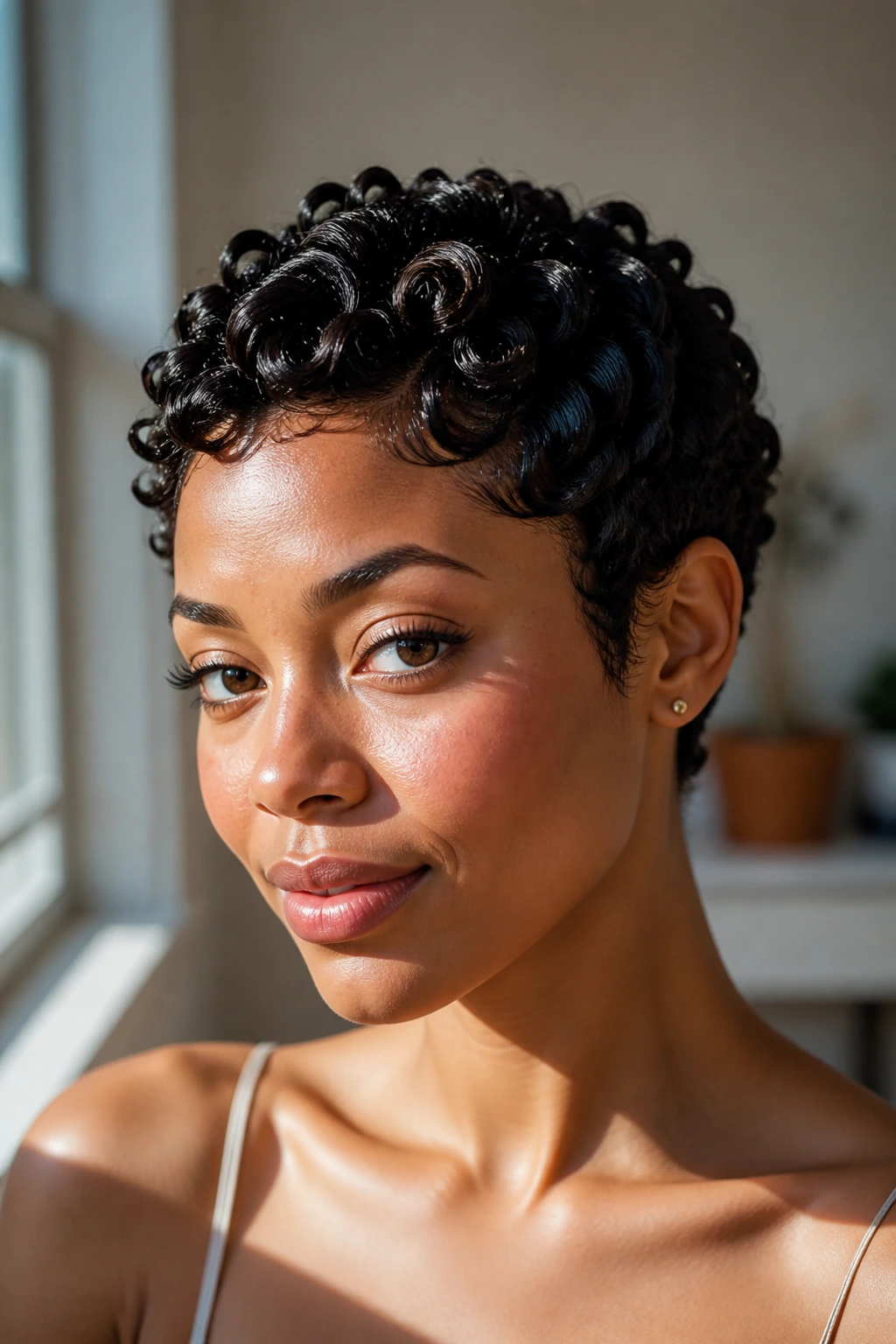
A finger-coiled pixie is for short curls that deserve more attention than a quick fluff and run. The shape is compact, but the coils give it definition and shine, and in warm weather short hair has one huge advantage: it dries fast. Fast drying means less time sitting in damp hair, which is half the battle in summer.
The coils should be small enough to set clearly but not so tiny that the style looks stiff. A little styling gel or setting lotion on each section, then a careful twist around the finger, usually does the trick. Let the coils dry fully before touching them. If you start separating too early, you lose the shape and the crown goes fuzzy.
This style is especially good for people who want something low-fuss once it’s set. The silhouette stays close to the head, but it still has texture and movement. If the nape is tapered, even better. The cut does some of the work, and the coils finish the job.
16. Tucked Curly Chignon
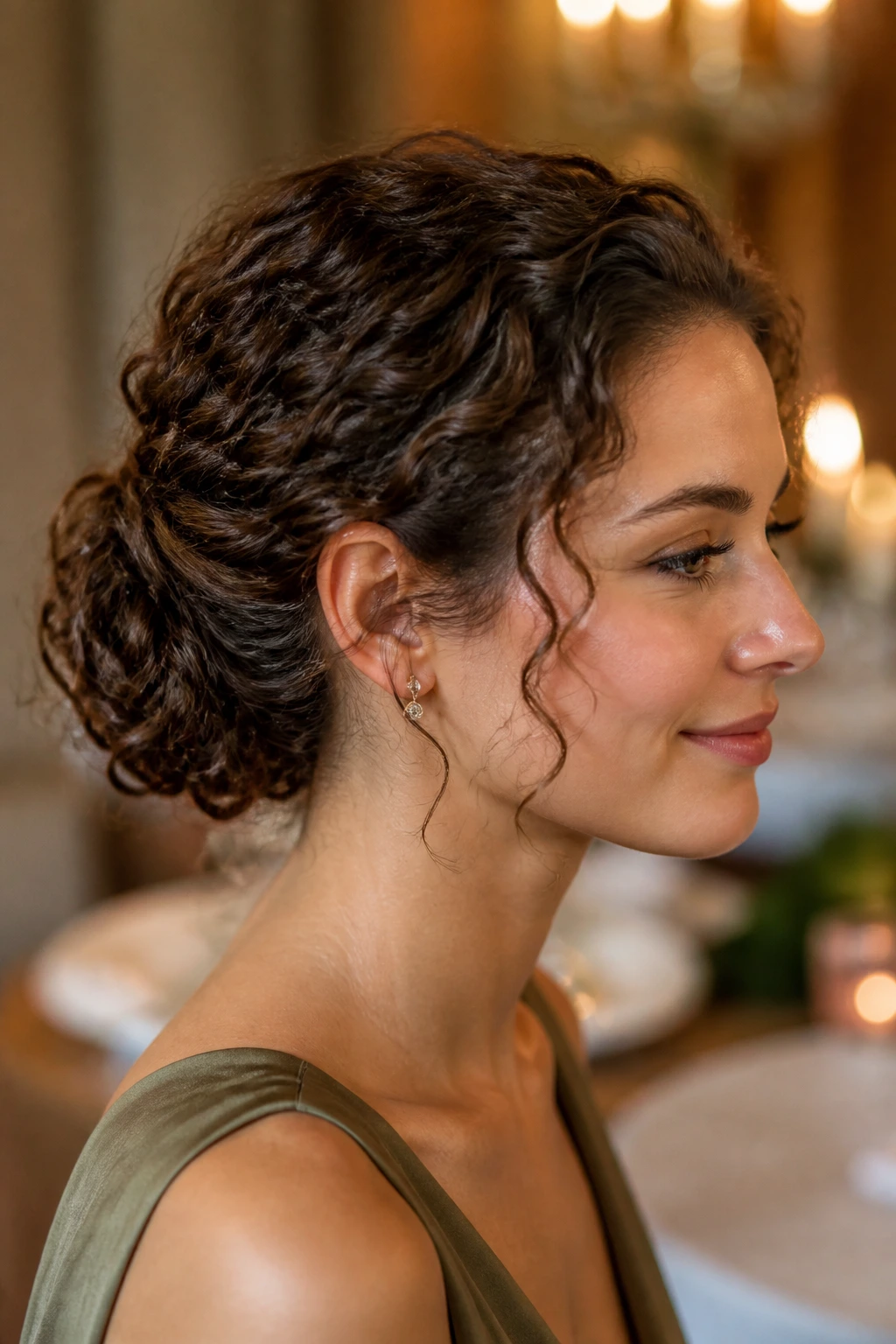
A tucked curly chignon is the more polished cousin of the low bun. Instead of leaving the bun loose and airy, you tuck the ends under and pin the shape into a neat knot at the nape. It’s a cleaner look, but it still keeps the curls’ texture visible around the edges.
The key is not to over-smooth the hair before you tuck it. If you flatten everything down, the style loses the reason to exist. Keep some body at the crown, then roll or fold the length under itself and secure it with pins placed in a crisscross pattern. That keeps the chignon from loosening as the day goes on.
I’d choose this for an event or a dressier dinner because it holds its shape better than a loose bun and looks finished from every angle. A few curls left around the temples make it feel less rigid. Without them, it can look a touch severe. That small softness matters.
17. Crown Braid into a Puff
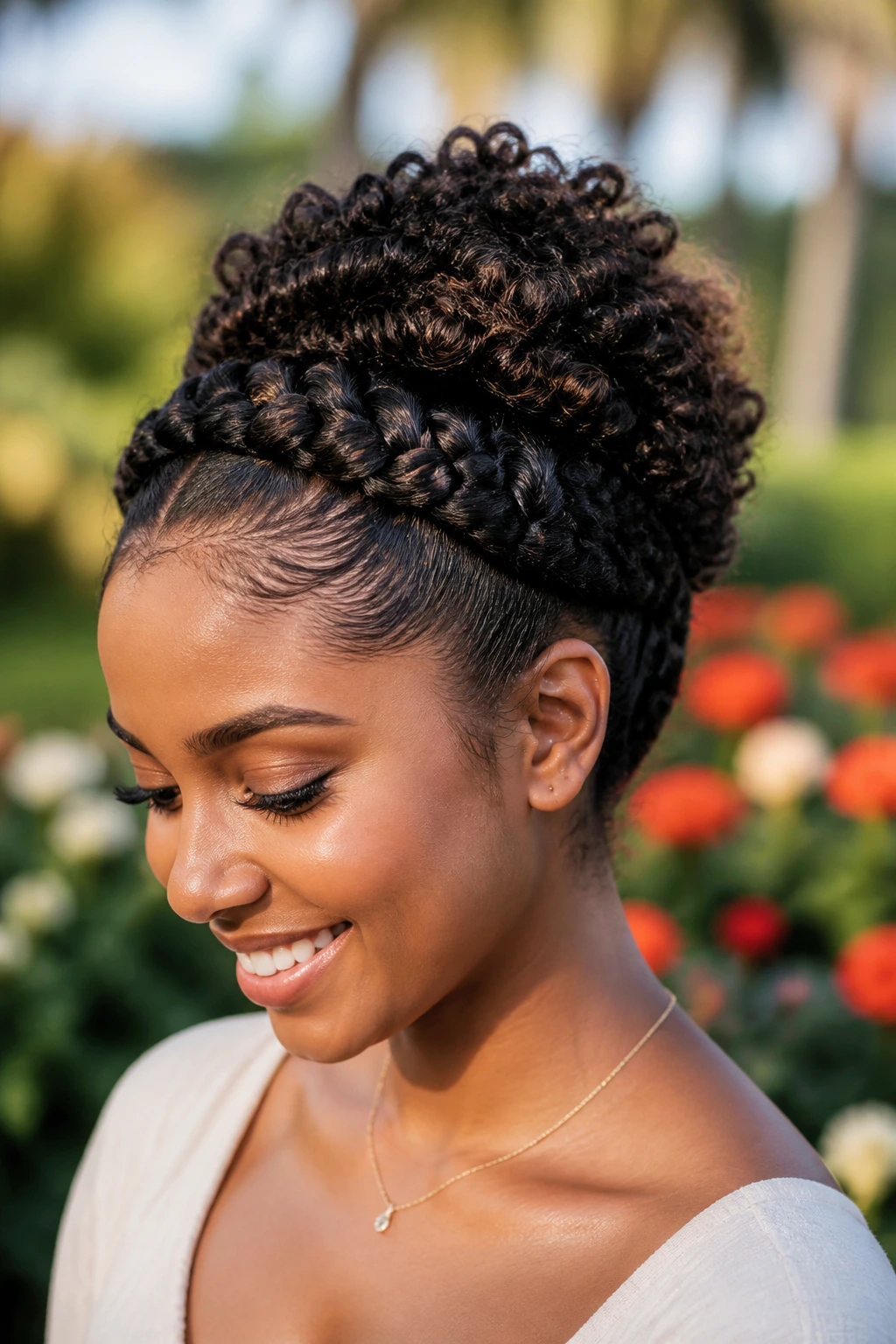
A crown braid into a puff has a nice summer balance: the braid keeps the front clean, the puff gives you volume, and the whole style stays lifted off the neck. It reads as more elaborate than it really is, which is one reason I keep coming back to it.
Start the braid at one temple and curve it across the hairline toward the other side, pinning it as you go. Gather the remaining curls into a puff at the back or crown. If your hair is thick, keep the braid a little loose so it doesn’t fight the rest of the style. Tight braids can pull the front and make the puff sit awkwardly.
This one handles humidity well because the braid creates structure where frizz usually appears first. The puff stays visible, but the hairline stays organized, which is the part that people tend to notice immediately. It’s a smart combination, and it photographs well without needing much styling theater.
18. Wet-Set Shoulder-Length Curls
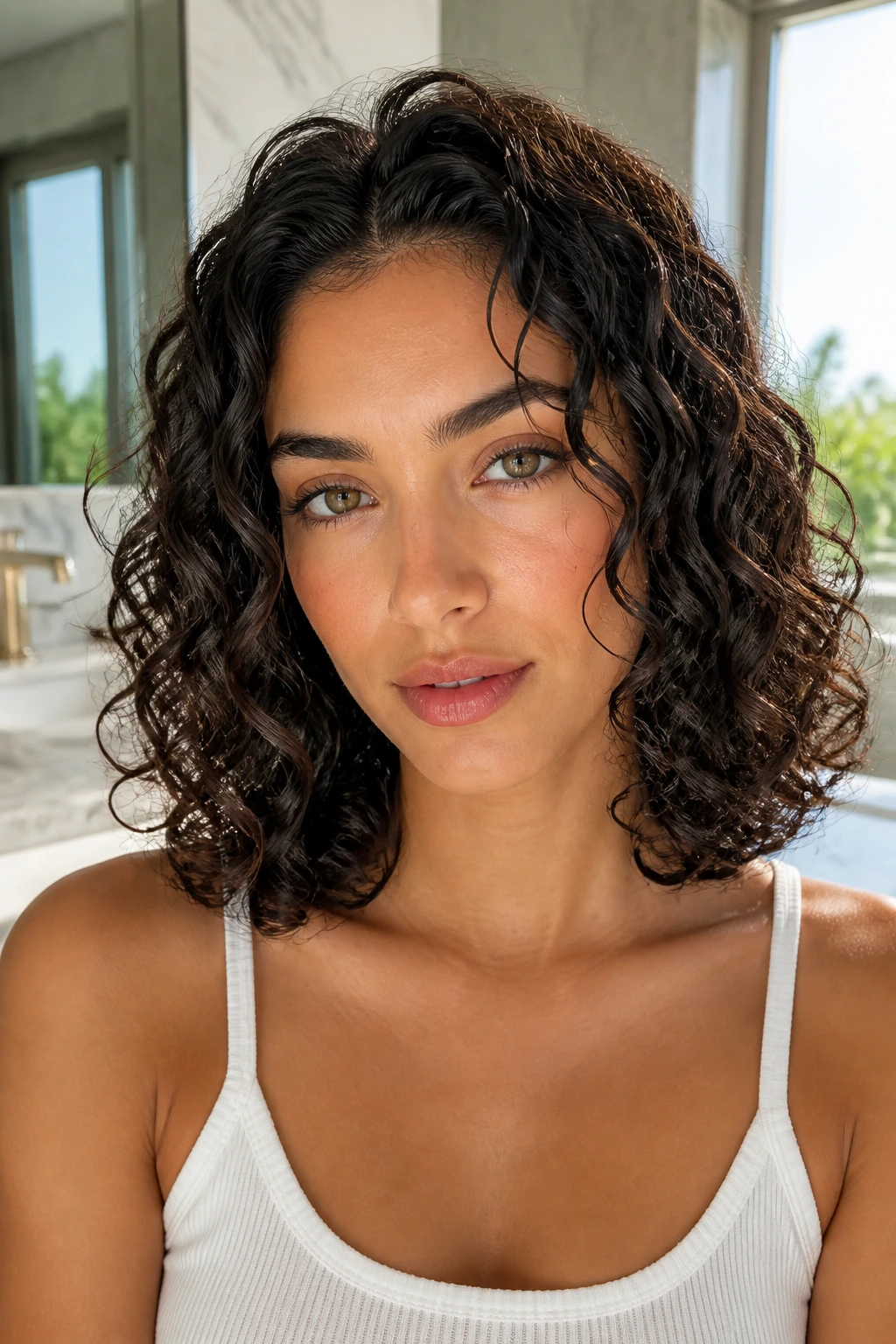
A wet set is one of the calmest ways to style shoulder-length curls for warm weather. Flexi rods, rollers, or even carefully set braids can create a cleaner curl pattern that holds better than free-drying in damp air. The result is more orderly, less puff-prone, and usually shinier around the ends.
The important part is patience. The hair has to be fully dry before you take the set down, or you’ll end up with a half-defined shape that collapses the minute it meets outside air. Use enough product to support the curl, but not so much that the set dries sticky. A little mousse or setting foam usually makes more sense here than a heavy cream.
I reach for this when I want the curls to behave for more than one day. A proper wet set can stay neat into the next morning if you preserve it well, and shoulder-length hair is a sweet spot because it’s long enough to show the shape but not so long that it gets weighed down.
19. Half-Up Space Knots
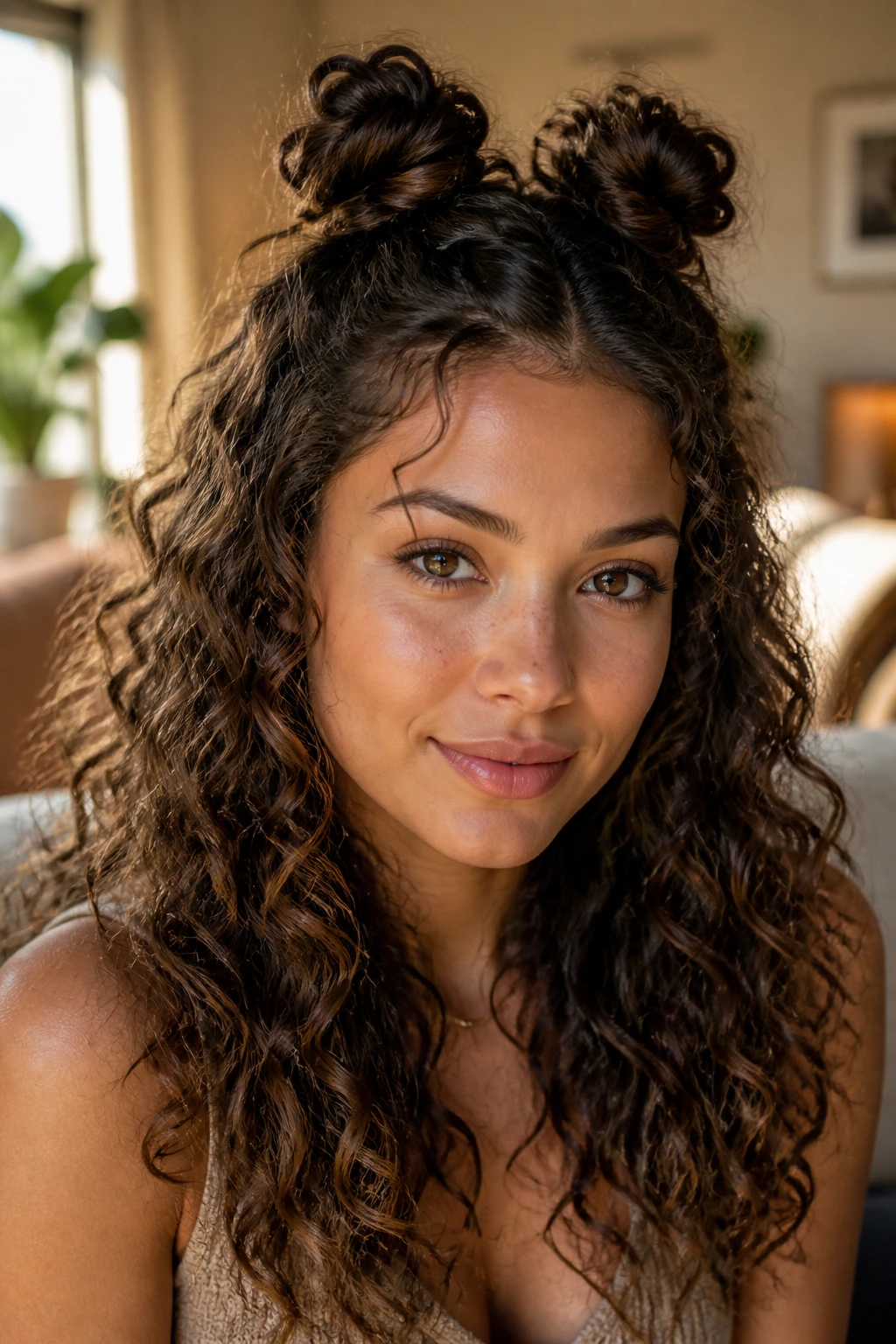
Half-up space knots are a good compromise when you want your curls down and off your face at the same time. The top section gets split into two small knots, while the lower half stays loose and full. It keeps the crown controlled and lets the bottom part do its curly thing.
Compared with full space buns, this version feels softer and less “costume,” which is useful if you’re wearing it for more than one event or one picture. The top knots can be tiny or chunky depending on density. Keep them balanced so one side doesn’t sit higher than the other. That’s the mistake that gives the whole style a lopsided feel.
This style also gives you some freedom with accessories. A few pins, a slim headband, or even a simple clip can change the mood without changing the shape. That kind of flexibility is handy when the day starts casual and ends somewhere nicer.
20. Rope-Braid Ponytail
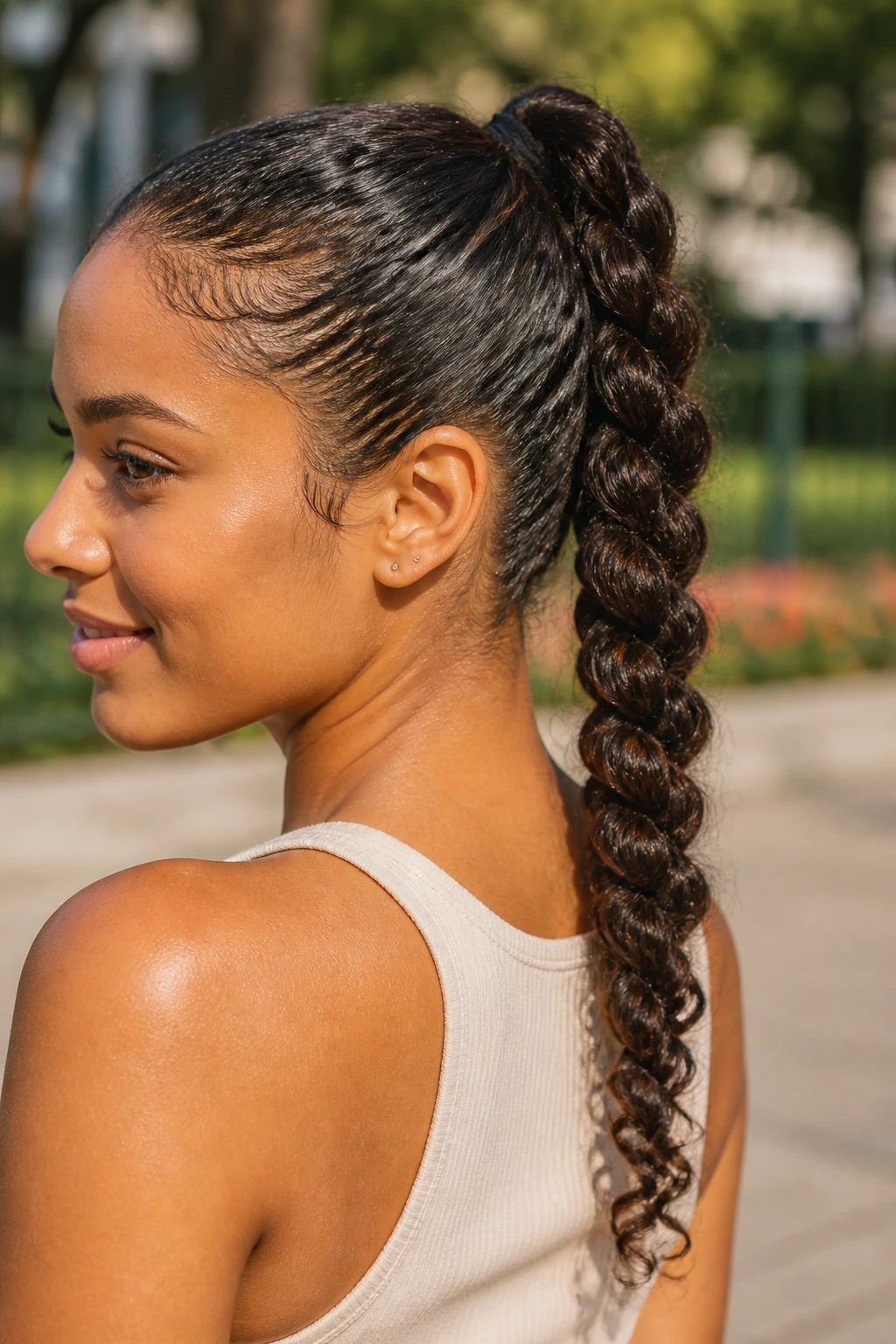
A rope-braid ponytail looks simple, but it has a nice grip to it that ordinary braids don’t always manage on curly hair. You twist two sections around each other instead of weaving three, which makes the braid feel tighter and a little sleeker while still letting the texture show through.
This style is especially good when you want something to stay put through a humid afternoon. A rope braid tends to resist loosening better than a loose three-strand braid, and the result reads clean from a distance. Keep the base smooth with a small amount of gel or cream, then braid the length and secure it with a snag-free elastic.
I like it because it doesn’t flatten the curls the way a tight ponytail sometimes does. There’s still movement in the length, but it’s organized movement. That distinction matters if your hair is thick and tends to balloon out the second it gets warm.
21. Flipped-Out Curly Lob
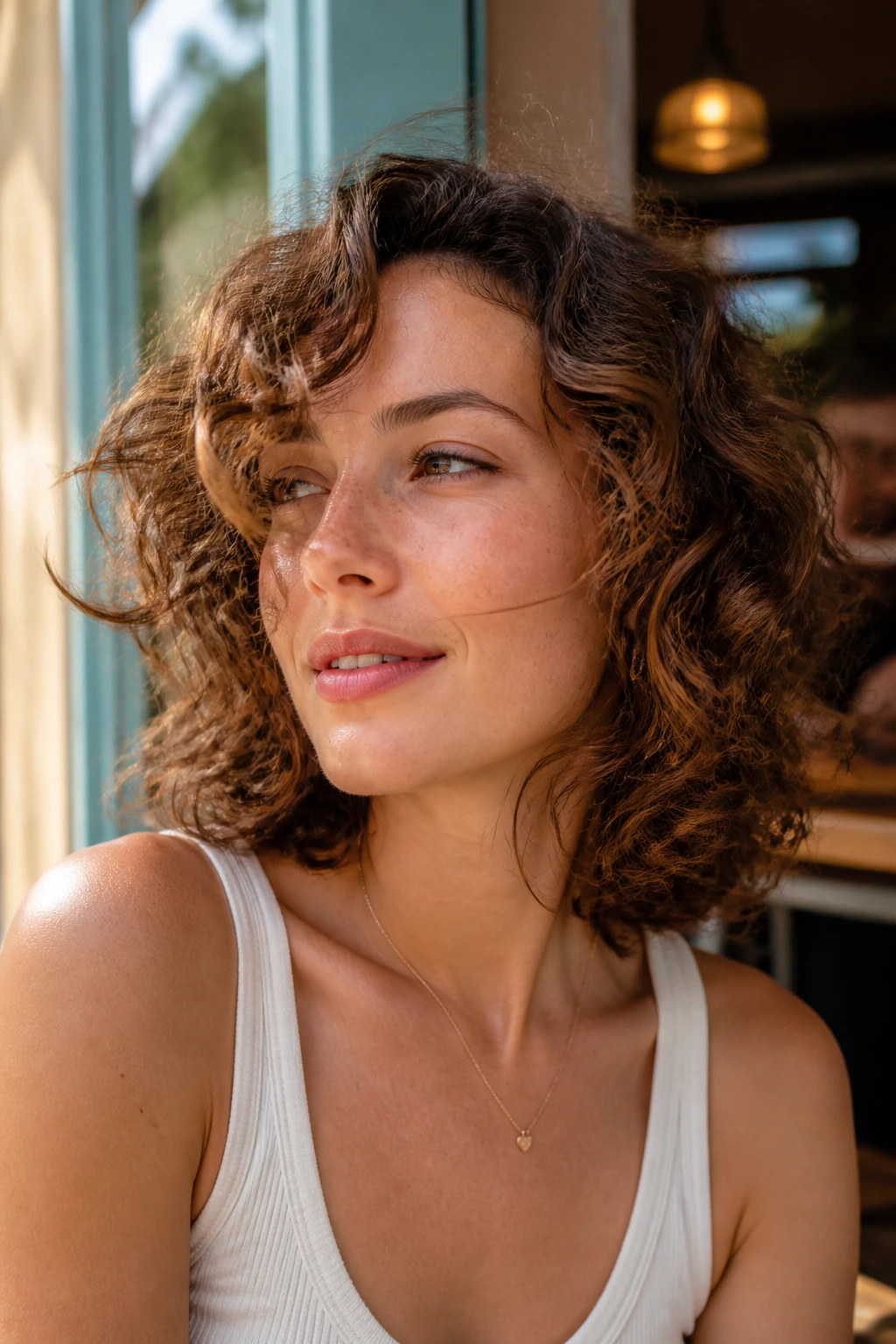
A flipped-out curly lob has a breezy, slightly retro feel that works well when you want shape without heaviness. The cut sits around the shoulders or just above them, and the ends turn outward instead of hanging straight down. That outward movement gives the style life even when humidity is making everything else sleepy.
The best part is that this shape doesn’t ask for a lot of styling time. A diffuser, a round brush at the ends if you like a little help, or even finger-styling while the hair dries can create that flipped line. The lob length keeps the hair from soaking up too much heat from your back and shoulders, which is one of the quiet pleasures of this cut.
If your curls naturally lean looser, the flip can give the style a sharper finish. If they’re tighter, the outward bend softens the silhouette and keeps it from reading too heavy. Either way, it moves well, and in warm weather movement matters.
22. Tapered Coil Halo
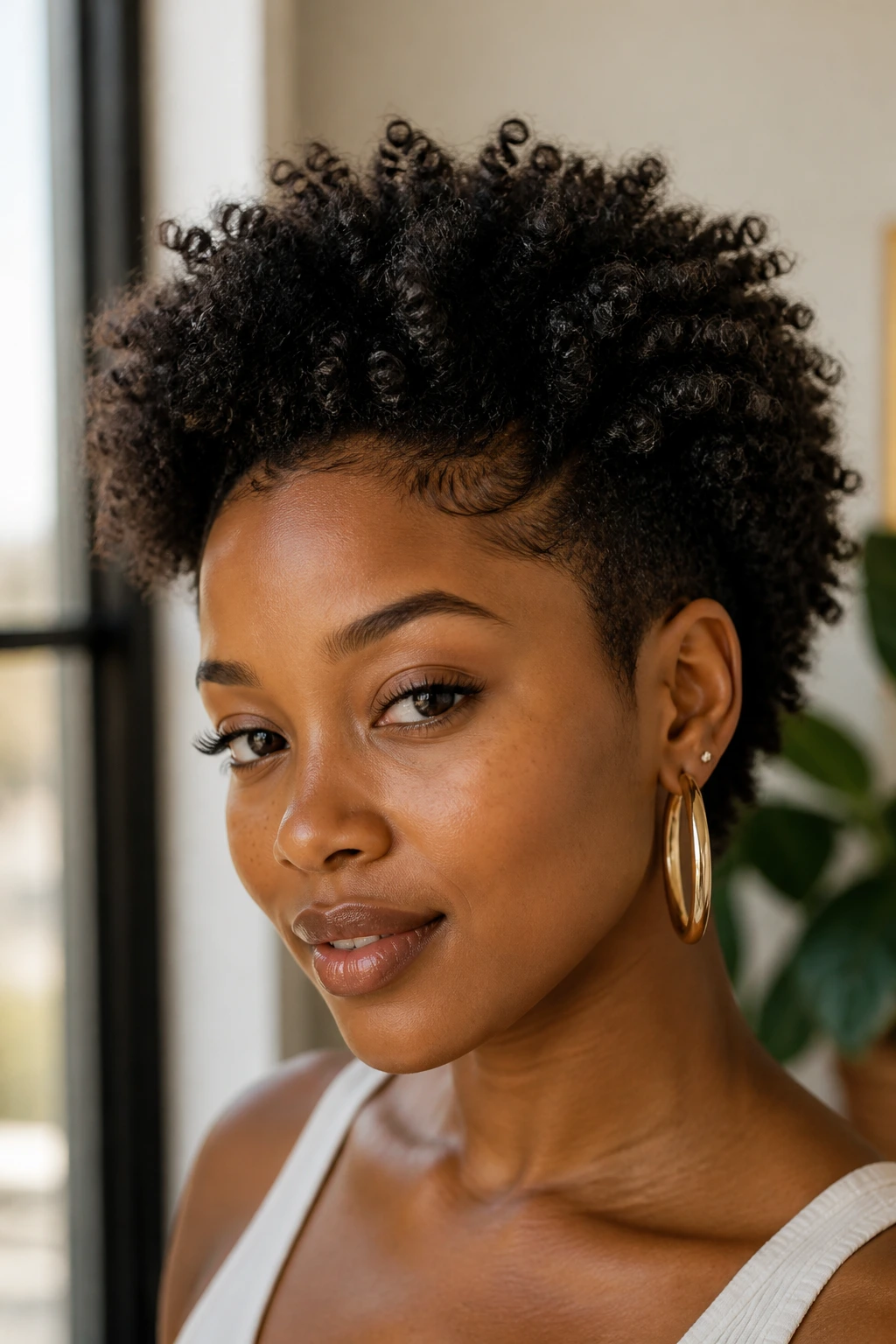
A tapered coil halo is one of the cleanest summer shapes for short natural hair. The sides and nape stay shorter, while the top keeps enough length for the coils to stand up and form a rounded halo. That contrast keeps the style neat without making it flat.
The taper does a lot of the temperature work here. Less length at the neck means less heat trapped under the hair, and the higher coils give the style body right where you want it. A little curl cream or defining gel, worked section by section, is usually enough. Too much product can weigh the top down and kill the shape.
This style looks especially good when the coils are defined but not over-manipulated. Let the top stay soft, keep the edges tidy if that’s your preference, and the whole shape reads fresh without looking forced. It’s one of those cuts that can be dressed up or left alone, and it behaves either way.
23. Curly Faux Hawk with Pinched Sides
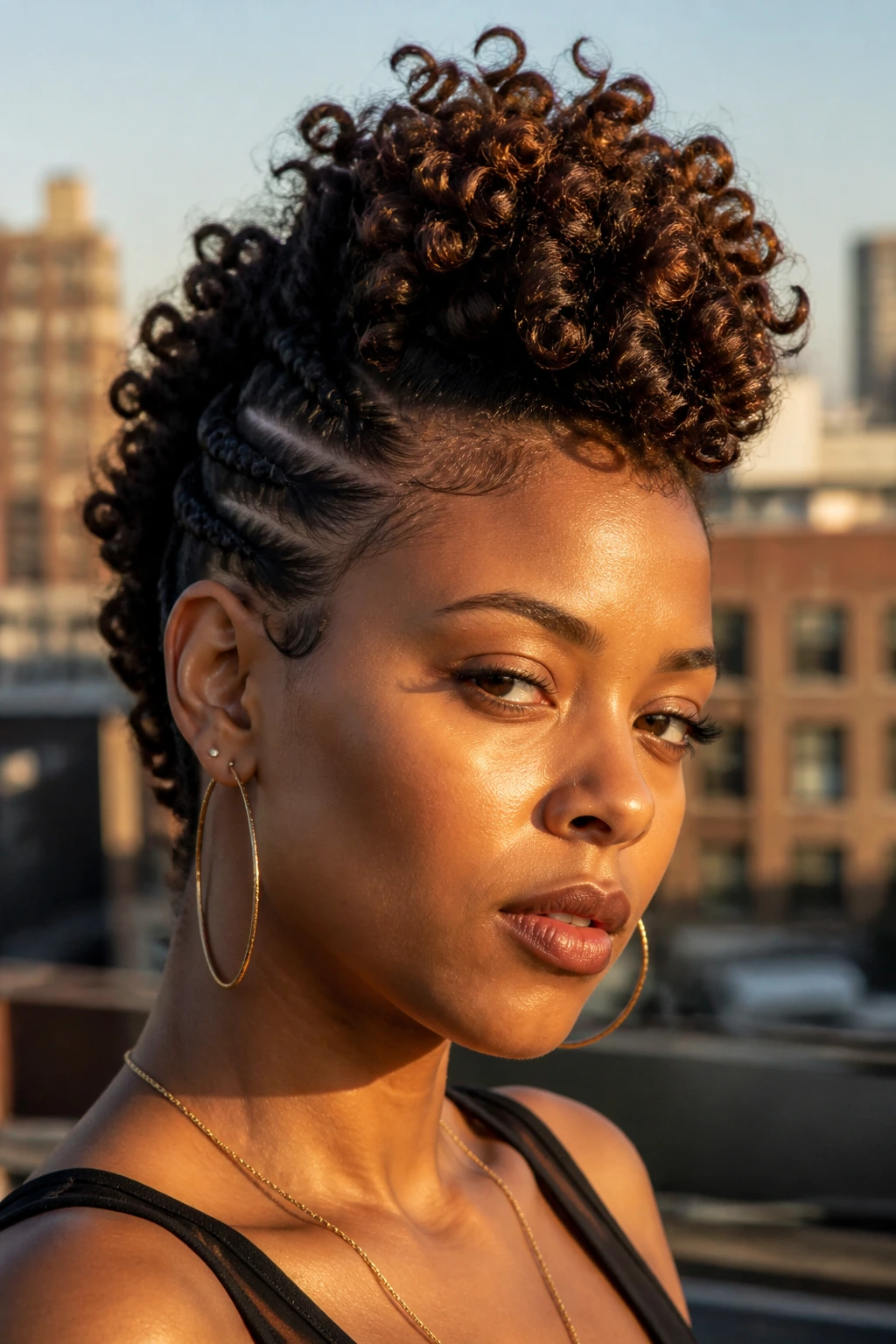
The curly faux hawk is the one I’d pick when I want a little drama and a lot of airflow. The sides get pinned, slicked, or braided back, while the center ridge stays high and curly. It opens the face, clears the ears, and gives the style a bold line without needing heat.
What makes it worth trying
The faux hawk works because it turns the crown into the focal point. That means the area that usually goes flat or fuzzy in humidity becomes the star instead. If your curls are thick, pin the sides in sections instead of trying to force them into one smooth sweep. That keeps the shape secure and stops the pins from digging into the scalp.
I like this one for nights out or days when a simple puff feels too safe. It has movement, but it also has edge. And unlike a tightly slicked style, it still lets the curls look like curls. That matters more than people admit. Hair that looks like itself tends to age better over the course of a long day.
Why Curly Hair Needs a Different Plan in Warm Weather
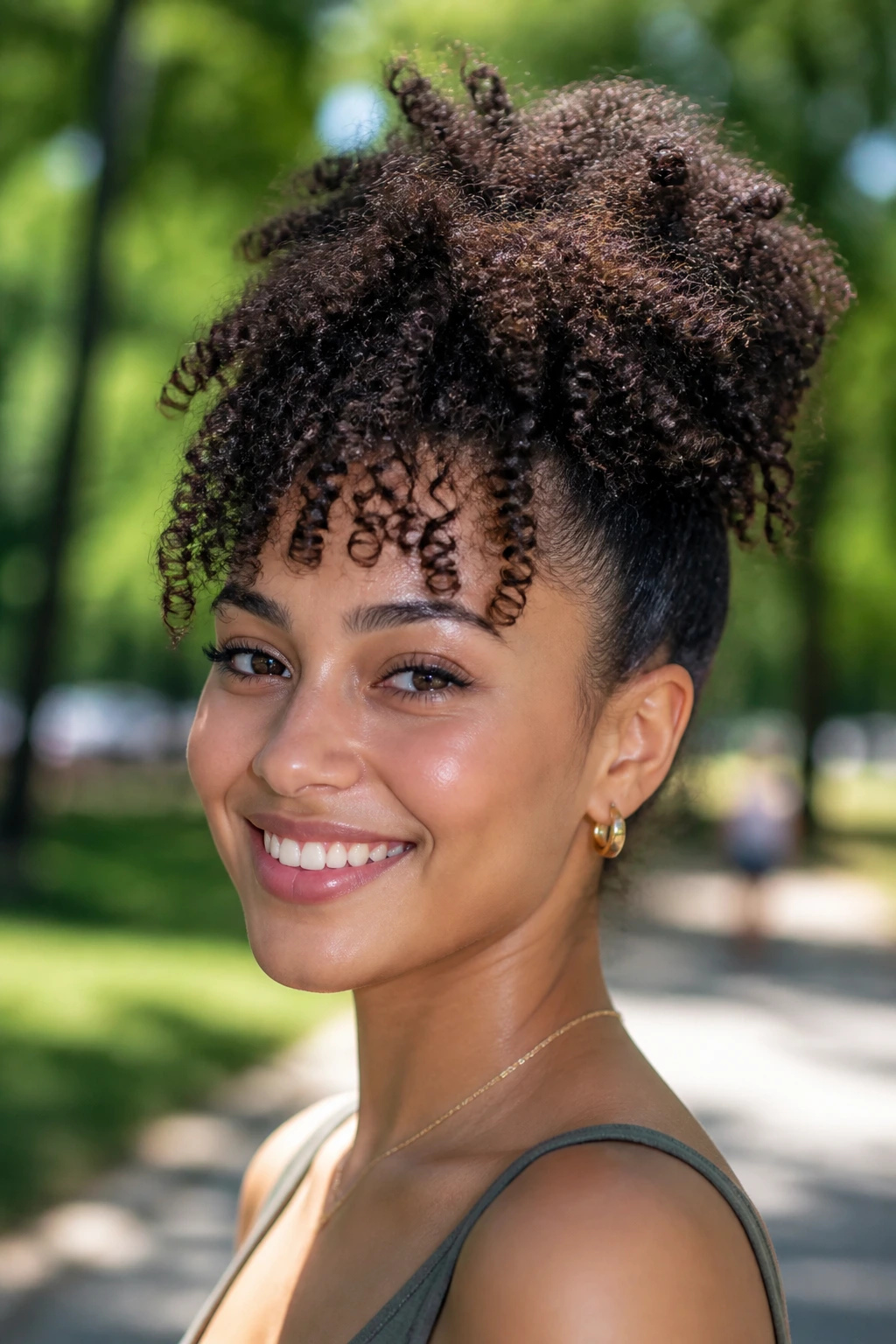
Summer changes the way curly hair behaves, and pretending it doesn’t is a quick route to frustration. Humidity can swell the hair shaft, sweat can collapse the roots, and constant touching can turn even a well-defined curl into a fuzzy version of itself. The answer is rarely more force. It’s usually better shape.
That’s why the styles in this collection lean on lift, clips, braids, puffs, and twists. They reduce friction and give the curl pattern somewhere to go. A style that leaves the neck open will almost always feel better by midafternoon than one that hangs heavy against the skin, especially if your hair is dense or long.
There’s also a timing issue. A lot of curly styles look best when they’re not being messed with every ten minutes. Once the curls are set or pinned, leave them alone. Touching them with warm hands, re-smoothing them with oil, or brushing them into submission usually does more harm than good. Curls want a plan. Then they want to be left in peace.
Essential Tools for Styling Curly Hair in Warm Weather
-
Wide-tooth comb: Good for detangling without ripping apart curl clumps before styling.
-
Spray bottle: A light mist helps reactivate leave-in and reshape day-two curls without soaking the whole head.
-
Satin scrunchies: They hold puffs and ponytails without leaving the harsh dent that tight elastics create.
-
Large claw clips: Look for a strong spring and deep teeth; thin clips fail on dense hair fast.
-
Bobby pins: A box of sturdy pins is useful for halos, buns, twists, and any style that needs hidden support.
-
Edge brush or small toothbrush: Handy for smoothing hairlines, though it should never be the main tool for the whole style.
-
Microfiber towel or T-shirt: Better than a rough bath towel when you need to squeeze out water without disturbing definition.
-
Diffuser attachment: Optional, but useful if you want faster drying with less frizz around the crown and ends.
-
Silk or satin scarf: Useful for setting edges, holding down a style for 10 to 15 minutes, or preserving curls overnight.
-
Satin bonnet or pillowcase: Keeps finished styles from getting roughed up while you sleep.
Smart Product and Accessory Picks for Sticky Weather
The best summer hair products for curls are the ones that support shape without turning into sticky armor. A lightweight leave-in conditioner gives the hair enough slip for detangling, but it should disappear into the curl instead of sitting on top of it. Heavy creams can be useful for very dry hair, yet in humid weather they often attract more fuzz than they solve. I prefer to start light and add only where the hair actually needs it.
For hold, mousse and gel solve different problems. Mousse gives lift and a softer cast, which helps with puff styles, bobs, and twist-outs. Gel gives more control and keeps the outer layer smoother, which is useful for wet looks, halos, and pinned styles. If your hair tends to frizz at the crown, use the stronger product there and keep the ends lighter. That small adjustment changes the feel of the whole style.
Accessories matter more than they get credit for. A claw clip with a strong hinge, a satin scrunchie that doesn’t snag, and a few pins that don’t bend after one wear are worth keeping on hand. Cheap accessories usually fail at the worst moment, which is right when you’re already warm and rushed. No one needs that kind of defeat before lunch.
Practical Tips for Curly Hairstyles for Summer That Last Past Lunch
-
Root Lift: Start by lifting the roots with your fingers before you smooth the rest of the style. If the crown goes flat, the whole look reads tired.
-
Humidity Control: Use a small amount of stronger-hold gel only on the outer layer, where frizz shows first. Overloading the whole head makes curls stiff and dull.
-
Clip Strategy: When you use a claw clip, gather the hair in two stages: first secure the base, then twist and tuck. That keeps thick curls from slipping out an hour later.
-
Refresh Move: For day-two styles, mist the mid-lengths lightly, scrunch once or twice, and let the hair air-dry for 10 minutes before touching it again. Don’t soak everything.
-
Line Clean-Up: If the part or hairline starts to fuzz, smooth only that area with a touch of product. The rest of the style usually doesn’t need a full reset.
-
Volume Control: If the shape feels too big, pin just one side or secure a small section near the crown. That often fixes the silhouette without flattening the curls.
Common Mistakes That Flatten Curly Summer Styles
-
Using too much oil at the start: Hair that looks slick for ten minutes can turn limp and separated fast. The fix is simple: use a lightweight leave-in first, then add oil only to the ends if they need it.
-
Pulling styles too tight: A tight ponytail or bun can look neat at the mirror and feel miserable by noon. It also creates a hard line at the scalp. Leave a little give at the base so the style can move.
-
Styling before the hair is ready: Wet hair that hasn’t formed a shape yet tends to frizz and loosen as it dries. If you’re pinning or twisting, let the hair get to damp, not dripping, unless the style is meant to dry in place.
-
Choosing accessories that are too small: A tiny clip on thick curls is a joke. It slides, breaks, or pops open. Use clips, pins, and elastics sized for the amount of hair you actually have.
-
Touching the hair all day: Every swipe of the hand breaks up curl clumps and builds frizz. If you need to adjust something, do one intentional fix and stop there.
-
Skipping a night routine: Styles last longer when you protect them. A satin bonnet, scarf, or pillowcase keeps the shape from getting roughed up while you sleep.
Variations and Easy Swaps to Try
Short-Curl Version: If your hair doesn’t reach a bun or full puff, focus on halos, side parts, pin-backed sections, and finger coils. Short curls hold their shape well, but they need lift more than length, so work the crown first.
Low-Tension Weekend Version: Use looser puffs, soft claw-clip twists, and half-up styles that keep the roots comfortable. This is the one to choose when your scalp wants a break from tension and your schedule is relaxed enough to let the style settle naturally.
Dressier Evening Version: Add shine with a light serum on the outer layer, then use pins, a scarf, or a polished part line to sharpen the silhouette. A low chignon, halo braid, or sleek side-swept style usually looks more finished than a very full puff for evening wear.
High-Volume Version: If your curls are dense and you like shape that makes a statement, lean into bubble ponytails, faux hawks, and big pineapple puffs. These styles work with width instead of trying to reduce it, which is often the smarter choice.
Low-Frizz Version: Choose styles that keep the ends contained: twists, braids, tucked buns, and wet sets. The less the ends rub against shirts, chairs, and necks, the longer the shape stays neat.
Accessory-First Version: Some days the fastest fix is a scarf, clip, or headband doing most of the work. Start with a simple puff or bun, then decide whether the accessory should be the star or just the support act.
How to Keep Curly Styles Fresh Between Washes
The overnight routine changes everything. A pineapple puff, loose bun, or twist-based style usually holds better when you sleep on a satin pillowcase or wrap the hair in a bonnet. For longer curls, a loose high pineapple with a soft scrunchie keeps the ends from getting smashed. If the front is the part that frizzes first, tie a satin scarf across the hairline for 10 to 15 minutes before bed.
Morning refreshes should be light. A spray bottle with water and a little leave-in is enough for most styles; you do not need to soak the whole head. Mist the parts that look dry, scrunch or smooth them back into place, and let the hair settle for a few minutes before you decide if it needs more product. Most people add too much too soon and make the hair heavy.
Some styles last longer than others, and that’s normal. Buns, braids, and pinned looks can make it through 2 to 4 days with a small refresh. Twist-outs and wet sets often look best for 2 to 3 days before the curl pattern starts to loosen too much. If the scalp feels sweaty, the roots are oily, or the shape has stopped responding to light reshaping, start over rather than trying to rescue it for another day. There’s no prize for dragging a tired style across the finish line.
Frequently Asked Questions About Curly Hairstyles for Summer
Which curly hairstyles last the longest in humidity?
Braids, twisted updos, faux hawks, and tucked buns tend to hold best because they keep the curl pattern organized and the ends protected. Loose wash-and-go styles usually look best for less time unless you use a strong hold product and keep your hands off them.
Can I do these styles on day-two or day-three hair?
Yes, and in many cases that hair is easier to work with. Slightly lived-in curls usually have more grip, which helps with puffs, clips, braids, and pinned styles. Just refresh the roots with a light mist before you start.
What’s the fastest style if I’m in a hurry?
A high pineapple puff or claw-clip French twist is hard to beat. Both can be done in a few minutes, and both keep hair off the neck without requiring perfect parting or sectioning.
How do I keep a curly ponytail from sagging?
Use a strong elastic at the base, support the ponytail with a second band if the hair is heavy, and avoid overloading the roots with product. If the base is slipping, the style needs more grip at the crown, not more product on the length.
Do I need gel for every summer style?
No. Gel helps when you want clean lines, hold, or a wet-look finish, but mousse, leave-in, or even no product at all can work for softer styles. The key is matching the product to the job instead of coating the whole head out of habit.
What if my curls frizz the second I step outside?
Focus on the styles that reduce exposed surface area: braids, buns, halos, scarves, and pinned looks. Also, keep the outer layer of product light and targeted. Heavy creams on humid days often make the frizz worse, not better.
Can short curly hair still pull off summer updos?
Absolutely. Short hair does especially well with finger coils, mini puffs, half-up knots, and pinned-back sides. If the length won’t hold a full bun, stop trying to force one and work with the shape you already have.
How often should I wash if I’m wearing clipped-up styles a lot?
Most curly scalps do well with a regular cleanse every few days to a week, depending on sweat and product buildup. If your roots feel itchy or the style starts to look dull at the base, that’s usually the sign to wash sooner rather than later.
The Styles Worth Reaching For
The best summer curly styles are the ones that let your hair keep its personality while taking the heat down a notch. A good puff, braid, twist, or clipped-up shape should make you forget about your neckline for a while. That is the whole point.
Start with the look that fits your length, your curl density, and the amount of time you actually want to spend in front of a mirror. The right choice usually shows itself fast: less fuss, less frizz, and a shape that still looks like yours after you’ve been outside for an hour. That’s the sweet spot worth repeating.
