



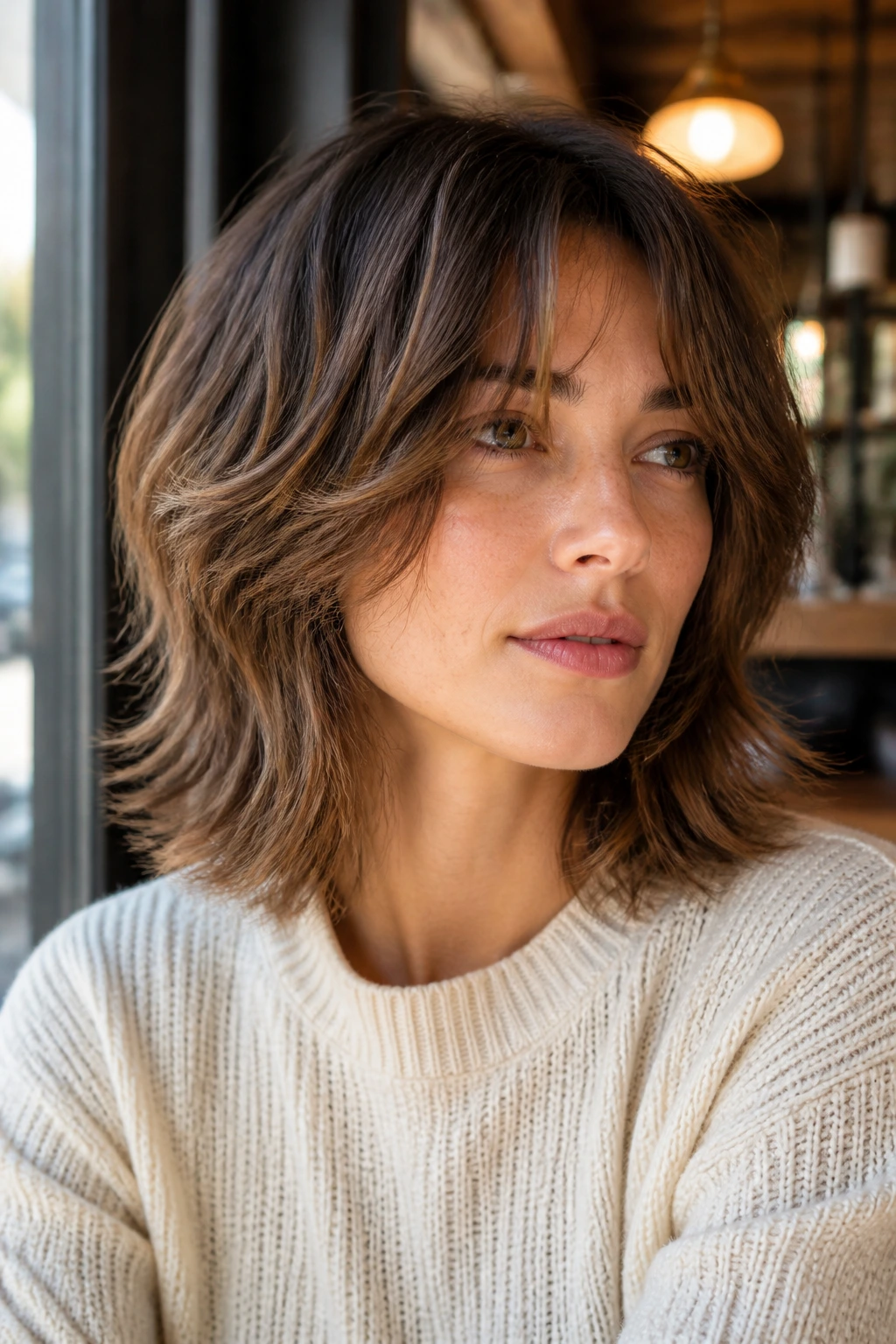
A shag haircut doesn’t behave politely. The layers shift, the fringe lands a little differently each time you run your fingers through it, and the shape looks better when it has some air in it instead of a shellacked finish.
That’s a big part of why shag haircuts for women keep showing up in salons no matter how the fashion mood swings. The cut can be soft, sharp, curly, chin-length, collarbone-grazing, or full of rocker attitude, and the structure still makes sense when it grows out.
The real trick is matching the version to your hair’s weight, your face shape, and how much you’re willing to do before coffee. Some shags need a blow-dryer and a round brush; others look best after a quick scrunch with mousse and a diffuser. The 35 ideas below cover that spread, from whisper-soft curtain layers to punchier shapes with a little grit.
Why These 35 Shag Haircuts Keep Getting Booked

-
They grow out with less drama: The layers soften as they lengthen, so you are not stuck with a hard line that screams for a trim in three weeks.
-
They work with real texture: Wavy, curly, straight, and dense hair all get a version that changes the silhouette instead of fighting it.
-
They can fake volume fast: Shorter crown layers and broken-up ends create lift where flat hair usually collapses.
-
They remove bulk without stealing movement: That matters on thick hair, where too much length can turn into a wide, heavy curtain.
-
They can read soft or edgy: The same cut looks gentle with curtain bangs and a little more raw with choppy fringe and razor finish.
-
They do not demand a perfect style day: Messy works here. A slightly undone bend often looks better than a neat, overworked blowout.
How to Choose a Shag That Fits Your Hair Texture and Face
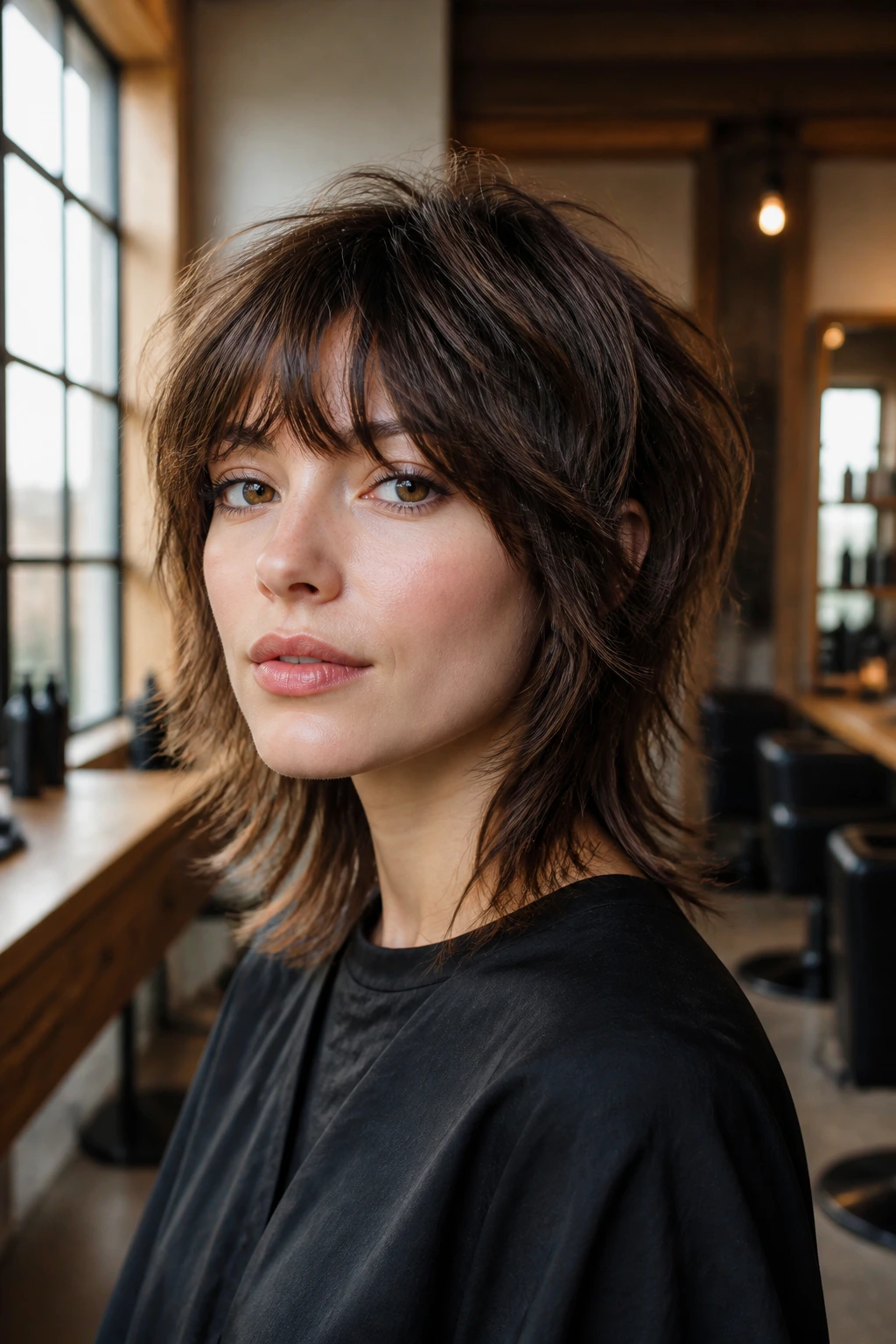
Straight hair needs intentional layering. If your hair falls like a sheet, ask for internal layers that start high enough to show from the front, plus a little movement around the cheekbones. Otherwise, the cut can look flatter than the inspiration photo, which is always the risk with a shag on straight strands.
Wavy and curly hair need restraint in the right places. Too many short layers can make the shape puff out at the sides, especially if your hair is dense. A good stylist will cut to the curl pattern, not against it, and will usually leave enough length in the perimeter so the whole thing does not balloon.
Face shape changes where the fringe sits. Round faces often look better with fringe that falls below the cheekbone. Square faces usually like softer edges near the jaw. Long faces can handle a thicker bang or fuller crown, because the cut can add width instead of only length.
Thick hair and fine hair want opposite things. Thick hair needs debulking inside the shape; fine hair needs enough perimeter weight to keep the ends from disappearing. If a stylist uses the same shag recipe for both, one of those heads of hair will pay for it.
1. Soft Curtain Shag
This is the shag for someone who wants movement without announcing it from across the room. The layers start gently around the cheekbones, the curtain fringe parts easily, and the ends have that loose, lived-in bend that looks better after a finger comb than a flat iron.
It works especially well on medium hair that needs shape but not a lot of drama. Ask for the shortest pieces to skim the cheekbone, not jump straight to the eyebrow, because that keeps the face frame soft instead of choppy.
2. Shoulder-Grazing Shag with Airy Ends
Shoulder length is a sweet spot for a shag because the cut can swing without getting heavy. The airy ends stop the perimeter from looking blocky, which matters if your hair naturally sits in a blunt triangle at the shoulders.
This version is good when you want a haircut that still fits into a clip or low knot. A quick rough dry with a little mousse at the roots is usually enough; if you want more shape, wrap just the front pieces around a 1-inch iron for one bend away from the face.
3. Long Feathered Shag
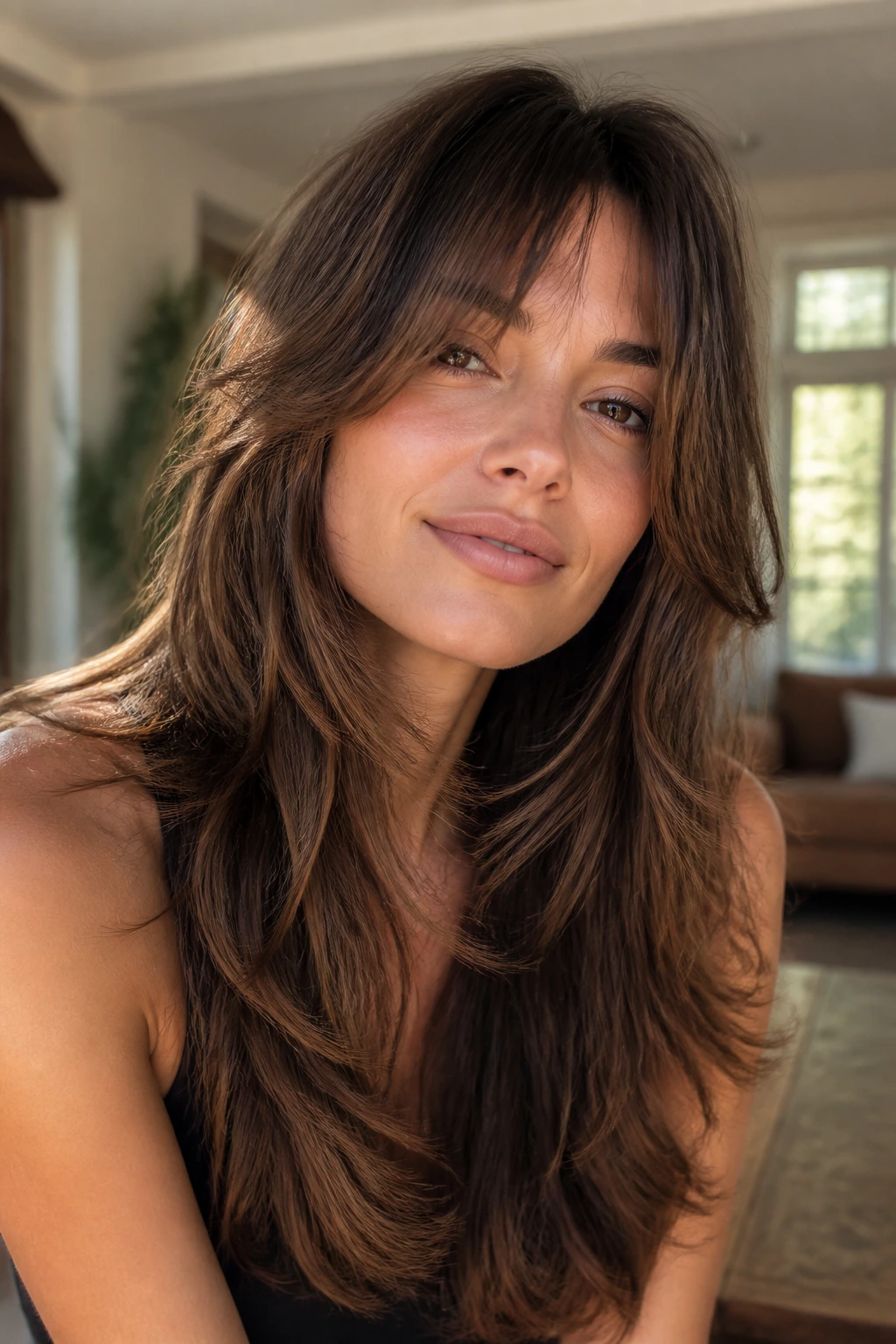
Long hair can get sleepy fast. A feathered shag wakes it up by taking weight out of the interior and leaving the length intact, so the ends move instead of hanging there like curtains.
The feathering should be visible around the face and through the mid-lengths, but not so chopped that you lose the line of the haircut. This is one of my favorite choices for anyone who loves long hair but is tired of the dead-straight look that comes from too much one-length cutting.
4. Curly Halo Shag
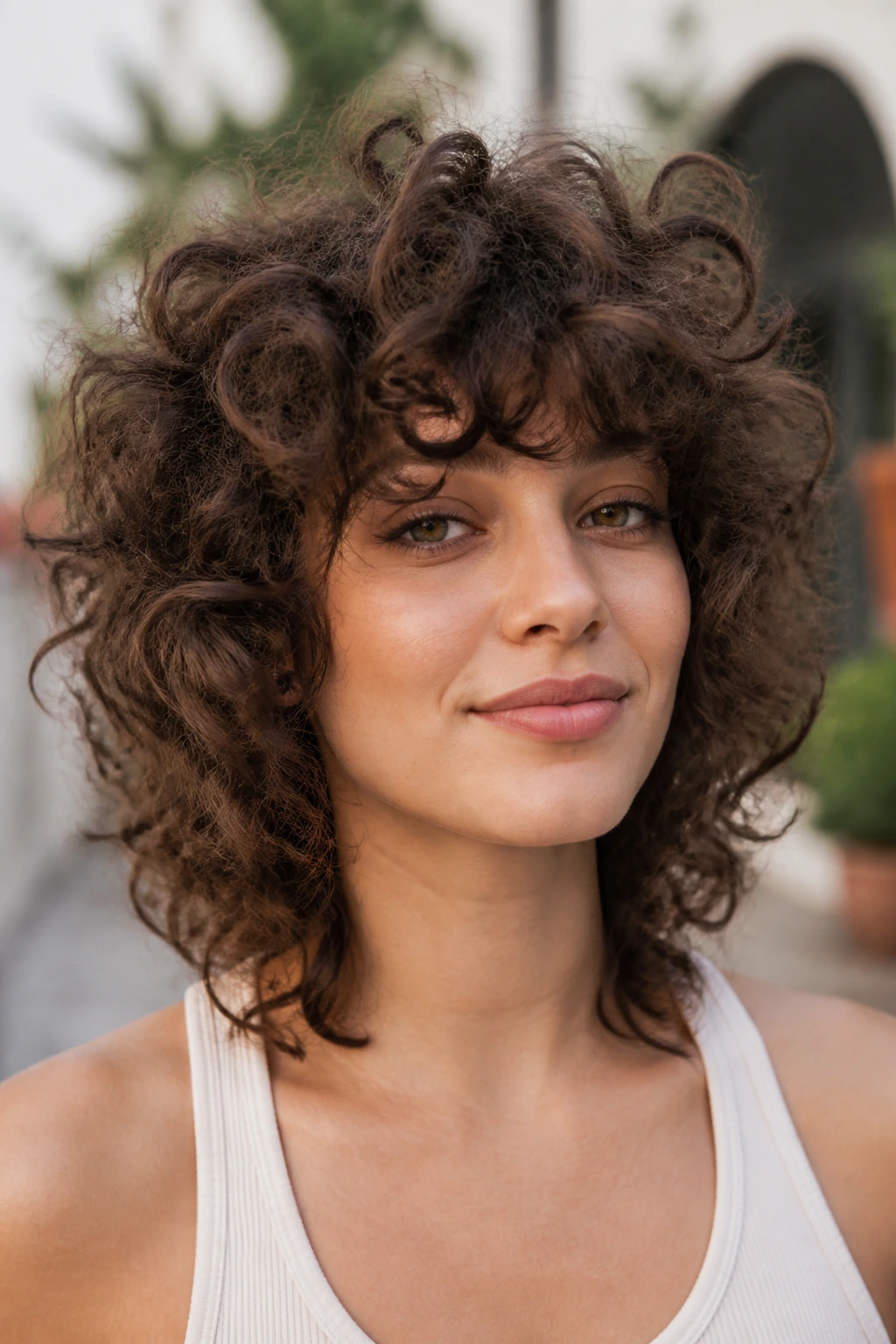
Curly hair and the shag cut are old friends when the layers are placed with some care. The best version creates a rounded halo shape through the crown and sides, so the curls stack instead of expanding into a wide puff.
This cut usually looks better dry or at least partly dry, because curls tell the truth when they spring up. Ask for the fringe area to be cut with your real curl pattern in mind, not stretched straight, or you’ll end up with bangs that disappear once they dry.
5. Chin-Length Shag Bob

This is where a bob meets a shag and actually gets along. The shape is short enough to feel crisp, but the broken-up layers keep it from sitting like a helmet.
It’s a smart choice if you like shorter hair but want more movement than a classic bob gives you. A little root lift powder or mousse on damp hair helps the crown stay airy; skip heavy oils at the ends unless your hair is truly parched, because they can flatten the whole cut.
6. French-Girl Shag

The French-girl version is softer than the rock-and-roll shag people picture first. It usually has a cheekbone-skimming fringe, a slightly broken texture, and lengths that fall in a way that looks casual but not accidental.
It shines on hair that has some natural wave or bend. If your hair is stick-straight, you’ll want a few bends through the front with a curling wand so the shape does not read as flat and unfinished.
7. Wolfish Shag
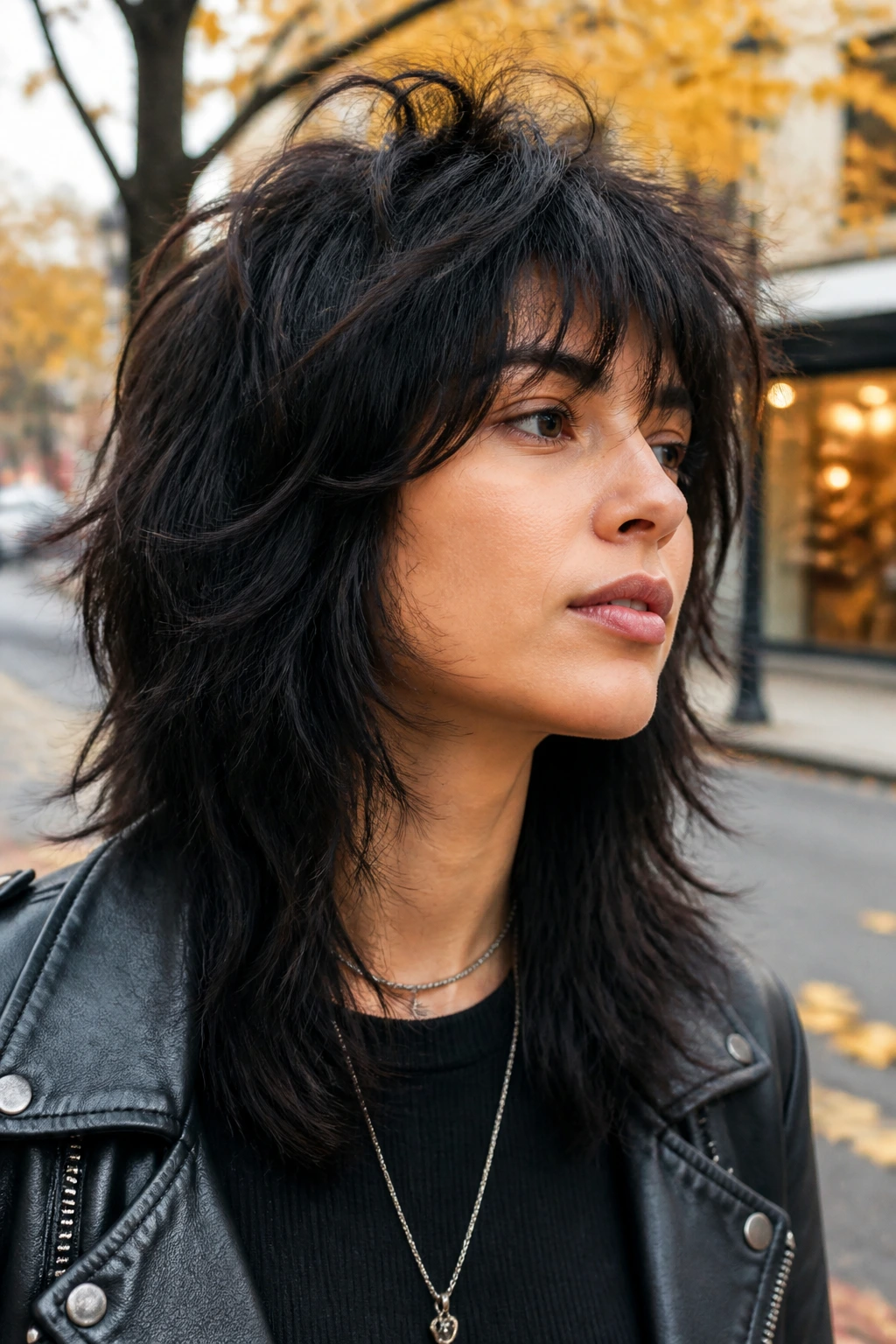
This one has more attitude in the crown and more separation through the ends. The silhouette is a little wild, a little uneven on purpose, and that contrast is the point.
It works best if you like visible texture and do not mind seeing the layers. On very fine hair, too much of this shape can start to look thin at the bottom, so keep the perimeter fuller than you think you need.
8. Razor-Cut Shag
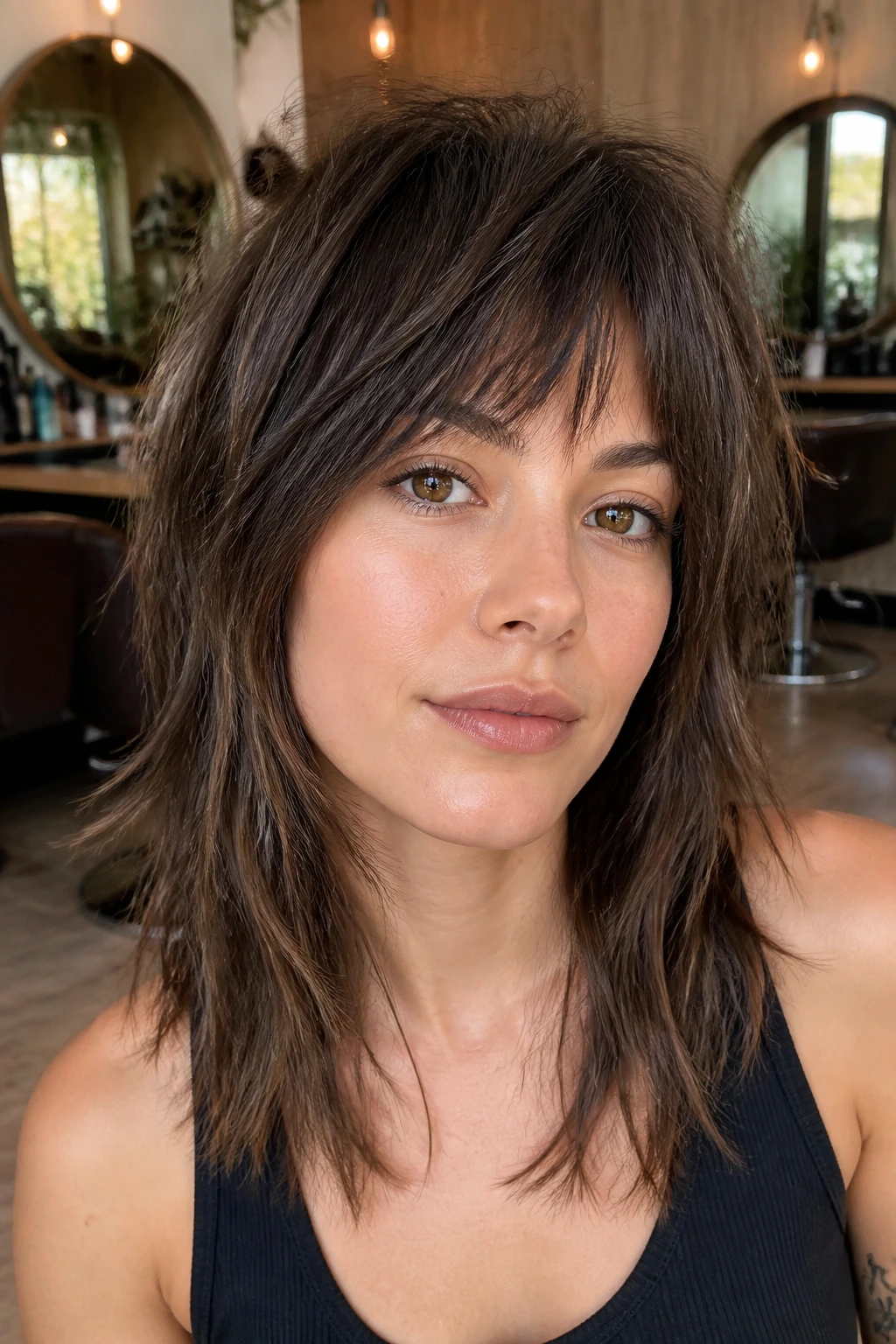
A razor-cut shag gives the ends a softer, shredded look that can be lovely on thick hair and very sleek hair alike. The blade creates movement that scissors sometimes leave too blunt, especially around the fringe and face frame.
Here’s the catch: it is not the friendliest choice for brittle or highly damaged hair. If your ends are fragile, ask for a scissor-cut version with similar movement, because a razor can make the frizz and breakage show faster than you want.
9. Heavy Fringe Shag
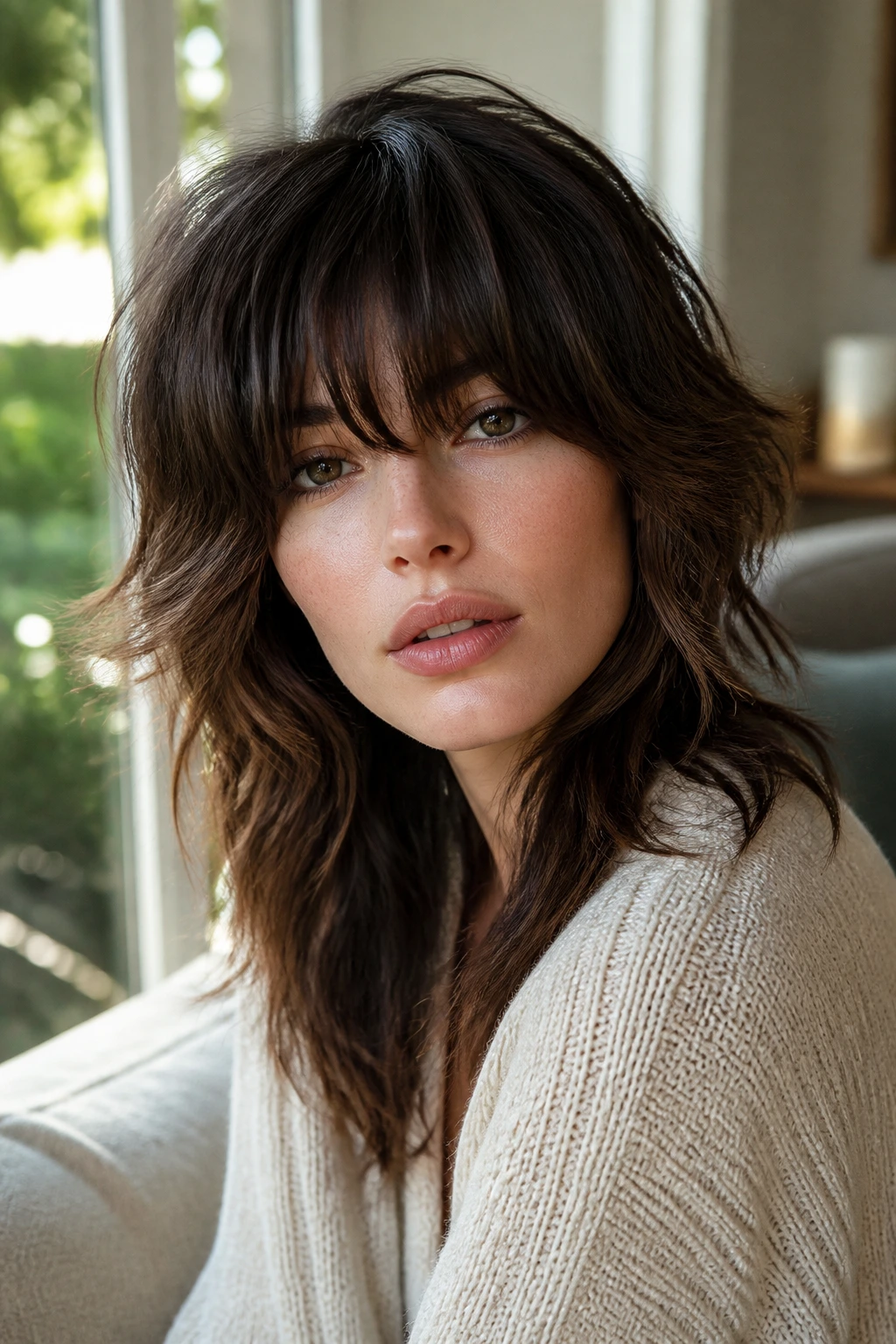
A strong fringe changes the entire mood of a shag. Instead of only framing the face with side pieces, this cut puts more weight in the front, which can make the eyes pop and the cheekbones look sharper.
It’s especially good for longer faces or foreheads that need a little more coverage. Keep the rest of the layers slightly softer so the fringe stays the star; if everything is equally choppy, the haircut can get noisy.
10. Wispy Bang Shag

If bangs make you nervous, this is the friendly version. The fringe is see-through and light enough to brush aside on bad hair days, while the layers keep the shape from feeling too plain.
This cut is forgiving on fine hair because it does not demand a huge amount of density in the fringe area. Use a small round brush or just your fingers to dry the bangs forward, then split them with a touch of texturizing spray so they sit loose instead of stiff.
11. Collarbone Shag
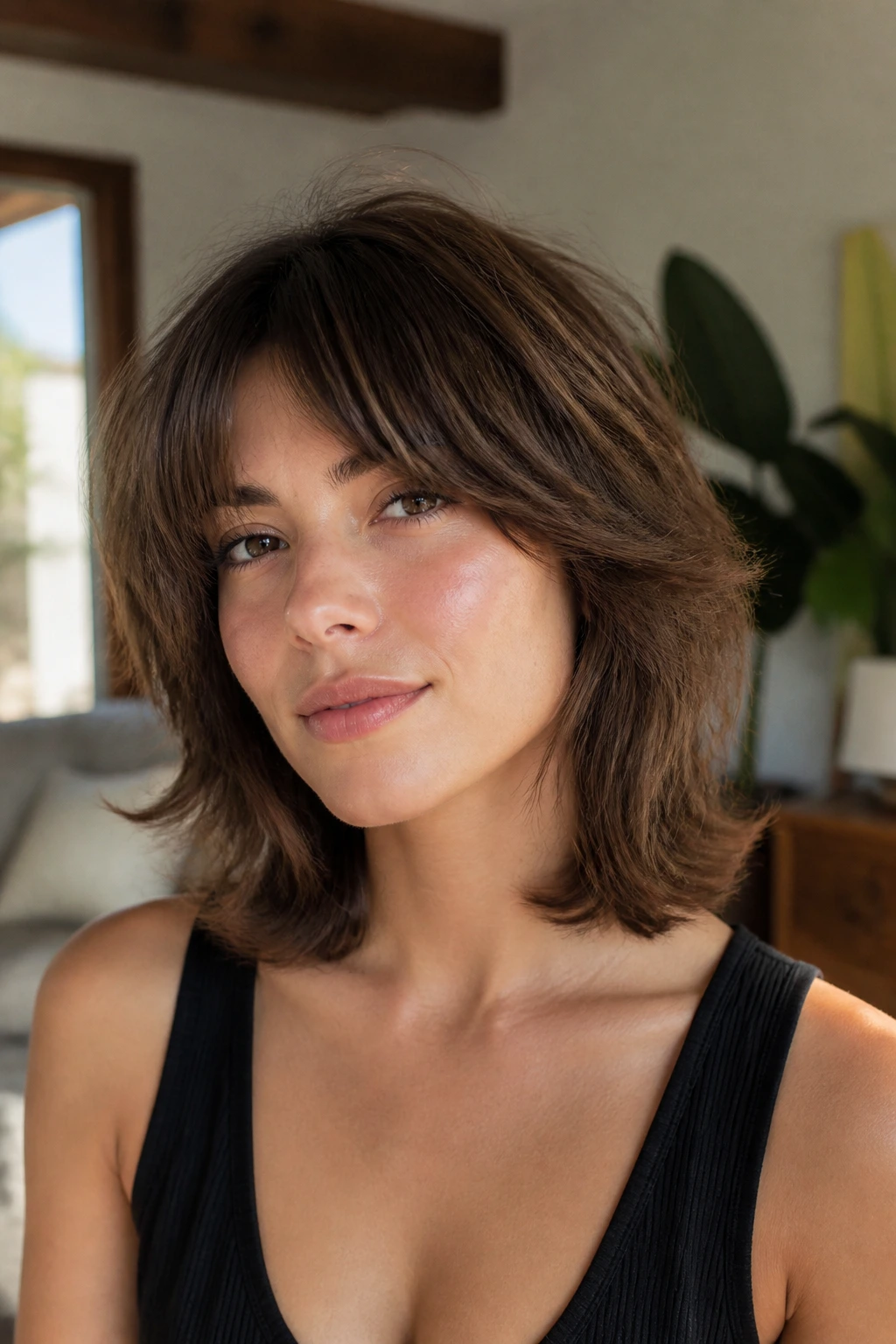
Collarbone length has enough swing to show off layers and enough weight to stay wearable. The shag treatment here is subtle: soft face framing, movement in the mid-lengths, and ends that flick instead of hang dead straight.
This is one of the safest places to start if you want a shag but do not want to go short. It works in the office, in a ponytail, and on the days you barely touch it, which is a useful combination.
12. Choppy Pixie Shag
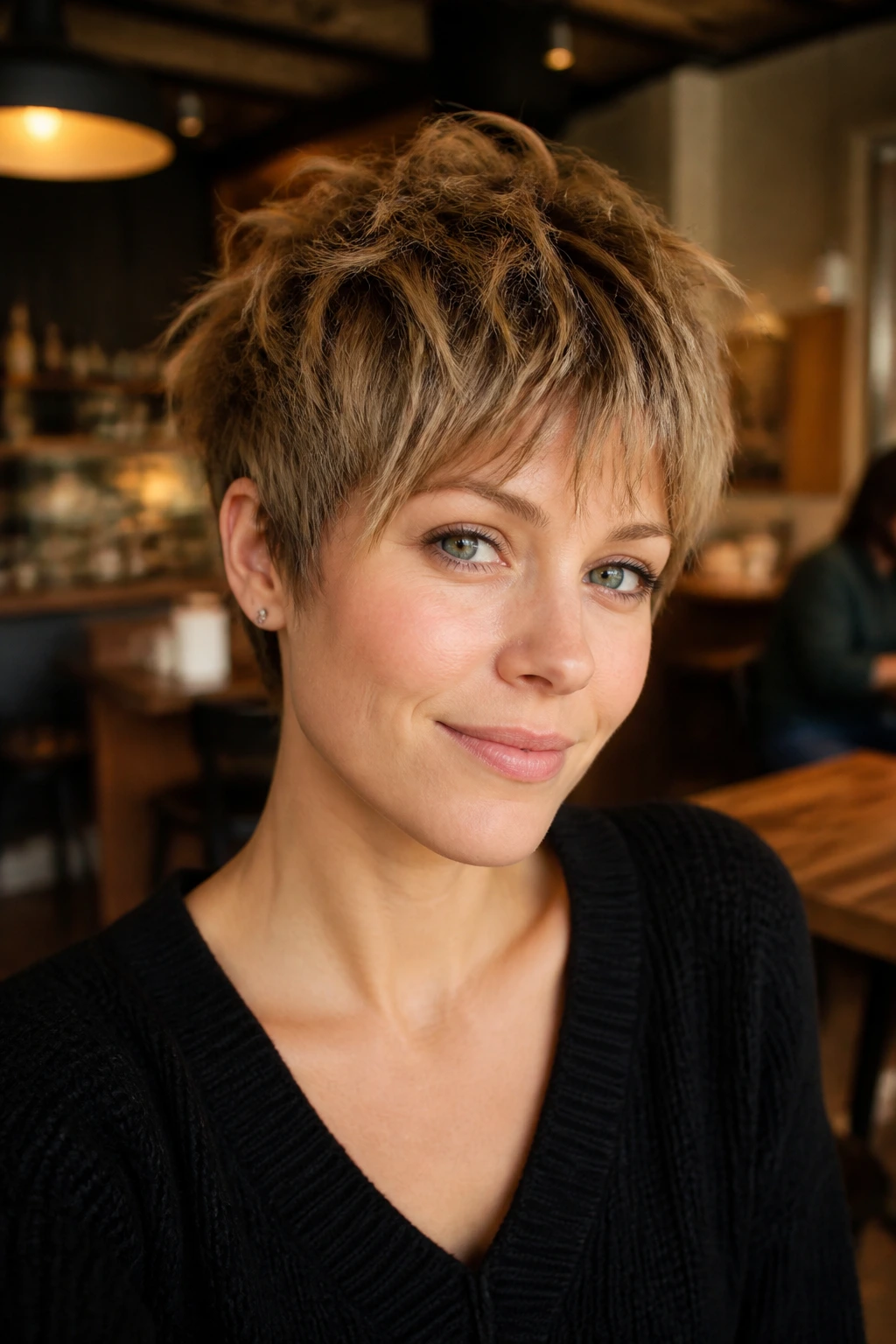
Short hair gets a lot more personality once the top is layered and the fringe is broken up. A choppy pixie shag keeps the sides close enough to feel neat, then leaves movement on top so the whole cut does not look flat.
You need a little maintenance here. The shape loses its edge faster than a longer shag, so plan on trims every 5 to 7 weeks if you want the top layers and neckline to stay intentional.
13. Rocker Shag

This is the loud cousin in the family. It has more texture, more separation, and usually a stronger fringe or side sweep that gives the cut a bit of stage presence.
It’s especially useful if your hair is thick and wants to sit in one large shape. The rocker shag breaks that mass into pieces, and pieces are easier to style than one giant block of hair. Use a light pomade or wax only on the ends; if you put it near the roots, the lift disappears fast.
14. Wavy Lob Shag
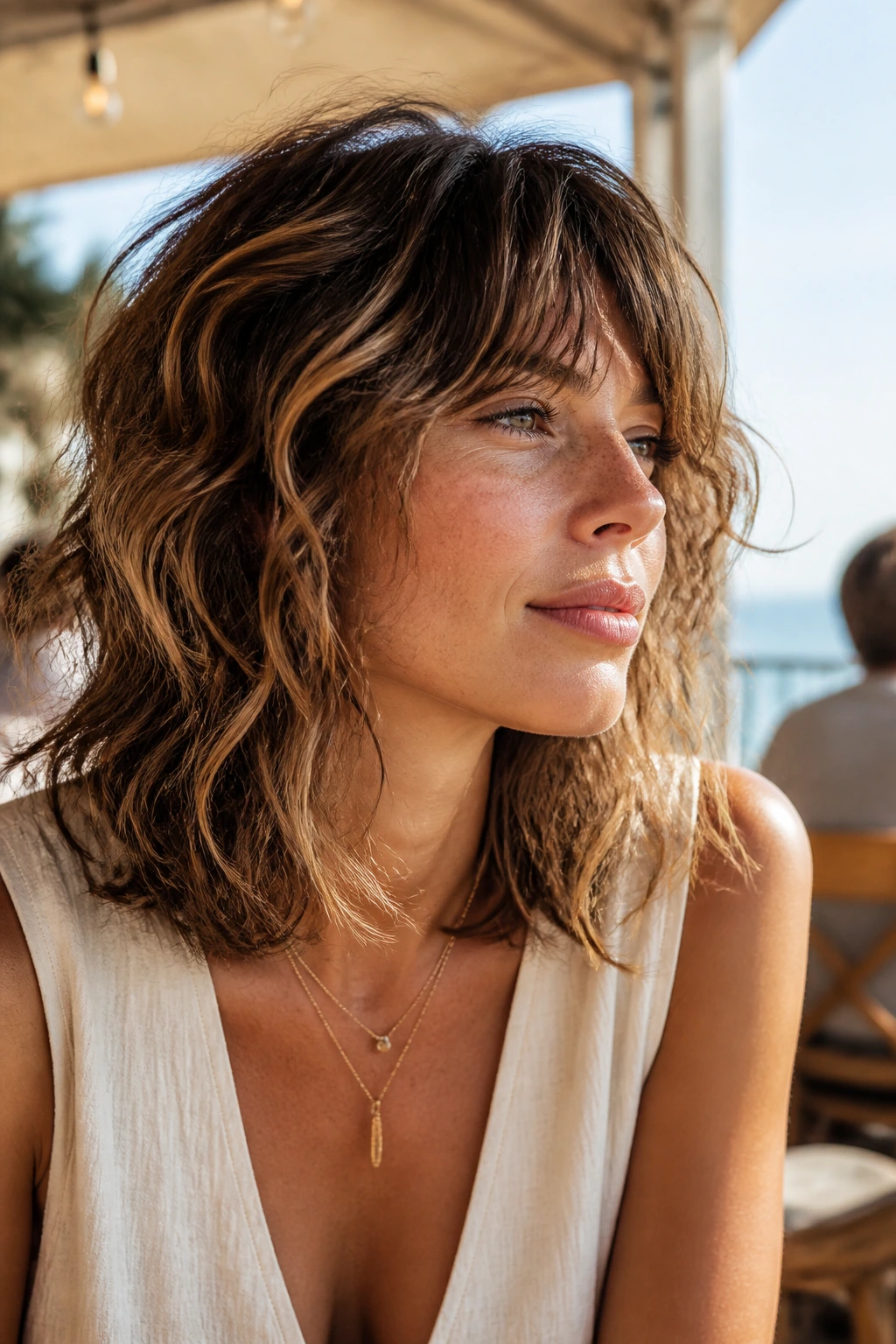
A lob already has good bones. Add shag layers, and you get movement without sacrificing the clean shape of shoulder-grazing hair.
This version is easy to wear because it can air-dry into a loose bend and still look finished. If your waves get puffy, tell your stylist to keep the interior layers longer; that way the texture stays visible without turning the sides into a cloud.
15. Thick-Hair Shag

Thick hair needs a haircut that removes weight in the right places, not a pile of random short layers. The best thick-hair shag is lighter through the interior and more controlled at the perimeter, so the ends do not explode outward.
Ask for debulking that respects the outline. Too many short layers near the bottom can make thick hair look fuzzy and wide, while a better-cut shag will feel lighter on your neck and dry faster, which matters more than people admit.
16. Fine-Hair Volume Shag

Fine hair is often better served by a shag that keeps some density at the ends. The shape should create lift near the crown and around the cheeks, but not thin the perimeter so much that the haircut looks see-through.
This is where mousse earns its keep. A golf-ball-sized amount worked into damp roots, then rough-dried with the head upside down for the first few minutes, can make the whole cut look busier without needing a barrel of product.
17. Long Hair Face-Framing Shag
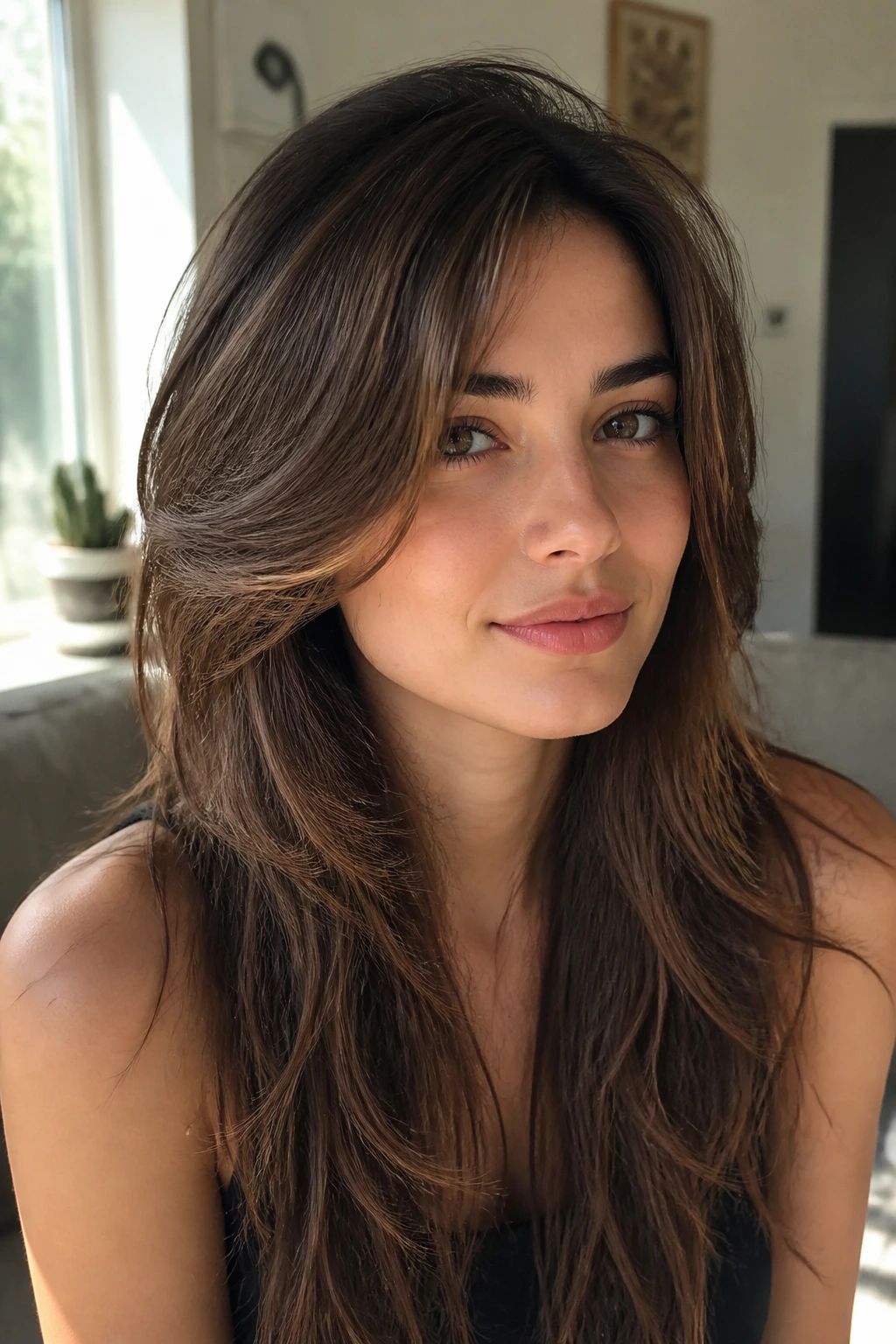
If you love length and refuse to give it up, this is the compromise that actually works. The face-framing pieces start near the cheekbone or jaw, and the rest of the length gets a soft shag treatment that keeps things from dragging down.
It’s a smart move for people who wear their hair up a lot. The front still falls nicely when the rest is tied back, which is one of those small comforts you only notice after a month of living with the cut.
18. Retro ’70s Shag
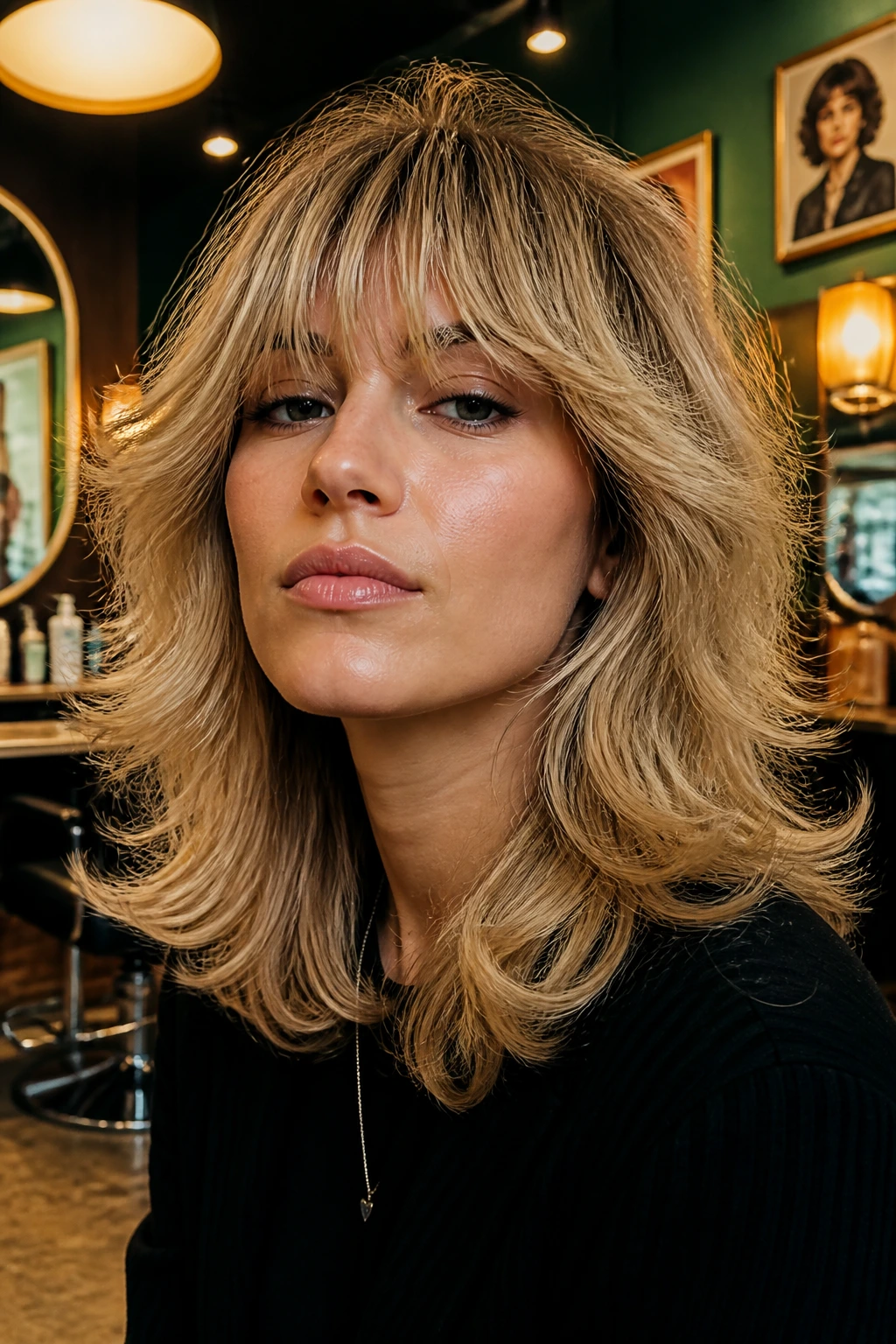
This version leans into the era that made the shag famous. Think fuller fringe, softer crown lift, and ends that flip away from the face instead of hanging flat.
A round brush helps here, but don’t overdo the polish. The appeal is the slightly undone shape, not a pageant blowout. If you have medium or thick hair, this cut can hold that airy flip without a lot of fuss.
19. Air-Dried Natural Shag
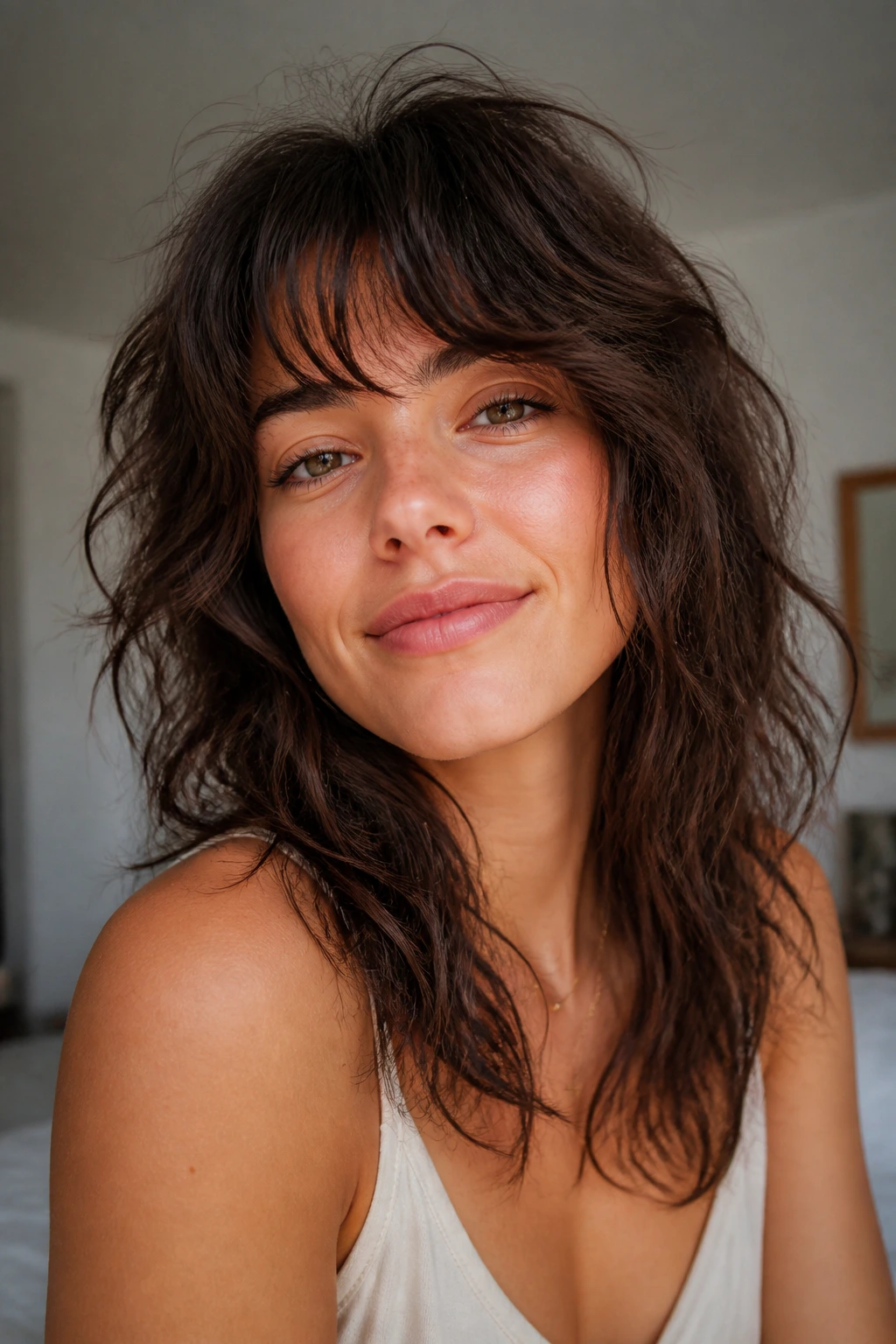
Some cuts are designed around heat styling. This one is built so you can wash, scrunch, and let it settle.
That means the layers should follow your natural wave or curl pattern instead of fighting it. A light cream or mousse is usually enough; heavy oils and thick butters tend to drag the shape down before the hair has a chance to form its bends.
20. Sleek Shag
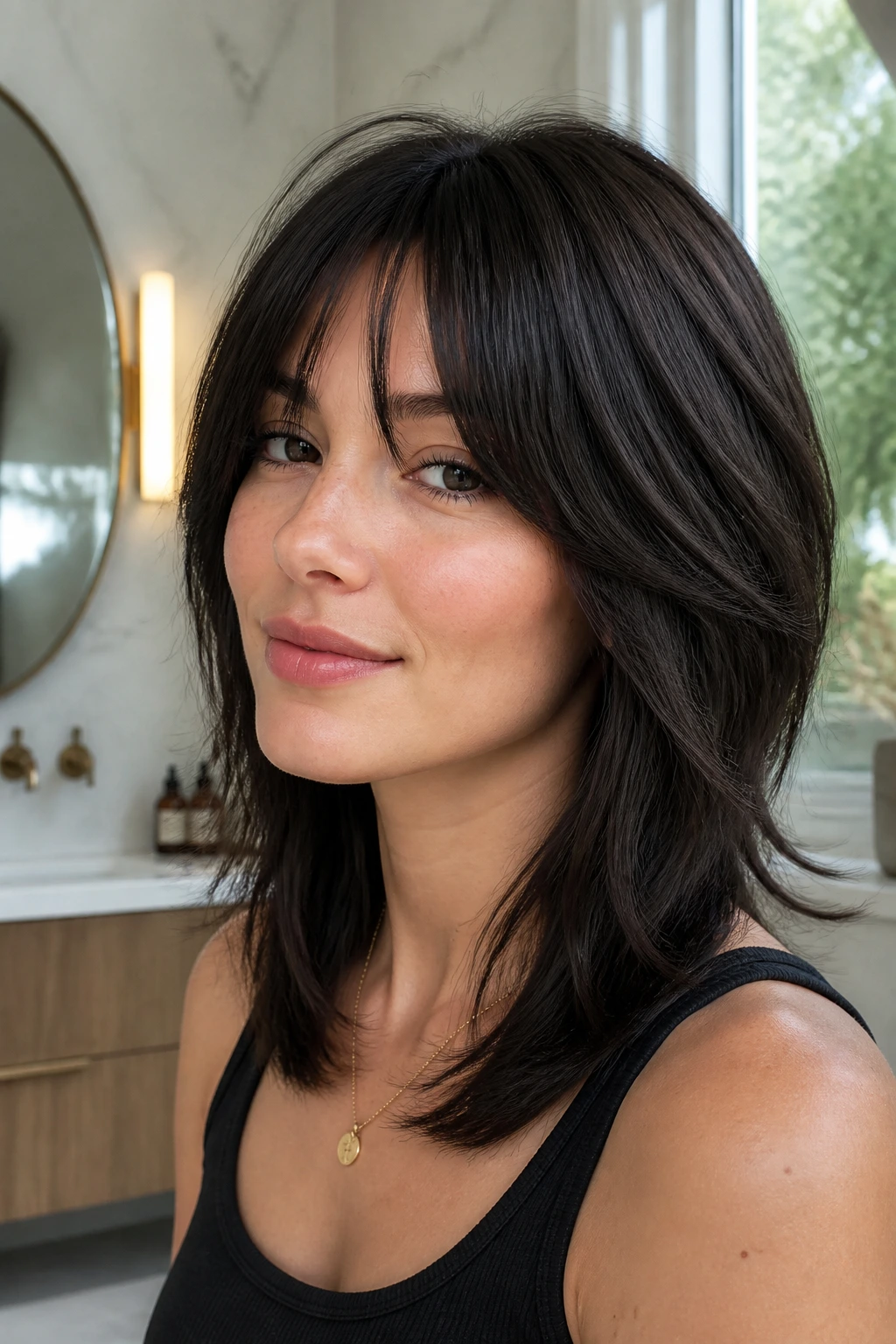
A shag does not have to look messy. The sleek version keeps the layers visible but smooths the silhouette, which is useful if you want the shape in a cleaner, more polished finish.
This works well on straight hair or hair that responds to a blow-dry. Ask for softer edges and less aggressive texturizing if you want the cut to move but not fray at the ends. It’s a nice middle road for people who like structure.
21. Mullet-Inspired Shag

This is the unapologetic one. The front and crown stay shorter and fuller, while the back hangs longer, which gives the cut a sharp contrast that some people love and others will never touch.
The reason it works is simple: the shape has intent. It is not trying to hide what it is. If you’re nervous, keep the difference between front and back moderate instead of extreme, and you’ll still get the edge without feeling like you’re wearing a costume.
22. Side-Swept Shag

A side fringe changes the energy instantly. It softens cowlicks, helps with asymmetry at the hairline, and gives the whole cut a more relaxed drape across the forehead.
I like this version for people who part their hair off-center anyway. A side-swept shag often needs less daily fuss than a center-part curtain bang, because it falls into place instead of splitting and refusing to cooperate.
23. Dimensional Color Shag
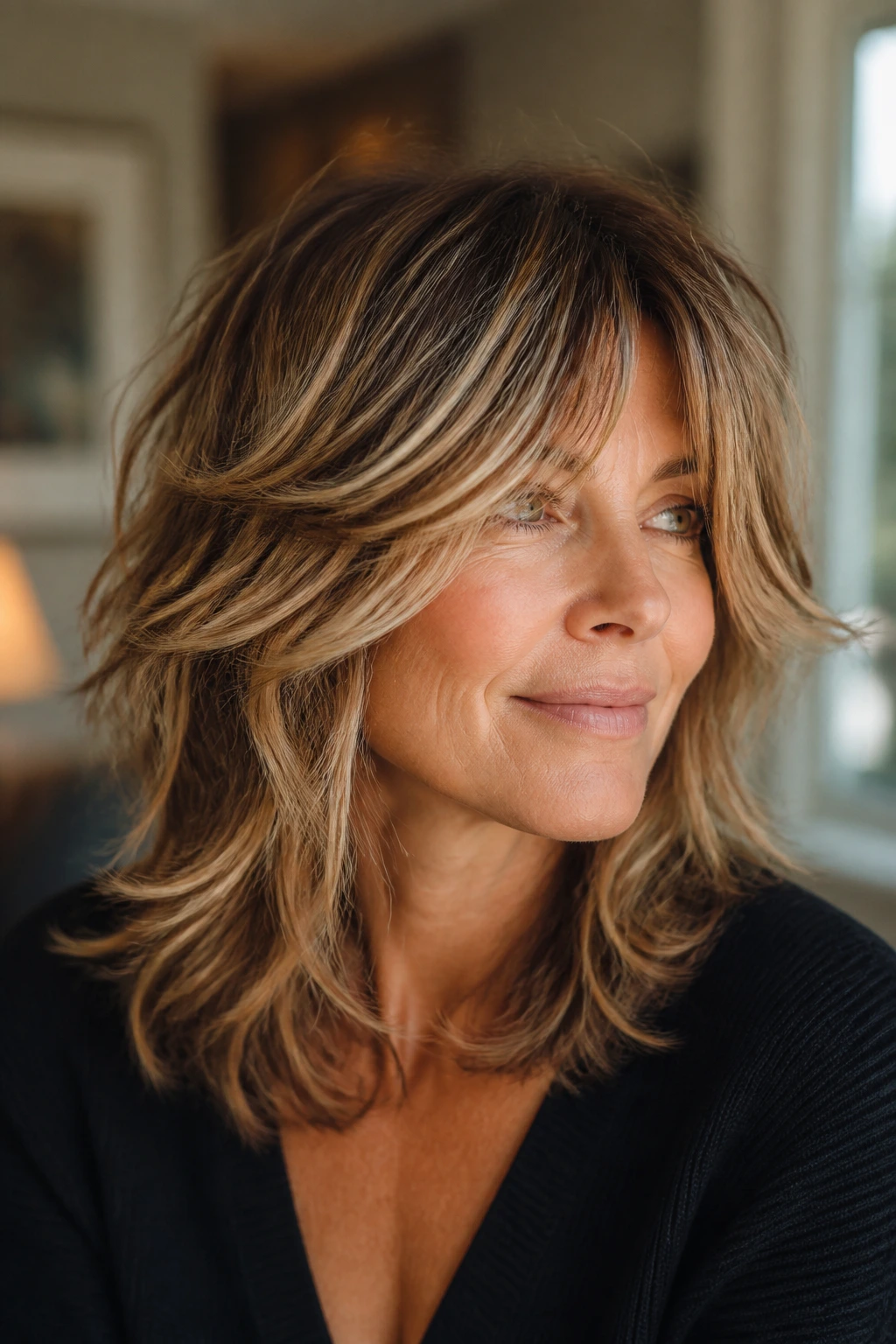
Color can make a shag look deeper and more expensive than the cut alone. Soft highlights or balayage show off the layers by catching the bends in the top and front pieces, which makes the texture easier to read.
The placement matters. Keep brighter pieces around the face frame and the top layers, not buried only underneath, or the haircut loses the whole point of the dimension. A shag with ribbon highlights is one of those combinations that looks better in movement than in a still photo.
24. Bottleneck Bang Shag
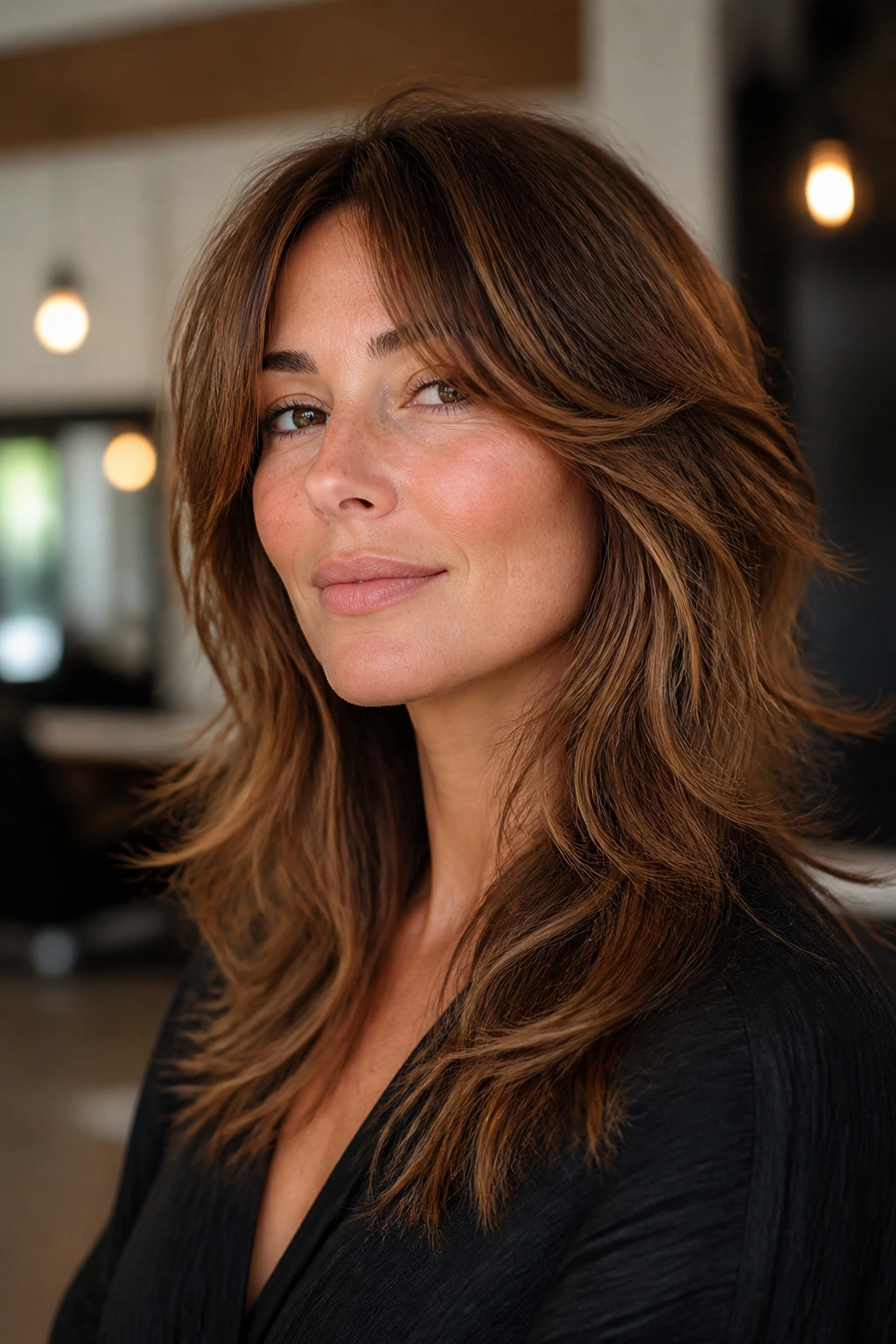
Bottleneck bangs start narrow in the middle and widen as they move toward the temples, which makes them softer than a blunt fringe. Paired with a shag, they give you face framing that feels sculpted without getting too heavy.
This shape is useful if you want bangs but not a hard line across the forehead. It also works well for people whose hairline has a natural cowlick, because the fringe can blend into the side layers instead of fighting them every morning.
25. Short Shag with Tapered Nape
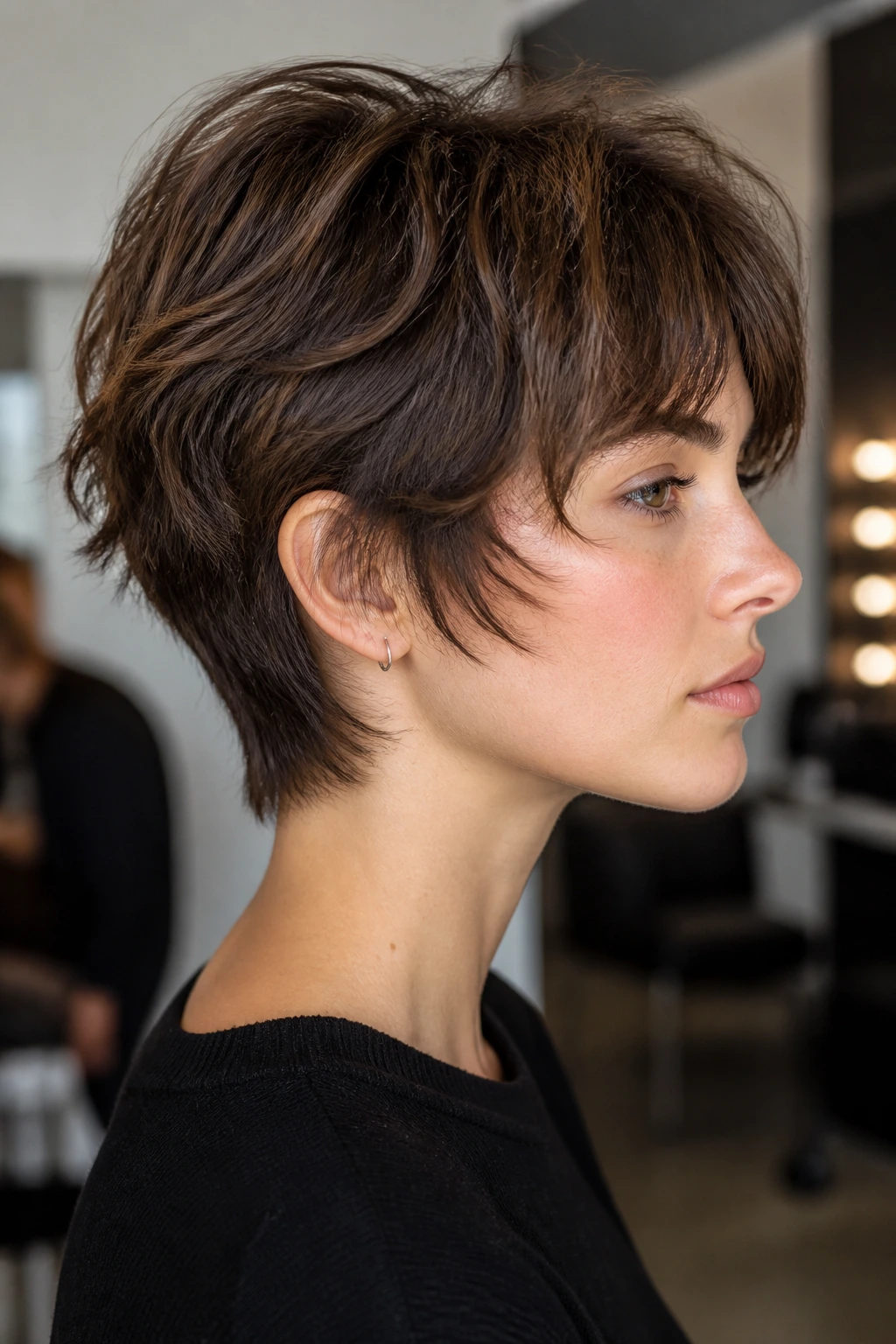
A short shag with a tapered nape keeps the back clean and cool while the top and front stay lively. That combination gives short hair a little lift and a little movement instead of one solid cap of shape.
The taper helps the neckline look neat as it grows. If your hair tends to puff at the back, ask for the lower section to be softened carefully rather than hacked too high, because that can make the head look rounder than you meant.
26. Tousled Beach Shag

This cut likes a salt-spray finish and a little scrunching. The ends stay piecey, the layers stay visible, and the overall feel is loose without looking unfinished.
It is especially nice on wavy hair that wants to bend on its own. A diffuser on low heat can help the crown dry with some lift, but the point is to stop before the hair gets fluffy and overexpanded. Leave a little bend in it.
27. Soft Layered Shag for Round Faces
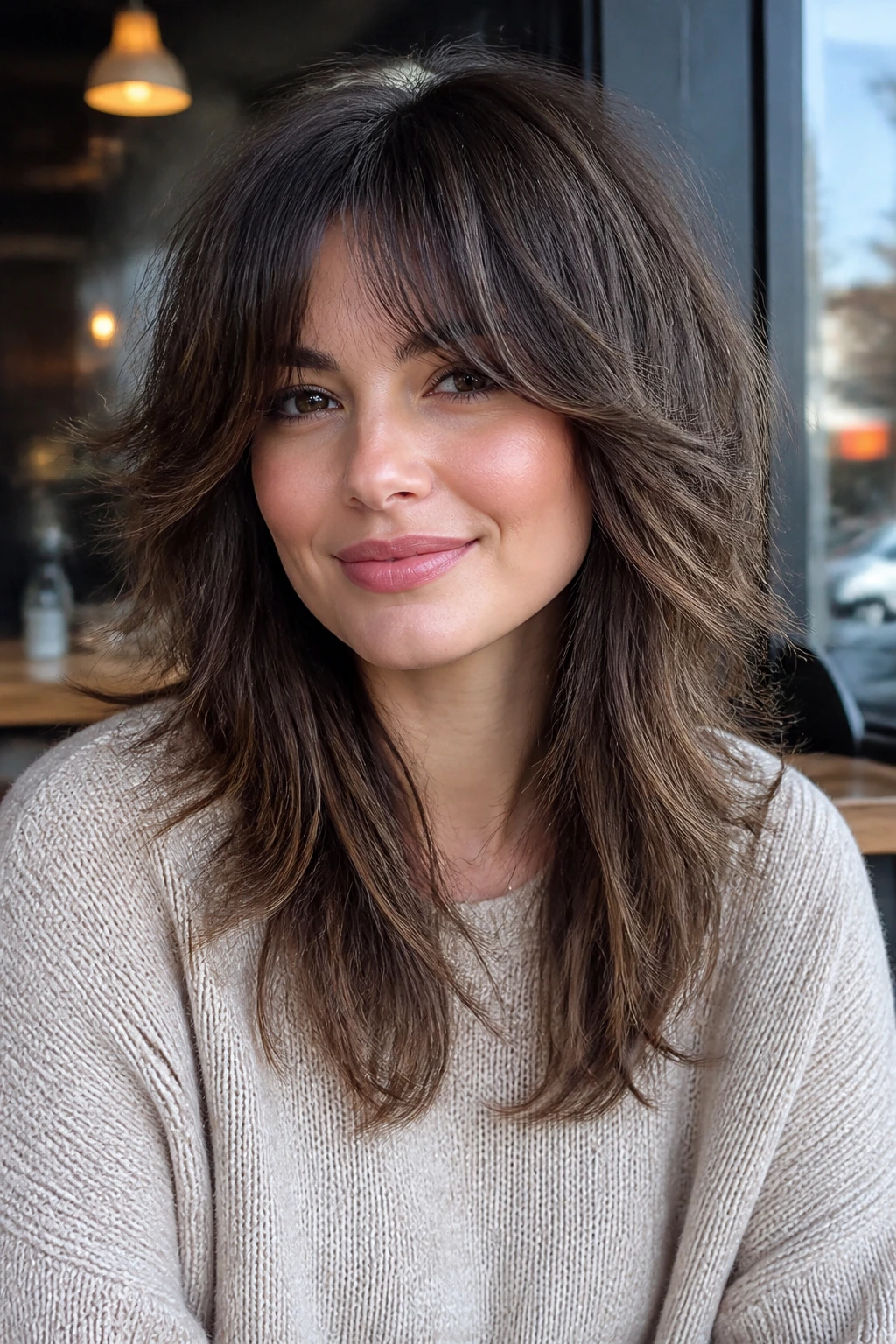
Round faces usually benefit from a shag that adds length visually. That means face-framing pieces that start below the cheekbone and layers that travel downward instead of sitting right at the widest part of the face.
A softer fringe works better here than a short, blunt one. You want movement around the cheeks, not a horizontal line that cuts the face in half. A center part can help, but only if the front pieces are long enough to stretch the line.
28. Angled Shag for Square Faces
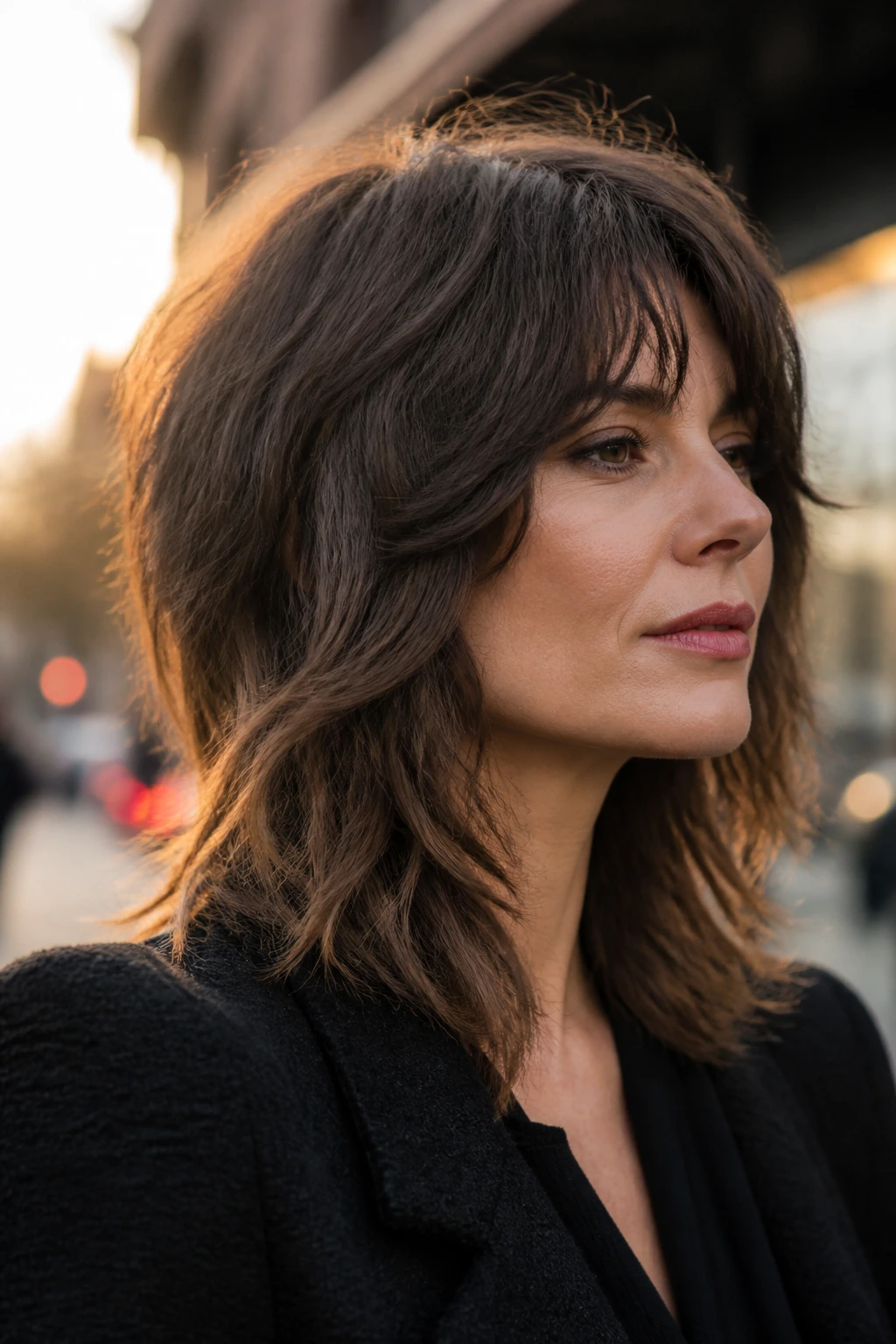
Square faces look good with softness near the jaw and some curve through the front. An angled shag uses longer face-framing pieces and layers that arc rather than stop sharply at the chin.
A side part or soft curtain bang can help break up stronger angles. If the outline is too straight, the jawline can start to feel harder than it needs to, which is exactly the kind of detail a good shag should fix rather than highlight.
29. Asymmetrical Shag
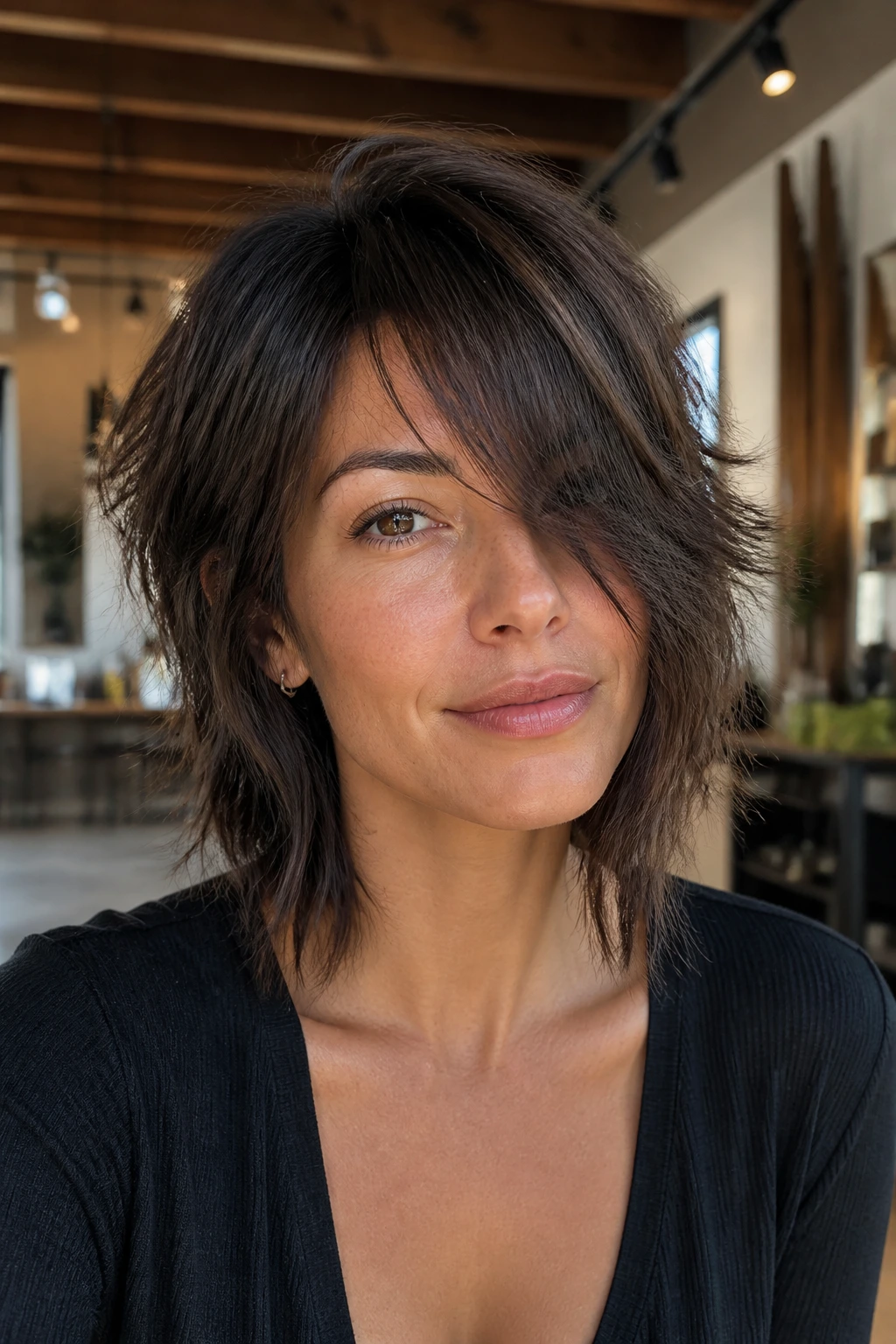
A small imbalance in the shape can make the whole haircut feel modern. One side may sit a little longer, or the fringe may sweep farther across the face, and that offset gives the cut some edge without going full avant-garde.
This works best when the asymmetry is obvious enough to feel deliberate but not so extreme that the haircut seems lopsided. If your hair has one side that always behaves better than the other, this style can quietly work with that instead of pretending it isn’t there.
30. Boho Shag with Long Fringe
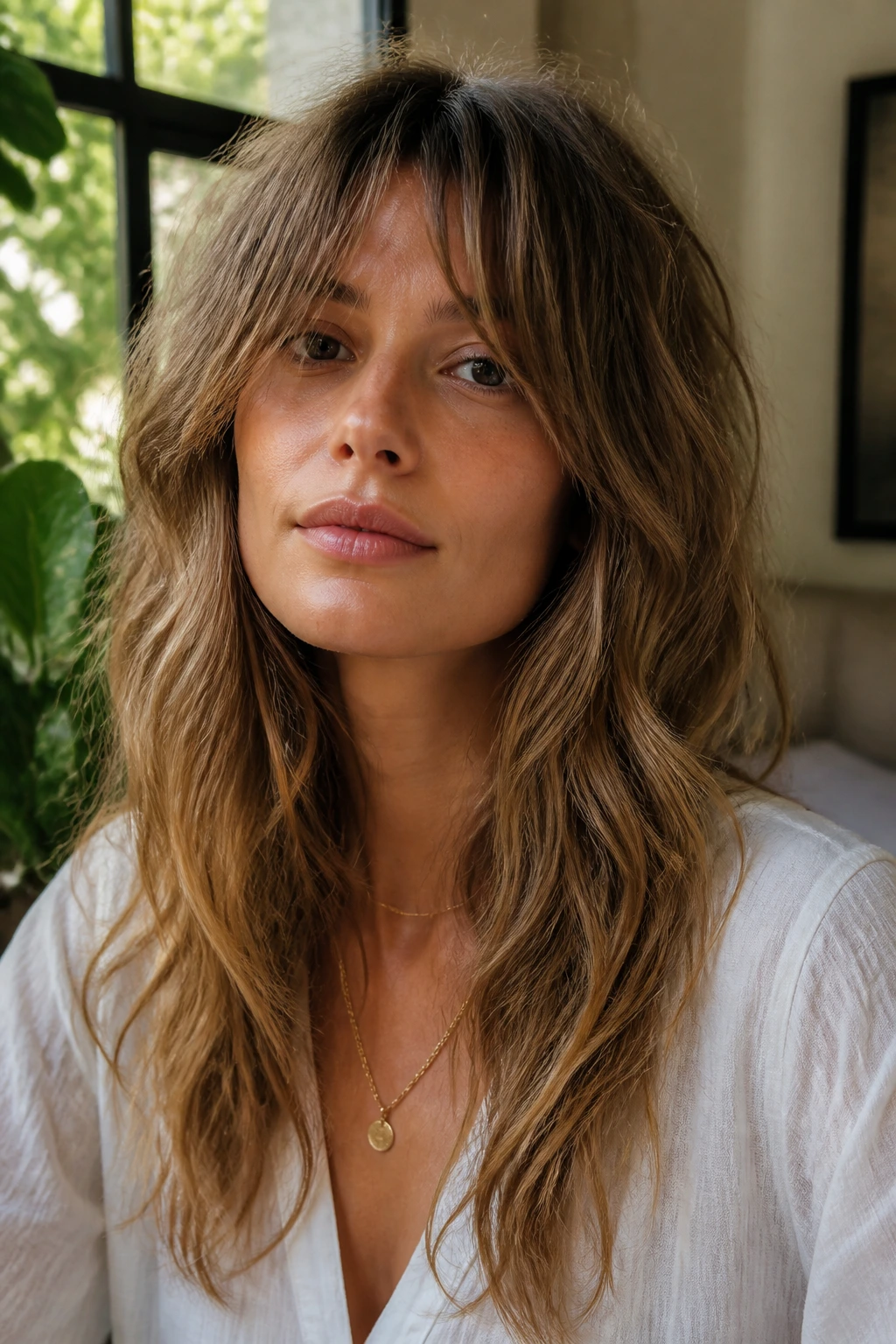
This is the soft, earthy version people tend to save for long hair. The fringe is longer, the layers are loose, and the finish leans relaxed rather than sculpted.
It plays well with natural waves and a few bendy front pieces. A touch of cream through the mids and ends can help keep it from frizzing out, but don’t pile it on. Too much product kills the easy, swingy feel that makes this cut work.
31. Edgy Undercut Shag
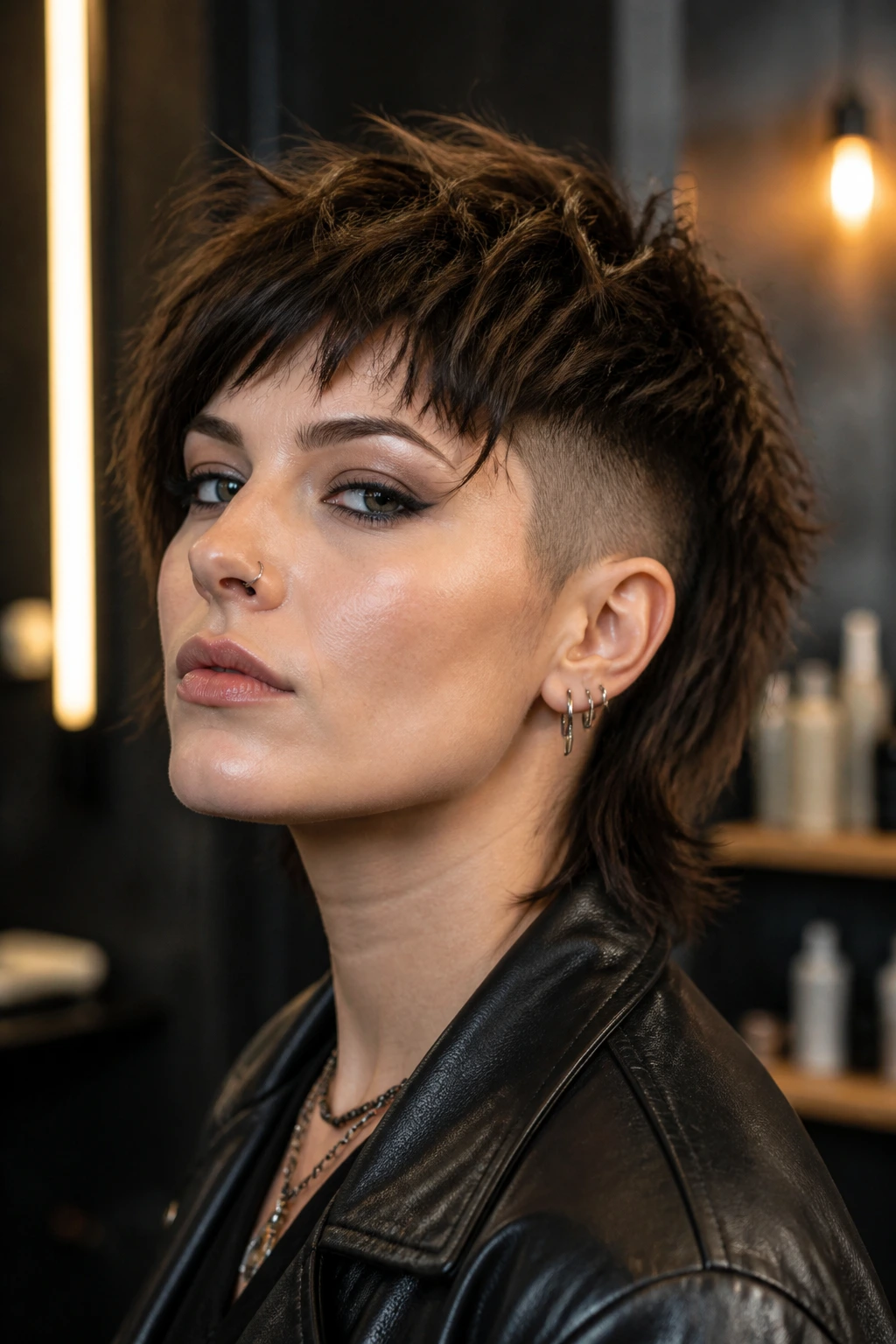
An undercut changes the shag from the inside out. By removing some bulk underneath, the top layers can fall more cleanly, and the shape gets a sharper outline without needing to chop the visible length as much.
This is a strong choice for dense hair that heats up at the nape or sides. It’s also useful if you like a little hidden surprise in your haircut. The one catch is grow-out: once you commit to an undercut, you need to keep an eye on it so the back does not turn fuzzy.
32. Mid-Length Shag for Straight Hair

Straight hair can look too orderly unless the layers have enough movement built in. A mid-length shag gives that movement without asking the hair to do something impossible.
The key is internal layering and a little face frame that starts high enough to show. If you keep the cut too long and too subtle, straight hair will swallow the texture and leave you with an almost-bob that feels unfinished.
33. Curly Shag with Micro Layers
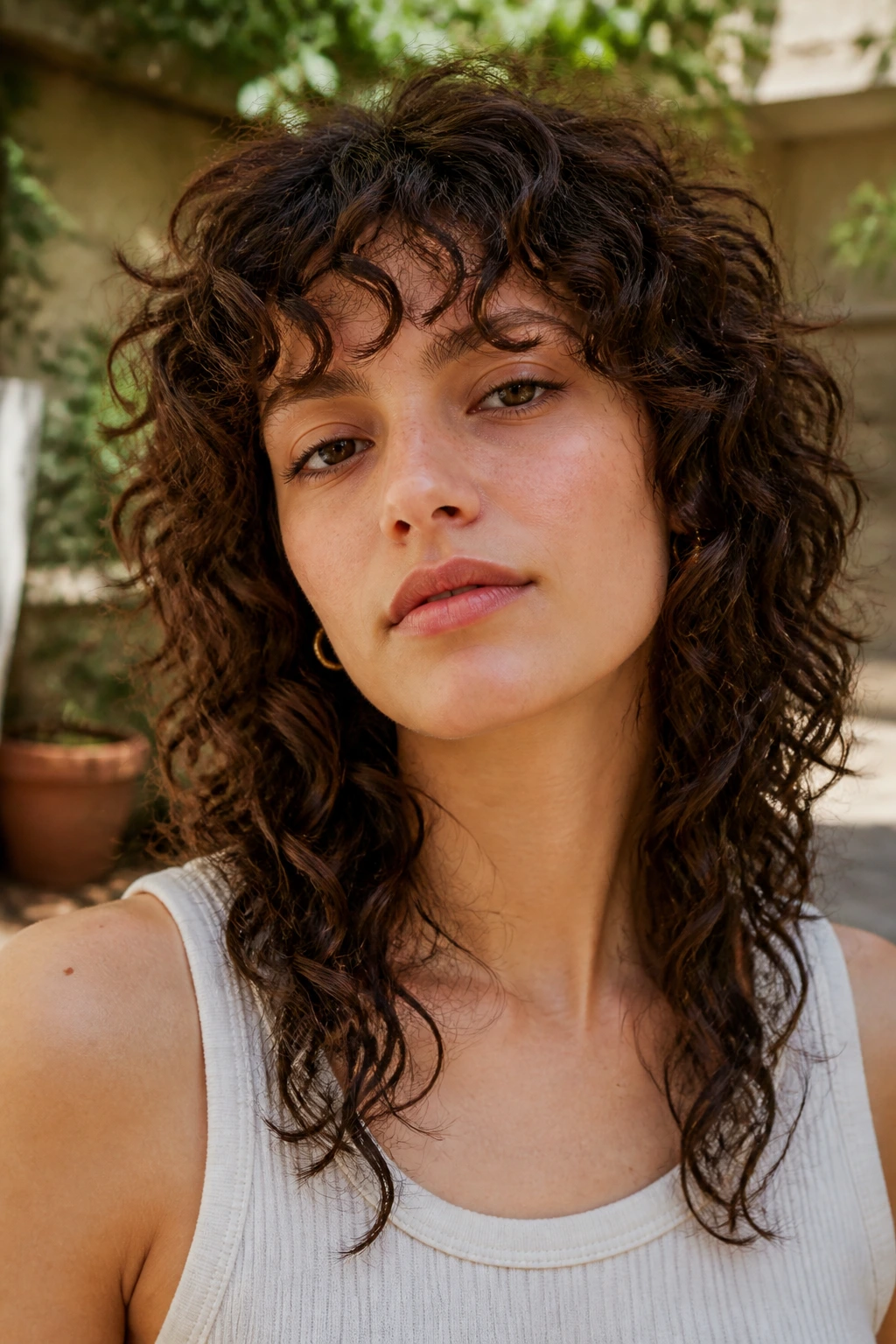
Dense curls sometimes need more than a few face-framing pieces. Micro layers break up the interior shape so the curls can stack without forming one huge dome.
This cut often looks best when the stylist cuts around the curl pattern in sections. If a curl springs an inch or two after drying, that is normal; the point is to work with the shrinkage instead of treating it like an error.
34. Low-Maintenance Grow-Out Shag

Some shags are built to stay handsome even after the first few weeks of growth, and this is one of them. The layers are softer, the fringe is less severe, and the perimeter keeps enough weight to hold its line as it gets longer.
That makes it a good choice if you like the shag shape but do not want to book trims every month. Ask for a version that keeps the shortest pieces a little longer than the trendier cuts. That small shift buys you more time.
35. Glam Shag with Polished Ends
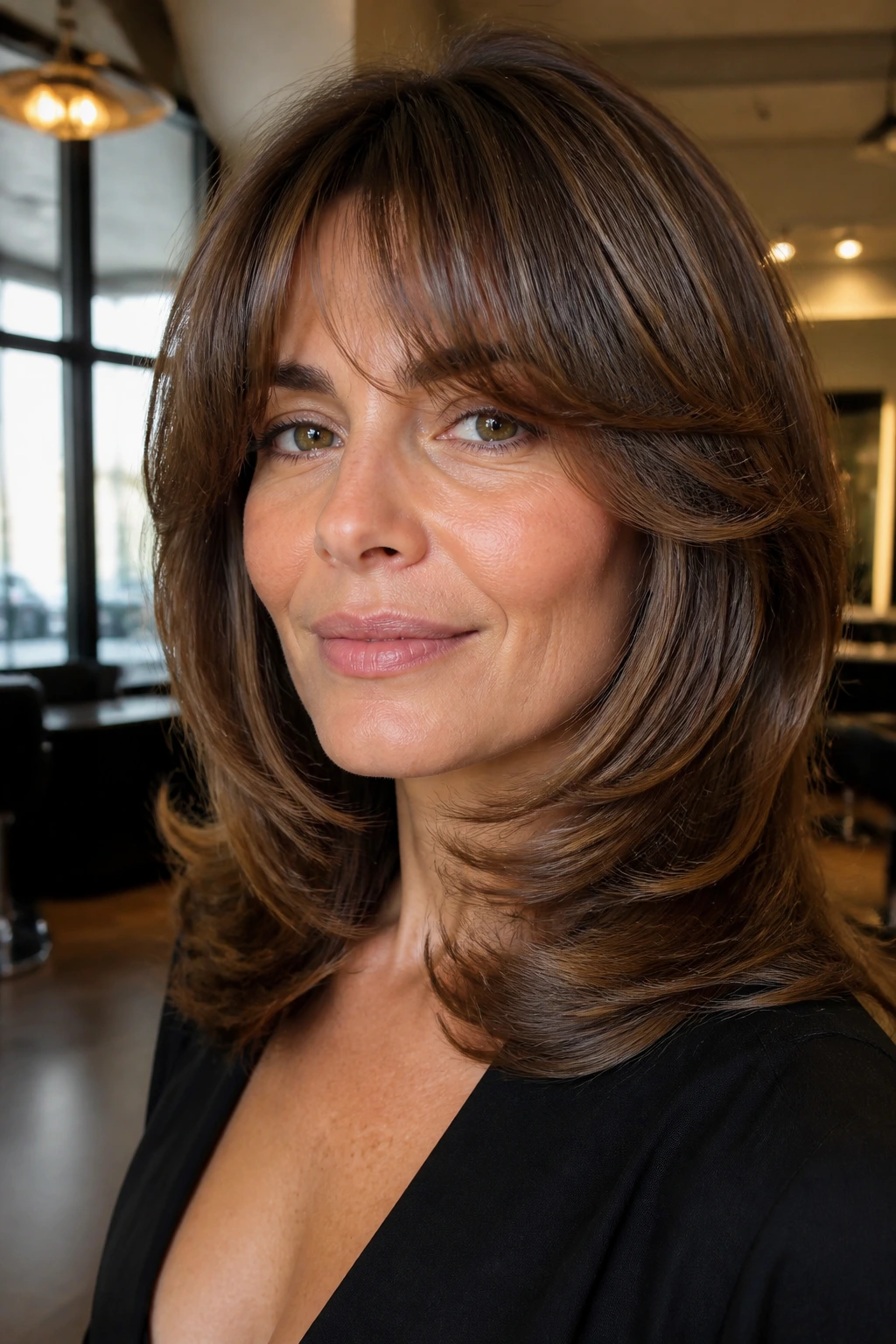
This is the shaggier cousin of a blowout. The layers still move, but the ends are smoothed and turned under or away with a brush so the finish feels more dressed up than messy.
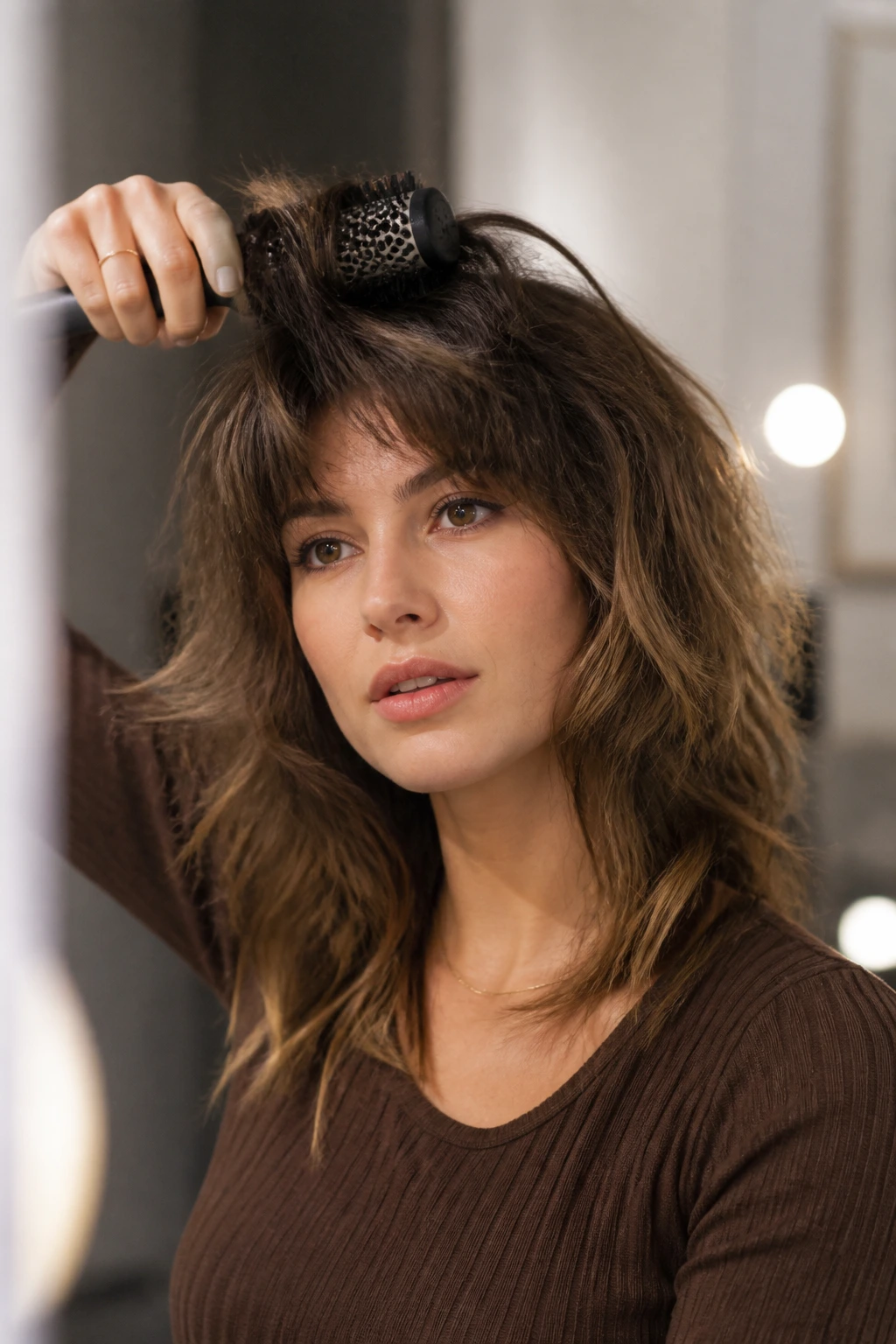
It works nicely if you want a haircut that can go from day to evening without needing a full restyle. A 1.5-inch round brush and a bit of tension at the ends can give the cut that soft, brushed curve that feels less gritty and more refined.
How to Ask Your Stylist for the Right Layers

Bring more than one photo. One should show the front, one the side, and if you can find it, one that reveals the back shape. A single front view hides a lot, and shag cuts live or die by the way the layers travel around the head.
Say how you wear your hair most days. If you air-dry, say that. If you use a diffuser once in a while, say that too. A stylist can only shape the layers well if they know whether your hair lives in a ponytail, sits flat under a beanie, or gets brushed out into a smooth finish for work.
The fringe conversation matters more than people think. A shag with curtain bangs feels completely different from one with side-swept bangs or no fringe at all. If you are unsure, ask for a longer fringe first; bangs can always be shortened, and it is much harder to recover from going too short too early.
Styling a Shag Without Overworking It
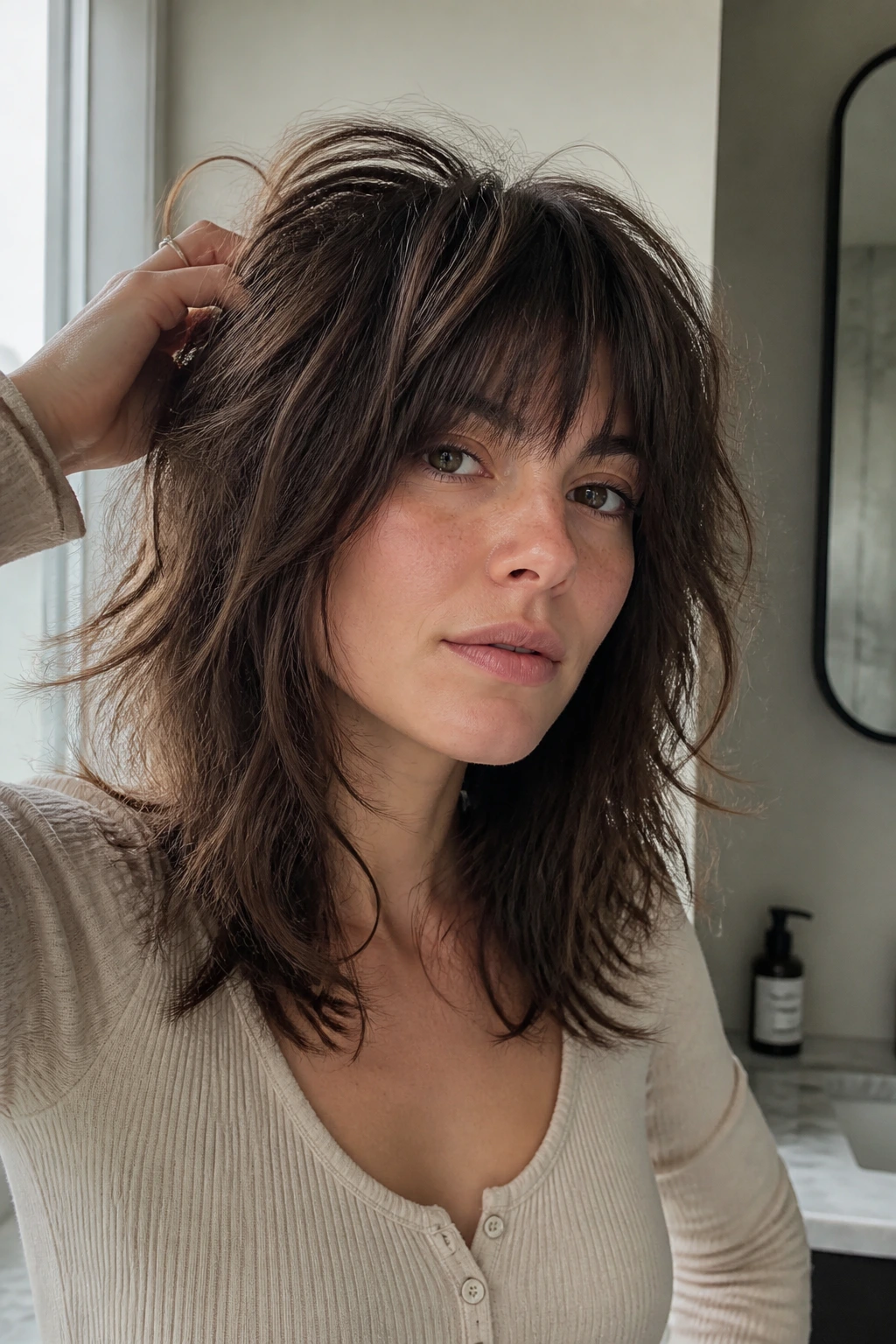
The easiest shag styling mistake is trying to make every piece perfect. You do not need that. You need lift at the root, some bend through the middle, and ends that separate instead of clumping together.
Start with a light mousse or spray on damp roots. If your hair is fine, that alone may be enough. If it is thicker, add a small amount of cream through the ends, then rough-dry until the hair is about 80 percent dry before you decide where the shape needs help.
Heat tools work best in small doses. Use a curling wand or iron on only the front pieces and the top layer if you want the shag to look intentional, not curled. Two or three bends around the face are often enough. Chasing every strand with a hot tool usually makes the haircut look harder than it should.
Tools That Make Shag Styling Easier
-
A blow dryer with a nozzle or diffuser: The nozzle helps smooth the fringe; the diffuser keeps curls from getting smashed.
-
A 1-inch or 1.25-inch curling wand: Good for adding just a few bends through the front and crown.
-
Lightweight mousse: Gives the roots grip without turning the hair sticky or stiff.
-
Texturizing spray: Useful for broken-up ends and that piecey finish shags rely on.
-
Round brush: Best for smoothing curtain bangs or polishing the top layer.
-
Wide-tooth comb: Better than a fine brush when you want to keep the layers from puffing.
-
Sectioning clips: Helpful if your fringe and crown need careful drying.
-
Dry shampoo: Nice on day two or three when the roots start to sink.
Common Mistakes That Flatten a Shag
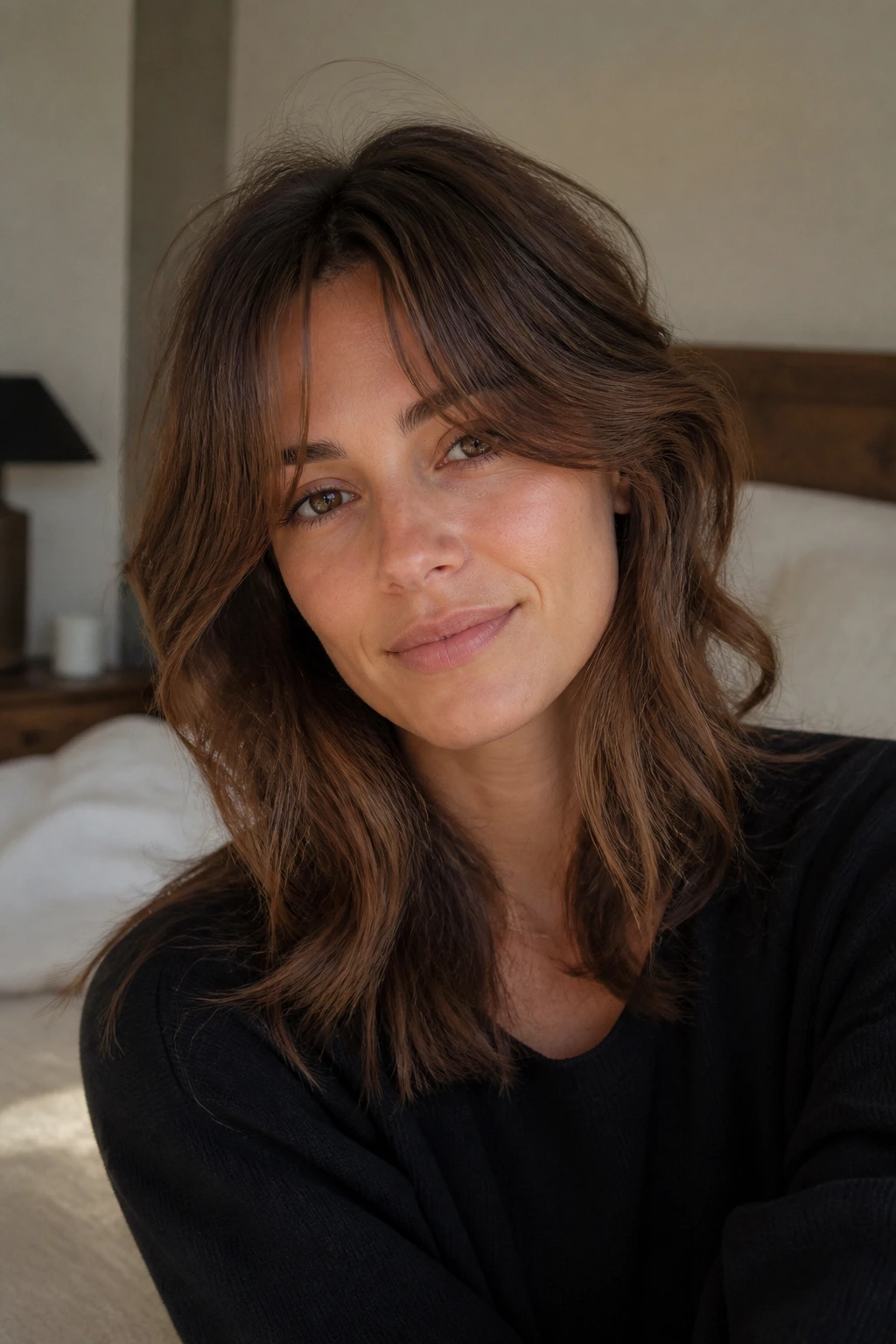
Too many short layers on fine hair can leave the ends looking wispy and thin. The fix is to keep some weight in the perimeter so the haircut still has a solid outline when it settles.
A fringe that is cut too short can make the whole shape feel abrupt. If you want bangs, start longer than your first instinct and let them settle for a week; hair often lies a little differently after the first wash.
Too much cream or oil at the roots will drag the crown down. Shags need lift near the scalp, so keep heavier products from the top unless your hair is unusually dry and coarse.
Ignoring your part is a sneaky one. A shag cut for a center part will not automatically sit the same on a side part, and the face frame can drift into a lopsided shape if the cut wasn’t planned around where you actually wear it.
Over-texturizing thick hair can make the ends fray and puff. The answer is controlled weight removal, not stripping out as much hair as possible.
Five Ways to Change the Mood of a Shag
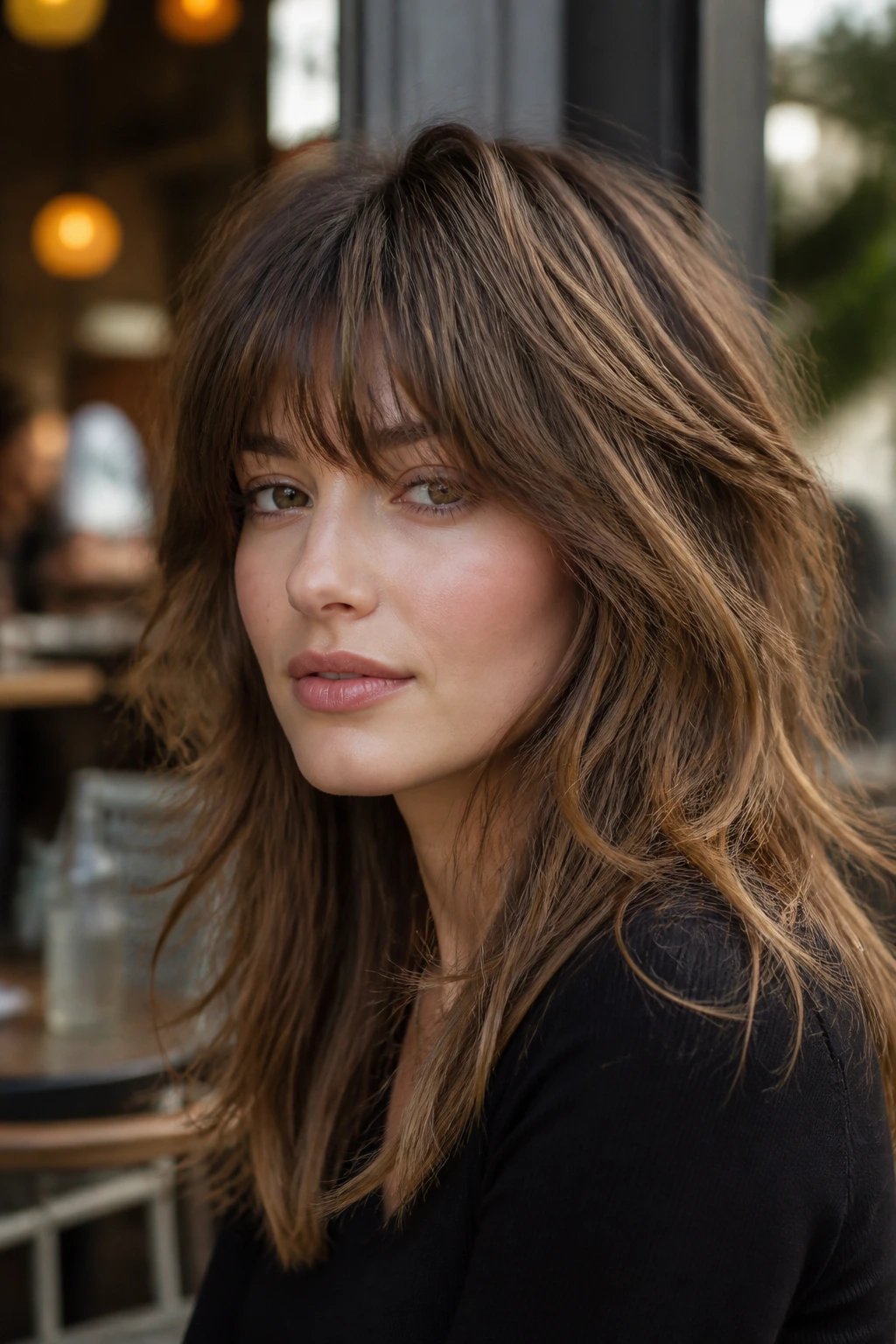
Fringe-Free Shag: Skip bangs entirely and let the face-framing layers do the work. This keeps the cut softer and easier to pin back, which is useful if you hate hair falling into your eyes.
Polished Blowout Shag: Smooth the top layer with a round brush and keep the ends brushed under or away from the face. The shape still reads shag, but the finish feels cleaner and more dressed up.
Curly-First Shag: Cut the shape around the curl pattern and leave more length in the layers so the curls spring rather than puff. This version needs less daily styling and more thoughtful cutting.
Rocker Shag: Push the separation further with choppier ends and a stronger fringe. It has more contrast and looks best when the hair is touched lightly with texture paste, not drowned in it.
Low-Key Grow-Out Shag: Ask for softer layers and longer fringe so the cut still behaves after eight or ten weeks. This is the one to pick if you want the shag effect without a constant maintenance date.
Keeping the Layers Fresh Between Salon Visits
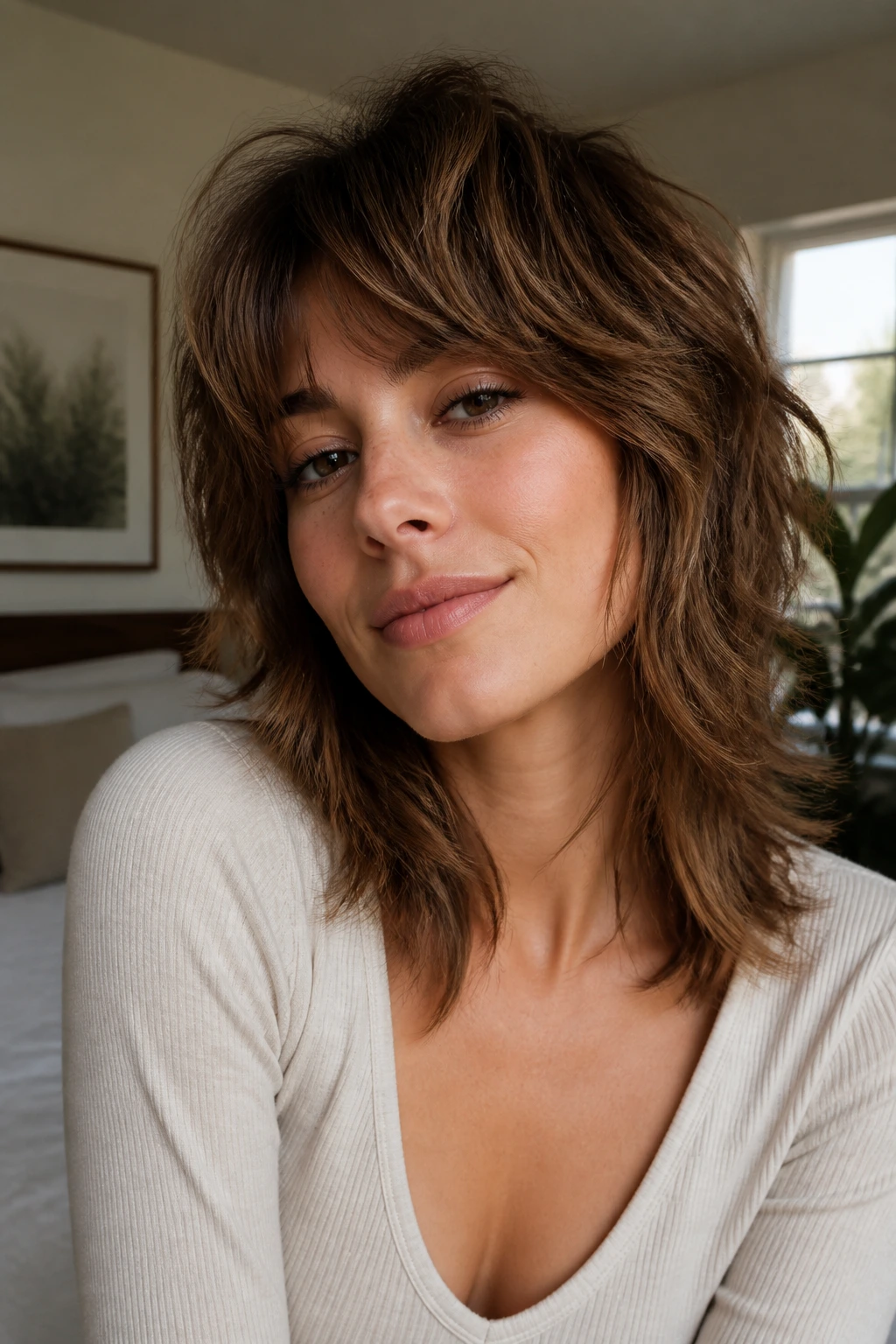
Short shags usually look sharp for about 5 to 7 weeks before the silhouette starts to blur. Medium and long versions can stretch to 8 to 12 weeks if the layers were cut with grow-out in mind.
Wash frequency matters, but not in a rigid way. Fine hair often needs more frequent washing to keep the roots from collapsing, while curly hair can go longer and rely on refresh spray or a bit of water to reshape the front pieces. The trick is to use enough product to support the layers, not enough to smother them.
At home, a weekly lightweight mask on the mids and ends can help if your shag uses heat styling or color. Sleep on a satin pillowcase if your hair tangles easily; it cuts down on the rough, frizzy wake-up look that can make shag layers expand in the wrong directions.
If the fringe starts to bother you before the full trim, a small dry trim at the salon or a cautious bang cleanup can hold the line. Do not hack at the front pieces yourself unless you enjoy seeing your own mistakes in every mirror for the next month.
Frequently Asked Questions
Is a shag haircut good for fine hair?
Yes, if the cut keeps enough weight at the ends. Fine hair usually needs lift at the crown and soft layering, but not so much texturizing that the perimeter turns wispy.
Does a shag work on straight hair?
It does, but straight hair needs more deliberate layering than wavy hair does. If the cut is too subtle, the texture can disappear, so ask for a shape that starts high enough to show movement.
How often should I trim a shag?
Short versions usually need a clean-up every 5 to 7 weeks. Longer shags can often go 8 to 12 weeks, especially if the layers were cut to grow out softly.
Can curly hair wear a shag without looking puffy?
Yes, if the layers are cut to the curl pattern and not over-thinned. A dry or mostly dry cut usually gives the stylist a better read on where the curls will sit once they spring up.
What bangs work best with a shag?
Curtain bangs, bottleneck bangs, and soft side-swept fringe all pair well. A blunt, heavy bang can work too, but it changes the mood of the cut and needs more upkeep.
How do I stop a shag from looking messy in the wrong way?
Keep the crown lifted and the ends separated, but do not overload the hair with products that make it sticky or piecey in a bad way. A little mousse and a small amount of texture spray usually go farther than people expect.
Can I ask for a shag if I wear my hair up often?
Absolutely. Long face-framing layers and a softer fringe make a shag look good both down and tied back, which is one of the reasons it’s such a practical cut for real life.
What if my hair flips out in odd directions?
That often means the shortest layer was cut in a spot that fights your growth pattern. A good stylist can adjust the direction of the face frame or soften the edge so the hair falls with its natural bend instead of against it.
Why the Shag Keeps Coming Back
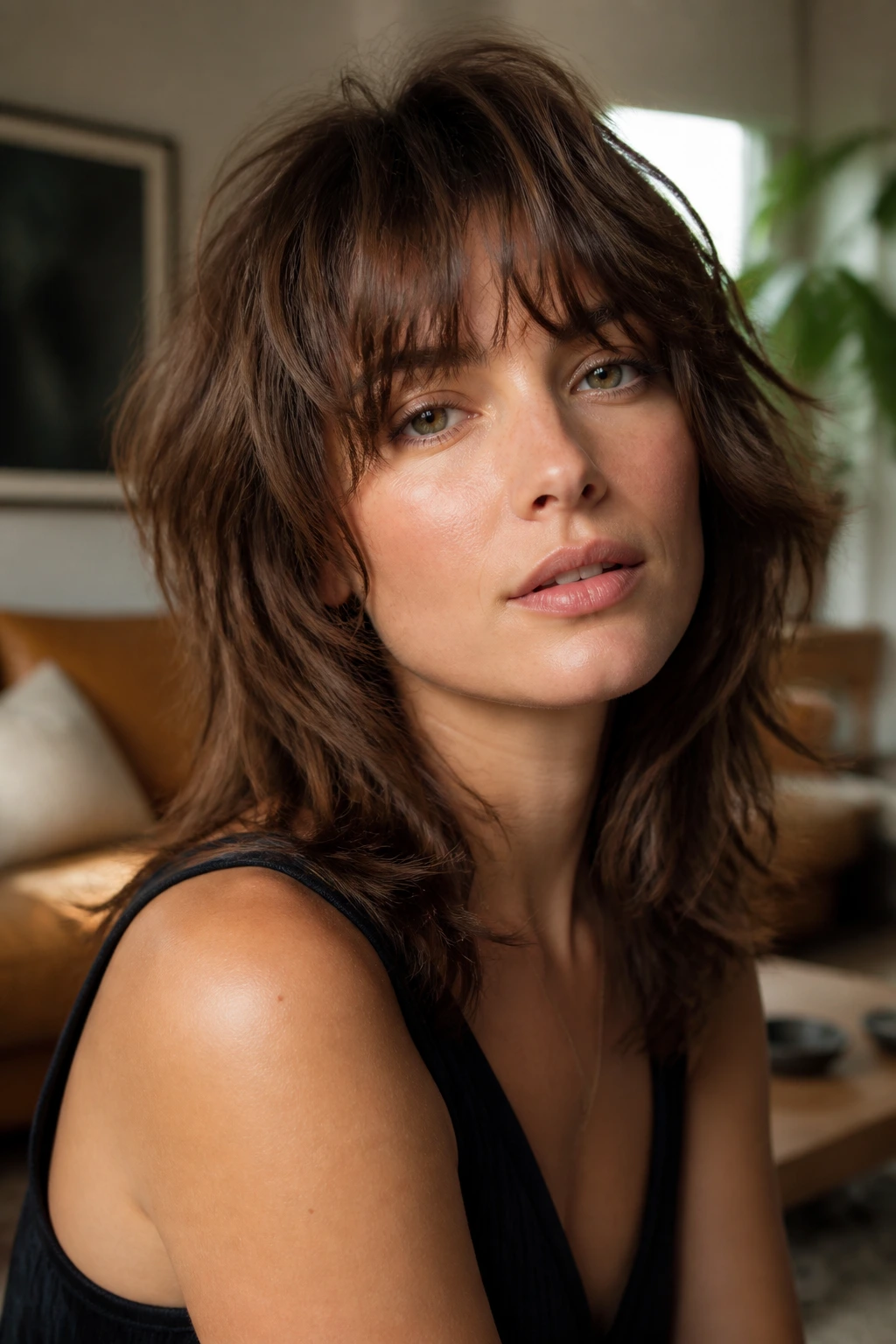
The shag survives because it does something a lot of haircuts promise and then fail to deliver: it keeps moving after the salon visit is over. When it is cut well, it looks less like a style you are trapped in and more like a shape that can change with your day.
That flexibility is the whole appeal. A shag can feel soft, sharp, curly, smooth, messy, or polished depending on how the layers are placed and how much work you give it in the morning. Pick the version that matches your texture and your patience, and the haircut starts doing its job instead of asking you to do all the work.
