



Long curls have a habit of looking gorgeous right up until a desk chair, a lanyard, and a humid hallway get involved. That’s the whole problem, really. Curly hairstyles for long hair for work need to survive movement, not just a mirror. They have to stay neat around the face, keep the neckline from turning into a frizz halo, and still let the hair look like curly hair — not like it’s been negotiated into submission.
The styles people reach for at home often fall apart at the office. A loose pony can sag by lunch. A bun tied too high can feel like a balancing act. A wash-and-go can look polished for twenty minutes, then start expanding every time you lean over a laptop. Long curls need anchors, clean parts, and a little bit of strategy. Nothing dramatic. Just enough planning that you are not redoing your hair in the bathroom with one bobby pin and a grim expression.
What works best is usually a style that respects the weight of long hair instead of fighting it. A few well-placed pins beat ten random ones. A low base beats a high one when you need the style to last. And a good work hairstyle for curls should look intentional from the front, because that is the angle people see most — on video calls, across a conference table, in that awkward walk from reception to the elevator.
Why These Styles Earn a Spot in a Work Rotation
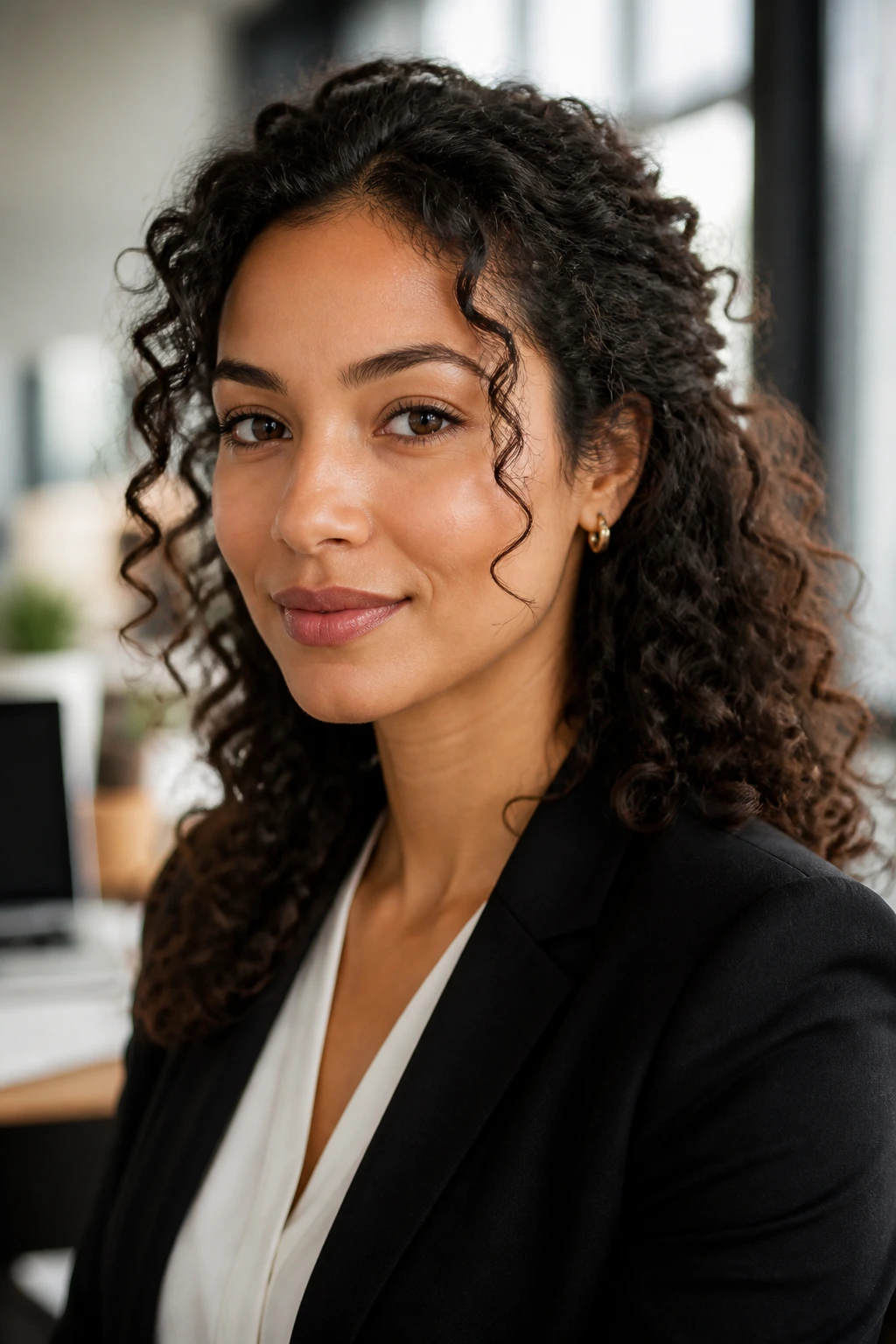
-
They keep the crown under control: The top of curly hair is where frizz shows first, so these styles focus on smoothing the front without crushing the curl pattern everywhere else.
-
They work with long length instead of against it: Heavy curls need a lower anchor point, stronger pins, or a braid that shares the weight, otherwise the style collapses halfway through the day.
-
They still look like curls: There’s no need to flatten your texture into something it isn’t. The best office styles keep shape, volume, and movement where they belong.
-
They fit different dress codes: Some days need a barrette and a clean side part. Other days call for a braided bun and a sweater that never meets a collar. You get options.
-
They save time before work: Most of these can be done in 5 to 10 minutes once your hands know the pattern. A few are even faster when your hair has already dried into a decent shape.
-
They reduce the urge to keep touching your hair: That matters more than people admit. The less you fuss with curls all day, the better they behave by 3 p.m.
How to Pick the Right One for Your Meeting, Commute, and Curl Pattern
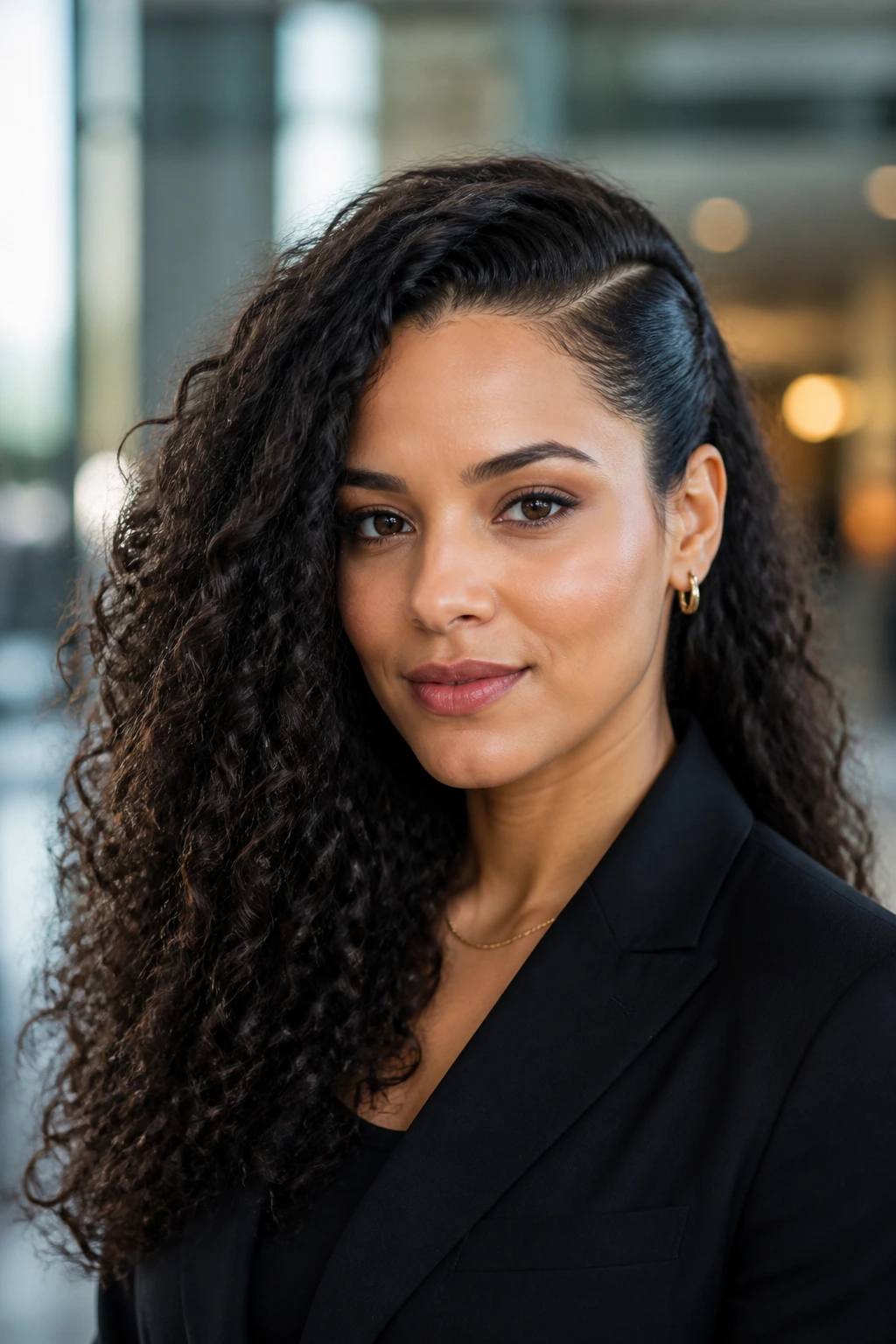
A work hairstyle for long curls has to answer three questions before it deserves a spot in your routine: how much movement will your day have, how polished does the style need to look, and how much time do you actually have before leaving the house. If you commute on foot or ride a train, a low style with a strong base usually holds up better than loose length. If you spend the day in meetings, a clean part and a controlled front section matter more than fancy details.
For fast mornings
Choose styles that only need one elastic and a few pins. Low ponies, side tucks, and half-up knots are the quickest choices because they don’t ask for perfect sectioning.
For client-facing days
Go for a side part, a braided element, or a bun that sits low and neat. The front matters most here. People notice the line around the face before they notice the back.
For humid hallways and warm offices
Anchored styles win. Buns, braided ponies, and flat twists hold up better than loose curls because they keep the hair from ballooning at the crown every time the air gets damp.
For second- or third-day curls
A braid or twist is usually kinder than trying to force a fresh shape out of hair that has already stretched and softened. Day-old curls have memory. Work with that, not against it.
1. The Low Curly Ponytail with a Wrapped Base
A low curly ponytail is the office style I reach for when I want my hair out of my way but still visible. The trick is to keep the crown smooth, then let the ponytail keep its shape and texture instead of brushing it into submission. Wrap one small curl, or a thin strand from underneath, around the elastic so the base looks finished rather than improvised.
Why it works at work
It keeps hair off your neck, which matters more than most style lists admit once you’re sitting under office lights for hours. The wrapped base also hides the elastic, and that tiny detail makes the whole thing read cleaner.
Use a soft brush or your hands to smooth the top, then stop. If you keep brushing, the front goes flat and the pony itself gets fuzzy. That’s a trade I would not make.
2. The Deep Side Part with One-Side Tuck
A deep side part does half the styling work before you even touch a pin. It gives long curls a shape that looks deliberate, and the one-side tuck keeps the front from dropping into your face every time you glance at a screen. One side stays loose. The other is held close with two bobby pins or a slim barrette.
Why this one feels polished
The asymmetry does the heavy lifting. You get the softness of curls on one side and the clean line of a tuck on the other, which reads neat without looking stiff.
Use this when your hair is fuller around the temples or when your part has gone a little lopsided from sleep. Sometimes the simplest fix is the best one. This is one of those times.
3. The Half-Up Crown Twist
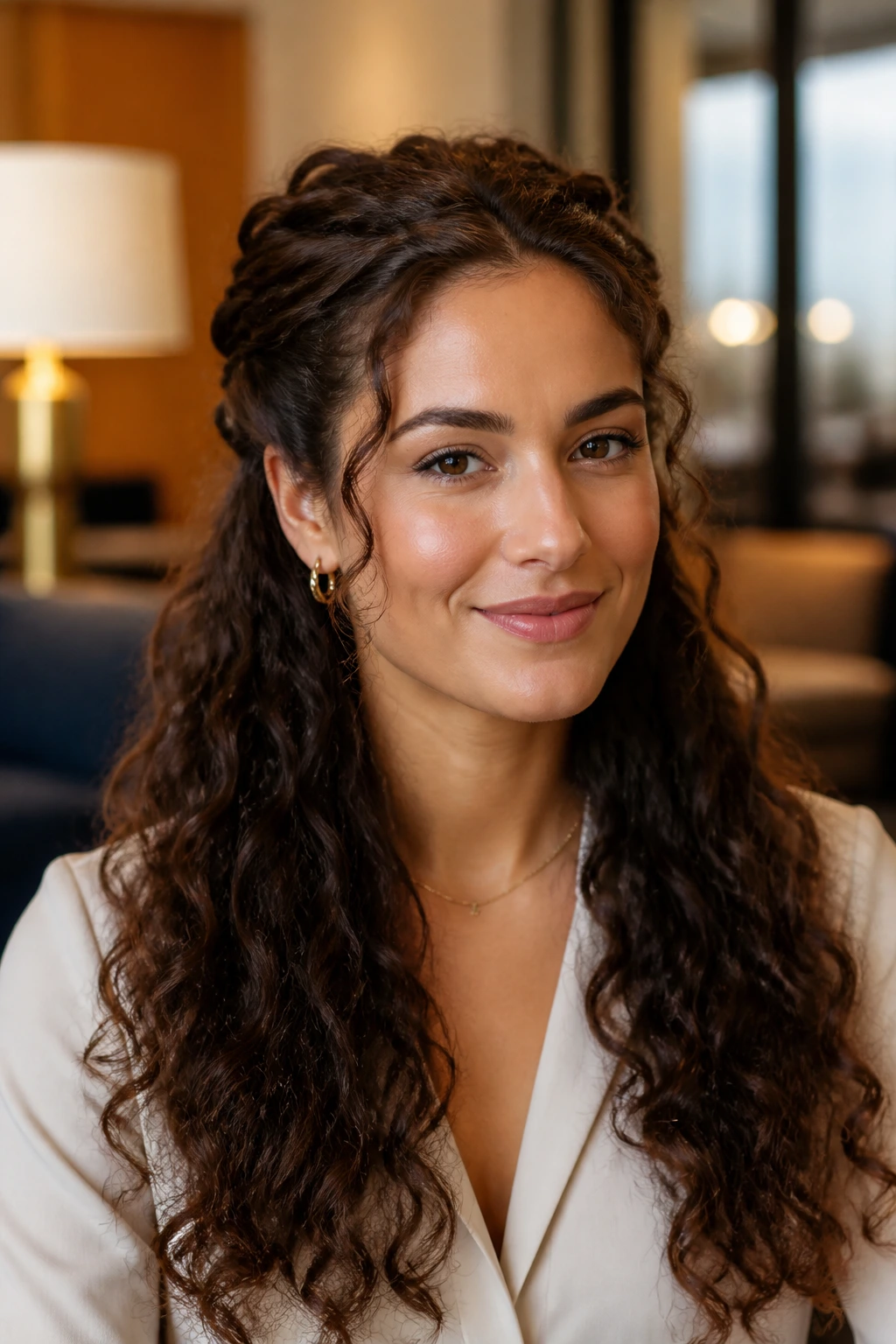
Twisting back the top section is a sneaky good move for long curls. It keeps hair away from your eyes, but it doesn’t pull the length into a full updo, which is nice when you want your texture to stay visible. Take a section from each temple, twist them back, and pin them where the crown starts to curve.
Best for days when you want balance
This style gives a controlled front and a softer back. It works especially well if the ends of your hair are doing something worth showing off, because the lower half stays free.
A small tip: keep the twists loose. Tight twists look sharper for an hour, then start to spring outward in the worst possible way.
4. The Low Curly Bun with Loose Face Pieces
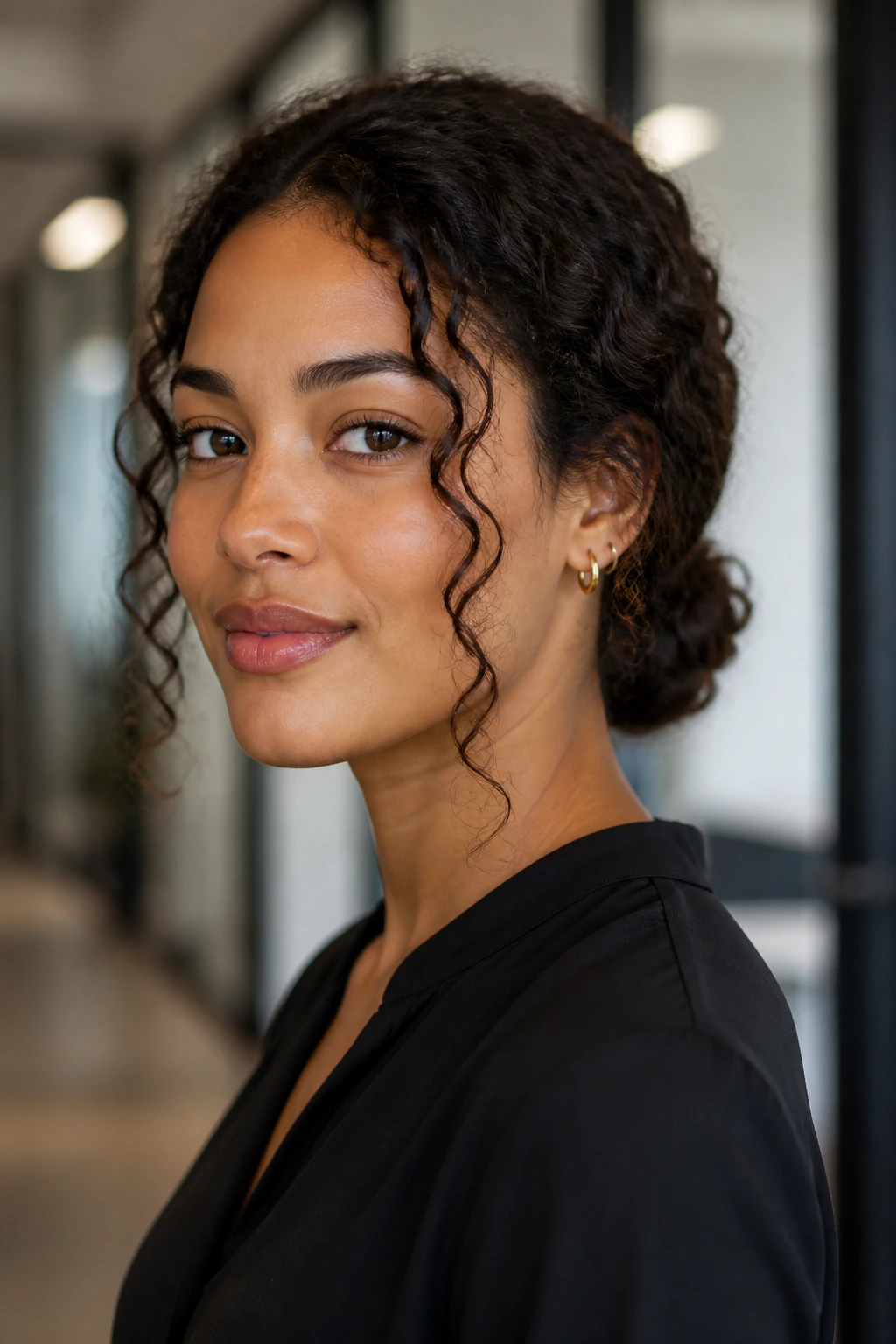
There is a reason low buns stay in rotation. They clear the neckline, they behave under jackets and collars, and they look more finished than people give them credit for. Leave two thin curl pieces out at the front if you want a little softness around the face. That keeps the bun from looking too severe.
How to keep it from collapsing
Gather the hair at the nape, twist it once or twice, and pin it in a wide circle rather than forcing it into one tight knot. Curly hair usually wants more room than straight hair in this style.
If your hair is heavy, use U-pins or crossed bobby pins instead of one elastic doing all the work. Elastic alone is lazy. Pins share the load.
5. The Braided Halo
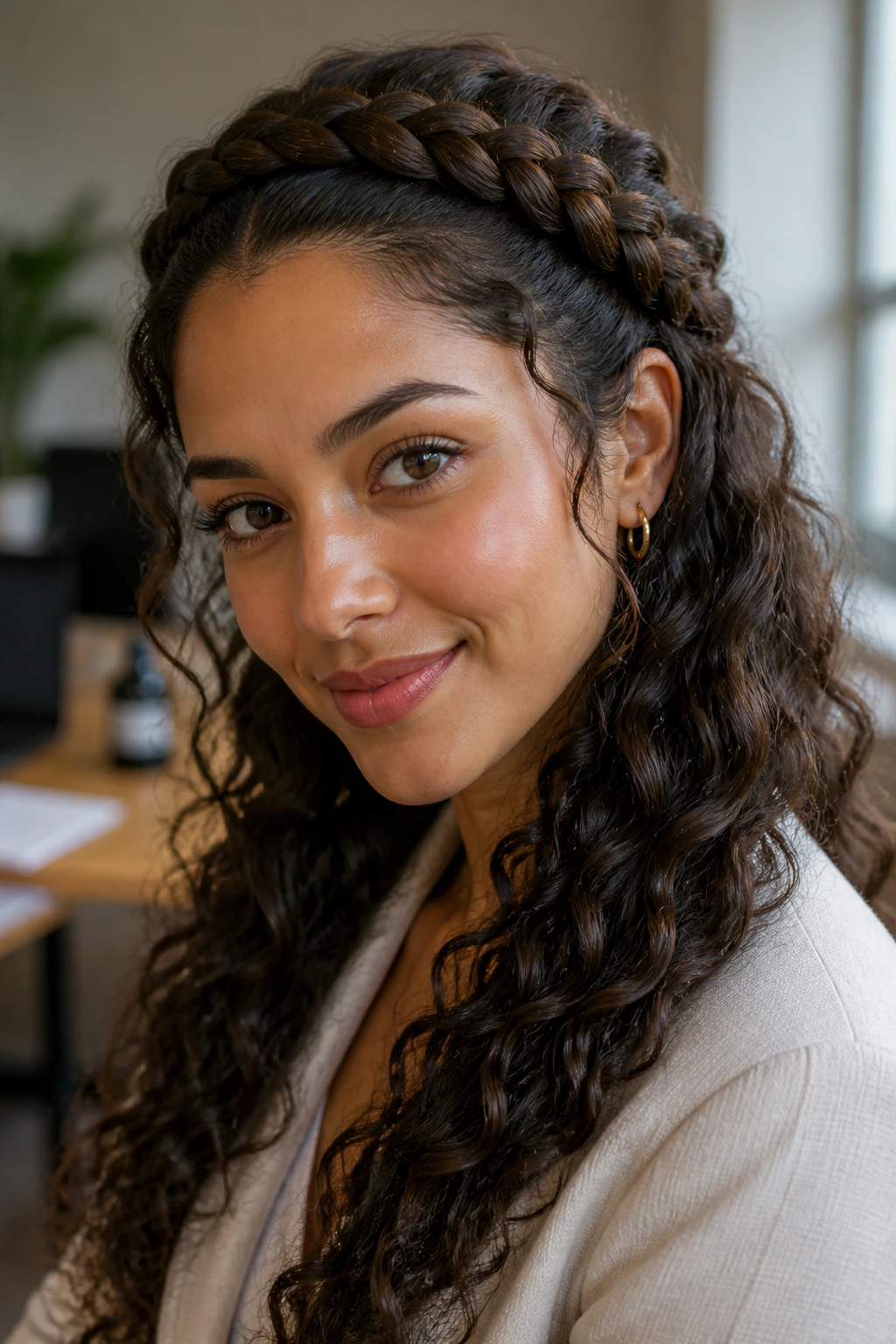
A halo braid sounds dressy, but on long curls it can be a very practical office style. Braid along the hairline from one temple to the other, then pin the ends behind the opposite ear. The rest of the hair can stay down, half-up, or tucked into a low bun if you want a more contained finish.
What makes it useful
It deals with the area that usually frizzes first: the front edge of the hair. Once that section is secured, the rest of the curls are free to do their own thing.
This style is especially good when you know you will be moving a lot or when your hairline tends to puff up by midday. It’s the kind of style that quietly solves a problem while looking much fancier than it is.
6. The Claw-Clip French Twist
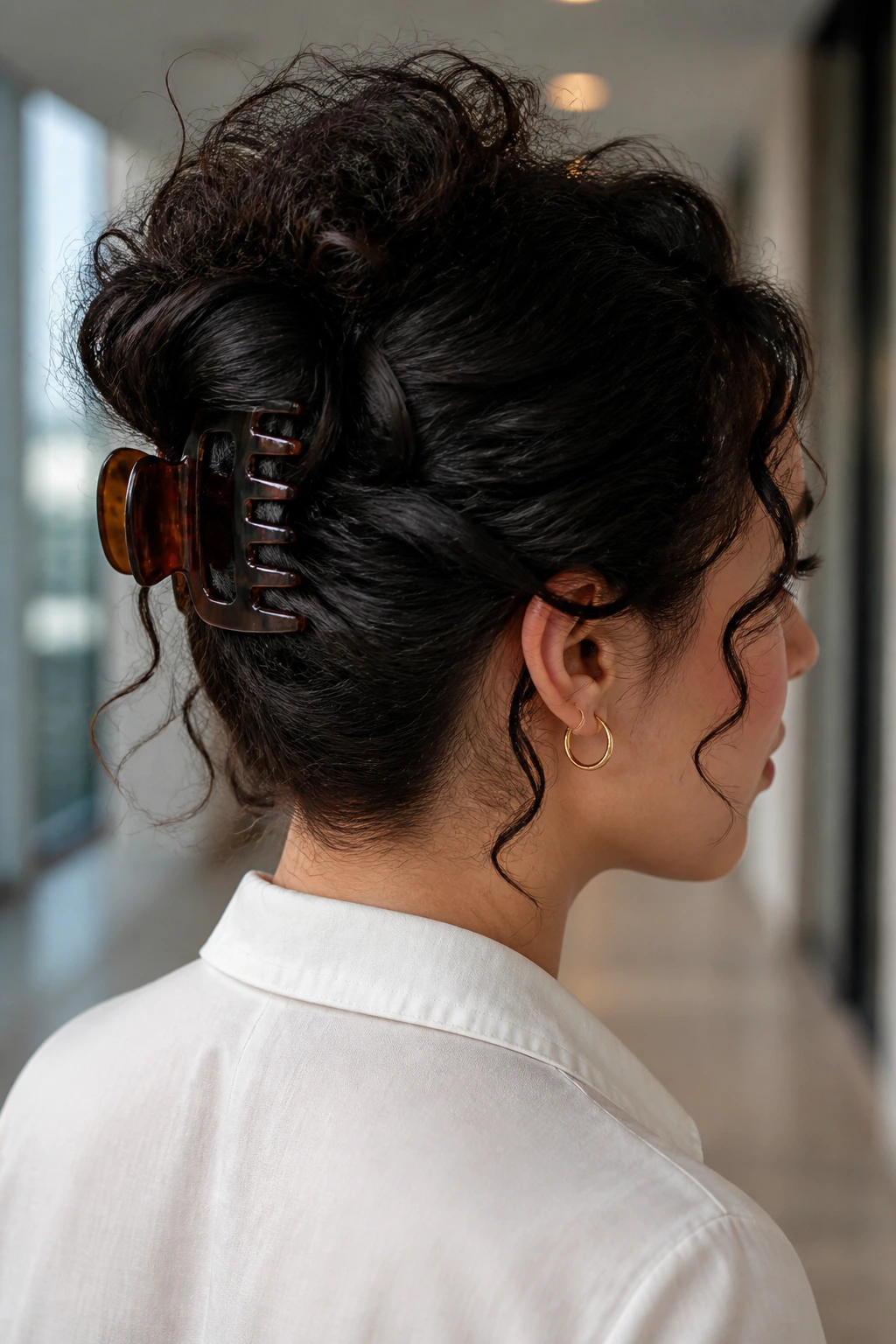
A big claw clip can save a rough morning. Gather the hair as if you are making a low pony, twist it upward, fold the length back on itself, and clip the roll in place. The ends can spill a little. That’s fine. In fact, that loose finish is what keeps it from looking overly formal.
Why the clip matters
Cheap clips bend under the weight of long curls. You want one with strong teeth and a hinge that actually grips. Otherwise, the style will slide down your head the second you lean back in your chair.
I prefer this over a tight bun on long hair because it feels lighter at the scalp. That matters after eight hours. Or six. Some days every minute counts.
7. The High Puff with a Clean Edge Line
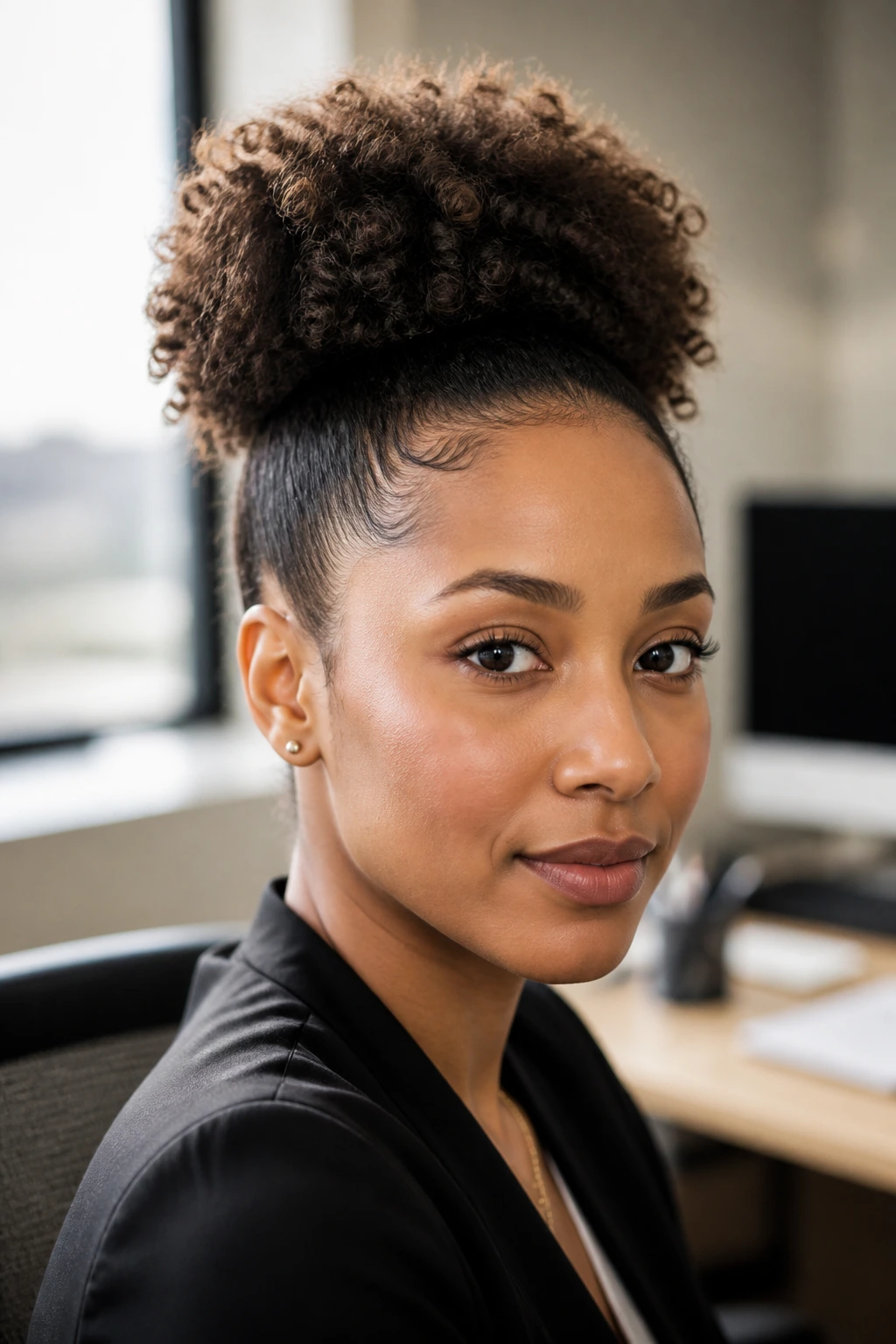
A high puff can absolutely work for office hours if the front is neat and the puff itself is shaped well. Smooth the crown, gather the curls high enough to lift them off your face, and let the body of the puff stay full. If your hairline likes to float, a soft brush and a little gel on the edges will keep the front tidy.
The office version of a puff
This is not a weekend puff. The goal is shape, not chaos. You want the puff to sit in one place, not wobble every time you turn your head.
Use this when you want volume and a clear neckline. It feels confident, and it clears scarves, sweater collars, and laptop cables. Those things tangle in the worst places.
8. The Rope-Braid Low Ponytail
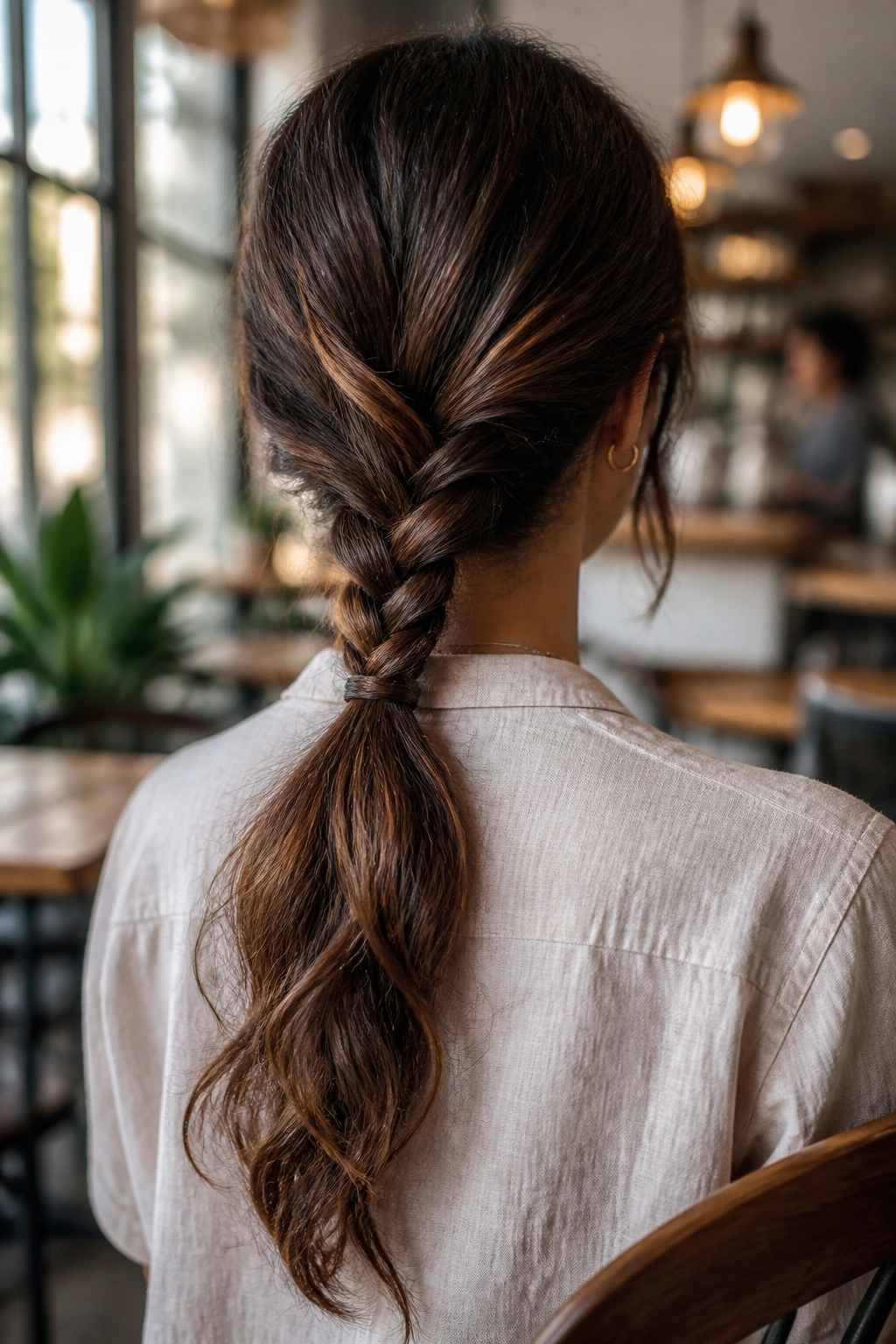
A rope braid is a smart choice for long curls because it holds the length together without turning it into a hard, tight plait. Split the ponytail into two sections, twist each section in the same direction, then wrap them around each other in the opposite direction. Tie the end and you get a smooth, twisted line that stays put.
Why it holds up
It reduces tangling and keeps the ends from getting rough by the time you’re leaving for dinner. It also looks more intentional than a plain ponytail, which is useful when you want a tiny bit more polish without extra work.
If your hair slips easily, mist the lengths lightly before twisting. Just enough to give the strands some grip. Not enough to make them damp through the day.
9. The Side-Swept Low Chignon
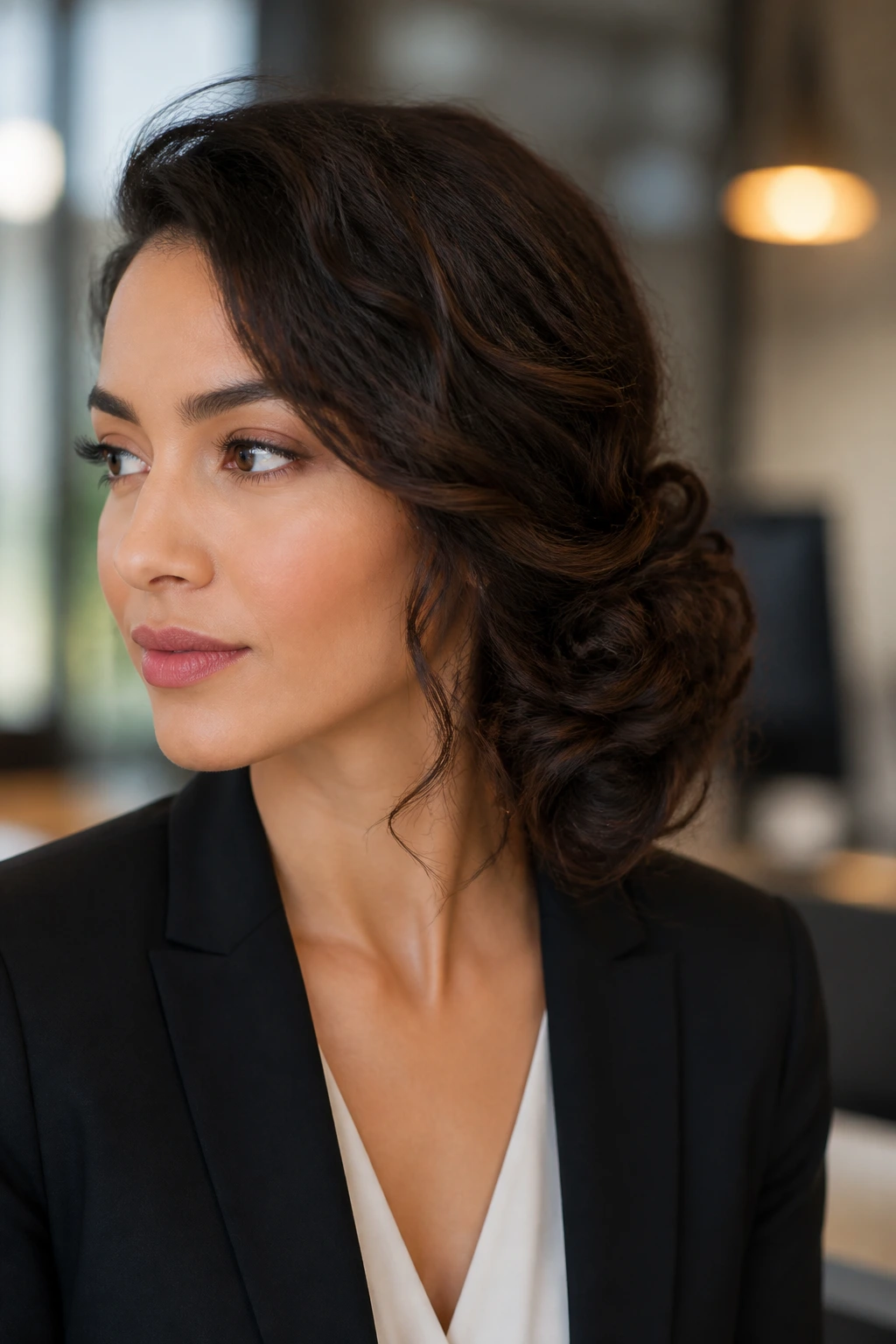
A side-swept chignon has a bit more formality than a center low bun, and that can be useful if your work wardrobe leans tailored. Sweep the hair to one side at the nape, coil it into a low knot, and pin it so the bun sits slightly off-center. The result feels softer than a straight-back bun.
When this style shines
It works well with a blazer, a button-up, or anything that already has clean lines. The off-center placement gives long curly hair a shape that looks thought through, not accidental.
Leave the bun a little loose. A chignon that’s packed too tightly tends to look small and sharp, which can make curly hair lose its best feature: some movement.
10. The Half-Up Mini Knot
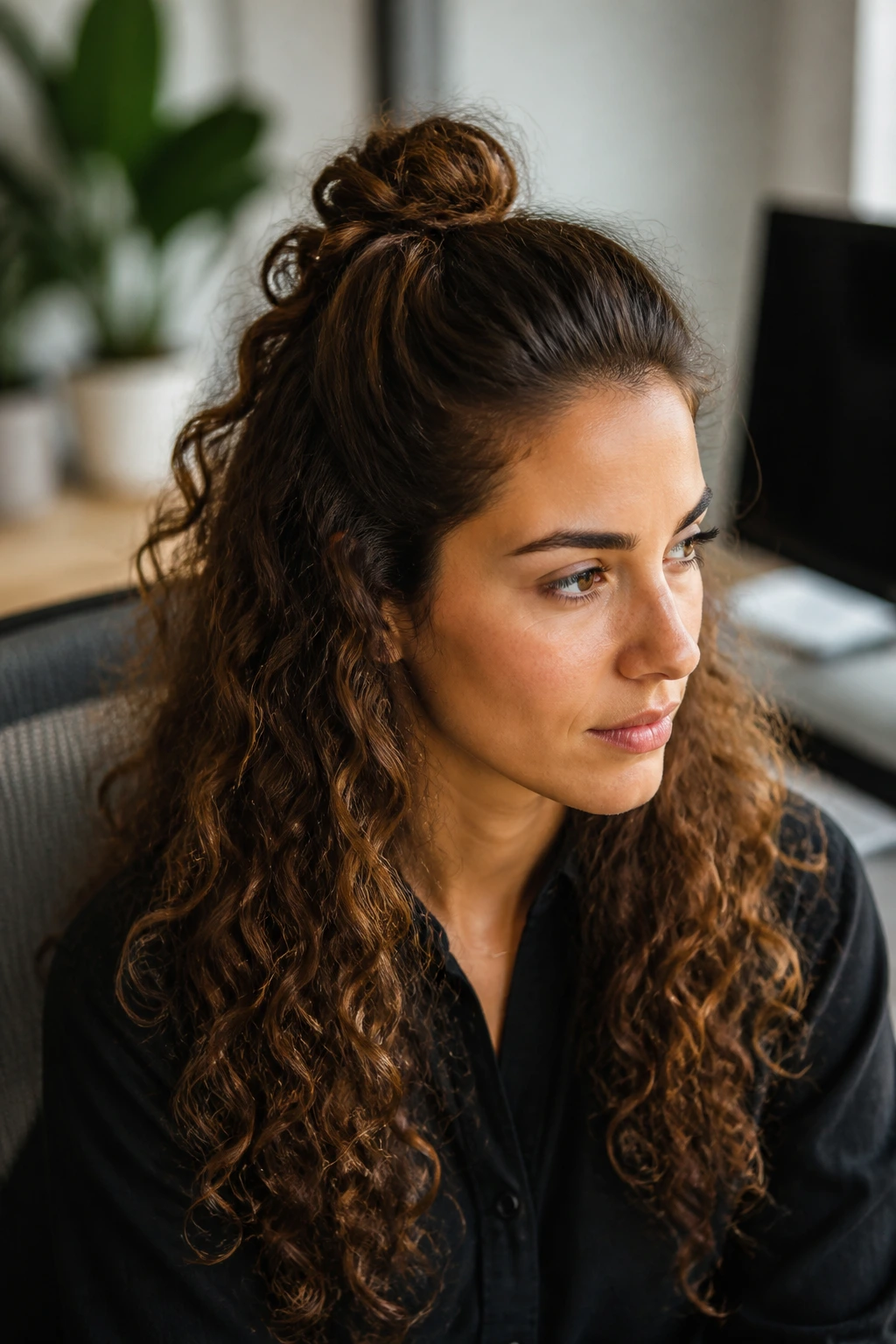
This one is fast, easy, and surprisingly useful on mornings when the clock is doing rude things. Take the top section, tie it into a tiny knot or mini bun, and let the rest of the hair fall naturally. It keeps the front controlled and leaves the lower length free.
A neat compromise
You still get curls around your shoulders, but the hair is lifted away from your face. That makes it one of the better choices for long video calls or desk-heavy days.
Do not make the knot too tight. A tiny knot that looks like it might snap is not the goal. You want a small, soft lift at the crown, not a knot with a bad attitude.
11. The Crown Braid into Loose Length
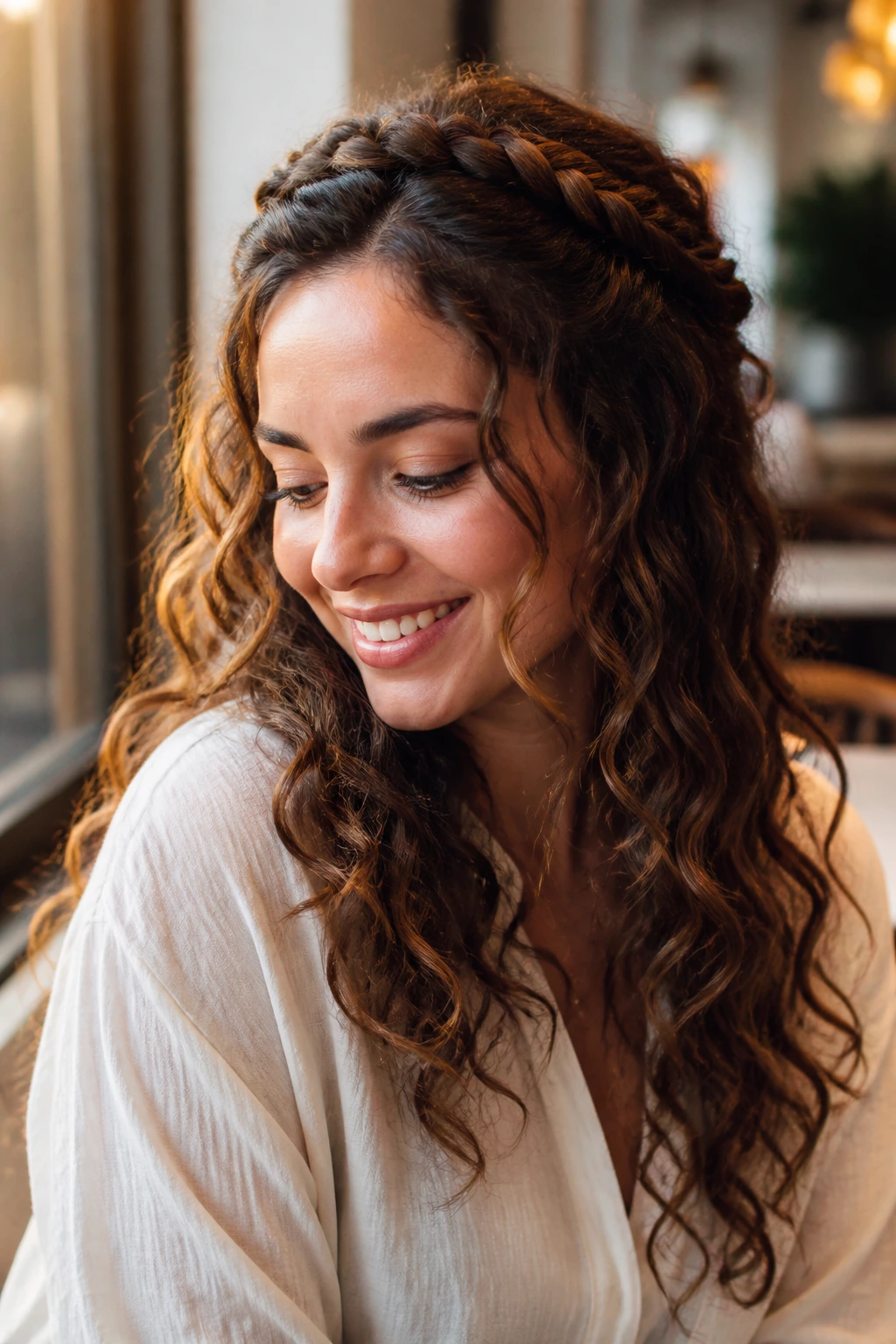
If the front of your hair is the first thing to lose shape, a crown braid can fix that without taking the whole style up into a bun. Braid across the top or from both temples, then let the rest of the curls hang loose. It gives you a controlled frame and still lets the length do its thing.
Why it feels different from a plain half-up
The braid adds structure right where curly hair tends to blur first. A half-up twist can soften, but a braid holds a line. That’s useful on days when you need the style to look intact at 4 p.m., not just at 9.
This is one of my favorites for long hair because it uses the braid as a stabilizer, not as decoration. That’s the kind of detail that keeps a style alive.
12. The Twisted Low Ponytail
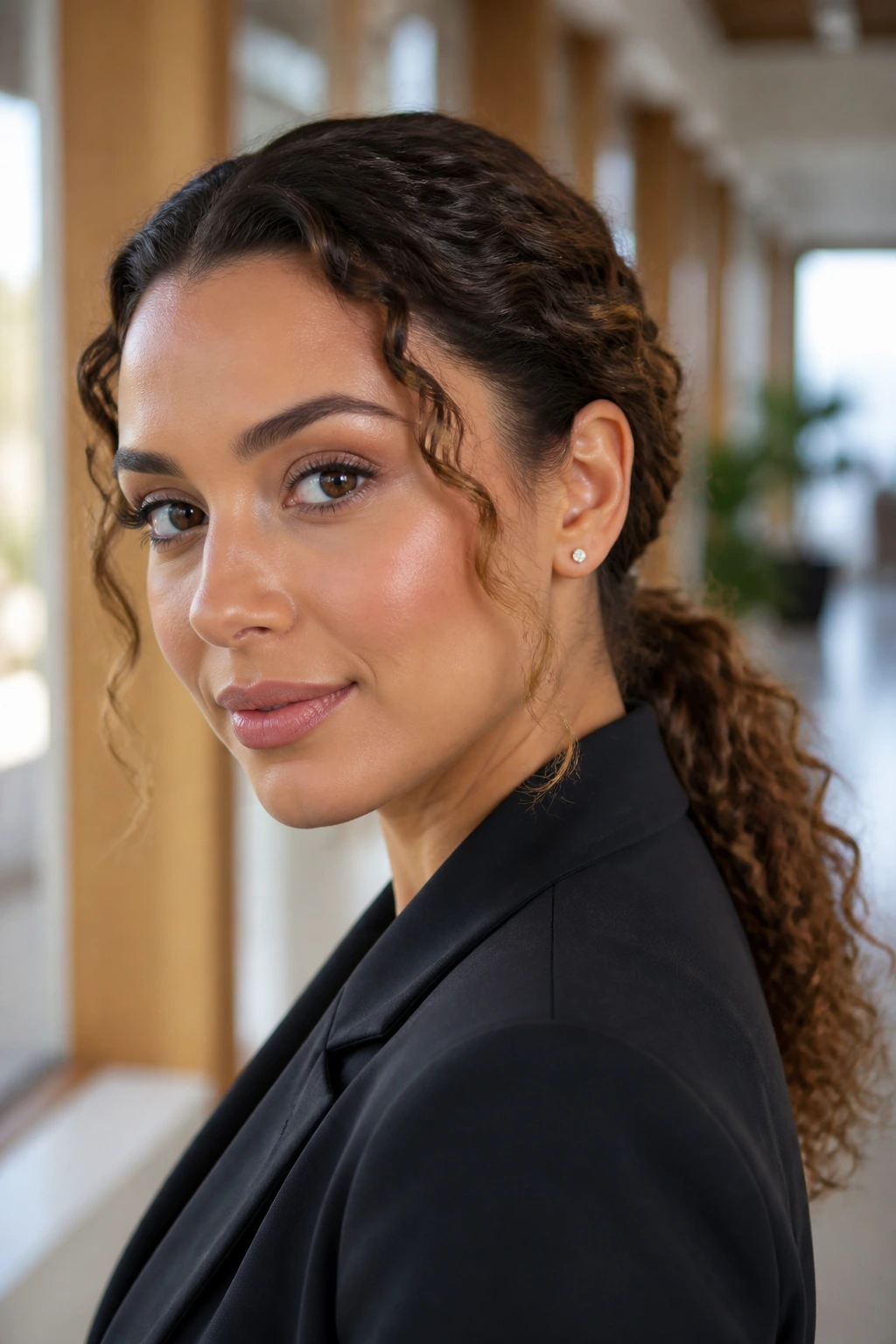
Take two front sections, twist them back toward the nape, and gather everything into a low ponytail. That’s the whole move. It’s simple, but it gives a plain ponytail enough shape to look deliberate. The twists frame the face, and the ponytail stays easy to handle.
What makes it office-friendly
It reads clean from the front and stays manageable from the back. If you have to remove a scarf, carry a bag over one shoulder, or sit under a seatbelt on the commute, the style keeps its place better than loose hair would.
A small barrette at each temple can replace bobby pins if your hair is thick. Use what actually grips. Pretty tools are nice. Tools that stay put are nicer.
13. The Bubble Ponytail on Curly Length
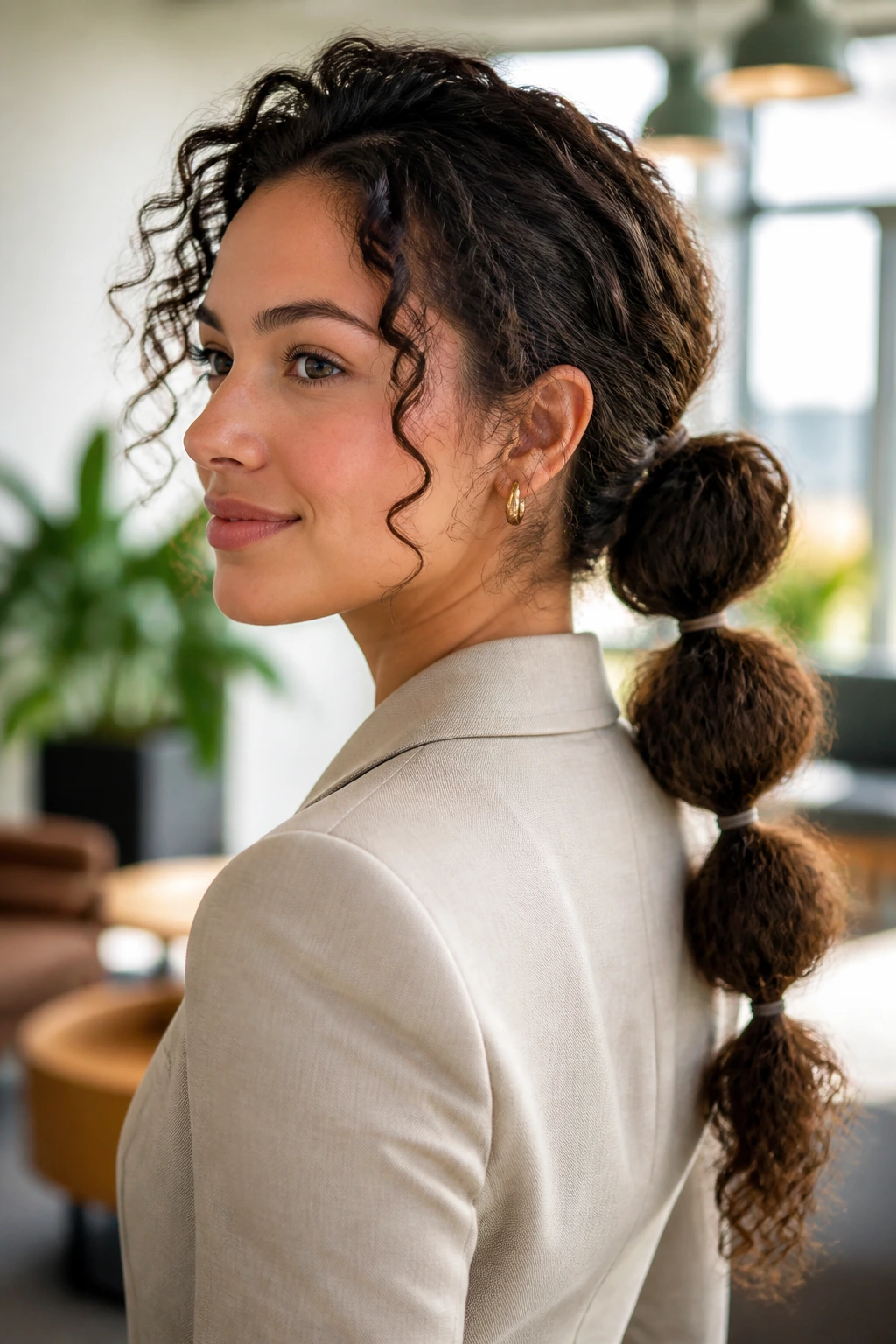
Bubble ponytails look best on long hair because the length gives each section room to puff out. Secure the hair into a low or mid ponytail, then add small elastics every few inches down the tail and gently pull each section outward so you get rounded bubbles.
Why this works with curls
Curly texture already gives you body, so the style has a built-in advantage. The bubbles create shape without requiring a perfectly smooth finish, which is good news if your hair tends to frizz when handled too much.
Use this when you want something more playful but still tidy enough for work. It’s also one of the better choices if your ends look a little tired and you’d rather distribute the focus along the length.
14. The Tucked-and-Pinned Roll
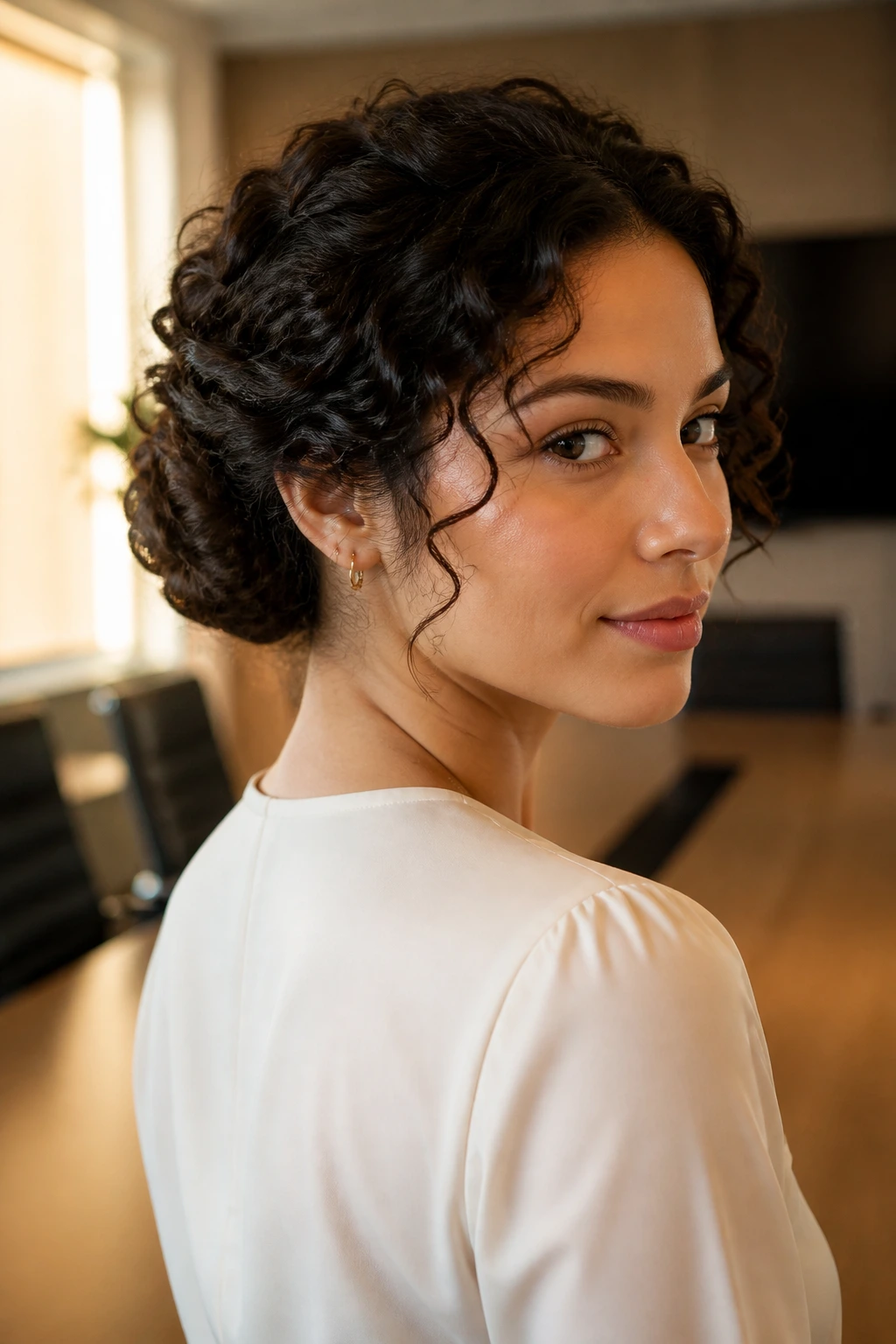
This is one of the more elegant options in the whole collection, and it’s underrated. Roll the ends inward at the nape, tuck them against the head, and pin the roll with U-pins or long bobby pins. The style sits close to the neck and has a smooth, finished outline.
A good fit for dressier work days
It’s especially good when you want a lower profile than a bun. The silhouette feels neat, and the tucked ends keep the hair from brushing the back of your blazer all day.
It takes a little practice the first time. After that, it becomes one of those styles you can do while half awake and still look like you meant it.
15. The Double Flat Twists Back
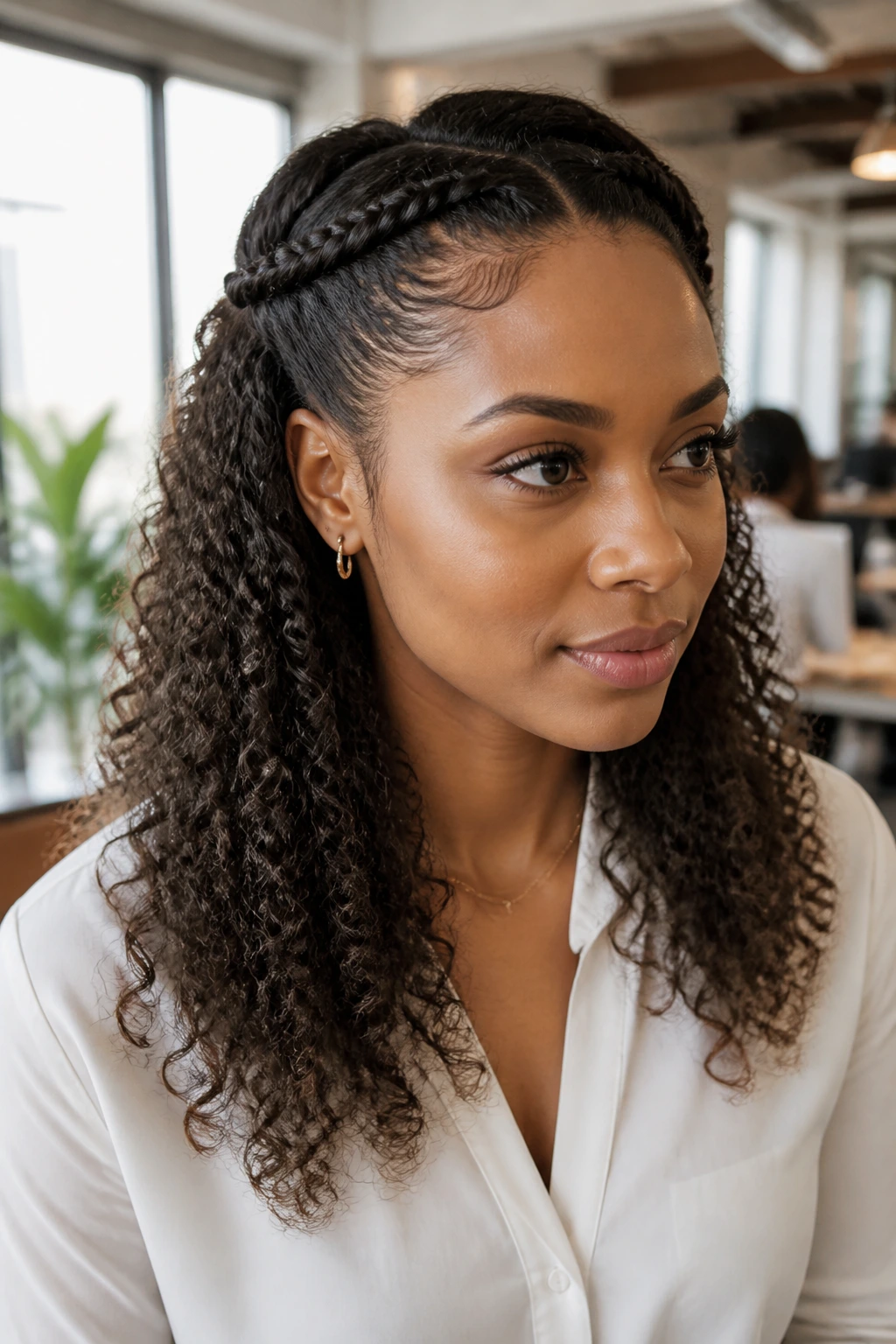
Flat twists are excellent if you want a style that stays close to the scalp and keeps the front under control. Divide the front into two sections, twist each one along the head, and pin them back. The rest of the curls can be left down or tucked into a low base if you want more restraint.
Best for keeping hands off your hair
Once the twists are in place, you stop fiddling with the front. That alone makes the style worth using, because touching the hair is usually what wrecks the shape first.
This is a smart choice for thick or dense curls. It spreads the volume out evenly, which helps long hair sit flatter at the crown without looking pressed down.
16. The Curly Top Knot with Volume
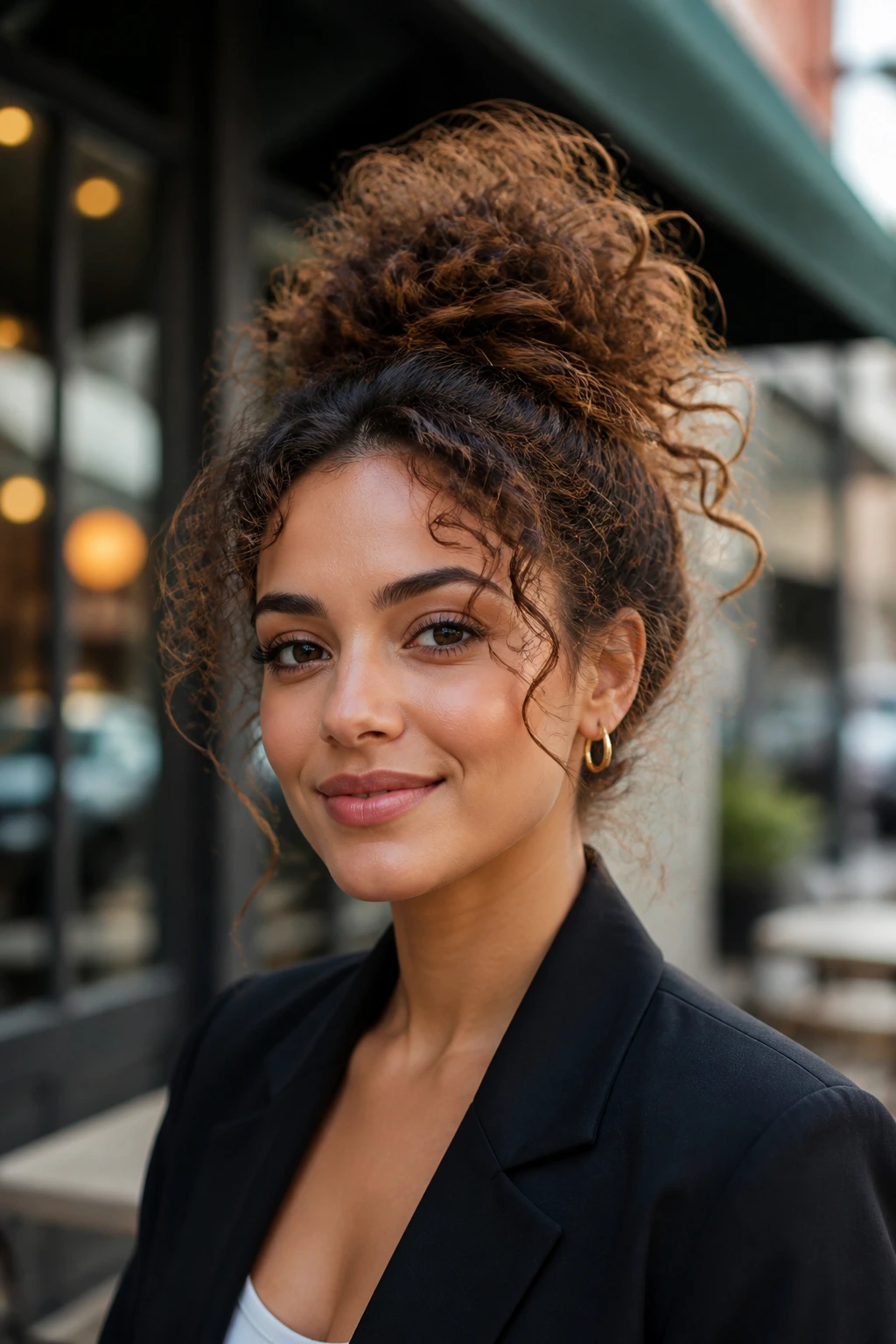
A top knot does not have to be sleek to be office-ready. In fact, with curly hair, a little volume makes it look better. Gather the hair high, twist it loosely, and wrap it into a knot that sits on top of the head. Let the texture show. That’s the point.
How to keep it from feeling heavy
Use a satin scrunchie or a strong coil tie instead of a tight elastic. Long curly hair can tug hard when it’s pulled up high, and the wrong tie will make the whole style feel uncomfortable by noon.
I like this style on days when I want my neck free and my hair out of the way. It’s not subtle. It doesn’t need to be. Sometimes the cleanest answer is the one that looks the most obvious.
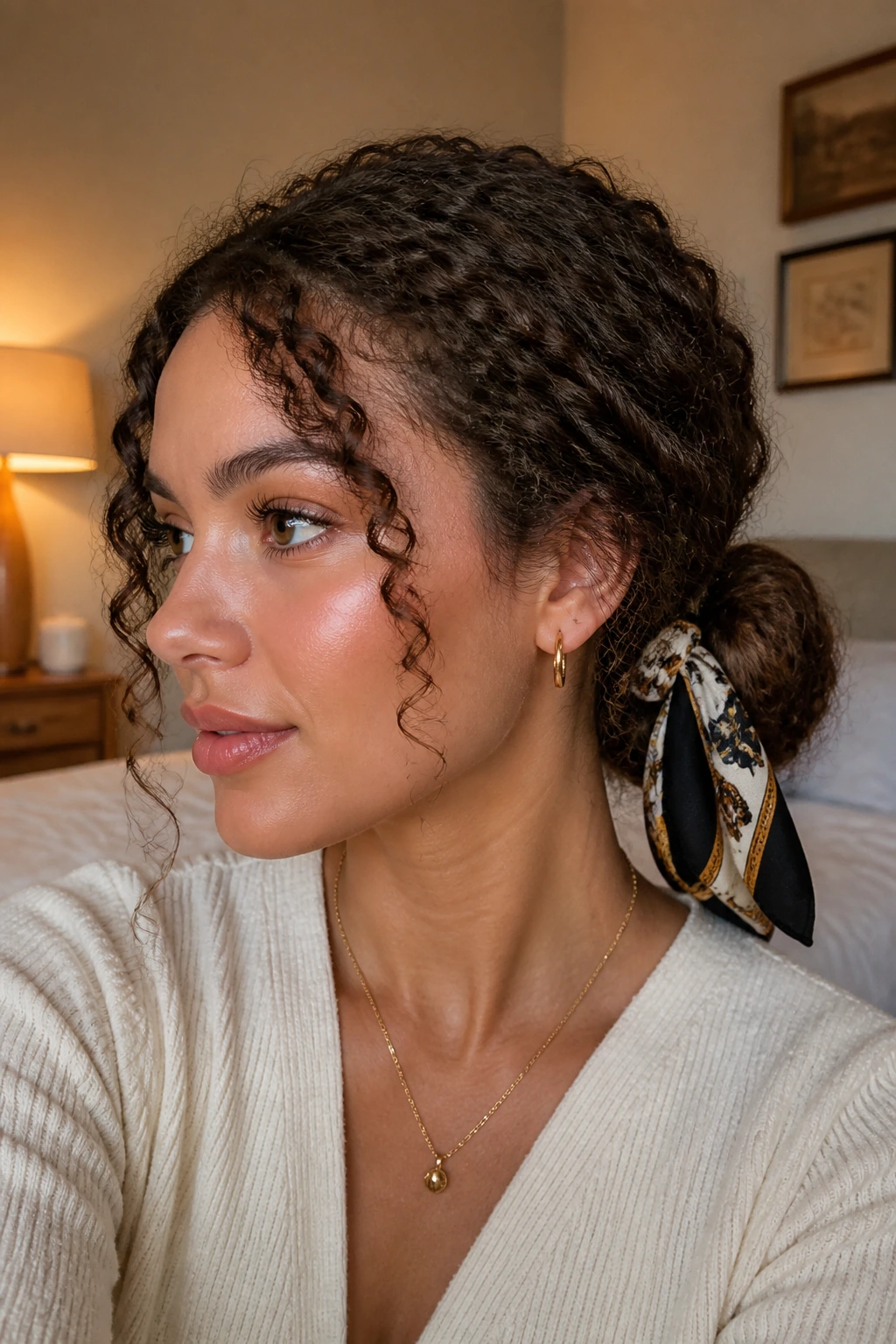
17. The Silk Scarf-Wrapped Ponytail
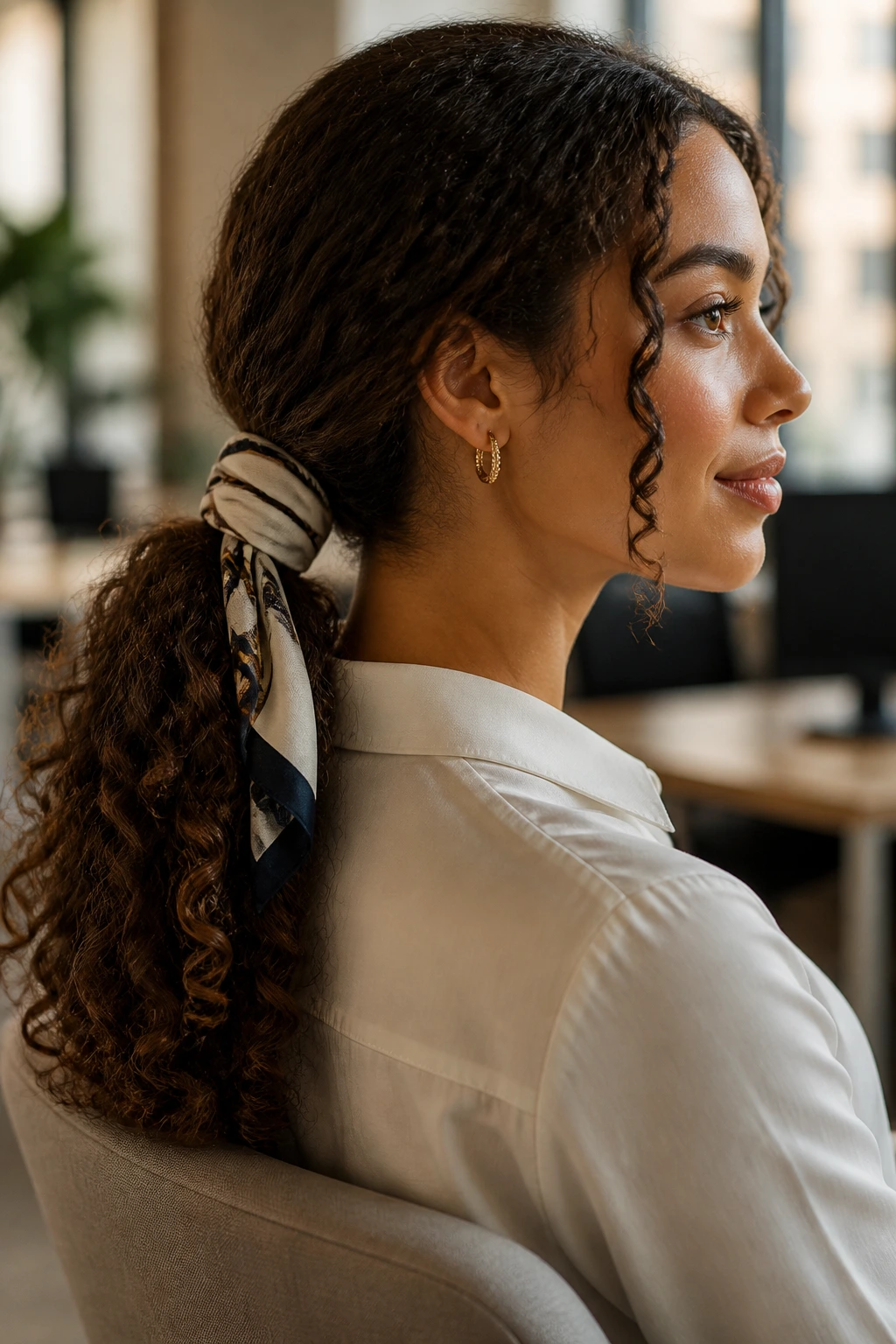
A silk scarf around the base of a ponytail solves two problems at once: it hides the elastic and adds a polished finish. Start with a low ponytail, then wrap the scarf around the base and tie it off in a neat knot or bow. Let the curls hang beneath it.
Why the scarf earns its keep
The scarf makes the style feel finished even if the ponytail itself is very simple. It also helps cover frizz at the base, which is often where long curls start to look tired by midafternoon.
Choose a scarf that is narrow enough not to swallow the whole ponytail. Wide scarves can get bulky fast. Thin ones sit better and don’t fight the shape of the curls.
18. The Braided Low Bun
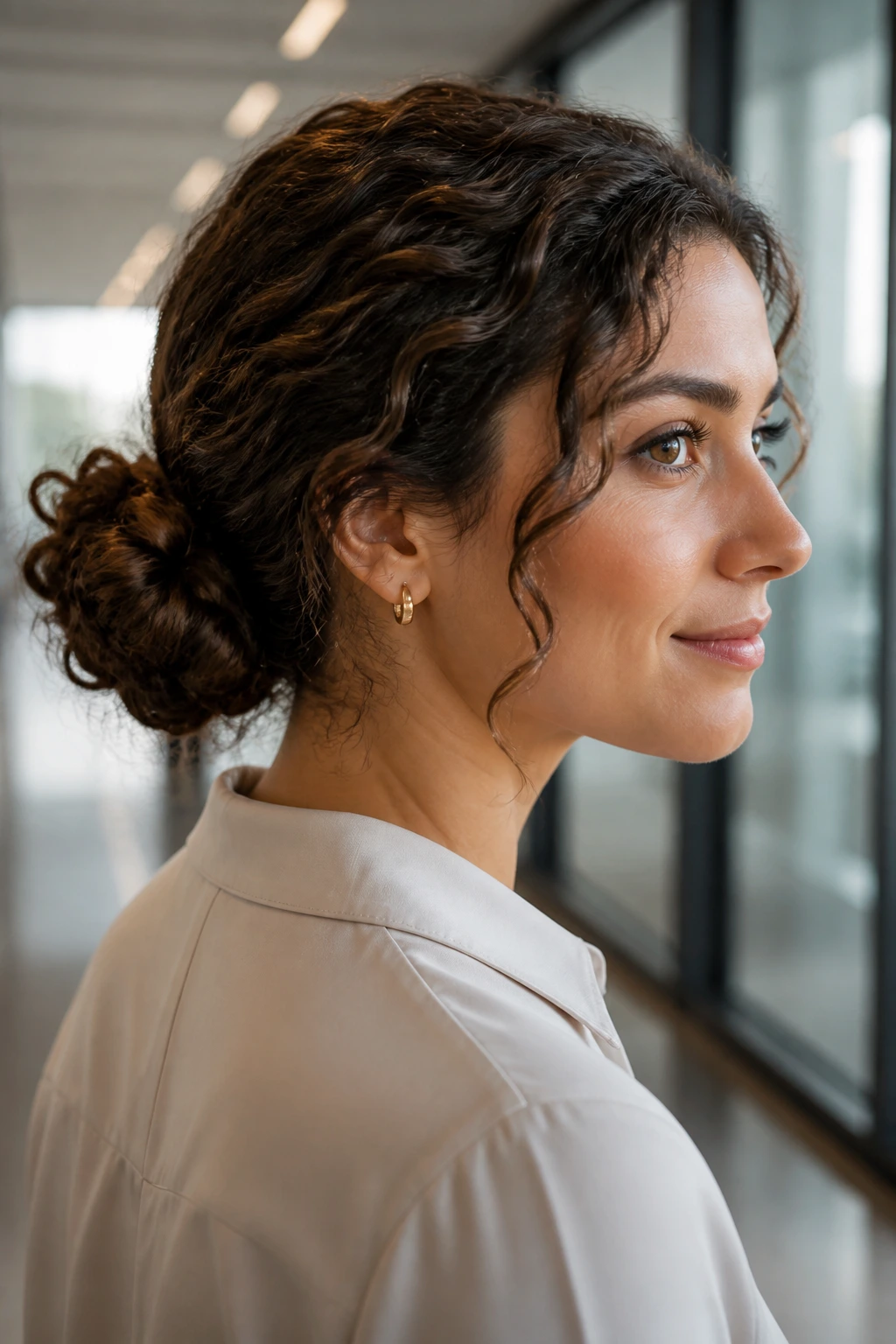
Braid the ponytail first, then coil the braid into a bun at the nape. That one extra step gives the bun more structure and makes it hold longer. It also keeps the ends tucked safely away, which is a blessing on windy walks or crowded commutes.
Why this version lasts
The braid behaves like an internal brace. It keeps the bun from loosening the way a plain twist can on thick curls.
This is one of the most reliable choices if you need a style that survives a long day without looking flat by the end. It is not the quickest option, but it earns the extra minute.
19. The Half-Up Fishtail Detail
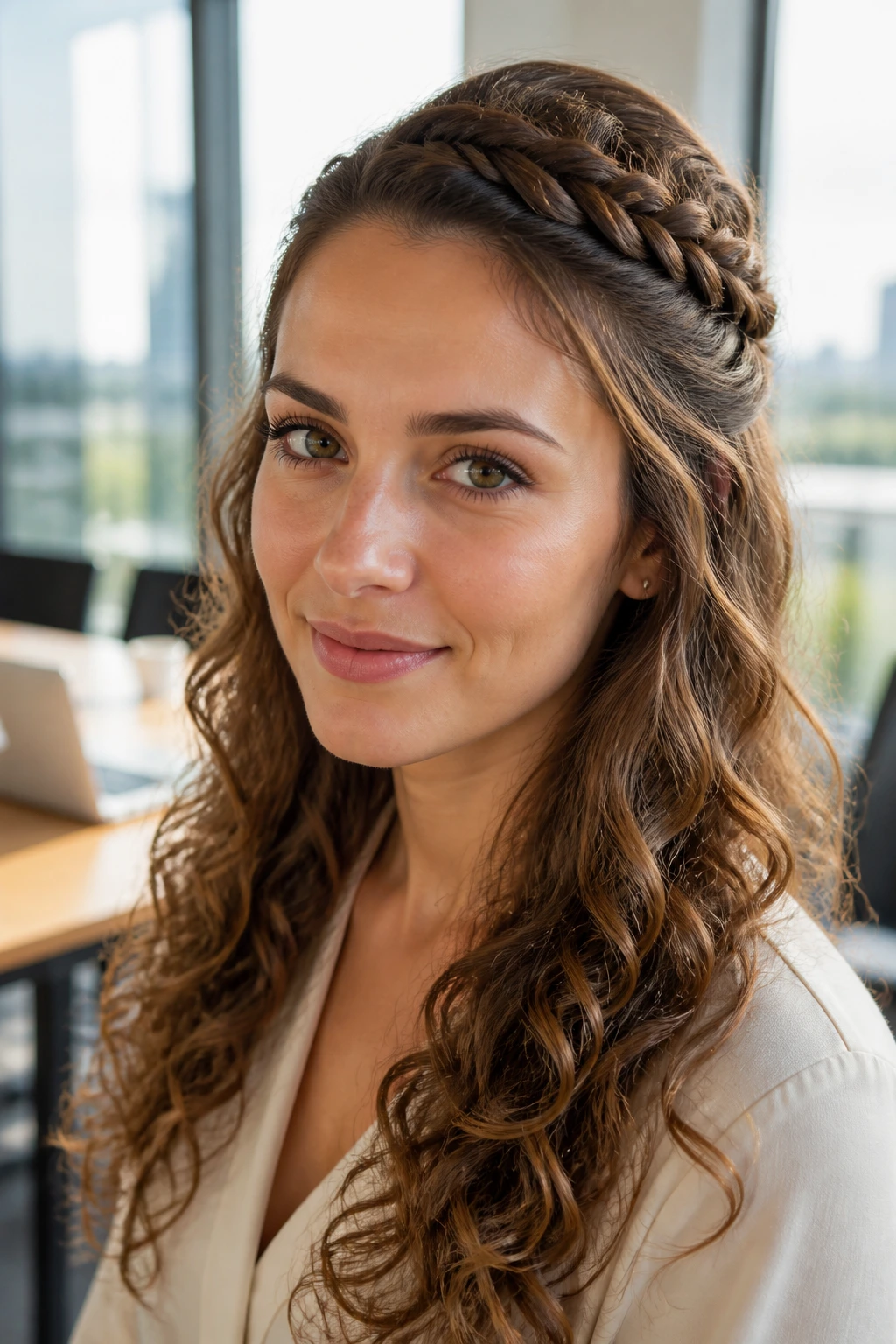
A small fishtail braid across the crown or on the top half of the hair gives the whole style a bit of texture without asking for a full braided look. Let the bottom half stay loose and curly. The braid only needs to travel far enough to create interest at the front.
What makes it stand out
Fishtails look more intricate than regular braids, even when they’re done in a small section. That makes the style useful for presentations, lunches, or days when you want something a little sharper than a plain half-up.
If your hands are not fond of fishtails, keep the braid narrow. Tiny sections are easier to manage and less likely to unravel under long curls.
20. The Twisted Halo into Ponytail
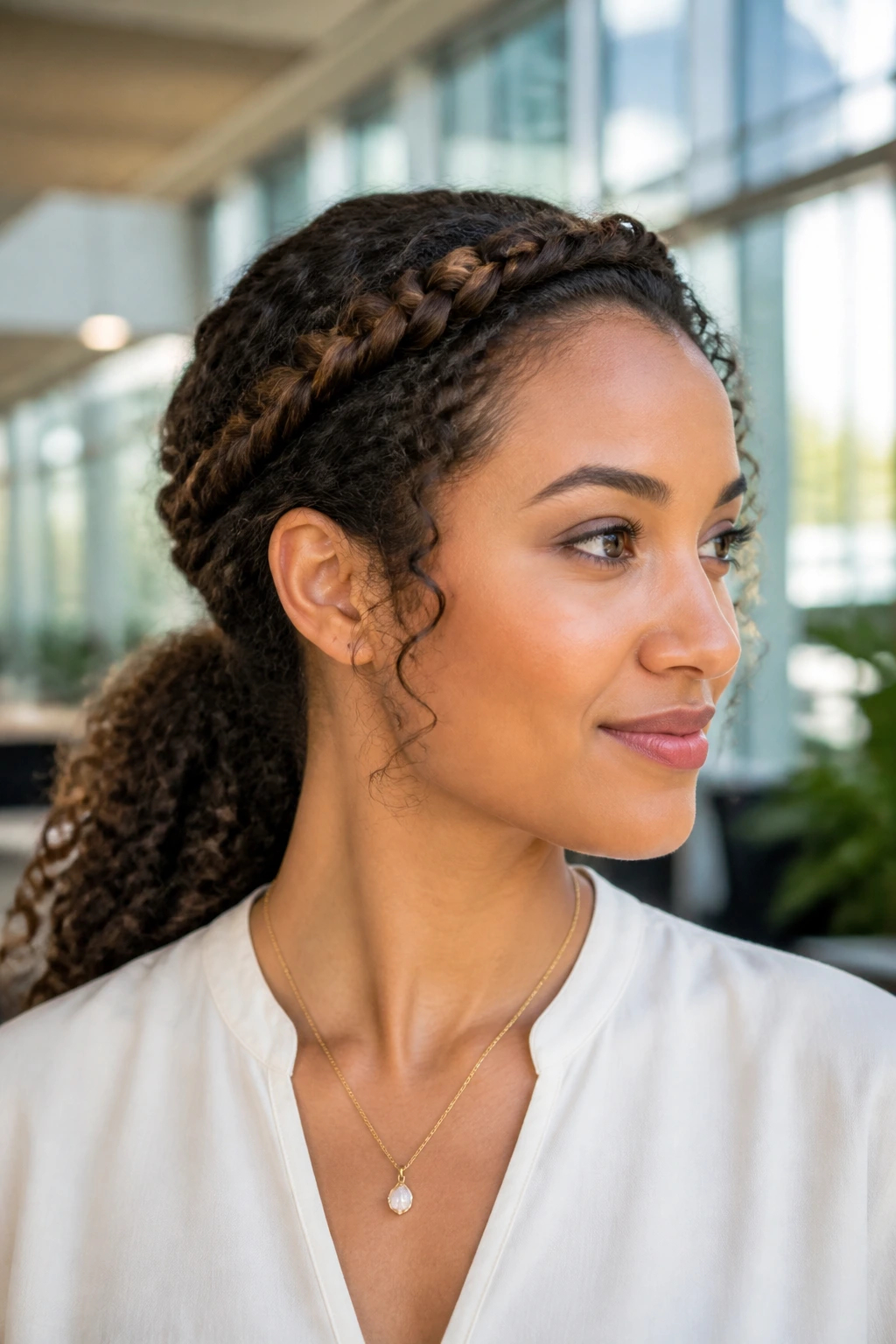
This is a stronger version of the half-up twist. Bring sections from both sides around the head like a halo, then gather the remaining hair into a ponytail at the nape. The front stays controlled, and the ponytail keeps the style from feeling too formal.
Who this suits best
It works well for people who want the face framed but do not want hair fully pinned back. You get shape at the top and movement at the bottom, which is a nice compromise.
A halo twist can look messy if the sections are uneven, so take your time with the parting. Not forever. Just long enough to make the line clean. That’s what people notice.
21. The Clip-Back Sides with Defined Curls

Sometimes the best office hairstyle is the one that takes the least effort and still looks intentional. Part the hair as usual, clip both sides back near the temples, and leave the rest of the curls down and defined. That’s it. Clean, fast, and far better than constantly tucking hair behind your ears.
Why it’s worth keeping in reserve
It works when the front is behaving badly but the rest of your curls still look good. No need to restart the whole style. Just isolate the problem area.
Use matching clips if you want the look to feel polished. Or use plain black ones and let the curls do the talking. Either way, the trick is to clip the hair far enough back that it stays put.
22. The Coiled Bun with Curly Fringe
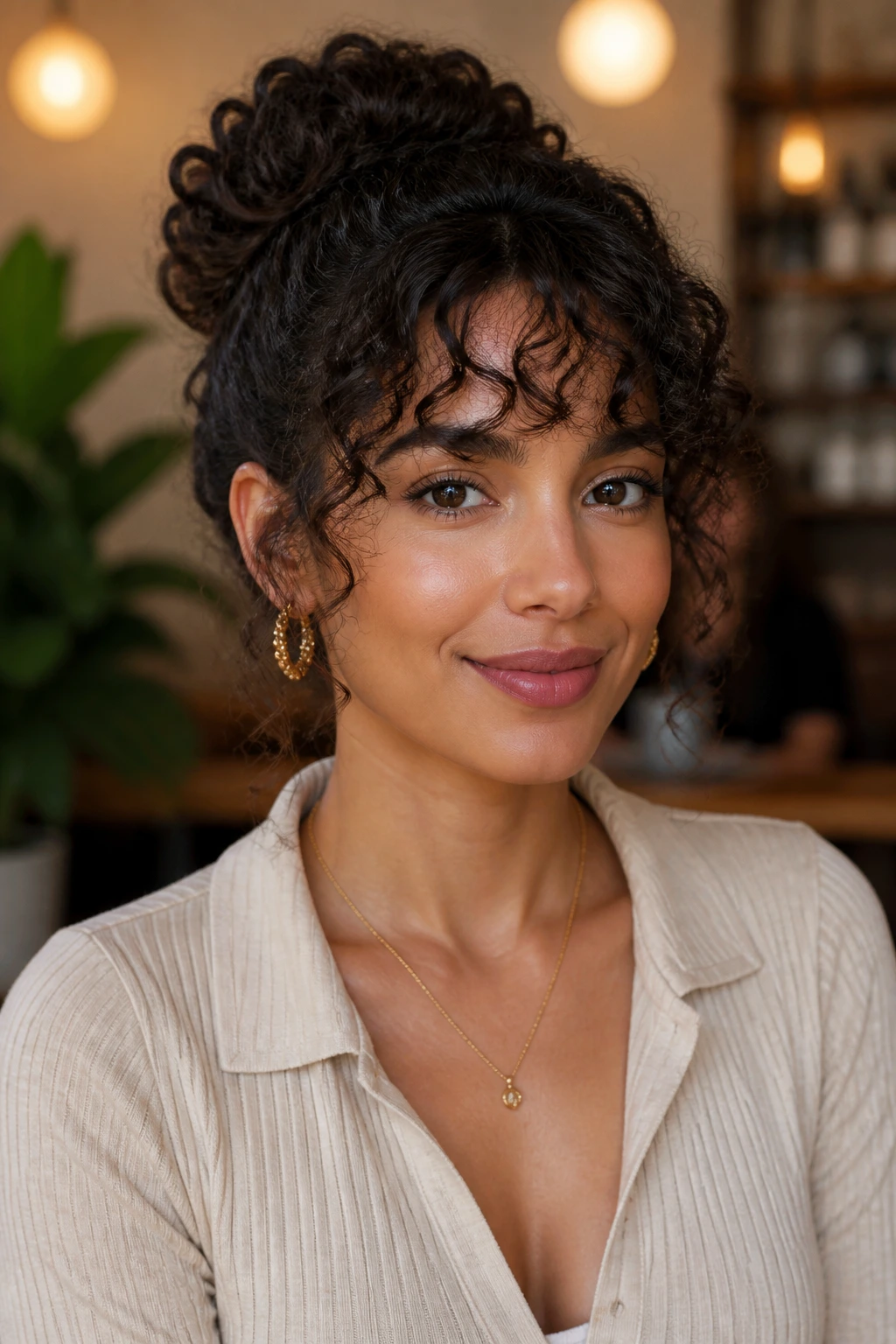
A coiled bun sits neatly, but it doesn’t have to erase your texture. Gather the hair into a low or mid bun, then leave a curly fringe or a few soft front pieces out. If you wear bangs, this style gives them a place to live without letting the rest of the hair overwhelm your face.
Why it works for long hair
Long curls can make a bun feel too big if every strand is forced in. Leaving a little fringe or face shape around the front balances the bulk at the back.
This style is a nice answer when you want a bun that feels softer than a strict ballerina knot. It still clears the neck. It just doesn’t look stern about it.
23. The Dutch Braid into Low Ponytail
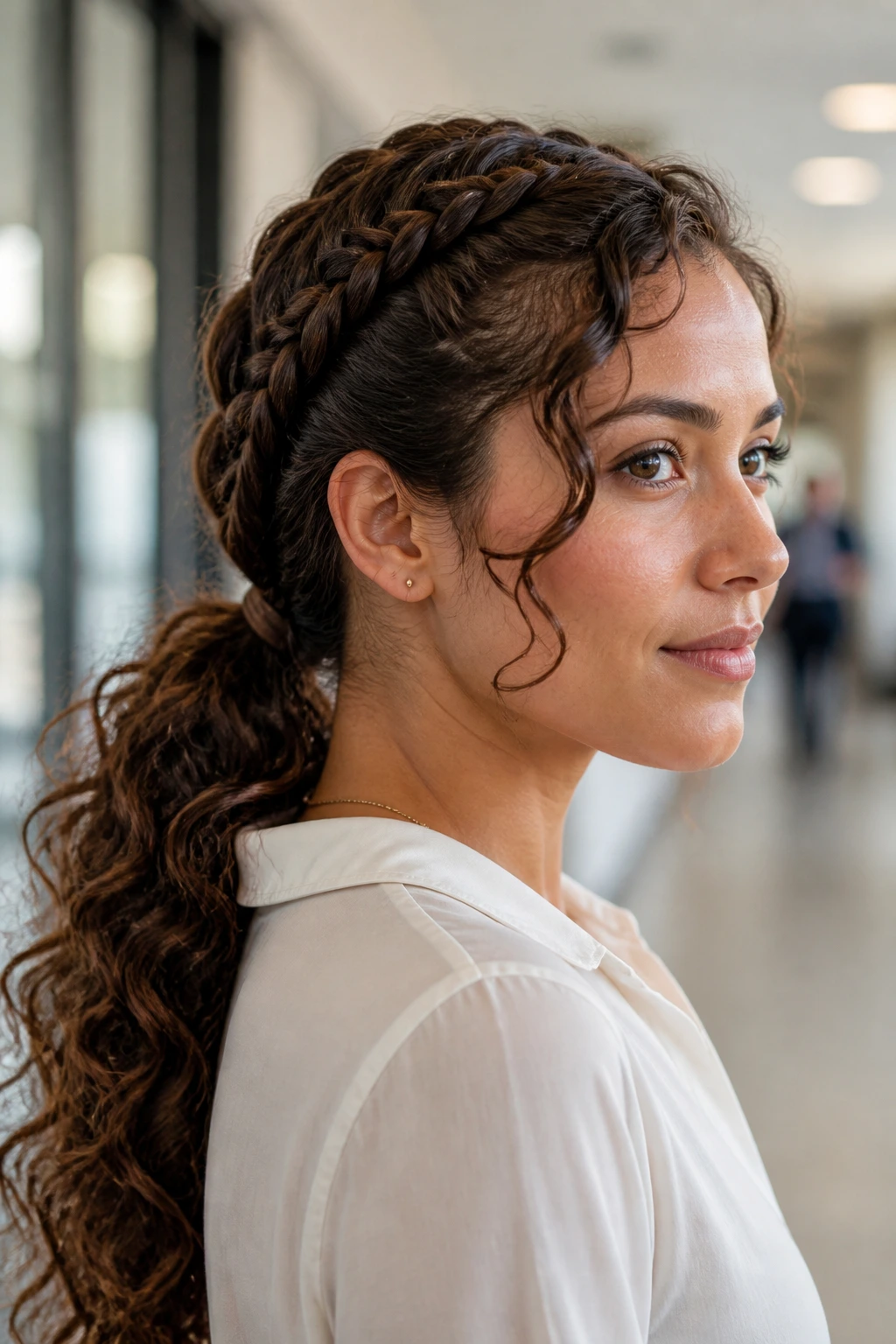
A Dutch braid pulls attention into the braid itself because the plait sits on top of the hair instead of disappearing into it. Braid from the hairline back toward the crown, then tie the rest into a low ponytail. It’s secure, structured, and much better for long curls than a braid that stops halfway and gives up.
Why it holds
The braid gives the roots a grip point before the ponytail takes over. That helps when your hair is thick, slippery, or both.
If you need a style that can survive a packed day, this is one of the stronger picks. It’s neat enough for work and sturdy enough that you won’t be checking it every hour.
24. The French Twist with Curly Ends
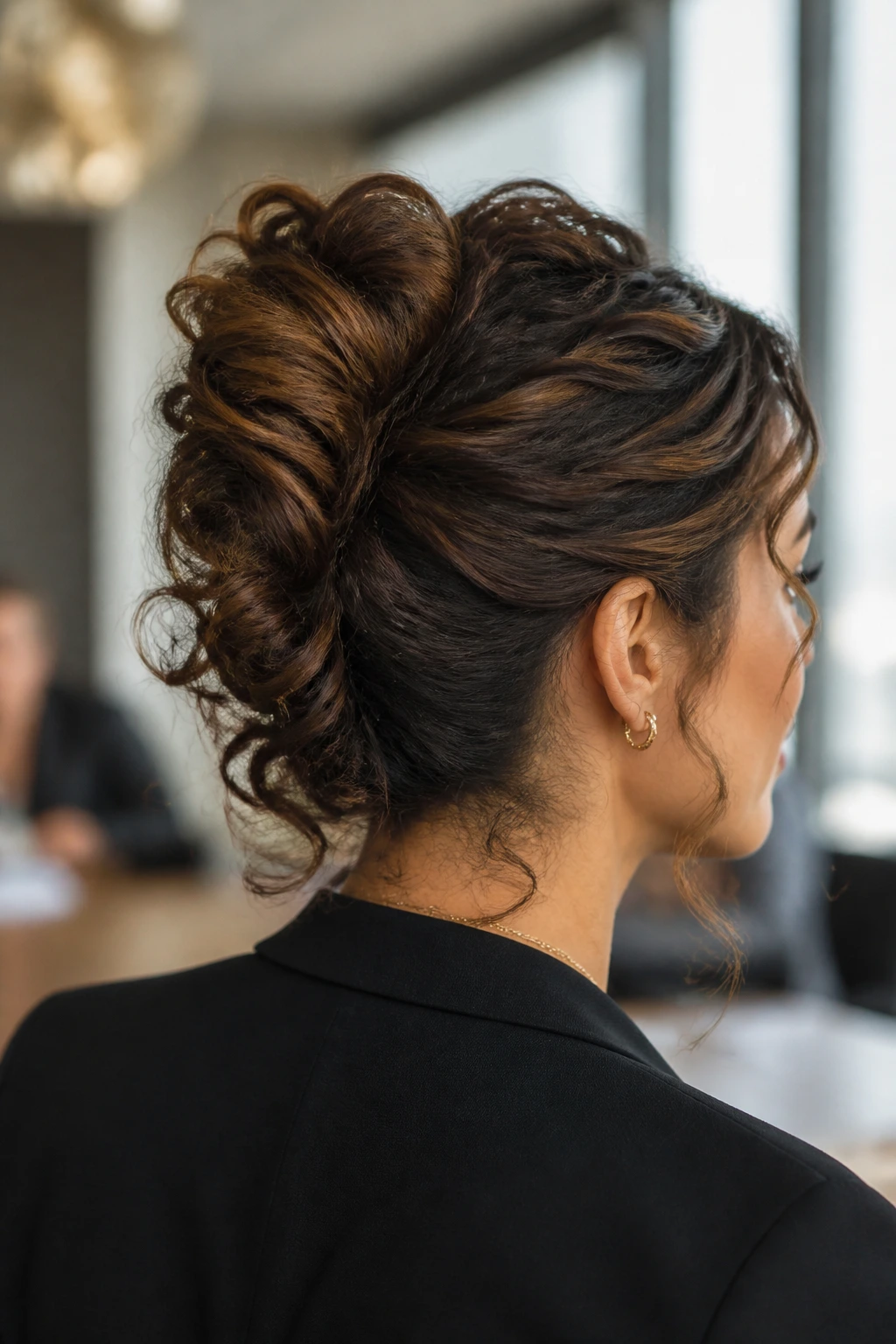
A French twist usually sounds more formal than it needs to be, but on long curls it can look surprisingly soft if you let the ends stay a little loose. Gather the hair upward, twist it into a vertical roll, and pin it so the lower lengths tuck in while a few curls peek out at the top or bottom.
A good choice for presentations
This style brings structure without flattening the texture completely. It feels polished from the front, and the soft ends keep it from looking severe.
It’s one of the few office styles that can tip into dressy territory without changing the whole outfit. Good blouse. Good hair. Done.
25. The Low Ponytail with a Braid Detail
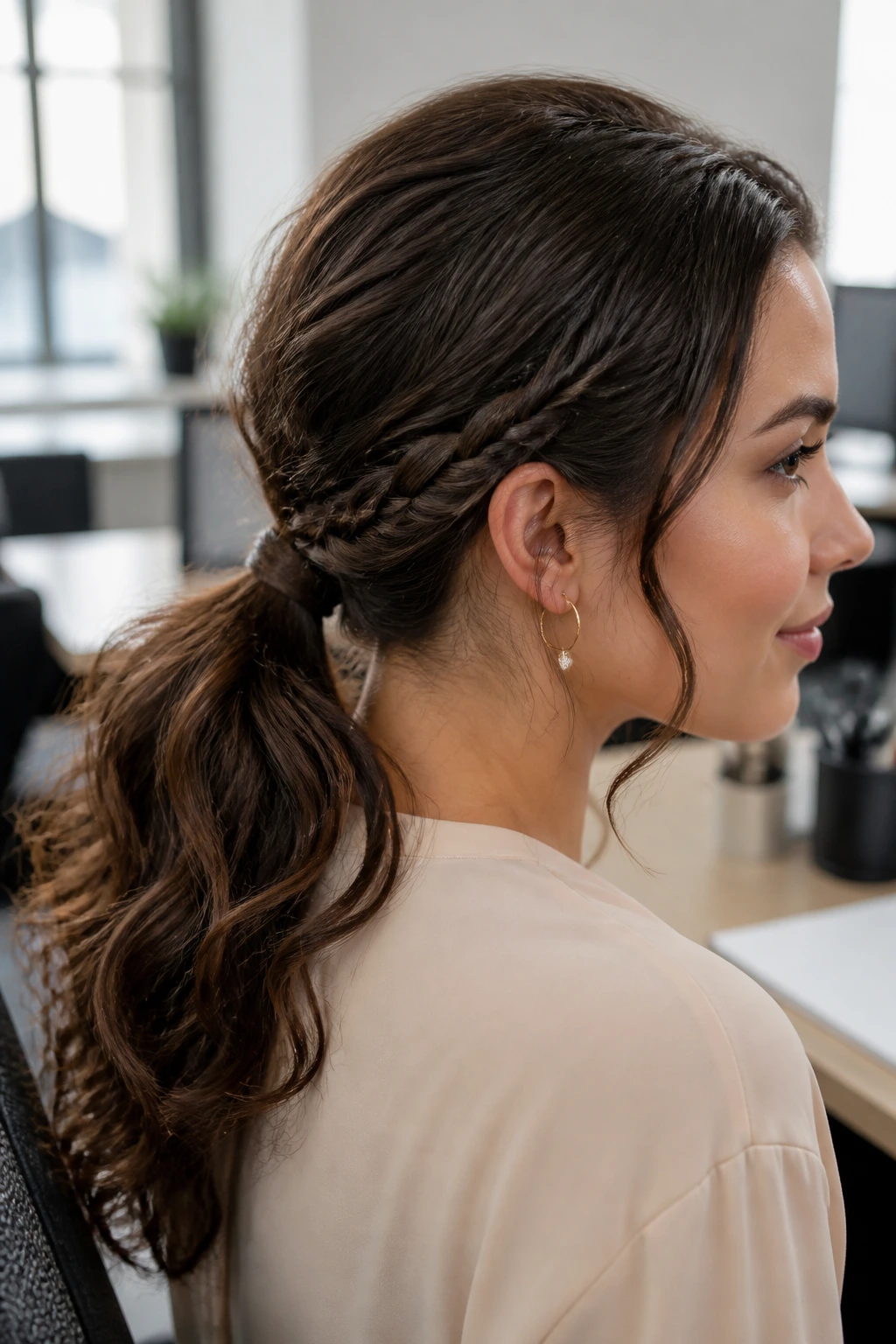
A small braid can do a lot of work when the rest of the style is simple. Add one braid along the side, or braid a narrow strip and wrap it around the base of a low ponytail. Either way, the detail gives the ponytail a point of interest without adding bulk.
Why it’s useful
This is the kind of style that makes a basic ponytail look thought-through. It is not dramatic. That’s the appeal.
If you like plain styles but want them to feel a touch more finished, this is the one to keep in your back pocket. It adds just enough texture to break up a flat silhouette.
26. The Side Part and Barrette Sweep
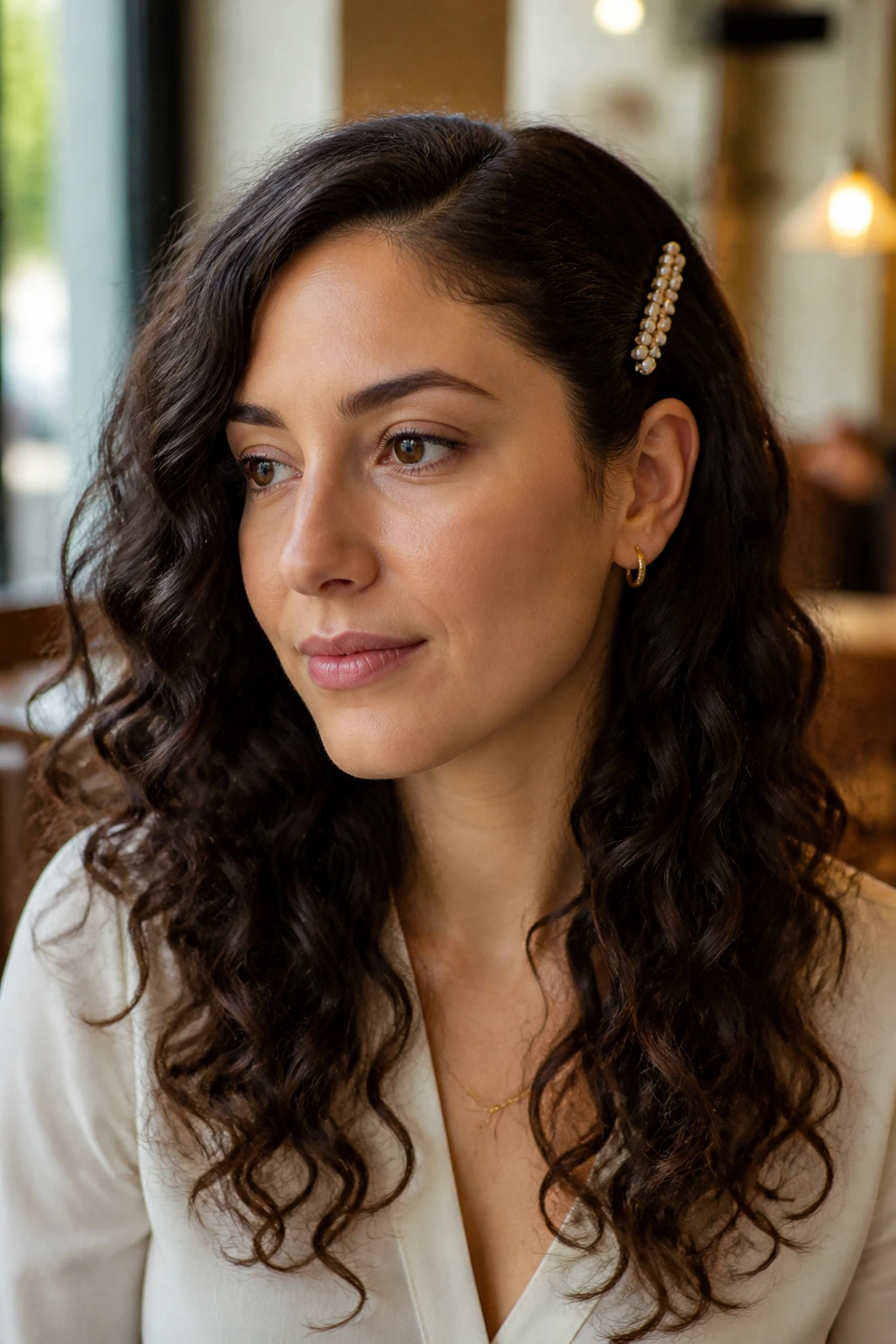
A side part with one decorative or plain barrette can clean up a whole look in less than a minute. Sweep one side back, secure it near the temple, and let the curls fall over the other shoulder. It keeps the face open and gives the style a neat edge.
Fast, plain, and dependable
Not every work hairstyle needs braids or buns. Sometimes the cleanest option is the one that uses one accessory and a precise part.
This is a good fallback style when your hair is cooperating just enough and you do not want to overthink it. If the clip grips, you’re fine. If it slips, pick a different clip and move on with your morning.
27. The Soft Afro Puff with a Center Part
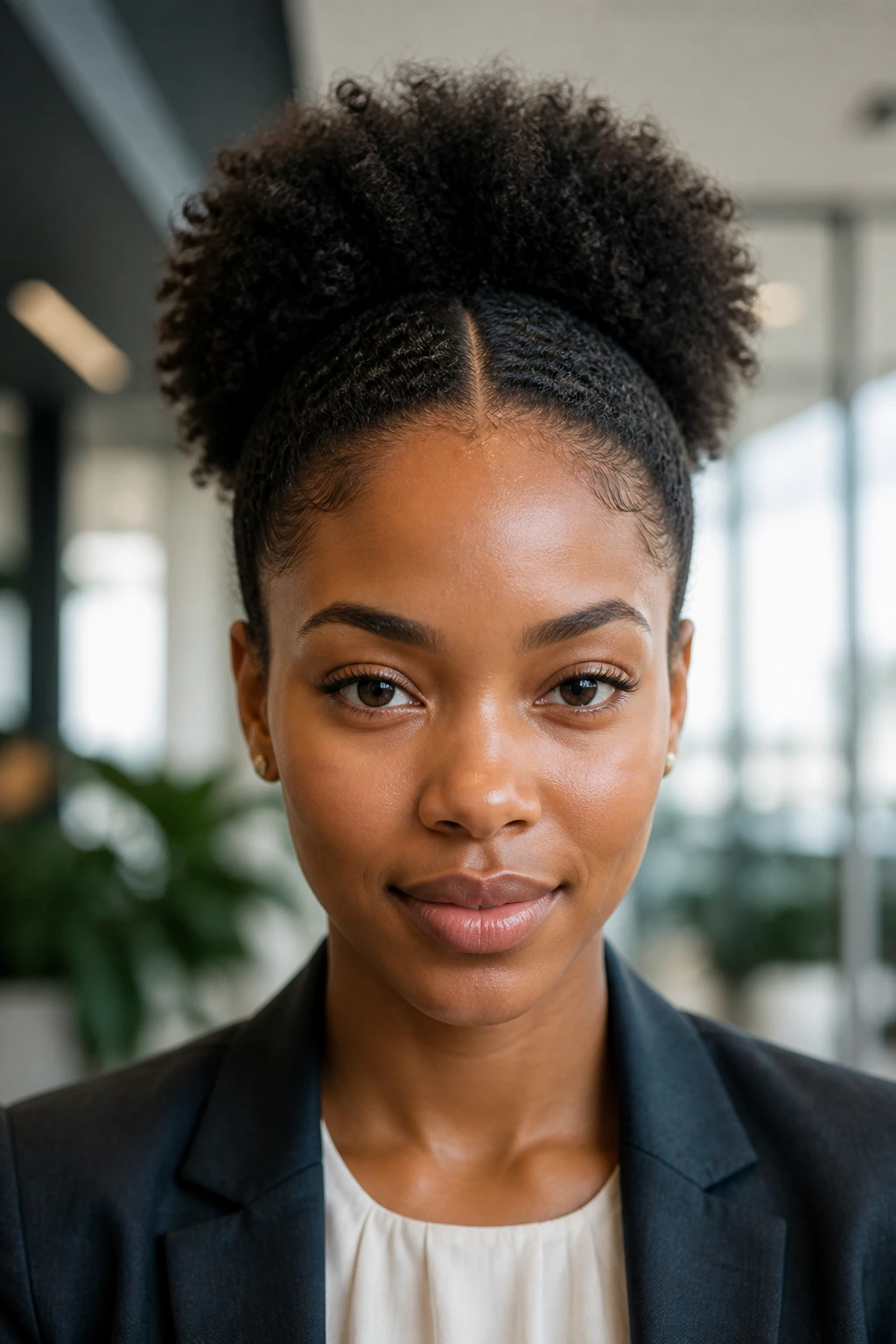
A center part leading into a puff can look very clean on long curls and coils, especially when the puff is placed high enough to open up the face. The center part gives symmetry, and the puff keeps the length controlled while letting the texture stay visible.
Why it belongs in office rotation
It’s tidy without looking stiff. The shape is strong, and that matters when you want your hair to hold its line through a full day.
Use a brush or hands to smooth the part and crown, then stop before the roots get too slick. You want a controlled shape, not a helmet.
28. The Defined Wash-and-Go with Tucked Sides
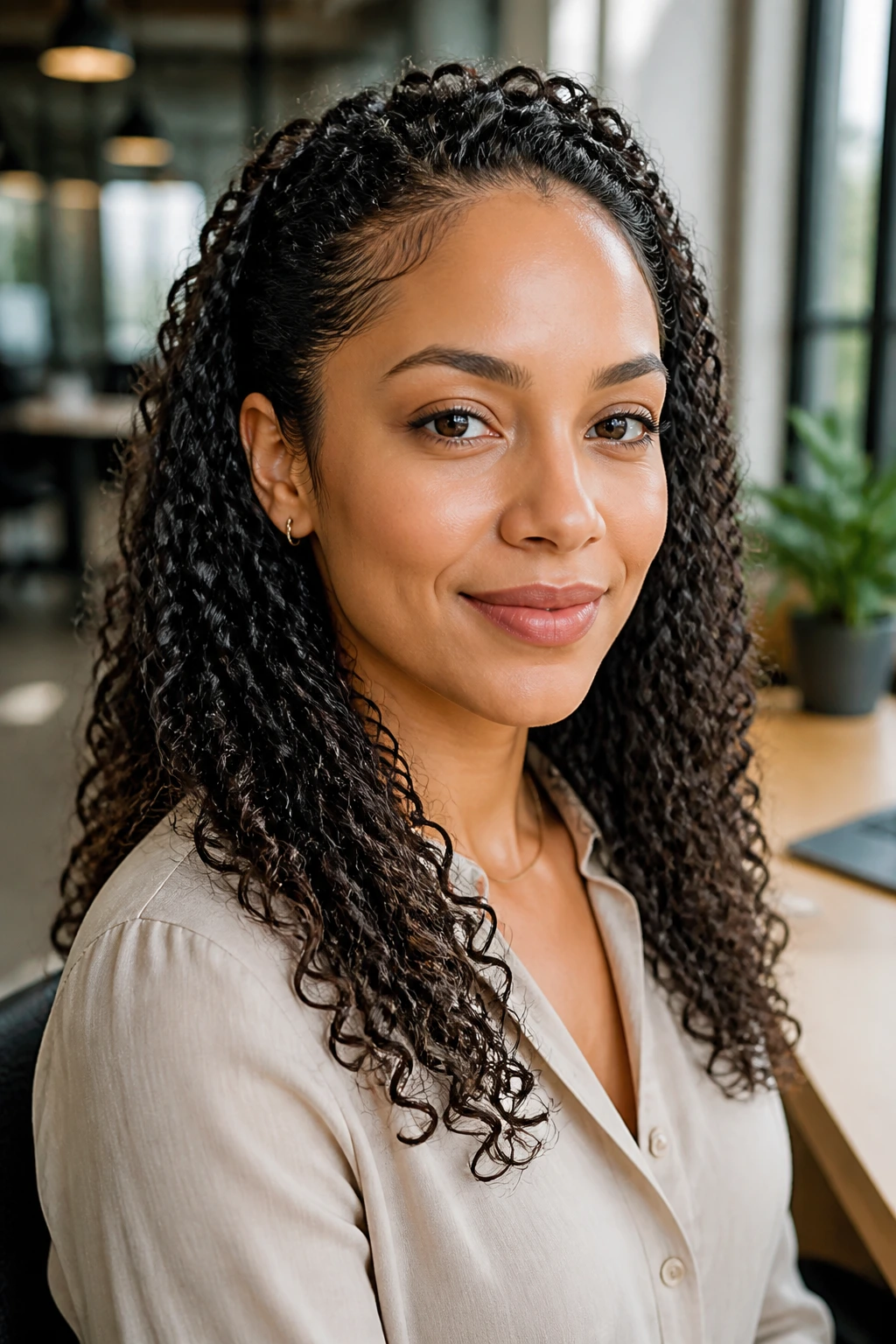
A wash-and-go can absolutely work for long curly hair at work if you shape it with intent. Define the curls, set the part, and tuck the sides behind the ears or pin them back just enough to keep the face open. That tiny bit of control makes all the difference.
When to choose this style
Choose it when your curl pattern is already looking good and you want to keep the texture visible. It’s the most honest option in the bunch. No braids, no twist, no disguise.
The key is to stop the style from spreading at the sides. A soft clip or two can keep the front tidy while the rest of the curls stay free. That balance is what turns a wash-and-go into a work hairstyle instead of a just-rolled-out-of-bed one.
What Makes These Styles Hold Up Past Lunch
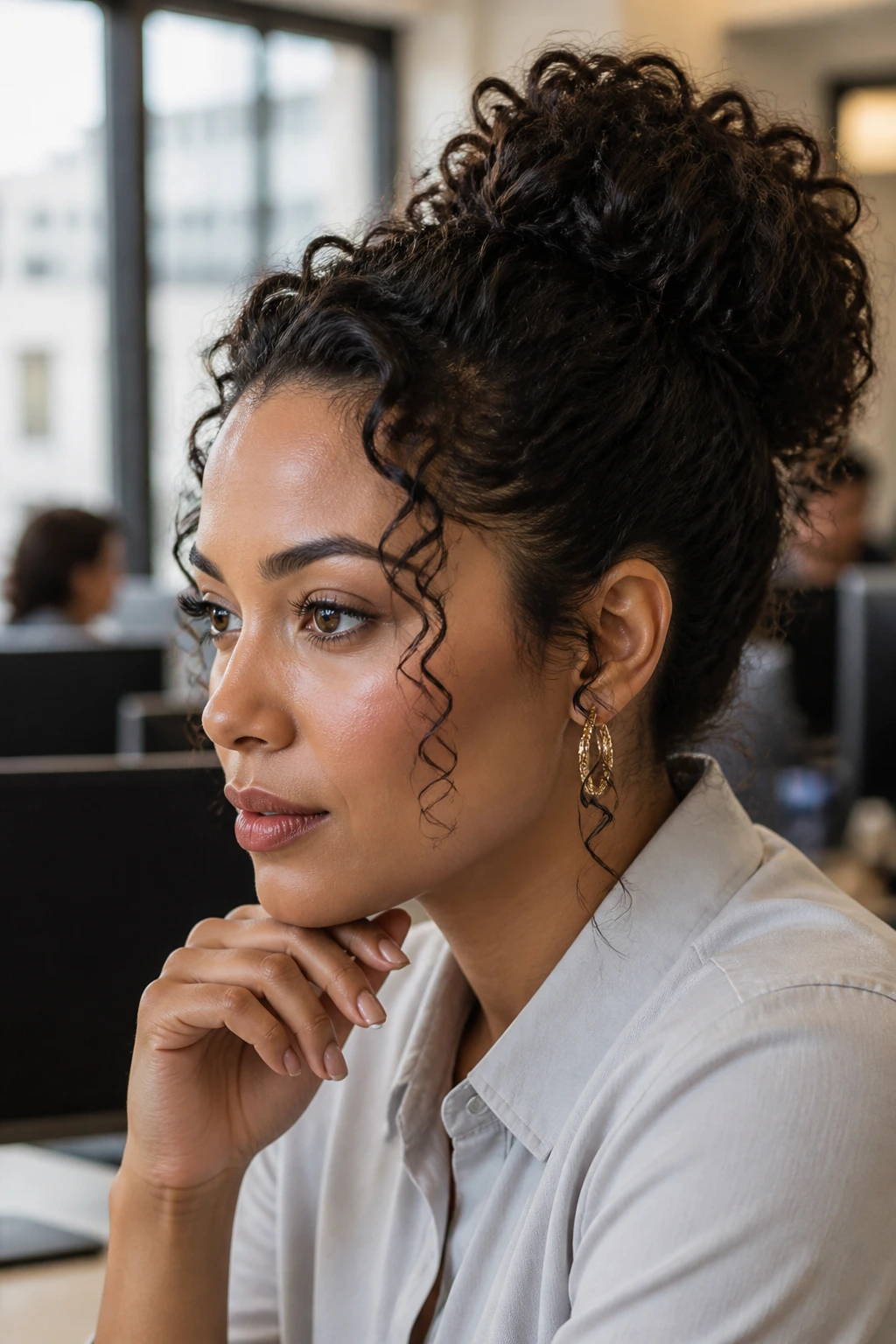
Long curly hair usually falls apart at the same three places: the crown, the temples, and the base of the style. That’s why the best work hairstyles for curls focus on anchoring those points first. If the top is controlled and the weight is sitting low or spread through a braid, the style has a chance of staying intact after the first round of email, the commute home, and whatever the weather decides to do.
A style that survives work also tends to reduce friction. Less rubbing against collars. Less yanking under headphones. Less touching. The middle of the day is where good intentions go to die, and curly hair is no exception. If you can keep your hands off the style, you usually keep the style looking better.
I also think long curls look better at work when the shape is obvious from the front. That can mean a side part, a clean tuck, a braid at the hairline, or a low bun with a clear outline. The back can be pretty, sure. But the front is what saves you when you are sitting under fluorescent light and trying not to think about your bangs.
Essential Tools for These Looks
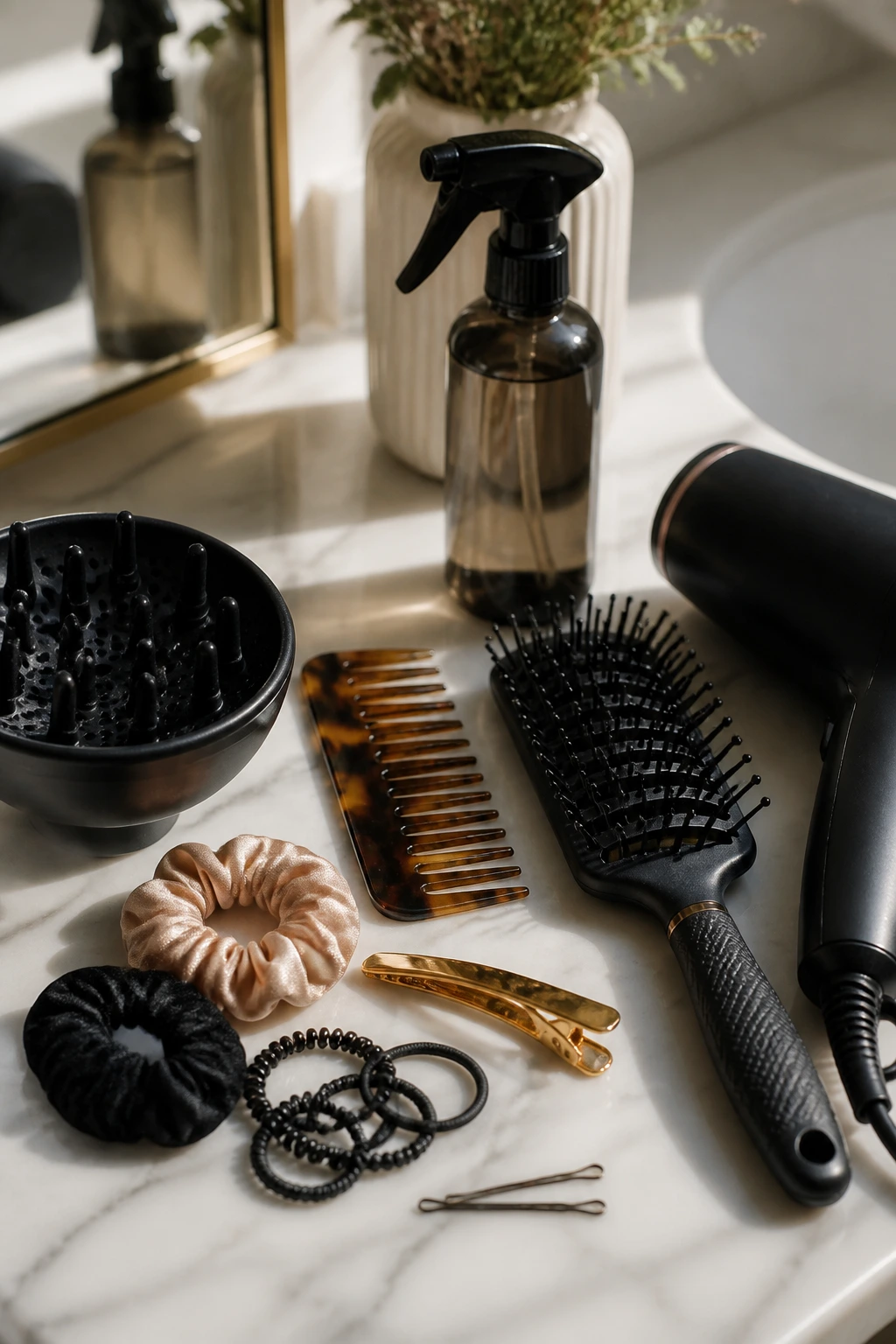
-
Wide-tooth comb: Best for detangling without shredding the curl pattern before styling.
-
Rat-tail comb: Helpful for clean parts, especially side parts and center parts that need to stay crisp.
-
Water spray bottle: A light mist can bring curls back into shape before you style, but don’t soak the hair.
-
Leave-in conditioner: Gives slip and keeps the ends from looking dry when you pin them back.
-
Curl cream or light gel: Use just enough to smooth the crown or define the front. Heavy layers can turn office hair into helmet hair.
-
Satin scrunchies: Better than thin elastics for ponytails and top knots because they reduce breakage and don’t leave such harsh dents.
-
Small snag-free elastics: Good for bubble ponytails, braid ends, and half-up styles.
-
Bobby pins and U-pins: U-pins are useful for buns; bobby pins are better for tucking back temple sections and holding side pieces.
-
Large claw clip: Essential for the French twist and any quick pinned-up look with lots of hair.
-
Barrettes or strong clips: These add polish and also solve the “one side keeps falling out” problem.
-
Silk scarf or bonnet: Worth keeping in your bag if you want the style to survive overnight without losing shape.
Practical Tips for Faster Mornings
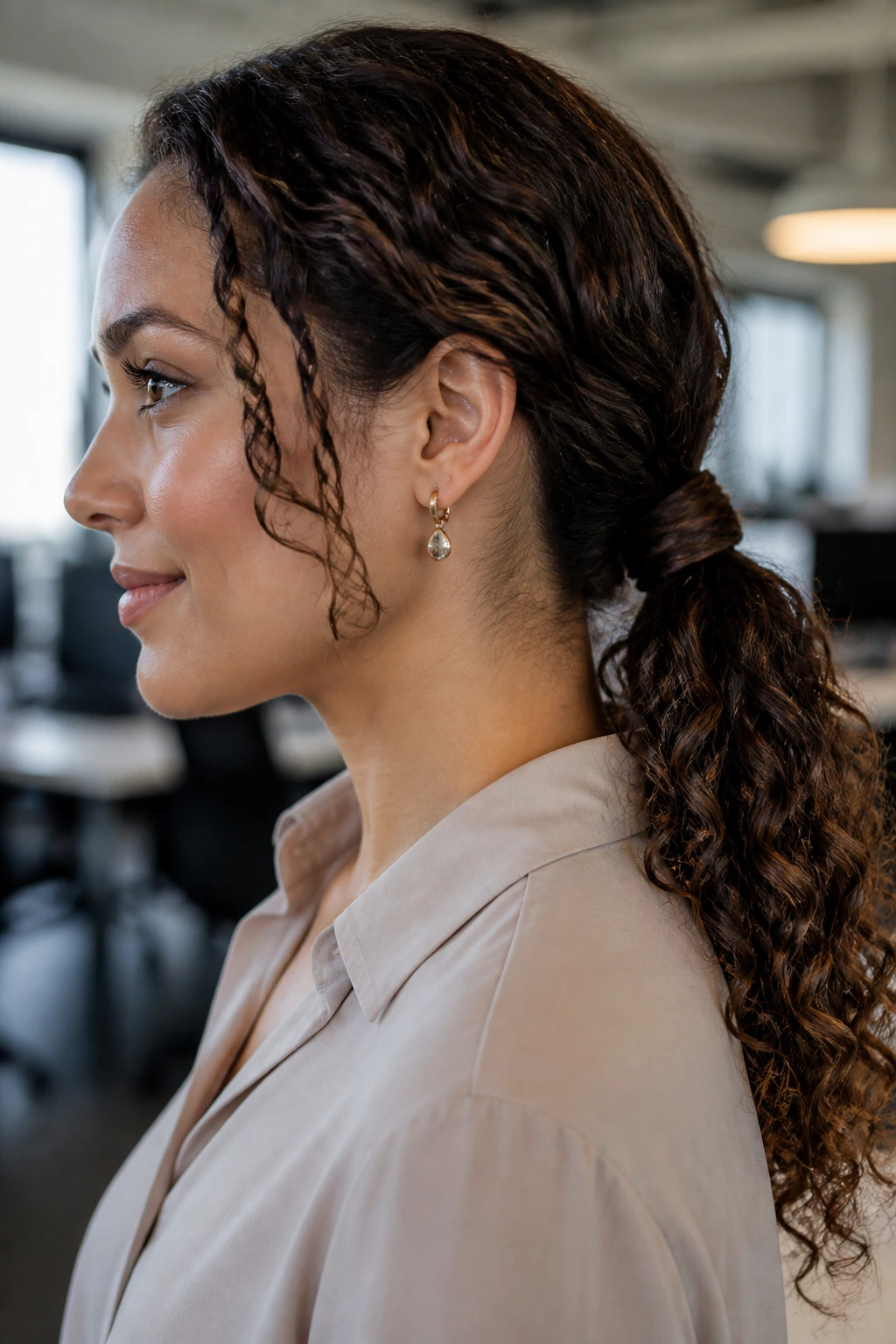
Start with damp, not dripping, hair. Styles hold better when the curls have some memory left in them, but too much water makes the roots slippery and the pins slide. If the hair is already dry, mist only the sections you plan to smooth.
Anchor at the nape first. Long hair gets heavy fast, so the bottom or back of the style should carry the weight. If you build the top first, the whole thing sags before lunch.
Use crossed pins when the style needs to last. One bobby pin can work for a quick tuck, but two pins crossing each other hold buns and side sections much better. It’s a small thing. It matters.
Pick one polished spot and leave the rest alone. If the crown is smooth, the bun can stay soft. If the braid is neat, the ponytail can stay curly. You do not need every inch of the style to behave.
Keep a tiny work kit in your bag or drawer. A few pins, one elastic, a mini gel, and a spare clip can rescue a style that starts loosening after a commute. Nobody needs a whole cosmetics bag. Just the basics.
Finish with a light hands-off test. Shake your head once, look in a mirror, and check the front from eye level. If it holds there, it will usually survive the first half of the day.
Common Mistakes That Make Curly Work Styles Fall Apart
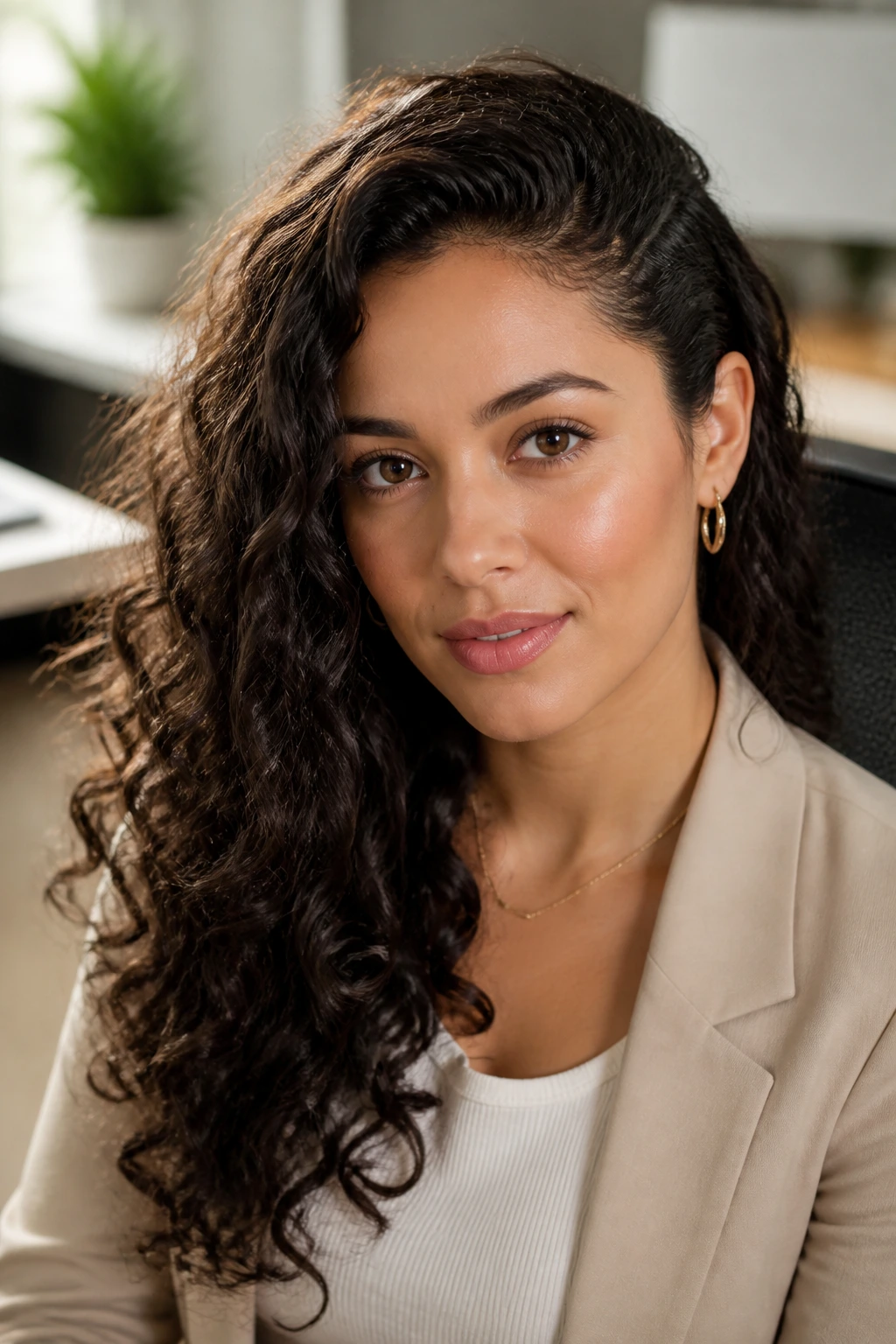
-
Pulling the front too tight: The style may look neat at first, then the roots puff out or hurt by midmorning. Keep the crown smooth, not stretched.
-
Using one weak elastic on heavy hair: Long curls can drag a thin elastic down fast. Use satin ties, strong coils, or an elastic plus pins when the hair is dense.
-
Forgetting the office reality test: A style that looks nice at home can clash with your collar, headset, or glasses. Check how it sits against the things you actually wear.
-
Adding too much product at the top: Heavy cream or gel on the crown can make the hair look greasy, not polished. Use product sparingly where the frizz is, not everywhere.
-
Leaving the face framing pieces undefined: A loose curl left out can look lovely, but a fuzzy one can make the whole style look unfinished. Define those front pieces or pin them back.
-
Making every style too symmetrical: Curls often look better with a little shift — a side part, an off-center bun, one barrette. Perfect symmetry can flatten the personality out of the hair.
Variations and Adaptations to Try
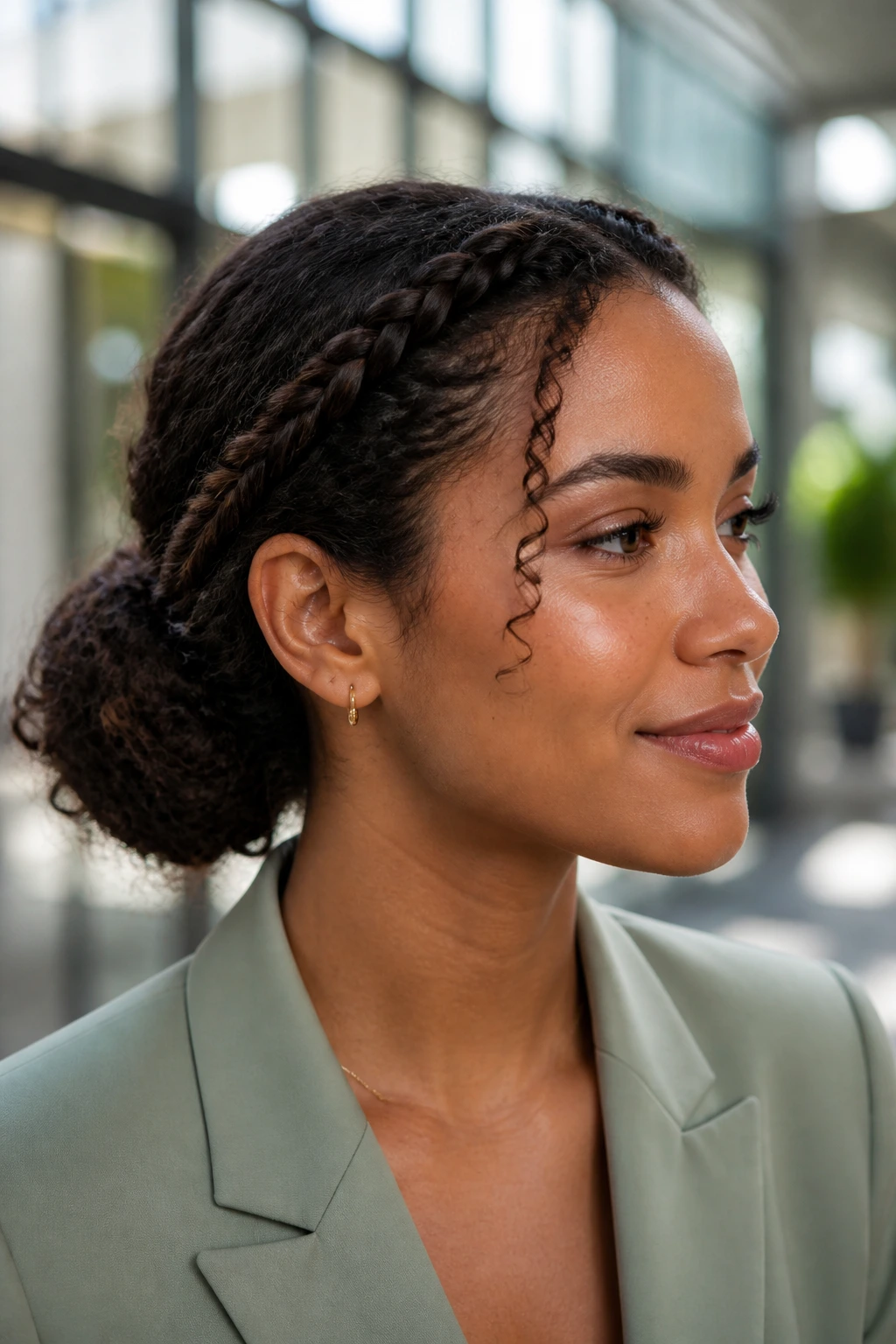
Fine-Curl Version
Use lighter products and fewer layers of product at the crown. Fine curls can collapse under heavy cream, so a small amount of gel or mousse usually holds better. Choose half-up styles and clipped sides over very thick buns that drag down the top.
Tight-Coil Version
Work in smaller sections and use more pins, not more tension. Tight coils hold shape well, but they can shrink a lot, so styles that rely on length should leave a little room. Braids and flat twists tend to behave best here.
Humidity-Heavy Day Version
Choose low buns, braided ponies, or tucked styles and keep the crown smooth with a bit of gel. A satin scarf for the commute can make a real difference. If the air is damp, loose front sections usually fluff first.
Fast-Morning Version
Keep two moves in your back pocket: side-swept clips and a low pony with a wrapped base. They take almost no time and still look intentional. Good hair days do not have to start with forty-five minutes and regret.
Presentation-Ready Version
Add a braid, barrette, or clean side part to any low bun or ponytail. The goal is to sharpen the front line and make the style look finished from five feet away. That’s usually what matters in a meeting.
Protective-Style Version
Use flatter anchors, less daily manipulation, and styles that keep the ends tucked away. Braided buns, flat twists, and scarves work well when you want to reduce handling between wash days. The hair gets a break, and you do too.
How to Keep These Styles Fresh Overnight
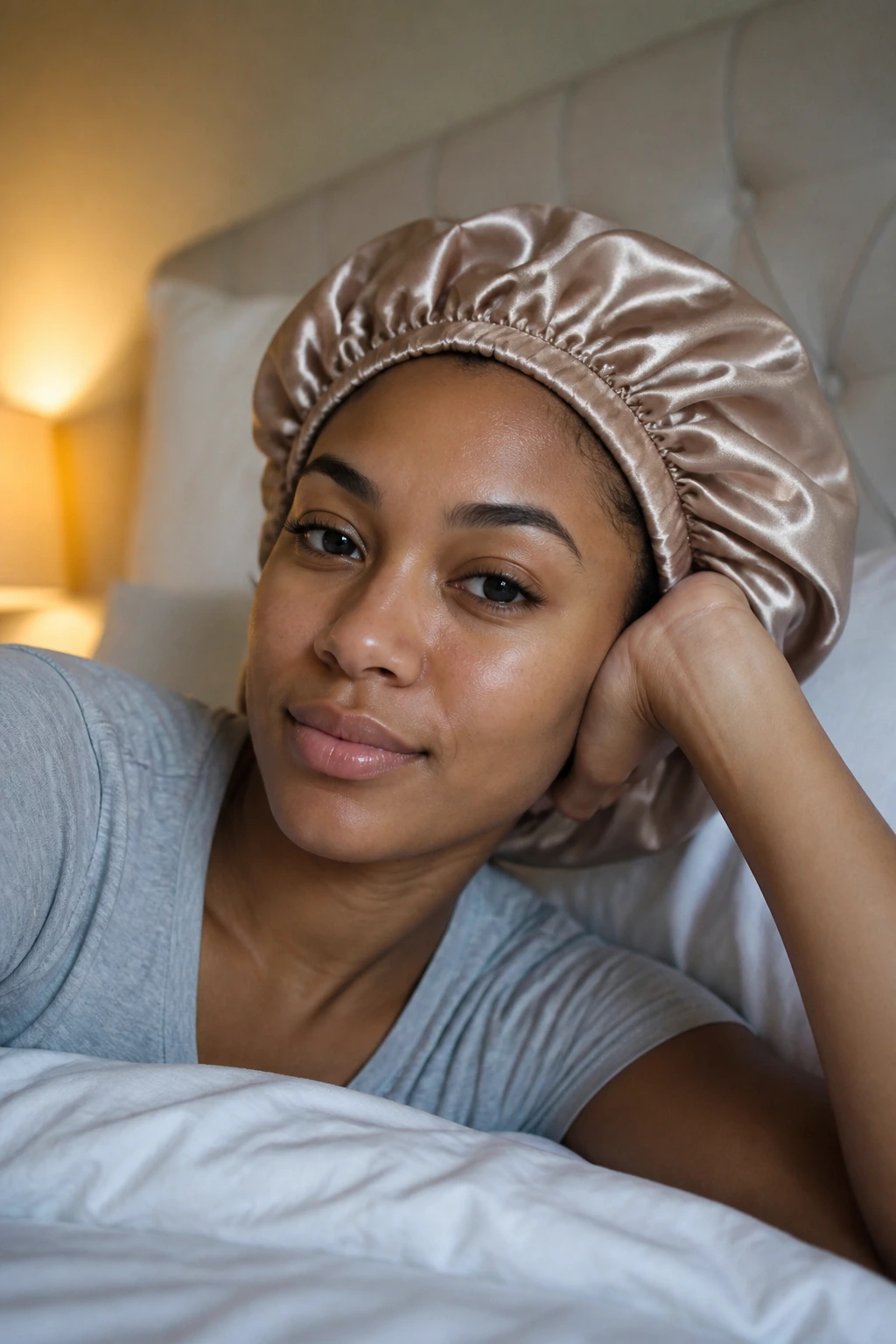
Most low buns, braids, and twisted styles can last a second day if you protect them at night. A satin bonnet or scarf reduces friction, and a satin pillowcase helps when the bonnet wanders off somewhere during sleep. If you wear a ponytail, rewrap the base loosely before bed so it doesn’t bend in a weird shape.
For styles with defined fronts, like side parts or clipped-back sections, pin them gently before sleeping instead of trying to rebuild them from scratch in the morning. A light mist of water mixed with leave-in conditioner can wake up the curls without turning them soggy. Use it sparingly. Too much water drags the shape down.
Braided styles usually last the longest, often two to four days if the scalp stays comfortable and the parts are protected. Loose wash-and-go styles are more fickle. They can survive overnight, but they usually need a quick refresh at the crown and front before you head out the door.
Never pile fresh gel on top of old flakes. That’s how you get strange white bits around the hairline. Mist first, smooth second, add product only where you need it.
Which curly hairstyles for long hair for work look the most polished?
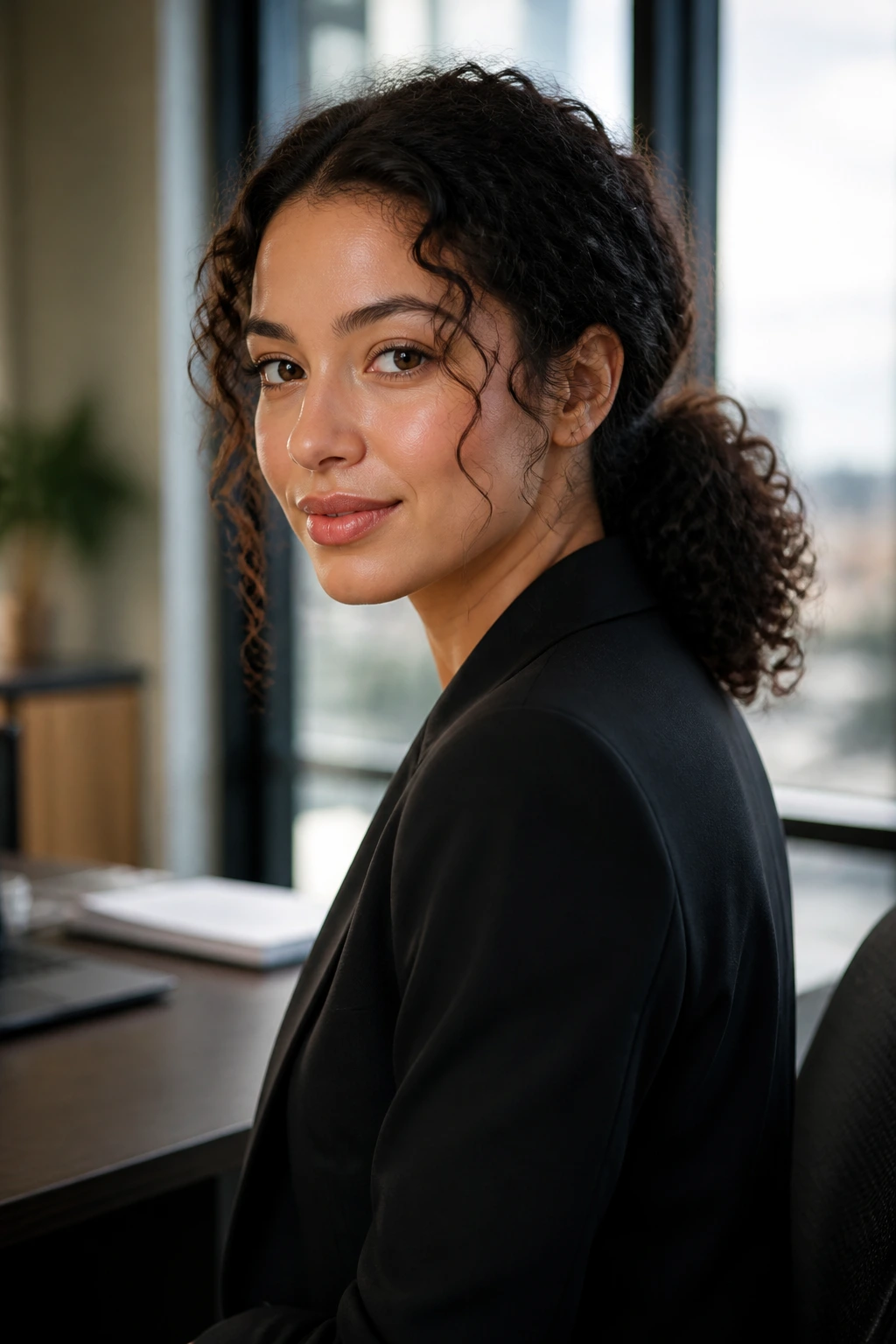
The low curly ponytail, side-swept chignon, French twist, and braided low bun usually read the most polished because they create a clear outline and keep the front under control. They also sit close to the head, which helps them look neat under collars and jackets. If your office leans formal, those are safer bets than a high puff or a very loose half-up style.
How do you keep curly hairstyles for long hair for work from frizzing by noon?
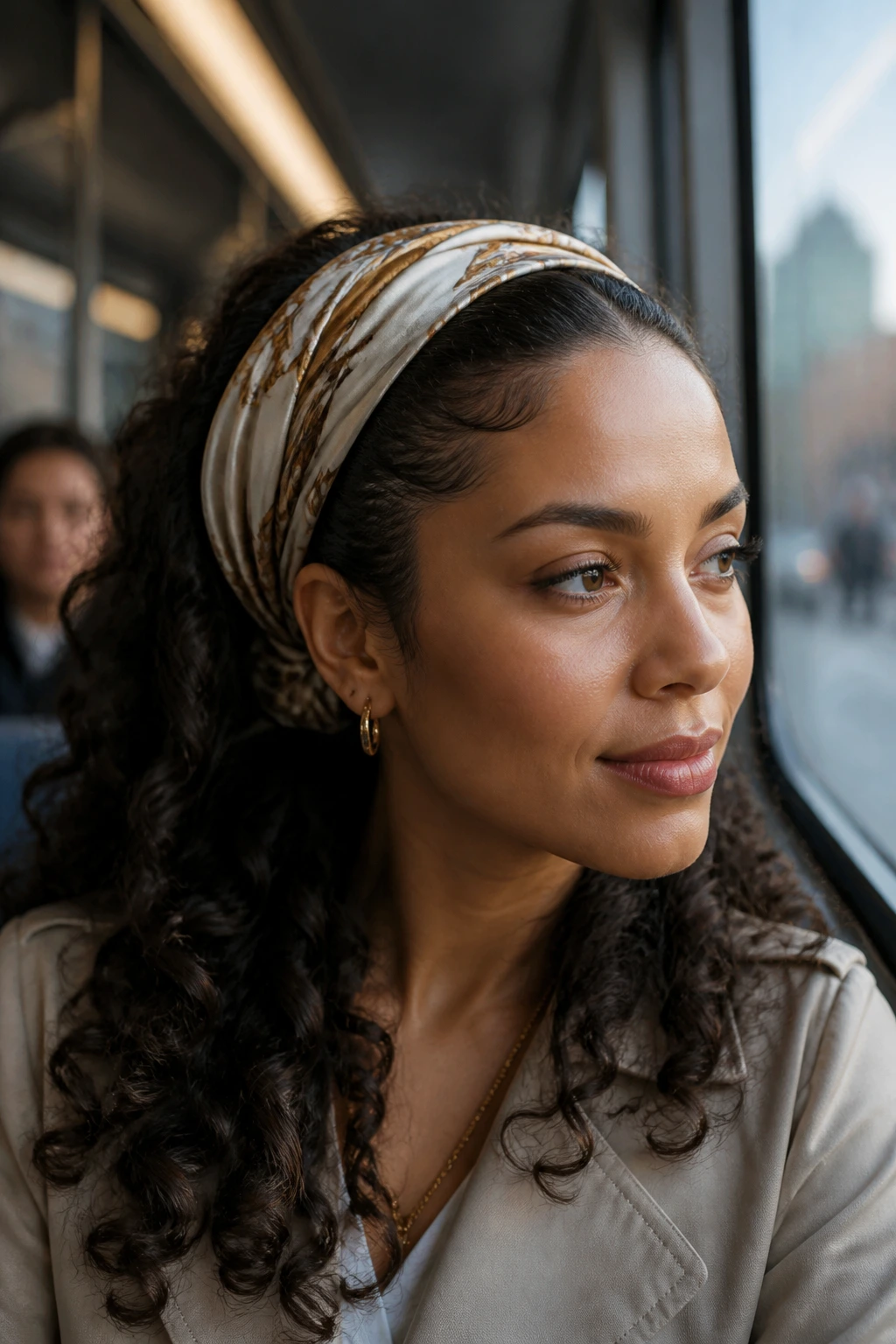
Start with the crown and temple area, because those are the places frizz shows first. Use a small amount of leave-in or gel on the top section, not the whole head, and stop touching the style once it’s set. A satin scarf during the commute and a satin pillowcase at night can keep the hair smoother than re-styling it three times a day.
Can I wear my curls down and still look professional?
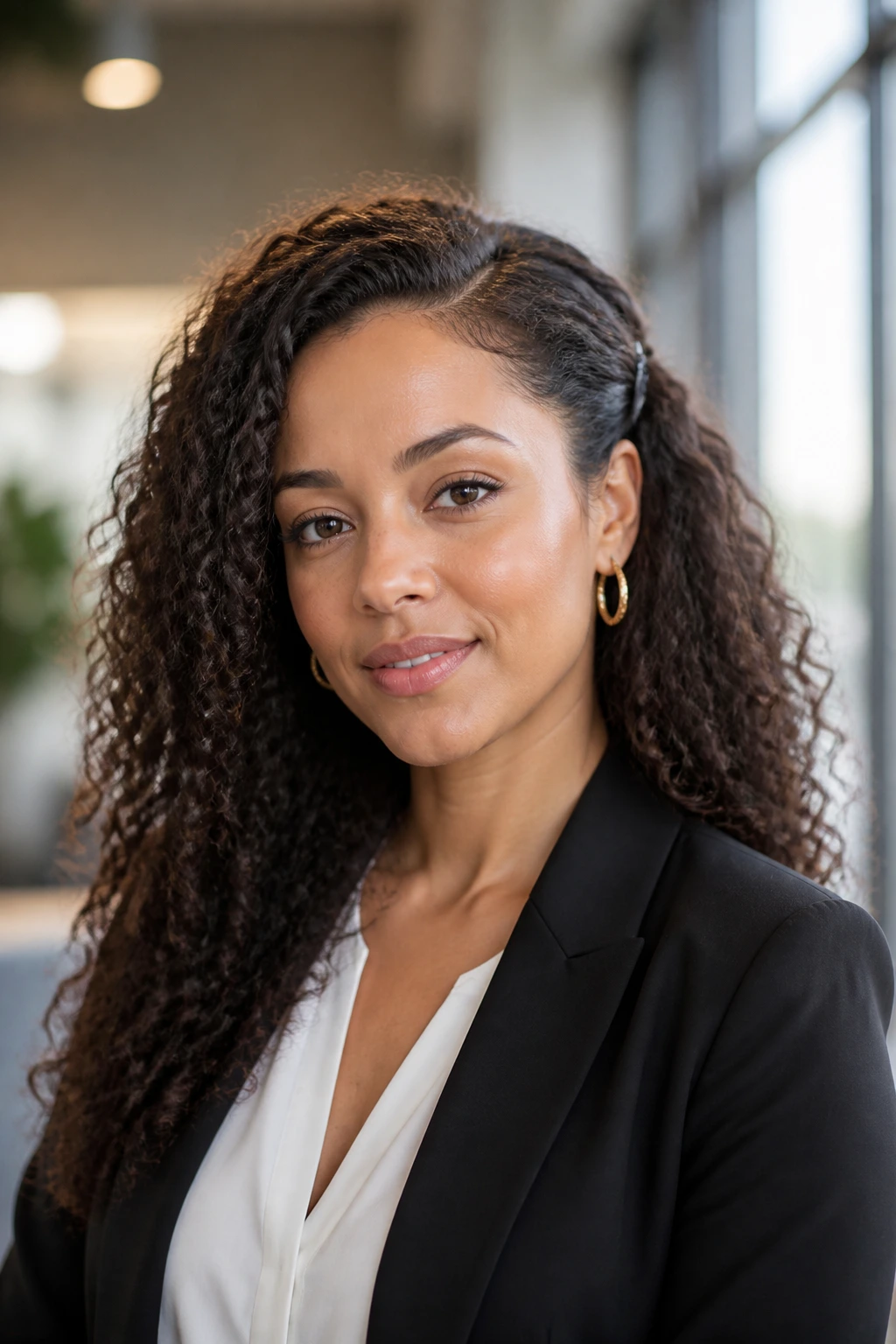
Yes, if the front is shaped on purpose. A defined wash-and-go, a side part, or clipped-back temples can make loose curls look neat instead of casual. The key is to keep the roots and face framing sections clean, because that’s where a down style can start to look messy first.
Are buns or braids better for long curly hair at work?
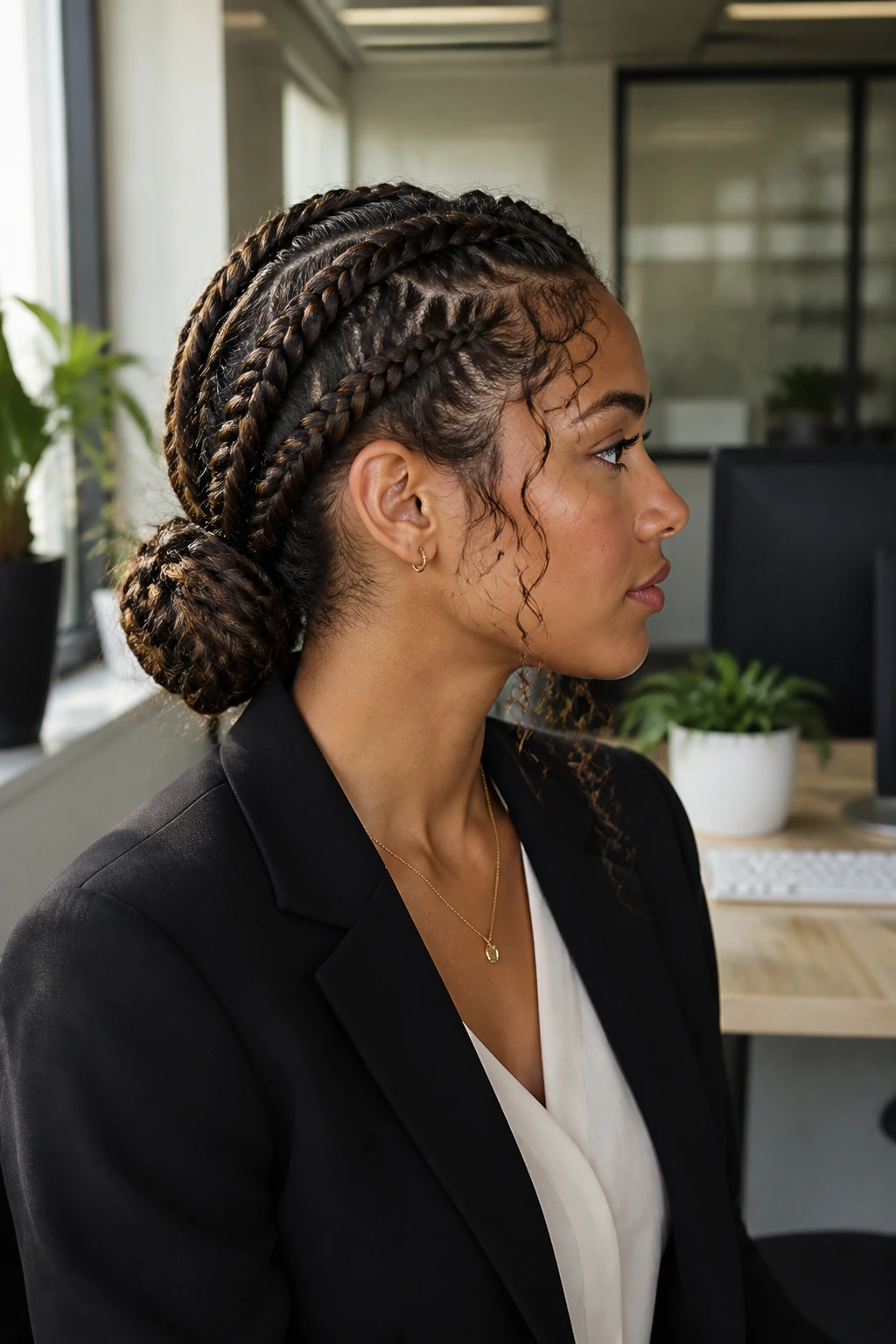
Braids usually last longer, while buns tend to look sharper and more formal. If your day is long and active, braid-based styles keep the hair from getting tangled. If you want a cleaner neckline for meetings or layering, a low bun or chignon usually wins.
What if my long curls shrink more than I expect?
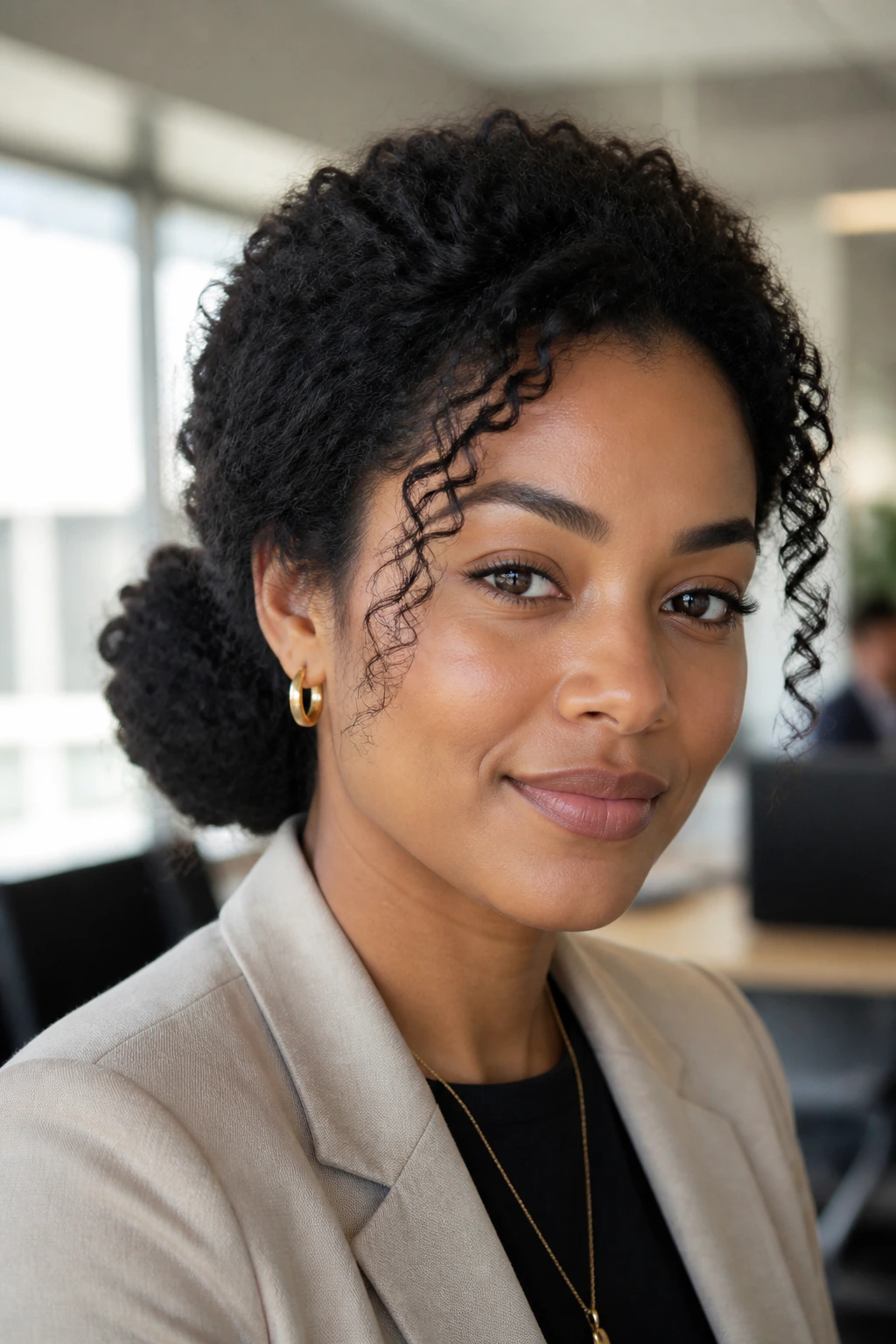
Use styles that work with shrinkage instead of fighting it. Low buns, puffs, and tucked styles stay flattering even when the curls pull upward during the day. If you need to show length, stretch the hair slightly with a twist-out, braid-out, or a low ponytail before styling.
Do I need heat to make any of these work?
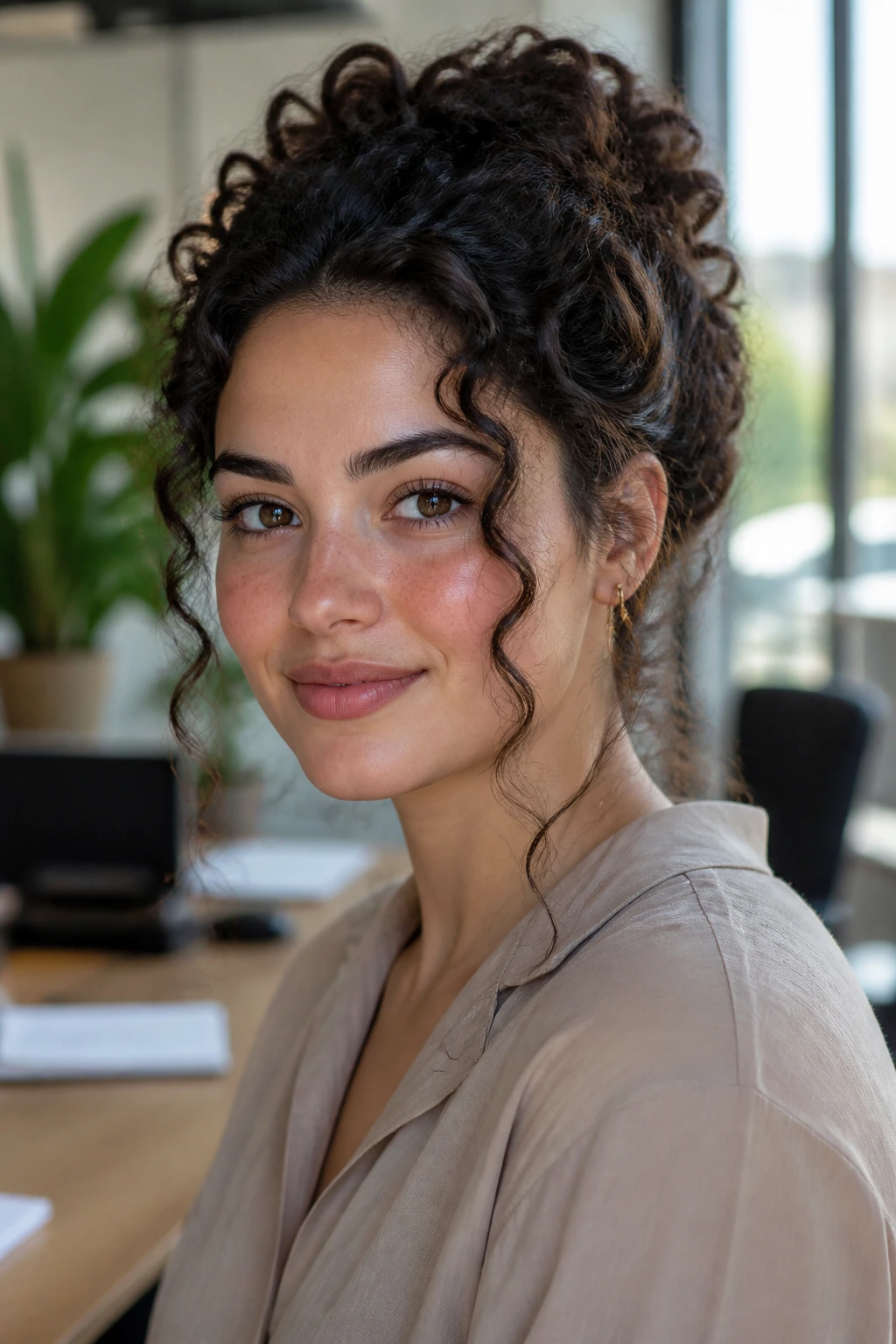
No. Heat is not required for any of these styles, and in most cases it makes the hair less cooperative later in the week. A good detangle, a little product on the crown, and the right pins will do more for office wear than straightening the whole head just to make a bun easier.
What if my hair is too thick for a claw clip?
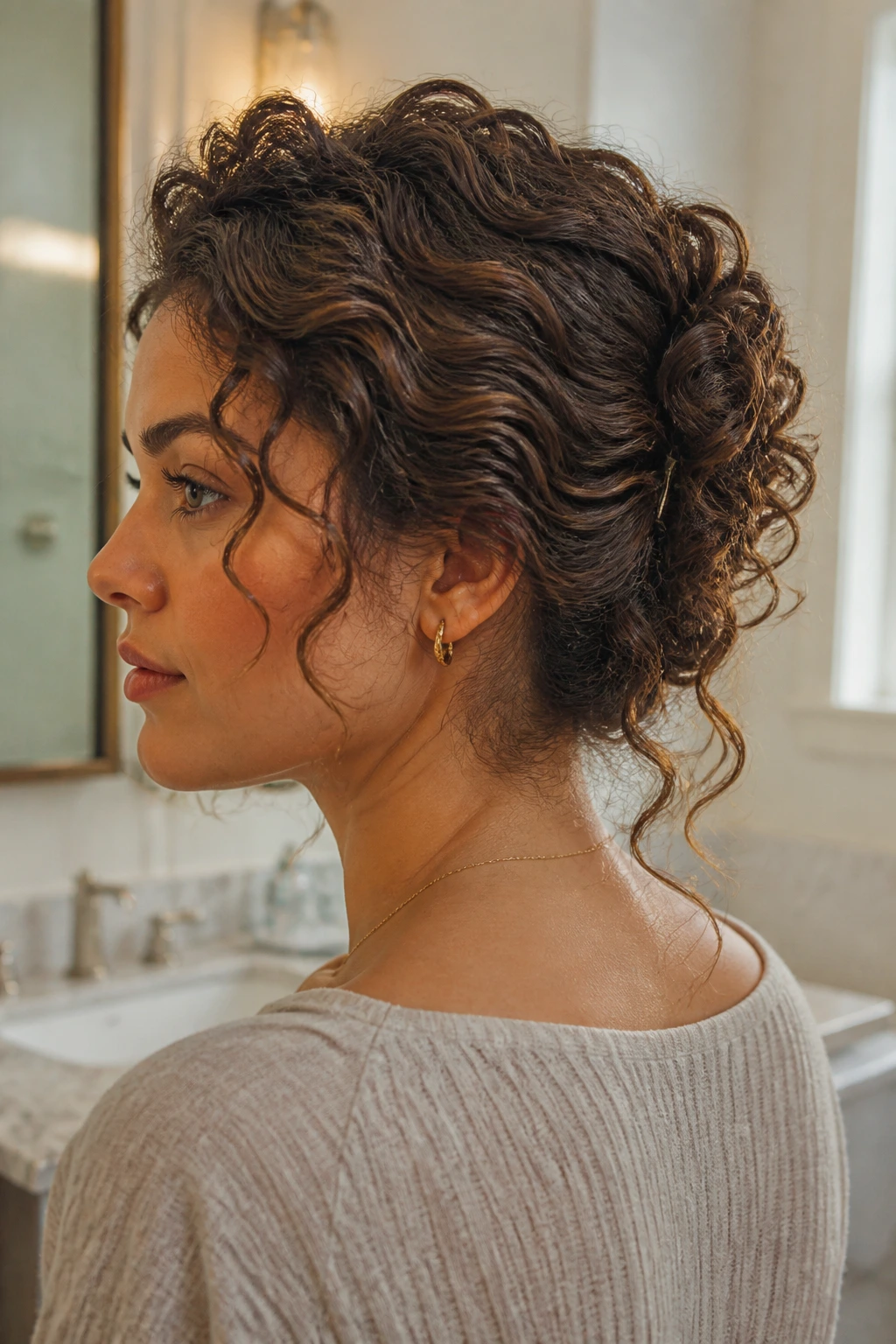
Use a French twist or a low bun with pins instead. Thick long curls can overwhelm a clip, especially if the clip opens too wide or the teeth are short. If you still want a clip style, gather only part of the hair and let the rest fall loose.
How can I make a style last two workdays?
Choose braids, flat twists, or a low bun with a scarf at night. Those styles hold shape better than loose curls, and they can usually be refreshed with a mist and a quick smoothing of the edges. If the style starts to feel stiff, take it down, detangle gently, and start again rather than forcing a worn-out shape to keep going.
Should I slick down my whole head for work?
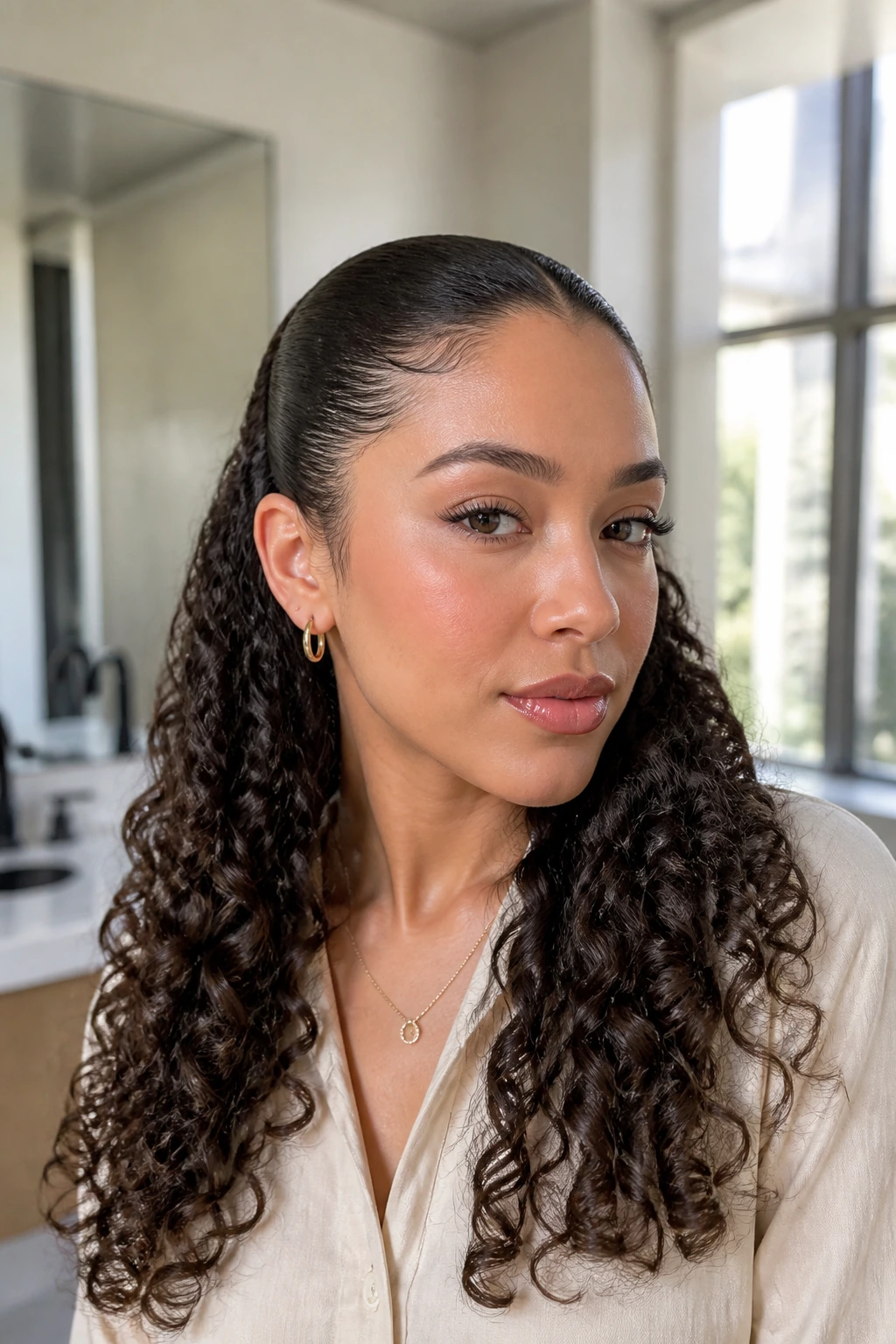
Usually, no. That can make curly hair look flat at the root and fuzzy at the ends, which is not a good trade. Slick only the sections that need control — usually the crown, temples, and hairline — and leave the rest of the texture alive.
The Styles Worth Keeping in Rotation
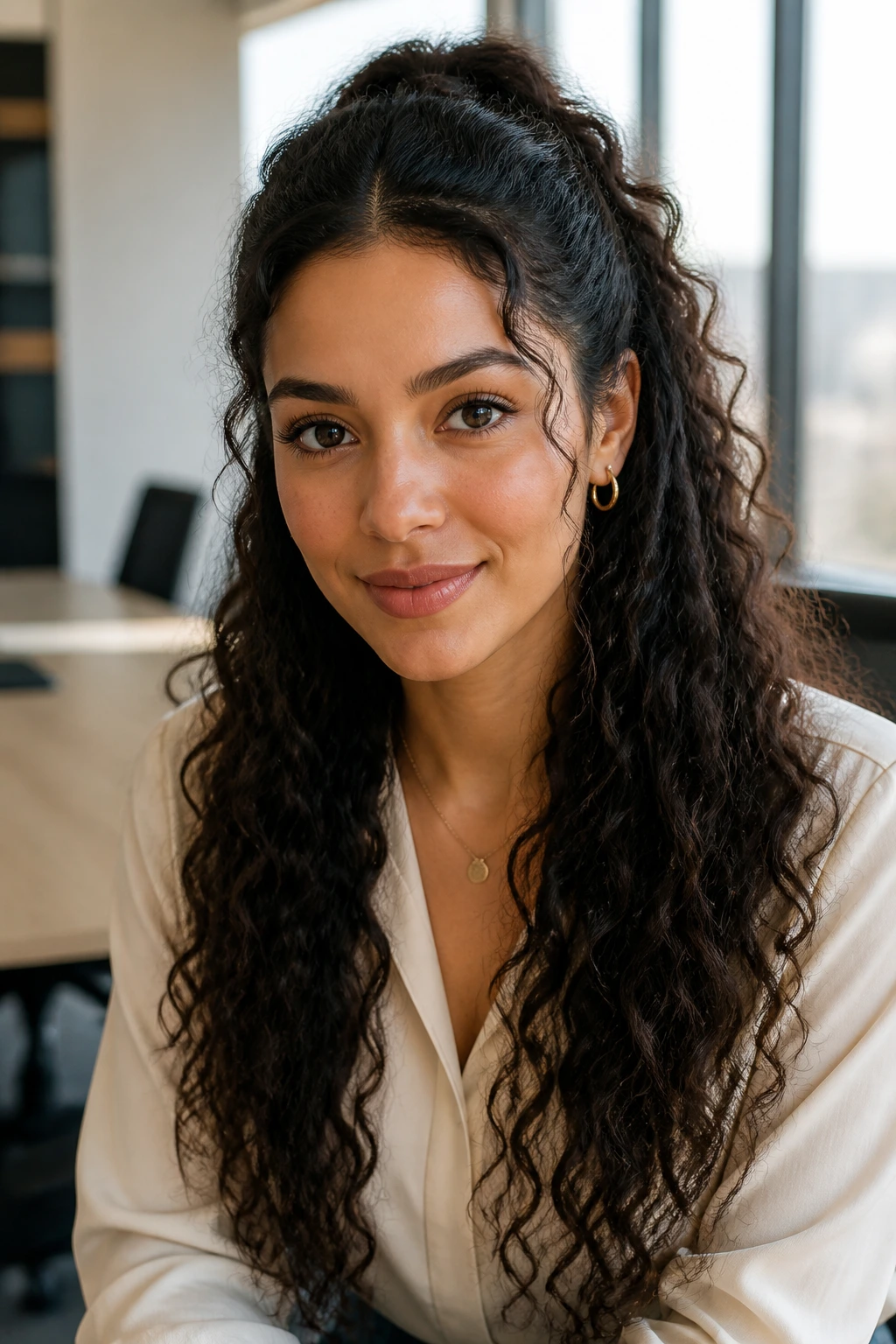
A good work hairstyle for long curls is not the one that erases texture. It’s the one that lets your hair keep its shape while the rest of your day gets on with itself. That usually means lower anchors, cleaner parts, and a little restraint at the crown.
The styles in this set work because they solve real problems: frizz at the front, weight at the nape, tangles from collars, and the endless temptation to keep touching your hair. Once you notice those pressure points, the good styles get easier to spot. And better still, easier to repeat.
The best part is that you do not need a giant hair routine to make any of them happen. A few pins, one strong clip, and a style that respects your curl pattern will take you farther than a drawer full of random products. Pick two or three looks that suit your mornings, then keep them close.
