



Short bangs for round faces over 50 work best when they interrupt the face instead of boxing it in. A blunt strip of hair across the forehead can make the cheeks look even fuller, which is why the useful versions are feathered, angled, broken up, or curved at the corners. The right fringe brings the eye upward, shows a little brow, and makes the whole cut feel lighter around the temples.
That matters more after 50 than most haircut advice admits. Hair often gets finer at the hairline, cowlicks get louder, and a bang that looked neat in the salon can split open by lunch if it was cut too thick or too straight. Round faces also need a little structure near the eyes and cheekbones, not another soft line sitting right at the widest part of the face. A good fringe works with those realities instead of pretending they don’t exist.
I’ve always liked bangs that look slightly broken-up in motion. Not messy. Not overstyled. Just enough bend and texture to keep the forehead open and the face from feeling boxed in. Once you start looking at short bangs through that lens, the options get much better.
Why These Short Bangs Earn Their Spot
-
They pull the eye upward: The best short bangs for round faces over 50 create a vertical break at the forehead, which keeps the face from reading as one continuous curve.
-
They leave room for texture: Feathering, point-cutting, and side angles keep the fringe from turning into a heavy shelf across the brow.
-
They work with mature hair changes: Softer edges and lighter density are kinder to fine hair, thinning temples, and little cowlicks that show up at the hairline.
-
They play nicely with glasses: A shorter fringe can sit above frames, skim them, or sweep away from them instead of fighting for the same space.
-
They grow out better than blunt cuts: A lot of these shapes shift into side bangs, face-framing layers, or a soft parted fringe as they lengthen.
-
They don’t need a teenager’s haircut: These are grown-up shapes with movement, not a rigid attempt to look younger. That distinction matters.
1. Feathered Brow-Grazing Bangs
This is the safest short bang if you want forehead coverage without a hard line. The ends sit right at the brows, maybe a whisper below them, but the cut is point-shaped and airy, so it doesn’t sit like a curtain. On a round face, that little bit of breakup keeps the eyes centered and stops the fringe from widening the face at the cheek level.
Why it works: The brow line creates a clean stopping point, while the feathered edges soften the whole shape. If your hair is straight or only slightly wavy, this is one of the easiest styles to live with because it still moves when you blink or turn your head. Ask for the corners to stay a touch longer than the center.
Best if you want: Coverage for forehead lines, a fringe that sits well with glasses, and something that won’t look severe when it air-dries a little off.
Styling note: Blow-dry forward first, then bend the ends under with a small round brush. Don’t overbrush it. That’s how it starts to look puffy.
2. Side-Swept Short Bangs
A side-swept fringe is still one of the smartest moves for a round face because it cuts across the face on a diagonal. That angle matters. A diagonal line is leaner than a straight one, and it keeps the widest part of the face from feeling emphasized.
These look especially good when the side part is strong and deliberate, not a timid little flip. The bang should start heavier at the part and taper as it crosses the forehead, so the front of the face feels lifted instead of closed in. Over 50, I like this shape because it’s forgiving on mornings when the root wants to stand up or the blow-dry did not go according to plan.
How to wear it: Keep the longer edge grazing the cheekbone, not the jaw. That little difference changes the whole line.
What to ask for: A soft diagonal fringe with point-cut ends, not a single blunt sweep.
Watch for: If the bang falls too low and flat, it can drag the face down. A tiny bit of root lift fixes that fast.
3. Wispy Micro Fringe
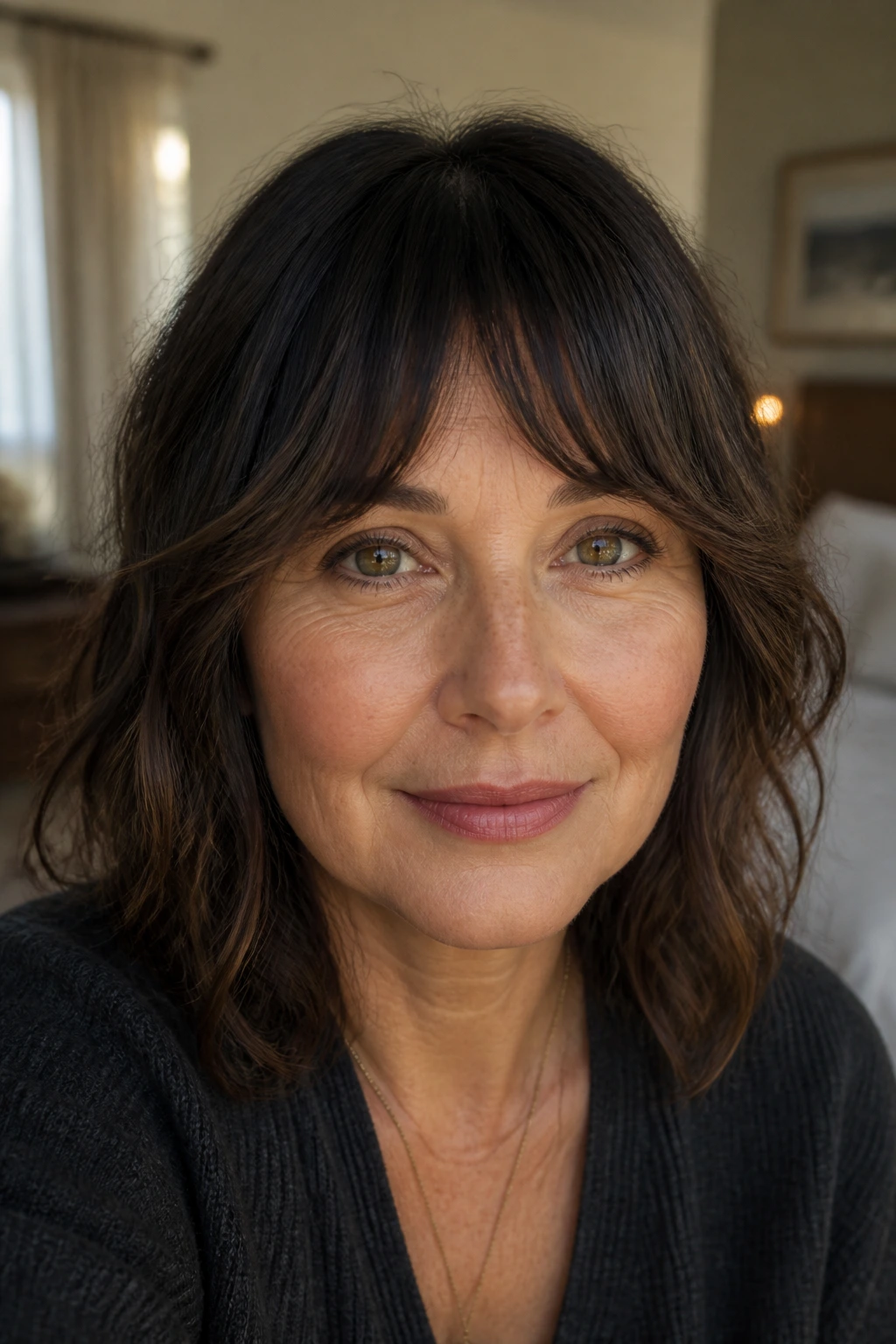
Micro bangs can work on a round face, but only when they are airy. A thick, hard micro fringe is a bad bet here; it chops the face in the wrong place and makes the width more obvious. A wispy version is different. It’s light enough to show skin between the strands, and that visual space helps.
I like this choice most on women who wear bold frames, statement earrings, or a sharply cut pixie. It has personality. It also needs confidence. There’s no hiding behind it, and that’s part of the appeal. If your hair is fine, ask for a sparse center and softer corners so the fringe doesn’t turn into a little wall.
What makes it flattering
- It opens the forehead instead of covering it fully.
- It gives the eye a short, crisp line to rest on.
- It works well with texture in the rest of the haircut.
Keep the product light. A touch of paste on the fingertips is enough. If you use too much cream, the piecey effect disappears and the whole thing collapses into one fuzzy strip.
4. Choppy French Fringe
This is the fringe I reach for when someone wants movement more than polish. The line is short, but the ends are chopped and slightly irregular, so the bang never reads as one solid slab. On a round face, that broken edge keeps the width from feeling obvious.
It’s especially good with a bob, a shag, or any cut that already has soft layers around the cheeks. The fringe brings a little attitude, but the shape still feels wearable. The trick is to keep the middle just long enough to touch the brows while letting the edges skim slightly higher or lower, depending on your hair growth pattern.
Styling tip: Use your fingers, not a brush, once it’s dry. Brush too much and you lose the point of the cut.
Best on: Medium to thick hair, wavy textures, and anyone who wants the bangs to look lived-in rather than stiff.
One caution: If the fringe is cut too blunt, it stops looking French and starts looking boxy. That’s not the same thing at all.
5. Short Curtain Bangs
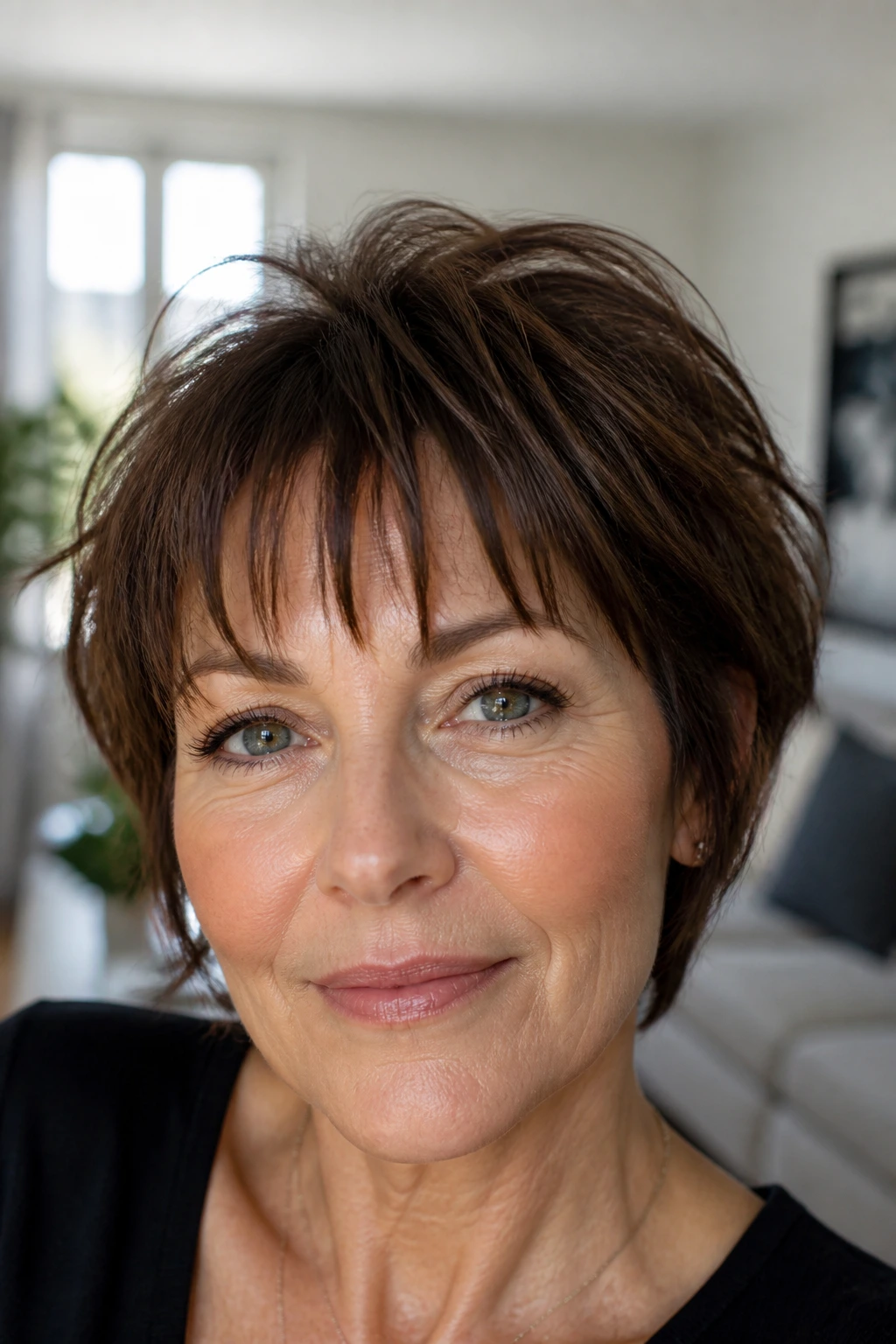
Short curtain bangs are the friendliest version of the curtain idea for a round face over 50. The center opens up just enough to show a little forehead, and the sides fall toward the cheekbones, which gives the face a longer read. The result is softer than a side bang and less heavy than a full fringe.
The part matters here. It should not be a perfect, showroom-center split. A tiny offset makes the bangs fall more naturally and keeps the face from looking too symmetrical. Symmetry sounds nice until it lands flat on a round face; then it can feel a little stale.
Why they work so well
The center opening creates vertical space, and the longer sides guide the eye downward along the cheek instead of across it. That’s the whole game. If your hair is medium or thick, ask for the sides to stay airy so they don’t fill out and widen the face again.
I like this shape with a collarbone cut or a shoulder-grazing lob. It gives you the bang effect without the commitment of a dense front fringe.
6. Bottleneck Bangs
Bottleneck bangs are one of the smartest shapes in the whole pile because they do two jobs at once: they narrow in the center and widen softly toward the temples. On a round face, that means the fringe helps carve a bit of shape instead of drawing a hard horizontal line.
What makes them special is the bend in the front. The shortest bit sits between the brows, then the sides fall lower and feather out. That little taper helps balance fuller cheeks and keeps the face from feeling too wide through the middle. I especially like this on women with a little natural wave, because the shape looks best when it doesn’t stay rigid.
Styling note: A round brush or a small flat iron bend at the temple is enough. You do not need a curled-under pageant bang.
Best for: People who want a style that feels current without being fussy, and for anyone who wants the bangs to blend into the rest of the haircut.
Salon tip: Ask for the center to be light and the sides to be soft, not heavy. The phrase matters.
7. Piecey Textured Fringe
This one is all about separation. Instead of one continuous bang, you get a few visible pieces that sit close together but never merge into a single block. On a round face, that spacing is useful because it keeps the forehead from turning into a solid shape that mirrors the cheeks.
Piecey bangs are especially handy if your hair is thick or coarse, because they let the stylist remove bulk without making the fringe look thin. If you have a wavy texture, they can be even better, since the natural bend breaks the line on its own. I like them with a blunt bob that has soft ends, because the contrast between clean shape and broken fringe is sharp in a good way.
Best styling product: A pea-size amount of lightweight paste, worked through the ends only.
What to avoid: Heavy cream, heavy oil, or overblown volume. Those make the pieces merge.
Why they suit over 50: They don’t demand perfect uniformity. That’s a relief, honestly.
8. Tapered Side Fringe
A tapered side fringe is the quiet achiever on this list. It starts fuller near the part and narrows as it crosses the forehead, which gives the face a diagonal line without making the bang feel dramatic. For a round face, that taper is doing a lot of work.
This cut is excellent if your hair is fine or if you want something that can be tucked, pinned, or reshaped fast. It doesn’t need much density to work. In fact, too much density ruins the effect and makes it feel bulky. Ask for the fringe to be blended into the front layers so it doesn’t stop abruptly at the temple.
Best with: Shoulder-length cuts, soft layers, and hair that falls a little flat at the crown.
Styling detail: Blow the fringe opposite its natural fall for ten seconds first, then sweep it over. That small trick gives the root just enough lift.
My opinion: If you want low-maintenance without looking plain, this is one of the best bets in the whole group.
9. Soft Baby Bangs
Baby bangs can look sharp on a round face, but the key word is soft. If they’re blunt and dense, they can make the forehead feel heavier and the cheeks look broader. A softened version, with point-cut ends and a little fringe texture, reads more chic than severe.
This is a good choice if you wear striking glasses or like a haircut with some edge. It puts the eyes front and center. It also works well on women whose faces are round but whose features are small and delicate, because the short line keeps the face from getting lost in too much hair.
Use this if you want
- A short fringe that feels intentional.
- A cut that brings attention to the eyes.
- A shape that looks strongest on straighter or softly wavy hair.
Skip it if
- Your bangs grow fast and uneven.
- You want almost no upkeep.
- Your hairline has a strong cowlick right at the front.
This style needs regular trims. No way around that.
10. Rounded Full Fringe
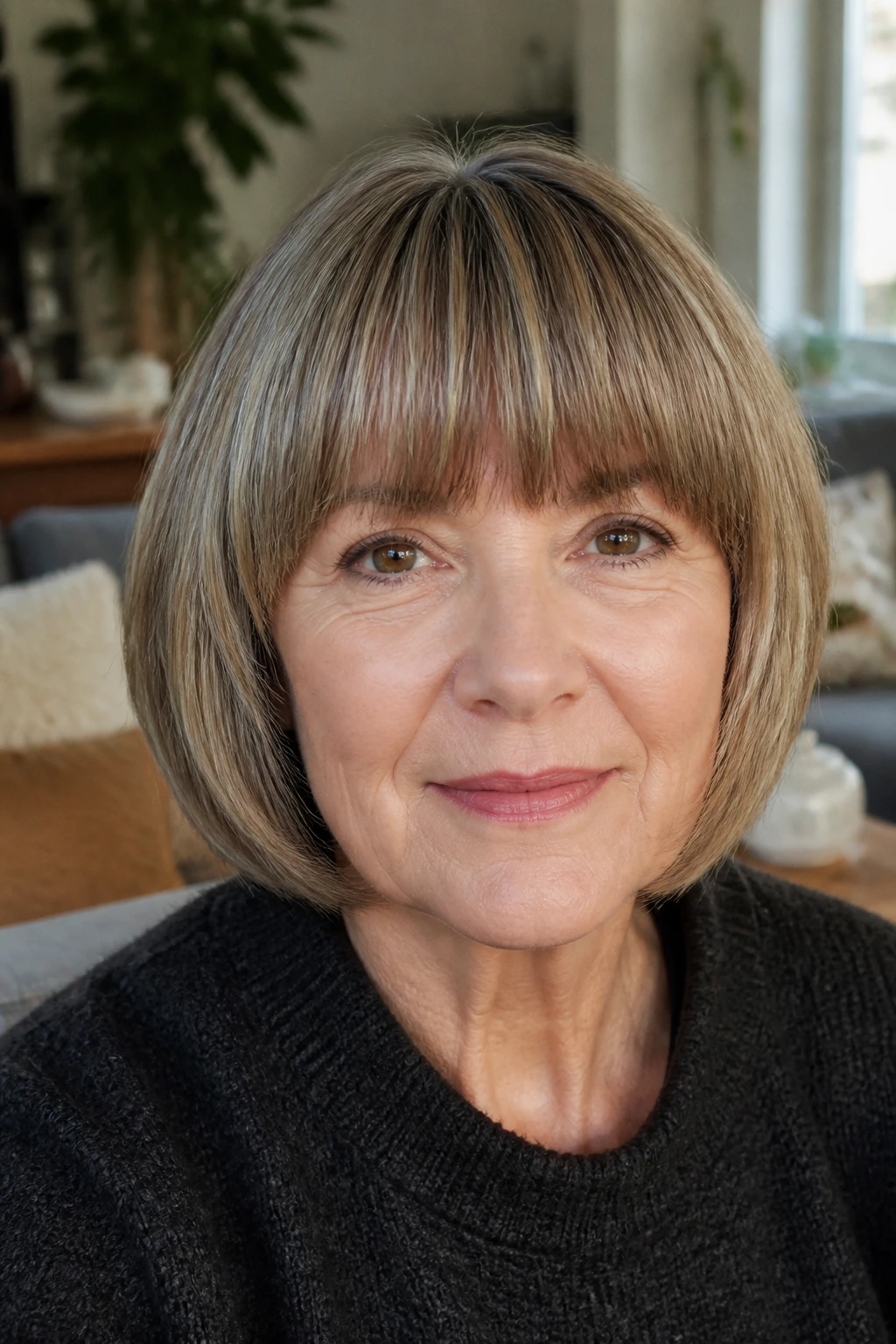
A rounded full fringe can work on a round face if the curve is soft and the edges are lighter than the center. The mistake people make is going too blunt, which creates a solid bowl-like line across the forehead. That’s the version to avoid. The better version bends gently with the brow and slightly opens at the temples.
I like this one for thicker hair because the fringe has enough body to hold its shape without going sparse. It can also make the eyes look larger by framing them in a curved line. The catch is maintenance. If the fringe gets too heavy, it starts to feel boxy fast.
How to keep it flattering: Ask for internal texturing so the line has air, not just width.
Best paired with: A chin-length or shoulder-length cut with some lift at the crown.
Styling note: Dry it forward first, then split the ends with your fingertips so it doesn’t sit like a shelf.
11. Pixie Bangs
Pixie bangs are short enough to feel crisp, but they work best when the top of the cut carries some height. That lift at the crown matters because it lengthens the face visually. On a round face, a little height at the top plus a short, textured fringe is a strong combination.
These bangs are not for hiding. They reveal a lot of forehead and bring all the attention upward, which can be a good thing if you want a sharp, clean shape around the eyes. I like them on silver hair especially, because the texture shows up well and the cut has a nice clean edge against the skin.
Best on: Confident pixie wearers, naturally straight or wavy hair, and anyone ready for regular trims.
Watch for: If the crown is flat, the bangs can make the face feel wider. The lift has to be part of the plan.
Styling product: A light mousse at the roots, then a touch of paste on the ends. Nothing sticky.
12. Split Fringe
A split fringe gives you the feeling of bangs without a full forehead curtain. It parts at or near the center and falls into two soft sections, which is a useful trick on a round face because it creates a vertical opening right in the middle. That opening helps lengthen the face and keeps the cheeks from taking over the frame.
The split doesn’t have to be perfectly even. In fact, I prefer it when one side is a little fuller than the other. Perfect symmetry can look stiff, and stiff bangs are rarely the best answer for round features. This shape also grows out well, which makes it practical if you don’t want to visit the salon every few weeks.
How to style it: Blow-dry the fringe forward first, then split it while it’s still warm. Let the pieces fall away from the center line.
Best for: Medium hair, loose waves, and women who want forehead coverage that still feels airy.
Good news: If the center breaks a little during the day, it usually looks better, not worse.
13. Razor-Cut Fringe
A razor-cut fringe can rescue thick hair from turning into one heavy bar across the forehead. The razor removes weight and leaves softer edges, which is exactly what a round face needs when it wants some fringe without more bulk. The cut moves instead of sitting there.
I only like this when the stylist knows how to use a razor on your texture. On hair that’s too fragile or too frizzy, it can fray the ends in a bad way. But on straight to wavy hair with some density, it gives a fringe a nice slip and a little separation. That separation stops the face from feeling overly wide.
Best paired with: Shags, soft bobs, and layered lobs.
Styling note: Work a tiny amount of smoothing cream into the ends before drying, then separate with fingers.
Salon note: Ask for softness, not thinning for the sake of thinning. Those are not the same thing.
14. Lob Fringe
This is the bridge style for anyone who wants bangs but doesn’t want them to be the whole story. A lob fringe connects to a long bob or collarbone-length cut, so the front pieces and the fringe work together. On a round face, that extra length below the chin matters because it draws the eye downward and stretches the silhouette a bit.
The bangs themselves can be short and light, but the surrounding cut keeps them from feeling isolated. That’s the clever part. Instead of the fringe sitting on top of the face like a separate object, it blends into the sides and the neck line. The effect is cleaner and more forgiving.
Why I like it over 50: It gives shape without looking overdone, and it’s easy to wear with glasses, earrings, or a strong side part.
Ask for: A fringe that blends into front layers, not a detached bang.
Bonus: It grows out with less drama than a strict micro fringe.
15. Shattered Side Bangs
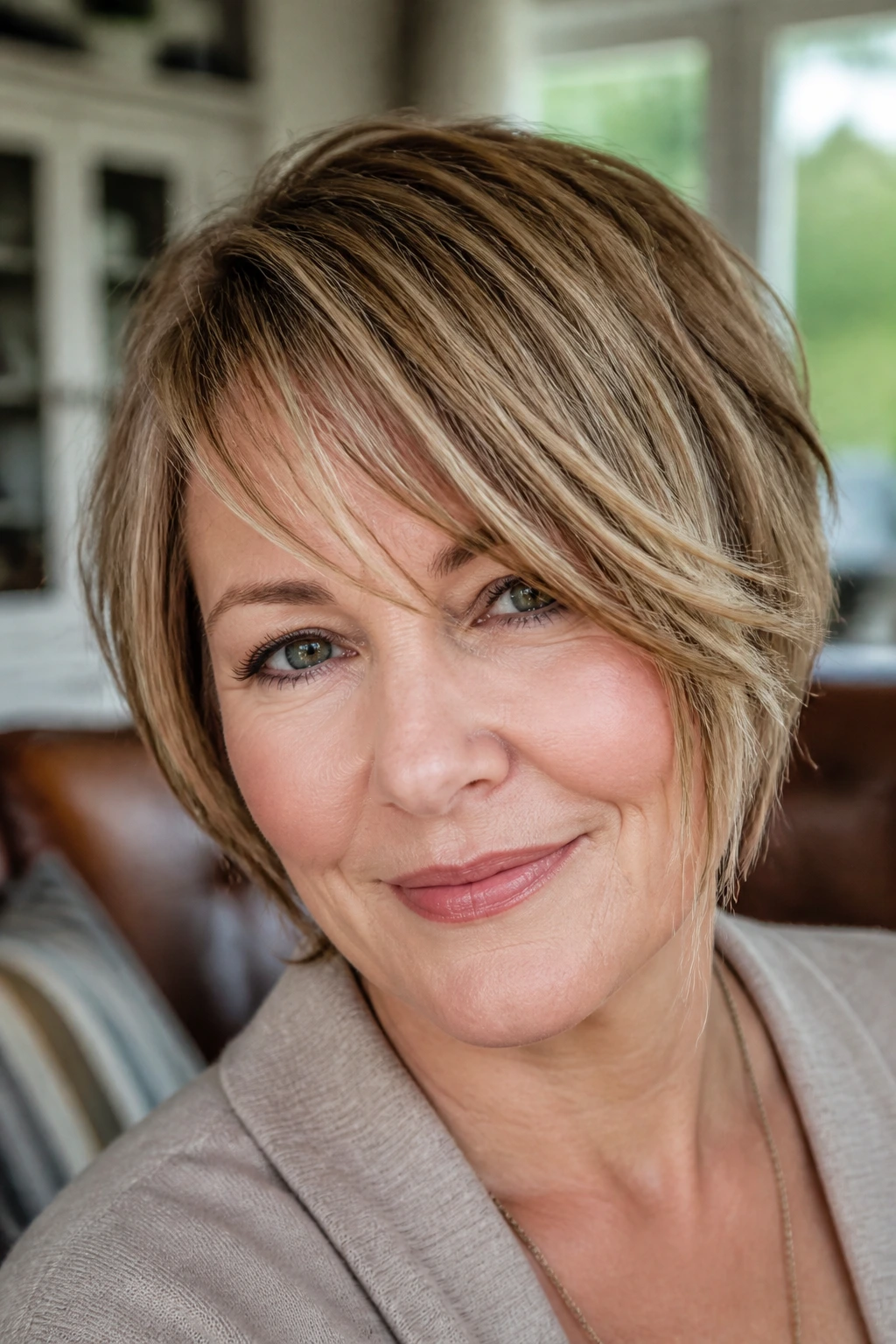
Shattered side bangs are what you get when the side fringe is cut with movement in mind. The line isn’t smooth and polished; it’s broken into little fragments that fall across the forehead and cheek in a looser way. On a round face, that shattered edge is useful because it keeps the eye moving.
This style works well if you have thicker hair and want some of that weight removed without making the bangs disappear. It’s also a solid pick if your hair tends to puff up in humidity, because the separated pieces hold shape better than one heavy sheet. The cut should feel airy, not sparse.
Best for: Wavy or coarse hair, layered cuts, and people who like a little edge.
Styling tip: Scrunch a small amount of texturizing spray into the fringe after drying, then separate the pieces with your fingertips.
What not to do: Don’t brush it flat after the cut. That wipes out the whole point.
16. Feathered Bottleneck Hybrid
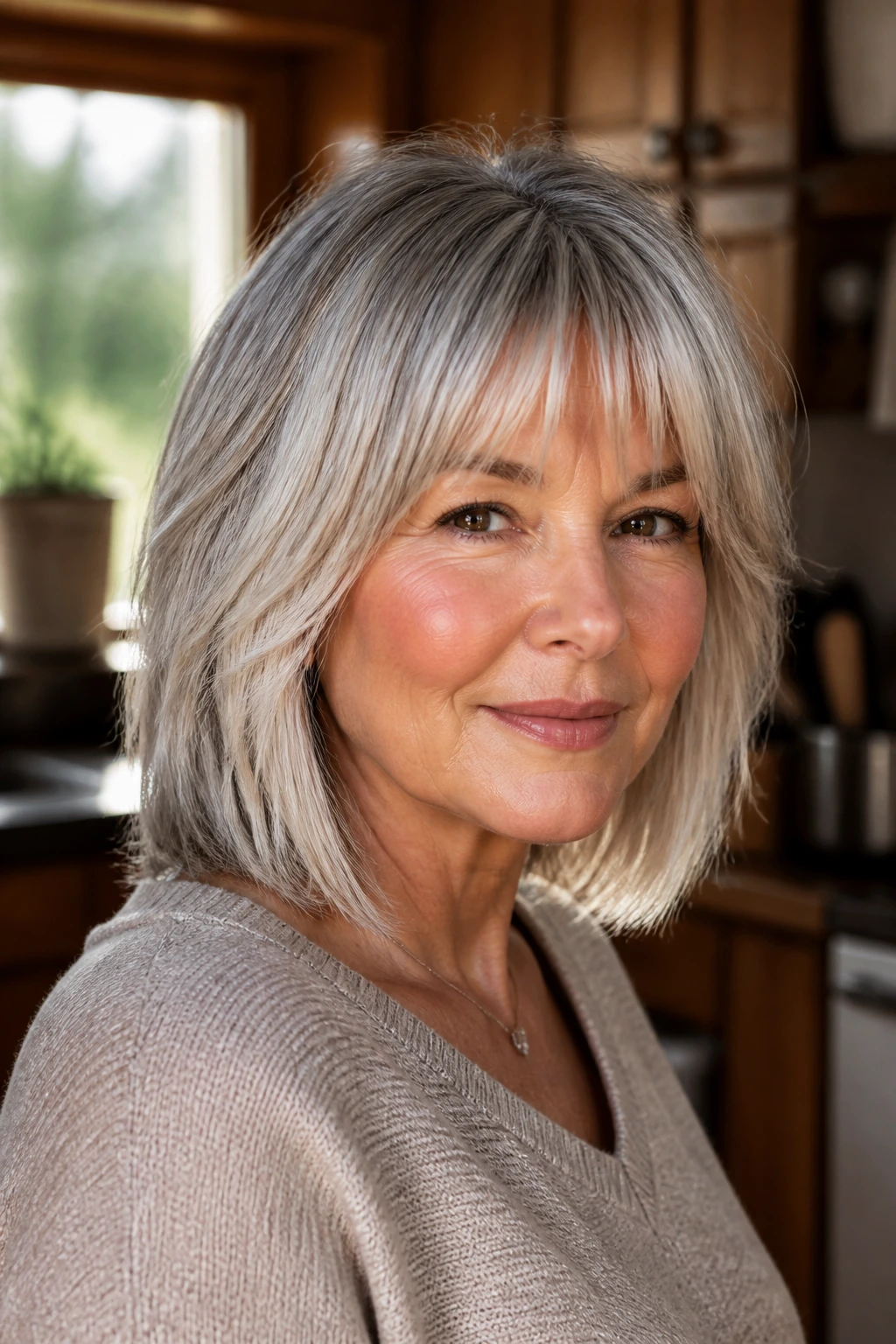
This is the grown-up version of a bottleneck fringe. The center stays a bit shorter, the sides feather out softly, and the whole thing feels lighter around the temples. On a round face, that taper is gold because it guides the eye inward and down instead of letting it spread sideways.
I like this shape for women whose hair has gone a little finer but still has enough texture to hold a bend. It also looks lovely in gray, silver, and salt-and-pepper hair because the feathering shows off the color shifts instead of hiding them. The fringe should move with the rest of the haircut, not sit as a separate little block.
Best with: Soft layers, a bob with a small bevel, or shoulder-length hair with face-framing.
Styling note: Use a brush only at the roots; the ends need a looser finish.
Quiet advantage: It’s one of the easiest bangs to grow out because the sides already have length.
17. Deep Side-Part Fringe
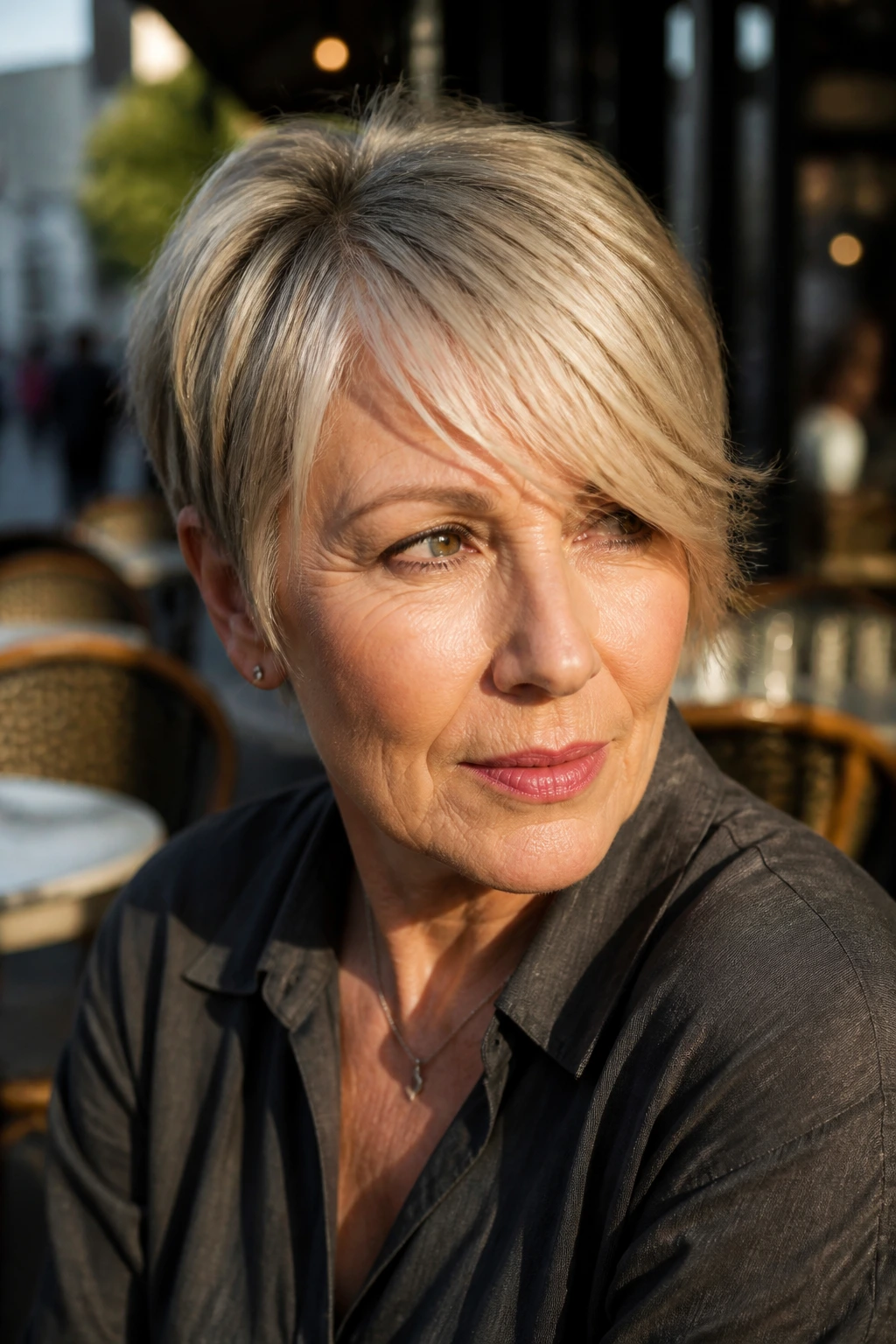
A deep side part can do more for a round face than a lot of people expect. When the fringe starts high on one side and sweeps across at a strong angle, it creates a long diagonal that narrows the middle of the face. That diagonal is one of the cleanest tricks for softening width.
This is the fringe I’d choose for someone who wants a little drama without a hard bang line. It can also disguise a hairline that’s thinner at the front, because the parting and the sweep do most of the work. The root lift matters here. If the bang collapses flat, the shape loses its edge.
How to style it: Blow-dry the front up and away from the part first, then lay it over. A round brush or even a vent brush will do.
Best for: Straight hair, coarse hair that holds direction well, and anyone who likes a strong side profile.
One warning: Don’t over-blend it into the sides. The angle is the point.
18. Arched Fringe
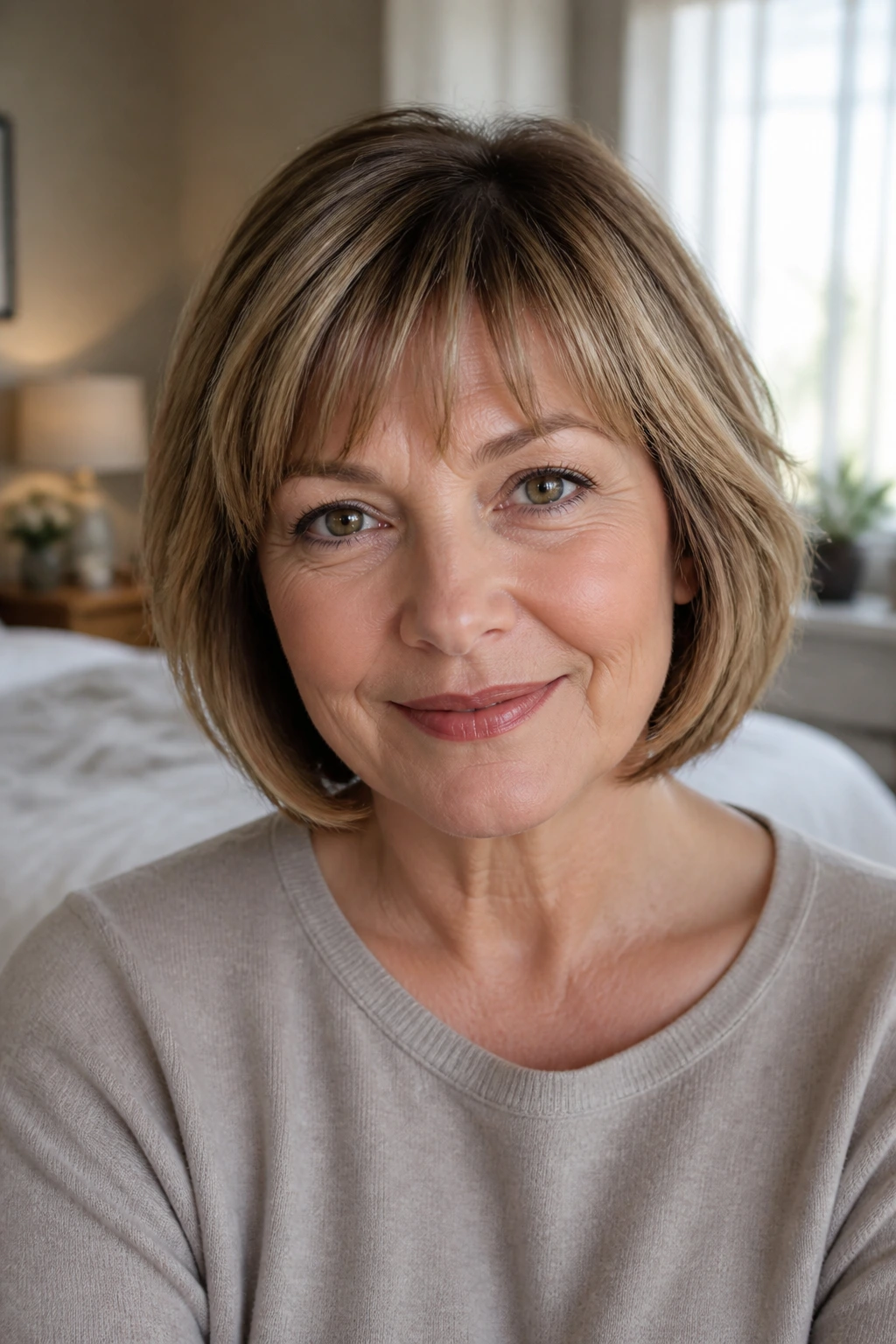
An arched fringe follows the brow line with a soft rise in the center and slightly longer edges. On a round face, that little arch helps open the eyes and creates a touch of vertical lift without going all the way to a curtain bang. It feels neat, but not severe.
This is a nice choice if you want a more traditional bang shape that still flatters a softer face shape. The arch should be subtle. Too much curve and it starts looking like a helmet; too little and it goes blunt. The sweet spot is a light bend that lets the center sit a little higher than the corners.
Best with
- Fine to medium hair.
- A polished bob or a layered shoulder cut.
- Women who want the forehead partly covered, not hidden.
Style it with
A small round brush and a quick cool shot at the end. That cool shot matters. It sets the bend and keeps the fringe from sliding flat by noon.
19. Sweep-Back Fringe
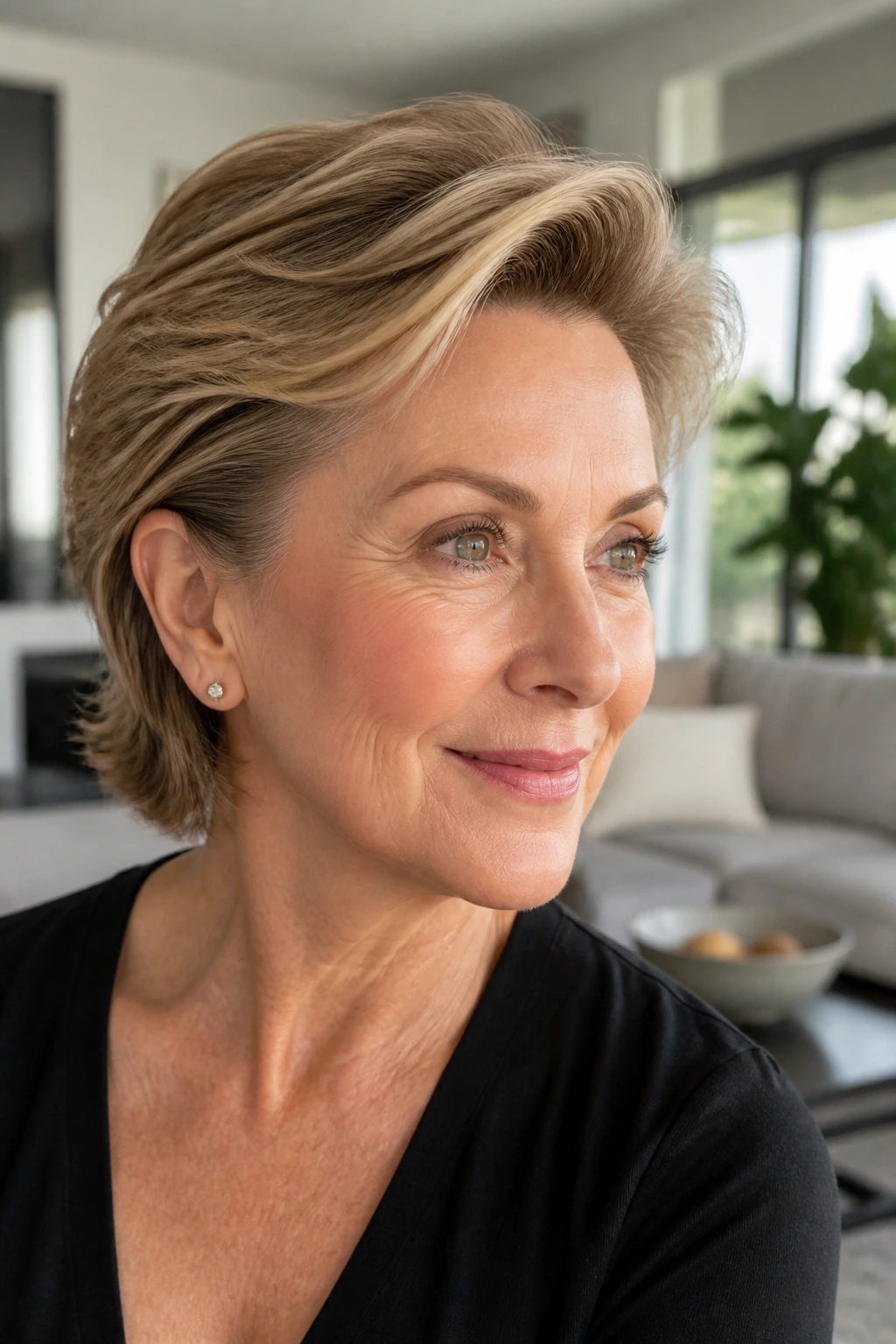
Sweep-back fringe is the one I recommend to anyone who wants bangs with an escape hatch. The fringe is short enough to count as bangs, but long enough to push back, clip to the side, or tuck behind a temple pin. For a round face over 50, that flexibility is a gift. Some days you want the forehead open. Some days you don’t.
This style works especially well during a grow-out phase, but it also stands on its own if you like a softer, less committed look. Because the front isn’t cut too short, it can be redirected easily when the part changes or the humidity gets rude. I like this as a low-drama option for women who want fringe shape without a hard daily routine.
Styling note: Use a root-lift spray at the front and a tiny flat iron bend if the ends flip the wrong way.
Best for: Busy mornings, flexible styling, and anyone who likes to change the part often.
My take: If you’re unsure about bangs, this is the least risky place to start.
Why Short Fringe Placement Matters More Than Bang Length
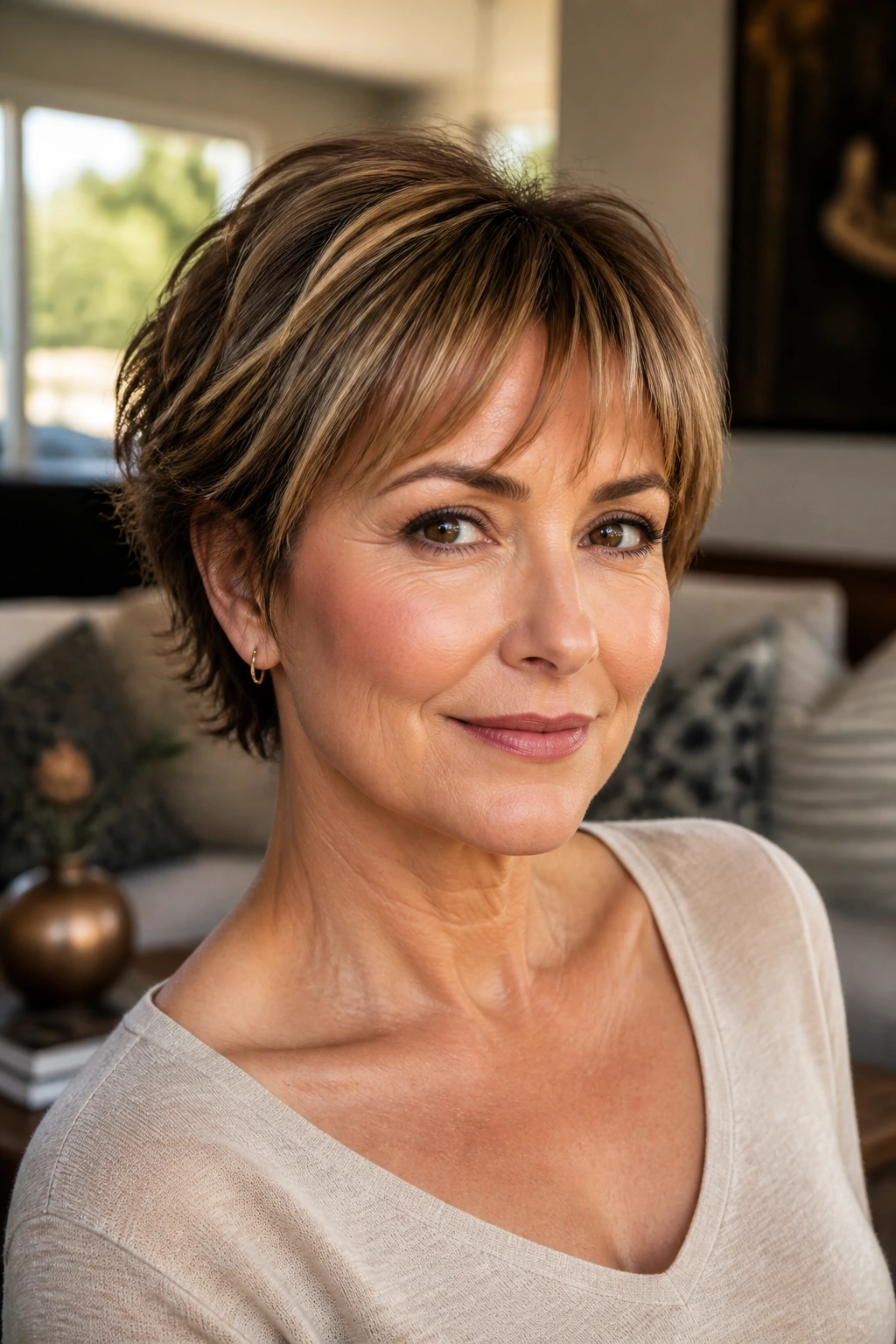
The wrong haircut advice loves to obsess over length, but with a round face the bigger issue is placement. A fringe that ends at the exact widest point of the face can make the cheeks feel broader. A fringe that breaks higher, angles away, or opens at the center does the opposite. It changes the path your eye takes.
That’s why short bangs for round faces over 50 work best when they leave a little space. Space at the brow. Space at the temple. Space in the line of the cut. Those gaps are not wasted space; they’re the part doing the slimming and lifting.
Hair changes after 50 make this even more important. Temples can thin, the front can lose density, and the hairline may sit a bit higher or softer than it used to. A heavy, one-length fringe often fights all of that. A softer, shorter shape works with it, which is why feathering and direction matter more than trying to hide every inch of forehead.
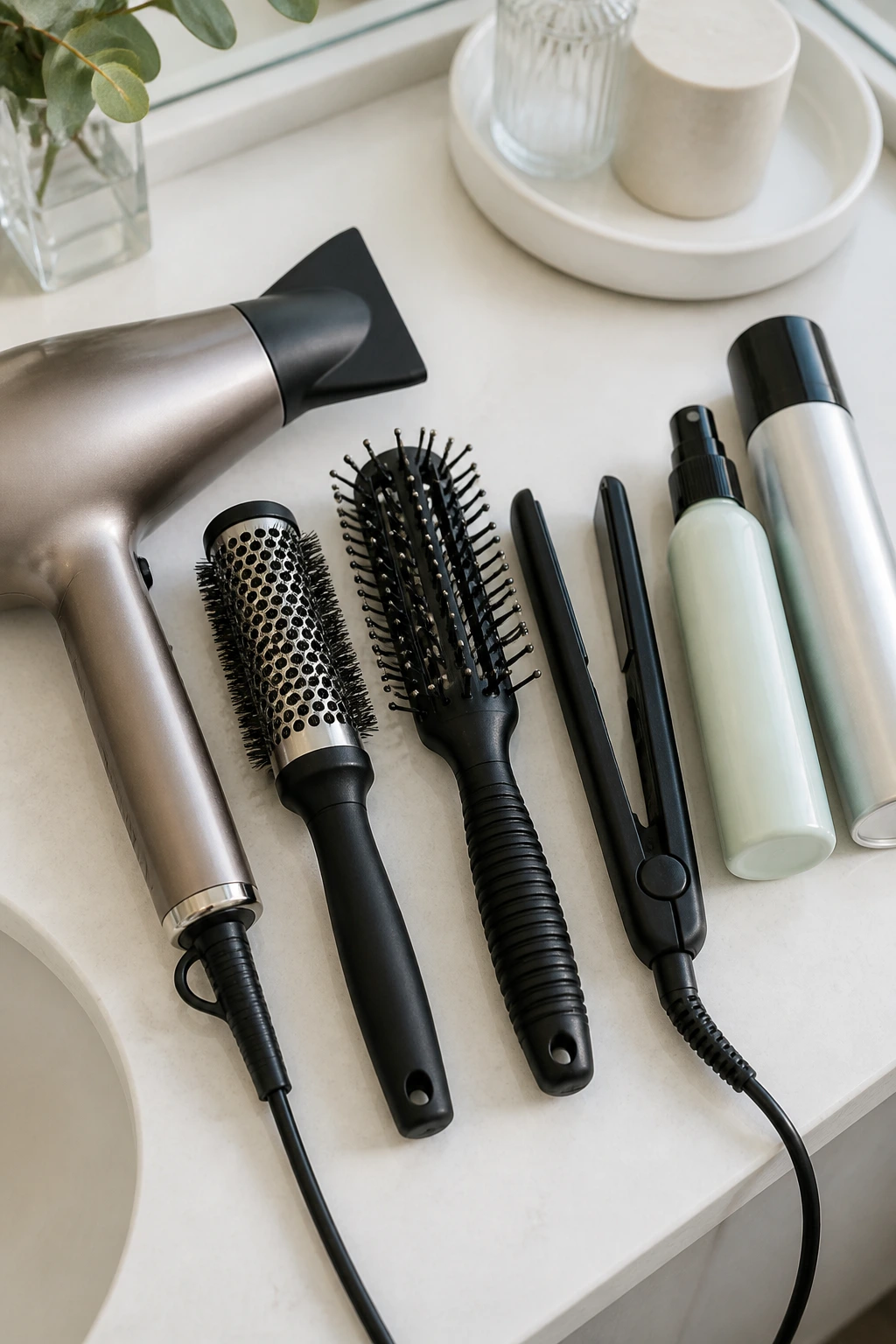
Essential Tools for Styling These Bangs
-
A blow dryer with a narrow nozzle: The nozzle helps direct air at the roots so the fringe dries in the direction you want instead of puffing every which way.
-
A small round brush, about 1 to 1.25 inches: Small enough to bend the fringe without making it curl like a prom bang from the past.
-
A vent brush or paddle brush: Useful for quick shaping on thicker hair or for a fast morning reset.
-
A mini flat iron: Helpful for smoothing the last half-inch of a fringe or giving a soft bend at the sides.
-
Lightweight root-lift spray: Best at the front hairline before blow-drying; it keeps the roots from collapsing.
-
Dry shampoo: Good for the forehead area, which gets oily faster than the rest of the head.
-
Texturizing spray or lightweight paste: Use sparingly to keep piecey bangs separated.
-
Duckbill clips or small styling clips: Handy for training a part while the fringe cools.
What to Ask for at the Salon and What to Buy for Home
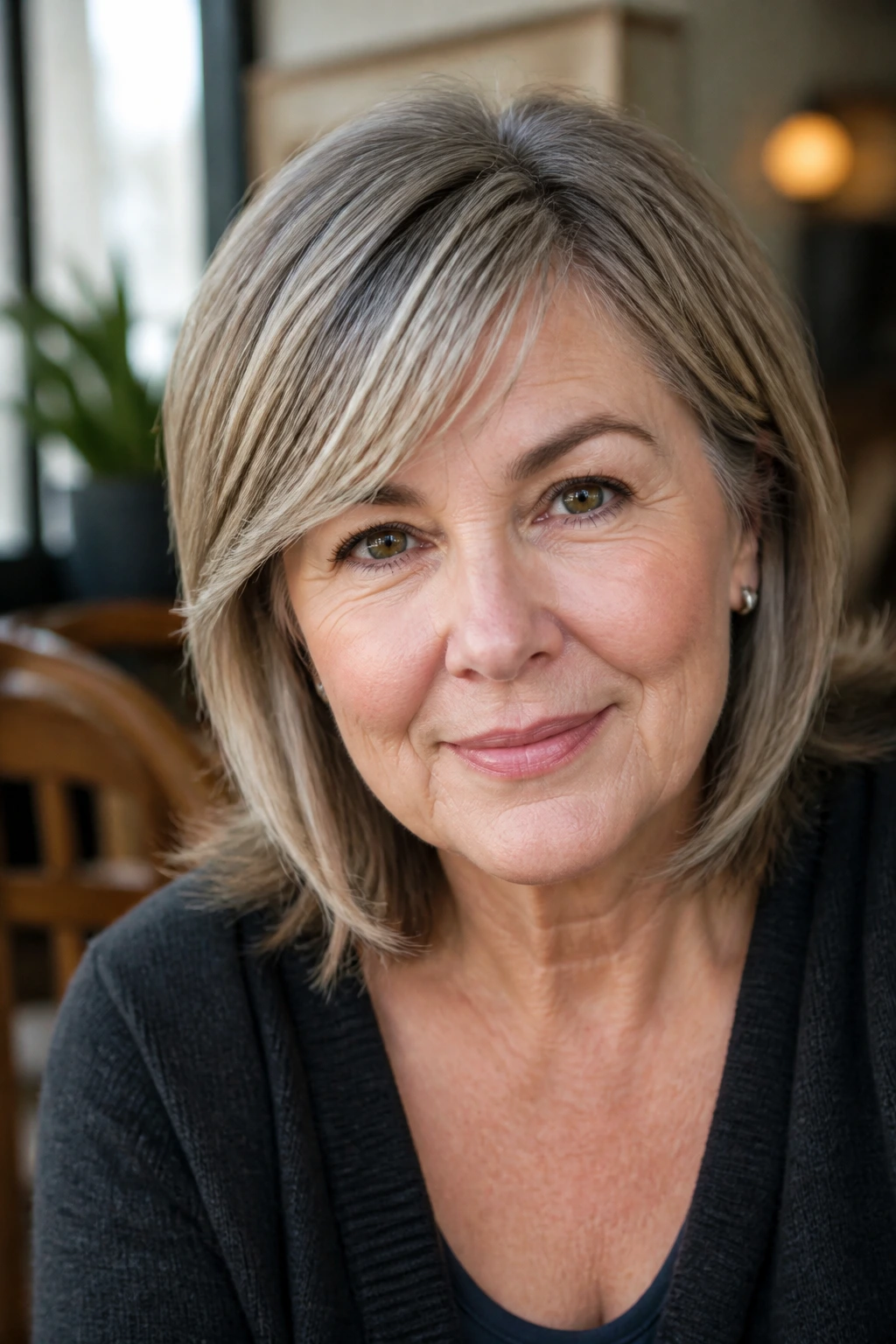
The fastest way to miss on bangs is to show a photo and say “this, but shorter.” That sentence causes problems. Bring one photo of the front, one of the side, and if you wear glasses, bring a shot with frames on. The stylist needs to see where the bangs will live in real life, not in a filtered salon mirror.
Ask whether the fringe should be cut dry, wet, or in stages. With round faces and mature hair, dry detailing matters because it shows the true fall at the brow and temple. Wet bangs can spring up, split open, or flatten in ways that hide the real shape. If your hair is wavy, the dry cut is even more important. It gives the stylist a better read on how much lift to leave.
When you shop for products, keep the list short. You don’t need a drawer of serums. You need a root-lift spray, a light styling cream or paste, and maybe a small finishing spray if your hair is very fine. The mistake is buying heavy products because they promise shine. Shine is nice. Flat bangs are not.
How to Wear Short Bangs With Bobs, Pixies, and Lobs
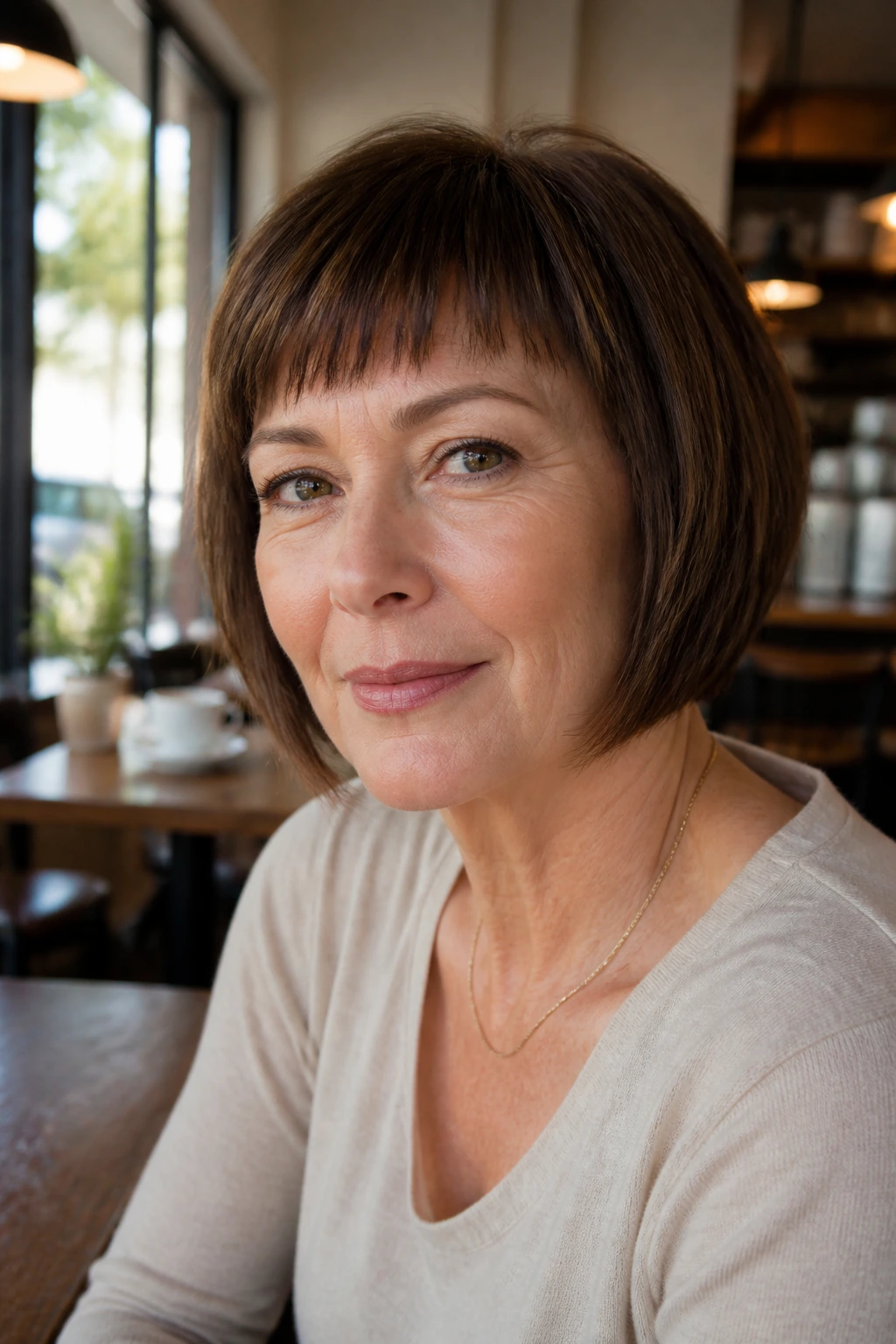
Shape: A short fringe should sit where the eye can use it. On a round face, that usually means a little higher at the center or a little longer at the temples, not a hard line that ends right at the cheek width.
Pairings: Bobs with a slight angle, pixies with crown lift, and lobs with face-framing layers all give short bangs room to do their job. If the rest of the cut is too full at the cheeks, the fringe has to work harder than it should.
Sizing: Short doesn’t mean tiny. You want enough length to move, not enough bulk to sit like a strip of felt. If you wear glasses, leave a sliver of space above the frames so the fringe doesn’t keep brushing the lenses.
Finish: Aim for bend and separation. A smooth, lacquered bang tends to look harder on a round face. A soft finish with a little air in the ends feels better and wears better.
Additional Tips and Bang Boosters
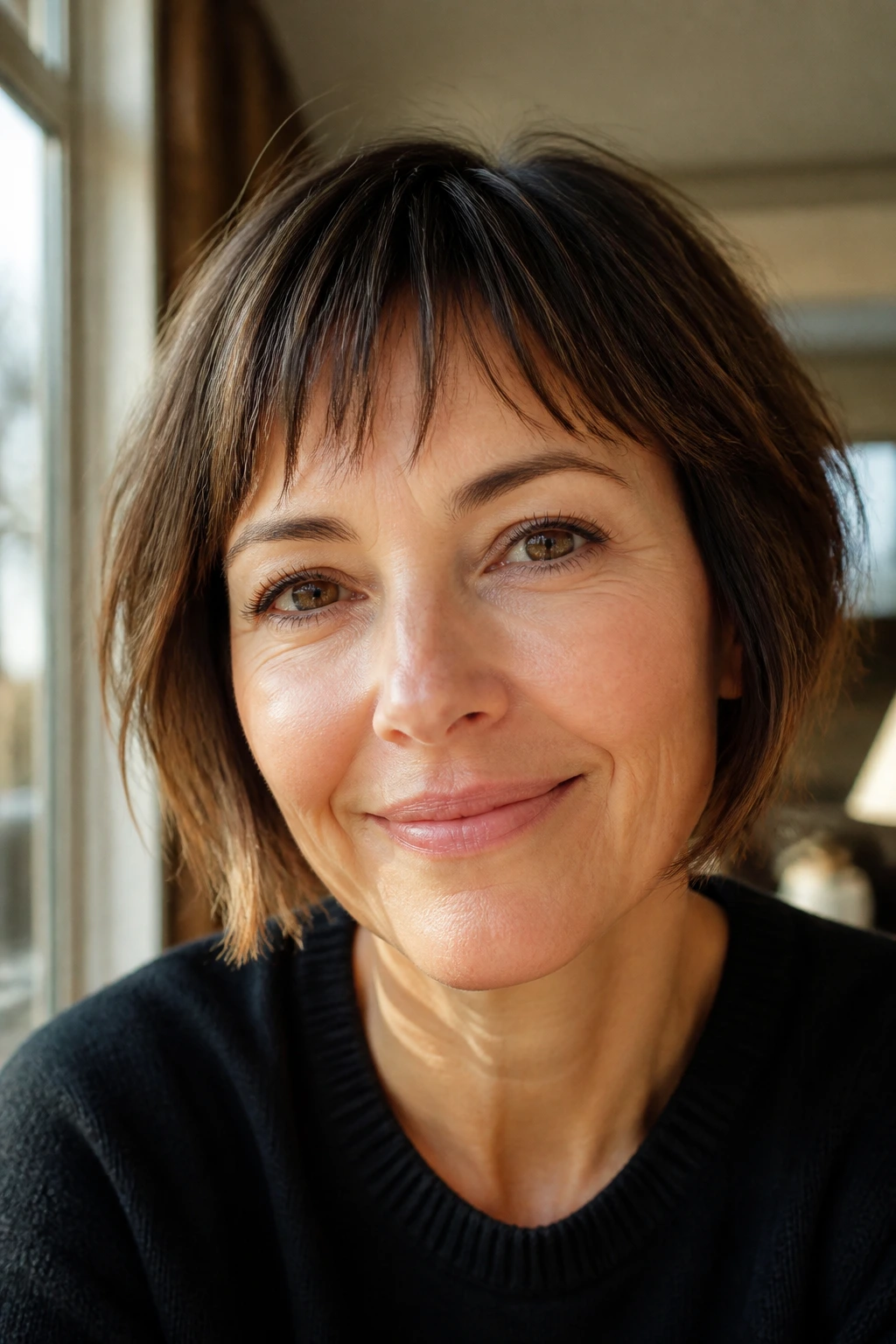
Salon Tip: Ask for the fringe to be cut in the position you actually wear it. If you always tuck one side behind your ear, say so. A bang that only works in the chair is not much use at home.
Styling Shortcut: Dry the fringe first, before the rest of the hair. Bangs dry fast, and once they set wrong, you end up fighting them with water and regret.
Texture Boost: Use a tiny amount of paste on completely dry bangs and pinch the ends apart. You want separation at the tips, not product sitting at the roots.
Glass-Friendly Trick: If you wear glasses, ask for a slightly lighter center and softer temples. That leaves more breathing room above the frames and keeps the bangs from crowding your face.
Grow-Out Plan: If you’re nervous, start with a shape that can become a side fringe or curtain fringe later. That way the grow-out looks deliberate instead of like a mistake you’re trying to survive.
Common Mistakes to Avoid
-
Cutting them too blunt and too dense: The symptom is a fringe that sits like a shelf and makes the face look wider. The fix is point-cutting, feathering, or removing some internal weight.
-
Ignoring the hairline and cowlick: If the front swirls to one side, the bang will split unless the cut respects that pattern. A stylist should work with the growth, not against it.
-
Placing the fringe too low on the forehead: If the bangs land right across the widest part of the face, the shape can feel heavy and short. Lift the center, angle the sides, or open the middle a little more.
-
Using too much product: Heavy cream or oil makes short bangs separate into greasy chunks by noon. Start with a pea-size amount, then add only if the hair still feels dry.
-
Skipping trims: Short bangs change shape fast. After a few weeks, they either poke into the eyes or start curling in odd places. Keep the trim interval tight.
-
Styling only the ends: The root decides the line. If the root lies flat in the wrong direction, the prettiest ends in the world won’t save it.
Variations and Adaptations to Try
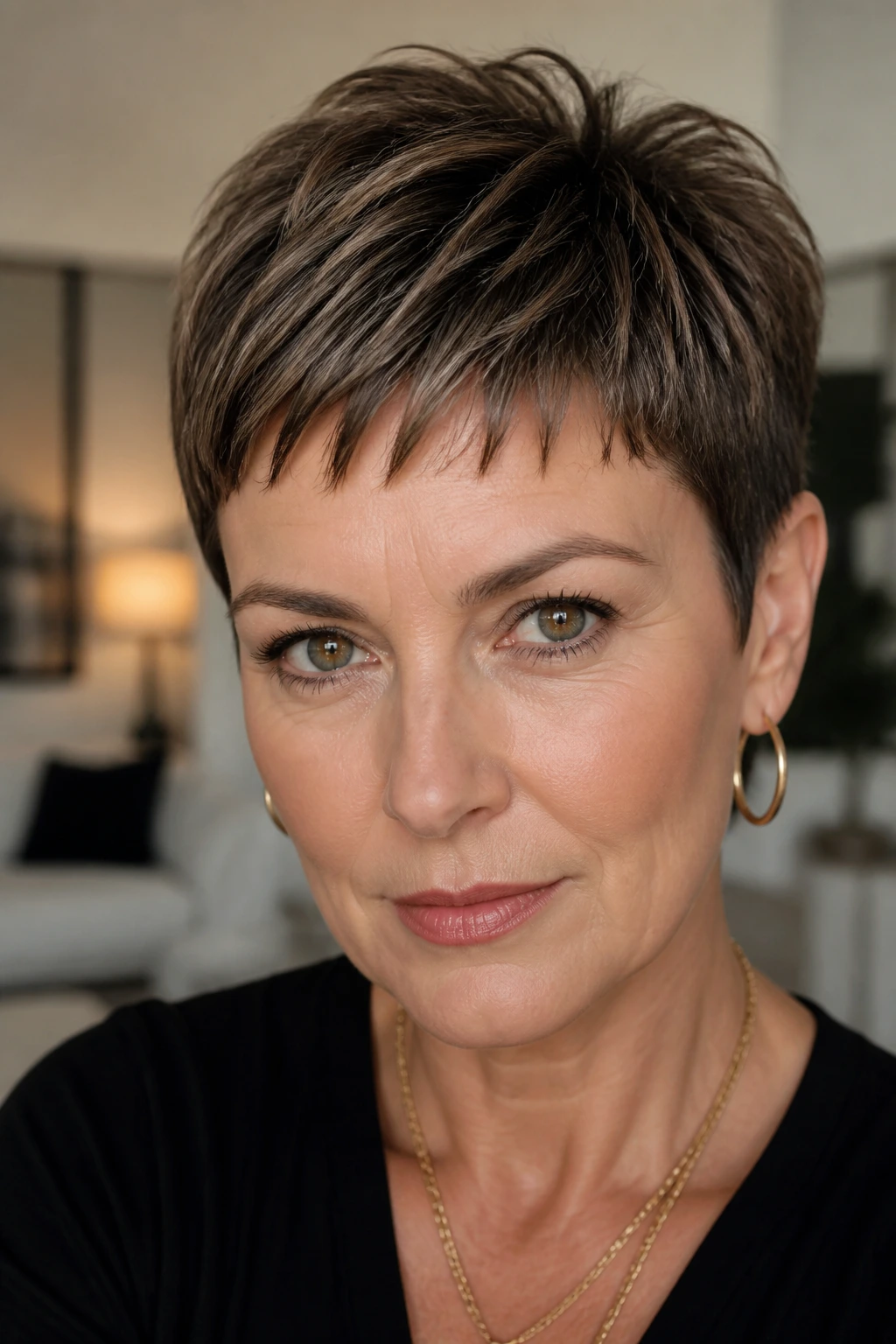
Silver-Soft Fringe: Let the fringe stay a little lighter and less dense if your hair is silver or white. The color already gives texture, so the cut doesn’t need to do all the work.
Glasses-First Fringe: Ask for a shape that clears the top of your frames by a small margin, with softer corners that don’t crowd the temples. It’s a small tweak, but it saves a lot of fiddling.
Fine-Hair Lift Fringe: Keep the fringe lighter through the center and build lift at the roots with a small round brush. Fine hair does better with air than with weight.
Wavy Air-Dry Fringe: Choose feathered or split shapes that can dry with their natural bend. A little undirected texture makes the bangs feel modern instead of overworked.
Bold Short Crop: If you like a sharper look, go shorter with a micro fringe or pixie bang, but keep the edges soft. That softness is what keeps the cut flattering on a round face.
Keeping Short Bangs in Shape Between Washes
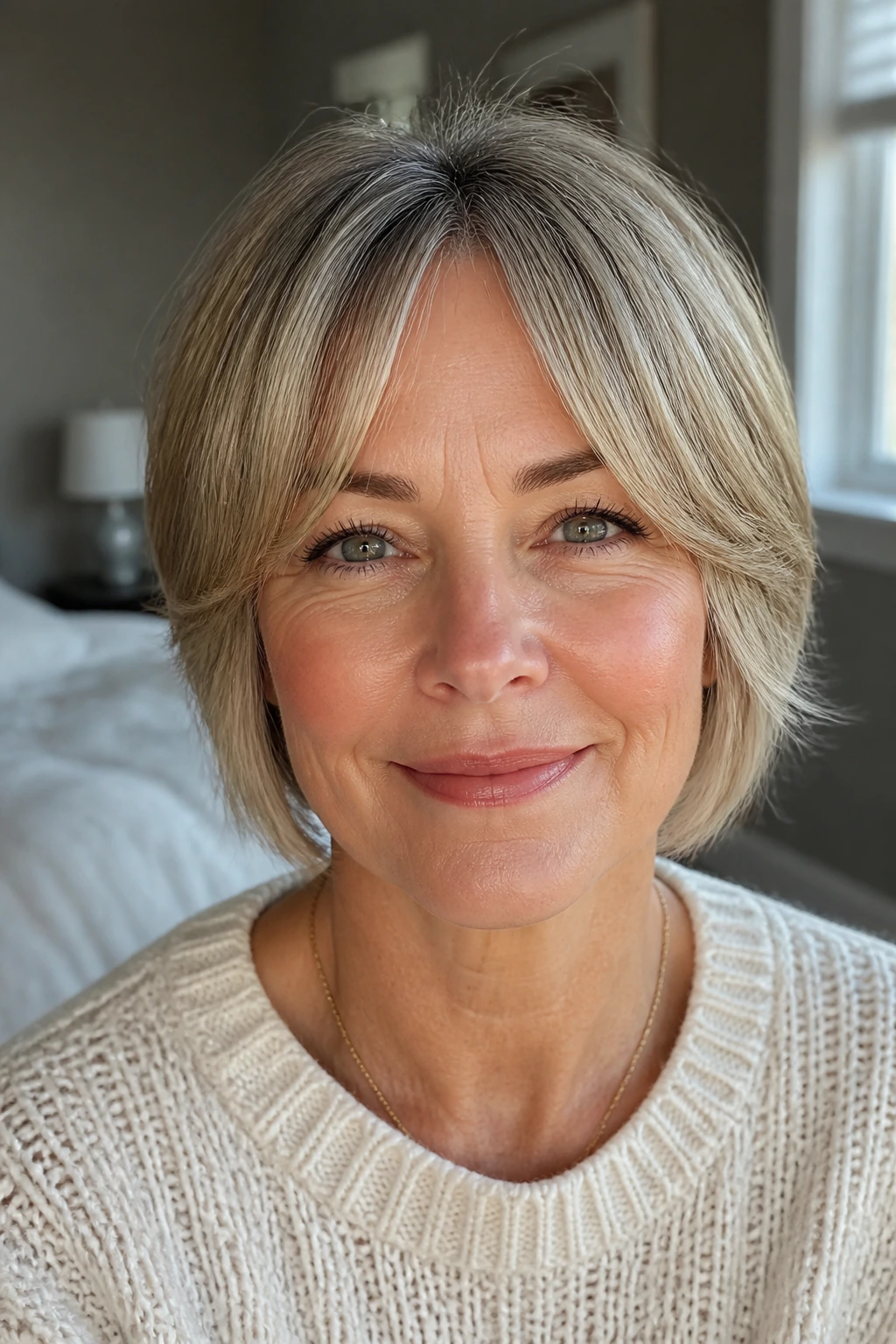
Bangs get dirty faster than the rest of the head. Forehead oil, skin care, makeup, and humidity all hit the fringe first. If you leave them untouched for too long, even a good cut starts to look tired. A quick wash of just the front section or a touch of dry shampoo at the roots usually resets the line fast.
For most short bangs, a trim every 3 to 5 weeks keeps the shape honest. Very short styles like micro bangs or pixie fringes may need closer to 3 weeks. Softer side-swept or sweep-back shapes can stretch a bit longer, especially if they’re already designed to grow out gracefully. If your hair grows fast at the center but slower at the temples, say that at the salon. Uneven growth changes the whole picture.
At home, dry the bangs before the rest of the hair. That sounds small, but it saves time and gives you more control. If the fringe starts separating in the middle, mist the roots lightly, blow-dry forward again, then shape with a brush or fingers. Do not keep adding water all day. That usually makes the problem worse.
Nighttime matters too, though people forget that part. If the fringe has a strong bend, clip it loosely while it cools after styling, or give it a quick pass with the dryer in the morning. A little maintenance beats a full reset.
Frequently Asked Questions
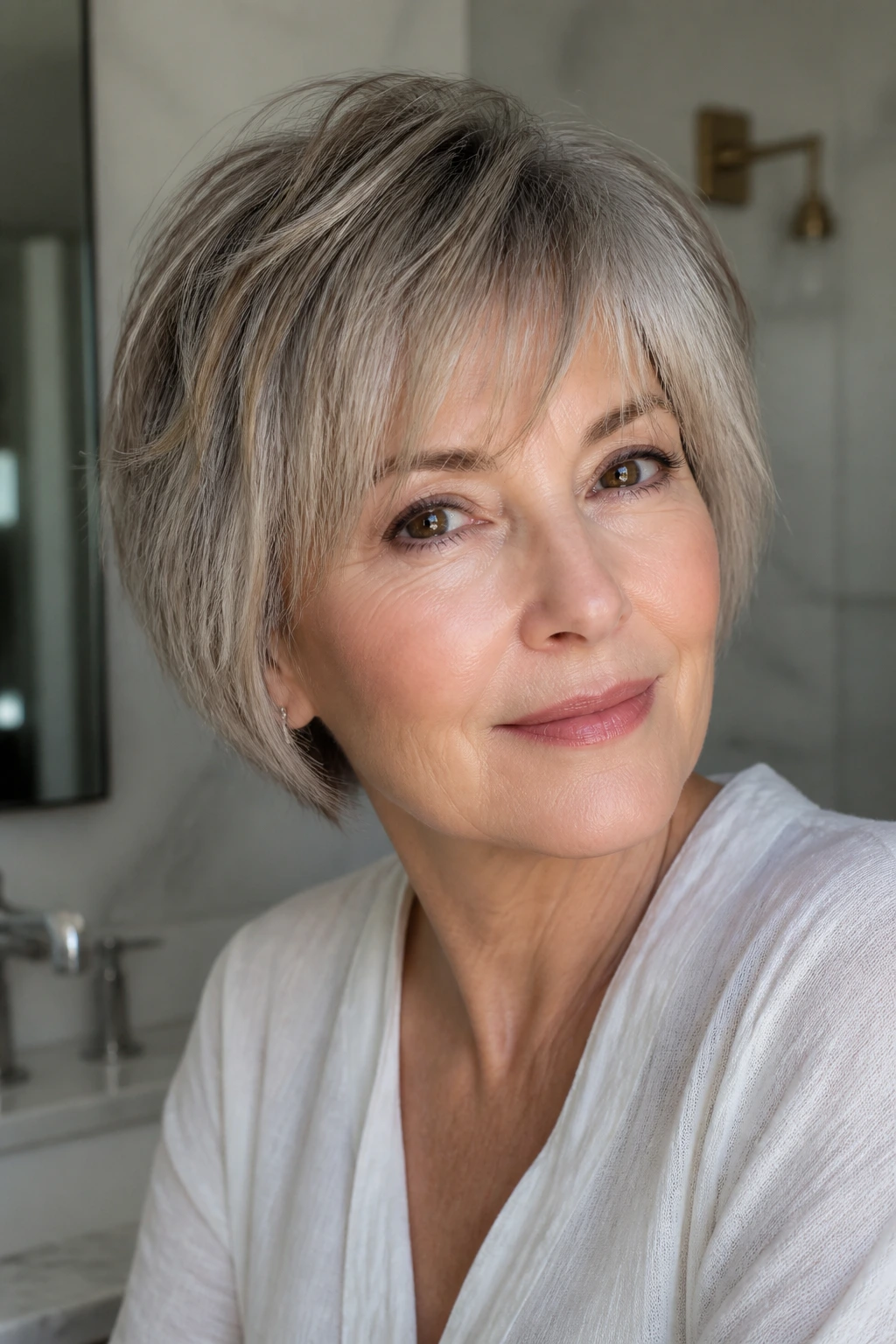
What bangs make a round face look slimmer after 50?
Diagonals, broken lines, and soft center openings do the most work. Side-swept, bottleneck, split, and feathered brow-grazing styles are usually friendlier than one thick blunt line across the forehead.
Are short bangs a bad idea if I wear glasses?
Not at all. You just need the fringe cut with the frame line in mind, so it doesn’t sit right on top of the glasses or keep poking the lenses. Lighter centers and softer corners usually help.
Should bangs be cut wet or dry?
For many mature hair textures, a dry or mostly dry detail cut gives a more honest result. Wet hair can hide cowlicks and shrinkage, which is a headache when the fringe sits close to the brow.
Can fine hair pull off short bangs?
Yes, if the fringe is kept light and not over-thickened. Fine hair often looks better with a wispy or side-swept shape than with a dense full fringe.
How often should I trim short bangs?
Usually every 3 to 5 weeks, depending on the style and how fast your hair grows. Shorter fringes and sharper shapes need tighter maintenance.
What if my bangs split open during the day?
That usually means the root is too oily or the cut is fighting a cowlick. A little dry shampoo at the roots and a quick blow-dry forward can reset them; if the split keeps happening, the shape may need adjusting.
Do short bangs make wrinkles stand out more?
Only if the fringe is cut in a way that sits stiffly on the forehead. Softer, feathered, or side-directed bangs can pull the eye to the eyes and cheekbones instead of flattening the face.
How do I grow out short bangs without looking awkward?
Redirect them into side-swept or split fringe shapes, and let the temples keep a little length. The grow-out looks cleaner when the cut already has movement built in.
A Fringe That Fits the Face You Have
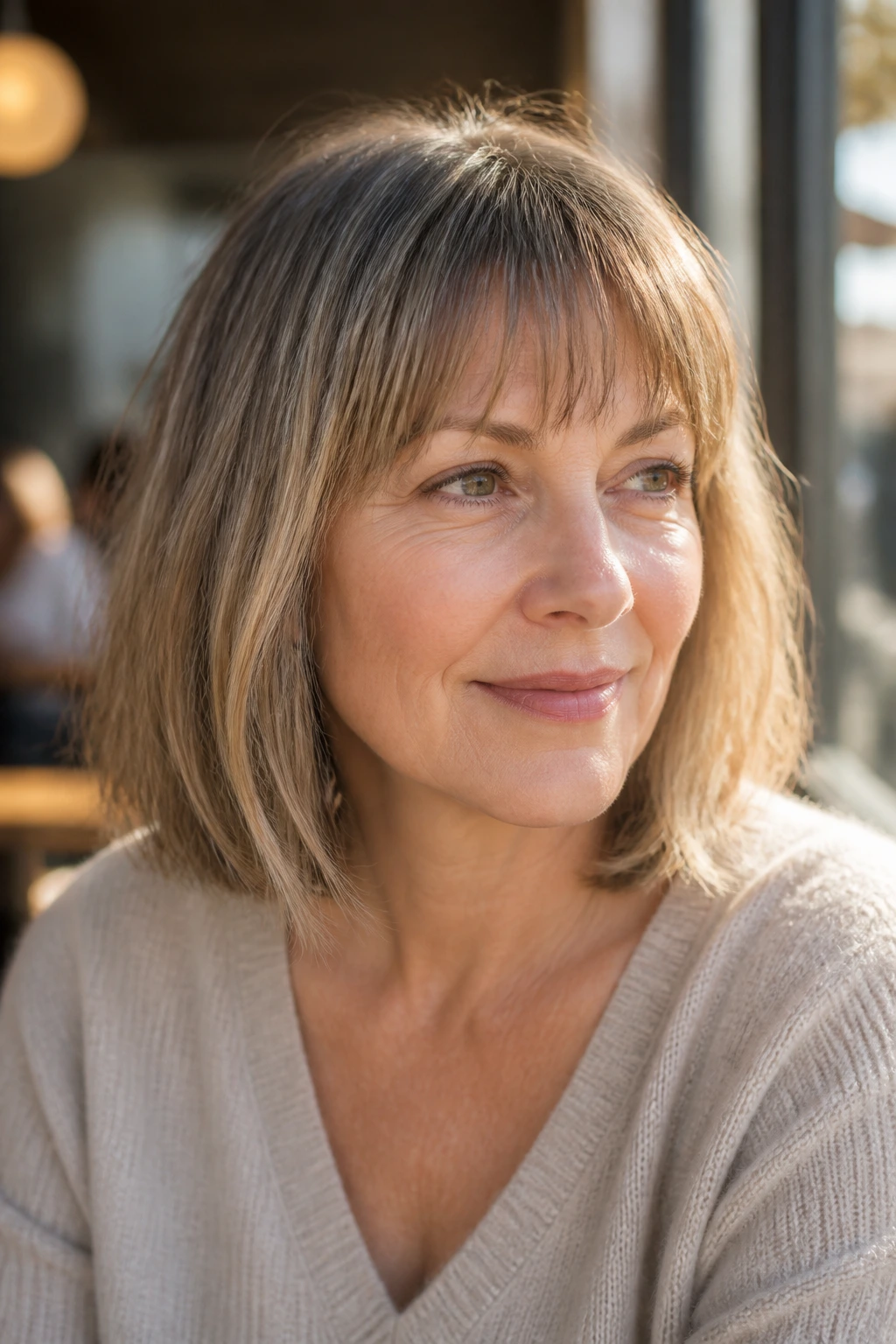
The best short bangs for round faces over 50 do not try to hide the face. They edit it. A little lift here, a soft diagonal there, a break at the brow line where a blunt strip would have sat too heavily — that’s what changes the whole read. The cut feels lighter, and the face gets more shape around the eyes and temples.
My favorite thing about this category is that it leaves room for actual life. Glasses. Cowlicks. Fine hair. Silver roots. Busy mornings. A good fringe should handle those things without becoming a daily drama.
Pick the version that matches your texture and your patience, not the one that looks sharpest on a model with different hair and a different face. When the shape is right, the bangs stop feeling like an accessory and start feeling like part of you.
