



Round faces do not need to be hidden. They need hair that stops fighting the shape and starts working with it.
That’s the whole trick with medium haircuts for round faces: keep enough length to pull the eye downward, keep enough movement so the sides do not puff out at cheek level, and choose a part, layer pattern, or fringe that breaks up the widest line. A blunt cut that lands exactly at the jaw can make the face feel wider. A good medium cut usually does the opposite.
The useful part is that “medium” covers a lot of ground. It can mean a collarbone lob, a layered shoulder cut, a shag with soft edges, or a sleek cut with one smart diagonal line from a side part. If your hair is straight, wavy, curly, fine, or thick, there’s a version here that can be shaped to fit instead of forcing your face into one narrow idea of flattering. And yes, the difference often comes down to a few inches — where the shortest layer lands, how much lift sits at the crown, and whether the ends turn in, out, or stay piecey and loose.
Why These Cuts Earn Their Keep
-
Length that stretches the face: A cut that lands around the collarbone or just below the shoulders keeps the eye moving vertically instead of stopping at the cheeks.
-
Shape without width: The best options here build movement through the ends and crown, not through bulky sides that sit right on the roundest part of the face.
-
Easy grow-out: Medium cuts usually hold their shape longer than shorter crops, so you can stretch salon visits without the style turning awkward.
-
Room for bangs or no bangs: You can add curtain bangs, bottleneck bangs, or a side fringe without making the face feel boxed in.
-
Works with real hair: Air-dried waves, blowouts, curls, and pin-straight finishes all have a place in this length range. That flexibility matters.
-
Less styling drama: A medium cut usually needs less effort than a precision bob and less maintenance than long layers that drag everything down.
1. Collarbone Lob with Soft Ends
A collarbone lob is one of the safest bets for a round face, and I mean that in the best way. The length lands low enough to keep the cheeks from feeling boxed in, but not so long that the style loses shape and starts hanging flat.
The key is the ends. Ask for soft, slightly beveled ends instead of a hard blunt line. That tiny difference keeps the cut from reading as one heavy shelf across the face. If you want it to feel a little more current, tuck one side behind the ear and leave the other side loose. That asymmetry does more than people think.
For styling, a quick bend with a 1.25-inch iron or a round brush is enough. You are not trying to create curl. You’re just making the line less rigid so the face looks a touch longer.
2. Angled Lob with Longer Front Pieces
Why does this cut work so well? Because it cheats the eye. A subtle angle — shorter in back, longer in front — creates a diagonal line that pulls the face downward instead of letting it widen side to side.
Keep the front pieces just a bit longer than the back, usually by 1 to 2 inches. That tiny slope is enough. If the angle gets too steep, the cut can look dated fast and may feel too obviously “designed.” A softer angle gives you the lift without the drama.
This is a strong option if your hair naturally flips out at the ends. The cut already wants to move forward, so a bit of round-brush polish or a bend with a flat iron works with the shape instead of fighting it.
3. Curtain Bang Lob

Curtain bangs can be a gift on a round face when they’re cut with enough length. The sweet spot is usually starting near the bridge of the nose and dropping longer at the cheekbones, not stopping at the forehead like a short fringe.
That opening down the center matters. It breaks up the width at the top of the face and gives the cheeks room to breathe. The rest of the lob should stay soft and shoulder-skimming, because a heavy, blunt base plus full bangs can feel too dense around the face.
This cut does need a little styling. Blow the bangs away from the face with a round brush or a small hot brush, then let the sides fall with a slight bend. Flat, split curtain bangs are a nightmare. Slight movement is the whole point.
4. Butterfly Cut at Collarbone Length
The butterfly cut has become popular for a reason: it gives you the idea of a big, face-framing blowout without sacrificing length. For round faces, the trick is placing the shortest layers high enough to lift the cheek area but low enough not to widen it.
Ask for the shortest face-framing pieces to start below the cheekbone, then let the longer layers fall to the collarbone or a little past it. That creates a layered halo up top and keeps the lower half of the hair long enough to draw the eye down. If the layers start too high, the face can feel puffy.
This cut really shines when styled with a round brush. You want the top layers full and airy, not curled tightly. The look is soft, a little glamorous, and much easier to wear than people assume.
5. Side-Parted Midi Shag
A side-parted midi shag is one of the best ways to put a diagonal line across a round face without making the haircut feel severe. The side part opens up one side of the forehead and shifts the visual weight off the center, which changes the whole mood of the face.
The shag part gives you texture around the crown and through the ends, but it should be controlled texture, not random frizz. Ask for layers that start around the chin or lower, then be thinned only where the hair feels bulky. Too much choppy cutting near the cheeks can add width.
This one likes a little mess. Air-dry with mousse or diffuse with low heat, then break up the roots with your fingers. If you spend ten minutes trying to make it look too neat, you’ll flatten the shape that makes it work.
6. Face-Framing Layers Below the Cheekbones
Face-framing layers can either flatter a round face or make it look fuller. The difference is placement. The shortest layer should land below the cheekbone, not directly on it, so the cut opens up the middle of the face instead of circling it.
I like this option for people who want to keep most of their length but need a little movement around the front. It is a quiet fix. No big chop, no dramatic reshaping, just enough contour to keep the hair from hanging straight down and reading as one block.
Styling is simple. Blow the front pieces away from the face, then let them fall with a soft curve. If you wear your hair up a lot, these layers also make a ponytail look more finished because the front pieces do a little work on their own.
7. Wavy Lob with S-Bends
If your hair already has bend, don’t flatten it into submission. A wavy lob with soft S-bends keeps the movement loose and long, which helps the face feel narrower without turning the cut stiff.
The main thing here is scale. Use a 1.25-inch curling iron or wand, wrap sections away from the face, and leave the ends out for a more relaxed shape. Then brush through gently so the curl pattern softens into a bend instead of becoming a tight ringlet. That brushed-out look is what keeps the cut from getting too wide at the sides.
This is also a forgiving cut on second-day hair. A mist of water, a little leave-in, and a twist with your fingers can wake it up fast. If your hair tends to puff in humidity, keep the layers longer and the texture around the ends, not the cheeks.
8. Shoulder-Length Blunt Cut with an Off-Center Part
Blunt cuts can work on round faces, but I prefer them a little lower and a little looser. A shoulder-length blunt cut keeps the line strong, and the off-center part stops the style from feeling like a perfect circle around the face.
The important part is where the blunt line sits. If it lands right at the jaw, the shape can feel heavy. If it sits at the shoulders, it reads cleaner and gives the face room. An off-center part adds just enough asymmetry to keep the hair from looking like a helmet.
This cut is a good pick if you like sleek styling. Use a paddle brush, blow-dry smooth, and tuck one side behind the ear for a sharper line. It’s simple. Not boring. There’s a difference.
9. C-Cut Layers
A C-cut is named for the shape the hair makes around the face: a soft curve that bends inward near the cheeks and then flows down. That curve can be a lifesaver on a round face because it gives shape without hard edges.
Ask for the front to be cut with a gentle sweep, then ask the stylist to keep the outer perimeter longer. You want that curved contour near the face, not a lot of chopped-up pieces that hit the widest part of the cheek. When done right, the cut looks polished even when it’s not heavily styled.
This is a particularly nice option if you wear your hair tucked behind one ear, because the front curve stays visible. It also works on both straight and wavy hair. The curve gives the cut some shape even when the rest is simple.
10. Razor-Soft Midi
A razor-soft midi works best on thick or dense hair that tends to balloon at the sides. The razor or slide-cut finish removes some weight from the ends so the hair can fall in a more vertical line.
You do need a careful hand here. Too much razor work near the face can make the cut frayed. What you want is softness at the perimeter, not shredded ends everywhere. A good cutter will focus on the lower sections and keep the face-framing pieces long enough to narrow the look of the face.
For styling, a quick blowout is enough. You’re not chasing perfect curl or sleekness; you’re trying to keep the cut from turning into one heavy rectangle. On thick hair, that matters a lot.
11. Piecey Lob with Invisible Layers

The phrase “invisible layers” sounds fussy, but the idea is practical: take weight out inside the haircut without changing the outside line too much. On a round face, that means you get movement without the sides puffing outward.
This is one of my favorite cuts for people who hate obvious layering. From the outside, it still looks like a lob. Up close, the internal layers make it lighter and easier to push behind the shoulders or wear with a bend. The face gets a cleaner frame, and the hair doesn’t feel chopped to bits.
It’s especially useful if your hair is fine but dense, or thick but flat at the root. You keep the outline, lose the bulk, and the whole head of hair sits better.
12. Bottleneck Bangs and Shoulder Layers
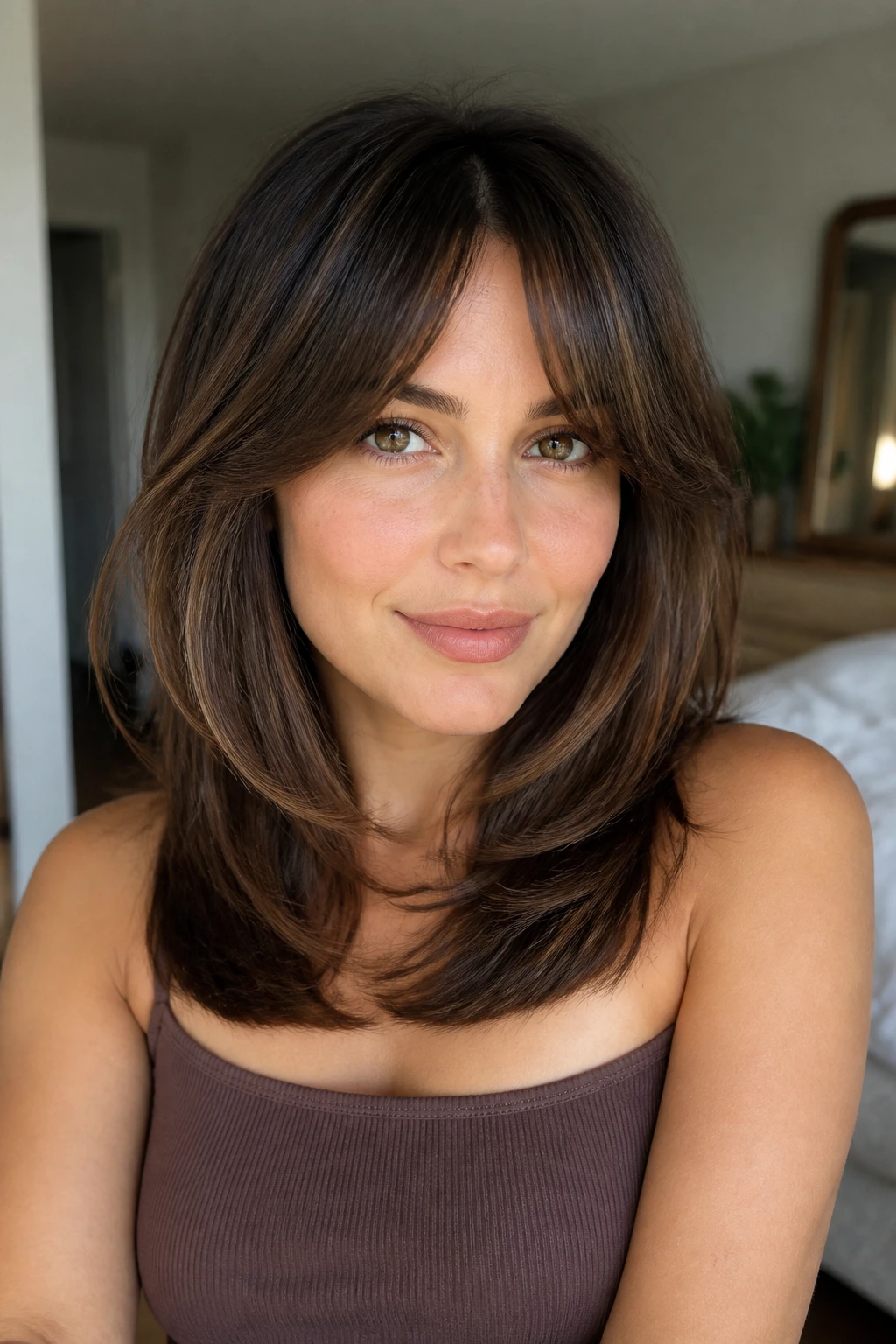
Bottleneck bangs are narrower in the center and longer at the sides, which is exactly why they suit round faces better than blunt bangs. They make the forehead feel a little taller without creating a hard line across it.
Pair them with shoulder-length layers and you get a cut that feels soft but controlled. The bangs are the point of focus; the layers keep the rest of the hair from sitting like one heavy curtain. If the shortest layers hit around the cheekbone, they should be feathered enough to move.
This is not a wash-and-go cut unless your texture already does the work. A quick round-brush pass on the bangs matters. If you skip that part, the fringe can collapse into the face and erase the lengthening effect.
13. Long Layers with a Side-Swept Fringe
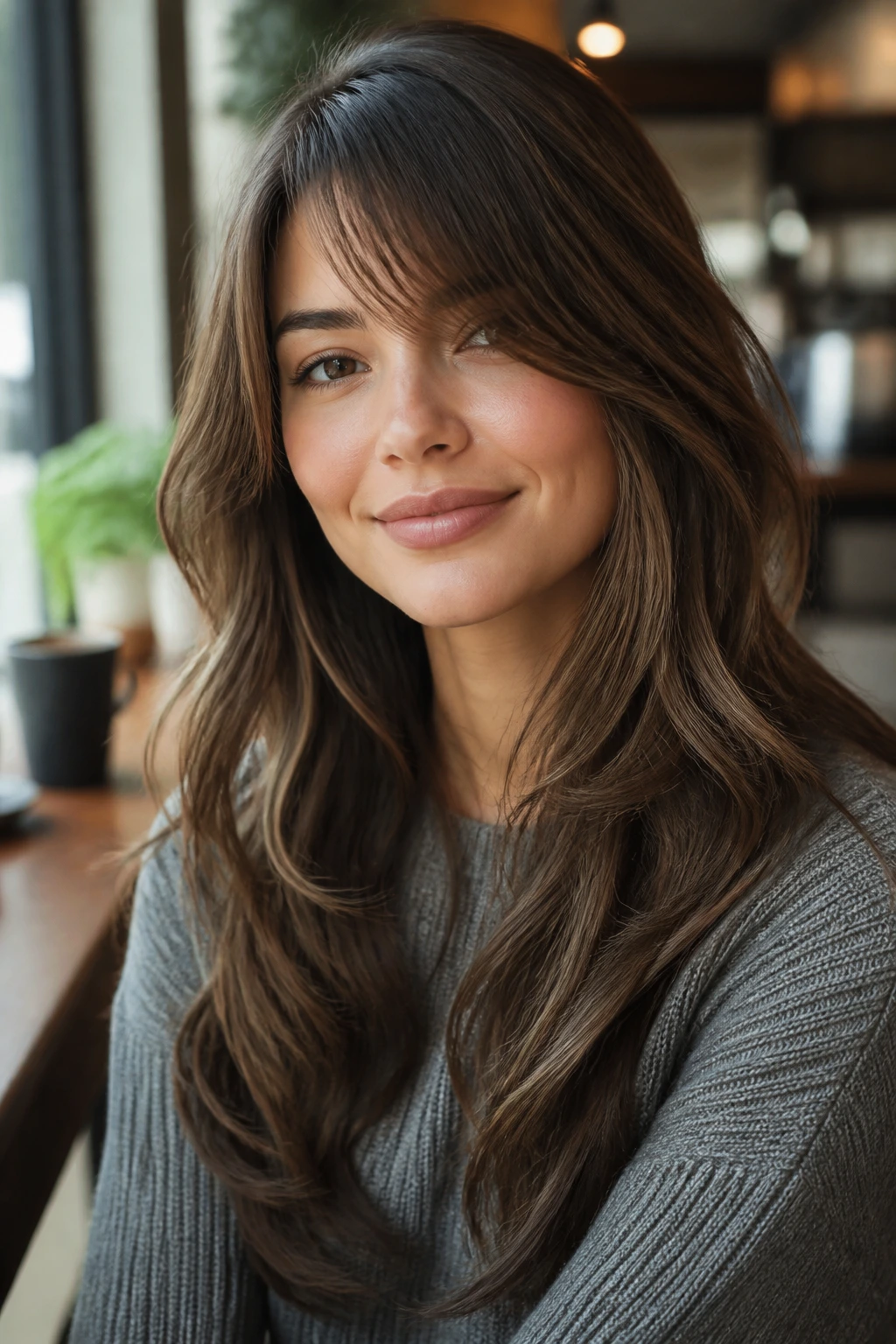
Side-swept fringe still earns its place because it creates a diagonal line across the face. On a round face, that line matters. Straight-across bangs flatten the forehead zone. A swept fringe opens it up and quietly pulls the eye to one side.
Keep the layers long enough to avoid the old “Rachel” flip if that’s not your thing. A modern version should feel softer, with movement that starts below the chin and continues to the shoulders. The fringe should be long enough to tuck, pin, or wear split depending on the day.
This cut suits people who want a little face coverage without committing to full bangs. It also grows out gracefully, which is underrated. Hair that can survive six weeks without looking like a different haircut has real value.
14. Crown-Lift Layer Cut
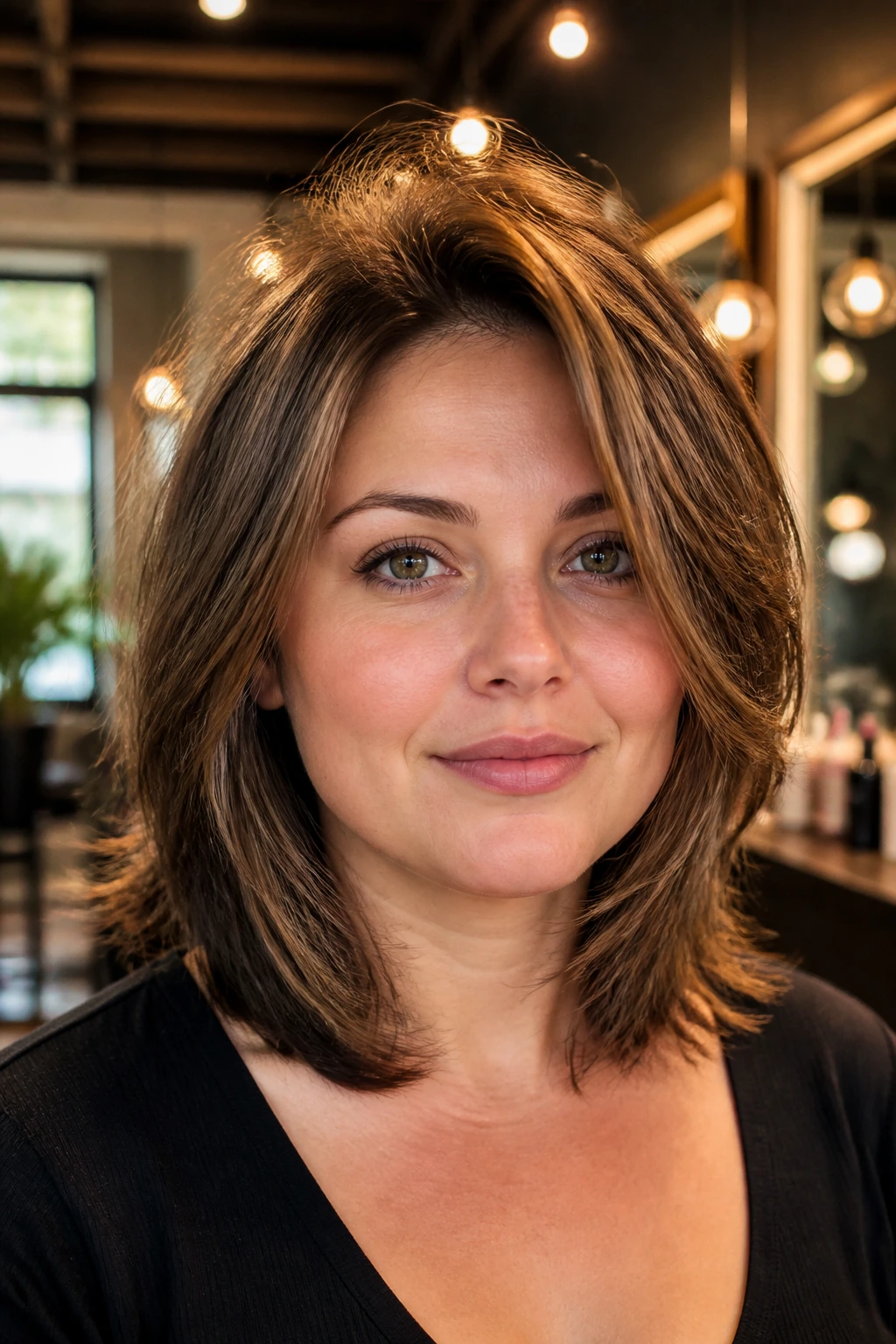
Sometimes the issue is not the sides. It’s the top. A crown-lift layer cut uses shorter layers or strategic blow-drying at the crown to create height where the face needs it most.
That lift changes the whole silhouette. Round faces read wider when all the fullness sits level with the cheeks. Add a little height up top, and the proportions shift. This is why stylists often pay attention to the crown even when the client thinks the front is the only thing that matters.
If you have straight or wavy hair, ask for layers that encourage lift without creating a hole at the top. Then style with mousse at the roots and a round brush. The shape should feel airy, not teased. Big difference.
15. Sliced Cut for Fine Hair
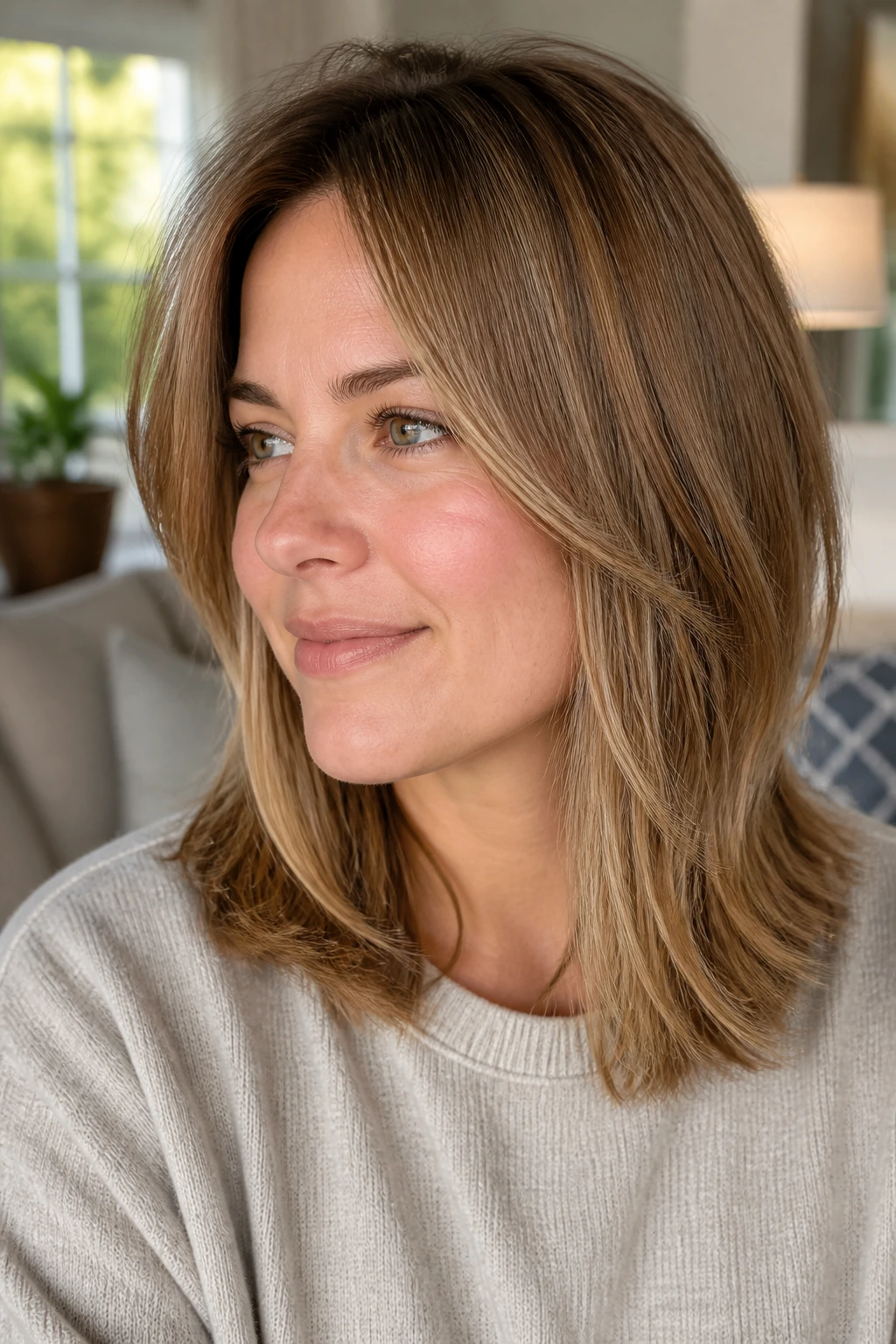
Fine hair can look limp when it’s cut too bluntly, but too many layers can make it look thinner than it is. A sliced cut walks the line between the two. It leaves a clean outline while removing just enough weight for movement.
For round faces, that movement helps because it keeps the hair from forming a flat circle around the head. The cut should skim the shoulders or collarbone, with the shortest pieces placed below the cheekbone. Anything higher tends to build width where you don’t want it.
This cut also behaves well with a little texture spray. Fine hair often needs a bit of grip to avoid slipping flat by noon. A light mist at the mids and ends gives the style some shape without making it crunchy.
16. Thick-Hair Debulked Lob
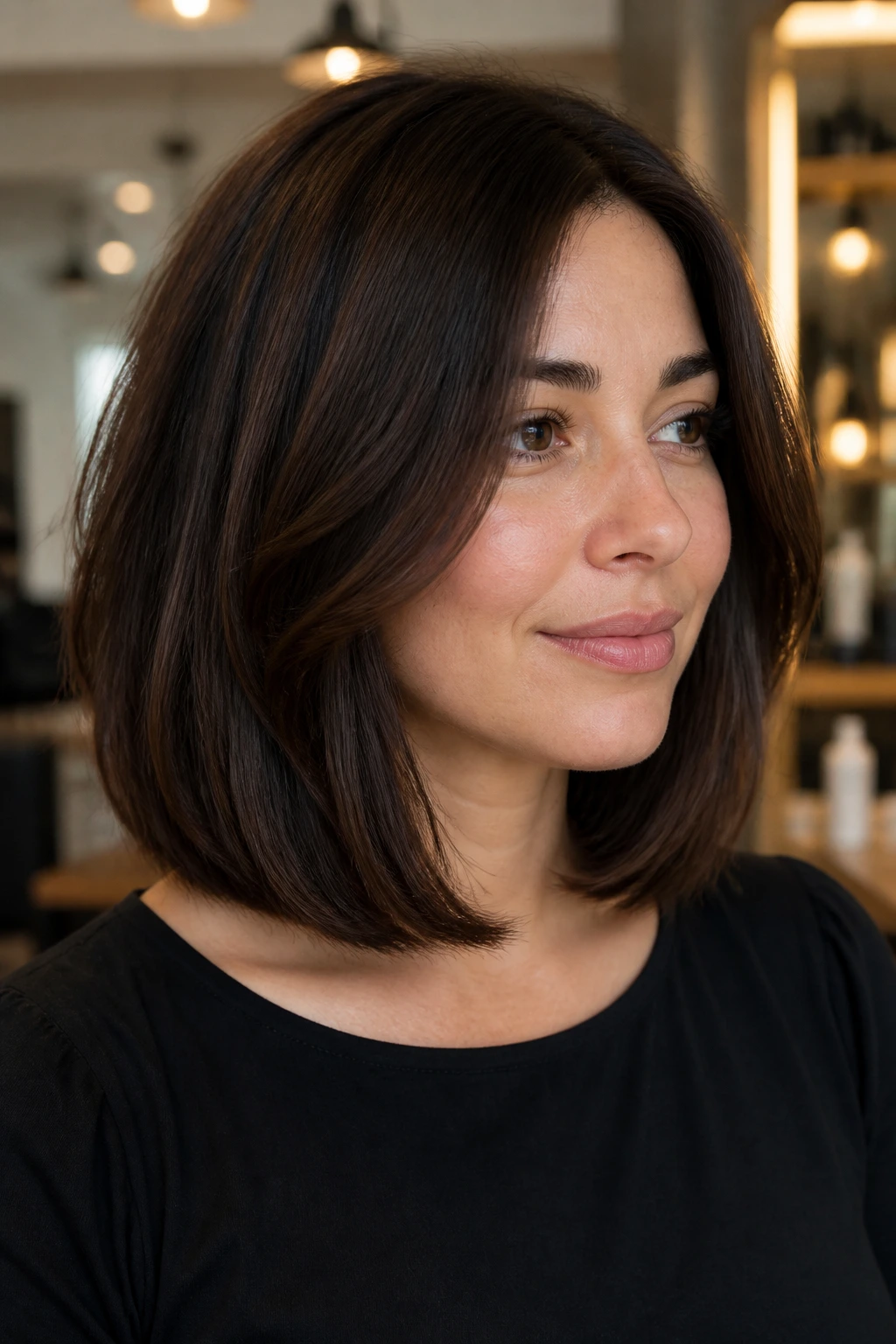
Thick hair is a blessing until it turns into a wide wall around the face. A debulked lob solves that by taking out interior weight while preserving a strong outer line.
I would be picky here. The stylist should remove bulk from the lower and mid sections, not chew up the hairline. If too much volume disappears near the front, the ends can look wispy while the cheeks still read full. The goal is balance, not thinning for the sake of thinning.
This cut is useful if your hair dries into a triangle. Debulking lets the shape fall straighter and slimmer through the sides. On a round face, that cleaner fall is worth the salon chair time.
17. Curly Midi Shag

Curly hair and round faces can be a gorgeous match when the cut respects the curl pattern. A curly midi shag adds height and movement without building a round halo right at cheek level.
The best version is cut with the curl’s natural spring in mind, often dry or mostly dry, so the stylist can see where each curl lands. You want layers that encourage lift at the crown and longer pieces that hang past the widest part of the face. If the top layer is too short, the cut can expand sideways.
A diffuser is your friend here, but don’t blast the curls until they frizz. Low heat, patient drying, and a light cream are enough. If the curls hold shape, the whole face looks longer. That’s the magic.
18. Sleek Collarbone Cut with Tucked Ends
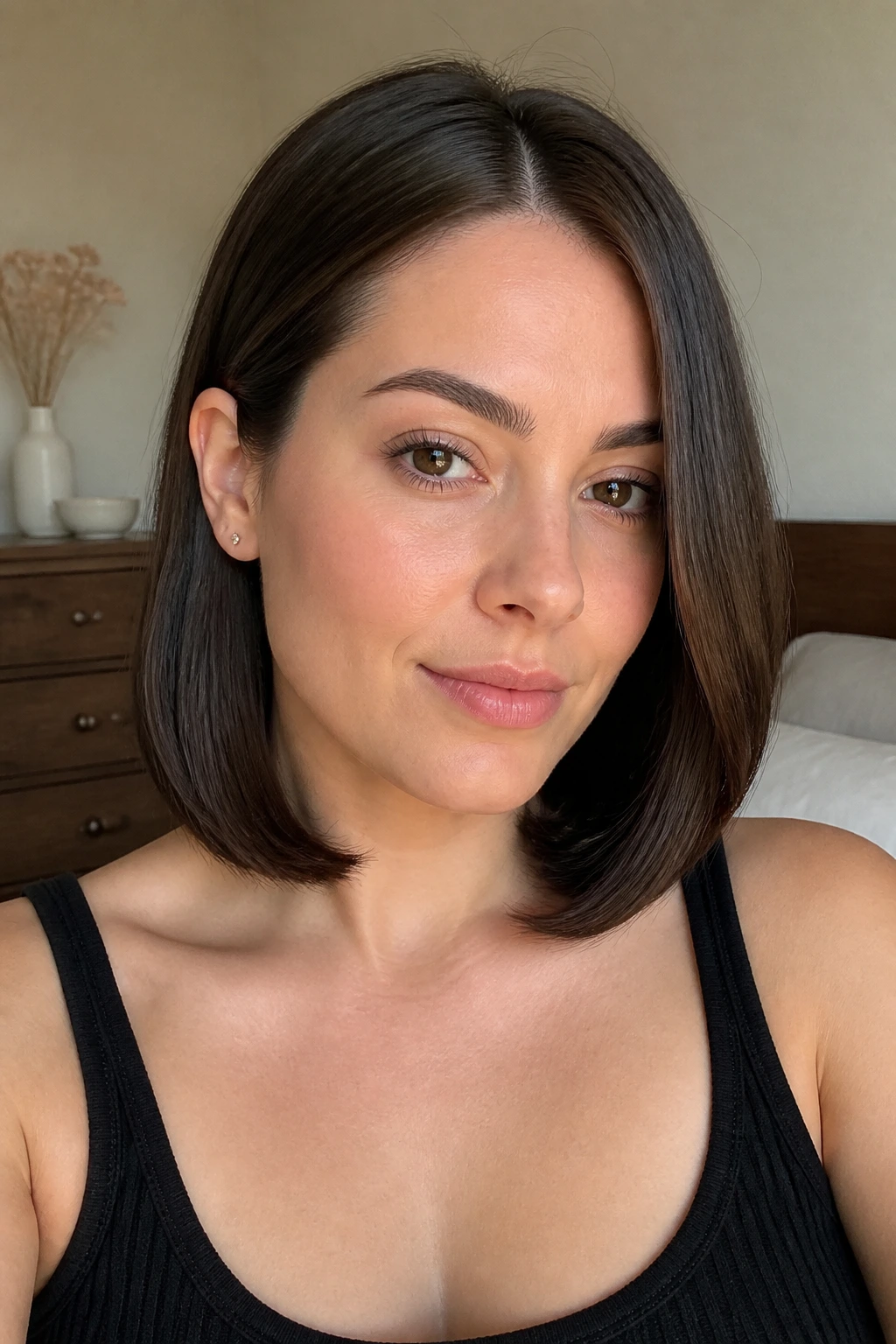
Not every flattering cut needs movement everywhere. A sleek collarbone cut can work beautifully on a round face when the ends are controlled and the styling is clean.
The tuck matters. One side tucked behind the ear creates a straight line down the neck and lets the other side drape. That little asymmetry breaks up the roundness fast. A center part can still work here, but I often prefer a slight offset because it gives the top a softer start.
This cut is good for people who want polish without a lot of layers. Straight hair, especially, can look sharp in this shape. Keep a smoothing serum on the ends, not the roots, so the style stays sleek instead of greasy.
19. Modern Rachel Cut
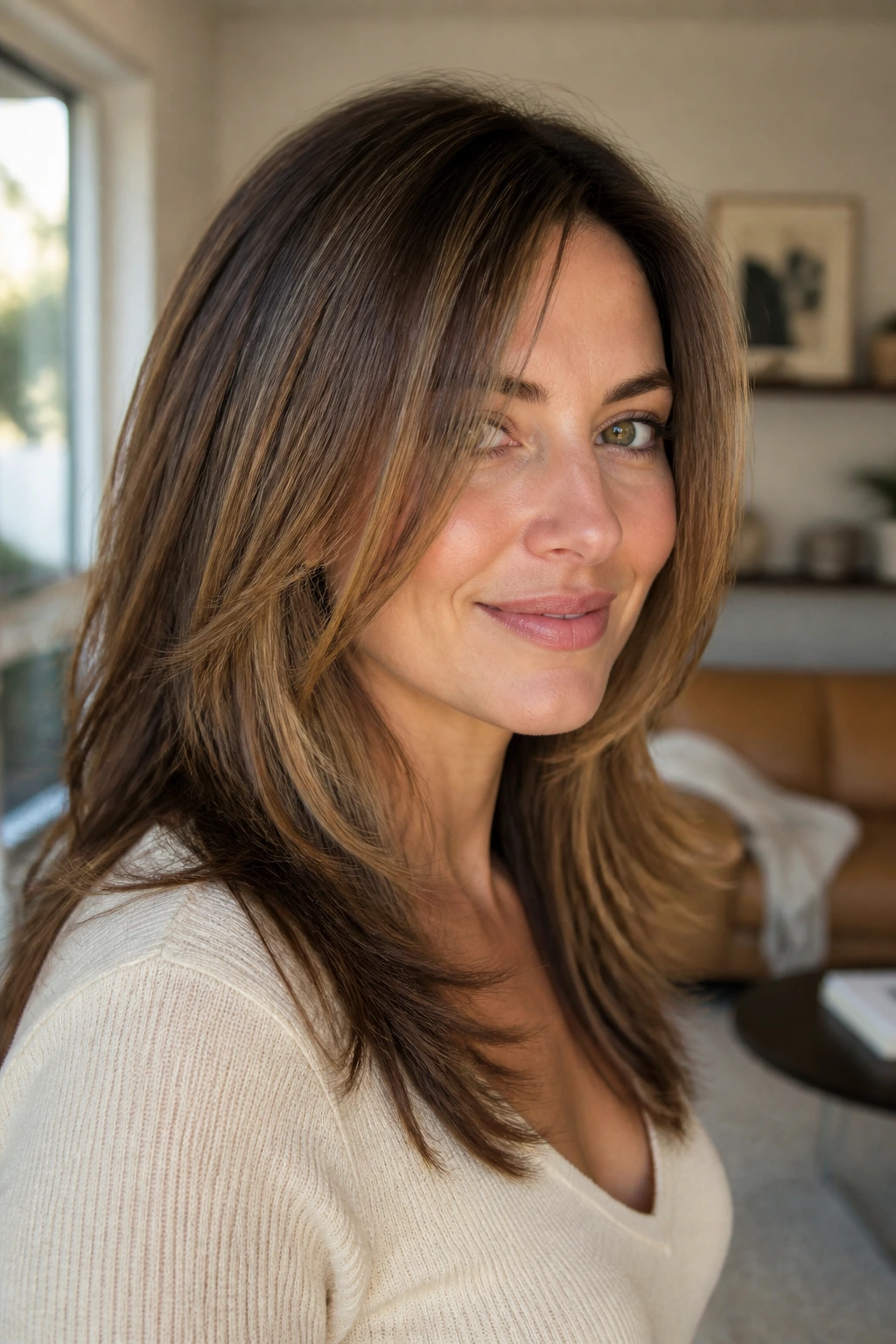
The old-school version of this cut could get too stacked near the face. The modern one is softer, lower, and more relaxed. That’s what makes it usable on round faces.
The layers should begin lower than the chin, then cascade down in a way that creates movement without building side volume at cheek level. If the front flips too hard toward the face, the cut starts to widen things. A good modern Rachel keeps the face-framing pieces open and a little airy.
This cut has a lot of life in it when blown out with a round brush. You get bounce, shape, and that familiar layered movement, but without the dated stiffness that made the older version tricky.
20. Soft Wolf Cut
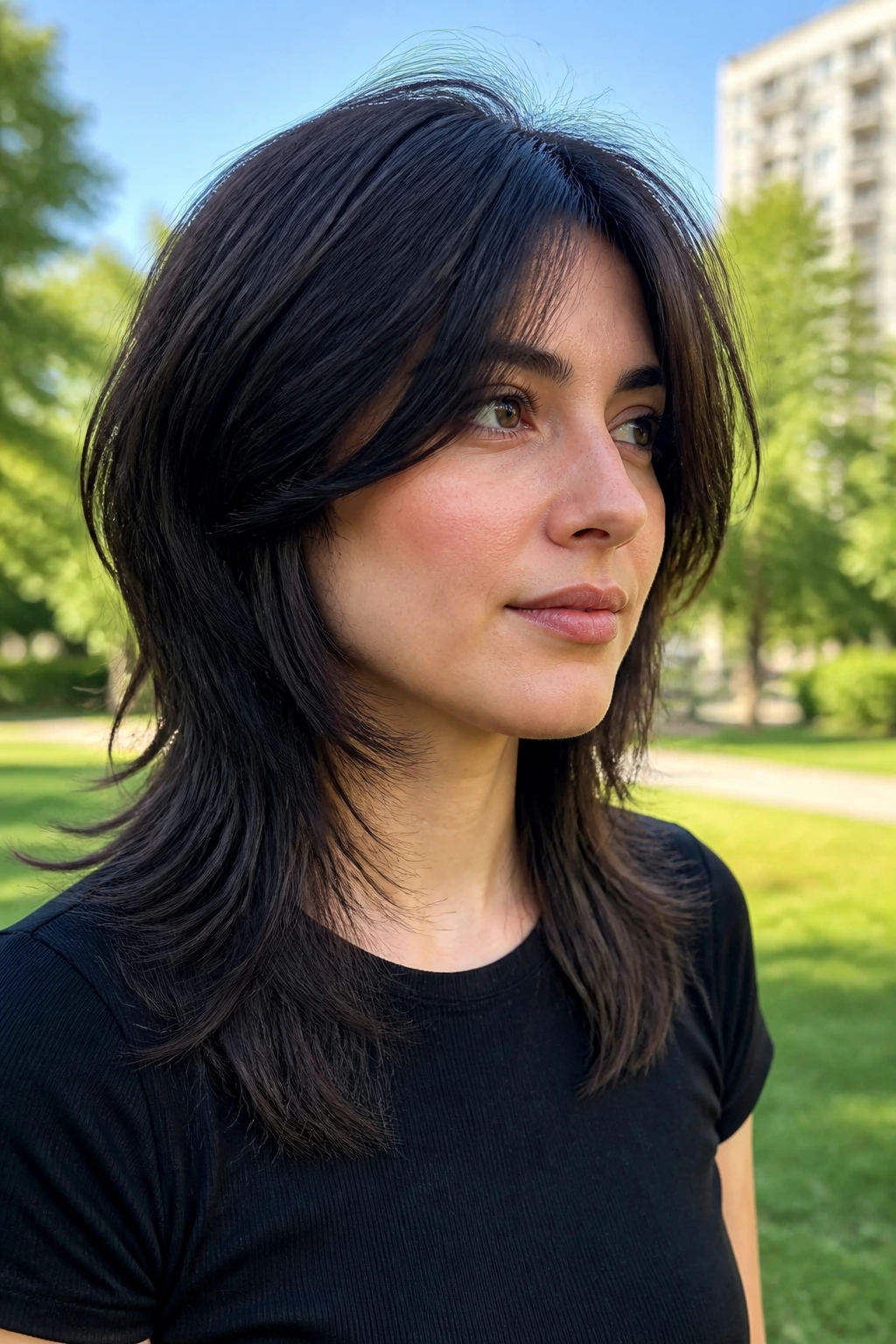
A wolf cut can be a mess if it’s cut with no restraint. On a round face, the softened version is the better move. It uses crown layers and length through the bottom to create a little edge while still pulling the eye downward.
What makes it work is balance. The top should feel airy and lifted, but the sides should not explode outward. Ask for a softened version with longer face-framing layers and less aggressive disconnect near the cheeks. That keeps the shape from getting too wide.
This one is best if you like hair with personality. It looks better when it’s not over-styled. A rough blow-dry, a little texture spray, and maybe a twist with your fingers is enough.
21. U-Shaped Cut

A U-shaped cut is one of the quieter ways to flatter a round face. The center back stays a little longer, and the sides taper in softly, which creates length without obvious layering.
That curved perimeter keeps the cut from looking boxy. It also helps longish medium hair fall in a way that feels smooth rather than puffed out. If your hair is straight and dense, this shape can be a relief because it keeps the silhouette controlled.
This cut is a good middle ground for people who want some length but not all the maintenance of long hair. It’s understated, but not plain. And on a round face, that gentle curve can be enough.
22. Flipped-End Lob
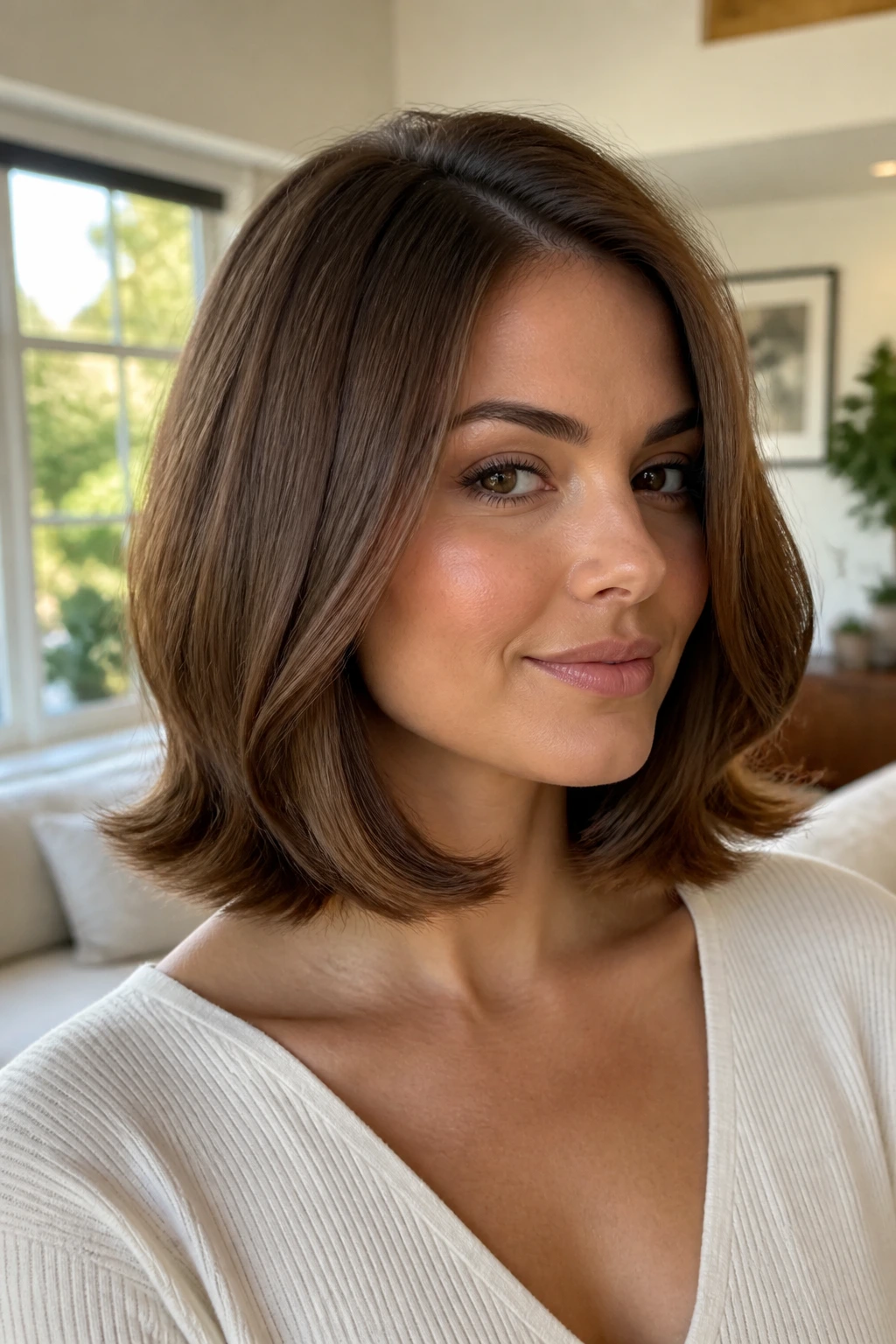
Flipped ends are back in a practical way, not a cartoonish one. On a round face, a flipped-end lob adds motion away from the cheeks and keeps the line from becoming too straight and static.
The flip should happen at the ends, not halfway up the head. Use a round brush or flat iron to bend the last inch or two outward. That small outward motion opens up the sides of the face and gives the cut some lift.
This shape is especially useful if your hair tends to curl under too much on its own. Instead of letting the ends hug the jaw, you redirect them. Tiny move. Big effect.
23. Internal-Layer Midi

Internal layers are the haircut version of hidden support. The outside still looks smooth and even, but the inside has enough removal to keep the hair from bulking up around the face.
This is a smart option if you want length and fullness without the width. The stylist can take weight out underneath while leaving the top layer intact. That means the cut keeps its polish when you wear it straight, but it still moves when you walk.
I like this for people who need their hair to behave in professional settings. It doesn’t scream for attention. It just sits well, which is sometimes exactly what a good medium cut should do.
24. Blunt Cut with Micro Texture
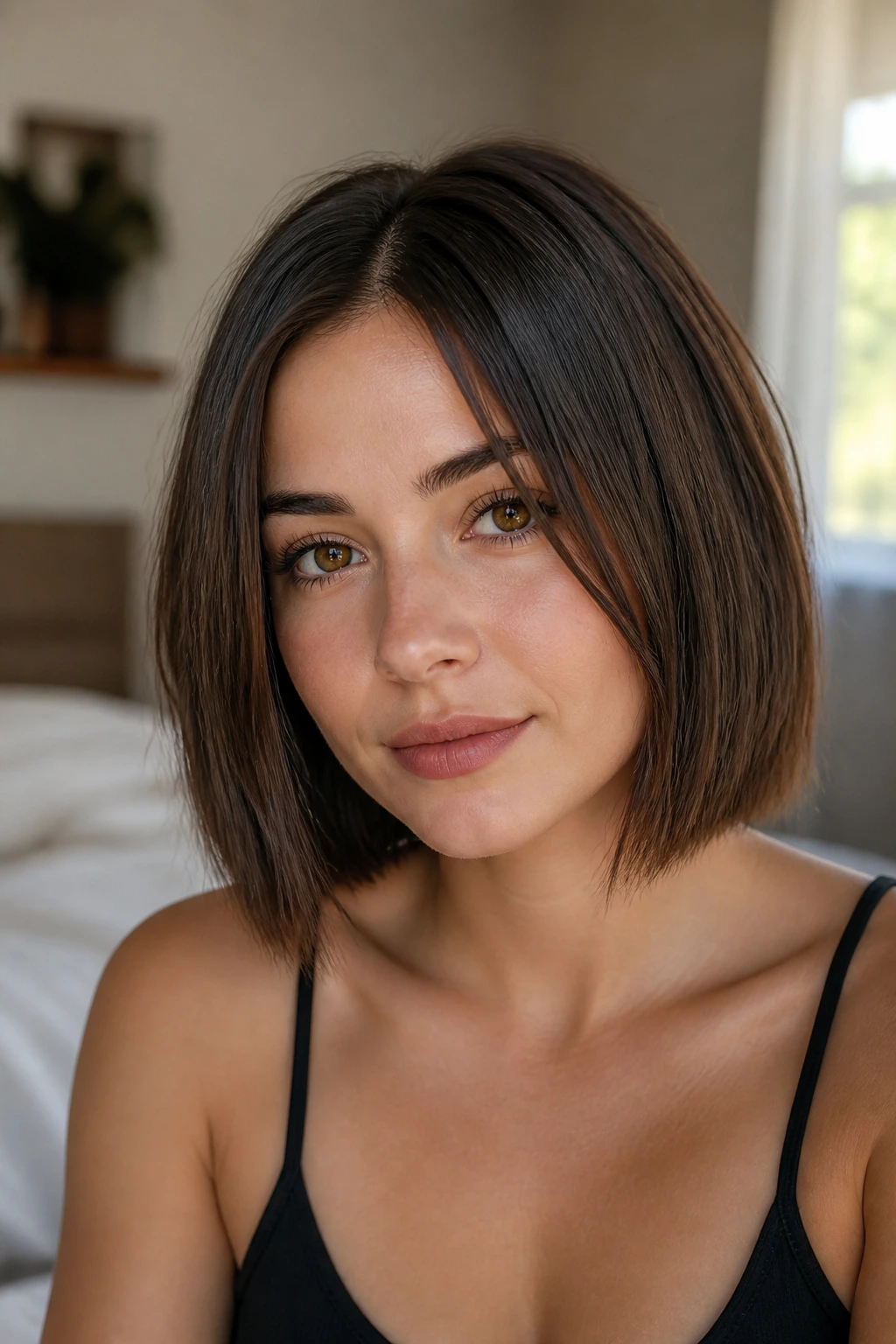
A fully blunt line can be too hard on some round faces, but a little micro texture changes the story. The edge stays strong, yet the ends are point-cut just enough to keep them from looking like a hard shelf.
The difference is subtle on purpose. You still get the clean outline that makes medium hair look sharp, but the hair does not stop abruptly at one level. That soft break at the ends helps the haircut sit away from the cheeks instead of circling them.
This cut suits straight hair best, especially if you like a polished look. Keep the styling smooth and let the texture live only at the edge. Too much mess defeats the point.
25. Wind-Swept Side-Part Cut

A deep side part can change a round face more than some layered cuts do. It creates an immediate diagonal line across the head, and diagonals are your friend when you want the face to feel longer.
The haircut underneath should be medium length with pieces that can move across the forehead and cheek area. If the layers are too short, the side sweep falls apart. If they’re long enough, the whole style feels airy and intentional.
This is a good style for days when you want a little drama without a major cut. Sometimes the part is the whole answer. Seriously.
26. Peekaboo Layers
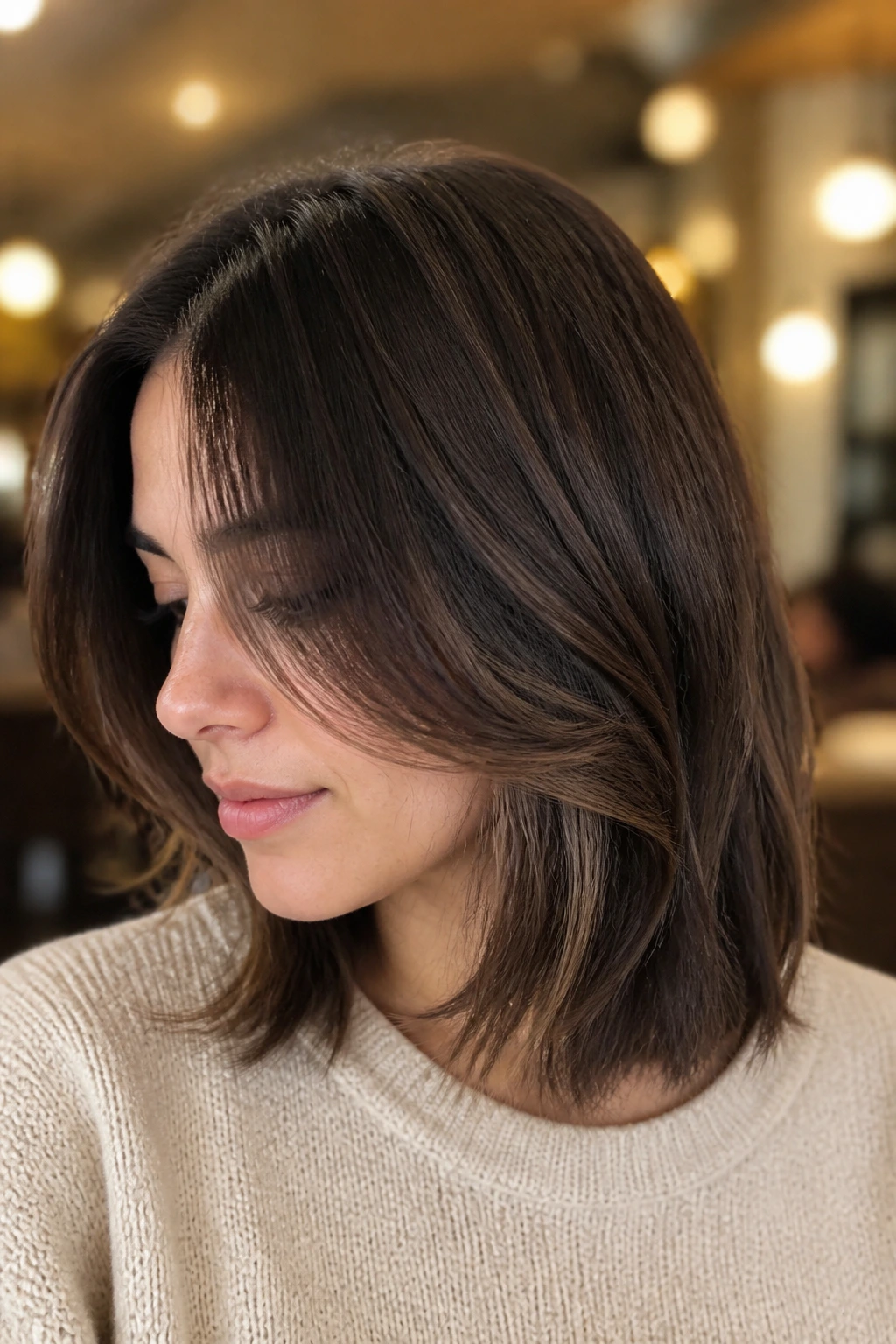
Peekaboo layers are the kind of thing you notice only when the hair moves, which is exactly why they work. They add hidden lift and reduce heaviness without making the face look over-layered.
Ask for layers that show when the hair swings, not a bunch of short pieces sitting visibly around the jaw. That hidden movement keeps the silhouette clean. On a round face, the hair gets shape without extra width.
This cut is a nice fit for people who hate obvious layering but still want their hair to feel lively. It also grows out with less fuss because the shape isn’t dependent on a super-precise line.
27. Bouncy Blowout Layers
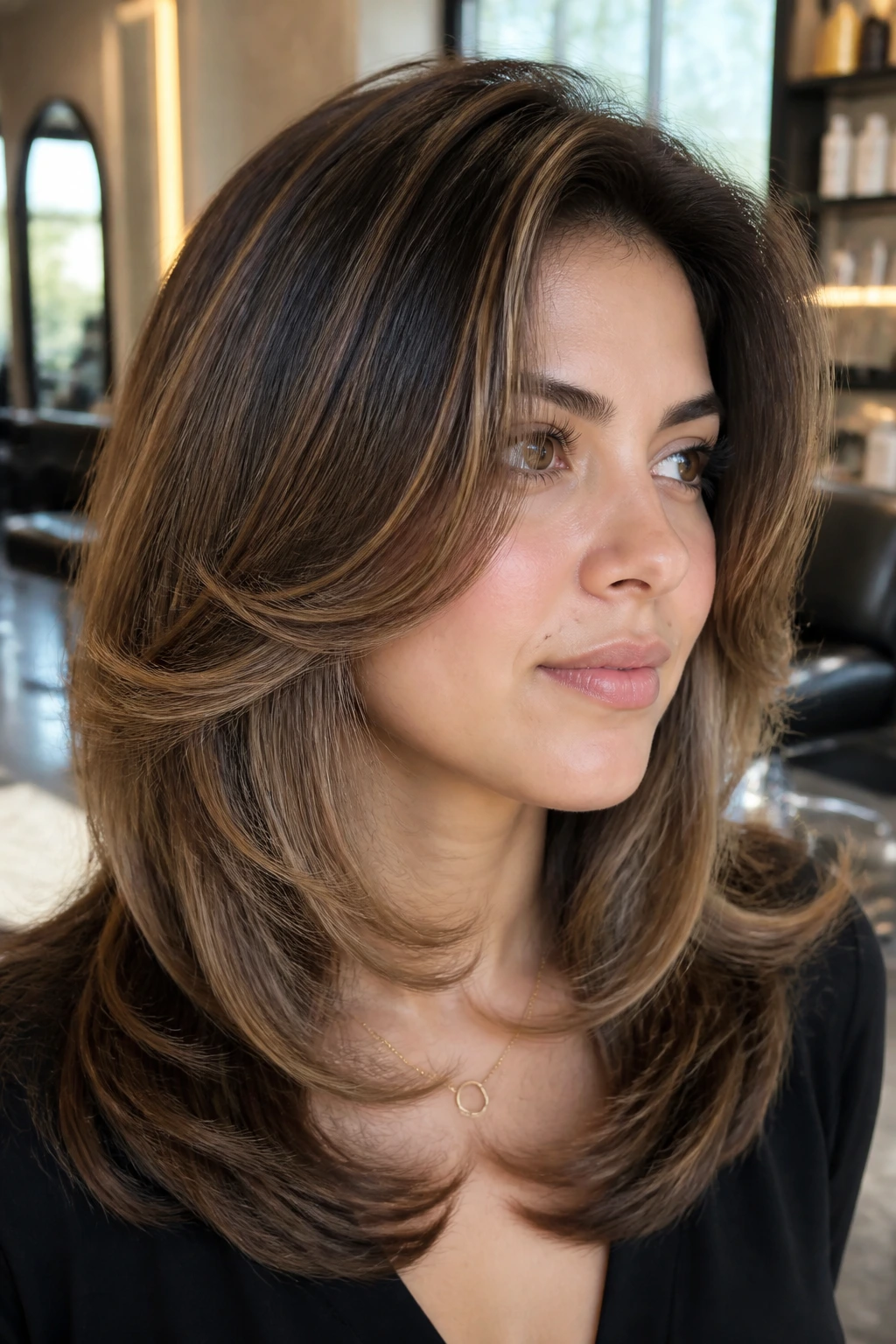
If you like a salon blowout, this is your cut. The layers are placed to make the hair turn under and away from the face, which gives the face a little lift and keeps the ends from sitting flat against the neck.
The placement matters. Shorter pieces around the crown create height, while the longer layers at the bottom keep the style from ballooning. On a round face, that balance makes the profile look cleaner from the side and more open from the front.
You do need the tools to match the cut. Round brush, blow dryer, clips, and a little patience. The shape rewards you for that effort.
28. Wispy Fringe Midi

A wispy fringe can be far gentler than blunt bangs. On a round face, light fringe adds detail at the top without cutting the forehead into a hard horizontal line.
Keep the fringe broken up and soft, then let the rest of the cut fall around the shoulders. The overall look should feel light, almost airy. If the bangs get too dense, they can shorten the face in a way that fights the rest of the cut.
This is a good choice if you want forehead coverage but still like a bit of openness. It also plays well with ponytails and messy buns because the fringe keeps the front from feeling bare.
29. Shaggy Lob with a Longer Nape

A longer nape in the back gives the haircut a subtle stretch. Pair that with shaggy movement through the ends, and the result is a lob that feels loose but not vague.
The longer back matters more than people realize. It draws the eye down the neck and makes the front pieces feel less squat by comparison. If the shag layers are soft, the cut stays youthful without getting wild.
This is one of those cuts that looks better after a day or two. A little texture settles in, the ends move more naturally, and the face gets a nice elongated frame.
30. Medium Cut with Long Curtain Fringe

This version gives you the fringe without the fuss. The curtain pieces are long enough to blend into the haircut, so they don’t sit as a separate block on the forehead.
For round faces, that blending is the whole point. The fringe opens in the center and drops down the sides, making the face look more oval. Keep the rest of the haircut medium and soft, and the fringe becomes the anchor rather than the whole story.
It’s a strong choice if you want bangs but worry about commitment. Long curtain fringe can grow out into face-framing layers without an awkward stage. That is a real bonus, not a tiny one.
31. Low-Maintenance One-Length Cut
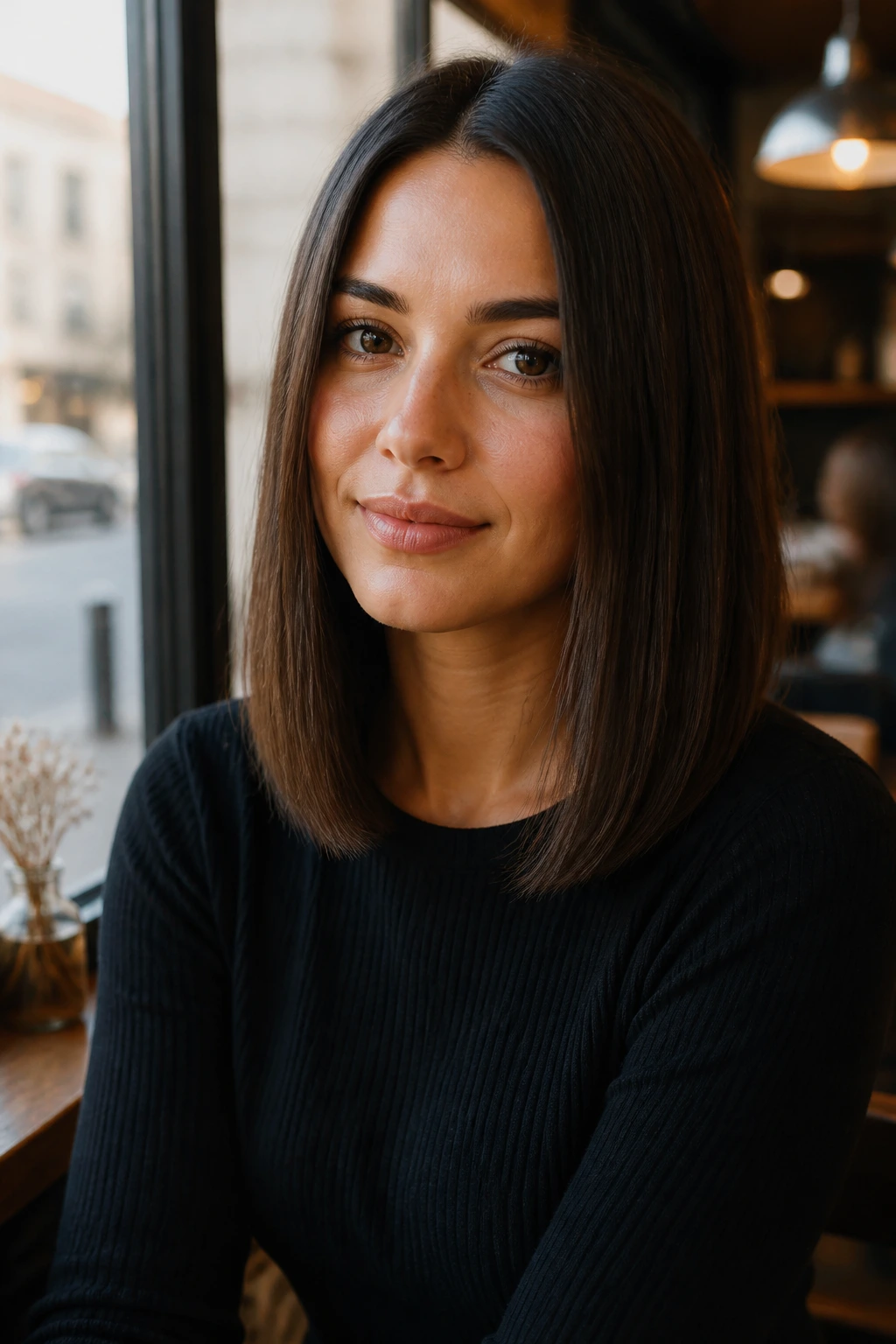
A one-length medium cut can absolutely work on a round face if the length is chosen well and the styling keeps the shape from puffing out. The trick is to go long enough to avoid the jawline and keep the edges clean.
This cut is for people who want less salon upkeep and less day-to-day layering. It does ask for a good blow-dry or a controlled air-dry, because a one-length cut without shape can go wide. If you keep the ends smooth and add a bit of root lift, it reads sleek instead of boxy.
There’s something honest about this option. It doesn’t pretend to be fancy. It just works when the haircut and the part are right.
32. Rounded Volume Lob

A rounded volume lob sounds like it would add width, and if it’s cut badly, it can. But when the volume sits at the crown and the sides stay controlled, it creates balance instead of bulk.
Think lift, not puff. The ends should curve slightly under or move with a soft bend, while the top has enough fullness to lengthen the silhouette. That contrast makes the face feel more open and keeps the cheeks from being the loudest thing in the frame.
I like this cut for hair that needs a bit of body to come alive. Flat roots can make any round face feel wider than it is. A little crown height fixes a lot.
Why Medium Length Works So Well on Round Faces
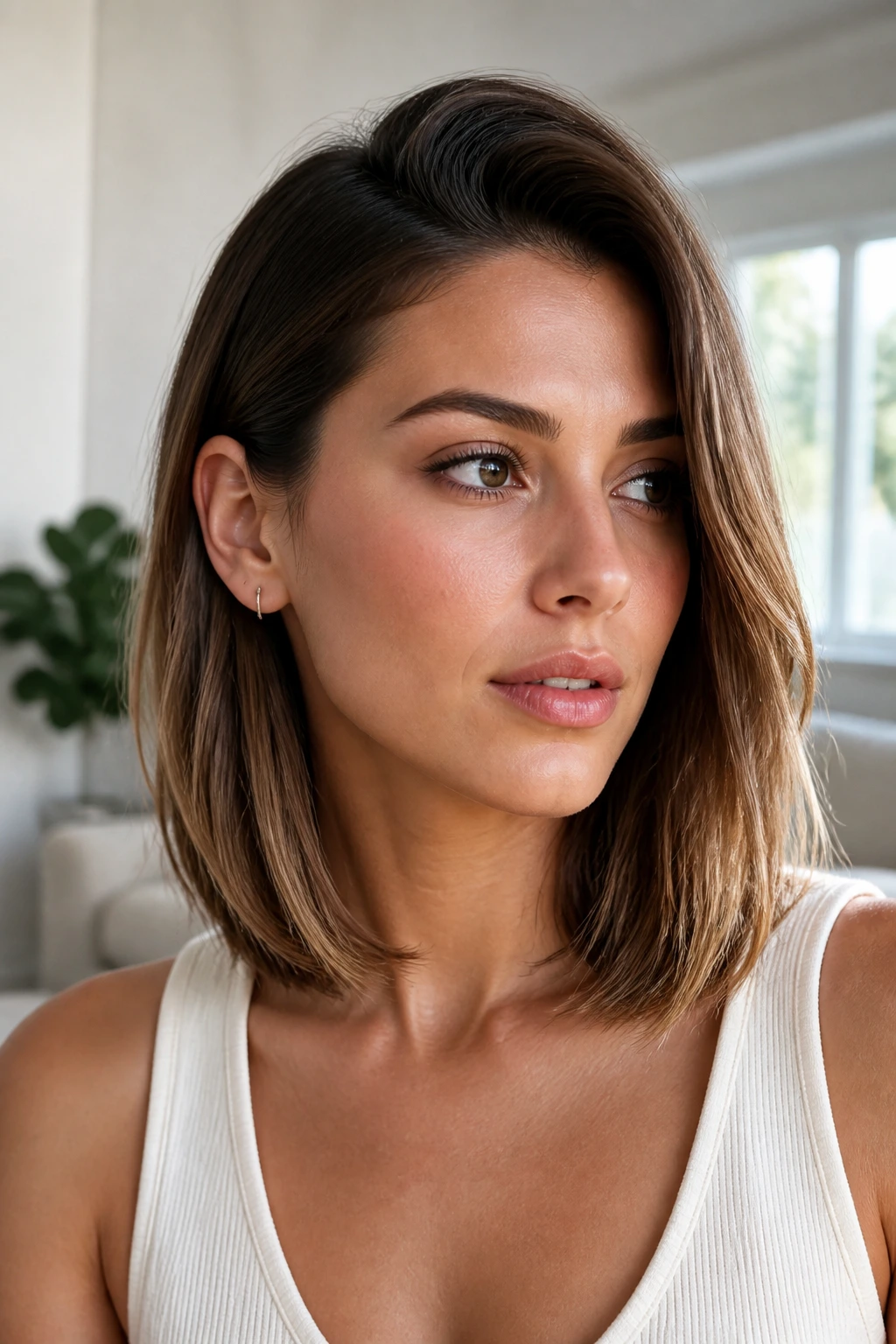
Round faces usually benefit from hair that adds direction. Medium length does that better than very short crops or very long, heavy layers that hang flat. The cut has enough weight to create a vertical line, but not so much that it overwhelms the neck and shoulders.
The other reason medium length is so useful is that it gives stylists room to place layers with precision. A few inches can move a fringe below the cheekbone, shift a part off center, or keep the ends from stopping right on the jaw. Those small decisions matter more than people expect.
Where the eye should go
Good round-face haircuts don’t just look “lighter.” They guide the eye. A collarbone line, a side sweep, a lifted crown, or a curved front layer all create motion that makes the face feel longer without looking like the haircut is trying too hard.
What to avoid at the wrong length
A blunt line at the chin, dense volume at cheek level, or bangs that stop in the middle of the forehead can all work against you. None of those things are evil on their own. They just need the right balance, and medium length gives you more ways to get it right.
Why texture matters so much
Straight hair, wavy hair, and curls all behave differently around a round face. Texture can add lift or width depending on where it sits. That is why the same haircut can look sharp on one person and heavy on another. The shape of the cut matters, but so does where the movement lives.
How to Ask for the Cut You Want at the Salon

Bring photos, yes, but bring words too. A stylist can see the picture, yet the useful part is your description of where you want the shortest layer to land, how much forehead you want to show, and whether you style with heat or air-dry. That’s the part that changes the cut.
Say things like “keep the shortest face-framing pieces below the cheekbone” or “I want the length to stay around the collarbone, not at the jaw.” Those instructions are more helpful than saying you want your face to look slimmer. Every stylist has heard that, and it leaves too much open to guesswork.
If your hair is curly, ask how the cut will look dry. If it’s fine, ask where weight will be removed. If it’s thick, ask where bulk will be reduced so the sides do not flare out. The more specific your hair type and routine, the better the haircut behaves when you leave the chair.
Smart Styling Moves That Change the Shape Fast
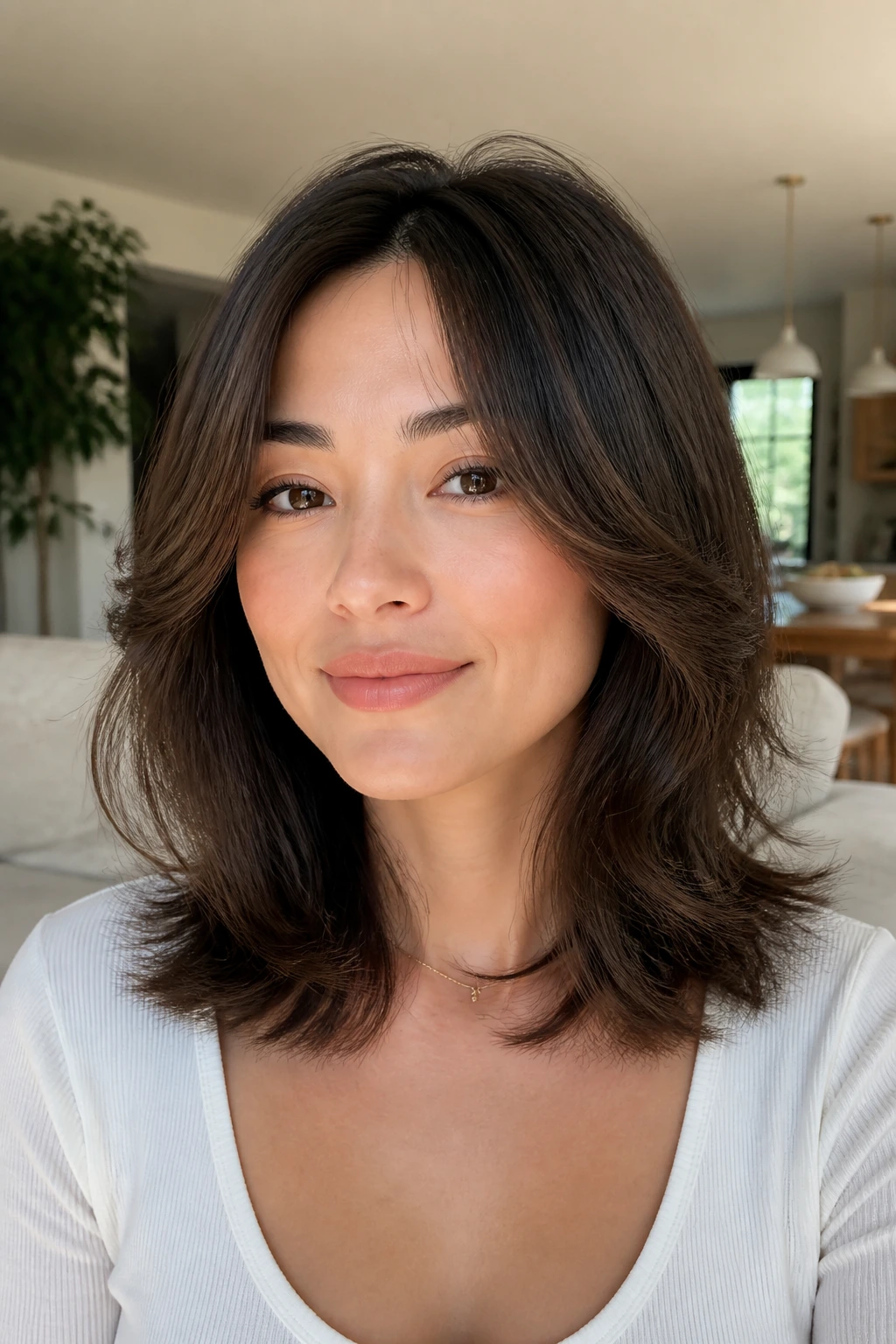
A medium haircut on a round face is not just about the cut. The way you wear it can change the shape in five minutes or less.
Root lift first. If the crown lies flat, the face looks wider. A little mousse at the roots and a quick lift with a round brush or blow-dry brush changes that line right away.
Keep width below the cheekbones. That’s the rule I come back to. When the hair fluffs out at cheek level, the face reads wider. When the movement starts lower, the whole cut looks longer and cleaner.
Use asymmetry on purpose. Tuck one side. Change the part. Sweep a fringe. You do not need a huge difference to change the eye path.
Pick one finish and commit. Sleek, bendy, or textured. A half-flat, half-curly style usually looks accidental, and round faces do better when the silhouette is clear.
Essential Styling Tools for These Cuts

-
Blow dryer with a nozzle attachment: Directs airflow so you can smooth the roots and keep the ends from puffing out.
-
1.25-inch curling iron or wand: Gives loose bends and S-waves that elongate a round face without making the sides too wide.
-
Round brush: Best for adding crown lift and bending face-framing layers away from the cheeks.
-
Flat iron: Useful for sleek lobs, flipped ends, and subtle bends at the front pieces.
-
Heat protectant spray: Worth using every time heat touches the hair, especially on layered cuts that get styled often.
-
Light mousse or root spray: Helps fine or flat hair hold volume at the crown.
-
Texture spray: Adds grip to shaggy, piecey, or wavy cuts without making them stiff.
-
Clips and sectioning pins: Make blow-drying easier because you can work in clean sections instead of fighting all the hair at once.
-
Wide-tooth comb: Gentle on waves and curls when you want to keep the shape soft.
Common Mistakes That Make Round Faces Look Wider
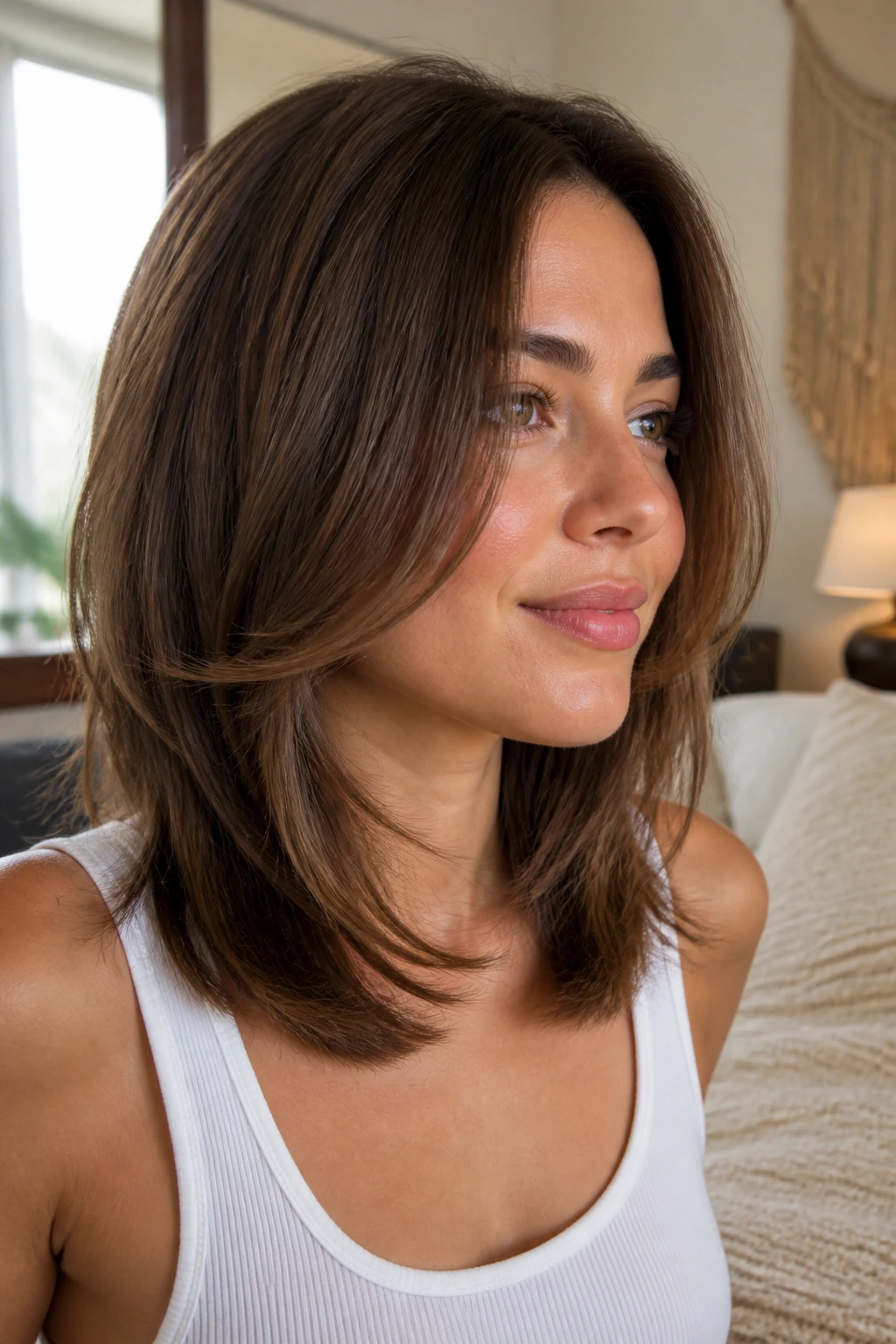
The first mistake is cutting too short at the cheek or jaw. That’s the line most likely to widen the face, because it puts a hard visual stop exactly where the face is already fullest. If your goal is to lengthen, move that shortest point down.
Another one: too much volume at the sides. Big hair can be fun. Around a round face, it can also make the head look wider than it is. Keep lift at the crown and movement toward the ends instead.
Blunt bangs are risky if they’re too heavy or too short. They can make the face feel shorter and boxier. If you want fringe, choose curtain, bottleneck, or wispy bangs that open in the middle or break up the line.
Skipping shape in the styling stage is a quiet problem. A cut can be excellent, then air-dry into a triangle because nobody added root lift or controlled the ends. That is not a haircut failure. It’s a styling mismatch.
Variations and Alternatives to Try

Fine-Hair Lift Version
If your hair is fine, keep layers soft and internal instead of heavily chopped. You want movement without visible gaps, so the cut still looks full on the ends and lifted at the crown.
Thick-Hair Weight-Removal Version
For thick hair, ask for interior debulking and a longer perimeter. The shape stays controlled, and the sides do not kick outward after a few hours.
Curly-Friendly Shape Cut
Curly hair needs a dry or mostly dry cut so the curl pattern can show where it lands. Keep the shortest pieces below the cheekbone and let the crown carry the height.
Fringe-Forward Version
If you like bangs, choose curtain or bottleneck fringe and keep the rest of the cut lower and softer. That lets the fringe frame the face without closing it in.
Low-Styling Version
If you hate heat tools, go for a lob or U-shape with minimal layering. The cut should still land below the jaw so the hair can air-dry without making the face look fuller.
Trims, Washing, and Day-After Maintenance
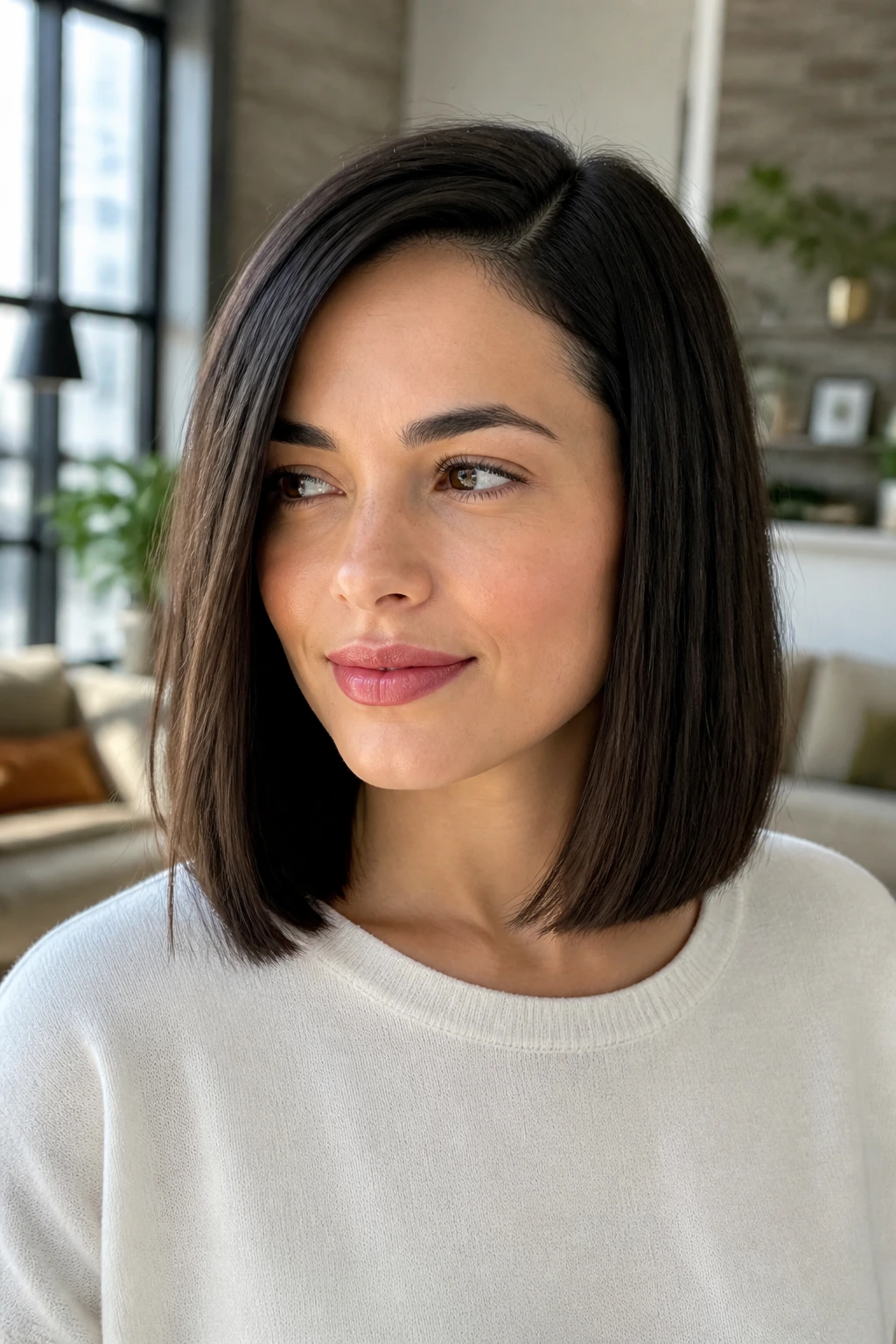
Medium cuts hold their shape best when you keep the ends clean. For a blunt lob or collarbone cut, trimming every 8 to 10 weeks keeps the line from drifting into a blunt shelf. Layered cuts can stretch a little longer, around 10 to 12 weeks, depending on how fast your hair grows and how much the shape depends on the layers.
Wash frequency changes the look more than people admit. If your hair gets oily at the roots, flat on top, or puffy at the sides by day two, dry shampoo at the crown can buy you another day. Just keep it away from the cheek area. That’s where people accidentally add width.
At night, a loose clip at the crown, a silk pillowcase, or a soft tie can keep the front pieces from collapsing into the face. On day two, revive the shape with a light mist of water and a quick bend at the front. You do not need a full restyle every morning. Thank goodness.
Frequently Asked Questions

What medium haircut is most flattering for a round face?
A collarbone lob with soft layers is one of the safest choices because it adds length without making the sides bulky. If you want something with more texture, a side-parted shag or a butterfly cut can work just as well when the shortest layers stay below the cheekbone.
Are bangs bad for round faces?
No, but the wrong bangs can be unhelpful. Heavy blunt bangs that stop too high can shorten the face, while curtain bangs, bottleneck bangs, or wispy fringe soften the forehead and keep the shape open.
Does a center part work on a round face?
It can, especially with a cut that has length and face-framing movement. A center part looks best when the hair falls below the cheeks and the ends are not too wide at the jaw.
Should round faces avoid blunt cuts?
Not always. A blunt cut can work if it sits at the collarbone or shoulders and the styling stays smooth. The problem is usually the length placement, not the bluntness itself.
What if my hair is very thick?
Ask for internal weight removal, not just layers around the front. Thick hair needs shape inside the cut so it doesn’t flare out around the cheeks and widen the face.
What if my hair is fine and flat?
Go for a cut that keeps the ends clean and uses crown lift, not heavy layering everywhere. Fine hair usually looks better with controlled movement than with a lot of choppy pieces.
How often should I trim medium haircuts for round faces?
Most of these styles need a trim every 8 to 12 weeks to keep the length in the right place. Bangs may need a quicker touch-up if they’re part of the cut.
Can curly hair pull off a medium cut on a round face?
Absolutely. The key is placement. If the layers are shaped around the curl pattern and the volume stays higher up, curls can actually elongate the face better than straight hair that falls flat.
The Shape That Keeps Working
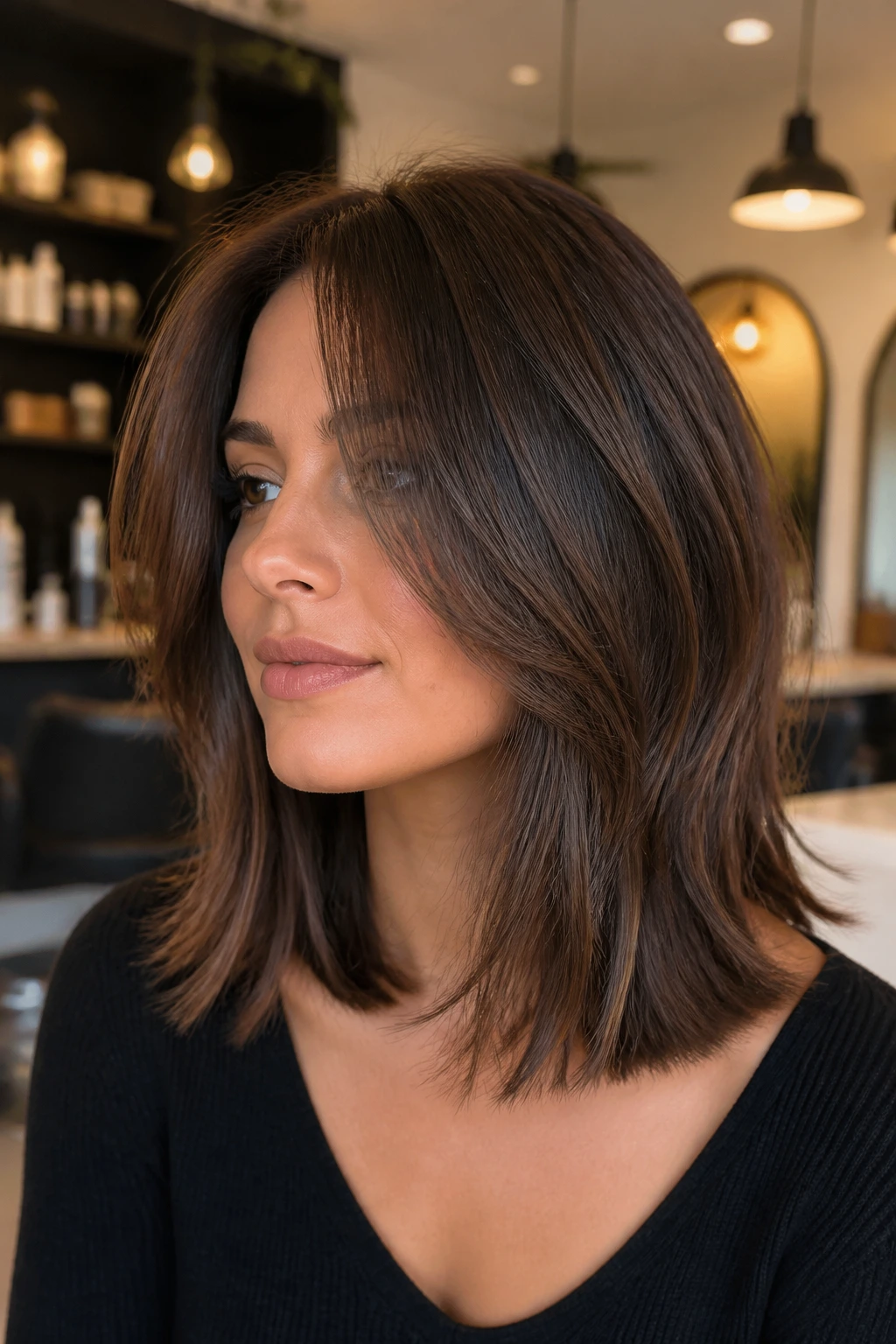
The reason medium haircuts for round faces stay useful is simple: they give you room to shape the silhouette instead of fighting it. A few inches of length, the right part, and layers that start in the right place can change the whole feel of the face without turning the haircut into a project.
The best version is the one that matches your texture and your habits. If you blow-dry, use that. If you air-dry, choose a cut that still behaves without heat. If you like fringe, pick a soft one that opens the face instead of closing it in. Hair should sit with your life, not the other way around.
Pick two cuts from this list, notice where the shortest layer lands, and bring that detail to your stylist. That tiny bit of precision is usually where the whole thing starts to click.
