



Shoulder length hairstyles have a strange kind of power. They never look accidental for long, but they also don’t demand the kind of labor that waist-length hair can eat up whole mornings. At collarbone length, hair still swings, still moves, still takes a bend from a blow-dryer or curling iron — but it also tucks behind the ear, slips into a clip, and loses that heavy drag that makes longer hair fall flat by noon.
That’s why this length keeps showing up in salons, in mirror selfies, and in the little mental list you build when you’re tired of fighting your own hair. Mid-length hair can look clean with almost no styling, but it can also hold shape, volume, and texture when you decide to do a little more. Some people want a blunt line that feels sharp and crisp. Others need layers to keep thick hair from ballooning. A lot of the best shoulder length hairstyles live somewhere between those two moods.
The sweet spot is not a myth. It’s just practical. Shoulder-length hair gives you enough length to braid, clip, curl, twist, and pin, without the daily baggage of very long hair. And if you choose the right cut or styling pattern, it grows out with a lot less drama than a shorter bob. That flexibility is the whole reason these 25 ideas work.
Why These Shoulder-Length Styles Stay So Useful
-
Fine hair gets shape without extra weight: A blunt collarbone lob keeps the ends dense, so the hair looks fuller even when you only rough-dry it and leave.
-
Thick hair gets room to move: Layering at the shoulders removes the bulky triangle effect that can make medium hair sit wide instead of sleek.
-
The length cooperates with busy mornings: Most of these looks can be built with a round brush, a 1-inch iron, or nothing more than a claw clip and a little product.
-
Second-day hair usually looks better here: Mid-length hair picks up texture faster than long hair, so day-two waves, bends, and messy twists tend to look intentional instead of tired.
-
You can switch between polished and casual fast: A center part, a side part, tucked ears, a half-up twist, or a low ponytail changes the mood without changing the haircut.
-
Grow-out is less unforgiving: Shoulder grazing ends can soften a cut while it grows, which matters if you don’t live at the salon every six weeks.
1. The Blunt Collarbone Lob
A blunt collarbone lob is the haircut version of a clean white shirt. No fuss. No extra decoration. The line lands right where the collarbone starts to show, which gives fine hair a denser edge and gives thicker hair a shape that feels deliberate instead of puffy. On straight or slightly wavy hair, this cut has a crisp finish that looks sharper the less you overthink it.
Why It Flatters So Easily
The blunt edge creates a visual boundary, and that matters more than people think. Hair with thin ends can look stringy when it drops too far past the shoulders; a blunt lob makes the perimeter look fuller right away. If your hair naturally sits flat at the crown, this cut also gives you a clean base that responds well to root lift spray or a quick round-brush pass.
It works best when the ends are kept healthy and even. Split ends ruin the whole point. If your hair tends to flick outward, ask your stylist to leave just a touch of bevel at the bottom so it doesn’t stick straight out like a shelf.
- Best for fine to medium hair
- Easiest to style with a center or soft side part
- Looks polished with a single bend at the ends
Quick tip: keep the ends trimmed every 8 to 10 weeks if you want the blunt line to stay crisp.
2. Soft Layers That Move Instead of Puff
Soft layers are what you ask for when you like shoulder length hair but not the feeling of having one heavy curtain hanging around your face. The cut keeps the length, then removes just enough weight to let the ends swing. On thick or medium-density hair, that small change can make the whole shape breathe.
If you’ve ever had hair that looks fine from the front and oddly boxy from the side, this is the fix. The layers should start low enough that they don’t chew up the bulk at the top of the head. Too many short layers at this length can leave the hair frizzy around the crown and weak at the bottom, which is not the goal.
Ask for long internal layers and a tidy perimeter. That combo gives movement without turning the haircut into feathers from the early 2000s. A little mousse at the roots and a rough blow-dry is usually enough to show the shape.
Soft layers are also one of the easiest ways to make shoulder length hairstyles feel lighter in summer without giving up any actual length. The hair still brushes the shoulders. It just doesn’t fight you while doing it.
3. Curtain Bangs and Shoulder-Length Hair
Curtain bangs are the little cheat code of shoulder length hairstyles. They split in the middle, slide away from the face, and make a mid-length cut feel finished even when the rest of your hair is doing something simple. They soften a strong forehead, help narrow a wide face, and give straight hair a little front-end movement that a blunt fringe can’t always deliver.
The trick is the blend. Curtain bangs should not look like an obvious separate piece slapped onto the haircut. They need a gradual sweep into the cheekbones and the front layers, or else they’ll sit there like a separate event. Ask for a longer center section that tapers toward the jaw. That shape grows out far better than a short, heavy fringe.
These bangs are especially useful when you want a style that reads as low-effort but still styled. A round brush, a quick flip away from the face, and a bit of lightweight spray often do the job. On day two, the bangs usually need more attention than the rest of the cut. That’s normal.
If you wear glasses, curtain bangs can be better than blunt fringe because they don’t crowd the frame line. They open the face instead of boxing it in.
4. A Deep Side Part with Root Lift
A deep side part can rescue a flat crown in about thirty seconds. That’s the whole appeal. You shift the hair over, create instant lift at the roots, and suddenly shoulder length hair has shape even before you touch a tool. On medium-length cuts, this works especially well because the weight isn’t so long that it drags the part flat again immediately.
The style feels especially good on fine hair that needs a little height but not a lot of product. You can blow-dry the roots in the opposite direction for a few seconds, switch the part, and set it with a cool shot. Done. If your hair tends to cling to the scalp, this is one of the fastest fixes that still looks intentional.
It also changes the mood of the haircut. A center part reads calm and balanced. A deep side part brings in a little drama, even if the rest of the hair is just soft and straight. That asymmetry can make a round face look a touch longer and can soften a strong jaw by moving bulk away from the middle.
Best with loose bends, soft waves, or a tucked side. It does not need big curls. In fact, too much curl can make the look heavy.
5. Loose Waves That Don’t Look Overdone
Loose waves are probably the style most people picture first when they think about shoulder length hair, and for good reason. The length catches the bend in a way that long hair often doesn’t. You get a visible wave pattern without waiting forever for each curl to cool and hold. A 1-inch or 1.25-inch curling iron usually gives the cleanest result at this length.
The key is not to make every wave identical. Leave the ends a little straighter on some sections. Curl away from the face in front, then alternate direction in the back so the whole head doesn’t collapse into one big helmet of curls. After curling, rake through with fingers or a wide-tooth comb once the hair cools.
A little texture spray at the mid-lengths helps, but heavy spray gets sticky fast on shoulder length hair because there isn’t much room for product to disappear. Keep it light. The point is movement, not crunch.
These waves work especially well when the hair sits right at the shoulders or just above them, because the bend lands where people actually notice it. If the hair is longer, the wave can stretch out. At collarbone length, it holds a nice, soft arc.
6. The Air-Dried Bend
Air-dried bend is the style I reach for when heat feels like a chore. It’s not polished in the salon sense, and that’s exactly why it works. Shoulder-length hair has enough weight to dry into a believable shape, especially if it has some natural wave. You just need to encourage the bend in the right places.
Start with leave-in conditioner or a light cream, then twist sections away from the face while the hair is damp. Some people do two loose braids; others just tuck one side behind the ear and let the hair set with a slight curve. The point is to stop the hair from drying in a perfectly flat line. If you want more shape at the ends, scrunch a little mousse through the last third of the hair.
This is one of those styles that looks best when it isn’t too tidy. A few piecey ends, a bit of frizz around the hairline, and a side part that doesn’t look measured with a ruler — that’s the charm. It reads relaxed, not lazy, when the cut underneath is clean.
If your hair is very straight, you may need to set a few front pieces with a curling iron just to get the face frame moving. That small cheat makes a big difference.
7. The Shoulder-Length Shag
The shag can be a mess if it’s cut badly. But when it’s done right at shoulder length, it gives hair movement that no flat iron can fake. The layered structure lets the top pieces lift while the bottom pieces keep a little swing, which is why this shape works so well on wavy, thick, or slightly unruly hair.
The best shoulder-length shag does not look chopped to bits. It looks airier, lighter, and more directional. You should still see a shape when the hair settles. Ask for soft, piecey layers around the crown and cheekbones, plus a perimeter that keeps some length at the shoulders. If the ends are too thin, the whole thing starts to look wispy instead of lived-in.
This cut loves texture spray, diffuser drying, and fingers. It does not love being brushed into obedience. That is the wrong battle. If your natural wave has a bend near the ends, a shag can bring it forward instead of hiding it.
One thing I like about this length in a shag is the grow-out. It doesn’t instantly fall apart. The layers soften, the texture gets a little looser, and the haircut still reads on purpose for quite a while.
8. Feathered Ends with a Side-Swept Fringe
Feathered ends are for people who want softness more than edge. The shape moves away from the face instead of dropping straight down, which gives shoulder-length hair an airy, almost brushed-out feeling. It’s a nice answer when blunt cuts feel too heavy and shag layers feel too rough.
A side-swept fringe adds a little old-school salon polish here, but the right version is not stiff. It should fall in a diagonal line, skim the brow or cheekbone, and blend into the front layers without creating a separate block of bangs. That diagonal is what makes the style flattering on a lot of face shapes; it breaks up width and keeps the eye moving.
This look does well with a medium round brush and a dryer nozzle. Wrap the front sections away from the face, then give the ends a soft outward turn. You do not need a barrel curl. Just enough bend to show the feathering. On fine hair, that slight lift can be more useful than a full wave because it keeps the style from looking overworked.
It’s a good cut if you like your hair to look styled even when you’ve only spent ten minutes on it. That’s the real advantage. The shape does some of the work for you.
9. The Sleek Middle-Part Lob
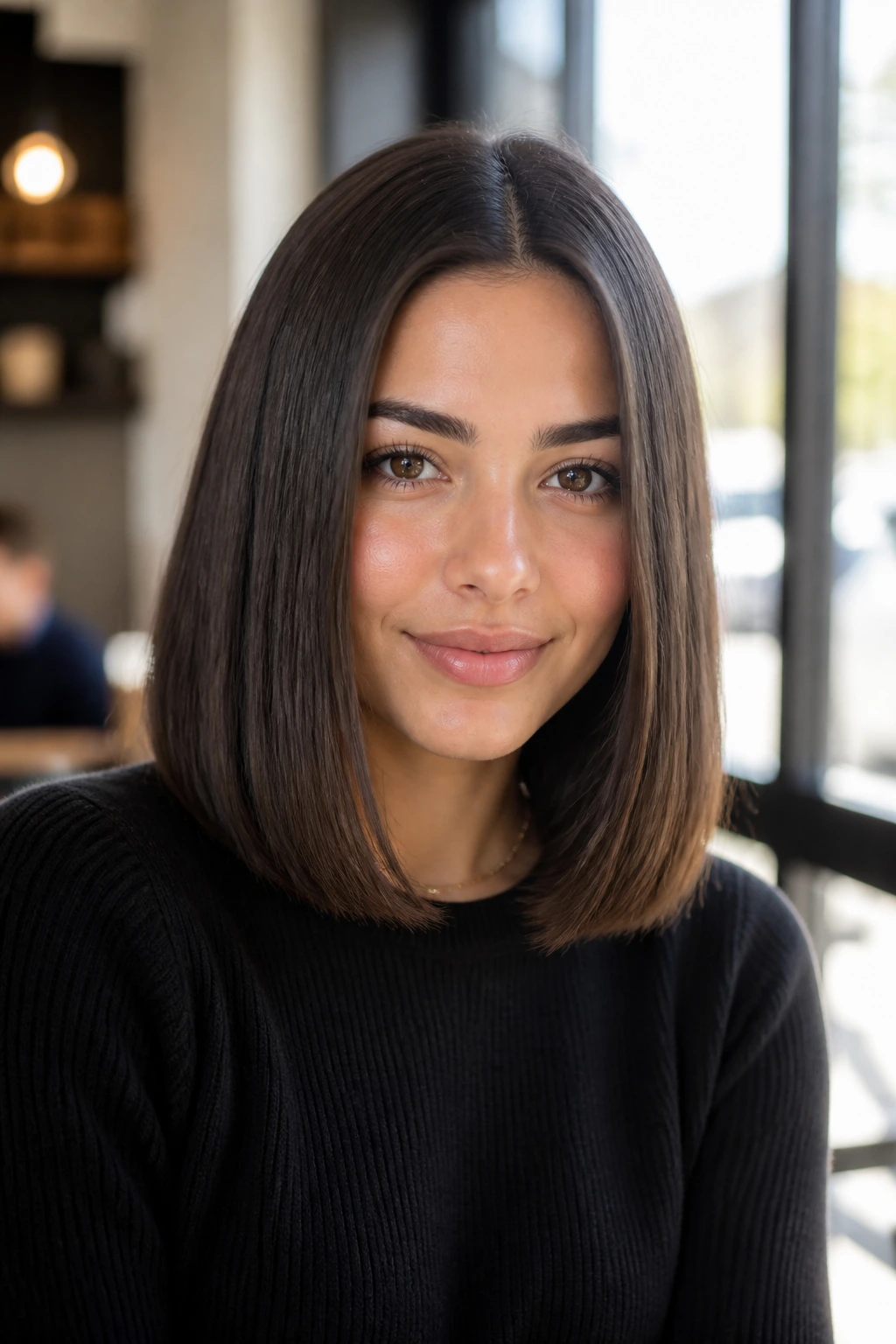
A sleek middle-part lob is the one I recommend when you want shoulder length hair to look controlled in a good way. Clean line. Smooth finish. No extra motion fighting for attention. The middle part gives symmetry, and the lob length keeps the ends feeling strong instead of stringy.
This style is especially flattering when the hair has enough density to hold a straight shape without collapsing into the face. If you have fine hair, a smoothing cream plus a flat brush blow-dry can get you there without making it limp. If your hair is coarse, a heat protectant with a little slip matters more than usual because you want the surface to lie flat.
The thing people miss is that sleek doesn’t mean poker-straight from root to tip. A tiny inward bevel at the ends keeps the cut from looking severe. Let the ends kiss inward by half an inch, and the whole haircut gets softer immediately.
This one also loves tucked ears and simple jewelry. A middle part with a sleek lob can look severe on paper, but in real life it often feels clean and modern. If your clothes lean structured — jackets, knits, button-downs — this cut sits right with them.
10. Flipped-Out Ends with a Little Retro Energy
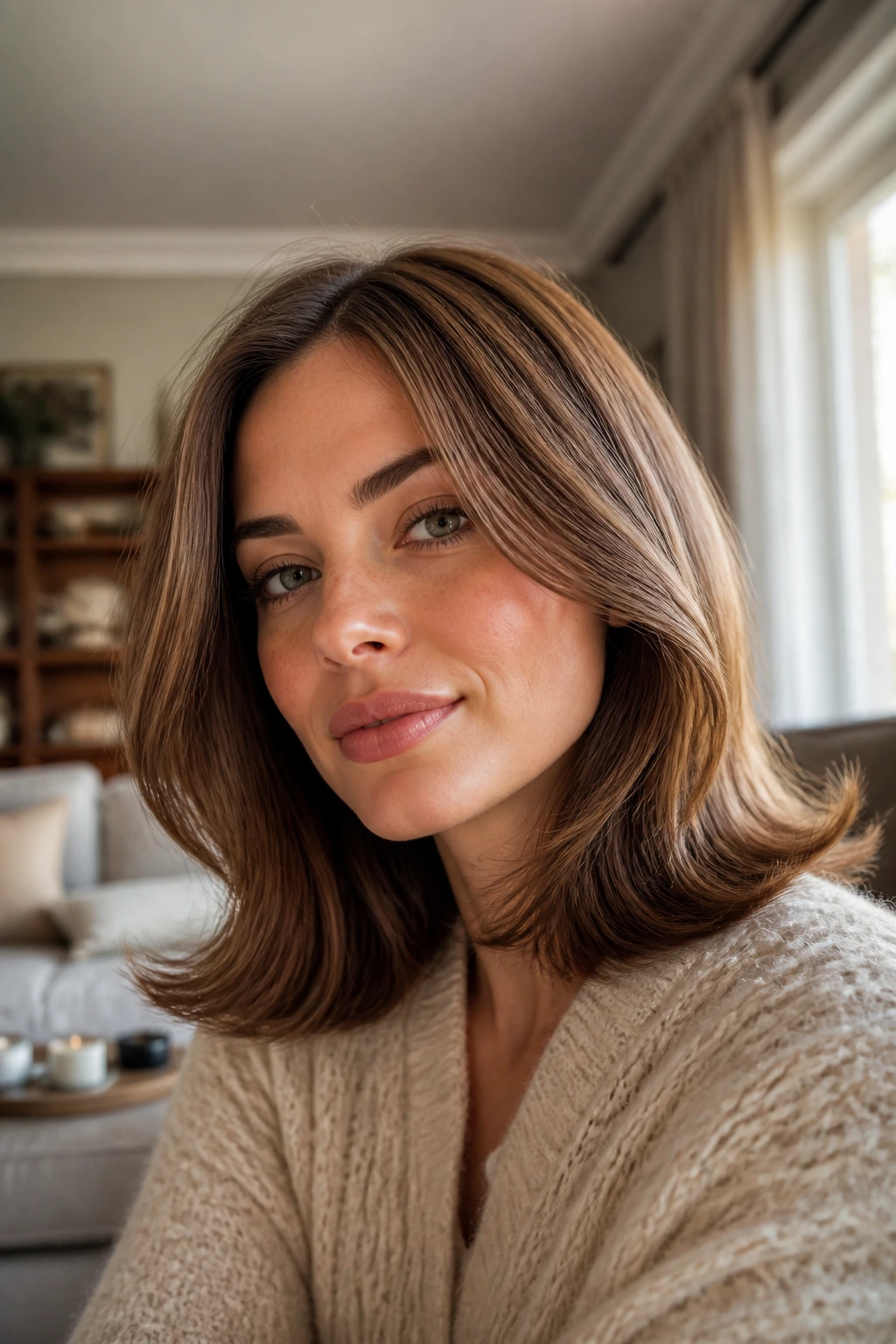
Flipped-out ends can be charming or cheesy, and the difference comes down to the size of the flip. Keep it modest. A half-inch to one-inch outward turn at the bottom is enough to give shoulder-length hair a playful edge without making it look costume-y.
The easiest way is with a flat iron or round brush. Turn the ends away from the neck, keep the crown smooth, and stop before the flip becomes a curl. The shape opens the jawline and makes mid-length hair feel a little lighter around the shoulders. It also works well when you want movement but don’t want waves all over your head.
This style is surprisingly good on hair that refuses to lie perfectly straight. Instead of fighting the flick at the ends, you build it in on purpose. That is usually smarter. And faster.
If you like a side part, the flipped-out ends feel a little more playful. If you wear a middle part, they read cleaner and more graphic. Either way, the point is the same: the ends should look like they were considered, not like they happened by mistake.
11. Soft Curls with a Side Part
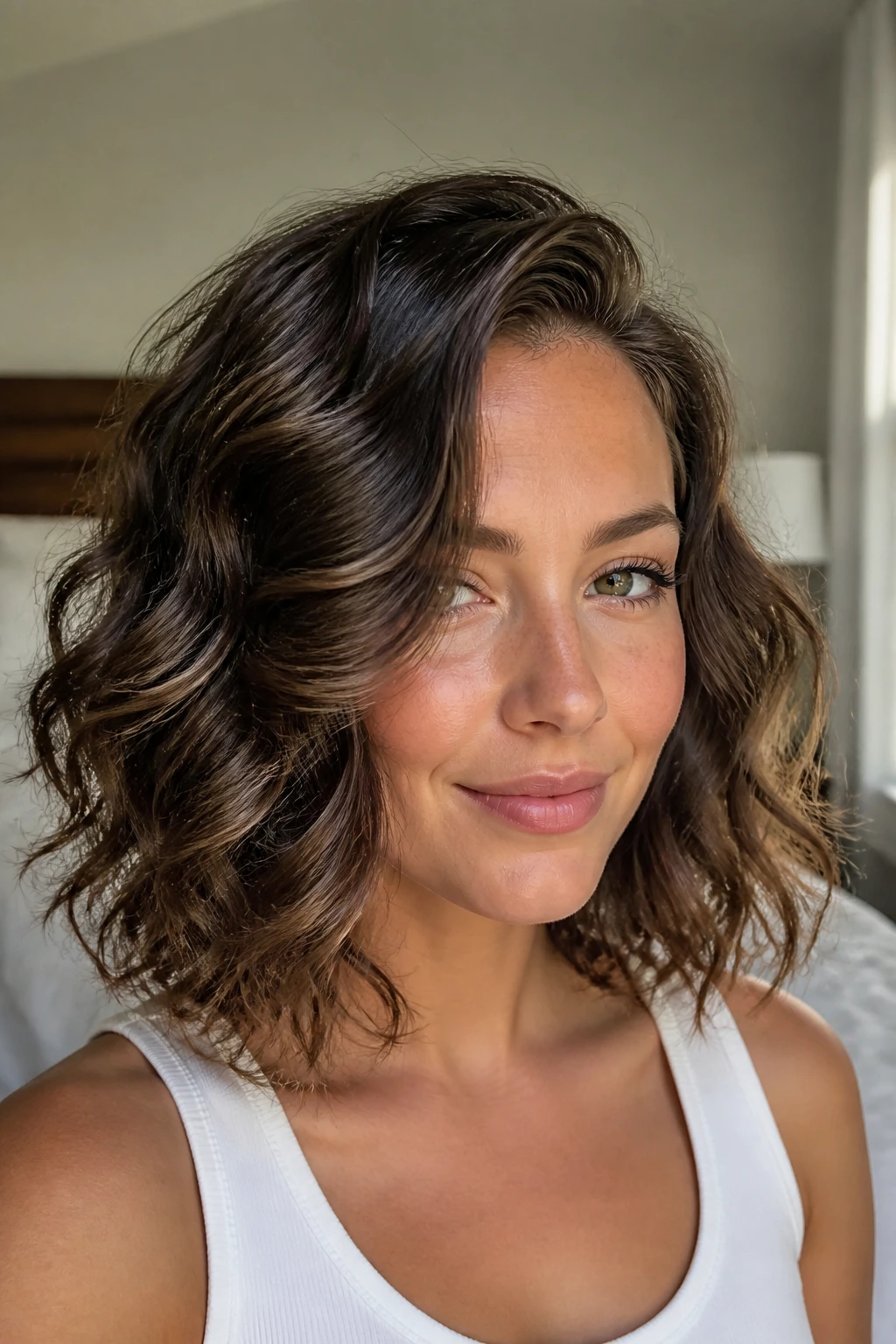
Soft curls at shoulder length give you shape without the triangle that can happen on longer hair. The curl pattern sits where the eye can catch it, and the shorter distance from root to end makes the style feel fuller. A side part adds a little height at the crown and keeps the curls from looking too symmetrical.
This is a good style when you want the hair to feel dressed up but not stiff. Use a medium barrel iron, curl away from the face, then let the curls cool before touching them. If you break them up too soon, the shape falls fast. If you leave them alone for a few minutes, they keep their curve and brush out into a softer finish.
I like this look more on shoulder length hair than on very long hair because the curls don’t drag themselves flat under their own weight. They hold their shape longer, and the haircut still shows through. That matters. The point is not just the curl; it’s the cut underneath.
A light mist of flexible spray is enough. Heavy hairspray can make the ends crunchy, which ruins the softness you came for.
12. The Half-Up Knot That Keeps Hair Out of the Way

A half-up knot is the kind of shoulder length hairstyle that gets more use than it gets credit for. It clears the face, keeps the top section under control, and still leaves enough hair down to show the length. On medium hair, it sits better than on very long hair because the knot doesn’t get bulky or heavy.
The trick is to keep it small. Gather only the crown section, twist once or twice, and pin it loosely so the knot has a little softness. If you pull too much hair into it, the style starts to look top-heavy. A few loose pieces around the ears help keep the whole thing from feeling severe.
This is the sort of style that works on clean hair, day-two hair, and slightly damp hair with a bit of product. It’s handy because it doesn’t care much about perfection. If the knot sits a little off-center, it usually looks better. Strange but true.
For a more finished version, leave out two face-framing pieces and curve them with a curling iron. That small detail changes the whole thing from gym-adjacent to actually styled.
13. The Claw-Clip Twist
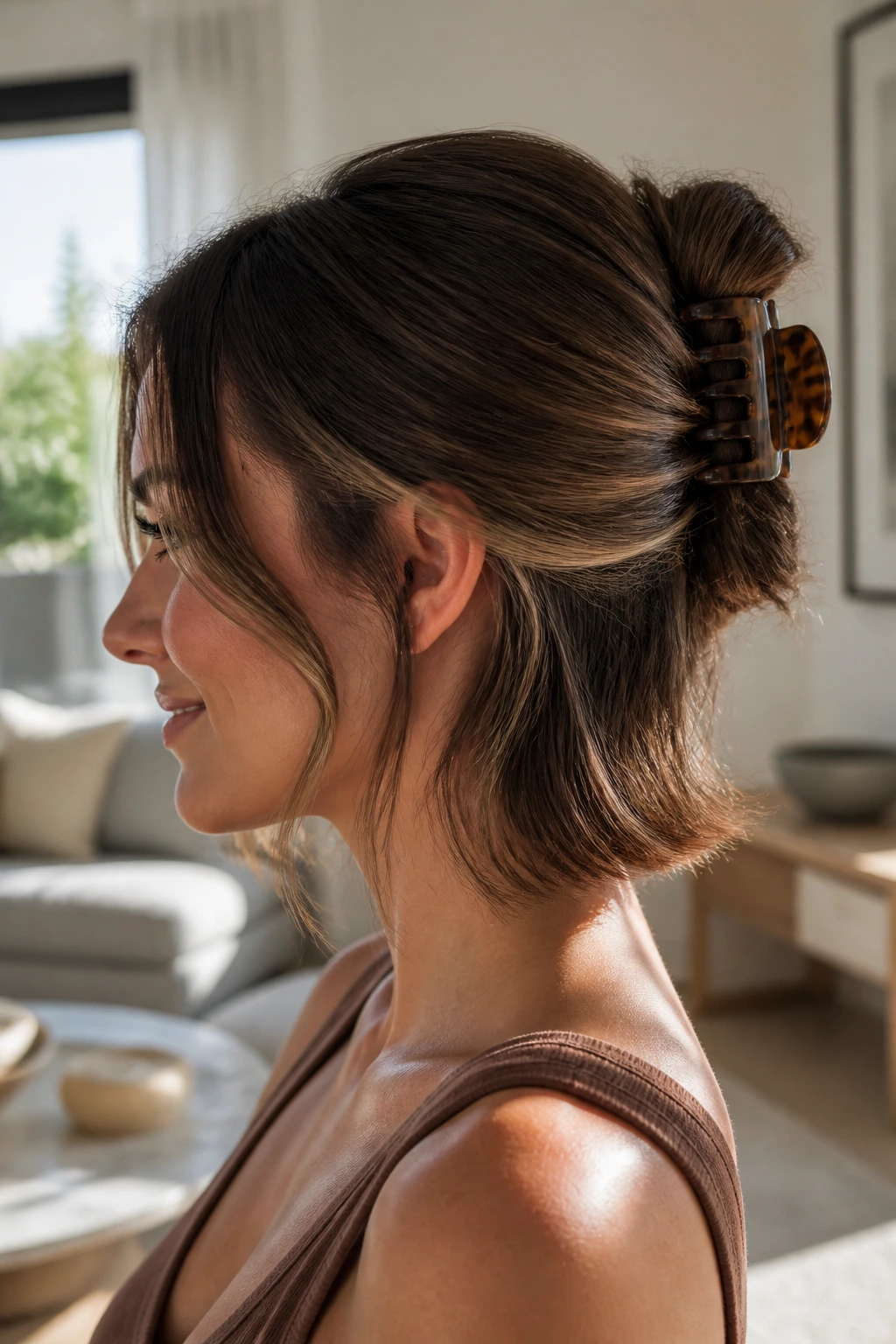
Claw clips and shoulder length hair get along better than people expect. The length is usually long enough to twist up, but not so long that the clip has to fight a mountain of hair. That means the style stays lighter, sits closer to the head, and can survive a normal day without needing constant repairs.
A good claw-clip twist starts by gathering the hair low, twisting it upward, and folding the ends under before clipping. The twist should feel snug but not scraped tight. If the front layers are too short to stay in, let them fall. That softness around the face often makes the whole look better anyway.
This style shines on second-day hair. A little dry shampoo at the roots gives the clip something to grip, and the texture makes the twist hold better. If the hair is freshly washed and slippery, the style can feel a little too clean and collapse faster.
I like this one because it keeps the haircut visible. You still see the ends, the neck, the shoulders. It doesn’t hide the cut in the way a full bun does. And when you let it down, the hair usually has a decent bend from being clipped up for a while.
14. The Low Ponytail with Face-Framing Pieces
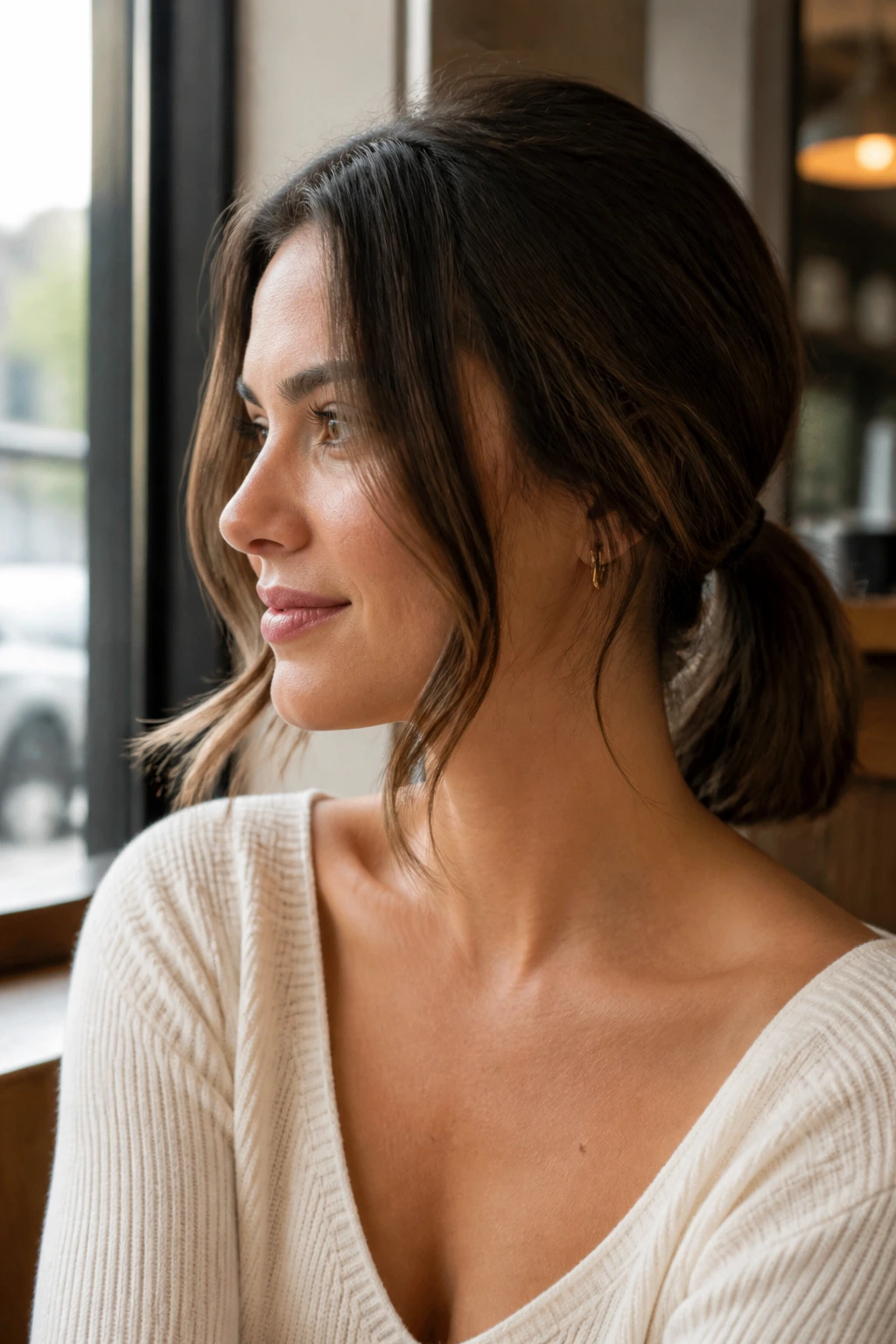
A low ponytail at shoulder length can look more polished than a long ponytail because the length doesn’t have to be wrapped around itself three times to behave. It sits close to the neck, feels neat, and shows off the texture of the ends instead of swallowing them.
The face-framing pieces matter. Without them, the style can look too severe, especially if the part is straight and the hair is fine. Leave out a few front sections, curve them lightly, and let them soften the jaw. That little bit of movement changes everything.
If your hair is thick, secure the ponytail with a strong elastic and leave the last inch slightly loose so it doesn’t poke out in a stiff line. If your hair is fine, a tiny amount of texturizing spray at the crown can help the style hold without slipping.
This is one of the easiest shoulder length hairstyles to dress up or down. With a satin ribbon or a wrapped elastic, it looks neat enough for work or dinner. With a bare elastic and a few loose hairs, it reads casual and easy.
15. The Braided Crown Half-Up
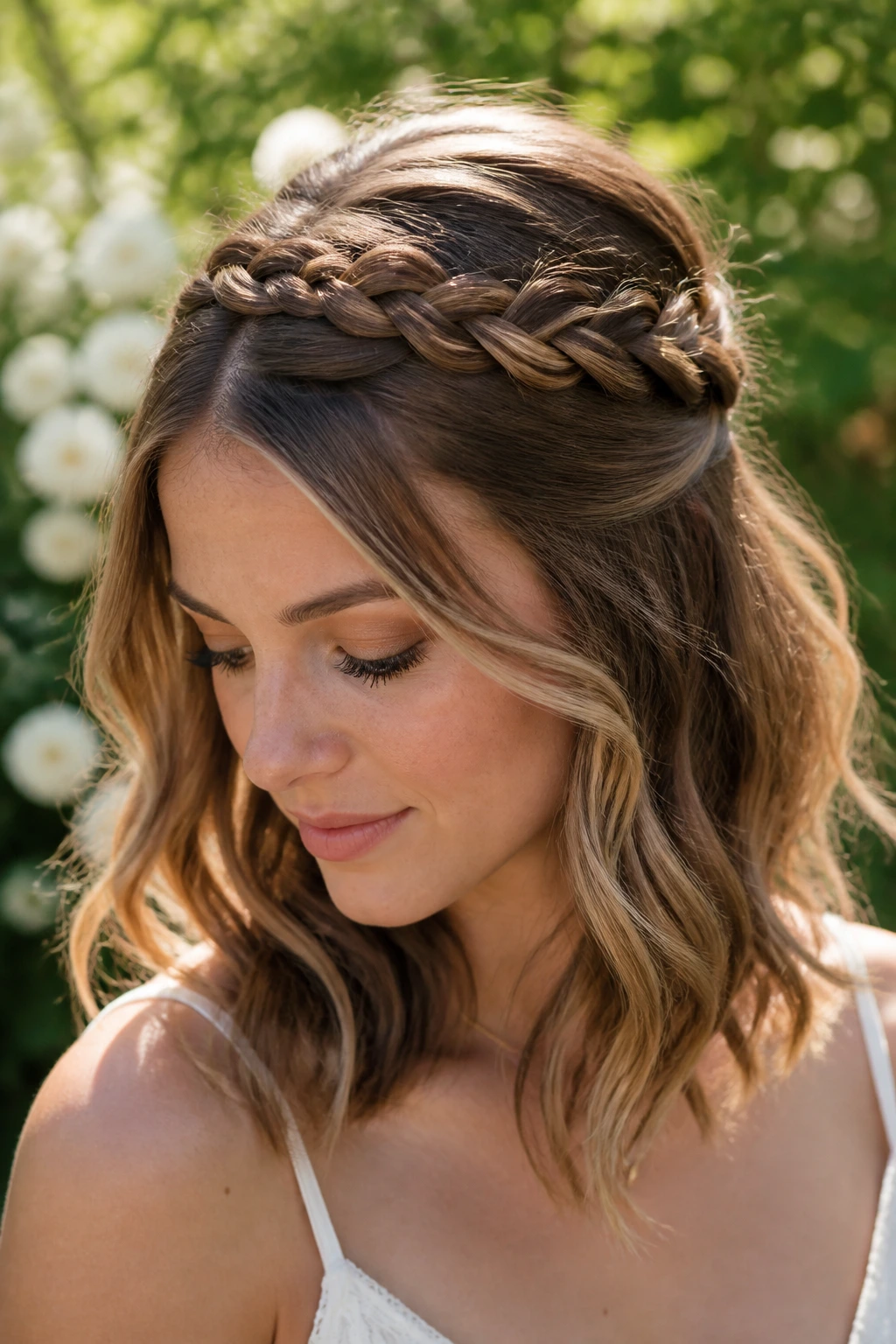
A braided crown half-up style gives shoulder length hair detail without asking for full-length braiding skills or endless pinning. The braid grabs the front and top sections, which means the back still falls freely and shows the cut. At this length, that balance is the whole charm.
Start the braid near one temple or split the front hair and braid both sides back toward the crown. Pin them together or wrap them in a half-up shape. The ends don’t need to be perfect; they just need to hold. If your hair is a little layered, use a tiny bit of pomade on the front pieces so the shorter strands don’t stick out everywhere.
This style is especially useful when you want your hair off your face but don’t want to commit to a full updo. It works for events, yes, but it also works on ordinary days when your hair keeps falling into your eyes and you’re done with it.
It also pairs well with soft waves or a naturally textured finish. Straight hair can look a little stiff in this style unless you loosen the braid slightly after pinning.
16. Smooth and Tucked Behind the Ears
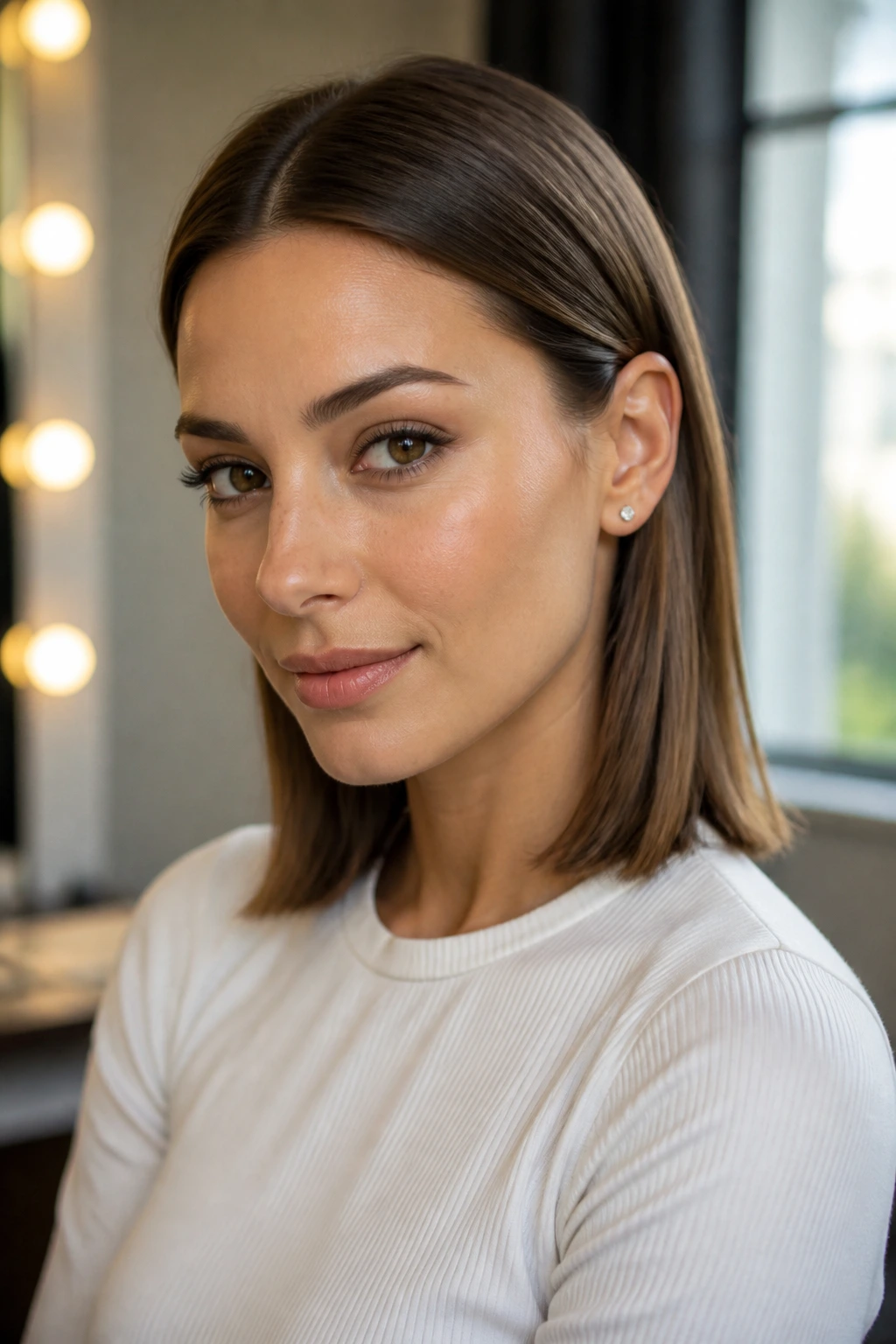
Tucked-behind-the-ears hair is a tiny move that changes the whole frame of the face. At shoulder length, it shows off cheekbones, earrings, jawline, and the shape of the cut itself. It’s one of the simplest ways to make a mid-length style look intentional in under a minute.
The key is smoothness near the front and softness everywhere else. You don’t want a slicked-back look unless that’s the point. Just tuck the front sections behind the ears and let the rest of the hair keep its natural movement. If your hair has a lot of volume, a little serum on the front pieces can keep flyaways from sticking up.
This is a surprisingly good style for people who wear glasses. The hair gets out of the frame line, the face opens up, and the overall look feels lighter. It’s also one of the best ways to show off strong earrings or a neat collar.
Sometimes the easiest styles are the ones people assume took more effort than they did. This is one of those. Very little labor. Very clean result.
17. The Rounded Blowout with Beveled Ends
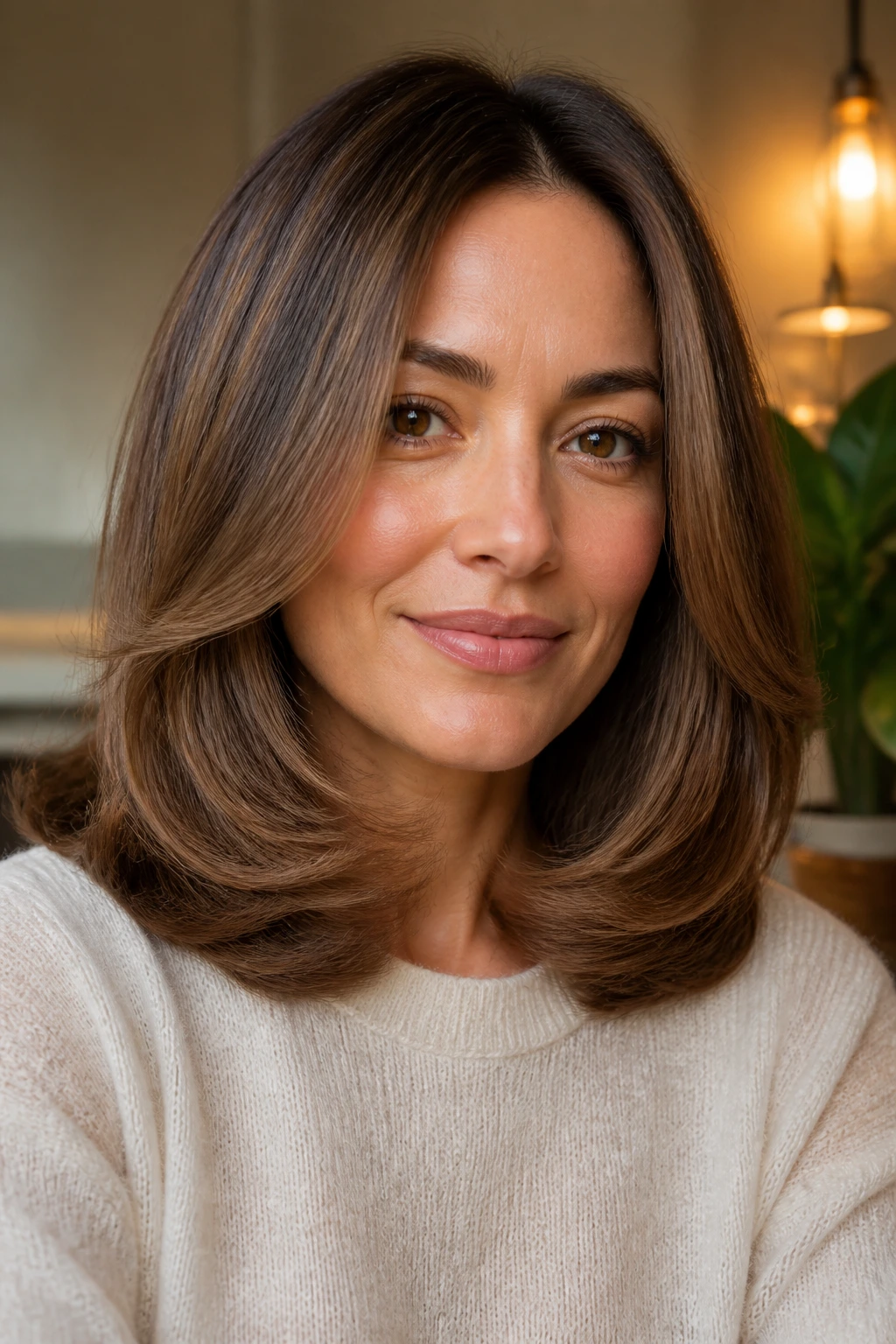
A rounded blowout gives shoulder length hair a soft, bouncy shape that feels finished without turning into a prom curl situation. The crown gets lift, the sides curve around the face, and the ends tuck under just enough to make the haircut look dense and healthy.
Use a round brush that matches your hair’s density. Smaller brush for finer hair. Slightly larger for thick hair. Dry the roots first, then work the mid-lengths and ends so you’re not fighting damp hair with the brush. The bevel at the bottom is the detail that keeps this style from looking stiff. It should curve under, not flip into a hard roll.
This is one of the best shoulder length hairstyles when you want the haircut itself to look expensive without saying anything about price. The shine, the curve, the lifted crown — it all adds up. It also suits layered cuts that need direction.
If you want the style to last, set the crown with clips while it cools. That little pause helps the lift stay put longer than rushing straight into the day.
18. The A-Line Lob That Leans Longer in Front
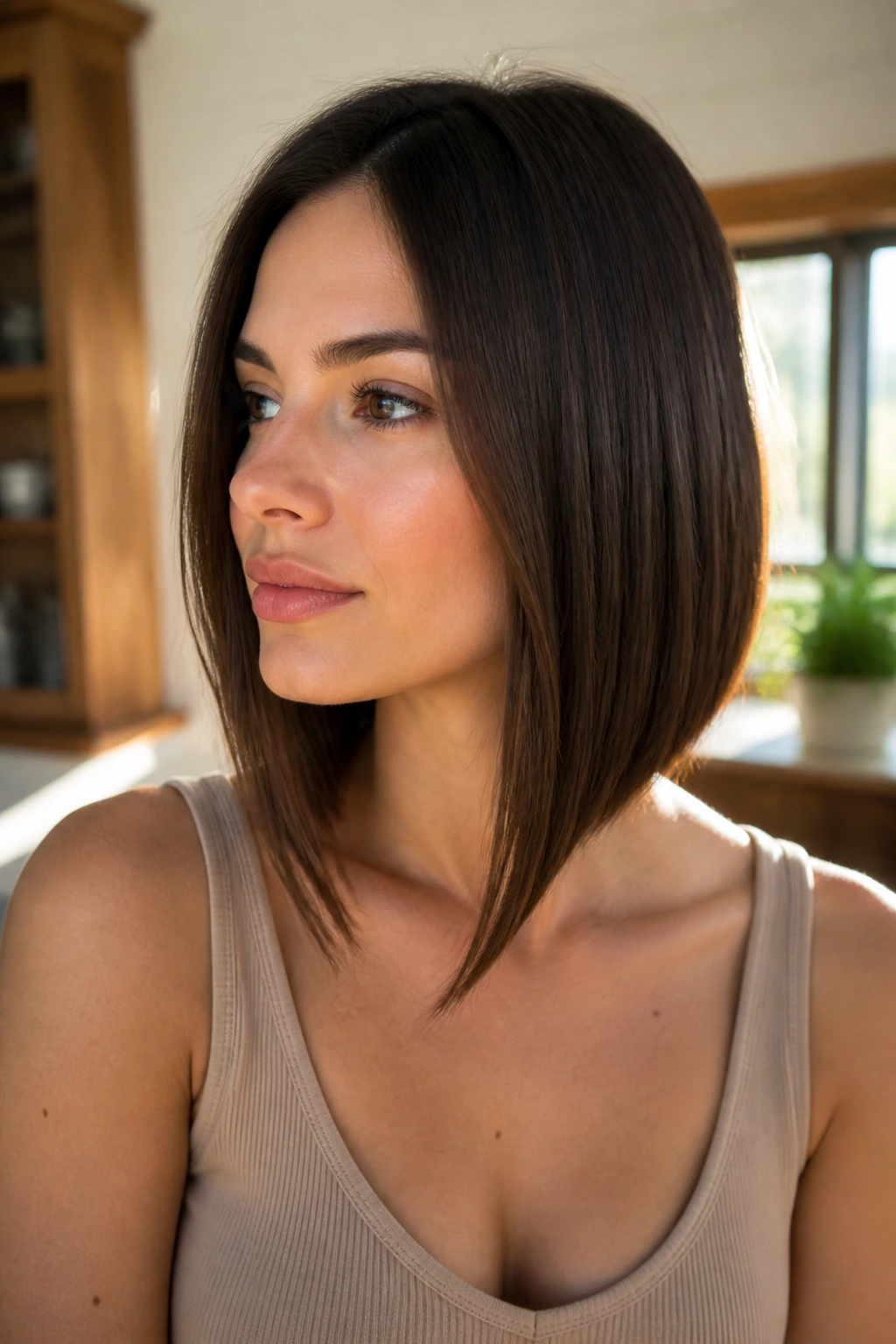
An A-line lob is for people who like a little edge but don’t want a dramatic angle. The front stays a touch longer than the back, which helps the hair skim the shoulders instead of sitting right on top of them. That subtle length difference can slim the jawline and make the neck look a little longer.
The shape is especially useful on thick hair because the angle removes some bulk in the back while keeping enough weight in the front to stop the style from puffing out. On fine hair, keep the angle gentle. Too steep and the haircut can look sparse at the back.
This cut likes straight styling, soft bends, or tucked ends. It also grows out in a way that still feels deliberate for a while, which is one reason people keep coming back to it. The line stays readable even when it’s no longer fresh from the salon.
If you’ve got a strong side part or a chin-length face frame, the A-line shape can help the cut sit away from the face just enough to feel softer. It’s subtle. That’s the point.
19. The Piecey Cut with Razored Ends

Piecey texture is for people who want shoulder length hair to look a little lighter, a little sharper, and a little less polished than a blunt lob. Razored ends can give the cut movement, but they need a careful hand. Too much razoring and the ends look frayed. Just enough and the hair gets that broken-up texture that catches light and moves well.
This style usually works best with a bit of bend or wave in the hair. Straight hair can still wear it, but the product choice matters. A small amount of matte paste or texture cream on the ends can separate the pieces without making them sticky. Don’t work the product all the way to the roots unless you want the crown to look dirty by lunchtime.
I like this cut on medium-density hair that sits a little too heavy when left blunt. The pieces stop the hair from looking blocky. They also make the shape feel modern without forcing the whole head into a shag. That middle ground is useful.
If your hair is extremely fine, ask for piecey movement around the face and keep the perimeter a touch fuller. You still need enough weight at the ends to keep the style from looking thin.
20. Glass Hair with Tucked Ends
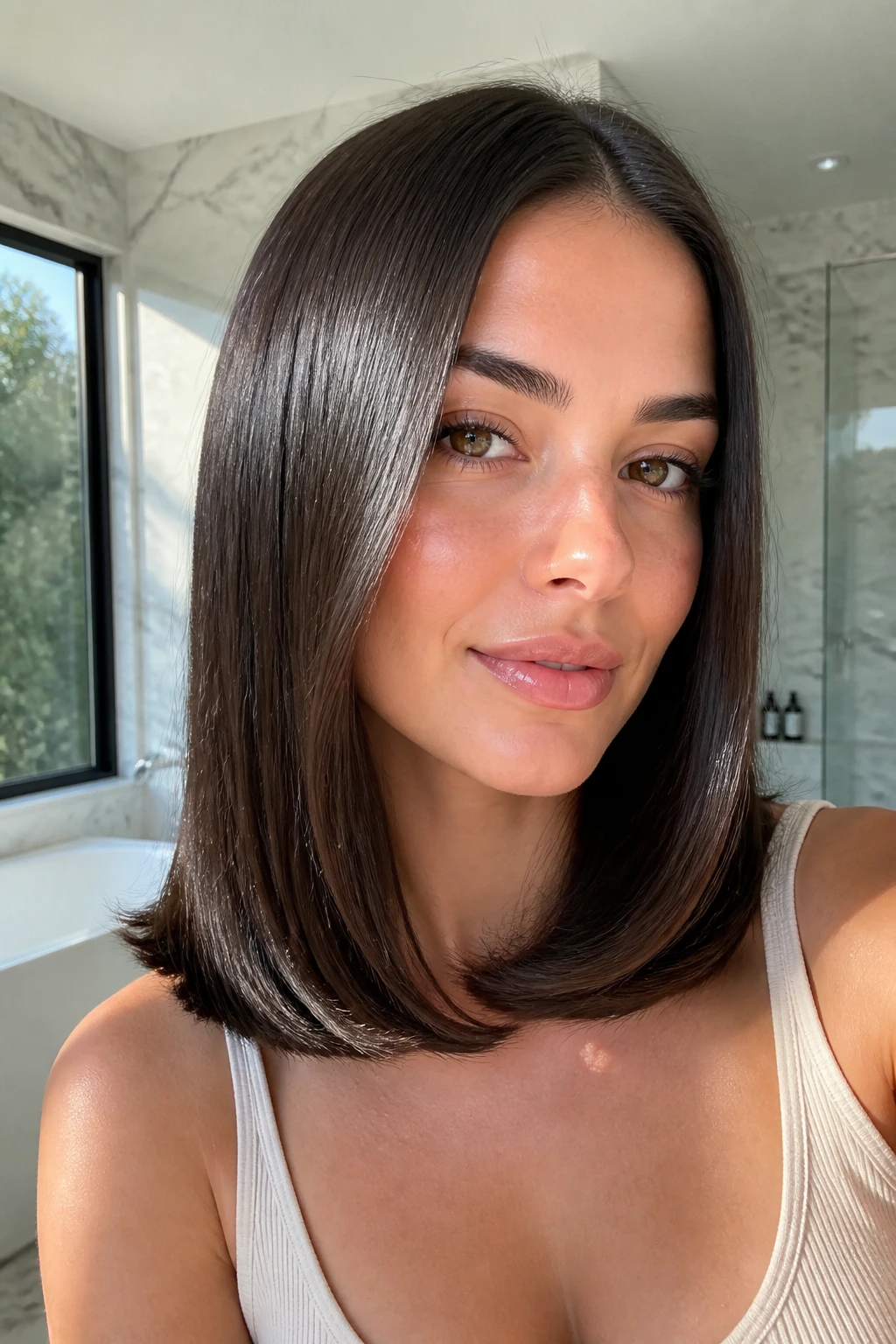
Glass hair at shoulder length is all about shine and control. The surface looks smooth enough to reflect light, the part is clean, and the ends are tucked in so the haircut lands with a neat finish. This style works best when your hair is in healthy condition, because any roughness shows right away.
Flat iron the hair in small sections, then run a finishing serum through the mid-lengths and ends. Not too much. A pea-sized amount can be enough if your hair is fine; thicker hair may need a bit more, but the goal is still a light coat. The trick is to keep the roots from getting oily while the surface stays sleek.
Shoulder-length glass hair has a nice advantage over long glass hair: it’s easier to keep smooth all the way to the ends. There’s less weight pulling on the shape. Less time with the iron, too. That matters if you hate spending forever in front of a mirror.
It looks especially good with a middle part and minimal accessories. The haircut itself becomes the detail. If your outfit is simple, this style does a lot of the work.
21. The Soft V-Cut Shoulder Shape
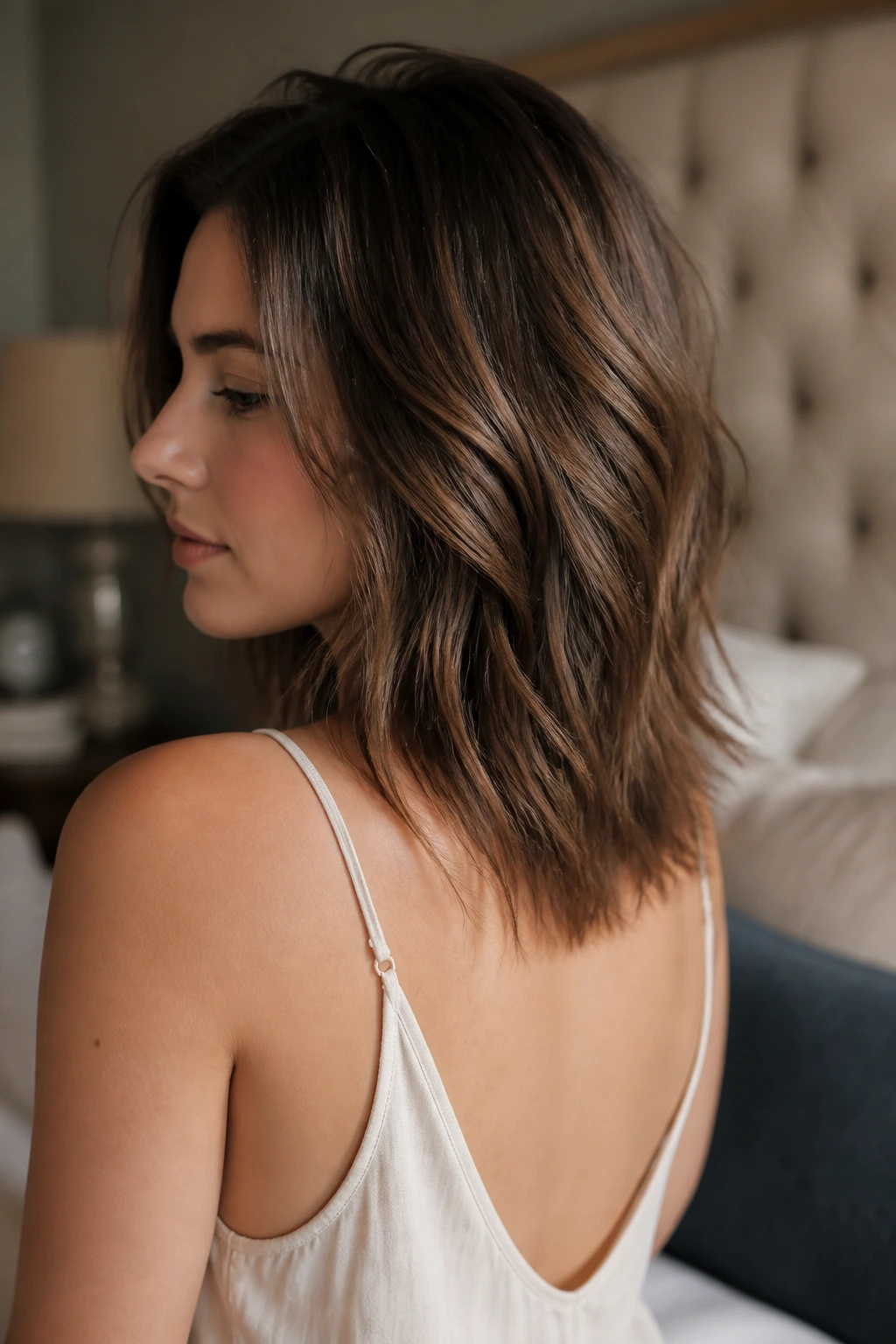
A soft V-cut lets the hair taper gently toward the back while keeping some fullness at the shoulders. It’s not dramatic, and it doesn’t need to be. The point is to remove heaviness in a way that still leaves a clear shape, especially if your hair is thick or grows in a wide pattern.
This cut often looks best when the front pieces are a little longer and the back has a quiet taper. That creates movement without the obvious stair-step effect that some layered cuts can bring. If you wear your hair wavy, the V-shape helps the waves stack in a softer line. If you wear it straight, it stops the style from feeling boxy.
The shape can be flattering for people who want length around the face but not too much bulk at the back of the neck. It also gives ponytails and half-up styles a nicer outline because the ends don’t bunch into one blunt curtain.
One caution: if your hair is already fine, a sharp V-cut can leave the ends looking thin. Keep it soft. Subtle is better here.
22. Defined Curls That Sit Right at the Shoulders
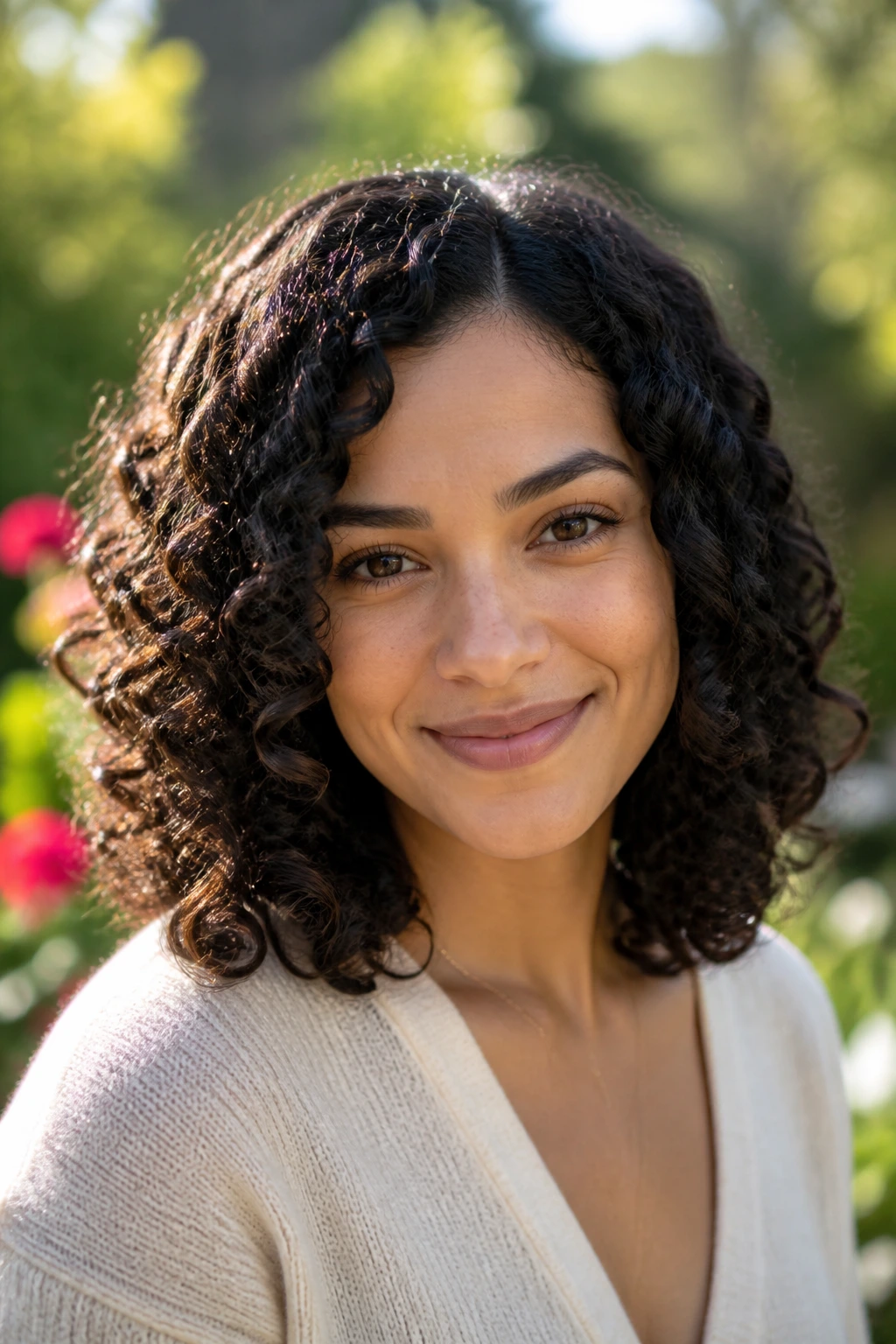
Curly shoulder length hair has a different personality than straight hair at the same length. The curls spring up, frame the face, and build volume where the eye actually lands. That can be a blessing if the cut is shaped properly, and a headache if the layers are too short or uneven.
The best version respects shrinkage. Ask for the cut when your curls are in their natural state if that’s possible, or work with a stylist who knows how your curl pattern behaves when dry. The goal is to give the curls room to stack without making the shape triangular. Layering should support the curl, not break it apart.
A curl cream, a little gel, and a diffuser can keep the shape defined without turning it crunchy. Scrunch from the ends upward and avoid touching the hair while it dries. Curly hair at shoulder length can look especially good when one or two curls fall forward around the cheekbones.
This is a style where the haircut matters more than the styling. If the cut is balanced, the curls do half the job for you.
23. The Twist-Out That Stretches and Defines
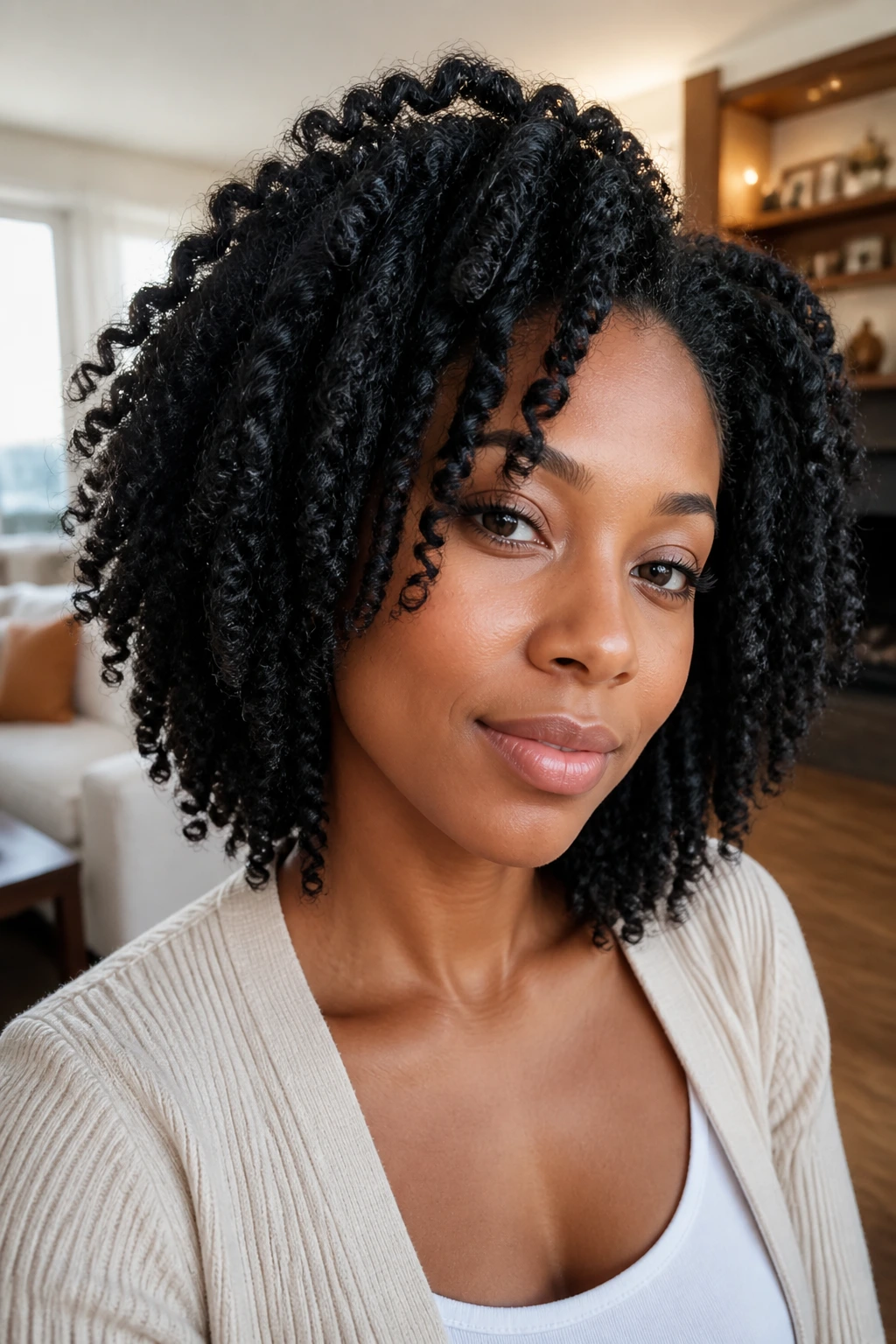
A twist-out on shoulder-length coily hair gives you definition, softness, and length without sacrificing the curl pattern. The result usually sits somewhere between a stretched-out coil and a fluffy, shaped wave. At this length, the style can show off the body of the hair while keeping the ends from getting lost.
The best twist-out starts with moisturized hair and clean sections. Small to medium twists tend to give the most definition; bigger twists make the hair fluffier and more voluminous. Let them dry fully before unraveling, or the shape will disappear fast. That part is non-negotiable.
What I like about this length is the balance. The hair is long enough to show the twist pattern, but short enough that the shape doesn’t drag under its own weight. The style feels full around the head instead of long and stretched out at the bottom.
A bit of oil on the fingers during takedown keeps frizz down, but keep it light. Too much product and the roots get greasy before the style has had a chance to live.
24. The Messy Bun with Loose Tendrils
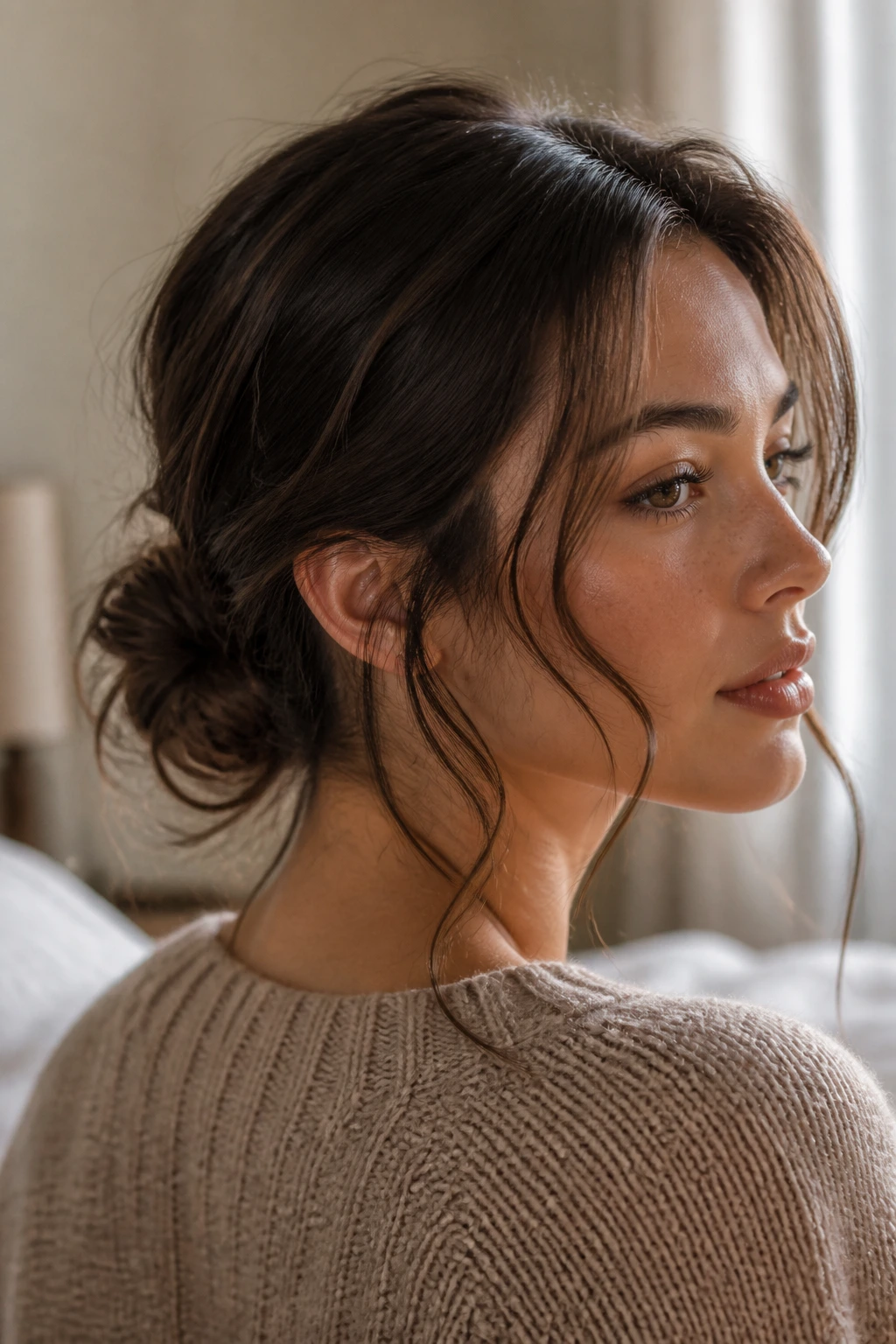
A messy bun on shoulder length hair is not the same thing as a messy bun on long hair. It’s lighter, smaller, and usually more flattering around the neck because it doesn’t pile up into a heavy knot. The loose tendrils matter here. Without them, the style can look too strict for this length.
Gather the hair low or mid-back, twist it loosely, and pin it so the ends are tucked but not hidden. Leave a few pieces around the temples and ears. If the hair is layered, you may need an extra pin or two to catch the shorter sections. That’s normal. Shoulder-length layers love to escape.
This style works on day-two hair, sweaty post-workout hair, and those in-between days when the hair isn’t dirty enough to wash but isn’t clean enough to wear down. It also makes a good base for a scarf or a large clip.
The best messy buns are not actually messy. They’re controlled chaos. The difference is that the bun has a shape and the face-framing pieces are placed on purpose.
25. The Accessory-First Lob
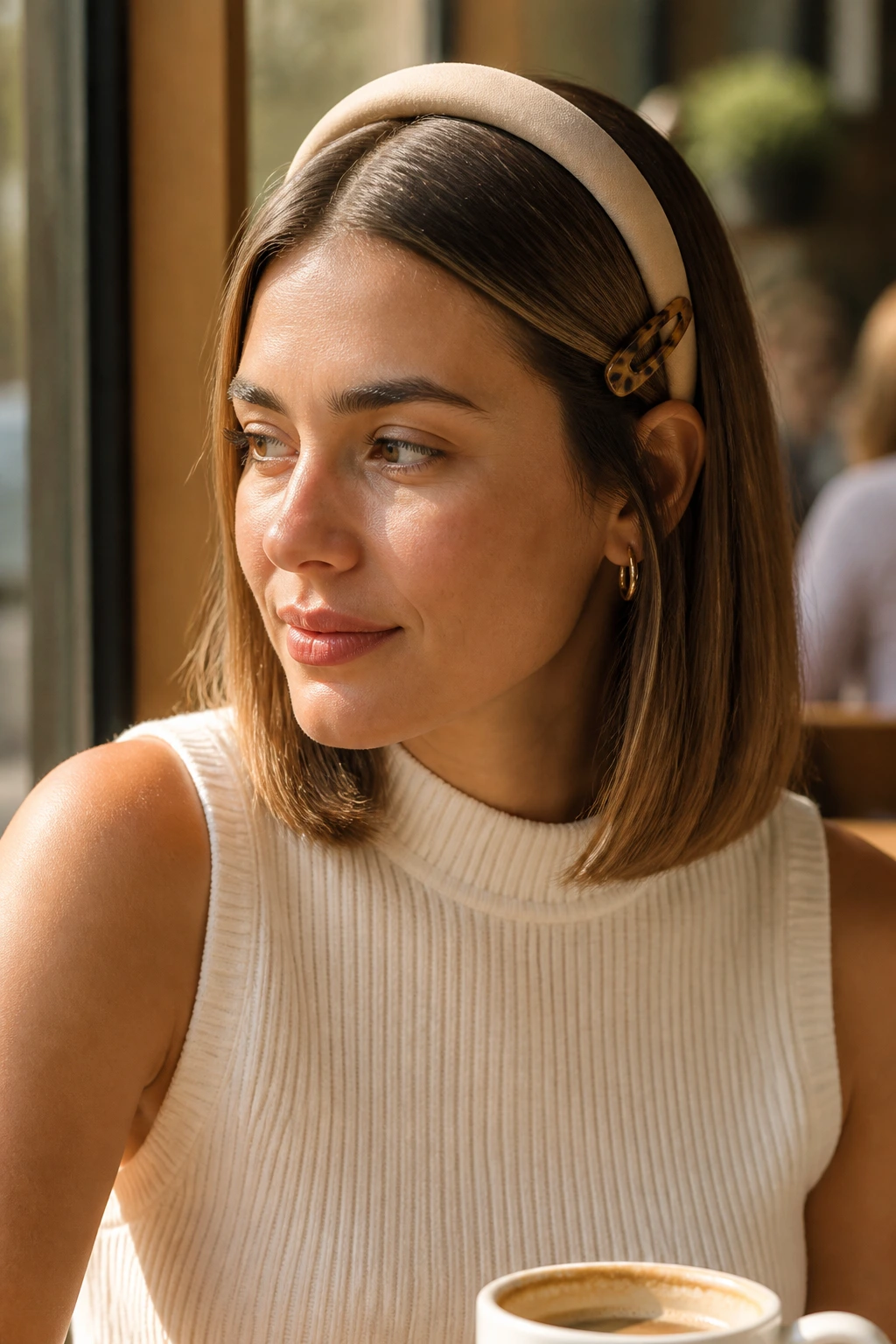
Some shoulder length hairstyles need a cut. This one needs a good clip, a headband, or a scarf. That’s the whole premise. When the hair sits around the shoulders, accessories stay visible instead of getting swallowed by length, which makes them much more useful than they are on very long hair.
A padded headband can smooth the front pieces back and add a little height. A slim barrette can pin one side and make a simple cut look styled. A silk scarf can change the mood in seconds, especially if the hair is worn straight, tucked, or loosely waved. The point is not to cover the hair. It’s to give it a focal point.
This approach is especially nice on days when you do not want to heat-style anything. A clean lob plus one strong accessory can look more intentional than a complicated curl set that fell out by noon. There’s a reason people reach for clips when they’re tired. They work.
If your hair is plain, this is an easy way to make it feel like a look instead of just hair that happened to be there.
Why Shoulder-Length Hair Sits in the Sweet Spot
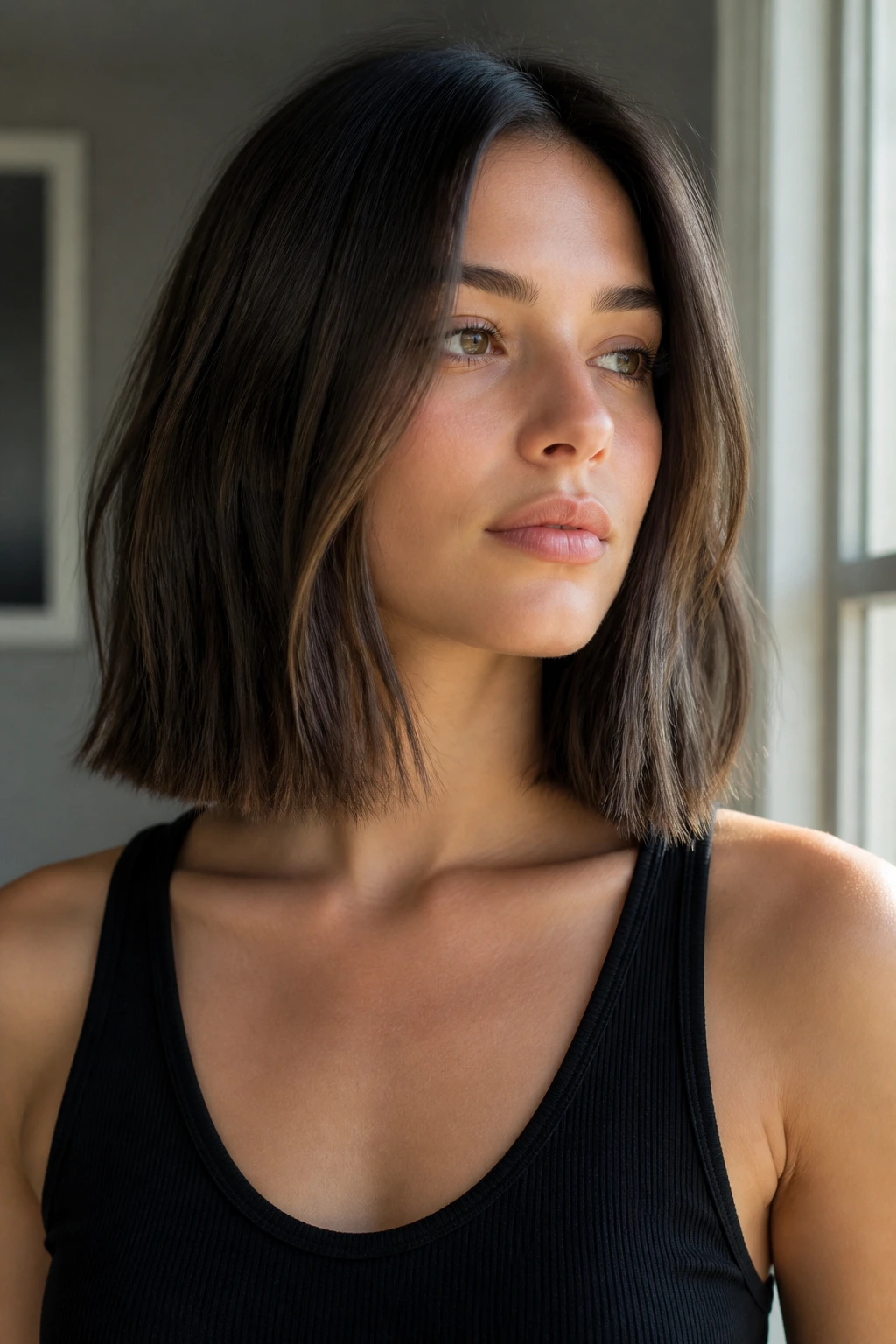
Shoulder-length hair works because it avoids the two biggest problems people run into with length. Too short, and you lose the ability to clip, twist, or pull it back. Too long, and every style starts carrying its own weight. At the shoulder, hair still moves, but it doesn’t drag as hard. That sounds like a small thing. It isn’t.
There’s also a shape advantage that gets overlooked. Hair at this length can frame the jaw, skim the collarbone, and open or close the face depending on where the part falls. If the cut is blunt, it can add density. If it’s layered, it can take bulk out. If it’s curled, the curl pattern shows up before the weight has a chance to flatten it. That’s a useful mix.
The other reason this length holds up is that it behaves well across different routines. You can blow it out. You can air-dry it. You can wear it tucked, clipped, braided, or smooth. Most people don’t need a dramatic cut. They need a cut that doesn’t fight them before breakfast. This length does that more often than almost any other.
Essential Tools for These Looks
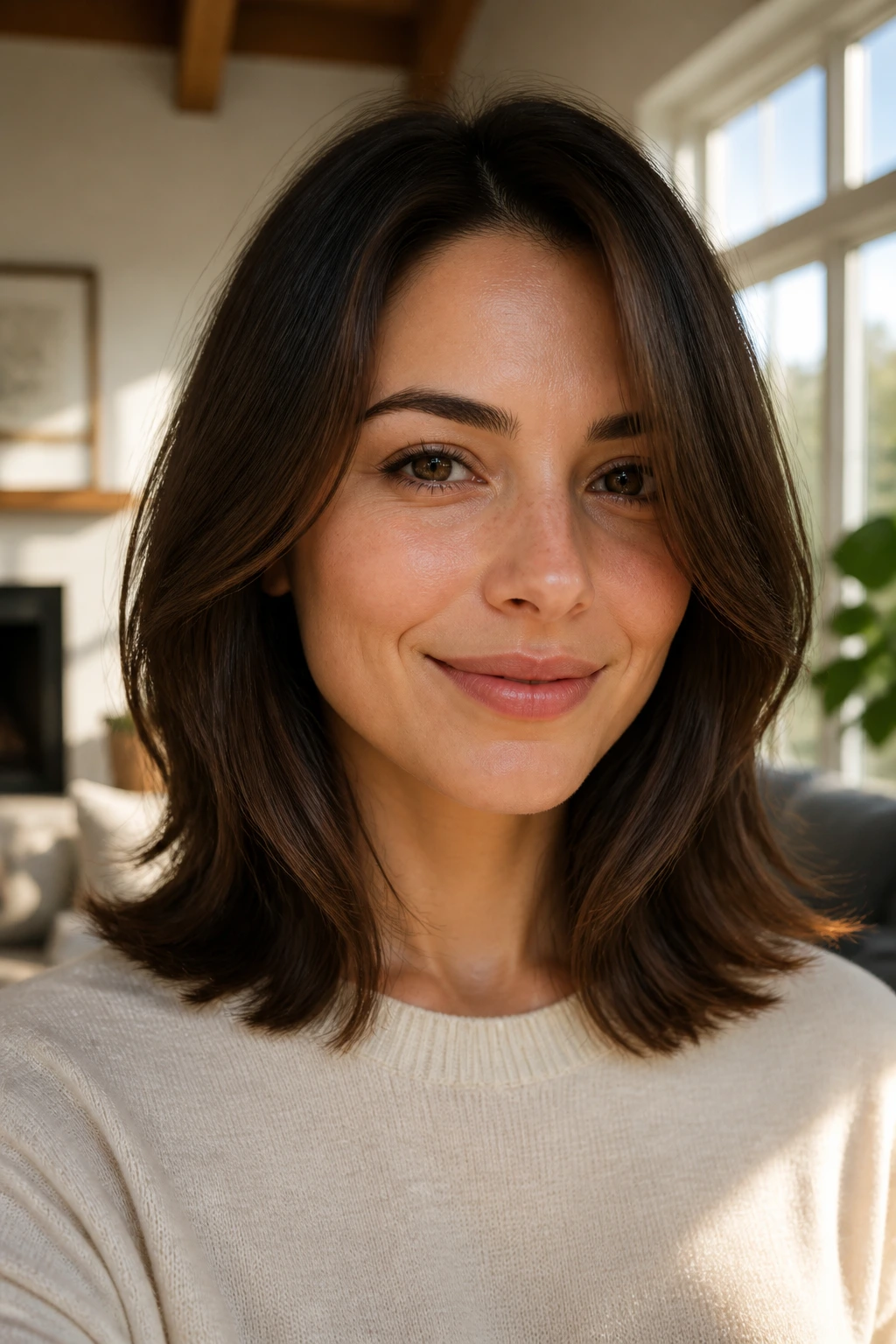
-
Tail comb: Helps you draw a clean center or side part, and it’s the easiest way to section hair without guessing.
-
Round brush, 1.5 to 2 inches: Best for blowouts, beveling the ends, and adding lift at the crown without overcurling shoulder length hair.
-
1-inch curling iron or wand: Gives clean waves and soft curls that hold shape at this length without turning into giant ringlets.
-
Blow dryer with a nozzle attachment: The nozzle matters. It directs airflow and cuts down on frizz, especially around the face frame.
-
Heat protectant spray: Use it before any hot tool. Mid-length hair shows dryness fast at the ends.
-
Light mousse or volumizing foam: Good for root lift, air-dried bend, and round-brush styles that need a little structure.
-
Texture spray: Helps waves, shags, and piecey styles separate without heavy buildup.
-
Flexible-hold hairspray: Keeps the shape in place without making the hair stiff or sticky.
-
Claw clips and bobby pins: Useful for half-up looks, twists, and quick fixes when the shorter layers slip out.
-
Satin scrunchie: Better than a tight elastic for low ponytails and loose buns because it leaves less denting and breakage.
How to Choose the Right Cut for Your Texture
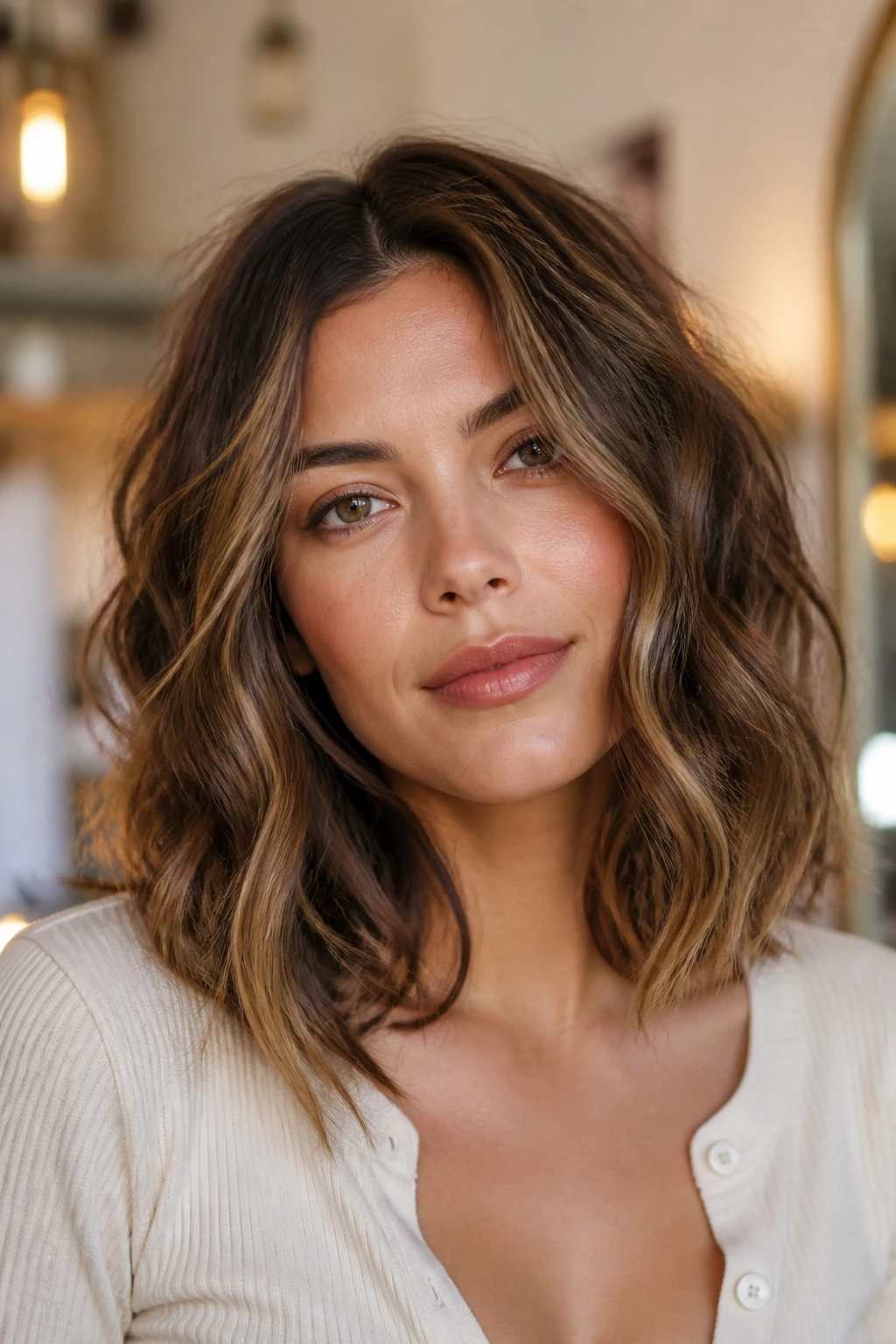
The best shoulder length hairstyle usually starts with a conversation about your hair’s behavior, not a photo of someone else’s head. Fine hair needs a different shape than dense hair. Straight hair holds a different line than wavy hair. Curly hair has its own math entirely, and pretending otherwise is how people end up frustrated in front of the mirror.
If your hair is fine, ask for weight at the perimeter and avoid too many short layers near the crown. That keeps the ends looking fuller. If your hair is thick, ask where bulk can be removed internally rather than just razor-cut on the surface. Those are two very different things. One keeps the haircut shaped; the other can make the ends look frayed.
For wavy hair, a collarbone length cut with soft layers tends to behave well because the wave pattern has room to move. For curly hair, the cut should respect shrinkage and be shaped with the curl pattern in mind, not against it. If your stylist keeps cutting while the hair is stretched straight, you may end up shorter than expected once it dries.
Bring reference photos, but bring ones that show your texture, not just the vibe. A sleek lob on straight hair tells a different story than the same cut on coarse waves. The picture is helpful. The hair under it matters more.
How to Wear These Styles So They Read as Intentional
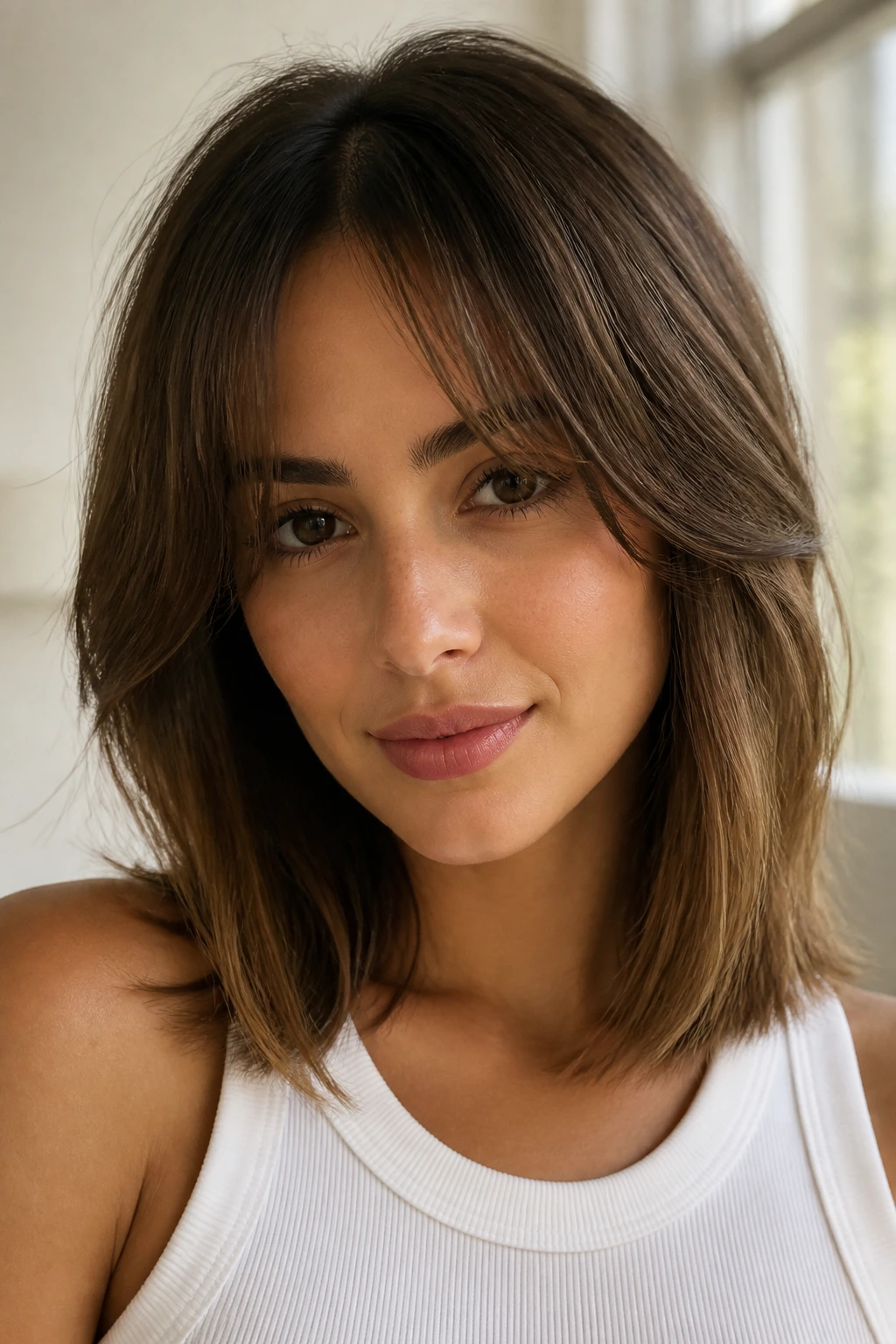
Presentation: Keep one feature clear. A clean part, a crisp bevel at the ends, or a defined wave pattern gives shoulder length hair a shape people can read at a glance. If everything is happening at once, the cut gets muddy.
Accompaniments: Earrings, collared shirts, crewneck sweaters, and headbands all change how mid-length hair sits against the face and neck. Tucked ears show off jewelry. Soft waves look looser against a high neckline. A blunt lob under a collar feels sharper than the same cut over a T-shirt.
Proportion: Shoulder-length hair can balance a longer neck, soften a sharp jaw, or add width where a face feels narrow. A blunt line adds weight. Layers remove it. Side parts shift the eye. That’s the real game here.
Daily Wear: Some styles want a fresh blowout. Others are better on day two, when the root has a little grip and the ends have a bend. Don’t force every look to work on the exact same schedule. Hair has moods. Annoying, yes. Useful to remember, too.
Extra Tweaks That Make Mid-Length Hair Feel Finished
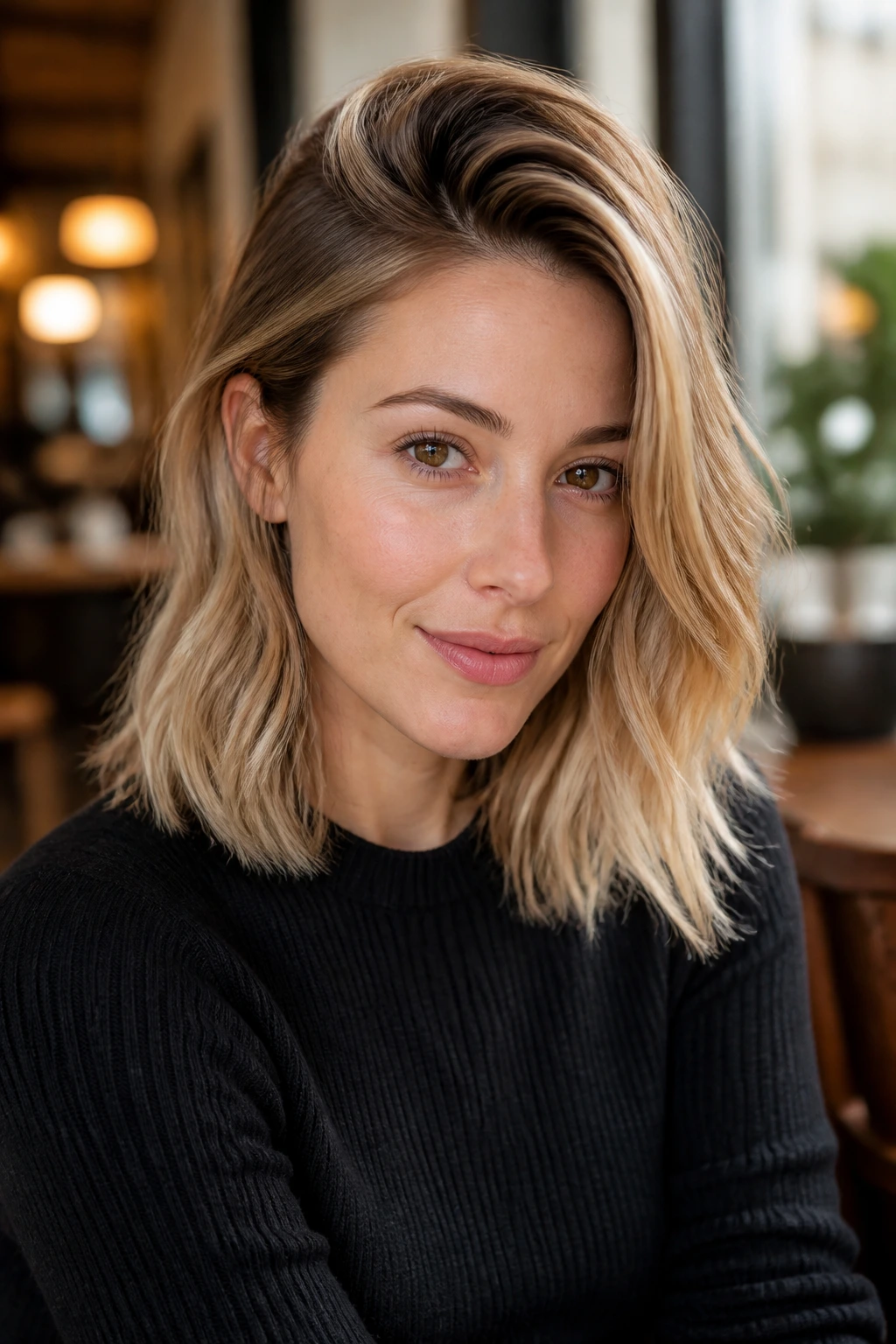
Texture Boost: A small amount of mousse at the roots and a light texture spray through the mid-lengths can keep shoulder-length hair from collapsing by noon. Use less than you think you need. Product buildup shows faster at this length because there’s less hair to absorb it.
Volume: Flip the part, blow-dry the crown in the opposite direction first, or clip the roots while they cool. Tiny moves. Big payoff. If you want the top to lift, it needs help before the hair is fully dry.
Polish: Run a drop of serum only from the middle of the hair down. The root area should stay clean. That’s how you keep the hair from looking flat while still getting shine on the ends.
Make-It-Yours: Add curtain bangs, tuck one side behind the ear, swap a center part for a side part, or pull the style into a twist on busy days. Shoulder-length hair is forgiving, but only if you let it have a little variety instead of styling it the same way forever.
Keeping Shoulder-Length Hair in Shape Between Washes
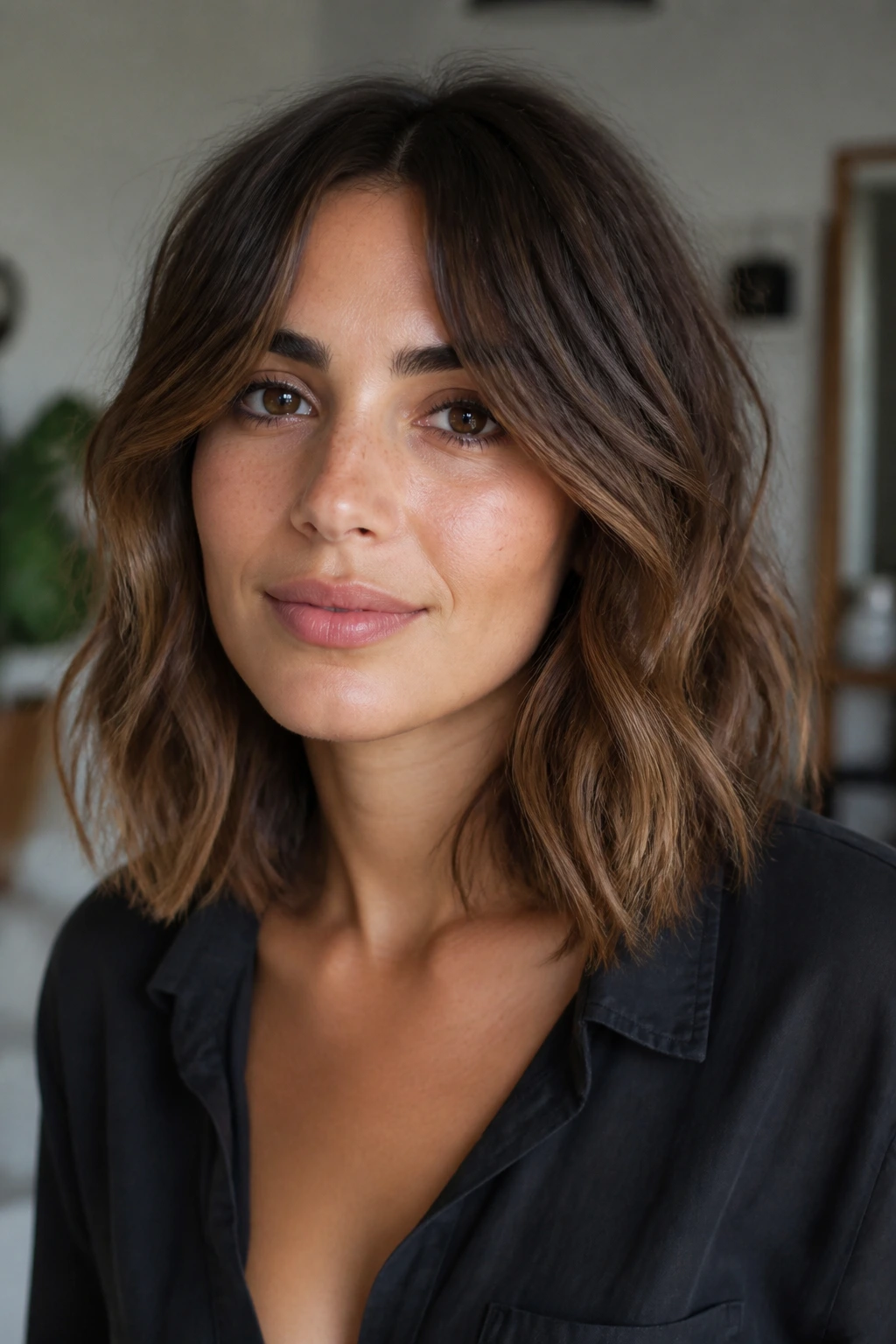
Shoulder-length hair usually behaves best when you stop trying to wash it into obedience every day. For many people, washing every 2 to 4 days is enough, especially if the scalp isn’t oily and the hair isn’t loaded with heavy products. If you use mousse, oils, or hairspray often, you may want to wash sooner. If you don’t, the hair can often go longer.
At night, a loose topknot with a satin scrunchie or a silk pillowcase keeps the ends from getting hammered flat. If you wear waves, pin-curling a few sections before bed can help preserve the bend. On straight styles, just smoothing the crown and tucking the ends away can prevent the next morning’s half-kinks.
For day-two refreshes, a mist of water mixed with a little leave-in conditioner works better than flooding the hair. Re-dampen only the sections that need it. Then use a curling iron or round brush on the pieces that frame the face. You do not need to redo the whole head. Usually, two or three front sections and the crown are enough.
Trim schedules depend on the cut. A blunt lob wants trims every 8 to 10 weeks. Layered cuts can stretch a little longer. Bangs usually need attention sooner, sometimes every 4 to 6 weeks if you want them to sit correctly. Ignore the fringe for too long and the whole haircut starts to lie.
Variations and Adaptations to Try
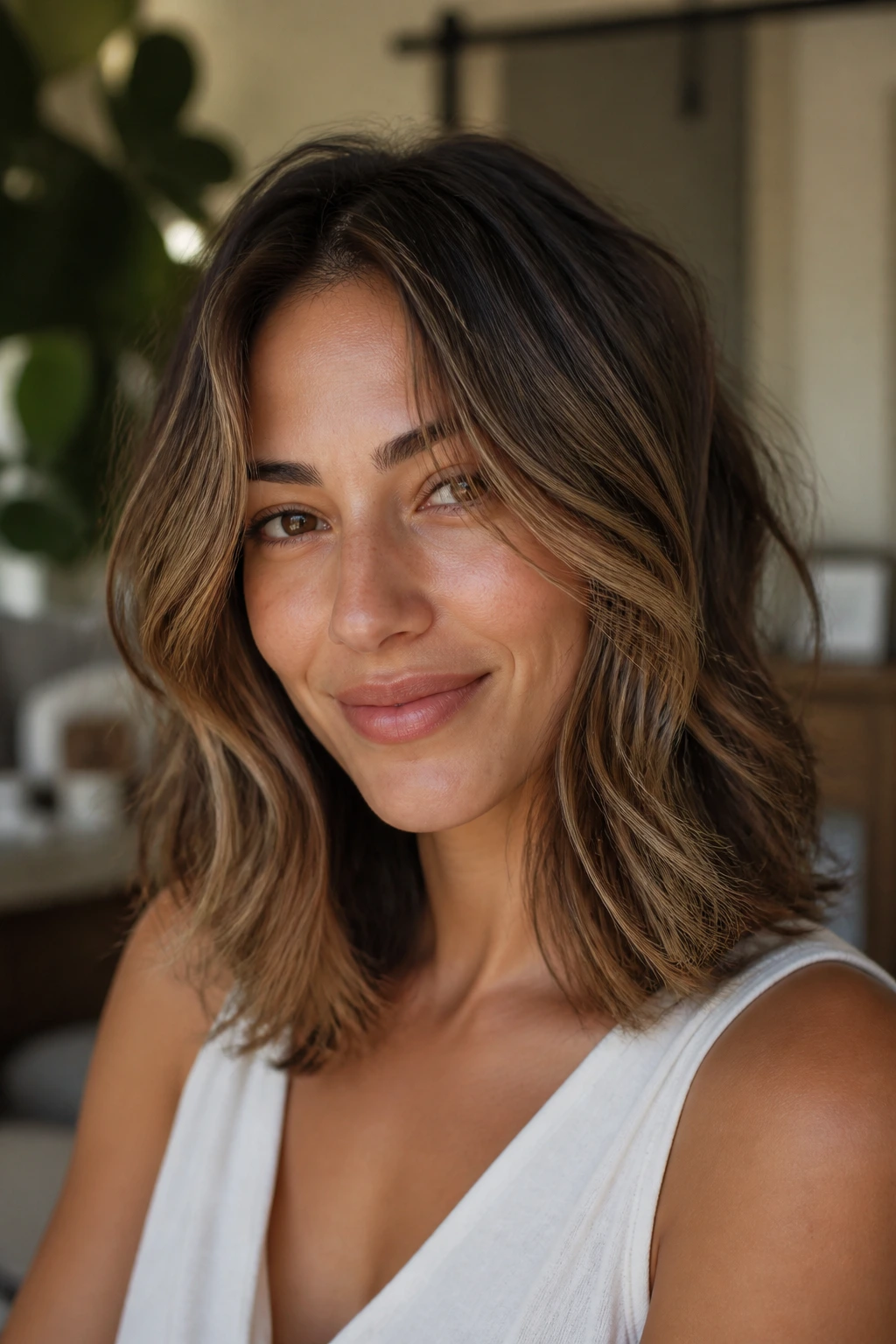
Fine-Hair Volume Edit: Ask for a blunt perimeter with minimal layering and style it with root lift spray and a small round brush. This keeps the ends dense so the hair doesn’t look sparse after one day of wear.
Thick-Hair Shape Edit: Keep the shoulder length base, but ask for internal weight removal and soft face-framing layers. That cuts down the puff without sacrificing the fullness that makes thick hair look rich.
Curly-First Shape: Have the cut shaped around your curl pattern, then wear it with diffuser drying and curl cream. At shoulder length, curls can sit in a lovely rounded shape if the layers are balanced.
Low-Heat Routine: Lean on air-dried bends, twists, braids, and claw-clip styles. This version works especially well if your hair is already wavy and only needs a little encouragement.
Office-Neat Edit: A sleek lob, low ponytail, tucked-behind-ears look, or rounded blowout keeps the hair polished without turning it stiff. These styles hold up well under a blazer, collar, or scarf.
Event-Ready Finish: Add soft curls, a side part, or a braided half-up detail, then use a flexible spray to lock the front pieces in place. The style should move when you walk, not freeze up.
Common Mistakes to Avoid
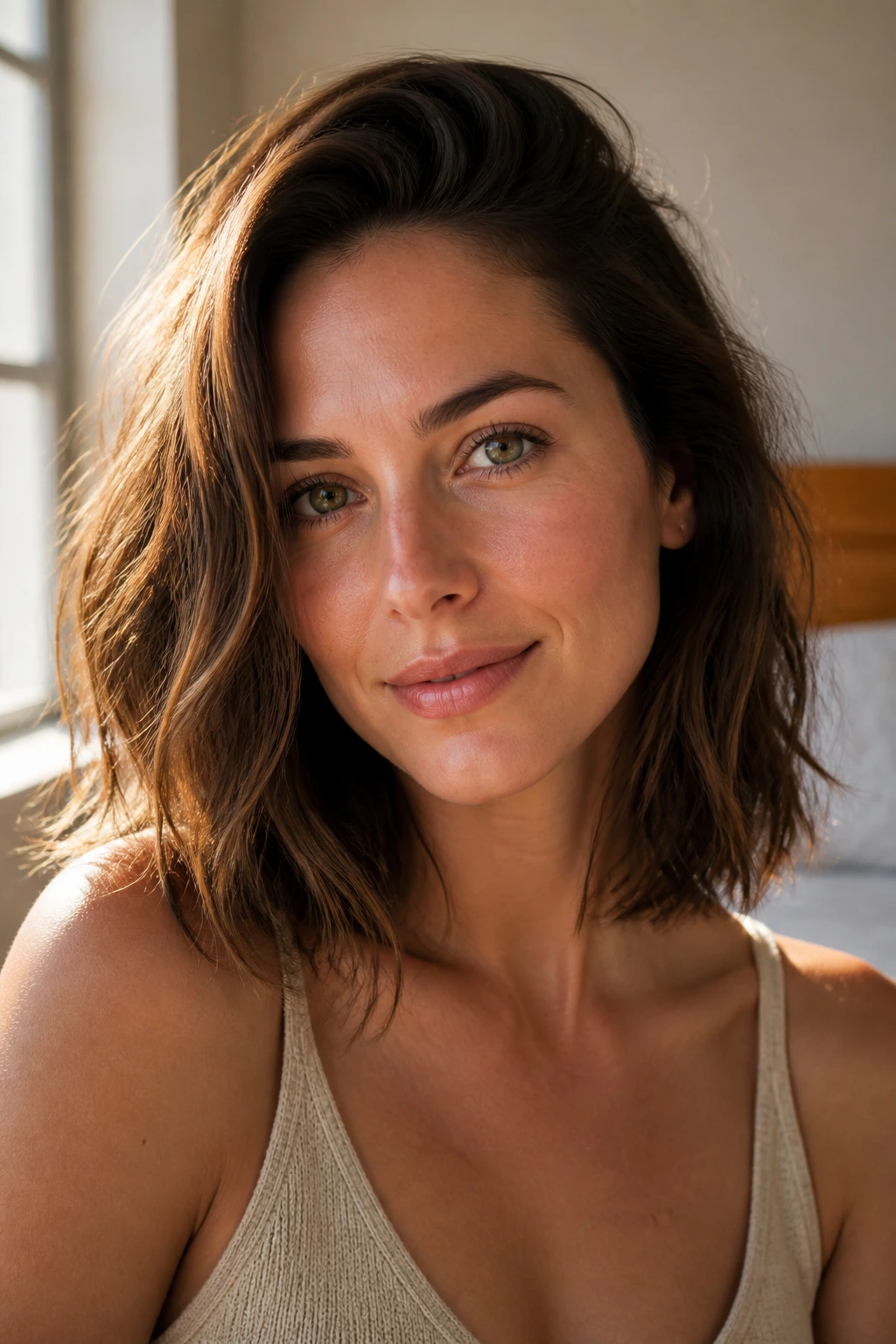
The first mistake is over-layering fine hair. Shoulder-length hair can take some movement, but too many short layers can leave the ends see-through and the crown flat. If you want body, keep the perimeter fuller and use styling to create lift instead of cutting the density away.
The second mistake is choosing a cut that fights your natural texture every single day. If your hair bends outward, a blunt line can be fine — but if you hate fighting that bend, ask for a soft bevel or an A-line shape. Working with the hair is easier than trying to force it into a new personality.
The third is using too much heavy oil or cream at this length. Shoulder-length hair does not hide product well. A little goes a long way, especially near the roots. If the hair looks stringy by noon, you probably used more than the cut can carry.
The fourth is ignoring the ends. Shoulder-length hair lives in the visible zone. Dry, frayed ends ruin a blunt lob, muddy a wave pattern, and make a sleek look seem neglected. A trim matters here. So does heat protection.
The last mistake is styling every day from scratch. That gets old fast. Keep one or two second-day versions in your back pocket — a claw-clip twist, a low ponytail, a tucked side, a half-up knot. Mid-length hair rewards flexibility.
Frequently Asked Questions
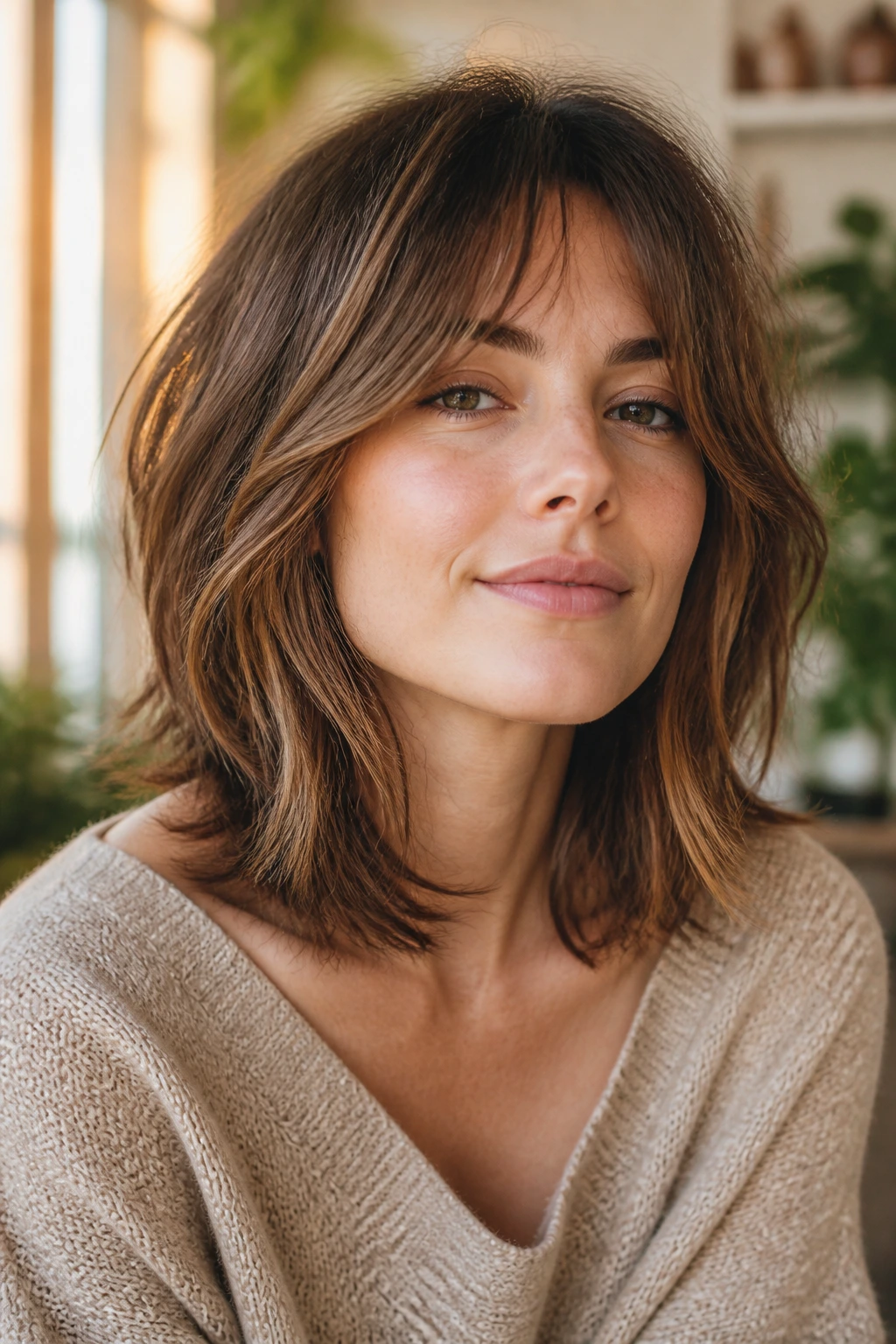
What face shape looks best with shoulder-length hair?
Most face shapes can wear shoulder-length hair if the cut is tailored a little. A blunt lob can lengthen rounder faces, side parts soften square jawlines, and curtain bangs help balance a longer face. The real difference is in where the weight sits.
Is shoulder-length hair easier to maintain than long hair?
Usually, yes. It dries faster, holds curls with less effort, and is easier to clip up when you’re busy. The trade-off is that the ends show damage more quickly, so trims matter more than people expect.
Will shoulder-length hair make fine hair look thinner?
Not if the cut is done with care. Fine hair usually looks better with a blunt or softly beveled perimeter and fewer short layers. Heavy layering is what makes it look thinner, not the length itself.
How do I keep shoulder-length hair from flipping out at the ends?
Use a round brush or flat iron to bend the ends inward while they’re still warm, then let them cool in that shape. A blunt cut can also help because damaged or uneven ends are more likely to kick outward.
What’s the easiest shoulder-length hairstyle for busy mornings?
A claw-clip twist or a low ponytail with a few face-framing pieces usually wins. Both take under five minutes, and both look better when the hair has a bit of second-day texture.
Can shoulder-length hair still go into a bun?
Yes, but it tends to be a smaller, looser bun than a long-hair knot. If you have layers, expect a few pieces to escape. That’s not a flaw. It’s the style.
How often should I trim shoulder-length hair?
A blunt cut usually needs a trim every 8 to 10 weeks to stay crisp. Layered cuts can often go 10 to 12 weeks, while bangs may need touching up sooner. If the ends start looking wispy, it’s time.
What should I ask my stylist for if I want movement but not choppiness?
Ask for long layers, a soft face frame, and a clean perimeter. That gives movement without shredding the ends. If you use words like “piecey” or “wispy,” you may get more texture than you wanted, so be specific.
The Length That Never Feels Like a Compromise
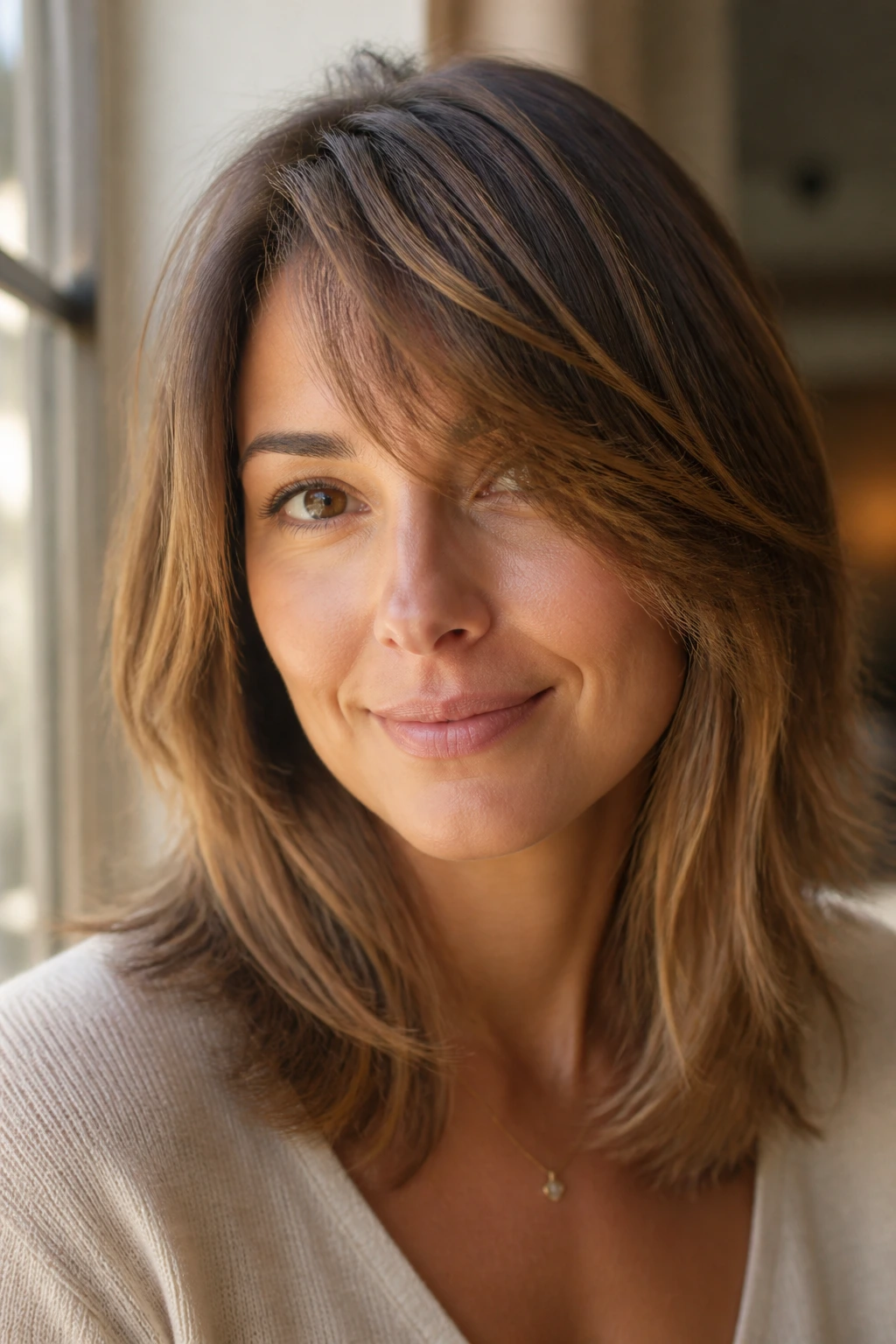
Shoulder length hair works because it gives you choices without turning those choices into a project. You can wear it blunt, wavy, curled, tucked, clipped, braided, or barely styled at all. That range is what makes medium length hairstyles keep coming back into favor, and it’s why the cut can look fresh without trying too hard.
The best version is the one that respects your texture instead of fighting it. If your hair wants softness, let it have that. If it wants structure, build the line into it. That’s where shoulder-length hair earns its keep: it holds a shape, but it doesn’t trap you inside one.
Pick one of these styles, live in it for a week, and watch how the length starts to tell you what it likes. That’s usually where the good hair days begin.
