



Long gray hairstyles for older women work best when they stop pretending the hair is still living a younger life. Gray strands have their own rules: they can feel coarser, bend less willingly, and show every dry end under good light. That sounds like a problem until you realize it also means silver hair has a sharper shine, a cleaner line, and a much more interesting texture than most people give it credit for.
The mistake I see most often is treating long gray hair like one heavy curtain. It falls flat. It steals light from the face. And, frankly, it can make even good hair look tired if the shape is too blunt, the ends are too wispy, or the styling product sits on top instead of sinking in. A better cut — or sometimes just a better way of wearing the length you already have — changes everything.
What makes long gray hair especially worth keeping is the range it can handle. A soft braid can look relaxed and polished. A low ponytail can look sharp rather than severe. Loose waves can keep the whole style from reading stiff. The styles below lean into that range instead of fighting it, which is the whole point.
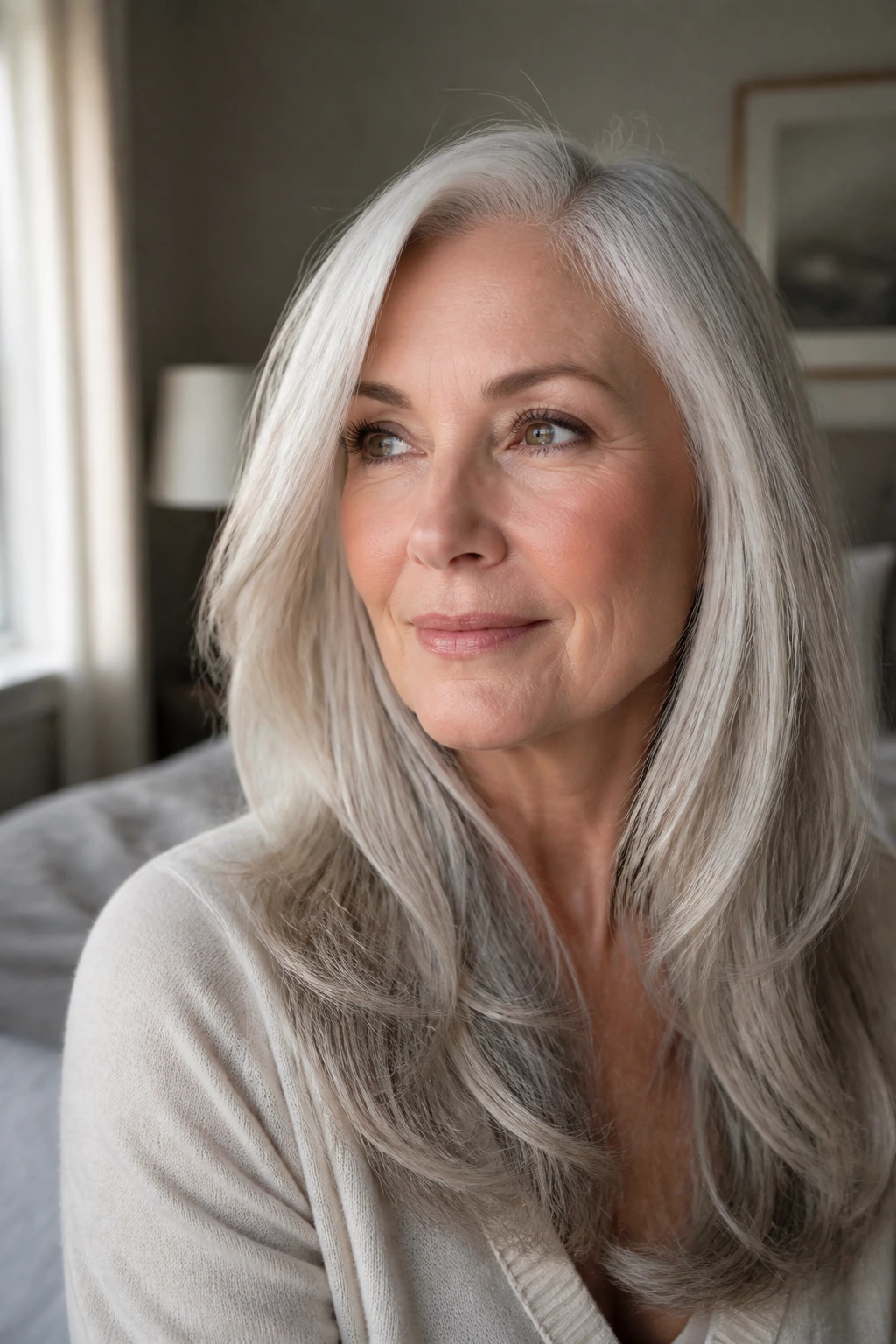
Why These Styles Work So Well on Gray Hair
-
They control the ends without killing the length: Gray hair often looks best when the bottom inch or two is tidy, because dry ends scatter light and make the whole style look fuzzy.
-
They build lift where mature hair tends to flatten: A little crown volume or a face-framing layer keeps the style from sitting low on the head, which can drag the face down.
-
They show off silver instead of hiding it: Smooth bends, soft braids, and clean parts let the reflective quality of gray hair do the work instead of burying it under heavy product.
-
They give you options for different textures: Fine hair, coarse hair, and natural waves all need a different kind of shape. These looks cover that spread.
-
They work with real life, not just salon chairs: Some days call for a brush and a clip. Some days call for a curling iron and patience. Both count.
1. Feathered Layers That Lift the Cheeks
Feathered layers are one of the easiest ways to keep long gray hair from looking bottom-heavy. The shape stays long, but the hair around the face moves a little more, which matters when the silver is bright and the skin around it needs some softness.
What I like about this cut is the way it avoids that helmet feeling. The longest pieces still give you length, but the upper layers let the hair bend instead of hanging straight down. On gray hair, that bend reads as movement, not fuss.
What to ask for
- Keep the longest layer at least below the collarbone.
- Ask for soft face-framing pieces that start around the cheekbone.
- Avoid razor-thin ends if your hair is already fine; they can look see-through fast.
- If your hair is thick, ask for interior weight removal instead of short layers all over.
A round brush and a medium-blowout technique make this shape sing. Dry the roots first, then roll the front pieces away from the face so the cheek line opens up a little. It does not need to be perfect. A small bend near the ends is enough.
2. Soft Silver Waves With Invisible Layers
If you want movement without obvious chopping, invisible layers are the quiet answer. The cut keeps its length and fullness, but the hidden internal shaping stops the hair from sitting in one flat sheet.
Soft waves work here because gray hair tends to reflect light differently across the strand. A gentle wave — not a pageant curl, not a spiral set — gives the silver places to catch light cleanly. That’s the whole trick. The hair looks richer because the shape does some of the visual work.
Air-dry texture sprays can help if your wave pattern is already there. If not, wrap medium sections around a 1.25-inch iron and let the curls cool fully before brushing them out. That cooling step matters. Skip it, and the wave drops before lunch.
3. Curtain Bangs That Blend Into Long Gray Hair
Do curtain bangs work on mature faces? Yes, and usually better than blunt fringe. They open the forehead without boxing it in, and they grow out in a way that doesn’t feel annoying every three weeks.
The nicest thing about curtain bangs on gray hair is the softness around the eyes. A center part with longer bang pieces that sweep to each side gives you structure near the face without making the whole style feel formal. If your gray hair has a little bend already, the bangs will sit almost by themselves. If not, a round brush and five minutes will get them there.
Best styling move
Keep the shortest point of the bangs around the brow or just below it, then let the sides taper into the rest of the cut. That means they can be tucked, pinched, or brushed aside without looking chopped off.
Curtain bangs also help if your forehead feels wider or if your hairline is changing. They make the transition look intentional. That’s worth more than a lot of people think.
4. Sleek Low Ponytail With a Wrapped Base
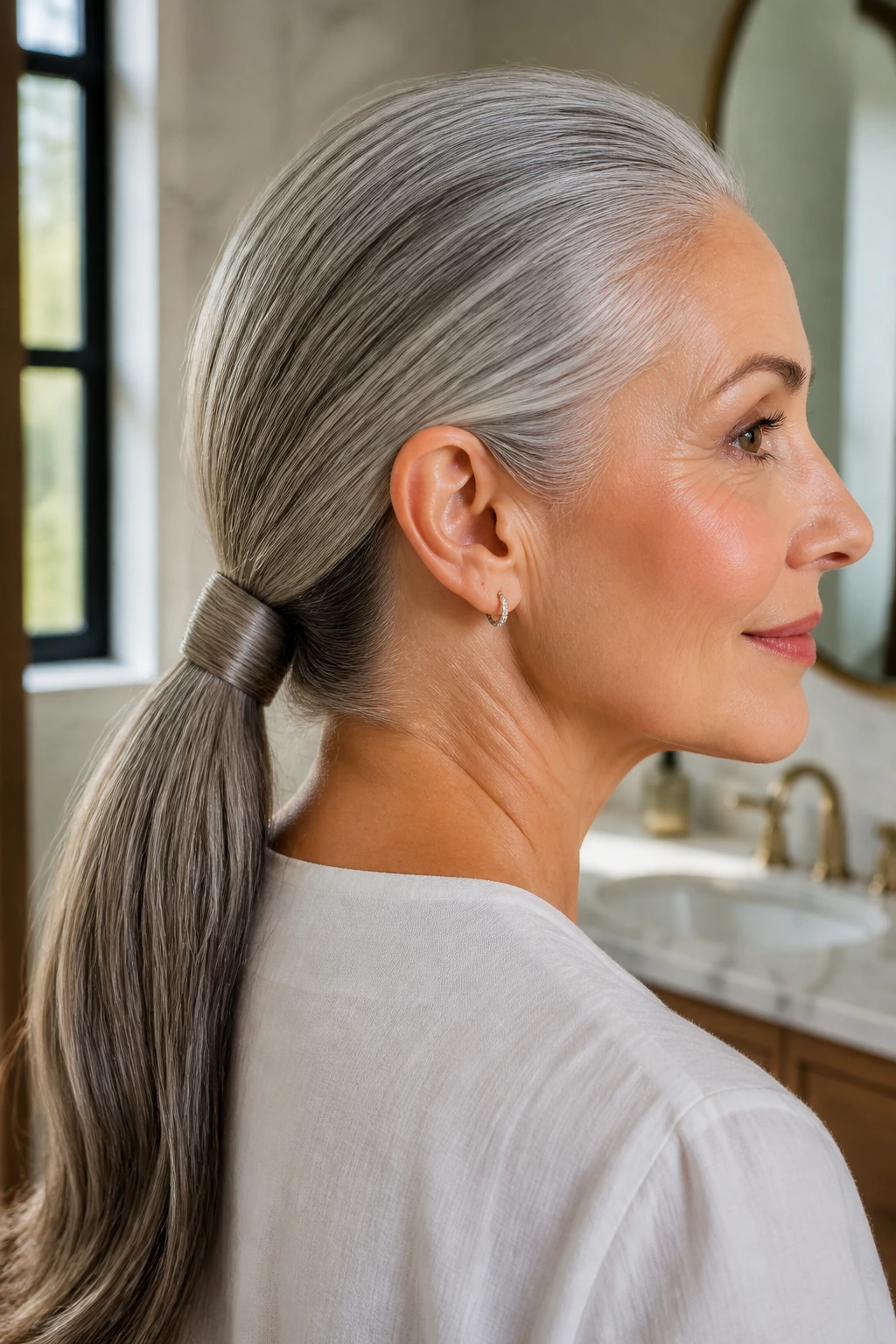
Some days call for control. Humid weather, second-day hair, and those “I’m not spending forty minutes on this” mornings all point toward a low ponytail.
The reason this style works on long gray hair is simple: it keeps the line clean. A ponytail at the nape of the neck shows the silver in a single, uninterrupted sweep, and the wrapped base makes it look finished instead of thrown together. Use a boar-bristle brush to smooth the crown, then leave the ponytail itself a little soft so it doesn’t look severe.
A small amount of smoothing cream on the mids and ends helps if your gray hair gets frizzy. Do not put it near the roots unless you want the ponytail to go limp by noon. That’s the catch with long gray hair — it likes polish, but not weight.
5. Side-Swept Waves With Old-Hollywood Bend
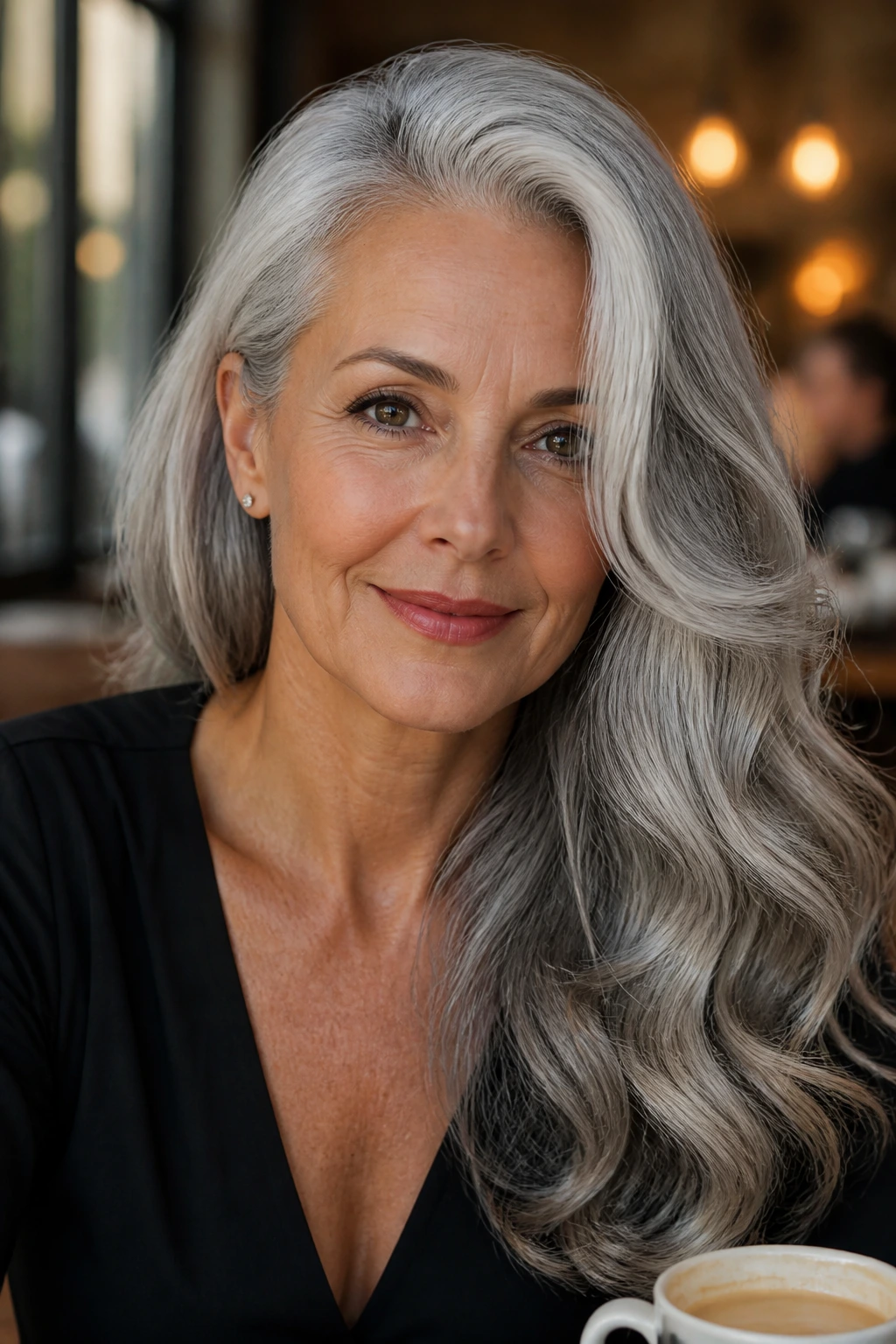
A deep side part changes the mood of long gray hair instantly. The style gets lift at the crown, and the face gets a softer diagonal line instead of a straight curtain falling down both sides.
This is the look I reach for when the hair needs to feel dressed up without going rigid. Use a 1.5-inch curling iron or hot rollers to create broad bends, then brush the curls out into waves. The brush-out matters. Tight curls on gray hair can look too busy, while a loose wave keeps the color calm and clean.
Put the heavier side just above the eyebrow or temple, not far back near the ear. That small shift gives the face more shape. It also helps if one side has slightly less density than the other. Hair rarely grows in perfect balance, and this style knows it.
6. Braided Crown With Loose Ends
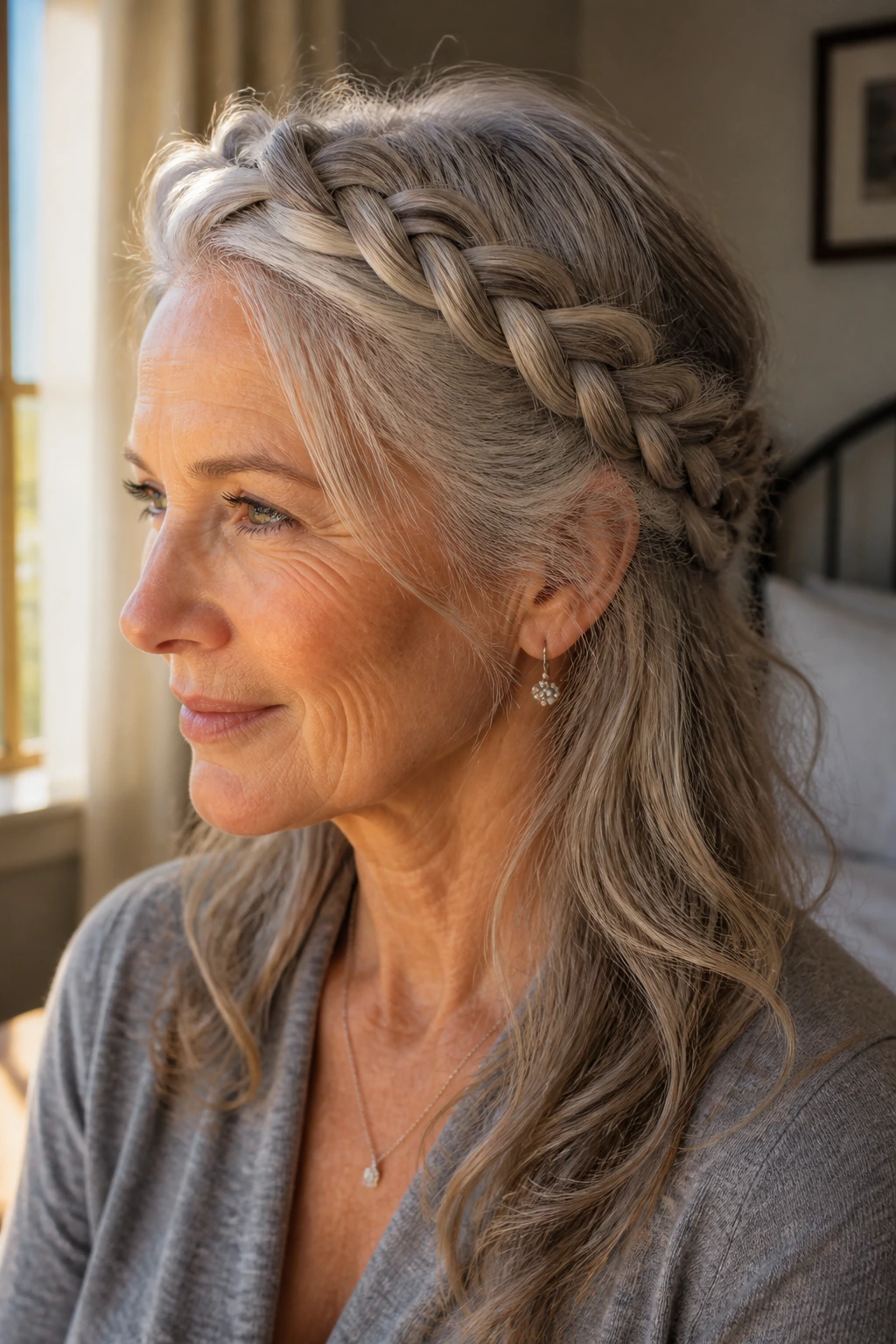
A braided crown is one of those styles that looks far harder than it is. On gray hair, it has a nice contrast: the braid gives texture, while the loose ends keep it from feeling costume-like.
The best version starts just above one temple, wraps across the head, and stops near the opposite nape area. Leave a few inches loose at the back or sides so the braid does not look like a tight headband. That softness matters, especially on mature features.
Why it works so well
- It keeps long hair off the face without pulling everything up.
- The braid shows dimension in silver strands, which can look almost streaked in a good way.
- It holds better than loose curls on windy days.
- It can be dressed up with one pin or a small comb.
If your hair is slippery, spray the braid lightly with texturizing spray before you weave it. Too much, and it turns sticky. Too little, and it falls apart. The sweet spot is somewhere in the middle.
7. Half-Up Twist That Keeps the Crown Lifted

Half-up styles are underrated because they solve two problems at once. They pull weight away from the face, and they keep the length visible, which is often the part women actually want to show off.
A twisted half-up style feels softer than a clipped-back top section. Take two small sections from each temple, twist them toward the back, and secure them with pins or a small barrette. Leave the rest of the hair loose in waves or a gentle blowout. The crown gets a little lift, the cheeks stay open, and the overall look feels easy rather than fussy.
This one is especially good with glasses. Hair stays out of the frame arms, but you still have movement around the shoulders. That small practical detail saves more annoyance than most styling advice does.
8. Long Gray Shag With Piecey Ends
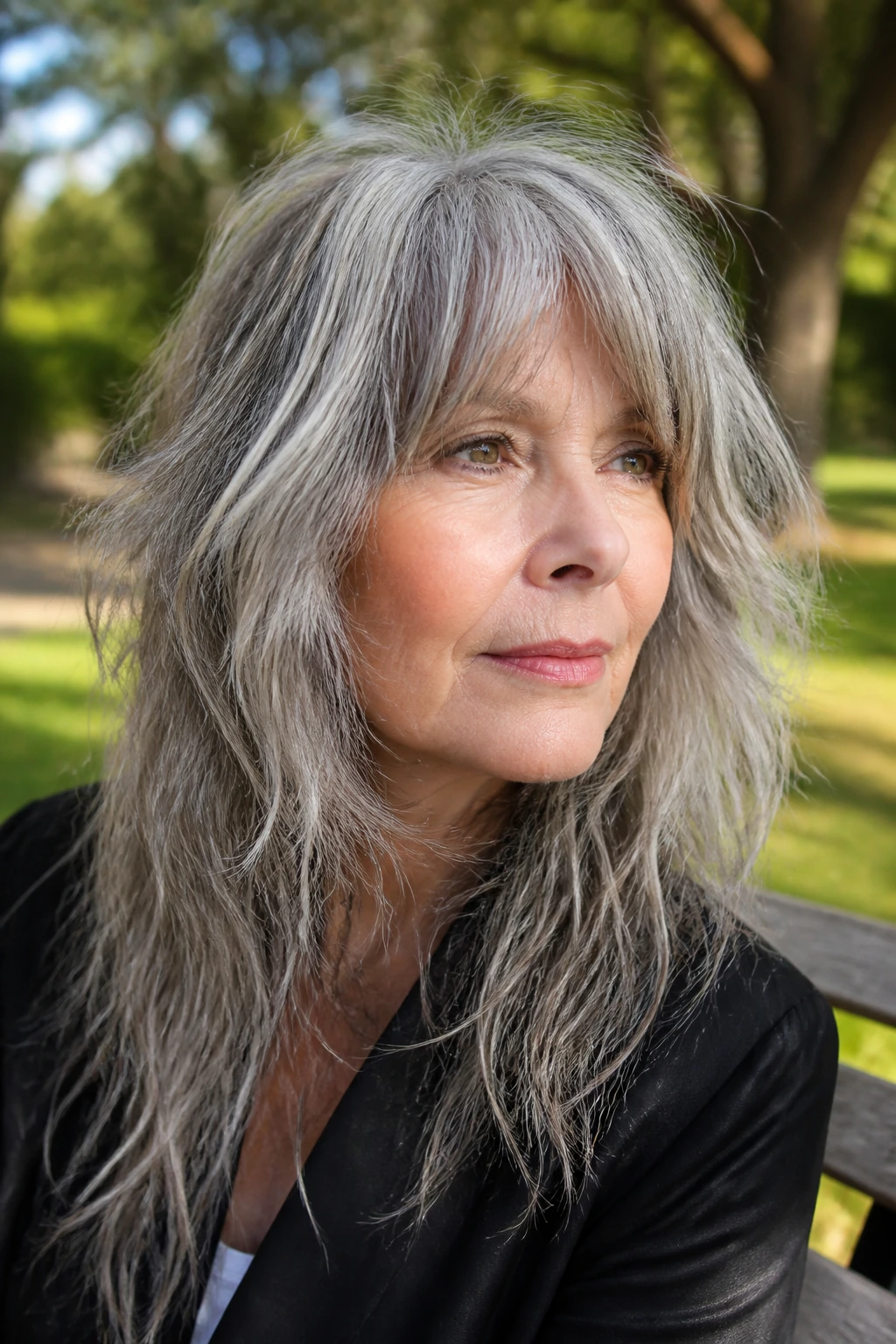
Not every long gray style has to be smooth. Sometimes the best move is to let the texture be a little rough, a little tousled, and a little cool around the edges.
A long shag gives you that. The layers are longer, the ends are more piecey, and the overall effect is casual without looking unfinished. Gray hair that bends, waves, or frizzes a little often looks better in this cut than it does in a sleek one. The shape welcomes the texture instead of scolding it.
A lightweight mousse at the roots and a touch of styling paste on the ends can be enough. Don’t overload it. The point is to let the hair move, not freeze it into a shell. If you’ve spent years trying to tame your texture, this cut can be oddly freeing.
9. Blunt Ends With Subtle Internal Layers
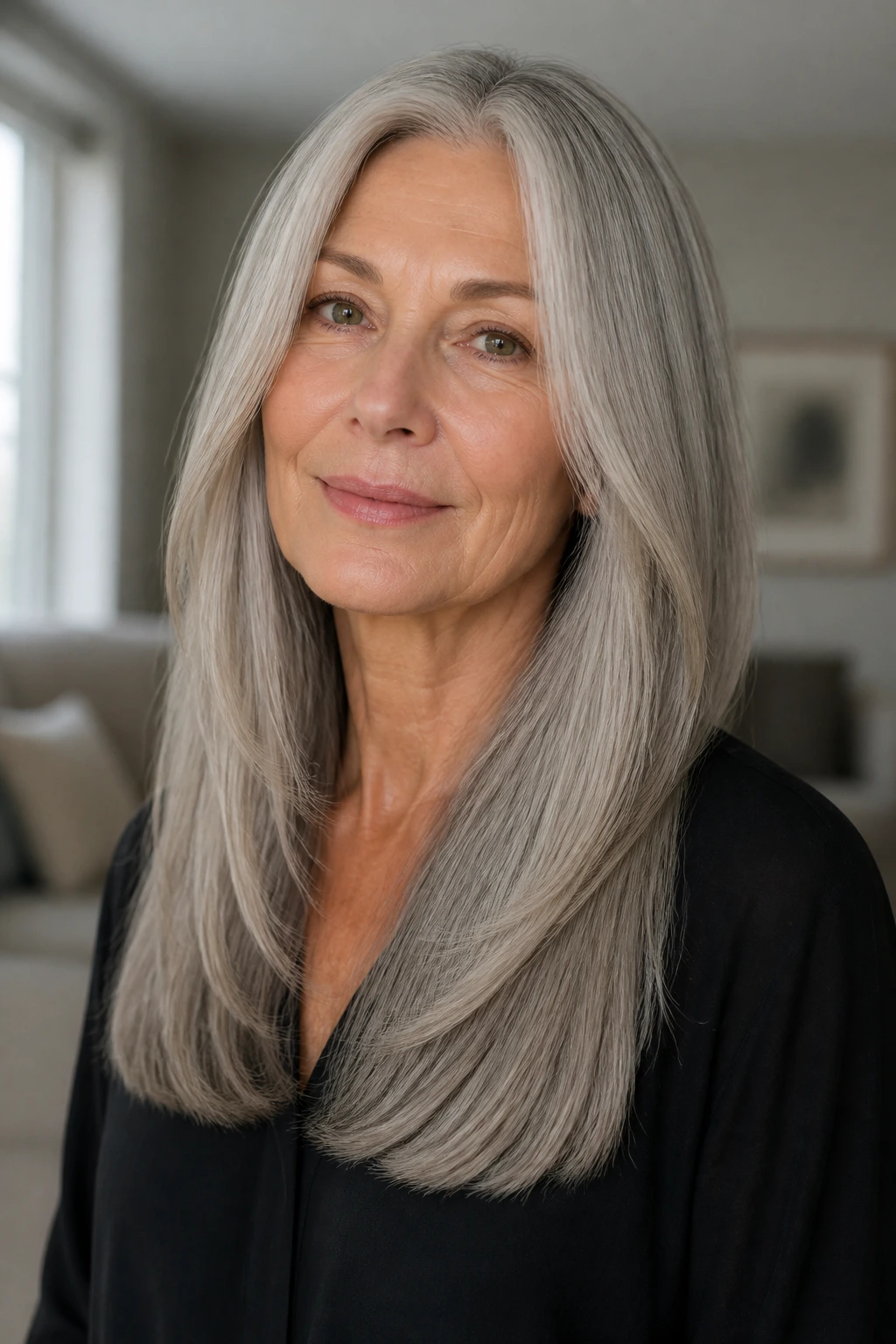
Can a blunt cut work on long gray hair? Absolutely — if the hair has enough density to support it. A blunt perimeter gives the illusion of thickness, which is useful when gray hair has started to thin a little at the ends.
The trick is hiding some movement inside the shape. Subtle internal layers keep the lower edge from feeling heavy, while the clean bottom line keeps the whole style looking full. It’s a neat compromise, and one I prefer for finer hair that still wants length.
This shape looks especially good when the ends are healthy. If they’re dry and frayed, a blunt line only highlights the damage. Get the ends trimmed first, then keep them sealed with a small amount of leave-in cream or serum. Otherwise, the cut loses its edge fast.
10. Silver Blowout With Crown Volume
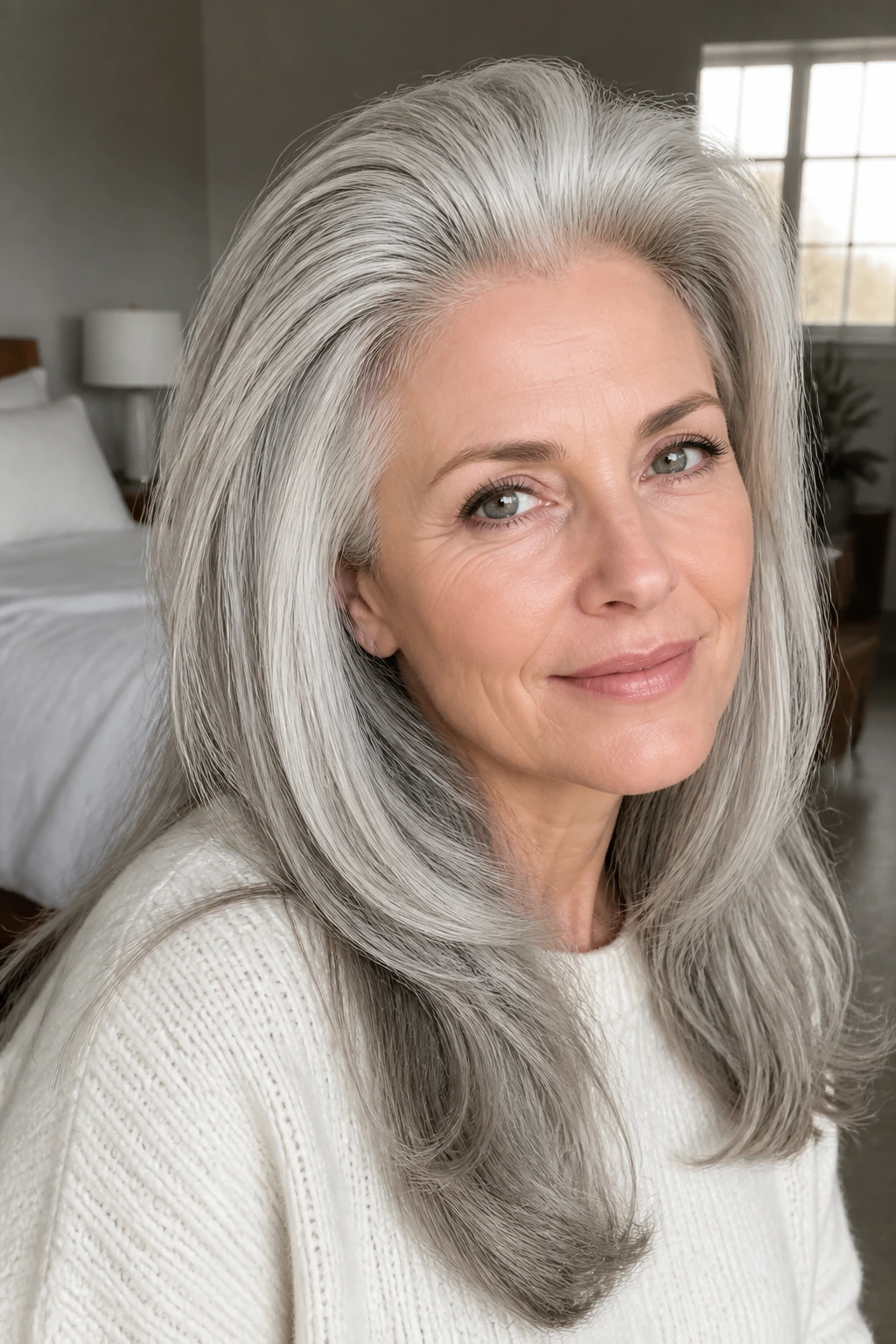
There’s something almost unfair about a good blowout on gray hair. The shine pops, the shape holds, and the style looks like it had more work put into it than it did.
What makes this look stand out is the root lift. Gray hair can fall flat at the crown, especially if it’s fine. A root-lifting spray on damp hair, followed by a medium round brush and tension at the roots, changes the silhouette right away. You want the hair to rise a little before it falls.
A cool-shot finish matters here. It locks the round shape in place and keeps the ends smooth instead of fluffy. And if you want the silver to look bright, keep the brush movement away from the roots after the hair is dry. Too much brushing can scatter the shine.
11. Waterfall Braid Over Soft Waves
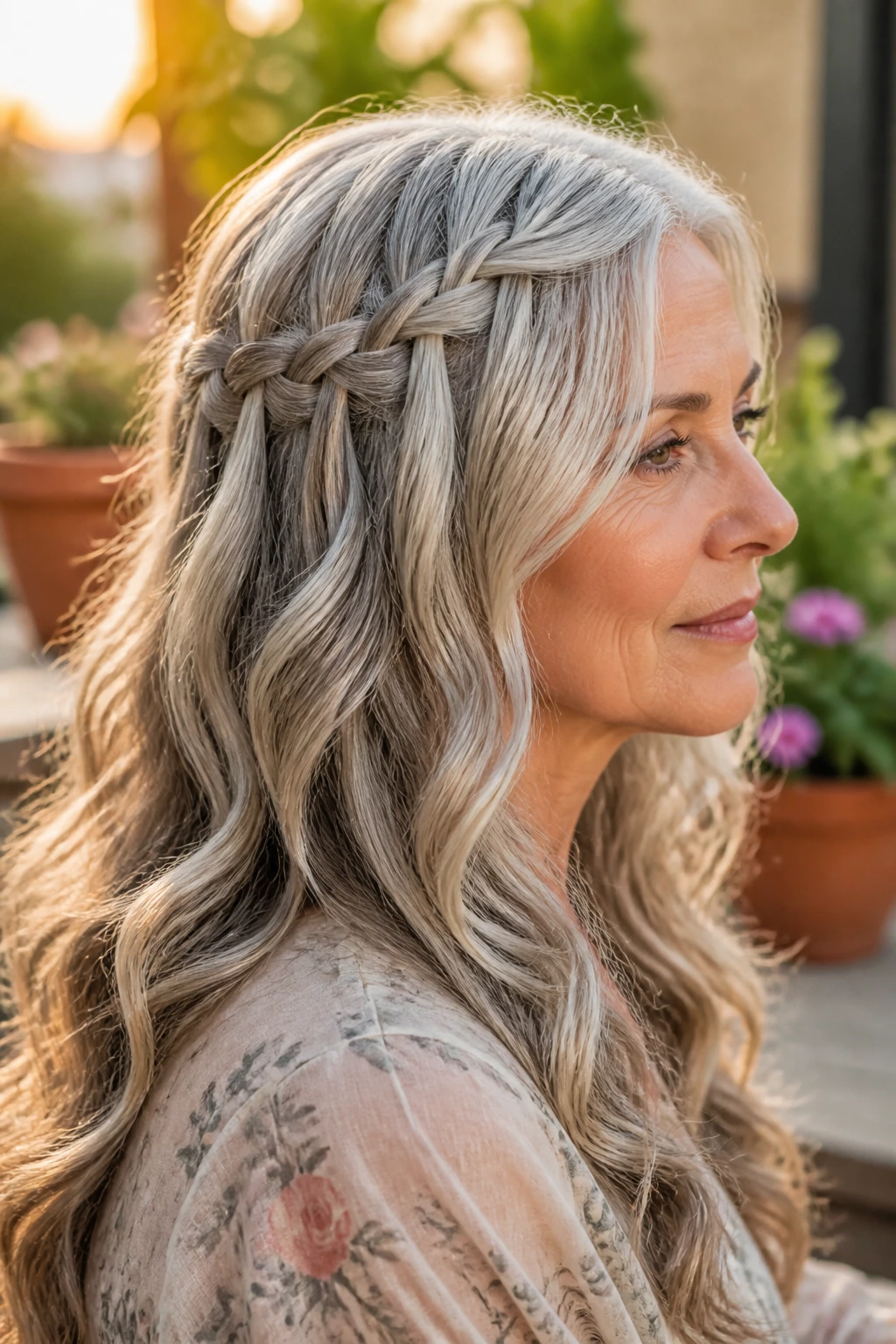
A waterfall braid brings a little detail without taking over the whole head. On long gray hair, it looks delicate because the strands move through the braid like thin ribbons.
Start the braid high enough to show the pattern, usually just above the temple. Let the released strands fall into soft waves underneath so the braid doesn’t float on top of dead-straight hair. That contrast gives the style depth.
This is a good pick for dinners, family gatherings, or anything where you want the hair to say “I made an effort” without shouting it. It also photographs well in the simplest sense: the braid pattern is visible, but the face still stays open. Use a few discreet pins under the braid if your hair is slippery. The hidden support is doing more than you think.
12. Low Chignon With Face-Framing Strands
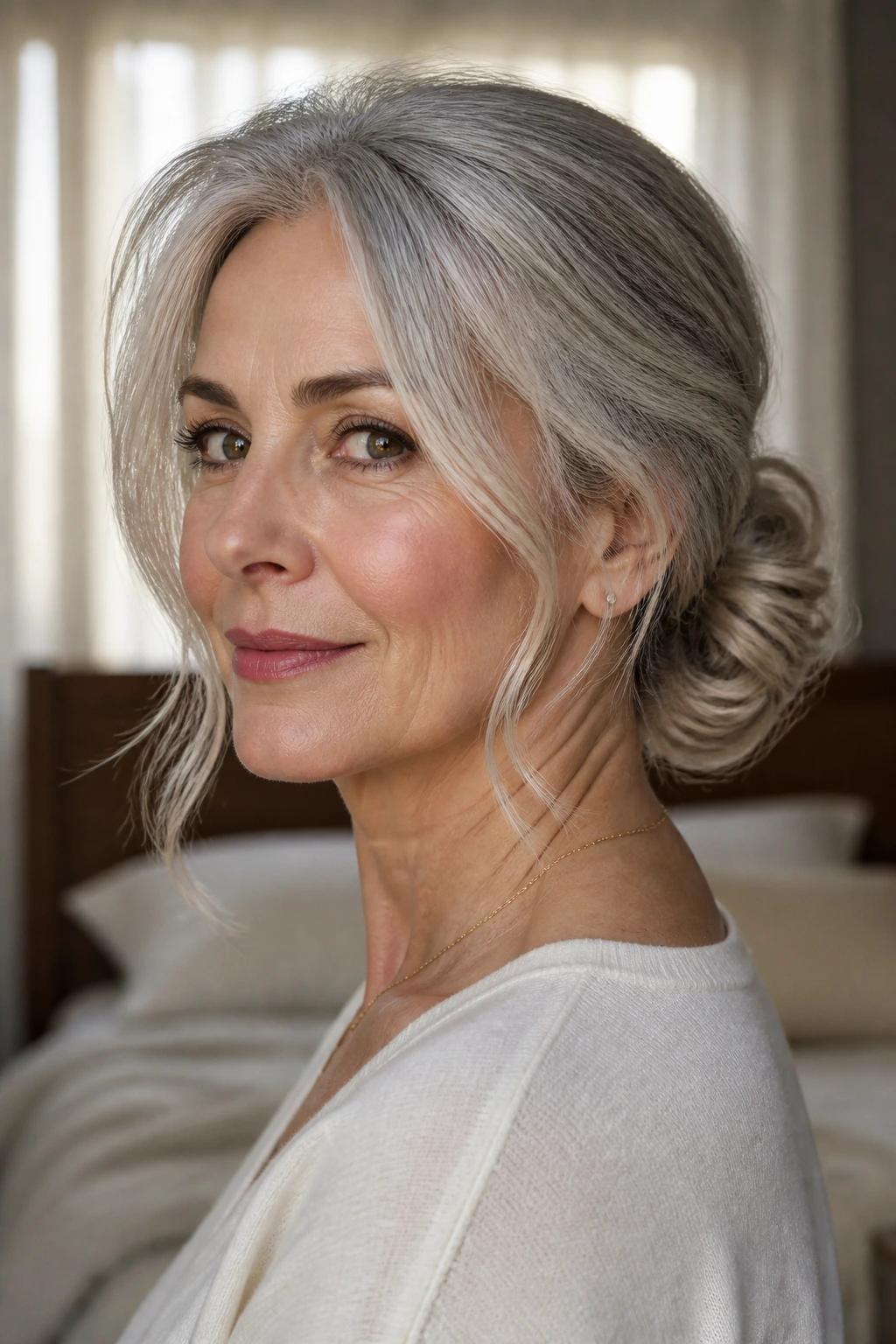
A low chignon can look severe when it’s pulled too tight. Leave a few face-framing strands out, and the whole thing changes. Suddenly the style has air in it.
The best version sits at the nape, twisted or coiled loosely so the bun has some texture. Pull out a few thin pieces around the cheekbones and temples, then bend them slightly with a small iron or even your fingers and a touch of cream. Those strands soften the jawline and stop the bun from looking like a strict office rule.
This is a strong choice if you want long gray hair up off the neck but still want movement around the face. It’s also kinder to long hair that gets tired after being worn down all day. A little pinning goes a long way.
13. Long Straight Hair With Tucked Ends
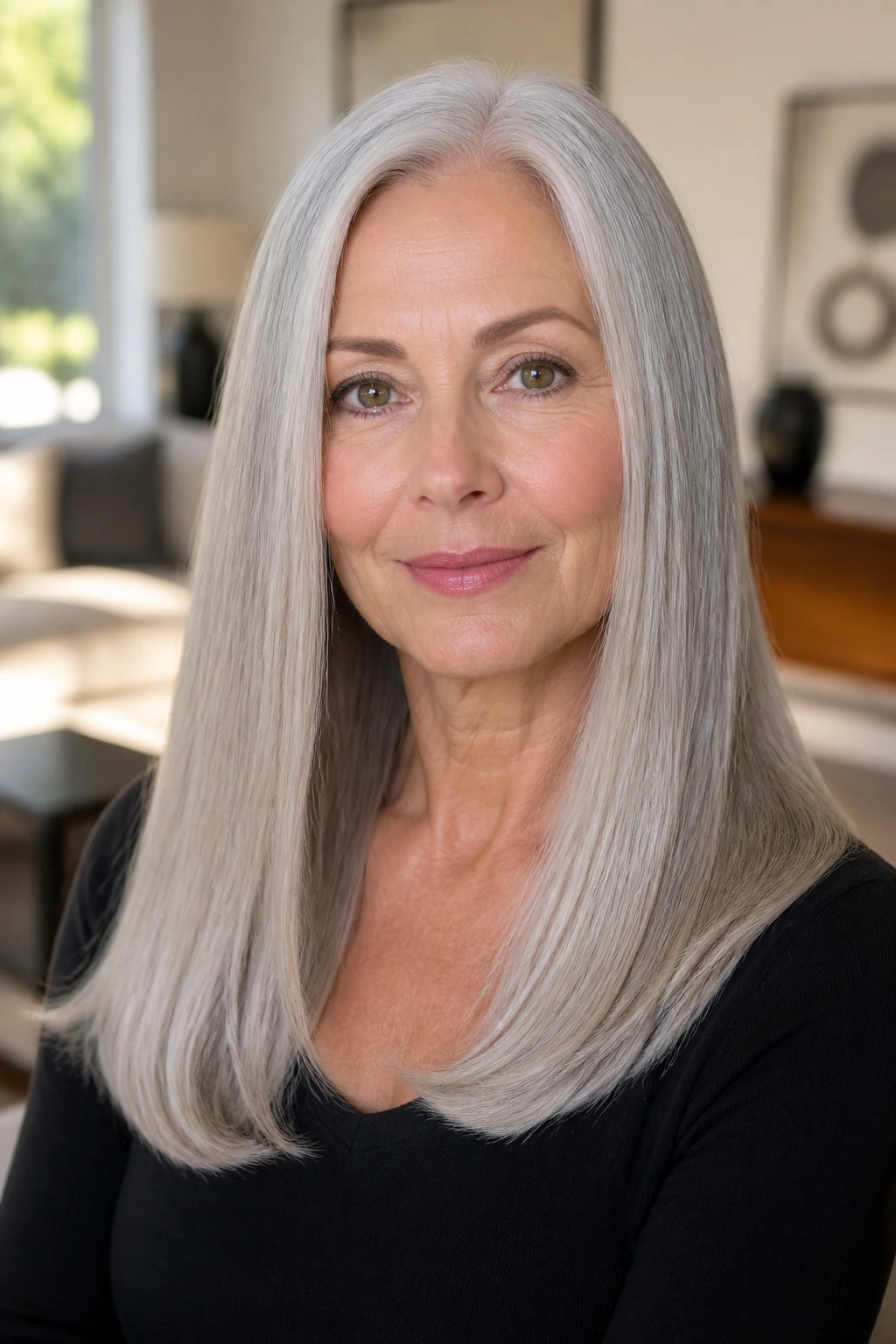
Straight gray hair can look striking when it’s kept clean and calm. The danger is letting it go limp and stringy, which happens fast if the ends aren’t cared for.
A tucked-end finish solves that. Straighten the lengths with a flat iron in smooth, medium-sized sections, then tuck the ends slightly under so the line feels soft instead of sharp. The tuck keeps the edge neat and helps the hair sit better over the shoulders.
This look is strongest on hair that already has a naturally straight or low-wave pattern. If your texture fights straightening, don’t force it every day. Use this as a polished option, not a daily battle. A heat protectant with a 450°F rating and a light serum on the ends are usually enough. Heavy oil will flatten the whole thing.
14. Deep Side Part and a Soft Bend
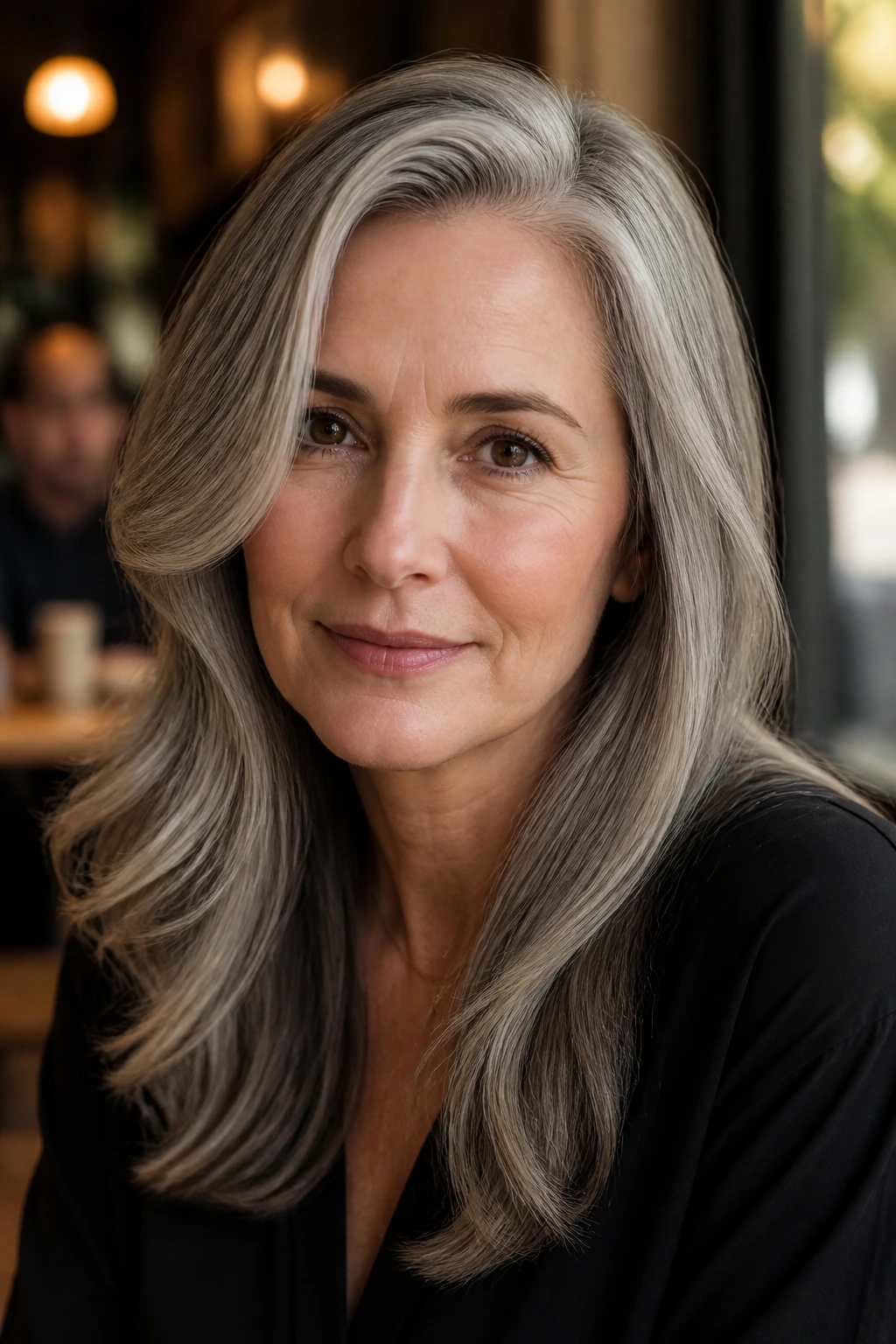
A deep side part is one of the fastest ways to give long gray hair instant lift. It creates height at the crown and a little asymmetry through the front, which makes the face feel more open.
The soft bend is the companion piece. Take two or three large sections around the face and bend them away from the cheeks with a curling iron, then let the rest of the length stay straighter or only lightly waved. That keeps the style from getting too curly for no reason.
One side part can change the whole mood of a gray hairstyle. It’s dramatic in a quiet way. Not flashy. Just smarter.
15. Loose Curls With a Gloss Finish
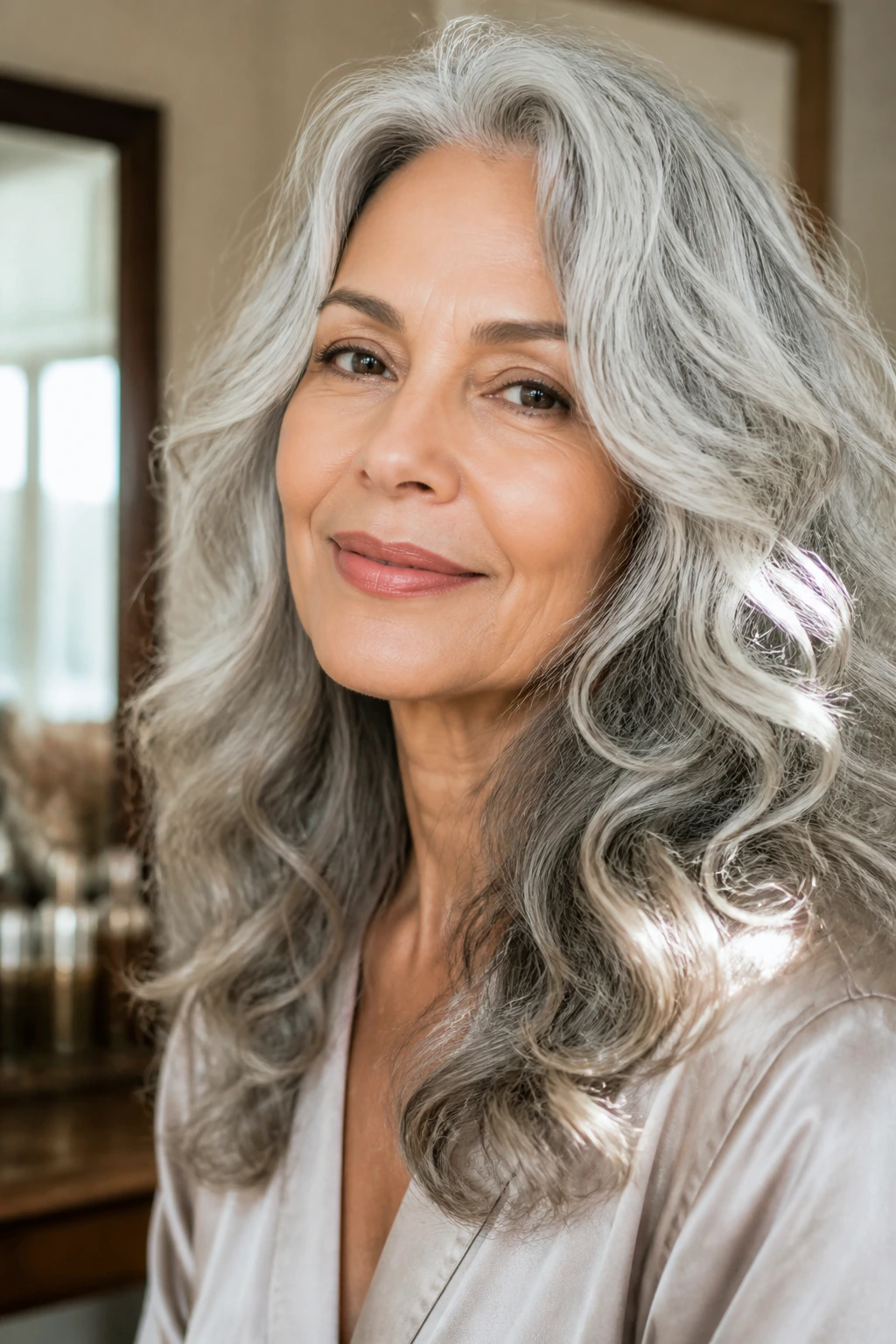
Loose curls on gray hair can look luxurious if the curls stay large and the finish stays smooth. Small curls tend to fight the eye. Large curls let the silver read as movement instead of noise.
Use a barrel big enough to create bend, not ringlets. After curling, pin the sections for ten minutes if you can spare the time. That cooling period keeps the curl shape from collapsing too quickly. Once everything is set, brush through gently and finish with a gloss spray or a drop of serum.
The gloss is doing a lot here. Gray hair can go matte fast, and matte ends make a long style look older than it needs to. A tiny amount of shine at the mids and ends brings the whole look back to life.
16. Silver Layers With Wispy Bangs
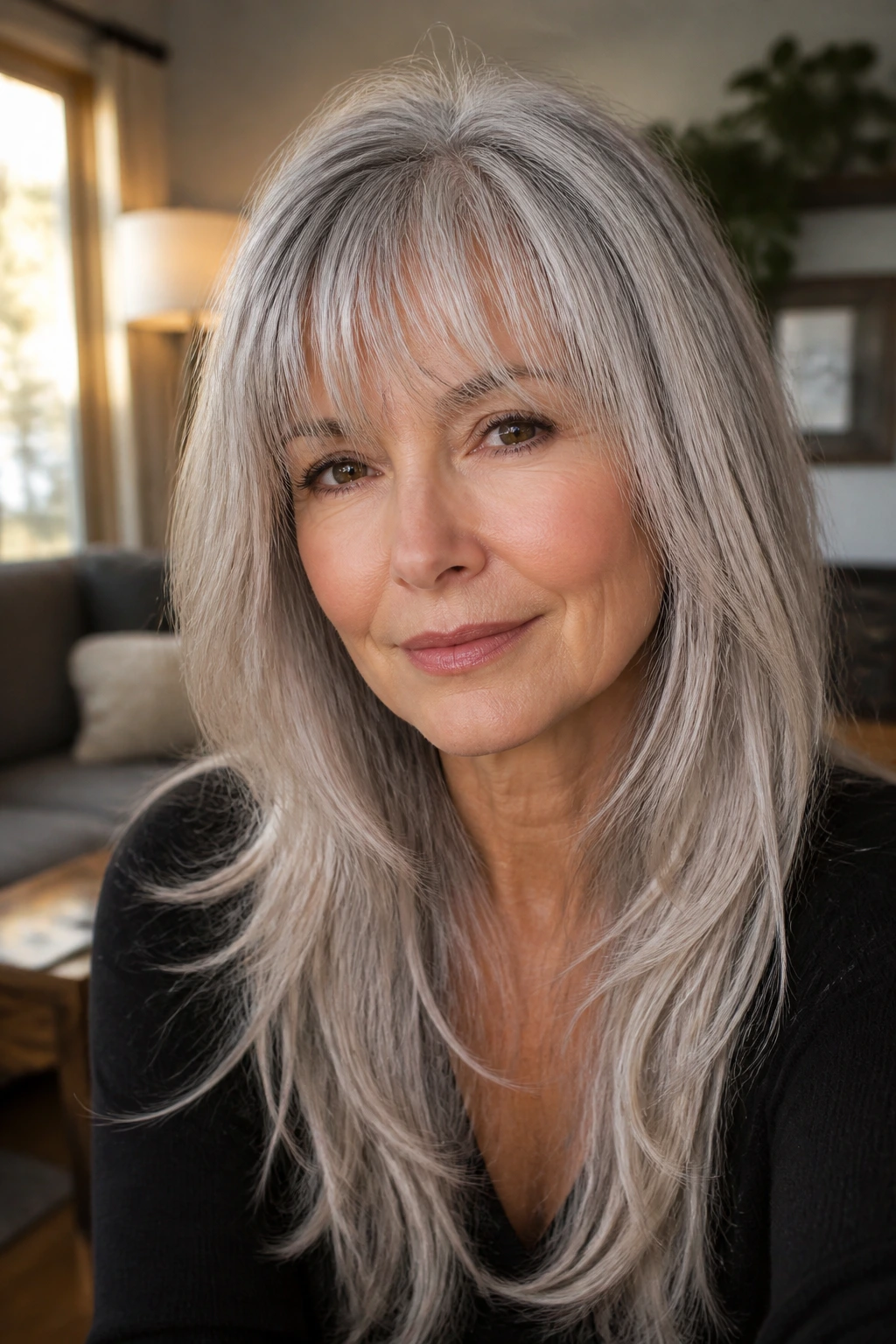
Wispy bangs are a softer cousin to a full fringe, and they work especially well if you want to keep your forehead from dominating the style. They break up a long expanse of hair in front without creating a hard line.
The layers around them should stay airy. Too much density at the bang line and the whole cut feels heavy. Too little, and the bangs disappear. The balance lives in the middle, where the fringe skims the eyebrows and the longer side pieces flow into the rest of the hair.
Best for women who want
- softness around the eyes
- less focus on forehead lines
- a style that still works with glasses
- a cut that grows out in a manageable way
This is one of the easiest long gray hairstyles to keep looking fresh between salon visits. The bangs can be swept aside on rough days, and they don’t need perfect styling to do their job.
17. Rope Braid With Length Left Out
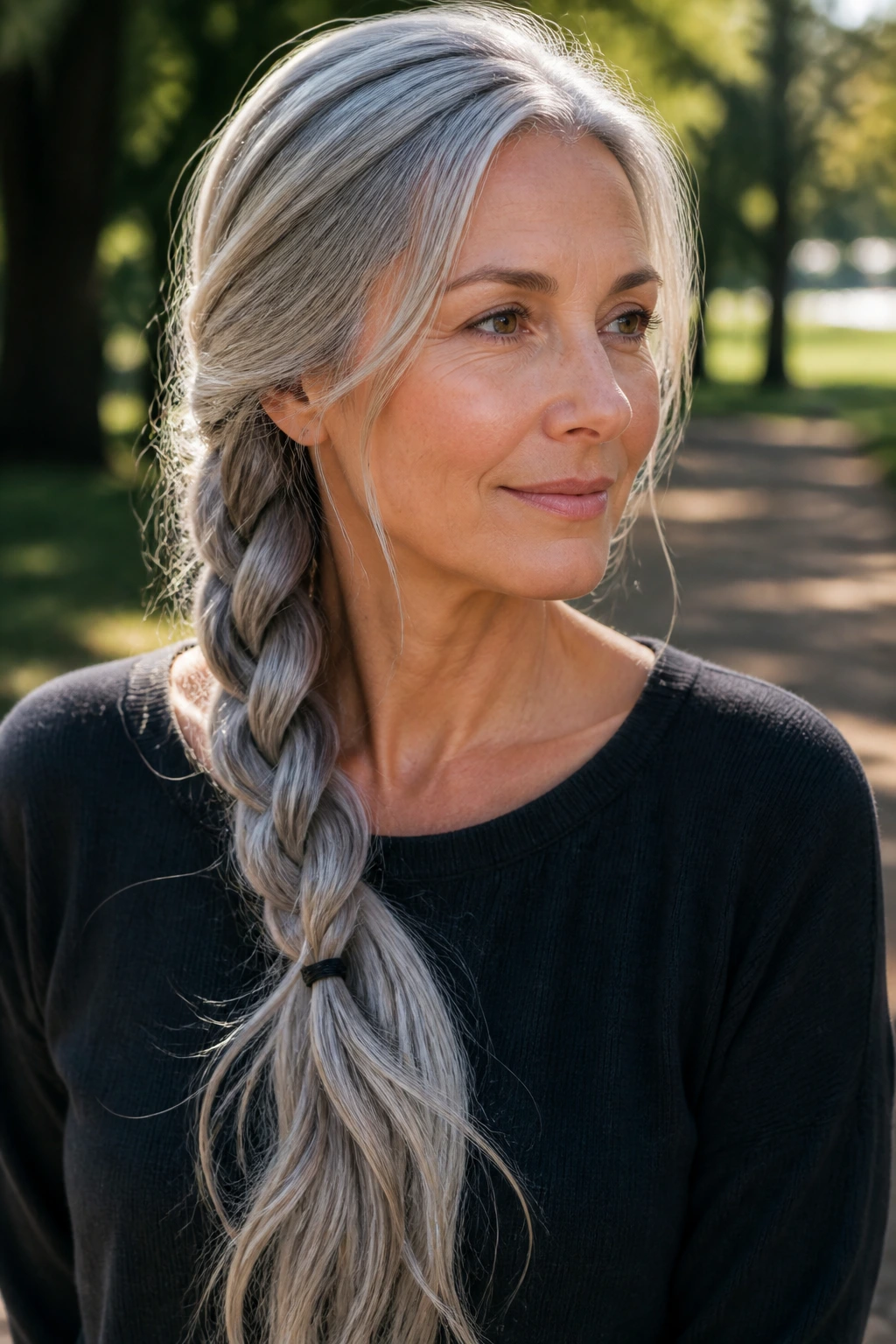
A rope braid looks sleeker than a classic three-strand braid, and it takes less time once your hands know the motion. Twist two sections in the same direction, then wrap them around each other the opposite way. That’s the whole trick.
On long gray hair, the rope braid shows off contrast in the strands because the twist catches the light in narrow bands. Leave the ends loose rather than braiding all the way down if you want a softer finish. The style reads modern without trying too hard.
It’s also one of the better options when the hair is a little dirty. Day-two hair has more grip, which makes the braid hold better. Sometimes unwashed hair is a feature, not a failure. Hair people have been saying that forever because it’s true.
18. Bubble Ponytail on Long Gray Hair
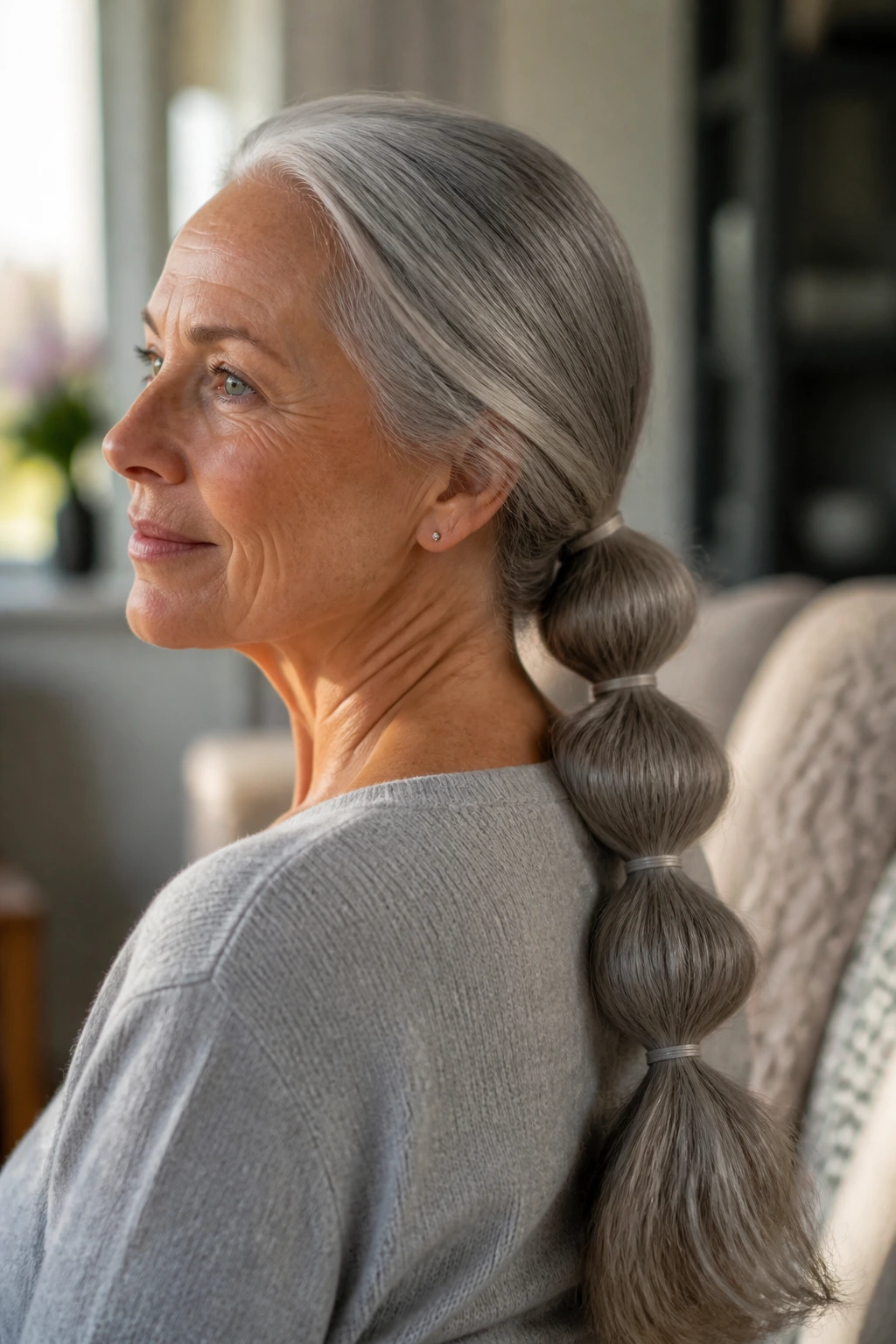
The bubble ponytail is playful, but it doesn’t have to look childish. On silver hair, the separated sections create a strong graphic line that feels crisp instead of fussy.
Start with a low or mid-height ponytail, then add clear elastics every four to six inches down the length. Gently tug each section outward so it rounds into a bubble. That little puff is what gives the style shape. Keep the crown smooth, and don’t overdo the tugging or the pony will start looking frayed.
This works well for thicker gray hair because the sections show off the density. Fine hair can do it too, but the bubbles should stay smaller and closer together. The style is practical, quick, and a little unexpected — which is a nice change from the usual ponytail routine.
19. Sleek Half-Up Knot With Loose Waves
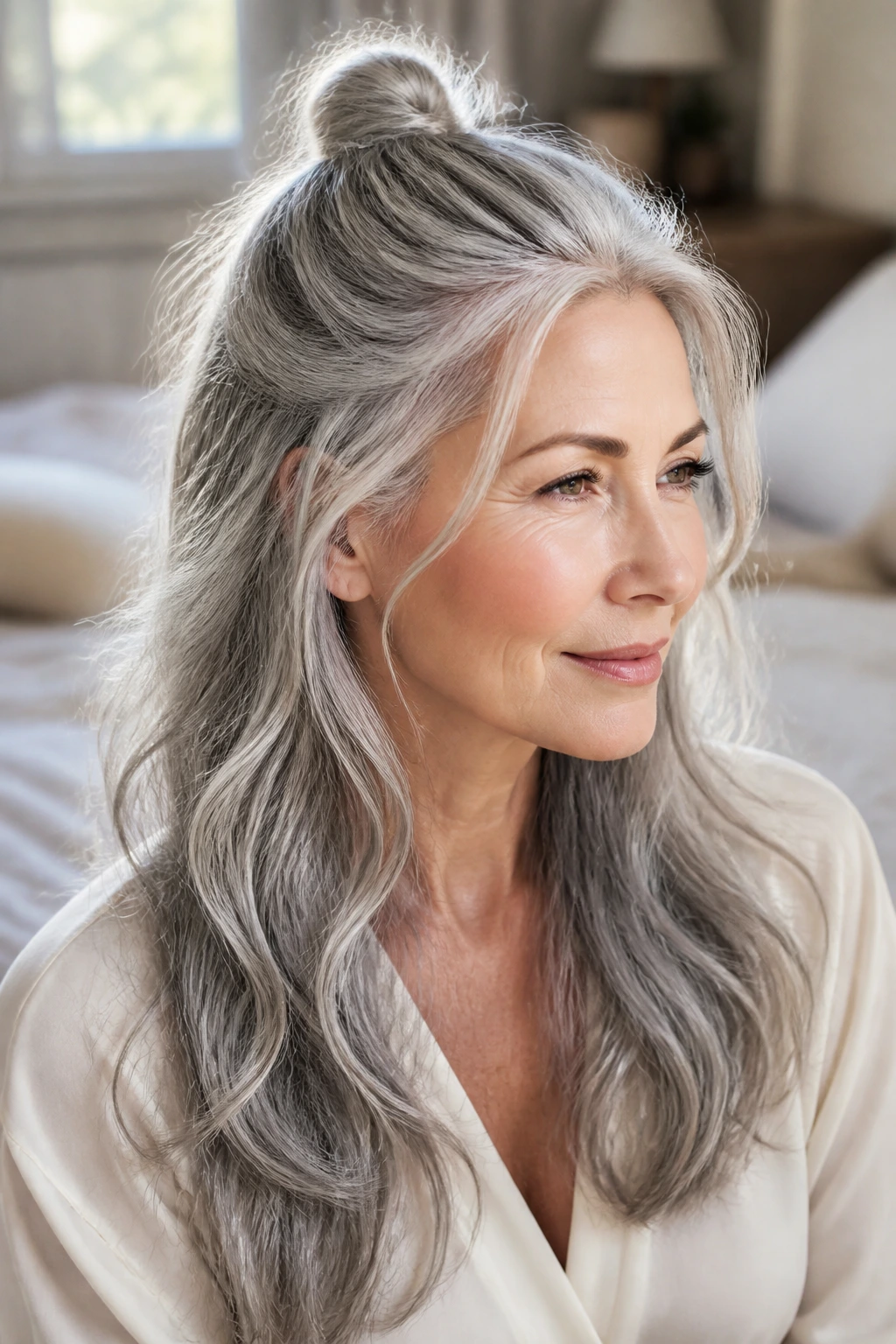
A half-up knot sits in that useful middle ground between casual and finished. The top section gets pulled away from the face, while the loose waves keep the length visible and soft.
The knot should stay small. Too large, and it overwhelms the head. Too tiny, and it disappears. Pin it near the crown, not low at the back, so the style creates lift where long gray hair often needs it most. Leave a few front pieces loose if you want the face to feel softer.
This is the style I’d choose if I wanted long silver hair to look intentional in five minutes. It handles second-day texture well, it works with earrings, and it doesn’t demand perfect symmetry. Good hair should not feel precious all the time.
Why Gray Hair Needs Shape More Than Extra Product
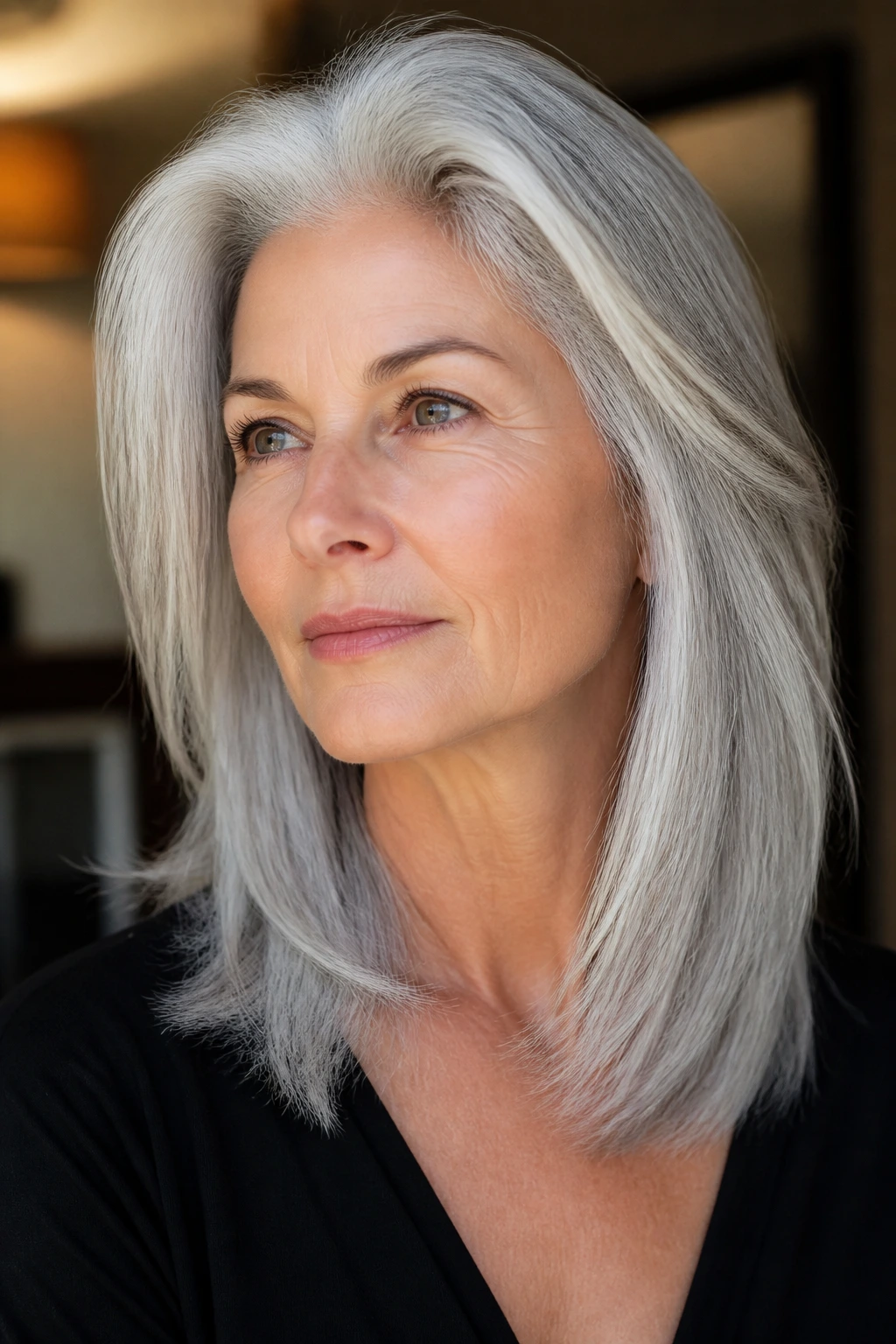
Long gray hair is not short hair in disguise. It responds differently to moisture, styling, and length because the strand itself has changed. Gray hair often behaves more like a dry, reflective fabric than a soft, forgiving one, and if you ignore that, the style starts to misbehave in small but obvious ways.
What helps most is shape. Not more spray. Not another bottle. Shape.
A clean outline around the ends, a little lift at the root, and something intentional near the face will beat a shelf full of products almost every time. Gray hair tends to show everything — dryness, dullness, splits, too much oil, not enough movement — so the style has to do a bit more work. That’s not a bad thing. It’s just the price of having hair that reflects light so plainly.
The texture shift nobody warns you about
Gray strands can feel wirier because the hair shaft often becomes drier and less flexible. That does not mean the hair is broken. It means it needs more slip, more gentle handling, and fewer heavy layers that drag it down.
The shine rule
Silver hair looks best when light can move across the surface in a clean line. Smooth crowns, tidy ends, and soft bends all help with that. Overloaded creams and overly matte sprays do the opposite.
Tools That Make Long Silver Hair Behave
-
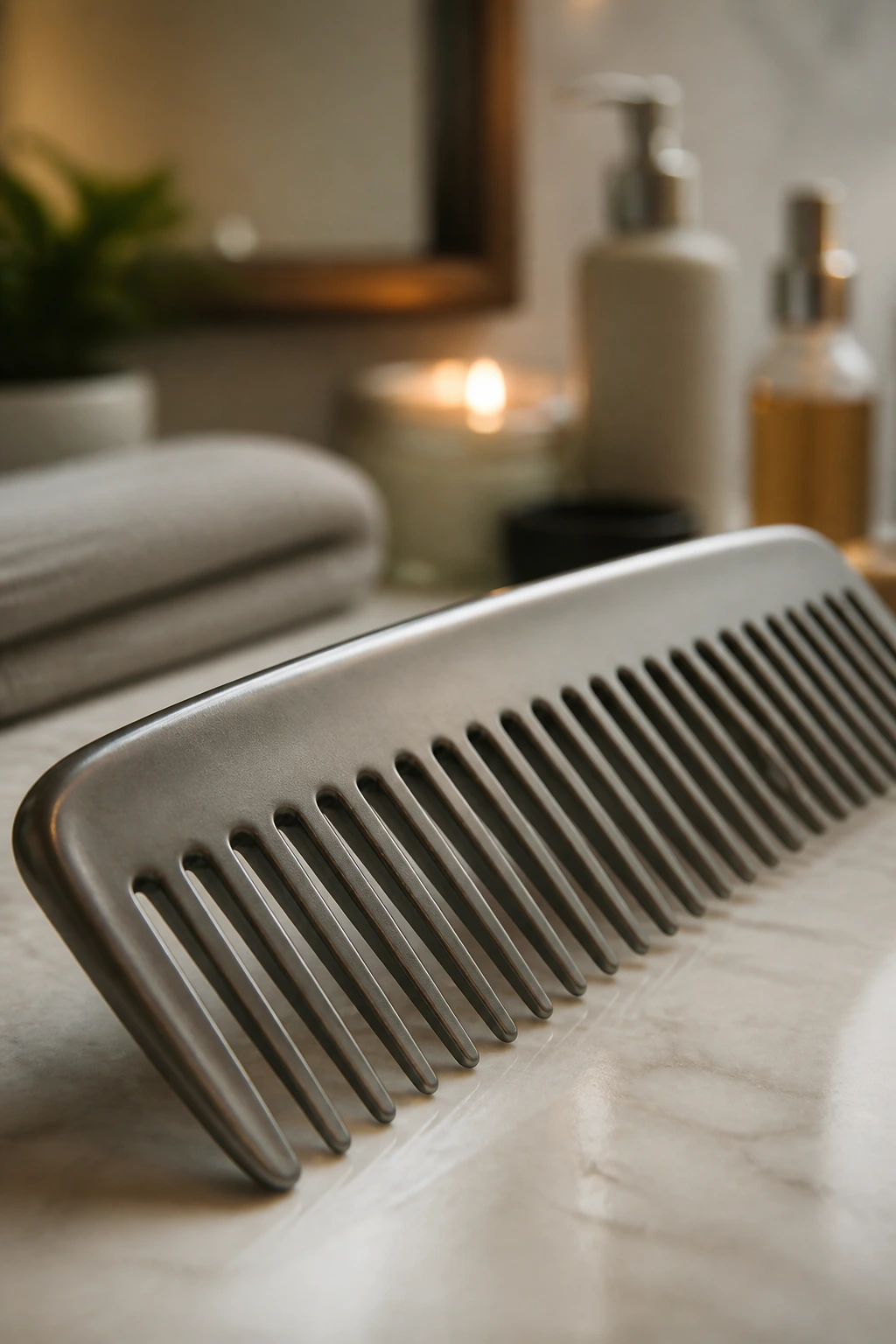
Wide-tooth comb: Best for detangling gray hair after conditioner, especially if the strands snag when wet.
-
Boar-bristle brush: Useful for smoothing the crown on ponytails and low buns without leaving a puff of static.
-
Medium round brush: The workhorse for face-framing bends, blowouts, and curtain bangs.
-
1.25-inch curling iron or wand: Big enough for soft waves, not so small that the hair turns into tight spirals.
-
Flat iron with adjustable heat: Helpful for sleek styles and tucked ends; lower heat is safer for dry silver hair.
-
Duckbill clips: Great for sectioning hair while you blow-dry or set waves.
-
Clear elastics and small pins: Essential for braid details, bubble ponytails, and half-up knots.
-
Heat protectant spray: Non-negotiable if you use hot tools; gray hair shows heat damage fast.
-
Microfiber towel or T-shirt: Reduces roughing up the cuticle after washing.
-
Silk or satin pillowcase: Helps keep long lengths from snagging overnight.
Smart Shopping for Products That Keep Gray Hair Bright
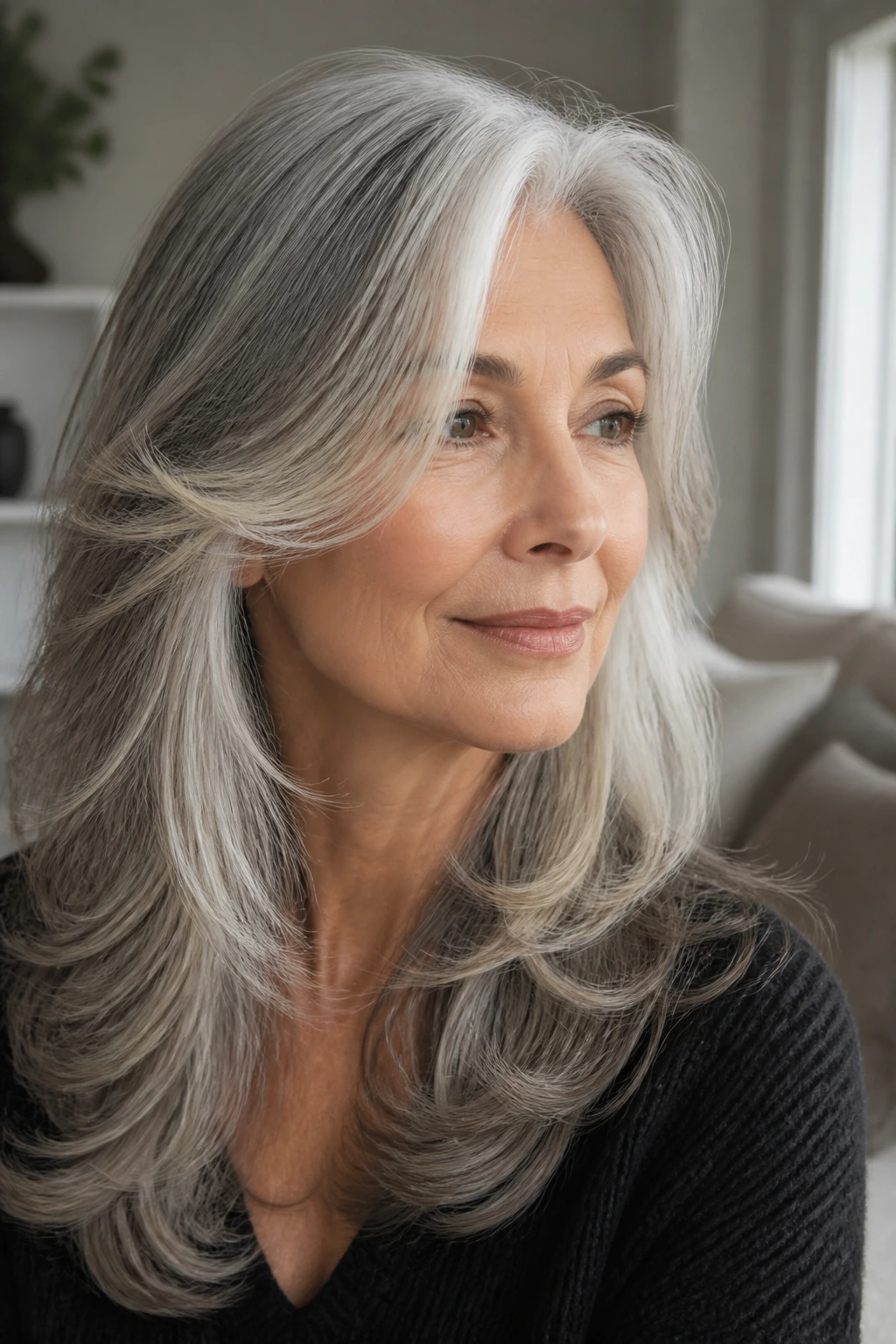
Gray hair gets a little bossy about product choice. Heavy creams can flatten it. Strong purple shampoo can make it look dingy or slightly lavender. Cheap shine sprays can leave a film that looks worse than dryness. The sweet spot is light, but not flimsy.
Start with cleansing. If your gray hair picks up yellow tones from sun, hard water, or hot tools, a violet or blue-violet shampoo once every five to seven washes is enough for most heads. Leave it on for one to three minutes, not ten. Longer is not better here; it can dull the silver or leave a weird cast on porous ends.
Conditioning should match density. Fine gray hair usually does better with a lightweight conditioner and a leave-in that feels almost watery in the hands. Coarse or wiry gray hair often wants a richer cream, but only from mid-length to ends. Roots need less help than people think. They usually need lift, not grease.
For styling, a mousse or root spray can give the crown support before blow-drying. A texturizing spray helps waves and braids hold, but only if you mist it lightly and work it in with your fingers. For finish, I like a tiny amount of serum rubbed between palms and pressed onto the ends. Pressed. Not slathered. If the ends feel slick enough to slide between your fingers, you used too much.
How to Wear These Styles With Clothes, Glasses, and Accessories

Presentation: Long gray hair looks strongest when the shape around the face is clean. Keep the part where it belongs — center for symmetry, side for lift — and let the front pieces do one clear job instead of fighting each other. If the style is braided or pinned up, leave a few soft pieces around the temples so the look doesn’t turn stern.
Accessories: Silver clips, tortoiseshell pins, narrow headbands, and a small comb in the back can change the whole mood without making the hair feel crowded. Big earrings also have a place here. Long hair can swallow tiny studs, so a style that tucks one side back often earns its keep fast.
Best Settings: Sleek ponytails and blowouts handle dinners, appointments, and office days. Braids, half-up knots, and bubble ponytails are better for windy weather, travel, and long days when you know you will not want to restyle at lunch. Loose waves sit in the middle and can go either direction depending on the finish.
Maintenance: A style that’s heavily curled needs a refresh in the morning, while braids and ponytails can last longer if you protect the roots overnight. If a look is too flat by day two, don’t overbuild it. A little dry shampoo at the crown and a quick bend in the front usually fixes the problem faster than starting over.
Styling Upgrades and Personal Touches
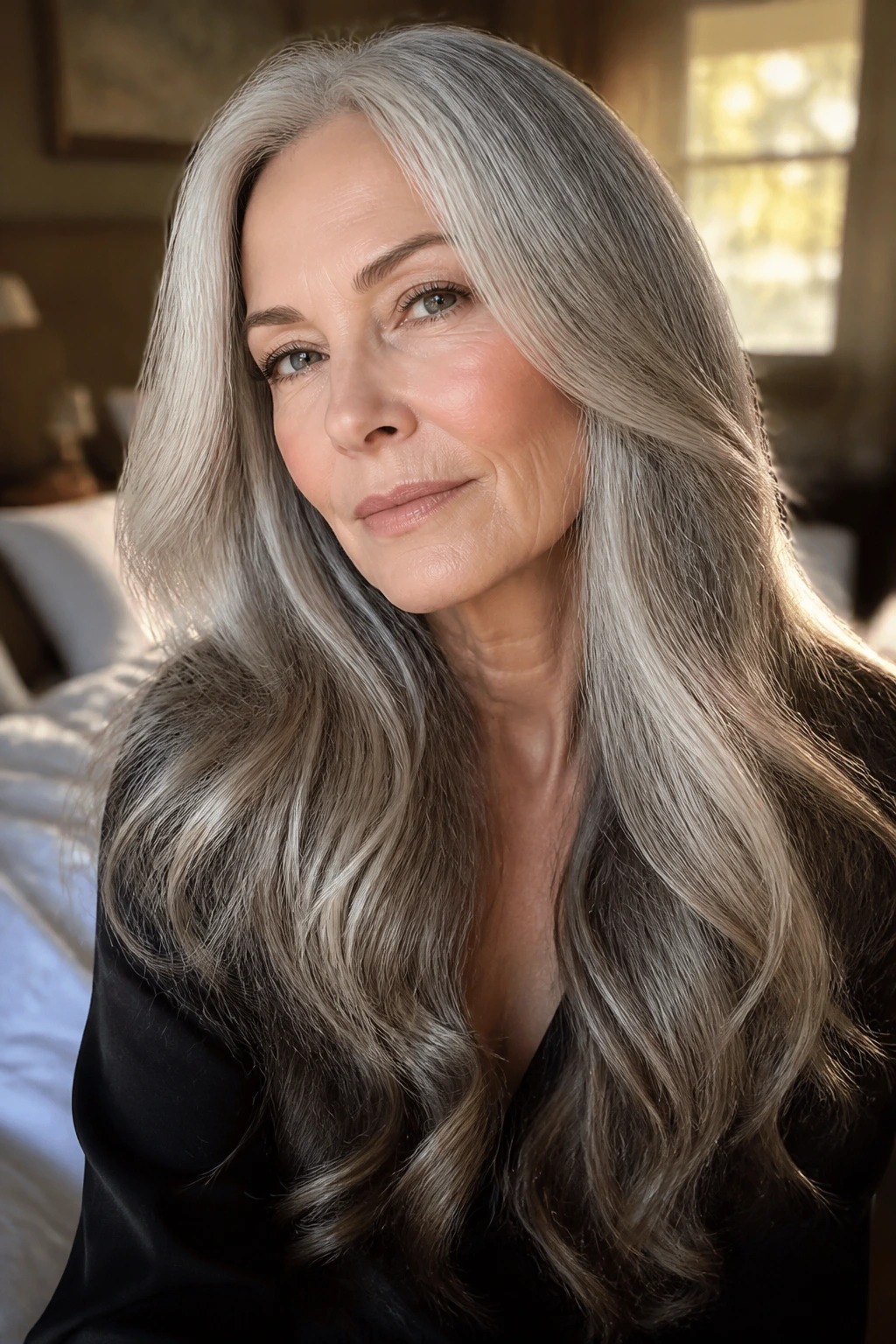
Shine Boost: A pea-sized drop of lightweight serum worked through the mid-lengths and ends can make long silver hair look cleaner and more deliberate. I’d rather see one controlled sheen than a bunch of product sitting in different places.
Texture Boost: For waves, braids, and half-up looks, a pinch of mousse at the roots before drying gives the style some structure. A little matters. A lot just turns the hair stiff.
Softness: Bend the pieces closest to the cheeks away from the face, even if the rest of the hair stays straight. That one move keeps long gray hair from closing in on the jawline.
Make-It-Yours: Fine hair usually needs fewer layers and more root support. Thick hair usually needs longer layers and less product. If you wear glasses, avoid bangs that land right on the frame arms unless you enjoy constant adjusting.
Finishing Touch: A mist of flexible-hold hairspray from arm’s length holds the shape without freezing the strands. Gray hair can get crunchy fast, and nobody needs that.
Common Mistakes That Make Long Gray Hair Look Tired
-
Taking too much weight out of the ends: The hair starts to look wispy and see-through, especially when it’s pulled over the shoulders. The fix is a cleaner perimeter with softer internal shaping instead of thinning everything out.
-
Using rich products at the roots: A heavy cream or oil near the scalp makes gray hair collapse fast. Keep the heavy stuff from the ears down.
-
Overdoing purple shampoo: Too much violet pigment can leave silver hair looking dull, chalky, or faintly lavender. Use it sparingly and rinse well.
-
Ignoring the crown: Flat roots make even a good cut look sleepy. A root-lifting product or a quick blow-dry at the scalp solves more than people expect.
-
Styling every texture the same way: Fine gray hair and coarse gray hair do not want the same products, and they definitely don’t want the same heat. Adjust the method to the strand.
-
Skipping trims until the ends fray: Long gray hair can still look healthy, but only if the bottom stays tidy. Once the ends split, they reflect light badly and make the whole length look rough.
Variations and Adaptations to Try
Fine-Hair Lift-Off: Keep layers long and use root spray instead of thick creams. A blowout with a round brush gives fine gray hair the body it needs without making the ends look stringy.
Coarse-Silver Smoother: Use richer conditioner, a leave-in cream, and a touch of serum on damp hair. This works well for thick gray hair that wants to puff up in humidity or resist the brush.
Heat-Free Silver: Set damp hair in loose braids, twists, or roller sets and let the shape dry overnight. The finish is softer than a hot-tool wave, and it’s easier on fragile ends.
Glasses-Friendly Frame: Choose face-framing pieces that start lower on the cheek and stay out of the temples. That keeps hair from fighting with the frames every time you move your head.
Special-Event Polish: Add pearl pins, a sleek side part, or a low chignon with one polished wave at the front. The style stays adult and clean, but it feels dressed up enough for weddings or formal dinners.
What to Do Between Washes and Salon Visits
Long gray hair usually behaves best when it has a predictable rhythm. Washing every two to four days works for most people, but the exact interval depends on scalp oil, product use, and how much heat styling you do. If your roots look flat by day two, dry shampoo at the scalp and a quick brush-out can buy you another day without much trouble.
Purple shampoo should stay on a short leash. Once a week is plenty for many heads, and some need it less often. If the silver starts looking dull instead of bright, back off for a week and switch to a moisturizing cleanser. Gray hair can get overloaded easily, and the fix for dullness is not always more pigment.
Trims matter more than people want to admit. Every eight to twelve weeks is a sensible range for keeping the ends tidy and the layers purposeful. If the hair is fragile or breaking at the tips, closer to six to eight weeks can keep the whole shape from unraveling. It is much easier to preserve a good line than to rescue a ragged one.
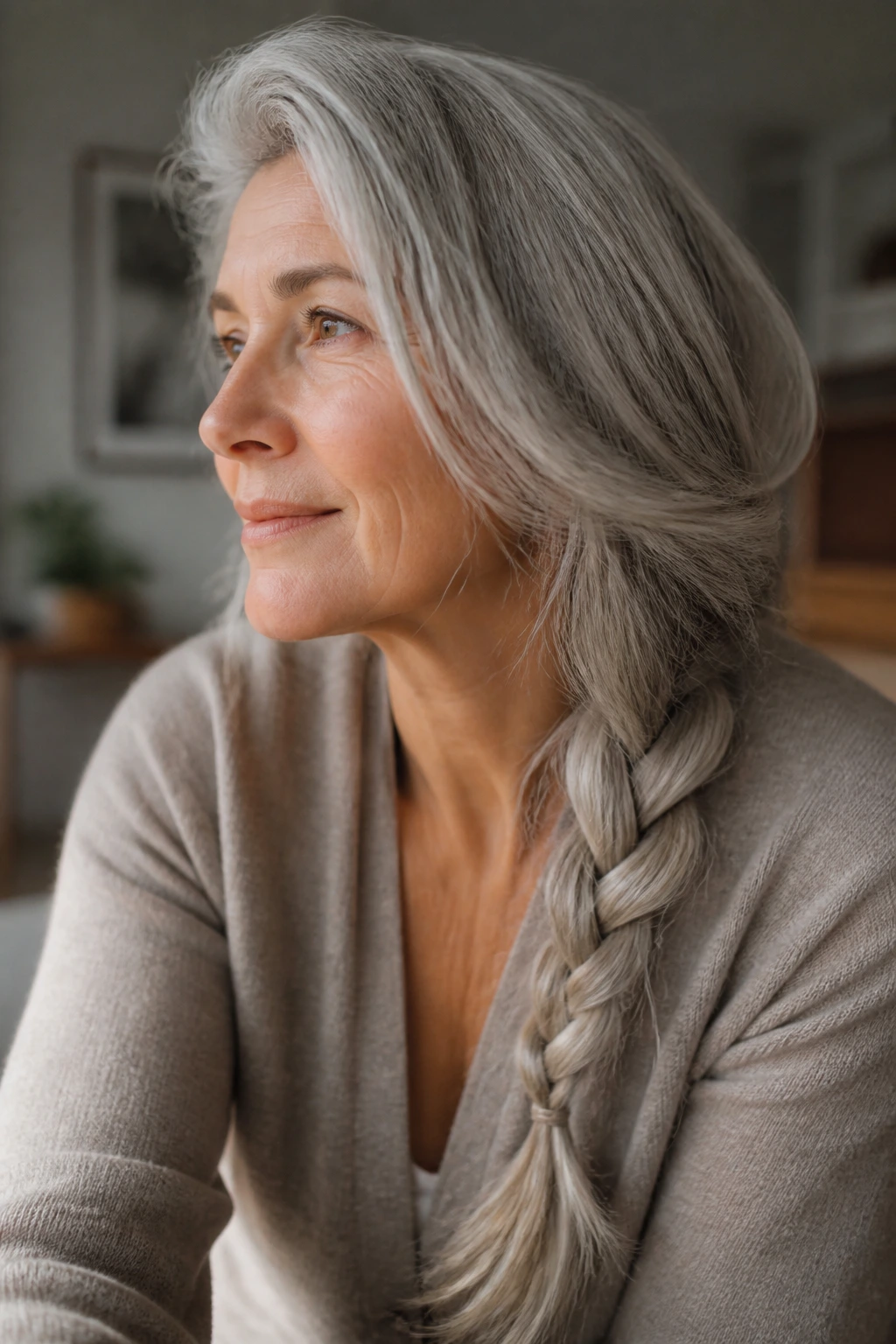
At night, a loose braid, low ponytail, or silk scarf can save you from tangles and static. If you sleep with the hair loose, use a silk pillowcase and brush only in the morning with a wide-tooth comb or soft brush. Rough cotton and dry winter air are not kind to long silver lengths. The hair remembers.
Frequently Asked Questions About Long Gray Hairstyles
What long gray hairstyle is best if my hair is fine?
A blunt perimeter with subtle internal layers usually gives fine gray hair the most body. Add a soft blowout or a few large waves so the hair doesn’t hang flat against the head.
Are layers or one-length cuts better for gray hair?
It depends on density, but layers usually help more when the hair is long. One-length cuts can look thicker at the bottom, while layers reduce bulk and let the silver move.
How do I keep gray hair from looking yellow?
Use a violet shampoo occasionally, not every wash, and rinse it well. Sun protection and a clarifying wash every few weeks also help if hard water or styling residue is building up.
Can older women wear long gray hair without it looking dated?
Yes, and the difference usually comes down to shape. A fresh part, healthy ends, and some movement around the face make the length look deliberate instead of stuck in place.
Do bangs work with long gray hair and glasses?
They can, especially curtain bangs or wispy fringe. The key is keeping the bangs light enough that they do not crash into the frame arms or sit heavy on the forehead.
What’s the easiest long gray style for humid weather?
A low ponytail, braid, or half-up twist handles humidity better than loose curls. Those styles keep the shape together even when the air gets sticky.
How often should long gray hair be trimmed?
Most long gray hair benefits from a trim every eight to twelve weeks. If the ends split fast or the hair is fragile, shorter gaps between trims help the style stay neat.
What if my gray hair is frizzy and coarse?
Use more moisture from mid-length to ends and less heavy product at the scalp. Styles with smooth roots and soft bends usually work better than tight curls or very textured finishes.
The Length That Still Feels Like You
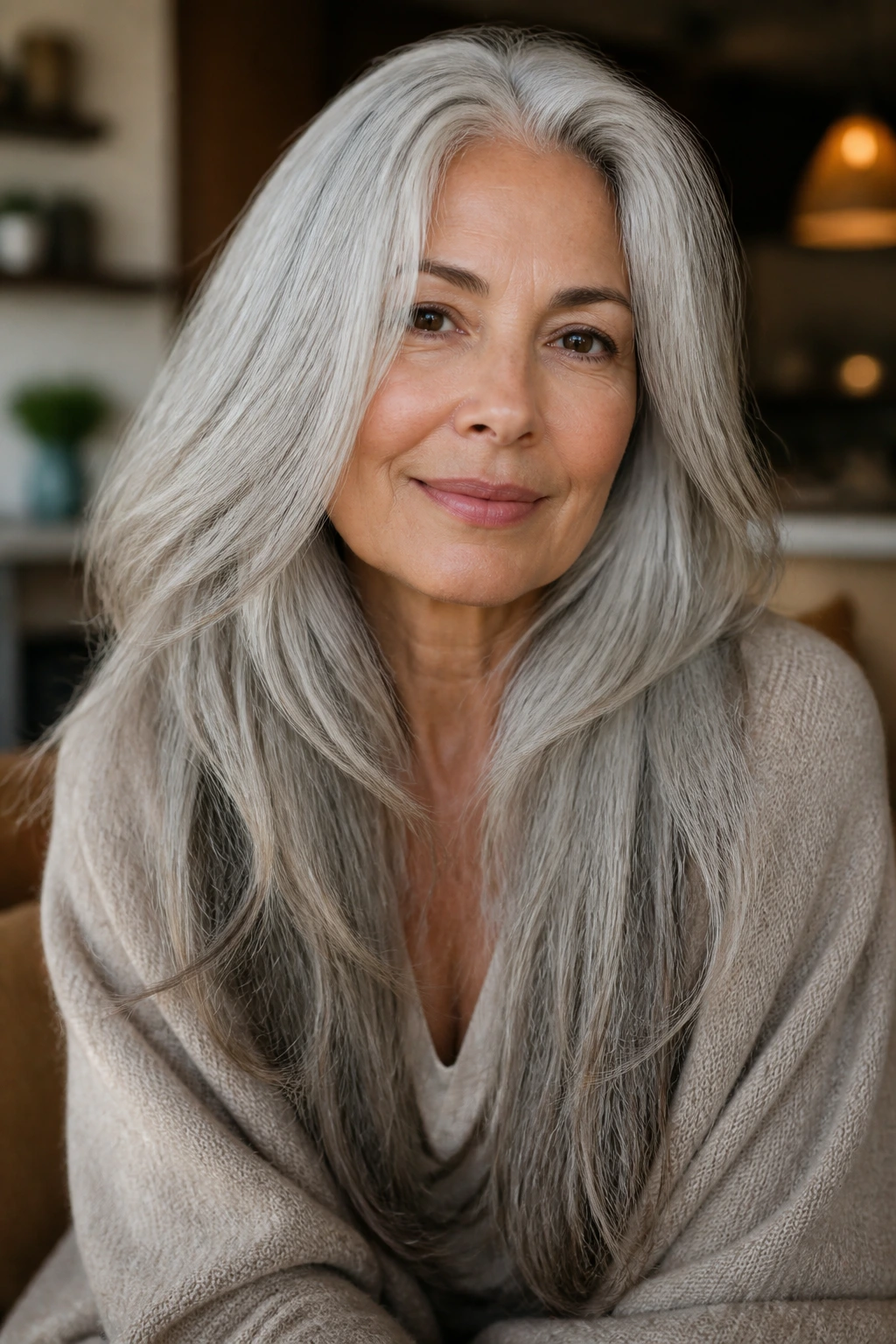
Long gray hair does not need to be apologetic, and it doesn’t need to be overworked either. The best styles use the silver as part of the design — not a problem to cover, not a relic to trim away, just a texture with its own light and shape.
A good cut helps. So does a clean part, a trimmed end, and the courage to leave some movement around the face. Those small choices matter more than a shelf full of products. They make the hair look like it belongs to the person wearing it.
If your gray hair is long and you’ve been treating it like a compromise, try one style that gives it shape instead. A soft layer, a braid, a low knot, even a simple blowout can change the whole way the length reads. And once the shape is right, the silver tends to do the rest.
