



Gray hair looks best when the cut stops apologizing for it. That’s the first thing I notice when a woman lets the silver come through and gives it a shape with a little backbone: the color starts to read as deliberate, not accidental. A good cut makes gray hair gleam. A lazy cut makes it sit there.
By the time many women reach their 50s, hair has usually changed enough to make old tricks feel clumsy. The crown may flatten faster. Ends can feel wirier. Curls may loosen in places and get puffier in others. The answer is rarely more product. It’s usually a better outline, cleaner weight removal, or a fringe that doesn’t fight your face every time you move.
Natural gray hairstyles for women over 50 work best when they respect what the hair is already doing. Silver strands often show shine beautifully, but they can also show blunt edges, dry ends, and awkward bulk with no mercy at all. The styles below lean into that reality instead of pretending it isn’t there. Some are short and sharp. Some are soft and full. A few are polished enough for dinner, and a few look better when you finger-comb them and leave well enough alone.
Why These Silver Cuts Stand Out
-
They make the gray look intentional: A sharp outline, a soft fringe, or a clean taper turns silver hair into a choice instead of a transition phase.
-
They work with changing texture: Many women notice finer temples, coarser crown strands, or curls that don’t sit the same way they used to. These styles account for that.
-
They don’t need a brutal amount of styling: Several of these cuts look better with a quick blow-dry, a diffuser, or a little mousse than they do under layers of heavy serum.
-
They stretch well between trims: A good shape can keep its lines for weeks, which matters when you do not want to live at the salon.
-
They flatter glasses, earrings, and the neckline: Silver hair often looks strongest when the cut leaves room for a face, a collar, or a strong jawline to show up.
-
They give fine hair structure and thick hair relief: That sounds obvious, but it’s the whole game. Gray hair can need lift or lightness, depending on what it’s doing on your head.
1. Soft Silver Pixie With Feathered Crown
A soft pixie is one of those cuts that makes gray hair look expensive without trying to look expensive. The sides stay close, the crown gets a little feathered lift, and the whole thing sits light around the ears and nape. On silver hair, that extra movement matters because it keeps the color from reading flat.
Why It Works
The feathered top gives the eye somewhere to go, which is especially helpful if your hair has thinned a bit at the temples or crown. A good pixie should not feel chopped to death. It should feel airy, with enough length on top to brush forward, lift up, or sweep slightly to one side.
This cut is especially kind to fine gray hair because it removes weight where the hair tends to slump. Ask for a soft taper around the nape and sideburns, then leave roughly 1.5 to 2.5 inches on top so the shape can be moved around. That little bit of length makes a big difference.
A pea-sized dab of styling cream is usually enough. More than that and the crown starts to look greasy instead of soft. If the hair is very straight, blow-dry it with your fingers and a little root lift.
Quick Fit Notes
- Best for fine to medium hair
- Works well with glasses
- Needs trims every 5 to 7 weeks
- Looks sharp with side-swept fringe or soft bangs
Pro tip: Ask your stylist to keep the top textured, not razored into fluff. Gray hair can frizz if the ends are over-thinned.
2. Tapered Crop With Clean Edges
This is the cut for someone who likes things neat and doesn’t want to spend twenty minutes negotiating with a blow-dryer. The sides and back sit close to the head, while the top stays just long enough to create shape. On gray hair, that clean edge makes the color look crisp instead of wispy.
A tapered crop has real presence. It exposes the cheekbones, sharpens the jaw, and gives you a tidy outline that still feels feminine. There’s nothing fussy here. And that’s the appeal.
If your hair grows bulky at the nape or puffs out around the ears, this cut solves a lot without making you look severe. The trick is to keep the taper gradual, not clipper-short all the way around. A little softness at the sides keeps the cut from sliding into helmet territory.
Best paired with a matte paste or a dry styling cream, especially if your hair has a natural bend. Use your fingers, not a brush, so the top doesn’t lose its shape. A crop like this should look touched, not sculpted.
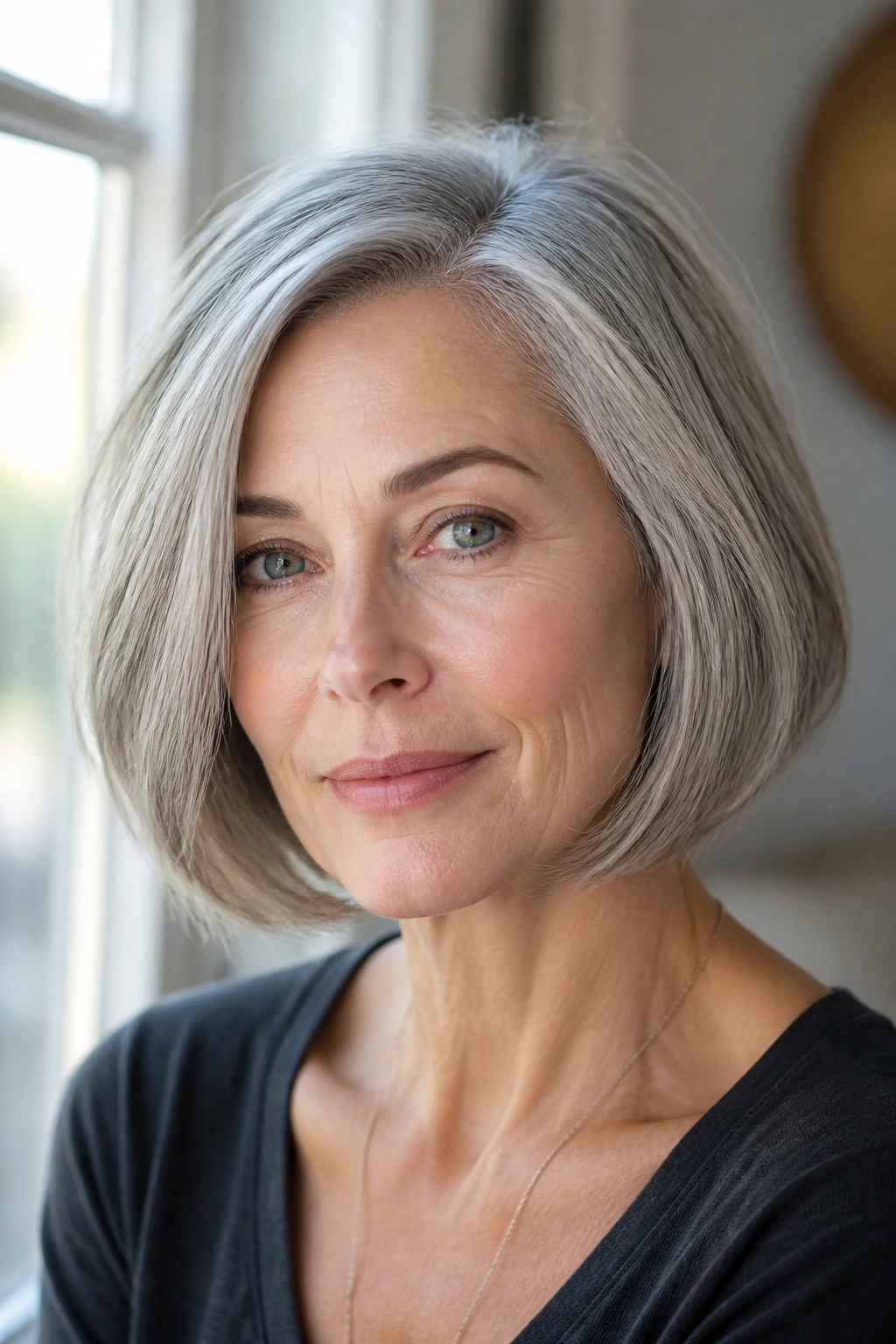
3. Chin-Length Bob With a Side Part
Why does a chin-length bob work so well on silver hair? Because it sits right where the face wants definition. Not too short, not dragging the neckline, just enough line to make the gray shine.
This is one of the safest bets for women who want polish without a hard-edged haircut. The side part softens the front, and the chin-length line gives the whole look structure. If the ends barely graze the jaw, the cut can make the face feel lifted. If they hit a little below, it can soften a square jaw or fuller cheeks.
Best Version of This Cut
Keep the outline clean, but don’t let it get boxy. A slight inward bend at the ends is nicer than a rigid straight edge. If your hair is straight, a round brush and a quick pass with a flat iron on just the tips is enough.
A chin-length bob also plays nicely with natural gray highlights and white streaks. The shine shows up because the line is clear. If one side tends to lie flatter, a deep side part can fix the problem fast.
4. Feathered Shoulder-Length Layers
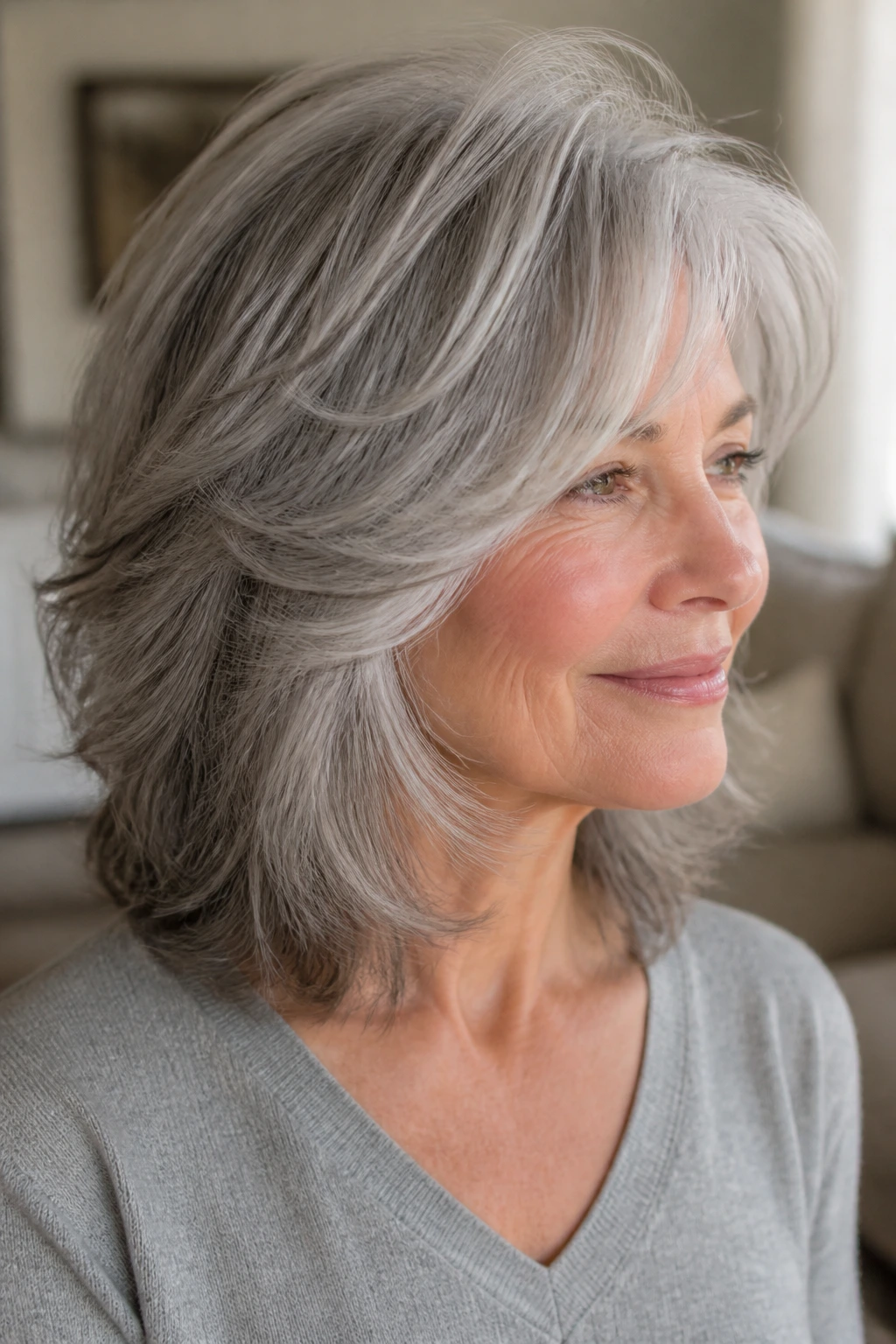
Shoulder-length layers are the middle ground a lot of women ignore until they realize the middle ground is useful. This cut keeps enough length for a ponytail or twist, but the feathering removes the heavy curtain effect that can make silver hair look dull.
It’s especially good if your hair feels a little dense at the bottom and flatter at the crown. The feathering should start below the cheekbone so the top doesn’t end up over-layered. Too many short pieces near the face and you get flicky ends that look dated. Keep the layers long and soft.
I like this shape on hair that has a gentle wave. Air-dry it with a lightweight mousse, then twist a few front pieces around your fingers while it’s still damp. If you blow-dry, use a medium round brush and bend the ends away from the face.
The result is not dramatic. It’s better than dramatic. It looks like hair that knows where it’s going.
5. Curly Gray Shag
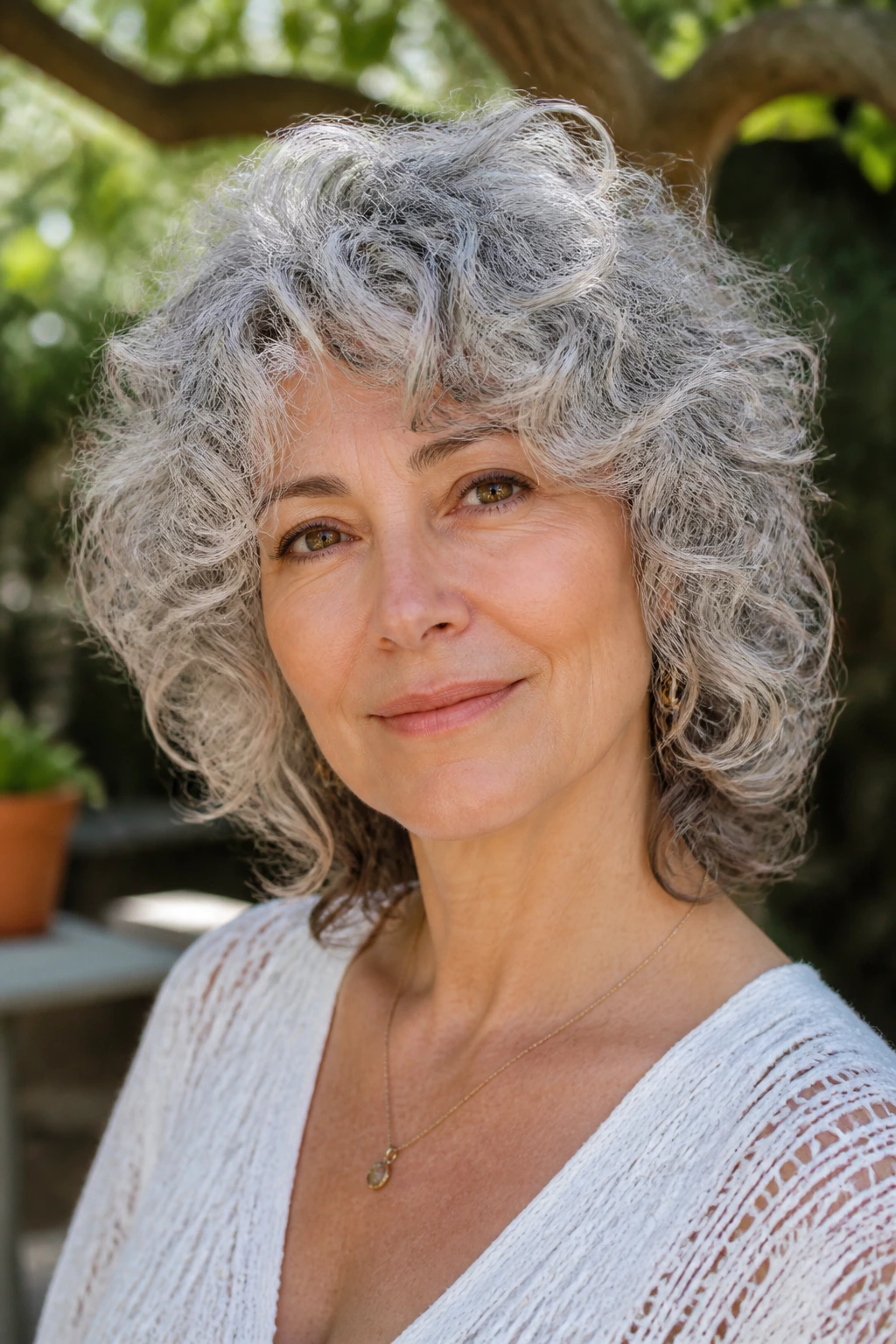
Curly gray hair and a good shag are old friends when the cut is done with restraint. The point is not to carve the hair into a mushroom. The point is to give the curls room to bounce without building a pyramid.
A shag works because silver curls often need strategic removal of bulk through the interior, not the surface. That softens the triangle shape some curls get as they grow longer. Bangs or a curly fringe can be gorgeous here, but they need to be cut with the curl pattern in mind, not against it.
Use this cut if your curls have enough spring to stand on their own and you want movement more than sleekness. A diffuser on low heat, a curl cream, and a tiny bit of gel at the ends can keep the shape intact. Scrunch, then stop touching it. Seriously. The more you poke a curly shag, the more it fights you.
A good shag should feel playful, not messy for the sake of it.
6. Sleek Silver Lob
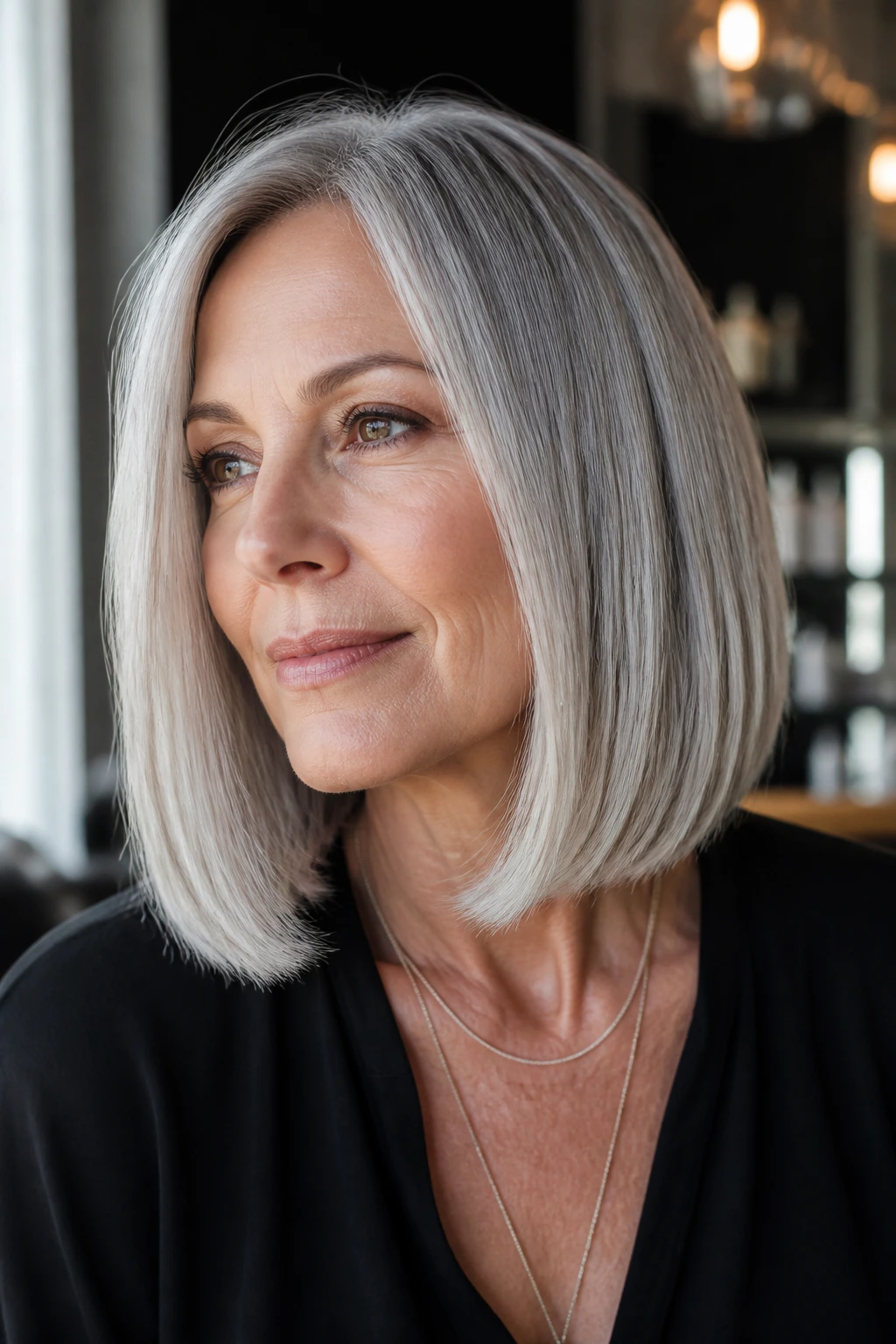
A silver lob is the haircut equivalent of a clean white shirt. It’s plain in the best way, and it lets the hair color do the talking. When the cut lands near the collarbone, the line is long enough to feel elegant and short enough to stay manageable.
The lob is one of my favorite cuts for straight or slightly wavy gray hair because it gives the hair a blunt shape without boxing it in. The length keeps weight in the ends, which helps silver strands fall neatly instead of floating around. If the front is just a touch longer than the back, even better.
What Makes It Different
Unlike a shorter bob, the lob gives you room to tuck one side behind the ear, wear a low clip, or add a soft wave without the style collapsing. It also grows out cleanly. That matters more than people admit.
Use a smoothing cream or a lightweight serum, then flat-iron only the very outer layer if you need glassy shine. The hair should still move. If it doesn’t, you used too much product.
7. Long Silver Layers With Soft Waves
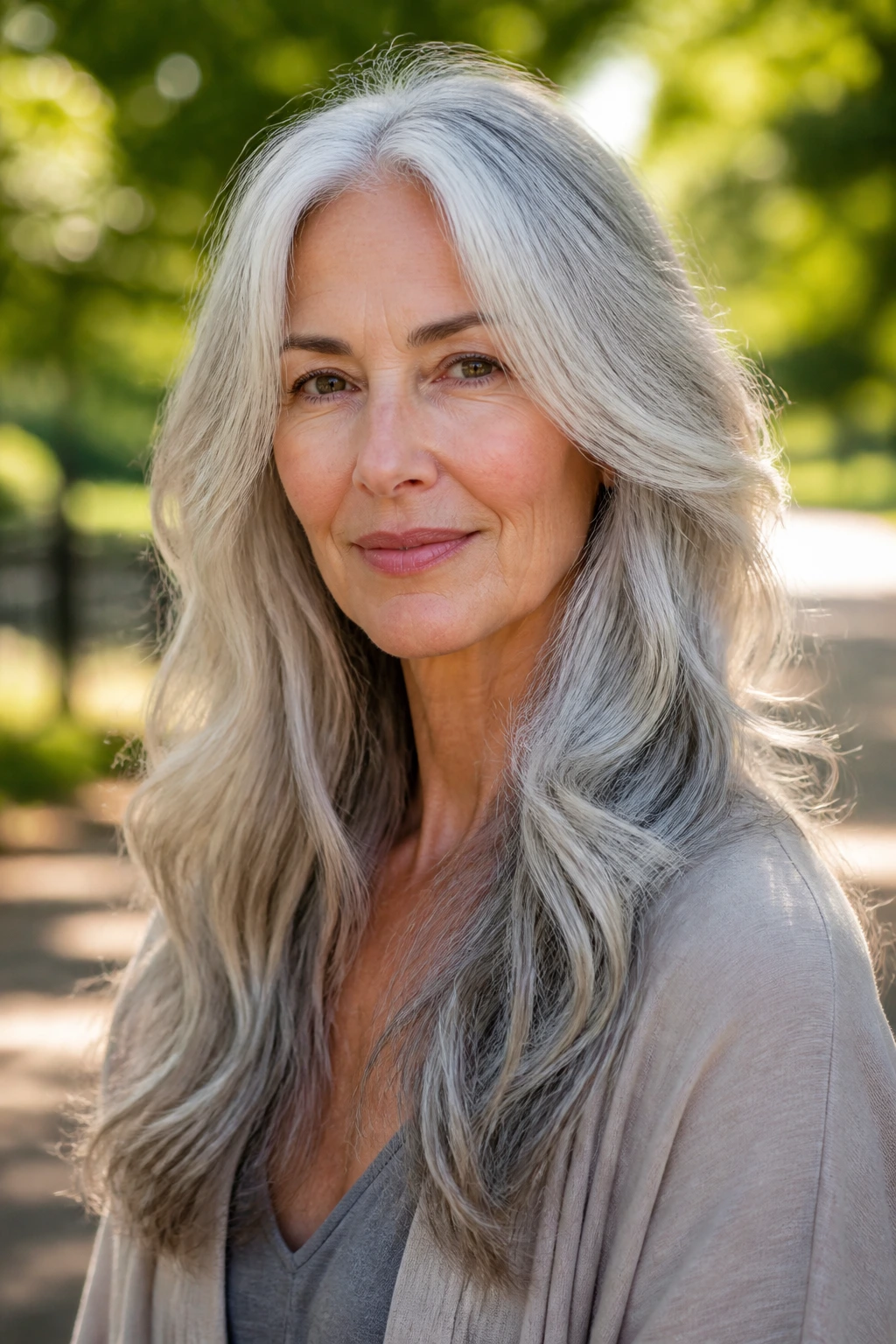
Long gray hair can look stunning when it has shape. The problem is that one-length long hair often looks thinner than it is, especially when the silver strands are fine at the ends and fuller near the crown. Layers fix that by giving the hair a little architecture.
This cut works best when the layers begin around the collarbone or a little lower. That keeps the length, but removes the heavy sheet effect. Soft waves are the finishing move. They break up the line just enough to keep the hair from hanging straight down like a curtain.
If you’ve kept your hair long because you like the feeling of it on your shoulders, this is the version to try. It doesn’t ask you to start over. It just asks the hair to bend a little more gracefully.
A large-barrel curling iron, a few Velcro rollers, or overnight braids can all give the right kind of wave. Keep the ends moisturized. Long gray ends can get thirsty fast.
8. Classic French Bob
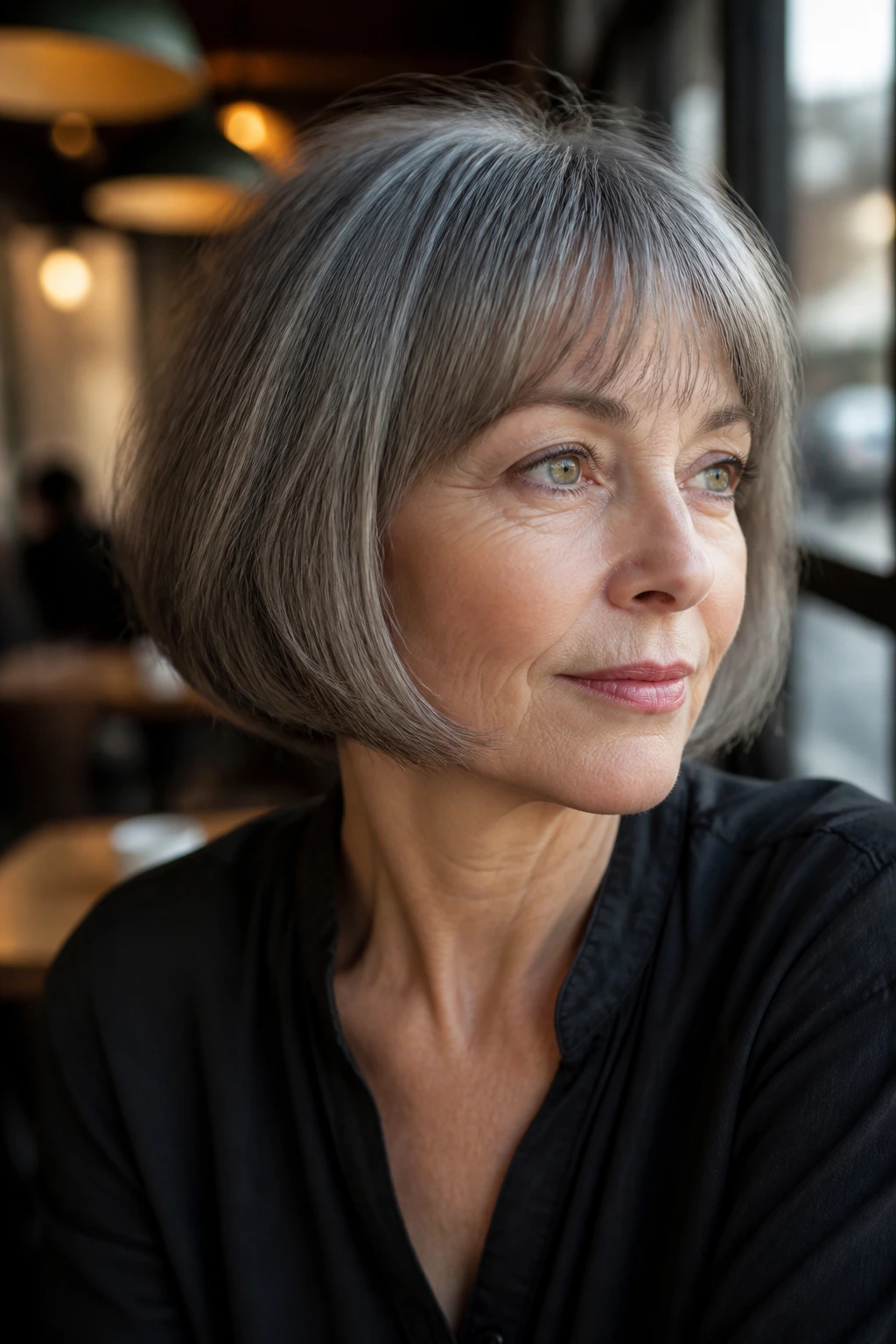
The French bob has attitude, but it doesn’t shout. It usually sits at or just below the jaw, often with a soft fringe or a deep side part, and the whole thing feels intentionally compact. On gray hair, that neatness is a gift.
This cut loves cheekbones. It also loves earrings. If you’ve got a strong jawline or a face that benefits from a little openness around the neck, a French bob can be a fast way to make silver hair look chic without making it severe. The key is softness at the ends and a tiny bit of bend, not a stiff ruler-straight line.
I’d avoid making it too blunt unless your hair is dense and naturally straight. A little internal texture keeps it from turning boxy. Blow-dry with a small round brush, then tuck one side behind the ear and leave the other to fall forward. That asymmetry keeps it alive.
This is one of those cuts that looks thoughtful even when it only took ten minutes to style.
9. Asymmetrical Gray Bob
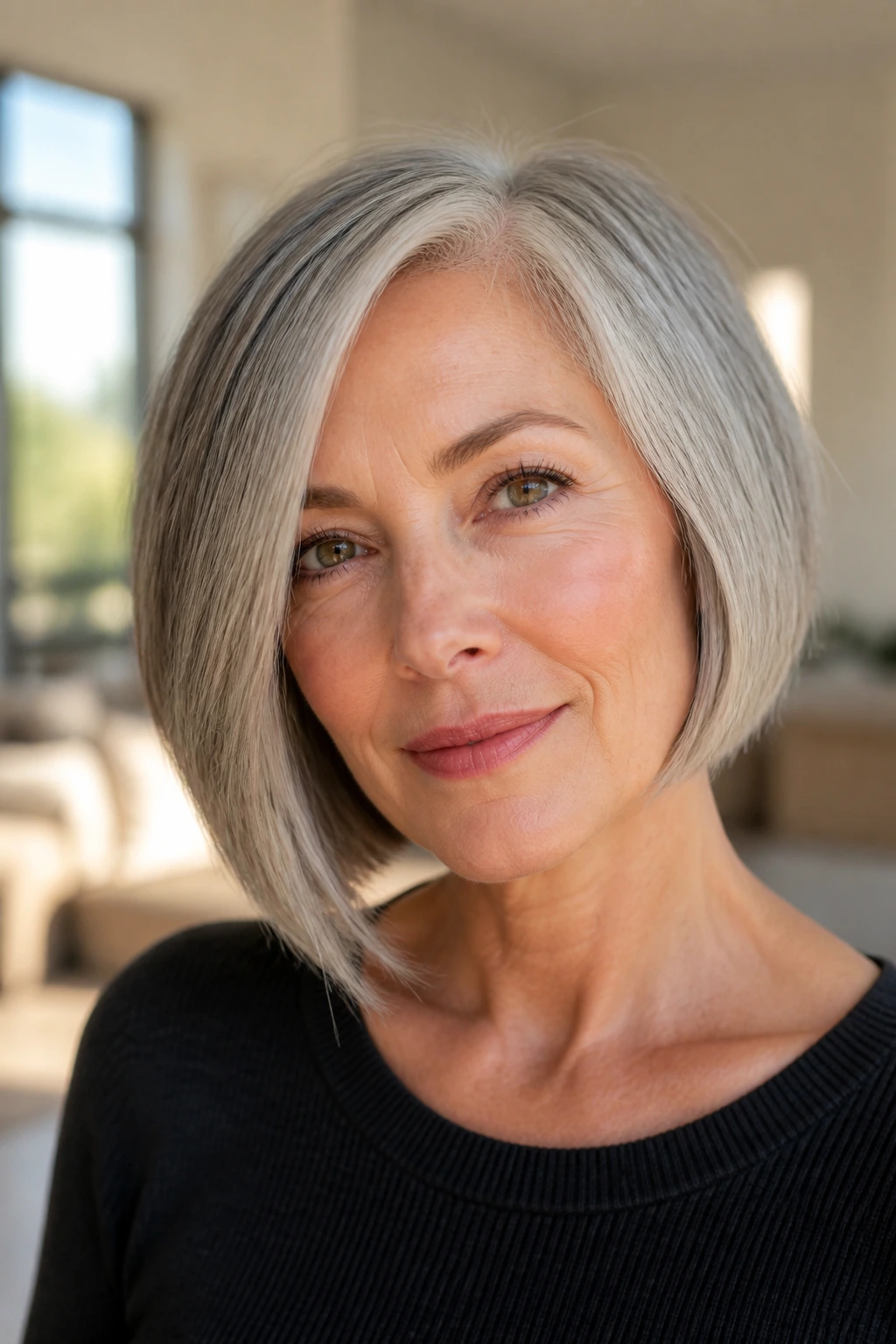
An asymmetrical bob is for the woman who likes one small twist in an otherwise clean shape. One side sits a little longer than the other, or the part pushes the front into a subtle diagonal. It’s enough to change the mood of the cut without making it theatrical.
Gray hair takes well to asymmetry because the color already has visual variation. A tiny shift in length adds another layer of interest. If one side tends to flatten more than the other, this cut can also work with the hair instead of fighting it.
The best version is subtle. Keep the difference to about half an inch to one inch unless you want a much bolder line. Pair it with a deep side part and a smooth finish, or add a loose wave if the hair wants movement.
If you’re bored of symmetrical haircuts that feel too proper, this is a satisfying change. It looks deliberate from the front and even better when you catch it in profile.
10. Tapered Natural Afro
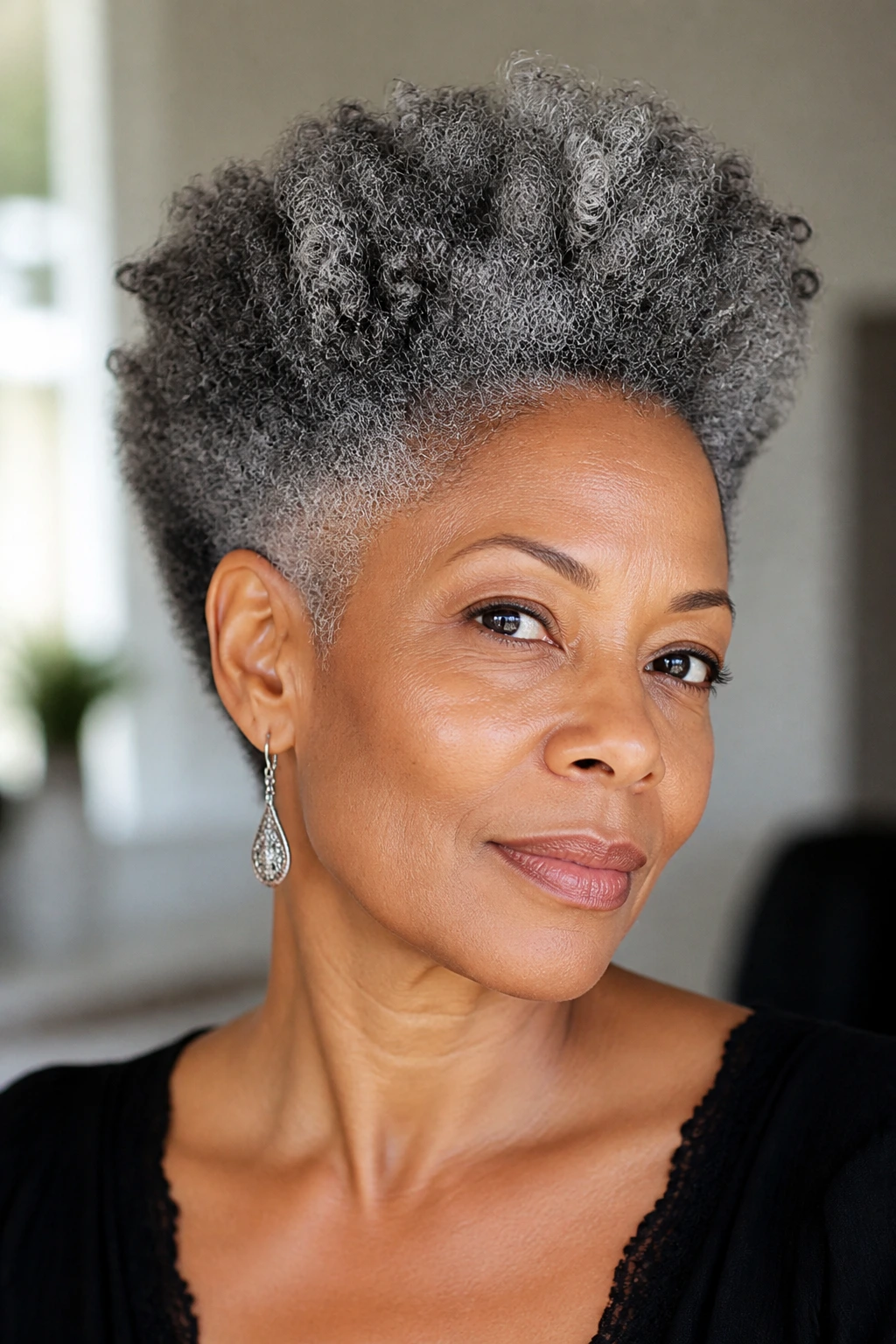
A tapered natural afro gives gray curls and coils a shape that feels proud and balanced. The sides and back stay shorter, the top keeps the height, and the whole silhouette follows the head instead of expanding into a square. That contour matters.
Gray coils often need moisture more than they need manipulation. A tapered shape helps by giving the hair structure without flattening the texture. It also keeps the silver halo visible, which is half the charm here. You want the light to hit the top and edges, not get lost in bulk.
Styling Without Overworking It
Use a leave-in conditioner, a cream that defines without crispness, and a pick at the roots if you want extra lift. Avoid brushing through dry coils unless you’re trying to make a halo of frizz on purpose. That’s not the goal.
A good taper should look shaped, not carved. If your stylist is too aggressive with the sides, the whole cut can lose its softness. You want rounded fullness up top and a clean neckline.
11. Wash-and-Wear Layered Cut

There’s a special kind of relief in a haircut that behaves after a rinse and a towel squeeze. A wash-and-wear layered cut is built for that. The layers are placed so the hair falls into shape with minimal help, which is gold if you don’t enjoy styling tools or simply don’t want to wrestle with them every morning.
This cut can live at the bob length, collarbone length, or somewhere between. The real point is the placement of the layers. They should encourage the hair to settle rather than bounce into random directions. Ask for the cut to be shaped around how your hair dries naturally, not how it behaves on a perfect salon day.
If your gray hair has a slight wave, this is a strong choice. A little leave-in, a bit of air-dry time, and maybe a tiny pinch of mousse at the roots can be enough. It should look like you know your own hair well. Because you do.
12. Curtain Bang Lob
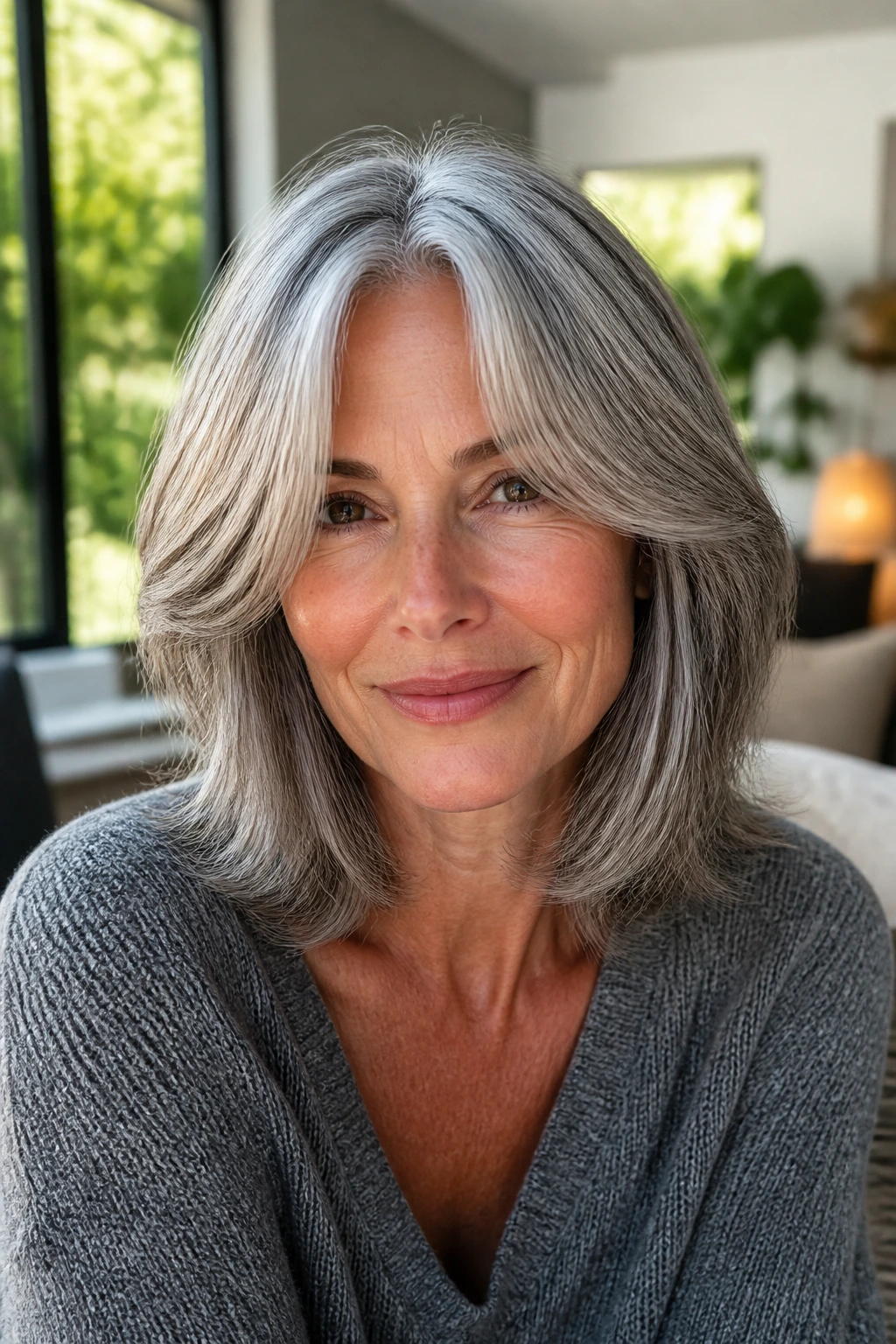
Curtain bangs can be a smart move on silver hair because they soften the forehead without trapping the face behind a heavy fringe. When they’re paired with a lob, the result feels modern and easy to wear. The bang opens in the center, sweeps to each side, and blends into the front layers.
This cut is especially useful if your hairline has changed or if you want to distract from a long forehead without committing to blunt bangs. The front pieces should start around the cheekbone and flow down toward the jaw. If they’re cut too short, they can look jumpy when gray hair has a little lift.
Blow-dry the bangs forward first, then wrap each side away from the face with a round brush. That little bend is what makes them feel soft rather than split and stiff. Curtain bangs also help the lob look less generic. And yes, that matters.
13. Rounded Curly Bob
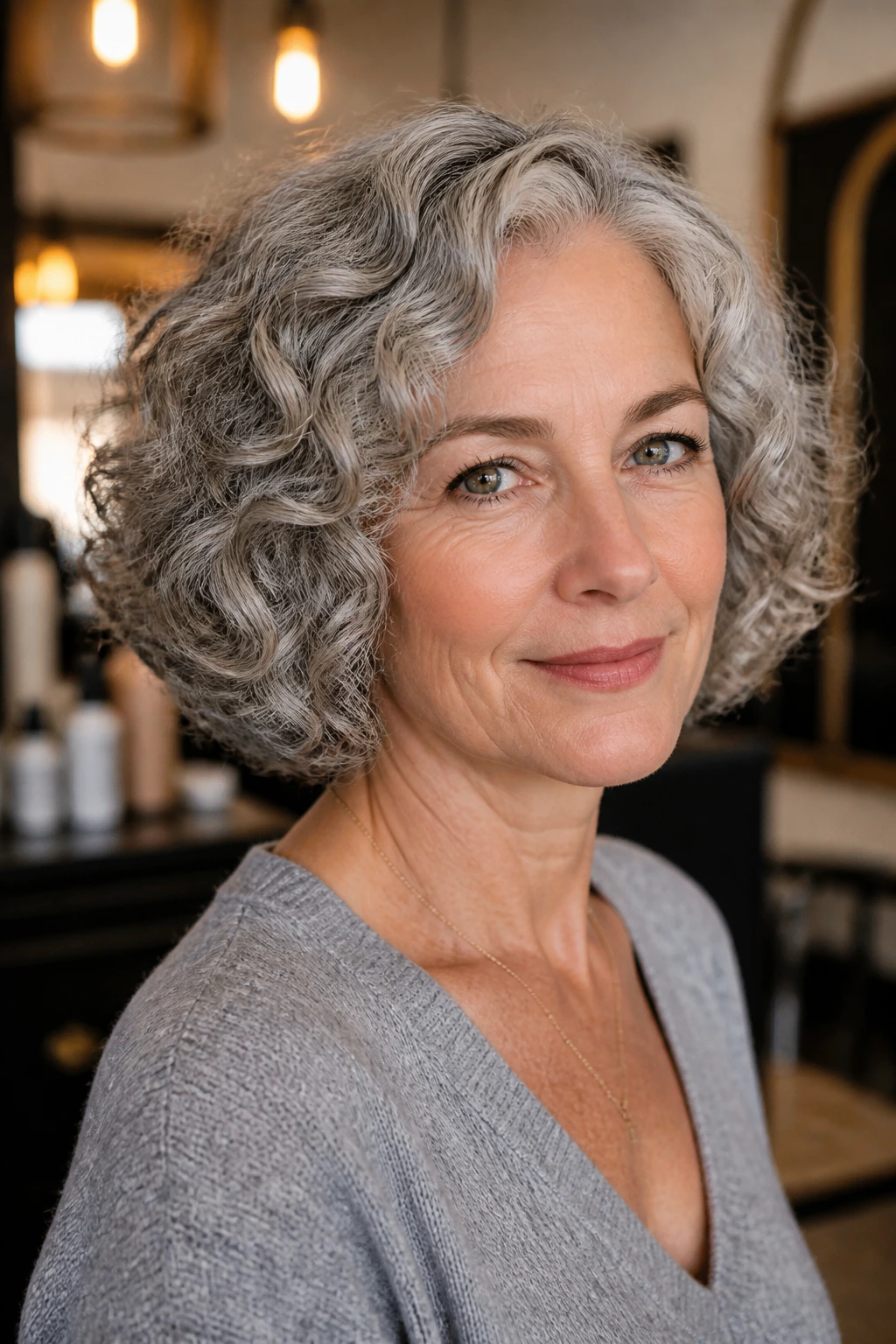
A rounded curly bob is not the same thing as a curly shag. The shape is more controlled, more dome-like, and often sits just below the chin or around the jaw. It keeps the silhouette balanced so the curls don’t spread sideways too much.
This is a beautiful option when your curls are springy and you want them to read as polished instead of wild. The round shape helps the eye follow the line of the cut, which can be especially flattering if your face is narrow or you want a little more fullness around the sides. Dry cutting tends to work best here because curl shrinkage is real, and it can fool even a good pair of eyes.
If you like a look that feels finished with almost no tooling, this is worth a close look. A curl cream and a diffuser are usually enough. The shape should hold the whole point together.
14. Side-Swept Long Pixie
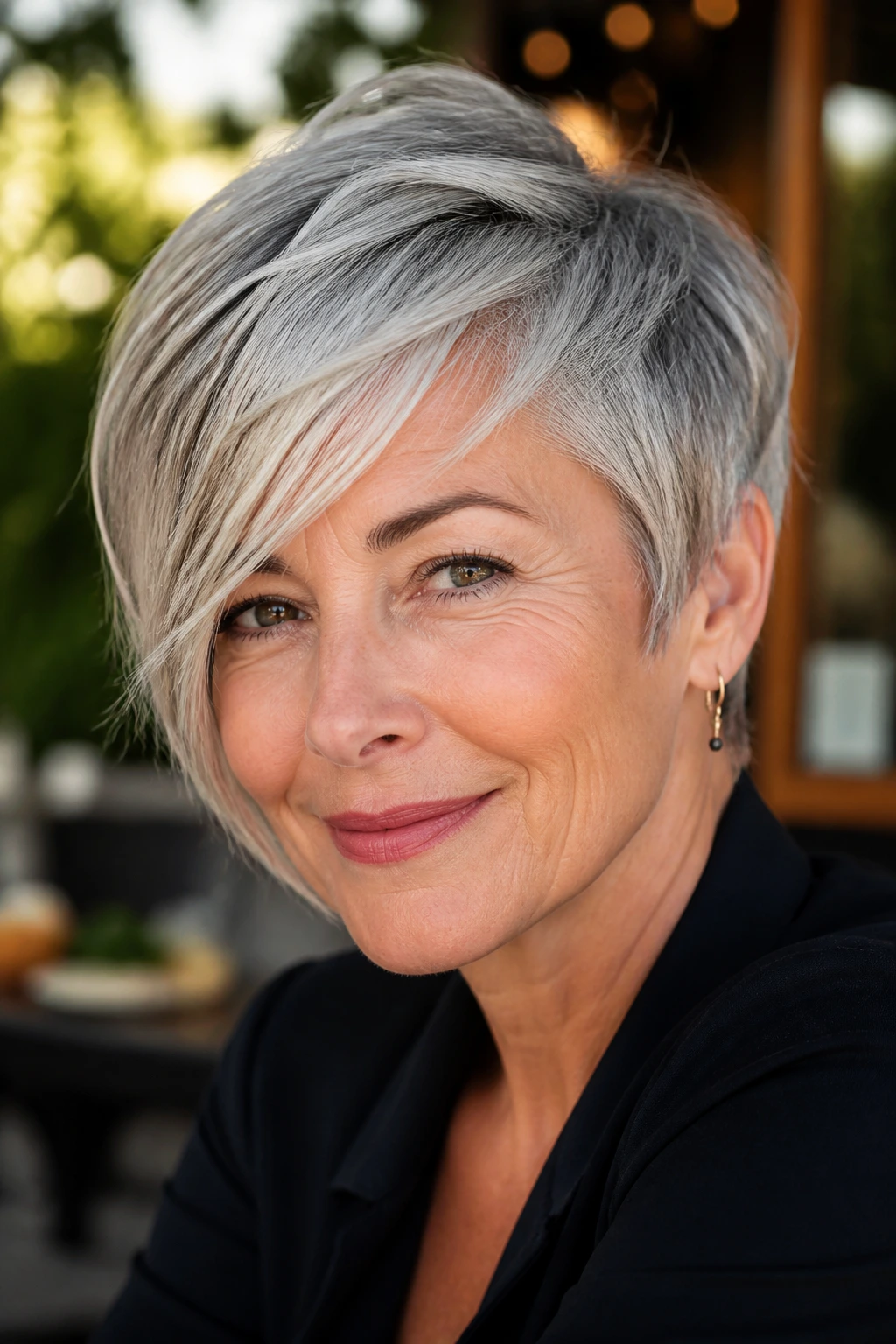
A side-swept long pixie has one job: keep the lightness of a pixie while giving you enough length to soften the face. The top stays longer, the fringe sweeps across the forehead, and the sides stay close enough to show the shape of the head.
This cut is a good answer for women who like short hair but don’t want anything severe around the face. The side sweep creates motion, and the extra length on top gives you styling choices. You can tuck it behind the ear, push it forward, or lift the front slightly if you want more height.
It also grows out more gracefully than a very tight pixie. That’s worth something. Ask for texture in the top but keep the fringe soft, not ragged. A little pomade on the fingertips is often enough to guide the sweep.
15. Silver Twist-Out Bob
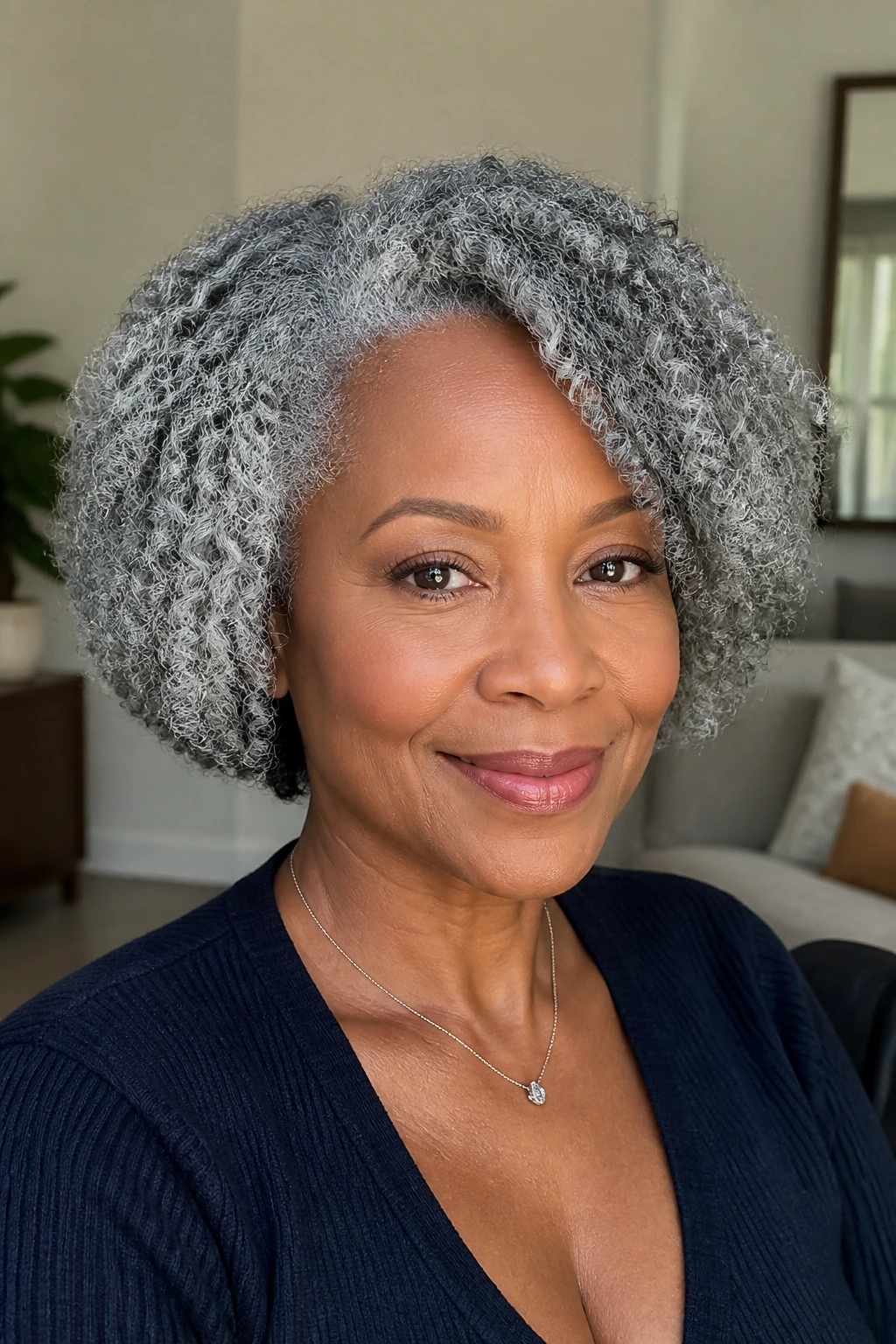
A twist-out bob lets natural texture do the heavy lifting, and gray hair often takes a twist-out beautifully because the silver catches light across each coil and wave. The bob length keeps the style from pulling too long and losing definition.
The key is preparation. Twist sets should be even, not random, and the hair needs to be fully dry before you unravel it. If you pull the twists apart too soon, you get frizz. If you separate them too aggressively, you get a halo instead of a shape.
This look can be dressed up or worn casual, which is useful when you want one style to do a lot of jobs. A light foam or setting cream at the start and a touch of oil on the hands at the end keeps the shape soft.
It’s a style that rewards patience. Rush it, and it looks fuzzy. Let it dry, and it looks rich.
16. Blunt Collarbone Cut
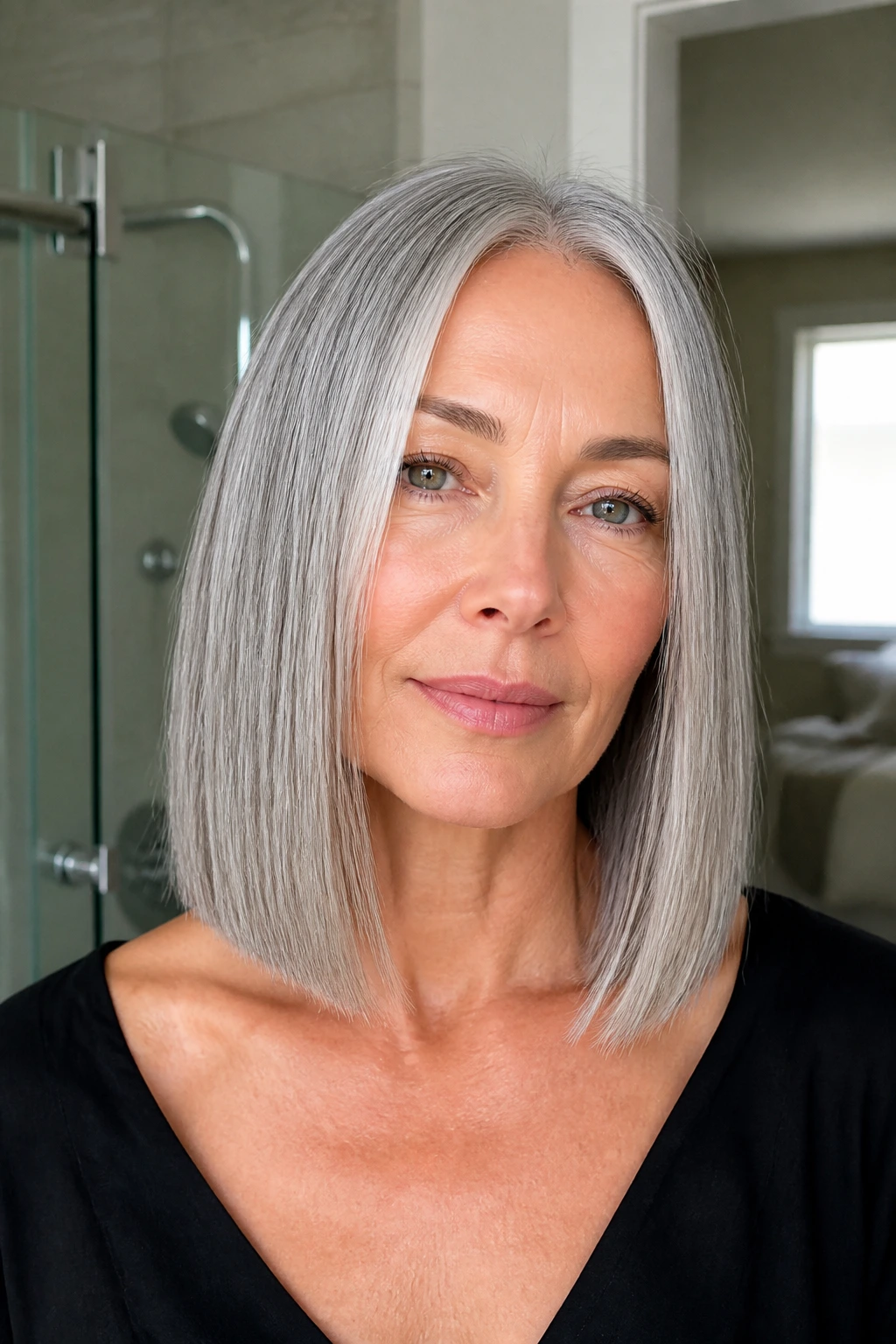
A blunt collarbone cut has presence because it makes a clean, decisive line. On gray hair, that line can look striking. It also gives fine hair more apparent thickness by keeping the ends full and even.
The trick here is not to over-layer it. Too many layers and the clean shape disappears. A small amount of internal weight removal can keep the cut from feeling heavy, but the outline should stay solid. Collarbone length is long enough to pull back, short enough to avoid the limp ends that can happen with very long gray hair.
This cut is one of the best options if your hair is straight and you like a polished look. Add a center part for a more modern feel, or a side part if you want a little softness. The ends can be tucked under slightly, but they should never look feathered into nothing.
17. Soft Undercut Pixie
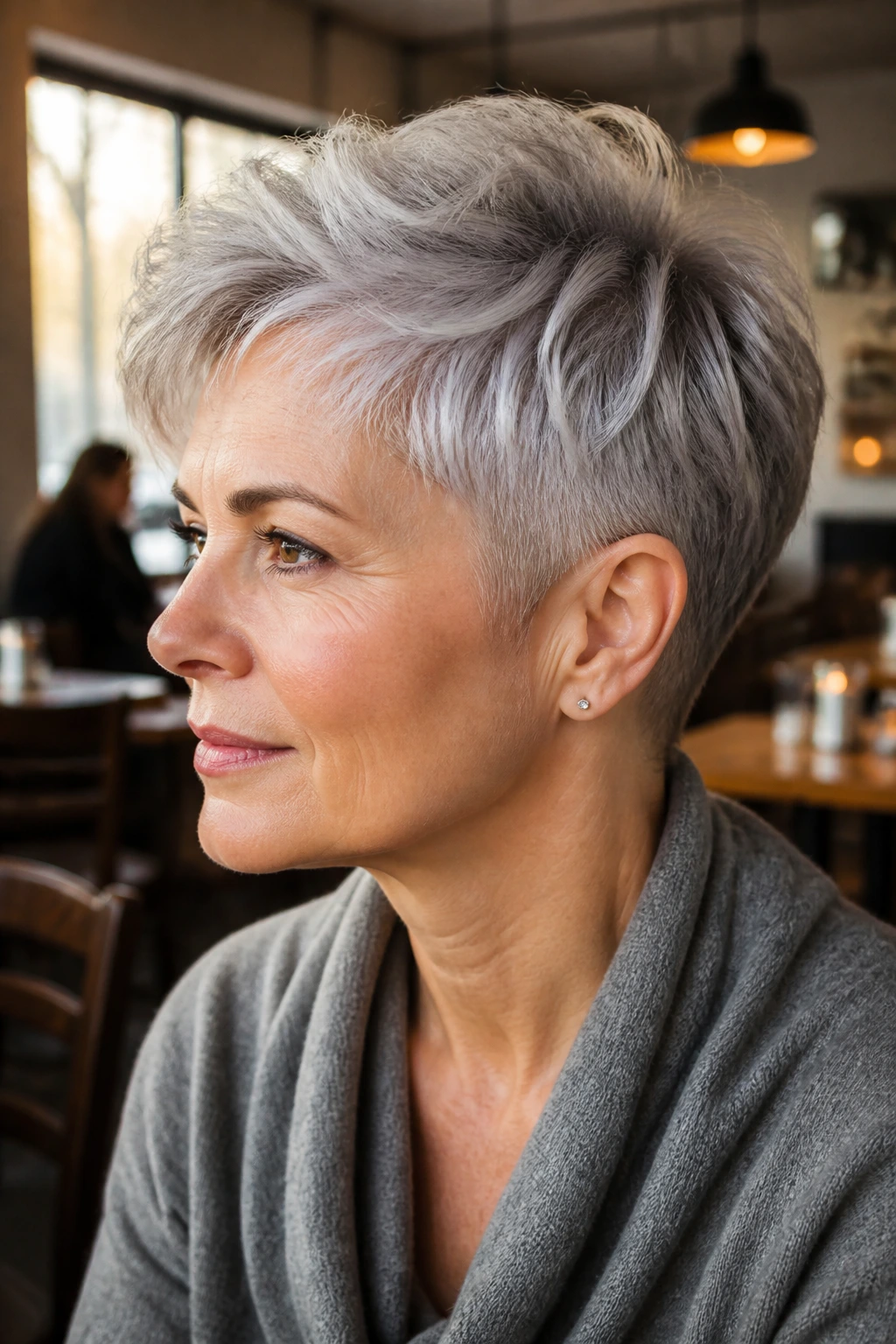
A soft undercut pixie sounds more dramatic than it is. The sides and nape are clipped closer underneath, which removes bulk that can make thick gray hair puff out. The top stays longer, so the cut still feels feminine and versatile.
This is one of the smartest choices if your hair is coarse, dense, or tends to grow wide around the neckline. The hidden undercut makes the shape sit closer to the head without sacrificing softness up top. It also cuts down on drying time, which is a small mercy on busy mornings.
The top can be swept, textured, or brushed smooth depending on the mood. If you like a little edge without a hard look, this cut does the job. Just keep up with the cleanup. A hidden undercut grows out fast and starts to show itself if you leave it too long.
18. Flipped Shoulder-Length Cut
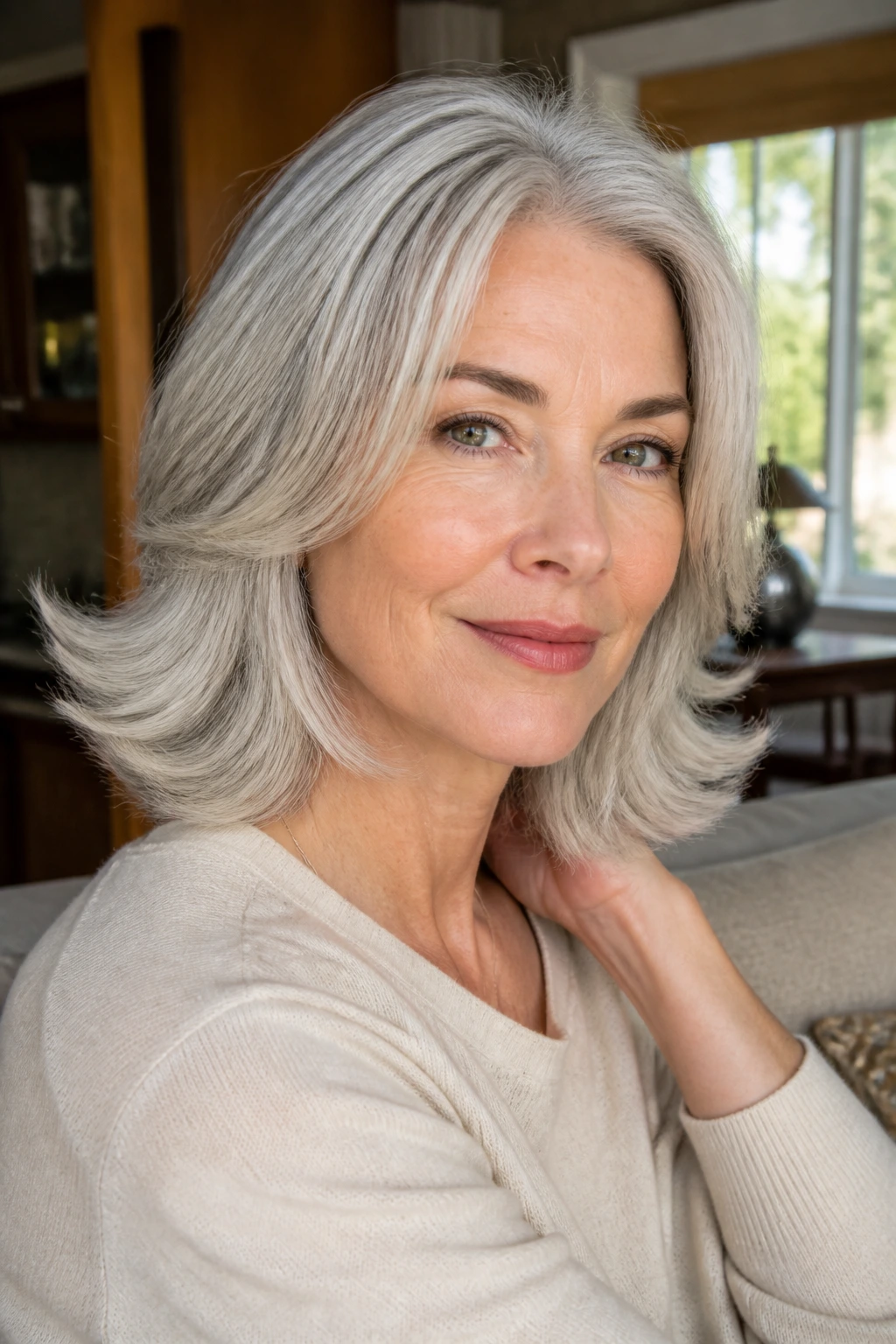
The flipped shoulder-length cut brings a little movement back to hair that’s been sitting too politely. The ends turn outward instead of under, which gives the style a lifted, airy finish. On silver hair, that flip can keep the whole cut from feeling heavy.
This look has a hint of retro energy, but it works best when the flip is soft, not costume-like. The hair should still move naturally around the shoulders. A round brush or large rollers can create the bend, and a little light spray keeps the shape from collapsing by lunchtime.
It’s a good option if your hair tends to lie flat at the ends but still has enough body to hold a curve. If the crown is a little limp, a root-lifting mousse helps. The style is simple. The trick is not to overthink it.
19. Braided Crown Updo
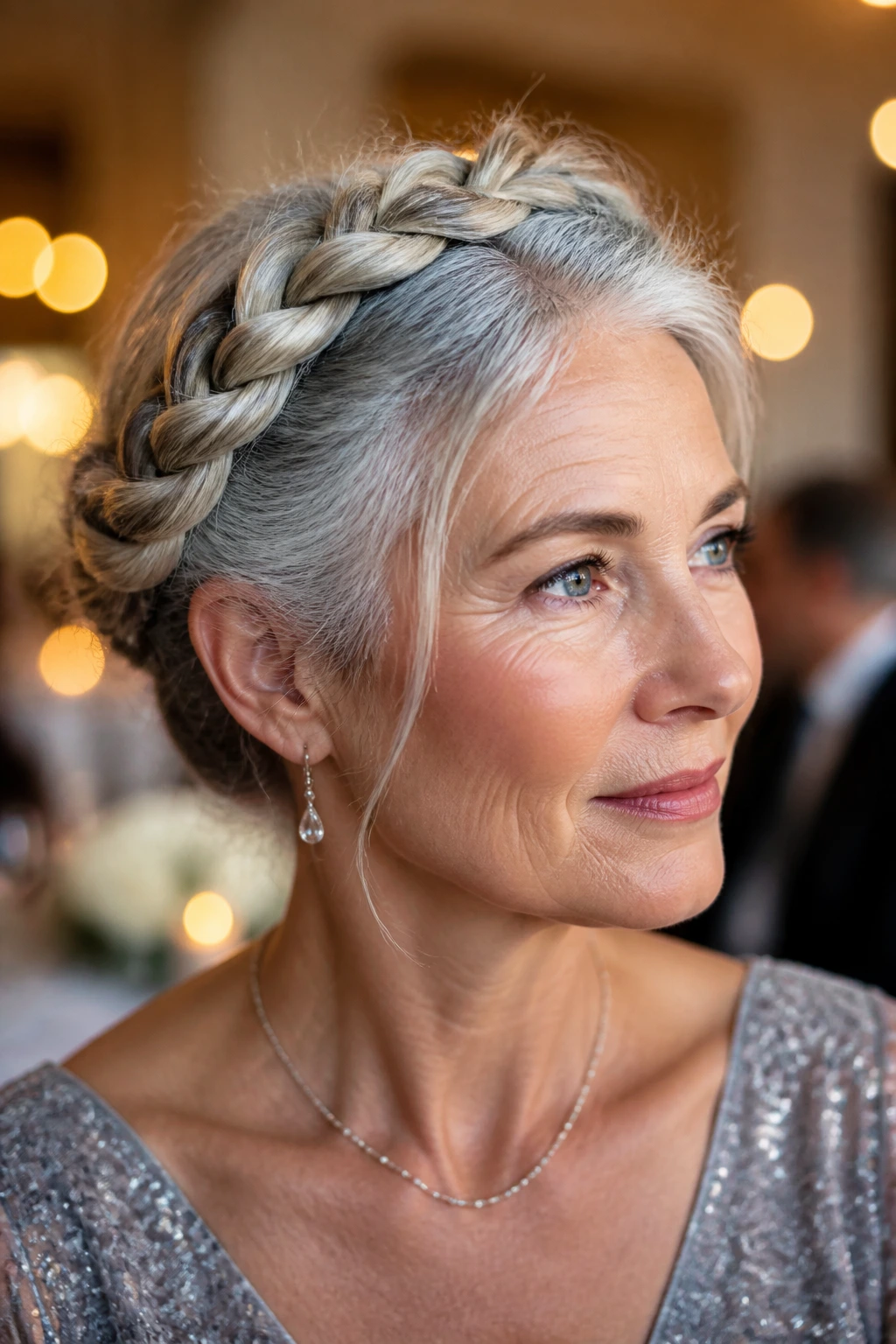
Braided crown styles are lovely on gray hair because the braid itself acts like a frame. Silver and salt-and-pepper strands catch the pattern of the plait in a way darker hair sometimes hides. You get texture, shape, and a clean neckline in one move.
This style shines at events, dinners, and any moment when you want your hair off your face but still want something more interesting than a plain bun. The braid can start at one temple and wrap around the crown, or it can be split into two braids pinned across the top. Both versions work.
A bit of texture spray helps if your hair is too smooth and slippery. Pins matter more than elastics here. Use enough to anchor the braid without crushing the shape.
20. Low Chignon With Wispy Fringe
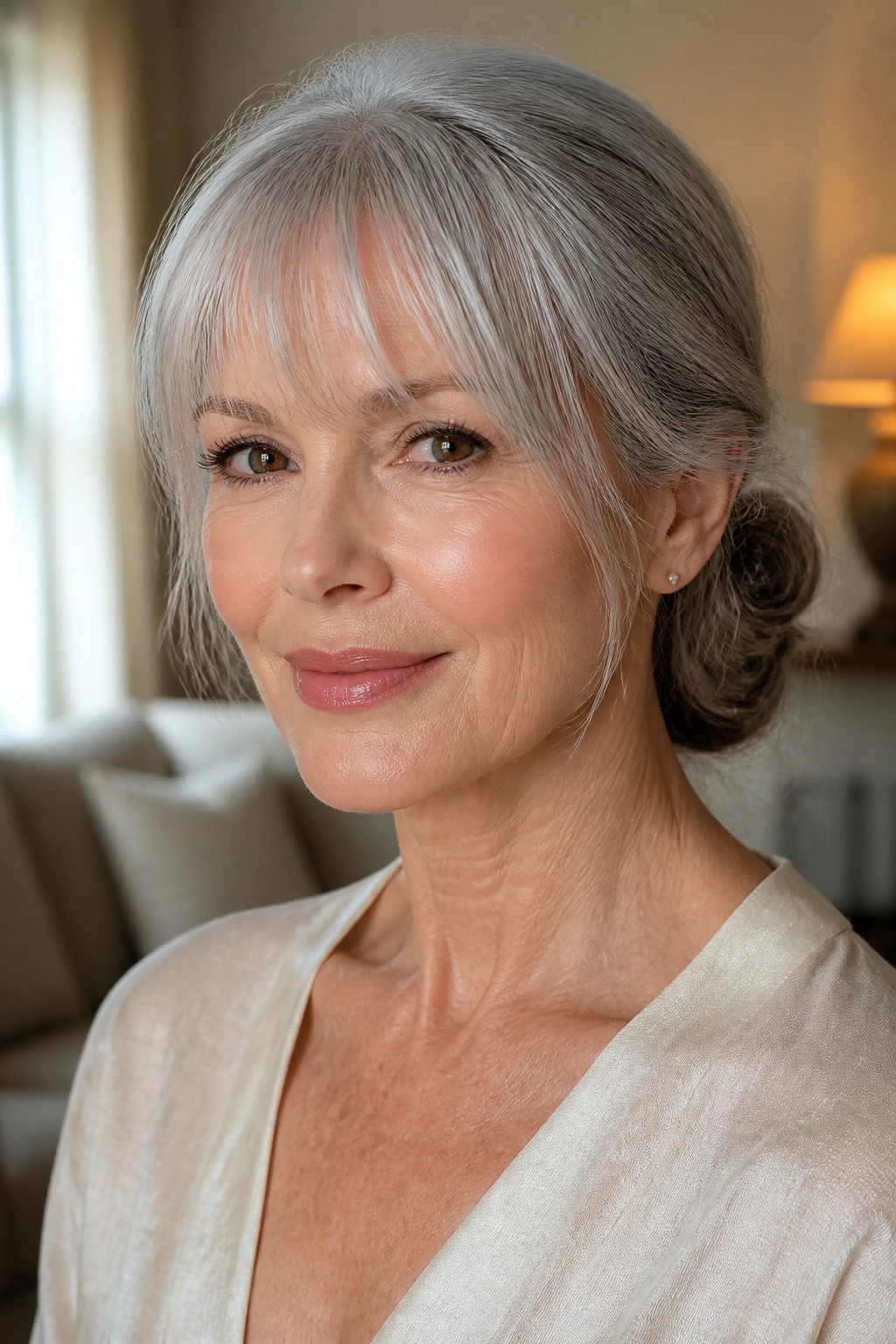
A low chignon gives gray hair a quiet kind of elegance, but the wispy fringe keeps it from turning severe. The bun sits low at the nape, smooth or slightly loose, while the fringe softens the forehead and eyes. The result feels finished without being stiff.
This style is especially good when you want to show earrings, a collar, or a neckline detail. It also works on hair that’s past shoulder length and doesn’t want to hang loose all day. A few pins, a small elastic, and a little smoothing cream are usually enough.
The fringe can be bluntly cut or feathered. I prefer feathered for gray hair because it moves better and doesn’t make the face look boxed in. If you’re heading somewhere formal, this is one of those styles that looks expensive even when the tools are ordinary.
21. Half-Up Twist Style
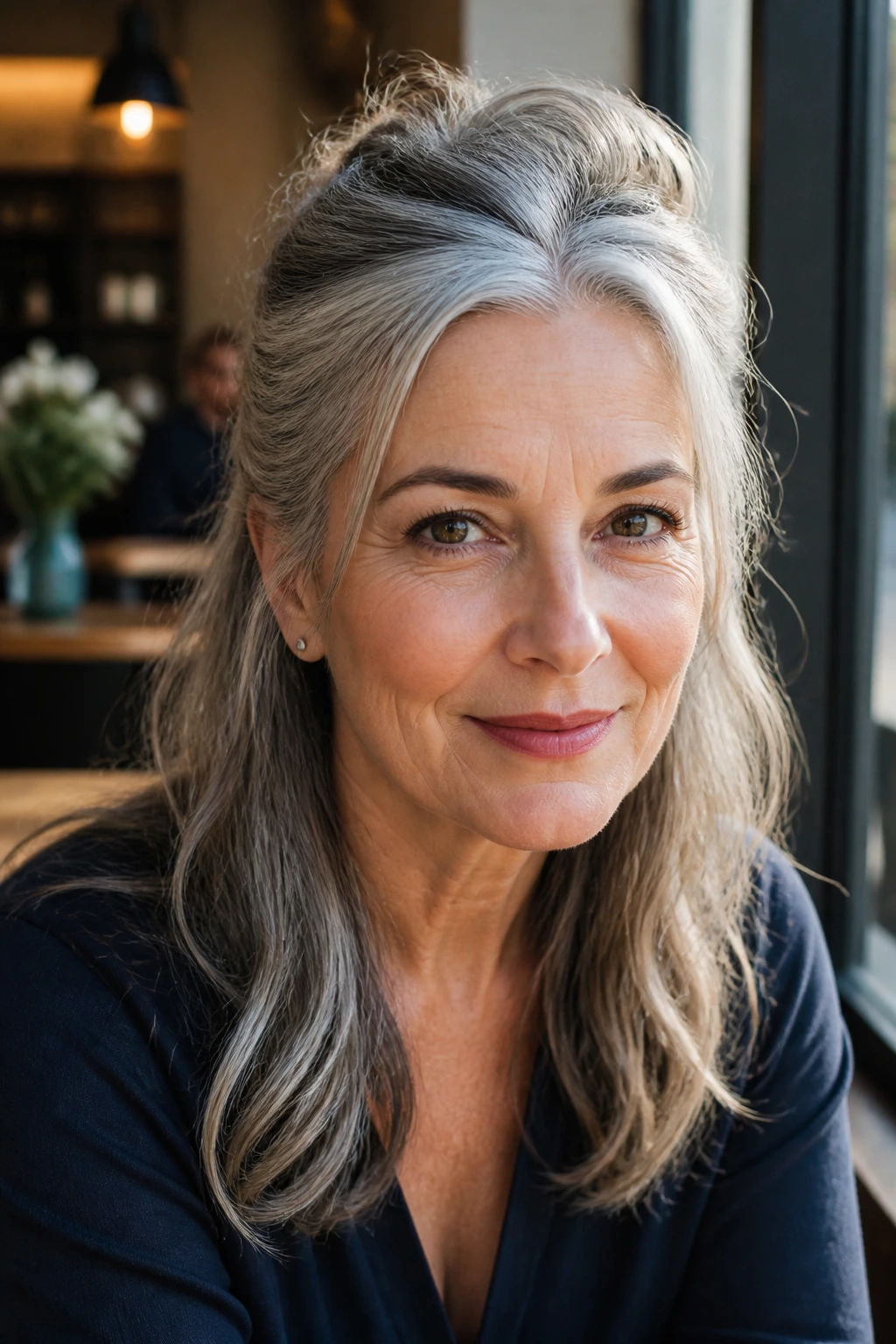
Half-up twists are the answer when you want some height at the crown and some length left down. Twist back each side from the temples, pin them together, and let the back fall naturally. It’s quick, flattering, and easy to make slightly messy on purpose.
This works well on layered gray hair because the shorter front pieces can be tucked into the twist instead of hanging in your face. It also gives a gentle lift without teasing, which is a relief if you hate sticky hair spray and crunchy volume. A little texture spray at the roots helps the twist hold.
The style can lean casual or polished depending on how tight the twist is. Looser means softer and more relaxed. Tighter means neater and more formal. That’s a useful range for one simple shape.
22. Messy Silver Bun
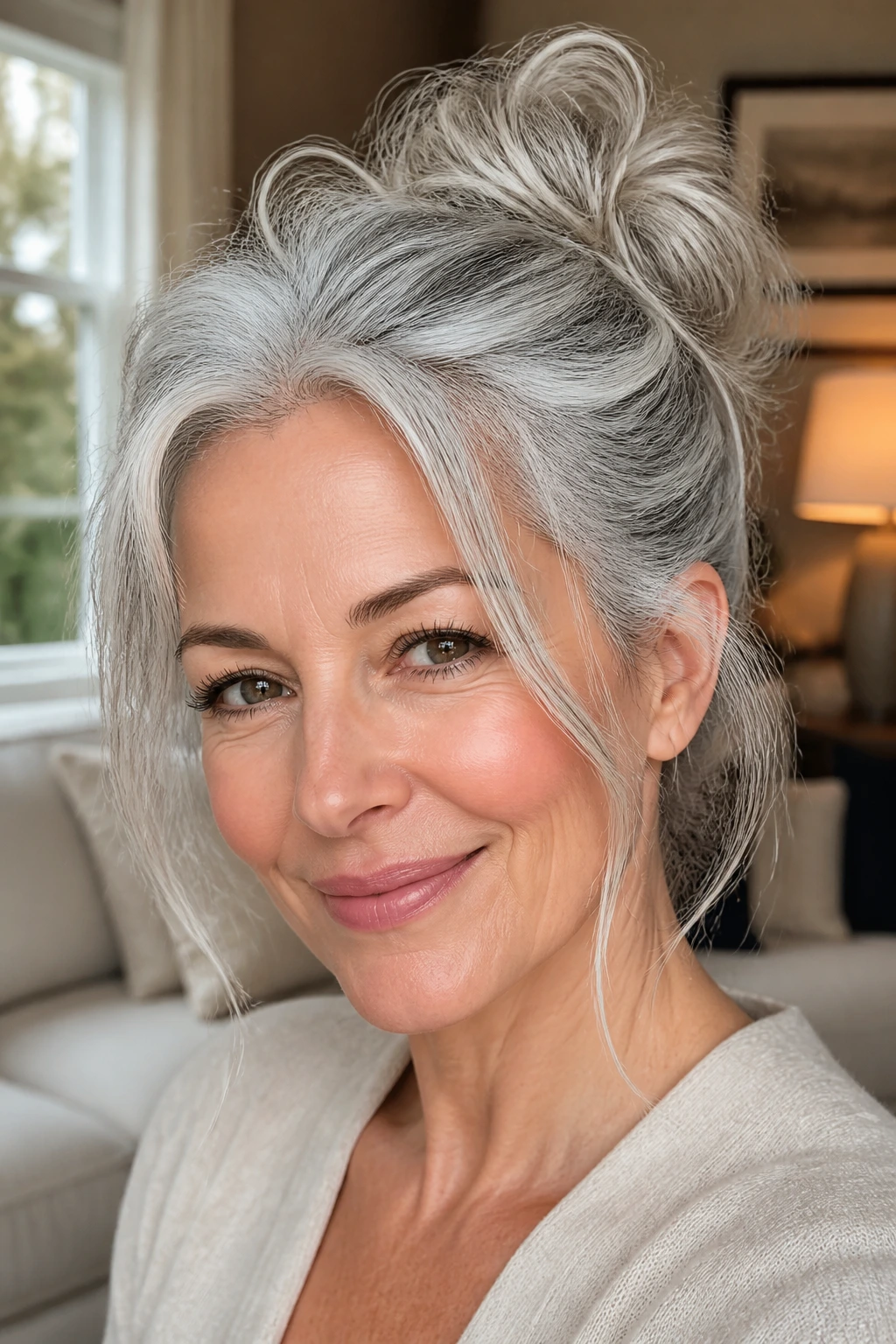
A messy bun is not a lazy hairstyle when it’s done with intention. The difference is in the shape. The bun should sit high or mid-level, not jammed at the crown like a last-minute fix. A few soft pieces around the face make the silver look relaxed instead of forgotten.
This is a good style for longer gray hair that still has body but doesn’t want to be worn down every day. Use your fingers to gather the hair loosely, twist, and pin. Don’t pull every strand tight. That’s where the style loses its charm and starts to look strained.
A messy bun works best with hair that has a bit of texture, whether natural or created with a day-two wave. It’s useful, yes, but it can also be pretty. That combination is underrated.
23. Layered Bob With Piecey Ends
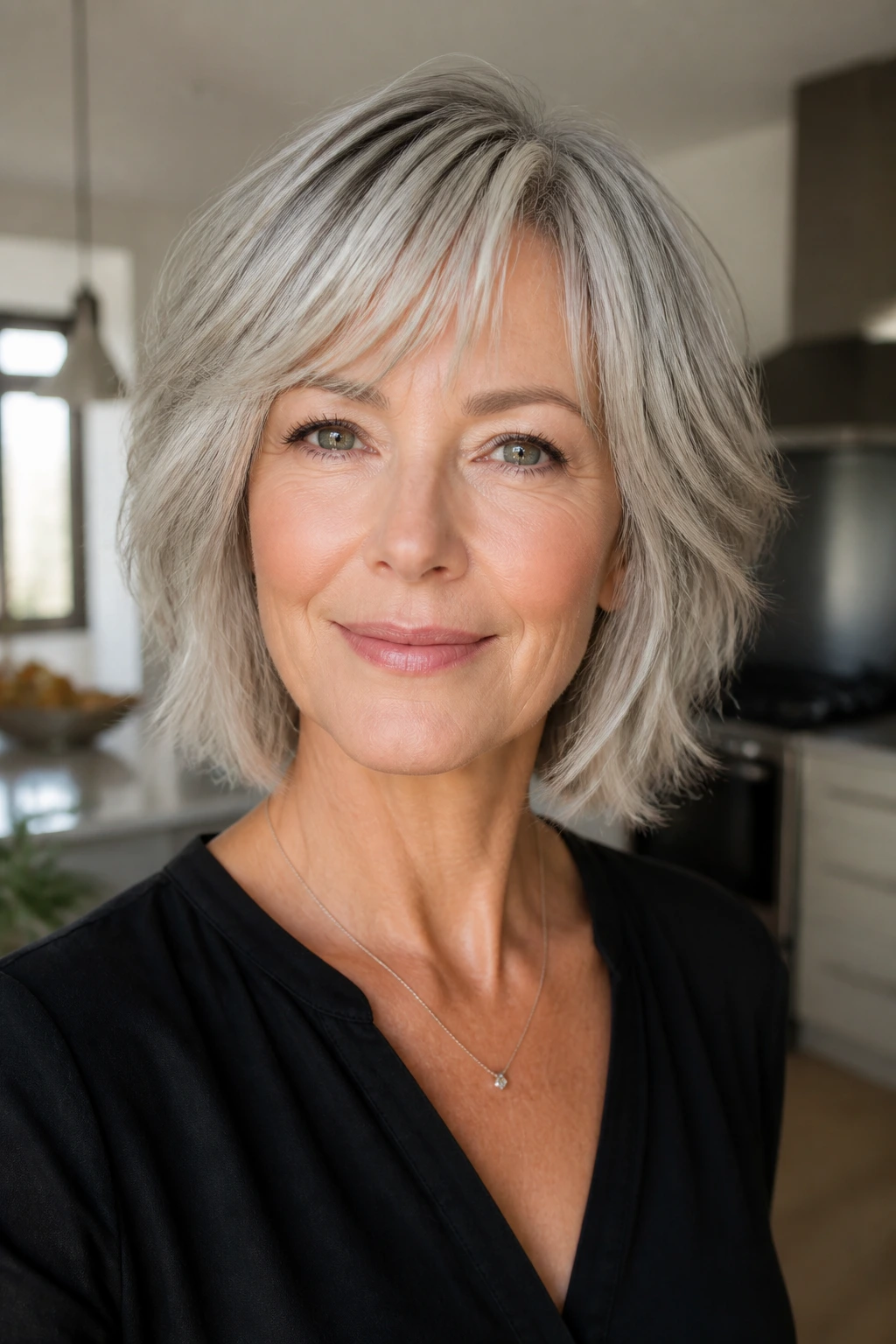
A layered bob with piecey ends is for the woman who wants a bob but not a solid helmet of hair. The layering breaks up the outline just enough to make the ends separate and move. On gray hair, that separation gives the cut a little sparkle because the strands catch light individually.
The trick is to keep the layers controlled. Too much texture and the bob starts to fray. Too little and it goes flat. A texturizing spray or a tiny amount of wax on the fingertips can help define the ends after styling.
This cut is especially good if your hair is medium density and tends to look dull when it’s cut too blunt. It adds life without relying on curls or waves. And if you want to tuck one side behind the ear, the piecey finish makes it look intentional.
24. Voluminous Mid-Length Cut
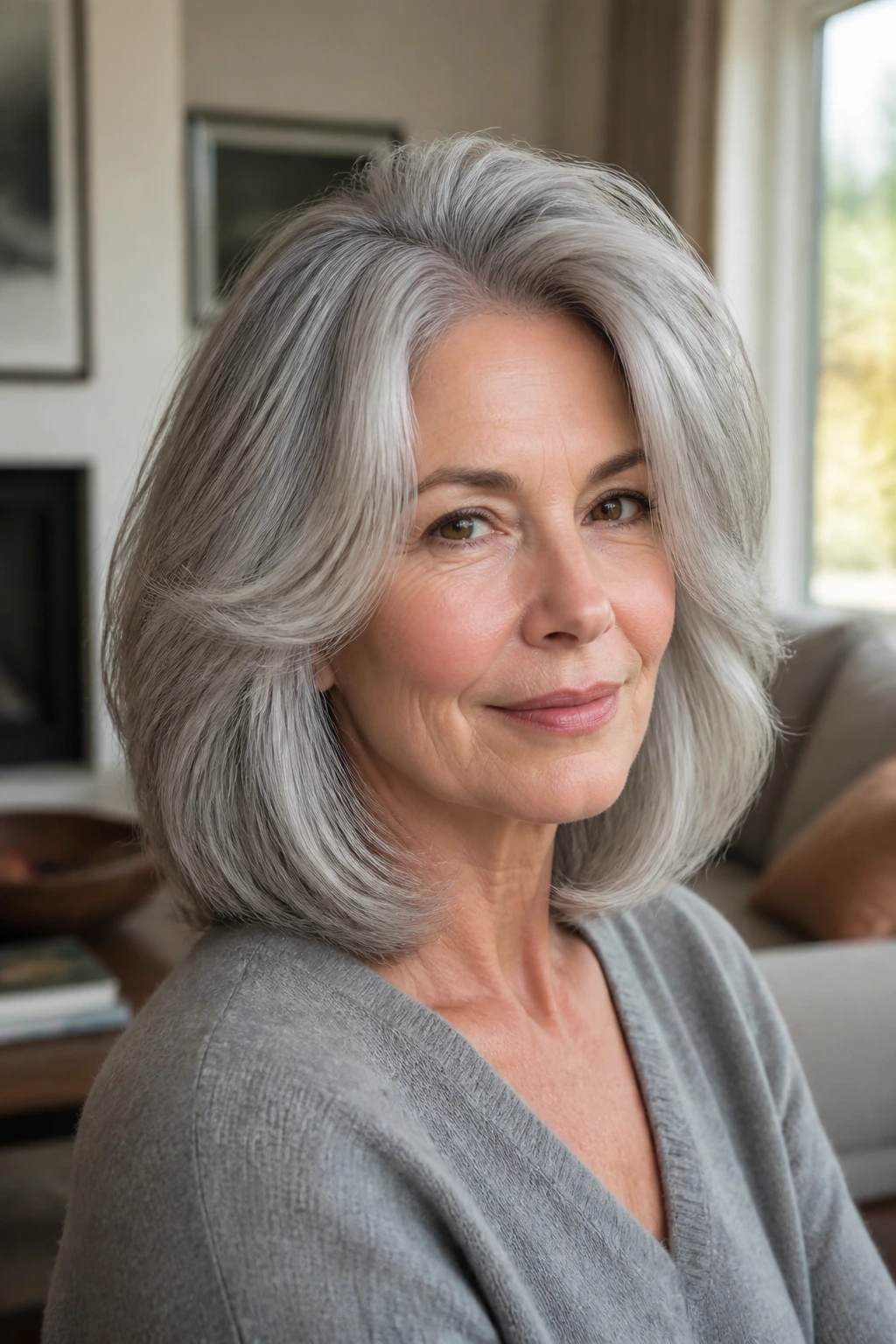
A voluminous mid-length cut is built for women who want body, not just length. The shape usually lands somewhere between the shoulders and collarbone, with layers that start high enough to lift the crown and lower pieces that keep fullness near the ends. That balance matters a lot on gray hair, which can flatten faster than you’d like.
The cut works especially well if your hair is fine to medium and you don’t want the whole head cropped short. Blow-dry with a round brush at the roots, then flip the ends under or out depending on the mood. Velcro rollers at the crown can help if your hair stubbornly lies close to the scalp.
This is not a flat style. It’s supposed to have air in it. If you like movement and you do not mind a little styling, it gives you that soft, lifted shape that photographs well in real life, not just in a salon mirror.
25. Coily Tapered Shape
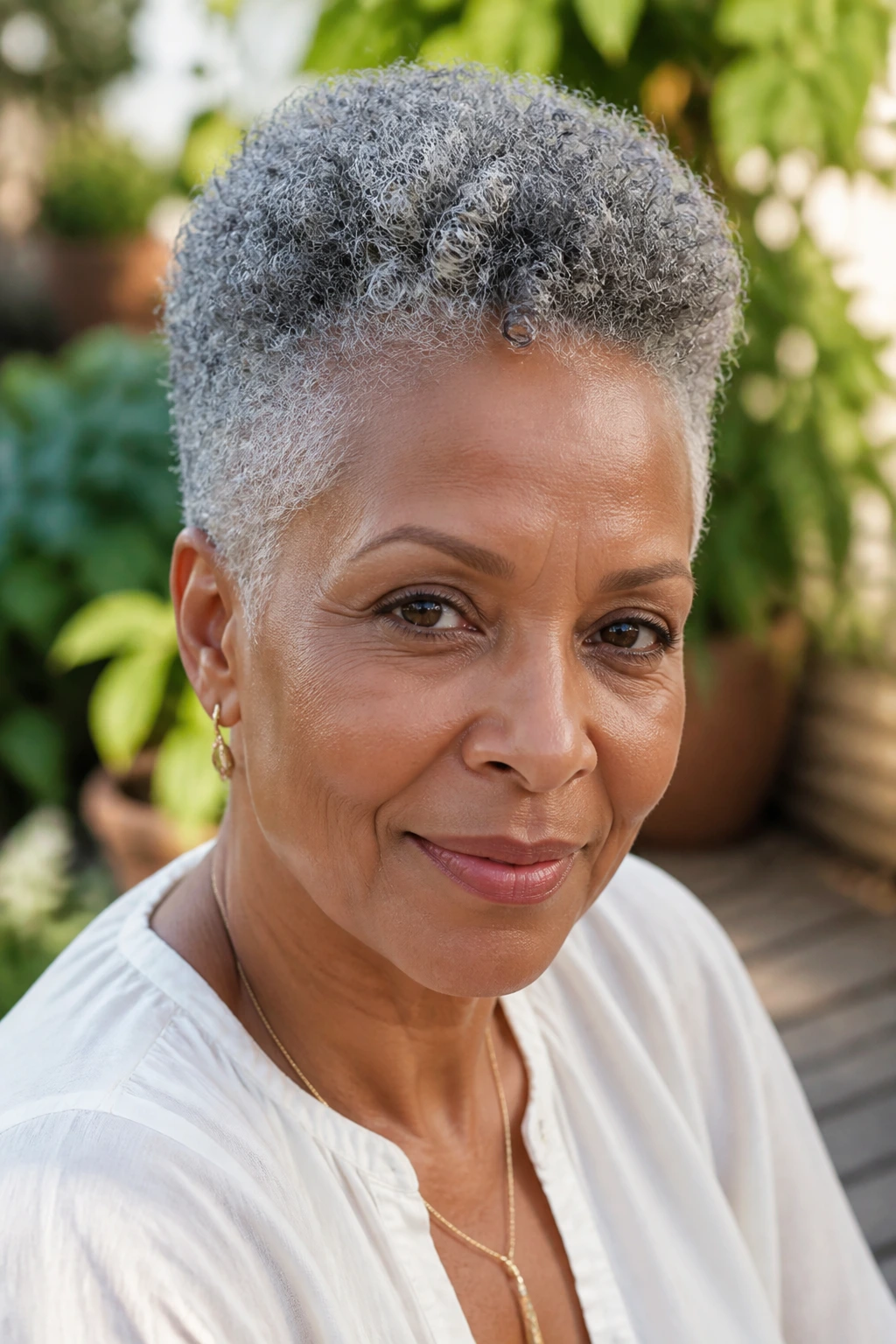
A coily tapered shape gives tight textures room at the top and control at the sides and back. The silhouette tends to be rounded or slightly oval, which keeps the style from widening too much. On gray coily hair, that shape can be gorgeous because the silver appears in little flashes across the coils.
This cut should follow the head, not fight it. A proper taper makes the edges neat while keeping enough fullness on top to show off the coil pattern. If the hair is dry, a leave-in and a rich cream can keep the shape from looking fuzzy. Oil alone won’t do the job.
The beauty of this cut is how little it asks once the shape is right. Moisture, definition, and regular shaping are the big three. The rest is just upkeep.
26. Glassy Straight Lob
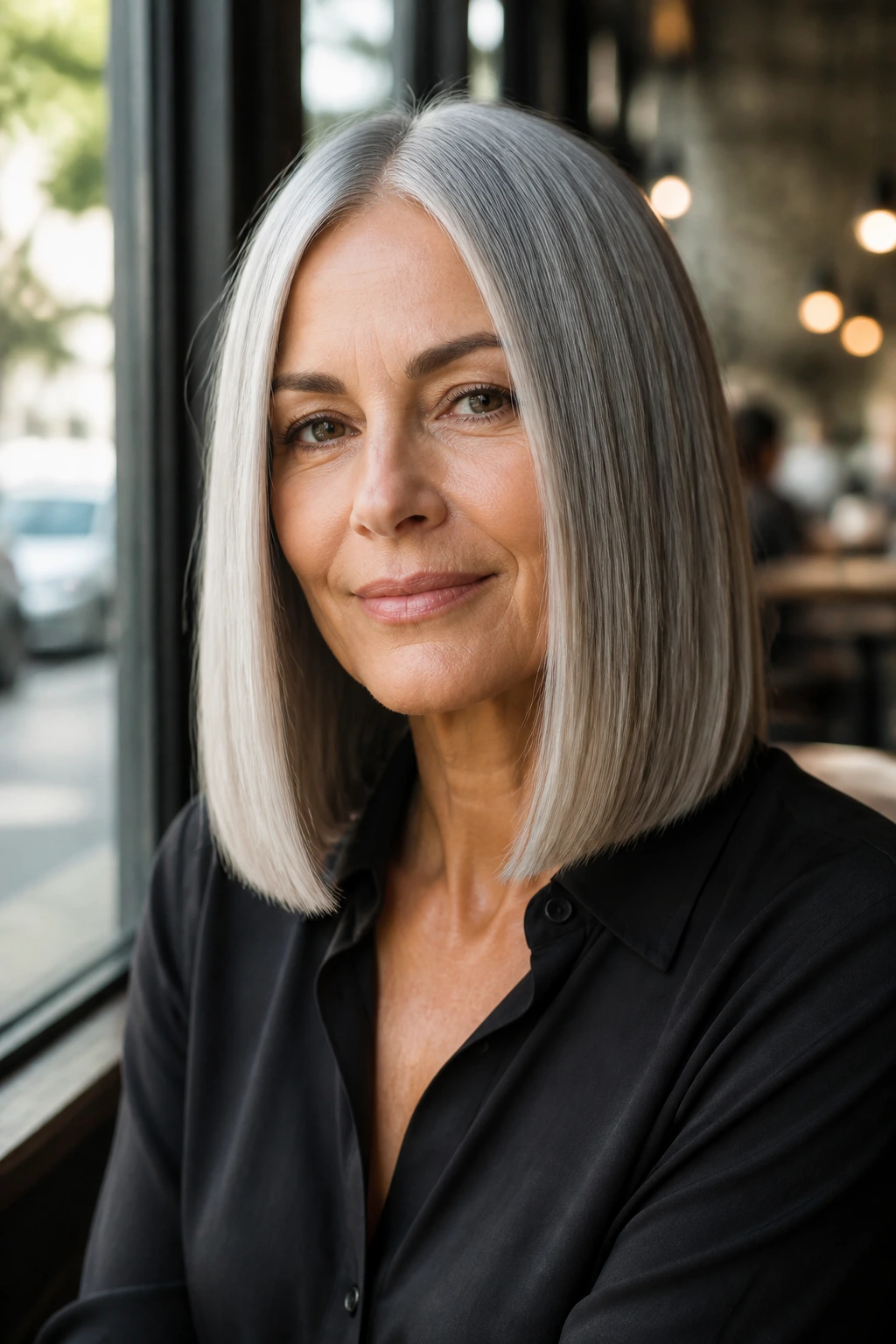
A glassy straight lob is all about shine and a clean line. The length sits around the collarbone, the part can be center or slightly off-center, and the finish is smooth enough to show every ribbon of silver. It’s a sharp look, but not a severe one.
This style works best on straight hair that can hold a polished surface without looking flattened into nothing. A heat protectant is non-negotiable if you’re using a flat iron. Keep the iron moving in one pass over small sections. Too much heat and the gray can start looking dry and straw-like, which defeats the whole point.
A glassy lob looks best when the ends are blunt and the shine is controlled, not oily. A drop or two of serum is enough. More than that, and the style starts to slide.
27. Feathered Shag With Bangs
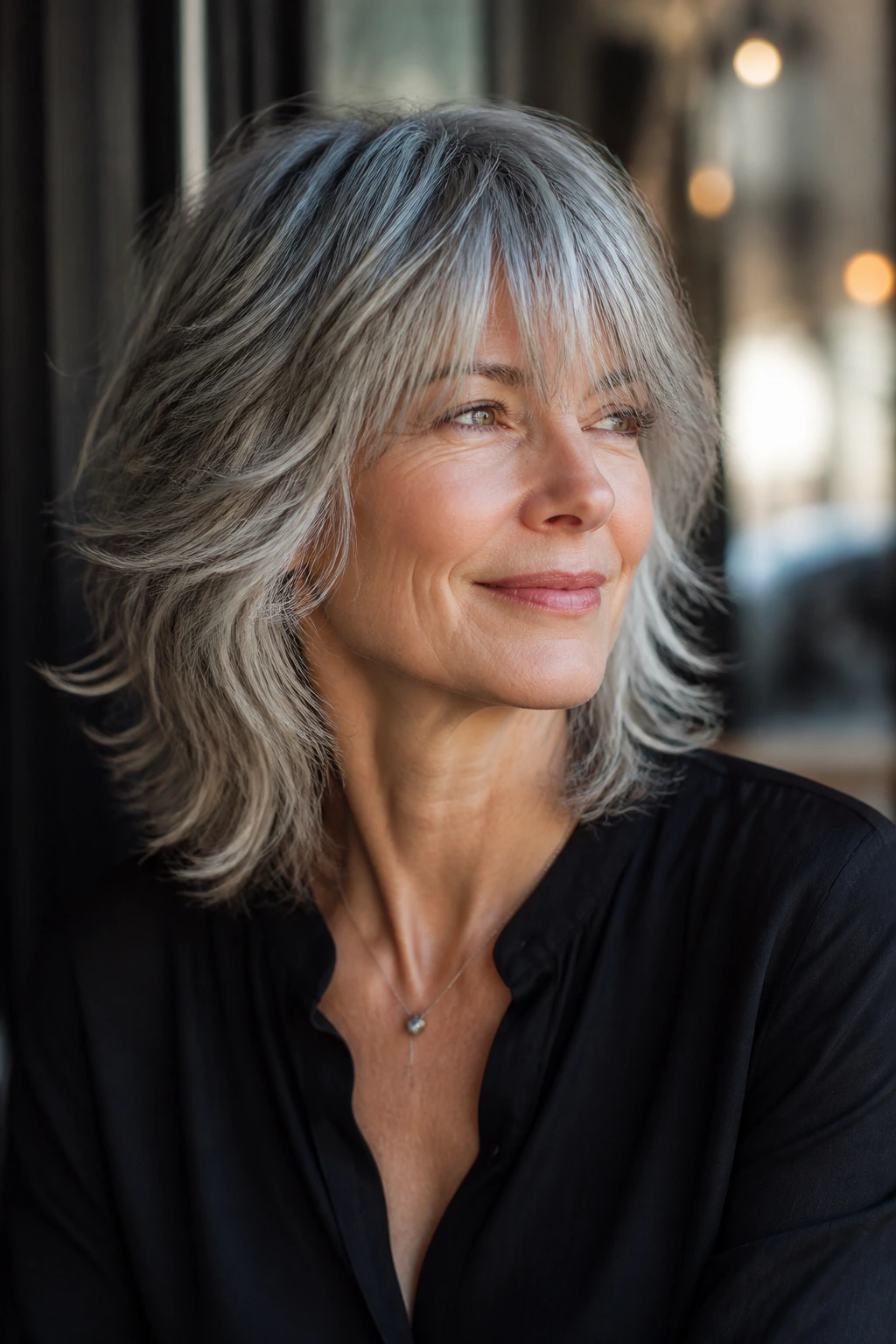
The feathered shag is for the woman who wants motion and a little attitude. The layers are shorter at the crown, softer through the sides, and the bangs fall into the face instead of sitting like a hard bar across the forehead. On gray hair, the feathery movement keeps the cut from feeling heavy.
This style works well on medium to thick hair because it can handle the internal shaping. It also suits waves nicely. If you’ve got a little natural bend, the shag can look expressive without a lot of work. A diffuser, a mousse, or even a rough blow-dry can push it into place.
The bangs should be soft and wearable. If they’re cut too straight or too blunt, the style loses its ease. A feathered shag should feel like a haircut with personality, not a haircut asking for applause.
28. Face-Framing Long Cut With White Streaks
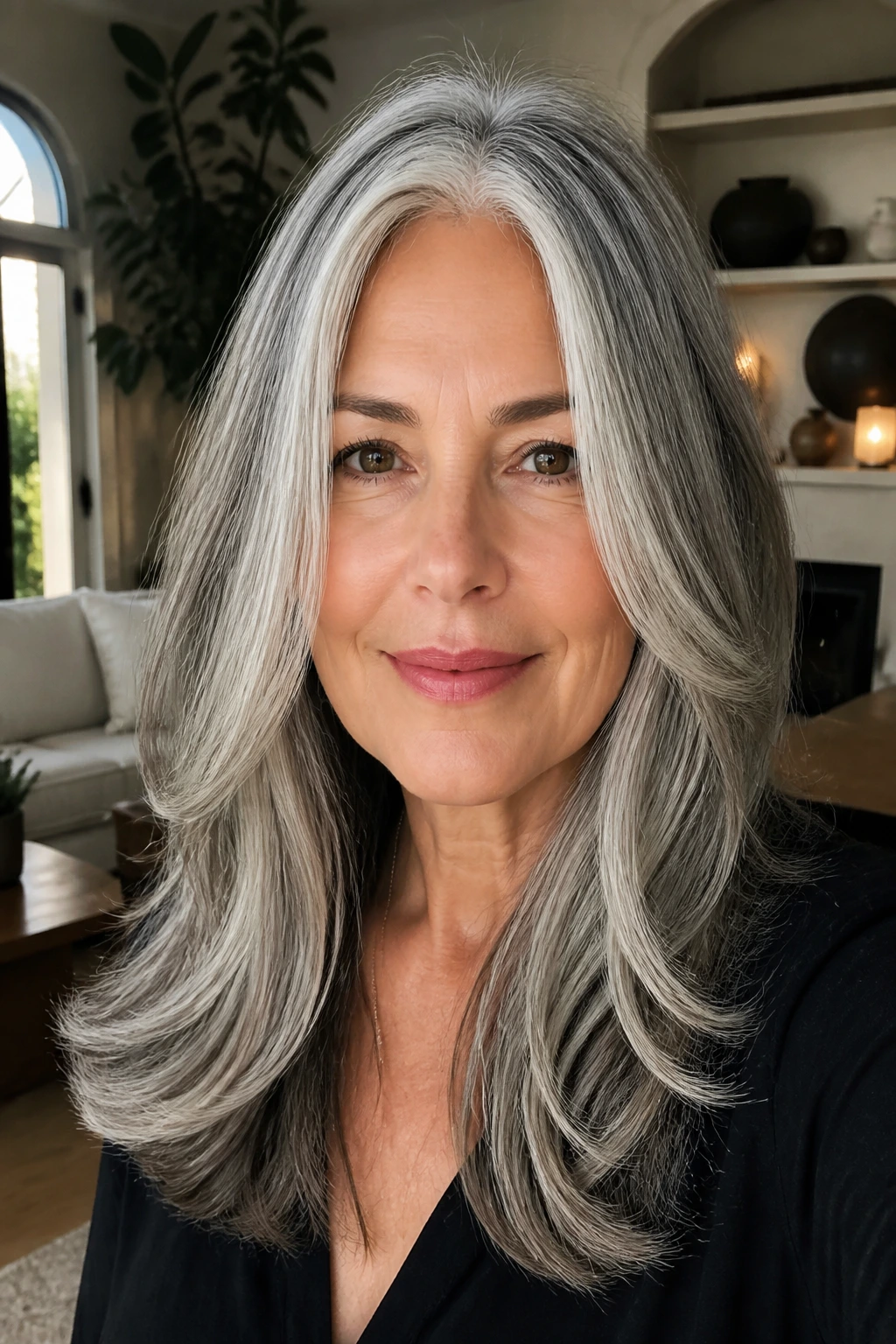
Long gray hair doesn’t need to be chopped off to look good. Sometimes it just needs a frame. A face-framing long cut keeps the length while bringing in shorter pieces around the cheekbones and jaw, which stops the hair from dragging the face downward.
This is a strong choice if you love your length but want more shape around the front. The white streaks and silver bands often show beautifully in a long cut when the layers are placed correctly. Long hair can be stunning on women over 50, but only if it still has a shape. Otherwise it can start to feel like a blanket.
The front pieces should be long enough to tuck, twist, or wave away from the face. Keep the ends healthy with regular trims and a decent conditioner. Long silver hair asks for more maintenance than a pixie, but it rewards that attention with a softer, more dramatic line.
Why Gray Hair Changes the Cutting Game
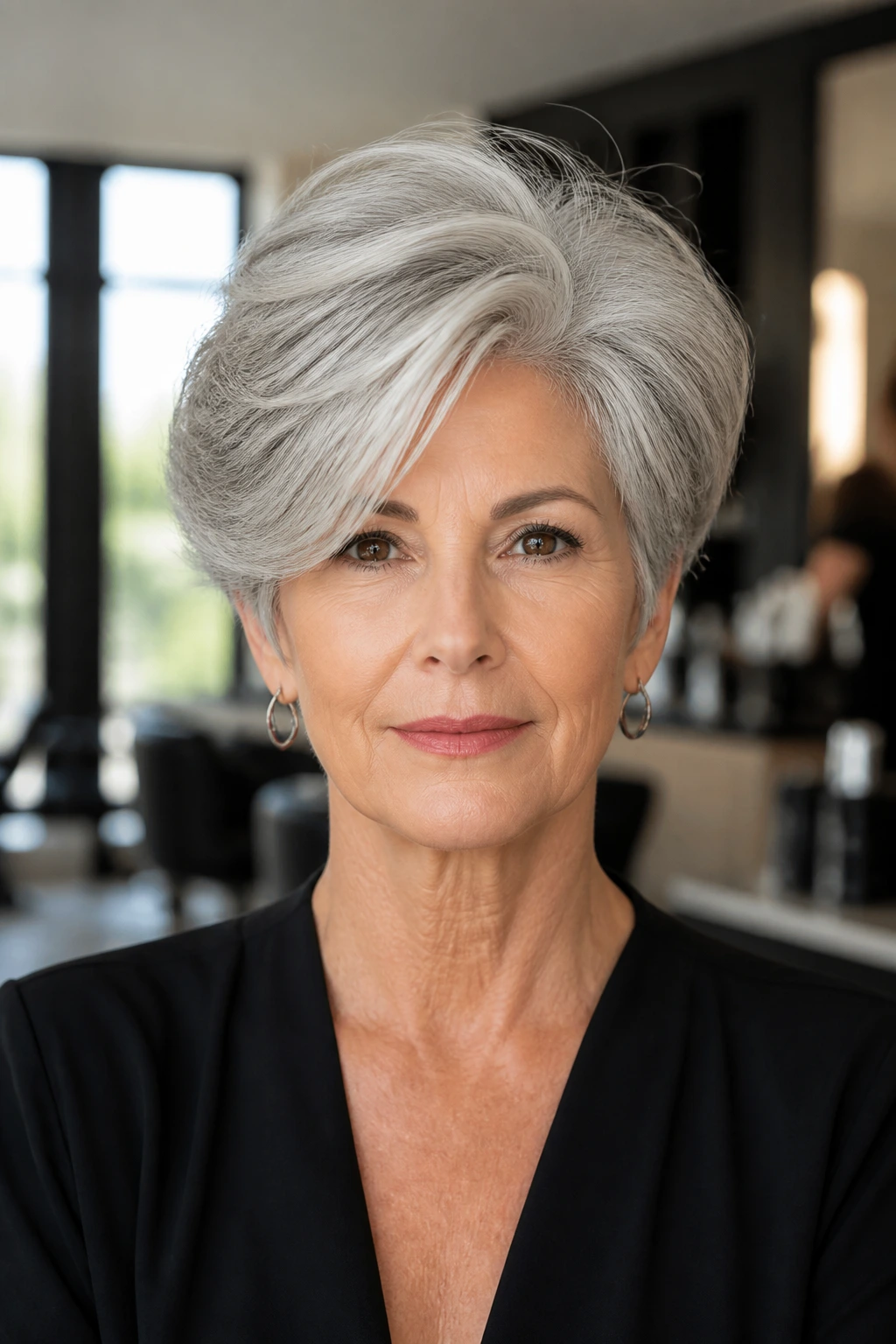
Gray hair is not just colored hair without pigment. It often behaves differently because the strands can feel drier, rougher, and a little less cooperative than they used to. That doesn’t mean the hair is worse. It means the cut has to do more of the work.
The scalp also changes over time. Oil doesn’t travel down the shaft as generously, so ends can look thirsty even when the roots are fine. That’s why gray hair tends to show a blunt cut more quickly than younger hair does. A solid shape helps, but a thoughtful shape helps more.
Less Oil, More Texture
When hair loses some natural sheen, a flat cut makes the dullness obvious. A pixie with texture, a bob with a bend, or a layered lob creates movement that catches light. That’s the part many people miss. Shine is not only about products. It’s about the outline the hair sits inside.
Why the Crown Matters So Much
Many women notice the crown going flatter long before the back or sides give up. That’s why so many of the best gray hairstyles lift the top, keep bulk under control, or use a part to create height. A good stylist will look at where your hair collapses, not just where it grows.
Essential Tools for Styling Silver Hair
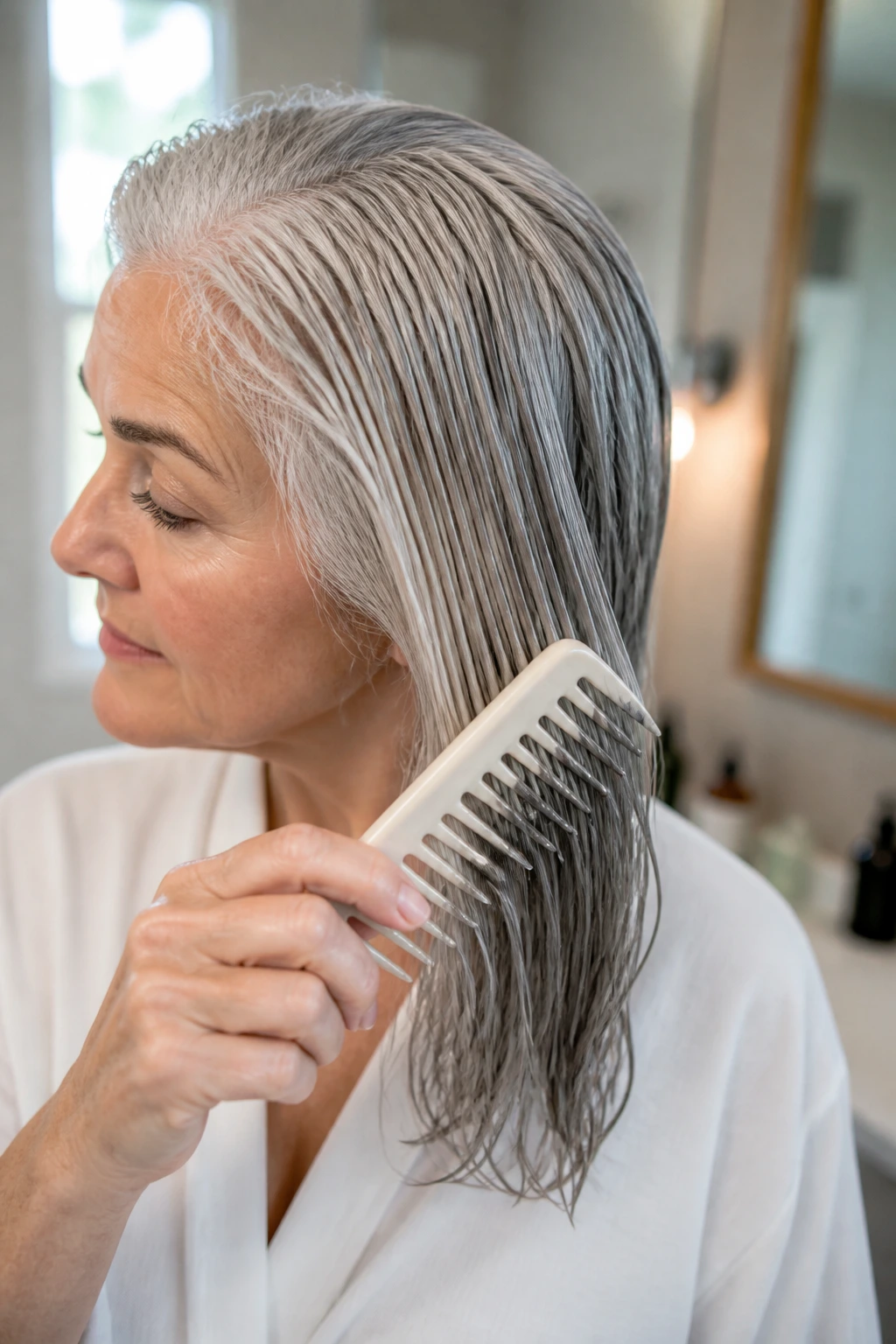
You do not need a drawer full of gadgets. You do need the right few things, because silver hair shows the difference between tidy and sloppy fast.
-
Wide-tooth comb: Best for detangling damp hair without tearing at dry ends or curls.
-
Boar-bristle brush or smoothing brush: Useful for sleek lobs, bobs, and polished blowouts. It helps distribute natural oils.
-
Round brush, 1 to 1.5 inches: Good for adding bend at the ends or lift at the crown on shorter cuts.
-
Diffuser attachment: A must for curls, shags, and twist-outs. It keeps the pattern intact while drying.
-
Tail comb: Handy for making clean parts, sectioning bangs, and lifting roots without over-teasing.
-
Sectioning clips: Make blow-drying easier, especially if your hair is thick or layered.
-
Heat protectant spray: Non-negotiable if you use a flat iron or curling iron on gray hair.
-
Light mousse or root lifter: Gives body without turning silver hair crunchy.
-
Purple shampoo: Helps knock back yellowing from sun, hard water, or too much heat. Use it sparingly.
-
Medium-hold hairspray: Better than stiff spray for keeping shape without freezing the hair into place.
Smart Product and Salon Tips for Gray Strands
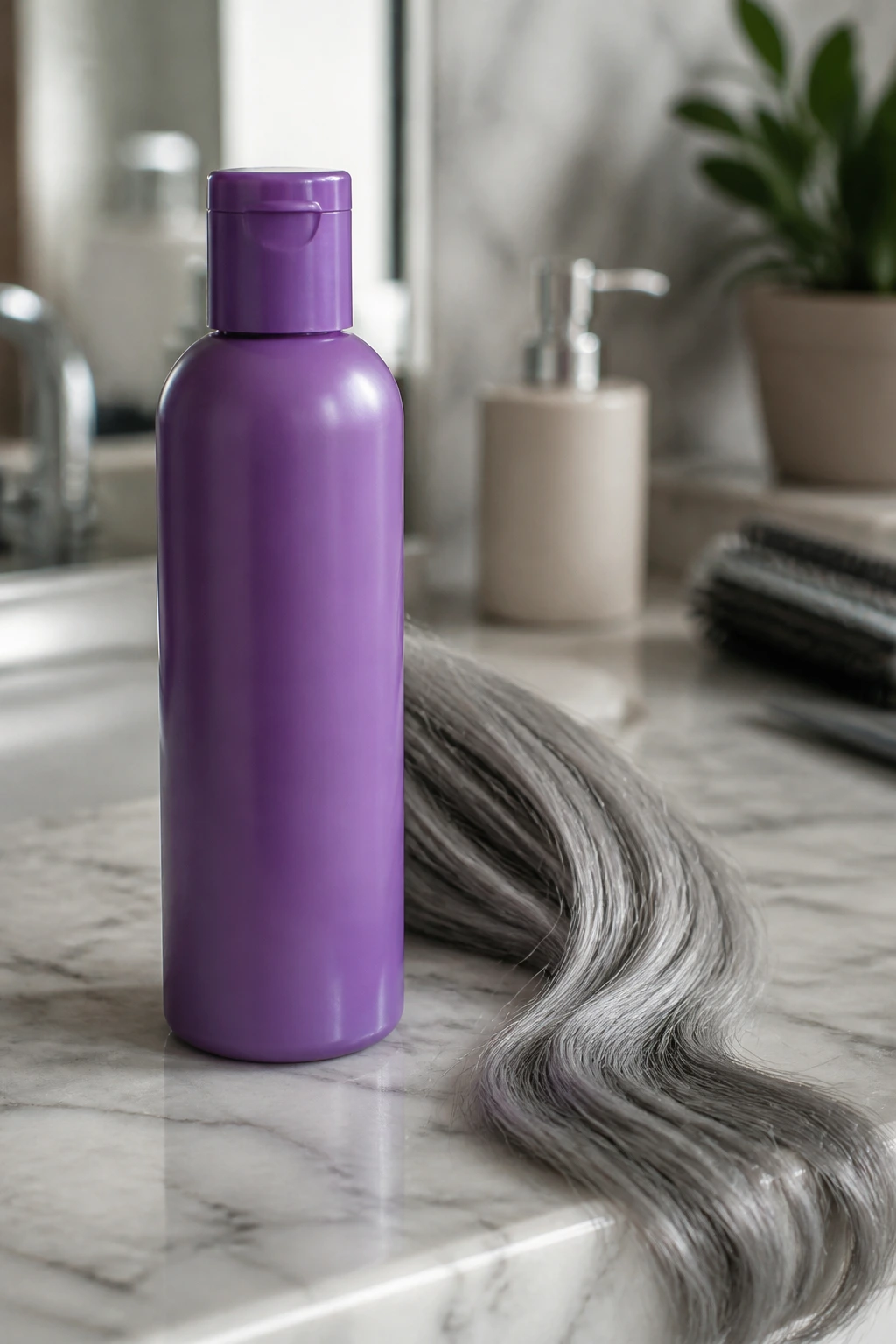
Gray hair likes fewer, better products. Heavy creams can make it droop, and thick oils can leave silver looking darker than it really is. Start light. Add more only if the hair asks for it.
Purple shampoo is useful, but it is not a daily shampoo for most people. Once a week, or every other wash if your gray tends to yellow, is usually enough. Leave it on too long and the hair can pick up a dull violet cast. That’s one of those mistakes people make once and then never again.
If your hair is coarse or dry, look for moisturizing shampoos with gentle cleansing agents and a conditioner that gives slip. If your scalp gets oily, don’t drown the lengths in rich conditioner just because the hair is gray. Apply it from mid-length down. The roots do not need that much help.
At the salon, ask for a cut that matches your dry texture if your hair is curly or wavy. Wet-cut curls can lie to the stylist. They spring up later and suddenly the shape is wrong. Dry cutting, or at least cutting in the hair’s natural state, often gives a better result.
Hard water can also make silver hair look dingy. If that’s your setup, a clarifying wash once every couple of weeks can help, followed by a real conditioner. Dry, chalky gray hair usually needs both cleansing and softness.
How to Choose the Right Style for Your Face Shape and Texture
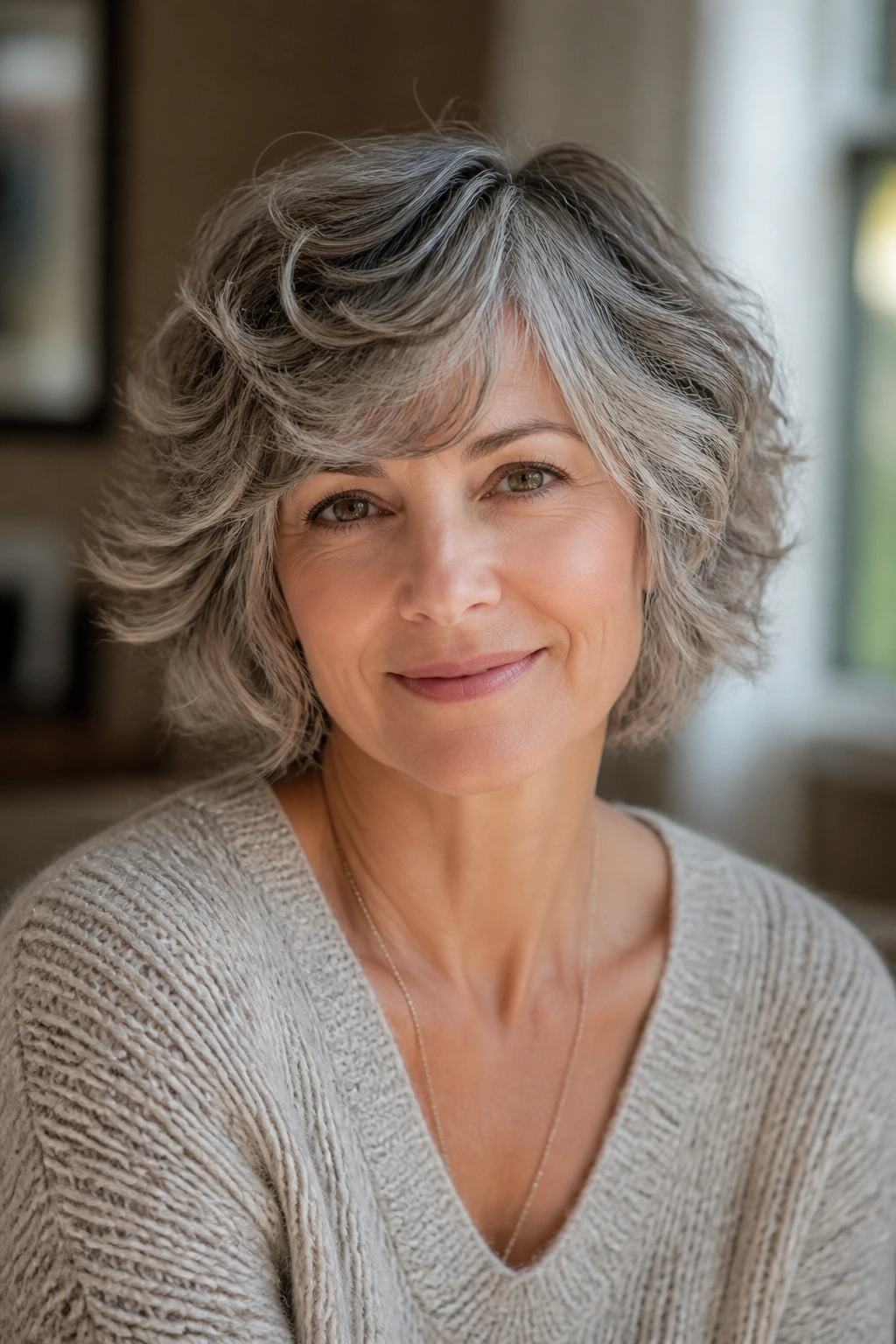
Face shape matters, but it isn’t the whole story. Texture, density, and how much effort you want to spend in the morning matter just as much. A flattering haircut that you cannot keep up with stops being flattering pretty fast.
Round faces: Look for vertical lines, a little height at the crown, and length that skims below the jaw. A pixie with lift, an asymmetrical bob, or a lob with side parting usually works well.
Long faces: Add width around the sides and keep the crown from getting too tall. Curtain bangs, shaggy layers, or a rounded bob can soften the length of the face without hiding it.
Square faces: Softness helps. Feathered layers, side-swept fringe, and bends at the ends reduce the hard line around the jaw. A blunt bob can work too, but it should be softened with texture.
Fine hair: Short to mid-length cuts with clean weight lines tend to look fuller. Think pixie, French bob, blunt lob, or a layered bob that keeps density at the ends.
Thick hair: Weight removal matters. Tapers, undercuts, and internal layering stop the hair from turning into a wide wall. Gray thick hair can be gorgeous, but it needs shape.
Curly and coily hair: Shape the curl first, then build the cut around it. A dry cut often tells the truth better than a wet one.
Styling Moves That Make Gray Hair Look Intentional
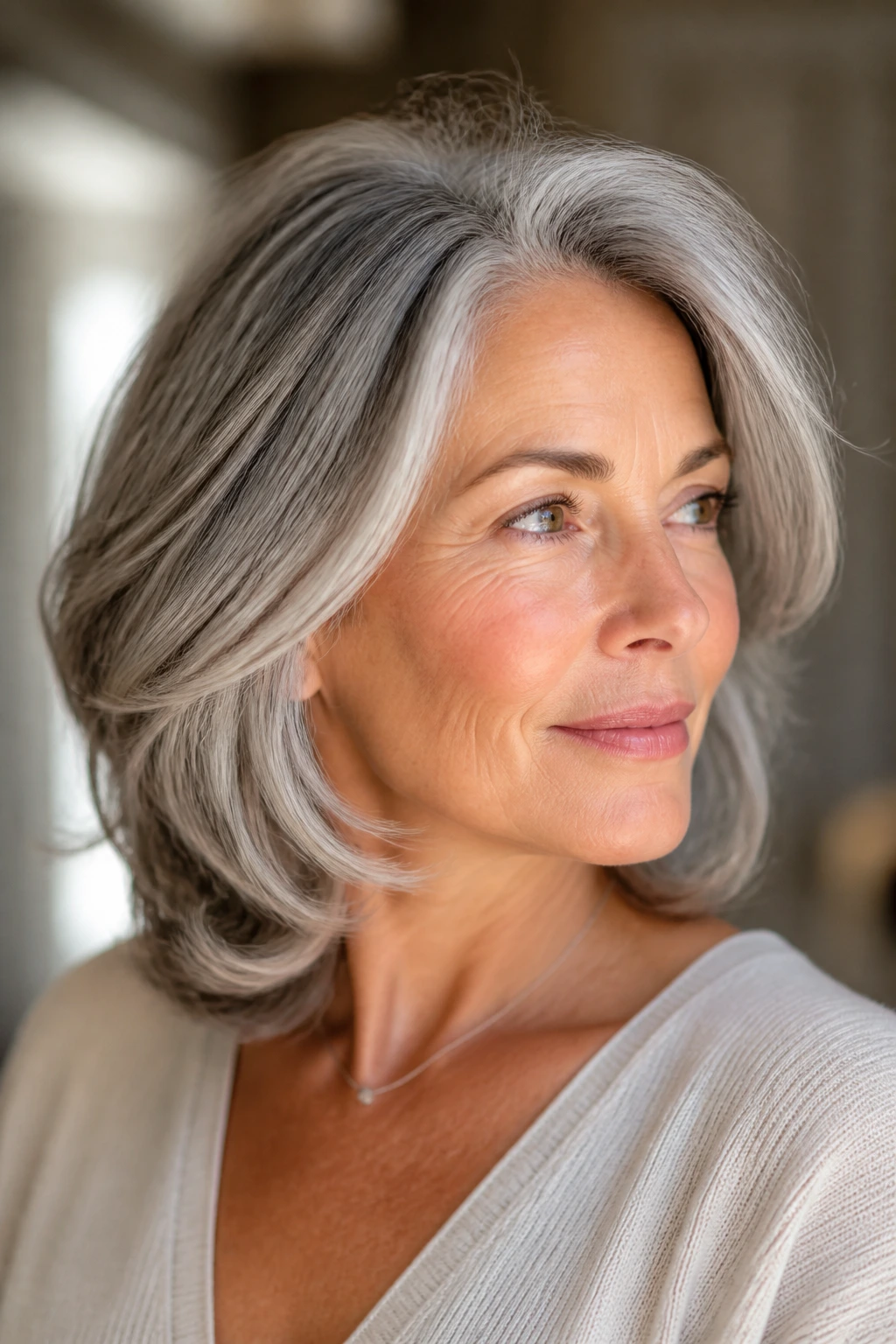
A good cut is half the work. The rest is in the finish. And the finish should never look as if you spent forty minutes fighting the mirror.
Lift at the crown: A little root mousse or a quick blow-dry with a round brush changes the whole silhouette. Flat silver hair can look older than it is; lifted silver hair looks awake.
Keep the ends alive: Dry ends make gray hair look tired. A tiny amount of lightweight serum or cream on the bottom two inches is enough. If the ends look coated, you used too much.
Use your part on purpose: A deep side part adds height. A center part can look sleek and modern. A zigzag part can soften a scalp line if the hair is thin. Pick one because it helps the shape, not because you forgot to choose.
Leave some softness around the face: Even the sharpest pixie usually benefits from one soft fringe or face-framing piece. Gray hair can look unforgiving when every line is hard.
Don’t chase perfection: A few flyaways are not a problem. On silver hair, a little looseness often looks better than a shellacked finish.
Common Mistakes That Flatten Gray Hair
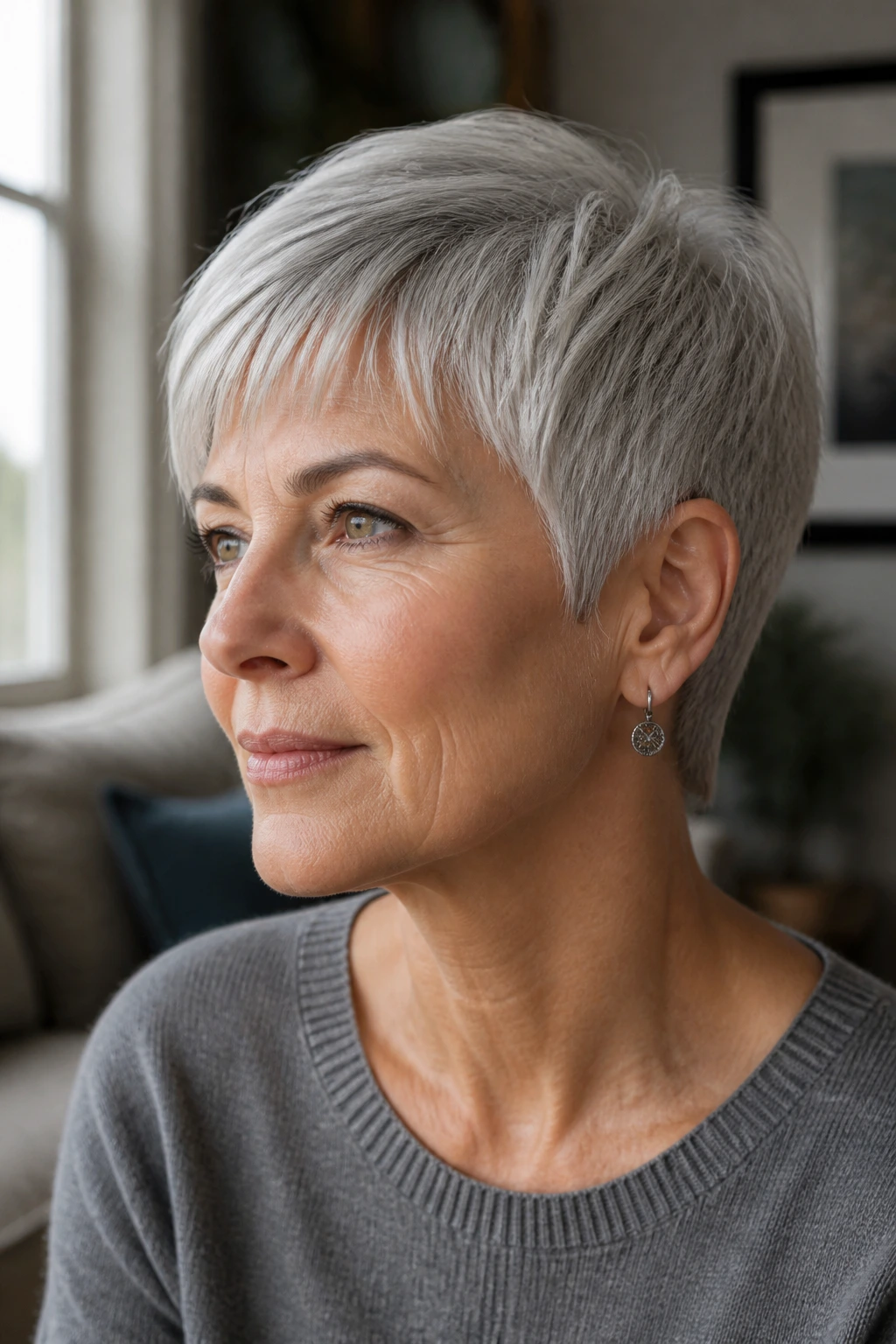
Going too blunt on fine hair: A hard, one-length cut can make fine gray hair look thinner at the ends. The fix is subtle layering, a cleaner perimeter, or a shorter shape that keeps the density where you need it.
Using too much purple shampoo: If the hair starts looking dull, dusty, or faintly violet, you’ve gone too far. Back off to once every week or two and follow with a moisturizing conditioner.
Over-thinning curly or coily hair: Aggressive thinning can turn a great texture into frizz. Ask for shape and controlled weight removal, not random slicing with thinning shears.
Letting the cut grow too long between trims: Gray hair shows a broken shape fast. Bobs lose their line, pixies lose their edges, and layered cuts collapse. Keep a trim schedule that matches the cut, not your mood.
Using heavy oils to force shine: Gray hair can look oily in seconds. Use lightweight serum or a drop of oil, then stop. Shine should sit on the surface, not soak into the strands.
Ignoring the front pieces: The area around the face carries the whole style. If those pieces are too long, too short, or cut in the wrong angle, the haircut feels off even when the back is fine.
Keeping the Shape Fresh Between Salon Visits
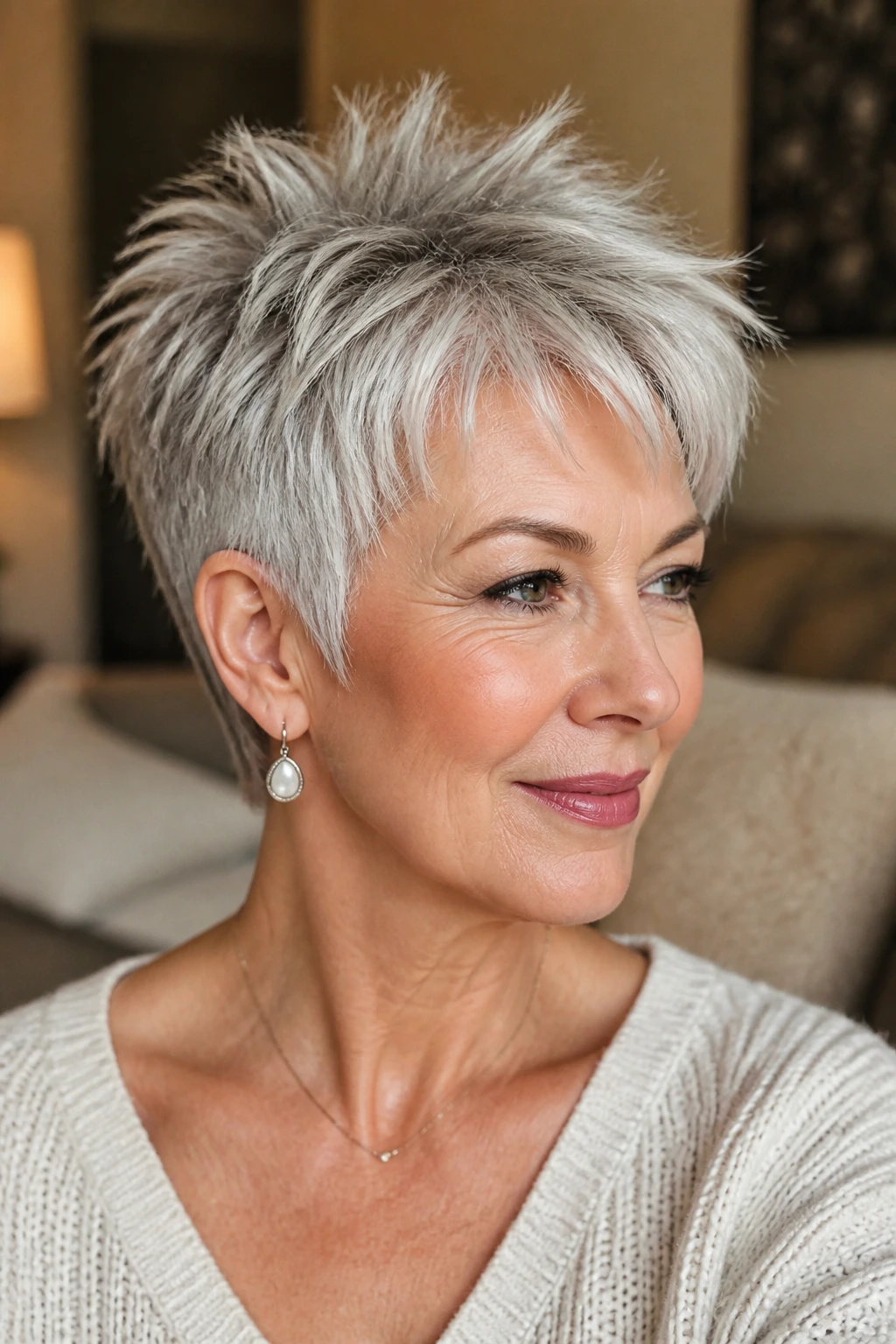
Most gray hairstyles hold best when they’re maintained with a little discipline, not a lot of fuss. Short cuts like pixies and crops usually need a trim every 5 to 7 weeks. Bobs and lobs can stretch to about 6 to 8 weeks if the outline stays clean. Long layered cuts may go 8 to 12 weeks, but only if the ends are still healthy.
Wash frequency matters too. Gray hair often looks best when it isn’t overwashed. Two to four washes a week is common for many people, though oilier scalps may need more. Use conditioner where the hair needs softness, not everywhere just because that’s what the bottle says.
If your hair starts picking up yellow tones, use purple shampoo sparingly and follow it with moisture. If the tone is more dull than yellow, a clarifying wash may help more than another toning product. Hard water, chlorine, and heavy styling residue can all make silver look tired.
Heat styling should be treated like seasoning, not the whole meal. A blowout here, a quick pass with a flat iron there, and then a day or two of air-drying or loose setting is kinder to gray hair than daily heat. That kind of restraint keeps the cut looking fresh longer.
Variations and Alternatives to Try
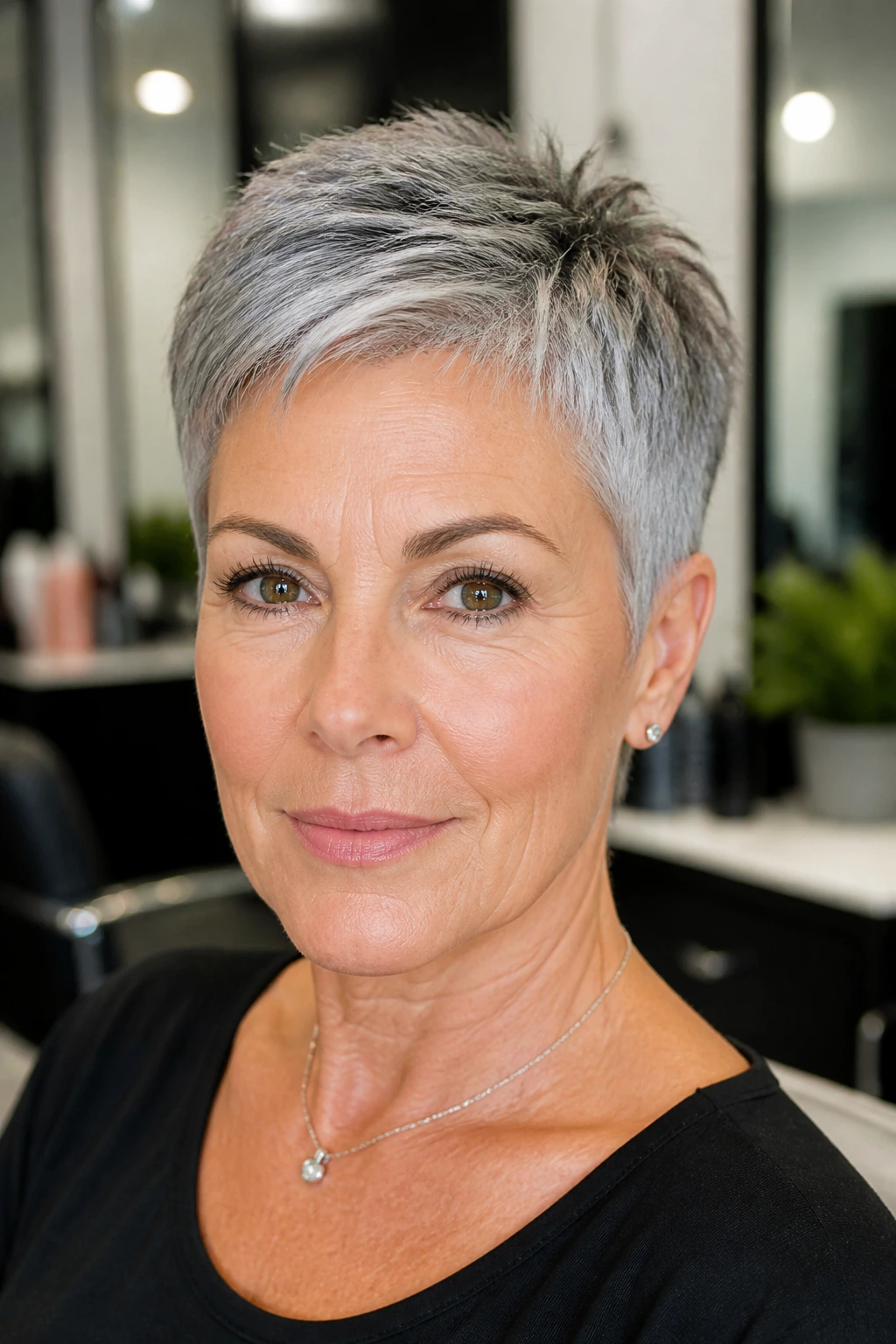
The Fine-Hair Lift Edit: If your hair is soft and loses height fast, choose a pixie, crop, or blunt lob with a little crown lift. Keep the layers minimal and the ends strong so the hair reads fuller.
The Curl-First Shape: For curly or coily silver hair, let the texture decide the silhouette first. A shag, rounded bob, or tapered cut will usually beat anything that relies on forcing the curls into a flat shape.
The Low-Maintenance Grow-Out Plan: If you want fewer trims, go for a shoulder-length lob or long layered cut with soft face-framing pieces. These grow out more gracefully than a sharp bob or pixie.
The Polished Event Version: Turn a bob into a French bob, or a lob into a glassy straight finish, when you want something cleaner. Add a side part, tuck one side back, and keep the surface smooth.
The Soft Fringe Swap: If you like the idea of bangs but worry about upkeep, curtain bangs or a wispy fringe are kinder than a blunt line. They soften the face without demanding constant trimming.
The Silver Texture Upgrade: If your natural gray has streaks, bands, or white ribbons, choose a cut that creates movement around those color shifts. Layers, twists, and waves help the pattern show instead of hiding it.
Frequently Asked Questions
What is the easiest gray hairstyle to maintain?
A soft pixie or a shoulder-length lob with gentle layers is usually the least fussy. Both can look good with a quick blow-dry or air-dry, and neither one needs the kind of precision a glassy bob or sculpted updo demands.
Does gray hair look better short or long after 50?
Neither length wins by default. Short hair can sharpen features and cut down styling time, while longer gray hair can look beautiful if it has shape and healthy ends. The real question is whether the cut still has an outline when you skip a perfect blowout.
Can women over 50 wear bangs with gray hair?
Yes, and often with excellent results. Curtain bangs and soft fringe work especially well because they ease the forehead without turning the style into a maintenance project. A blunt fringe can work too, but it needs regular trims and a face that suits a stronger line.
How do I keep silver hair from looking yellow?
Use purple shampoo occasionally, not constantly, and avoid piling on too much heat. Hard water, chlorine, and sun exposure can all dull silver tones, so a clarifying wash every so often and a UV-friendly leave-in can help.
What if my gray hair is coarse and frizzy?
Pick a cut that removes bulk in the right places instead of chasing smoothness with product. Tapers, soft layers, and undercuts often help more than heavy creams. A little leave-in conditioner and a diffuser or blow-dry with tension usually beat brute force.
Are pixie cuts flattering on older women with round faces?
They can be, if the top has some height and the sides don’t end too wide. A long pixie or tapered crop with a side-swept fringe often works better than a tight, all-over short cut. Angle matters more than length alone.
Should I use thinning shears on gray hair?
Only if your stylist knows exactly why they’re using them. On thick straight hair, a careful bit of weight removal can help. On curls or fine hair, thinning shears can create frizz, gaps, or a fuzzy perimeter that takes weeks to grow out.
What hairstyle hides thinning at the temples best?
A side part with soft fringe, a long pixie, or curtain bangs can disguise temple thinning without making the hair look helmet-like. Shorter face-framing pieces usually work better than trying to drag long hair across the area.
How often should gray hair be trimmed?
Shorter cuts usually need attention every 5 to 7 weeks. Bobs and lobs can often go 6 to 8 weeks. Longer layered cuts may last longer, but if the ends look scraggly, the style has already started to drift.
A Shape That Lets the Silver Speak
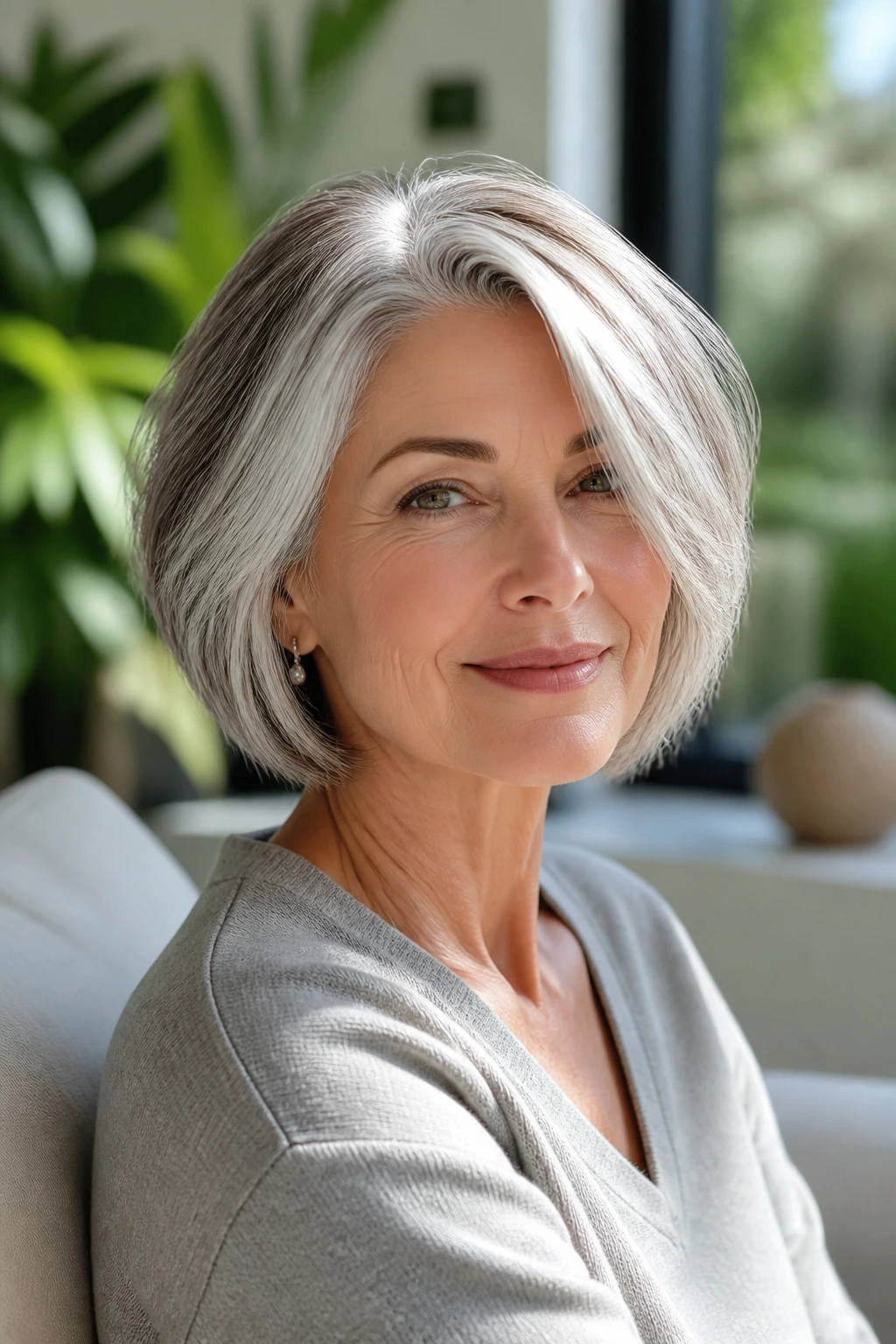
Gray hair does not need to be disguised to look good. It needs shape, a little honesty, and a cut that respects how the strands actually behave when they leave the salon and meet real life. That’s the common thread running through all 28 styles here: none of them depend on pretending the silver isn’t there.
The best look is usually the one that makes the color look brighter, the face look more open, and the morning routine a little shorter. Bring that idea to your stylist, point to the cuts that match your texture, and ask for the version that will still make sense after a windy day and a bad night’s sleep.
