



Thick gray hair has a habit of looking either magnificent or chaotic, and the difference is usually shape.
The best gray hair looks for thick hair don’t fight the density; they give it a line that lets the silver move instead of ballooning. Gray strands often feel drier and a little more wiry than pigmented hair, and thick hair can turn that dryness into puffiness fast if the cut is too blunt in the wrong places or too thinned-out at the ends. Get the balance right, though, and the result has a kind of clean brightness you can’t fake with shine spray alone.
That’s what makes this topic worth fussing over. Thick gray hair can carry more structure than fine hair, so you have room for bobs, lobs, pixies, braids, curls, flips, and polished long shapes that would collapse on a weaker head of hair. The trick is knowing which versions use that density well and which ones just sit there, wide at the sides and heavy at the bottom. The looks below lean into what thick silver hair does best: hold a line, hold volume, and hold attention without needing constant rescue.
Why These Gray Hair Looks Work on Thick Hair
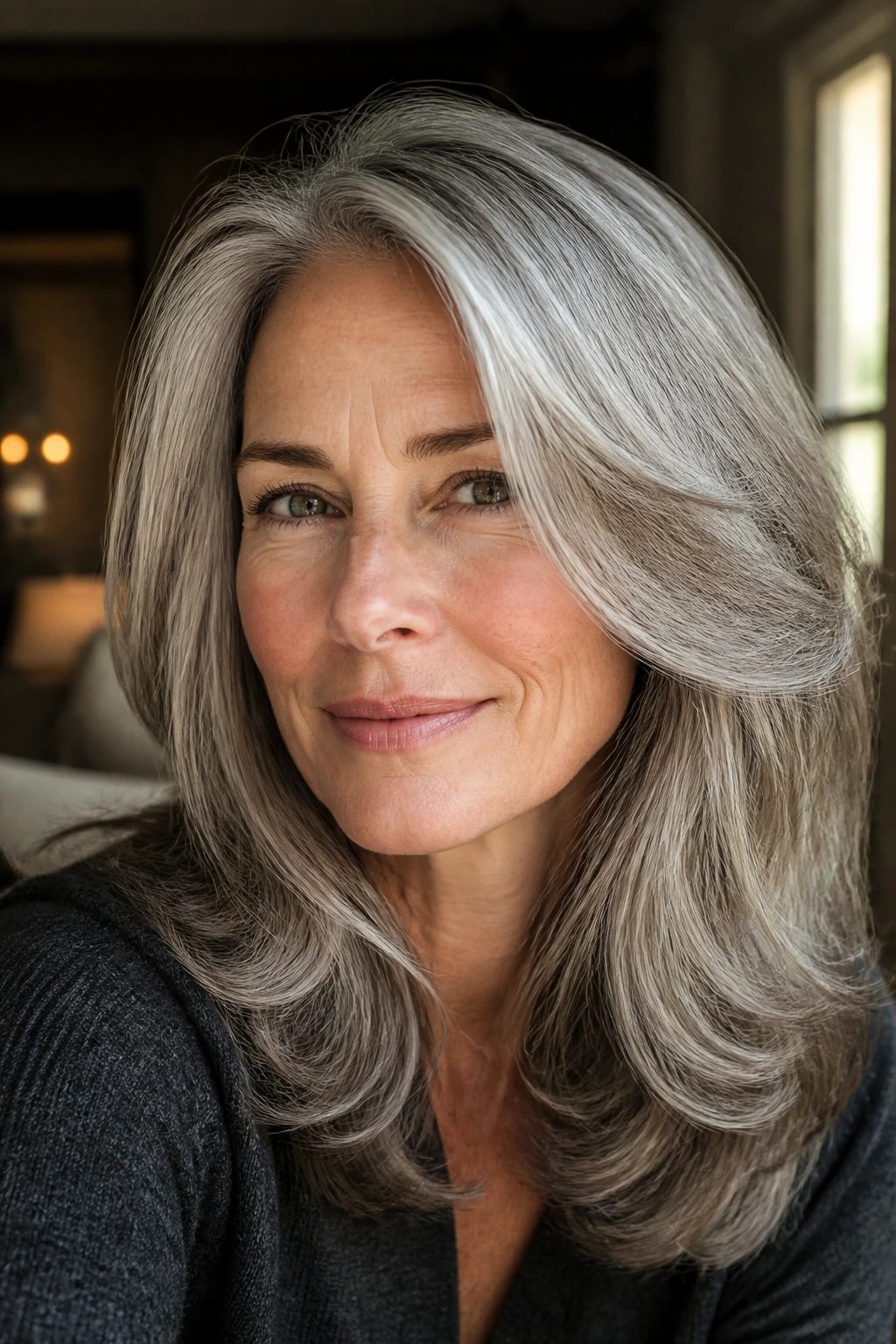
-
They control bulk without killing body: Thick gray hair needs weight removed in the right spots, not hacked away everywhere, or the ends start to puff like broom bristles.
-
They let silver reflect light cleanly: Blunt lines, soft layers, and glossy finishes help gray read bright instead of flat or muddy.
-
They work with natural texture instead of against it: Waves, bends, coils, and cowlicks stop being problems once the cut is shaped around them.
-
They make grow-out less fussy: A smart part, fringe, or face-framing layer can stretch the time between trims without the style looking neglected.
-
They keep the crown from collapsing: Thick hair can weigh itself down at the root, so several of these looks build lift where the eye needs it most.
-
They can be worn polished or loose: A good gray cut should look finished after a quick blow-dry, but not fall apart when you air-dry and leave the house anyway.
1. Long Silver Curtain Layers
Long silver curtain layers are the answer when you want movement without losing the drama of length. The front pieces open around the face, while the longer back keeps that thick gray hair from turning into one heavy sheet. It’s one of the best gray hair looks for thick hair because the shape does the work; you do not need to style every strand.
Why It Works
The layers should start around the cheekbone or just below the chin, then travel down in soft, long steps. That keeps the perimeter from looking sparse while still taking pressure off the bulk through the mid-lengths.
A round brush and a quick bend with a 1.25-inch iron are enough. Leave the ends slightly rounded, not poker-straight. Silver hair looks better when it has a little softness in the line.
2. Chin-Length Blunt Bob
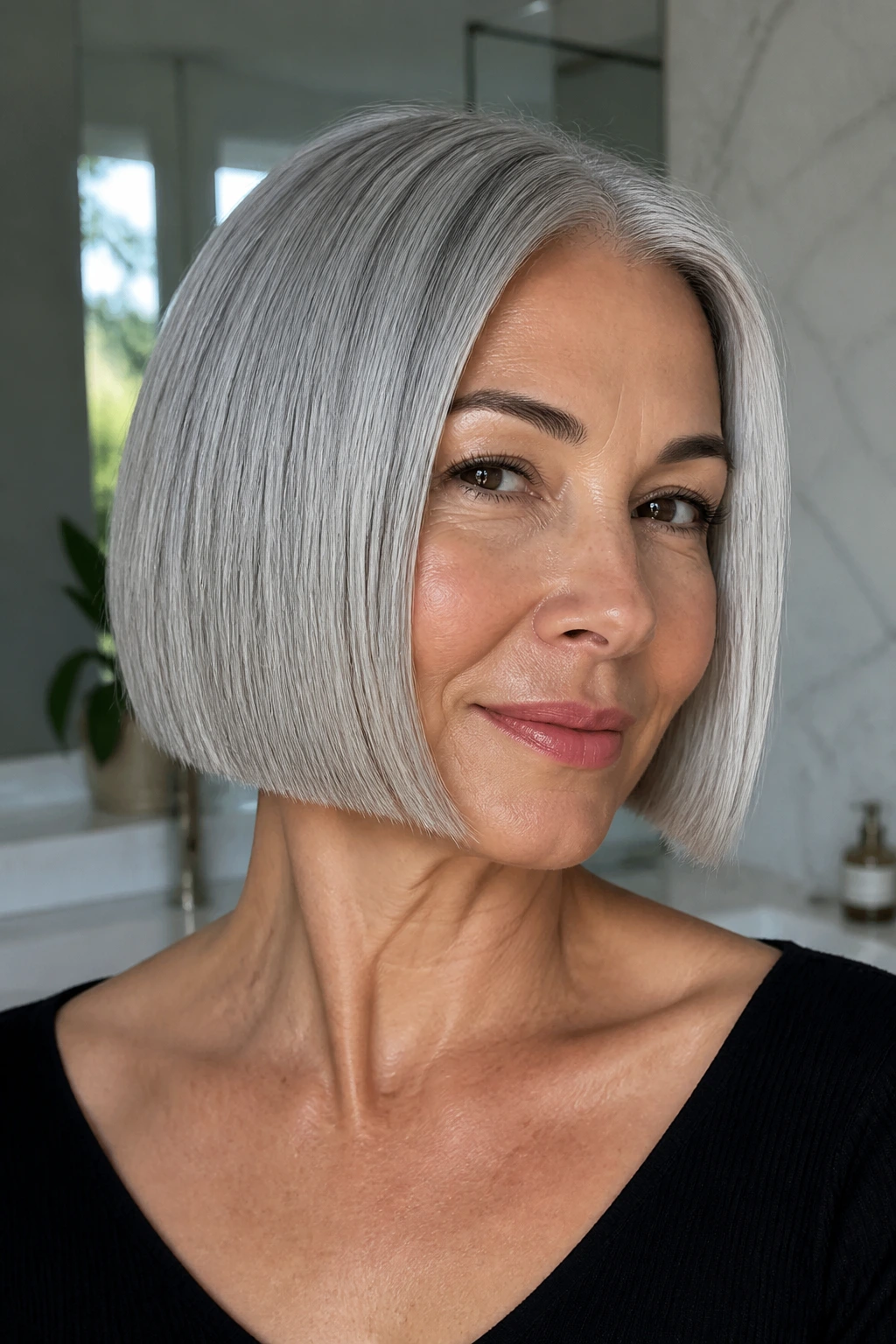
A chin-length blunt bob makes thick gray hair look expensive in the simplest possible way. The edge sits cleanly at the jaw or just below it, so the hair reads dense and deliberate rather than wide and fluffy. If your gray hair has a bit of coarse texture, this cut can actually make that texture work for you.
Styling Note
Ask for a one-length bob with only a whisper of internal removal near the crown if your hair is truly heavy. Too much slicing ruins the shape and makes the ends chatter.
Wear it tucked behind one ear, or flat-ironed with the tiniest inward bend at the tips. That little bend matters. It keeps the line from feeling severe.
3. Feathered Collarbone Lob
The collarbone lob is where thick gray hair starts behaving beautifully for everyday life. It gives you length for clips, waves, and half-up styles, but the ends sit high enough that the hair does not drag itself downward all day. Feathering through the lower half keeps the line light without making it stringy.
What to Ask For
Tell your stylist you want movement around the shoulders, not around the whole head. That distinction matters. If the layers are too high, the lob can frizz; if they’re too low, it can sit like a blanket.
This look works especially well if your gray hair bends naturally at the ends. A little mousse at the roots and a loose blow-dry are enough to keep it lively.
4. Curly Gray Shag
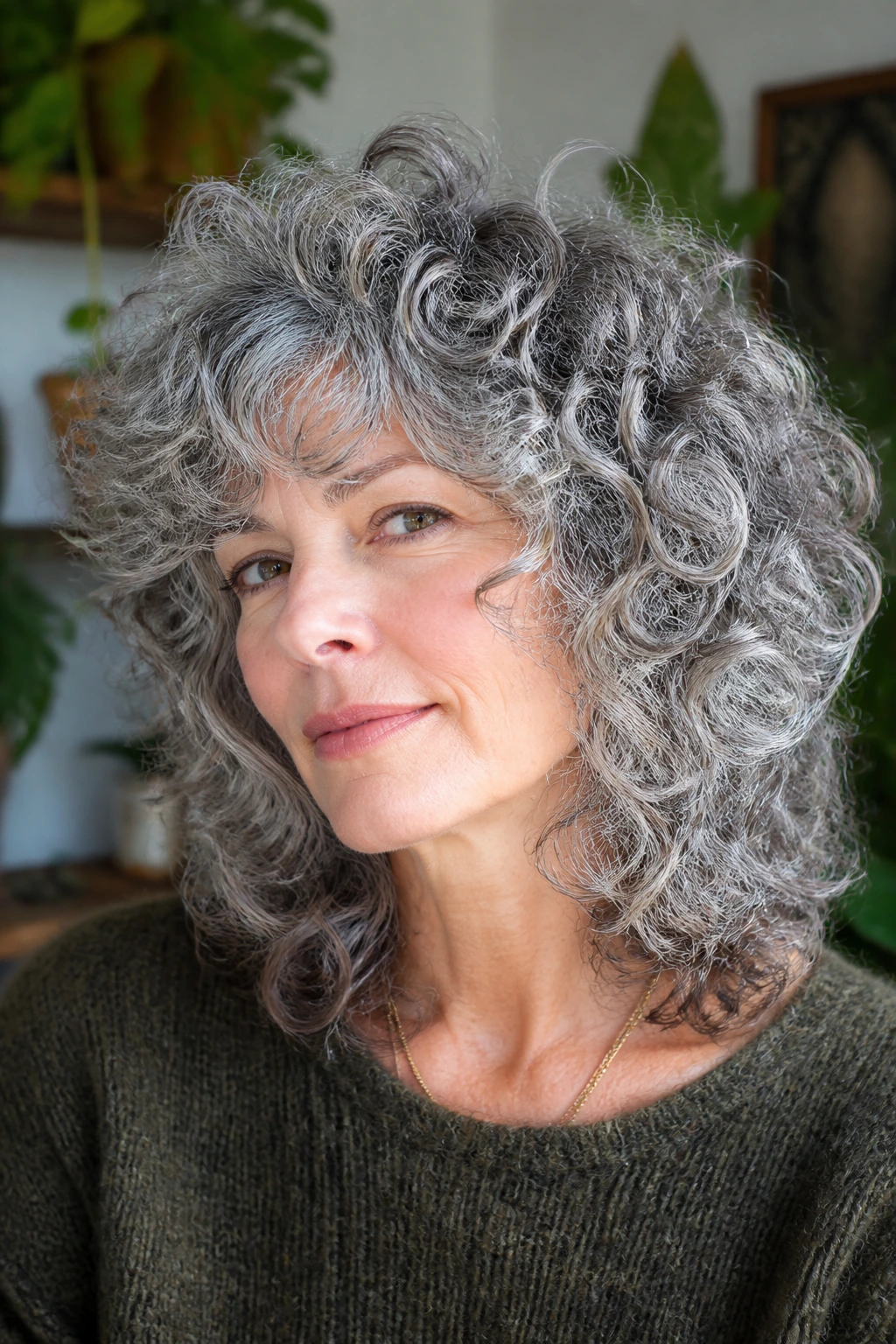
A curly gray shag has a sort of controlled wildness that thick hair handles better than almost any other texture. The layers are shorter around the crown and longer through the perimeter, which keeps curls from building a triangle. On gray hair, the cuticle can show more surface texture, so shape matters even more than perfect curl definition.
Best for Natural Texture
Use a curl cream on soaking-wet hair, then scrunch in a lightweight gel before diffusing. The goal is a soft cast and a bit of root lift, not crunchy ringlets.
If your curls shrink a lot, leave the layers a touch longer than you think you need. Thick gray curls can spring up hard once dry, and a shag that looks tame when wet can end up much shorter than expected.
5. Piecey Silver Pixie
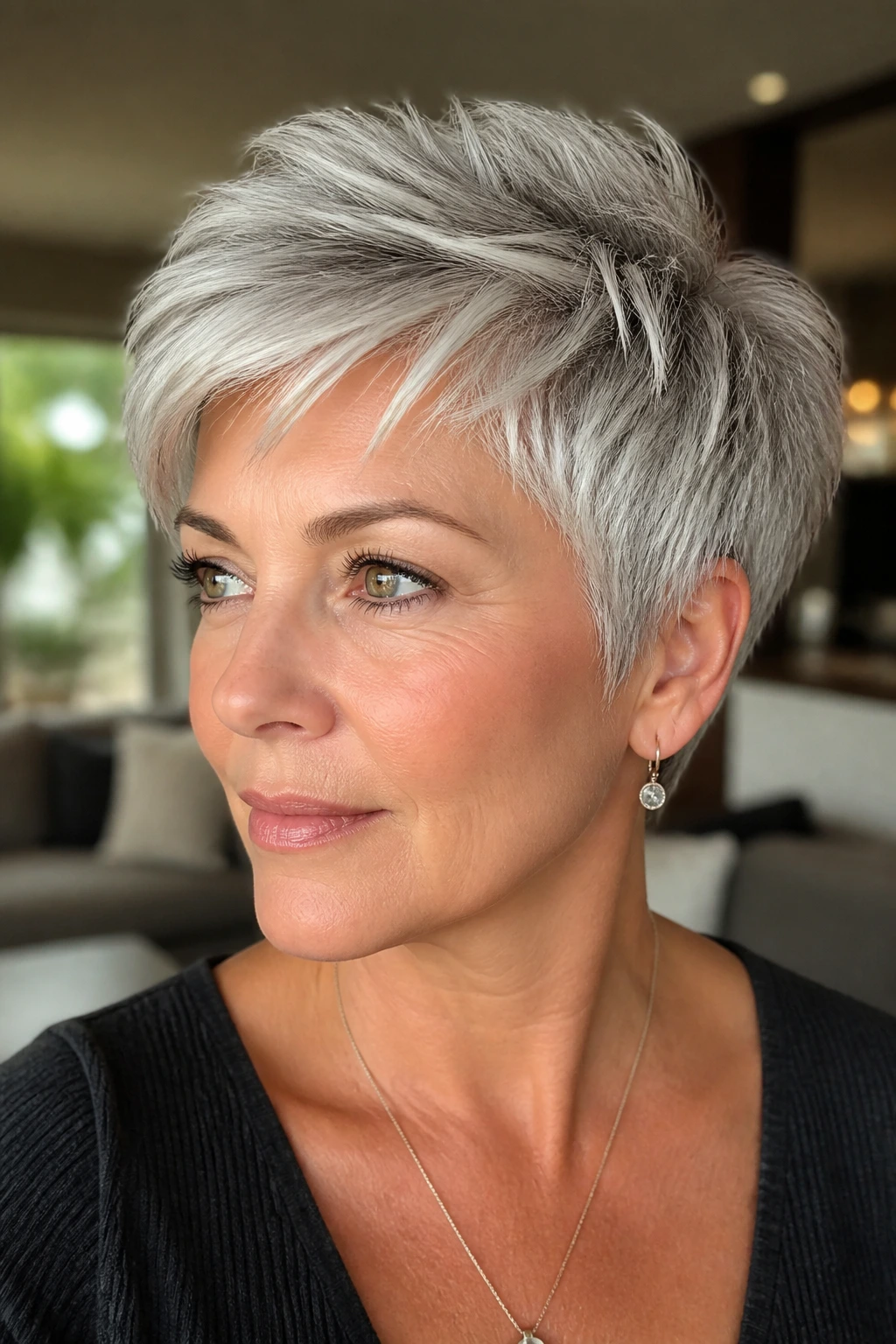
A piecey silver pixie is sharp, but not fussy. Thick hair gives a pixie real structure, which means the style can stand up on its own instead of lying flat against the scalp. The trick is keeping the top a little longer so you can push it forward, back, or to the side.
Styling Shortcut
A pea-size dab of matte paste is enough. Warm it between your fingers, then pinch only the top layer and fringe pieces.
Don’t overdo the thinning. Thick gray pixies look best when they feel full at the crown and neat at the neckline. If the nape gets too soft, the whole cut loses its punch.
6. Rounded Bob with Underlayers
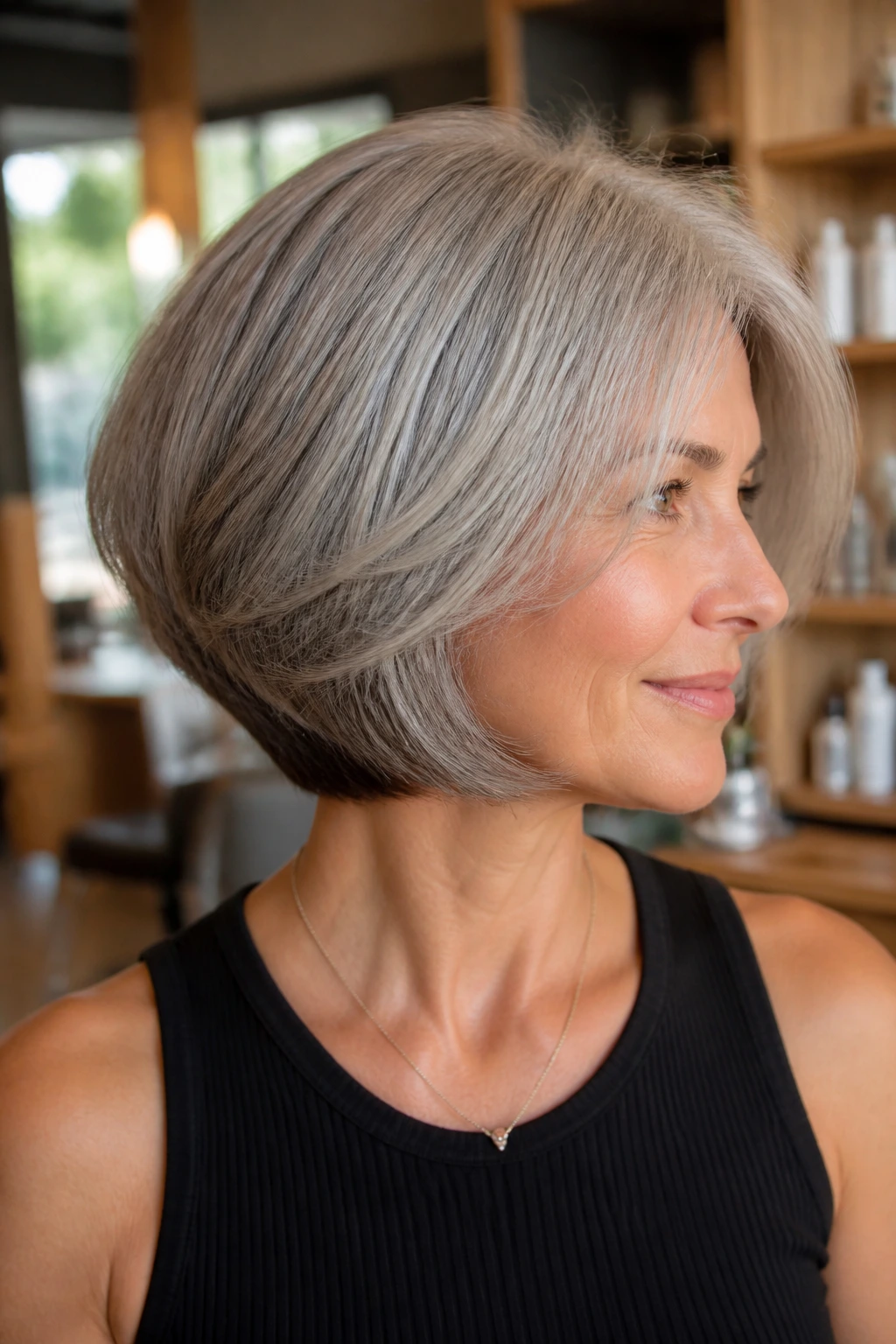
This one has a gentle curve instead of a hard edge, which is useful when thick gray hair wants to fan out at the sides. The underlayers remove weight underneath, while the outer shape stays smooth and rounded. It’s a smart choice if you like bob hair but hate the helmet effect.
Shape Details
Ask for a bob that hugs the neck a little, with weight kept around the bottom line. That bottom line gives the style its shape, while the hidden underlayers keep it from ballooning.
A blow-dry with a medium round brush is worth the effort here. Finish by cooling the ends over the brush so the curve stays put.
7. Curtain Bangs on Long Gray Hair
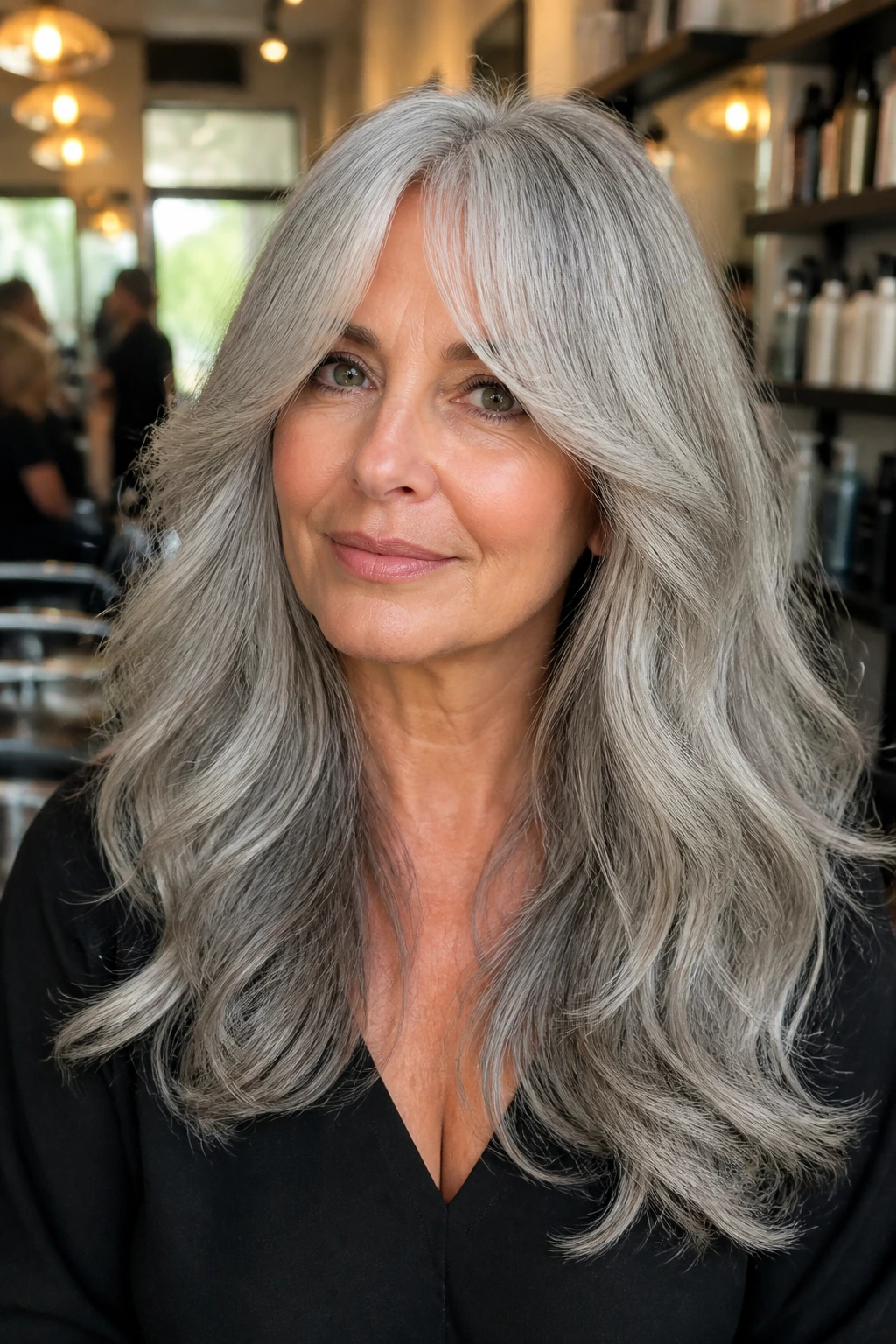
Curtain bangs can save long thick gray hair from looking too same-y from top to bottom. They break up the length, soften the forehead, and give you a place to start the movement without cutting off all your hair. On silver strands, the fringe also creates a little frame that makes the color read brighter near the face.
Why It Stays Popular in Hair Chairs
The fringe should blend into layers that start at the cheekbone or jaw. If the bangs sit too heavy, they can separate in weird chunks. Too short, and they feel like a science experiment.
Set them with a round brush or velcro rollers for a few minutes while you do the rest of your makeup. That slight bend makes them behave better all day.
8. Soft Wolf Cut
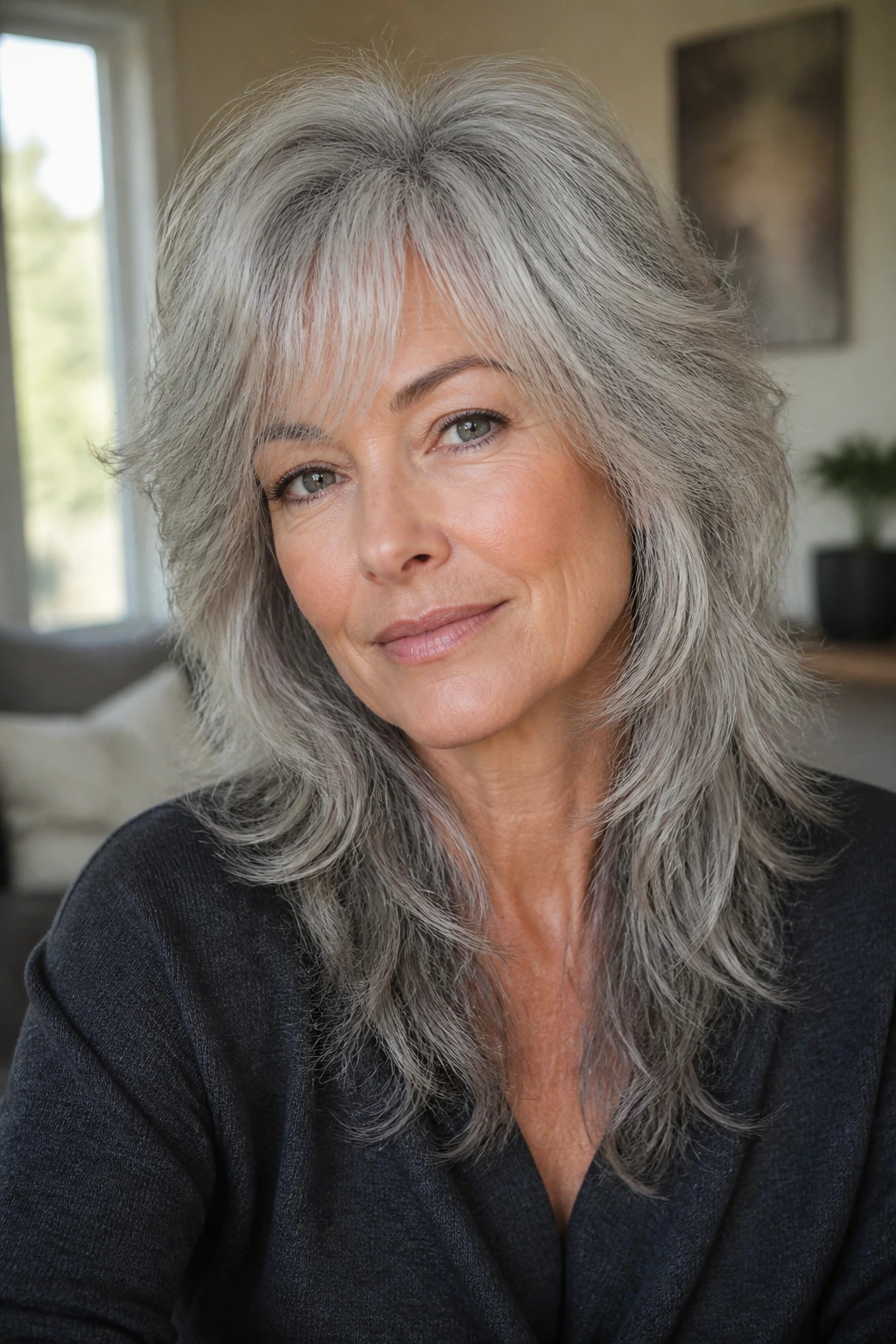
The wolf cut can go very wrong on thick gray hair if the layers are too aggressive. Done softly, though, it creates a lived-in shape with crown lift, face framing, and a rougher edge through the ends that keeps the hair from feeling too polished or too precious.
H3: What Makes This Version Better
The soft version keeps the outer perimeter longer and the internal layers more gradual. That matters. Gray hair already tends to show texture and dryness more clearly, and a choppy wolf cut can turn into frizz if the shape is too extreme.
Use a diffuser or a rough blow-dry with a little mousse. You want the movement, not a perfect curl pattern.
9. Sleek Center-Part Lob

A center-part lob is a clean, modern shape that lets thick gray hair look intentional rather than overworked. The straight middle part pulls the eye down the face, while the collarbone length keeps the density under control. If your silver hair is especially full around the temples, this shape gives it somewhere to fall.
A Useful Warning
This look needs polished ends. If the bottom looks dry or jagged, the whole style feels older than it should.
A smoothing cream and a flat iron pass on the outer layer are enough. Don’t chase every strand into submission. Leave a little bend at the front pieces so the style does not look stiff.
10. Salt-and-Pepper Spiral Curls
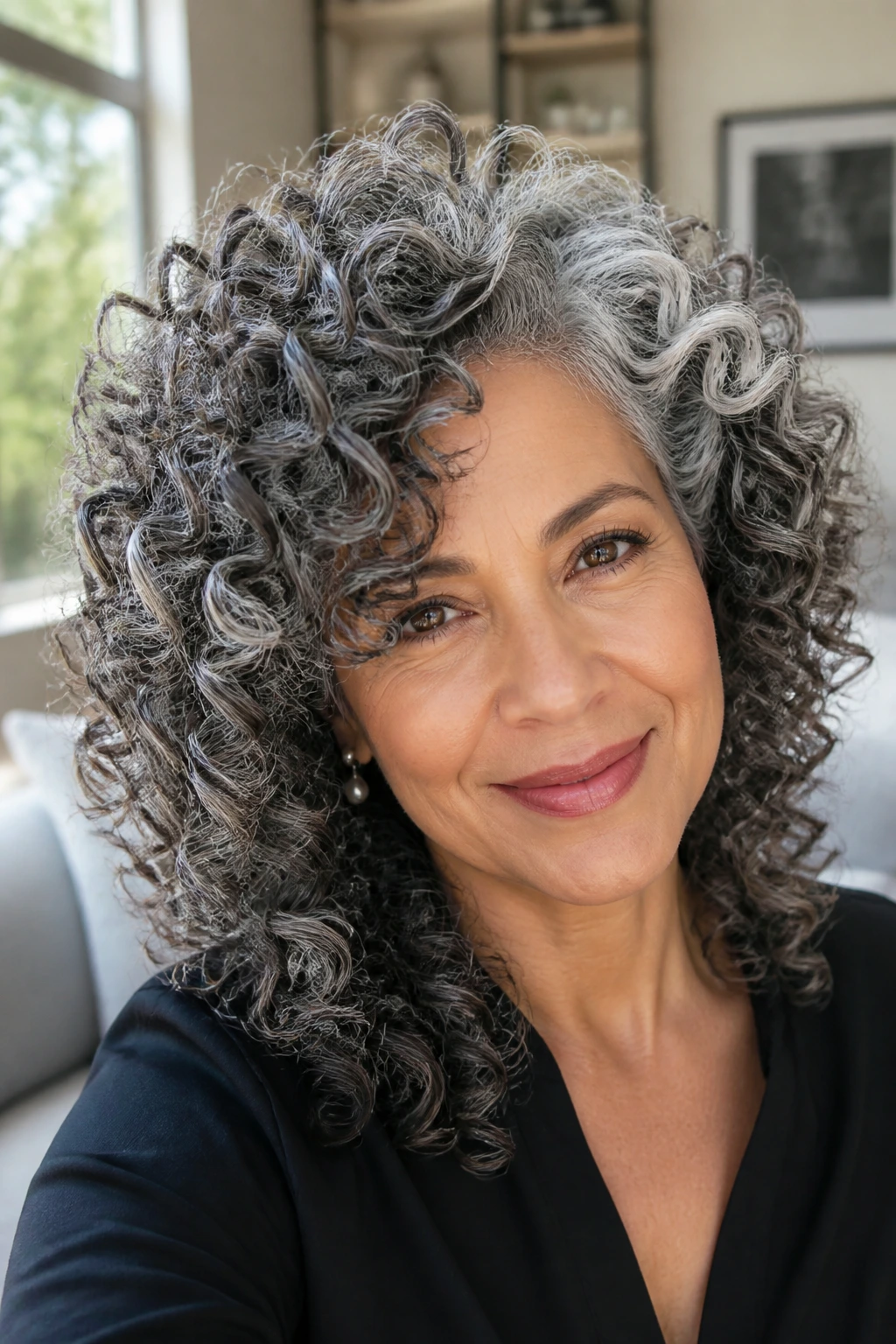
Salt-and-pepper spiral curls have a lot of personality, and thick hair gives them room to stack without flattening. The mix of dark and silver tones makes each curl pattern stand out, especially when the cut leaves enough length for the spirals to form instead of exploding outward.
How to Keep the Curl Pattern Clean
Use a curl-defining cream plus a small amount of gel on wet hair. Then let it dry without touching it until it’s set.
A deep side part can help if your curls tend to puff at the crown. It creates a little asymmetry and makes the style feel less round and more shaped.
11. Tapered Crop with Longer Top
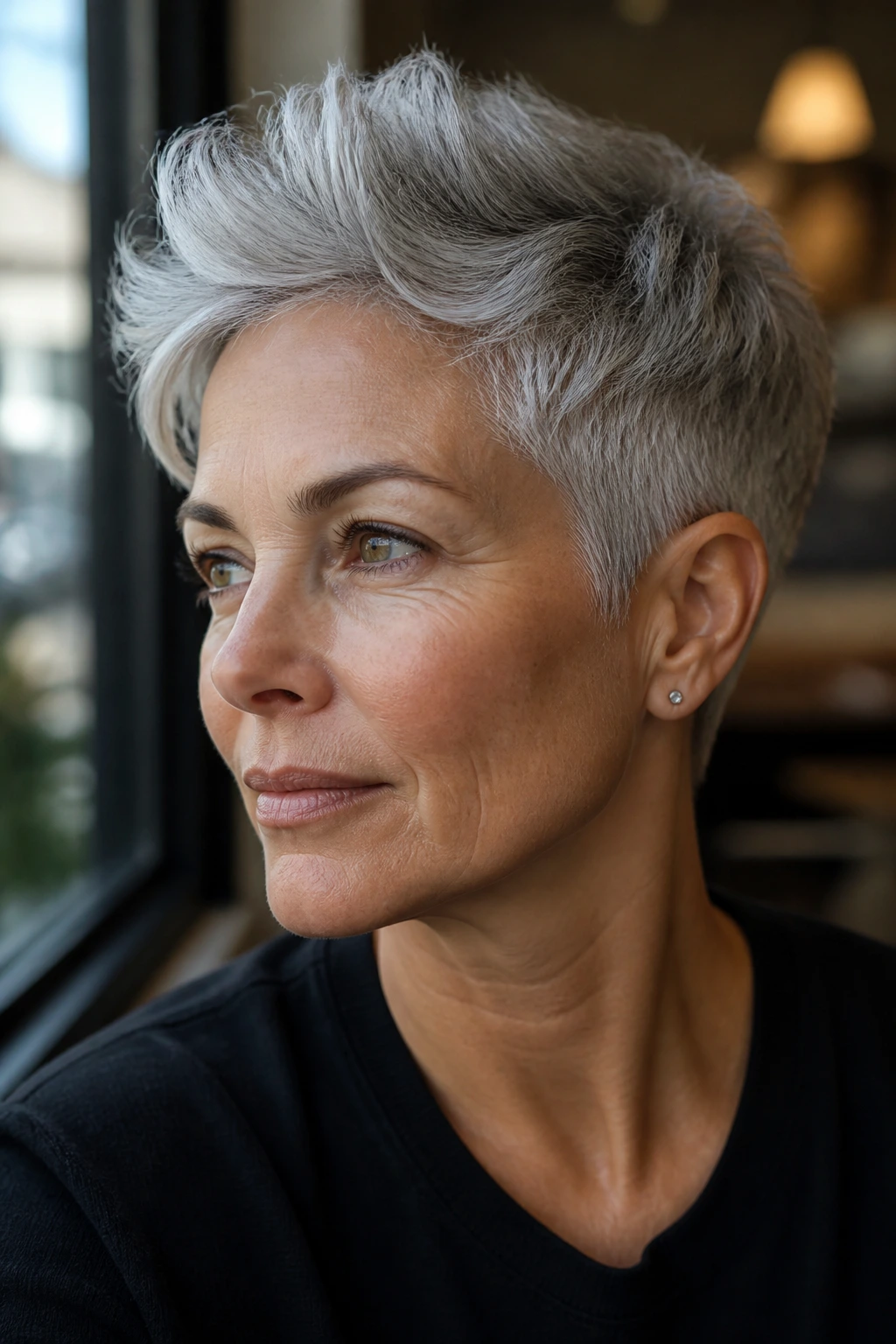
A tapered crop is a clever cut for thick gray hair that wants to feel lighter around the ears and nape. The sides are close enough to keep the bulk under control, while the top stays longer so the silver has height and texture. It’s neat without looking severe.
Best for Busy Mornings
This style needs almost no daily fuss. A little water, a touch of styling cream, and a quick finger-comb are often enough.
Keep the taper clean at the neckline every few weeks. Thick hair grows fast through the back, and if the nape gets fuzzy, the whole crop loses its shape.
12. Airy Internal Layers at Shoulder Length
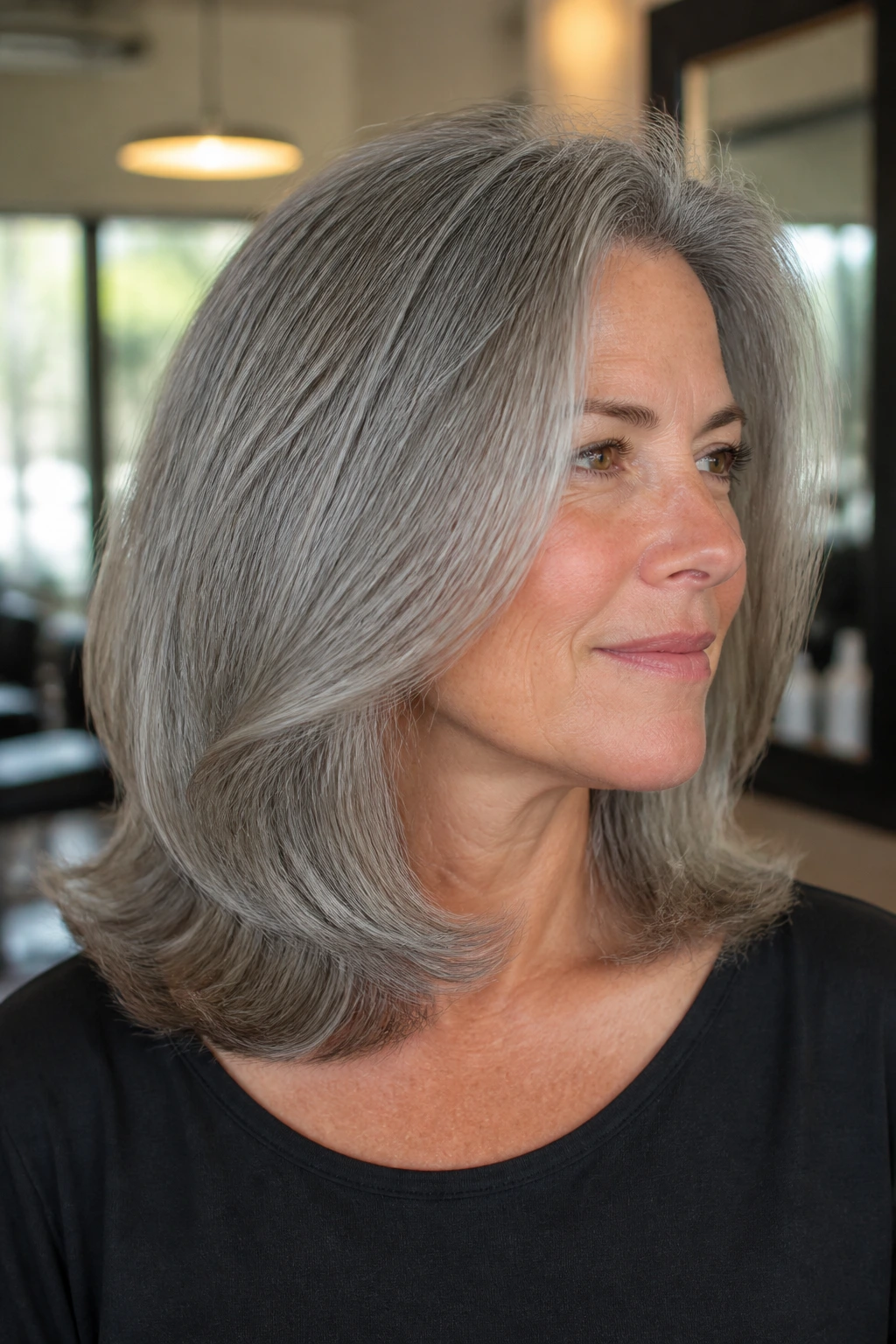
Shoulder-length cuts can turn boxy on thick gray hair unless the inside of the cut is handled carefully. Airy internal layers remove weight from within the shape while leaving the outside line smooth, so the hair still looks full but never bulky. It’s a very practical compromise.
H3: Where This Cut Shines
The best version keeps the outside perimeter grazing the shoulders and the inner sections gently carved out. That lets you tuck it behind the ear, wear it loose, or clip up the sides without the base expanding like a triangle.
A light serum on the ends and a paddle brush blow-dry are enough for most days. If your hair is coarse, finish with a cool shot. It keeps the shine cleaner.
13. Bouncy Blowout with Swoopy Ends
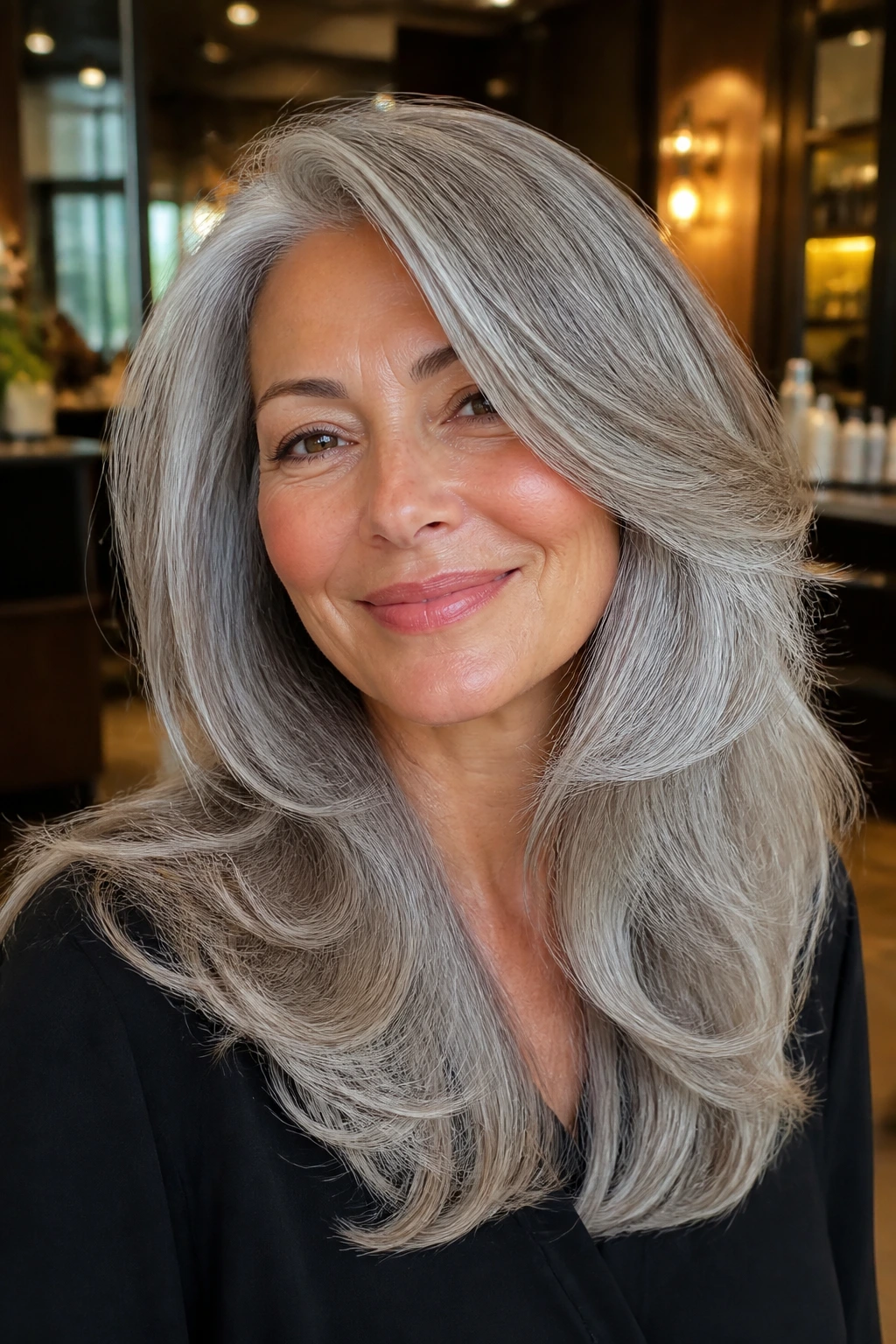
Thick gray hair can carry a proper blowout better than fine hair ever could, and that’s half the fun. The swoopy ends give the style a bit of swing, while the root lift stops it from looking heavy. Silver hair really pops when the ends curve and catch the light.
Technique Matters Here
Start with heat protectant and a root-lifting spray. Then blow-dry in sections using a round brush, turning the ends under or out depending on the mood you want.
The blowout should look soft, not shellacked. If the crown is stiff, it feels dated fast. If it moves when you turn your head, you’ve got it right.
14. Gray Hair with a Deep Side Part
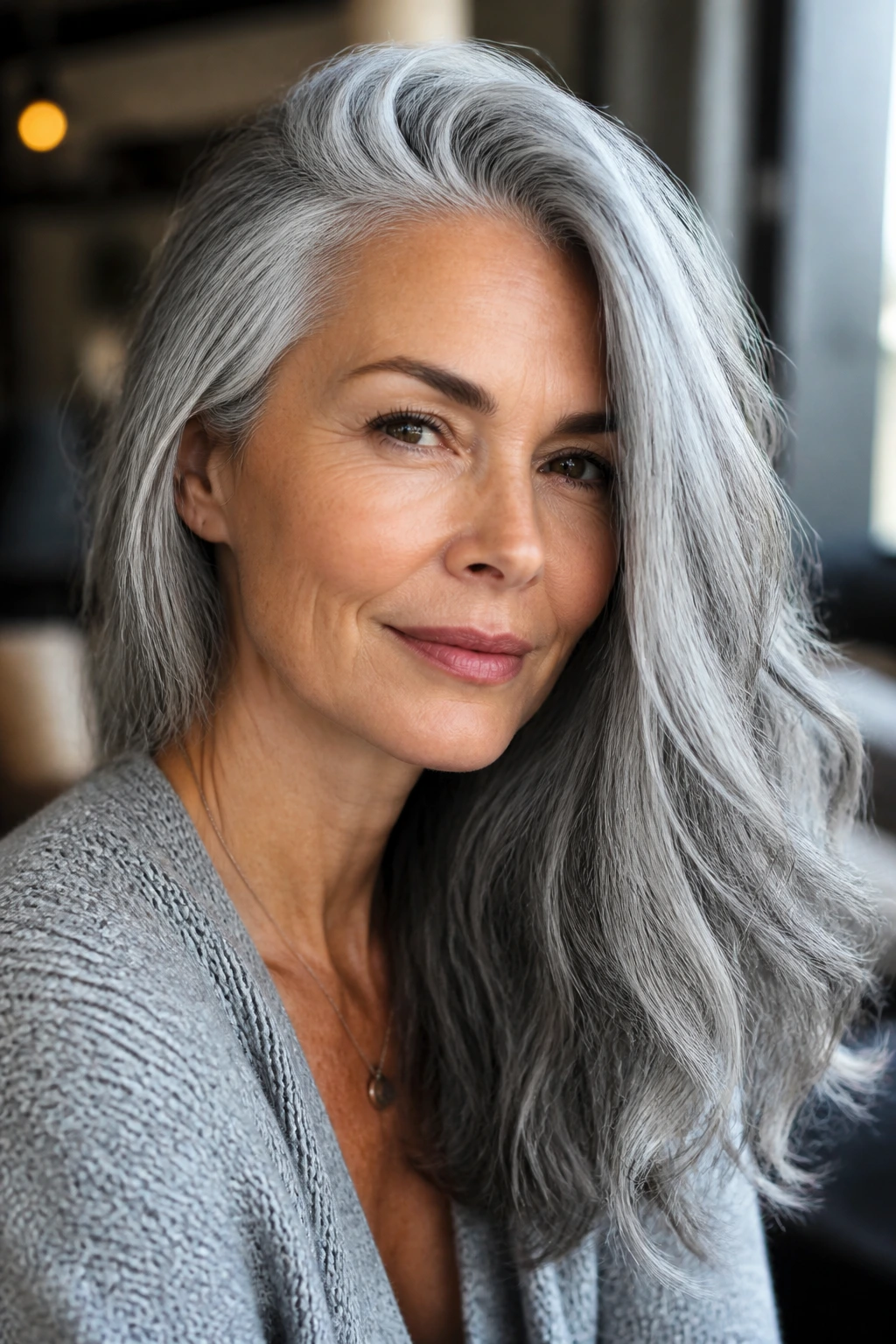
A deep side part is one of the cheapest tricks in the book, and it works. Thick gray hair often has enough body to hold that sweep on its own, which makes the roots look taller and the face more sculpted. It’s a small change that can make a familiar cut feel new.
Why It Works on Dense Hair
The heavier side can be tucked behind the ear or left loose for a little drama. The lighter side gives lift without teasing, which is useful if you hate crunchy styling products.
If your hair has a stubborn cowlick, mist the roots with water and set the part while the hair is damp. Pin it for a few minutes if you need to. Annoying, yes. Effective, also yes.
15. Braided Crown on Thick Silver Length
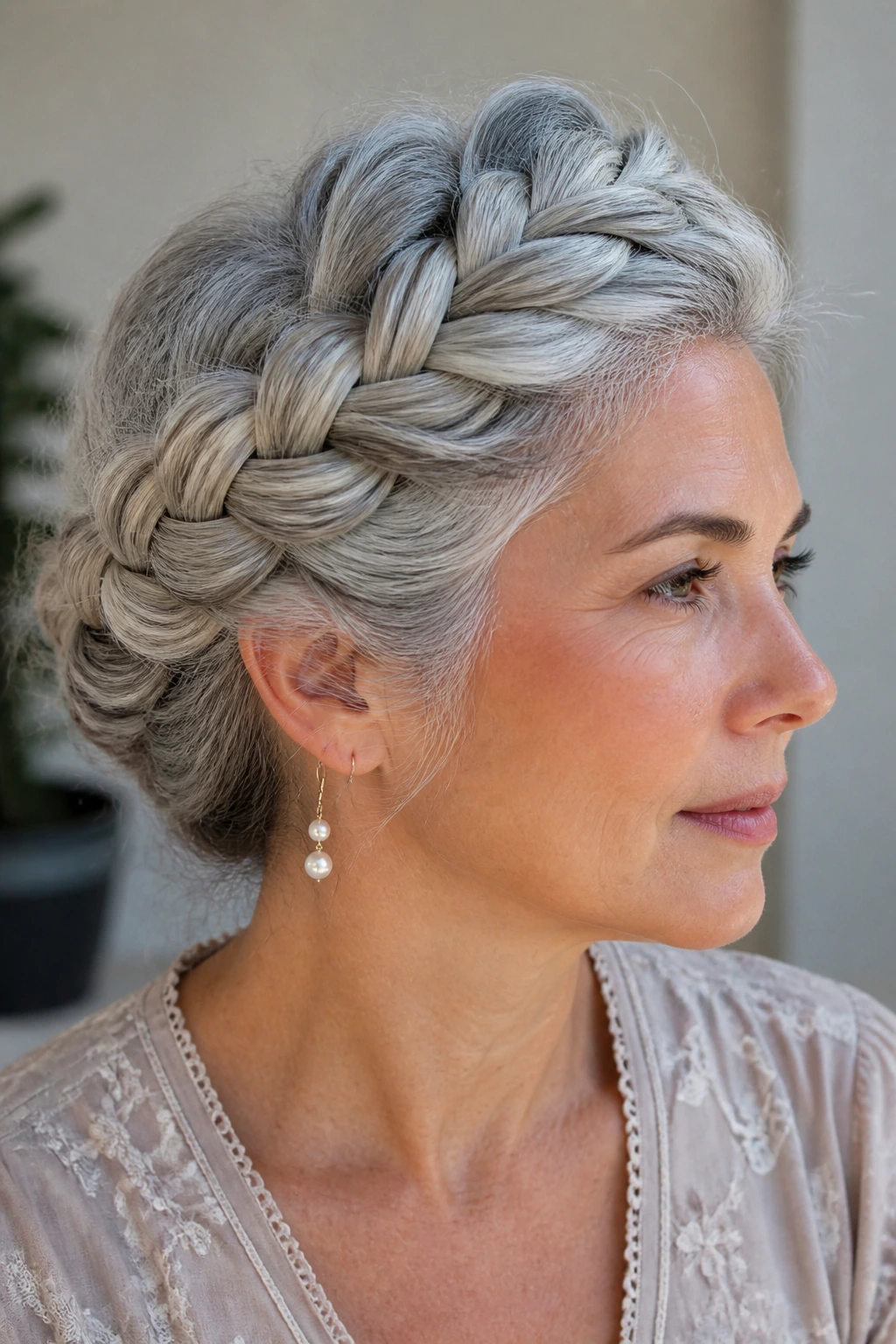
A braided crown is one of those looks that only thick hair can really pull off with proper heft. Thin hair can fake it, but thick gray hair gives the braid real width and texture, which makes the style look deliberate from every angle. Silver strands woven through a braid have a crisp, almost metallic look.
H3: When to Choose It
Choose this for weddings, dinners, or any day when you want the hair off your face without losing softness around the head. It also works when the ends need a break and you do not have time for a full wash.
A little texture spray before braiding helps the strands grip each other. If the hair is slippery, the braid slides and the crown loosens within an hour.
16. French Bob with Soft Fringe

The French bob is short, cheeky, and more forgiving on thick gray hair than people think. The soft fringe adds movement, while the jaw-length line keeps the density from spreading outward. It has a little attitude, which silver hair handles nicely.
A Good Fit for Glasses Wearers
This cut sits well with frames because the fringe can be cut just above the brow or swept aside. That prevents the face from feeling crowded.
Keep the ends slightly rounded under with a brush or flat iron. If you leave them too straight and sharp, the whole bob can feel harsher than you want.
17. Long Waved Silver Layers
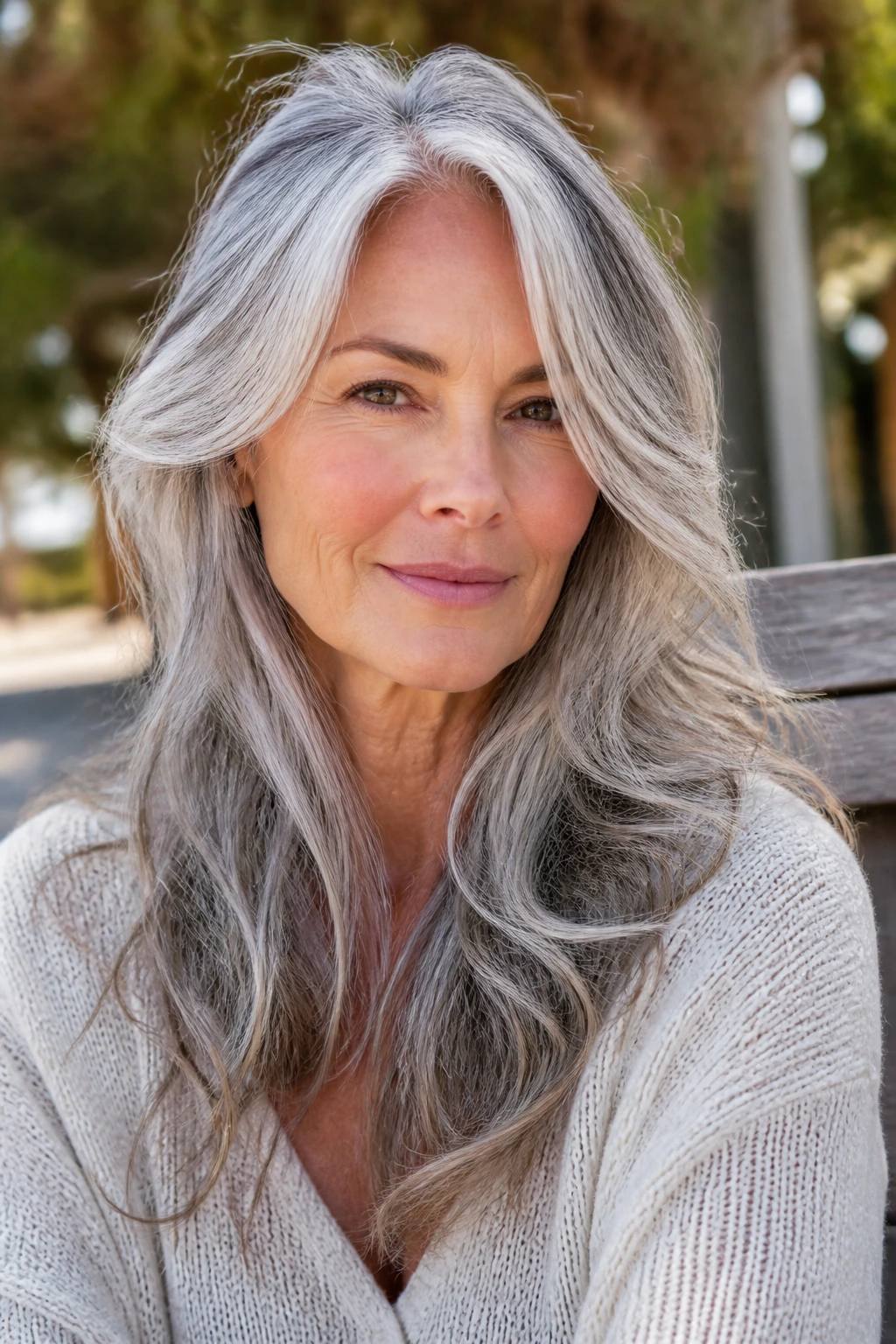
Long wavy silver layers are for anyone who wants movement without giving up length. Thick hair keeps the waves from falling out fast, and gray strands catch the shape in a way that makes each bend more visible. It’s especially pretty when the layers are long enough to avoid that chunky, over-layered look.
Practical Styling
Use a large barrel iron or braid the hair damp and let it set. Then brush it out gently with your fingers or a wide-tooth comb.
Do not load the waves with heavy oil. Gray hair can soak it up in patches and end up flat at the top and greasy at the ends. A mist of shine spray is usually enough.
18. Side-Swept Bangs with Full Ends
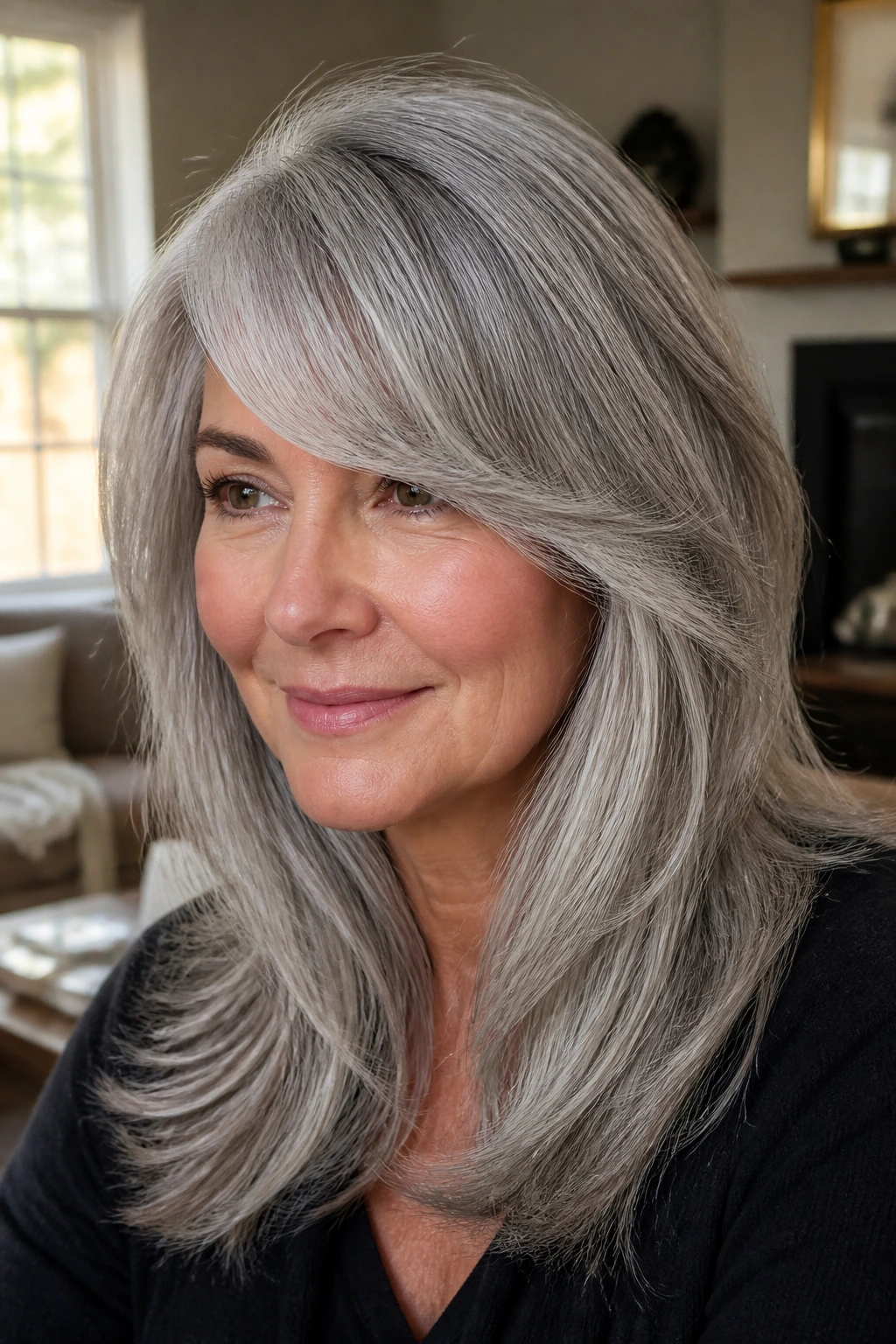
Side-swept bangs are underrated on thick gray hair because they give you movement without the maintenance of a full fringe. The rest of the cut stays full through the ends, which keeps the style from looking too airy or too thin. It’s a good middle road if you want softness around the face but dislike the feeling of hair in your eyes.
What Makes It Feel Modern
The bangs should travel diagonally into the rest of the cut, not sit as a separate chunk. That blend matters more than the exact angle.
A side-swept fringe also helps when the hair around the temples is coarser than the back. That’s common with gray hair, and the sweep softens the contrast instead of spotlighting it.
19. Soft Mullet for Dense Gray Hair
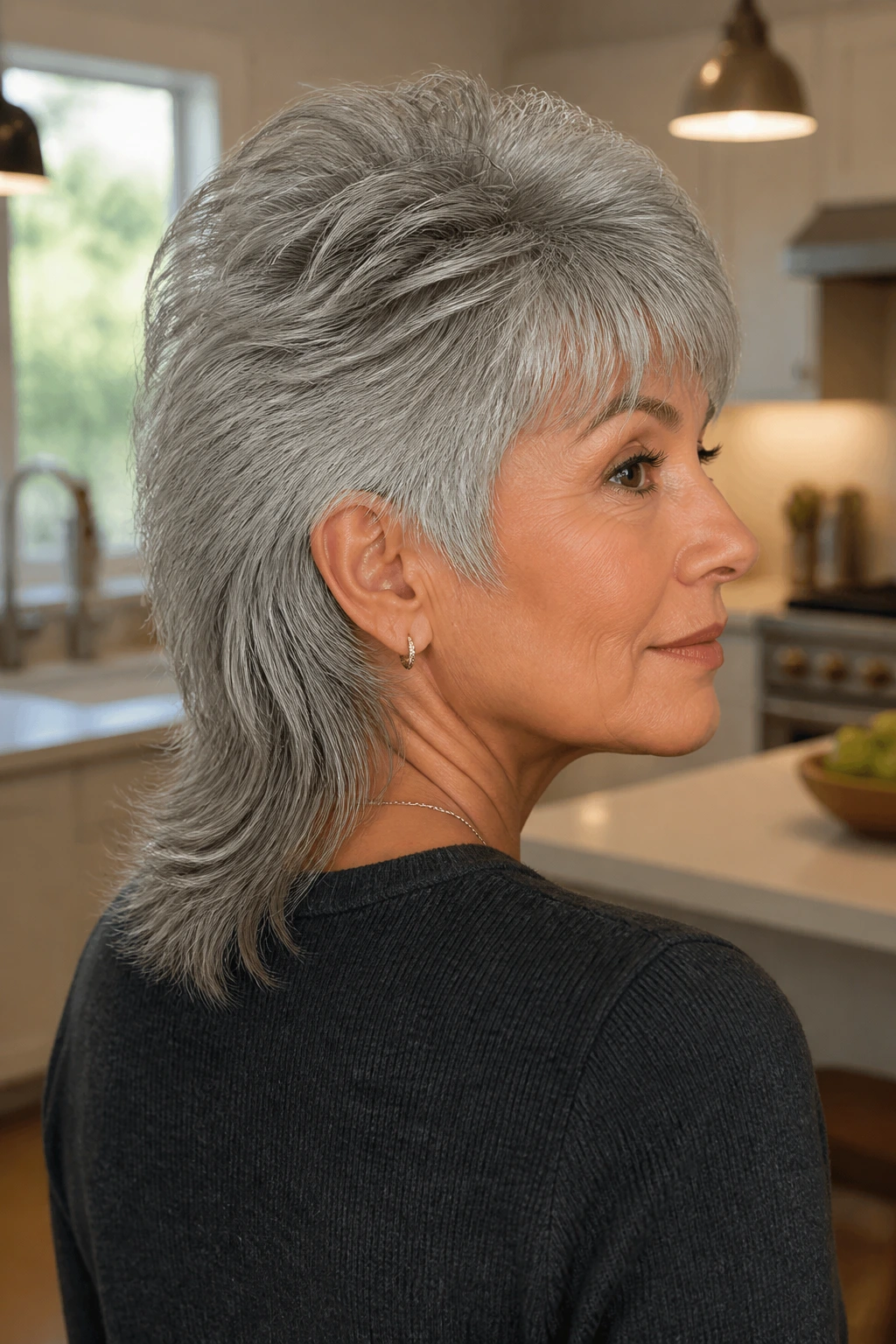
A soft mullet sounds edgy, but this version is gentler than the old-school version people picture. The front stays wearable, the crown gets a little height, and the nape keeps some length so thick gray hair does not feel chopped up into pieces. It works when you want movement and are not afraid of a cut with personality.
H3: Keep It Soft, Not Spiky
The best version is feathered, not razor-cut into oblivion. You want a shape that still feels touchable when it air-dries.
This cut is good if your hair naturally kicks out at the ends. The style absorbs that movement instead of trying to shut it down.
20. Half-Up Twist with Face Framing Pieces

A half-up twist is one of the easiest ways to show off gray hair with thick hair and still keep some control over the bulk. The twist at the back creates height, while the loose front pieces soften the face and keep the look from feeling severe. It’s a solid day-to-night move.
Why Thick Hair Helps
Thick hair gives the twist enough material to look full instead of tiny and apologetic. That alone makes a huge difference.
Pull just the top third back, twist loosely, and pin it low enough that the crown still has lift. If the twist sits too tight, the style gets flat and the whole point disappears.
21. Glass-Straight Mid-Length
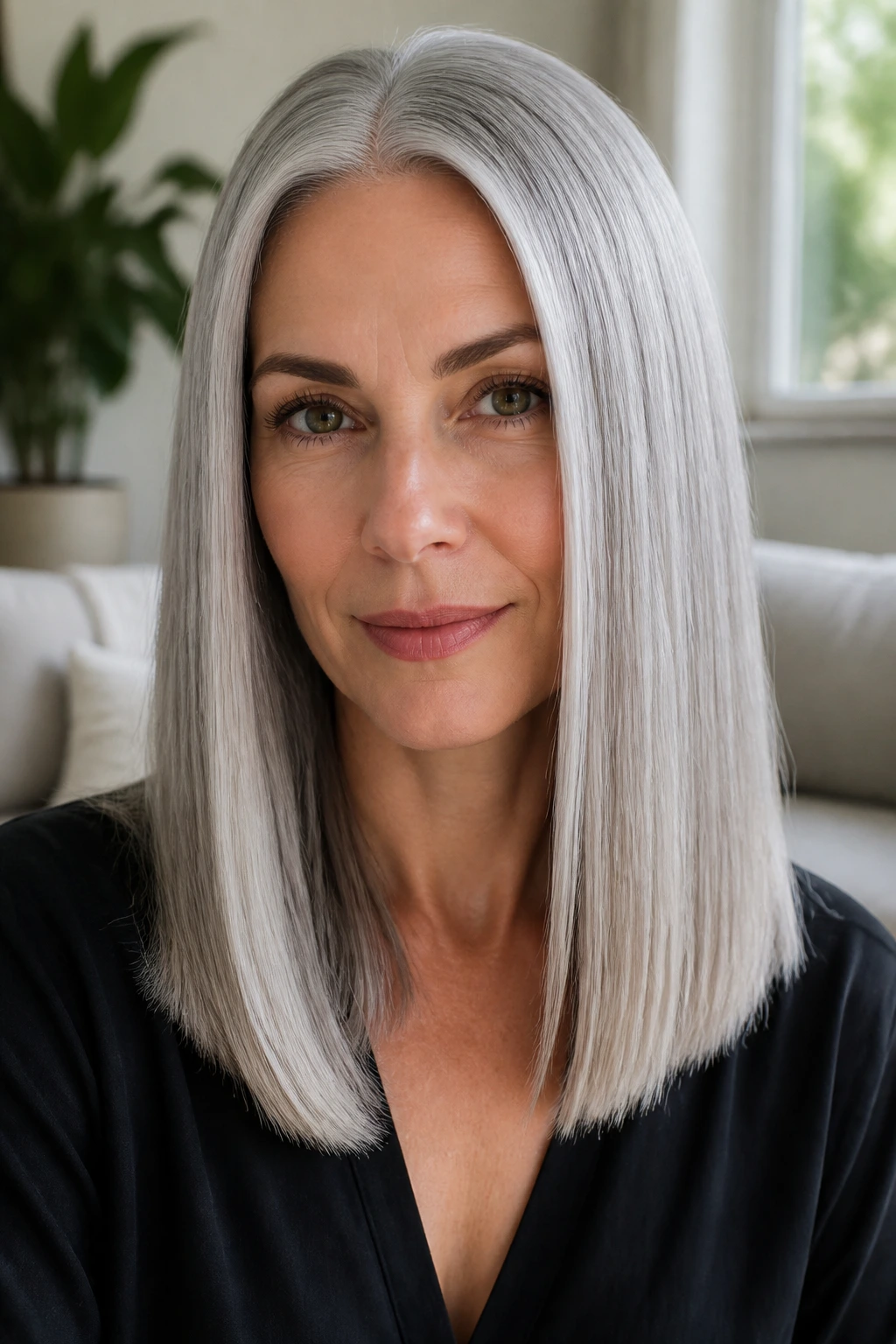
Glass-straight gray hair has a clean edge that thick hair can carry better than fine hair because there’s enough mass to keep the line smooth. Mid-length is the sweet spot: long enough for swing, short enough to prevent the bottom from feeling heavy. When the finish is shiny, silver looks striking in a very straightforward way.
A Few Rules Help
Use a heat protectant with a flat iron pass in small sections. The job is to smooth, not fry.
Finish with a light serum only on the mid-lengths and ends. If you put it near the roots, thick gray hair can go limp fast and lose the crisp line that makes the style work.
22. Tousled Lob with Choppy Ends

A tousled lob gives thick gray hair a casual shape that still looks thought through. The choppy ends keep the outline from feeling blocky, and the shoulder length prevents the mass from collecting at the bottom of the cut. It’s one of the easiest gray hair looks for thick hair to wear every day.
H3: Best Styling Trick
Bend random sections with a flat iron, then rake them apart with your fingers. Don’t try to curl everything the same way.
That uneven movement is what keeps the lob from looking too done. Gray hair with some bend around the face and straighter pieces underneath tends to read more natural and less stiff.
23. Natural Wave Cut with Diffused Volume
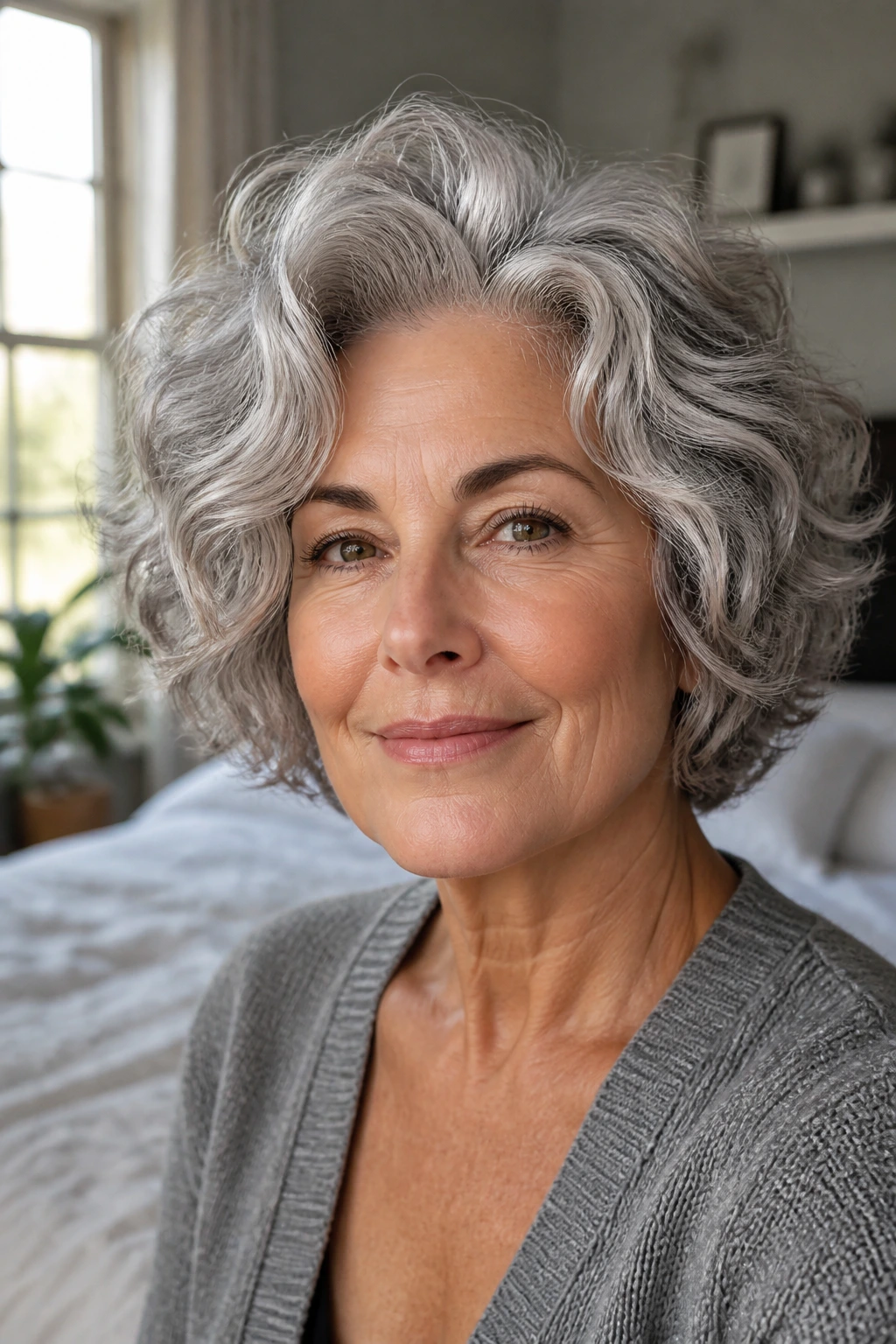
If your thick gray hair already has a wave pattern, do not fight it. A cut designed for natural waves lets the hair rise where it wants to and fall where it needs to, which means less heat and less time in front of the mirror. A diffuser makes the shape look intentional without turning it into a puffy cloud.
What to Tell Your Stylist
Ask for layers that support the wave rather than break it up too much. Thick gray waves need room to move, but not so much texture that the ends fray.
Use a curl cream or lightweight foam, then scrunch and diffuse on low heat. The key is a soft root lift and a controlled perimeter. That perimeter is where the whole look lives or dies.
24. Graduated Stacked Bob
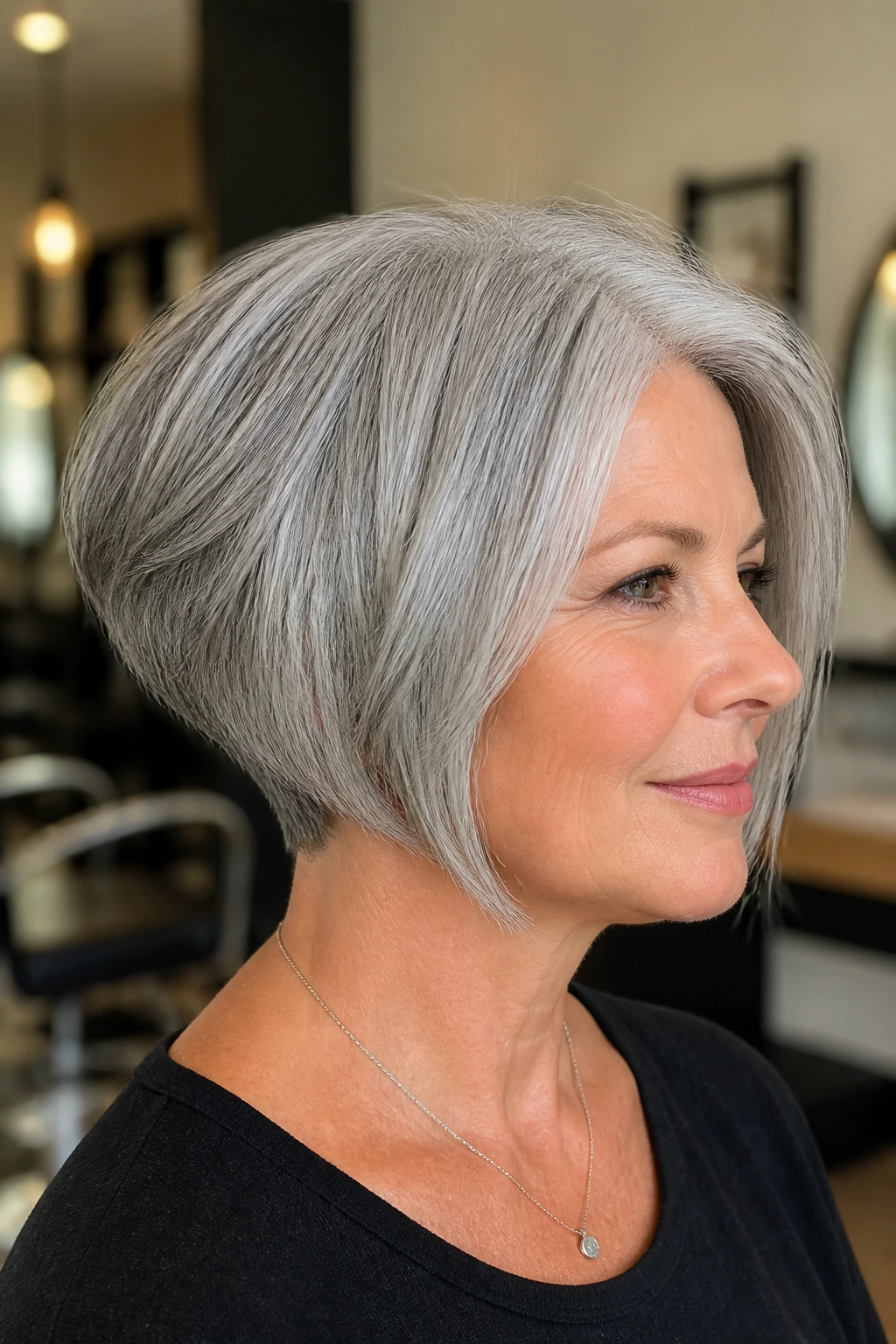
The stacked bob has a built-in lift at the back, which is useful when thick gray hair tends to sit flat at the crown and bulky at the neck. The graduation creates a small shelf of volume in the right place, while the front stays longer and cleaner. It’s a very shape-driven cut.
Why It’s So Effective
This is one of the few bob shapes that can make thick hair feel lighter without looking thin. The stacked back takes out weight, and the clean front line keeps the style from collapsing.
Keep the nape well trimmed. If the back gets fuzzy, the whole architecture blurs, and the cut loses that crisp curve people love about it.
25. Silver Money Piece on a Dark Base
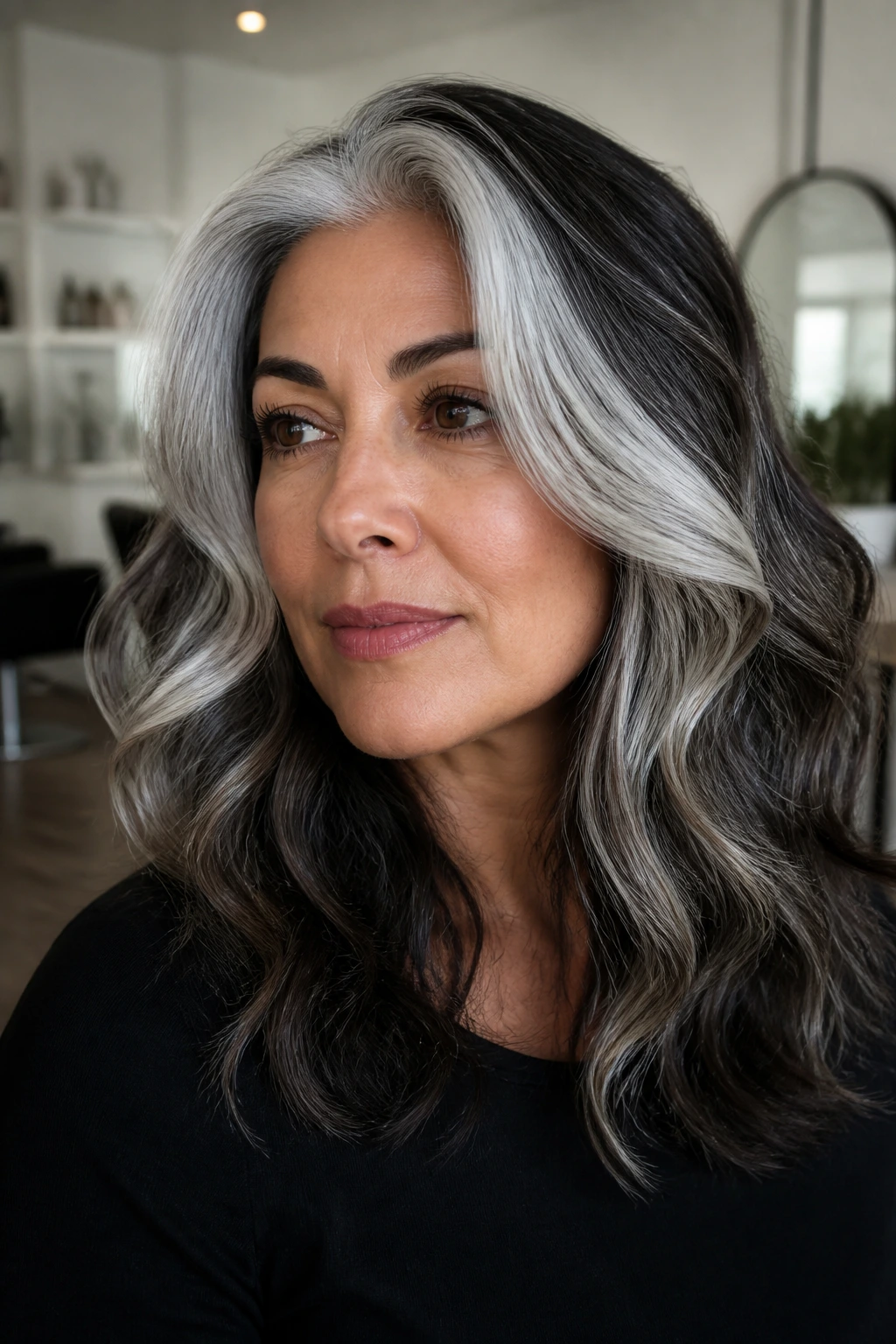
A silver money piece can make thick gray hair look brighter even when the rest of the hair is still salt-and-pepper or dark underneath. The lighter face-framing ribbons bring attention to the eyes and cheekbones, while the darker base keeps depth through the lengths. It’s especially good if you’re growing out color and want a more intentional transition.
Color Placement Matters
The bright pieces should sit around the front hairline and temples, not scattered all over the head. Concentration makes the look feel clean.
This style also softens heavy bulk. When the face frame is lighter, thick hair feels less solid and more open, which is useful if your profile tends to look broad from the side.
26. Tucked-Behind-Ear Bob
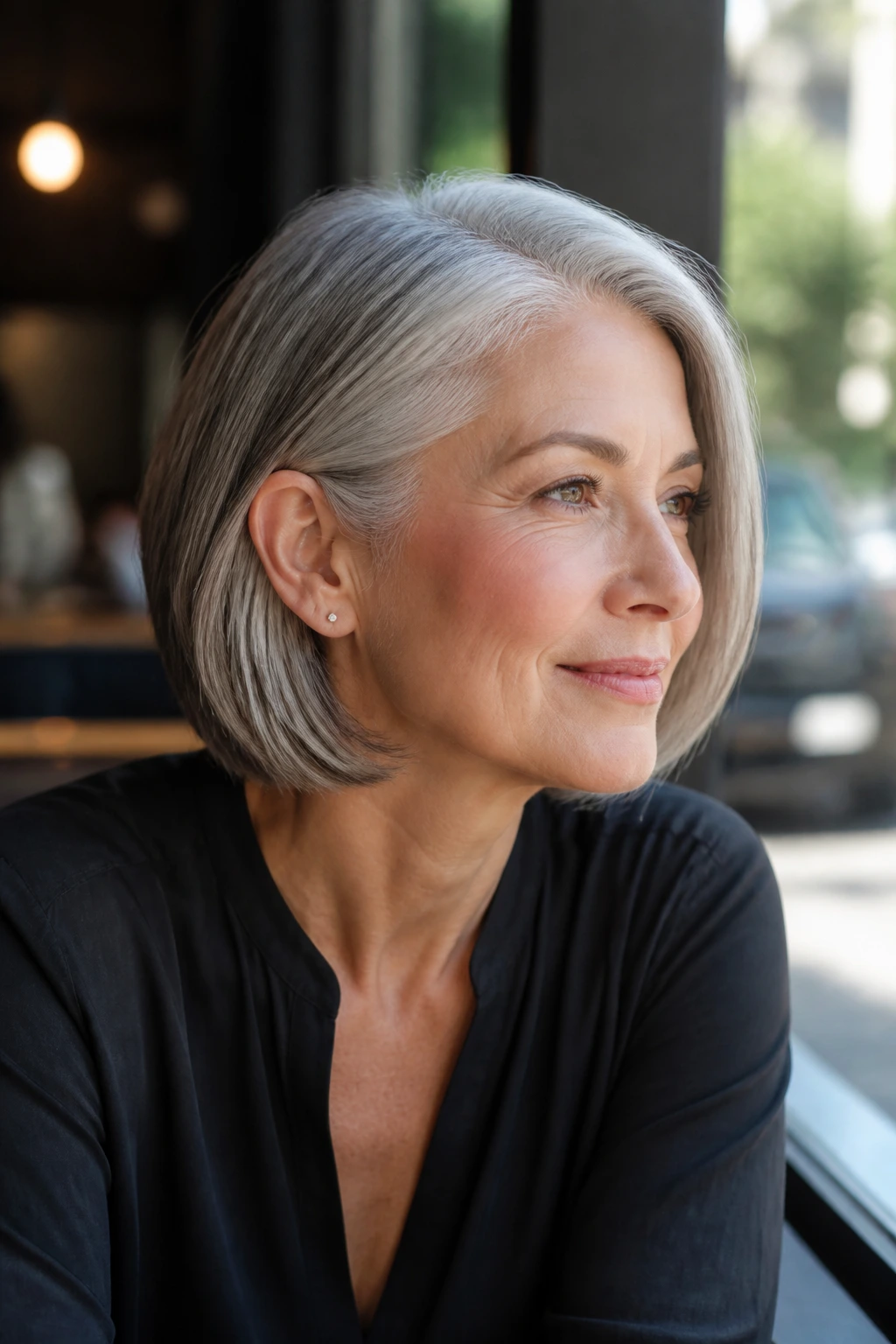
A tucked-behind-ear bob is proof that the smallest styling move can change the whole read of a cut. Thick gray hair with this shape looks neat and sharp because the exposed ear breaks up the width at the sides. It’s an easy way to keep a bob from feeling too blocky.
Good Everyday Habit
Tuck one side and leave the other loose. The asymmetry keeps the cut from feeling too rigid.
If the ends flare out near the jaw, a quick pass with a round brush or flat iron can pull them in. The line should skim the jaw, not sit on top of it like a shelf.
27. Long Layered Cut with Gloss
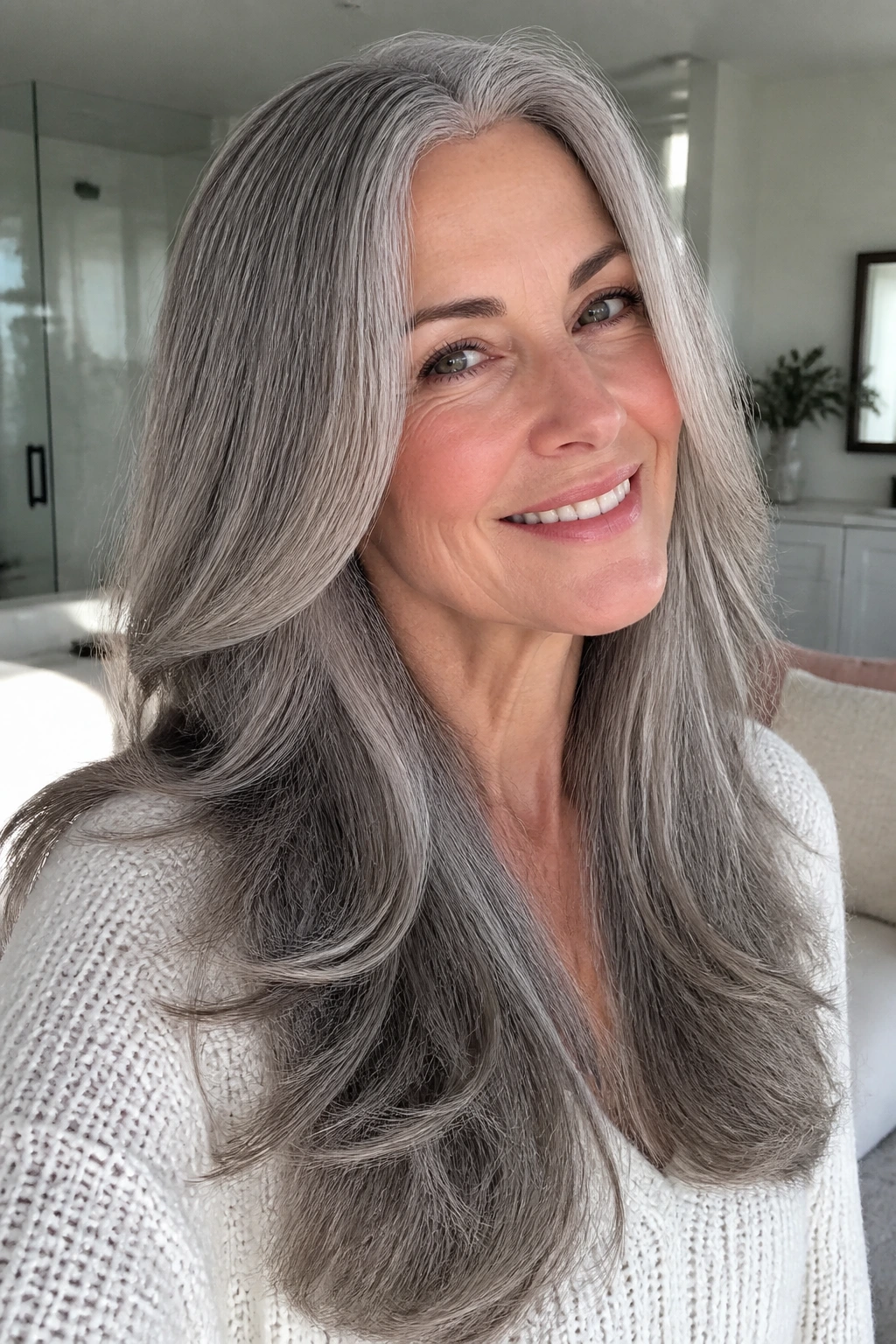
Long layered gray hair only works if the layers are deliberate and the finish is healthy. Thick hair can carry length, but it needs internal shaping so the mass doesn’t become a curtain with no movement. A gloss or toning treatment helps silver look clearer and reduces that flat, slightly dusty look long gray lengths can pick up.
H3: The Maintenance Payoff
A long layered cut needs trims more often than people expect. The ends show wear faster on gray hair because dryness shows first at the tips.
Use a moisture mask weekly if your hair feels rough after washing. Not a heavy one. You want slip, not sludge.
28. Low Knot with Crown Lift
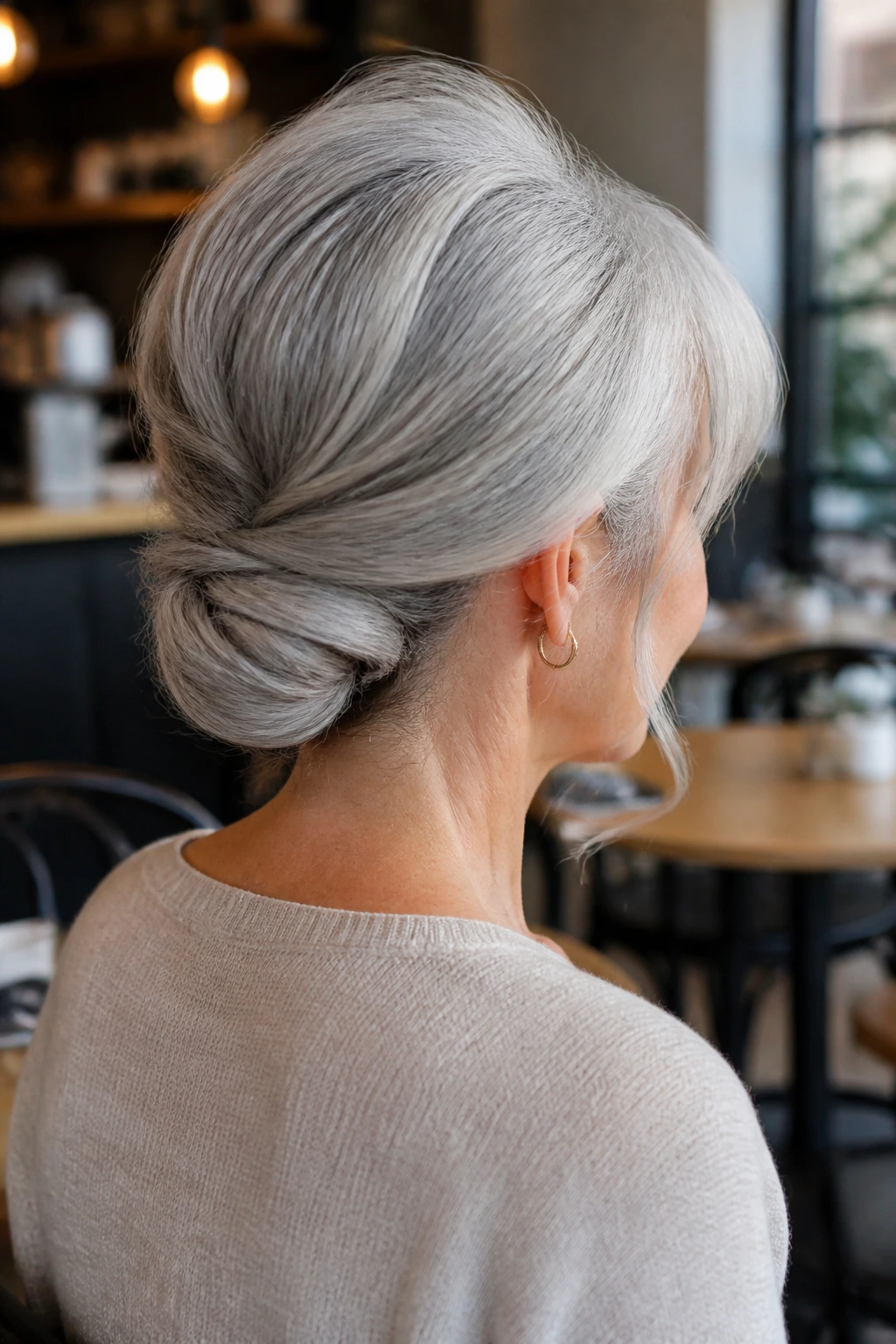
A low knot can look too tight on thick gray hair unless you leave space at the crown. The best version has a little lift up top, soft pieces around the temples, and enough twist in the knot to keep it from feeling severe. It’s polished, but not slicked down into submission.
When to Wear It
This is a strong choice for humid days, long workdays, or when you want the silver color to show against skin and clothing. The knot keeps the length controlled while the crown keeps the face from looking flattened.
A few bobby pins in a crisscross pattern hold better than one large clip. Thick hair can pull a knot loose fast if it’s pinned lazily.
29. Bouncy Shoulder-Length Flip
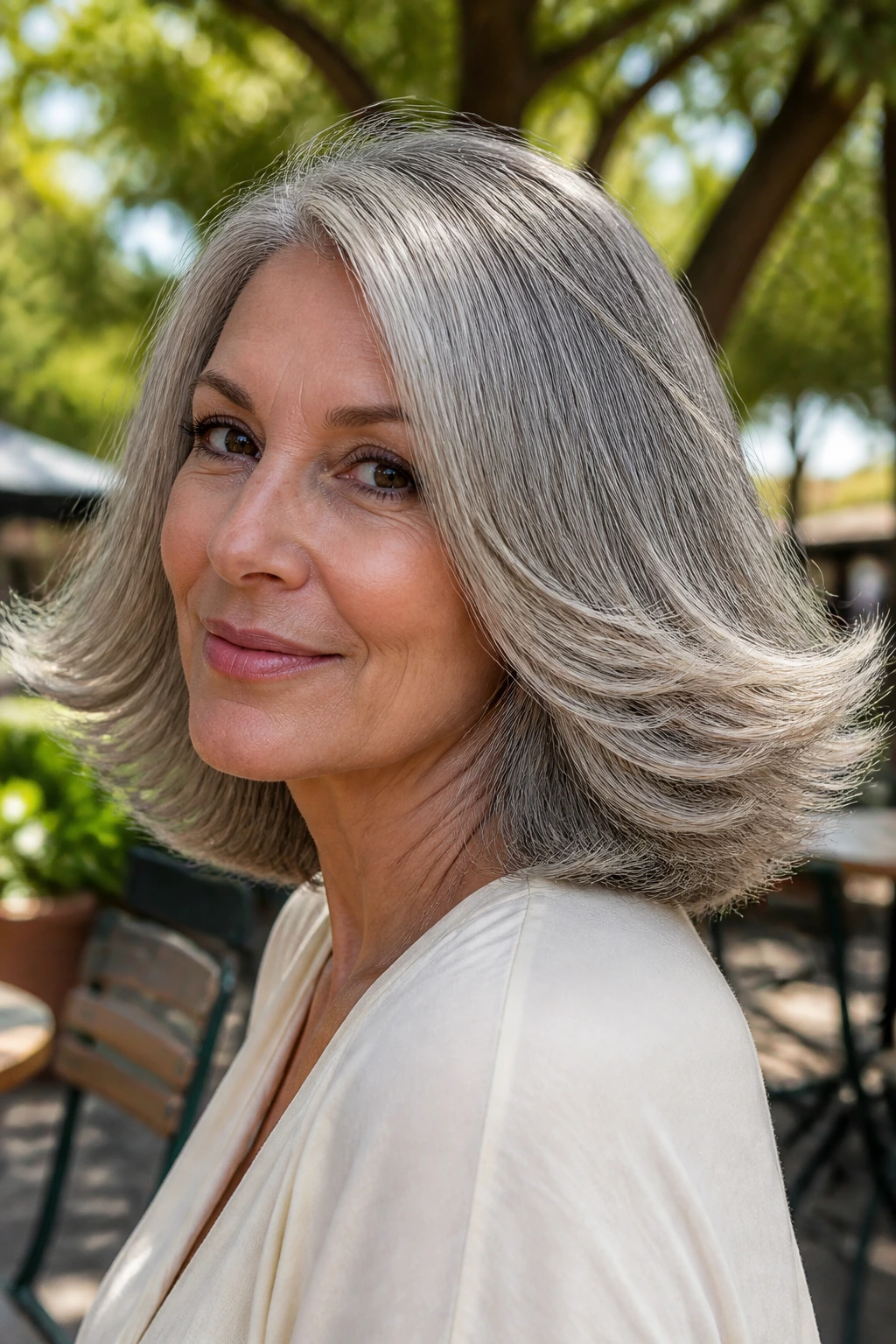
The shoulder-length flip has a bit of retro energy, and thick gray hair loves that kind of movement. The ends turn outward just enough to keep the shape lively, while the length stays practical and easy to clip back if needed. It’s one of those styles that looks more styled than it actually is.
Styling Step That Matters
Blow-dry the ends over a round brush, then flip them away from the face with a quick twist. The turn should be soft, not roller-skate dramatic.
This works well when your hair tends to settle at the shoulders and bend in random places. The flip gives it one intentional direction, which makes a big difference.
30. Air-Dried Fringe and Texture

Some thick gray hair looks better the minute you stop trying to smooth it into obedience. An air-dried fringe and natural texture cut leans into that reality, keeping the layers soft and the fringe light enough to separate a little as it dries. It’s casual, but not careless.
Why It’s Useful
This look saves time and heat, which gray hair often appreciates. The less you blast it with hot tools, the less you dry out the outer cuticle.
Use a small amount of leave-in conditioner and scrunch or twist the fringe into place while damp. Then leave it alone. Fussing with it once it starts drying only makes the texture louder.
31. Soft Undercut for Dense Gray Hair
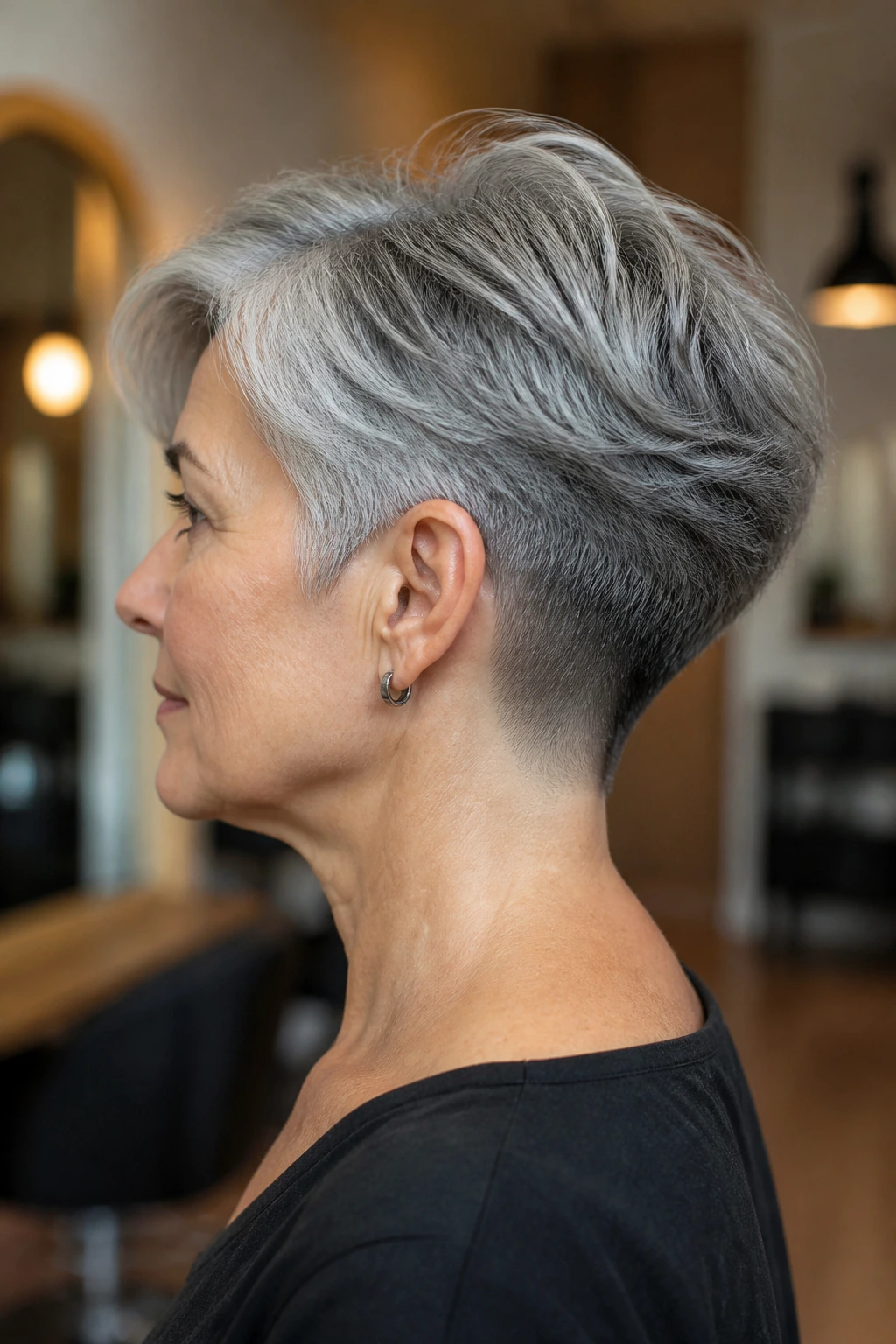
A soft undercut is for the person whose thick gray hair simply has too much bulk to live a quiet life. The hidden or half-hidden undercut removes weight underneath, while the top layers stay long enough to cover it. You get relief without giving up your length.
Be Honest About the Trade-Off
This is not the move if you like changing your part every day and never thinking about upkeep. An undercut needs regular touch-ups, or the contrast grows out in a lopsided way.
Still, it can be a lifesaver for very dense hair around the nape or behind the ears. When the bulk is too much, this fix makes the rest of the style easier to manage.
32. Elegant Twist-Out on Thick Gray Coils
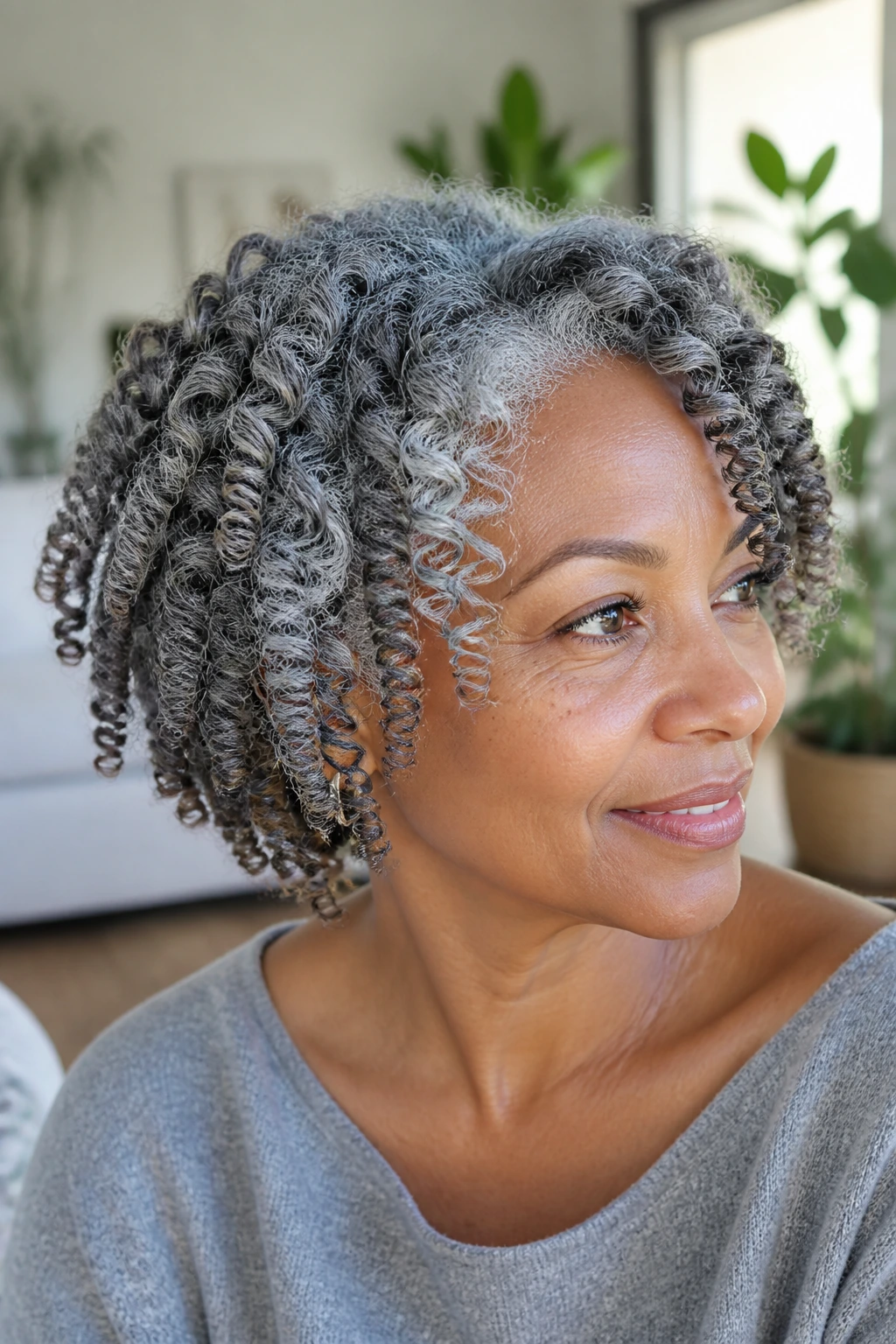
A twist-out on thick gray coils brings definition to texture that can otherwise shrink into a rounded cloud. The twists stretch the hair a little, the set pattern gives each coil a clear shape, and the result keeps the gray color bright because the curls separate instead of clumping into one matte mass. It’s elegant in the most practical way.
H3: How to Keep It Clean
Set the twists on damp hair with a cream that has slip, then let them dry fully before taking them down. If they’re even slightly damp, the shape frizzes faster than you’d like.
Separate the curls gently with oiled fingertips, not a brush. Brushing ruins the pattern and turns the look into a puff.
Why Thick Gray Hair Needs Different Rules
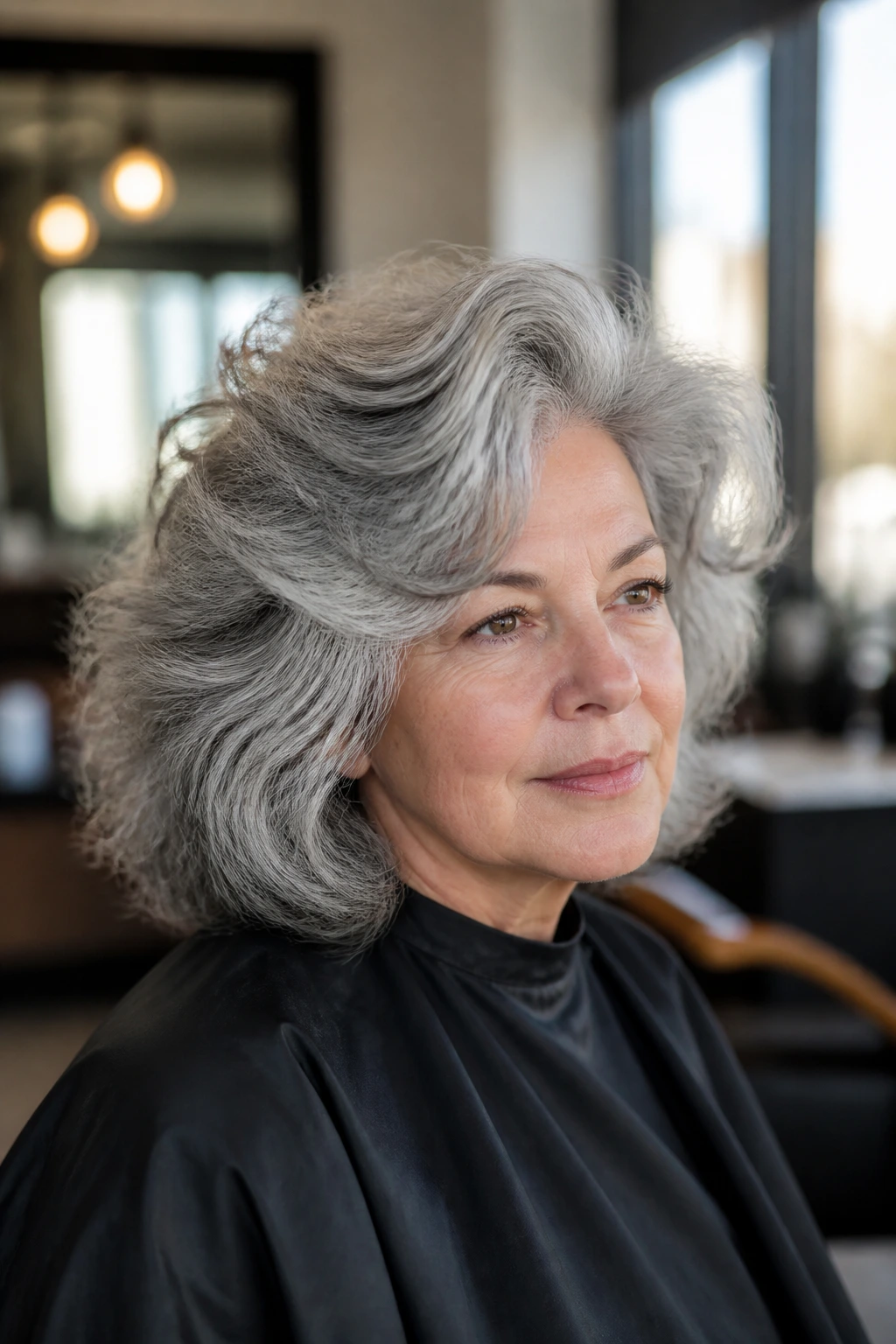
Thick gray hair is not difficult. It’s just honest. The strand has more bulk, so every cut line shows up clearly, and every styling shortcut does too. Gray hair can also feel drier and a little more resistant to polish, which means a shape that looks sleek on someone else may puff out on you by lunchtime.
That is why the best gray hair looks for thick hair usually share the same core idea: remove bulk without destroying structure. A blunt edge can be gorgeous, but only if the line lands in the right place. Layers can be gorgeous, too, but only if they’re long enough to keep the ends from fraying into space.
The real trick is understanding where your hair wants to sit. Some heads need crown lift. Some need weight taken out at the nape. Some need a face frame that softens the outline, because thick gray hair can make the lower face feel wider than it is. Once you notice those pressure points, the whole style game changes.
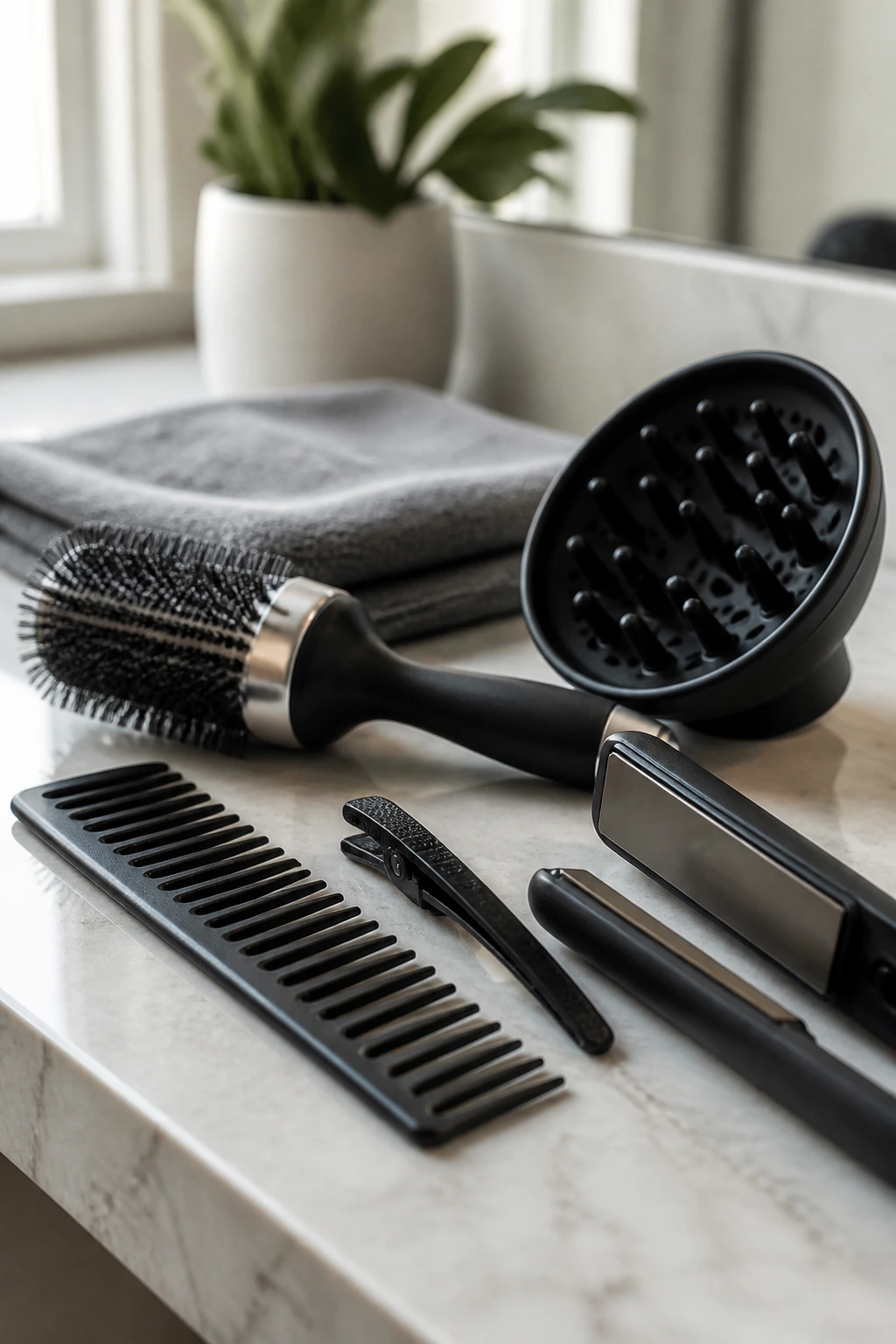
Essential Tools for Styling Thick Gray Hair
-
Blow dryer with a nozzle attachment: The nozzle helps direct airflow so thick hair smooths instead of ballooning.
-
1.25-inch curling iron or wand: A medium barrel gives soft bends and waves that hold better in dense hair than tiny curls do.
-
Large round brush: Useful for blowouts, face-framing bends, and rounding the ends of bobs and lobs.
-
Wide-tooth comb: Best for detangling wet gray hair without roughing up the cuticle.
-
Sectioning clips: Thick hair needs sectioning or you’ll miss the back and underneath layers.
-
Flat iron with adjustable heat: Handy for sleek lobes, blunt bobs, and smoothing the outer layer only.
-
Diffuser: A must if your gray hair is curly or wavy and you want shape without frizz.
-
Microfiber towel or cotton T-shirt: Reduces roughness after washing and keeps curls or waves calmer.
-
Heat protectant spray: Use it every time you reach for hot tools. Gray hair already runs dry enough.
-
Lightweight serum or shine mist: A small amount on the ends helps silver read crisp instead of dusty.
-
Purple shampoo: Helpful for knocking yellow tones back, though it should not be used like a daily cleanser.
-
Flexible styling paste or mousse: Paste works for short cuts; mousse gives root lift and hold for longer shapes.
Smart Product Picks for Shine, Control, and Moisture
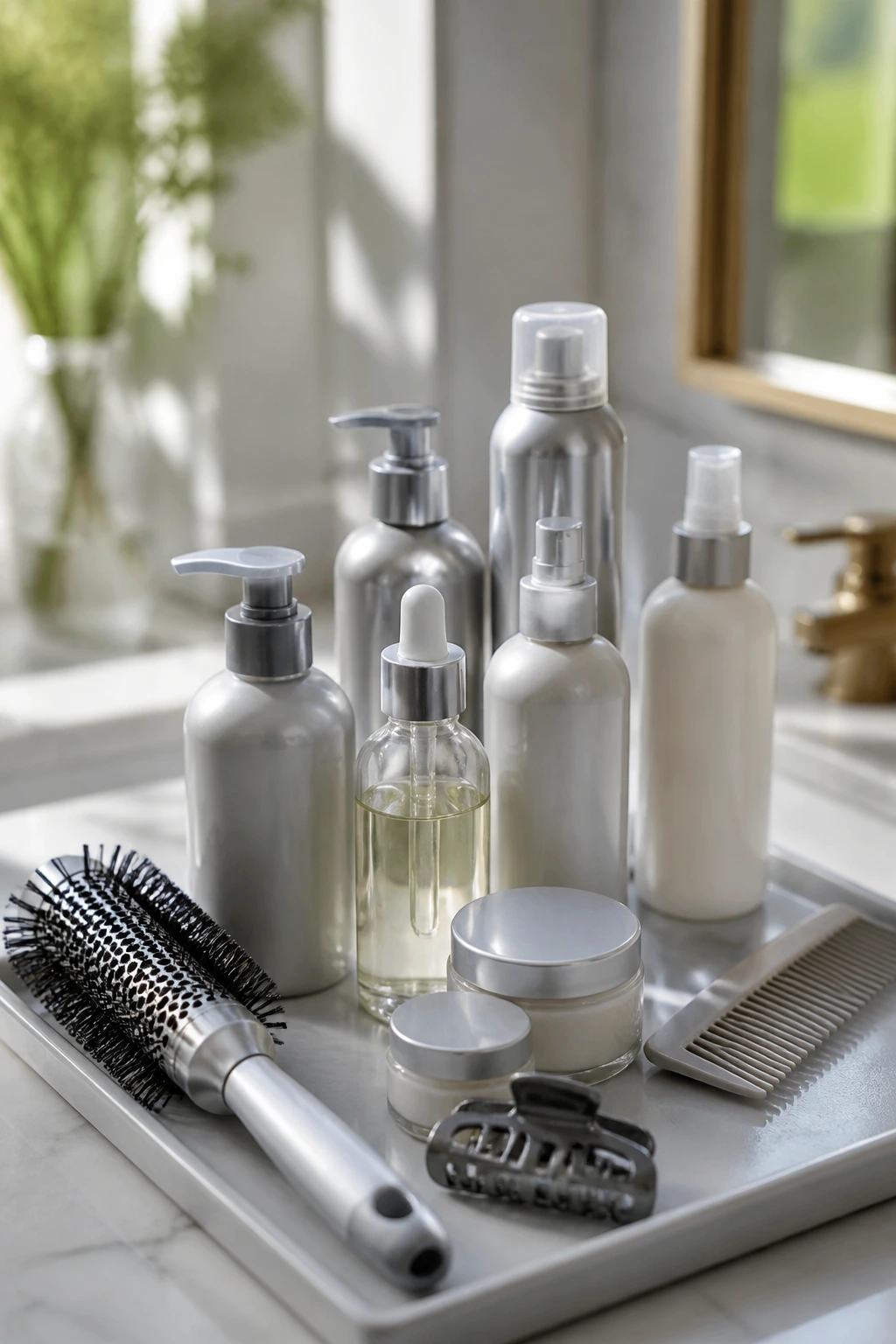
A good gray-hair product routine is boring in the best possible way. You need moisture, a little control, and not much else. Thick gray hair does not usually need a drawer full of specialty bottles; it needs the right few things used with restraint.
For cleansing, pick a shampoo that doesn’t strip hard. Gray hair can turn rough when washed with something too aggressive, and that roughness shows fast on thick strands. If yellowing is a problem, use purple shampoo sparingly—once a week is usually enough for many heads, and leaving it on too long can give porous gray hair a dull lavender cast. That stain is not cute.
For smoothing, choose a leave-in that feels light in the hand. If it feels heavy when you rub it between your palms, it will likely flatten the crown. For curls and waves, a cream or foam with a flexible hold usually beats a thick butter that sits on top of the hair. And if you heat-style often, a protectant that actually lists a proper heat range is worth the bottle space.
Glossing products are underrated. A clear or silver-enhancing gloss can make gray look cleaner between salon visits, especially if the ends start to look chalky. That’s not vanity. That’s maintenance.
How to Wear These Looks From Morning to Night
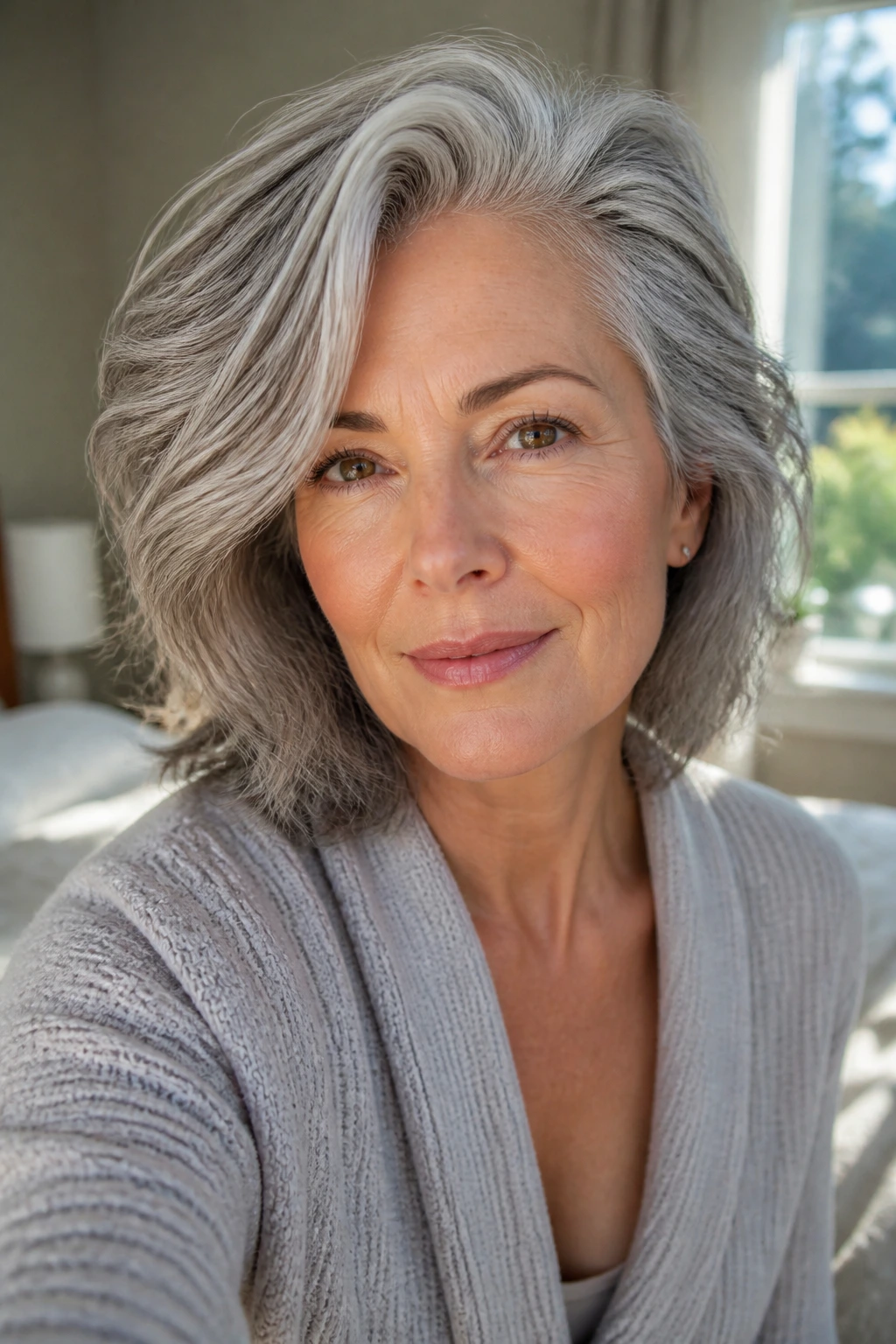
Everyday: Keep the shape simple. A side part, a loose tuck behind the ear, or a quick bend through the front pieces is often enough to make thick gray hair look deliberate without spending twenty minutes on it.
Quick Refresh: A mist of water, a little leave-in on the ends, and a round brush or fingers at the crown can wake up a flattened style. Gray hair often comes back to life faster than you think once the roots are lifted again.
For Long Days: Use a clip or bobby pins to change the direction of the hair part halfway through the day. Thick hair that sits in one place too long can press flat at the root and puff at the ends.
With Glasses: Keep fringe either above the frame line or swept away from it. Heavy bangs plus thick gray hair plus glasses can crowd the face fast, and the whole look feels busier than intended.
Additional Tips and Finishers That Make the Cut Look Intentional
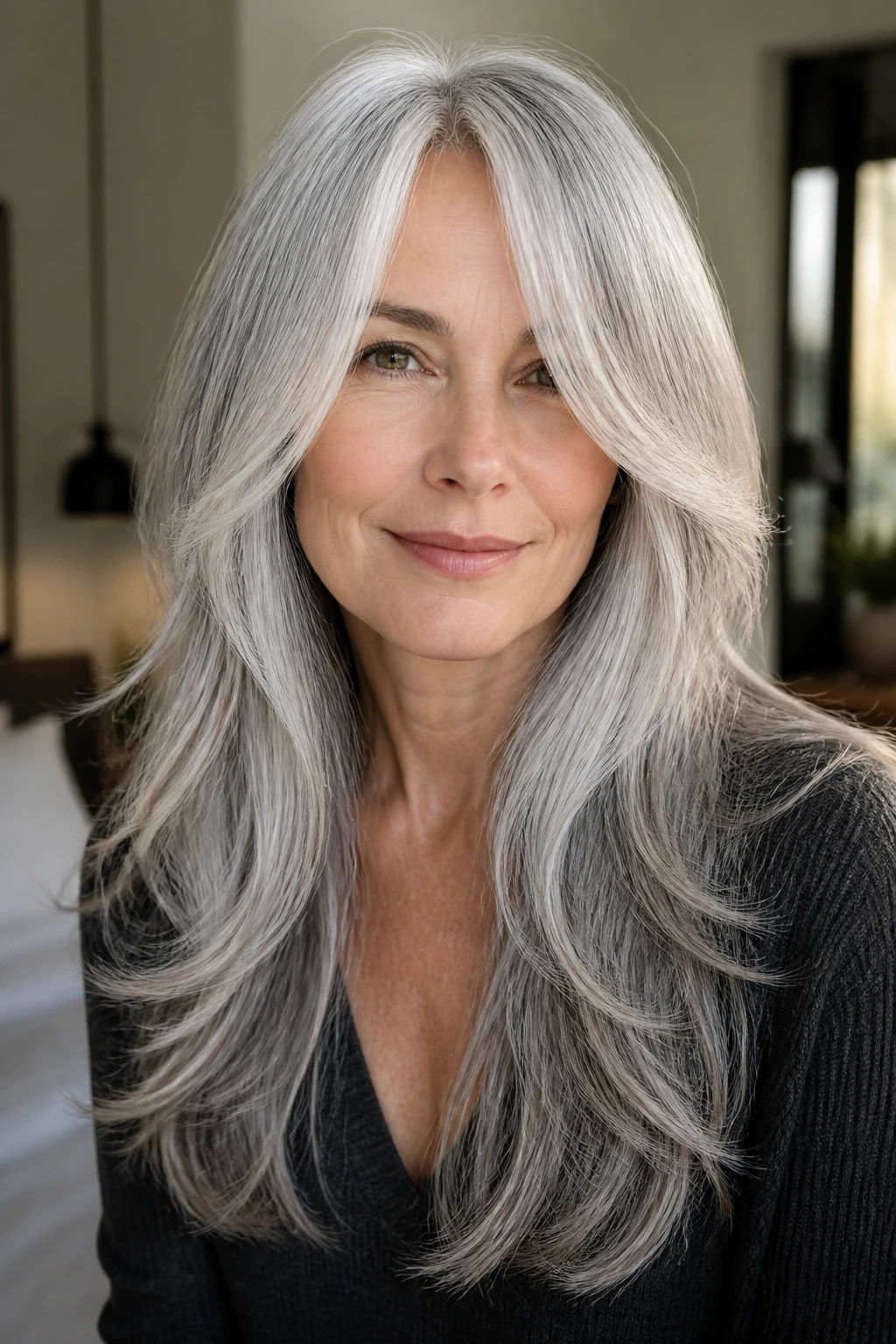
Shine Boost: A clear gloss or a tiny mist of shine spray on the outer layer gives gray hair that clean, reflective finish without making the crown greasy. Focus on the mid-lengths and ends, not the roots.
Shape Control: Blow-dry in the direction you want the hair to live. Thick hair remembers air flow more than people expect, so a few extra seconds aimed downward at the perimeter can calm a puffy cut line.
Color Tweaks: If your gray has a stubborn yellow cast, add a cooler toner or a soft silver glaze rather than drowning the hair in purple shampoo. The cleaner fix usually looks more natural.
Make-It-Yours: Shift the part, soften the fringe, or keep one side tucked and the other loose. Small changes matter more than major reinvention, especially with thick hair that already has a lot of visual weight.
Frizz Control: Use less product than you think you need. Thick gray hair can hold a lot, but it also shows buildup fast, and buildup makes the silver look cloudy.
Common Mistakes That Make Thick Gray Hair Look Wider Than It Is
-
Over-thinning the ends: Hair that’s razor-slashed too much at the bottom tends to puff and separate. Keep the thinning inside the shape, not at the perimeter, so the cut still has a clean edge.
-
Leaving every cut one length forever: Thick gray hair can become a triangle if there’s no shaping through the crown or sides. A little internal layering keeps the silhouette from spreading out.
-
Using too much purple shampoo: If the hair starts to look dull, lavender, or chalky, the toner is doing too much. Use it less often and rinse it sooner.
-
Skipping trims because the hair “still looks long”: Gray ends show wear early. Once the tips start fraying, the whole style loses shine and the shape looks older than it is.
-
Blowing the hair forward from the root every time: That habit makes the crown collapse and the sides flare. Aim the dryer along the head shape, not straight at the face.
-
Loading on heavy oil near the scalp: Thick gray hair can handle a little slip, but oil near the roots flattens the lift and makes silver look muddy. Save richer products for the ends.
Variations and Adaptations to Try
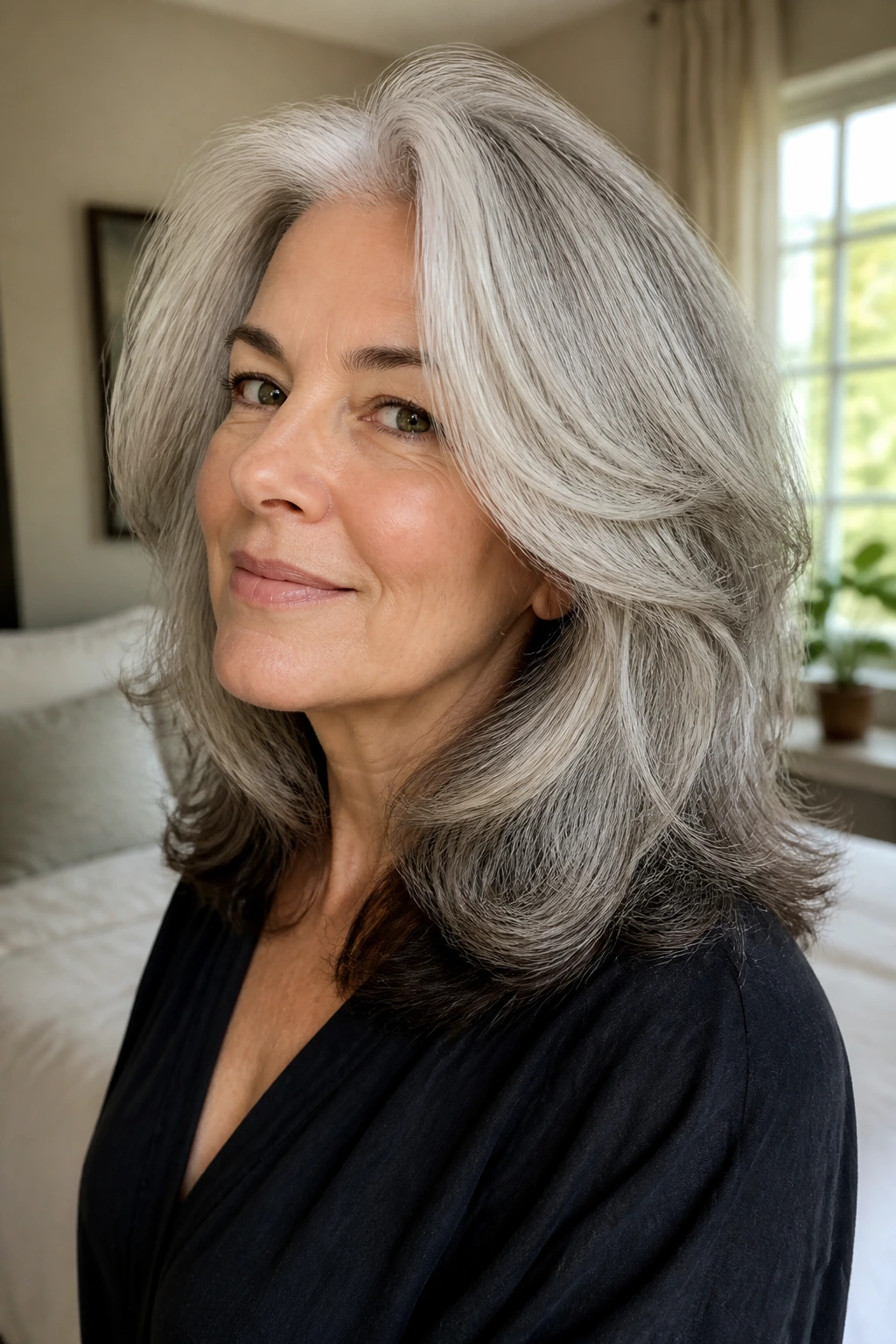
The Soft Transition Blend: If you’re growing out dye, keep a few darker lowlights near the nape and underlayers. That gives the grow-out a smoother look and stops the silver from looking like one hard stripe.
The Heat-Free Day: Swap blow-drying for a mousse, a braid, or a twist set, then let the hair dry on its own. Thick gray hair usually holds the bend well, and the air-dried finish can look calmer than a rushed blowout.
The Glassy Evening Version: For dinners or events, straighten only the top layer and leave the ends softly curved under. That keeps the look sleek but not flat, which is where a lot of gray-hair styling goes wrong.
The Fringe Swap: If bangs feel too fussy, cut them longer and wear them swept to one side. You still get softness at the face without the daily battle of full fringe maintenance.
The Curl-First Version: For wavy or curly gray hair, build the style around the curl pattern instead of trying to smooth it out. Use a diffuser, a cream, and a little gel, then let the texture own the shape.
The Low-Drama Grow-Out Plan: If you’re not ready for a sharp cut change, keep the perimeter the same and only reshape the front every few months. That lets the style evolve without the shock of a full transformation.
Washing, Trimming, and Between-Appointment Care
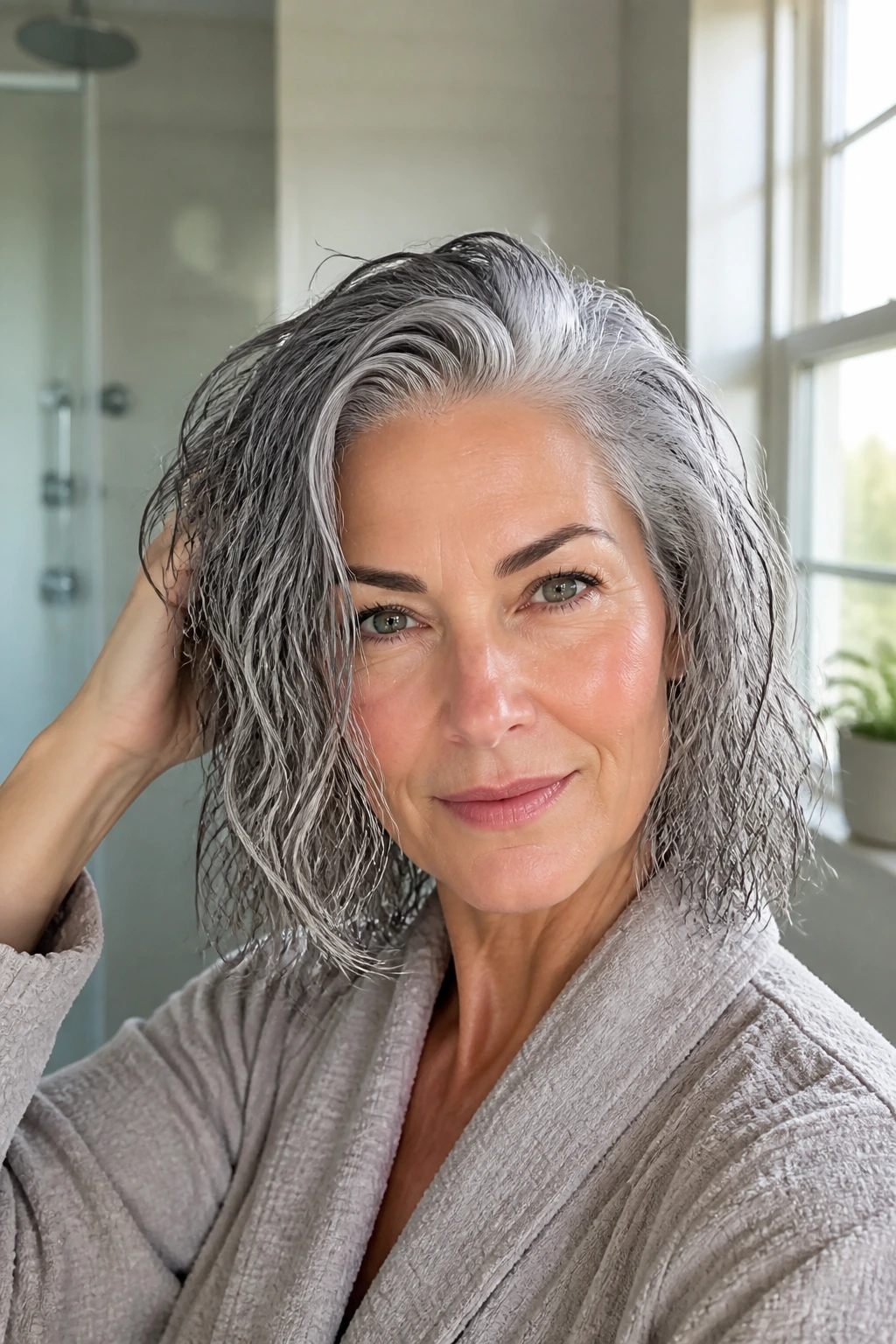
Gray hair on thick heads usually looks best when it’s washed a little less often and handled a little more gently. Two to three washes a week works for many people, though oily roots or heavy product use may push you to wash more often. Between washes, a mist of water and a touch of leave-in on the ends can revive the shape without starting over.
Trims matter more than people admit. For short cuts and bobs, every 6 to 8 weeks keeps the line clean. For longer layers, 8 to 10 weeks may be enough, but once the ends start feeling rough or see-through, it’s time. Gray hair tends to show dryness at the tips before it looks dry anywhere else.
If your hair is colored, keep a gloss or toner appointment in the mix when the silver starts to dull or yellow. If it’s natural, focus on moisture and a clean cut line. And if your hair is very coarse, a weekly mask with a few minutes under a shower cap can keep it from feeling like wire. That tiny habit changes the way thick gray hair behaves the next morning.
Frequently Asked Questions

Can thick gray hair still look sleek, or will it always puff up?
It can look sleek, but the shape has to work with the density. A blunt line, good sectioning, and a smoothing pass with a brush or flat iron usually matter more than piling on products.
Do gray hair looks for thick hair need layers?
Not always, but they usually need some kind of shape. Even a blunt bob often needs a little internal removal or a smart perimeter so the style doesn’t spread out at the sides.
How do I stop my gray hair from looking yellow?
Use purple shampoo once in a while, not every wash, and don’t leave it on longer than the bottle suggests. If the yellow tone keeps coming back, a salon gloss or toner usually works better than more shampoo.
What if my gray hair is thick and coarse at the same time?
Lean into cuts with a clean outline and soft movement rather than heavily textured layers. Coarse gray hair often looks best when the shape is clear and the ends are moisturized, not shredded.
Are bangs a bad idea on thick gray hair?
No, but they need planning. Curtain bangs and side-swept bangs are usually easier than a heavy straight fringe because they let the bulk breathe and grow out more gracefully.
How often should I trim thick gray hair?
Short styles usually need a trim every 6 to 8 weeks. Longer cuts can stretch to 8 to 10 weeks if the ends are healthy and the shape still reads clean.
Can I wear my gray hair long if it’s very thick?
Yes, but the length needs long layers or internal shaping or it can turn into a heavy curtain. Long silver hair looks best when there’s some movement around the face and enough lightness through the ends.
What’s the easiest style on this list for a busy morning?
The tapered crop, the tucked-behind-ear bob, and the low knot are probably the quickest. They need less heat and less fiddling than the long layered looks or the curl-focused styles.
Will a side part make my thick gray hair look thinner?
Usually not. A deep side part often gives the roots more lift and breaks up the width of dense hair, which can make the whole style look lighter and more shaped.
A Gray Mane With Shape
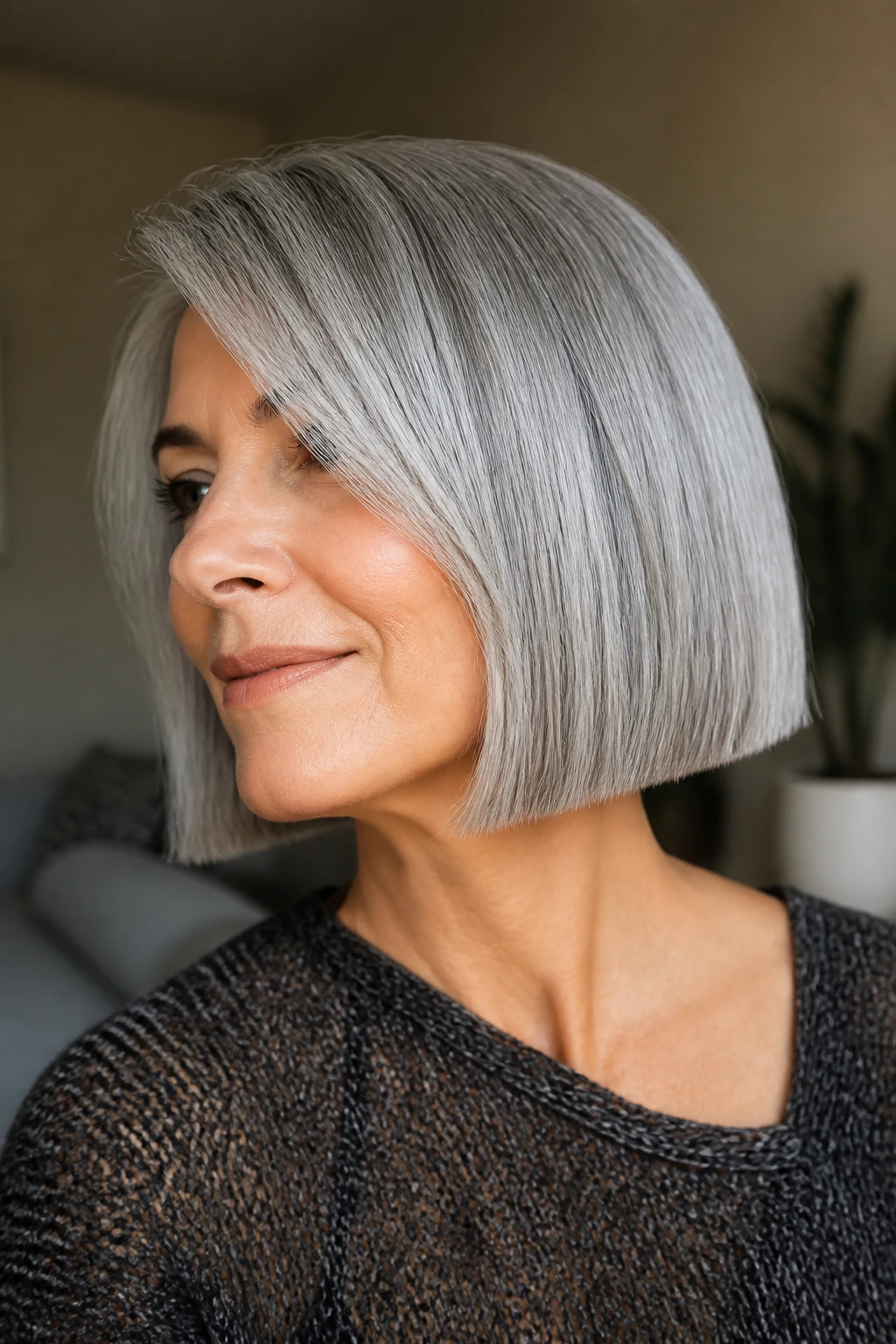
Thick gray hair does not need to be hidden, softened into oblivion, or forced into a version of sleek that it was never meant to hold. It needs a line. Once the cut, part, or finish gives the hair some structure, the silver starts doing what it does best: reflecting light, showing movement, and carrying a little drama without trying too hard.
The best part is that there is no single right answer here. A blunt bob, a long layered wave, a braided crown, a pixie, or a soft shag can all work if the density is handled with respect instead of panic. Pick the shape that matches your hair’s habits, not the one that sounds smallest or safest, and the result will look more like you and less like a compromise.
