



Silver highlights for gray hair older women work best when they look deliberate, not like someone tried to hide the gray and stopped halfway through. The prettiest versions catch the light at the temples, around the part, and through the front layers, which is where the face actually meets the color. That front zone matters more than people think.
Gray hair has its own stubborn personality. Some strands are coarse, some are silky, and some grab toner like a sponge while the next section refuses it completely. A smart silver highlight plan works with that unevenness instead of fighting it.
That’s why the best looks here are not recycled blonde tricks with a silver name slapped on top. They’re placement decisions. Brightness here, depth there, a little smoke underneath, maybe a pearl gloss on top — and suddenly the whole head reads polished rather than patched together.
Why These Silver Highlights Earn Their Keep
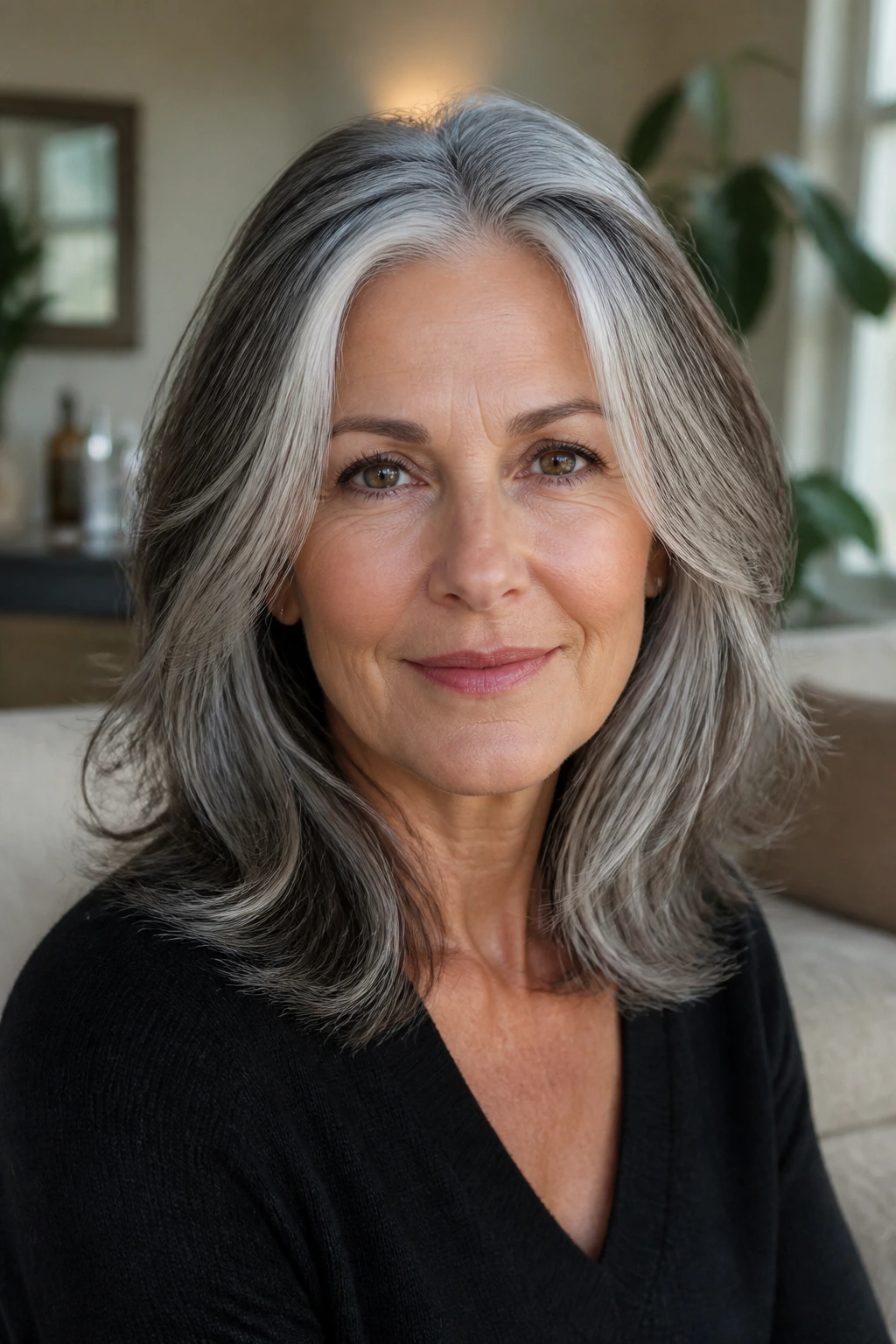
- Soft grow-out: Silver ribbons blur the line between dyed hair and natural gray, so the regrowth doesn’t turn into a hard stripe after three weeks.
- More shape at the face: Bright pieces near the temples and cheekbones keep the hair from looking dull around glasses, earrings, and jawline layers.
- Better texture control: Cool silver can make coarse gray look cleaner and less yellow, especially when the toner is chosen with the hair’s porosity in mind.
- Less flatness: A mix of silver, smoke, and depth keeps thick hair from turning into one pale sheet.
- Tone flexibility: Pearl, icy, smoky, and champagne silver all read differently, which makes it easier to match the color to skin tone instead of forcing one harsh shade.
1. Face-Framing Silver Ribbons
A few slender silver ribbons around the hairline can change the whole mood of gray hair. They catch movement first, which means the color shows up where people actually look: at the temples, along the cheekbone, and beside the part.
This is the style I reach for when someone wants brightness without the commitment of a full silver overhaul. The darker body of the hair stays in place, so the overall shape still has depth. You get lift at the face and a softer grow-out line near the roots. That’s the whole trick.
Who it flatters most: women wearing glasses, side parts, or chin-length layers. The front stays lively, the rest stays calm, and the cut does not get swallowed by a sheet of one-tone silver.
2. Feather-Light Babylights Through the Part
Tiny babylights are the quietest way to thread silver through gray hair. They’re woven so fine that the eye reads shimmer before it reads streaks, which is exactly why this placement looks so natural on mature hair.
Why This Placement Stays Soft
Babylights are useful when the goal is blend, not drama. A narrow weave at the part line and a few fine pieces through the top soften the transition between natural gray and any remaining darker strands. The result is less like “highlighted hair” and more like light falling through it.
- Keep the lightest pieces near the part and crown.
- Leave deeper gray or soft ash underneath so the hair still has body.
- Ask for a cool pearl toner rather than a flat white if the skin leans warm.
- Touch up gloss before the silver starts looking chalky.
This is the one to choose if you dislike obvious striping. It wears well on finer hair because the color never gets loud.
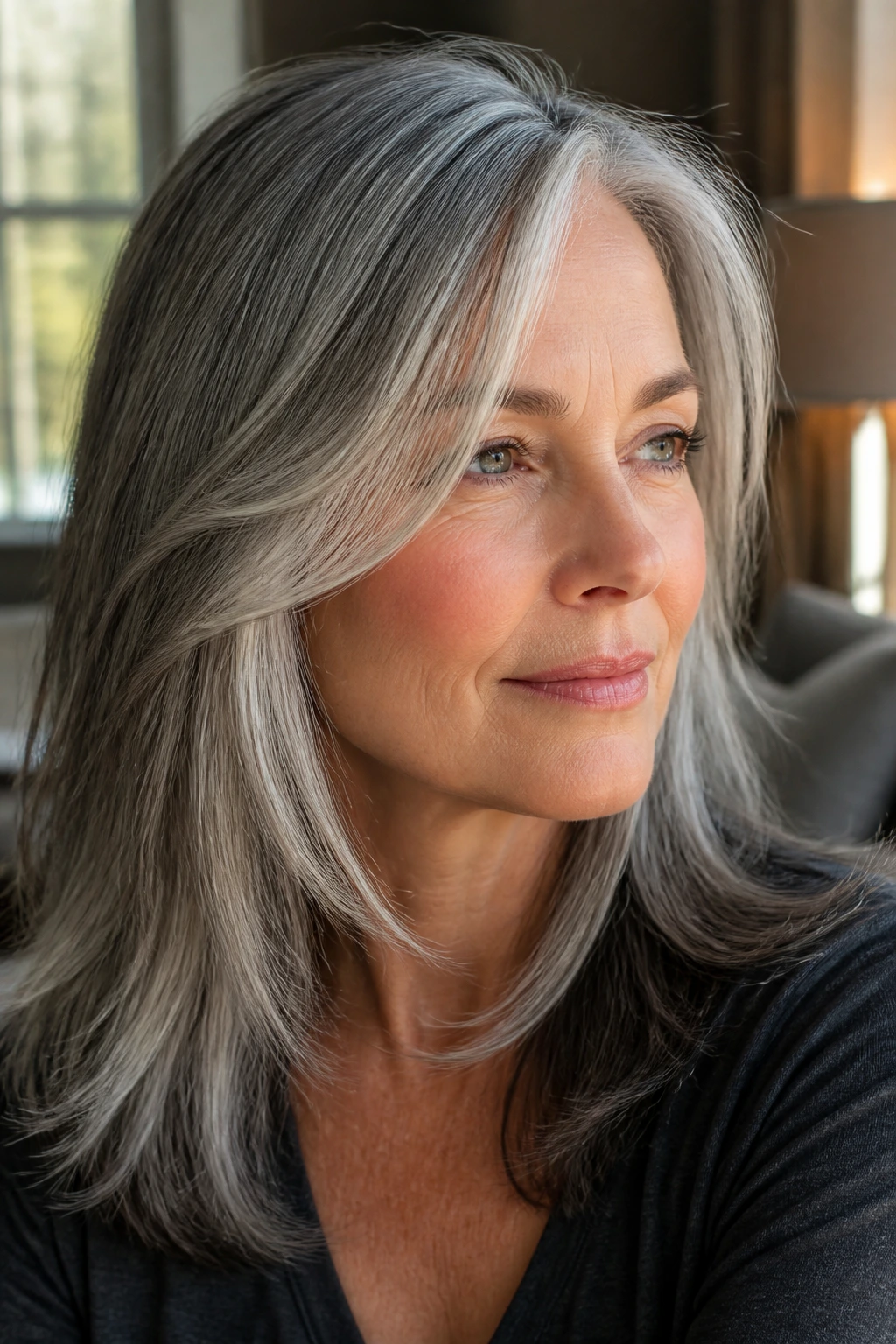
3. Silver Balayage Over Long Layers
Silver balayage on long layers has a looser, painted feel. The color starts midshaft, bends through the layers, and then fades out before the ends get too pale. That taper matters. Without it, long gray hair can look heavy and smoky in the wrong way.
The best version leaves the root zone a touch deeper, almost like a soft shadow. Then the silver takes over where the hair swings. When the layers move, the color moves with them. Still. That motion is what gives the style its lift.
This works especially well on hair that already has enough length to show dimension. A blunt one-length cut can swallow the effect. Layers let the silver breathe.
4. Icy Money Piece with a Soft Root Smudge
Can one bright strip carry an entire haircut? Sometimes, yes. A strong money piece at the front — paired with a soft root smudge — gives silver hair a sharper edge without turning the whole head icy.
The root smudge is the part that saves this look. A slightly deeper root, feathered down a half inch or so, stops the highlight from looking pasted on. It also helps the grow-out behave, which is useful when the rest of the hair is already gray and only needs a cleaner frame.
I like this most on side-swept bobs, long layers, and cuts with a bit of swing around the face. It can be too much on very short hair unless the rest of the cut has room to balance it.
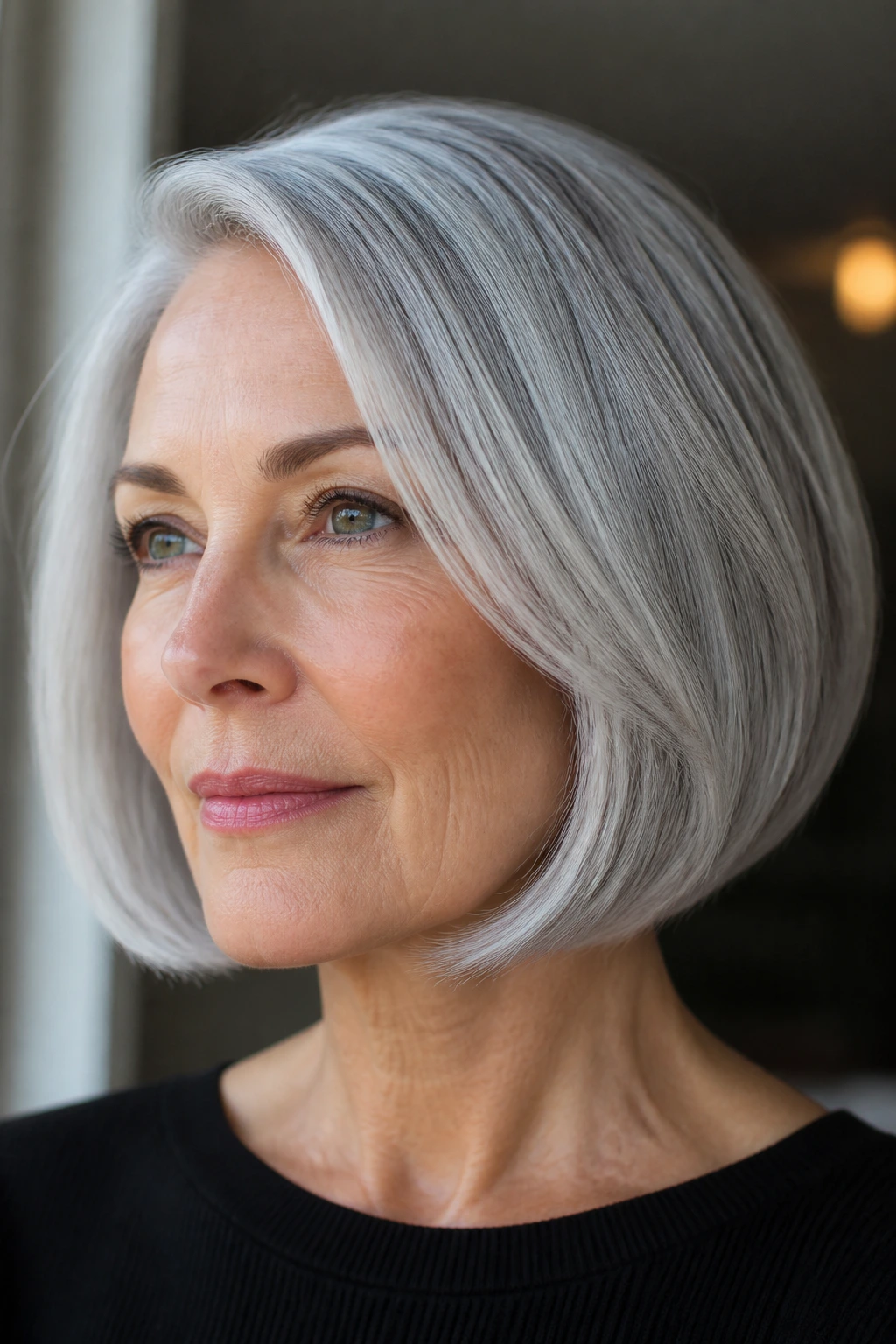
5. Pearl Silver on a Chin-Length Bob
A chin-length bob with pearl silver tones has a clean, almost liquid finish. The shine lands on the surface first, then the soft cool tone underneath keeps it from going flat or stark.
This is a good choice when the haircut is crisp and the styling is neat. A round brush, a gentle bend at the ends, and a pale pearl gloss make the bob look intentional without screaming for attention. If the hair is porous, though, skip the urge to push it too white. Porous gray can turn dull fast when the toner is pushed too far.
One more thing: this look benefits from a neat neckline. A bob with a fuzzy outline loses the sharpness that makes the pearl tone feel so clean.
6. Smoky Silver and Charcoal Lowlights
Silver without depth looks flat by lunchtime. Smoky lowlights fix that. They sit underneath the brighter pieces and give the silver somewhere to land, which matters a lot on thick, coarse, or highly porous gray hair.
The charcoal note keeps the palette from drifting into washed-out territory. It also makes the silver feel richer, not lighter for the sake of being lighter. That distinction matters on mature hair, where too much pale tone can make the shape disappear.
Best Used When the Hair Feels Too Pale
If the hair has already gone mostly white, lowlights are the difference between “bright” and “blown out.” A few smoky ribbons under the crown, behind the ears, and through the nape add visual weight without making the color dark.
7. Frosted Crown Lights for Thinning Hair
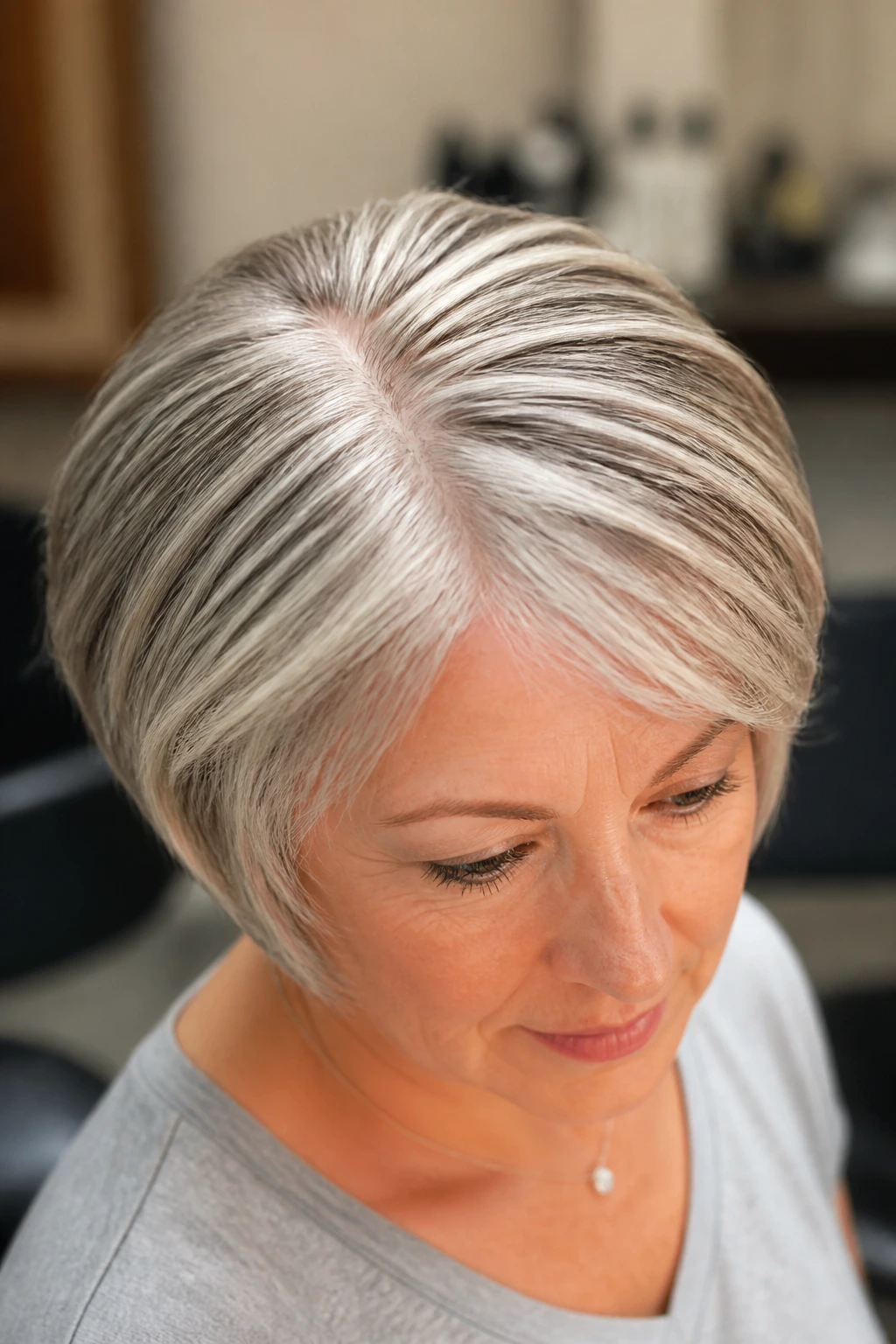
A brighter crown can make fine or thinning hair look fuller than a full head of pale foils ever will. The eye naturally goes to the top and part line, so that’s where the silver should live.
The placement needs a light hand. Too many bright pieces through the ends make the hair look see-through. A better move is to keep the perimeter a shade deeper and place the silver where the part splits and the crown lifts. That gives the illusion of density.
This is a good match for soft layers and shorter cuts that need a little lift at the root. It also plays well with a root-lift blow-dry. Flat roots flatten the whole idea.
8. Champagne-Silver Blend for Warm Skin
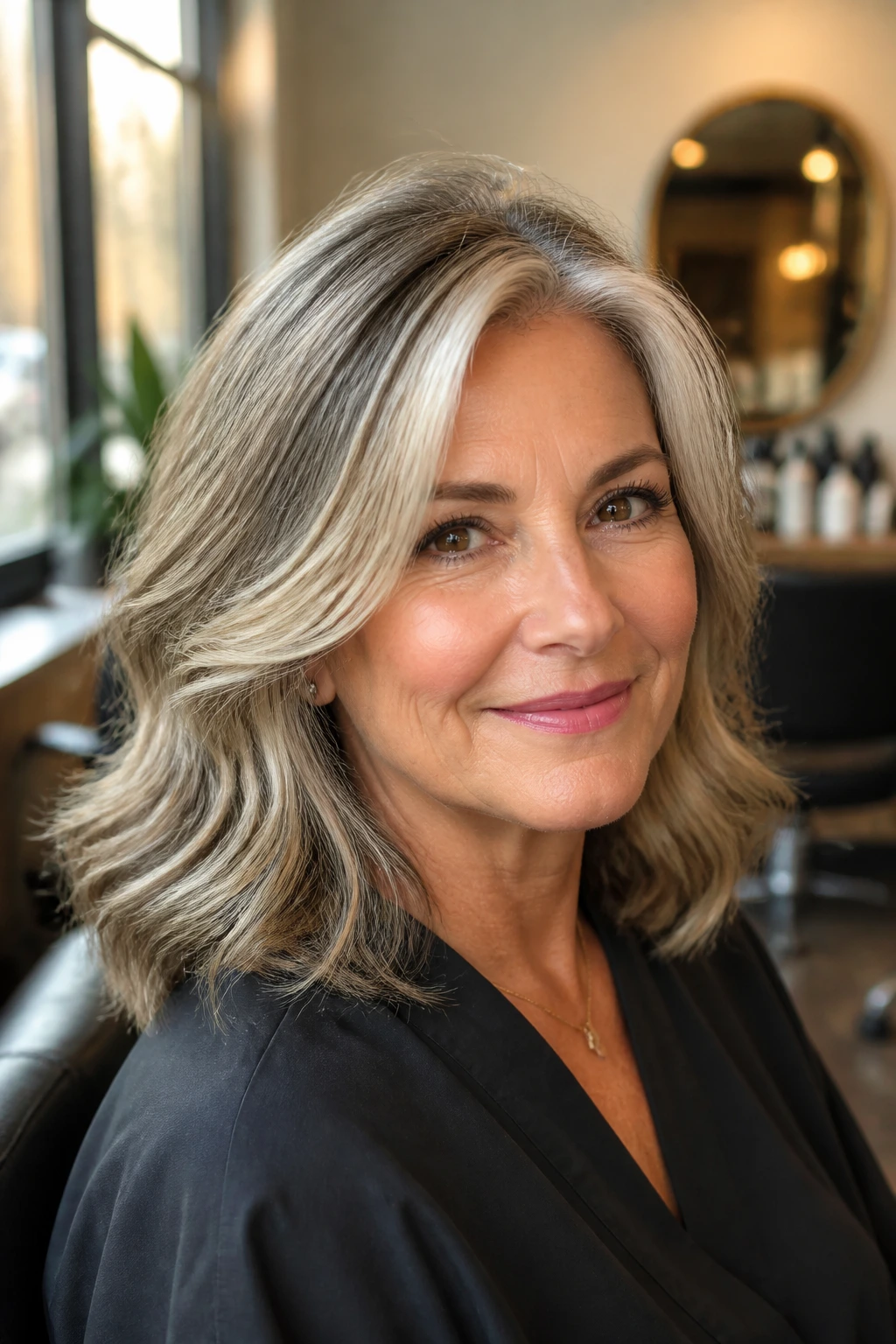
Not every silver needs to feel icy. A champagne-silver blend leans softer and slightly warmer, which keeps it from fighting golden or peach-toned skin.
The color should still read cool enough to look like silver, but the toner can be nudged toward pearl and beige rather than chrome. That small shift changes everything around the face. Harsh silver can make warm skin look tired; champagne silver usually looks easier, less severe.
This is a strong choice if your natural gray has a little yellow cast or if your base color still holds warmth from years of dye. It lets you keep the silver story without going into a blue-white finish that feels too sharp.
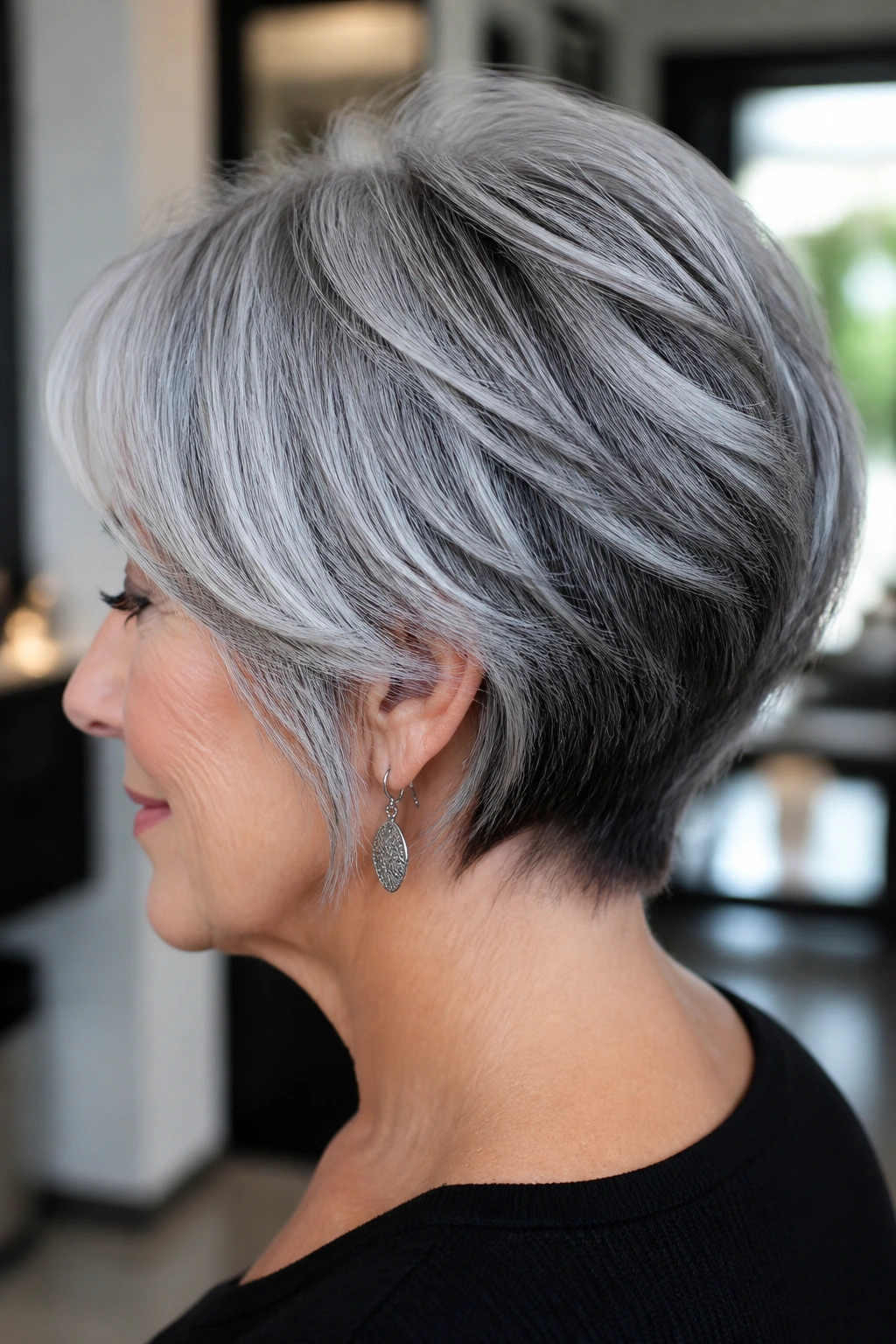
9. Platinum Edges on a Pixie Cut
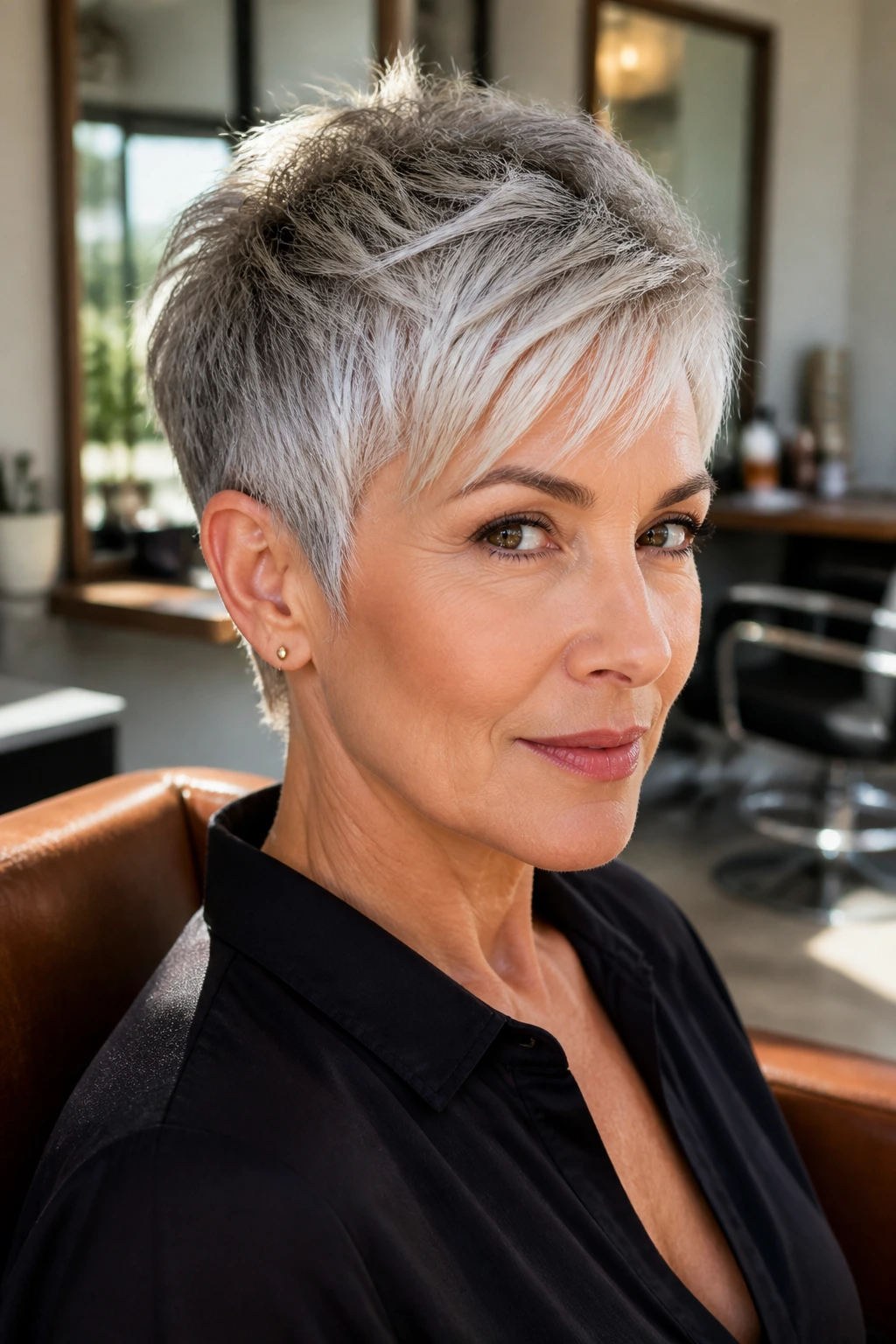
A pixie can take a lot more brightness than people expect. The trick is to put the silver at the edges — the fringe, the sideburns, the top ridge — so the shape stays crisp.
Short cuts expose every color move. That’s why platinum edges work here. They outline the haircut the way a pencil line outlines a sketch. If the sides are too pale all the way through, the cut loses its shape and starts looking fuzzy instead of tailored.
This one does ask for upkeep. A pixie shows regrowth fast, and the brighter the edge, the more often it needs a toner or trim. Still, the payoff is strong if you like a sharp, clean silhouette.
10. Silver Veil on a Wavy Lob
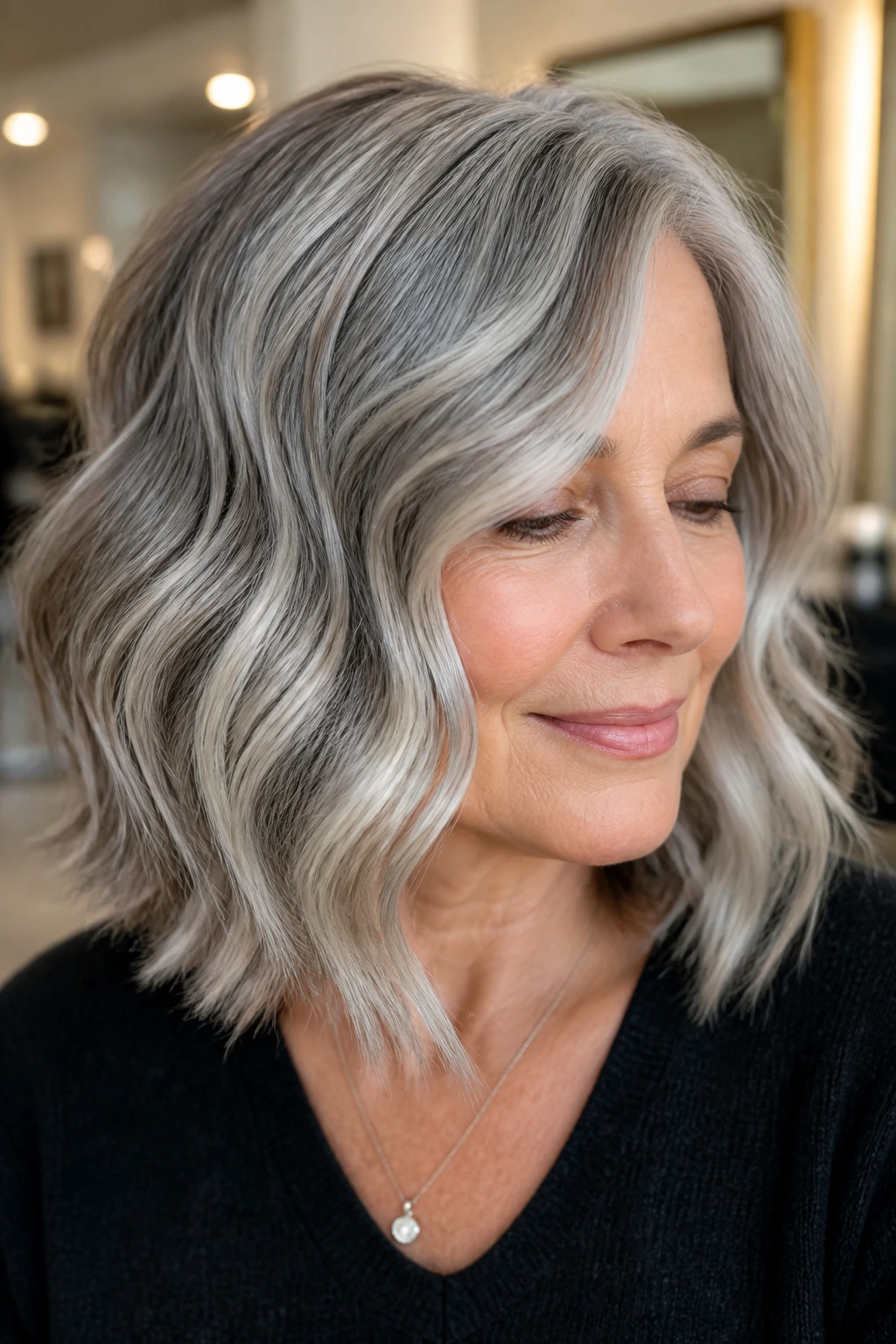
A silver veil is softer than a stripe and more visible than a whisper. On a wavy lob, those broad silver ribbons sit inside the bend of the hair and flash when the waves turn.
The best part is how forgiving it is. A little wave hides a lot of grow-out. A little wave also keeps the silver from reading as one flat sheet, which is the enemy on shoulder-length gray hair. You want the light to catch, not glare.
If you style with a one-inch iron or a round brush blowout, aim for soft bends rather than tight curls. Tight curls make the pattern busy. Soft bends let the silver drift.
11. Ribbon Highlights on Curls
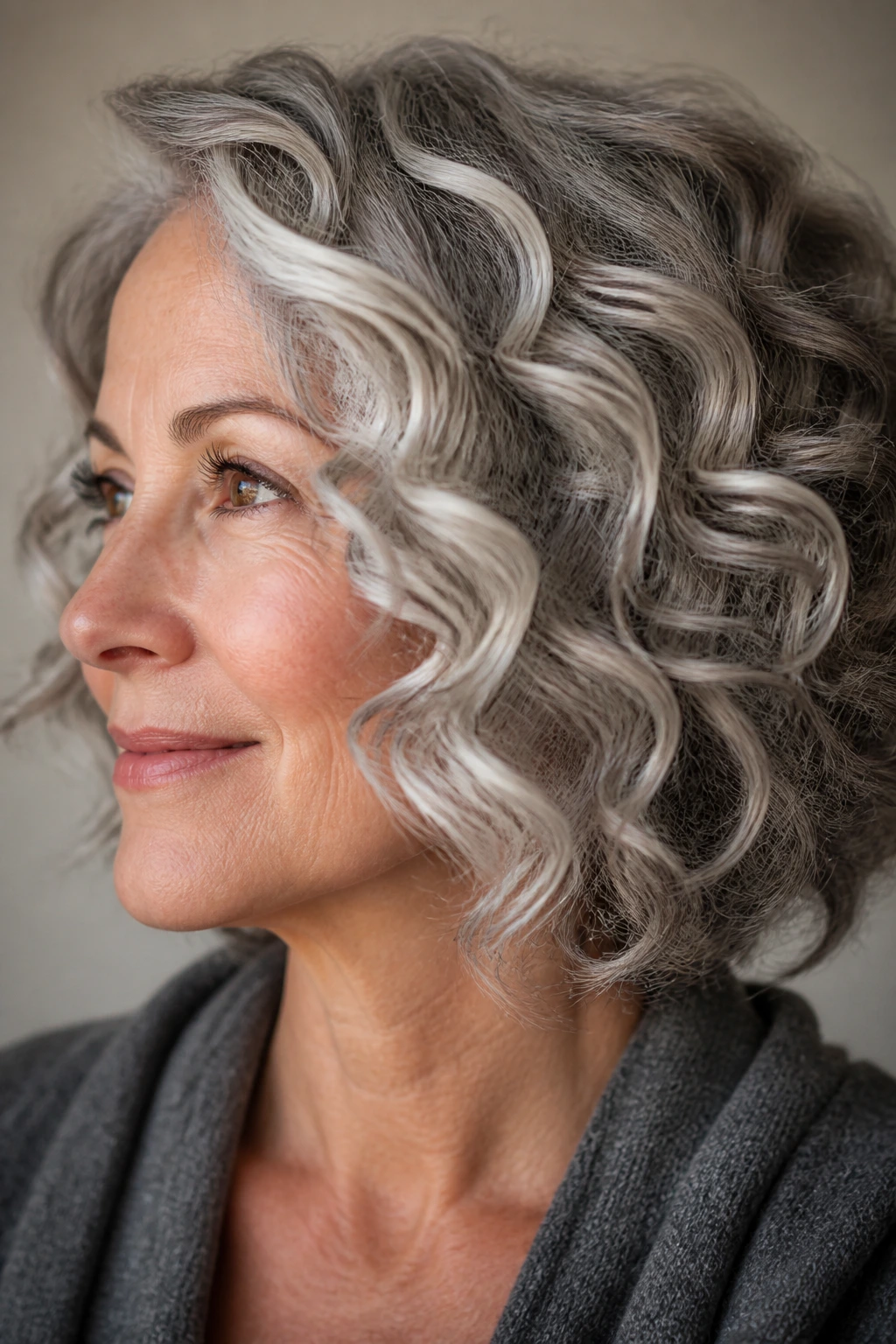
Curly gray hair needs highlights that follow the curl family, not fight it. Ribbon highlights do exactly that. The silver is painted or foiled in wider, curved sections so it lands on the curls where the light naturally hits.
The Curl-Friendly Rule
Never scatter silver like confetti through curls. It breaks up the pattern and can make the hair look frizzy. Instead, place the lightest ribbons where the curl sits on top of itself, then leave shadow underneath for depth.
- Use larger curl clumps as the placement map.
- Keep the toner a touch deeper than you would on straight hair.
- Finish with a light cream or gel so the curl pattern stays defined.
- Avoid heavy oils on the top layer; they flatten the silver.
This style looks especially good when the haircut already has rounded shape. Silver and curls need structure, not chaos.
12. Frosted Shag Layers
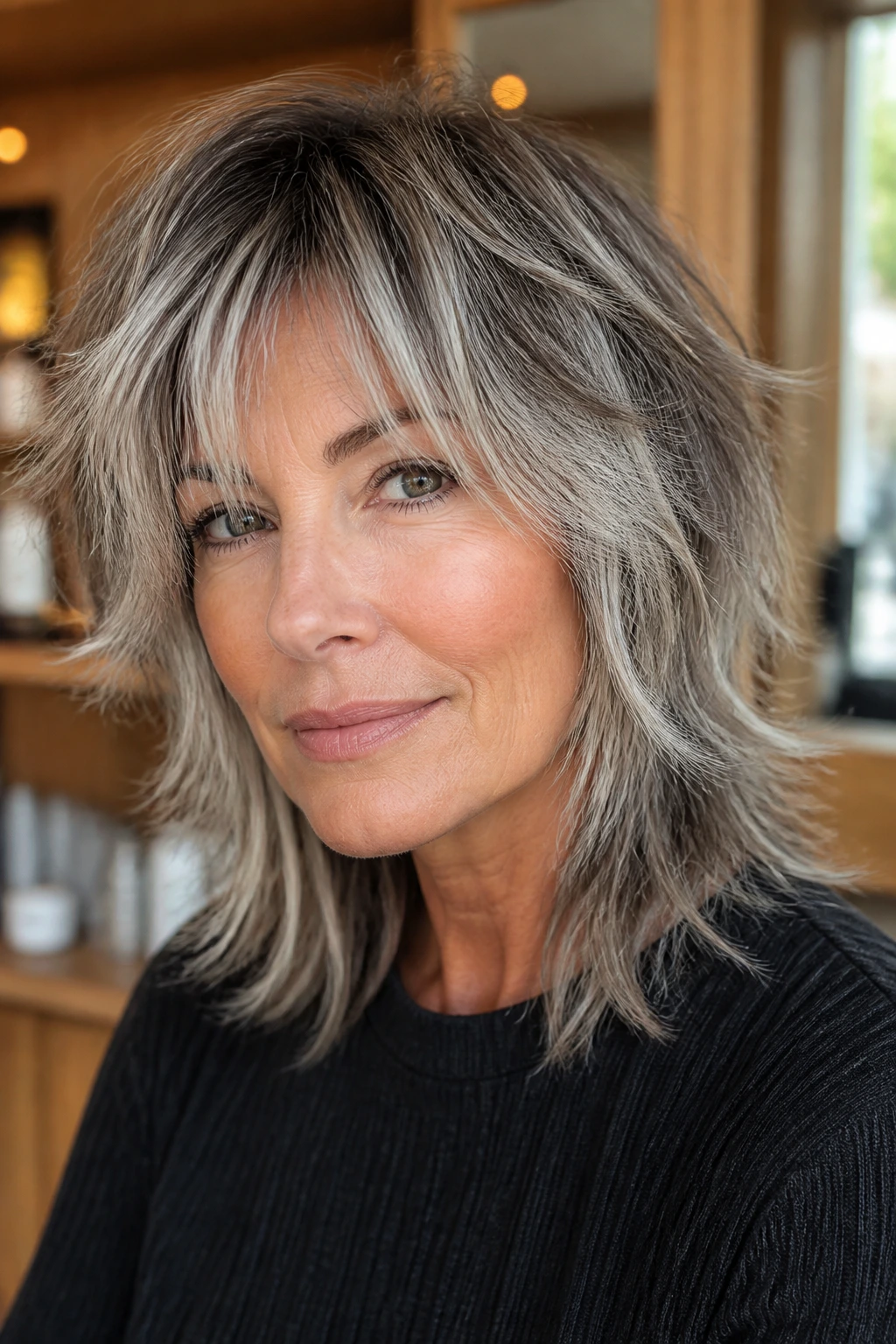
A shag gives silver hair room to move. The layers break up the weight, and the frosted highlight pattern makes each piece show up instead of disappearing into the cut.
This is not a quiet look. It has a little edge. The silver usually sits on the longer layer tips, around the fringe, and through the surface sections that move when the head turns. That’s what gives the shag its airy, piecey finish.
I prefer this on women who like hair with texture and a little attitude. It pairs well with a styling cream or light texture spray, but not with heavy smoothing serum. Too much slip and the whole shag collapses.
13. Brunette-to-Silver Transition Blend
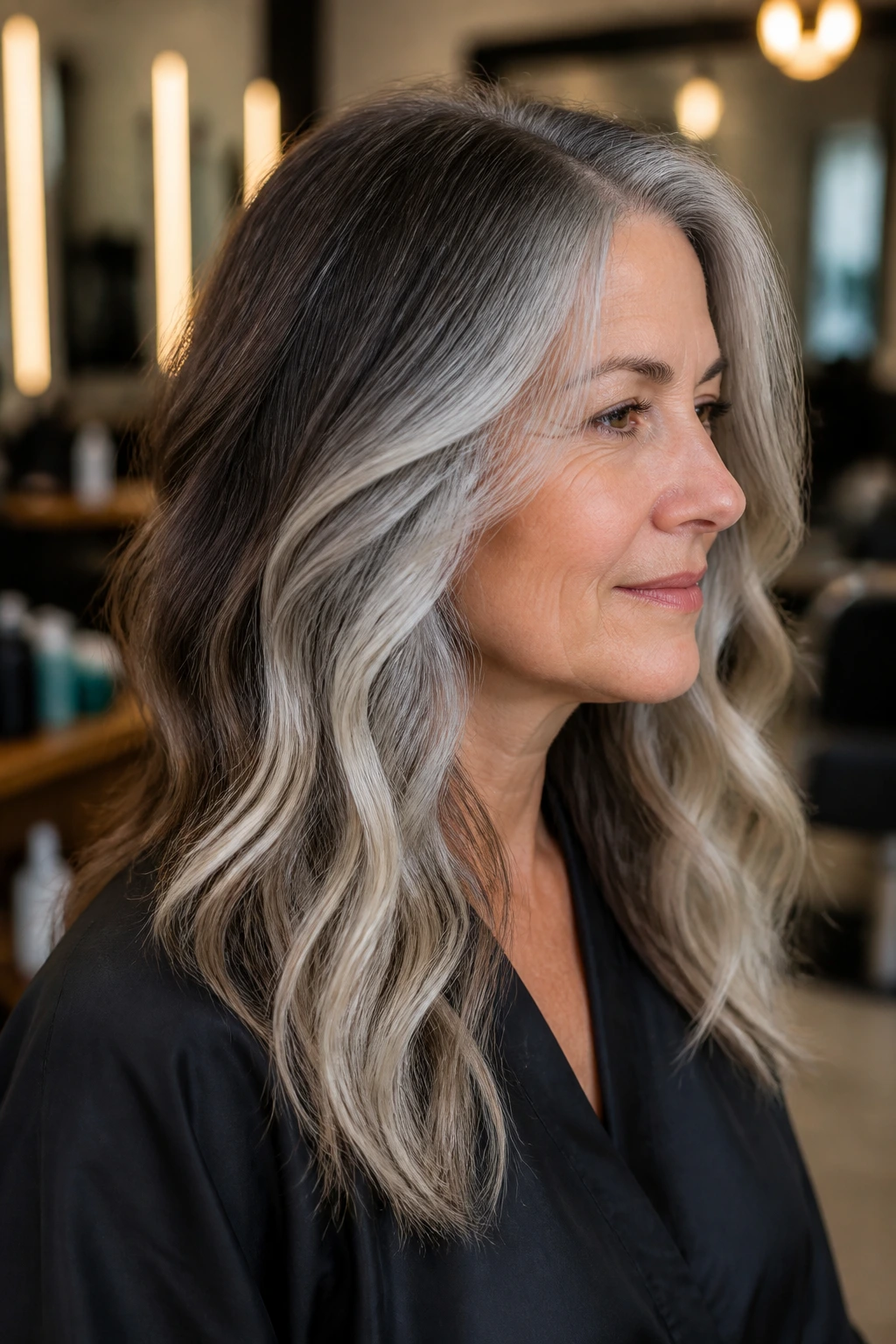
Growing out dyed brunette into gray can be rough around the edges, especially if the color line is hard at the root. A silver transition blend softens that line by weaving in cool foils, lowlights, and a shadow root that doesn’t scream for attention.
The pace matters. Trying to jump straight from deep brown to silver usually creates orange or patchy sections, especially on previously colored hair. A better plan is to let each appointment move a little lighter and a little cooler, with depth preserved underneath so the hair never looks hollow.
This is the patient person’s version of silver hair. Not the fastest. Usually the nicest.
14. Peekaboo Silver Panels Underneath
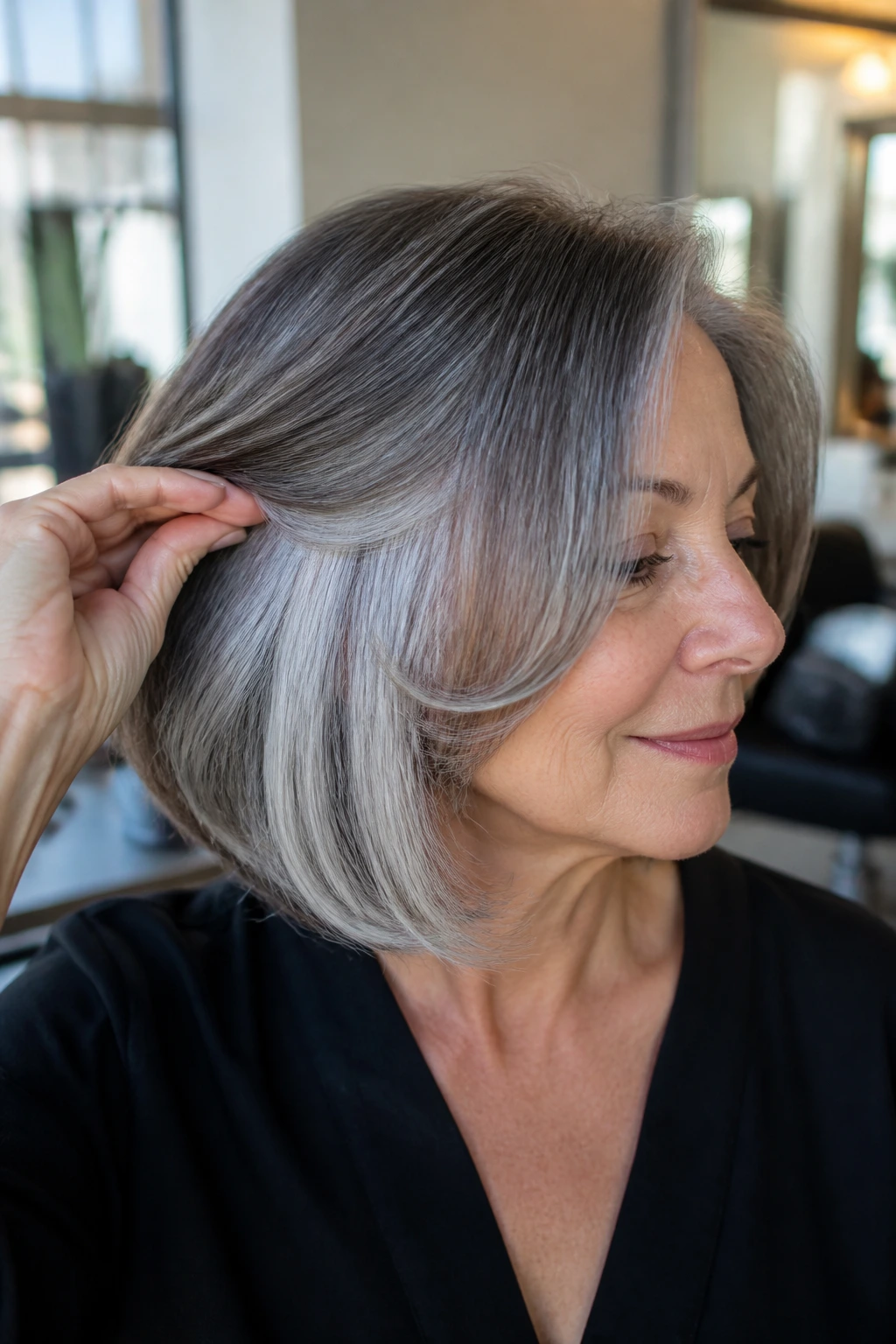
Want silver that shows up when the hair moves, not when it sits still? Peekaboo panels are the answer. The brightness lives underneath the top layer, so the effect appears in turns, lifts, and tucked-back styles.
That hidden placement makes the color feel playful without being loud. It also keeps the top layer more forgiving as the hair grows out, which is useful if you do not want every appointment to become a full-on correction.
This is a smart choice for layered cuts, half-up styles, and women who wear clips or barrettes. The silver flashes, then disappears again. Nice and clean.
15. Salt-and-Sugar Blend
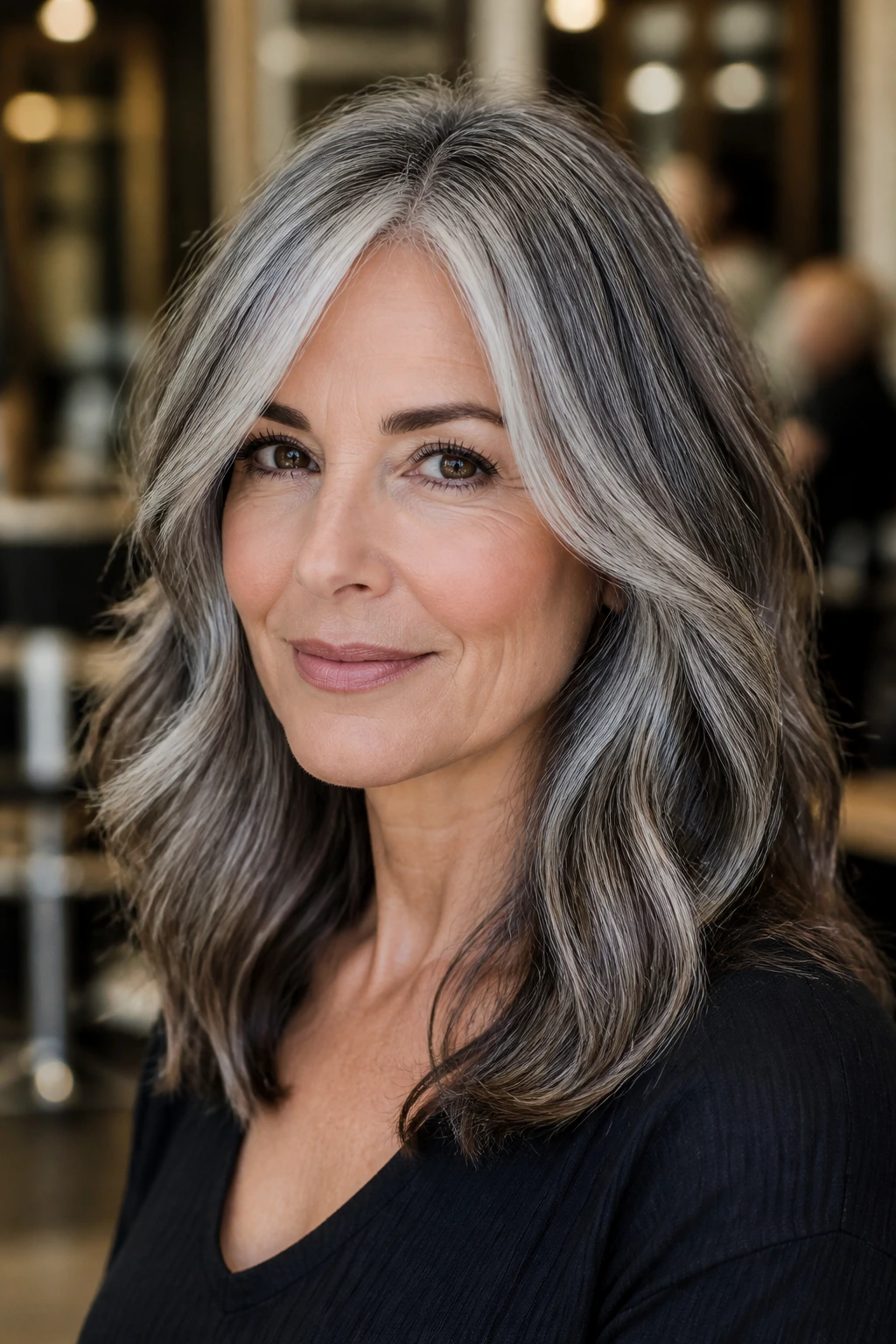
Salt-and-sugar hair has been around forever because it solves a real problem: some gray patterns are already beautiful, but they need a little lift so they don’t look dull. A salt-and-sugar blend keeps the natural contrast and adds silver threads where the eye can use them.
The point here is restraint. You do not erase the dark pieces. You sharpen the contrast just enough that the hair reads intentional. That’s especially useful if your natural gray comes in patchy or if the root pattern changes from the temples to the crown.
This is one of the easiest looks to live with. It respects what’s already there. That’s a refreshing thing in a color service.
16. Mushroom Blonde with Silver Threads
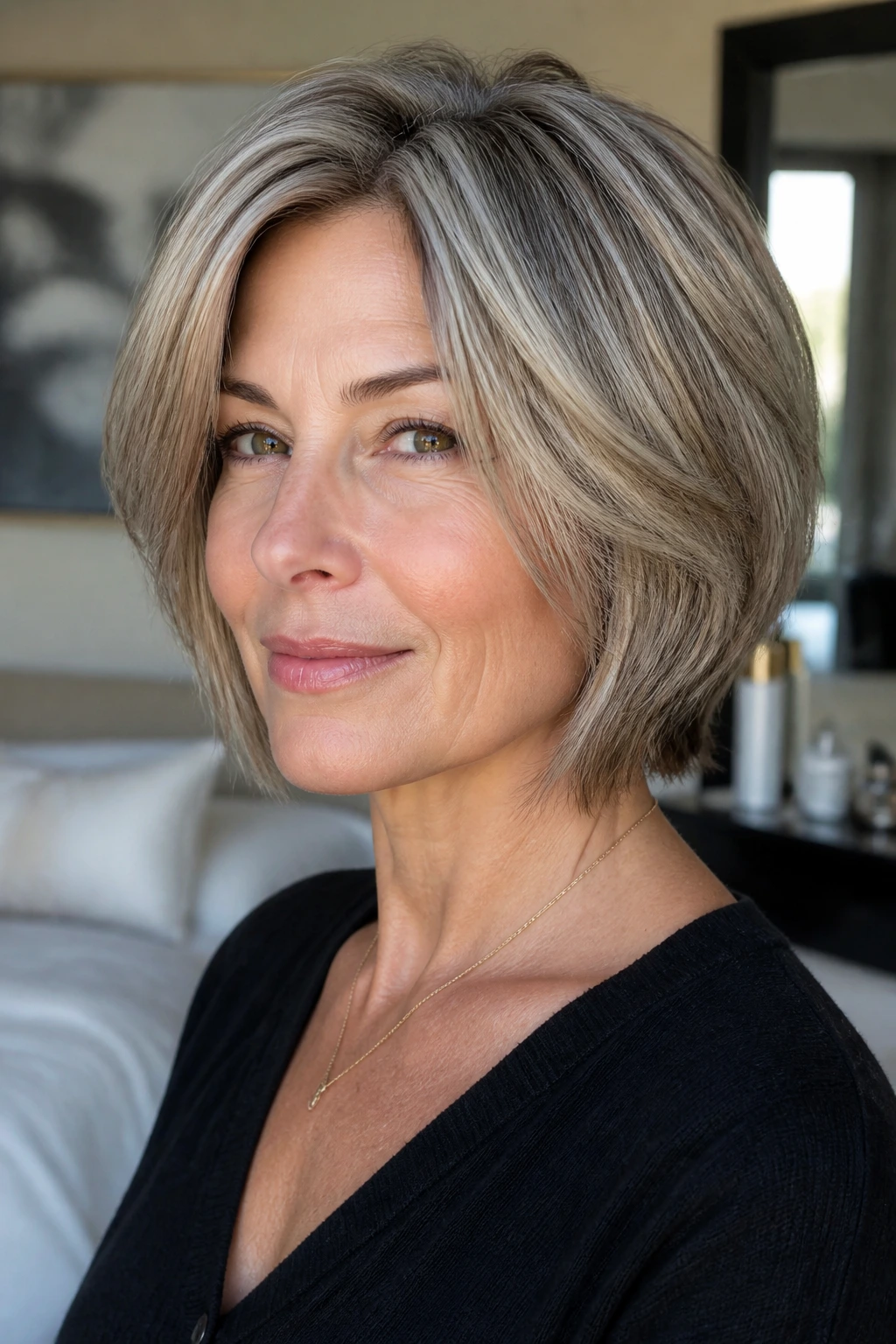
Mushroom blonde sounds a little odd until you see it on gray hair. The taupe base holds onto a soft, earthy depth while the silver threads keep the whole look cool and reflective.
It works because it bridges warm and cool in a way plain ash often does not. If your skin tone hates icy white but your hair still needs brightness, this is the compromise that does not look like a compromise.
I’d choose it for medium-length layers, soft bobs, and anyone whose natural gray has some beige in it. It’s a little quieter than pure silver. That’s the point.
17. Silver Crescent at the Part
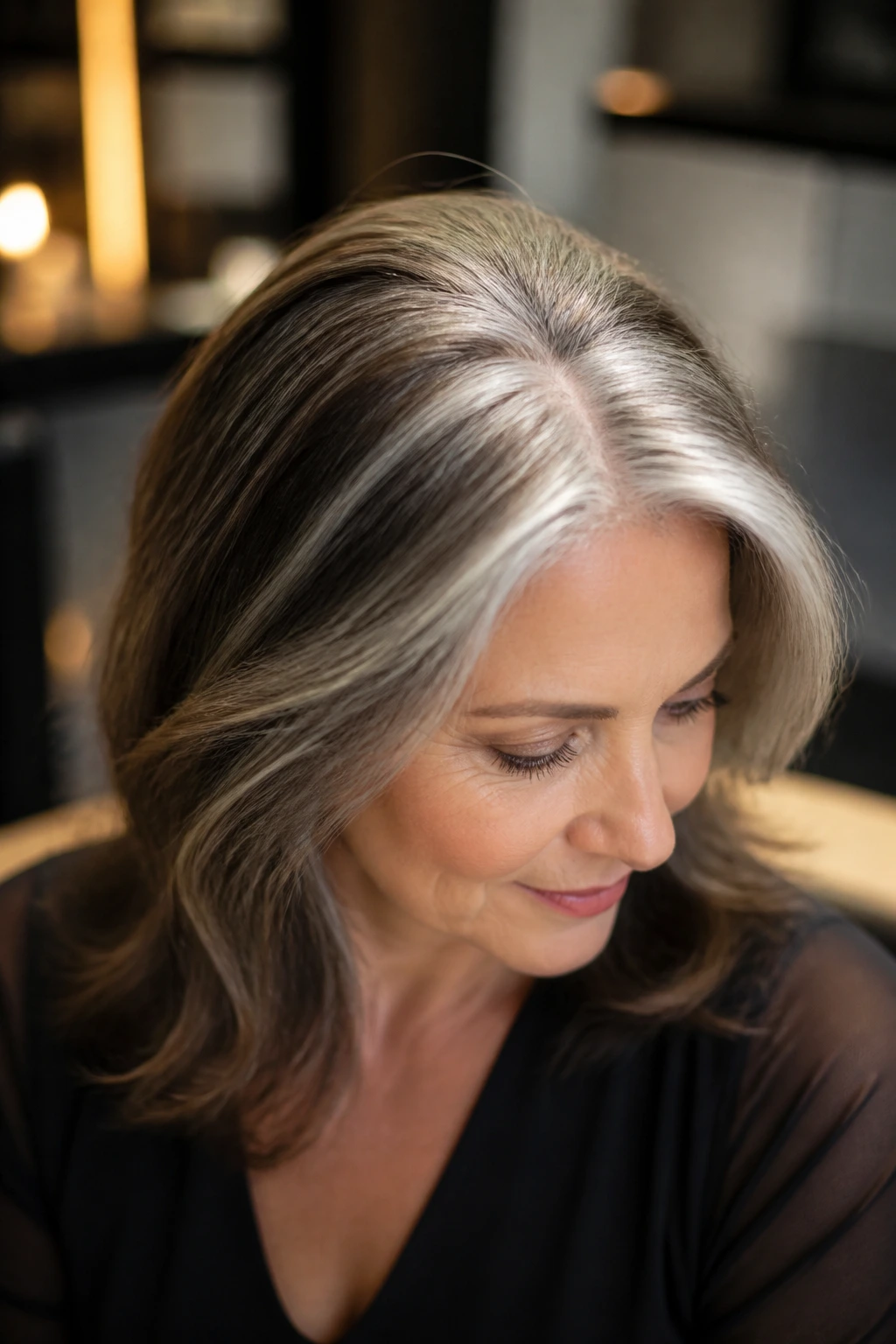
A crescent highlight follows the natural arc of the part and crown, which means the brightness sits where the eye already lands. It’s subtle in still photos and stronger in movement.
The curve helps older hair read fuller at the top. A straight stripe can look like a streak. A crescent reads like light. That distinction matters on finer or flatter hair, where the part line can become a little too honest.
This is also one of the easiest shapes to refresh. You do not need a full overhaul every time. A few well-placed foils around the part can keep the whole look awake.
18. Frosted Face Frame with Soft Ends
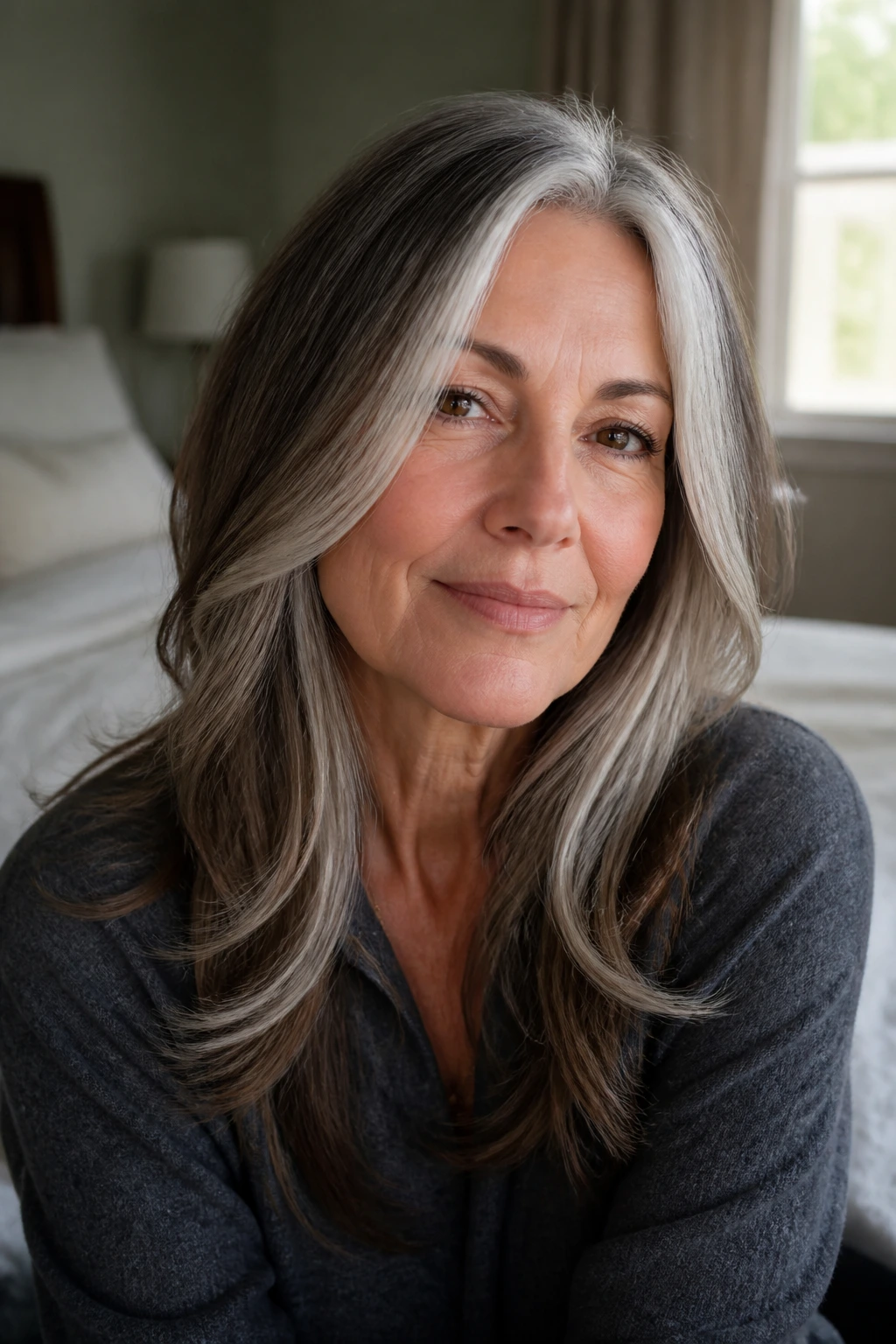
Some women want the brightness near the face and no drama elsewhere. Frosted face framing does exactly that. The front pieces get the silver, and the ends stay softer so the overall line doesn’t turn sharp or stripy.
The soft ends are the secret. They keep long hair from looking overprocessed. A little deeper color through the midlengths and ends also gives the silver somewhere to stand out against, which keeps the face frame from blending into the rest of the hair.
This is a good fit for long layers, curtain bangs, and anyone who wants the haircut to do some of the work.
19. Ash-Pressed Highlights on Thick Hair
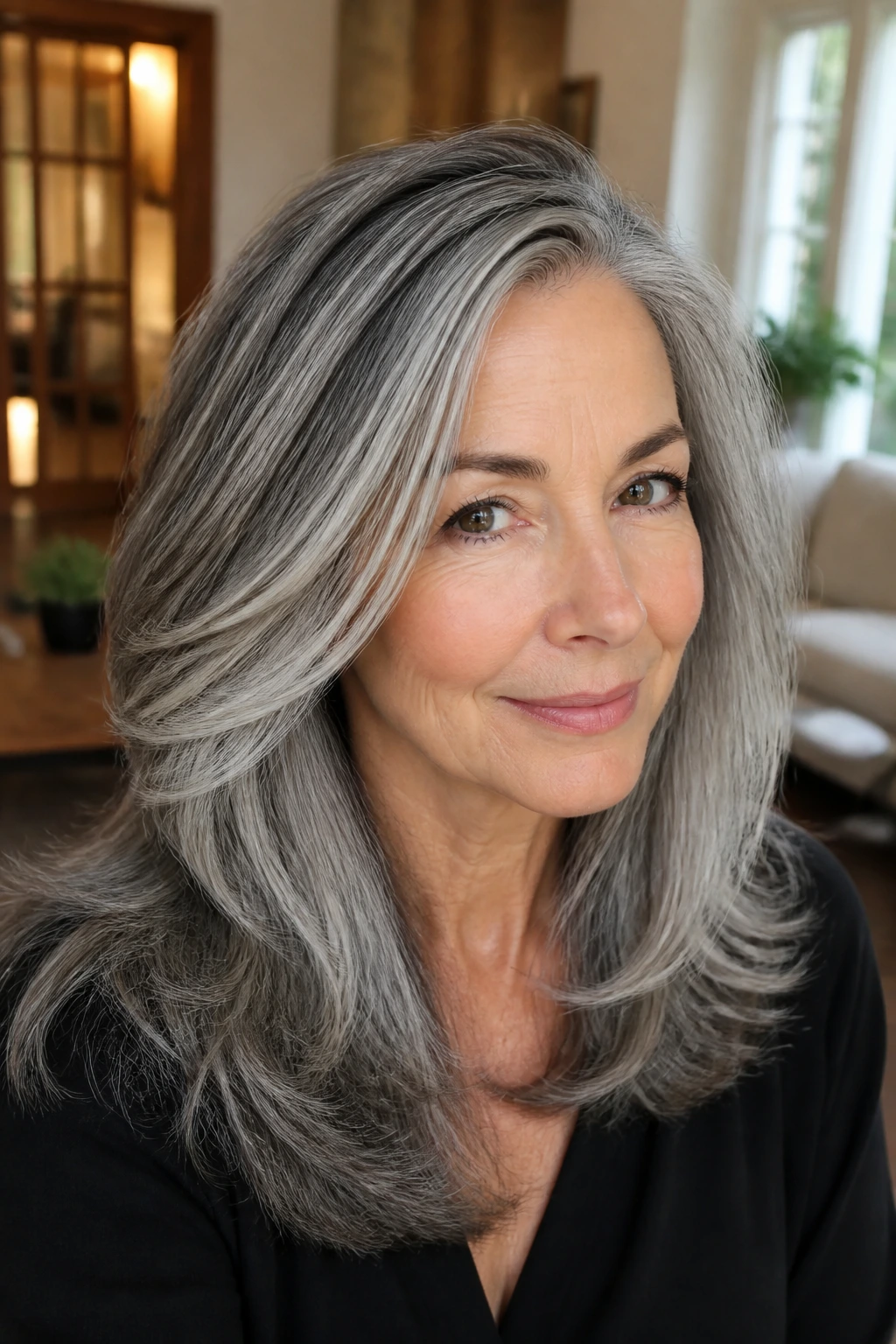
Thick hair can eat light. The answer isn’t always more blonde. Sometimes it’s cooler ash pressed through the interior so the hair has dimension without losing weight.
The ash tone helps cut back warmth, but the placement matters just as much. A few wider ribbons through the surface, then cooler depth underneath, keep thick gray hair from turning into one opaque block. The shape stays readable. The color stays layered.
This look is especially useful if your hair puffs out at the sides or feels dense at the crown. The contrast helps the cut breathe.
20. Metallic Silver Accent Streaks
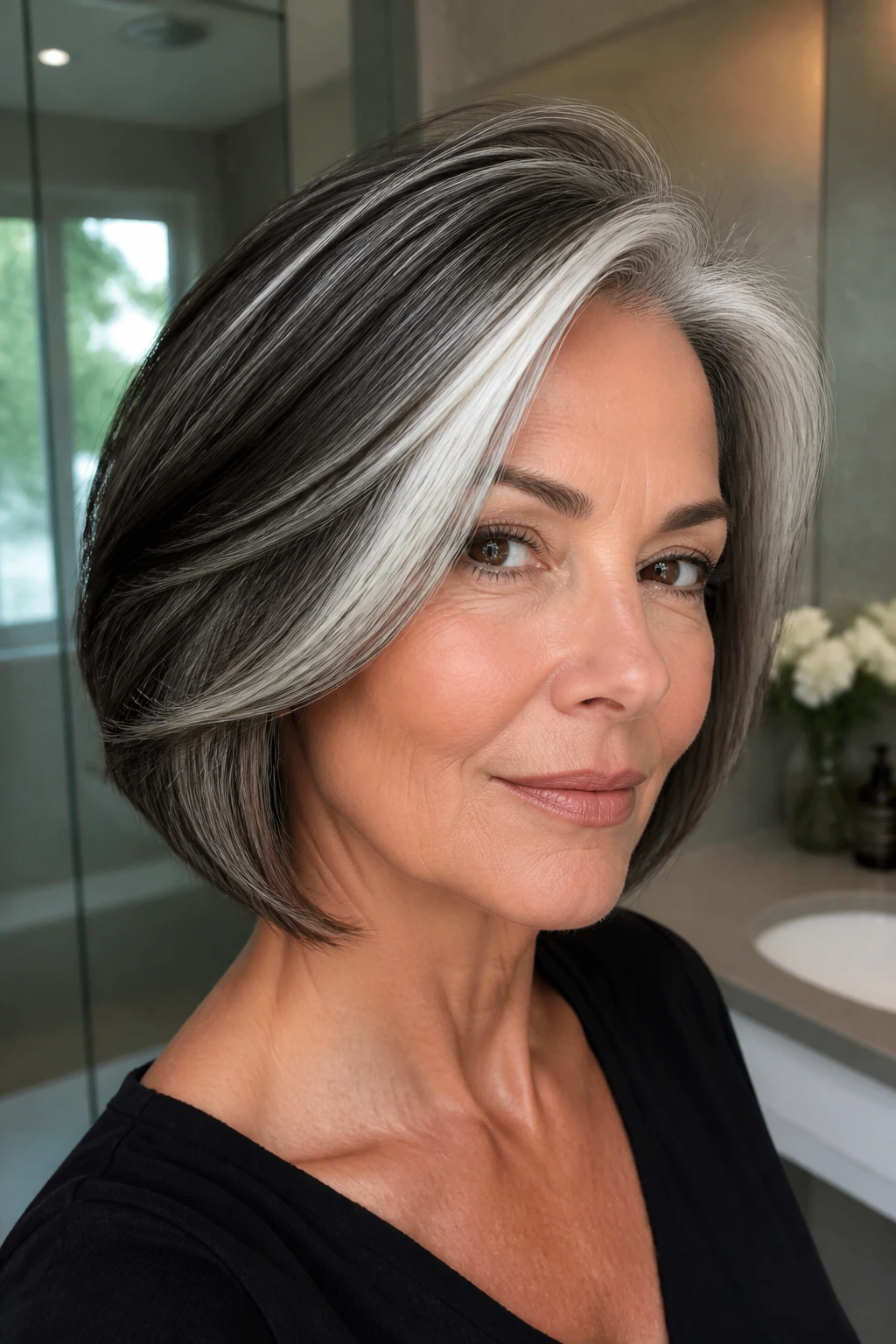
Metallic streaks are for someone who wants the silver to be seen. Not shouted, exactly. Seen. A few deliberate streaks across the front, through the fringe, or along a side panel can make gray hair feel graphic and modern without turning the whole head pale.
The key is discipline. Too many streaks and the effect gets busy fast. A small number of well-placed metallic ribbons feels sharper than a full saturation job because the contrast remains part of the design.
This style likes strong cuts, crisp bobs, and very tidy styling. If the hair is worn wildly textured every day, the streaks can lose their punch.
21. Dimensional Silver for Fine Hair
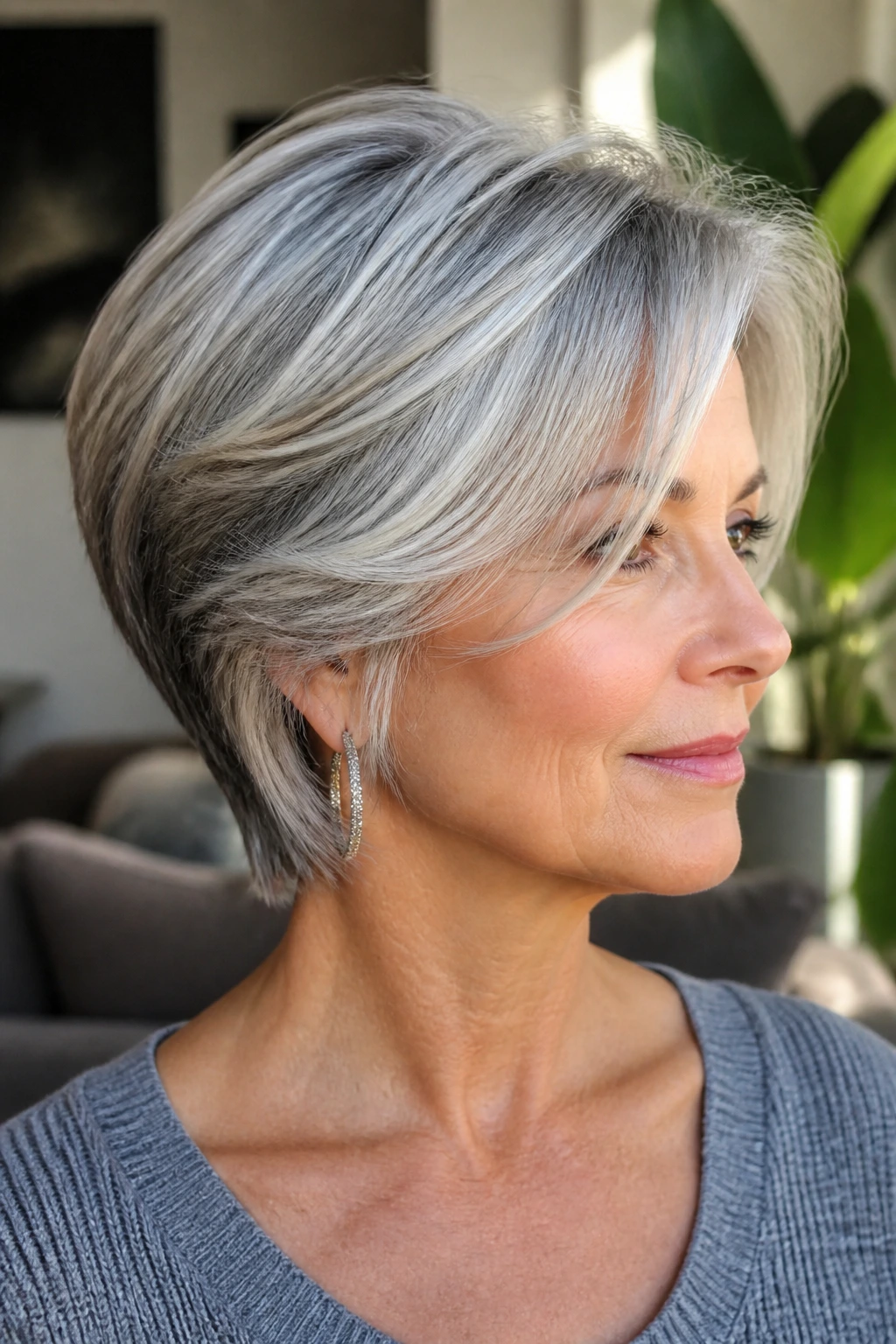
Fine hair needs more than one note. One flat silver color can make it look thinner than it is, while a dimensional blend — pearl, ash, and a little deeper root shadow — gives the eye somewhere to travel.
Why It Works on Smaller Strands
Fine hair reflects light quickly, so tiny changes in tone show up fast. That’s good news if the placement is gentle. It means babylights, not chunky foil stripes, and a little depth left in place under the crown.
- Keep the lightest pieces through the top layer.
- Leave some soft gray underneath for shadow.
- Use a lightweight volumizing product so the color can be seen.
- Avoid overly warm toner; brass on fine hair looks muddy in a hurry.
The result is airy, not stripped bare. That’s a better look on fine hair almost every time.
22. Silver Halo Around the Crown

A halo highlight circles the crown and upper perimeter so silver appears where updos, ponytails, and half-up styles reveal the hair most. It’s a smart choice if your hair spends a lot of time pinned back.
The halo effect also helps break up flatness at the top. Gray hair can lie a little close to the scalp and disappear into the head shape. A brighter ring around the crown gives the hair lift without needing lots of lightness through the ends.
This is a subtle fix that reads more expensive than it sounds. Quiet. Controlled. Effective.
23. Soft Foilyage for Grow-Out
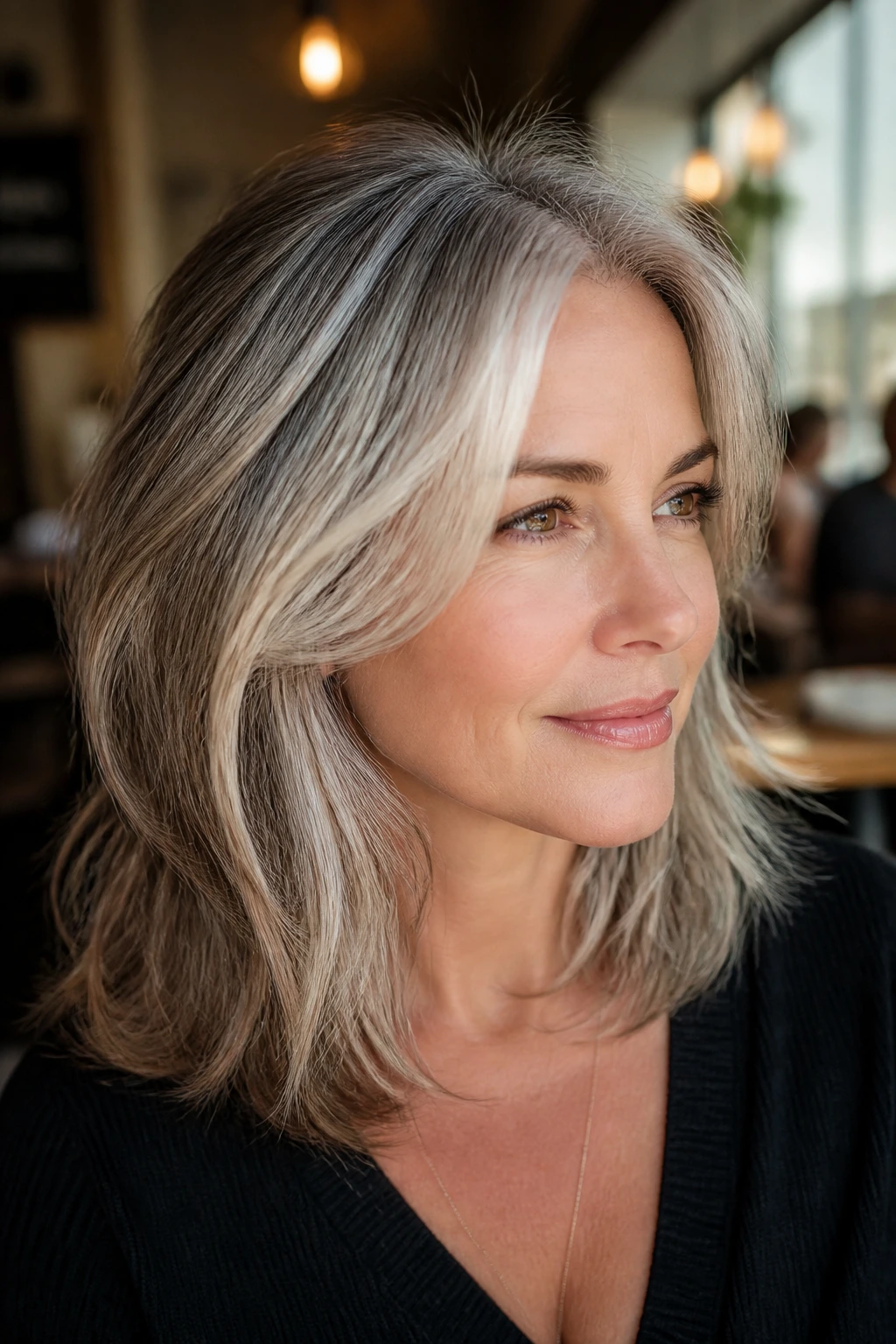
Foilyage sits between foil highlights and balayage, which is why it works so well for women who want silver with fewer salon visits. You get the lift of foils and the softer edge of hand painting.
The grow-out is kinder because the brighter pieces don’t start in one hard line. They fade into the natural gray more easily, and that matters if your schedule is not built around frequent color maintenance. It’s one of the better choices for busy hair.
This technique is especially useful on layered cuts, where the silver can be concentrated around the surface and front without over-lighting the whole head.
24. Short Crop with Bright Silver Edges
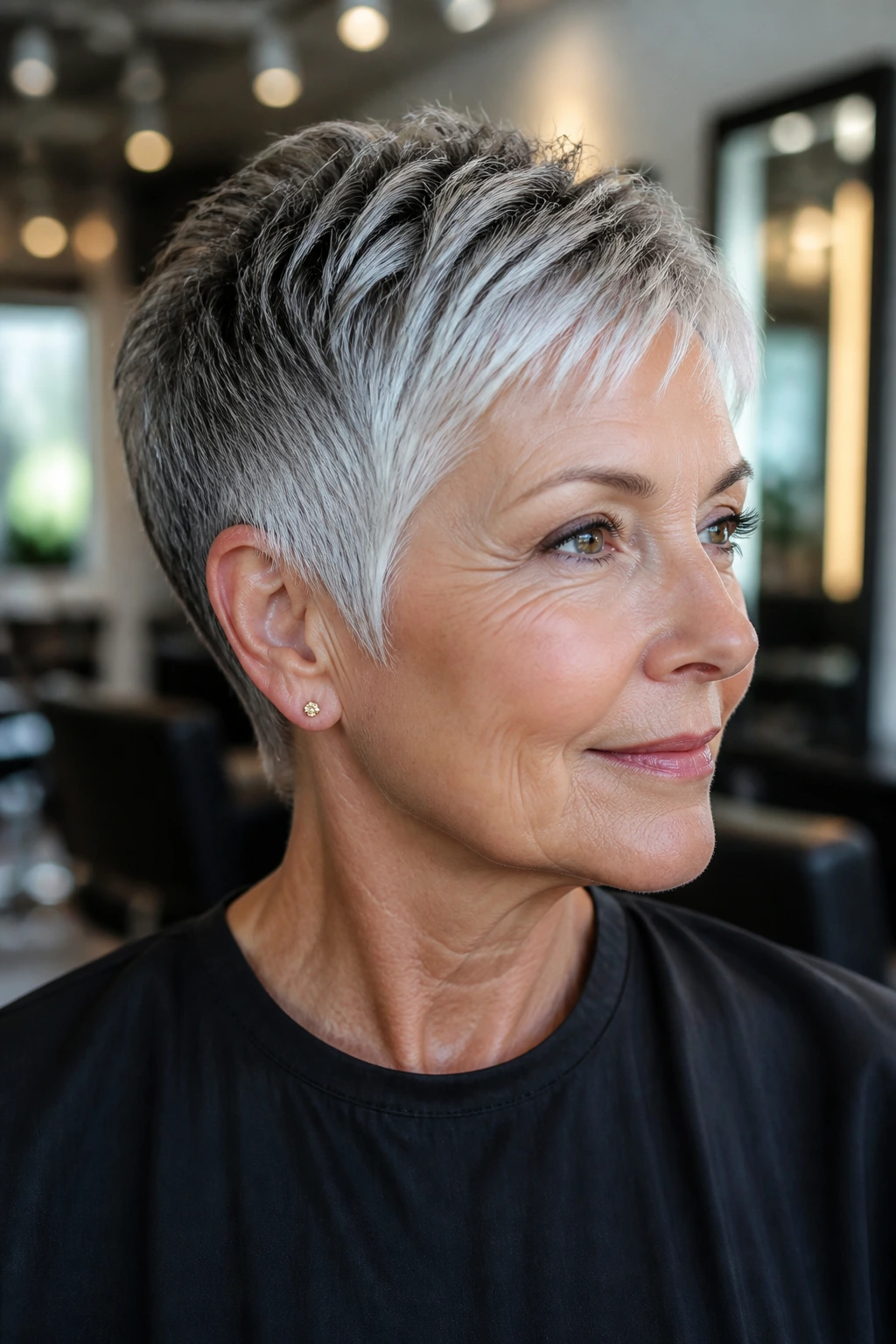
A short crop can handle brightness around the edges the way a blazer handles a sharp collar. It defines the shape. The silver often sits along the fringe, sideburns, and nape line, where it makes the haircut feel crisp.
Because the cut is short, every outline matters. Bright edges can make the whole style look cleaner and more modern, but they need regular trims so the shape does not blur. This is not a set-it-and-forget-it option.
Still, if you like short hair with a little edge, this one is hard to beat. The silver gives the crop a clean finish that plain gray sometimes lacks.
25. Smoky Charcoal-Silver Blend
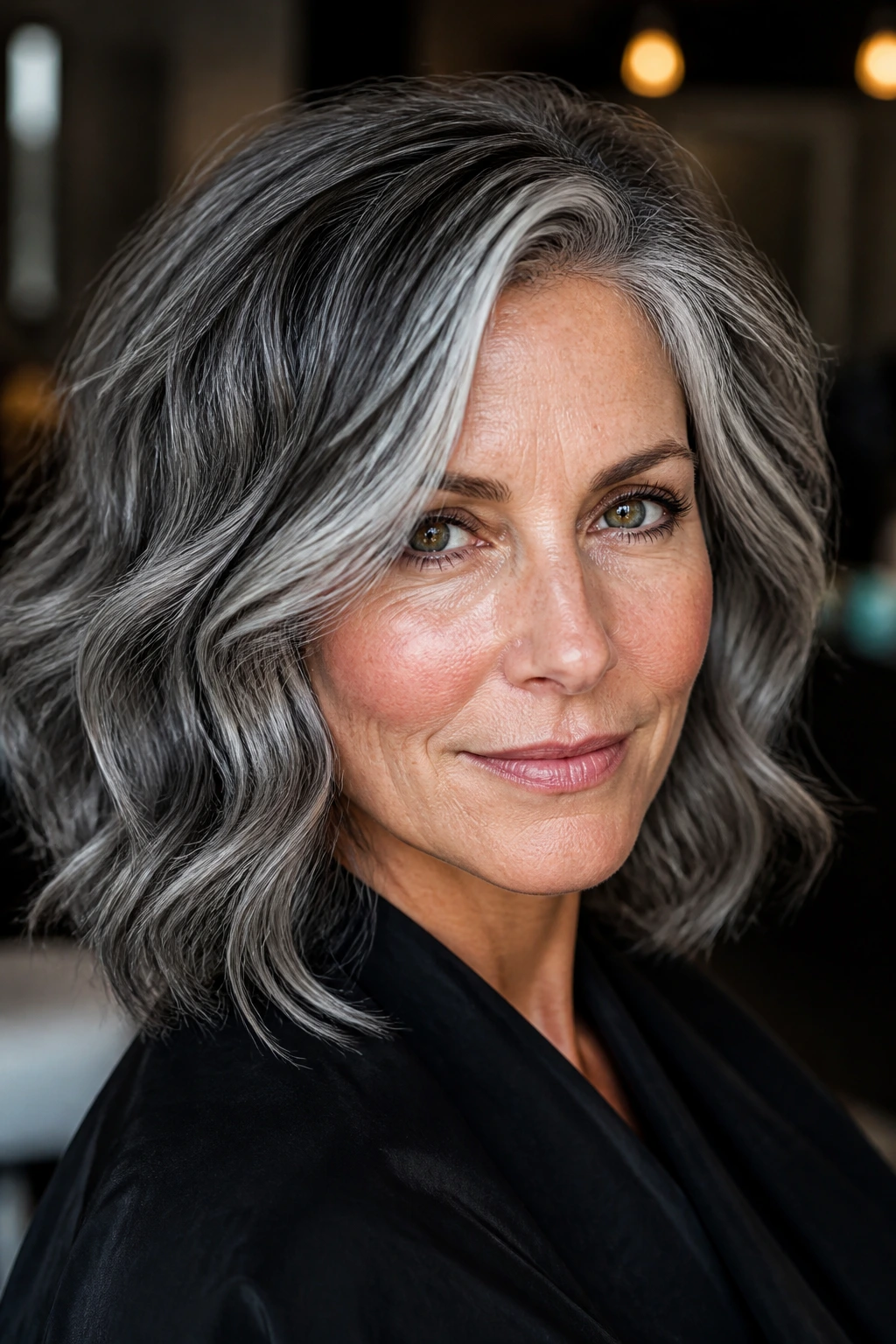
Not every silver highlight needs to be airy or pale. A smoky charcoal-silver blend turns the temperature down and adds a little drama back into gray hair, which can be a relief if the hair has gone very light on its own.
The darker notes keep the style from looking washed out. They also make skin look calmer on cooler complexions because the contrast is a touch stronger around the face. I like this on wavy bobs, layered cuts, and dense hair that needs structure.
The tone is moody, not harsh. That’s the difference.
26. White-Silver Blend for Near-White Gray
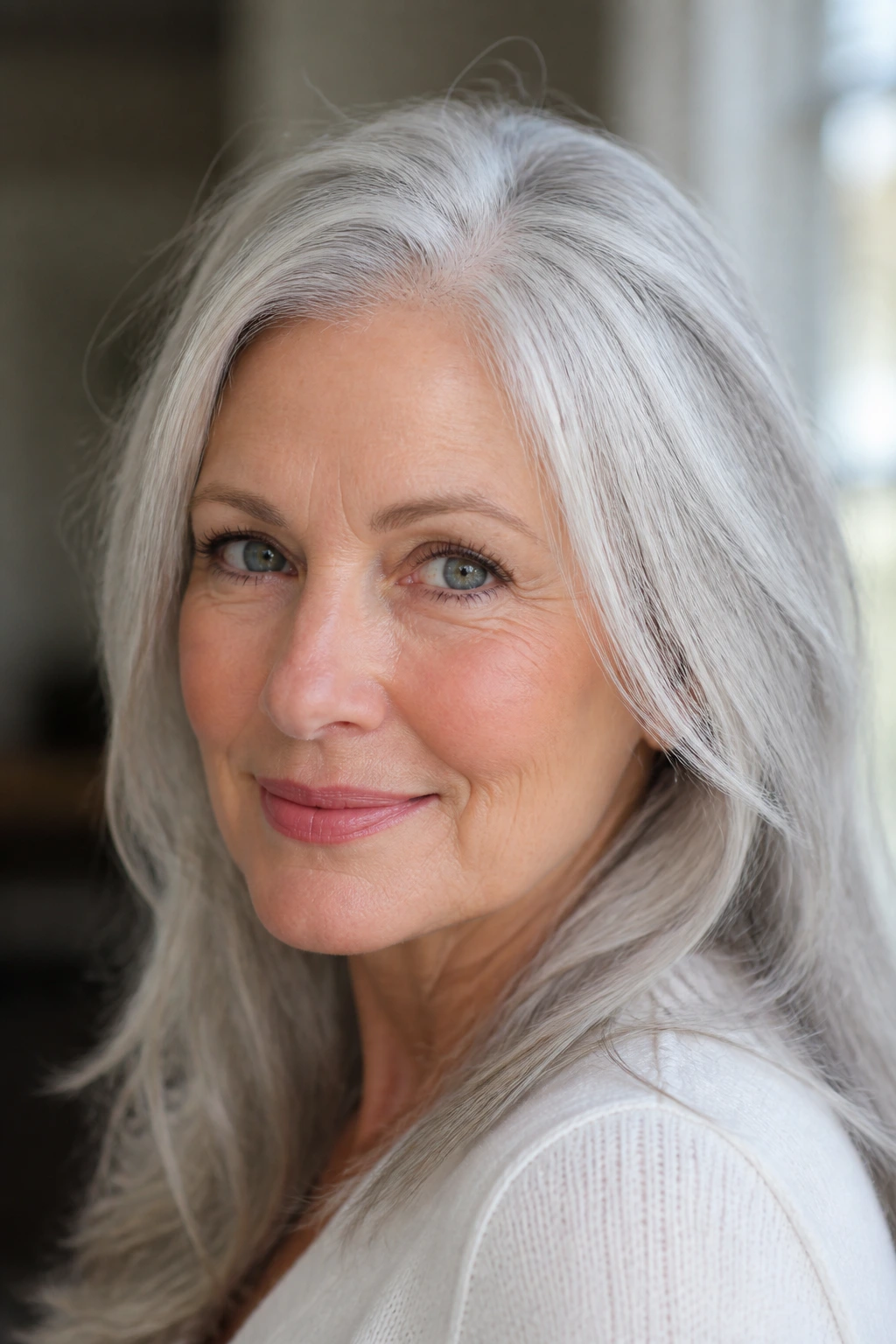
If your hair is already close to white, the job is less about lifting and more about refining. A white-silver blend adds a veil of tone and a touch of dimension without trying to force pigment where there is little left.
This is where a gloss matters more than a heavy highlight pattern. Too much lightening can make near-white hair fragile and dry. A few silver threads, a soft gloss, and a careful cut usually do more than a whole stack of foil.
The result can look almost frosted glass-like in the right light. Not icy. Clean.
27. Glossed Silver Lattice on Layered Cuts
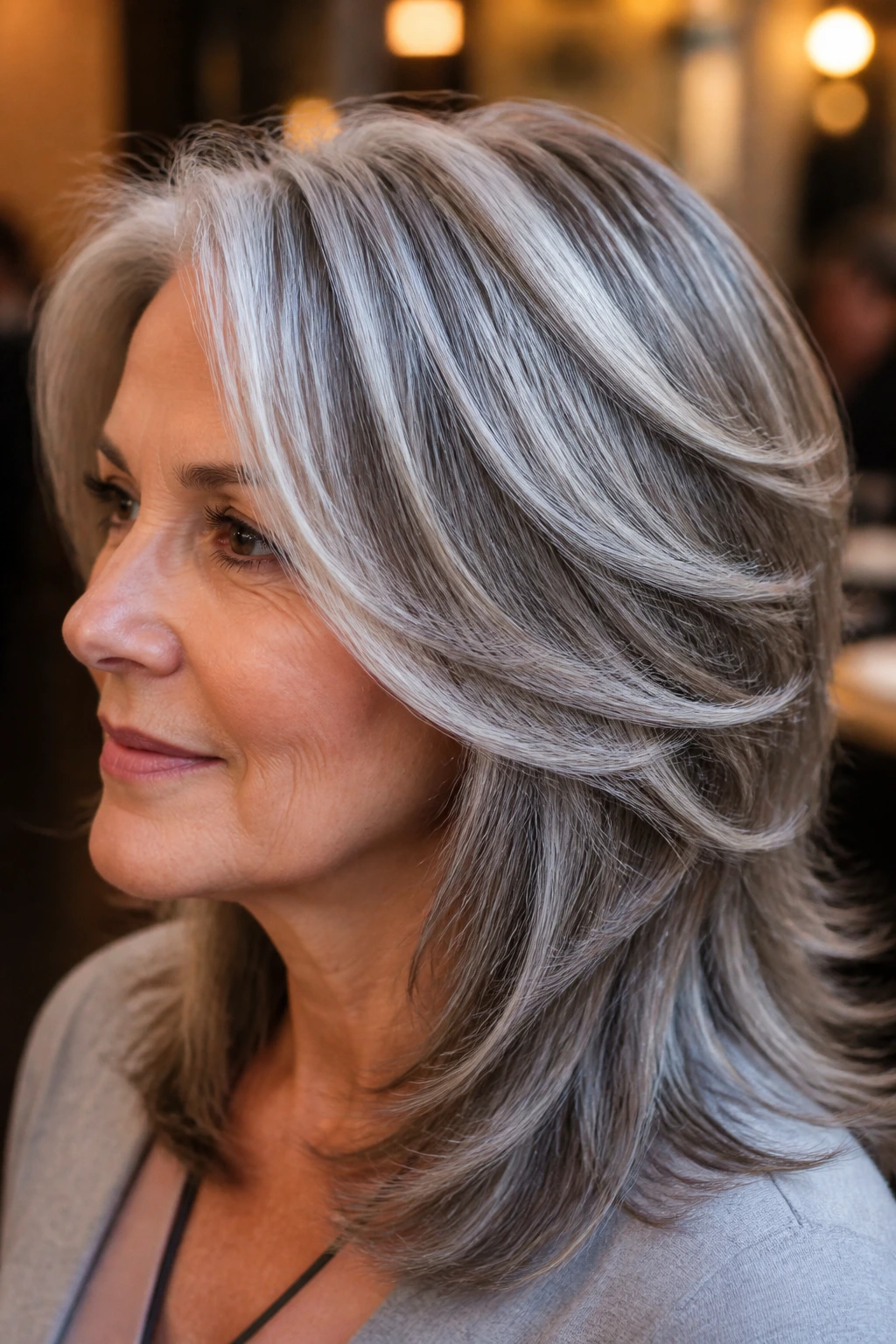
A silver lattice sounds fancy, but the idea is practical. The highlights are placed in crossing ribbons through layered hair so the silver appears and disappears as the layers move past one another.
This works because layered cuts already have motion. The lattice placement gives the eye a pattern to follow without making the hair look striped. A cool gloss over the top keeps the silver consistent from root to midlength, which helps when the natural gray varies from strand to strand.
It’s one of the more artistic looks in the set, and it suits women who like their hair to have structure and movement at the same time.
Why Silver Highlights Wear Better Than a Flat Silver Dye
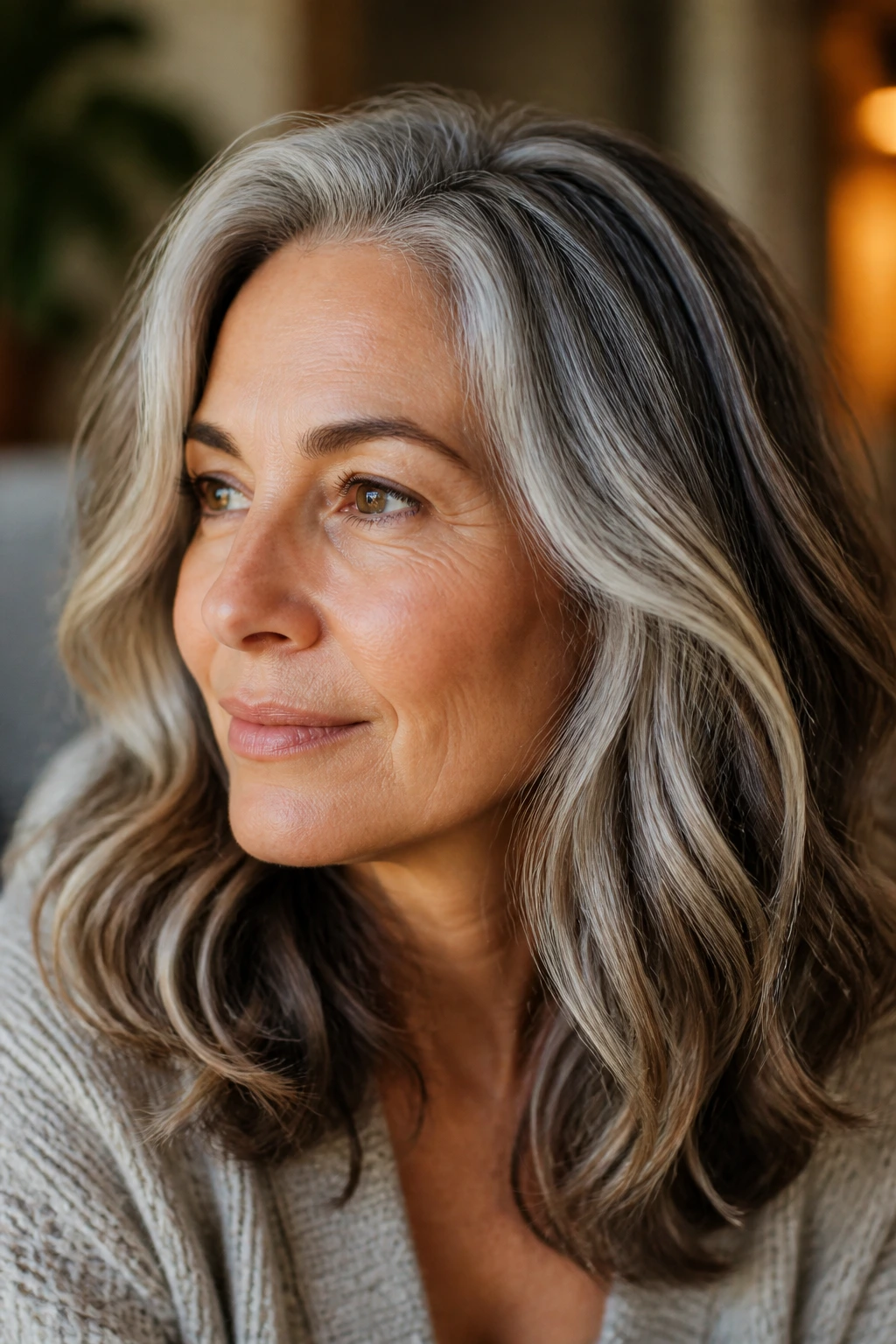
A single silver color can look lovely on paper and flat in the mirror. Gray hair rarely sits in one even tone, though. The strands at the temples, the crown, and the nape usually behave differently because porosity, texture, and old color all show up in different ways.
That is where highlights earn their keep. They let a colorist place brightness where the hair can take it and preserve depth where the style needs shadow. The effect is calmer, especially around the face. It also helps the cut look fuller, because the eye sees layers of light and dark instead of one washed-out sheet.
There’s another practical edge here. Silver highlights grow out better than a hard all-over blonde job, and they usually need fewer dramatic corrections. A gloss can refresh them. A few foils can revive them. A full reset is less common when the placement was thoughtful in the first place.
Essential Equipment for These Styles
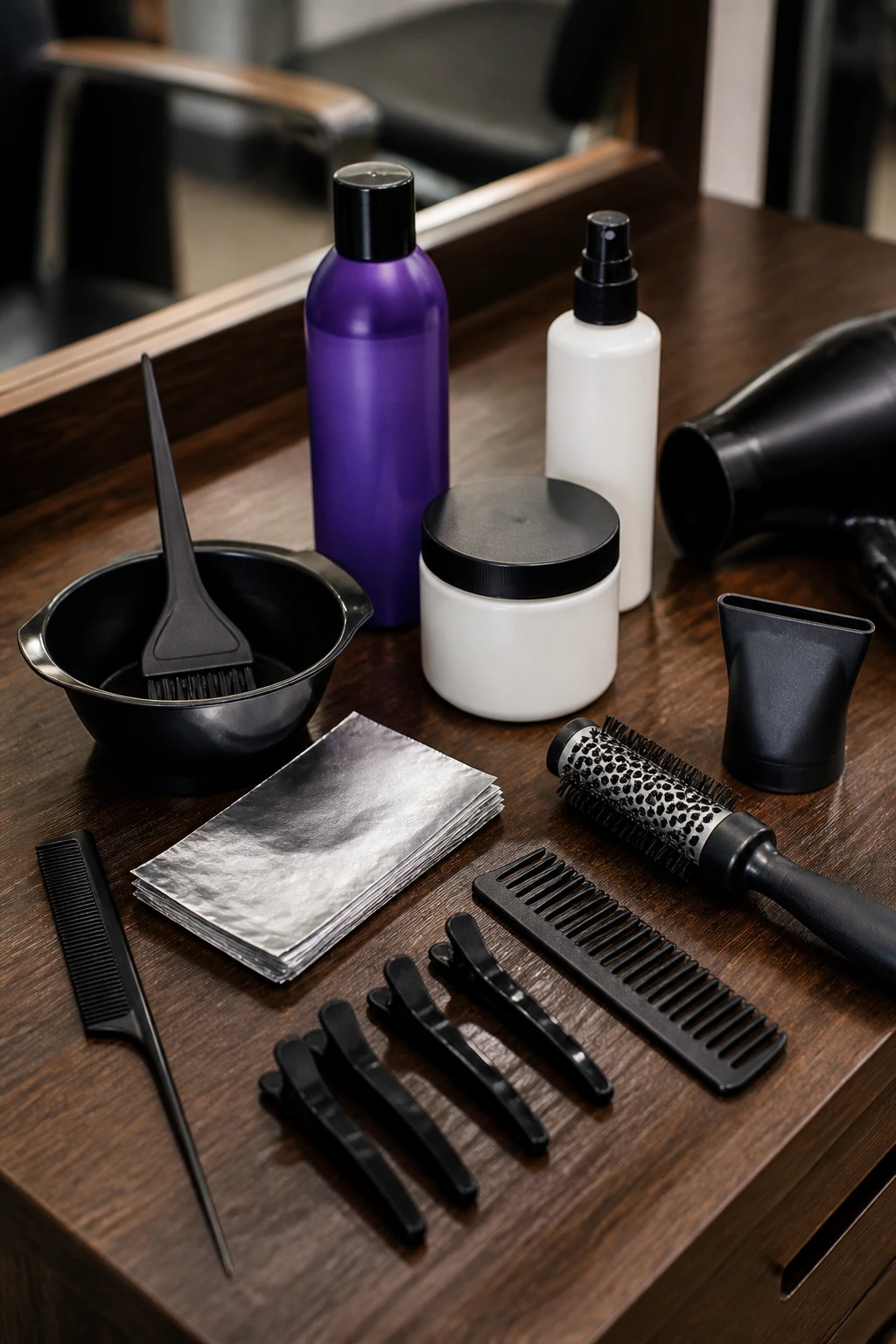
- Tail comb: Needed for clean parting, fine weaving, and precise sectioning around the face and crown.
- Foil sheets or balayage boards: Foils give lift and control; balayage boards help keep painted pieces smooth and even.
- Tint brush and color bowl: Useful for toner, gloss, and any painted silver placement that needs control.
- Sectioning clips: Keep layered hair separated so the silver pattern stays clean.
- Blow dryer with concentrator nozzle: Helps smooth the cuticle and show the color clearly without frizz.
- Round brush or 1-inch curling iron: Good for revealing ribbons and bends in bob, lob, and layered cuts.
- Purple shampoo: Useful for keeping yellow tones in check, though it should not be used like detergent.
- Color-safe mask: Gray and silver hair tend to feel dry; a mask restores slip and softness.
- Heat protectant spray: Essential before blow-drying or curling, especially on porous gray strands.
- Wide-tooth comb or detangling brush: Gentle on fragile ends and less likely to snag highlighted sections.
Smart Shade Choices for Silver Highlights on Gray Hair
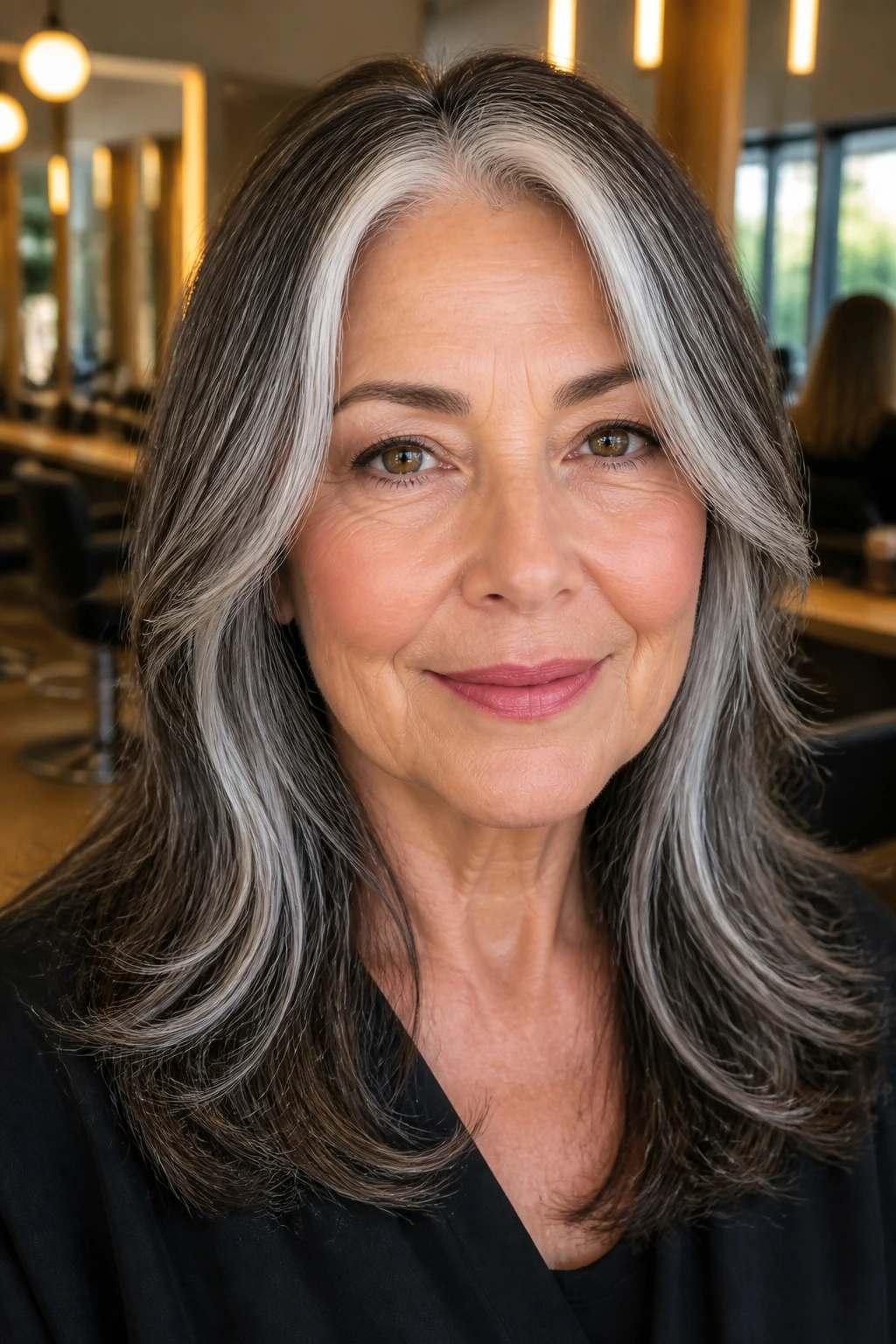
The best silver highlights start with a conversation about tone, not just “make it lighter.” Pearl silver, smoky silver, icy silver, champagne silver, and ash-silver all read differently on gray hair. That difference matters once the color lands next to skin, glasses, lipstick, and the haircut itself.
Bring photos that show the placement you like, not only the color. A photo of a long wavy balayage tells a colorist almost nothing if your hair is a chin-length bob. Better to show the highlight pattern, the part line, and the level of brightness around the face. Photos taken in natural window light help more than glossy salon shots.
Talk about what’s already on the hair. Previous box dye, henna, hard-water buildup, and heavy styling products all change how silver toner behaves. Porous ends can grab toner too fast and go dull or violet. Darker dyed sections may need a slower lift or a transition plan before silver can sit on top cleanly.
One more thing: ask how the colorist plans to balance root, midlength, and ends. Gray hair does not all take color at the same speed, and the right answer is usually different treatment for different zones. That’s not a red flag. That’s the job.
How to Wear Silver Highlights With Your Cut and Glasses
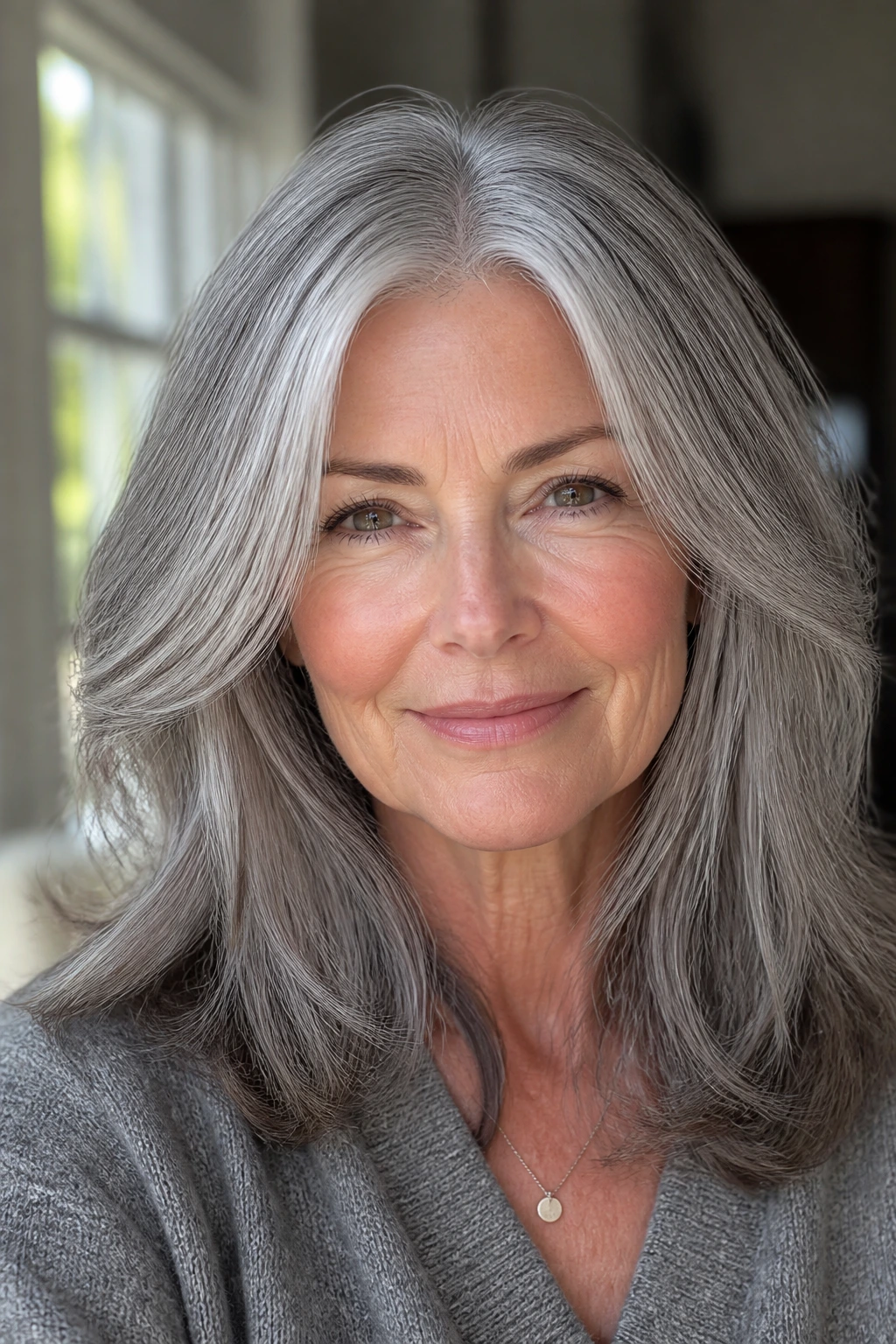
Placement: Put the brightest pieces where the eye lands first — the hairline, the part, and the curve around the cheekbone. If the silver lives only underneath, it never gets the chance to shape the face.
Styling: A soft blowout, a loose bend with a curling iron, or even a polished straight finish can show the highlight pattern. Air-dried hair hides the weave more often than people expect, especially on layers.
Accessories: Glasses, hoops, and headbands all change how silver reads. If you wear frames, keep the brightest ribbons close to the temples so the color and the metal don’t fight each other. One focal point is enough.
Finish: Use a light serum or shine spray on the ends, not the roots. Heavy oil can mute silver in a hurry, and then the whole thing looks quieter than it should.
Extra Shine and Softness Tricks
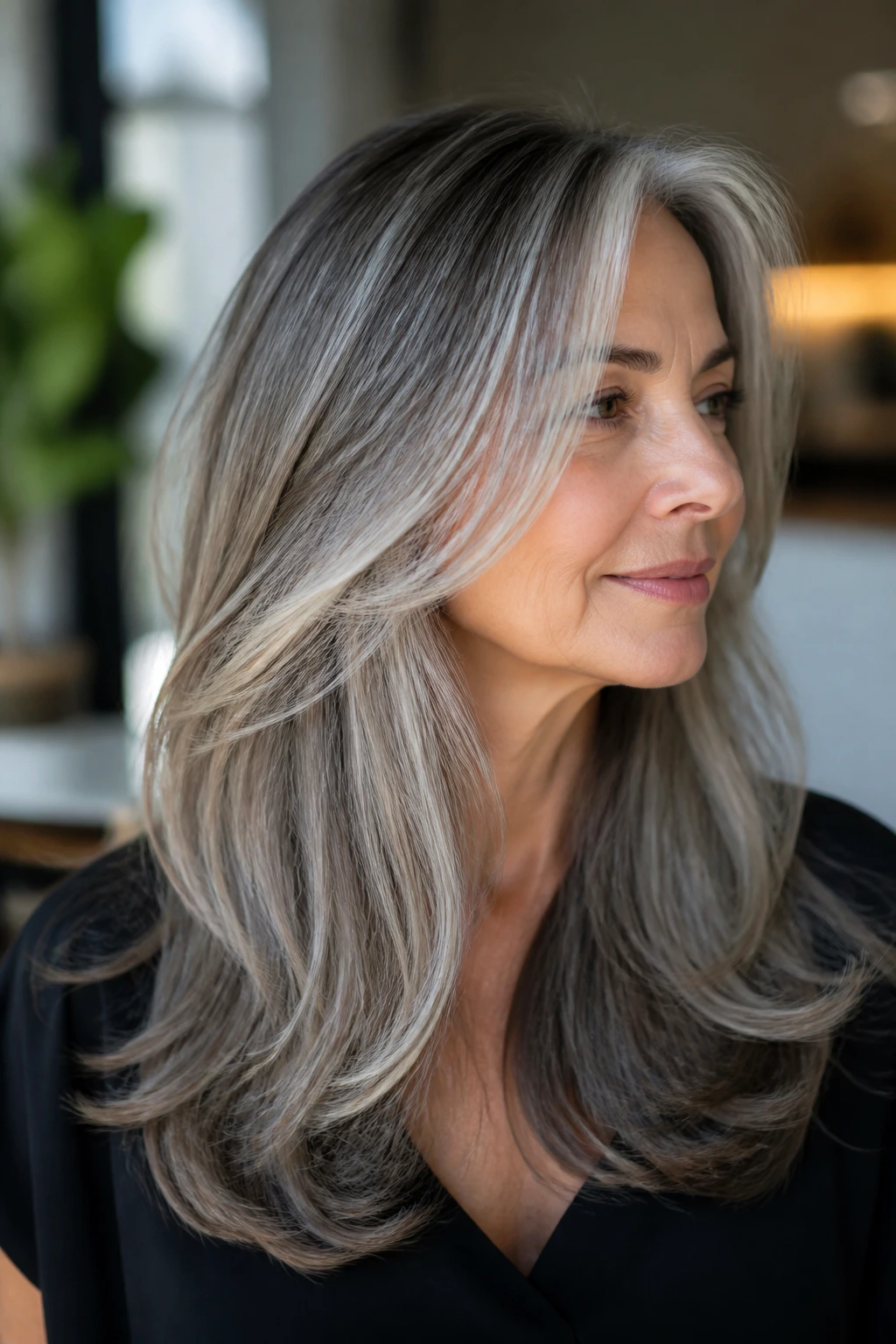
Gloss Enhancement: A clear, pearl, or pale violet gloss can make silver highlights look smoother between salon visits. It does not need to be dramatic; a soft deposit every four to six weeks is usually enough to keep the tone clean.
Texture Control: Fine hair usually likes a mousse or root spray, while thick gray hair often behaves better with a light cream through the mids. The color shows more clearly when frizz is under control.
Face Brightening: A couple of brighter ribbons near the temples and cheekbones are worth more than a dozen hidden foils. They wake up the face, which is the real reason most women ask for silver in the first place.
Make-It-Yours: Warm complexions usually look better in pearl, champagne, or beige-silver. Cooler skin can handle smoky, charcoal, or icy silver without looking drained.
Keeping Silver Highlights Fresh Between Appointments
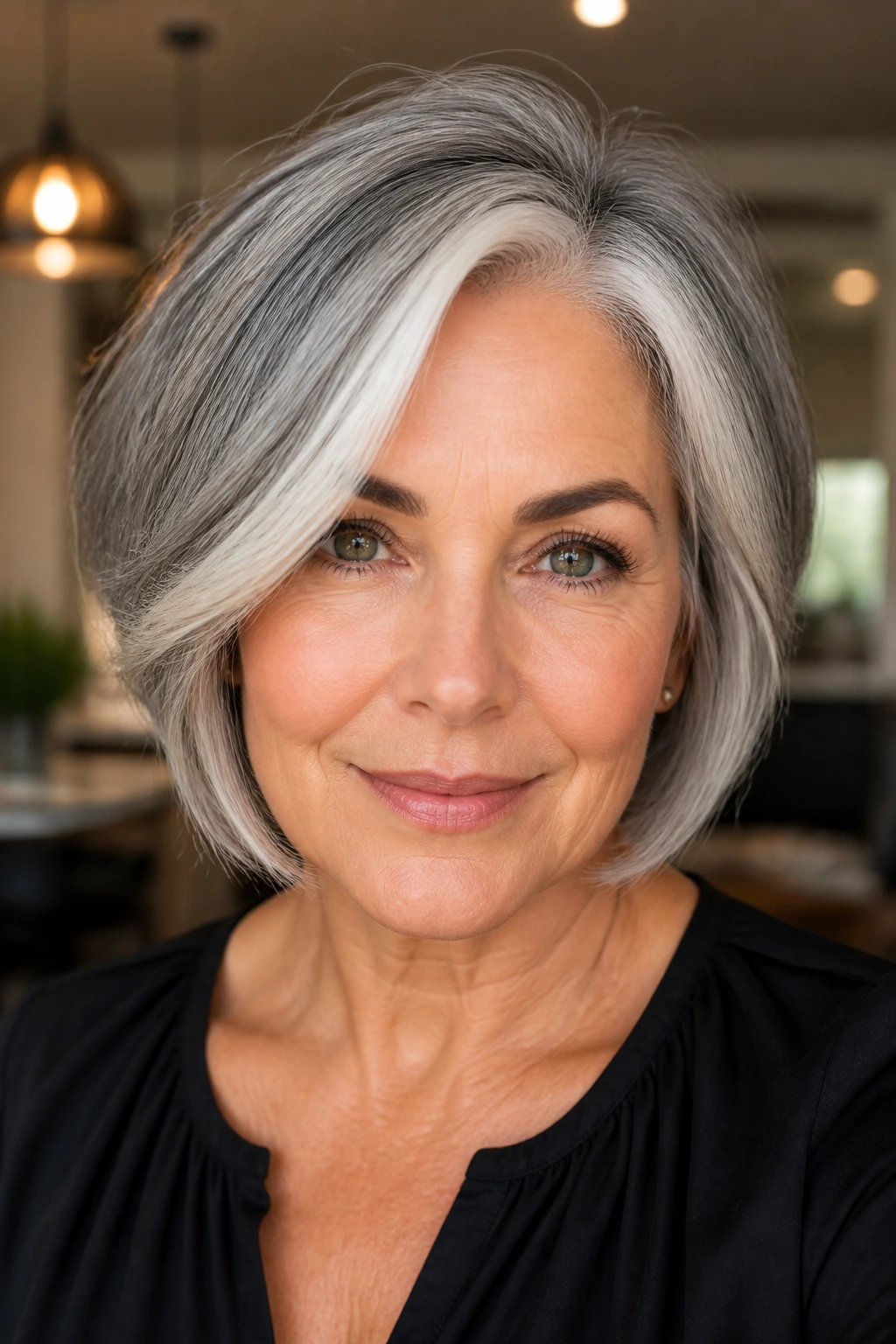
The first two days matter. If the hair was just toned, avoid rough shampooing and hot tools as much as possible. A gentle rinse and a cool blow-dry help the cuticle settle without stripping the new tone too quickly.
After that, think in weekly rhythms. Purple shampoo once a week is usually enough for most heads; more than that can leave silver hair dull or faintly lavender. Gray and silver hair often likes a hydrating mask once or twice a week, especially on the ends where porosity is highest. If the hair feels stretchy or gummy, a light protein treatment can help, but not every week. Too much protein makes it stiff.
Salon timing depends on the placement. Face-framing silver and money pieces may need a gloss refresh every 4-6 weeks. Foilyage and soft babylights can stretch to 8-12 weeks if the grow-out is blended well. Short crops and pixies usually need trims more often, sometimes every 4-6 weeks, because the shape carries the color.
Heat tools deserve respect here. Anything above 300°F can rough up already delicate gray hair fast. Use heat protectant every time, keep the nozzle moving, and let the hair cool before brushing through. That little pause keeps the silver looking clean instead of dusty.
Variations and Adaptations to Try
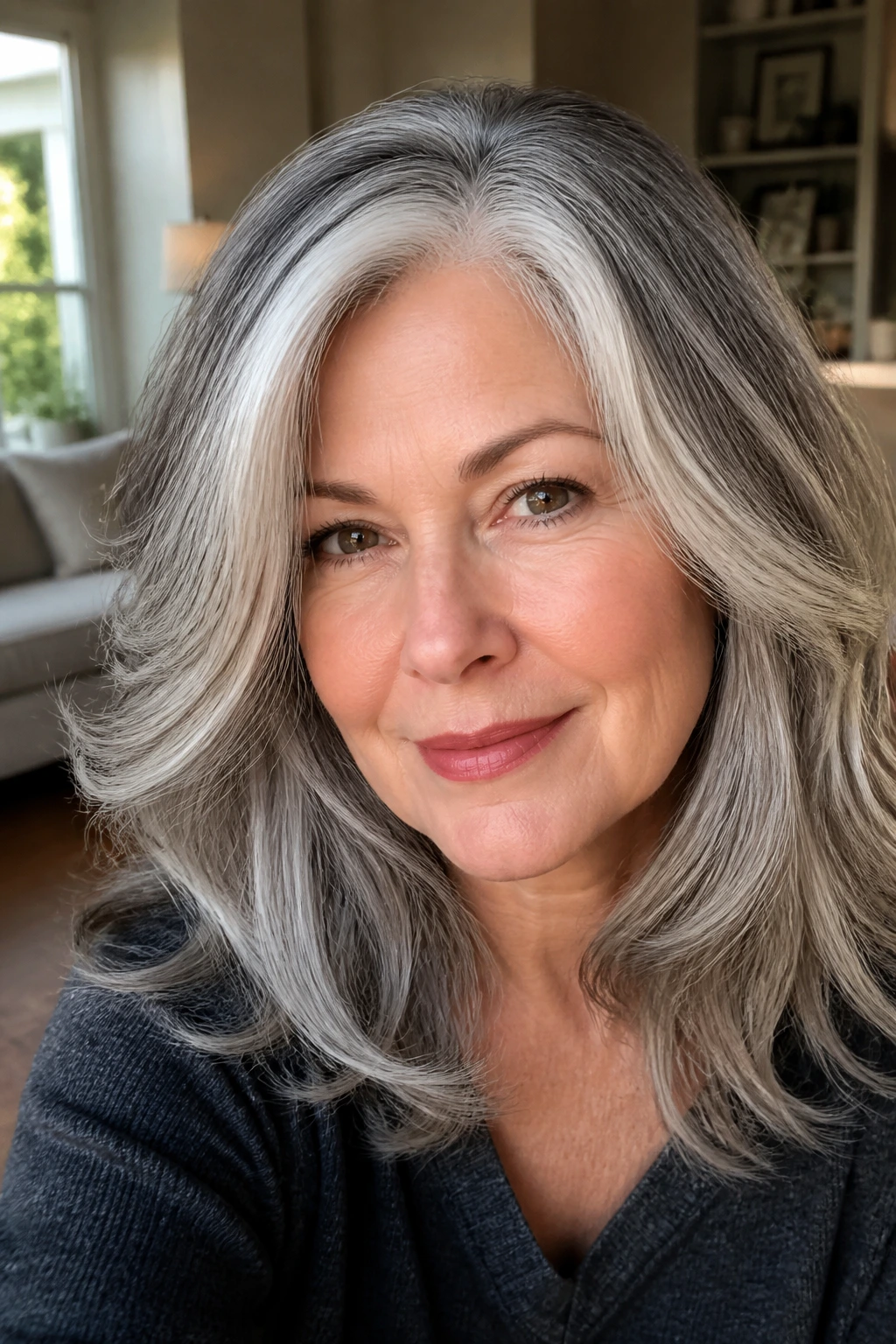
Pearl Fog Blend: This version softens the silver with a milky, pearl-toned gloss. It works well on warm or neutral skin and on hair that turns brassy quickly after coloring.
Smoky Root Shadow: Keep the roots deeper and let the silver start a little lower. That gives the style a lived-in edge and makes grow-out easier on darker natural bases.
Bright Front Panel: Put the strongest silver only at the hairline and part. It’s a smart pick for women who want the lift without changing the rest of the head.
Taupe-to-Silver Drift: Blend mushroom blonde, ash, and silver through the mids and ends. This is a better fit than pure icy silver when the hair still holds warmth or the skin leans golden.
Soft White Lace: For hair that is already nearly white, add a few delicate silver threads and a clear gloss. The point is refinement, not lift.
Common Mistakes That Make Silver Hair Look Flat
- Going too icy everywhere: A full-head chrome tone can erase depth and make the face look sharper than you want. The fix is a touch of shadow at the root or underneath.
- Using purple shampoo too often: Silver hair can turn dull or faintly lavender if the shampoo is treated like an everyday cleanser. Once a week is usually enough.
- Putting brightness only at the ends: That leaves the face unchanged. Keep some silver near the temples and part so the color actually frames you.
- Ignoring porosity: Porous ends grab toner fast and can go muddy. A colorist should adjust timing or formula by zone, not treat the whole head the same.
- Skipping the haircut: Silver highlights need a shape to live in. Without layers, a bob, or a clean crop, even pretty color can look heavy.
- Forgetting lowlights on thick hair: Thick gray hair often needs depth underneath. Without it, the silver can read like one pale block.
Frequently Asked Questions About Silver Highlights
Do silver highlights cover gray hair?
Not exactly. They blend with gray hair, brighten certain sections, and make the transition look intentional. If you want full coverage, that’s a different service; silver highlights are about movement and softness.
Will silver highlights make fine hair look thinner?
They can, if the color is too pale and too evenly placed. Fine hair usually looks better with babylights, a soft root shadow, and a few darker pieces left in place underneath.
What silver tone works best on warm skin?
Pearl, champagne, and beige-silver tend to be kinder than a stark icy finish. They still read cool, but they do not pull the face into a gray-blue cast.
How often do silver highlights need toner?
Most heads benefit from a gloss every 4-6 weeks, though some can stretch longer if the placement is soft and the hair is healthy. Yellowing shows up faster on porous ends, so the ends may need more attention than the roots.
Can dark dyed hair go silver in one visit?
Usually not without damage or patchiness. Dark color often needs a transition plan, sometimes over more than one appointment, because the underlying pigment has to be lifted out carefully.
Are balayage or foils better for silver highlights?
Foils give more lift and precision. Balayage gives a softer edge and easier grow-out. A lot of the best silver looks use both.
What if my silver highlights start turning yellow?
That usually means product buildup, too much heat, hard water, or toner that has faded. Try a purple shampoo once a week, use cooler water, and ask for a gloss refresh if the tone still looks off.
Can curly hair wear silver highlights without frizzing out?
Yes, but the placement should follow curl clumps, not be scattered randomly. Curly hair usually needs more moisture and less heavy heat styling so the silver can stay defined.
A Silver Finish That Grows Out Gracefully
Silver highlights work best when they respect the hair already on your head. That’s the part people skip. Gray hair is not one texture, one tone, or one density from crown to nape, and a good color plan leans into that fact instead of pretending otherwise.
The most flattering looks in this group all do the same quiet thing: they brighten the front, keep enough depth to support the cut, and leave room for the next appointment to be a touch easier than the last one. That’s the real luxury here. Not more color. Better placement.
Choose the version that fits your haircut, your skin tone, and your patience for maintenance, and the silver stops looking like a fix. It starts looking like a style.
