



Gray hair has a way of telling the truth about a haircut. A shape that used to sit quietly can suddenly show every hard edge, flat crown, and overgrown layer once the pigment changes. That’s not a flaw in the hair. It’s a clue.
After 60, texture often shifts in small but stubborn ways. Some strands get drier and a little wirier. Some areas lie flat while others puff out the minute humidity walks into the room. The best gray hairstyles for women over 60 don’t fight that. They work with it, using lift, movement, and clean edges so the silver looks intentional instead of accidental.
The sweet spot is a cut that still behaves on an ordinary morning. Air-dried bends. A quick blow-dry at the roots. A side part moved half an inch off center because straight down the middle feels too severe. The right shape can do more for gray hair than another bottle of shine spray ever will.
Why These Gray Styles Work So Well After 60
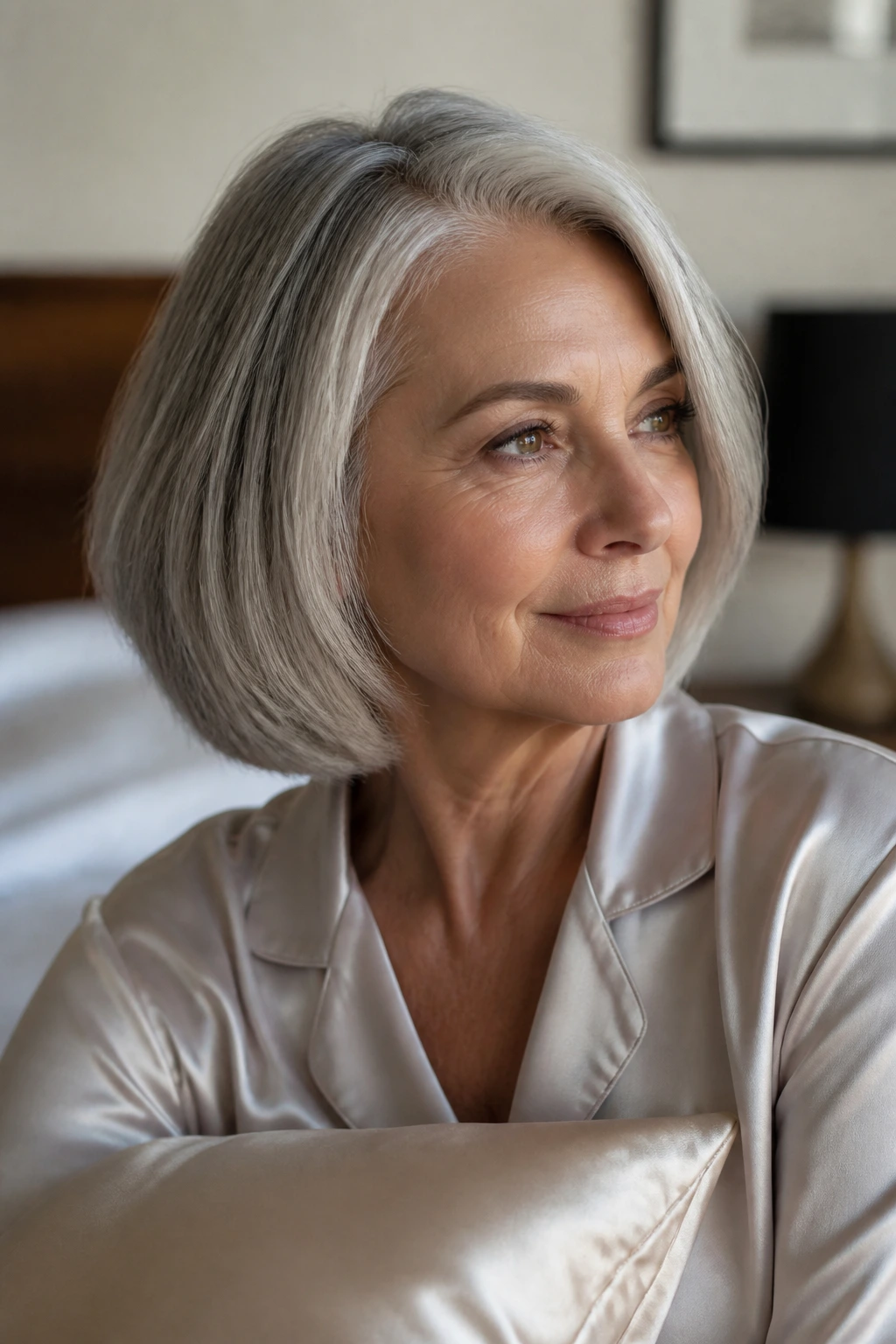
- They build lift where the face needs it: A little crown volume keeps the hair from collapsing onto the temples and making the whole profile look tired.
- They leave room for natural texture: Gray strands often have more body than people expect, and a cut with movement lets that texture show instead of boxing it in.
- They soften the jaw without hiding it: The best cuts here frame the face, not smother it. That matters when you want structure without a helmet shape.
- They hold up between salon visits: A good gray cut still looks decent at six weeks, not only on day one.
- They make silver look deliberate: Crisp lines, feathered edges, or a little bend at the ends help the color read as polished, not unfinished.
1. Soft Layered Bob That Hugs the Jaw
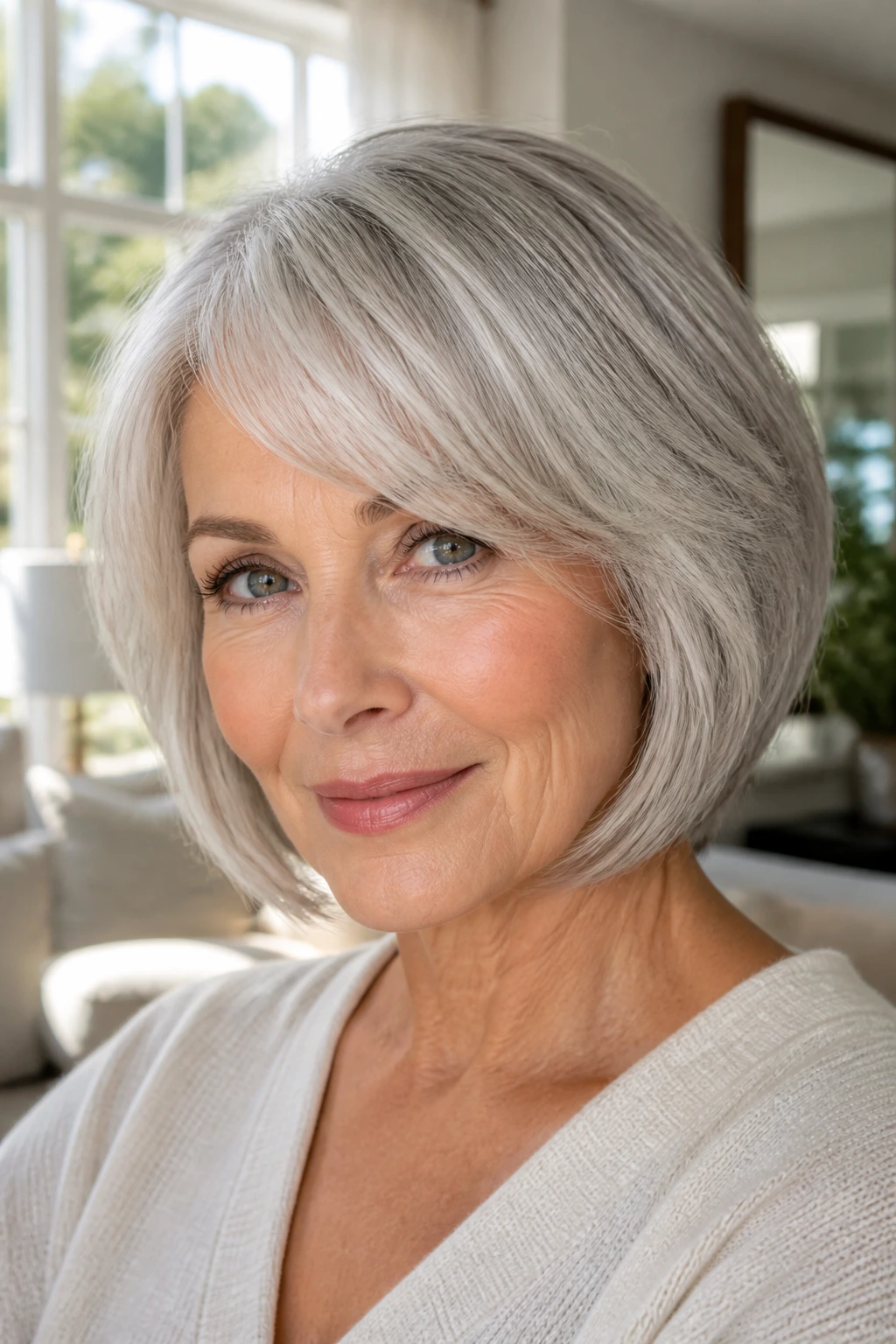
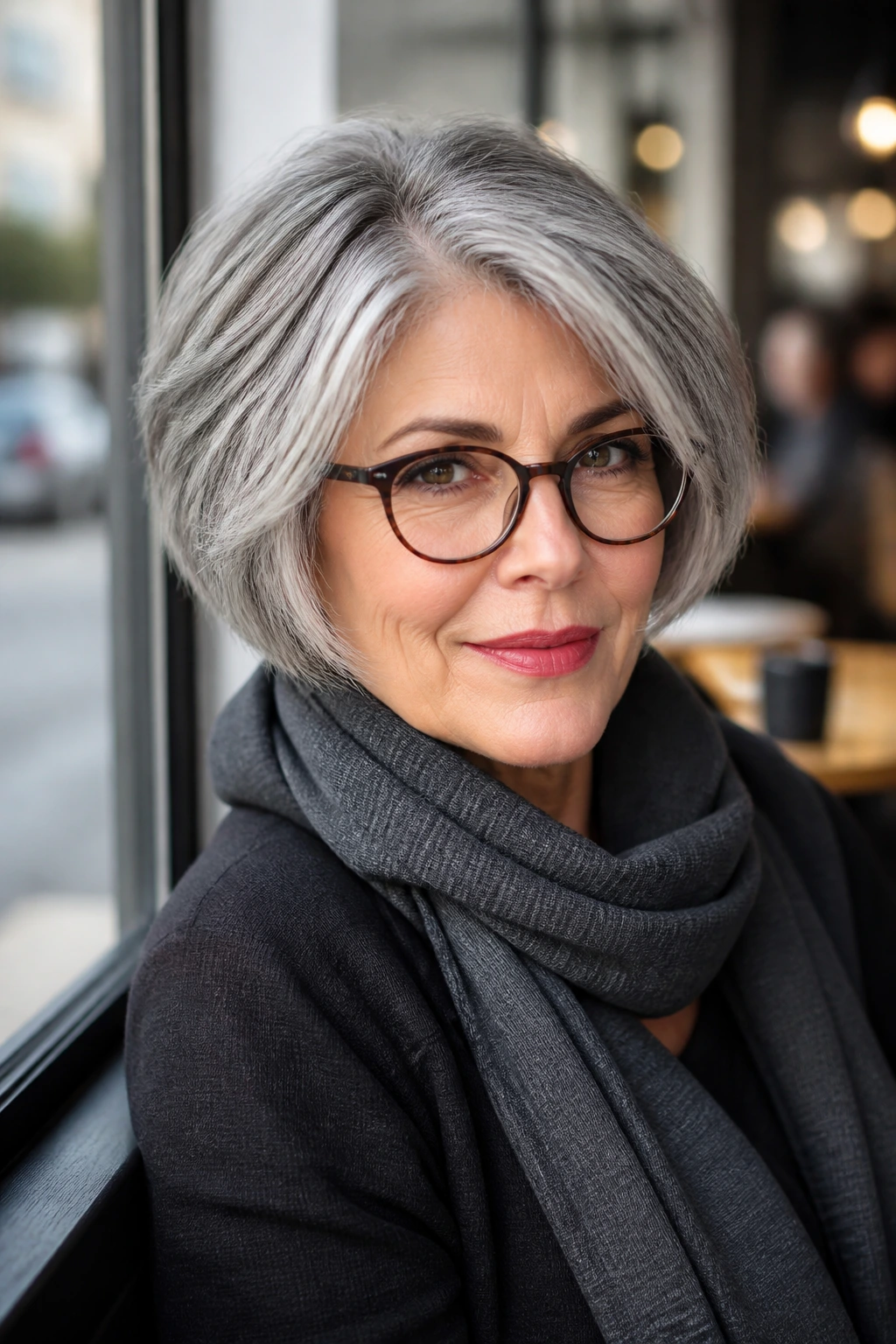
A soft layered bob is one of those cuts that just makes sense on gray hair. It sits around the jaw, which gives the face some shape, and the layers keep the ends from hanging in one flat curtain. On straight or slightly wavy hair, it has enough movement to keep the silver from looking stiff.
Best for
Fine to medium hair that needs lift without a lot of styling time.
Ask for
A chin-to-jaw-length bob with soft internal layers and lightly point-cut ends.
Style with
A 1-inch round brush and a light mousse at the roots. Skip heavy cream; it will drag the shape down.
The nice thing about this cut is that it doesn’t scream “styled.” It just sits neatly, which is a much better look than trying too hard.
2. Feathered Pixie with Crown Lift
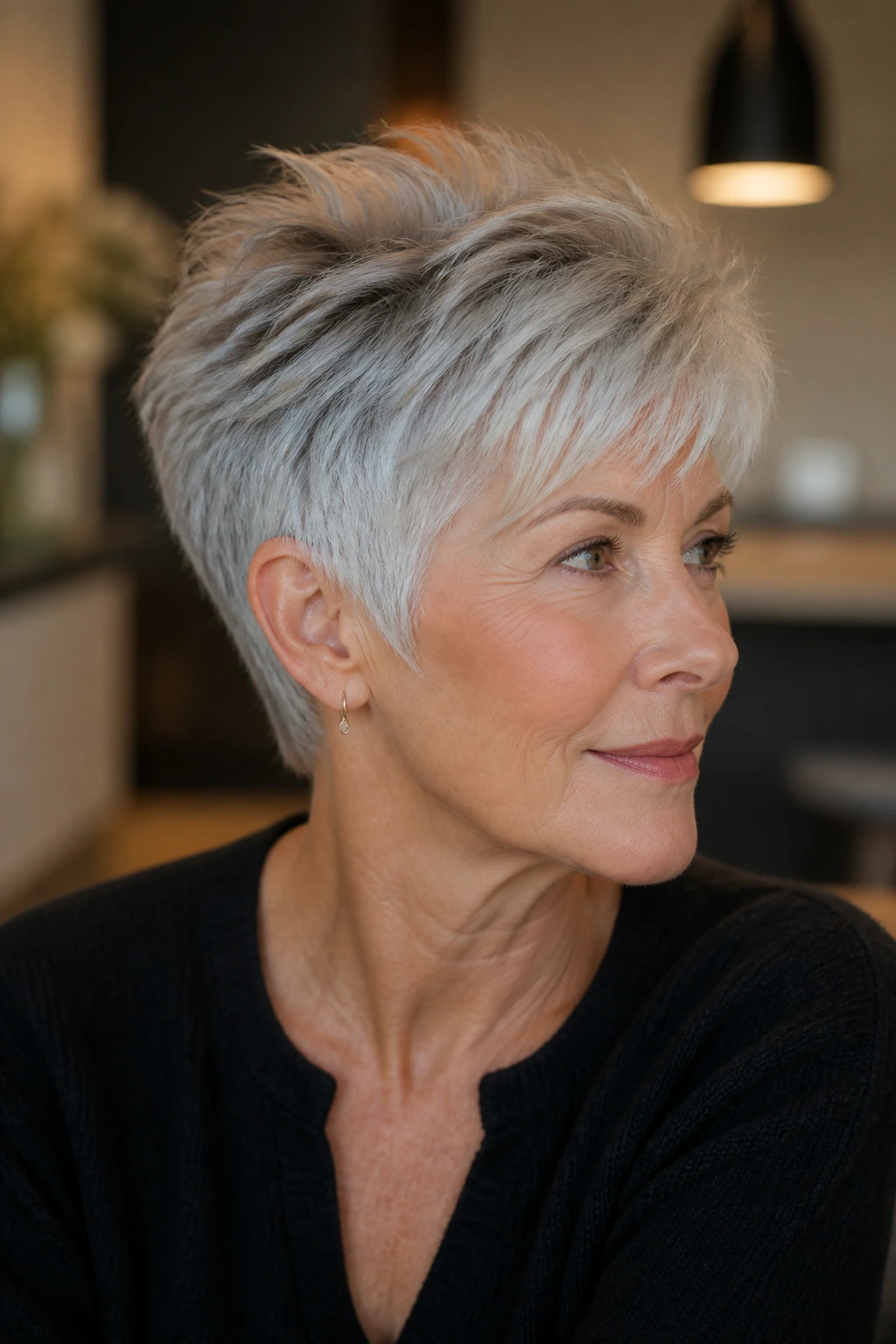
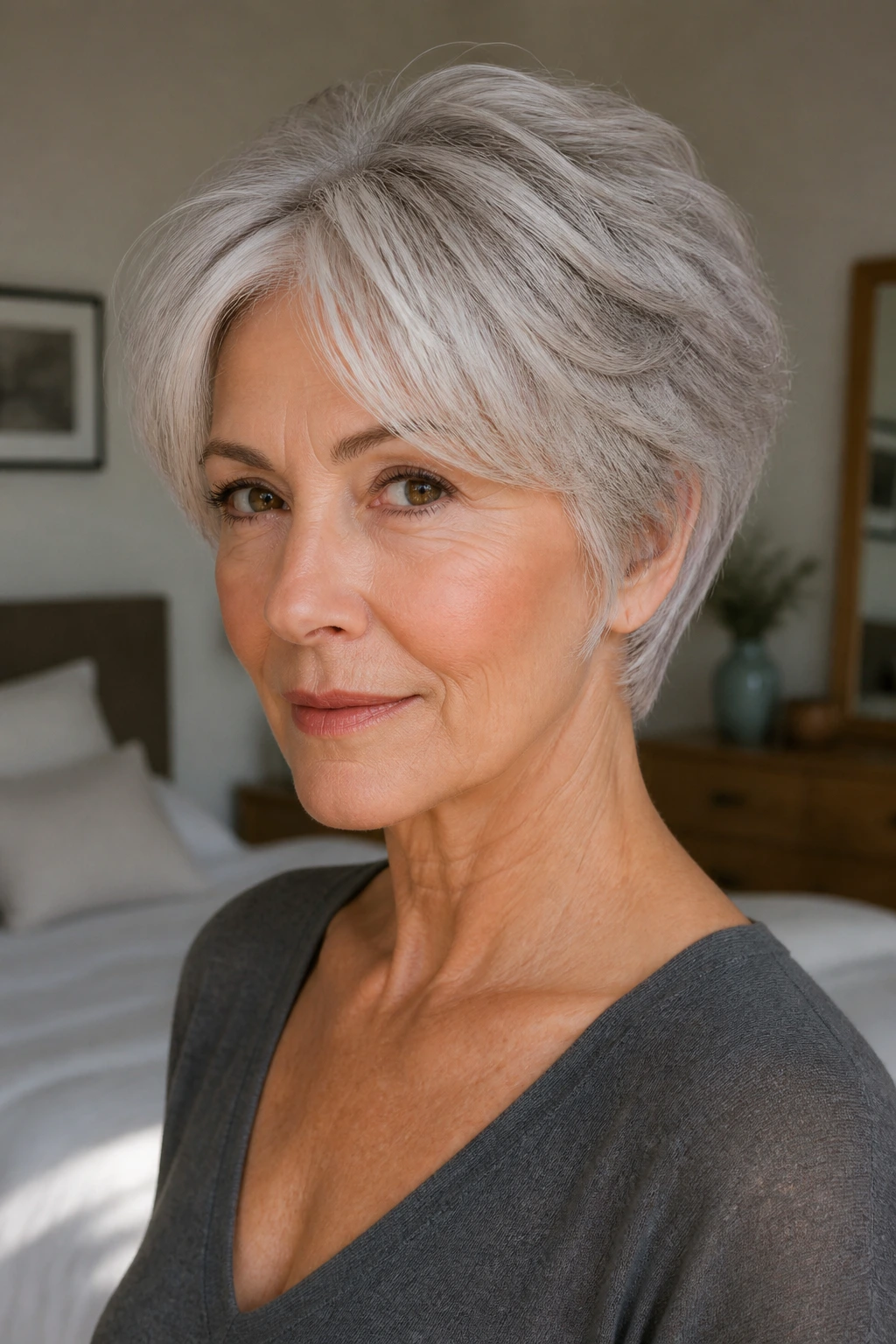
This is the cut for anyone who wants the neck free and the crown alive. A feathered pixie can look crisp, but it doesn’t have to feel harsh. When the top is left a little longer and the sides are kept soft, the result is airy and lively instead of severe.
Gray hair wears a pixie well because the lighter color shows the texture. The feathering catches the light in small pieces, which keeps the shape from looking flat in one block. A dab of paste or styling cream at the top is usually enough.
3. Collarbone Lob with a Deep Side Part
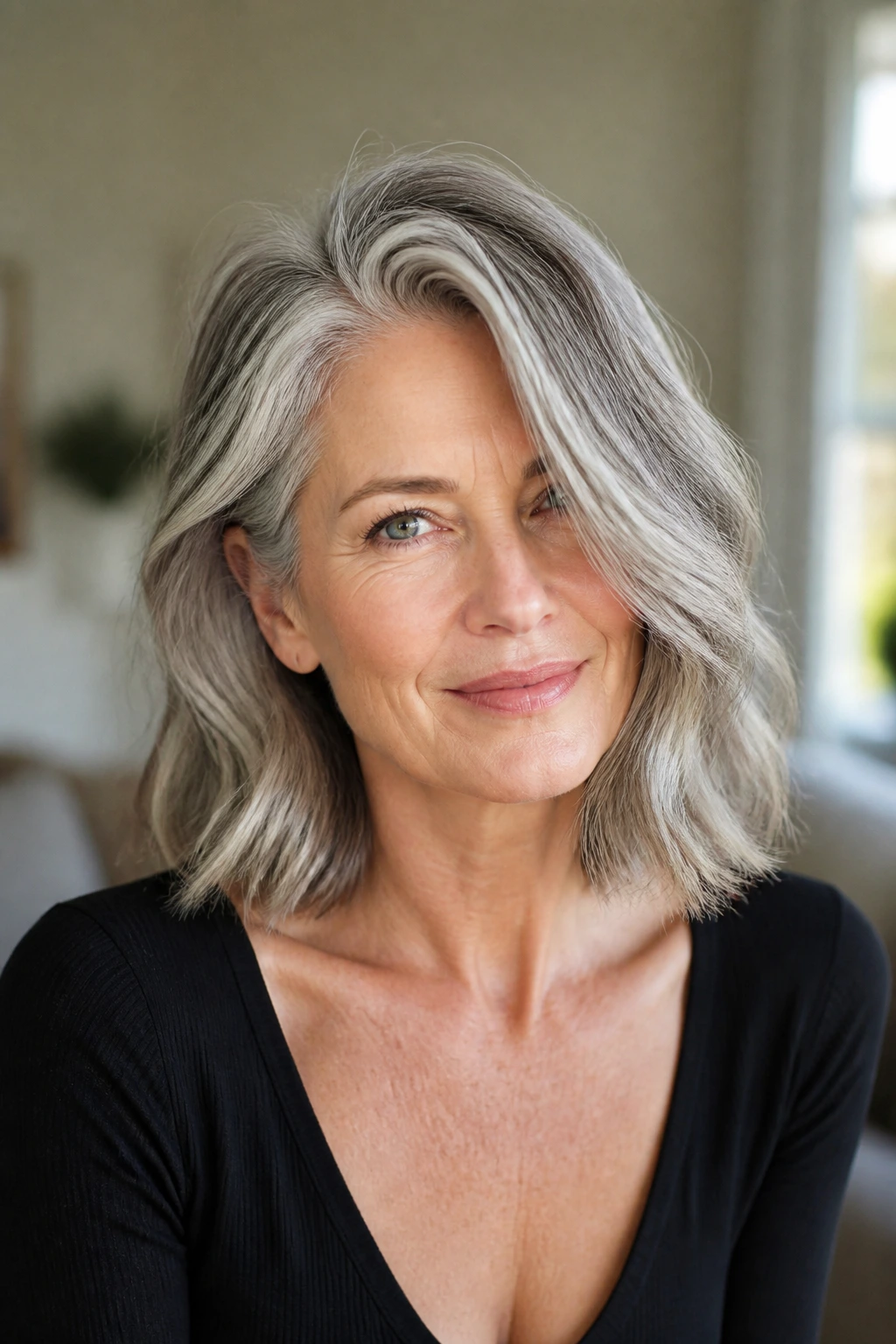
What if you’re not ready to go short? Then a collarbone lob may be the cleanest answer. It gives you length for ponytails and clips, but the collarbone length keeps the hair from dragging the face down the way longer, one-length styles can.
A deep side part does a lot of the work here. It gives the crown a little height and lets the front pieces sweep softly across the face. That side sweep is especially useful if your hair has started to lose body at the temples.
How to wear it
Let the ends bend under slightly with a brush, or wear it with soft, loose waves. Either way, the line should stay relaxed, not stiff.
4. Tapered Crop with a Clean Nape
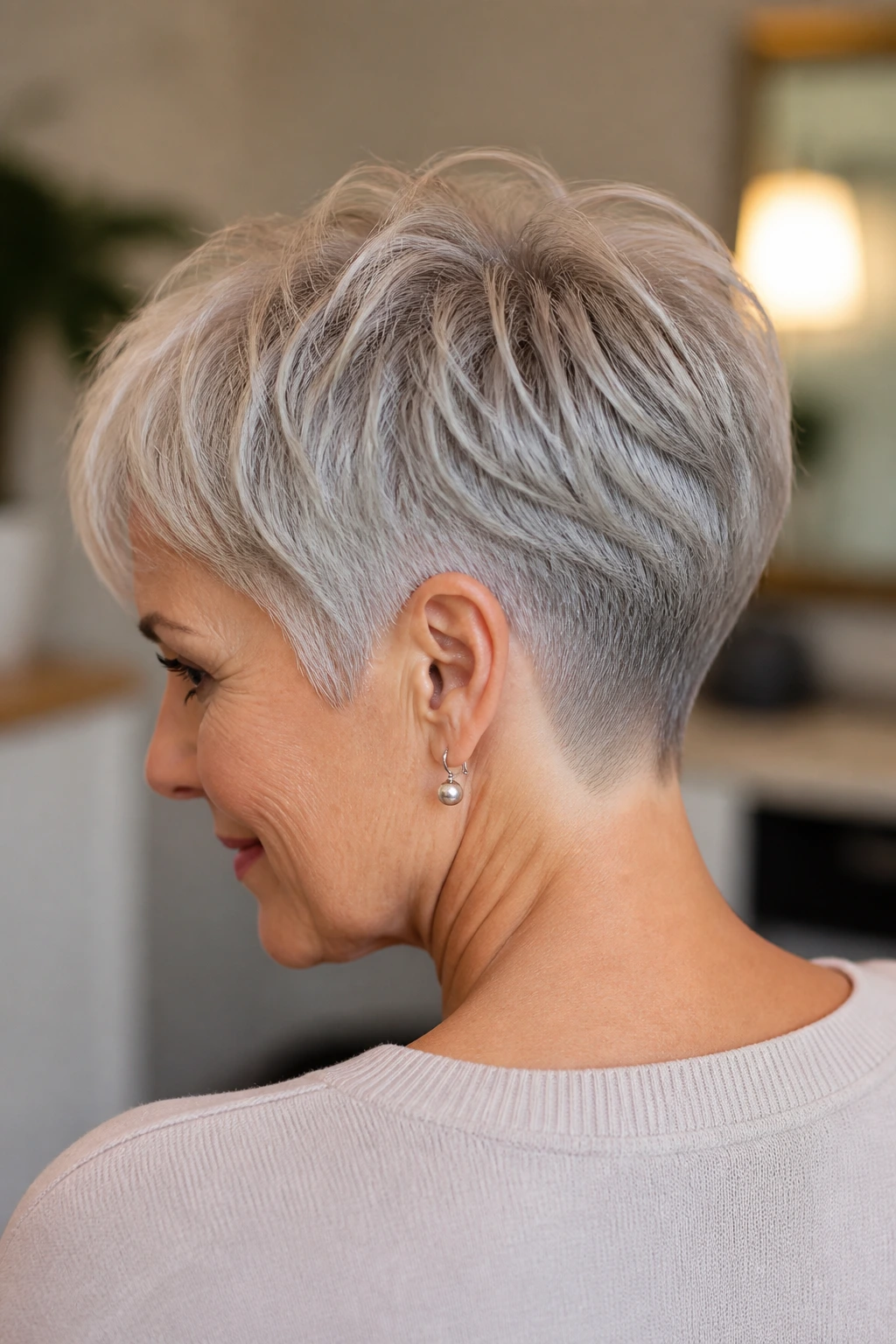
A tapered crop is neat in the best possible way. The back hugs the nape, the sides stay close, and the top is left just long enough to move. It’s a sharp haircut, but not a fussy one.
This shape works especially well if your hair grows in thick at the neckline. A clean taper keeps the back from flaring out between appointments, which is one of the most common reasons short hair starts to look untidy. Ask your stylist to keep the top soft so the haircut doesn’t feel too boxed in.
5. Chin-Length French Bob
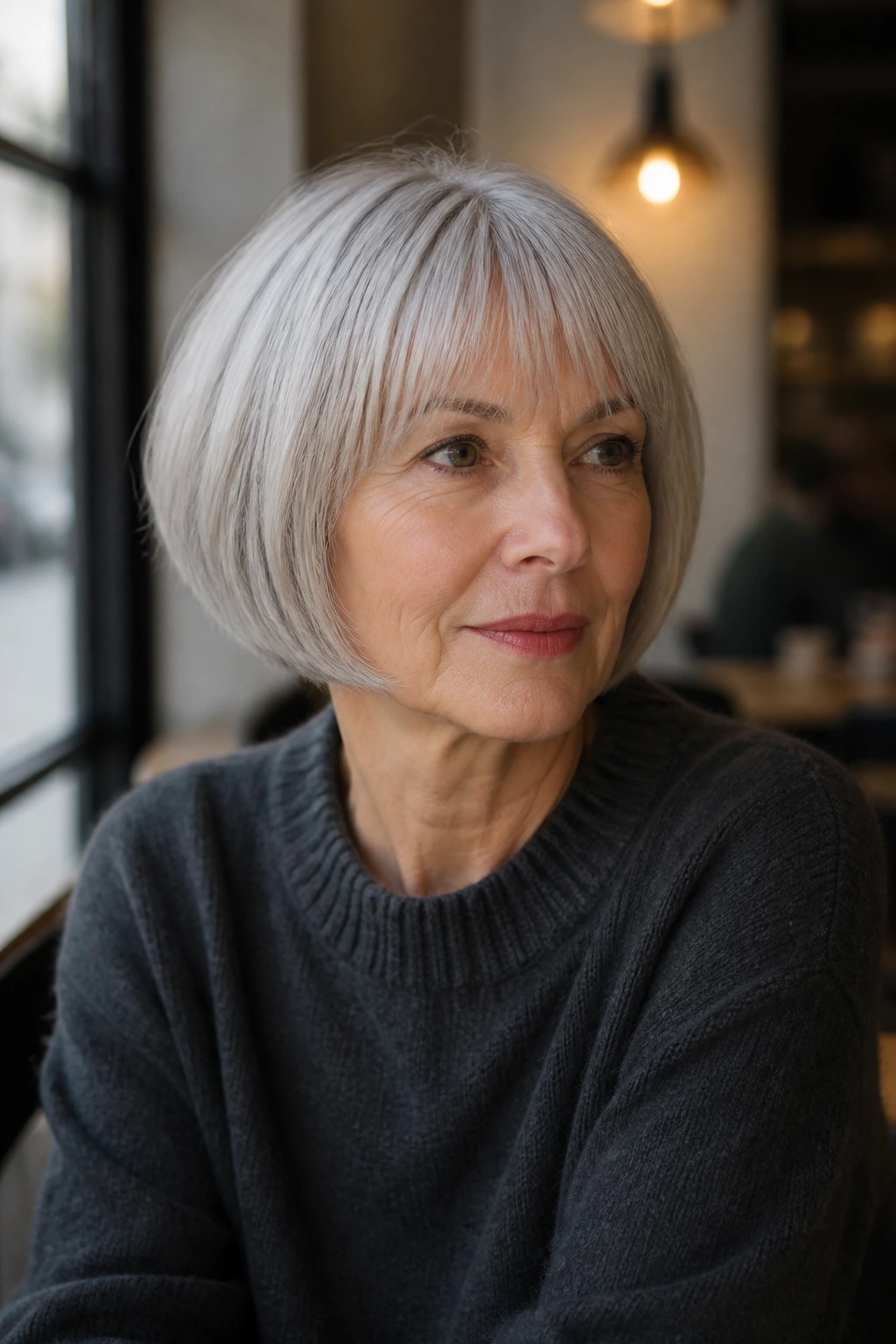
A chin-length French bob brings a little attitude without turning into a costume. The line sits around the chin, the ends stay polished, and a soft fringe can add just enough interest across the forehead. On gray hair, that crisp length makes the color look expensive in the simplest possible way.
It suits straight to wavy textures best. If your hair is very curly, the shape needs more room. But on hair that bends easily, this cut can be washed, air-dried, and worn with almost no drama. That’s part of the appeal.
6. Silver Shag with Piecey Movement
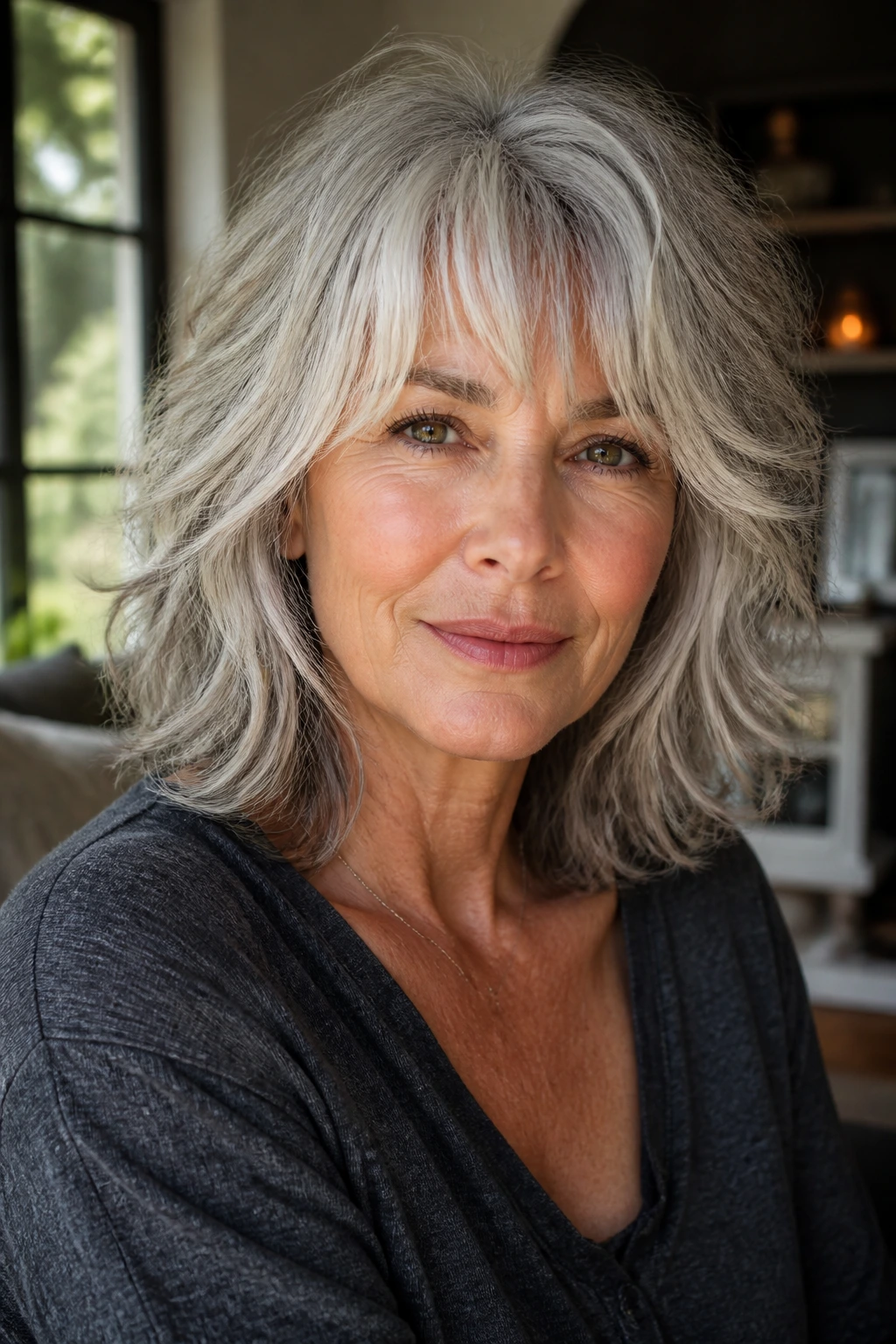
A shag is the answer when you want energy in the cut instead of perfection. The layers are choppier, the ends stay piecey, and the whole thing moves. Gray hair loves that kind of looseness because it keeps the color from reading as one solid helmet.
This is one of the best choices for natural wave. Scrunch in a light mousse, rough-dry with a diffuser, and stop before the hair gets too polished. A shag that’s brushed smooth loses the point. It should look a little undone.
7. Blunt Bob with Soft Ends
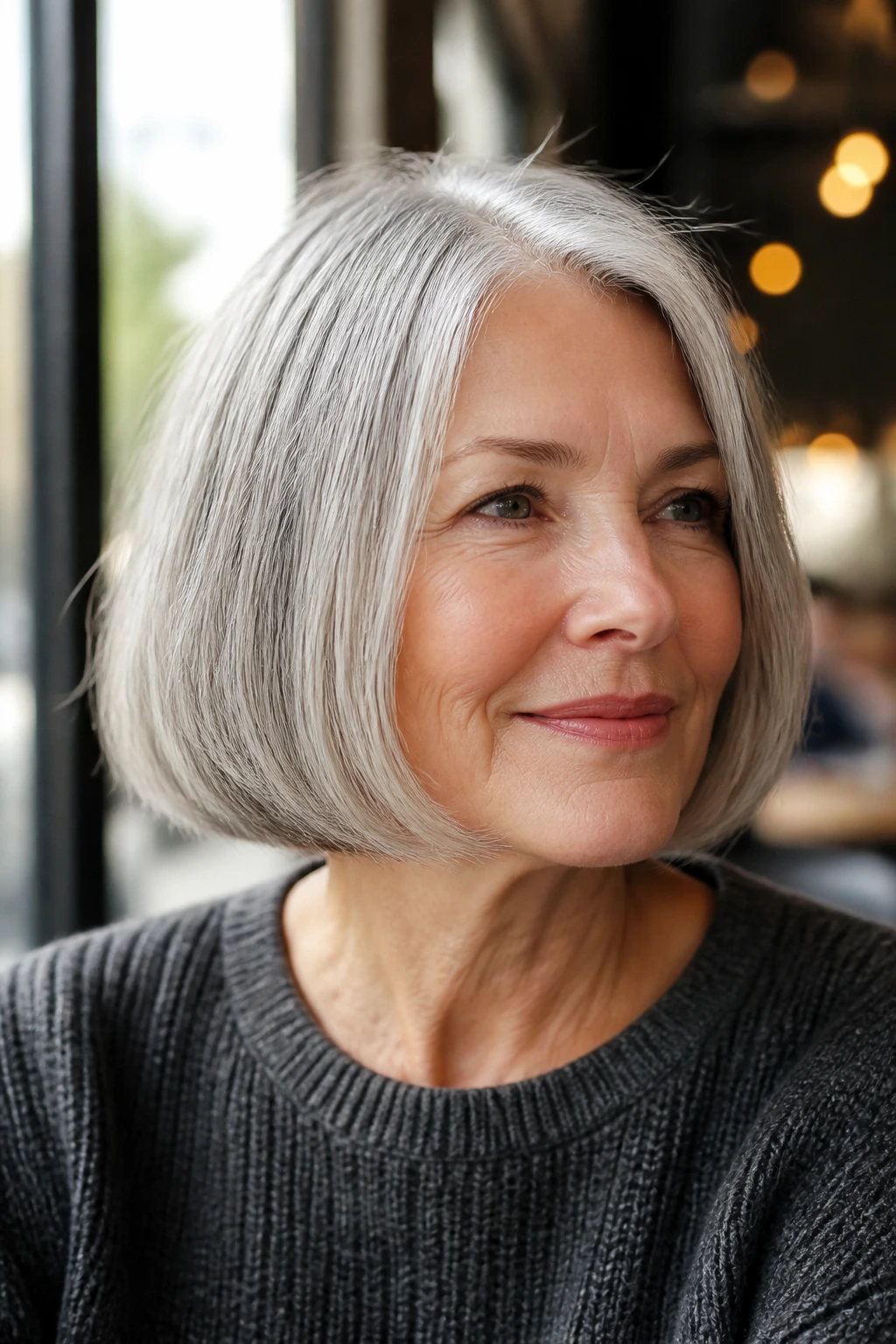
A blunt bob sounds strict, but the better version is softened at the tips. That small detail matters. A hard, heavy line can look a little severe on gray hair, especially if the strands are fine. Softening the ends keeps the cut from looking like it was carved with a ruler.
This style gives density where hair is thinning. The weight along the edge makes the bob look fuller, and the clean shape helps silver shine. If you want polish without curls or layers, this is a strong pick.
8. Wavy Collarbone Cut
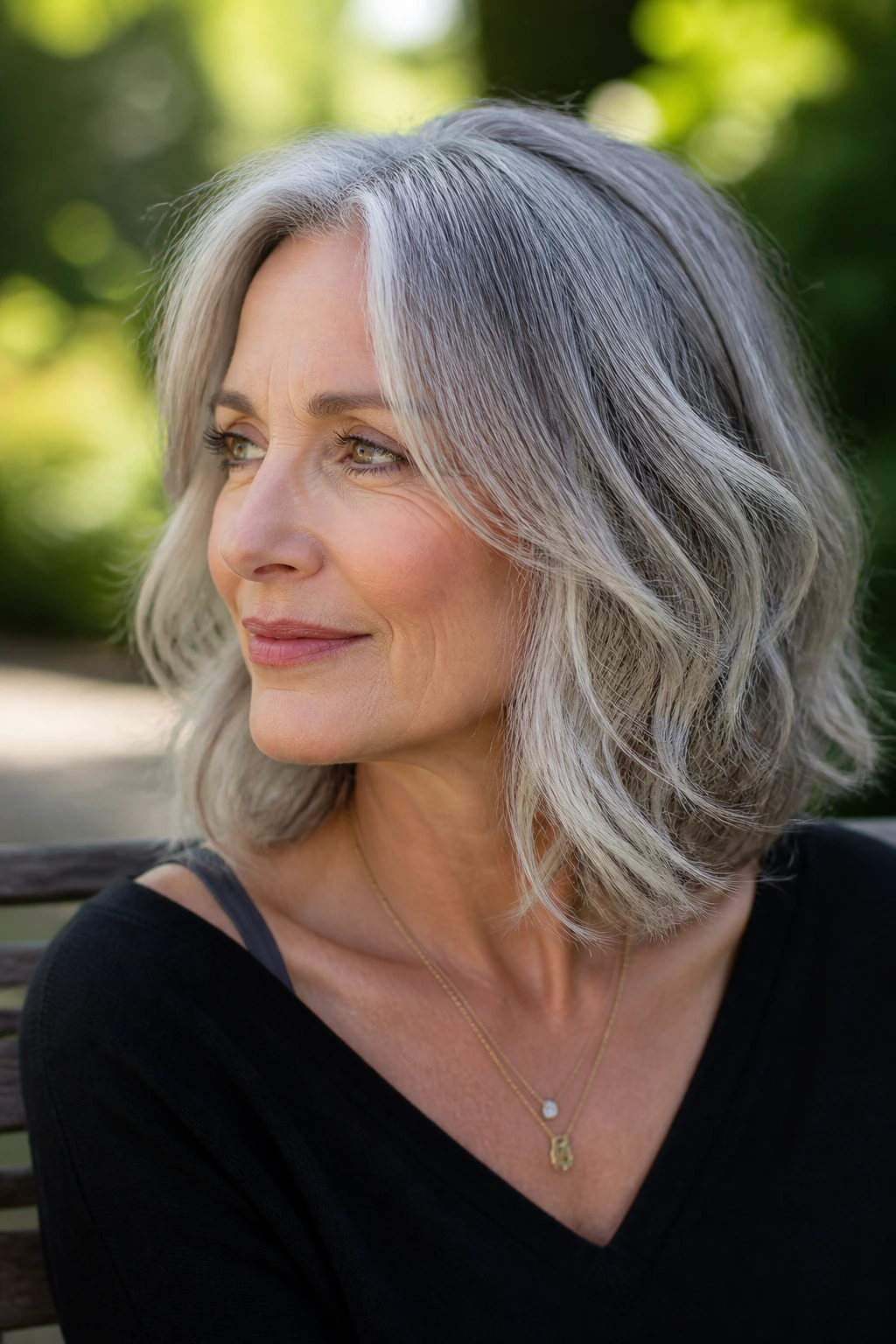
A collarbone cut with wave is a very practical kind of pretty. It gives enough length to tuck behind the ears or clip up, but the shoulder-skimming line keeps the ends from getting ragged. The wave adds body where gray hair often needs it most.
For this cut, the real trick is not overworking it. A little bend looks better than a uniform curl pattern. Air-dry with a curl cream if your wave is natural, or wrap a few sections around a large iron for loose movement. Keep the front pieces a touch shorter so they don’t fall straight into the collarbones and flip awkwardly.
9. Curly Rounded Cut
Curly gray hair needs shape, not control. A rounded cut lets the curl pattern sit where it wants, while keeping the silhouette from ballooning out at the sides. That rounded outline is especially useful if your curls have gotten more delicate or uneven over time.
This kind of cut should follow the curl, not fight it. Leave enough length for the ringlets to spring without shrinking the whole cut too high. If the hair is very dense, some interior shaping can reduce bulk, but the outer line should stay soft. Otherwise you get that triangle shape nobody wants.
10. Long Layers with Face-Framing Pieces
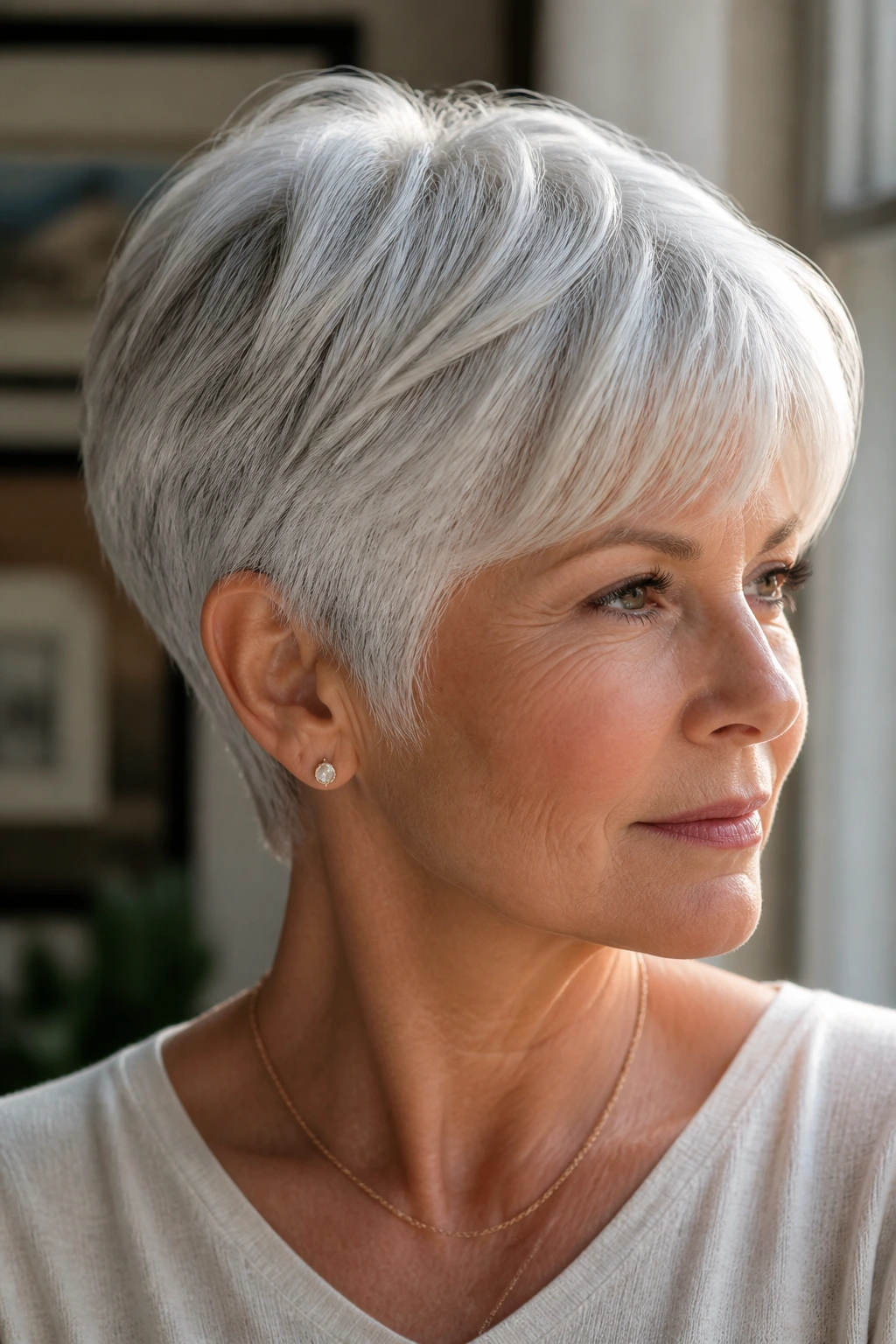
Long hair after 60 is not the problem people make it out to be. The problem is length with no shape. Long layers fix that by removing weight through the ends and putting a few brighter pieces around the face so the hair doesn’t look like one heavy block.
This works especially well if you like to keep your hair up part of the time. The layers make braids, low twists, and loose ponytails look less plain. Gray hair with length can be beautiful when the ends are trimmed often enough to stay blunt and healthy, not wispy and thin.
11. Asymmetrical Bob
A slightly asymmetrical bob gives gray hair a modern angle without going edgy for the sake of it. One side sits a little longer, the part shifts off center, and the whole cut feels more deliberate than a standard bob.
This shape is useful if your face is fuller through the cheeks or if you want to draw the eye downward in a soft line. It also plays well with earrings. One good side of this cut is that even when it grows out, the unevenness can still look planned for a while. That buys you time.
12. Short Stacked Bob
A stacked bob builds volume through the back, which can be a gift if your hair has started to flatten at the crown. The layers are tighter in the nape and gradually lengthen toward the front, giving the style some lift without a lot of teasing or product.
The caution here is simple: don’t let it get too puffy. On thick hair, too much stacking turns the back into a shelf. On fine hair, though, a well-done stack can make the whole head look fuller in a way that feels clean and fresh.
13. Swept-Back Pixie
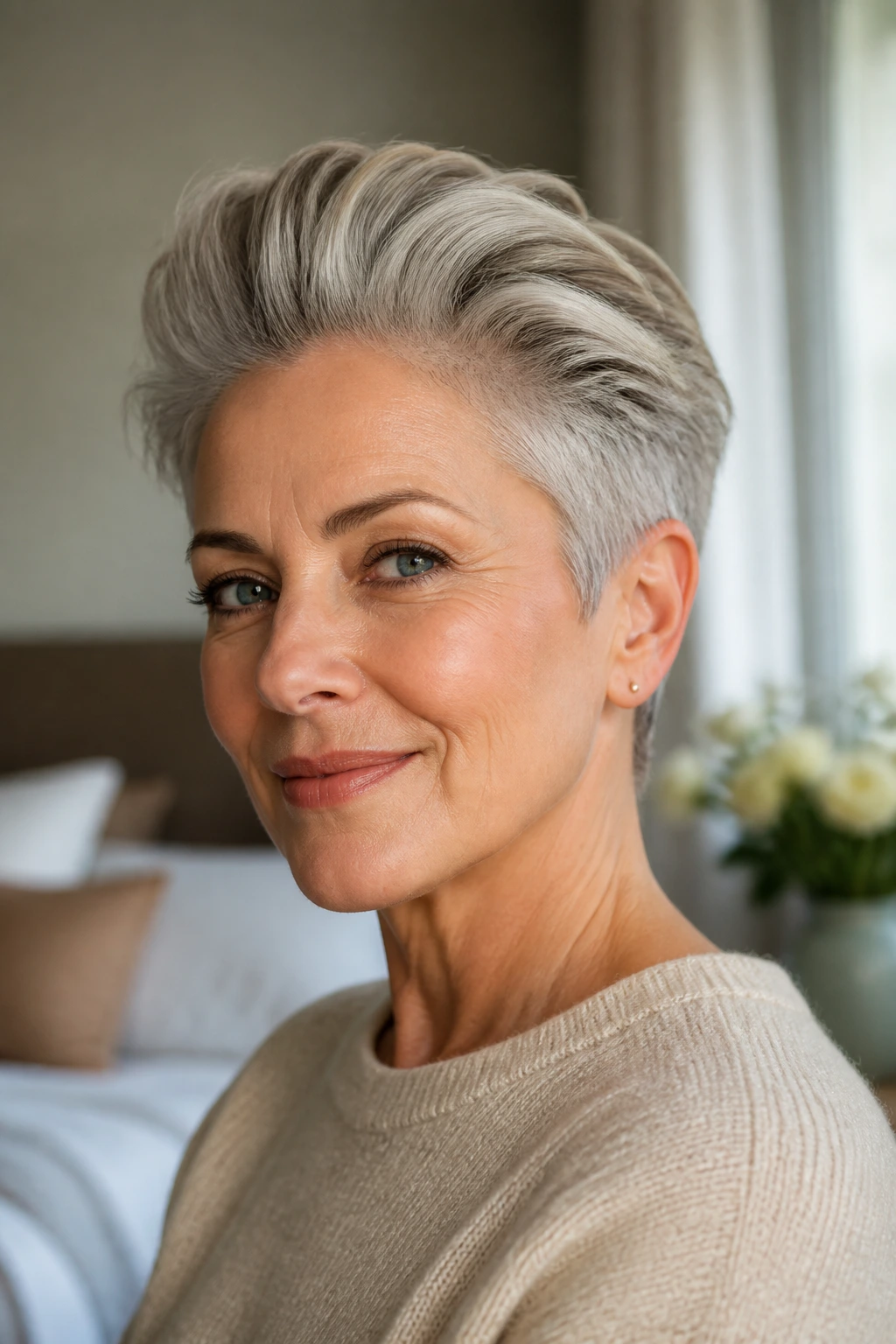
A swept-back pixie opens up the face in a way that’s hard to beat. The hair is cut short on the sides and kept longer on top, then brushed back or slightly up instead of forward. That keeps the forehead clear and gives the crown a little lift.
This style is especially good if bangs annoy you. No one has to keep hacking at the fringe line every two weeks, and the shape works with earrings, glasses, and a strong brow. Use a pea-size amount of styling cream and push the hair back with your fingers while it’s still warm from the dryer.
14. Wispy Bangs with Short Layers
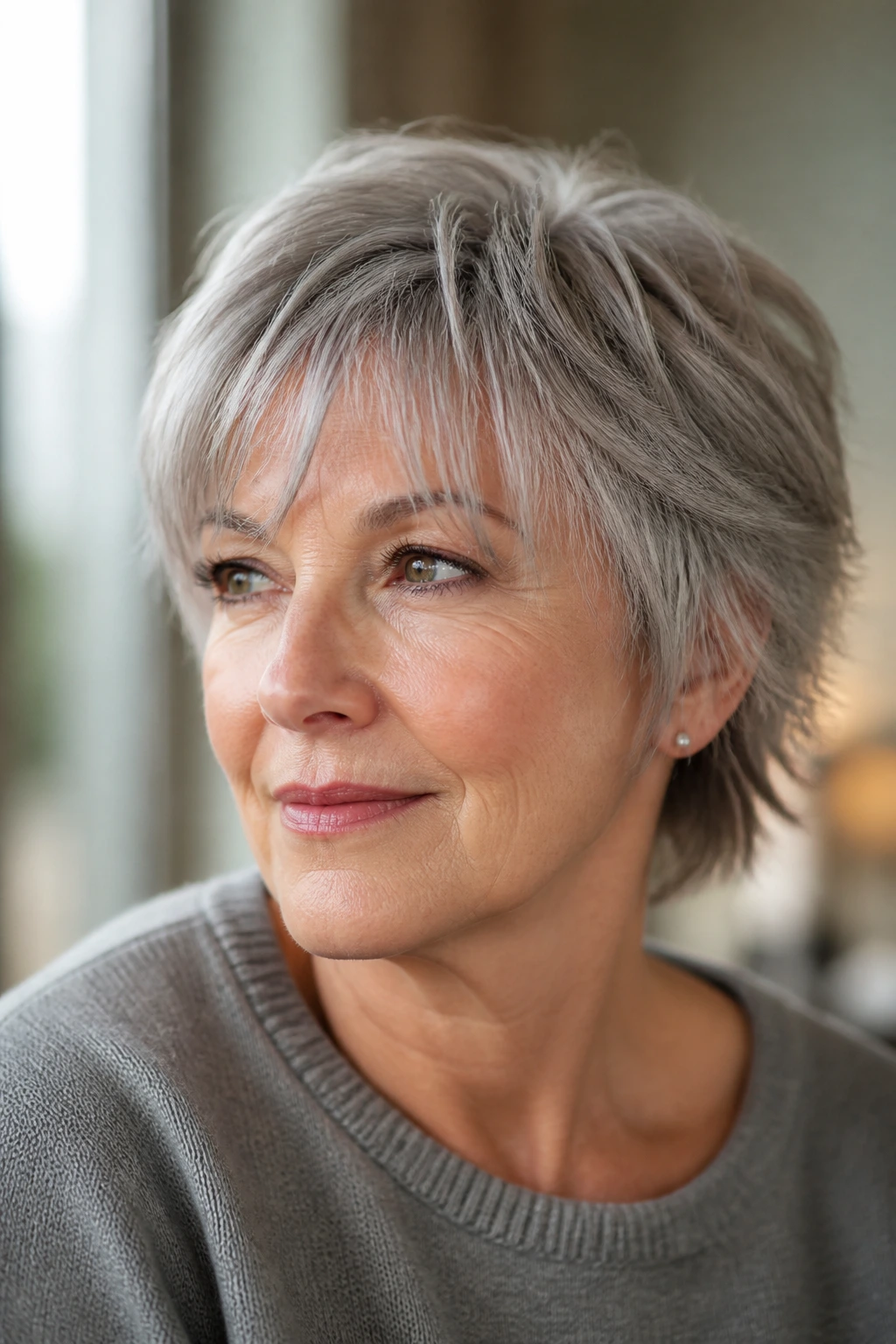
Wispy bangs can be flattering when they’re light enough to move. The point is not to hide the forehead. It’s to soften the front of the haircut so the face doesn’t feel overexposed. On gray hair, a feathery fringe can break up a strong hairline in a gentle way.
The short layers around it matter. They keep the bang from sitting like a little curtain with no support. If you have cowlicks at the front, ask for a longer starting length and let the stylist tailor it dry. Wet bangs can fool everyone.
15. Shoulder-Length Cut with Curtain Bangs
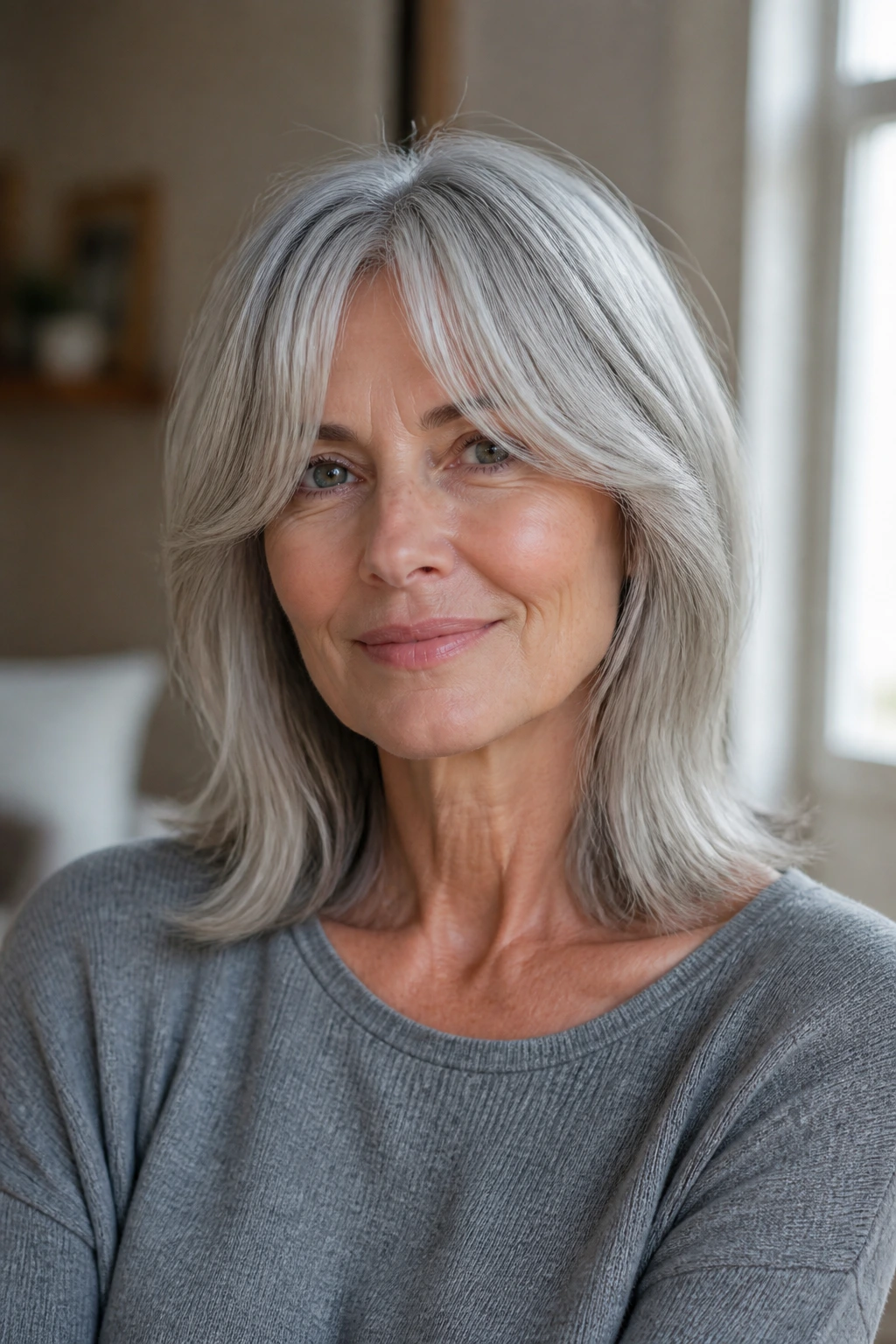
Curtain bangs work because they split the difference between fringe and face-framing layers. They part in the middle or just off center and sweep outward, which keeps the front of the haircut soft without closing off the face.
This cut is a smart middle ground if you like length but want a little more shape near the eyes and cheekbones. The shoulder-length body keeps the hair versatile, while the bangs help the style read as current. If your hair is wavy, the curtain pieces can be dried away from the face with a round brush and left slightly loose.
16. Textured Crop for Fine Hair
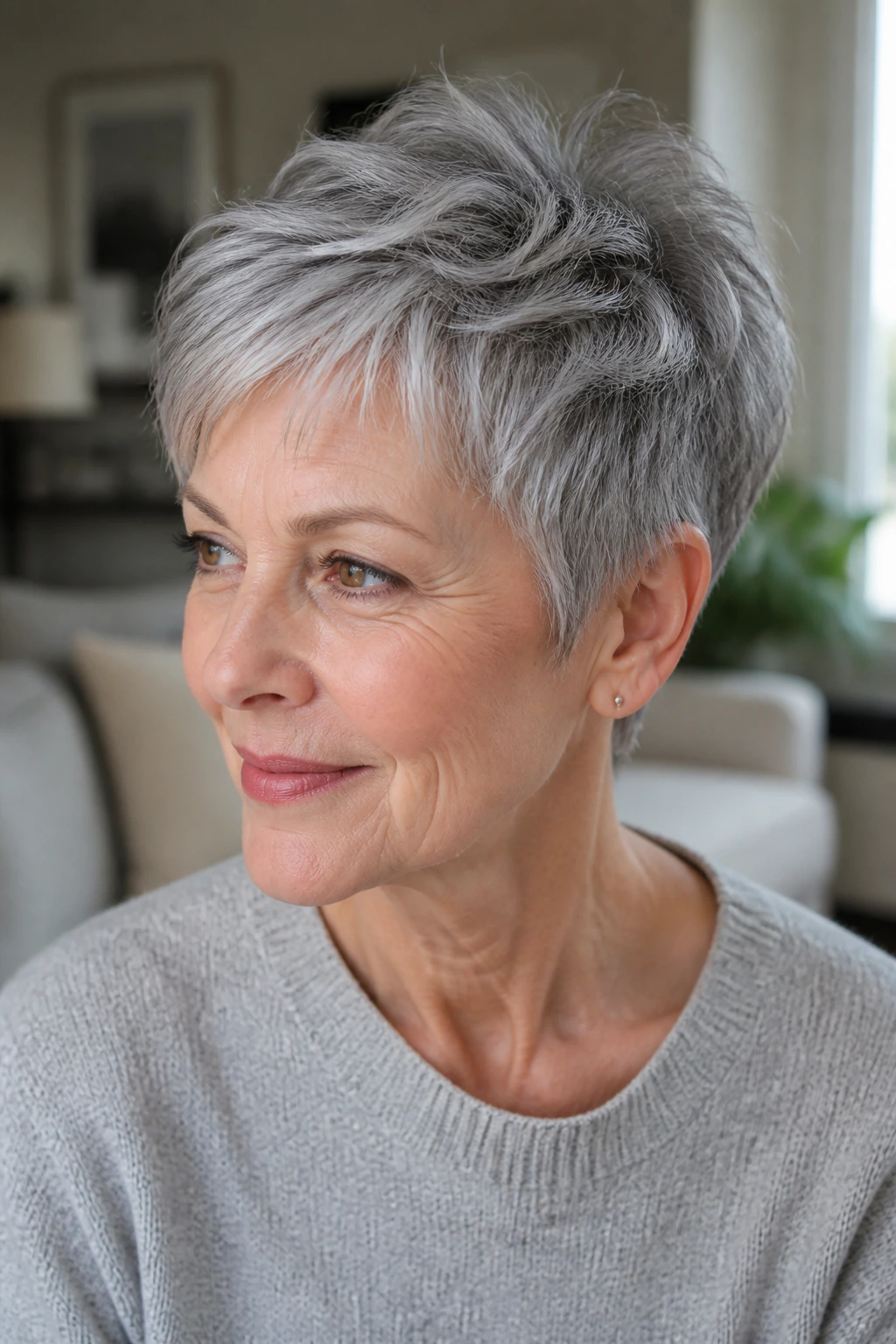
Fine gray hair can go limp fast, which is why a textured crop can be such a useful fix. The cut stays short, but the top is broken up with light texture so the hair doesn’t lie in one thin sheet. The goal is movement, not spikes.
Ask for interior texture, not a lot of thinning. There’s a difference. Too much thinning can leave fine hair see-through at the ends. A good textured crop looks compact and airy at the same time, which is harder to get than it sounds.
17. Soft Undercut Pixie
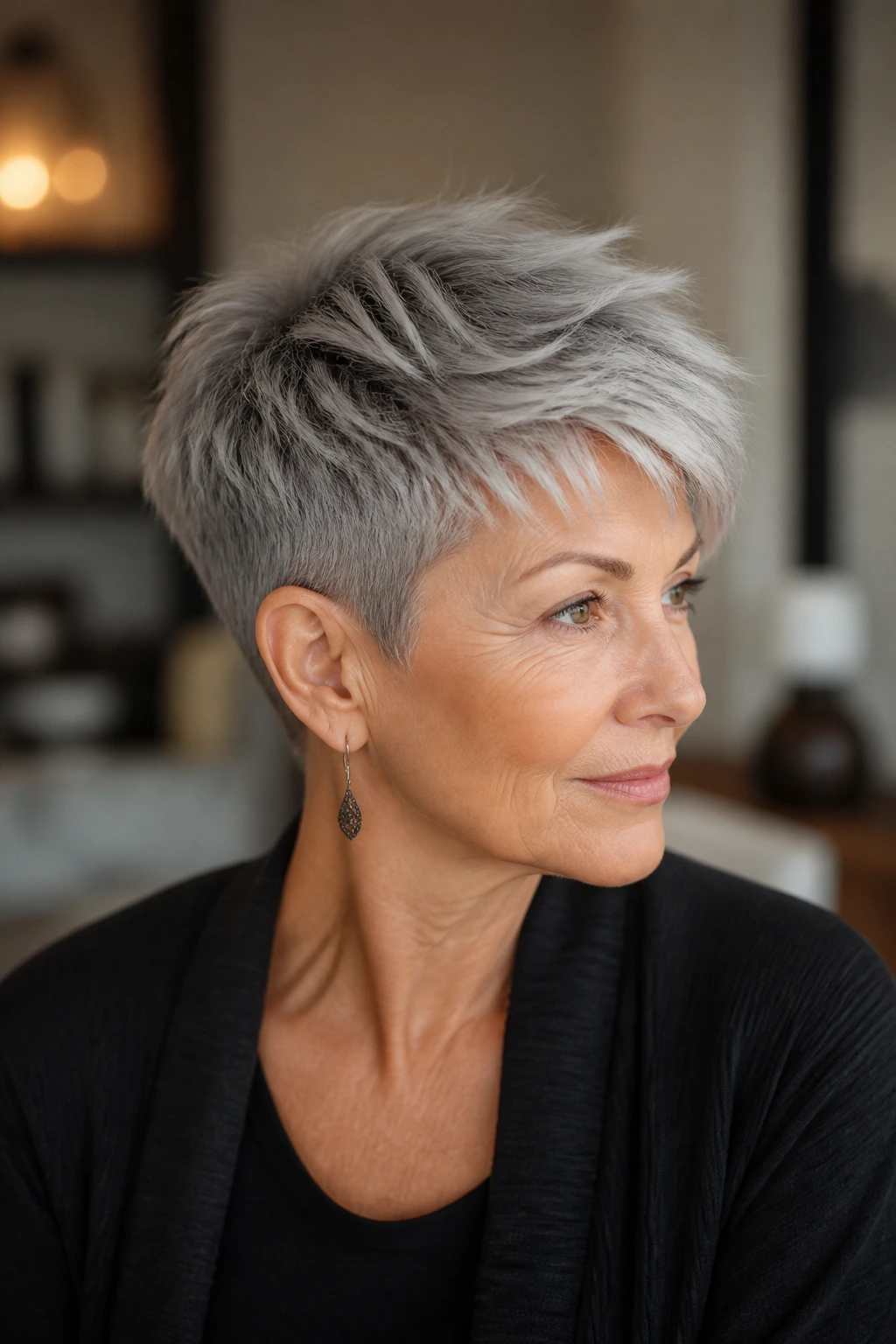
A soft undercut pixie removes bulk where the hair gets too wide, usually around the nape or just under the sides. That helps thick gray hair sit closer to the head and makes the top easier to shape. It’s a smart haircut if your hair has plenty of density but not much patience.
The word soft matters here. You don’t want the undercut to show like a barbered line unless that’s the look you’re after. Let the upper layers stay feminine and movable. A light blow-dry and a little root cream will do more than heavy paste ever could.
18. Mid-Length Layered Cut
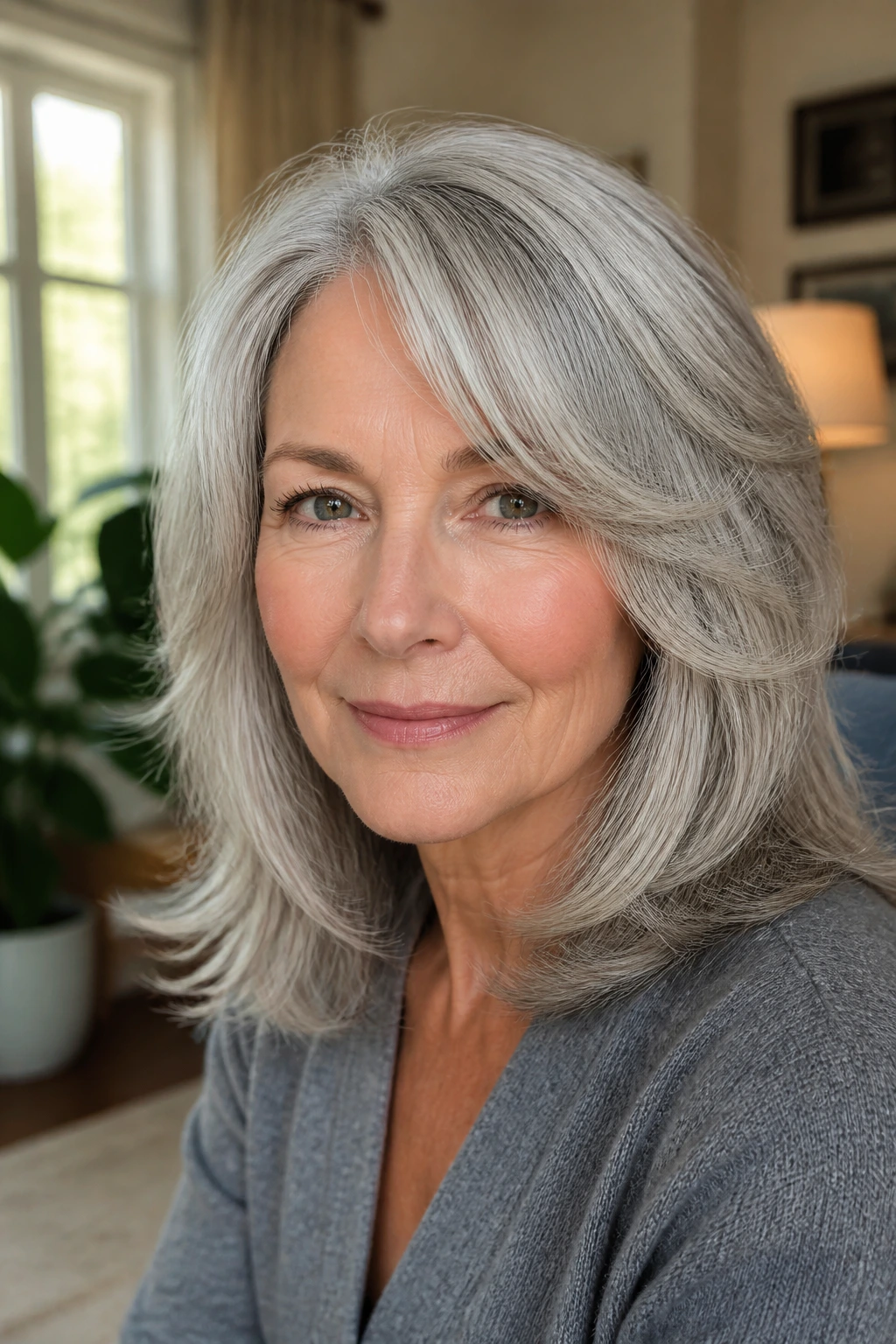
Mid-length is underrated. It gives you enough hair to tuck, pin, clip, or wear loose, but the layers keep it from feeling heavy or stringy. For gray hair, this is often the best compromise between polish and ease.
The trick is to keep the layers long enough to preserve density. Short, choppy layers can make mid-length hair look thinner, especially at the ends. If your hair falls between the chin and the shoulders, a soft layered cut can give you shape without forcing a daily styling battle.
19. Natural Curl Bob
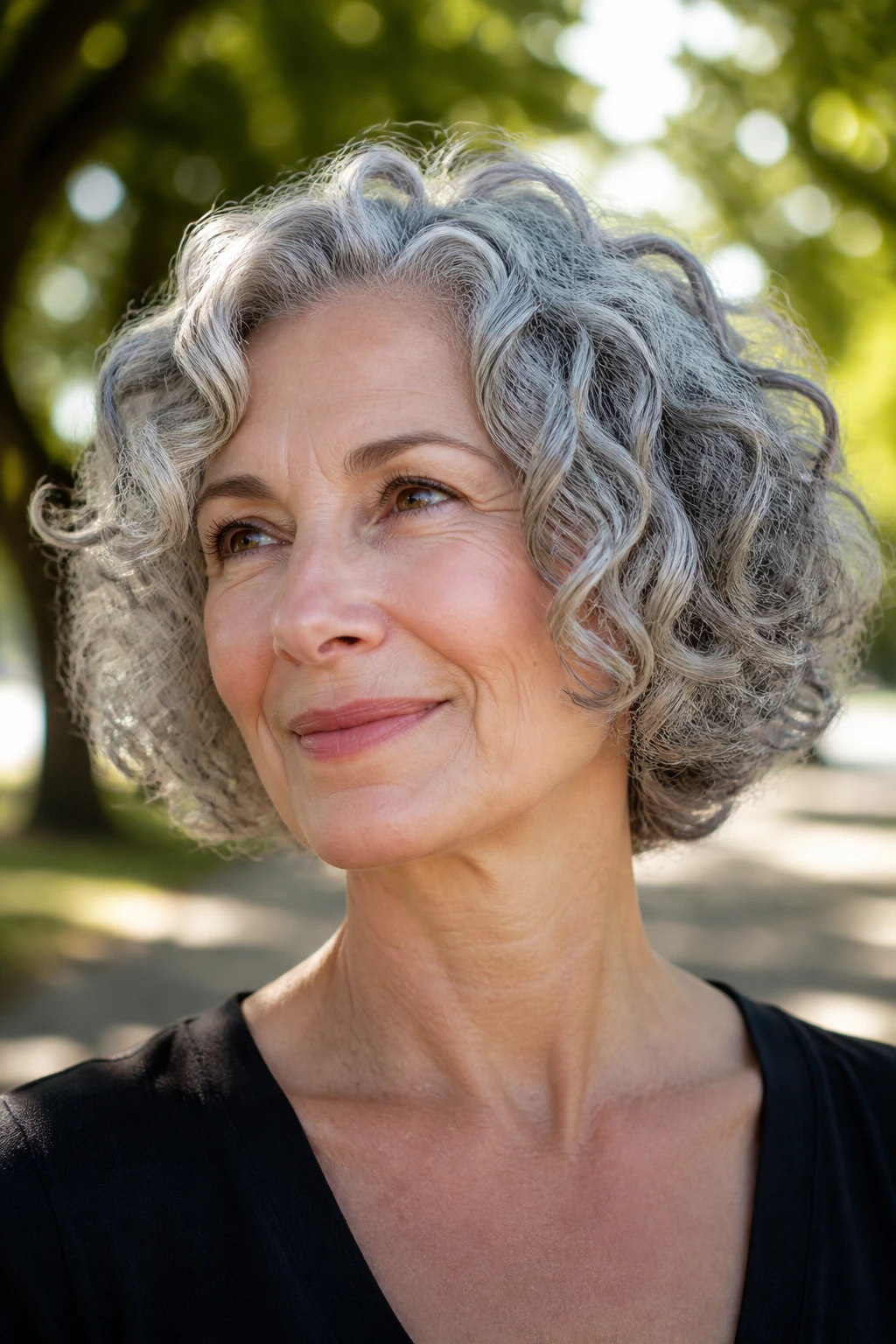
A natural curl bob respects the curl pattern instead of forcing it into a round brush shape. It usually falls around the chin or a touch below, with the perimeter shaped so the curls land in a tidy outline rather than puffing out in random places.
This cut is not about making curls behave. It’s about giving them boundaries. When the bob is cut dry or cut with the curl in mind, the whole style tends to settle better after washing. That alone can save a lot of frustration.
20. Feathered Shoulder-Length Cut
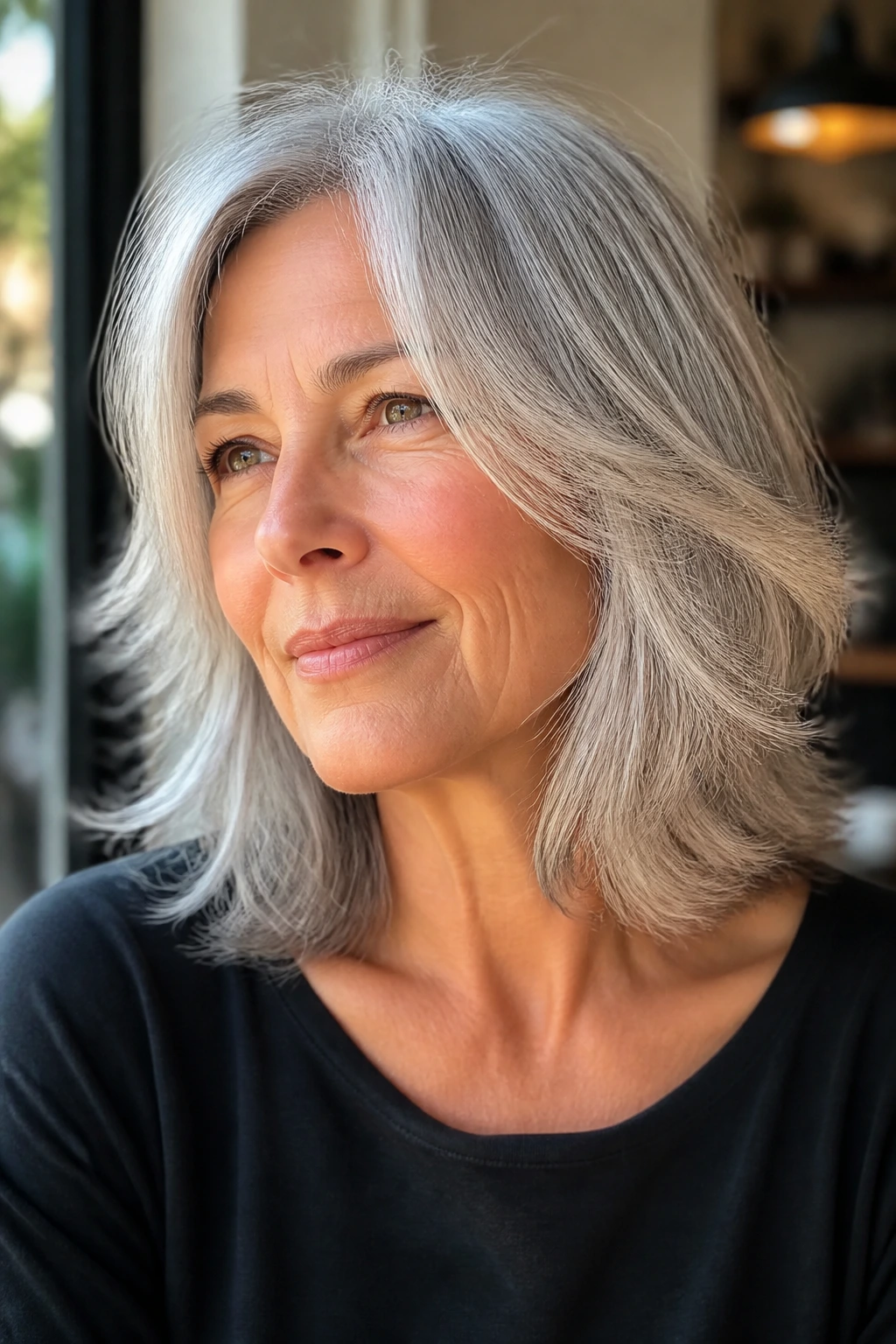
Feathering gives shoulder-length hair some lift without taking away the length people want to keep. The layers are light, almost airy, and they move away from the face instead of hanging straight down.
This is a good choice if you want softness around the jaw and neck but do not want a bob. The feathered ends are especially flattering on gray hair because they stop the silhouette from feeling heavy. A round brush or a large curling brush can help the front pieces sweep back just enough.
21. Side-Swept Chin Bob
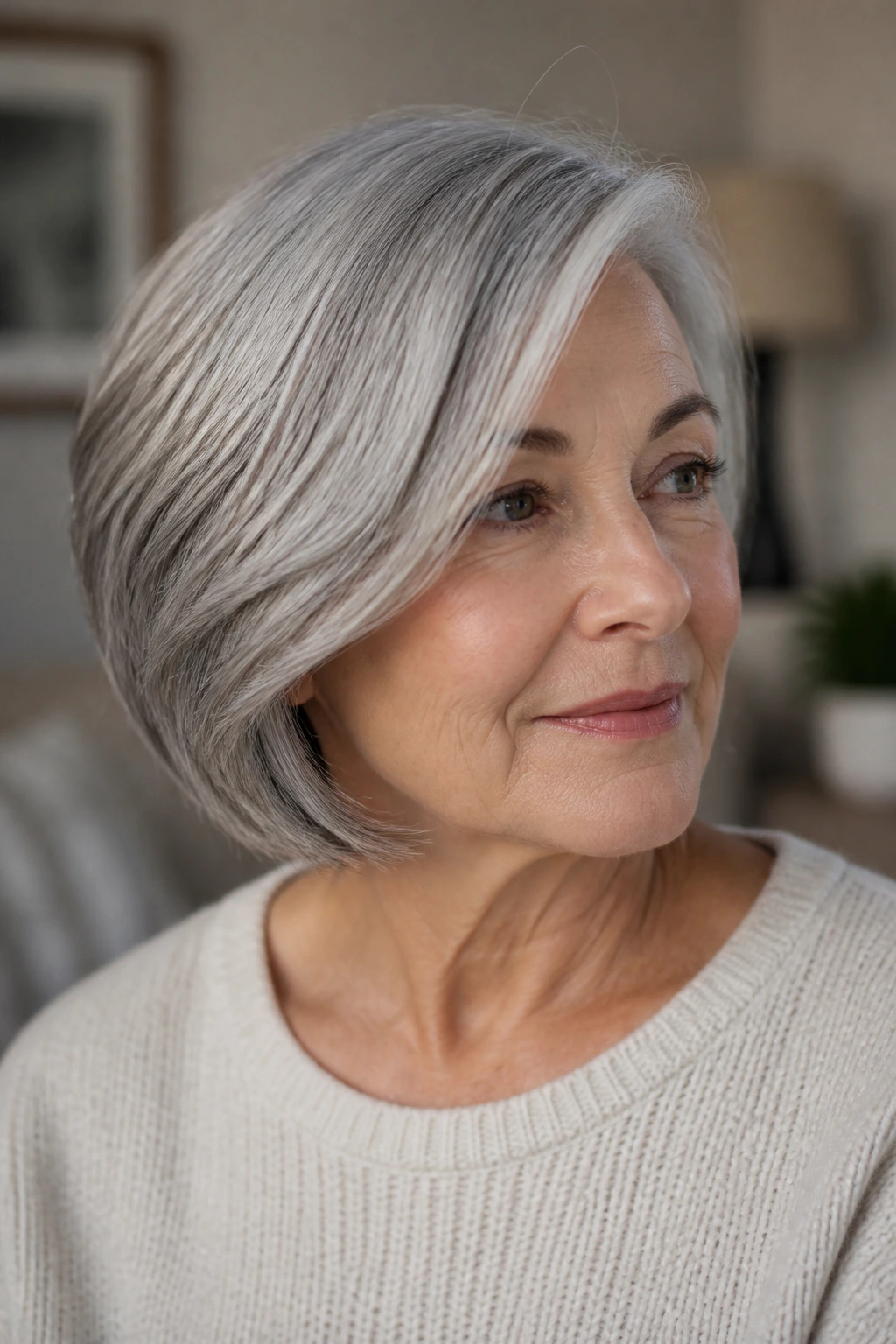
A side-swept chin bob draws the eye diagonally, which is useful when you want a softer line through the face. The length sits around the chin, and the heavier front sweeps to one side instead of splitting the face down the middle.
It’s a good cut if your features feel stronger than you want them to, or if your hair grows with a natural side bend. The asymmetry keeps it interesting. Add a little smoothing cream at the front and tuck one side behind the ear if you want the cut to feel a touch more open.
22. Piecey Razor Cut
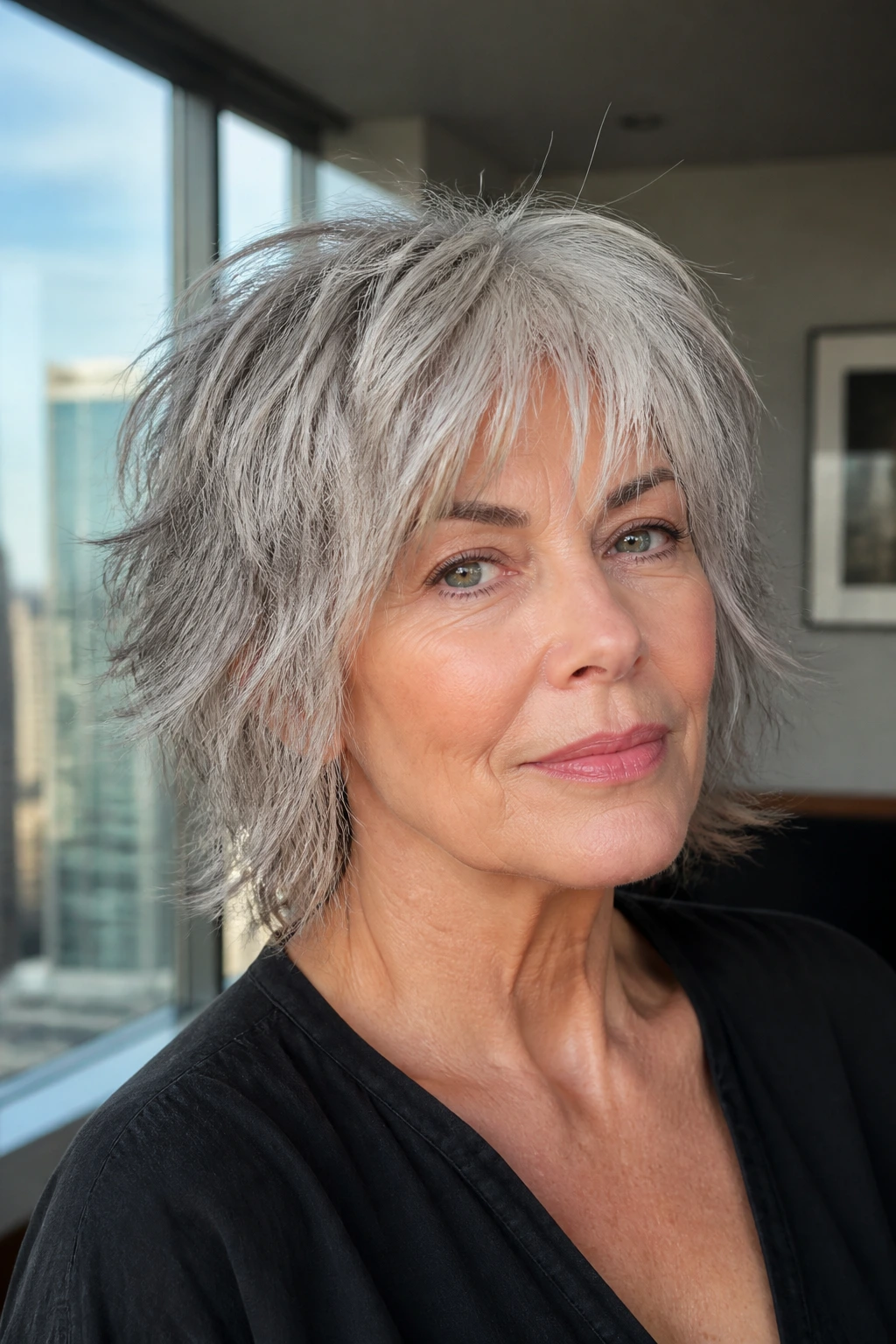
A razor cut creates ends that move in separated little pieces instead of one blunt line. On dense gray hair, that can be a relief. It removes visual weight and gives the style a bit of edge without making it hard or spiky.
This one works best on straight to wavy textures that can hold separation. If your hair is very fine, a razor can take out too much strength. But on thicker hair, the softer, sliced finish can make the haircut feel lighter and less boxy.
23. Graceful Long Silver Layers
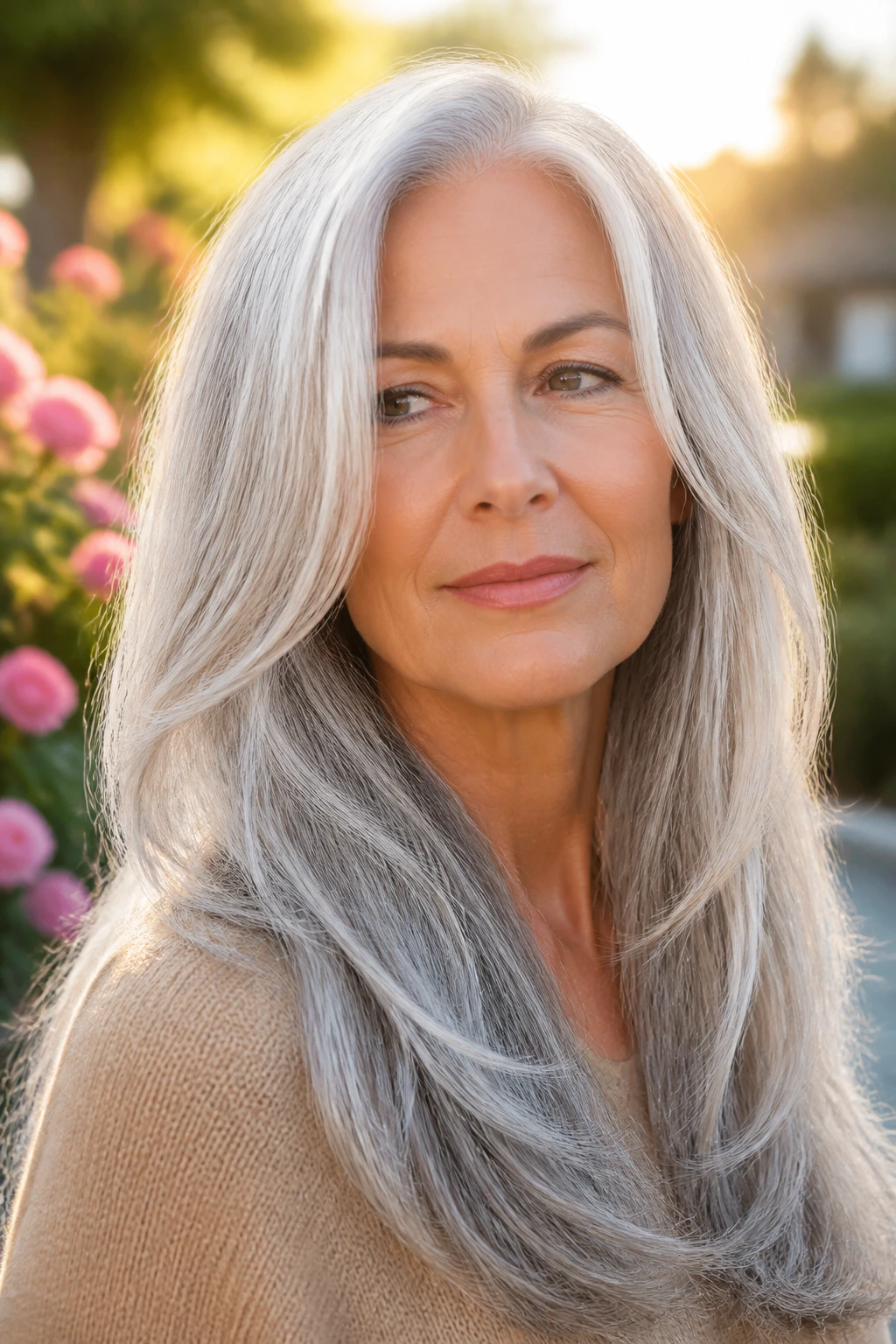
Long gray hair can look stunning when it’s controlled with layers and the ends are kept in shape. The important part is that the layers should support the length, not shred it. A graceful long cut has movement at the face and a clean finish at the bottom.
This style is for the woman who likes length and isn’t apologizing for it. Good. Keep the layers long, the ends trimmed, and the part soft. If the hair has natural wave, let it show. If it’s straight, give it a slight bend at the front so the length doesn’t hang too flat.
24. Short Curly Crop
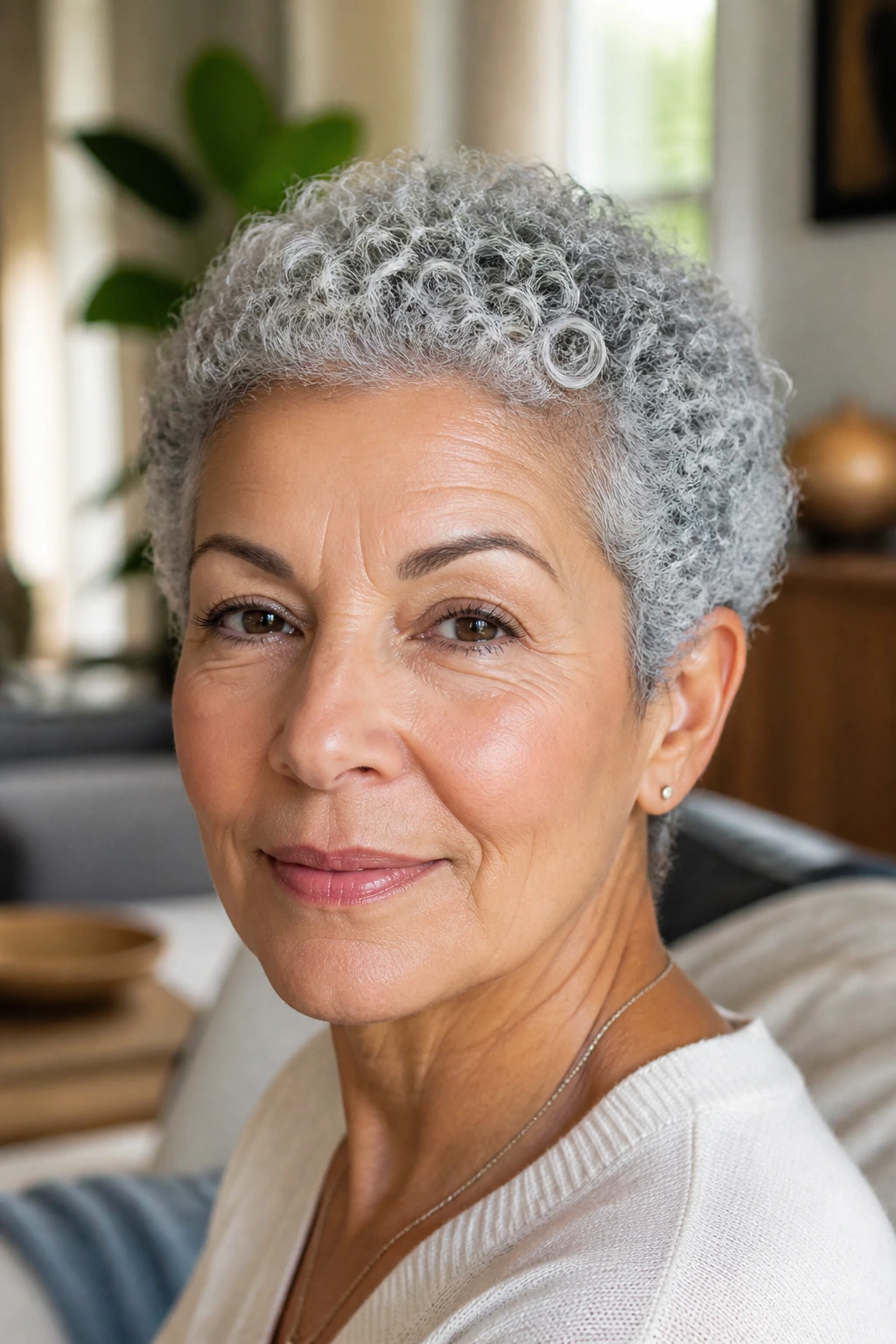
A short curly crop is compact, lively, and easy to read from across the room. The curls stay close to the head, which keeps the shape neat and helps the silver catch the light in little sparks instead of one big cloud.
This cut can be gorgeous on tight curls or softer bends, but it needs the right perimeter. Too much shrinkage and it loses its shape; too little and it grows into a puff. A dry cut or a curl-by-curl shaping session tends to work best here.
25. Pageboy-Inspired Bob
The pageboy-inspired bob has that tucked-under curve at the ends, which gives gray hair a tidy, almost polished finish. It’s a very clean shape, and when it sits just below the ear or at the jaw, it can make the neck look longer.
It works especially well on straight hair or hair that can be blow-dried smooth in ten minutes. The curve at the bottom should be soft, not rigid. Think rounded and glossy, not hard and helmet-like. A flat brush and a little serum on the ends will usually be enough.
26. Soft Curls with a Side Part
A side part does more for soft curls than people give it credit for. It gives the roots a lift on one side and lets the curls fall in a more flattering sweep, which keeps the style from sitting flat or too symmetrical.
This is a lovely choice if you want movement around the face without a haircut that screams “short.” The curls can fall around the cheekbones, the side part keeps the top from collapsing, and the whole style feels relaxed rather than over-styled. A curl cream and a diffuser are enough on most days.
27. Tucked-Behind-the-Ear Cut
A tucked-behind-the-ear cut is all about showing the face and the earrings. The hair is short to medium-short, with just enough length to tuck one side back neatly. On gray hair, that open shape feels crisp and modern without being severe.
It’s a good option if you wear glasses, because it keeps the temples clear and avoids that awkward bulk right beside the frames. Ask for soft edges around the ears so the tuck looks intentional, not like you’re forcing the hair out of the way. A light spray at the roots helps the side hold its place.
Why Gray Hair Wants Shape, Not Weight
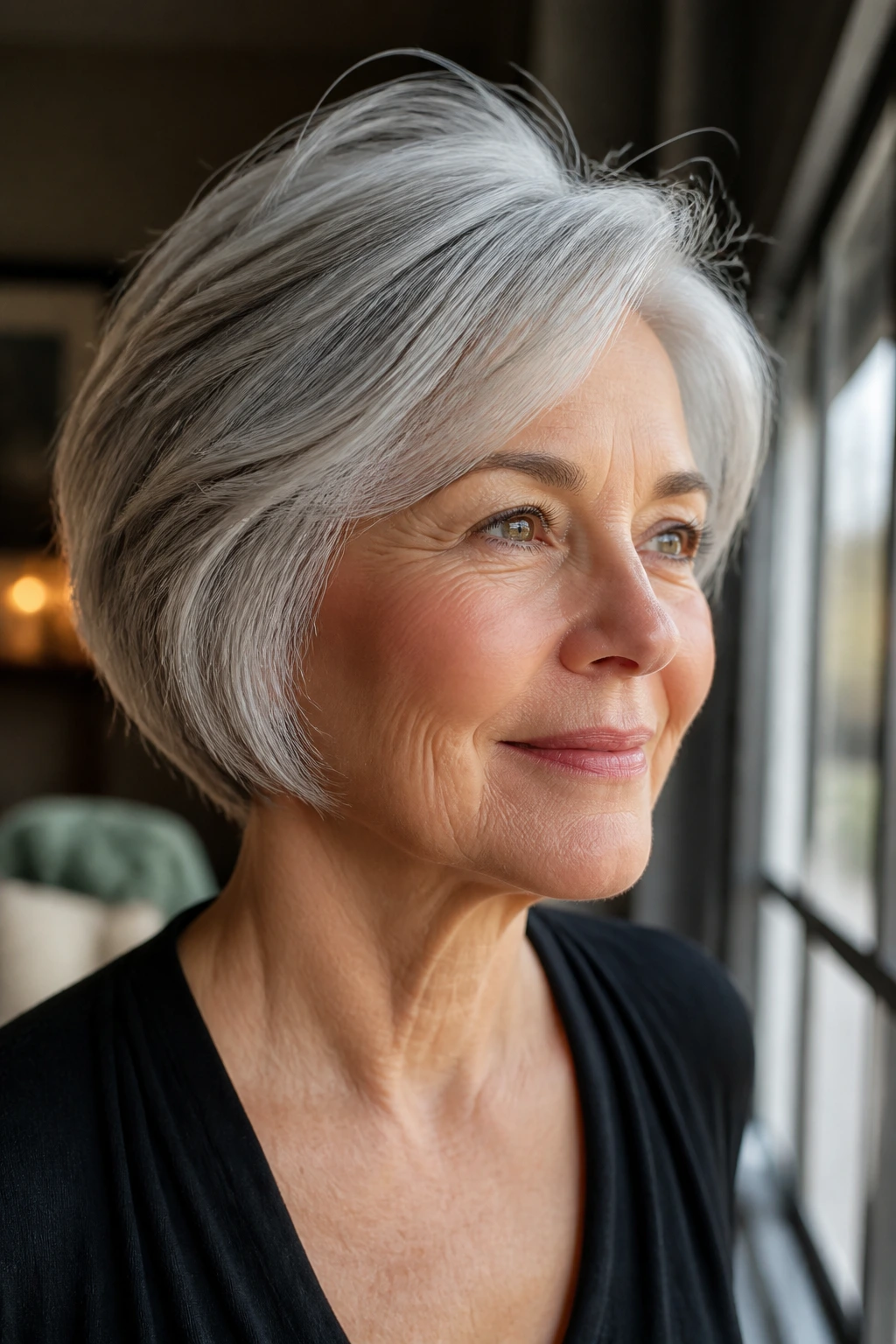
Gray hair changes texture, and not always politely. Some strands get wiry. Some get softer and finer. A lot of it feels drier than colored hair, which means heavy one-length cuts can start to sag at the ends while puffing at the sides. That’s why shape matters more than length alone.
A good gray haircut works with movement. It lets the crown lift, keeps the outline clean, and avoids piling too much bulk around the jaw or the nape. You can see the difference immediately when a cut grows out. A shaped cut still looks deliberate after a few weeks. A heavy cut just starts to collapse.
Tools That Keep Gray Hair Shiny and Lifted
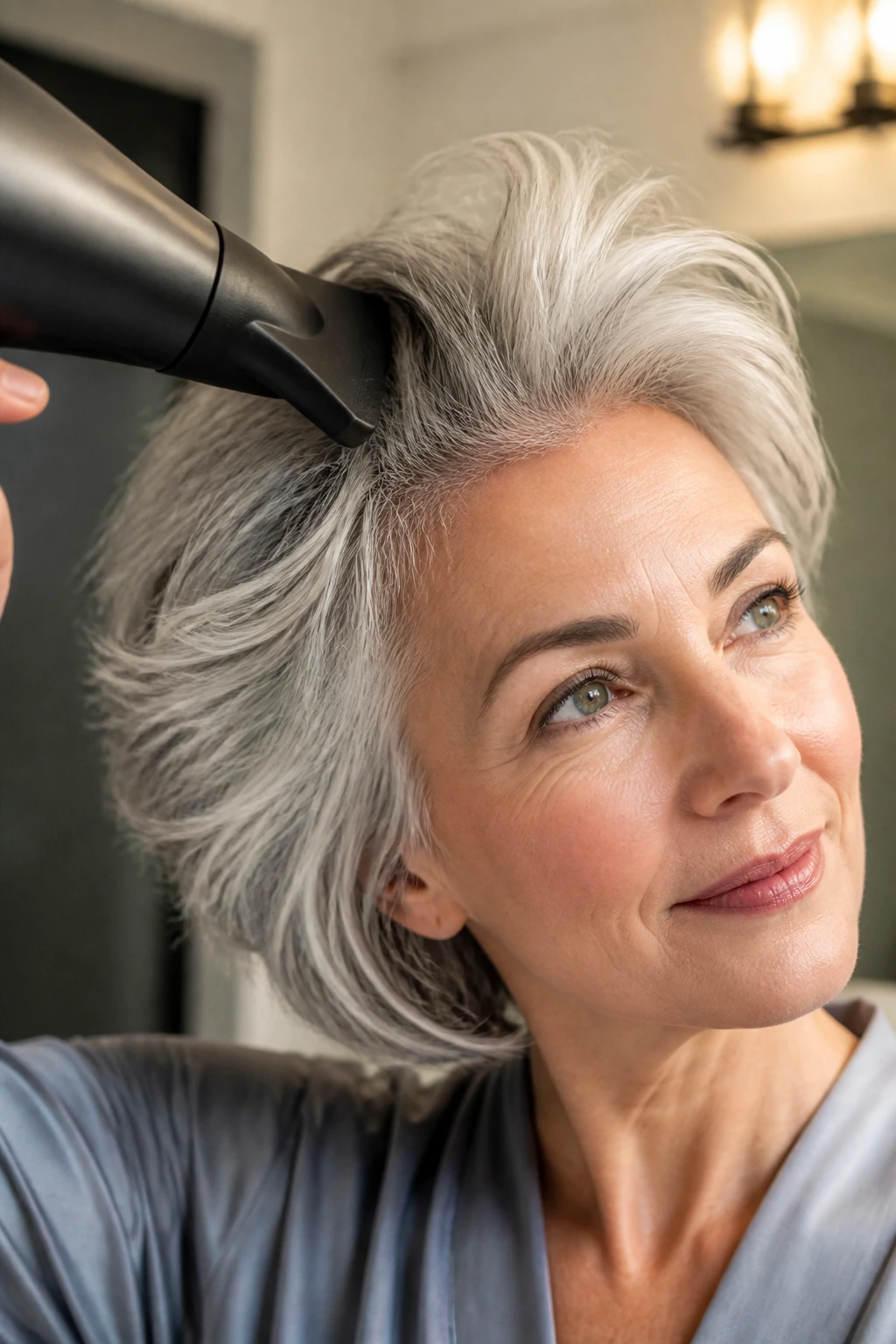
- Blow-dryer with a concentrator nozzle: The nozzle helps aim the air at the roots, which matters when you want lift instead of frizz.
- 1-inch to 1.25-inch round brush: Smaller brushes give better control on pixies and bobs; larger ones are useful once the hair reaches the shoulders.
- Light mousse or root lift spray: A small amount at the crown can keep fine gray hair from lying flat by noon.
- Heat protectant: Gray hair can scorch and roughen fast under hot tools, so this is not the place to skip a step.
- Purple shampoo: Use it sparingly if your silver pulls yellow from hard water, sun, or product buildup. Too much can dry the hair out.
- Wide-tooth comb: Better than ripping through damp hair with a brush, especially on curls or coarse silver strands.
- Dry shampoo: Handy at the roots between washes, but keep it light so it doesn’t leave the hair dusty.
How to Choose a Cut by Texture and Face Shape
Gray hairstyles for women over 60 work best when they match the hair you actually have, not the hair you remember having. Fine hair needs shape that creates density. Thick hair needs weight removed in the right places. Curly hair needs a perimeter that respects shrinkage. Straight hair usually needs some kind of bend, layer, or part change so it doesn’t hang like a curtain.
Fine Hair
Go shorter or keep layers long and soft. A bob, pixie, or textured crop usually gives more body than a long cut with too many short pieces.
Thick Hair
Ask for internal weight removal, a clean nape, or longer layers that stop the sides from ballooning. A stacked bob or soft undercut can help.
Curly Hair
Shape the cut around the curl pattern and leave enough length for spring. A rounded bob or short curly crop usually behaves better than a razor-sharp line.
Straight Hair
You can wear almost anything, but the cut needs movement somewhere. Side parts, curtain bangs, feathered ends, or an angled bob keep it from feeling flat.
If You Wear Glasses
Stay away from bangs that land right on the frame line. Side-swept fringe, ear tucks, and softer temple pieces usually work better.
How to Style These Looks Without a Half-Hour Battle
A gray cut should not demand a full production. If it does, the shape is asking for too much. The better styles here can be dried in stages and finished in minutes, not twenty different steps.
Lift at the roots first. That’s the part most people miss. Dry the crown before fussing with the ends, and aim the airflow against the direction you want the hair to lie. If you want volume, don’t smooth the root flat too early.
Keep product small. A pea-size amount of cream or paste is often enough for short hair. Medium-length hair may want a dime-size amount, but more than that can dull gray hair fast and make it look dusty.
Use the part as a tool. A side part can soften the face, while a center part can make a long layered cut look cleaner. Move the part an inch or so if the hair starts sitting too narrowly at the top.
Finish with restraint. A few bends at the front, a little tuck behind the ear, or a soft piece left loose near the cheek is usually enough. Gray hair tends to look best when it looks touched, not overworked.
Common Mistakes That Make Gray Hair Look Flat or Harsh
The easiest mistake is leaving too much weight on the ends. Heavy gray hair can drag the whole face down and make the neck look shorter than it is. The fix is a cleaner outline or a few long layers that stop the collapse.
Another one: over-thinning fine gray hair. If the stylist takes out too much bulk, the ends go wispy and see-through. That’s not softness. That’s loss of shape.
Heavy bangs are another trap. A thick fringe on gray hair can feel abrupt and hard, especially if the hairline is thinner than it used to be. Softer bangs, side-swept pieces, or a longer curtain shape usually look better.
Then there’s the purple shampoo problem. Used once in a while, it can keep silver bright. Used too often, it dries the hair and makes it feel rough, which only highlights frizz and static. Use it when needed, not on autopilot.
And please, do not ignore the neckline on short cuts. A neat nape is half the haircut. Once it grows out, the whole style starts to look tired even if the front is still fine.
Variations and Adaptations to Try
For Fine Hair: Ask for shorter layers near the crown and a stronger outline at the perimeter. That gives the cut enough body to hold up without needing a pile of product.
For Thick Hair: Add an undercut at the nape or internal debulking through the sides. Thick gray hair looks better when the bulk is controlled, not chopped away randomly.
For Curly Hair: Keep the shape rounded and let the curls dictate the length. Cutting dry can help the stylist see where the curl actually lands instead of guessing.
For Glasses-Friendly Hair: Choose side-swept fringe, ear tucks, or a cut that leaves the temples lighter. Hair that sits right on the frame line tends to feel cramped.
For Low-Heat Styling: Pick cuts that already have movement built in, like a shag, layered bob, or textured crop. Air-drying works best when the haircut is doing part of the work for you.
Keeping the Shape Between Salon Visits
Short gray cuts usually need a trim every 4 to 6 weeks if you want the lines to stay clean. Bobs and lobs can go a little longer, usually 6 to 8 weeks, depending on how fast your hair grows and how precise the shape is.
Night care matters more than people think. A silk or satin pillowcase reduces friction, which helps keep the ends smooth and the crown less crushed. If your hair bends badly overnight, a loose clip at the crown or a very soft wrap can keep the front pieces from sticking up in the morning.
Washing frequency depends on texture, not a rulebook. Fine hair often needs more frequent washing because the roots get limp faster. Curly or coarse gray hair may do better with fewer washes and more conditioning. If the silver starts to look dull, it’s often buildup, not lack of product, and a clarifying wash every couple of weeks can clear that haze.
Questions Women Ask Before Changing Their Gray Hair
What gray hairstyle is most flattering after 60?
The best one is the cut that gives your hair shape without fighting its texture. For a lot of women, that ends up being a bob, pixie, or shoulder-length layered cut because those shapes keep the crown lifted and the face framed.
Can I keep long gray hair after 60?
Yes, if the length has shape. Long gray hair looks much better with layers, regular trims, and a clean finish at the ends than it does hanging in one heavy sheet.
Is a pixie cut too severe for gray hair?
Not if it’s softened. A feathered pixie, swept-back pixie, or textured crop can look light and elegant. The severity comes from the outline, not the fact that the hair is short.
What should I ask my stylist for if my gray hair is fine?
Ask for volume at the crown, soft internal layers, and a perimeter that keeps enough density. If the stylist reaches for the thinning shears too fast, push back.
How do I stop gray hair from looking yellow?
Use a purple shampoo sparingly, wash out heavy buildup, and protect the hair from hard water and strong sun when you can. Yellowing often shows up on the surface first.
Should gray hair have bangs?
It can, but they need to fit the face and the growth pattern. Soft fringe, curtain bangs, and side-swept pieces usually age better than a heavy straight fringe that sits like a block.
What if my hair flips out at the ends?
That usually means the cut needs a better bevel or the styling direction is working against the natural bend. A round brush, a smaller iron, or a slightly different length at the front can fix it.
Which cut is easiest if I don’t like styling tools?
A textured crop, soft layered bob, or wavy lob tends to air-dry with the least drama. The haircut should do enough of the work that you’re not wrestling with it every morning.
Extra Tricks That Make Gray Cuts Read Softer and Sharper
Shine Boost: A drop of lightweight serum on the ends can make silver hair look smoother, but keep it off the roots. Gray strands show product buildup fast.
Root Lift: Blow-dry the crown in the opposite direction of your part for the first minute or two, then switch it back. That tiny trick gives more lift than most people expect.
Face Framing: Ask for the front pieces to graze the cheekbone or jaw instead of cutting them to one exact length. That little variation keeps the haircut from looking stiff.
Make-It-Yours: If you wear glasses every day, let your stylist adjust the fringe and temple pieces around the frame. Hair that cooperates with your glasses always looks more finished than hair that ignores them.
A Sharp Finish for Silver Hair
The best gray hairstyles for women over 60 do not try to pretend the hair is younger than it is. They make use of what the hair has now: shine, texture, softness, and a little more personality than before. That’s a better deal than chasing a haircut that only behaves in a salon mirror.
A good cut should make your mornings easier, not louder. If it gives you lift at the crown, a clean outline, and a shape that still feels like you when it grows out a bit, you’re in the right neighborhood. Keep the silver, keep the shape, and let the haircut do its job.
