



Thinning curly hair can go flat in a way straight hair rarely does. The crown sinks, the part starts to wander, and the ends turn wispy just when you want the curl pattern to do the heavy lifting.
Short cuts for women with thinning curly hair work because they stop asking the ends to carry all the weight. Less length means less drag. Less drag means the curl can spring from the root instead of hanging like it’s tired by noon.
I’ve always liked short curly shapes for this reason: they don’t pretend density is the same thing as length. A good cut gives the hair a cleaner outline, tighter movement around the face, and a shape that still looks intentional when the weather turns damp or the styling goes sideways. That matters more than people admit.
Some short curly cuts barely touch the ears. Others keep a little length at the jaw or chin so the curl has room to stack. The differences are not cosmetic trivia. They change how full the hair reads, how often you have to restyle it, and whether your crown looks lifted or paper-thin.
Why These Cuts Earn Their Keep
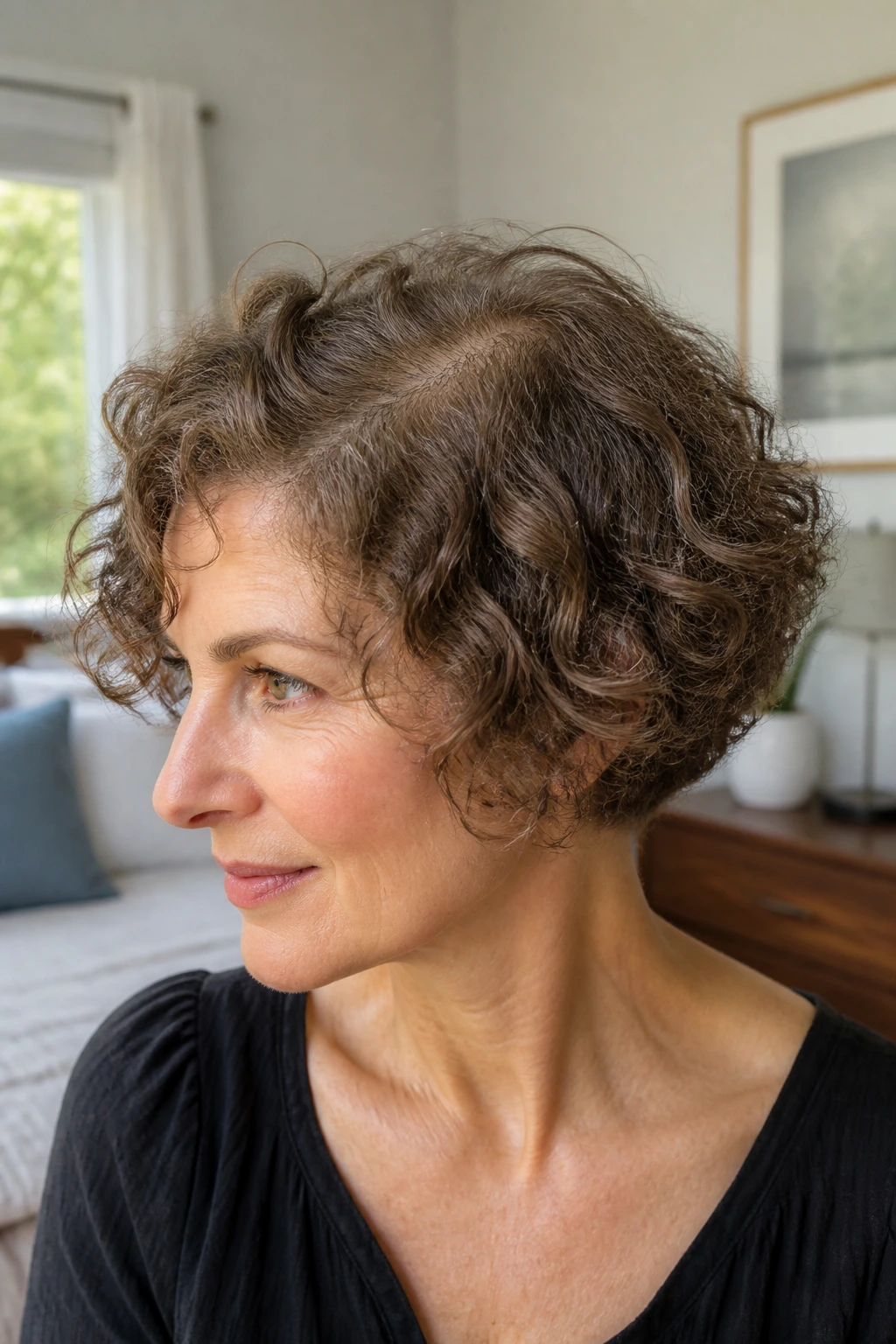
-
They take weight off the ends. When curls are thinning, long ends tend to look scraggly before the rest of the style feels short, so a shorter shape cleans up the line fast.
-
They let the root stand up. A cut that stops around the ear, jaw, or chin gives the scalp less work to do, which helps the top look less collapsed.
-
They make sparse areas less obvious. Rounded bobs, pixies, and tapered crops use shape, not sheer mass, to create the illusion of more hair.
-
They behave better on day two. Short curls bounce back with a mist bottle and a little foam; long curls usually need a full reset.
-
They keep fragile ends from looking exhausted. Thinning curly hair often breaks first at the oldest ends, and trimming them off can make the whole style look sharper and healthier.
-
They work with the curl pattern instead of fighting it. The right short cut leaves enough length for the curl to clump, which is where a lot of the fullness comes from.
1. Soft Curly Pixie With a Lifted Crown
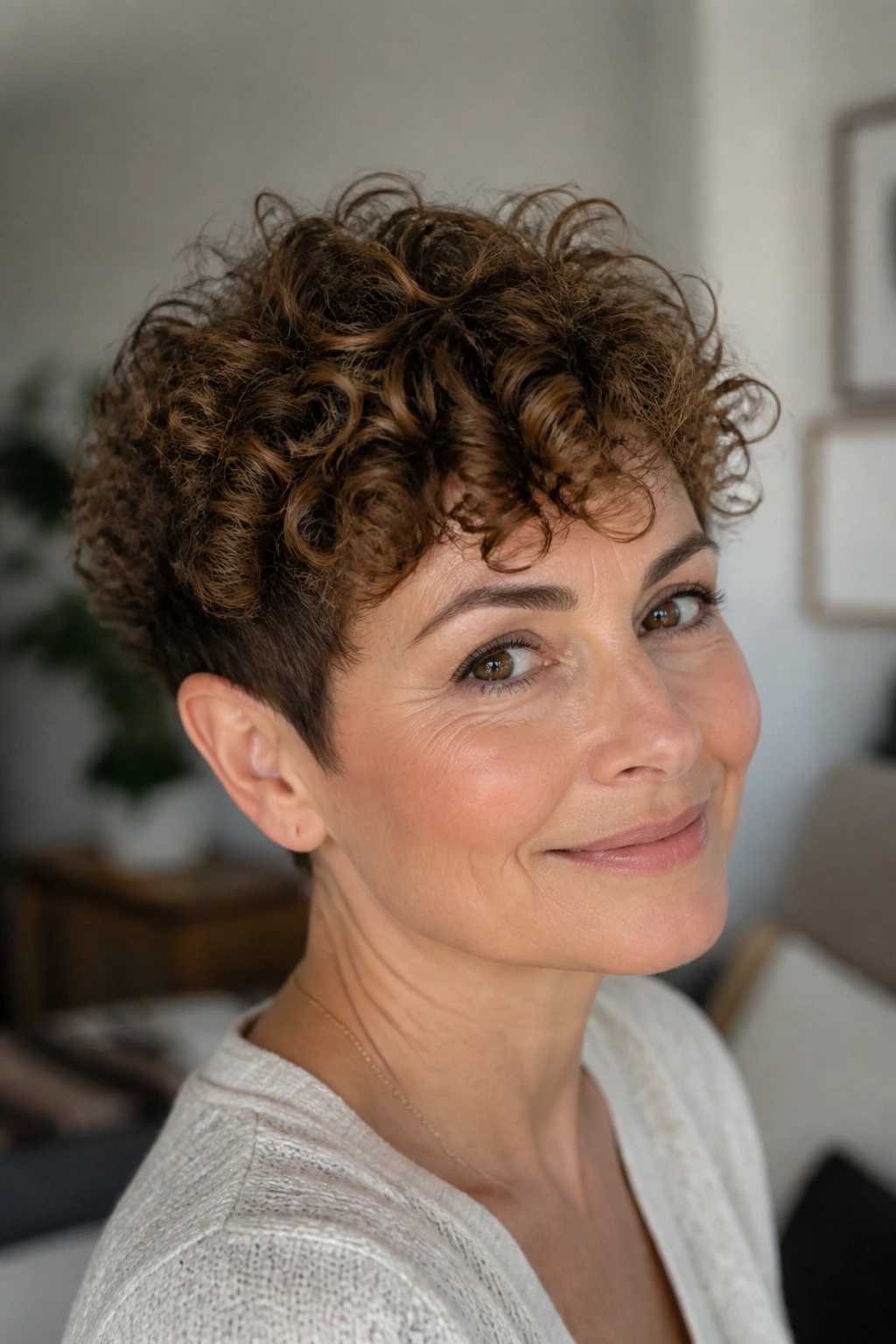
A soft curly pixie is the cleanest answer when the top has started to go a little limp and the sides are dragging the whole cut down. Keep the nape and sides close, then leave enough length on top — usually 2 to 4 inches — for the curl to spring up instead of collapsing flat against the scalp. The look is light, a little cheeky, and far less fussy than most people expect from a pixie.
What makes it work
The best version of this cut doesn’t rely on lots of layers. It relies on a smart shape. If the crown is kept a touch longer than the sides, the curls can sit higher and read fuller, especially when you diffuse them dry with a little root lift.
Ask your stylist for this
- A dry or mostly dry cut so the shrinkage doesn’t surprise anyone.
- Soft point cutting at the top, not aggressive thinning shears.
- Enough length to scrunch and separate the curls without making the top look see-through.
- A tapered nape so the back does not puff out in a helmet shape.
Best for: fine to medium curls that need height more than width.
Styling note: Work mousse into the roots on soaking-wet hair, then diffuse on low heat until the top is about 80% dry before you touch it.
2. Tapered Crop That Keeps the Sides Clean
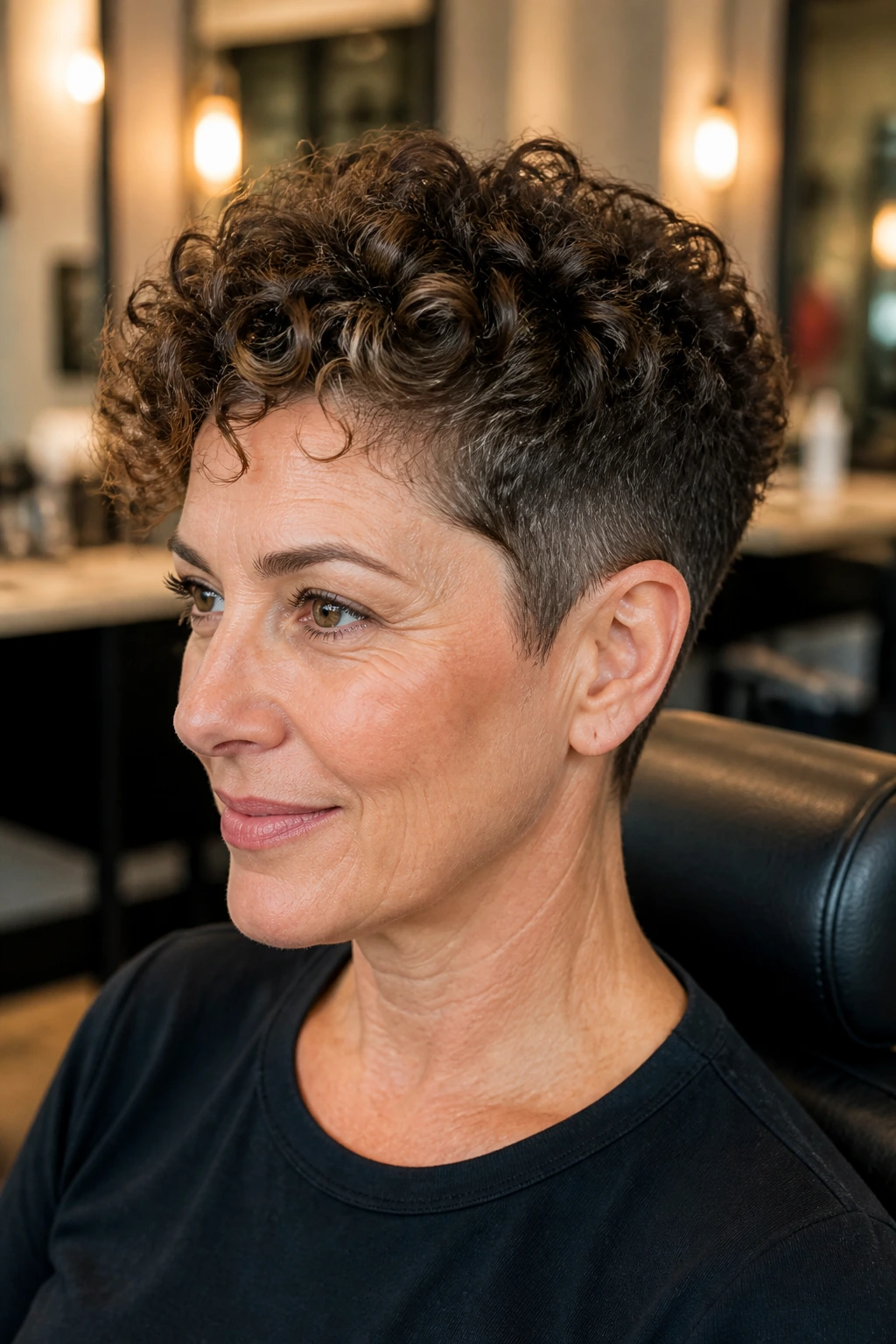
If your curls widen at the sides while the top sinks, the tapered crop is a smart, tidy fix. It brings the hair in close around the ears and neck, which keeps the silhouette from spreading outward like a triangle. That clean edge makes the remaining curl density read stronger, even when you do not have a ton of it.
This cut has a blunt, practical honesty to it. It does not waste time trying to look airy. It looks deliberate.
The top stays longer — often around 3 inches or so — while the sides are clipped or tightly tapered enough to remove that bulky puff that makes thin curly hair feel bigger in the wrong places. It is one of the best shapes for women who want a short cut that feels strong, not delicate.
If you like wearing glasses, this cut is worth a serious look. The clean sides keep the frames from getting buried. And if you have a cowlick near the nape, the taper helps the hair lie down instead of kicking out.
3. Rounded Curly Bob That Hugs the Jaw

Why does a rounded bob often look thicker than longer curls? Because the perimeter lands in one compact place instead of stretching into wispy pieces that hang below the chin and look tired. A jaw-skimming bob gives the curls a clear job: stack, bounce, and stop.
A good rounded bob for thinning curly hair should be softer than a blunt straight-across line, but not so layered that the ends disappear. The curve matters. When the shape follows the jaw and tucks a little at the sides, the eye reads the whole outline as denser.
How to wear it
- Keep the perimeter mostly even.
- Add only subtle internal layers near the crown if you need lift.
- Use a lightweight curl cream on the mid-lengths, not the roots.
- Let the curls dry in their own clumps before separating them with oiled fingers.
This is the cut I’d pick for anyone who wants to look polished without spending half the morning coaxing the shape back into place.
4. French Bob With a Soft Fringe

A French bob on curly hair has that slightly undone, almost nonchalant feel that people keep chasing and rarely get right. On thinning curls, it works because the cut is compact: chin length or just a little shorter, with a fringe that sits soft rather than stiff. The front gives the face a focal point, which is handy when the crown is behaving badly.
The fringe is the part that needs the most judgment. Too much thickness and it sits like a little curtain. Too little and it separates into skinny pieces that make the hairline look patchy. The sweet spot is a soft, curl-aware fringe that falls around the eyebrows or just above them when dry.
This style suits women who want movement around the face without a lot of weight hanging below the jaw. It also works well if the temples are a little thinner than the rest of the head, because the fringe and front pieces can soften that transition.
Pro move: ask for the bangs to be cut dry, curl by curl. Wet fringe lies. Dry fringe tells the truth.
5. Bixie Cut With Piecey Top Layers
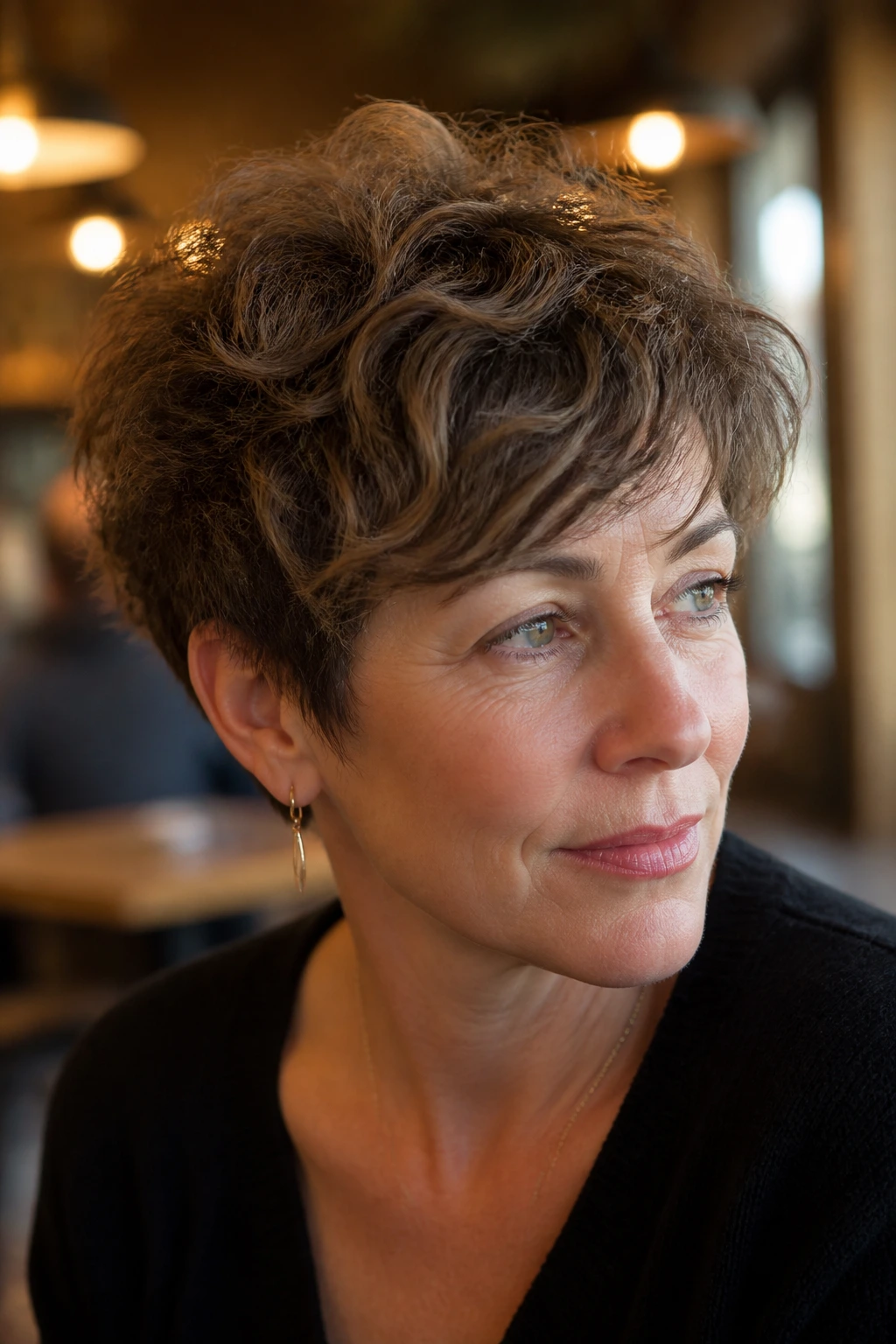
The bixie sits right between a bob and a pixie, which is why it solves so many hair problems at once. You get enough length on top for texture, enough shape through the sides to look styled, and enough shortness at the nape to keep thin curls from hanging down in sad little strings.
This cut is especially good when you want volume without the full commitment of a pixie. The top can stay piecey and lifted, while the back is short enough to keep the shape clean. It also gives the stylist room to work with your curl pattern instead of chopping it into one flat shape.
Why it flatters thinning curls
The bixie creates visual activity. That matters. When curls are sparse, a little movement near the forehead and crown keeps the eye busy in a good way. The cut feels intentional, not merely reduced.
A mousse-gel combo works well here. Use the mousse at the root for lift, then smooth a small amount of gel through the top sections so the curls hold a defined bend instead of fluffing out.
6. Airy Shag Bob With a Soft Edge

A shag can be a mess on thinning curly hair if the layers are too short, too high, or too eager to create “movement” where the hair needs density. A shag bob avoids that trap by keeping the shape compact while still letting the curls fall in different lengths. You want airy, not shredded.
This cut is a good fit for looser curl patterns that flatten at the crown but puff out through the sides. The shorter pieces around the face bring attention upward, while the perimeter stays long enough to keep the style from looking skeletal.
What to watch for
- Avoid razor-heavy ends unless your stylist really knows curly texture.
- Keep the shortest layers below the crown, not right through it.
- Ask for softness around the cheekbones, not a bunch of broken-up bits around the temples.
The best shag bob looks a little better when it’s imperfect. That’s the point. A perfect finish can make thinning hair look too neat and too narrow.
7. Asymmetrical Crop That Breaks the Flat Spots
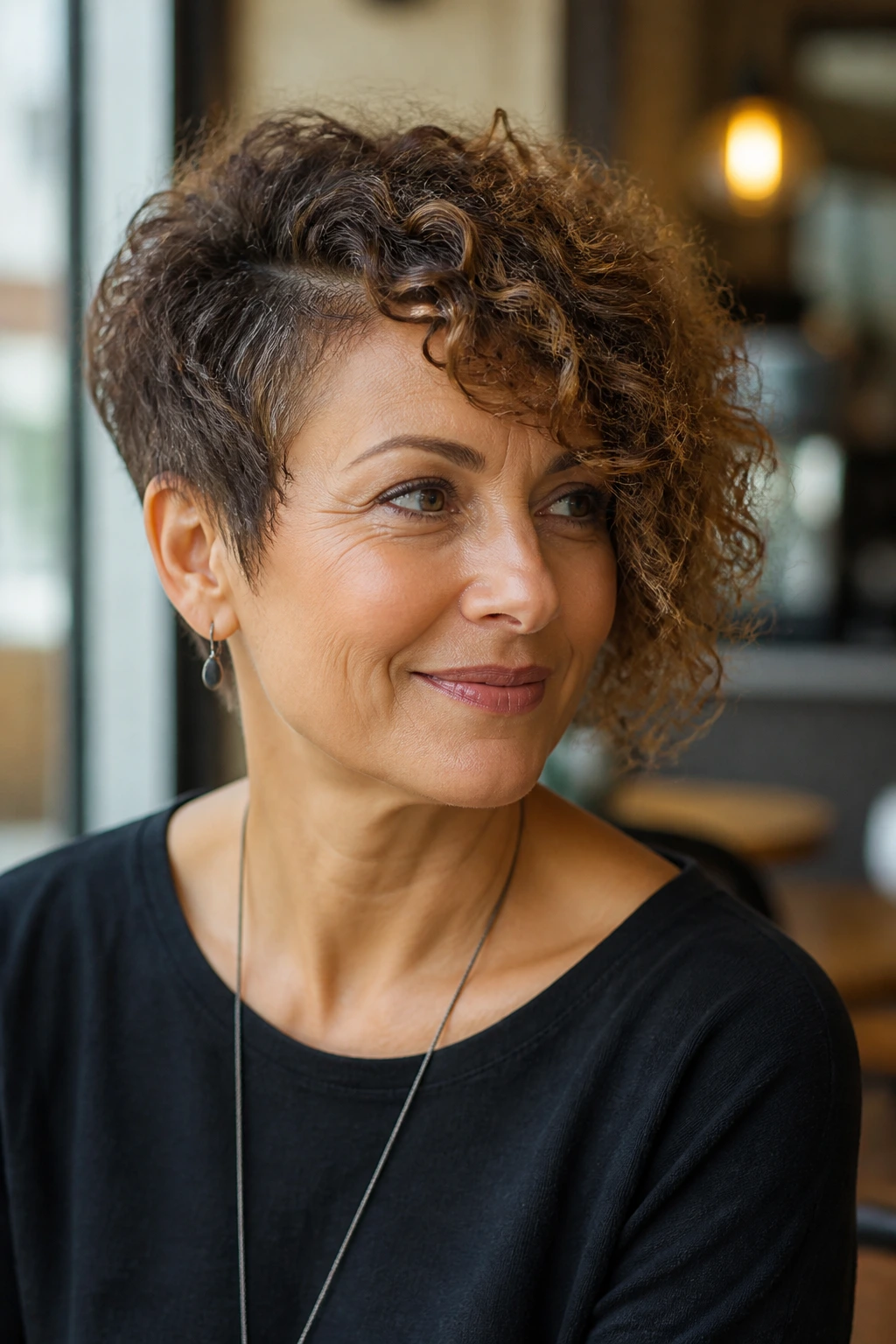
A perfectly even cut is not always the best move when the density is uneven. An asymmetrical crop uses one side slightly longer than the other to break up the shape and keep the eye moving. That diagonal line can do more work than an entire bottle of root spray.
This is the cut for women who want something modern without going full dramatic. A difference of even half an inch can make the shape feel alive. If one temple is thinner, or if one side tends to collapse faster, the asymmetry gives the hair a more balanced read without shouting about it.
The best part is how little styling it takes. A deep side part, a little root lifting at the heavier side, and a finger-twist at the front pieces are usually enough. It looks styled even when it’s only partly obedient.
If you’ve got a stubborn cowlick, this cut can work with it instead of spending every morning fighting it. That alone is worth a few inches.
8. Curly Undercut Pixie With a Fuller Top
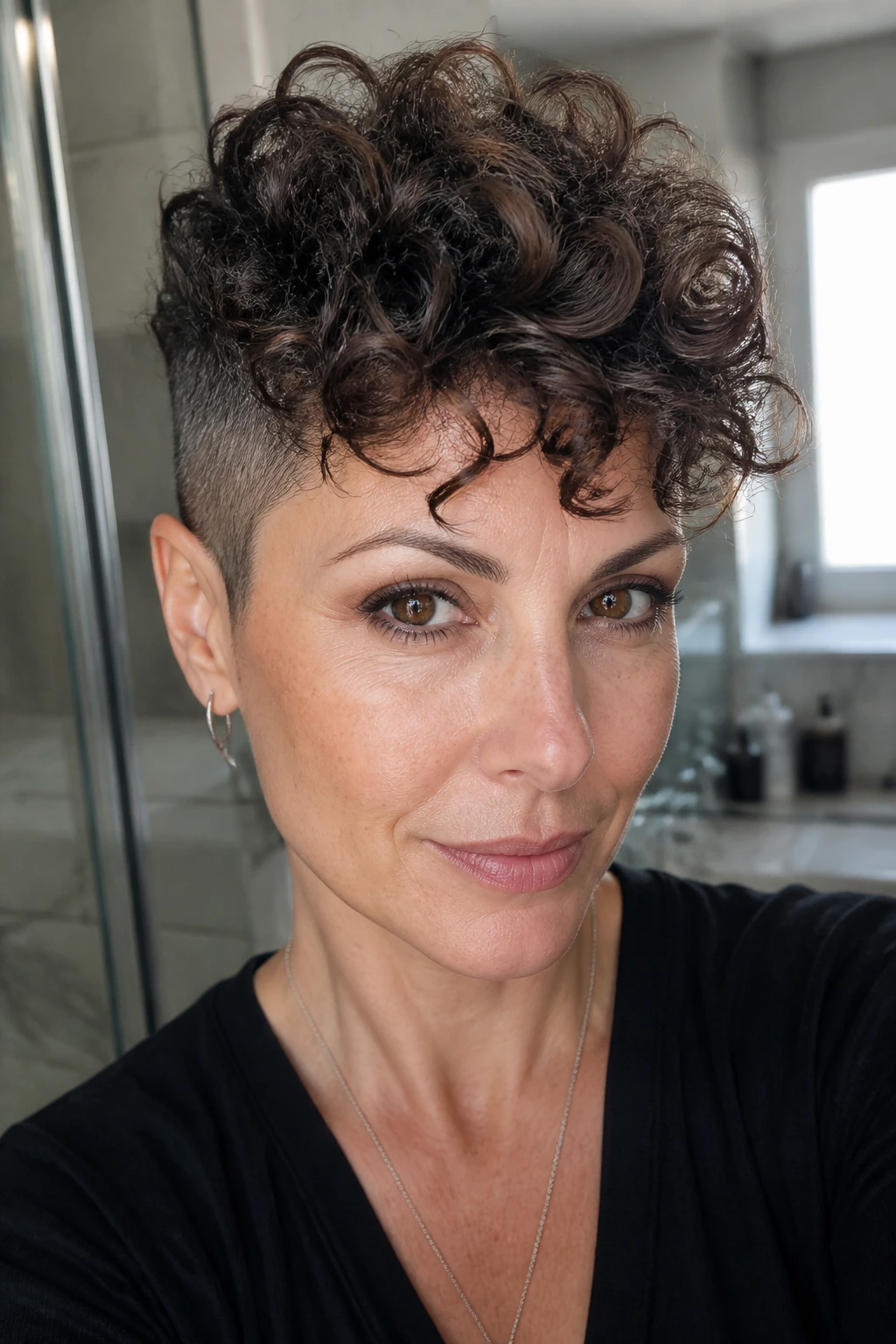
A curly undercut pixie is not subtle. That is part of the charm. The sides or nape are clipped short, sometimes very short, while the top stays much longer so the curls can pile up where you want them most. For women with thinning curly hair, that means the eye sees a fuller top rather than a limp all-over shape.
This cut is especially useful when hair density is low around the bottom half of the head but still decent up top. Removing that lower bulk prevents the top from getting buried. The result looks sharper and often feels lighter on the scalp, which is no small thing if heavy hair pulls at delicate roots.
It does require upkeep. An undercut grows back fast, and the short bits around the neckline start looking fuzzy sooner than the rest. But if you like clean lines and a little edge, it’s a fair trade.
Best for: women who are fine with regular cleanups and want their curl pattern to read bolder up top.
9. Cloud Bob With a Soft, Rounded Outline
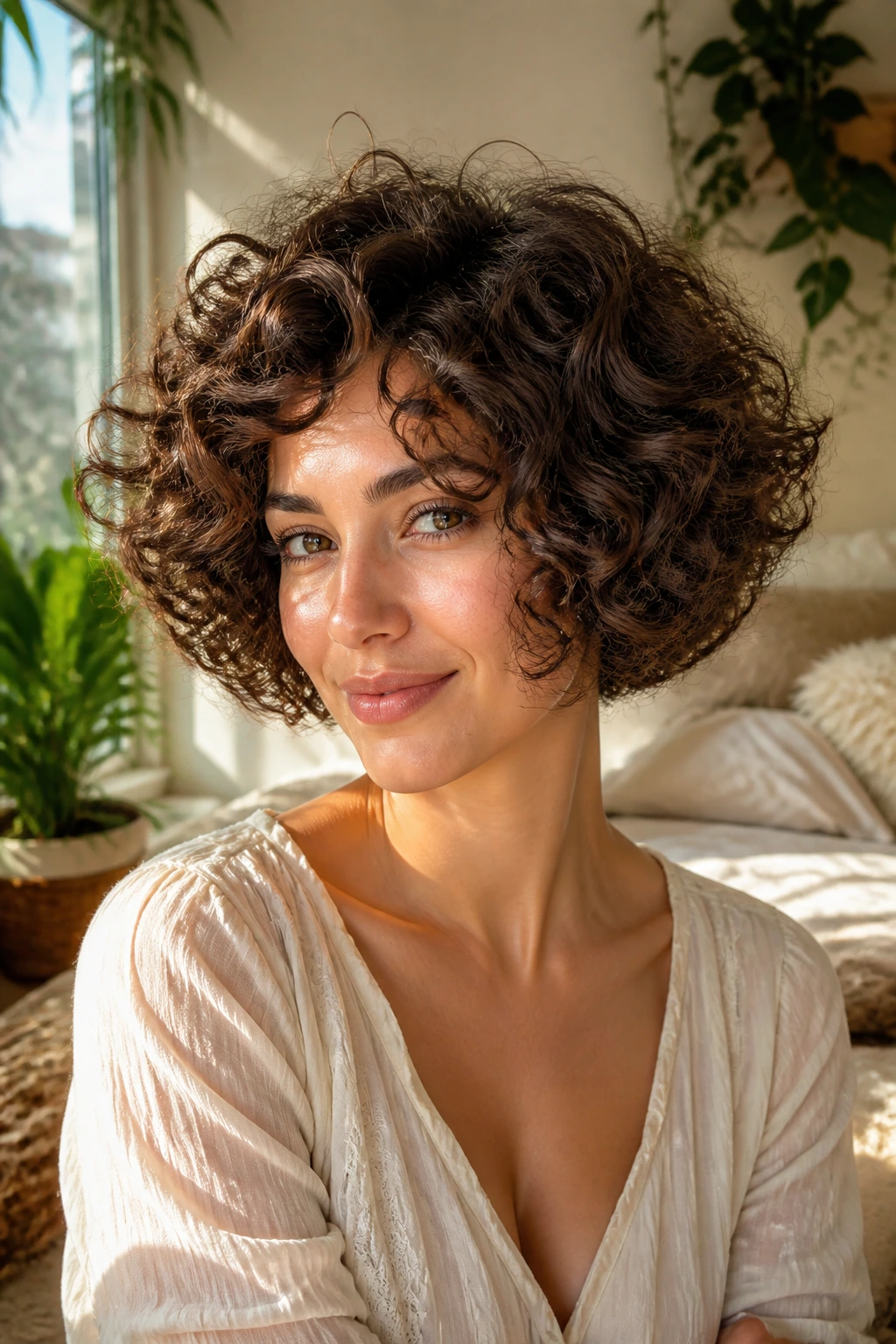
The cloud bob is all softness. No hard corners, no sharp angles, no severe line that gets exposed the second humidity moves in. It’s a rounded bob that lets the curls puff gently around the head, which is useful when thinning hair needs shape more than precision.
The reason this cut works is simple: a soft outline looks fuller than a shape with ragged, broken ends. Thin curly hair often frays at the perimeter. A cloud bob trims that away and leaves a plush, cushiony edge that makes the whole head of hair seem more present.
How it should feel
The hair should move like a light cap of curls, not like individual strands floating around separately. If your fingers slide through it and the ends feel dry and see-through, the cut needs a cleaner line.
I like this shape on curls that are fine but not limp. It gives them a little romance without asking for much effort. Air-dry it with foam, or diffuse it until the top is dry and the ends still have a bit of bend left.
10. Side-Swept Deep-Part Bob
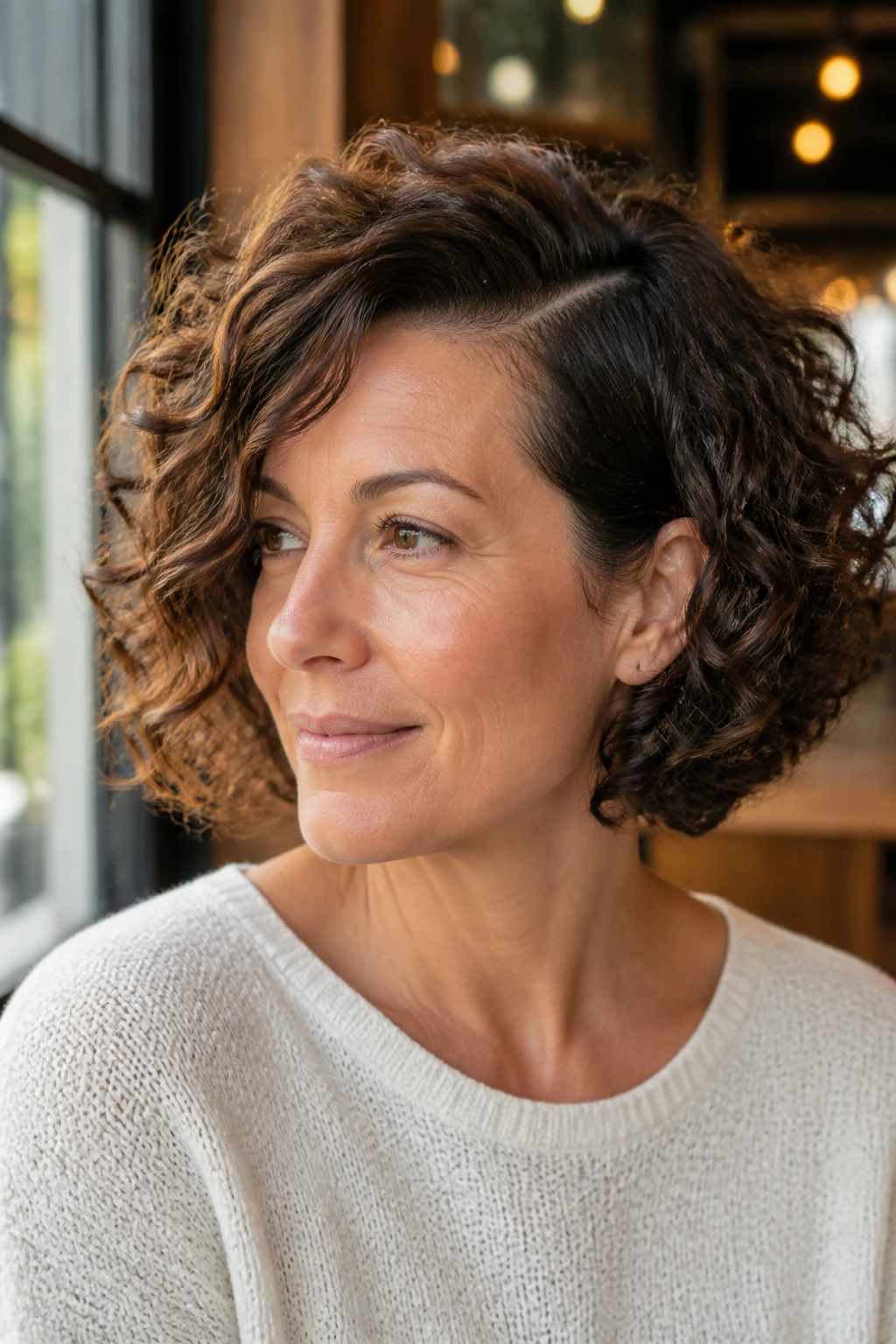
A deep side part can change everything. Really. If your crown looks thin, or the middle part has started to widen in a way you hate seeing in bathroom light, a side-swept bob gives the hair immediate lift on one side and a soft sweep across the forehead on the other.
This cut works because it uses direction. The hair is not just shorter; it is guided. That one move can hide a lot of scalp show at the part and create a fuller outline at the front where people tend to look first.
A good side-swept bob doesn’t need dramatic layers. It needs a shape that can hold the side part without collapsing. Keep the length around the jaw or just below it, and let the front pieces fall in a gentle curve rather than a stiff line.
Tip: set the part while the hair is still damp. Once the curls dry, they’ll try to remember that position.
11. Mixie Cut With Soft Mullet Energy
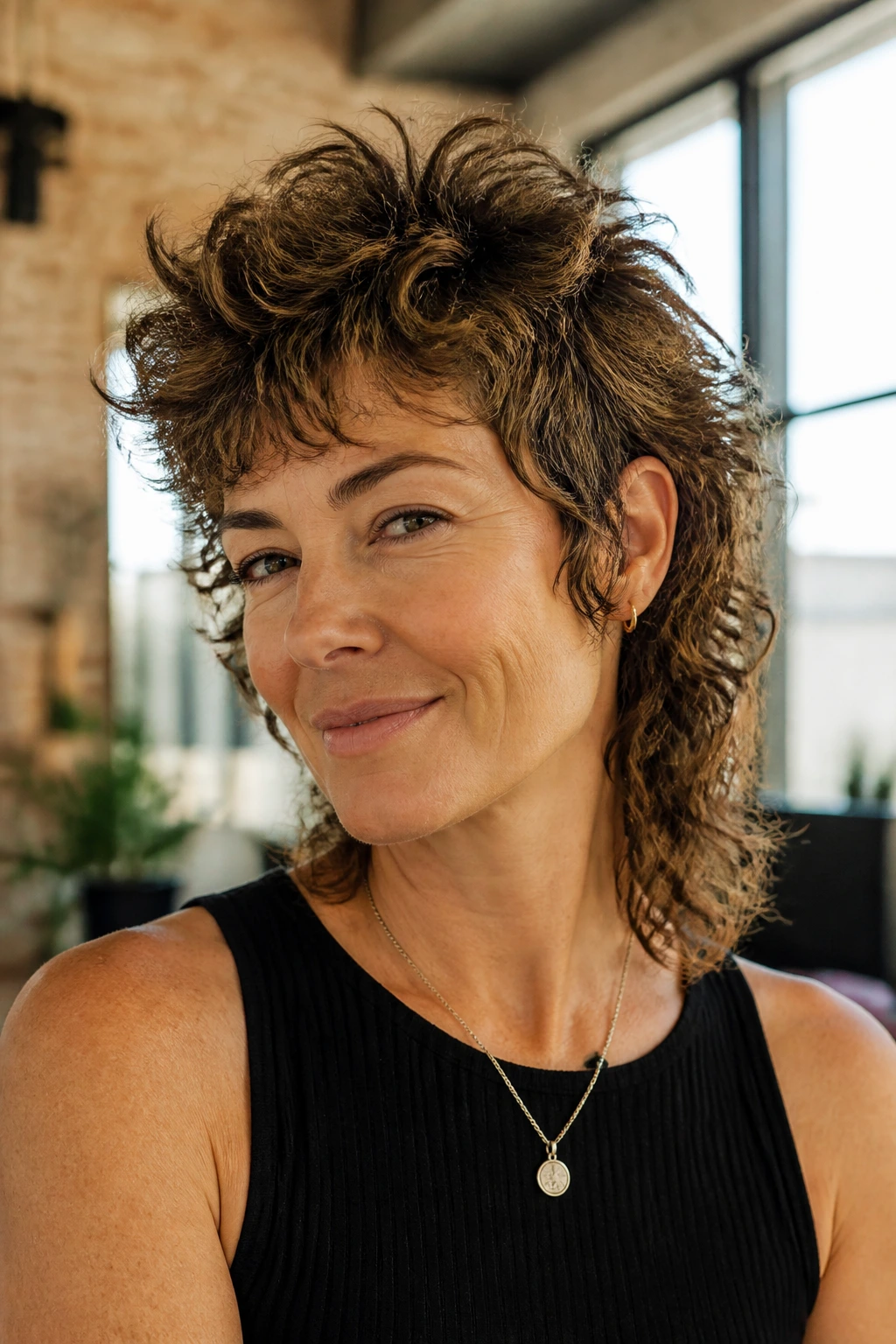
The mixie — part pixie, part mullet, part “I know exactly what I’m doing” — can be a great fit for thinning curly hair because it keeps the top alive and the back soft. It is shorter in the front and sides, with a little more length at the back to keep the shape from looking stripped down.
What makes it useful is proportion. The crown gets room to rise, the face gets a bit of framing, and the nape doesn’t sit heavy and flat. If your curls are loose but sparse, this cut can make them read textured rather than thin.
This one needs a stylist who understands curl structure. The back has to be shaped, not left to grow wild. The top should also be layered with restraint, because too much texture can make the whole thing look broken apart instead of cool and deliberate.
It is not the safest cut on the list. It is one of the most fun.
12. Feathered Crown Crop That Lifts at the Top
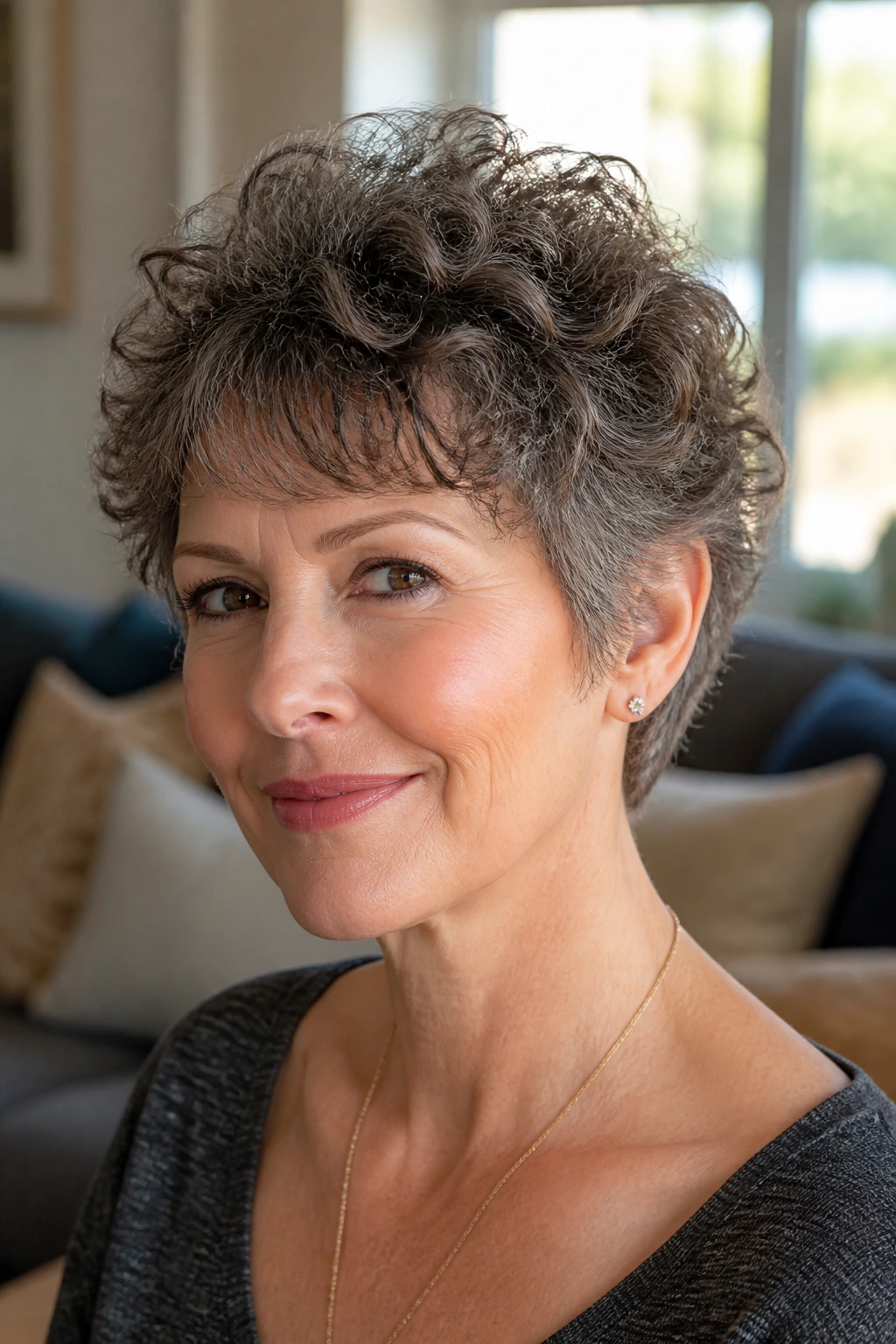
Some haircuts try to add volume everywhere. That’s the wrong move when the top is flat and the sides already have enough to say. The feathered crown crop puts the emphasis where it matters most: up high, around the crown, with soft feathering that lifts the hair instead of carving it into pieces.
The goal here is a gentle halo, not a spiky finish. A good stylist will use controlled point cutting to remove a little weight without making the ends look hollow. That distinction matters. Feathering is not the same as thinning out the life of the cut.
This style works well for women whose curls are still springy but have lost density near the part line. The crown gets room to stand up, while the sides stay close enough to keep the shape from spreading. It’s a good middle ground between a pixie and a bob.
Ask for lift at the top third of the head and less action through the lower lengths. That keeps the silhouette compact, which is the whole game here.
13. Micro-Fringe Curly Crop
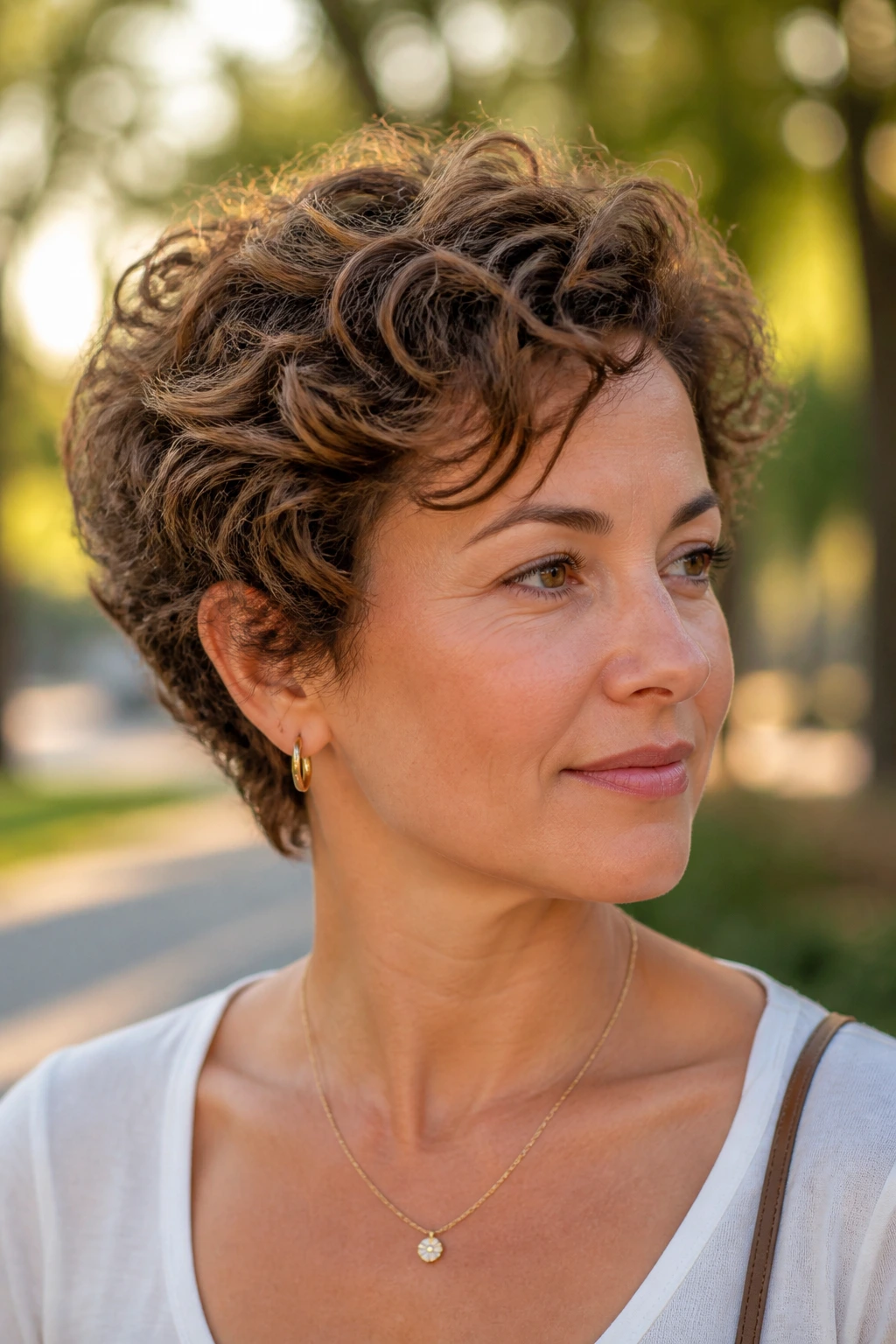
A micro-fringe curly crop is bold, no question about it. But when it’s done right, the short fringe gives the face a strong frame and lets the rest of the cut stay very compact. For thinning curly hair, that can be useful because the eye lands on the fringe instead of wandering around the scalp.
The trick is balance. A fringe that’s too heavy looks like a block. A fringe that’s too wispy separates into tiny strings that do the hair no favors. You want a short, textured line above the brows that still feels curly, not chopped into submission.
This works best when the front area has enough density to support the bangs and the rest of the cut is kept clean. The sides and back can stay cropped, which keeps the whole style from growing out into a puffball.
If you like a little attitude and do not mind being noticed, this cut delivers it without needing long hair to make the statement.
14. Tapered Nape Bob With a Clean Back Line
The nape is often where thin curly hair starts to look tired first. It gets frizzy, lies flat, or grows into a fuzzy little shelf that ruins an otherwise decent shape. The tapered nape bob fixes that by keeping the back neat and slightly shorter, while the bob itself stays fuller through the middle and front.
This is a polished cut. Not severe. Polished. The taper at the neck removes the bulky stuff that makes the back expand, and the bob line around the chin or just below gives the curls a place to sit in one tidy curve.
It’s a strong choice if you wear collared shirts, blazers, or anything with a structured neckline. The cut sits cleanly above it, which makes the whole head look more defined.
Best for: women who want fullness without fuzz and hate the feeling of hair brushing the neck all day.
15. Sculpted Wedge Cut With Soft Graduation
The wedge cut gets overlooked because people picture the old-school version, all hard angles and too much stacking. A softer, curl-aware wedge is a different animal. It uses graduation at the back to build height, then lets the front fall a little longer so the shape feels modern instead of rigid.
For thinning curly hair, that back lift matters. It creates the illusion of density where the head most needs structure, and it keeps the curl from drooping into a flat shelf at the nape. The front can stay gentle, which helps the style frame the face rather than crowd it.
This cut asks for precision. Too much stacking and you get a shape that looks dated. Too little and the wedge disappears. Ask for soft graduation, not a stiff line, and make sure the stylist understands that the curls will contract once they dry.
It’s a smart cut for women who want structure. Some days that’s exactly the mood.
16. Curly Pageboy With Rounded Ends
A curly pageboy sounds old-fashioned until you see it on the right head. Then it looks refined, compact, and quietly strong. The rounded ends sit around the jaw or just below it, which helps thin curly hair feel contained instead of scattered.
What I like about this shape is the honesty of it. The perimeter is left a little heavier so the ends do not fade away. That alone can make the hair seem more substantial. The roundness around the face also softens the profile, which is handy if you want a shorter cut that still feels feminine.
This cut is not about choppy texture. It is about clean form. The curls have room to bend, but the outline stays controlled. That makes it one of the easier short shapes to maintain if you want to spend less time fussing and more time walking out the door.
A little shine cream on the ends can keep the pageboy from going frizzy around the edges.
17. Soft Curly Mullet With a Slim Nape
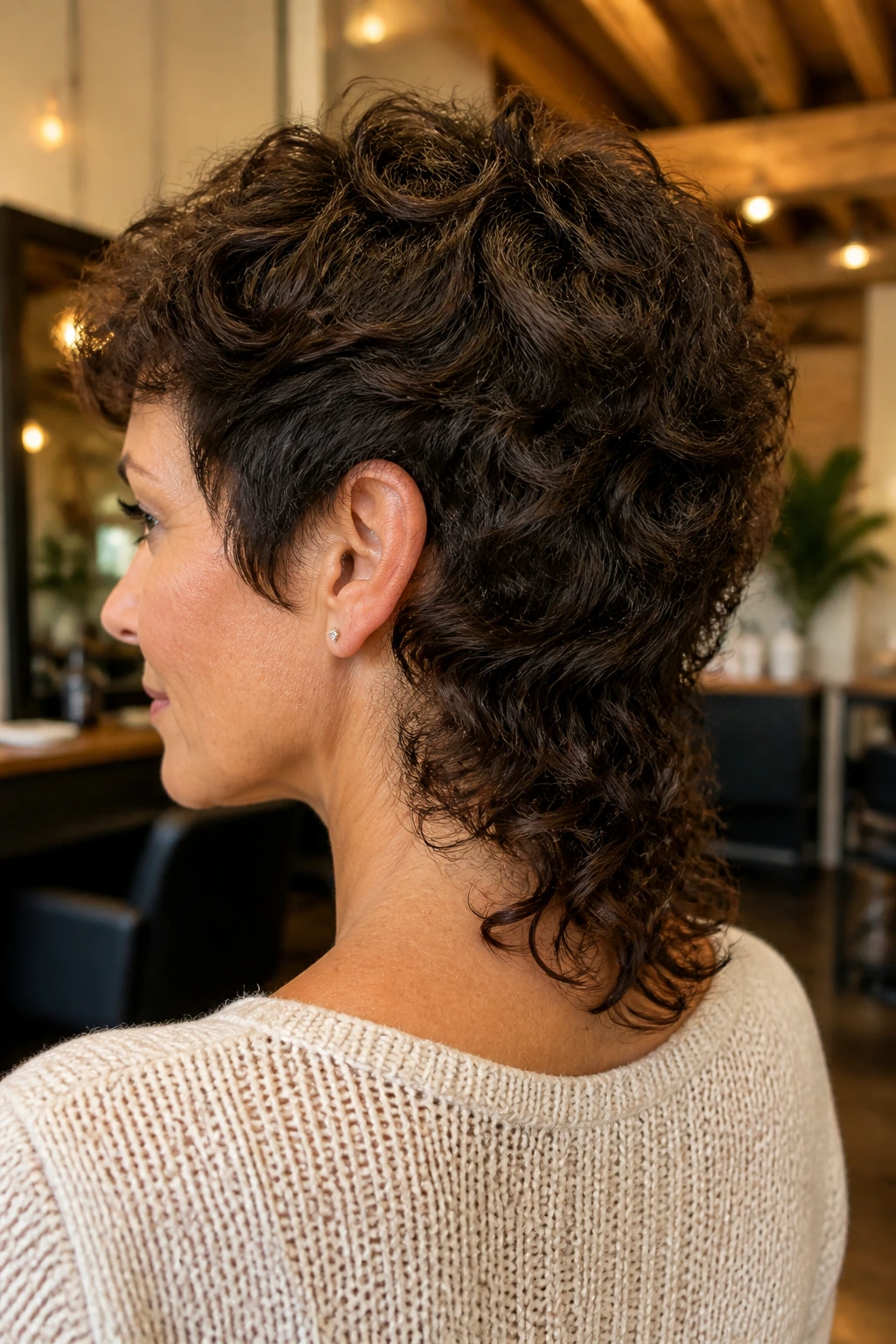
A soft curly mullet sounds far more extreme than it usually is. In a practical salon version, it means keeping the top and front short enough to feel lifted, while allowing a little more length at the back so the curls can fall into a relaxed tail. For thinning curly hair, that extra back length can help balance a flat crown.
The big win here is movement. The top doesn’t get dragged down by the same length all over, and the back keeps enough curl to make the style feel full in profile. If you’ve got a strong personality and do not want a haircut that behaves like a school photo, this one has some life in it.
It needs regular shaping around the nape and ears. Otherwise, the nice structure turns into something shaggy and vague. But when it’s trimmed cleanly, it looks intentional and a little bit rebellious.
That may be exactly the point.
18. Rounded Afro Taper for Coily, Thinning Curls
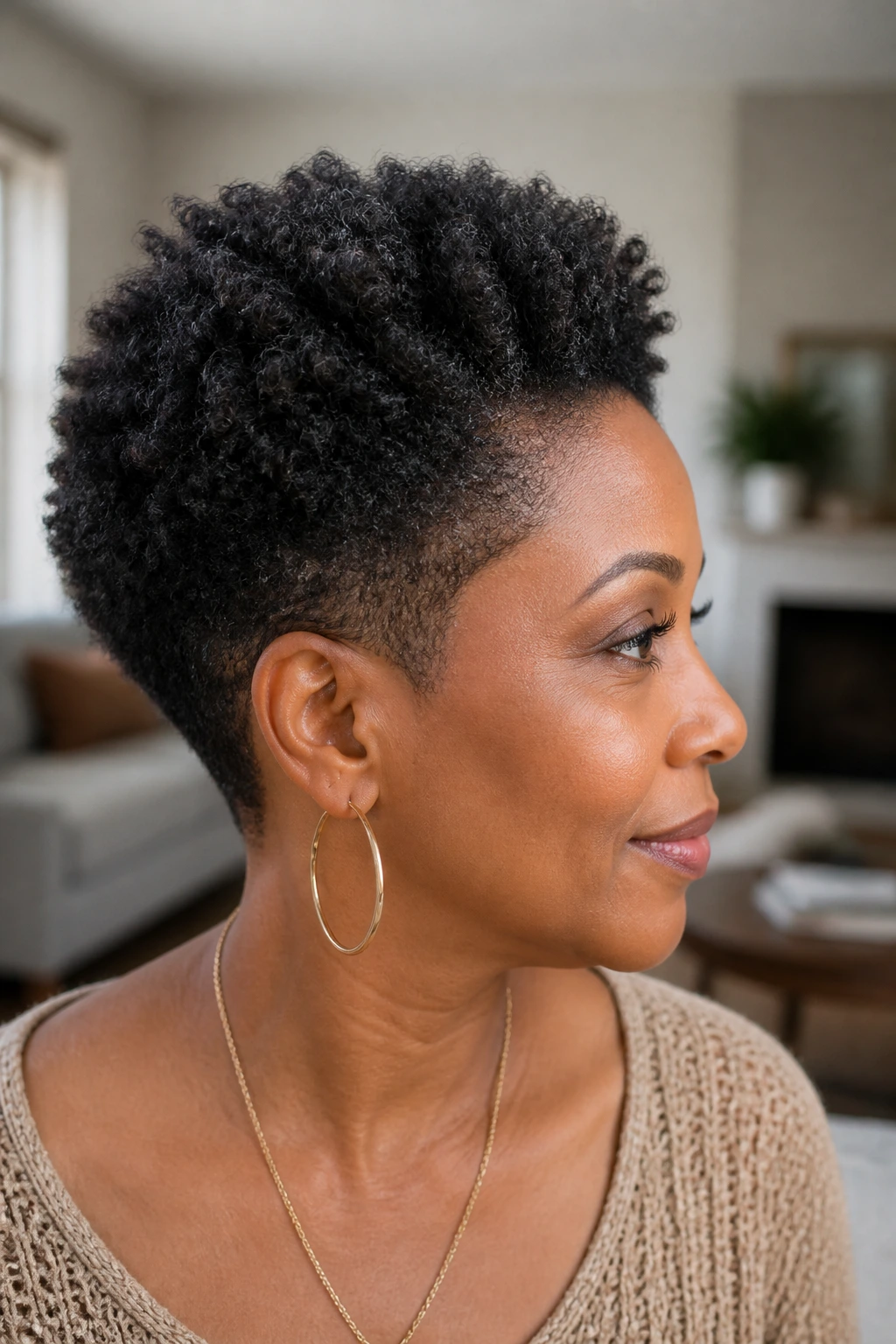
For coily textures, a rounded afro taper can be one of the smartest ways to handle thinning areas without making the hair look smaller than it is. The top stays rounded and full, while the sides and nape taper in close enough to keep the silhouette neat. The shape does the heavy lifting, not the length.
This matters when the density is uneven around the crown or temples. A round shape keeps the hair from spreading outward in a way that exposes sparse spots. It gives the head a clean outline, which can be far more flattering than letting the coils widen into a triangle.
Moisture matters here, but too much product can weigh the hair down. A light leave-in, a curl cream used sparingly, and a bit of gel at the edges usually do more than a heavy hand ever will.
If your curls are tighter and your density is changing, this is one of the most useful short shapes you can wear.
19. Collarbone Curly Lob With Invisible Layers
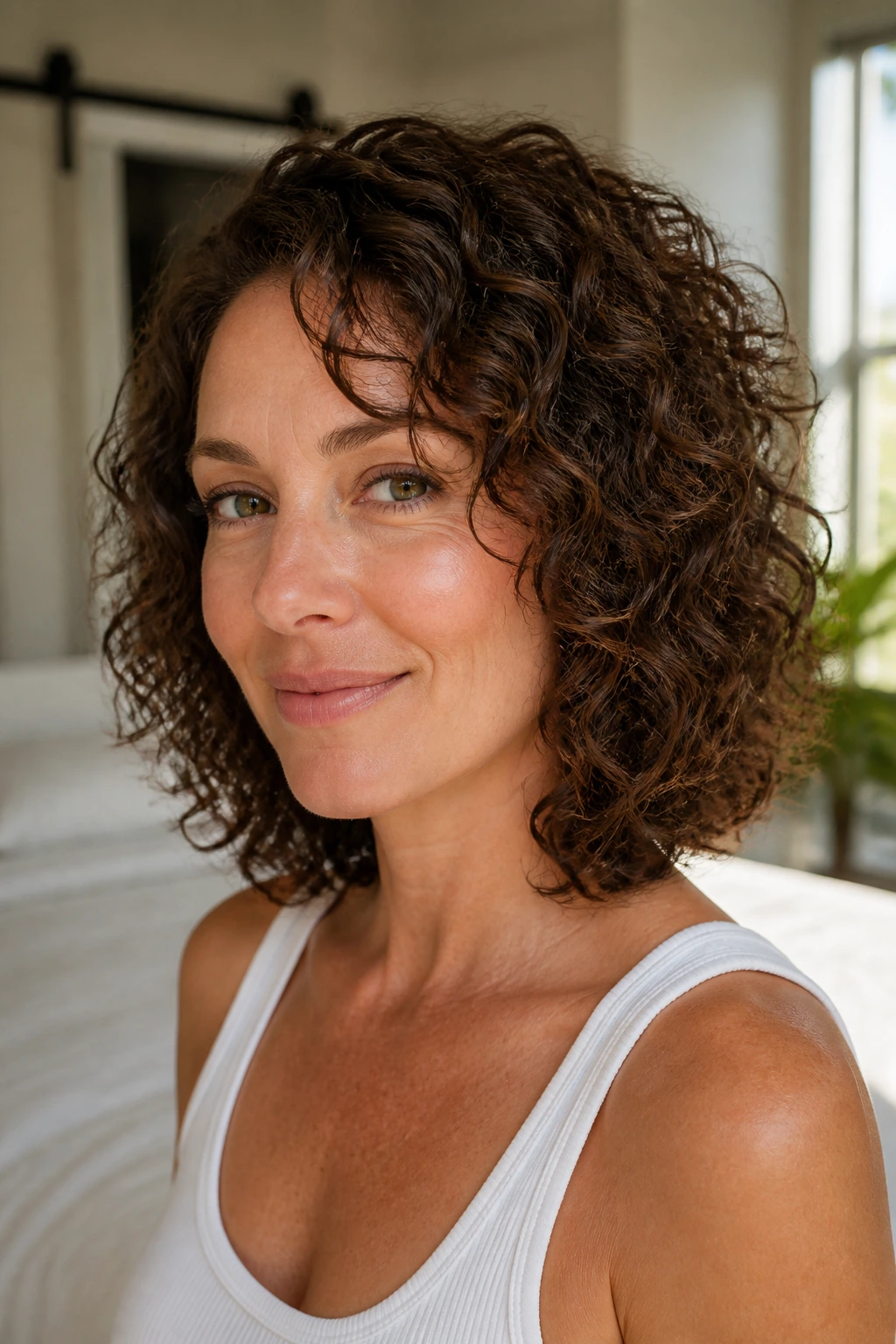
Not everyone wants to go very short, and that’s fair. A collarbone-length curly lob with invisible layers gives you a softer landing spot: light enough to reduce drag, long enough to tuck behind the ears or clip back when you want, and controlled enough to stop the ends from looking see-through.
The trick is the invisible layering. You want just enough internal shaping to keep the cut from puffing out or hanging heavy, but not so much that the ends turn wispy. On thin curly hair, over-layering is the fastest way to lose the line. This version avoids that.
It’s a good choice if you’re moving away from longer hair but not ready to show a lot of scalp. The length keeps the silhouette a little fuller, while the reduced weight still gives the curls a chance to spring.
If you’re hesitating between a bob and a shorter crop, this is the compromise that does not feel like a compromise.
Why Short Curly Shapes Make Thinning Hair Look Fuller
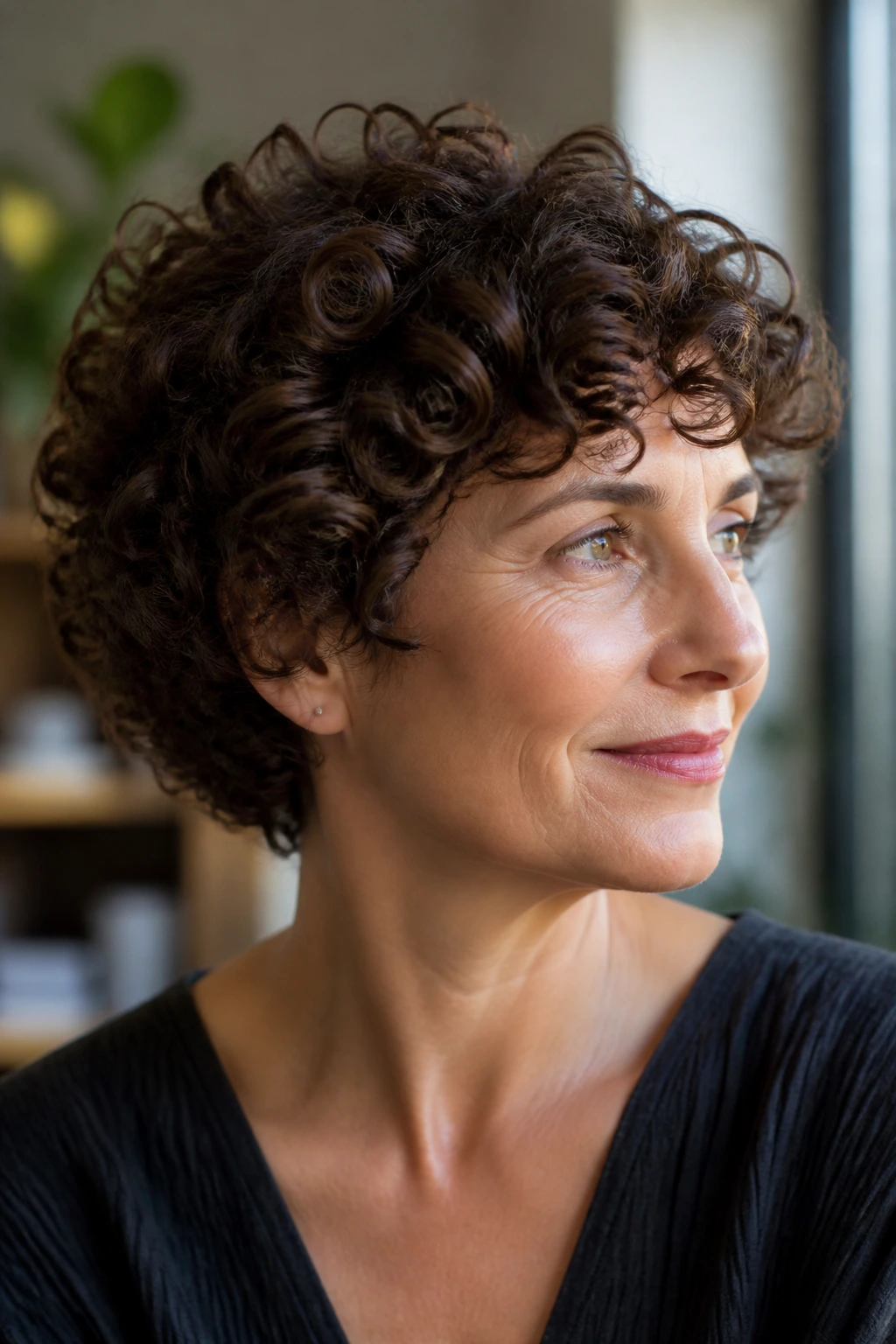
A short curly cut changes the shape of the head before it changes anything else. That’s why it works. Less length means less stretch on the curl, and less stretch means the root can lift instead of lying down under its own weight. Once the root has room to rise, the whole style starts reading as denser.
There’s also the matter of the perimeter. Long, wispy ends expose every weak section in the hair. Shorter ends cluster together and look more solid, especially when they’re trimmed into a rounded or blunt outline. That outline is doing a lot of visual work. More than most people realize.
Weight, curl clump, and shape
Curly hair looks fuller when it clumps into defined sections. The problem with thin or thinned-out hair is that too much length can split those clumps apart. A shorter cut helps the curls gather in stronger groups, which makes the surface look thicker even if the actual hair count has not changed.
Drying time matters
Short hair gets to the finish line faster. That matters because curls don’t have to sit wet and stretched for as long. The less time they spend under gravity, the less likely they are to collapse into the scalp. A diffuser helps, but the haircut is what gives the diffuser something worth saving.
Shape beats product
You can pile on mousse, gel, root spray, and a little prayer if the cut is wrong. It still won’t look full. The right shape does more than a shelf of products because it gives the curls somewhere to go. That’s the part people keep missing.
How to Tell Your Stylist What You Want Without Losing the Plot
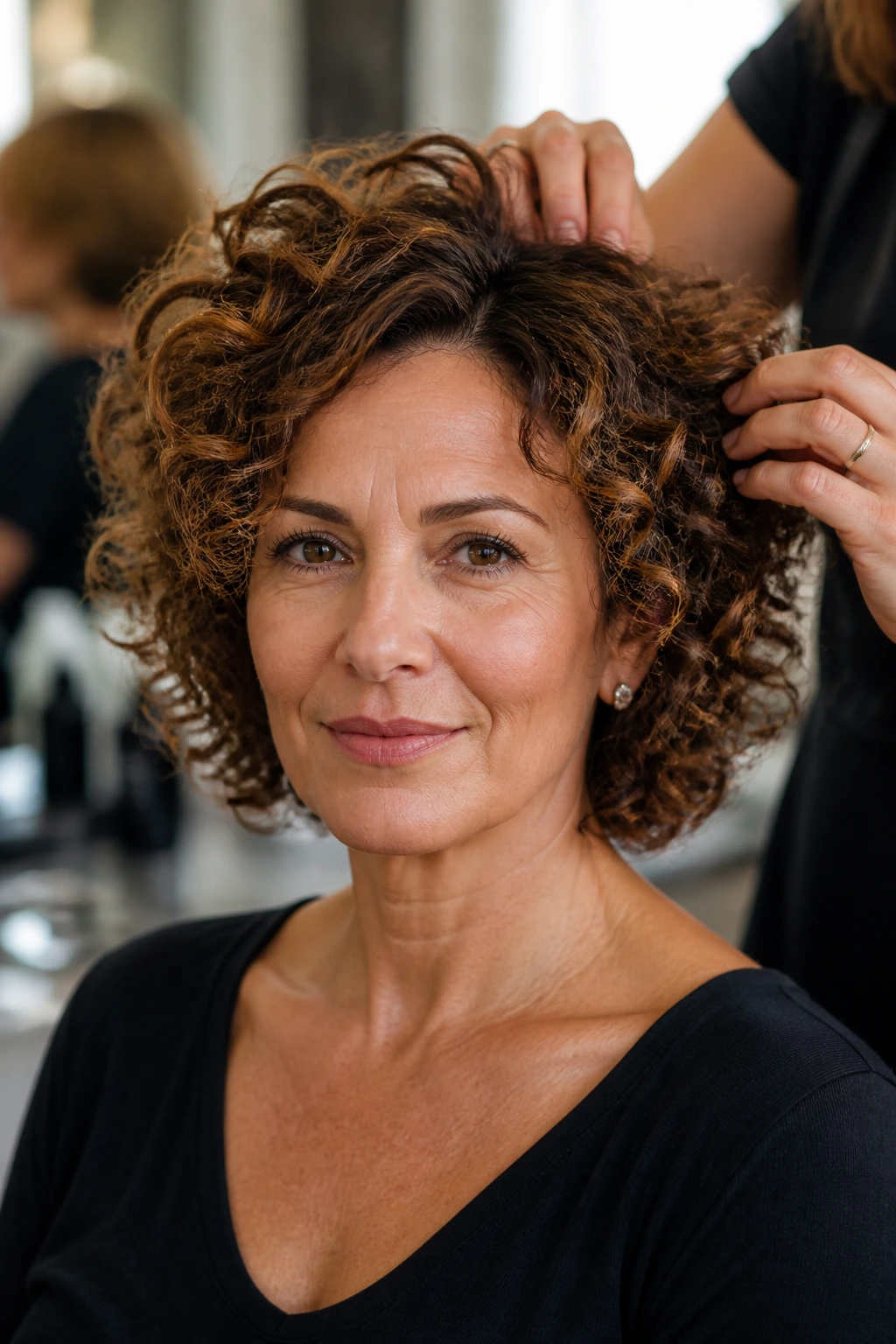
The quickest way to get a disappointing short curly cut is to ask for “more volume” and hope the stylist reads your mind. They won’t. Not because they don’t care, but because volume means different things on different heads. What you actually want is shape, lift, and density in the places the eye notices first.
Bring photos, sure, but bring the right ones. Show cuts on similar curl patterns and similar density, not just pretty pictures of someone with twice as much hair. Then point to the exact part that matters: the crown, the temples, the nape, or the way the fringe falls.
Say these things clearly
- “Please cut this mostly dry.” Curly hair shrinks, and the final length needs to be seen, not guessed.
- “Keep the perimeter a bit stronger.” That keeps thin ends from disappearing.
- “I don’t want aggressive thinning shears.” They can leave fragile curls looking frayed.
- “Build lift at the crown, not just around the sides.” That’s where many short cuts fail.
- “Show me where the part should live.” A side part can change the whole haircut.
And say where the problem is. If the temples are see-through, say so. If the crown flattens by lunchtime, say that too. A stylist can work with specifics. Vibes are harder.
The Tools and Products That Help These Cuts Behave
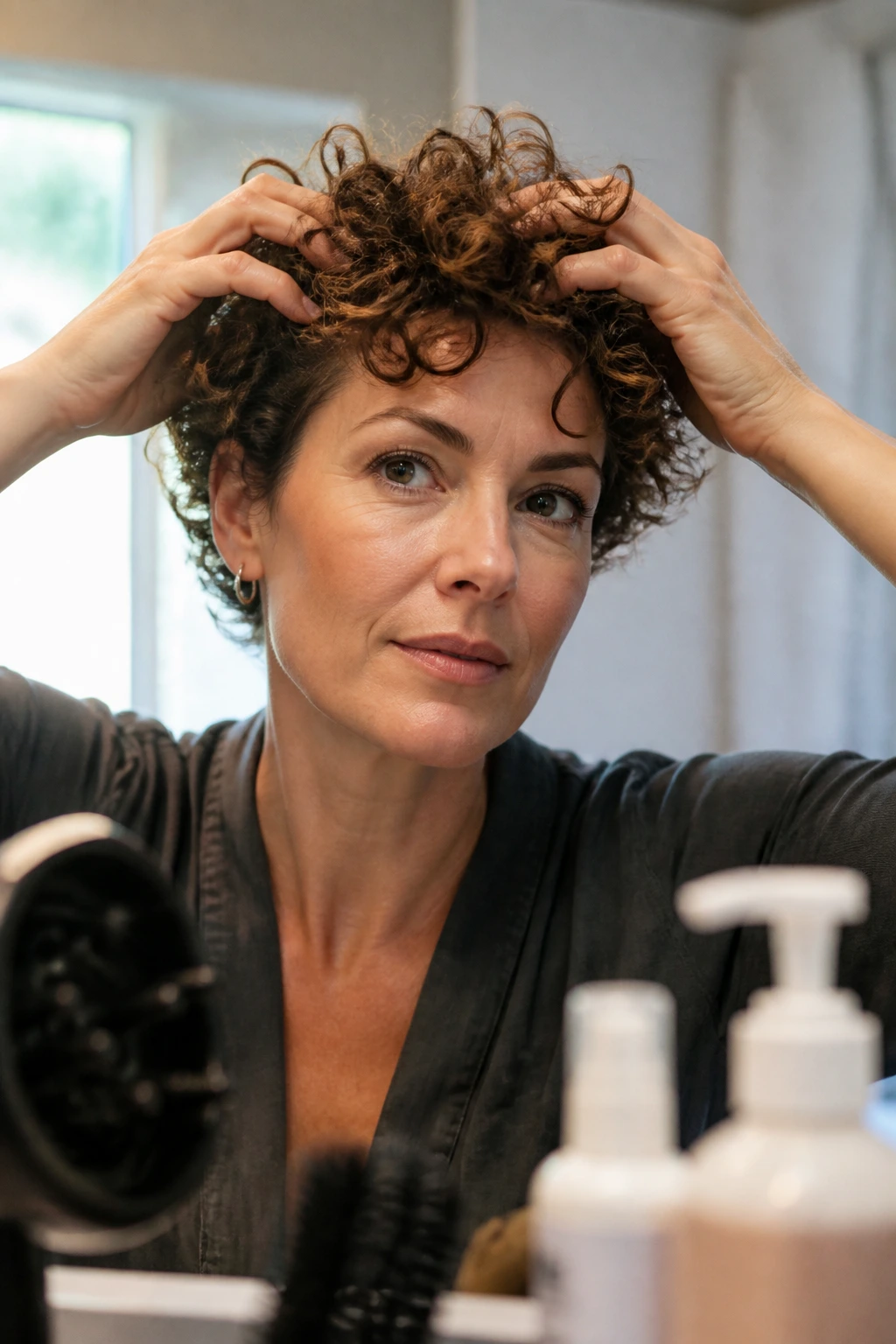
-
Wide-tooth comb: Good for detangling wet curls without ripping apart the clumps that give short hair its shape.
-
Microfiber towel or cotton T-shirt: Cuts down on frizz and keeps the curl pattern from getting roughed up before styling.
-
Duckbill or root clips: Use these at the crown while drying to force a little lift where thinning shows the most.
-
Diffuser attachment: A must if you want the top to dry with volume instead of lying flat in a damp sheet.
-
Lightweight mousse or foam: Best for crown lift and soft hold on short curls that collapse under heavier creams.
-
Flexible-hold gel: Helps create definition and a light cast without turning the cut stiff or crunchy in the wrong way.
-
Leave-in conditioner: Use a small amount on the ends only; too much at the root will flatten everything.
-
Satin bonnet or pillowcase: Keeps the cut from getting mashed down overnight and reduces friction around fragile ends.
-
Small spray bottle: Useful for day-two refreshes, especially if the top needs a little reactivation without a full wash.
How to Style These Cuts on Wash Day and Day Two
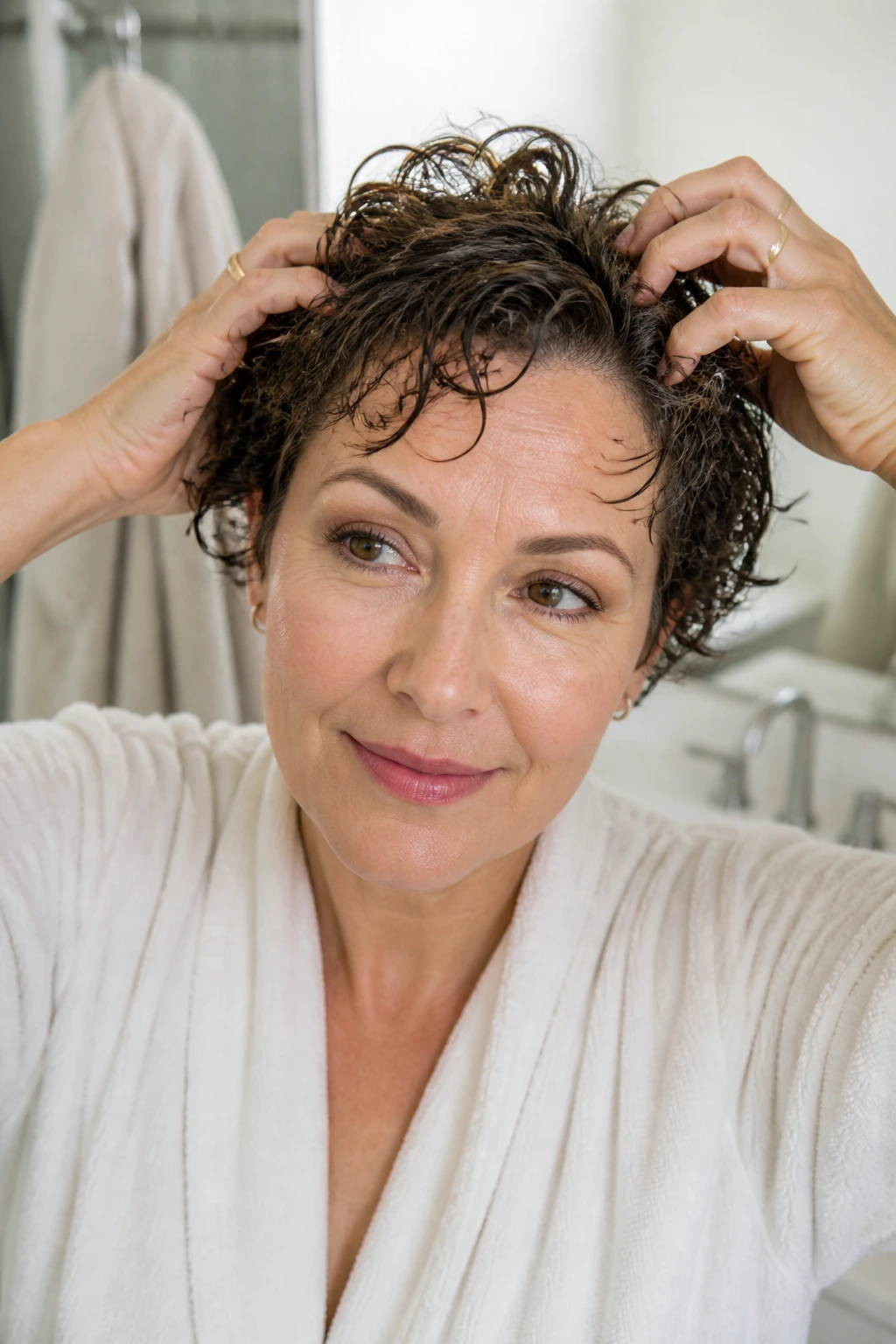
Short curly cuts live or die by the first 15 minutes after washing. If you smooth product over soaking-wet hair and then let the crown dry flat against your head, you’ve already lost some of the shape. Start with the root. Work product in there first.
Use a light mousse or foam on the crown and front sections, then add a small amount of gel through the mid-lengths and ends. You want support, not weight. If the hair feels slippery or overloaded, it will dry with less lift than you wanted. That’s the tradeoff.
Root lift first
Clip the crown in 2 to 4 sections while it dries, or diffuse with your head tilted just enough to let air reach the roots. You do not need to bake the hair on high heat. Low or medium heat is enough if the cut is right.
Don’t rush the cast
If you use gel, let the curls dry fully before you scrunch them out. Touching them early flattens the shape. Once they’re dry, scrunch with clean hands or a tiny drop of oil. The curl clumps will look softer, not flatter.
Day-two fix
Mist the top lightly, rub a pea-size bit of foam between your palms, and press it into the crown only. Then reset the part with your fingers. That usually brings short curls back without making them wet enough to restart the whole cycle.
Extra Tips and Shape Boosters
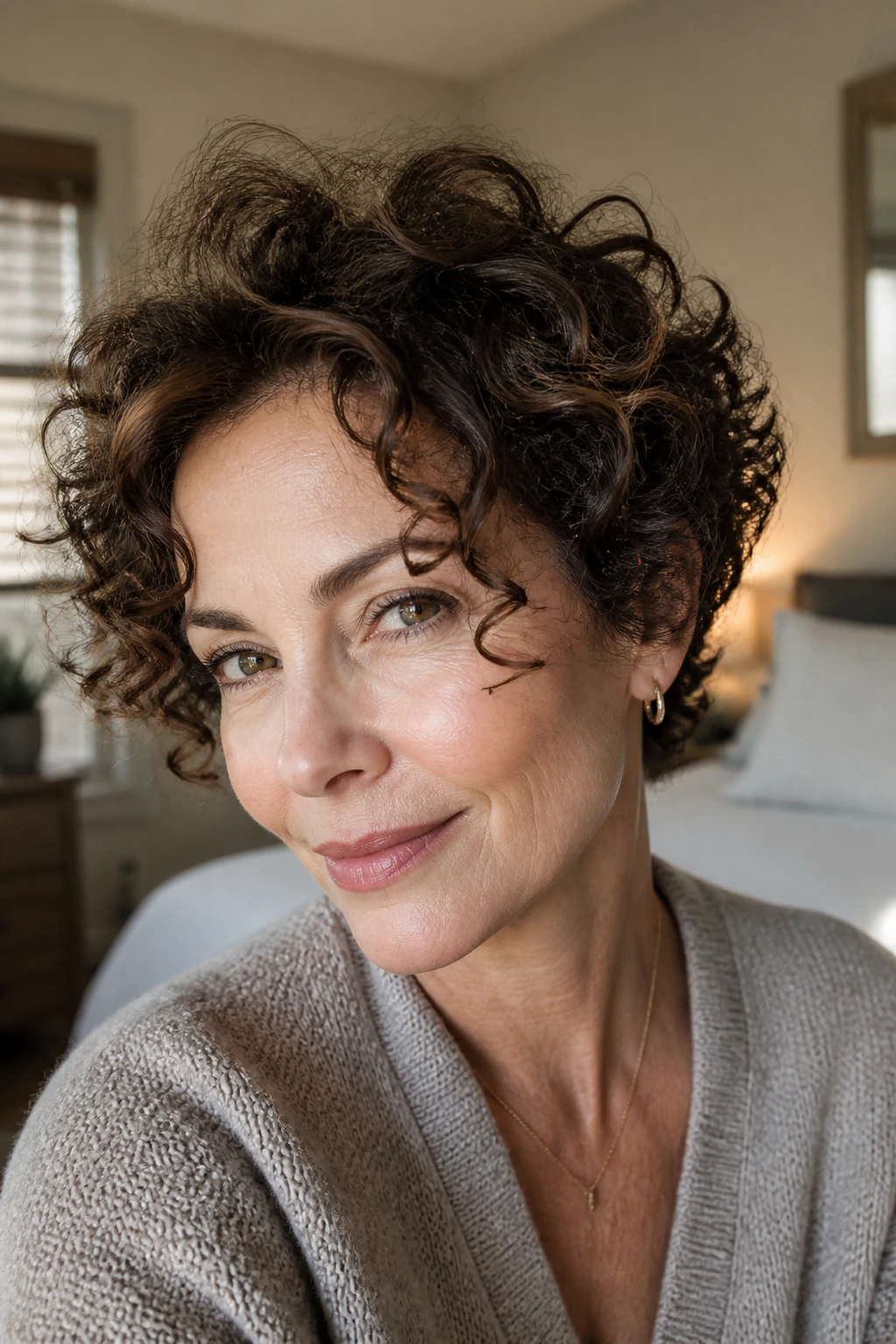
Root Lift: Put the styling product where the hair needs support, which is usually the top third of the head. If you load the ends instead, the cut just gets heavier and drags down faster.
Shape Boost: Ask for face-framing pieces that start around the cheekbone or jaw instead of long, tired layers that disappear below the chin. The shorter front pieces draw attention up and inward.
Texture Control: Use one product for hold and one for moisture, not five different creams layered one after another. Thin curly hair can turn limp fast when it’s overfed.
Color Lift: A few soft highlights or lowlights can make the hair read denser by adding depth and shadow. Keep the color subtle. Stripy highlights on fragile curls can look dry in a hurry.
Scalp Camouflage: A zigzag part or an off-center part can help if the center line has gotten wider. It’s a small change, but on short hair it can make the top look far less exposed.
Protein Check: If your curls stretch out and never really spring back, a light protein treatment can help them hold their shape. Don’t overdo it, though. Too much protein turns curls brittle, and brittle curls break.
Common Mistakes That Flatten Short Curly Hair
Too many layers at the crown: This is the fastest route to a see-through top. The fix is simple: keep the crown longer than the stylist’s instincts might suggest, and let the lift come from shape, not from stripping the hair down.
Over-thinning with shears or a razor: Fine curly hair already has enough texture. If the ends start looking fuzzy and airy in a bad way, the cut was thinned too hard. Ask for point cutting or controlled shaping instead.
Using heavy creams at the roots: The product slides down, the crown collapses, and the whole style goes limp by lunch. Keep rich curl creams on the mid-lengths and ends only, then use mousse or foam near the scalp.
Cutting curls while stretched too far: Curly hair looks longer when it’s wet and pulled out, then springs up after it dries. If the cut is done without checking shrinkage, you can lose more length than you wanted. Dry cutting or partial dry cutting helps avoid that surprise.
Letting the shape grow out too long: Short curly cuts lose their line faster than people expect. Once the nape gets fuzzy or the bangs start poking into the eyes, the whole haircut starts reading as thin rather than shaped.
Ignoring the part: If the same part sits in the same place every day, the root can flatten in a permanent-looking groove. Shift it sometimes. Even half an inch helps.
Variations and Alternatives to Try
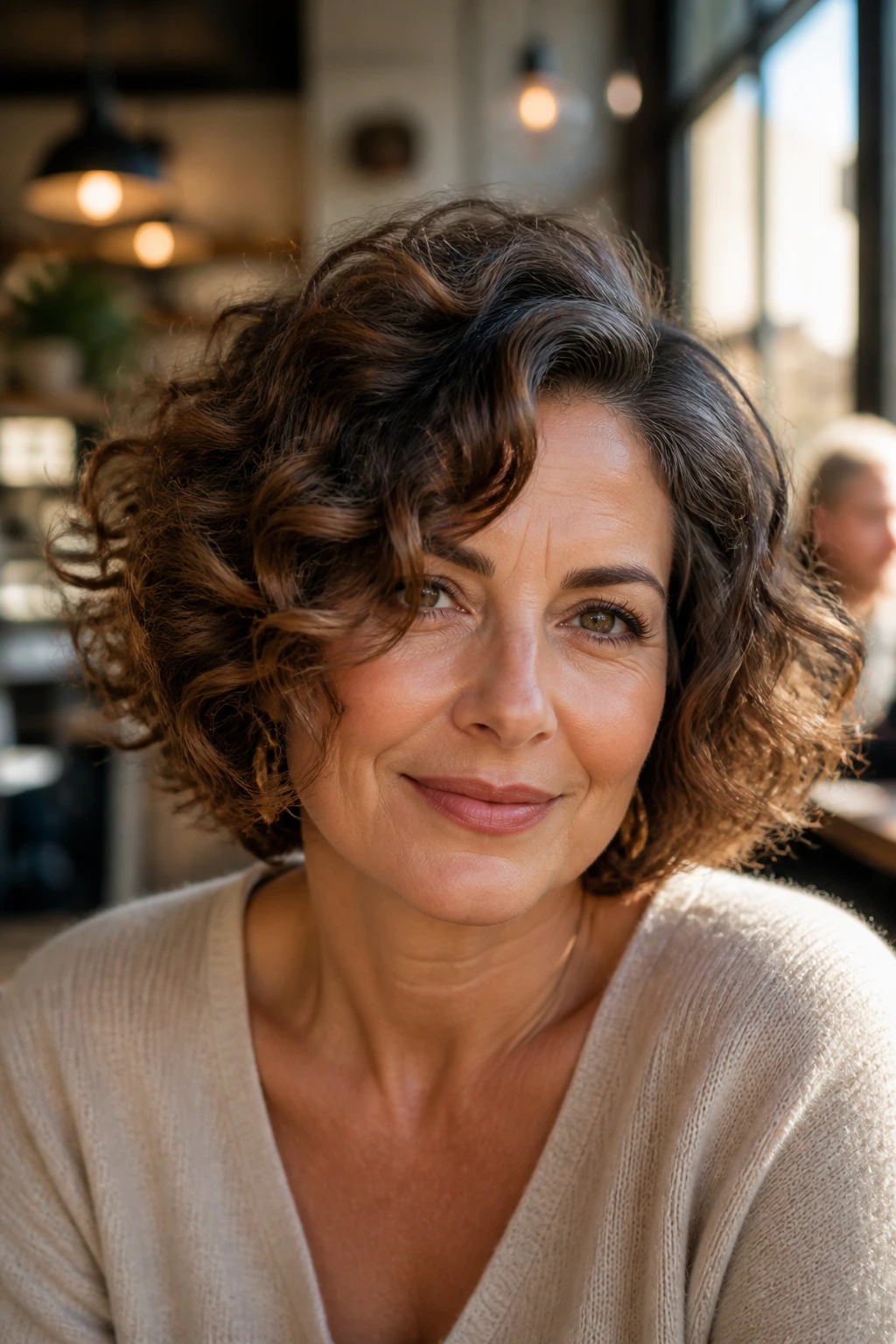
Fine-Wave Friendly Bob
If your curls are really more wave than ringlet, keep the perimeter blunt and the layers minimal. A chin-length line with a side part gives the hair enough structure to look fuller without turning it into a puffball.
Coily Taper Version
For tighter curl patterns, go rounded at the top and tapered through the sides and nape. The silhouette stays full where it matters, and the shorter edges keep the shape neat between trims.
Gray Curl Glow-Up
Gray and silver curls often look best in a shorter shape with a little shine product. Keep the cut soft and rounded, then use a light serum on the ends so the texture looks intentional instead of dry.
Low-Maintenance Workweek Cut
Choose a short bob or bixie with a strong perimeter and very little internal layering. It takes less daily reshaping, which is useful if you want the hair to look decent with a quick mist and go.
Humidity-Heavy Weather Edit
If frizz eats your shape, keep the cut slightly longer at the sides and a touch heavier at the ends. A stronger gel cast plus a more contained outline usually beats chasing fluff all day.
Trims, Sleep Care, and Keeping the Shape Alive
Short curly hair needs a trim schedule, not a “whenever it looks bad” schedule. For most of these cuts, every 6 to 8 weeks keeps the outline intact. If you have an undercut, micro-fringe, or a very shaped nape, you may want a cleanup every 3 to 4 weeks so the edges do not start creeping into fuzz.
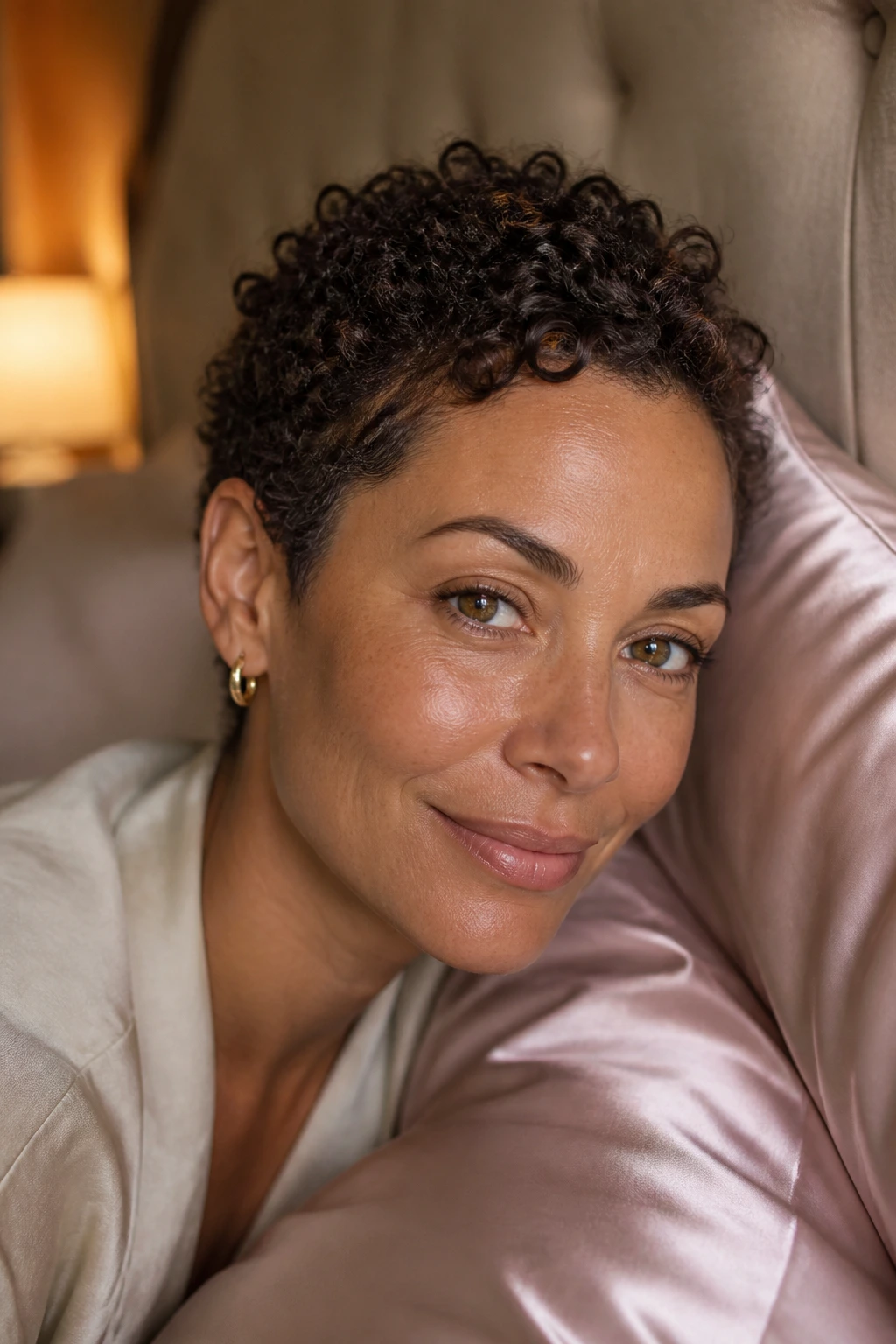
At night, satin matters. A bonnet works if your cut is short enough to sit in it without getting mashed. A satin pillowcase helps if you sleep with your hair loose or if the cut is too short for a proper pineapple. Either way, the goal is the same: less friction, less frizz, less shape loss.
On refresh days, do not drench the whole head. A light mist at the crown, a little foam at the roots, and a touch of water over the front pieces usually does the job. If the ends have started to look dry, a tiny amount of leave-in on damp palms is enough. More than that and the cut gets heavy fast.
And if you wear a very short pixie or tapered crop, keep an eye on the neckline. That is usually the first area to lose its clean line, and once the nape goes fuzzy, the whole cut feels less lifted.
Questions People Ask Before They Chop Their Curls
What short cut makes thinning curly hair look thickest?
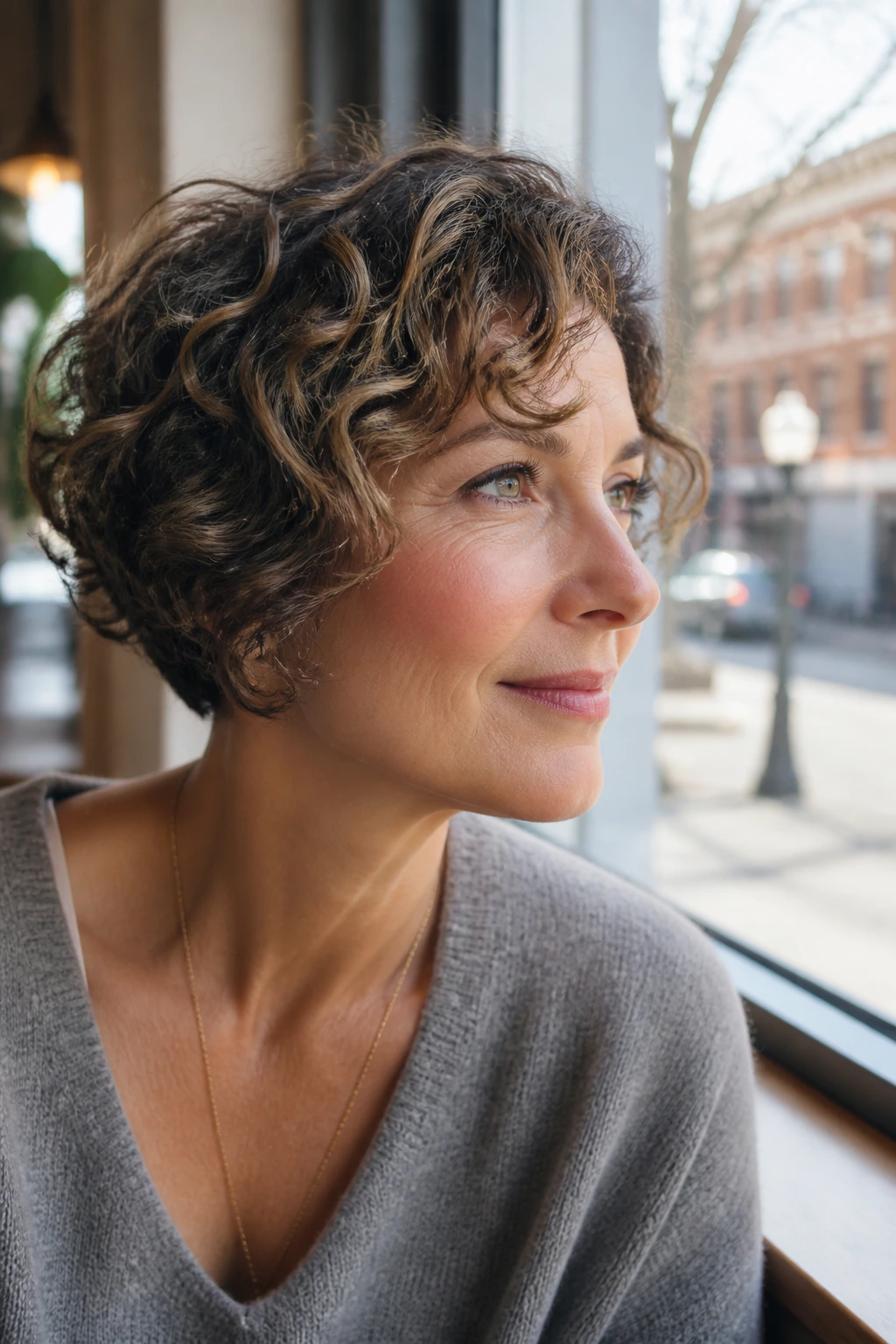
Rounded bobs, bixies, and soft pixies usually read the fullest because they keep the hair in a compact shape. The bluntness of the perimeter matters almost as much as the length.
Is a pixie a bad idea for thinning curly hair?
No, but it has to be built with care. Leave enough length on top for the curls to spring, and keep the sides soft or tapered so the head does not look too narrow.
Should curly hair be cut dry or wet?
Dry or mostly dry is usually safer for curls because you can see the shrinkage and the real outline. Wet cutting can work, but only if the stylist understands how your pattern behaves once it dries.
Do layers help, or do they make thin curls look worse?
A few controlled layers can help lift the crown. Too many layers, especially near the top, can make the hair look patchy and lighter than you want.
How often should I trim a short curly cut?
Every 6 to 8 weeks is a good rhythm for most shapes. If you have bangs, an undercut, or a very sculpted nape, you may need maintenance sooner.
What if my curls go flat after an hour?
Use less cream, more mousse, and more root support while drying. A deep side part or root clips can help more than people expect.
Can I wear bangs with thinning curly hair?
Yes, if the fringe is cut with the curl pattern in mind. Soft, dry-cut bangs usually behave better than a heavy blunt fringe that looks sparse once it springs up.
Will color make my hair look fuller?
Subtle highlights or lowlights can add depth and shadow, which helps the shape read thicker. Keep the color gentle if your curls are fragile; over-processing can undo the effect.
The Cut That Gives Curl Room
The best short cut for thinning curly hair is the one that gives the curls a shape they can actually hold. That might be a pixie with a lifted crown, a compact bob with a stronger perimeter, or a cropped shape that leans into your natural part instead of fighting it.
What matters most is this: the haircut should help the curl stand up, clump well, and sit in a clean outline. Length can be nice. But on thinning curls, the right shape is usually nicer.
Choose the cut that matches how much styling you’re willing to do, then ask for the structure that keeps the top from collapsing and the ends from looking tired. That’s the sweet spot, and it’s worth finding before the next grow-out stage tries to talk you out of it.
