



Short curly hair has a mood of its own, and curly hairstyles for women with short hair only work when they respect that. Skip the right product mix, and the sides bloom outward while the crown goes flat. Use too much cream, and the shape turns soft and sleepy by lunch. Use too little, and you get crunchy ends with frizz at the roots.
That’s why short curls are worth styling with a little more intention than people usually give them. A cropped coil, a chin-length bob, or a tapered fro doesn’t have the luxury of hiding bad parting or sloppy drying. Every inch shows. Every choice shows. And that’s the fun of it, honestly.
The best short curly styles don’t fight the hair’s natural spring. They use parting, lift, tuck, and hold in a way that makes the cut look deliberate from every angle. Some of the looks below take five minutes. Others take a little patience and a few bobby pins. All of them lean into what short curls already do well.
Why These 24 Short Curly Styles Earn a Spot on the Rotation

-
Less Product, More Shape: Short curls need a smaller amount of cream or gel to get definition, which means you can build clean shape without coating the hair in heavy residue.
-
Fast Payoff: A sharp side part, a tucked side, or a mini puff changes the silhouette in minutes, and that matters when the rest of the morning is already moving too fast.
-
Better Curl Visibility: Short length shows off the curl pattern itself instead of burying it under long weight, so ringlets, coils, and bends all read more clearly.
-
Accessory-Friendly: Clips, scarves, pins, and headbands do a lot more work on short hair because they can frame the face instead of disappearing into the length.
-
Grow-Out Friendly: Several of these looks help awkward in-between lengths behave. That stage can be annoying. These styles make it look on purpose.
-
Easier Night Reset: A cropped shape is usually faster to refresh after sleep, especially if you know how to protect the crown and nape properly.
How to Choose Curly Hairstyles for Women With Short Hair by Curl Pattern
Short curly hair is not one category. Loose waves, springy ringlets, dense coils, and mixed textures all behave differently once the length comes off. A style that looks effortless on a 3A bob can collapse on tight 4B curls if the sectioning is wrong, and vice versa.
Loose curls and soft ringlets
These usually do well with styles that keep the shape open: side parts, curved bobs, half-up clips, and wet-look definition. The curl already has movement, so you do not need to force a lot of structure into it.
Tight coils and dense texture
Smaller-section styles tend to behave better here. Finger coils, twist-outs, Bantu knot-outs, frohawks, and mini puffs give the curl room to stack instead of puffing outward in a cloud. A heavy cream can work, but only if the hair is thirsty and the cut can carry the weight.
Uneven or growing-out cuts
This is where tucks and asymmetry save the day. A headband tuck, side clip, flat twists, or a pinned faux bob can hide the awkward spots while letting the good parts do the talking. That sounds obvious until you’re three weeks into a grow-out and one side has decided to become its own personality.
The cut matters as much as the curl
A tapered cut gives you a built-in outline. A blunt bob gives you a boxier edge that can look sharp or bulky depending on how you style it. Layers make curls stack upward and inward, which is why a layered ringlet bob often looks fuller than it actually is.
1. Wash-and-Go Crop
A good wash-and-go crop has those crisp little curl clumps that look almost wet at the ends and airy at the roots. It’s the simplest short-curly look, but it only works when the product order is clean and the hair is left alone long enough to set.
The trick is to style on soaking-wet hair. Smooth in leave-in first, then a small amount of curl cream if your hair likes it, then a gel that can actually hold the shape. Scrunch with your hands or a cotton T-shirt, then diffuse on low or air-dry until a cast forms. If you touch it while it is still damp, the frizz starts early and doesn’t stop.
Best for: curls that already clump well and a cut that lands between ear length and chin length.
One honest note: if your hair is shorter than three inches, this stops reading as a full wash-and-go and starts acting more like a defined curl crop. That’s not a bad thing. It just means the shape gets tighter and more compact.
2. Tapered Pixie Fro
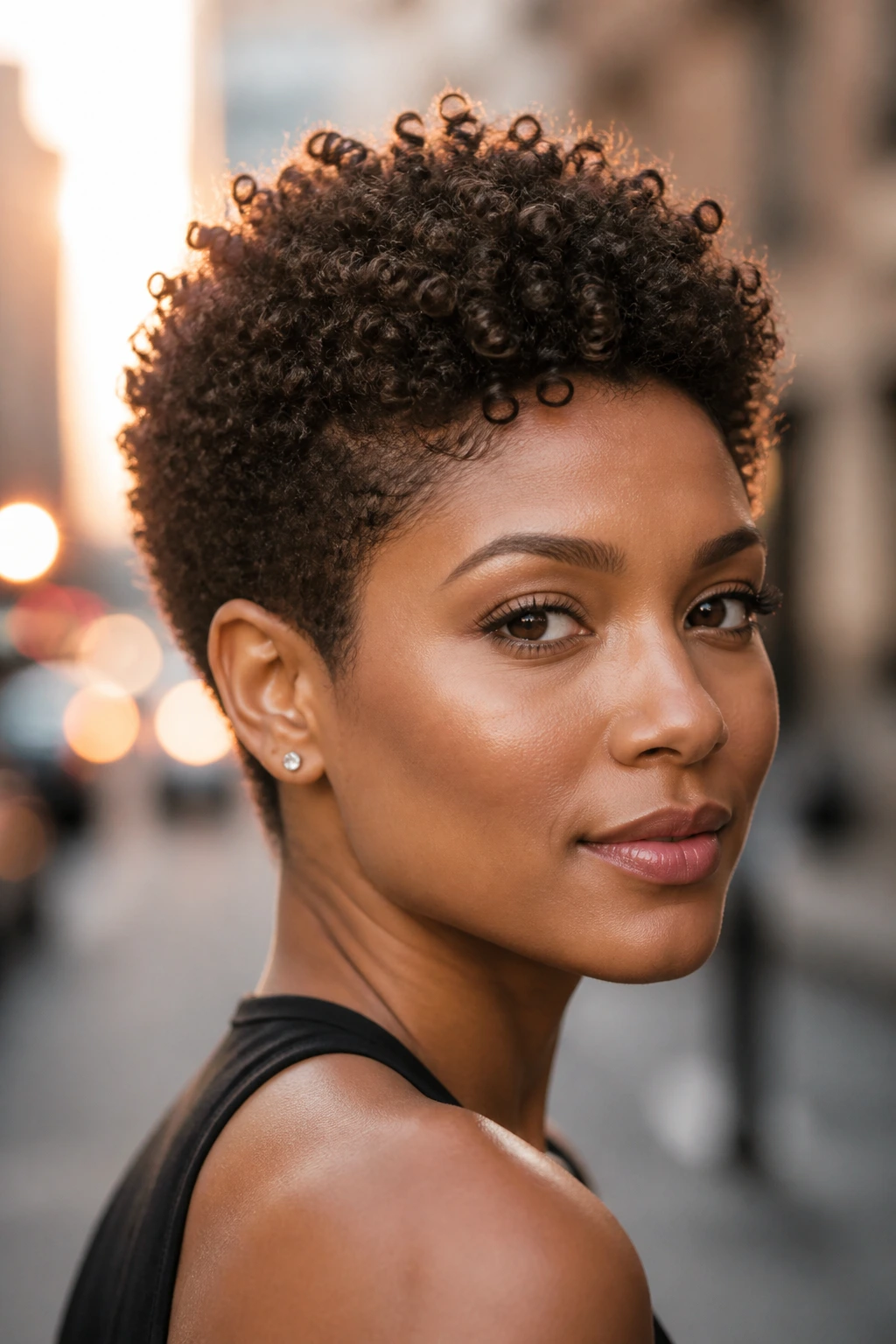
A tapered pixie fro makes short curls look deliberate because the shape is built into the cut, not fought into place. The nape sits close, the sides stay tidy, and the top gets all the lift it needs to read as soft volume instead of helmet hair.
This style is especially useful if your hair is dense or your curls shrink a lot once they dry. The taper keeps the silhouette from spreading at the edges, which means the top can be fluffy without turning into a triangle. A little mousse at the roots and a light cream on the ends is usually enough; anything heavier tends to drag the crown down.
- Good cut match: tapered sides with 3 to 5 inches on top.
- Styling move: pick the roots only after the hair is fully dry.
- Maintenance reality: the taper usually needs shaping every 4 to 6 weeks.
Pro tip: if the sides puff out first, smooth them with damp hands and a tiny bit of gel rather than reaching for more cream. Cream adds softness. It does not add discipline.
3. Side-Part Curly Bob
Why does a side part change short curls so much? Because it breaks the head into two different shapes instead of one round cloud. That single shift gives the bob a cheekbone line, a little height at the crown, and a more finished look without adding length.
The part works best when it sits just above the arch of the eyebrow or slightly farther back, at the point where the head starts to curve. On damp hair, use a rat-tail comb to draw the line once and leave it alone. Then define the front sections a little more carefully than the back, since that front edge is what people notice first.
How to make it feel intentional
Use smaller curl clumps on the heavier side and keep the lighter side a touch flatter. That contrast is what makes the style read as a bob instead of an accidentally lopsided cut. If one side has extra volume, let it. The whole point is asymmetry with some control.
A side-part bob is one of those looks that never really feels overworked. It just sits there, quietly doing the most.
4. Finger Coils
If your curl pattern gets fuzzy the second you stop babysitting it, finger coils are the blunt answer. They give short hair a polished, uniform curl that lasts longer than most quick styles, and they work even when the length is too short for a clean twist-out.
Start with damp hair, not dripping wet hair. Use a rattail comb to make half-inch sections, apply a small amount of gel or strong curl custard, then twist each piece around your index finger until it springs into a little coil. If the section is too big, it will loosen and frizz. Too small, and you’ll spend the morning there.
What makes them worth the effort
Finger coils look neat on day one and still hold their shape after sleep if you cover them properly. They also let you control the front hairline and temple area, which is usually where short curls misbehave first.
Let them dry completely before separating anything. That part matters. Coils separated too early swell into fuzzy ropes, and the whole point was definition.
5. Two-Strand Twist-Out
A twist-out on short hair can look softer than a wash-and-go, and that softness is the appeal. It stretches the curl just enough to show length, then lets the hair fall into a looser pattern that feels less packed at the sides.
The method is straightforward. Twist small sections on damp hair with a little leave-in and a touch of cream or mousse, let them dry all the way through, then untwist gently with oiled fingertips. Short hair usually likes smaller twists than long hair does, because the curl needs help staying visible after the unraveling.
The best twist-outs on short cuts have a slightly uneven, organic finish. Too much separation and they go fluffy fast. Too little separation and they sit there in obvious rows. Somewhere between those two is the sweet spot.
And yes, this is one of the styles that can look even better on day two. The parts settle. The frizz calms down. The shape stops trying so hard.
6. Mini Puff
A mini puff is what happens when short curls refuse to gather into a full puff but still want a lifted, pulled-back shape. The result sits at the crown or a little higher on the head, with the sides smoothed back and the ends left free.
It works especially well when the front is getting too short for a proper ponytail. Use a snag-free elastic or two small bands, gather the curls where the head starts to round upward, and let the puff stay compact. You do not need a huge puff to make the style read clearly. In fact, on short hair, a smaller puff often looks better because it keeps the proportions balanced.
Best when: your curls are too short to tie back low, but long enough to collect at the crown.
Tiny warning: don’t pull the sides too hard. Short hair shows tension fast, and the hairline starts looking unhappy long before you notice the style itself.
7. Half-Up Claw Clip
A half-up claw clip style can look careless in the best way, or it can look like you gave up halfway through. The difference is placement. When the clip sits just above the occipital bone, the curls underneath stay free and the top section gets lifted instead of flattened.
Use a medium claw clip with grippy teeth, not the flimsy glossy kind that slides out after fifteen minutes. Gather the top third of your hair, twist it once, clip it, and then gently fan the curls so the shape looks soft rather than squeezed. If a few front pieces fall out, leave them out on purpose. That reads better than trying to trap every curl into the clip.
The half-up version is especially useful on second-day hair, when the roots are a little tired but the ends still look good. It buys you one more decent-looking day without a full restyle.
8. Curly Frohawk
A frohawk looks more intentional than a lot of polished short styles because it puts all the drama in one narrow strip down the center. The sides can be slicked, pinned, or brushed down; the middle does the talking.
This works well on dense curls and coily hair because the height comes from stacking the hair upward instead of spreading it outward. Apply gel to the sides in thin layers, smooth them back with a brush or fingers, and let the center stay loose and fluffy. After drying, lift the center lightly at the roots with a pick if you want more height.
Good detail: if your hairline is sensitive, use bobby pins under the slicked sections rather than brushing too aggressively. The style should sit neatly, not feel tight.
There’s a certain honesty to a frohawk. It does not pretend the hair is straight or long. It just takes the shape that’s already there and sharpens it.
9. Bantu Knot-Out
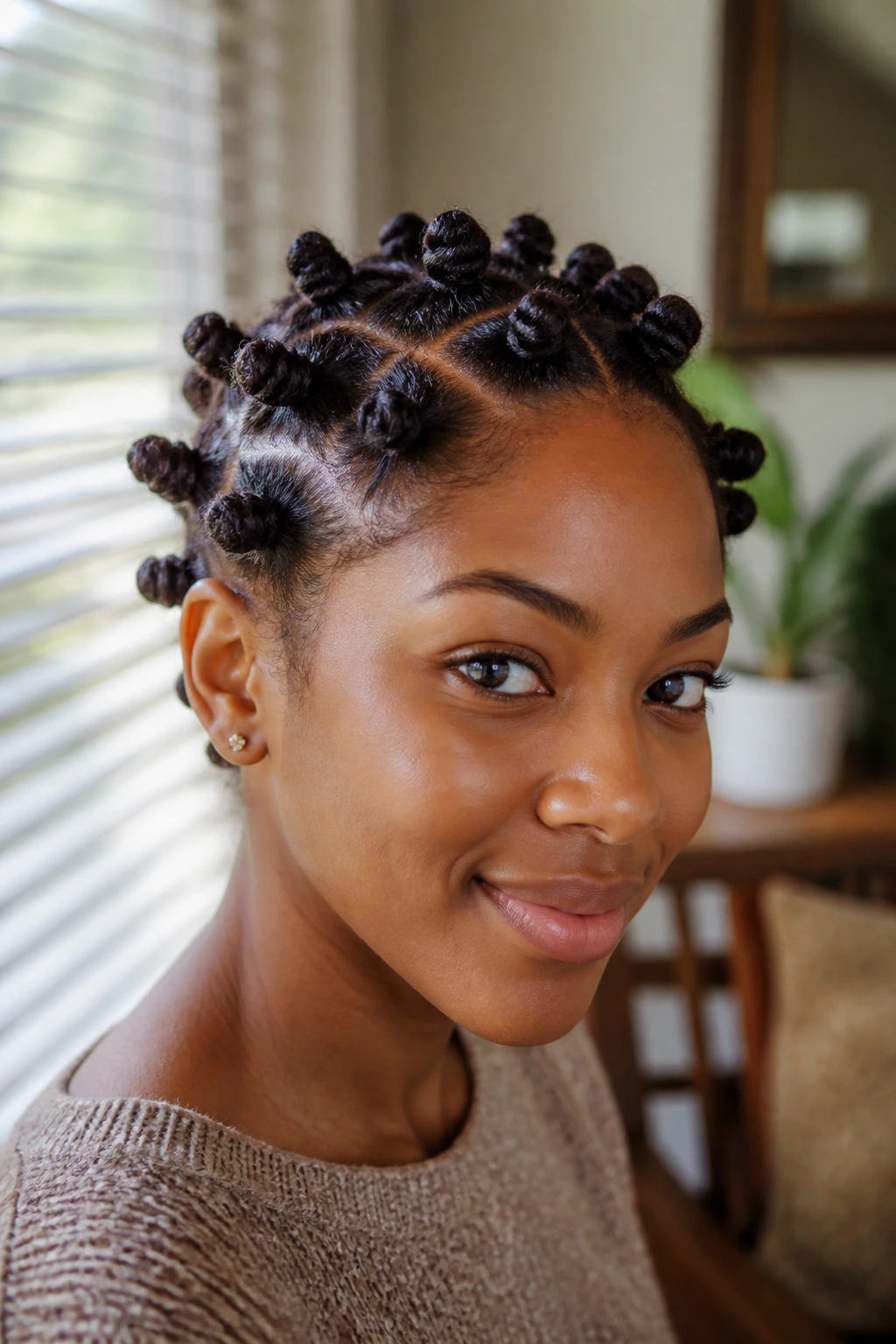
Want spring without heat? Bantu knots are still one of the cleanest answers. On short hair, they create a tight, springy pattern that looks different from both a twist-out and a wash-and-go, which is useful when you want texture with a little more structure.
Make the knots on damp hair using leave-in and a bit of styling cream or mousse. Smaller sections give you smaller, tighter curls when you take them down. Bigger sections create a softer wave, but they also make the set less predictable. Most short hair does well with six to ten knots, depending on density and length.
When to unravel
Only after the hair is completely dry. Not mostly dry. Completely. If there’s any dampness left near the center of the knot, the curl pattern falls apart while you separate it.
Use a little oil on your fingertips, then undo each knot slowly. The finish is springy, rounded, and a little bouncy at the ends. It’s one of the few sets that gives short curls real shape without requiring much daily maintenance.
10. Flat Twist Crown
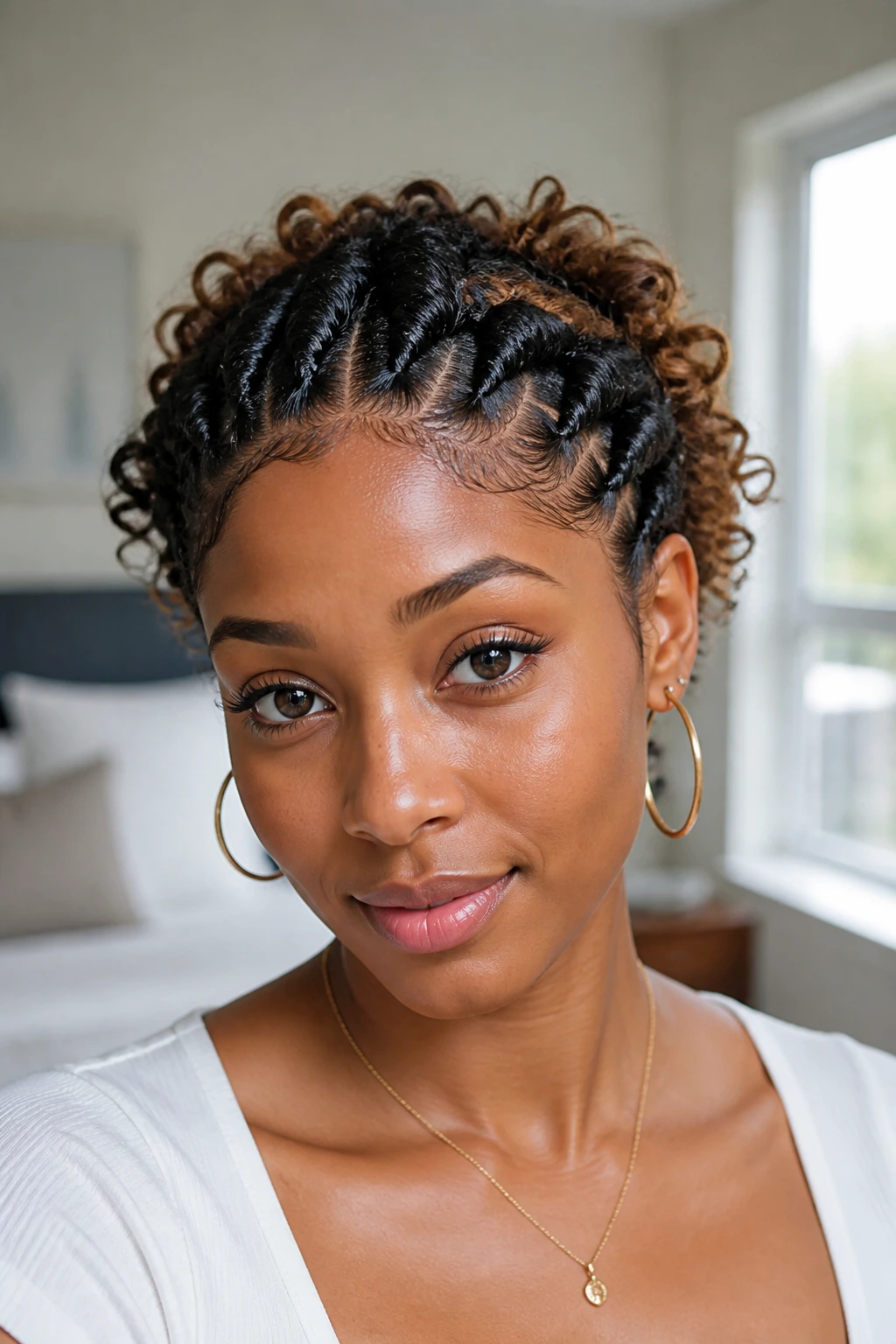
A flat twist crown is what I reach for when short curls need a frame and the front refuses to stay put. The twists run along the scalp and sweep the hairline back, which gives the face structure and keeps the roots from puffing into a halo.
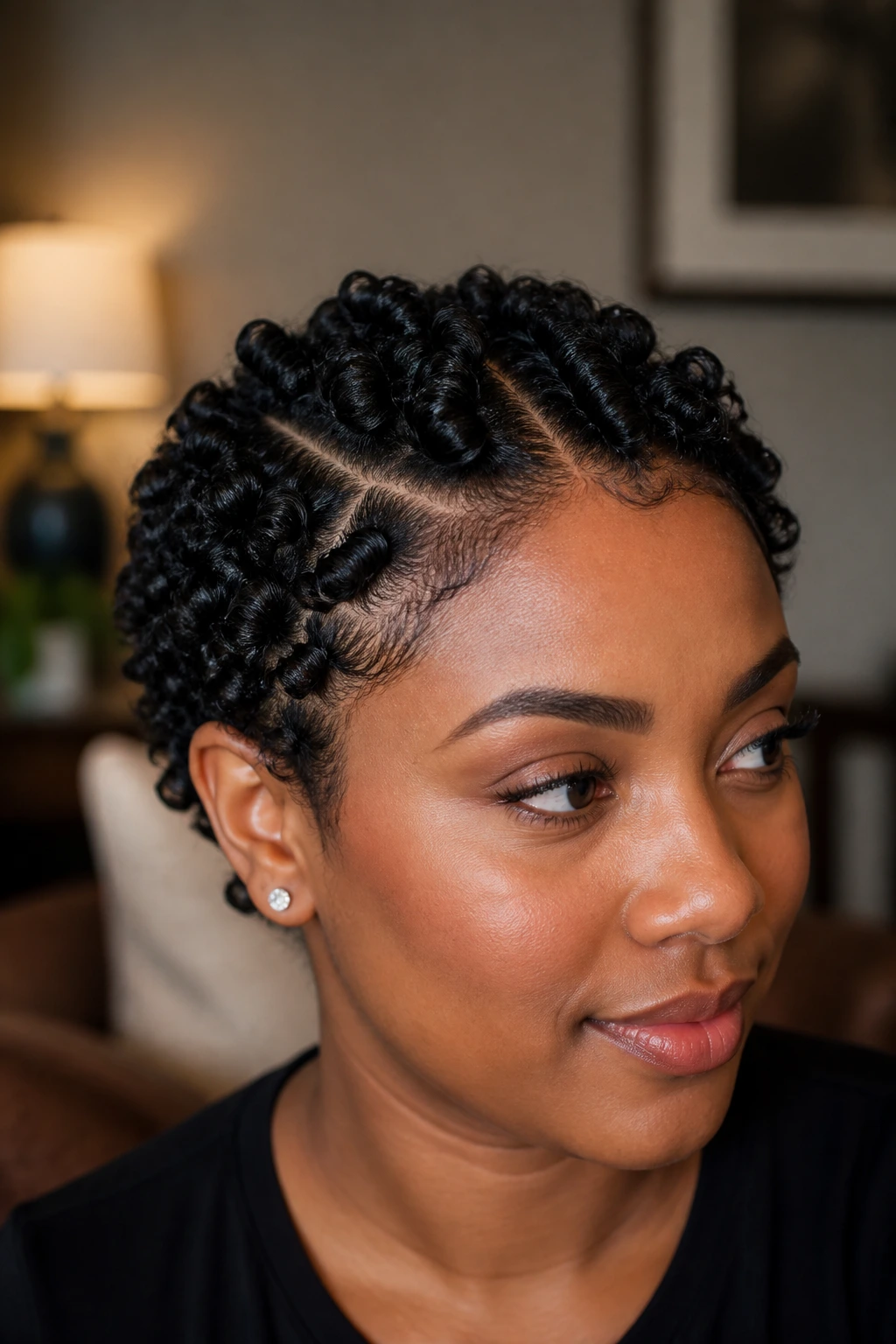
You only need a few neat twists, usually four to six, depending on the width of your sections. Start at the hairline, twist close to the scalp, and pin the ends where they disappear into the rest of the hair or toward the back. The crown stays tidy while the remaining curls are left loose enough to keep the style from feeling stiff.
- Best pairing: short natural hair with enough length on top to grab into flat twists.
- Better on: damp hair that still has a little stretch.
- Avoid: twisting bone-dry hair, which frizzes faster and feels rougher in the hands.
This is one of those styles that looks more detailed than the effort it takes. That’s a nice trade.
11. Wet-Look Slick Curl
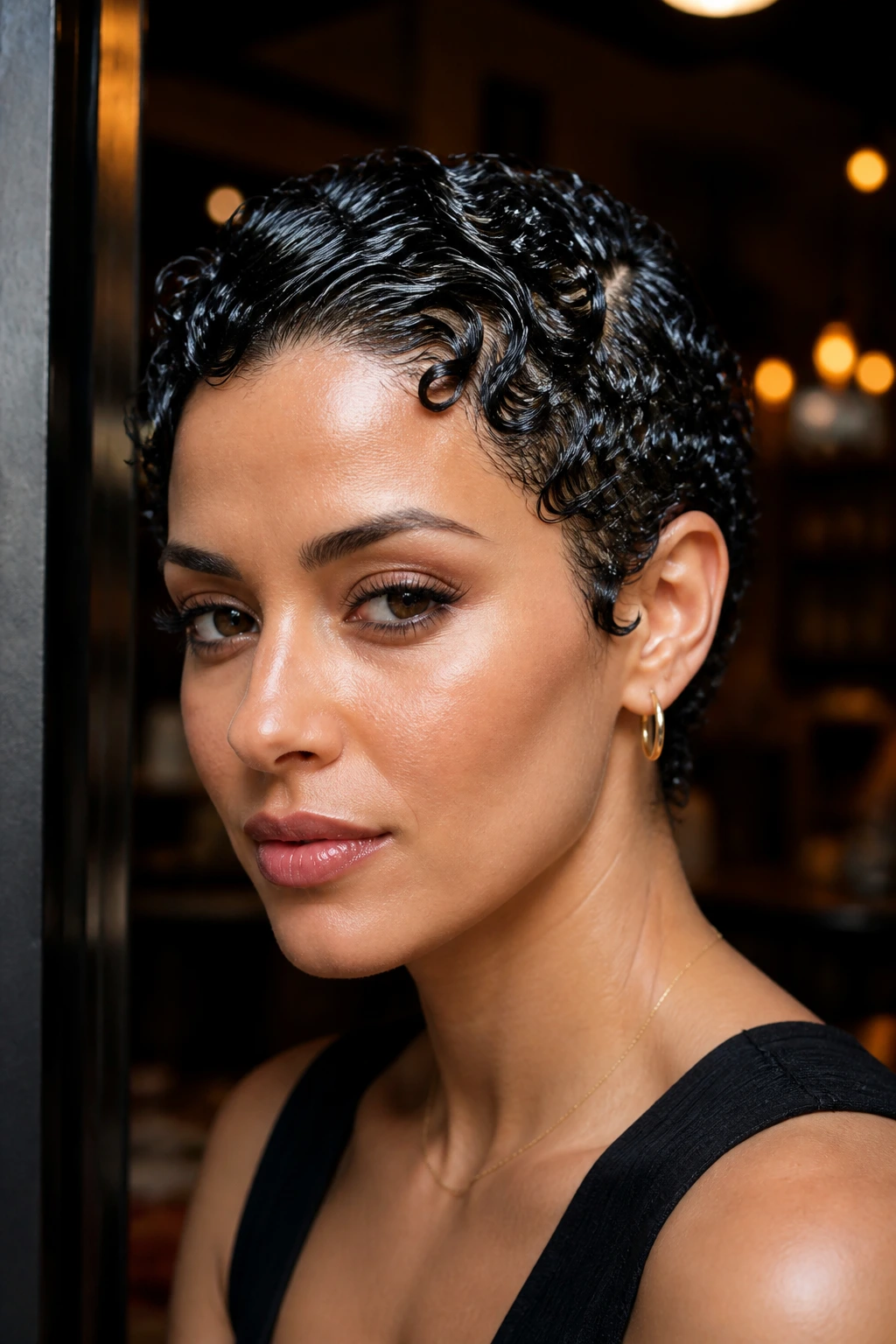
The wet-look short curl is not trying to be soft. It’s trying to be shiny, defined, and a little dramatic. If you like the crisp, combed look that sits close at the sides and glows on top, this is the one.
Start with very damp hair, then work in a strong-hold gel section by section. Use a brush or your fingers to smooth the product from root to end, following the direction you want the curl to fall. Don’t pile on cream underneath unless your hair is dry and thirsty; too much beneath the gel usually creates flaking or a cloudy finish. Once the shape is set, let it air-dry or diffuse on low just until the outer layer forms a cast.
The style is especially good for evenings, dinners, and anything where you want the hair to sit closer to the head. It also flatters short cuts with strong lines, because the shine draws attention to the shape instead of the frizz.
It’s not a casual style. That’s the charm.
12. Deep Side Sweep
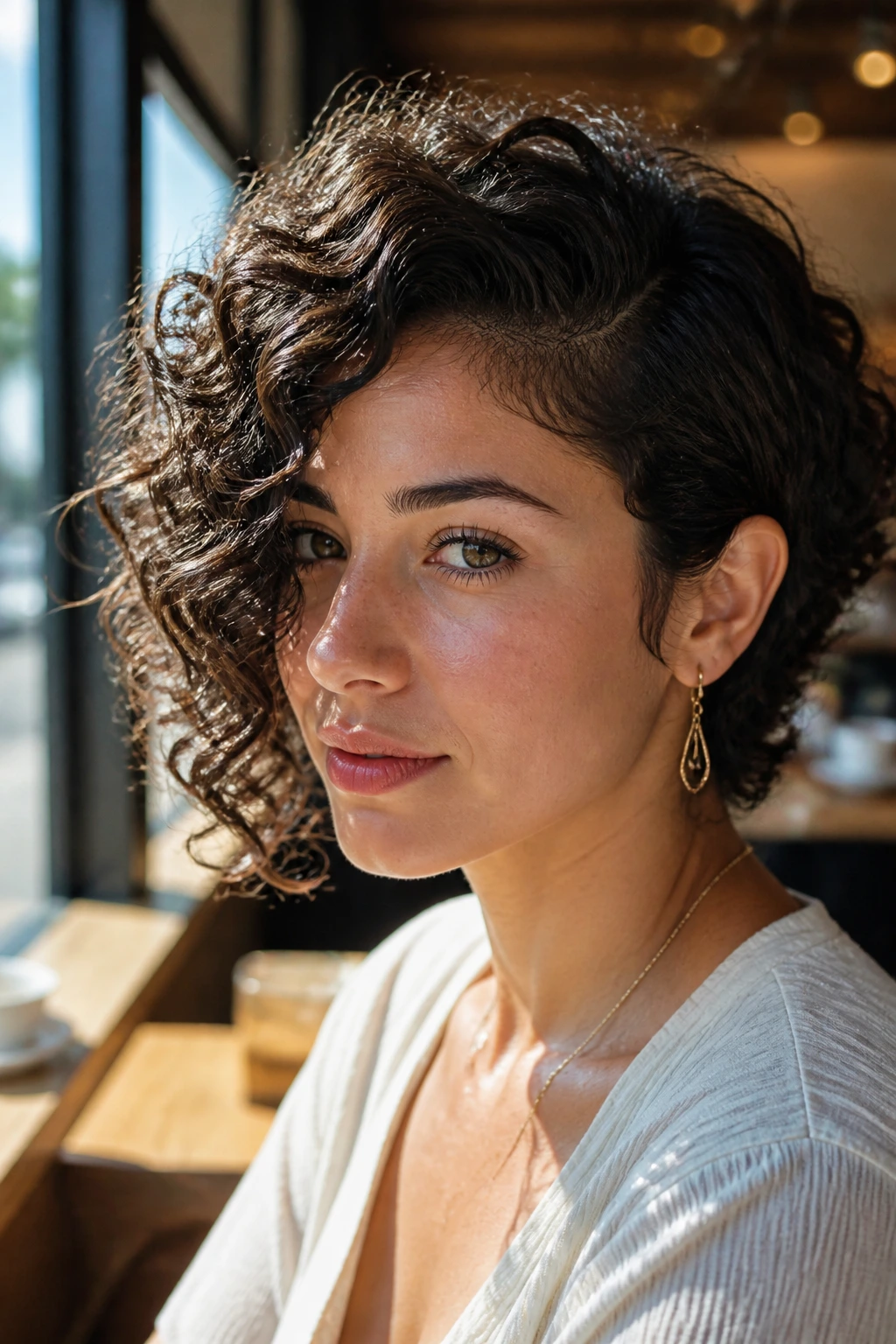
A deep side sweep gives short curls face shape without touching the cut itself. Move the part farther over than feels natural, let the heavier side fall across the forehead or cheek, and clip the lighter side down while it dries so the root learns the direction.
This works best on loose curls and ringlets that want to drape instead of stack. The sweep can soften a stronger jawline or add a little length to a rounder face, but the real win is visual balance. One side does the lifting. The other side keeps the style from turning into a triangle.
Who it suits best
People with a blunt bob, a grown-out pixie, or curls that settle flat at the crown usually get the most mileage here. The deep part adds movement where the haircut needs it most.
If your curls are fine, keep the product light. Heavy creams can make the sweep lose its angle by lunch, and then the whole effect slides into ordinary.
13. Curly Fringe
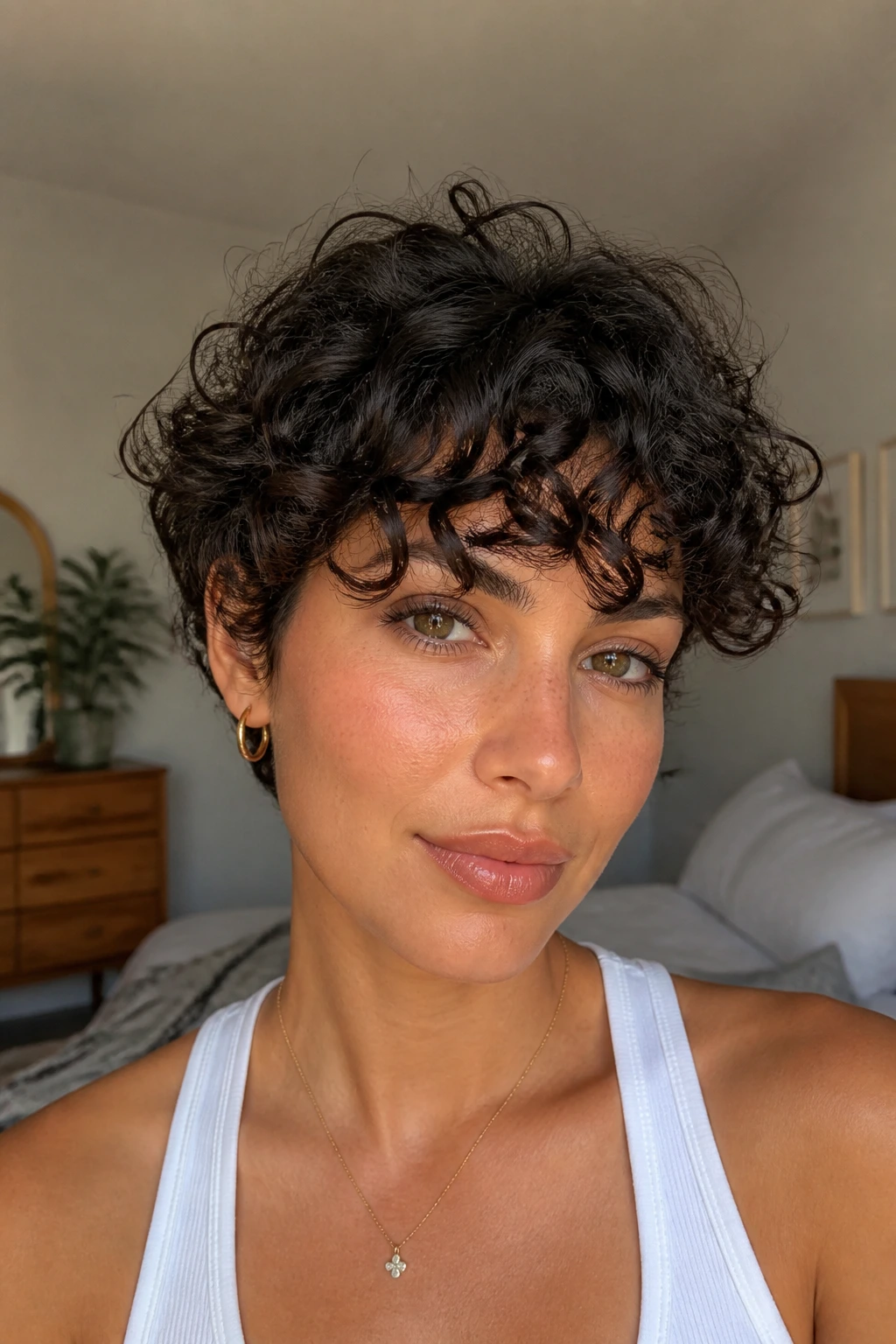
Curly bangs are easier on short hair than people think, but they need a little more length than most first-time cutters expect. Shrinkage is real. The front pieces should usually sit lower than the brows when wet so they land in the right spot once they dry.
The fringe works because it gives the haircut a focal point. Instead of all the curl energy sitting at the crown or sides, the eye lands on the front first. Define the bangs with smaller sections, use a light curl cream or mousse, and avoid over-brushing them while they dry. Too much handling and the fringe turns into a frizzy curtain.
My preference: keep the fringe a touch piecey rather than perfectly even. A little unevenness makes short curly bangs look lived-in instead of carved into place.
If your curl pattern is mixed, this style also lets you shape the front separately from the rest of the head. That one detail saves a lot of arguments with the mirror.
14. Headband Tuck
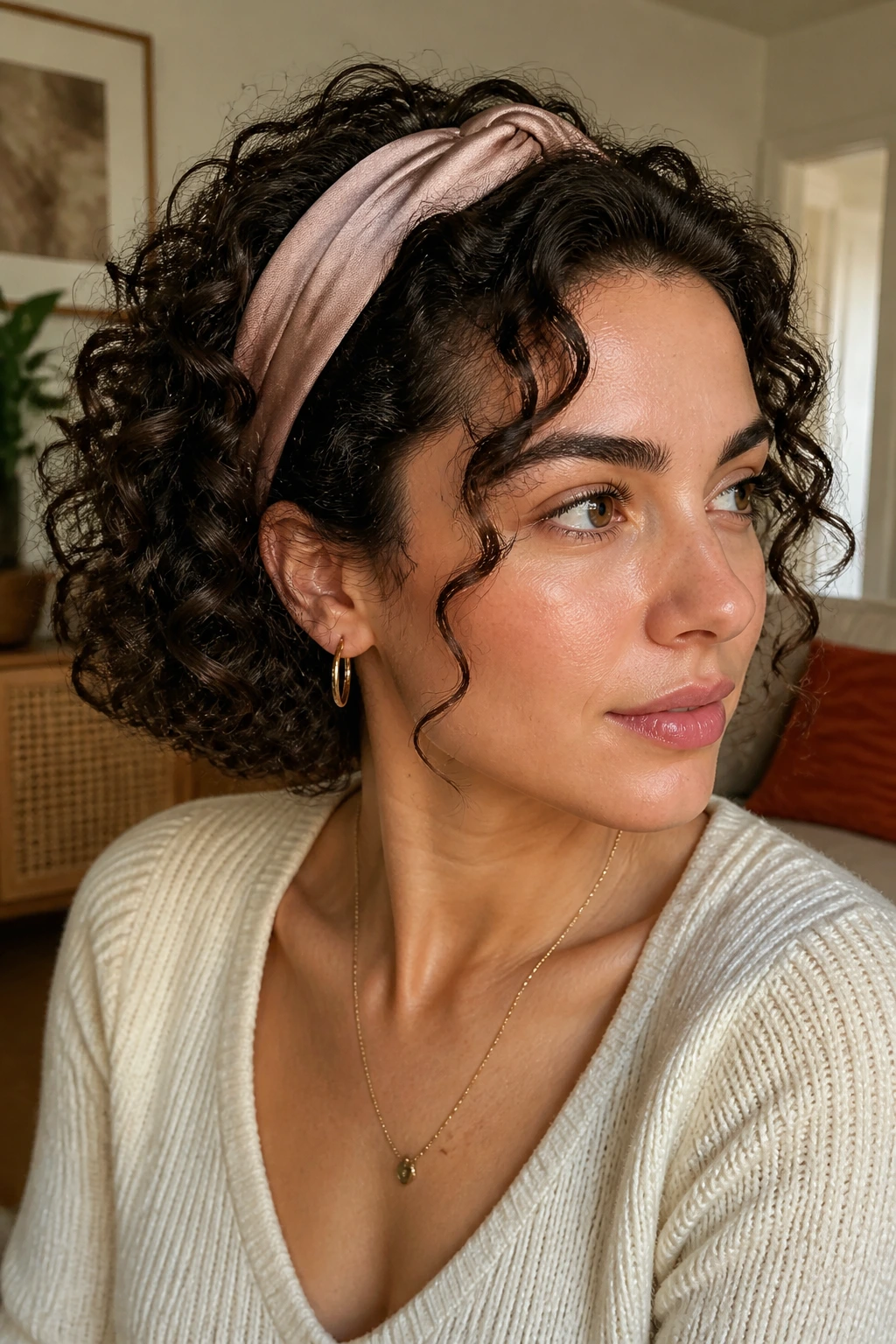
Need your curls out of your face without flattening the top? The headband tuck is the easiest answer, and it works best when the band is soft, wide enough to grip, and covered in satin or smooth fabric.
Place the band about an inch behind the hairline, then tuck the lengths behind it so the curls fold inward instead of collapsing at the crown. Leave a few front pieces loose if you want softness around the face. If the hair is chin-length or shorter, the tuck creates a rounded faux bob effect without much fuss.
A useful detail
The band should sit snugly, not tightly. If you feel it digging in after ten minutes, it will leave dents and flatten the shape you were trying to save.
This style is especially handy on days when the roots are decent but the front pieces are doing odd things. The headband hides the problem and makes the hair look intentional.
15. Pin-Curl Roll
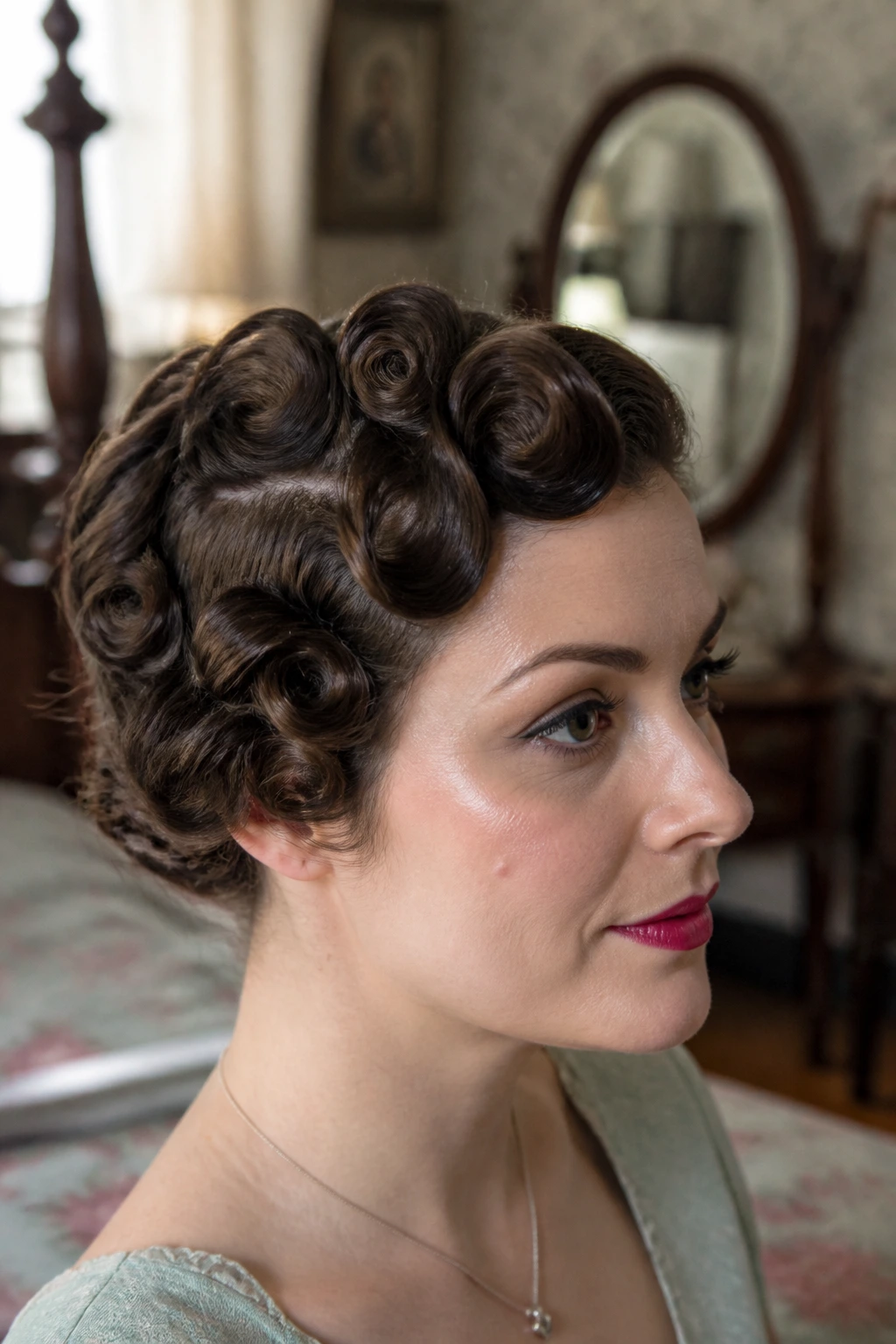
Pin-curl rolls give short curls a vintage bend without heat styling, and they work especially well on shorter layers that refuse to cooperate in a standard twist-out. Roll small sections away from the face, flatten them gently against the head, and secure with duckbill clips or flat pins.
Use a light mousse or setting lotion if your hair likes a firmer hold. Damp hair sets better than dry hair here, but it should not be dripping. If the section is too wet, the roll takes forever to dry and the roots can smell stale by morning. That part matters more than people admit.
When you release the pins, the front usually falls into a soft curve that frames the forehead or cheekbone area. The rest of the curls can stay loose. That contrast is what makes the style interesting.
It’s a good choice when you want shape near the front without committing to a full set.
16. Side Tuck with Statement Clip
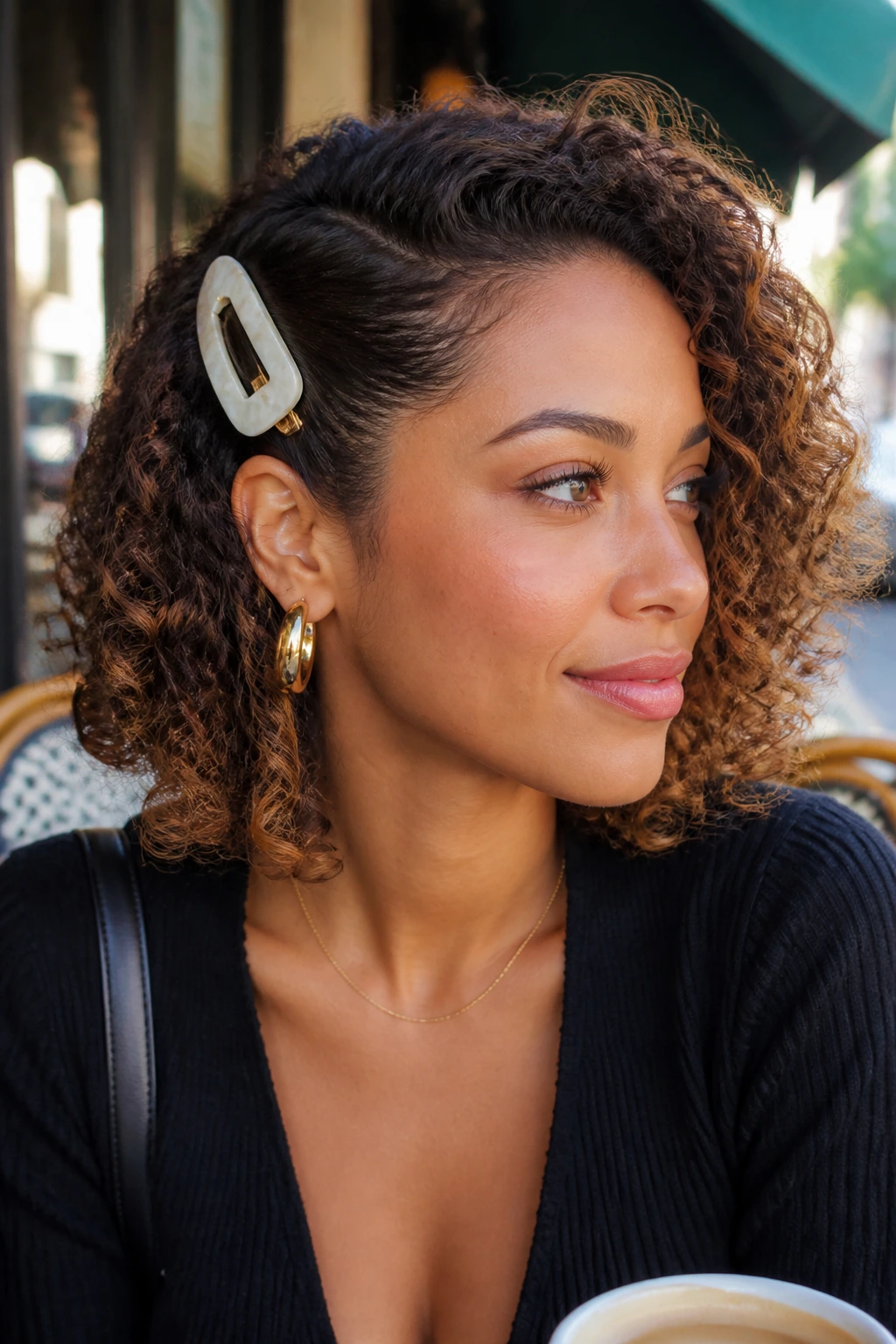
A side tuck is the fastest way to make a short curly style look polished without forcing the whole head into submission. Pull one side back behind the ear, smooth it with a little product, and pin it with a clip that has some weight to it.
The beauty of this style is the asymmetry. One side shows off the curl texture. The other side gives you a clean line and room for earrings, makeup, or a neckline that deserves some attention. It works well on bobs, long pixies, and any short cut where one section has a mind of its own.
The clip matters more than people think. A tiny plastic one can vanish into the curls. A sturdy metal or resin clip becomes part of the look, which is the whole point.
This is a five-minute style that can fake a lot more effort than it actually took.
17. Rounded Fro Halo
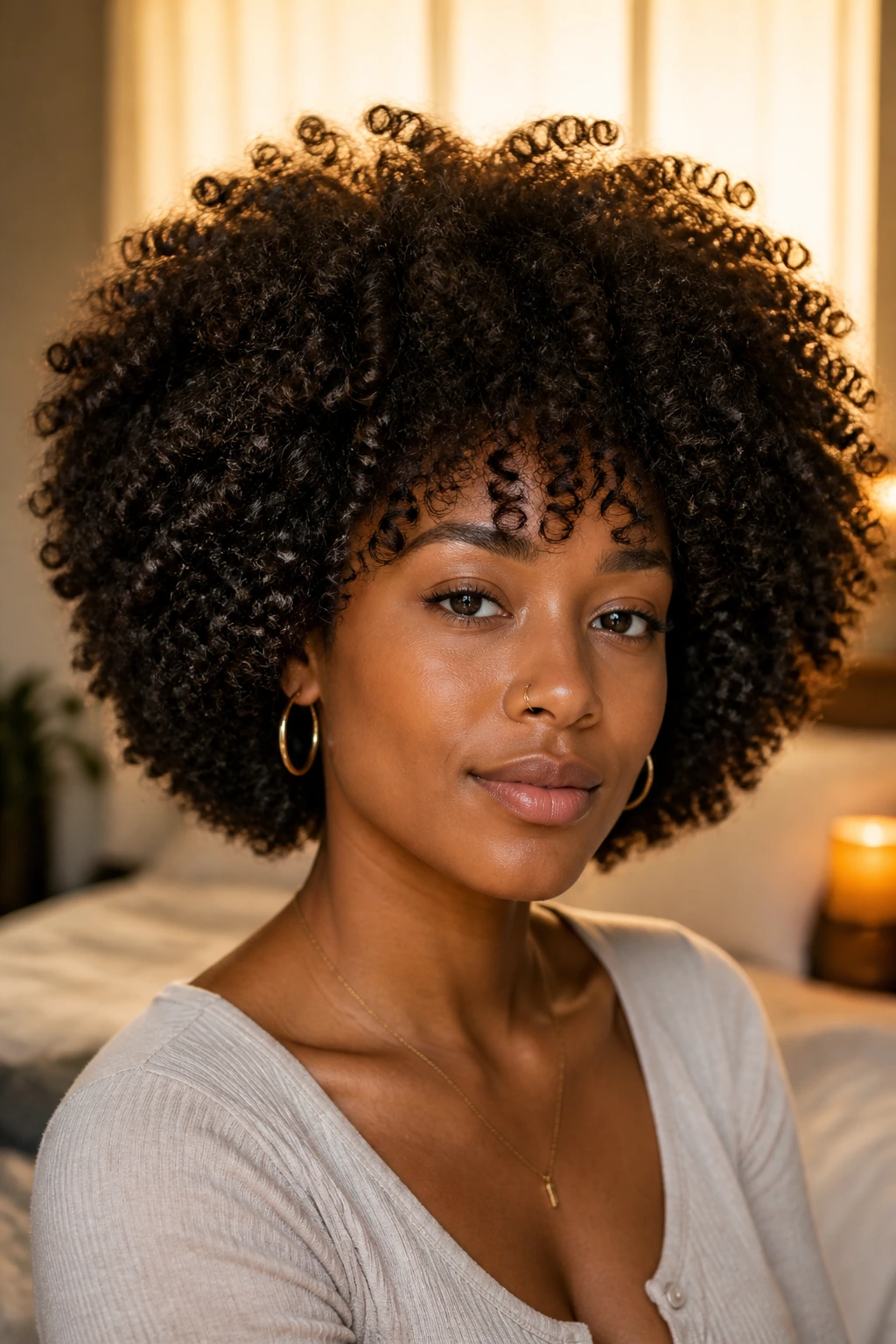
If you like symmetry more than sharp angles, the rounded fro halo is the short curly style to keep nearby. The goal is a soft, even shape that rises away from the head without a hard part, hard edges, or a big push toward one side.
This works beautifully on dense coils and tightly curled hair. Once the hair is dry, use a pick at the roots only, lifting in small sections all around the head so the outline stays round. Do not pick through the ends unless you want more width than height. That’s how the shape gets away from you.
Best for: people who want volume without the drama of a frohawk or the polish of a slicked style.
The halo shape is especially useful when the cut is growing out. It disguises uneven layers because the eye sees the whole cloud, not the individual shorter pieces.
18. Slick-Sides Mohawk Puff
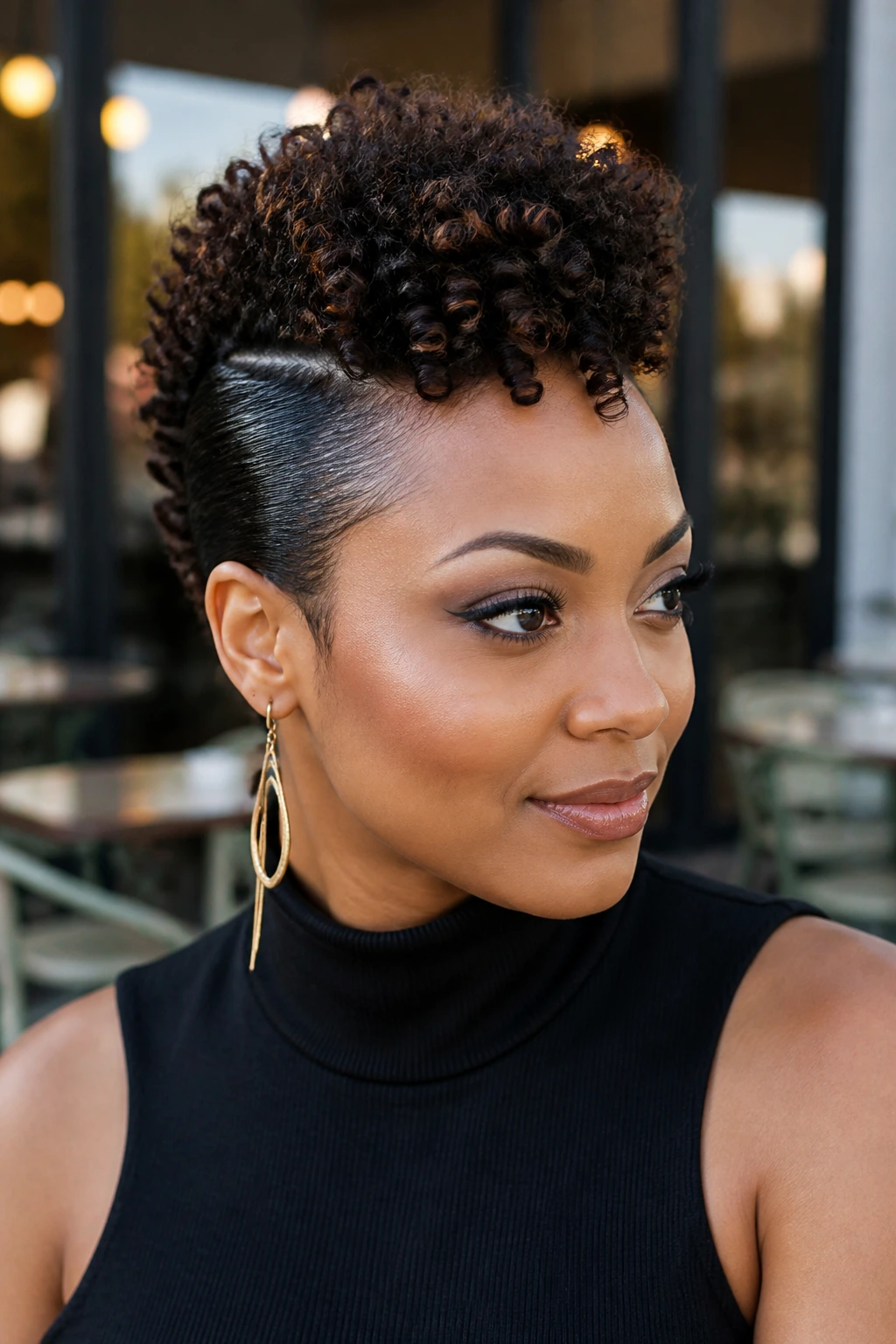
A slick-sides mohawk puff is the sharper cousin of the frohawk. The sides lie flatter, the center strip stays longer and denser, and the whole style reads cleaner from the front. It’s a little bolder. It’s also a little more work.
Brush or smooth the sides back with gel in thin layers, not one greasy swipe. Gather the center section into a puff, or leave it loose if the hair is short enough to stand on its own. The center can be picked up a little after drying, but the sides need to stay neat or the whole look loses its edge.
Watch this: if you pile on edge control at the hairline, it can turn white or stiff under warm light. Thin layers are safer and look better.
This style is the one I’d choose when a short curly look needs shape for an event but still wants texture, not just slickness.
19. Scarf Band Style
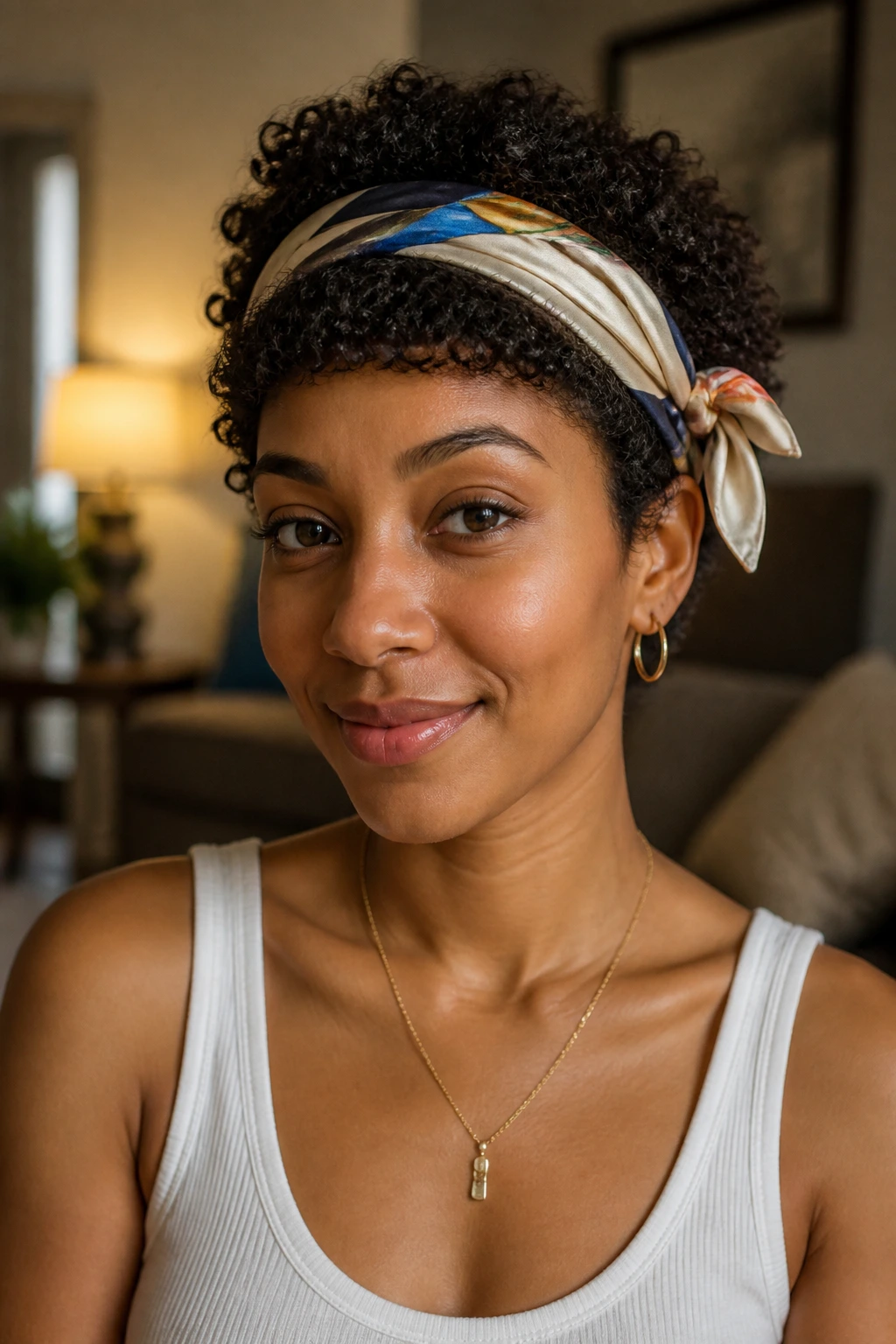
Can a scarf do more than cover a bad hair day? Absolutely. On short curly hair, a folded scarf band becomes a styling piece, a hold aid, and a way to keep the top from puffing up too much in one move.
Use a silk or satin scarf about two inches wide once folded. Tie it around the crown, just behind the hairline, and let the knot sit at the side or nape. The curls can stay loose underneath, or you can tuck the front pieces back so the scarf acts like a soft headband.
Best way to wear it
If the scarf is doing double duty as protection, pair it with a loose satin bonnet at night. If it’s for the day, pick a color that contrasts with the curls rather than matching them exactly. The shape reads more clearly that way.
This is one of the easiest ways to revive a style that has gone a little flat at the roots.
20. Space Buns for Short Curls
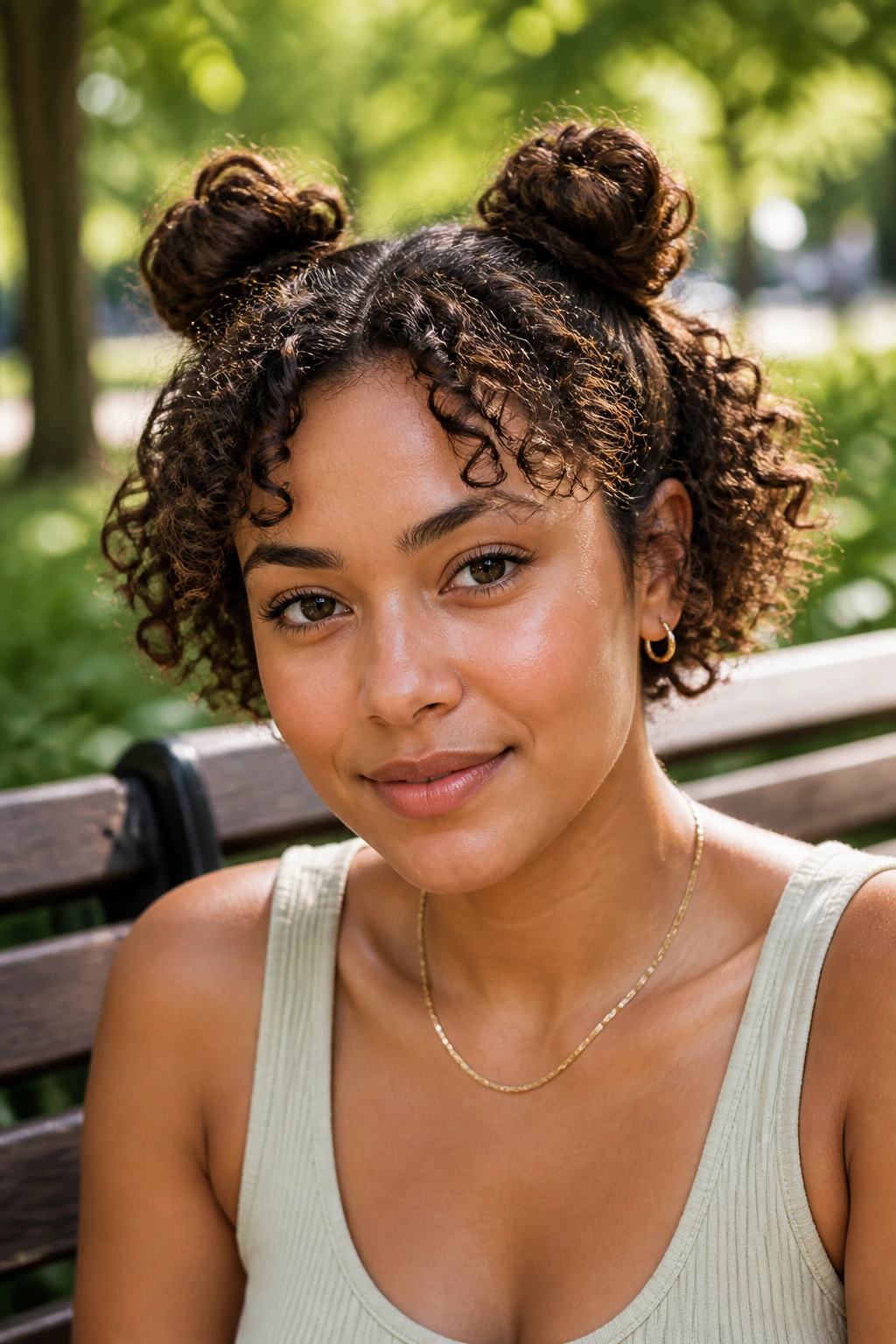
Space buns on short curls look playful, but they also solve a practical problem: how to get the hair up without needing long length. Each side gets its own small bun, tucked high or slightly back on the head, and the ends stay curly or get pinned under.
Use two tiny elastics or small snag-free bands to gather each side, then twist the lengths into mini buns. Secure with bobby pins if the hair is too short to loop neatly. If the front pieces are shorter, let them stay loose around the face rather than chasing every strand into the bun.
- Works best with: hair that reaches at least a few inches past the scalp.
- Looks cleanest when: the part is centered and the buns sit at the same height.
- Good bonus: it keeps the nape off the neck without flattening the entire cut.
Space buns can feel youthful, but they’re also one of the more useful styles for short natural hair on a humid day.
21. Layered Ringlet Bob
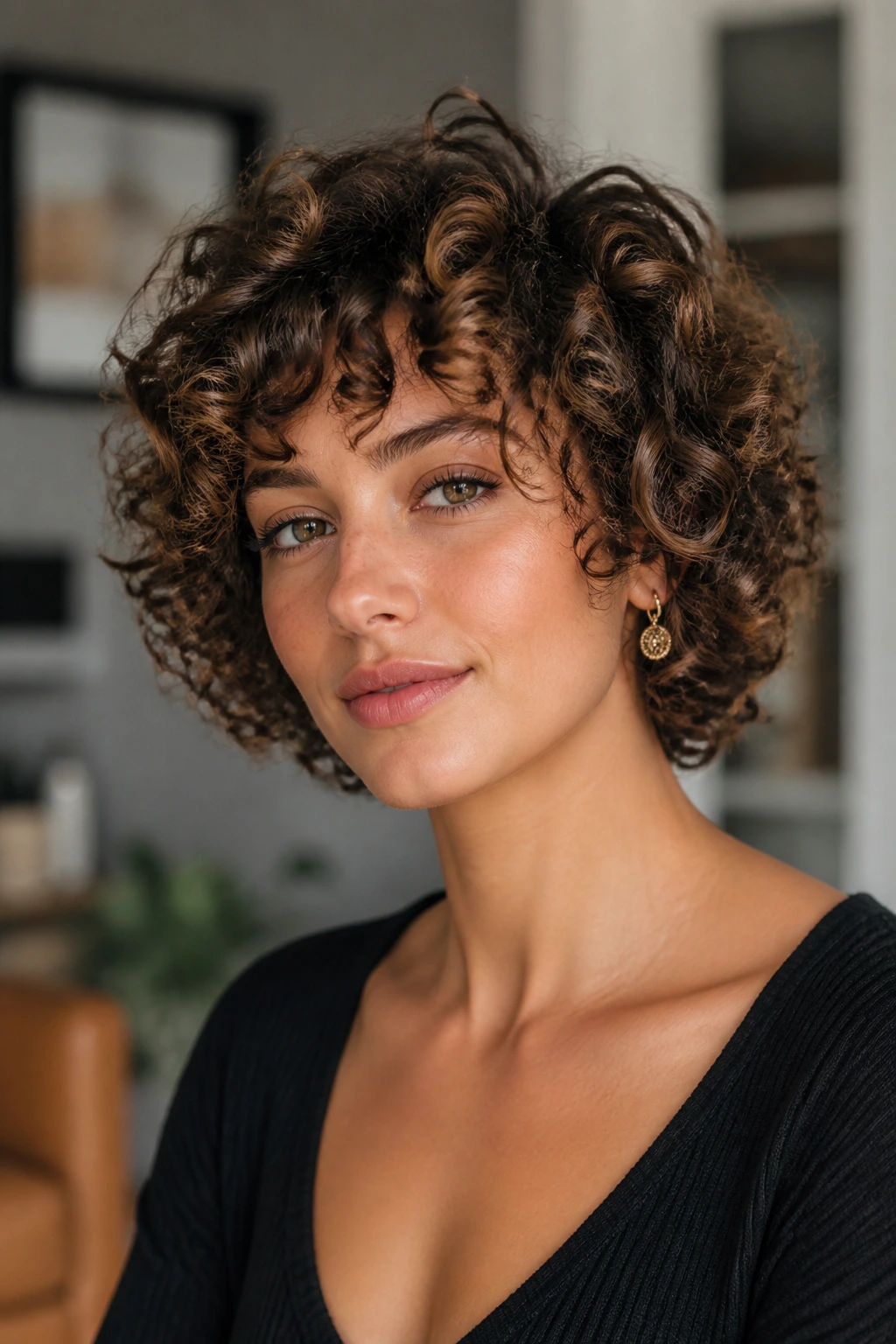
A layered ringlet bob is what happens when the cut and the curl pattern actually cooperate. Instead of a blunt edge that sits like a shelf, layers let the curls stack at different heights, which makes the bob feel lighter and more rounded.
This style needs a cut that respects the curl’s spring. If the layers are too choppy, the outline frays. If they’re too blunt, the bob can puff out at the sides. The sweet spot is a soft internal layer that lets the ringlets sit on top of each other without collapsing. A dry curly cut usually makes the shape easier to judge, because the stylist can see where the curls land instead of guessing from wet length.
The styling is simple once the cut is right. Define in sections, dry fully, then separate the curls only enough to open the shape. The result should feel airy near the crown and tidy around the ends.
This is one of the few styles here that keeps getting better when the trim stays regular.
22. Twisted Bangs
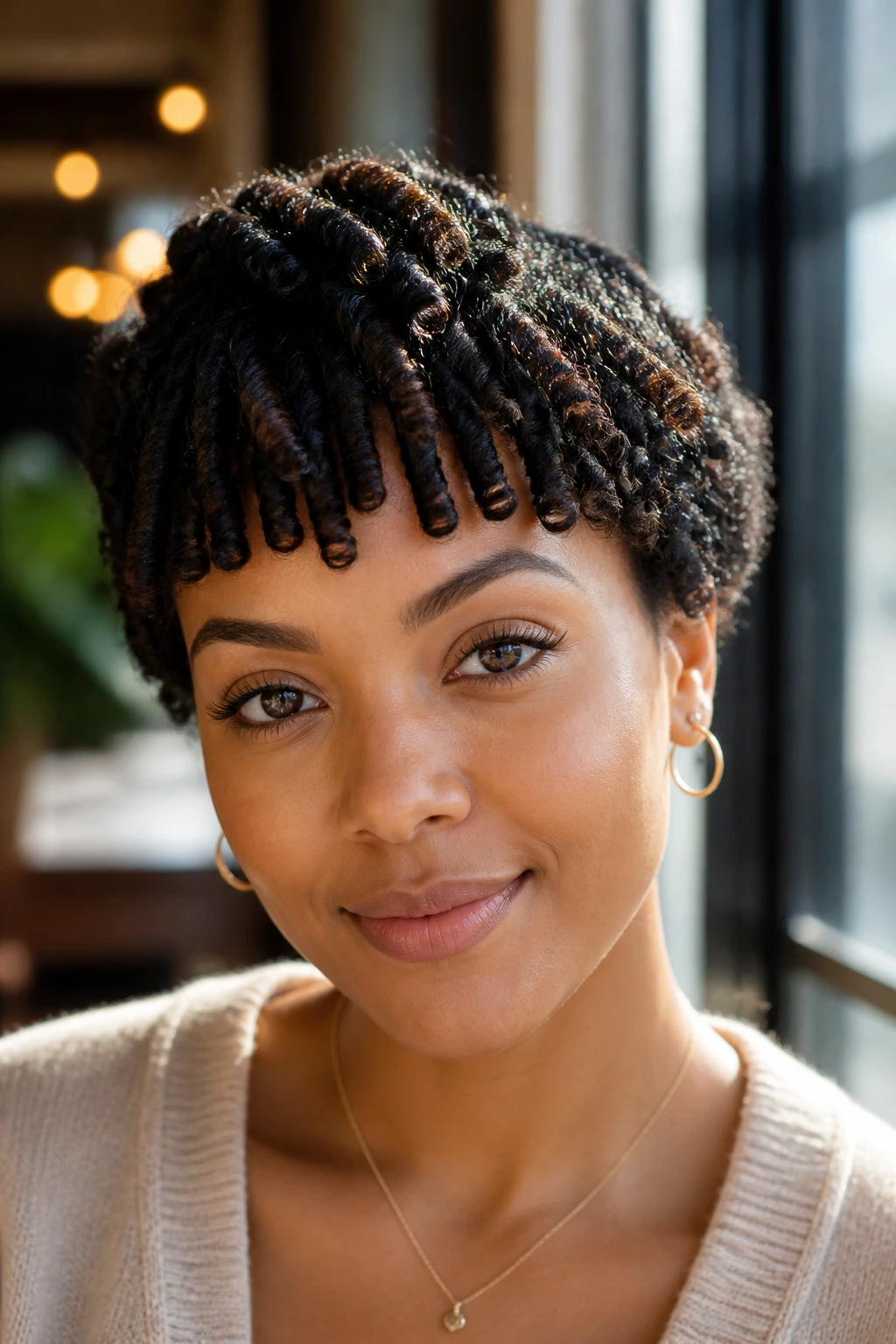
Twisted bangs are the safer cousin of curly fringe. If you want front interest without committing to a full curly bang, twist the front sections back from the temples and pin them into the crown or off to the side.
The style works when the front length is uneven or one side springs up more than the other. Twists corral the pieces that misbehave and let the rest of the hair keep its shape. Use two or three small twists on each side, depending on density, and keep them loose enough that the roots don’t dent.
Why I like this on short hair: it gives you the feeling of bangs without the constant trim maintenance. Bangs are cute. Bang trims are work.
This is also a useful grow-out style. When your layers are at that awkward point where they neither frame nor disappear, twists make them behave.
23. Pinned Faux Bob
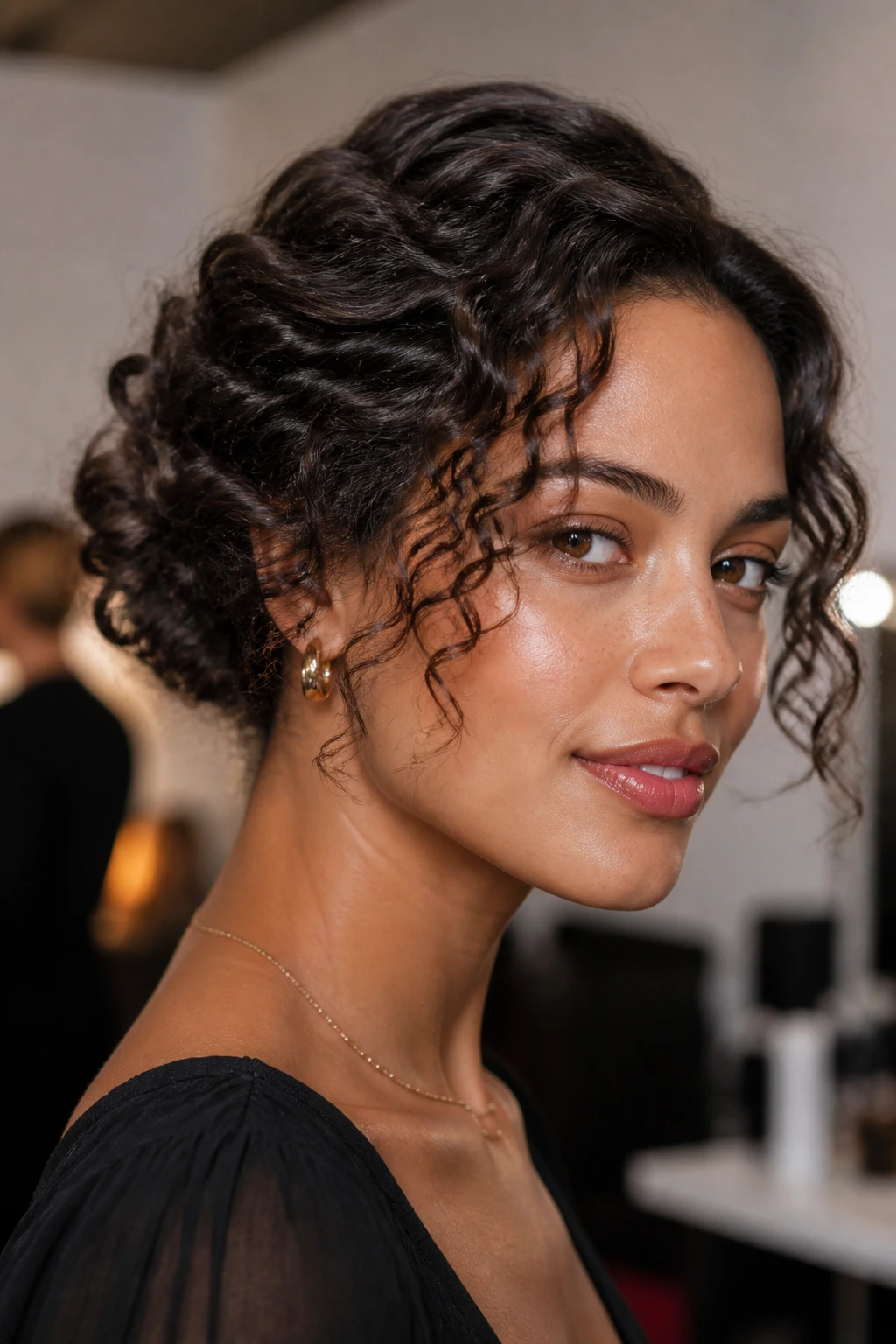
A pinned faux bob is the short-hair trick that lets you fake a softer, shorter silhouette without cutting anything. Tuck the nape pieces upward, roll the ends inward, and secure them with bobby pins so the curl mass sits in a neat curved shape.
This works especially well on hair that’s just long enough to touch the neck or skim the shoulders. The front stays loose or gets tucked behind one ear, while the back gets folded under. The result reads like a bob with a little extra polish, especially if you leave a few face-framing pieces out.
Use more pins than you think you need, but place them low and hidden. A single pin in the wrong spot will slip. Two or three placed under the curve usually hold better and show less.
It’s a smart choice for events, photos, or any day you want the cut to look deliberate rather than in-between.
24. Twist-and-Curl Mix
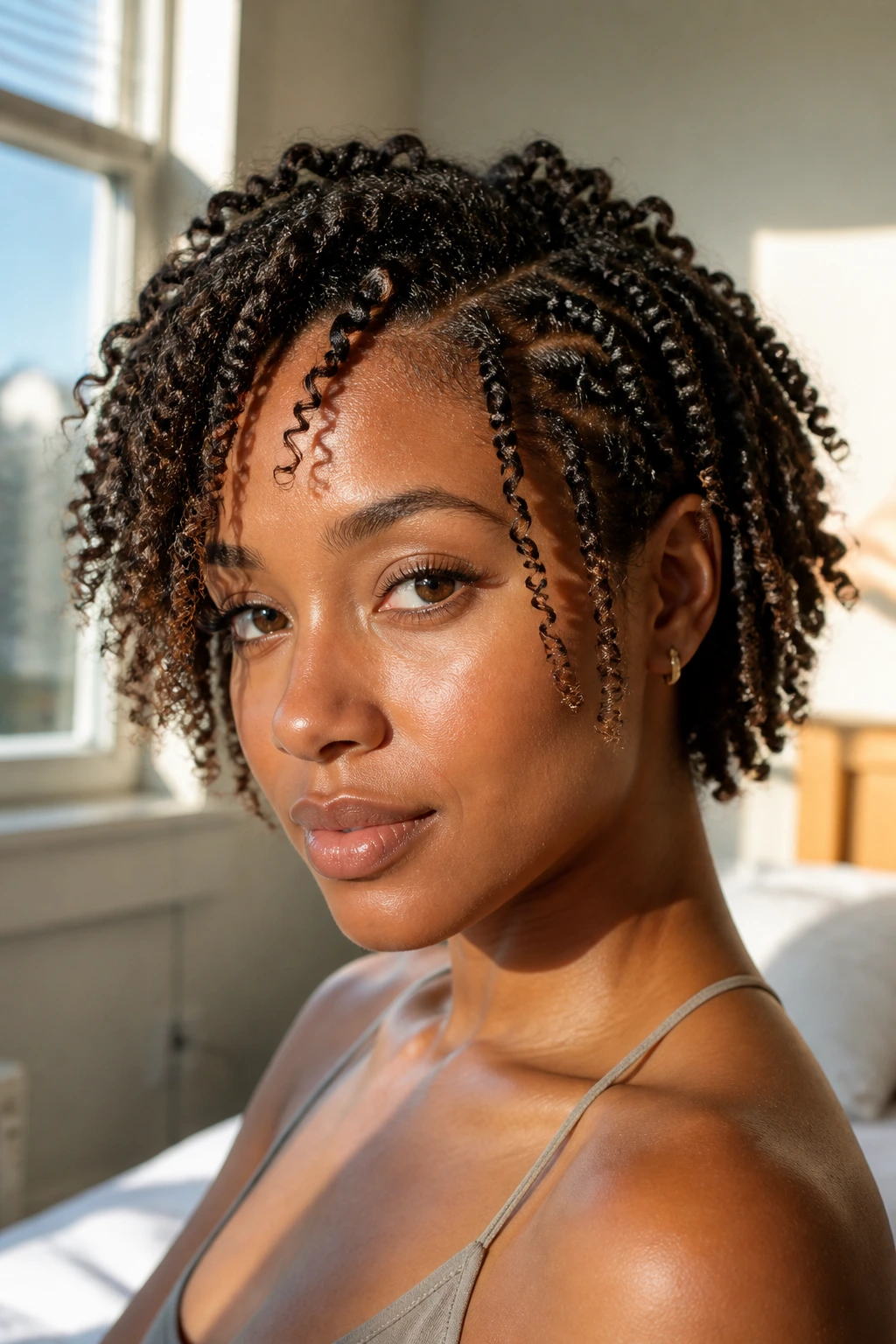
When your curls are uneven or your length varies from front to back, a twist-and-curl mix can save the whole style. Twist the larger sections for control, then coil the ends of the shorter pieces so the finish looks consistent.
This method is especially useful for mixed textures. Some parts of the head need more tension. Others just need a little coaxing. By mixing twists and coils, you stop pretending the whole head wants the same treatment. It usually doesn’t.
- Use on: sections that differ in length or curl pattern.
- Best tool: a rattail comb for neat sectioning and a small amount of gel for the ends.
- Drying rule: let every section dry all the way before separating, or the texture gets fuzzy fast.
The style looks a little more handmade than a uniform set, and that is why it works. It feels honest, not forced.
Why Short Curly Hair Needs a Different Styling Rhythm
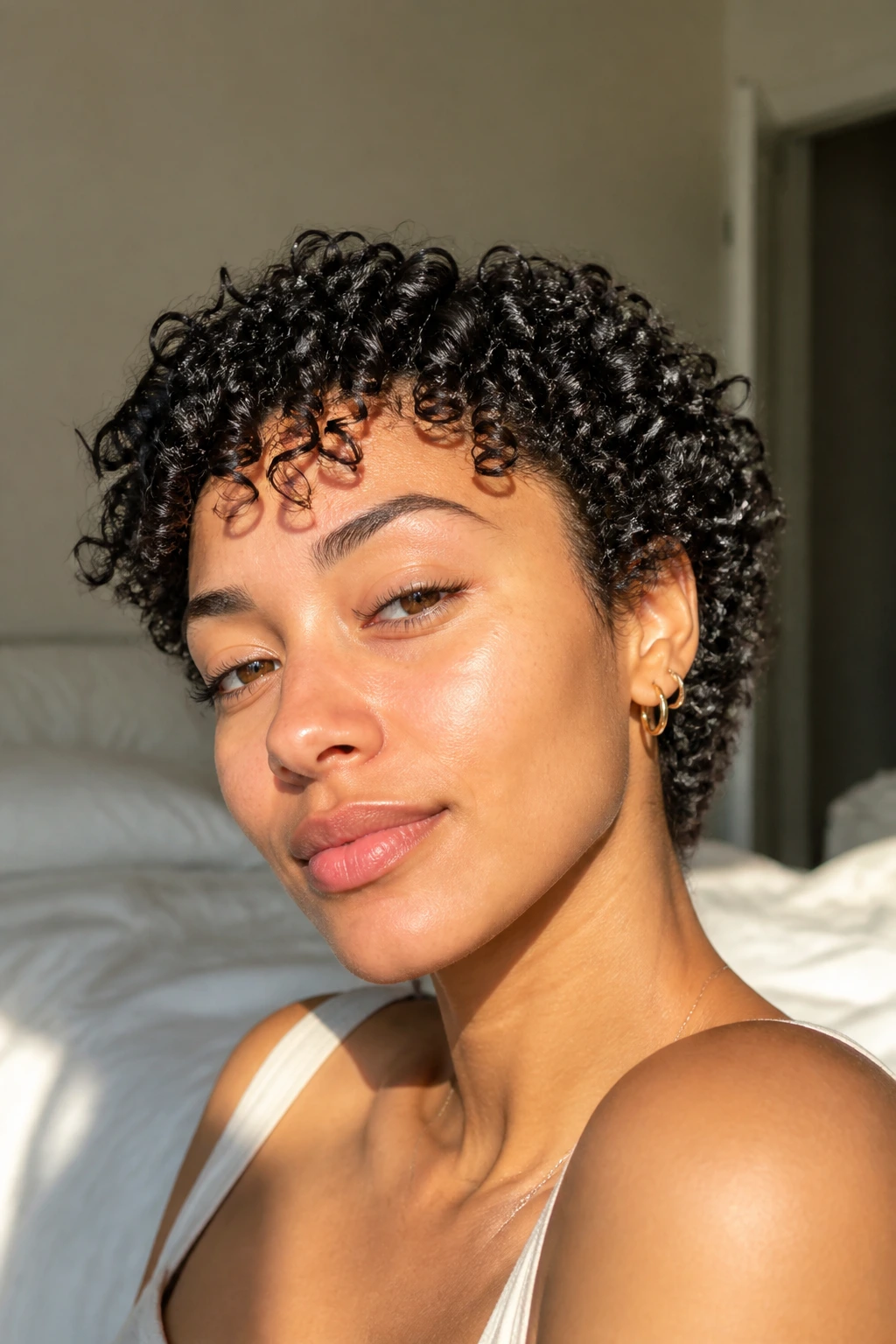
Short curls do not behave like long curls with less hair. They behave like a different problem entirely. The curl spring is stronger, the shape changes faster, and there’s less length to weigh down the sides when they get wide.
That means product choice matters more than people expect. A heavy butter can be great on coarse curls, but on finer short hair it can erase the lift at the crown by noon. A light mousse might look too thin on day one, then win the style fight after the hair settles. You’re not looking for one magic product. You’re looking for the right amount of hold for the amount of hair on your head.
Shrinkage is part of the design
Short curly hair shrinks more obviously because there isn’t much length to disguise the bend. That’s why curl patterns, fringe length, and bobby-pin placement all change the outcome more than they would on long hair.
The nape needs special attention
The back of the neck frizzes first. Always. It rubs against collars, scarves, pillowcases, and the back of chairs. If the nape is tidy, the style looks fresher even when the rest of the curls have loosened a little.
Essential Tools for These Styles
-
Spray bottle: Useful for re-dampening the crown or front without soaking the whole head.
-
Leave-in conditioner: Gives short curls slip so they separate cleanly and don’t snag during sectioning.
-
Curl cream: Best for coarse or dry hair that needs softness under a stronger hold product.
-
Mousse or foam: Great for fine or low-density curls that need lift without weight.
-
Gel with real hold: Helps the wash-and-go, slick look, frohawk, and side part stay put longer.
-
Rat-tail comb: Makes clean parts and neat sections without tearing through curls.
-
Wide-tooth comb: Good for detangling in the shower or distributing product gently.
-
Duckbill clips: Handy for pin-curl rolls, set sections, and holding roots while drying.
-
Bobby pins and U-pins: Better than you think for short hair, especially when the style needs hidden support.
-
Diffuser: Helps set curls on low heat without blasting the cut apart.
-
Pick: Lifts roots on tapered cuts, rounded fro shapes, and puff styles.
-
Satin bonnet or scarf: Keeps the crown from flattening and cuts down on friction overnight.
-
Edge brush: Useful if you smooth the hairline, though it should not be the star of the show.
Smart Product and Cut Choices for Curly Hairstyles for Women With Short Hair

Short curls usually need less product than long curls, but they often need better placement. Put the hold where the shape matters most: the hairline, the crown, the side part, or the center ridge of a frohawk. Dumping product everywhere turns a clean style into a sticky one.
For fine hair, mousse and light gels usually work better than heavy creams. Fine strands collapse under weight, and then the whole style loses the lift that short hair needs. For coarser or drier hair, a cream under gel often gives a better finish because the cream keeps the hair from feeling straw-like once the gel sets.
The cut matters too. Tapered shapes need less manipulation because the outline already exists. Bobs need thoughtful parts and regular trims so the ends don’t flare outward. Layered cuts need product that keeps the curls separated just enough to show the shape, not so much that the layers collapse into one fuzzy mass.
A small styling note I wish more people respected: more moisture is not always better. If the hair feels coated before it has even started to set, you probably used too much. Short curls show buildup fast.
How to Get the Most Out of These Styles on a Real Morning
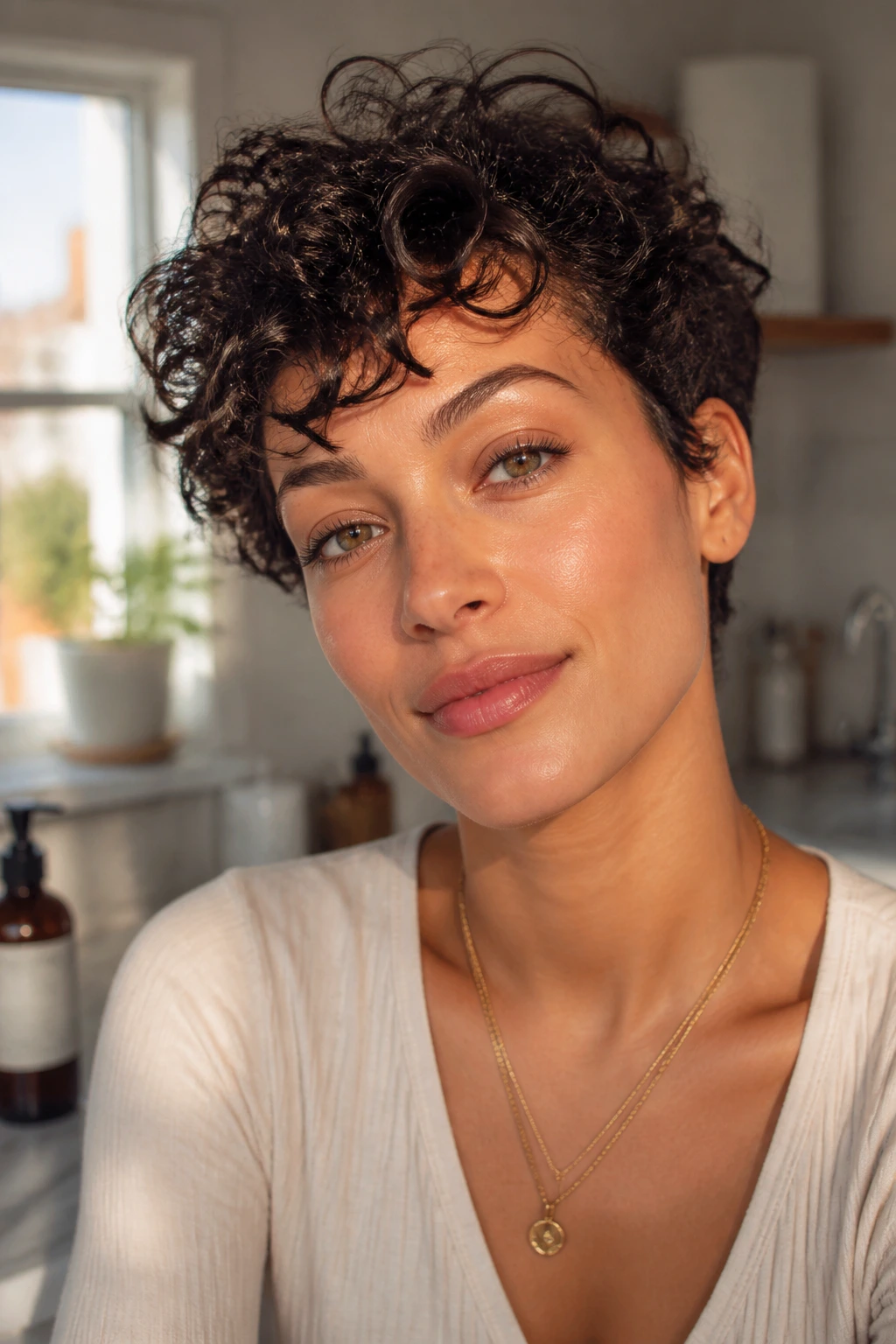
Start at the crown.
That’s where short curls either look lifted or tired. If the top is flat, the whole style feels unfinished, even when the sides are perfect.
Use smaller sections than you think you need.
Finger coils, twist-outs, and Bantu knots all hold their shape better when the sections are smaller. Bigger sections save time, but they usually cost you definition.
Let the style dry before you touch it.
This sounds boring because it is boring. It also matters. If you fluff, separate, or pin too early, the curl pattern loosens before the set is finished.
Keep a tiny rescue kit nearby.
A few bobby pins, a mini spray bottle, and one clip can save a style that starts to slide halfway through the day. Short hair looks deliberate when it’s controlled. It looks accidental when one side has escaped.
Treat the nape like the first warning light.
If the back starts frizzing, refresh there first. That area gives the whole style away.
Common Mistakes That Flatten Short Curls
Overloading the hair with cream.
The symptom is limp roots and a greasy-looking finish at the edges. Use smaller amounts, especially on fine hair, and save richer products for coarser curls that actually need the weight.
Breaking the set too soon.
If you separate coils, twist-outs, or knot-outs before they’re dry, the curl pattern loosens and puffs out. Wait until the hair is fully dry, then separate gently with oiled fingers.
Pulling the hair too tight at the hairline.
This shows up as little dents, soreness, or an unhappy flat line across the forehead. A short style should sit firmly, not feel like it’s stretching the scalp.
Ignoring shrinkage when choosing bangs or parts.
What looks like a safe length when wet can land much shorter once dry. Leave a little extra room, especially around curly fringe and twisted bangs.
Sleeping on cotton and hoping for the best.
Cotton roughs up the cuticle fast. Satin or silk reduces friction, and that matters twice as much on short curls because every frizzy edge shows.
Picking before the hair has settled.
Root lift is useful. Chasing volume too early is not. Let the shape dry first, then lift where needed.
Variations and Adaptations to Try
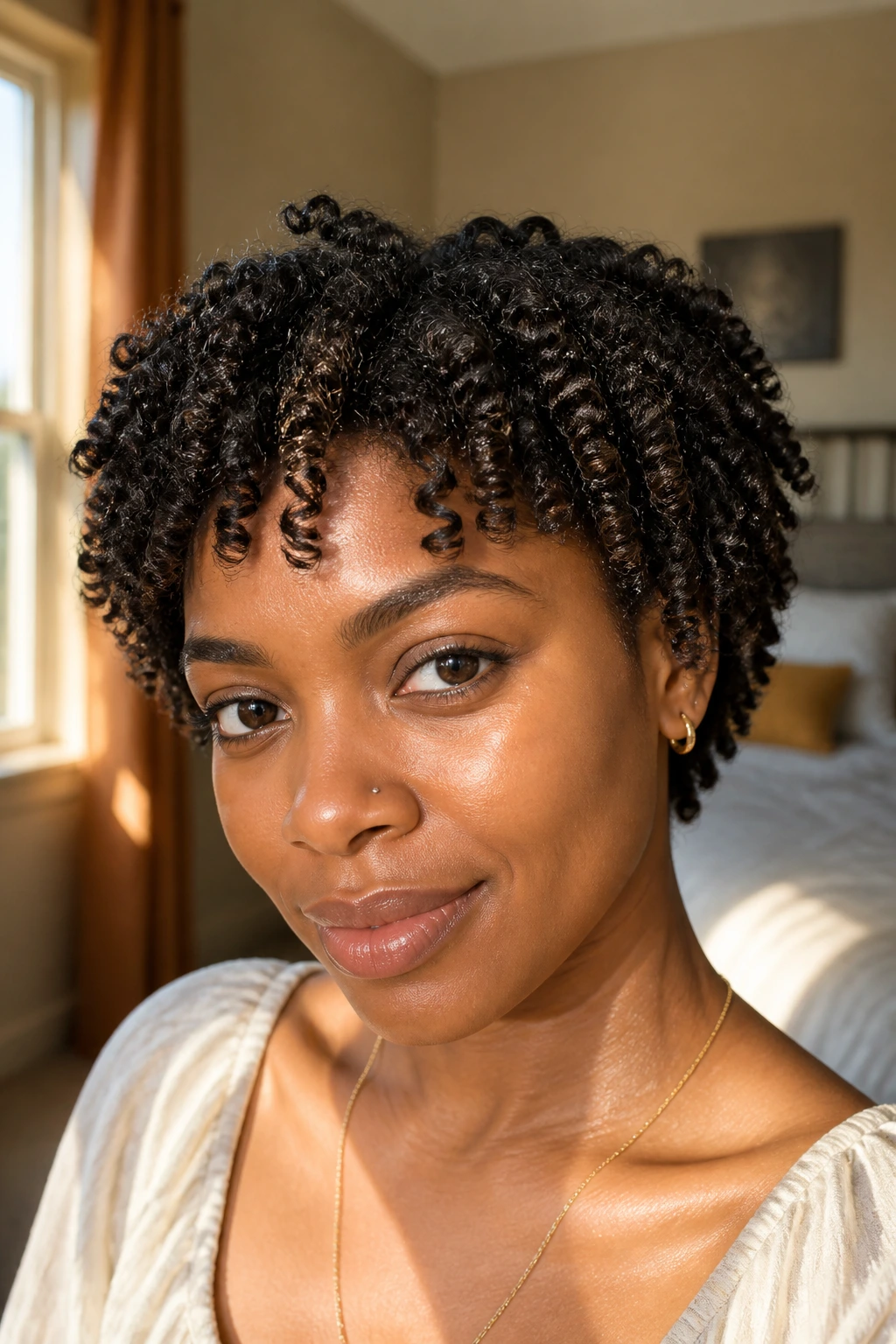
Soft-Hold Fine Curl Version
Use mousse instead of heavy cream, and keep sections small so the curls stay light and springy. This version works for fine or low-density hair that loses shape when coated too heavily. It’s especially good for wash-and-go crops, side parts, and half-up clips.
Coily Volume Version
Choose finger coils, twist-outs, or a rounded fro halo and keep the roots lifted after drying. Coarse, dense hair usually likes a stronger hold product under a little cream. The result feels full without turning into a wide puff.
Humidity-Defense Version
Use gel as the outer layer, dry the style completely, and keep hands off it until the cast is set. This helps short curls resist swelling at the sides. It’s the version I’d reach for when the air feels damp before you’ve even left the house.
Low-Tension Protective Version
Flat twists, scarf bands, headband tucks, and pinned faux bobs all fit here. They keep the edges from getting tugged all day and work well when your scalp wants a break from tight styles. This is the calmest-looking option in the bunch.
Event-Ready Shine Version
Pick the wet-look slick curl, deep side sweep, or slick-sides mohawk puff. Add shine only where the hair needs it, not all over the place. A clean finish reads better than too much gloss.
Keeping Curly Hairstyles for Women With Short Hair Fresh Between Washes
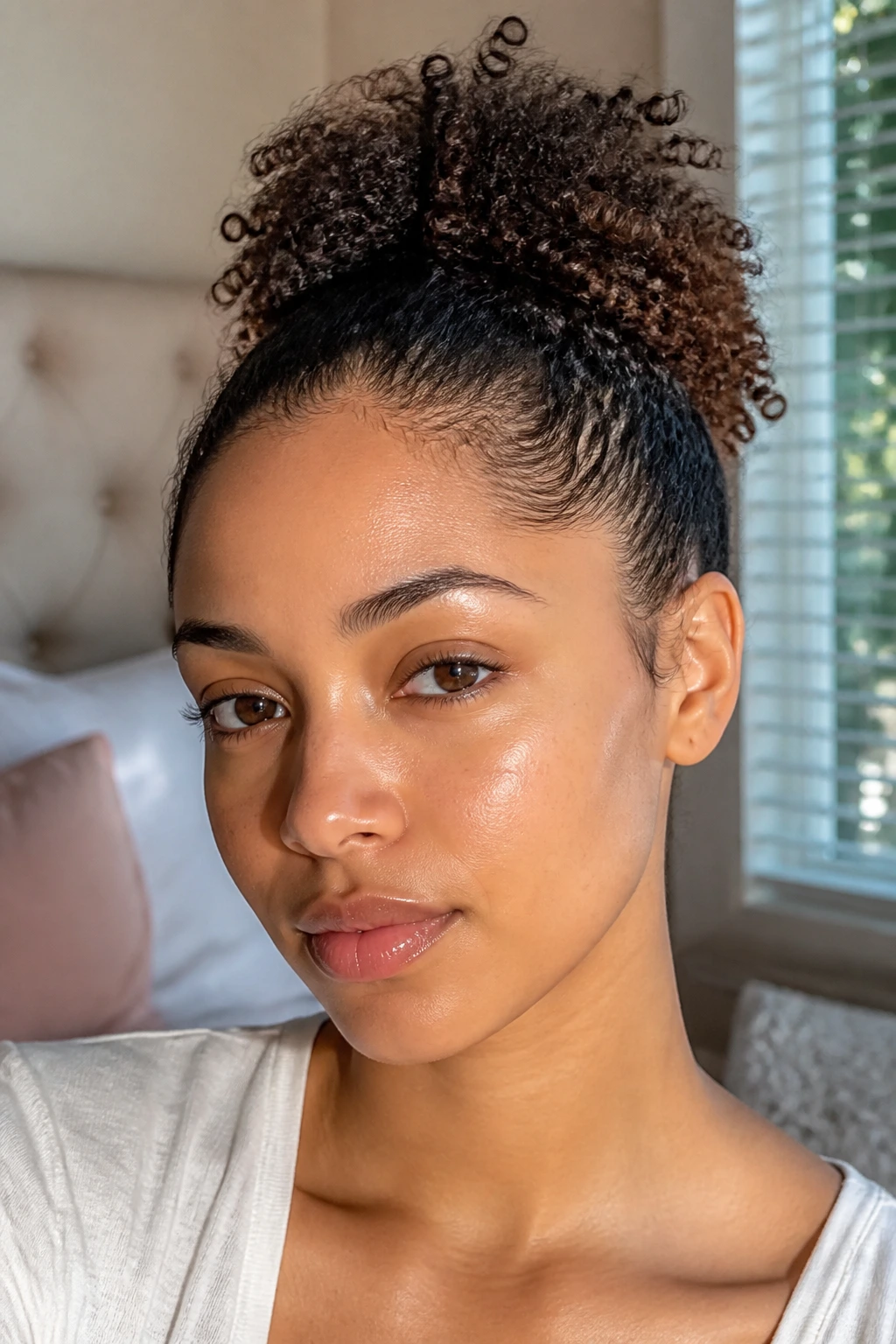
Most short curly styles behave best for about one to three days before they need a real refresh. Twist-outs and Bantu knot-outs can sometimes hold for three to five days if you protect them at night and resist the urge to keep separating them. Wash-and-go crops usually need a little more daily attention at the crown and nape.
At night, satin matters. If the hair is long enough to pineapple, do that loosely. If it’s too short to gather neatly, use a satin bonnet or pillowcase and keep the curls from rubbing against cotton. For styles with a side part or a slicked edge, a satin scarf can hold the front shape better than a bonnet alone.
For day-two refreshes, mist the frizzy areas lightly with water and smooth in a pea-size amount of leave-in or gel only where the shape is starting to blur. Do not soak the head. That usually wakes the entire curl pattern up and sends it in five directions. If the roots need a lift, use a pick only after the hair has been re-dried for a few minutes.
If product buildup starts to show as dullness or a coated feel, cleanse the scalp within about five to seven days. Short hair can look tired quickly when the roots are overloaded.
Frequently Asked Questions
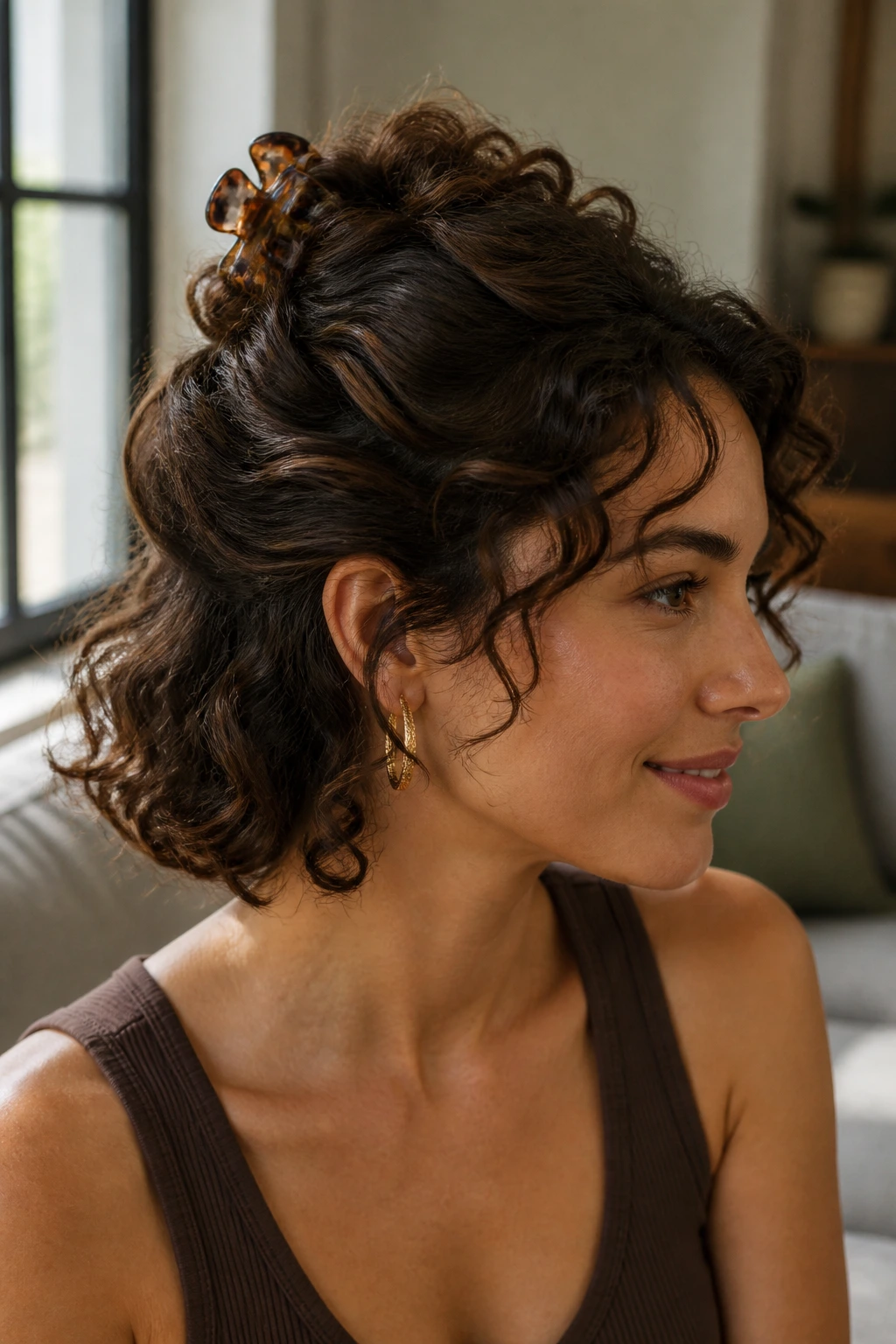
Which short curly style is easiest if I’m rushing out the door?
The side tuck with a statement clip, half-up claw clip, and headband tuck are the fastest. They handle uneven curls well and only need a few pins or one accessory to look finished.
How do I keep short curls from puffing up by lunchtime?
Use a stronger hold product near the roots, let the style dry fully, and avoid touching it once the cast sets. Puff usually starts where the hairline and crown were under-supported.
Can I do a twist-out on very short hair?
Yes, if the sections are small enough to hold their shape. On very short hair, the twist-out may look more textured than stretched, which can still be a good result if you want softness instead of length.
What’s better for fine short curls: cream or mousse?
Mousse usually wins. Cream can be too heavy and pull the root flat, while mousse gives lift and some hold without coating the strands.
How often should short curly hair be trimmed?
Many short curly cuts look tidier with a trim every 6 to 8 weeks, especially if the shape depends on a taper, bob line, or fringe. If the outline starts to blur before then, the cut is talking to you.
Can I wear a frohawk without using a lot of gel?
Yes, if your hair has enough natural texture to hold the sides down with pins or a light smoothing cream. The less product-heavy version usually looks softer and is easier on the hairline.
What if one side of my curls behaves differently from the other?
Style the two sides differently on purpose. A deep side part, side sweep, or asymmetrical clip can make uneven curl patterns look like design choices instead of problems.
How do I make a short curly style look cleaner for an event?
Choose a style with a strong outline: wet-look slick curls, frohawk, polished side part, or pinned faux bob. Add a clip, scarf, or shiny pin, then smooth the hairline and nape with a tiny amount of gel.
Soft Shapes, Strong Curls
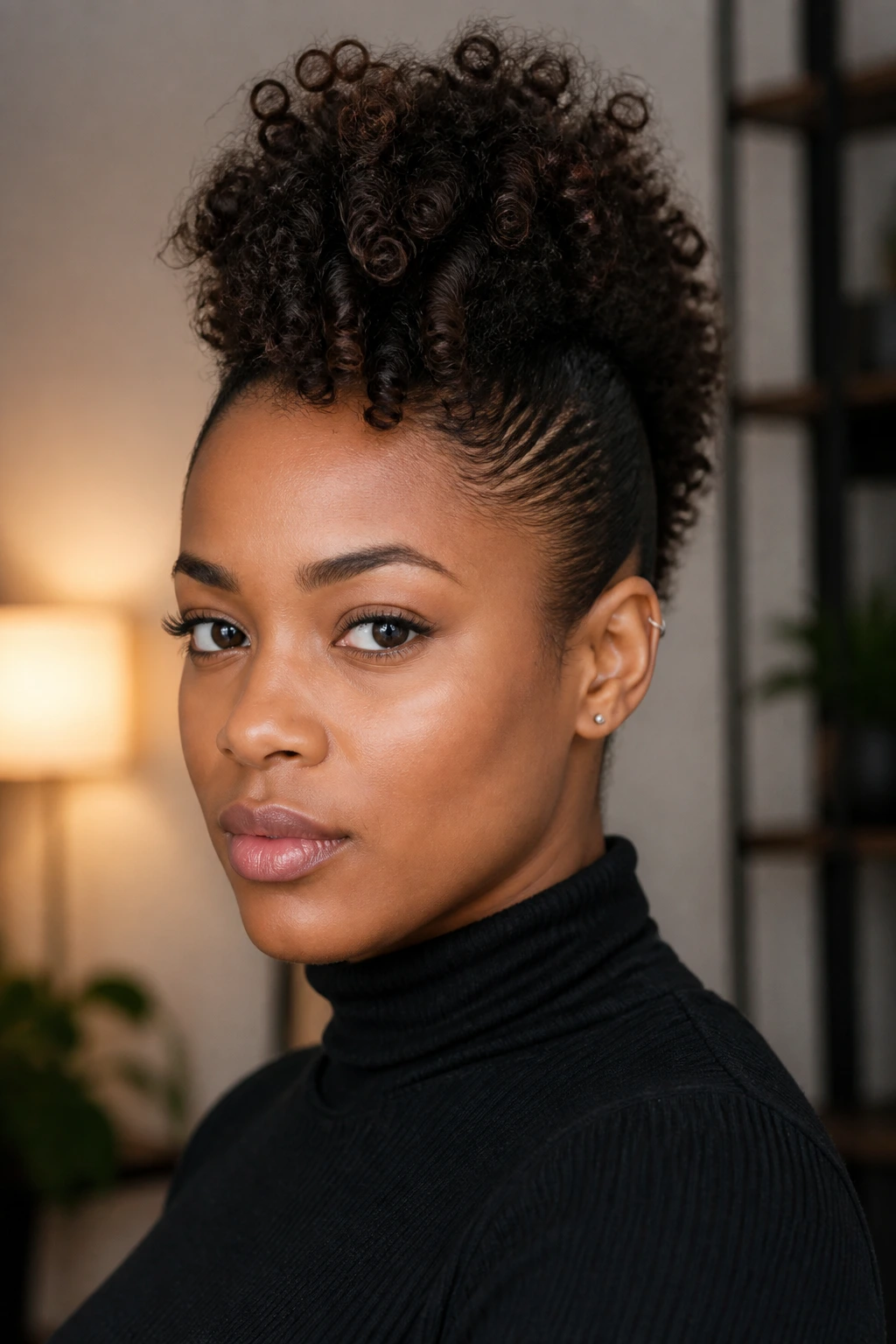
Short curly hair gets better when the style respects what the curl actually does, not what a photo promised. The strongest looks in this mix are the ones that give you a clean silhouette, enough hold, and a way to survive sleep without falling apart.
Pick one style and wear it long enough to learn how your curls respond. That’s where the real payoff is. Once you know whether your hair likes lift, tuck, shine, or separation, the rest gets easier — and a lot more fun to wear.
