



Curly hairstyles for long hair over 50 look best when they stop fighting the curl pattern and start working with it. Long curls have weight, memory, and a habit of doing exactly what they want unless the shape gives them a job. When the cut is blunt in the wrong place, you get a shelf at the ends, a puff at the sides, and roots that seem to give up halfway through the day.
That does not mean long curly hair gets less interesting with age. It means shape matters more. A side part can wake up the crown. A face-framing layer can keep curls from swallowing your cheekbones. A low pin or a loose twist can turn “I just needed this out of my face” into something that looks intentional.
The sweet spot is not about chasing youth. It’s about finding styles that respect the curl, the length, and the reality of a regular morning. Some of these looks are polished enough for dinner. Some are the kind you can throw together before errands and still feel put-together. A few work because they’re forgiving, which is its own kind of glamour.
Why These Styles Earn Their Keep
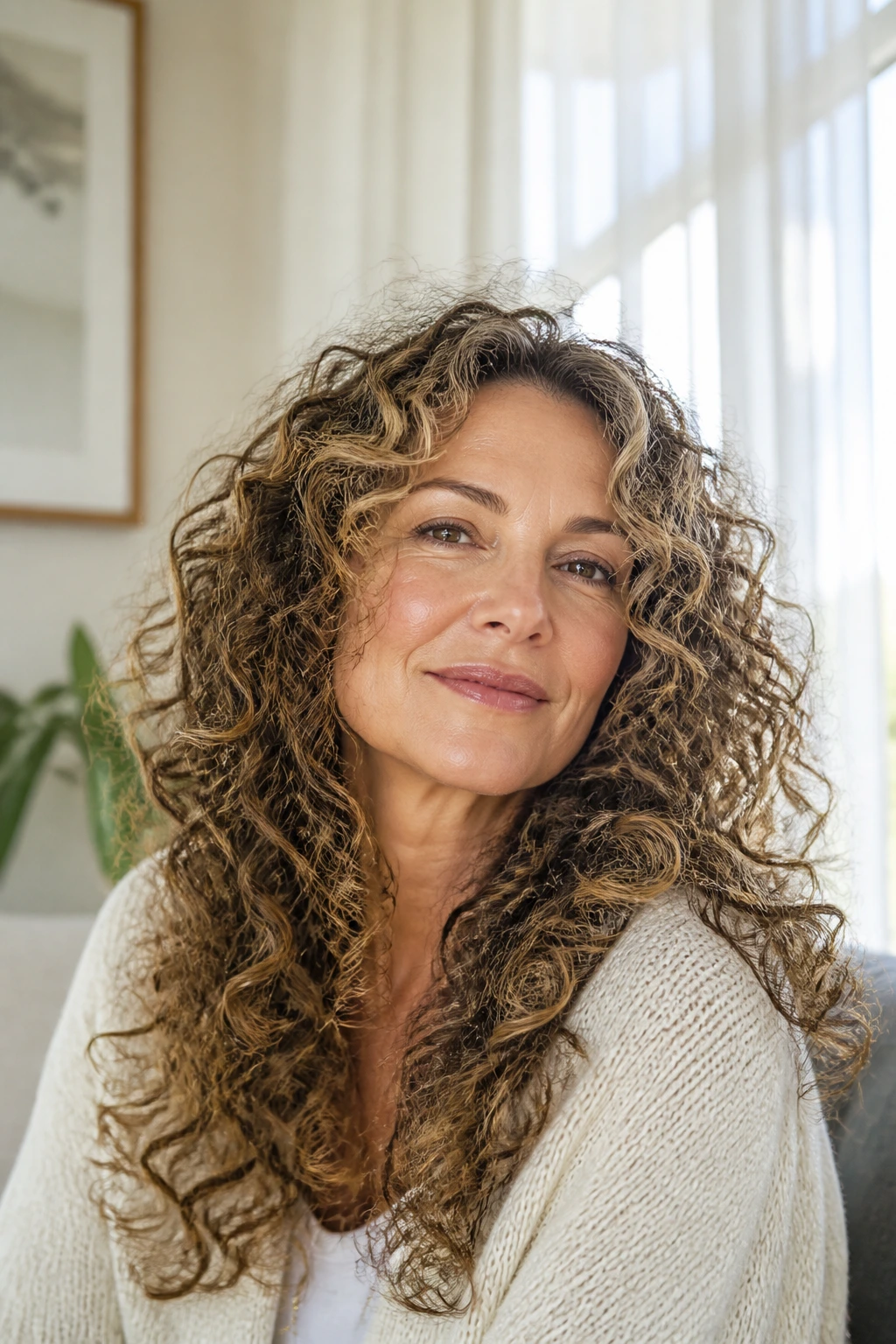
- Shape without losing length: Long curls can go heavy fast, so the best styles trim the visual bulk while keeping the swing that makes the length worth keeping.
- Face framing where it counts: Pieces around the cheekbone, temple, and jawline soften the outline without making the whole style look fussy.
- Less morning wrestling: Several of these looks start from second-day curls, slightly stretched bends, or a quick refresh, which means fewer battles with frizz and less time at the mirror.
- Good behavior in gray or silver hair: Coarser silver strands often need a little more structure and shine control, and these styles handle that without flattening everything into place.
- Room for glasses, earrings, and real life: A few pins or a side sweep can keep curls from sitting on your frames or tangling with hoops and scarves.
- Heat is optional, not mandatory: Most of these styles work with air-drying, diffusing, or a low-heat touch-up, which is kinder to long hair that has already lived a full life.
1. Long Layers with a Soft Side Part
Long layers are the quiet workhorse of curly hairstyles for long hair over 50. They let the curl sit in a loose cascade instead of hanging like one heavy sheet, and a soft side part gives the crown a little lift without screaming for attention. If your curls tend to collapse at the top and bloom at the bottom, this is the first shape I’d reach for.
Where the layers should fall
The first layer usually works best somewhere between the chin and collarbone, depending on density. Thicker curls can handle shorter internal layers; finer curls usually look better when the layers stay long and gradual. Ask for the cut to follow your curl pattern, not a straight line drawn while your hair is wet and stretched.
A dry cut is worth asking about if your stylist knows curls. Wet curls lie. They stretch, shrink, and spring in ways that fool almost everyone except the person who has cut enough of them to recognize the trick.
This style is also kind to gray strands because it keeps the perimeter clean while letting the curls do the texture work. A lightweight leave-in and a medium-hold gel are usually enough. Air-dry halfway, then finish with a diffuser on low speed if you want the roots to stand up a bit more.
2. Curly Shag with Face-Framing Pieces
A curly shag is for the woman who doesn’t want her hair to behave too much. It has movement, edge, and that slightly undone look that makes long curls feel lively instead of heavy. The face-framing pieces matter here. They stop the style from turning into a triangle, which is the enemy of every thick curl pattern I’ve ever met.
The best version keeps the shortest layers around the cheekbones and temples, then lets the back stay longer. That gives you lift where the eye lands first and length where it still feels dramatic. If your curls are dense, the shag pulls air through the shape. If your curls are finer, it adds the illusion of more volume without teasing anything to death.
This cut works especially well when you want the hair to look good on its own, not only after a full styling session. Scrunch in cream, clip the crown for ten minutes while it dries, and let the layers do most of the talking. It’s not a neat style. That’s the point.
3. Half-Up Crown Lift with Loose Tendrils
What do you do when your curls look good, but the top keeps falling flat by lunch? You lift the crown and leave the length alone. The half-up style is one of those old reliable moves that never really goes out of circulation because it solves a real problem: it gets hair off the face without making the whole head look pinned down.
Why the crown matters
The top section should be gathered loosely, not yanked tight. A small claw clip or two bobby pins usually does the job better than a thick elastic. Leave a few tendrils around the temples and ears so the style still feels like curls, not a helmet.
This is especially good if you wear glasses, because the loose pieces keep the frames from sitting awkwardly against a fully slicked-back head. It also works on day-two curls that have lost a little bounce but still have enough shape to be worth showing off. If the roots are a little sleepy, mist them lightly, clip the crown for five minutes, and let the lift set while you finish your makeup or coffee.
4. Low Wrapped Ponytail with Curly Ends
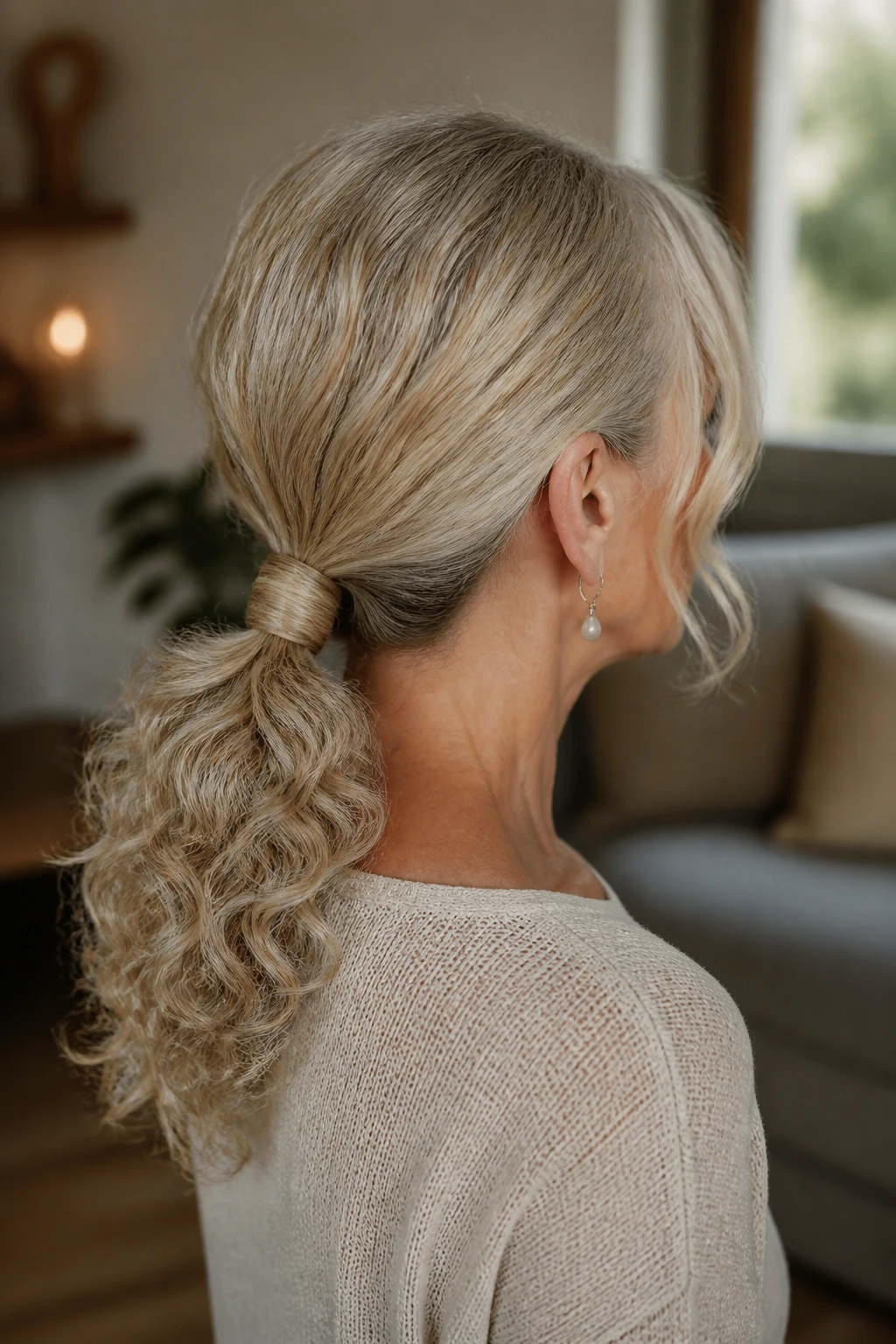
A low wrapped ponytail is the grown-up version of “I need this under control, but I still want hair.” It sits at the nape, stays elegant without trying too hard, and lets the curly tail do what curly tails do best: move around and catch the light. The wrap around the elastic is a small thing, but it changes the whole read of the style.
Keep the top smooth with a little leave-in or serum on the palms, then gather the hair at the nape and secure it with a strong elastic. Take a small curl or section from underneath, wrap it around the elastic, and pin the end underneath with a bobby pin. That one detail keeps the style from looking gym-class plain.
This is a good choice on humid days, on travel days, and on days when your curls are halfway cooperating. Leave one or two face-framing pieces out if your hairline feels too exposed. The ponytail should look relaxed and deliberate, not tight enough to pull the face upward.
5. Twist-Back Front Sections
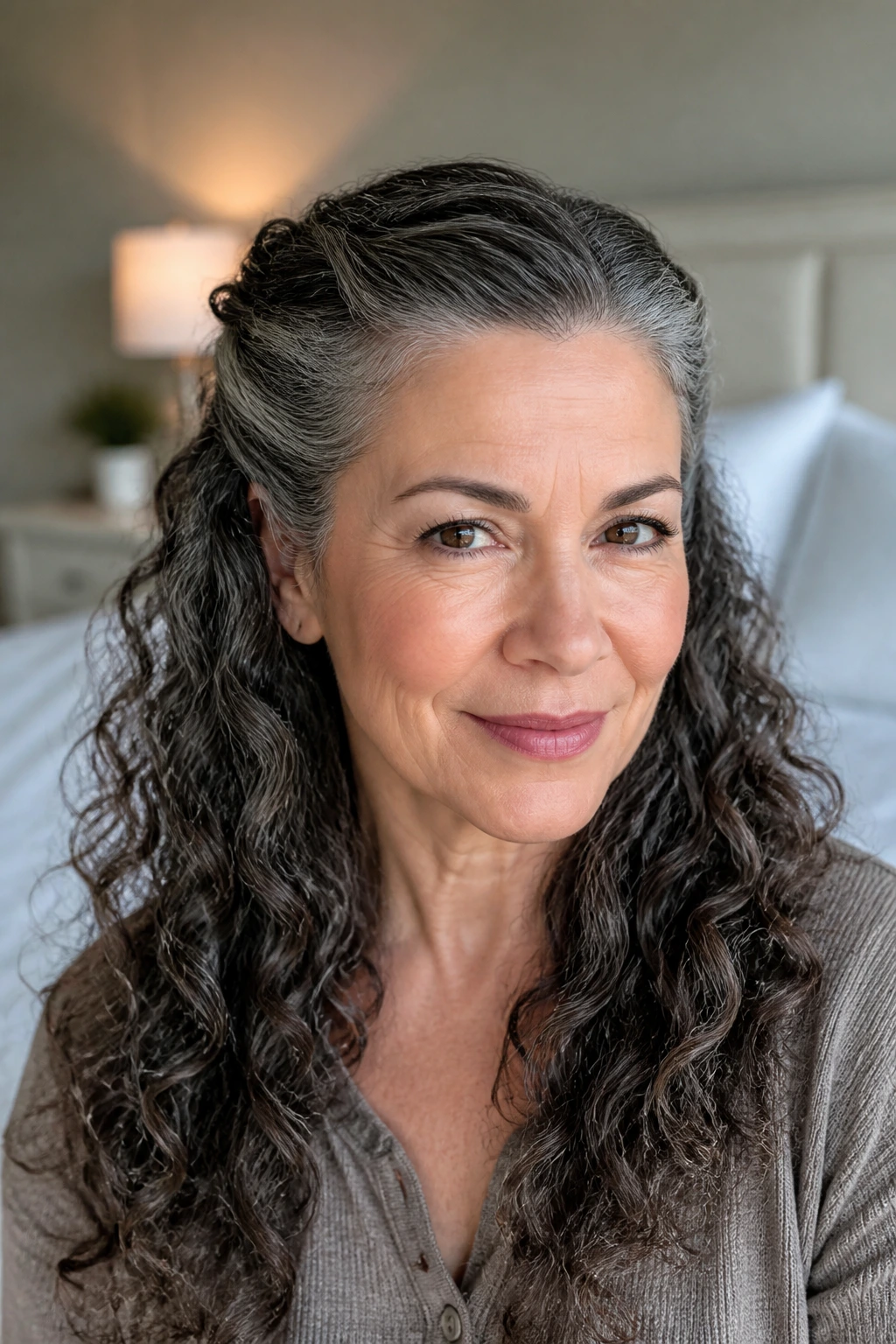
Twist-backs are my favorite “I don’t have time, but I do need to look human” move. Take a front section from each temple, twist it back toward the crown, and pin it where the twists meet or just behind the ears. The rest of the hair stays down, which keeps the style from feeling overdone.
The beauty of this one is that it controls the most annoying part of long curls — the front pieces that fall into your eyes, stick to lip balm, or frizz out around your glasses. You get the clean line around the face, but you don’t lose the texture at the back. That balance matters more than people admit.
If your curls are looser, make the twists a little flatter and pin them with two crossed bobby pins. If your curls are tighter, let the twists stay thicker so they don’t unravel by noon. A dab of styling cream on the fingertips before twisting helps the front hold together without looking crunchy.
6. Pineapple Bun for Long Curls
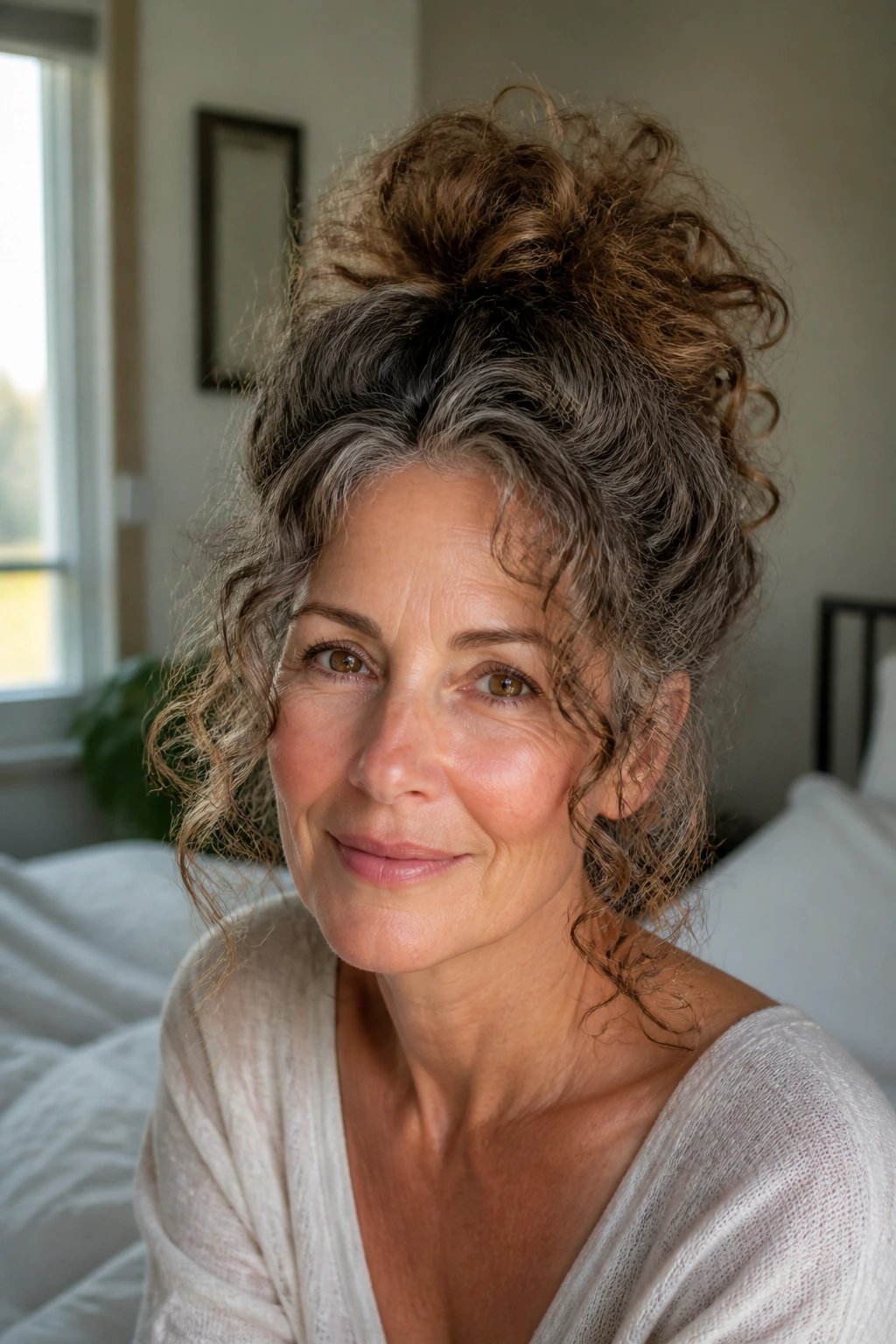
The pineapple bun is the style I think too many people dismiss as a “home only” option. That’s a mistake. Done loosely and placed high enough, it can be quick, flattering, and far less matronly than a tight topknot. The ends stay curly, the crown gets lift, and the face stays open.
Use a silk or satin scrunchie if you have one. Tilt your head forward, gather the hair high on the head, and let the curls fall freely before you secure them. Don’t smooth every bump out. The point is volume, not polish. The bun can be loose, even a little messy, as long as the base is secure.
This works especially well for long hair that gets flattened when worn down all day. It’s also a good overnight option if you sleep with your curls protected and want to wake up with less smashed curl at the back. If the bun feels too casual, add a pair of earrings and keep the front fringe or temple curls soft.
7. Side-Swept Hollywood Waves
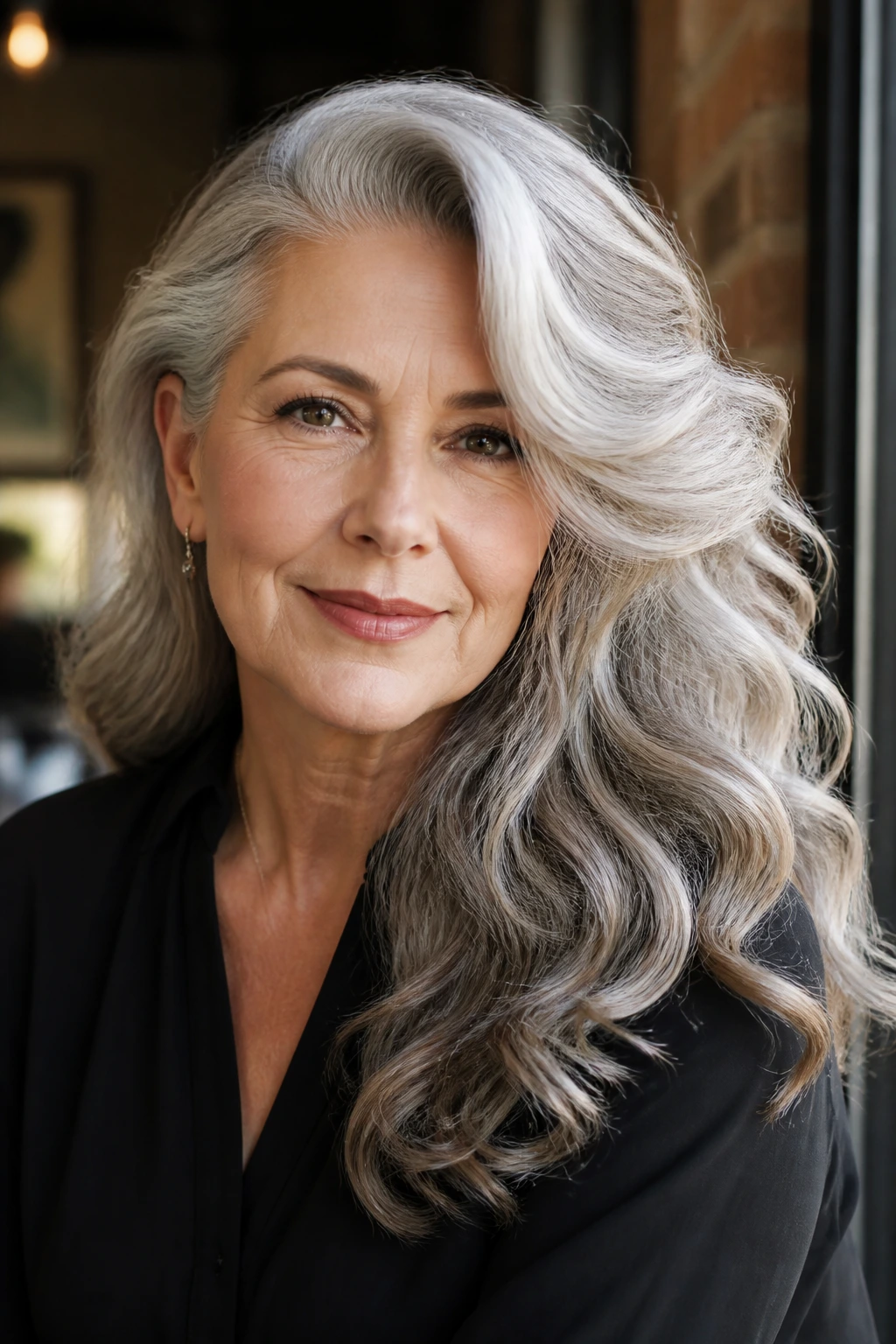
Side-swept waves turn long curls into a more sculpted shape without killing the texture. They’re useful when you want a dressier look but don’t want every strand locked into place. The side part opens one side of the face, and the larger wave pattern gives the length a smooth curve instead of a wild halo.
Setting the wave
Use a large-barrel curling iron or hot rollers only if your hair likes heat and can take it. Wrap sections in the same direction, let them cool completely, then brush or finger-comb them into a continuous wave. If your curl pattern already has bend, you may only need to reshape a few pieces around the front and leave the rest alone.
This style flatters silver hair in a particular way because shine shows up on the curved surfaces of the wave. It also helps if your curls are a little uneven from grow-out or previous layers. The shape itself creates order.
A light mist of flexible hairspray keeps the side sweep from folding in on itself. Heavy spray is too stiff here. You want movement when you turn your head, not a shell.
8. Braided Halo with Loose Length
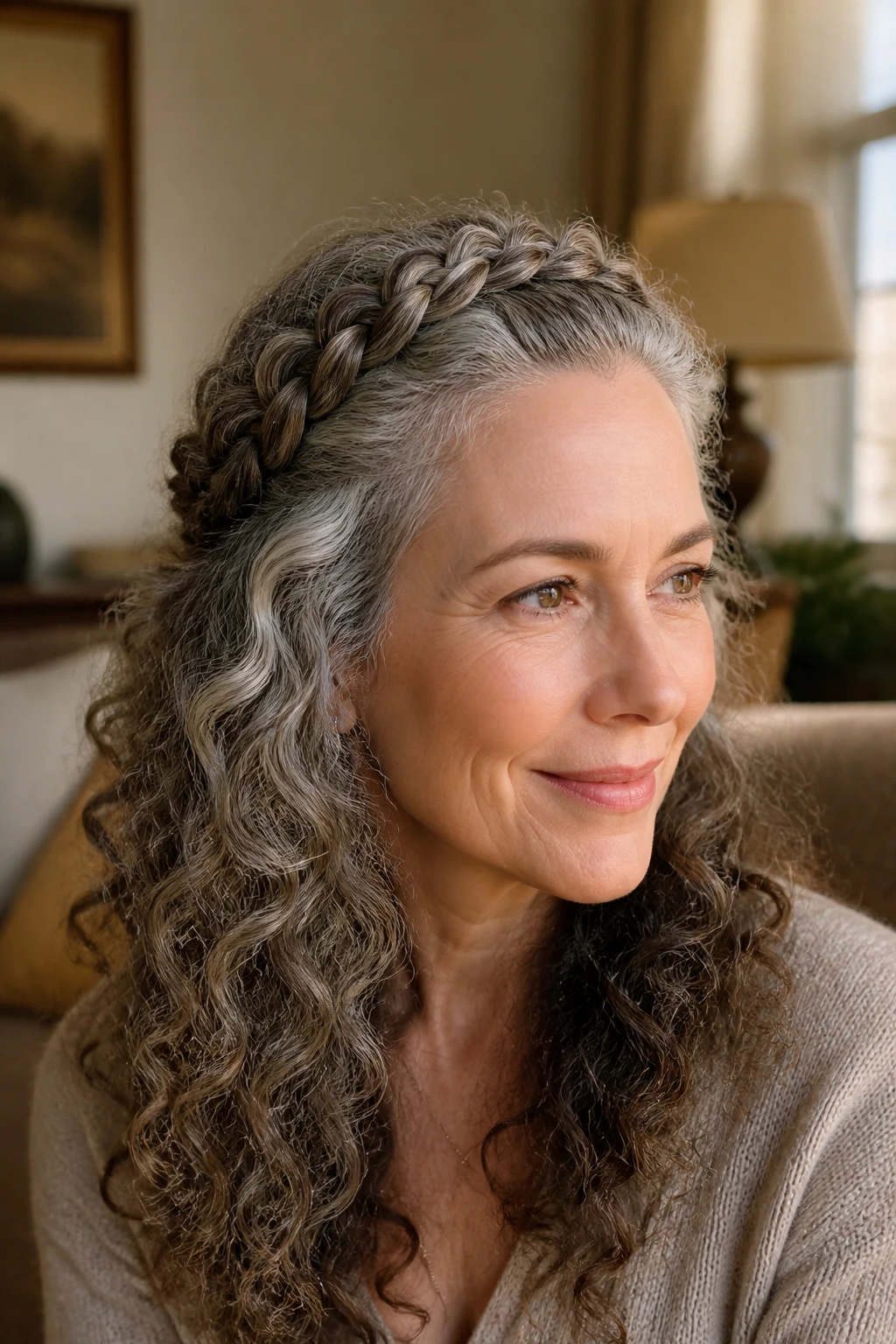
A braided halo feels polished, but it’s not fussy if you keep the braid soft. Start the braid near the hairline, wrap it across the crown or around the side, and leave the rest of the curls down or loosely tucked. The effect is cleaner around the face while the length still shows.
This is a smart style for thick curls because it controls the outer edge of the hair, where frizz usually lives, while letting the interior stay free. It also works on days when your roots are a little oily and your ends still look good. That combination happens more often than anyone admits.
If you braid too tight, the whole thing starts to look severe. Keep a little give in the braid and tug it gently once it’s in place so it doesn’t sit like a cord. A braid that’s too neat can make long curly hair look stiffer than it is.
9. High Curly Ponytail with a Wrapped Base
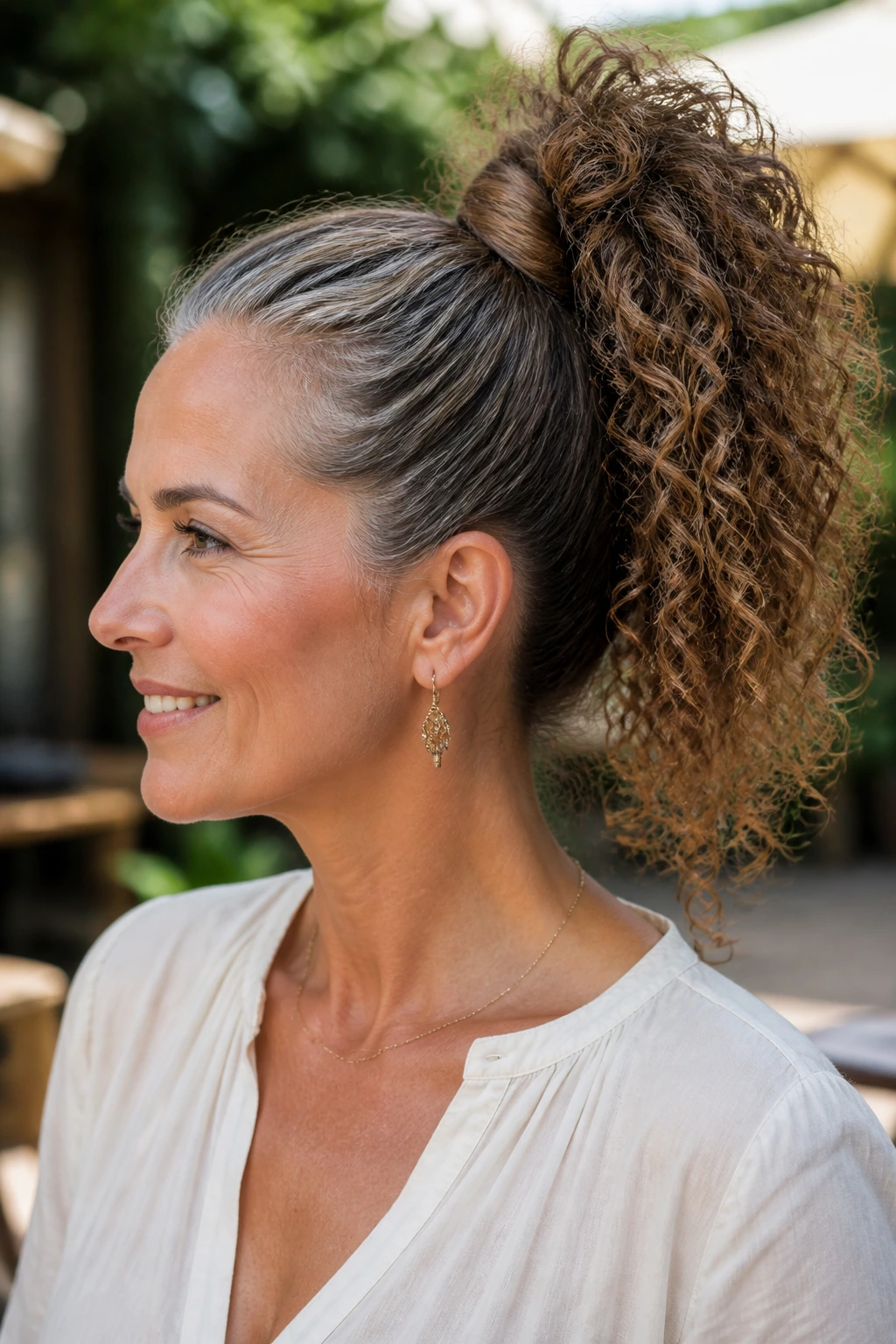
A high curly ponytail gives long curls a completely different mood. The lift at the crown makes the face look more open, the wrapped base hides the elastic, and the tail swings with enough motion to keep the style from feeling basic. It’s one of the few pulled-up looks that can still read playful without looking young-for-young’s-sake.
Use a brush only on the section you want smooth. Leave the ponytail itself curly and full. If you brush the whole head, you’ll stretch out the curl and lose the shape that made the style worth doing in the first place.
This is best when your hair has decent density at the crown. Fine hair can do it too, but you may want a little root powder or a quick lift with a diffuser first. A curled ponytail looks best when it sits high enough to clear the neck and show the length in one clean line.
10. U-Shaped Length with Full-Length Bounce
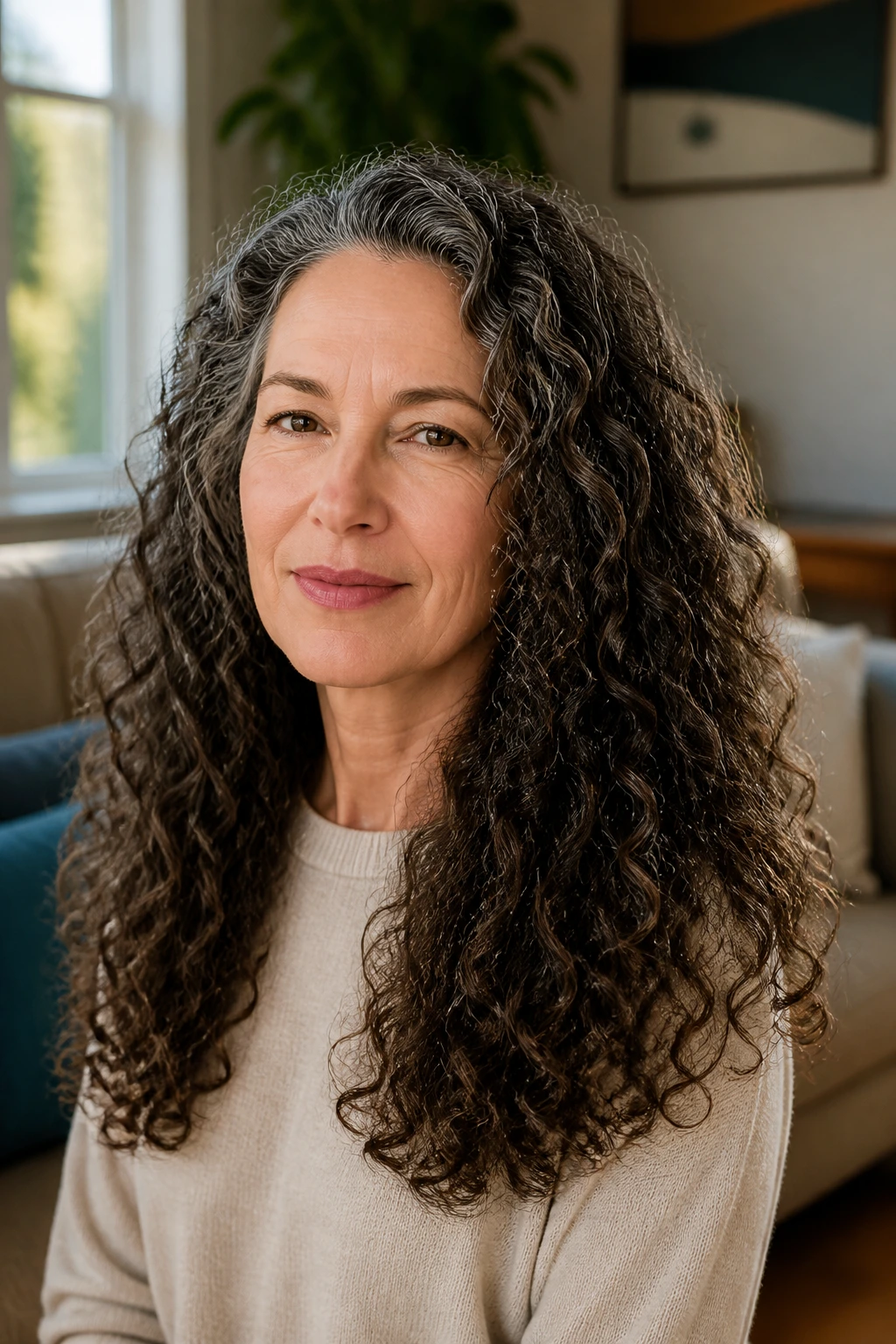
Why do some long curly cuts look flat even when the curls are good? Often, the perimeter is the problem. A U-shaped outline keeps the ends from looking chopped straight across, which helps long curls fall in a softer arc down the back. It is one of the easiest ways to keep length while avoiding that blunt curtain effect.
The longest point sits in the center back, with the sides gradually drifting shorter toward the front. That lets the front pieces skim the jaw or collarbone instead of hanging in one heavy line. The cut matters, but so does the styling: use enough product to define the curl clumps, then leave them alone while they dry.
This shape works well if you like wearing your hair down most of the time. It gives movement from every angle, not just at the face. Ask for the outline to be rounded rather than boxy, because boxy ends can look bulky once the curls shrink.
11. Deep Middle Part with Sculpted Ringlets
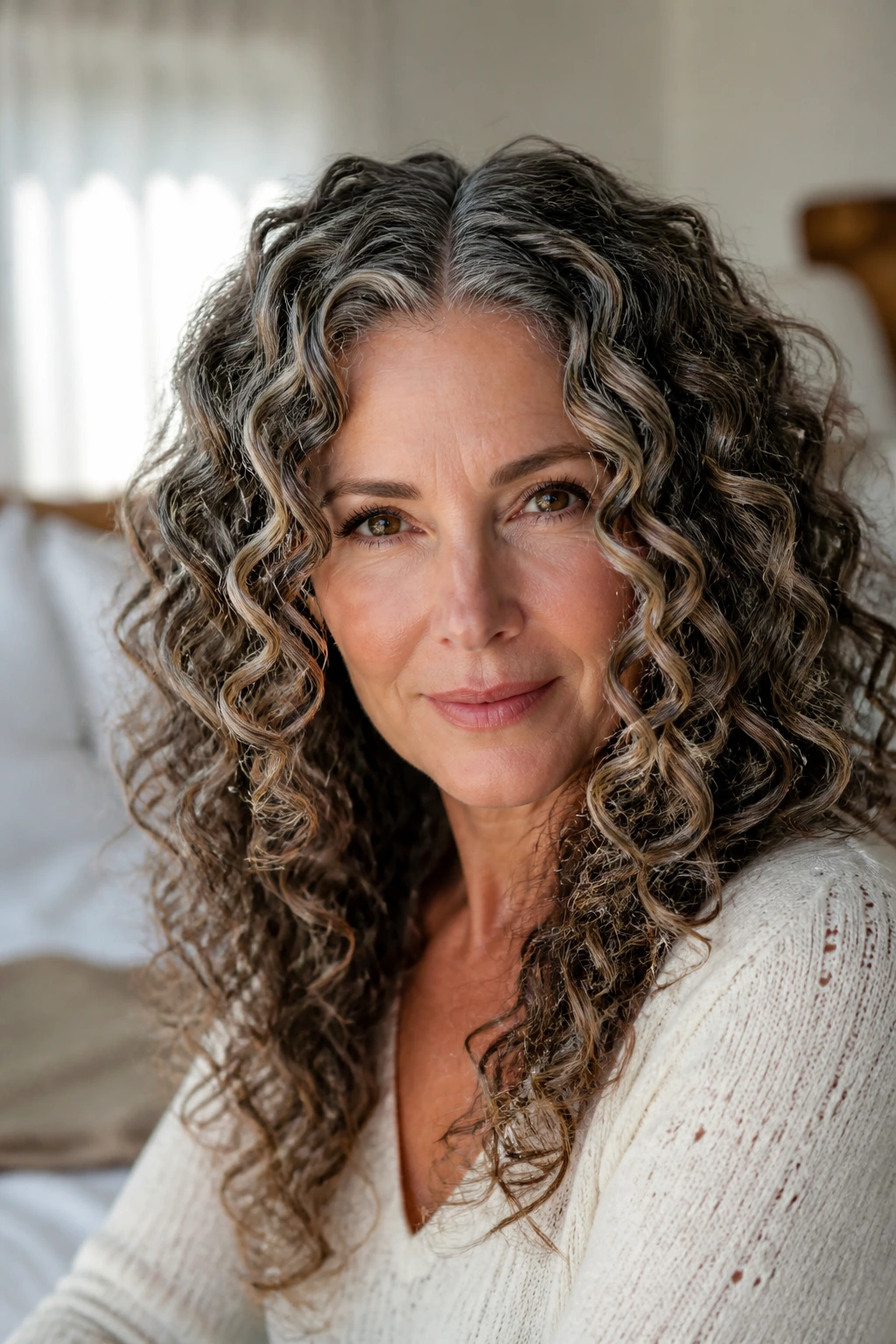
A deep middle part gives long curls a clean center line and a calmer outline. It’s a strong choice for people whose curls already have good definition and who want the shape to feel symmetrical instead of side-heavy. The effect is neat without becoming severe, and it shows off each curl’s pattern instead of hiding it in a sweep.
What makes it work
The part should be clean, but the roots around it should not be plastered down. A bit of gel at the scalp and a diffuser on low heat can help the part stay visible while the rest of the hair keeps its spring. If your face is long, the middle part can make the overall shape feel balanced. If your face is round, leave a few front pieces a little longer so the curls don’t bunch too high at the cheeks.
This one shines on hair that has a nice mix of gray and natural color, because the symmetry shows off the shine at the front. It can feel severe if the curls are too tight to the head, so keep the root area soft and the ends defined.
12. Clipped-Back Crown Volume
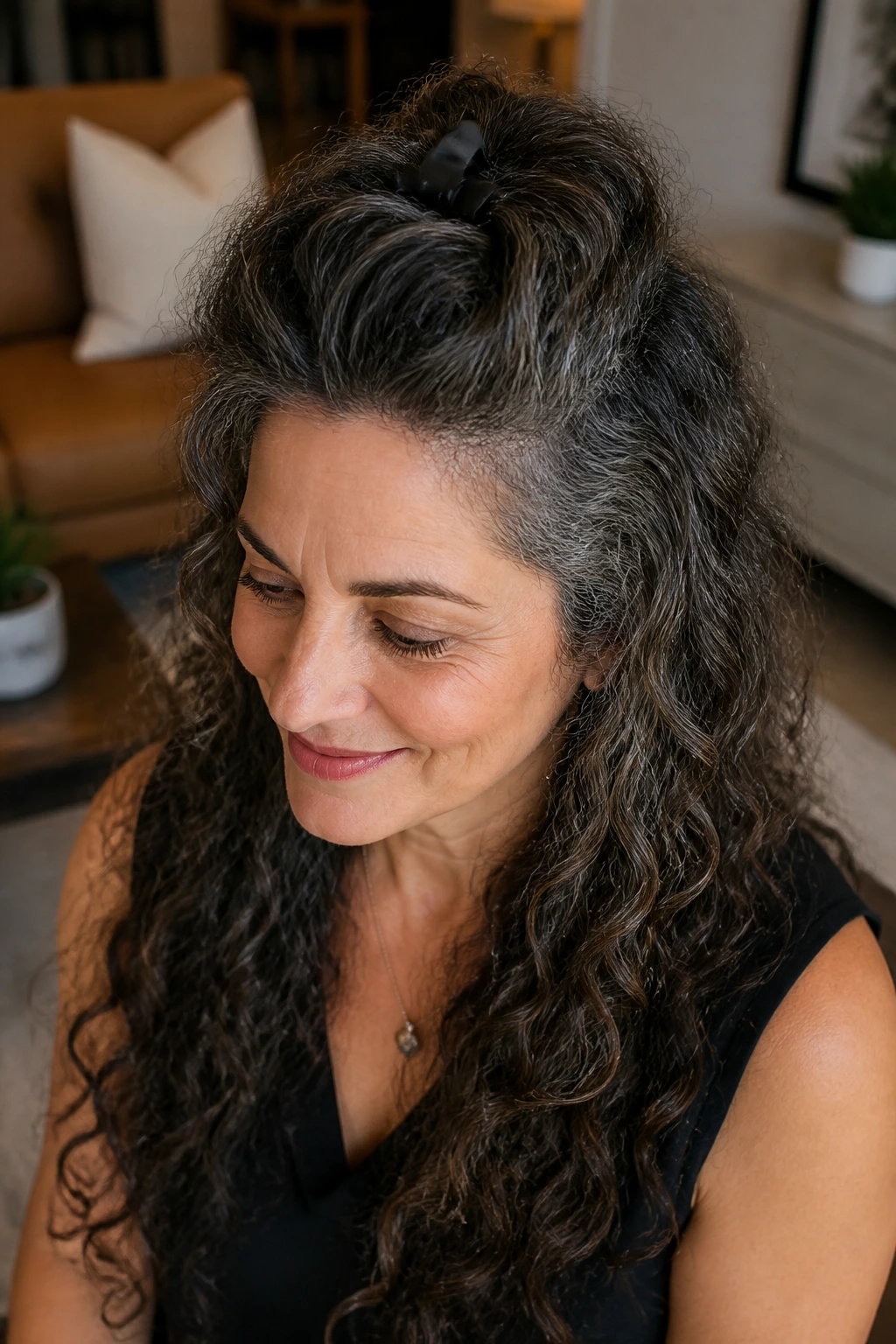
Clipping back the crown is one of the fastest ways to change the mood of long curls. Two matte clips, a little lift at the scalp, and suddenly the face is open without losing the length. It’s not flashy. It just works.
The trick is to take enough hair from the top to create volume but not so much that the side profile goes flat. Start by misting the roots, then lift the top section and clip it back while the hair is still damp or just slightly warm from diffusing. Once it cools, take the clips out or leave them in, depending on how visible you want them to be.
This style is useful when the roots have gone limp but the ends still look good. It’s also a nice answer for grow-out layers or bangs that have reached the awkward stage. A decorative clip can feel a little dressy; a plain clip can disappear completely.
13. Low Chignon with Curly Cascades
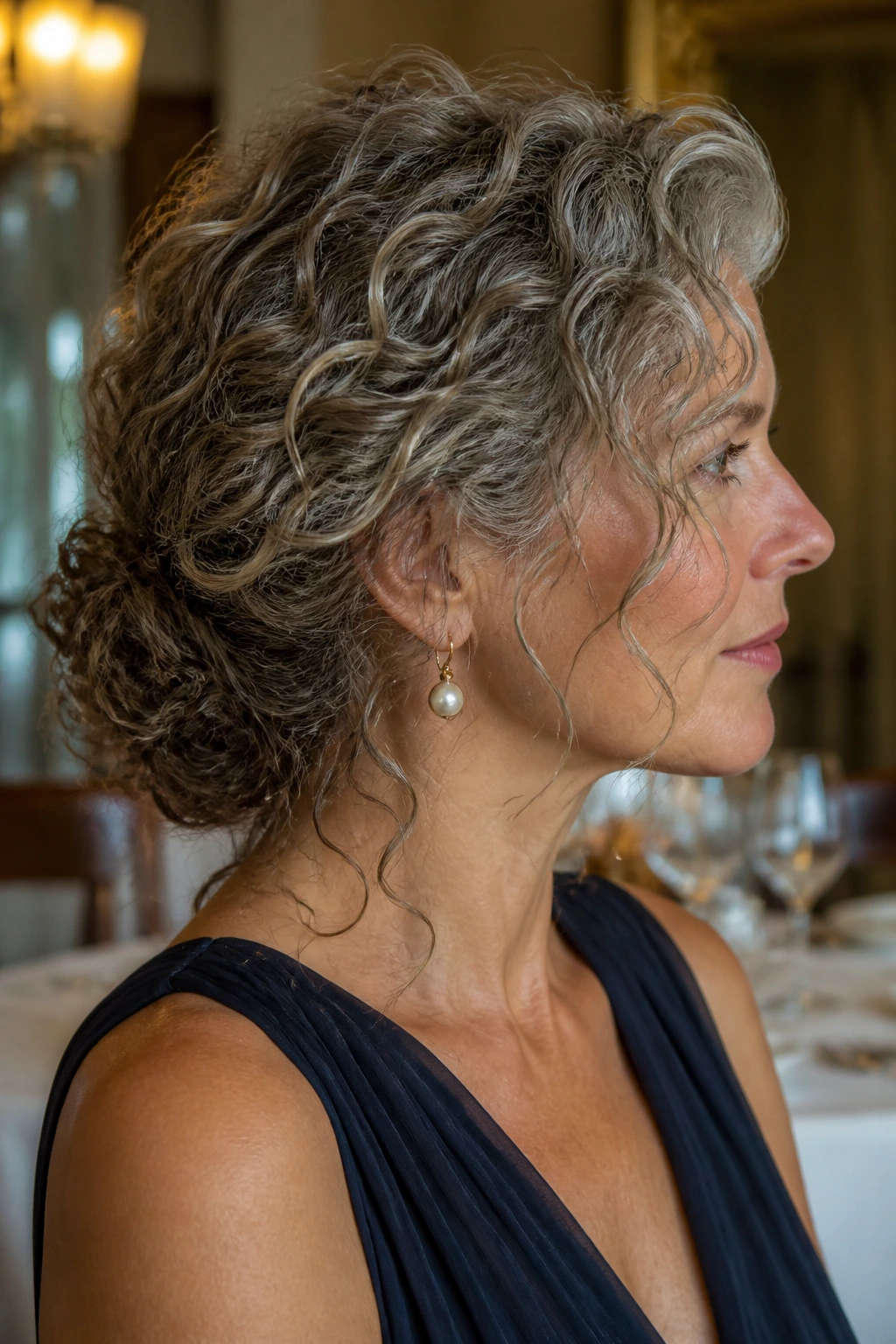
A low chignon is the curly equivalent of a good tailored jacket. It keeps the shape close to the neck, shows off the line of the jaw, and still leaves room for a few curls to spill out. That spill matters. Without it, the style can look too tight, especially on long curly hair.
Gather the hair low at the nape, twist it into a loose bun, and pin it so the center stays secure but the outer curls can escape a little. Let a few strands rest near the ears and the back of the neck. That keeps the style from looking severe and gives the curls something to do.
This is the right move when you want something more polished than a ponytail and less formal than a full updo. If you’re going to dinner or to a family event, it reads composed. If you’re wearing it to keep hair off the neck in warm weather, it still does the job.
14. Waterfall Braid into Loose Curls
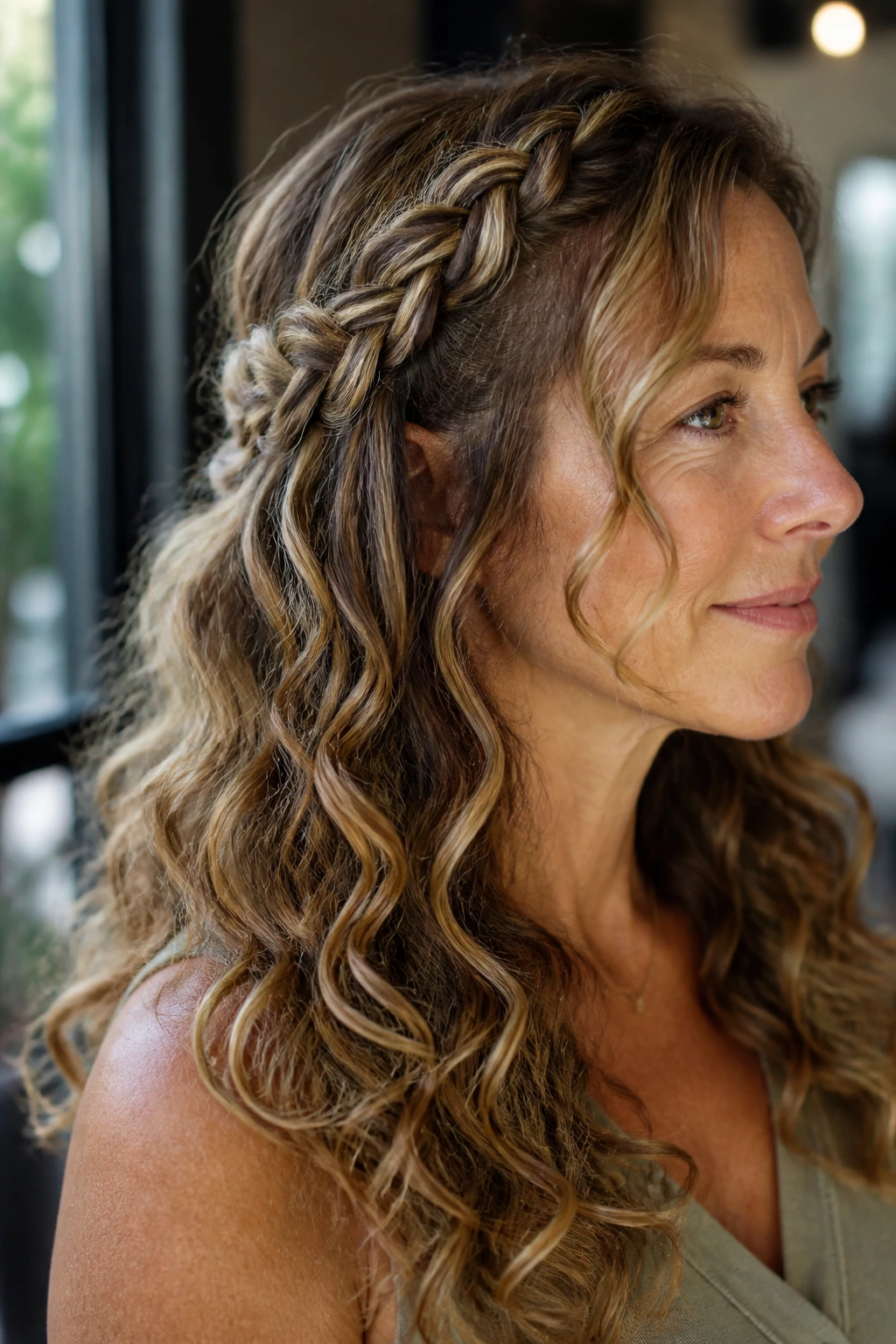
A waterfall braid gives long curls a bit of detail without taking over the whole head. One section is braided across the top or side, and the rest of the hair falls through in soft strands, which creates a layered look even if the cut itself is long and simple. It has motion built in.
This style is lovely when you want the front and crown to feel controlled but still want the length visible. It also works for hair that needs a little grip — a braid gives the style structure where curls alone might slip. Mist the braid lightly with water or a styling spray before you start; clean, dry hair often slides too much.
The braid should be loose enough to look soft, not tight enough to flatten the roots. If the ends of the loose curls are especially springy, let them stay that way. That contrast between braid and curl is what makes the style interesting.
15. Long Spiral Curls with Invisible Layers
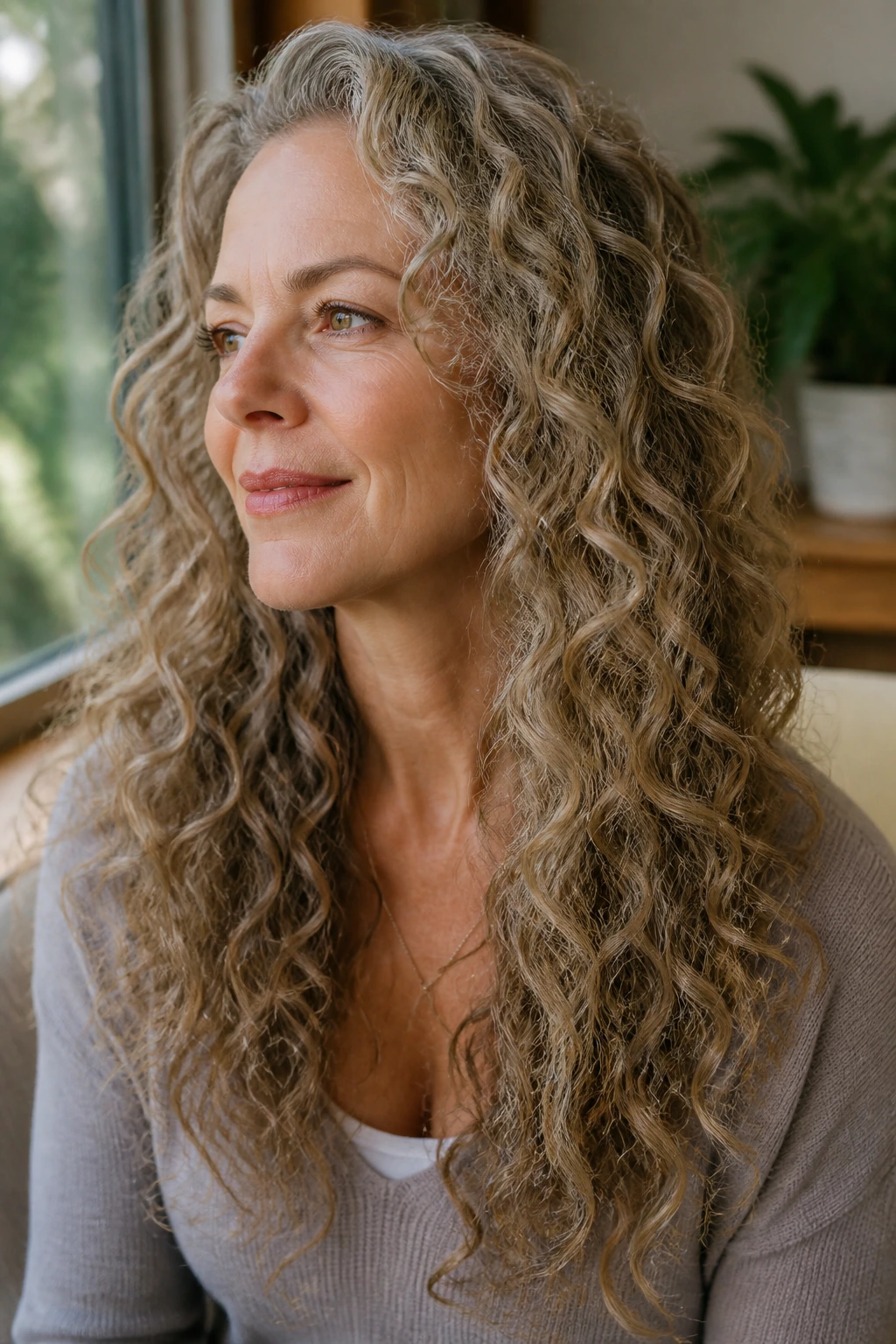
Invisible layers are the kind that do their job without drawing attention to themselves. The outline stays full, but the internal weight is removed so the spirals can move. If your hair is long, dense, and prone to becoming a heavy curtain, this can be a very good shape.
The point is not to show off the cut. The point is to let the curls land where they want without building a shelf. When the layers are placed well, each spiral sits beside the next one instead of stacking on top of it. That means better definition and less bulk at the ends.
This works especially well if your curls clump neatly and you like a uniform look. It’s not for anyone who wants obvious short pieces around the face. It’s for the person who wants the length to remain the star while the cut quietly fixes the problems underneath.
16. Silver Curls with Glossy Definition
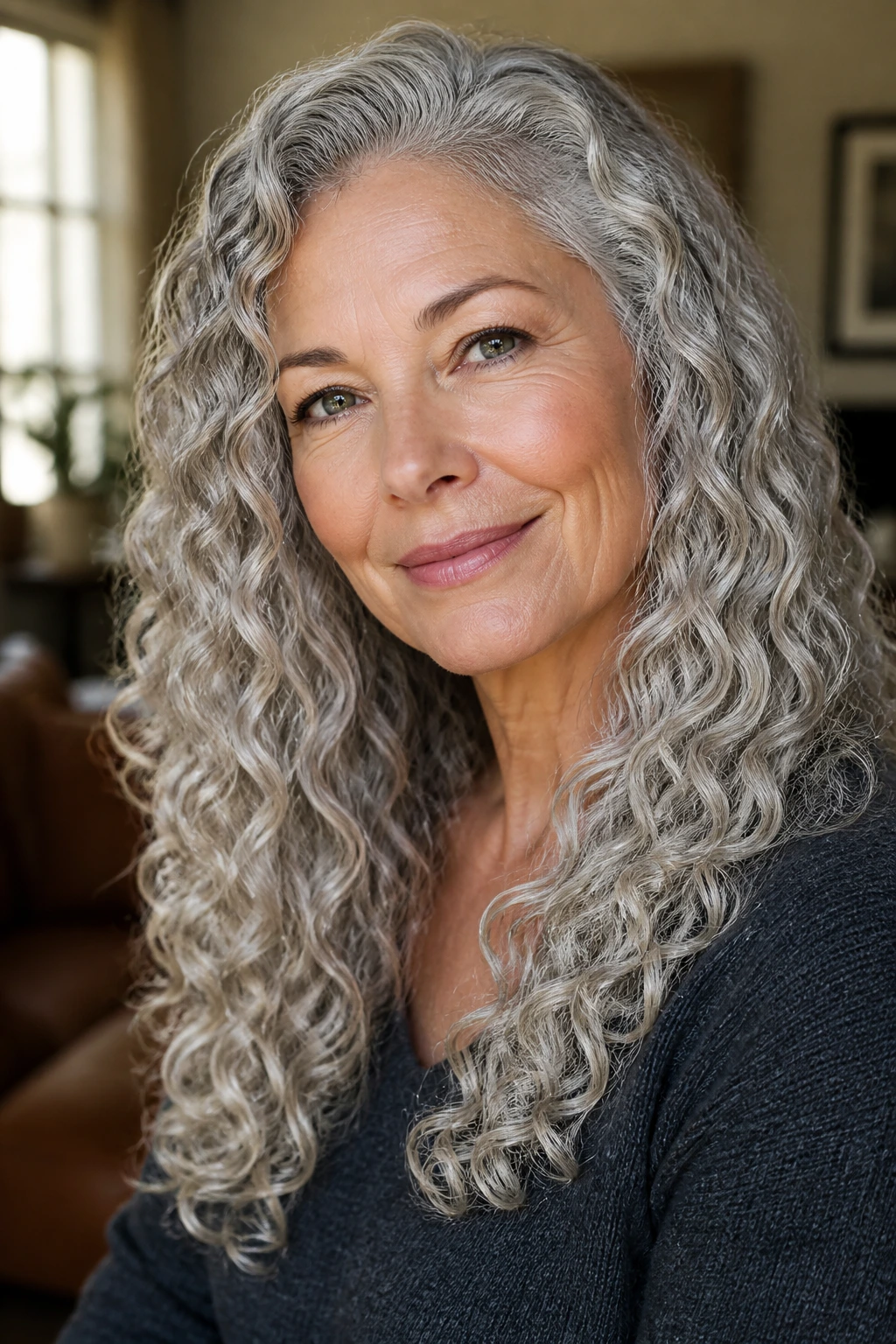
Silver curls deserve better than the “tame them down” advice that still floats around. When the cut is right and the finish has shine, gray and silver hair can look crisp, dimensional, and alive. The texture often changes as color fades, becoming a bit drier or coarser, so the style should work with that instead of trying to smooth it into submission.
A clear gloss, lightweight serum, or a small amount of shine spray on the ends gives silver curls a cleaner edge. Heavy oils can make the hair look separated and dull, which is the opposite of what you want. If you use purple shampoo, keep an eye on the ends; too much of it can leave the hair feeling thirsty and a little chalky.
This style looks best when the curls are defined, not brushed out. Let the silver catch the light in individual clumps and loops. That texture is the whole point.
17. Rounded Wash-and-Go with Diffused Roots
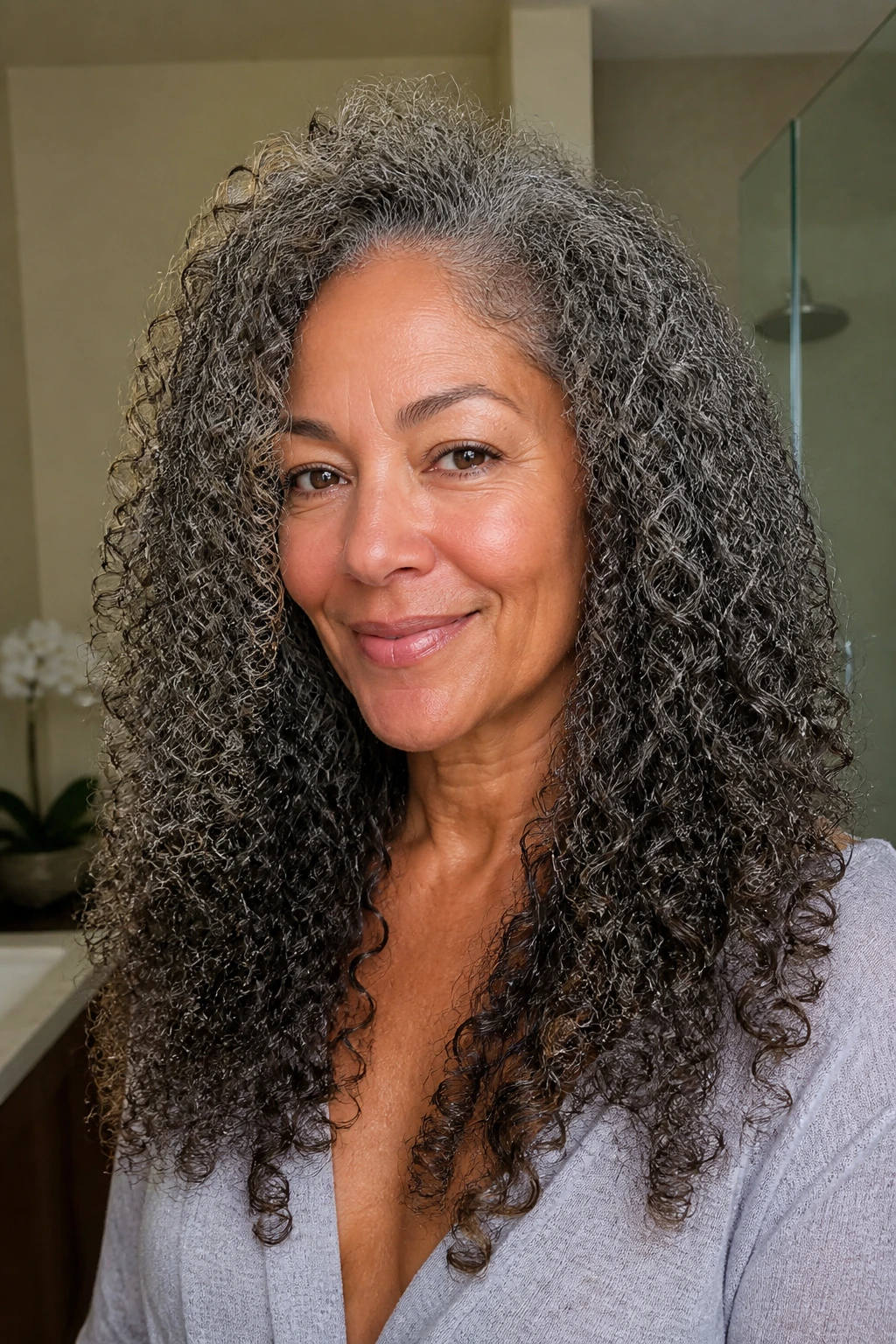
This is the style for a morning when you want your hair to behave without a long ritual. Apply leave-in, a curl cream or mousse depending on density, then add gel for hold. Scrunch, clip the roots if you need lift, and diffuse until the cast forms. Once the hair is dry, scrunch out the stiffness and let the curls settle into a rounded shape.
The part that makes it work
The roots need attention first. If the crown dries flat, the whole style feels tired even when the curls are defined. A few root clips while the hair sets can make a surprising difference, especially on long hair that tends to weigh itself down.
This is the style I’d pick for someone who wants to wear their curls down most days and doesn’t want the cut to require constant correction. It’s honest. It shows your natural pattern, but it still gives the face a frame and the length a shape.
If your hair shrinks up more than you like, use a diffuser with low airflow and stop when the hair is about 80 percent dry. Let the last bit air-dry. That usually preserves a rounder outline.
Why Curly Hairstyles for Long Hair Over 50 Need Shape More Than Length
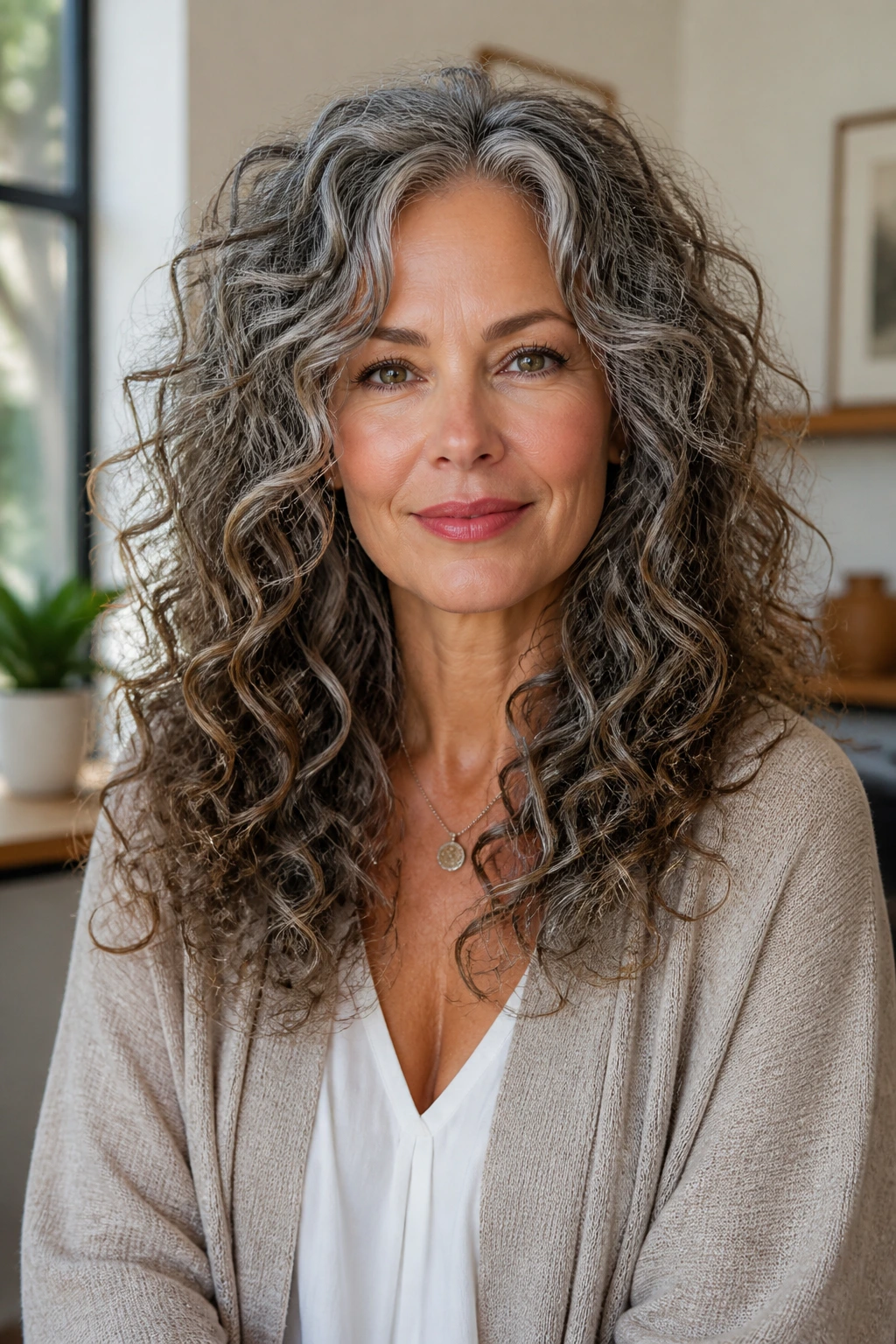
Long curls can carry a lot of visual weight, and that weight changes how the face reads. A curl pattern that looked balanced at shoulder length can start to pull straight down once it grows past the collarbone. The fix is rarely “cut it all off.” More often, the fix is to redistribute weight so the hair has a clear top, middle, and edge.
That’s why layers matter so much. They’re not decoration. They keep the crown from collapsing, stop the ends from becoming a thick rope, and give the curl a place to spring. A good curly cut usually looks a little underwhelming when it’s hanging wet; then it dries and the shape appears. That’s normal. Curls don’t wear straight lines politely.
There’s also the practical side. Hair over 50 is often dealing with some mix of dryness, color treatment, gray texture, or a finer root than it used to have. None of that means you can’t wear length. It means the shape has to do the work that the hair used to do by sheer density. A little thought at the cut stage saves a lot of frustration later.
The Tools That Make Styling Easier
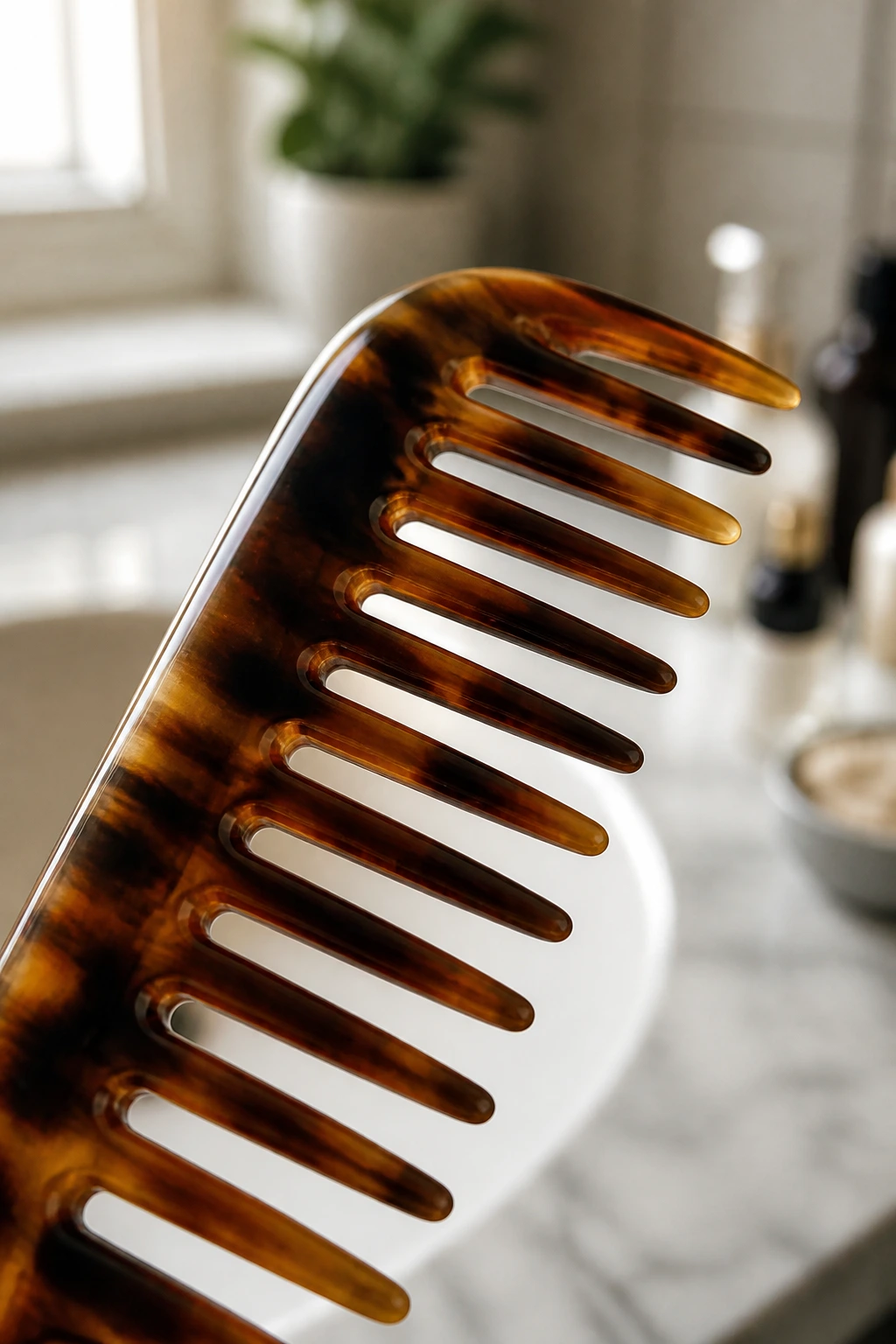
- Wide-tooth comb: Useful for detangling in the shower without ripping through curl clumps.
- Microfiber towel or soft T-shirt: Cuts down on roughing up the cuticle after washing.
- Duckbill clips: Handy for root lift, sectioning, and holding the crown while curls set.
- Long bobby pins: Better than short pins for twist-backs, clipped crowns, and low buns.
- Silk or satin scrunchies: Protect the curl line better than thin elastic bands.
- Diffuser attachment: Helps dry the roots with control and keeps the curl pattern from blasting apart.
- Rat-tail comb: Good for clean parts, especially middle parts and braid sections.
- Leave-in conditioner: A small amount helps long curls stay pliable without turning sticky.
- Curl cream or mousse: Cream adds slip; mousse adds lift. Many heads need one or the other, sometimes both.
- Light gel or flexible hold spray: Keeps the style from collapsing by lunchtime, especially in humid air.
Product Picks for Curly Hairstyles for Long Hair Over 50
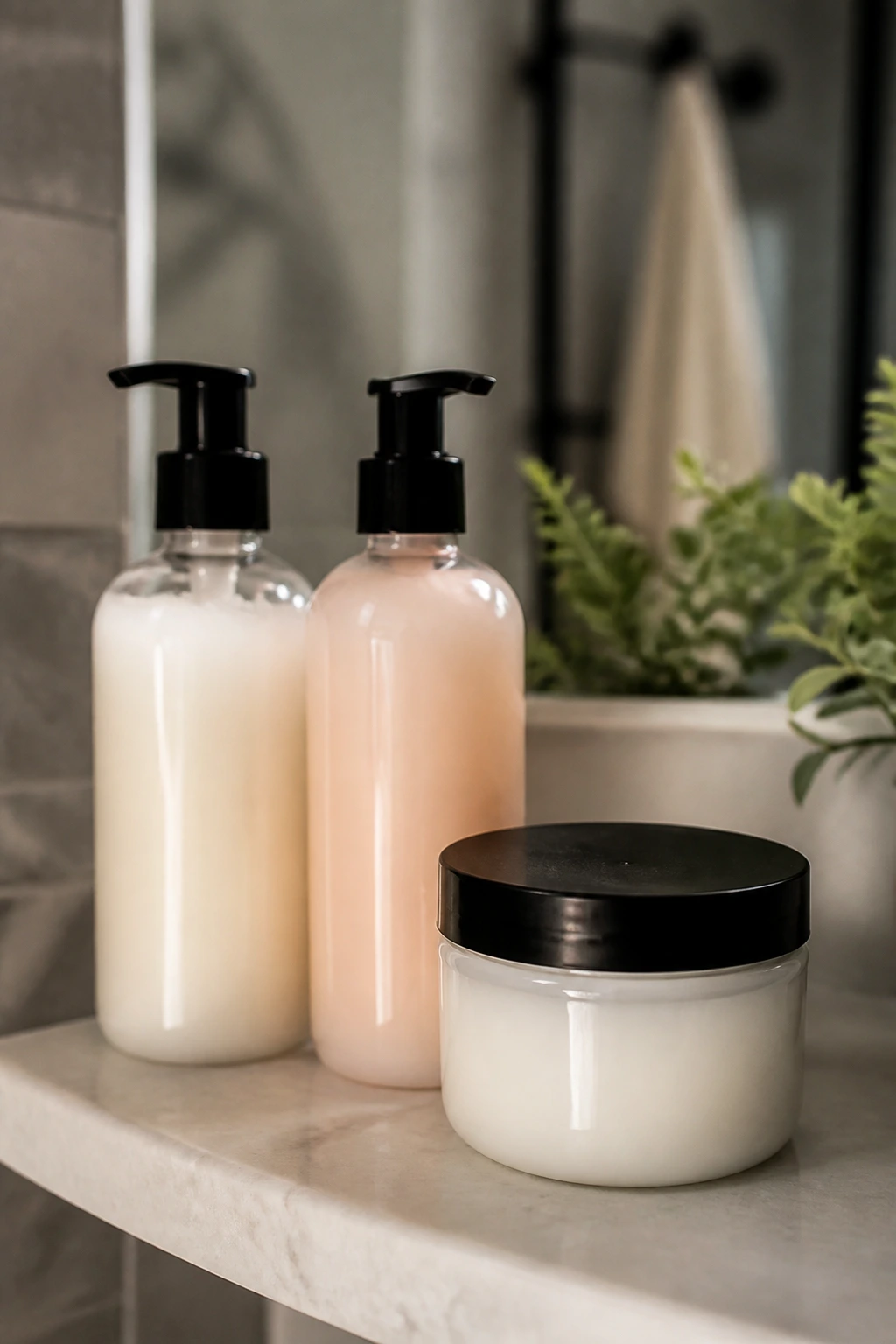
The best product mix depends on density, not age alone. Fine curls usually need less cream and more lift, because heavy products make the hair look slick at the roots and stringy at the ends. Dense or coarse curls often need more moisture and a stronger hold, because the hair can swallow lightweight stylers and still frizz around the edges.
If your curls feel dry, start with a leave-in that disappears into the hair rather than sitting on top of it. Follow with a curl cream only where you need slip — mids and ends, not the scalp. Then add gel if you need definition or if your hair grows poofy in humidity. The order matters. Water-based products go on first; oils should not be the first thing your curls meet.
Silver or gray curls often behave like coarse curls, even if the rest of the head used to be fine. A little protein every few weeks can help them hold shape, but too much protein makes hair stiff fast. If the curls start feeling straw-like or rough after a wash, back off the protein and add more moisture. If they feel mushy and limp, that’s the time to bring protein back in.
A satin pillowcase sounds like boring advice until you actually sleep on one for a week. The difference at the back of the head is obvious. Less fuzz, less matting, less need to re-wet half your hair in the morning.
Wearing These Styles for Work, Dinner, and the Rest of the Week
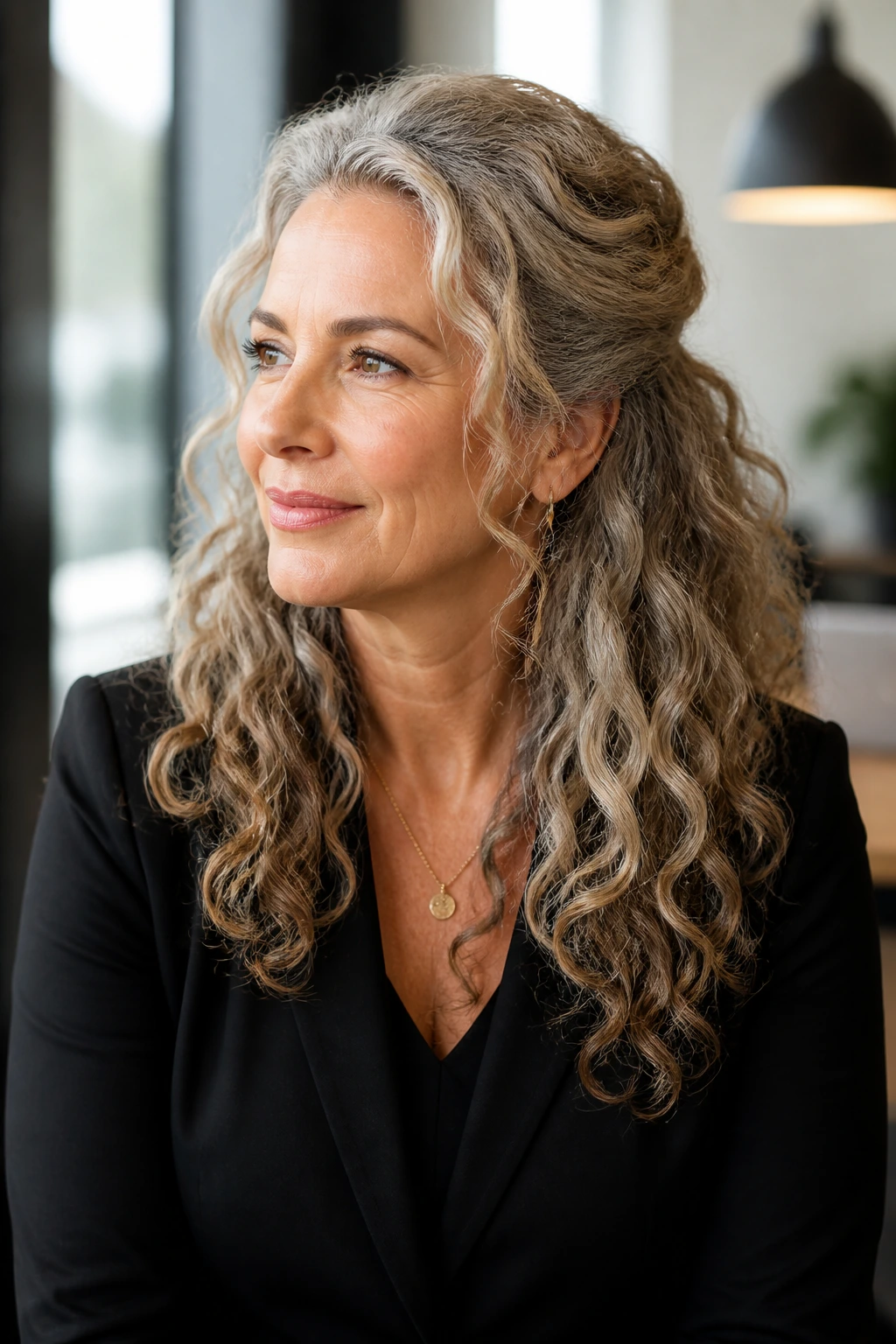
For everyday wear: The half-up crown lift, clipped-back crown volume, and rounded wash-and-go are the easiest to keep looking intentional without much fuss. They handle small frizz patches well and don’t need every curl to cooperate.
For dressier plans: The low chignon, side-swept waves, and braided halo bring structure without flattening the hair into something stiff. They look especially good when the ends still have movement. A curl that moves when you turn your head is worth more than a perfectly frozen style.
If you wear glasses: Twist-back front sections and soft side parts keep the temples clear, which matters more than people think. Hair that sits directly on the frame arms can frizz faster and feel busy around the face. A little lift at the crown solves that.
If you want a stronger outline: The U-shape, deep middle part, and long layers with side part all give the hair a clear silhouette. They’re useful when the length is lovely but the shape feels lost. The eye likes a line it can follow.
If you need speed: Pineapple buns and high curly ponytails are the answer. They take less time than trying to smooth every curl, and they work with hair that is not having its best day.
Small Styling Tweaks That Change the Whole Look
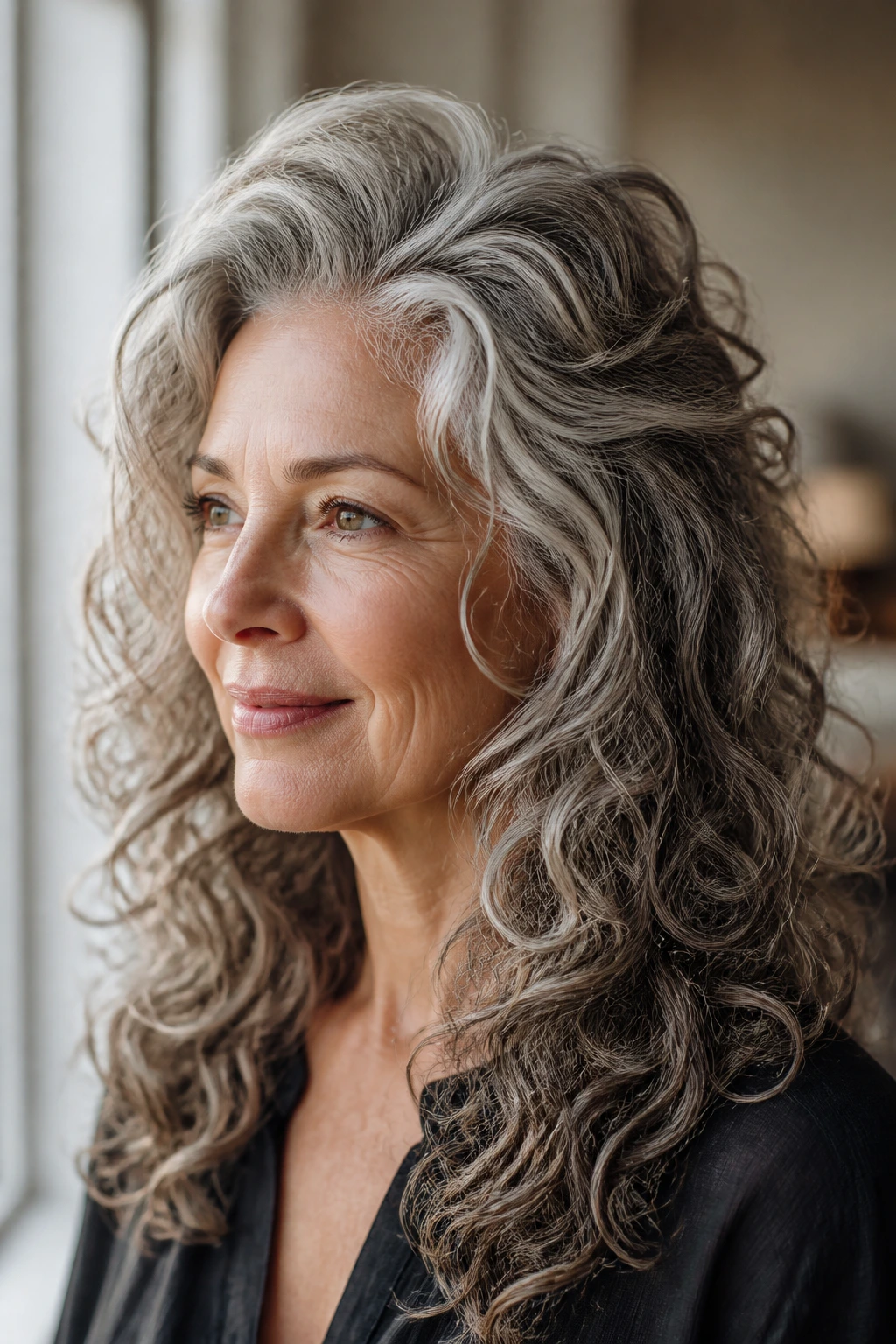
Root Lift: Clip the crown in two or three small sections while the hair dries. Even fifteen minutes can make the top look less flat, especially if your roots are fine or slightly stretched.
Frizz Control: Smooth a pea-sized amount of gel between wet palms and glaze it over the outer layer of the hair. Don’t rake through the whole head unless you want to separate the curl clumps.
Shape Correction: If one side dries puffier, mist it lightly with water and finger-coil the odd pieces back into place. You do not need to restart the whole style.
Color Boost: Silver and highlighted curls look sharper when the ends are trimmed cleanly every couple of months. Split ends blur shine. Clean ends let the light bounce more evenly.
Accessory Trick: Choose matte clips and satin scrunchies if your hair snags easily. Shiny metal clips can look nice, but they can also catch on coarse curls like velcro.
Common Mistakes That Flatten or Frizz Long Curls
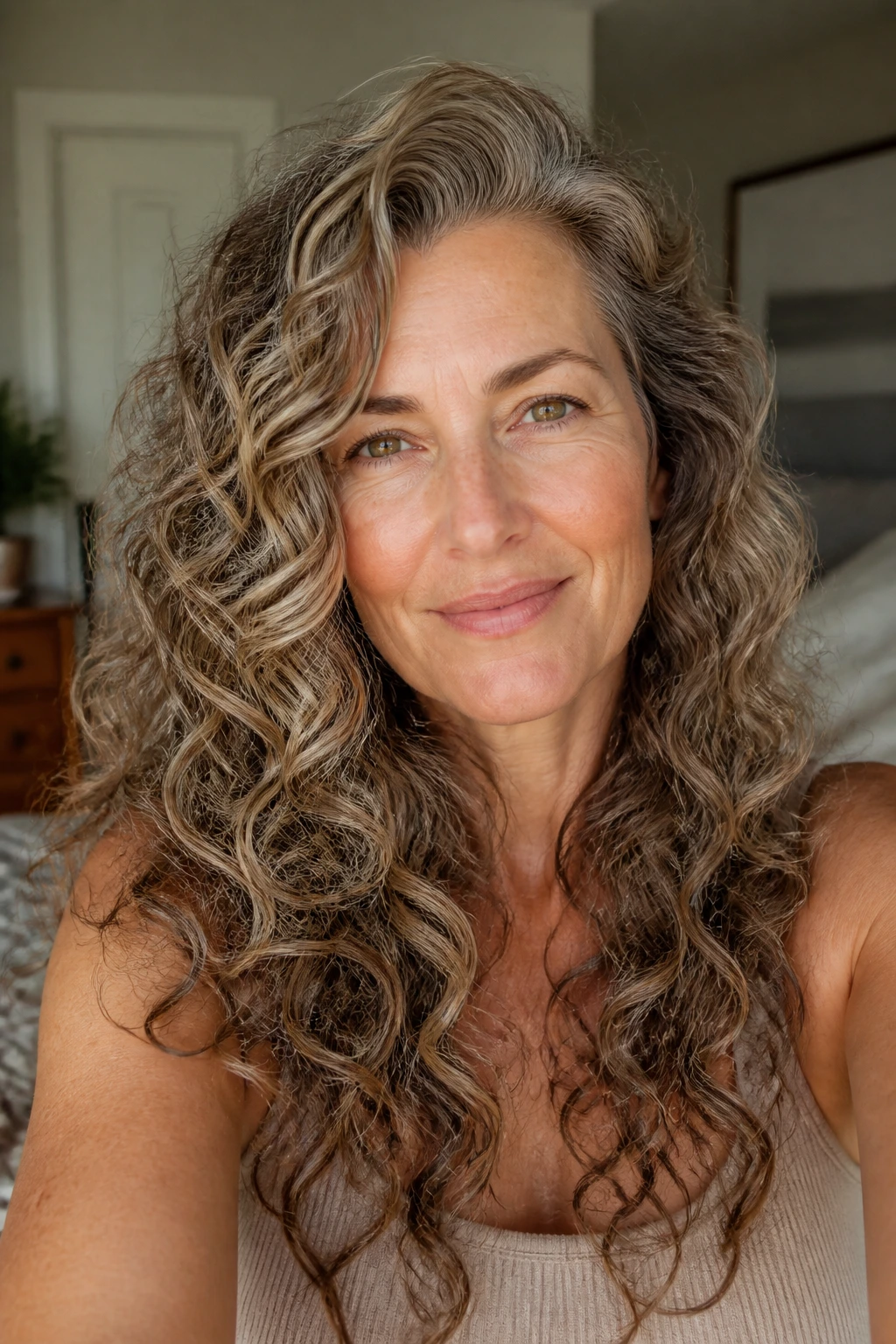
- Cutting too many short layers at the crown: The hair can balloon out at the top and leave the ends thin. Ask for gradual layers, not a top-heavy stack, unless you really want a shaggy look.
- Brushing curls dry: The curl clump breaks apart, and the hair turns into fuzz. Detangle in the shower or smooth with damp fingers instead.
- Using heavy oils near the roots: The scalp gets greasy fast while the ends still need shape. Keep richer oils on the lower third of the hair, if you use them at all.
- Pulling ponytails too tight: Tight elastics flatten the crown, create a crease, and can make the front look harsh. Leave a little give at the root.
- Skipping trims for too long: Split ends creep up the shaft and make long curls look tired even when the styling is good. A trim every 8 to 12 weeks keeps the outline clean.
- Ignoring the part line: A part that has been sitting in the same place for months can flatten the root and expose frizz in one narrow strip. Shift it now and then, even by half an inch.
Variations and Adaptations to Try
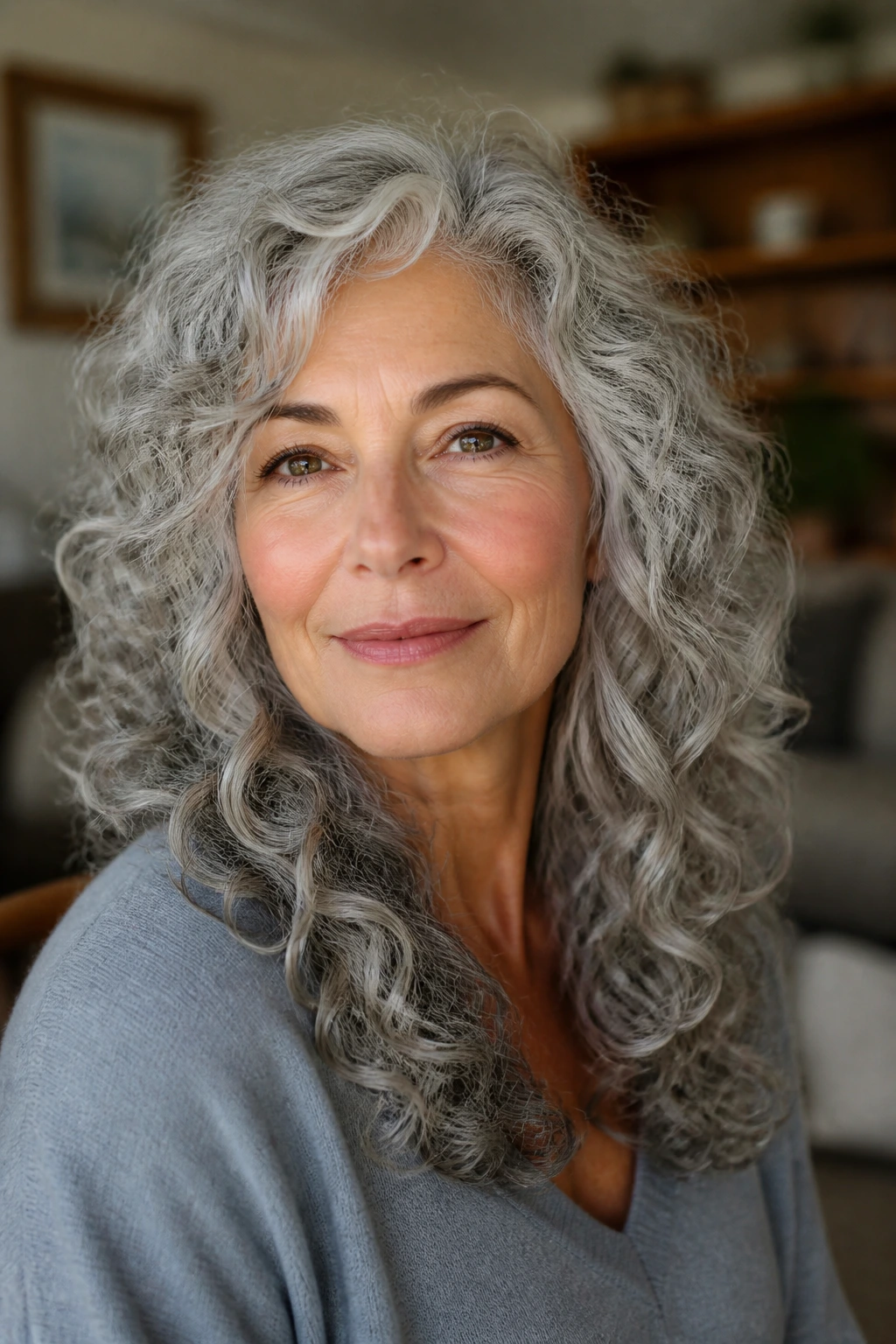
Silver-First Shape: If your gray hair has more texture than your old color-treated curls, lean into a slightly more layered shape with a glossy finish. The extra movement keeps the silver from looking blocky, and a light serum helps the sheen show up without weighing the hair down.
Fine-Hair Lift: Use longer layers, lighter mousse, and fewer heavy creams. Fine curls need air around them, not product sitting on top of them. A clipped crown or side part gives the illusion of more body without making the ends stringy.
Thick-Curl Tamer: If your hair is dense, ask for internal layering and use a stronger hold gel. Thick curls can take a better shape when some weight is removed from inside the outline. That keeps the outside from puffing into a triangle.
Heat-Free Routine: If you want to avoid hot tools, choose styles built from braids, twists, clipped sections, and air-dried shapes. Twist-backs, braided halos, and rounded wash-and-go styling all work here. The trick is patience while the hair sets.
Glasses-Friendly Frame: If your frames sit low on the nose or have thick arms, choose side parts, twist-backs, or clipped crown volume. Those styles keep the temples clear and stop the hair from crowding the face.
Night Care, Refresh Days, and Trim Timing
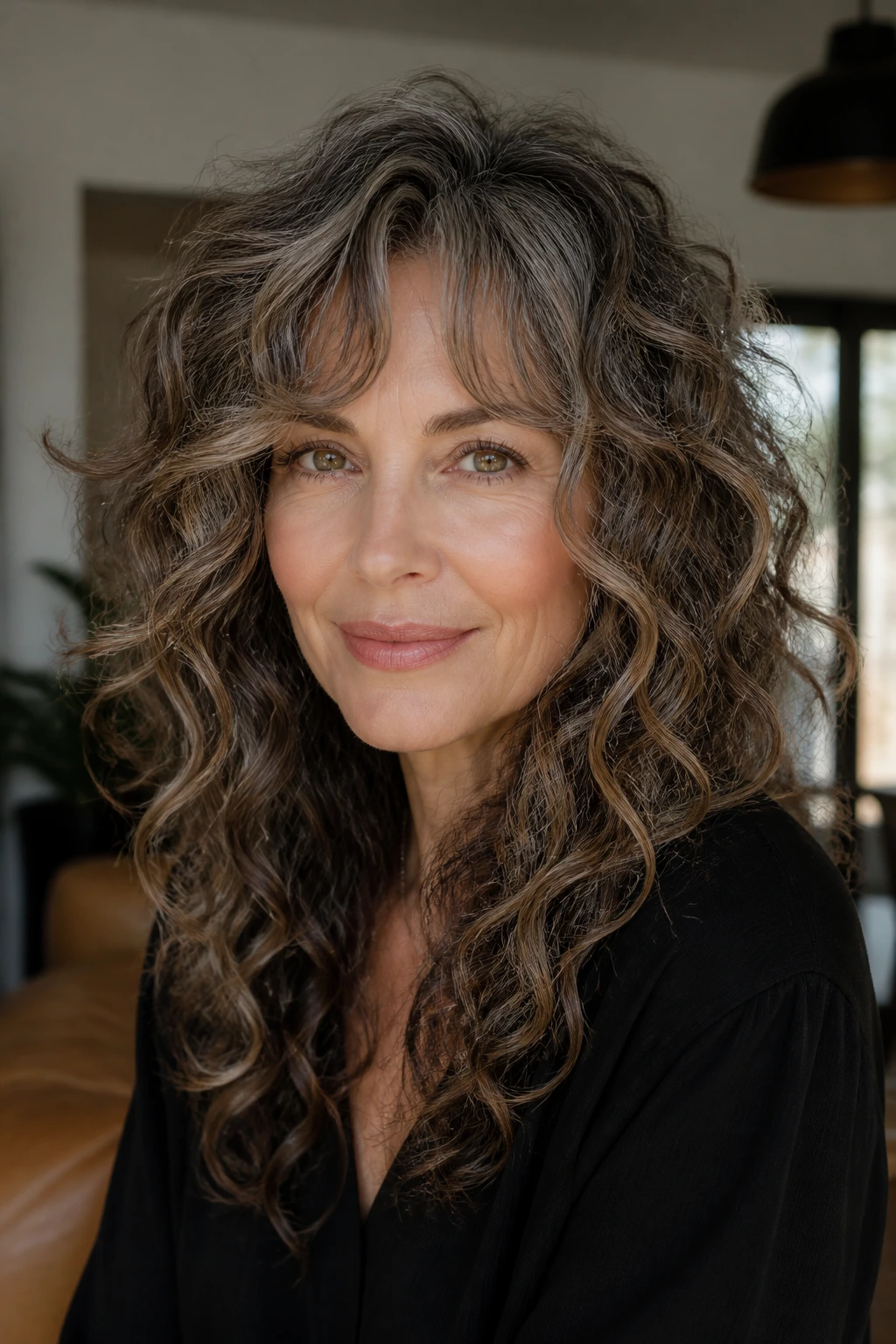
Long curly hair needs a little protection at night if you want the next morning to cooperate. A satin pillowcase helps, but a loose pineapple or loose bun on top of the head helps even more. Use a soft scrunchie, never a thin elastic that leaves a dent you have to fight later.
Morning refreshes do not need to turn into a full wash. Mist the driest sections with water, add a tiny amount of leave-in to your hands, and scrunch the ends first. If the roots are flat, clip them for ten minutes while you get dressed. A diffuser can revive the crown without making the hair frizzy, but low speed is the part that matters.
How often you wash depends on scalp oil and product use, but many long curly heads do well with a wash every 4 to 7 days. If you use a lot of gels and creams, a clarifying wash every 4 to 6 weeks helps keep the curls from feeling coated. Trims every 8 to 12 weeks keep the ends sharp enough that the shape still looks deliberate.
Frequently Asked Questions
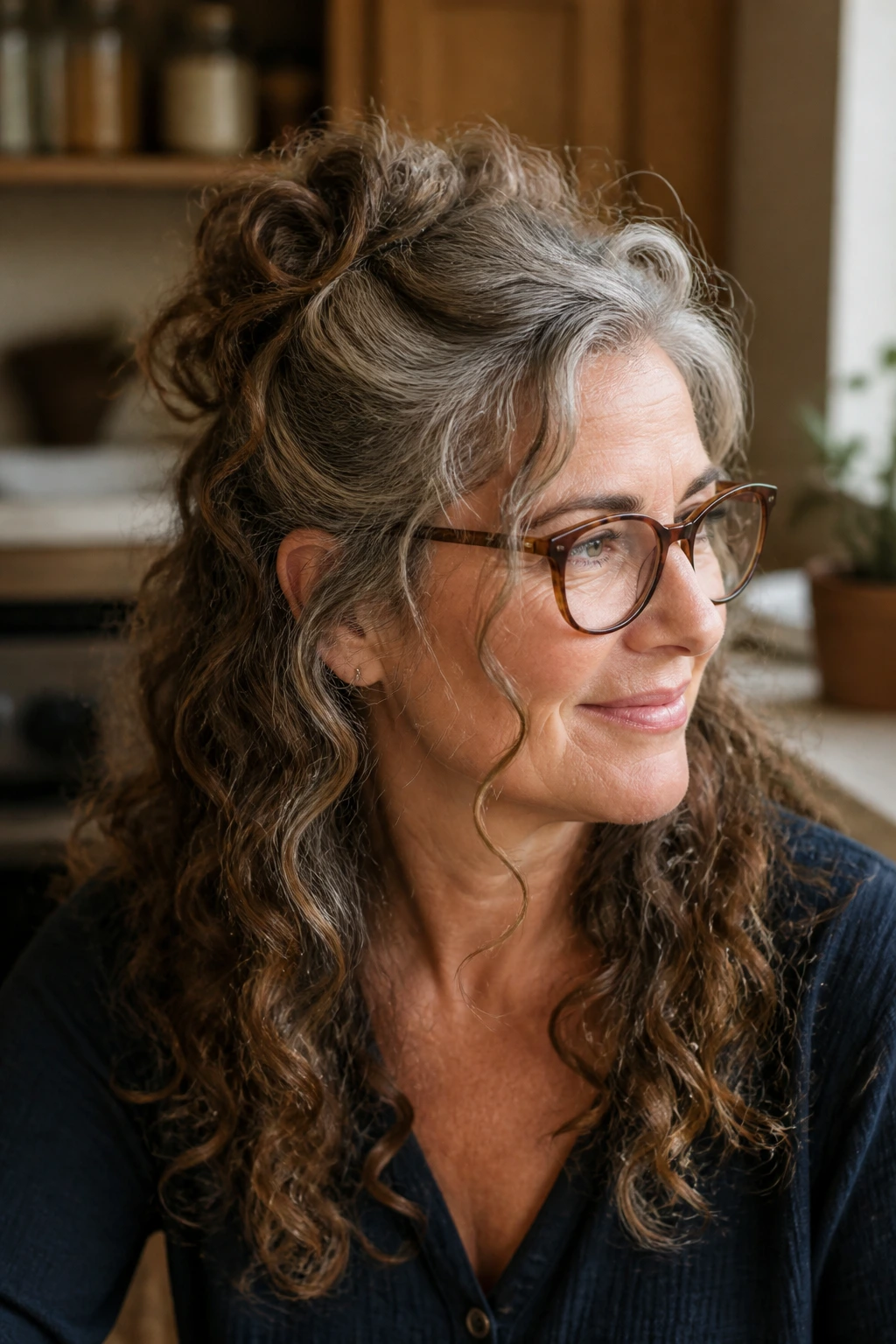
What curly hairstyle works best for thinning hair over 50?
Long layers with a soft side part or a clipped-back crown usually work well because they add lift without taking away too much length. Keep the layers long and gradual so the ends do not look sparse.
Can I still wear my hair long if my curls have become drier with age?
Yes, but the styling needs to be kinder. Use less heat, keep richer product on the ends, and trim regularly so dry tips do not make the whole shape look rough.
What is the easiest style for second-day curls?
The half-up crown lift, twist-back front sections, and pineapple bun are the fastest fixes. They take advantage of the curl you already have instead of trying to force a brand-new pattern.
Should long curly hair over 50 have bangs?
It can, but bangs need to be cut with curl shrinkage in mind. Curtain-style pieces or soft face-framing layers are usually easier to live with than a blunt fringe that jumps up after drying.
How do I stop my long curls from looking triangular?
Ask for interior layers and keep the top from getting too heavy. Triangle shape usually comes from too much bulk at the bottom and not enough movement through the middle.
Do I need a diffuser for these styles?
No, but it helps if you want the roots to stay lifted. Air-drying works for many styles, yet a diffuser gives you more control at the crown and around the part.
How often should long curly hair be trimmed?
About every 8 to 12 weeks is a solid range for keeping the ends clean and the shape readable. If the style starts feeling dragged down or the curls stop clumping well, the ends may be the problem.
What if my curls are loose in some places and tighter in others?
Choose a cut with soft layers and use styling product in sections, not one heavy pass over the whole head. Mixed curl patterns usually need a little more attention at the front and crown than at the back.
Lasting Shape
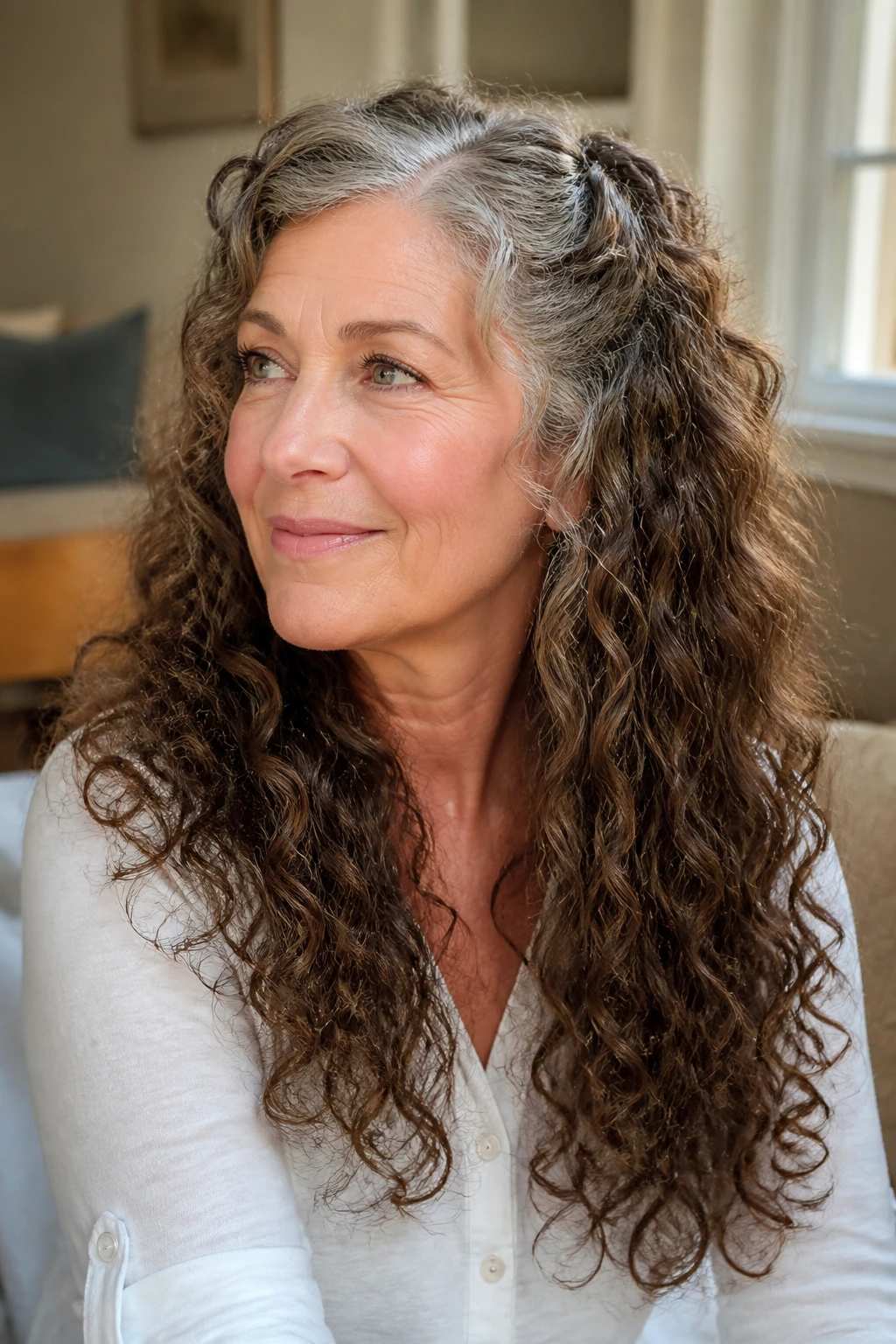
Long curly hair over 50 is at its best when it feels intentional instead of over-managed. A side part, a good layer, a pinned crown, or a low twist can change the whole read of the hair without asking it to become something else.
The styles that last are the ones that respect the curl and the person wearing it. If the shape supports your face, your glasses, your gray strands, and your actual morning routine, that’s the style worth keeping close.
