



Short curly haircuts for diamond faces work best when they do a little bit of quiet geometry for you. Diamond faces usually carry their widest point through the cheekbones, with a narrower forehead and a taper toward the chin, so the wrong cut can make everything feel a touch too centered in the middle. The right one eases that tension. It gives the curls room to move, adds softness where the face needs it, and keeps the silhouette from turning into one hard line across the cheekbones.
A lot of people assume the answer is “just add layers,” but that’s too blunt for curly hair. A chin-length bob that lands at the jaw, a cropped pixie with lift at the crown, or a shag with a broken-up fringe each changes the balance in a different way. Curl shrinkage matters here, too. What sits at the jaw when wet can bounce up to the cheekbone once it dries, and that can change the whole read of the cut.
The best versions feel easy, not precious. They don’t sit there announcing themselves. They let the curls do their thing while quietly widening the forehead, softening the jaw, or keeping the widest point of the face from looking even wider. That’s the sweet spot, and it’s why some short cuts look sharp in the best possible way on diamond faces while others feel like they’re fighting the bone structure instead of working with it.
Why Short Curly Haircuts for Diamond Faces Work Better With Soft Balance
-
Width in the right place: Diamond faces usually need a little help at the forehead or jaw, not more bulk right across the cheekbones, so the best short curls shift volume up, down, or diagonally.
-
Soft edges beat hard lines: A blunt shelf at cheekbone level can make the face look wider in the middle; broken ends, side-swept fringe, and rounded outlines keep the shape from feeling boxy.
-
Curl shrinkage changes the map: A cut that looks chin-length on the floor can land two inches higher once it dries, which is why diamond faces do better with a stylist who understands curl spring.
-
Parts matter more than people think: A side part can widen a narrow forehead in a way a center part never will, and on a diamond face that tiny shift can change the whole mood of the haircut.
-
Short doesn’t have to mean severe: The right cropped cut can look airy, lively, and open through the eyes and brow without hiding the cheekbones that make the face shape interesting in the first place.
Diamond faces ask for balance, not camouflage. That’s the part a lot of haircut advice misses. You do not need to hide your cheekbones; you need to stop making them the only thing the eye sees first.
The cuts below each solve that problem in a slightly different way. Some build width at the jaw. Some bring texture up near the forehead. Some lean into asymmetry because a little off-center movement is kinder than a perfectly symmetrical frame. All of them can work with curls that are loose, springy, or tight, as long as the shape is chosen on purpose.
How Diamond Faces and Curls Play Together
A diamond face is all about angles. The cheekbones are the loudest feature, and the forehead and chin tend to be a little quieter. That means a short curly haircut has to do more than look cute from the side mirror. It has to change the way the eye travels across the face. A curl pattern with built-in lift can help, but only if the cut gives that lift somewhere useful.
Dry cutting matters more here than people expect. Curls lie when they’re wet. They stretch, they hide their spring, and they convince people to cut too much length off the sides. On a diamond face, that mistake can shove the widest part of the hair right onto the widest part of the face. Not ideal.
I also like a cut that respects density. Fine curls need air and a bit of perimeter; thick curls need internal shaping so the silhouette does not balloon out at cheek level. The goal is not “less hair.” The goal is the right hair in the right place.
1. Chin-Length Curly Bob With a Side Part

This is the cut I reach for when someone wants curls that feel polished without looking strict. The line sits around the chin, but the side part breaks up the symmetry and gives the forehead a little more room to breathe. On a diamond face, that matters. A center part can emphasize the narrow top half; a side part relaxes it.
The chin-length finish also pulls attention below the cheekbones, which keeps the face from feeling pinched in the middle. Ask for soft internal layers, not a choppy stack. You want movement, not holes. This one looks especially good on loose 2C waves and soft 3A curls that can swing a little when you walk.
2. Cropped Curly Pixie With Extra Crown Lift
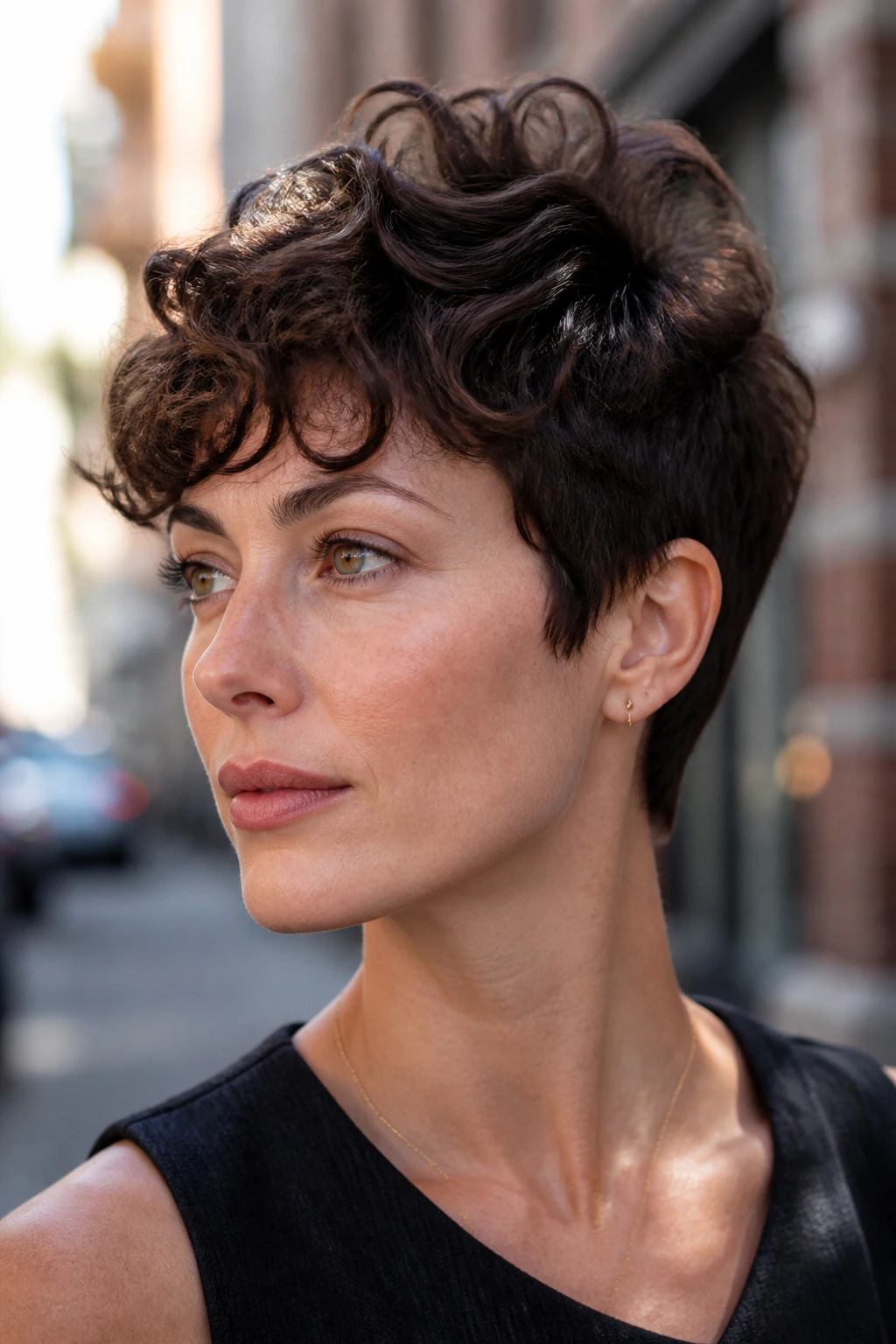
A pixie can work beautifully on a diamond face, but only if the crown has a little height and the sides stay soft. Flat on top? Wrong move. Too tight at the temples? Also wrong. The best version gives the eye somewhere to go above the cheekbones, which makes the face feel longer and less centered.
I like this cut when the curls are small and springy, because the texture keeps it from looking severe. Ask for tapered sides, a bit of length through the top, and enough fringe to graze the brow if you want extra softness. If your curl pattern is tighter, a curl-by-curl shape keeps the crown from turning into a helmet.
3. Tapered Curly Crop With Soft Edges
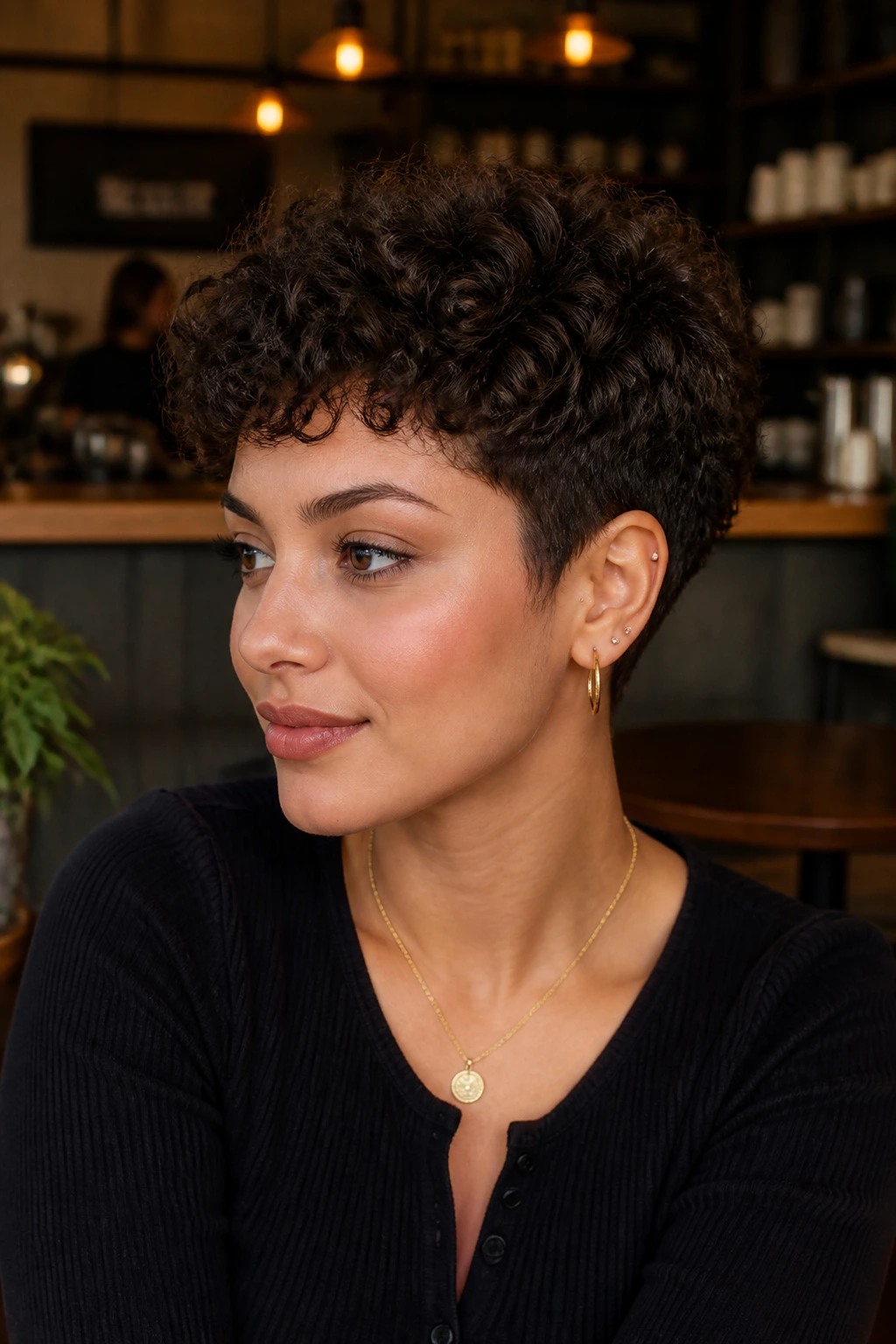
This cut is lean at the nape and sides, but it never feels hard. That’s the difference. A diamond face can handle a cropped shape as long as the perimeter is feathered and the crown carries the shape. You get lift without a blunt outline chopping across the middle of the face.
It’s a good one if you like low-fuss styling. A pea-sized amount of mousse at the roots and a touch of gel on the top layer is often enough. The ends stay airy, the sides stay neat, and the whole thing keeps the cheekbones from being the only architectural feature on display.
4. Rounded French Bob for Loose Spirals

A rounded French bob has a little bit of attitude, but on curls it turns softer than the name sounds. The shape curves in toward the face instead of sticking out at the sides, which makes it a smart choice for diamond faces that need a little width near the jaw without extra bulk at the cheekbones.
What sells this cut is the outline. It should feel round, not boxy. If the curls are looser, the bob can sit around the chin with a soft bend at the ends. If they’re springier, the stylist should leave enough length so the dry shape doesn’t bounce up too high. A tiny side sweep in the fringe keeps it from going too retro.
5. Airy Curly Shag With a Light Fringe
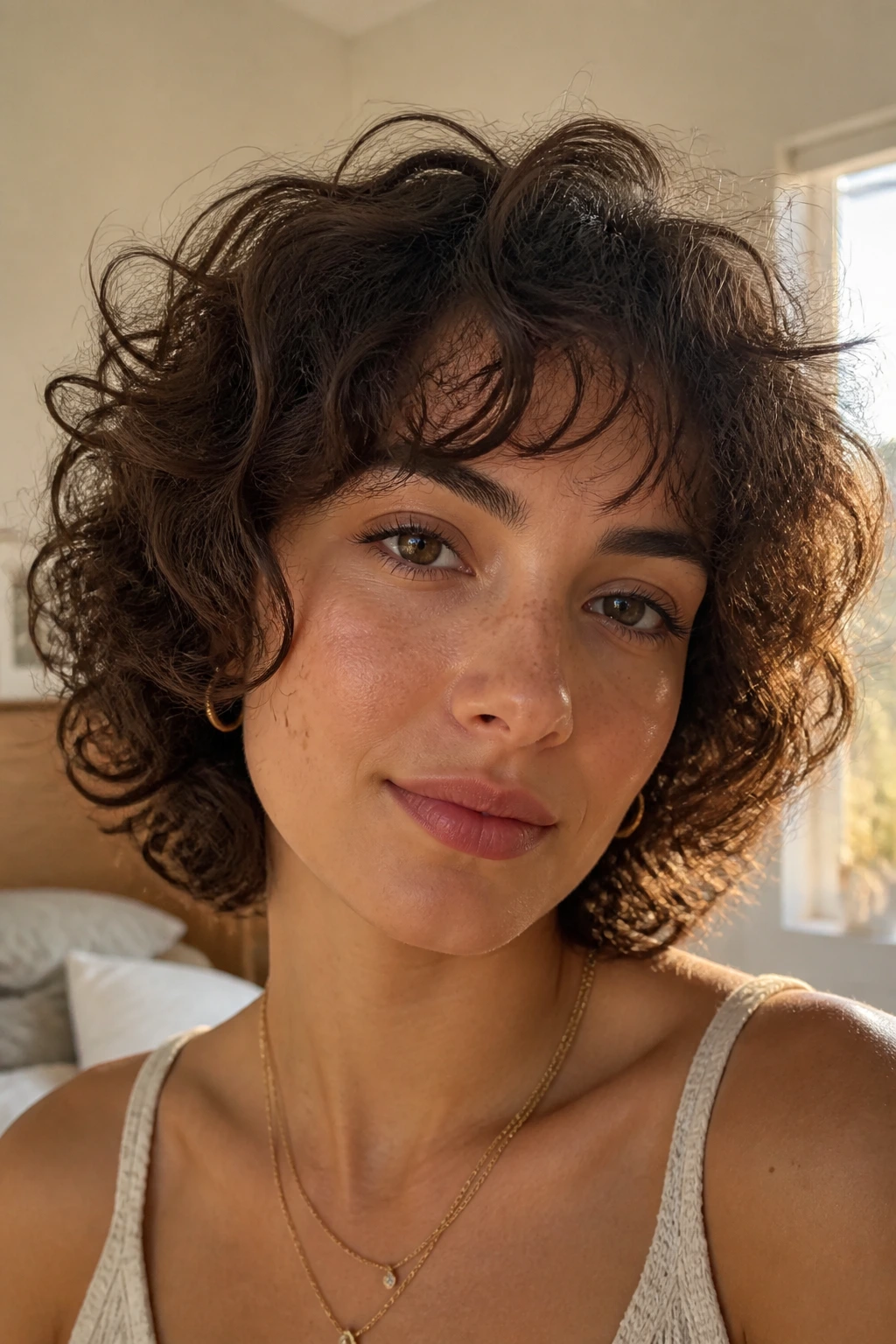
A shag is the escape hatch when you want movement more than neatness. On diamond faces, the light fringe is the useful part. It widens the forehead just enough to balance the cheekbones, while the layers keep the curls from stacking up in one heavy band around the middle of the face.
This cut works best when the layers are broken and soft, not razor-cut into tiny spikes. I prefer it on medium-density curls that need shape without losing bounce. You can air-dry it with a bit of curl cream and scrunching, or diffuse for more lift at the roots. The result looks a little undone in the best way.
6. Asymmetrical Curly Bob With a Deep Side Sweep

Asymmetry can be a gift for a diamond face because it keeps the eye moving. Instead of drawing a hard horizontal line across the widest part of the face, one side drops a little longer and the sweep at the front softens the forehead. The whole haircut feels less “designed around” the cheekbones and more like it’s in motion.
This one is especially nice if you like a sharper, fashion-forward shape. The key is to keep the long side soft enough that it still curls, rather than hanging in a straight drape. A deep side sweep helps the face look less narrow at the top, which is the whole trick here.
7. Jaw-Length Layered Bob That Opens the Lower Face
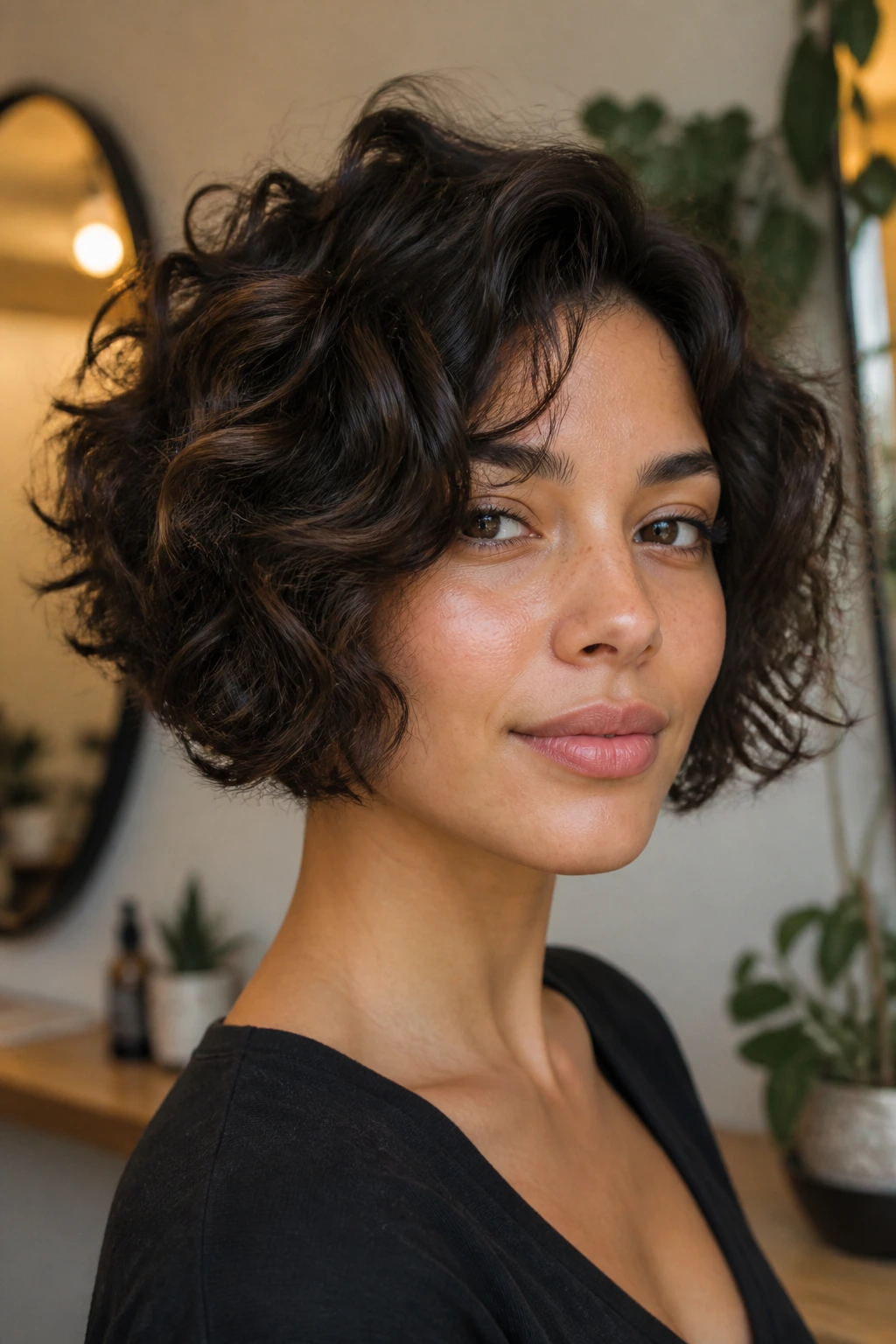
A jaw-length bob can look fierce on a diamond face when it’s layered lightly through the ends. The jawline gets a little more presence, which balances the width at the cheekbones, and the layers stop the cut from feeling like one solid block. That extra movement matters more than people think.
I like this cut for curls that want to expand a little on their own. It gives them a place to land without creating a shelf around the cheeks. If your curls are dense, ask your stylist to remove bulk from the inside rather than thinning the perimeter. Thin the wrong spot and the whole shape turns frizzy.
8. Curly Crop With Curtain Bangs
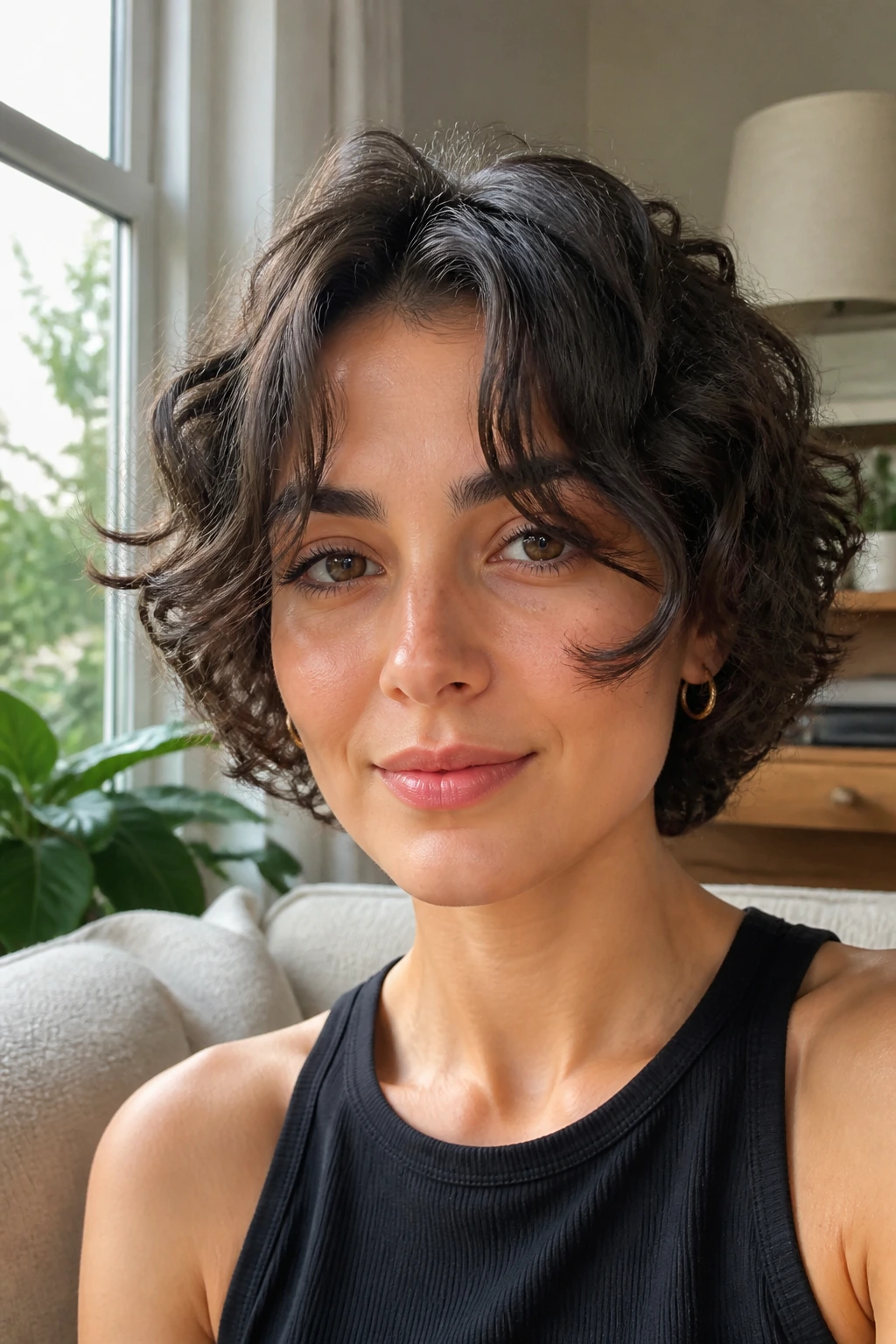
Curtain bangs are one of the easiest ways to make a diamond face feel more open at the forehead. They part in the middle or just off-center and fall away from the face in soft pieces, which takes pressure off the cheekbones. The rest of the crop can stay short and lively.
This cut suits people who want fringe without a heavy bang line. The curls should be long enough to separate into two soft panels, not cut so short that they spring into a top-heavy puff. If you wear glasses, this shape can be especially nice because it keeps the front light and doesn’t crowd the frames.
9. Side-Swept Curly Pixie That Softens the Cheekbones
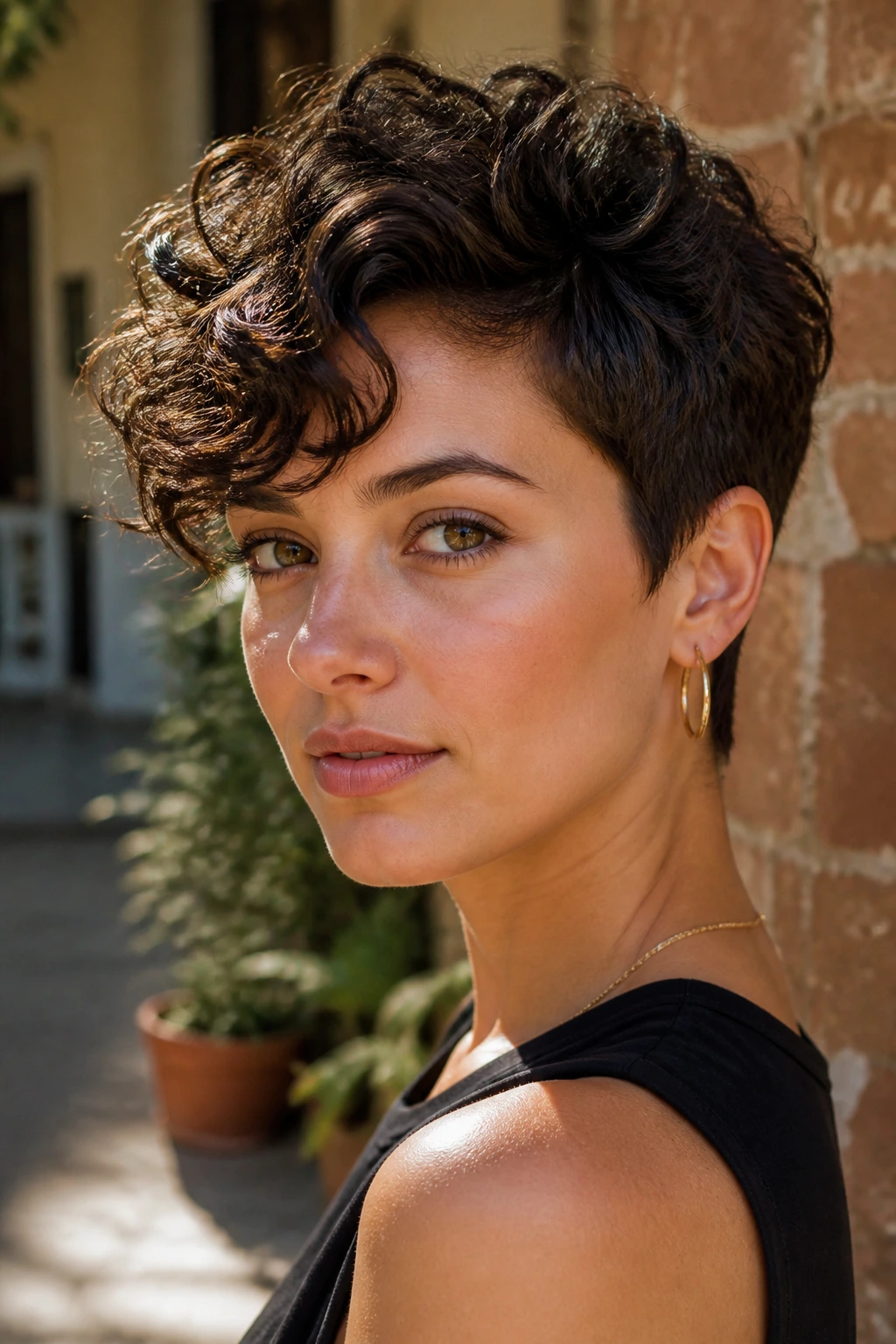
A side-swept pixie changes the story of a diamond face fast. The sweep cuts across the forehead at an angle, which opens the upper face and breaks up the strong cheekbone line. The sides stay close enough to keep the shape neat, but the top gives you enough curl to keep it from looking flat.
This is a smart choice for fine curls that need lift without a lot of length. It also works for tighter textures if the cut is done dry and the fringe is left a little longer than you think you need. Short, yes. Severe, no.
10. Textured Mushroom Bob With a Tapered Nape
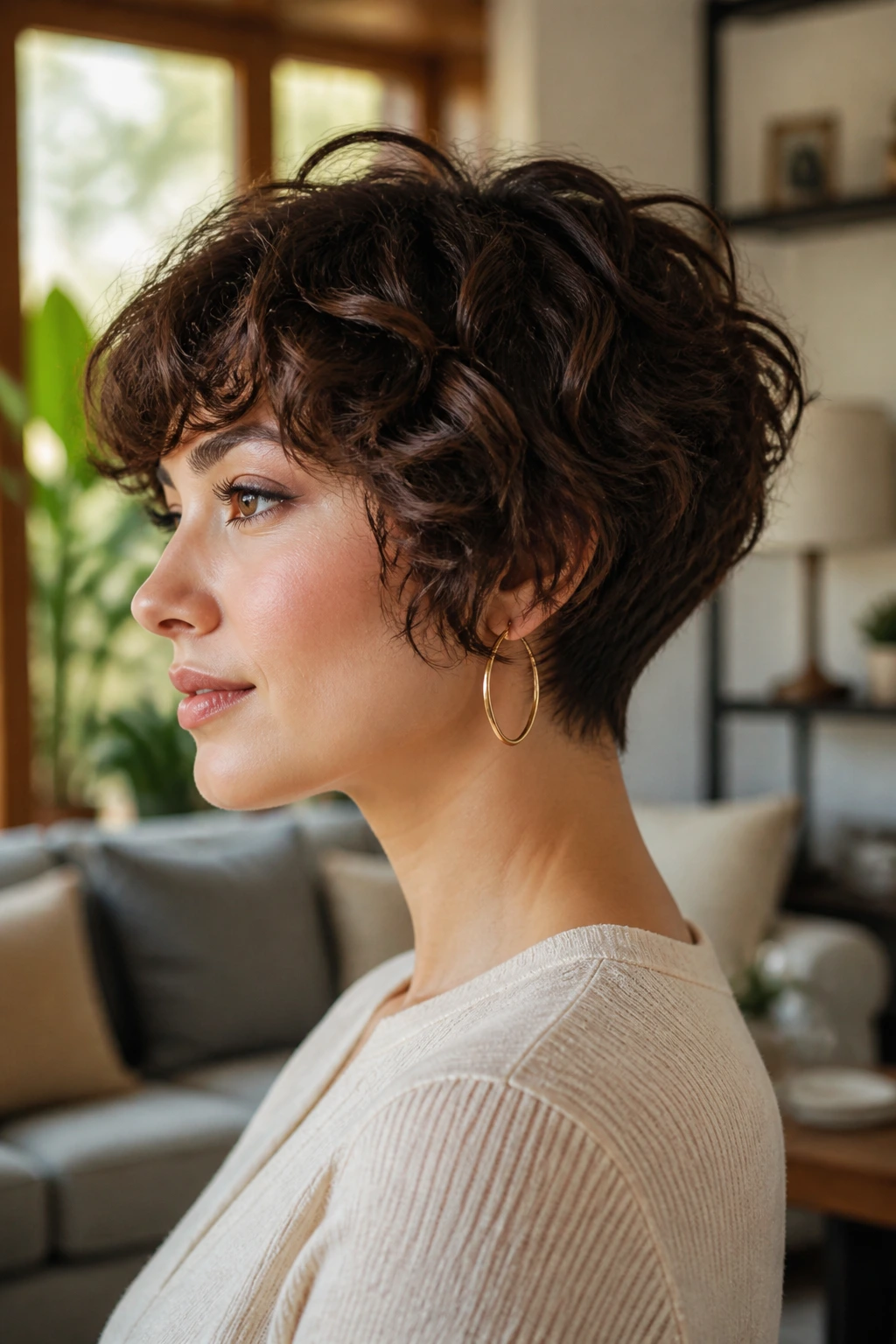
This one sounds more costume-y than it looks. On curls, a mushroom bob becomes a rounded, textured shape that sits close to the head and widens gently around the crown and sides. That can work well on diamond faces because it adds visual softness near the temples without turning into a triangle.
The tapered nape keeps the back neat so the shape doesn’t mushroom too low. That’s the mistake people make with this cut: they let the back drag, and then the whole thing looks heavy. Keep the perimeter lively and the fringe slightly broken, and it feels modern instead of retro for retro’s sake.
11. Wedge Cut for Curls and a Clean Back Line
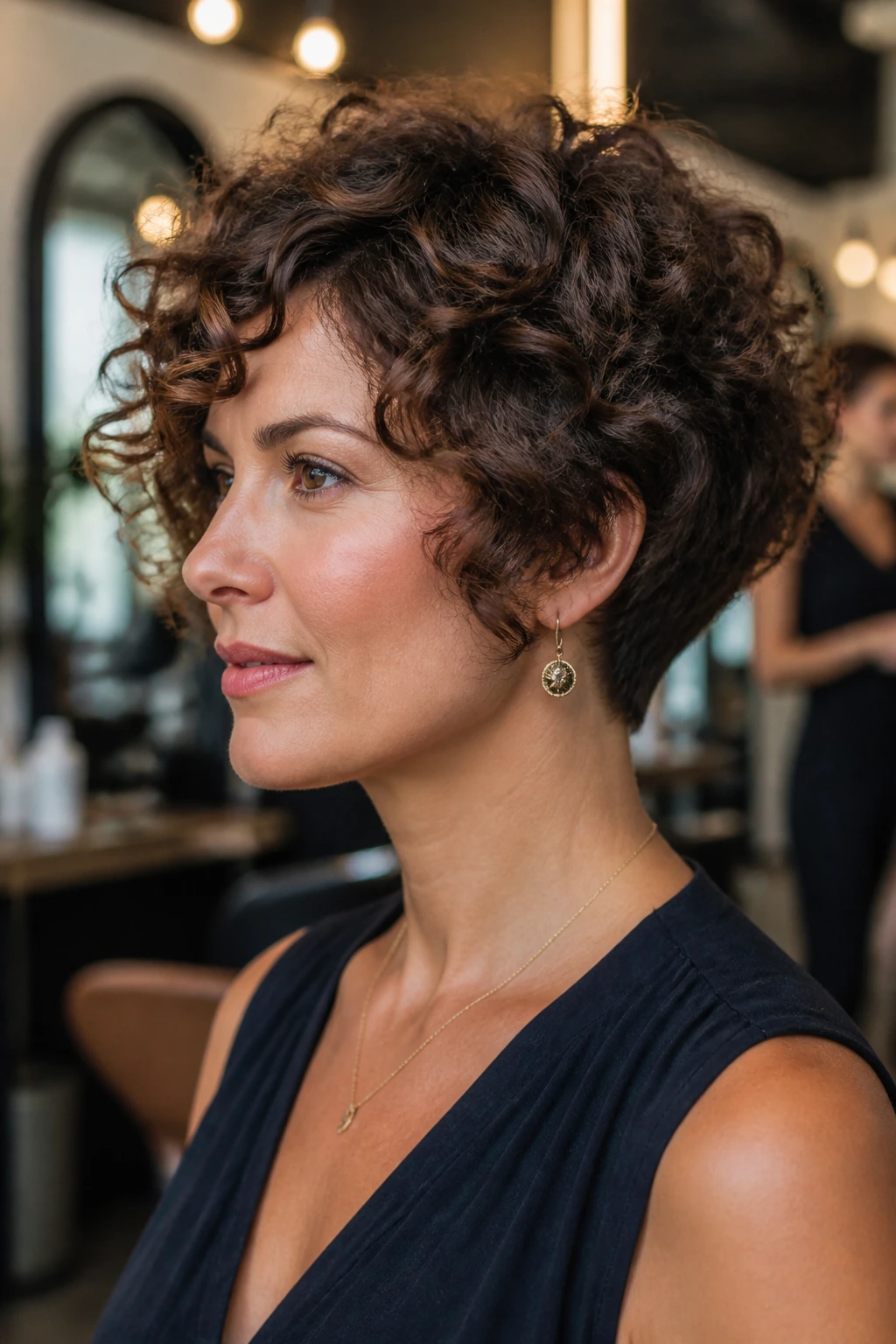
A wedge cut gives you structure without stiffness. The shorter back supports the crown, while the front layers remain long enough to soften the face. On a diamond face, that back lift can be useful because it stops the silhouette from widening only at cheekbone level.
I like this more for medium to thick curls than for very fine ones. Fine hair can lose too much weight in the back and collapse. Thick curls, on the other hand, get shape and control. Ask for a soft wedge, not a hard 1980s triangle, unless you want the haircut to make a statement. If you do, fine. Just know what you’re asking for.
12. Curly Bixie With a Longer Top Layer
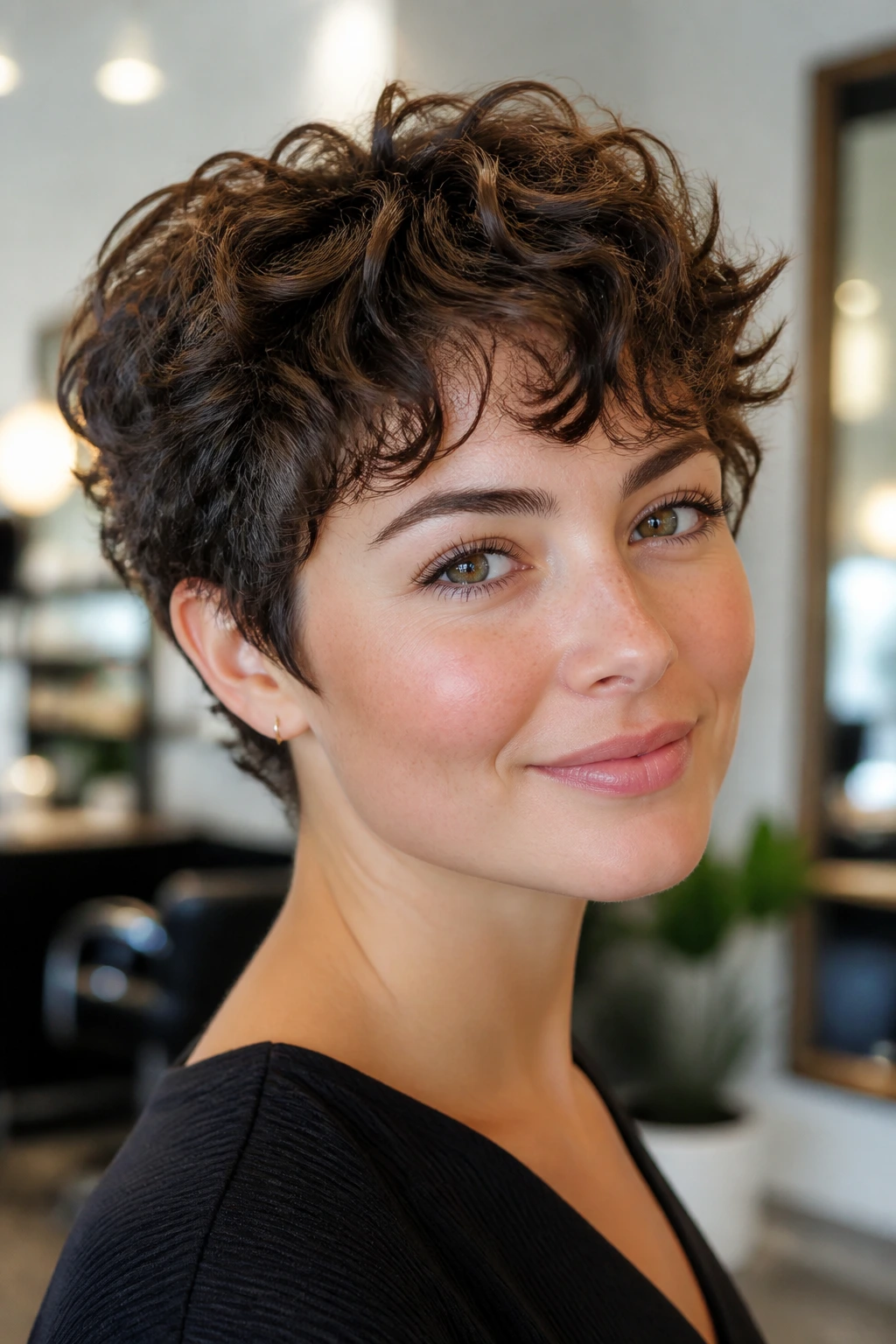
The bixie sits between a bob and a pixie, which makes it one of the most forgiving short cuts for diamond faces. The longer top layer gives you lift, the shorter sides keep the shape close, and the fringe can be shaped to open the forehead without swallowing it. It’s a useful middle ground.
This cut works because it creates movement in more than one direction. You get softness at the temples, some width at the crown, and enough length around the face to keep the cheekbones from feeling overexposed. If you like to finger-style your curls and move on with your day, this one earns its keep.
13. Neck-Length Blunt Bob With Hidden Internal Layers
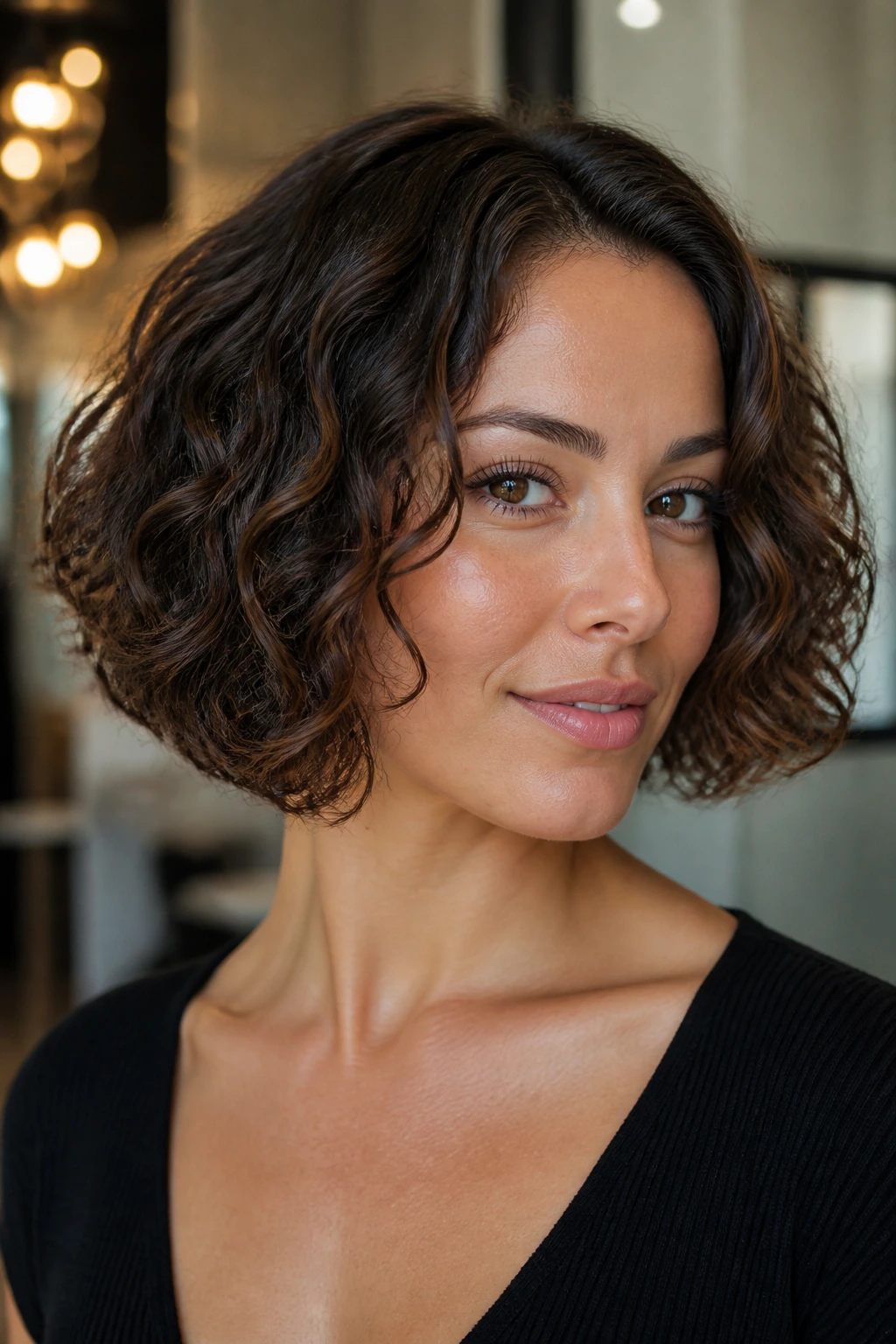
A blunt outline can look very chic on a diamond face if the inside of the cut is softened. That’s the trick. The perimeter gives the bob a clean edge, while the hidden layers keep the curls from building too much volume right at the cheekbones.
This shape is good for people who like polish but do not want a haircut that feels fussy. It’s especially nice on looser curls and waves that can hold a smooth line without losing all texture. If your curls are dense, make sure the stylist removes weight underneath so the bob doesn’t puff outward into a square. Nobody wants that.
14. Deva-Cut Bob Shaped Curl by Curl
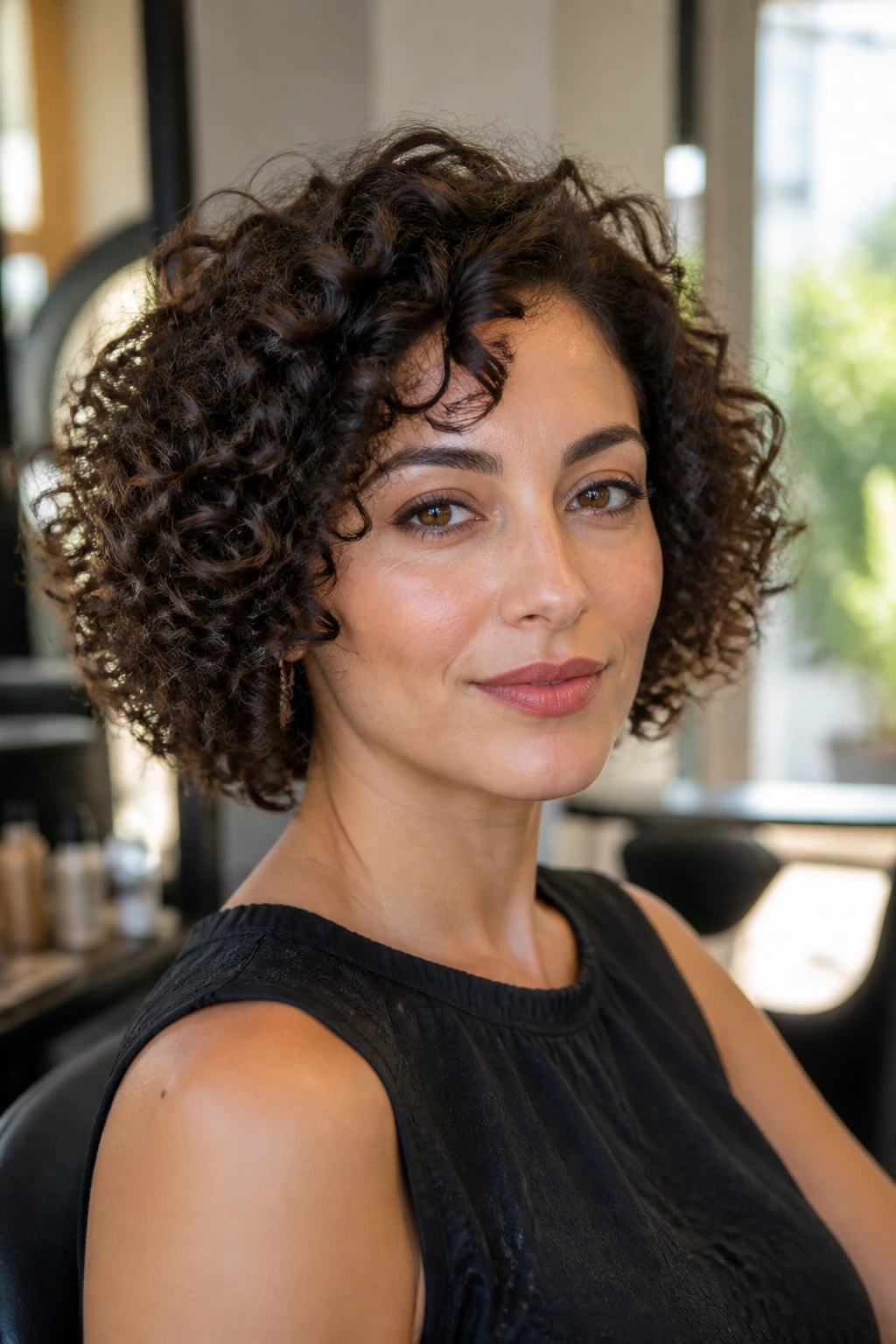
If your curls have their own ideas, a Deva-cut style bob is worth a serious look. The cut is shaped curl by curl, which means the stylist works with the way each ringlet sits instead of guessing from a wet outline. On a diamond face, that precision helps the bob land where you actually want it.
The beauty of this approach is that it keeps the side pieces from collapsing into the cheekbones. Each curl can be left a touch longer or shorter depending on where the balance needs help. It’s not the cheapest option, and I won’t pretend it is. But if your hair gets awkward in generic bob cuts, this can fix a lot.
15. Mini Wolf Cut With Choppy Crown Pieces
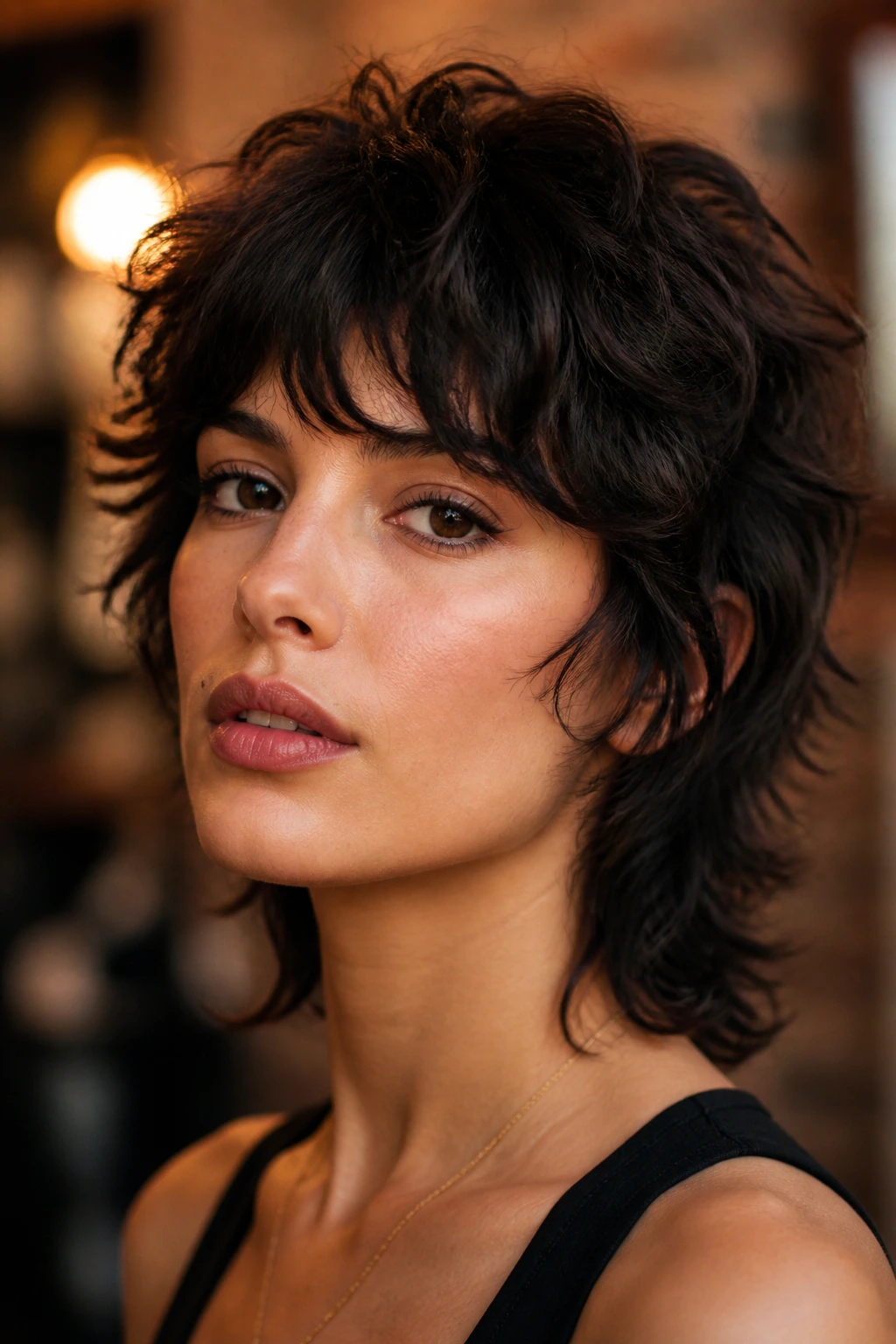
A wolf cut can go too far on short curls if the layers are overdone, but a mini version is another story. The choppy crown pieces create height, the fringe breaks up the forehead, and the bottom stays soft enough to keep the face from looking too wide in the middle. It has edge without the full mullet drama.
This one is best when you want texture and movement more than precision. It suits curl patterns that like to puff and separate, because the whole point is to let the hair look a little wild. On a diamond face, the height at the crown and the looseness around the jaw help keep the eye moving instead of parking on the cheekbones.
16. Side-Parted Tapered Afro With a Narrow Nape
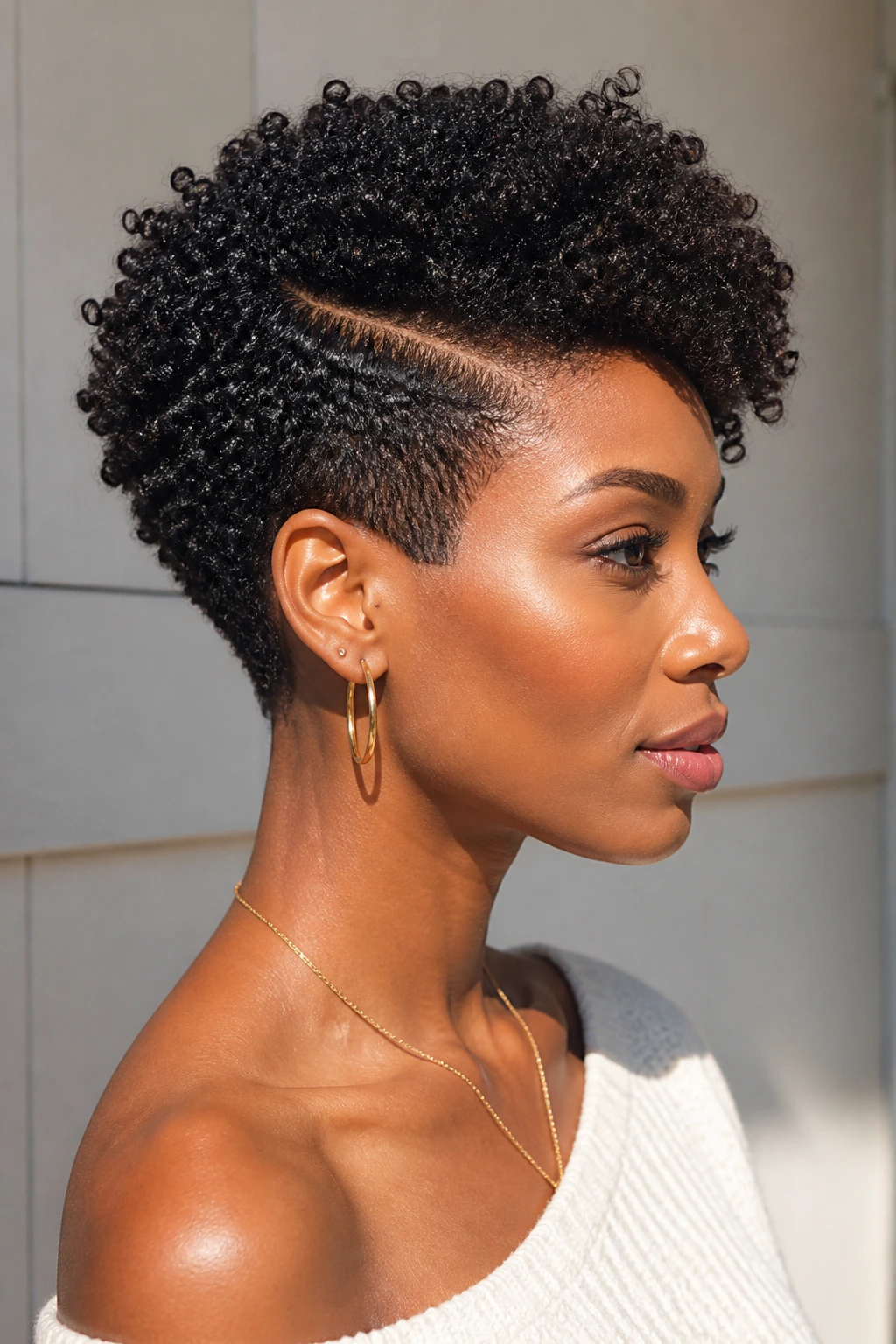
A tapered afro can be gorgeous on a diamond face because it creates shape where the face needs it most: around the top and outer edges. A side part makes the forehead feel wider, while the tapered nape prevents the lower half from getting too heavy.
This is one of those cuts that looks deliberate in a strong way. The silhouette matters. Ask for enough shape through the sides to keep the cut rounded, but not so much bulk that the widest point of the hair sits squarely on the cheekbones. A little lift, a little taper, and the whole thing comes alive.
17. Curly Crop With a Long Side Fringe

If the forehead feels narrow, a long side fringe can solve more than people expect. It drops diagonally across the face, which softens the upper half and shifts attention away from the center. The crop itself can stay short and neat, which keeps the curls from overwhelming the face.
I like this on 2C to 3B textures, where the fringe can bend and separate instead of hanging like a wet rope. The longer front also gives you styling options: tuck it, pin it, let it fall. That flexibility is useful when you don’t want your haircut to feel identical every single day.
18. Ear-Length Ringlet Bob With Rounded Ends
Ear-length sounds short, and it is. But when ringlets are shaped into a rounded bob, the result can feel charming rather than severe. The rounded ends keep the silhouette soft, and the short length opens the neck and jaw in a way that can help a diamond face feel less top-heavy.
The catch is curl pattern. This cut sings on defined spirals that hold their shape cleanly. If your curls are frizz-prone and loose, the bob can spread outward too much. In that case, ask for a little extra length in the front and enough interior shaping to keep the outline neat.
19. Short Shag With Micro Layers and Movement
A short shag is for someone who likes texture first and precision second. The micro layers lift the curls at different heights, which keeps the shape from sitting right on the cheekbones in one heavy mass. On diamond faces, that scattered movement is useful. It takes pressure off the widest part of the face.
This cut can look especially good if you air-dry and never want to touch a round brush again. The less you flatten it, the better it behaves. It does need a stylist who knows how to stop before the layers get too shredded. Once that happens, the cut loses its shape fast.
20. Undercut Curly Crop With Lift on Top
An undercut gives you control where thick curls tend to get bulky, which is the whole point. The top stays full and springy, while the sides and nape are trimmed closer so the hair doesn’t flare out near the cheekbones. That can be a very good trade on a diamond face.
I like this cut for dense 3B through 4A curls, especially when the wearer likes bold silhouettes. It’s not subtle, and that’s fine. The top can be styled forward, upward, or slightly off-center, which lets you choose whether the forehead or the crown gets more visual attention on any given day.
21. Fluffy Rounded Crop That Sits Close to the Head
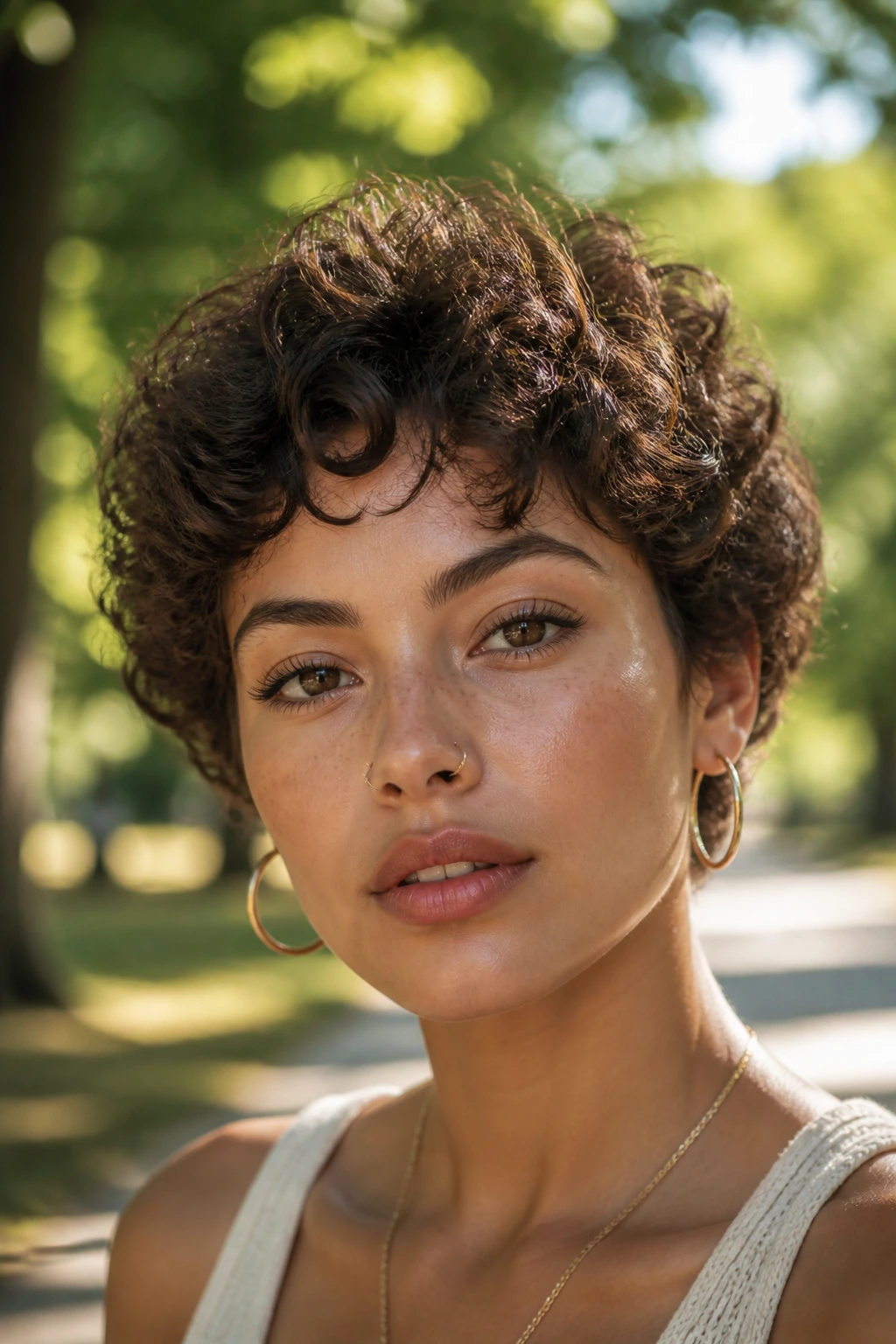
A rounded crop can look soft instead of severe when the curls are left fluffy and the edges are gently shaped. The hair sits close to the head, but not flat, which matters. On a diamond face, this gives you a halo effect without creating too much width at the cheekbones.
This is a strong choice for fine to medium curls that need body more than length. It’s also a nice option if you wear earrings and want the haircut to leave them visible. The outline should feel full but compact, like a soft cloud rather than a puffed-out triangle.
22. Angled Curly Lob With a Shorter Back
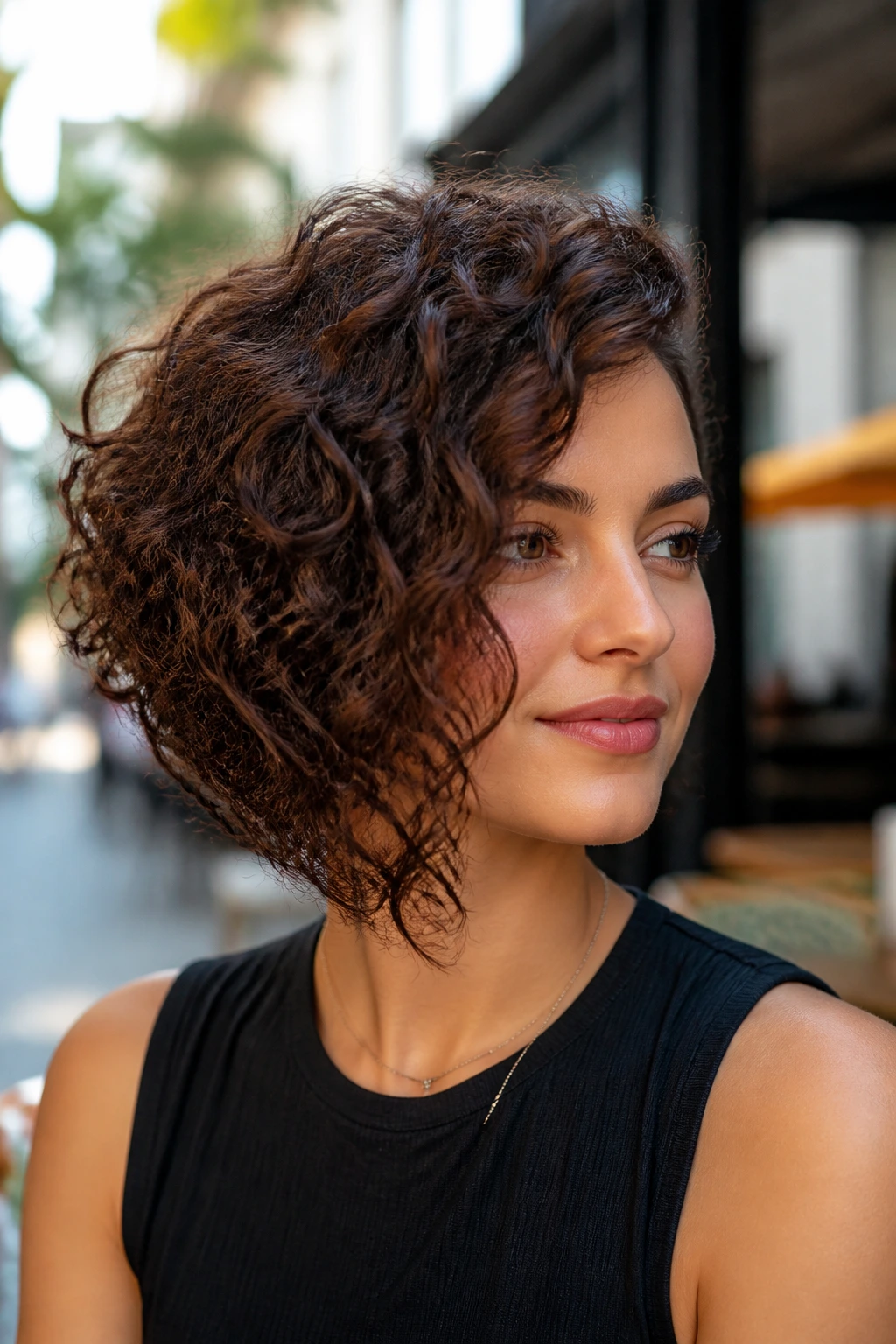
A lob is not the shortest option on this list, but the angled version earns its place because it changes the face in a useful way. The shorter back keeps the shape light at the nape, while the longer front pieces stretch the line downward and soften the cheekbone width. That diagonal does a lot of work.
This cut is smart if you want a short haircut without going too far up the neck. It gives the curls enough length to settle, but not so much that the style loses energy. If your face shape feels narrow through the forehead, a side part or swept fringe can make the angle even kinder.
23. Graduated Curly Bob With a Lively Nape
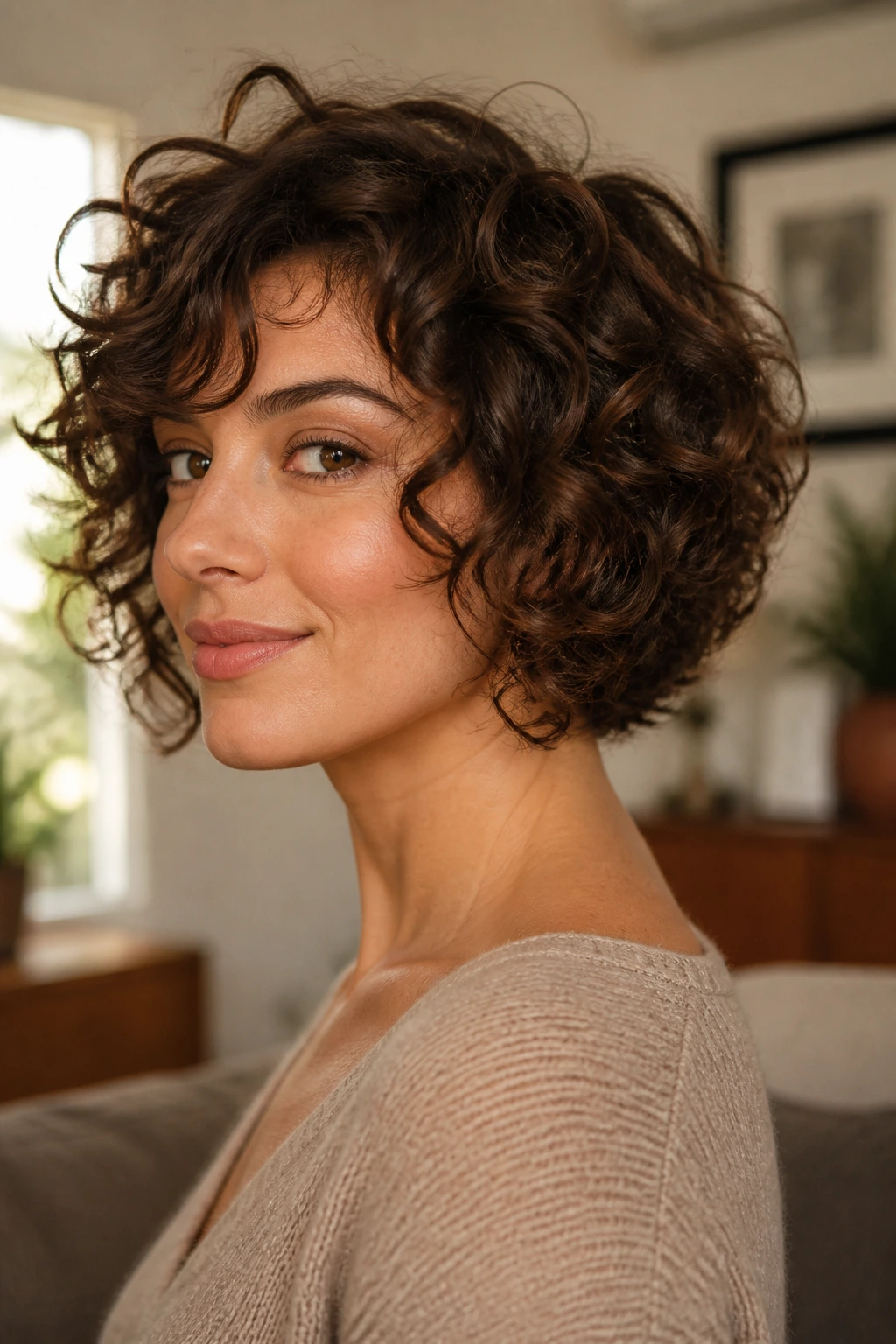
Graduation in a curly bob means the back is slightly stacked so the shape lifts instead of drooping. On a diamond face, that lift can keep the cut from spreading too wide across the cheeks. The front stays soft and a little longer, which helps balance the face’s natural taper.
This one is good when you want a haircut that looks tidy from behind but not stiff from the front. It’s a sharper shape than a shag, less delicate than a French bob, and more structured than a bixie. If your curls need a little backbone, this is a strong option.
24. Pin-Curl Tapered Cut With a Retro Shape
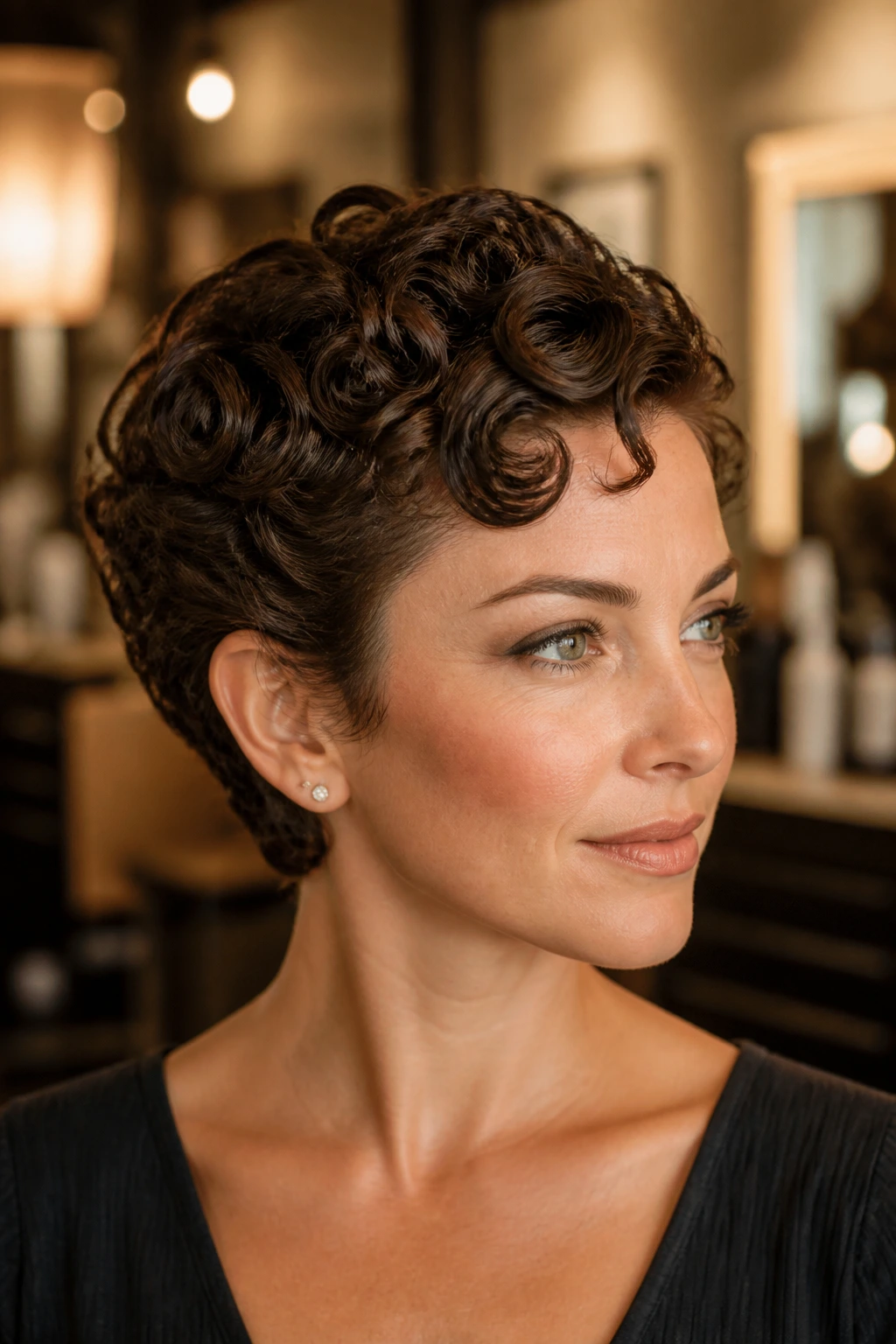
A pin-curl tapered cut leans into definition. The curls are shaped so they sit in neat, compact forms, while the sides and nape taper down for a cleaner outline. On a diamond face, the taper helps keep the silhouette from widening where the cheekbones already do plenty of work.
This cut has a retro feel, but it doesn’t have to read costume-y. The key is not making the top too tall. Keep the crown rounded and the fringe soft, and the whole style feels polished. It’s a good choice if you like a little order in your curls.
25. Curly Pageboy With Soft, Broken Ends
A pageboy sounds old-school, and honestly, that can be part of the charm. On curls, the rigid bowl shape softens into something more wearable when the ends are broken up a little. For a diamond face, the clean perimeter can help widen the lower face just enough without adding puff at the cheekbones.
I’d recommend this if you want a short cut that reads neat from a distance but still has texture up close. A full, heavy pageboy can feel closed in. The broken ends are what keep it modern and stop the curve from feeling helmet-like.
26. Bob With Face-Framing Tendrils at the Cheekbones
This is one of the easiest ways to soften a diamond face without giving up the bob silhouette. A few longer tendrils drop around the cheekbones and jaw, which breaks the hard edge of the face shape. The rest of the bob can stay compact and short.
The beauty here is control. You can wear the bob pinned back, tucked, or air-dried, and the face-framing pieces do the work even on low-effort days. Just don’t let the tendrils stop exactly at the widest point of the cheekbone. A little longer usually looks better.
27. Tucked Curly Bob With a Deep Side Part
Tucking one side behind the ear sounds simple, and that’s exactly why it works. A deep side part opens one side of the forehead, while the tucked side exposes the jaw and cheekbones in a cleaner, less symmetrical way. Diamond faces usually look better when the shape is slightly offset like this.
This cut is less about the haircut itself and more about the styling habit. The bob should have enough length to tuck on one side without becoming lopsided. It’s a good pick if you like a finished look with minimal effort and don’t mind changing your part once in a while.
28. Petite Curly Afro With Tapered Sides
A petite afro can be incredibly flattering on a diamond face when the sides are tapered and the top stays rounded. That creates width in a controlled way, which helps the face feel more balanced without sending the volume all the way out to the cheekbones.
This shape works especially well on tighter coils because the texture builds its own architecture. The taper keeps the perimeter clean, and the rounded top gives the face a softer frame. It’s a confident cut, but not an aggressive one. There’s a difference.
29. Layered Crop With a Soft Nape
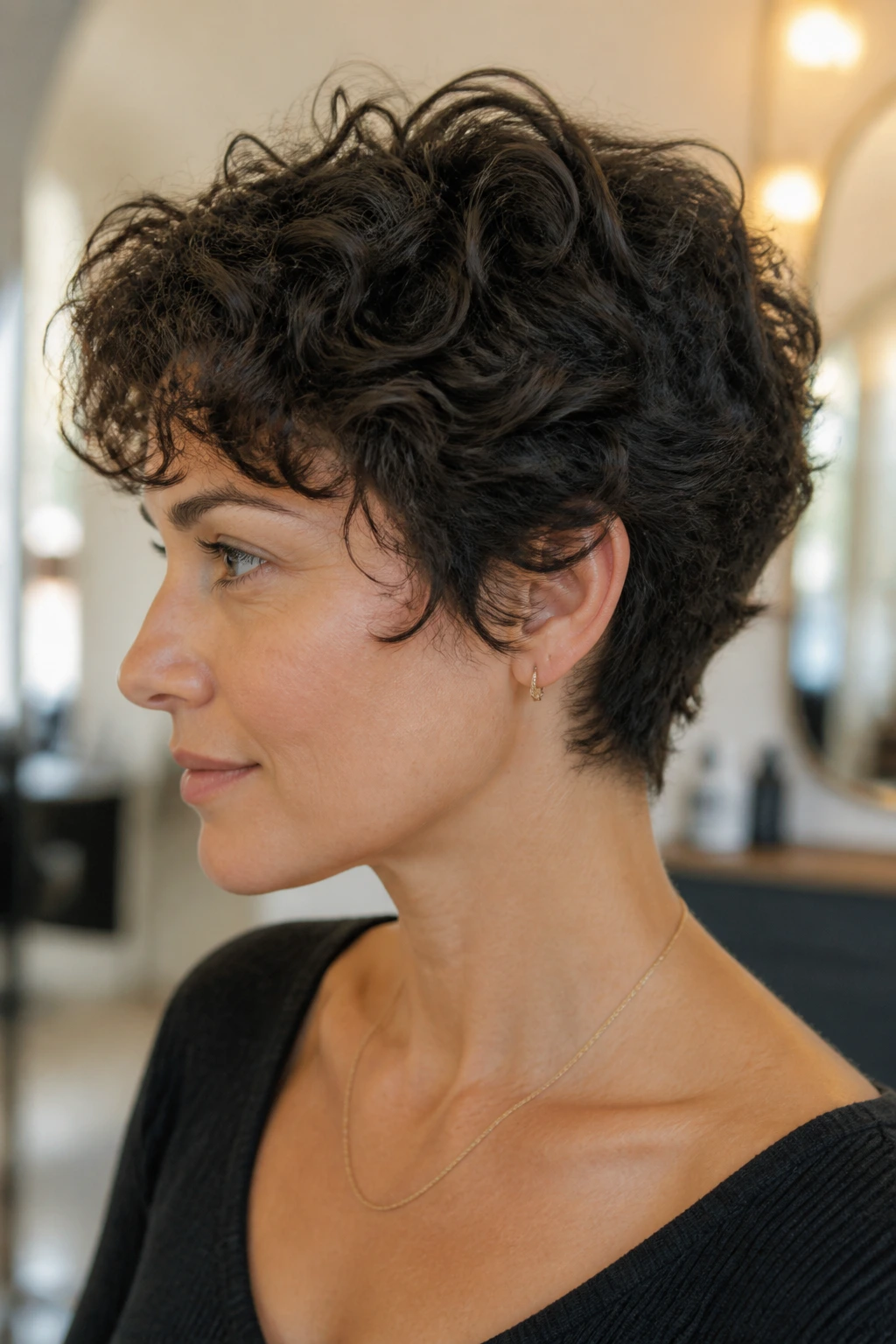
A soft nape matters more than people think. If the back is too blunt, the cut can feel boxy; if it’s too wispy, it loses structure. A layered crop with a gentle nape keeps the back neat and lets the front curls fall in a way that plays nicer with the narrow chin and forehead of a diamond face.
This one suits people who want movement without a lot of styling drama. It can air-dry, diffuse, or be finger-styled in a few minutes. The whole point is a tidy outline that still feels alive when you turn your head.
30. Chin-Skimming Curly Mullet Lite

A full mullet is a choice. A mullet lite is more useful. The front and sides stay short enough to keep the face open, while the back hangs just a little longer to stretch the silhouette downward. On a diamond face, that little extension can stop the cut from feeling too centered around the cheekbones.
I like this for people who want a bit of edge without going all the way into punk territory. The curl pattern should have enough texture to keep the contrast intentional. If the back gets too long, the balance shifts. Keep it playful, not shaggy in a forgotten way.
31. Rounded Pixie Bob With a Plush Crown

This hybrid cut gives you the neatness of a bob and the lift of a pixie. The crown stays plush, the sides stay compact, and the overall outline remains soft instead of angular. That’s a good match for diamond faces because the extra height up top takes the pressure off the cheekbones.
It’s also one of the easier short styles to grow out. The shape moves cleanly into a longer bob without going through a weird half-stage for months. If you want short curls with a little cushion around the head, this is a smart one.
32. Curly Crop With a Bottlebrush Fringe
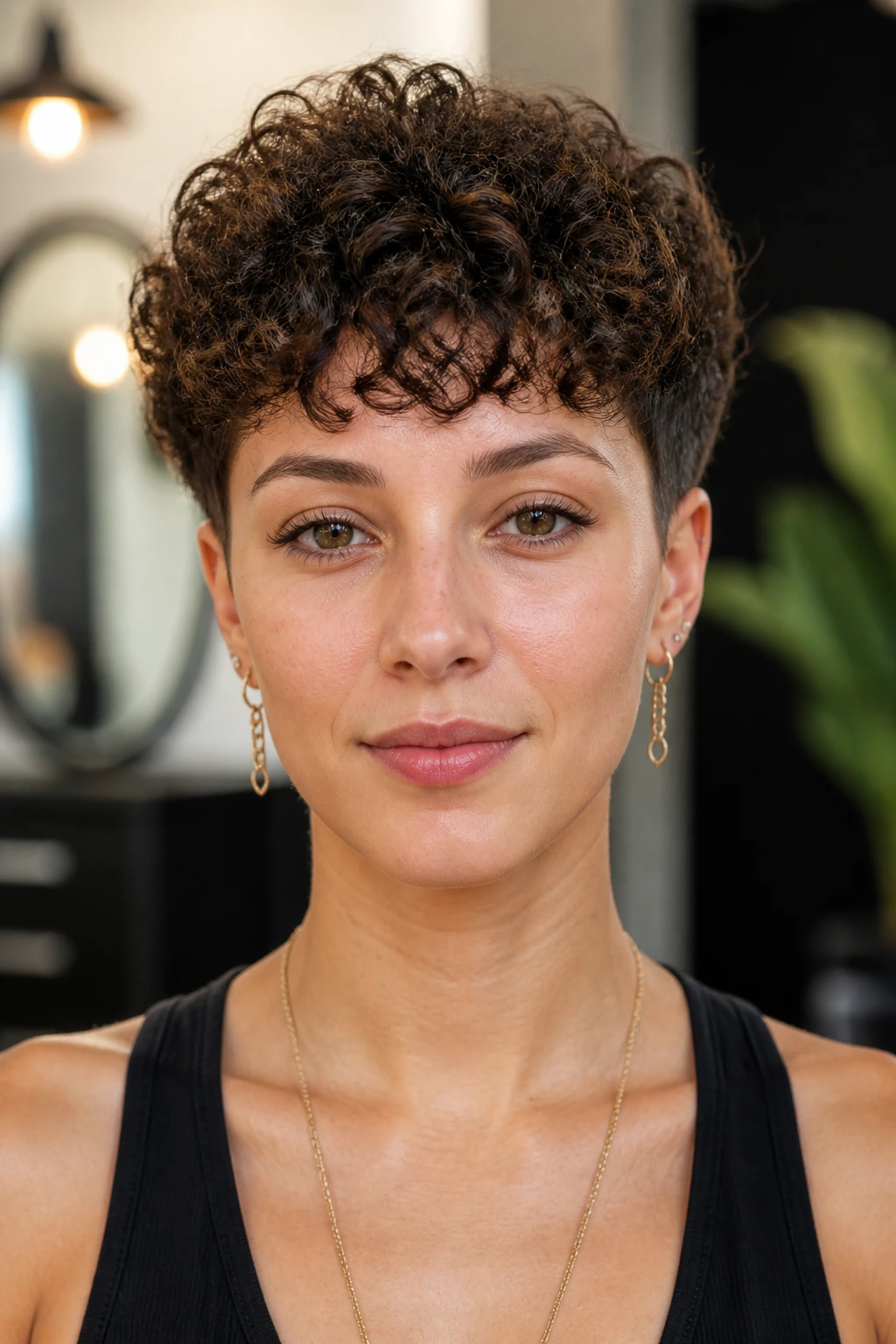
A bottlebrush fringe sounds dramatic, but the idea is simple: let the fringe stand up with texture and soft direction instead of sitting flat across the forehead. On a diamond face, that fringe adds width to the upper face, which helps balance the cheekbones and chin.
This cut works best if your curls are springy and enjoy a little lift. It can look especially good when the sides are kept neat and the top has enough length to bend forward. The fringe does need a bit of product, though. Too much cream and it collapses; too little and it frizzes out.
33. Cropped Curly Cut With Invisible Layers
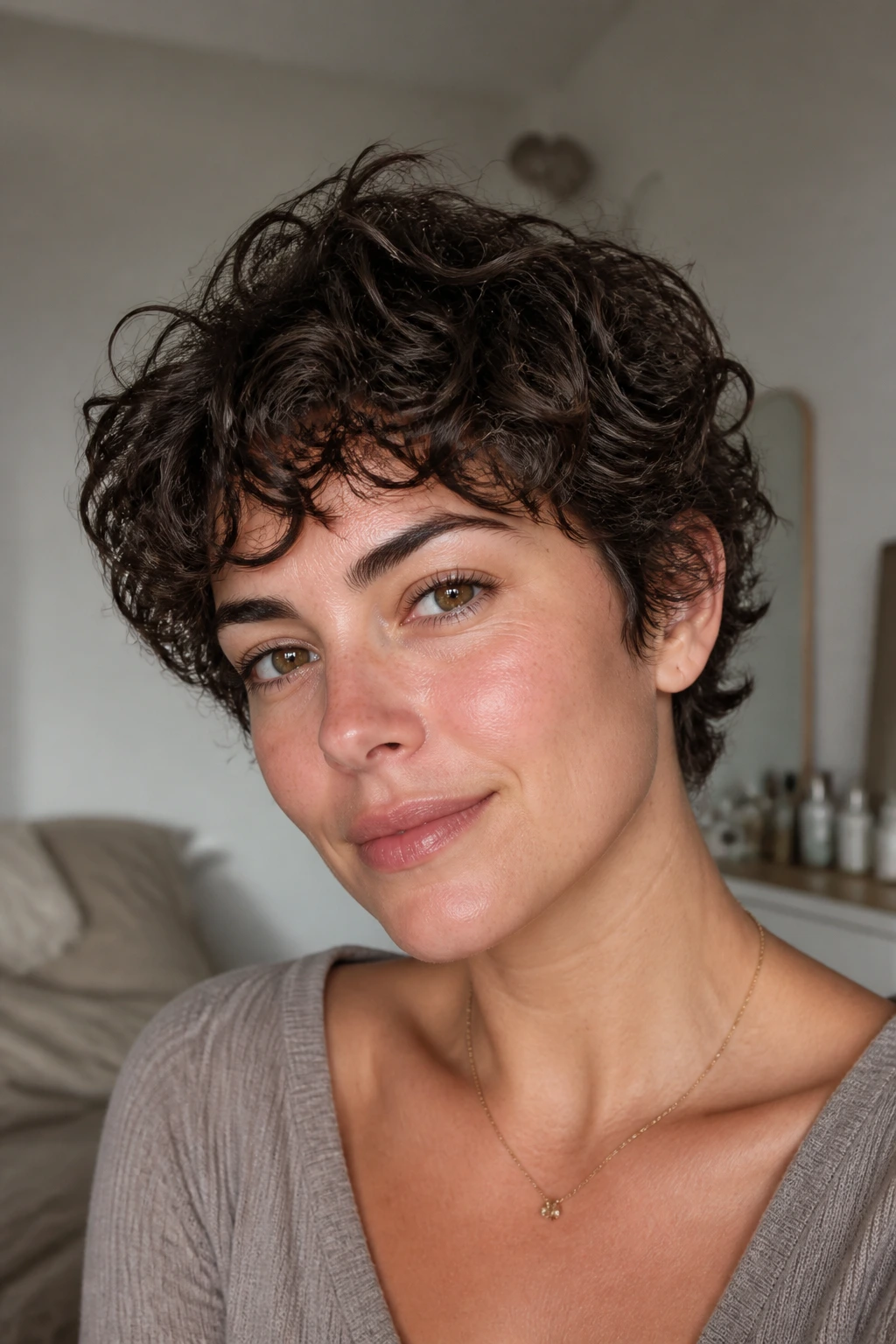
Invisible layers are the quiet hero of short curly haircuts for diamond faces. You get movement without chopped-up ends, and the silhouette stays soft around the widest point of the face. The cut looks simple from a distance, which is often the nicest result.
This is a good final option if you want something that won’t age badly in photos or in person. The shape depends on smart weight removal, not obvious layer lines. Ask your stylist to preserve a rounded outline and keep the shortest pieces away from the exact cheekbone level. That one detail changes everything.
What to Ask Your Stylist Before the First Snip
Bring pictures, yes, but bring one more thing: your actual styling routine. A haircut that looks great with a diffuser and a middle part may collapse if you air-dry and tuck one side back every morning. Diamond faces need a cut that works with how you wear your hair, not just with how it looks in a still photo.
Say where you want the shortest point to land. That sentence matters. If you tell the stylist “around the chin” and leave it there, the finished cut may still sit too high once the curls spring up. Be specific about whether you want the weight below the cheekbones, at the jaw, or slightly longer in front.
If you can, ask for the shape to be checked dry. Curls are honest when they’re dry. Wet hair is a liar with excellent PR.
Essential Tools for Styling These Cuts
-
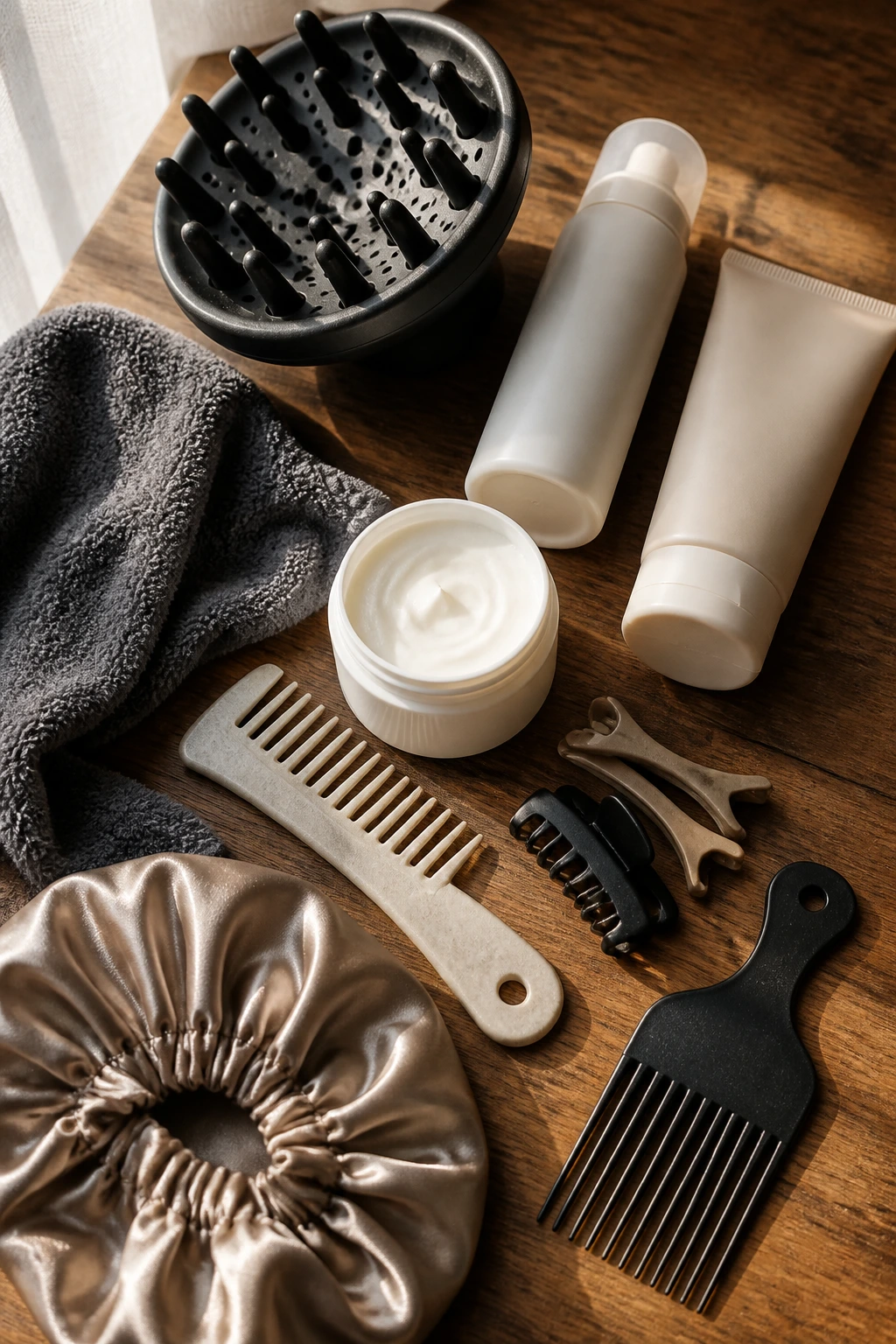
Diffuser attachment: Helps curls dry with lift at the roots instead of collapsing into the sides of the face.
-
Microfiber towel or cotton T-shirt: Cuts down on rough frizz when you scrunch out water.
-
Wide-tooth comb: Good for detangling in the shower without stretching the curl pattern too much.
-
Curl cream: Best when you want soft definition and a little control on air-dry days.
-
Light mousse: Useful for fine curls or any cut that needs volume without weight.
-
Strong or medium-hold gel: Keeps short curls from puffing out into a halo when humidity shows up.
-
Small clips: Handy for pinning a fringe, training a side part, or setting the crown while drying.
-
Satin bonnet or pillowcase: Helps short curls keep their shape overnight instead of getting flattened on one side.
-
Pick or root lifter: Good for rounded afros and cropped shapes when you want to wake up the top without disturbing the ends.
Smart Cut and Product Choices for a Diamond Face

The biggest decision is where the shape carries weight. If the curl is fine, a light mousse and soft layers can keep the haircut from lying flat against the temples. If the hair is dense, a curl cream plus gel combination usually works better, because it holds the curl pattern while keeping the outline from exploding outward. Heavy cream on fine hair tends to drag the whole cut down. It’s a common mistake and an annoying one.
Fringe choice matters, too. Side-swept fringe and curtain bangs usually flatter diamond faces because they widen the forehead a little. Straight-across bangs can work, but they need softness at the edges. Otherwise they can box in the face and make the cheekbones look harsher by contrast.
One thing I’d pay attention to: where the curl lands once it dries. Ask your stylist to account for shrinkage, especially if you wear your hair natural most days. A jaw-length bob on wet hair may turn into a cheekbone-length puff when dry, and that changes the shape more than you’d think.
How to Wear These Cuts Day to Day
Air-Dried:
If your curls already have a clean pattern, a little leave-in and curl cream may be enough. Scrunch, part while damp, and leave the crown alone so it doesn’t flatten into the forehead.
Diffused:
Use low heat and low speed. Start at the roots, not the ends, because diamond faces usually look better when the crown has a touch of lift. Dry the front first if you want to control where the fringe falls.
Pinned or Tucked:
A side tuck can soften a strong cheekbone line in a nice, easy way. One small clip near the temple changes the balance more than people expect.
Finished and Glossy:
For sharper cuts like the blunt bob or pageboy, use a tiny amount of serum on the ends only. Keep it off the roots or the shape will slump.
Loose and Fluffy:
If you like volume, go for it, but keep the fullness above and below the cheekbones rather than parked right on them. That’s the trick that stops the face from reading wider than it is.
Common Mistakes That Throw Off Diamond Face Balance
The first mistake is cutting the shortest layer at cheekbone level and calling it balance. It usually does the opposite. The cut makes the widest part of the face and the widest part of the hair compete with each other, and the result can feel crowded. Move the shape a little higher or lower.
Second, people thin out the sides too aggressively. That sounds helpful until the cut turns wispy and uneven. Diamond faces need softness, yes, but they do not need the silhouette to lose its structure. Internal shaping works better than over-thinning the perimeter.
Third, too much product can flatten a short curly cut fast. A heavy cream on fine curls will make the style hang around the face like damp fabric. Use less than you think, and build only if the hair asks for it.
Fourth, ignoring shrinkage ruins more short cuts than bad scissors do. Curly hair springs up. A lot. If your stylist cuts to the wet length alone, the finished style may land higher than planned and expose more cheekbone than you wanted.
Named Variations and Alternative Approaches

Fine-Curl Featherweight Version:
Use a mousse or foam instead of a rich cream, and keep the layers longer so the shape doesn’t collapse. This works best when your curls are light and your scalp shows through easily at the crown.
Tight-Coil Tapered Version:
Ask for a stronger taper at the sides and nape, with enough length on top to keep the shape rounded. This version keeps the face open and gives tighter textures a clean frame.
Fringe-First Version:
If the forehead feels too narrow, shift the design toward curtain bangs, a side sweep, or a soft bottlebrush fringe. The rest of the cut can stay simple while the front does the balancing.
Low-Maintenance Air-Dry Version:
Keep the layers moderate, avoid over-texturizing, and choose a shape that looks good with minimal hand-styling. This is the version for people who want to wash, scrunch, and go.
Edgier Undercut Version:
If you like contrast, keep the top full and the sides tighter. The face gets more openness around the cheekbones, and the haircut reads bold without needing a lot of daily effort.
Keeping the Shape Between Salon Visits
Short curly cuts need a rhythm. Most pixies and crops want a trim every 6 to 8 weeks, because a half-inch can change the silhouette quickly. Bobs and bixies can stretch closer to 8 or 10 weeks if the shape stays clean. Once the perimeter starts to widen around the cheeks, the diamond-face balance starts drifting.
Night care matters more than people think. A satin bonnet or pillowcase keeps the curls from smashing flat on one side and puffing on the other. In the morning, a quick mist of water with a drop of leave-in can wake up the shape without restarting the whole styling process.
Product buildup is another thing to watch. If the curls start looking dull or sticky, a clarifying wash once every 3 to 4 weeks usually resets them. Too much residue makes short curls lose the lift that the haircut was designed to hold.
Frequently Asked Questions
How short can curly hair go on a diamond face?
Pretty short, as long as the shape gives back some width at the forehead or jaw. Pixies, bixies, and cropped bobs can all work if the crown, fringe, or perimeter is planned carefully. The cut should balance the cheekbones, not stop there.
Do diamond faces look good with a middle part and short curls?
Sometimes, but it depends on the rest of the shape. A strict center part can make a narrow forehead feel narrower, so I usually prefer a soft side part or a slightly off-center part. If you love the middle, add curtain bangs or side pieces to soften it.
Should I avoid blunt bangs?
Not automatically. The issue is not bangs themselves; it’s the heaviness of the line. Blunt bangs that are too dense can box in the face, while soft, curly bangs or broken fringe can look excellent.
What if my curls are fine and flat at the crown?
Choose a cut with crown lift built in, like a bixie, a rounded pixie bob, or a light shag. Then style with mousse at the roots and diffuse upside down for a few minutes. Fine curls usually need more shape support than cream.
Is a dry cut better for short curly haircuts for diamond faces?
Yes, most of the time. Dry cutting lets the stylist see shrinkage, curl direction, and where the weight actually sits. That matters a lot on diamond faces, because a small change in length can shift the balance.
How often should I trim a short curly cut?
Most short curls need a trim every 6 to 8 weeks. If the style is a cropped pixie or undercut, the edges may want attention sooner. Once the sides spread outward, the face can look wider in the middle.
Can an undercut work on a diamond face?
Absolutely, if the top stays soft and full enough to create balance. The undercut reduces bulk where the curls might otherwise puff around the cheekbones, and the top keeps the silhouette interesting. The mistake is shaving too much and leaving the top flat.
What if I want something short but not too boyish?
Go for a rounded bob, a curly bixie, or a French bob with soft fringe. Those shapes stay short but keep enough curve and movement to read gentle rather than severe. A little softness around the brow makes a big difference.
The Shape That Lets the Curls Do the Balancing
The best short curly haircuts for diamond faces do one very specific thing: they stop the cheekbones from doing all the visual work. That can mean a side part, a rounded bob, a crown-heavy pixie, or a fringe that breaks up the forehead just enough to change the proportions. Small choices. Big payoff.
A good cut also respects curl behavior instead of fighting it. Shrinkage, density, and parting habits matter more on short hair than they do on longer lengths, because there’s less room to hide a bad decision. Once the shape is right, though, the hair starts doing the balancing for you. That’s the part I like best.
Pick the silhouette that matches how you wear your curls, then ask the stylist to build the balance around the forehead, jaw, and cheekbones instead of around a generic face-shape chart. Your curls will thank you for the room, and the face shape will look more intentional for it.
