



A curly cut can make hair look alive, or it can turn it into a heavy curtain that hangs at the same level from temple to nape. The difference usually isn’t shampoo, and it isn’t some magic serum with a glossy label. It’s shape. The best defined curly cuts that add volume place the weight where the curl pattern can spring—at the crown, around the cheekbones, along the jawline—then remove bulk where the hair is dragging itself downward.
That matters because curls do their own math. They shrink, stack, splay, and bend in ways straight hair never does, so a cut that looks balanced when wet can sit strangely flat once it dries. A good curly shape doesn’t fight that behavior. It works with it. You get lift without that weird triangular puff that makes people think “layers” and “volume” are the same thing. They’re not. Not even close.
Some of the cuts below are classic and polite. Others are a little bolder, maybe even a little mischievous. All of them solve the same problem: how to give curls room to rise, separate, and show off their texture without leaving the ends limp or the top smashed down.
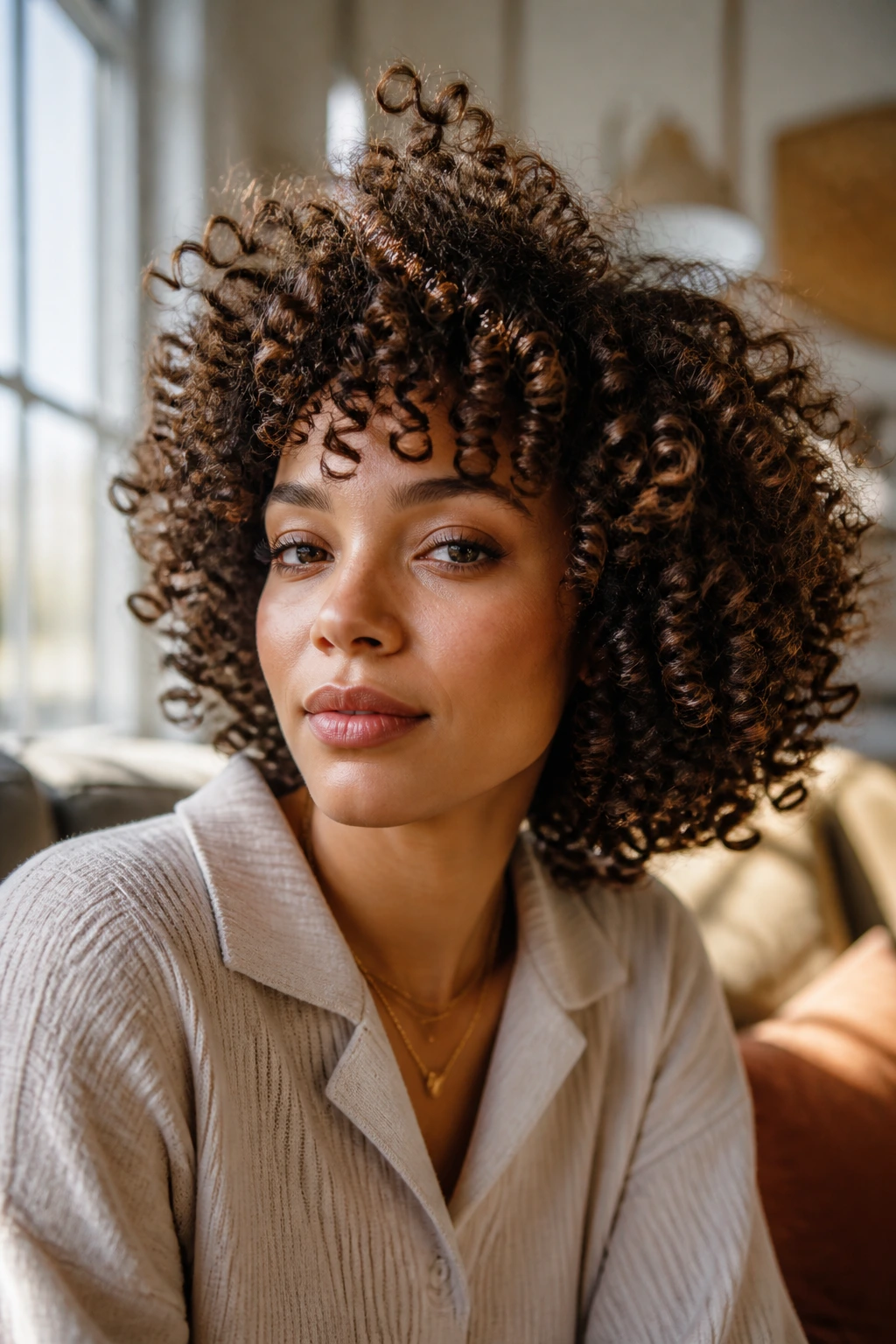
Why These Cuts Work on Curly Hair
-
They move weight off the ends: Curls get dragged down fast when the perimeter is too heavy, so these cuts trim the places that collapse first.
-
They respect shrinkage: A cut that looks a touch shorter than expected when wet usually lands in the right place once the curl springs up dry.
-
They create height where the eye wants it: Crown layers, cheekbone pieces, and lifted napes make the whole shape feel fuller without adding length that just hangs.
-
They separate curls instead of stacking them into one block: That separation is what makes a style read as defined instead of puffy.
-
They make refresh days easier: When the cut is shaped well, second-day curls fall back into place with less scrunching and fewer rescue products.
1. Rounded Chin-Length Curly Bob
This is the bob that saves curls from looking bottom-heavy. A chin-length perimeter keeps the shape buoyant, and a soft roundness through the sides stops the ends from forming a hard shelf. On 2c to 3b hair, that little bit of lift around the jaw can make the whole face look more open.
It works because the cut gives the curls a clear stopping point without letting the length pull everything down. Ask for a blunt-ish outline with soft internal shaping, not shredded layers that leave the ends wispy. The volume comes from the clean edge and the rounded silhouette, not from over-thinning the hair.
2. Dry-Cut Deva Layers
A dry-cut Deva style is one of the most reliable ways to get volume when your curl pattern changes from section to section. The stylist sees each curl in its natural spring, which means the shortest pieces land where they should instead of folding up higher than expected. That keeps the crown from collapsing into the sides.
If your hair has some waves near the front and tighter curls at the back, this cut can save you from the lopsided look that wet cutting sometimes creates. The result feels tailored, not generic. It’s the sort of cut that makes the hair look like it already knew where it wanted to go.
3. Crown-Lift Shag

The shag is doing a lot of work here, and that’s the point. Shorter layers at the crown create lift right where curls tend to flatten, while longer pieces around the neck keep the shape from turning into a fuzzy puff. On medium to thick curls, this cut gives movement that shows up as soon as you turn your head.
The trick is balance. If the top gets too short, the style can pop up like a mushroom. If the lower layers are left too heavy, the lift disappears by noon. The sweet spot is a shag that looks soft from the front and a little wild from the side. It should move, not wobble.
4. Collarbone Lob with Face-Framing Pieces

A collarbone lob keeps the weight off the ends while still giving curls enough length to form a real shape. The face-framing pieces matter here. They pull attention upward and away from a flat crown, especially when they start around the cheekbones instead of the chin. That small shift changes the whole read of the haircut.
This one is especially good if you like enough length for a ponytail but want the hair to bounce instead of drape. Ask for soft layers through the front and a perimeter that doesn’t fall too straight. The ends should have room to curl, not sit in one heavy line.
5. Tapered Curly Pixie
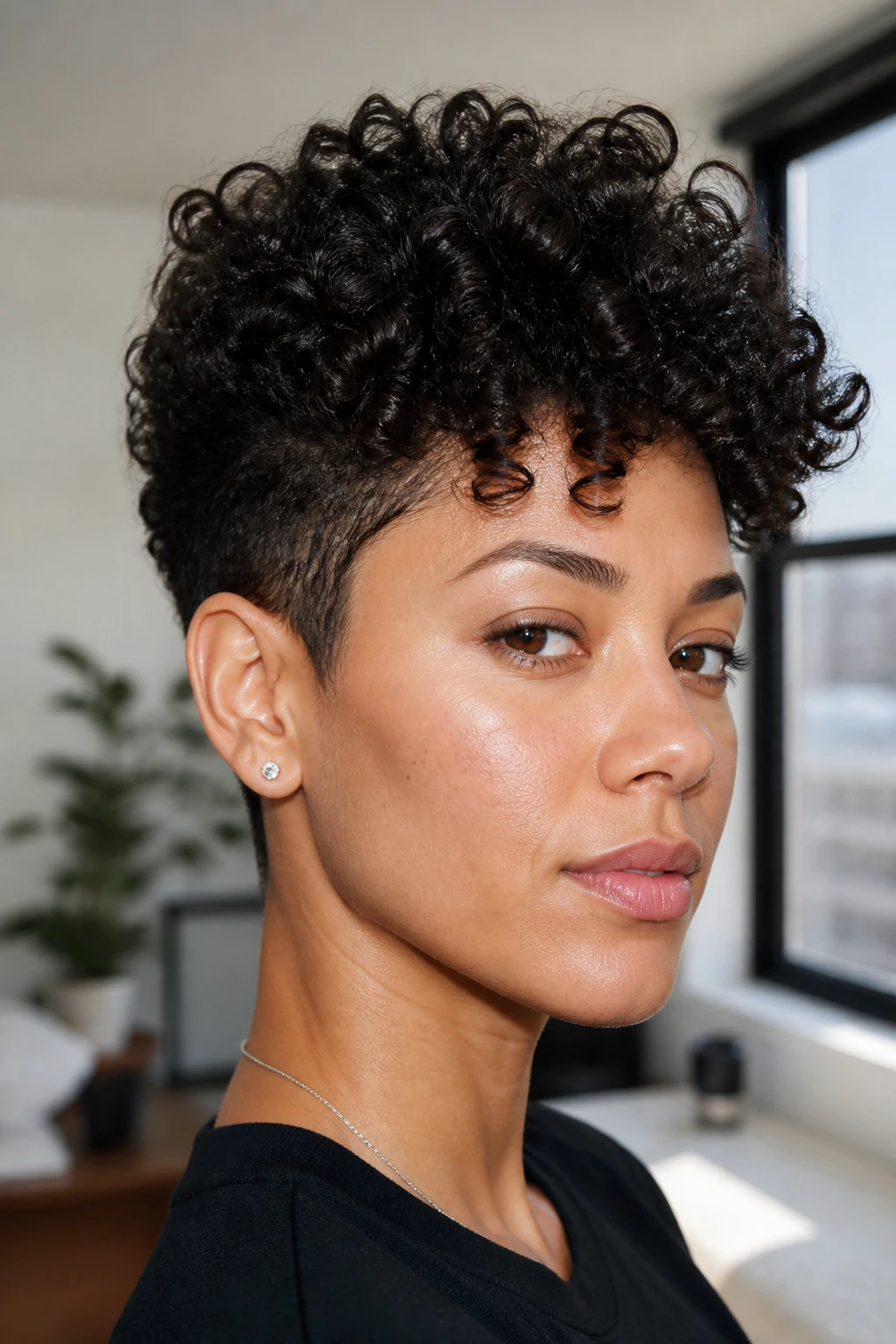
A tapered pixie gives you volume by removing the exact places that steal it. Tight sides and a clean nape let the top rise, and the longer curls up top get to stand on their own instead of being buried under too much bulk. On dense curls, this shape can look unexpectedly full.
It’s not a shy haircut. The whole point is to show the texture. If you want your curls to look airy around the ears and strong at the crown, this is one of the best cuts on the list. The top should feel taller, not puffier.
6. Bixie with a Higher Crown
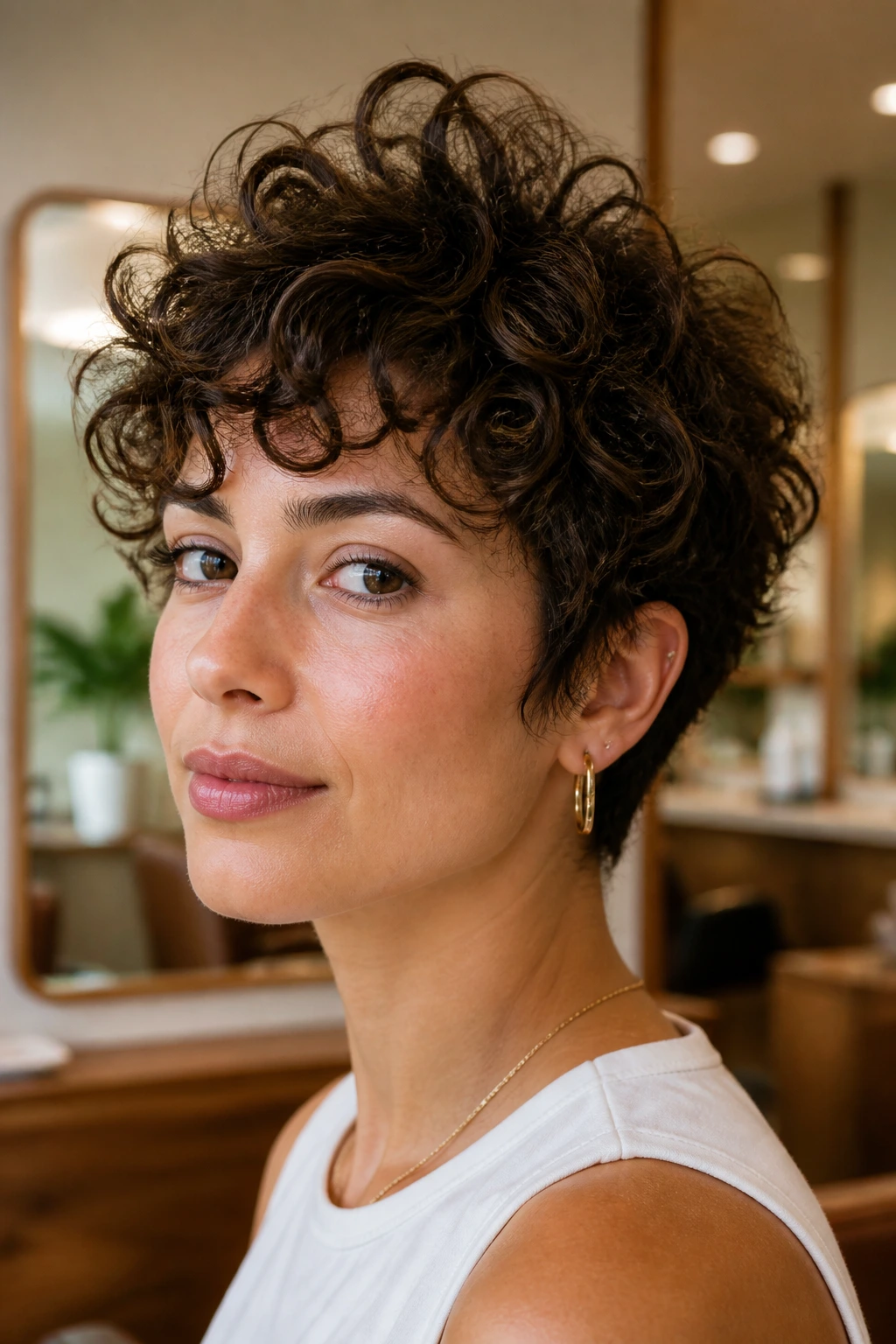
A bixie sits between a bob and a pixie, and that in-between space is where the volume lives. The back stays short enough to keep the silhouette lifted, while the top carries enough length to make the curls stack upward instead of outward. It’s a smart cut for fine curls that need a little drama without a lot of hair.
What makes this shape work is the crown placement. If the crown pieces are cut a bit higher, the style doesn’t collapse when the curls dry. You get a lift that still feels soft and wearable. It’s one of those cuts that looks like more hair than it actually is.
7. Wolf Cut with Soft Ends

The wolf cut can go wrong fast on curls if the layers are too sliced up, but when it’s softened properly, it gives a lot of movement. The short crown layers push the volume up, and the longer ends keep the style from ballooning. Thick curls especially benefit from the uneven energy of this cut.
I prefer this one when the hair needs personality, not polish. It can feel a little messy in the best way, with the front pieces sitting higher and the ends staying loose. The good version of a curly wolf cut looks shaped, not hacked.
8. Collarbone Lob with Internal Layers
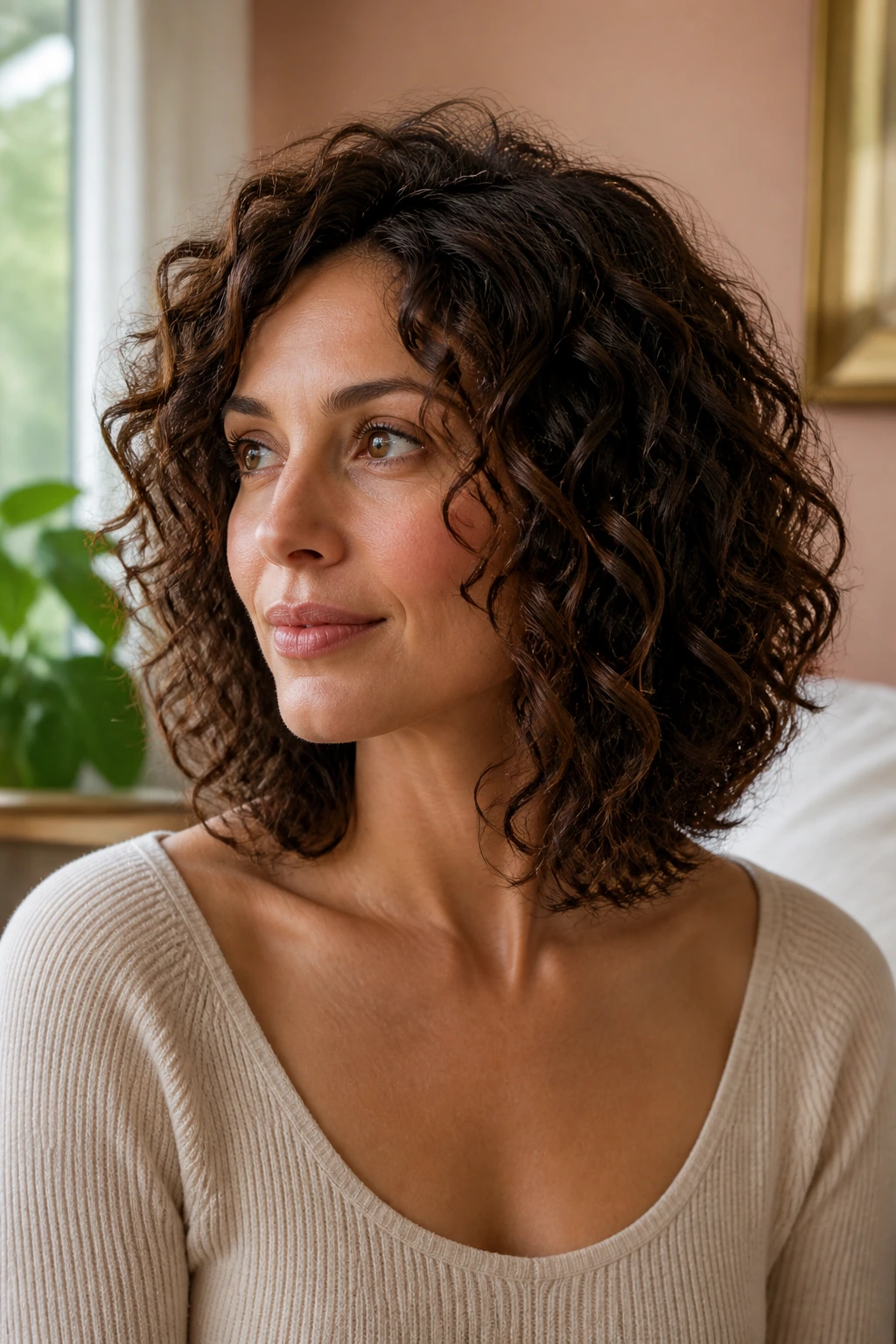
This is the cut for people who want length but keep complaining that their hair looks flat at the roots and bulky at the ends. Internal layers remove weight from inside the shape, so the outside still reads clean while the curls above it get more air and movement. That’s a clever trade.
It works especially well on thick 3a to 3c curls that need freedom without losing their long outline. You still get that collarbone sweep, but the hair doesn’t sit like one dense slab. The lift shows up in motion, not in a chopped-looking finish.
9. French Bob with a Curly Fringe

A French bob hits around the jaw and usually comes with a fringe that’s a little shorter and a little softer than a standard curl bang. That fringe draws the eye up, and the shorter length keeps the curl pattern from dragging itself downward. The result is compact, lively, and full of shape.
This cut is especially nice if your curls spring tighter at the front than in the back. The fringe can give the style a bright, lifted feel even on days when the rest of the hair wants to rest. It’s a small cut with a surprisingly loud silhouette.
10. Halo Layer Cut
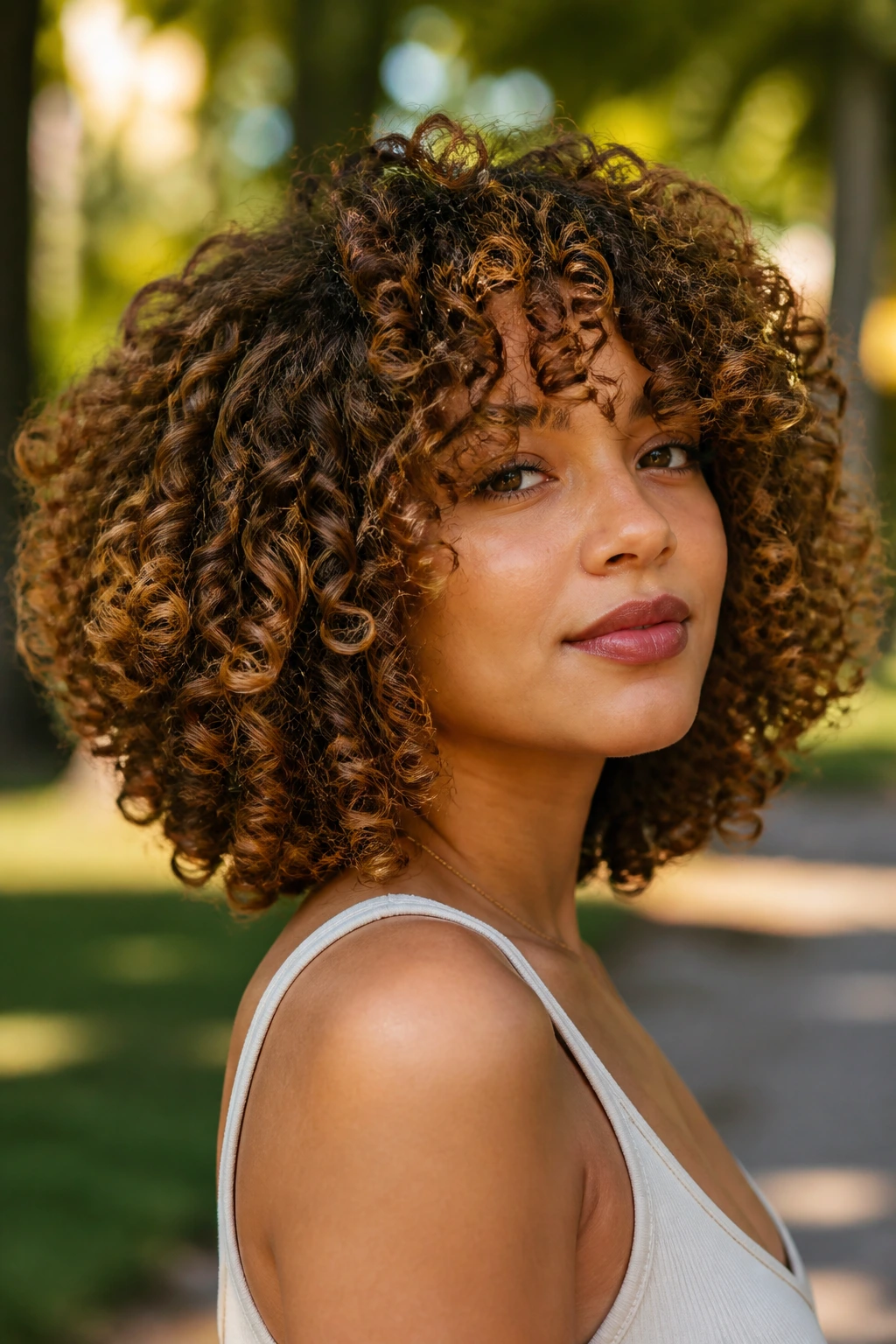
The halo layer cut follows the roundness of the head instead of fighting it. Layers are placed so the shape sits high and even all the way around, which gives the hair a soft cloud-like fullness without leaving the bottom half heavy. On coily or curly textures, that round architecture can look beautifully balanced.
Ask for a cut that keeps the outline circular, not boxy. The best version of this style feels light on top and full on the sides, almost like the hair is hovering a little. Volume here is about even distribution, not piling everything at the crown.
11. U-Shape with Hidden Layers
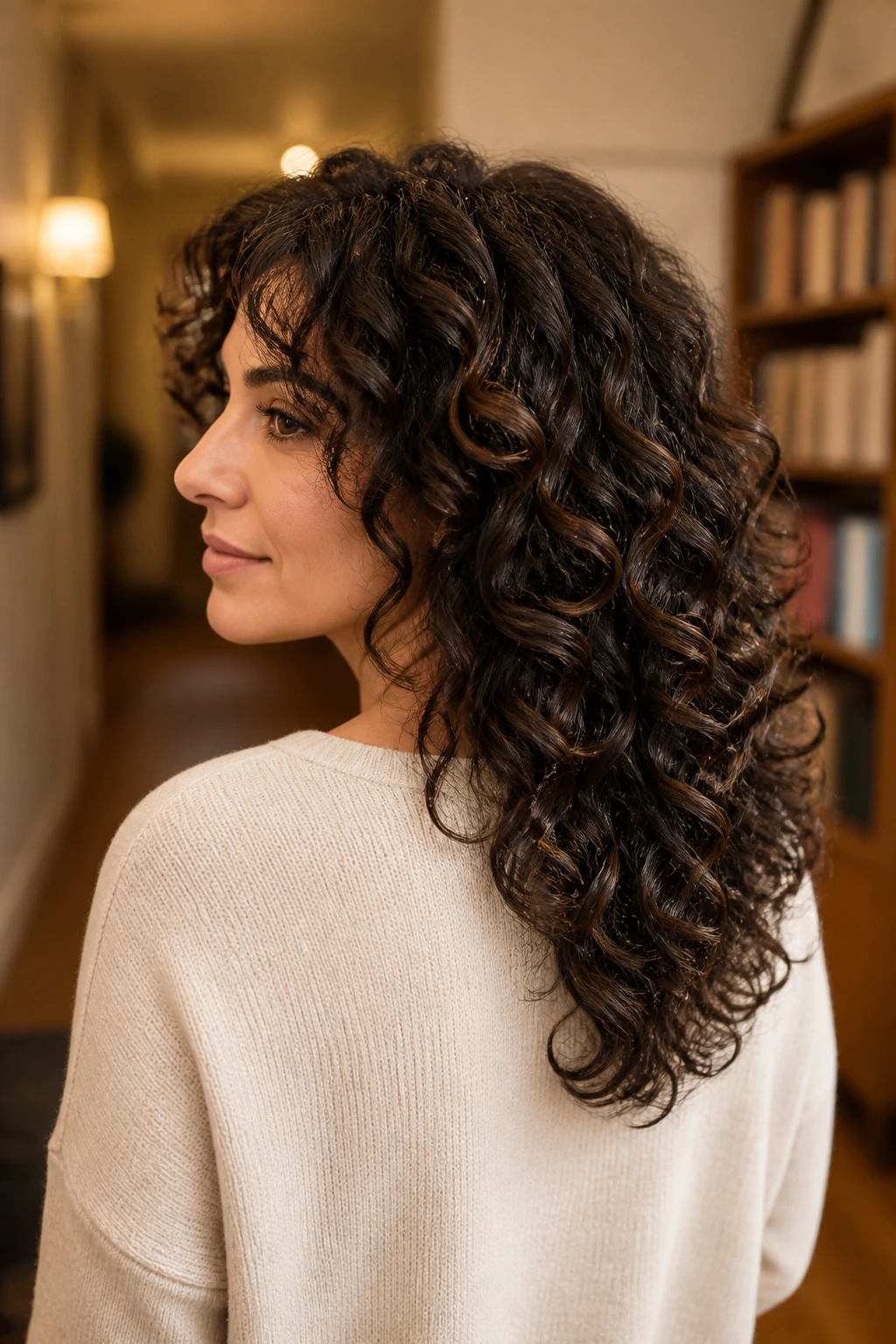
A U-shaped cut gives you a longer back and a slightly shorter front, which is already flattering for curls. Add hidden layers underneath and the whole thing gains lift without sacrificing length. The visible outline stays smooth, but the curls have room to spring away from the head instead of hanging in one blunt sheet.
This is a good choice if you want a shape that still behaves in a ponytail or half-up style. It feels polished from the outside, but it’s carrying secret movement underneath. That hidden support is what keeps the ends from getting too heavy.
12. Curly Mullet
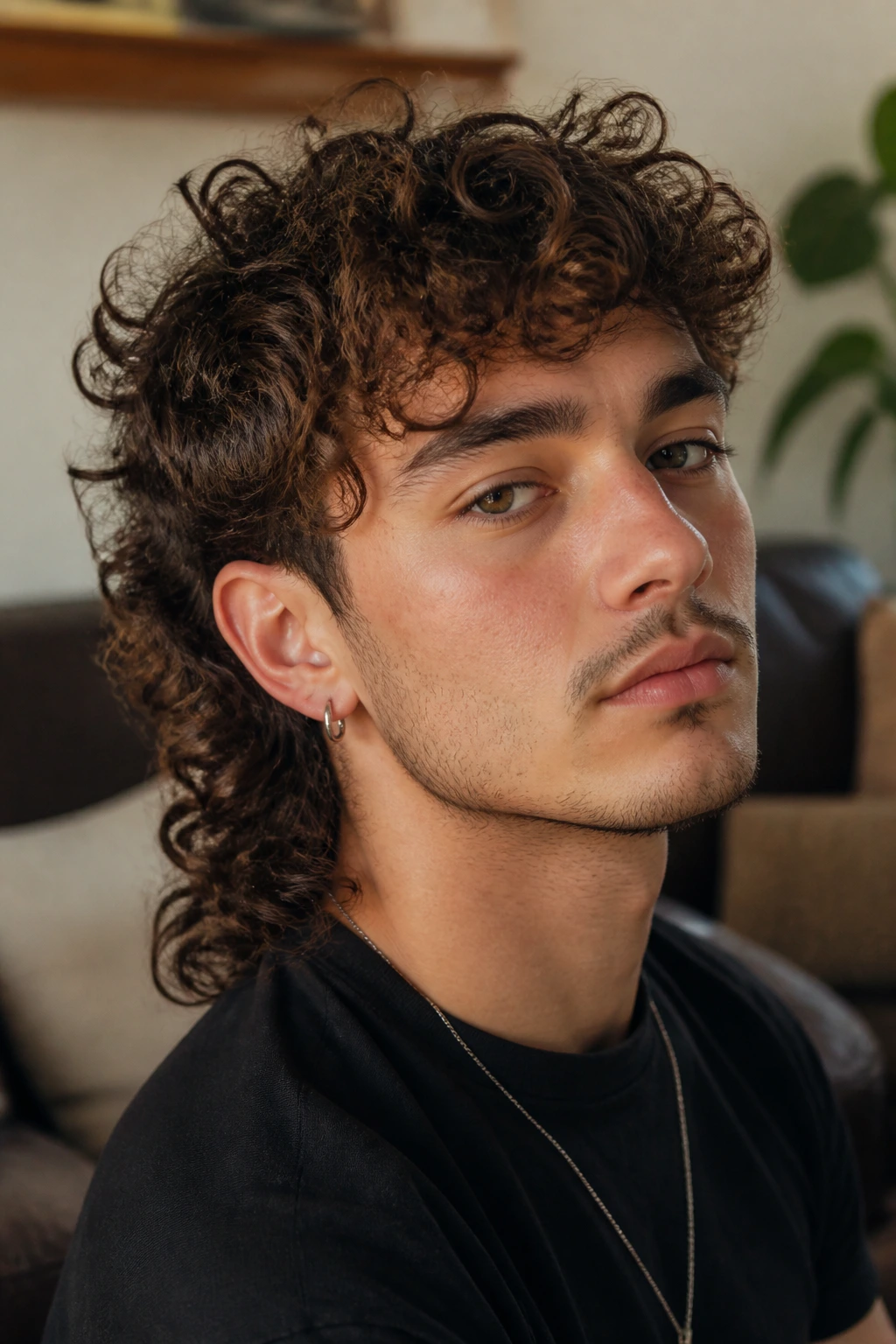
A curly mullet sounds bold because it is. Shorter pieces up front and in the crown keep the volume concentrated where the eye wants it, while the back stays long enough to keep the style from feeling abrupt. On curls, that contrast reads playful instead of costume-y when it’s cut with restraint.
The best curly mullets are soft, not choppy for the sake of being choppy. You want lift near the temples and crown, then length that falls in a clean, loose line. The shape should feel intentional from every angle.
13. Tapered Frohawk
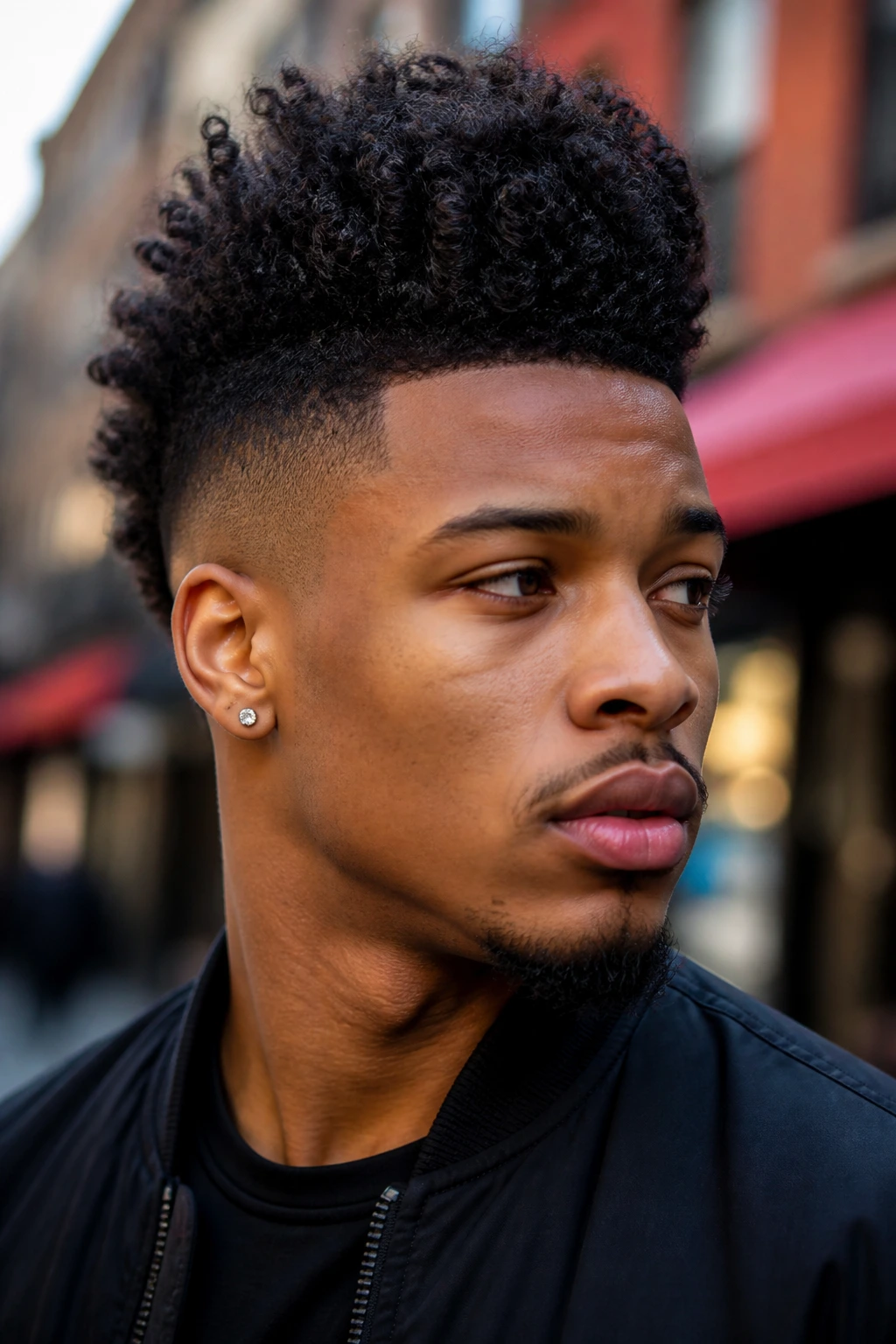
A frohawk gives coils a strip of height down the center while tapering the sides close enough to keep the silhouette sharp. That taper is the whole volume trick. It removes visual weight from the edges so the center line can rise and expand.
This cut is especially strong on tightly coiled hair because the texture naturally wants to build upward. It’s a high-volume shape, yes, but it’s controlled. You get drama at the top and clean edges at the sides.
14. Rounded Afro Shape-Up
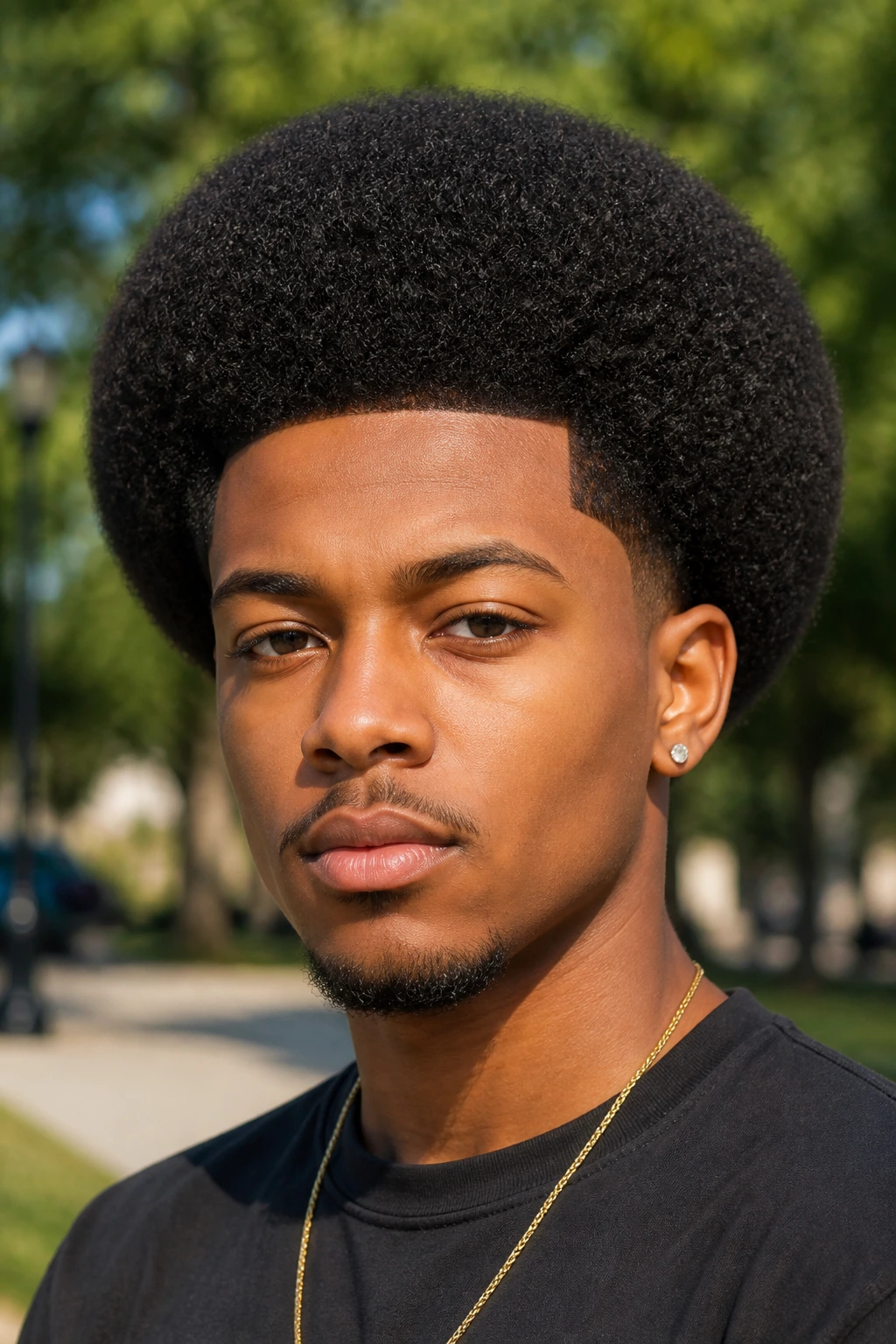
A rounded afro cut creates volume by turning the entire shape into a sphere instead of letting it fall flat at the crown or square off at the sides. The outline matters more than almost anything else here. A careful shape-up keeps the silhouette lifted and tidy without shaving away the fullness.
This cut works best when the edges are maintained regularly, because the roundness is what keeps the style looking full instead of sprawling. A good shape-up can make the hair feel like it has more density than it actually does. The balance lives in the outline.
15. Butterfly Cut for Curls

The butterfly cut is built around a contrast: shorter upper layers that lift and longer lower layers that keep the length. On curls, that usually creates a very useful effect around the face, where the shorter pieces bounce up and frame the features instead of hanging straight down. The longer layers keep the overall style from losing its drama.
It’s especially handy if you want big shape without losing the feeling of hair down your back. The top doesn’t sit flat, and the lower length doesn’t get stripped away. It gives volume where people notice it first.
16. Invisible-Layer Lob
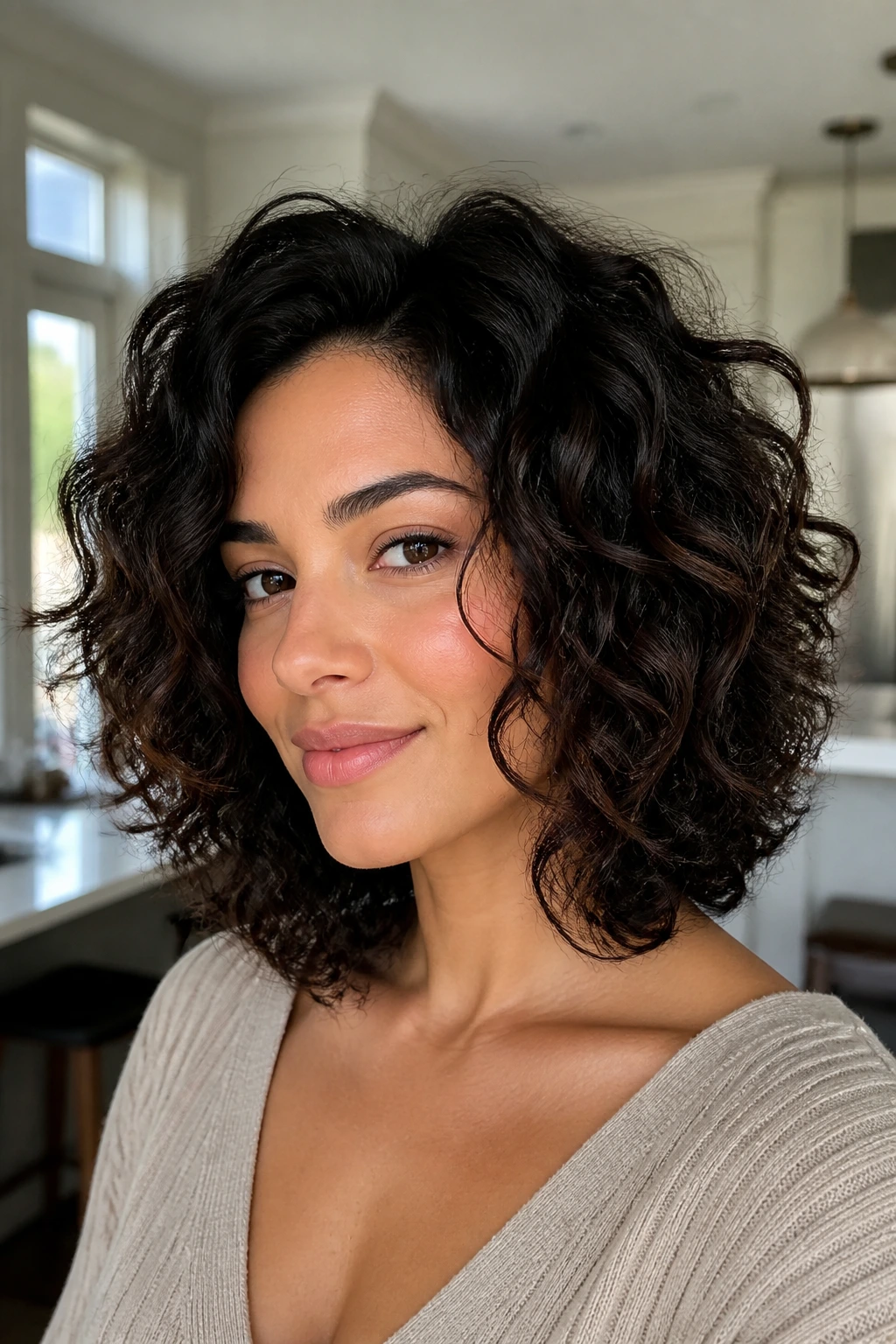
Invisible layers are the sneaky ones. They sit inside the haircut, so the outside looks smooth and clean while the curls underneath are carrying less weight. That makes the top and mid-lengths rise a little easier, especially on medium-density hair that goes limp if it’s cut too blunt.
This is a good call if you like a polished lob but hate the heavy triangle that can happen when curls all land at the same point. The haircut keeps its line, but it breathes. You see movement, not chopped-up ends.
17. Mixie Cut
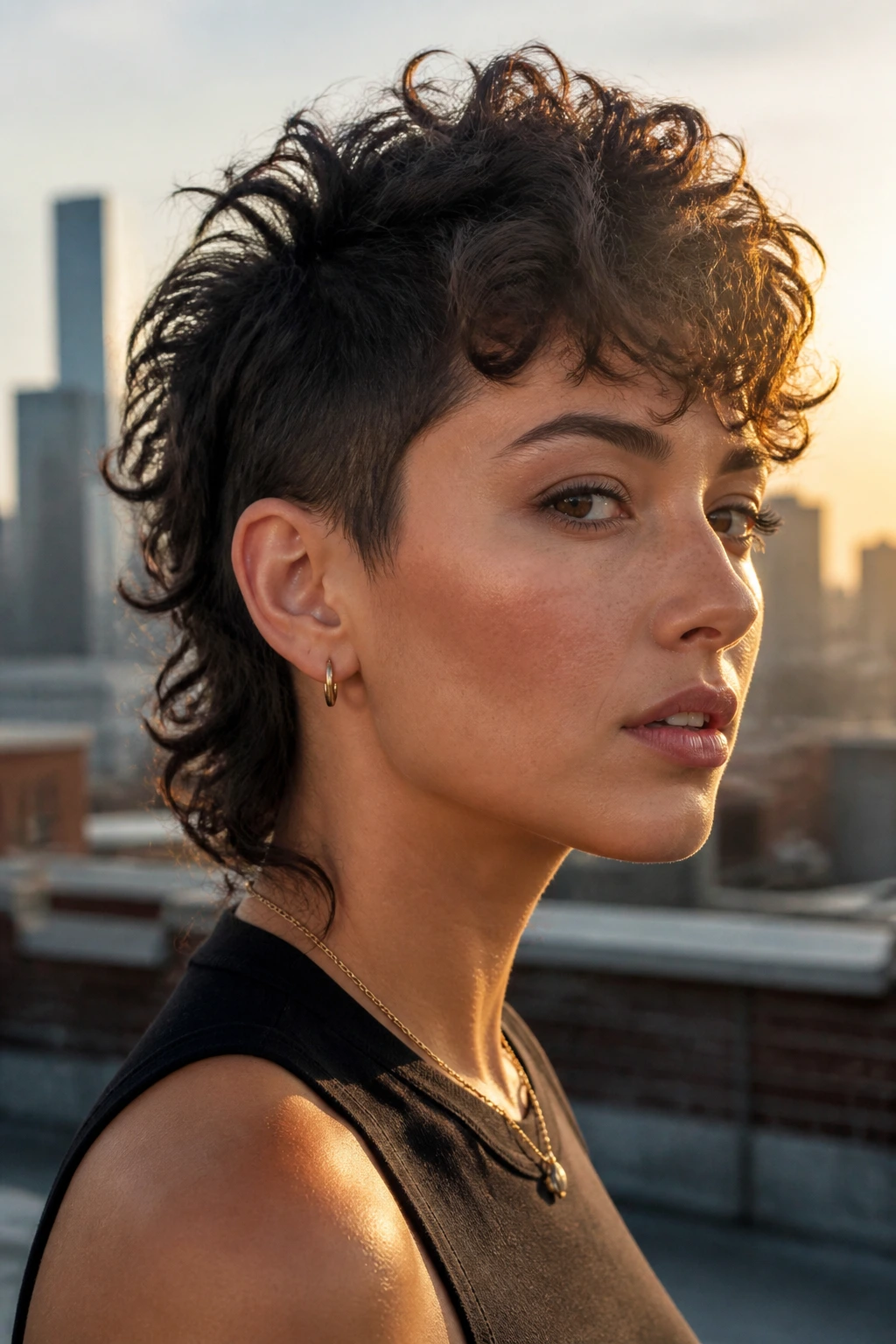
A mixie blends a mullet and a pixie, which means short sides, some edge at the back, and a longer top that can actually show off curl definition. Volume shows up because the hair isn’t being forced into one flat shape. It rises at the top and stays cropped around the ears and neck.
This cut has a little attitude. It suits people who want their curls to look lively and a bit editorial without spending half the morning trying to make them behave. It’s short hair with room to stand up.
18. Tapered Nape Cut
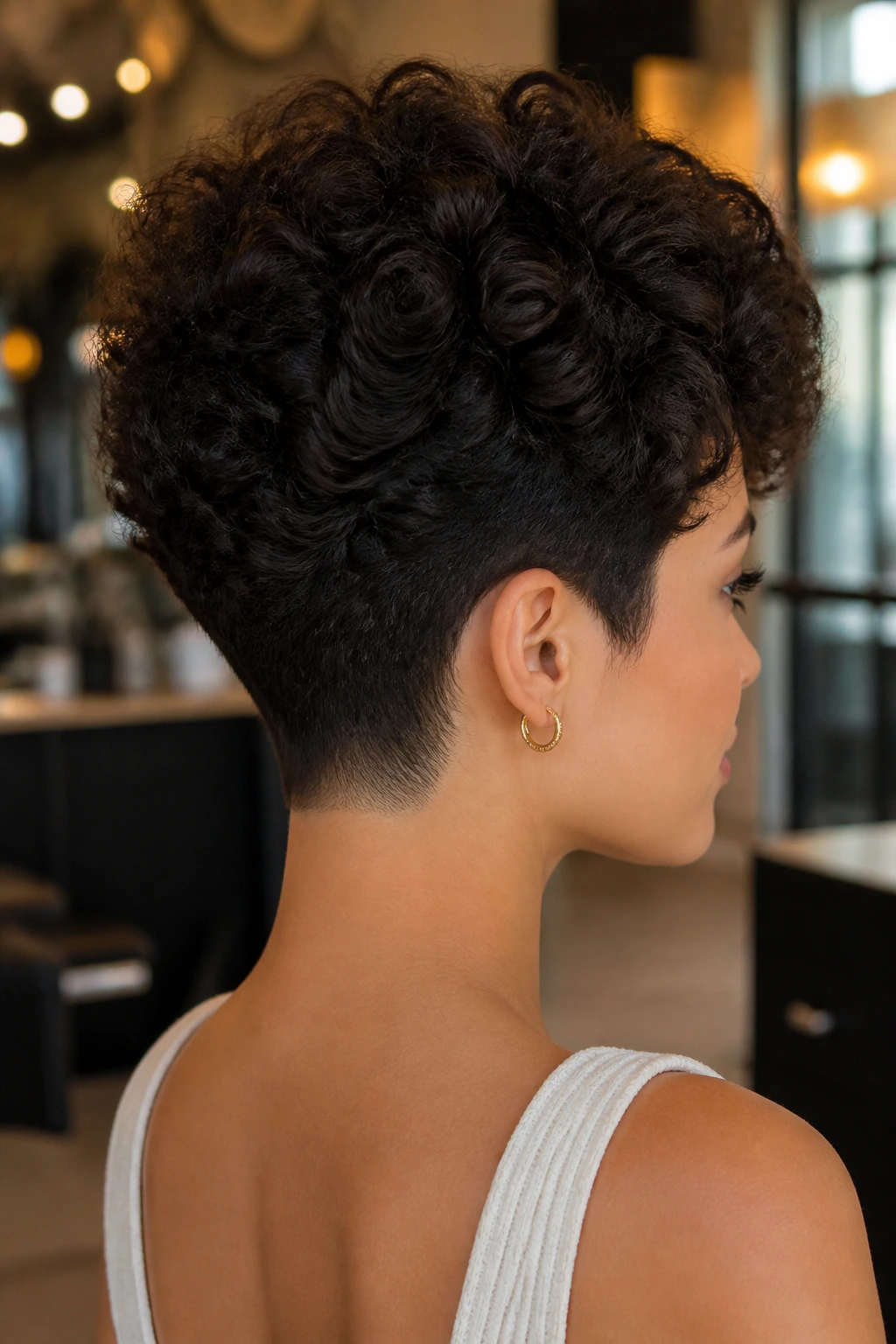
A tapered nape cut removes bulk from the back of the neck, which does two things at once: it cools the shape down and pushes the eye upward. On thick curls, that small opening at the nape can make the crown and upper layers read fuller immediately. The haircut feels lighter without turning wispy.
I like this one for dense textures that tend to puff outward at the bottom. A clean taper keeps the outline neat while the top stays buoyant and strong. It’s a practical cut, and it’s prettier than people expect.
19. Side-Swept Curly Crop
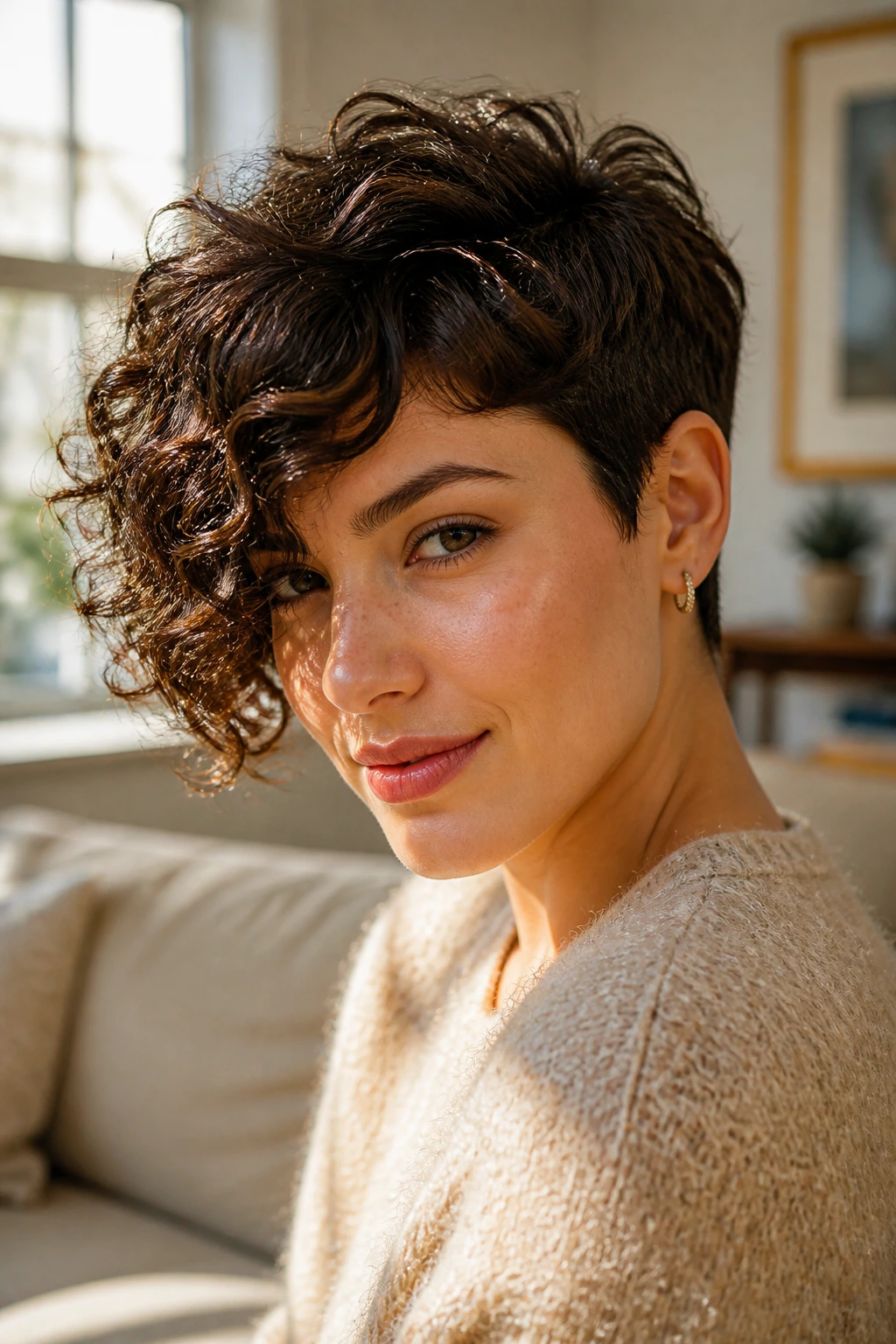
A side-swept crop makes volume feel directional. Instead of building height evenly all over, the cut leans the curls to one side, which adds lift and makes the root area look less compressed. The longer sweep can give the whole haircut a little swing.
This shape works well when the hairline or crown has one side that naturally sits flatter than the other. A side part and a cropped back can fix that without needing much daily fuss. The asymmetry is doing the heavy lifting.
20. Deep Side-Part Layered Cut
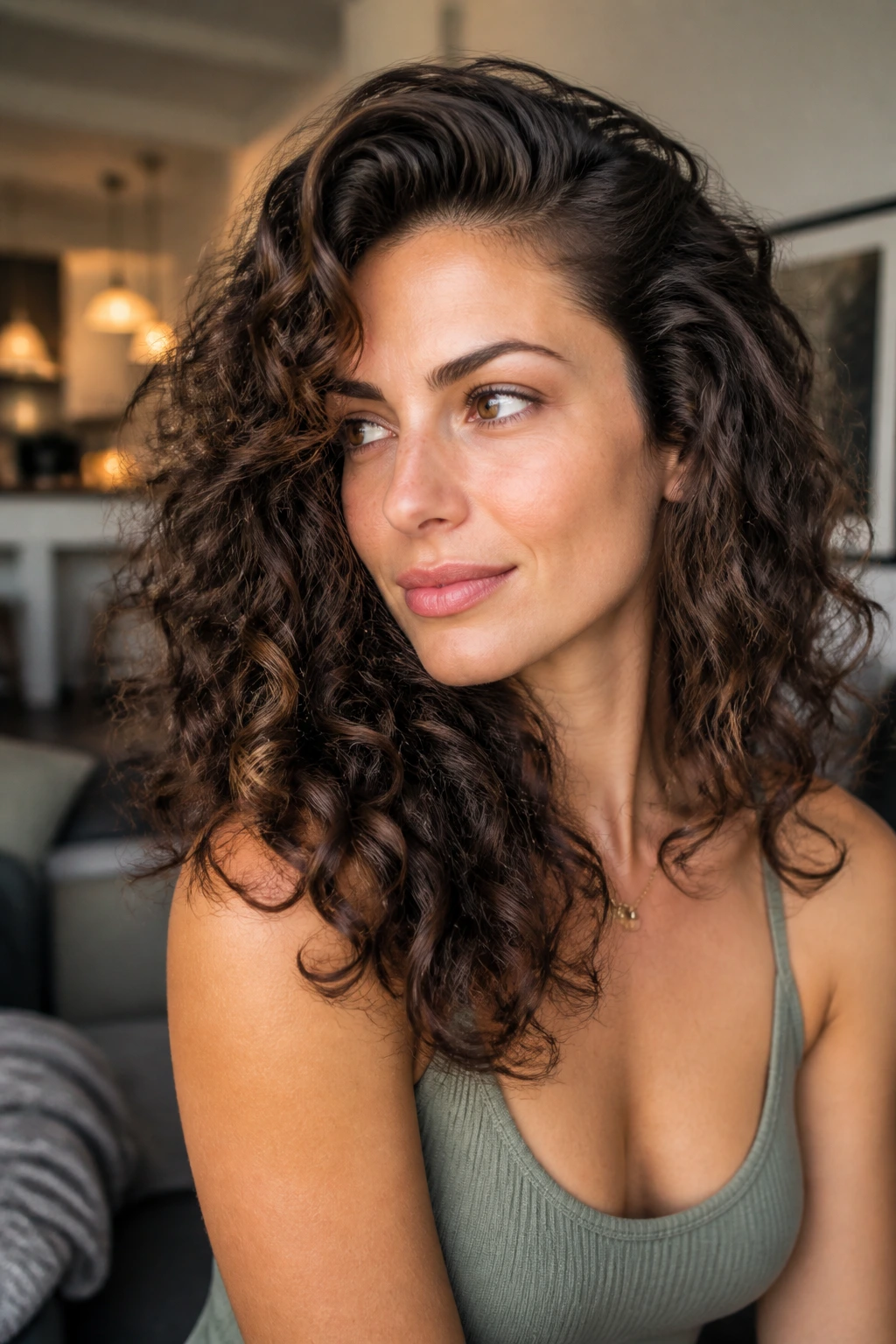
A deep side part can change a curly cut more than people realize. Pulling the part far over gives the roots on one side a push-up effect, and layers through the length keep the heavier side from drooping. The style gets instant lift, especially around the front.
This is one of the easiest ways to make curls look fuller without cutting off much length. If your hair lies flat at the crown, shifting the part and shaping the cut around it can be a small miracle. Sometimes the volume comes from the direction, not the length.
21. Spiral Layer Cut

A spiral layer cut is built for curls that form obvious ringlets. The layers follow the curl pattern instead of cutting across it in a blunt line, so each spiral gets room to spring away from the one beneath it. That separation is what keeps the style looking defined and airy.
This is a smart choice if your curls clump easily and then fall into chunky sections that feel heavy. A spiral-based shape lets each curl family do its own thing. The definition looks cleaner because the layers are working with the spiral, not chopping through it.
22. Octopus Cut

The octopus cut keeps the crown lifted and the lower lengths longer and looser, which gives curls a floaty, almost buoyant shape. Think airy top, soft trailing ends. On curly hair, that contrast can be a lot of fun because it creates visible separation without flattening the root area.
It’s a cut that depends on movement. The top should feel alive, and the ends should fall in loose pieces rather than one thick curtain. If your hair needs shape and motion, this one delivers both in one pass.
23. Ringlet Cut
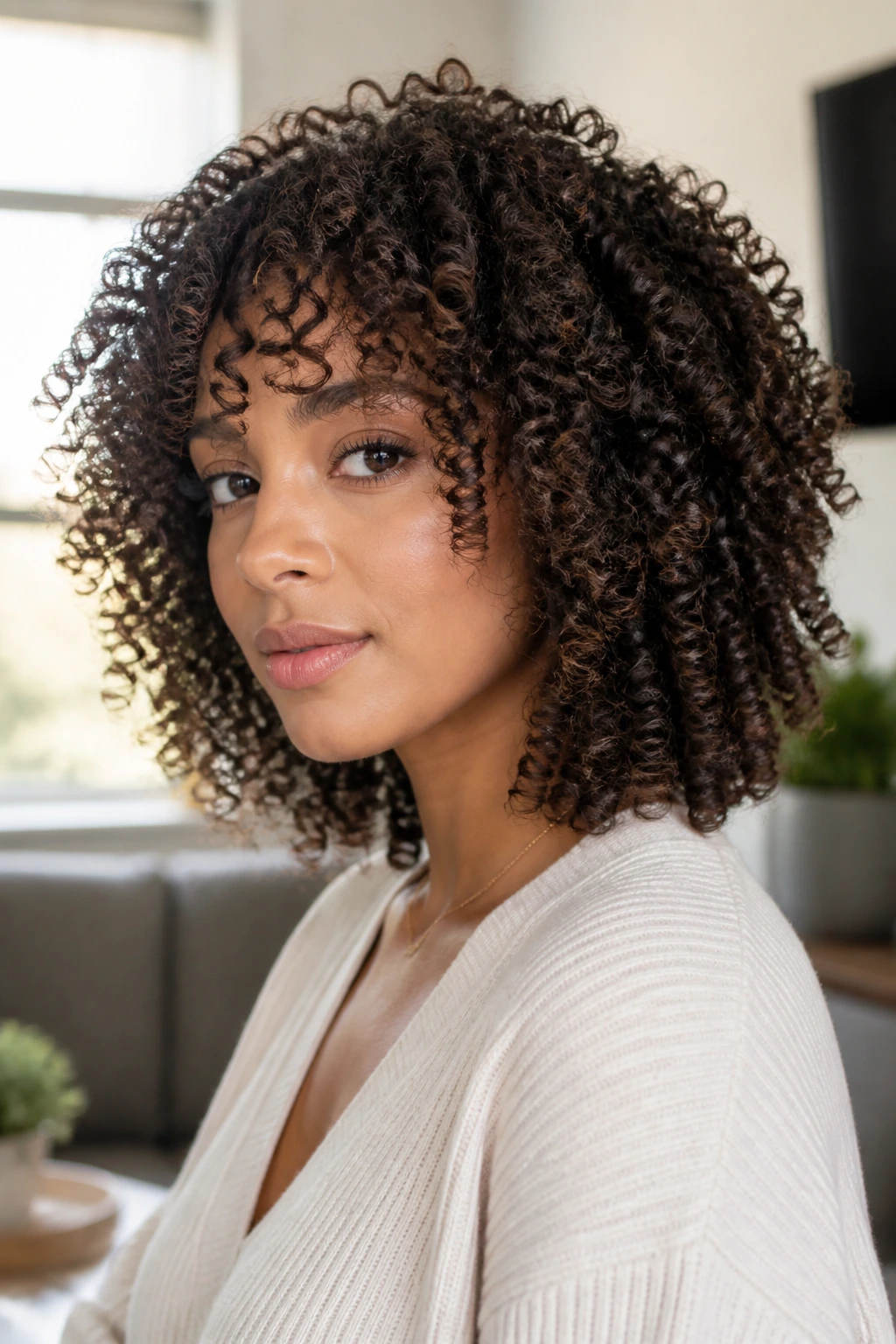
A ringlet cut is all about helping tighter curl groups stay distinct. The lengths are shaped so the curls can form separate coils instead of bunching into one dense block. That means more visible volume, because the eye reads each curl as part of the shape.
This works beautifully on 3b to 4a textures that already want to spiral. The cut just removes the dead weight that hides the curl pattern. When the curls can stand apart, the haircut looks fuller without getting bigger in a sloppy way.
24. Curtain Fringe Curly Cut
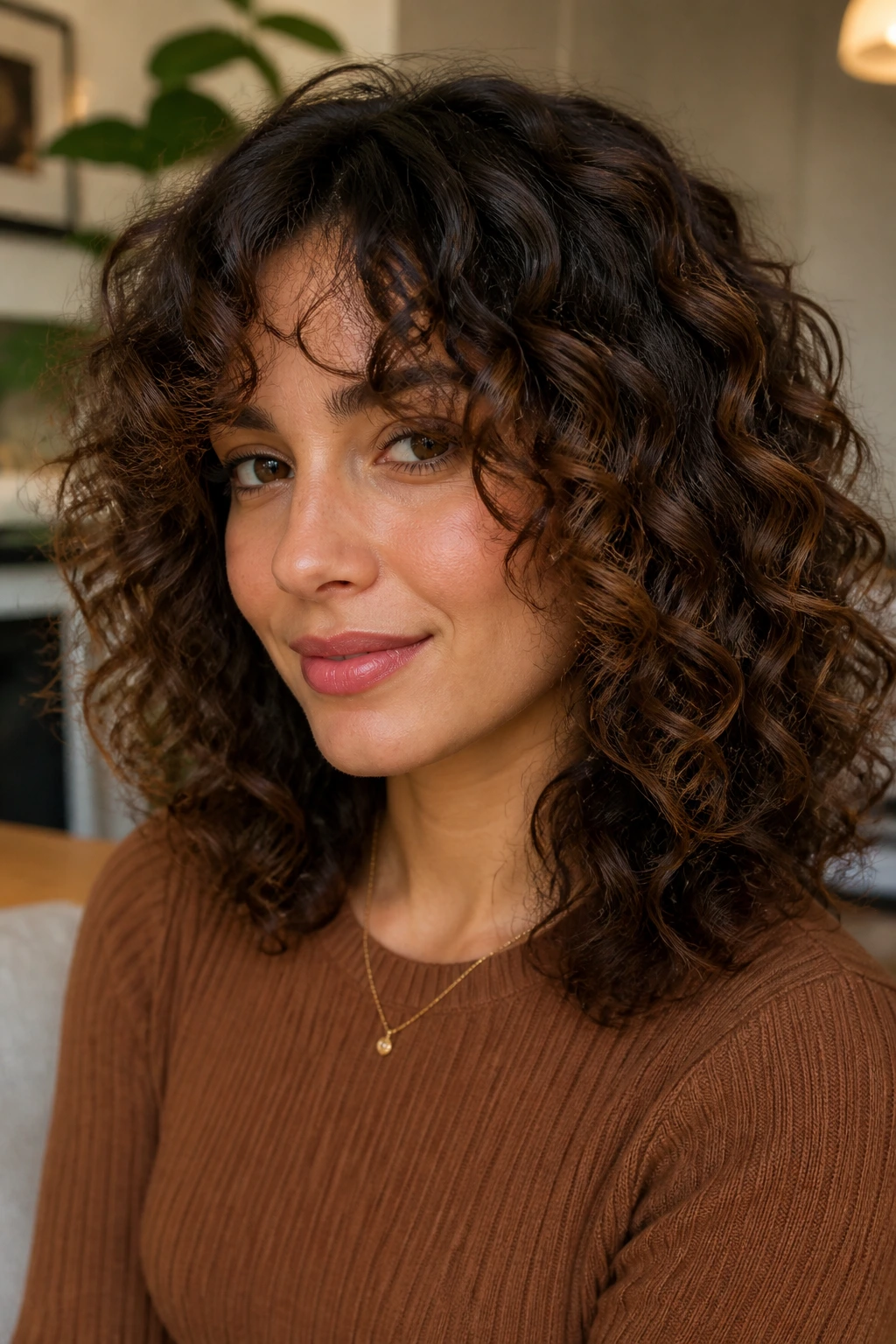
Curtain fringe on curls is a nice way to add lift without committing to a full bang. The fringe breaks up the front of the haircut, and that break draws the eye upward, which makes the crown seem higher. The longer sides keep the shape soft as it grows out.
This cut is useful if you want face framing but don’t want to trim the whole front into a short fringe. It keeps the hairstyle relaxed while still giving the top more presence. The fringe should sit soft, not helmet-like.
25. Blunt Ends with a Lifted Crown
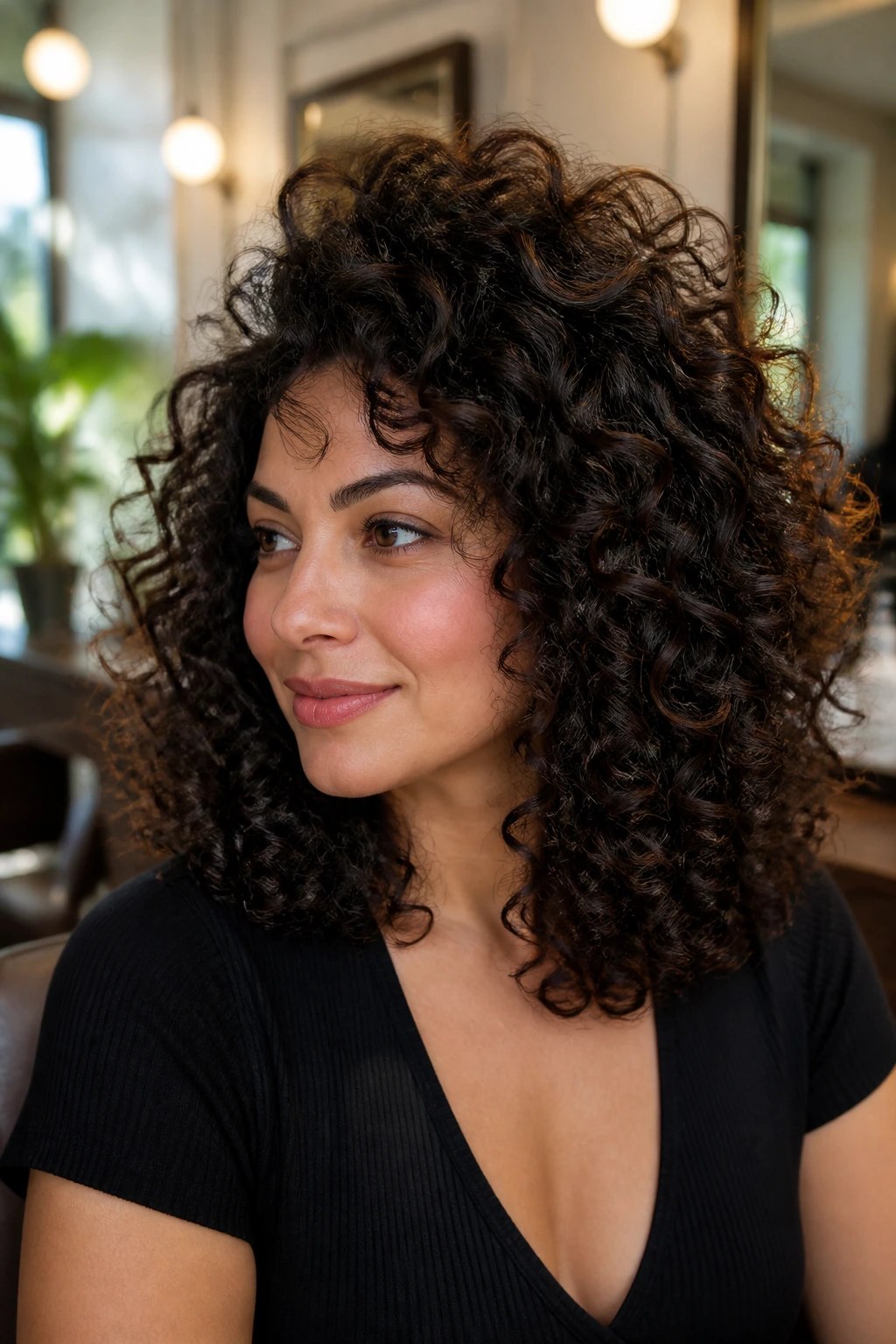
A blunt perimeter can be a volume secret on curly hair. People often assume layers are always the answer, but a strong bottom line can make curls look thicker and denser. Add a lifted crown through shorter internal layers, and the cut gets both fullness and height.
This is one of my favorite options for fine curls that disappear when they’re over-layered. The blunt edge gives the eye something solid, and the crown keeps the shape from falling flat. It’s a clean cut, not a heavy one.
26. Asymmetrical Curly Bob
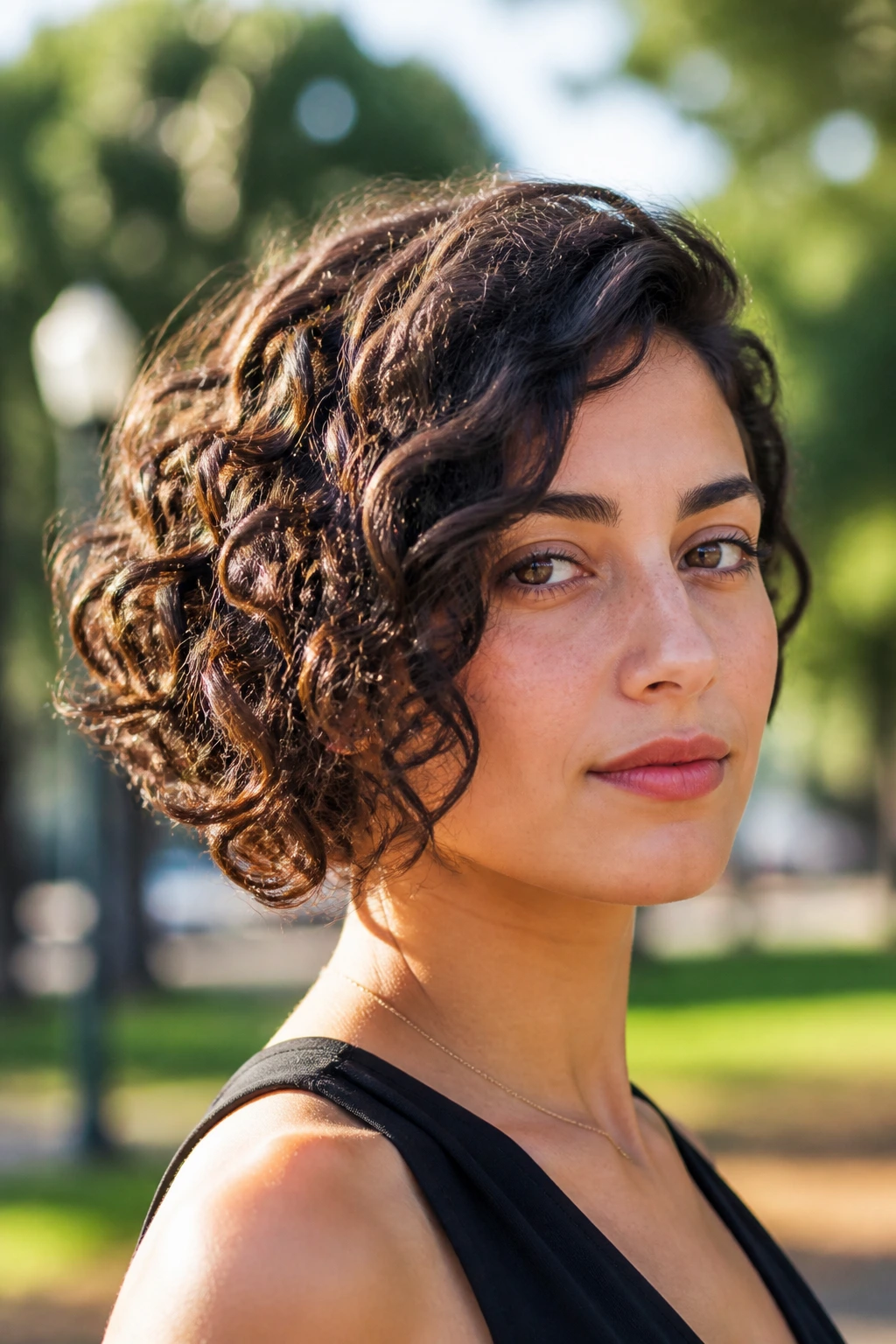
An asymmetrical bob gives curls a little motion before they even move. One side sits slightly longer, which shifts the balance and stops the shape from looking static. On a curl pattern that tends to puff evenly all over, that off-center line can make the whole haircut feel lighter.
This cut is good when you want something sharper than a classic bob but not as short as a pixie. The uneven line adds interest, and the curls do the rest. The angle is doing as much work as the texture.
27. Lob with an Undercut
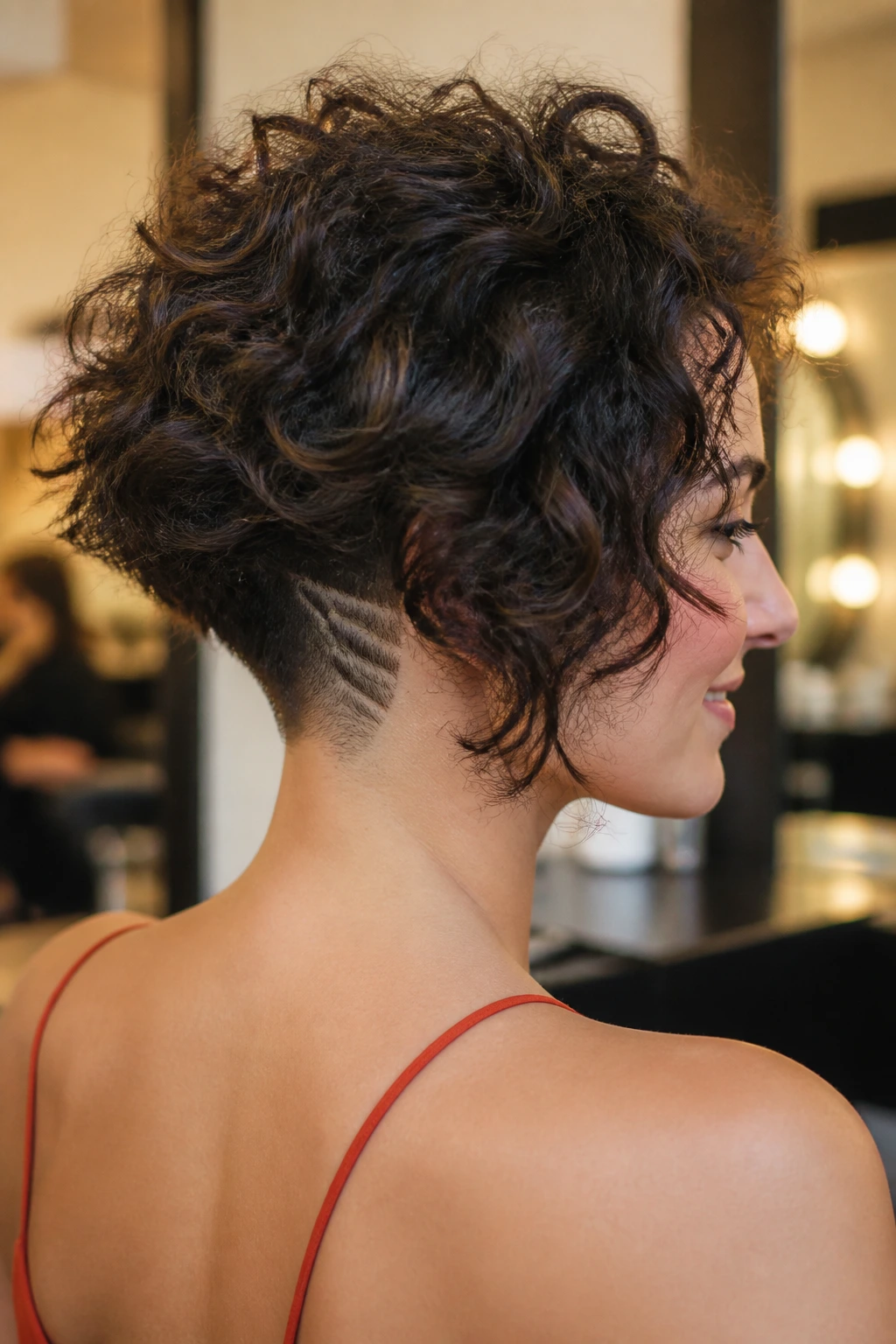
An undercut under a lob is for hair that gets dense fast. You keep the visible length, but a hidden section beneath is trimmed away so the top layer doesn’t sit on a pile of weight. That extra breathing room lets curls spring upward instead of laying flat against each other.
This cut is especially useful on thick 3c to 4b hair that gets hot and bulky around the nape. You can keep the outside elegant while taking a lot of pressure off the shape. It’s volume through subtraction, which is often the smarter move.
28. Rounded Crop with Tapered Sides
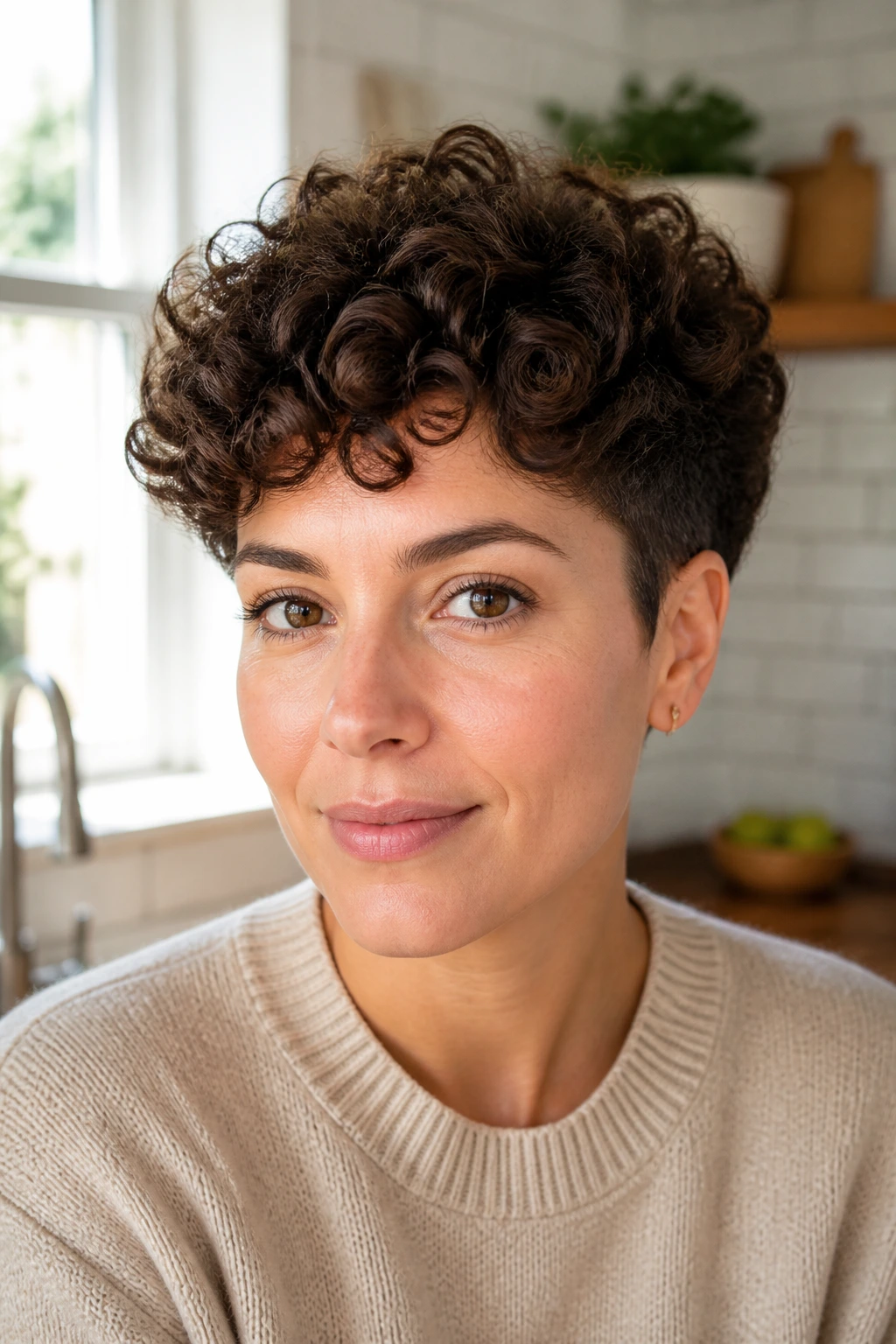
A rounded crop with tapered sides gives the curls a dome-like shape without the harshness of a boxy cut. The sides are kept neat and close, while the top holds the width and height. That contrast makes the whole style look full from the front.
It’s a nice cut for people who want short hair that still feels soft. The rounded top keeps the texture visible, and the taper stops the shape from ballooning at the edges. Short can still mean plush.
29. Coily Layered Shape
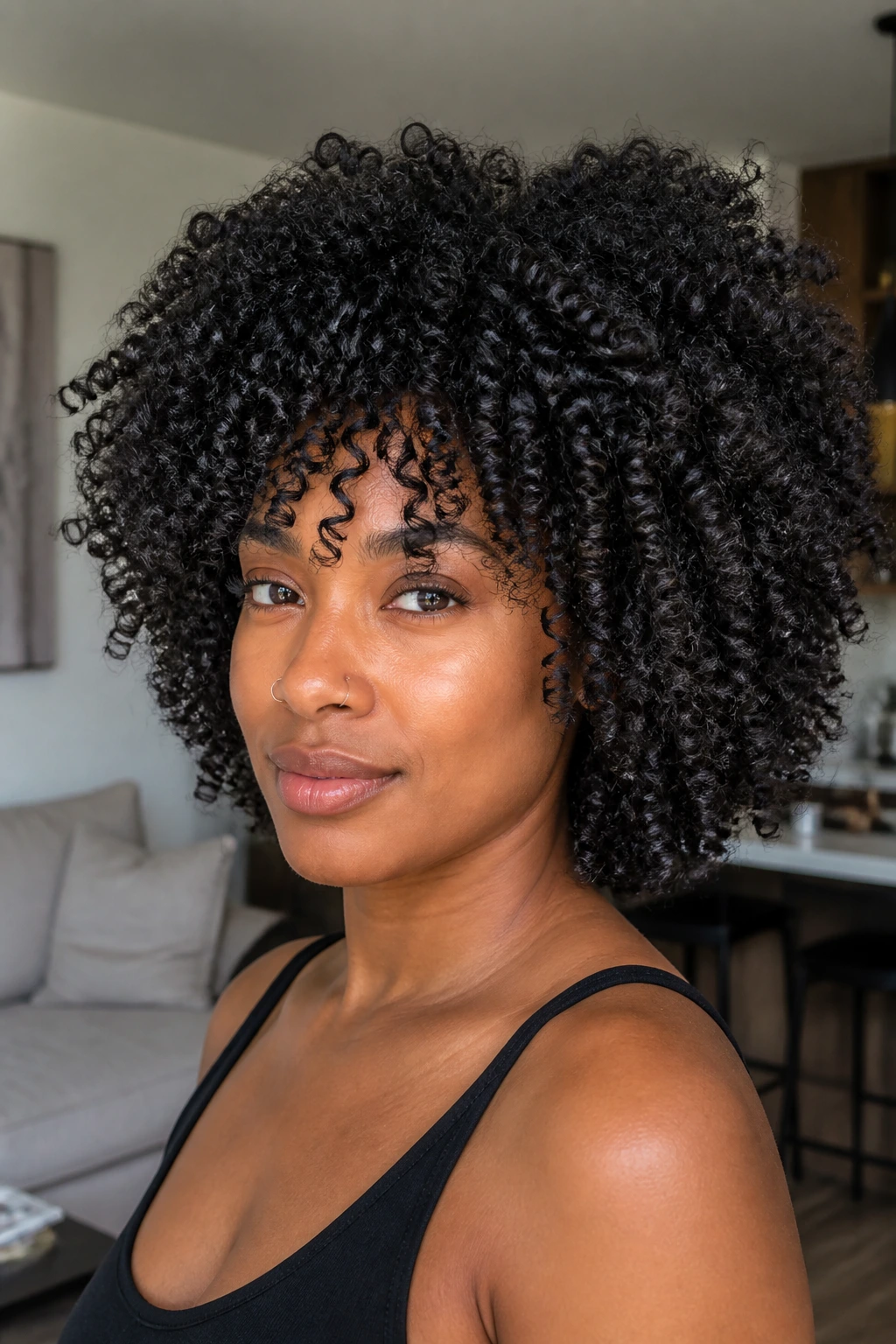
Coily hair needs a different kind of shaping, and this cut respects that. Instead of forcing coils into a straight outline, the layers are placed to preserve the spring while preventing the bottom from becoming a heavy shelf. The shape ends up rounder and lighter.
This is the cut you ask for when your coils clump at the ends and make the whole style sit low. A good coil-friendly layer pattern brings the hair up without taking away its density. The goal is lift with structure, not thinning for the sake of thinning.
30. V-Cut for Thick Curls
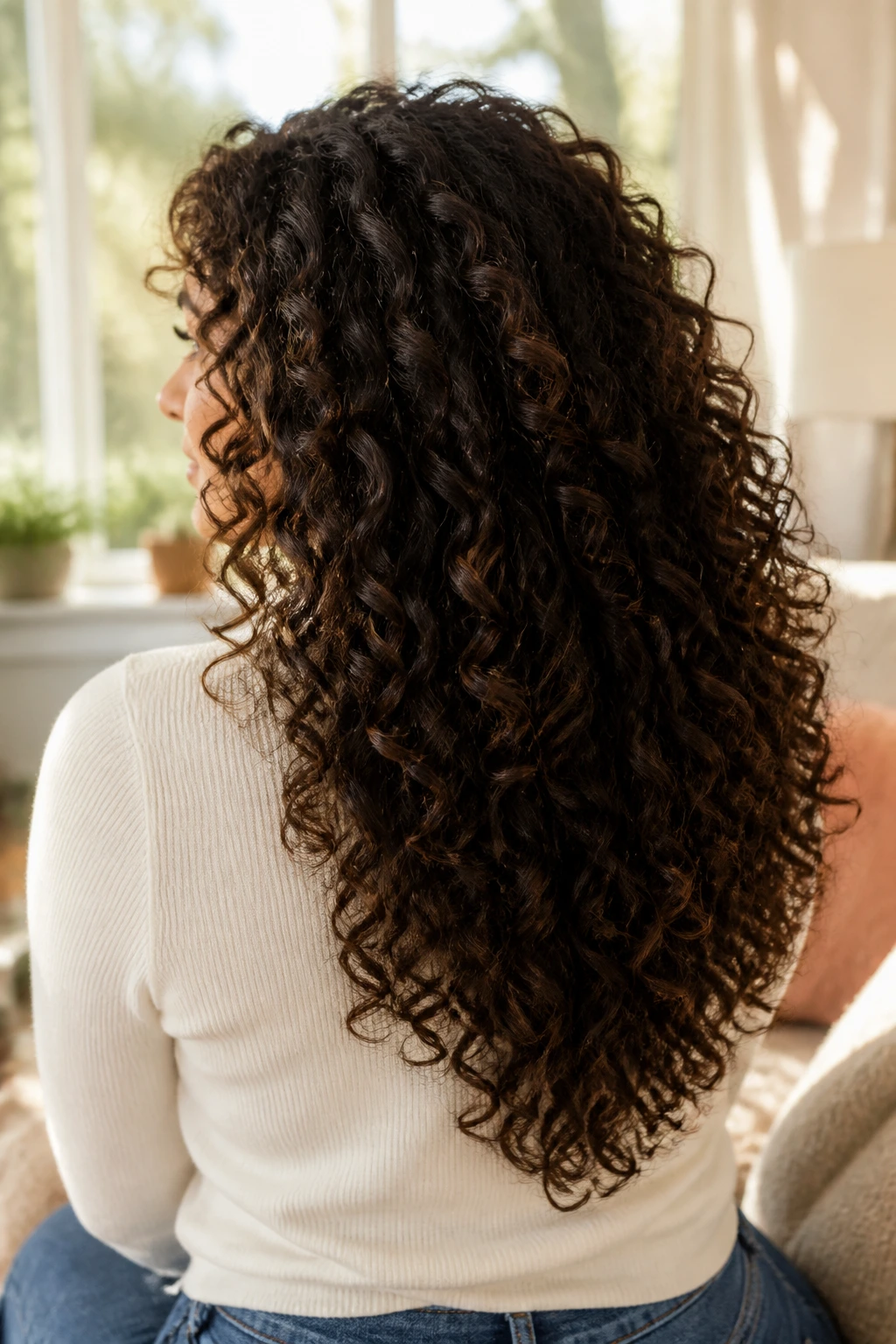
A V-cut keeps length in the back but narrows the outline enough that thick curls don’t feel like one giant block. The pointed shape at the back naturally draws the eye down and then back up through the layers, which gives the style motion. It’s a strong option if you like long hair but need it to feel less heavy.
The front pieces can still be shaped to lift around the face, which keeps the whole haircut from going flat at the sides. The V is doing the weight management.
31. Curly Pageboy
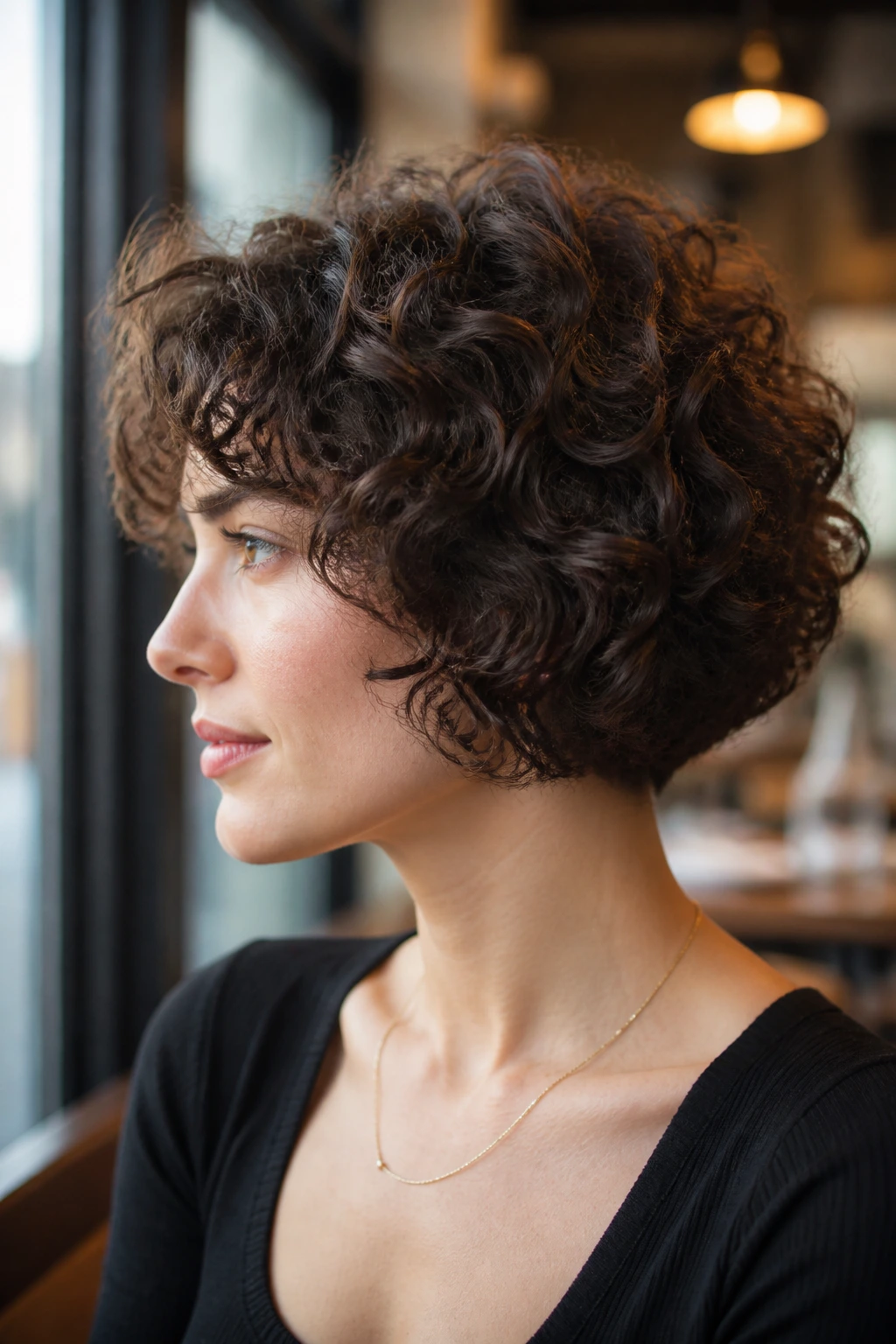
A curly pageboy is a little retro, a little polished, and surprisingly good at creating volume. The curved line around the jaw and the fuller top give the style a rounded body that feels deliberate. On loose to medium curls, it can look sleek without looking stiff.
This cut works best when the edges are carefully curved rather than chopped flat. The silhouette should have a gentle bend, almost like the hair is following the line of the cheek and jaw. It’s controlled volume, and that’s why it looks so clean.
32. Curly Bowl Cut
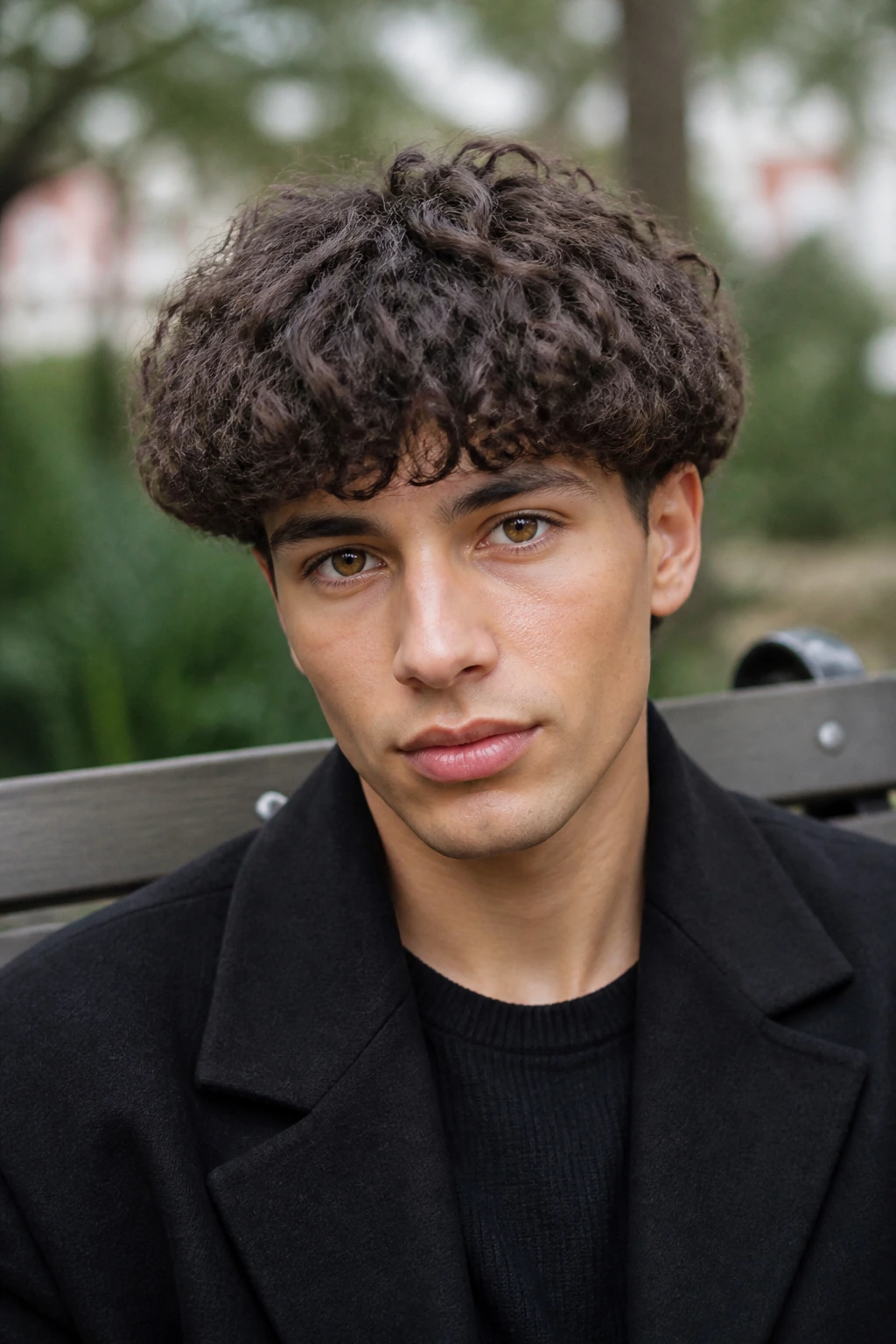
A modern curly bowl cut is not the helmet people remember from childhood. The top keeps a rounded shape, but texture breaks up the outline so the hair still moves. When it’s cut with curls in mind, the style can look full, airy, and oddly chic.
It’s a strong choice for people who want something graphic and light at the same time. The key is leaving enough texture that the bowl shape reads soft, not rigid. The roundness gives lift; the curls keep it from going stiff.
33. Wispy Fringe Shag
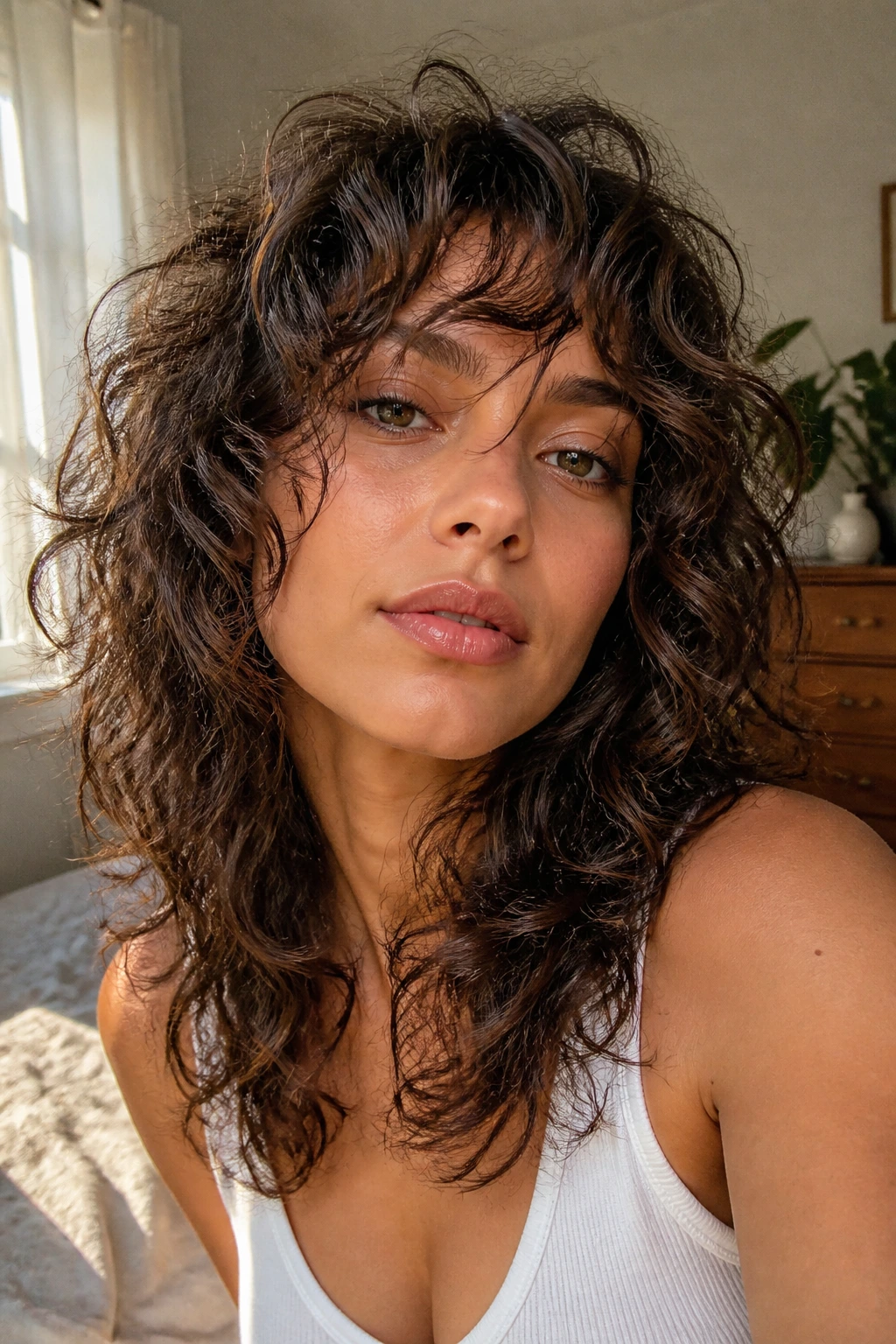
A wispy fringe shag is ideal when your forehead area feels too heavy and your curls need help rising at the front. The fringe breaks up the face, and the shag layers loosen the whole silhouette. That combination makes the haircut feel lighter even when the density stays the same.
I like this one for medium-length curls that need movement without losing too much body. The fringe should be airy, not blunt, or it can steal volume from the crown. The softness up front is what makes the rest of it feel bigger.
34. Triangle-Balancing Layers
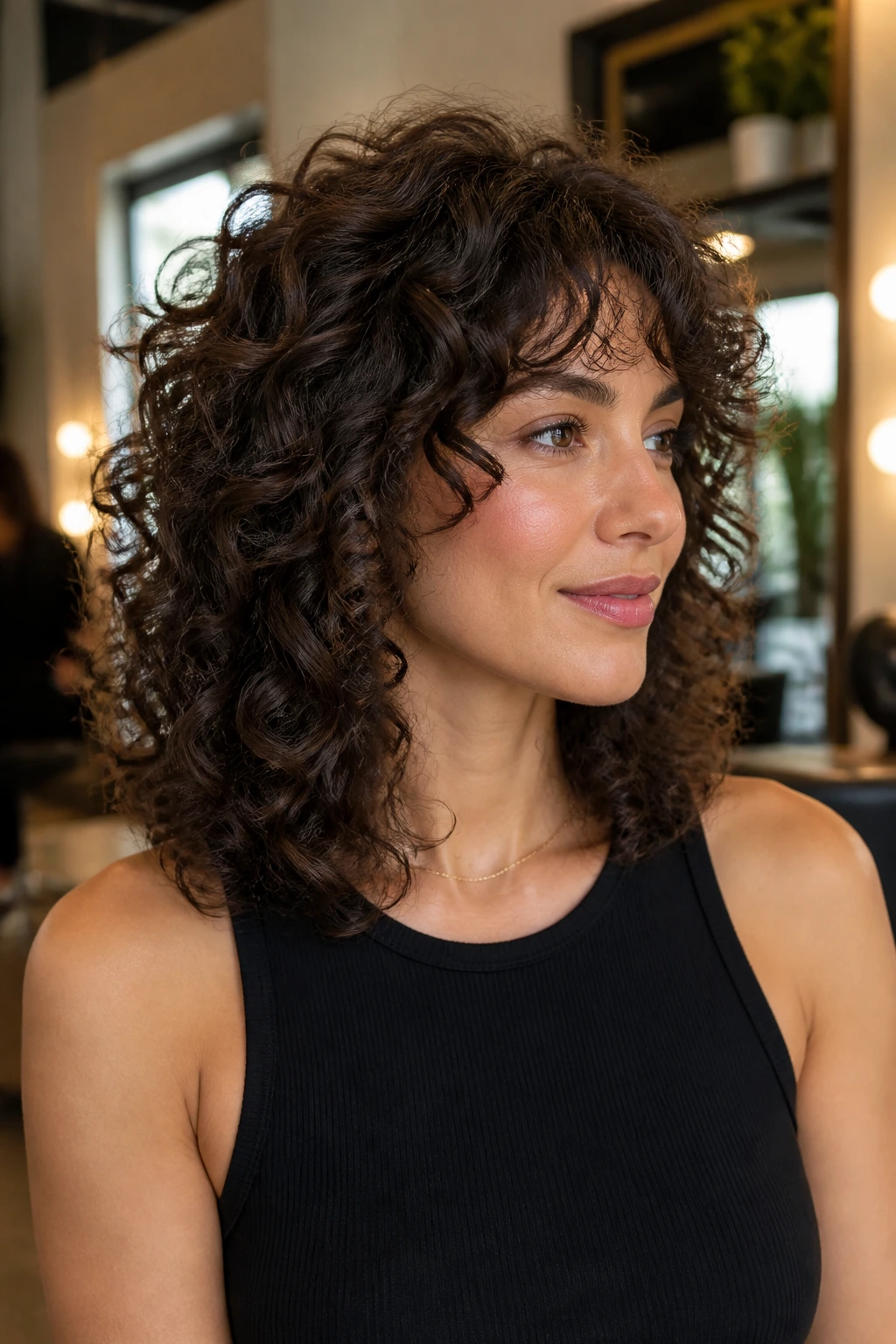
Triangle syndrome happens when the bottom of curly hair expands while the top stays flat, and this cut is built to fix that. The layers are placed to lift the upper half and pull some width out of the lower half, which changes the whole profile. The result is more height, less pyramid.
This is the practical haircut people wish they had asked for earlier. It doesn’t chase drama; it fixes shape. If your curls sit heavy at the jaw, this is the repair job.
35. Curly Pixie with Long Top
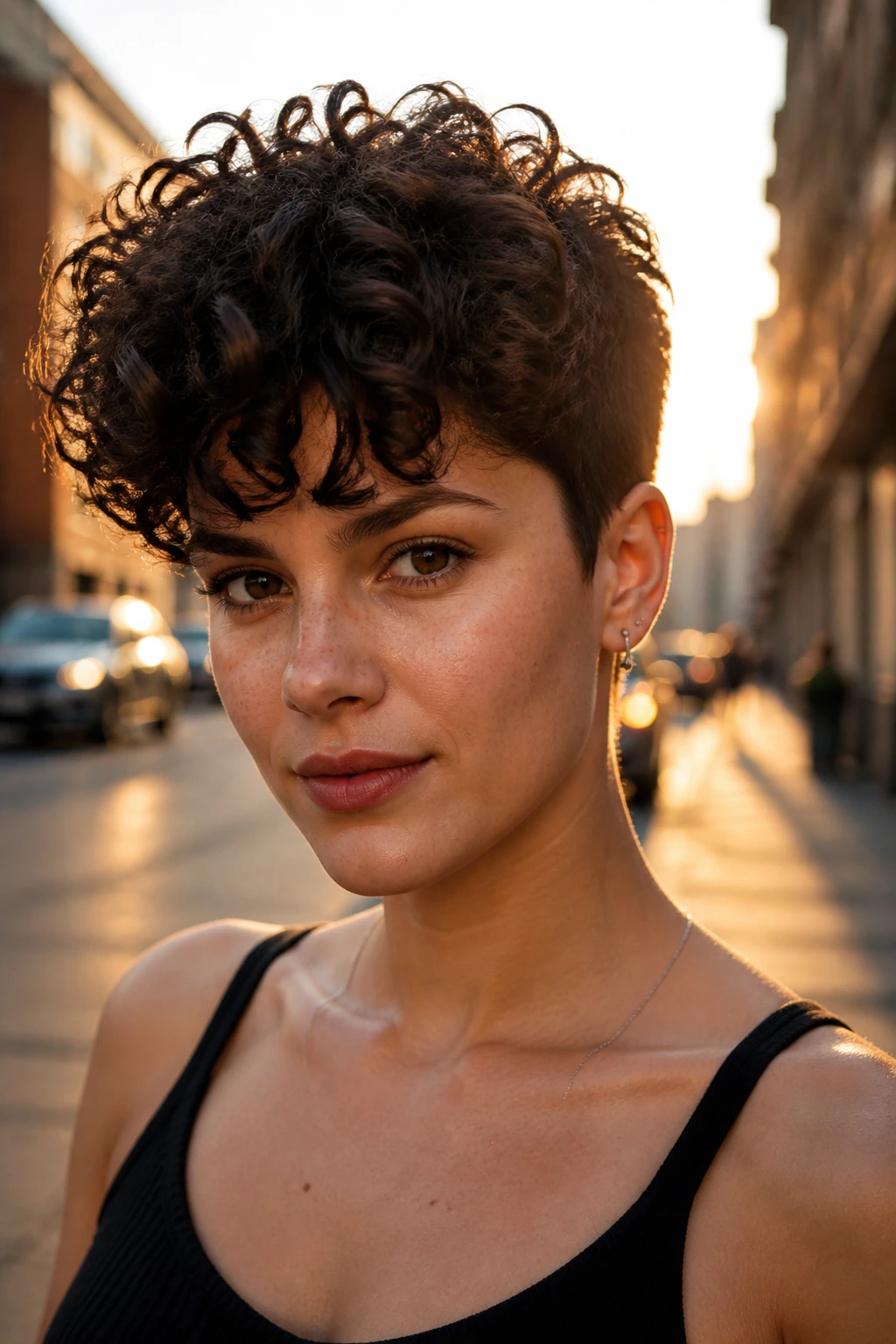
A curly pixie with a longer top gives you all the lift of a short cut without losing the softness that curls bring. The sides and back stay tight enough to keep the outline clean, while the top stays long enough to show curl pattern and height. That longer top is where the volume lives.
It’s a strong final option because it’s easy to wear and hard to flatten. A little mousse at the roots and a diffuse can make the top stand up in the best way. Short hair doesn’t have to sit close to the head.
Why These Curly Cuts Add Lift Instead of Just Taking Up Space
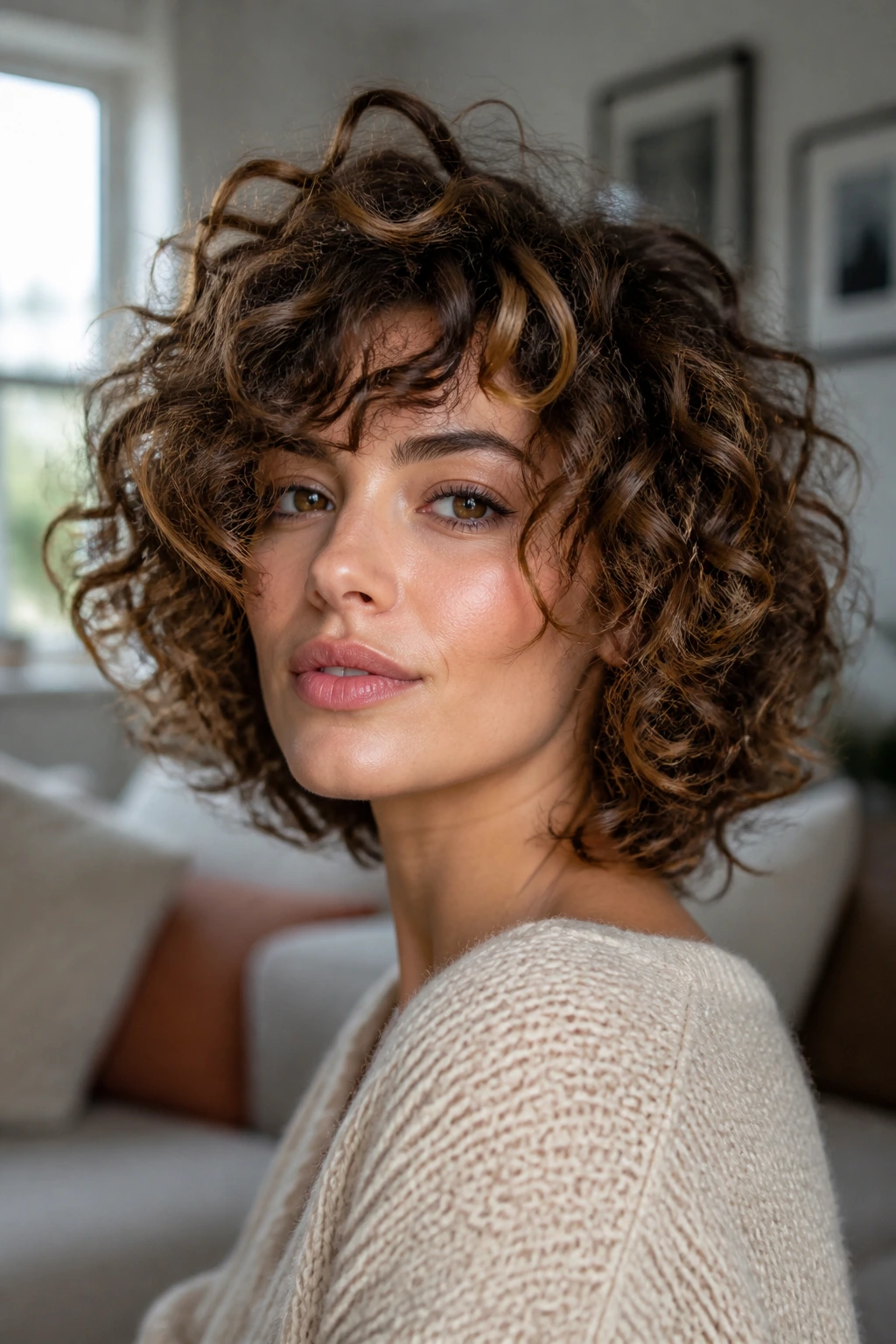
The best volume-building curly haircut is usually the one that knows where to stop. Too much length at the bottom drags. Too much thinning at the top frizzes. The sweet spot sits in the middle, where the cut removes enough weight to let the curl spring up but keeps enough structure that the style doesn’t look empty.
That’s why shape matters more than “more layers.” Layers are a tool, not a cure. A round bob, a tapered pixie, an undercut lob, or a shag with a careful crown all solve the same problem in different ways: they let curls occupy space without collapsing into one heavy mass. If you’ve ever watched your hair look perfect for twenty minutes and then sink toward your shoulders, you already know how much that matters.
Dry cutting helps because curls lie. Wet hair can hide shrinkage, and shrinkage changes everything. A stylist who understands curl pattern will look at density, spring factor, and how the pieces stack together once they’re dry. That’s the real game.
Tools That Make a Curly Cut Behave
-
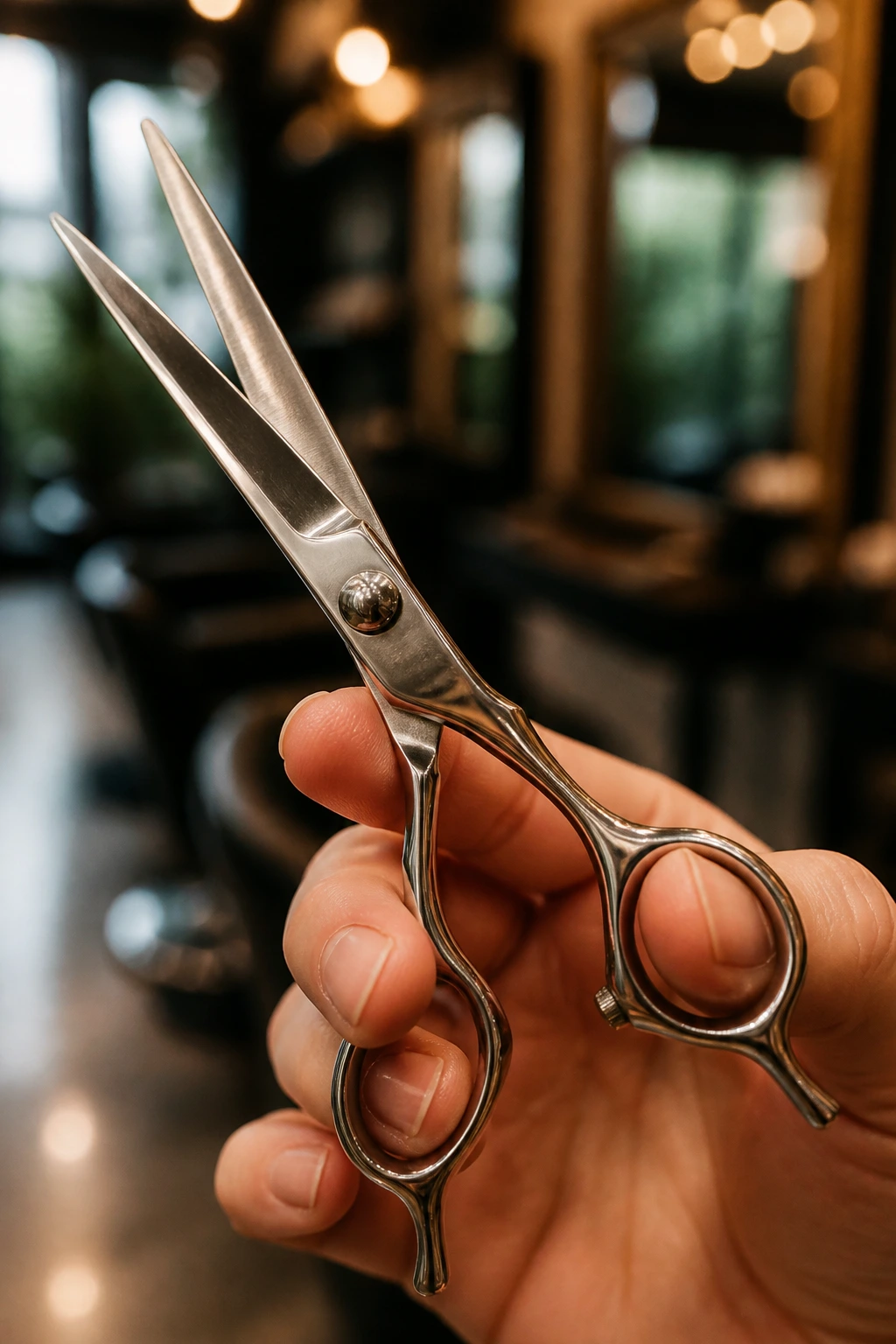
Sharp haircutting shears: Dull scissors chew the ends and leave curls frayed, which makes volume look messy instead of defined.
-
A wide-tooth comb: Useful for sectioning and gentle detangling without stretching the curl pattern too far.
-
Duckbill or sectioning clips: These keep dense hair organized while you work through shape one area at a time.
-
Diffuser attachment: A diffuser lifts curls from the root and helps preserve the shape the cut is trying to create.
-
Microfiber towel or cotton T-shirt: Better than a rough bath towel for scrunching out water without roughing up the cuticle.
-
Spray bottle: Handy for re-wetting small sections when you need to reshape bangs or crown pieces between wash days.
-
Small styling brush: A curl brush or denman-style brush can help define clumps in sections that need more direction.
-
Satin bonnet or pillowcase: Keeps the cut from getting crushed overnight, which matters a lot when the haircut is carrying its own volume.
How to Choose the Right Shape for Your Curl Pattern
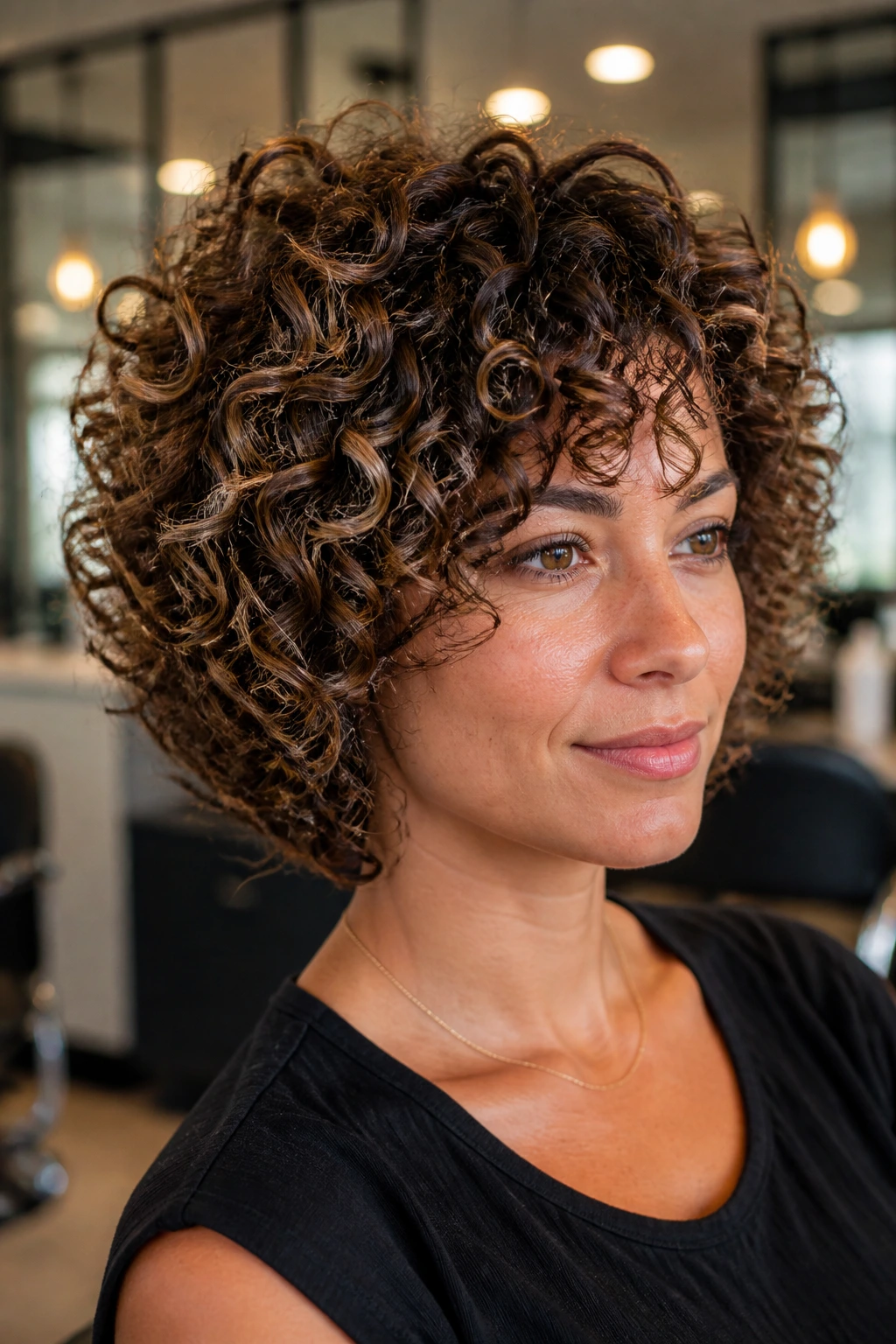
The best haircut for curls is the one that respects density first and trend second. Fine curls need weight removed carefully, because too many short layers can leave them looking sparse at the ends. Thick curls can take more aggressive shaping, but they still need clean lines or the volume turns into bulk.
Ask yourself where the flattening starts. If the crown goes limp first, short internal layers or a lifted shag can help. If the ends are the problem, a blunt perimeter with hidden shaping may work better. If the whole shape feels too wide at the bottom, a taper or an undercut will do more than another round of surface layers.
Bring real photos to the salon. Front, side, and back if you can find them. And tell the stylist what your curls do on day two, not just on the day you wash them. That detail changes the cut more than most people realize.
How to Wear and Style These Cuts
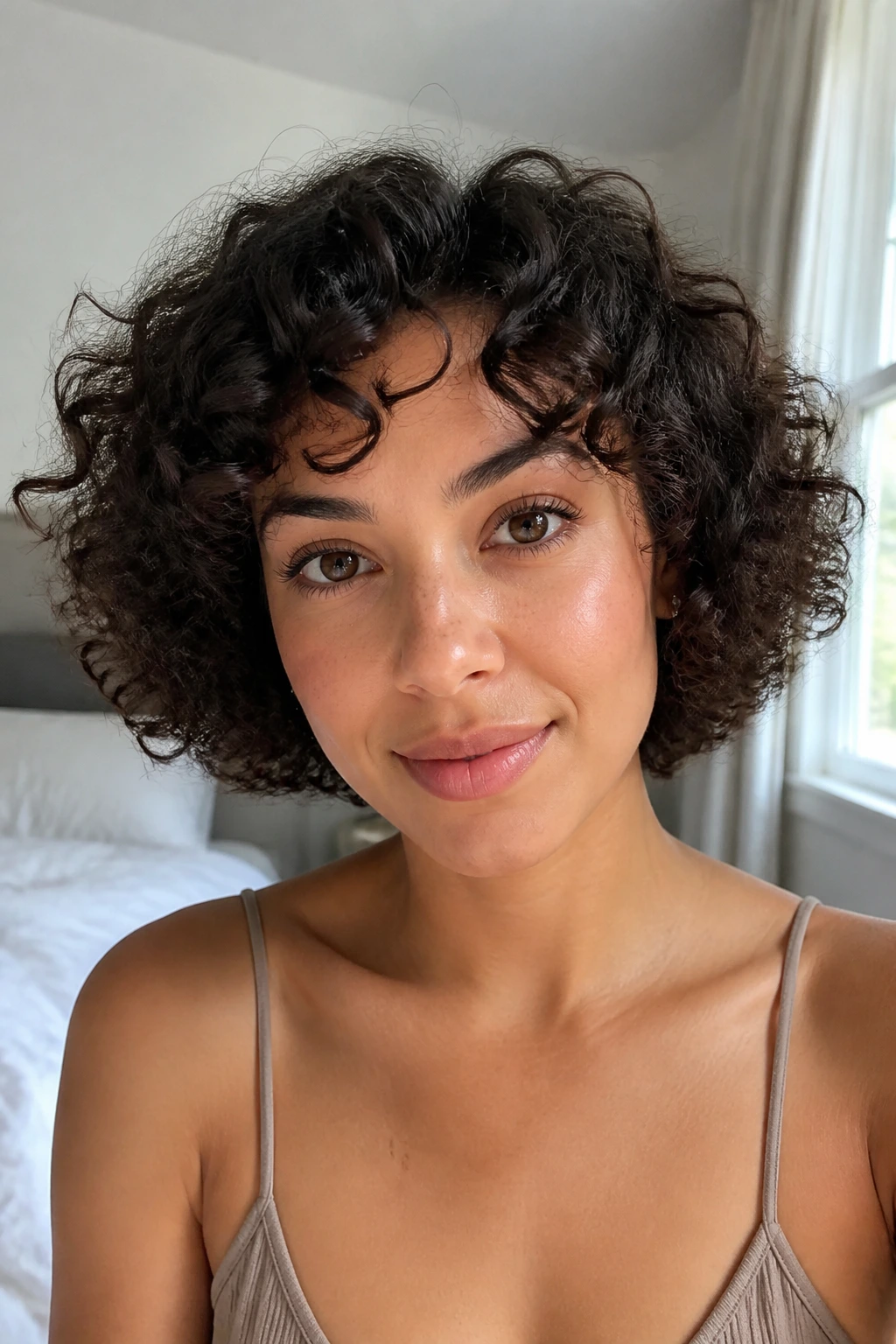
Shape: Pick the silhouette that matches the way your curls already fall. A rounded bob and a halo shape want to sit close to the head, while a shag or wolf cut wants more movement and separation.
Accessories: Small clips, satin scrunchies, and headbands can help these cuts look intentional on messy days. Big hair needs room, so avoid heavy headbands that press the crown flat.
Maintenance: Shorter curly cuts usually need a trim every 6 to 10 weeks. Longer layered shapes can stretch to 10 to 14 weeks if the ends stay defined and the silhouette still reads clean.
Finish: A hard-hold gel gives the shape a stronger outline, while mousse gives lighter lift. If your roots fall flat, diffuse upside down for the first few minutes and then finish upright so the crown does not dry smashed to your scalp.
Lift Boosters and Styling Tweaks
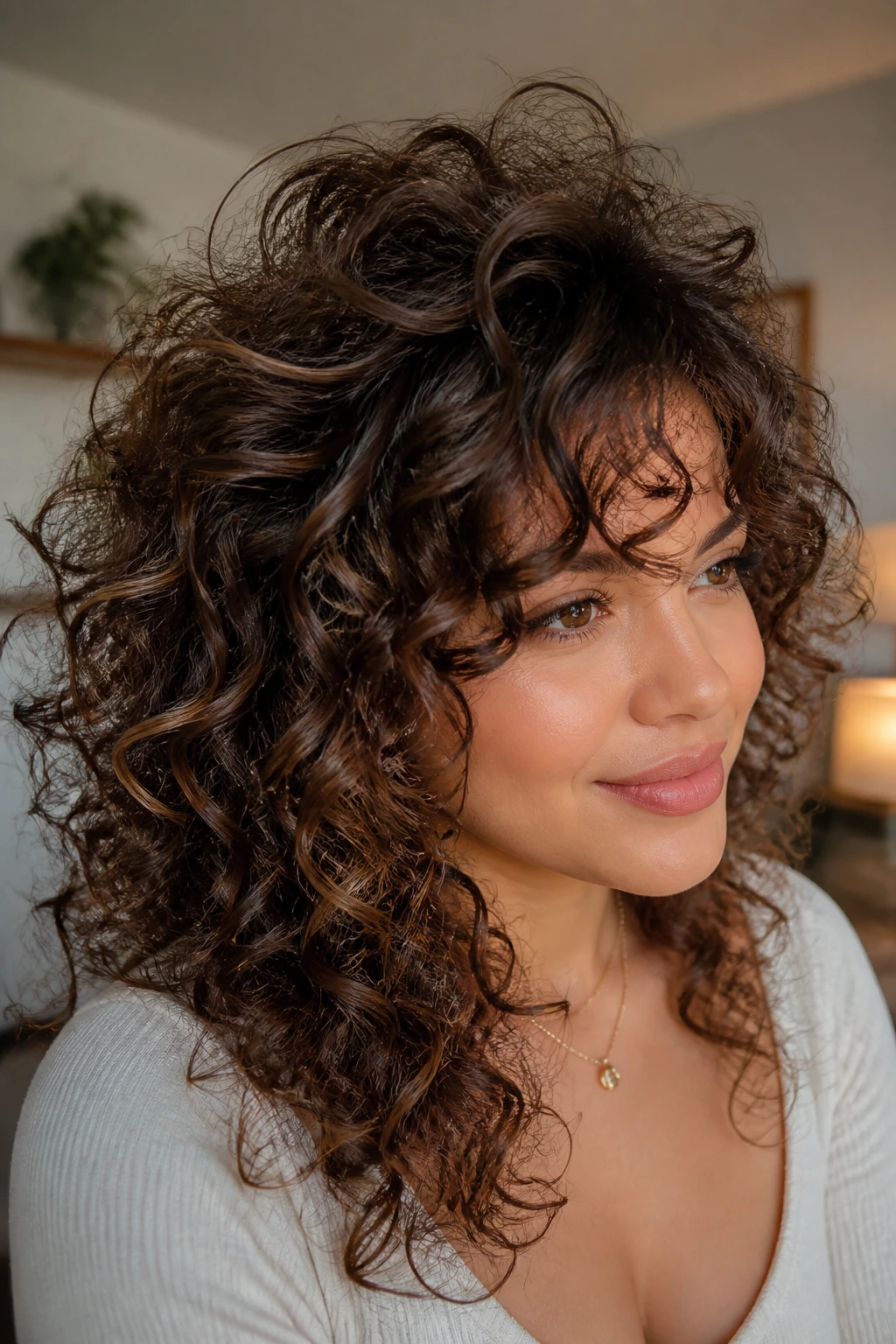
Root Lift: Clip the crown at the root while the hair is damp, then remove the clips when the roots are almost dry. That small pause can keep the top from collapsing before the shape sets.
Definition: Use a brush or finger-coiling on the front pieces only if the haircut needs more visual structure. You do not need to do the whole head unless you want a lot of uniformity.
Frizz Control: A pea-sized amount of serum on the outer layer can calm halo frizz, but don’t smother the shape. Too much oil steals the airy look that makes these cuts feel full.
Make-It-Yours: Fine curls usually look better in lighter foam and gel. Coarse or coily hair often likes a cream under a gel cast. If the cut feels too big, stretch the top while diffusing; if it feels flat, scrunch in a little more lift at the roots.
Keep the Shape Between Wash Days
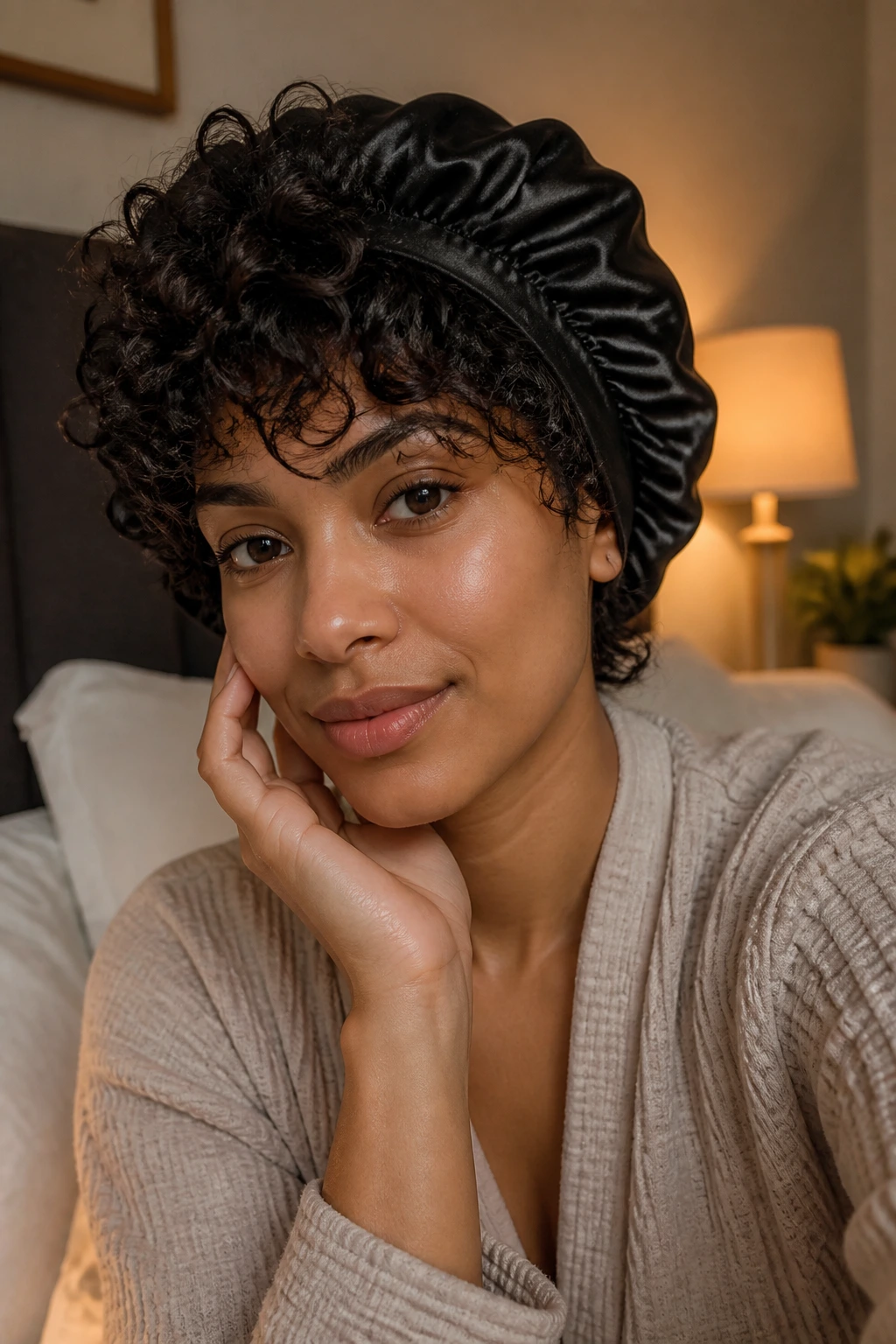
Curly volume has a memory, and bedtime either helps it or ruins it. A satin pillowcase or bonnet keeps the crown from getting crushed, which matters more on a pixie, bob, or shag than people expect. If the top gets flattened overnight, the whole cut reads smaller in the morning.
On day two or three, mist the roots and the outer layer lightly, then scrunch in a little conditioner-water mix or a small amount of gel. Don’t soak the hair. You want enough moisture to wake the curl pattern, not enough to force a full reset. A diffuser on low heat for five to eight minutes can bring the lift back without overworking the ends.
Most curly cuts like trims every 6 to 12 weeks, depending on how short the shape is and how fast your curls expand. A pixie will show growth fast. A long lob can stretch longer if the perimeter stays neat. The cut itself does a lot of the maintenance work, but only if you keep the outline from drifting.
Variations and Adaptations to Try
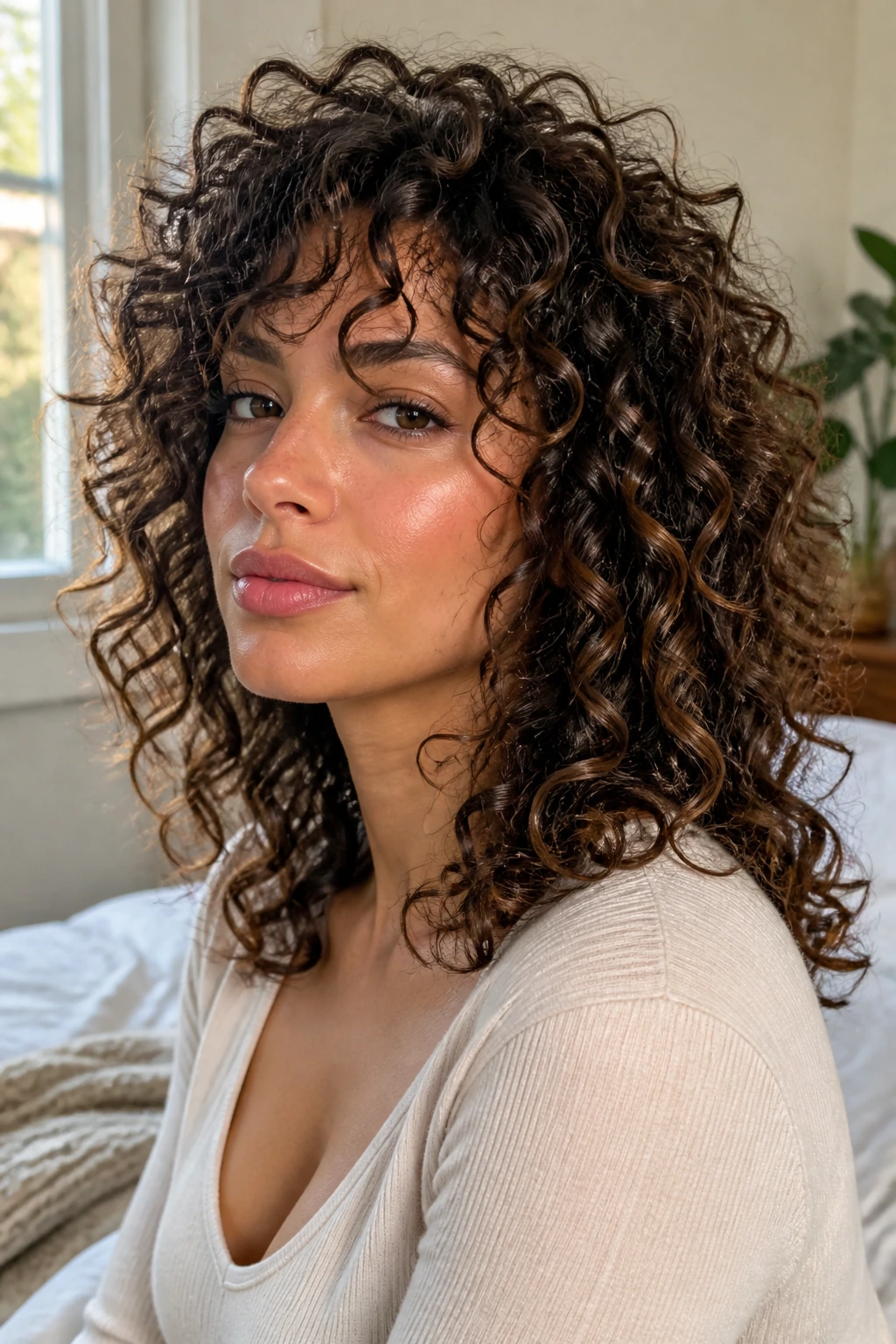
Fine-Curl Lift Edit: Ask for shorter crown layers, a cleaner perimeter, and less thinning through the ends. Fine curls usually need support, not aggressive slicing.
Thick-Hair Weight-Release Version: Add an undercut, nape taper, or hidden internal layers. This keeps the shape from ballooning at the sides and neck.
Coily Halo Shape: Round the silhouette and keep the outline even all the way around. That gives coils a strong shape without flattening the top.
Low-Styling-Minute Cut: Choose a collarbone lob or blunt bob with just enough internal layering to keep the hair moving. These shapes usually need less daily fuss than a shag or wolf cut.
Stretch-and-Define Version: For people who like diffuse-styled curls but also wear occasional blowouts, a butterfly cut or long V-cut keeps the hair flexible in both states.
Short-and-Strong Version: A pixie, bixie, or mixie gives the most obvious root lift. These cuts need more frequent trims, but they take volume seriously from day one.
Common Mistakes to Avoid

-
Keeping too much length because you’re scared of shrinkage. The hair may look safer when wet, but the dry result often ends up heavy and flat. A skilled curl cut usually sits shorter than people expect.
-
Over-layering the crown. When the top gets too chopped up, it loses structure and turns frizzy before it turns voluminous. Ask for lift with control, not random texture.
-
Ignoring density and only talking about curl type. Two people can both have 3b curls and need completely different cuts if one has fine strands and the other has thick, coarse hair.
-
Using heavy cream on a cut that relies on bounce. Dense creams can pull down a pixie, shag, or rounded bob faster than the haircut can fight back.
-
Cutting curls wet without checking the dry shape. Wet curls lie about where they’ll land. If a stylist never checks the dry finish, the final outline can drift off fast.
-
Skipping trims once the shape starts to widen. Curly cuts grow sideways as well as downward. A shape that once looked lifted can turn into a triangle if you leave it too long.
Frequently Asked Questions
Should curly hair be cut dry or wet?
Both methods have a place, but dry cutting is often better for curls when the goal is volume and shape control. It lets the stylist see shrinkage, spring, and the way each section sits next to the next one.
Which curly cut gives the most volume at the crown?
A crown-lift shag, bixie, pixie, or mixie will usually show the most obvious height. If you want volume without losing length, a butterfly cut or internal-layer lob can help too.
Will layers make my curls frizzy?
They can if the layers are too short or too aggressively thinned. Well-placed layers should give curls space to move while keeping enough weight for the curl clump to stay together.
What if my curls shrink a lot after the cut?
Tell the stylist your curl pattern and show how your hair looks fully dry. A good cut may need to look a little longer than you expect when the scissors come out, especially around the nape and fringe.
How often should I trim a volume-building curly cut?
Short cuts usually need a trim every 6 to 8 weeks. Mid-length and long layered shapes can stretch to 10 to 14 weeks if the outline still feels balanced.
Can fine curly hair handle a shag?
Yes, but it needs a softer version with fewer short pieces at the crown. Fine curls usually look best when the shag keeps some bluntness at the perimeter so the ends don’t disappear.
What should I tell a stylist if I want more lift?
Say you want height at the crown, less bulk at the bottom, and a shape that still looks good on day two. Those three details are more useful than saying you want “more volume” and leaving it there.
Can I wear these cuts pulled back?
Most of them, yes. A lob, layered bob, and longer shag are easiest to tie back, while a pixie, bixie, or mixie may need clips, headbands, or a small puff rather than a full ponytail.
The Shape That Keeps Moving

The nicest thing about a good curly cut is that it keeps working after the salon mirror stops being useful. You wash it, you diffuse it, you sleep on it, and it still has shape because the haircut was built to hold its own. That’s the difference between hair that feels styled and hair that just feels managed.
Pick the cut that matches your density, not just your mood board. A rounded bob, a lifted shag, a tapered pixie, or a long hidden-layer lob can all give curls more room to breathe. The right one will make the curl pattern look clearer, the crown look higher, and the whole head of hair feel like it belongs to you again.
