



A good short cut on Black natural curls doesn’t fight the hair into submission. It gives the coils a shape to live in. That’s the whole trick, and it’s why some short styles look sharp on day one but go strange two weeks later, while others still make sense after a humid commute, a bad pillowcase night, and a wash-and-go that needed more patience than you had.
With short black haircuts for natural curly hair, the details matter more than the headline. A clean taper at the temple can change the whole face frame. A rounded crown can stop a cut from looking boxy. A little extra length at the top can keep tight coils from turning into a helmet. And yes, shrinkage changes the math fast. A cut that looks like two inches wet may read like half that once it dries.
The best short styles for natural curls do one thing well: they let texture show without demanding a full styling ritual every morning. Some need a fade every couple of weeks. Some just need a mist bottle, a satin bonnet, and a barber who understands that “short” on coily hair does not mean “strip it down and hope for the best.” The shape is the point. The rest is maintenance.
Why These Cuts Hold Their Shape Instead of Fighting the Curl
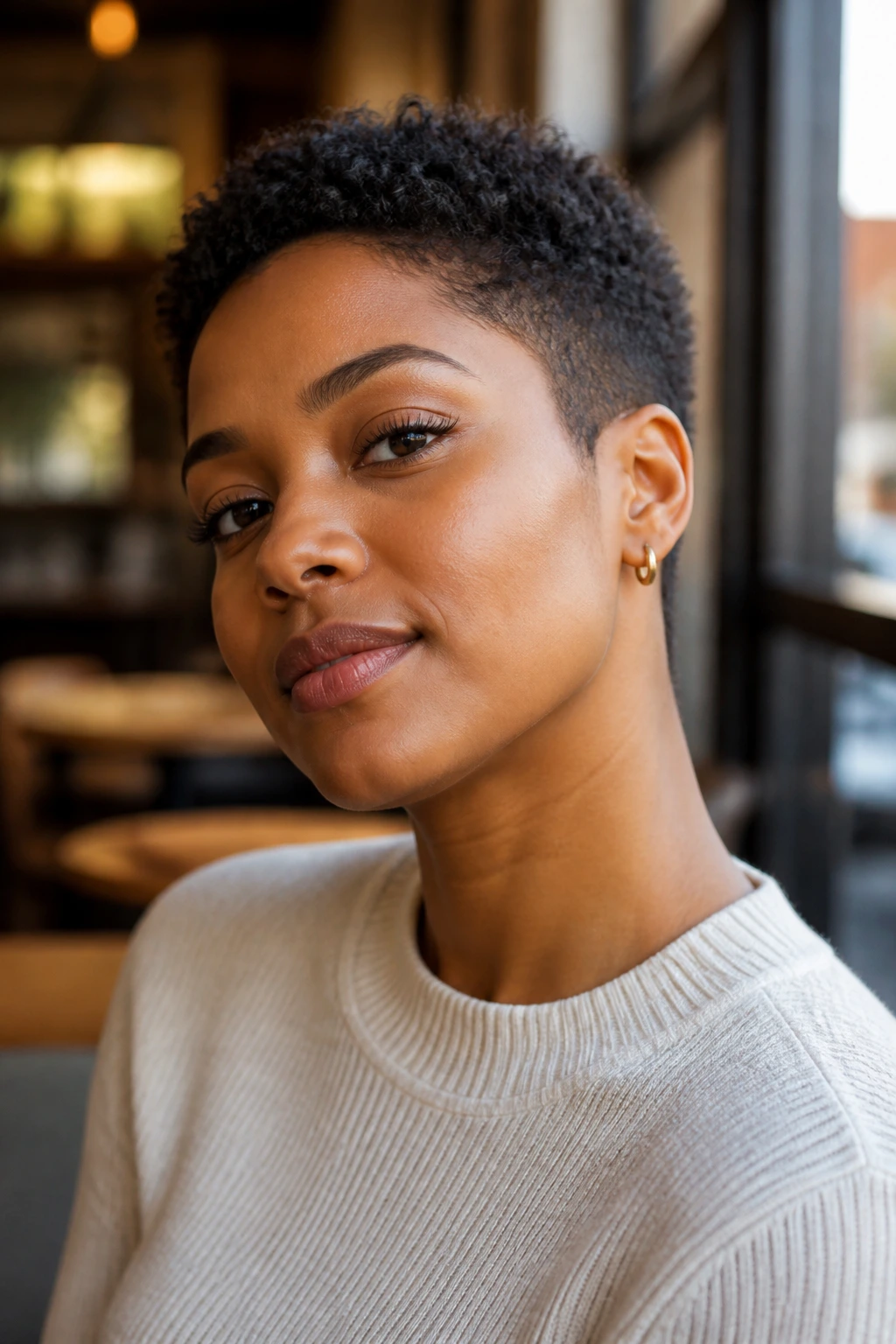
- Shrinkage-friendly silhouettes: These styles are built around how coily hair actually dries, so the cut still makes sense when the curls spring up.
- Clean edges, soft bodies: A sharp line-up or taper gives the eye a place to land, while the top keeps its natural texture.
- Low-length, high-personality: Short hair can still look bold when the crown, fringe, or fade is doing real shape work.
- Easy to personalize: Small changes in temple taper, top length, and perimeter shape make the same cut feel completely different.
- Better grow-out: A cut with a planned outline tends to age better than a blunt chop that was never shaped for texture.
1. Tapered TWA With a Soft Coil Crown
A tapered teeny weeny afro is one of those cuts that looks calm from across the room and detailed up close. The sides hug the head, the crown keeps enough length to show coil definition, and the whole shape feels tidy without losing softness. On tight curls, that balance matters.
Why It Works
A TWA can go flat fast if every side is left the same length. The taper at the nape and temples keeps the outline clean, while the top holds enough body to avoid that squeezed-down look. If your hair sits in the 4B to 4C range, this shape tends to show texture instead of hiding it.
Quick Details
- Best for: people who want a very short natural cut with minimal daily styling
- Ask for: soft tapering around the ears and nape, not a hard boxy edge
- Keep in mind: dry hair reads shorter than wet hair, so the final shape should be checked after it dries
- Daily care: a spray bottle and a little leave-in are usually enough
Pro tip: leave the crown a touch longer than you think. It gives the cut breathing room after shrinkage, and that extra half-inch matters more than most people expect.
2. Rounded Afro Fade
A round fade is the short cut that saves people who hate angles. It creates a clean shell of curls with faded sides, and the whole thing reads polished without looking stiff. The curve is the point. Too many people ask for “just clean it up” and end up with a square shape that makes the face look wider than it is.
The rounded silhouette works because curls already want to stack. A barber or stylist who understands natural hair will trim the perimeter in a way that keeps the top airy and the sides controlled. It’s especially good if you want a cut that looks deliberate from every side, not just the front.
3. Curly Pixie With Temple Taper
Do you want short hair that still has a little swing around the face? This is the one. A curly pixie on Black natural hair keeps the nape and temples tight while leaving the top soft enough to fall forward or lift off the forehead.
The temple taper matters more than people think. Without it, the style can puff out at the sides and lose the tidy pixie shape. With it, the cut feels sharp but still feminine, or androgynous if that’s your lane. Ask for the fringe to sit just above the brow or lightly graze it when dry.
How to Wear It
A light curl cream or foam on damp hair is usually enough. If you like more separation, twist small sections with your fingers and let them set while you get dressed. The style is small, but it still wants shape.
4. Finger-Coil Crop
A finger-coil crop is what happens when definition becomes the star. Instead of relying on loose fluff, this cut uses small, sculpted coils to create texture you can actually see. It works especially well when the hair is already dense and the curl pattern needs help clumping neatly.
I like this style for people who don’t mind spending a little time on finish work. Not a full hour. Just enough to separate the curls while they’re damp and let the coil pattern set in place. The result looks intentional, which is a nicer word than “styled,” because it does not feel fussy.
- Best for: coils that need definition more than volume
- Ask for: a rounded crop with enough top length for finger coiling
- Watch for: if the hair is cut too low, the coils lose their shape and start looking sparse
- Styling note: use a light gel or curl custard, not a heavy butter
One rule: if the coils are taking forever to dry, the product is too thick.
5. Side-Swept Curly Crop
A side-swept crop gives short curls a direction, and direction is underrated. Instead of sitting straight up or all around the head equally, the top leans to one side, which softens the face and makes the cut feel a little less severe. That tiny asymmetry helps a lot.
This style works when the crown has enough length to move, but the sides still stay neat. It is a smart option if you like the idea of a short cut but don’t want something that reads ultra close. A side part can be real or implied; both work, as long as the top isn’t too short to fall.
6. High-Top Fade With Tight Sides
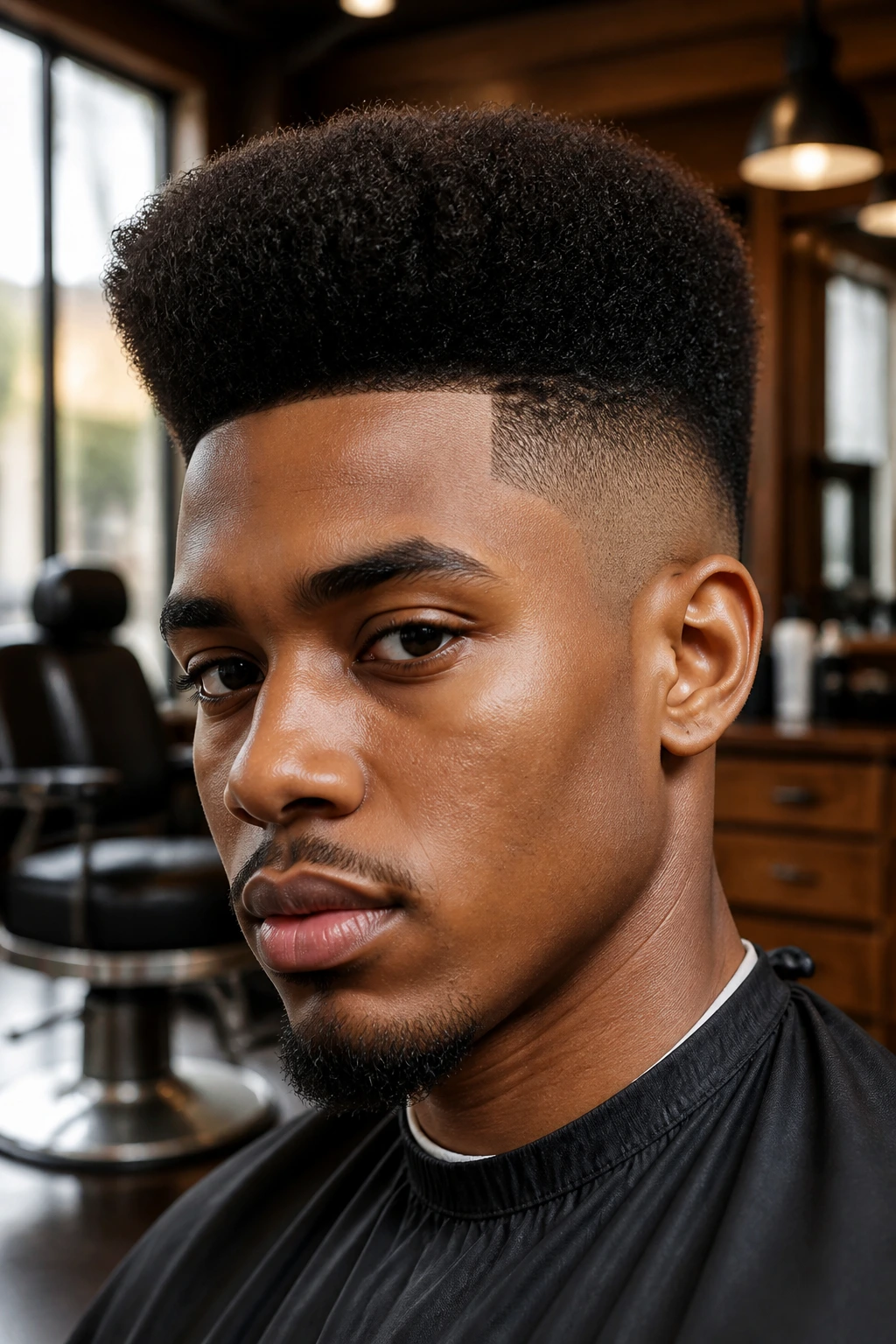
A high-top fade is the loud one in the room, and I mean that in a good way. The top stands up with purpose, the sides stay tight, and the vertical line gives coily hair a strong profile. It’s one of the clearest examples of a cut that uses texture as architecture.
What makes this version work on natural curls is the contrast. You want enough height on top to show the pattern, but not so much that the shape turns mushroom-like. Ask for a gradual fade on the sides and a top shape that feels squared at the edges but rounded at the corners.
7. Frohawk With a Clean Nape Fade

A frohawk is for the days when you want your hair to look like it has opinions. The center strip keeps the curls visible, while the faded sides and clean nape sharpen the silhouette. It’s a strong cut, but it does not need to be dramatic if the proportions are right.
The middle section should carry most of the density. If the sides get too wide, the whole thing loses that narrow, lifted shape that makes the frohawk feel special. A low or mid fade underneath helps the top stand out without looking overdone.
8. Mini Afro With a Crisp Line-Up
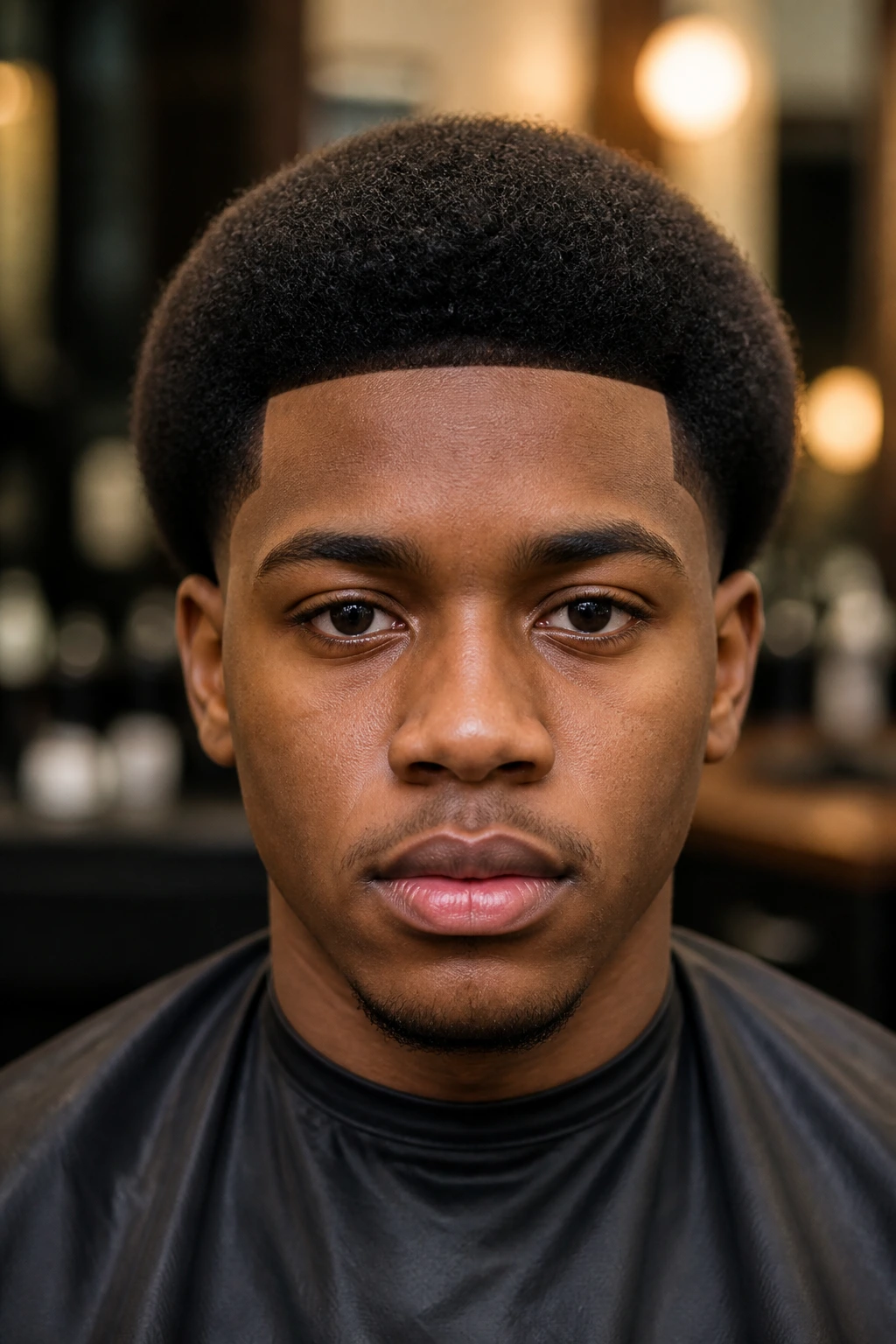
A mini afro can be one of the cleanest short natural cuts around when the line-up is done well. The shape is small, round, and honest. No tricks. No extra movement. Just a neat little cloud of curls framed by a sharp edge.
The line-up gives structure, but it should not erase the hairline’s natural shape. A barber can square it off slightly at the temples while keeping the front soft enough to avoid that painted-on look. This cut is especially forgiving if you want something low-maintenance that still looks fresh after a quick mist and pick.
9. Asymmetrical Curly Crop
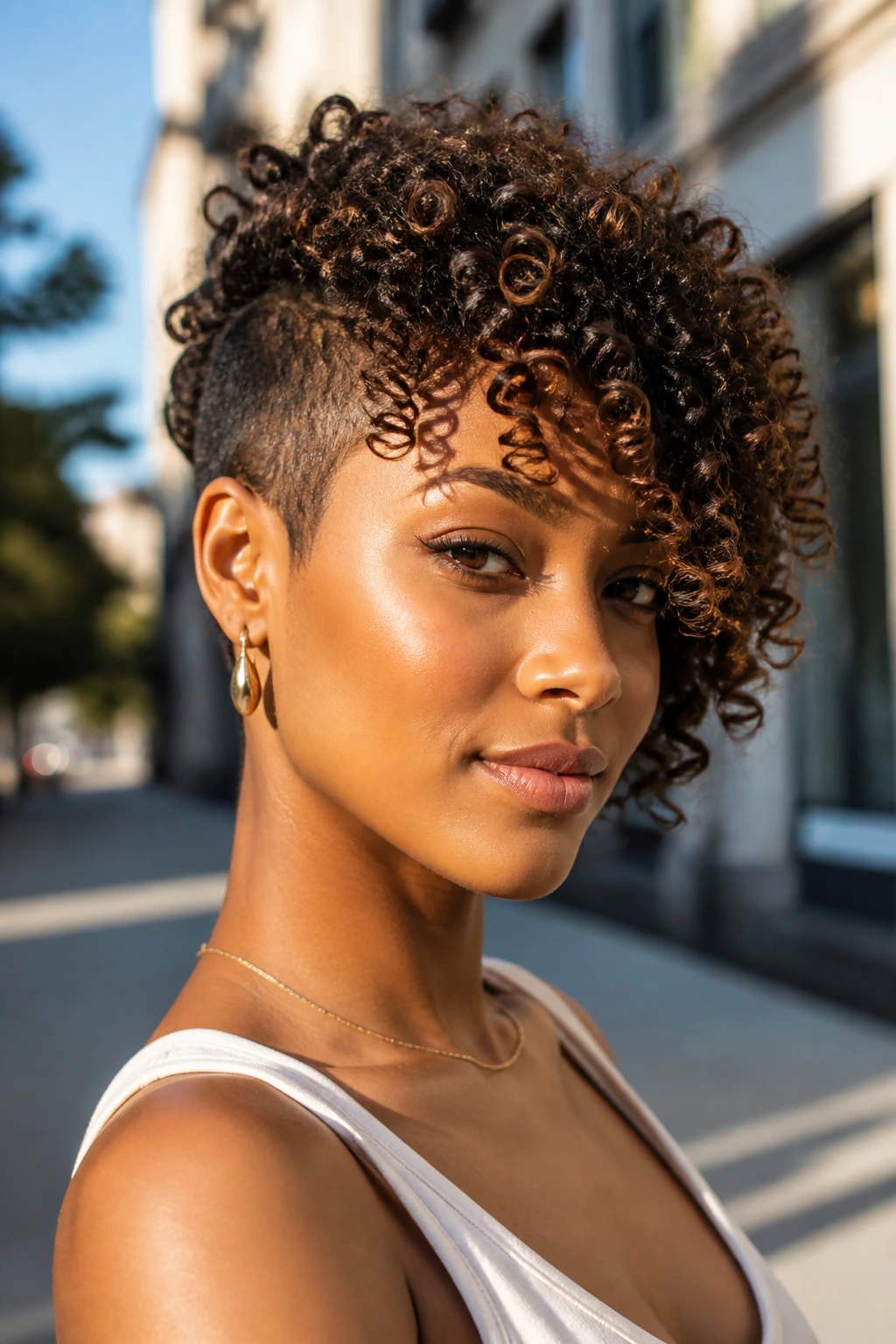
One side longer than the other changes everything. An asymmetrical crop gives you movement without needing much length, and it’s one of the easiest ways to make short curls feel modern without losing wearability. The imbalance is the style.
The longer side can sit near the cheekbone, while the shorter side stays close to the temple or ear. That contrast frames the face in a way a symmetrical cut sometimes can’t. If your hair is dense, ask for internal shaping so the longer side doesn’t balloon.
10. Curly Caesar With a Short Fringe
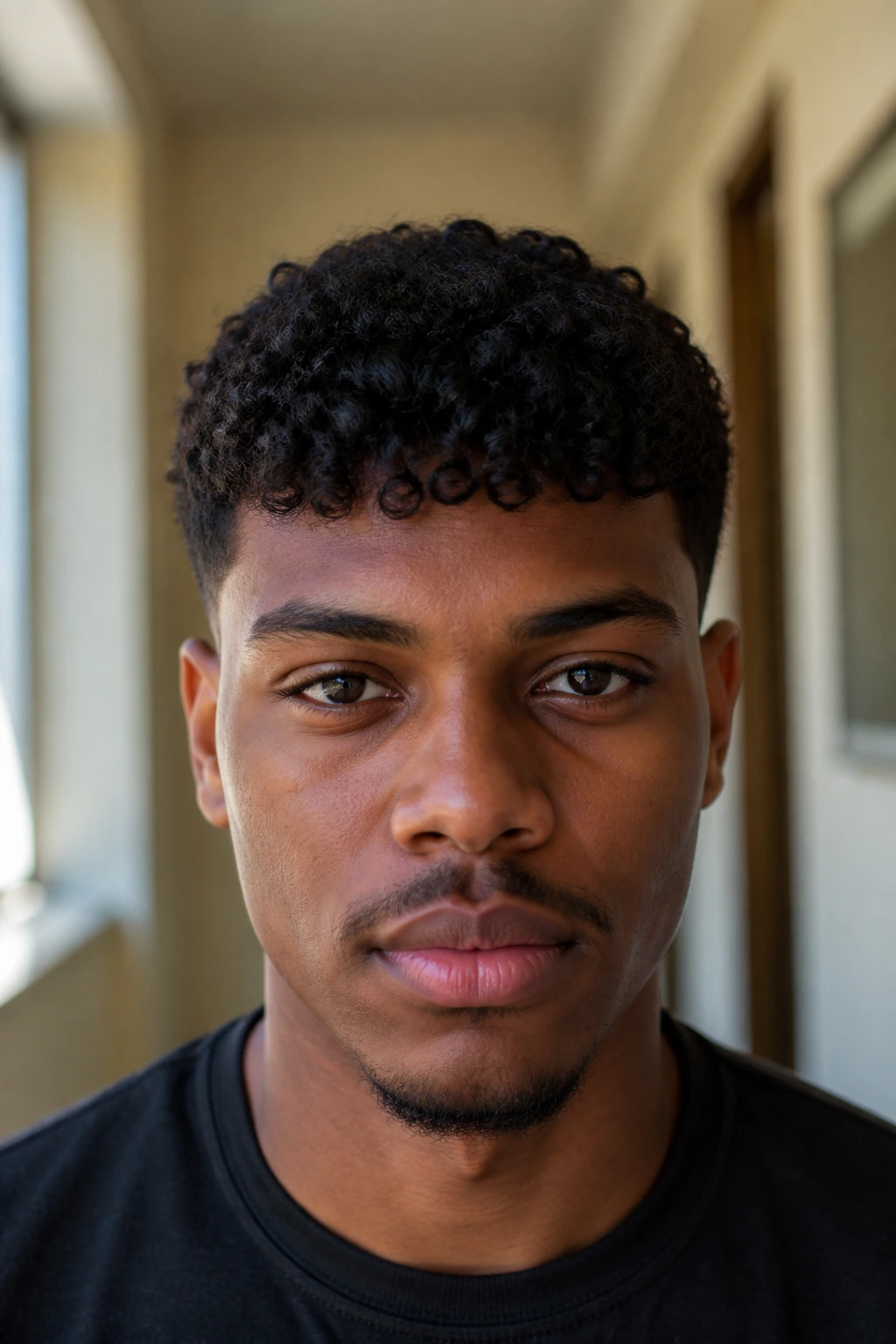
A curly Caesar is shorter than people expect, but it’s smart. The fringe comes forward, the top stays compact, and the shape makes the forehead line part of the design. On natural curls, the fringe can sit softly rather than flatly, which keeps the cut from looking too severe.
This style works best when the front is cut to show curl texture instead of forcing a straight-across line. A little unevenness is fine. Actually, a little irregularity is better than a hard ruler-straight edge that fights the curl pattern.
11. Wash-and-Go Shaped Cut
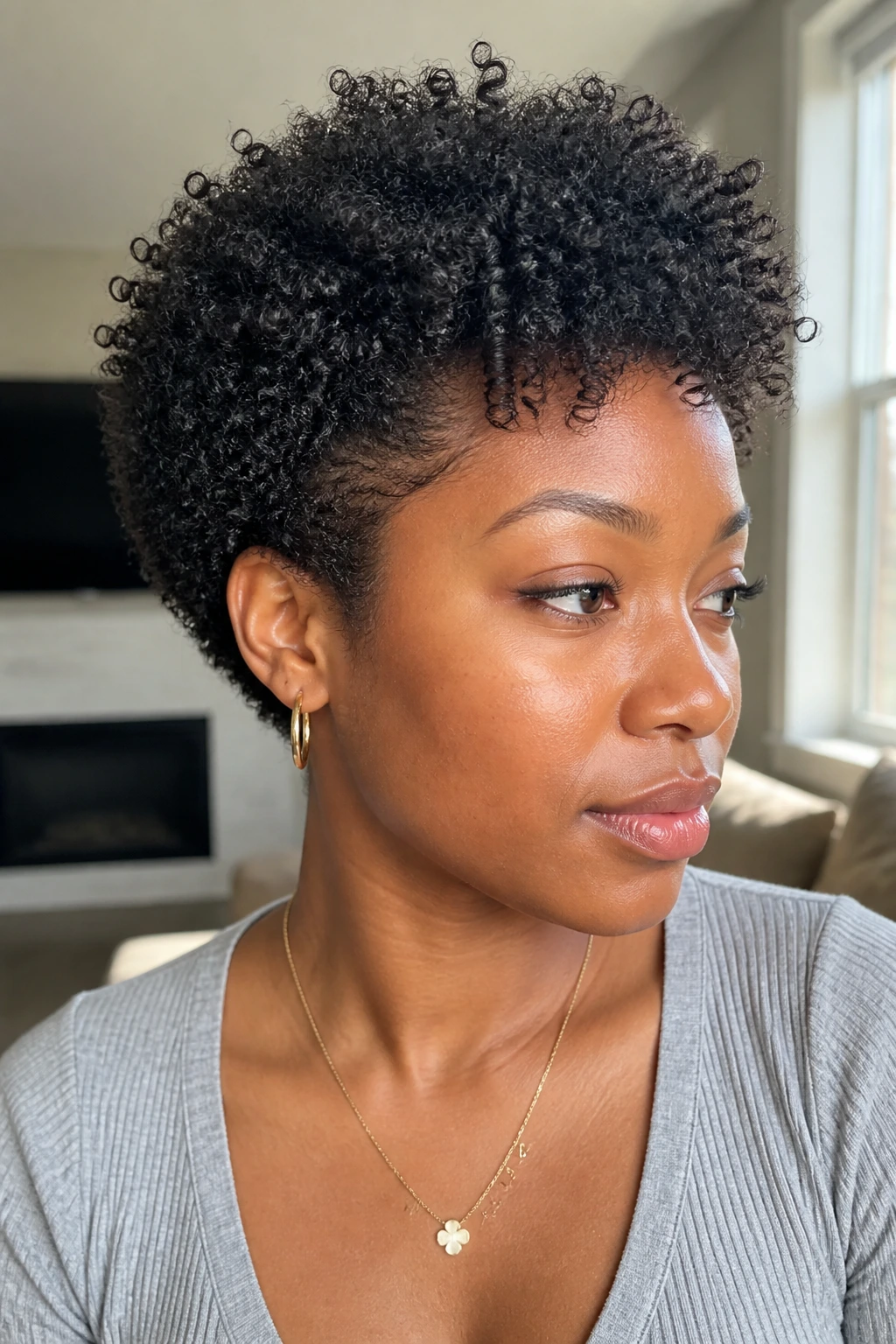
This is the cut for people who want their hair to look finished without performing a whole ceremony every morning. The perimeter is shaped so the curls can dry into a readable silhouette, which means less scrambling with a diffuser or a pick later.
The trick is not length alone. It’s the way the shape follows the way your curls clump and collapse. If your top is denser than your sides, the stylist should remove bulk where it puffs and leave more length where the curl pattern needs room.
12. Deep Side-Part Taper
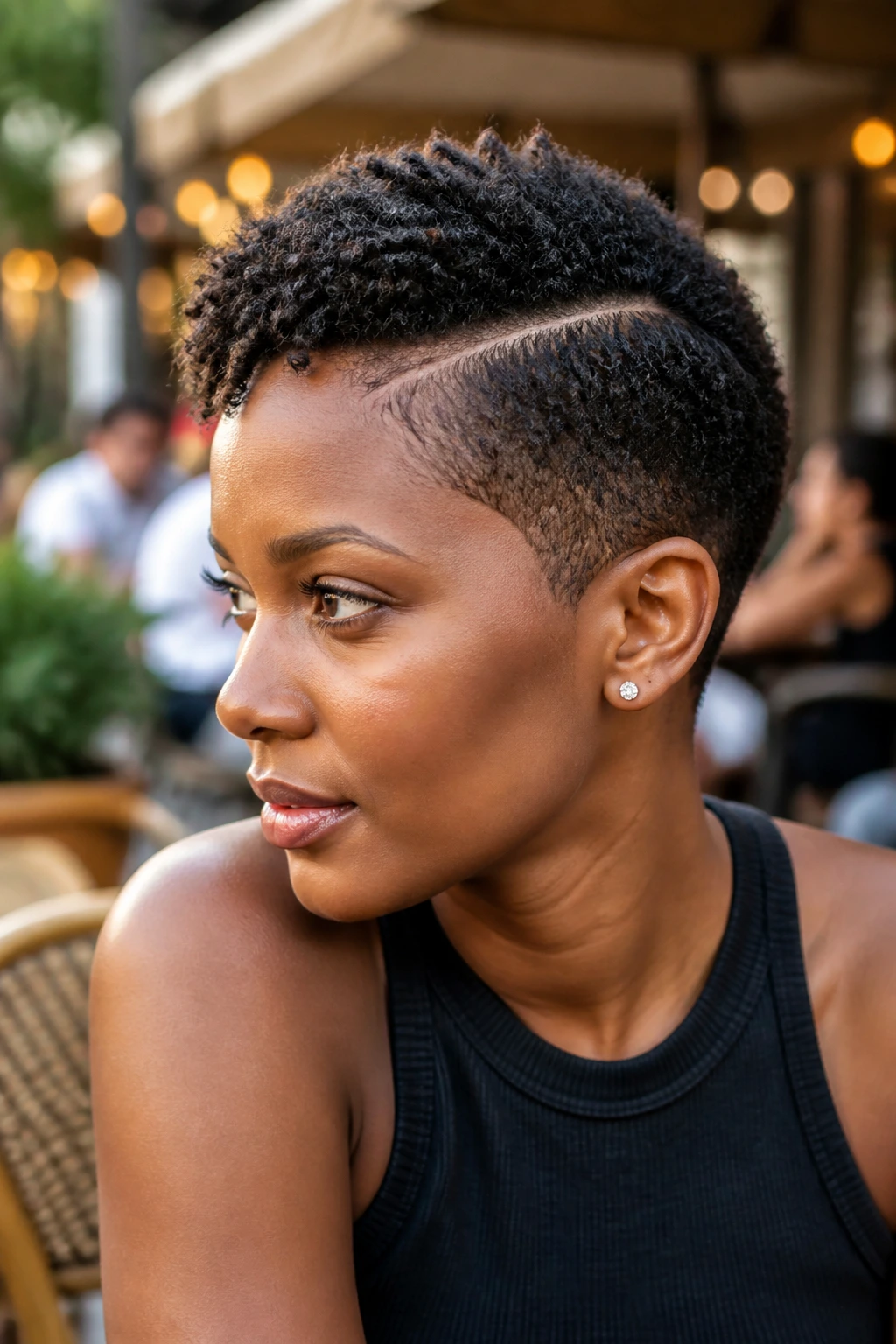
A deep side part on short natural curls can make a cut look sharper, taller, and a little more polished. It pulls attention to one side of the face and lets the rest of the texture stay soft. The taper keeps the part from looking heavy.
This style is a good pick if you like structure but don’t want a full hard part shaved in. You can shift the part slightly from wash day to wash day, which gives the style a little flexibility. The front stays interesting, and the cut doesn’t feel trapped in one position.
13. Drop Fade With a Curly Top
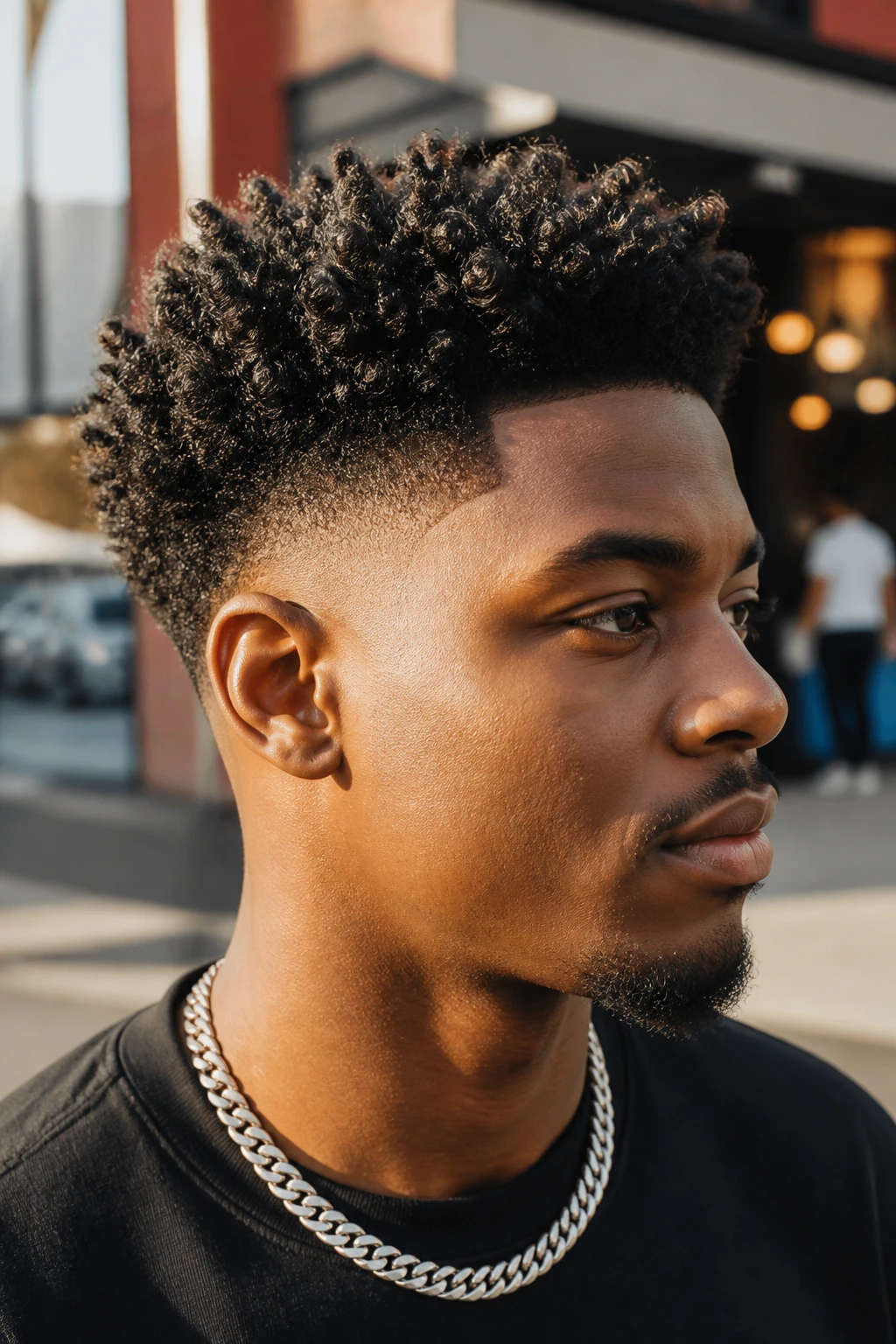
A drop fade curves lower behind the ear, and that small drop changes the whole feel of the cut. It follows the head better than a straight fade, which is why it often looks smoother on natural hair textures with a lot of body.
The curly top should stay full enough to contrast with the faded sides, but not so heavy that it spills over the taper line. I like this shape for people whose curls need a little room to breathe. It keeps the haircut from looking too stiff, even when the edges are crisp.
14. Mushroom Afro Shape
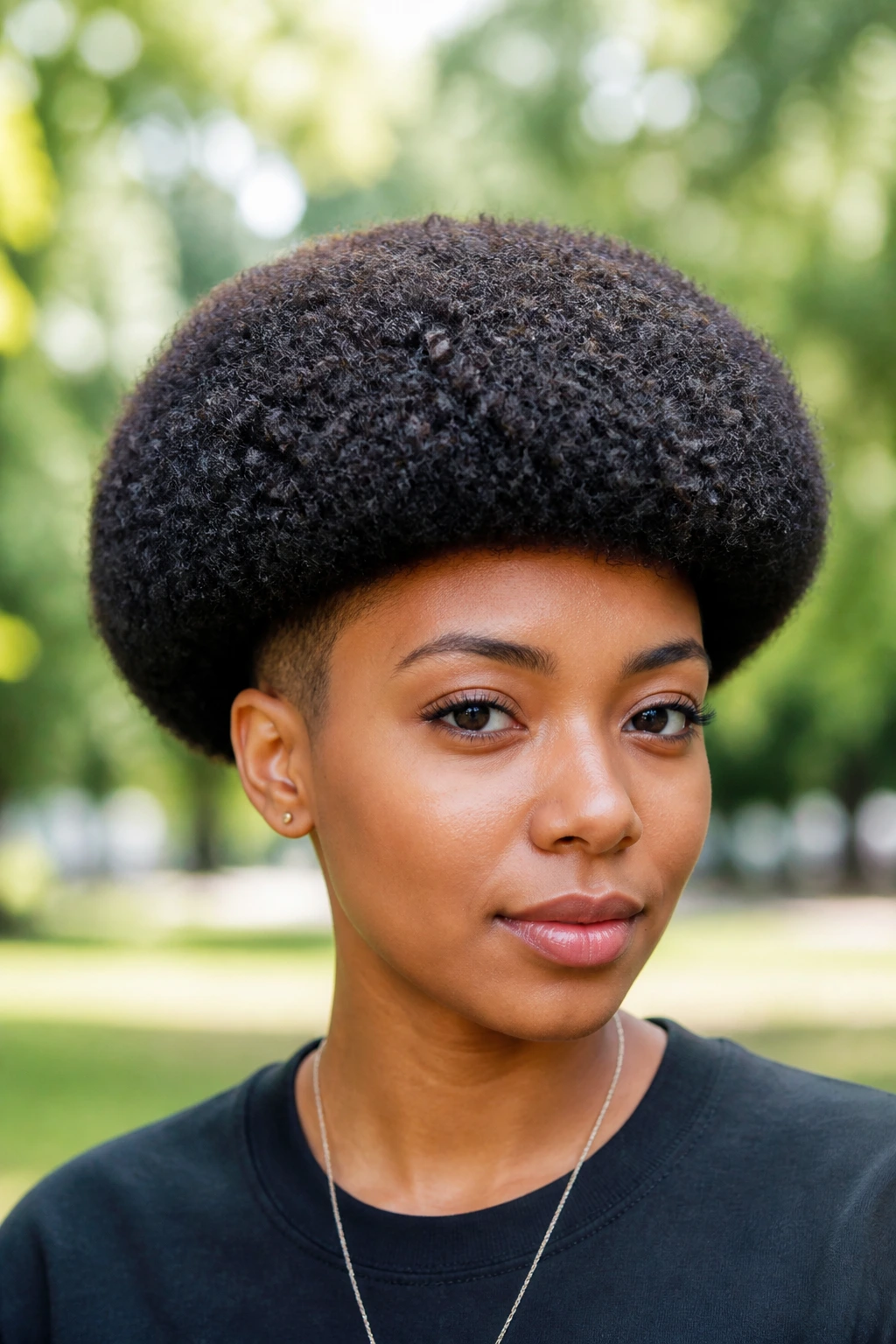
The mushroom afro is softer than its name sounds. The shape rounds out around the head with a clean perimeter and a fuller top, almost like a cap of texture that sits evenly all around. It can be playful or elegant, depending on how tight the outline is.
The danger here is making it too wide. A good mushroom shape should feel controlled at the sides and fuller at the crown, not inflated. If the hair is dense, ask the stylist to carve the interior so the outer shape stays smooth instead of bulging.
15. Short Curly Shag With Bangs
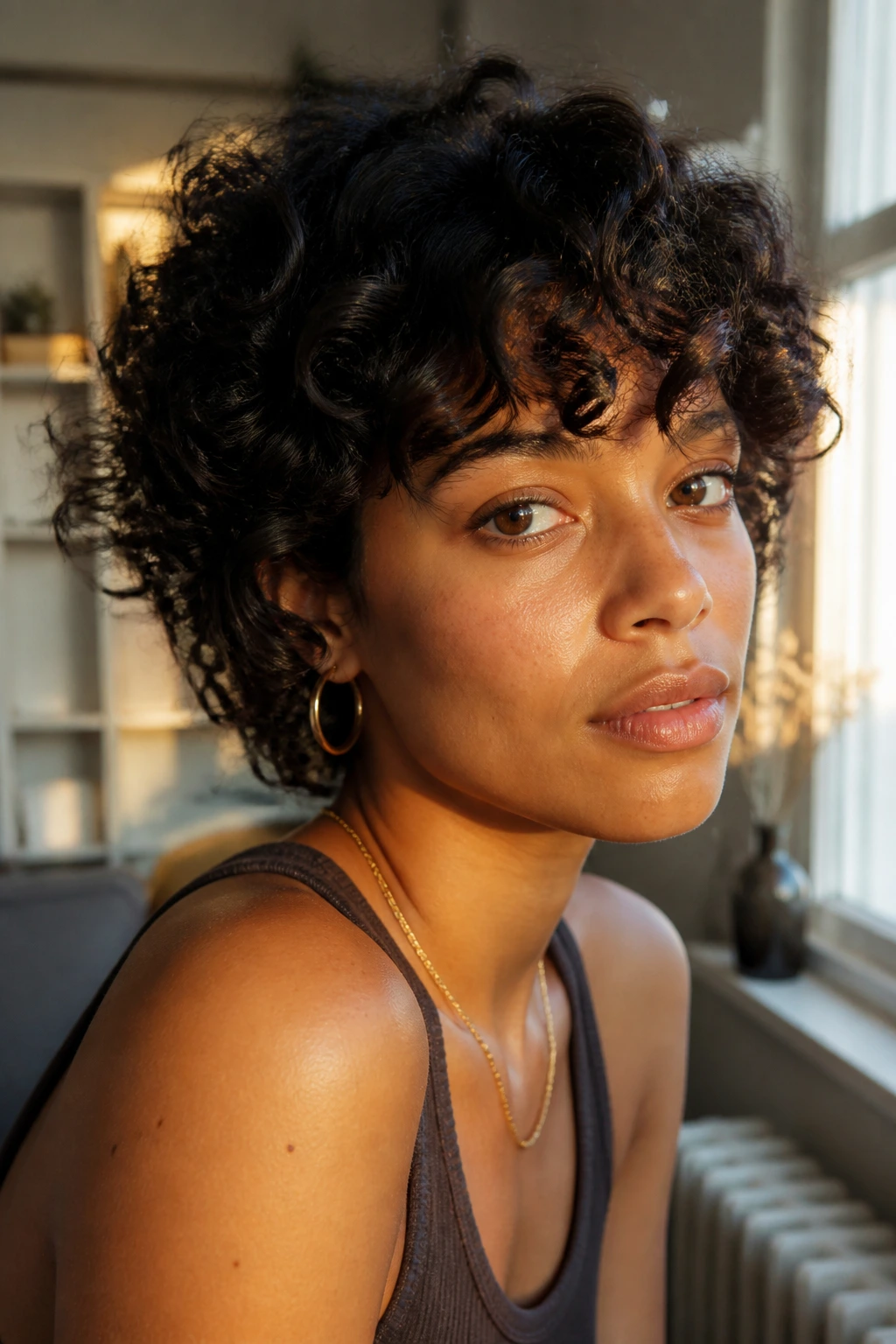
A short curly shag brings a little roughness in the best way. Layers break up the bulk, bangs soften the forehead, and the whole thing feels lived-in without looking messy. It works especially well if your curl pattern has some bounce but needs help avoiding triangle shape.
The best version keeps the top and front a bit longer than the sides, so the curls can fall forward naturally. Bangs on coily hair should be cut with shrinkage in mind. Too short, and they spring up to the middle of your forehead. Too long, and they hide your eyes.
16. Flat-Twist Out Crop
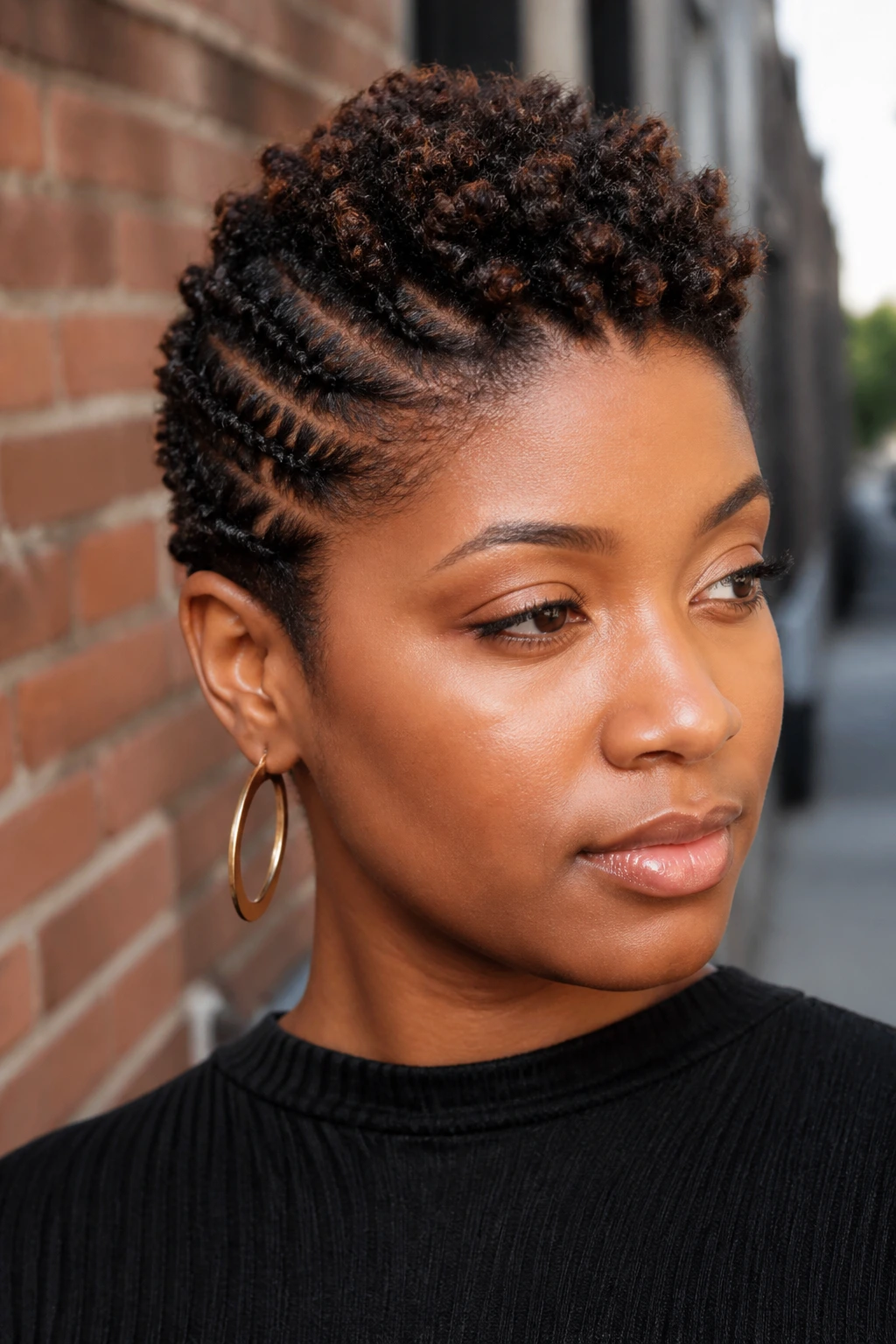
A flat-twist out crop is built for texture lovers. The cut is short, but the styling gives it extra shape, especially if you like the look of stretched curls with a little definition. It’s a good bridge between a natural fro and a more sculpted short style.
The haircut itself should leave enough length for twist-out pattern to show, especially around the crown and front. If the hair is cut too close, the twists won’t open into much of anything. A little top length is doing a lot of work here.
17. Bixie for Coily Hair
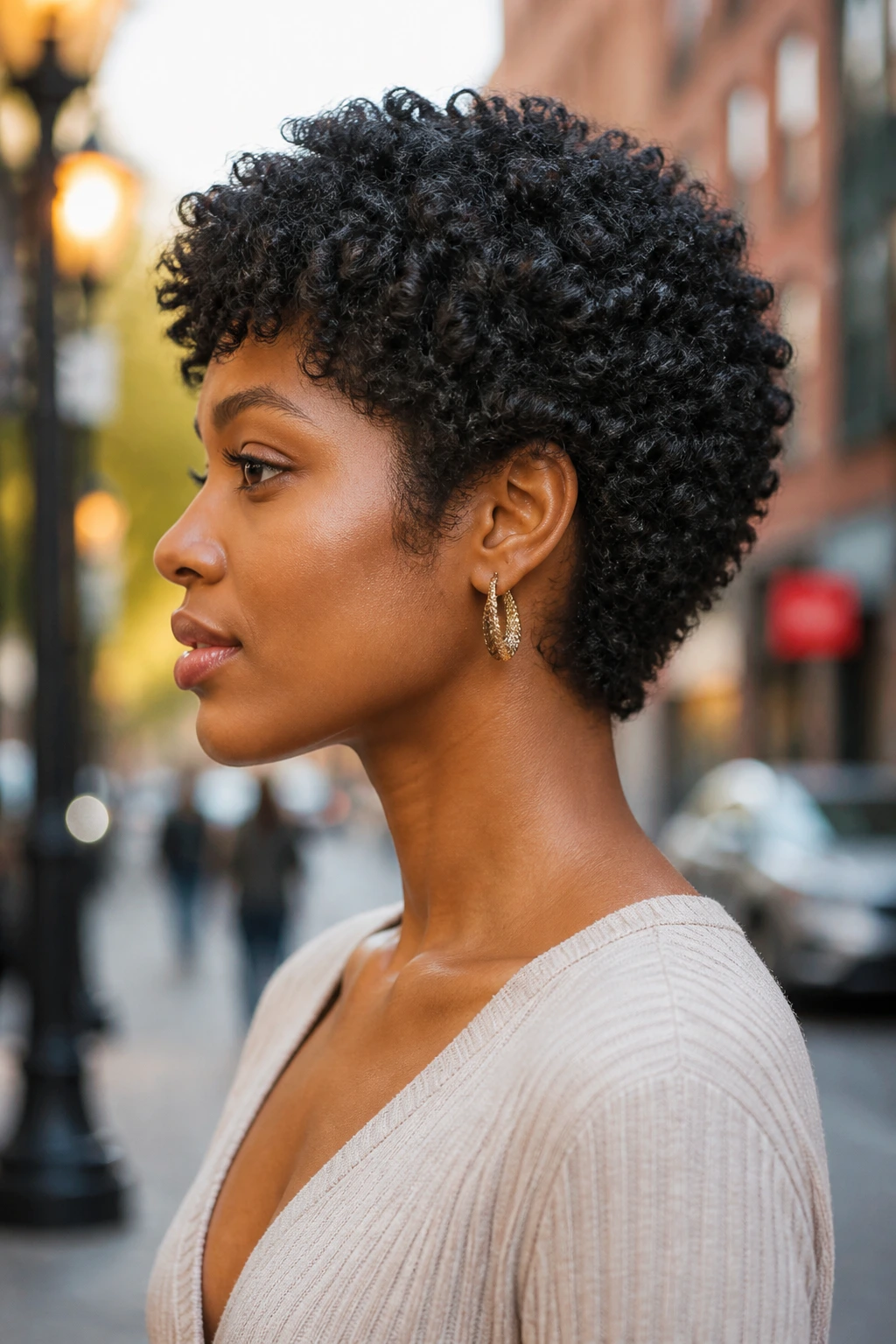
A bixie sits between a bob and a pixie, which is why it gives natural curls such a useful shape. It’s short enough to feel easy, but long enough to let the curls bend, flip, and frame the face. The result can feel soft without going shapeless.
On coily hair, the bixie needs careful layering around the ears and nape. If the layers are too blunt, the cut starts to sit like a helmet. If they’re too thin, it loses density. The sweet spot is a structured cut that still lets the hair breathe.
18. Soft Taper With a Puff Crown
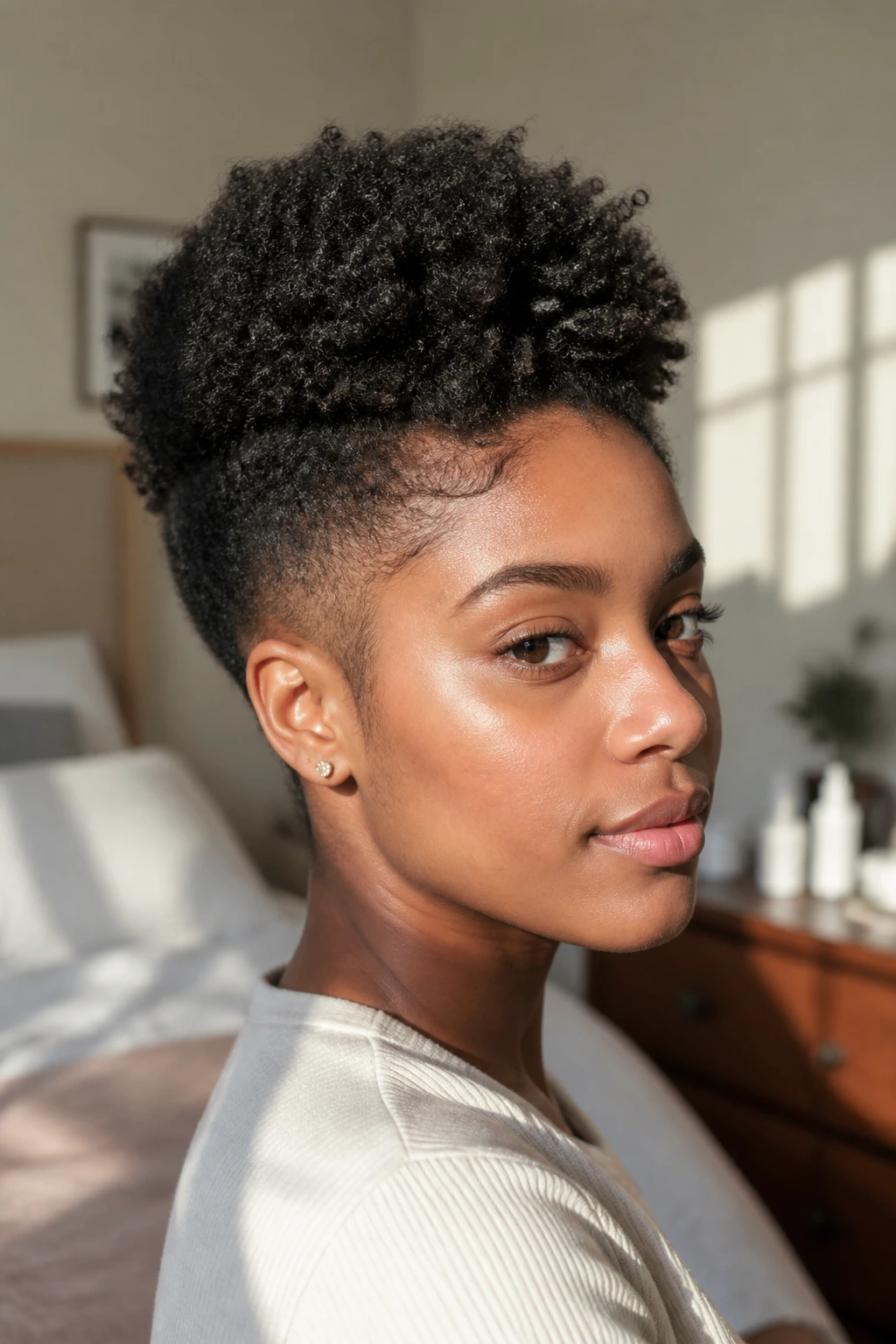
This cut keeps the lower edges neat and lets the top rise into a small puff-like crown. It’s an easy shape to wear because it never depends on one exact curl position. The top can fluff, bend, or separate, and the cut still makes sense.
The soft taper keeps the outline from getting too wide around the face. That’s the whole game here. If you like a little volume but don’t want a full round afro, this is a very practical middle ground.
19. Buzzed Sides and Textured Top
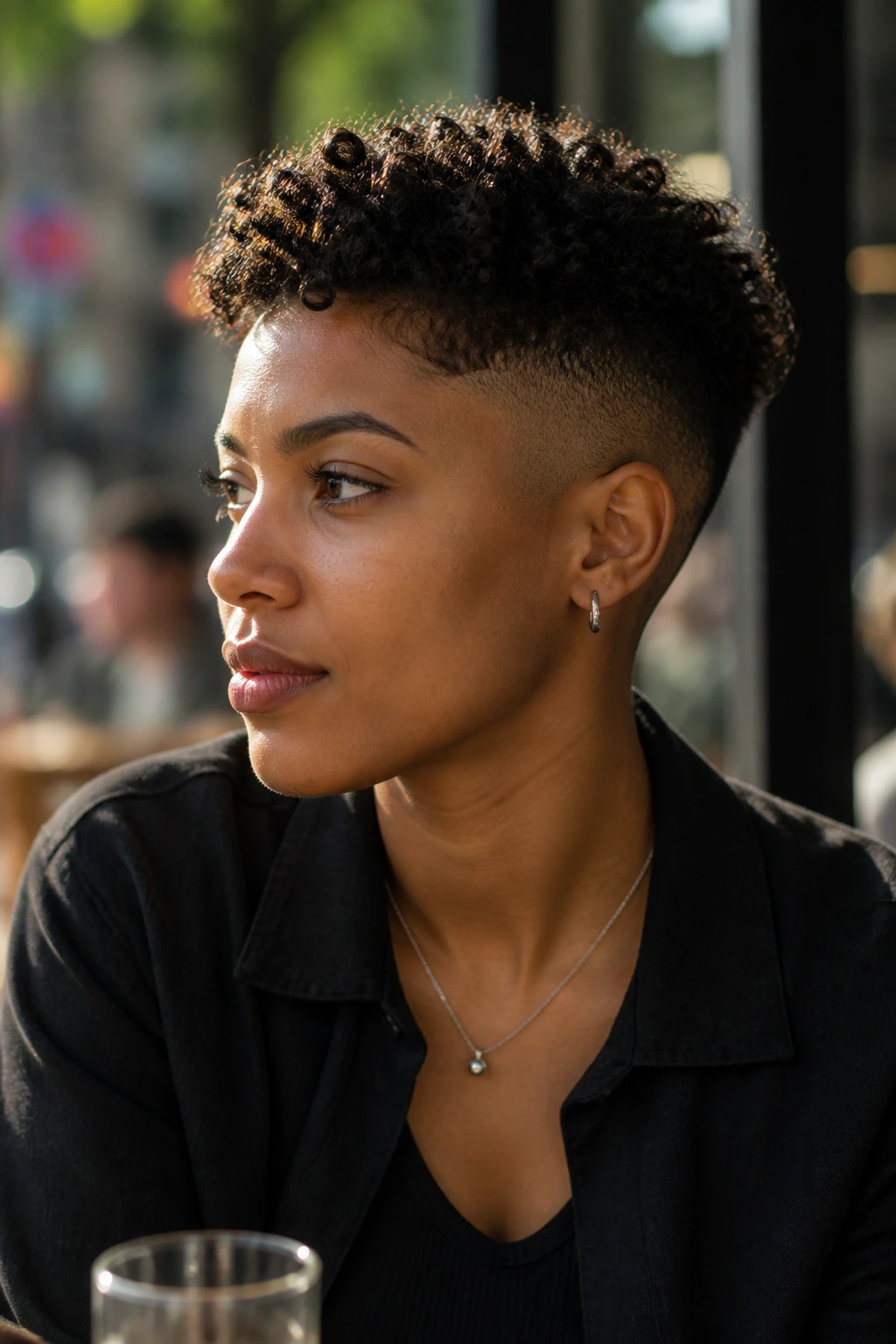
Buzzed sides change the whole mood of a short natural cut. The top becomes the focal point, and the curls can sit almost like a crown instead of blending into the perimeter. It’s a bold look, but the real appeal is how clean it grows out.
This style is worth trying if your hair is very dense or if you want to keep styling time short. The contrast between short sides and a textured top makes the curls pop even when they’re not fully defined. Use a small amount of product, not a heavy stack of creams.
20. Low-High Taper
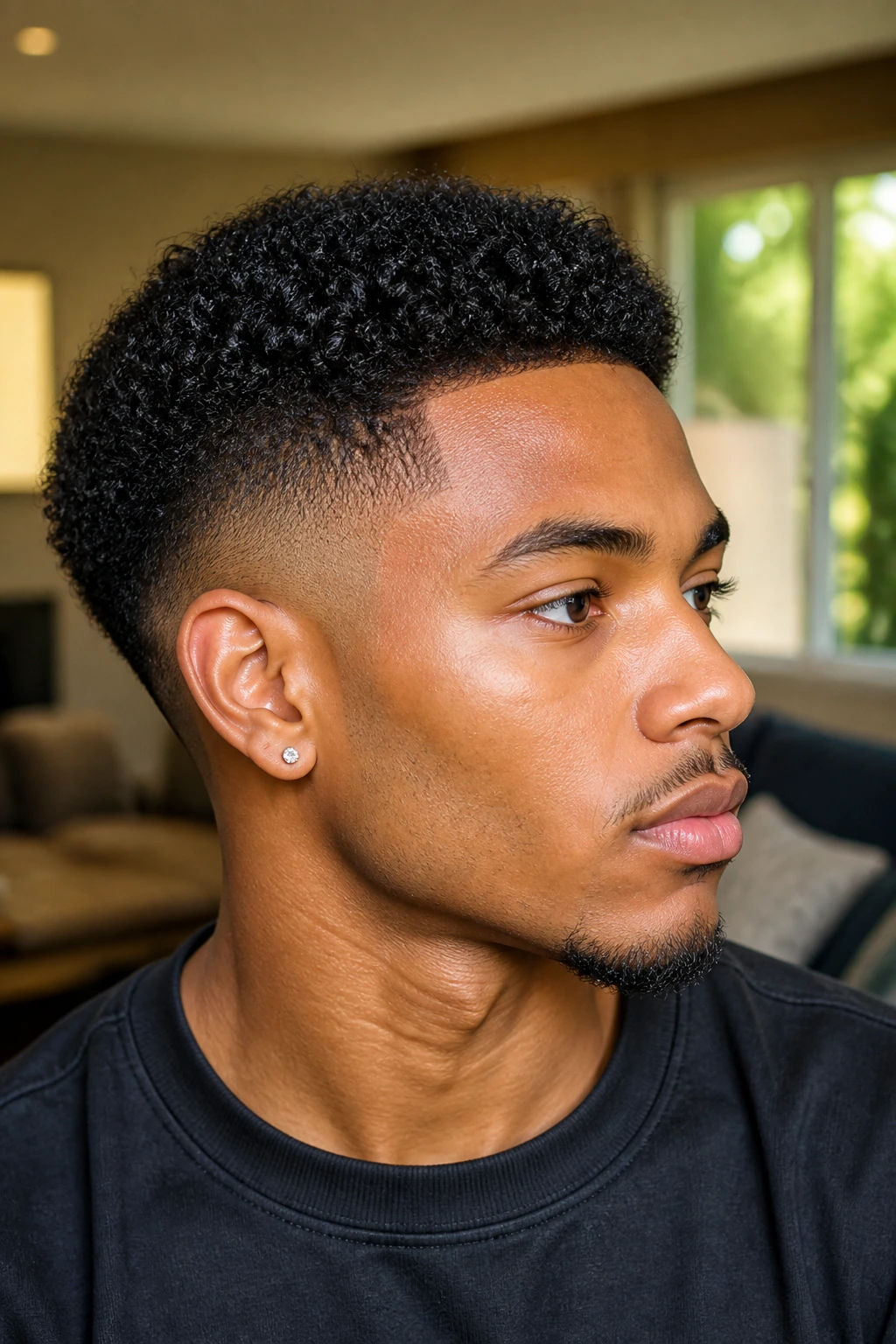
A low-high taper starts close near the nape and rises a little more around the temples, which gives the head a nice lift without going full fade. It’s one of the easiest ways to make short curls look intentional from every angle.
The cut works because the eye follows the change in length. Nothing jumps too hard, but the shape still has movement. If you want a short style that can sit in a work setting and still look textured on a weekend, this one does the job.
21. Curly Bowl Crop
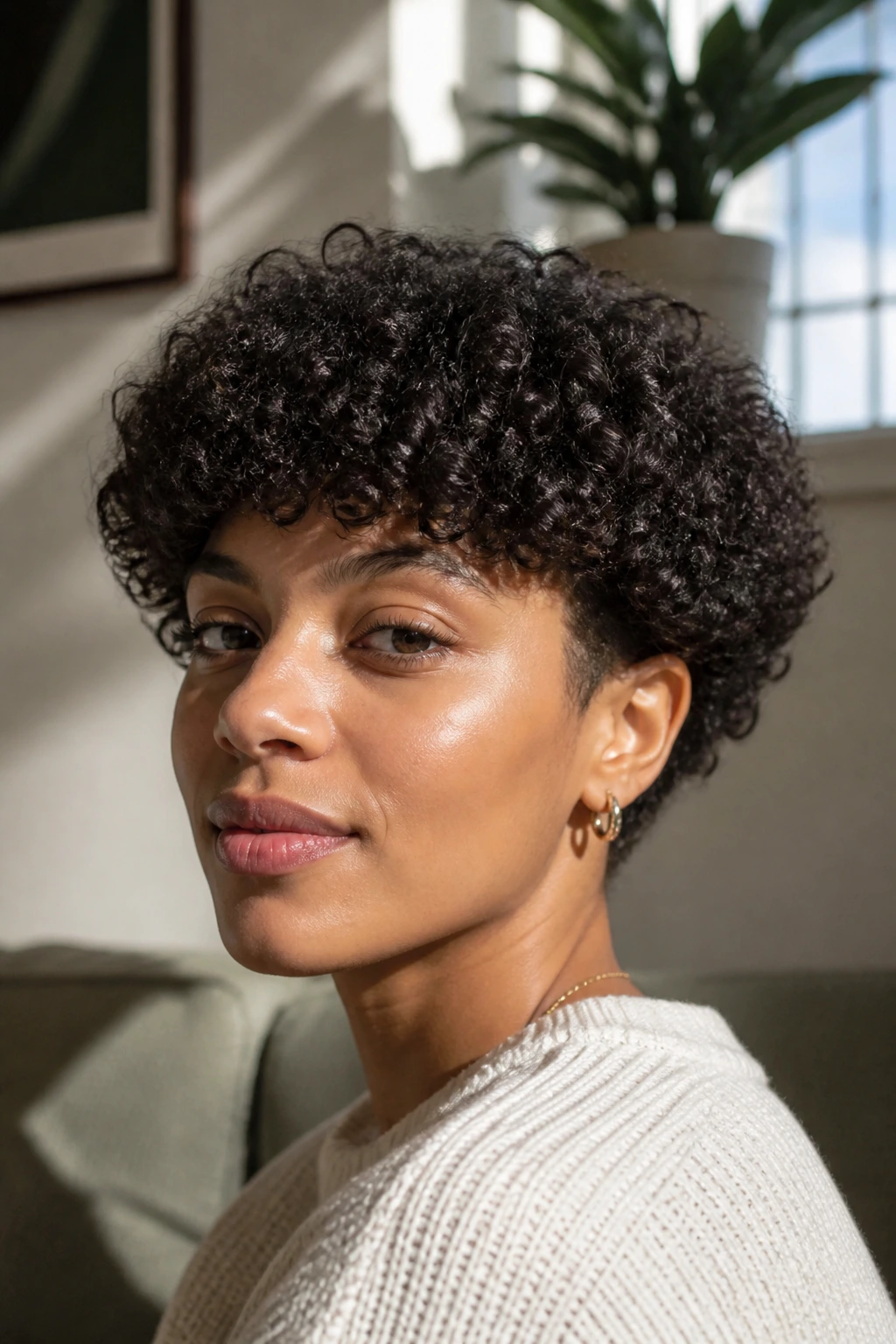
A bowl crop can go wrong fast if it’s too blunt, but with natural curls it can be a real shape. The curve around the head should feel softened by the texture, not chopped into a rigid line. Think rounded, not medieval helmet.
What makes it work is balance. The fringe and sides need enough softness to keep the cut from feeling harsh, while the top needs enough density to support the shape. It’s a good style if you like symmetry but still want your curls to show.
22. Mini Frohawk With a Line-Up
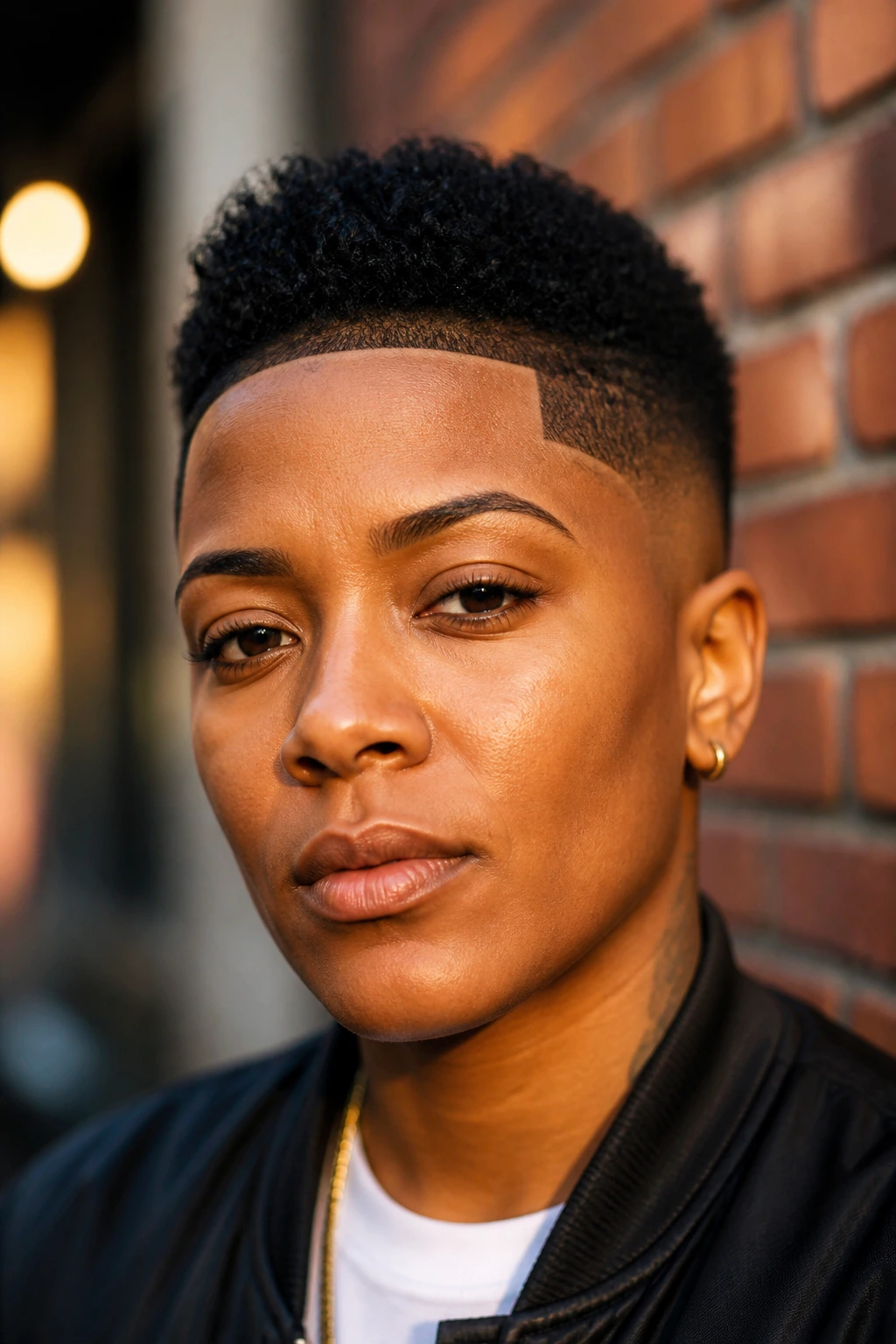
This is the sleeker cousin of the frohawk. The center stays narrow and defined, the sides are trimmed close, and the line-up sharpens the front. It’s a compact shape that still has attitude.
Because the silhouette is narrow, the curl pattern on top matters more than the size of the hair itself. Keep the center section a little longer so the curls can stand rather than flatten. A little lift makes the whole cut look more deliberate.
23. Jaw-Length Coily Bob
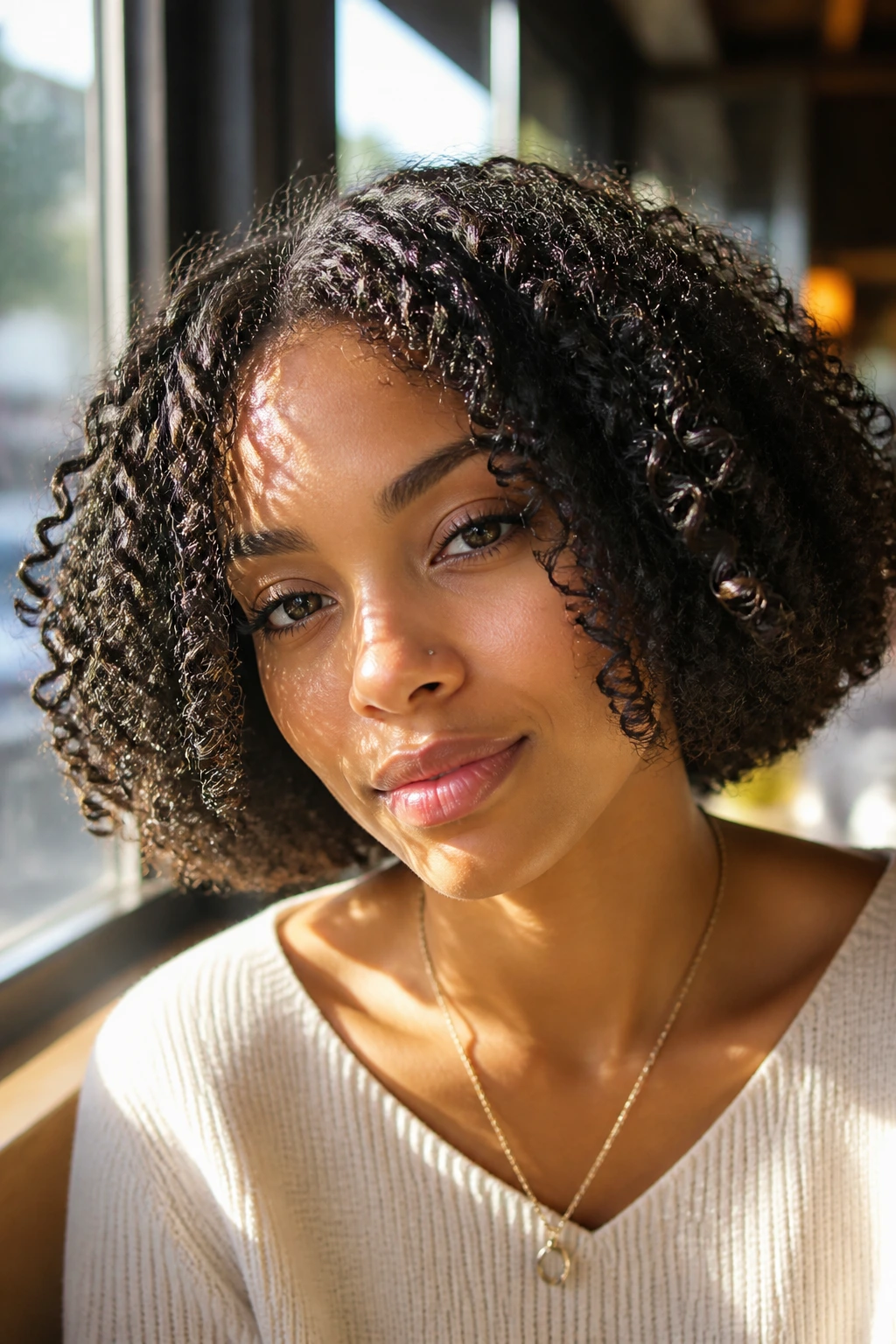
A jaw-length coily bob gives short natural hair a little more swing. It still reads short, but the added length around the jaw means the curls can frame the face instead of sitting strictly on top of the head. That changes the whole feel.
This cut is a good choice if you’re growing out a shorter crop or you want something that sits between short and medium. The ends should be shaped so the bob doesn’t widen out at the cheeks. That’s the part people often miss.
24. Shaved Side Panel Crop
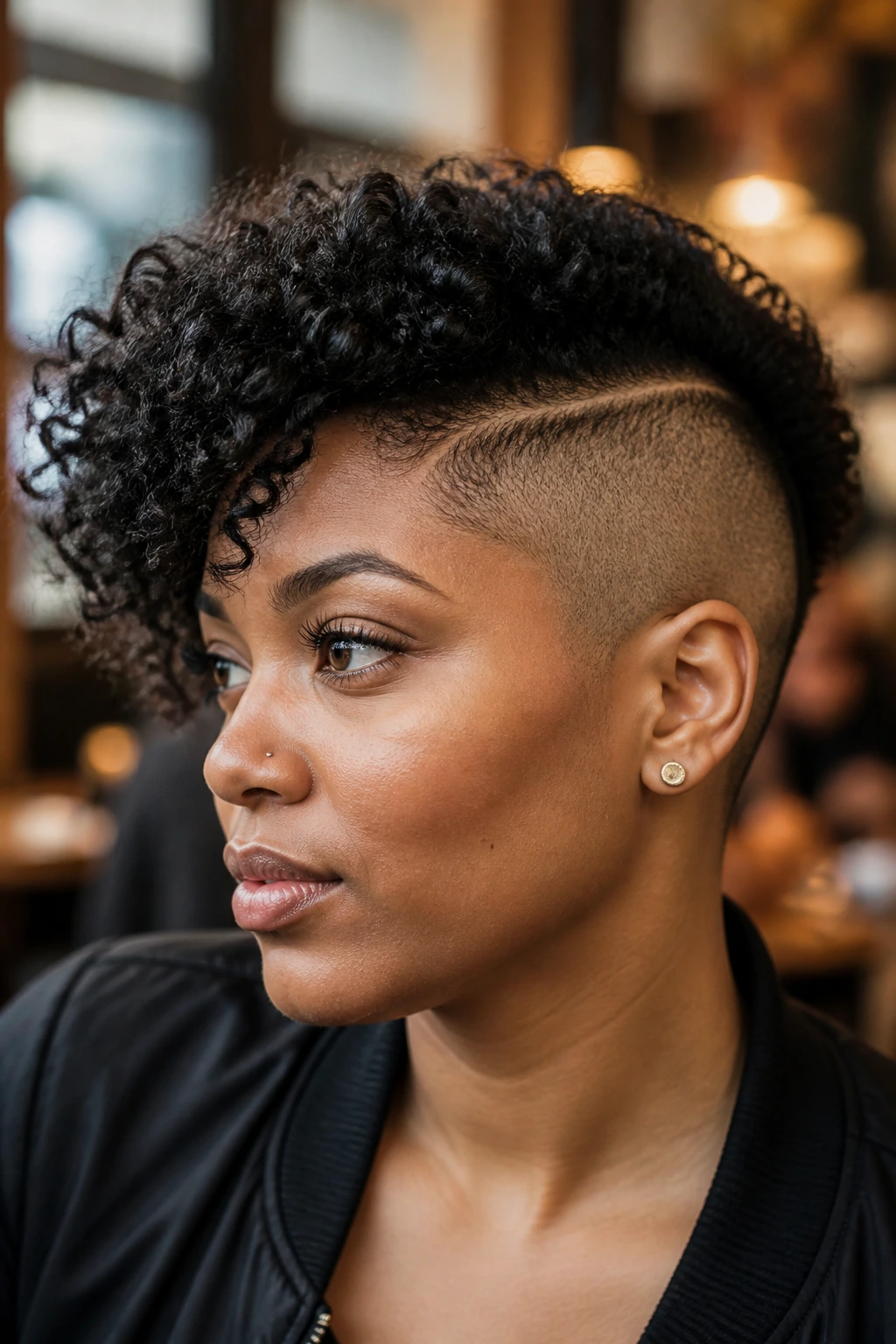
A shaved side panel makes a short natural cut feel sharp without taking everything off. One section stays closely clipped, while the rest of the curls keep their length and texture. The contrast is the whole visual story.
It’s a smart option if you want drama but don’t want a full undercut. The shaved panel can be hidden, partially shown, or made obvious depending on how you part the hair. That flexibility is part of the appeal.
25. Rounded Pixie Afro
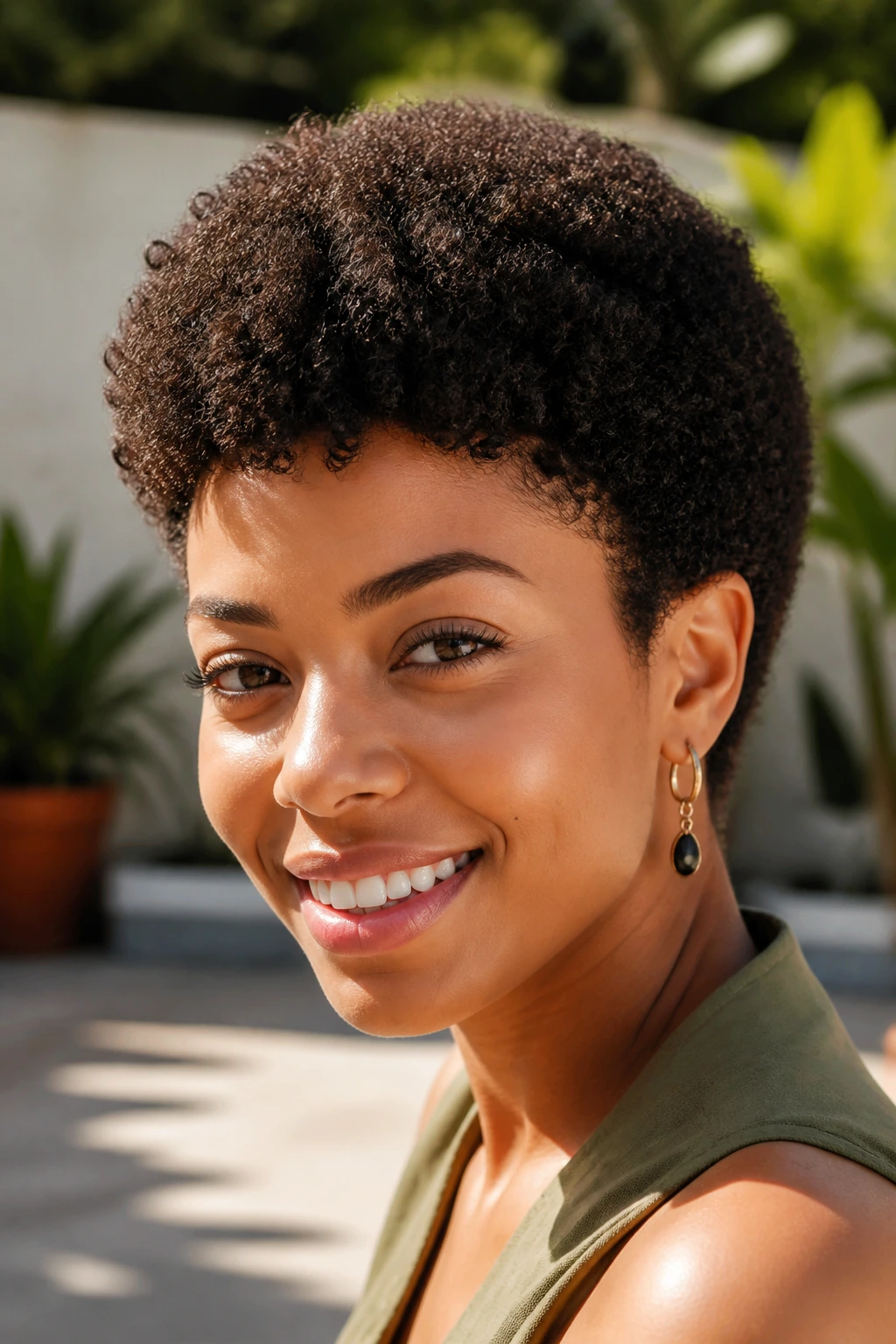
A rounded pixie afro sits right between softness and structure. It has the cropped ease of a pixie, but enough texture to keep the hair from looking flat or over-shaped. The perimeter should curve, not box out.
This cut tends to flatter faces that need a little framing around the temples and cheekbones. Ask for the top to stay slightly fuller than the sides, or the whole thing will lose that airy roundness. A tiny bit of asymmetry often helps.
26. Curly Mullet Lite
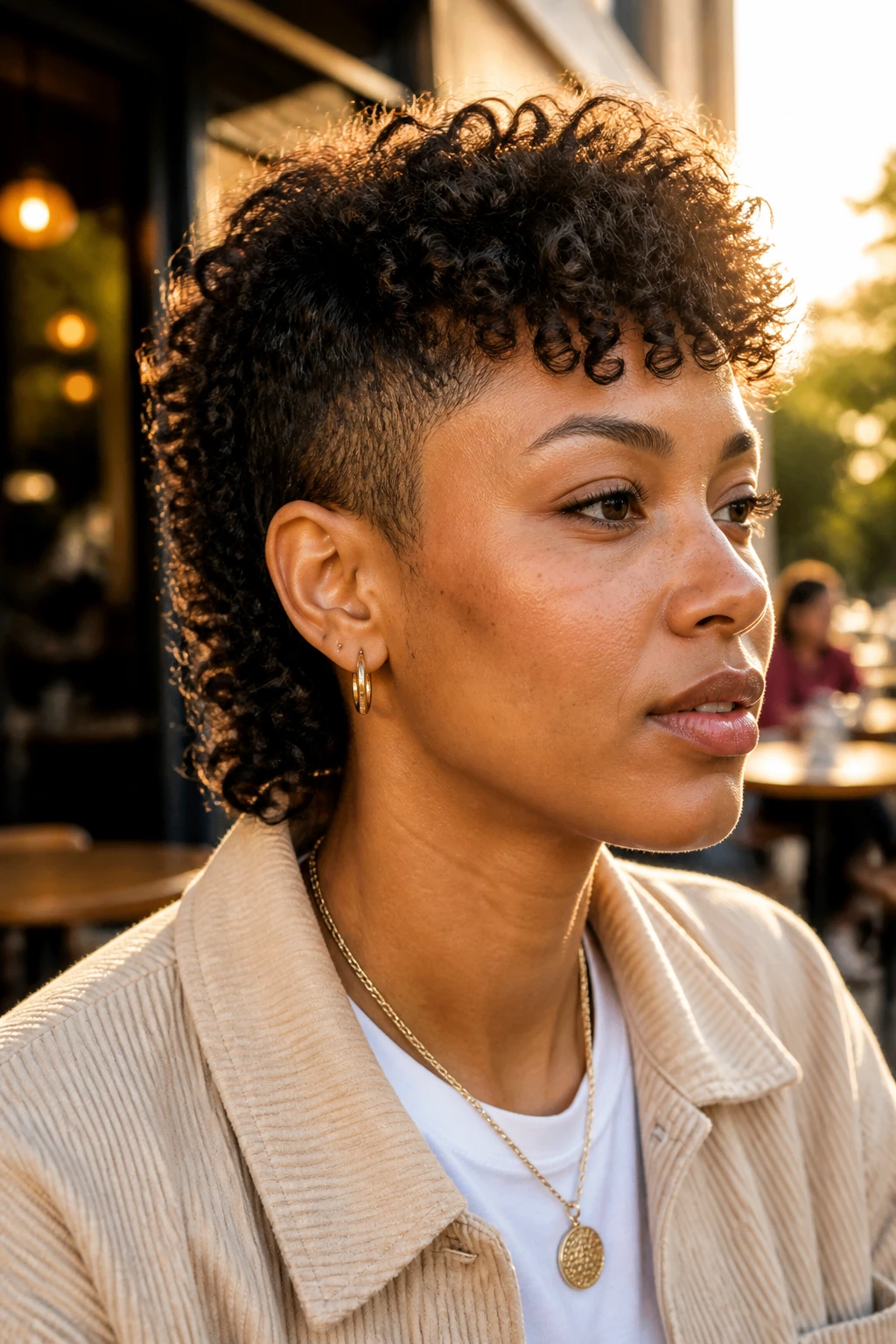
A curly mullet lite is more wearable than the name sounds. The sides stay short, the top stays textured, and the back keeps a little extra length so the haircut has a trailing shape. It’s edgy, but it doesn’t need to be loud.
The key is moderation. If the back is too long, the cut turns costume-y. If it’s too short, the mullet idea disappears. The best version looks like a modern shape with a little extra length at the nape.
27. High-Definition Coil Cut
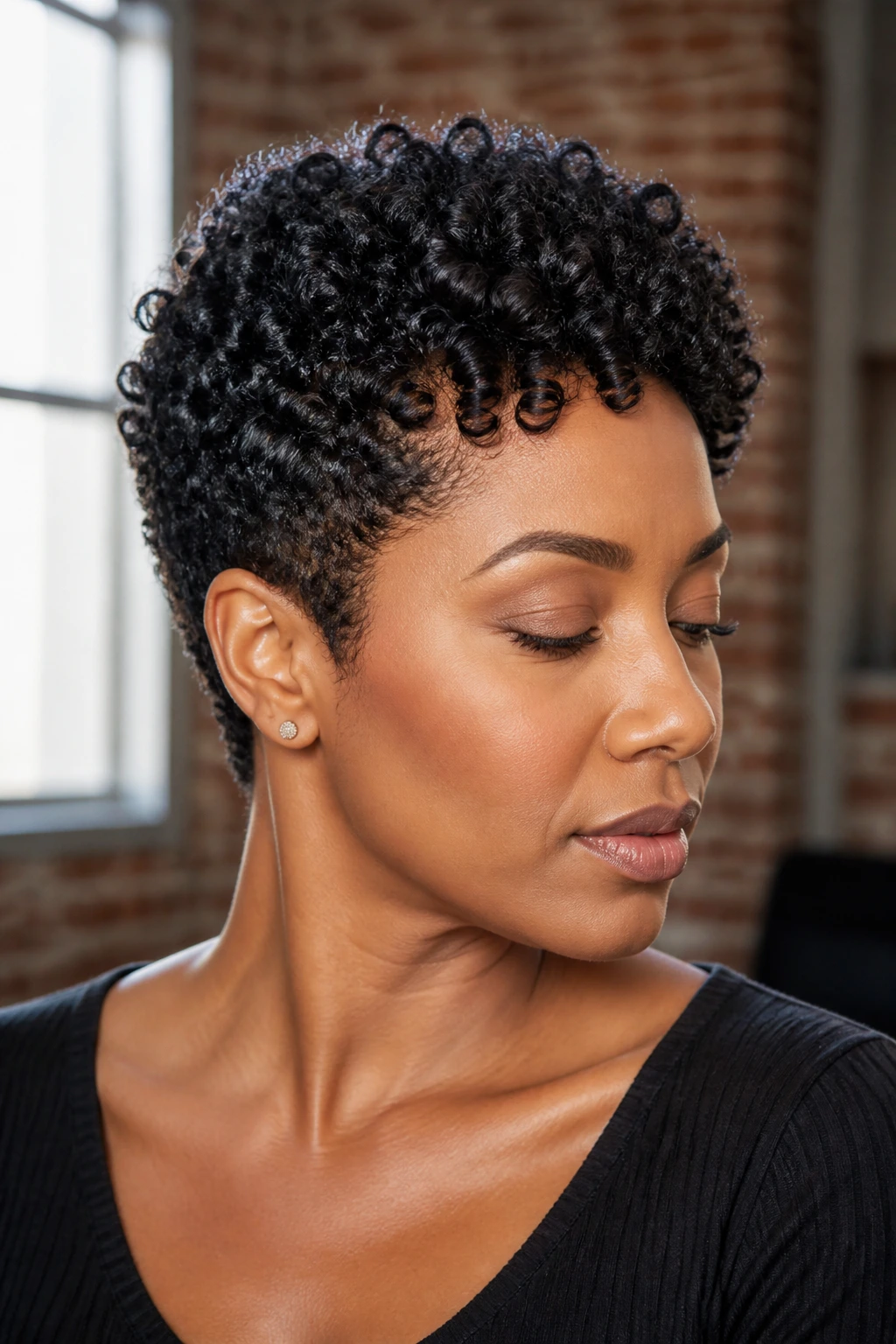
A high-definition coil cut is all about clean curl separation. The shape isn’t just short; it’s precise. Each coil has room to read, which gives the haircut a polished, almost sculpted look without taking away the natural texture.
This style benefits from a dry or almost-dry finish so the curl clumps don’t get smashed together. Use product sparingly. Too much cream blurs the definition, and the whole point of the cut is clarity.
28. Hard Part Curly Crop
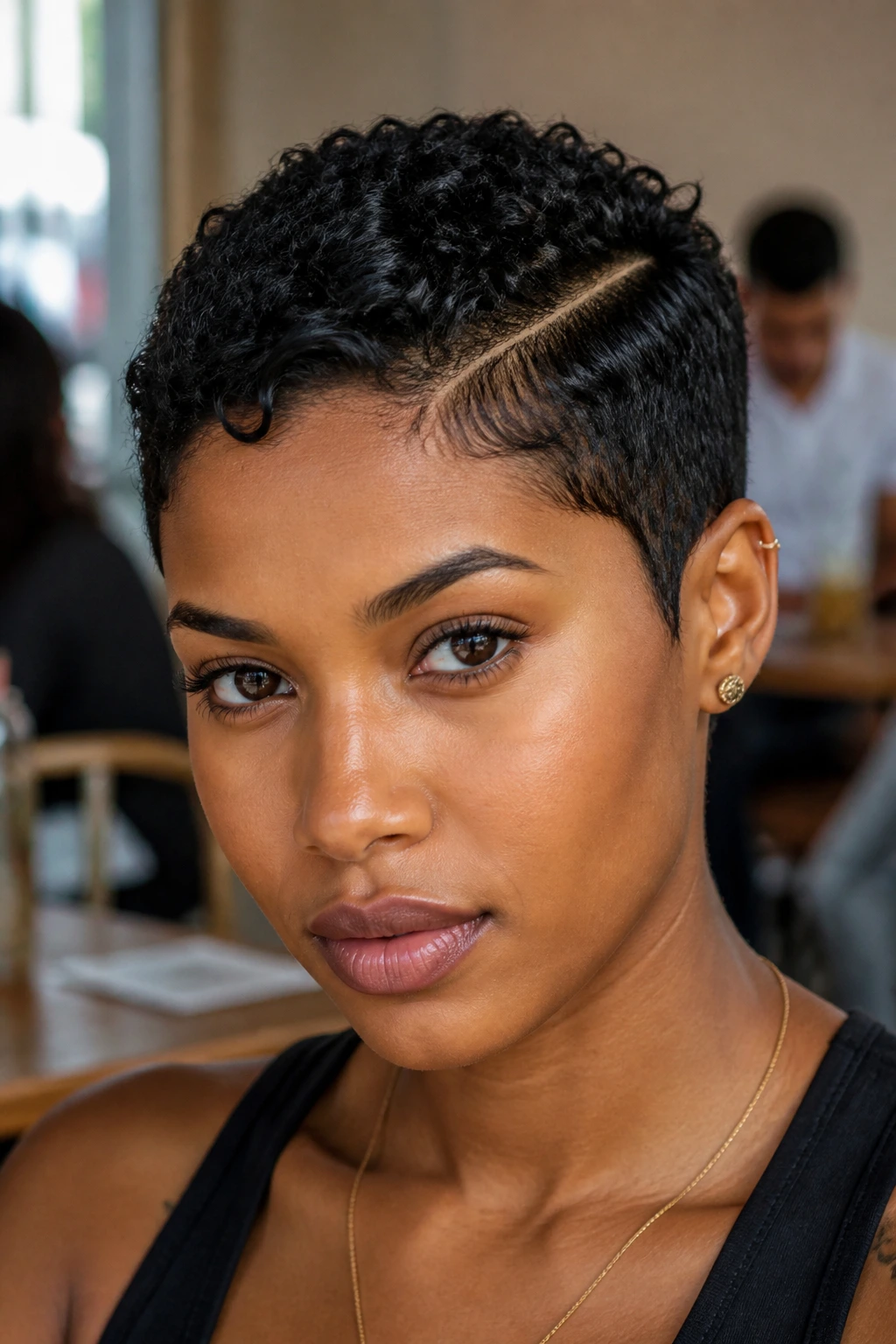
A hard part adds a strong line that breaks up the curl mass in a very clean way. On short natural hair, that line can make even a tiny crop feel intentional and sharp. It’s one of those details that changes the cut more than people expect.
The rest of the hair should stay soft enough to balance the hard line. If everything is crisp, the style can feel severe. A little natural texture around the part keeps it from looking over-edged.
29. Halo Taper
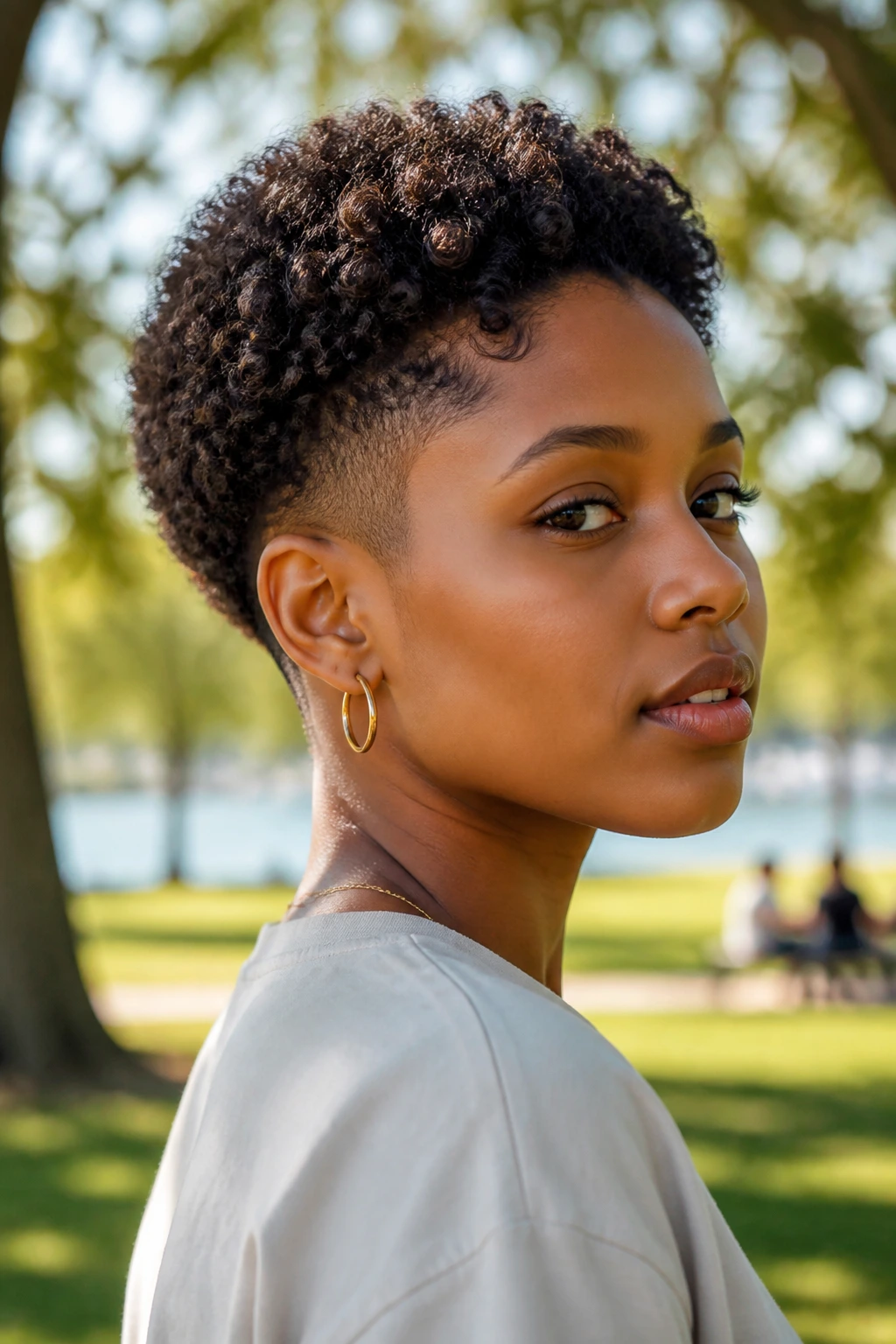
A halo taper rounds the cut around the head with a gentle fade underneath, which makes the curls feel like they’re floating above a clean frame. It’s a flattering shape because it lifts the eye upward without forcing height.
This is a strong choice for dense hair that tends to puff at the sides. The taper clears the edges, and the crown keeps the personality. If you want something neat but not severe, this shape has a nice softness to it.
30. Sculpted Sideburn Crop
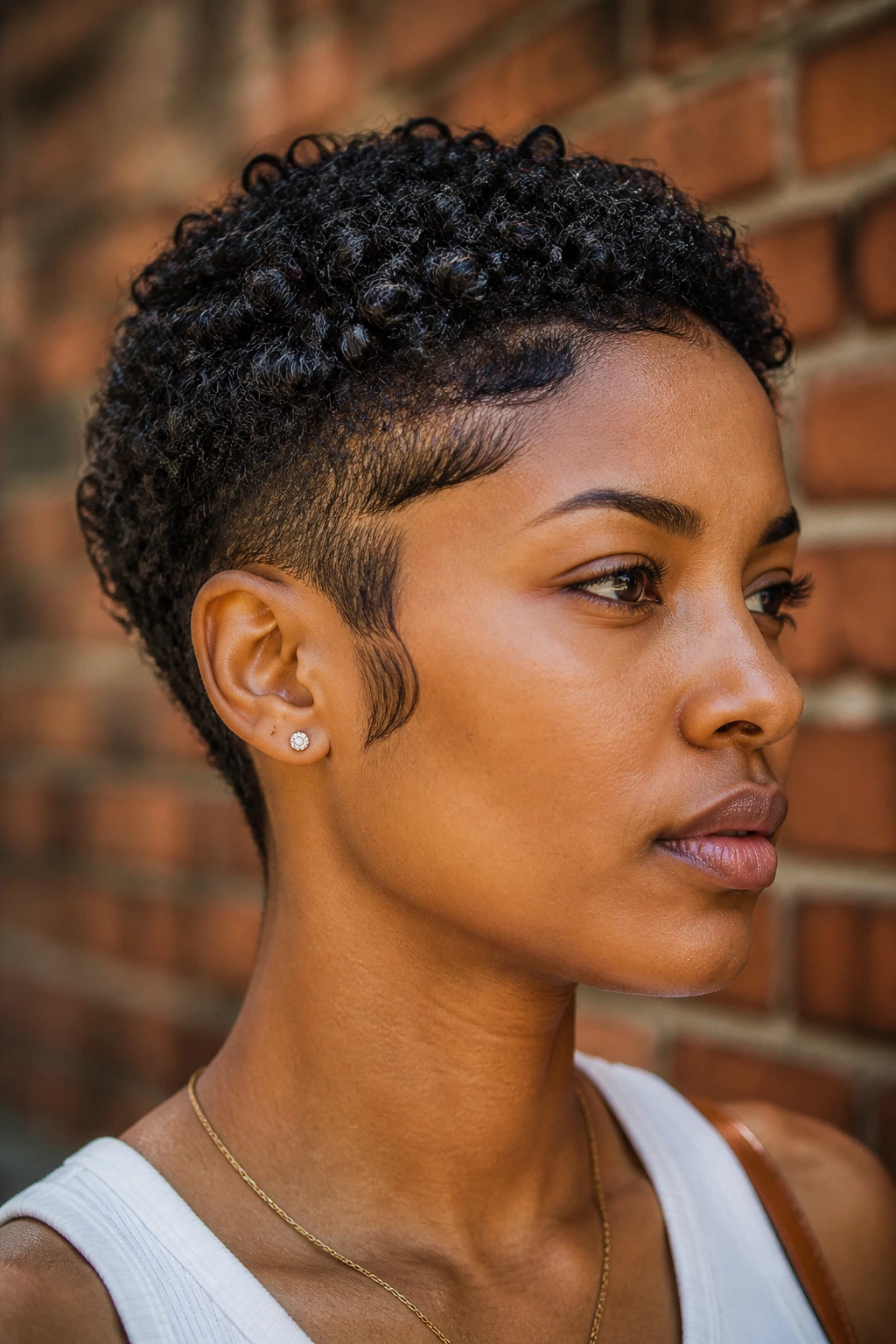
Sideburns matter more than most people think. A sculpted sideburn crop uses that small area near the ears to shape the face and sharpen the silhouette. The rest of the cut can stay natural, but the edges carry real intention.
This cut is especially good when you want a short style that still feels customized. The sideburns can be faded, squared, or slightly rounded depending on your face shape. Tiny changes there alter the whole haircut.
31. Curly Undercut
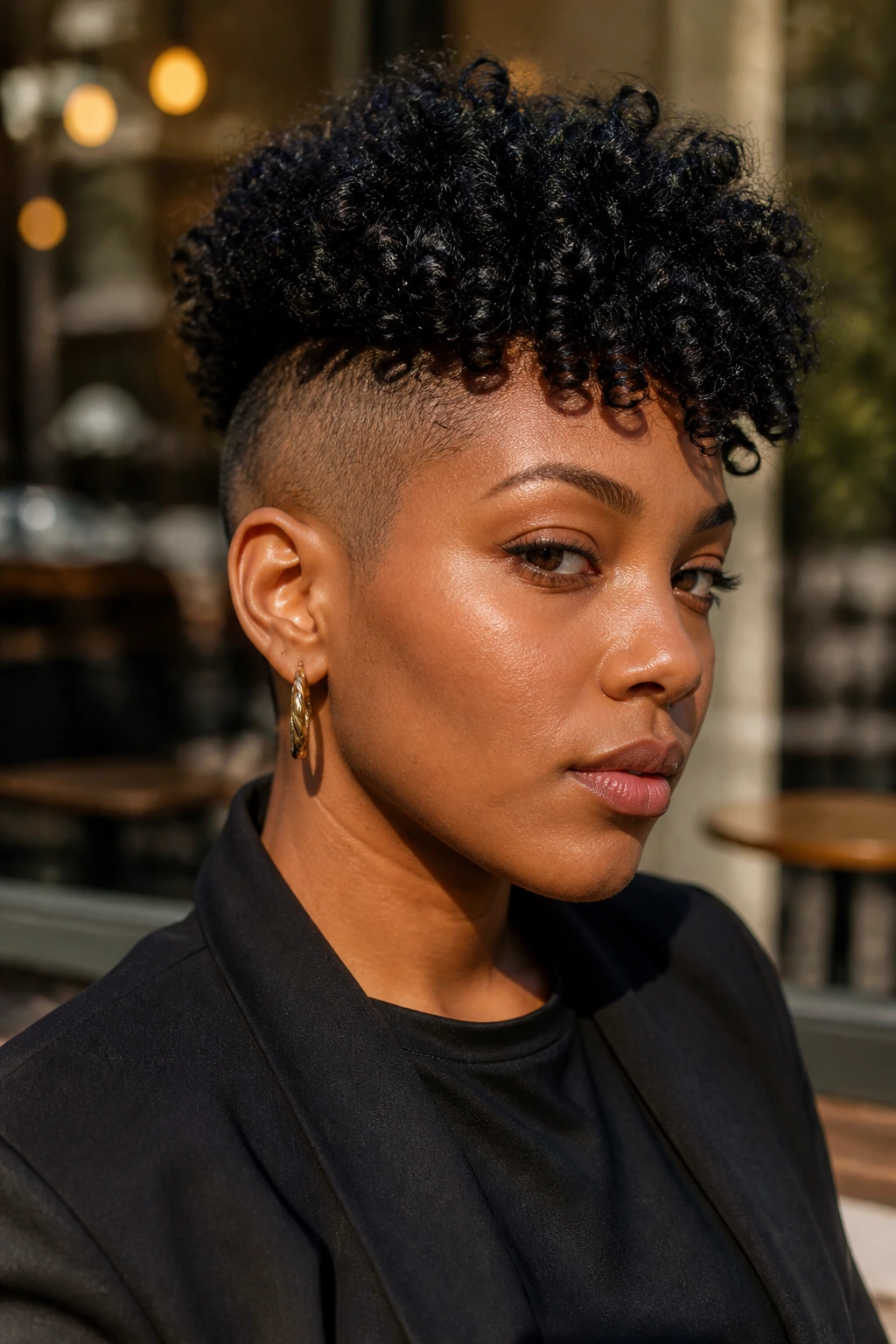
An undercut gives the top curls room to live. The sides are taken down close, sometimes all the way to the scalp, while the top stays dense and visible. The contrast can be dramatic or subtle, depending on how much length you leave up top.
The biggest advantage is control. If your hair tends to expand at the sides, an undercut removes the bulk that makes styling annoying. Just make sure the top has enough weight to balance the sharp sides.
32. Micro-Fringe Fro
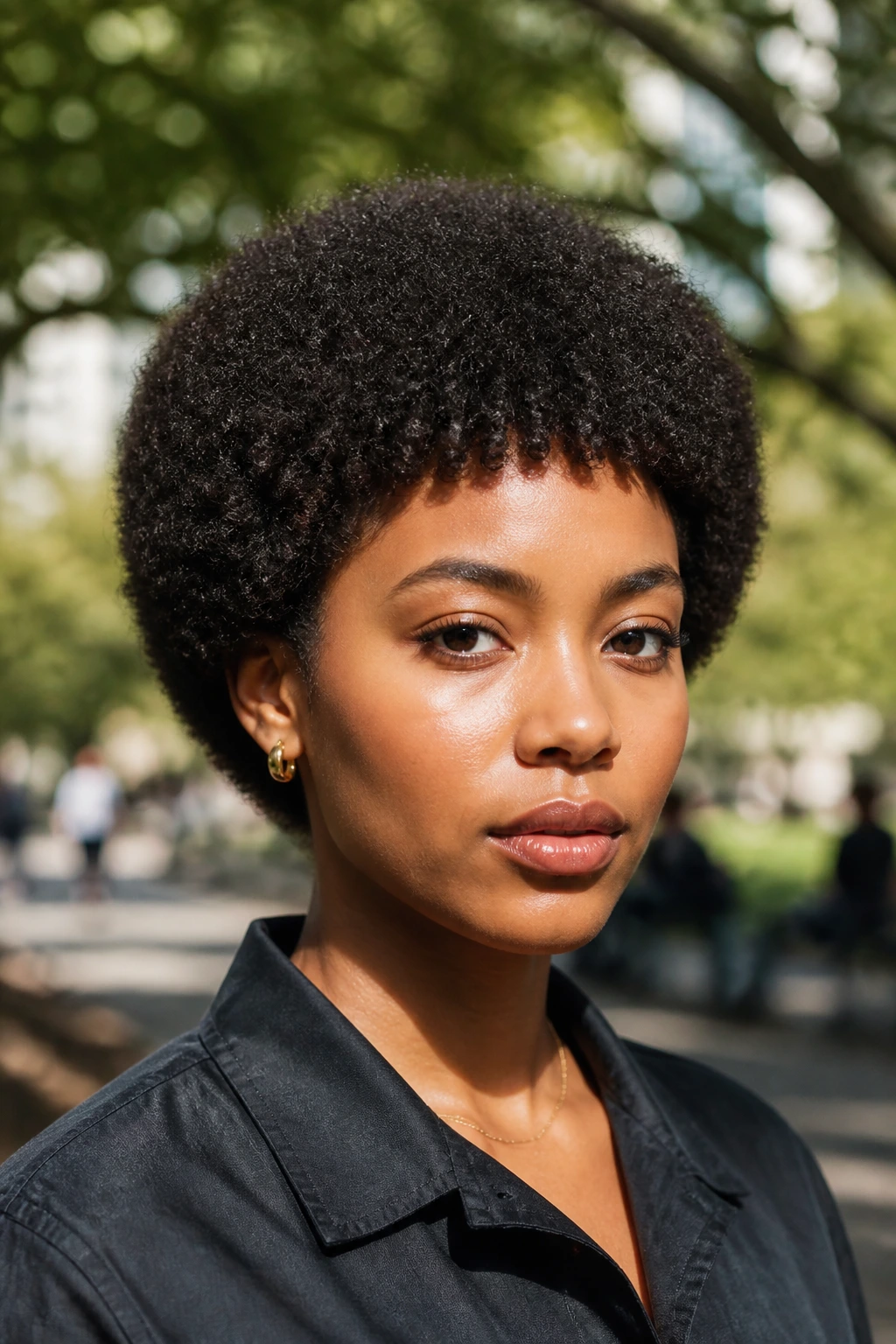
A micro-fringe fro is small, direct, and a little bold. The fringe sits short across the forehead, while the rest of the fro keeps a rounded outline. It’s not a cautious cut, and that’s why it works for people who want something with character.
The fringe should be cut with a cautious hand. If it’s too short, the curls bounce up and expose too much forehead. If it’s too long, the micro-fringe idea disappears. The sweet spot is where the curls just skim the brow line.
33. Cropped Shaped Afro
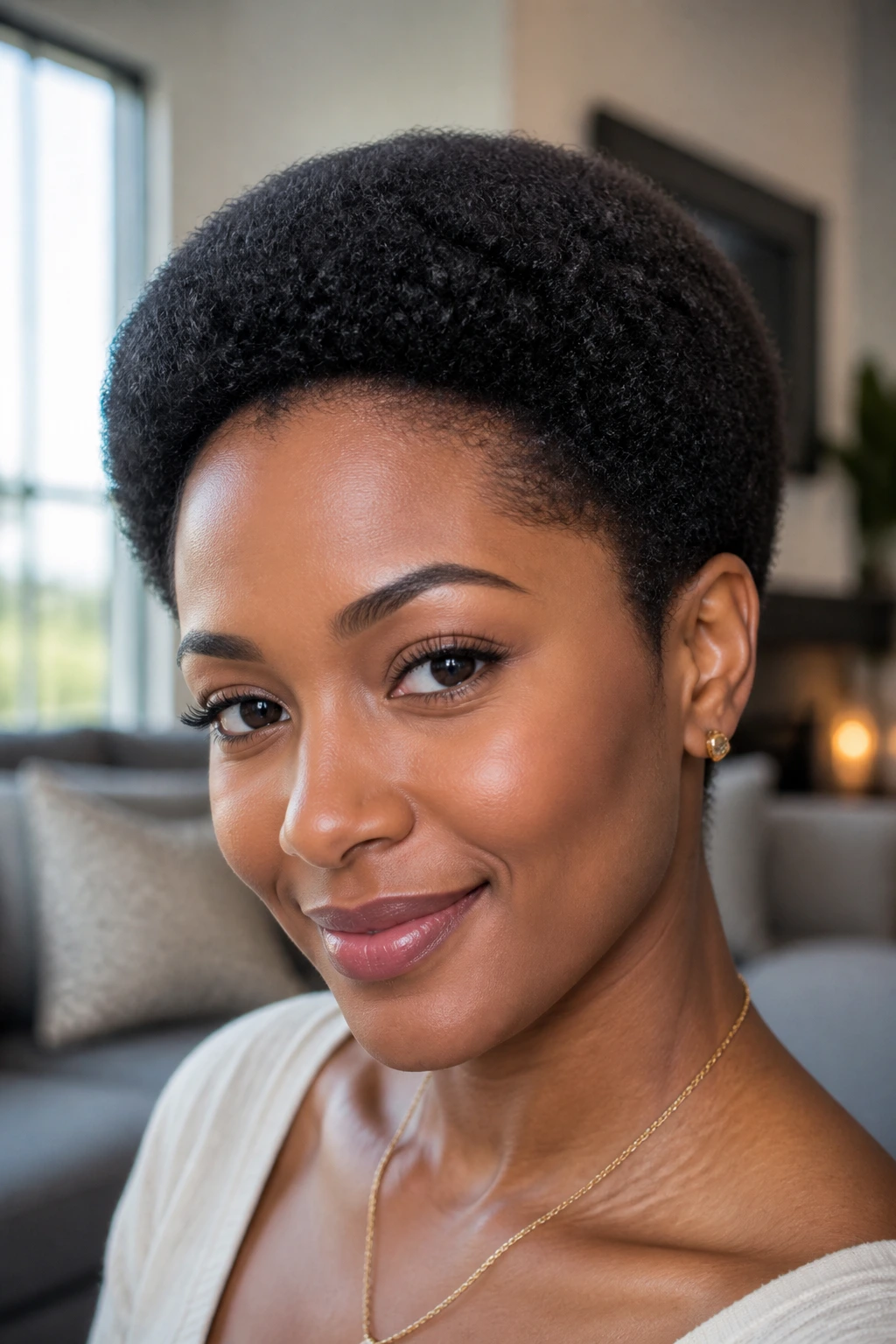
This is the cut I recommend when someone wants a clean natural shape without extra drama. The afro is cropped close enough to stay manageable, but shaped enough that it doesn’t look like you forgot to finish it. The outline is neat. The texture still leads.
A cropped shaped afro works on a lot of curl patterns because it does not demand one exact styling trick. You can fluff it, define it, or leave it more matte. The important part is the silhouette, which should stay round, not flat or square.
34. Low Fade With Freestanding Curls
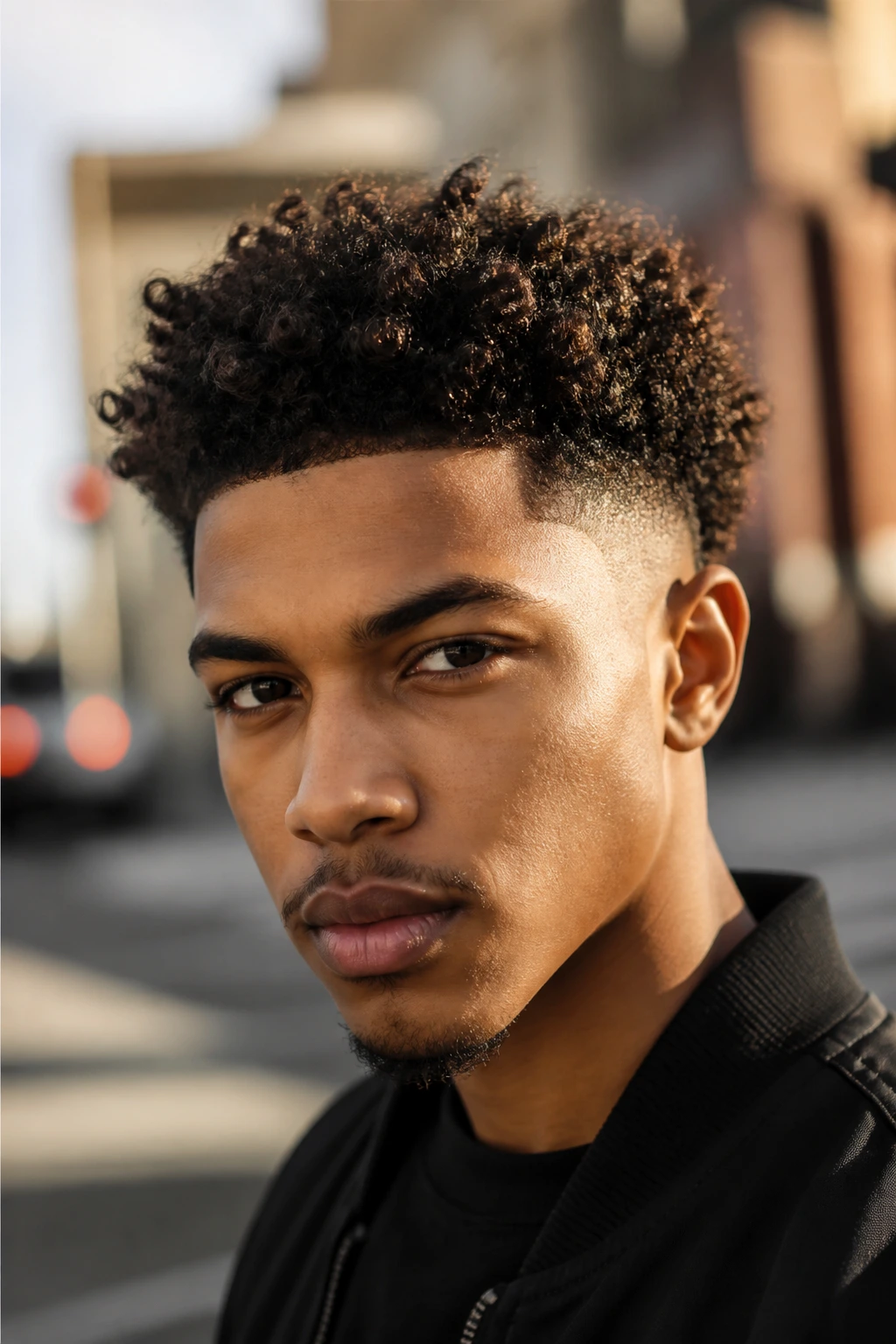
A low fade with freestanding curls keeps the sides quiet and lets the top curls do their own thing. The cut feels clean at the bottom and lively at the top, which is a combination that’s hard to beat if you like texture first.
The curls should be left long enough to separate on their own, not forced into perfect uniformity. A little irregularity is welcome here. If every curl is identical, the cut can start looking too staged. The natural variation is part of the charm.
35. Close-Cropped Taper With Defined Hairline
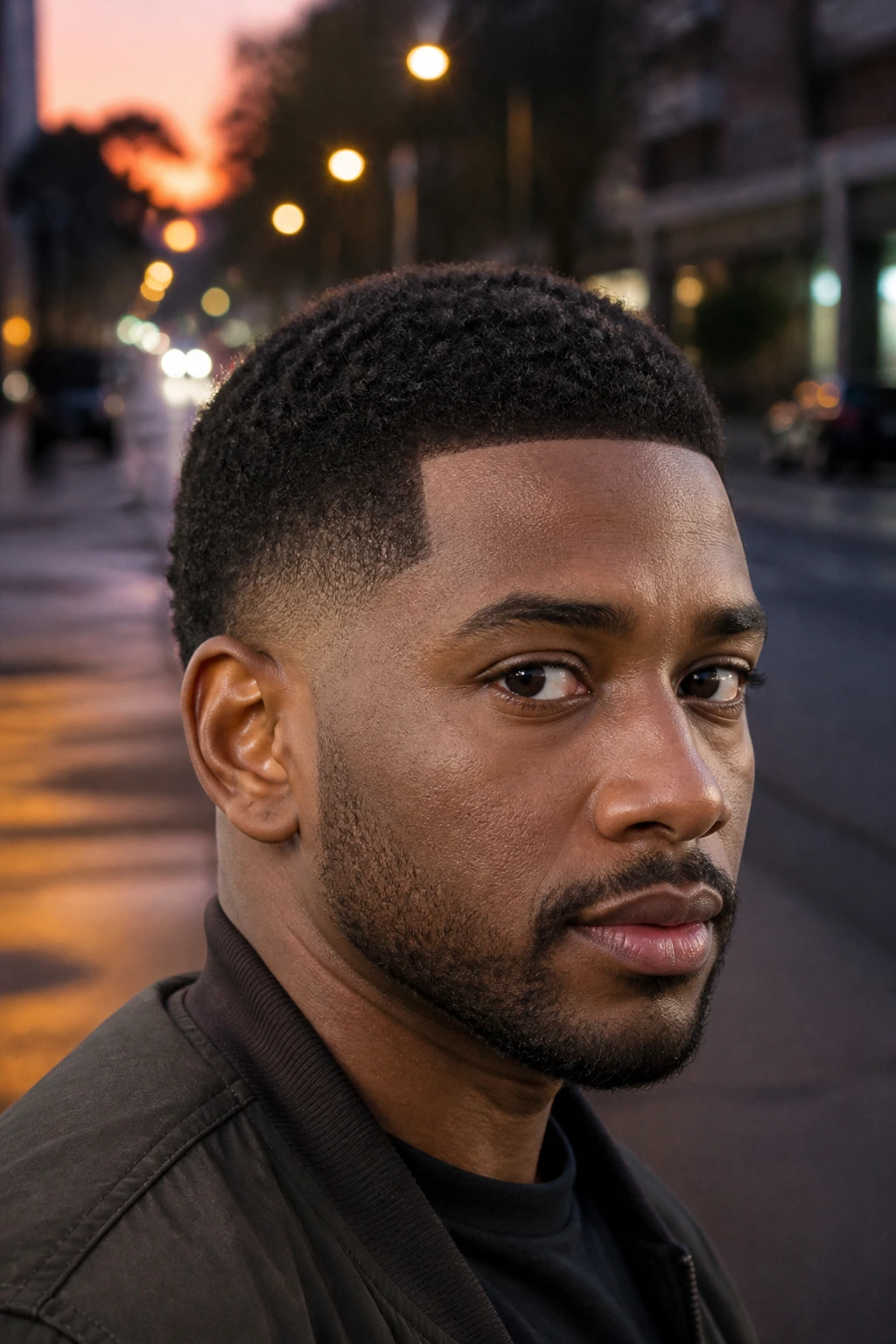
A close-cropped taper is the low-maintenance finish line of short natural haircuts. It sits close to the head, keeps the hairline sharp, and still leaves enough texture to keep the style from looking bare. It’s clean, simple, and honest.
What makes it work is the taper. Without that slight graduation at the edges, the cut can look blunt and flat. With it, the shape feels intentional even at very short length. If you like a cut that takes almost no morning effort, this is the one to keep in your pocket.
What Makes a Short Cut Work on Natural Curls
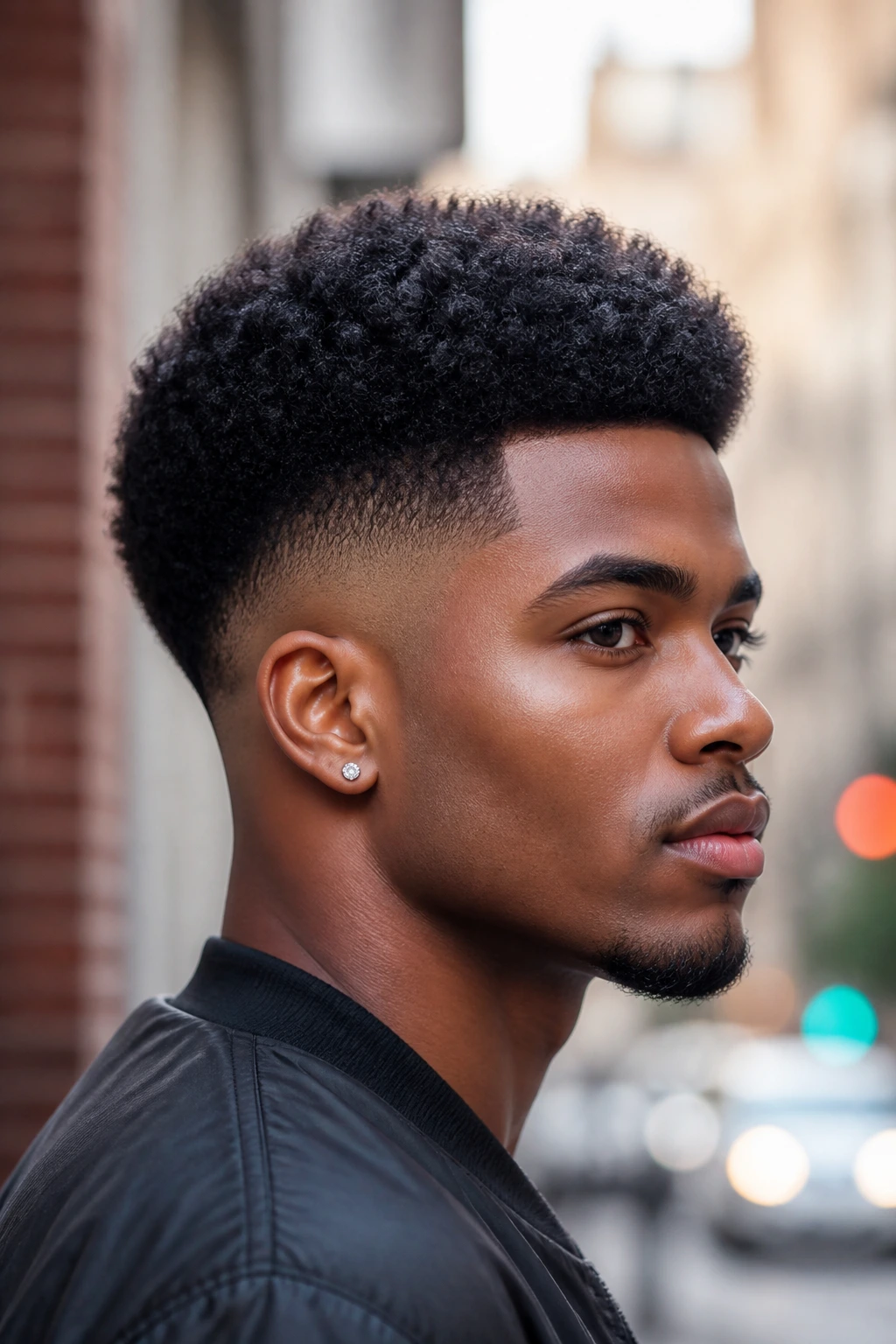
A short cut on natural curls succeeds or fails on shape, not length. Wet hair can fool you. Dry hair tells the truth. That’s why a good barber or stylist checks the perimeter after the curls have settled, especially around the temples and nape where shrinkage can make the outline jump a full inch shorter than it first looked.
The other piece is density. Thick 4C hair and looser 3C curls do not behave the same way, even when the cut name is identical. Dense coils can take a little more room at the crown and fewer heavy products. Looser curls often need more internal shaping so the cut doesn’t puff at the sides.
A lot of people think short natural hair needs more control. Sometimes it needs less. The cleanest shapes are usually the ones that leave the texture alone where it wants to move and trim only where bulk is making the silhouette messy. That’s the difference between a cut that looks styled and one that looks forced.
How to Brief a Barber or Stylist Without Guesswork
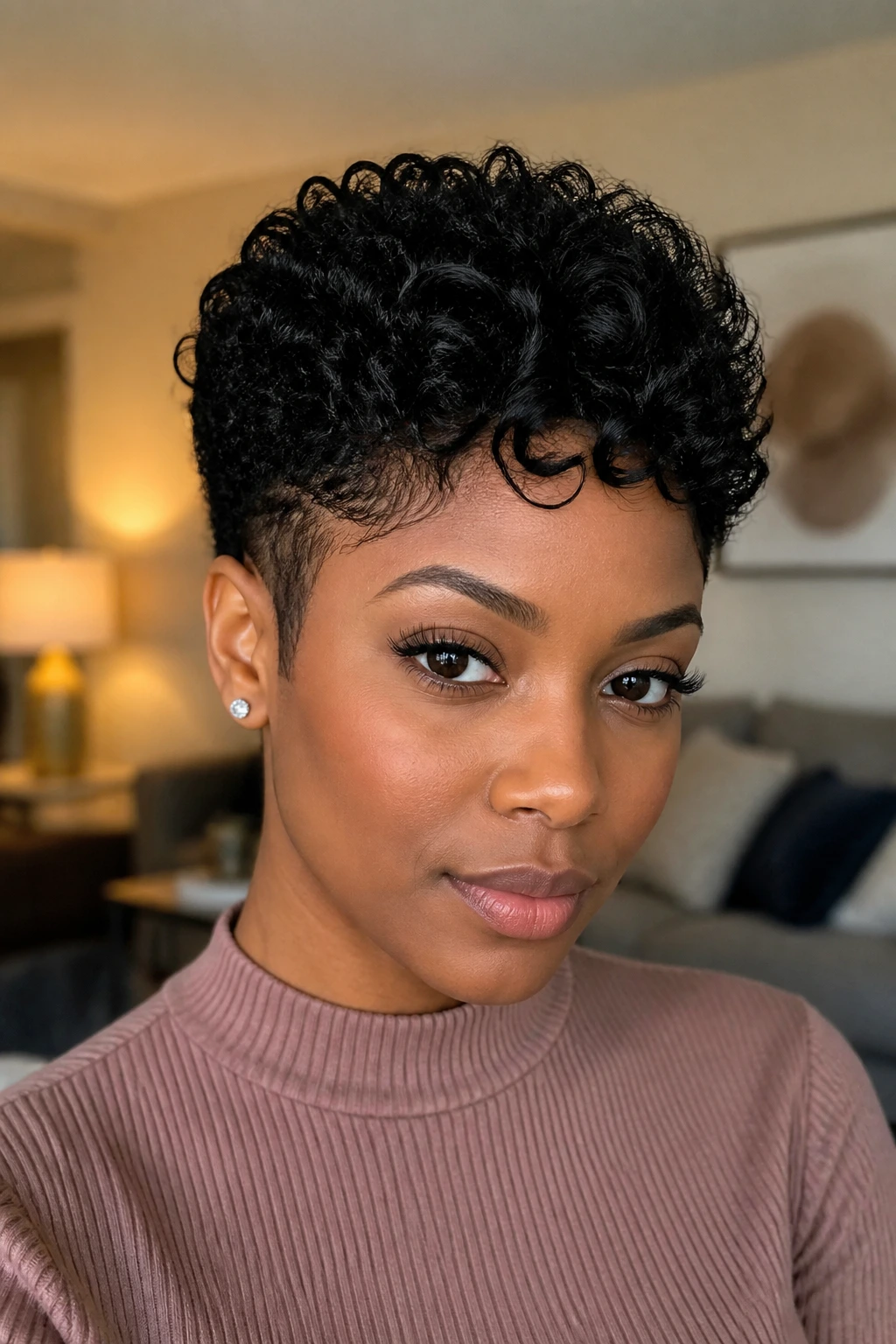
Bring photos, but bring the right ones. One front shot, one side shot, one back shot. That matters more than a dozen edited screenshots from different people with different curl patterns. A picture gives shape, but your hair gives the final result, so the more angles you show, the fewer surprises you get in the chair.
Say how your hair behaves on its own. Do your curls shrink hard? Do the sides puff first? Does the crown hold length while the nape goes tight? Those little facts help a stylist decide where to leave bulk and where to remove it. If you usually wear a wash-and-go, say so. If you stretch your curls, say that instead.
Use simple shape words. Rounded. Tapered. Sharp line-up. Soft temple. Low fade. High crown. A lot of mix-ups happen because people say “short” and mean completely different things. If you want the top left at, say, 2 or 3 inches when dry, say it. If you want the sides faded close enough to feel neat but not shaved bare, say that too. Precision saves the cut.
The Small Tools That Keep Short Natural Styles Looking Clean
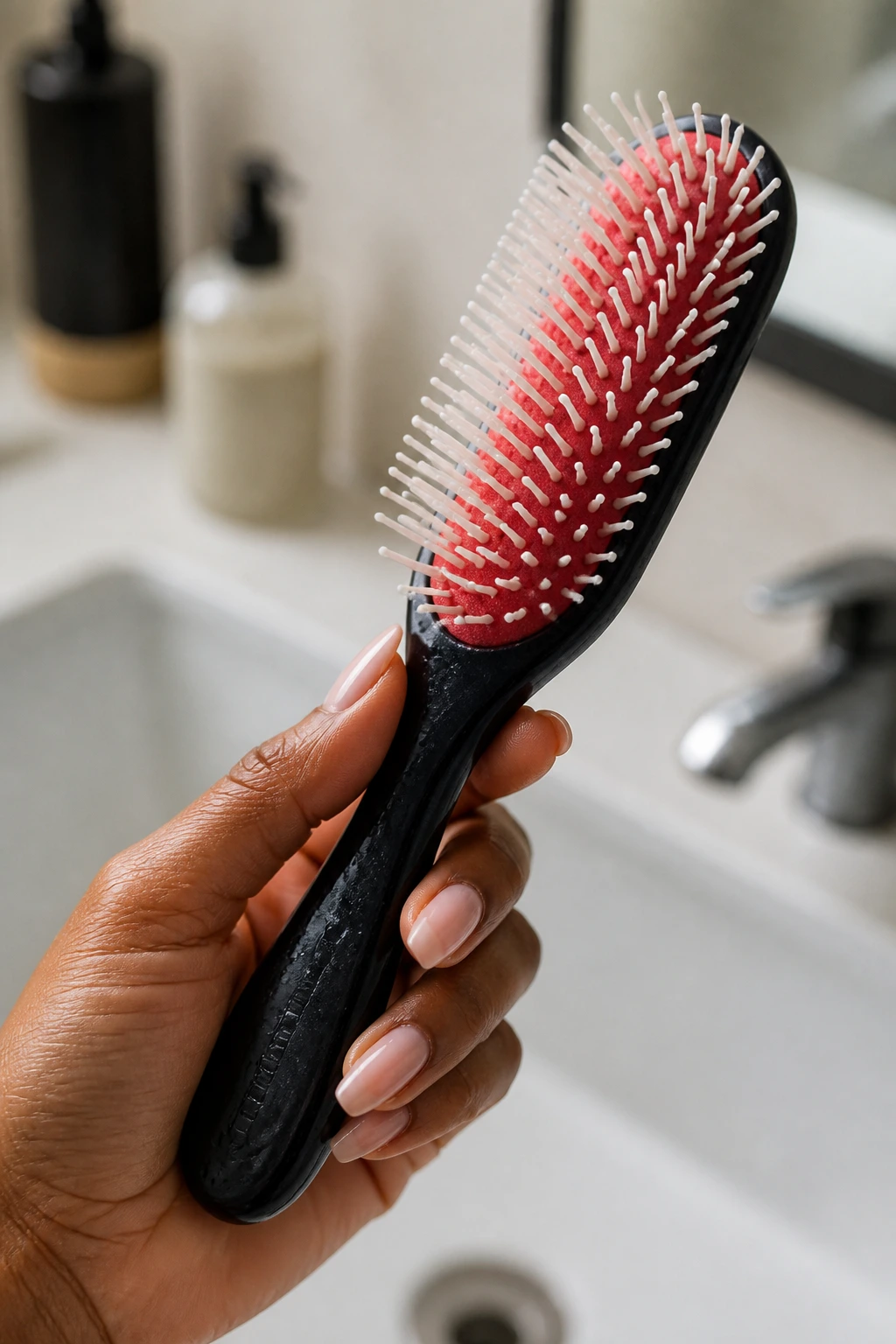
- Spray bottle: a fine mist bottle makes it easier to refresh curls without soaking the whole head.
- Leave-in conditioner: choose a light one; heavy creams can flatten short cuts fast.
- Curl cream or gel: use one styling product at a time unless your hair really needs a cocktail.
- Wide-tooth comb: good for detangling without ripping through coil clumps.
- Denman brush or curl brush: useful for defining curls in short crops and finger-coil styles.
- Pick: lifts the root on TWAs, frohawks, and rounded afros without disturbing the whole shape.
- Diffuser: helpful if you want faster drying and more lift at the crown.
- Small trimmer or clipper for edges: optional, but handy for neckline maintenance between salon visits.
- Satin bonnet or pillowcase: non-negotiable if you want the cut to hold its outline overnight.
- Handheld mirror: the back always lies to you in the bathroom mirror; check the nape properly.
How to Style These Cuts So the Shape Stays Visible
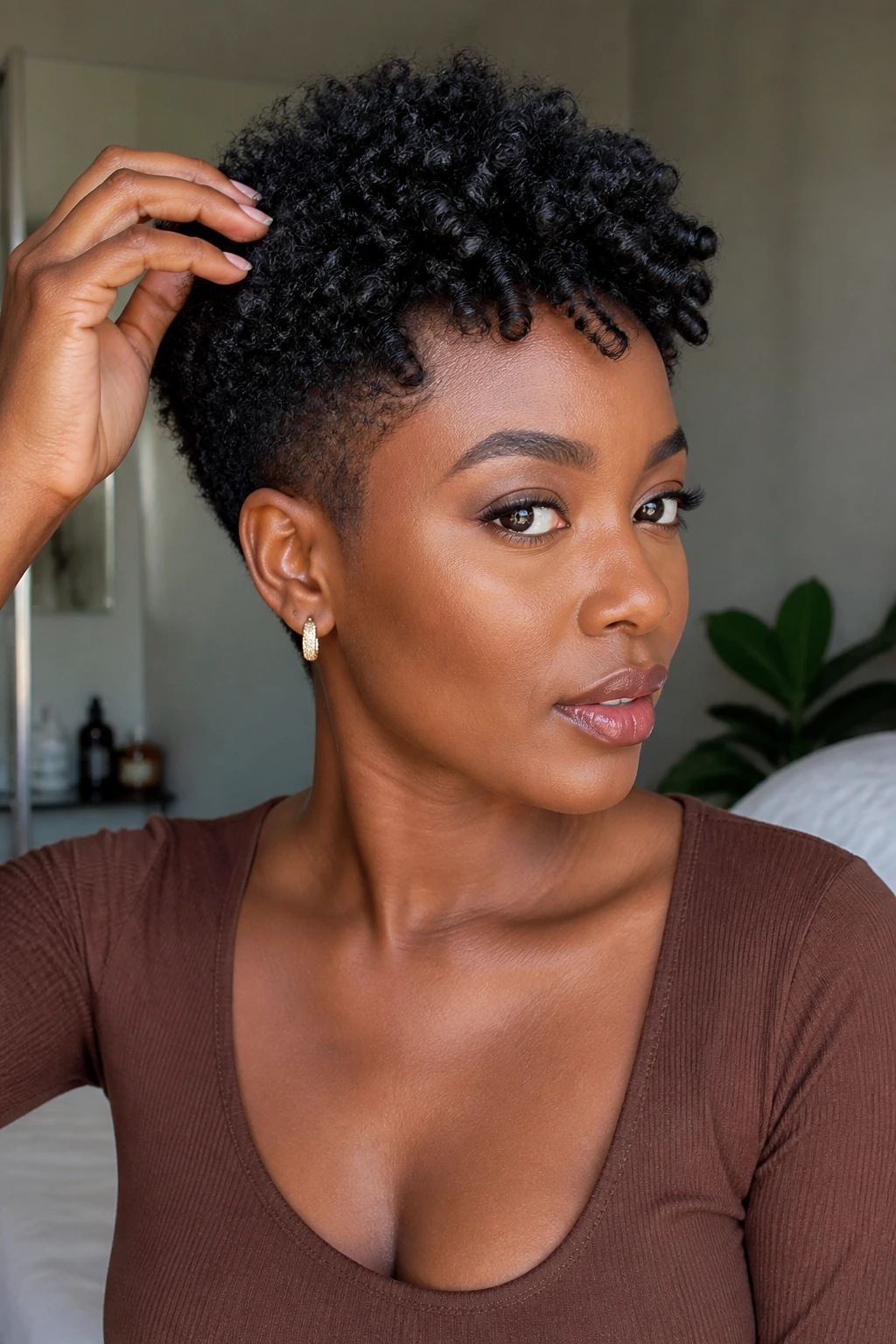
Short natural hair needs less product than people think. That sounds counterintuitive, but too much cream can blur the curl pattern and make the cut look mushy by midday. Start with damp hair, not dripping hair, and work product in small sections so the crown and perimeter keep their own lines.
For wash-and-go cuts: rake in a light leave-in, then follow with a gel or curl custard only where you need hold. Scrunch gently or finger-coil the front if you want the face frame to stay visible. Air dry if you can; diffuse on low if you want more lift.
For rounded or tapered shapes: use a pick at the root once the hair is dry. That gives height without breaking the perimeter apart. If the nape needs help, smooth it with a tiny bit of cream instead of adding more product everywhere.
For sharper styles: edge control should stay on the hairline, not creep into the curls. That line is there to frame the cut, not to paint over the texture. Keep the finish clean, but leave the hair itself looking like hair.
Practical Tips for Getting the Most from a Short Natural Cut
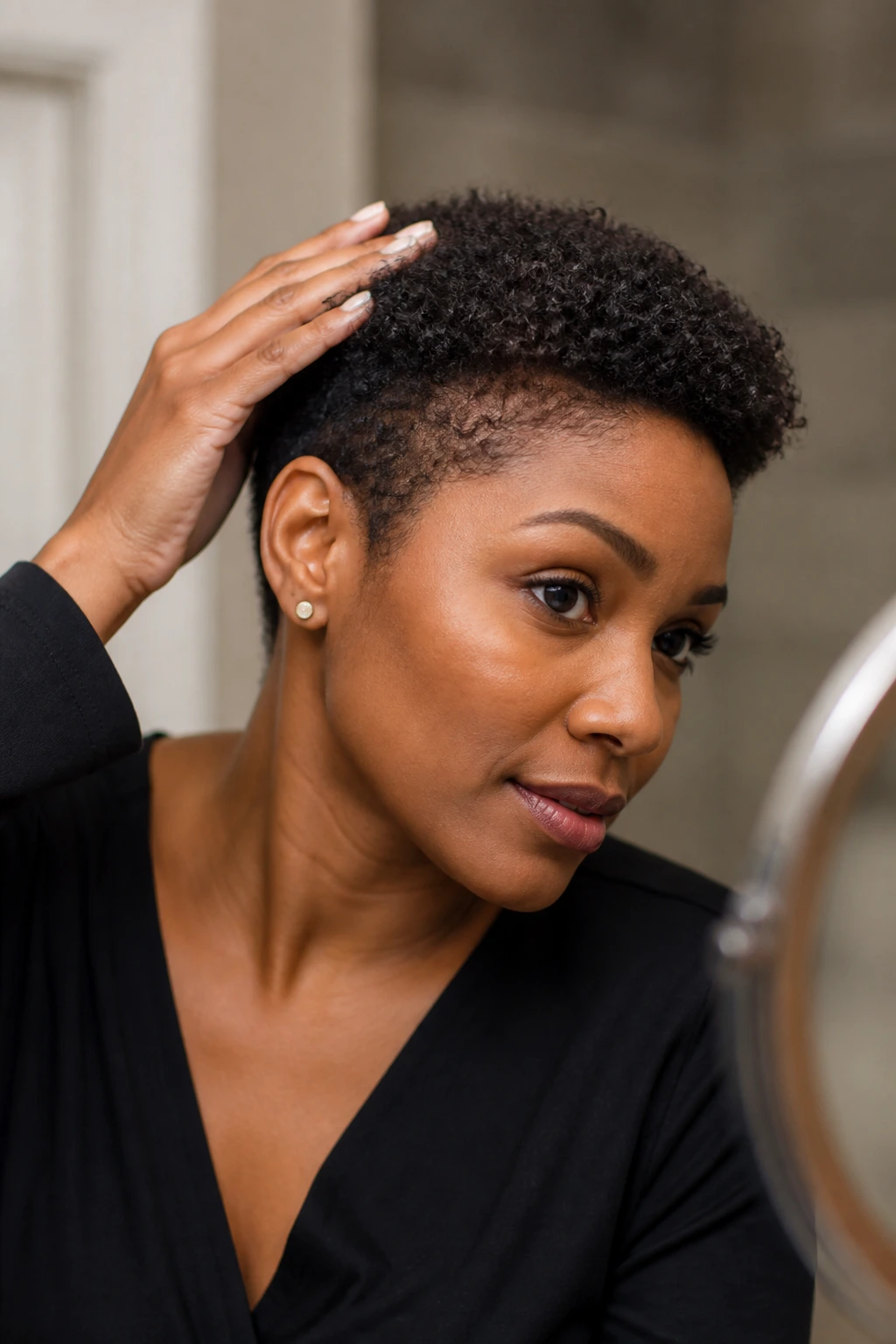
Shape check: ask for a dry check before you leave the chair. A cut that looks fine wet can turn too short after it shrinks.
Product control: if the curls start feeling sticky or heavy, back off. Short hair shows product buildup faster than longer styles, and the crown collapses when it gets overloaded.
Trim timing: keep the outline fresh with light shape-ups every 2 to 4 weeks if you wear fades or tight tapers. Let a full scissor trim happen when the ends stop clumping cleanly.
Texture boost: a little root lift from a pick or diffuser goes farther than another layer of cream. Volume is shape. On short curls, it often matters more than perfect separation.
Cost saver: if you can’t get to the barber often, keep the neckline and edges neat at home, and save the full reshape for when the top actually needs it.
Common Mistakes That Make Short Natural Cuts Look Off
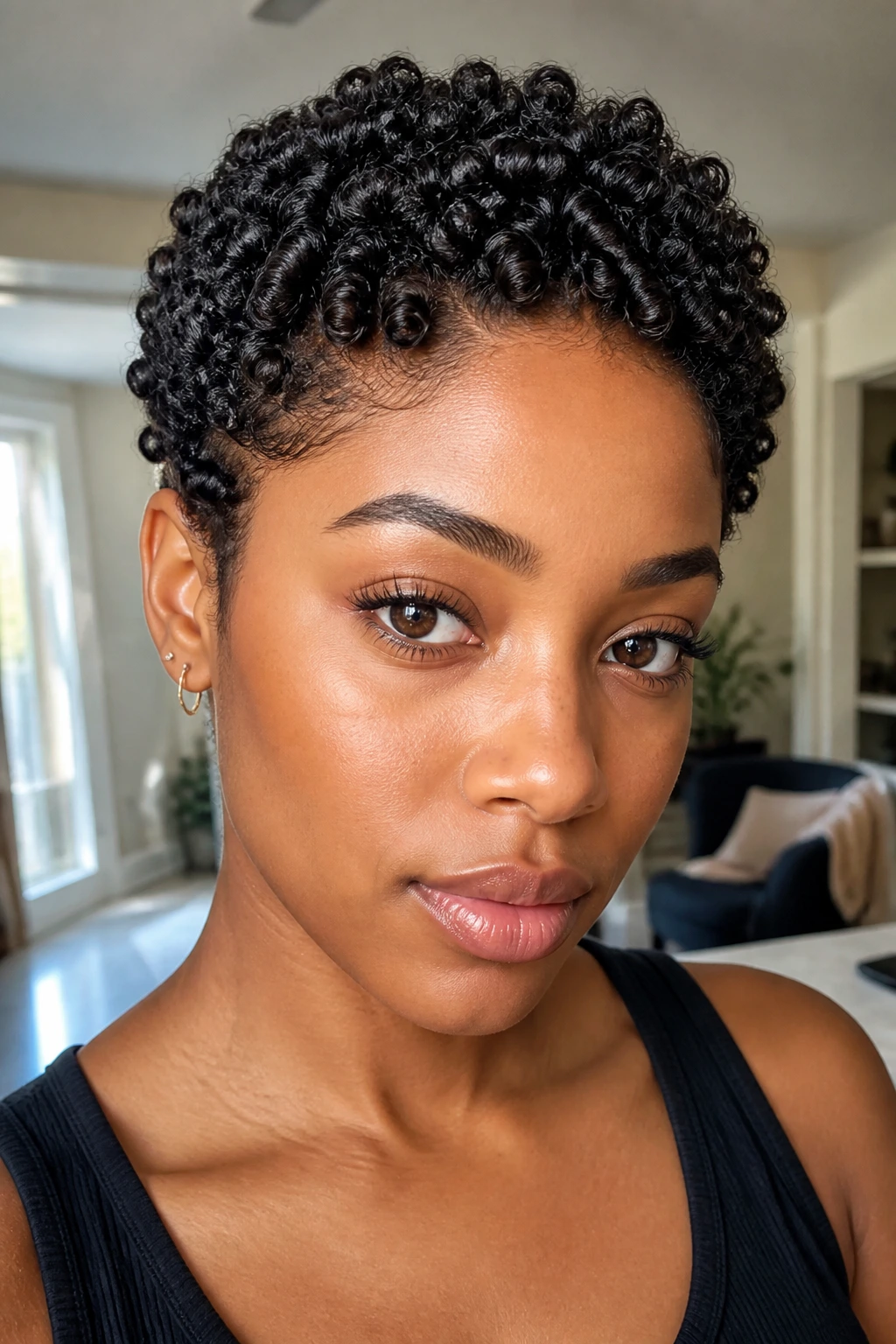
The first mistake is cutting too much while the hair is soaking wet. Wet curls stretch, and then they spring back hard. The result is often a cut that looks fine in the chair and far too short once it dries. The fix is simple: check the shape dry, or at least dry the perimeter before making the final call.
Another one is asking for “one length all over” when the hair has real density. That tends to make Black natural curls puff in the wrong places and flatten in others. A better plan is to keep the top slightly longer and taper the sides or carve out the bulk where it stacks.
Heavy products are a problem too. Thick butters and dense creams can smother a short cut and make the shape collapse by lunch. If the curls need more moisture, use a lighter leave-in and seal only where the hair feels dry.
And then there’s the grow-out issue. Short cuts that are not maintained turn boxy fast, especially around the nape and temples. A quick shape-up can keep the haircut readable much longer than most people expect.
Variations and Alternatives to Try
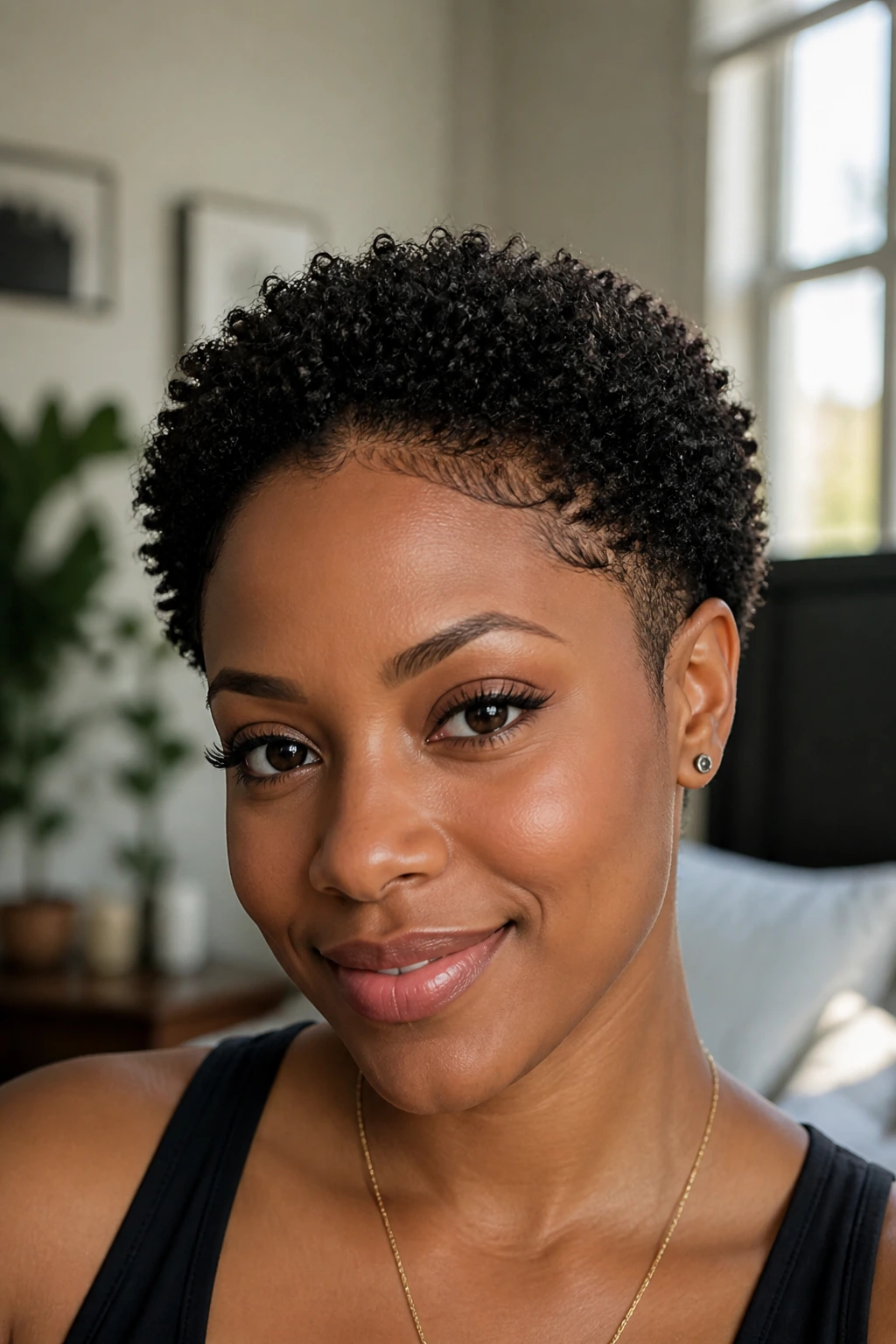
Soft and Round: if you don’t like sharp edges, ask for a rounder perimeter and a gentler taper at the temples. The curls will read softer, and the cut grows out with less drama.
Sharper Barber Finish: if you like crisp lines, keep the top textured but let the hairline, sideburns, and nape stay tightly defined. The contrast is clean and modern.
More Volume Up Top: leave an extra half-inch at the crown and reduce bulk lower down. This works when you want height without moving into a full high-top shape.
Stretchier Everyday Wear: if shrinkage makes your cut feel too small, ask for a shape that looks balanced both stretched and shrunken. That means leaving the crown a little longer and the sides softly tapered.
Low-Effort Grow-Out: choose a cut with rounded edges and no hard part. It will keep looking tidy even when you miss a trim by a couple of weeks.
Maintenance That Keeps the Cut From Going Flat
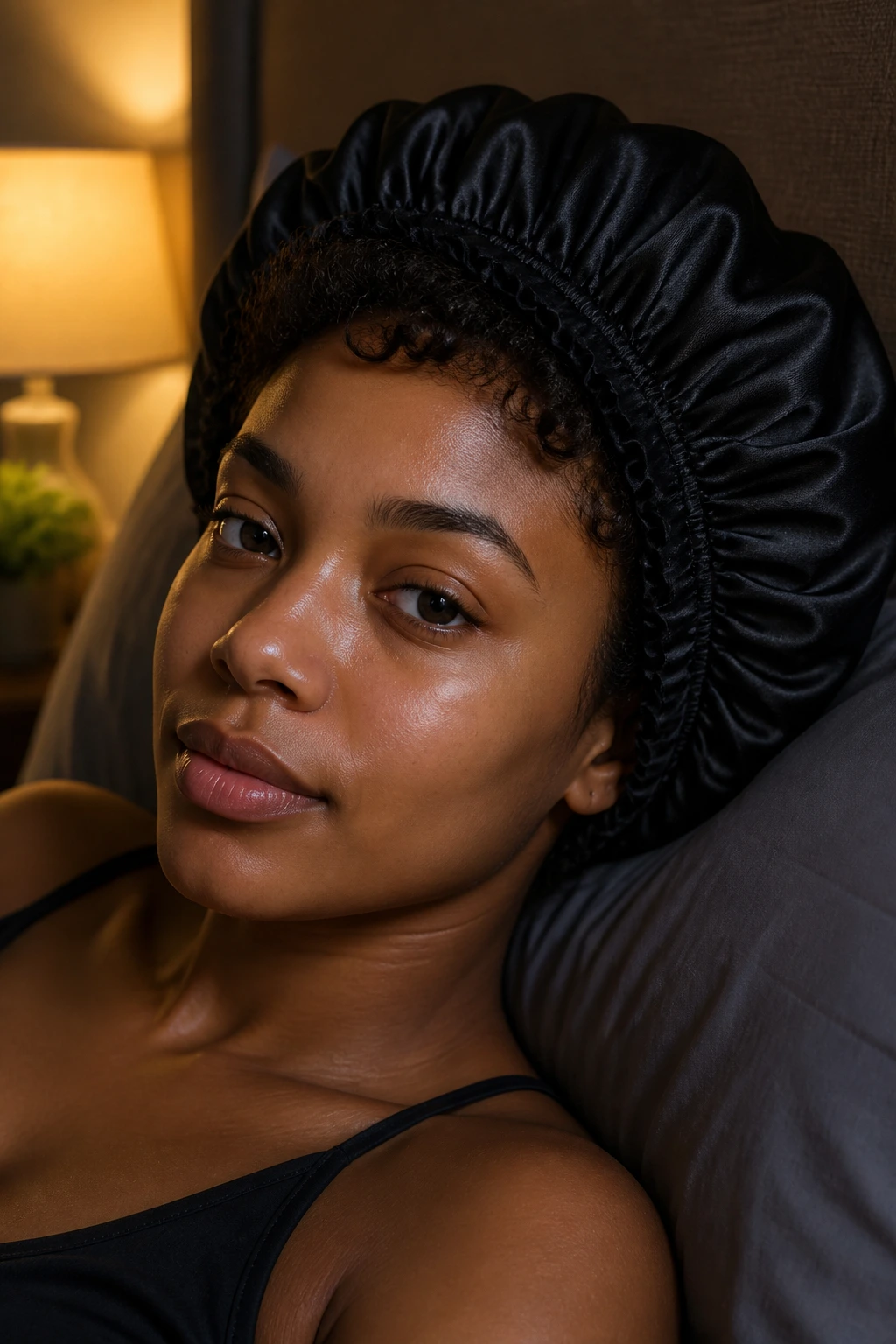
Short curly hair has a shorter memory than people think. One rough night can flatten the crown, and one heavy product can change the whole shape. The fix is boring, but boring works: protect the hair at night, refresh lightly in the morning, and trim before the outline gets fuzzy.
A satin bonnet or pillowcase helps the curls keep their clump and keeps the sides from frizzing out. If the hair is long enough, a loose pineapple at the crown can preserve lift, though very short cuts sometimes do better left alone under the bonnet. In the morning, mist the hair lightly and use your fingers to lift the roots before adding any product.
For fades and tight tapers, shape-ups every 2 to 4 weeks keep the haircut looking deliberate. For more rounded crops and TWAs, a scissor trim or shape check every 6 to 8 weeks is usually enough. If the ends start sticking out in odd directions or the sides suddenly look wider than the crown, the cut is telling you it needs help.
If your scalp gets dry, use oil sparingly. A few drops massaged into the scalp once or twice a week is plenty for most people. More than that tends to sit on the hair and weigh down short curls.
Frequently Asked Questions About Short Natural Curly Cuts
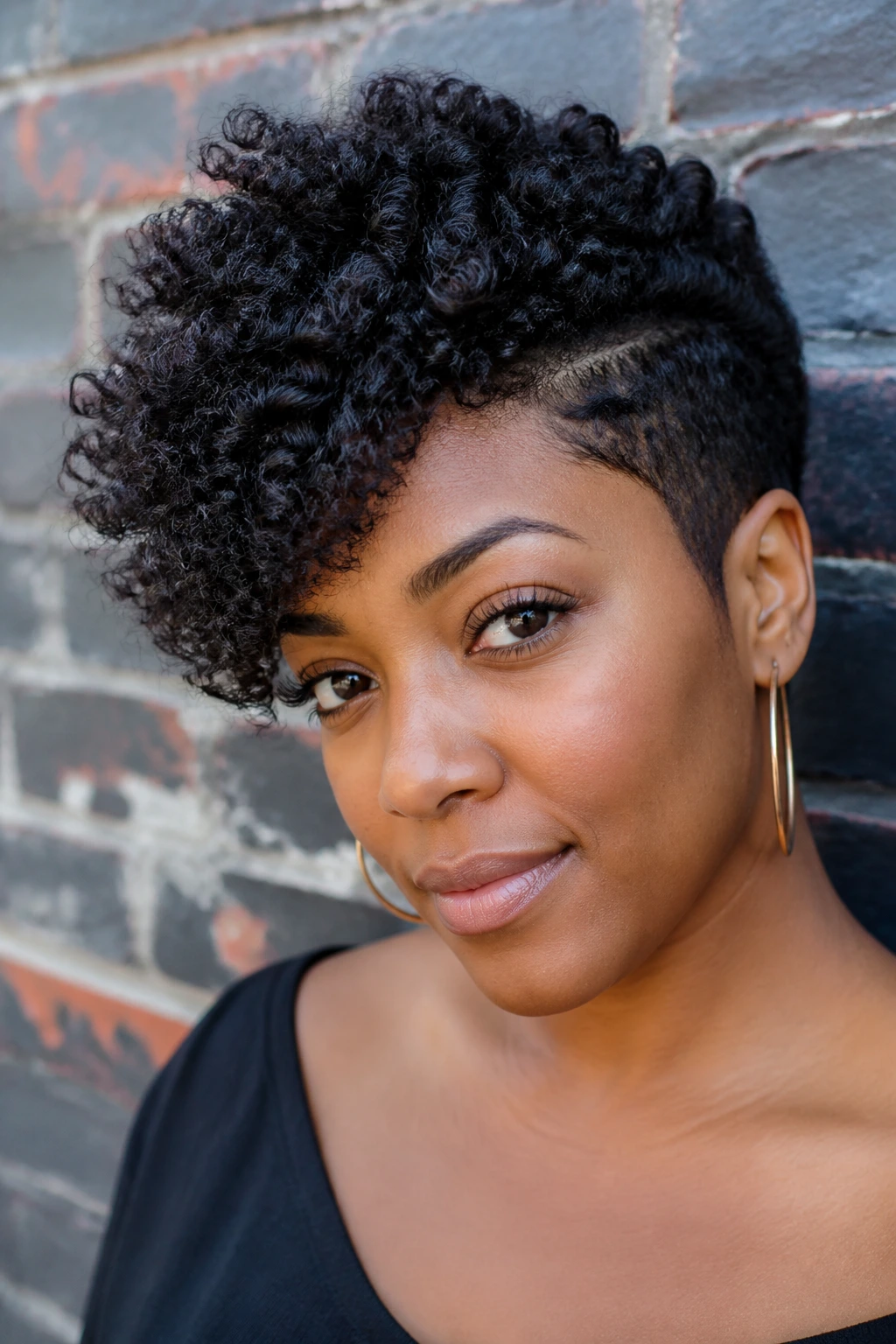
What short haircut works best for 4C hair?
A tapered TWA, rounded afro fade, or close-cropped taper usually works well because those shapes respect shrinkage and density. The best choice depends on how much styling you want to do and whether you prefer a soft outline or a sharper fade.
Should natural curls be cut dry or wet?
Dry cutting gives a more honest read on shrinkage, especially for tighter coil patterns. Some stylists cut damp hair and then refine it dry, which can work too, but the final shape should always be checked after the curls settle.
How often should a short Black natural haircut be trimmed?
Fades and sharp tapers usually need attention every 2 to 4 weeks. Softer shapes like TWAs, cropped afros, and pixie-fro blends can often go 6 to 8 weeks before they need a proper reshaping.
Can I keep a short style without using heavy products?
Yes, and short natural hair often looks better that way. A light leave-in, a little water, and one styling product are usually enough; too much cream can make the cut look heavy and undefined.
What if my curls shrink so much the cut looks too small?
Ask for more length at the crown and a shape that still reads well when dry. Shrinkage is part of the design on natural hair, not a mistake, so the haircut should be built with it in mind.
Are fades good for natural curly hair?
They can be excellent if the fade follows the head shape and the top keeps enough texture. A bad fade can make the hairline look harsh, but a well-shaped taper can make even a short cut look cleaner and more balanced.
Can I do these cuts at home?
You can maintain edges, neckline, and some basic trimming at home, but a full shape is harder to do yourself on textured hair. Curly hair hides mistakes until it dries, which is exactly why home cuts often go sideways fast.
What should I ask for if I want something low-maintenance?
Ask for a cropped shaped afro, close-cropped taper, or tapered TWA with a soft crown. Those cuts need less daily styling and tend to grow out in a way that still looks intentional.
Does short hair need different products than longer natural hair?
Usually yes. Short curls get weighed down faster, so lighter leave-ins, foams, and gels tend to work better than thick creams and heavy oils. The shorter the cut, the easier it is to overload it.
How do I stop the back and sides from puffing up first?
Keep the nape and temples shaped regularly, and sleep in satin so those areas do not frizz out overnight. A quick mist and a little smoothing cream at the perimeter can keep the silhouette tidy between cuts.
A Shape That Keeps Its Lines
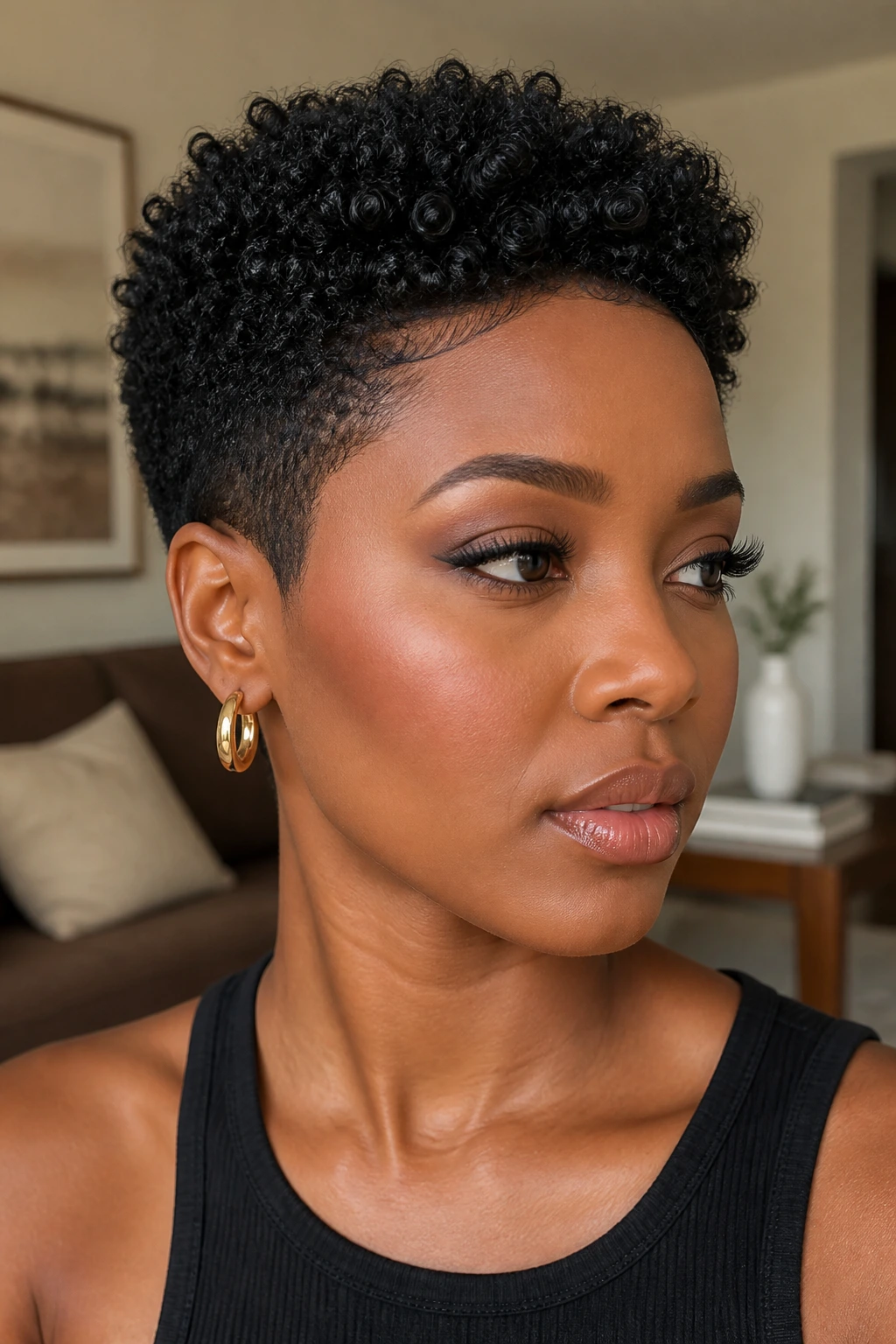
Short natural hair looks its best when the cut does the heavy lifting. The curls can be soft, tight, fluffy, compact, or sharply edged — but the silhouette has to make sense. Once that shape is right, the rest gets easier. Morning styling gets shorter. Grow-out gets less annoying. Even a simple wash day feels less chaotic.
The smartest move is to pick a shape that fits the way your hair actually behaves, not the way it looks in a photo with a different curl pattern. Start with one cut that respects your density and shrinkage, then let it live on your head for a week before you decide what to tweak. That’s where the real answer usually shows up.
