



Silver hair can look crisp and expensive, or it can look like the toner stayed on one minute too long. The difference is rarely the word gray itself. It’s the mix of depth, shine, and where the brightness lands around the face.
The best silver gray hair color ideas for older women do one clever thing: they work with natural regrowth instead of staging a fight with it. A smoked root, a mushroom brunette bridge, or a pearl face frame can make gray look planned, which is a lot kinder than a flat all-over white that shows every dry end. Older hair also tends to be a little more porous, so it grabs toner fast and loses it fast; that’s why a glossy, dimensional finish usually beats a single flat shade.
Nineteen looks come next, and they’re not all high drama. Some are soft enough to live with for months. Some need a tighter toner schedule. A few are cool and icy, a few lean beige or smoky, and a few let your natural gray do most of the work. If you’ve ever stood in front of a mirror and thought your hair needed something, but not more hair dye, the right silver can fix that.
Why This Collection Stands Out
- It respects regrowth: A soft root shadow can buy you 6 to 10 weeks before the grow-out line starts shouting at you.
- It uses dimension on purpose: A second tone, even a subtle one, keeps silver from reading like one flat sheet of paint.
- It works with mature texture: Gray hair often turns drier and coarser, so these looks lean on shine, contrast, and shape instead of heavy saturation.
- It gives you options for maintenance: Some ideas here need toner every 4 to 6 weeks; others grow out quietly and ask for much less.
- It flatters more than one skin tone: Champagne, oyster, mushroom, blue-gray, and gunmetal all solve different problems around the face.
- It suits real hair, not just salon photos: These ideas take root patterns, thinning at the crown, natural waves, and uneven white growth into account.
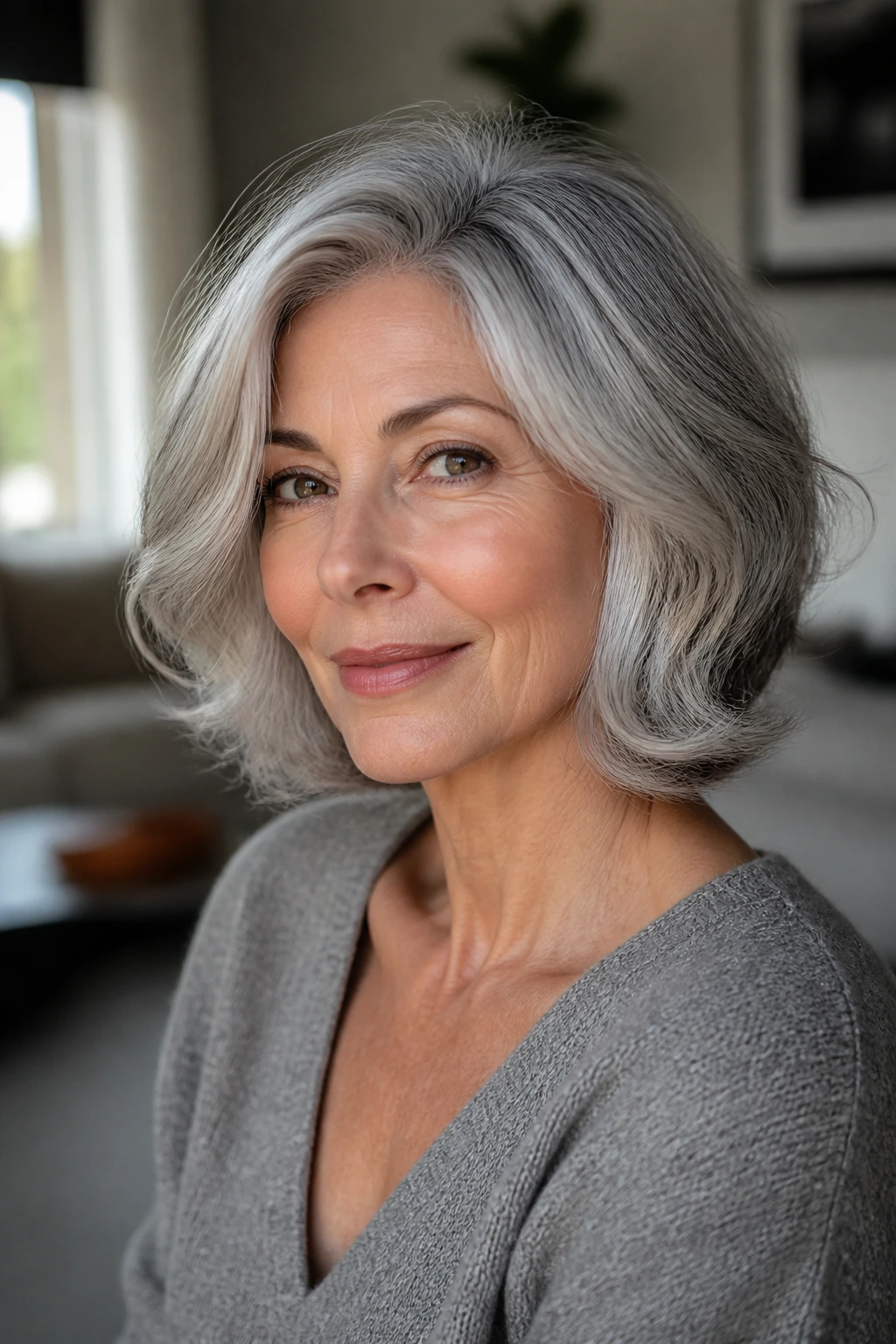
1. Soft Silver Bob With a Smoky Root
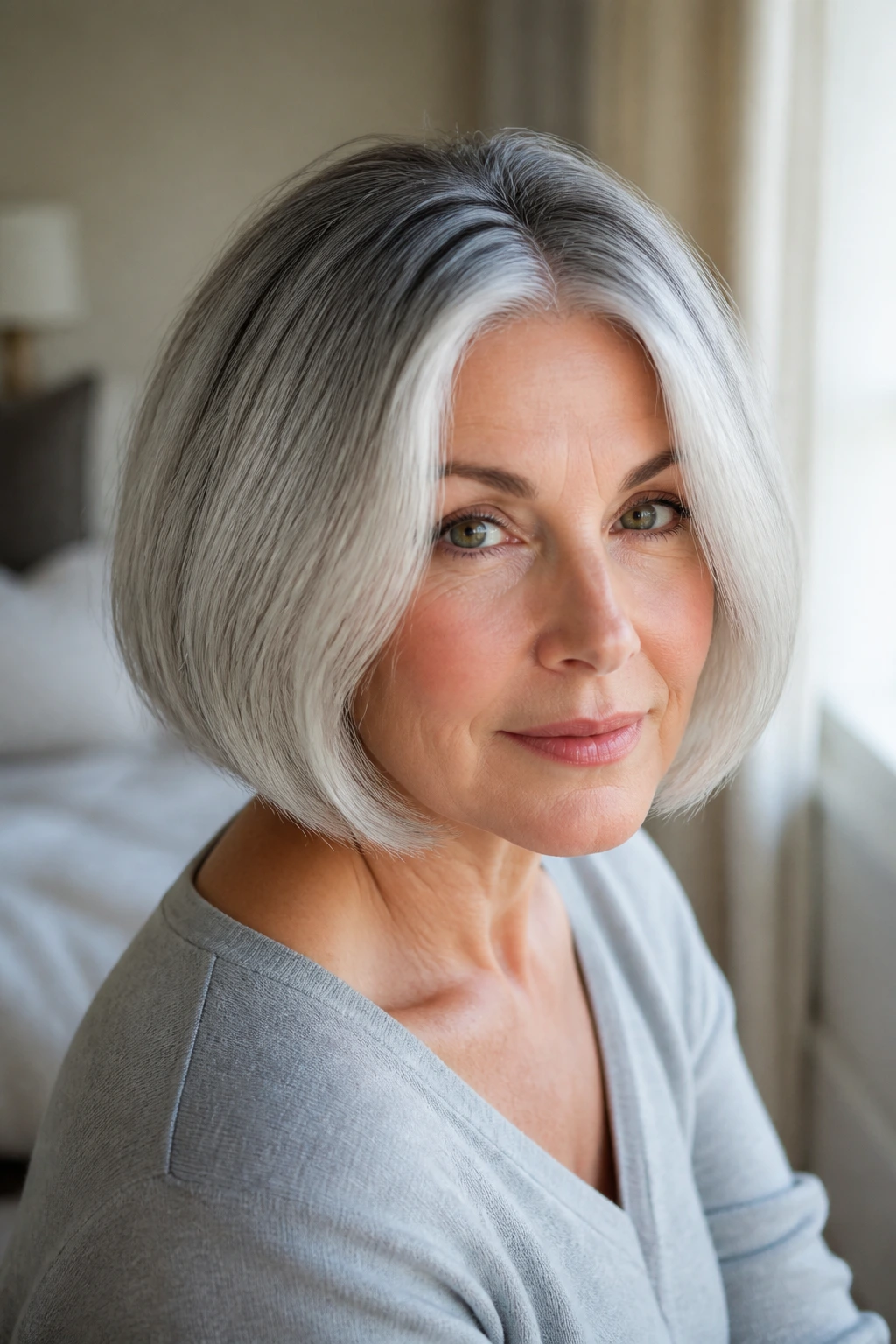
A chin-length bob with a smoked root is one of the easiest ways to make silver feel deliberate. The darker root gives the eye a place to land, and the silver mids and ends catch light without turning the whole head into one flat block. On finer hair, that shadow at the scalp also makes the cut look denser than it really is.
Ask for a root shadow about 1 inch deep in a neutral beige-brown, then let the silver live a shade brighter through the lengths. If your hair tends to yellow, a violet gloss is useful here, but keep it off the root. That contrast is the point. It keeps the grow-out soft when your next appointment runs late.
A blunt line at the bottom works better than wispy ends here. The shape feels fuller, cleaner, and less fuzzy at the neck.
Best with: Straight hair, soft bends, or a round-brush blowout.
Maintenance: Gloss every 4 to 6 weeks; trim every 6 to 8 weeks.
Watch for: A root that’s too dark and turns the bob into a helmet.
Pro tip: Keep the front pieces just a touch lighter than the back. It lifts the face without making the whole cut look over-processed.
2. Champagne Gray Layers
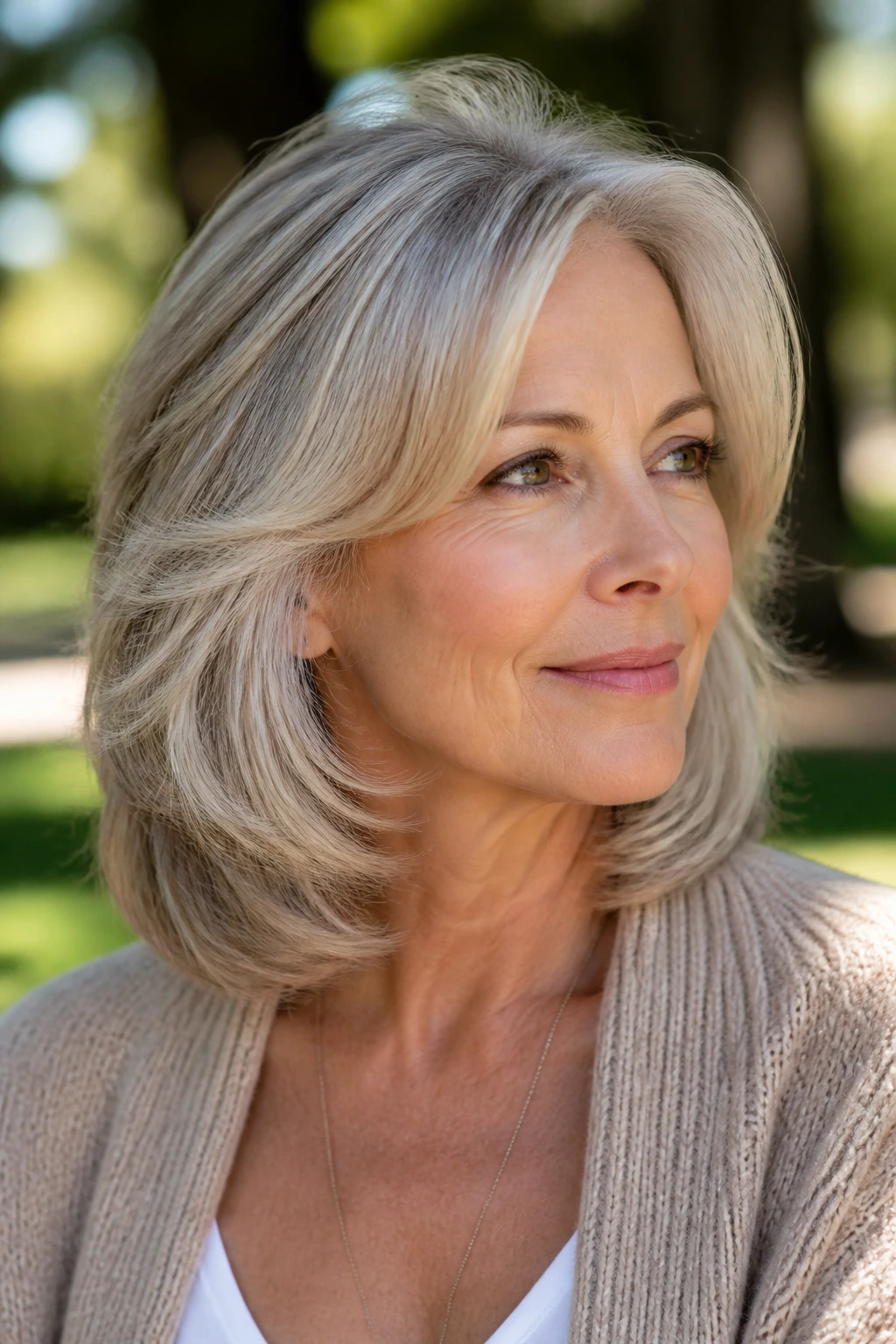
Champagne gray is the shade I reach for when icy silver feels too hard. It has a beige softness inside the gray, which matters more than people think. On mature skin, that hint of warmth keeps the hair from looking like it’s sitting on top of the face instead of part of it.
Layered lengths make the color move. A few airy layers around the cheekbones and collarbone stop champagne gray from going dull in daylight, especially if your hair is medium to thick. The result is quieter than platinum, but it has more life than plain gray.
This is a good choice if your skin has peach, golden, or olive undertones. It also behaves well when you wear gold jewelry, which is not true of every silver shade. You don’t have to fight the wardrobe you already own.
One thing I like here: the color looks best when the ends stay slightly brighter than the root. That tiny shift keeps the layers visible. Flat champagne gray loses its shape fast.
3. Smoky Steel Pixie
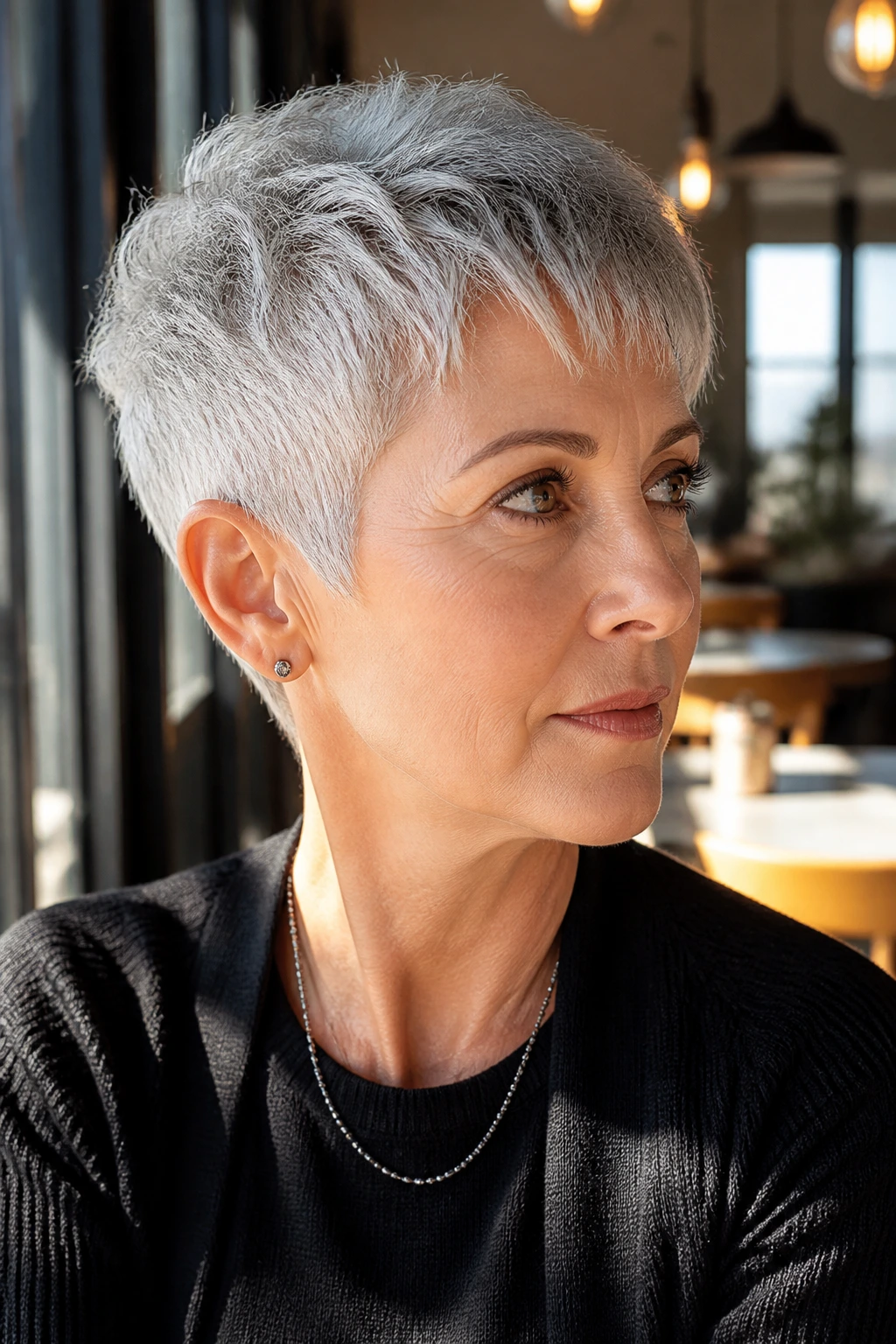
Why does a pixie look so sharp in steel gray? Because short hair shows every line, and steel gives those lines definition. The cut reads clean instead of spiky, and the cooler tone keeps the texture from going muddy when the hair is short and fine.
What to Ask For at the Chair
Ask for a tapered nape, softly carved sides, and a slightly longer top that can be pushed forward or lifted. Then ask for a smoky gray toner rather than a bright silver glaze. On a pixie, too much lightness can make the head look fluffy in the wrong way. Steel keeps it crisp.
This is one of the better silver gray hair color ideas for older women with thicker, coarser strands, because the short cut removes bulk and the color adds edge. If your hair has a bit of natural silver already, a steel gloss can deepen the look without hiding your own gray.
No, it does not need to be severe. A few soft pieces near the temple are enough to keep it feminine. The trick is control, not drama.
Best for: Coarse hair, strong cheekbones, and anyone who likes a low-fuss morning.
Maintenance: Trim every 4 to 6 weeks to keep the silhouette clean.
Styling note: A dab of paste on dry hair is enough; too much product makes steel look greasy.
4. Pearl White Face-Framing Lob
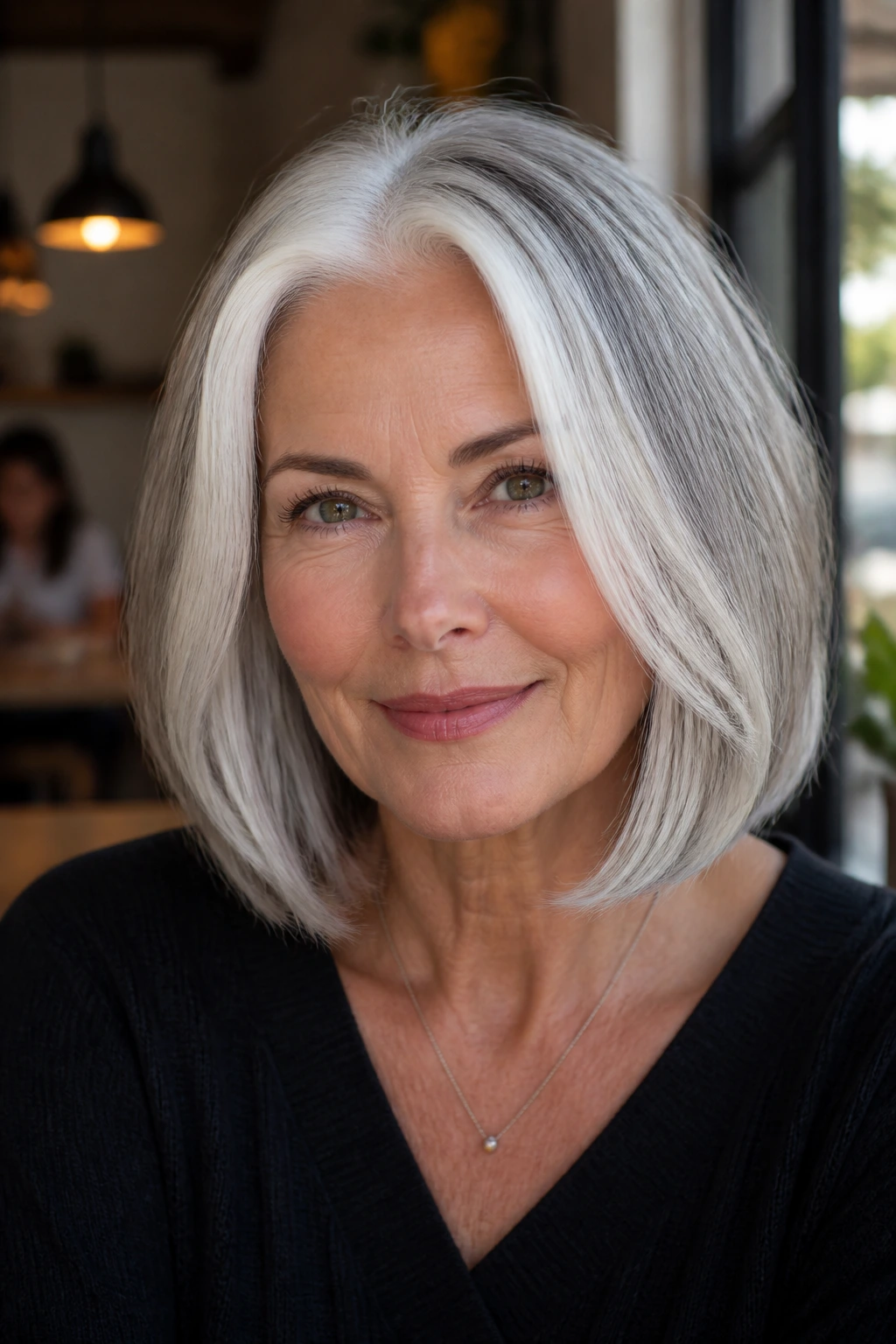
A pearl-white money piece around the face can change the whole mood of a lob. The long layers stay soft and wearable, but the front strips read bright enough to wake up the face. That contrast is especially useful if your natural silver is still mixed with darker strands underneath.
The best version of this look doesn’t bleach the whole head to death. It brightens two to three face-framing ribbons, then leaves the rest of the lob in a softer silver or ash beige. That way, the color looks intentional instead of washed out. A too-white front on a porous head can feel harsh fast.
If you wear glasses, this shape is even better. The bright front pieces echo the frame and keep the eyes from disappearing behind the lenses. A side part makes the light land in a more flattering place than a dead-center split.
Ask for: 1- to 1.5-inch bright face pieces, pearl toner, and a neutral root.
Skip: Streaks that start too high on the crown; they can look stripey.
Best effect: When the lob swings at the collarbone and the front pieces tuck behind one ear.
5. Salt-and-Pepper Shag
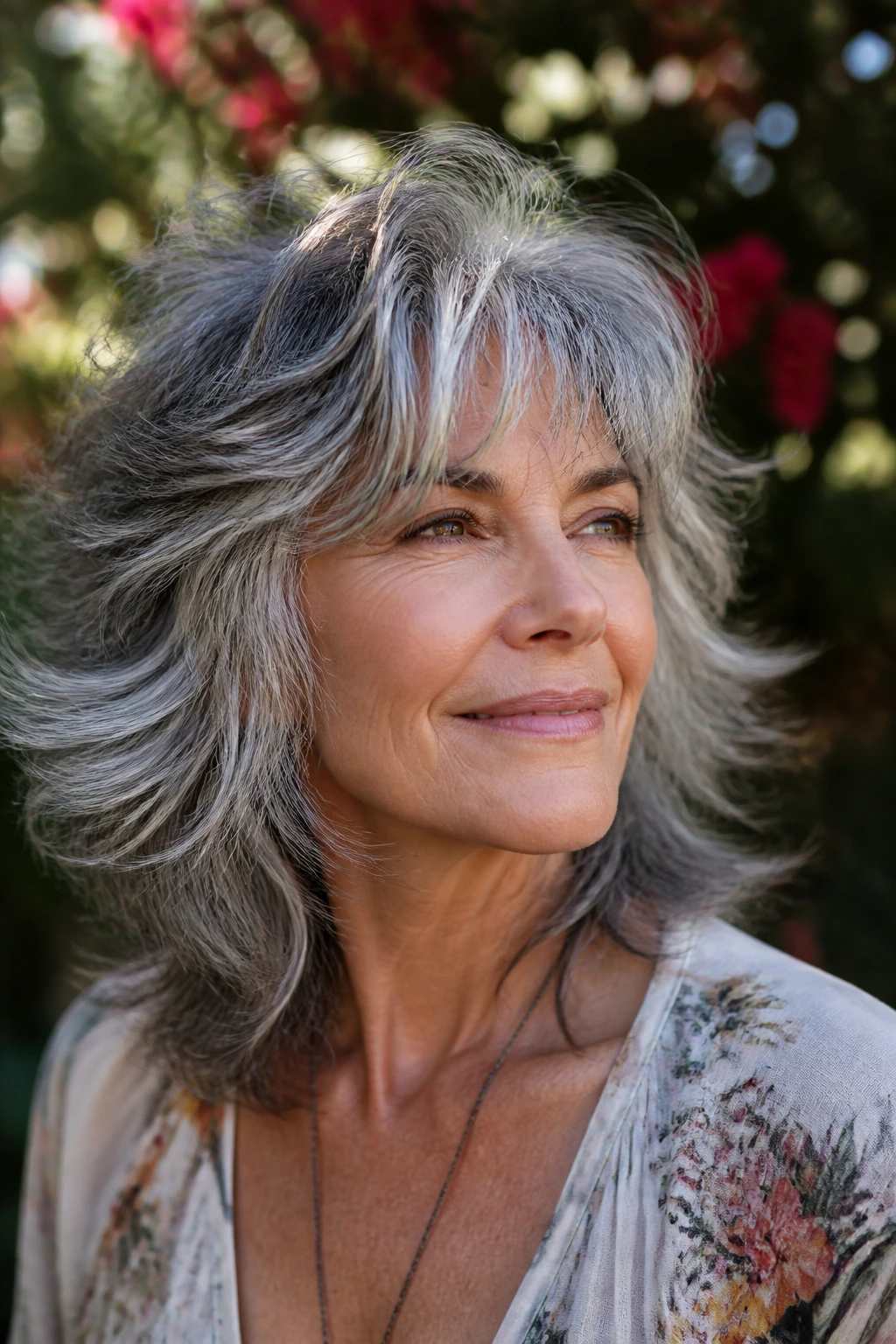
Some hair looks better when you stop trying to force all the pigment into one shade. A salt-and-pepper shag leans into the mix you already have, and that honesty is part of the appeal. The darker strands become lowlights on their own. The white pieces read like highlight.
The shag cut does the heavy lifting here. Feathered layers, airy ends, and a little movement around the crown keep the whole thing from looking heavy. On naturally wavy or slightly curly hair, this cut makes the silver pieces flick in and out as the hair moves. It’s one of those styles that looks better with a little mess in it.
This is a good pick if you’re tired of root maintenance. It can be more forgiving than an all-over toner job, and it usually grows out with less stress. The downside is obvious: if your ends are very dry, a shag will show that dryness. Keep a hydrating mask in the routine.
Best with: Waves, texture, and a bit of natural movement.
Maintenance: Trim every 8 to 10 weeks so the layers do not fray.
Styling tip: Scrunch in a lightweight cream, not a sticky gel.
6. Icy Silver Curls
Curly silver can look spectacular when the lightening respects the curl pattern. That matters. Too much bleach, and the curl turns frizzy, airy, and tired-looking. A better approach is careful highlighting or a gentle lift with a cool toner on top.
The reward is worth the caution. Icy silver curls have a frosted edge that catches light on every bend, which makes the hair look more alive instead of less. The curl shape gives the silver movement that straight hair has to work for. You can almost see each coil.
This shade works best when the curls are hydrated and defined. A weekly mask and a leave-in with slip are not optional here; they are the difference between crisp and fuzzy. If your hair is porous, a bond-building treatment before the lightening step can save a lot of grief.
Good for: Women who want silver without losing curl shape.
Ask for: Fine highlights, not a blanket bleach.
Watch for: Purple shampoo buildup on the driest ends.
7. Mushroom Gray Bronde
Mushroom gray bronde is the bridge color people forget about. It sits between brunette, beige, and gray, which makes it useful when you’re growing out dye and not ready to jump straight to icy silver. The result is soft and believable, not loud.
This shade works because it doesn’t fight your natural base. Instead of covering dark hair completely, it folds silver into a smoky brown-beige lane. On older women with mixed regrowth, that blend can be a lifesaver. The transition looks smoother, and the line at the scalp stops feeling like a deadline.
Best When You Want Low Drama
Ask for a shadow root one to two levels deeper than the mid-lengths, then add mushroom-toned ribbons through the ends. That combination keeps the hair from reading orange, which is the usual problem when brown and gray meet without a plan. If your skin runs warm, mushroom gray is often easier than pure silver.
It’s not a flashy shade. That’s the point. It looks expensive because it looks like the hair naturally belongs to the head.
8. Lavender-Silver Sheen
Lavender-silver is subtle enough to wear and still has a little personality. The lavender should whisper, not shout. On silver hair, that pale violet cast softens yellowing and gives the whole style an almost pearly finish.
The best way to think about this shade is as a gloss, not a fashion color. You’re not painting the hair lilac. You’re letting a cool pastel glaze sit on top of an already light base. On porous hair, that means you need a careful hand; leave it on too long and the ends can go straight lavender when you only wanted a tint.
This one shines on shorter cuts, bobs, and soft layers, because the color movement shows better when the hair has shape. It also looks surprisingly good with simple makeup. A soft berry lip, brushed brows, and a clean silver neckline do most of the work.
Maintenance note: Pastel tones fade faster than neutral silver, so expect a refresh sooner than with champagne or pewter.
Best for: Cool skin, bright eyes, and women who like a little edge without full color commitment.
9. Charcoal Lowlights on Silver
Most people think highlights are the only way to add dimension. That’s not true, especially on thin or aging hair. Charcoal lowlights can do more for silver than another layer of brightness because they give the eye a place to rest.
A few deeper ribbons underneath the crown and around the nape make silver hair look fuller. They create the illusion of thickness, which is useful if your part has widened or your ponytail has gotten smaller over the years. The color shift is subtle in good light and stronger in shade. That’s the sweet spot.
Ask for lowlights only one to two levels deeper than your base. Go too dark and the silver starts looking striped, especially on straight hair. Used well, charcoal lowlights sharpen the cut and keep the white pieces from floating away visually.
A blunt bob, a cropped shag, or a shoulder-length wave all benefit from this. The extra depth is not decorative. It’s structural.
10. Oyster Gray Waves
Oyster gray sits in that pleasing middle ground between silver and beige. It has a soft shell-like cast, a little coolness, and a little warmth, which makes it unusually wearable. The shade feels polished in daylight and slightly moody indoors. I like that.
Soft waves are what make the color come alive. A flat oyster gray can look washed out, but a loose bend through the mid-lengths changes everything. The bends catch light, then release it, so the color never looks frozen in place. That’s why this shade works especially well on lobs and collarbone cuts.
If your undertone is neutral, oyster gray is one of the safest bets in the entire silver family. It avoids the harshness of blue-gray and the yellow risk of too-cool silver. If your hair has white sections mixed with darker remnants, oyster gray also helps blend the contrast without erasing it.
Best with: Soft waves, round brushes, and glossed ends.
Tip: Part the hair slightly off-center; oyster gray likes asymmetry better than a perfect center line.
11. Pewter Crop
Pewter is the shade for someone who wants silver with weight. It’s darker than pearl, less icy than platinum, and a little more polished than plain gray. On a short crop, that metallic depth reads clean and intentional.
This cut is especially useful if your hair is thick, coarse, or stands away from the head when it’s short. Pewter helps tame that visual fuzz. It also works well for women who want the haircut to carry the style so the color does not have to do everything. That balance matters.
A neat side sweep, a textured crown, or a softly angled fringe can all work here. Pewter looks best when the finish is smooth but not lacquered. Too much shine spray turns it plastic. Too little and you lose the metallic effect.
Good for: Strong jawlines, coarse texture, and low-maintenance styling.
What to ask for: A level 6-7 smoky gloss with a cool base.
Avoid: Over-lightening the ends; pewter needs depth to stay interesting.
12. Blue-Gray Bob
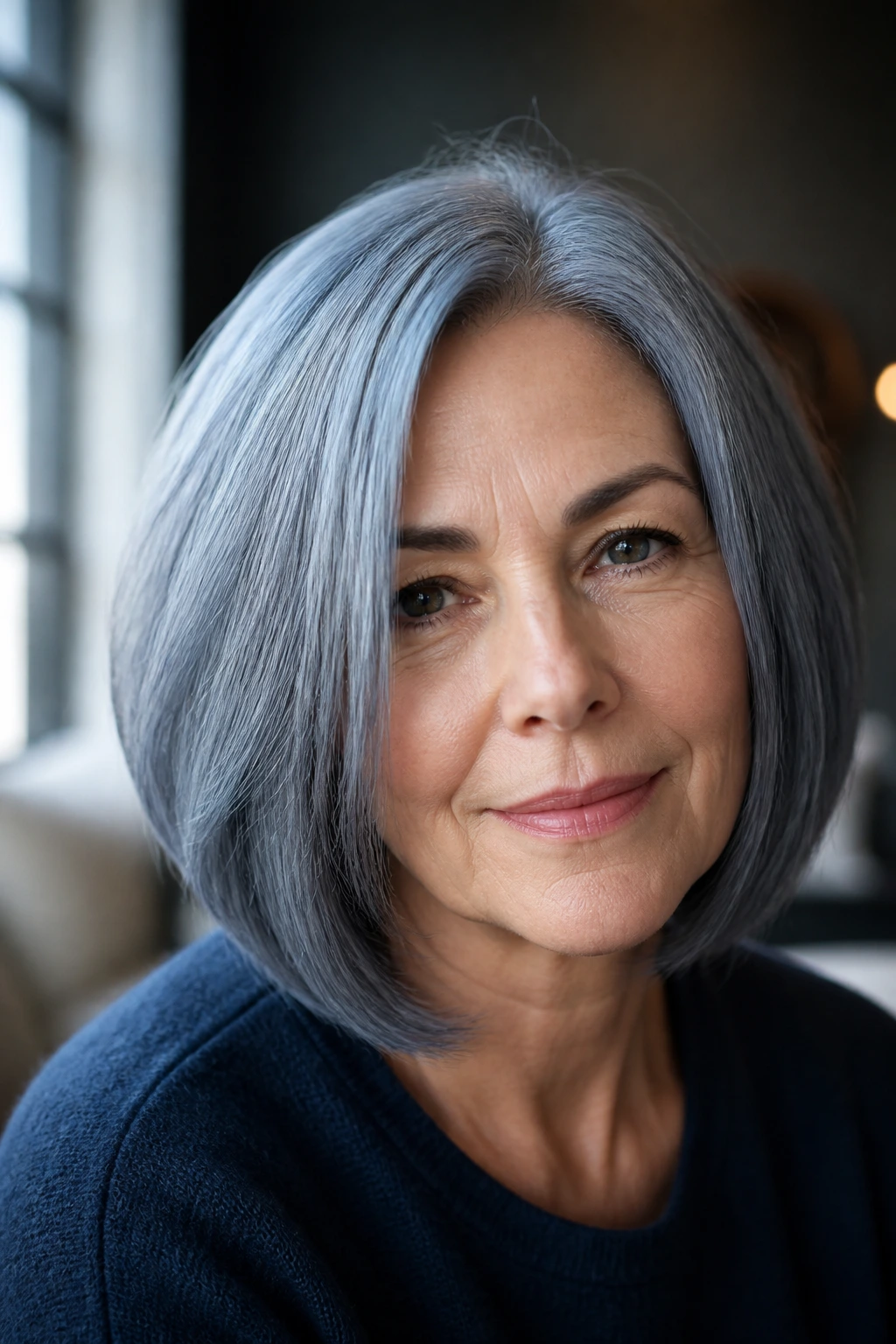
Blue-gray sounds bold, and it can be, but it doesn’t have to be loud. In a bob, a muted blue cast turns silver into something cool and architectural. The shape gets sharper because the color is cooler. That’s the whole trick.
This is one of the best choices if you wear black, white, navy, or cool-toned lipstick. The hue picks up the same crisp edge as those clothes and accessories. It also flatters strong, even bob lines, because the color itself carries a bit of structure.
The danger is going too blue. You want a whisper of slate, not a cartoon shade. On porous silver, blue can grab faster than expected, especially at the ends. A good colorist will keep the tone diluted and check the lengths often.
Best for: Cool skin, silver jewelry, and sharp cuts.
Maintenance: Blue deposits fade unevenly, so a gloss or toner refresh helps the shape stay clean.
Small detail: Tuck one side behind the ear and the blue reads even richer.
13. Silver Balayage on a Dark Base
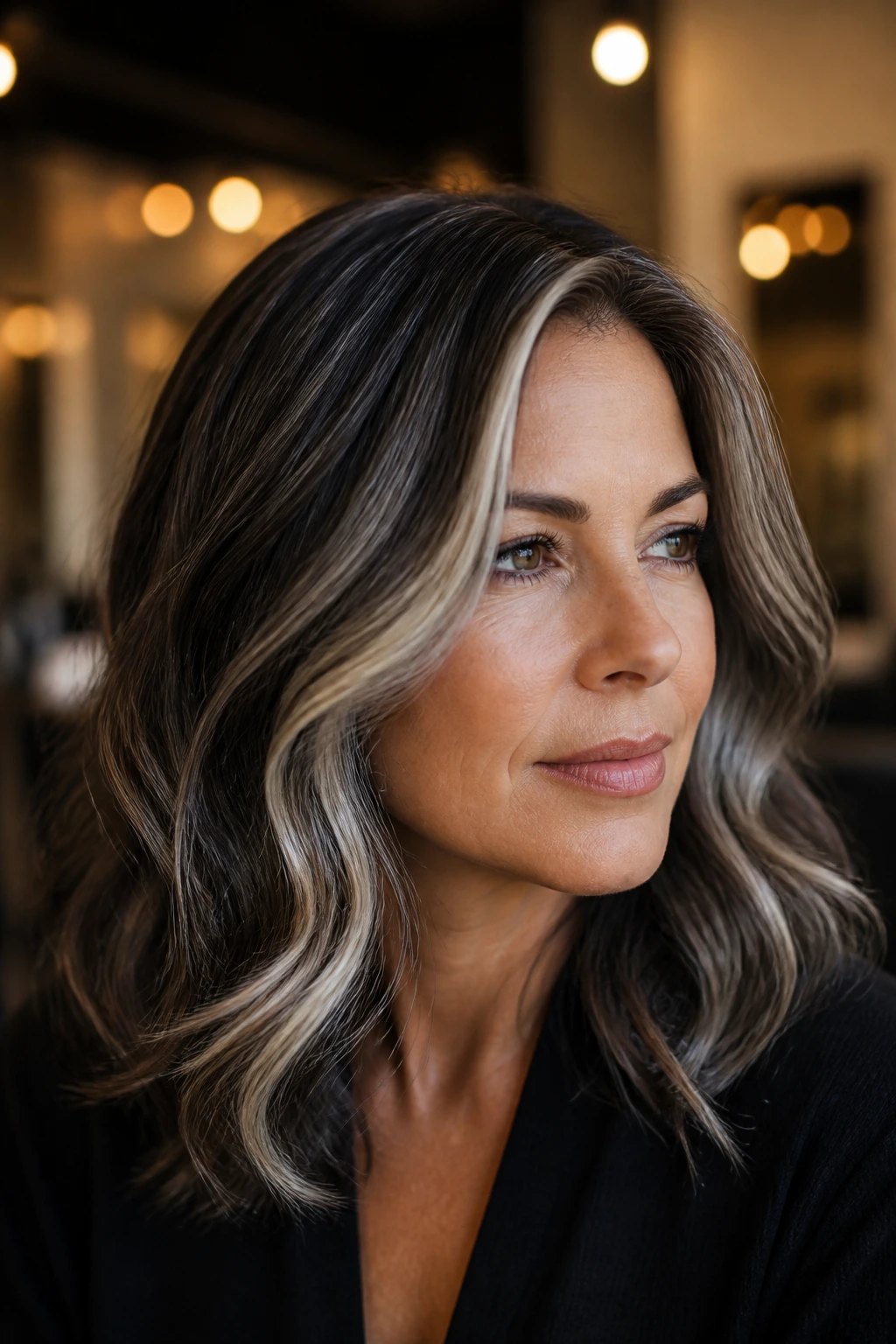
Need something that grows out without a hard line? Silver balayage on a dark base is the answer most women should consider before going full bleach. The light pieces are painted where the eye naturally looks, and the dark base stays in charge near the scalp. That means less maintenance and fewer awkward appointments.
How It Usually Works
Think of this as a bridge, not a leap. The balayage can start as soft silver ribbons through the mid-lengths, with brighter pieces around the face and crown. The base remains brown, charcoal, or dark ash, which helps the silver feel grounded. On older hair, this is often smarter than forcing every strand into the same light level.
It’s especially useful if you’re still attached to some depth but want to stop fighting the gray. The mix gives you both. If your natural hair is dark, you’ll usually get a more flattering result by keeping that base visible instead of burying it under too much lightener.
Balayage also makes the silver feel expensive in a quiet way. The contrast is the reason. Without it, the look can drift flat.
Best for: Brunettes, mixed regrowth, and women who want fewer full-color appointments.
Ask for: Painted ribbons, soft root melt, and a cool gloss on the light pieces.
Watch for: Overly chunky sections. Silver balayage works best when it looks like light, not stripes.
14. Frosted Champagne Pixie
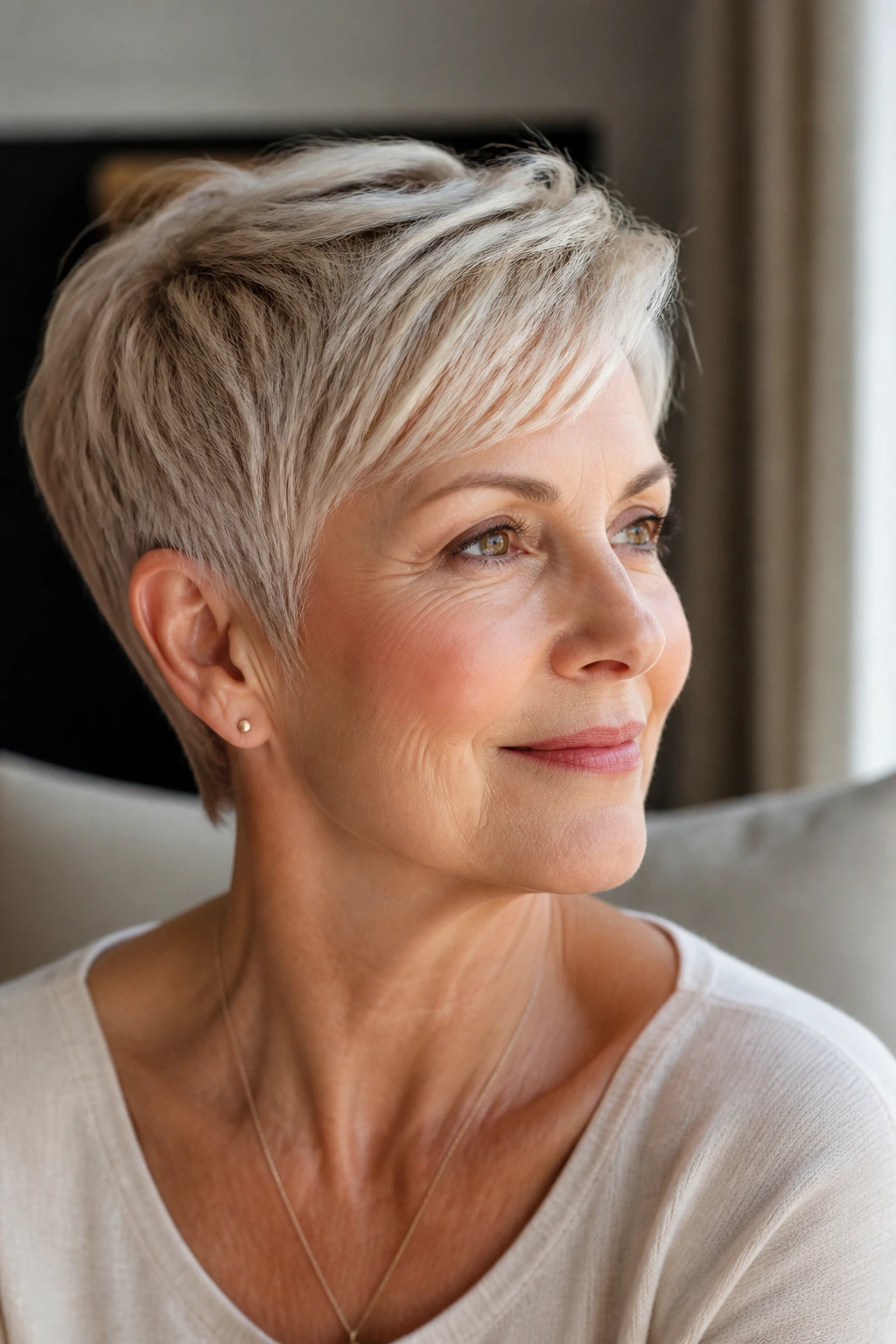
A frosted champagne pixie is what happens when softness and shape meet in the middle. The pixie gives you clean lines around the ears and nape, while the champagne tone keeps the top from looking severe. Add a frostier glaze through the crown, and the whole thing gets a little lift.
This is a lovely option if you want brightness without a white-out effect. The warmer champagne keeps the skin from looking drained, while the frosted pieces add enough coolness to make the cut sparkle. On older women with fine hair, this can be a smart compromise. Bright enough to feel modern, soft enough to live with.
A side-swept fringe helps a lot here. It breaks up the forehead area and gives the color a place to soften. If your hair grows quickly at the temples, keep the sides trimmed so the shape doesn’t lose its edge.
This shade is less about wow and more about polish. I prefer it that way.
15. Opal Gray With a Soft Pastel Tint
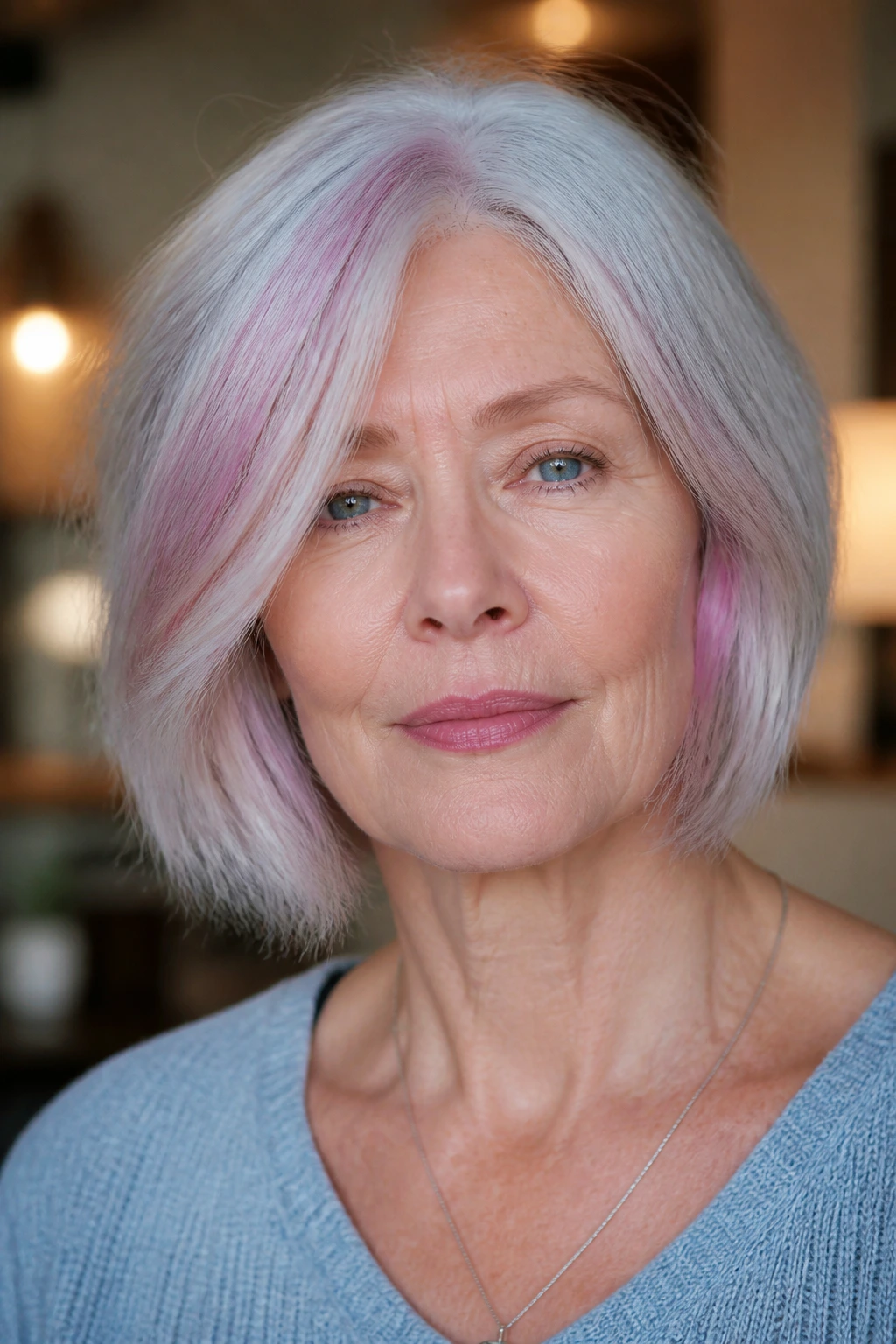
Opal gray is for someone who wants silver with a little shimmer under it. The pastel tint might lean faint pink, lilac, or even a hint of mint, but it should stay sheer. On the right base, it gives the hair that gem-like sheen people notice without being able to pin down.
The key is restraint. Opal gray works because the base still reads gray first. The pastel is only the second note. Too much color and the effect goes from elegant to costume quickly, especially on porous ends. Keep the overlay soft and the finish glossy.
This look can be beautiful on a bob, a soft crop, or shoulder-length waves. The color catches in the curves. Straight hair can wear it too, but the shine has to be immaculate. Dryness kills the opal effect faster than anything else.
Best for: Women who like a little personality in their color.
Tip: Ask for a clear gloss mixed with a tiny amount of pastel deposit, not a full pastel dye job.
Note: This fades faster than neutral silver, so it suits people who don’t mind upkeep.
16. Gunmetal Silver Lob
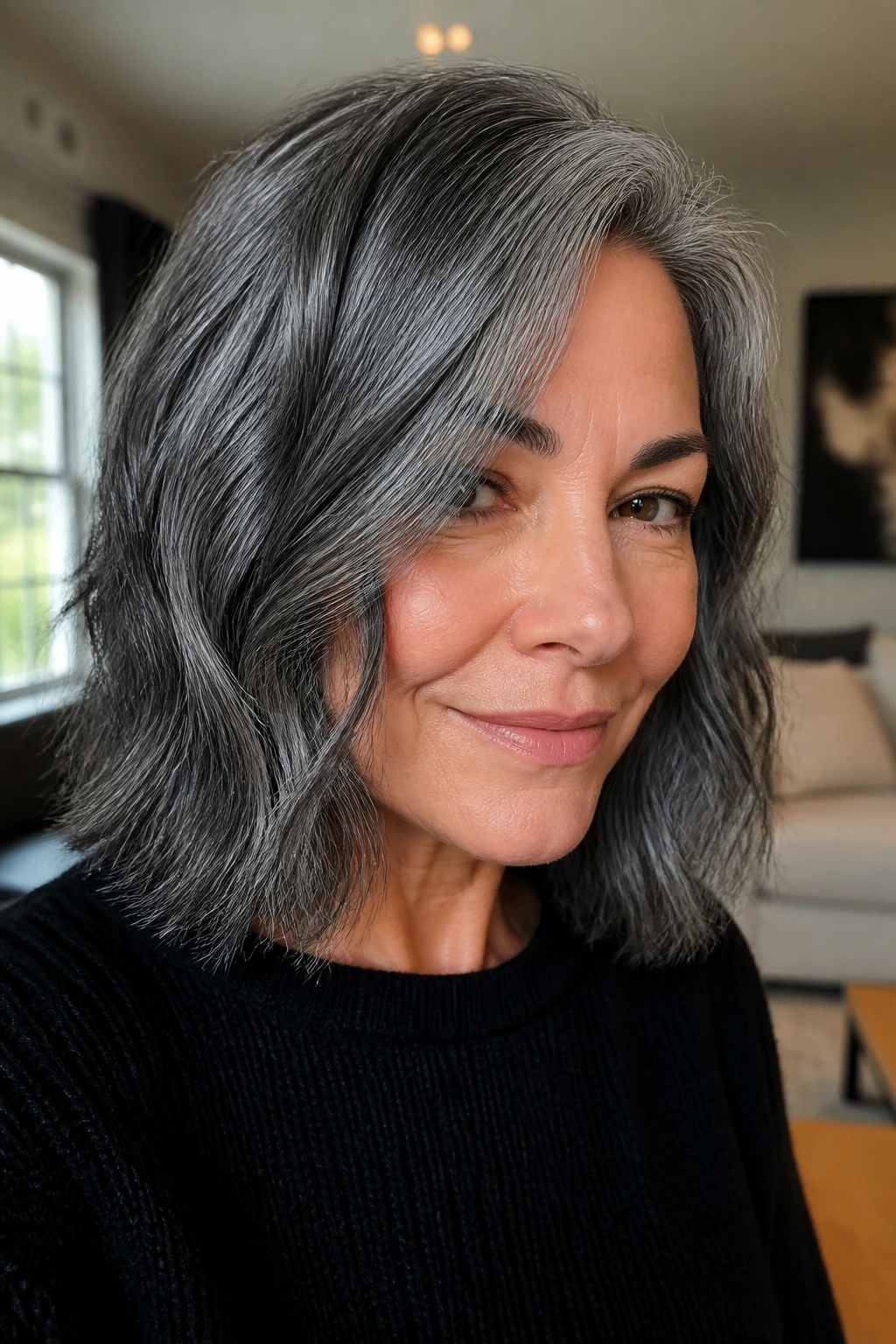
Gunmetal gray is one of the most flattering deeper silver tones because it keeps contrast alive. It sits between charcoal and polished metal, which means the hair still has depth around the face. That matters a lot on mature skin, where a too-pale silver can wash features out.
The lob length is a good match for gunmetal because the cut needs a little swing. Just long enough to brush the shoulders, short enough to stay neat. If the hair is layered too heavily, gunmetal can disappear. If it’s too blunt, it can feel rigid. The middle path works.
I like this shade on women with darker brows, deeper skin, or anyone who prefers black, slate, and jewel-toned clothes. The color has more contrast than champagne or oyster, but less harshness than blue-gray. It’s one of those shades that looks calm in one light and expensive in another.
Best with: Smooth blowouts, slight bends, and a middle or off-center part.
Maintenance: A gloss every 4 to 6 weeks keeps the metallic finish from going dull.
Avoid: Yellow-toned toners. They fight the whole point of gunmetal.
17. Ash Gray With a White Money Piece
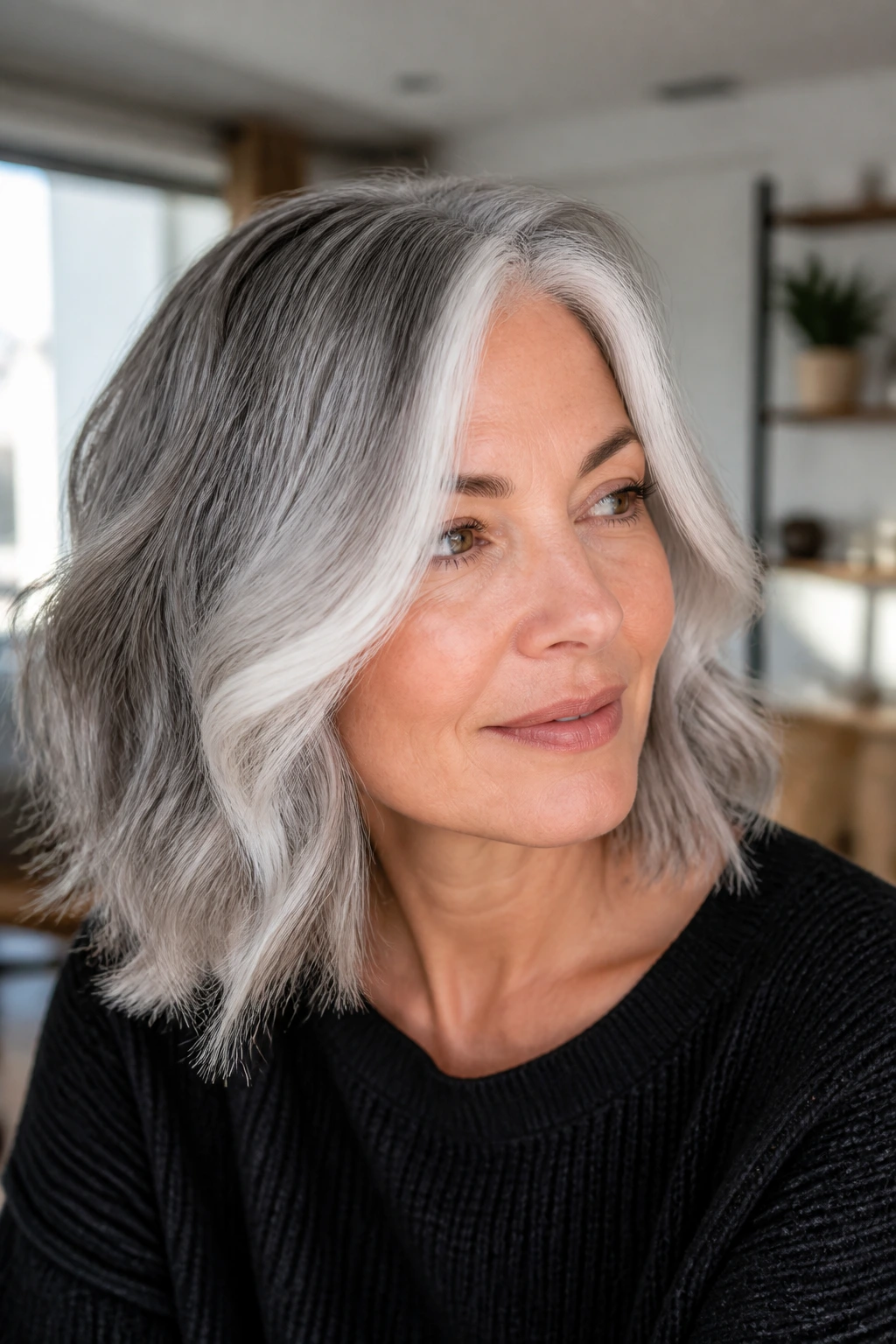
An ash gray base with a white money piece is a strong look, but it doesn’t have to be loud. The face-framing piece brightens the eyes, and the ash base keeps the rest grounded. On older women, this can be a smart way to bring light to the face without bleaching the whole head to pieces.
The placement matters more than the tone. A money piece that starts too high can look stripey. One that sits softly around the cheekbone and temple looks chic and modern. If you wear bangs, this color works especially well because the bright pieces can sit around the fringe and make the cut feel deliberate.
Ash gray is cooler than champagne, but not as icy as blue-gray. That makes it easy to pair with silver jewelry, black frames, and crisp makeup. It also grows out more gently than a full white look, which counts for a lot when you want less salon pressure.
Quick notes
- Keep the white pieces 1 to 2 inches wide, not thick panels.
- Leave a soft ash root so the contrast doesn’t start at the scalp.
- Use a blue-violet shampoo only when the ash starts to yellow.
18. Metallic Silver Shag
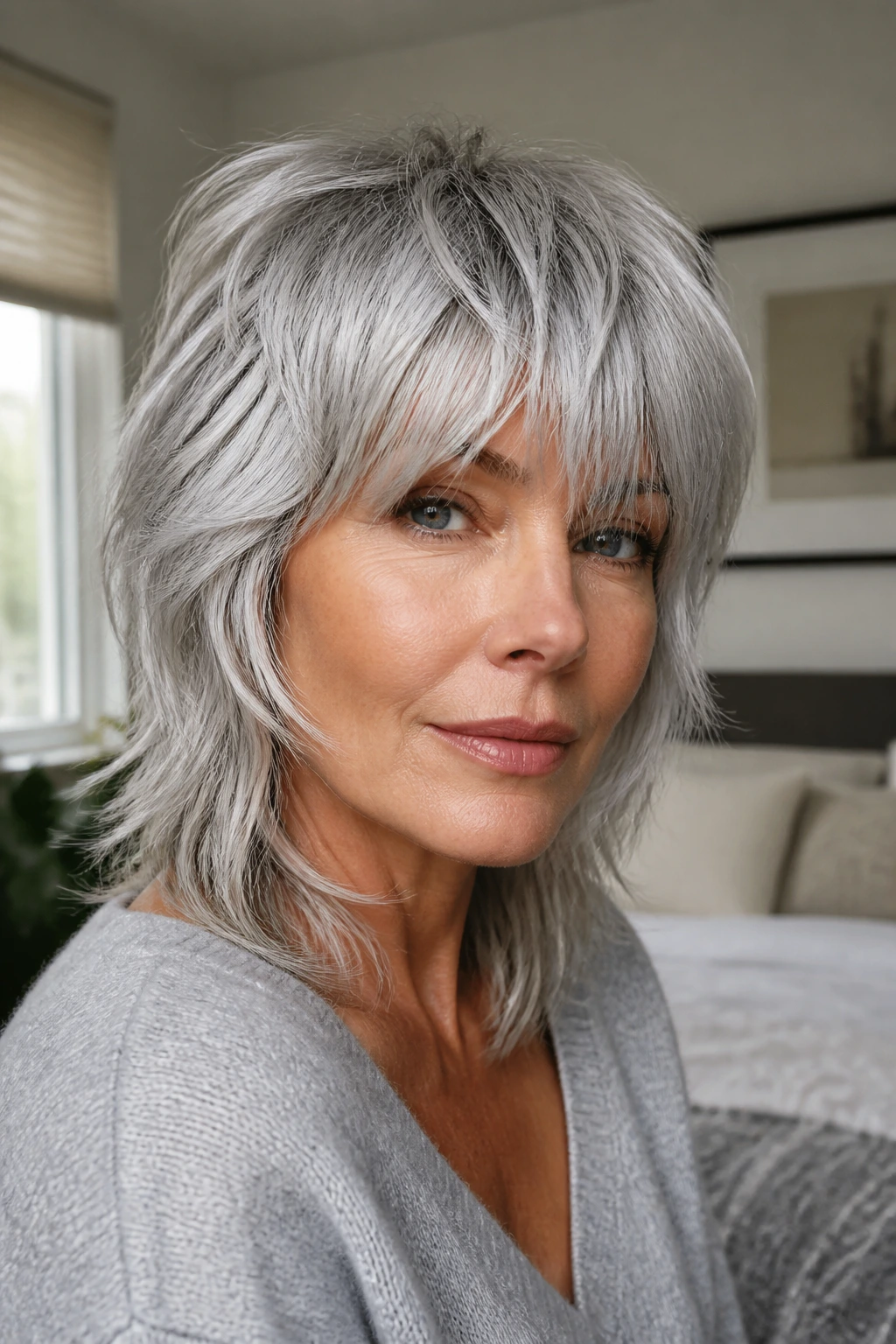
The shag gives silver hair movement, and the metallic tone gives it shape. Together, they create a look that feels a little undone in a good way. The layers keep the hair from hanging heavy, and the silver catches on the edges of the cut instead of sitting flat in the middle.
This is a strong choice if your hair has a natural wave or you like a more textured finish. It’s also kind to hair that has become finer over time, because the layers create air and lift. Not the fluffy kind. Just enough separation so the silver doesn’t blur into one solid surface.
A metallic silver shag can be soft or edgy depending on how you style it. Air-dry it with cream, and it looks relaxed. Blow it out with a round brush, and it gets a more polished, almost satin feel. I prefer the second version for evenings and the first version for everyday wear.
Best for: Medium density hair, natural texture, and women who don’t mind a little styling.
Maintenance: Textured cuts need a trim every 8 weeks or the shape turns muddy.
Color note: A clear gloss keeps metallic shine from turning dusty.
19. Smoke-Glass Gray With a Deep Root Melt
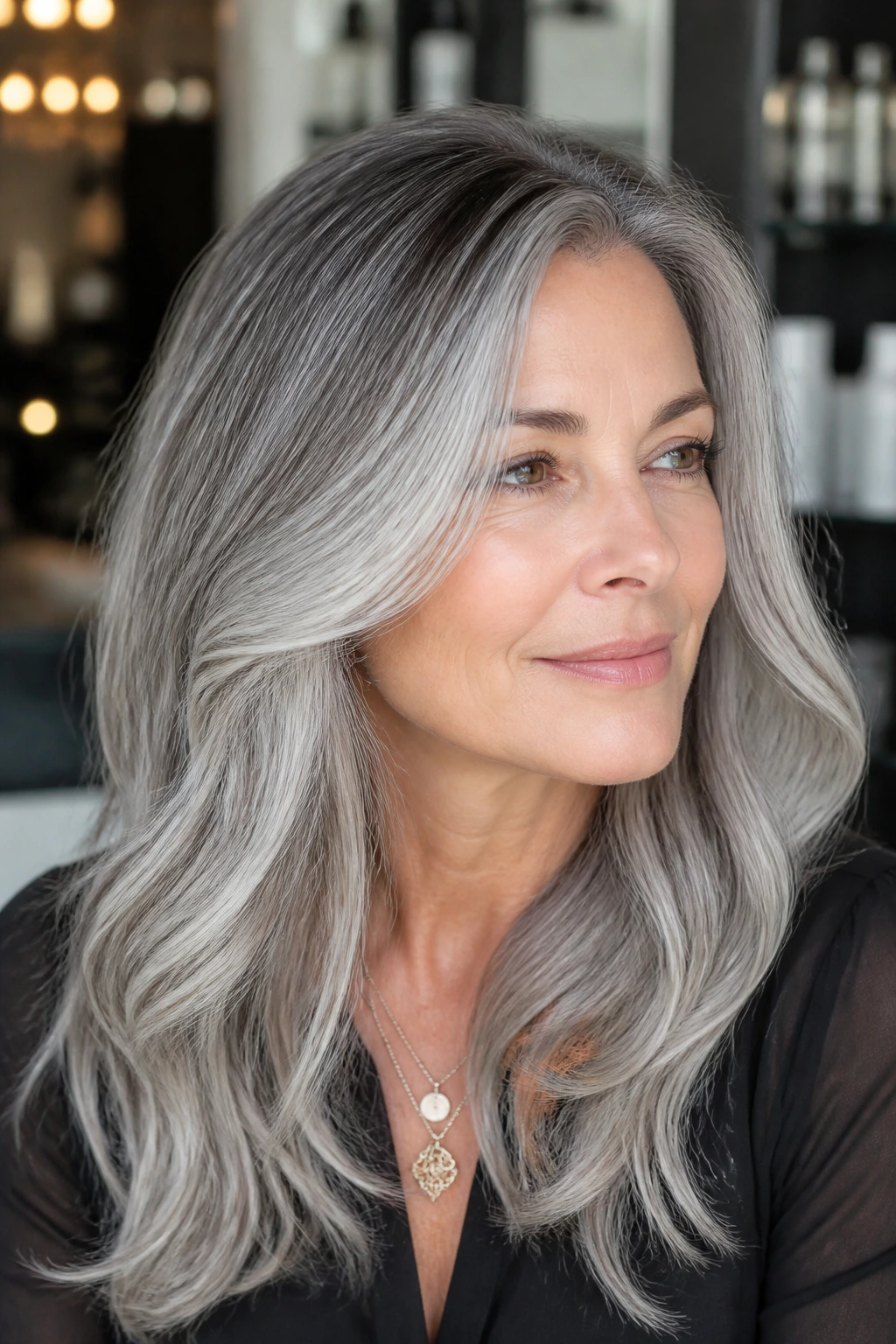
Smoke-glass gray is what I’d pick if I wanted silver that still looked polished at eight weeks. The root melt gives the top a soft shadow, then the gray lengths fade into a cooler, glassier finish. It has the depth of smoke and the shine of wet stone. Very clean. Very controlled.
This shade is especially good when your natural roots are dark and your ends are already light. Instead of forcing one uniform gray, the color moves from depth to brightness in a way that feels intentional. That matters on older hair because the grow-out can be forgiving without looking lazy.
The finish should be smooth, not chalky. If the lengths look flat, a clear gloss usually fixes it faster than another round of toner. And if the root gets too wide, the whole thing loses its smoky effect. Keep the melt soft and the transition gradual.
Best with: Sleek bobs, long lobs, and straight or softly waved hair.
Maintenance: Root refresh every 5 to 7 weeks; gloss as needed when the shine drops.
Watch for: Heavy contrast at the part line. The melt should feel smoky, not striped.
Why Silver Gray Hair Color Ideas Work Best With Dimension
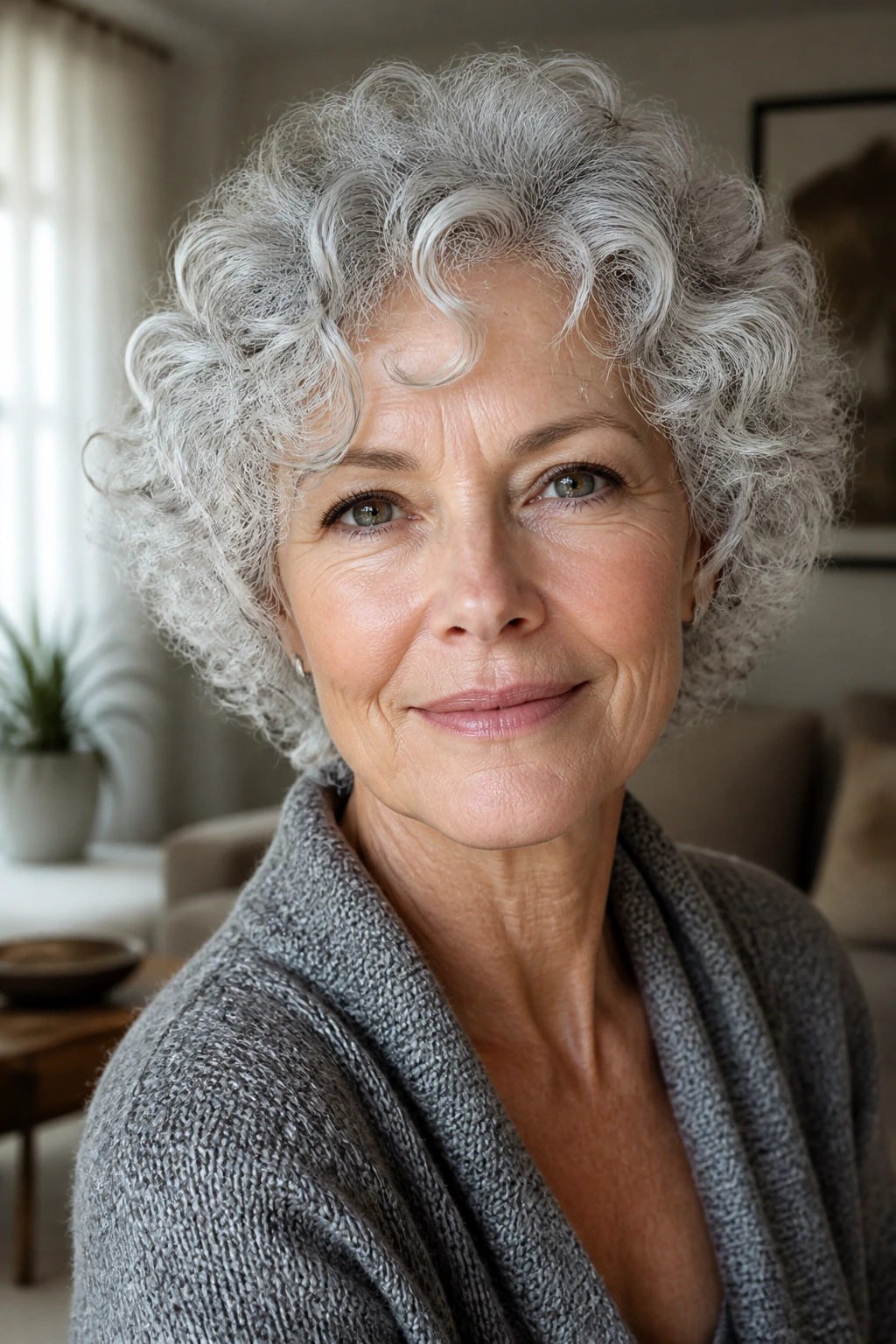
Flat silver has a problem: it can make the hair look like one color block, and color blocks are rarely kind to mature texture. Dimension fixes that. A root shadow, a lowlight, a bright face frame, or a slightly warmer gloss gives the eye a place to move, which is what keeps silver from looking chalky.
Gray hair also tends to be more porous and less oily than pigmented hair. That means it grabs toner fast and loses shine faster than people expect. A good silver look usually depends less on strong pigment and more on a balance of gloss, contrast, and careful placement. That’s why a smoked root often looks richer than a fully bleached white head. The hair looks edited, not painted.
Another thing people miss: silver isn’t one temperature. Pearl silver, oyster gray, gunmetal, lavender silver, and blue-gray all solve different problems. Warm silver softens peachy skin. Cooler gray sharpens dark brows. Mushroom tones help with grow-out. If you choose the shade that matches your texture and undertone instead of chasing the lightest possible silver, the result usually looks calmer and far more expensive.
How Silver Gray Hair Color Ideas for Older Women Fit Different Skin Tones
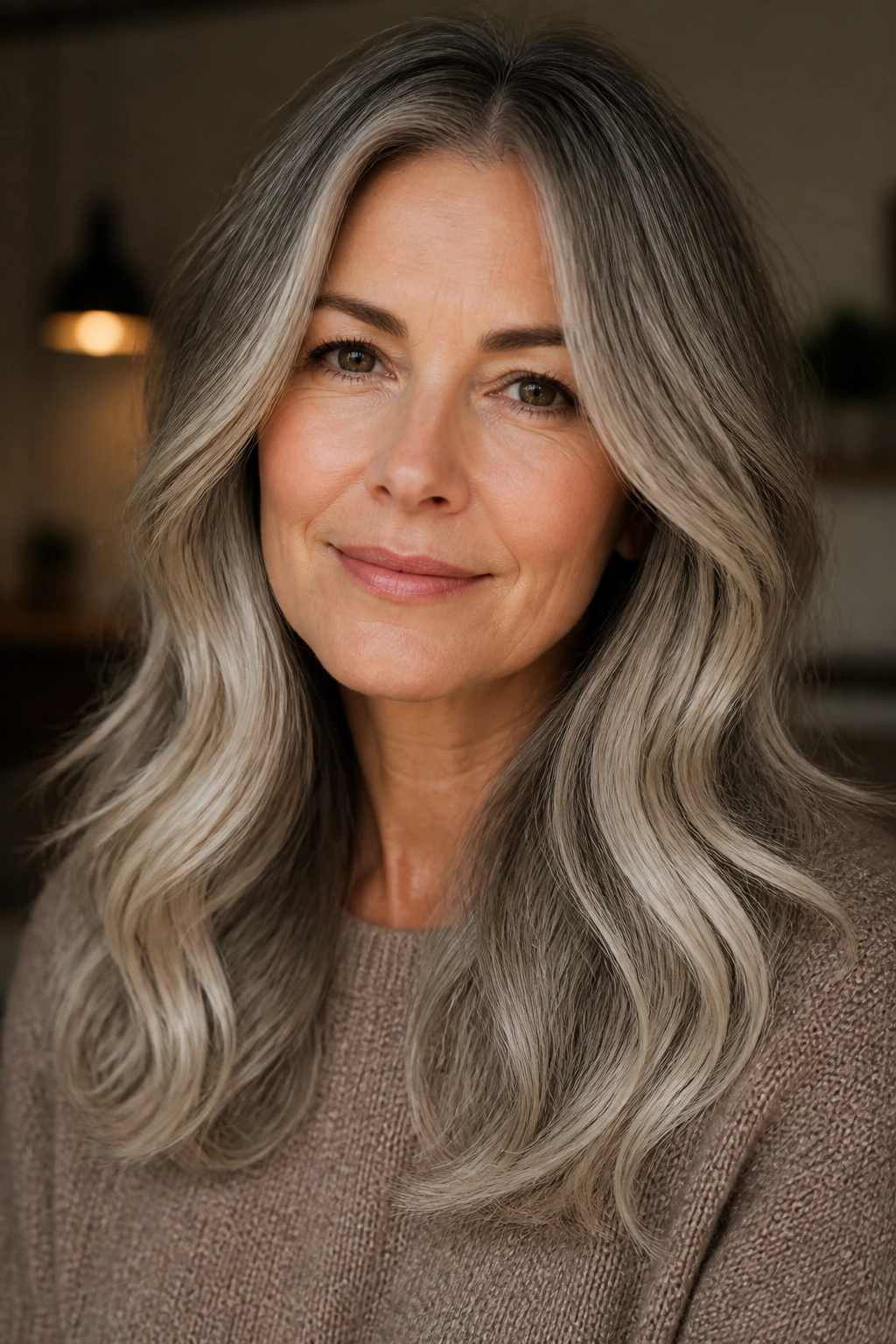
Warm, cool, and neutral skin do not ask for the same silver. That’s the part people skip, then wonder why a bright gray suddenly makes them look tired. The fix is usually simpler than expected.
Warm or Peachy Skin
Champagne gray, oyster gray, and mushroom bronde are the first shades I’d try here. They carry a little beige or brown in the tone, which keeps the face from looking drained. If your skin loves gold jewelry, these shades usually sit better than icy blue tones.
Cool Skin
Blue-gray, pearl white, and lavender-silver tend to work well on cooler skin because they echo the undertone instead of fighting it. These shades also look strong next to dark brows and black-framed glasses. If you wear a lot of navy, charcoal, or pure white, the match is often easy.
Neutral Skin
Neutral skin has the most room to move. Gunmetal, soft silver bobs, and ash-gray money pieces can all work, depending on how much contrast you want. If you’re undecided, start with a root shadow and a gloss you can nudge warmer or cooler later. That’s much smarter than trying to guess your perfect silver in one appointment.
Essential Tools and Products for Keeping Silver Bright
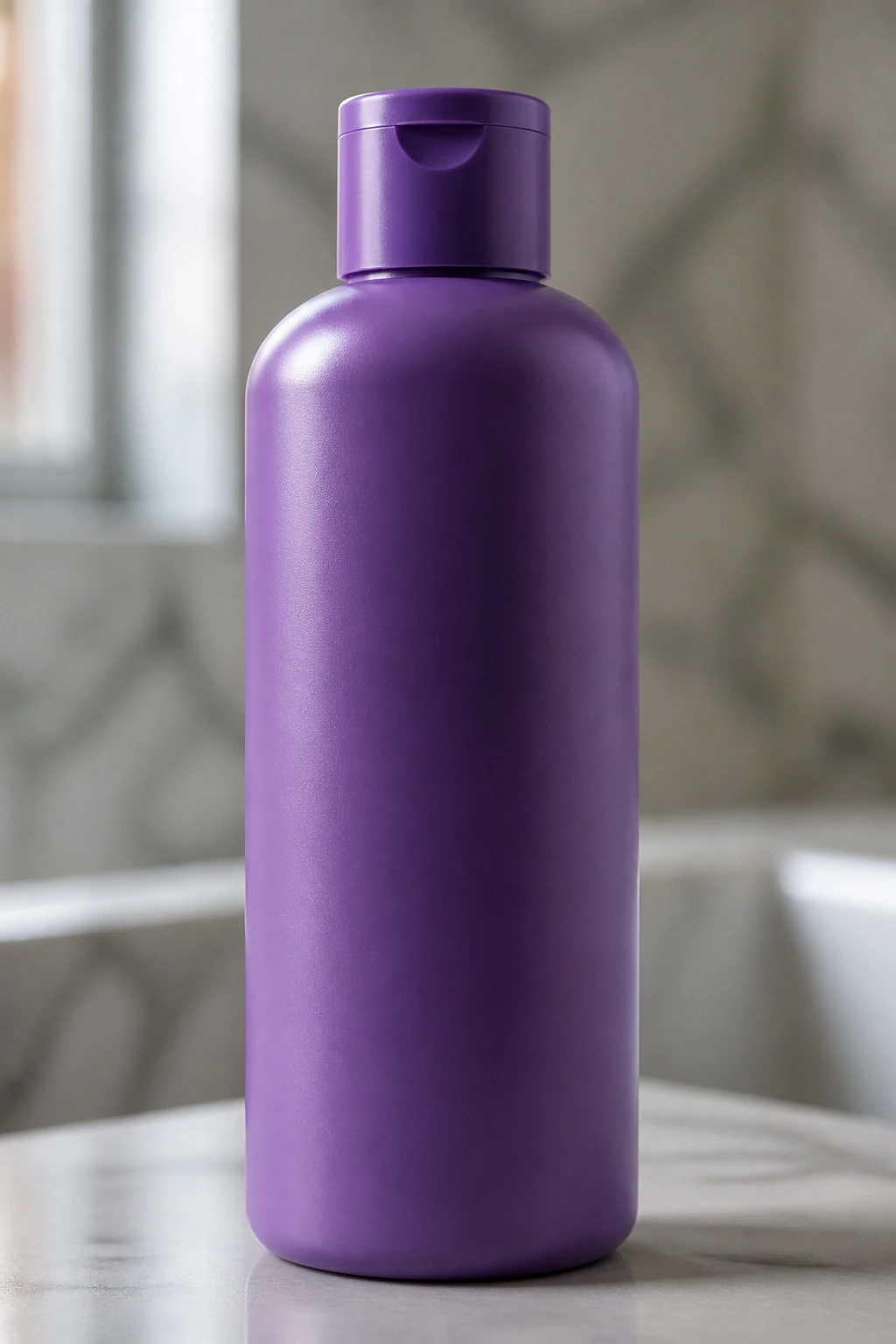
- Sulfate-free shampoo: Cleans without stripping the toner and helps silver stay glossy longer.
- Purple shampoo: Useful for yellowing on pale silver, but don’t treat it like regular shampoo.
- Blue shampoo: Better for brunette-to-gray blends, mushroom tones, and dark-rooted looks that need brass control.
- Color-depositing conditioner: Good for keeping lavender, blue-gray, or icy shades from fading too quickly.
- Weekly hydration mask: Silver hair gets dry fast; a 10- to 20-minute mask makes the tone look smoother.
- Heat protectant: Flat irons and blow dryers can dull silver in a hurry if you skip this.
- Wide-tooth comb: Easier on porous strands than a tight brush, especially after washing.
- Microfiber towel: Cuts down on roughening the cuticle and keeps frizz lower.
- Clarifying shampoo: Handy once every 2 to 4 weeks if hard water or styling product buildup dulls the shine.
- Tint brush and bowl: Useful if you gloss at home between salon visits.
- Shower filter: Not mandatory, but hard water can make silver look dull and slightly rusty.
How to Wear These Shades With Cuts, Makeup, and Glasses
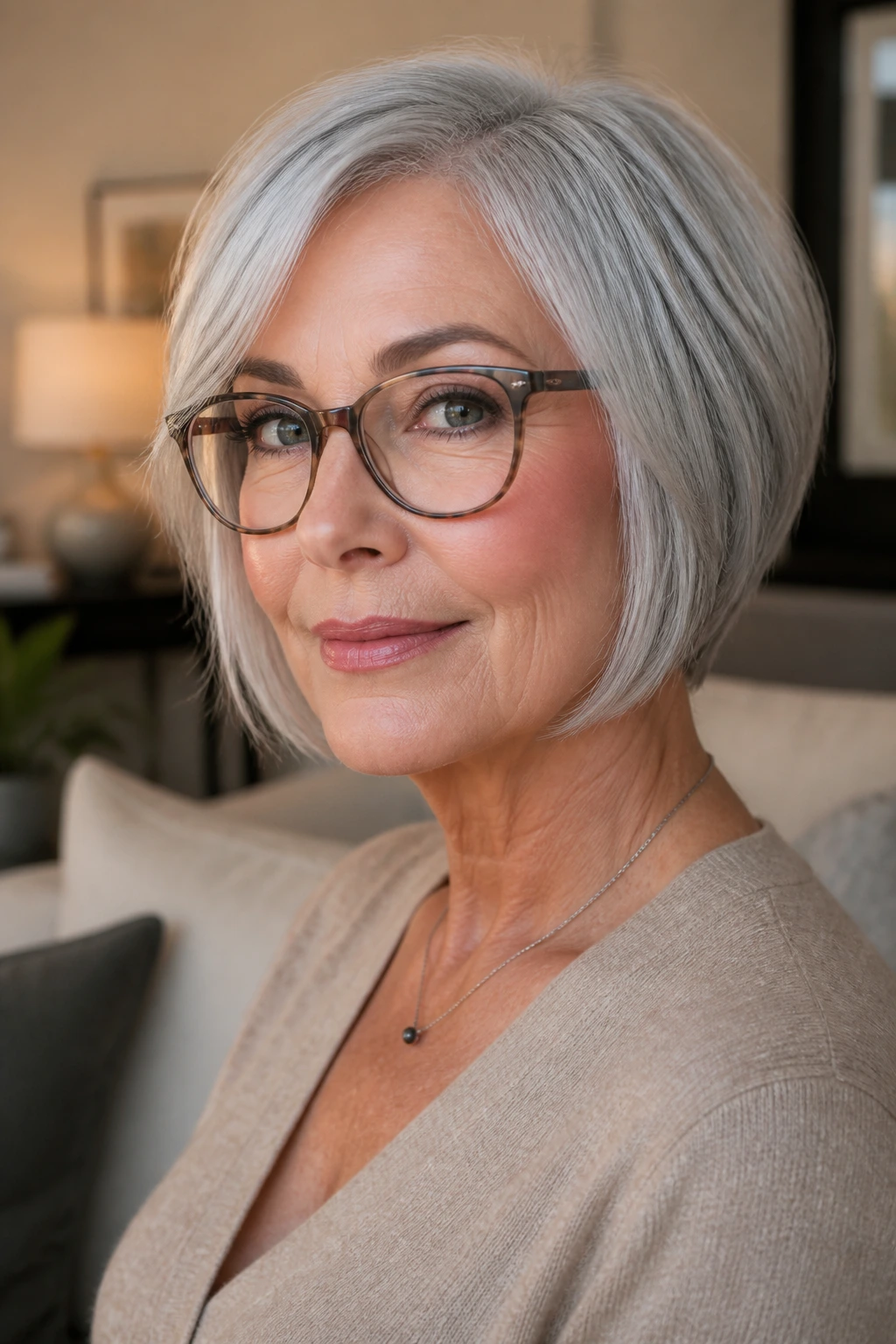
Cut Pairing: Short cuts make metallic silver and pewter look sharper, while bobs and lobs give softer shades like champagne, oyster, and mushroom room to move. If your hair is fine, a blunt line at the ends usually looks fuller than heavy layers.
Styling: A soft bend is more flattering than a rigid blowout for most silver shades. Even one or two turns of a 1-inch iron through the mids can keep the color from falling flat. If your hair is curly, define the curl pattern instead of stretching it out; silver looks better when it has shape.
Makeup Match: Cool silver tends to like berry blush, mauve lipstick, and a brow that isn’t too dark. Warmer champagne and oyster shades sit well with peach blush and soft bronze shadows. The mistake is matching the makeup to the old hair color out of habit.
Accessories: Silver hoops, matte black frames, and tortoiseshell glasses can all sharpen a gray look. If your hair is already very cool, too much shimmer near the face can make things icy in a bad way. One strong accessory is enough.
Additional Tips for Silver That Looks Rich, Not Flat
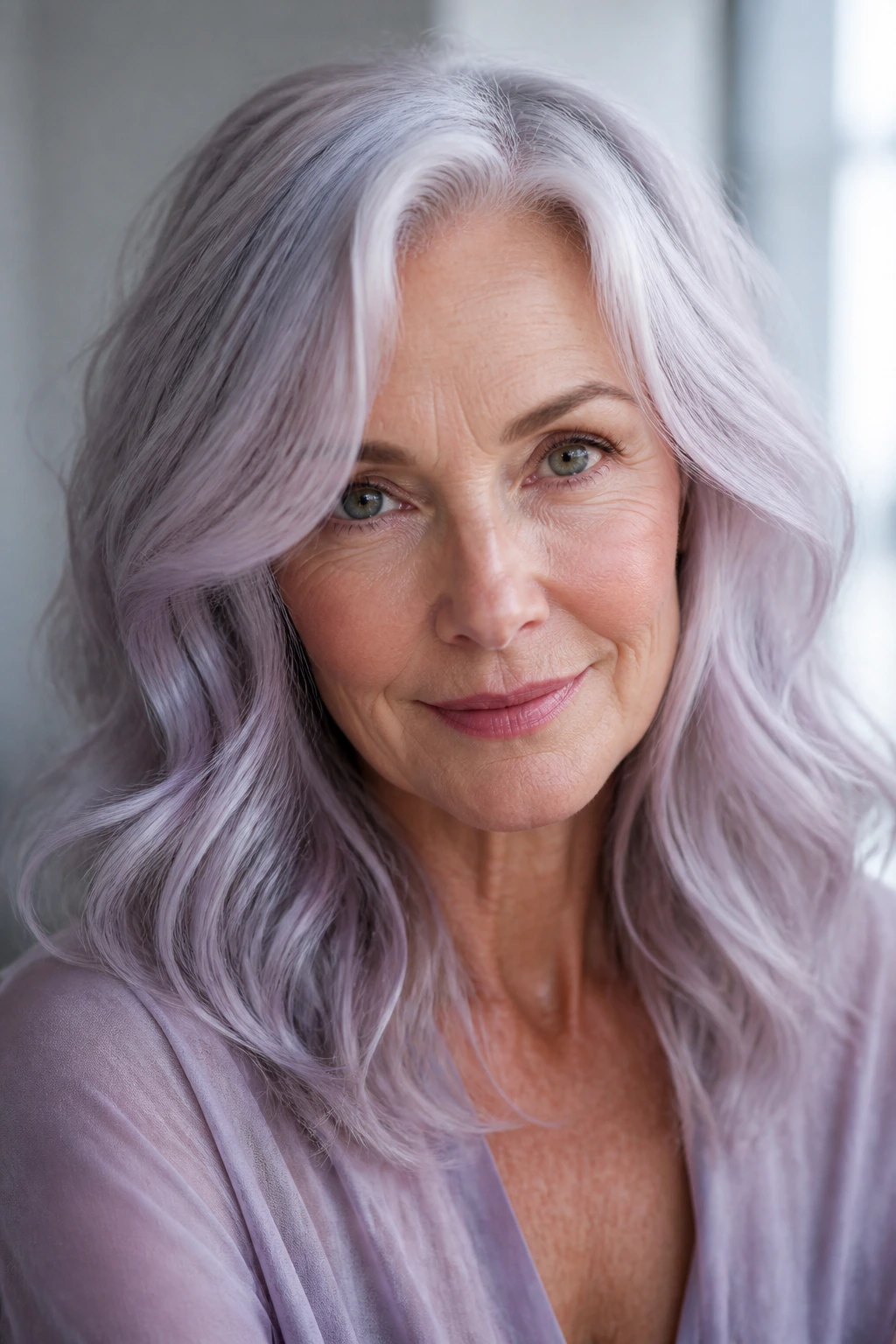
Tone Enhancement: A clear gloss can do more than another round of purple shampoo. It resets shine, smooths the look of porous ends, and brings metallic tones back to life without piling on pigment.
Dimension: If the hair is fine, ask for 3 to 5 micro-lowlights under the crown and near the part. If it’s thick, brighter face-framing pieces may do more for the shape than extra lightness everywhere else.
Softness: Leave a little warmth around the temples if your skin runs peach or golden. Pure ice near the face can look severe, especially in indoor light. The goal is not to erase warmth. It’s to control it.
Make-It-Yours: Curly hair usually wants brightness on the outside of the curl and a bit of depth inside the shape. Straight hair often needs the opposite. That tiny shift changes how the color reads from across the room.
Maintenance, Touch-Ups, and Between-Appointment Care
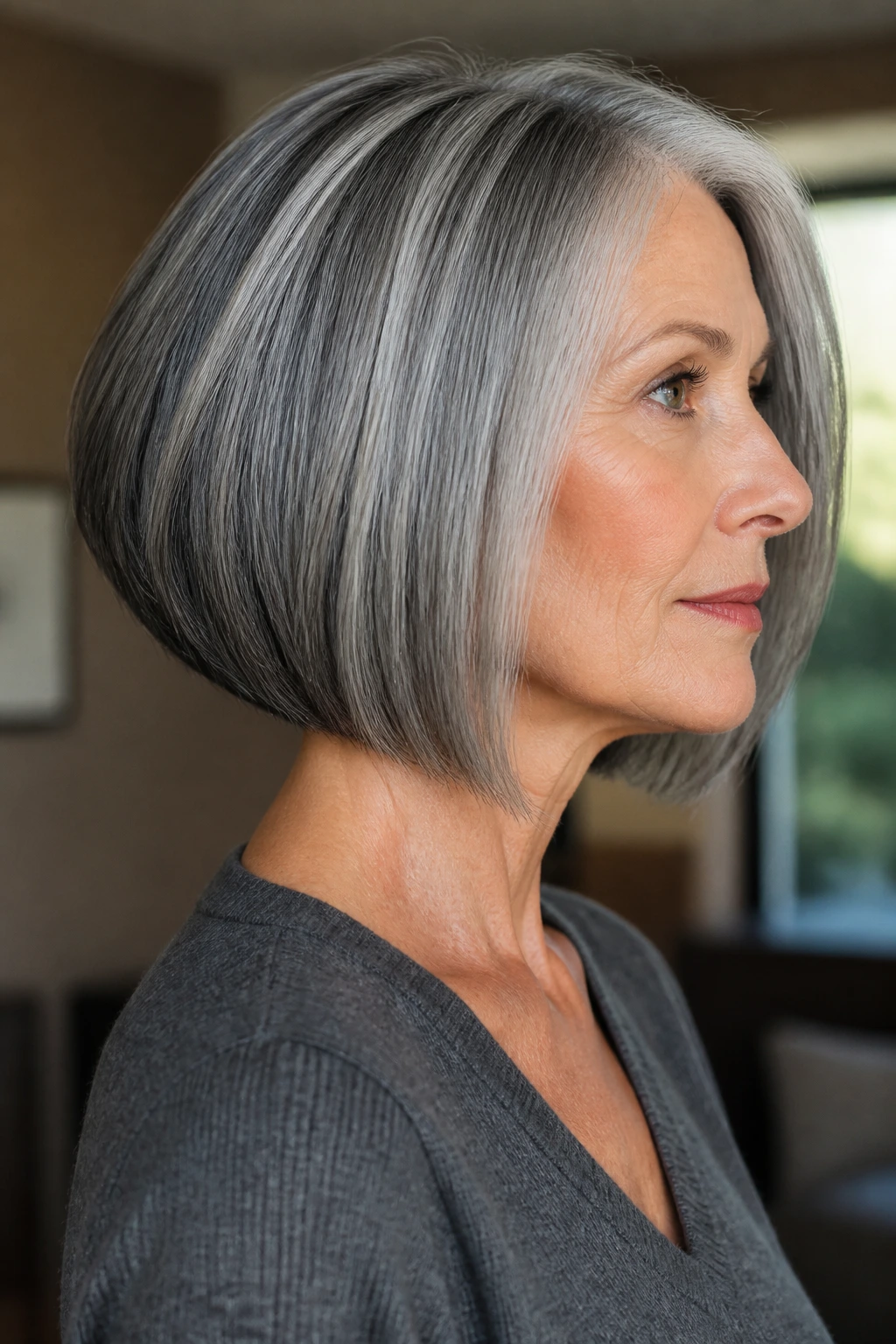
Silver and gray hair look best when they are not overworked. The haircut needs trimming every 6 to 10 weeks, depending on length and density. A short pixie is fussier. A lob or shag is more forgiving.
Toners and glosses do not all last the same amount of time. Bright icy shades, lavender tints, and blue-gray tones often need refreshing every 4 to 6 weeks. Root melts and mushroom blends can stretch longer, sometimes to 8 weeks, because the growth line is softer. If your hair is porous, the ends may need a gloss before the roots do.
Purple shampoo should be used with restraint. Once a week is usually enough for pale silver. Twice a week can be too much, especially on dry ends, and that’s how hair starts looking faintly purple or chalky. Blue shampoo belongs on brunette-gray blends that pull orange or brassy, not on every silver head in the room.
Heat styling also matters. Keep hot tools around 300 to 325°F for most gray hair, and lower if the ends are fragile. If you swim, rinse the hair before the pool, not after, and use leave-in conditioner to reduce chlorine grab. Hard water can dull silver fast, so a clarifying wash every couple of weeks helps.
Variations and Adaptations to Try
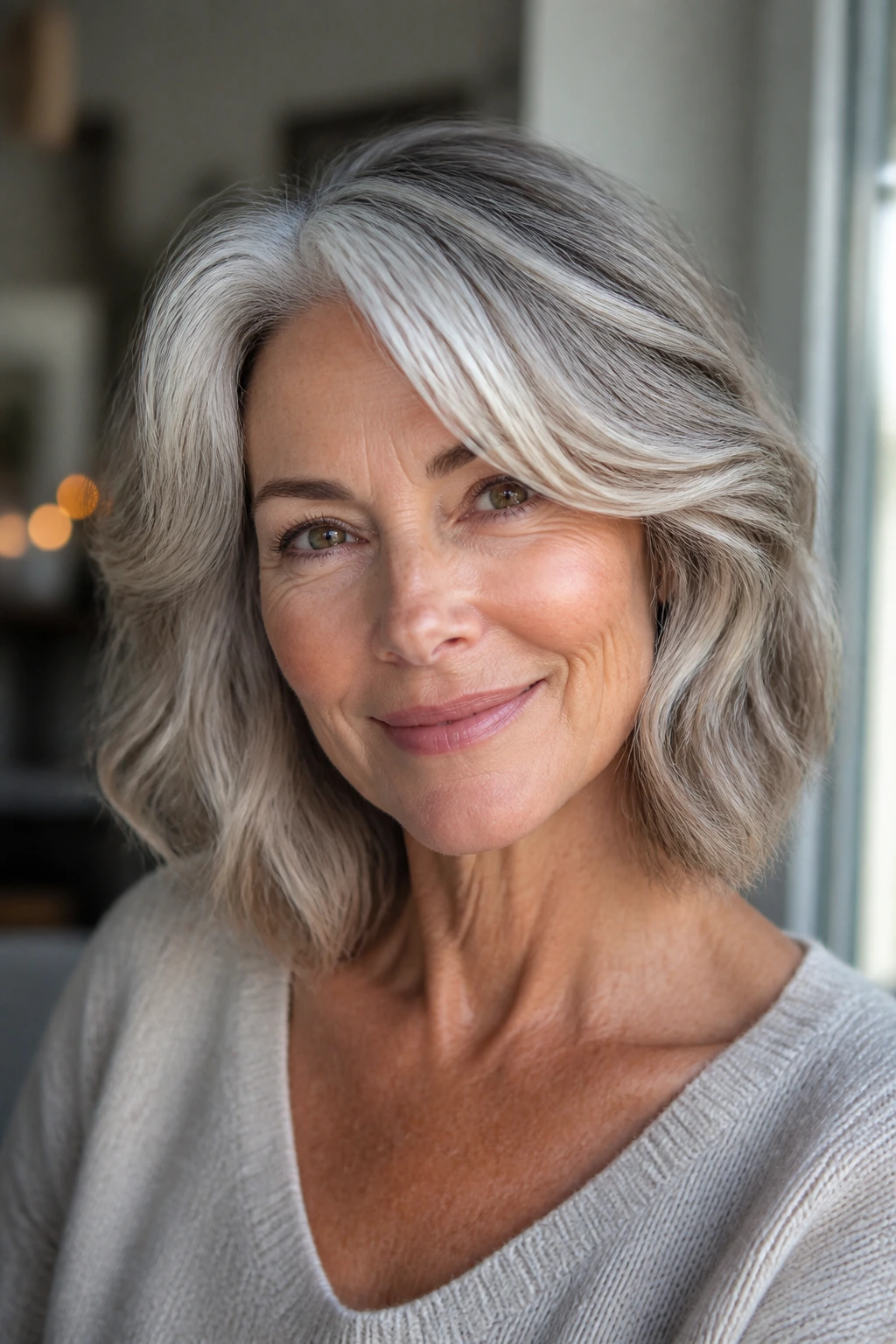
Cooler Ice Edit: Push the toner toward blue-violet and keep the root more neutral. This works when you want a frosty silver that feels crisp rather than beige.
Warmer Pearl Edit: Swap some of the violet out for beige or soft gold. It’s a smarter move for peachy skin and for anyone whose wardrobe already leans warm.
Brunette-to-Silver Bridge: Keep more dark base and use silver balayage or mushroom gray ribbons. This version is kinder to regrowth and easier on the budget because full lightening isn’t the whole story.
Curly-Friendly Silver: Use fine highlights, bond-building treatment, and a gloss that doesn’t strip curl moisture. Let the curl shape stay intact instead of stretching it into submission.
Low-Maintenance Rooted Version: Keep 1 to 2 inches of smoky root at the scalp and refresh the mids only when needed. This version buys you time, which is worth more than people admit.
Common Mistakes With Silver Gray Hair Color Ideas That Make Hair Look Flat
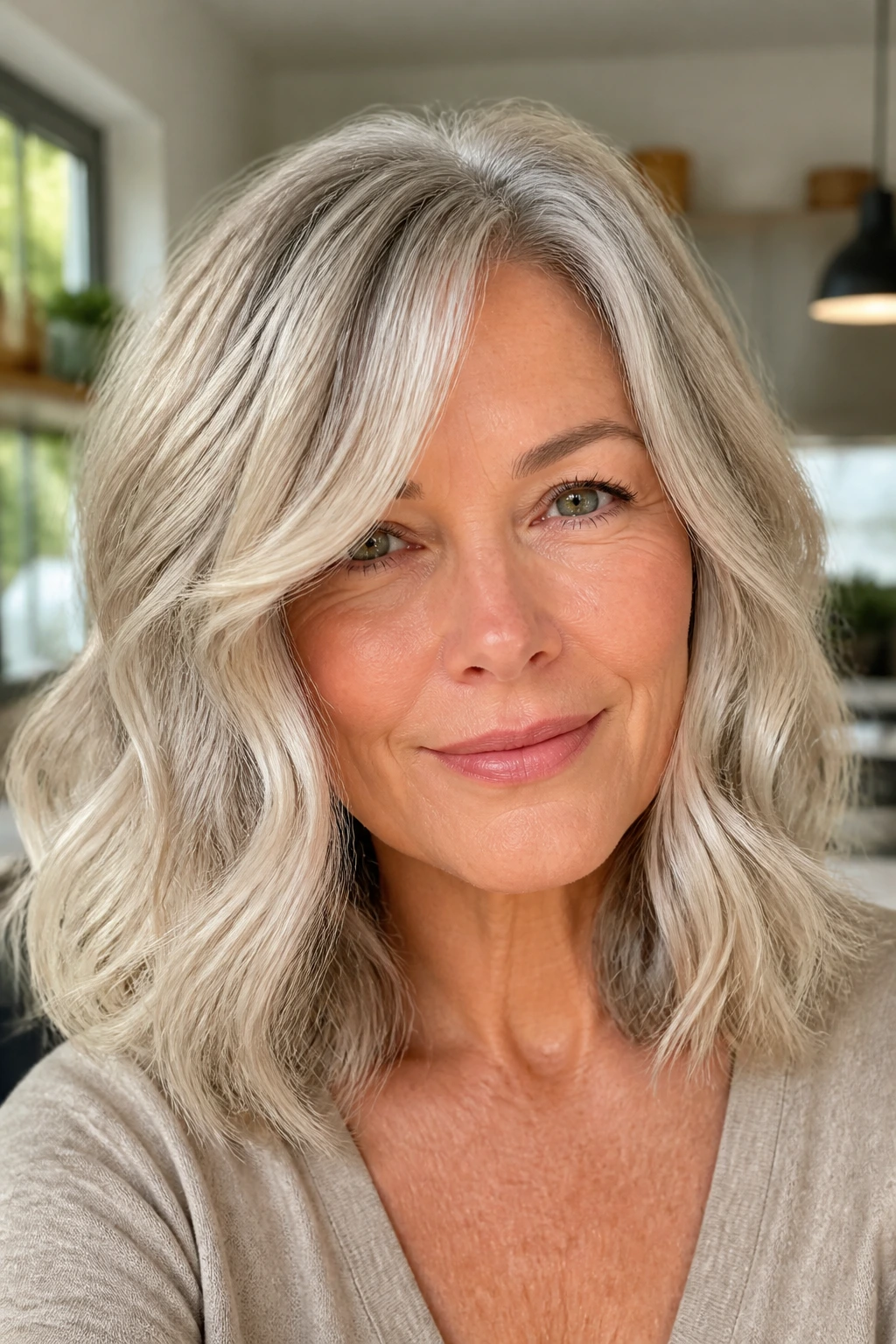
Choosing one flat tone from root to tip: That usually makes mature hair look like one long surface, especially if the hair is fine or dry. A root shadow, lowlight, or face-frame gives the eye contrast, which is what keeps silver interesting.
Overusing purple shampoo: Too much violet product can leave porous ends lavender or chalky. Use it sparingly and watch the ends first; they will grab color faster than the rest of the head.
Going too light too fast: Full white or near-white silver sounds tempting, but fragile hair often pays for that choice with breakage and a rough feel. A level 8, 9, or 10 result is only worth it if the hair can handle the lift.
Ignoring your undertone: A blue-gray on warm skin can look icy in the wrong way. A beige silver on very cool skin can look muddy. Match the tone to the face, not to the photo you saved on your phone.
Skipping trims: Dry silver ends fray quickly, and frayed ends make even a rich color look dusty. Keep the shape cleaned up so the shade can do its job.
Frequently Asked Questions About Silver Gray Hair
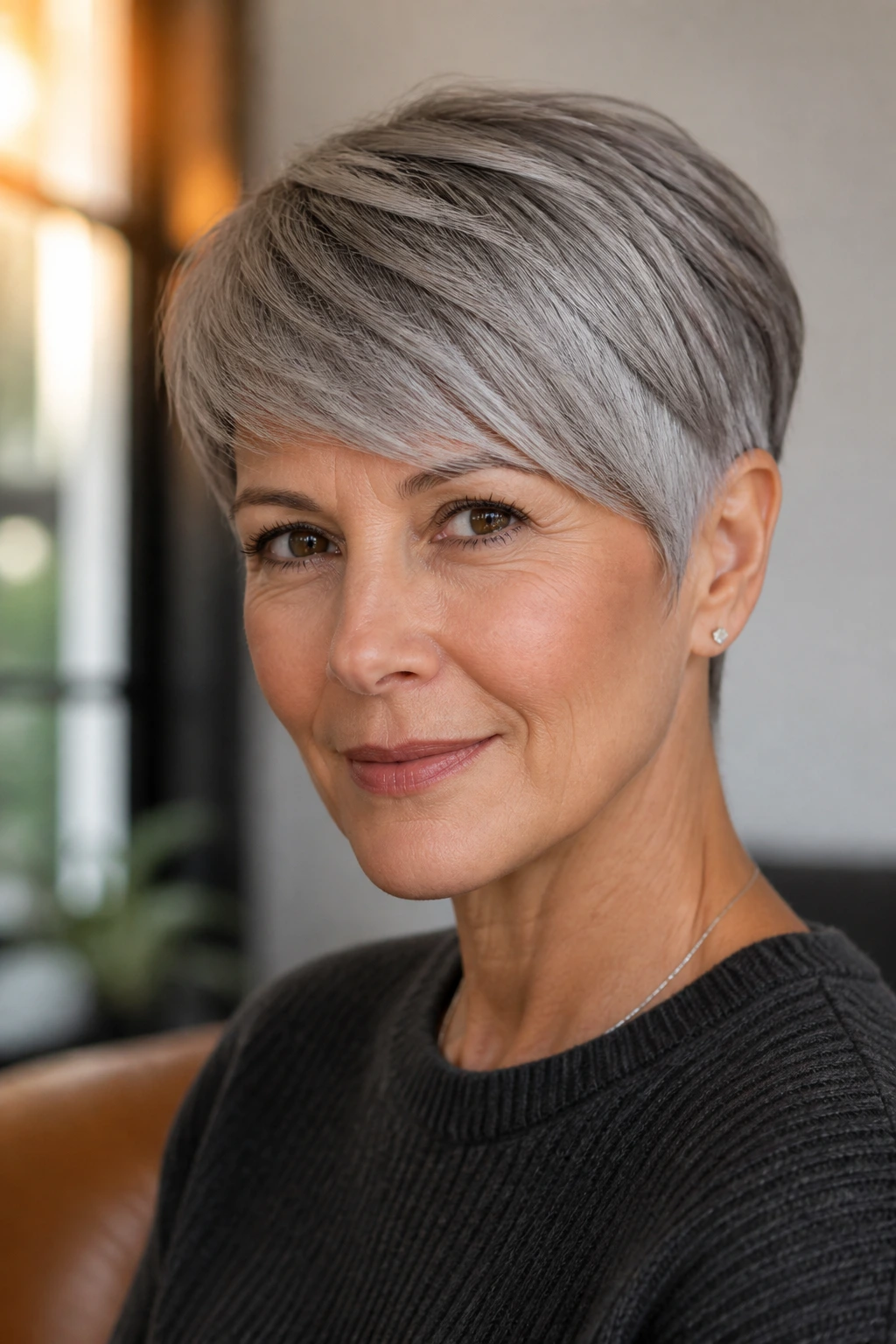
Which silver gray shade is easiest to maintain?
Mushroom gray, salt-and-pepper blends, and soft root-melt bobs are usually the easiest. They let regrowth blend in instead of forming a hard line, so the color stays usable longer between appointments.
Can older women wear icy silver without looking washed out?
Yes, but the cut and makeup need to support it. Icy silver looks strongest with a little root depth, clear brows, and a touch of color on the cheeks or lips so the face doesn’t disappear into the hair.
Will silver hair work on dark brown hair?
It can, but the transition matters. Silver balayage, mushroom bronde, and smoky root melts usually work better than trying to bleach every strand to white in one sitting.
How often should silver hair be toned?
Bright silvers and pastel shades often need a gloss every 4 to 6 weeks. Softer blends can last longer, especially if you wash in cool water and don’t overdo purple shampoo.
What if my silver turns yellow?
Use a violet shampoo once or twice, not every day, and check your water and heat habits. Yellowing often comes from sun, hot tools, or mineral buildup, not just the dye itself.
Is silver hair harder on curly hair?
It can be, because curls get dry faster and lightener can loosen the pattern. The safer route is careful highlighting, bond repair, and a hydration routine that stays ahead of frizz.
Can I keep some natural gray and still add color?
Absolutely. Salt-and-pepper blends, charcoal lowlights, and pearl face frames all work with natural gray instead of covering it. That’s often the least fussy route.
Do I need to go lighter every time I retouch silver?
No. In many cases, the roots just need a shadow refresh and the lengths need gloss. Lightening again and again can chew through the hair faster than people expect.
The Shade That Stays Sharp
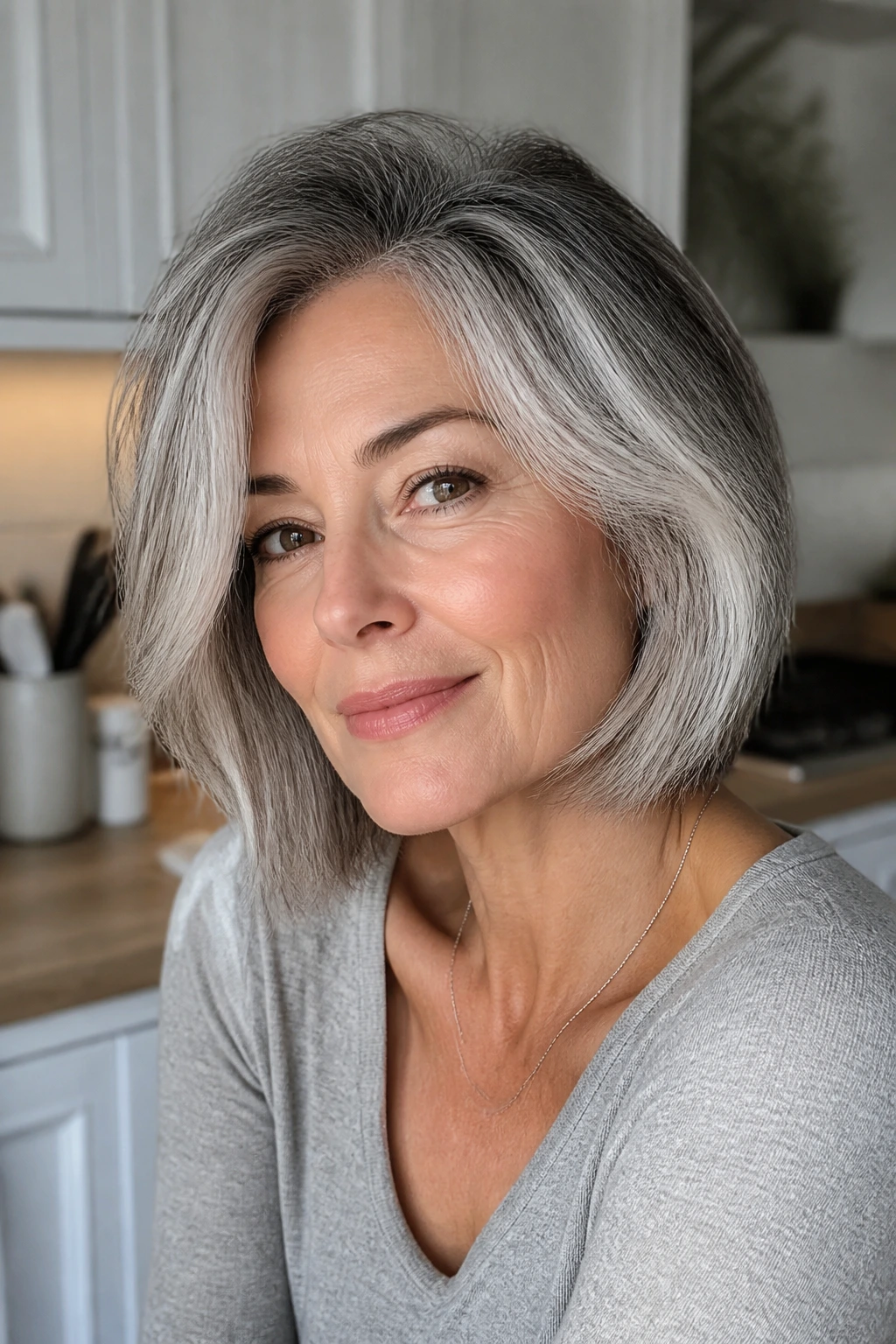
The prettiest silver usually isn’t the brightest one. It’s the one that holds its shape when the roots grow, the one that makes the skin look rested, and the one that still feels right when the salon shine has worn off and you’re back under kitchen light.
That is the real test. A good silver gray should look deliberate on a Tuesday morning, not only under perfect lighting. Pick the version that gives your hair depth, keeps the regrowth calm, and makes you want to look at your reflection twice.
