



The worst prom hair is the kind that looks perfect in the mirror and starts sagging before the photographer calls your name. That is exactly why updos for prom night keep winning: they pull the hair off the neck, keep lip gloss from sticking to curls, and leave room for earrings that deserve to be seen. I’m partial to styles that stay neat at the nape but still have a little movement around the face. Stiff hair can look old-fashioned in a bad way. Soft structure is the sweet spot.
A good prom updo is not one giant cloud of hairspray and hope. It’s a stack of small decisions: slightly gritty roots, pins crossed in an X, a hidden elastic, maybe one face-framing strand left on purpose instead of by accident. The American Academy of Dermatology has long warned that tight pulling and repeated heat can stress the hairline, so the smartest styles build shape with pinning and balance instead of brute force. That matters more than glitter.
Nineteen styles follow, and they aren’t all trying to do the same thing. Some are polished and clean, some are romantic and loose, some lean modern, and a few are for the person who wants to walk into prom looking like she owns the room without wrestling her hair all night.
Why These Updos Belong on Your Prom Shortlist
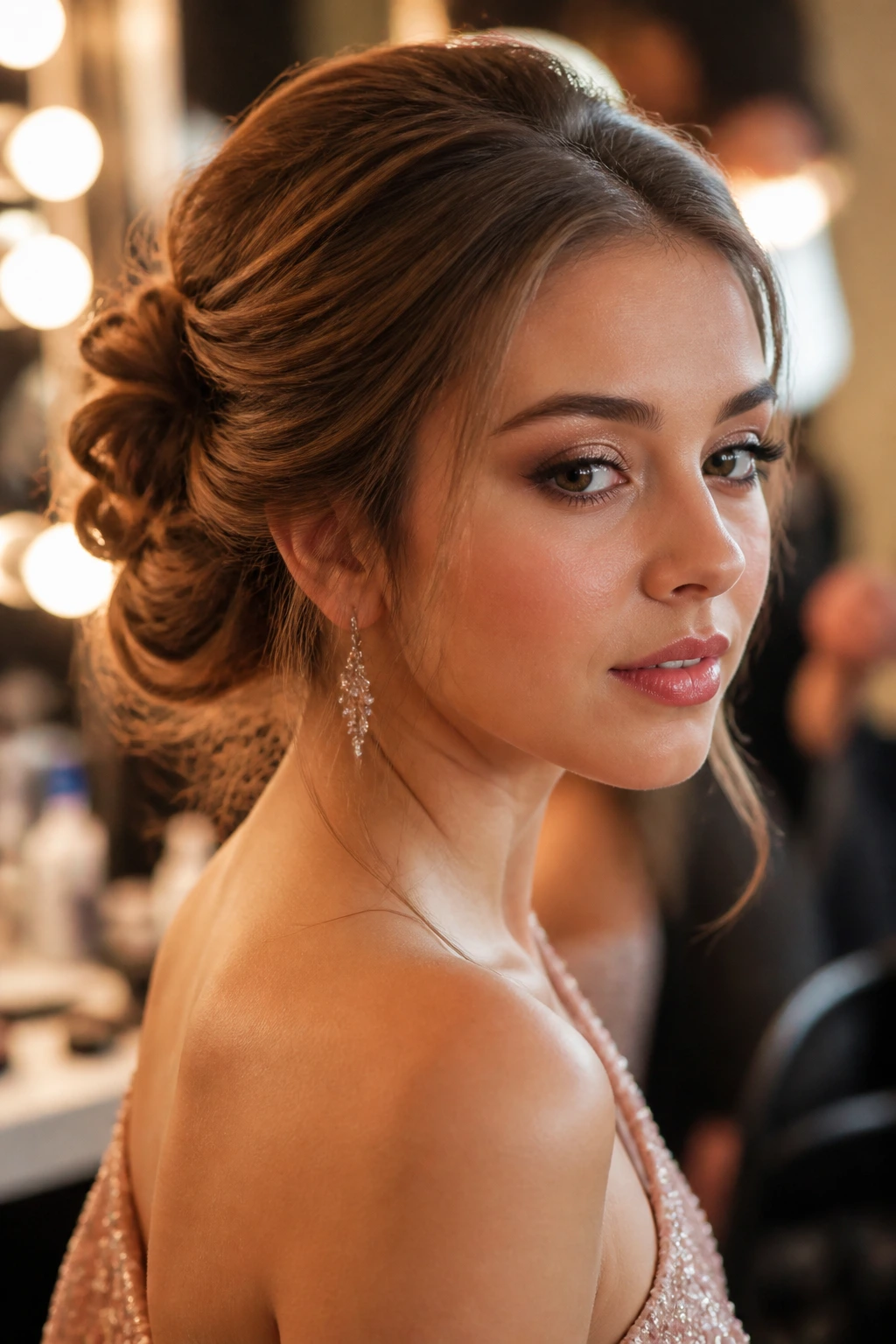
- They stay out of the way: A pinned-up style keeps hair off your neck when you’re under hot lights, on a crowded dance floor, or bent over a phone camera with five friends.
- They frame the dress instead of fighting it: Strapless, one-shoulder, halter, and corset gowns all look cleaner when the hair is lifted and the neckline can breathe.
- They handle second-day hair better: Hair that’s been washed the day before has more grip, which means fewer sliding pins and less need for emergency redoing in the bathroom mirror.
- They work with accessories: Pearls, combs, crystal pins, and fresh flowers sit better in an updo than in loose waves that keep shifting around.
- They can be softened or sharpened: The same bun can read sleek or romantic depending on how much you smooth the crown and how many face pieces you leave loose.
- They photograph well from every angle: A good updo gives you a back view, side view, and front view that all look deliberate, not like the style gave up halfway through the night.
1. Sleek Low Chignon
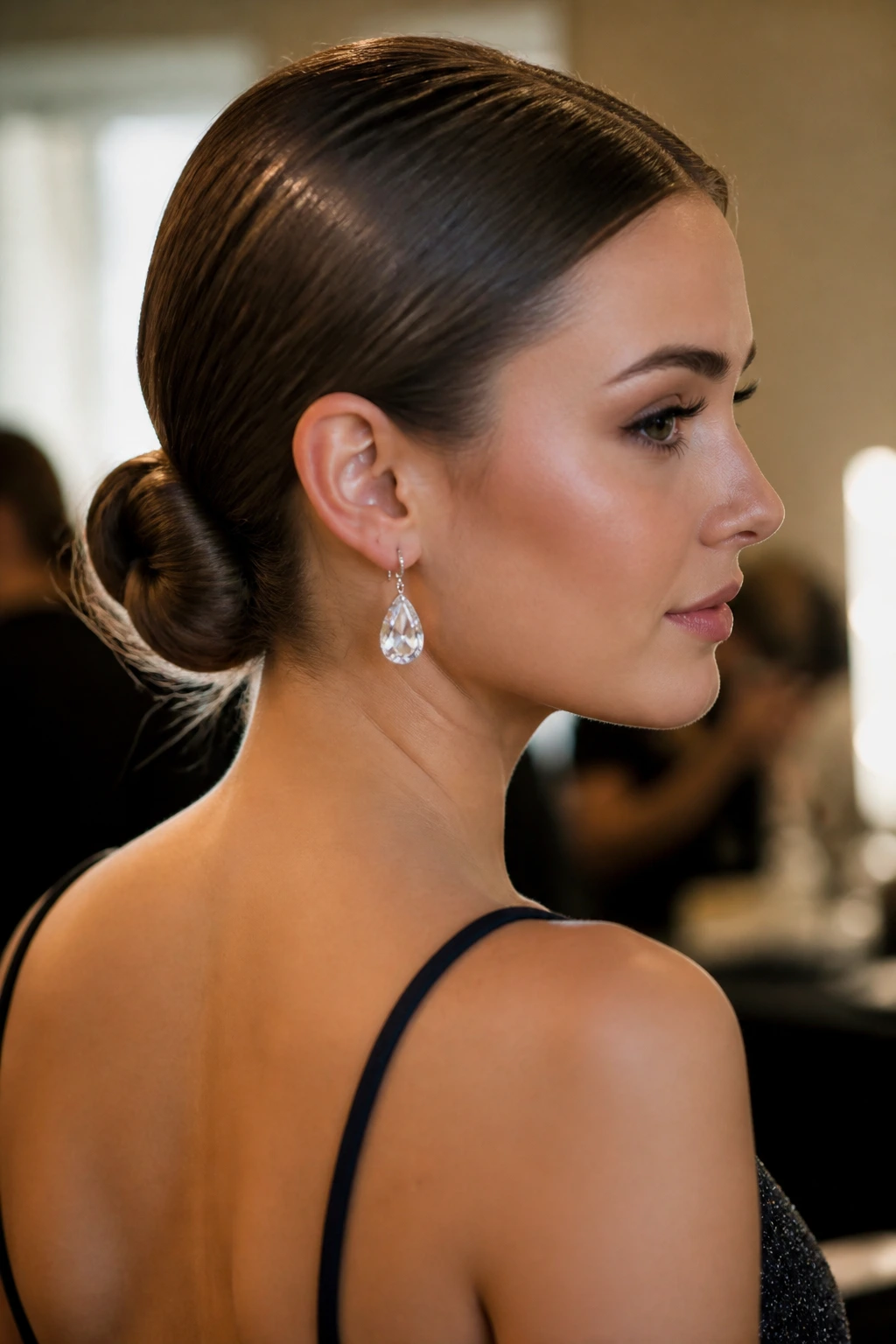
A sleek low chignon is the prom equivalent of a well-cut dress: quiet, sharp, and hard to mess up. Hair is smoothed back, gathered at the nape, then folded under itself so the silhouette stays clean from behind and tidy from the side. It is the style I reach for when the dress already has beading, lace, or a strong neckline and the hair should support the outfit instead of stealing the scene.
Why It Works Under Pressure
A low chignon sits close to the head, so it doesn’t swing around when you turn for photos or hug half the dance floor. The lower placement also means fewer gravity problems; a bun at the nape won’t slump the way a high knot can after a few hours of moving. If your hair is medium to thick, this style holds especially well with a smoothing cream and a medium-hold spray.
Small Details That Matter
- Best on straight, wavy, or relaxed hair.
- Works well with a middle part or deep side part.
- Usually needs 8 to 14 bobby pins, depending on thickness.
- Looks strongest with drop earrings or a single statement ear cuff.
One smart move: leave the bun slightly off-center if your dress has an asymmetrical neckline. It gives the whole look more shape.
2. Soft Braided Bun
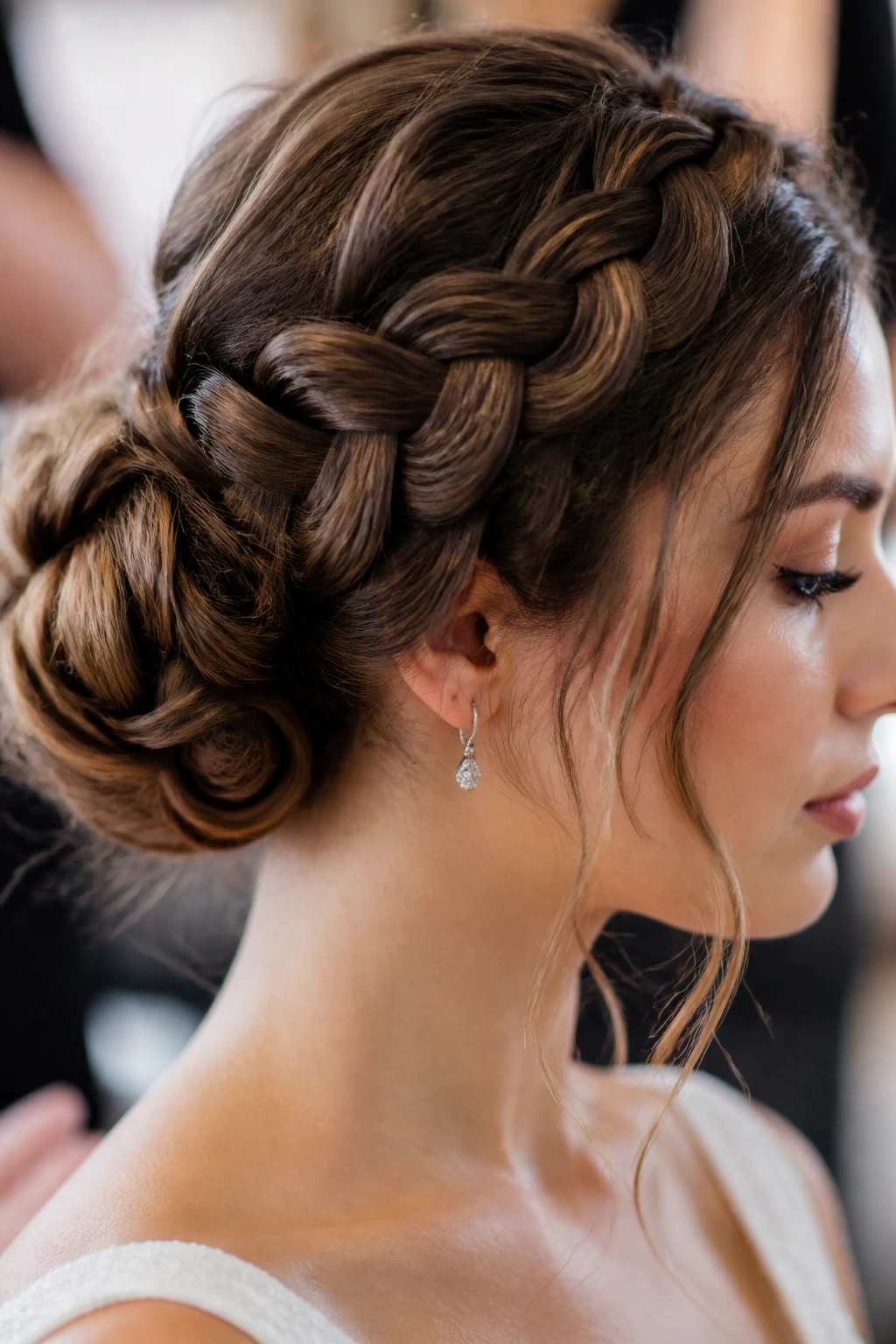
Braids do the heavy lifting here. A soft braided bun looks delicate from a distance, but the braid gives the bun a grip that plain twisting never quite matches. It’s the style I’d choose for lace, tulle, or any dress that already has some softness built in. The braid keeps the look from feeling too precious.
The best version starts with a low or mid-height braid that wraps into a coil, then gets pinned so the braid pattern is still visible around the edges. A little pull at the braid loops makes it feel fuller, which matters if your hair is fine or layered. A touch of texture spray before braiding gives the strands enough bite to hold the shape instead of slipping apart.
This style is especially kind to hair that’s a bit on the slippery side. Clean, silky hair can be a pain with braids, but one day-old hair usually behaves better. If you want sparkle, tuck in two or three tiny pins near the braid seam rather than covering the whole bun. Less is better here.
3. Twisted Crown Bun
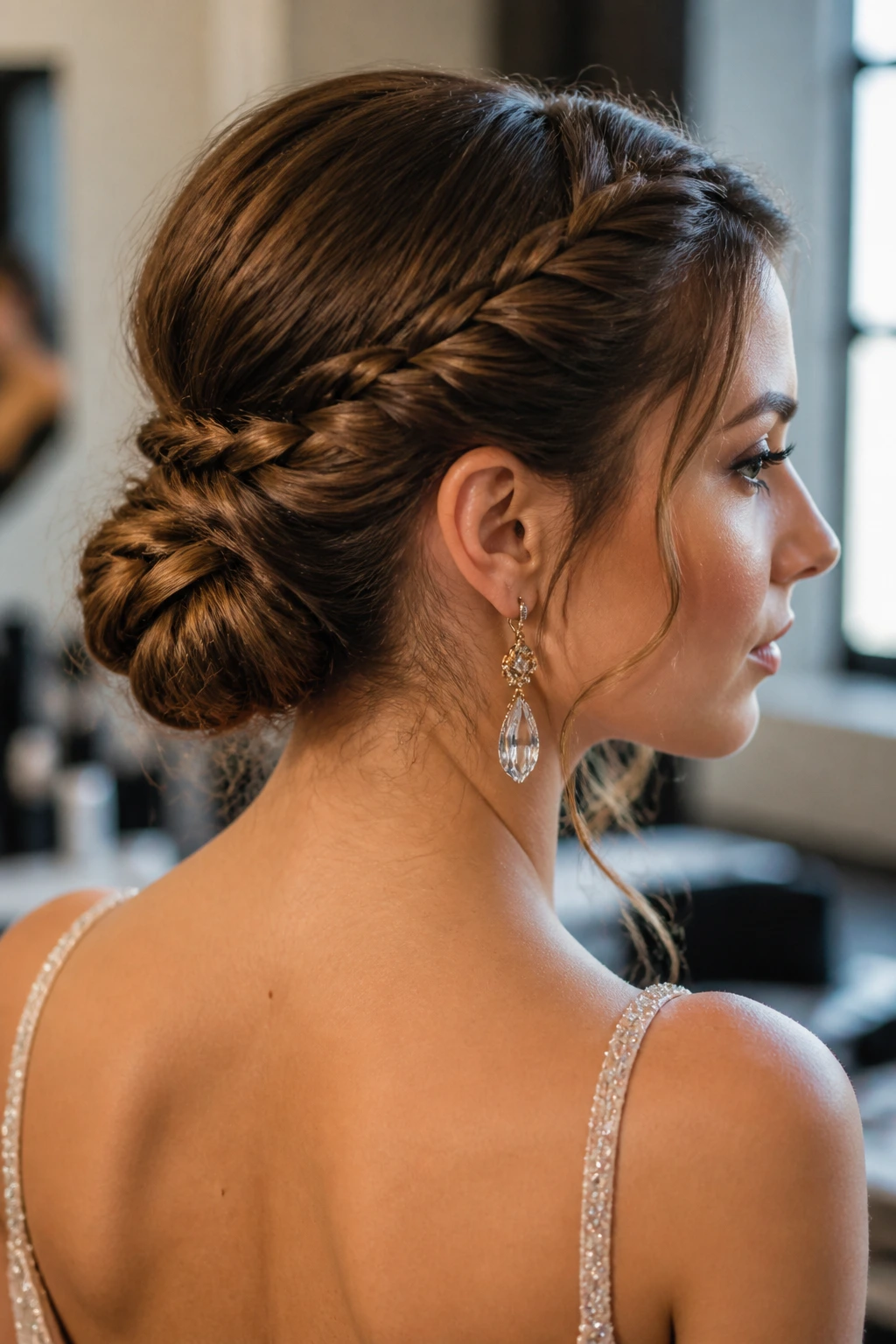
Picture this: the hair starts at the temples, sweeps back in two clean twists, and meets at a bun that sits low and centered. The result feels regal without tipping into costume territory. That balance is exactly why the twisted crown bun keeps showing up for formal nights.
Best When You Want Lift Without Full Height
This style gives you crown shape without making the top of your head look overbuilt. That matters if your face is already long or if the dress has a dramatic bodice and you don’t want to pile more volume on top. The twists act like rails, guiding the eye backward and keeping the front neat.
A few loose tendrils around the ears can soften the look if your features are sharp. Skip too much teasing. You only need enough lift at the roots to stop the twists from lying flat against the head.
How to style it: make two sections from the hairline back toward the crown, twist each one tightly, join them into a low bun, and pin under the bun where the pins disappear. The hidden pinning matters. Visible pins kill the illusion.
4. High Textured Bun
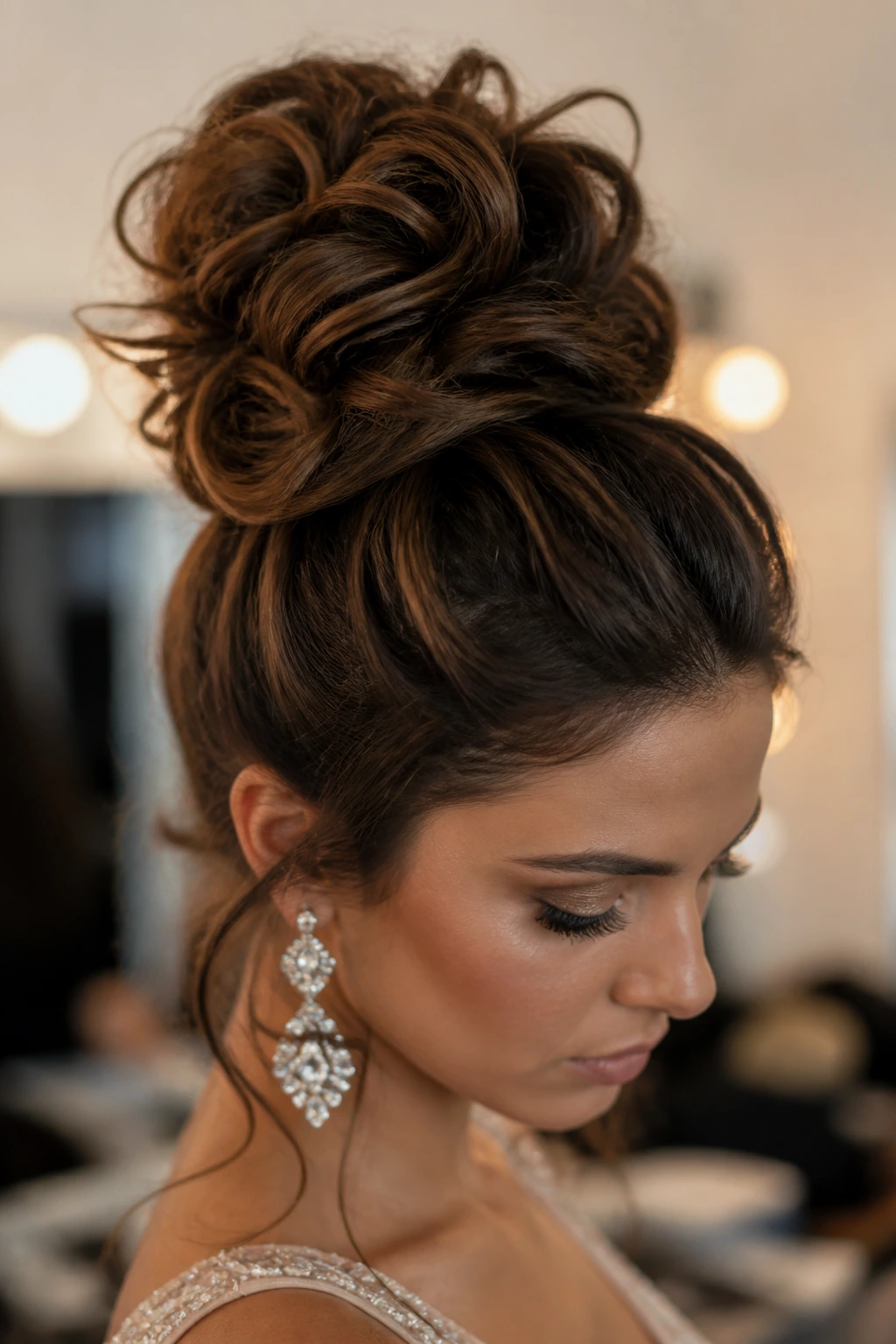
A high textured bun is for the person who wants height, motion, and a little swagger. It sits above the crown, which opens up the neck and lets the dress and jawline do their thing. This one looks especially good with strapless gowns and bold earrings because the upward shape gives the whole outfit some lift.
The trick is not to make it too perfect. If every strand is slicked down, the bun can start looking severe. If it’s too messy, it loses the formal edge. The sweet spot is a bun that has enough texture to look airy, with just enough smoothing at the hairline to keep it polished. I like using a small bun donut or padding piece under thick hair, because otherwise the weight can drag the knot down by the end of the night.
Watch the Balance
If your hair is very long, split it into two sections before wrapping it around the base. That spreads the weight and keeps the bun from hanging like a heavy coin purse. A little backcombing at the crown helps too, but only at the roots. No one needs crunchy ends. Not for prom.
5. French Twist with Face-Framing Pieces
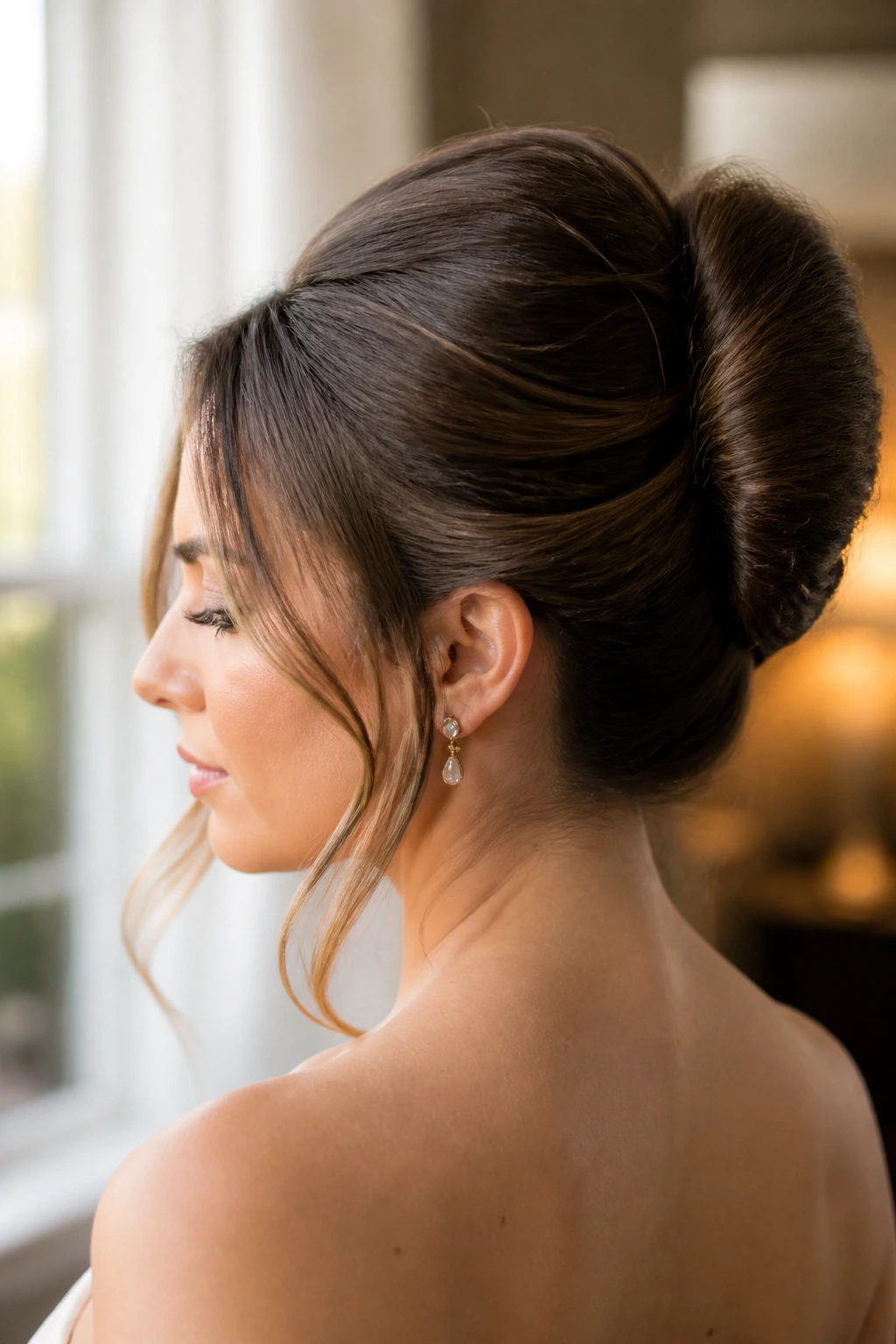
The French twist has a reputation for being fussy, and I think that reputation is unfair. Done right, it’s one of the cleanest prom hairstyles around. Hair is gathered, folded upward, and tucked into a vertical roll that sits along the back of the head. Add two soft face-framing pieces, and the whole thing suddenly feels less strict and more current.
What makes it work for prom is the line of the style. A French twist draws the eye up, which can be flattering with long earrings or a dress that has a straight, elegant shape through the bodice. It also keeps the back of the neck open, which is nice if your dress has detail there. A shellacked version can look older than the room it’s in, so I prefer a version with a little softness at the front.
A useful little truth
A French twist holds best when the hair has some grip. Second-day hair, a mist of dry shampoo, and a few hidden crisscross pins make it behave much better than a fresh wash. Freshly washed hair slips. Every stylist knows this. Every high school bathroom mirror learns it the hard way.
6. Messy Knot with Sparkle Pins
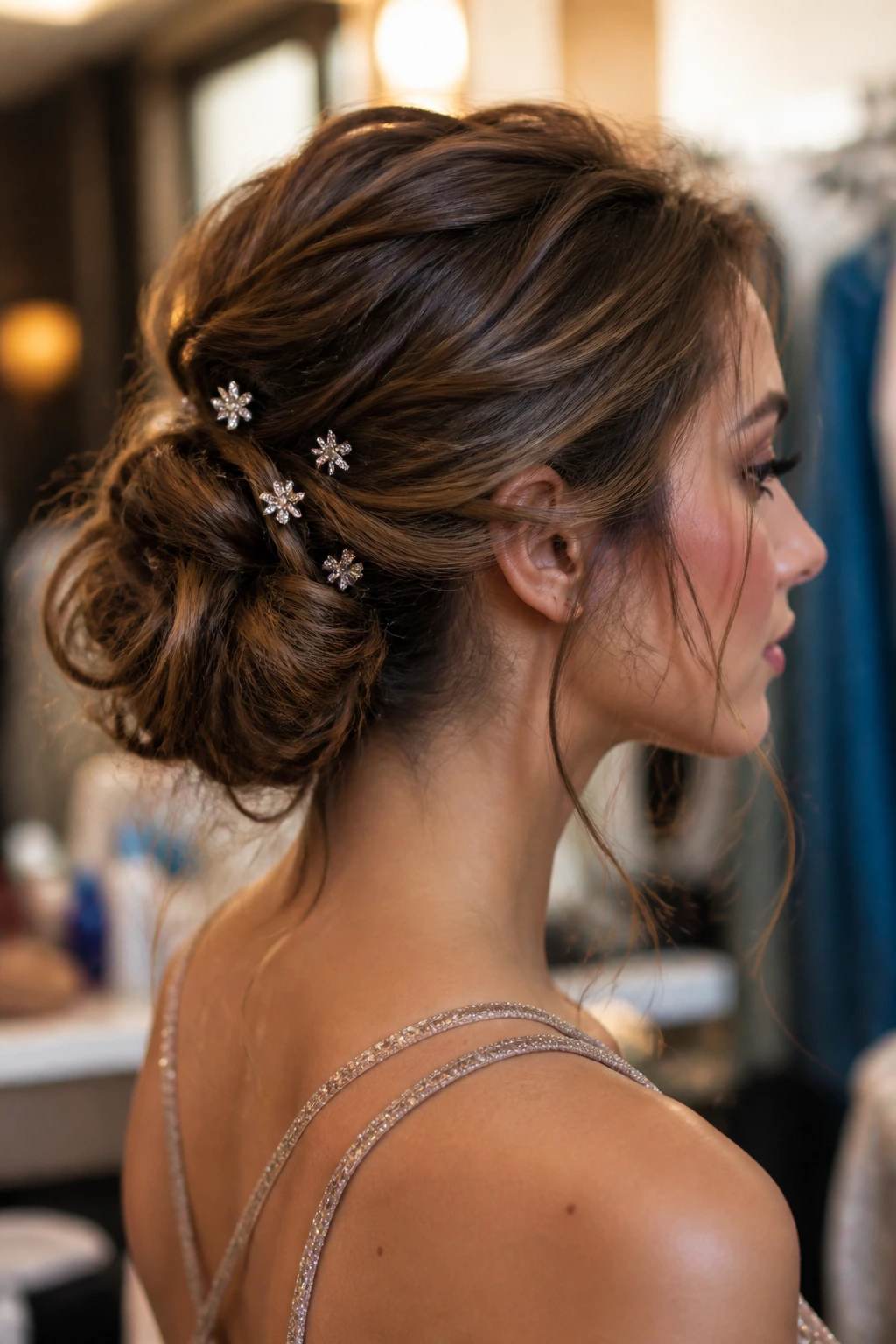
The messy knot is the style that looks like you spent an hour on it, even when the shape came together fast. It sits low or mid-height, has loose texture through the crown, and usually benefits from a few sparkly pins placed like punctuation rather than decoration overload. The result is romantic without looking sleepy.
I like this one for dresses that are simpler up top. A plain satin gown or a clean neckline gives the knot room to read as intentional. If the dress is already busy, the knot can get lost. That’s the catch. This style needs a little space to breathe.
The looseness is doing real work here. It keeps the shape soft around the face and gives the bun a little movement when you dance. Too much mess, though, and it starts to look like the hair was pinned up in a hurry between school and the car. Pull a few pieces free, yes. Leave the whole thing lopsided, no.
7. Side-Swept Rolled Updo
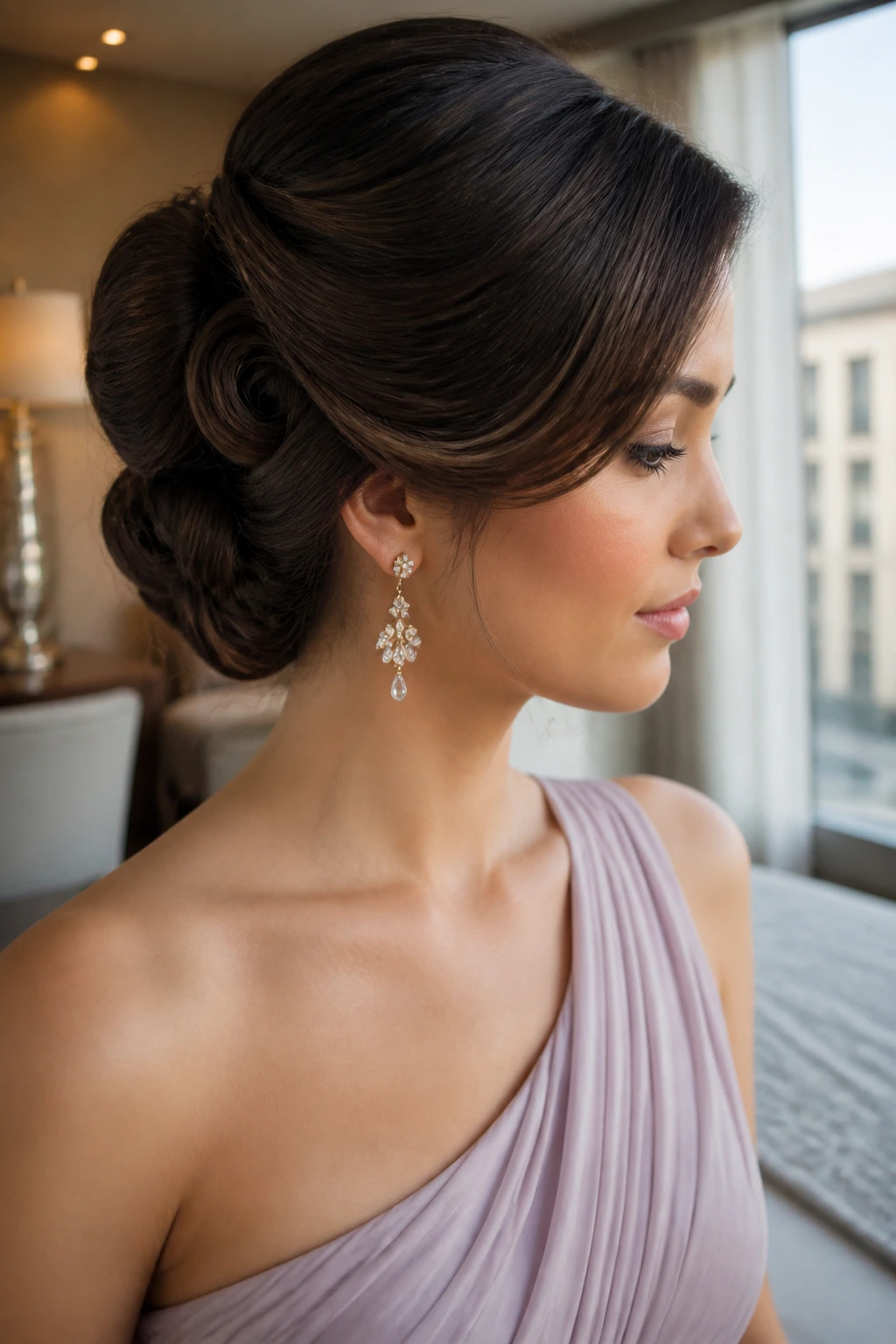
A side-swept rolled updo has drama built into the shape. Hair is swept toward one side, rolled in sections, and pinned so the volume sits slightly off-center instead of square in the middle. That asymmetry makes it a strong match for one-shoulder dresses and gowns with angled necklines.
When the Dress Has a Strong Line
This is one of those styles that makes the dress look even better. A one-shoulder strap and a side-swept bun pull the eye in the same direction, so the whole outfit feels coordinated without looking matchy. If the dress has beading on one side or a dramatic neckline sweep, this updo gives it room to show off.
The rolls should be soft, not tight. If the hair is wound too close to the scalp, the style loses the movement that makes it interesting. If you want more lift, tease only the hidden sections underneath the roll. The outside layer should stay smooth.
8. Halo Braid Bun
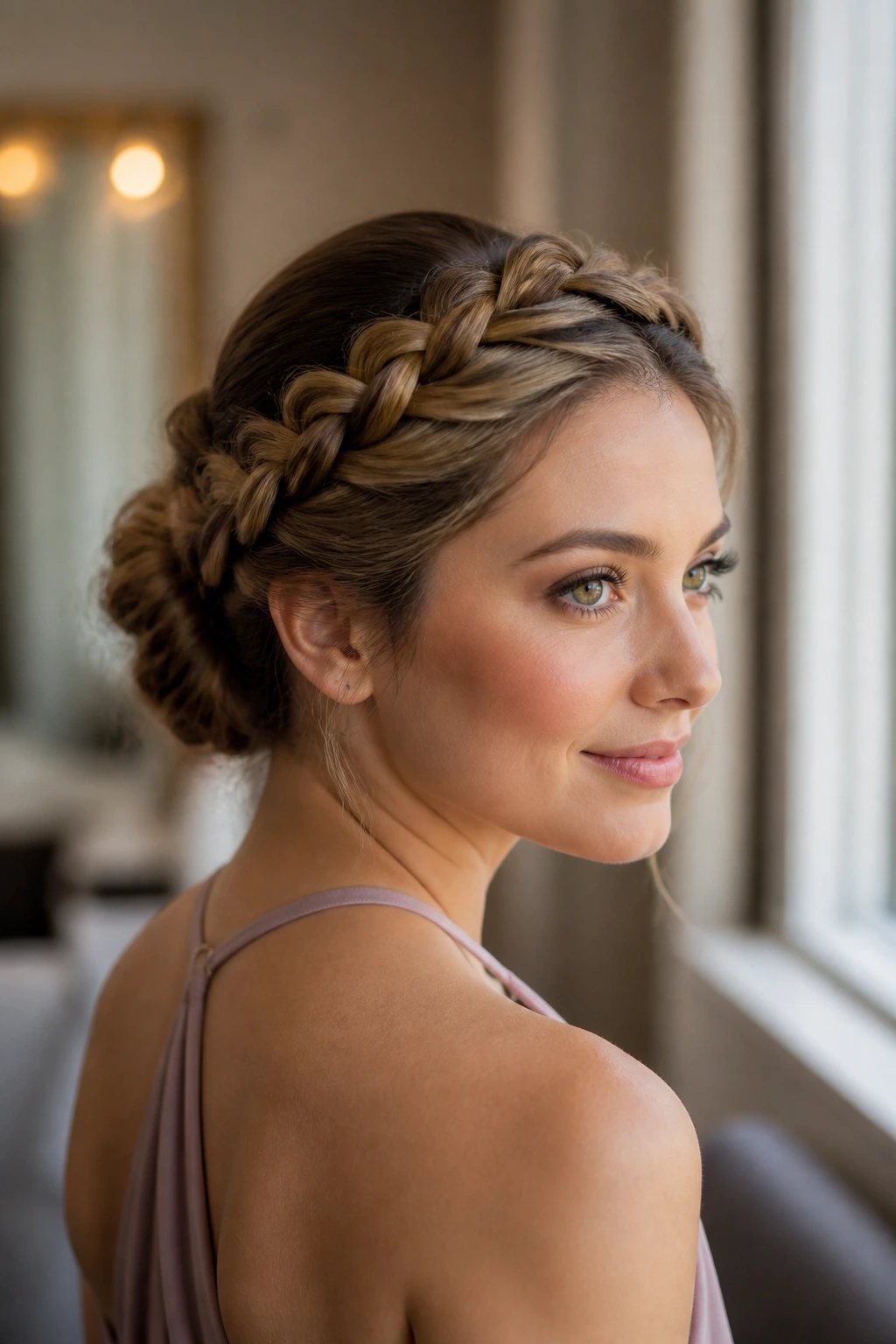
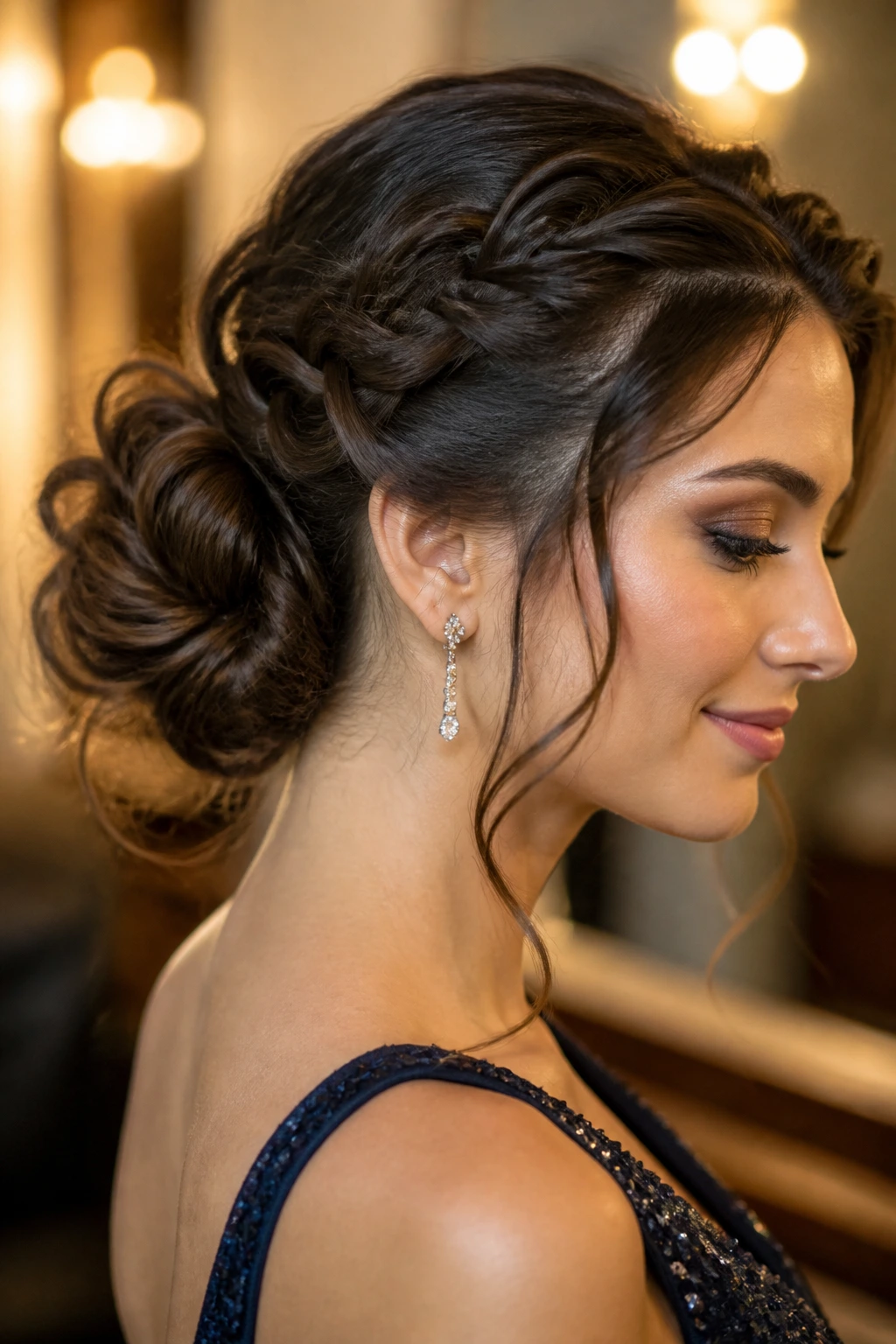
A halo braid bun is one of the prettiest prom styles because it gives you structure from every angle. The braid wraps around the crown like a frame, then disappears into a bun at the back or nape. It reads almost like a built-in accessory. That’s why I reach for it when the dress is simple and needs one elegant detail in the hair.
This style works well on medium to long hair, and it can handle a little layering if the braid is tight enough. Fine hair often benefits from a light dusting of texture powder before braiding. Thick hair needs careful sectioning so the braid doesn’t get bulky. Keep the braid close to the head so it doesn’t puff outward like a headband with commitment issues.
The halo shape also helps hold the front together. Instead of flyaways fighting every pin, the braid itself gives the style a clean edge. Add a pearl comb near the bun if you want a formal finish, but don’t crowd the braid. It needs breathing room.
9. Double-Twist Low Bun
This is the style for someone who likes symmetry. Two side sections are twisted back and joined into a low bun, so the look feels balanced and deliberate without being stiff. It is a quiet style, but not a boring one. The twists add enough movement that the bun doesn’t read flat.
The real advantage is control. Because the hair is divided into two leading sections, the style spreads tension out instead of yanking everything from one point. That makes it comfortable for long wear, which matters when the night runs long and you are not thinking about your hair every ten minutes. A little shine serum on the surface is enough. Keep it off the roots unless you want greasy-looking photos.
If your hair is layered, this updo can still work. Pin the shorter pieces into the base before twisting the longer sections over them. It takes a few more bobby pins, but the finished shape stays much cleaner.
10. Curly Pinned Updo
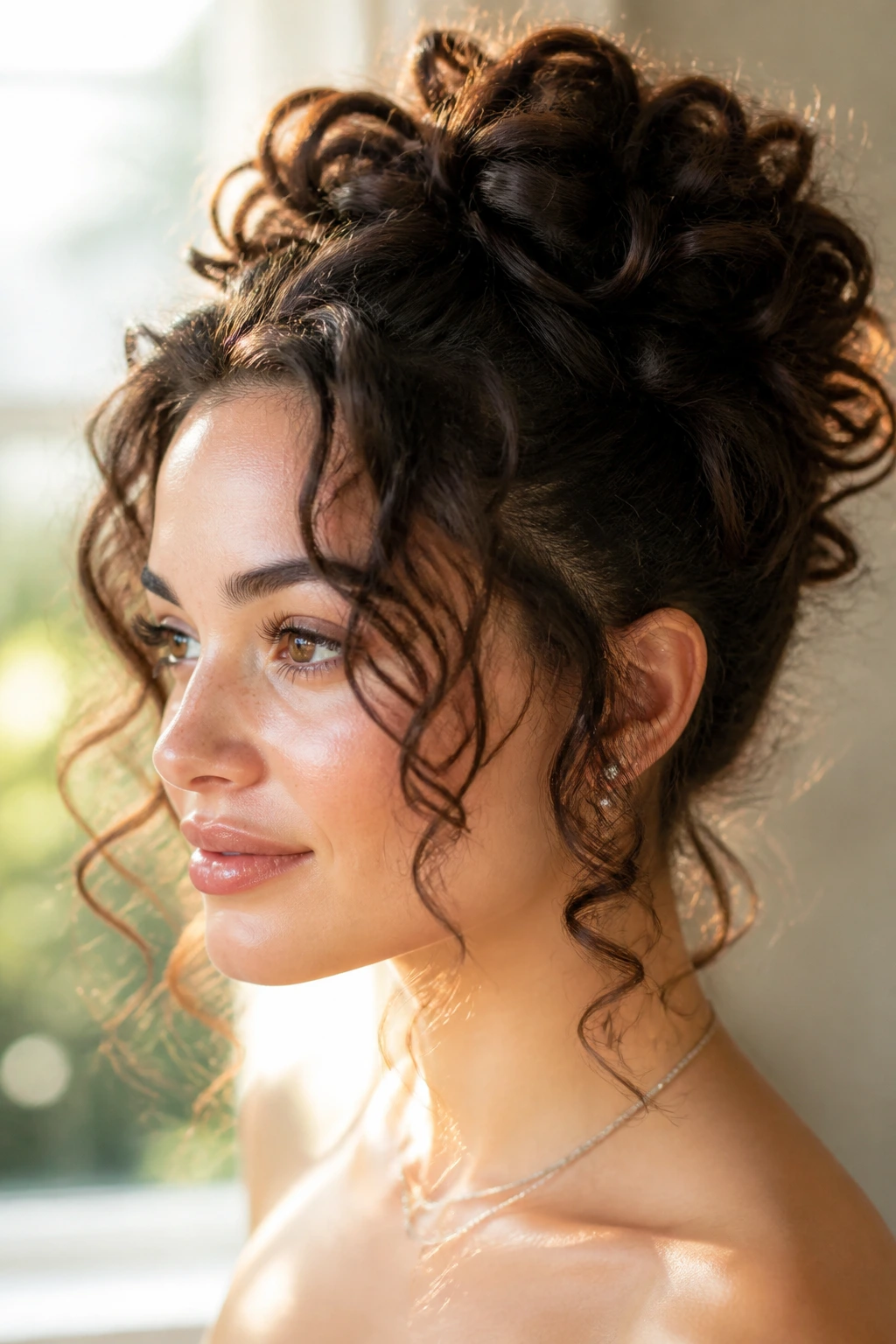
Curly hair belongs in prom updos. Full stop. A pinned curly updo lets the pattern do what it does best: build shape, add texture, and look good even when the style is a little loose. The trick is to work with the curls, not flatten them into submission.
I’d start with a curl cream or light gel on damp hair, then dry fully before pinning. Once the hair is dry, section the curls and tuck them up in soft rolls or loose loops. Pin each curl where it naturally wants to sit. Fighting the curl pattern is how you end up with a frizzy halo and a sore scalp.
Best use case
This style shines on hair that already has body. It can be a little too much on extremely thick hair if every curl is left loose, so some internal pinning helps. Leave the outer curls visible, though. If you hide every coil, the style loses the very thing that makes it interesting.
11. Sleek Center-Part Knot
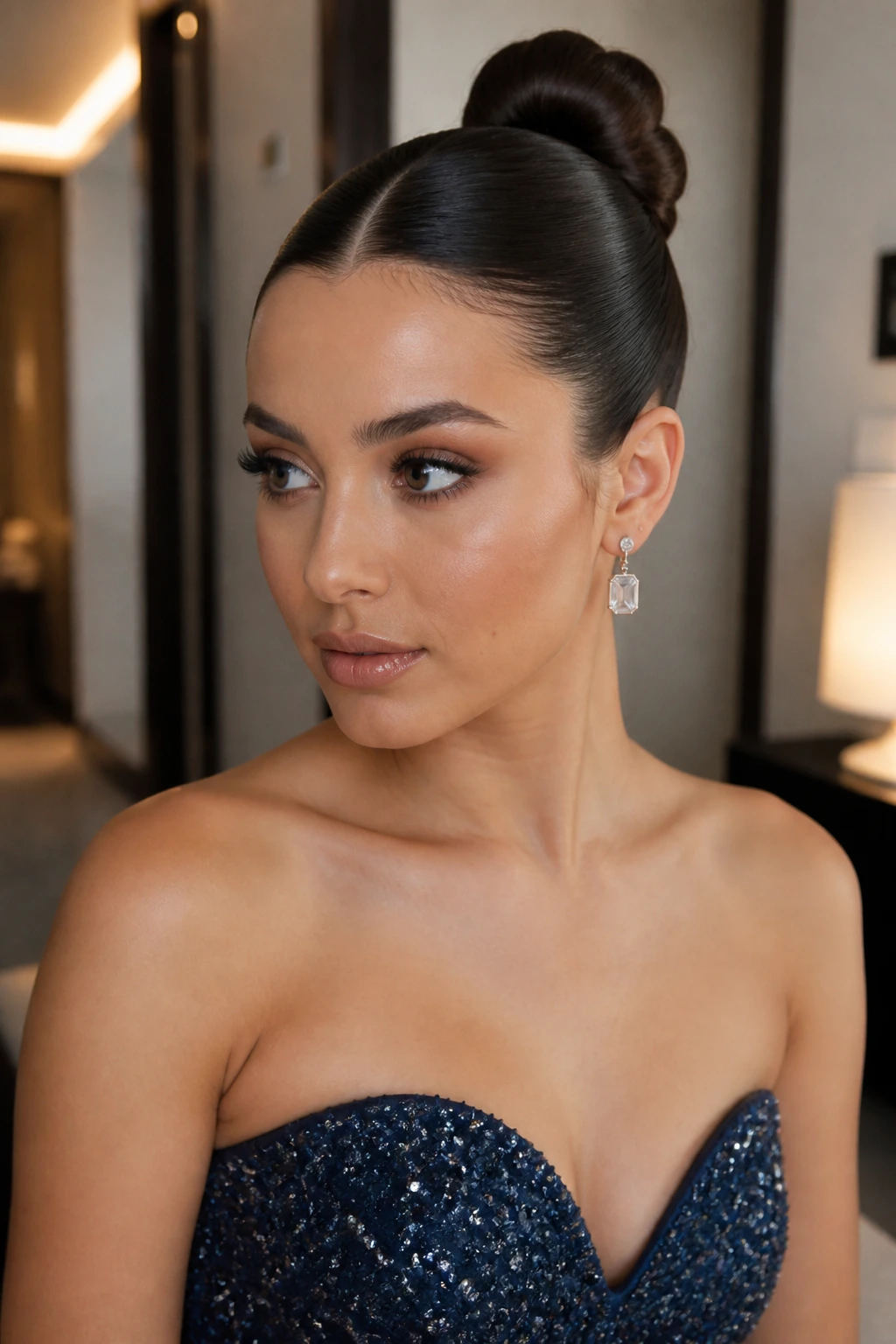
A sleek center-part knot has a sharper, more modern feel than a soft bun. Hair is parted down the middle, smoothed back on both sides, and gathered into a clean knot that sits low or mid-height. The result is confident, clean, and a little editorial without trying too hard.
This style is strongest when the dress already has movement—ruffles, sequins, a full skirt, or a dramatic sleeve. The hair stays simple so the outfit can take the spotlight. I also like this one with a bold lip, because the center part and clean sides create a neat frame for the face. The whole look feels orderly, which can be a relief on a night with a hundred moving parts.
Use a fine-tooth comb and a small amount of styling gel at the roots. Not much. Enough to smooth, not enough to harden the hair into a shell. The knot itself can be wrapped tight for a formal finish or left slightly softer if you want the style to feel less severe.
12. Rope-Braid Bun
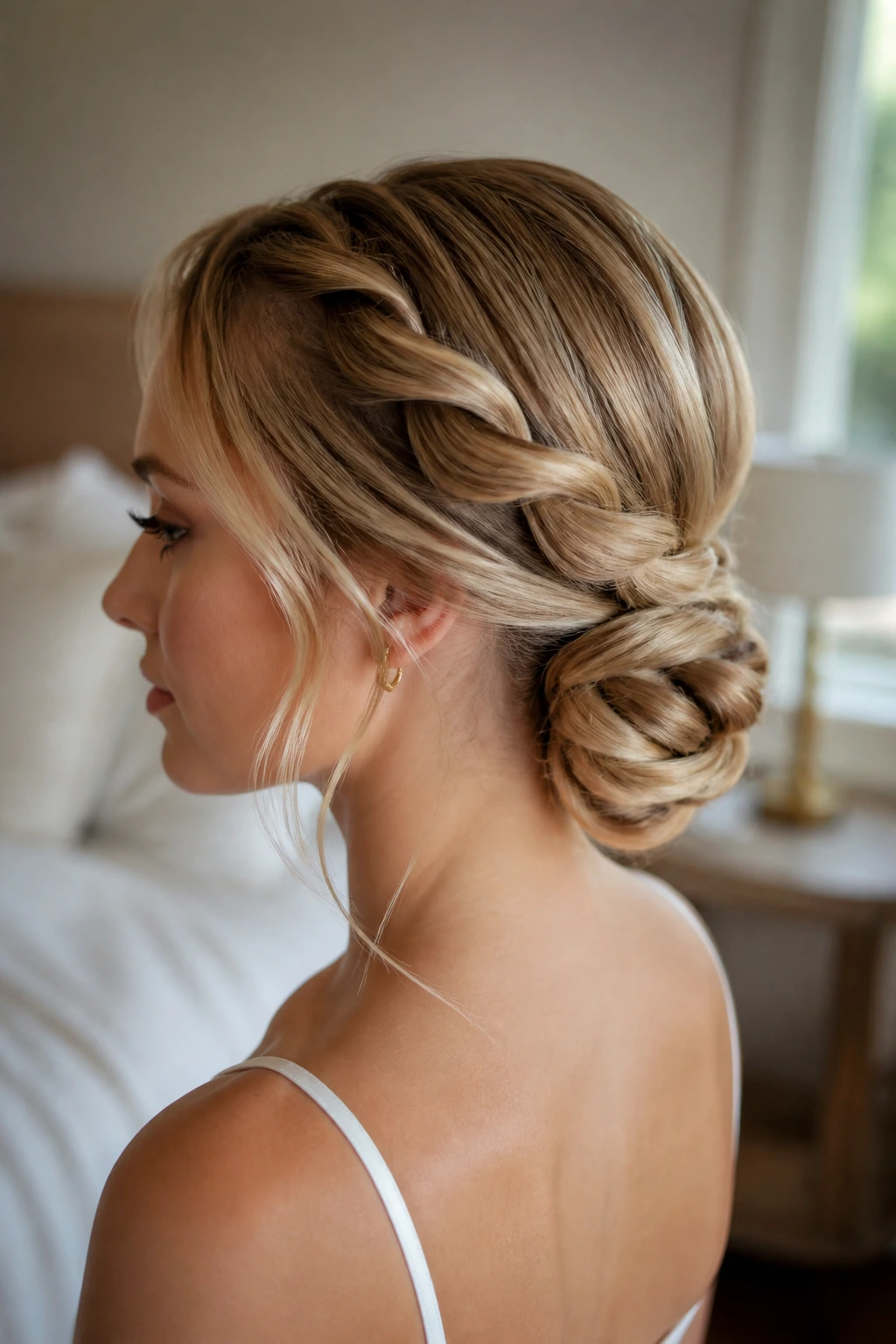
Rope braids are underrated. They’re fast, they grip well, and they give the bun a twisted, sculpted look without needing complicated weaving. Two sections are twisted around each other, then coiled into a bun or tucked into a low roll. It looks fancier than it is, which is one of my favorite things in hair.
This style works especially well if your hair has some length and a bit of wave. The twist pattern holds better when the hair isn’t too silky. If your strands are slippery, prep them with texture spray or a little mousse before drying. The braid will thank you. So will the pins.
A practical note
Rope braids can loosen faster than three-strand braids if you twist them too softly. Make the initial twist firm, then pin the ends immediately. The bun doesn’t need to be huge; it just needs to hold together when you turn your head and someone says, “Wait, let me get a photo.”
13. Gibson Tuck Updo
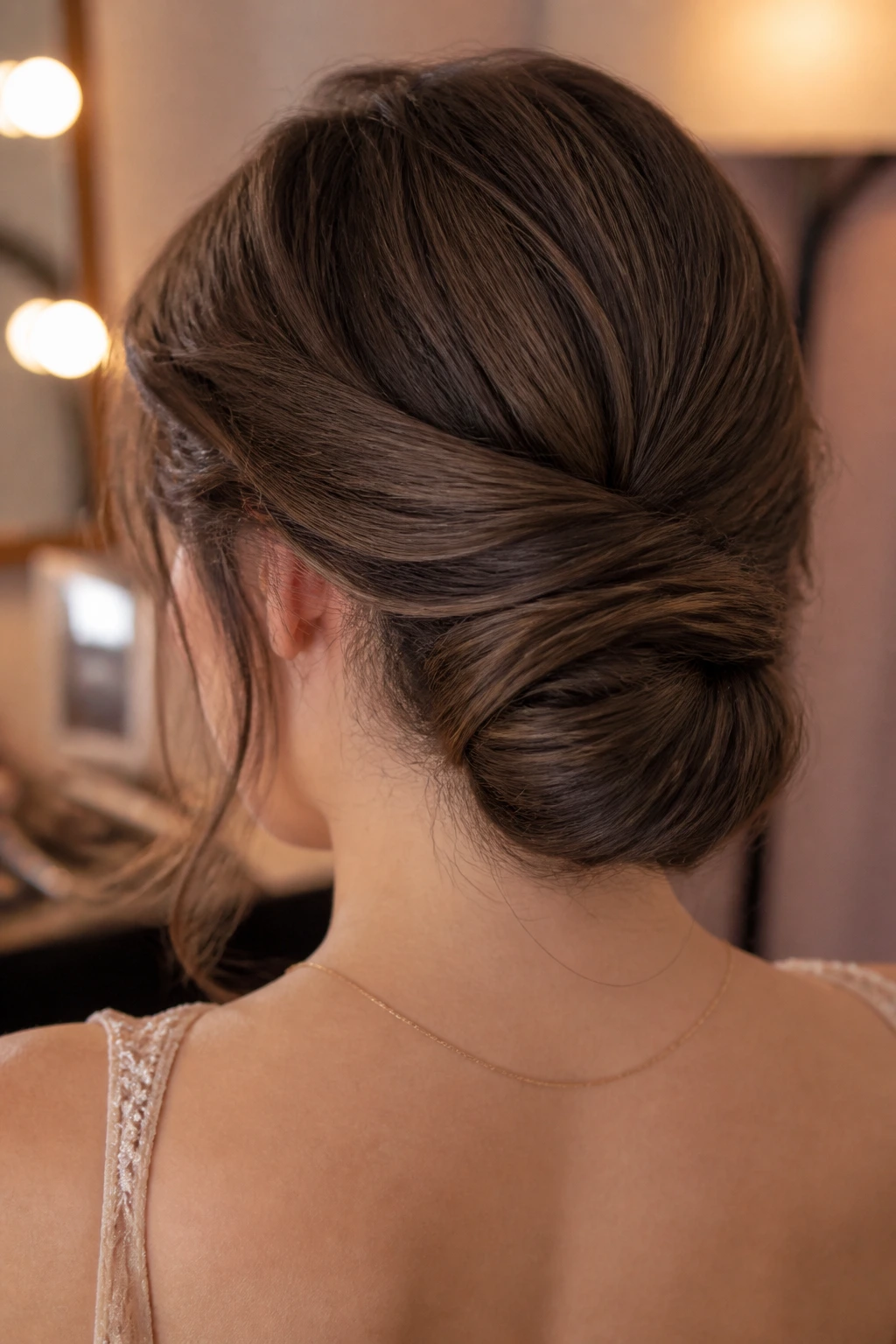
The Gibson tuck is one of those old-fashioned styles that keeps coming back because it’s practical and pretty. Hair is rolled upward at the back, tucked into itself, and pinned into a soft fold. It works beautifully on medium-length hair, especially if the cut skims the shoulders and you want the style to look finished without adding tons of height.
What I like most is the shape. It sits low enough to stay calm, but the rolled edge gives it a gentle curve that looks good from behind. If you leave a few wisps around the temples, it softens the whole thing. If you smooth everything perfectly, it takes on a more formal, almost vintage mood.
The Gibson tuck is also forgiving when your hair is a little shorter than you’d like for a full bun. That’s where a lot of prom updos fall apart—they assume everyone has the same amount of hair. This one doesn’t care as much. It uses length smartly, which is half the battle.
14. Voluminous Crown Bun
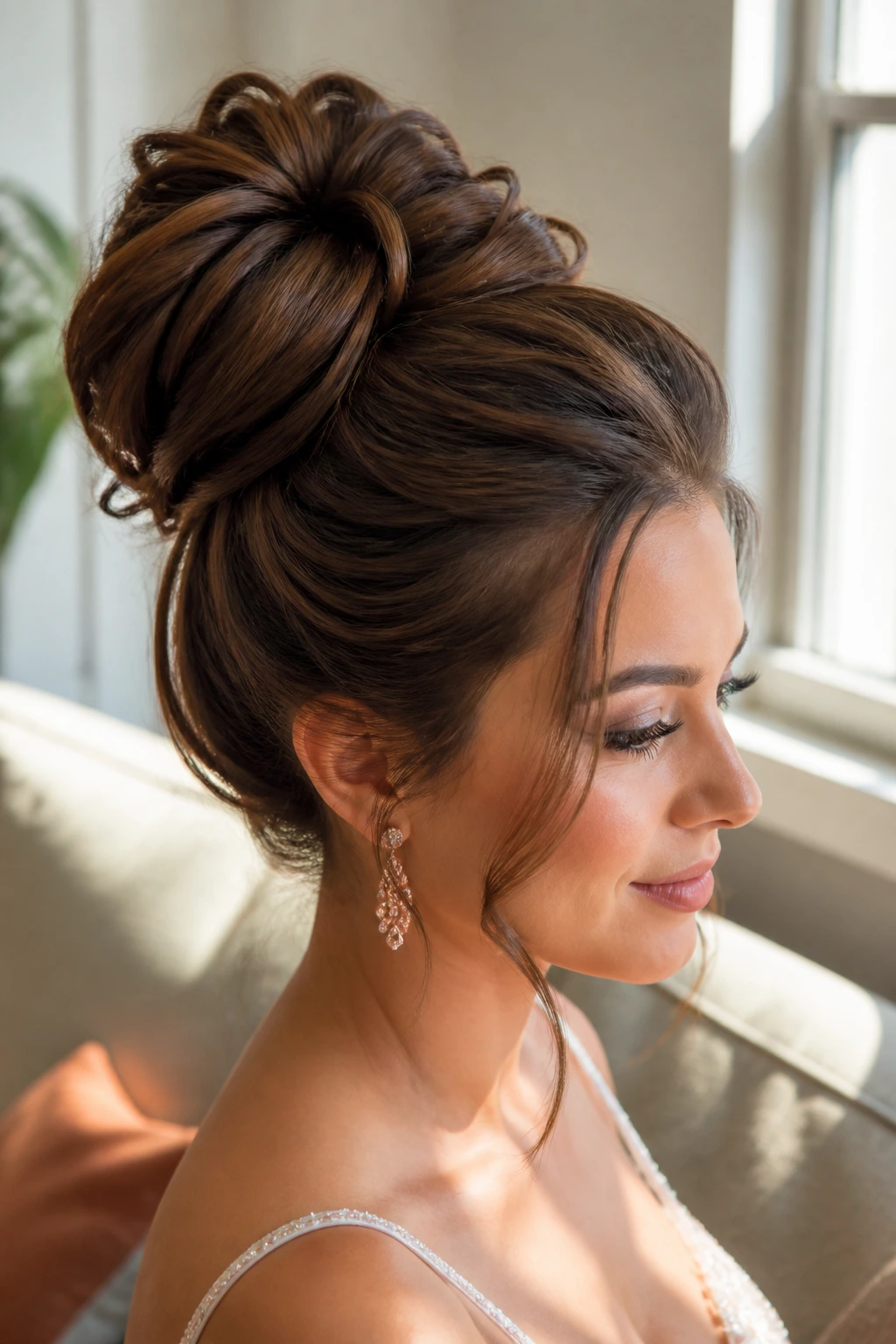
A voluminous crown bun is built for people who want height without going full pageant. The crown gets a controlled lift, then the hair is gathered into a bun that still feels soft at the edges. It’s a strong choice if the dress is plain and the hairstyle needs to do more visual work.
The crown volume changes the profile in a nice way. It gives the face some lift and helps balance heavier bodices or fuller skirts. I prefer it on medium to long hair, because very short layers can stick out if the teasing is done too aggressively. The volume should look plush, not crunchy. That’s a real difference in person, and a bad one is easy to spot in flash photos.
Use a rat-tail comb to section off the crown, backcomb only the hidden layer underneath, and smooth the top layer back over it. Then shape the bun low enough that the head doesn’t look top-heavy. It’s a little like architecture. Quietly so.
15. Braided Pony-to-Bun
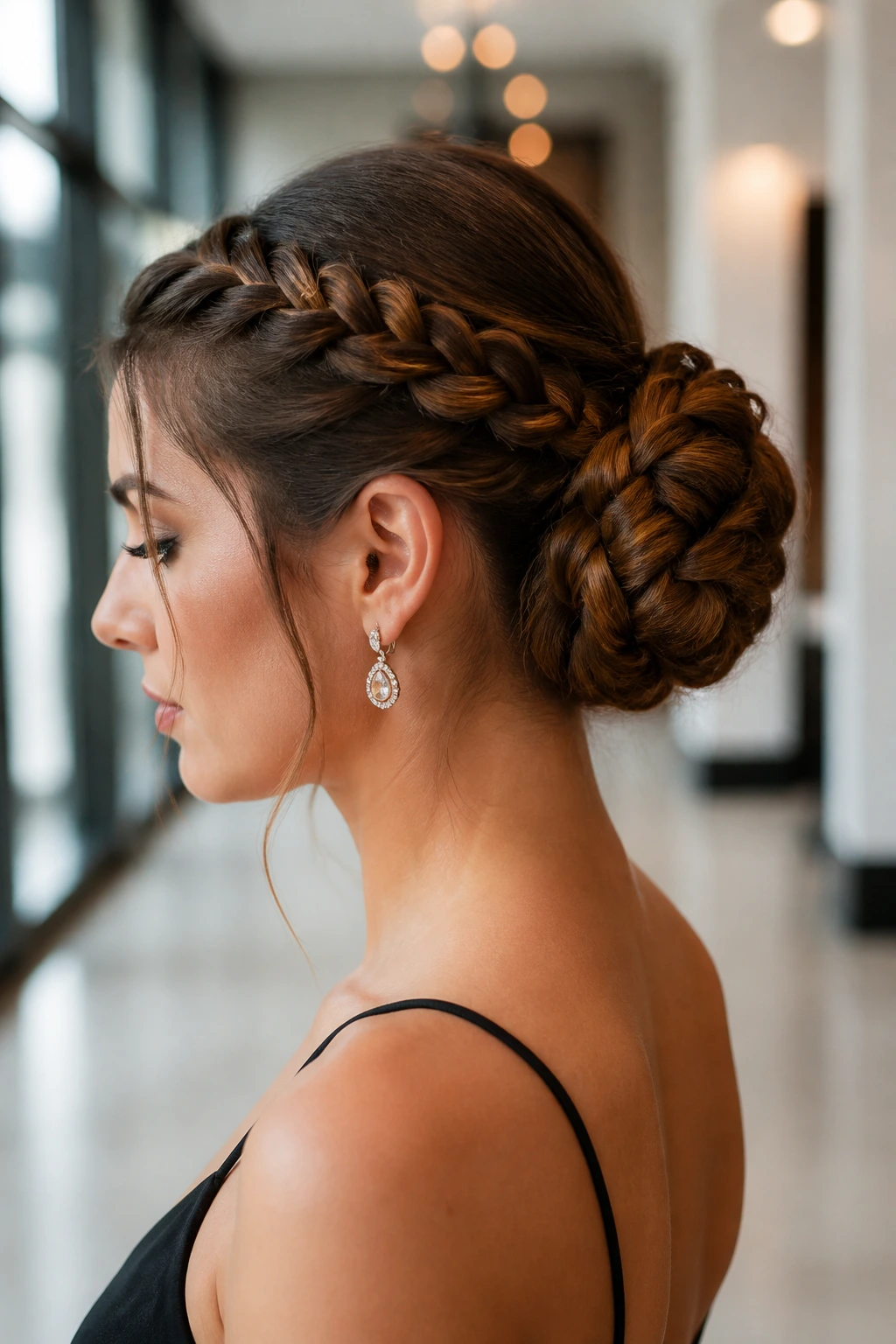
This one starts with a ponytail, but the ponytail is not the point. The real appeal is the path it takes: braid the tail, wrap it into a bun, pin it tight, and let the braided texture show on the outside. It’s a clean, secure style that looks more complex than the steps suggest.
I like it for long hair because the braid keeps all that length under control. If your hair is very thick, the pony-to-bun method is easier than trying to pin a giant bundle in one go. Split the tail into two sections, braid or twist each one, and coil them side by side. That cuts the bulk down and keeps the bun from bowing outward.
The style works especially well when you want something active-looking but still formal. It has a little athletic energy, which sounds odd until you see it with a sculptural dress or a sparkly shoulder line. Then it makes sense. Some styles whisper. This one nods.
16. Sculpted Side Bun
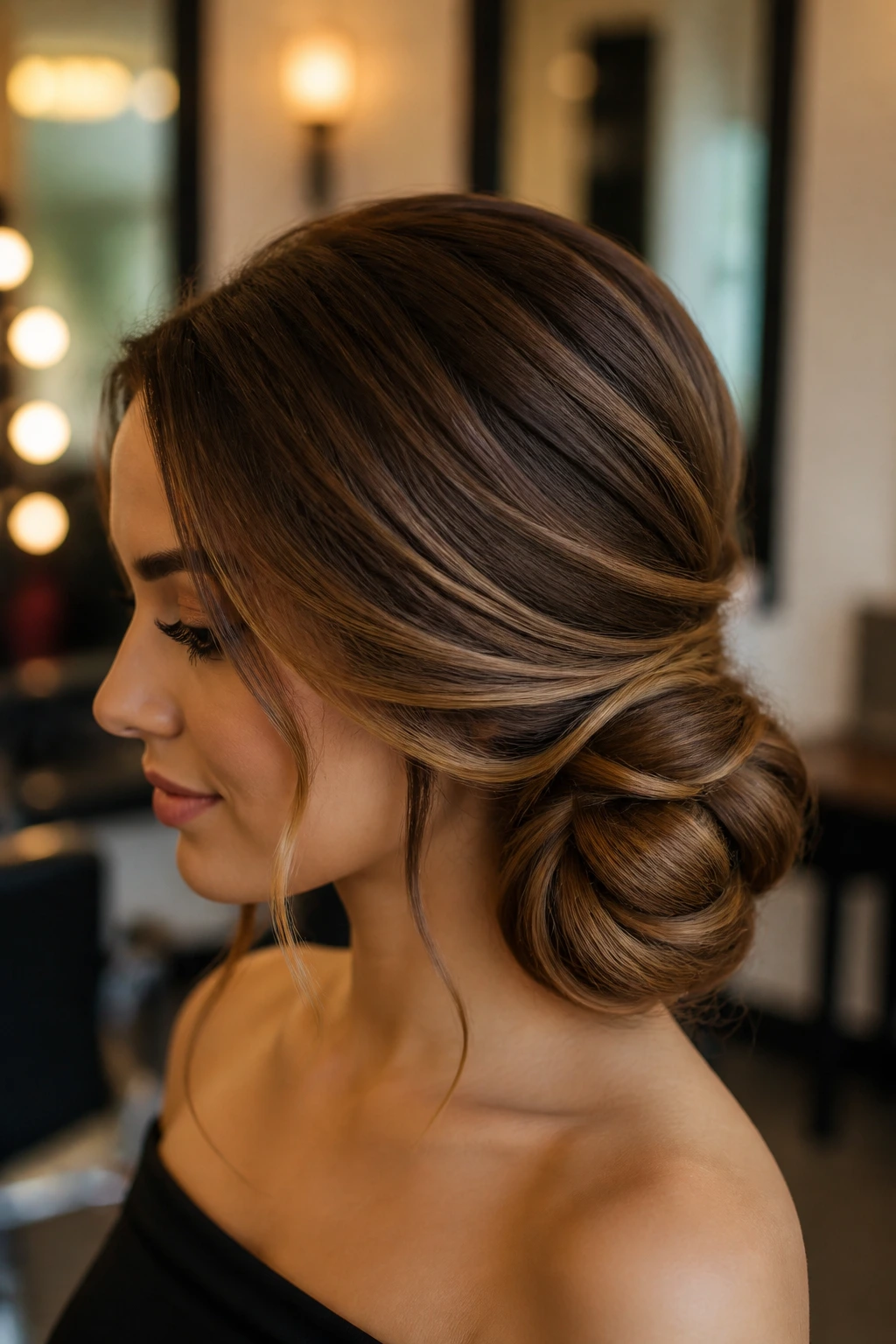
A sculpted side bun is what happens when you move the bun away from center and commit to the shape. The bun sits low and to one side, often with the rest of the hair swept diagonally across the back of the head. It is dramatic in the good way. Not costume-y. Just intentional.
This is a strong match for dresses with side embellishment, one-shoulder straps, or a slit that already creates movement in the outfit. The side placement balances the dress and gives the profile a little asymmetry. If your face is round, the diagonal sweep can add length; if your face is longer, keep the crown soft so the style doesn’t exaggerate it.
A sculpted side bun takes a few more pins than a centered one because the weight pulls differently. Anchor the side closest to the part first, then build the bun inward. Once it’s set, stop touching it. Every time you fiddle with the bun, you’re asking it to loosen.
17. Natural Hair Puff Updo
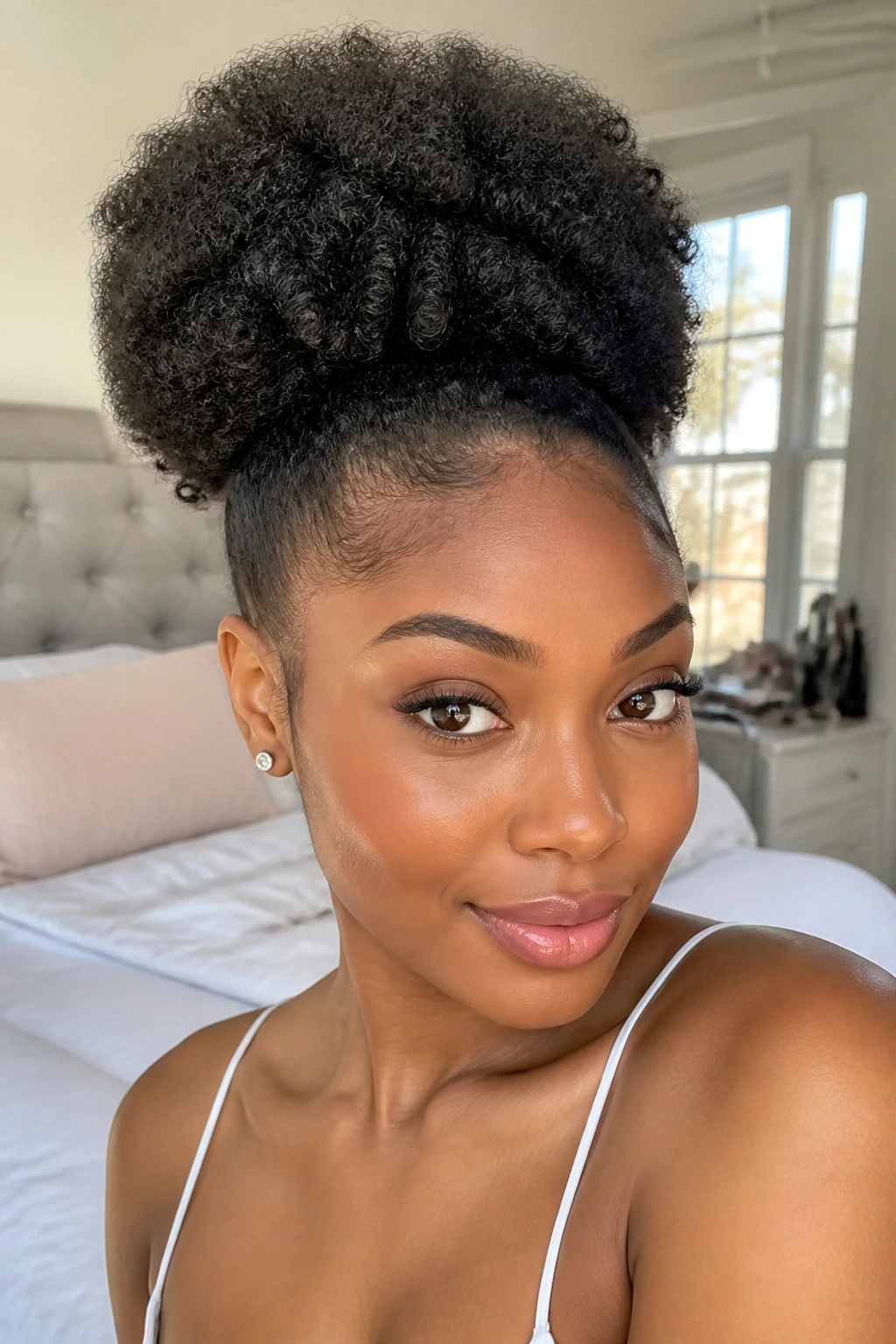
A natural hair puff updo is not a compromise. It’s a statement. The hair is gathered and shaped so the curls or coils create a rounded puff, while the sides and back are pinned or smoothed to keep the silhouette neat. It lets the texture speak loudly, which is exactly the point.
The best versions leave the curl pattern intact and focus on shape at the base. A satin scarf, a little edge gel, and a few well-placed pins are often enough. If your hair is coily, the puff can be a dramatic crown on its own. If it’s looser and you want more height, stretch the roots lightly before gathering. The style should feel lifted, not forced.
I love this option because it does not pretend the hair is something else. That honesty looks strong in prom photos. It also pairs well with earrings because the puff opens up the sides of the face. If you’ve spent time finding the right dress, this is the kind of updo that makes the texture part of the outfit instead of hiding it.
18. Modern Space-Bun Updo
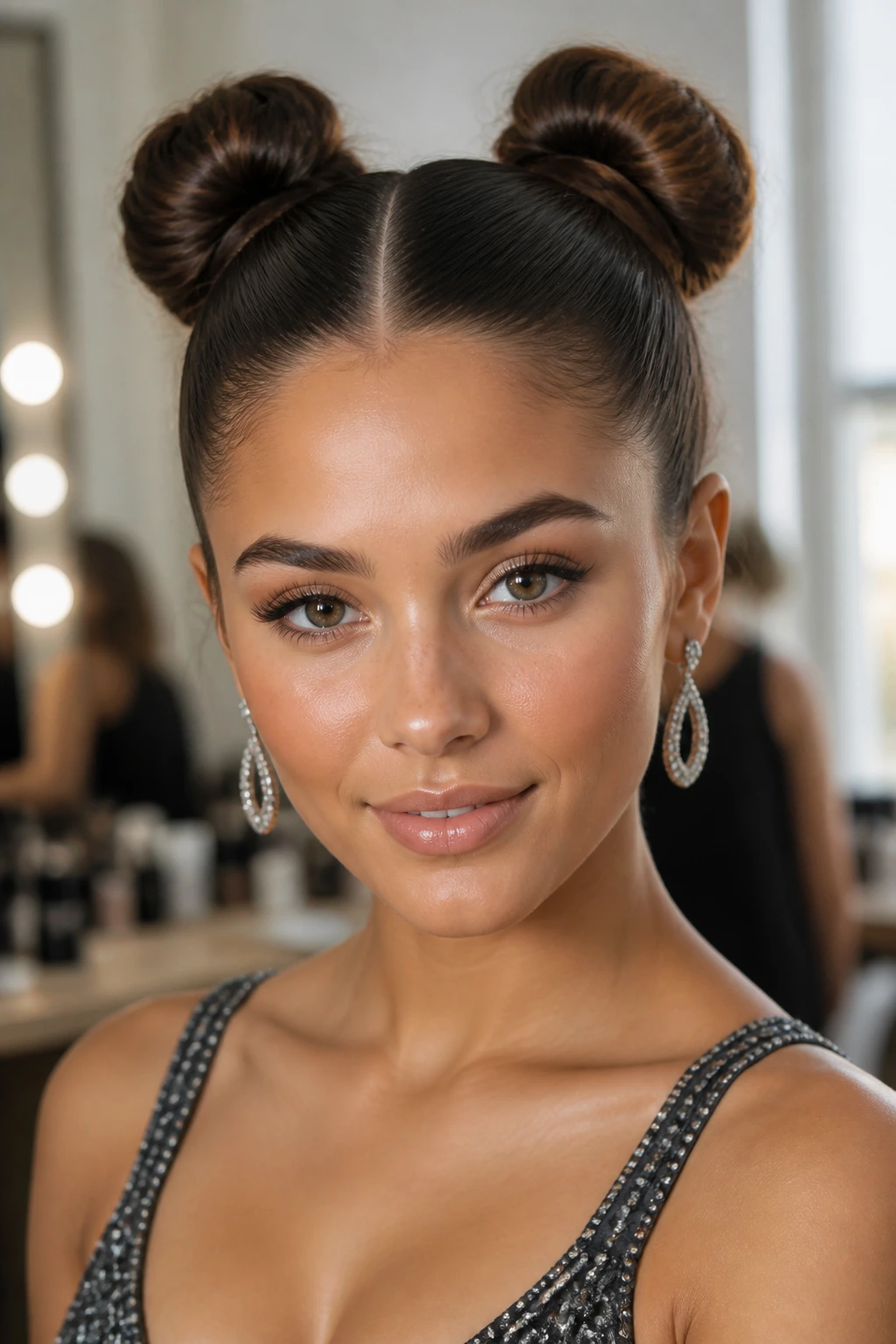
Yes, space buns can be prom-worthy. The trick is making them sleek enough to read as fashion, not costume. Split the hair into two balanced sections, create two small buns high or mid-high on the head, and smooth the parting line so the style looks deliberate. When it’s done well, it has a fresh, cool edge that stands out from the sea of softer buns.
This style fits a prom look that leans playful or modern—think satin slip dress, metallic accessories, clean makeup, or a strong eye look. It also works if you want a little height without one large bun taking over the whole head. The symmetry does the visual work. Keep the buns tight and the part clean.
A good space-bun updo needs pinning underneath, not just elastic bands. Otherwise the buns droop in the middle and start looking tired before dessert. Add a little gloss spray to the surface and stop there. Too much shine turns the style oily fast.
19. Faux-Hawk Twisted Updo
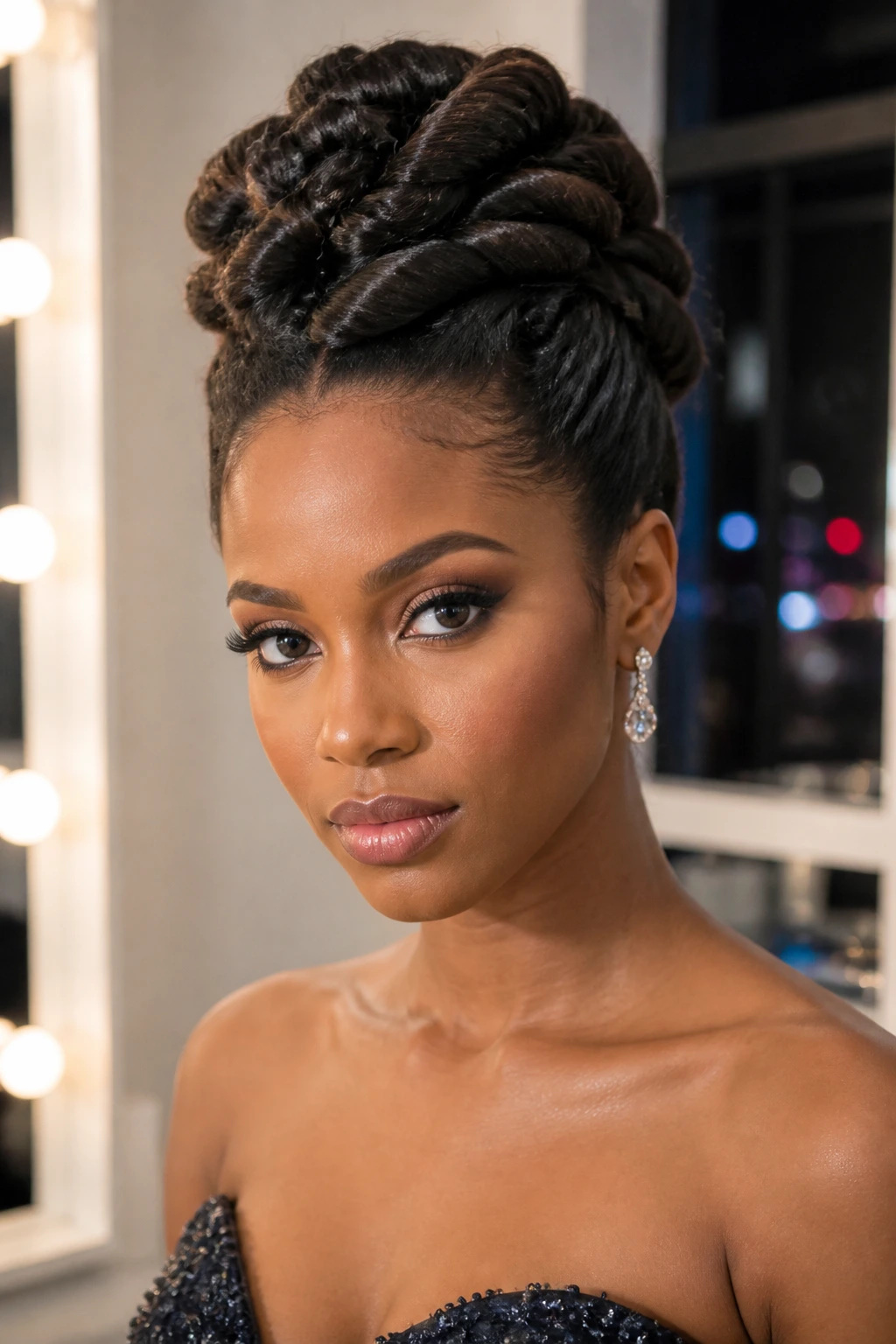
This is the bold one. The faux-hawk twisted updo pulls the sides back tightly while building texture and height through the center, so the finished look has a strong vertical line with a bit of edge. It’s formal, but it doesn’t behave like a traditional formal style. That’s the charm.
The center ridge can be made from twists, rolled sections, or loosely pinned curls. The sides should stay smooth and close to the scalp so the middle shape gets all the attention. If you want this to feel prom-ready instead of club-ready, keep the texture controlled. The shape can still be edgy without looking wild.
This style works best with confident dress lines: clean necklines, sharp shoulders, or a gown with modern cutouts. It also happens to be a good answer if you hate the idea of a soft, pretty bun and want something with a little attitude. Not every prom look has to be sweet. Some should have teeth.
Why Prom Updos Hold Their Shape Better Than Loose Hair
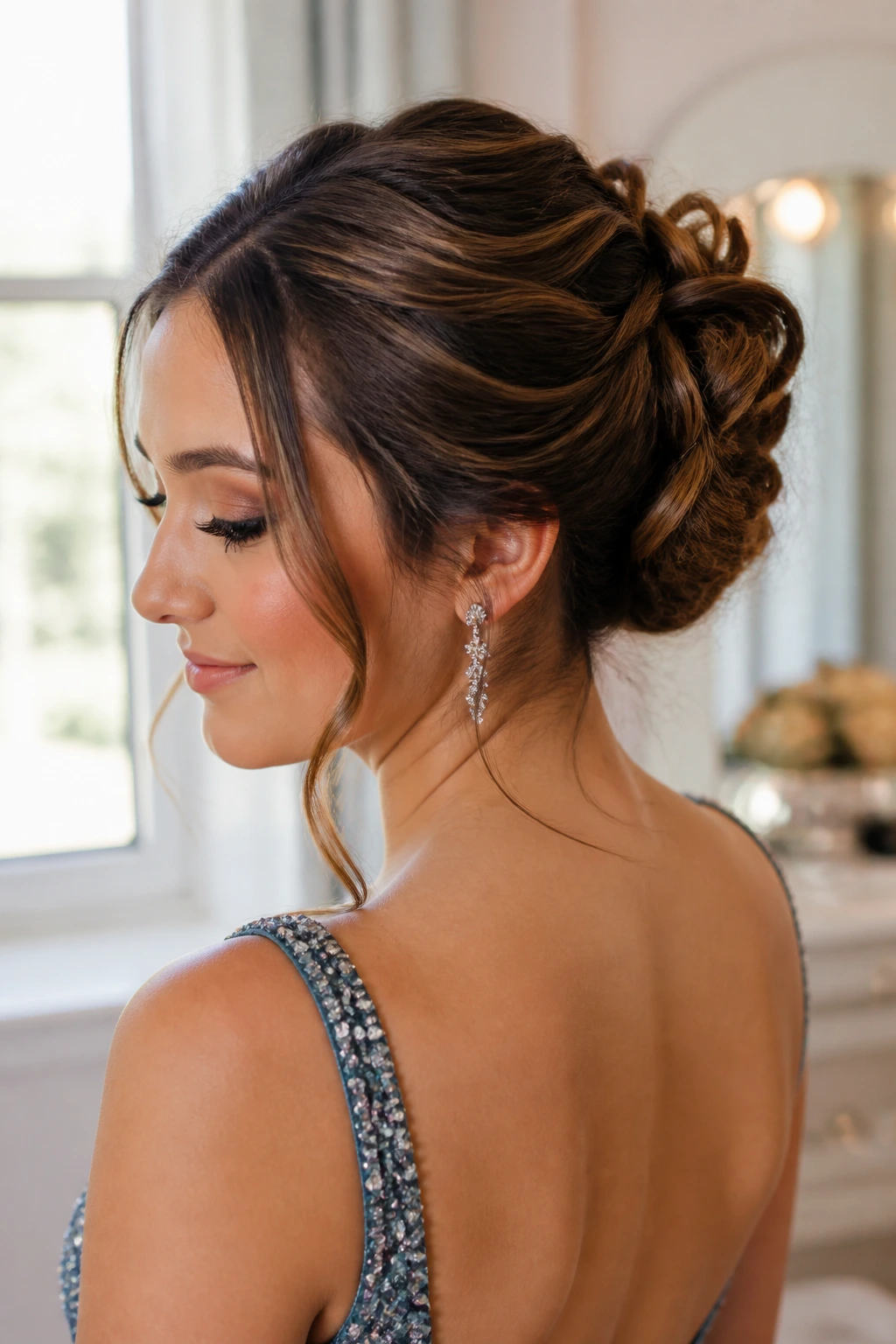
Loose curls are pretty until they meet humidity, a crowded dance floor, or the back seat of a car. Updos solve a practical problem first: they keep the hair away from the neck and shoulders, where sweat, friction, and movement do the most damage. That is why a style with pins, twists, and hidden anchors tends to survive longer than soft waves hanging free.
The other reason is weight distribution. A bun, twist, or tucked roll spreads the hair across the head instead of letting all of it hang from one point. That means less pulling at the scalp and fewer rogue sections slipping loose by midnight. Fine hair usually needs texture spray or dry shampoo to get enough grip. Thick hair often needs sectioning so the style doesn’t collapse under its own weight.
There’s also a dress issue that people skip past too fast. Hair that sits high or low in a controlled shape leaves the neckline open, and that changes how the whole outfit reads. A strong updo can make a plain dress look intentional. A sloppy one can make a beautiful dress look unfinished. That’s the difference between a mirror-check style and a real prom style.
Essential Tools for These Styles
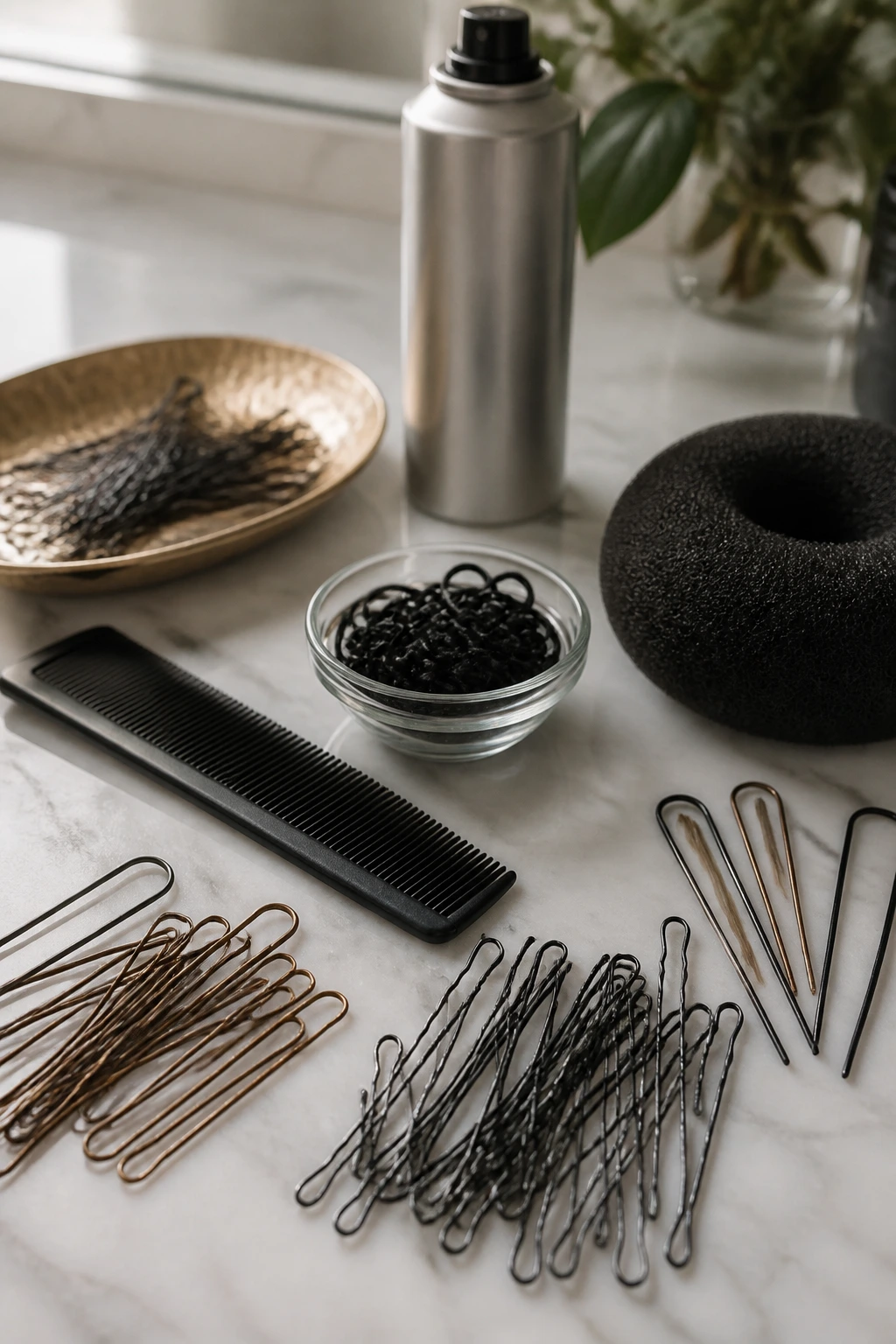
- Bobby pins in two shades: Keep both dark and blonde pins on hand so you can hide them inside the hair instead of fighting their color.
- U-pins: These are better than regular pins for bulky buns, especially on thick or curly hair.
- Fine-tooth tail comb: Perfect for clean parts, smoothing the crown, and sectioning hair without creating blunt lines.
- Texturizing spray or dry shampoo: Gives fine or silky hair the grip it needs so twists and braids don’t slide apart.
- Flexible-hold hairspray: Keeps the style moveable, not shellacked; ideal when you still want touchable hair.
- Strong-hold hairspray: Useful for sleek looks or humid spaces where flyaways show up fast.
- Heat protectant: Necessary if you’re curling pieces before pinning them; don’t skip it just because the style is “up.”
- 1-inch curling iron or wand: Great for adding bend to face-framing pieces and creating shape before pinning.
- Small clear elastics: Handy for tying off sections before braiding or twisting, especially in layered hair.
- Bun donut or padding insert: Helps add fullness to low buns and keeps heavy hair from sagging.
- Mirror with a handheld backup: You need to see the back of the head, not just trust the bathroom wall.
- Silk scarf or satin bonnet: Useful if you’re setting the style early or preserving a trial run overnight.
Smart Product and Accessory Choices
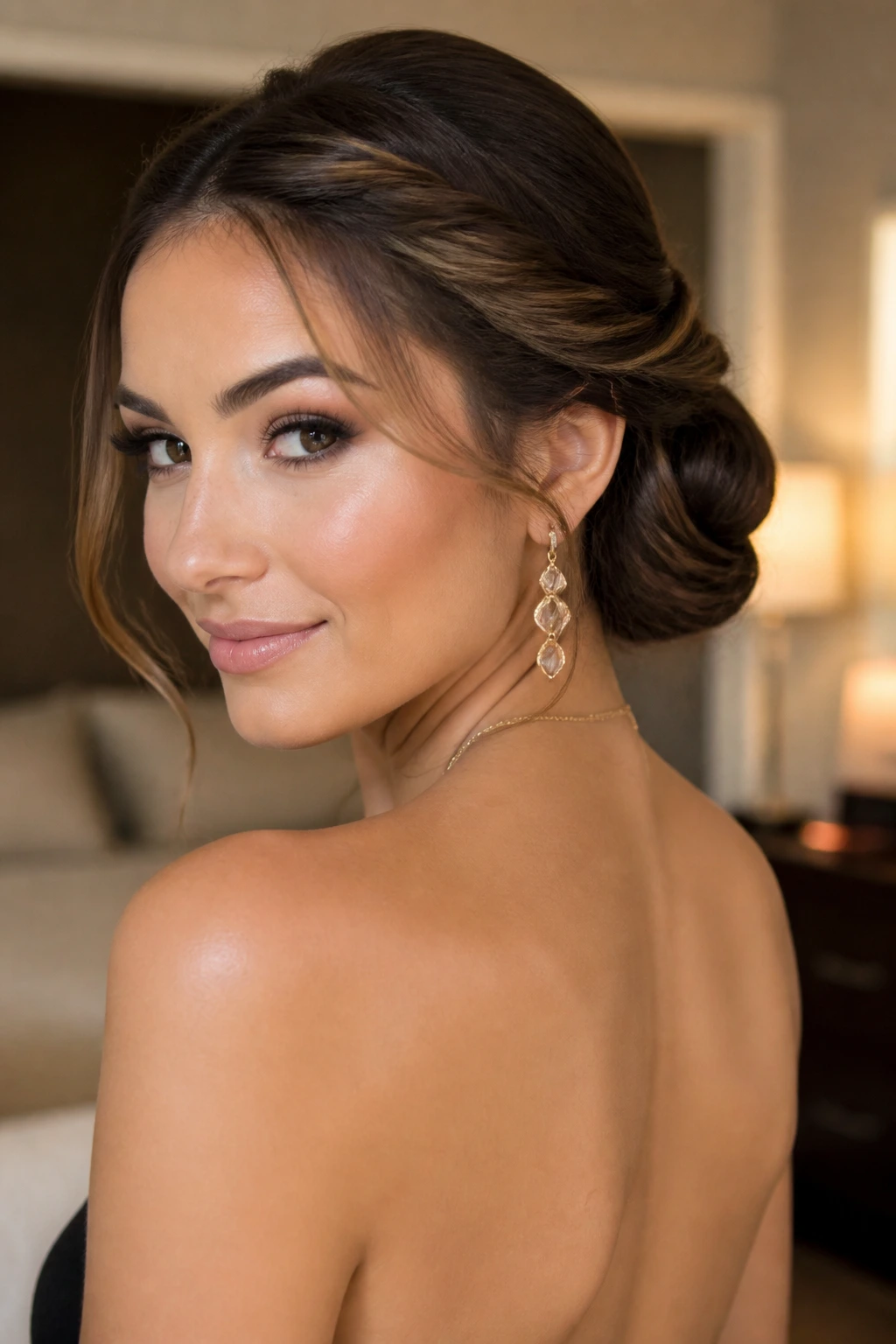
The best hair products for prom are the ones that give control without turning the hair into plastic. A lightweight mousse at the roots, a texture spray through the mids, and a flexible hairspray at the end usually do more than one heavy product piled on top of another. Heavy creams can make the hair too slippery. That’s the enemy when you’re pinning.
Pins matter more than most people think. Matte bobby pins grip better than glossy ones, and crimped pins hold better than smooth decorative clips when you actually need support. If you want the style to last through dinner and dancing, buy more pins than you think you need. A bun can eat 15 pins without warning.
Accessories should match the structure of the hairstyle, not fight it. A side bun wants a comb or barrette on the heavy side. A low chignon looks good with pearls or a small crystal pin cluster. If the dress already sparkles at the top, keep the hair accessory simpler so the look doesn’t start blinking from every angle.
For hair that is fine or slippery, look for volumizing powder, texturizing spray, and a medium-hold spray that can be layered in light passes. For thick or coarse hair, choose pins with some bend and a strong but brushable hairspray. If the hair is curly, a curl cream or gel with a soft finish keeps the pattern defined instead of puffing into frizz.
How to Match the Updo to the Dress, Jewelry, and Dance Floor
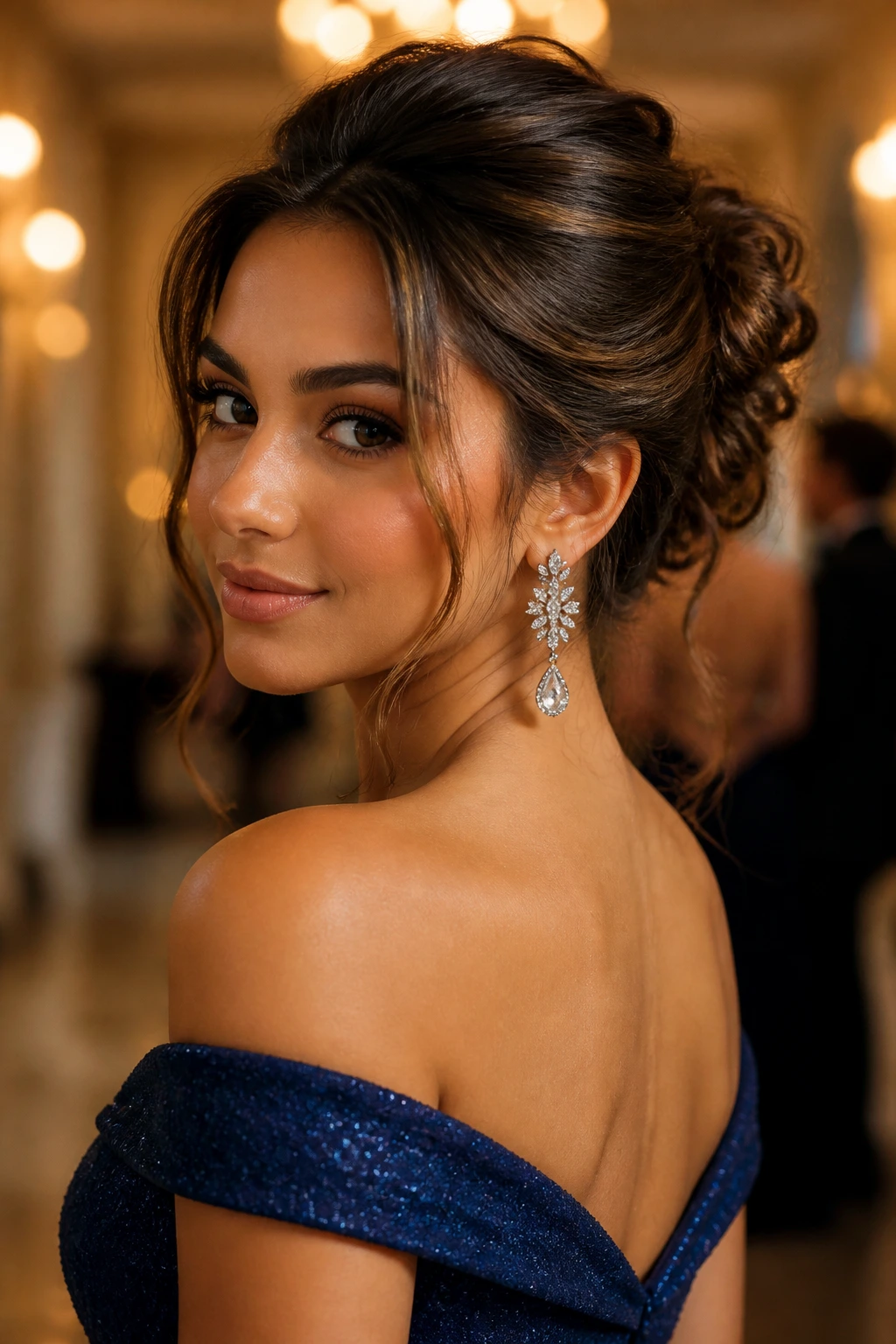
Presentation: A low style like a chignon or Gibson tuck works best with strapless, off-the-shoulder, and heavily detailed bodices because it keeps the neckline open. Higher styles, like a crown bun or faux-hawk twist, look sharper with simple dresses that need more visual movement up top.
Accompaniments: If the updo is clean and sleek, choose earrings that can carry the look—drops, pearls, or one strong statement earring. If the hair is already textured or braided, keep the jewelry cleaner so the whole outfit doesn’t feel crowded. A delicate bracelet or ring can finish the picture without pulling attention away from the hair.
Portions: Shoulder-length hair can do most of these styles with the help of a small bun form, a few hidden anchors, and some twisted sections. Very long hair benefits from splitting the bun into smaller coils so the style doesn’t drag down by the end of the night. Fine hair needs texture and smaller sections; thick hair needs better pinning and a little patience.
Beverage Pairing: While you’re getting ready, stick to sparkling water with lemon or unsweetened iced tea. Sticky drinks and lip gloss are a bad mix near a fresh hairline, and nobody wants to wipe soda off a satin strap five minutes before leaving.
Small Tweaks That Change the Whole Mood
Shape Enhancement: A tiny lift at the crown can change a style from plain to formal in one minute. I’d rather see a little controlled volume than a tight, flat head shape that looks like it was pressed down by a book.
Customization: Swap plain pins for pearl pins, gold leaves, crystal clusters, or even a narrow ribbon wrapped around a braid. One accessory is usually enough. Two if the dress is simple. More than that can start looking busy fast.
Texture Boost: If the hair is too smooth, mist dry shampoo into the roots and pinch the mids with texture spray before pinning. If the hair is too fluffy, smooth the outer layer with a light serum and keep the product off the scalp.
Make-It-Yours: Fine hair likes a smaller bun and more internal pins. Thick hair does better with sectioned twists and larger anchors. Curly and coily hair often looks strongest when the natural texture is left visible instead of stretched into something it never wanted to be.
How to Prep, Preserve, and Take It Down Without Drama
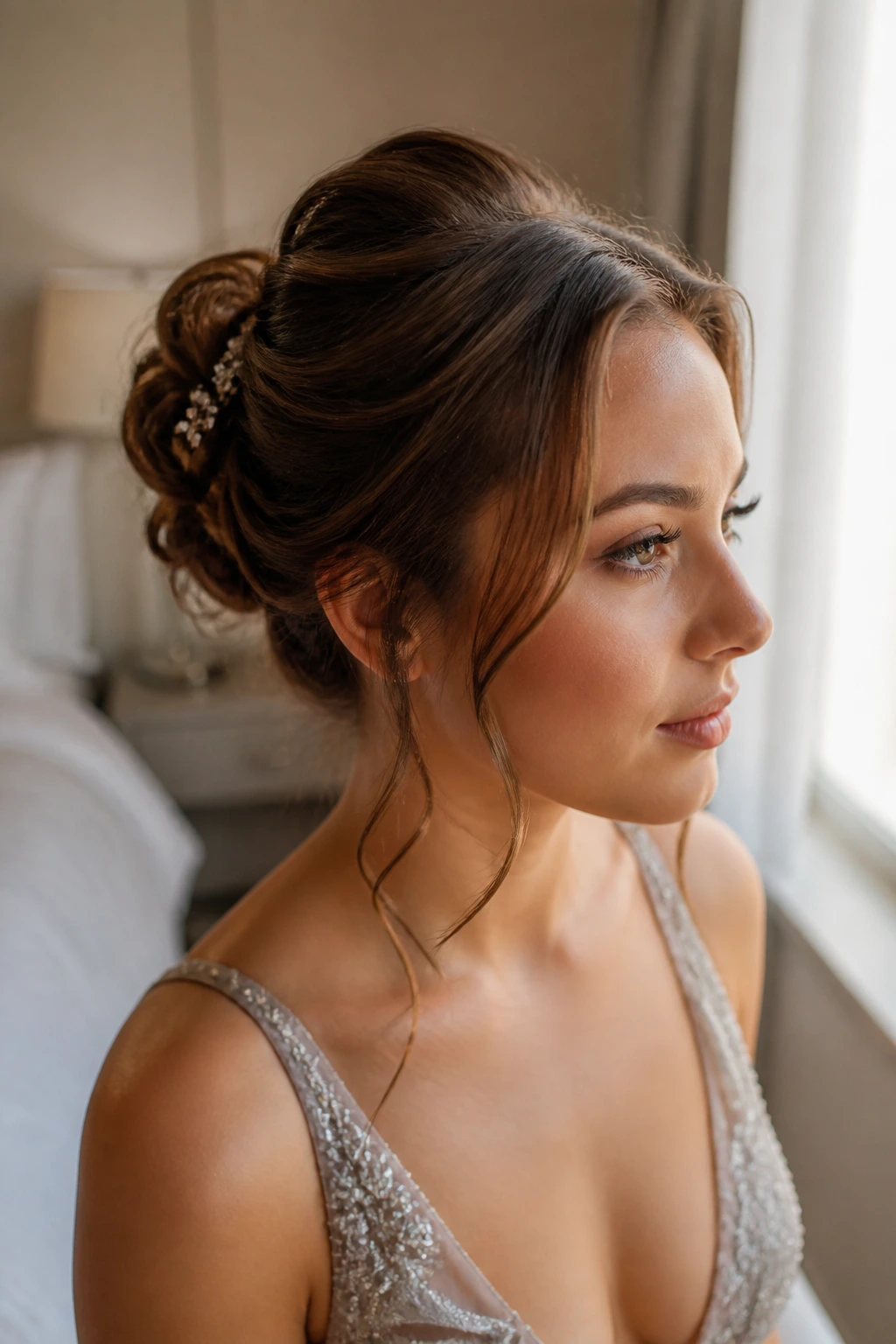
The best base for a prom updo is hair that isn’t freshly washed and slippery. Most styles hold better on hair washed the day before or earlier the same day with a bit of dry shampoo at the roots. If you’re planning curls before pinning, let them cool all the way down before you touch them. Warm hair loses shape fast.
Trial runs are worth doing. You do not need a full salon rehearsal with lights and a mirror wall, but you do need one practice pass before prom night if the style is new to you. That gives you a chance to see which pins slip, where the crown droops, and whether the bun sits too high or too low. A style that stays put for 10 minutes in the bedroom still has to survive 6 to 10 hours of moving, smiling, and taking photos.
During the night, keep a tiny touch-up kit with 4 to 6 bobby pins, a travel-sized spray, and a mini comb. If a face frame piece falls, pin it discreetly instead of smoothing it over and over. The more you touch the style, the faster it loosens.
After prom, remove the pins from the bottom up and spray a little detangling mist through the ends before brushing. If the hair was heavily sprayed, work in sections and don’t yank at the knots. A silk pillowcase helps if you’re sleeping in the style or wearing a preserved twist into the next day’s events.
Adjustments for Different Hair Types and Plans
Fine-Hair Anchor Set: Use texture spray, a small bun donut, and more pins than you think you need. Fine hair looks best when the sections are smaller and the shape is tight at the base.
Curly-First Finish: Keep the curl pattern visible and pin only where needed. Curl cream or gel at the start keeps the shape crisp, and a satin scarf helps preserve it before you leave.
Short-Hair Rescue Plan: Build mini twists, pin them inward, and let the ends disappear into the base instead of chasing a giant bun that the length can’t support. A lot of shoulder-length cuts can still do an updo if the style is tucked low.
Humidity-Proof Polish: Choose a sleeker style like a chignon or center-part knot and use a stronger finishing spray on the outer layer only. The shape lasts better when the crown is controlled and the flyaways are dealt with before they start.
Accessory-Heavy Glam: If the plan includes a comb, vine, or row of pins, choose a style with a flat surface on one side—low chignon, side bun, or French twist. Decorative pieces need a stable base or they slide around and look like they’re hanging on for dear life.
Common Mistakes That Flatten the Look
- Starting with hair that’s too clean: Freshly washed hair can be too slippery for pins to grab. If that’s your only option, add dry shampoo or texture spray before you begin.
- Using the wrong pins: Smooth pins slide out; bent, matte bobby pins hold. If the style keeps falling apart, the problem is often the pin, not your technique.
- Overloading the hair with product: Too much serum or cream makes the hair limp and oily in flash photos. Use product in light layers and keep it away from the roots unless the style needs smoothing.
- Pinning only on the surface: Surface pins can look neat for ten minutes and then fail. Slide pins into the base of the style and cross them where the hair has real tension.
- Making the crown too flat: A completely flattened crown can make the head shape look wide and tired. Leave a little lift where the style needs structure.
- Skipping a test run: A style that seems simple often has one weak point—an awkward part, too much volume, or a bun that sits too high. A trial run exposes that before the car pulls into the venue.
Variations and Adaptations to Try
Fine-Hair Boost Version: Start with dry shampoo, tease only the hidden crown, and use a bun donut for the base. The goal is to create a fuller shape without making the hair look sparse at the edges.
Curly Texture Version: Keep the curls intact, pin section by section, and avoid brushing out the pattern. A little frizz around the edges is fine; it reads as movement, not mess.
Short-Length Version: Use tiny twists, tuck the ends under, and keep the bun compact. A low Gibson tuck or mini chignon usually works better than a high knot when the length is limited.
Accessory-First Version: Build the style around one strong piece—pearl comb, crystal barrette, or a soft ribbon. The accessory should support the shape, not sit on top of it like an afterthought.
Heat-Free Version: Set the hair with braids or twists overnight, then unwrap and pin the resulting pattern into the final shape. This is especially useful if your hair gets frizzy under hot tools.
Bold High-Contrast Version: Pair a sleek crown with a textured bun or a tight side sweep with a loose coil. That contrast gives the style more visual punch than one smooth texture from root to tip.
Frequently Asked Questions
What hair length do I need for a prom updo?
Shoulder-length hair can do more than most people think, especially with twists, tucks, and a small bun form. Longer hair gives you more options, but it can also create more weight, so the pinning has to be smarter.
Is second-day hair better than freshly washed hair?
Usually, yes. Hair with a little natural oil and product grip holds pins better and slides less, which makes braids, twists, and buns easier to control.
How do I keep bobby pins from slipping?
Use matte or crimped pins, slide them into the base of the style, and cross two pins where the tension is strongest. If the pins still slip, the hair probably needs more texture spray before styling.
Can I wear extensions with these styles?
Absolutely, and they can help a lot with fullness. Just keep the extension clips hidden beneath the anchor sections and make sure the weight is distributed so the bun doesn’t sag.
What works best for curly or coily hair?
Styles that keep the texture visible tend to look strongest: curly pinned updos, natural puffs, halo braids, and sculpted buns. The goal is shape and support, not forcing the curl pattern into a different texture.
How much hairspray should I use?
Less than people think at first, then a little more at the end if needed. Spray in light passes from about 10 to 12 inches away so the hair holds without turning stiff or sticky.
What if my style starts to fall during the night?
Carry a small touch-up kit and fix the base, not just the visible top layer. Re-pin the area that’s slipping, smooth one section, and stop there instead of rebuilding the whole hairstyle in a bathroom stall.
Can these styles work if my hair frizzes easily?
Yes, but the finish needs more smoothing cream or serum on the outer layer and a stronger hold spray at the end. Keep the product light near the roots or the style will go limp before the first dance.
Ready for the Dance Floor
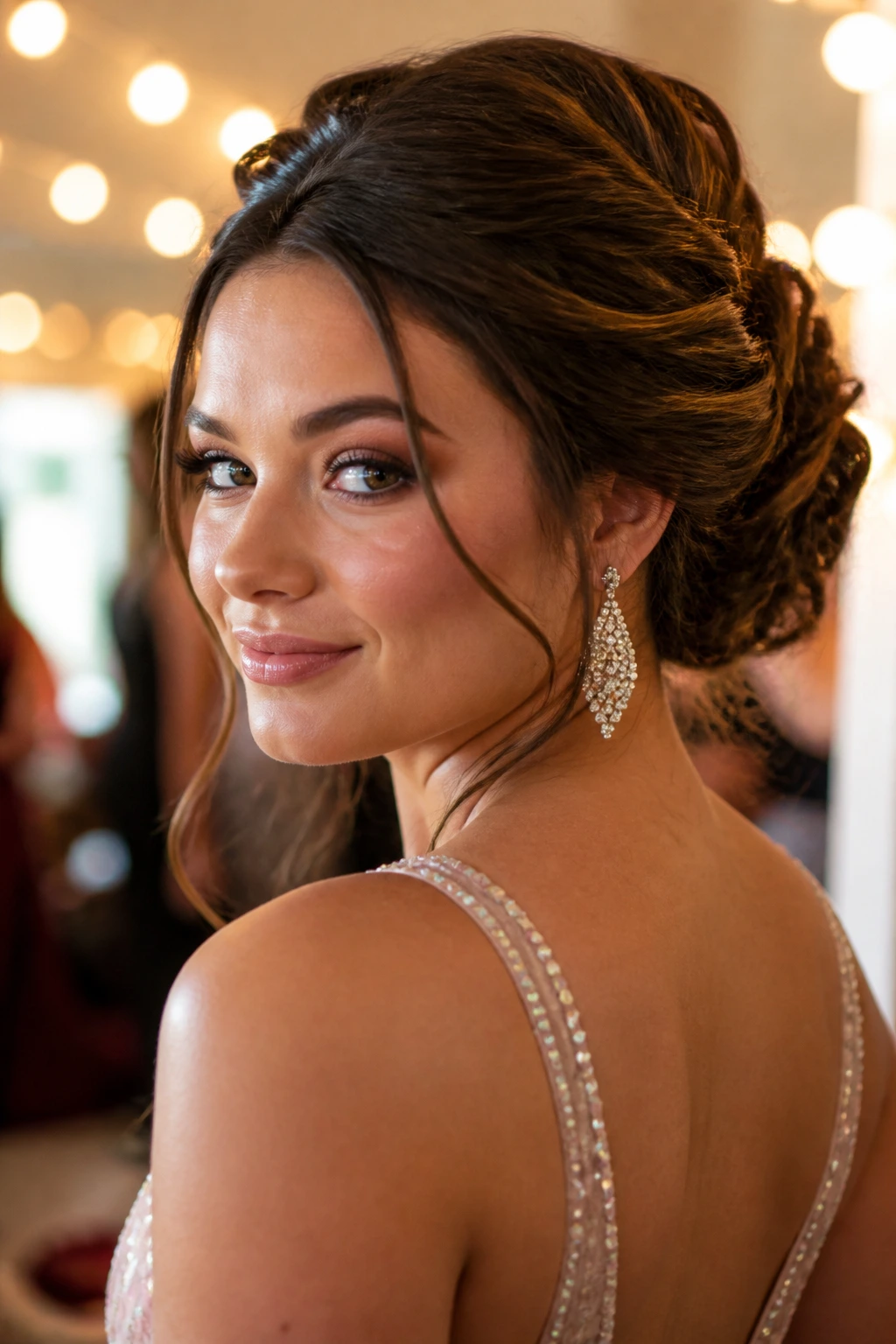
The best prom hairstyle is the one that lets you stop thinking about your hair. When the pins are solid, the shape makes sense from the back as well as the front, and the neckline has room to breathe, the whole night gets easier. You are not fighting your mirror every twenty minutes. That’s the real win.
Pick the style that fits your hair type, your dress, and your patience level. Do one trial run, keep a few pins in your bag, and leave room for a little softness around the face if you want it. The night will move fast anyway. Your hair should keep up.
