



A wedding hairstyle has a sneaky little job: it has to look soft in the mirror, survive a veil comb, and still behave after hours of hugging, dancing, and one too many happy tears. That’s why wedding hairstyles for brides are never only about “pretty hair.” They’re about balance, structure, and the way the back of the head reads in photos when nobody is standing in front of you.
A style can be beautiful in a chair and fall flat the second it moves. Or it can be the opposite — almost plain in close-up, then perfect once the dress is on, the earrings are in, and the neckline finally has something to work with. I trust a style that holds its shape from the ceremony to the last toast more than I trust a style that only looks good in one angle and one kind of light.
There’s also the part people tend to skip: hair texture changes everything. Fine hair needs grip. Thick hair needs structure. Curls need room to breathe, not punishment under a flat iron. And short hair absolutely can look formal; it just needs a smarter outline, not more pins jammed into it like a panic move.
Why These Looks Earn Their Place
-
They photograph from every angle: These styles are built to look finished from the front, the profile, and the back of the head, where wedding photos spend a lot of time.
-
They work with real hair texture: Some bride-friendly looks need silky smoothness, while others are better with a little grit, bend, or natural curl left in the hair.
-
They leave room for a veil or accessory: A good bridal style makes space for a comb, pins, flowers, pearls, or a tiara instead of fighting them.
-
They stay elegant after movement: These shapes keep their line after walking, dancing, and turning your head for greetings.
-
They suit different dress necklines: A clean bun, a soft wave, or a braided crown can change the whole read of a gown without competing with it.
-
They can be tailored, not copied: Most of these looks can be tightened, softened, raised, lowered, or decorated so they feel like your hair, not a borrowed trend.
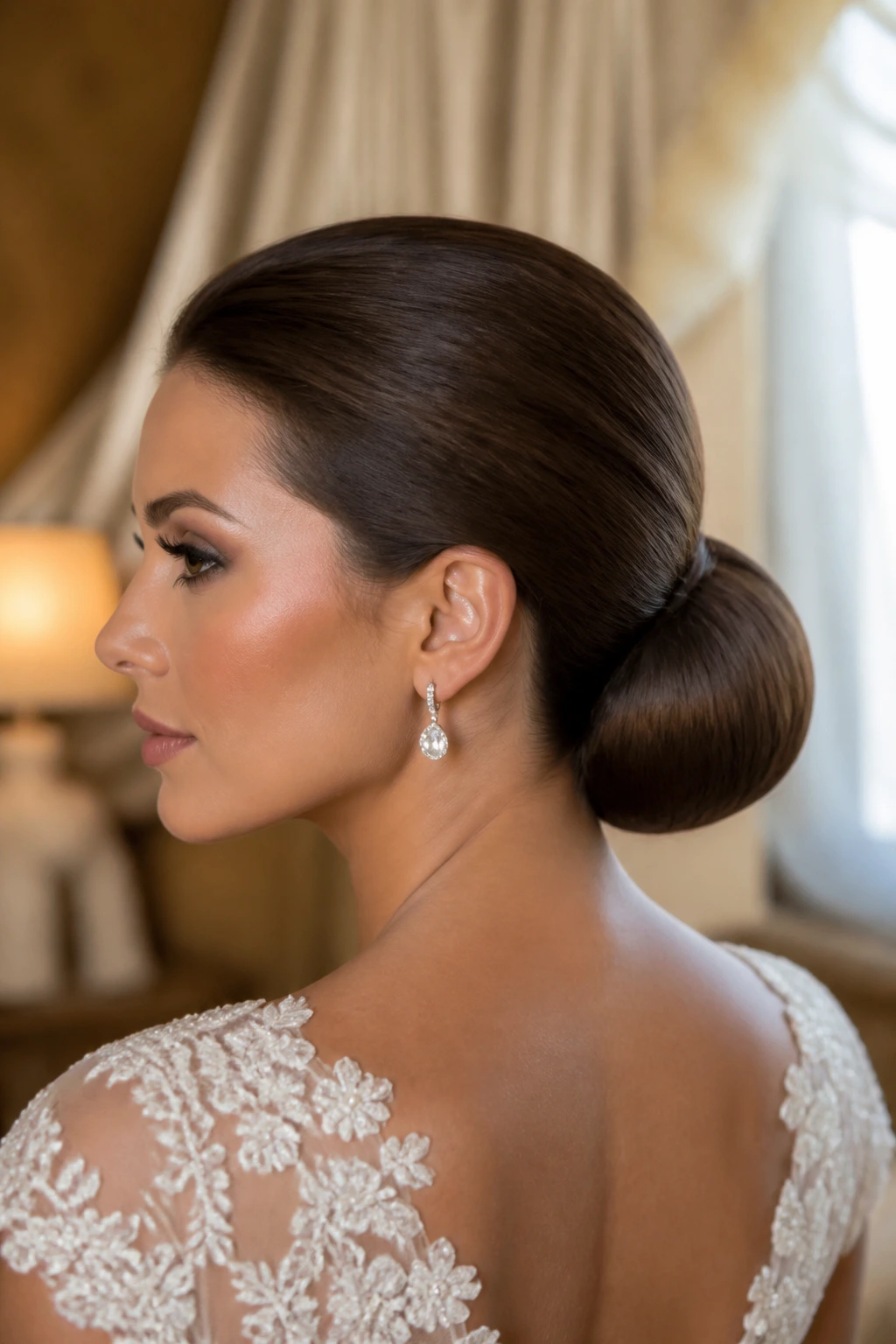
1. Sleek Low Chignon with a Center Part
A sleek low chignon with a center part has a kind of quiet authority that I never get tired of. It’s clean at the front, controlled at the sides, and tucked neatly at the nape so the dress gets room to breathe. If the gown already has beading, lace, or a strong neckline, this style knows when to step back.
The key is not making it look wet or overworked. Smooth the hair with a light serum, then keep the bun low and narrow rather than bulky. It’s especially good with a cathedral veil, because the shape gives the comb a stable place to sit without poking out like an afterthought.
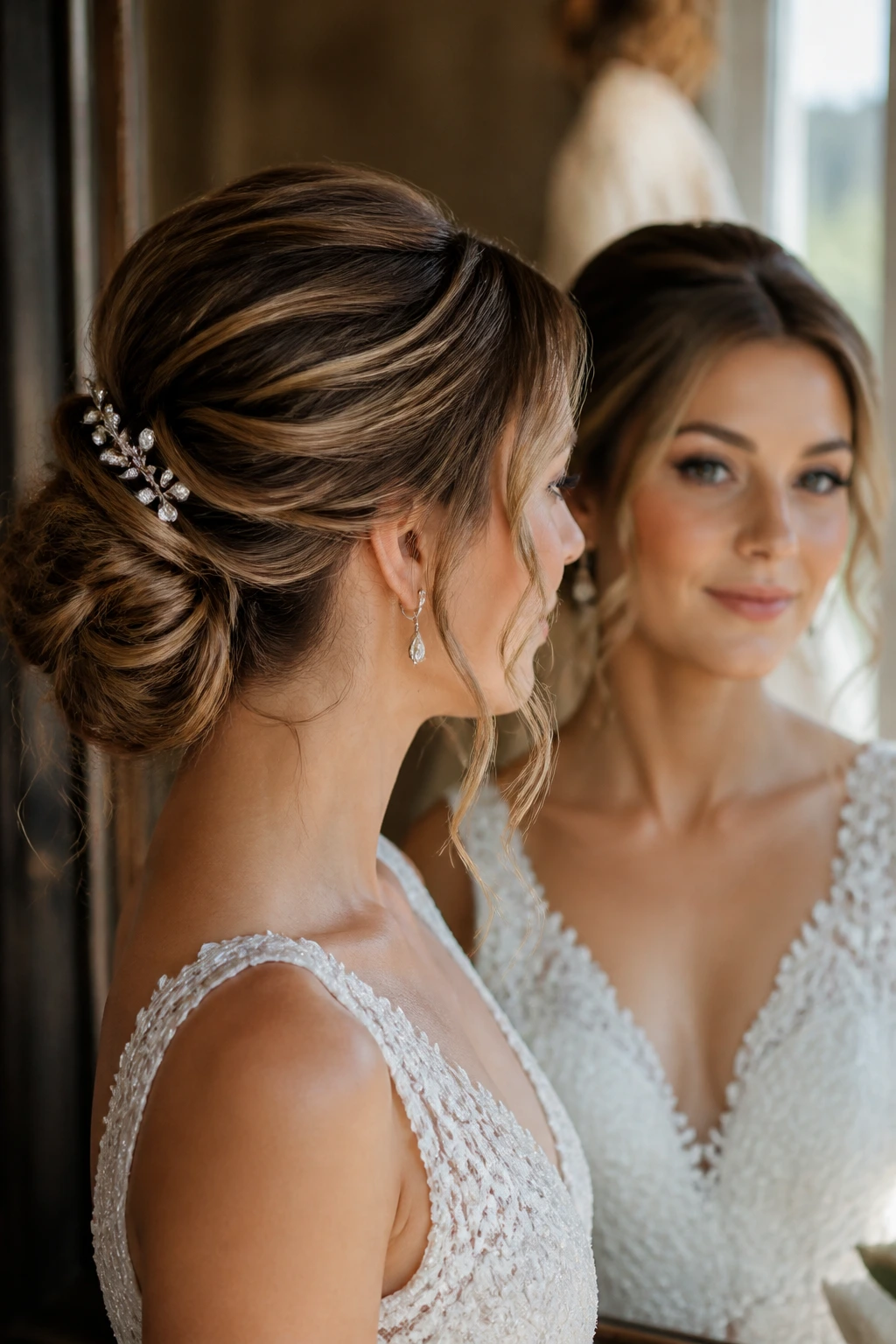
2. Soft Textured Low Bun with Face-Framing Pieces
Want something softer than a chignon but still polished? This is the one I reach for first. The bun sits at the nape, slightly loosened at the edges, while two face-framing pieces are curled and left to move instead of being forced into symmetry.
That tiny bit of looseness changes everything. The style feels romantic without drifting into messy territory, and it works particularly well with lace sleeves, sweetheart necklines, or gowns that need a little air around the collarbone. If your hair is medium to thick, this bun gets nice shape without looking overstuffed.
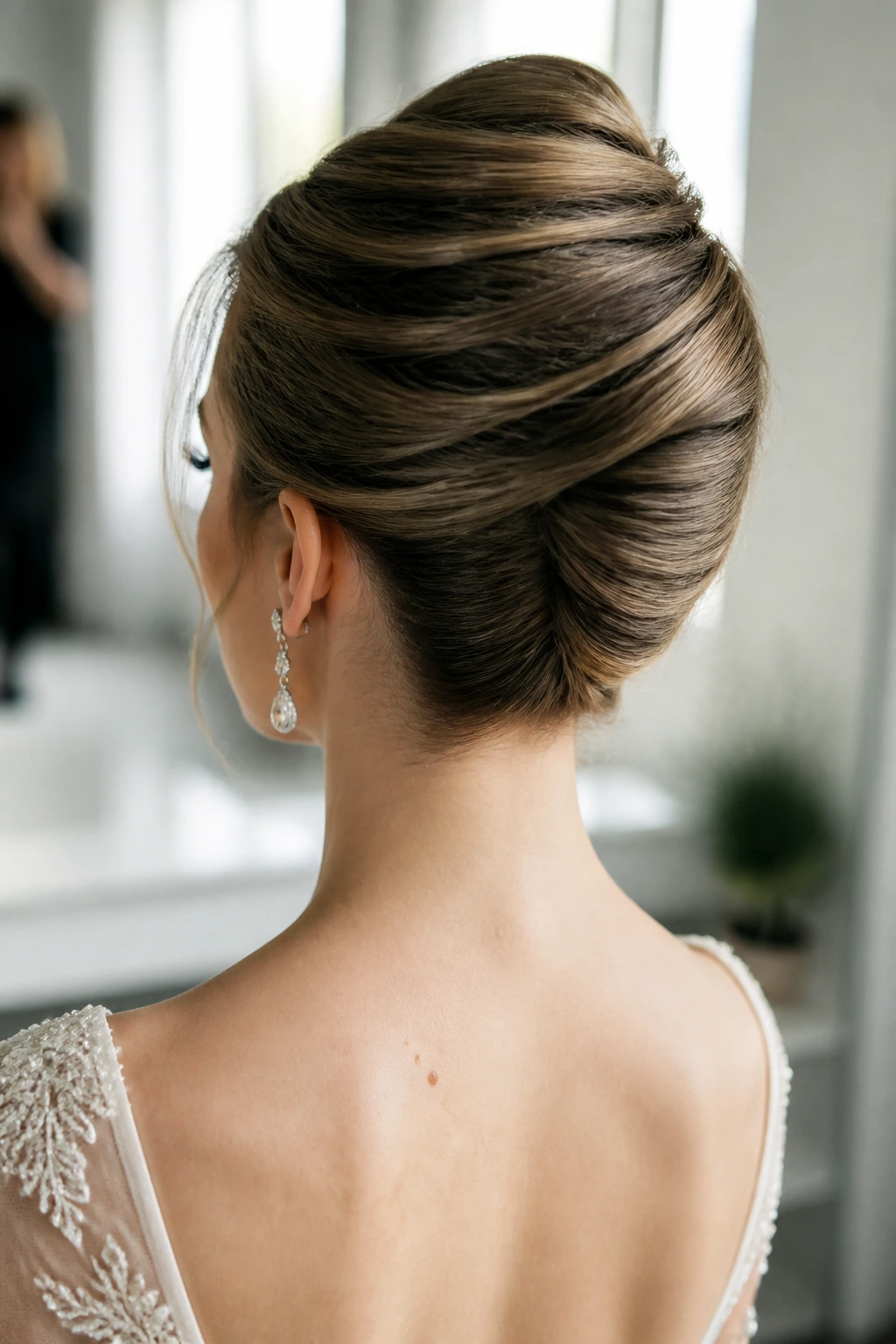
3. Polished French Twist
A French twist is not trying to be cute. That’s part of its appeal. It’s tall enough to feel formal, narrow enough to keep the back clean, and structured enough to work with a long veil or statement earrings.
I like this one for brides who want the dress to do the talking. The twist should sit smooth and vertical, with the seam pinned tightly and the ends tucked in so nothing sticks out. If your hair is very slippery, a little texture spray before styling makes a bigger difference than drowning it in hairspray after the fact.
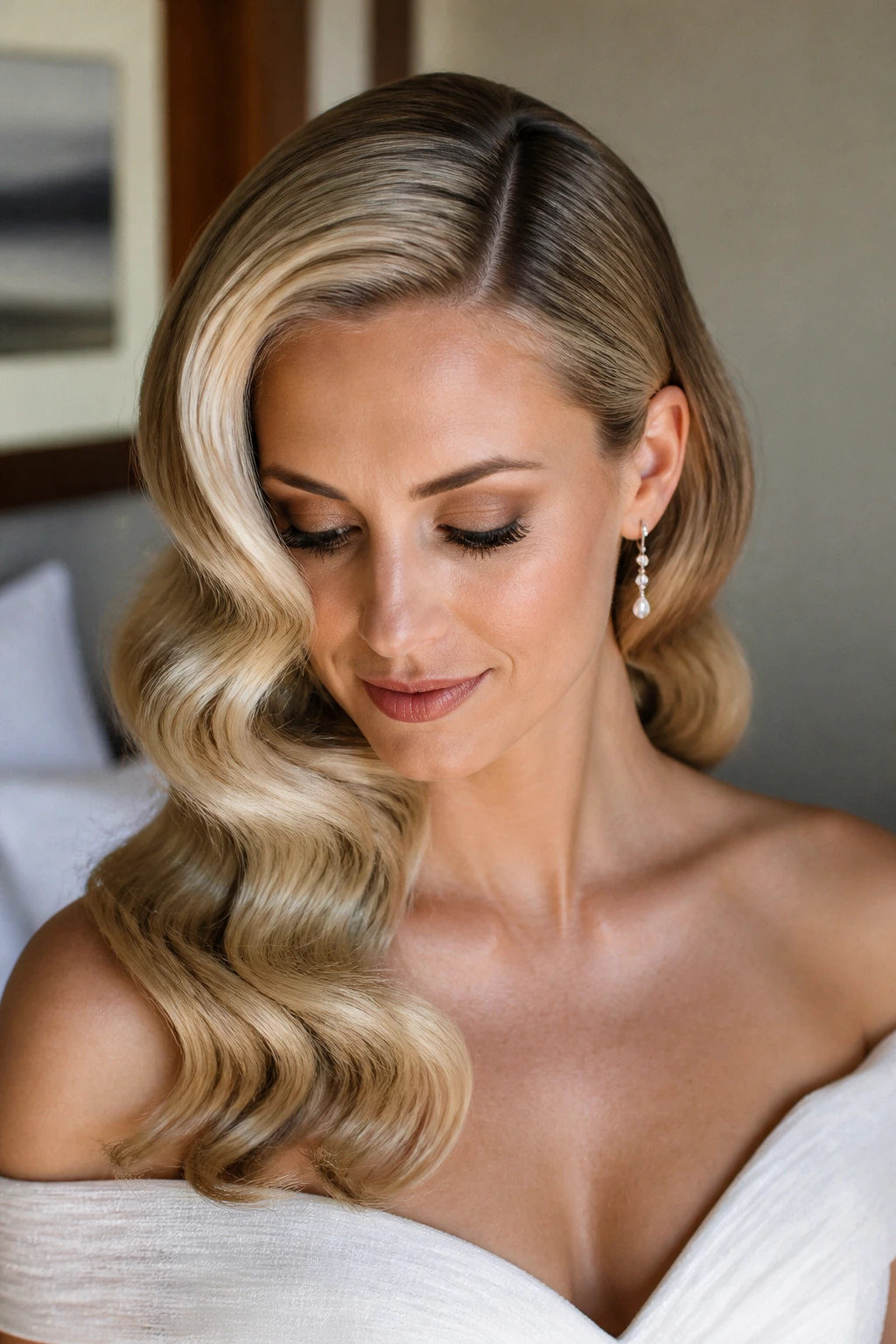
4. Old-Hollywood Waves with a Deep Side Part
Deep side part. Glossy S-waves. A little shine at the ends. That’s the whole spell, and it works because the shape has drama without clutter. Old-Hollywood waves look especially good when the dress has a simple neckline or a satin finish, because the hair brings the softness.
The secret is making the front wave strong and the rest of the wave pattern consistent, not fuzzy. A side sweep over one shoulder gives the style that formal, almost red-carpet feeling. If you’re wearing a bold earring, this style lets it show without the hair disappearing into the background.
5. Braided Crown Updo
A braided crown gives you structure around the hairline and a lifted shape at the back, which makes it one of the more practical elegant choices for an outdoor ceremony. The braid acts like a frame, and that frame is useful when the weather has opinions.
I prefer this style when the dress is simple or bohemian-leaning, because the braid adds detail without crowding the neckline. You can make the crown tight and clean, or slightly fuller with a few pulled-out sections. Either way, it reads as intentional and secure.
6. Twisted Half-Up Cascade
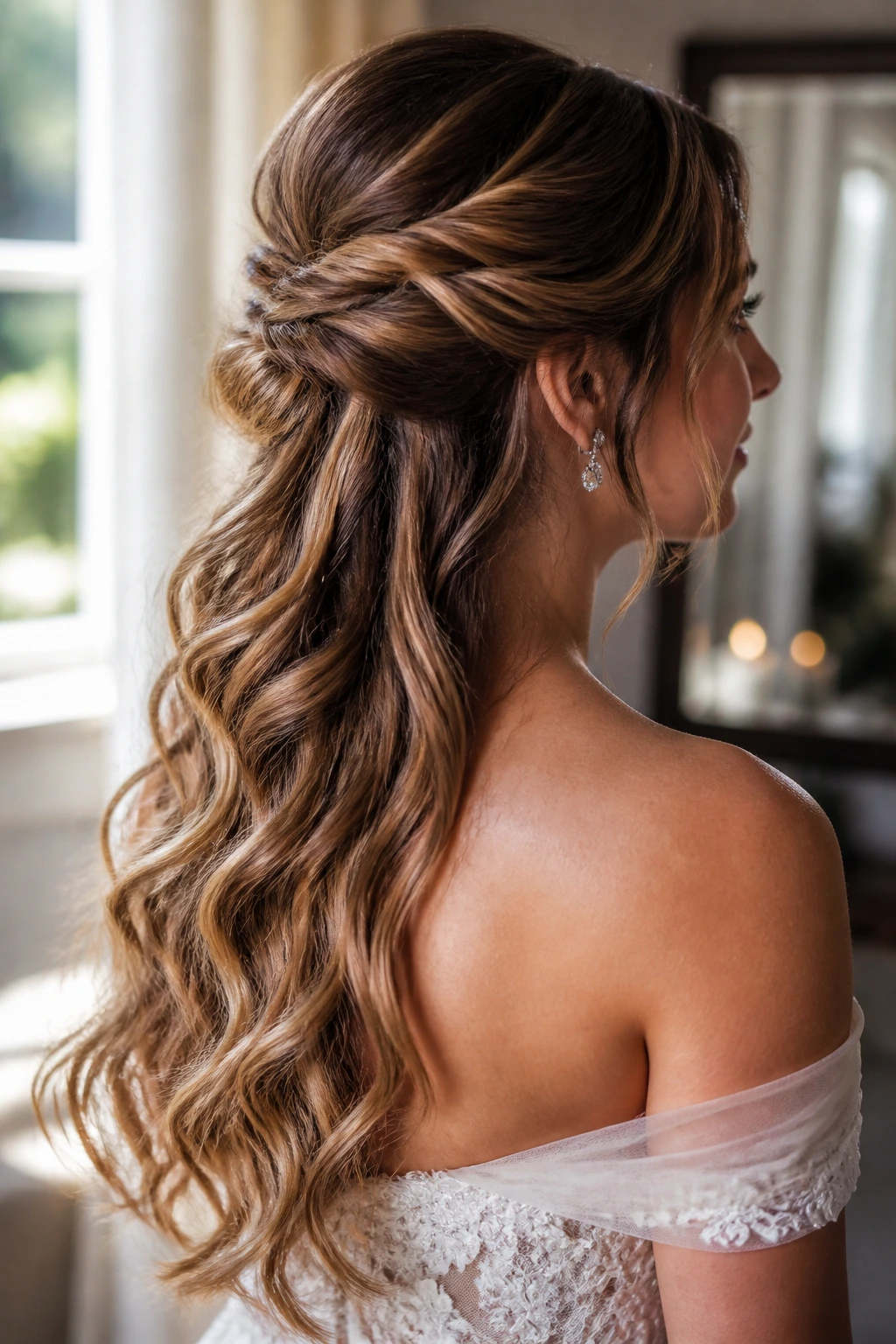
A twisted half-up style is one of those rare looks that can feel relaxed and formal at the same time. The top section is pinned back with a simple twist or two, while the rest of the hair falls in soft waves or a polished blowout.
It’s a smart choice if you love wearing your hair down but still want the front off your face. This shape also gives a veil comb something to grab onto without hiding the whole style. If your hair is long, the cascade gives the lower half enough movement to stay interesting in photos.
7. Classic Ballroom Bun
The classic ballroom bun is round, centered, and finished enough to hold its own in a very formal room. It usually sits low or mid-low, with the hair smoothed back and tucked into a neat shape that feels timeless rather than fussy.
This style does best when the rest of the bridal look is already doing a lot. Think long train, structured bodice, heavy embroidery. The bun keeps the silhouette clean and lets the dress breathe. Add a few pins with crystals or pearls if you want sparkle, but don’t bury it under too much decoration.
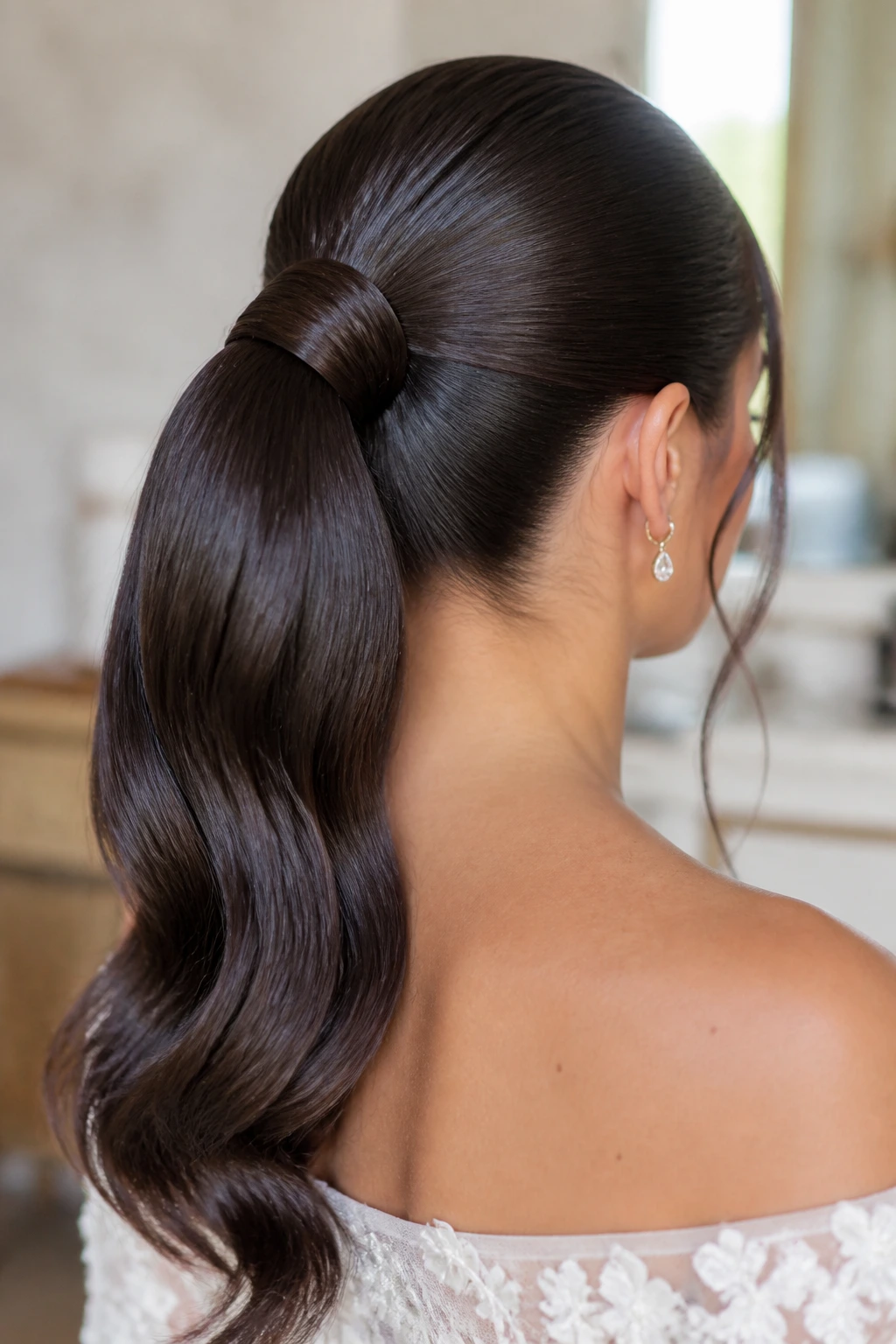
8. High-Gloss Ponytail with a Wrapped Base
A glossy ponytail for a bride is not casual when it’s done right. Keep the crown smooth, the length sleek, and the base wrapped with a section of hair so the elastic disappears. The result feels modern, sharp, and surprisingly elegant.
This works best with minimalist dresses, square necklines, and strong earrings. It also photographs beautifully from the back because the line of the ponytail stays clean instead of collapsing into a loose fluff by hour two. If your hair is fine, clip-in extensions can help the tail hang with more weight.
9. Pearl-Pinned Low Knot
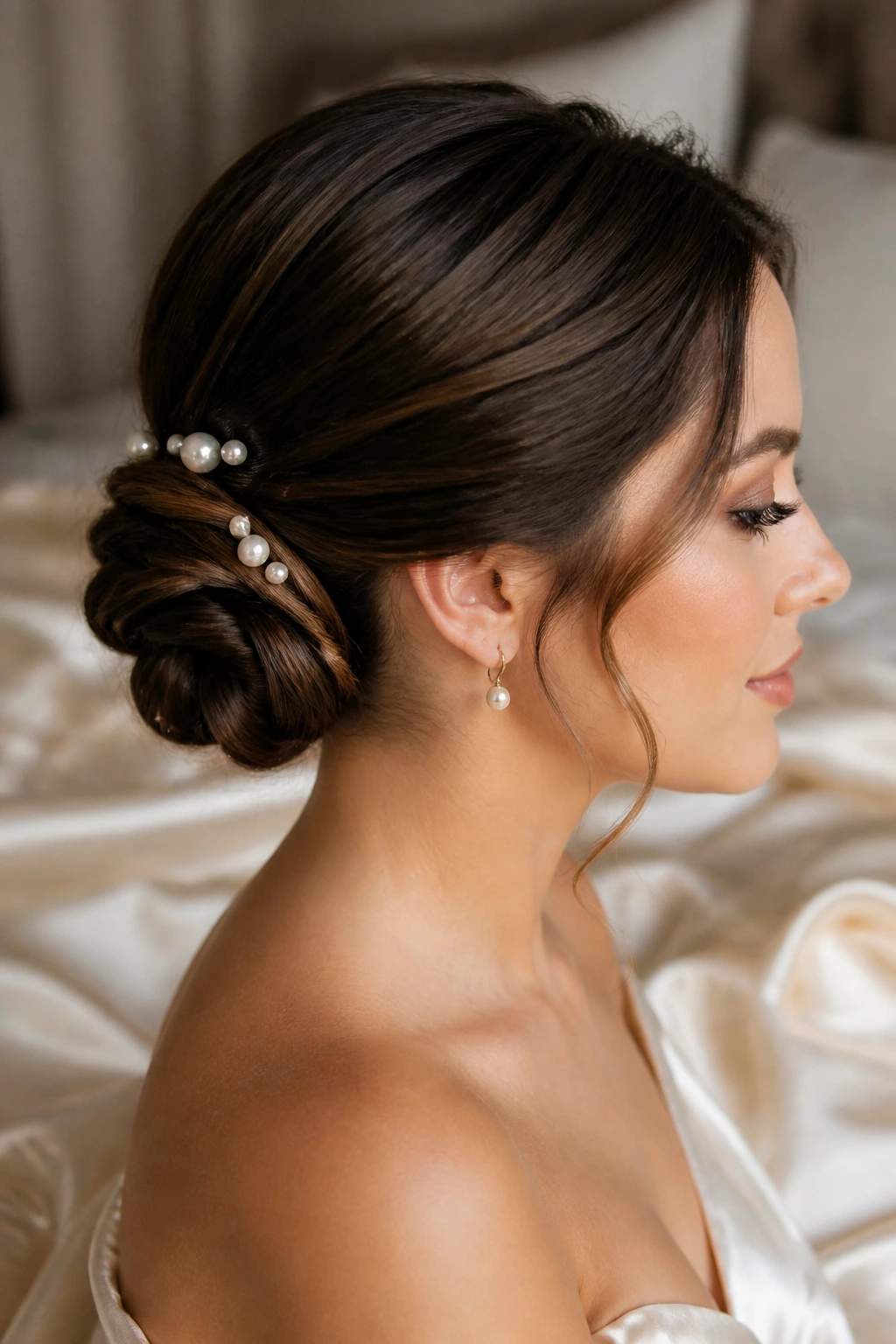
A low knot with pearl pins feels like jewelry built into the hairstyle. The knot itself stays compact, then the pins are placed with a little irregularity so they don’t look like a neat little row. That tiny imbalance makes the style feel handmade in the best way.
I like this for brides who want something understated with a point of view. It pairs well with matte fabrics, satin slips, or gowns that have a clean front and a detailed back. A pearl pin near the twist line catches the light without shouting for it.
10. Waterfall Braid Half-Up
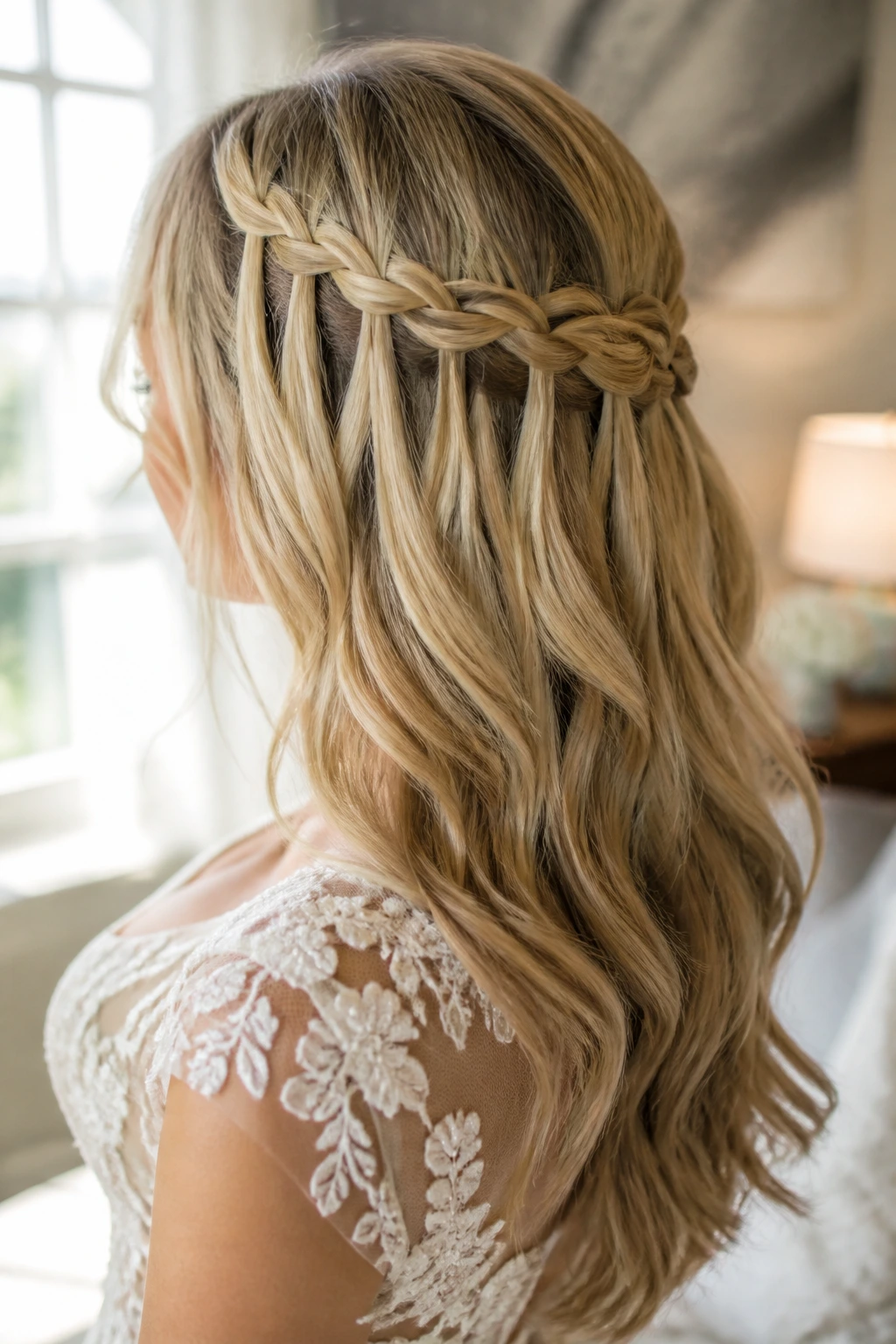
A waterfall braid gives movement without fully pulling the hair away from the shoulders, which is why it works so well for brides who want softness. The braid creates a line across the back, then the loose lengths fall in a controlled curtain beneath it.
This style likes hair with some body. Too silky, and the braid can slip; too textured, and the pattern gets busy fast. For a wedding, I’d keep the waves loose and polished rather than beachy. The whole point is grace, not surf spray.
11. Mid Bun with Soft Volume at the Crown
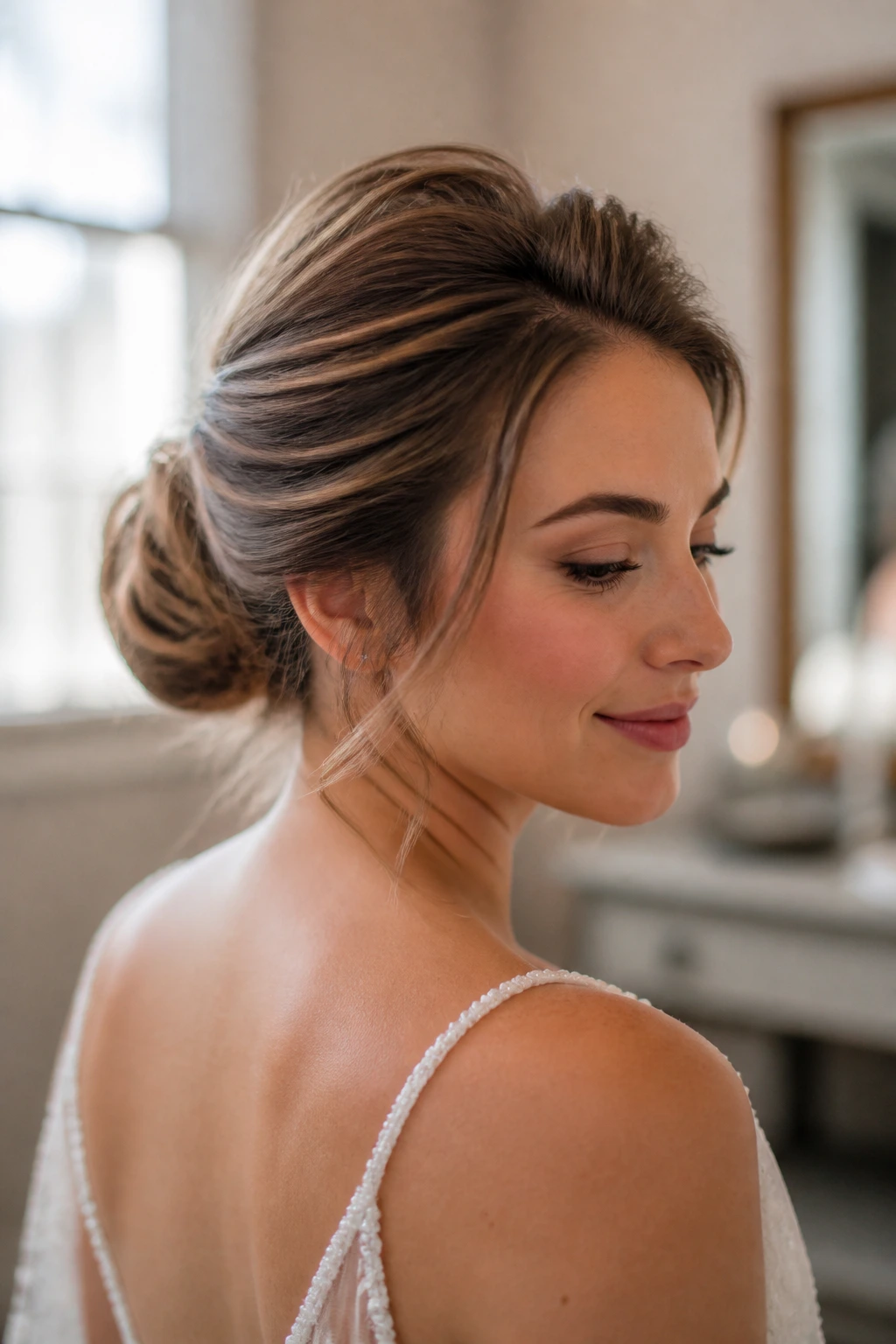
A mid bun sits in that sweet spot between formal and easy to wear. A little lift at the crown keeps the profile flattering, while the bun itself stays low enough to feel secure and not top-heavy.
This one is especially good if you want the face to stay open. It works with open-back dresses, boat necks, and gowns with a strong shoulder line. The extra height at the crown should be gentle, not poufy; you want shape, not a 1980s office blowout in formalwear.
12. Side-Swept Waves for Long Hair
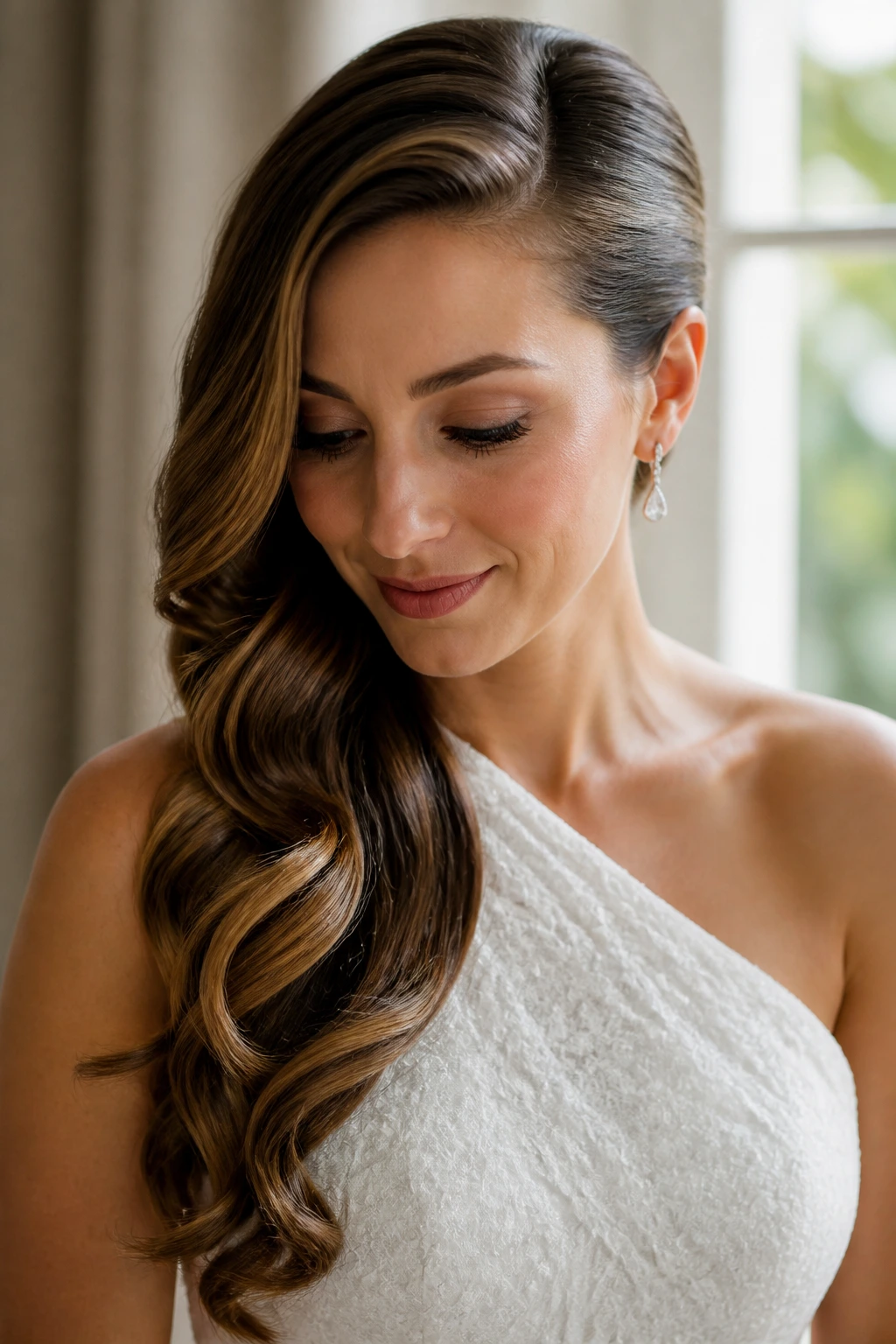
Side-swept waves are one of my favorite choices when the bride wants glamour but not a full updo. The hair falls to one side in long, soft waves, usually secured behind one ear or pinned near the nape so it stays put.
The shape is flattering because it creates a diagonal line across the face and neck. That line works especially well with one-shoulder gowns or asymmetric necklines. Keep the waves glossy and structured; if they’re too broken up, the style loses the formal finish.
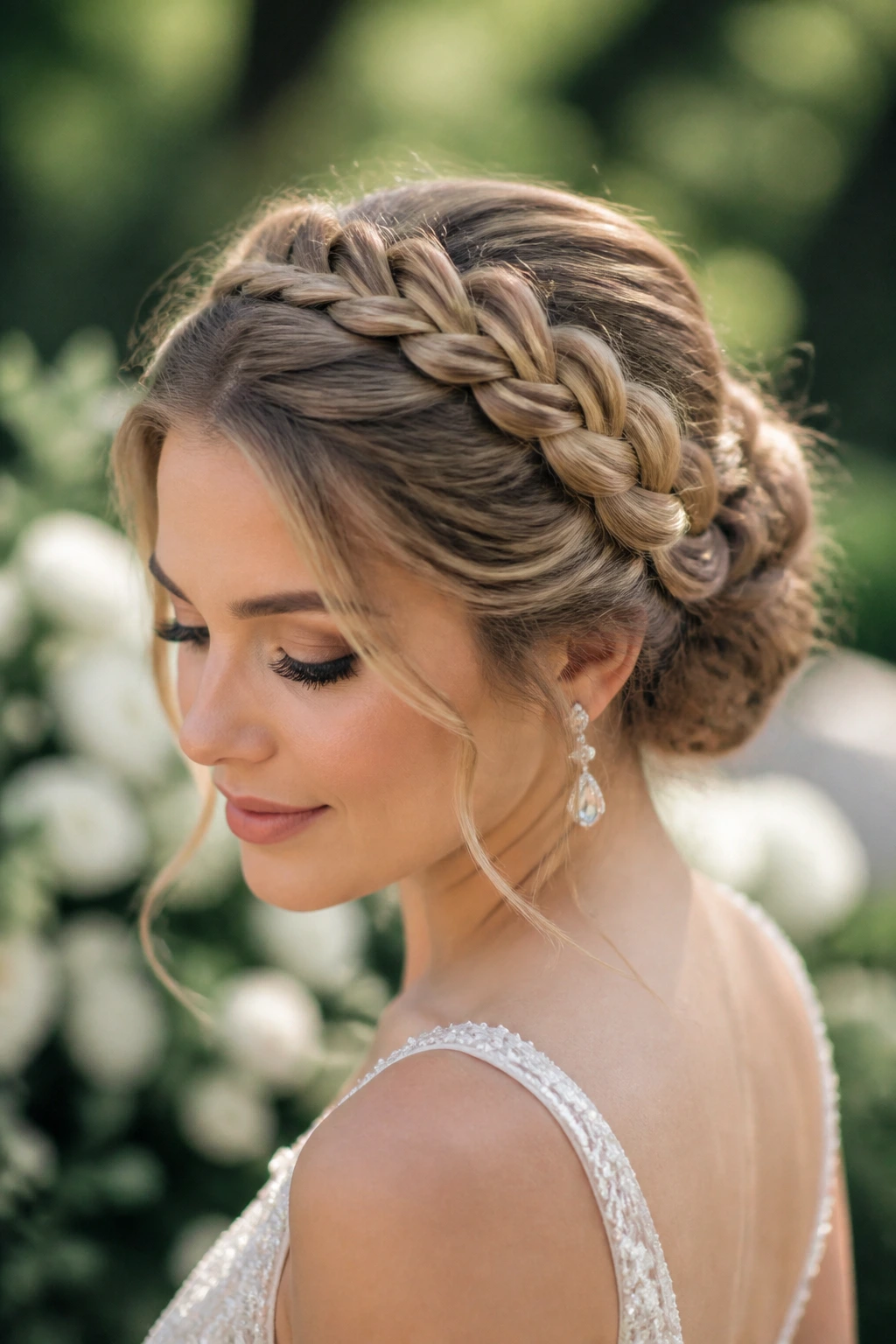
13. Halo Braid Bun
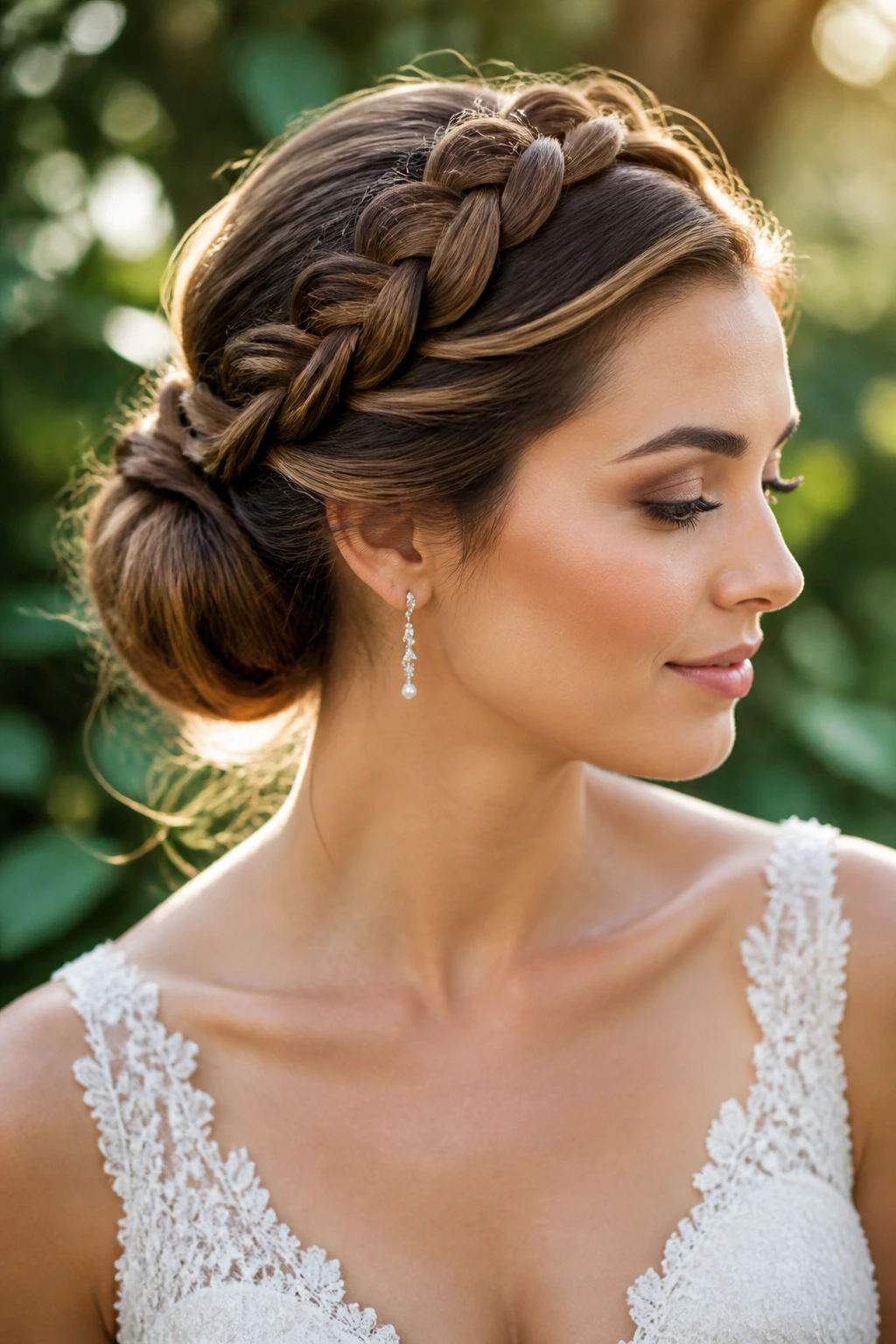
A halo braid bun gives the impression of a crown without actually wearing one. The braid wraps around the head, then feeds into a bun or tucked shape at the back, so the whole look feels sculpted from every angle.
I like this for brides who want detail at the hairline instead of all the ornamentation at the back. It works beautifully with gardens, outdoor spaces, or dresses that have open backs and delicate straps. The braid should sit close enough to the head to stay neat, but not so tight that it flattens the shape.
14. Rope-Braid Low Ponytail
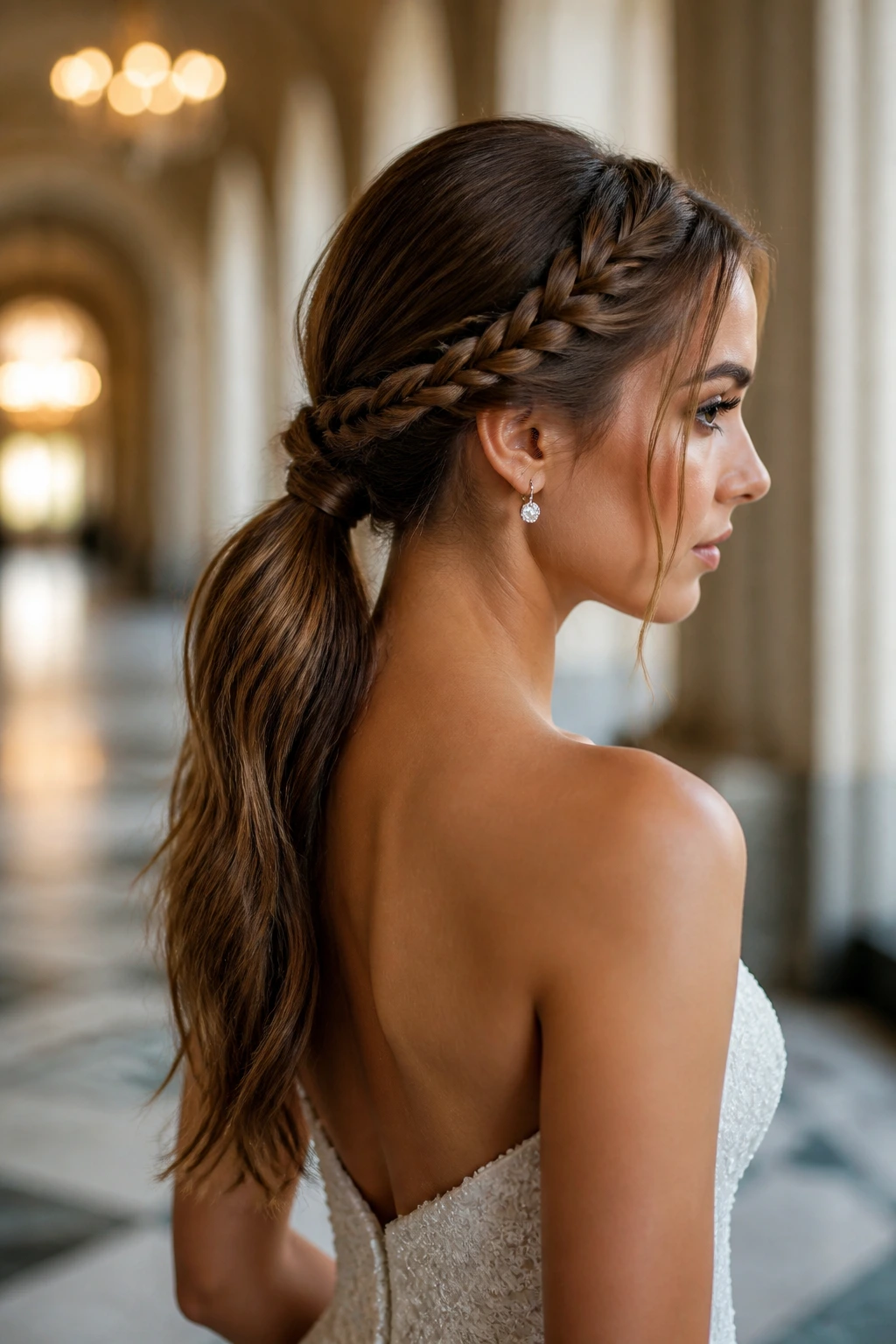
A rope braid has a different energy from a regular braid. It looks cleaner, a little more modern, and it gives the ponytail a twist pattern that reads well in photos without needing extra accessories. The key is keeping the sections even so the rope shape stays crisp.
This style is a good pick when you want something structured but not severe. It works especially well with simple gowns or sleek fabrics. If you’re planning earrings, this ponytail keeps the neck open and gives the jewelry room to matter.
15. Sleek Bob with Tucked Ends and Barrettes
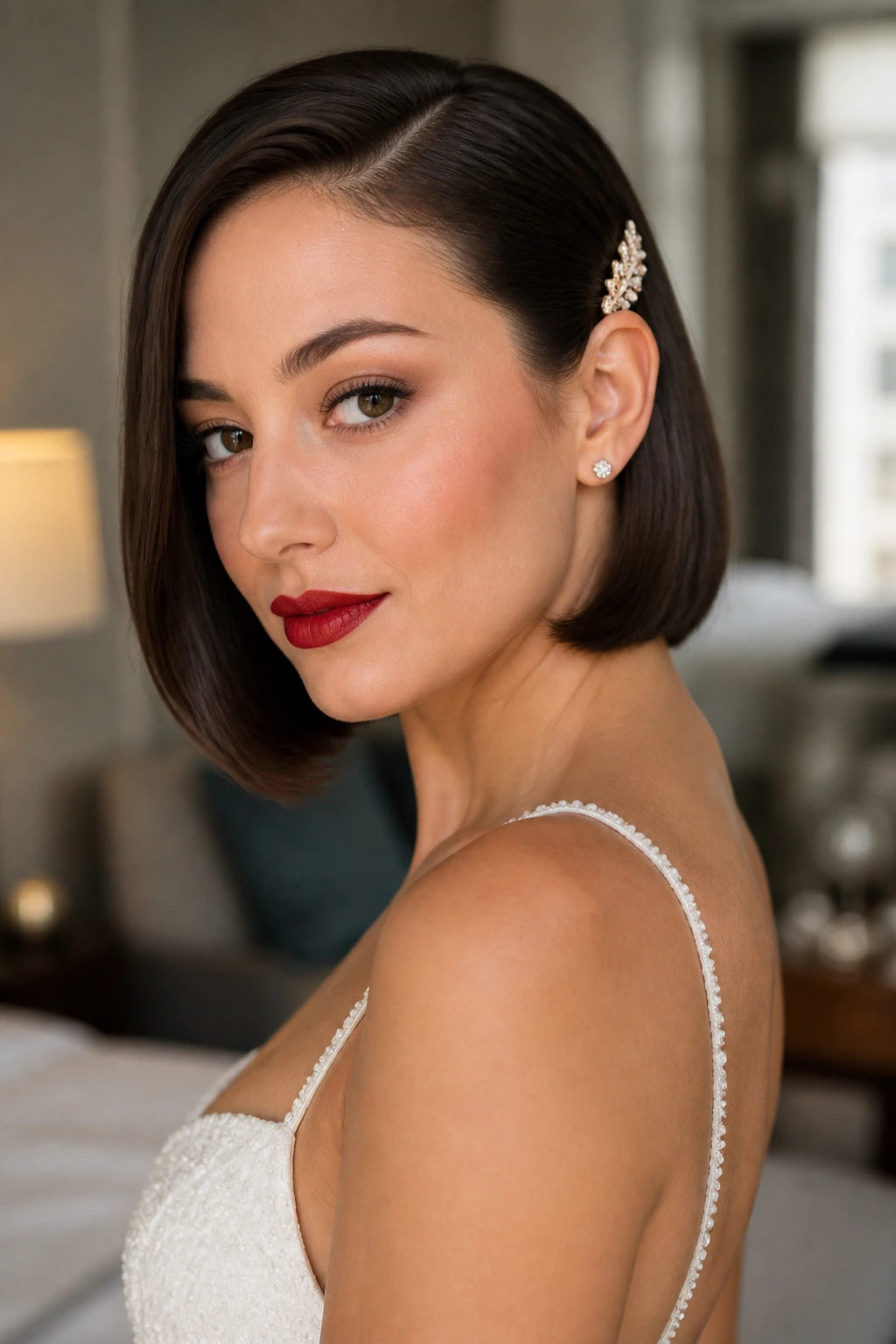
Short hair can be formal. A sleek bob with the ends tucked under and one or two elegant barrettes proves it every time. The trick is not trying to turn the bob into a fake updo; instead, make the shape clean and deliberate.
This style looks especially good with strong makeup, a statement lip, or a dress that already has architectural lines. A barrette placed just behind the ear gives the look a bridal finish without hiding the cut. If your bob sits at jaw length or just below, this is one of the most flattering ways to make it feel special.
16. Gibson Tuck
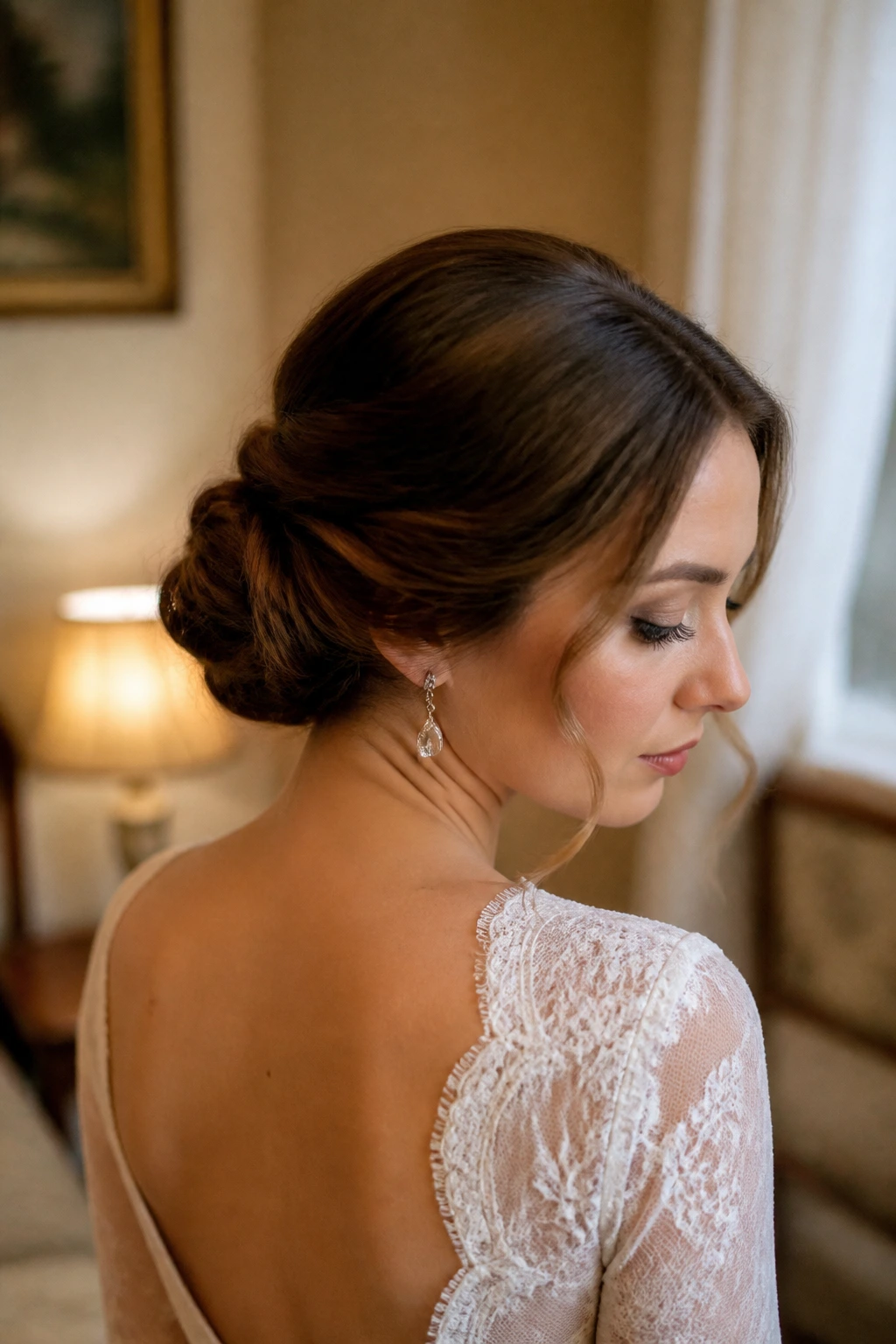
The Gibson tuck has that vintage softness that never looks dated. Hair is rolled inward at the nape, creating a tucked shape that’s elegant, low, and a little romantic without needing much decoration.
I reach for this style when the bride wants old-fashioned polish without a rigid shell. It works with medium-length hair and can be dressed up with combs, pins, or tiny flowers. The roll should look full enough to read from the back, but not so puffed up that it feels like a costume piece.
17. Braided Low Bun with Ribbon
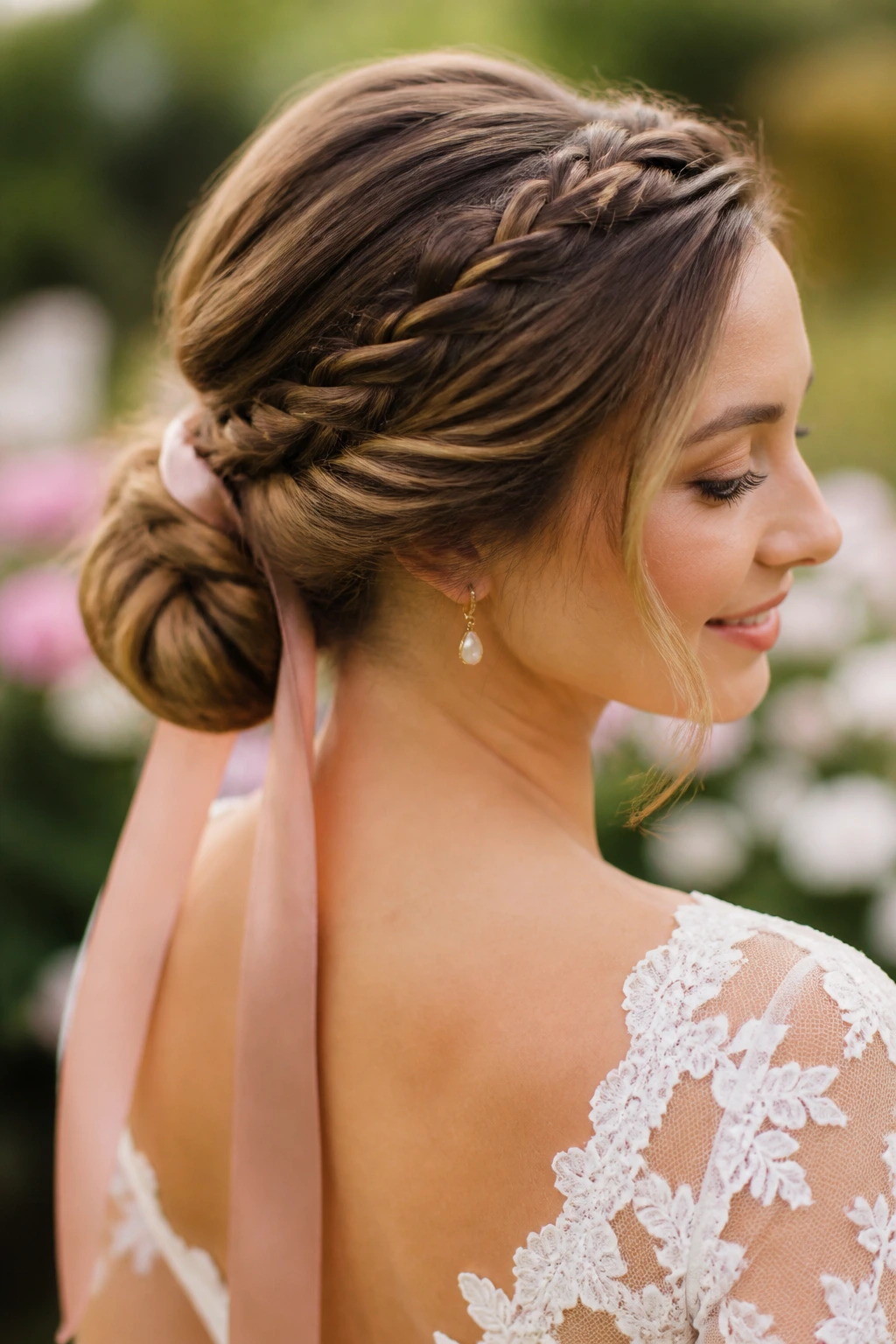
A braided low bun with ribbon is a lovely way to bring color into the hair without overdoing accessories. The braid gives texture, the bun keeps the shape grounded, and the ribbon softens the whole thing in a way that feels personal.
Choose a ribbon that echoes the bouquet, shoes, or a small detail in the dress. That’s where this style gets smart. A narrow silk ribbon will sit better than a thick satin bow if the rest of the look is already ornate, and the ends can trail just enough to catch a bit of movement.
18. Curtain Bangs with Soft S-Waves
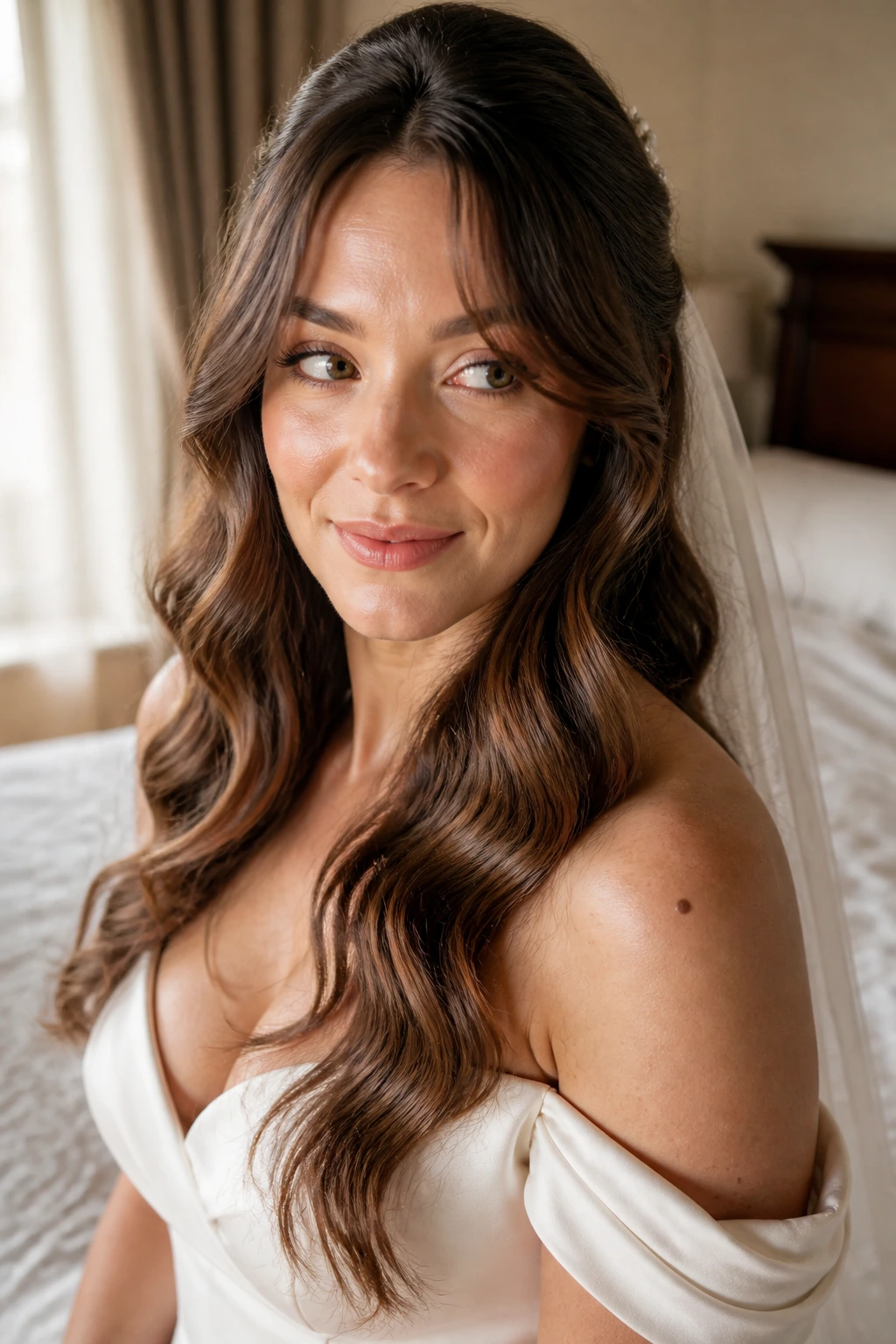
Curtain bangs change the whole mood of wedding hair. Paired with soft S-waves, they create a face-framing shape that feels relaxed but still finished, especially if the hair is glossy and the bends are clean.
This is a nice answer for brides who don’t want every strand pulled away from the face. The bangs soften a high neckline, but they also keep the style from looking too formal or stiff. The rest of the hair should fall with a deliberate wave pattern, not loose frizz. That detail matters more than people think.
19. Double-Twist Half-Up
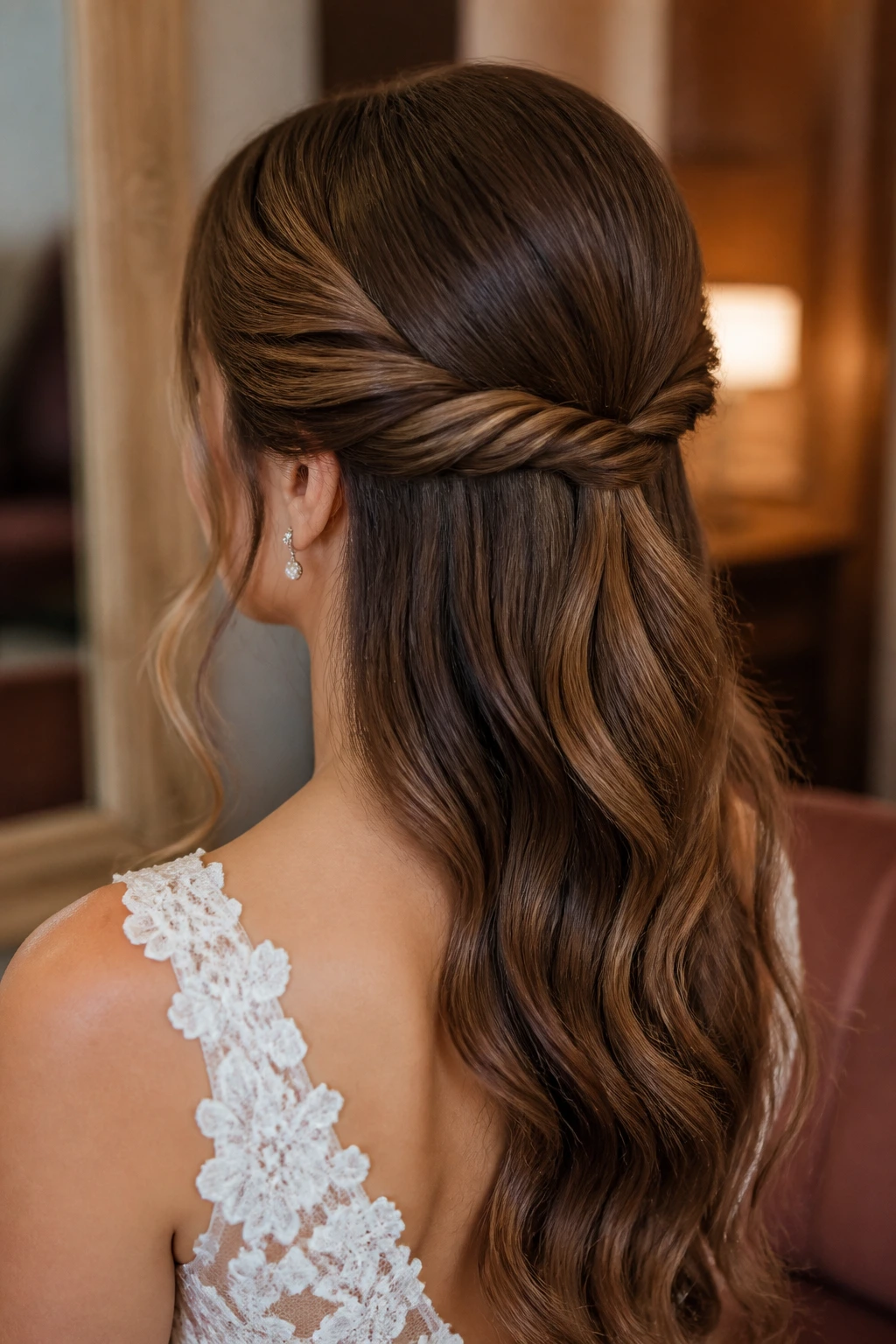
Two twisted sections pinned at the back can do a lot with almost no fuss. The style is simple, but it gives the top half of the hair some direction and makes the rest fall in a controlled cascade.
I like this for brides who want something pretty that doesn’t demand a heavy accessory. It works with medium to long hair and looks especially good when the twists are tucked slightly inward, so the center back stays neat. Add a small comb or a few pins if the dress needs a touch more sparkle.
20. Fishtail Braid into a Low Bun
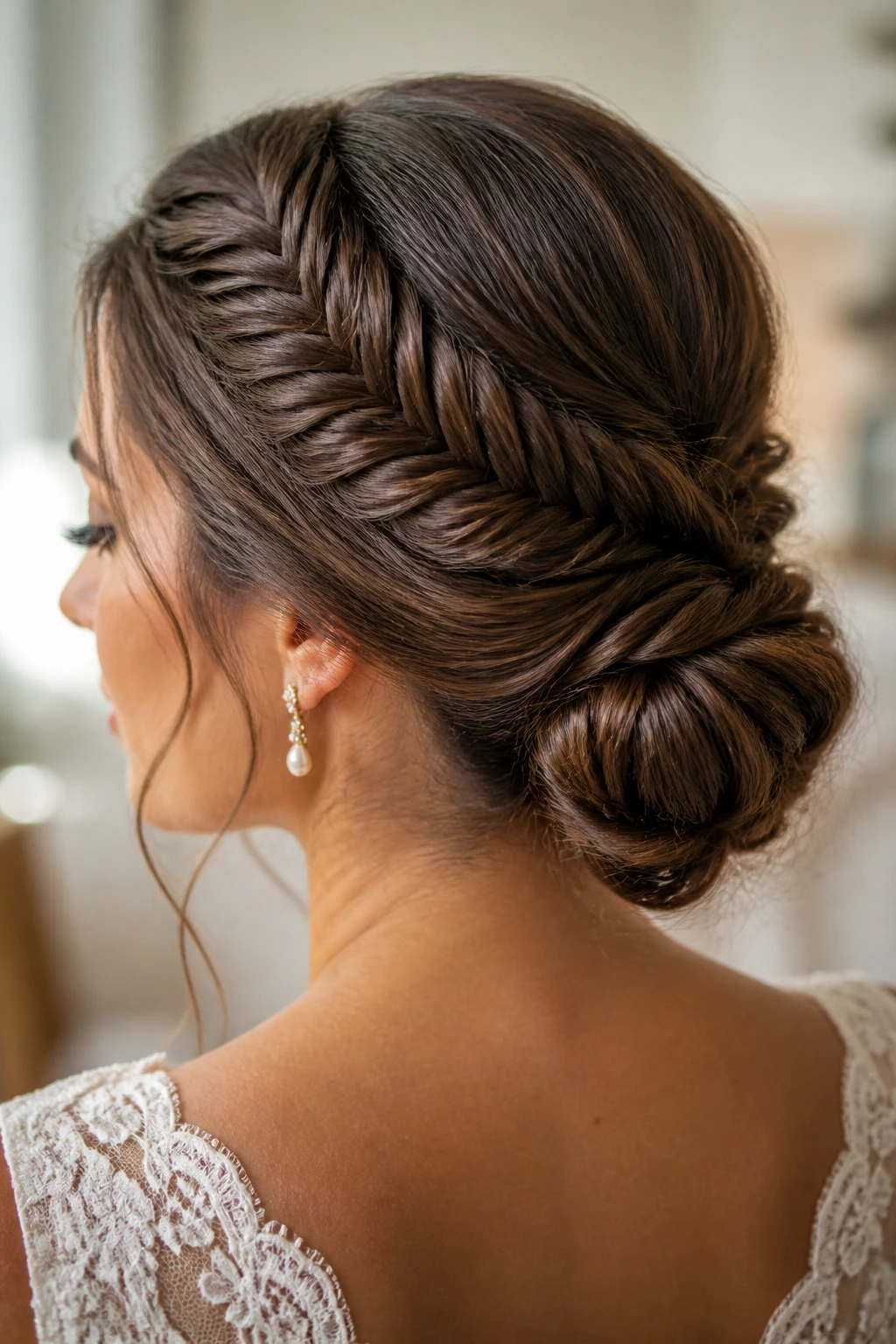
A fishtail braid leading into a low bun gives you texture without losing formality. The braid brings detail at the crown and along the length, then everything folds into a bun that feels secure and composed.
This style likes hair with enough length to show the braid pattern clearly. It’s also a good compromise for brides who want something a little boho but still well dressed. The braid should be tight enough to keep its shape, then the bun can be slightly softer so the whole thing doesn’t feel overworked.
21. Veil-Friendly Low Roll
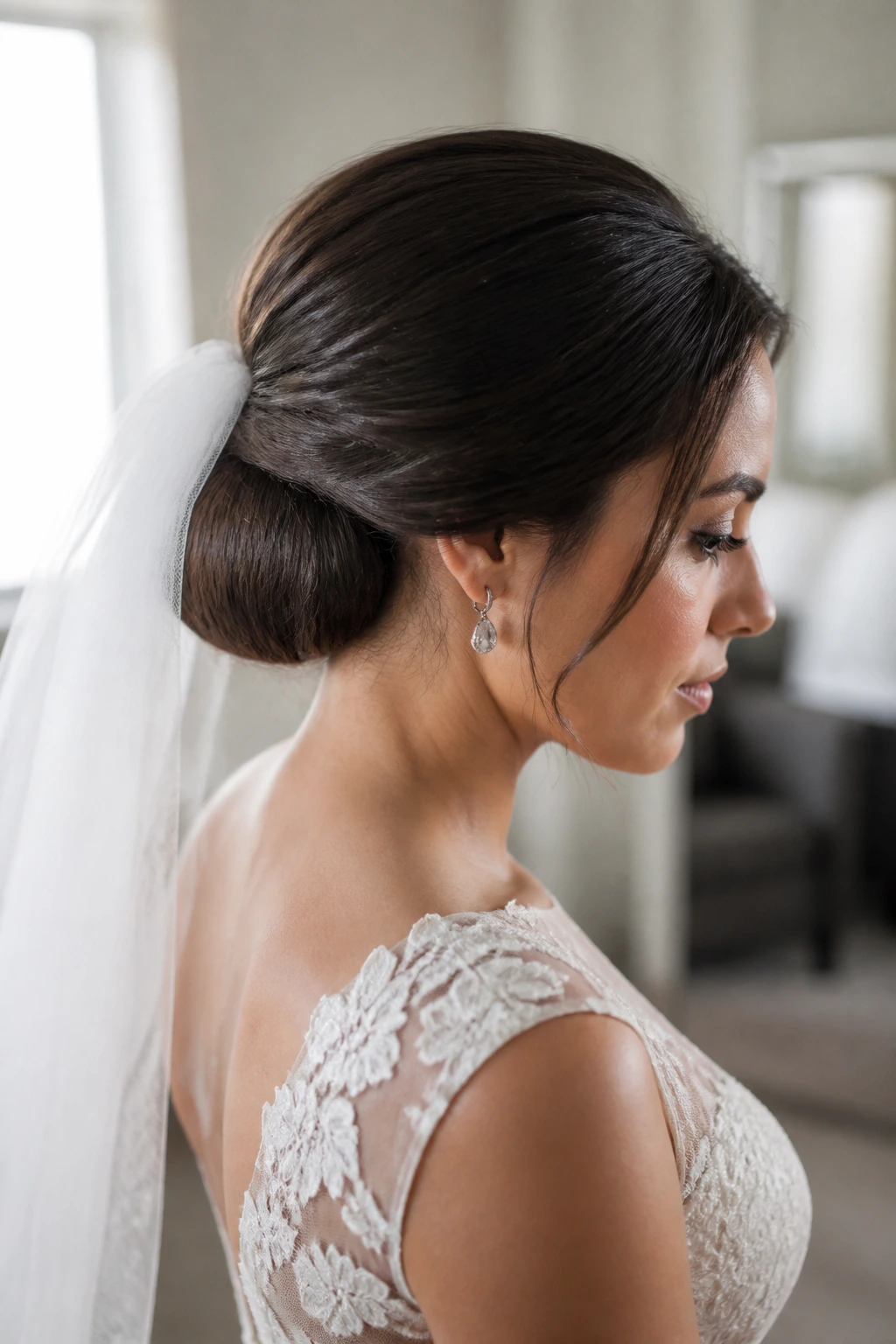
A low roll is one of the smartest choices if the veil is non-negotiable and needs a stable anchor. The hair rolls horizontally at the nape, which leaves a clean spot for the comb and keeps the upper shape smooth.
This style doesn’t fight the veil, which is the whole point. It also works well with high necklines and classic gowns because the line stays low and tidy. If you’re wearing a long veil, this is one of the few shapes that can support it without swallowing the hairstyle underneath.
22. Defined Curl Updo with Lifted Crown
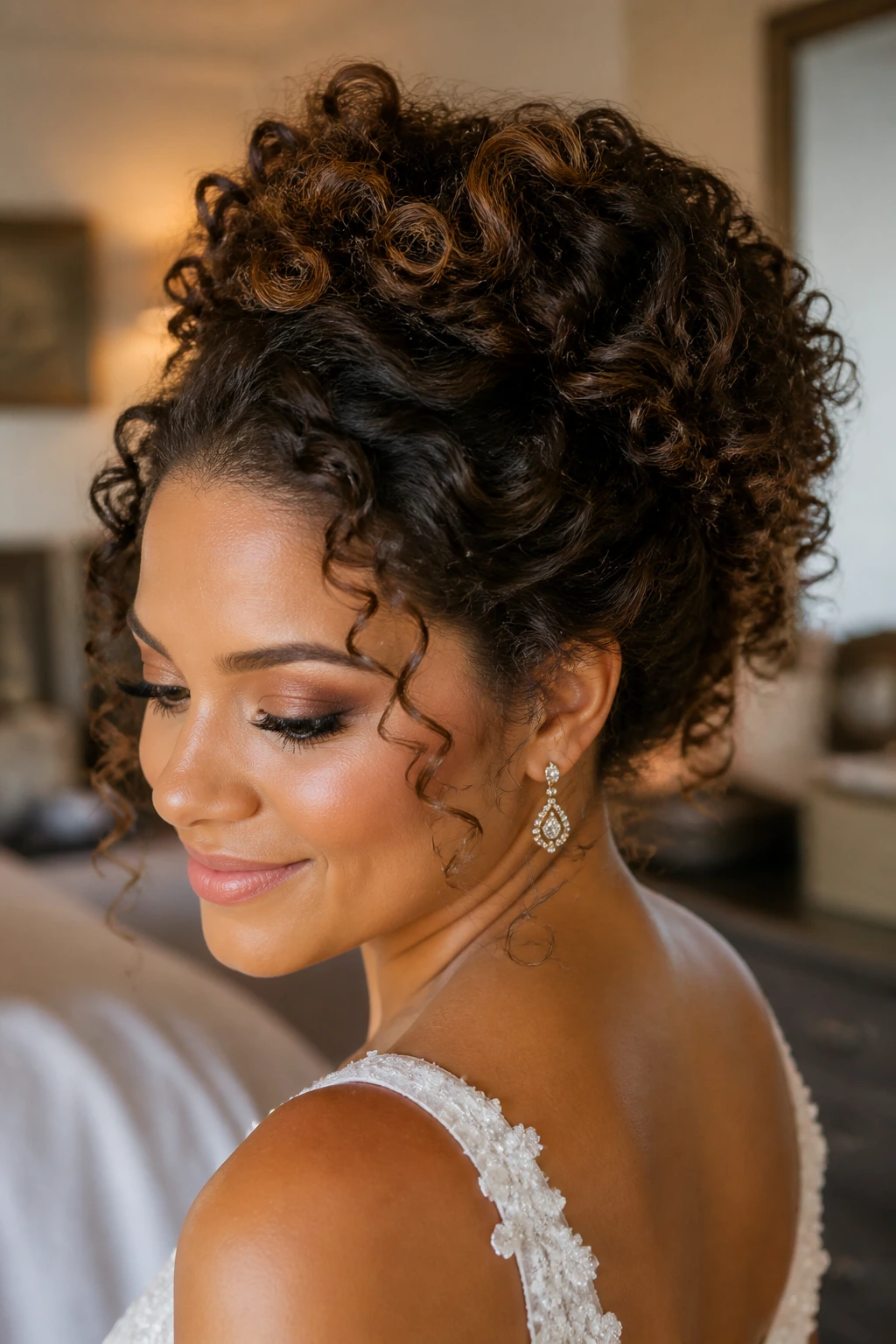
Defined curls pulled into an updo can look rich and structured, not messy, if the curl pattern is left intact. Lift the crown a little, then pin the curls in sections so the shape stays airy and the texture remains visible.
This is the kind of style that respects curly hair instead of flattening it into something it isn’t. It’s especially strong for brides who want height, volume, and texture in the same look. If your curls are prone to frizz, pinning them while they’re still soft from styling gives them a better chance of staying polished.
23. Natural Coil Puff with Sculpted Edges
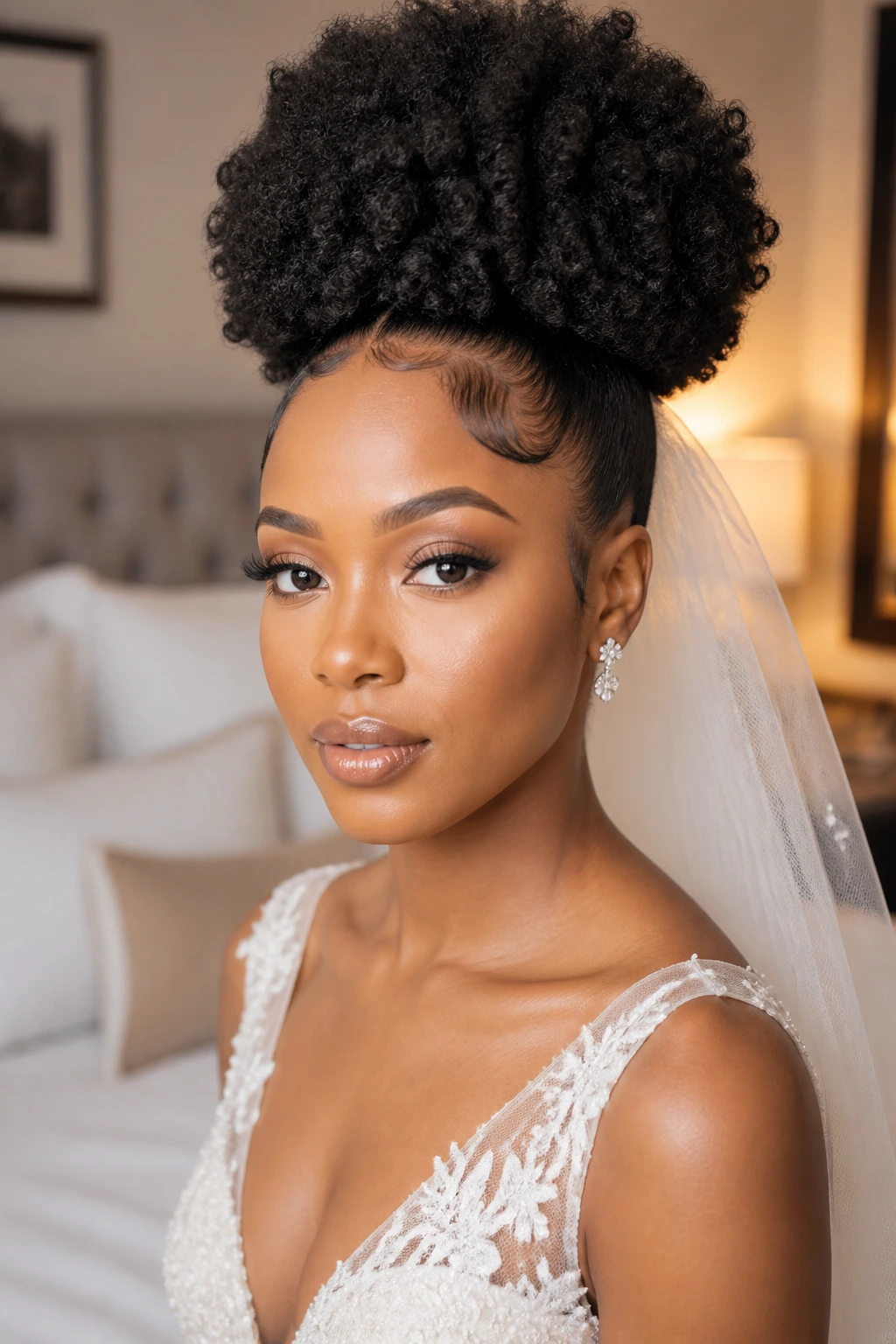
A coil puff can be incredibly elegant when the shape is clean and the edges are shaped with care. The volume sits up high or mid-height, while the front is refined so the whole look feels intentional rather than rushed.
What I love here is the contrast between fullness and precision. You get presence without flattening your texture. Add a jeweled pin, a slim headband, or a simple veil if you want another layer, but don’t bury the shape under too much decoration. The hair itself is already doing the work.
24. Knotted Ponytail with Volume
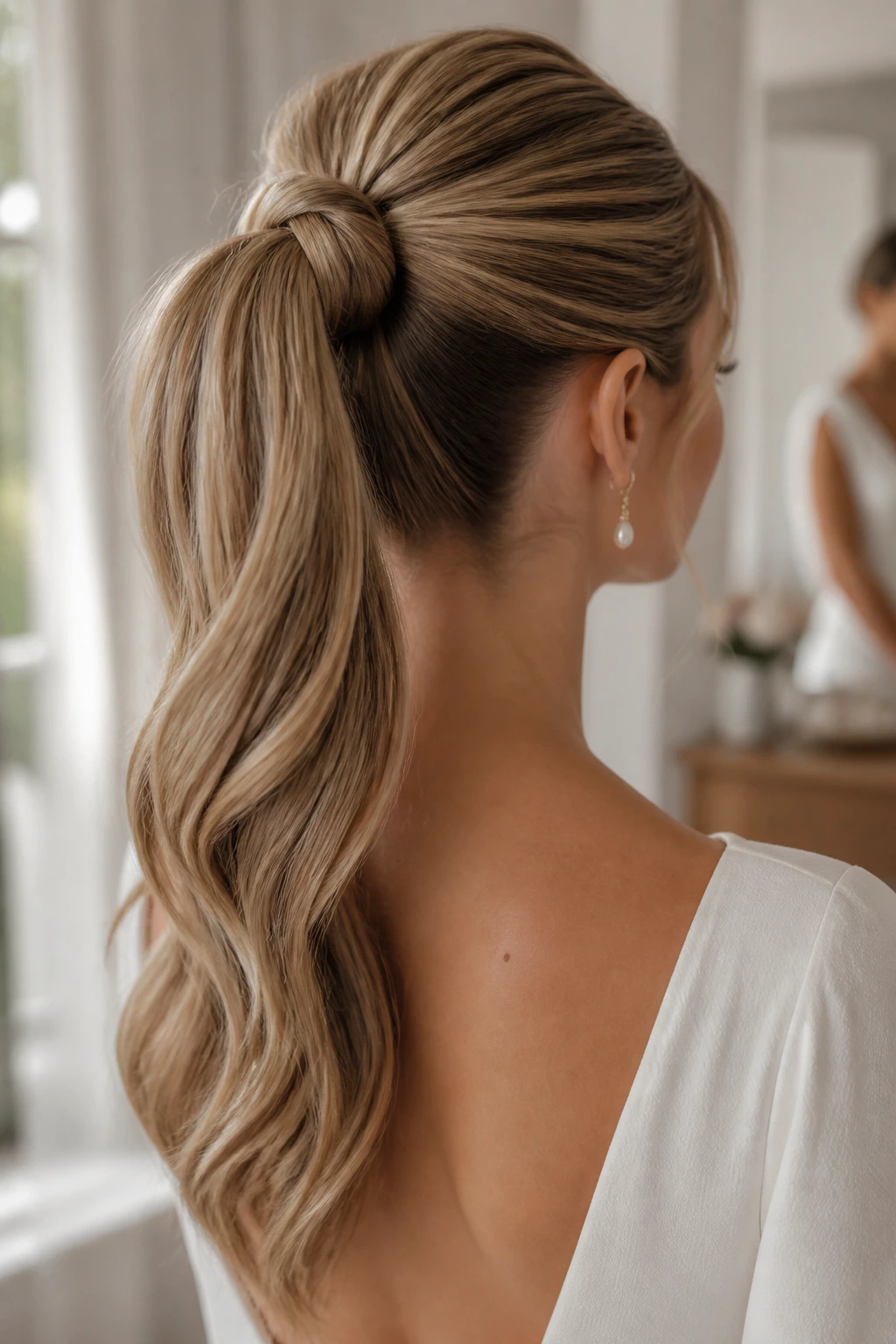
A knotted ponytail has a little drama to it, especially when the knot sits high enough to show and the tail keeps some volume. The shape feels modern and sculptural, which makes it a nice match for minimalist dresses with a clean neckline.
It’s a good option when you want movement but not loose lengths everywhere. The knot should read clearly from the back, and the tail can be straight, softly waved, or curled under depending on the dress. This one likes polished hair, not fluffy layers fighting each other.
25. Marcel Waves
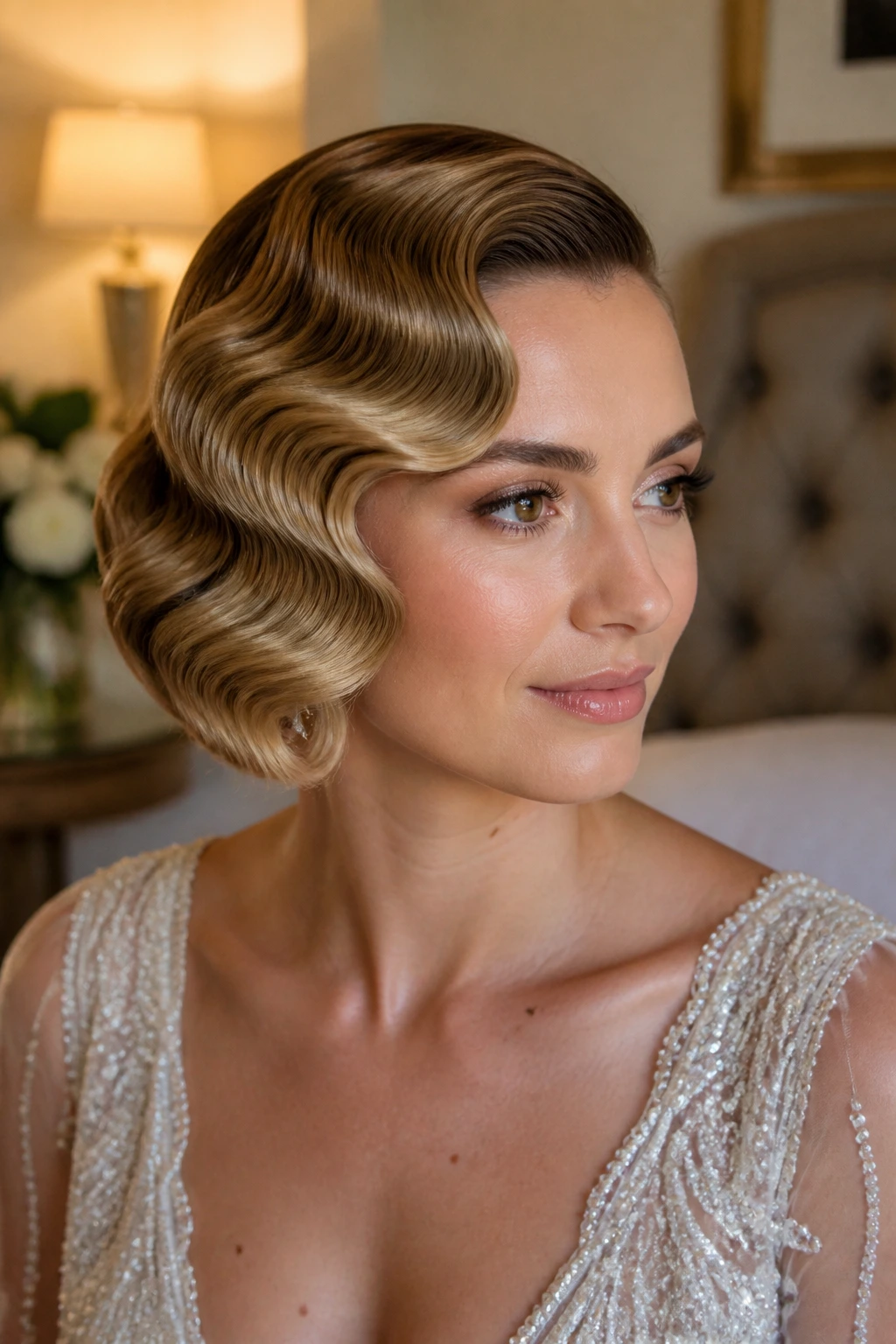
Marcel waves are for brides who like vintage hair with real shape. The waves are sculpted close to the head, with that unmistakable S-pattern that looks beautifully deliberate and a little theatrical in the right room.
This style is strongest on short to medium lengths, though longer hair can be pinned or tucked to keep the structure. It’s a gorgeous partner for beaded gowns, satin slips, and art deco details. If you’re wearing bold earrings, keep them simple in design so the waves stay in charge.
26. Loose Low Ponytail with a Wrapped Base
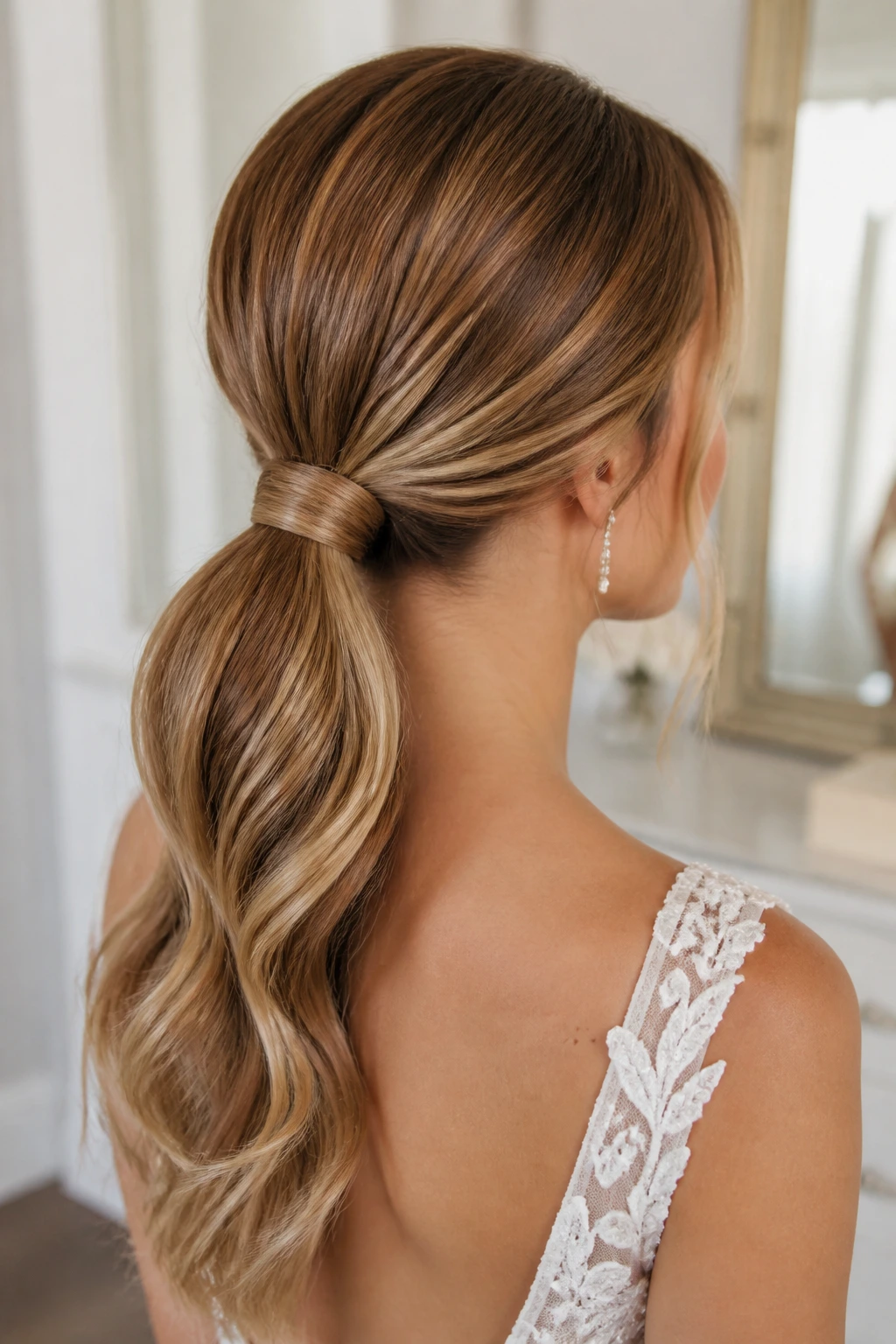
A loose low ponytail can still feel bridal when the base is wrapped and the lengths are polished. The hair should gather low at the nape, then fall in soft bends that look neat rather than tossed together.
This style is useful when you want softness around the shoulders and a shape that won’t collapse if you move a lot. It suits brides who like understated lines and want the dress, not the hair, to carry the loudest note. A narrow ribbon or a pearl tie can finish it nicely.
27. Beaded Braided Bun
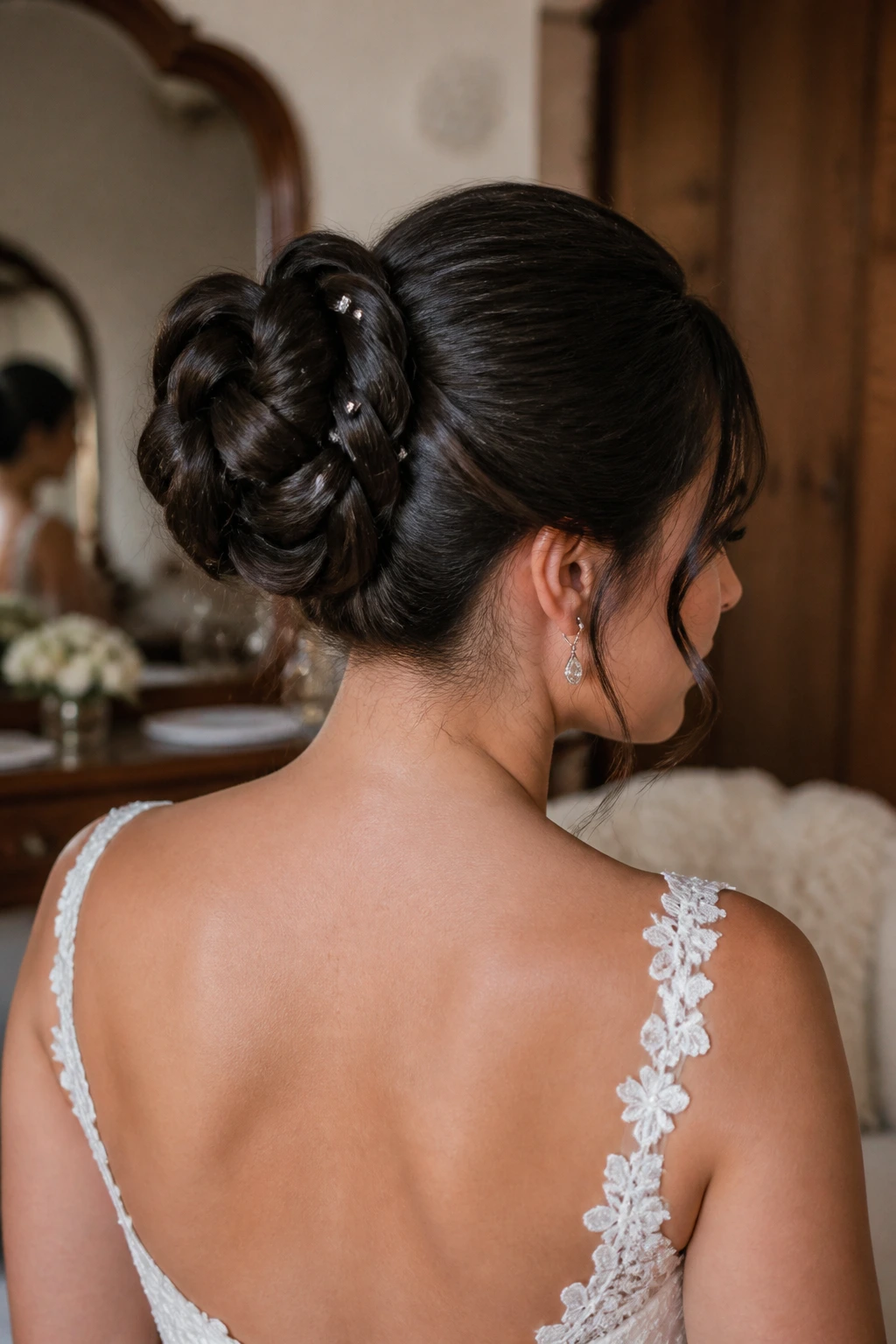
A beaded braided bun adds a touch of detail without covering the hairstyle in extra pieces. The braid gives the bun texture, and the beads can be placed sparingly so they catch light only when the hair moves.
I prefer this for gowns that already have simple fabric but need one small point of interest. The bun itself should stay compact, and the beads should feel intentional, not scattered. Less is better here. A few placed well beat a pile of decoration every single time.
28. Side Bun with a Deep Side Part
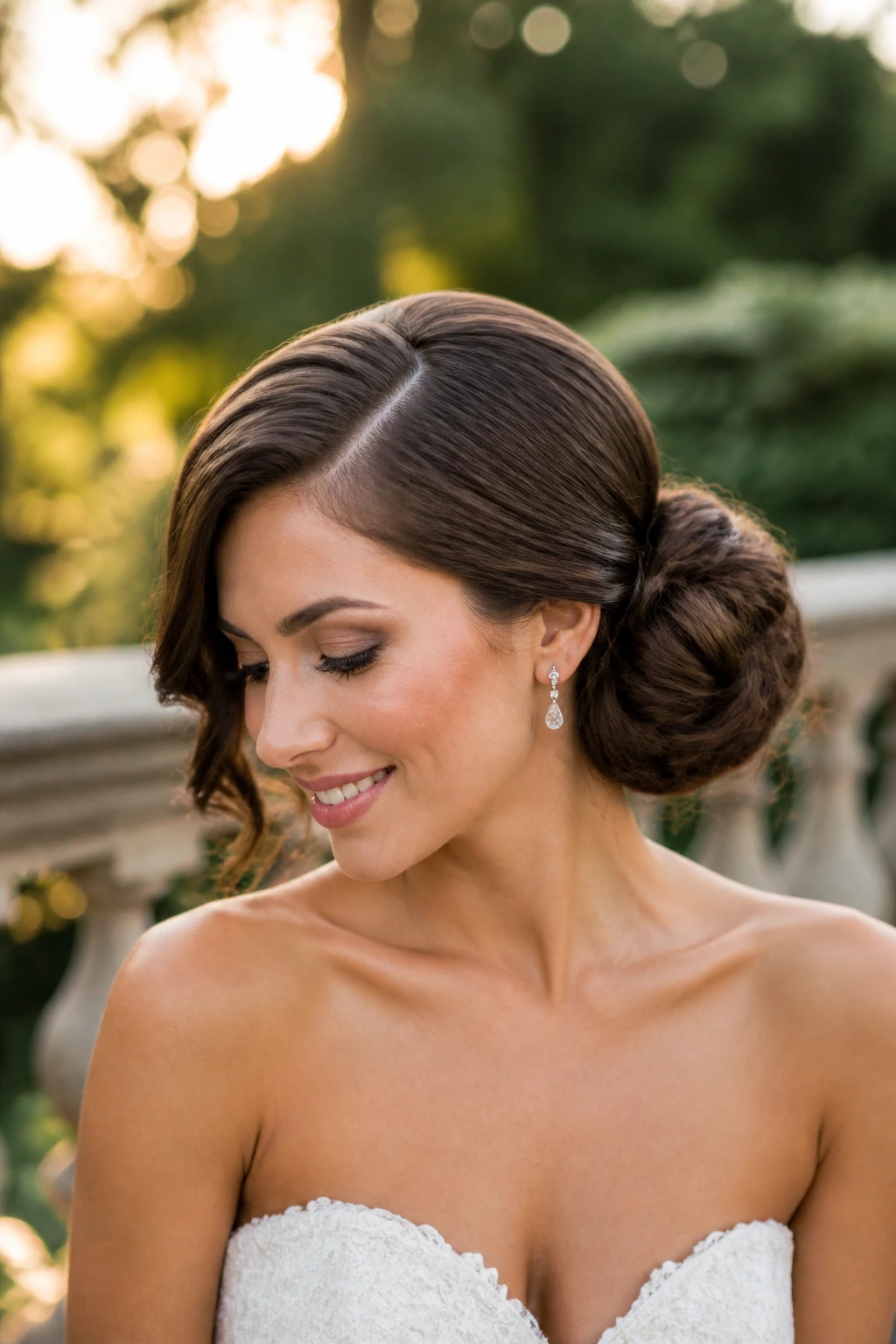
A side bun can feel old-school in the nicest way, especially when paired with a deep side part and a smooth finish. The asymmetry helps the face, the bun brings elegance, and the overall shape feels a little more dressed up than a straight centered style.
This is a strong choice for brides with one-shoulder gowns or dresses that have built-in drama. It also gives statement earrings more room on the exposed side. Keep the bun soft enough to avoid looking severe, but not so loose that it starts to wander.
29. Half-Up Bow Twist
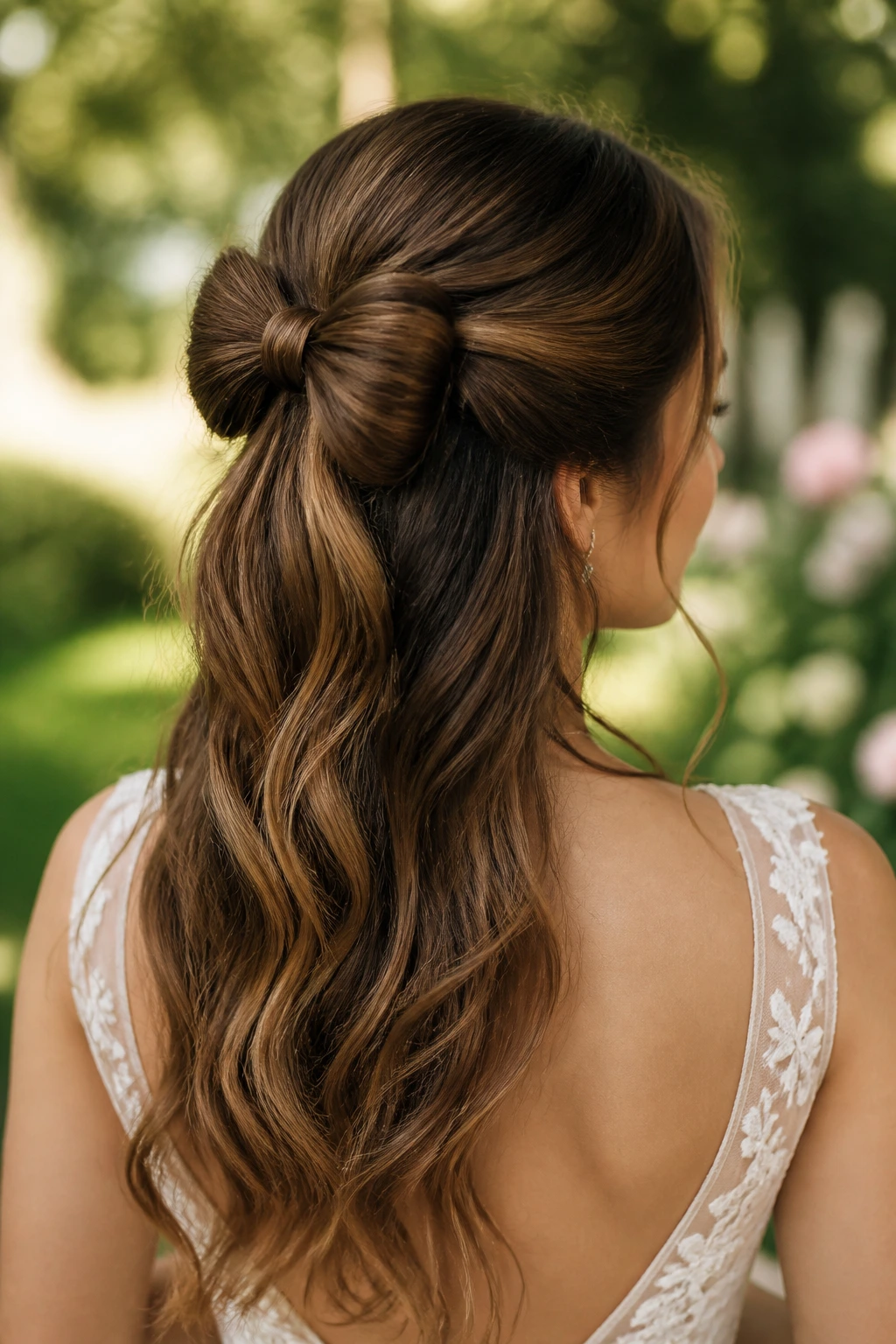
A half-up bow twist is playful in shape but still bridal when the finish is neat. The top section is folded so it forms a bow-like loop or twist at the back, while the rest of the hair falls underneath it.
This one works best if you want a small surprise in the hairstyle without adding a lot of accessories. It’s especially cute with shorter veils, garden settings, or dresses that are romantic rather than formal. The trick is keeping the bow shape crisp so it reads as elegant, not costume-y.
30. Soft Blowout with Face-Framing Layers
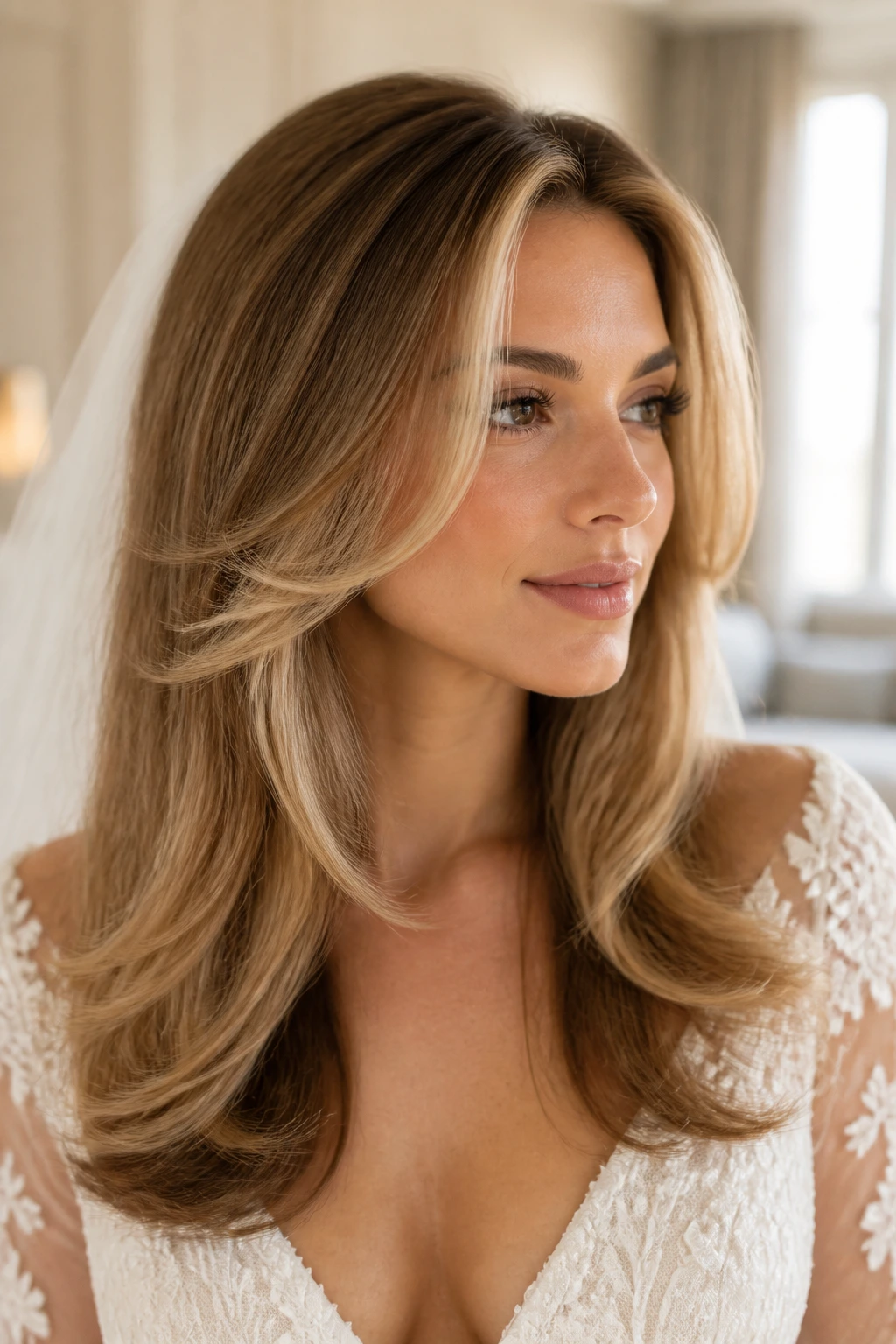
Not every bride wants an updo. A soft blowout with face-framing layers can look expensive and refined when the roots have a little lift and the ends are smoothed into a controlled bend. The whole point is movement with discipline.
I like this when the gown is already structured or when the bride wants to feel like herself rather than someone in a tightly pinned shape. The face-framing pieces should curve away gently, not hang in blunt strips. This style also pairs well with a dramatic earring, because the hair stays open around the jaw and neck.
31. Woven Bun with Interlaced Braids
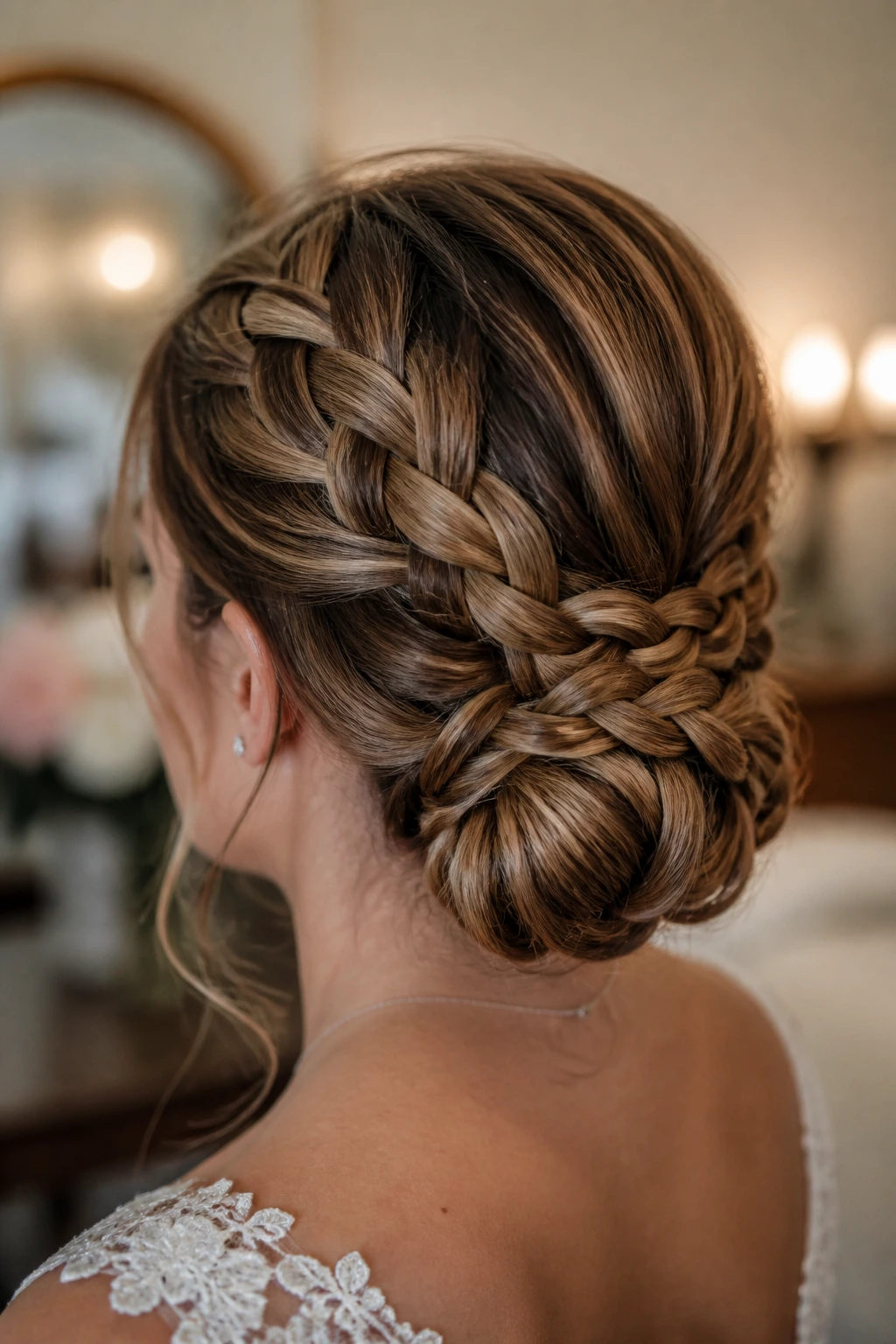
A woven bun looks more complex than it is, which is part of the appeal. Multiple braids or twists are crossed and pinned into one compact shape, creating depth without a lot of accessories.
This style is good if you want the back of the head to feel interesting in photos. It gives the eye more to follow than a plain bun, but it still sits in that elegant lane. The pattern should feel clean, not busy, so the braids need to be placed with intention.
32. Sleek Topknot with Statement Earrings
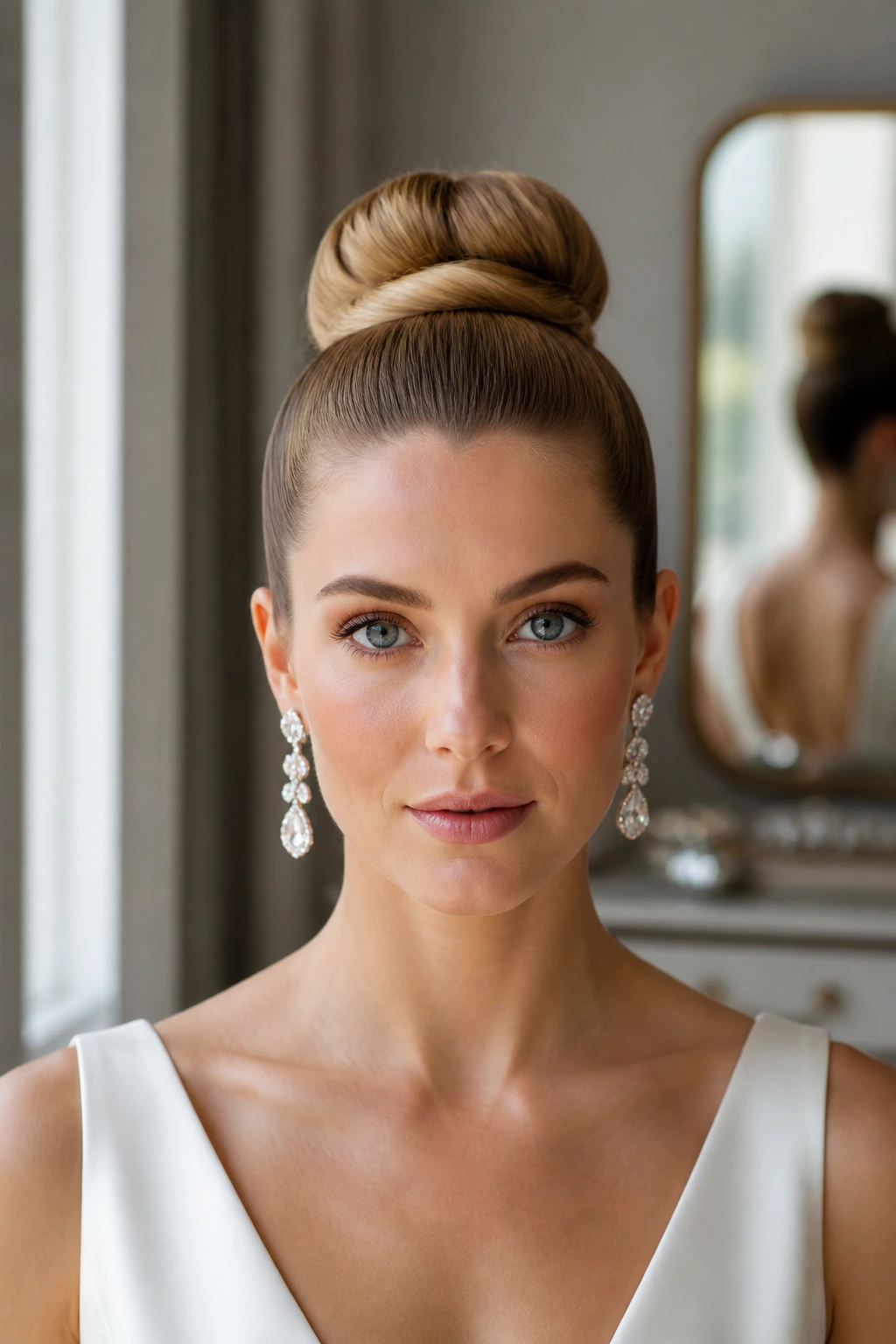
A sleek topknot gives the face and neckline complete attention, which is exactly why it works so well with dramatic earrings. The hair is pulled high and smooth, then wrapped into a compact knot that sits neatly at the crown.
This look is sharp, modern, and slightly bold. I’d choose it for a clean-lined dress, a satin column, or any gown where the silhouette is already doing the heavy lifting. It’s not the softest style in the list, and that’s okay. Brides do not have to look delicate to look beautiful.
33. Cascading Curls with Tiny Accent Braids
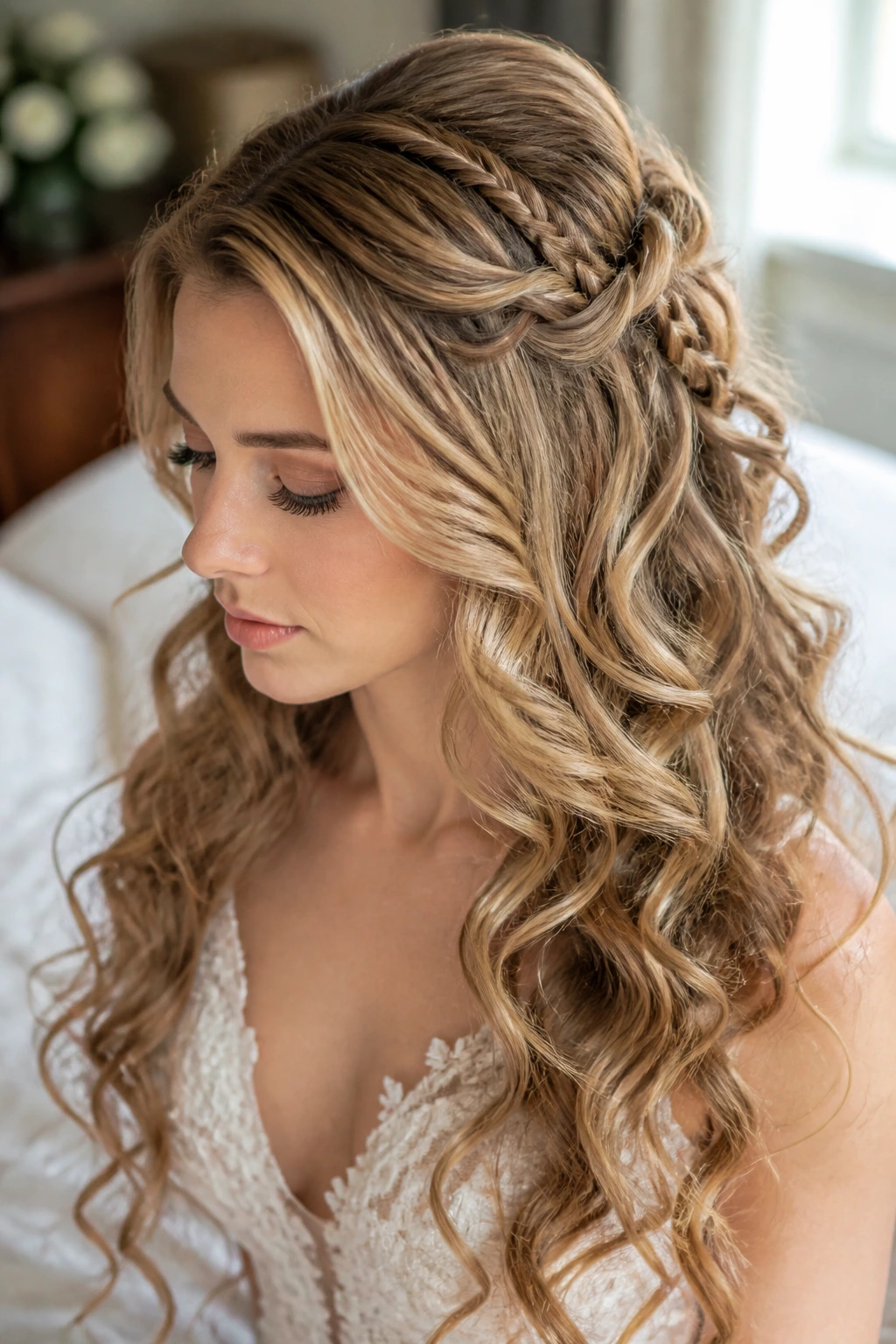
A few tiny braids tucked into cascading curls can keep long hair from feeling too plain. The curls provide the bulk and movement, while the braids give the eye little places to land.
This style is best when you want the softness of loose hair but need a little detail to make it feel bridal. The braids should be subtle, almost hidden until the light catches them. That small texture change is what keeps the style interesting in both close shots and wide photos.
34. Twisted Low Roll with Fresh Flowers
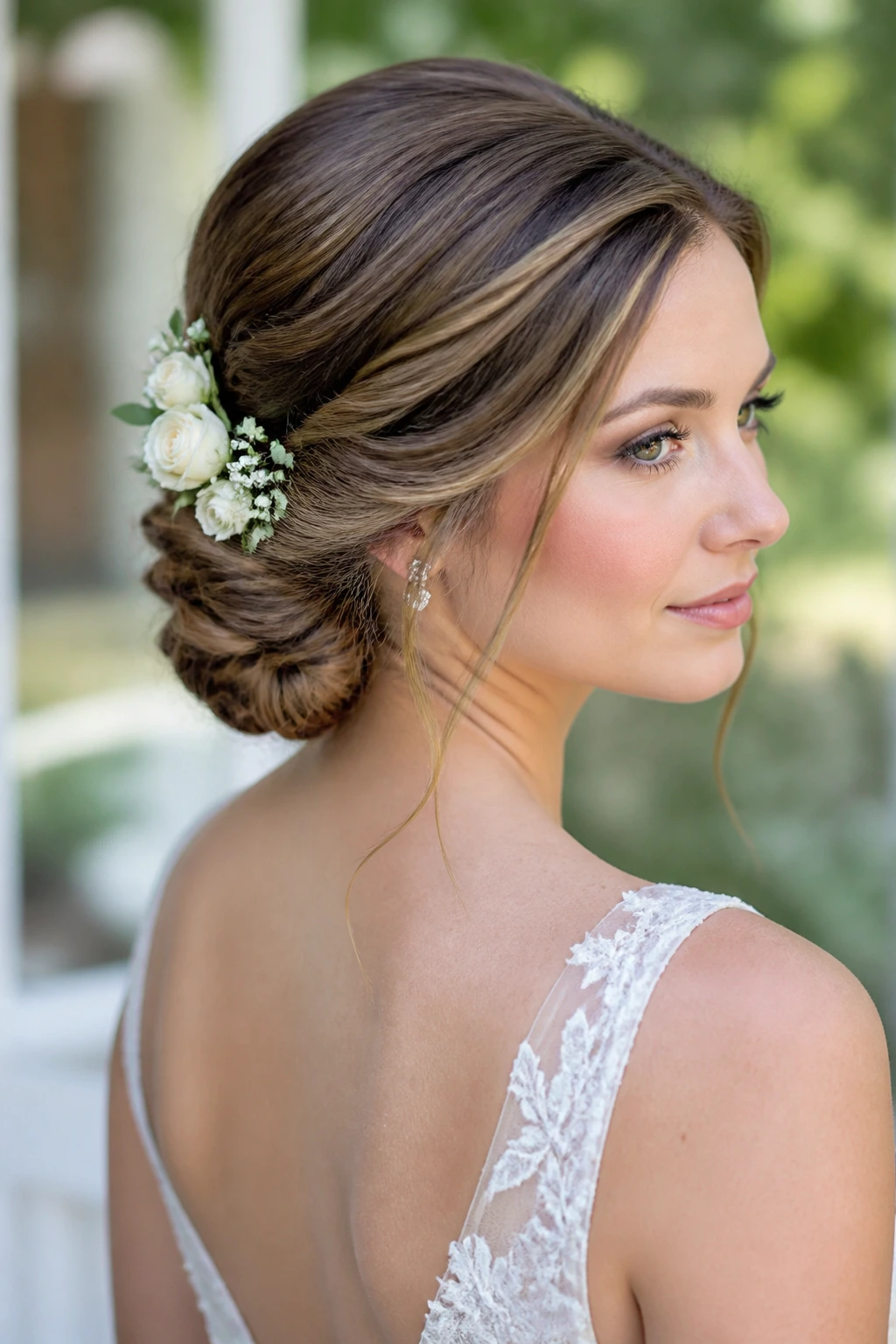
Fresh flowers in the hair can be lovely when they’re used with restraint. A twisted low roll gives the flowers a stable base, and the floral pieces can sit at one side or trail along the roll without taking over.
Choose flowers that can handle a long day without drooping fast. Delicate sprigs, a few blooms, or greenery tucked into the roll often work better than a dense cluster. The hairstyle stays the main character; the flowers are the accent, which is exactly how it should be.
35. Sculpted Finger Waves
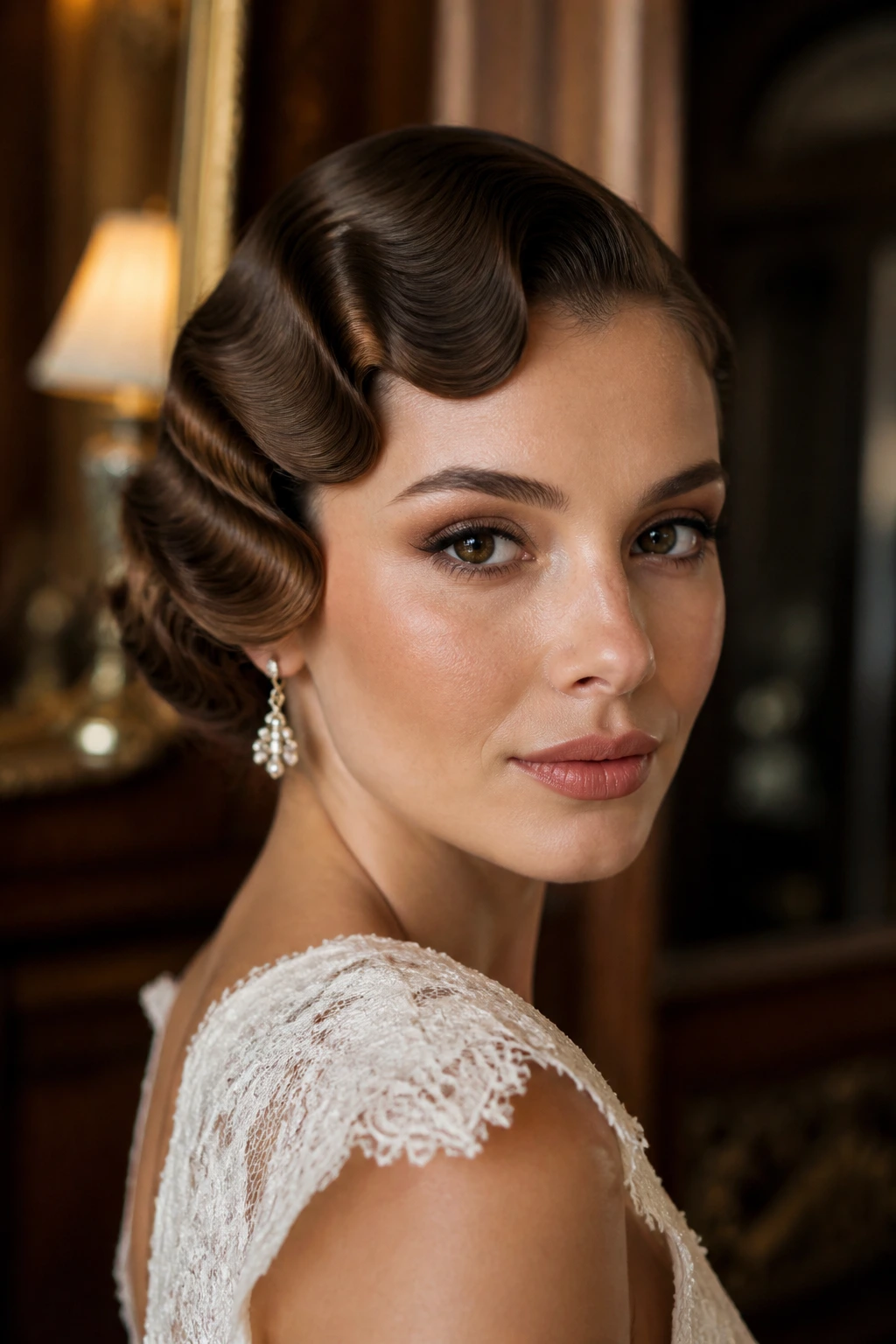
Finger waves are pure shape. They sit close to the head, fold in precise patterns, and give short hair or a bob a formal edge that feels elegant and deliberate.
This is a style for brides who like strong lines and a vintage feel. It’s also one of the best ways to make shorter lengths look dressy without adding fake volume everywhere. The waves need to be clean and smooth, so this is not the place to rush. Every line has to be placed with care.
36. Braided Ponytail with a Cuff
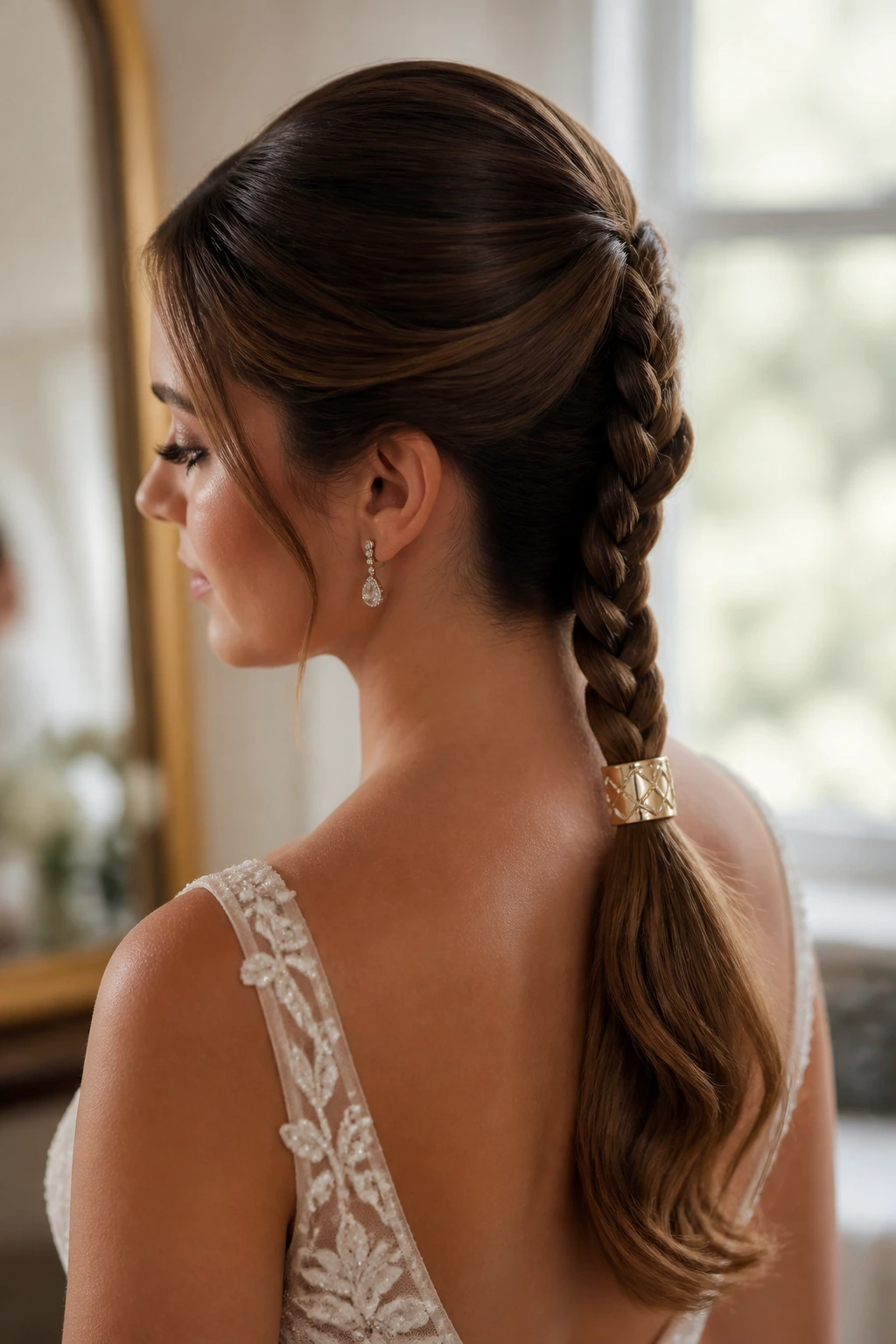
A braid gives the ponytail texture; a cuff gives it polish. Put those together and the result feels more designed than a standard ponytail, especially if the hair is pulled neatly from the crown and the braid starts tight.
This one is a nice fit for modern brides who want something sleek but not plain. The cuff should sit low enough to stay visible but not so big that it competes with the dress. If the gown is minimal, this hairstyle gives you one elegant detail without extra fuss.
37. Soft Updo for Short Hair
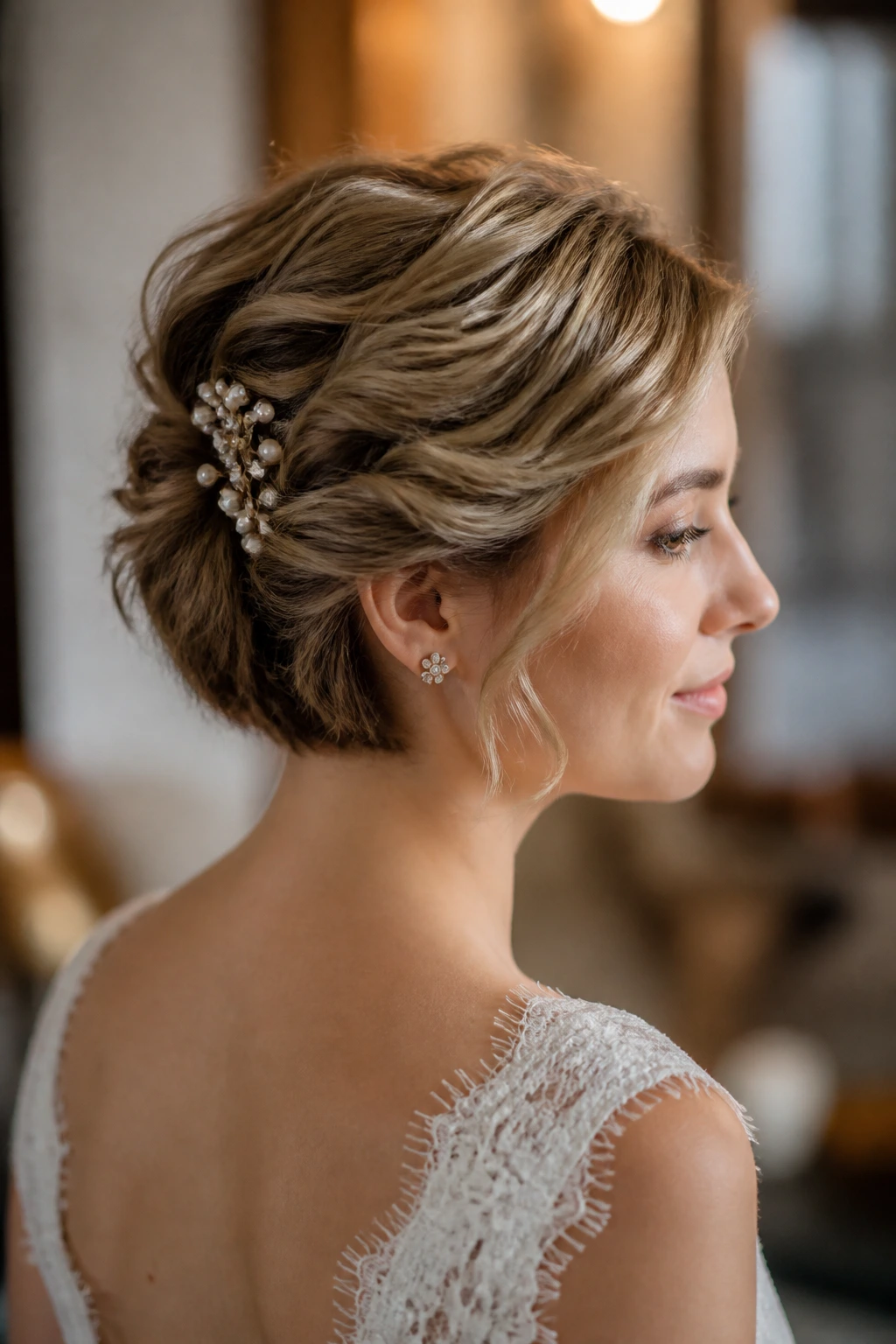
Short hair does not need to be forced into pretending it’s long. A soft updo for shorter lengths uses pins, tucked sections, and a little bit of curl or bend to create a formal shape that feels real on the actual cut.
This works especially well for lobs and chin-length hair that needs a nudge rather than a total transformation. A few decorative pins can make the back feel complete, while the front stays neat and open. The trick is keeping the style close to the head so it doesn’t wobble or fall apart.
38. Modern Bouffant with a Low Bun
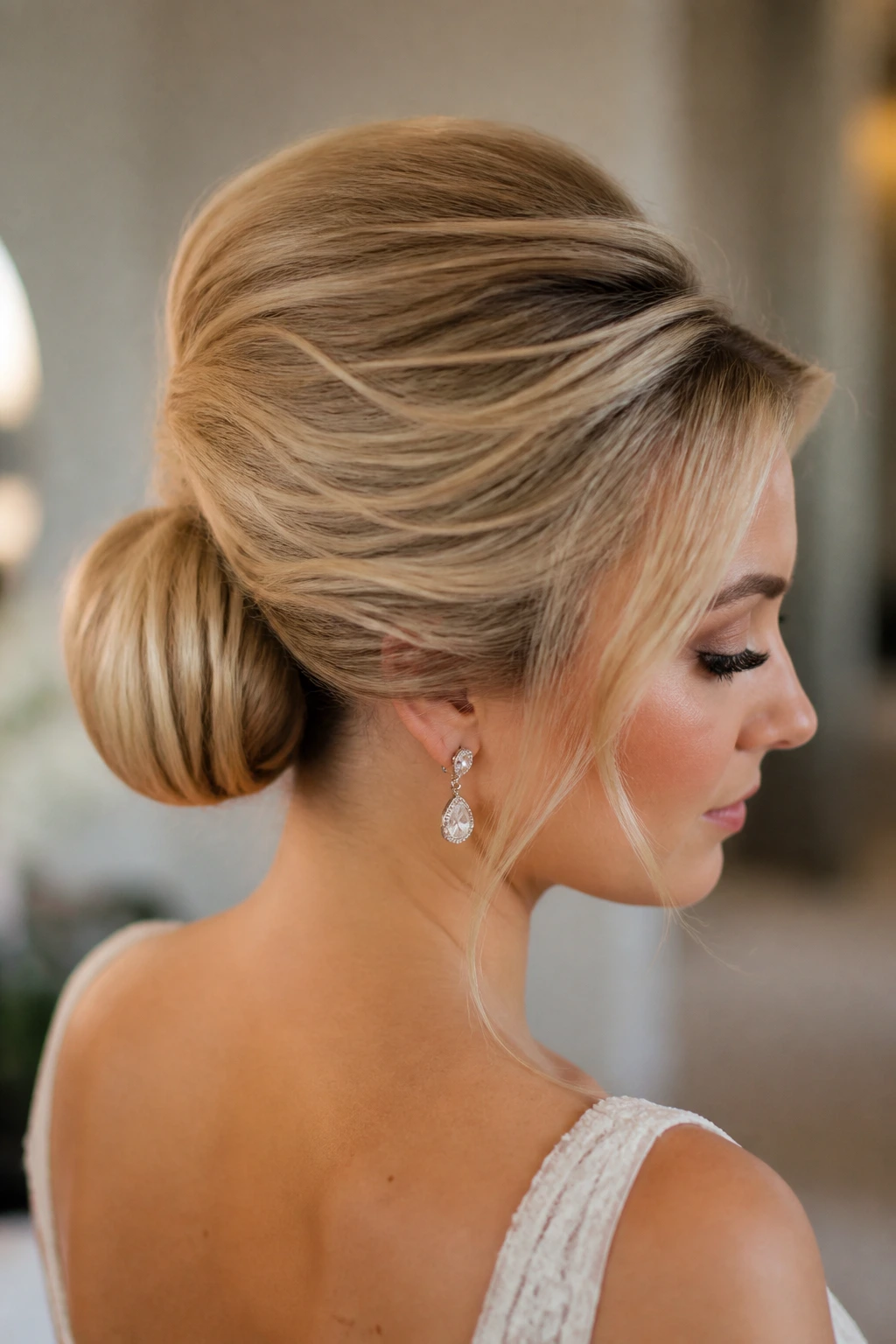
A modern bouffant gives the crown a little lift, then settles into a low bun so the shape feels balanced instead of theatrical. The height should be controlled and smooth, not teased into a giant cloud.
I like this for brides who want a hint of vintage without going all the way there. It works beautifully with high necks, sleeved gowns, or dresses that need a stronger profile. Keep the bun clean and the crown refined, and the style feels current rather than retro for the sake of retro.
39. Relaxed Mermaid Waves
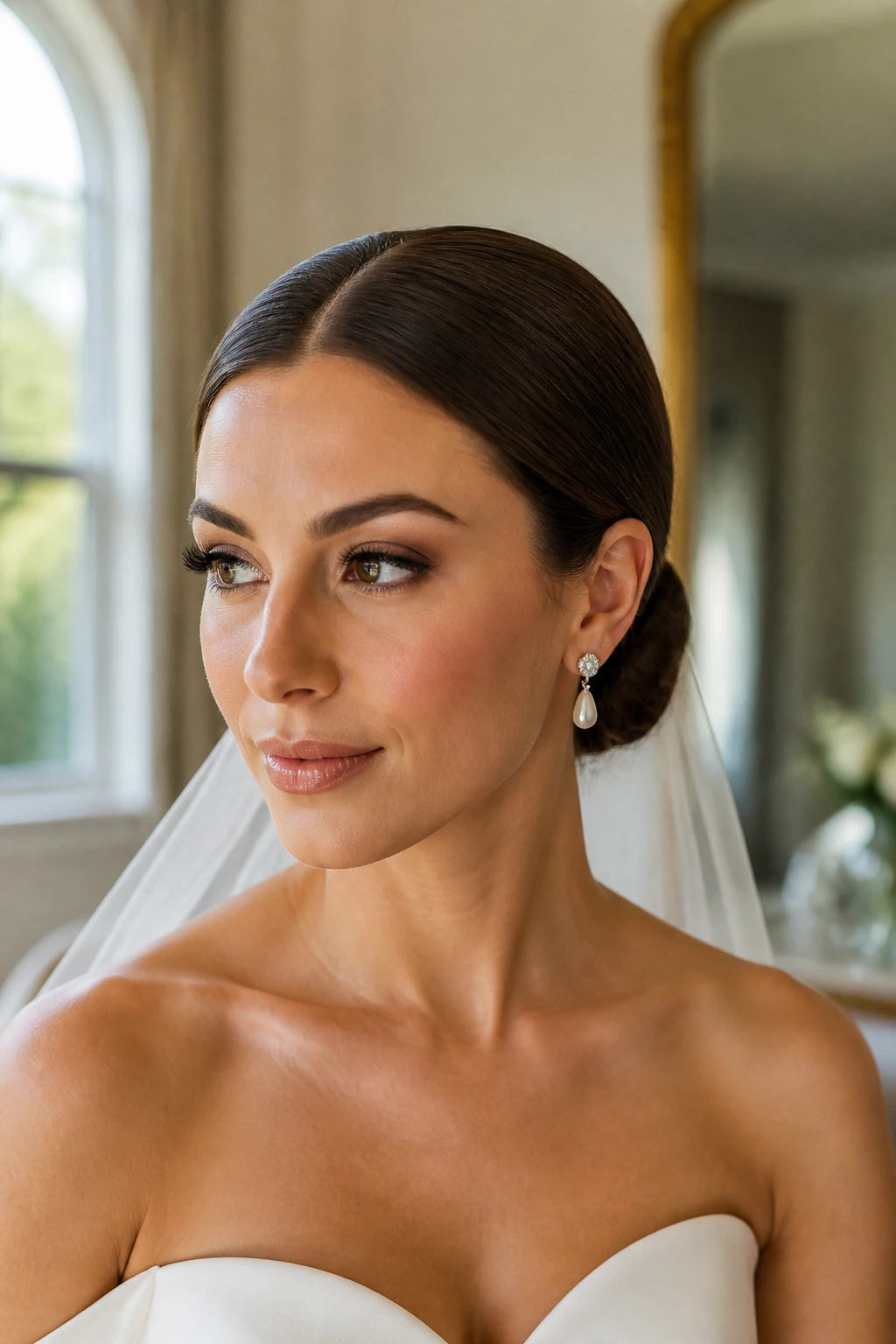
Relaxed mermaid waves are long, soft, and a touch more open than formal barrel curls. The shape is loose, but the finish should still be polished enough to read as bridal rather than beachy.
This style shines when the dress is simple and the hair gets to be the ornament. It’s flattering on longer lengths because the waves show off the line of the hair all the way down. If your hair tends to frizz, smoothing the top and leaving the wave pattern lower down keeps the look calm.
40. Crown Twist with a Low Chignon
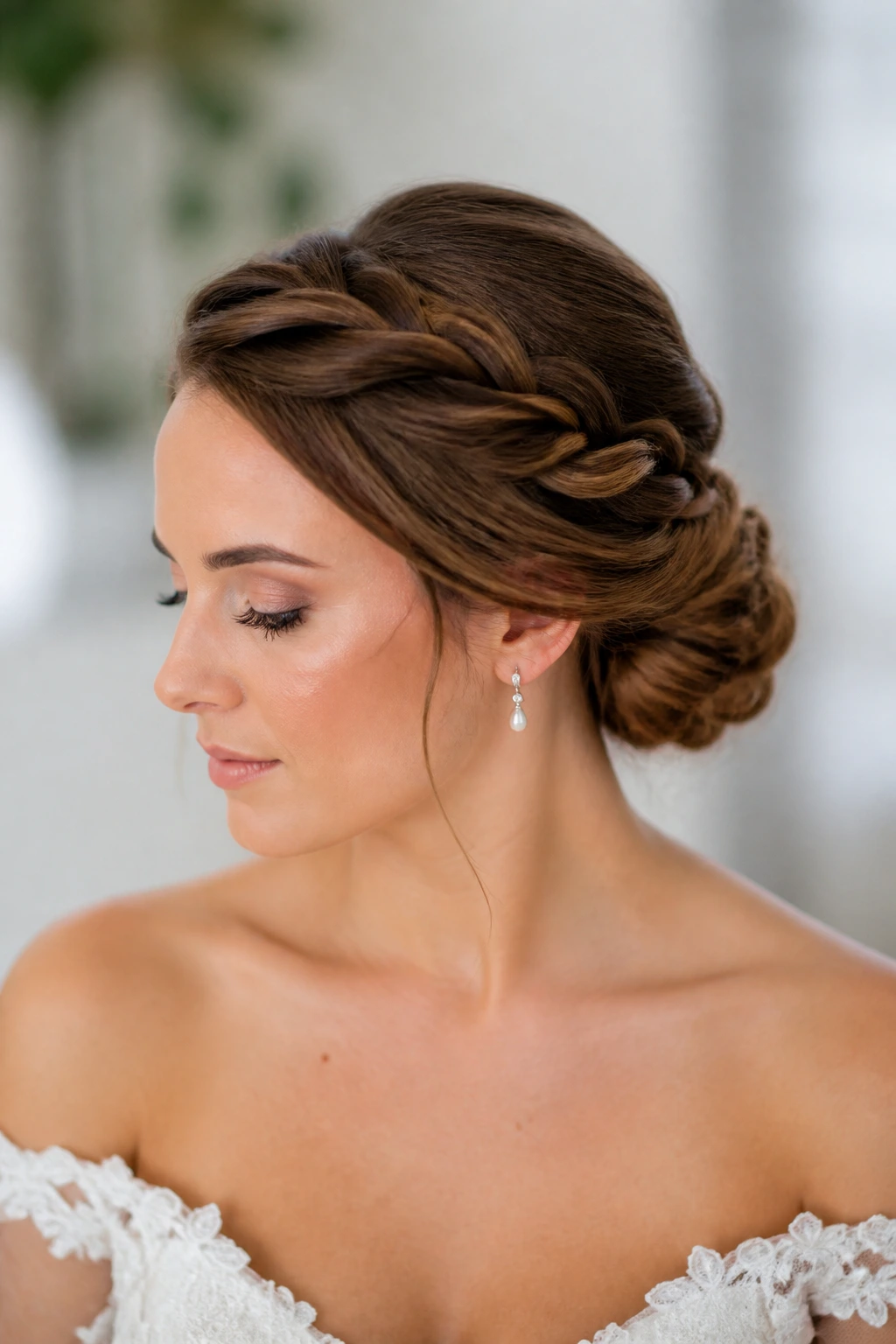
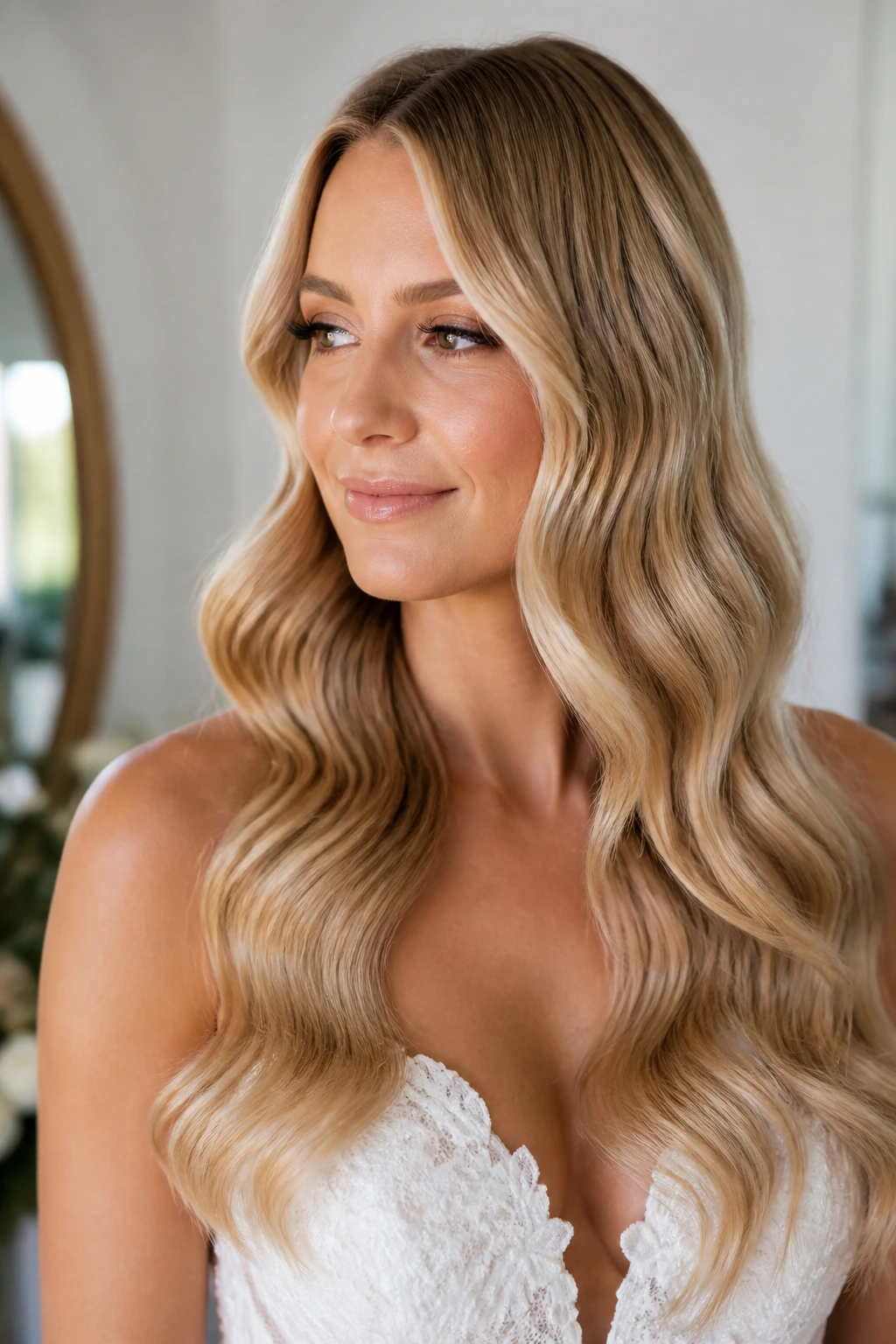
A crown twist is one of the smartest middle-ground styles for brides who want hair off the face without committing to a full braided halo. The twists start near the temples or sides, then feed into a low chignon that stays neat at the back.
This style feels secure, graceful, and easy to decorate with a veil or one carefully placed comb. It’s especially nice for dresses with detail near the neckline because the front stays clean while the back has enough shape to feel special. The twist should sit snugly enough that it doesn’t sag by evening.
41. Natural Coil Updo with a Defined Front
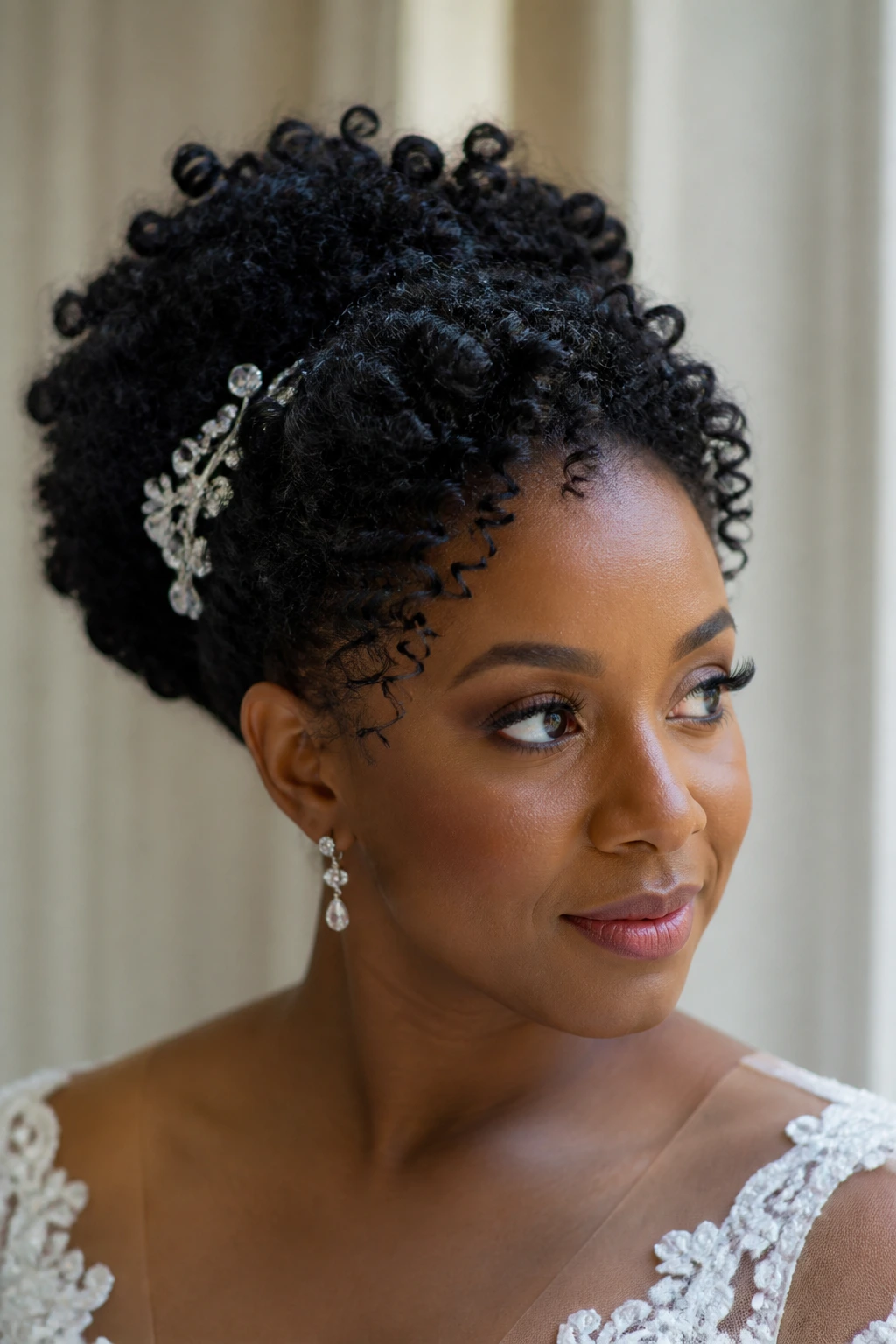
A natural coil updo can be one of the most elegant bridal looks in the whole bunch when the front is shaped and the coils are pinned with care. The beauty is in the texture, not in trying to smooth it away.
I like this style when the bride wants movement, softness, and a real sense of herself in the look. The front can be parted, curled, or finger-shaped to create balance, while the back holds the volume. A few placed pins can add sparkle without hiding the texture that makes the style work.
42. Smooth Bun Under a Veil
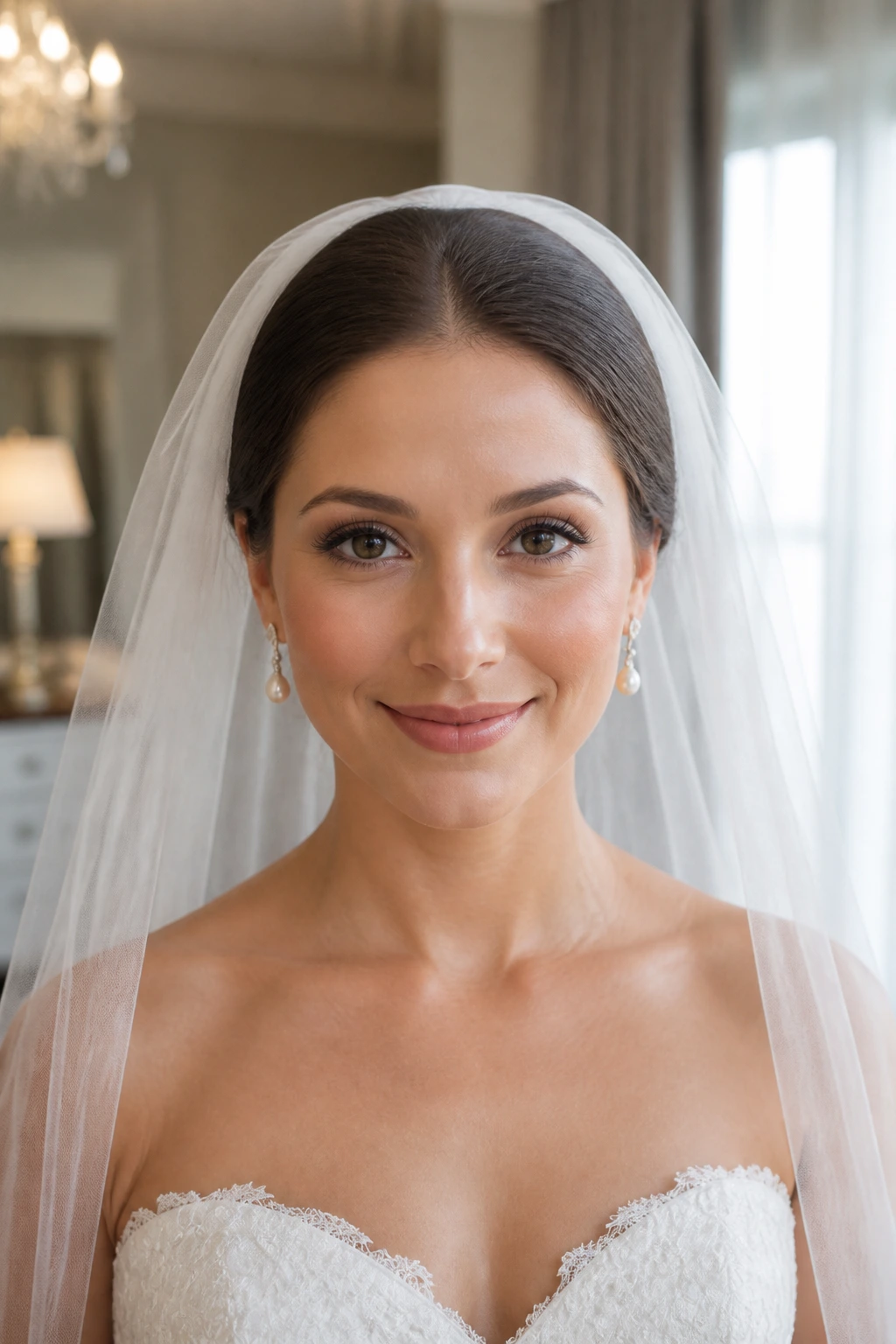
A smooth bun under a veil is the definition of doing one thing well. The bun stays low, tidy, and almost invisible under the comb, which lets the veil sit cleanly and the gown do more of the visual work.
This is the style I’d pick for brides who want the veil to be the dramatic piece and the hair to behave in the background. It’s especially smart for long ceremonies because the shape stays simple and secure. If you want a small detail, add a side part or one pin, then stop. The restraint is the whole point.
How to Choose the Right Bridal Style for Your Dress and Hair Texture
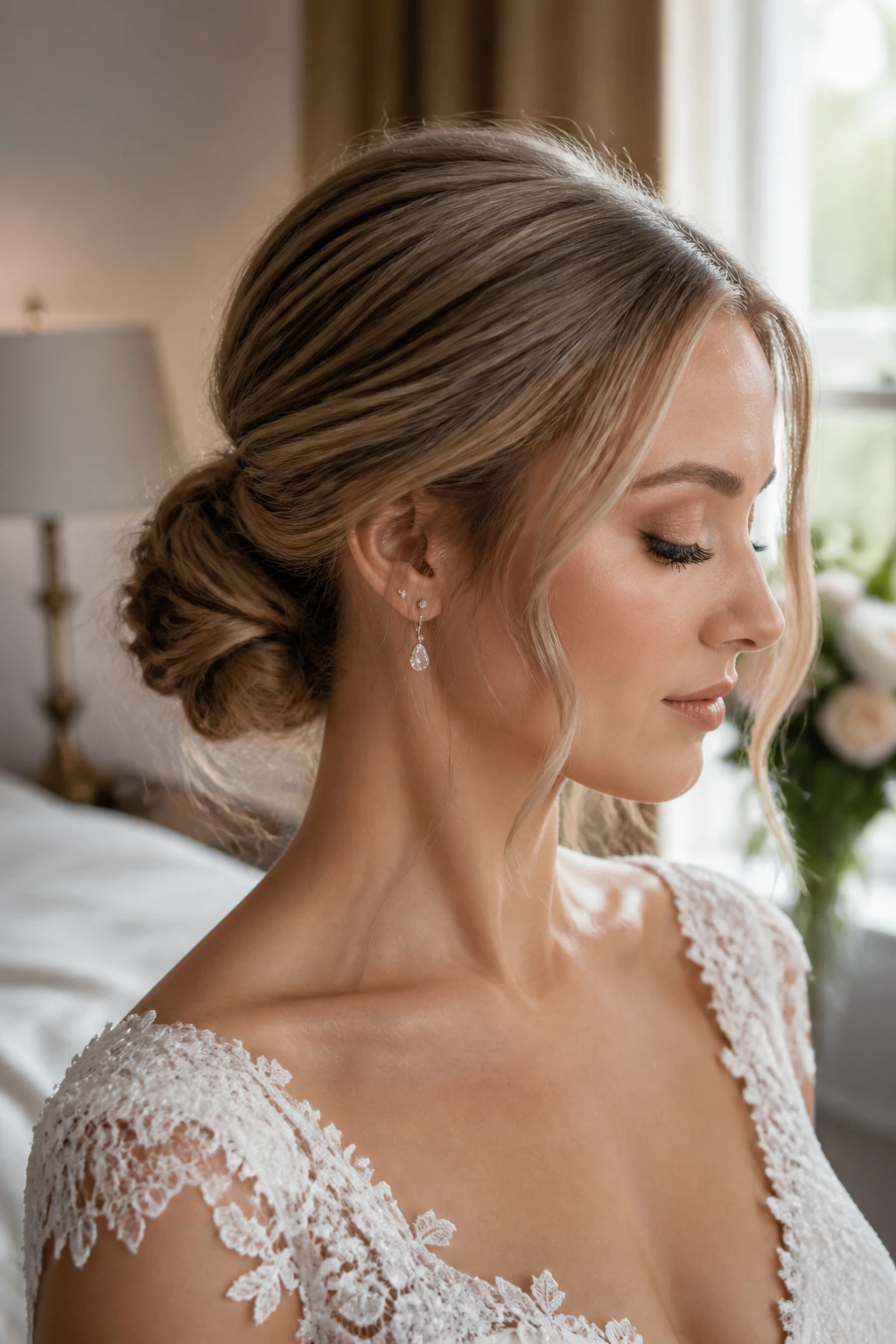
The dress should have a vote here. So should your hair type. A strapless or off-the-shoulder gown can handle more movement around the face and shoulders, while a high neckline usually looks better with hair lifted away from the collar so the shape of the dress doesn’t get crowded out.
Your hair texture matters just as much. Fine hair often needs a style with pins, spray, or a little backcombing at the root so it doesn’t slide flat halfway through photos. Thick hair can hold bigger shapes, but it also needs tighter sectioning so the style doesn’t turn into a heavy block. Curly and coily hair usually look best when the texture stays visible — forced smoothness tends to look less polished, not more.
The veil is another big one. A cathedral veil can handle a low bun, a twist, or a firm chignon. A shorter veil is often happier with a softer half-up style or a shape that leaves the crown cleaner. If the veil comb is fighting the hairstyle during the trial, that’s your cue to change the placement, not blame the hair.
The Tools That Make These Styles Easier to Build
-
Tail comb: Best for clean center parts, sharp side parts, and neat sectioning before pins go in.
-
1-inch curling iron or wand: Useful for soft waves, tendrils, and the bend that keeps loose styles from looking flat.
-
Flat iron: Good for smoothing the crown, taming the ends of a ponytail, and making sleek styles hold their line.
-
Sectioning clips: They keep the top layer out of the way while you work on the back.
-
Strong-hold hairspray: Use it after the shape is set, not as a replacement for pins and proper sectioning.
-
Texturizing spray or lightweight dry shampoo: Gives clean hair a little grip so twists and buns don’t slide.
-
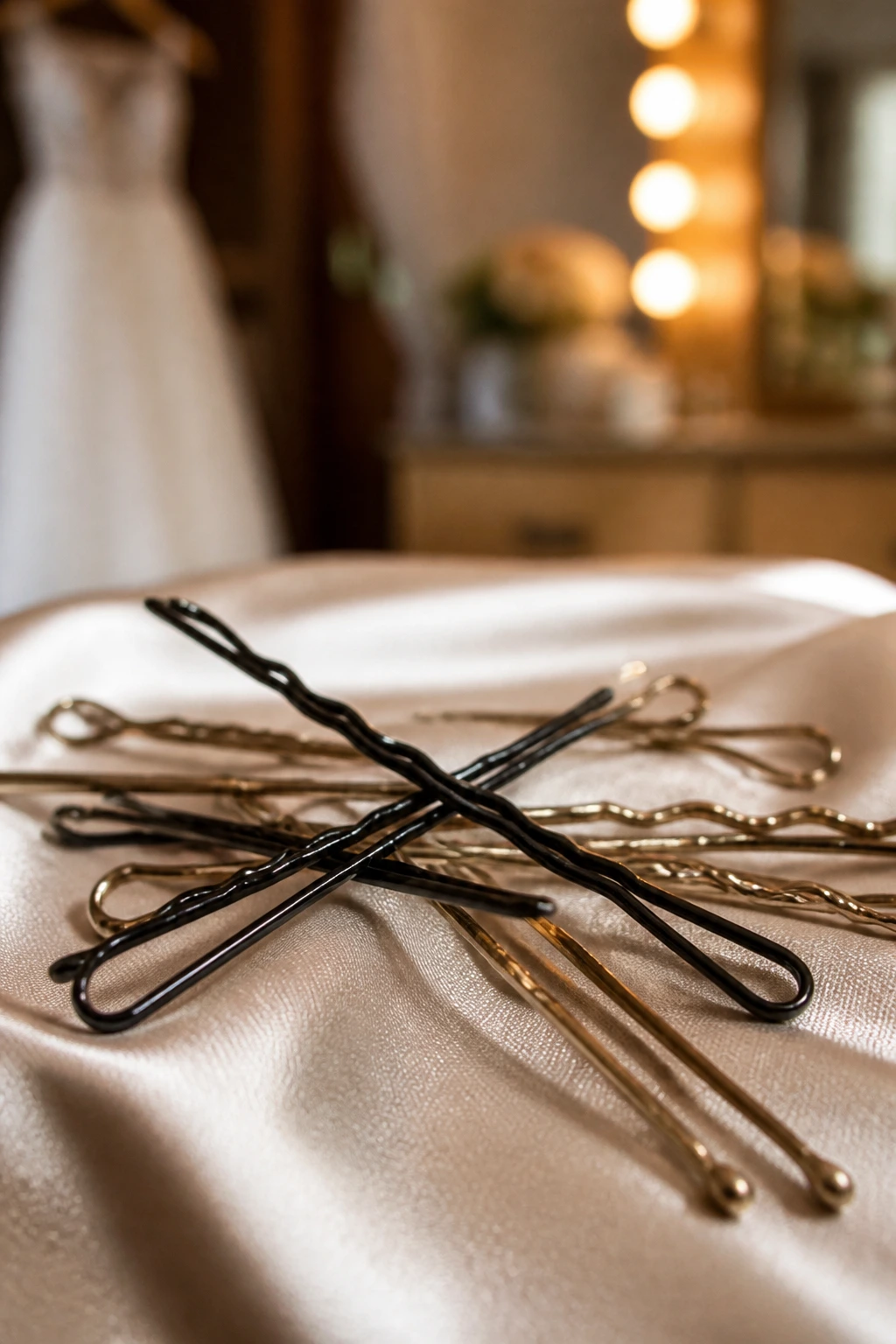
Bobby pins and U-pins: You need both. Bobby pins hold tension; U-pins help preserve shape in buns and rolls.
-
Mini hair net: Optional, but excellent for fine hair or heavier updos that need extra support without visible bulk.
-
Veil comb or accessory base: Test it during the trial so the hairstyle and veil can sit together without tugging.
-
Small teasing brush: Helpful for gentle crown lift and smoothing flyaways without ripping the style apart.
How to Prep Hair So It Holds Without Feeling Stiff
Wash timing: For many bridal styles, hair that was washed the day before holds better than hair washed that morning. Day-old hair has enough grip for pins and braids, and it won’t slip around as much. If your hair is very fine or silky, a light mousse at the roots before blow-drying can help more than extra product after the fact.
Product order: Build the base first. That means mousse or curl cream before drying, heat protection before iron work, and texture spray before the pins go in. Hairspray should be the last layer, not the only layer. If you spray too early, the hair can go crunchy before you’ve even shaped it.
Pinning strategy: Cross two bobby pins in an X when you need extra hold at a twist or bun. Use the wavy side of the pin against the scalp, not the flat side, or it will slide. And don’t hide every pin if the style needs structure; sometimes the neatest look is the one that admits it’s pinned.
Humidity plan: Keep a mini spray and extra pins in the emergency kit. If the ceremony is outdoors or the day is warm, choose a style with a firmer base and fewer loose pieces near the face. A soft wave can survive humidity; a style built on hope usually cannot.
Common Bridal Hair Mistakes That Show in Photos
The biggest mistake is starting with hair that’s too clean and too soft. Freshly washed hair can be slippery, which sounds nice until the pins start drifting and the curls lose their shape. The fix is easy: wash earlier, or add grip with dry shampoo and texture spray.
Another common problem is overloading the hair with shiny products. A little gloss is lovely. A slick, oily crown is not. Under flash, heavy product can make the style look greasy instead of polished, especially around the hairline and part.
Skipping the trial is another gamble I don’t recommend. A hairstyle can look fine in theory and still fight the veil, the earrings, or the neckline once the whole outfit is on. The trial is where you learn whether the bun is too high, the braid too thick, or the curls too loose to last.
And then there’s pin placement. Too few pins means collapse. Too many in the wrong place means discomfort and visible bumps. The trick is building support where the weight actually sits, not just jabbing pins in wherever your hand lands.
Fresh Variations to Fit Different Bridal Moods
Soft-Romance Finish: Leave a few more face-framing pieces loose, soften the crown, and use lighter accessories like pearl pins or tiny flowers. This version works well for lace, tulle, and dresses with a softer drape.
High-Gloss Minimalism: Smooth everything down, keep the part crisp, and remove extra decoration. This is the route for brides who like sharp lines, satin fabric, and clean silhouettes.
Vintage Camera-Ready: Add waves, side parts, or sculpted rolls, then finish with a comb, barrette, or veil that has a bit of old-world weight. This works especially well with beading, gloves, or a dramatic lip.
Texture-First Bridal Hair: Keep curls, coils, or waves visible instead of flattening them into submission. This version usually looks richest when the shape is built around the hair’s natural bend rather than against it.
Florals and Jewels: One accent is enough. A comb with stones, a few pinned flowers, or a slim ribbon can give the style a focal point without making it crowded.
Trial Runs, Touch-Ups, and Keeping the Style Fresh
Do the trial with the actual accessories if you can. Bring the veil, the earrings, the pins, and even the neckline of the dress if it’s possible to simulate it. Hair behaves differently when a comb is pulling at the crown, and it’s much better to learn that in a chair than in a hallway five minutes before the ceremony.
Take photos from behind, from the side, and in low light. I care more about those shots than the mirror view, because that’s where tiny weaknesses show up fast. A bump that seems invisible head-on can look obvious in profile. Fix it during the trial, not after the bouquets arrive.
On the day itself, pack a small touch-up kit: extra bobby pins, a travel-size hairspray, a tiny comb, blotting papers, and a few safety pins for emergency accessory fixes. If the style includes curls or waves, a small mist of water and a finger twist can revive a drooping section better than piling on more heat.
For longer events, keep one trusted person in charge of a quick check before portraits and before dancing. A 30-second look at the nape, the veil comb, and the front pieces is usually enough to catch what the room won’t tell you.
Frequently Asked Questions
What wedding hairstyle works best with a veil?
Low buns, chignons, twists, and smooth rolls tend to handle veils best because they give the comb a stable base. If the veil is heavy or long, avoid a style that depends on loose movement at the crown; it will shift under the weight.
Should I wash my hair the day of the wedding?
Usually, no. Hair that was washed the day before often has better grip and stays in place more easily. If your hair gets oily fast, wash the morning of only if you know your texture needs it — and keep some dry shampoo on hand.
Can fine hair still hold an elegant bridal style?
Yes, but it needs structure. Fine hair usually does better with a bit of texture spray, careful pinning, and a style that isn’t too heavy in the length or crown. A low chignon or sleek bob with pins often holds better than a big, loose wave.
What if my hair is very thick and heavy?
Then sectioning matters more than volume. Thick hair needs a tighter base, stronger pins, and often a style that sits lower so gravity doesn’t drag it down. A textured bun, woven updo, or structured twist usually behaves better than a loose, wide shape.
How far ahead should I do a trial run?
A few weeks before the wedding is the sweet spot. That gives time to adjust the placement, swap accessories, or change the shape if the first version doesn’t hold well. If you’re wearing extensions or a new color, do the trial after those are in place.
Can short hair look formal enough for a wedding?
Absolutely. Short hair often looks sharper than long hair because the line is cleaner. Think sleek bob, sculpted waves, tucked ends, or small decorative pins placed with intention instead of trying to fake length.
What’s the best style for outdoor weddings or humid weather?
Anything with a firm base and fewer loose pieces near the face. Braided crowns, low buns, French twists, and tucked styles usually hold up better than soft curls worn all the way down. If you want movement, keep it controlled around the ends.
Should I use extensions for a bridal hairstyle?
Only if the style needs length, fullness, or hold that your natural hair can’t provide on its own. Extensions can make waves hang better and help buns look fuller, but they should be blended during the trial so they don’t shift or show through the style.
What if pieces start falling out during the event?
Do not panic and pile more product on top. A few strategic pins at the base of the slipping section usually fix the problem faster and more cleanly. If the style was built properly, the touch-up should take less than a minute.
The Shape That Feels Like You
The best wedding hair doesn’t shout. It settles into the rest of the look and lets the dress, the veil, the earrings, and your face do what they’re meant to do. That’s the real trick with elegant bridal styles: they should feel chosen, not merely decorated.
A good trial run takes the guessing out of it. Once you know how the hair behaves with your neckline, your accessory, and your texture, the whole thing gets calmer. And calm, on a wedding morning, is worth a lot.
Pick the style that still looks like itself after you turn your head, lift a glass, and lean in for a hug. That’s the one that will carry you through the day without asking for attention every five minutes.
