



A vintage bridal hairstyle works best when it looks like it has a backbone. Softness matters, yes, but the shape has to stay put through hugs, candlelight, dancing, and that strange little gust of air that always finds the aisle at the wrong moment. The difference between a polished wave and something that droops by cocktails is usually a matter of sectioning, set time, and where the pins live — not how much shine spray you dump on it.
That’s why wedding hairstyles for brides with a vintage vibe are such a smart place to spend your attention. They can lean 1920s, 1940s, 1950s, or 1960s without feeling like costume hair, and they work with veils, combs, pearl pins, and dresses that have actual structure. A deep side part changes the whole mood. So does a tucked roll at the nape, or a brushed-out wave that sits close to the head instead of puffing outward like a prom leftover.
The nicest part? Vintage hair usually looks more finished than loose curls, even when it’s less fussy to maintain. A good set and a good brush-out do most of the heavy lifting. Then the details — the part, the crown height, the ends, the accessory placement — decide whether the style feels like old Hollywood, a flapper nod, or a mid-century bride who knew exactly where to stand for a photograph.
Why These Vintage Looks Earn Their Keep
-
They hold a shape, not just a curl: A pinned set, roll, or wave has structure baked in, so the hairstyle stays readable long after the ceremony ends.
-
They work with veils and heirloom pieces: Vintage silhouettes leave obvious anchor points for combs, birdcage veils, crystal pins, and pearl clips without burying them in hair.
-
They flatter real hair texture: Fine hair gets more body from setting and brushing; thick hair gets control from sectioning and pinning; wavy hair gets a cleaner finish with less fight.
-
They photograph from the side, too: A deep part, rolled crown, or sculpted nape gives the profile something to do. Flat hair at the back is where so many bridal styles fall apart.
-
They can be softened or sharpened fast: Pull one wave loose, loosen a side roll, or add a single comb, and the whole feel shifts from formal to romantic without rebuilding the style.
-
They suit more than one dress code: A satin column gown, lace sleeves, tea-length dress, or high-neck gown can all find a match in the right vintage silhouette.
1. Soft Hollywood Waves With a Deep Side Part
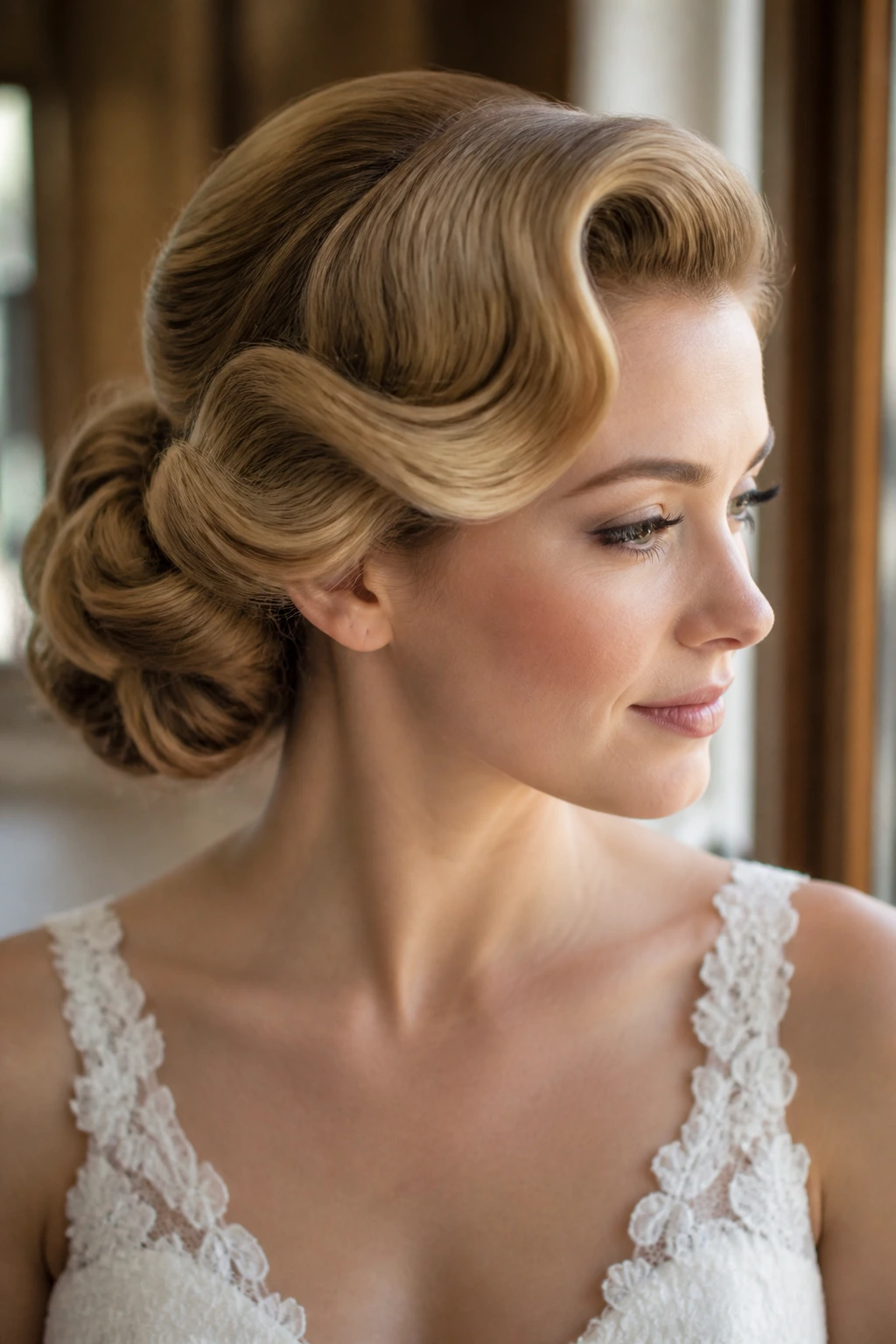
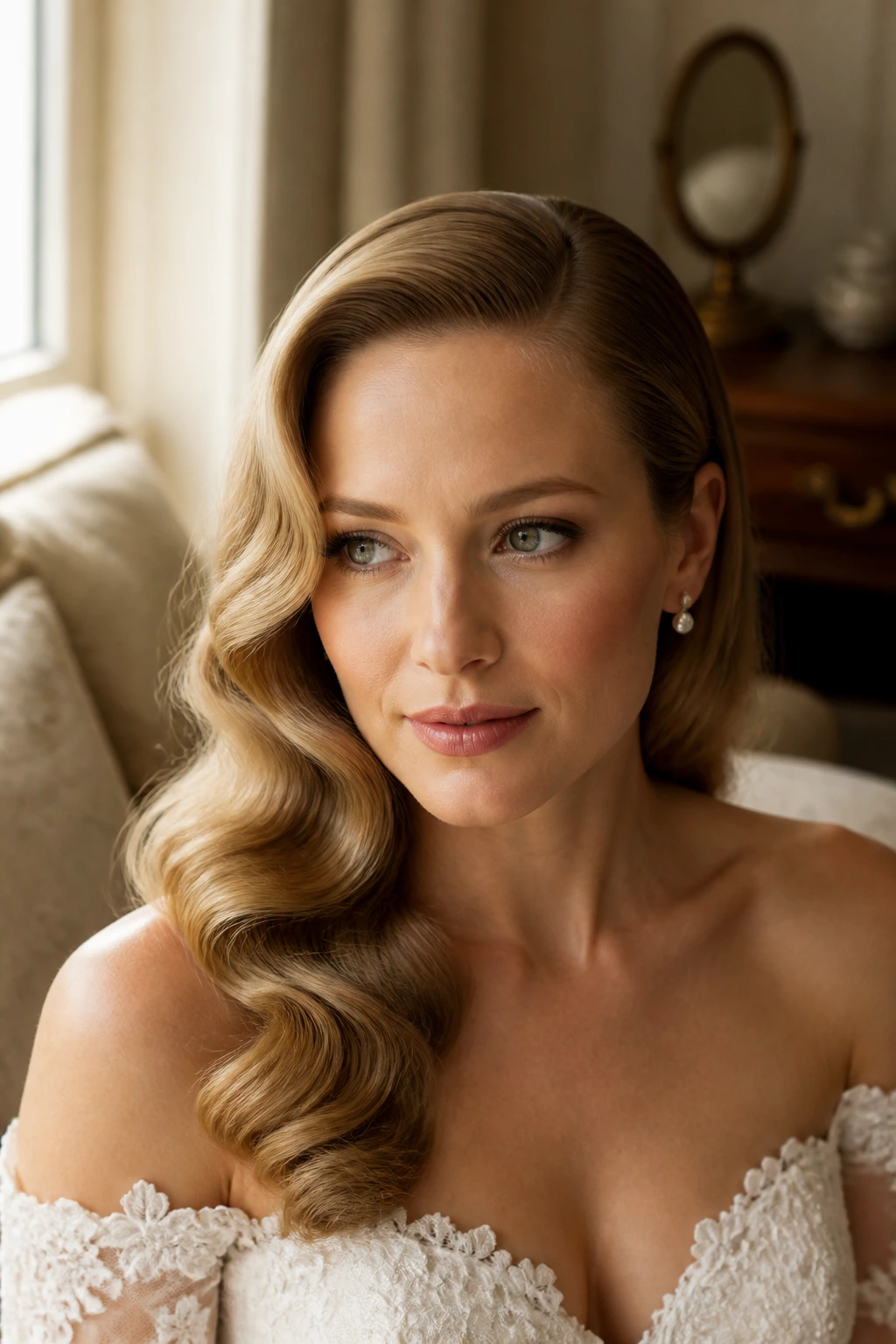
This is the style people picture first when they think about vintage bridal hair, and for good reason. The wave pattern is broad, glossy, and controlled, with the kind of S-curve that sits against the cheekbone instead of floating away from it. Done well, it looks expensive in the old-fashioned sense — not loud, just carefully shaped.
Why it works:
The deep side part gives the face a little drama without stealing the whole show. That part also creates a built-in direction for the waves, which helps the hair fall in one clean line instead of splitting into random bends. On medium to long hair, a 1-inch curling iron or hot roller set keeps the curve soft enough for a bride, not stiff enough for a stage look.
What to watch for:
If the roots are too clean and slippery, the waves collapse. I’d prep with mousse at the crown and a light heat protectant through the lengths, then set each section in the same direction before brushing everything out. The brushing is half the style. Skip it, and the curl reads too modern.
Quick fit notes:
- Best on shoulder-length hair and longer
- Lovely with one comb tucked above the ear
- Strong choice for satin, crepe, or silk gowns
- Works well when the veil sits low, near the nape
A single wave pinned back near the temple can be enough. No need to over-decorate it. The silhouette already does the talking.
2. Marcel Waves on a Shorter Length
Can a bride with chin-length hair still do vintage? Absolutely. Marcel waves were built for polished short hair, and they bring that 1920s line without needing extra length to fake the effect. The style hugs the head, which means it looks intentional from every angle instead of puffing out where you don’t want it to.
The key is clean finger placement and a strong set. These aren’t loose beach waves pretending to be retro. They’re sculpted ripples that start close to the scalp and move in a steady pattern down the side of the head. On a bob or lob, that shape makes the hair feel more formal than volume ever could.
Best for:
- Bobs grazing the jawline
- Brides who want a flapper feel without a full costume look
- Veil-free ceremonies or tiny net veils
- Dresses with beading, fringe, or straight lines
A side part keeps the style from feeling too rigid. And if your hair is blunt at the ends, that helps. Blunt edges make the wave pattern read cleaner; layers can be lovely, but they need more pinning and a little patience around the face.
3. Victory Rolls With Loose Ends
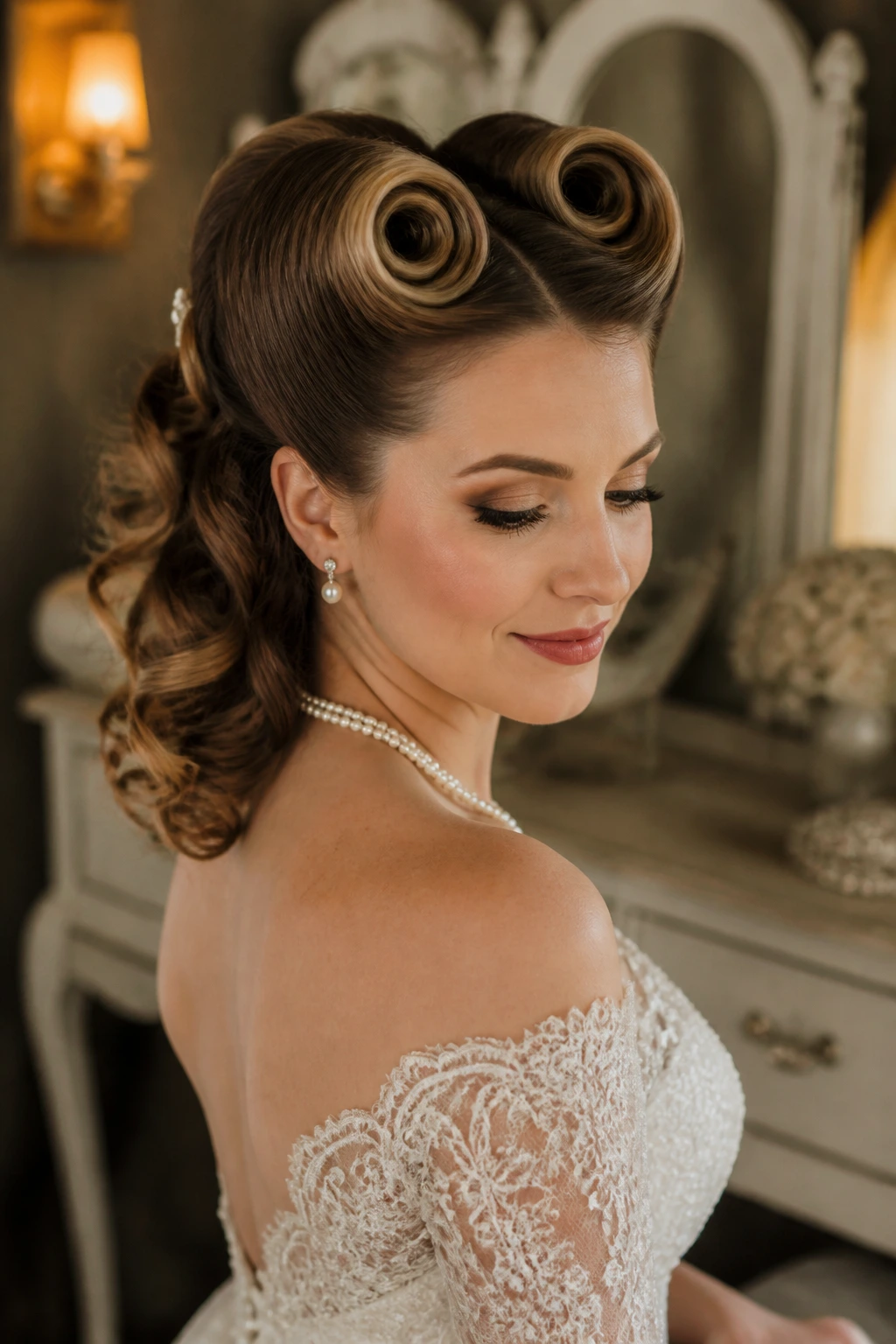
Victory rolls bring the personality. They sit high enough to read instantly, but they’re not the stiff, military version people sometimes imagine. For brides, the trick is to keep the rolls full and smooth, then let the remaining hair fall in soft curls or a low twist so the look doesn’t turn into a period-drama helmet.
Picture the crown with two rounded rolls, one on each side, or one larger roll offset to a side part. That gives you shape up top and movement through the rest. It’s a strong match for brides who want a little drama and don’t mind owning it.
Why it reads bridal instead of theatrical:
The rest of the hair matters. If the ends are glossy, softly curled, or tucked into a low chignon, the rolls become a focal point rather than the whole event. Use a rat-tail comb to smooth the sections before rolling, and pin the base in a crisscross rather than relying on one lonely bobby pin. That little detail is the difference between a roll that sits there and one that gives up halfway through the reception.
A pearl comb or one small brooch-style accessory is enough. More than that, and the rolls start fighting the jewelry.
4. Finger Waves on a Sleek Bob
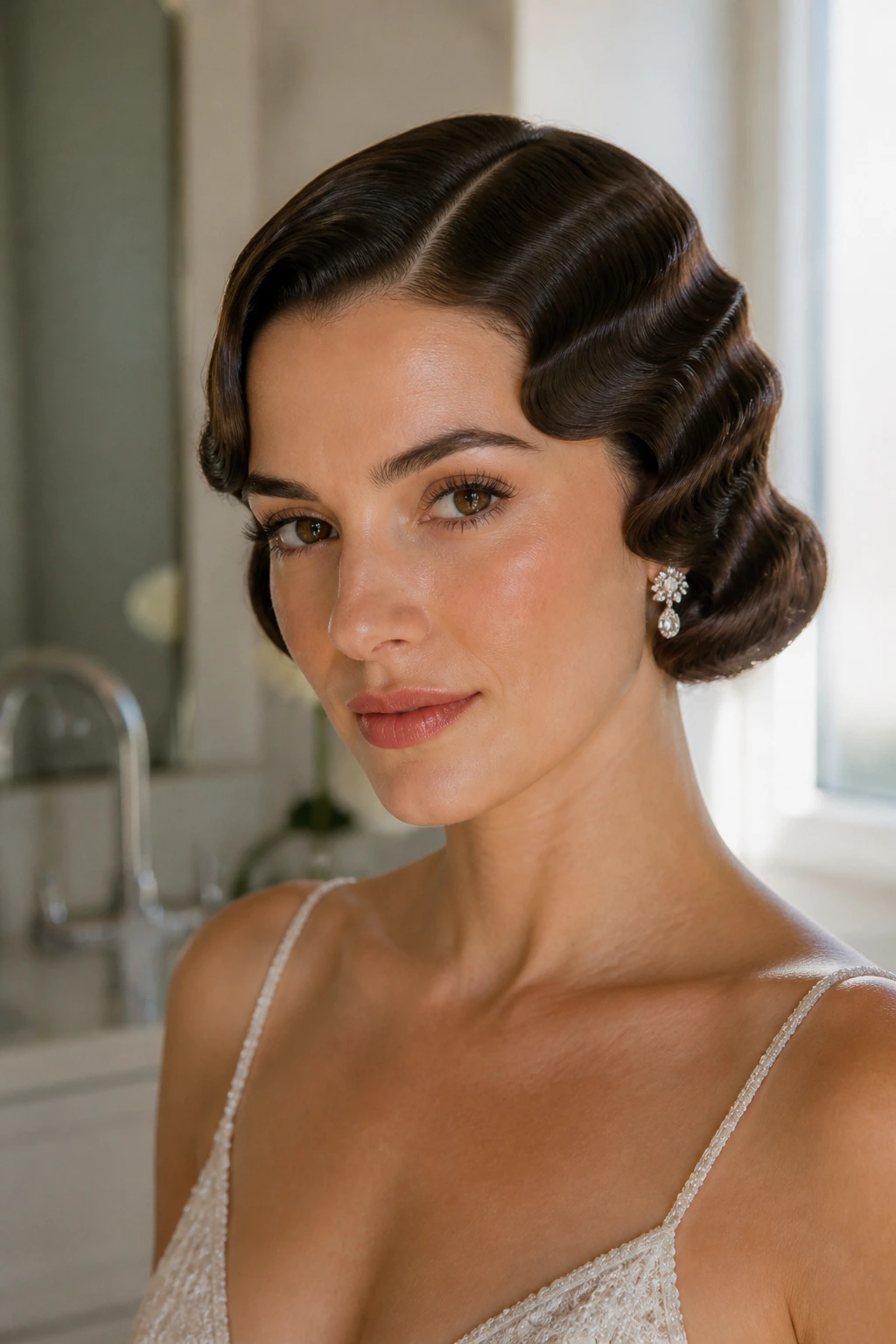
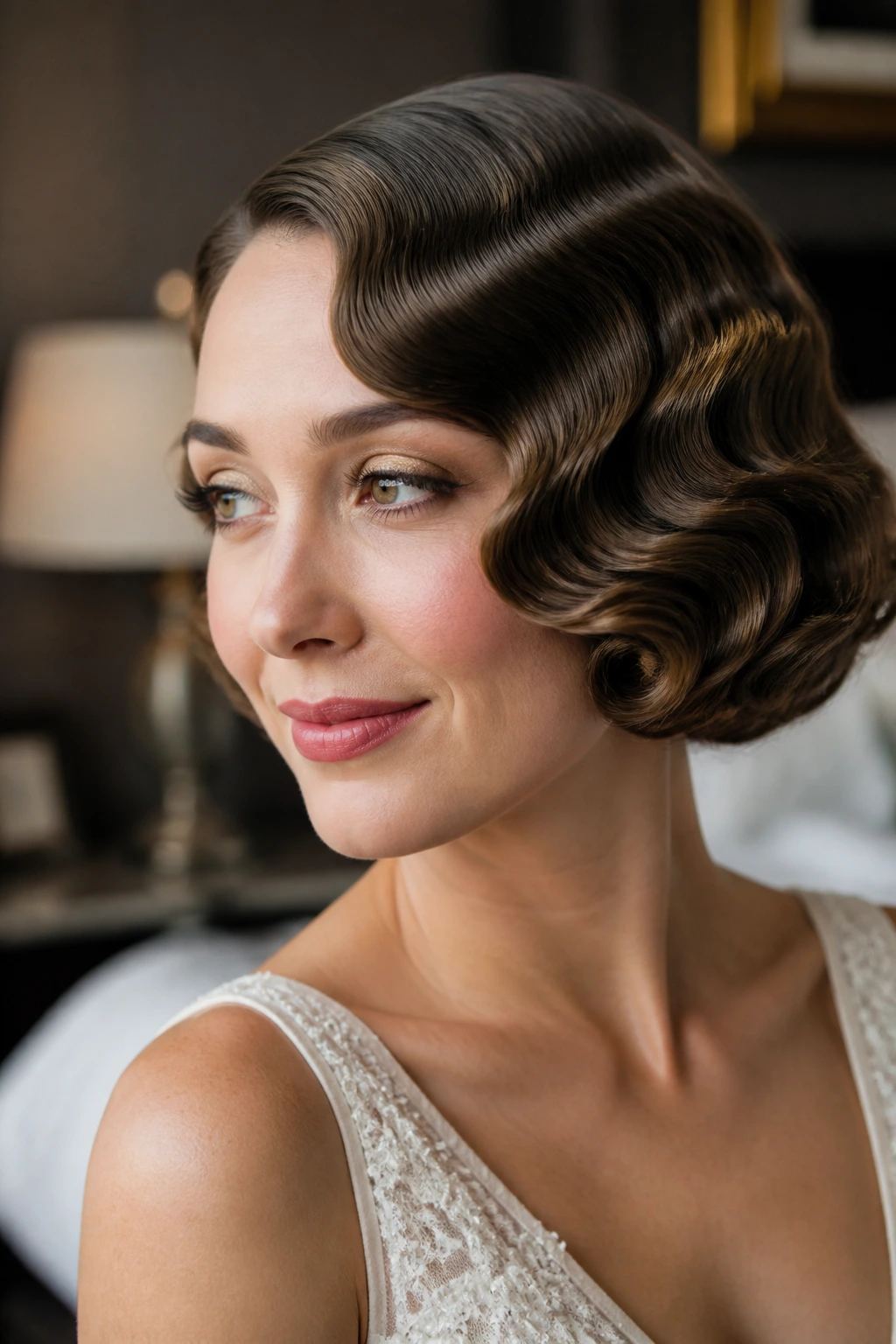
Finger waves have a sharpness to them that makes them feel deliberate from the first glance. They’re closer to sculpture than loose styling, which is exactly why they work so well for a bride who likes a clean line and doesn’t want the hair to compete with the dress. On a sleek bob, the waves sit close to the scalp and give the whole head a polished, almost liquid shape.
This style wants a wet set or at least a damp start, plenty of setting lotion or mousse, and patience. Lots of patience. The wave ridge should look smooth, not fuzzy, and the spaces between the ridges need to stay tidy. If the hair frizzes while you’re shaping it, stop and reset that section before it dries crooked. Once finger waves set the wrong way, they don’t forgive easily.
They’re especially good for brides wearing satin slips, straight-cut gowns, or dresses with strong necklines. The hair doesn’t need extra embellishment when the wave pattern is this precise. A tiny side comb or a few tucked pearls can be enough.
5. Low Chignon With Rolled Sides
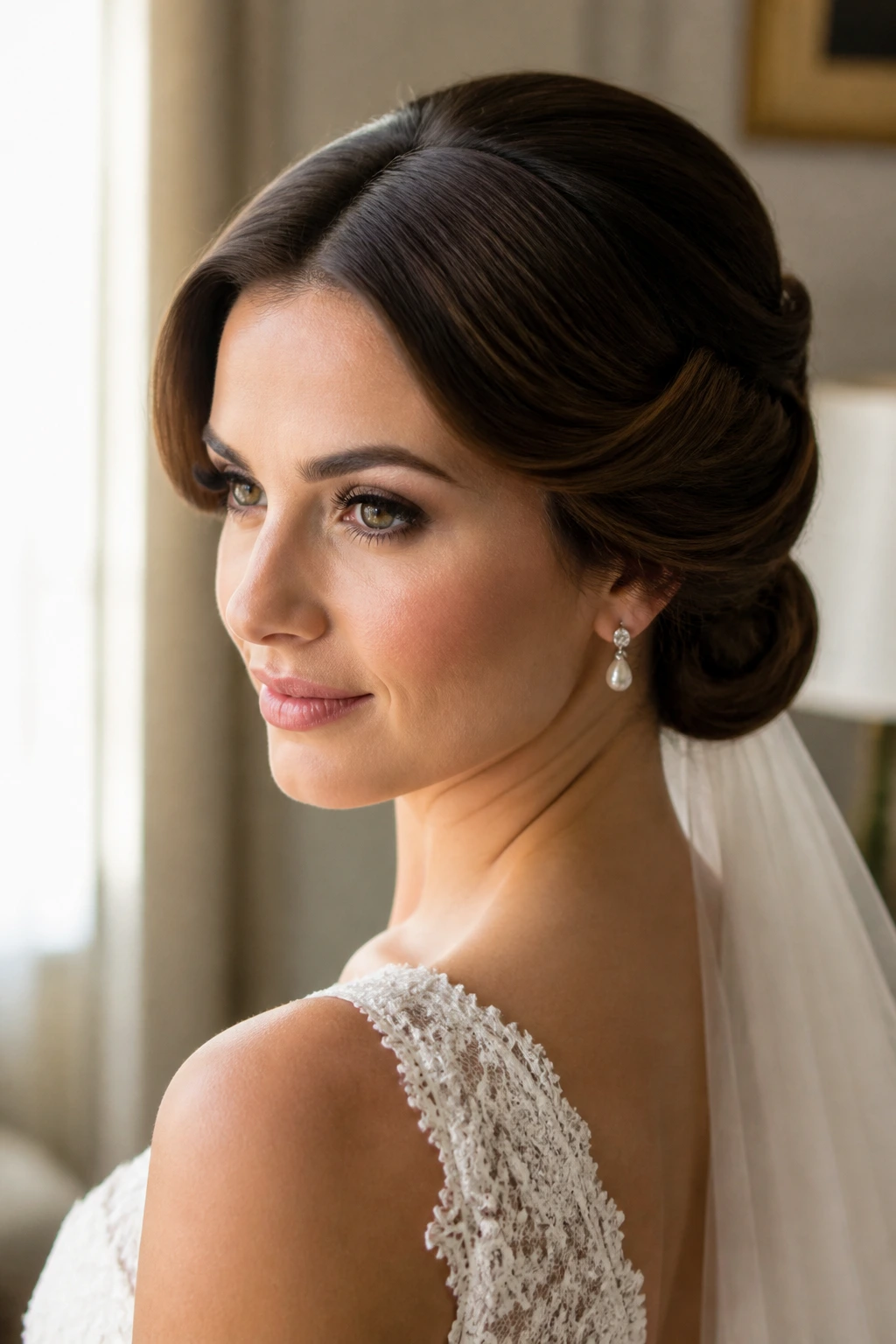
A low chignon sounds plain until you put rolled sides on it. Then it turns into one of the smartest vintage bridal styles on the page. The bun itself stays near the nape, which keeps the look elegant and secure, while the rolled side sections bring in that 1940s-to-1950s softness that makes the style feel lived-in rather than formal for the sake of being formal.
The reason I like this one is simple: it does not fight the dress. A high neckline, lace collar, or structured back needs hair that behaves. A low chignon gives you that. Add side rolls or a gentle twist over the ears, and the style gains enough texture to avoid feeling severe.
What makes it feel vintage
The finish is smoother than a modern undone bun. You want the crown brushed flat, the sides tucked in a clean curve, and the bun pinned close rather than puffed out. If you can see where the pins are, there are too many of them showing.
A chignon like this also plays nicely with birdcage veils. The veil can anchor just above the bun or sit to one side without flattening the whole shape.
6. 1940s Pin-Curled Updo
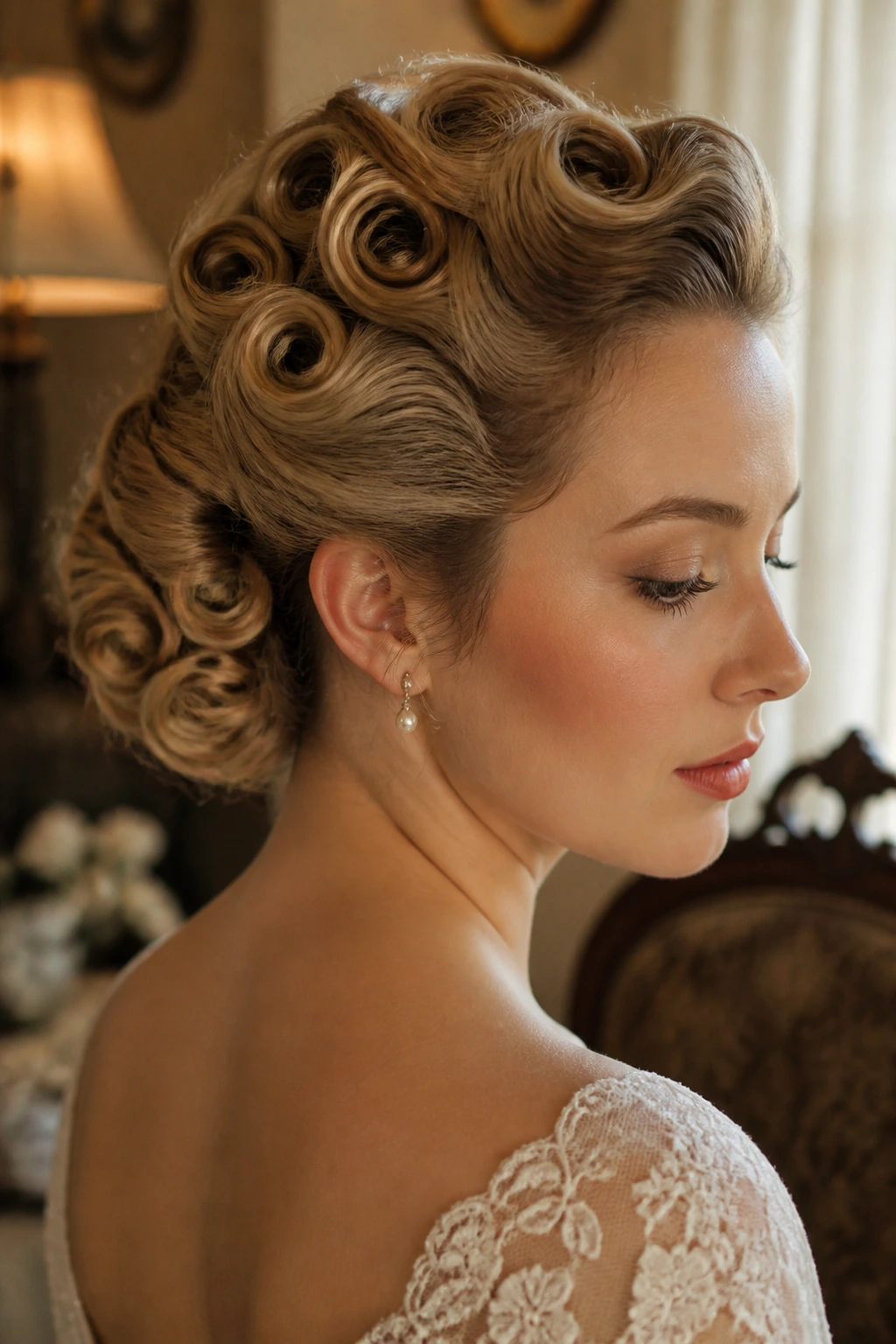
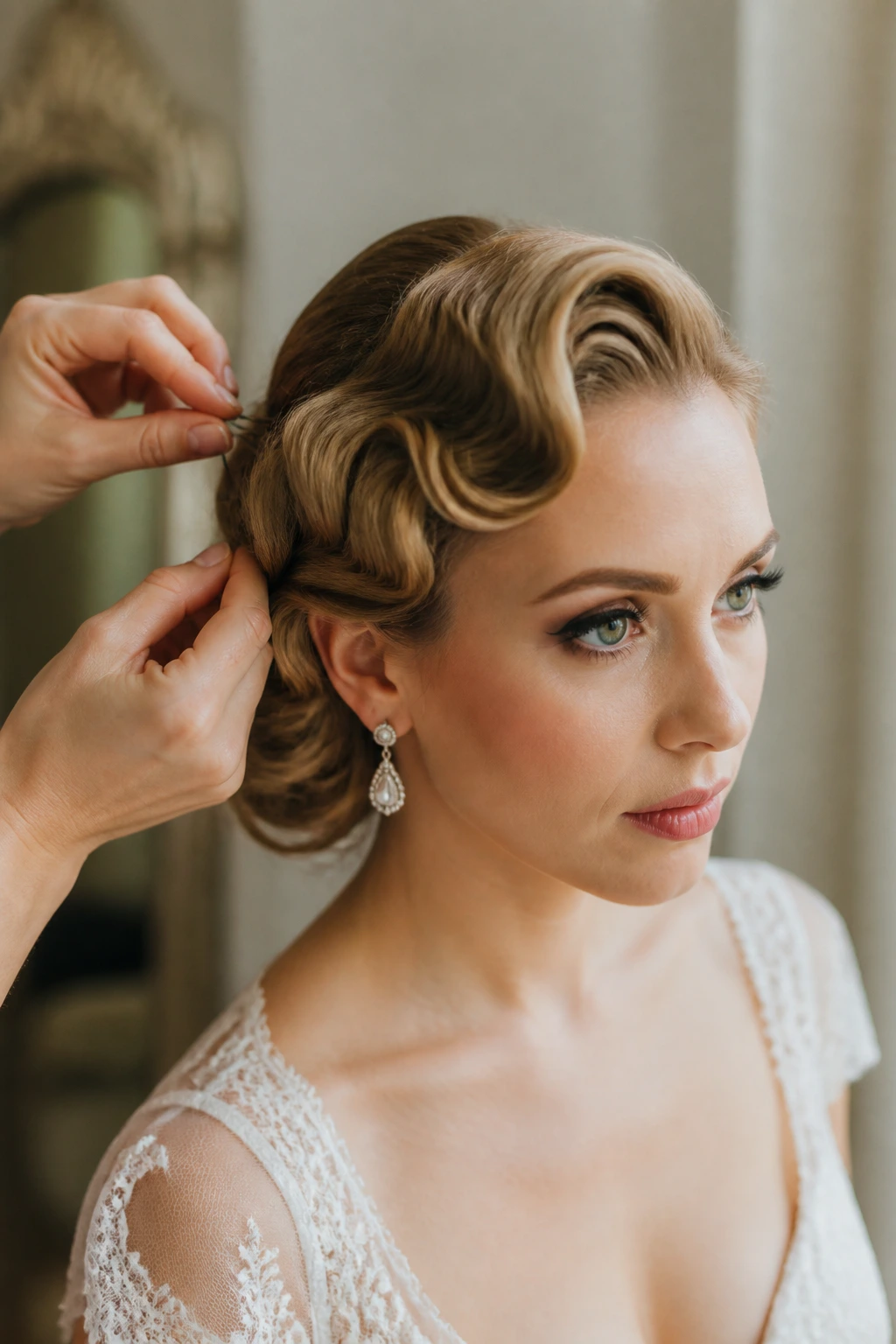
Pin curls are the quiet workhorses of vintage bridal hair. They don’t look flashy while they’re being made, which is part of their charm, but the result is full of soft bends that hold their shape better than most curling-iron styles. When those curls are pinned into an updo, the hair gains body without looking bulky.
This is a particularly good choice for brides who want detail in the back. A pin-curled updo has texture everywhere you look — along the sides, in the crown, across the twist at the nape. It’s a style that rewards a close photograph. From a distance, it reads smooth and refined; up close, you see all the tiny curves that keep it from feeling flat.
- Set curls in the same direction for a cleaner brush-out
- Let them cool completely before taking pins out
- Pin the curls while they’re still warm, not steaming hot
- Finish with a flexible spray, not a shellacking one
If your hair tends to lose curl fast, this is one of the better bridal options because the curl shape is built into the structure. The style lasts longer when the curl is set first and arranged second.
7. Faux Bob With Soft Curls
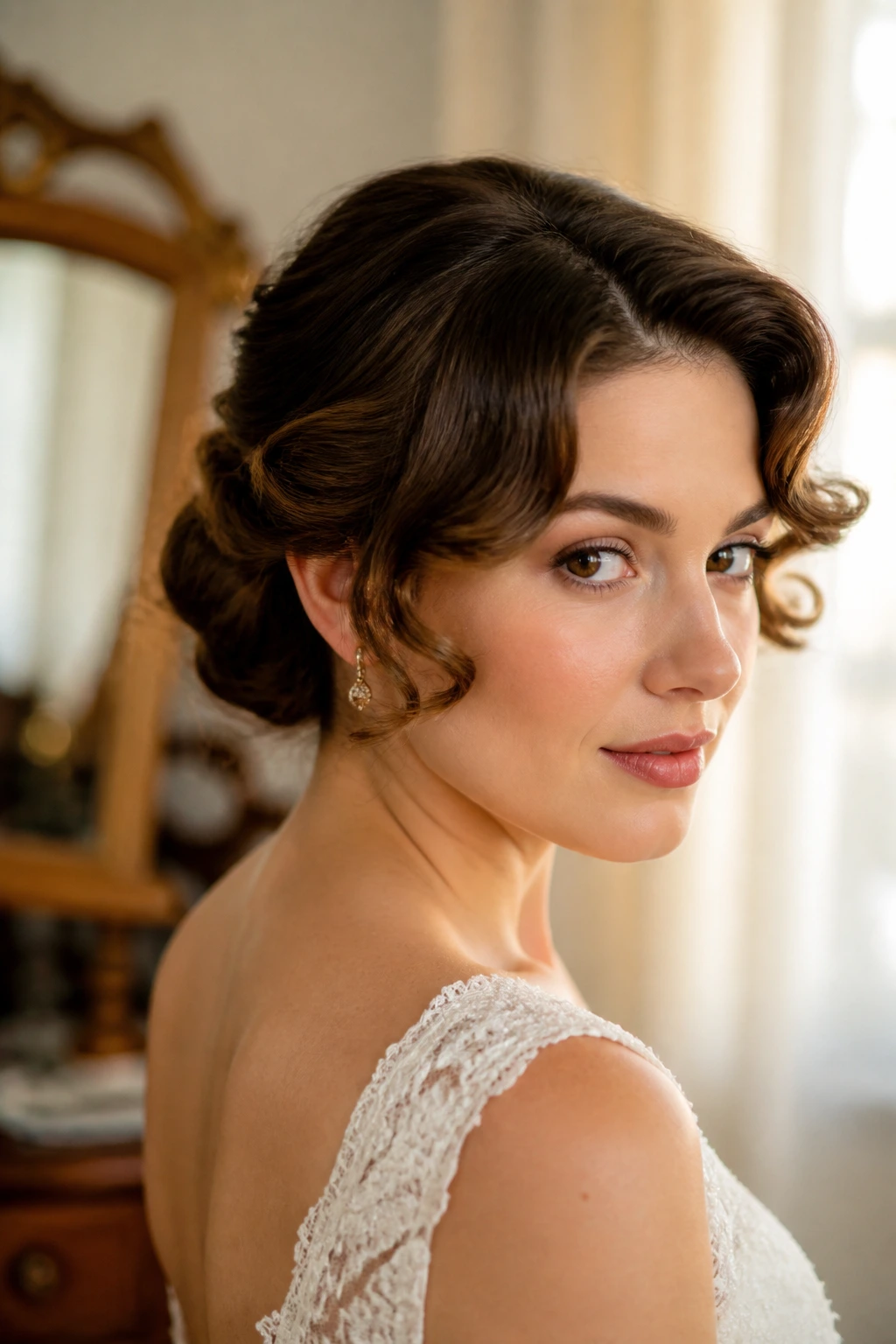
A faux bob is a small trick with a big payoff. You keep the hair longer underneath, tuck the lengths under, and suddenly the bride looks like she stepped out of a 1930s still photograph. It’s especially useful for brides who want a vintage shape without losing the feeling of short hair around the face.
The curls on top should stay soft and rounded. Too tight, and the bob reads costume-y. Too loose, and the tuck shows. The sweet spot is a curl that bends under at the ends and sits against the jawline with a little shadow underneath. That hidden length gives the style its cushion, which is why it holds a veil or comb so well.
This one loves a side part and a strong pin job at the nape. Don’t try to hide the tuck completely if that makes the shape collapse. A few hidden pins are fine. A style this good should look secure, not invisible.
8. Gibson Tuck With Pearl Pins
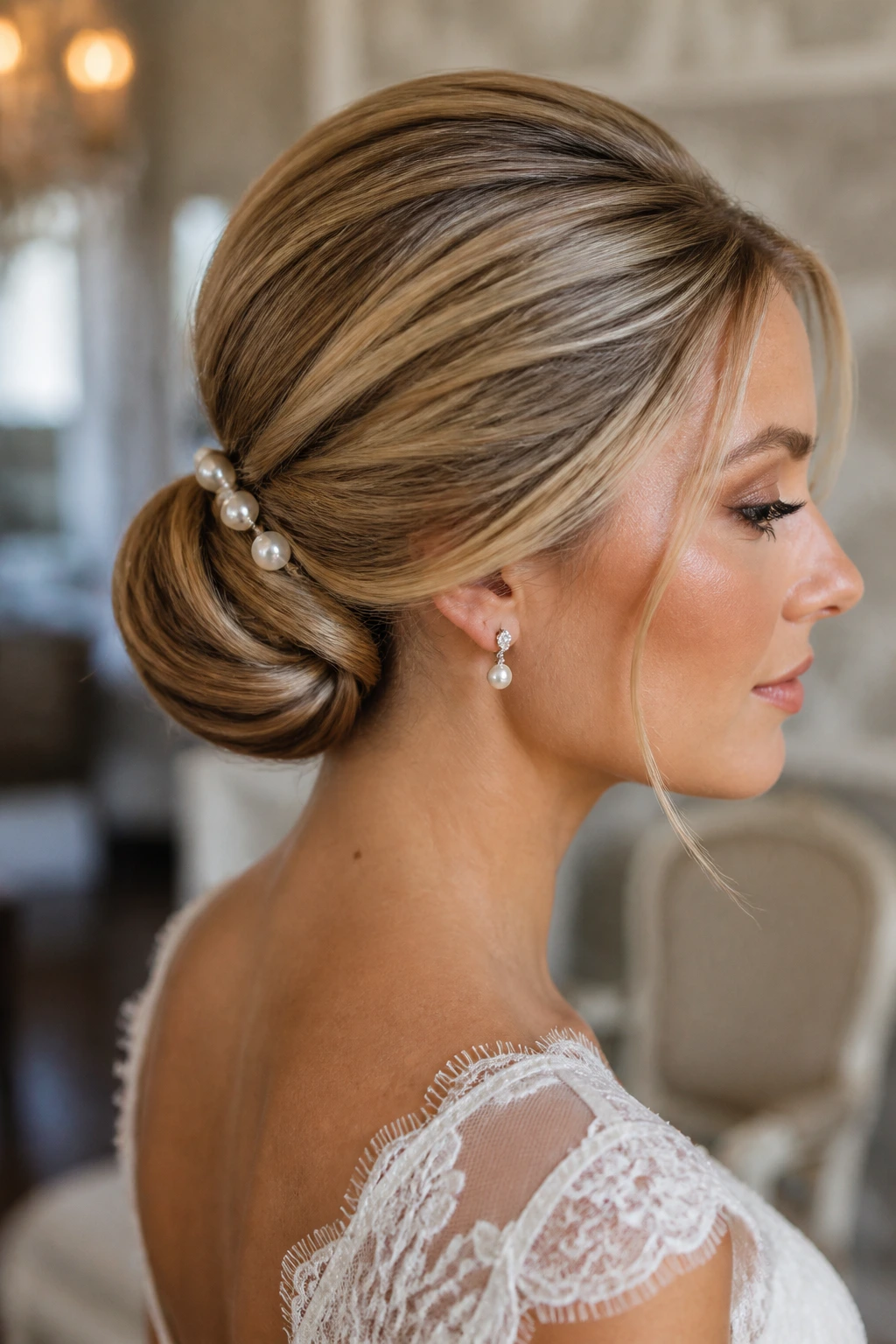
Do you want something soft, low, and a little bookish in the best possible way? The Gibson tuck is that style. Hair is rolled up and under itself at the nape, creating a smooth pocket of volume that feels old-fashioned without becoming precious about it. Add pearl pins and it tips straight into bridal territory.
The beauty of the Gibson tuck is how kind it is to medium-length hair. You don’t need a huge amount of length to get the fold, and you don’t need the finish to be perfectly symmetrical. In fact, a slightly looser tuck can look better because it keeps the shape from getting too rigid around the hairline.
Best way to wear it:
- Pair it with a lace gown or a dress with a rounded neckline
- Keep the crown smooth and the tuck low
- Use pearl pins sparingly so the curve stays visible
- Leave one or two whisper-thin pieces near the temples if you want a softer frame
It’s one of those styles that looks deceptively simple and takes a little practice. The tuck itself is easy. Making it sit in the right place is the part that matters.
9. Rose-Rolled Half-Up Style
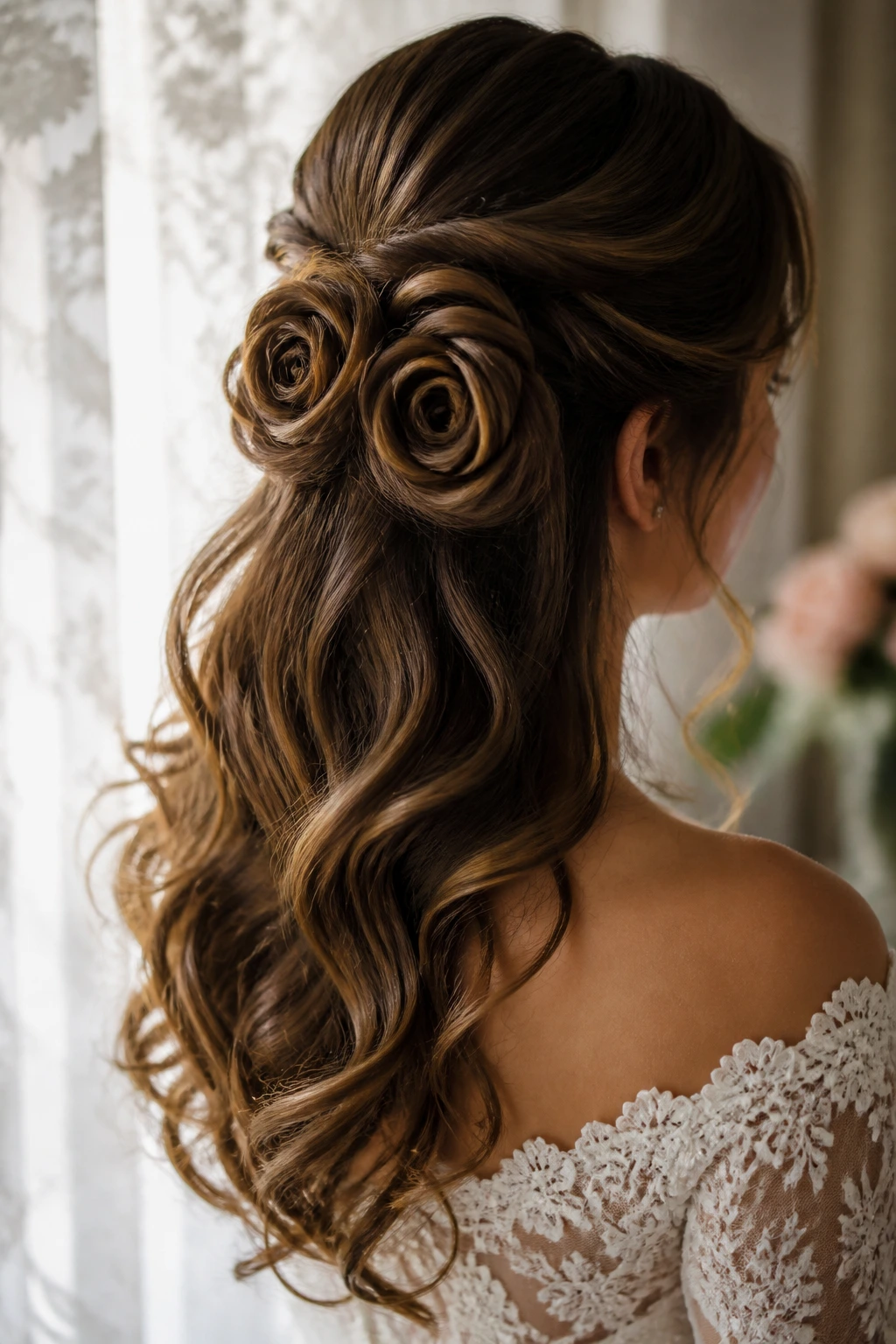
This style has the prettiest little trick in vintage bridal hair: the sections are rolled into soft rose shapes at the back of the head, usually just above the occipital bone, while the lower lengths fall freely in curls or brushed-out bends. It feels romantic without drifting into the loose, boho territory that takes over so many half-up looks.
The rose roll gives the back some visual interest. That matters. Half-up styles can go flat fast if all the action is at the front. Here, the rolled section acts like a small centerpiece, which makes the style look planned from behind rather than just convenient from the front.
It suits brides who want to keep some length visible, especially if the dress has movement in the skirt and the hair should echo that. A few pearl pins or a comb tucked into one roll is enough. No need to crowd the back with decoration — the roll pattern already does the work.
10. Crown Braid With Ribbon Finish
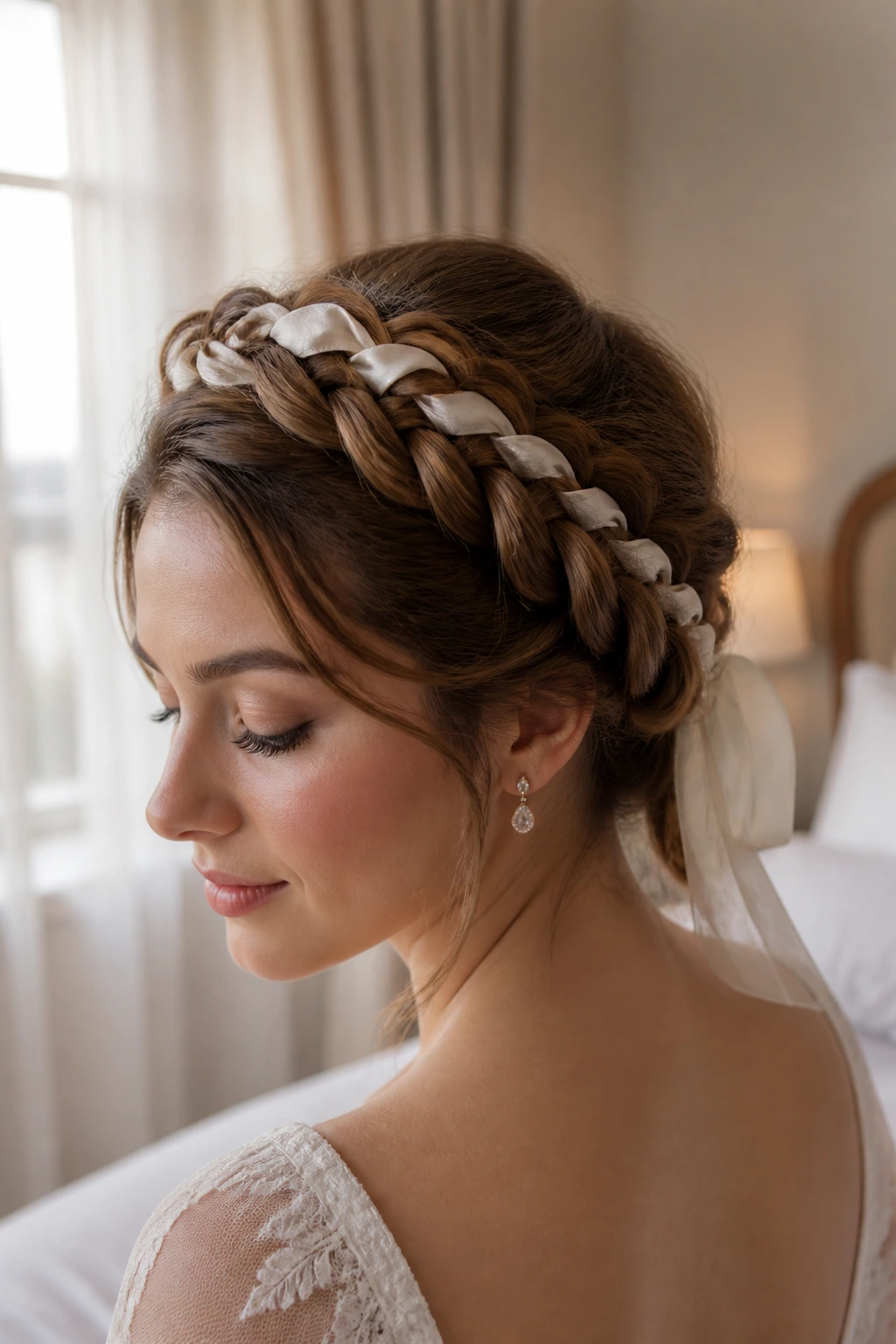
A crown braid can look rustic, but it doesn’t have to. With a tighter plait, a smooth crown section, and a ribbon woven through the braid or tied at the base, it gets a vintage softness that feels closer to early-1900s bridal portraits than festival hair. The ribbon helps. A lot.
The braid should sit like a halo, but not so high that it starts to resemble a crown from a children’s costume box. Keep the braid closer to the head, and let the ends tuck or loop neatly at the back. If you leave the braid too loose, the shape loses its period feel and starts reading bohemian instead.
A satin ribbon in ivory, blush, or muted blue can shift the mood fast. Blue especially has that old bridal superstition energy, and it looks lovely in photos against darker hair. For blonde hair, a cream ribbon usually disappears a little too much, so go a shade deeper for contrast.
11. Barrel Curls and Veil Comb
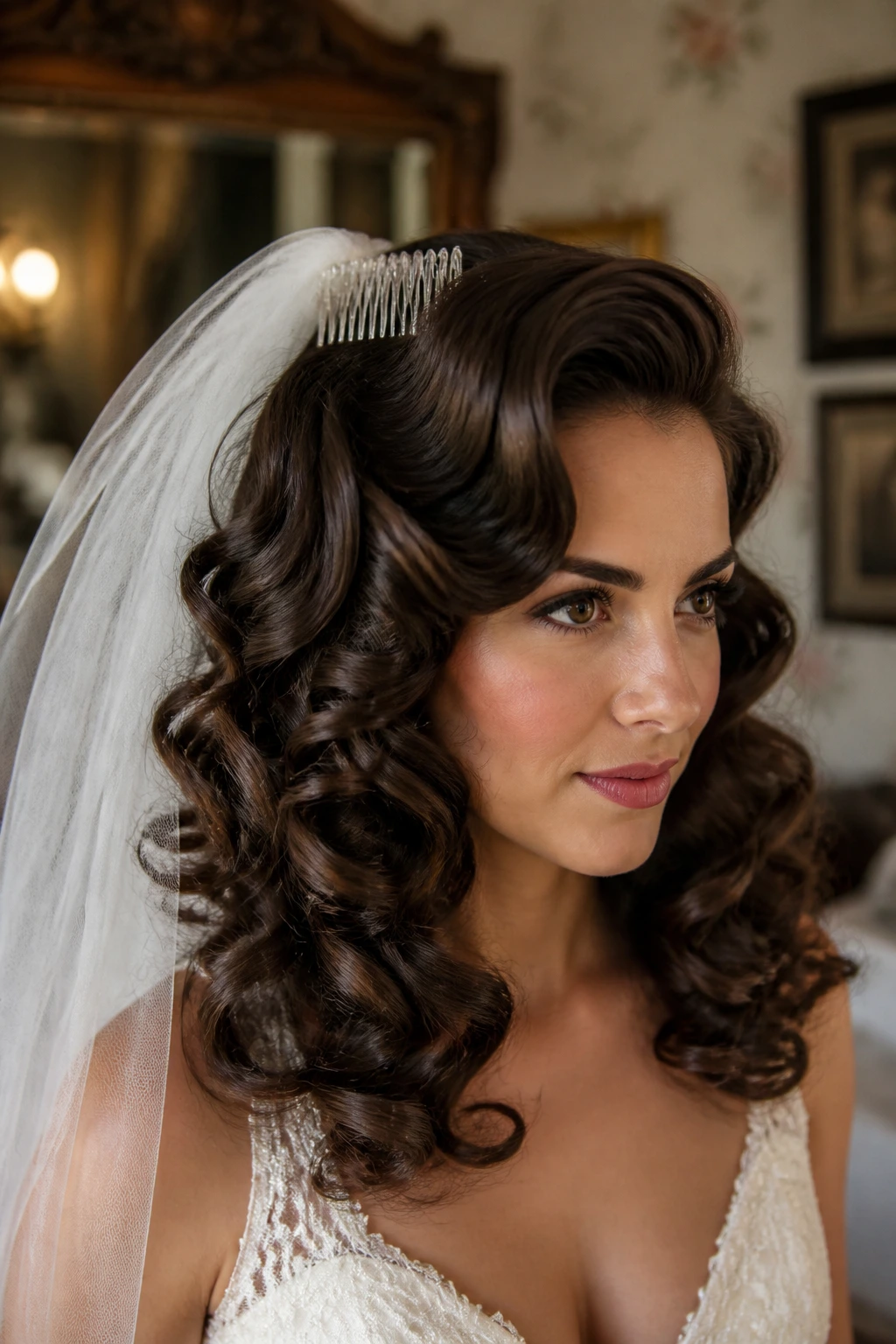
Barrel curls are the old drama queens of vintage hair. Big, round, and unmistakable, they give the hair volume from root to end without relying on backcombing alone. For brides, they work best when the curls are set with enough tension to stay smooth and then brushed just enough to merge into one another.
This style makes sense if the veil is doing its own thing. A comb placed under or just behind the top section lets the curls frame the face while the veil sits like a separate layer. That separation matters more than people think. If the veil is shoved into the same mass as the curls, both pieces lose their shape.
A barrel curl set does best on hair with at least shoulder-length sections. Longer hair can be rolled tighter. Shorter hair can work too, but the ends need clean direction. I’d keep the top polished and let the volume live from mid-length down. That keeps the crown from getting too high and dated in the wrong way.
12. Old Hollywood Low Ponytail
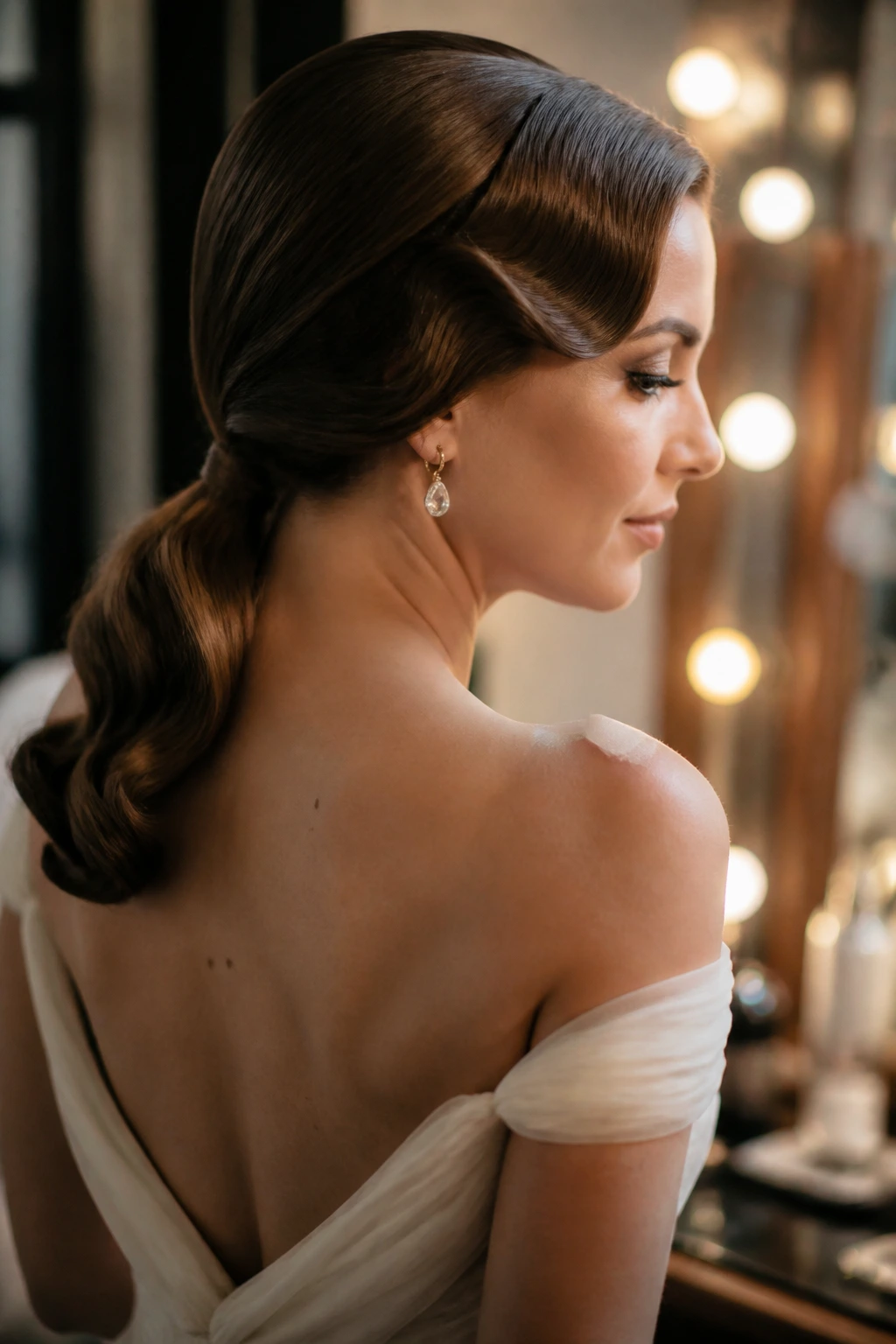
A low ponytail can sound almost too simple to belong in this group. Then you set it with a deep side part, a smooth crown, and soft bends through the tail, and it suddenly belongs on a black-and-white movie set. The difference is the finish. Not the height.
The ponytail should sit at the nape or just above it, with the base wrapped in a section of hair or hidden under a subtle wave. Keep the crown sleek. If there’s too much lift at the top, the style stops feeling vintage and starts looking like a generic bridal blowout. The tail itself wants one bend, maybe two — not a mess of tiny curls.
This is a good option for brides who want movement. The tail can swing a little when you walk, which gives the style life, but the front stays controlled. A pair of drop earrings or a side comb fits naturally here because the hairline stays open.
13. Milkmaid Braid With Soft Tendrils
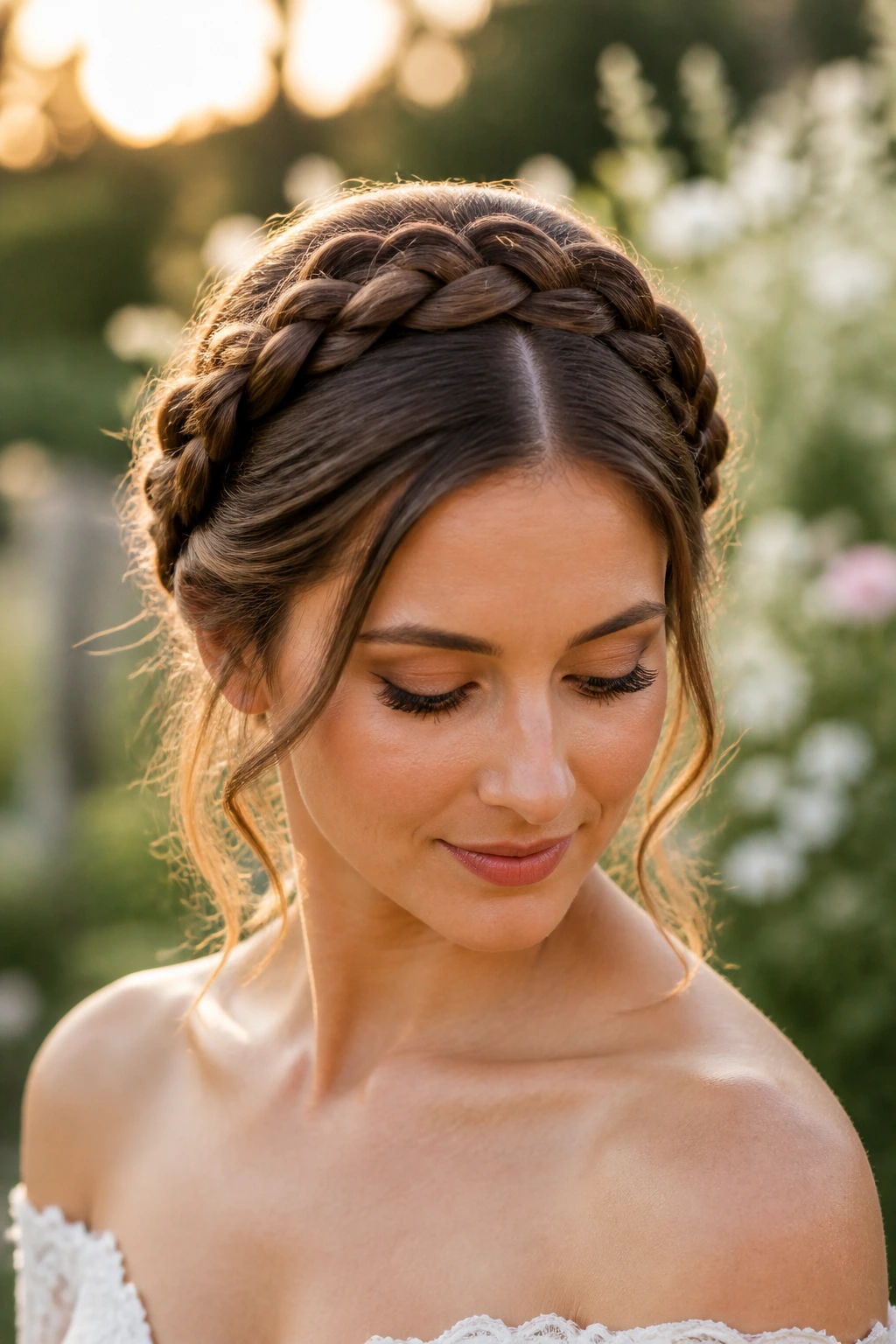
Can a milkmaid braid feel bridal instead of farm-girl-cute? Yes, if the braid is smooth, the part is clean, and the tendrils are kept whisper-soft. The goal is not chunkiness. It’s a smooth wrap around the head with a few delicate pieces left loose at the temples and nape.
The braid should sit snugly, almost like a band. If it puffs too much, it changes the mood in a hurry. A little pulling apart is fine, but don’t destroy the line of it. The best versions look tidy first and romantic second, which is exactly how vintage bridal hair behaves when it’s working.
Where this style shines
- Outdoor ceremonies
- Dresses with short sleeves or peasant details
- Brides with thick hair that can hold a braid without drooping
- Brides who want a soft frame around the face without full curls
A ribbon tied near the nape can make it feel more period-correct, but keep it narrow. Wide fabric starts to pull the style away from the hair and into the accessory.
14. Sculpted French Twist With Waves
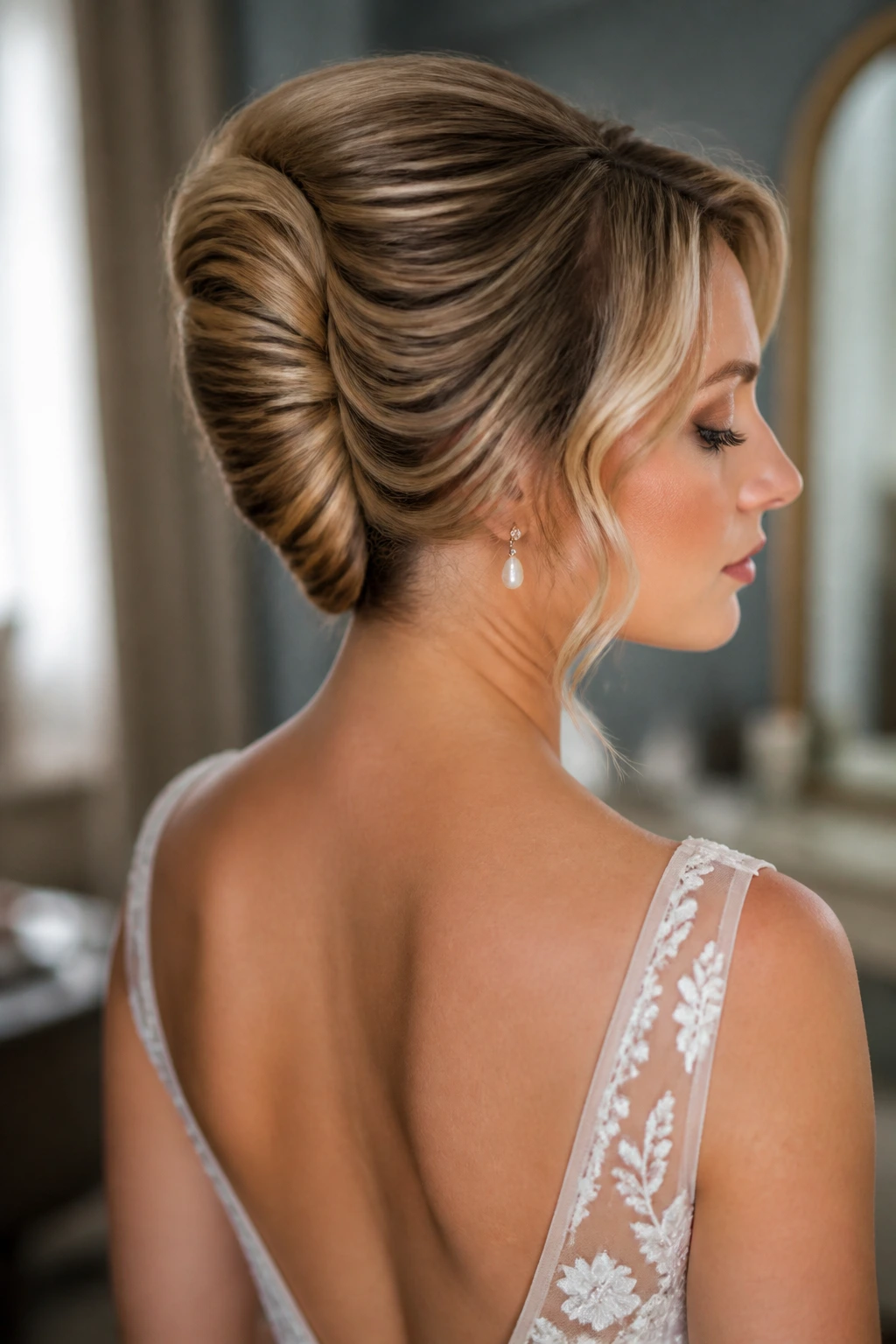
The French twist never really left bridal hair, and vintage versions of it are some of the best. What changes the mood is the texture on the sides and the amount of polish at the crown. A sculpted twist with softly waved side sections feels cleaner and more romantic than the strict office version most people picture.
This is one of the best choices for a dress with a dramatic back. The twist keeps the neck long and open, which lets the gown’s neckline breathe. At the same time, the side waves soften the profile so the style doesn’t feel severe under bright daylight or flash photography.
Pinning matters here. A twist that’s too shallow can sag; one that’s too tight looks hard. You want the fold to sit upright, with the ends tucked securely and the surface brushed smooth enough to catch a little light. Not a mirror finish. Just enough shine to show the shape.
15. Curled Bob With Baby Bangs
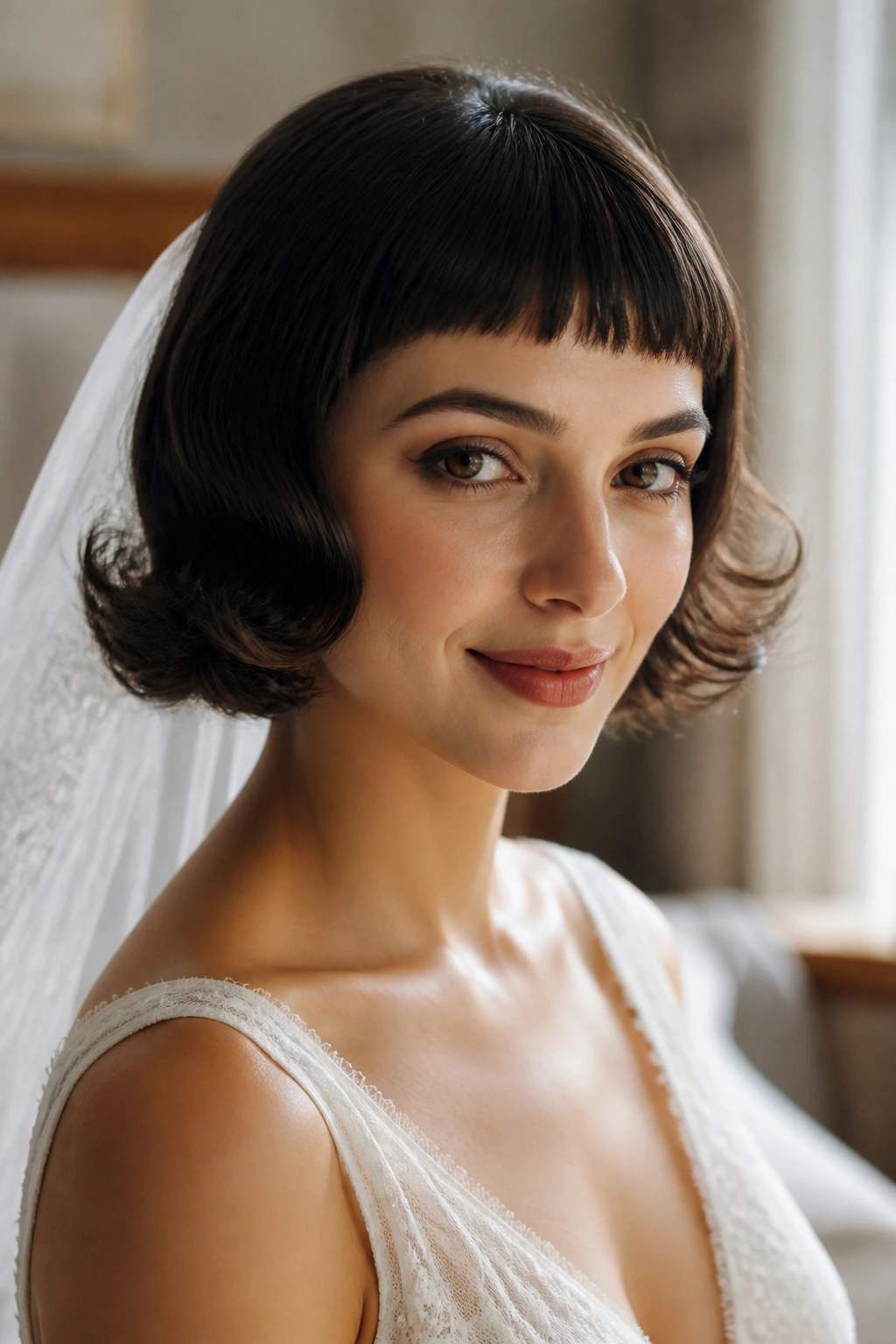
A curled bob with baby bangs is a little brash, and I mean that as a compliment. It has a 1960s edge without losing the bridal softness if the curls are rounded and the fringe is kept neat. This is a style for a bride who does not want invisible hair. She wants the hair to have a point of view.
Baby bangs bring the whole look forward. They frame the eyes and make the bob feel deliberate instead of simply short. The curls should bend inward or under slightly so the jawline gets a clean edge. If the ends flip all different ways, the style gets messy fast.
This works especially well with mod-inspired dresses, shorter hems, or clean satin sheaths. Add a tiny bow, a narrow headband, or a slim comb, and the vintage signal gets stronger without turning the outfit into a theme party.
16. Side-Swept Pinned Curls
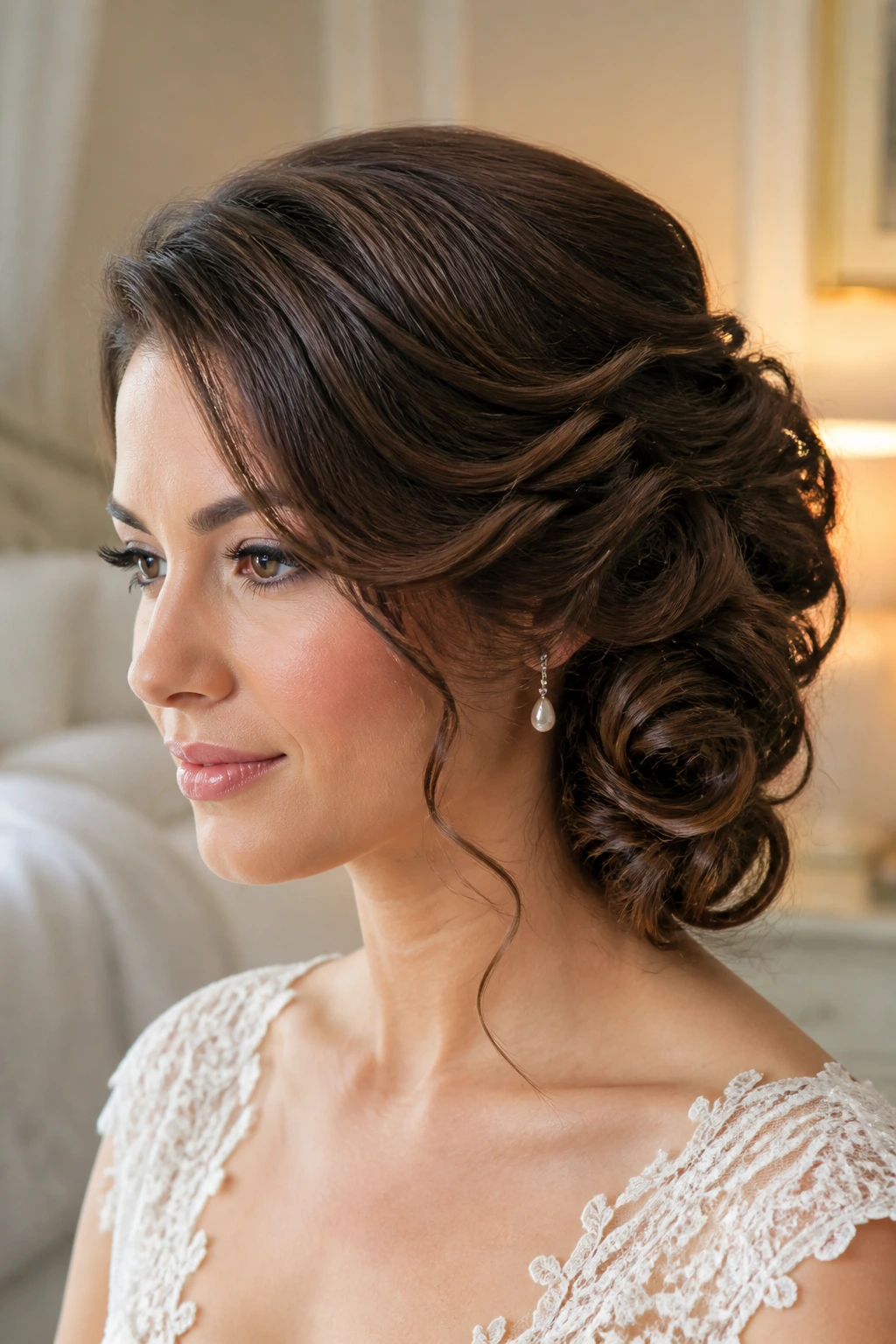
Side-swept pinned curls are underrated. They take the softness of a curl set and move it all to one side, where the shape feels more dramatic and more bridal than it does on a loose center part. The pinned side keeps the face open, while the opposite side can stay fuller and more textured.
The style is useful because it gives you options. You can pin the curls close for a cleaner line, or let them puff a little for a less formal finish. Either way, the asymmetry creates movement. Vintage hair loves asymmetry when it’s controlled — one side doing more work than the other is part of the charm.
A comb, a cluster of pins, or a small floral piece fits easily here. Just keep the decoration on the heavier side only. If both sides get loaded up, the shape stops feeling intentional and starts looking crowded.
17. Beehive Half-Up With Volume
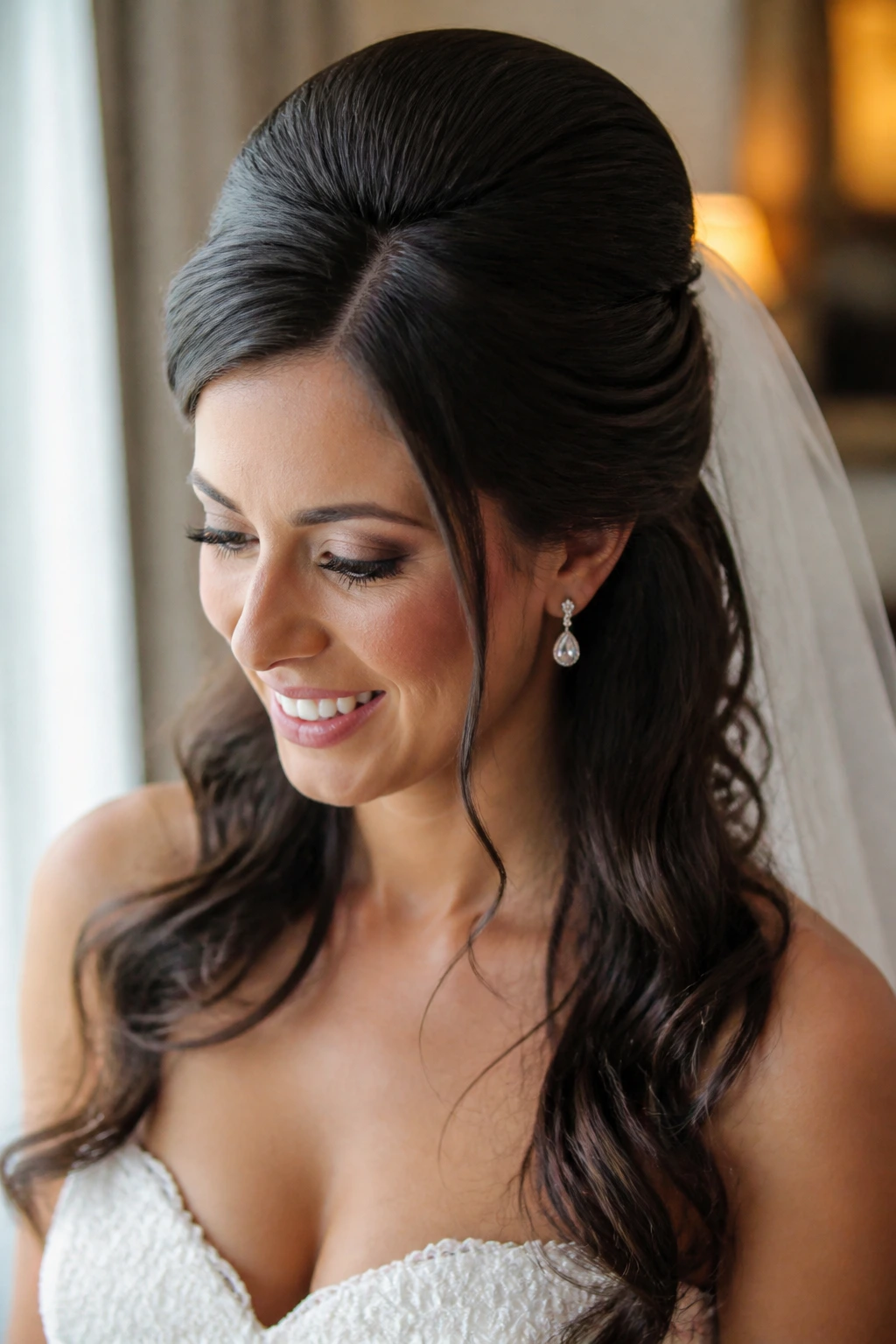
A beehive half-up style sounds bold because it is. The trick is to keep the volume at the crown and leave the lower half soft so the whole thing reads as bridal, not as a costume from a ’60s dance floor. Think lifted crown, smooth sides, and lengths that still move.
The volume should sit where the eye naturally lands — just above the head’s widest point. That keeps the silhouette flattering and avoids the mushroom effect. Backcombing gives the structure, but smoothing the outer layer afterward is what makes it look finished instead of tangled.
- Great for brides who want height without a full updo
- Best paired with a veil that sits behind the crown, not on top of it
- Works well with strong liner or a structured dress shape
- Needs a good amount of pinning under the surface
It’s one of the few styles where a little extra height genuinely changes the whole outfit. The trick is stopping before it becomes too tall to feel elegant.
18. Soft Brush-Out Glam Waves
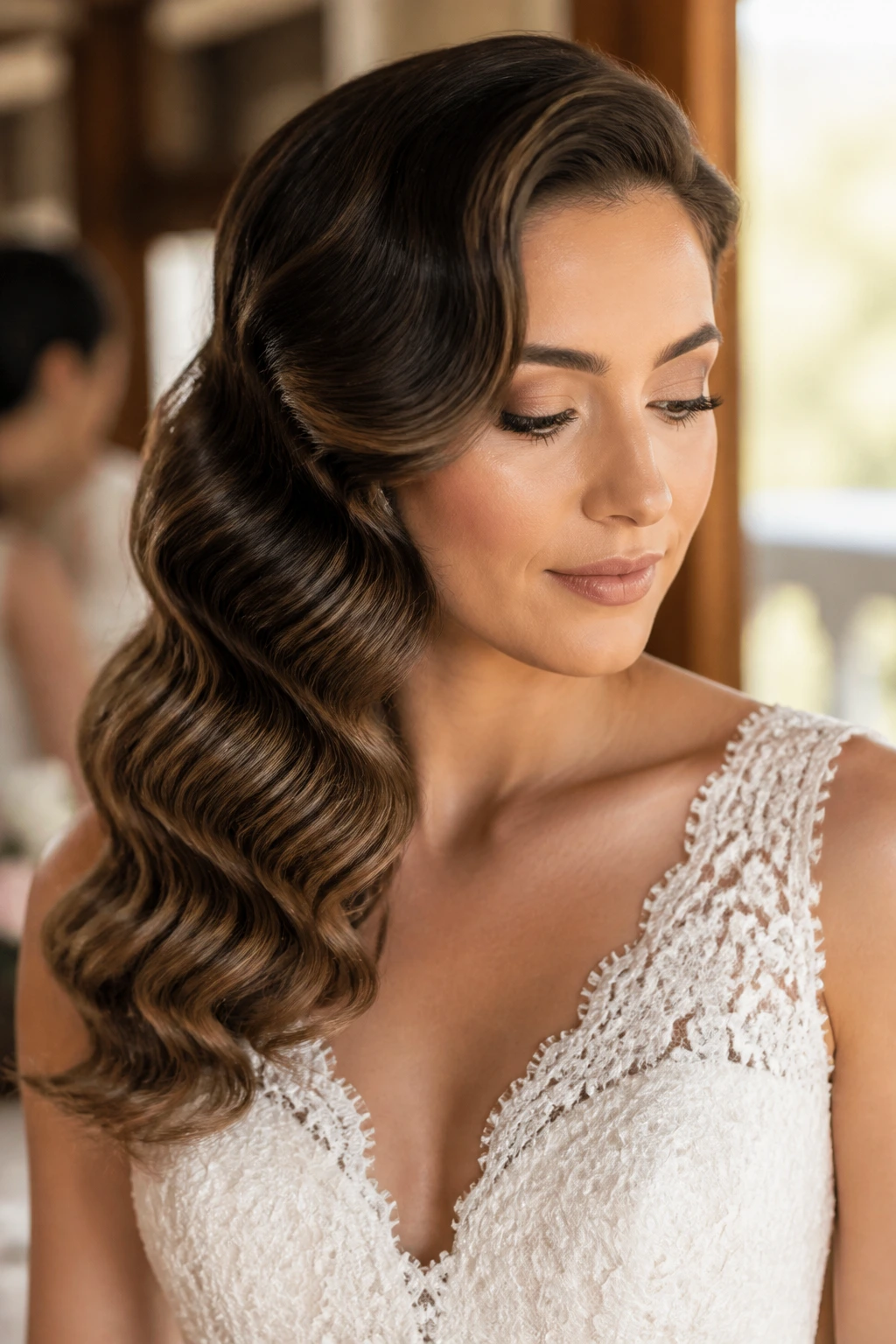
What happens when you take set curls, brush them out carefully, and stop before they go limp? You get glam waves with a vintage heart. This is the softer cousin of Hollywood waves — less rigid, more touchable, but still built on shape rather than random movement.
The brush-out is where people usually go wrong. They either stop too early and keep too many separate curls, or they overbrush and lose the wave definition entirely. The sweet spot is where the wave still shows its pattern, but the surface looks unified. A wide boar bristle brush helps here, especially if the hair was set in sections and cooled all the way through.
This style is gorgeous when the dress already has some texture, like lace or embroidery. The hair doesn’t need to be louder than the gown. It just needs to echo the same careful finish.
19. Twisted Low Roll With Birdcage Veil
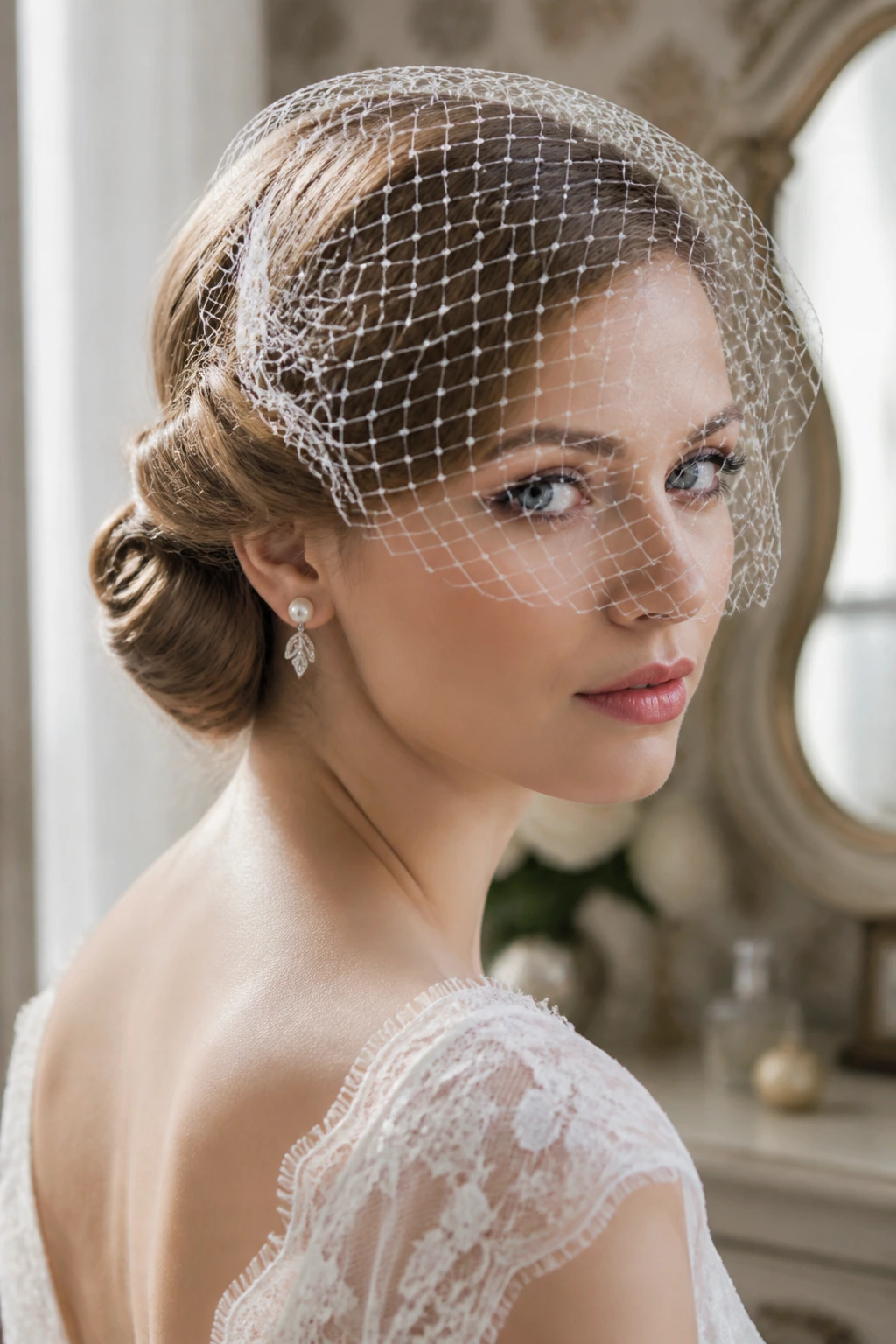
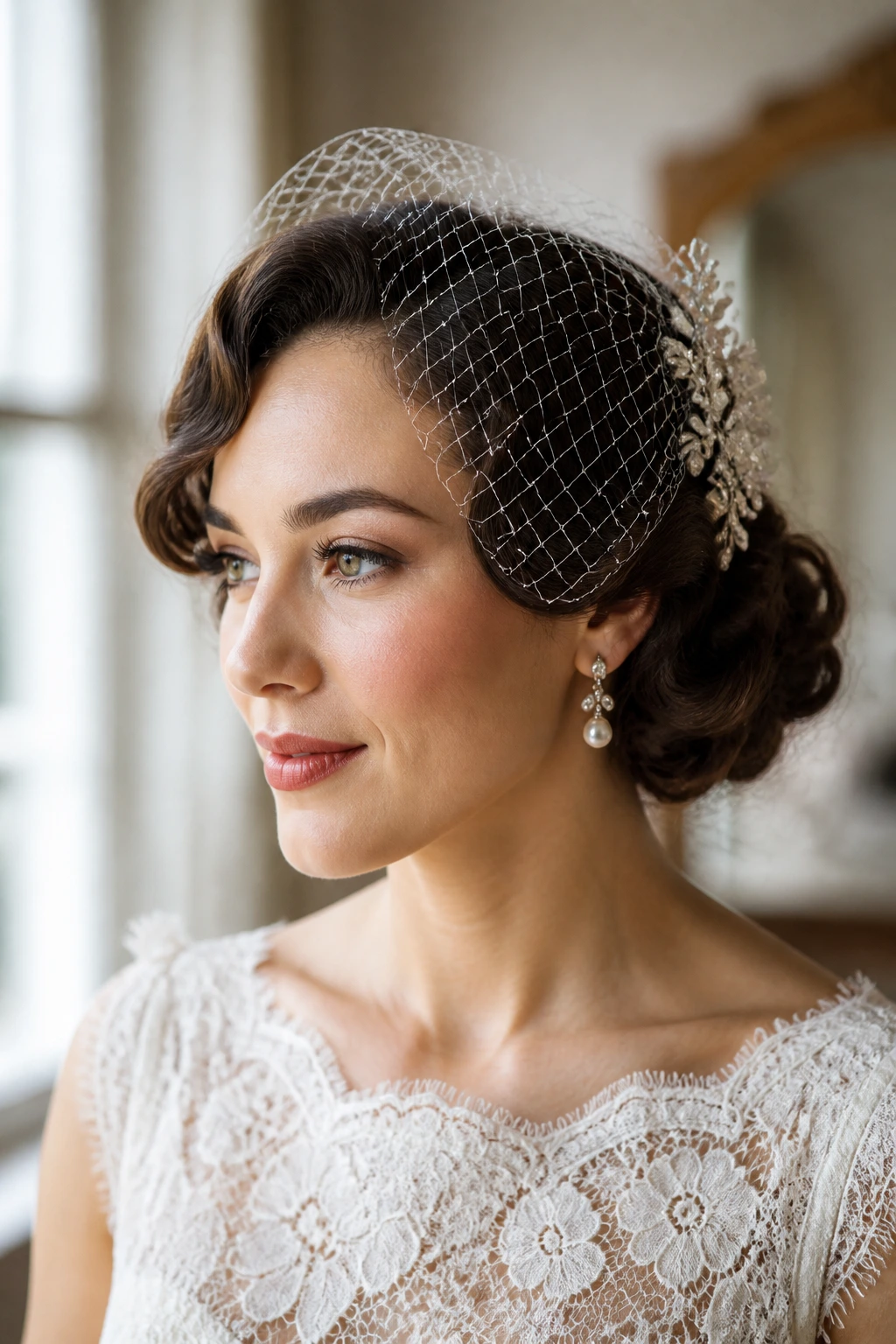
A twisted low roll is one of those styles that seems quiet until the birdcage veil goes on. Then it becomes unmistakably vintage. The roll sits low and close, usually at the nape, with soft twists leading into it from the sides. The veil gives the whole look a sharper time period, while the roll keeps it from feeling too bridal-shop generic.
This is a strong option for brides who want contrast: a smooth back, a little mystery at the face, and a clear accessory moment. Birdcage veils like a firm base, and this style gives them one. If the roll is too loose, the veil can tilt. If it’s too high, the veil loses that tidy, face-framing effect that makes it work.
The best versions have one or two visible twists at the sides and a roll that tucks under neatly. Nothing bulky. Nothing fussy. Just enough structure to hold the veil and enough softness to keep the style from feeling severe.
Why Vintage Bridal Hair Stays So Sharp All Day
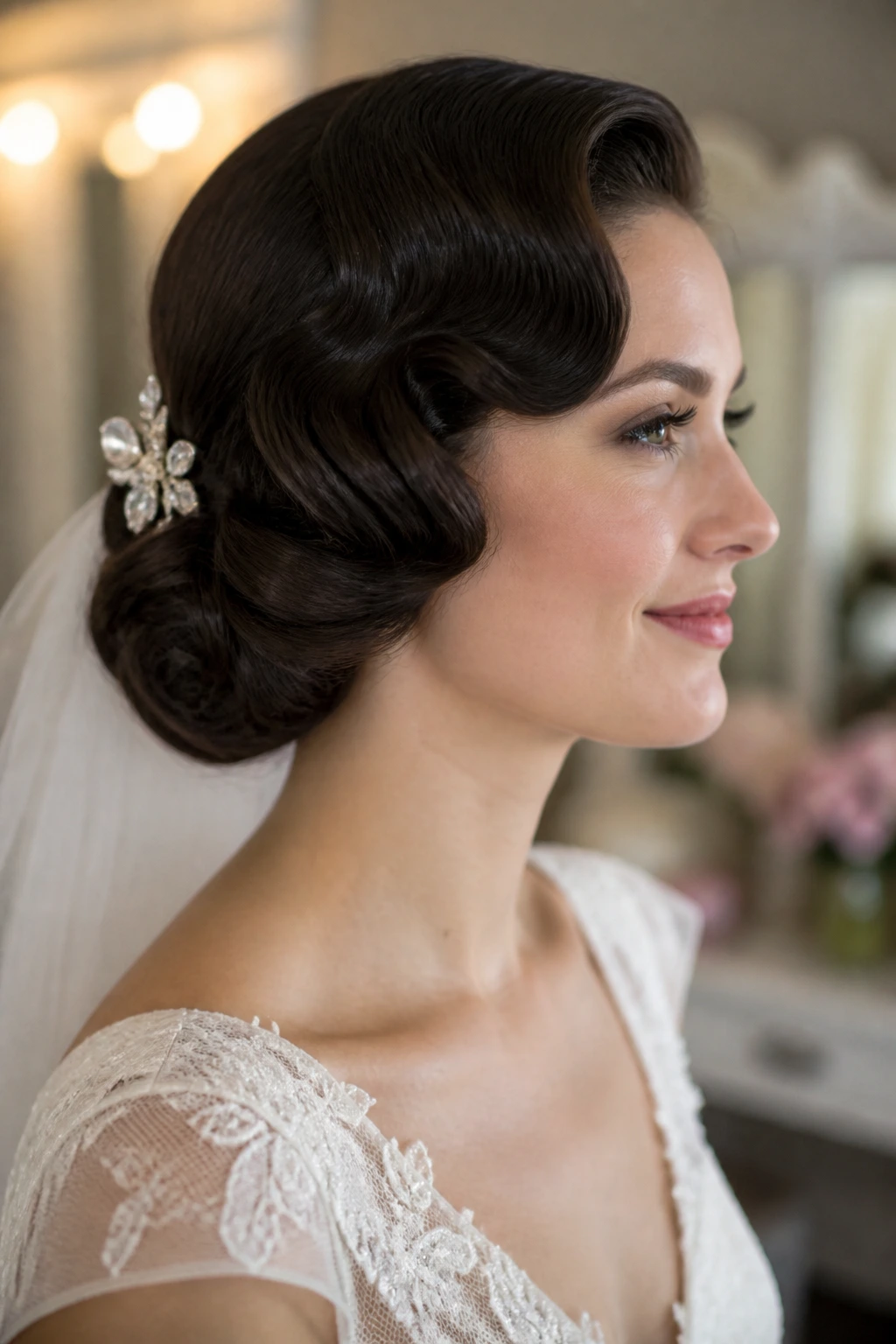
A vintage hairstyle holds up because it’s built in layers. First comes the set — curls, waves, rolls, braids, or pin curls shaped while the hair is still warm and willing to listen. Then comes the arrangement, where the shape gets pinned into place. Then comes the finish, which is usually a brush-out, a smoothing pass, and a measured amount of spray. That order matters.
Loose bridal hair can look prettier for the first five minutes and then start losing its idea of itself. Vintage styling does the opposite. It may feel a little more worked at the beginning, but once it’s pinned and cooled, it usually behaves better through humidity, hugs, and movement. A pin curl that was set properly will outlast a curl that was merely heated.
The other reason these styles last is their center of gravity. They sit low, close to the head, or in compact shapes that are less likely to collapse under their own weight. A low roll is safer than a giant puff. A deep side part keeps the front from splitting. A tucked chignon gives the veil a home instead of asking the hair to support everything at once.
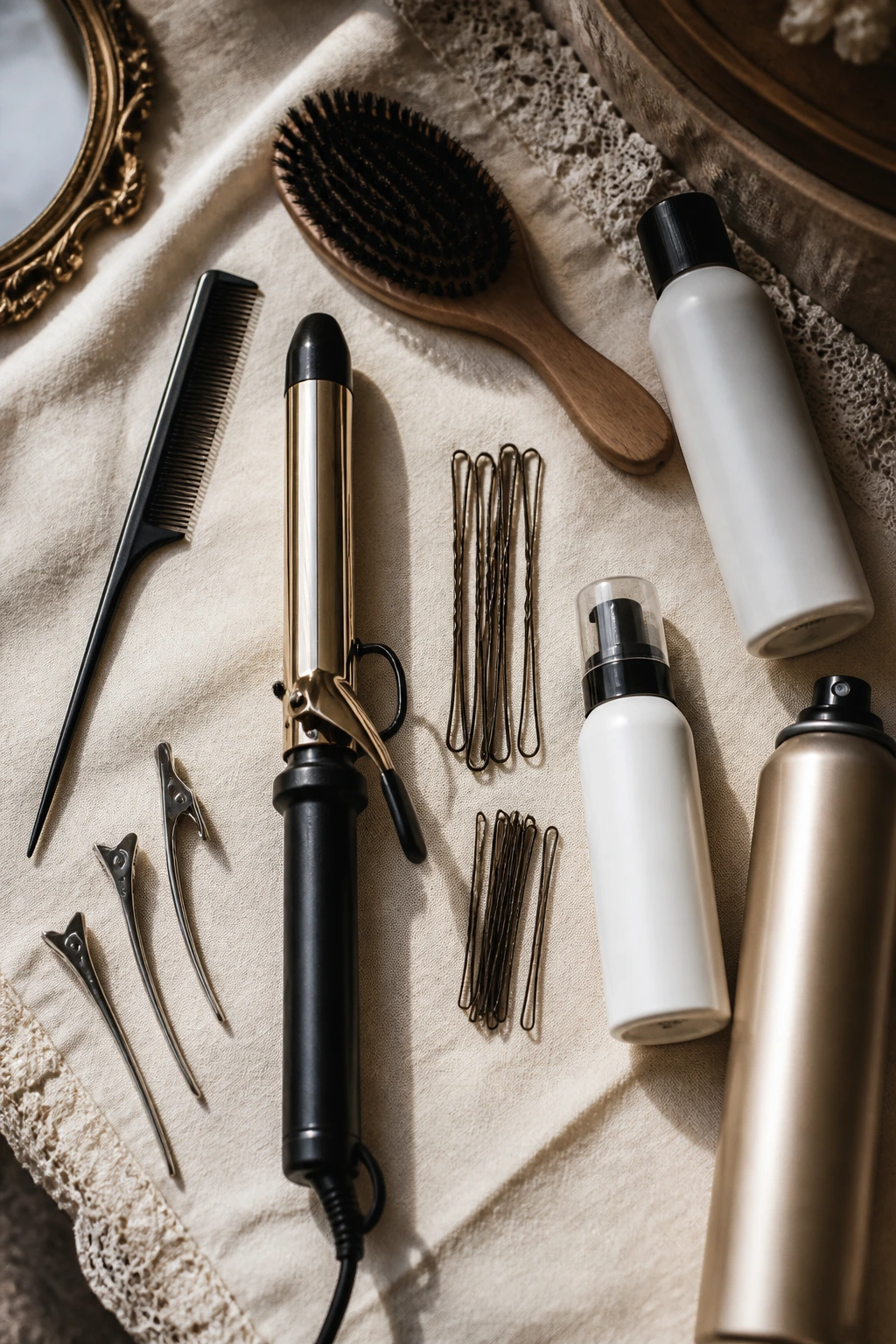
Essential Tools for These Vintage Looks
-
Rat-tail comb: Useful for clean parts, sectioning, and smoothing the crown before you pin anything.
-
1-inch curling iron or marcel-style iron: Best for soft waves, barrel curls, and the bend needed before a brush-out.
-
Boar bristle brush: Helps merge waves without roughing up the surface of the hair.
-
Duckbill clips: Let you hold waves, rolls, or set sections while they cool into shape.
-
Long and short bobby pins: You’ll want both; long pins anchor buns and twists, short pins hide the details.
-
Setting lotion or mousse: Gives the hair some memory before heat and pinning.
-
Flexible-hold hairspray: Keeps movement in the hair while holding the shape; avoid the crunchy stuff unless you enjoy helmet hair.
-
Teasing comb: Handy for crown height, but use it lightly. You want lift, not a nest.
-
Hair padding or a small bun form: Helpful for low buns, French twists, or beehive-inspired shapes.
-
Pearl pins, combs, or a birdcage veil: Optional, but they can push a style from pretty to properly vintage in one move.
Choosing Products That Hold Without Turning Crunchy
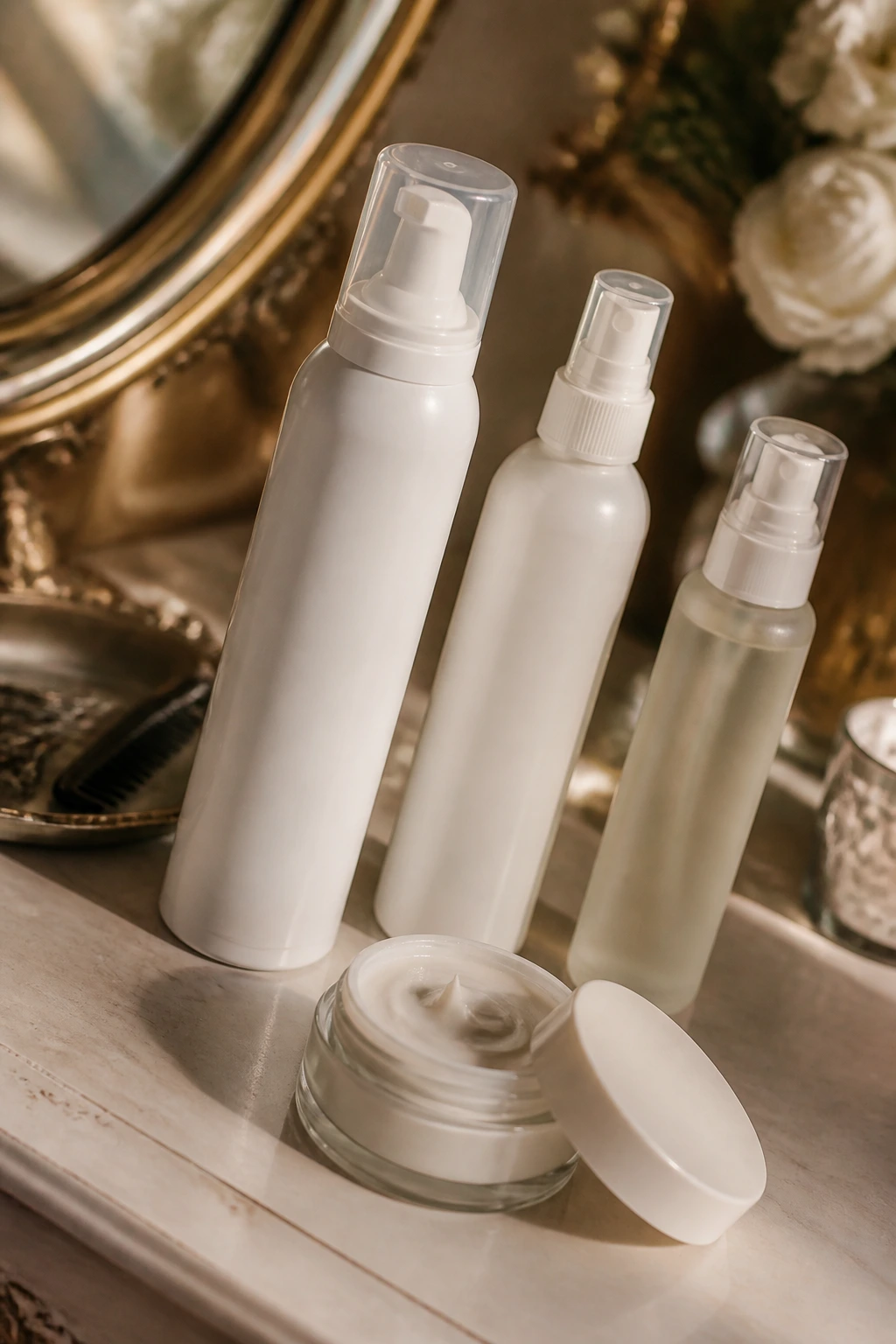
The product choice changes everything. A vintage set needs memory, not stiffness. That means mousse at the roots, a heat protectant through the lengths, and a spray that keeps the surface flexible after the style is done. If you use a heavy oil too early, curls slide. If you load on strong-hold spray before the set has cooled, the hair can lock in a weird bend and never soften into the right shape.
For fine hair, lightweight volumizing mousse at the crown helps the part and wave pattern stay visible. For thick hair, a smoothing cream in the mid-lengths keeps the brush-out from exploding into frizz. Curly and wavy textures often need the least product at the actual ends and the most attention at the roots and around the perimeter, where the silhouette needs control.
Dry shampoo is useful before styling, not only after. A small amount at the roots gives the hair grip. Too much, though, and the waves can look dusty. That chalky finish shows up fast in bridal photos.
How to Match the Style to Your Dress, Veil, and Accessories
Presentation:
Think about the angle people will see most. If your dress has a dramatic back, choose a low roll, twist, or chignon that leaves the nape clean and visible. If the neckline is high, side-swept waves or a faux bob can keep the front open and stop the whole outfit from feeling crowded.
Accessories:
Pearl pins love brushed-out waves, birdcage veils love low rolls, and crystal combs sit nicely in side parts or victory rolls. If the hair already has a strong shape, use one accessory and stop. If the hair is simple, one good comb can carry the whole mood.
Scale:
The bigger the dress detail, the more controlled the hair should be. A gown with lace sleeves or beading usually looks best with a style that has a clean outline. A plain satin dress can take more volume, more wave, or a bolder roll without looking busy.
Comfort:
If you’ll wear the style for eight hours, choose the version that sits low and secure instead of the one that requires constant fixing. A hairstyle that needs you to keep checking the pins every ten minutes is not a bridal style. It’s a distraction.
Extra Polish and Personal Touches
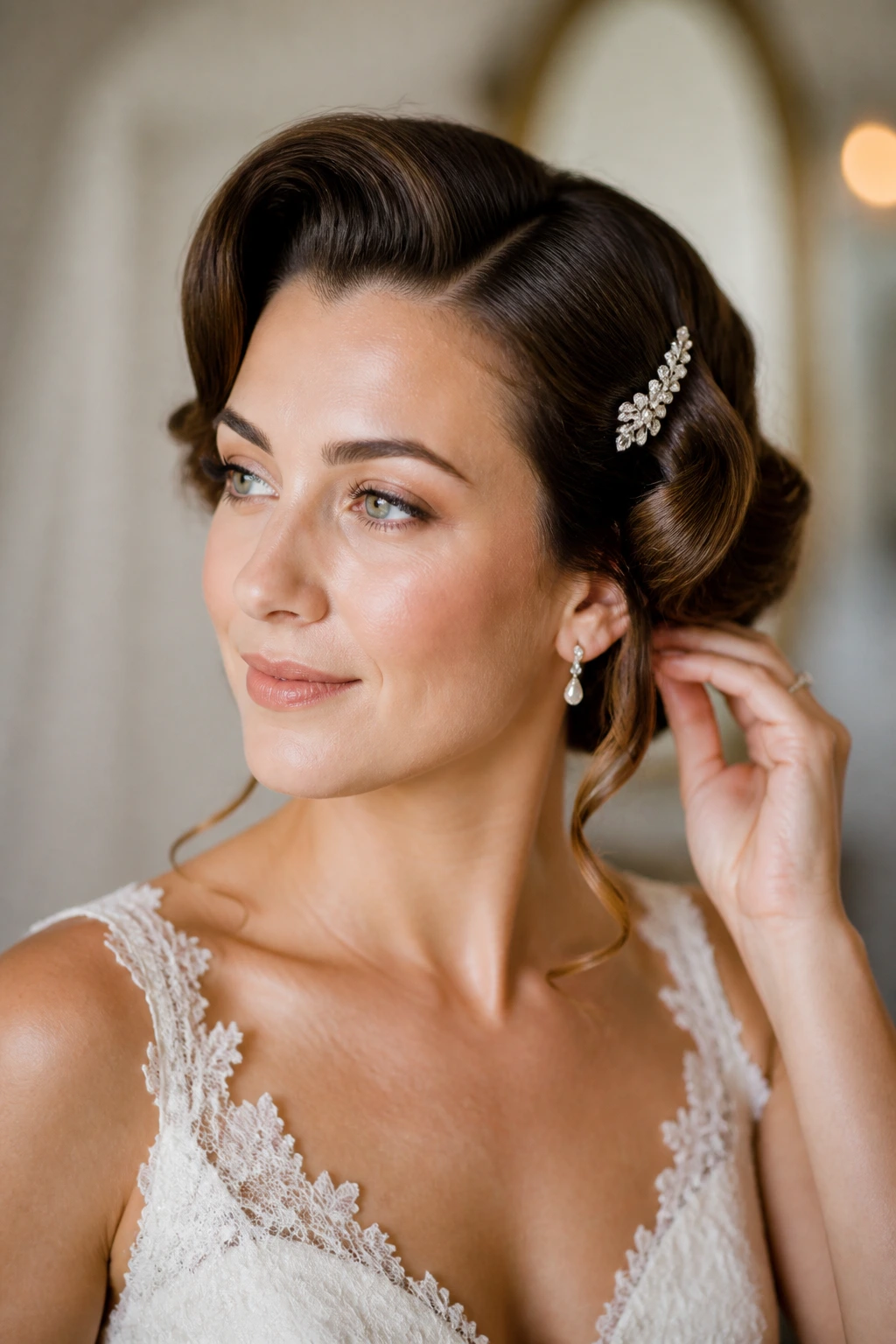
Texture Boost: A mist of sea-salt spray on the mid-lengths before curling can help waves keep their body, especially if your hair is soft and slippery. Use a light hand. You want texture, not grit.
Customization: Swap pearl pins for crystal pins if the dress has a little sparkle, or use a satin ribbon instead of metal accessories if the gown is matte and simple. The hair should echo the fabric, not fight it.
Serving Suggestions: Think of finishing touches as the final brushstroke. A smooth side part, a tucked comb, or one face-framing tendril can change the whole mood without rebuilding the style. Sometimes one small pin above the ear does more than a whole tray of accessories.
Make-It-Yours: Brides with natural curls can keep more of their texture visible in a pin-curled updo or low roll, while straight-haired brides can lean harder on set waves and pinning. Fine hair likes a little padding at the crown; thick hair usually wants more smoothing and less teasing. Neither approach is a compromise. Both are the point.
Trial Runs, Night-Before Prep, and Day-Of Refreshing
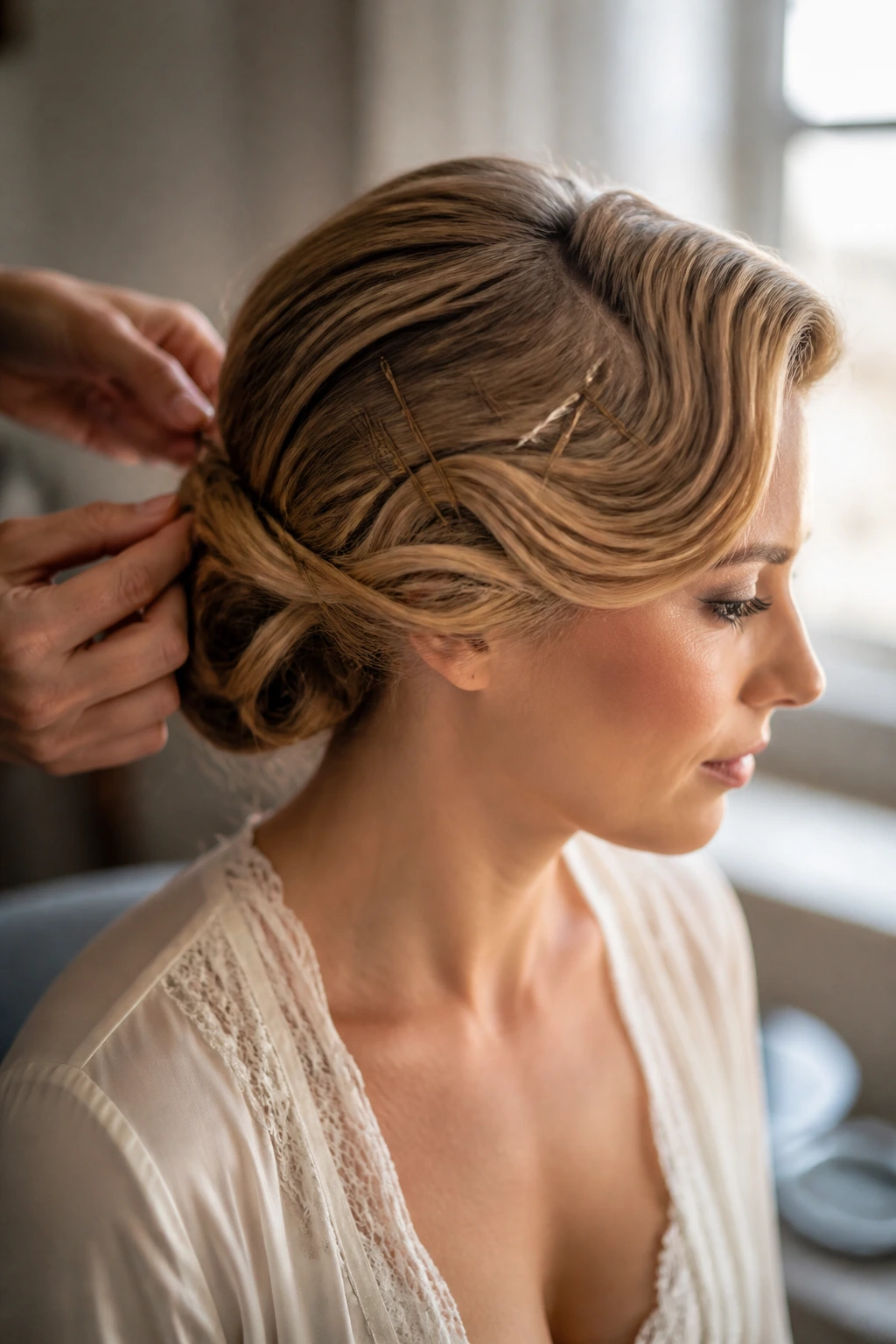
Book a trial run with enough time to live with the style for a few hours, not just five minutes in the chair. Two to four weeks ahead is a sensible window. That gives you time to notice whether the pins tug behind the ears, whether the veil comb sits too high, or whether the crown needs more lift to stay visible in photos.
Hair behaves better when it isn’t freshly washed. Most vintage styles hold cleaner on hair that was washed the day before, not the morning of. A little natural oil gives the setting pins something to grip. If your scalp runs oily, use a touch of dry shampoo at the roots after the first round of styling, then brush it through lightly.
For the morning of the wedding, give yourself a buffer. Vintage hair asks for cooling time. If you touch pin curls or fresh waves too soon, they flatten before they’ve set their memory. Once the style is in place, a light mist of spray at arm’s length is enough. Don’t soak it. If a few pieces soften during the day, a small travel spray and two spare bobby pins can fix almost anything short of a full collapse.
Common Mistakes That Flatten the Look
The biggest mistake is building the style too loosely. A soft wave is not the same thing as a wave with no structure. If the hair isn’t set in sections, the finish goes fuzzy fast, especially around the crown and temples.
Another one: too much product. Heavy cream, oily serum, and strong spray all together can weigh the shape down before the ceremony starts. Use just enough product to help the hair listen. Then stop.
Pins showing everywhere is a third problem. Vintage hair needs pins, but the best ones disappear into the pattern. If the bobby pins are shiny and obvious, they should be hidden deeper, or swapped for a pin that matches the hair color better.
And then there’s accessory overload. A comb, pearls, veil, flowers, and a headband can all look lovely on their own. Together, they can make the silhouette feel busy. Pick a lead character. Let the others stay in supporting roles.
Vintage Bridal Hair Variations for Different Hair Types
Short-and-Sleek Gatsby Shift:
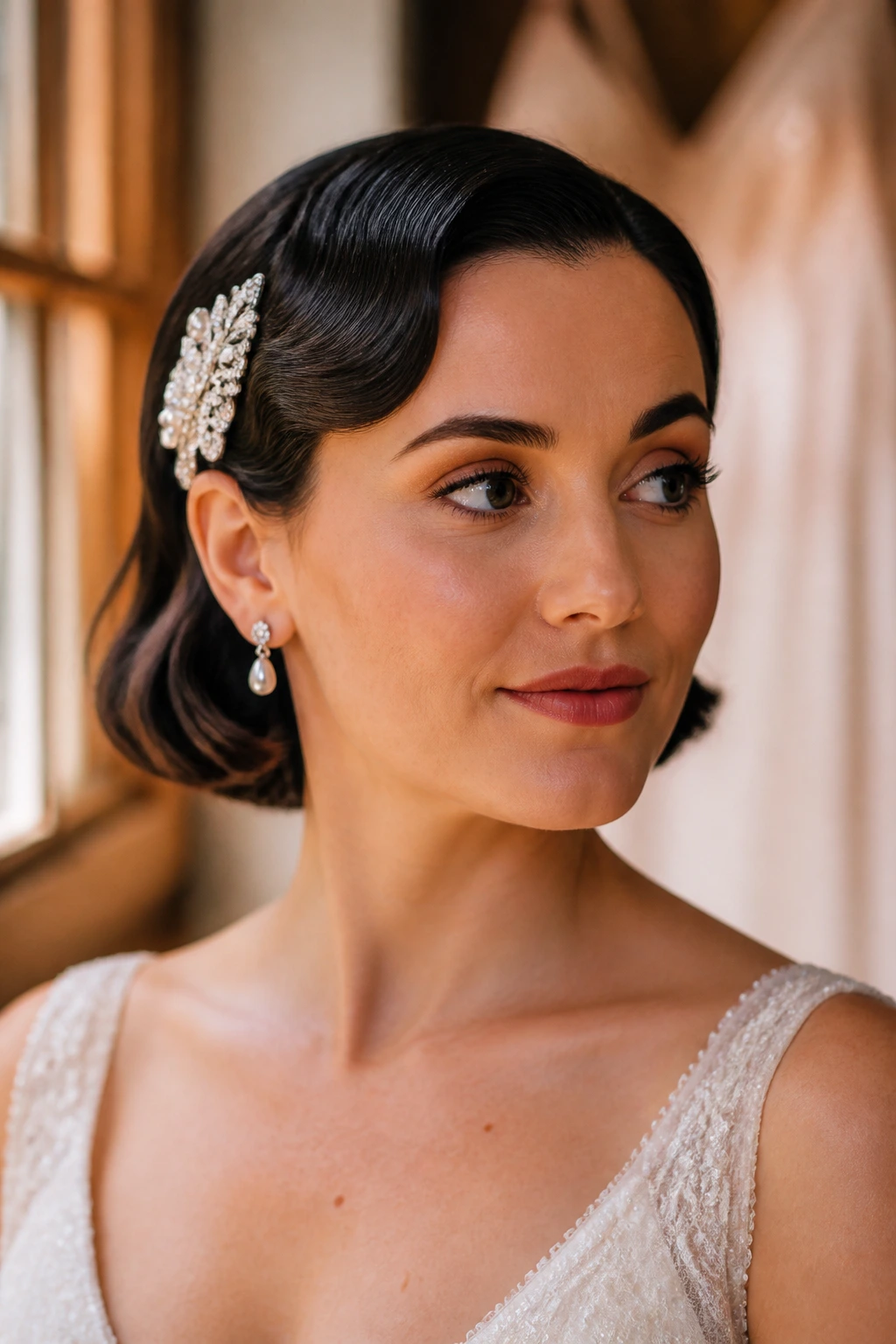
Best for bobs and lobs that sit at the jaw or collarbone. Keep the waves close to the head and let the accessories stay tiny — one comb, one net veil, or one barrette is enough. This version is cleaner than a full finger-wave set and easier to wear if your hair doesn’t want a heavy sculpted finish.
Curly-Hair Pin and Pin:
This keeps more of the natural texture visible while borrowing the silhouette of a pin-curled updo or low roll. Shape the curls into sections, pin them where they naturally want to sit, and leave a little softness around the hairline. It’s a good fit for brides who want vintage without smoothing away their own texture.
Fine-Hair Crown Lift:
For hair that goes flat if you look at it too hard, build the lift at the crown with a tiny pad or a little teasing, then keep the rest controlled. This works especially well for Hollywood waves or a beehive half-up style. The trick is to stop the volume before it turns fuzzy.
Veil-Free Period Piece:
If you’re skipping the veil, make the hairstyle do more visual work. Victory rolls, side-swept curls, and sculpted twists all read clearly without extra fabric. This is where accessories like pearl pins or a narrow comb can stand in for a veil and still keep the vintage mood intact.
Long-Hair Soft Roll:
Long hair can overwhelm a vintage style if it’s left too free. Tucking the lengths into a roll, faux bob, or low chignon keeps the silhouette from dragging down. You still get the drama of long hair in the bend and the finish, but the shape stays bridal instead of heavy.
Frequently Asked Questions
Which vintage hairstyle holds up best for a full wedding day?
Low chignons, pin-curled updos, and sculpted French twists tend to stay put the longest because they sit close to the head and use a lot of hidden pinning. Loose waves can last too, but they need better prep and more careful setting.
Can these styles work on medium-length hair?
Yes. Medium-length hair is actually one of the best lengths for vintage bridal styles because it has enough body to tuck, roll, and wave without becoming too heavy. Faux bobs, Gibson tucks, and side-swept waves all work especially well.
Do I need to wash my hair the morning of the wedding?
Usually not. Hair that’s washed the day before tends to hold curl and pins better. If your scalp gets oily fast, add a little dry shampoo at the roots and brush it through before styling.
What if my hair won’t hold a curl?
Set it in smaller sections, let each piece cool fully, and use a mousse or setting lotion before heat. If your hair is very slippery, a pin curl set or hot rollers can hold better than one pass with a curling iron.
Can I wear a birdcage veil with a vintage hairstyle?
Absolutely, and some styles look better with it than without. Low rolls, French twists, and side-swept curls give the veil a firm anchor, which keeps it from slipping or drooping through the ceremony.
Are vintage hairstyles good for curly or natural hair?
Yes, but they work best when the style respects the texture instead of forcing it flat. Pin-curl inspired updos, sculpted low rolls, and twist-based styles can look gorgeous on natural hair with the right pinning and a gentler finish.
How do I keep bobby pins from sliding out?
Cross two pins over each other to make a stronger hold, and tuck them into a section that already has some texture or product grip. Pins grip better on slightly dirty hair than on hair that was freshly washed and then loaded with serum.
Should I choose more volume or more polish?
Pick the one that fits the dress and the venue. A ballroom gown can carry more crown height; a clean satin dress often looks better with polish and shape close to the head. If you’re torn, the polished version usually ages better in photos.
Can I do a vintage bridal hairstyle without a stylist?
Yes, if you pick a style that matches your comfort level. A brushed-out wave, side-swept curls, or a low roll are manageable with enough practice. A full finger-wave set or a sculpted victory-roll style asks for steadier hands and a longer trial run.
The Last Pin Check
Vintage bridal hair has staying power because it knows what it wants to be. It doesn’t drift. It sits in a shape, holds a line, and gives the rest of the look something to rest against. That’s the real appeal, more than nostalgia or costume or any of the labels people love to throw at it.
Choose the version that fits your dress, your hair texture, and your patience. Then test it once, live with it for a few hours, and see where it needs one more pin or one less curl. The best vintage style is never the one that looks busy in the chair. It’s the one that still looks composed when the music starts and the room gets warm.
