



The best hairstyle ideas for brides have one job that gets underestimated: they have to look finished in the mirror and stay finished after the veil comes off, the hugs start, and the dance floor gets louder. That is a much harder assignment than it sounds. A style can look gorgeous at the trial and still fall flat once it meets humidity, a high neckline, or a handful of bobby pins that were placed too casually.
There’s a reason bridal hair sparks so much debate. A wedding hairstyle is not everyday hair with extra shine spray. It has to work with the dress, the earrings, the veil, the weather, the length of the ceremony, and the way your own hair behaves when it’s asked to hold shape for ten straight hours. Fine hair needs grip. Thick hair needs structure. Curls need respect, not flattening. And if you’ve ever watched a perfectly good style slump an hour too soon, you know how unforgiving the day can be.
The styles below lean practical first, pretty second, and they do not all belong to the same bride. Some are low and sculpted, some are loose and romantic, some are designed to show off a necklace or a pair of earrings, and some exist to make short hair feel just as deliberate as waist-length waves. The common thread is this: they’re styles you can actually live in.
Why These Bridal Looks Work in Real Life
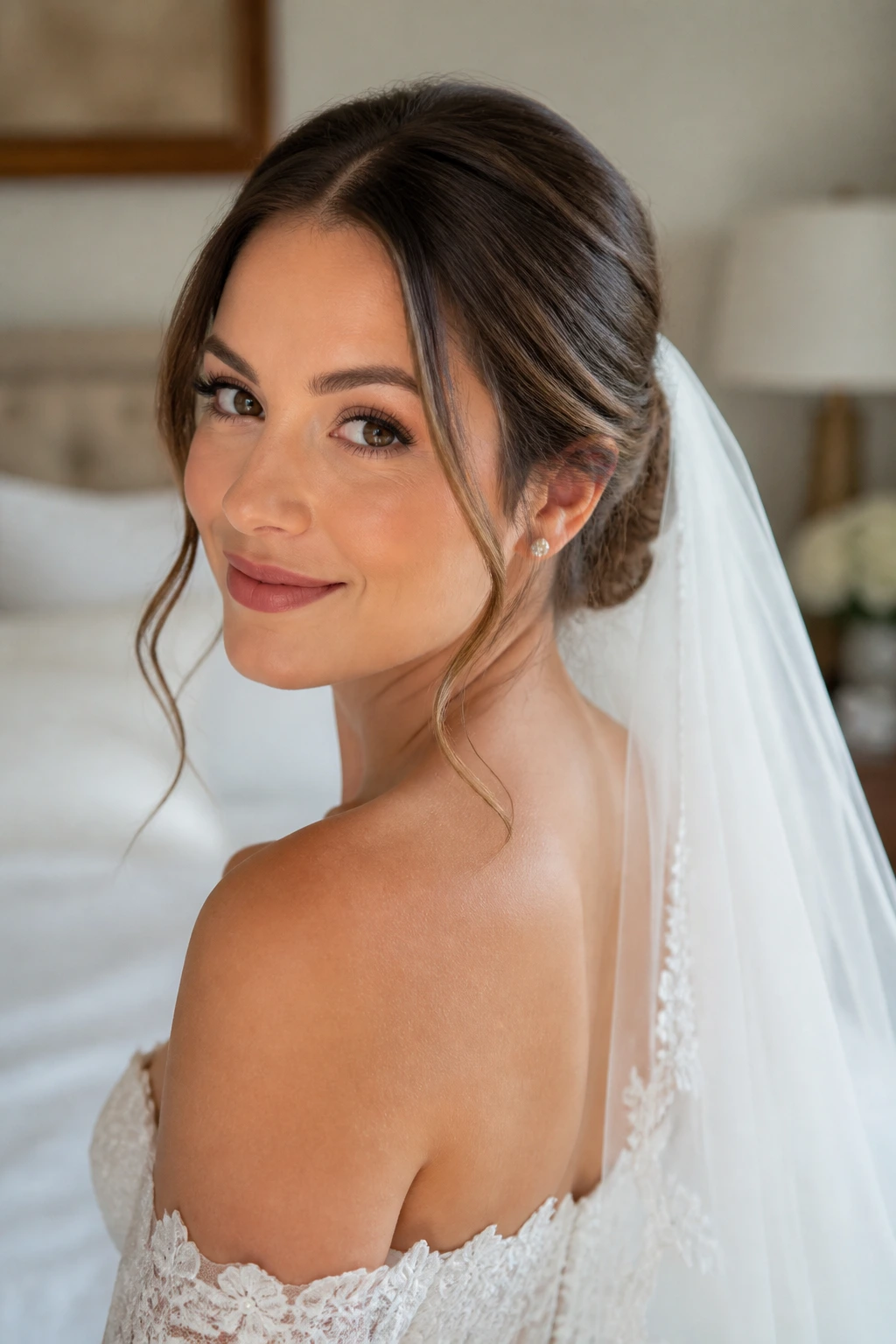
- They anchor at the right spot: Low buns, twists, and ponytails give veils and combs a solid base instead of a slippery top layer.
- They work with real hair textures: Sleek styles, braided styles, and soft waves each handle different density, curl patterns, and lengths without pretending every head of hair behaves the same way.
- They leave room for accessories: A good bridal style should make space for pearls, pins, flowers, or a veil comb without turning the head into a crowded display case.
- They hold up in photos: Styles with shape at the crown and structure through the back keep looking intentional from the front, side, and back.
- They can be adjusted, not forced: The strongest ideas here can be made softer, tighter, higher, lower, or more polished without starting from scratch.
- They survive the whole day: The real test is not the first look. It’s whether the hair still has a shape when the cake has been cut and the shoes have come off.
1. Sleek Low Chignon
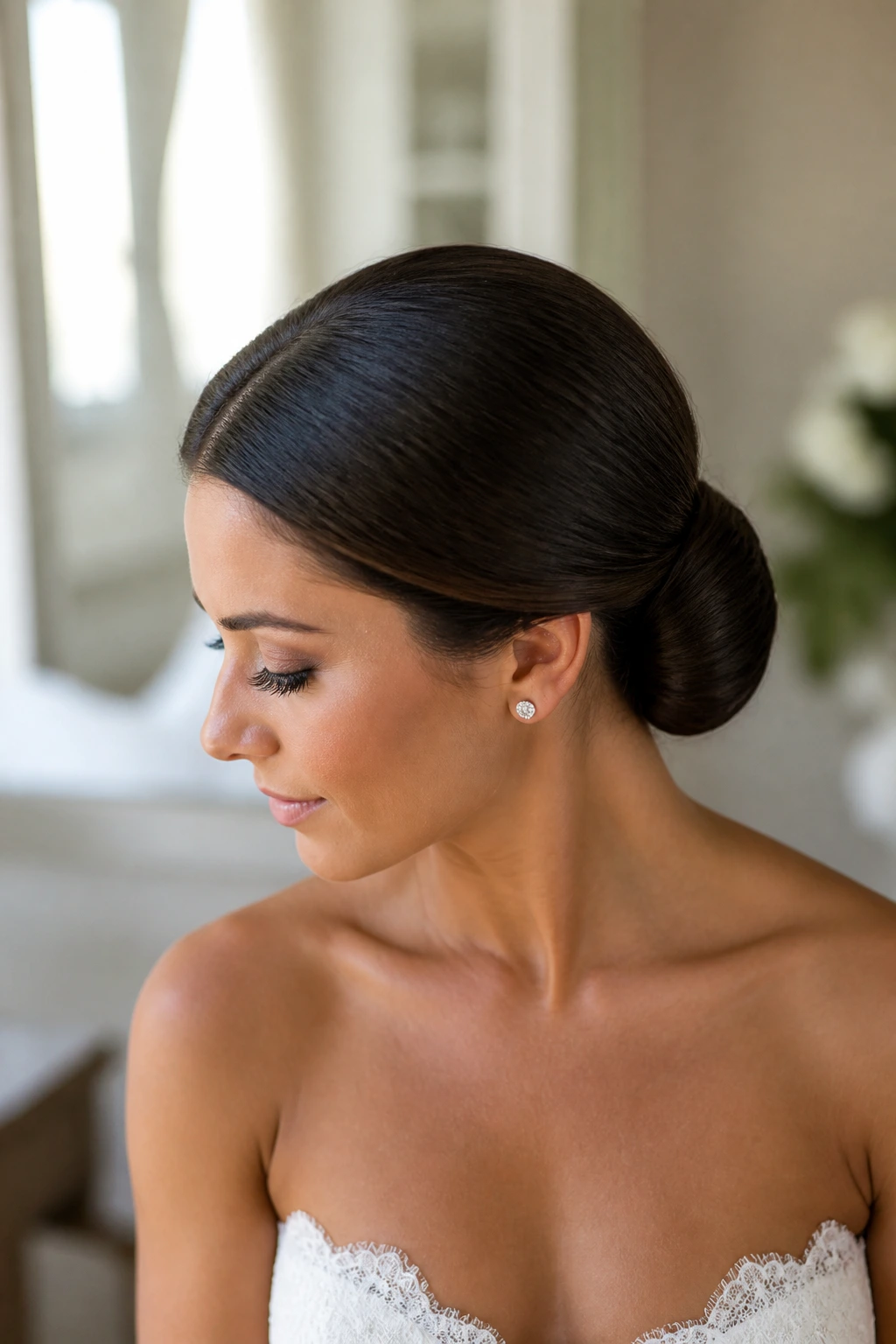
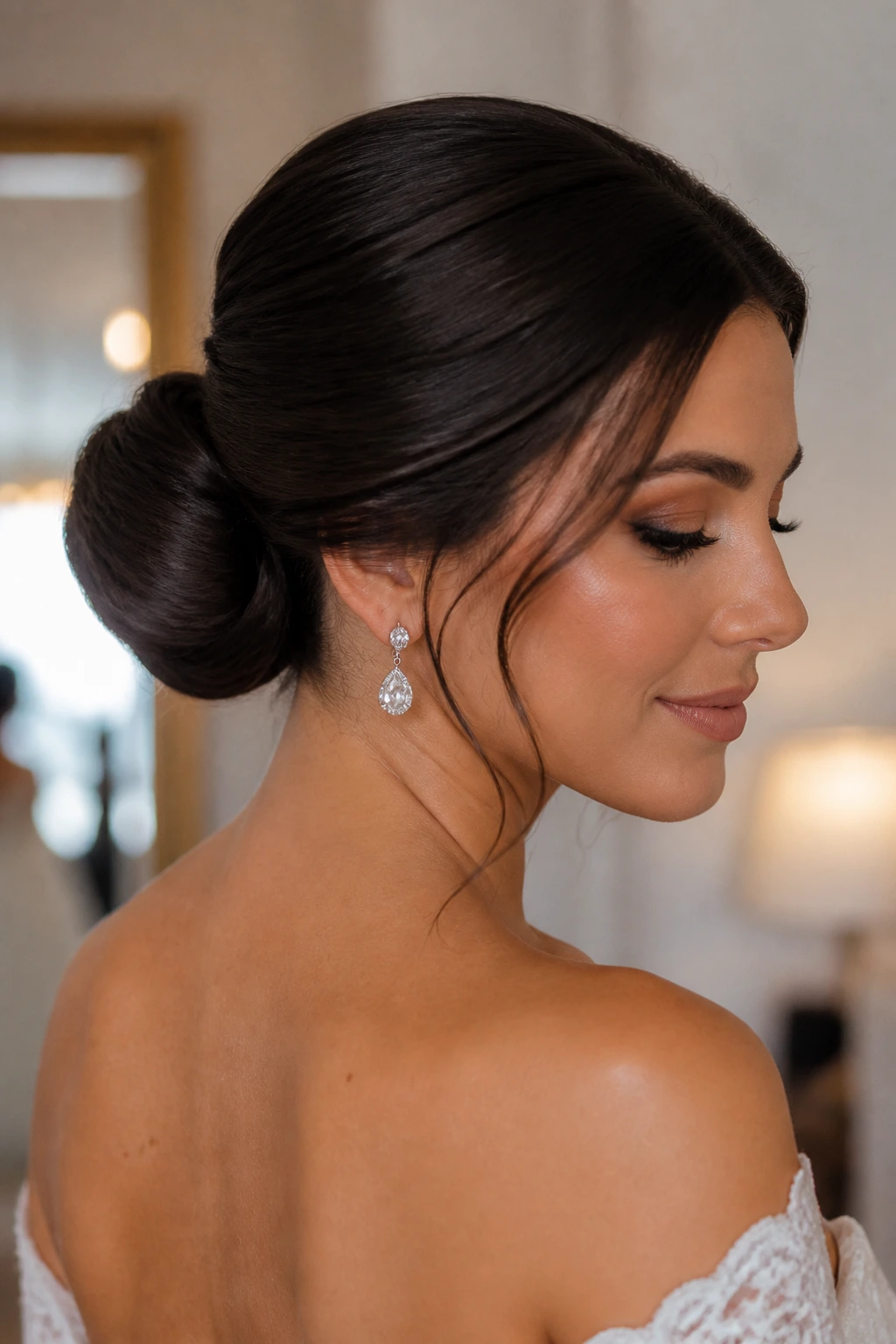
A sleek low chignon is the haircut equivalent of a well-cut satin dress: quiet, polished, and a little dangerous in how simple it looks. The magic is in the nape. Hair is smoothed tight at the crown, gathered low, then wrapped into a compact knot that sits close to the head instead of puffing outward.
I like this one for brides who want the dress, the veil, or the earrings to do most of the talking. It also behaves better than loose styles in humid air because there’s less exposed hair to frizz up. Ask for a clean middle part if your dress is modern and structured, or a soft side part if you want the face to feel less severe.
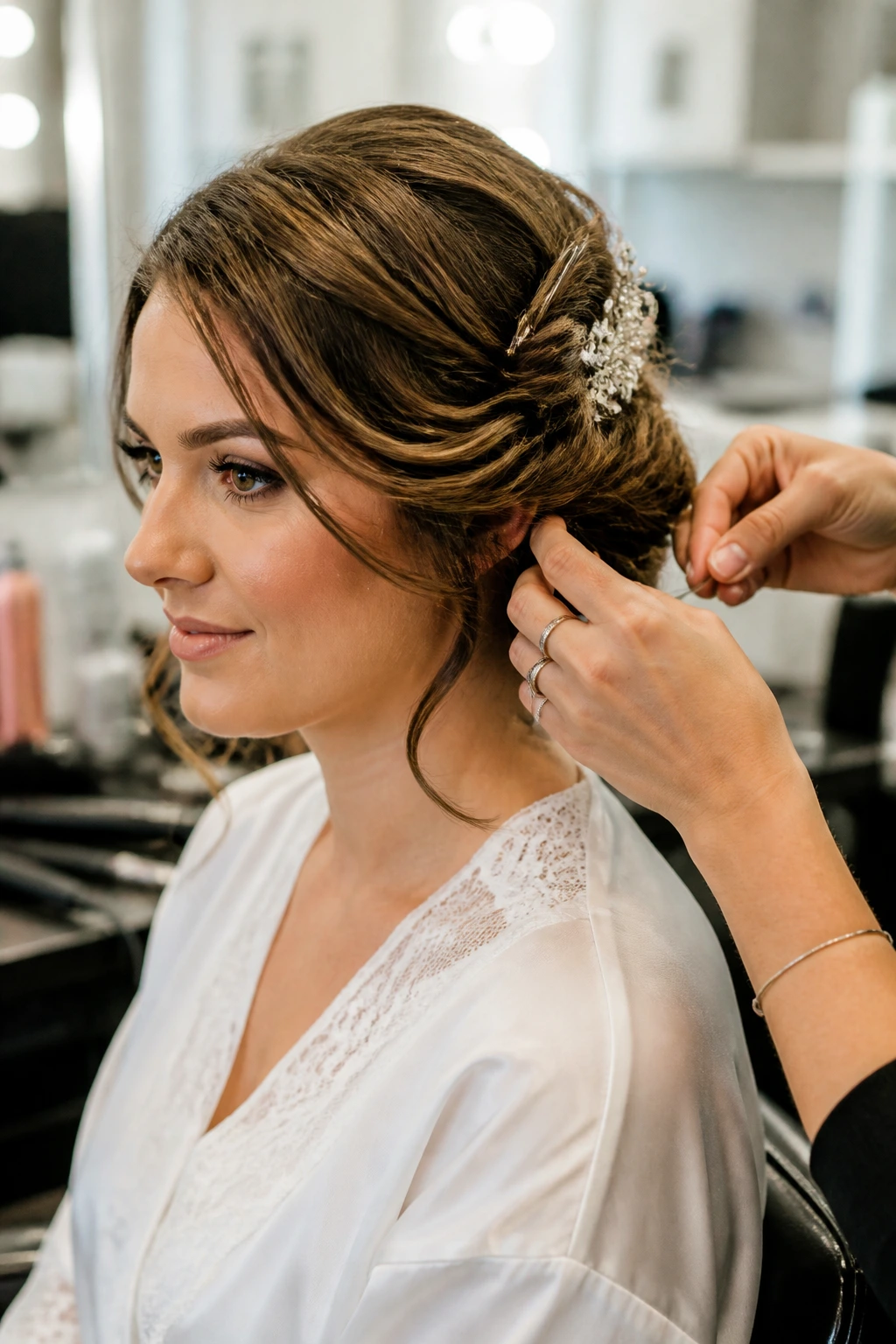
2. Soft Romantic Low Bun
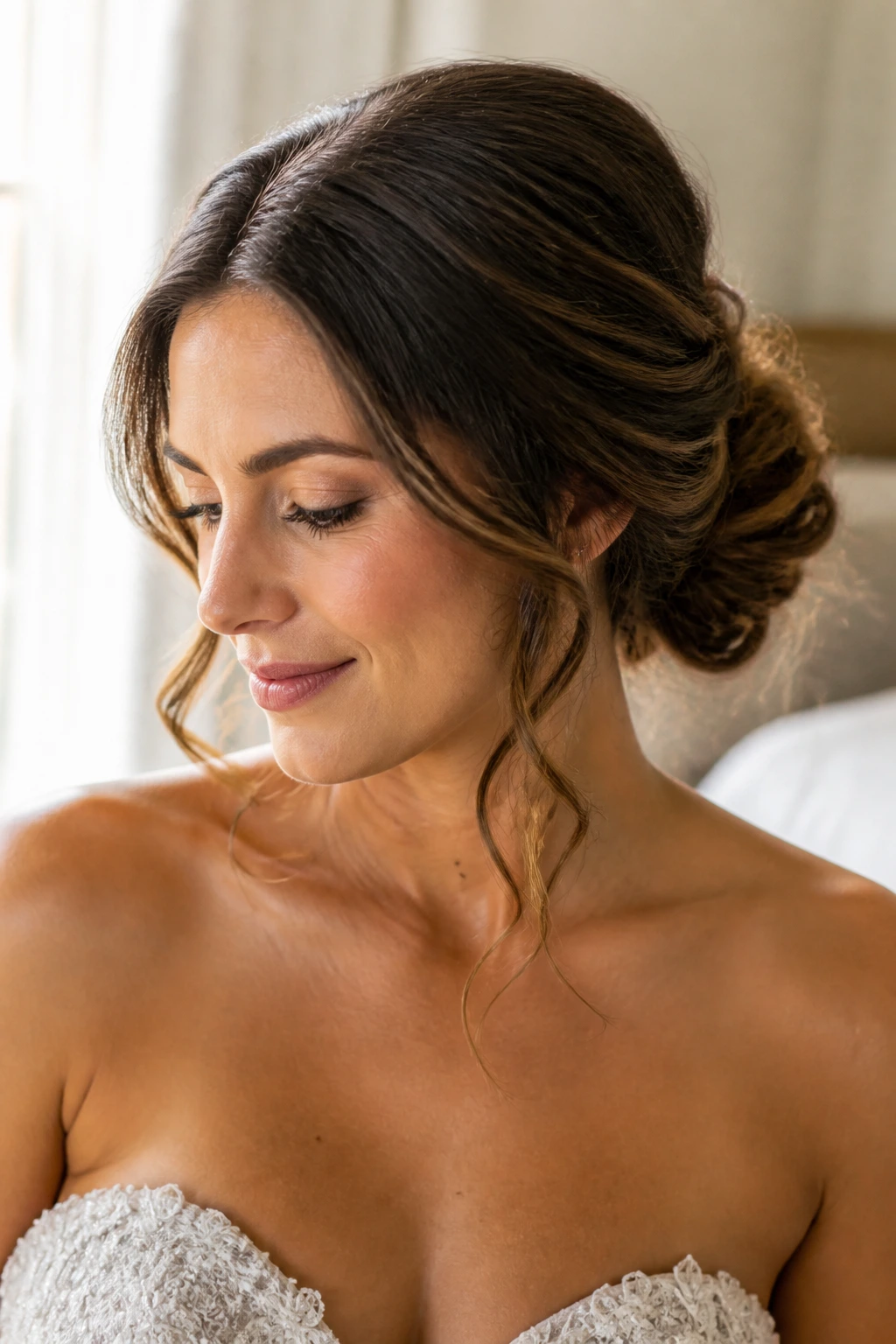
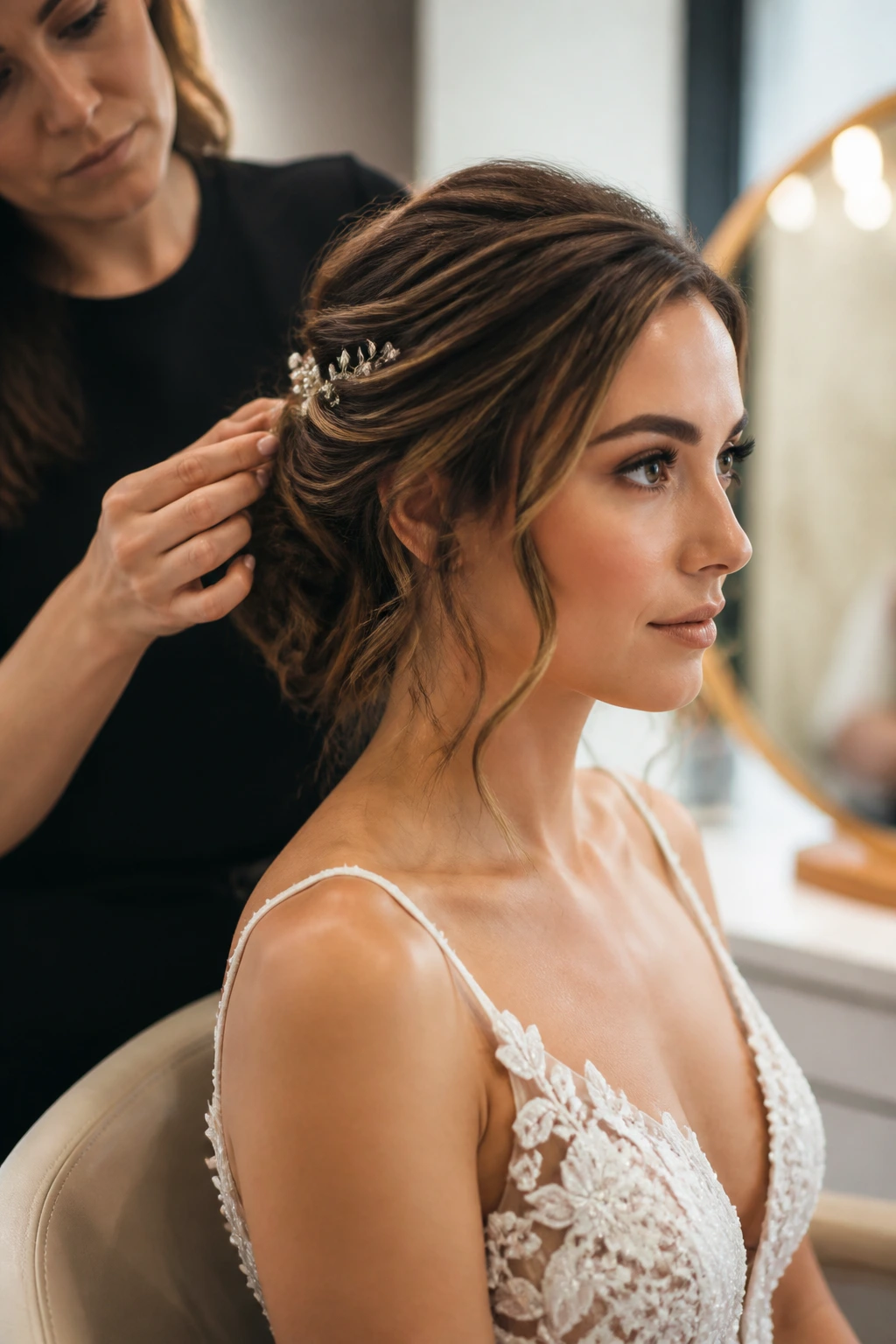
A soft low bun gives you the same low placement, but with a gentler shape and a little movement around the face. The trick is to curl the hair first, then pin it in loose folds so the bun keeps texture instead of collapsing into a hard ball. A few face-framing pieces around the cheekbones can soften the whole look fast.
This is the style I reach for when a gown has lace, drape, or anything that already feels delicate. It plays well with pearl pins and small combs, but it doesn’t need them. If your hair tends to fall flat, ask your stylist to leave a little crown lift before the bun is set.
3. French Twist with Soft Volume
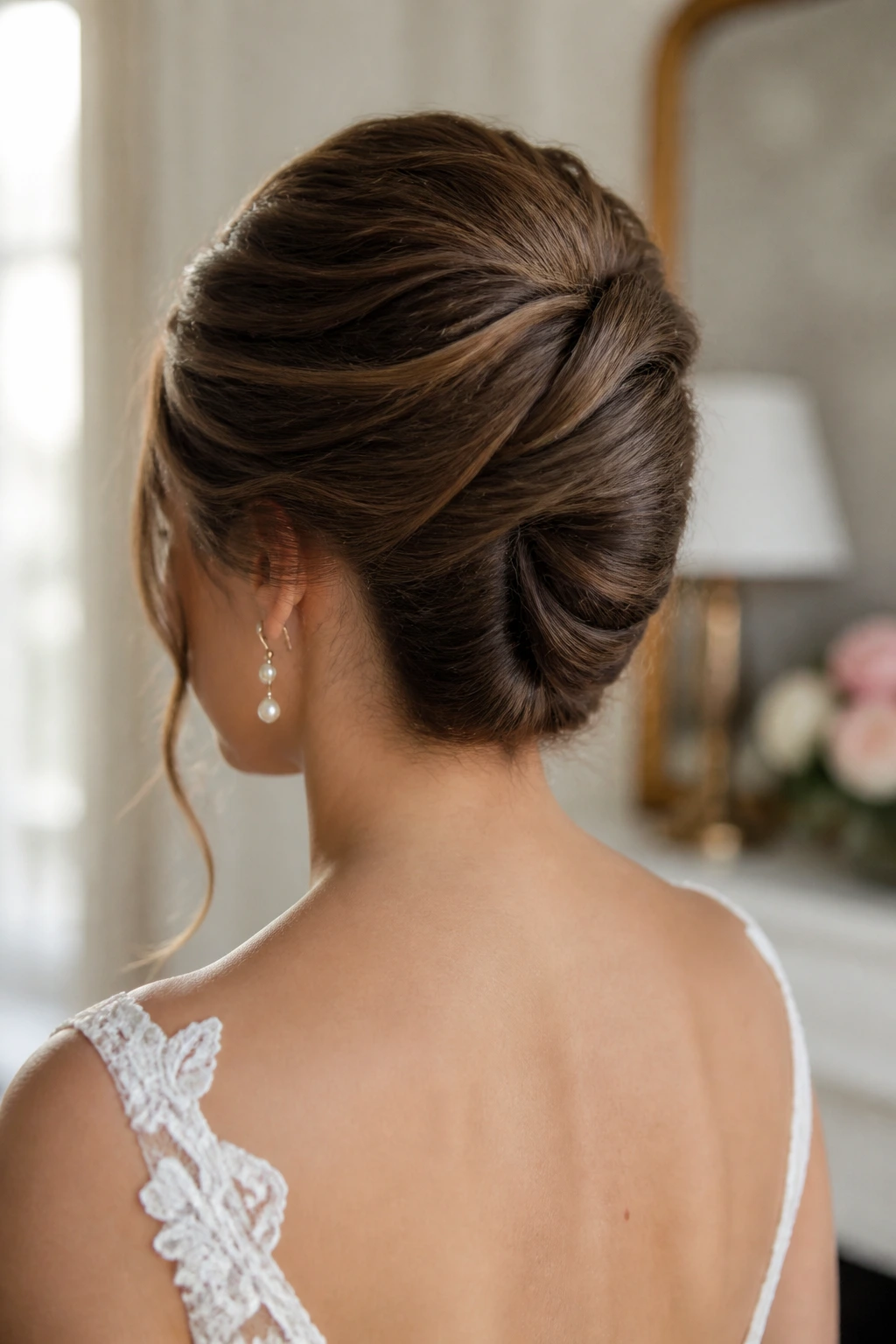
The French twist has a reputation for being severe, and that reputation is deserved when it’s done too tight. Done well, though, it is one of the cleanest bridal styles around. Hair is rolled upward and tucked along the back of the head, with just enough volume at the crown to keep it from looking stiff.
This works especially well when the dress has a high neckline, a dramatic back, or a lot of detail near the shoulders. It keeps everything off the neck and leaves the line of the gown visible. If the twist is built with smooth sections rather than teased fluff, it looks tailored instead of dated.
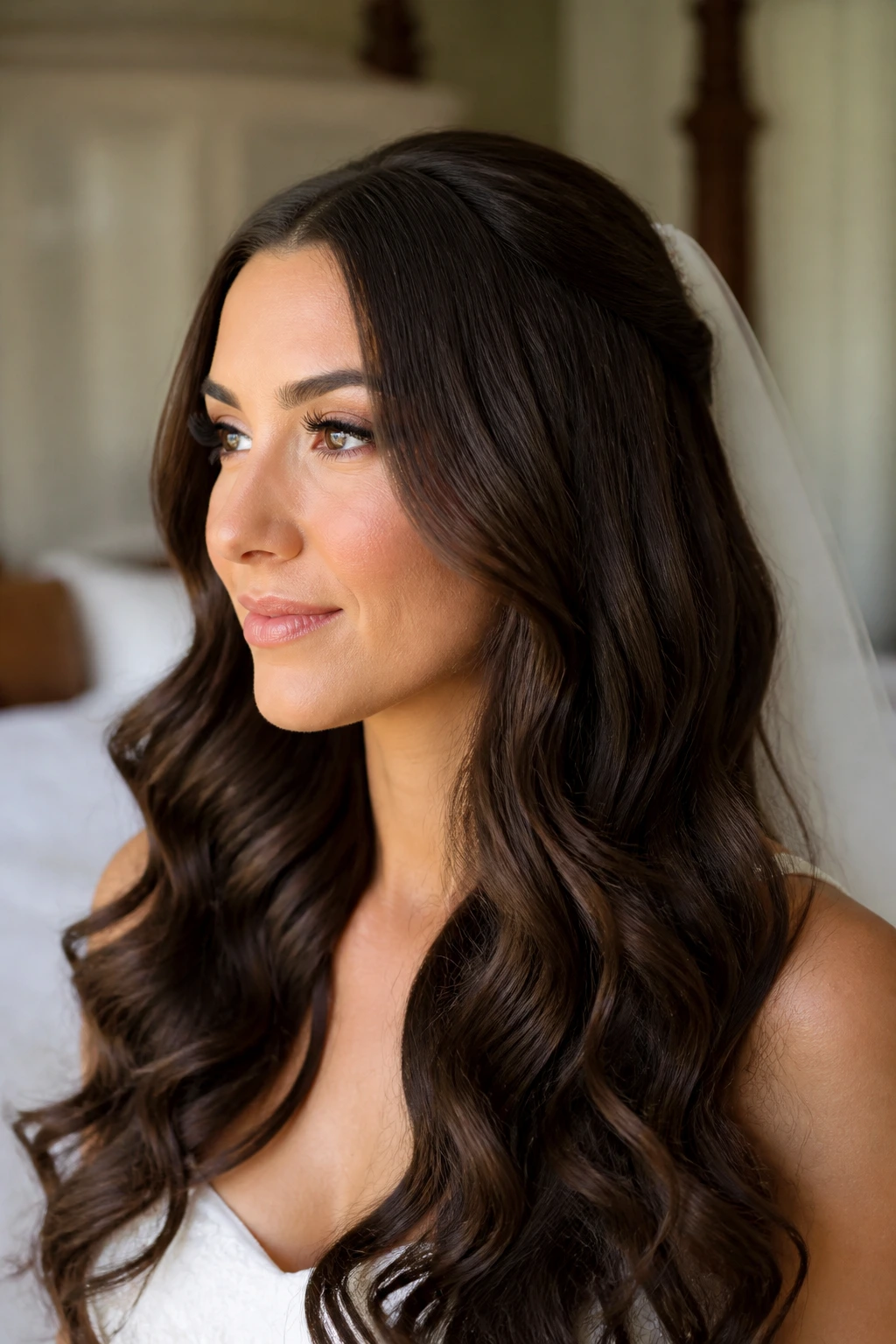
4. Hollywood Waves with a Side Part
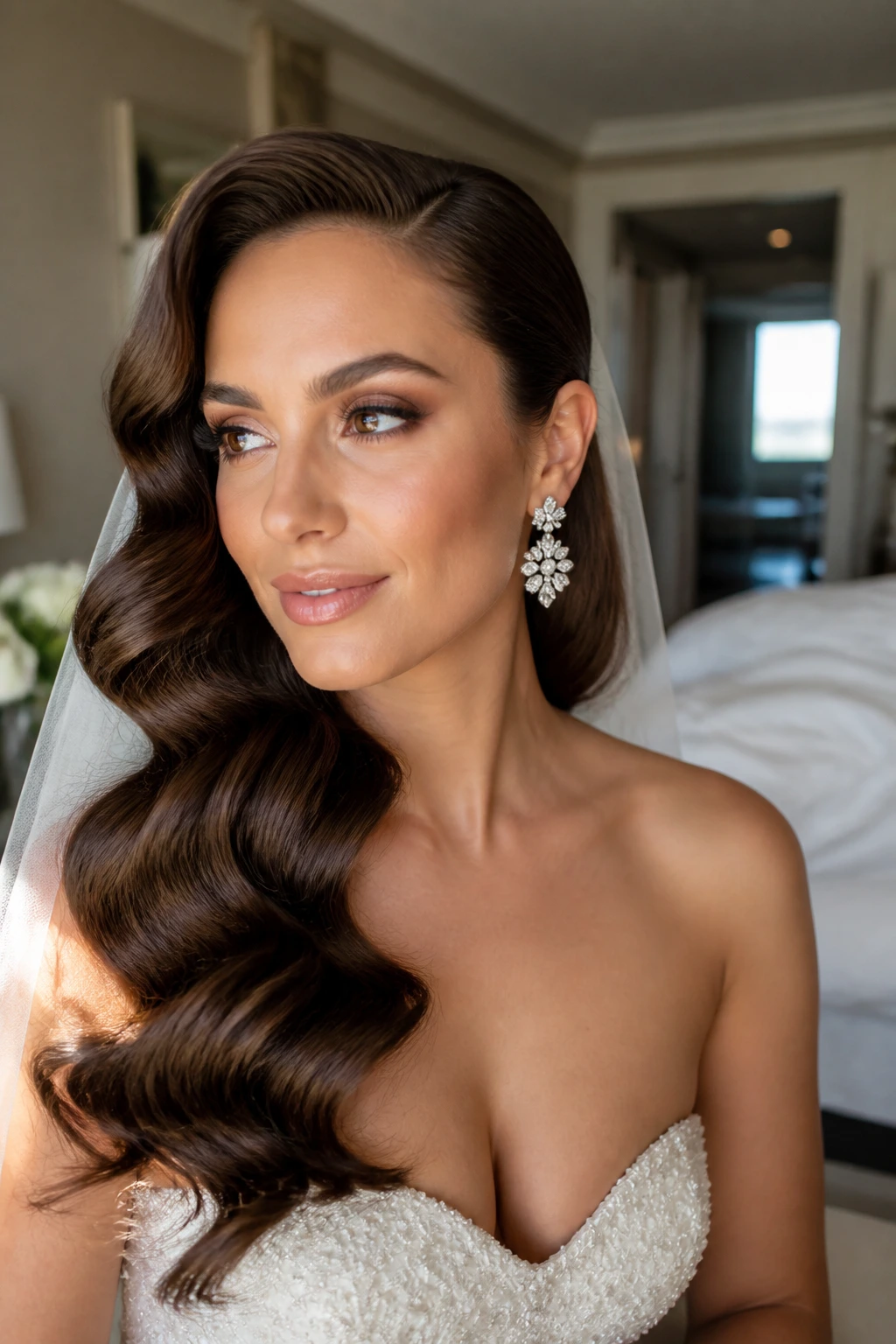
Hollywood waves are for the bride who wants hair down but still wants it to feel dressed up, not casual. The shape comes from deep, uniform waves brushed into one flowing pattern, usually with a strong side part and a glossy finish. It takes a little more heat-setting and a little more brushing than people expect.
This style looks best with strapless gowns, one-shoulder dresses, or necklines that need something soft beside them. It can also handle statement earrings better than very busy updos because the hair moves away from the face instead of crowding it. If your hair is fine, set the waves with clips while they cool. That part matters more than most people think.
5. Half-Up Twist with Crown Volume
Half-up hair is underrated at weddings because it solves a real problem: you get lift at the crown and movement through the length, without committing to a full updo. A twist or two from the temples into the back keeps the front controlled, while the rest of the hair falls loose and soft.
This is a strong choice for brides who hate the feeling of having everything pinned off their neck. It also works with both straight and curled ends, which makes it flexible for hair that doesn’t hold shape equally from root to tip. I’d choose this over a full-down style if there’s any chance of wind. Wind is rude.
6. Crown Braid into a Bun
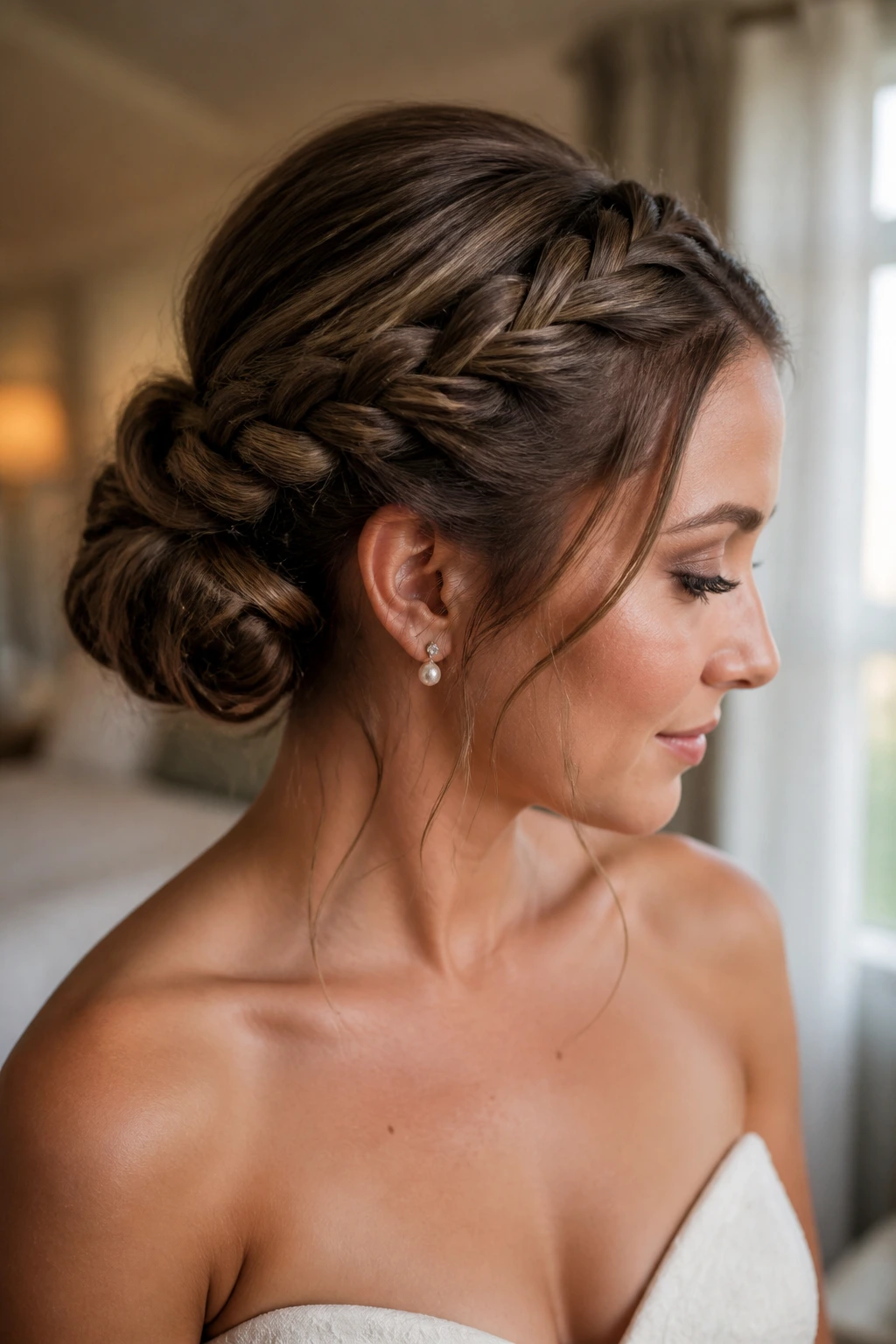
A crown braid into a bun has a built-in sense of movement because the braid draws the eye around the head before it lands at the knot. It’s a smart way to keep shorter face layers controlled while still giving the style texture. The braid can be thin and neat or fuller and pancaked, depending on how soft you want the finished shape.
Brides with textured or thick hair usually get a lot out of this one, because the braid gives the bun a base that doesn’t need perfect smoothness underneath. Add a few tiny flowers or pins if the dress is simple. If the dress is already ornate, let the braid do the work on its own.
7. Braided Halo
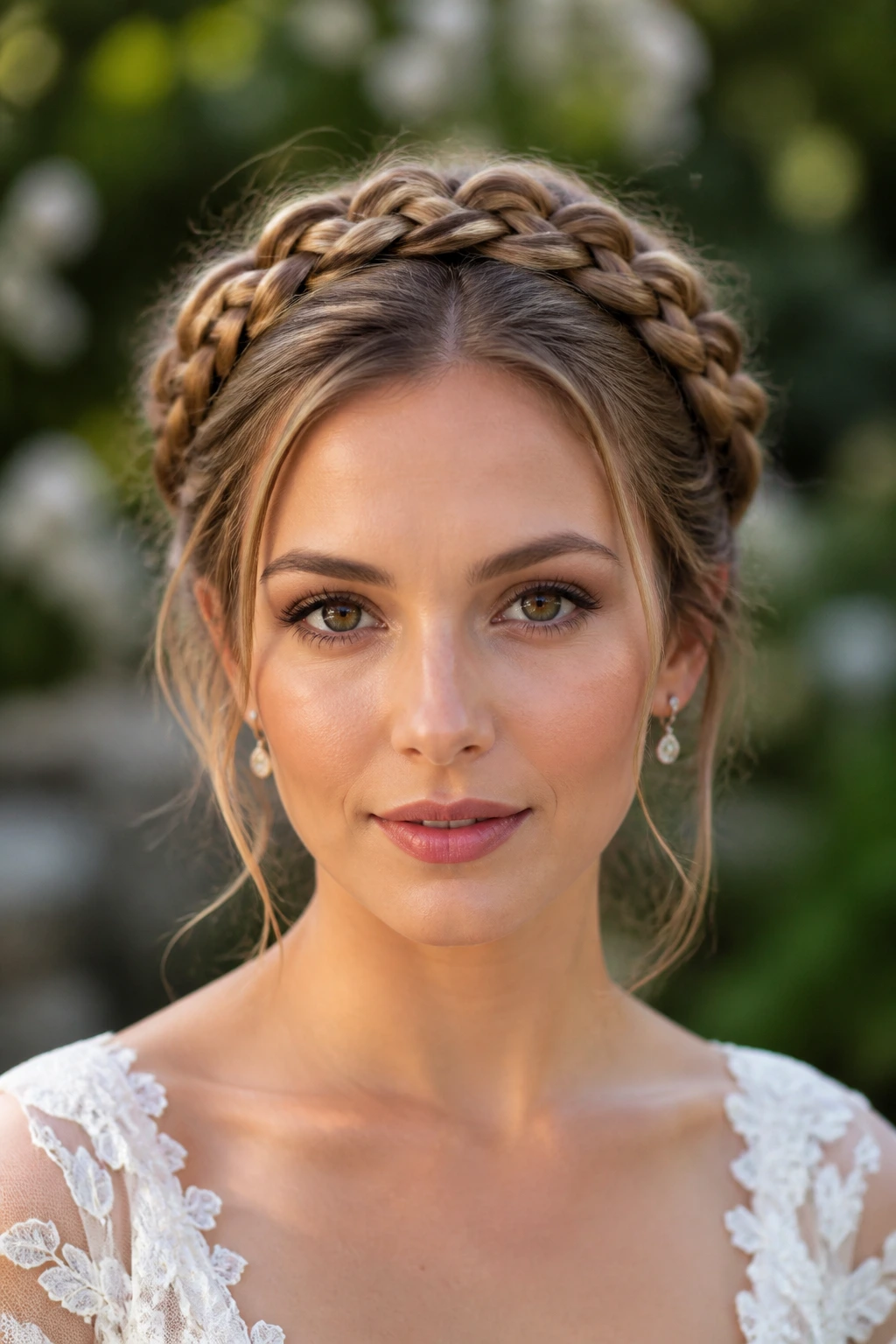
A braided halo wraps the braid around the hairline and creates that slightly storybook feeling without turning sugary. It keeps the front of the hair tidy and makes the face the center of the look, which is useful when the gown has detail at the bodice or sleeves. On long hair, the braid can be made very full; on medium hair, it can stay lean and neat.
I like this one for outdoor ceremonies and softer fabrics because it feels grounded rather than heavy. It is also one of the better choices for brides who want a style that still looks good after dancing. A halo braid that’s pinned properly stays put. A halo braid that’s pinned lazily turns into a headache.
8. Textured High Bun
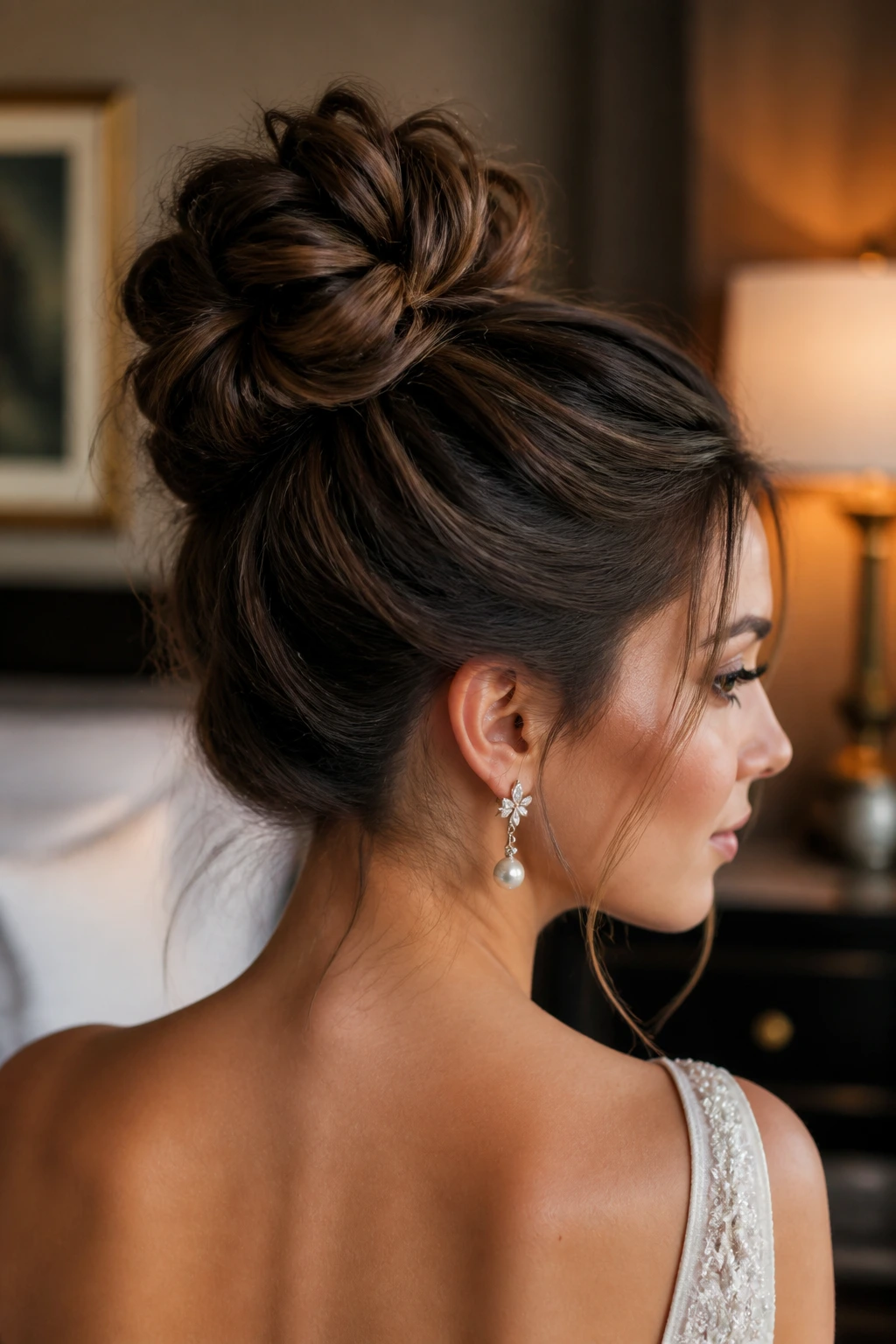
A high bun changes the whole mood of the hair. Instead of sitting low and classic, it lifts the eye and shows off the neck, jawline, and earrings. The texture matters here; if it’s too smooth, the bun can look severe, but if it has a little bend and lift, it feels modern and deliberate.
This is a good match for halter necks, simple column dresses, or any outfit that already has a long, clean line. It also keeps hair well away from makeup and lipstick during the ceremony, which sounds minor until you’re kissing people all afternoon. If your hair is thick, ask for the bun to be built in sections so it doesn’t feel like a heavy lump.
9. Wrapped Low Ponytail
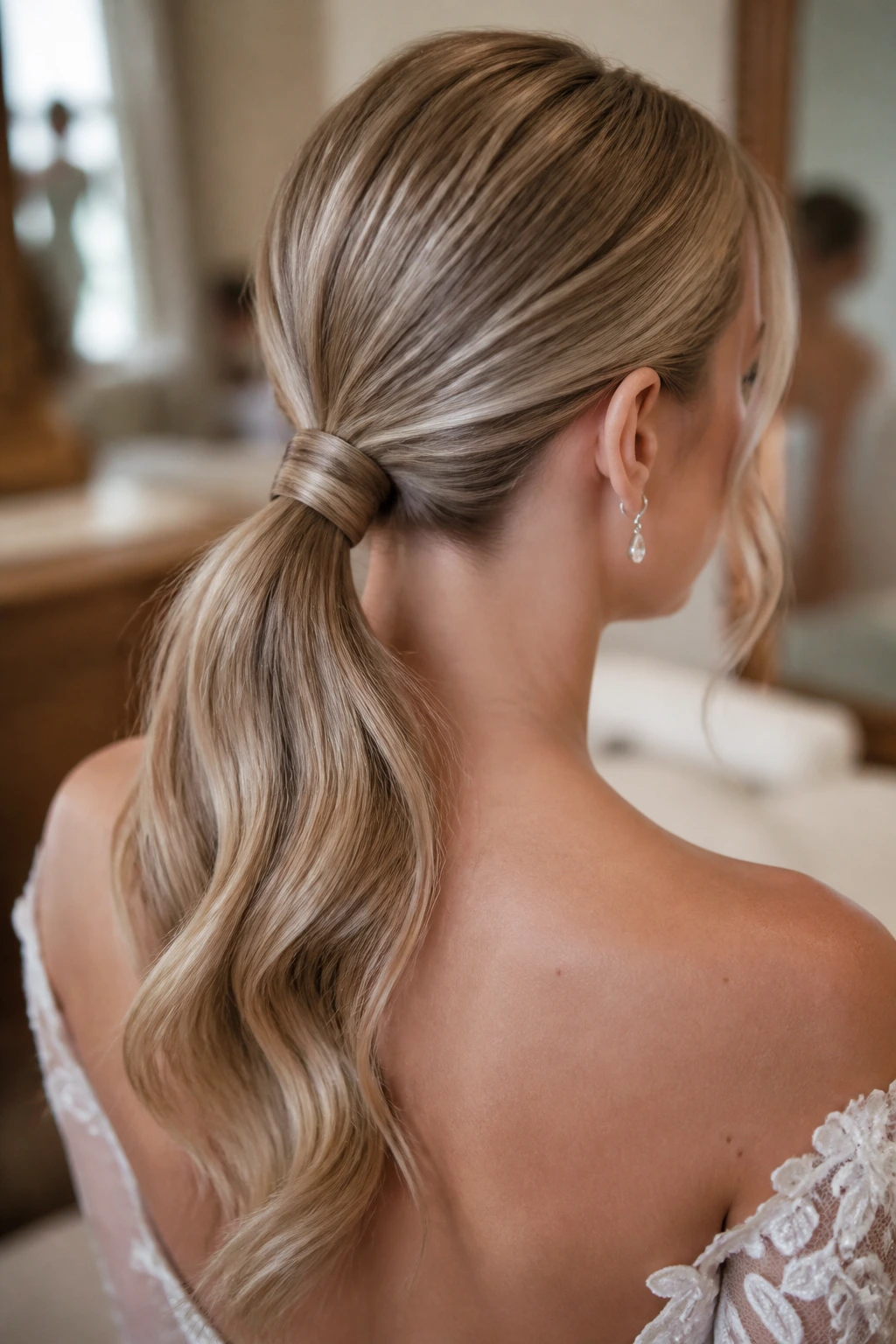
A wrapped low ponytail is one of those styles that looks easy from across the room and turns out to be very controlled up close. The elastic disappears under a wrapped section of hair, and the ponytail itself can be sleek, softly waved, or brushed into one smooth line. There’s no reason a ponytail has to look casual.
This is a favorite for modern dresses and brides who want a clean back view without the bulk of a bun. It also gives a veil a neat place to sit, especially if the veil comb needs a flat surface to grab onto. If your hair is layered, pin the shortest pieces flat before you wrap the base. Otherwise the bottom can get fuzzy.
10. Bubble Ponytail
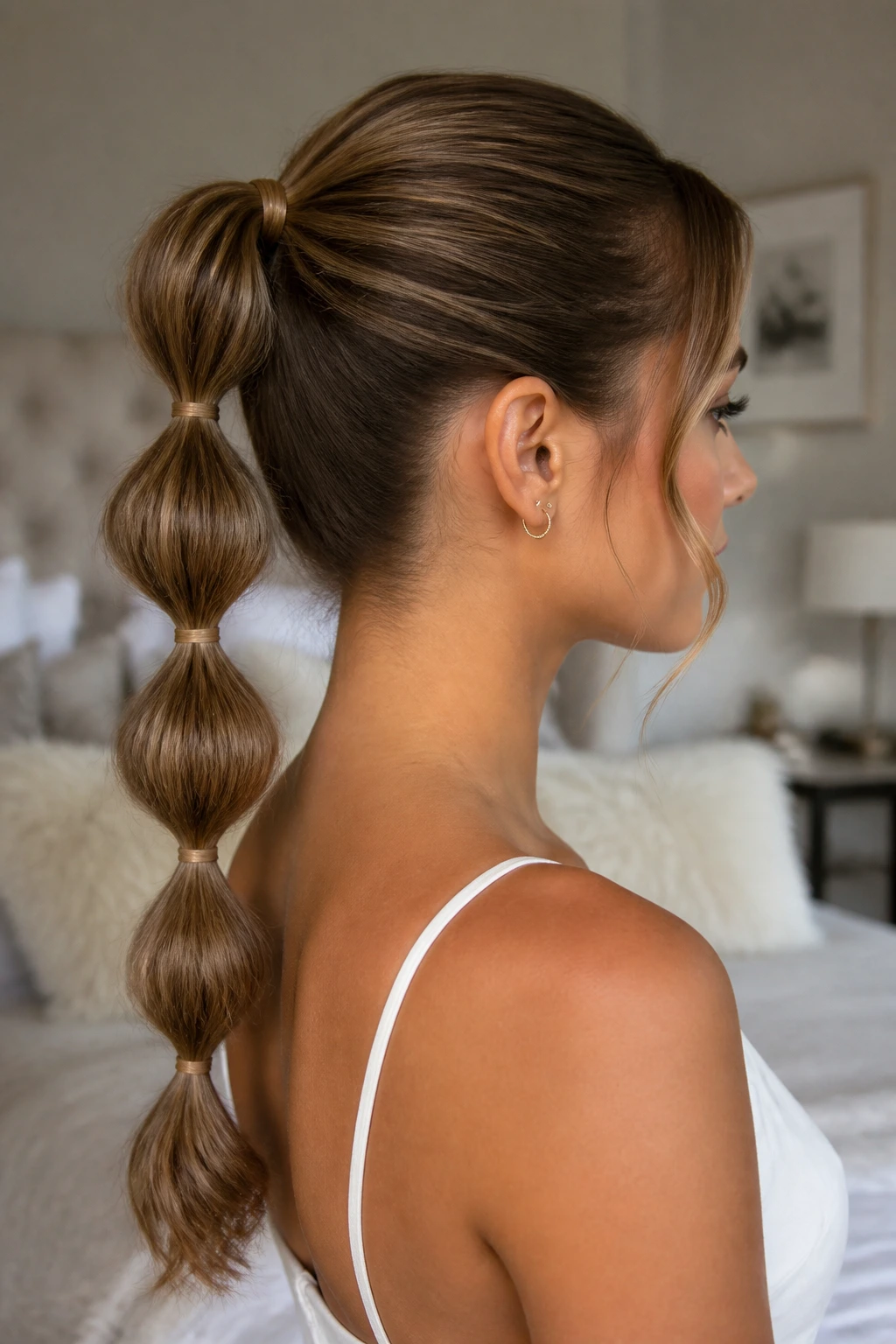
A bubble ponytail is more playful, and I mean that in the best way. The ponytail is secured at intervals with small elastics, then each section is gently puffed into a rounded shape. It has a sculptural quality that works especially well when the dress is sleek or slightly fashion-forward.
This style can handle thick hair with almost no complaint, and it’s a smart place to use pearl ties or tiny metallic bands if you want a little sparkle without a heavy accessory. The only catch is balance: the bubbles should be evenly spaced, or the whole thing starts to look accidental. Keep the base smooth and the sections consistent, and it reads as intentional fast.
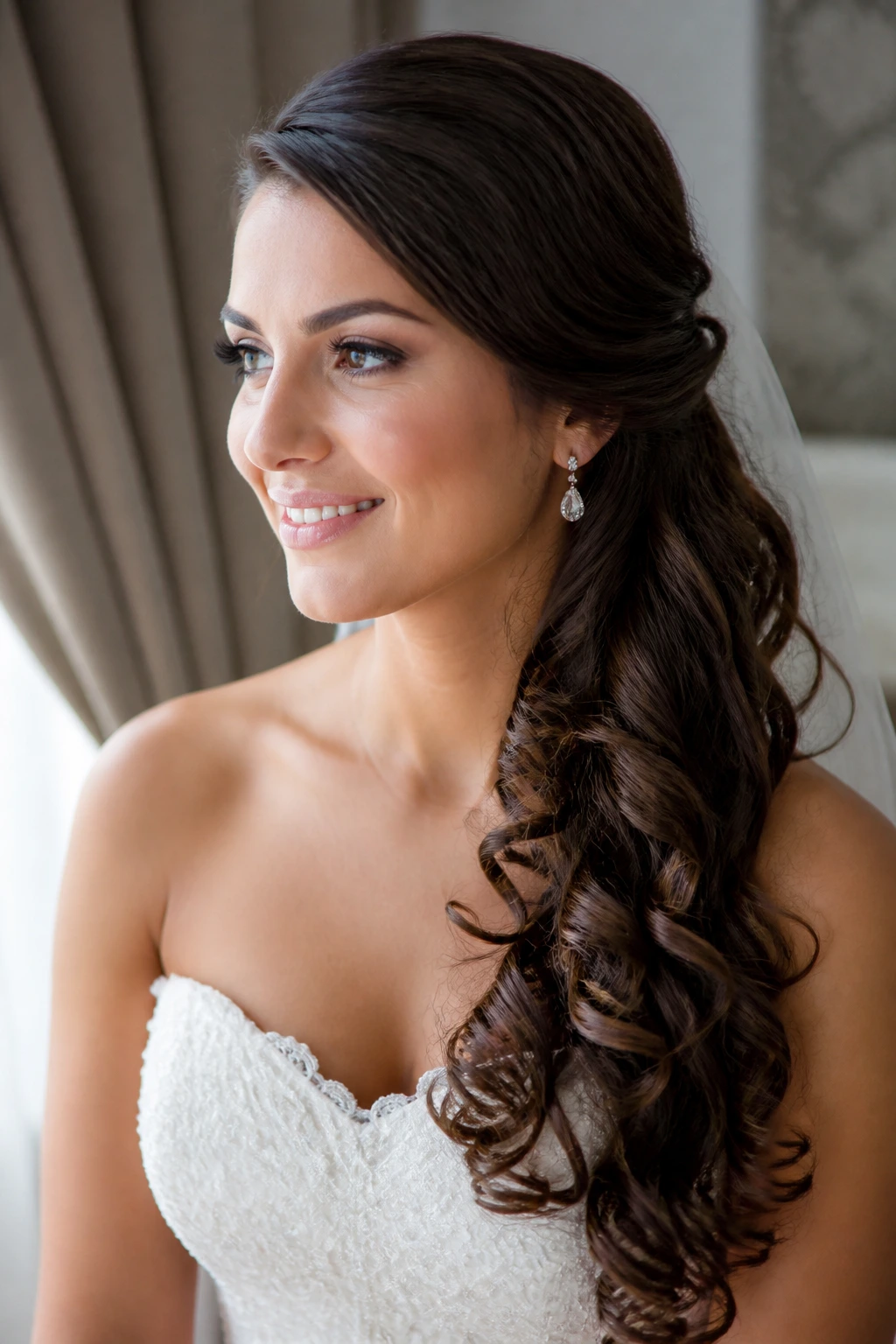
11. Side-Swept Curl Cascade
A side-swept curl cascade is the sort of style that looks like it should have taken longer than it did. Hair is pushed over one shoulder, curled in a consistent direction, and pinned discreetly at the opposite side so the whole shape stays secure. The effect is soft, but not loose.
It shines with asymmetrical dresses, sweetheart necklines, and gowns with one dramatic shoulder. Because the hair is all moving to one side, the face gets a nice frame without losing the length brides often want to keep visible. If you’re going to wear a bold earring, this is the style that lets it breathe instead of hiding it.
12. Boho Messy Bun
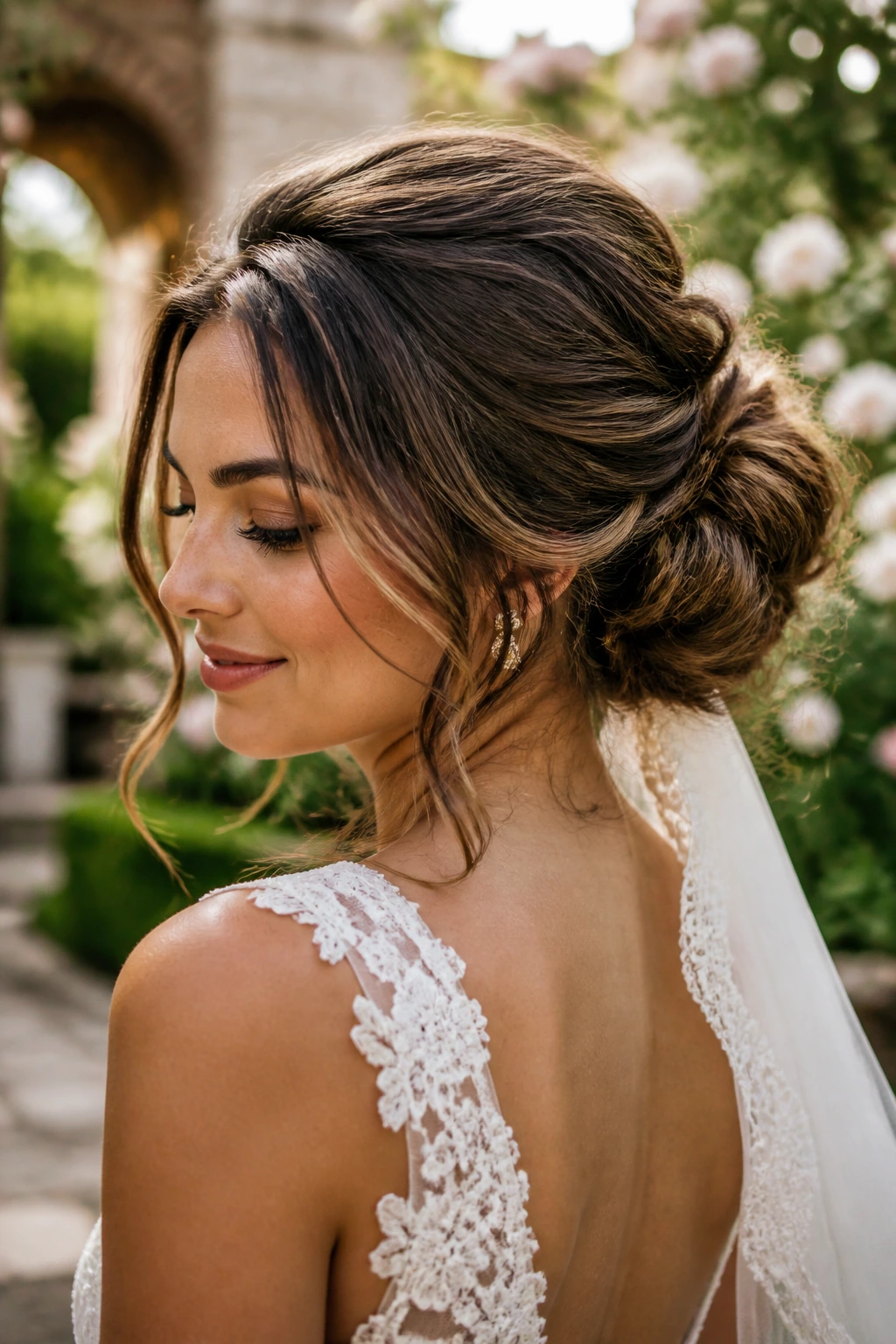
A boho messy bun sounds easy, but the good version is fussy in the right places. The bun sits low or mid-low, with a few loose pieces around the hairline and a softer, less polished finish than a chignon. The “messy” part should look controlled, not like the pins gave up halfway through.
This is one of the better choices for gardens, barns, and relaxed venues where a super-sleek style can look a little out of place. It also suits veils with lace edges because the softness of the bun echoes the texture. Leave a little bend in the front pieces and you avoid that scraped-back feeling that can flatten the whole face.
13. Twisted Knot Updo
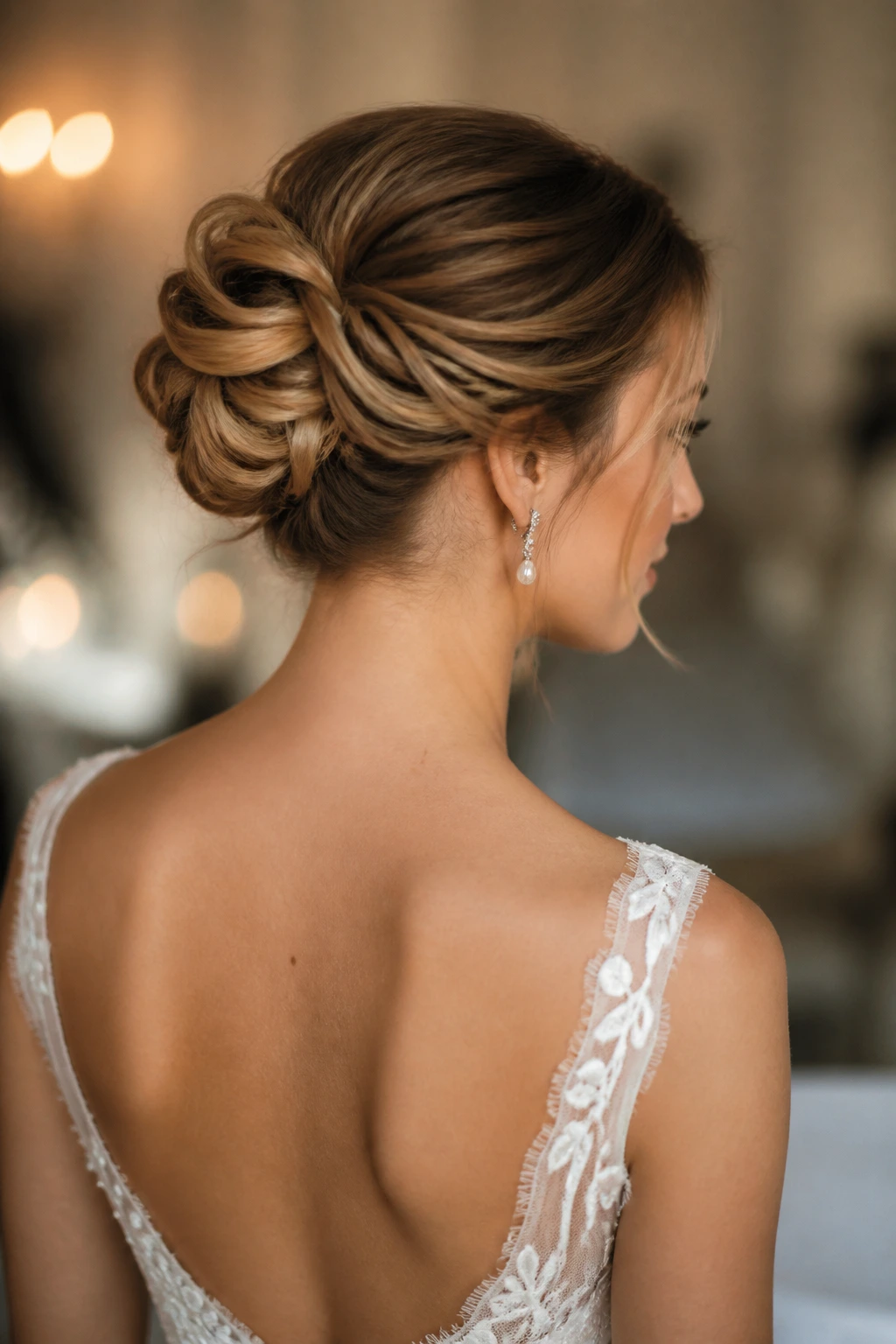
A twisted knot updo is a cleaner cousin of the messy bun. Instead of building the shape from curls, you twist sections and wrap them into a knot so the final style looks sculpted and tidy. It gives you a clear silhouette from the back, which matters more than people realize in wedding photos.
I like this one for brides who want the hair to feel architectural. It works particularly well with square necklines, sharp tailoring, or dresses with a strong seam line. If the stylist uses too much volume, the knot can look puffy; if it’s pinned too flat, it can look thin. The sweet spot is a knot with visible shape and a smooth perimeter.
14. Waterfall Braid Half-Up
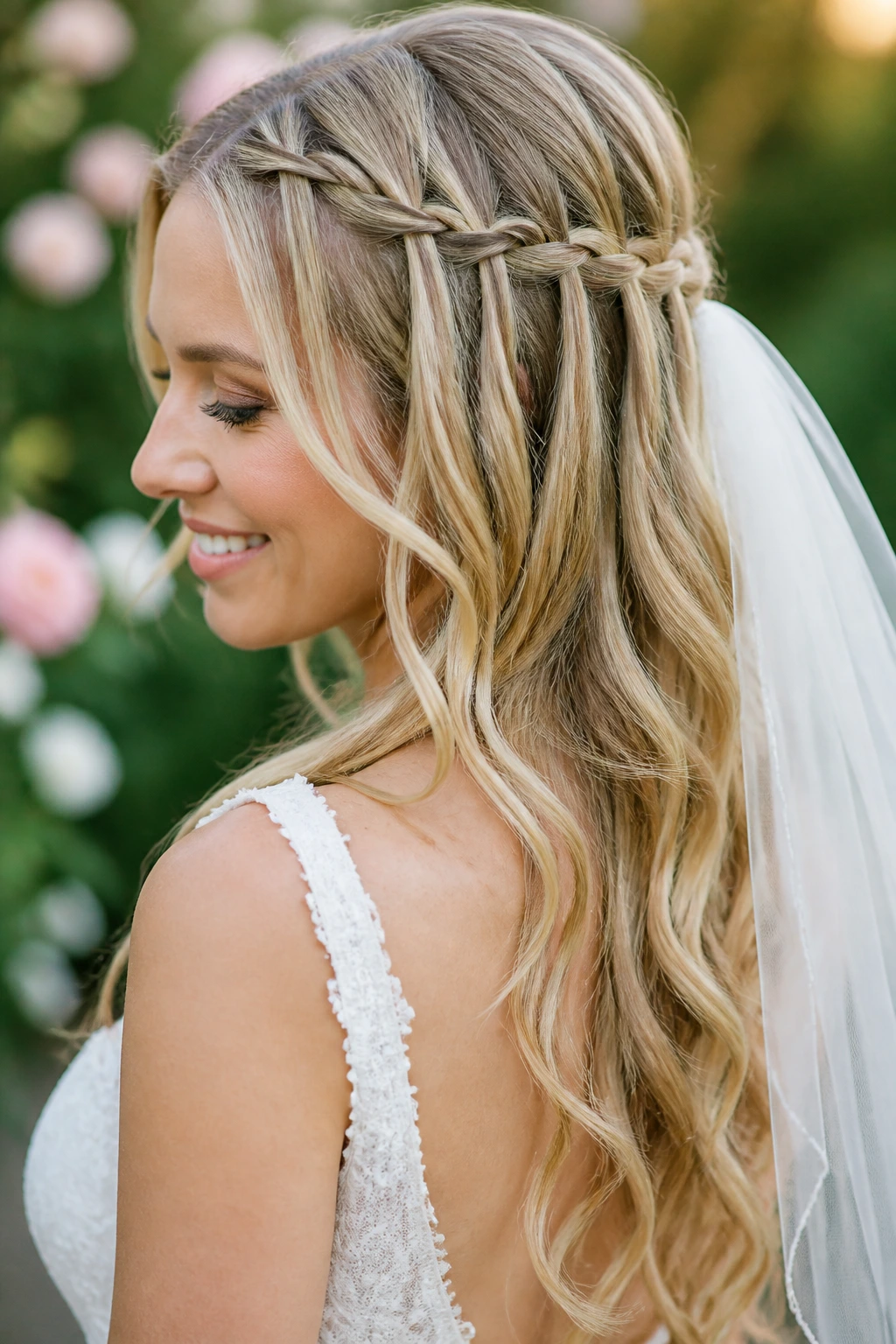
The waterfall braid is one of the few braids that feels airy instead of heavy. Sections are woven so that strands drop through the braid like a little cascade, which leaves most of the length down while still showing off detail across the back of the head. It’s prettier on long hair, plain and simple.
This style works best when the hair is curled first, because the loose length beneath the braid needs movement or the whole thing looks unfinished. It’s a strong option for brides who want something a little romantic without going full updo. If you’re wearing a veil, place it below the braid so the detail stays visible.
15. Double-Braid Crown
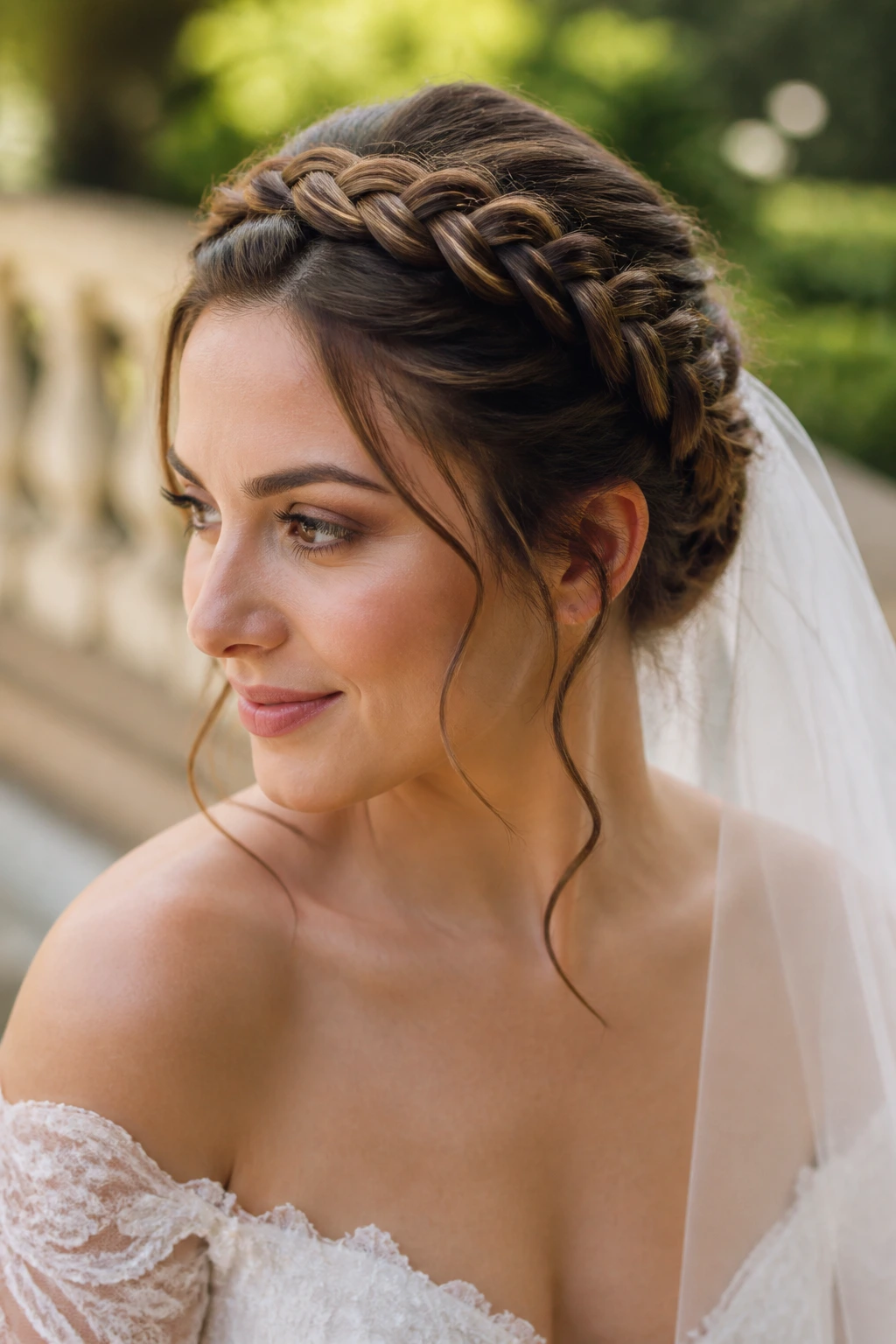
Two braids crossing over the crown give a more secure and fuller effect than a single braid alone. The style feels a little folkloric, but in the right dress it lands as polished and intentional. It also keeps the front hair firmly away from the face, which is useful if your hair tends to drift.
This is a good match for thicker hair, long hair, or brides who want a braid that looks substantial from every angle. Add small pins at the crossing point if the braids are heavy; otherwise they can shift by the second photo session. I’d avoid making the braids too skinny. Thin braids disappear fast in a big ceremony setting.
16. Center-Part Sleek Bun
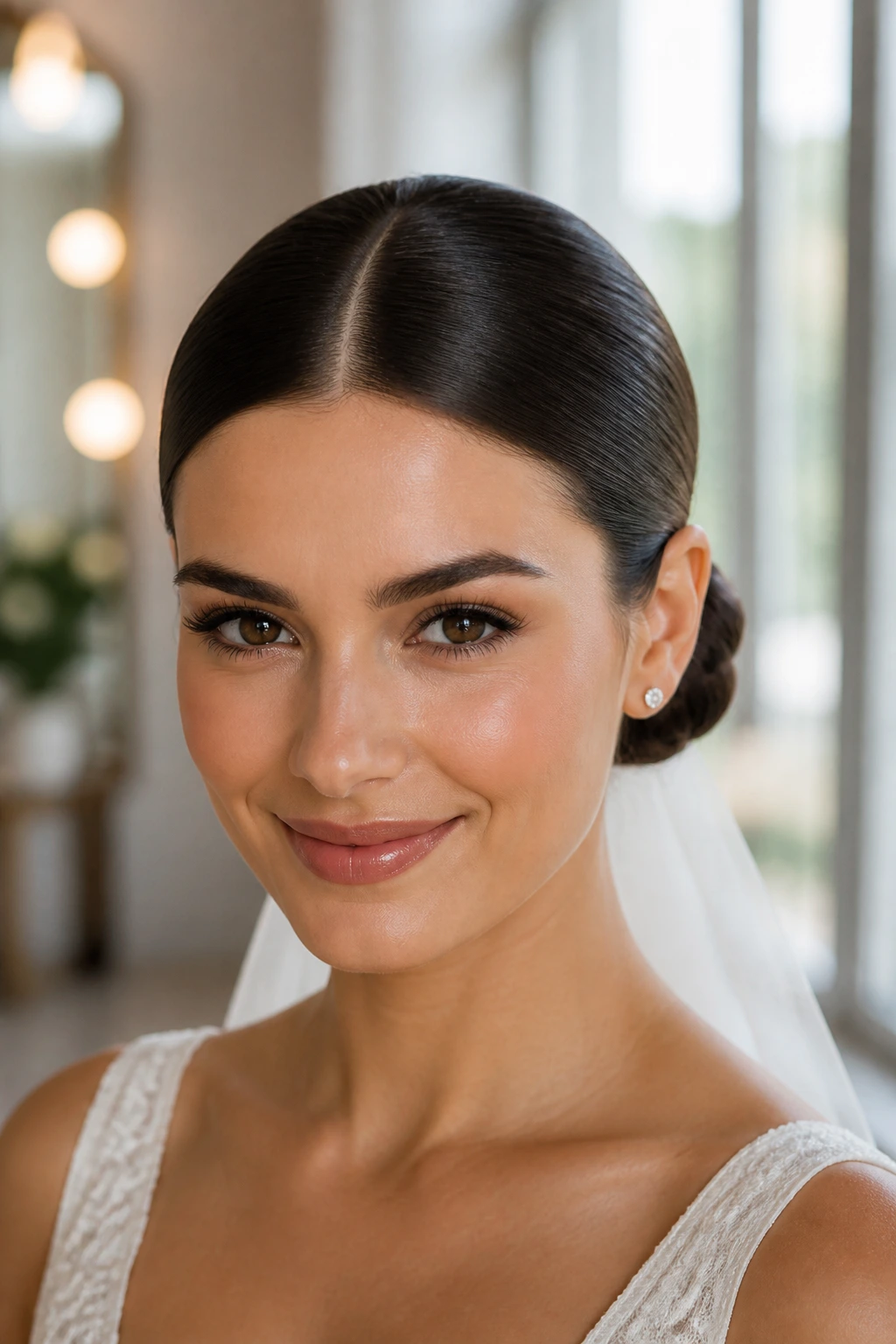
A center-part sleek bun is all about lines. The middle part gives the face symmetry, the crown is smoothed tight, and the bun sits low enough to feel calm instead of severe. When the finish is glossy, this style can look almost minimalist in the best way.
It pairs cleanly with structured dresses and modern jewelry. It also photographs well from the front because the part creates a direct frame around the face. If your hair is fine, a little padding under the bun helps keep it from shrinking up by the end of the night. No shame in that. Plenty of brides need a little help back there.
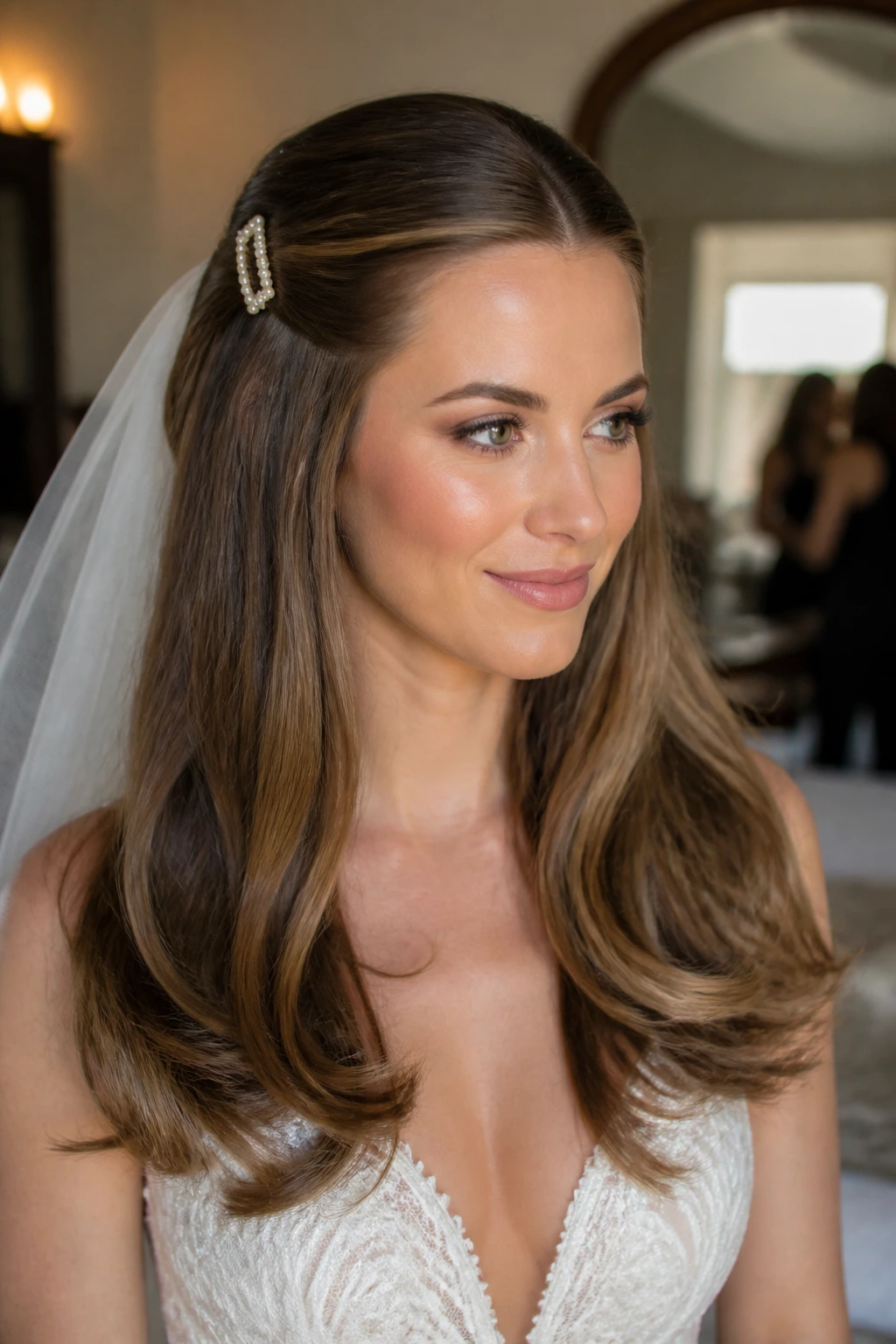
17. Full Blowout with Barrettes
A bridal blowout with barrettes is for the bride who wants hair down but not loose in the careless sense. The roots have lift, the ends are rounded, and the front pieces are pinned back with one or two deliberate clips. Done well, it feels polished without hiding the hair’s natural body.
This is a nice fit for brides wearing modern dresses, jumpsuits, or simpler gowns that need a little movement near the face. It does ask for some product discipline: too much oil and the whole shape goes limp; too little and the ends can frizz. Clip placement matters too. Put the barrettes too high and they fight the part. Too low and they disappear.
18. Pearl-Pinned Waves
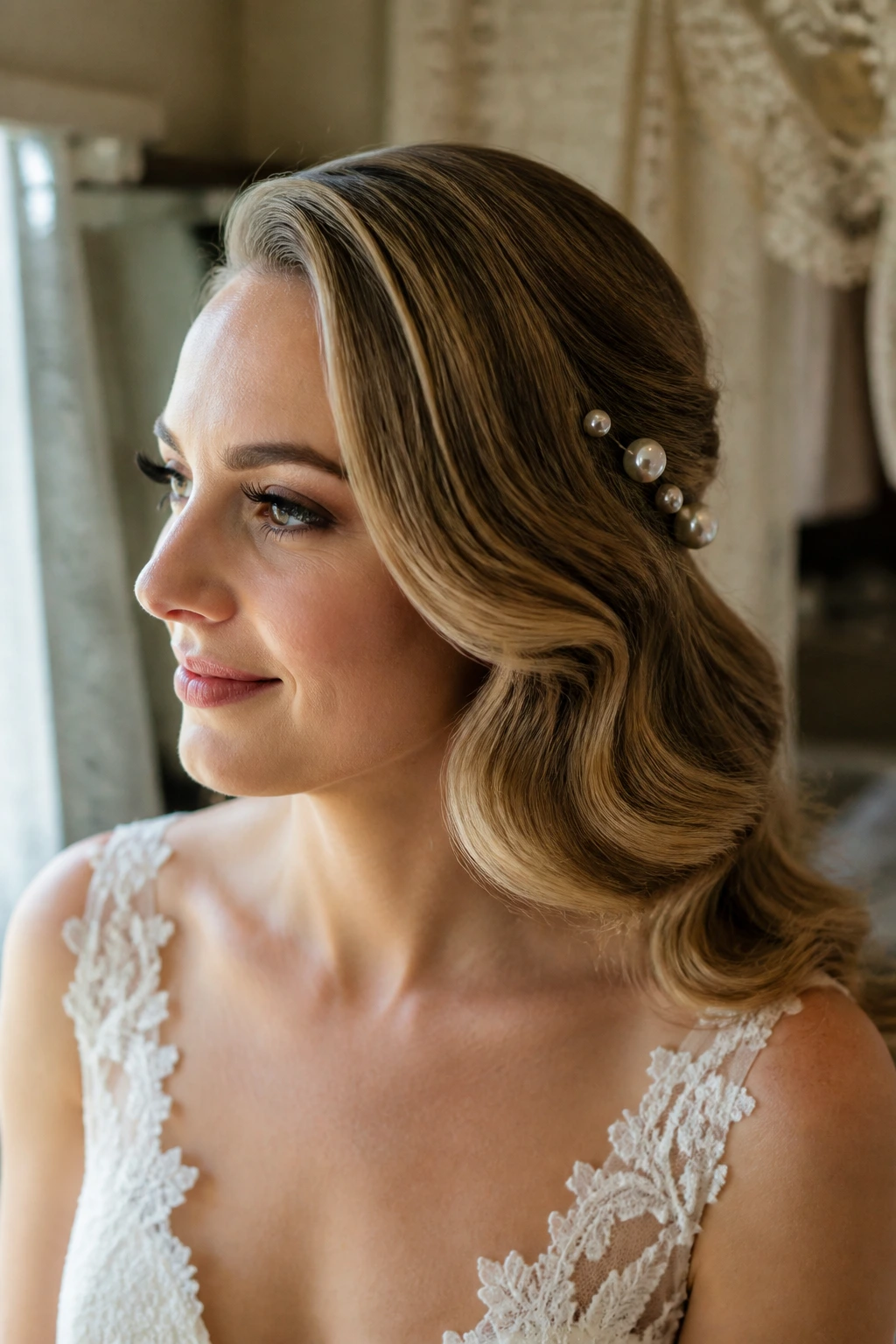
Pearl-pinned waves are one of my favorite ways to make loose hair feel wedding-specific without burying it under accessories. The waves stay soft and brushed out, then a small cluster of pearl pins is placed on one side or near the back curve of the head. The pearls should look scattered, not sprayed everywhere.
This style works especially well with lace, silk, or gowns that already have a little softness in the fabric. It’s also forgiving if your hair is medium-length and you don’t want to fake a full updo. Keep the rest of the jewelry restrained. The pins are the punctuation mark here, not the whole sentence.
19. Gibson Tuck
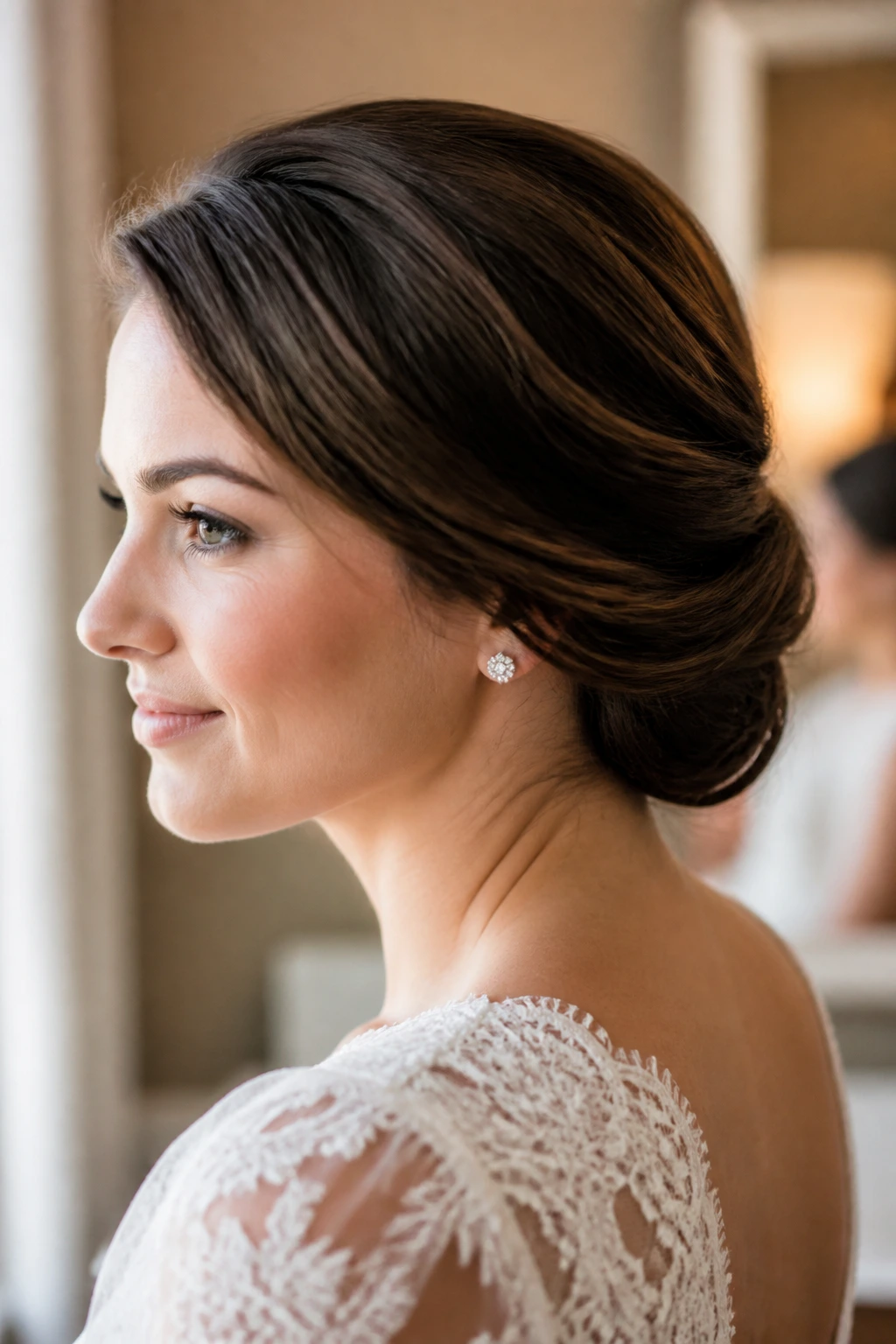
The Gibson tuck has old-fashioned charm without much fuss. Hair is gathered low, folded inward, and pinned into a rolled tuck that sits snugly at the nape. It’s one of the better bridal styles for shorter lengths because you don’t need endless hair to build it.
I reach for this look when a bride wants the neck to stay open and the style to stay modest. It works beautifully with birdcage veils, shorter veils, and dresses that have texture near the collarbone. The finish should be smooth but not shellacked. If the tuck looks too tight, it loses the softness that makes it useful in the first place.
20. Low Ponytail with Veil
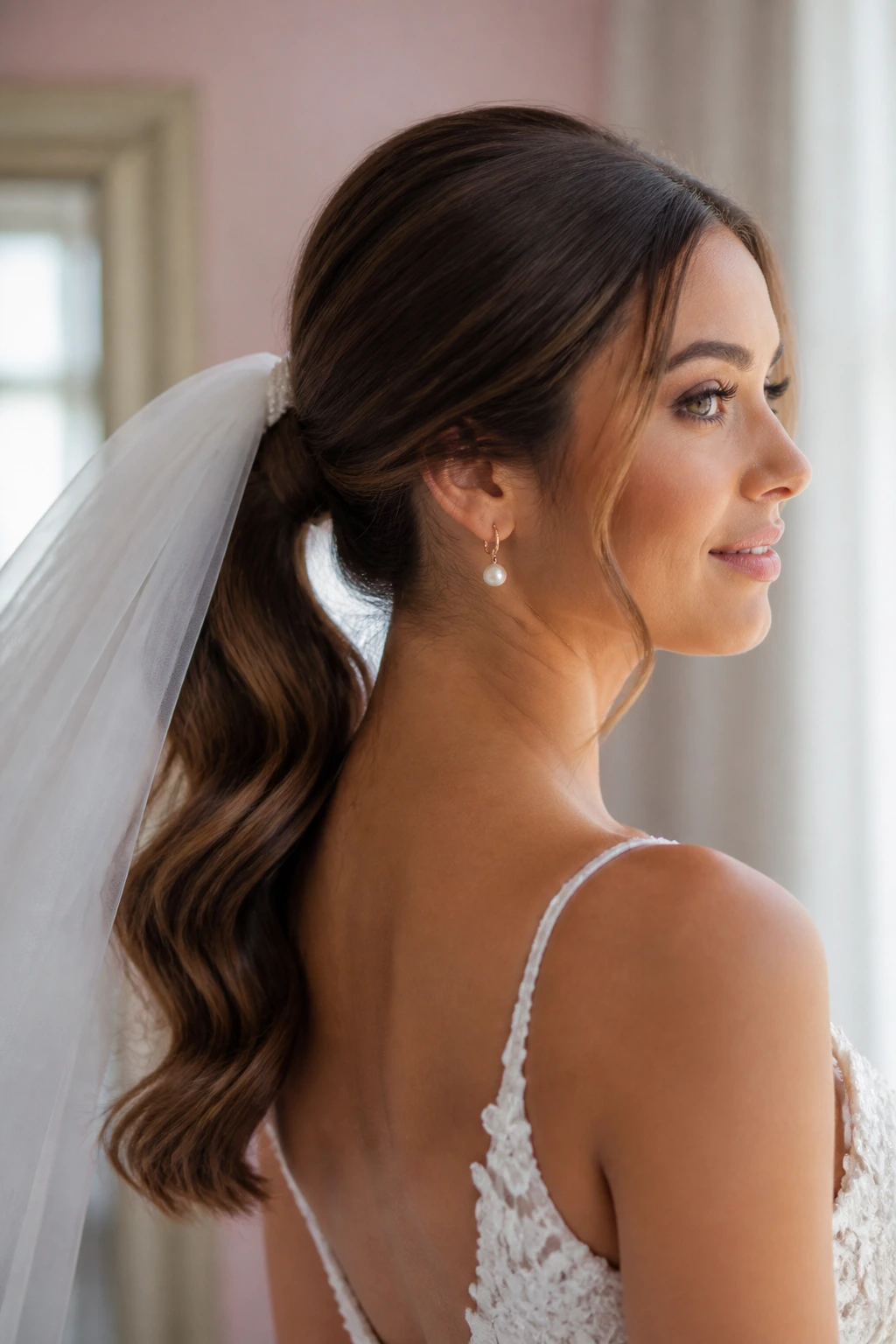
A low ponytail with a veil sounds almost too simple, which is exactly why it works. The ponytail gives the veil a clear anchor point, and the clean line at the back keeps the whole look from getting tangled under layers of fabric. Add a soft bend through the ponytail and it stops feeling plain.
This is a strong option for brides who want comfort during the ceremony and reception. It also helps if you plan to remove the veil after photos, because the ponytail still looks complete on its own. The veil comb should sit firmly above the elastic, not hovering loosely in the hair. That detail matters when the style needs to survive hugs.
21. Natural Puff
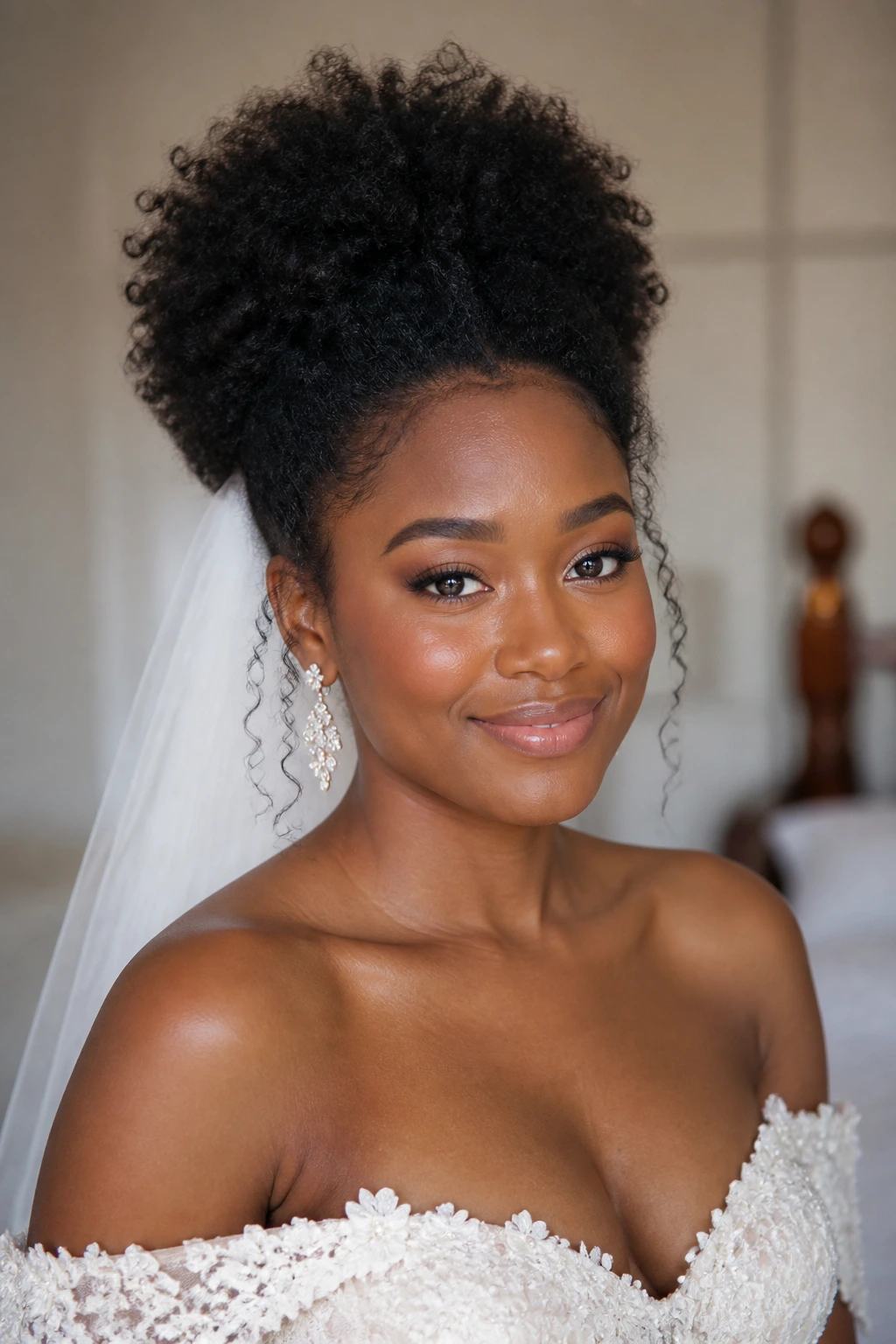
A natural puff can be one of the most striking bridal looks in the room because it doesn’t hide the hair’s shape. The key is to lift the crown, smooth the sides, and let the puff hold its own rounded silhouette. With the right moisture and hold, the hair reads soft, full, and intentional.
This style is especially good when you want the face open and the earrings visible. It also gives texture a chance to look like the main event instead of something to be controlled away. A little edge work around the hairline makes a big difference here. If the hair at the sides is uneven or frizzy, the whole shape starts to wobble visually.
22. Loc Updo with Twists
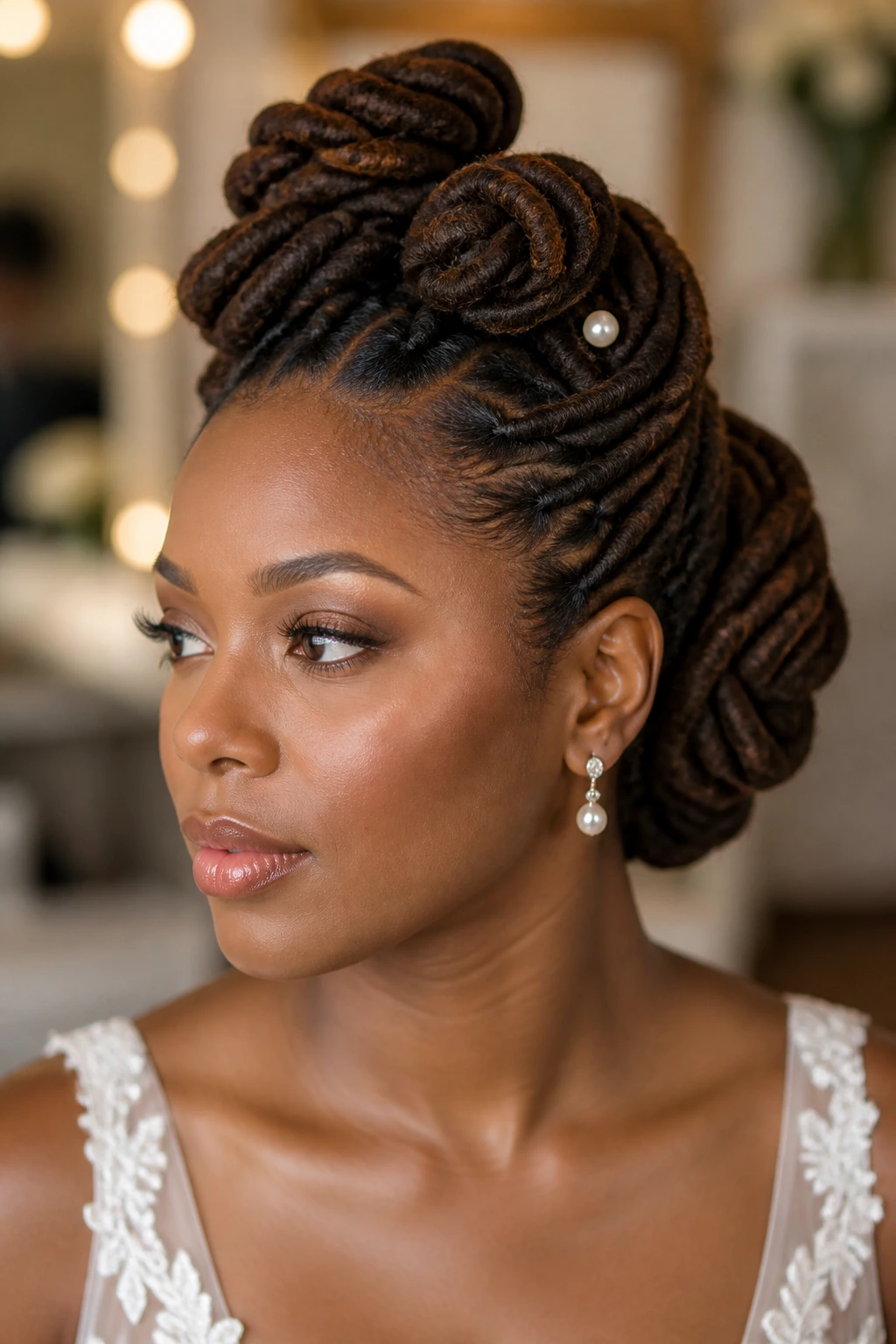
Locs pinned into an updo can be breathtaking when the shape is clean and the weight is distributed well. Rather than forcing everything straight up, the style usually folds locs into loops, twists, or a low sculpted bundle that supports itself. The result can be dramatic without feeling overloaded.
This is one of those styles where the hair itself brings texture, so the accessories should be chosen with restraint. A comb, a few pearls, or a single floral accent is usually enough. The most common mistake is pinning too aggressively in one spot. That creates strain. Spread the support around and the style feels better all day.
23. Twisted Half-Up Crown
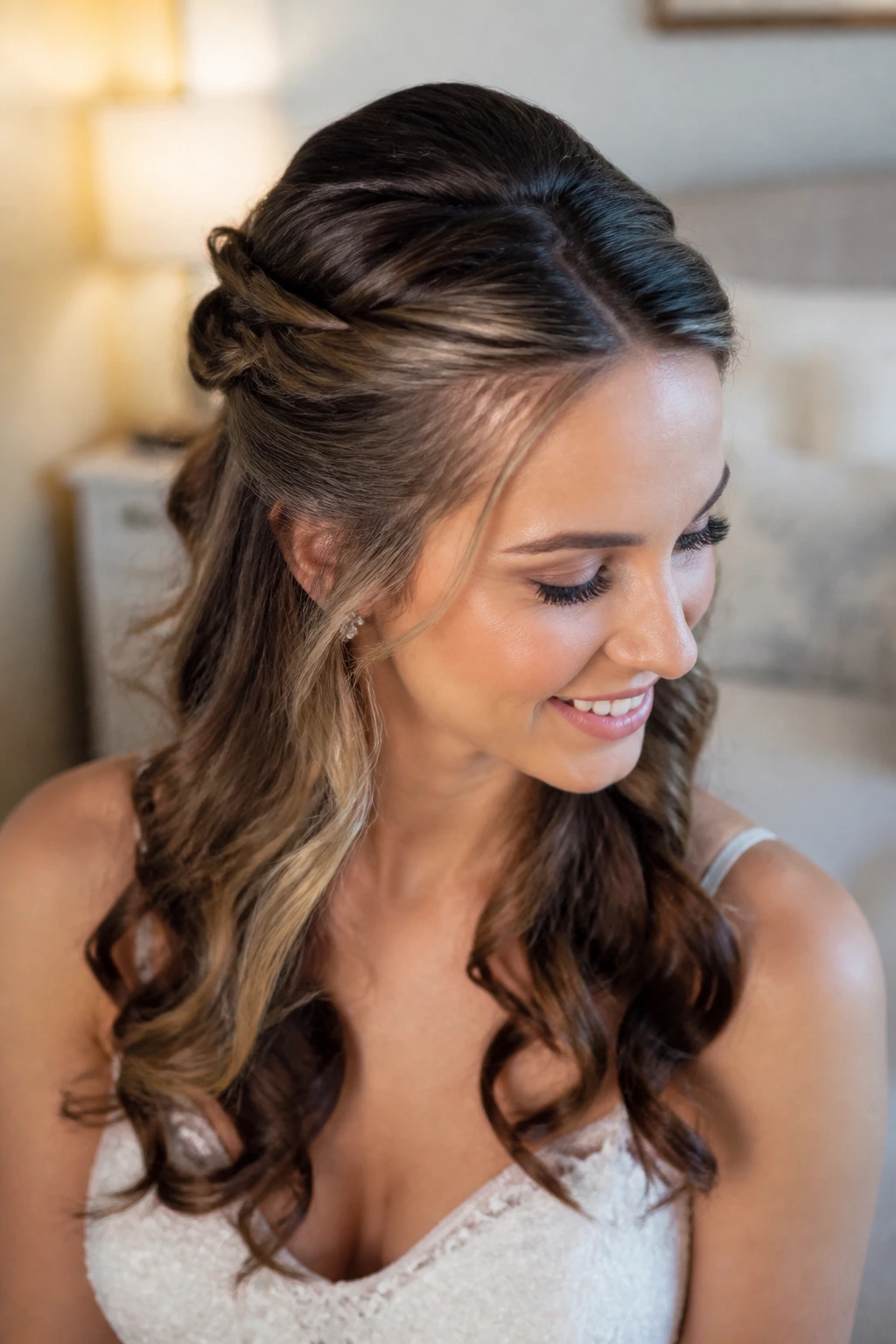
A twisted half-up crown gives curly hair room to move while keeping the front away from the face. Small sections from each side are twisted back and secured near the crown, leaving the rest of the length free. It’s softer than a full updo and less fussy than braid-heavy styles.
This works especially well on hair with a natural curl pattern because the front twists create structure without flattening the curl below. If you want the look to last, the curls beneath the twists need a good set before the hair is pinned. Otherwise they relax too quickly and the bottom half loses shape before dinner.
24. Asymmetrical Side Bun
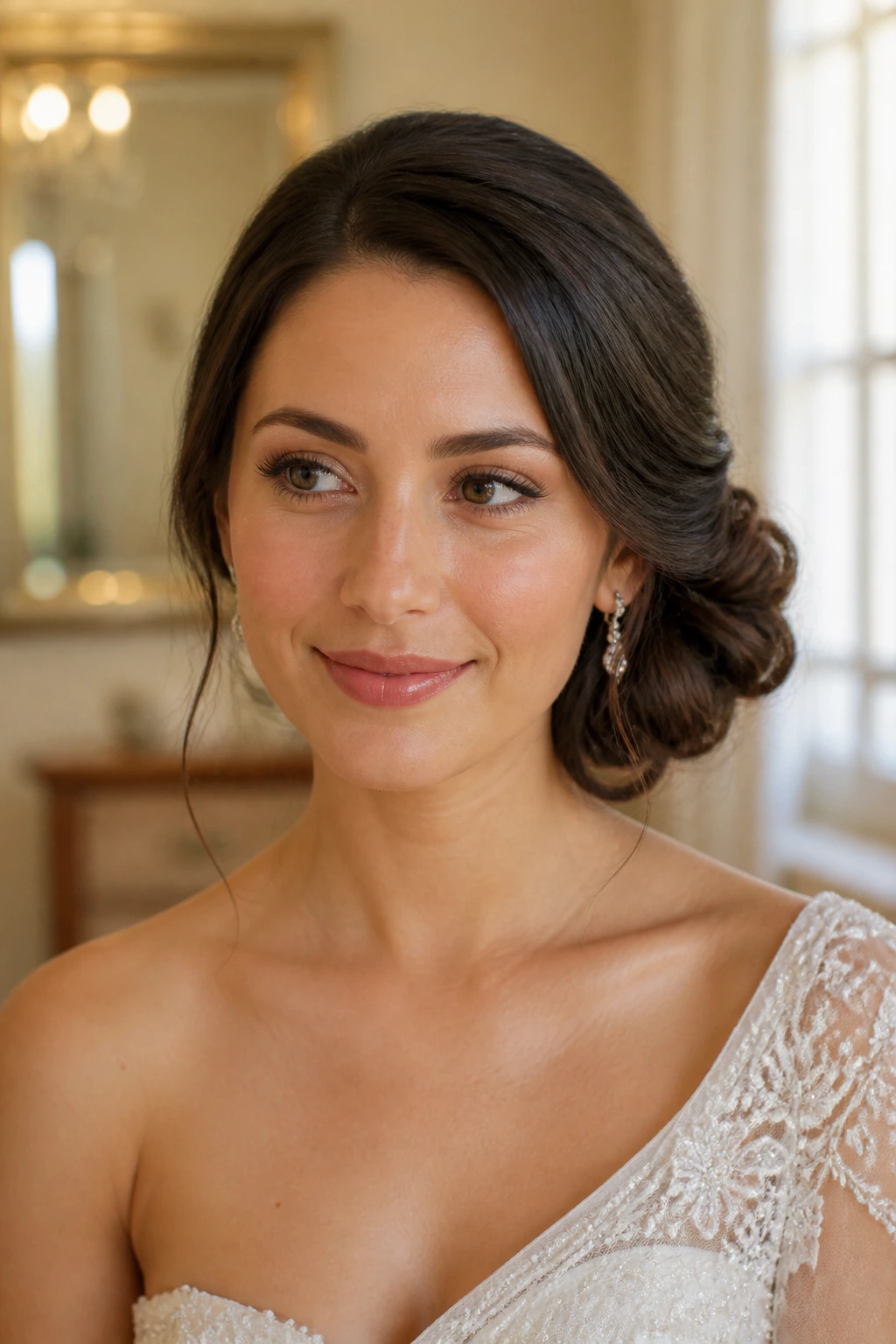
An asymmetrical side bun shifts the weight of the style just enough to feel interesting. Instead of sitting at the exact center back, the bun lands behind one ear or slightly off to one side, which gives the profile a little more drama. It’s not loud. It just has direction.
I like this one for gowns with one sleeve, a side drape, or a neckline that already leans to one side. The bun can be sleek or textured, but the off-center placement is what gives it character. A small comb or a few pins can sit on the bun side, while the other side stays clean.
25. Braided Bun with Face-Framing Pieces
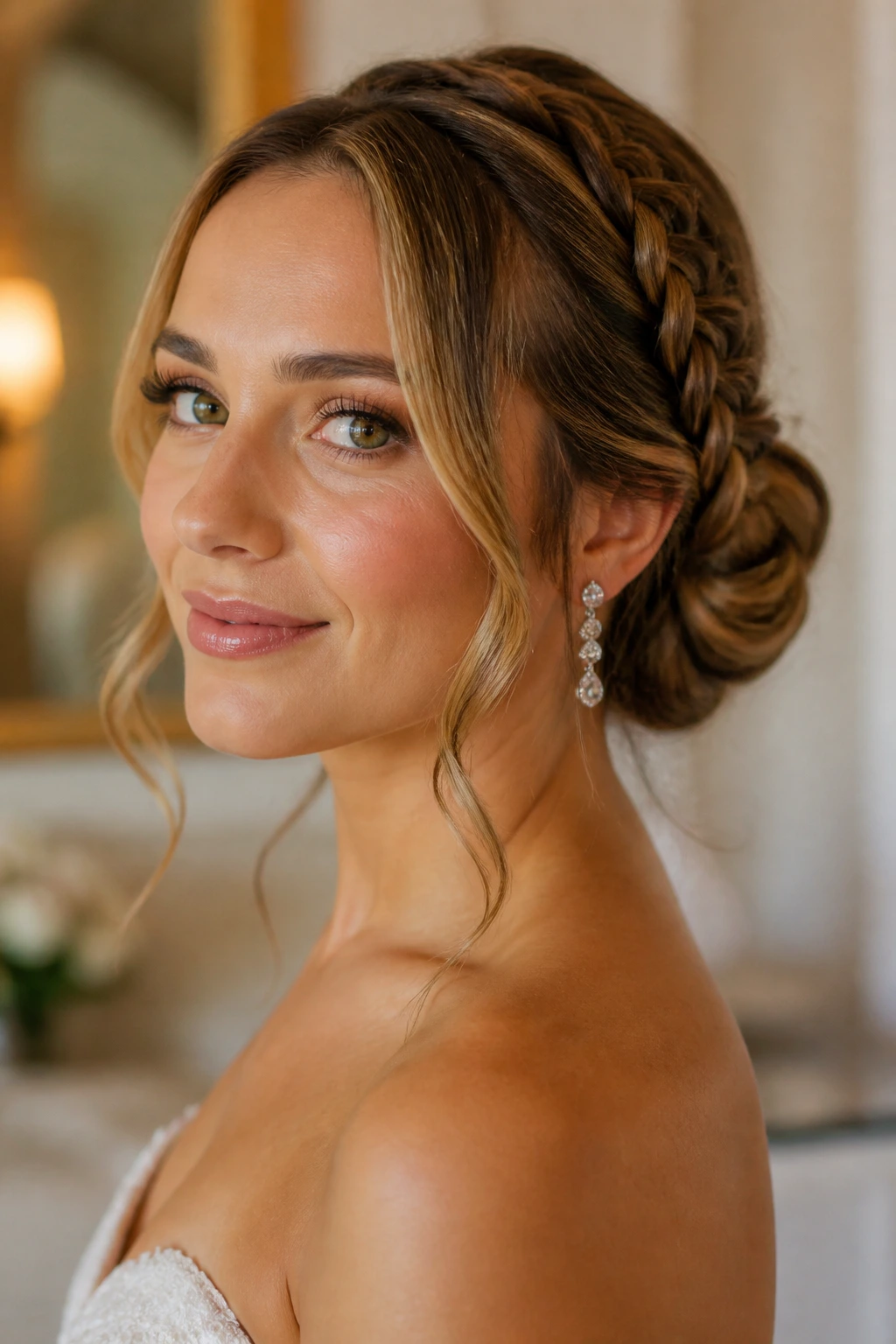
A braided bun with face-framing pieces gives you the security of a braided base and the softness of loose front sections. The braid feeds into the bun, which helps the style hold its shape, while the wisps at the front keep it from looking too rigid. It’s one of those looks that can be dressed up or dialed down easily.
If the face-framing pieces are left too straight, they can look accidental, so a gentle bend or curl helps. That tiny detail makes the whole thing feel finished. I’d especially recommend this style for brides who like their hair up but do not want every strand pulled away from the temples. It’s a small kindness. You’ll feel it all day.
26. Retro Rolled Chignon
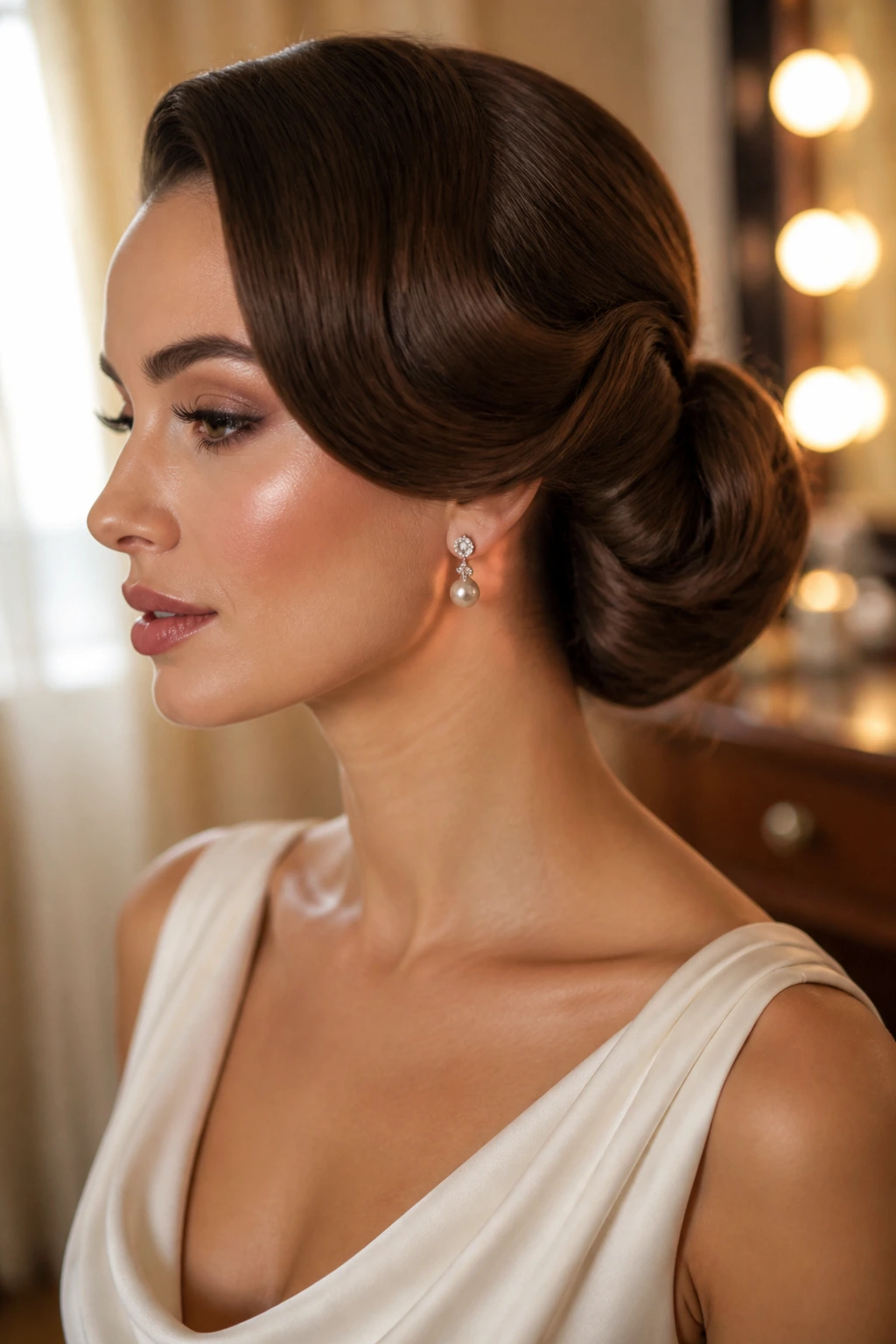
A retro rolled chignon has a little old-Hollywood polish without needing a pageant finish. Hair is rolled inward and pinned into a neat shape with visible curve, which gives the back of the head structure and a bit of vintage charm. It suits gowns with clean lines and strong fabric.
This one is a good match for satin, mikado, and anything with a crisp silhouette. It also gives you a nice base for a comb or short veil. The roll should read as a shape, not a lump. If the stylist skims over the smoothing step, the style can look bulky instead of elegant. That’s where the trial matters.
27. Fishtail Braid to Curls
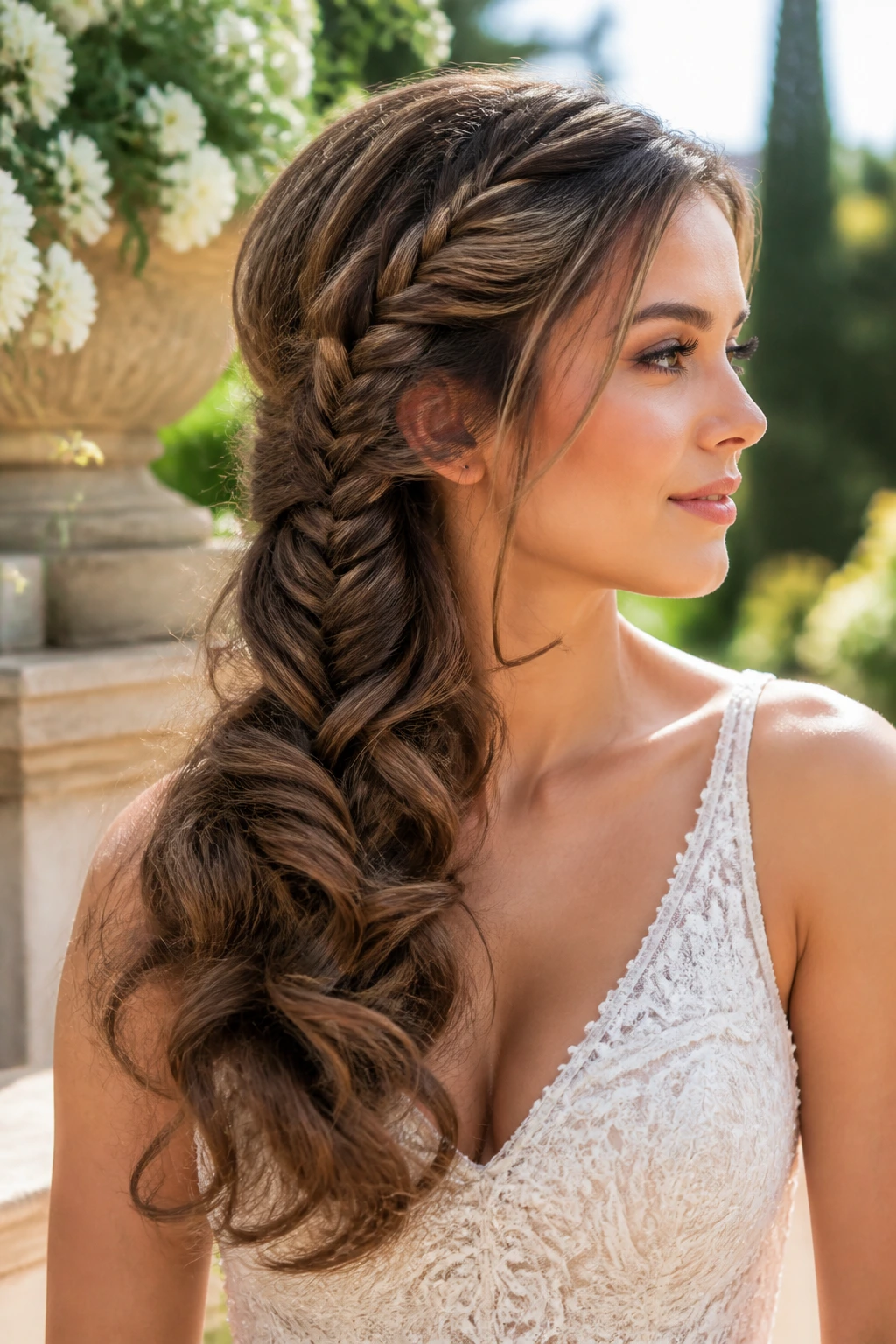
A fishtail braid into curled lengths is a nice way to keep braid detail visible without giving up the movement of loose hair. The braid usually begins at the crown or one side, then melts into soft curls through the ends. It feels a little intricate, which is part of the appeal.
This is best for long hair or added extensions, because the fishtail pattern needs enough length to show clearly. If the hair is too short, the braid gets lost fast. Keep the crown smooth so the braid pattern can stand out. A frizzy base steals attention from the braid itself, and that’s a shame.
28. Clip-In Glam Waves
Clip-in glam waves are a practical answer for brides whose natural hair wants more fullness than it naturally gives. The clips create density through the lower layers, which makes the waves read richer and smoother once brushed out. It’s not about faking someone else’s hair. It’s about giving your own style enough body to hold the shape you want.
This works best when the extensions are blended before styling, not shoved in at the end as an afterthought. Curl the natural hair and the extensions together where possible so the wave pattern stays consistent. If you’re choosing clip-ins, match the mid-lengths and ends first. That’s where people notice mismatches.
29. Pixie with a Jeweled Clip
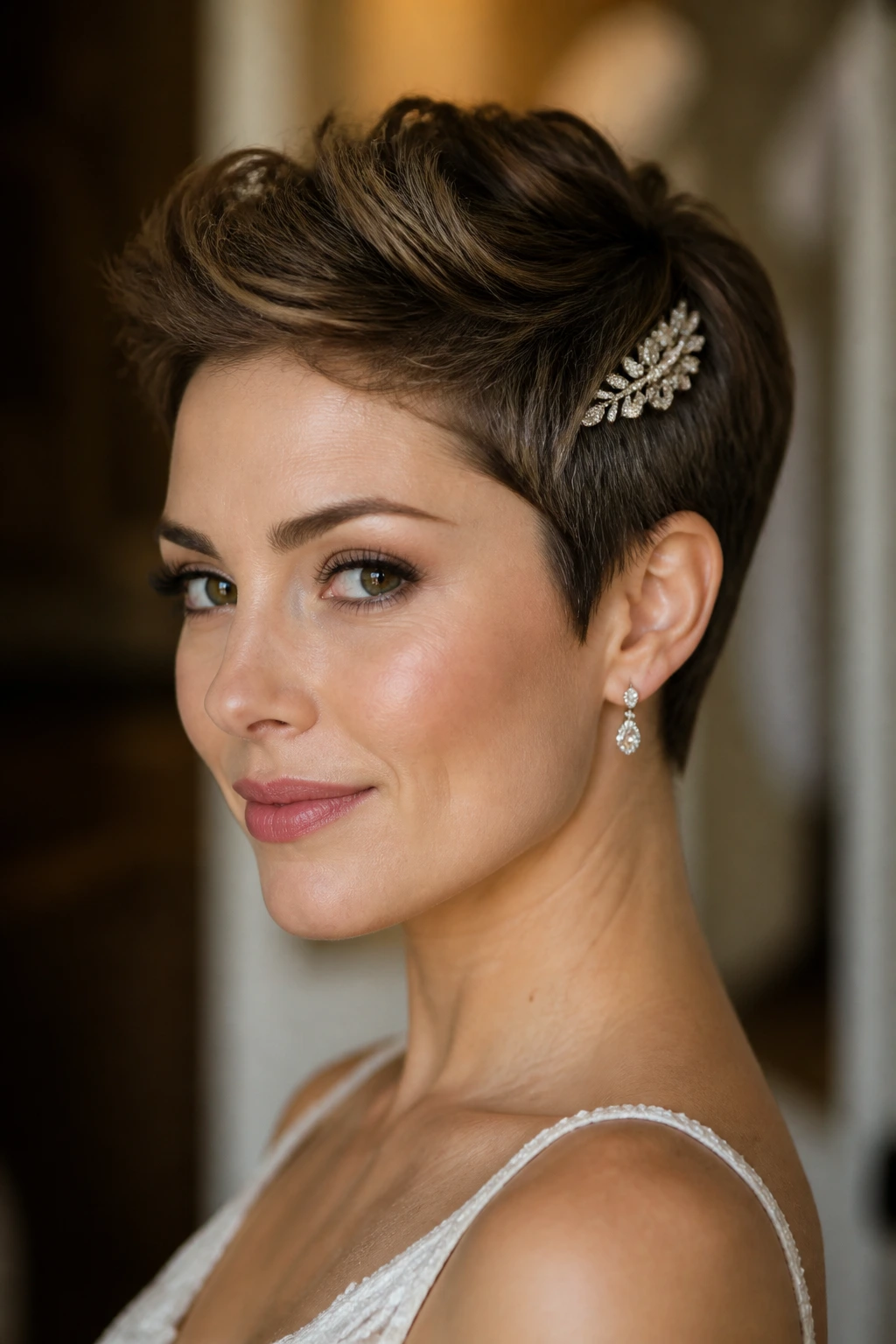
A pixie does not need to apologize at a wedding. A sharply cut pixie with a jeweled clip or comb can feel cleaner and more formal than a style with twice the hair and half the intent. The key is shape: the sides should be controlled, and the top should have enough lift or texture to keep the silhouette alive.
This is the right move for minimal gowns, strong makeup, or brides who feel most like themselves in short hair. A shiny clip at one temple can become the entire accessory story. Don’t overload it with too many extras. Short hair gets crowded fast, and crowded is not the same as finished.
30. Shoulder-Length Soft Bend and Tuck
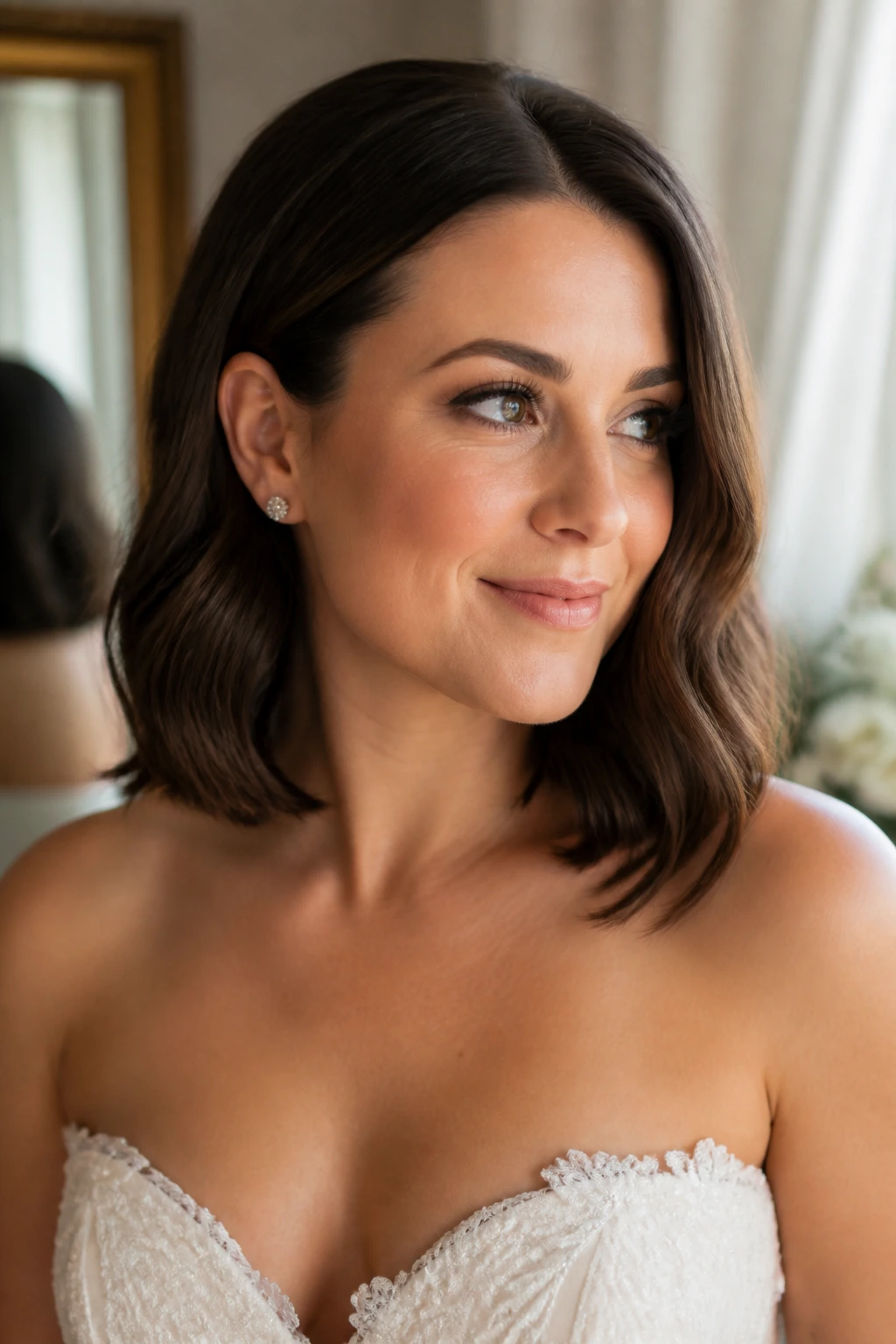
Shoulder-length hair can be tricky because it’s long enough to flop, but not always long enough to build a heavy style. A soft bend and tuck solves that neatly. The hair is bent with a flat iron or curling iron, then one side is tucked behind the ear or pinned back just enough to shape the face.
I like this for brides who want movement without the commitment of a full updo. It works especially well if the dress has detail around the neckline, because the tucked side opens that area up a little. The bend through the ends should be soft, not ringleted. You want shape, not prom.
31. Milkmaid Braid
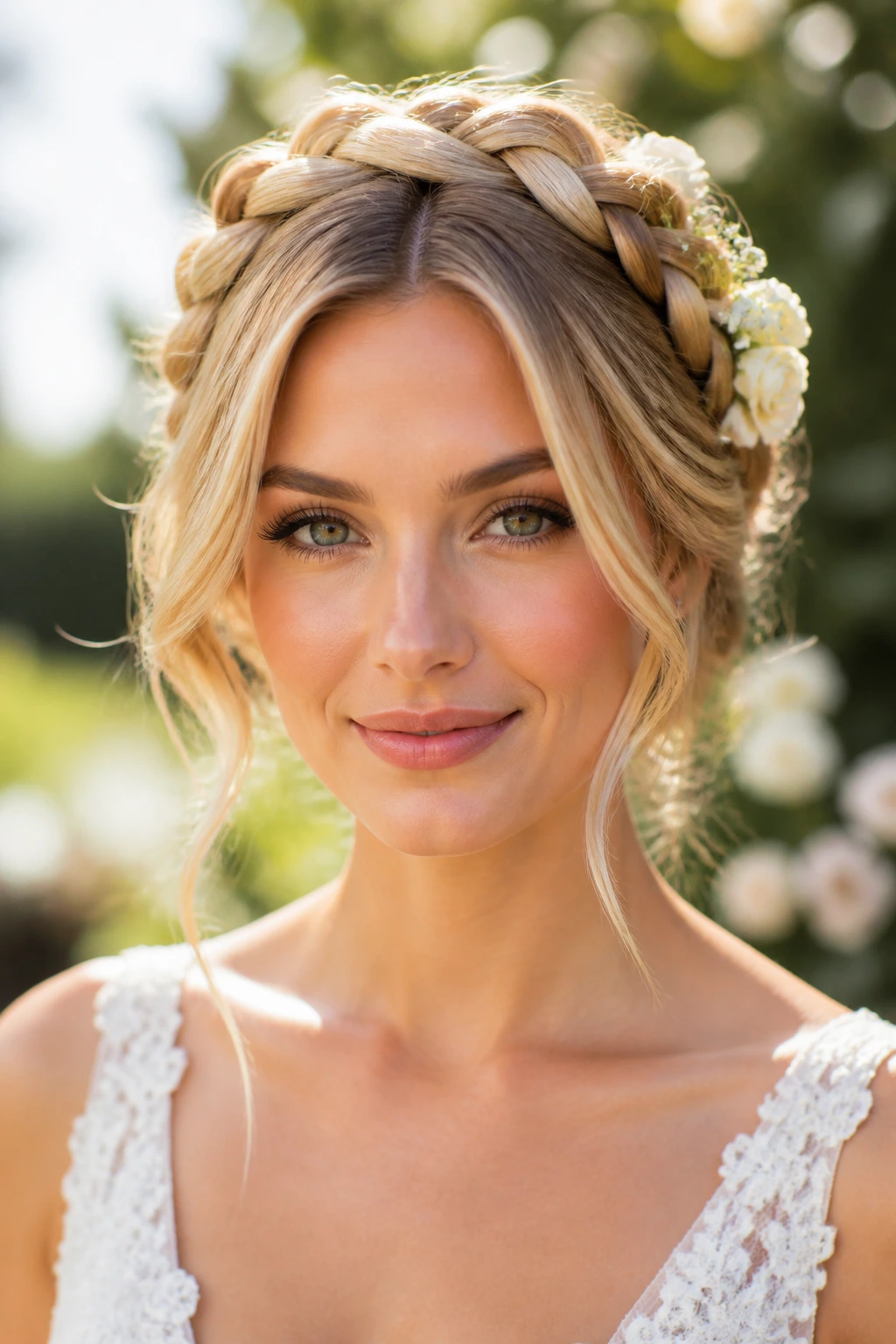
A milkmaid braid wraps braids over the head in a way that feels a little rustic, a little romantic, and very secure. It’s fuller than it looks when it’s first braided because the sections are often pancaked outward to create width. That width is what keeps the style from looking too small against a wedding dress.
This one suits outdoor settings, lace sleeves, and brides who want the hair off the neck without making it severe. It also behaves well with fresh flowers tucked near the braid seam, though you should keep the placement light. Too many flowers and the braid disappears under the decoration.
32. Satin-Ribbon Braid Ponytail
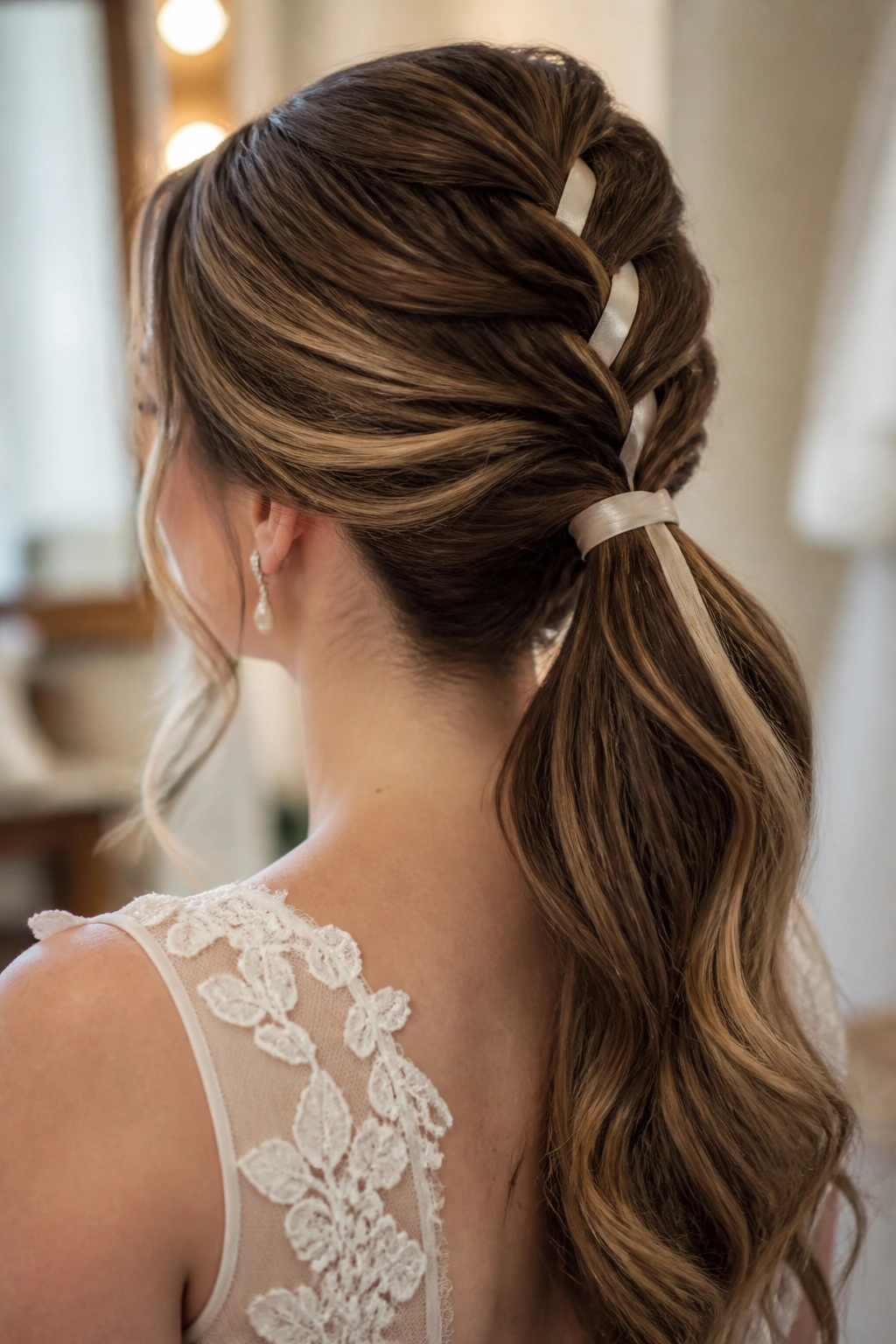
A satin-ribbon braid ponytail is an easy way to make a braid feel personal. The ribbon can run through the braid, wrap around the elastic, or trail from the base in a color that echoes the bouquet or shoes. That tiny detail can do more than a heavy accessory ever would.
This style works best when the braid itself is neat and the ribbon is narrow enough to stay elegant. Wide ribbon can take over fast. If the dress is already busy, keep the ribbon in a soft neutral. If the dress is simple, the ribbon can carry a little more color or sheen. Small choices matter here.
33. Messy Low Knot with Tendrils
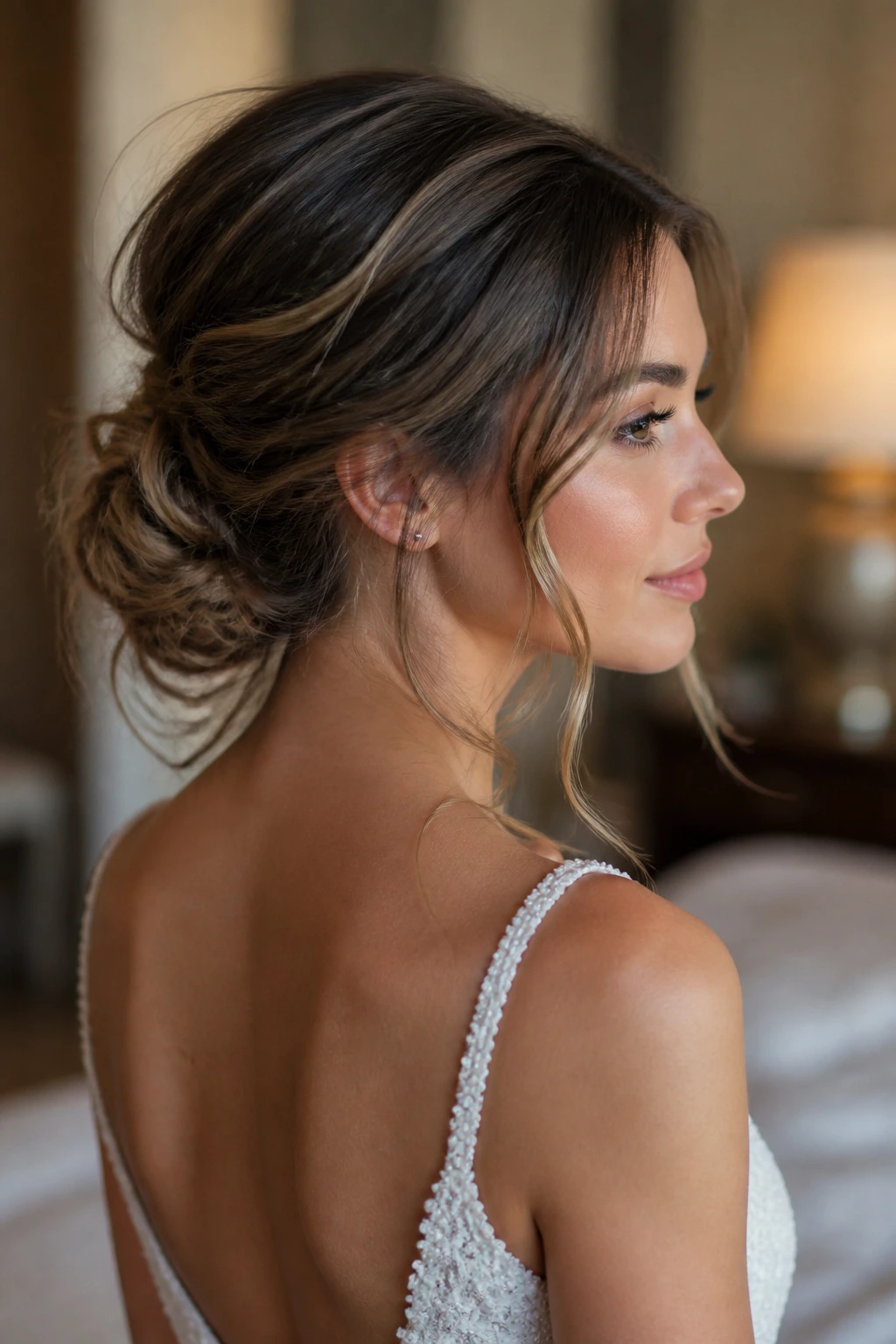
A messy low knot with tendrils is what happens when a soft updo gets a little more movement and a little less precision. The knot sits low, the hair around it is gently loosened, and a few front pieces fall forward to frame the face. The shape should still be held together underneath, though. Soft does not mean flimsy.
I’d pick this for brides who want romance without looking overbuilt. It works with flowing fabrics, looser bouquets, and dresses that already have a relaxed line. If the tendrils are too uniform, the style can look staged. Let them bend naturally and the whole thing feels calmer.
34. Sleek High Ponytail with Veil
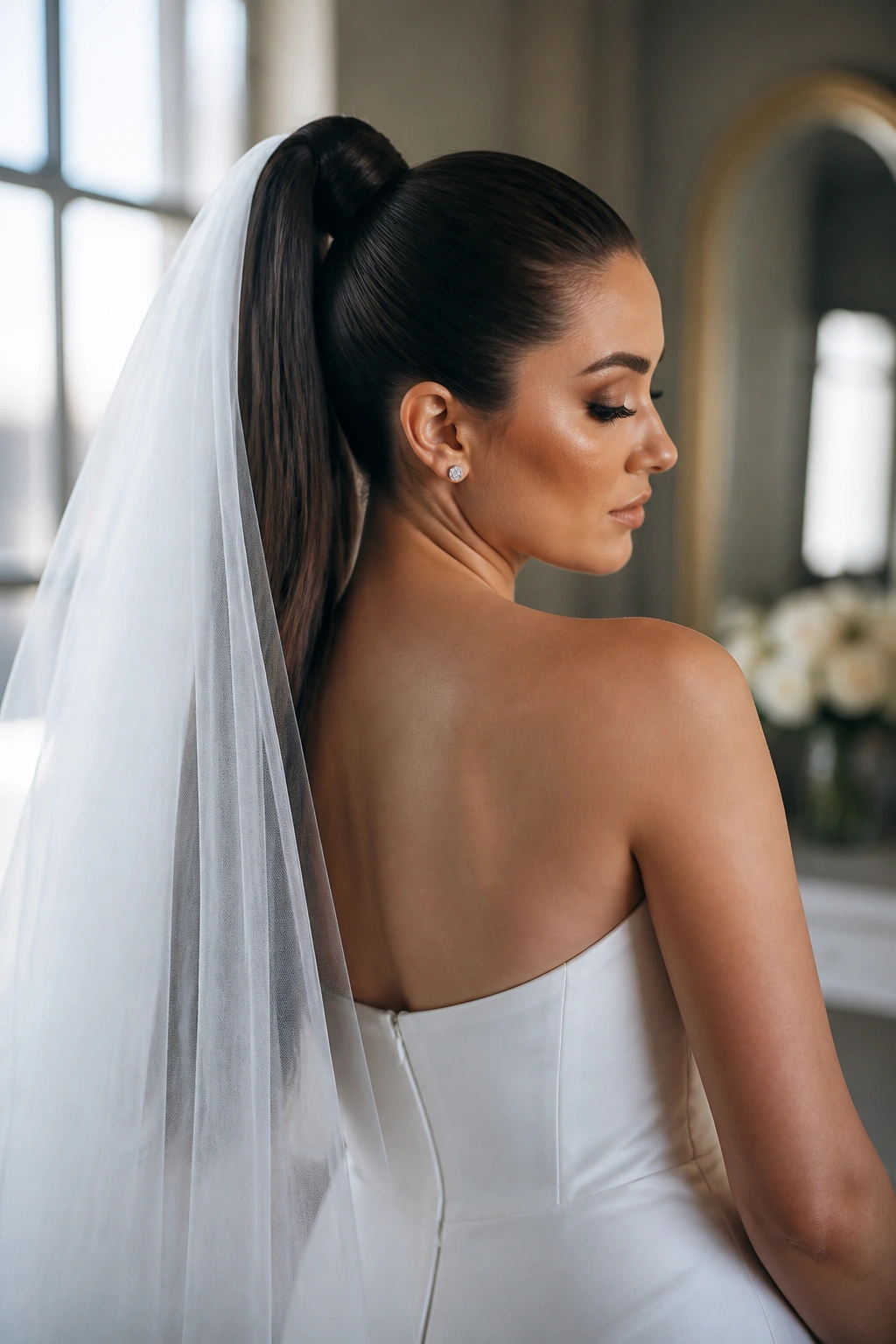
A sleek high ponytail is bold in a way bridal hair often isn’t, which is exactly why it stands out. The crown is smoothed upward, the ponytail sits high and clean, and the whole look has a lifted, almost editorial shape. With the right styling, it can look sharp instead of sporty.
This is for the bride who wants movement, height, and a little edge. It works especially well when the gown is minimal and the veil is light enough not to fight the base. The ponytail can be wrapped, waved, or left straight depending on the mood. If the root area is even slightly fuzzy, though, the whole effect weakens. That part has to be disciplined.
35. Sculpted Curl Set with Side Sweep
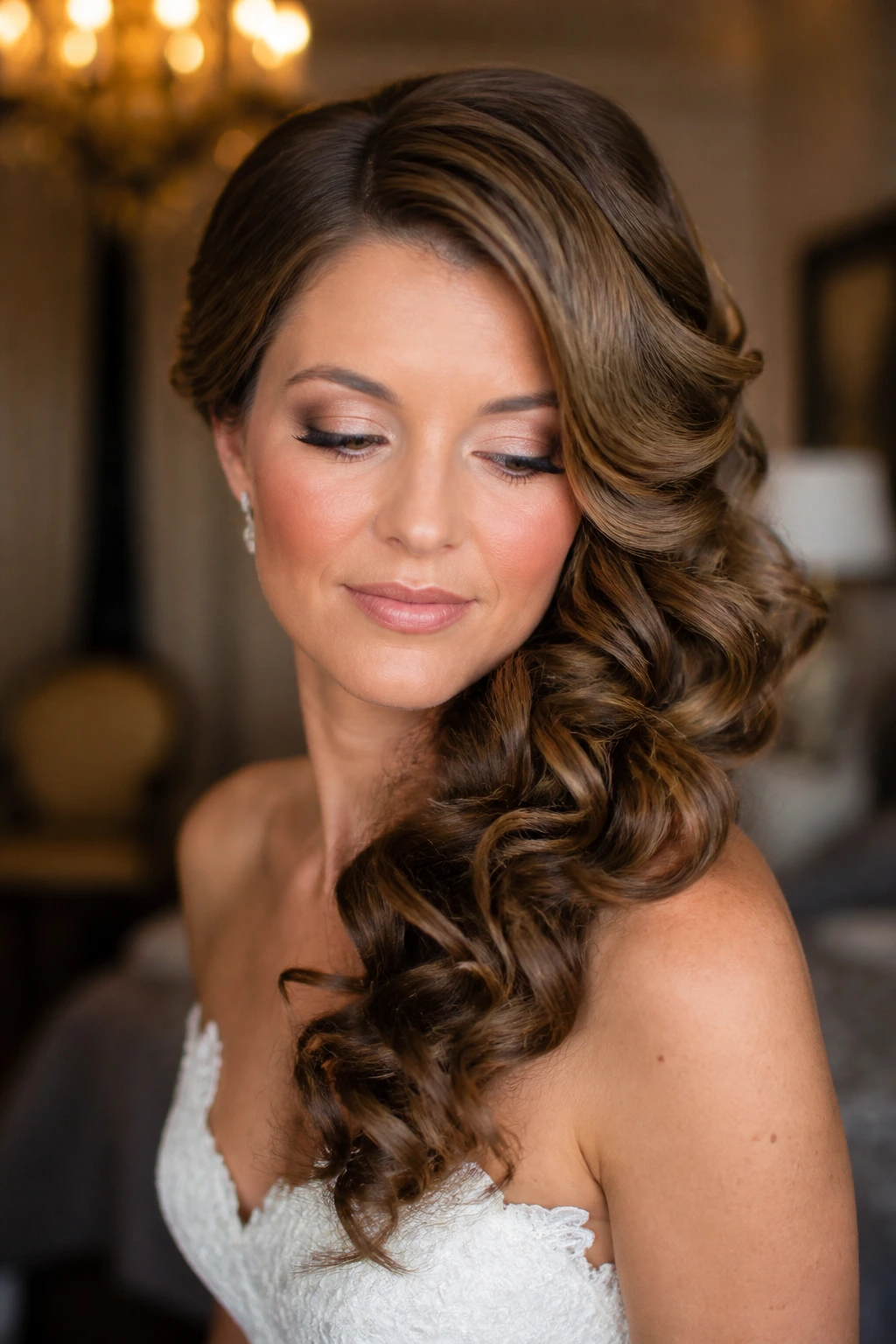
A sculpted curl set with a side sweep gives you formal shape without flattening the hair into submission. The curls are set first, usually with rollers or an iron, then brushed and pinned into a sweeping curve that moves across the head. The finish feels polished, but still alive.
This is a strong choice for brides who want a more dramatic, evening-ready look. It also holds shape well in photos because the curl structure gives the style depth from every angle. If you’re planning a very full dress or dramatic jewelry, this style can keep up. It has enough presence to sit next to the gown instead of disappearing under it.
Why Bridal Hair Needs a Different Hold Pattern
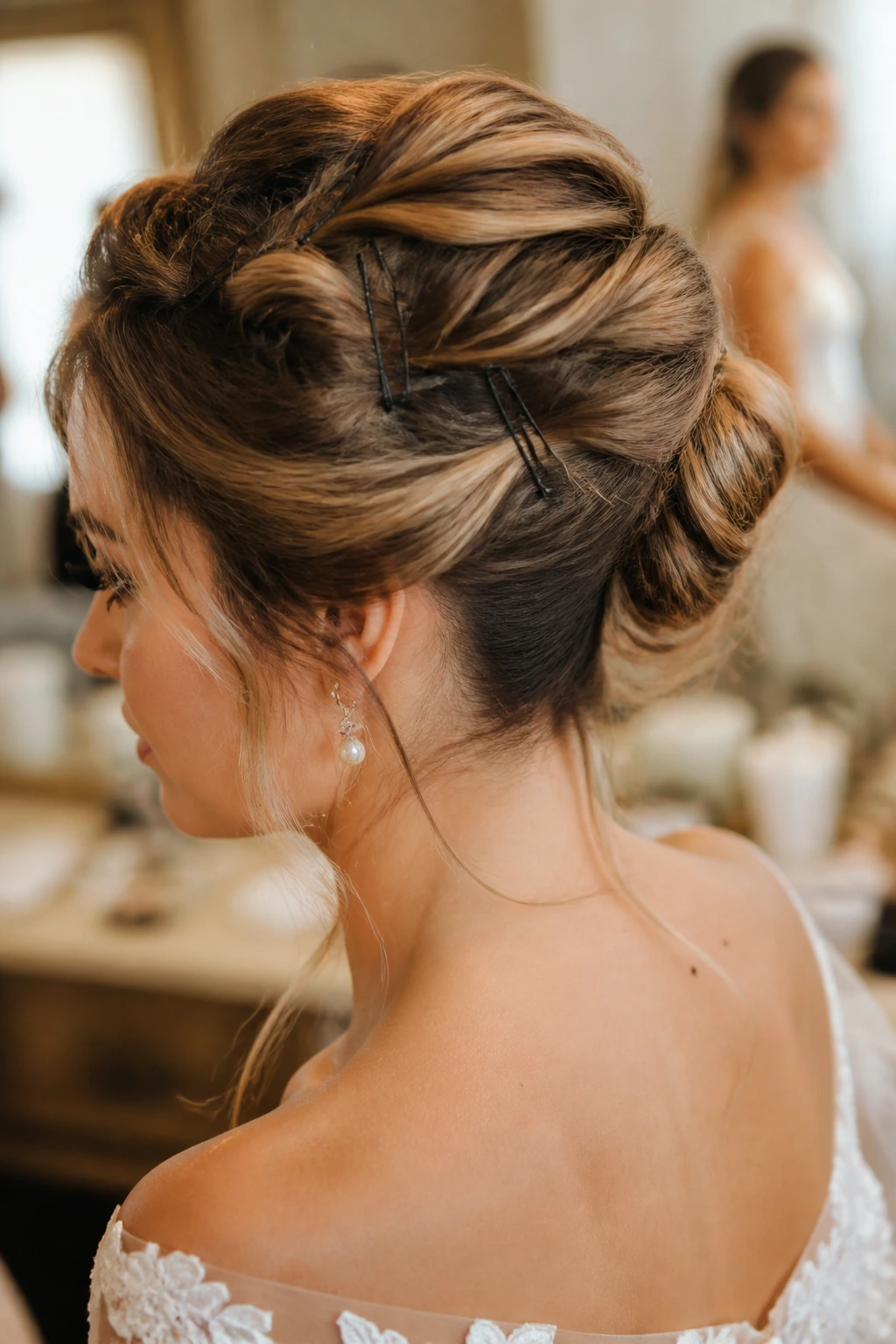
Bridal hair behaves better when it’s built in layers, not just sprayed at the end and hoped for. The hold starts before the iron ever touches the hair. Clean enough to shape, dirty enough to grip — that’s the balance many stylists aim for, which is why day-old hair or gently prepped hair often holds pins better than freshly washed, slippery strands.
The weight of accessories changes the math too. A veil comb, a cluster of pearl pins, or a floral piece can pull on a style in small ways that turn into big problems by the time photos are done. If the base is weak, the whole structure starts shifting. That’s why a low bun or a properly anchored ponytail often outlasts a loose style that looked prettier in the chair.
Humidity, movement, and heat all have opinions. So does your own hair type. Fine hair collapses when it’s over-smoothed. Coarse hair fights too much polishing. Curly hair can look glorious if it’s set with its own texture in mind, and frankly, that usually beats forcing it straight. The best bridal styles are the ones that work with the hair’s habits instead of arguing with them.
Essential Tools for Bridal Styling
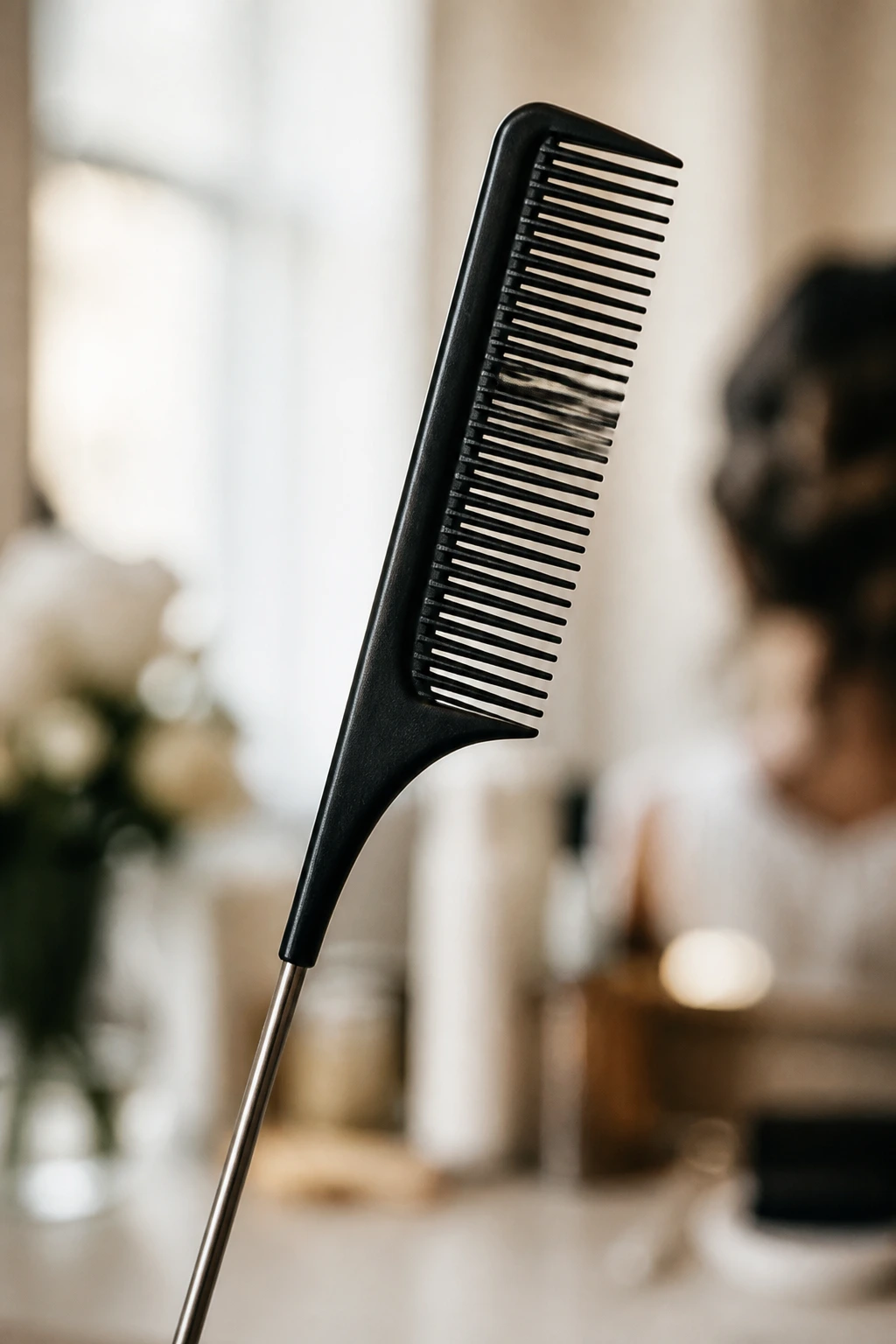
- Tail comb: Use this for crisp parts, clean sectioning, and smoothing the crown before pins go in.
- Sectioning clips: They keep curls, twists, and braid sections from getting mixed together while the style is being built.
- Bobby pins in two shades: Match them to both blonde and brunette hair, because the wrong color stands out under flash.
- U-pins: These are useful for buns and twists where you want support without a lot of visible hardware.
- Teasing brush: A small amount of root lift makes many bridal styles last longer than a smooth surface does.
- Boar bristle brush: Good for polishing the top layer before shaping a bun or ponytail.
- 1-inch and 1.25-inch curling iron or wand: These cover most wave patterns without making the curls too tight for bridal hair.
- Flat iron: Useful for sleek buns, smooth ponytails, and soft bends at the ends.
- Texturizing spray or dry shampoo: These give clean hair enough grit to hold shape and pins.
- Flexible-hold hairspray: Best for keeping movement in waves and half-up styles without turning hair into a shell.
- Strong-hold hairspray: Reserve this for buns, twists, and styles that need serious staying power.
- Heat protectant: Non-negotiable if you’re setting curls or smoothing the hair with hot tools.
- Veil comb: If you’re wearing a veil, this piece needs to be planned with the hairstyle, not added as an afterthought.
- Hair net or bun pad: Optional, but useful for building shape in thinner hair or supporting a large bun.
- Clip-in extensions: A smart add-on for brides who want more fullness in waves, braids, or ponytails.
Smart Shopping for Pins, Products, and Hairpieces
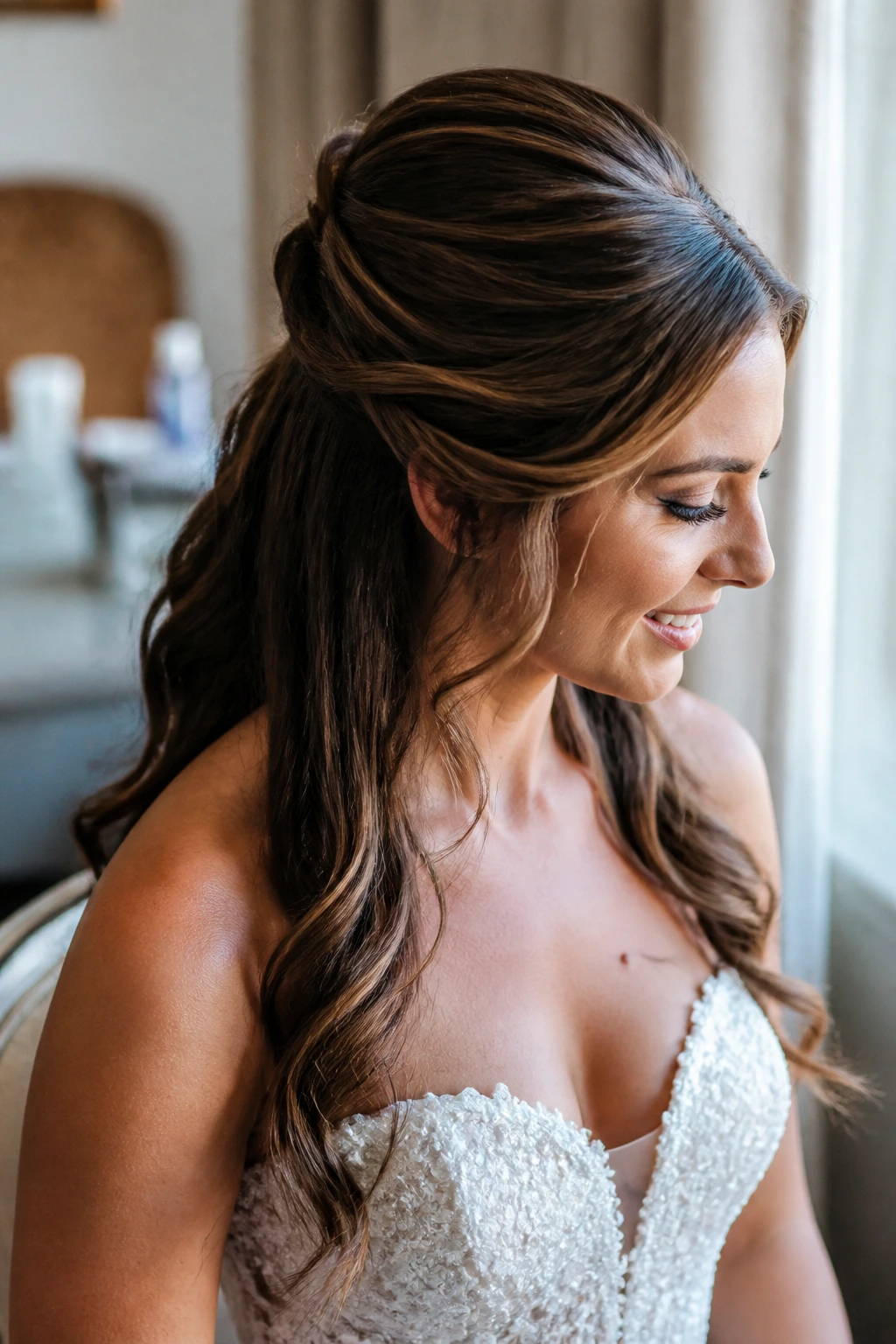
The best bridal hair shopping starts with a simple question: what does your hair need to hold the style you want? Fine hair usually needs lightweight mousse, texturizing spray, and pins with a firm grip. Thick or coarse hair often needs smoothing cream, strong elastics, and a denser set of pins so the style doesn’t pry itself loose by mid-afternoon. Buying the prettiest spray on the shelf is not the move if it doesn’t solve the actual problem.
Hairpieces deserve the same practical eye. Clip-in extensions should match the ends of your natural hair first, because that’s where blending breaks down. If you’re buying pearls, combs, or floral pieces, check the weight. A lovely accessory that pulls on the crown is a liability, not a luxury. And for pins, go for enough quantity. Brides tend to underestimate how many pins a style takes when it’s being built cleanly.
Veils are worth trying on with the hairstyle plan, not separately. A cathedral veil needs a more secure base than a short veil, and a heavy comb needs a spot with real structure underneath it. If you’re shopping for one big accessory, like a jeweled comb or a headpiece, let the hair answer it instead of fighting it. That usually means choosing one main focal point and letting the rest stay quiet.
How to Wear These Looks with a Dress, Veil, and Jewelry
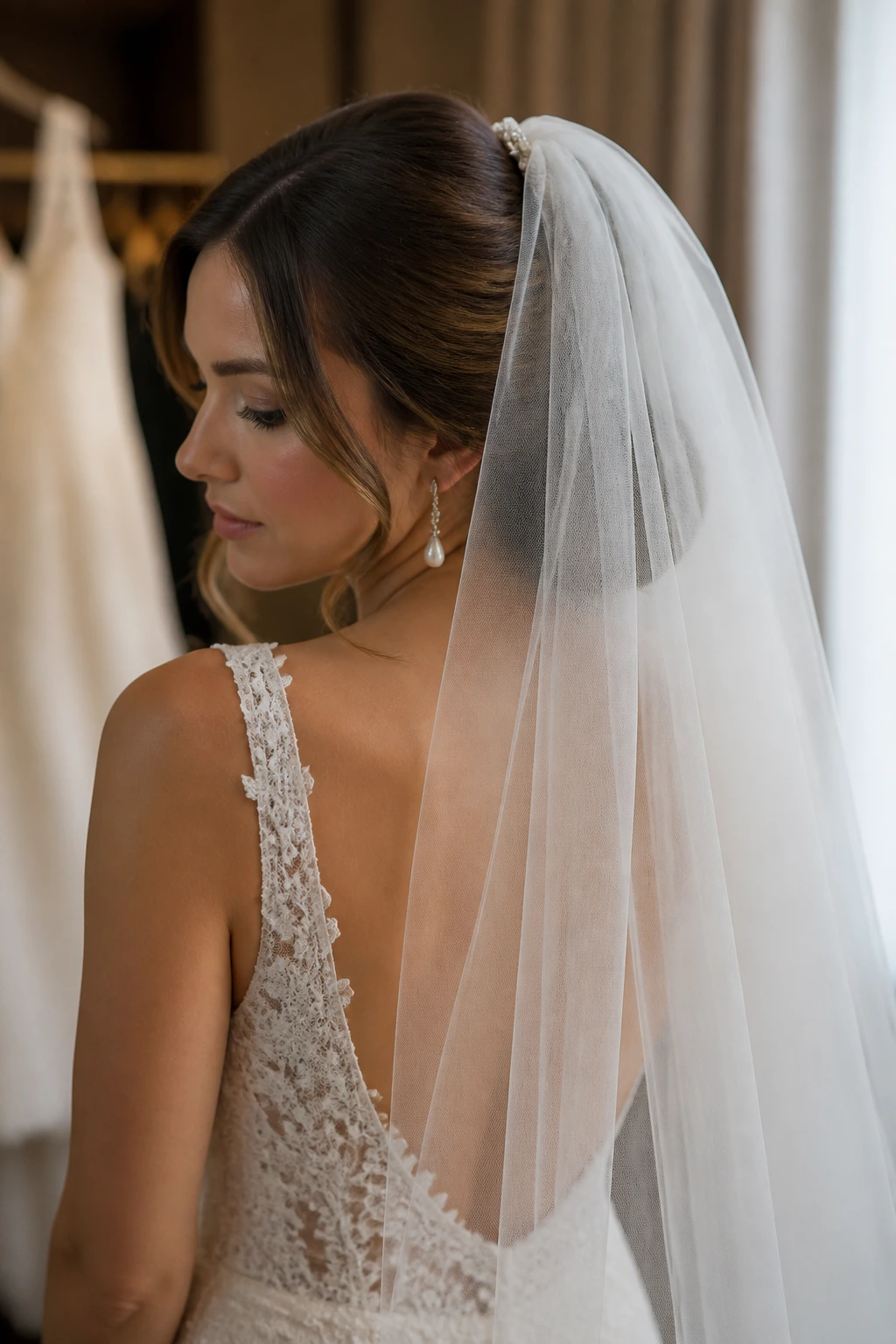
Presentation: A low style keeps the line of the dress open, especially if the bodice has beading, lace, or a high neckline. A down style does the opposite; it softens a simple gown and brings movement near the shoulders. If the dress already has a lot going on, the hair should give it space.
Accessories: Veils need a firm anchor, and combs need a base that won’t slide. Low buns, low ponytails, and twist styles usually give the best support. Earrings matter too — if they’re large, choose a style that clears the jawline. If they’re tiny, the hair can carry a little more detail.
Fit: Short hair, fine hair, and curly hair each behave differently under pins and spray, so the best style is the one that respects that reality. A polished pixie can look more formal than a forced updo, and natural texture often looks richer when it isn’t overworked. Match the shape to the hair you actually have.
Timing: Get dressed after the style is set and cooled, especially if there’s a veil or headpiece involved. Hair should be the last thing that gets touched before photos, not the first thing that gets hidden under a tight top or a rushed necklace clasp.
Additional Tips and Finishing Touches
Grip: If hair is too clean, mist the roots with dry shampoo or texturizing spray before styling. That tiny bit of roughness gives pins something to bite into, which matters more than most brides expect. Smooth hair is lovely. Slippery hair is a problem.
Finish: Use shine spray or a drop of serum only on the mid-lengths and ends, not the roots. Root shine can flatten volume fast, and the crown usually needs lift more than gloss. A little sheen near the ends is enough to keep the hair from looking dry under flash.
Comfort: Pull the hair back just enough to stay secure, then stop. Styles that are cinched too tight tend to give headaches, and headaches make people hate their hair by cocktail hour. A good bridal style should feel firm, not tense.
Weather plan: Pack a few extra pins, a small spray, and a spare comb or clip in the bridal kit. Outdoor ceremonies, warm rooms, and long photo sessions are all better handled when the emergency fix is already on hand. Nobody wants to borrow a bobby pin from the florist.
Common Bridal Hair Mistakes and How to Avoid Them
- Washing the hair too clean on the morning of the wedding: Freshly washed hair can be slippery and hard to pin, especially if it’s fine or silky. The fix is simple: wash earlier if your stylist prefers grip, then use the right amount of texture spray.
- Choosing a style that fights the dress: A full, loose wave under a high neckline can crowd the face, while a severe bun under a soft, romantic gown can feel cold. Match the hair shape to the gown’s line so the whole look reads together.
- Skipping a veil or accessory trial: A comb that seems fine on its own can pull badly once it’s attached to the finished style. Test the complete look, not separate pieces, and check how it feels after ten minutes of wear.
- Pinning only the visible parts: Styles often fail from underneath because the hidden support wasn’t built well. The outside can look perfect while the base shifts. Use more pins than feels necessary at first, then refine the surface.
- Overloading the hair with extras: Pearls, flowers, clips, and a big veil can fight each other. Pick one or two focal points and let the style breathe.
- Changing the haircut too close to the date: A fresh fringe, major color correction, or dramatic layers can change how the style sits. If you want to trim or color, leave enough time to live with it first.
Variations and Adaptations to Try
Fine-Hair Save: If the hair is thin, start with a root-lifting mousse and build styles that rely on padding, teasing, or compact shapes. A low bun, a tucked chignon, or soft waves with clip-ins usually give better results than a very loose braid that can disappear by noon.
Curly-Hair First: For curly brides, the best version often starts by defining the curl pattern instead of flattening it. Half-up crowns, natural puffs, twist backs, and sculpted updos let the texture stay visible while still giving the front a cleaner shape.
Short-Hair Solution: A pixie, bob, or shoulder-length cut can look formal with the right pins, clips, or veil placement. The style may be smaller, but it can be sharper because every line shows. Don’t force length you don’t have. Work the cut.
Veil-Free Statement: If there’s no veil, the hair can take a bolder accessory path. Think jeweled clips, pearl pins, ribbon, or a stronger part line. Without the veil, the hairstyle gets more room to speak.
Humidity Armor: For warm weather or outdoor spaces, choose styles with lower centers of gravity. A bun, braid, or secured ponytail will usually outlast loose curls, and a strong-hold spray used in light layers is better than one heavy blast that turns sticky.
Keeping the Style in Shape Before and After the Wedding
The prep schedule matters more than most people admit. A trial a few weeks ahead gives you time to see how the hairstyle behaves with your actual veil, earrings, and neckline. If the trial shows the crown collapsing or the front pieces falling into your face, that’s useful information, not a failure. Better to learn it when no one is waiting downstairs.
On wash day, think about texture rather than cleanliness for its own sake. Fine hair often behaves better one day after washing, because the roots have a little friction. Coarser or curlier hair may do better with more moisture left in it, then a product layer to shape and control it. If clip-ins are part of the plan, store them flat in a dry place and style them together with your natural hair so the wave pattern matches.
The accessories need a home too. Keep pins, combs, spare elastics, and touch-up spray in a labeled pouch so they do not vanish during the dressing rush. After the event, remove pins carefully, slide the veil comb out without yanking, and give any hairpieces time to air out before storing them. If you used fresh flowers, take those out first. Otherwise the whole bag starts to smell like a forgotten bouquet.
Bridal Hair Questions People Ask All the Time
Should I wear my hair up or down for a wedding?
The better question is what your dress and veil need. Up styles usually give better support for heavy accessories and cleaner lines around the neck, while down styles soften the look and can feel more like “you” if you wear your hair down every day.
How far ahead should I do a hair trial?
A few weeks before the wedding is usually enough time to make changes without panic. You want the trial close enough that your hair length and color still match the day, but far enough ahead that you can adjust if the first version feels too tight, too flat, or too fussy.
Can fine hair really hold a bridal style?
Yes, but it usually needs more help than thick hair. Think texture spray, strategic teasing, smaller sections, and pins that grip well. Fine hair often does best in compact shapes like low buns, French twists, and sleek ponytails rather than loose structures that can sag.
What if my hair is very curly or coily?
Work with the texture instead of trying to erase it. Natural puffs, pinned curls, twist crowns, and loc updos can look cleaner and last longer than styles that force the hair into a shape it doesn’t want to hold.
Do I need extensions for bridal hair?
Not always. Extensions help when you want more length, more fullness, or a braid that needs extra body to show clearly. If your own hair already gives the shape you want, skip them and keep the style lighter.
What should I do if the style starts falling apart after photos?
That’s why you keep a small kit nearby. A few extra pins, a travel spray, and one person who knows where the veil is attached can fix most problems in under five minutes. The trick is not to rebuild the whole style — just re-anchor the loose part.
Can I wear a veil with a ponytail?
Yes, and it can look clean and modern when the ponytail is low or neatly wrapped. The veil comb needs a firm base above the elastic, and the ponytail should be smooth enough that the veil sits flat instead of bouncing around.
What if I want to keep my hair mostly natural?
Then choose a style that shapes rather than changes the texture. A twist-back, a pinned side, a soft puff, or a braid accent can feel special without making the hair look like someone else’s version of it.
A Style That Holds Its Shape
The strongest bridal hairstyles are not the loudest ones. They’re the ones that survive the middle of the day, when the room is warm, the dress is heavier than it looked on the hanger, and every pin has to earn its place. That is why a low chignon, a sculpted wave, a braid-based style, or a clean ponytail can feel more luxurious than anything overcomplicated.
Pick the shape that matches the dress, the hair you actually have, and the kind of movement you want on the day. A good bridal style should feel like it belongs there from the first photo to the last dance, and if you choose well, it will.
