



Graduation hairstyles for short hair have a reputation for being tricky only because people keep treating short lengths like a limitation. They aren’t. A pixie, bob, or cropped curl pattern gives you cleaner lines, faster styling, and fewer places for the mortarboard to smash the shape flat. That last part matters more than most people admit.
Short hair also behaves better in photos than long hair sometimes does. The neckline shows. Earrings show. The hairline around the face can look crisp instead of buried under weight. And when the cap comes off for pictures, you do not have to spend half an hour coaxing a collapsed style back to life.
The best graduation looks for short hair usually do one of three things: they keep volume low where the cap will sit, they build interest around the face, or they use a small accessory with purpose instead of stuffing the whole head with decoration. That’s the difference between a style that survives the ceremony and one that gives up before the diploma is called.
Why These 20 Short-Hair Looks Work on Graduation Day
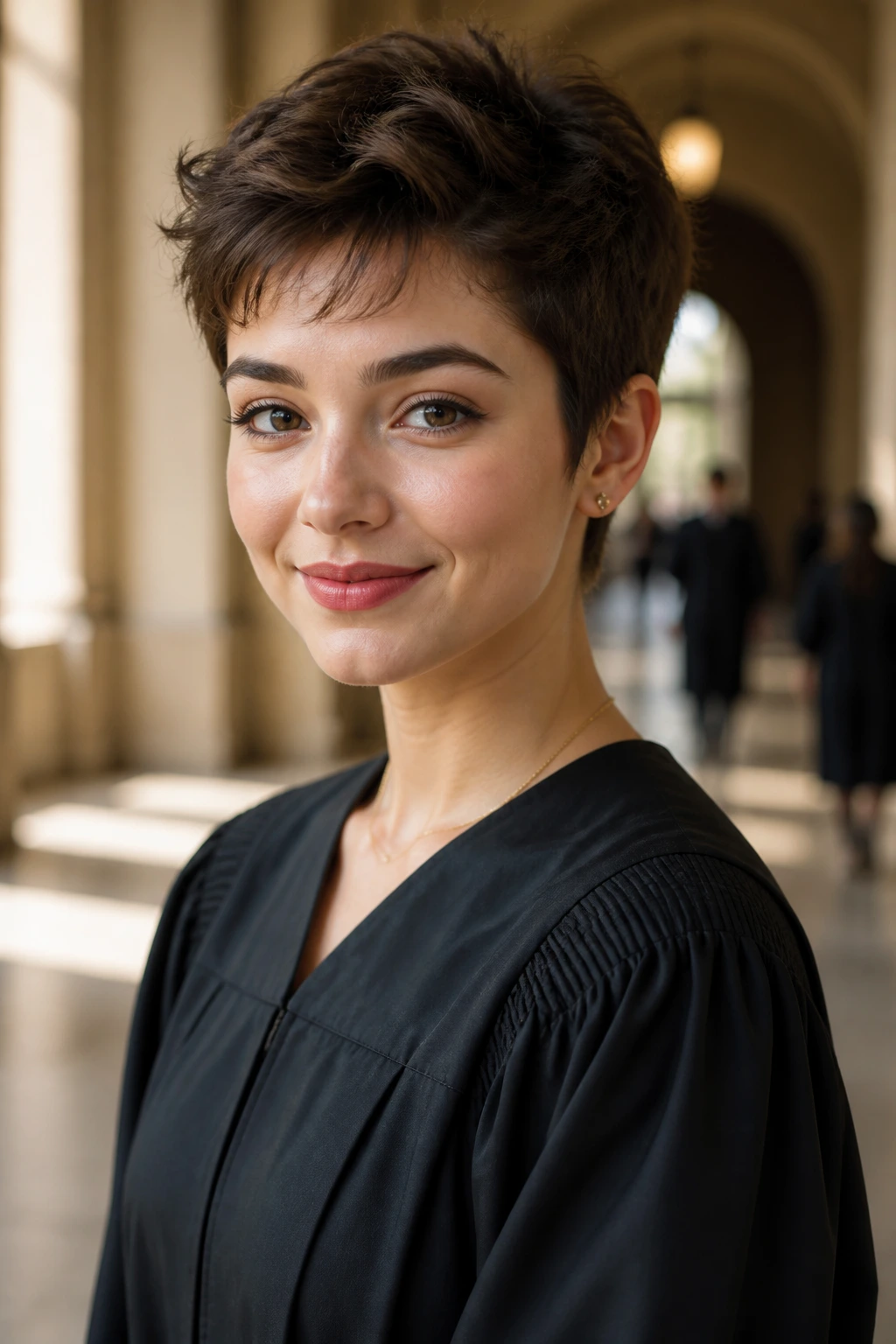
-
Cap-Friendly Shape: Short hair sits under a graduation cap without the bulky fold that long layers create, so the overall silhouette stays cleaner from the front and side.
-
Fast Ceremony Prep: Most of these styles take one hot tool, a few pins, and a can of flexible hairspray — not a full salon set-up.
-
Photo-Friendly Details: Short hair lets you control the part, the front pieces, and the ear area, which are the spots people actually notice in pictures.
-
Accessory Room: A pearl clip, slim ribbon, or single barrette can carry the whole look without fighting the gown collar or the tassel.
-
Texture Counts More Than Length: A soft wave, crisp bend, or defined curl gives short hair shape that reads well from the stage and the crowd.
-
Easy to Refresh: If humidity, hat hair, or a long wait flattens the style, short hair usually bounces back with a comb, a little mist, and two minutes of patience.
1. Sleek Side-Part Pixie
A side-part pixie is the haircut’s best argument for itself. Sharp, smooth, and a little cheeky, it gives you that polished edge without asking the cap to do anything it cannot do. The whole point is control: one clean part, one neat sweep across the forehead, and a softened side near the temple so the mortarboard doesn’t leave a ridge.
Why It Works
A pixie with a deep side part holds its shape under the cap better than a puffier style because the roots are already directed. I like a pea-size amount of smoothing cream worked into damp hair, then a blow-dry with a small brush aimed away from the part. If you want a little shine, finish with a light mist sprayed into your hands first, then pressed over the top.
The result is crisp without looking stiff. That matters. A graduation ceremony is not the time for crunchy, shellacked hair that cracks when you turn your head.
Quick Styling Notes
- Best on fine to medium hair that can flatten easily.
- Works well with stud earrings or slim hoops.
- Keep the crown low so the cap sits level.
- Tuck one side behind the ear if you want a little asymmetry in photos.
One smart move: place two crossed bobby pins under the heavier side before the final spray. They disappear, and they stop the cap from pulling the part open.
2. Soft Finger Waves
Finger waves have a formal feel without looking fussy, which is rare and useful. On short hair, they bring structure to the front and softness through the sides, so the cap has less room to crush the style into a flat sheet. If your gown is plain and the outfit needs a little polish, this is the kind of detail that does the job quietly.
What Makes Them Work
The wave pattern should start just above the temple, not right at the hairline. Too low, and the cap edge can wreck the curve. Use gel on damp hair, shape the ridges with a fine-tooth comb, then clip each bend until it dries. For short graduation hair, a little patience beats overloading the head with product.
A lot of people assume finger waves are fragile. They aren’t, once they set. They actually hold beautifully through a long ceremony because the shape is built into the hair, not painted on top of it.
Keep In Mind
- Use a strong gel, but not so much that the hair turns wet-looking all the way through.
- Dry completely before removing clips.
- Pair with a side part and a small earring, not a giant accessory.
- If your hair is very short, shape the waves only through the front third.
A final comb-through with a touch of shine spray makes the ridges read cleanly in photos. No fluff. No frizz halo.
3. Tucked-Behind-the-Ear Bob
A bob tucked behind one ear is the style people call simple right up until they see how good it looks in pictures. The exposed ear line gives the face a frame, and the tucked side creates a neat spot for a barrette, pearl pin, or small clip. It’s one of the easiest graduation hairstyles for short hair because it works with straight, wavy, or lightly curled ends.
A Clean Shape, Not a Plain One
The trick is making the tuck look deliberate. Blow-dry the bob smooth, then bend the ends under or keep them slightly straight depending on your haircut. Put a little styling cream on the tucked side so the hair lies flat instead of puffing out around the ear.
On the visible side, leave the hair softly curved toward the jaw. That keeps the style from looking too severe. A graduation cap already brings enough geometry to the table.
A small decorative pin can live right above the ear. I prefer one good pin over three crowded ones. Less clutter. Better line.
Quick Notes
- Best for chin-length and jaw-length bobs.
- Works especially well if one side of the haircut already sits longer.
- If the tucked side slips, use one hidden pin under the hair and one near the nape.
- A center part can work, but a slight side part usually feels gentler.
This is the look you pick when you want tidy, camera-ready hair that won’t argue with the cap.
4. Braided Crown for Short Layers
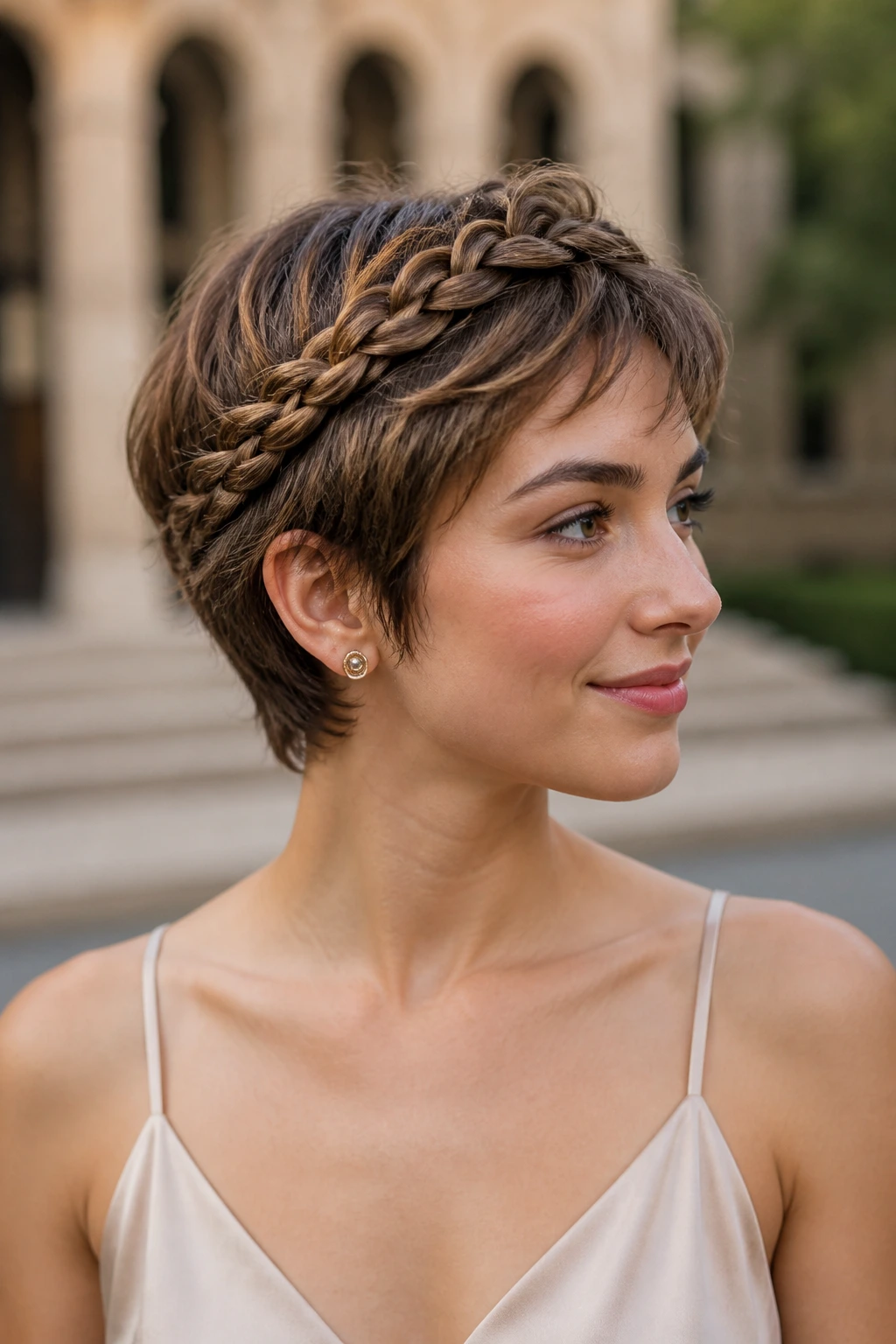
Can short hair handle a braided crown? Yes — if you stop trying to force a full princess braid out of three inches of layers. The smarter version on short hair uses two slim braids or twists that start at the temples and meet toward the back. It’s enough to give the idea of a crown without pretending the hair is longer than it is.
The Shape Matters More Than the Size
Use a little texturizing spray first. Fresh, slippery hair will not cooperate here. Then braid or twist small sections along the hairline, keeping the tension even so the pieces sit flat instead of popping loose. If the ends are too short to braid cleanly, knot the last half-inch under and pin it.
I like this style on layered bobs because it makes the haircut look intentional. Layers stop feeling like a problem and start looking like part of the design.
When to Choose It
- If you want something softer than a full updo.
- If your hair is cut in layers and keeps falling into your eyes.
- If the gown neckline is wide and you want to keep the hair close to the head.
- If you like a style that still looks good after the cap comes off.
Tiny pins matter here. Use them to hide the ends, not decorate every inch. That restraint keeps the crown from turning fussy.
5. Wet-Look Crop
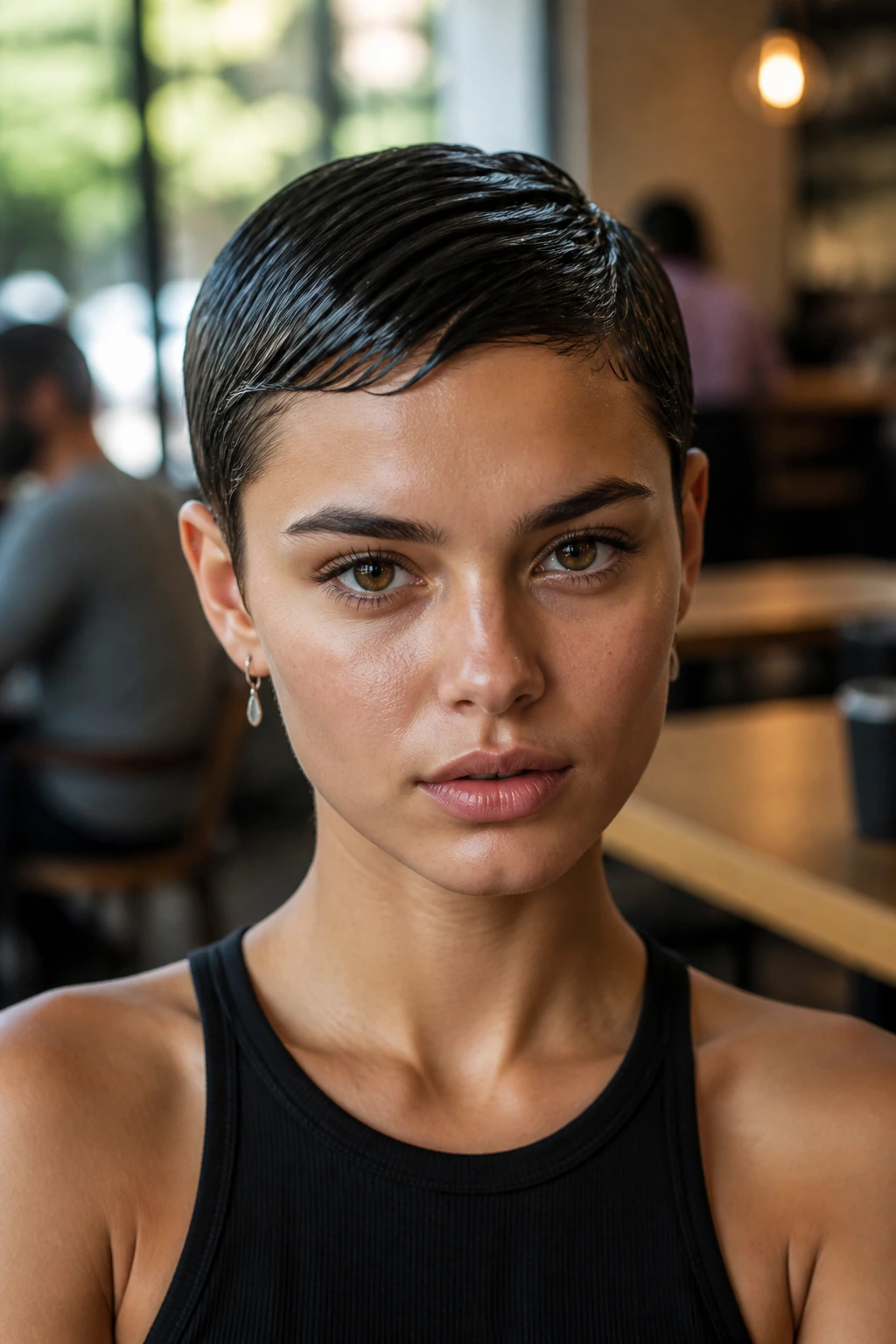
The wet-look crop is for the person who likes a sharp line and is not afraid of a little shine. Under a graduation cap, it makes a lot of sense. The style already expects compression, so the cap becomes part of the plan instead of a problem. Done right, it looks editorial, clean, and a bit daring in a room full of soft curls.
Why It’s Such a Good Cap Match
A wet-look finish keeps the hair close to the head, which means the cap sits evenly and doesn’t have much hair volume to wreck. Use gel on damp hair, comb it into place, then smooth a small amount of shine serum over the outer surface only. The ends should look slick, not greasy.
This style works best when the front is swept back or side-swept. Too much hair hanging over the forehead fights the whole idea.
Best For
- Pixies, bixies, and very short bobs.
- Straight, wavy, or relaxed hair.
- Events where you want the outfit to look crisp and modern.
- Warm or humid weather, when fluffy texture turns rebellious fast.
A small warning: do not drown the hair in oil. Wet-look does not mean oily. The shine should sit on the surface like glass, not soak through the cuticle and leave the style stringy.
6. Tousled Textured Bob
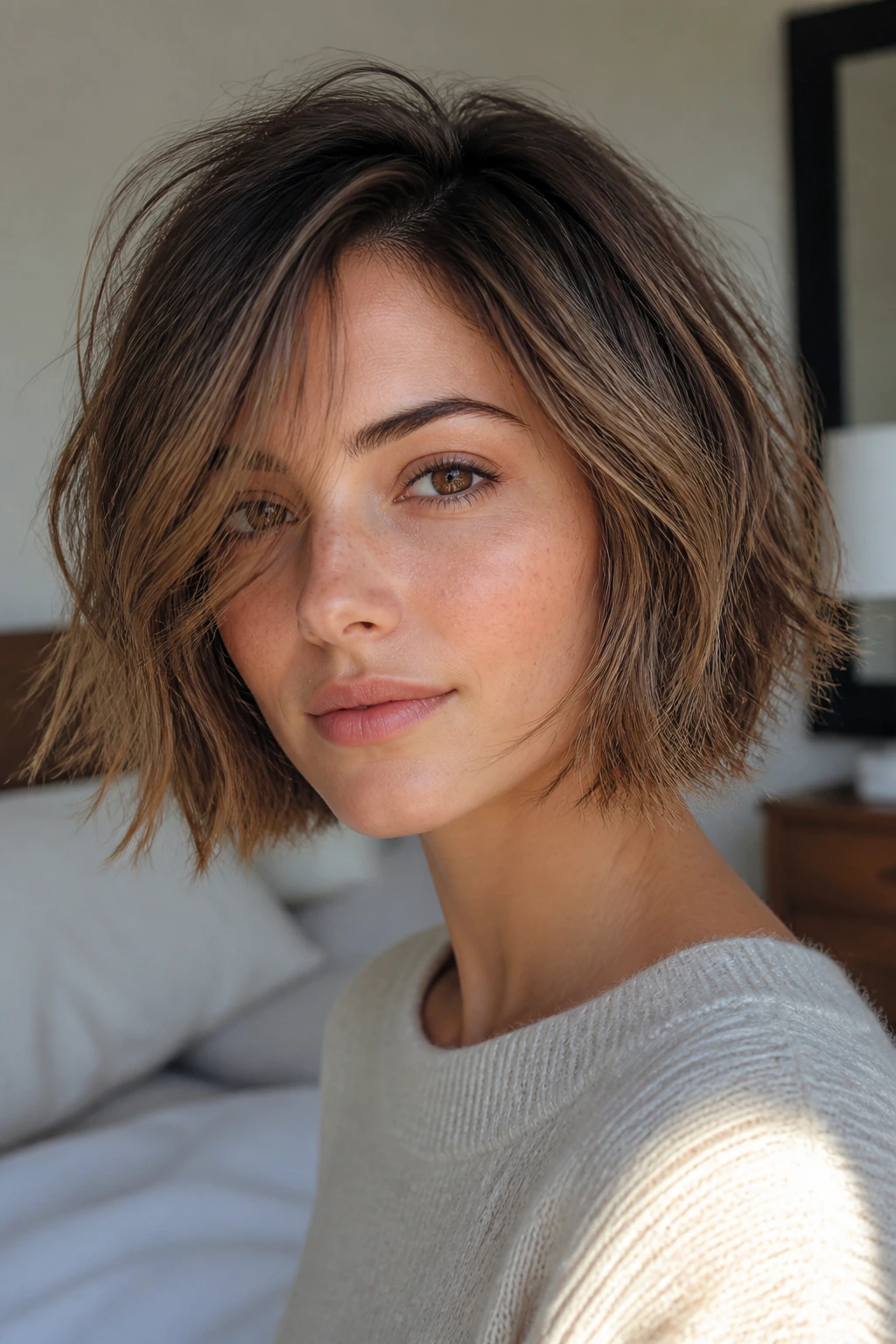
A textured bob is the one I recommend when you want movement that survives the cap. It feels relaxed, but not careless. The bends sit in different directions, the ends stay slightly piecey, and the whole thing has a lived-in shape that looks better after a few hours, not worse. That’s useful on a graduation day that starts early and runs long.
How to Get the Shape Right
Wrap random sections around a 1-inch curling iron, leaving the last inch out so the ends don’t curl into little springs. Then rake through the hair with your fingers and add a dry texturizing spray at the mid-lengths. You want separation, not fluff.
The cap will flatten the crown a little, and that’s fine. The texture should live around the cheekbones, jaw, and ends anyway. Those are the pieces people see after the ceremony.
Small Details That Help
- Keep the root area a little smoother than the ends.
- Side parts usually look better than dead-center parts when texture is the main feature.
- Use flexible hairspray, not a hard shell.
- If the bob is very blunt, bend only the front pieces and leave the back straighter.
This style photographs well because it catches light at different angles without needing volume everywhere. That’s the trick.
7. Half-Up Twist With Decorative Clip
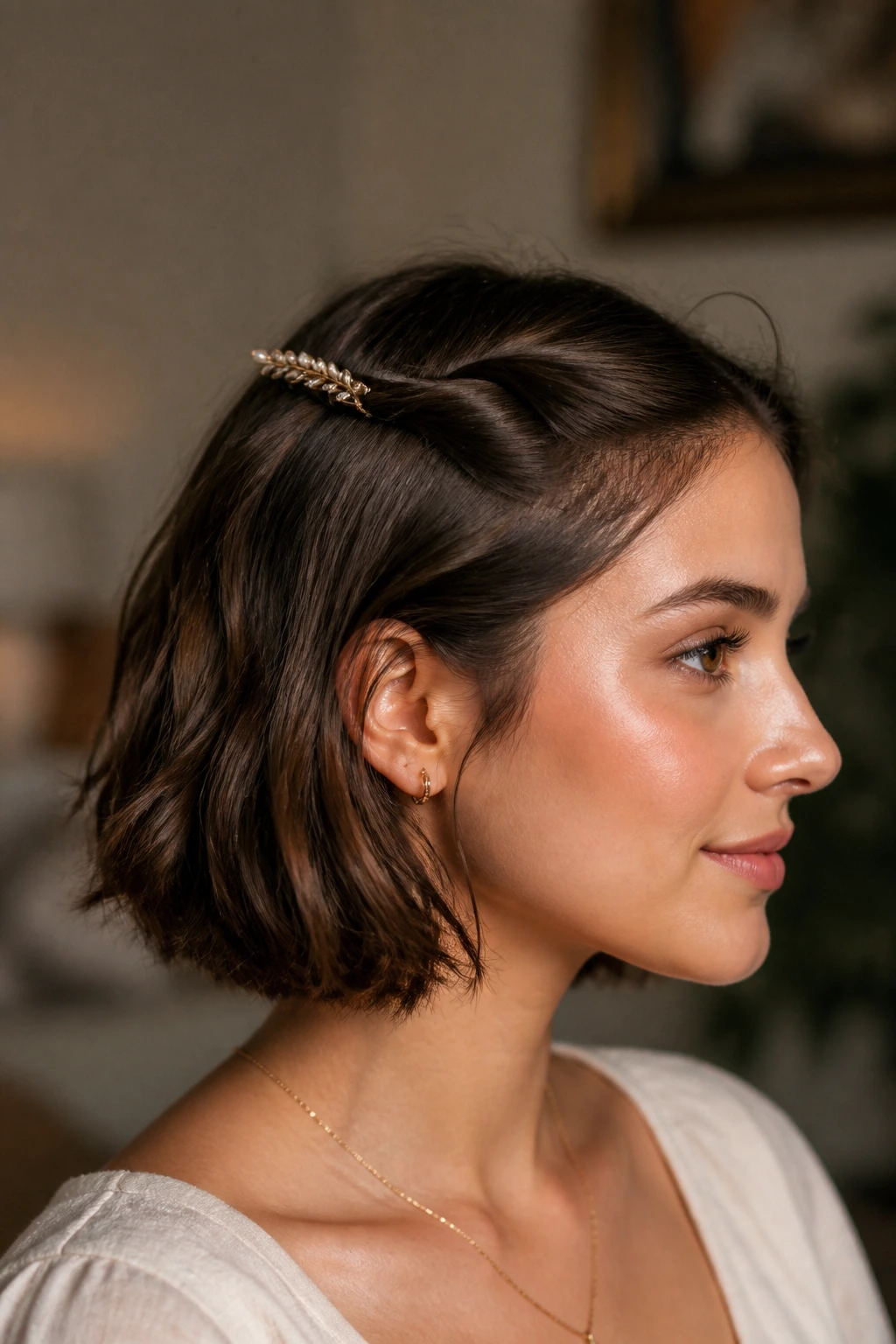
Half-up styles on short hair can be hit or miss. This one lands because the twist stays small and the decorative clip carries the visual weight. You gather just enough hair from each temple to create a tiny twist or knot at the back of the crown, then secure it with one clip that looks intentional, not oversized.
What It Solves
The style keeps hair off the face without forcing a full updo from a cut that may not want one. It also gives the cap a cleaner place to sit because the top section is controlled. If your bob or lob tends to puff around the temples, this solves that in a clean, readable way.
I prefer a clip with a flat back rather than a bulky claw. Graduations involve leaning, hugging, and a cap that sits close to the scalp; a heavy clip can get knocked loose.
Best Pairings
- Pearl or matte metal clips.
- Shoulder-skimming bobs and short lobs.
- Slightly wavy hair that needs direction.
- Dresses with a simple neckline.
A useful rule: the twist should stay low enough that the cap edge doesn’t smash it, but high enough that the face stays open. That narrow middle space is where the style works.
8. Mini Faux Hawk
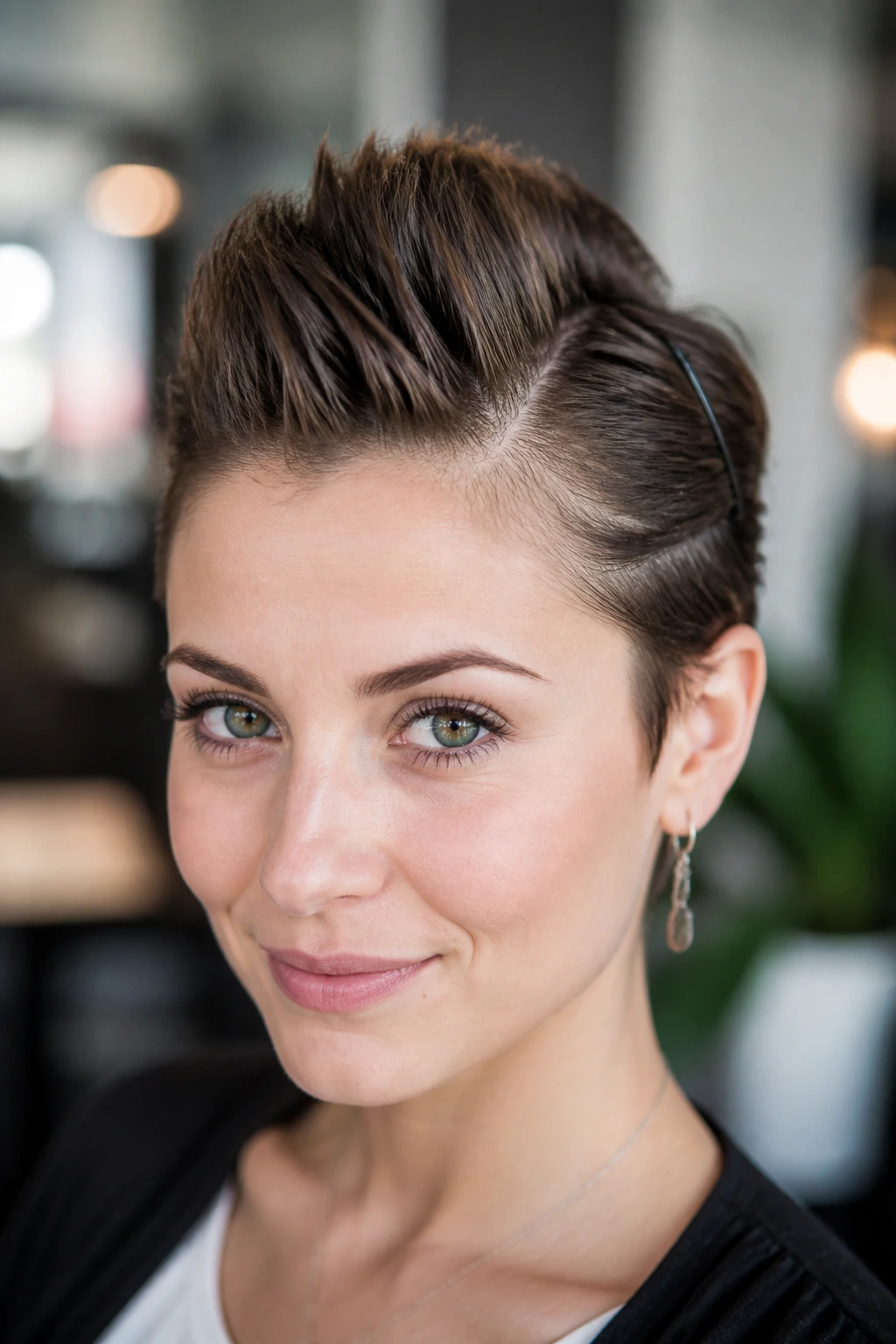
A mini faux hawk is the bold choice, and I mean that in the good way. It gives short hair a center ridge of lift with the sides slicked or pinned back, so the shape reads from across a crowd. On graduation day, that confidence can feel nice — especially if you’ve got a pixie or a crop that already has strong lines.
Why It Stays Put
The center section gets a little mousse at the roots, then a quick blast with the dryer while you lift it upward using your fingers or a vent brush. The sides stay smooth against the head and are pinned just behind the temples. That contrast is what makes the shape work.
A cap can flatten the top slightly, but because the style is built around a ridge, it still reads even after compression. It doesn’t need perfect height to look deliberate.
Good For
- Pixies, bixies, and closely cropped cuts.
- Straight hair that needs structure.
- People who don’t want a sweet, soft look.
- Earrings that can hold their own visually.
Keep the texture on top airy, not spiky. There’s a difference. A graduation faux hawk should look sleek with attitude, not like you walked in from a concert.
9. Side-Swept Curls
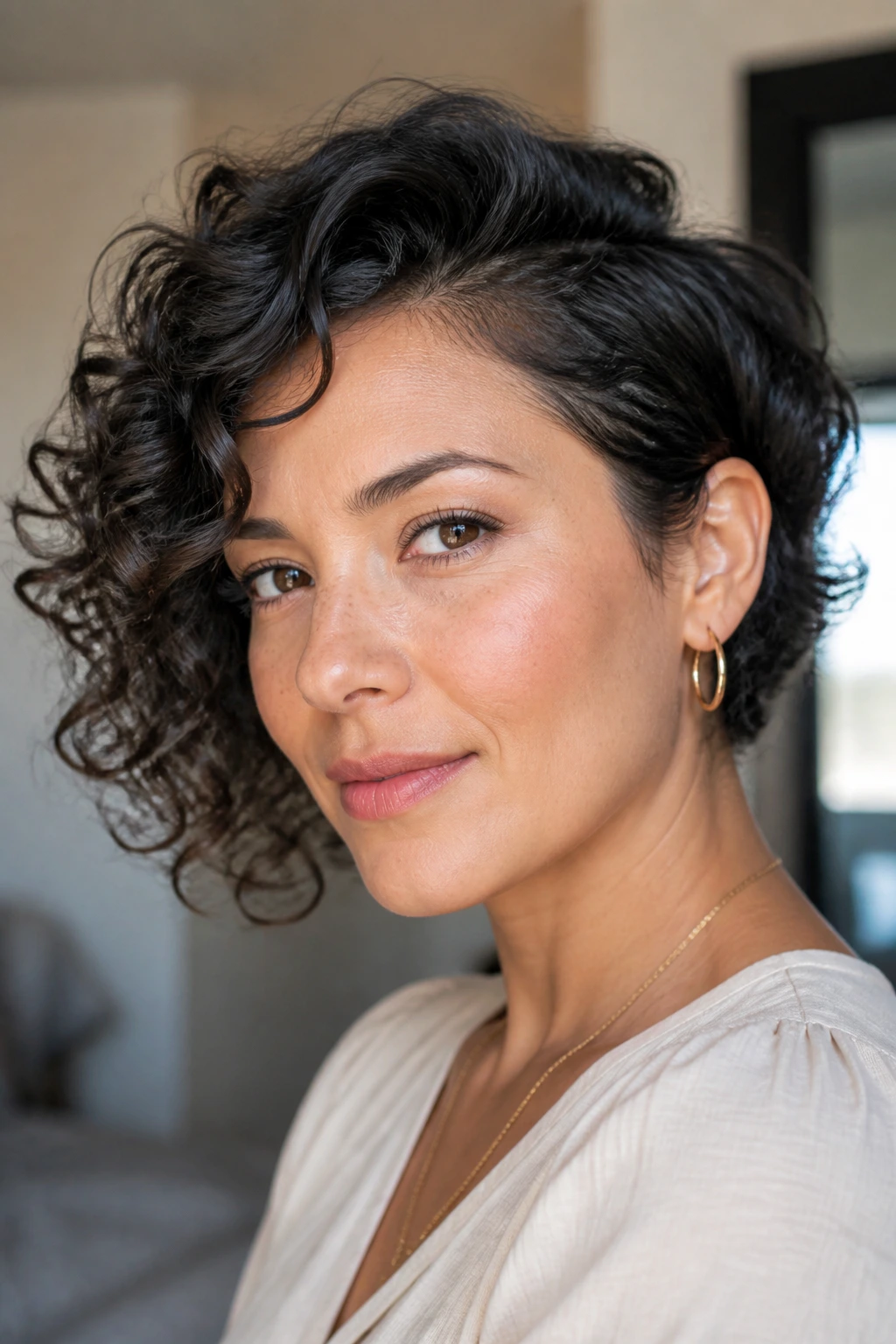
Why do side-swept curls work so well on short hair? Because they create movement without asking for length you don’t have. The sweep opens one side of the face, and the curls on the other side give shape around the jaw and cheek. Under a cap, that balance is a lifesaver.
The Best Version
Curl the front and top sections away from the face with a small barrel iron, then brush the curls out just enough to soften them. Pin the heavier side behind one ear and leave the opposite side fuller. That asymmetry gives the hairstyle a little drama without making it hard to wear.
The cap should sit on top of the smoothest part of the crown, not on the most textured area. That keeps the finished style from developing a dent right in the middle.
Little Things That Matter
- Use a heat protectant before any curling iron touches the hair.
- Let each curl cool in your hand for a few seconds before brushing it out.
- Keep the root area flat enough to support the cap.
- A small side pin can help the sweep stay put through hugs and stairs.
This is one of those graduation hairstyles for short hair that looks more complicated than it is. Good news. That’s exactly what you want on a day when your schedule is already full.
10. Pearl-Pinned Bob
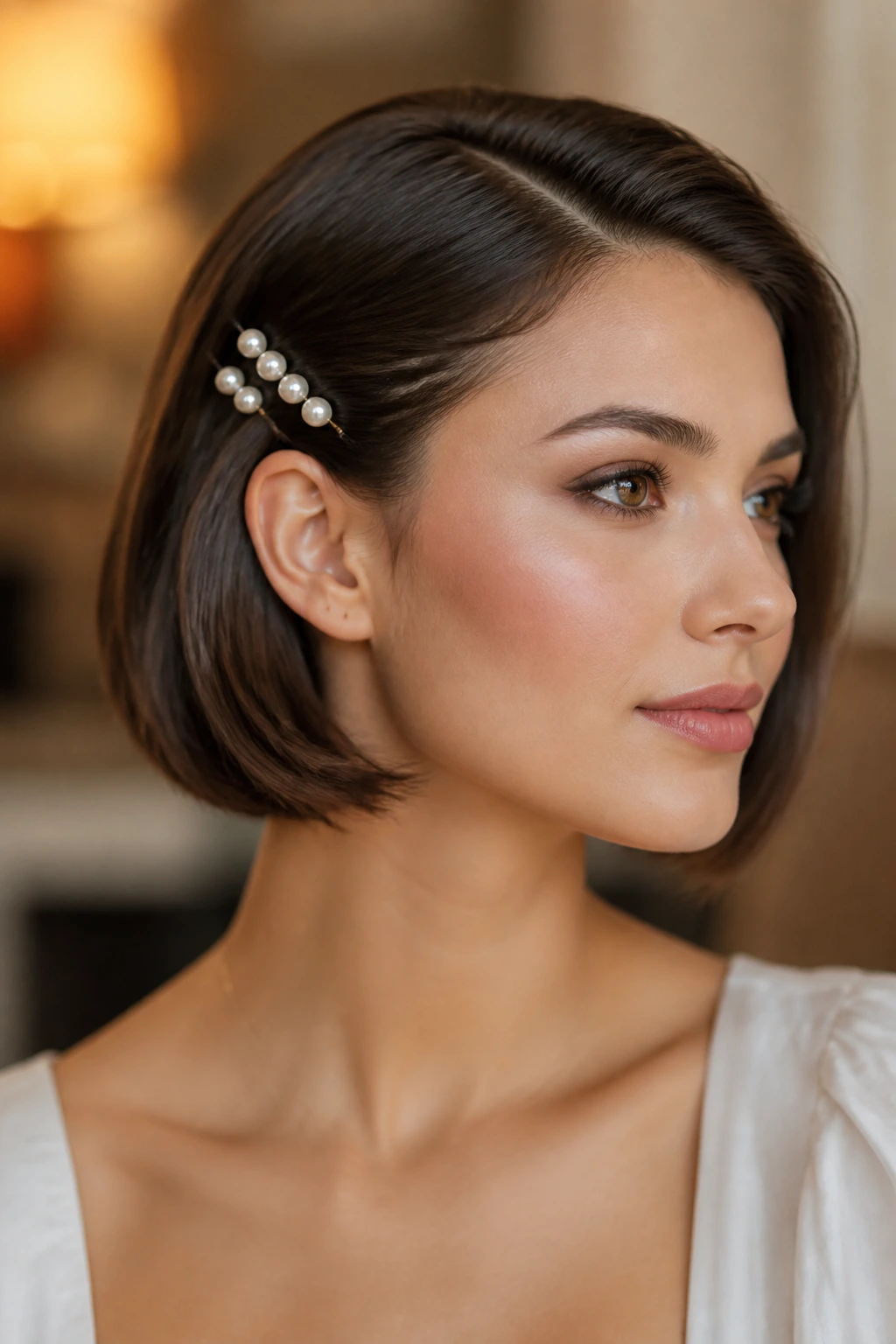
Pearl pins can look fussy fast. Used sparingly, they look sharp and expensive in the plainest possible sense of the word. A pearl-pinned bob uses just a few pins at the side part, temple, or just above the ear to give the haircut a formal edge without turning the whole head into jewelry.
Less Is Doing the Work
Start with a smooth bob or a softly waved one. Then place two or three pins where the hair naturally wants to separate. That’s the key — let the haircut guide the accessory instead of forcing the accessory to create the shape. If the bob has a deep side part, line a short row of pearls along the heavier side.
The cap should not compete with the pins. Keep the pin placement below the cap edge or slightly in front of it, where they can still be seen in photos.
A Few Practical Tips
- Choose flat-back pins that sit close to the head.
- Use matching metal tones if the pearls are small.
- Avoid clustering too many pins in one spot.
- Works best with smooth bobs, finger waves, or soft bends.
I like this style because it can look formal without looking stiff. There’s a difference, and people notice it even if they can’t name it.
11. Low Twisted Nape
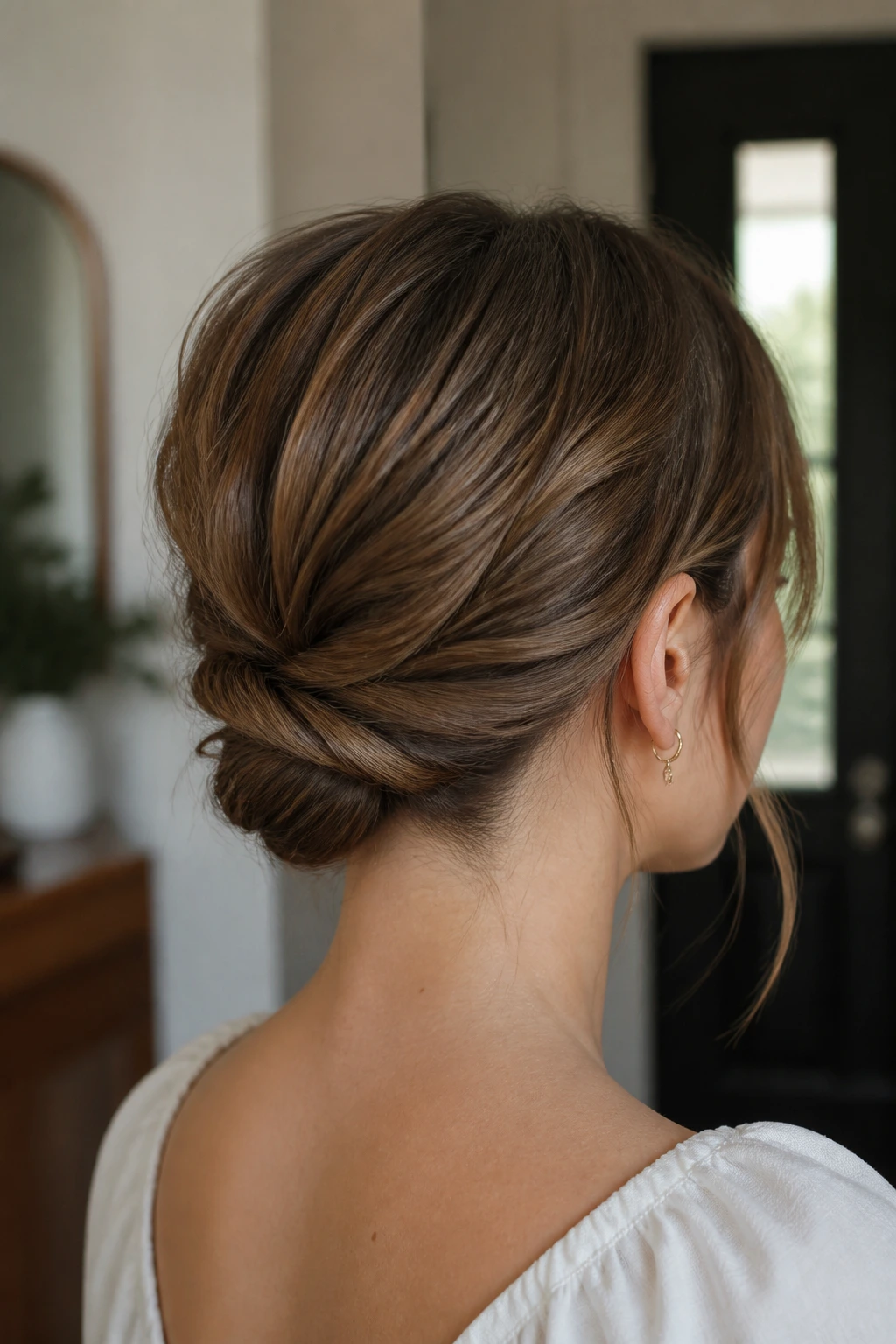
The low twisted nape is one of those styles that quietly solves several problems at once. It keeps the back neat, gives the cap a stable place to sit, and still lets the front pieces move a little around the face. If your hair reaches the nape but not much farther, this one is worth testing.
Shape First, Detail Second
Split the hair into two or three slim sections at the back, twist each one upward toward the center, and pin them flat. The twists should disappear into the head, not sit like little ropes. A light mist of spray before pinning helps the pieces stay smooth.
The front can stay soft — side-parted, tucked, or lightly waved. That contrast keeps the style from feeling too severe. And severe is not what most people want in a cap and gown.
Best For
- Short lobs and grown-out bobs.
- Hair that falls out of low ponytails too easily.
- Ceremonies where you’ll be moving from seated to standing often.
- People who want a neat back with a more relaxed front.
A fine-tooth comb helps here, but only at the ends of the twist sections. Too much combing makes the hair frizz. Keep the surface calm and the pinning hidden.
12. Ribbon-Tied Half-Up Bob
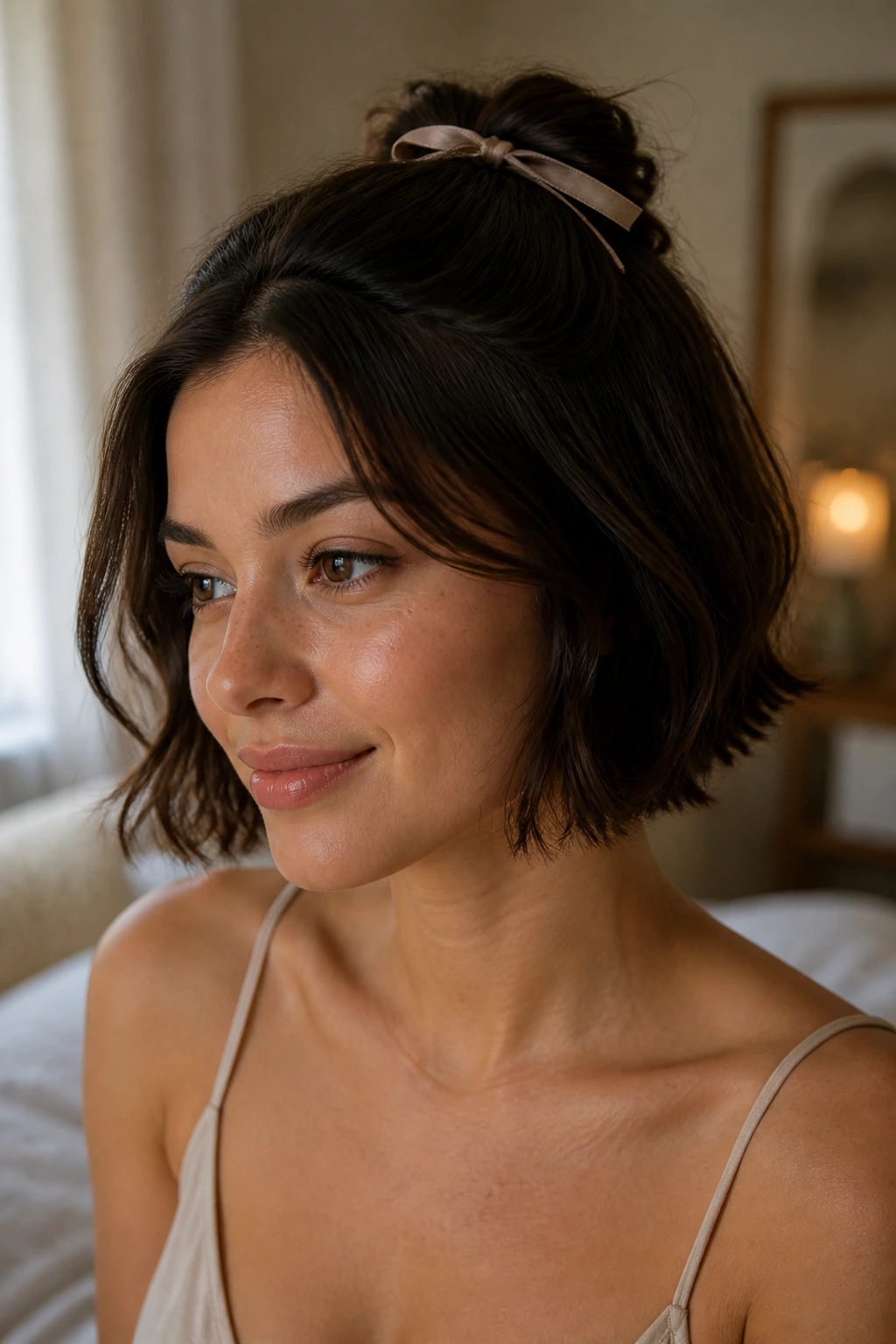
A ribbon changes everything. A half-up bob with a narrow satin ribbon feels a little softer and more personal than a standard clip, especially when your haircut is short enough that a full ponytail would be absurd. That’s the point. You lean into what the length can do.
How to Make It Work
Gather the top half of the hair at the crown or just behind it, twist or secure it into a tiny half pony, then wrap a slim ribbon around the base. The ribbon should be narrow — about a quarter inch to half an inch — so it looks like part of the styling, not gift wrap.
The rest of the hair can stay smooth or lightly waved. The ribbon gives the style a finish, and the short length keeps it from becoming too sweet.
Best Uses
- Soft graduation dresses and simple gowns.
- Bobs that sit at the chin or slightly above the shoulders.
- Hair that benefits from one visual focal point.
- Anyone who wants a style that still looks pretty after the cap comes off.
Choose a ribbon that doesn’t slide much. Satin looks beautiful, but if your hair is very fine, a matte grosgrain ribbon may hold better. That’s the unglamorous detail that saves the day.
13. Sculpted Pompadour Pixie
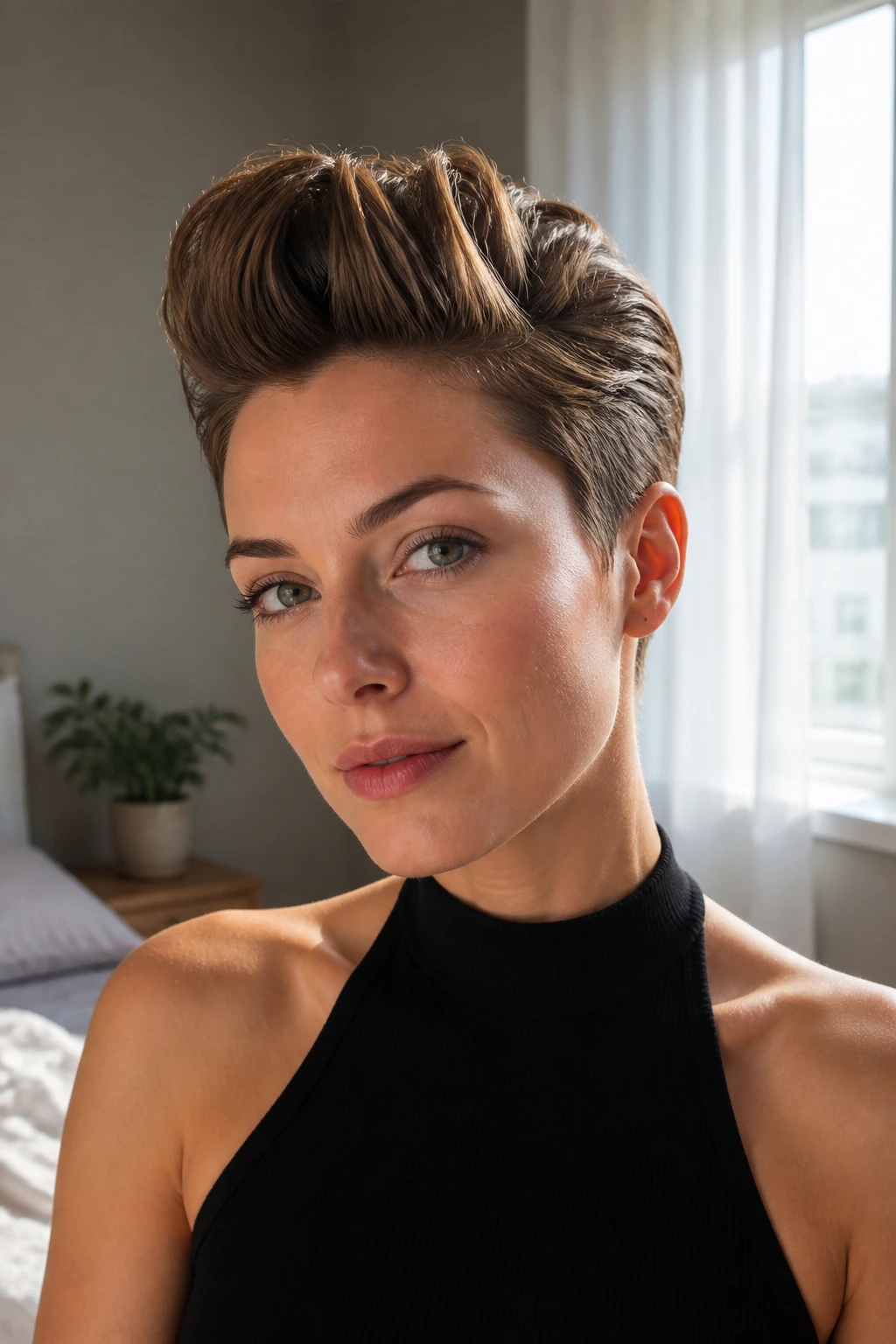
A sculpted pompadour pixie has attitude in the front and discipline everywhere else. It lifts the front section up and back, then keeps the sides close to the head so the shape stays clean beneath the mortarboard. If a pixie can look dramatic and still behave, this is how.
The Front Does the Talking
Blow-dry the front upward with a round brush or fingers, depending on the cut, then set it with a bit of strong-hold spray. The trick is height that bends back, not height that sticks straight up like a little tower. The sides should lie smooth. The whole point is control.
A pompadour works especially well when the gown is plain and you want the hair to carry some of the visual interest. It also shows the forehead and brows, which can be flattering in photos.
Quick Notes
- Best on pixies with enough length at the front to lift.
- Use a root-lifting mousse at the crown before drying.
- Keep a small comb in your bag for quick recovery.
- A cap can sit low enough to press the front slightly flatter and still leave the shape intact.
This style is not for people who want invisible hair. It is for people who like the hair to enter the room first.
14. Mini Bubble Ponytail
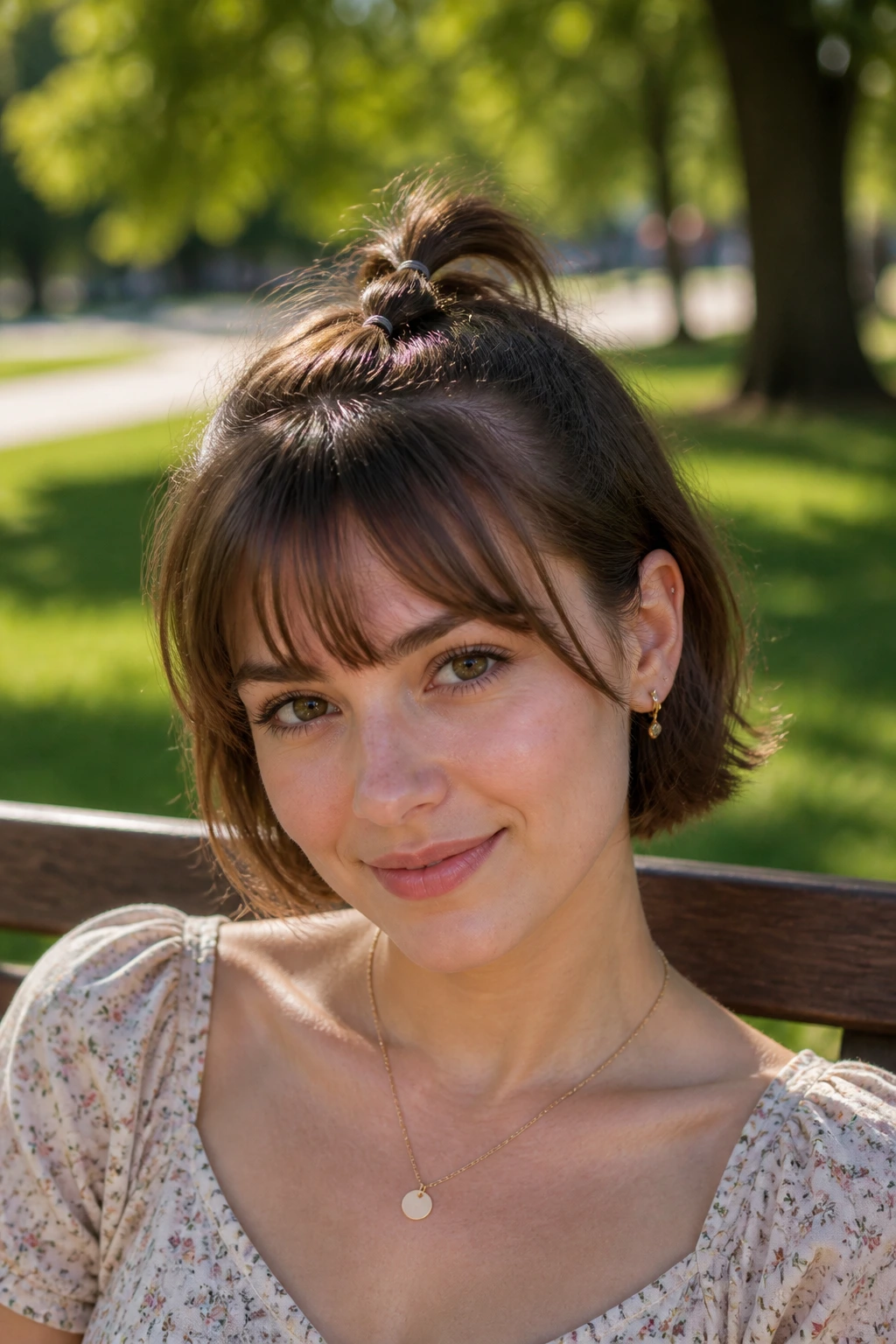
A mini bubble ponytail sounds impossible on short hair until you make peace with the word mini. On a bob or short lob, that can mean one small section tied with two or three elastics, then gently puffed between each tie. On a pixie, the same idea becomes a tiny bubble section at the crown or back. Small scale. Same effect.
Why It’s Worth Trying
The style creates segmented shape without needing a long tail. That makes it unusually useful for graduation because the cap flattens the top but leaves the lower sections free to keep their form. If your hair is blunt or fine, the bubbles add just enough structure to read in photos.
Use clear elastics or elastics that match your hair color. Then tug each section gently so it looks rounded instead of squeezed.
A Few Real-World Notes
- This works best on hair with at least a few inches of length.
- Texturizing spray helps the elastics grip.
- Keep the bubbles small; large ones collapse faster.
- If the hair is too short for multiple bubbles, stop after one section and decorate the base instead.
The style is playful, but the execution should still look deliberate. Sloppy bubbles just look like your hair lost a fight.
15. Flat-Ironed Blunt Bob
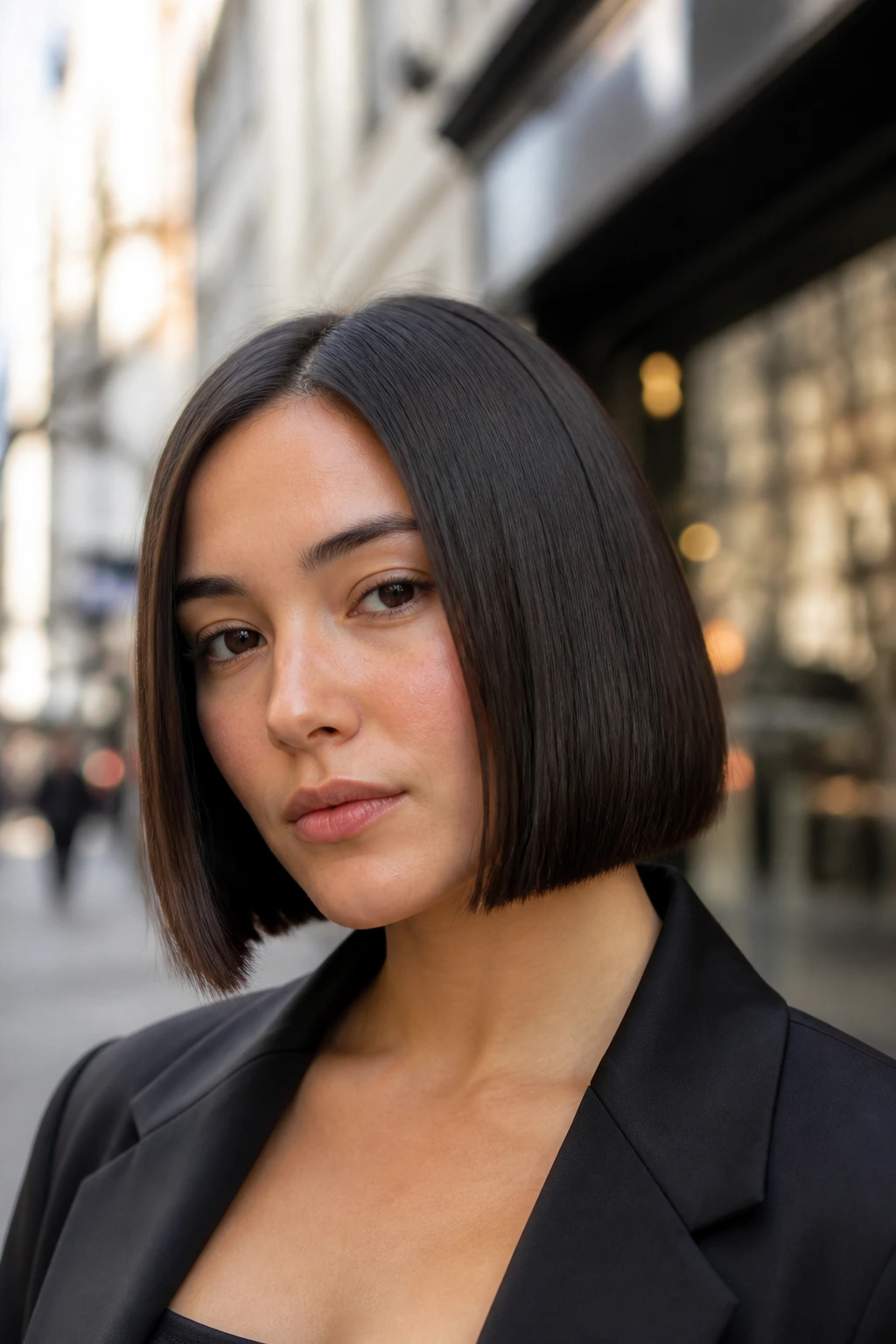
A blunt bob with pin-straight ends can look almost severe in the best way. Clean line at the bottom. Smooth surface. Clear part. It’s the opposite of fussy, which makes it excellent for graduation. When the cap comes on, the haircut still looks finished instead of accidentally flattened.
The Clean-Line Advantage
Use a heat protectant, then pass a flat iron through small sections until the ends lie sharp and even. Don’t chase stick-straight perfection through every strand unless your hair naturally wants it. A little bend at the front is fine. The point is the strong edge at the bottom.
This style works because the shape is already built into the cut. The cap can sit on top of that geometry without messing it up too badly.
Best Pairings
- Bold lipstick or earrings.
- Simple gowns with a crisp collar.
- Straight or slightly wavy hair.
- People who hate styles that need constant fussing.
If your bob flips out when it gets hot or humid, pin the sides behind the ears for ten minutes while it cools. That tiny delay helps the line set. It’s boring. It also works.
16. Halo Twist for Short Hair
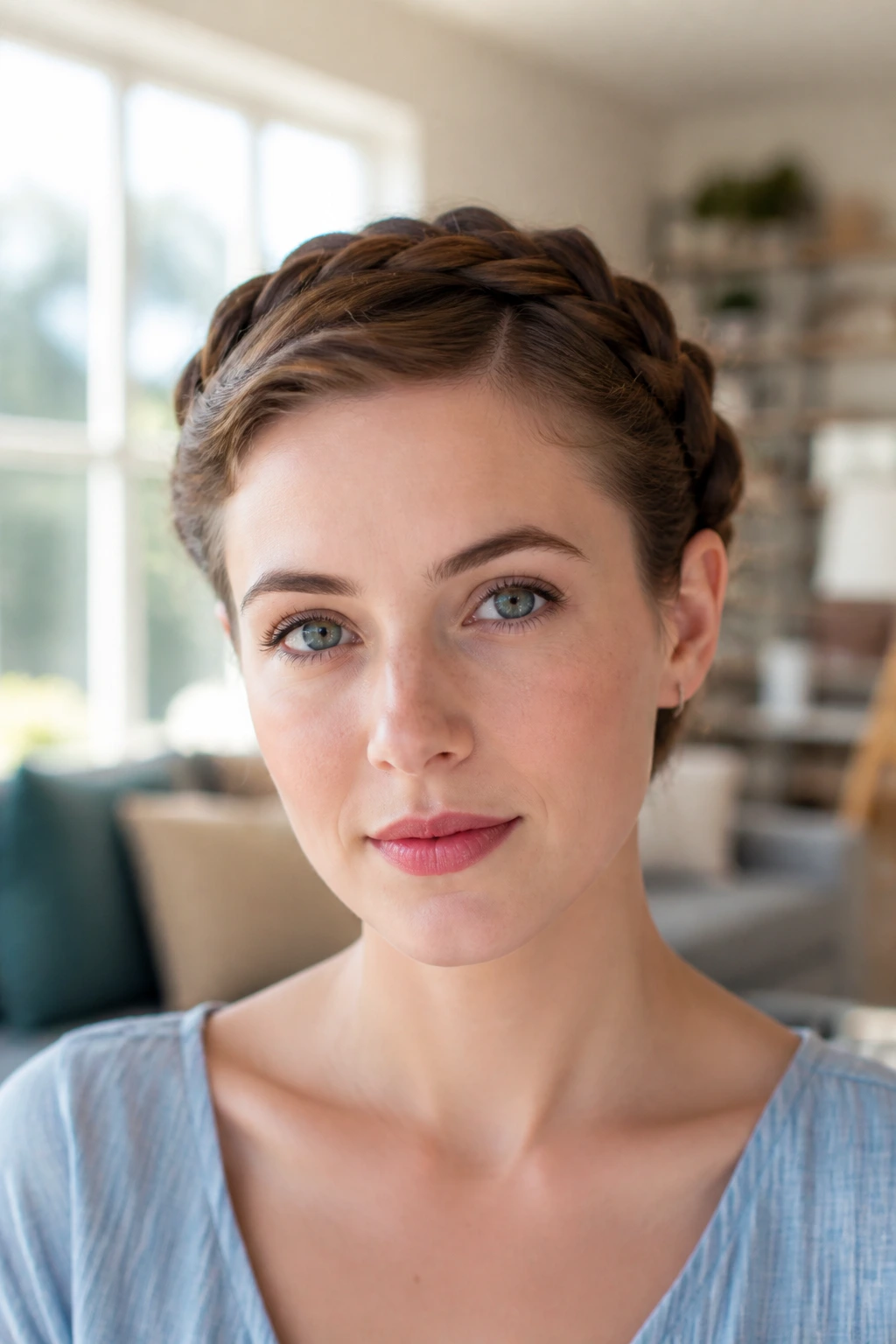
A halo twist gives short hair a soft frame around the head without trying to be a full braided crown. Two side sections twist backward along the hairline and meet near the back, where they’re pinned into a hidden join. The result sits low enough for the cap and neat enough for ceremony photos.
Why It’s a Smart Choice
Short hair often lacks the length for big braids but still has enough to twist cleanly. That’s where this style lives. It uses the strongest sections near the front and temples to create the shape, while the rest of the cut stays tidy and visible.
I like this on curls and waves because the texture helps the twists grip. Straight hair can work too, but it needs a little spray first.
How to Keep It Secure
- Work on hair that’s not freshly silky from conditioner.
- Pin the join under the crown instead of on top.
- Use two crossed pins per side if your hair slips.
- Leave the back loose or softly tucked, depending on the cut.
This style feels graceful without being precious. Good fit for a long ceremony. Better fit for short hair that needs a shape with a little air around it.
17. Defined Curly Bob
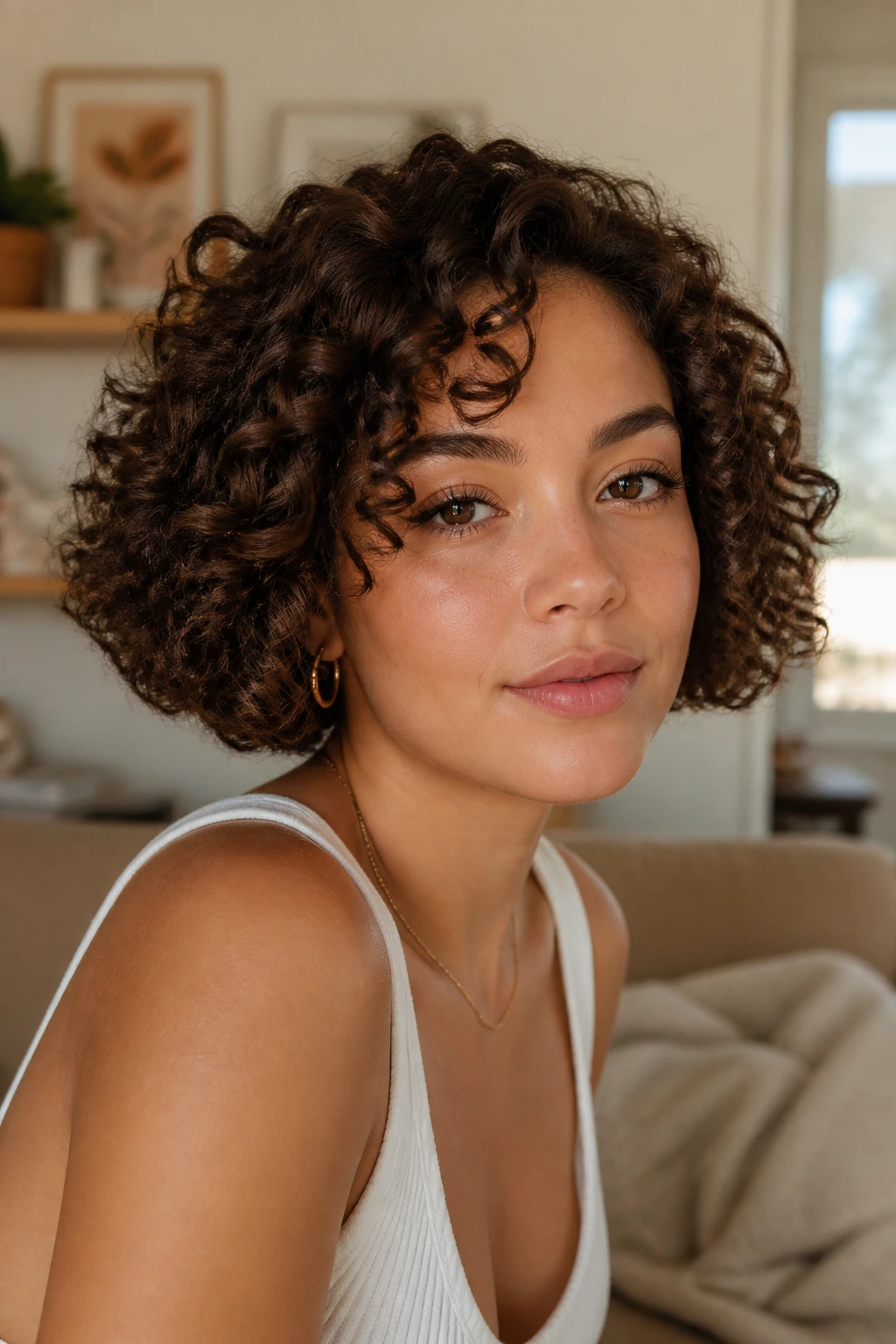
A defined curly bob is one of the strongest short-hair graduation choices because it plays to texture instead of fighting it. If your curls already have a pattern, the goal is not to flatten them into submission. The goal is to keep the definition, reduce frizz, and give the cap a shape it can live with.
Work With the Curl, Not Against It
Start with a curl cream or gel on wet hair, then scrunch and diffuse until the curls are dry but still springy. Separate only the biggest clumps with oiled fingertips. Do not brush it out. That’s how you end up with a puff instead of a curl pattern.
A side part often helps the curls fall in a flattering shape around the face. The cap can sit on top of the crown area while the defined curls live lower and around the jaw.
A Few Good Habits
- Use a microfiber towel or T-shirt to blot, not rough-dry.
- Keep the roots a little lifted, not plastered.
- Pin the side with the most volume if one side swells more than the other.
- Finish with a light humidity shield.
The nice part? This style usually looks even better when a few curls escape after several hours. That’s not a flaw. It’s movement.
18. Flipped-Out Ends
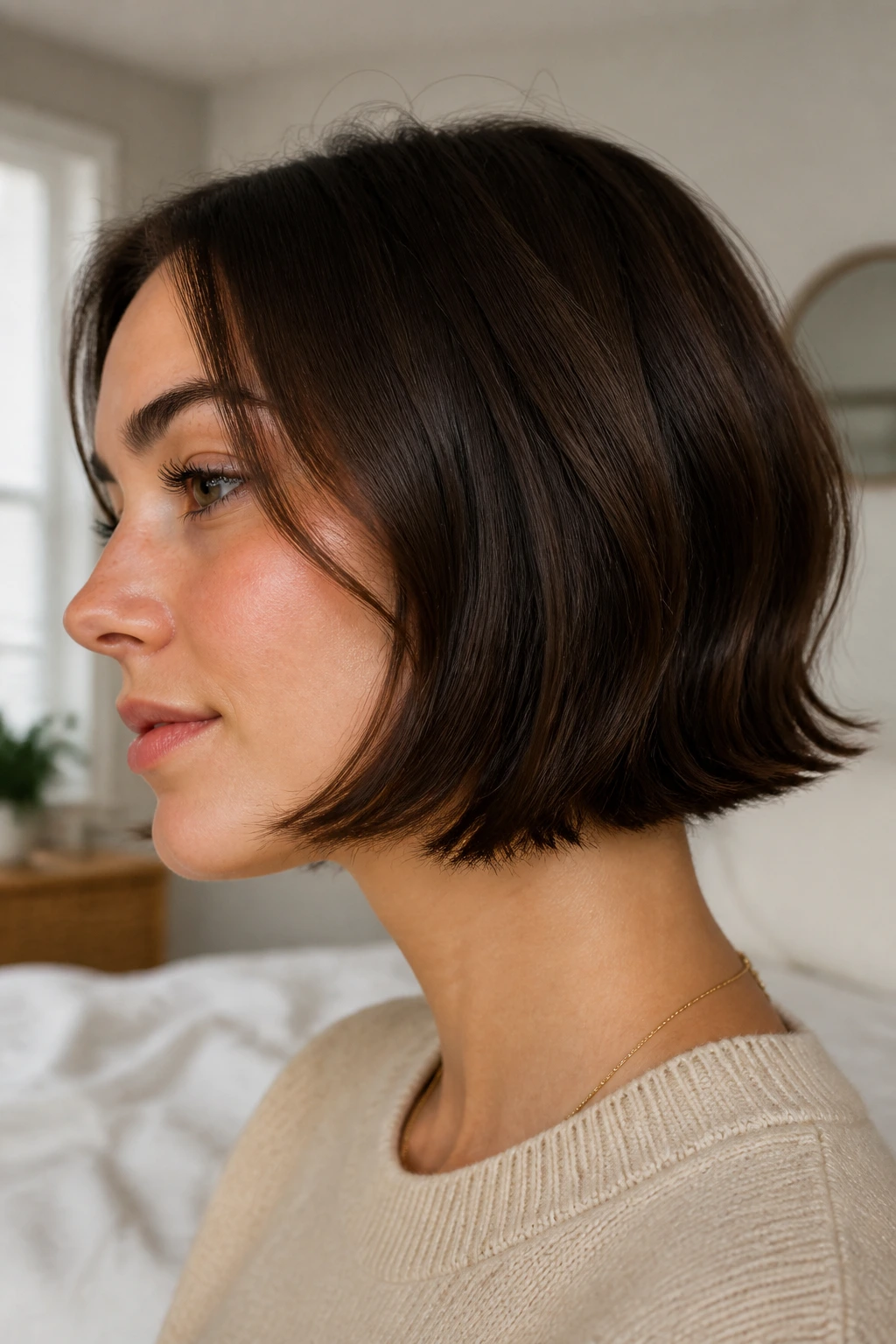
Flipped-out ends have a little retro energy, and I mean that in the best possible way. On a short bob, the outward bend at the bottom gives the haircut a clean outline that still feels fun. It also keeps the visual interest down near the ends, which helps when the cap takes up space at the top.
Why the Flip Works
Use a flat iron or round brush to bend the ends away from the neck and jaw. The flip should be visible, but not cartoonish. If the bend starts too far up the strand, the style can look dated in a bad way. Keep it at the last inch or so.
This look is a good match for blunt bobs and chin-length cuts because the ends become the feature. A cap flattens the top? Fine. The line at the bottom still does the talking.
Tiny Details
- A center or soft off-center part both work.
- Smooth the top with a little serum, not heavy oil.
- If one side flips more than the other, that asymmetry can look intentional.
- Hairspray the ends lightly so they don’t collapse in humidity.
It’s a straightforward style. Sometimes that’s what wins.
19. Clipped-Back Shag
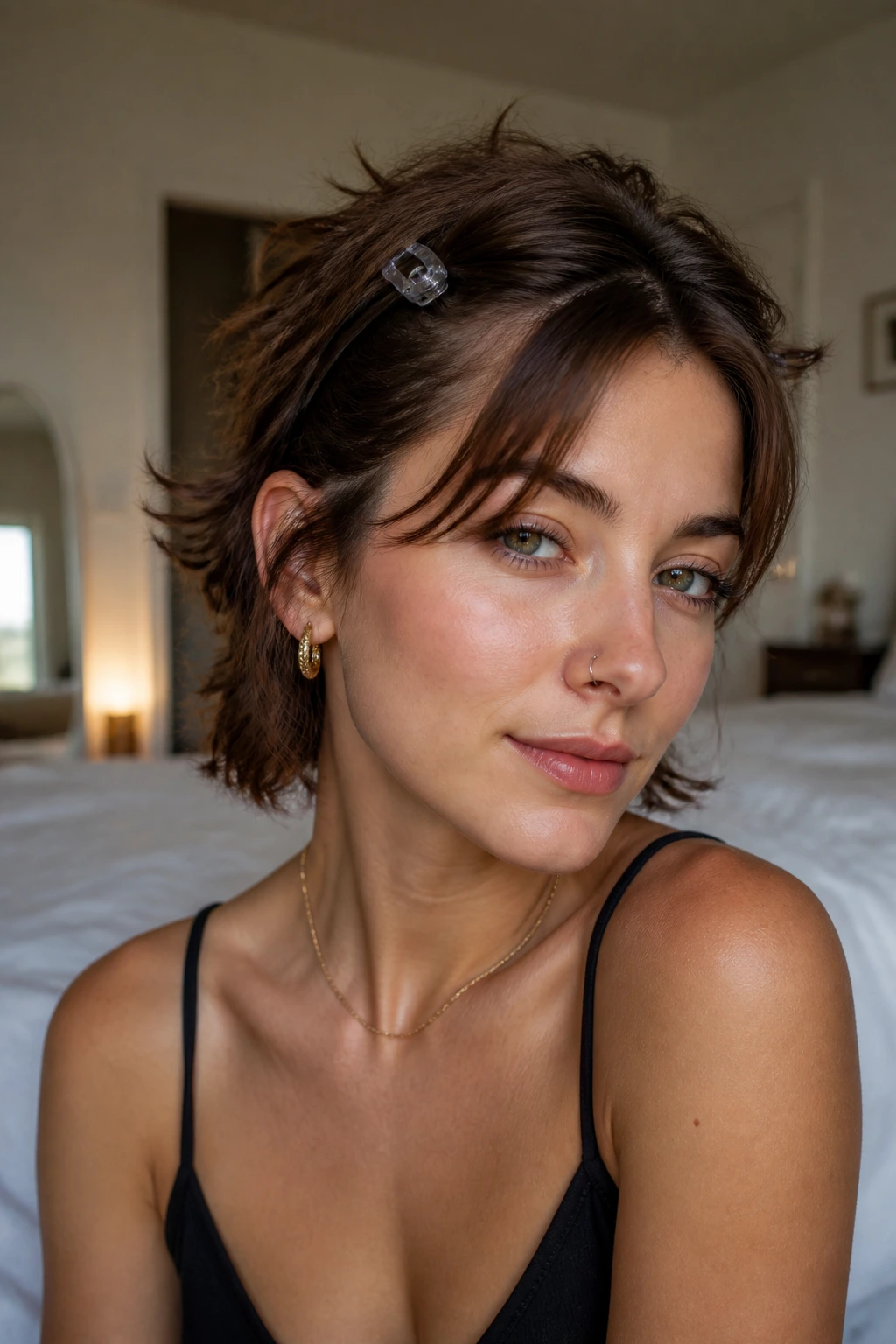
A shag can look messy if you ignore it, or sharp if you direct it. For graduation, the clipped-back version is the one I’d choose. Pull the front layers back from the face with two matching clips, keep the texture alive through the crown and ends, and let the haircut show its own movement instead of being buried under the cap.
The Point of the Clip
The clips gather the most unruly pieces — curtain bangs, face layers, short side pieces — so the face stays open. The rest of the cut can keep its broken, airy texture. It’s not a polished updo. It’s a controlled one.
The style is especially good when the haircut already has strong layers. Trying to smooth a shag into a blunt bob is a waste of energy. Better to guide it.
Good Combinations
- Matte clips in black, gold, or tortoiseshell.
- Soft waves or a natural texture.
- Gowns with higher necklines.
- Hair that tends to fall into the eyes by the second hour.
The cap will press some of the front back anyway, so the clip just gives the shape a clear starting point. Helpful. Quiet. Effective.
20. Soft Undone Waves With Face-Framing Pieces
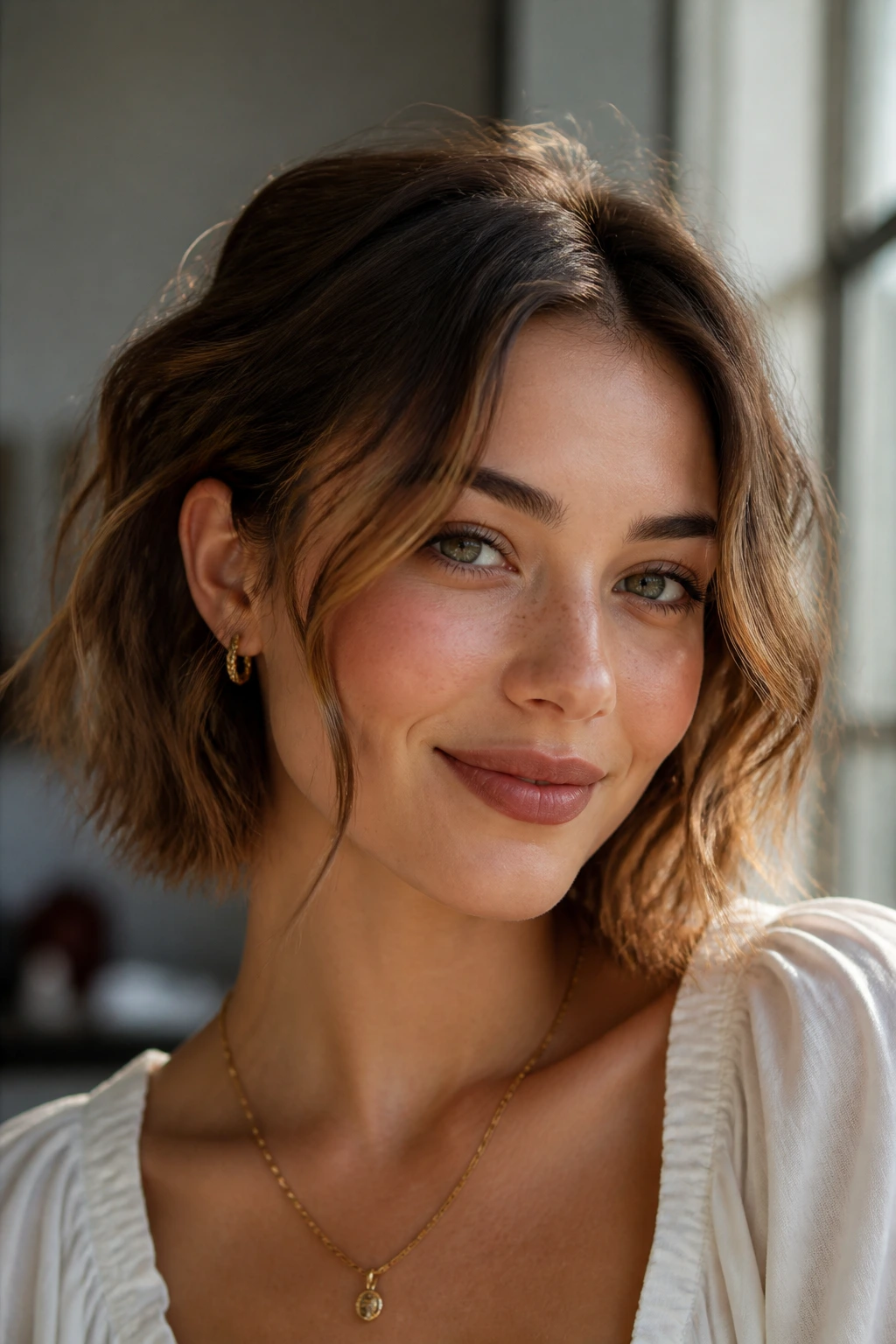
Soft undone waves are the safe bet that doesn’t feel lazy. On short hair, they bring enough movement to look finished while leaving the ends relaxed enough to survive a long day. The face-framing pieces are the part I care about most. They stop the style from looking boxy once the cap is on and off a few times.
Why It’s a Finalist Every Time
Wrap the mid-lengths around a curling iron, leaving the ends out for a looser finish. Brush the waves out so they fall into soft bends rather than tight curls. Then tuck only the front sections loosely around the face, letting a few pieces fall forward.
The cap should sit on the smoothest part of the crown, while the wave pattern stays lower. That keeps the whole look from turning into a flattened helmet effect.
What Makes It Work in Photos
- The waves catch light at the cheek and jaw.
- Face-framing pieces soften strong gowns and sharp collars.
- The style can be refreshed with almost no effort.
- It looks good from the side, not just straight on.
If you want one short-hair style that behaves well, looks gentle, and doesn’t fight the cap too hard, this is the one I’d hand to most people first.
Why Short Hair and Graduation Caps Cooperate Better Than Long Hair
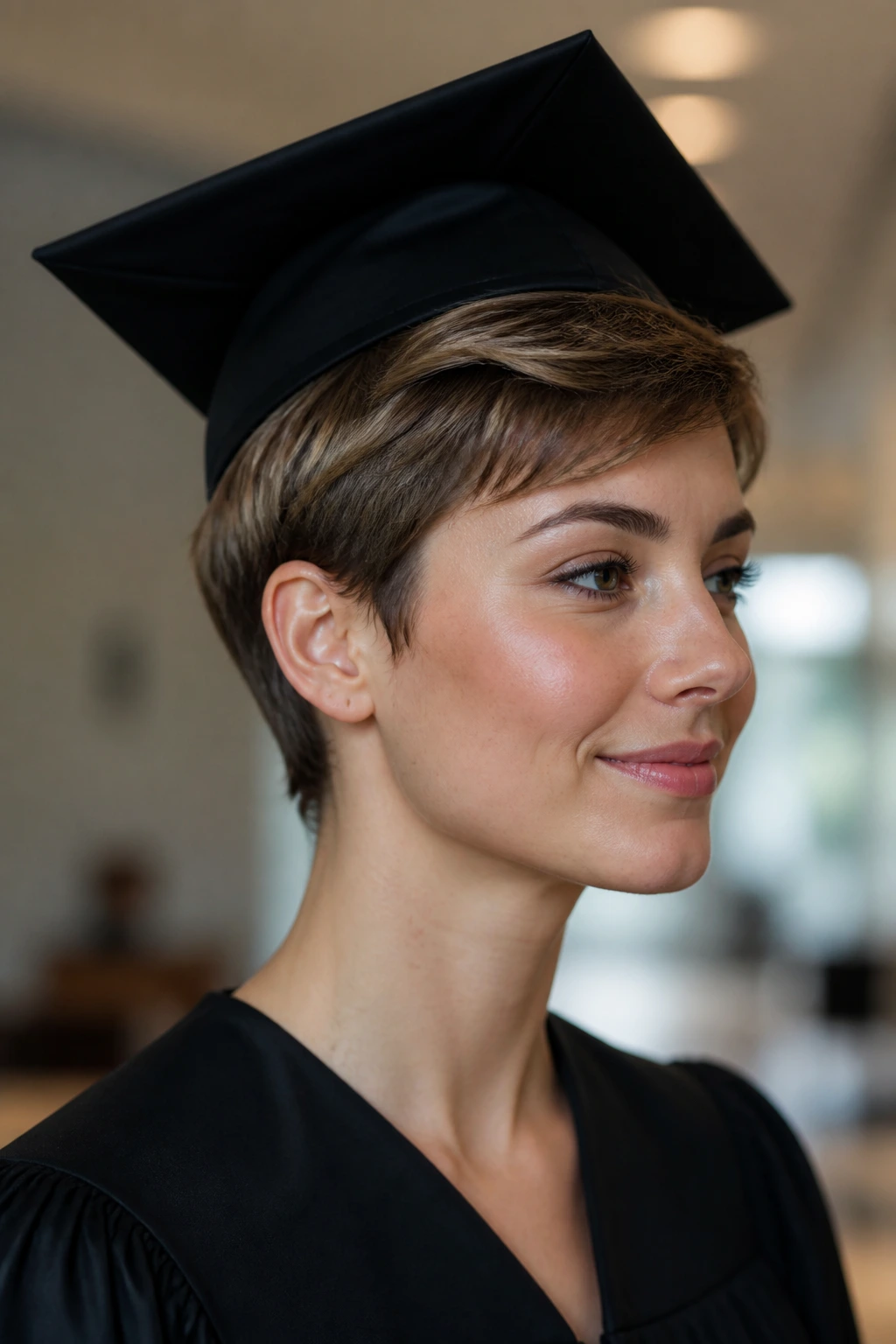
Short hair gives you a kind of built-in honesty. There’s less weight to collapse, less length to trap under the cap, and fewer ends to go frizzy while you sit through speeches. That doesn’t mean every short style is easy. It means the problems are smaller, which makes them easier to solve.
The best graduation hairstyles for short hair use the cap instead of pretending it isn’t there. A smooth side part, a tucked side, a twist near the nape, or a controlled wave pattern all give the mortarboard a job it can do without wrecking the outline of the hair. That’s the whole game.
Short hair also keeps the camera honest in a good way. The jawline stays visible. The neck stays visible. Earrings and stoles don’t disappear into a curtain of hair. I like that. It gives the whole look a little more structure, especially when the gown fabric is heavy or the neckline is plain.
The Styling Kit Worth Packing the Night Before
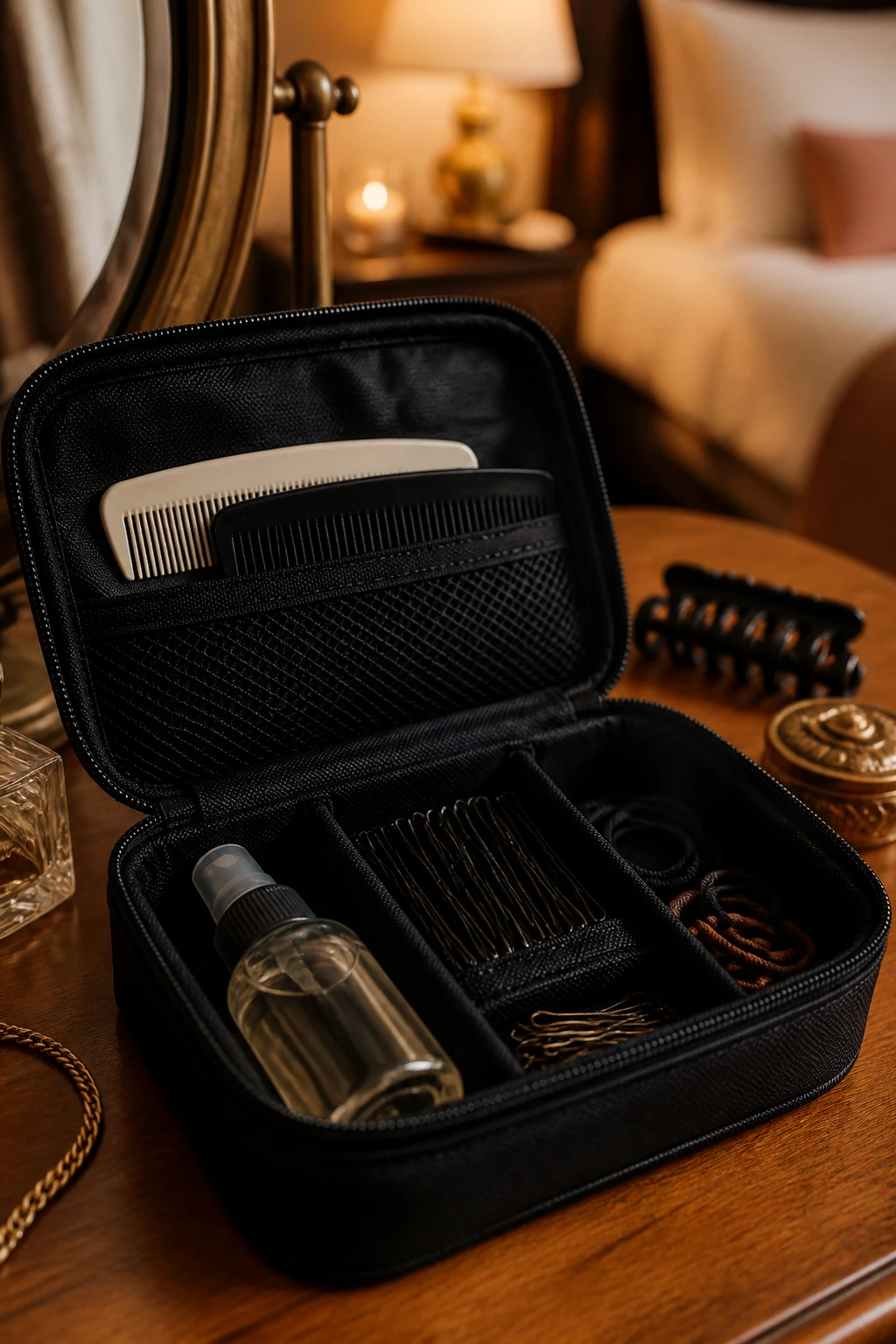
A good graduation bag is small and boring, which is exactly what you want. Skip the fantasy of carrying your whole bathroom. Pack the pieces that fix actual problems.
- Fine-tooth comb: Great for parts, smoothing front sections, and redoing a line after the cap comes off.
- Tail comb: The pointed end helps make a crisp part without tearing at the scalp.
- Bobby pins in two sizes: Standard pins for most sections, smaller pins for short layers and hidden anchors.
- Mini hair elastics: Useful for half-up twists, tiny pony sections, and bubble-style pieces.
- Flexible-hold hairspray: Keeps movement but stops flyaways from standing up in the humid air around a crowd.
- Strong-hold spray: Use this only on styles that need a firmer lock, like finger waves or a pompadour.
- Heat protectant: Non-negotiable if a flat iron, curling iron, or blow-dryer is involved.
- Texturizing spray: Useful for bobs, waves, and layers that need grip.
- Smoothing cream or light gel: Better than heavy oil for most short styles because it shapes without greasing the hair down.
- Decorative clip, ribbon, or pins: One accessory with purpose beats six pieces fighting each other.
If your hair has a habit of slipping, add a few extra pins and a travel-size comb. That tiny backup turns a bad five-minute fix into a decent one.
Picking Products That Fit Fine, Thick, Curly, or Coily Hair
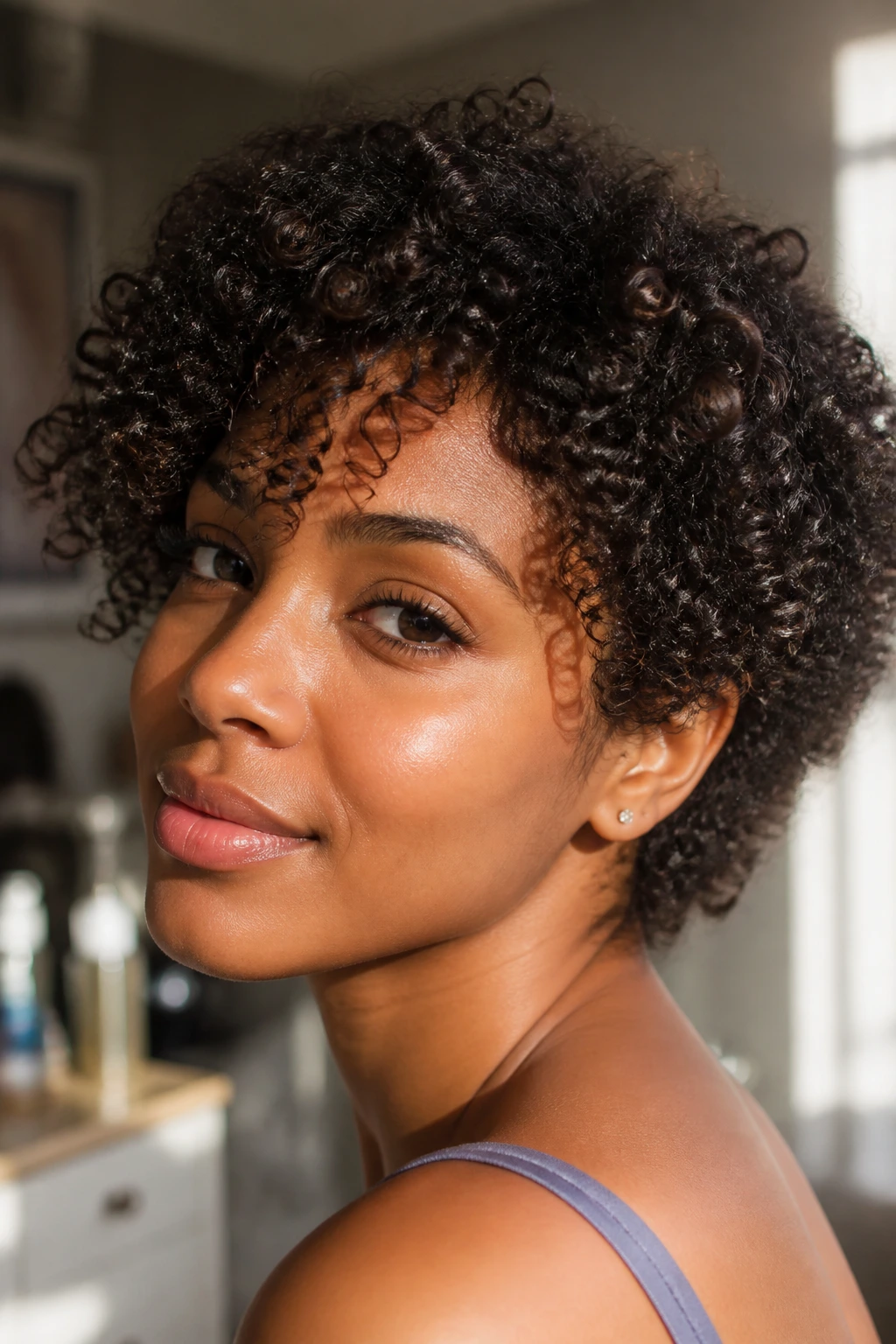
Product choice changes the whole result. Fine hair usually needs lift at the roots and only a little cream through the ends. Thick hair often needs more control, especially around the crown and nape. Curly and coily hair need shape and moisture, but not so much softness that the style slides apart before the ceremony is over.
For fine hair, a root-lifting mousse, light blow-dry cream, and flexible hairspray usually do more good than a heavy serum. Fine strands collapse fast when weighed down. Give them structure, not grease.
Thicker hair often needs a smoothing cream or a medium gel to keep the part tidy and the sides close to the head. If your bob puffs at the ends, flatten the top with your brush and let the movement live lower down. That keeps the shape from turning wide.
Curly and coily textures can look beautiful with a defined bob, halo twist, or clipped-back front, but they need a plan for frizz. Use a leave-in, then a curl cream or gel, and finish with a humidity shield if the air feels damp. The hair should feel soft, not wet.
Color-treated hair can be a little dry, so lean toward lightweight creams and heat protectant rather than stiff sprays piled on top of each other. The goal is control with some shine, not a shell.
How to Wear These Looks With Cap, Gown, and Camera Flash
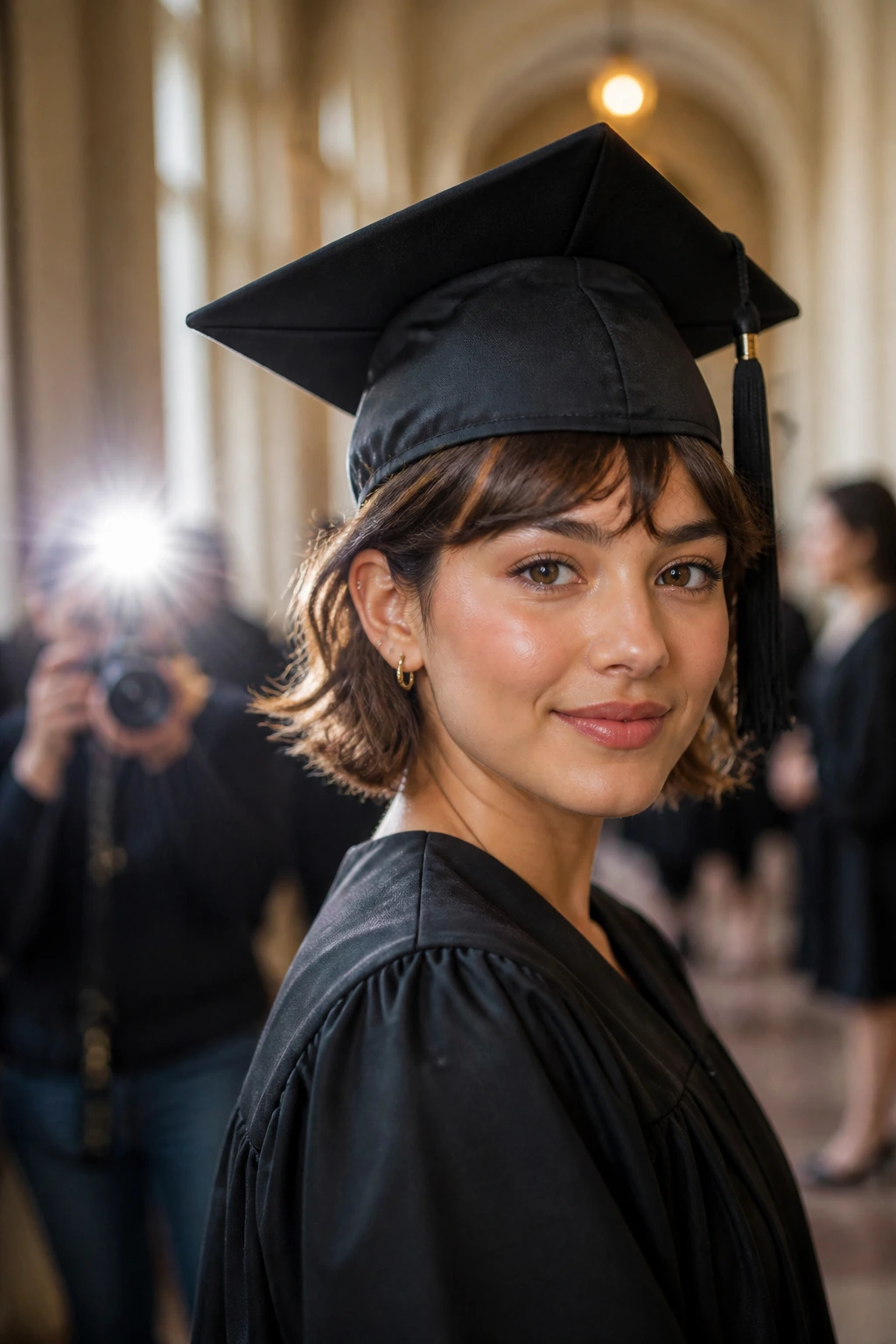
Cap Placement: Set the front edge of the cap about a finger’s width above the brows so it doesn’t crush the part line or scrape the front hair into an awkward dent. If your style has a side part, let the cap sit slightly back on the fuller side rather than dead center.
Photo Finish: Take a few posed shots with the cap on, then a few after it comes off. Short hair often looks best after one quick finger-comb and a light mist, because the shape is still there but the flattening has eased.
Outfit Balance: Sleek hair likes bolder earrings and cleaner necklines. Textured styles look good with simpler jewelry because the hair already has movement. Don’t make every part of the outfit compete for attention.
Weather Backup: Put two extra bobby pins, a small comb, and a travel spray in your bag. If the ceremony runs long or the weather gets humid, those three things do more than most fancy products.
Last-Minute Reset: Before walking in, flip your head gently, then smooth only the top layer with your hands. Don’t brush the whole style apart. That’s how you erase all the work.
Extra Styling Moves That Help on a Long Ceremony Day
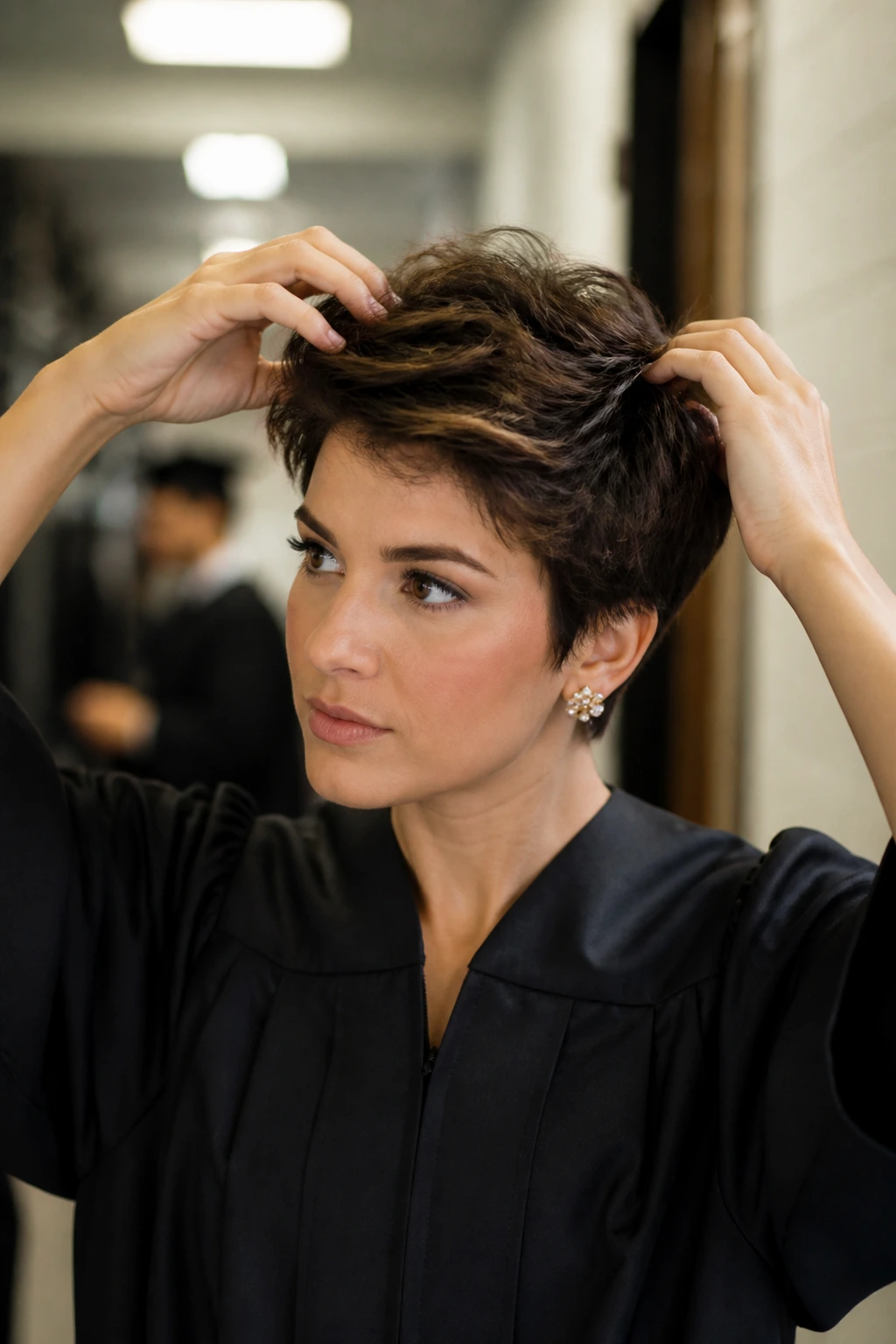
Humidity Shield: A light anti-frizz spray at the ends and around the nape keeps short hair from fuzzing up when you’re outside for pictures or waiting in a crowded hall. Focus there first. The top usually gets enough attention already.
Volume Control: If your hair sits too flat under the cap, lift the roots with your fingertips at the crown before the cap goes on, not after. Once the cap has pressed the area down, you’re trying to fight gravity with hope. Bad plan.
Accessory Check: Use one main accent — a clip, pearl pin, ribbon, or pair of earrings. If the hair, cap, and gown all have their own loud thing happening, the photo gets busy fast.
Touch-Up Timing: Give yourself ten minutes between styling and leaving. Short hair needs a moment to settle. That pause lets curls cool, sprays set, and pins stop shifting.
Fringe Management: If you have bangs or short face pieces, decide in advance whether they’ll sit soft, swept, or pinned. Randomly changing them on the walk to the stage usually ends with one eyebrow hidden and the other one doing all the work.
Mistakes That Flatten Graduation Hairstyles for Short Hair
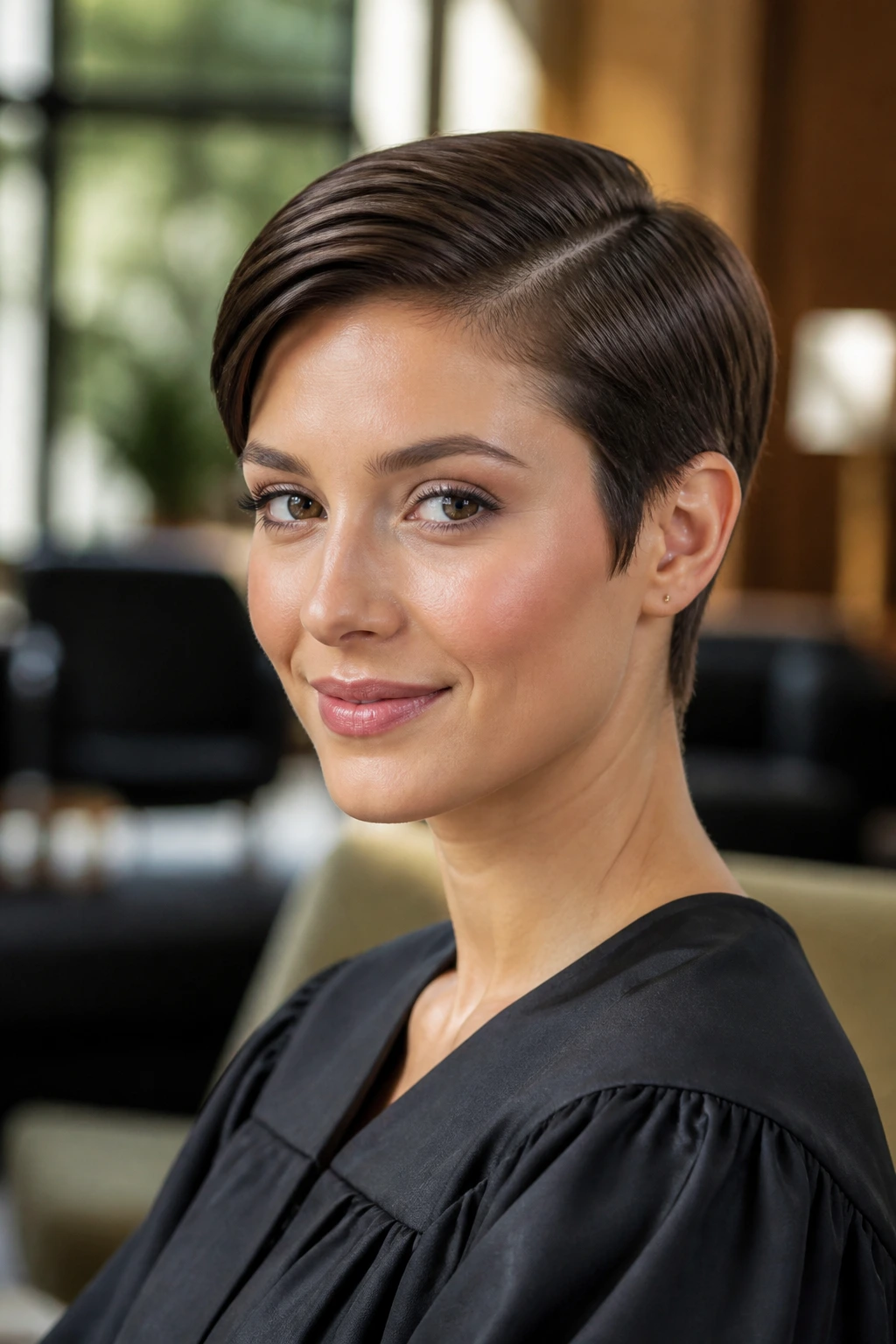
The first mistake is loading on too much oil or serum. Short hair needs a little shine, not a slick surface that slides under the cap and breaks apart at the temples. If the hair starts to look greasy before you even leave the house, blot it with a tissue and add a spray that has a lighter finish.
Another common problem: styling the hair and then putting the cap on while the roots are still warm. Warm hair reshapes fast. Cool hair holds. If you curl or blow-dry the style, let it cool fully before the cap goes anywhere near it.
People also forget anchor pins. That’s the one that gets them. A bob that seems calm in the mirror can slide apart when you walk, hug, or turn your head in a crowd. Two hidden pins at the side sections can save the whole shape.
Overworking the ends is a fourth mistake. Tiny, stiff curls on short hair can look more dated than elegant. If the cut is already short, keep the ends soft and piecey unless the style specifically needs a tighter wave.
And then there’s the heavy accessory problem. One giant clip can drag a side down, especially on fine hair. If the piece feels heavier than the section it’s holding, it’s probably too much.
Variations and Adaptations for Different Hair Textures
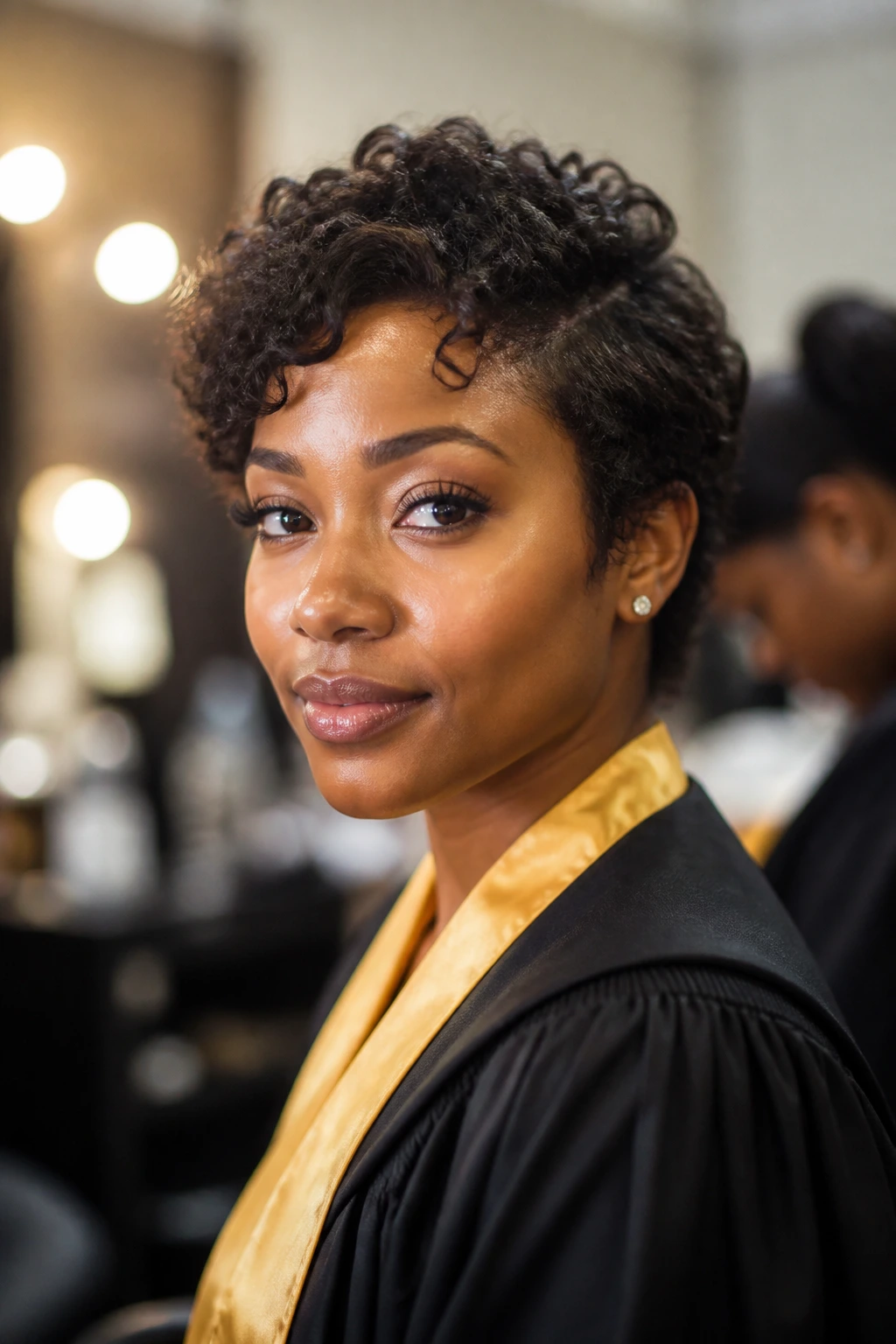
The Sleek Scholar: Best for straight or relaxed hair that likes a clean line. Use a smooth side part, polish the top with a light cream, and keep the ends controlled. This version looks crisp with a satin gown or a structured neckline.
The Soft Natural: Built for curls, coils, and spirals that look better defined than flattened. Use leave-in, curl cream, and a little gel, then choose a style like the defined curly bob or halo twist. The shape stays visible even after the cap has been on for a while.
The Fine-Hair Lift: If your hair falls flat at the first sign of gravity, work mousse into the roots before drying and avoid heavy finishing oils. Styles like the mini faux hawk, side-swept curls, and sculpted pixie do especially well here because they create height without using a lot of product.
The Accessory-First Finish: If the haircut is very short or the texture is too unpredictable, let a barrette, pearl pin, ribbon, or clip carry the look. Keep the hair smooth and simple underneath. That’s not cheating. That’s good editing.
The Heat-Free Route: Short hair can still look polished without a curling iron. Set waves overnight, twist damp sections, or work with a natural curl pattern and a shaping cream. This is the easiest route if your scalp is sensitive or you do not want to gamble with hot tools the morning of the ceremony.
Keeping the Style Fresh from First Photo to Last Toast
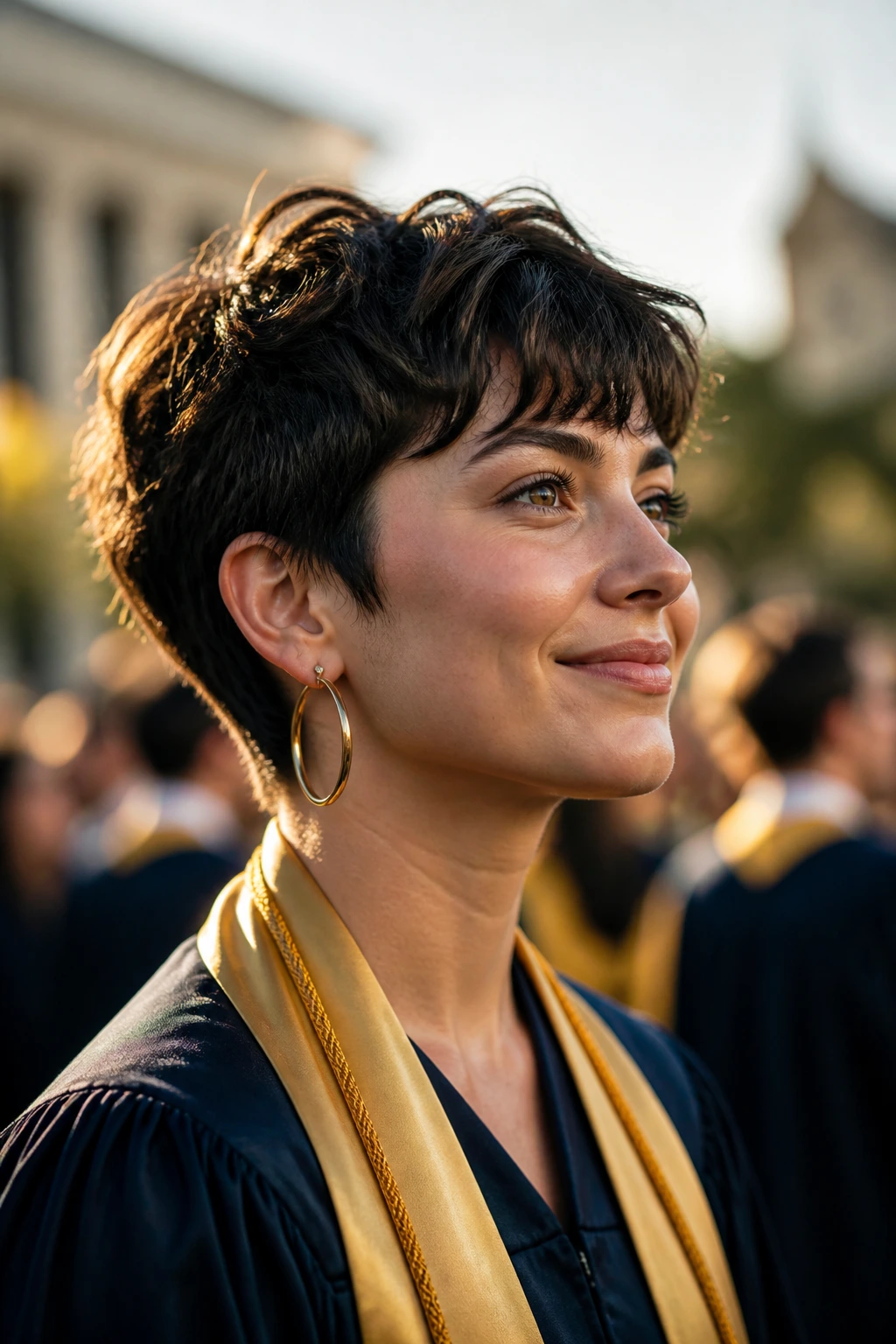
Short hair usually holds up through a ceremony better than people expect, but it still needs a small plan. If you know you’ll wear the style for six or seven hours, start with products that dry clean and don’t leave residue on the cap edge. That alone saves a lot of adjusting.
During photo time, use your fingers more than a brush. Brushes can make a careful wave collapse or separate a curl pattern too much. Fingers let you shift the shape just enough to bring it back to life. If the roots have fallen flat, a quick fingertip massage at the crown gives them a little lift without wrecking the rest.
A tiny travel spray and a few pins are enough for most touch-ups. If one side starts slipping, pin that side and stop fussing. Short hair doesn’t need constant correction. It needs one or two well-placed fixes, then you leave it alone.
The next morning, if you’re going to brunch or another event, a dry shampoo at the roots and a soft bend through the ends usually reset the style fast. Short graduation hair often looks better on day two anyway. Less perfect. More lived-in. Good trade.
Questions People Ask About Graduation Hairstyles for Short Hair
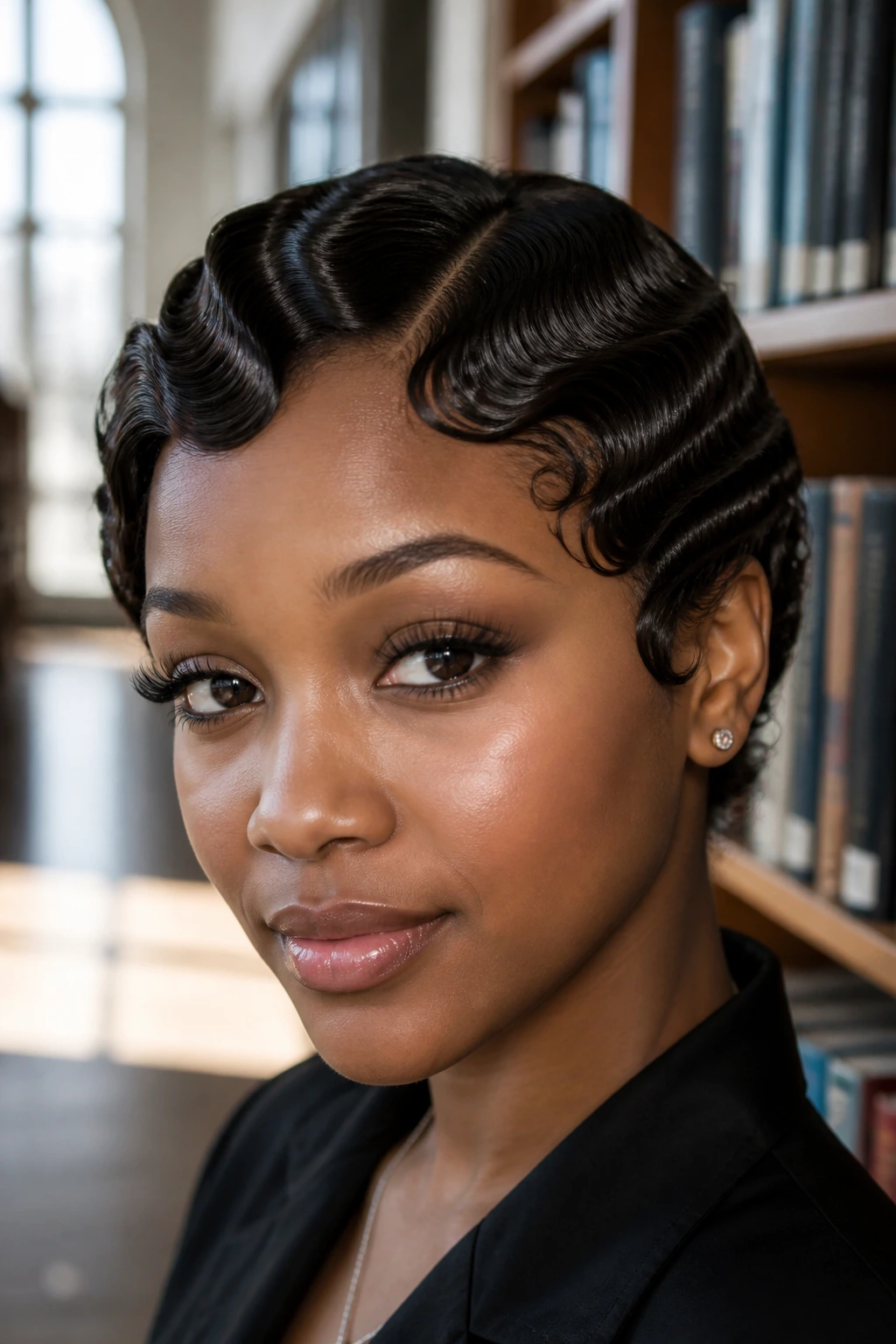
Can you wear short hair down with a graduation cap?
Absolutely. In fact, many of the best graduation hairstyles for short hair are worn mostly down because the cap already acts like the top half of the style. Keep the crown smooth and add shape at the sides or ends so the whole look doesn’t disappear under the mortarboard.
What’s the best hairstyle for a pixie cut?
A side-part pixie, sculpted pompadour, or wet-look crop usually works best. Those styles control the top and sides without asking for length that isn’t there. If your pixie is very short, a strong part and a little shine can do more than you’d expect.
How do I keep my cap from flattening my hair?
Let the hair cool after styling, keep volume mostly below the cap line, and use hidden pins where the section tends to shift. If the crown is too high, the cap will crush it. Build shape at the sides, temple, or ends instead.
Are curls or straight styles better for short hair on graduation day?
Both can work. Straight styles give a sharper line and look neat under the cap, while curls add movement and soften the face. The better choice is the one that matches your haircut’s natural behavior, because fighting texture on a big day is a waste of energy.
What if my hair is too short for braids or twists?
Use mini versions. Tiny twists at the temples, a clipped-back front, or a narrow decorative pin can create the same visual effect without forcing a full braid. Short hair is often better served by shape and placement than by trying to mimic a longer style.
How far ahead should I style my hair before the ceremony?
Hot-tool styles should be finished with enough time for the hair to cool fully — usually at least 20 to 30 minutes. If you’re using gel, waves, or set styles, give them longer. Rushing the cool-down is one of the fastest ways to lose the shape.
Can short hair hold accessories without sliding?
Yes, but the accessory has to match the hair’s weight and texture. Flat clips, slim pins, and narrow ribbons tend to stay put better than bulky pieces. A hidden bobby pin under the accessory usually helps more than a second decorative item.
What should I do if my hair goes flat after the cap comes off?
Use your fingers to lift the roots, not a brush. A little dry shampoo or texturizing spray at the crown helps, but keep it light. You want the style to come back to life, not turn dusty.
The Best Part After the Tassel
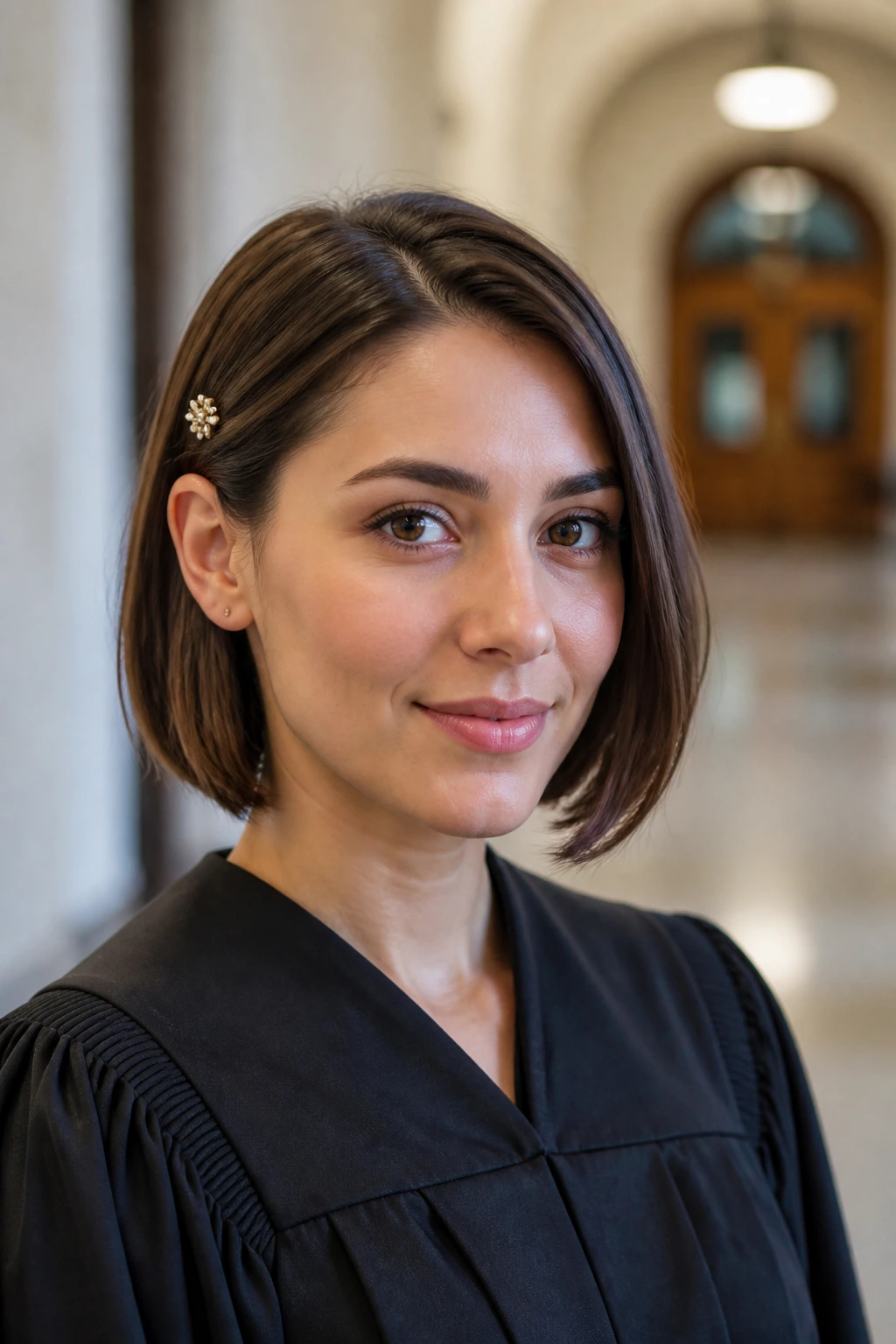
Short hair has a built-in advantage on graduation day: it can look clean, sharp, and intentional without a huge amount of fuss. The styles that work best are the ones that respect the cap instead of pretending it isn’t there. Once you choose shape over bulk, the whole look gets easier.
Pick one detail to emphasize — a part, a wave, a pin, a ribbon, a tucked side — and let the rest stay calm. That’s usually enough. And once the cap comes off, the hair should still feel like yours, only a little more put together than usual.
