



A quinceañera hairstyle has to do a lot more than sit there and look pretty for a mirror check. It needs to survive hugs, dancing, flash photos, heat from lights, and that moment when a stray bobby pin starts trying to escape halfway through the waltz. The styles that read as polished are the ones that look deliberate from every angle — smooth at the crown, secure at the nape, and finished with enough shine to catch the eye without turning greasy.
That polished look is partly about shape and partly about control. A clean middle part can make a style feel modern and calm. A deep side sweep can give the face a softer frame. A braided crown, a wrapped ponytail, or a bun tucked low against the neck all send the same message: this was planned, pinned, and thought through. That matters on a day when the dress, jewelry, and makeup are already carrying a lot of visual weight.
The best quinceañera hairstyles also respect the hair you actually have. Fine hair needs grip and a little scaffolding. Thick hair needs sectioning and patience. Curly hair usually looks more elegant when the curl pattern is honored instead of fought all the way into submission. Keep that in mind as you scroll, because the style that wins in a salon chair is not always the one that survives three hours of photos and dancing.
Why These Quinceañera Hairstyles Feel So Polished
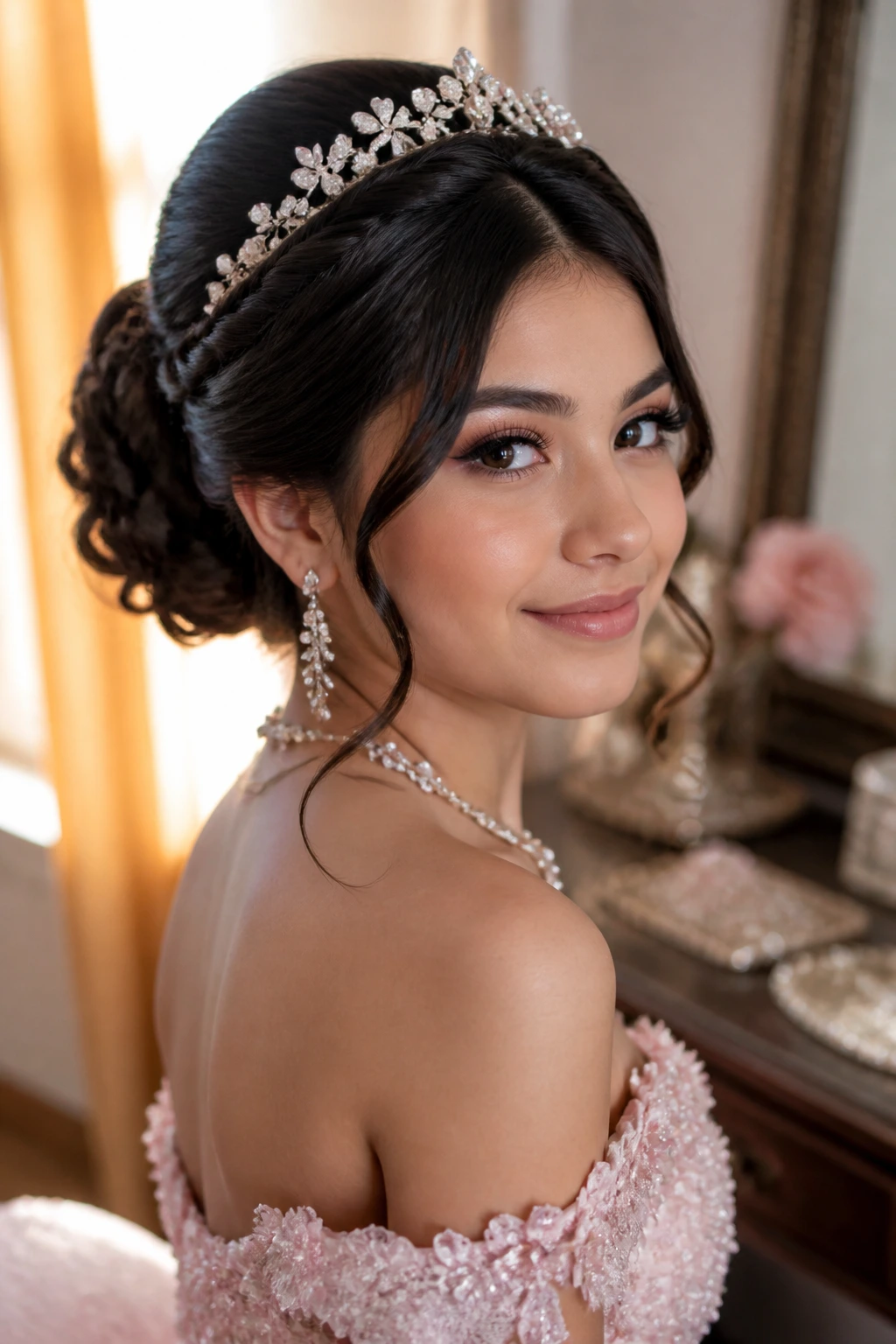
-
Clean lines matter: A crisp part, a smooth crown, or a neatly wrapped base gives the style a finished shape before the curls or braids even come into play.
-
Secure pins beat soft hope: Hairstyles that use crossed pins, hidden elastics, and tight anchor points stay put when the room gets warm and the dancing starts.
-
Shine should be controlled: A light mist of gloss spray on the mid-lengths reads elegant under indoor light, while heavy product at the roots can flatten the whole look.
-
Accessories work harder here: Tiaras, pearl pins, combs, ribbons, and floral clips look more expensive when they sit on top of a polished structure instead of fighting loose hair.
-
The neckline matters: A low bun opens a high-neck dress, while a side sweep or half-up style can balance strapless or off-the-shoulder gowns without crowding the face.
-
Photographs show everything: A style that looks neat from the front but messy at the back will show its seams in the photos, and quinceañera photos do not forgive much.
1. Sleek Low Chignon With a Middle Part
A middle part and a low chignon are one of those combinations that never try too hard. The hair is pulled smooth at the crown, tucked low at the nape, and coiled into a compact bun that looks clean from the church aisle to the dance floor. It has a quiet sort of confidence.
Why It Works
The center part creates symmetry, and symmetry reads polished fast. The low placement keeps the style stable, which matters if the dress has an ornate back or if you want the tiara to stay visible without crowding the crown.
The trick is in the finish. Brush the hair back with a boar-bristle brush and a little smoothing cream, then shape the chignon close to the head so it doesn’t puff out. If you leave the bun too loose, it starts looking like an afterthought. Tight, but not severe. That’s the sweet spot.
How to Wear It
This style pairs especially well with cathedral veils, crystal combs, and long drop earrings. It also gives room for a dramatic eye look because the hair isn’t competing with the face.
If you have fine hair, a small bun donut can help fill the shape without making it look bulky. Thick hair usually needs more pins, but it also holds the curve of the chignon better once it’s set.
A small face-framing tendril can soften the whole thing, but keep it narrow and curl it away from the face. One loose piece is charming. Four is chaos.
2. Hollywood Waves With a Side Sweep
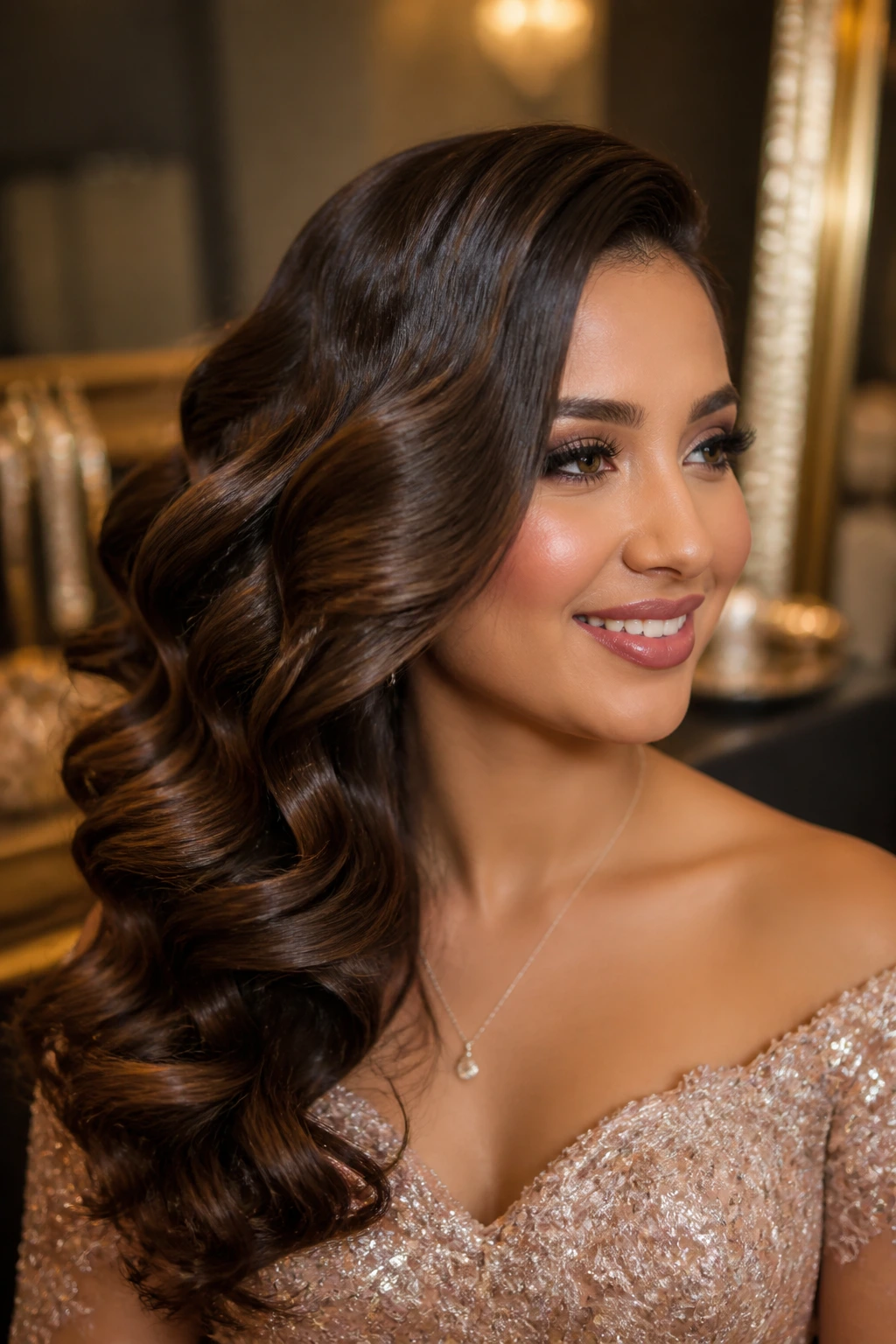
Big waves with a deep side sweep have a very specific effect: they look expensive in photographs even when the actual styling process is a bit fussy. The wave pattern should sit in loose, glossy ridges, not frizz into a cloud. That’s the difference.
The side sweep gives the style movement and keeps one side of the face open. It also works beautifully with a statement earring or a one-shoulder dress, because the hair flows in one direction instead of spreading everywhere. Use a 1¼-inch curling iron, let each curl cool in your hand, then brush them together so the wave pattern stays soft.
For a polished finish, clip the front section at the side and mist the underneath layers with flexible-hold spray. Too much spray on the top layer will make the waves crunchy. That’s a bad trade. Keep the shine, lose the stiffness.
3. Braided Crown Bun
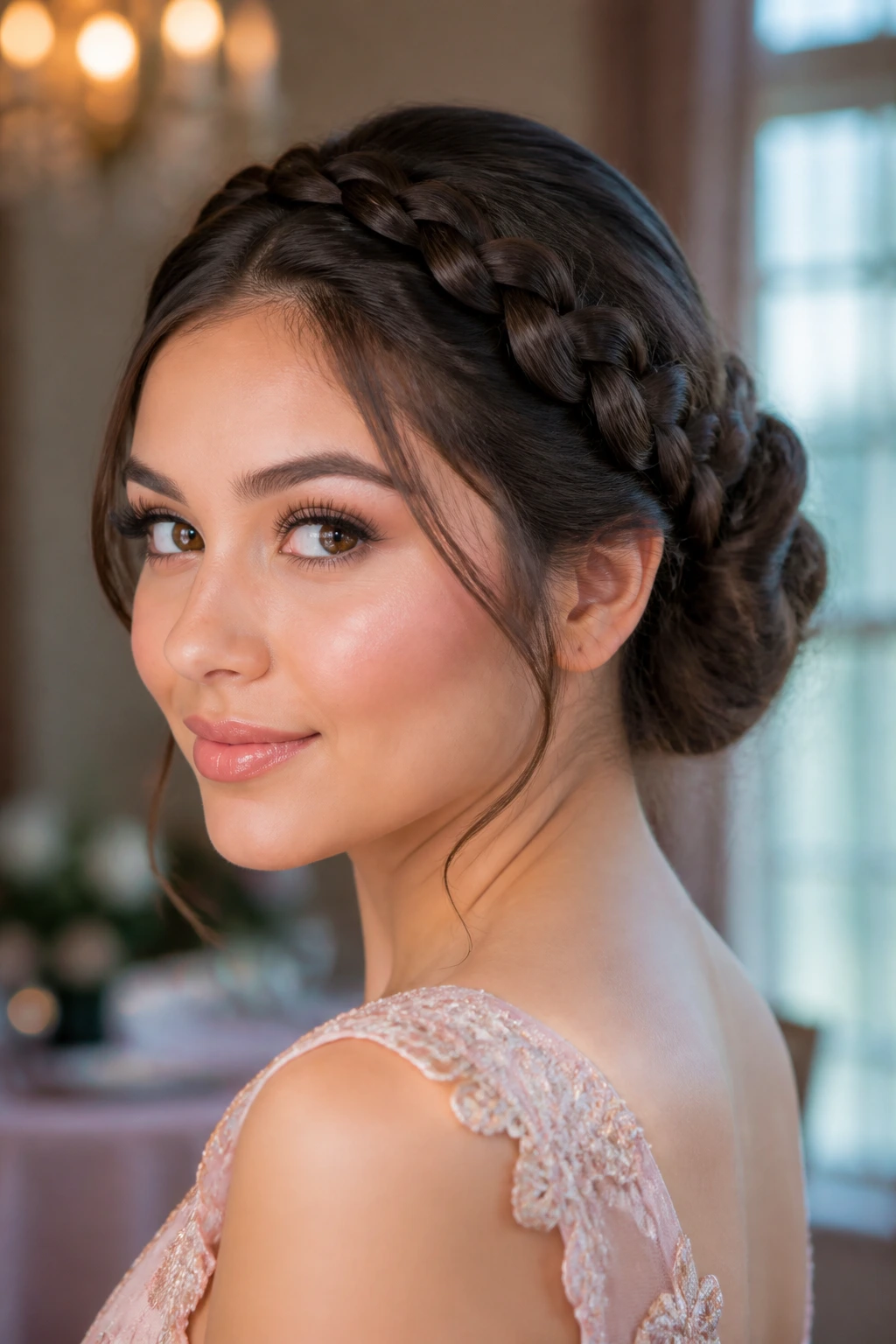
A braided crown bun is the style you pick when you want the head to look framed and secure all at once. The braid acts like a built-in border, and the bun gives the style a solid anchor at the back. It has ceremony to it.
Why It’s Such a Strong Choice
A braid around the hairline naturally pulls attention upward, which can make a rounder face look longer or help balance a fuller skirt. Because the braid leads into a bun, the style stays tidy even if the day runs long and the reception gets warm.
The nicest versions use a French braid or Dutch braid from temple to temple, then gather the rest into a low bun. Add a few pearl pins along the braid if the dress is plain and you want one more detail. Don’t overdecorate it. This style already has structure.
Best Details to Watch
- Use a small amount of styling wax on flyaways before braiding.
- Keep the braid snug at the hairline so it doesn’t puff out after an hour.
- Pin the bun in a crisscross pattern under the weight of the braid.
- Choose accessories that echo the dress, not fight it.
4. Half-Up Curled Ponytail With a Ribbon
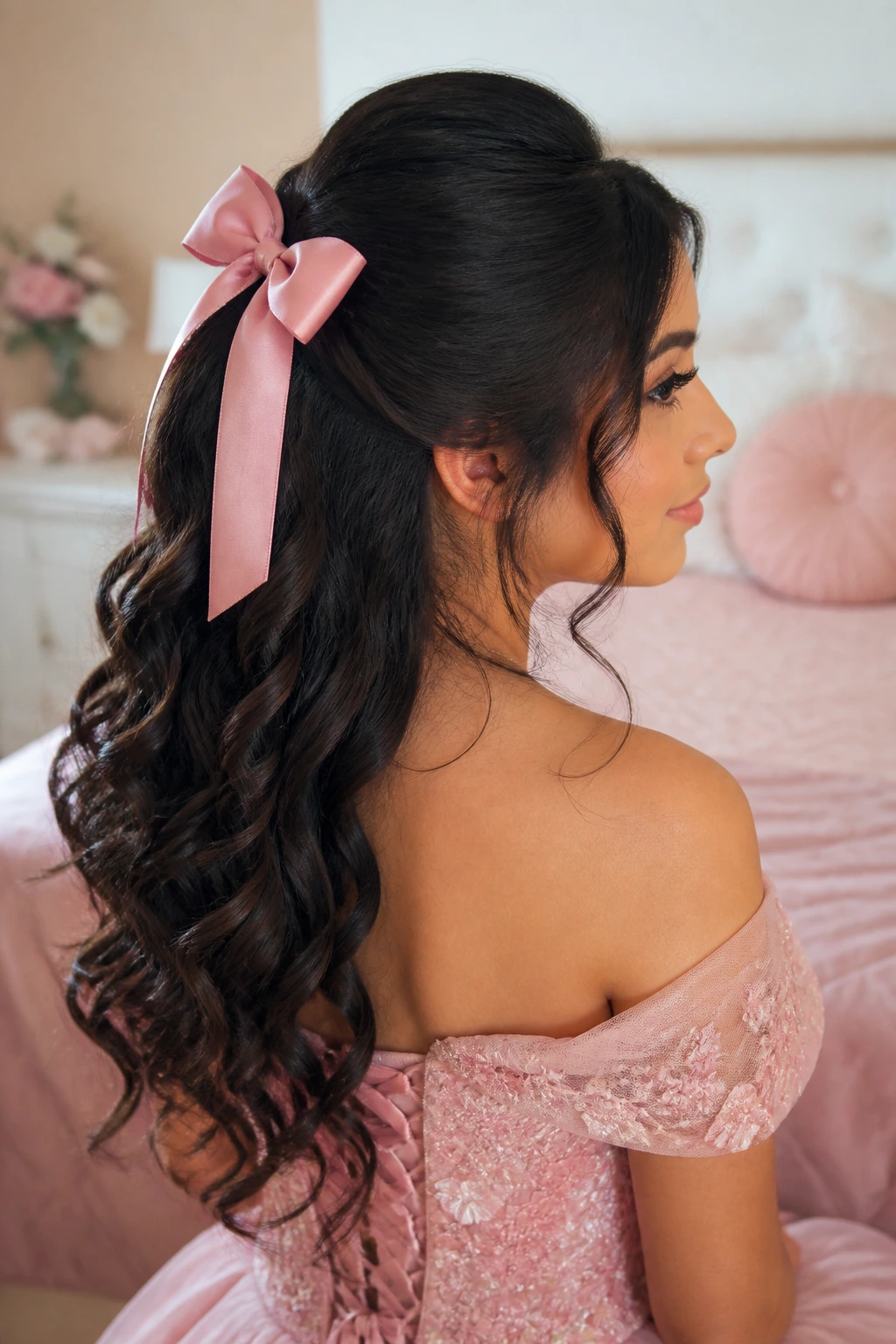
This style lands right between formal and soft, which is why so many people end up circling back to it. The top half is smoothed and lifted away from the face, while the lower length stays curled and full. A satin ribbon tied around the base makes it feel finished instead of casual.
The ribbon matters more than people think. It gives the ponytail a point of focus and can echo the color in the dress sash, bouquet, or shoes. Keep the ponytail high enough to show the curl pattern, but not so high that it turns sporty.
If your hair is layered, curl the ends under slightly so the lower section doesn’t fray at the hemline. And if your hair is thin, gently tease the crown before securing the half-up section. Just a little. You want lift, not a nest.
5. Twisted Low Bun With Pearl Pins
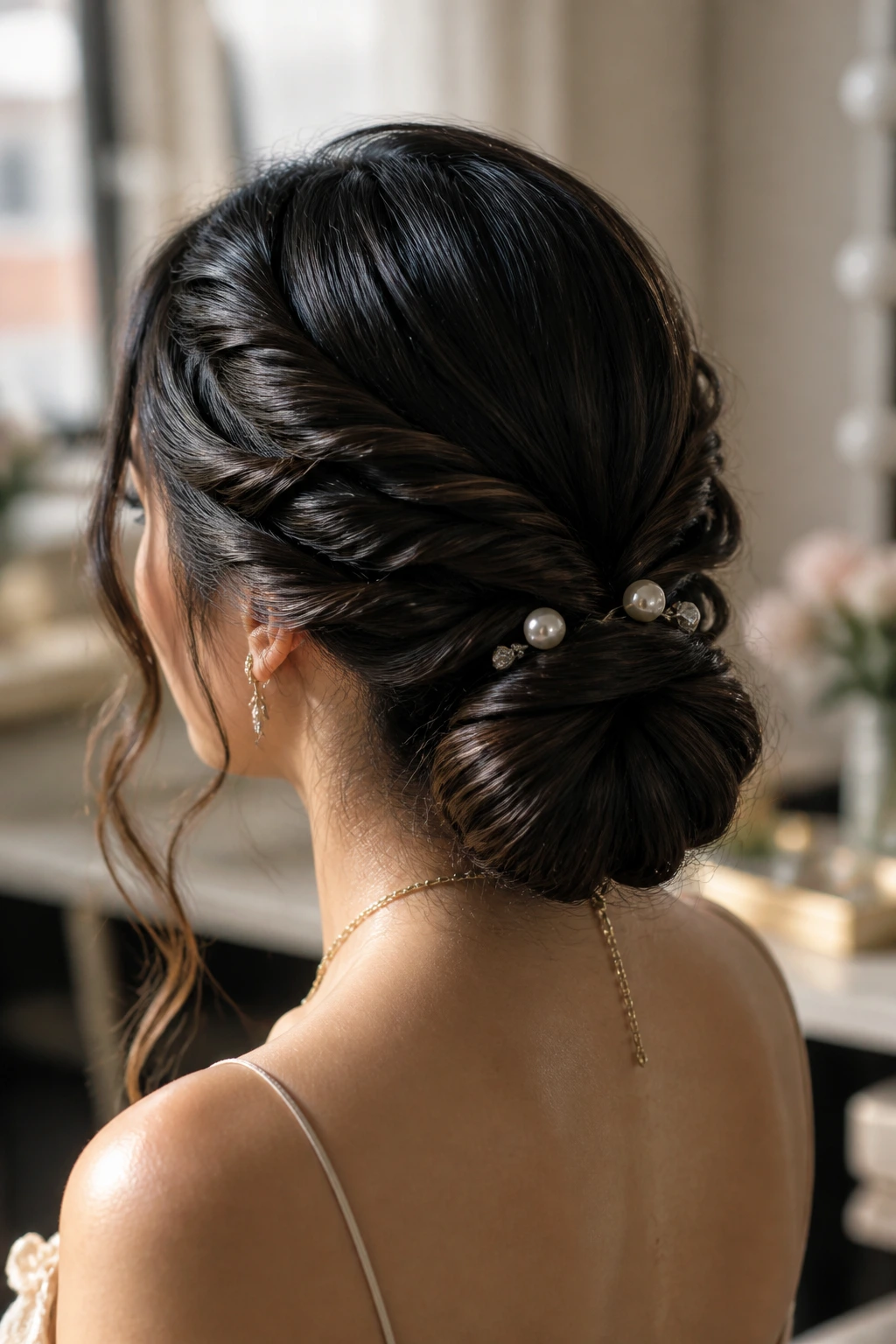
Twists are underrated. People reach for braids first, but two clean rope twists feeding into a low bun can look smoother and more refined, especially if the hair is thick or long. Pearl pins along the seam add a soft, formal finish without making the style loud.
The part can be centered or slightly off-center depending on the dress. What matters is that the twists stay even in size and tight enough to hold their shape. If one twist is loose and the other is tight, the bun looks lopsided from the back.
This style works well when you want the hair to sit low and close to the neck. It keeps the shoulders clear, which helps if the gown has lace, beading, or a strong neckline. A tiny dab of shine cream on the twisted sections can make the pattern show better under light.
6. Bubble Ponytail With a Polished Crown
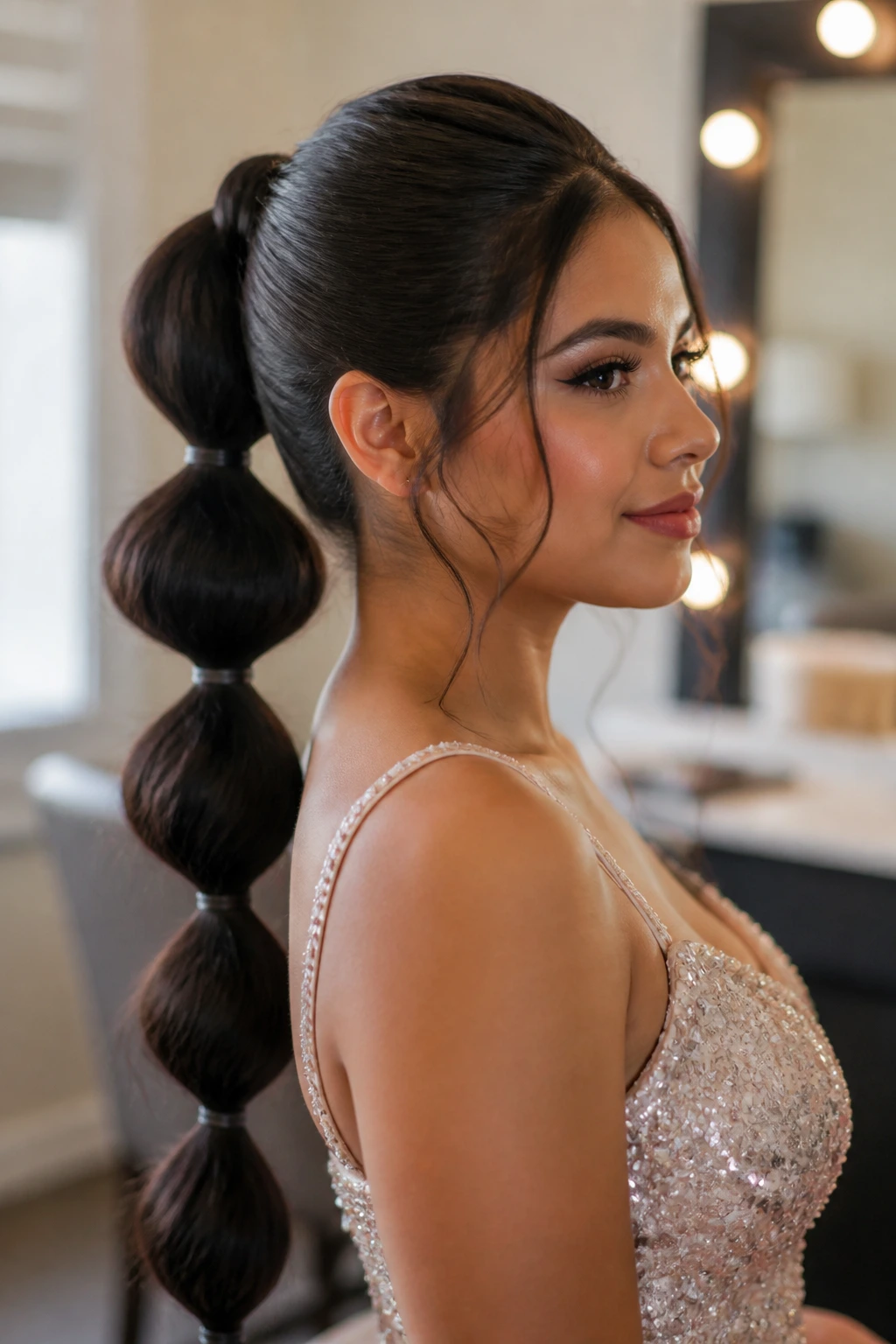
A bubble ponytail sounds playful, but with the right smoothing at the crown, it looks much more dressed up than the name suggests. The top section should be sleek and flat, then the ponytail is broken into evenly spaced bubbles with clear elastics and gently pulled out between each tie.
The reason this style works is simple: it gives structure without needing a full updo. That makes it a smart choice if you want length visible, especially when the dress is simpler and the hair needs to carry more of the drama. It’s also friendly to extensions.
Do not skip the wrapping step at the base. A small section of hair wrapped around the first elastic makes the whole thing look cleaner. If you leave the elastic exposed, the style loses its polish fast. Finish with a light mist of spray and smooth the crown with a toothbrush or edge brush if you need a precise hairline.
7. Side-Swept Curls With a Deep Part
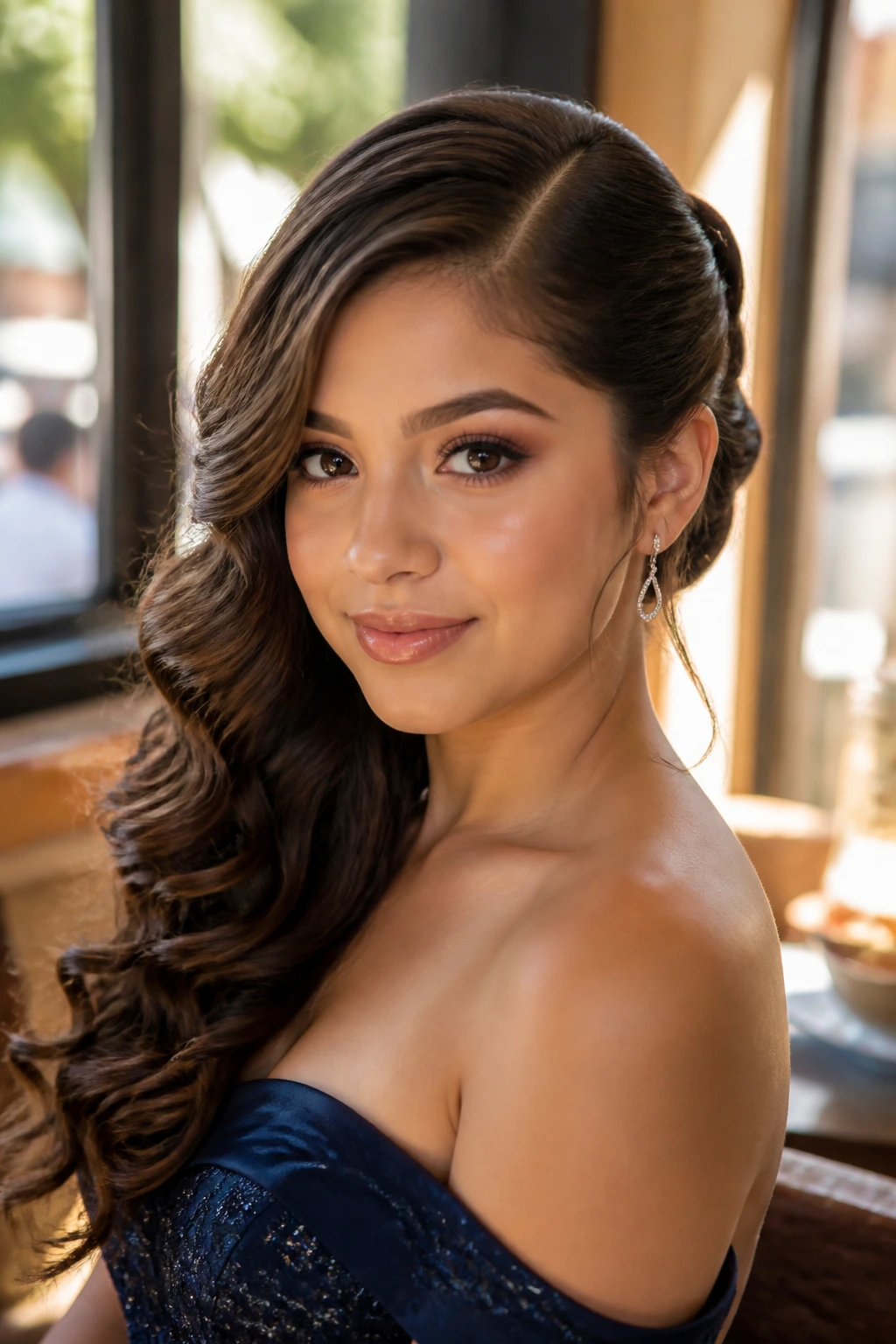
A deep side part can do a lot of heavy lifting. It creates instant shape, and when the curls fall over one shoulder, the style reads glamorous without needing a complicated structure underneath. This is one of the easier ways to look finished without looking overbuilt.
The best version has curls that are brushed just enough to merge into soft waves, not so much that they lose definition. Pin the heavier side at the back with a decorative comb or a few hidden pins so the hair stays in place while you move. A little bend near the ends keeps the silhouette from getting too uniform.
If the dress has a bold neckline or statement bodice, side-swept curls give you movement without hiding the details. If the dress is simple, this hairstyle can carry the look on its own. That’s the real advantage here.
8. High Polished Bun With Face-Framing Tendrils
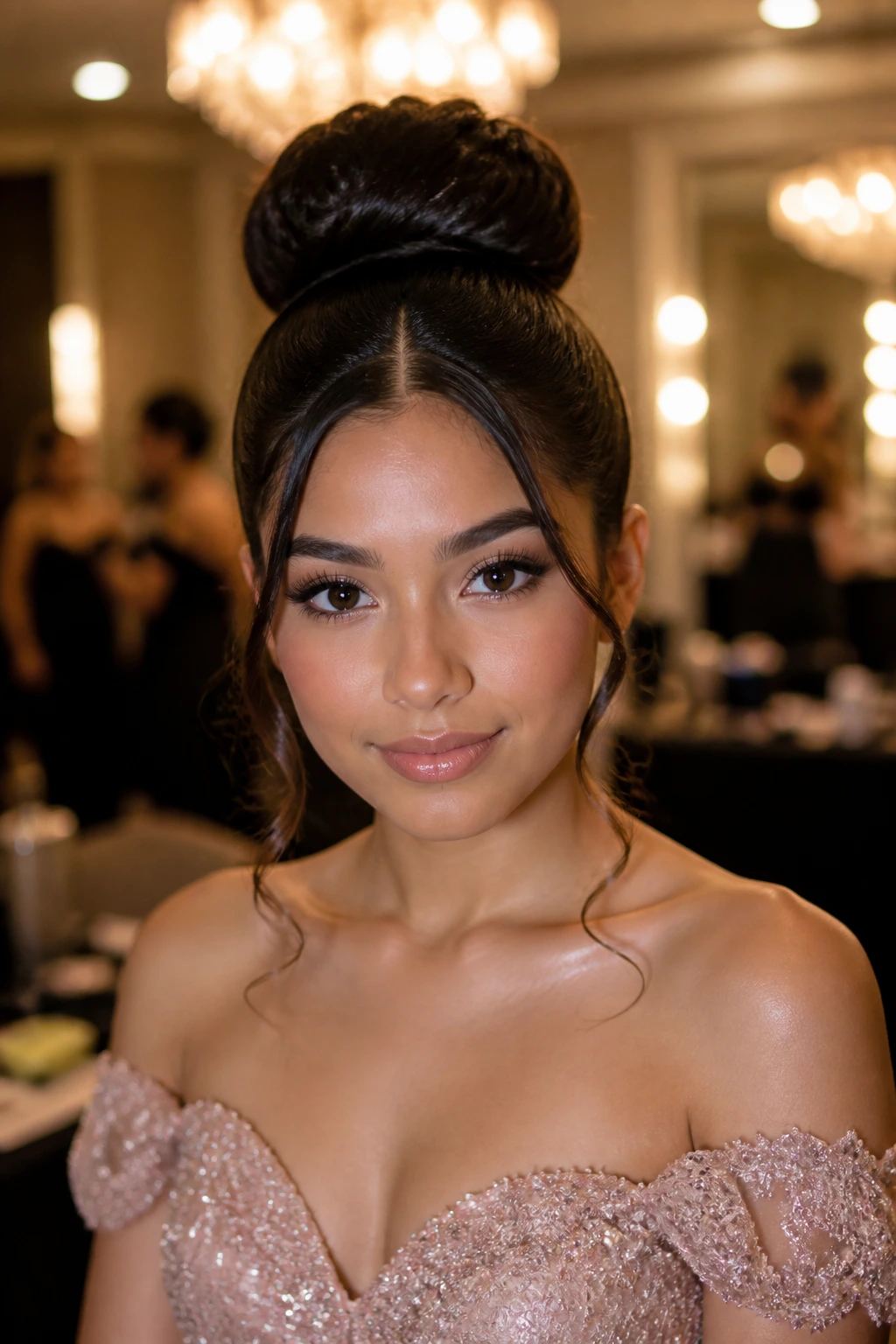
A high bun gives immediate height, and height makes a formal look feel intentional from far away. The polished version sits neatly at the crown, with smooth sides and just enough face-framing tendrils to soften the edges. It’s neat. Sharp, even.
The tendrils matter because a high bun can get severe if every hair is pulled back too tightly. Leave two thin front pieces out, curl them with a small iron, and let them fall to cheekbone or jaw level. Anything longer starts dragging the style down visually.
This is a strong pick for dresses with open shoulders or a very full skirt. The top of the head stays visually clean, so the jewelry and makeup can do their job. Use a firm brush to smooth the sides before pinning the bun, and don’t be afraid of hair padding if you want the bun to look fuller from the front.
9. Waterfall Braid Into Soft Curls
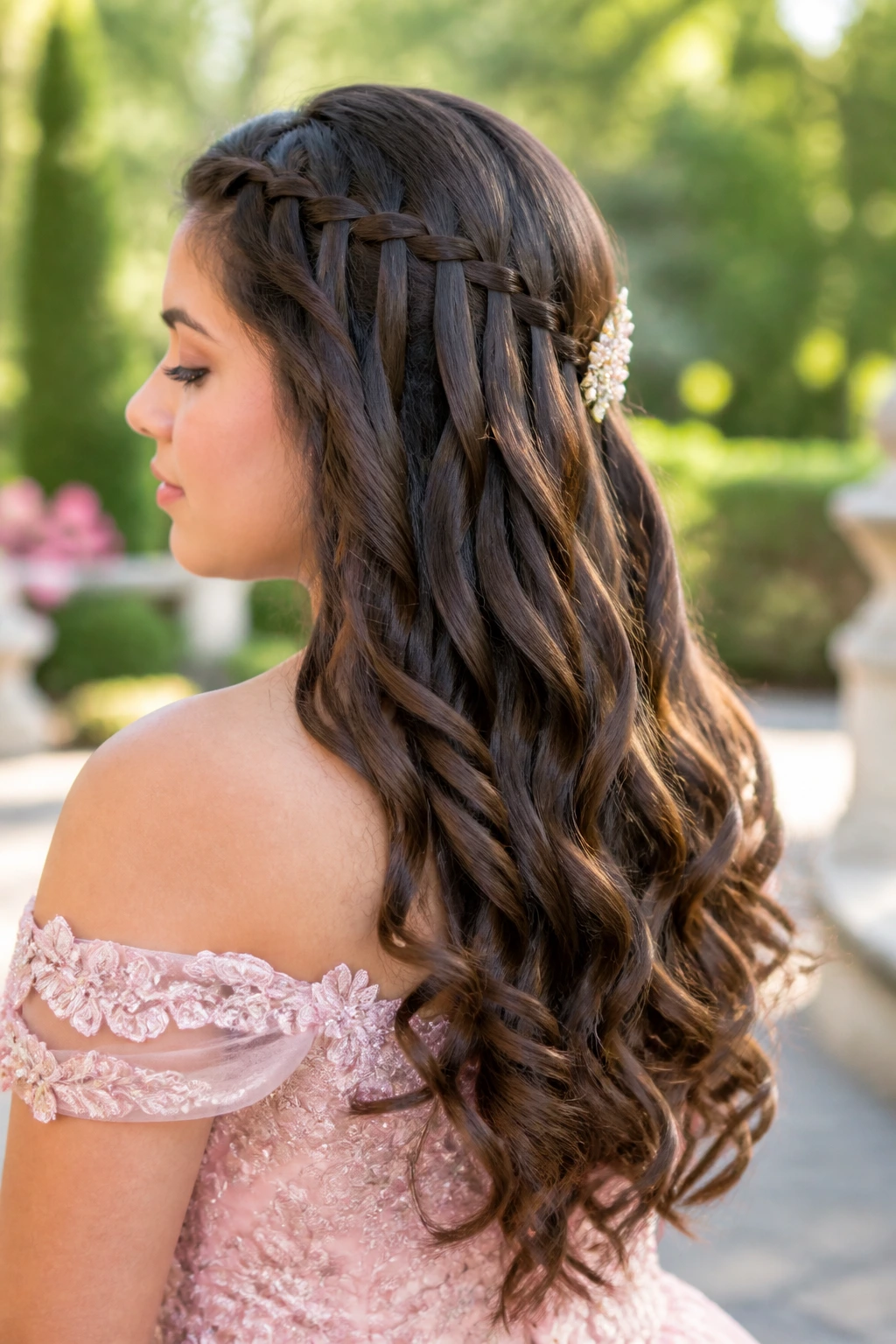
A waterfall braid has a graceful feel that suits a quinceañera without turning fussy. Hair is woven across the back of the head, but a few sections drop through the braid to create that soft, cascading pattern. The rest of the hair falls in curls beneath it.
The braid should sit wide enough to be seen in photos, but not so chunky that it swallows the head shape. Think of it as a frame, not a helmet. The released sections give movement, which keeps the style from becoming too fixed.
I like this one for medium to long hair that already has some natural bend. It handles texture well and keeps the style from looking too severe. A small floral pin tucked at the braid’s end can tie the whole thing together, especially if the bouquet has matching blooms.
10. Voluminous Half-Up Half-Down With a Crown Braid
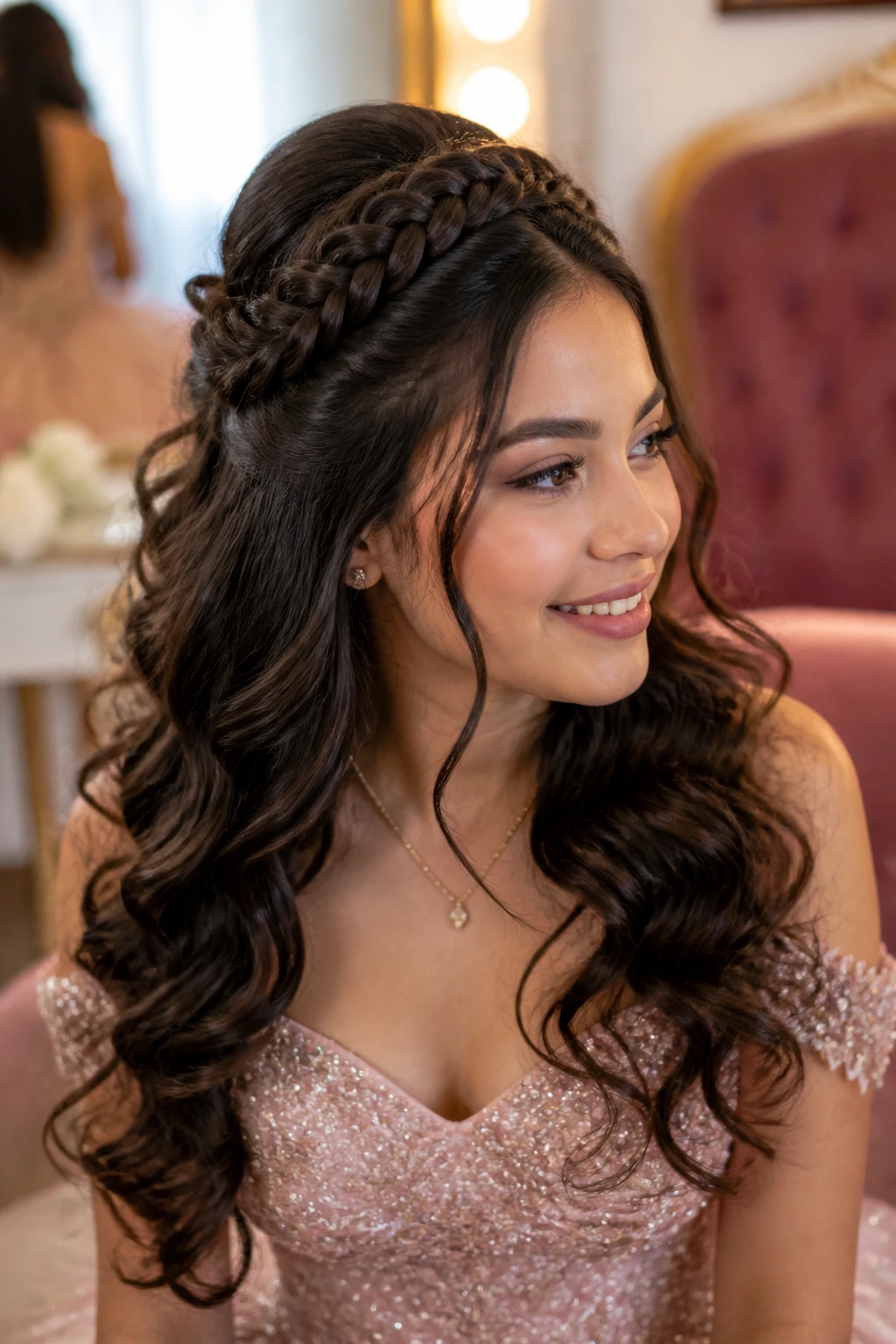
This style gives you the best of both worlds if you like length but don’t want hair hanging in your face all night. The top section is lifted into a crown braid or twisted band, while the lower half is left loose and full. The overall shape has height at the crown and softness at the ends.
It works best when the crown section has a little lift at the roots. Backcombing the inner layer and smoothing the top layer over it gives the braid a fuller, more dimensional look. Without that lift, the style can sit flat and lose its formal feel.
A half-up style like this is also forgiving if you’re wearing a tiara. The braid gives the accessory something to sit on, instead of floating awkwardly in the hair. If the dress is heavily detailed, keep the braid clean and the curls simple. If the dress is plain, add a couple of pearl pins near the braid seam.
11. Low Ponytail Wrapped With Hair and Bow
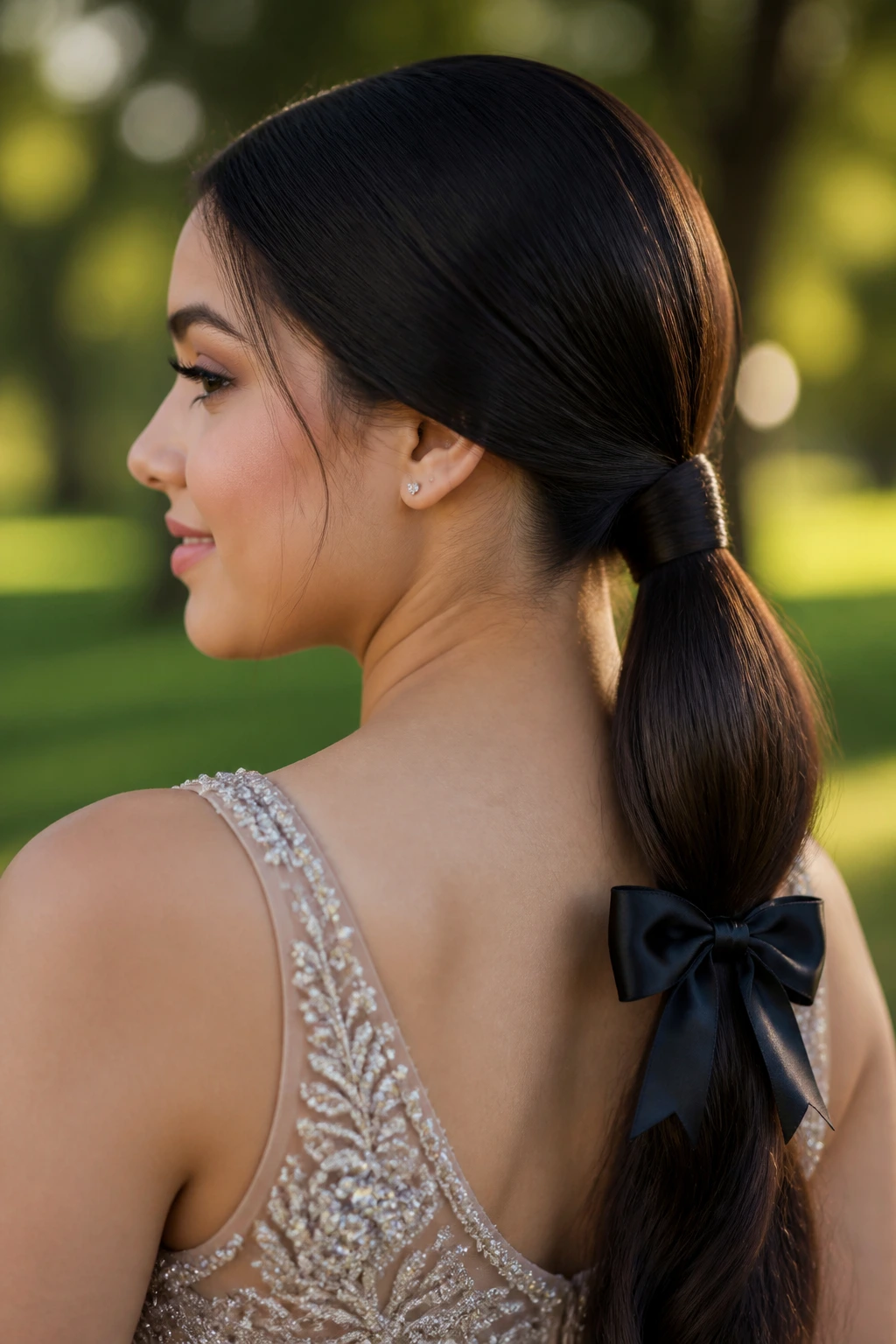
A low ponytail can look formal if you treat every part of it carefully. Smooth the crown, secure the ponytail low at the nape, wrap a strand of hair around the elastic, and finish with a bow that matches the dress or shoes. That last part matters more than it seems.
The shape should be sleek at the top and fuller through the tail. If the hair is pin-straight, curl just the last few inches so the ponytail doesn’t hang limp. If the hair is already wavy, leave the texture in the lower half and focus on smoothing the crown.
This style is especially useful when the gown is heavily beaded or has a detailed back, because the ponytail sits low and stays out of the way. It’s elegant without feeling stiff. And yes, a good bow can pull the whole look together when the fabric and color are chosen well.
12. French Twist With a Glossy Finish
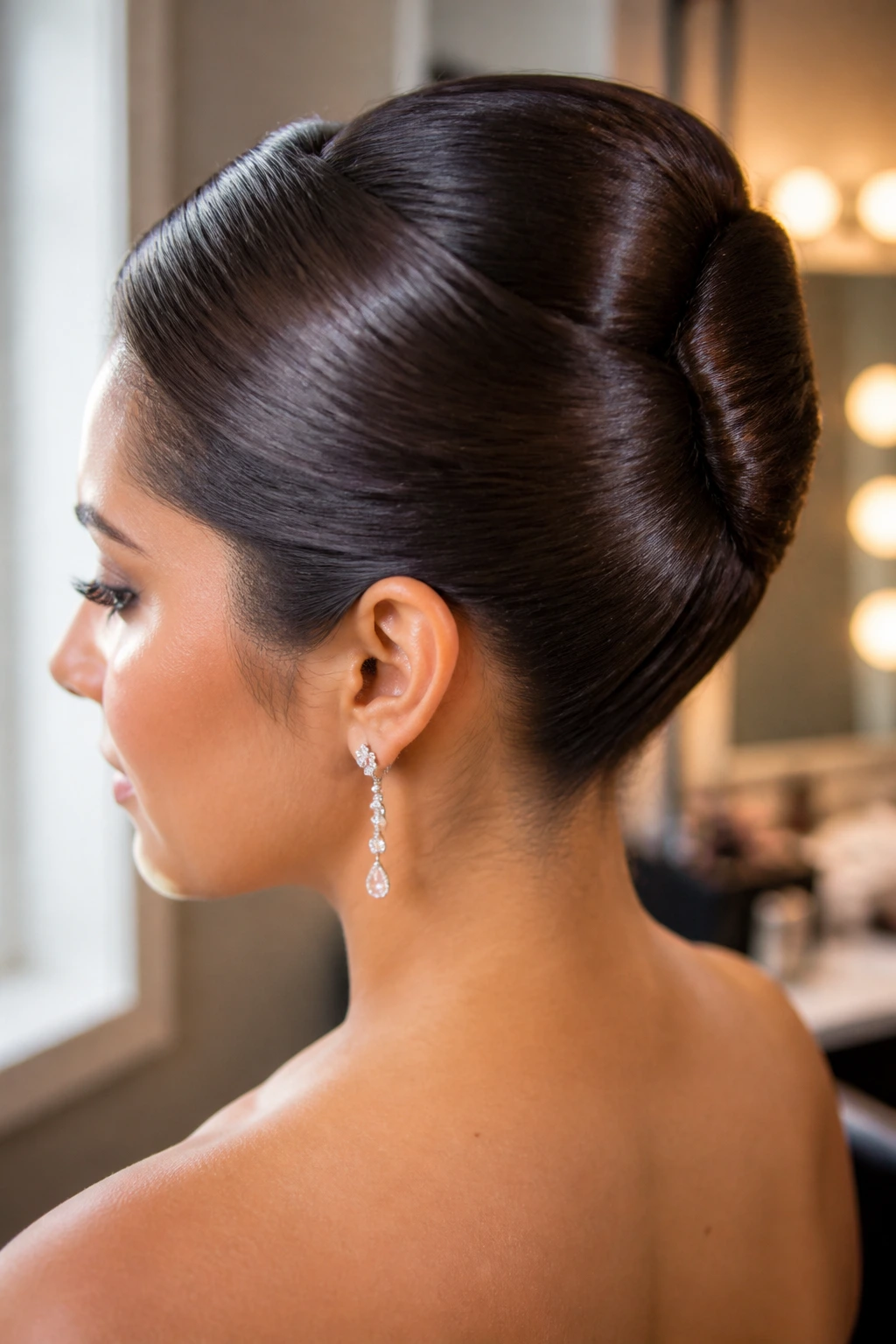
The French twist is one of those styles that looks harder than it is, which is part of its charm. Hair is swept upward, rolled inward, and pinned into a vertical fold that sits close to the head. The finished shape should be smooth, narrow, and glossy.
It works particularly well for formal portraits because the twist creates a clean line from neck to crown. That line makes the face and earrings stand out. A little shine spray brushed over the top layer can help the twist read more refined in indoor light, but don’t soak it.
If you have very layered hair, pin the shorter pieces first so they don’t escape from the twist later. That’s the part that usually causes trouble. Once it’s secure, the style can hold for hours with surprisingly little fuss.
13. Braided Halo With Loose Waves
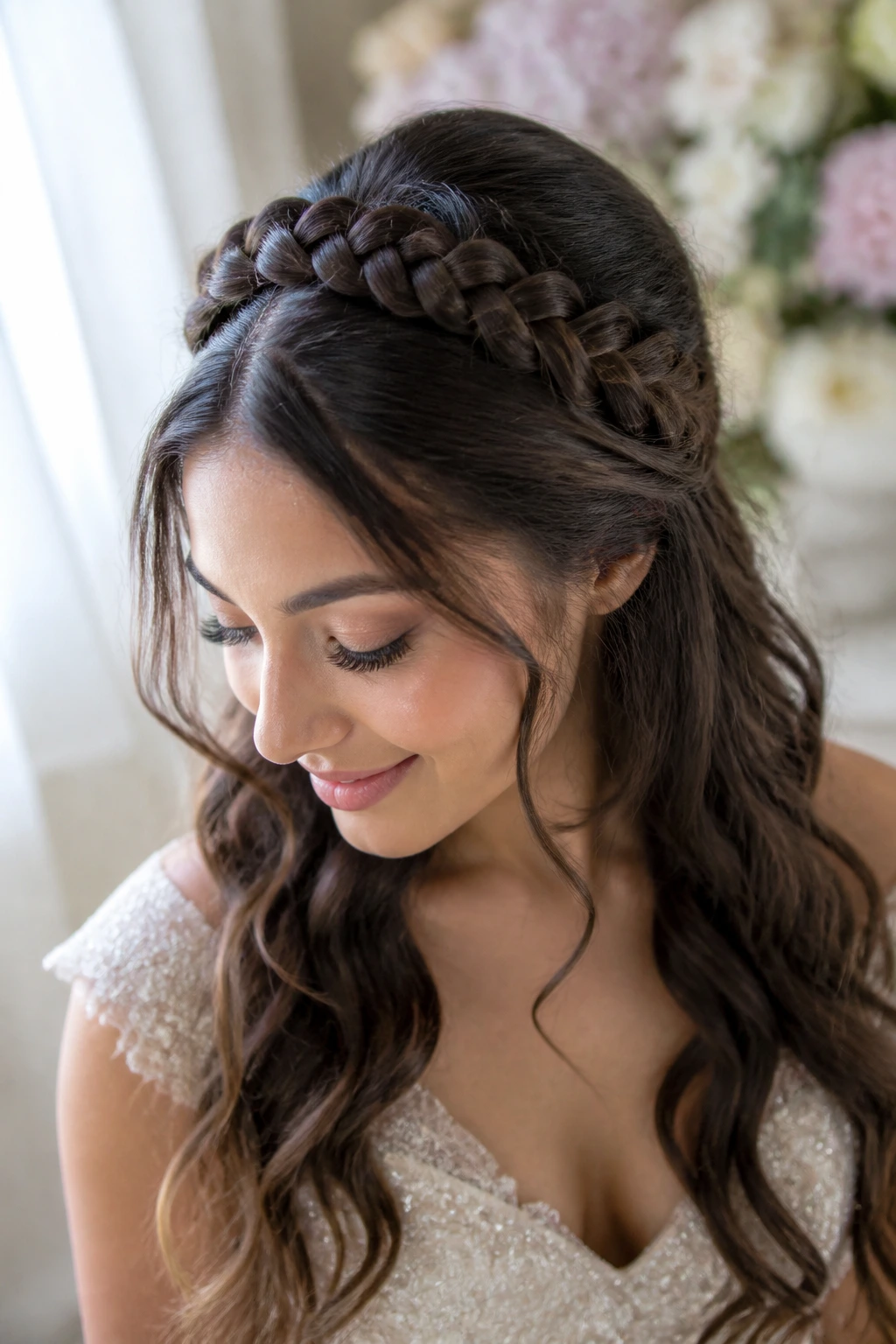
A halo braid circles the head like a crown, and that makes it a natural fit for a celebration built around ceremony. The braid sits on top, while the rest of the hair falls in soft waves below. It gives you one of those rare styles that feels both secure and airy.
The braid should be neat, but not tight enough to flatten the scalp into a hard line. Loosen each braid section slightly after pinning so the halo has thickness. Then leave the lower waves soft and touchable. The contrast is what makes it work.
This style is especially nice if you want a romantic finish without committing to a full updo. It also works well with flower pins or a narrow jeweled headband. Keep the lower curls brushed together lightly, not separated into ringlets, or the whole look can feel too busy.
14. Rope-Braid Side Bun
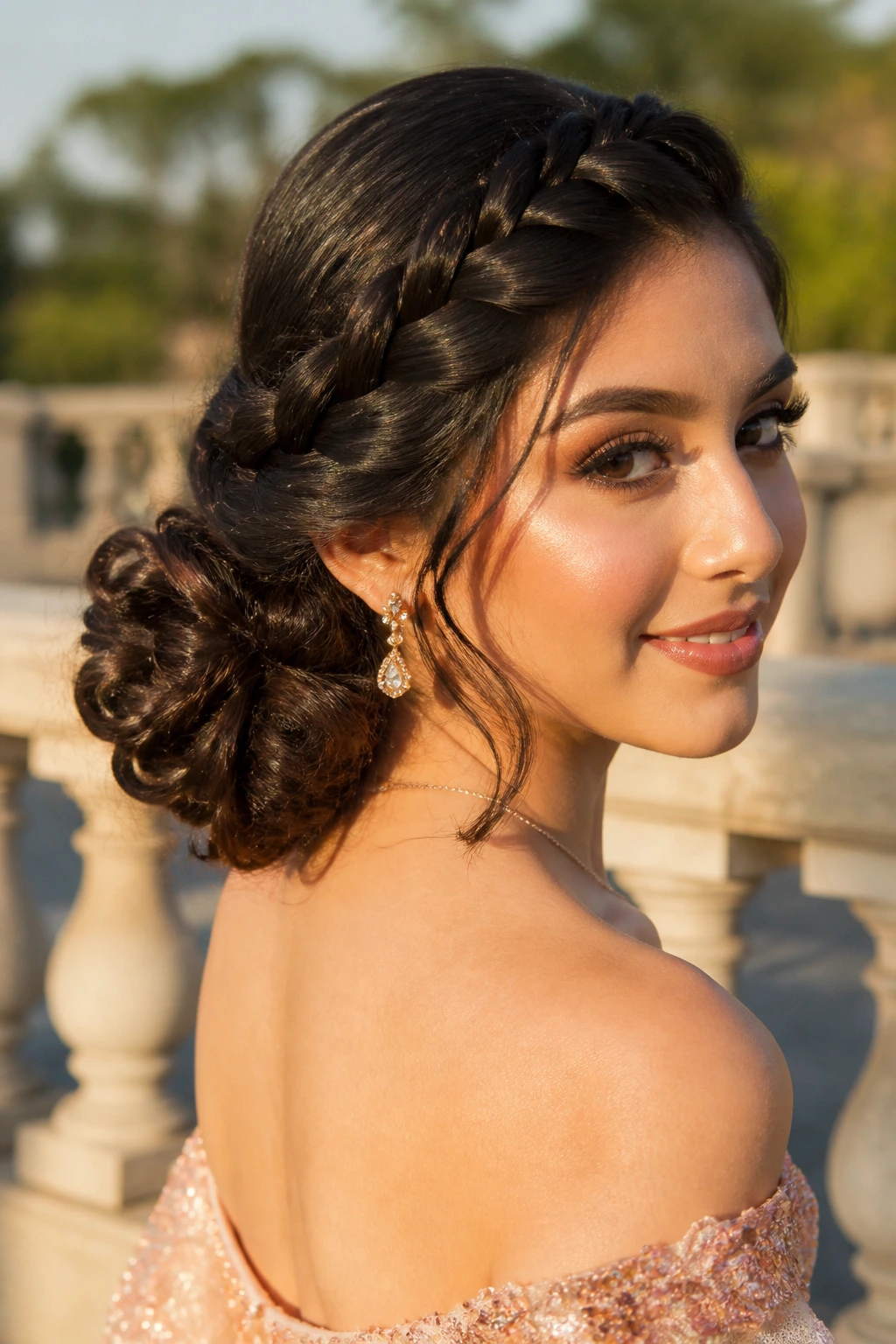
A rope-braid side bun sits just off center and brings the eye diagonally across the head. That angle makes the style feel a little more modern than a straight low bun. It’s polished, but not rigid.
The rope braid itself is simple: two sections twisted around each other, then wrapped into a bun near the side or back of the neck. The key is tension. If the twist is too loose, the pattern looks fuzzy. If it’s too tight, the braid loses the soft sculpted look that makes it pretty.
I like this one for dresses with asymmetry. A one-shoulder gown or a neckline with one bold detail benefits from a hairstyle that doesn’t fight it. Add a few small crystals or a single comb on the opposite side to balance the visual weight, and keep the rest of the head smooth.
15. Glamour Ponytail With Curled Ends
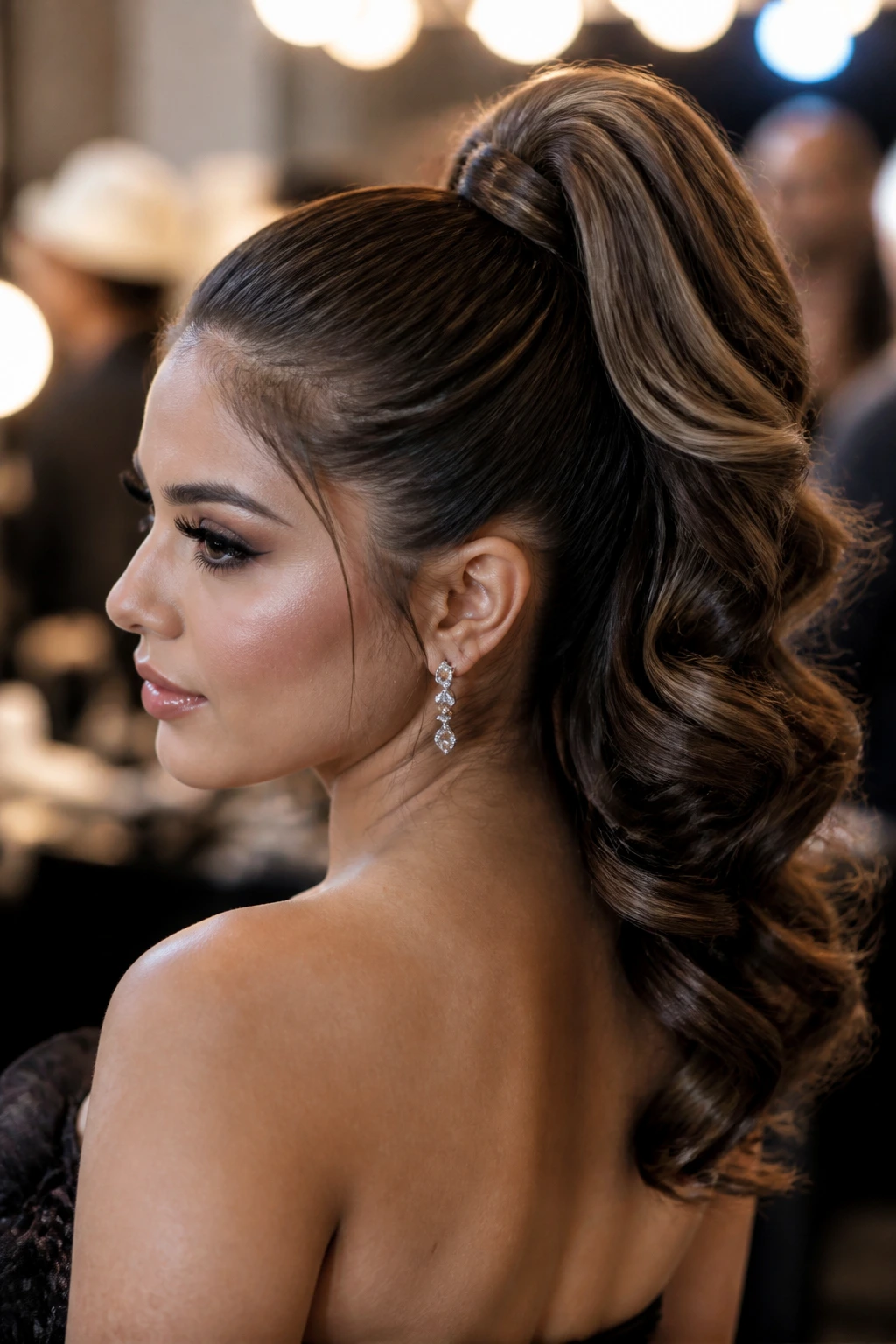
A high glamour ponytail is polished in a very direct way. The crown is lifted and smooth, the ponytail sits high, and the ends are curled into large, deliberate loops that read well from across the room. There’s nothing timid about it.
The base should be wrapped and pinned so the elastic disappears. Then the ponytail can be curled in sections with a 1-inch or 1¼-inch iron, depending on how defined you want the ends. Brush the curls together gently for a more cohesive tail, but stop before the pattern disappears.
This style works if you want movement and height without a full updo. It’s especially good for thick hair or clip-in extensions because the ponytail itself becomes the statement. Keep the crown smooth and the tail glossy, and it will hold up much better than a messy “textured” ponytail that was never really meant to be formal in the first place.
16. Loose Romantic Bun With a Floral Comb
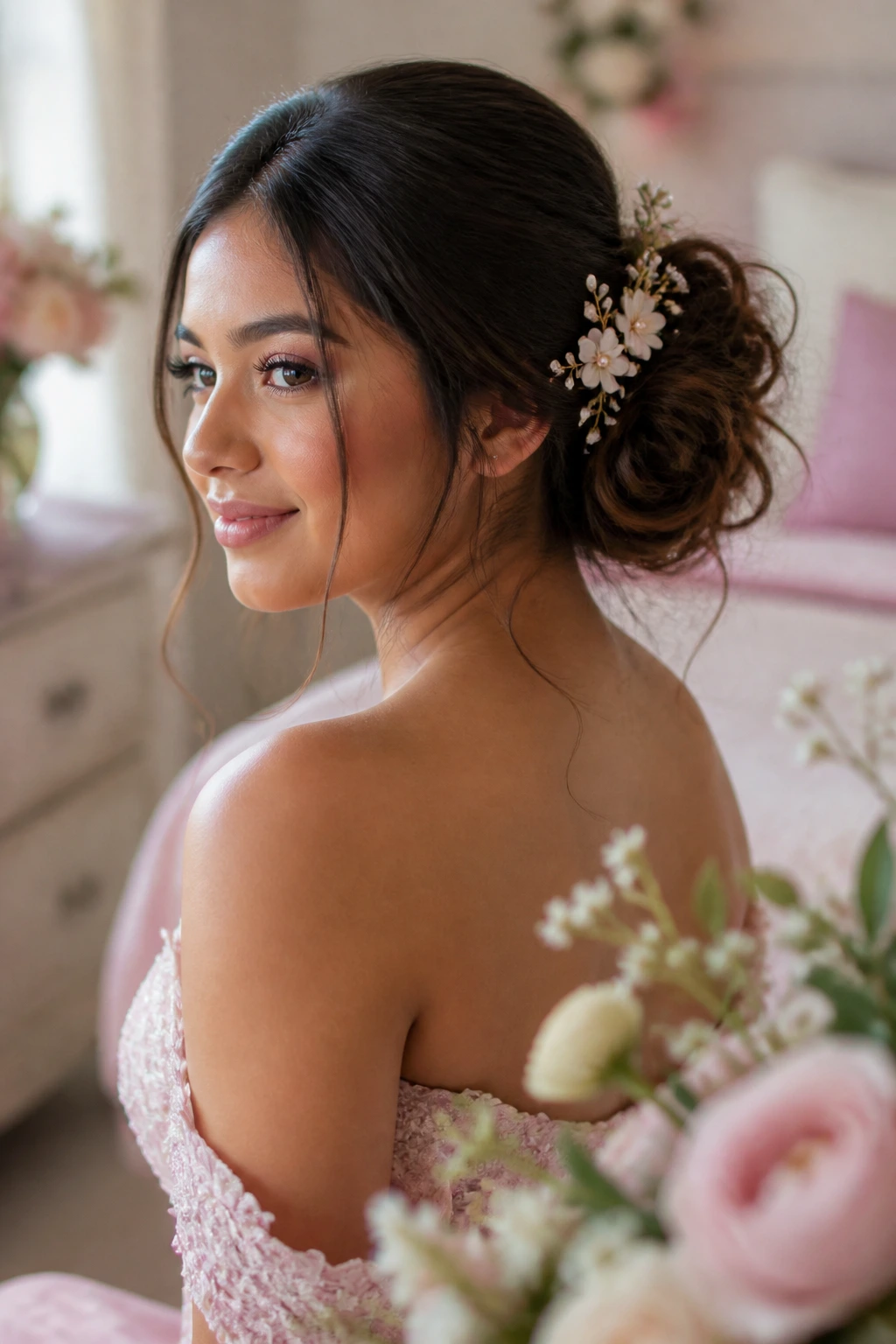
A loose bun can still look polished if the softness is controlled. The bun sits low or mid-level, with a few carefully placed pieces near the face and a floral comb tucked into one side. It should look airy, not undone.
The trick is to build the bun in sections instead of knotting everything at once. That lets you shape the volume so the bun has body from the side and back. Then place the floral comb where it can catch the light or echo the bouquet. If the flowers are oversized, keep the bun simple. If the flowers are tiny, you can afford a little more texture.
This is a good choice for a dress that already has softness built into it — tulle skirts, lace sleeves, lighter fabrics. The hairstyle should echo that mood without turning messy. A few hidden pins and a light mist of spray are enough to keep the shape from drifting.
17. Slicked-Back Textured Bun
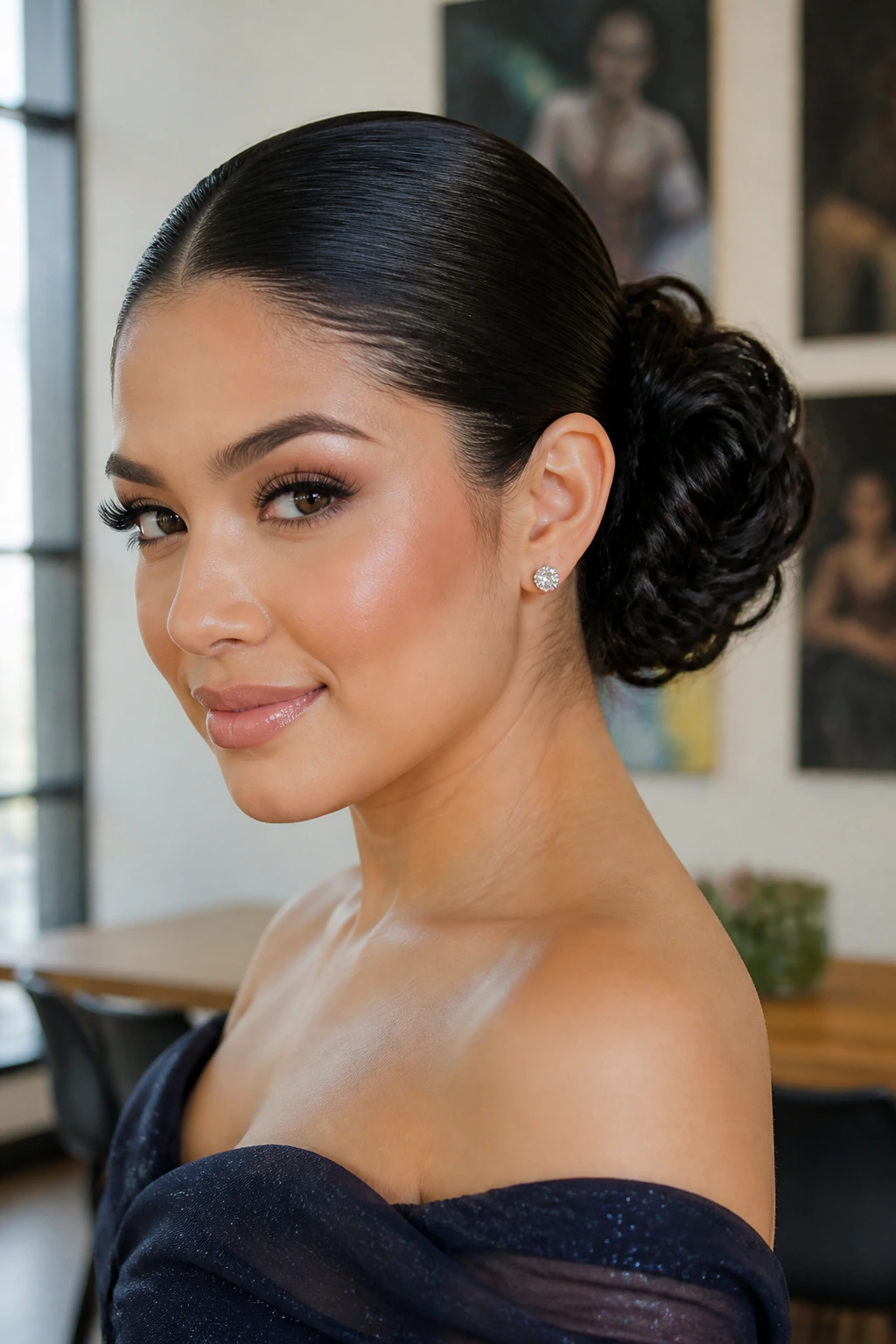
This one has edge, and I mean that in the best way. The crown is smooth and close to the head, almost glossy, while the bun itself has a touch of texture so it doesn’t look stiff or flat. The contrast gives the style a modern, polished shape.
The slicked-back front is what makes it formal. Use a comb and a small amount of gel or cream to direct the hair straight back, then build the bun with pins and a little twist in the ends. Too much texture on top ruins the effect. Keep the top disciplined and let the bun carry the movement.
It’s especially strong with bold makeup or a dress with architectural lines. This style doesn’t compete. It supports. If you want to look clean, contemporary, and photo-ready from every angle, this is one of the sharper choices on the list.
18. Crisscross Half-Up Style With Curls
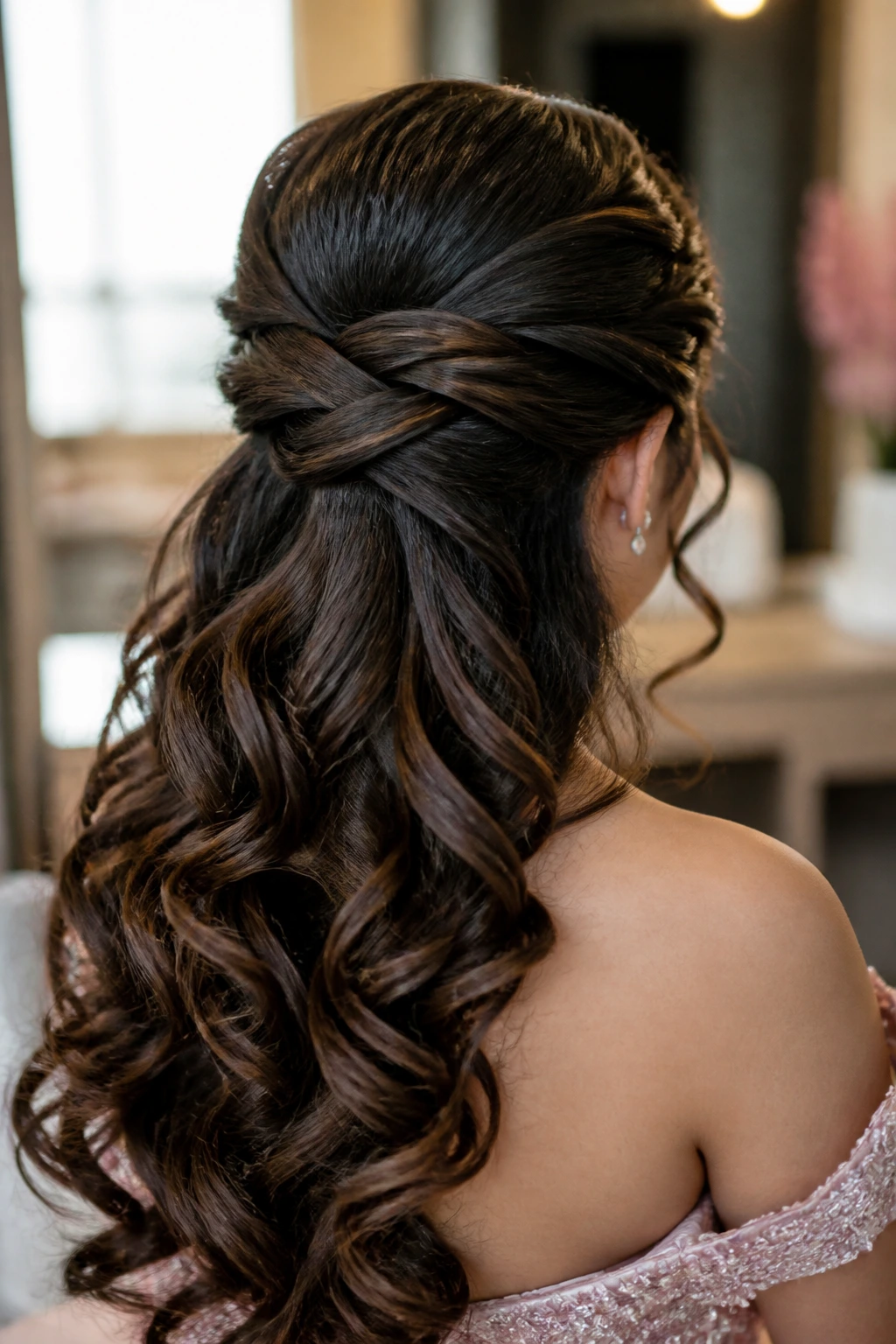
A crisscross half-up style gives you structure without losing softness. Sections from each side are pulled back, crossed over one another, and pinned at the center back, where the lower curls fall free. It looks more detailed than a standard half-up style, but it doesn’t overwhelm the hair.
What sells it is the pattern. Those crossed sections create a visible design line across the back of the head, which reads beautifully in photos. Keep the sections smooth before you cross them; otherwise the whole thing starts looking messy instead of intentional.
This style works especially well for medium-thick hair because the lower curls need enough body to balance the top detail. A small jeweled clip at the crossing point can replace a bigger accessory if you want the dress to stay the focus. It’s a tidy, polished option that still feels soft around the edges.
19. Double Dutch Braids Into a Low Bun
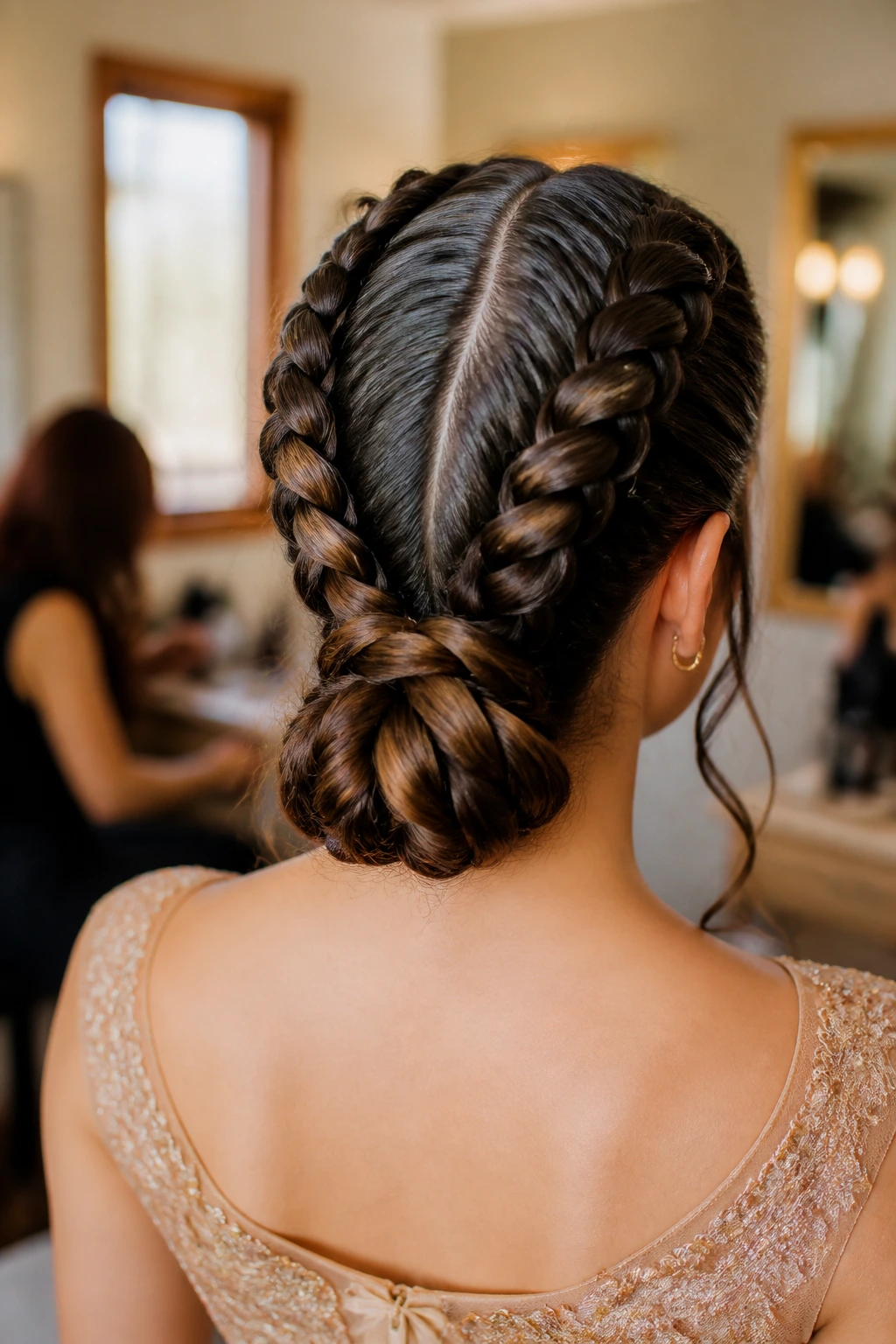
Two Dutch braids feeding into a low bun can look surprisingly formal when they’re done with clean parting and good tension. The raised braid pattern gives the style definition, while the bun grounds it at the back. It’s secure. Very secure.
This is a strong choice if the day will be long and active. Dutch braids grip the hair well, which means less slipping and fewer touch-ups. The key is to keep the parting neat and the braids symmetrical. Uneven braids show immediately here, so take your time.
A low bun keeps the braids elegant instead of sporty. If you want the style to feel more dressed up, weave a thin ribbon through the braids or add small pearl pins near the bun. That tiny extra detail can shift the whole look from practical to formal.
20. Faux Bob for Short Hair or Tucked-Up Length
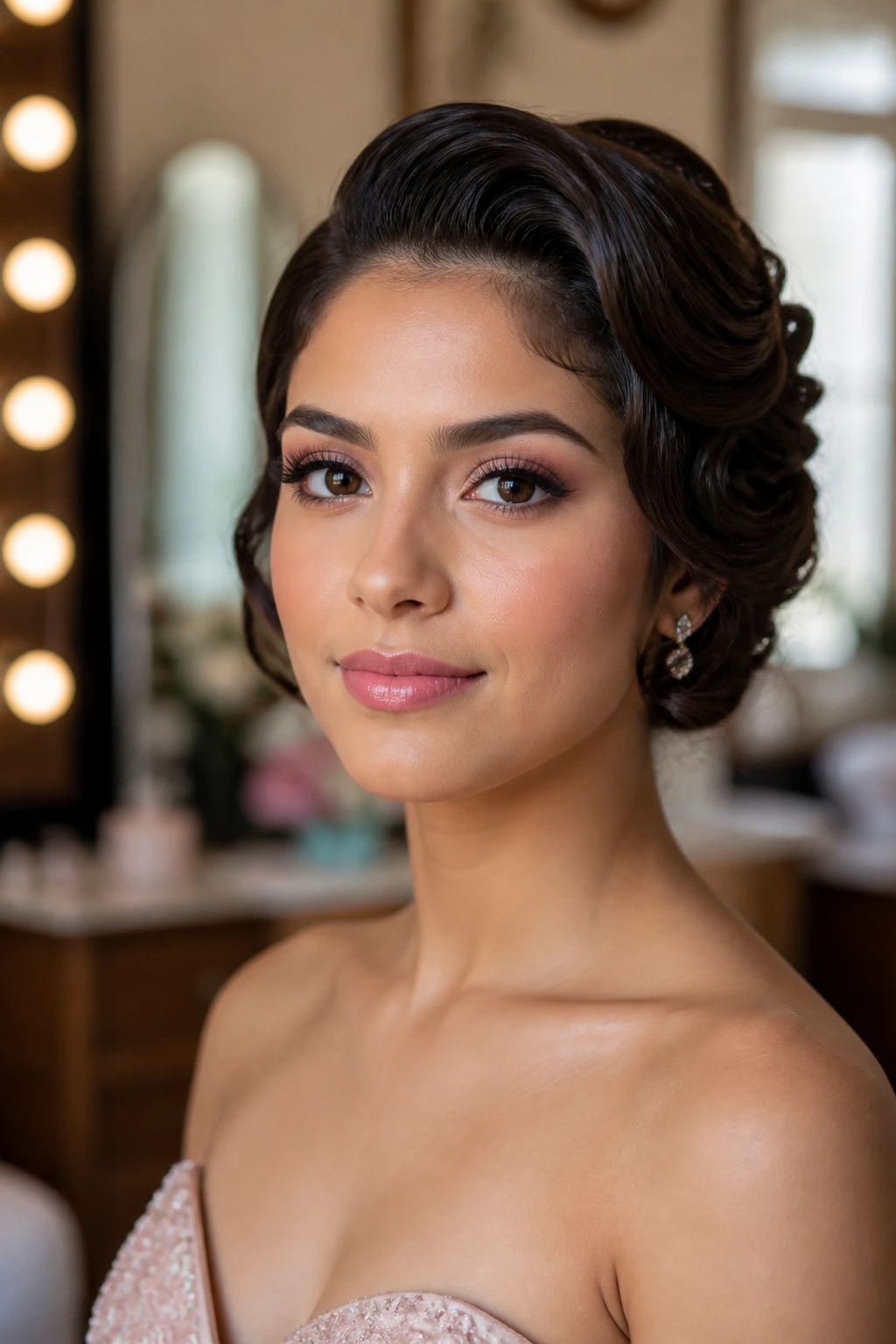
A faux bob is for the person who wants a polished finish without pretending the hair is longer than it is. The ends are tucked under and pinned so the hair sits at jaw or chin level, creating the shape of a bob even if the actual length is longer. On shorter hair, a pin-curl set or finger waves can create a similar effect.
This style is wonderfully specific. It says you planned for your length instead of fighting it. That’s why it can look so chic. Add a side part, a rhinestone comb, or a narrow veil clip and the whole thing feels deliberate, not improvised.
It’s a smart option if you want the neck and shoulders to stay open. It also handles earrings beautifully because the hair doesn’t crowd the face. The main thing is to pin the underside well so the shape stays tucked all night. Loose pins here are visible fast, and they pull the style out of its clean little line.
How to Choose the Right Style for Your Dress and Hair Texture
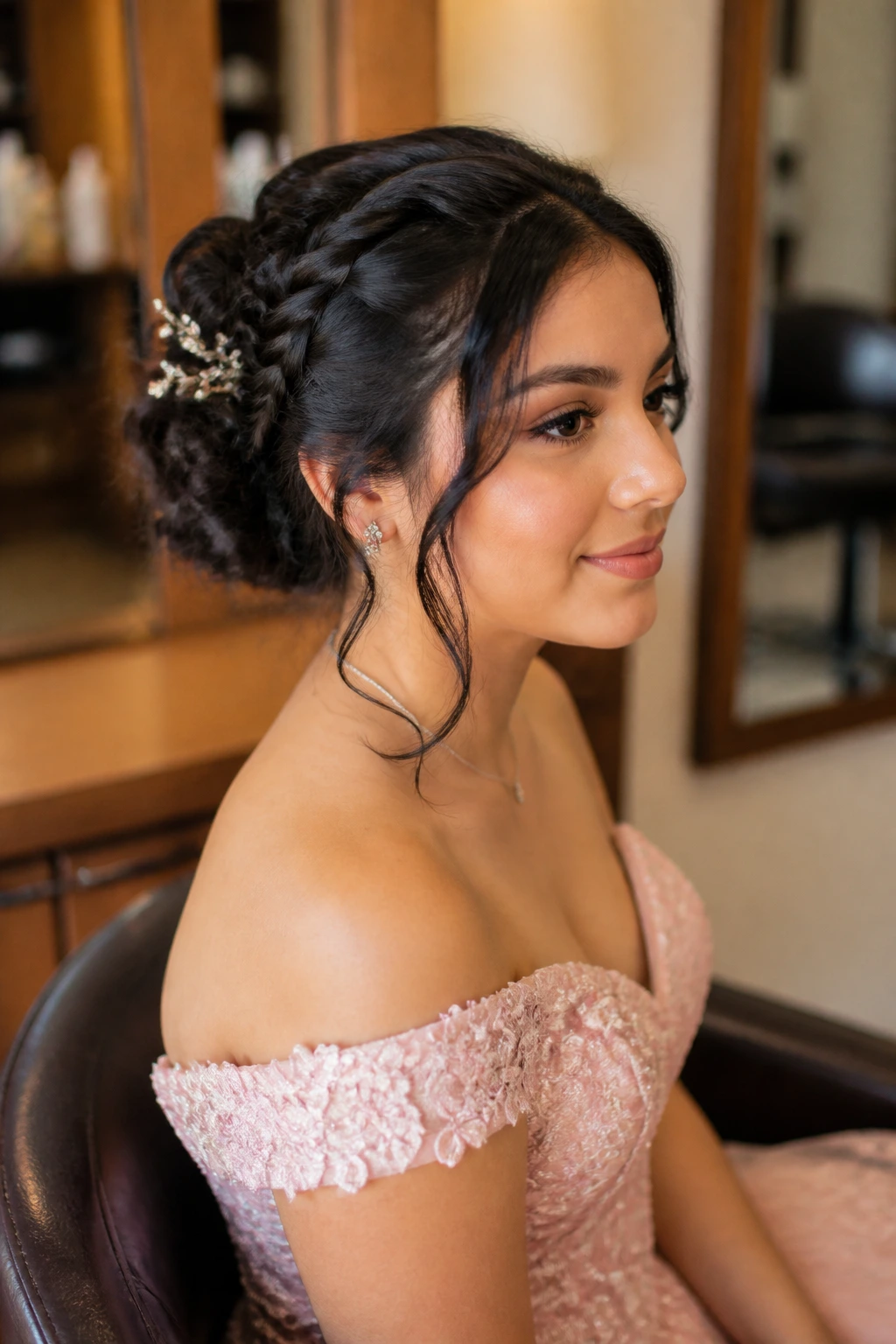
The dress usually decides more than people admit. A high neckline wants a hairstyle that lifts the hair away from the face and collarbone. Off-the-shoulder and strapless gowns can handle more softness around the sides, so waves, a side sweep, or a half-up style tend to look balanced rather than crowded.
Hair texture matters just as much. Fine hair needs structure close to the scalp — think low buns, twists, wrapped ponytails, and styles that can be padded a little. Thick hair can carry fuller braids, bigger waves, and high buns without looking flimsy. Curly and coily hair often looks strongest when the natural pattern stays visible, because forcing every strand into a sleek shape can make the style fight itself all night.
Match the Shape to the Event
If the ceremony is long and the reception is even longer, pick a style that sits close to the head and uses more than one anchor point. A single loose pin sounds fine in theory. It isn’t. You want styles that can survive a hug, a turn, and a small storm of moving air from the dance floor.
Think About Your Face and Accessories
A center part tends to sharpen the frame. A side sweep softens it. Heavy earrings need a hairstyle that doesn’t cover them, while a large tiara needs a crown that stays smooth underneath. You do not need to cram every accessory into one hairstyle. One strong focal point wins.
Essential Equipment for These Hairstyles
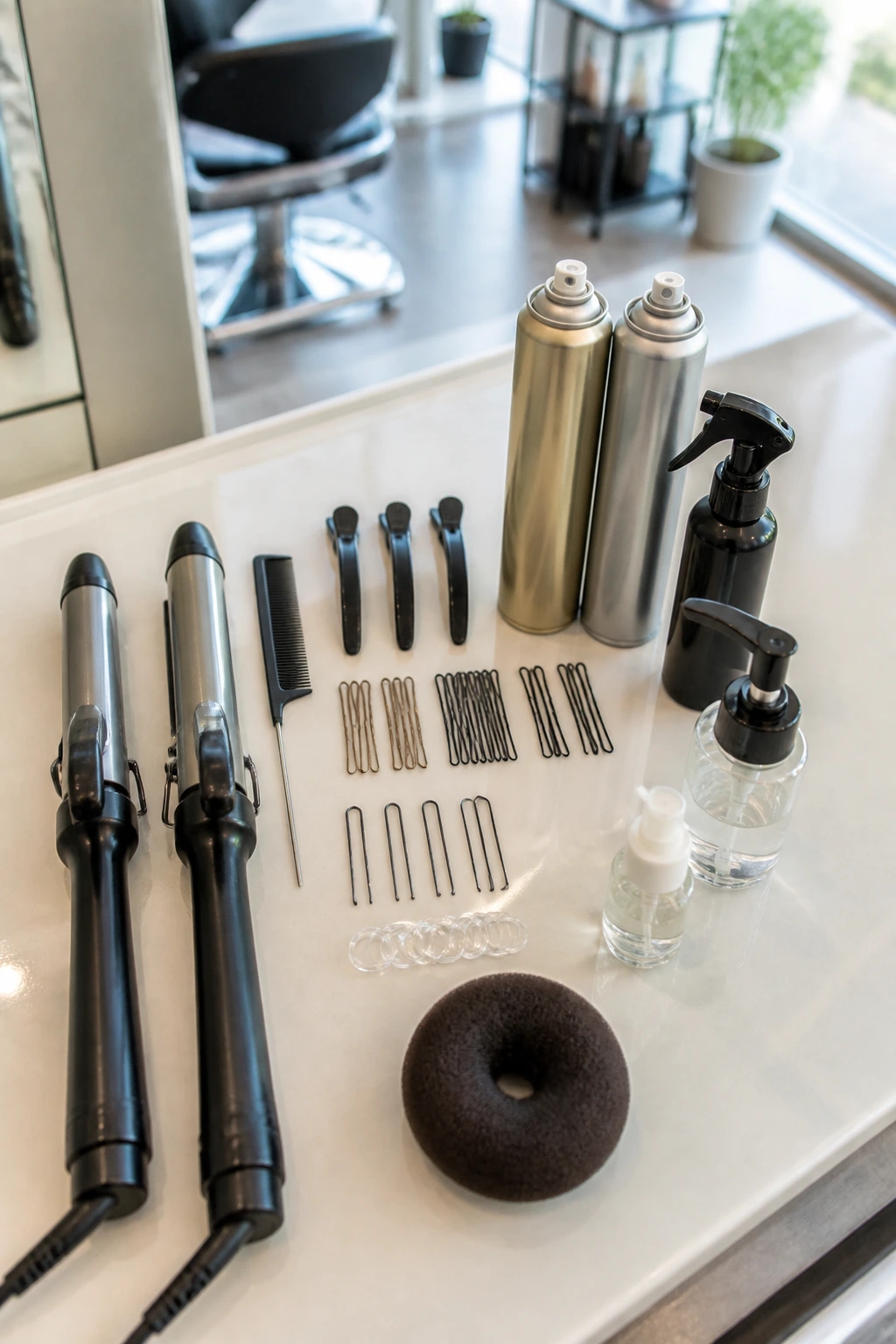
- 1-inch curling iron: Best for defined curls, tendrils, and tighter waves that need shape.
- 1¼-inch curling iron: Better for loose Hollywood waves and softer ends that brush together easily.
- Flat iron with rounded edges: Useful for S-waves, smoothing the crown, and curling short pieces that don’t wrap well around a barrel.
- Boar-bristle brush: Helps lay the top layer flat without ripping out every ounce of volume.
- Fine-tooth comb: Good for precise parts, slicked-back roots, and cleaner sectioning.
- Sectioning clips: Keep the hair divided while you curl, braid, or twist one area at a time.
- Bobby pins and U-pins: Use both; bobby pins for holding, U-pins for softer buns and padding.
- Clear elastics: Handy for ponytails, bubble styles, and hidden tie points inside braids.
- Firm-hold hairspray: Needed for buns, twists, and styles that have to survive a long event.
- Flexible-hold spray: Better for waves and curls you still want to move a little.
- Heat protectant: Non-negotiable if hot tools are involved.
- Shine spray or light serum: Use sparingly on the mid-lengths and ends, not the roots.
- Hair donut or padding insert: Optional, but useful for fuller buns or high shapes on fine hair.
Smart Shopping and Product Picks
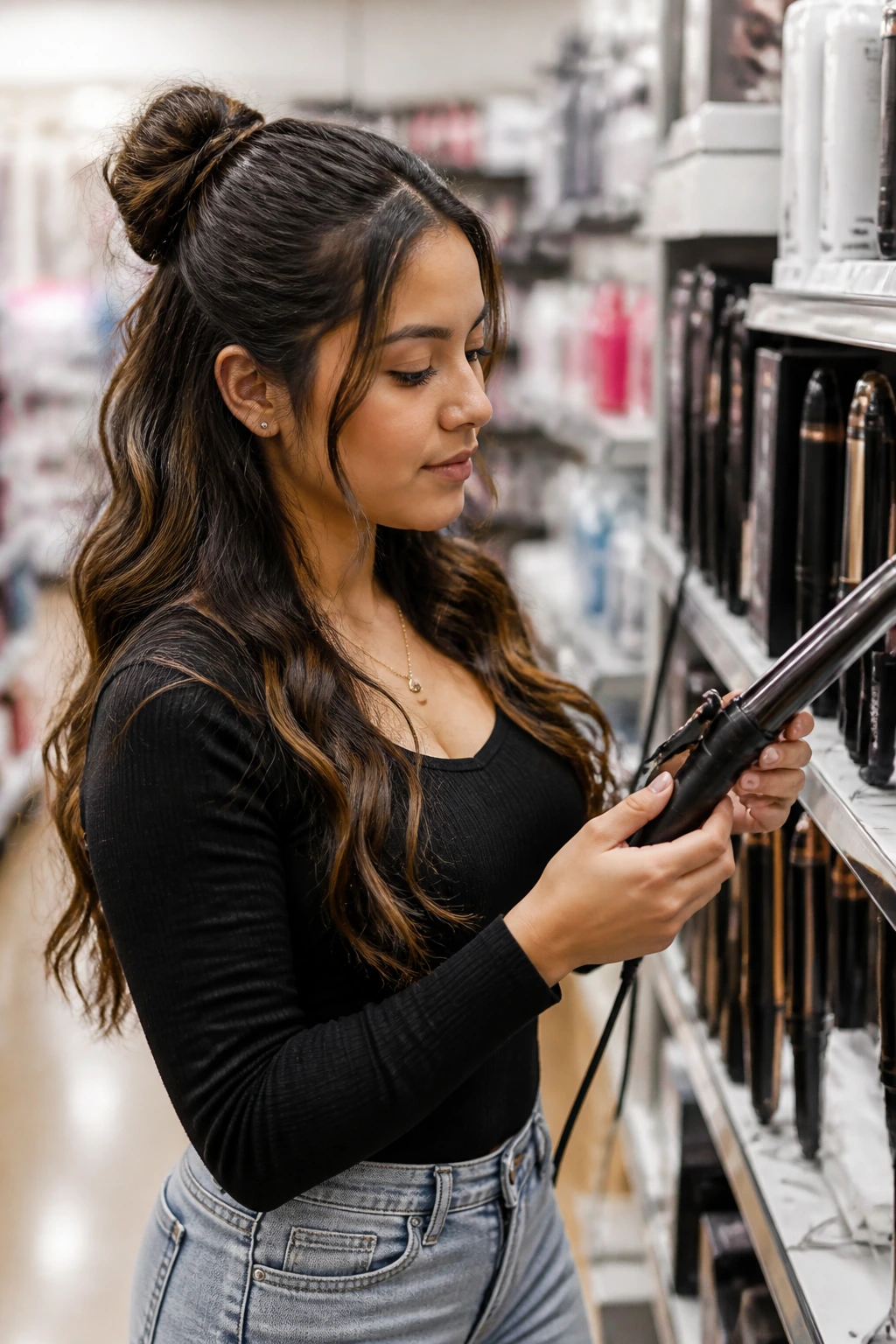
Choose tools by the shape you want, not by the price tag on the box. A 1-inch iron gives tighter, more controlled curls; a 1¼-inch barrel makes softer waves that brush into a smooth finish. If you buy only one hot tool for this kind of styling, a 1¼-inch curling iron is the most flexible. It can do half-up curls, side sweeps, and the soft bends that keep updos from looking stiff.
For sprays, look for hold levels that actually match the hairstyle. Flexible spray is fine for Hollywood waves and half-up looks where you still want movement. Firm-hold spray belongs on buns, twists, and braided crowns. The wrong spray choice is one of the fastest ways to ruin a style: too soft, and it falls apart; too hard, and the hair feels crunchy by the first dance.
Accessories should look sturdy under your fingers. Cheap combs with flimsy teeth snap when they’re pushed into a bun. Pins that bend in your hands will not hold under real weight. If you’re buying a tiara, floral comb, ribbon, or pearl pins, test whether the backing feels secure and whether the color matches your hair and dress under indoor light, not just in a store window.
Clip-in extensions can help with ponytails, waves, and fuller buns, but buy them in a shade that matches the mid-lengths and ends, not only the roots. Hair color changes from root to tip more than people expect. Matching the lighter parts usually looks better in photos.
How to Wear These Styles
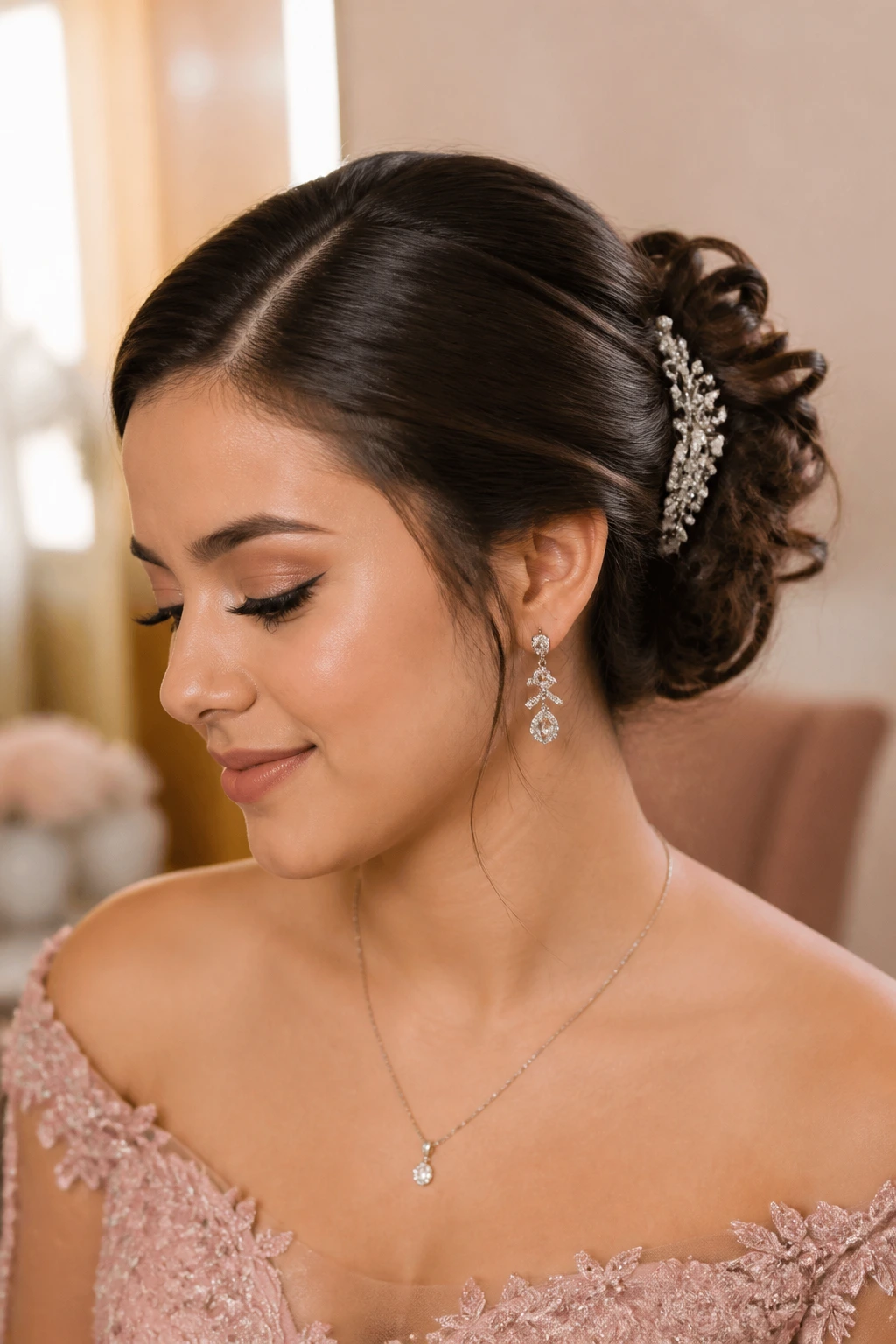
Presentation: Keep the hairline clean, the crown smooth, and the accessory placement intentional. If the style has a bun or braid, let the shape read clearly from the front and the back so it doesn’t disappear in photos.
Accompaniments: Pair low buns and twists with statement earrings, side-swept waves with one standout comb, and half-up looks with a tiara or floral piece that sits above the braid or lifted section. The dress neckline should get to speak, too. Don’t crowd it with too much hair and too much jewelry at once.
Portions: For thick or long hair, plan on more time, more pins, and sometimes a stronger base like padding or braid anchors. For fine or shoulder-length hair, keep the style compact and lower so it doesn’t collapse by the reception. If your hair is shorter than shoulder length, styles like a faux bob, slicked bun, or sculpted wave pattern usually hold better than long curled shapes.
Beverage Pairing: A glass of cold water, café de olla, or sparkling agua fresca makes a good getting-ready companion. Nothing fancy. You want something that won’t stain if a droplet lands on the robe while you’re getting pinned.
Extra Polish and Personalization
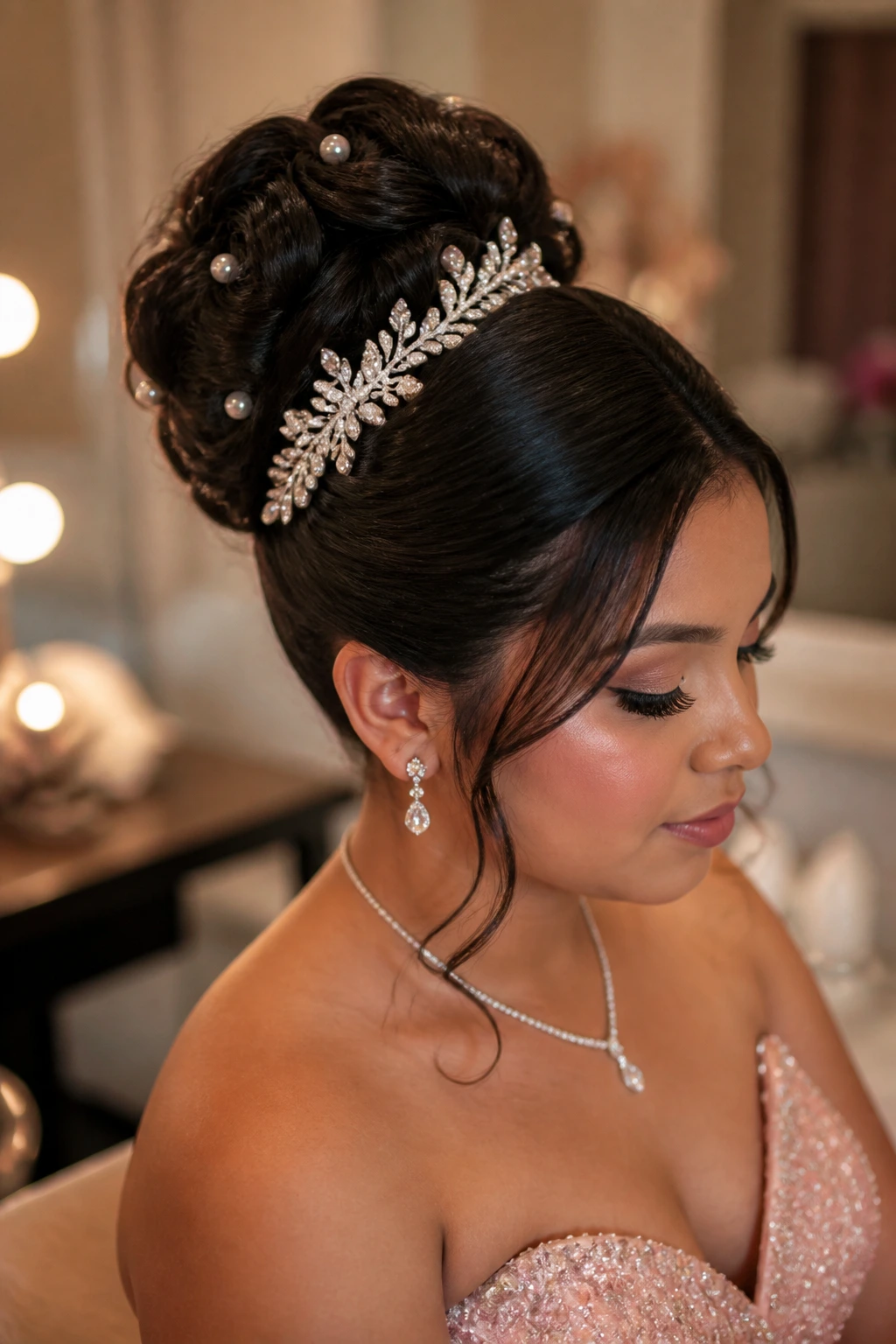
Finish: A tiny amount of shine spray on the outer layer can make the hair look smoother in pictures, but use it like seasoning, not sauce. A little goes a long way, and too much at the roots makes the scalp look greasy under bright lights.
Customization: Swap pearl pins for rhinestones, ribbon for velvet, or a floral comb for a metallic one depending on the dress. The accessory doesn’t need to match every detail. It just needs to agree with the overall tone.
Serving Suggestions: Face-framing curls work best when they stop around the cheekbone or jawline. Anything longer can drift into the neckline and make the style look heavy. A few baby hairs smoothed down with a toothbrush and a pea-size amount of styling cream can sharpen the hairline without making it look painted on.
Make-It-Yours: If your hair is curly, define the curl pattern first and smooth only the perimeter. If it’s fine, prep the roots with a light volumizing mousse before blow-drying. If it’s thick, section more aggressively and keep the crown smoother than you think you need to.
Hold, Prep, and Touch-Up Guidance
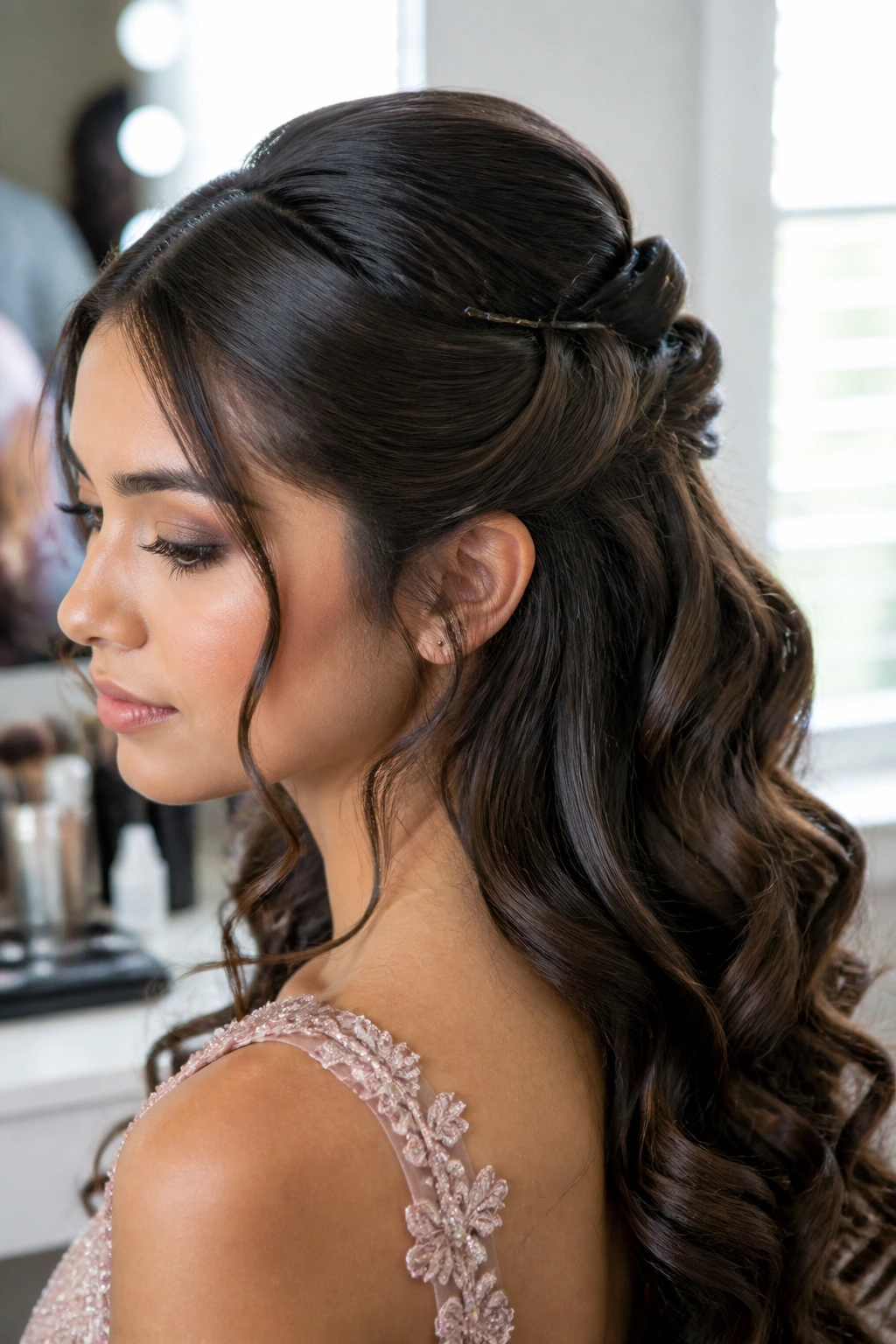
Start with timing, because timing changes everything. Hair that is washed the same morning can be too soft to hold a set, while hair that was washed the day before usually has enough grip to stay put. For updos and braids, many stylists prefer hair with a little natural slip left in it, not squeaky-clean strands that refuse to stay shaped.
If you’re curling the hair before styling, let each section cool fully before brushing it out. That cooling time is where the shape sets. Pinning curls while they’re still warm can help them hold for several hours, especially if you’re creating waves or side-swept volume. If the curls are rushed and brushed too soon, they fall flat by the time the photos start.
For long events, keep a small touch-up kit nearby: 6 to 10 bobby pins, a travel-size hairspray, a tiny comb, and one or two clear elastics. Store the accessories in a separate pouch so they don’t snag on dress fabric or bend before you need them. If you expect humidity or outdoor photos, bring a light anti-frizz spray and use it sparingly on the surface, never in layers.
Some styles can be prepped the night before, especially curls that need to set or braids that can be done early and adjusted later. Buns and slicked styles are usually best finished the day of so the crown stays crisp. If you have to rehearse your look, pin everything loosely, wear a silk scarf while moving around, and do the final tightening right before leaving.
Common Mistakes to Avoid
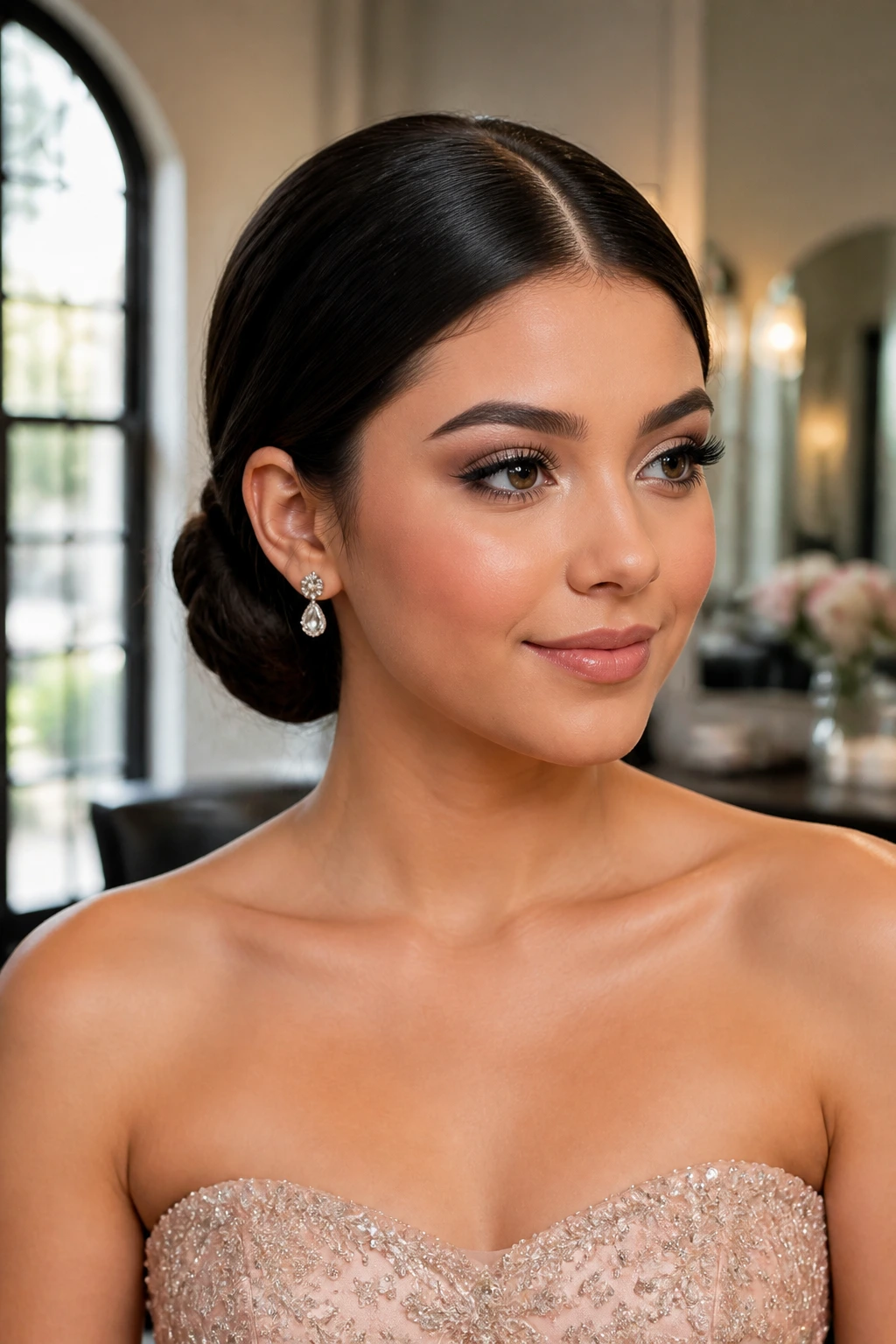
A polished hairstyle falls apart fast when the base is rushed. One common mistake is skipping prep at the crown, which leaves the top fluffy or separated by the time the rest of the style is finished. The fix is simple: smooth the roots first, then build shape on top of that, not the other way around.
Another problem is overloading the hair with product. If the roots are wet-looking and the ends feel sticky, the style will weigh down instead of hold up. Use enough cream or spray to control flyaways, then stop. You want control, not a helmet.
People also brush curls too early. They’ll curl the hair, get excited, and brush it before the heat has left the strand. That turns neat curls into frizzed waves with no shape. Let the curls cool. Fully.
Accessories can be a mess when they’re added too late or placed without a plan. A tiara that sits too far forward or a comb that fights the part line will make the style look off, even if the hair itself is well done. Place accessories after the main shape is set, then step back and check the silhouette from the side and back.
Last, don’t choose a style that ignores the hair’s natural behavior. Very slippery hair needs more grip. Very curly hair needs more moisture and a different kind of smoothing. Fighting the texture all the way through usually creates a style that looks polished for twenty minutes and tired after that.
Variations and Adaptations to Try
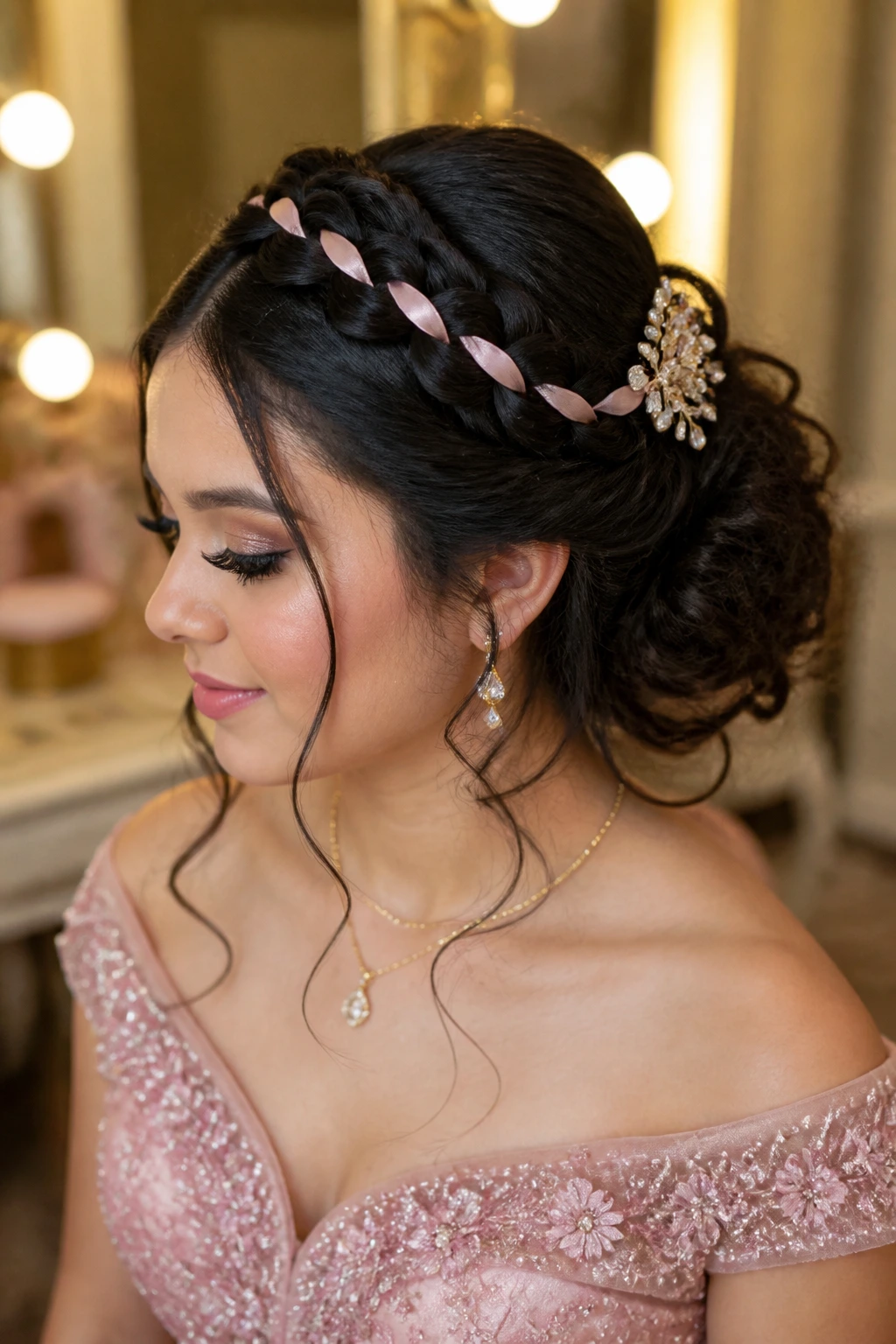
Ribbon-Threaded Romance: Swap classic pins for a narrow ribbon woven through a braid, ponytail, or half-up section. This works especially well when the dress already has a satin sash or a hint of the same color in the bodice.
Pearl-Lined Elegance: Add pearl pins in a straight line along a braid, bun seam, or wave parting. The trick is to use them sparingly so the detail reads refined rather than crowded.
Soft Natural Curl Finish: Keep curly and coily textures defined, then smooth the perimeter and pin only where needed. This version looks polished because it respects the curl pattern instead of flattening it.
Short-Hair Illusion Style: Use pin curls, tucked ends, or a faux bob to create a shorter silhouette even on medium-length hair. It’s especially useful if you want the neck and shoulders open for jewelry or a detailed neckline.
Cool Sleek Minimalism: Go for a slicked-back bun, wrapped ponytail, or low chignon with almost no loose pieces. This suits dresses with strong lines, structured fabric, or a very ornate crown that needs a clean backdrop.
Frequently Asked Questions
How far in advance should I decide on a quinceañera hairstyle?
Give yourself enough time for one real trial, not just a quick glance in the mirror. A practice run a few weeks before the event lets you see how the style behaves after an hour or two, which is the part that matters.
Can clip-in extensions help with polished styles?
Yes, especially for ponytails, waves, and fuller buns. The key is matching the texture and mid-length tone, not just the root color, because the extensions need to disappear once the hair is curled or brushed together.
What works best if the event is outdoors or humid?
Styles that sit lower and closer to the head usually hold up better, like chignons, braided buns, and wrapped ponytails. Finish with firm-hold spray at the crown and keep the shine product light, or the hair can start to swell instead of stay smooth.
How do I keep a tiara or comb from sliding?
Anchor it into a section with some grip, not into freshly sprayed slick hair. A few hidden crossed pins underneath the accessory usually hold better than one big pin shoved straight through the top.
Can curly hair be worn polished without straightening it?
Absolutely. In fact, forcing curls into a fully straight base often creates more work than it solves. A polished curly style usually means shaping the curl pattern, controlling the perimeter, and adding clean structure where the hair naturally wants to move.
What if my hair is too short for these styles?
A faux bob, sculpted wave set, or pinned-up short style can still look formal. You may need more pins and a stronger setting product, but short hair can be one of the easiest lengths to keep neat once it’s shaped correctly.
How do I stop flyaways around the hairline?
Use a small toothbrush or edge brush with a dab of styling cream and smooth only the stray areas. Too much product at the front makes the hair look wet, while too little leaves the crown looking unfinished in photos.
What should I do if the style starts loosening during the reception?
Bring a tiny kit and fix the anchor points first: the bun base, braid ends, or ponytail elastic. Don’t chase every loose strand. A few strategic pins can reset the shape in less than a minute.
A Style That Holds the Room
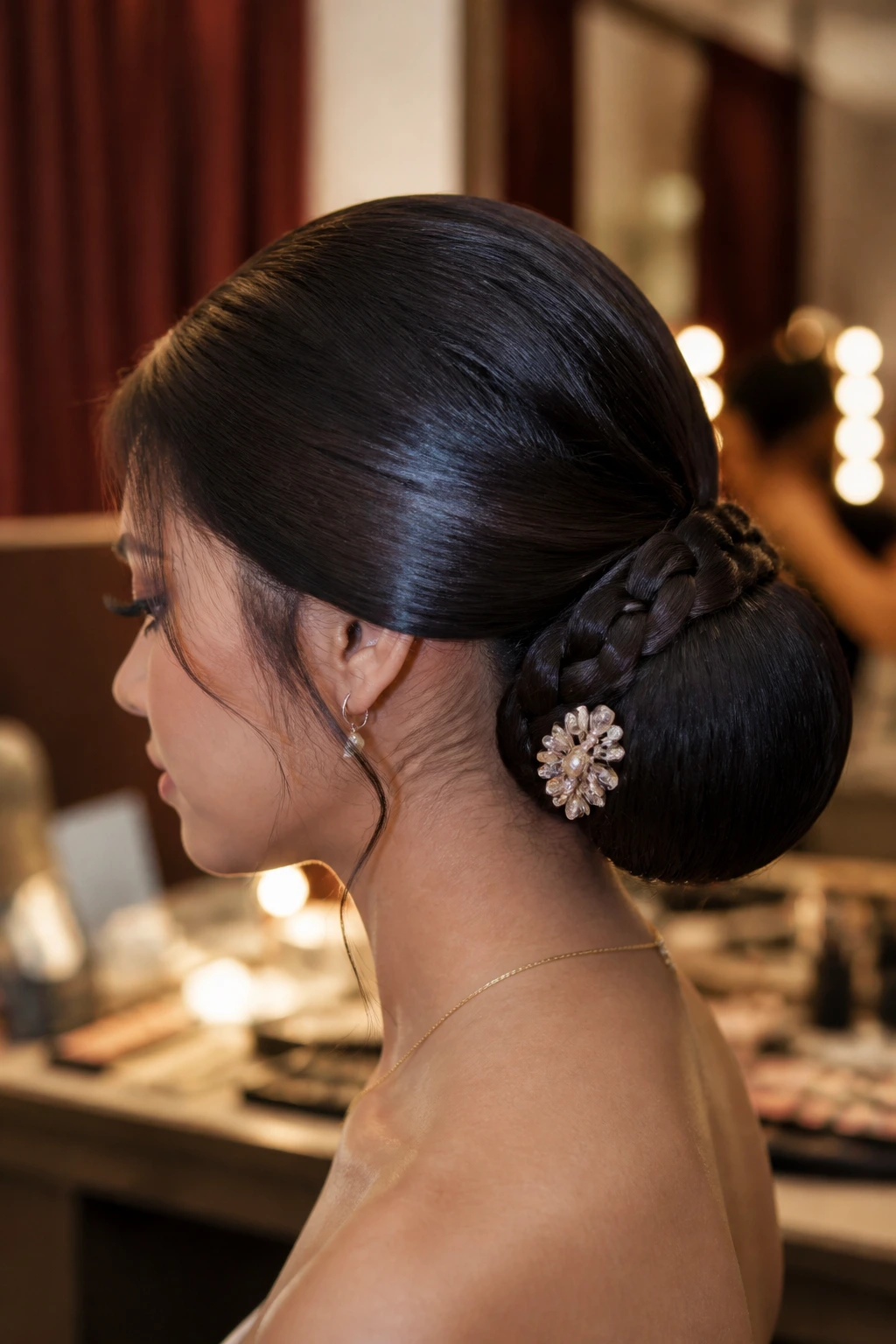
A polished quinceañera hairstyle isn’t the one with the most pieces jammed into it. It’s the one that knows where to be smooth, where to bend, and where to stay locked down. That can mean a low bun, a braid with structure, a glossy wave, or a wrapped ponytail with the right accessory sitting in the right place.
The smartest choice is the one that fits the dress, the hair, and the amount of movement the day will ask for. If the style still looks clean after a hug, a turn, and a few hours under bright lights, you made the right call. That’s the test that matters, and it usually tells the truth fast.
