



A soft romantic bridal look lives or dies on restraint. The most flattering wedding hairstyles don’t shout; they move, they tuck, they leave a few pieces around the face and then stop before the whole thing turns stiff.
When a bride sits in the chair, the temptation is always the same: add more curl, more pins, more shine, more everything. That usually backfires. The styles that age well under bright ceremony light, camera flashes, and a long stretch of hugs and dancing usually have a cleaner base than they first appear, plus one or two loosened details that keep the hair from feeling shellacked.
That balance matters even more when a veil, a satin neckline, or statement earrings enter the picture. Too tight, and the dress starts doing all the work. Too loose, and the hair disappears by the cake cutting. The sweet spot is structure with air in it — a little lift, a little texture, and a lot of thoughtful pinning.
Why These Styles Work So Well for a Bridal Look
-
They keep movement at the hairline. A few soft pieces near the temples and jaw stop the face from looking boxed in, especially with a veil or high collar.
-
They give the dress room to breathe. A style with shape, not bulk, lets lace, satin, tulle, or beading stay visible instead of competing with a huge mound of hair.
-
They survive better than loose curls alone. A braid, twist, or hidden anchor gives the style a skeleton, which matters once you’re five hours into the day and have already hugged everyone twice.
-
They work with hair accessories instead of fighting them. Pearl pins, combs, flowers, and veils sit cleaner on a style that already has tension and direction built in.
-
They look soft without looking unfinished. That’s the real trick. A good romantic bridal style has a deliberate shape at the crown and enough looseness around the edges to keep it from feeling formal in a harsh way.
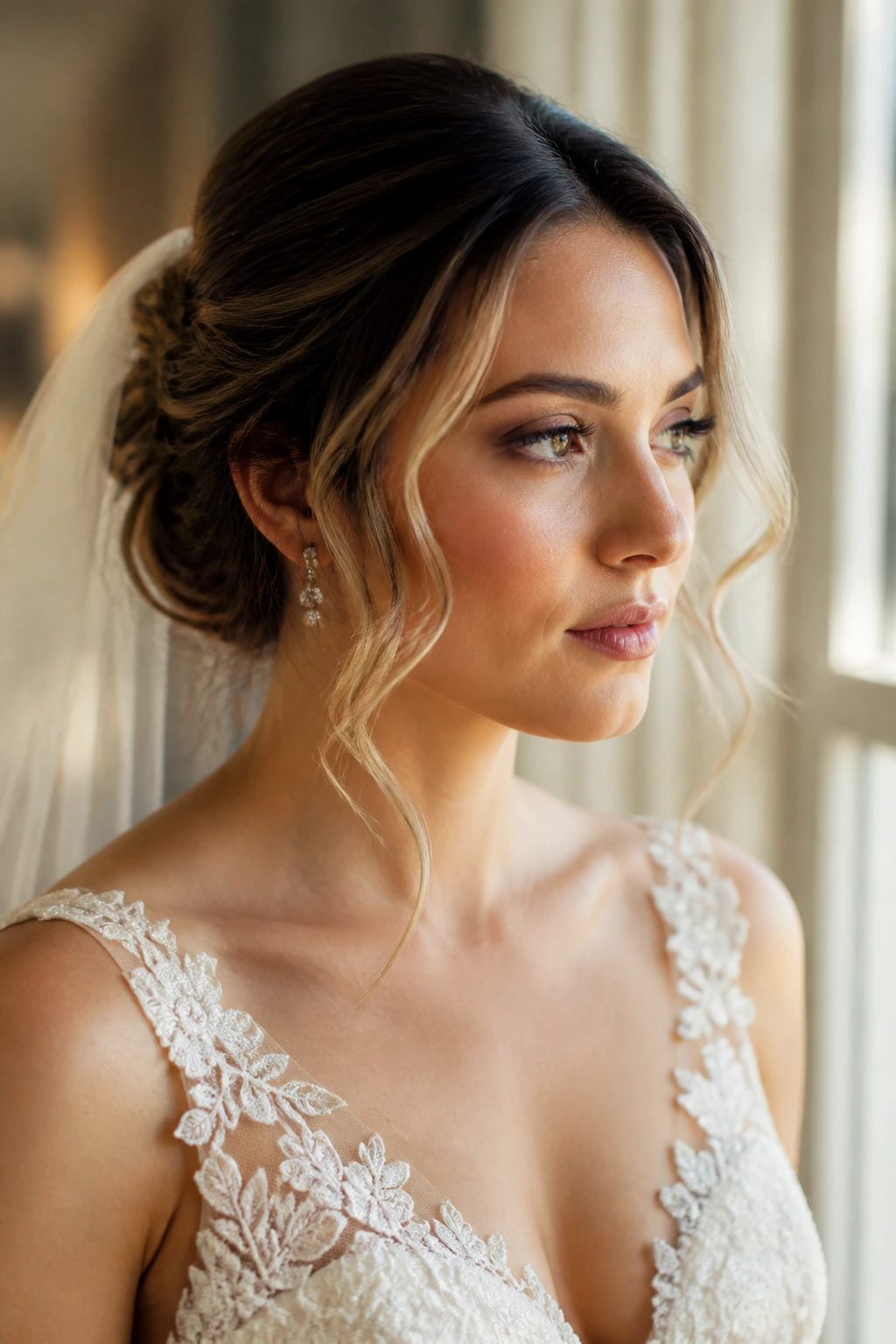
1. Loose Low Chignon with Face-Framing Pieces
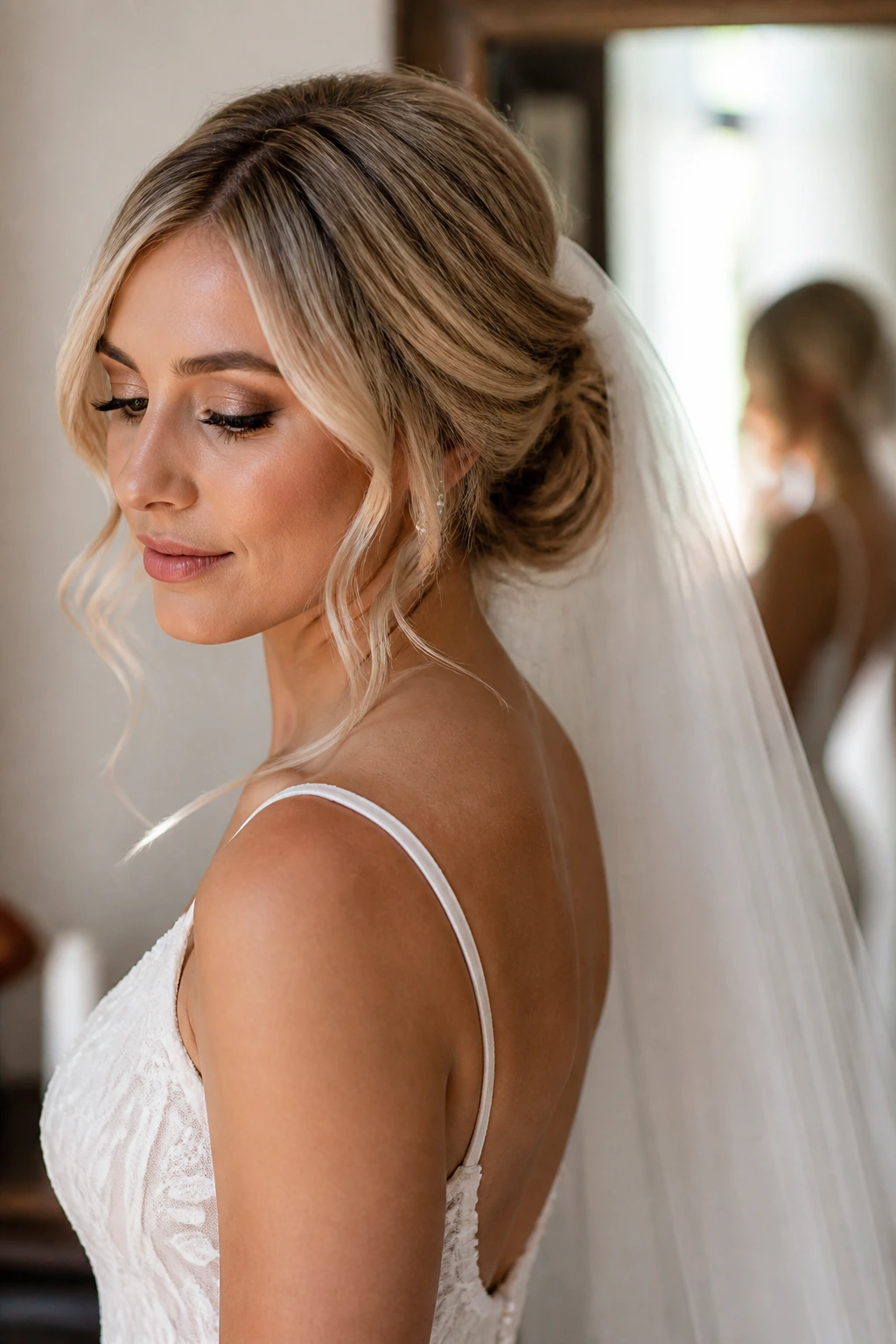
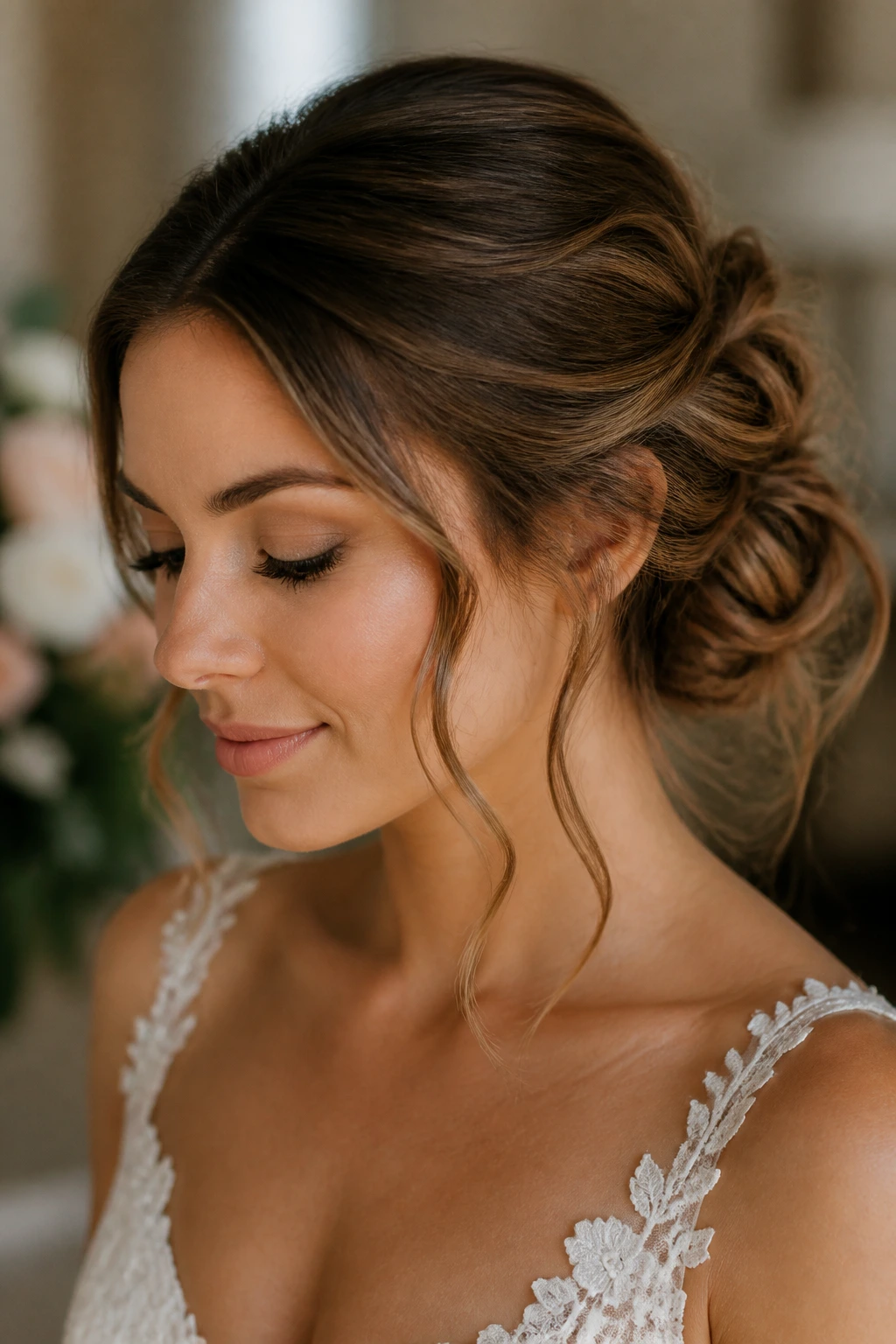
A loose low chignon is the kind of bridal style that quietly does its job and never asks for applause. It sits low at the nape, so it gives the dress and shoulders room, but the soft pieces around the front keep it from turning severe. The result is polished, yes, but not frozen.
Why it flatters a soft romantic look
The low placement keeps the style stable enough for a veil or hair comb, and the chignon shape gives you that clean back view photographers love. The face-framing pieces soften the whole thing, especially if they’re curled away from the face with a 1-inch iron and brushed just enough to lose the ringlet feel.
A few loose bends around the ears make a big difference. Too many, and the style starts to unravel. Too few, and it can look corporate instead of bridal.
Best on: medium to long hair, especially if you want your neckline and earrings to show.
Hold trick: pin the twist first, then tuck the ends under the knot so the surface looks soft but the base stays locked.
Finish: a flexible hairspray, not a helmet spray. You want movement when you turn your head.
The charm here is that it works with lace, satin, and even simpler dresses. It doesn’t need a lot of decoration. One pearl comb, maybe. That’s enough.
2. Half-Up Twist with Soft Curls
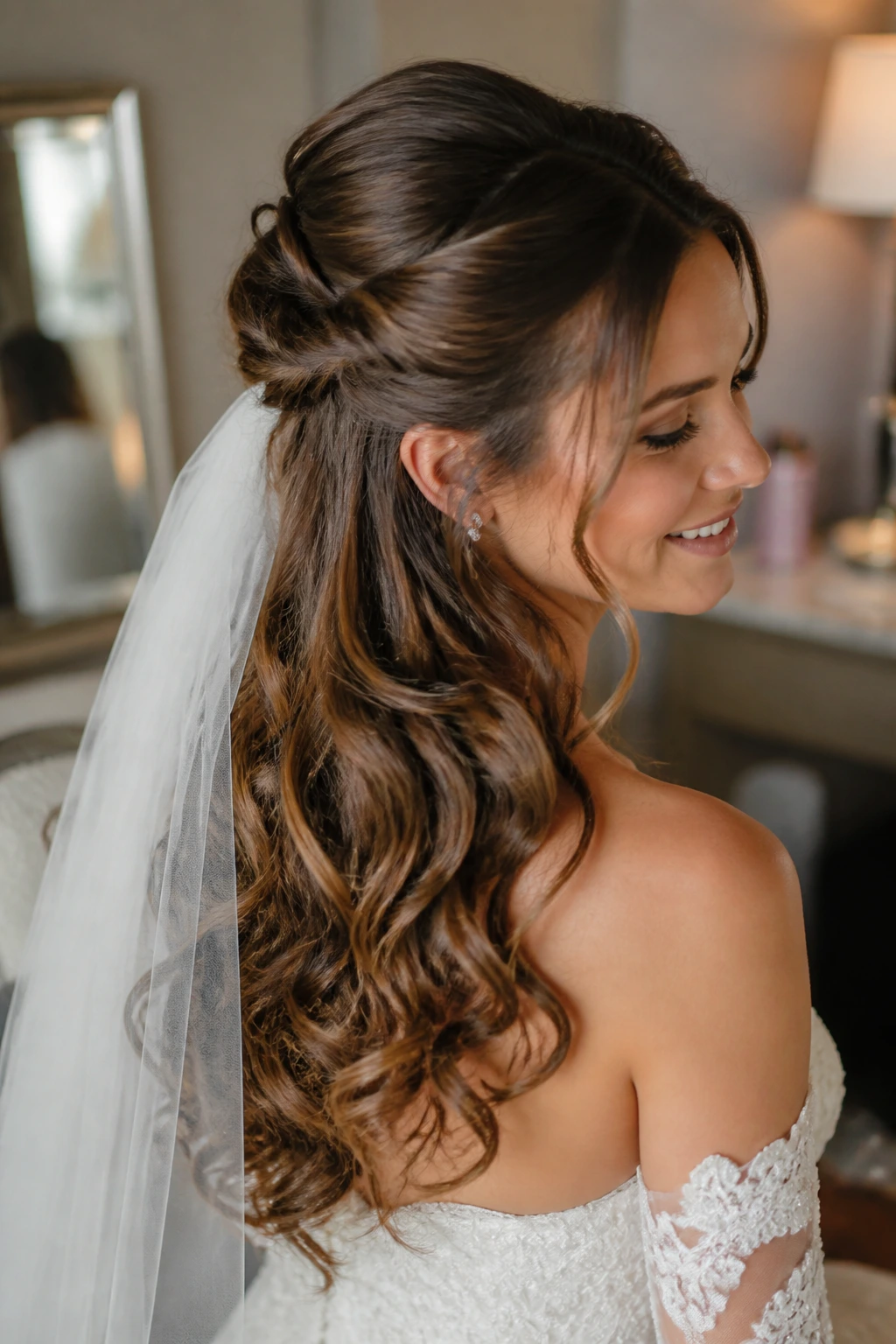
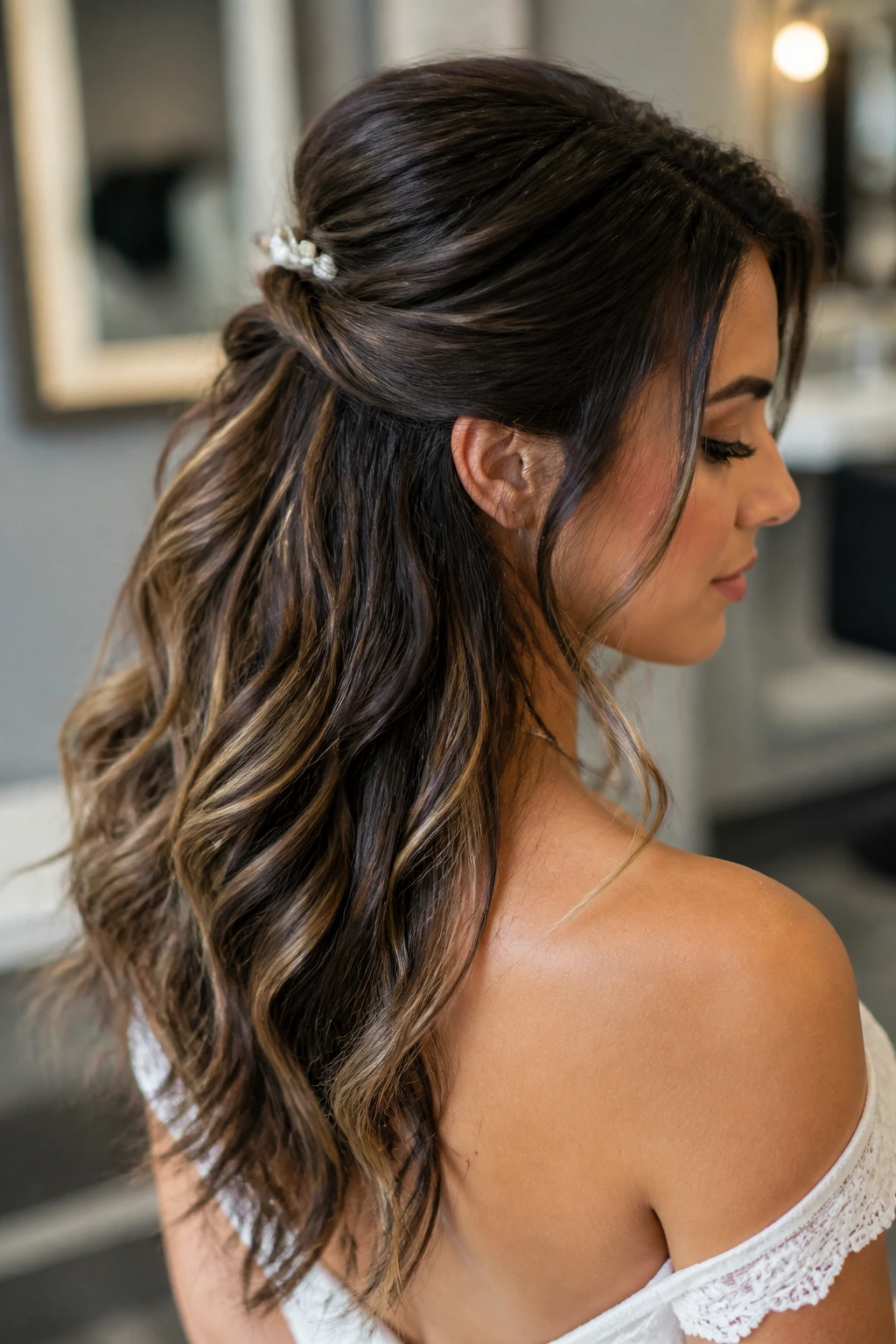
A half-up twist is the sneaky winner when you want length on display but don’t want the top to collapse by noon. The crown gets just enough lift to keep the style from lying flat, and the curled lengths underneath bring that gentle, bridal sweep without looking overdone.
The twist itself can be simple: two sections pulled back from the temples, crossed at the back, and pinned under a little ridge of volume. What makes it romantic is the texture in the lower half. Soft curls, brushed out once they cool, keep the ends moving.
What makes it work
If your hair is fine, tease the crown lightly and spray the root area before you pin anything. If your hair is thick, keep the top sections a little smaller so the half-up part doesn’t get bulky. Either way, the trick is to leave the back half loose enough that the style still feels like hair, not a construction project.
- Best with strapless or off-the-shoulder dresses.
- Good choice when you want to show length.
- Easy to place a veil beneath the twist.
This is one of those wedding hairstyles that looks delicate from the front and a little more finished from the back, which is exactly the right mix.
3. Brushed-Out Old Hollywood Waves
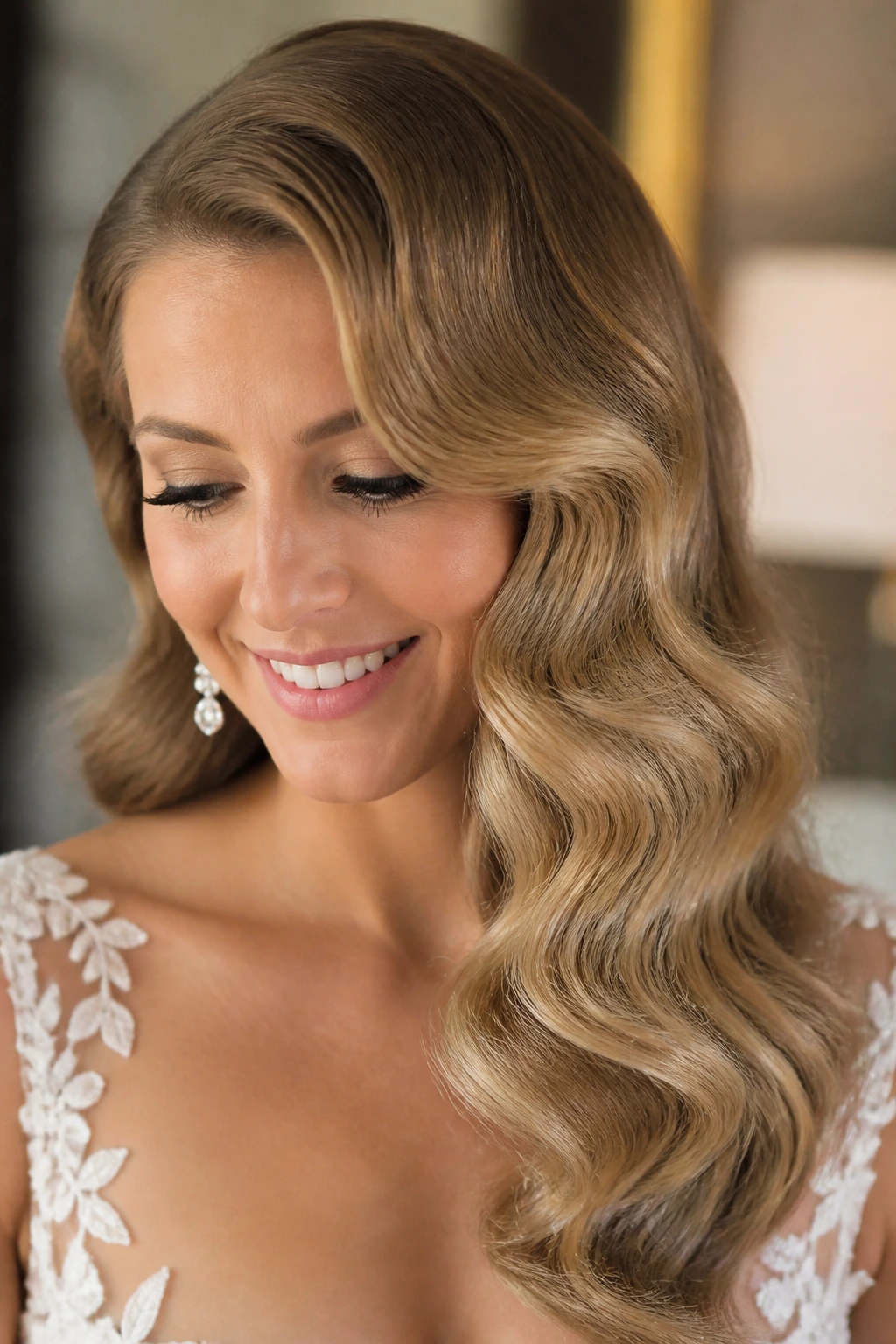
Want a softer version of glamour that still reads as bridal? Brushed-out waves do that job better than almost anything else. The style starts with deliberate curls — usually wrapped away from the face with a 1.25-inch iron — and ends with a careful brush-through once the hair is fully cool.
That cooling step matters. Skip it and the waves fall apart into frizz. Let them set, clip them if you need to, then brush them until the shape becomes one smooth bend instead of a pile of separate curls.
The shape to watch for
The wave should fall in long S-curves from the cheekbone down, not in tight spirals. If the front layers are too short, they’ll kick out oddly near the jaw. Keep the top neat, create a side part or a deep off-center part, and let one side sit a little fuller than the other.
This style is strongest on medium to long hair, and it loves glossy but not greasy finish. Use a light shine spray from about 10 inches away. Too close and the hair can go limp.
It’s the right answer when you want a vintage note without going costume-y. Severe finger waves would fight the softness of a bridal gown. Brushed-out waves keep the drama and lose the stiffness.
4. Boho Braid Crown with Tucked Ends
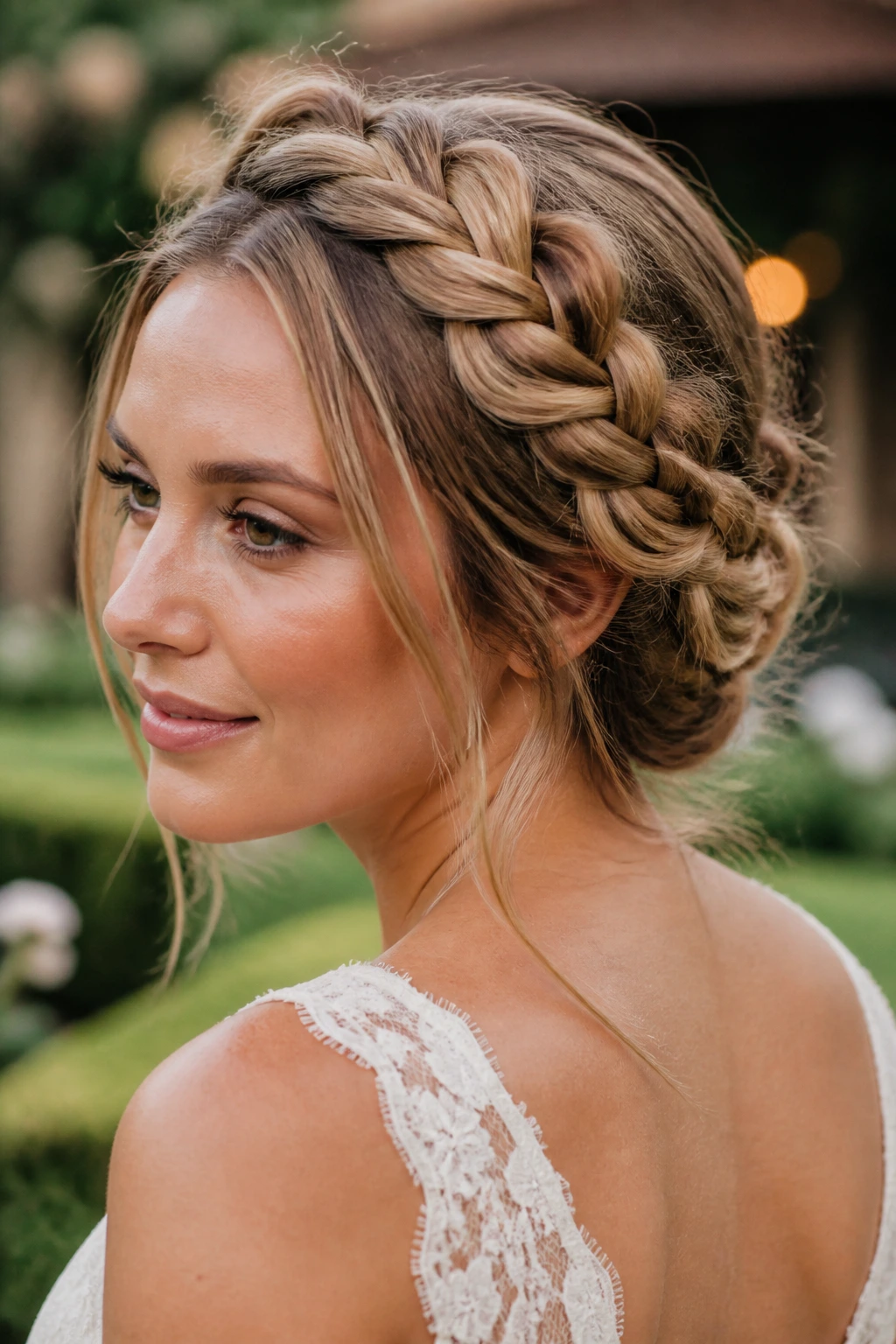
A braid crown can lean rustic fast if you pull too hard or make it too wide. Keep it loose, and it turns into something far more graceful: a wrapped braid that gives the head shape, then disappears into tucked ends at the back.
The crown braid works especially well when you want the hair off the face but not all the way up. It keeps the hairline open, which is lovely with a veil or with a dress that already has a lot of detail near the chest.
A few details that matter
Leave the braid slightly pancaked — that is, gently widened with your fingers after it’s secured. Not flattened. Widened. That gives it volume without making it look like a thick rope.
- Use small clear elastics or matched pins at the back.
- Leave a few fine pieces near the temples.
- Tuck the ends under a low base bun or twist.
A fresh flower or two can sit near one ear if the gown is simple. If the dress is already busy, skip the flowers and let the braid do the talking. This style likes balance. Too many extras and it gets noisy.
5. Textured Low Ponytail with Ribbon
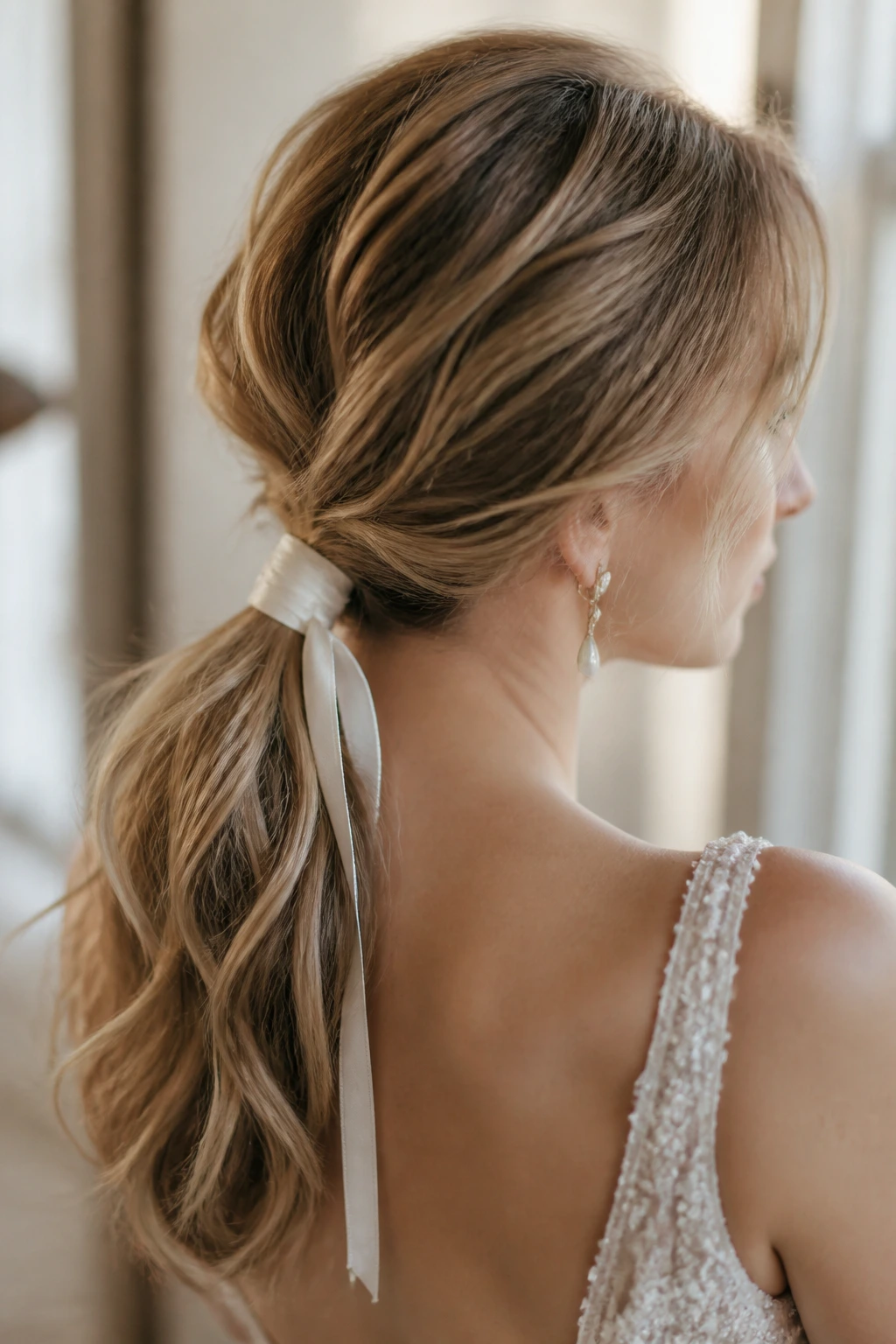
A low ponytail can be one of the prettiest bridal styles on the table if you stop pretending it has to look strict. The soft version sits at the nape, has a little bend through the lengths, and gets tied with ribbon, satin, or a strand of hair wrapped around the elastic.
The texture is the whole point. Straight, flat ponytails feel too sharp for this look. Add rough-dried volume at the crown, curl the lengths loosely, and pinch the bend open with your fingers so the finish feels airy.
Why I like this one
It moves well. That matters. A ponytail sways in a way an updo doesn’t, and on a bride that movement reads as relaxed rather than casual when the base is neat.
It also plays nicely with long earrings and open backs. If the dress has a clean line down the spine, the ponytail draws the eye without blocking anything. A ribbon in ivory or pale blush can soften the knot without making it sugary.
This style is especially smart for brides who hate the feeling of hair pinned all the way up. The scalp stays calmer. The style still looks finished.
6. Side-Swept Waves with a Single Statement Clip
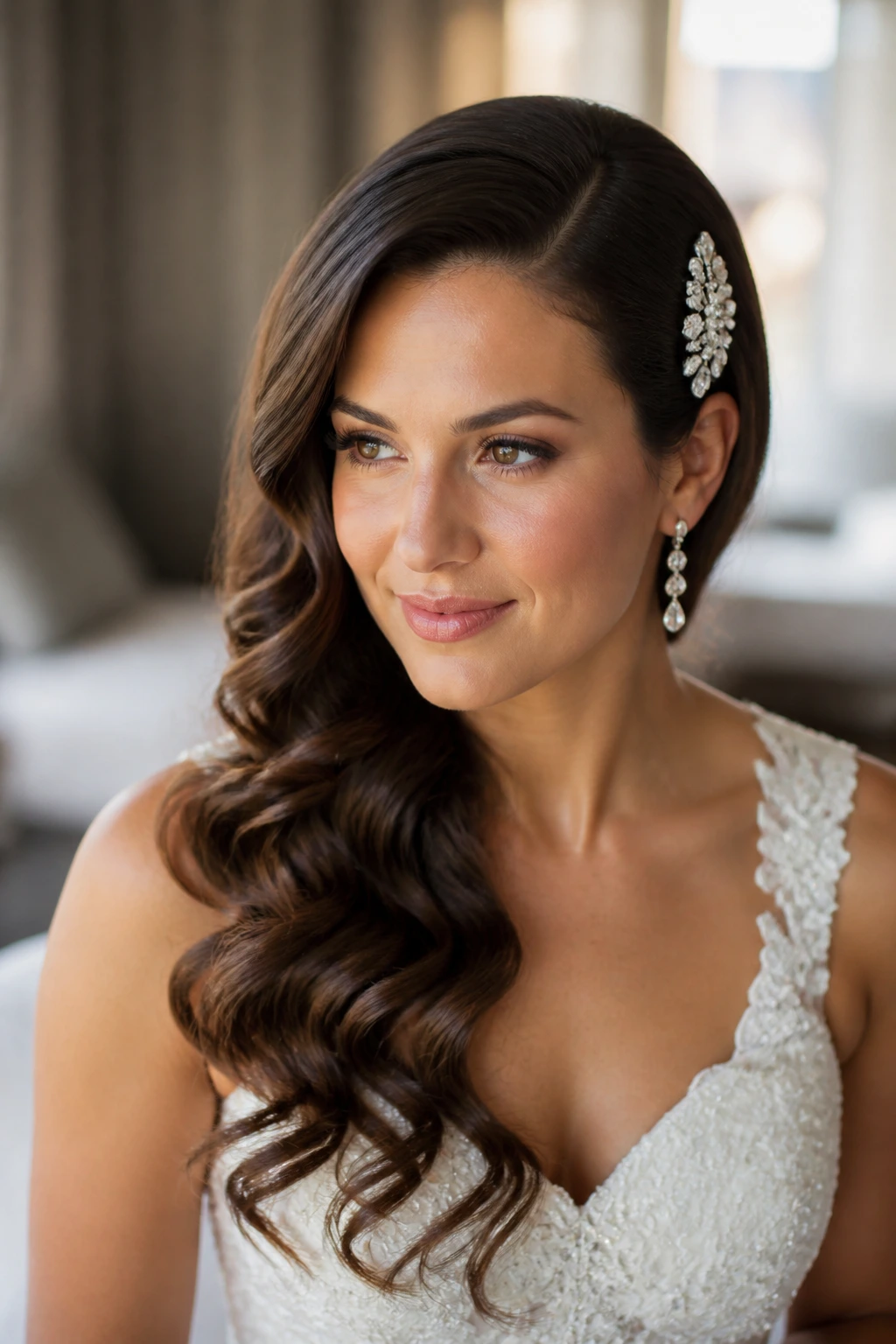
Side-swept hair has a built-in bit of romance because it breaks the symmetry in a flattering way. One side stays fuller, the other gets tucked back with a comb, crystal pin, or pearl clip, and the wave pattern drapes across one shoulder like it meant to be there.
This is a strong choice for one-shoulder gowns, illusion necklines, or dresses with beading on one side. The hairstyle doesn’t need much extra decoration because the asymmetry already creates interest.
Best way to keep it soft
Keep the part slightly off center, not sharply deep unless your features really handle it. A deep side part can look dramatic fast. A gentle side part keeps the whole thing more romantic.
The clip should anchor into a section with some grip. Freshly polished hair is too slippery. If the roots are squeaky clean, spray a little texture spray first or pin into a lightly teased section behind the temple.
One good clip is enough. Two can start to look fussy. The hair should still feel like hair. That’s the point.
7. Twisted Halo Bun
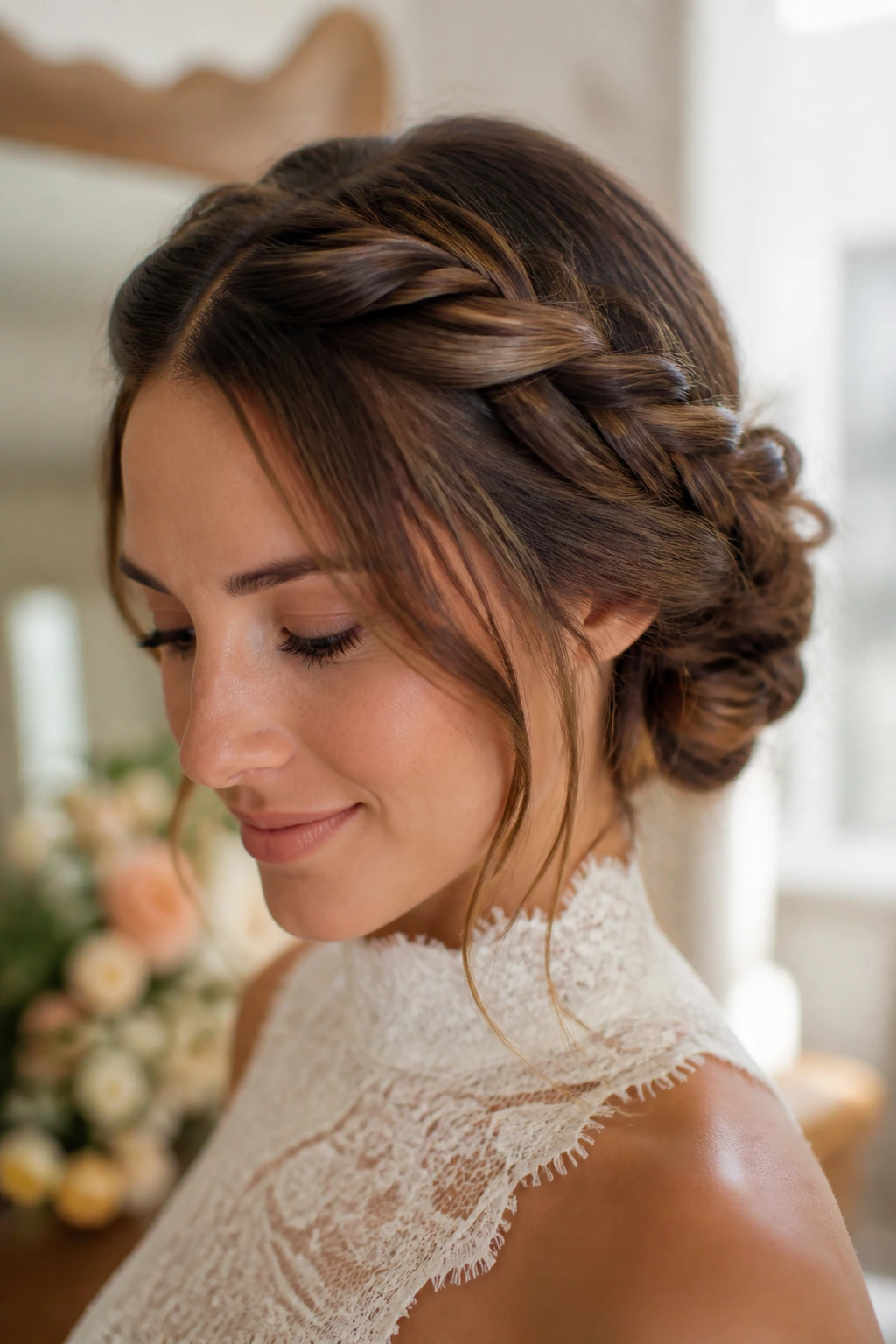
A halo bun sounds ornate, but the softer version has a lovely, almost airy feel when the twists are kept loose and the bun sits low rather than high. It wraps the head in a circular line, which gives the face a calm frame and keeps the style from fighting a veil.
The best versions don’t look braided from across the room. They look folded. A few sections are twisted back from the temples, pinned around the crown, and gathered into a low knot at the back.
Why this one works on a wedding day
It keeps everything close to the head, which is useful if you’re wearing a gown with strong shoulders or a high neckline. Yet the twists add enough softness that it doesn’t feel severe. That balance is hard to fake with a plain bun.
If the bride has thick hair, this style holds shape beautifully. If the hair is fine, a little padding at the crown helps prevent the bun from collapsing. Keep the surface a little uneven — not messy, just touched.
This one also handles floral pins well. A few tiny accents tucked into the twist line can look elegant without crowding the head.
8. Soft French Twist with Lifted Crown
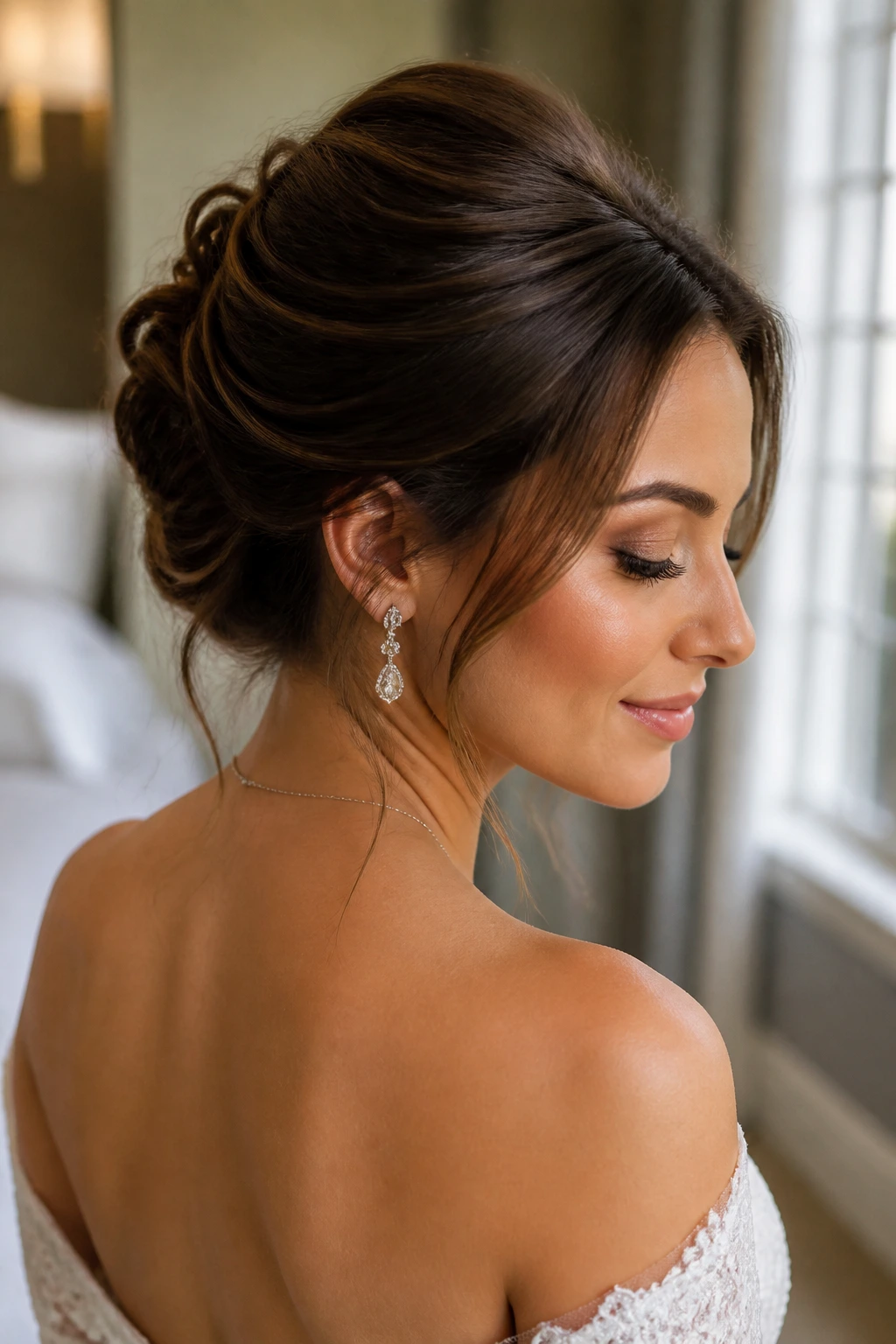
A French twist doesn’t have to feel like a boardroom hairstyle in a white dress. Loosen the crown, keep the roll soft, and let the top have a little lift, and suddenly it becomes bridal instead of formal.
The key is not to pull the sides tight. Leave gentle volume above the ears, then guide the hair into the twist with pins that disappear into the fold. The finished shape should taper nicely from the crown to the nape, with maybe one or two soft pieces brushed forward.
Where it shines
This style is a quiet answer for brides who want the hair up but not bulky. It keeps the neck visible, which looks lovely with strapless and bateau necklines. It also gives you a clean place to set a comb or veil.
The modern version is softer than the old one. You want a little tuck, a little roll, and a little looseness at the edges. Not a shellacked tube.
If your hair tends to separate or slip, prep it with a dry texture spray before styling. French twists need grip. That’s the whole game.
9. Waterfall Braid into Loose Ends
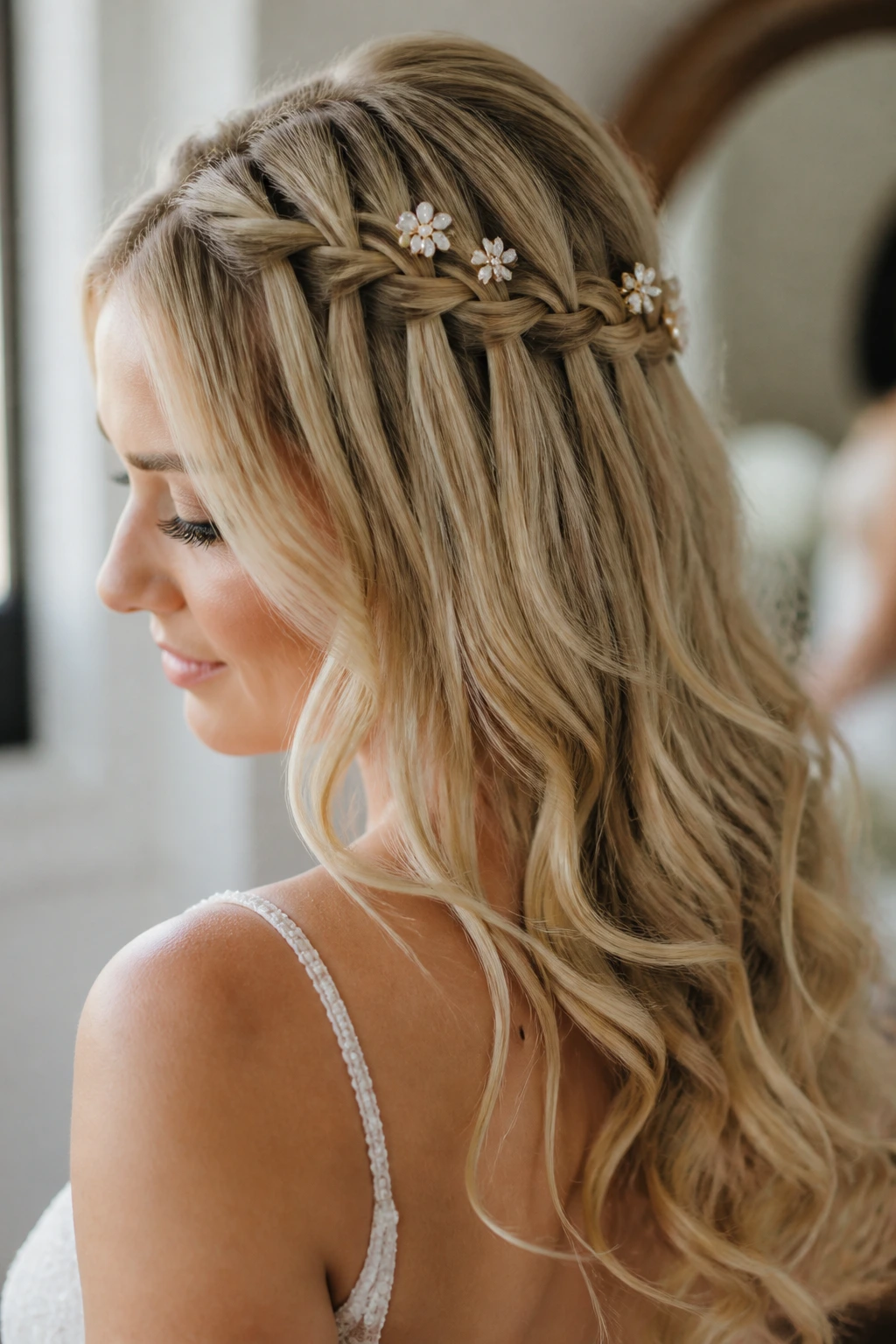
A waterfall braid gives you the feeling of a braid without the weight of a full braided crown. Strands are dropped through the braid pattern so the hair underneath stays visible, and that peek-through effect suits a soft bridal look nicely.
The style works best when the braid sits high enough to show, but not so high that it steals attention from the face. The loose ends can be curled, waved, or left in a brushed bend depending on the dress and the texture of your hair.
How to keep it from looking busy
Keep the braid narrow. Wide waterfall braids can swallow the whole hairstyle. A thinner braid leaves more space for the loose hair, which is where the softness lives.
- Best for medium to long hair.
- Nice with floral pins tucked along the braid path.
- Works well when you want some hair off the face but not all of it.
The braid reads clearly in photos from the back and side, which helps if you’re wearing a gown with detail at the shoulders. It’s one of those styles that looks more intricate than it actually is, which is a useful trick on a wedding day.
10. Center-Part Bun with Wispy Tendrils
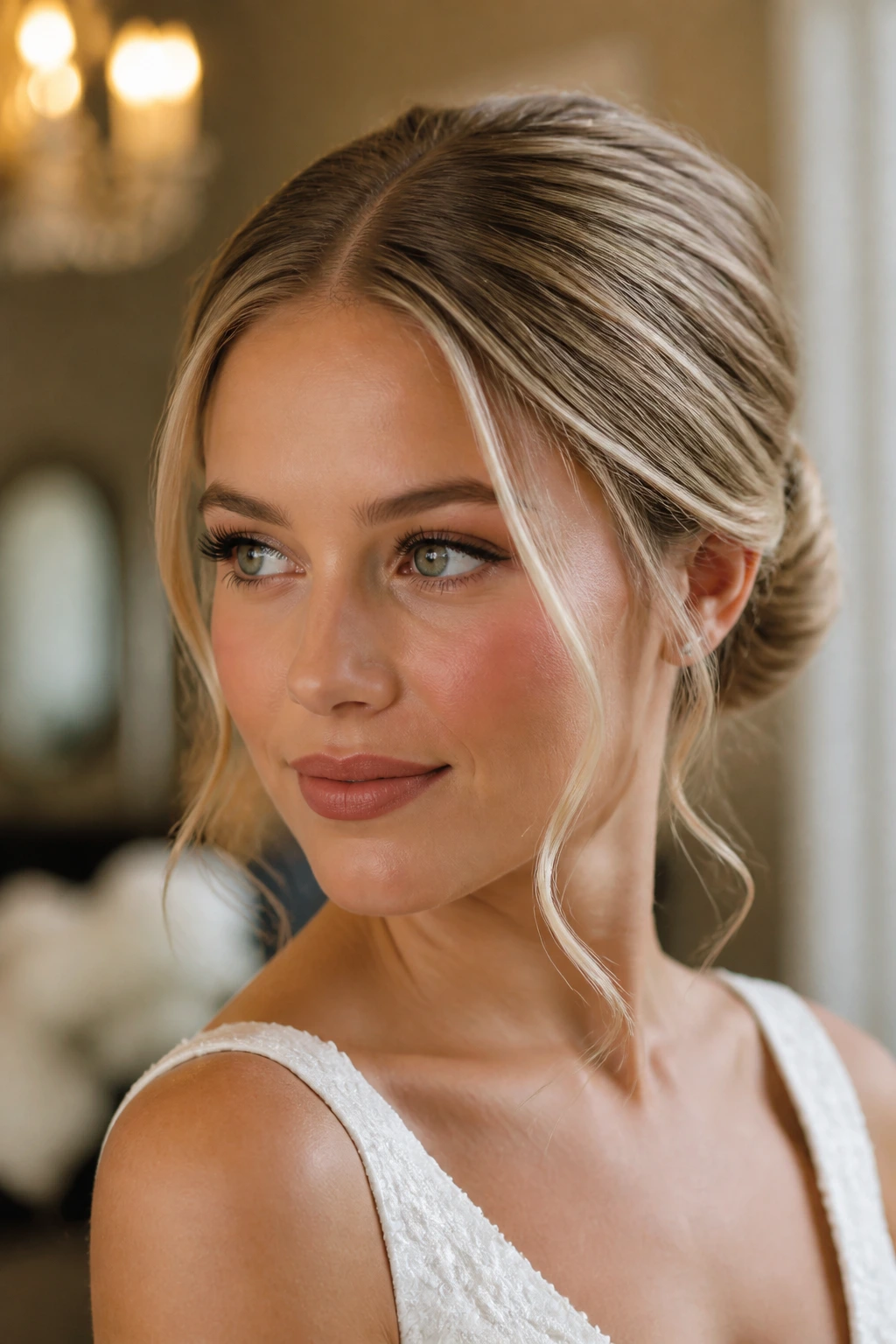
A center part can look severe if the rest of the hair is too tight. Pair it with a soft bun and a couple of wispy tendrils, though, and the whole effect turns calm and polished.
This style is a good match for brides who like symmetry. The part draws a clean line down the face, while the bun keeps the back neat. The softness comes from the pieces around the temples and the gentle volume in the bun itself.
Use a curling iron on the front tendrils so they bend away from the cheeks instead of hanging straight. That one detail keeps the face open. Small thing. Big difference.
The bun can be low and rounded or slightly tucked into a knot. Either way, keep the surface smooth but not flat. The style should look intentional, not slicked down.
11. Low Knotted Bun with Pearl Pins
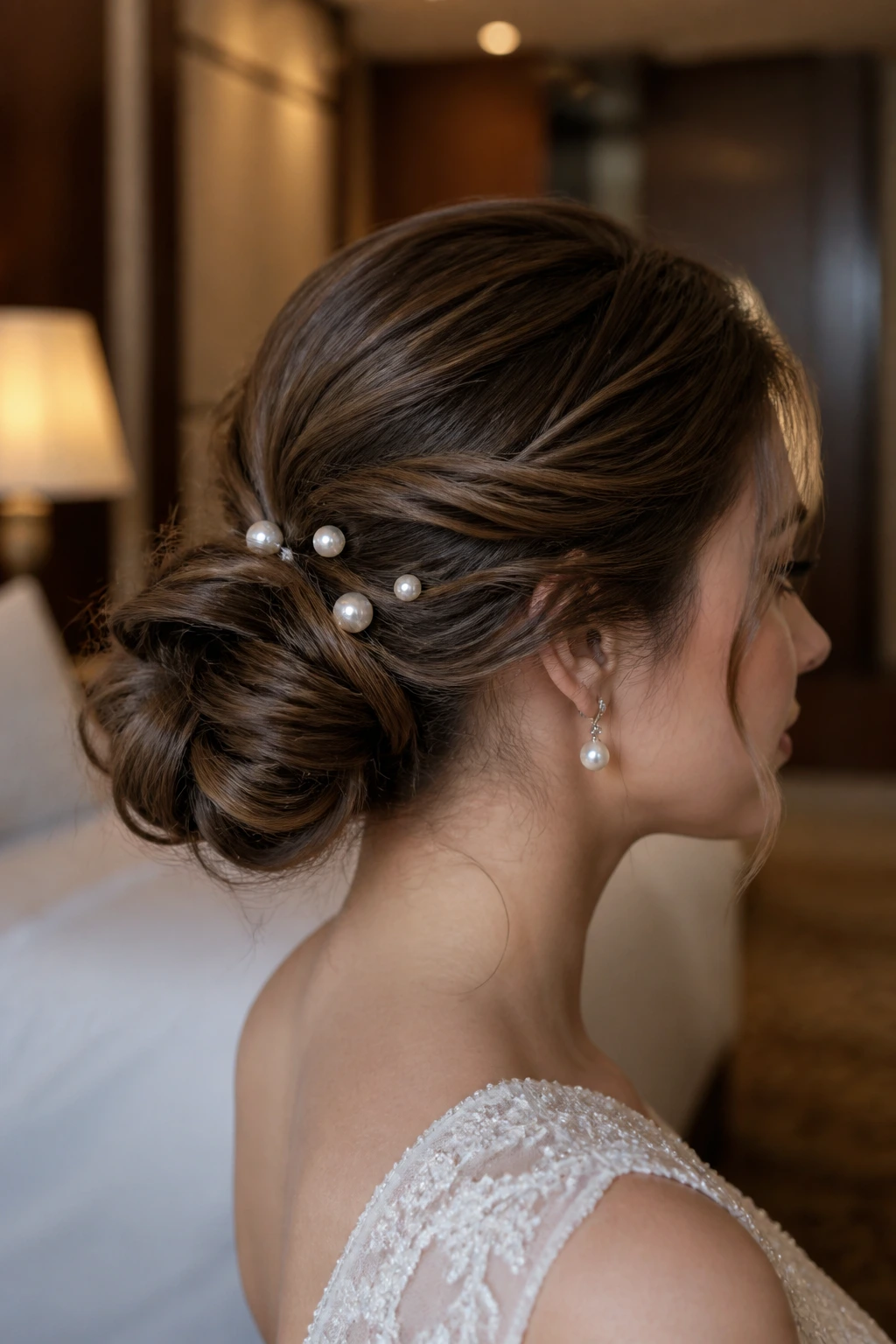
A low knotted bun has a little more texture than a classic chignon, which makes it a good fit for a romantic bridal style that still wants structure. Instead of folding into a neat roll, the hair twists into itself and forms a knot with visible shape.
Pearl pins are the obvious finish, and they work because the bun already has a soft, organic line. Stick too many pins into a clean bun and it can feel decorated for decoration’s sake. Here, three to five pins placed asymmetrically are usually enough.
The best part
The knot gives the back of the head a sculptural shape without locking the style into anything too formal. It feels elegant in person, but not brittle.
If you’re wearing a veil, place the comb just above or just beneath the knot depending on the gown. A lower veil often looks better tucked under the bun line so the shape stays visible.
This style also holds up well for thick hair, which is a gift when you want a style that doesn’t go limp after an hour.
12. Curly Half-Up with Tiny Braids
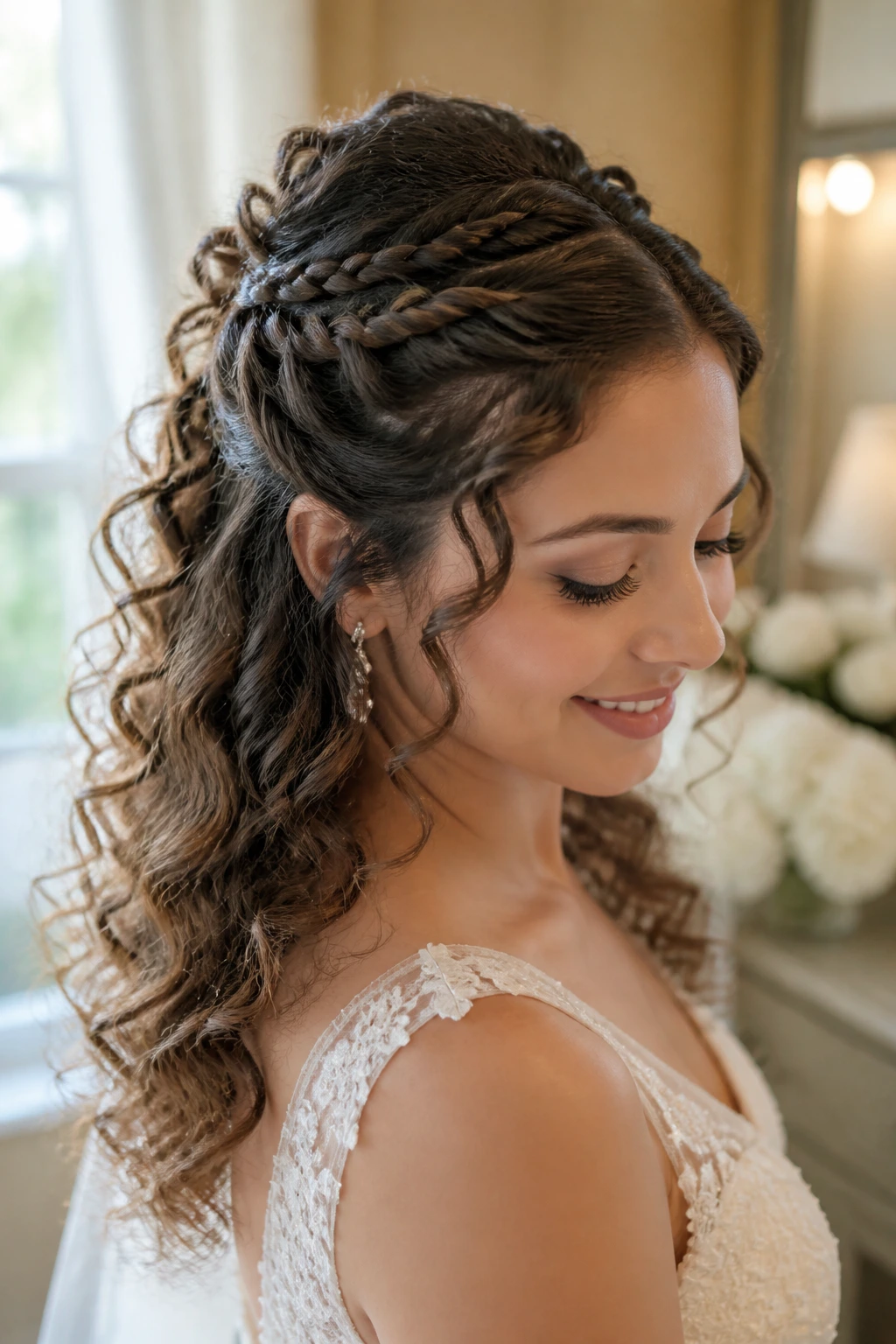
Curly half-up hair can get too sweet if you pile on ribbons, flowers, and curl after curl. Tiny braids cut through that problem. They add line and detail at the crown while leaving the rest of the curls loose enough to feel soft.
Keep the braids slim. Think accent, not feature. Two narrow braids pulled from each side and pinned into the back half-up section is plenty. If the hair is naturally curly, this style lets the curls stay themselves instead of forcing them into a shape they don’t want.
Why it’s useful
The tiny braids help the top layer stay put, which matters when curls have a habit of expanding as the day goes on. They also give clip-in extensions or flower pins a place to hide.
A style like this works best when the curls are set with direction first. Curl some pieces away from the face, some toward it, and let the mix look lived-in rather than matched. That unevenness is what keeps it from reading like a pageant look.
This is a sweet spot for brides who want texture without a hard updo. Light, soft, and not precious. Good things.
13. Grecian-Rolled Updo
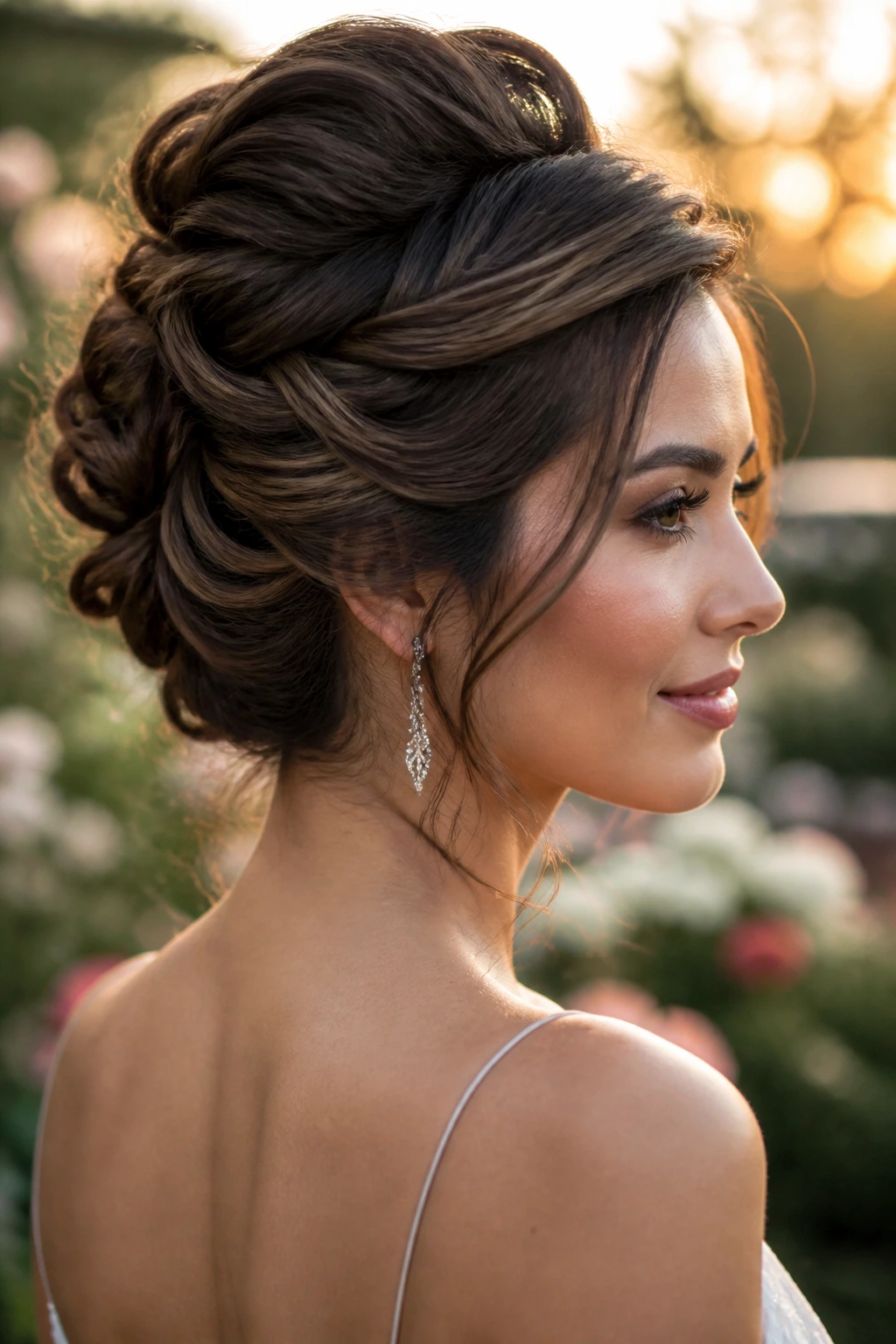
A Grecian-inspired updo has that tucked, draped feel that suits a romantic dress beautifully. The hair is rolled and pinned in sections so the final shape looks layered rather than molded into one block.
What I like about this style is the way it builds around the head. The top can have a little loft, the sides can be gently twisted back, and the nape can stay soft instead of being pulled into a strict knot. The effect is graceful without turning fussy.
A small detail that matters
Let some of the rolls sit slightly offset, not perfectly mirrored. Perfect symmetry can make this style feel stiff. A little offset movement gives it life.
It’s a strong choice for brides with medium to thick hair and for dresses with Grecian draping, of course, but also for simpler gowns that need a more interesting back view. The hairstyle carries shape without needing much extra decoration.
Skip large statement pieces here. A slim comb or a few hidden pins will do more good than a crowded accessory cluster.
14. Loose Ballerina Bun with Pulled-Out Sides
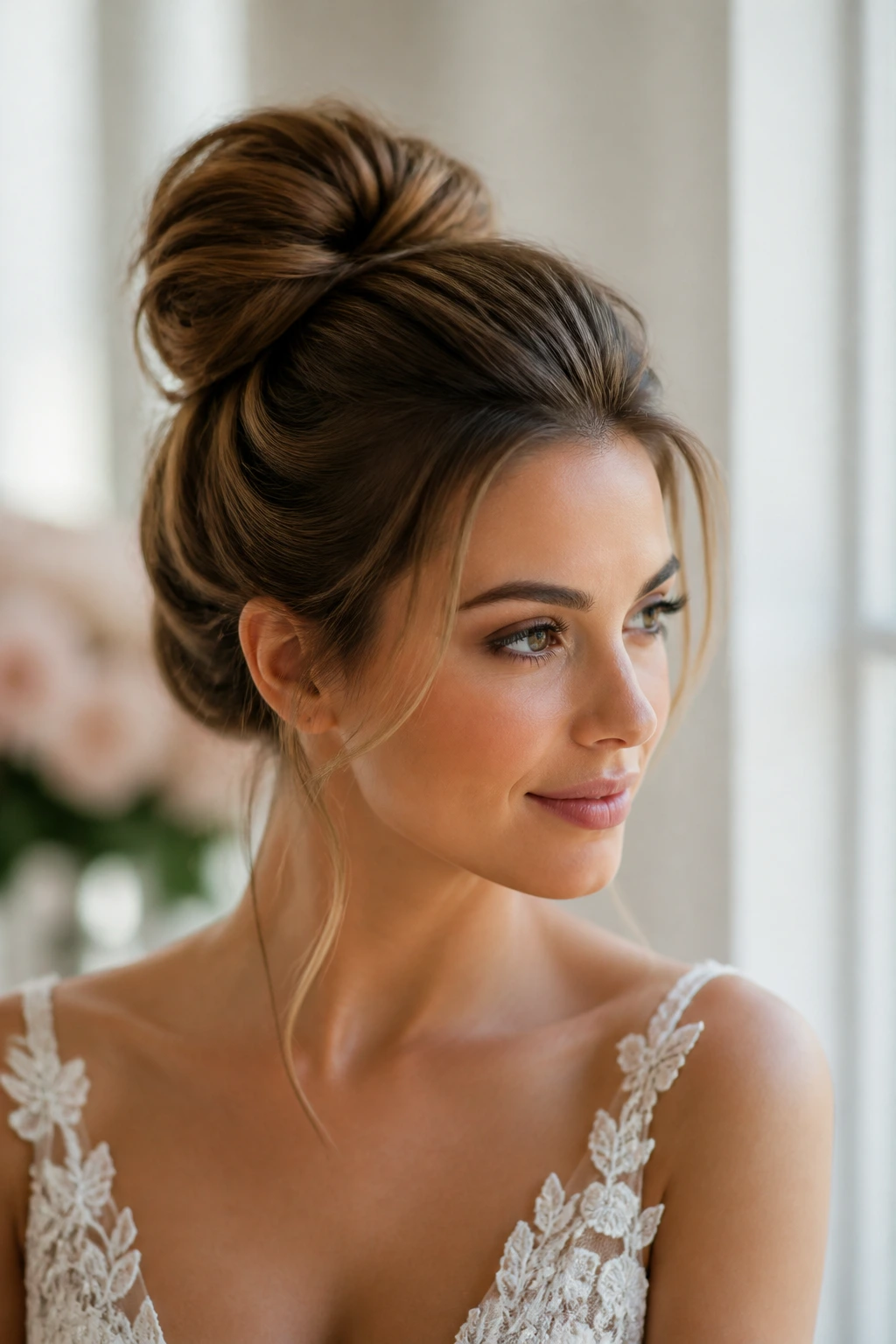
A ballerina bun sounds strict, and the classic version can be. The loose bridal version fixes that by keeping the bun soft at the edges and pulling a little width out near the sides of the head.
The bun still sits high enough to feel balanced, but the pulled-out pieces stop it from looking severe. That matters if the dress has a sweet neckline or if you want the face to look framed rather than pulled back.
How to keep it romantic
Don’t over-smooth the crown. A little texture at the top makes the whole bun feel lived-in. Then shape the bun into a rounded coil, not a tight donut.
A few tendrils near the ears can make the style feel less formal, but keep them controlled. If they’re too curly or too long, the look starts drifting away from the clean line that makes this bun special.
This is a good style for brides who want the neck and shoulders open but still want a tidy silhouette. It’s neat, but not severe. There’s a difference, and it matters.
15. Floral Side Bun with Soft Bend
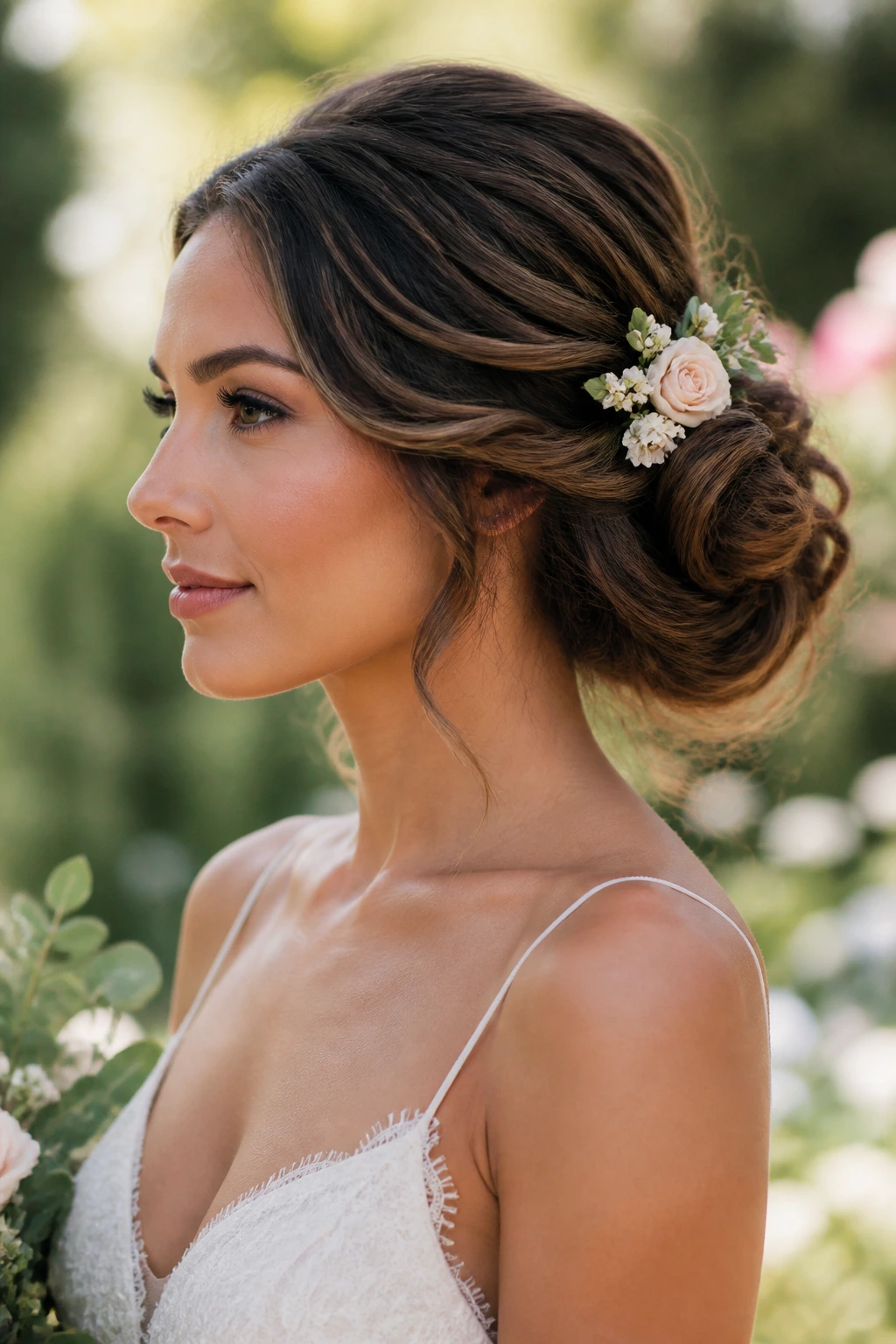
A side bun can look a little old-fashioned unless the texture is kept loose and the flowers are chosen with care. Put the bun low and off to one side, add a soft bend through the front, and tuck in a few fresh blooms or a delicate floral comb.
The flowers should echo the bouquet, not compete with it. Tiny roses, spray blooms, or one trailing stem can be enough. Too many flowers and the hair starts to look like a centerpiece.
When it works best
This style is lovely for outdoor ceremonies, garden settings, and dresses that already have a soft line. The side placement adds a small asymmetry that keeps the whole look from becoming too neat.
If you use fresh flowers, pin them in after the hair is fully set and cool. Moist stems and hot tools are a bad mix. If the flowers are delicate, place them in a wired comb or wrap the stems before securing them.
The side bun has a quiet charm. It is not loud. That’s the appeal.
16. Bubble Ponytail with Airy Texture
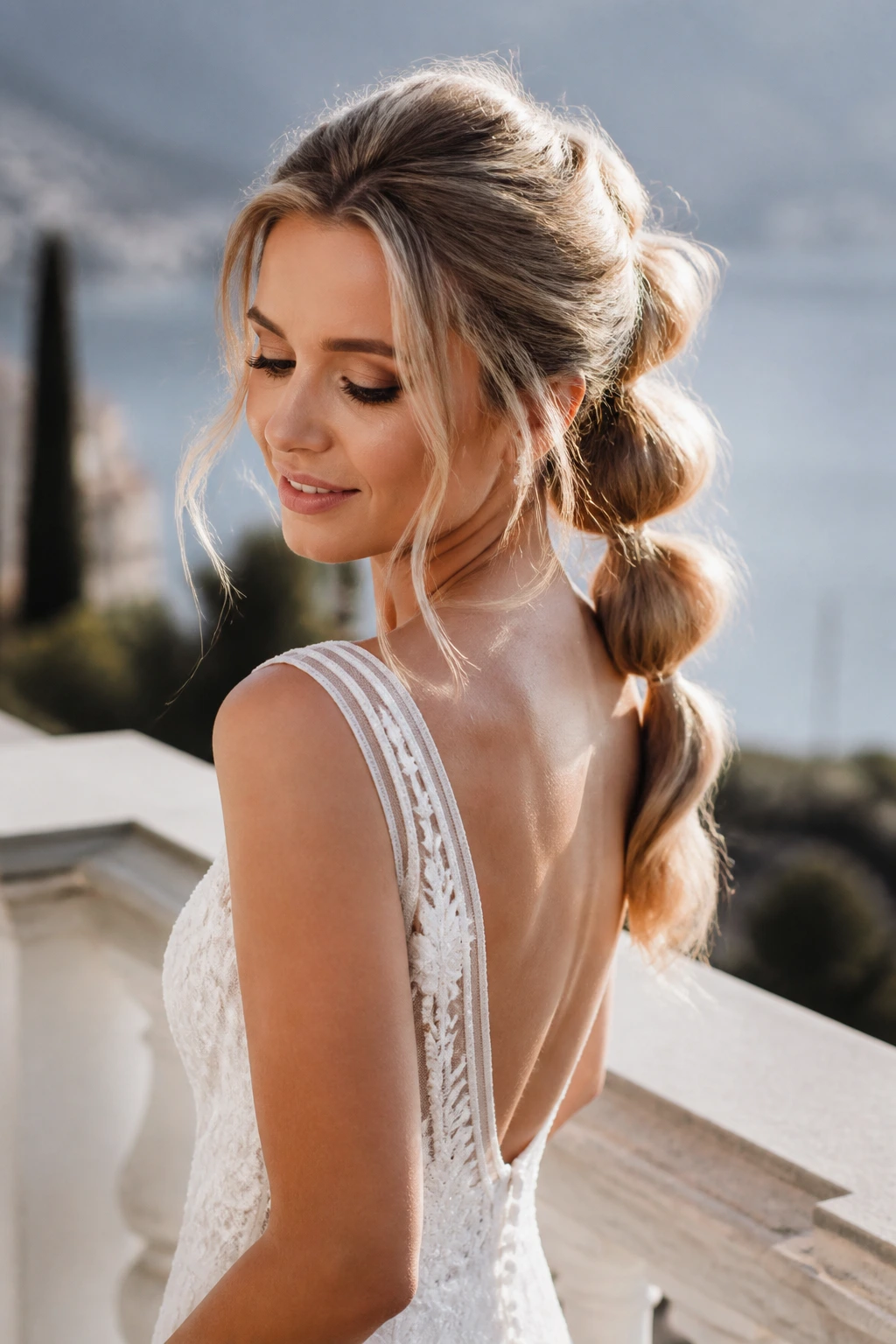
A bubble ponytail can sound playful, and it is — but in the right hands, it becomes surprisingly soft and bridal. The trick is to keep the bubbles gentle, the sections slightly loosened, and the crown smooth enough to feel intentional.
Unlike a glossy runway version, the wedding version should have a little movement in each segment. Tie off the ponytail at intervals, then tug each section a touch so the bubbles read rounded instead of tight.
Why this one stands out
It gives structure without weighing the head down. That makes it practical for long ceremonies or warmer venues. The shape also looks clean from the back, which matters more than people admit.
If you want a romantic finish, wrap a thin section of hair around each elastic or add a slim ribbon between the first two ties. Keep the accessories subtle. The shape is already doing enough.
It’s one of the better choices for brides who like modern lines but still want the hair to feel soft at the ends.
17. Braided Low Bun with Feathered Fringe
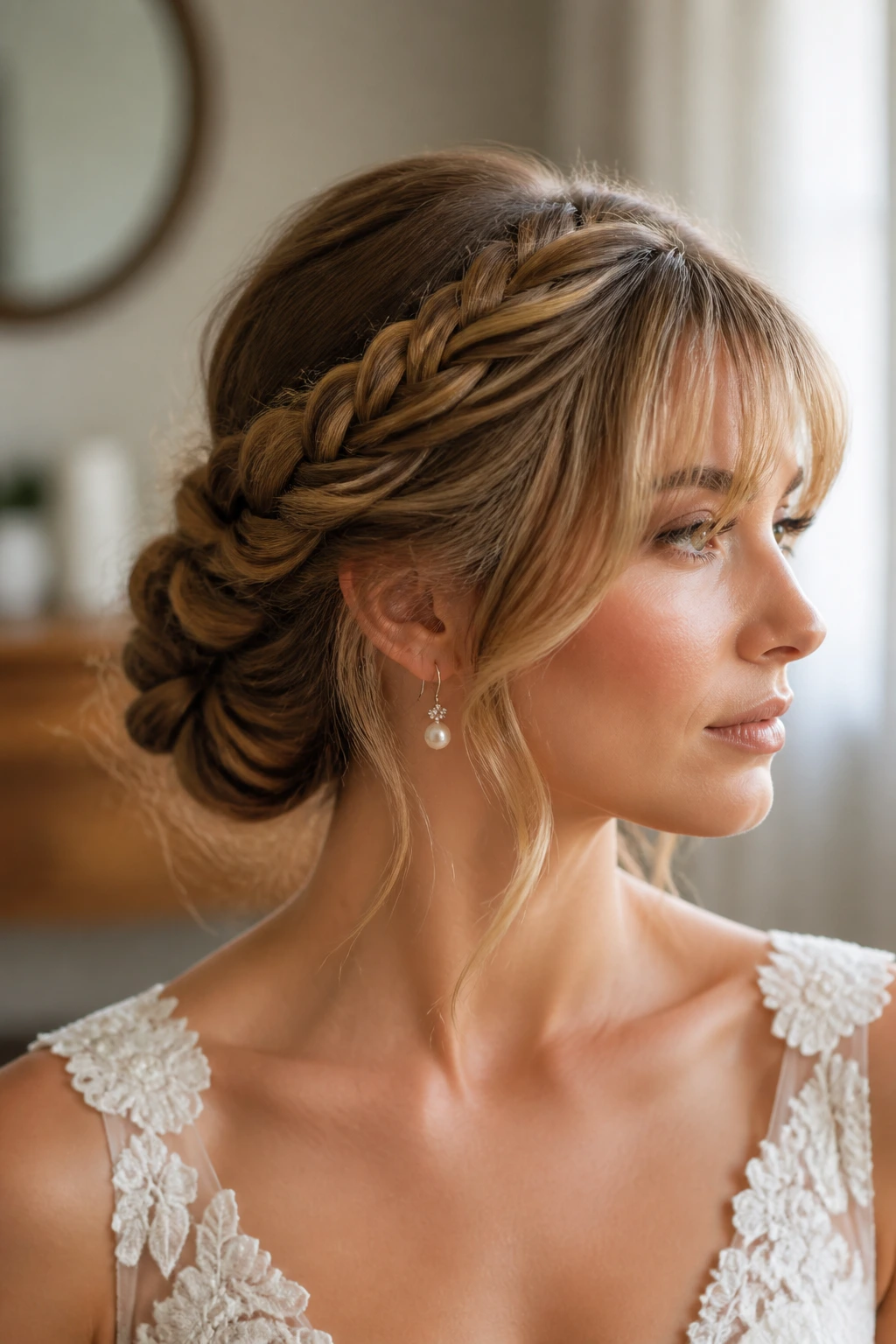
A braided low bun gives you texture at the back and softness at the front, which is a good marriage for bridal hair. Start with a loose braid or two feeding into a bun at the nape, then leave a feathered fringe or a few lifted front pieces to keep the face light.
The braid gives the bun grip. That’s useful. Hair that has been braided first tends to hold a pinned shape better than hair that was just twisted and hoped for the best.
Best use case
This style suits brides who want something secure but not hard-edged. It’s especially good with lace or embroidered dresses because the braid texture echoes fabric detail without copying it too closely.
If your fringe is short, don’t force it into the style. Let it stay soft and swept. Shorter face-framing pieces can do more for the look than a too-perfect tuck ever will.
There’s a bit of order here, but the softness keeps it from feeling formal. That’s why it works.
18. Wind-Swept Down Style with Subtle Crown Braids
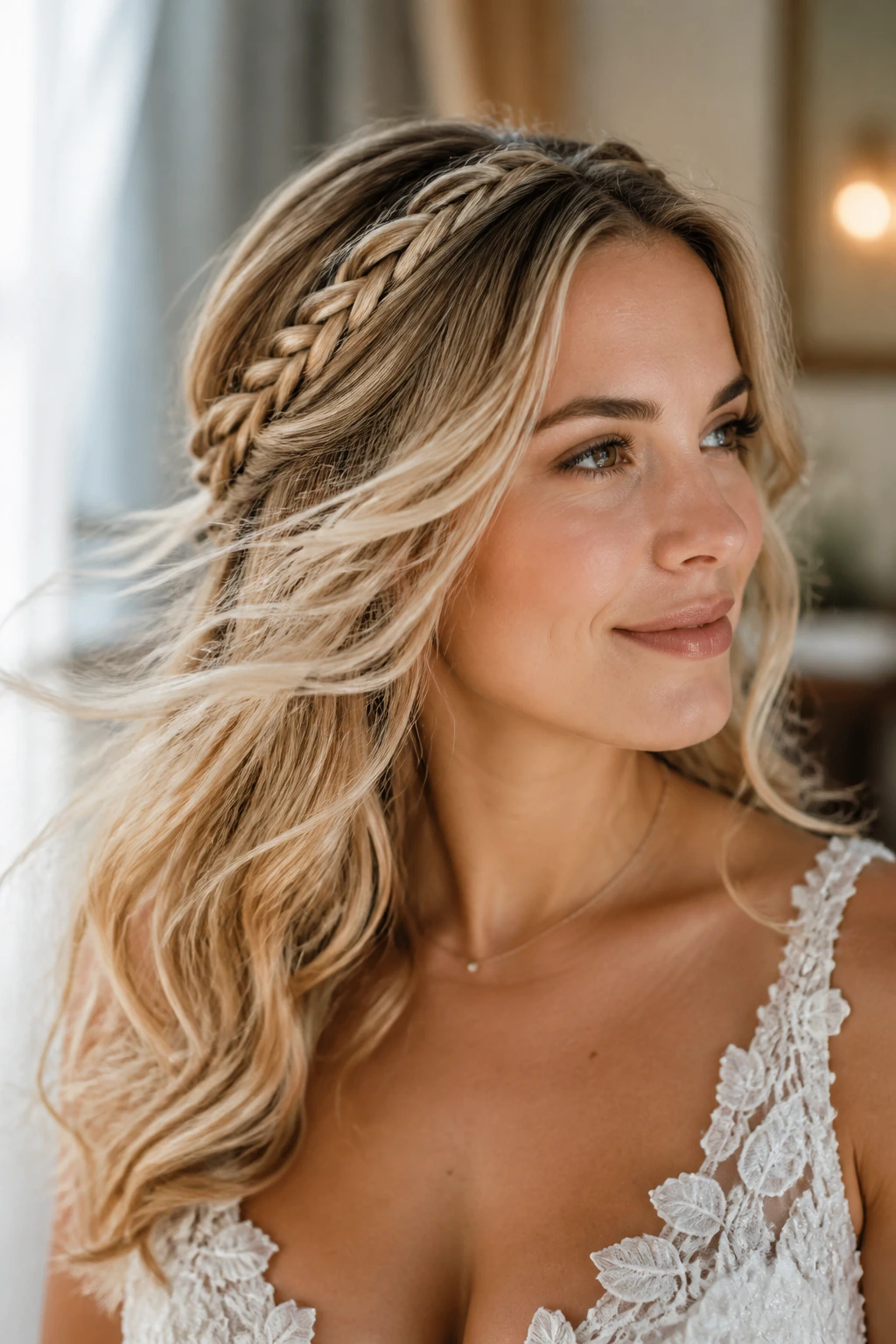
A down style can still feel bridal when it has a little structure at the crown. Two subtle braids or twists at the top keep the hair anchored, while the rest falls in loose waves that move instead of hanging stiffly.
This is the least fussy option in the group, and that’s not a flaw. Some brides look most like themselves with hair down. The trick is making sure the hair has enough body at the top so it doesn’t go flat against the scalp by the time the ceremony starts.
Small choices, big payoff
Use a curling iron with a 1.25-inch barrel or a large wand, then break the curls apart with your fingers once they cool. Brush too early and you lose shape. Leave them untouched for too long and they get too stiff. There’s a middle ground, annoyingly, and it matters.
A veil can sit under the crown braids or above them depending on the effect you want. The braids can also hide a few pins that keep the top from splitting.
This is the style for brides who want movement first and decoration second. Soft. Open. A little breezy without drifting away.
What Gives a Soft Bridal Look Its Shape
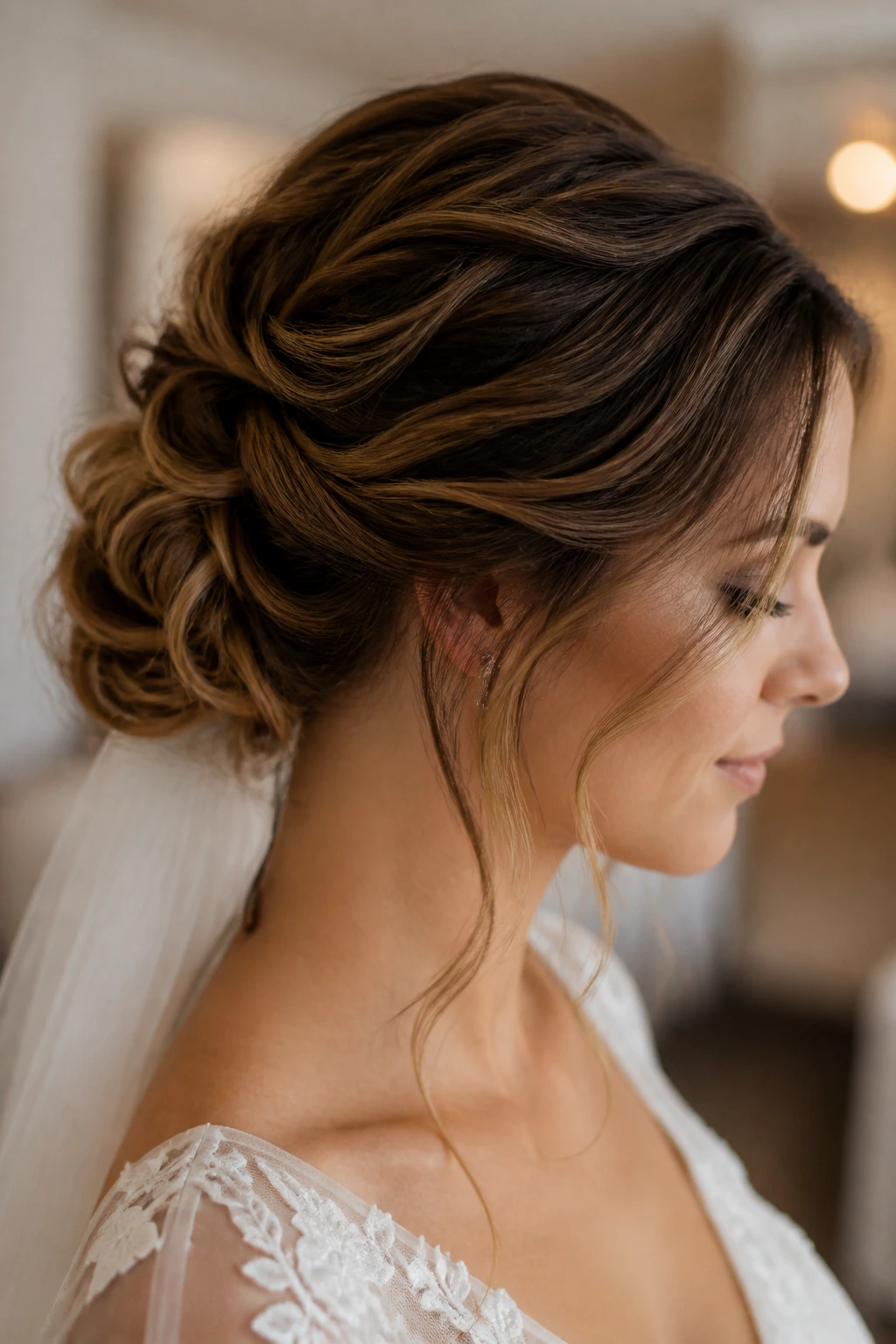
A soft bridal hairstyle is not soft because it lacks structure. It’s soft because the structure is hidden well. That distinction matters more than most people realize, and it explains why some styles survive an entire wedding day while others collapse halfway through the first dance.
The three things I care about most are anchor, texture, and release. Anchor is the pinned base under the style — the part nobody sees. Texture is the grit that lets hair hold a curl, bend, or braid. Release is the loosened edge near the face, ears, or crown that keeps the style from looking nailed down.
Ignore any one of those and the whole thing starts wobbling. Too much release and the style goes fuzzy. Too little and it gets stiff. Too little texture and pins slide. Too much texture and the hair looks rough instead of romantic. Small differences, huge payoff.
That is why these wedding hairstyles work across different dress shapes and hair types. A good bridal style doesn’t have to be elaborate. It has to be believable up close, not just in the mirror.
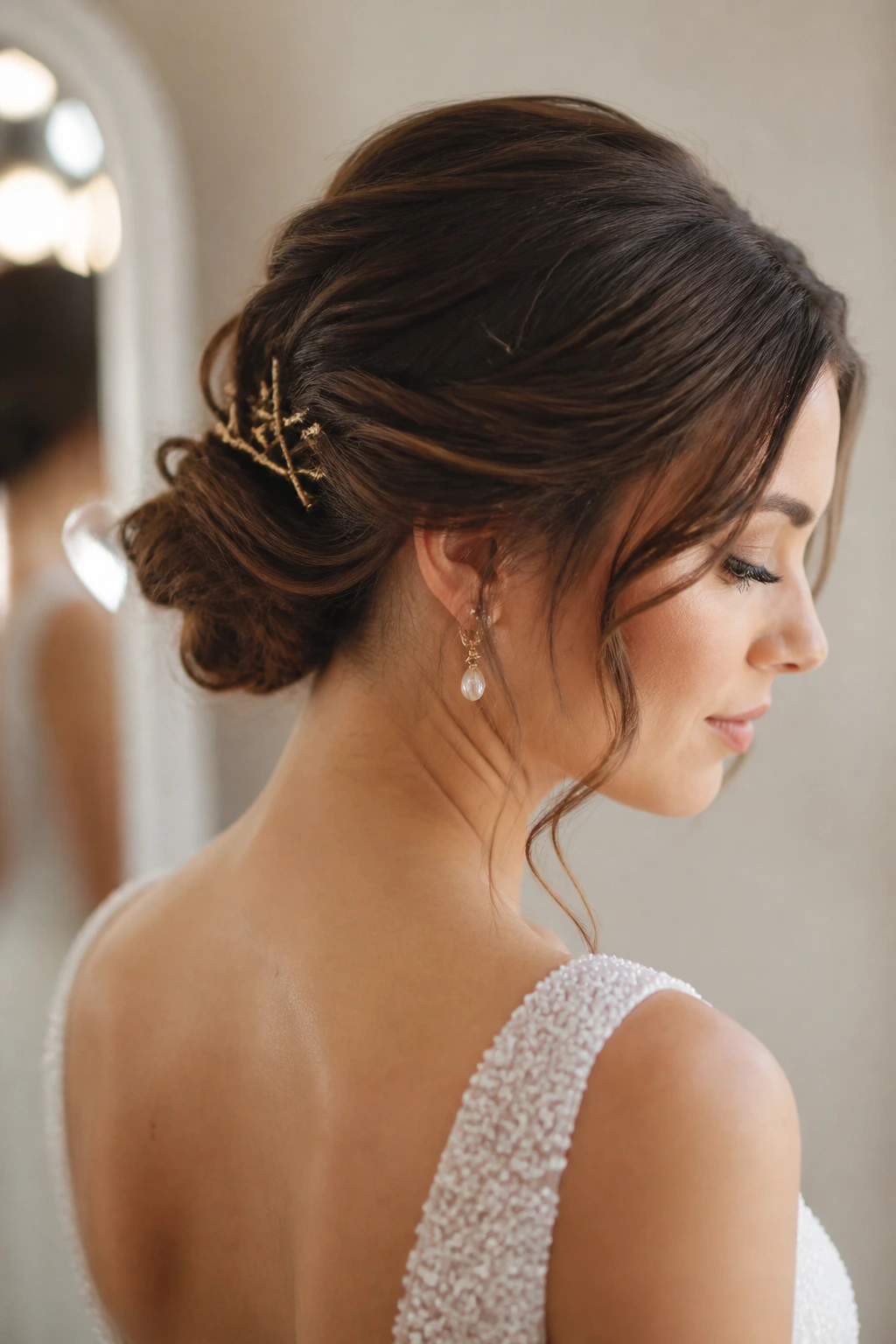
Essential Tools for Bridal Hair That Needs to Last
-
1-inch curling iron or wand: Best for face-framing pieces and softer curls that bend rather than spring into tight spirals.
-
1.25-inch curling iron or wand: Useful for loose waves, brushed-out styles, and lengths that need shape without tiny ringlets.
-
Tail comb: Helps build clean parts, tease the crown without wrecking the surface, and section hair precisely.
-
Bobby pins in a hair-matched color: These are the hidden workhorses. Buy more than you think you need.
-
U-pins or hairpins: Great for low buns and twists because they hold shape without leaving a visible line.
-
Texturizing spray: Gives grip to freshly washed hair and helps braids, twists, and pins stay put.
-
Flexible-hold hairspray: Holds the shape without locking every strand into place. The finish should still move when touched.
-
Heat protectant: Non-negotiable if the style uses curling irons or hot rollers.
-
Small clear elastics: Handy for ponytails, braids, and hidden anchors.
-
Hair net or donut form, optional: Useful for fuller buns or structured updos, especially with fine hair.
-
Veil comb or accessory comb: Helps place the veil or decorative piece exactly where the hairstyle is strongest.
Smart Shopping and Hair-Prep Tips
The best bridal hair starts before the curling iron comes out. Hair that was washed too recently often slips, especially if it’s fine or silky. Hair that’s too dirty can clump and lose movement. For most styles, hair washed the day before gives enough grip without looking dusty.
Product choice matters too. Heavy oils and rich masks are lovely for dry ends, but they can make the crown too slippery for pins. Keep conditioner on the mid-lengths and ends, not the roots, unless the hair is truly thirsty. A lightweight mousse or root spray can help fine hair hold shape without turning crunchy.
If you’re using extensions, color match them in daylight, not under warm bathroom bulbs. Warm light hides mismatched tones. Daylight does not. Clip-ins should be blended and brushed through before the styling starts, not after the style is already pinned.
Fresh flowers, pearl pins, and combs should all be tested with the hairstyle during the trial. Some accessories sit fine in theory and slide in practice. A comb with a long base usually holds better than one with a tiny decorative top. Small thing. Very real problem.
Matching the Style to Your Veil, Neckline, and Earrings
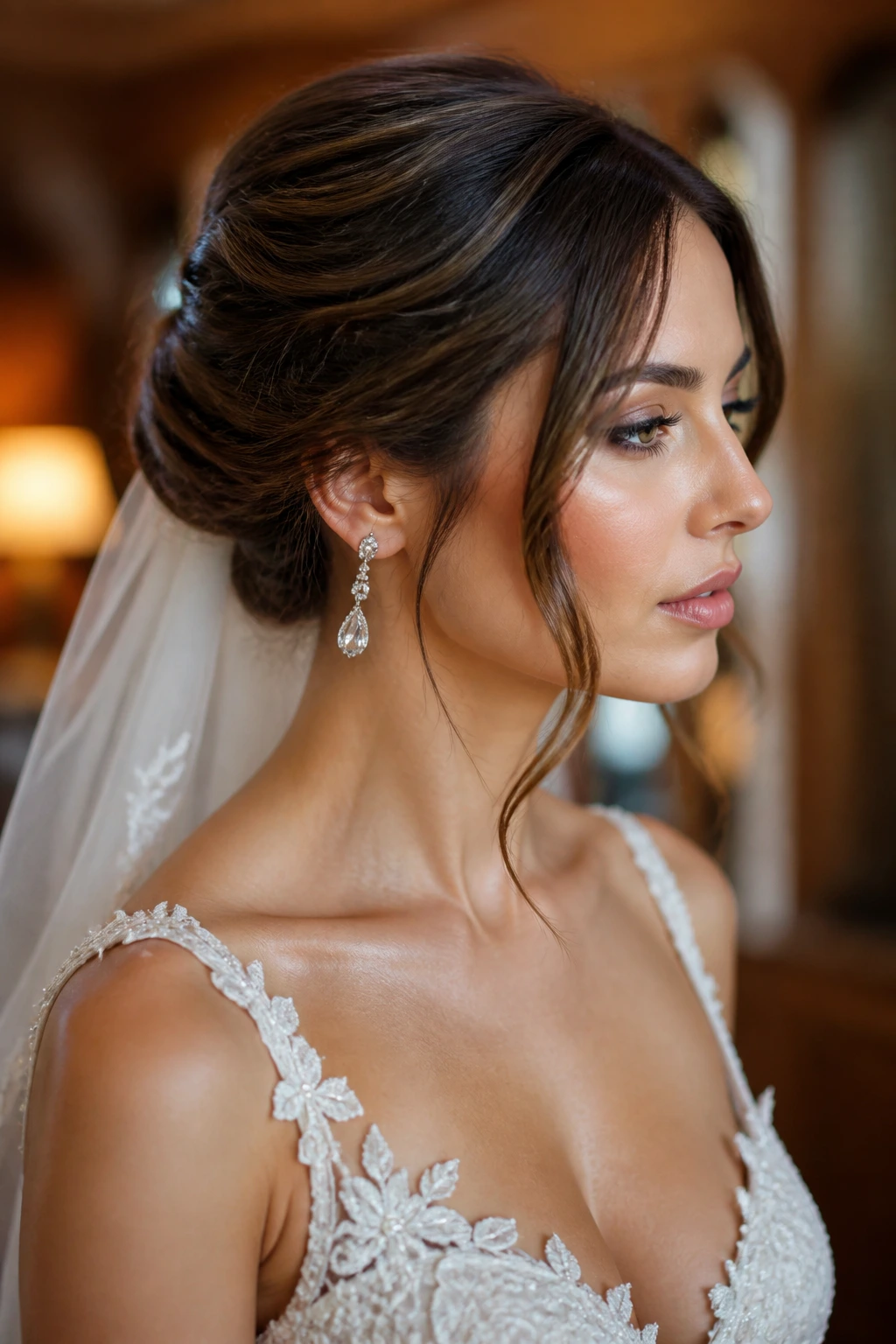
A hairstyle doesn’t live alone. It sits against fabric, jewelry, and whatever is happening behind the head. That is why a style that looked perfect on its own can feel wrong once the veil is pinned or the earrings go in.
Veil Placement: Low buns, twists, and chignons usually take a veil well at or just above the bun line. Half-up styles often need the veil under the gathered section so the upper shape stays visible. Loose down styles need enough anchor at the crown to stop the comb from sliding.
Neckline Match: Open necklines can handle more hair around the shoulders. High necks and detailed collars usually look better with the hair off the neck or tucked low. A style that hides the neckline steals part of the dress’s job.
Jewelry Balance: Large earrings like a style that stays away from the jaw. Smaller studs and pearls can handle face-framing pieces. If the hair already has flowers, braids, or a pearl comb, keep the earrings calmer.
Photo Angle: Think about the back view. A ceremony has a front angle. The photographer does not. The best styles give both sides something useful.
Practical Tips for Better Hold and Softer Movement
Texture First: Prep the hair with dry texture spray before the final shaping. Pins grip better when the hair has a little tooth.
Cool Before You Touch: Curls need to cool completely before brushing or pinning. Warm curls droop early and lose memory fast.
Pin in Layers: Don’t rely on one cluster of pins. Set the base, then secure the surface shape, then tuck the extras. Three small anchors beat one heroic pin every time.
Choose the Right Shine: A tiny bit of shine is good. Wet-looking hair is not. Finish with a light spray, not a serum that runs through the whole style.
Leave the Front Soft on Purpose: A few face-framing pieces make the hairstyle feel gentler, but they need shaping. Straight dangling pieces can look accidental. Curl them, bend them, or at least smooth them into a direction.
Bring a Trial Photo: Save front, side, and back photos from the trial. Hair memory is short. Your phone is better at remembering than anybody in the room.
Common Mistakes That Make Bridal Hair Look Stiff
The first mistake is washing too clean. Freshly washed hair can be silky and slippery, which sounds nice until the pins start drifting out of place. The fix is simple: wash earlier, or add texture with a light mousse and dry spray so the hair has something to hold on to.
The second mistake is over-spraying before the shape is finished. If the hair becomes crunchy too soon, it stops moving and starts looking carved. Build the style first, spray in light layers, and keep a brush nearby for the surface, not the whole head.
The third mistake is making every curl the same size. Uniform curls can look dated fast, especially in a bridal style meant to feel soft. Mix a few larger bends with smaller pieces, then brush selectively so the result feels lived-in rather than stamped.
Another common problem is ignoring the dress neckline. A gorgeous hairstyle can hide a beautiful back or make a high collar feel crowded. Hold the hair against the gown in the mirror before you commit. That five-minute check saves a lot of regret.
Variations and Alternatives for Different Hair Types
The Fine-Hair Version: Use more texture spray at the roots and less oil at the ends. Low buns, half-up twists, and side-swept waves tend to hold better than heavy braided crowns when the hair is delicate.
The Thick-Hair Version: Reduce the number of visible sections. Thick hair can become bulky fast, so a French twist, low knot, or soft chignon usually gives a cleaner shape than an oversized braid cluster.
The Curly-Hair Version: Let the curl pattern stay visible. A curly half-up style, halo bun, or floral side bun works well because it respects the hair’s natural shape instead of flattening it out.
The Short-Hair Version: Focus on pinning the front and adding soft bends, not on forcing a full updo. Side clips, tiny braids, and waved bobs can read very bridal when the accessory choice is thoughtful.
The Veil-Free Version: Lean into shape and texture. Without a veil to anchor the look, a braid, ribbon, or pearl pin gives the hairstyle a finished point of focus.
Keeping the Style Fresh from First Look to Last Dance
Wedding hair needs a plan, not a wish. If there’s a long gap between styling and the ceremony, keep a small kit nearby: bobby pins, one travel hairspray, a tail comb, and a few blotting papers so the forehead stays dry before photos. That little kit saves more headaches than people expect.
If the style was set earlier in the day, ask for a quick touch-up about 20 to 30 minutes before the ceremony. That is usually enough time to smooth the crown, re-pin anything that shifted, and refresh the front pieces without disturbing the whole shape.
For overnight prep before a trial or rehearsal, use loose clips or satin-covered ties so curls don’t crease. If you’re storing accessories, keep pearl pins and combs in small pouches or a divided box. They get scratched fast when tossed together.
Humidity is its own annoying character. A flexible anti-humidity spray near the final finish helps more than heavy lacquer, which can crack once the hair starts moving. You want the style to stay soft, not laminated.
Frequently Asked Bridal Hair Questions
Can I wear a veil with a soft, loose hairstyle?
Yes, if the style has a secure anchor point at the crown, nape, or half-up section. The veil comb should grip into a pinned area, not slide onto loose curls alone.
How do I keep curls from falling flat during the day?
Set the curls fully, let them cool, and pin them while they’re still warm if the style needs a long hold. A light texture spray at the root and a flexible finish at the end help the shape last without turning crunchy.
What works best for fine hair that needs more volume?
A half-up twist, loose low chignon, or textured bun usually gives the most lift without overload. Fine hair tends to look better with a little teased structure and fewer huge pieces.
Do I need extensions for these styles?
Not always. Extensions help if you want fuller waves, bigger braids, or a heavier bun, but many of these styles can be done with natural hair alone if the shape is chosen well.
Which styles are easiest to keep soft instead of stiff?
Brushed-out waves, half-up twists, side-swept styles, and low chignons are usually the easiest to soften. They all leave room for movement around the face and ends.
Can curly hair be styled into a romantic bridal look without straightening it first?
Absolutely. Curly half-up looks, low buns, and halo styles can be beautiful on natural texture. The key is shaping the curls rather than flattening them out.
How far ahead should I do a bridal hair trial?
Long enough that you can test accessories, veil placement, and weather worries without rushing. Bring photos of the dress neckline and earrings, because those details change the hairstyle more than people think.
What if the hair starts slipping before photos?
Ask for a few hidden pins at the nape or under the crown and keep a mini can of spray nearby. A style that slips usually needs more grip, not more hair sprayed on top.
The Look That Stays Soft
The nicest bridal hair rarely looks complicated from a distance. It looks balanced. A clean anchor, a little movement, and a few pieces left to breathe can do more for a wedding look than a head full of decoration ever will.
That’s why these styles keep coming back. They let the dress show, they give the face some softness, and they stay believable after hours of being worn. Pick the shape that matches your hair texture, your neckline, and the kind of movement you want when you turn your head — the rest is just pins and patience.
