



Silver hair color on curly hair has a trick to it. A straight bob can wear one flat silver panel and look sleek; curls don’t play that way. They bend the light, hide tone in the shadow of each coil, then flash it back at you when the ringlet turns. That’s why the best silver hair color ideas for curly hair are rarely the ones that go solid from root to tip. They’re the ones with shadow, ribboning, and a little breathing room.
And curly hair changes the whole mood of silver. Tight coils can make a pewter glaze look almost metallic. Loose waves can turn a smoky balayage into something soft and expensive-looking in the best sense — not loud, not icy for the sake of it, just dimensional. Porosity matters too. Curls that drink color fast can look gorgeous for a week and then slide toward dull or yellow if the toner is too aggressive or the aftercare is sloppy. That’s the part a lot of people miss.
I’ve always thought silver looks best when it still lets the curl pattern do the talking. If the color flattens the shape, it’s the wrong silver. If the shade makes each bend look clearer, deeper, and more deliberate, you’re in the right lane.
Why These Silver Shades Work So Well on Curls
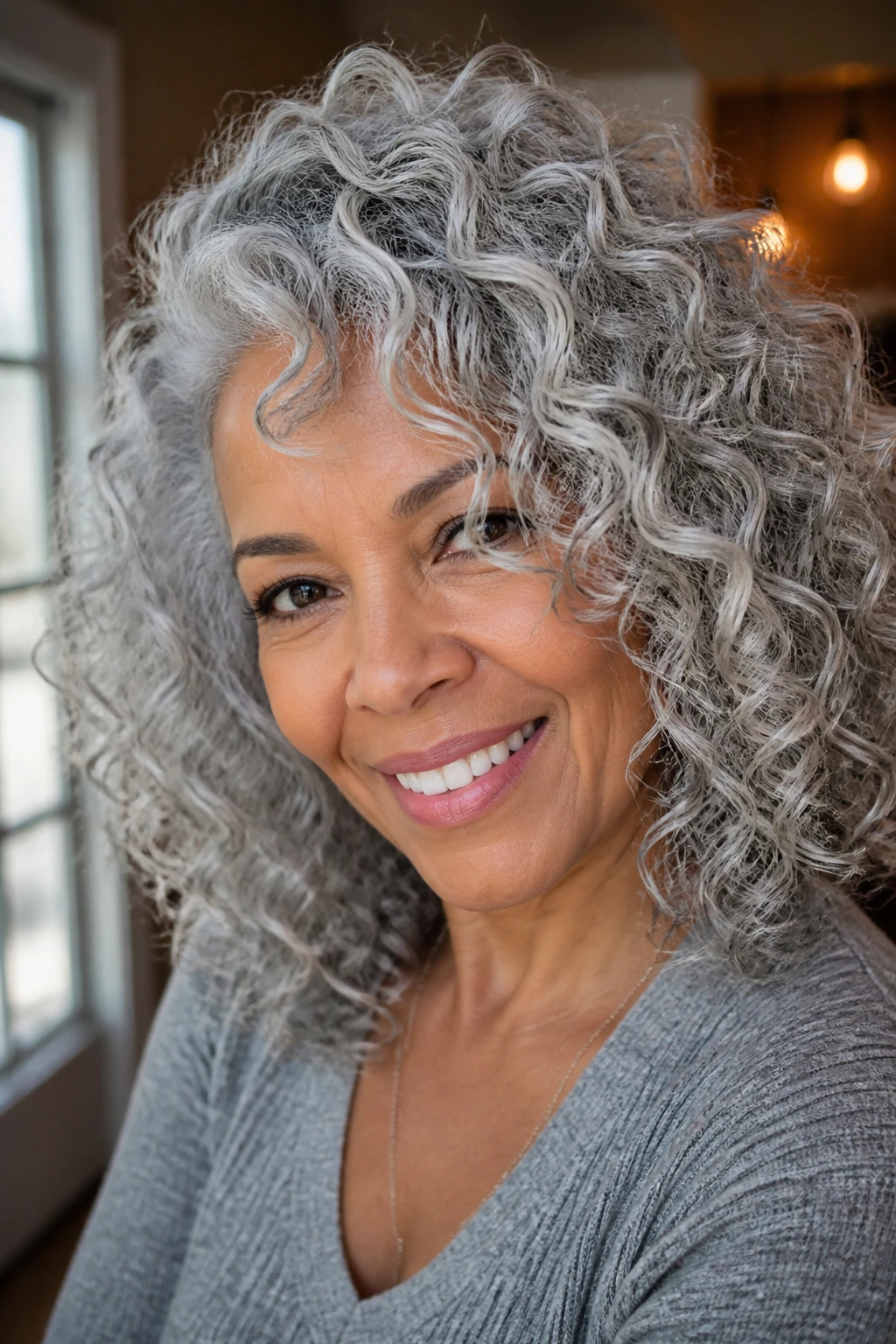
-
Dimension is doing half the work: Curly hair already creates shadows and highlights as it moves, so silver reads richer when it’s placed in ribbons, halos, or a root melt instead of one solid sheet.
-
Cool tones need a little depth: A pure, one-note silver can look harsh on dense curls. Smoky roots, graphite lowlights, or pewter babylights keep the shape visible and stop the whole style from looking dusty.
-
Porosity changes everything: Ends that have been lightened before will grab toner faster than healthy mids, which is why the smartest silver looks usually protect the tips instead of flooding them.
-
Maintenance can be tuned to your life: Some looks need a gloss every 4 to 6 weeks. Others can stretch farther because the darker root or shadow keeps the grow-out graceful.
-
There’s a silver for every curl pattern: Loose 2C bends, springy 3B spirals, and tighter 4A coils all take silver differently, and the best choices respect that instead of forcing one formula on everyone.
-
You do not need to go full ice: A smoky, mushroom, pewter, or steel tone can feel more wearable than bright chrome, especially if your skin has warmth or your curls are high-porosity.
1. Smoky Silver Balayage
Smoky silver balayage is the one I reach for when someone wants movement more than drama. The color falls in soft painted ribbons, so the curls keep their shape instead of turning into one pale mass. On a spiral pattern, that smoke-gray silver can look almost like moonlight caught in different layers of hair.
Why It Works on Curls
The hand-painted placement matters here. Balayage lets the lighter pieces sit where curls naturally rise toward the light, which means you get brightness on the surface and depth underneath. That depth is what keeps the style from looking chalky.
- Best on: 2C to 3C curls that already have a bit of bounce and separation.
- Ask for: Soft silver ribbons with a darker root shadow, not a hard line of lightener.
- Upkeep: Gloss every 6 to 8 weeks, sooner if your hair pulls warm fast.
- Why I like it: The grow-out is forgiving, and the color still looks intentional when your curls are a little frizzy on day three.
A good smoky balayage should look like it was woven through the curl pattern, not painted on top of it. If your stylist sections too chunky, the silver can read stripey. Keep the pieces irregular. That irregularity is the whole point.
2. Mushroom Gray Melt
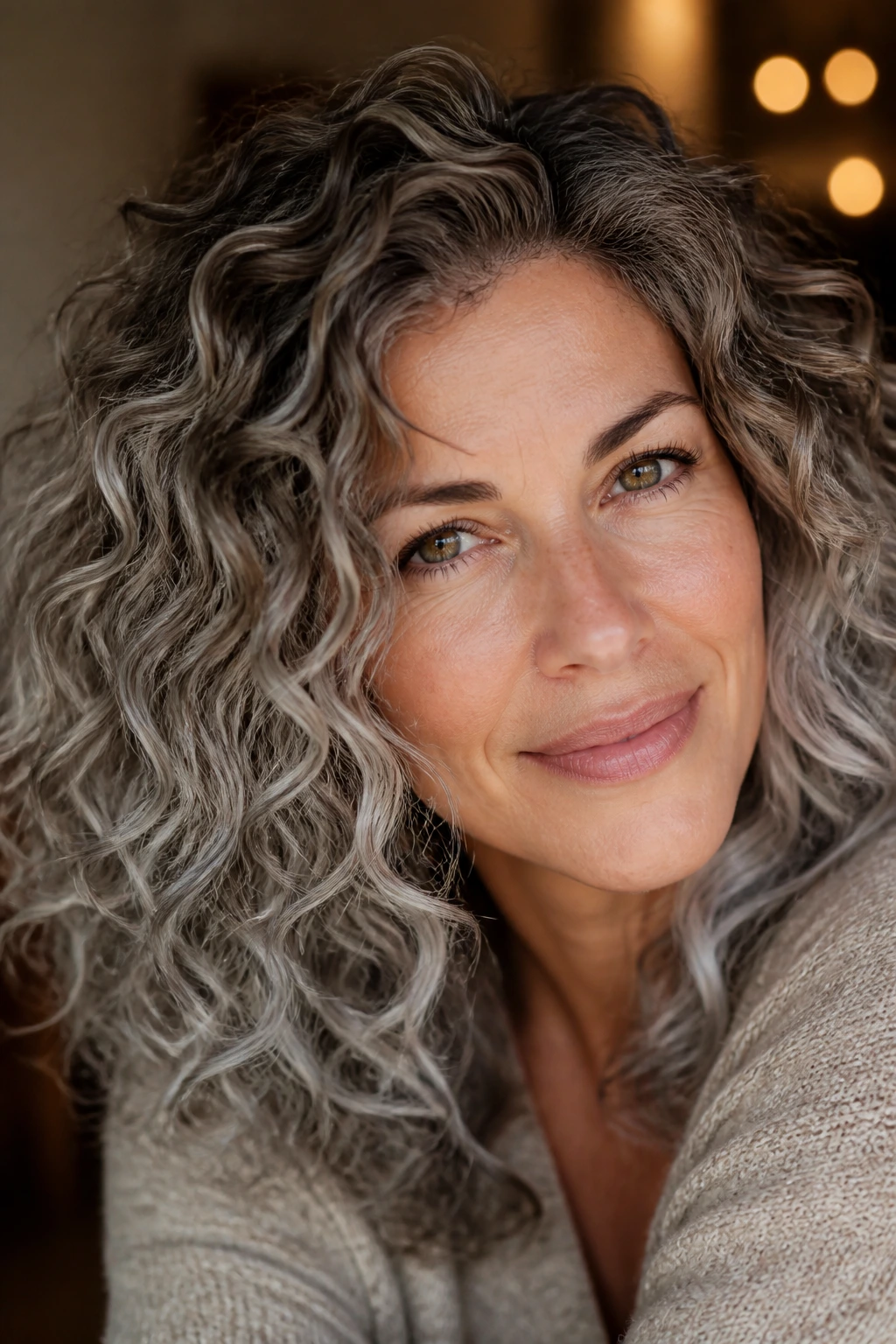
Mushroom gray melt is for anyone who wants silver without the sharpness of a bright icy blonde. It starts with a cool beige-brown root and slides into gray-silver mids and ends, which gives curly hair a lived-in, expensive softness. The shade sits somewhere between ash brunette and cool silver, and that in-between space is exactly what makes it wearable.
A flat silver can sometimes make curls feel hard-edged. Mushroom tones do the opposite. They blur the line between light and dark, so each coil keeps its outline. On thicker curls, that blur is a gift; on finer curls, it stops the style from looking too airy or stripped.
I’d choose this if you want a silver look that can survive a normal life. It’s one of the easiest ways to move into gray territory without committing to a frosty finish that needs constant babysitting. The darker root also means your grow-out doesn’t shout. It just settles in.
3. Icy Silver Face Frame
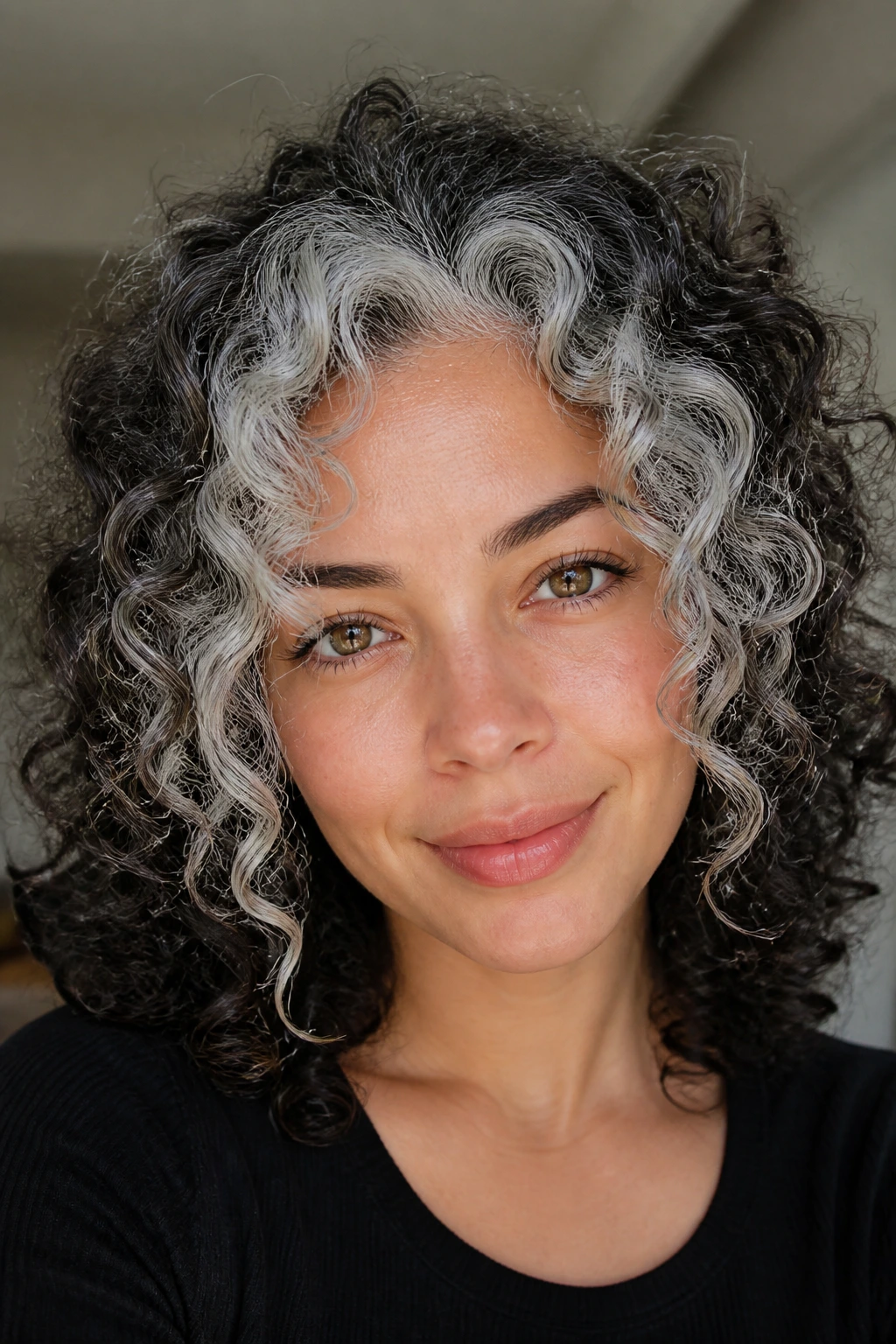
Can a face frame carry a whole silver look? Absolutely. When the front curl pieces are lifted to an icy silver and the rest stays deeper, the effect is sharp in a good way. It gives curly hair a bright edge around the face without demanding a full-head bleach appointment.
The best part is control. You can keep the back shadowy and healthy-looking while letting the front pieces do the visual work. On a wash-and-go, those front curls catch light first, so the silver reads immediately even if the rest of the style is a little more subdued.
How to Ask for It
- Tell your colorist: You want silver panels around the hairline, temples, and a few crown curls.
- Keep the base: Leave the root and lower lengths deeper for contrast.
- Best for: People who want a bright silver hit but do not want full-head maintenance.
- Watch the ends: Face-framing curls often get more heat and touch, so they can tone down faster.
I like this look on round and heart-shaped faces because the brightness draws the eye where you want it. It’s a small placement change, but on curls, small placement changes make a big visual difference.
4. Platinum-to-Silver Ombré
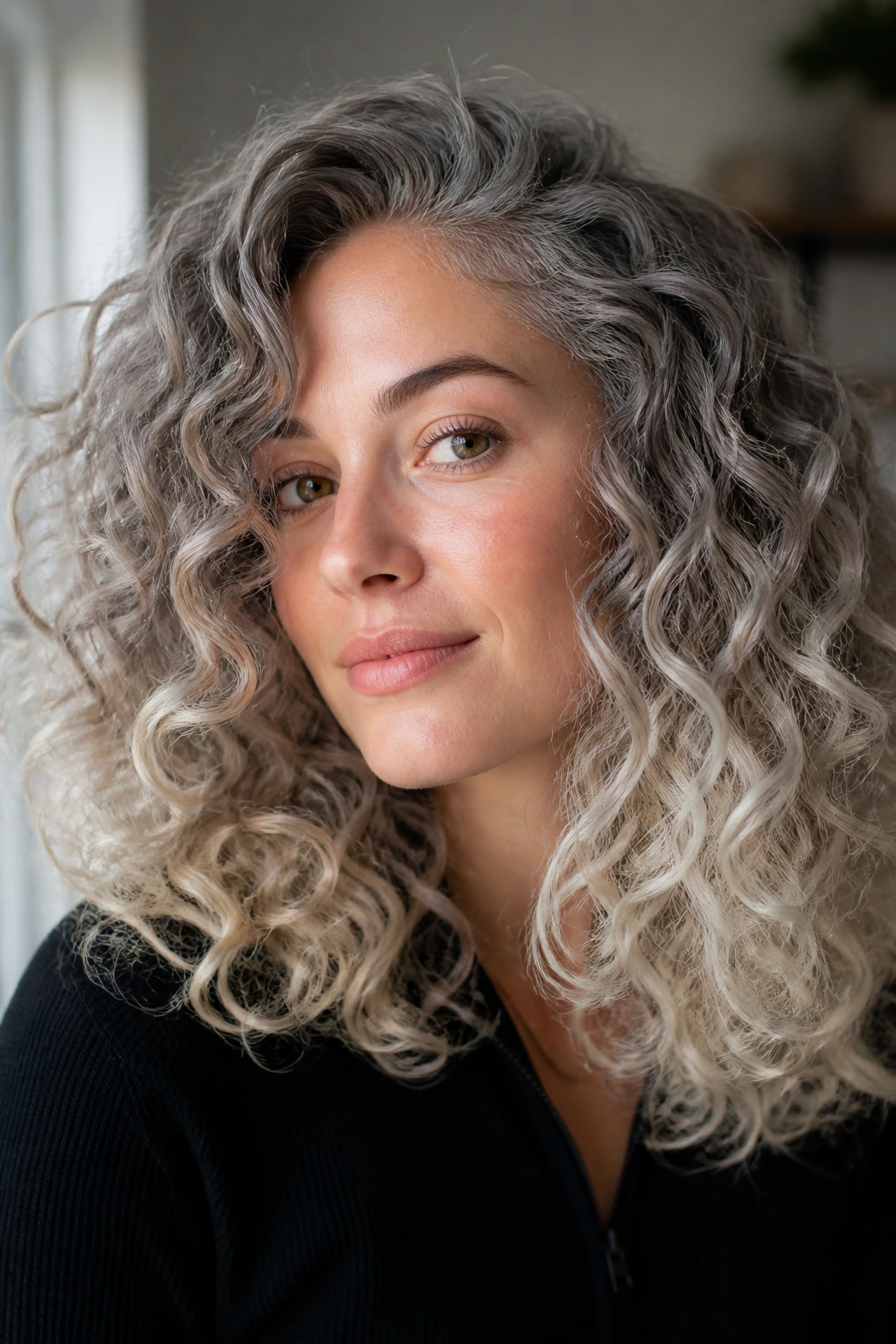
Picture the ends of a curly lob fading from pale platinum into a softer silver haze. That’s the charm here. Platinum-to-silver ombré gives you the drama of a light blonde finish without making the whole head feel stark, and the curl shape keeps the fade looking fluid instead of obvious.
This is one of those styles that rewards movement. A twist-out, a diffused blow-dry, or even a finger-coiled set shows the transition better than a flat brush-out. The color is doing more than just being pretty. It’s tracing the curl pattern downward.
The catch is that this look wants careful lifting. Silver at the ends only works if the hair is pale enough to take toner cleanly. If the base is too yellow or orange, the ombré can go muddy fast. I’d rather see this done in two slower sessions than one rushed one. Hair that still has its curl memory is worth the wait.
5. Pewter Babylights
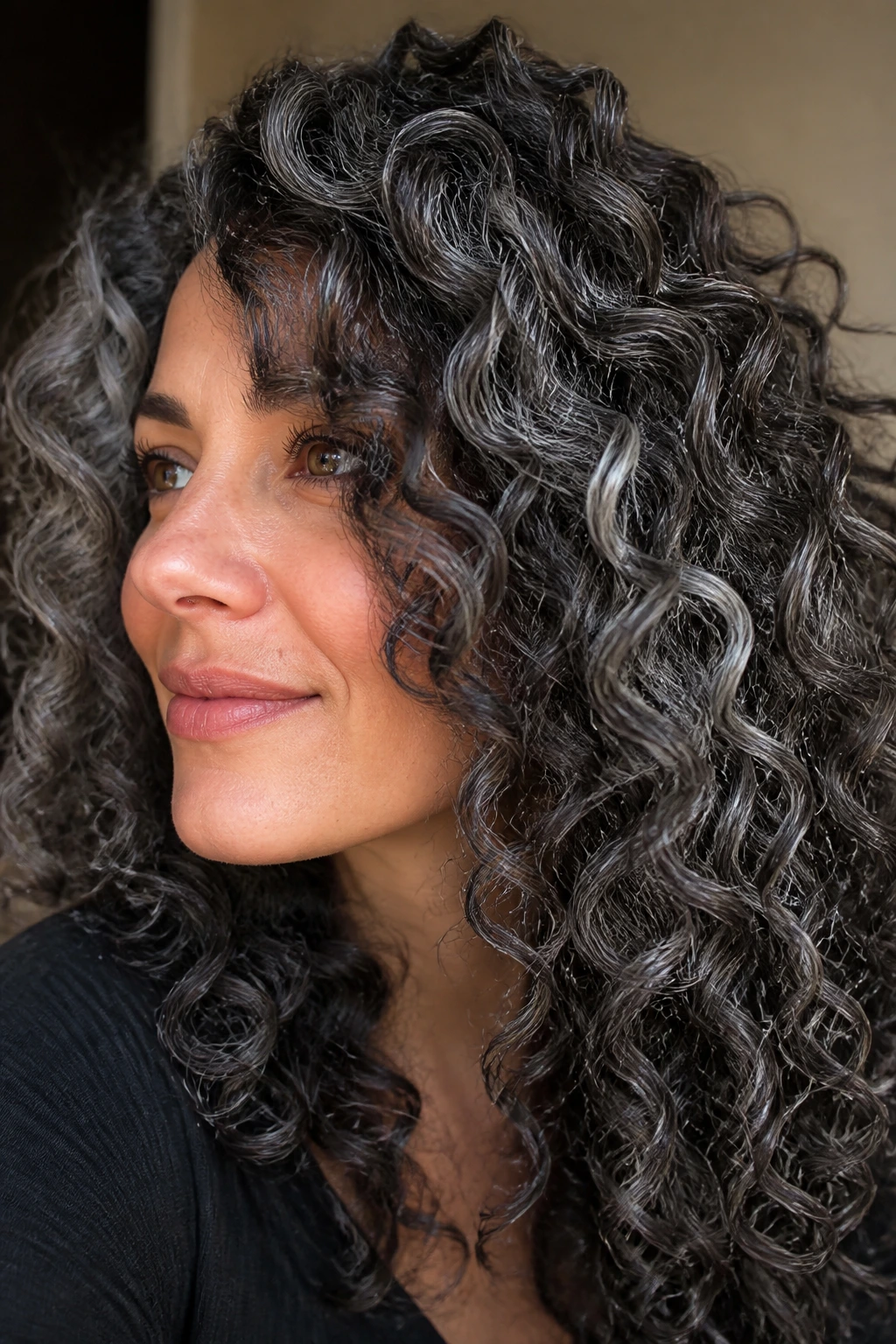
Pewter babylights are tiny, fine streaks of silver-gray that sit inside the curl clumps like threads. They’re subtle enough that people notice the shine before they notice the dye job. That’s what makes them useful. You get brightness, but the hair still looks like hair.
This is one of the best options if your curls are dense and you don’t want obvious stripes. The babylights peek through when the curls separate, then disappear a little when the hair compresses. That changing visibility keeps the style from looking static. And static is the enemy of good curly color.
The pewter tone itself is a smart middle ground. It’s cooler than beige, softer than steel, and less severe than white silver. If you’ve got olive skin or a neutral complexion, it tends to sit nicely without making your face look washed out. I also like it on people who wear a lot of black, cream, navy, or charcoal. It feels coordinated without trying too hard.
6. Steel Blue Silver
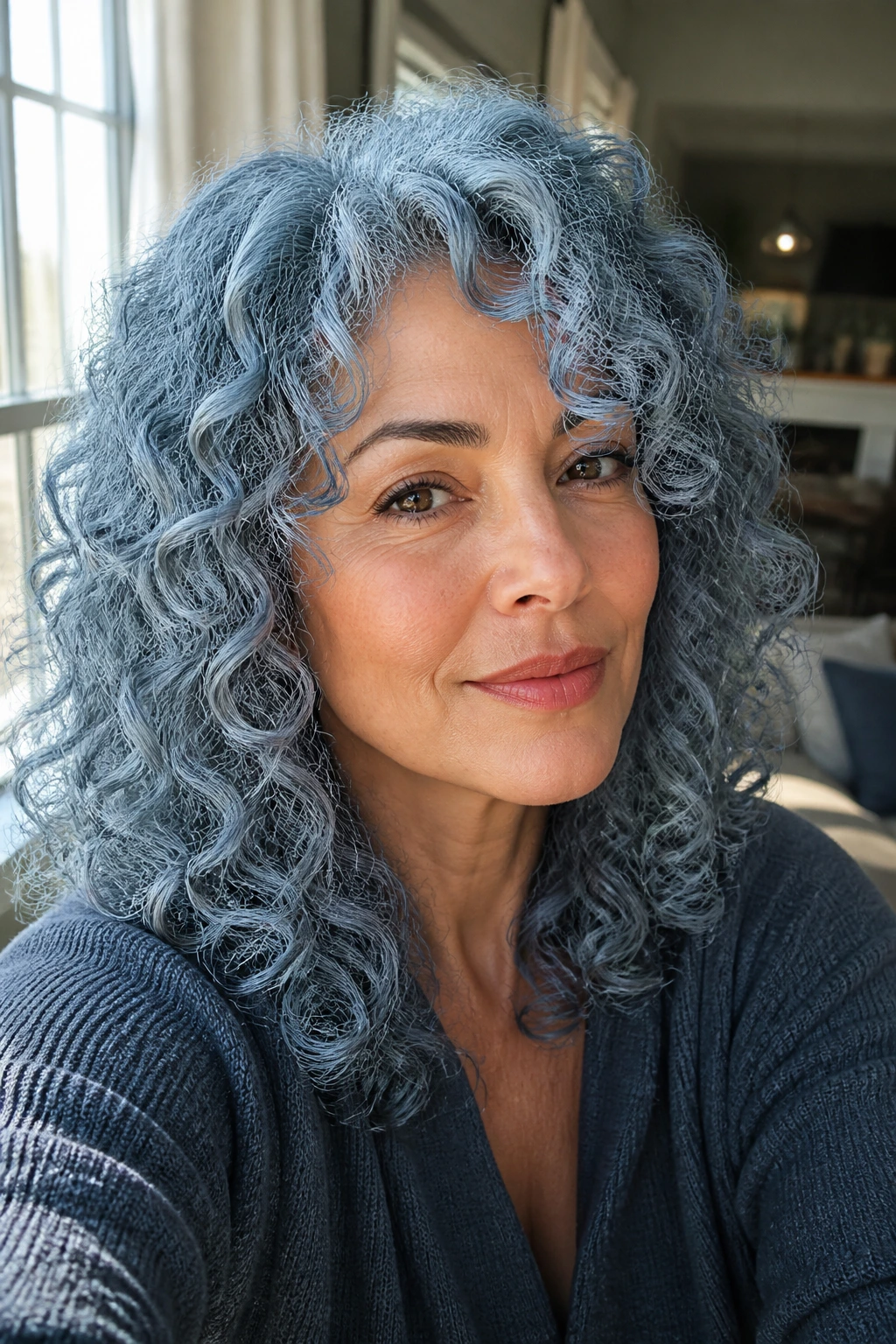
Steel blue silver leans cooler than most silver looks, with a faint blue cast that shows up most clearly in daylight. On curly hair, that blue note can be magic because it cuts through the softness of the curl shape and gives the whole style some edge. Not punk. Just sharper.
Unlike a plain ash silver, steel blue silver has a little tension in it. That tension keeps the color from reading flat, especially on medium and dark bases that have been lifted to pale blonde first. It’s a good choice if you like cool-toned clothes, silver jewelry, and makeup that lives in the mauve-to-plum family.
The look works best when the blue stays subtle. If the tone goes too sapphire, the silver part disappears and the whole thing turns novelty-fast. Keep the blue quiet, almost smoky. Then let the curl pattern do the rest.
7. Lavender-Silver Glaze
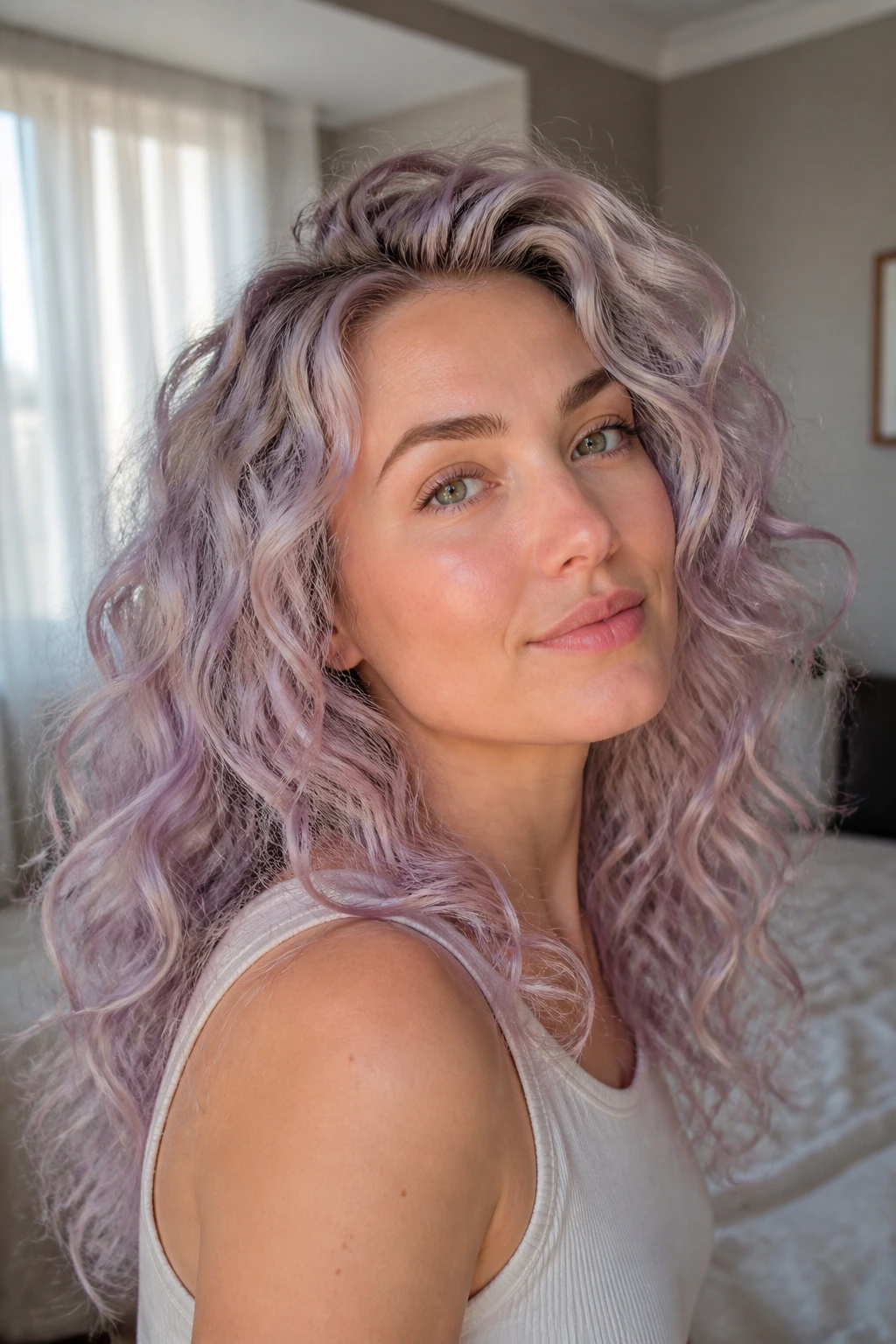
Why does lavender-silver work so well on curls? Because it softens the metal. A bare silver can feel cold on its own, but add a trace of lavender and the whole thing turns pearly, airy, and a little more forgiving when the color starts to fade. That tiny violet cast also helps keep yellow from creeping in.
I like this on looser curls and soft ringlets where the color can drift through the bends instead of sitting in a hard line. It’s especially pretty on hair that already has pale blonde underneath, because the glaze doesn’t have to fight for space. It just sits there and changes the temperature of the whole head.
How to Use the Shade
- Ask for: A translucent silver glaze with a violet undertone, not a vivid pastel lavender.
- Best on: Pre-lightened curls that can hold tone without soaking it up too fast.
- Maintenance: A color-depositing mask once every 1 to 2 weeks can help keep the cast intact.
- Watch for: If your hair is very porous, the lavender can go muddy. Keep processing time short.
This is one of the few silver-adjacent looks that can feel romantic rather than severe. If you want softness, this is the one.
8. Charcoal Root Shadow
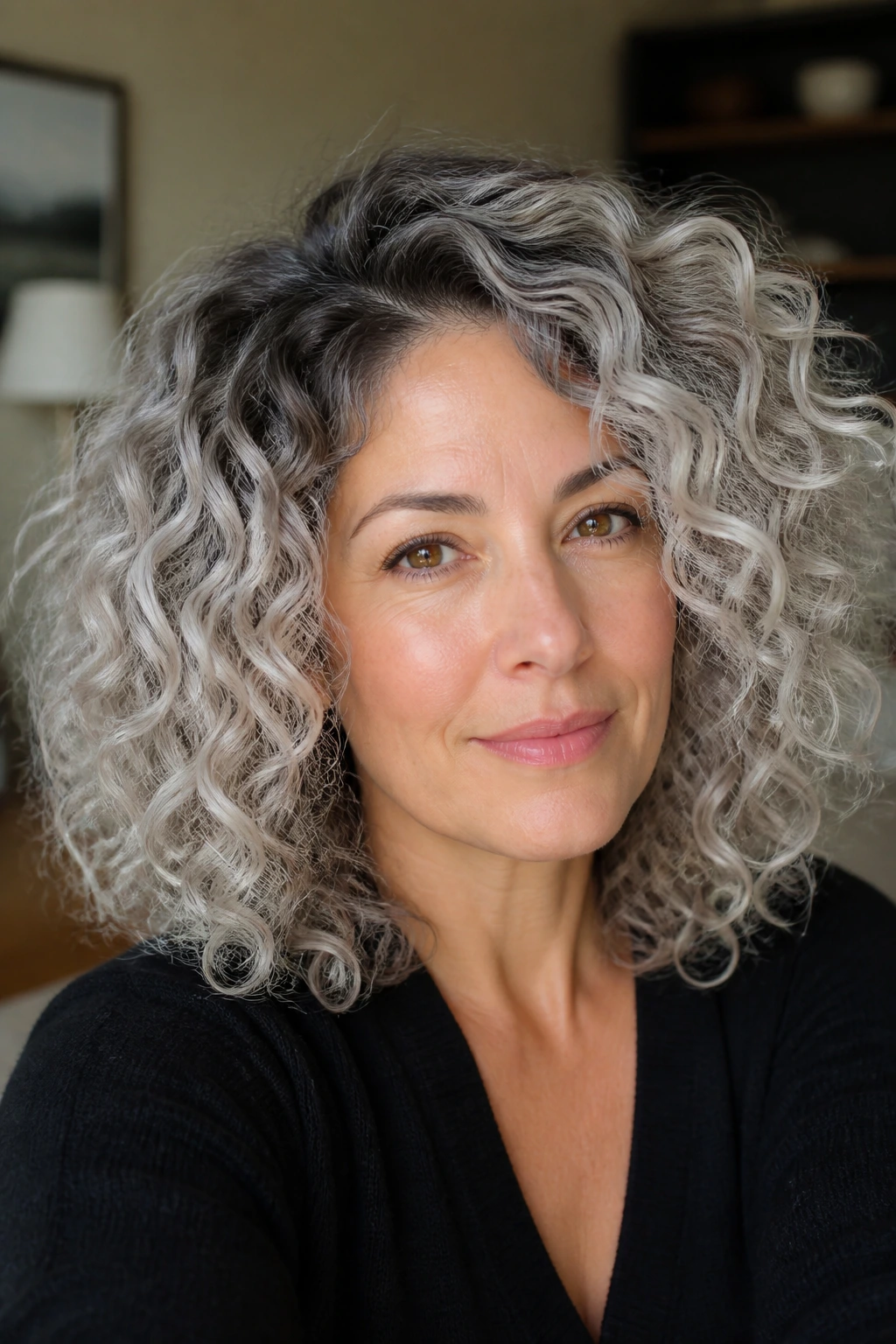
Charcoal root shadow is the quiet power move in this whole list. The root stays deep, cool, and smoky, then fades into silver through the mids and ends. On curly hair, that darker root gives the curls a frame. Without it, silver can sometimes erase the shape from a distance.
I’d choose this in a second for people with naturally dark bases who don’t want to sit in a salon every few weeks. The grow-out is gentle because the root already belongs there. You’re not fighting nature; you’re using it. That alone makes the color feel less high-maintenance.
The shadow root also helps porous ends behave. Instead of asking the whole curl to hold one fragile icy shade, you’re letting the silver live where it has room to shine and the charcoal live where it can anchor the look. It’s practical. It also happens to be one of the cleanest-looking silver options for curly hair.
9. Silver Money Piece
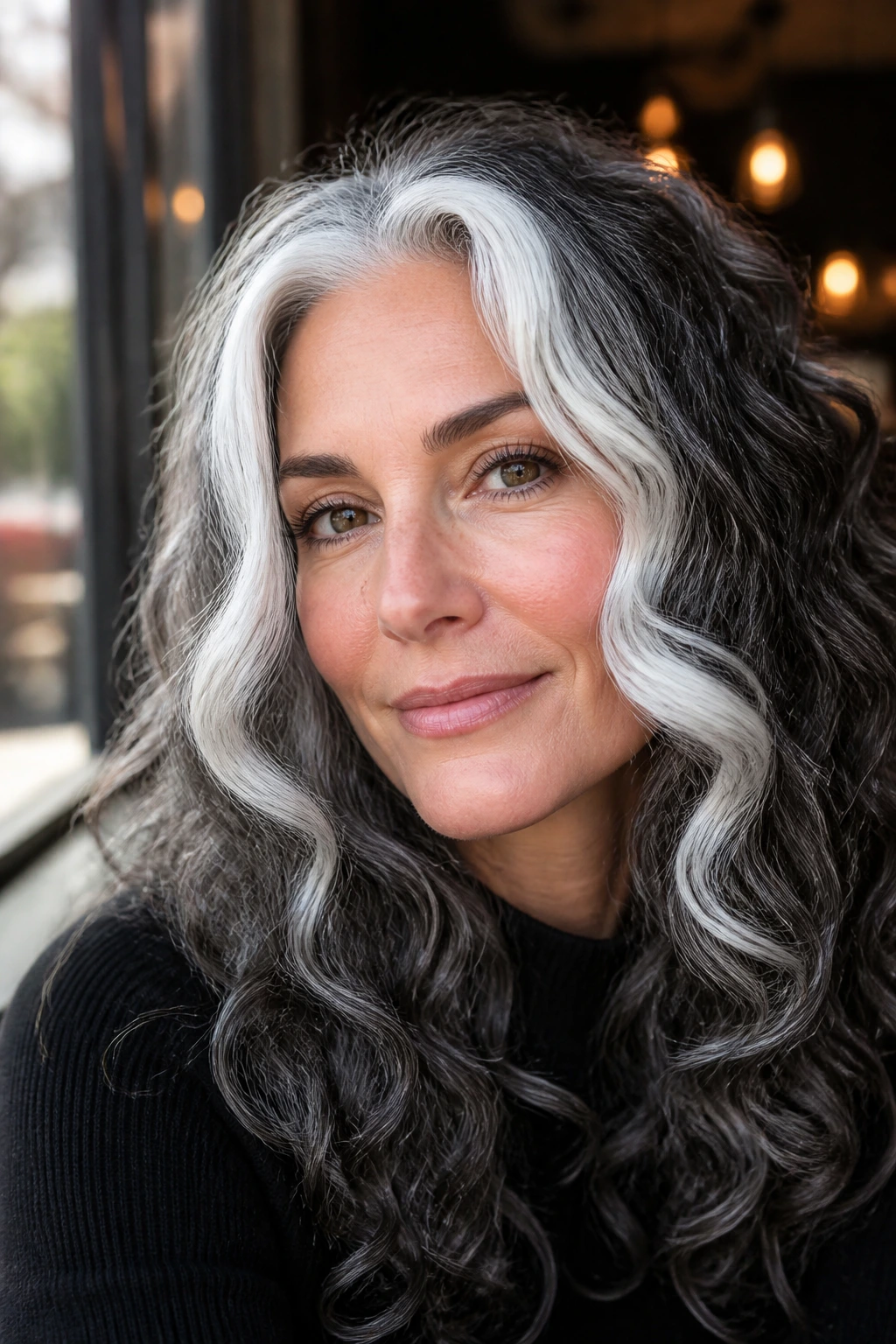
A silver money piece is the curly-haired version of a strong first impression. Two bright front sections, lifted to a crisp silver, sit around the face while the rest of the hair stays deeper or softer gray. It’s bold without requiring the whole head to go light.
I’ve always liked this placement because it works with curl density instead of against it. The front pieces catch the eye before the rest of the pattern even has a chance to speak, and that means you can keep the back more dimensional, more protected, and honestly more realistic for everyday wear.
Key Details to Ask For
- Placement: Hairline, temple, and maybe one or two crown curls.
- Tone: Clean silver, pewter, or a cool white-silver depending on how bright you want the front.
- Best for: People who wear curls loose, half-up, or with a center part.
- Downside: The front pieces get the most sun and styling friction, so they can shift tone faster than the rest.
A good money piece should frame, not shout. If it’s too thick, it starts looking disconnected from the rest of the hair. Thin, bright, and slightly irregular is the sweet spot.
10. Frosted Tips on Curly Ends
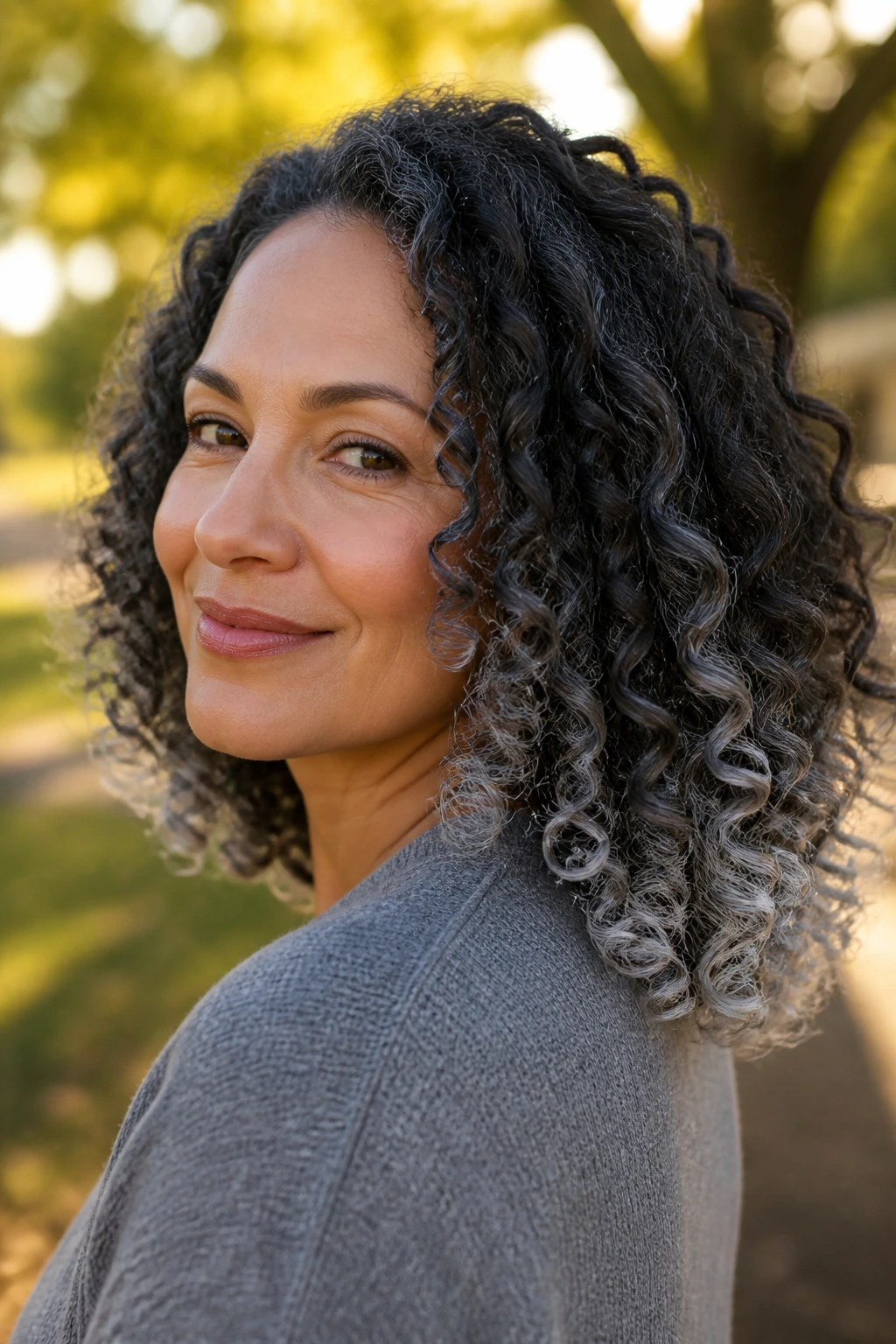
Frosted tips on curly ends are not the chunky early-2000s version. Thank goodness. Here, the tips are kissed with silver so the ends look lighter, fresher, and a little more crystalline than the rest of the curl. It’s a smart choice if you want movement at the bottom of the shape.
The reason this works is simple: curls usually taper at the ends, so a little silver there can make the whole silhouette look lighter and more lifted. That said, the ends are also the oldest, driest part of the hair. You have to respect that. I would not do this on ends that are already fried from bleach or hot tools. That’s a fast road to frizz.
This style looks best when the silver is more frosted than white. Think soft metallic dusting, not opaque frost. The visual effect should be airy, like the curl has been edged in light. It’s subtle from a distance and more interesting up close, which is often the right way to wear silver on curly hair anyway.
11. Graphite Lowlights
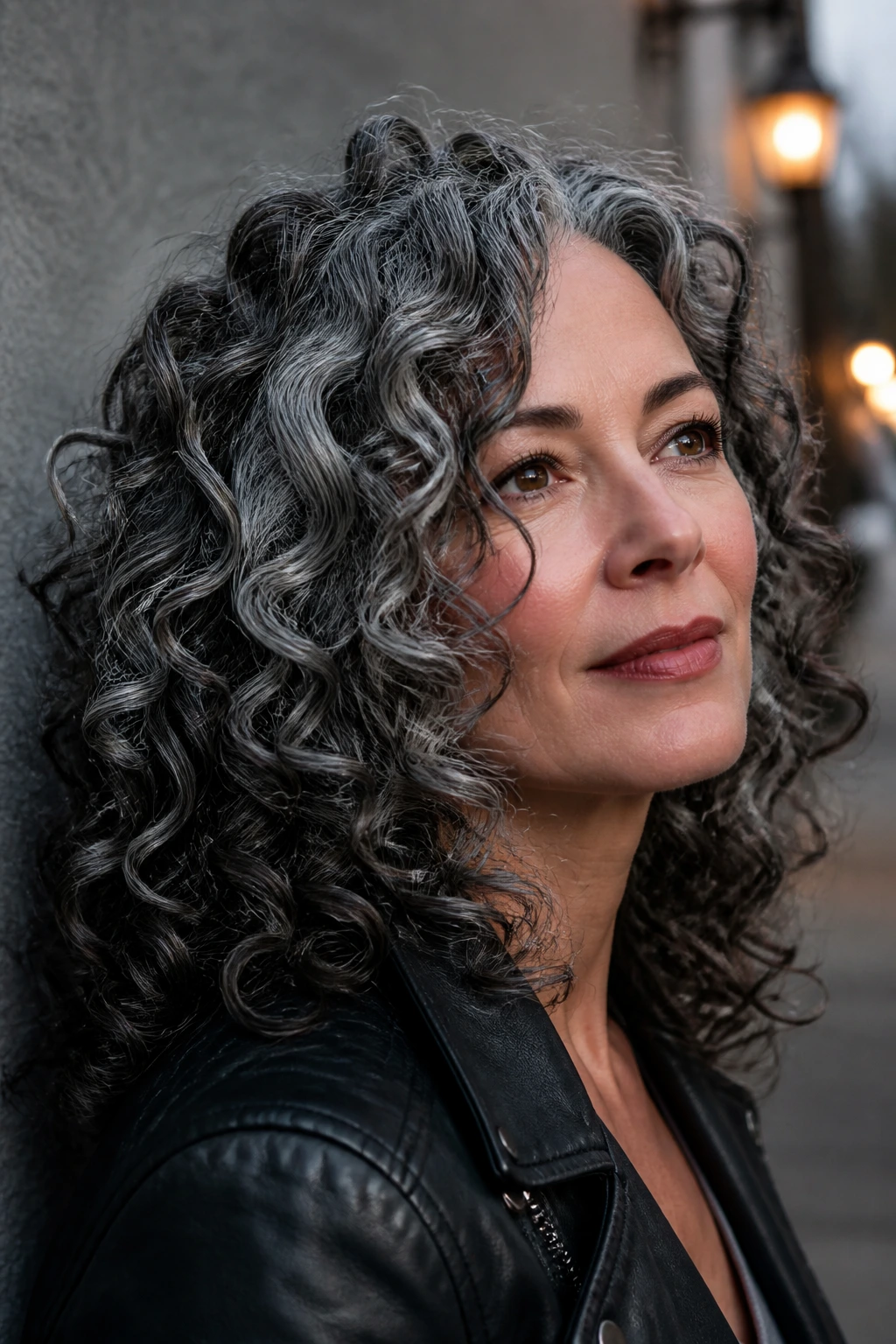
Graphite lowlights are the most underrated way to wear silver on curly hair. Everyone chases brightness. Fewer people think about the dark pieces that make the bright pieces look better. Graphite lowlights run through the curls in cool gray-black strands and give the silver a place to land.
Unlike highlights, lowlights don’t just brighten the hair; they sharpen it. On thick or coarse curls, they keep the pattern from blowing out into one pale cloud. On fine curls, they add visual weight so the hair doesn’t look too airy after lightening.
If your natural color is already medium brown or darker, this is a beautiful compromise. You get silver tones without bleaching every inch of the head. And if you already have a few gray strands growing in, graphite can blend them in a way that feels deliberate instead of accidental. That’s a win.
12. Opal Silver Curls
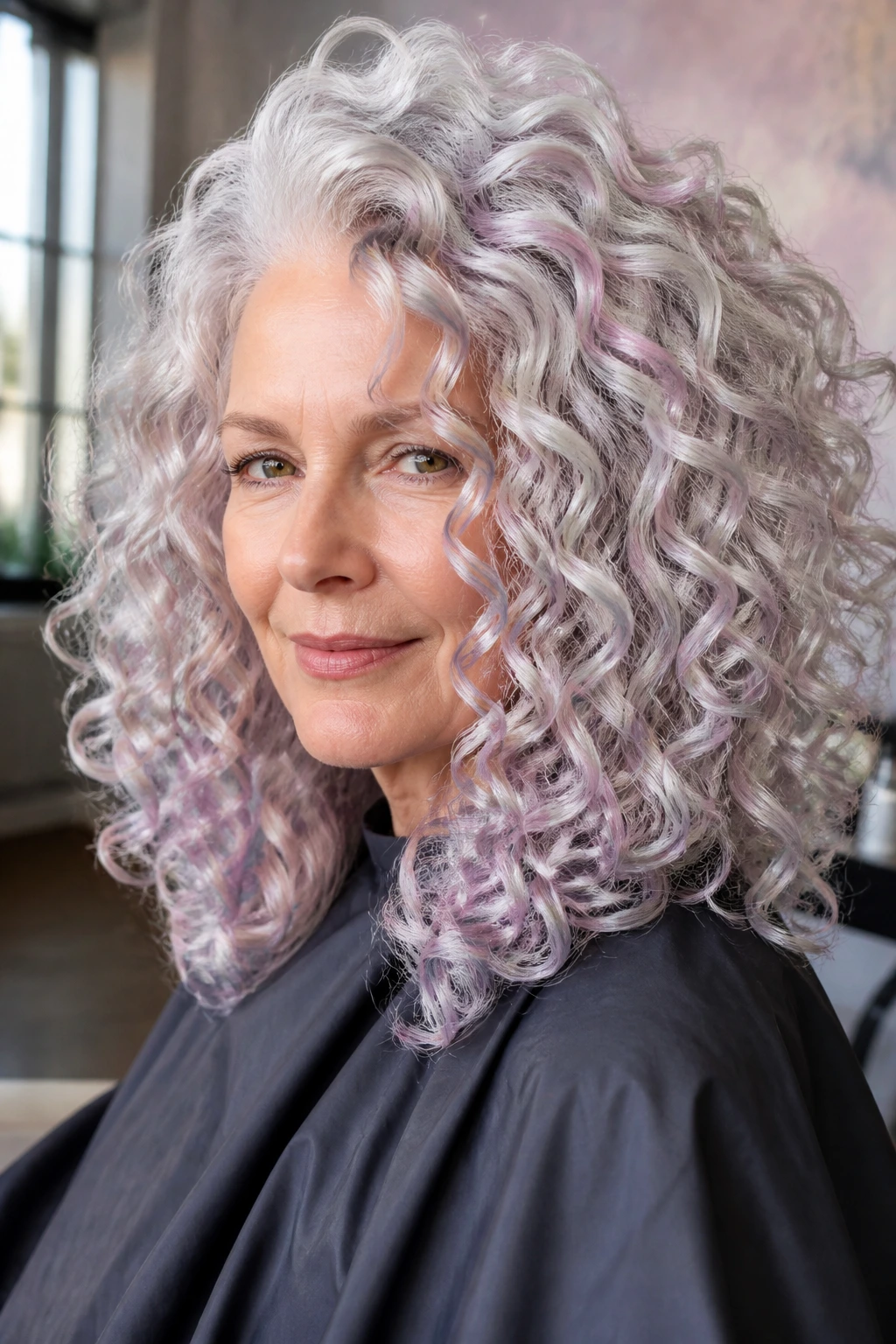
What happens when silver gets a tiny bit of pearl, violet, and blush in it? You get opal silver, which is the prettiest answer to people who think gray has to mean flat or stark. The finish shifts under the light, and on curls that shifting quality is even better because every curl catches a different mix of tone.
This shade is for someone who likes cool color but doesn’t want it to feel hard. Opal silver sits in a softer register than steel or charcoal. It can look icy in one room and pearly in another, which makes it a nice choice if you wear a lot of cream, soft pink, dusty blue, or muted green.
How to Keep the Iridescence From Going Muddy
- Use a gentle shampoo: Harsh clarifiers strip the subtle pastel cast too fast.
- Skip heavy oils near the top: They can mute the sheen and make the finish look dull.
- Refresh with a light glaze: Every 4 to 6 weeks keeps the tone clean.
- Best on: Lighter curls with enough porosity to hold a translucent toner.
Opal silver is one of those shades that looks delicate in a photo and even better in person. The movement is the point.
13. Smoked Pearl Blonde
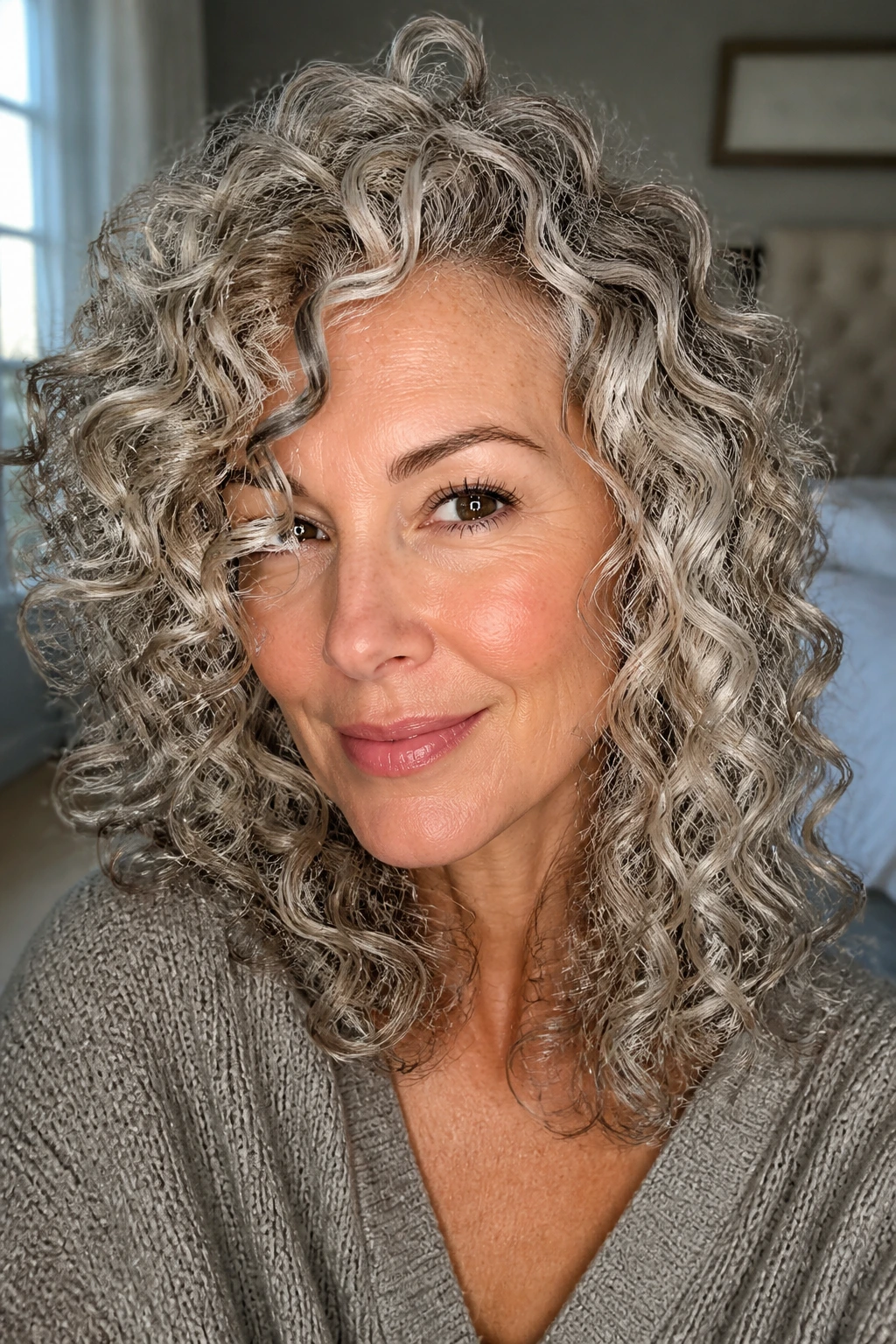
Smoked pearl blonde sits right on the edge between blonde and silver, and that’s why it works so well on curls. It has enough warmth to keep the hair from looking harsh, but the smoky undertone stops it from drifting into yellow. The result is soft, glossy, and a little pearly around the edges.
I like this for curl patterns that need shine more than drama. A very bright silver can sometimes overpower loose curls. Smoked pearl lets the curl shape stay visible while still giving the whole head a cooler tone. It’s also a smart option if you want to transition from blonde into silver without making a dramatic jump.
The biggest mistake with this shade is letting it go too beige. Beige sounds safe, but on curly hair it can look dull fast. Keep the smoke in it. That’s what gives the color its pulse.
14. Gunmetal Pixie Curls
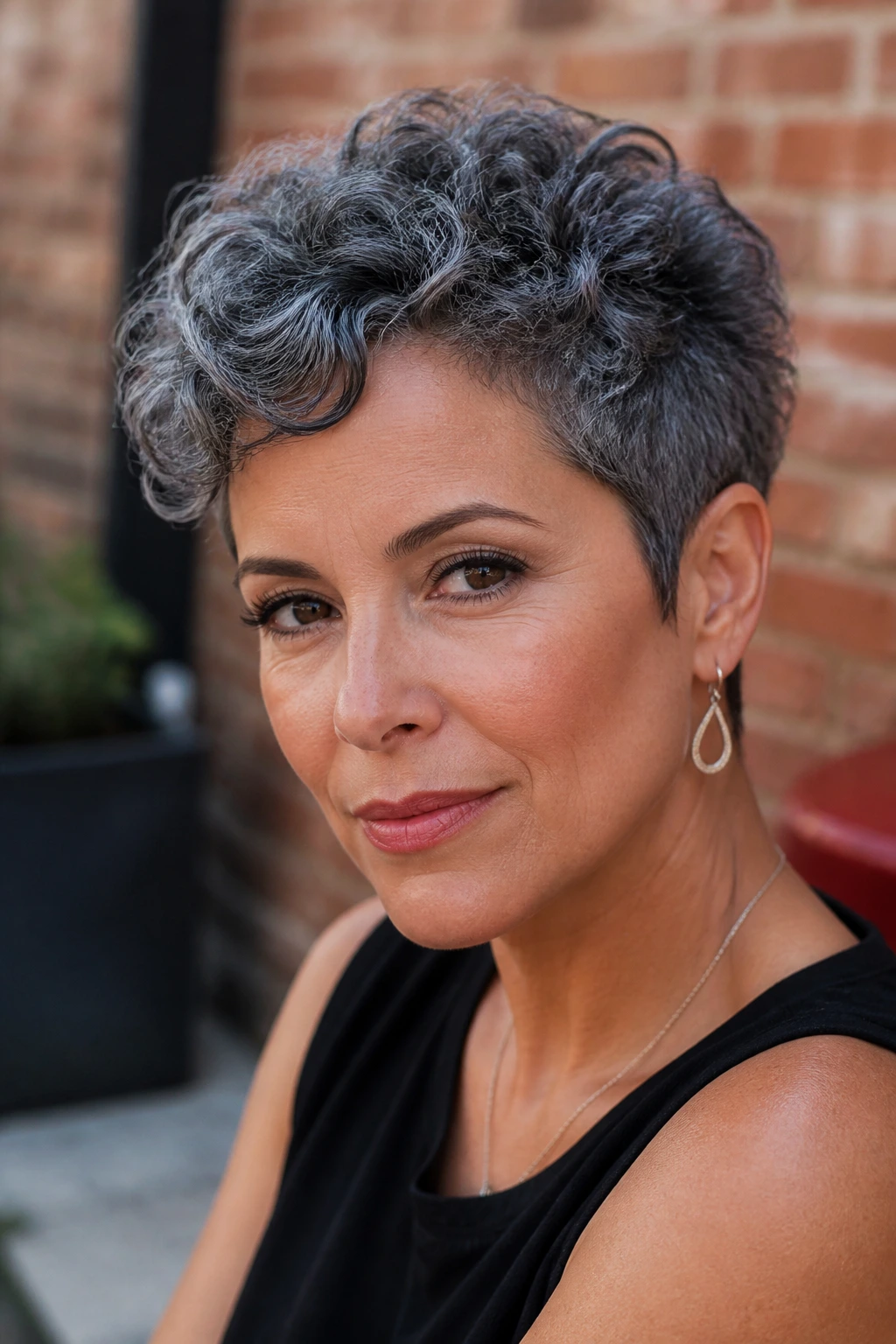
Gunmetal pixie curls have a bite to them. Short curls, tight edges, and a dark metallic silver tone make the whole cut feel crisp and modern without needing a lot of length to carry the color. If you’ve got a curly pixie, this is one of the most satisfying silver directions you can take.
The color is especially good on short hair because there’s less surface area for the shade to go flat. Every bend counts. A gunmetal tone can make a cropped curl look expensive and structured, while still leaving room for texture around the sides and crown.
What Makes It Work
- Darkness at the base: Keeps the cut from looking washed out.
- Short length: Makes the metallic finish look denser and cleaner.
- Best on: Tight curl patterns and coily crops.
- Maintenance: The short length makes roots obvious sooner, so plan for more regular refreshes.
If long silver curls sometimes feel too precious, gunmetal pixie curls are the blunt, cooler cousin. Less soft. More attitude.
15. Ash Ribbon Highlights
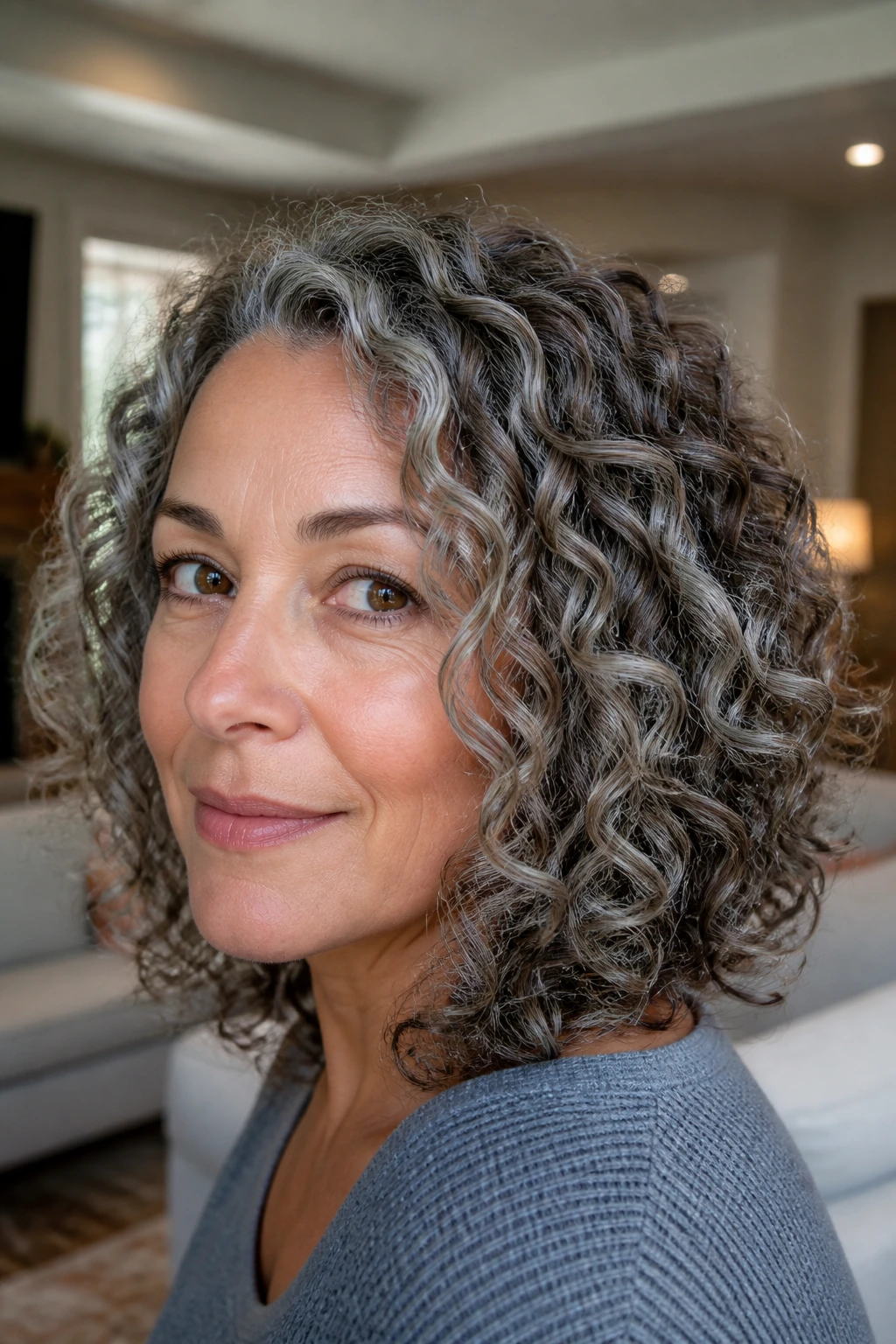
Ash ribbon highlights are exactly what they sound like: slim, cool-toned streaks that travel through the curls in thin ribbons instead of chunky blocks. The color sits between silver and ash brown, which gives the hair depth without making the lift look obvious from across the room.
This is one of my favorite choices for people who want a quieter silver story. The ribbons show up when the curls move, then disappear into the base when the hair settles. That movement keeps the whole style alive. On 3B and 3C curls, especially, the highlights can make each twist look more defined.
There’s also a practical advantage. Because the highlights are thin, they usually grow out with less drama. You can keep the curl health better than you would with a full-head lightening service, and that matters more than people admit. A silver look is only as good as the curl pattern underneath it.
16. Antique Silver Bob
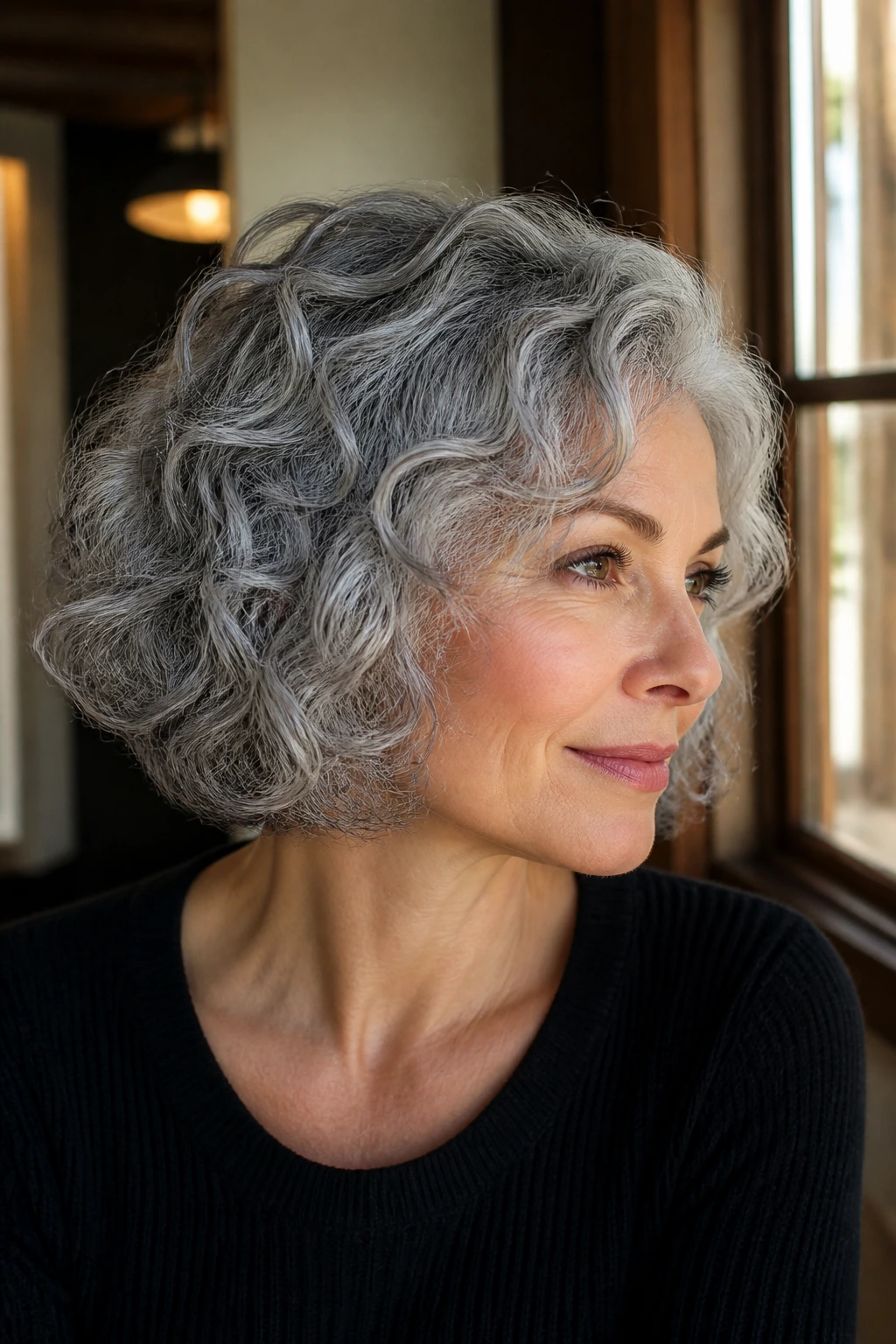
Antique silver has a deeper, slightly aged finish that feels less icy and more refined. On a curly bob, that means the color looks settled, not stark. It’s silver, but with a tiny bit of gray-brown softness at the edges, like polished metal that’s been handled a little.
This shade is especially flattering when the cut has shape. A bob with layers and some roundness at the bottom gives antique silver a place to show off the curve of each curl. Without that structure, the tone can look too flat. With it, the color feels architectural.
I’d recommend this to anyone who likes a more understated silver. If bright white-silver feels too loud for your face or wardrobe, antique silver is the more livable cousin. It’s also one of the easiest ways to make gray grow-out look deliberate on a shorter cut.
17. White Silver Halo
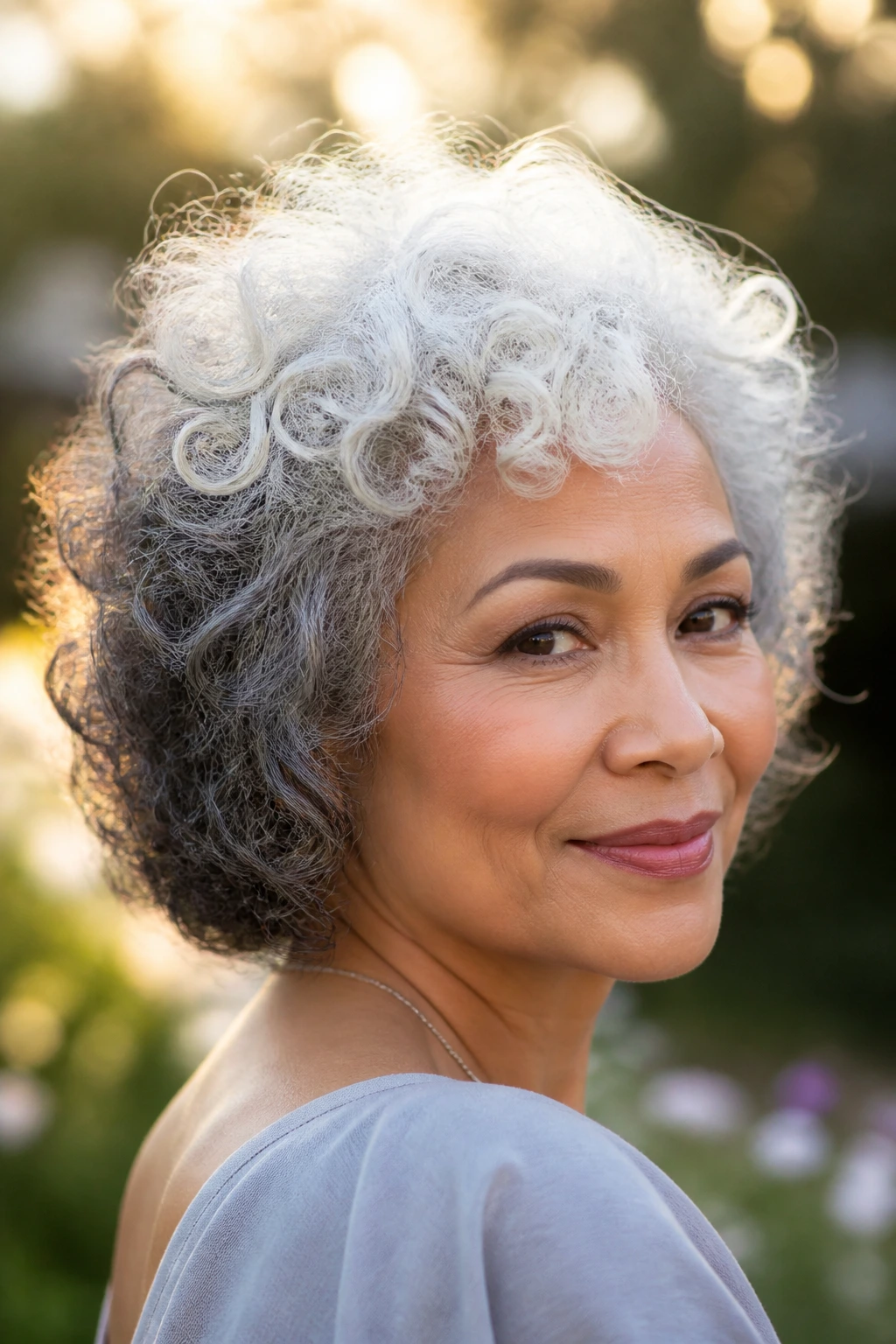
White silver halo is a high-drama placement trick, not just a color. The brightest silver sits around the top and outer crown, almost like light is settling on the hair from above, while the lower layers stay deeper or softer. On curls, that halo effect can look stunning because the brighter top layer floats over the darker shape underneath.
This works especially well on ringlets and looser coils where the top curls can separate enough to show the brightness. The result is airy, lifted, and very visible. It’s not the quietest choice on this list. It does, however, make a strong case for silver as an actual statement, not just a cool neutral.
The important thing is restraint in placement. If you silver out the whole crown too heavily, the halo collapses into a block. Keep the brightness concentrated where the curls naturally rise. That way the style looks intentional instead of overprocessed.
18. Salt-and-Pepper Polish
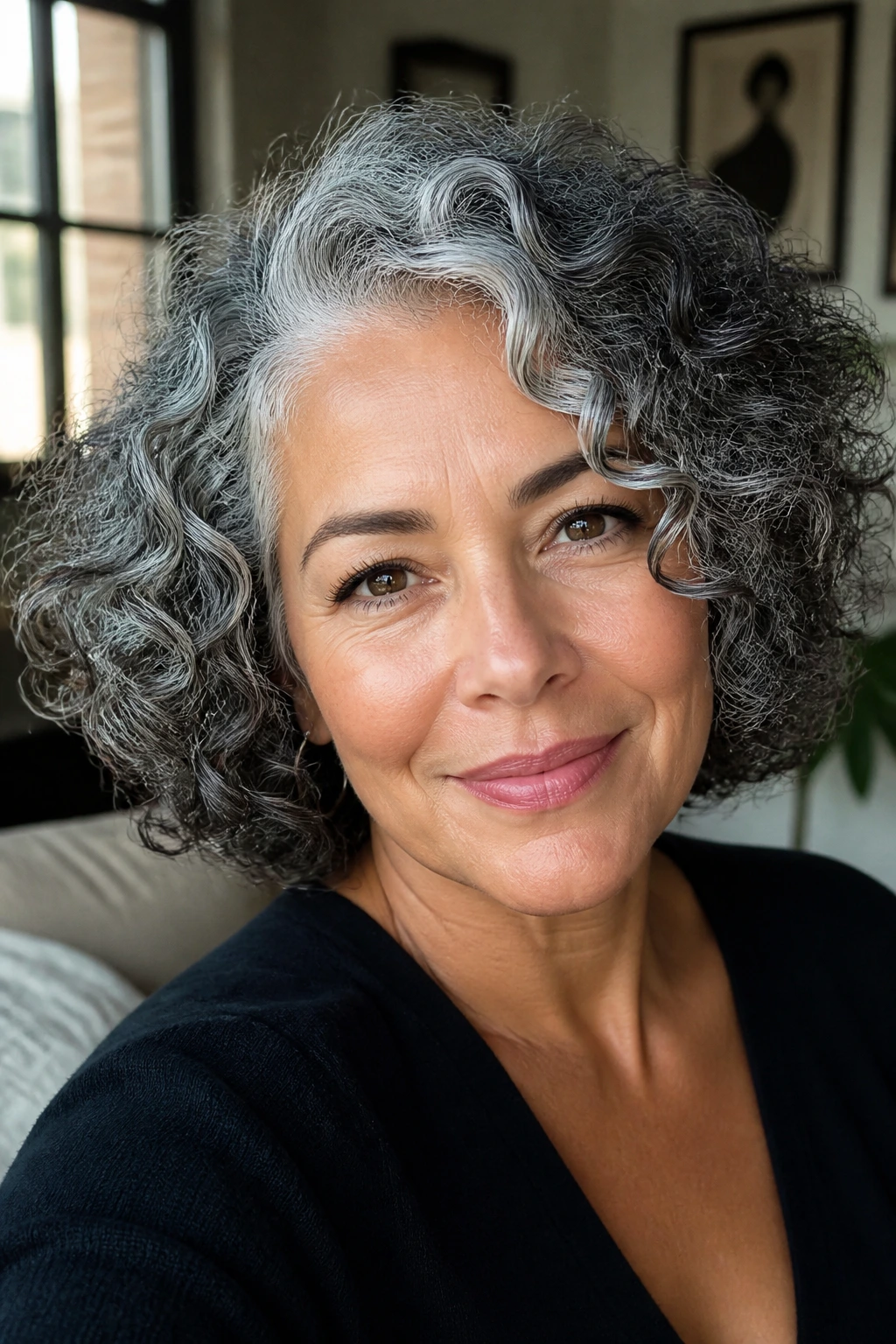
Can natural gray hair be polished into something intentional? Absolutely. Salt-and-pepper polish keeps the dark strands, brightens the silver pieces, and uses a gloss or toner to make the whole mix look clean instead of uneven. On curly hair, this is often one of the smartest paths because the pattern already provides texture; the color just needs tidying.
I like this look on people who are letting their gray come in naturally but want the contrast to feel designed. The polish makes the silver look brighter and the dark pieces look richer. And because you’re not trying to erase the gray, the maintenance is gentler than full coverage color.
How to Wear Your Own Gray
- Toner: A cool gloss every so often can brighten the silver strands without flattening the darker ones.
- Cut: Layering matters. Gray curls look better when the shape is clean.
- Finish: Lightweight curl cream keeps the silver strands from looking wiry.
- Best for: Anyone who wants a grown-out gray story that still looks finished.
This is one of the few silver ideas that gets better when you stop trying to control every strand. Let the contrast live.
19. Moonstone Silver Ombré
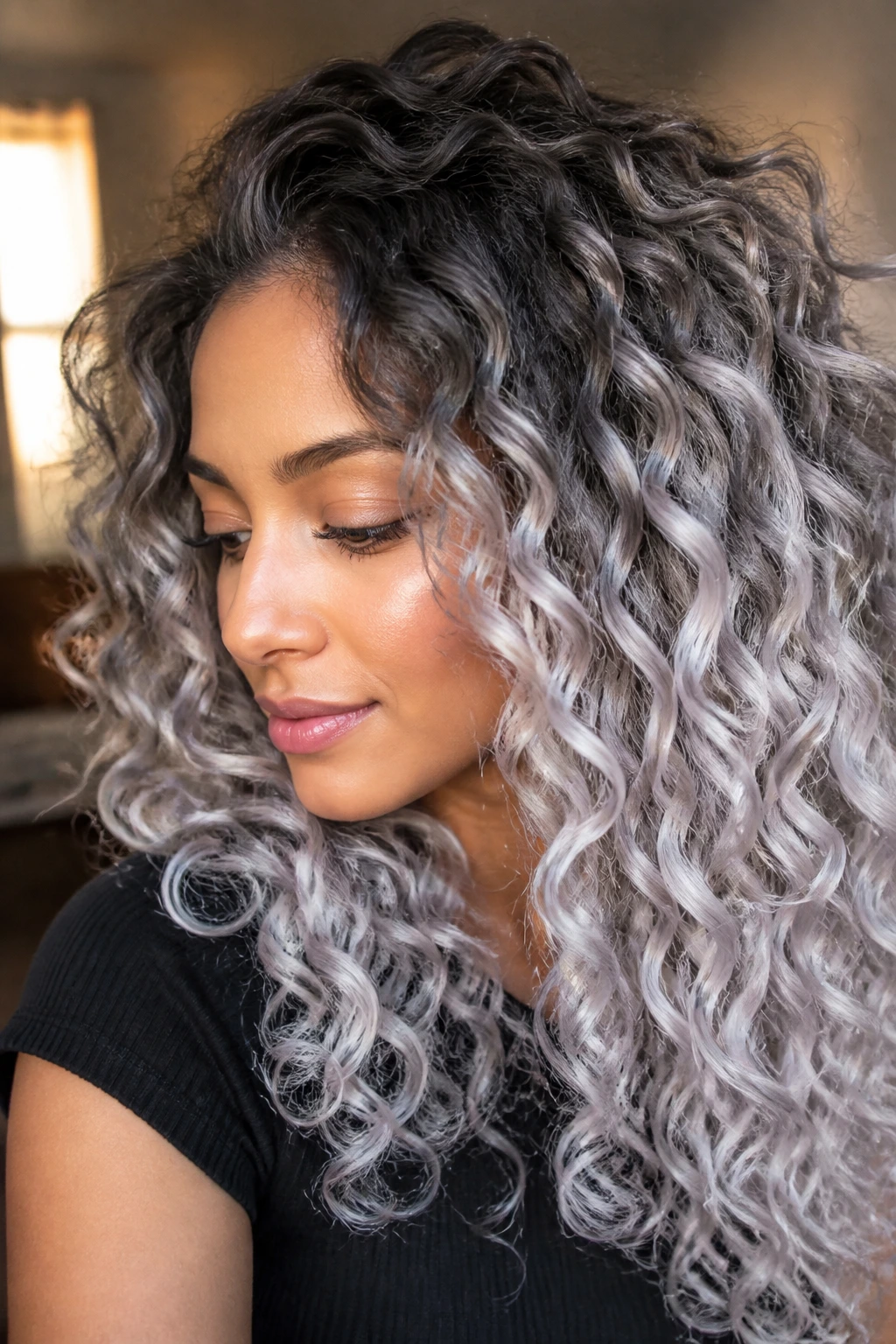
Moonstone silver ombré has a softer fade than platinum ombré. The roots stay deeper, the mids carry a smoky gray, and the ends open into a pale silver that looks a little pearly, a little translucent. It’s less sharp than an ice-blonde fade and easier on curls that need room to breathe.
The ombré format is useful because it protects the root zone, where new growth is going to show first anyway. On curly hair, that matters. A hard root line can get lost in the bend of the hair and then suddenly reappear in a weird patch. A soft fade avoids that mess.
This look plays best on longer curls where the gradient has space to show. If the hair is too short, the transition can feel abrupt. Give it length, shape, and enough cut layers for the fade to repeat through the silhouette. That repetition is what makes it feel expensive rather than obvious.
20. Stormcloud Silver Melt
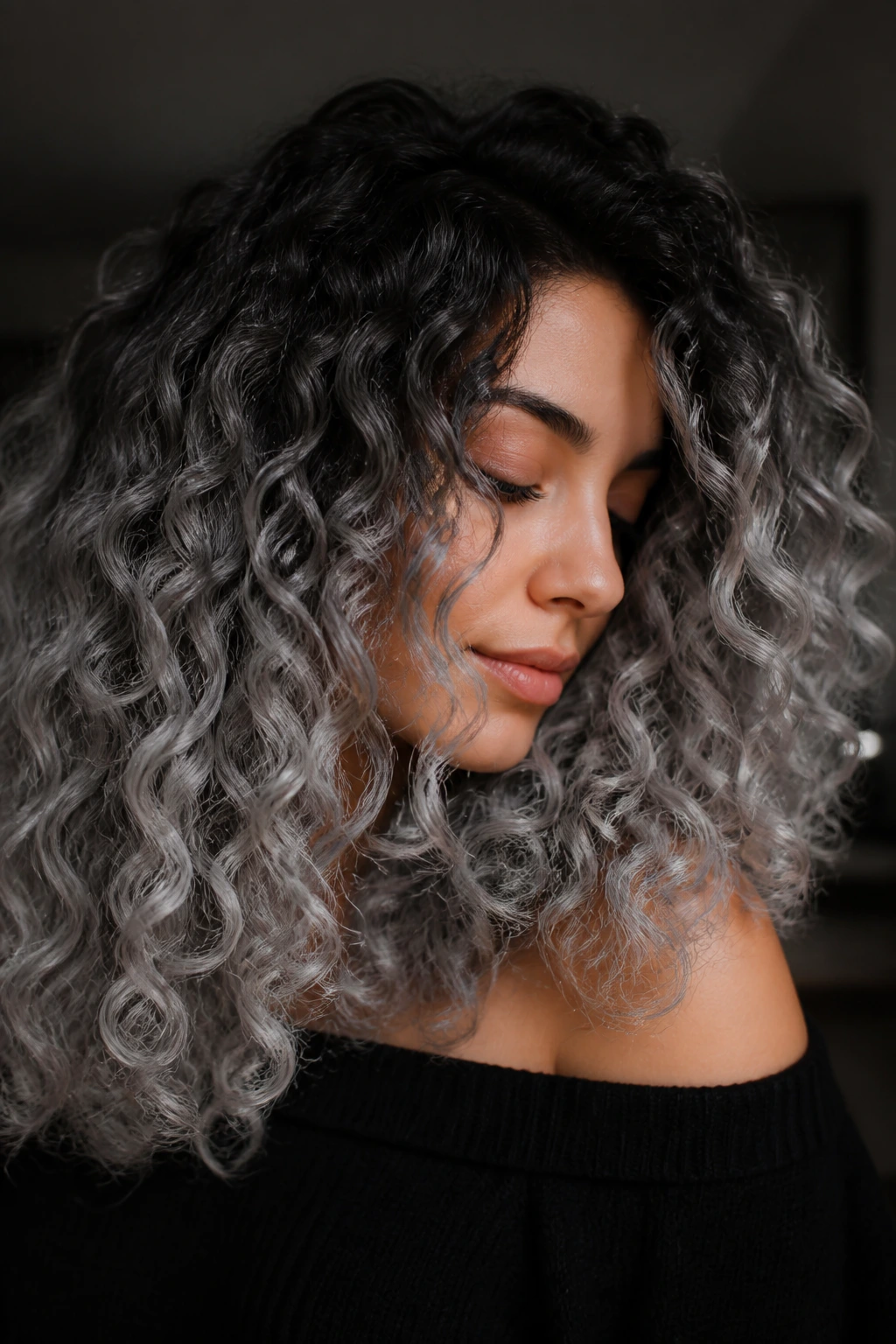
Stormcloud silver melt is for people who want the silver family to feel moody. Dark charcoal roots move through cool gray mids and break into silver ends, so the whole head looks like it’s been layered with weather. On curly hair, that contrast gives the curls a bigger sense of motion.
This is a strong choice if your skin reads cool or neutral and you like darker clothes, deeper lipstick shades, and a more graphic finish. It’s also one of the easiest silver looks to live with because the darker root and midtone keep the grow-out from looking stark. You’re not chasing brightness at every inch. You’re building contrast.
I’d take this over an all-over chrome silver any day on dense curls. The dark-to-light transition keeps the shape readable, and the final result feels richer in person than it does in a flat photo.
Why Silver Color Needs More Dimension on Curly Hair
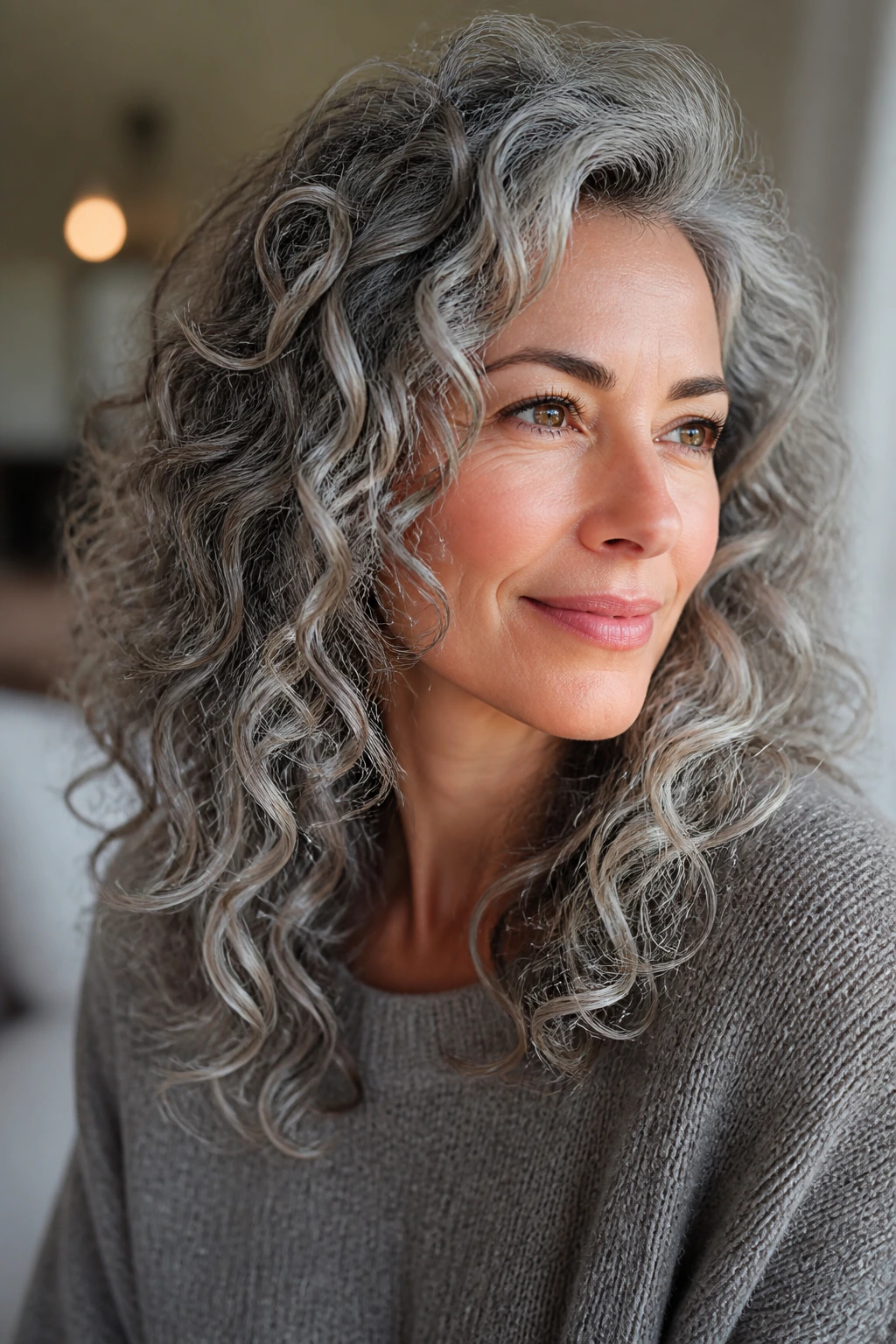
A lot of silver hair color advice is written as if hair were a sheet. Curly hair isn’t a sheet. It’s a stack of curves, shadows, and tiny reflective surfaces, and the color changes every time the curl turns. That’s why silver balayage, root shadows, babylights, and melts tend to work better than one flat metallic tone.
Porosity is the other piece people miss. Curls that have been colored before usually have more open cuticles, which means they grab toner fast and lose it fast. The ends can go smoky or lavender in one shampoo and then drift pale and warm the next. If your curls are porous, the best silver styles are the ones with some darker structure left in them. That extra depth acts like insurance.
I also think silver looks more modern when it isn’t trying to erase every warm note from the hair. A little smoke, a little graphite, a little mushroom at the root — that’s what gives the style shape. Pure chrome can be striking, but it’s not always the easiest thing to wear when your curls already have a lot of movement. A softer, layered silver usually gives you more room to breathe.
The Tools That Make Silver Curls Easier to Keep Clean
- Sulfate-free shampoo: Keeps color from rinsing out as fast and helps curls stay softer between washes.
- Purple or blue-violet shampoo: Useful for knocking down yellow tones, especially on pale silver ends.
- Color-depositing mask: Good for refreshing smoky, pewter, or lavender-silver tones without another full service.
- Bond-building treatment: Helpful before and after lightening, especially if your curls have been colored more than once.
- Microfiber towel or cotton T-shirt: Cuts down on rough drying that can make silver curls look frizzy.
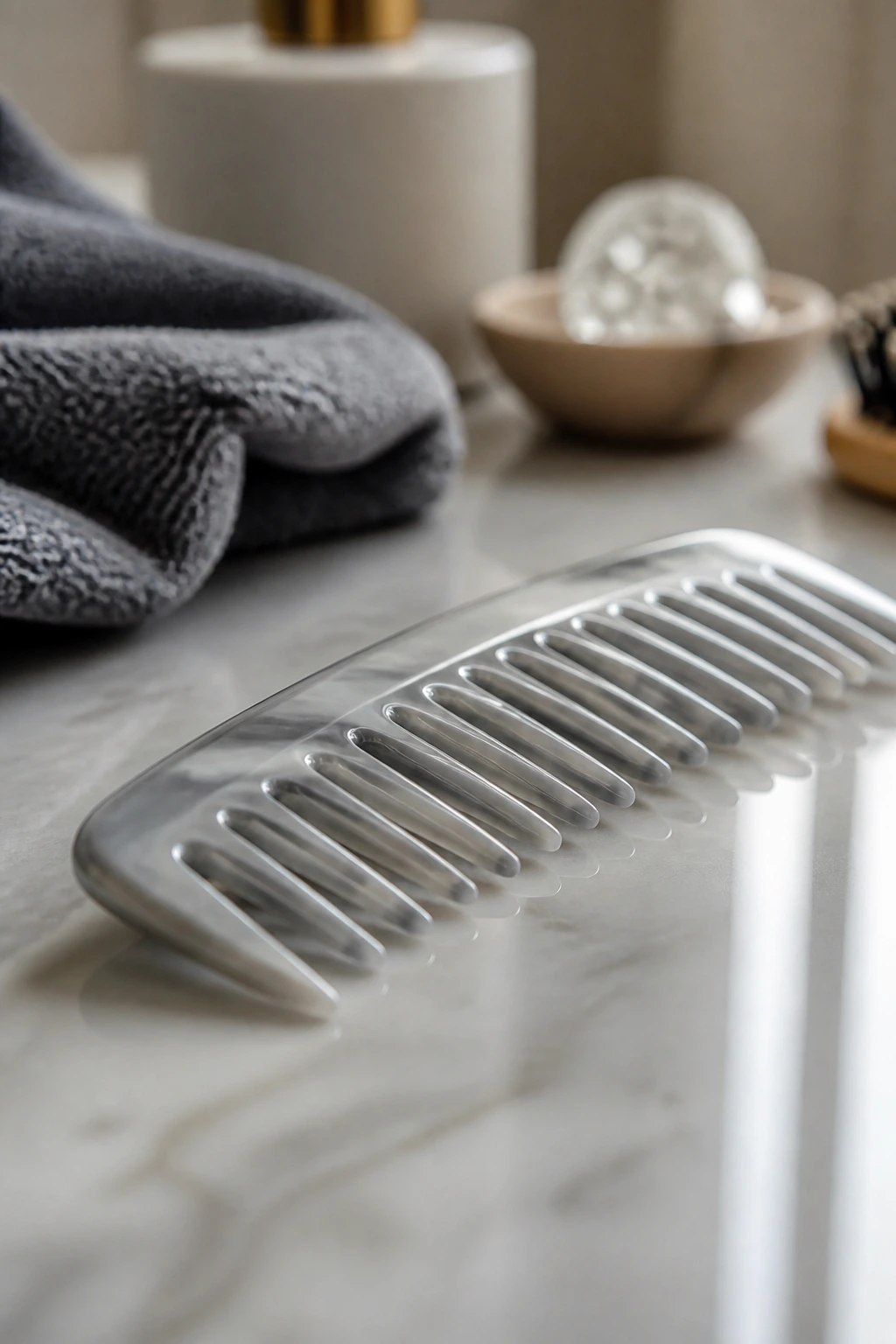
- Wide-tooth comb: Safer than a fine brush for detangling curls without pulling tone-fried ends apart.
- Diffuser: Lets you dry silver curls without blasting them into frizz.
- Sectioning clips: Useful whether you’re at home or in a salon, because silver placement lives or dies by clean sections.
- Tint bowl and brush: Needed for glaze, toner, or color-depositing masks.
- Satin bonnet or pillowcase: Keeps friction down so silver ends don’t turn fuzzy by morning.
Picking the Right Silver Formula for Your Curl Pattern
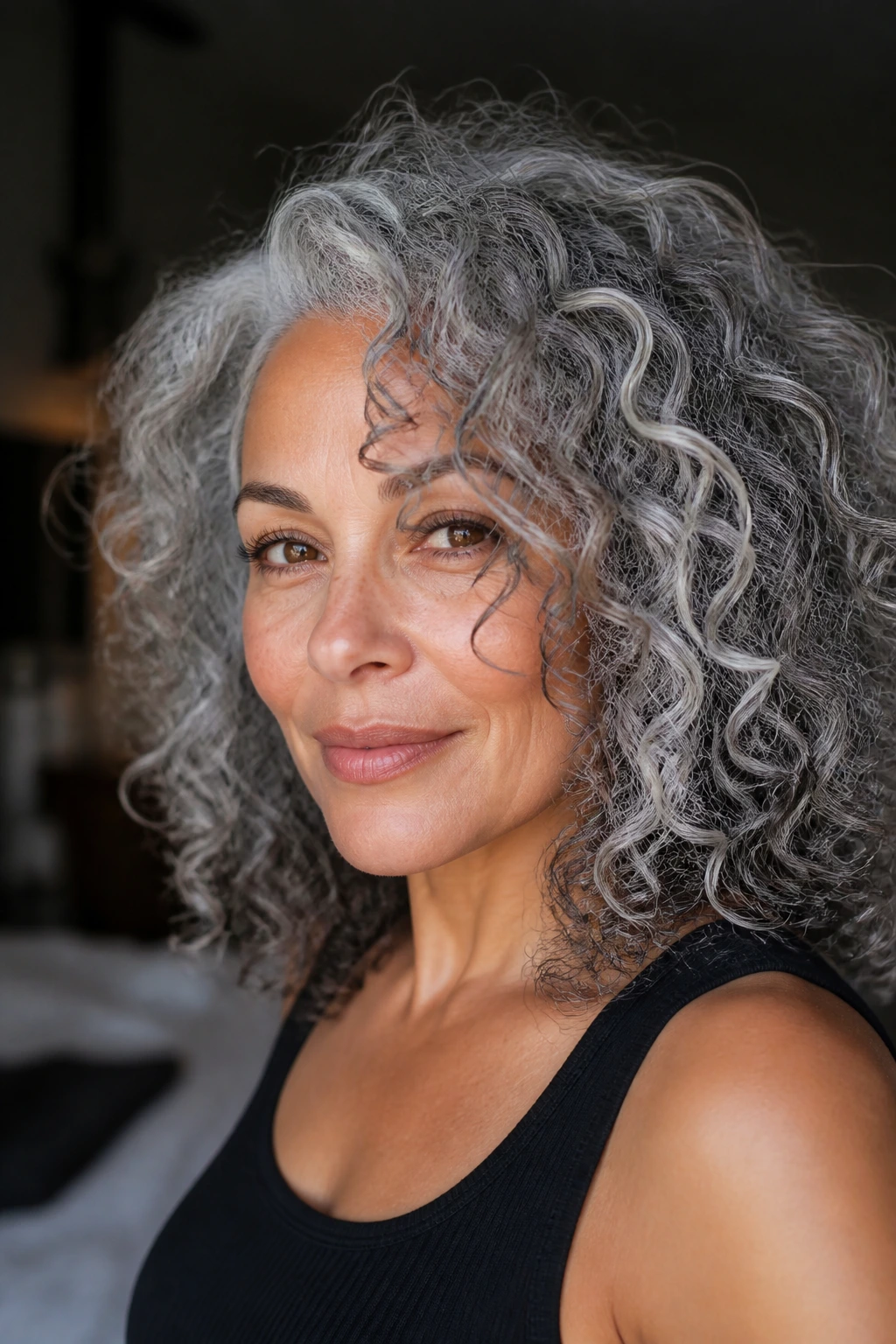
The best silver shade starts with the condition of your curls, not the photo you saved. If the hair is dark and healthy, a stronger lift plus a smoky toner can get you to a clean silver ribbon. If the hair is already light or porous, a gentler gloss may be enough. There’s no prize for bleaching more than you need.
If you’re buying products for maintenance, look for a shampoo and mask that match the tone you’re wearing. Violet helps with yellow. Blue-violet helps a bit more when the silver has a warm cast or a pale orange undertone sneaking through. On very porous curls, a heavy purple product can overcorrect and leave the hair looking dusty, so shorter application times matter. One to three minutes is usually enough; five can be too much.
I’d also pay attention to the finish of the product. A gloss or mask that promises bright silver is not always the friend of textured hair. Some of those formulas can be drying. Look for a formula that pairs tone correction with moisture or bond support, because silver curls need both. Crisp color without soft curl memory is a bad trade.
How to Wear Silver Curls in Real Life
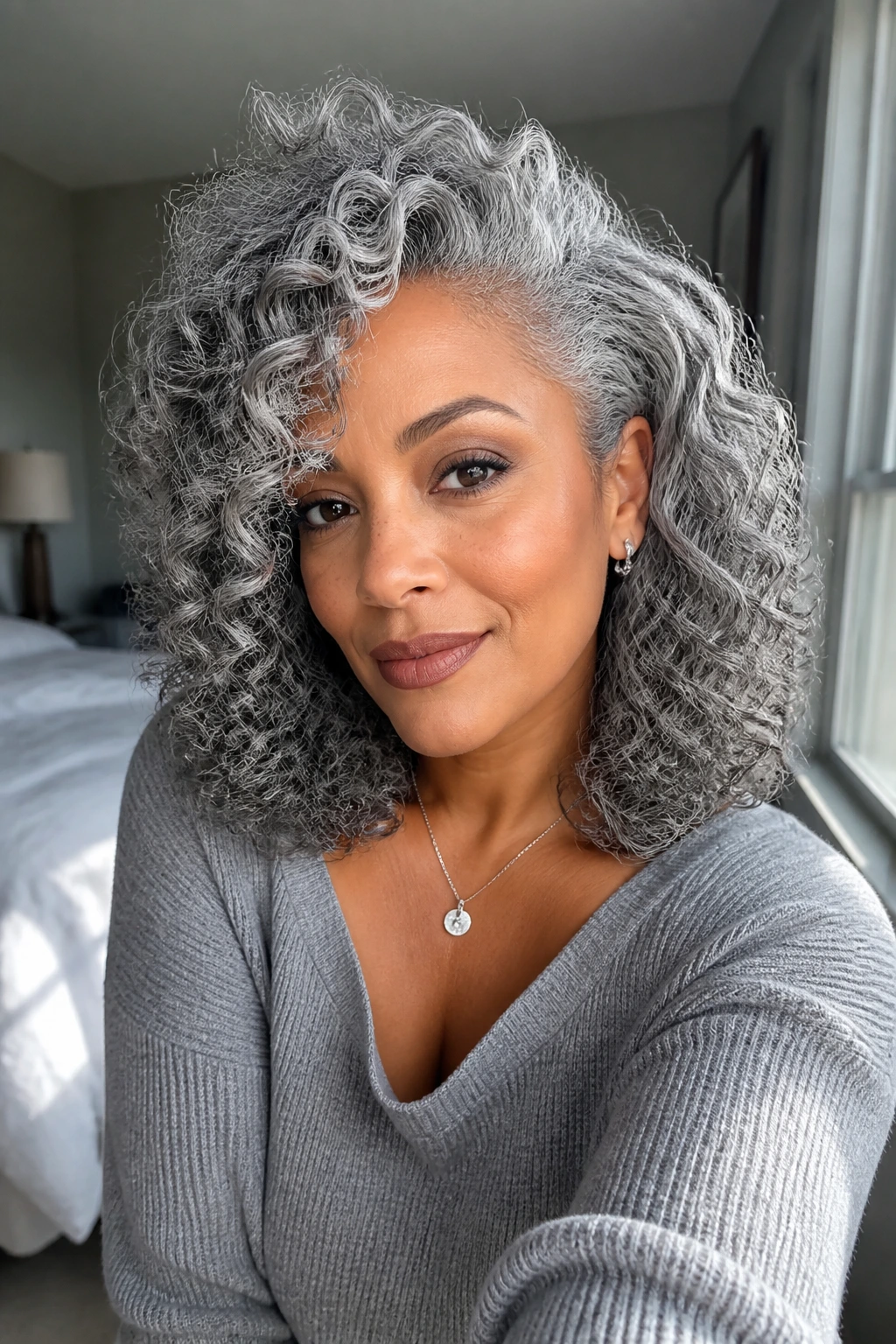
Presentation: A side part, a soft half-up, or a diffused wash-and-go shows silver best because the curls can rise and fall in different directions. If you want more contrast, scrunch a little lift at the crown and let the front pieces swing free.
Accompaniments: Cool-toned wardrobe pieces do a lot of work here — charcoal, navy, black, ivory, and slate make silver curls look sharper. Silver hoops or matte earrings fit the mood, and berry or plum makeup keeps the face from disappearing next to a cool hair tone.
Portions: Full-head silver gives the most drama, but partial silver, face-framing pieces, or a rooted melt are easier to maintain. If you have dense curls, smaller placements can still read strongly because the pattern amplifies the light.
Beverage Pairing: If you want the color to look its crispest in photos, a clear glass, a pale iced tea, or even plain sparkling water keeps the whole scene cool and clean. It sounds silly. It also works.
Extra Ways to Make Silver Pop on Curls
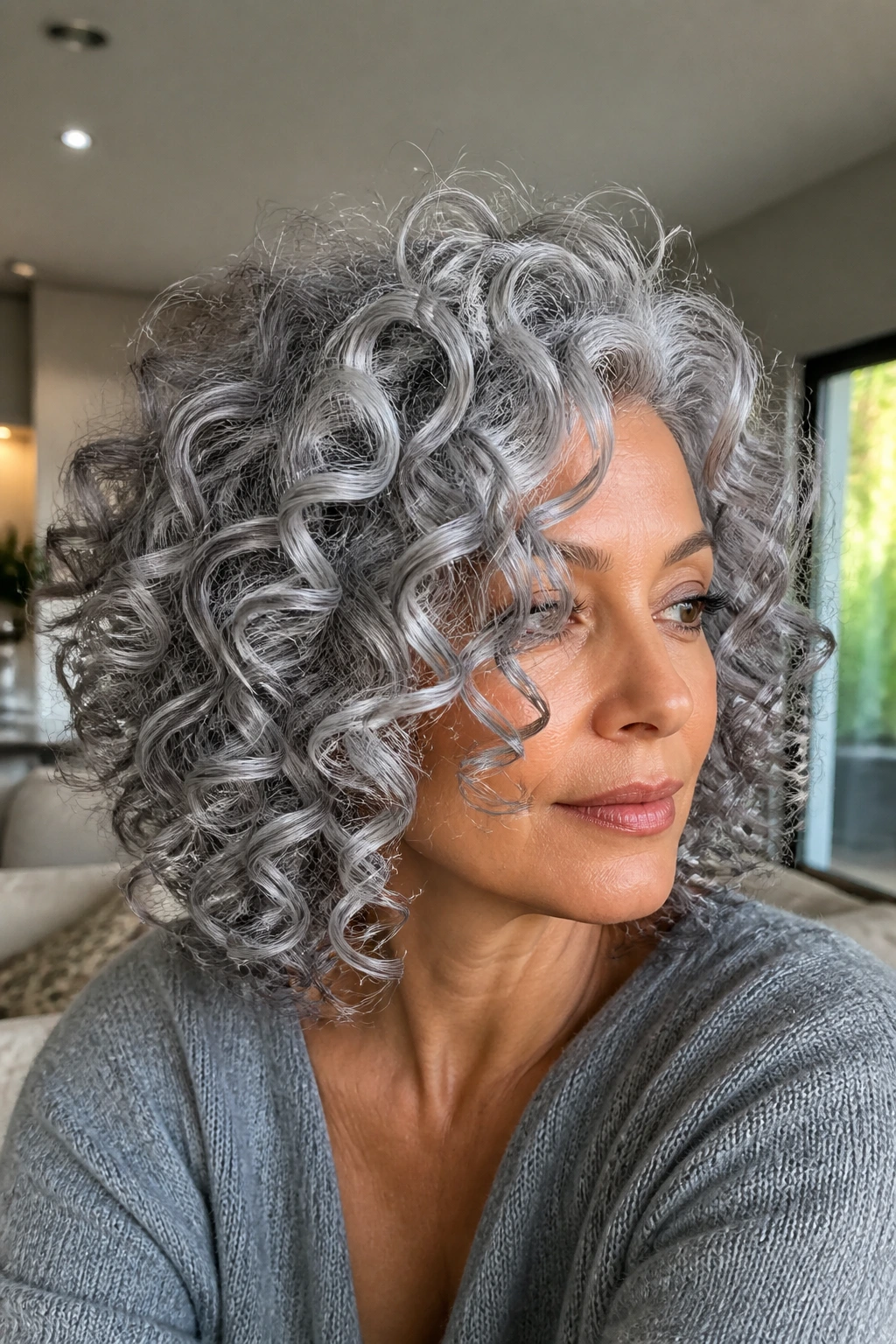
Tone Enhancement: A silver gloss every few weeks keeps the metal note from fading into beige, but don’t overdo it on porous ends. The goal is sheen, not chalk.
Definition: A curl cream with a light hold can make silver look cleaner because the curls clump into visible ribbons instead of puffing into a halo. The color reads better when the shape is tidy.
Contrast: Keep some darker root or lowlight if your curls are very fluffy or very dense. That contrast gives silver a frame and prevents the whole head from flattening out under bright light.
Make-It-Yours: If you want less maintenance, ask for silver placement only at the front and top layers. If you want more edge, add graphite or steel blue lowlights underneath so the curls have depth when they swing.
Common Mistakes to Avoid With Silver Curly Hair
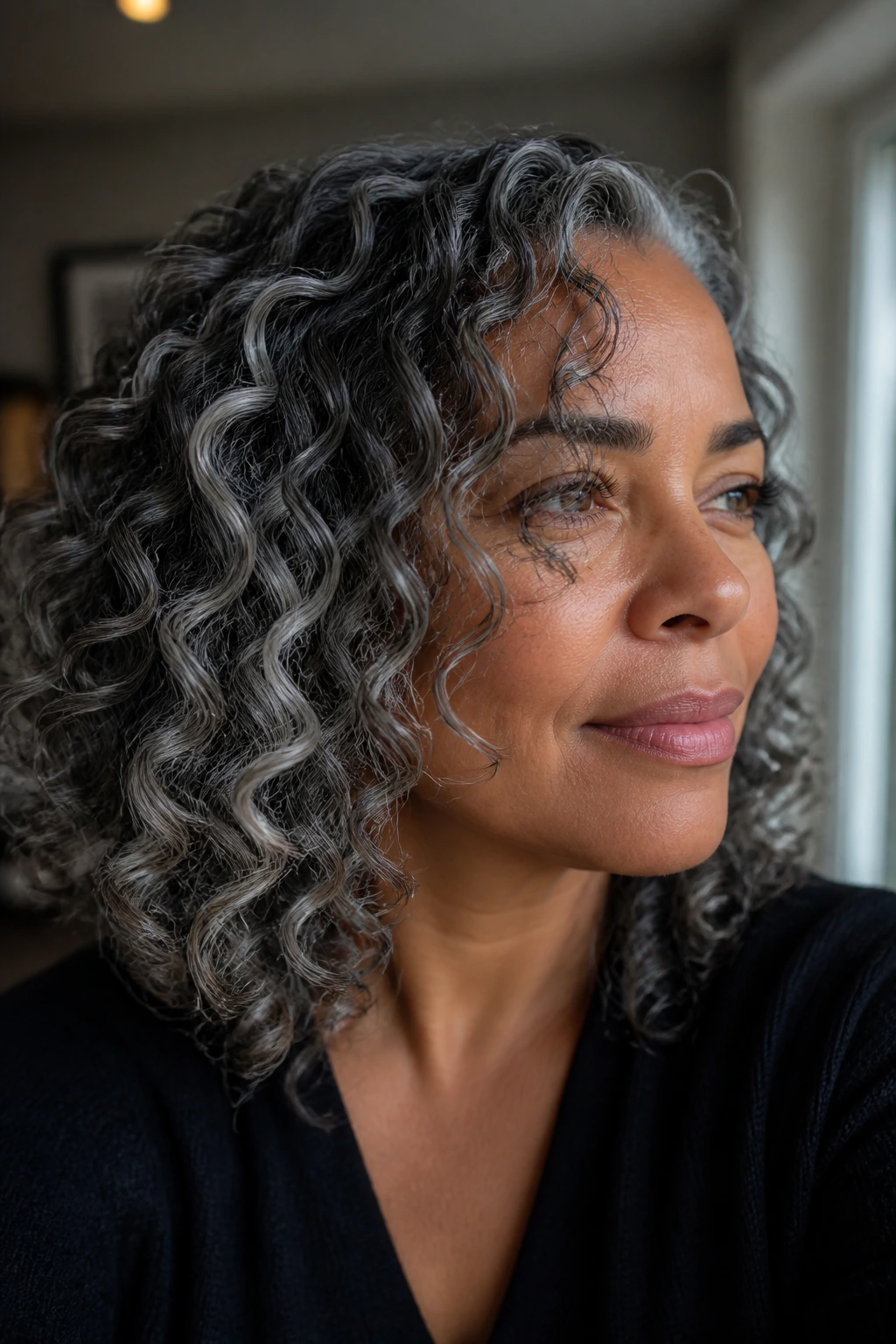
Going too light too fast: Curly hair can lift unevenly, and a rushed bleach job can leave the ends fragile before they ever reach silver. Slower lift, lower developer, and more than one session usually give a cleaner result.
Using one flat silver everywhere: The curl pattern disappears when every strand is the same tone. Leave some root shadow, lowlight, or midtone so the shape stays readable.
Over-toning porous ends: The ends grab color faster than the roots, so a toner that sits too long can leave them dull, blue, or dusty. Watch the mirror closely and rinse when the shade hits cool, not after it goes heavy.
Skipping moisture and protein balance: Silver hair needs structure and softness. If the curls feel mushy, add protein every few weeks; if they feel stiff, lean into moisture and back off the strengthening masks.
Ignoring the grow-out plan: Silver that looks gorgeous on day one can feel annoying by week six if the root strategy was lazy. A shadow root, melt, or babylight pattern makes the whole thing age better.
Variations and Adaptations to Try
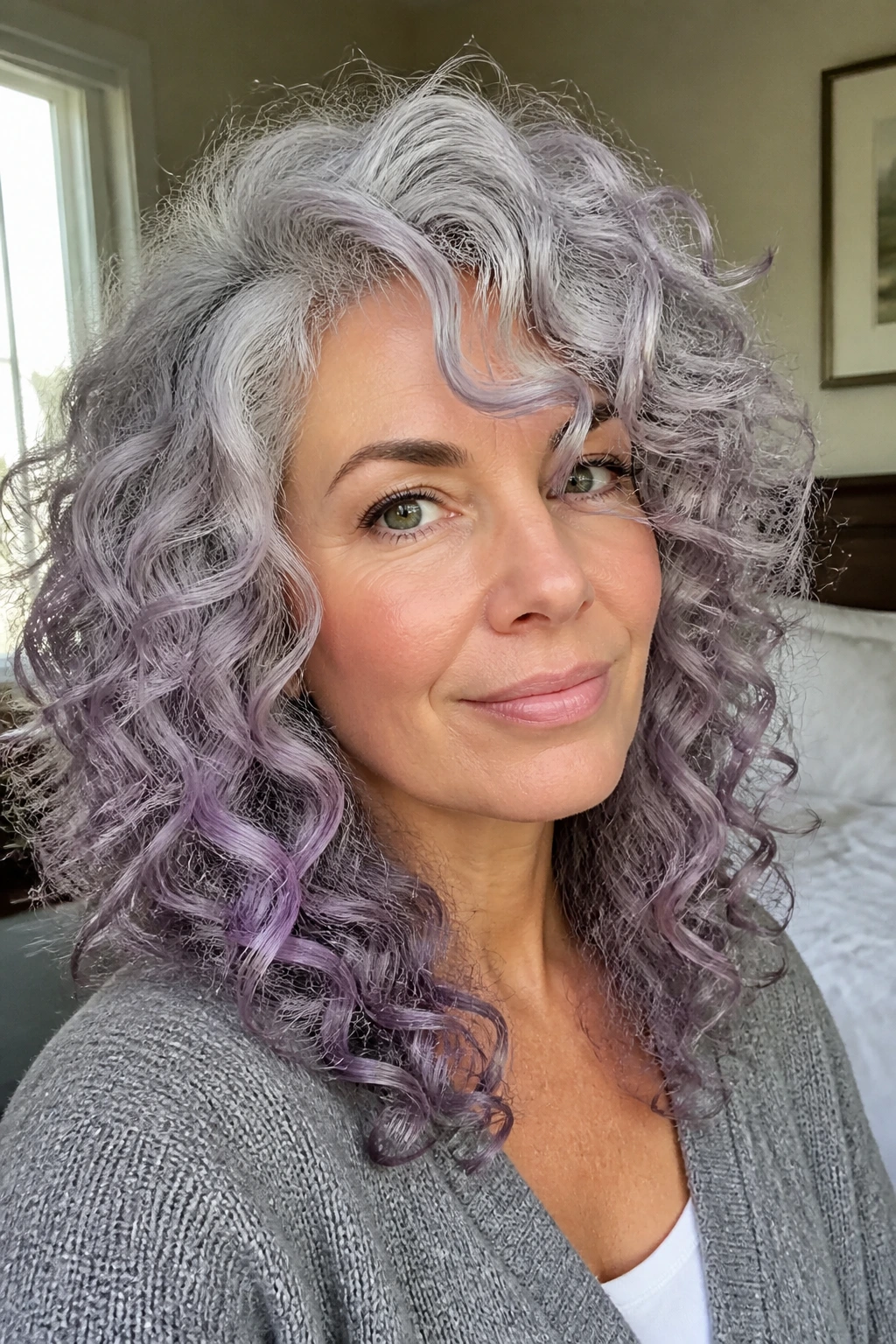
Soft Smoke for First-Timers: Start with smoky silver balayage instead of a full silver overhaul. It gives you the mood of the color without the pressure of perfect upkeep.
High-Ice Money Piece: Brighten only the front pieces and crown curls if you want a more dramatic face frame. This is a clean way to test how silver works on your skin tone before you commit to a full head.
Natural Gray Polish: If your own gray is coming in, use a gloss and shaping cut rather than heavy bleach. That approach gives the hair a sleek, intentional finish while keeping the curl pattern intact.
Lavender Frost: Add a tiny violet cast for a softer, pearly silver. It’s a good choice if pure silver reads too severe against your complexion.
Storm Root Melt: Keep the roots charcoal or dark ash and let the silver live only through the mids and ends. This is the easiest version to grow out and one of the best for dense curls.
Keeping Silver Curls Bright Between Visits
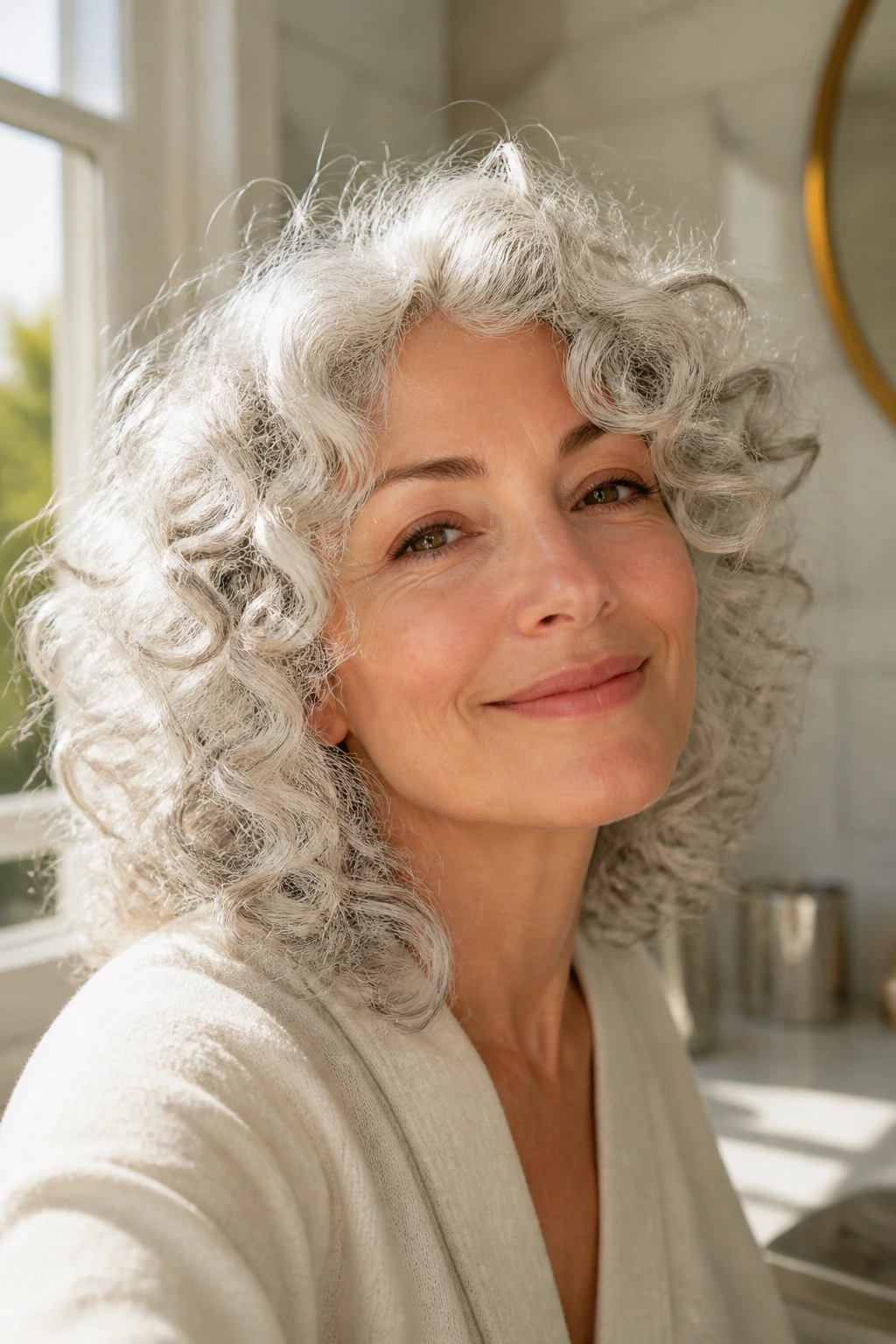
Silver hair on curls does not stay bright by accident. Wash less often if you can, because every shampoo pulls a little tone away. For most people, 1 to 3 washes a week is the sweet spot, with a purple shampoo used once every 1 to 2 weeks on very pale silver and a little more often if the hair starts to yellow. If your curls are porous, shorter contact time beats stronger products. Two minutes is often enough. Five can be too much.
Deep conditioning matters, but so does not smothering the color. A rich mask once a week helps the curls stay soft and defined, and a protein treatment every 3 to 4 weeks can keep bleach-lightened hair from feeling floppy. If the hair starts to feel stiff, back off the protein and go heavier on moisture. The balance shifts, especially after lightening.
Glosses and glazes are your friend here. Smoky silver, pewter, and steel tones usually need a refresh every 4 to 6 weeks if you want them crisp. Darker root melts can stretch longer, sometimes 6 to 8 weeks, because the grow-out is part of the design. Sleep on satin, use a diffuser on low heat, and keep clarifying shampoo for buildup days only — about every 3 to 4 weeks, not every wash.
Questions People Ask Before Going Silver
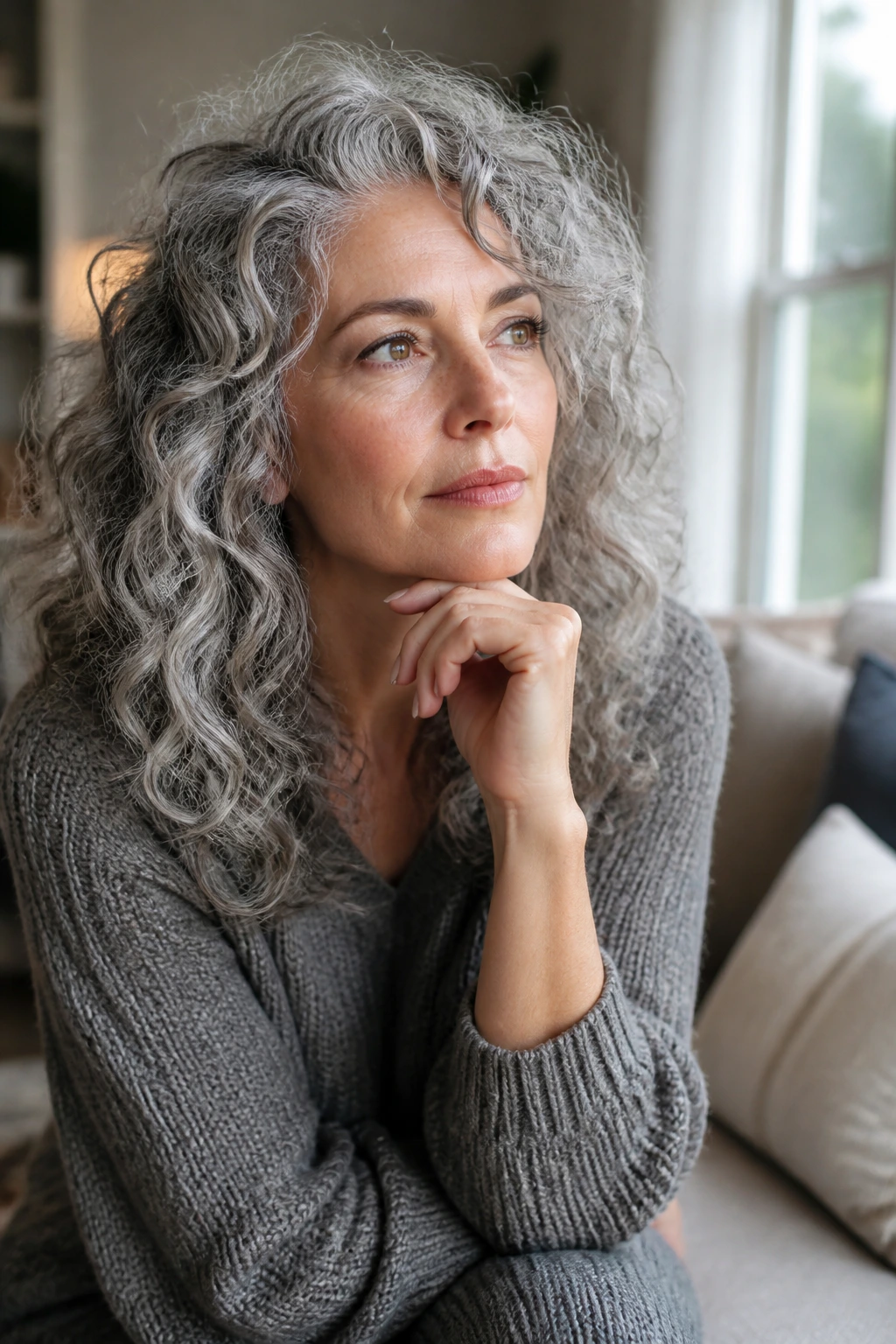
Can curly hair really hold silver color without turning frizzy?
Yes, but the condition of the hair has to be respected. If the curls are already fragile, choose a rooted or dimensional silver instead of bleaching every inch to the same pale level.
Does silver look better on loose curls or tight coils?
Both can wear it well, but the placement changes. Loose curls show gradients and ombrés more clearly, while tighter coils often look best with ribbons, halos, or darker roots that protect the pattern.
How do I stop silver from turning yellow?
Use a color-safe shampoo, limit hot water, and refresh with violet or blue-violet products only as needed. Too much purple shampoo can make porous ends look dull, so shorter, lighter use is better than heavy use.
Can I go silver if my hair is dark brown?
Yes, but it usually takes more than one step. Dark curly hair often needs staged lightening, then a toner or gloss, because trying to jump straight to silver in one appointment can fry the curl pattern.
What if my curls are very porous and grab color too fast?
Protect the ends first. Ask for a gentler toner, shorten the processing time, and keep the palest silver off the driest parts unless you like a pastel fade.
How often do I need salon refreshes?
Bright silver or icy looks often need a touch-up every 4 to 6 weeks. Smokier, rooted looks can go longer, sometimes 6 to 8 weeks, because the darker base hides the grow-out.
Can I do silver at home?
You can maintain a pre-lightened silver with glosses and masks at home, but getting to the pale base safely is another story. Curly hair tends to lift unevenly, and uneven lift is where people get into trouble fast.
The Shade That Lets Curls Keep Their Shape
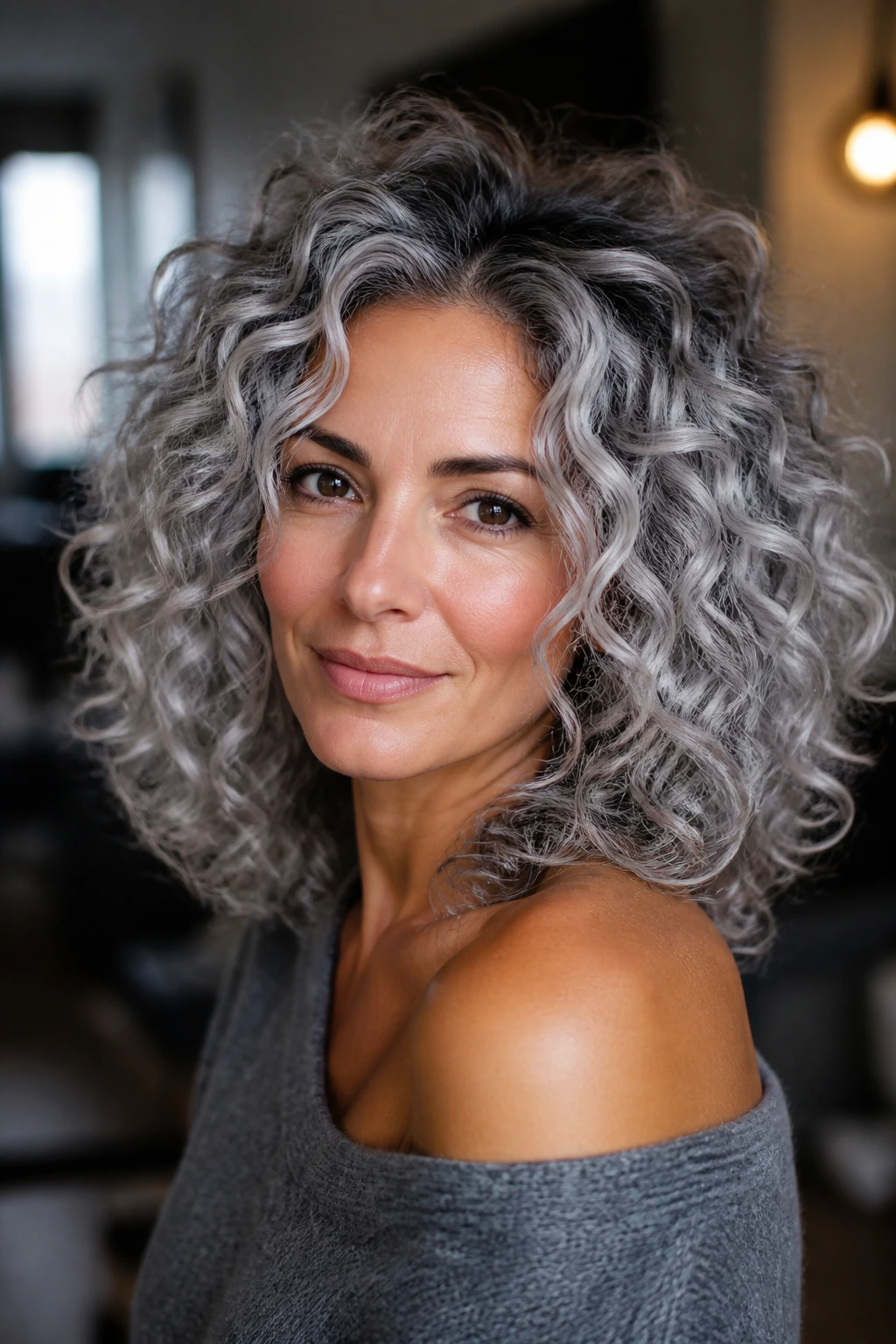
Silver hair color on curly hair works best when the curls still look like curls after the color goes in. That’s the rule I’d keep in mind every time. A smoky balayage, a shadow-root melt, a pewter ribbon, or a silver money piece can all look better than a flat all-over silver if they preserve the bend and depth of the pattern.
I’m partial to the looks that leave a little darkness in the roots and a little softness in the mids. They age better, they move better, and they make the curl shape easier to read from across the room. If you want silver that still feels alive a month later, that’s the lane to stay in.
Take the shade that fits your curl pattern, not the other way around. That’s where silver starts looking like it belongs there.
