



Gray hair looks for wavy hair over 50 work best when the cut stops fighting the bend you already have. That sounds obvious, but I see the opposite all the time: silver waves cut into stiff shapes, then styled like straight hair, then blamed for “going puffy.” The problem usually isn’t the gray. It’s the geometry.
Gray and silver strands change the way light sits on the head. They also tend to feel a little drier, a little more wiry, and a little less forgiving than hair with pigment. Add natural wave into the mix, and a blunt, overworked cut can go from tidy to triangle-shaped fast. The right look doesn’t force the hair flat. It gives the wave somewhere clean to land.
There’s a sweet spot here, and it’s narrower than most people think. Too short, and the hair can spring up around the temples. Too long, and the ends can hang heavy while the crown goes flat. The best gray styles for wavy hair after 50 usually live in the middle: enough length to show movement, enough shape to keep the outline crisp, and enough softness that the silver reads intentional instead of accidental.
Why These Gray Hair Looks Earn Their Place
Soft Shape, Not Stiff Shape: Gray waves look better when the outline moves with the bend of the hair instead of sitting like a helmet.
Less Daily Work: A good cut can look finished with mousse, a diffuser, or even a quick bend from a round brush—no marathon blowout required.
Better Grow-Out: These looks stay tidy when they grow for 6 to 10 weeks, which matters if you do not want to live at the salon.
Silver Shows Up Cleanly: The right layers and edges keep silver, white, and salt-and-pepper tones looking bright instead of frayed.
Built for Real Hair Changes: Wavy hair after 50 often needs a little more lift at the crown and a little less bulk at the ends. These cuts handle that without making the hair feel thin.
Why Gray Hair Looks for Wavy Hair Over 50 Need Softer Edges
Gray hair does not just lose pigment. It often loses a little softness too. The strand can feel rougher, and rougher strands catch on one another, which is why the same wave pattern that once fell in easy bends may start to puff, separate, or snag at the ends. A cut with soft edges gives the hair room to move without exploding outward.
Wave pattern matters as much as color. Most wavy hair has a stronger bend through the mid-lengths and a looser finish near the ends, so a shape that is too blunt can look boxy by lunch. On the other hand, a shape with too many short layers can leave gray hair looking shaggy in the bad sense—thin at the bottom, crowded at the crown. The best looks find the middle line.
There’s also the shine problem, which is actually a good problem to have. Silver and gray hair reflect light hard, especially in daylight, so a clean cut can look polished fast. A messy cut shows every uneven corner. A good one shows the texture in a flattering way. That is the whole game here.
1. The Soft Silver Lob That Skims the Collarbone
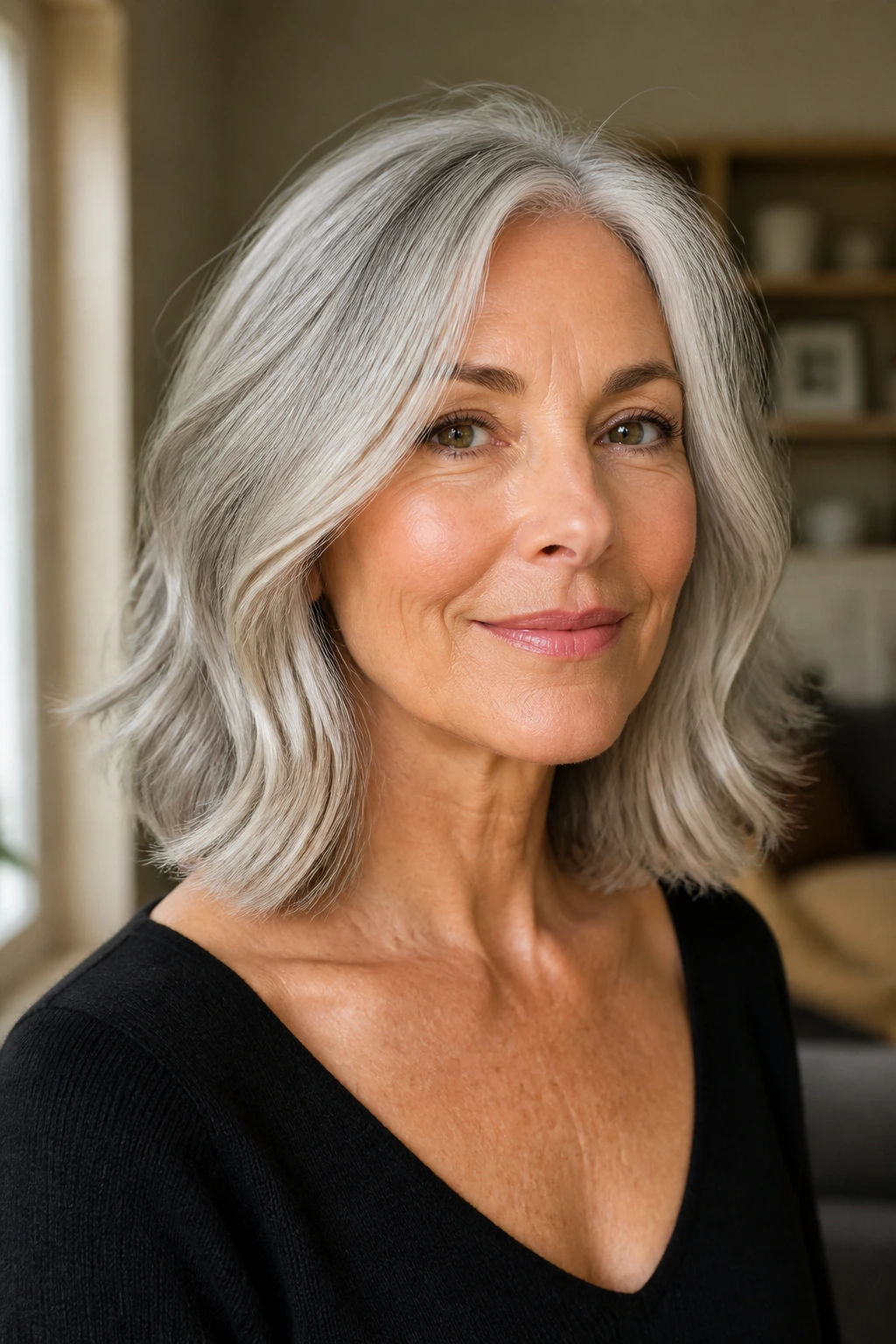
A collarbone-length lob is one of my favorite gray hair looks for wavy hair over 50 because it gives the wave room to bend without turning into a puffball. The line sits low enough to feel modern, but not so long that the ends disappear into the shirt collar. Ask for a slight forward angle in front—about half an inch longer than the back—so the shape leans toward the face instead of hanging straight down.
Why It Works
The lob is kind to coarse gray hair because it keeps enough weight at the bottom to control the wave. That matters. If the hair is cut too short, the top can flare up while the ends kick out. A collarbone lob keeps the balance cleaner.
I like this look most on hair with medium density. It does not need much fuss: a little mousse at the roots, a quick diffuse until the hair is 80% dry, then a few wraps around a 1-inch iron on random pieces. Leave the ends a little straighter. That tiny mismatch looks better than perfect curl.
A Few Stylist Notes
- Ask for soft face-framing pieces starting at the chin.
- Keep the ends blunt enough to hold shape, but not razor-straight.
- Avoid heavy thinning shears through the bottom; gray ends can fray fast.
2. The Airy Shoulder-Length Shag
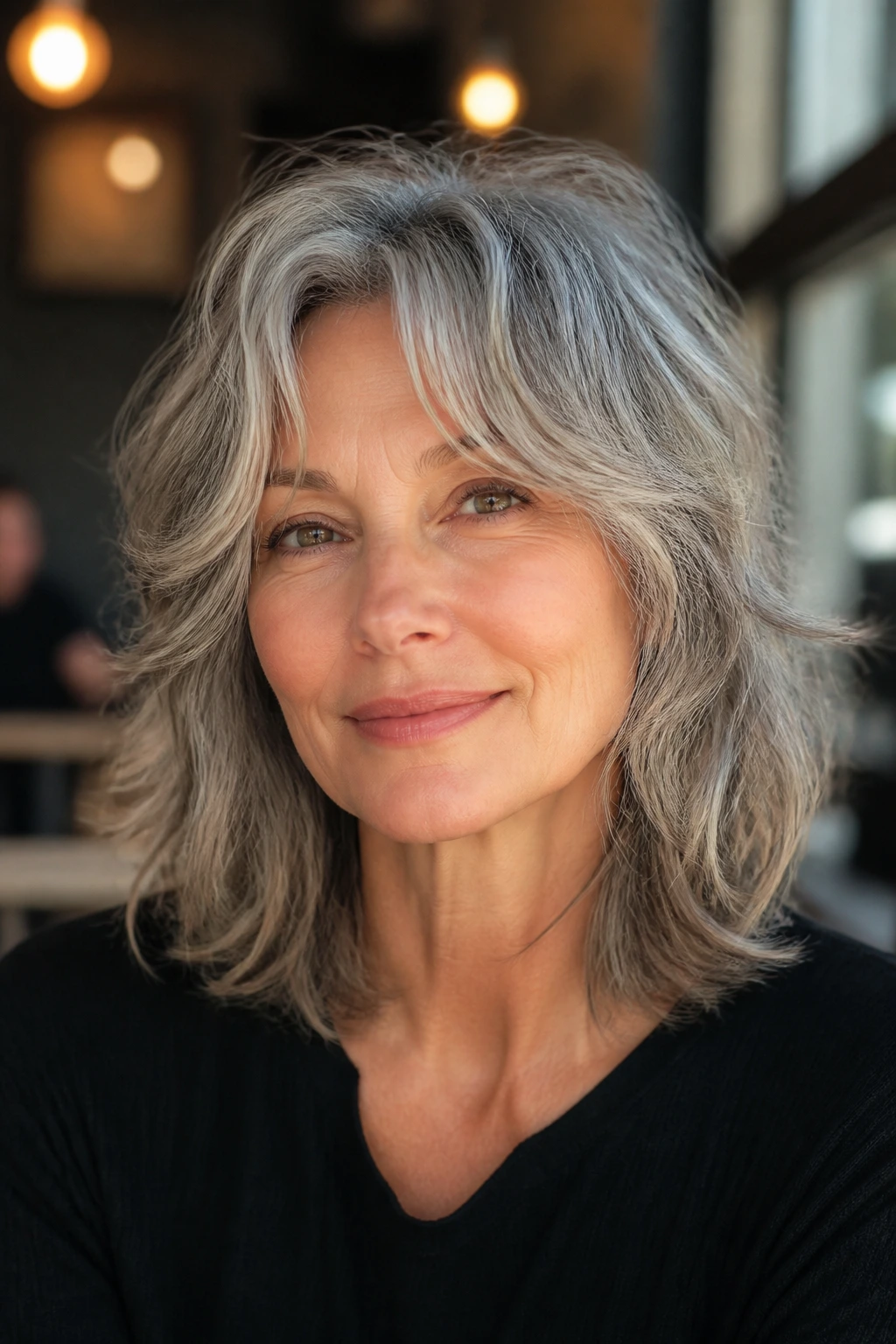
If your waves have a mind of their own, the shoulder-length shag gives them a job. It breaks up the bulk, lifts the crown, and stops gray hair from sitting in one flat sheet. The best version is not choppy for the sake of being choppy. The layers should feel connected, with the shortest pieces around the cheekbone and the longest brushing the shoulders.
The shag works because it lets the wave pattern do the styling for you. I prefer it on hair that gets a little bulky at the sides or weighs down at the back by midday. A bit of mousse, a diffuser held still at the ends, and a finger-scrunch at the front are usually enough. Keep the fringe soft if you have one. Hard bangs plus a shag can tip into costume fast.
3. The Chin-Grazing French Bob

A chin-length bob sounds severe on paper. On gray waves, though, it can look sharp in the best way if the cut is softened at the edges. The line should kiss the jaw, not sit right on it. That small difference keeps the bob from widening the face. A side part helps too, especially if your hair naturally wants to fall that way anyway.
This is the look for someone who likes structure but does not want a hard block of hair. It flatters silver strands because the shorter length shows the different tones in the gray—white, charcoal, pewter, all of it—without requiring much styling. If your waves are loose, let them air-dry with a little cream. If they’re stronger, bend just the top layer with a 1.25-inch iron and leave the underlayer alone. That keeps it from looking overdone.
4. Long Layers with Face-Framing Silver Pieces
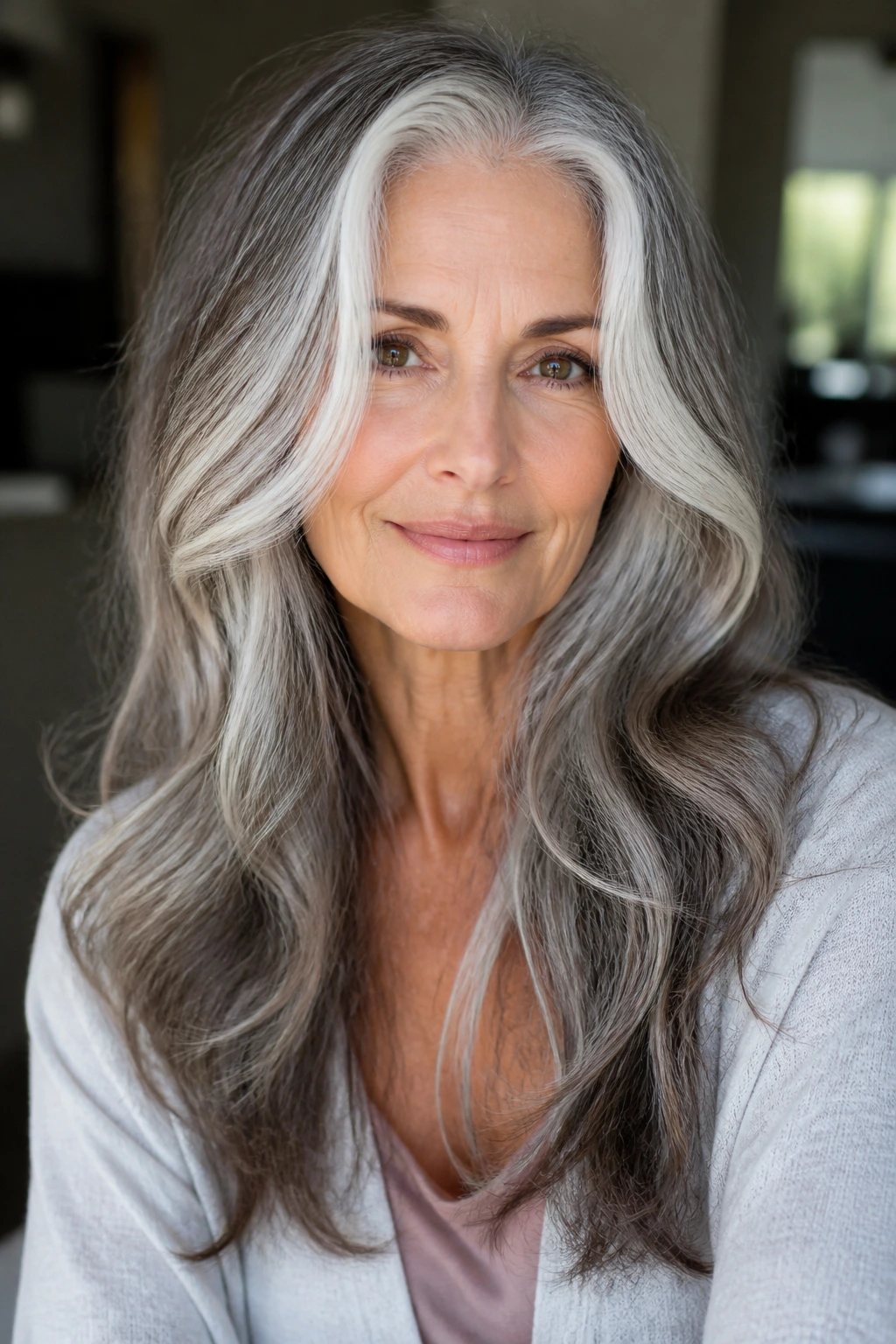
Keeping length after 50 is not the problem. Keeping the shape from turning heavy is the problem. Long layers solve that by taking weight out of the middle and opening a path around the face. When gray hair waves, the lighter front pieces catch light first, which makes the style look deliberate even on a plain T-shirt day.
I like this cut for anyone who is attached to longer hair but hates the triangle effect. The key is restraint. Layers should start low—usually around the chin or lower cheekbone—so you do not lose too much density through the top. If you want to keep the look calm, ask for face-framing pieces that fall from cheekbone to collarbone. They soften the profile without stealing length.
5. The Piecey Pixie-Bob
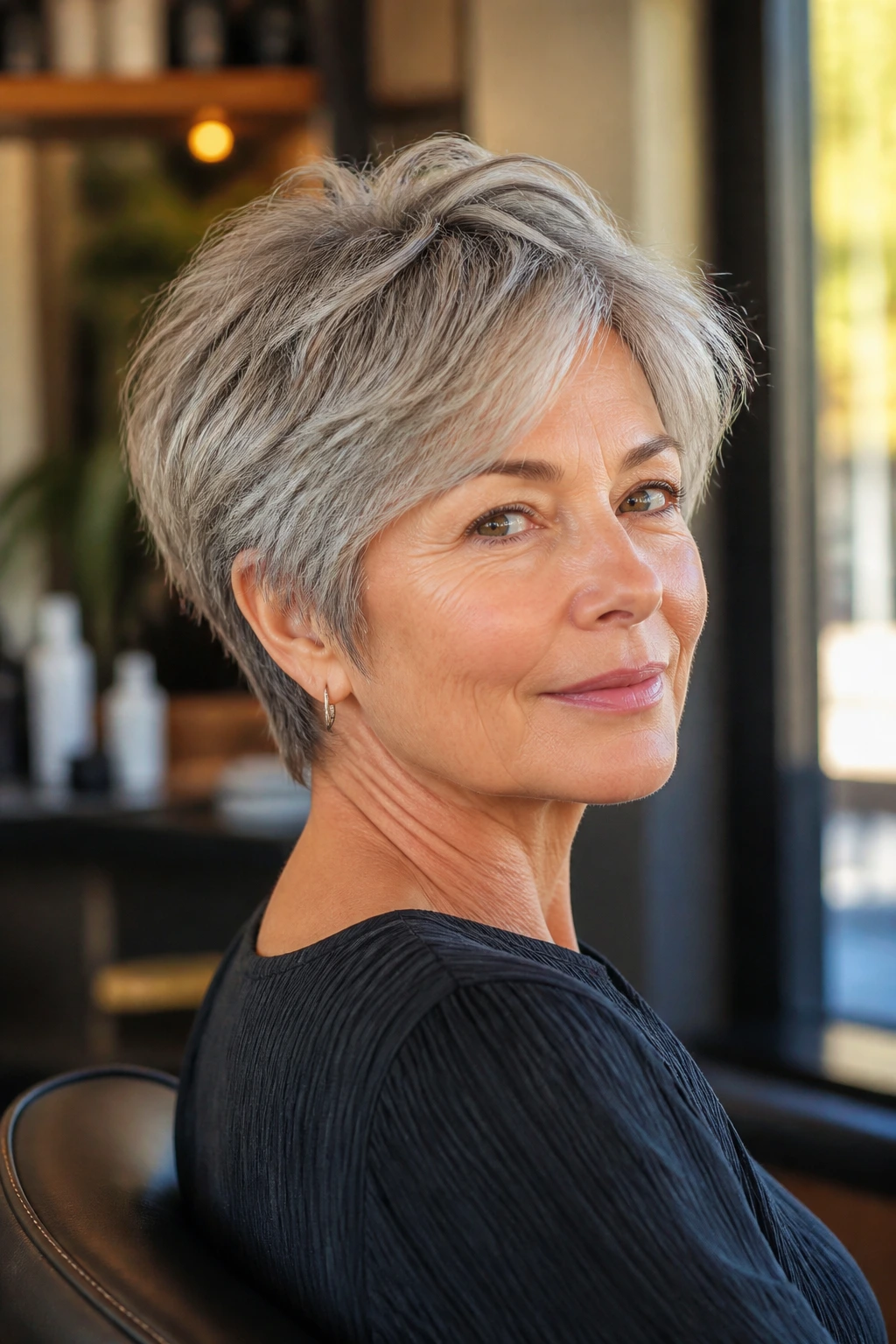
This one sits between a crop and a bob, which is exactly why it works. The nape is shorter, the top stays long enough to push around with your fingers, and the whole cut has a little lift without needing a full blowout. On gray hair, that piecey finish keeps the style from feeling too formal or too helmet-like.
I reach for this look when someone wants shorter hair but not a true pixie. The sweet spot is usually a top section that measures around 3 to 4 inches, with the sides tapering in slowly rather than getting chopped off. A pea-size amount of styling paste is plenty. Too much product, and silver hair starts to look waxy.
6. Curtain Bangs with Loose Gray Waves
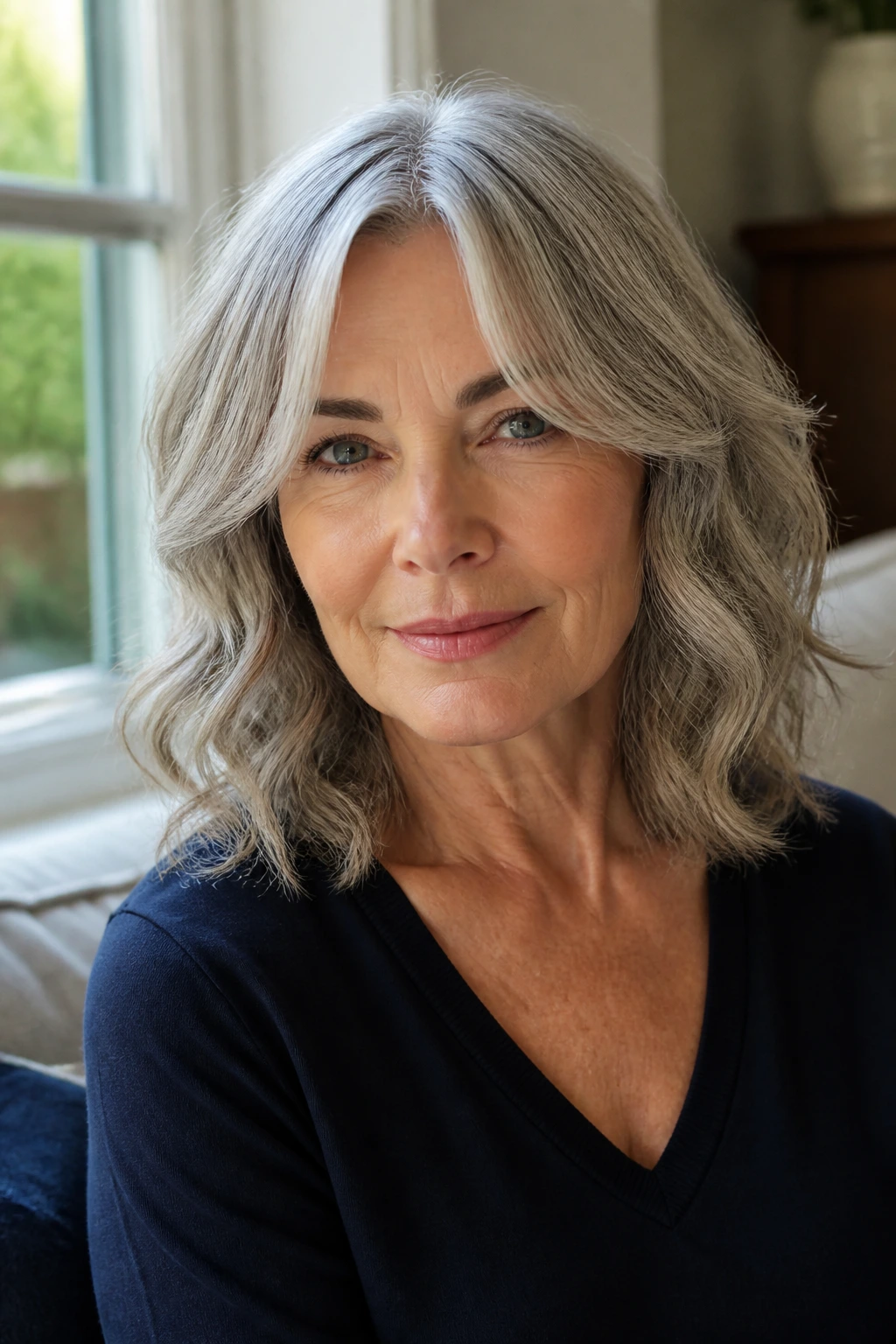
Curtain bangs and wavy gray hair get along better than people expect. The reason is simple: the bang splits at the center and moves with the wave instead of sitting like a blunt wall on the forehead. For over-50 hair, I like bangs that open around the brow and sweep down toward the cheekbone. Anything shorter can puff up or fight a cowlick.
This look works best when the rest of the hair is shoulder length or a little longer. The bangs become the detail, not the whole story. Dry them first with a small round brush or even just your fingers and a nozzle, then leave the rest soft. If the bangs separate halfway through the day, a dab of lightweight cream on the ends fixes it. Not the roots. Never the roots.
7. The Swept-Back Crop with Crown Lift
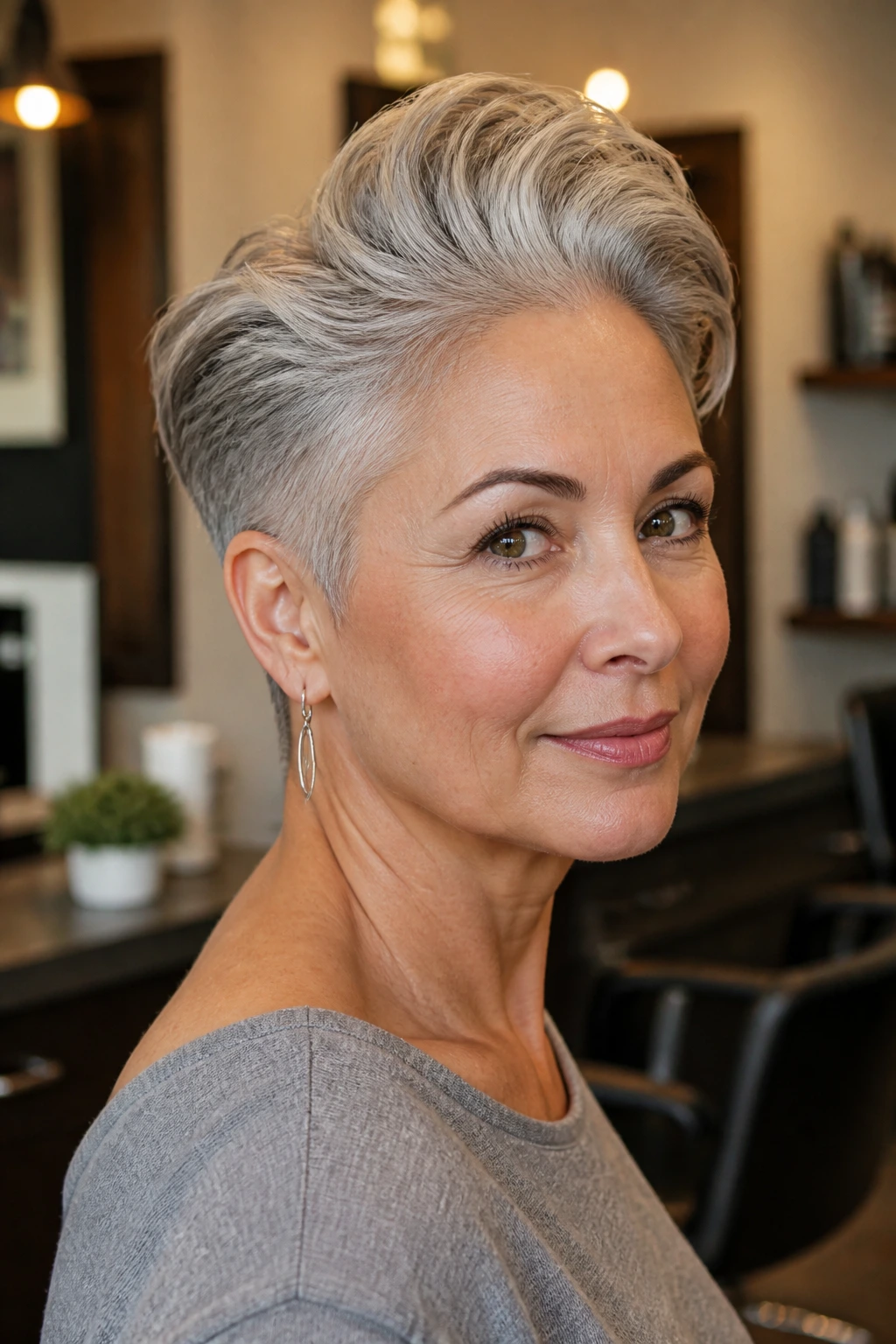
Short gray hair can look crisp or flat, and the difference usually comes down to the crown. A swept-back crop builds height right where the head needs it, which makes the face look a little longer and the hair look a little fuller. The back should stay close to the head. The top should have enough length to brush back, not stand up like a spike.
This is one of the easiest looks to maintain if you like short cuts and dislike spending ten minutes wrestling with a round brush. Blow-dry the roots upward with a nozzle, then push the top back with your fingers while the hair is still warm. A light spray with flexible hold is enough. If your gray is fine, this cut can be a lifesaver. If it is coarse, it keeps the shape neat without a lot of weight.
8. The Side-Parted Midi Cut with Soft Ends
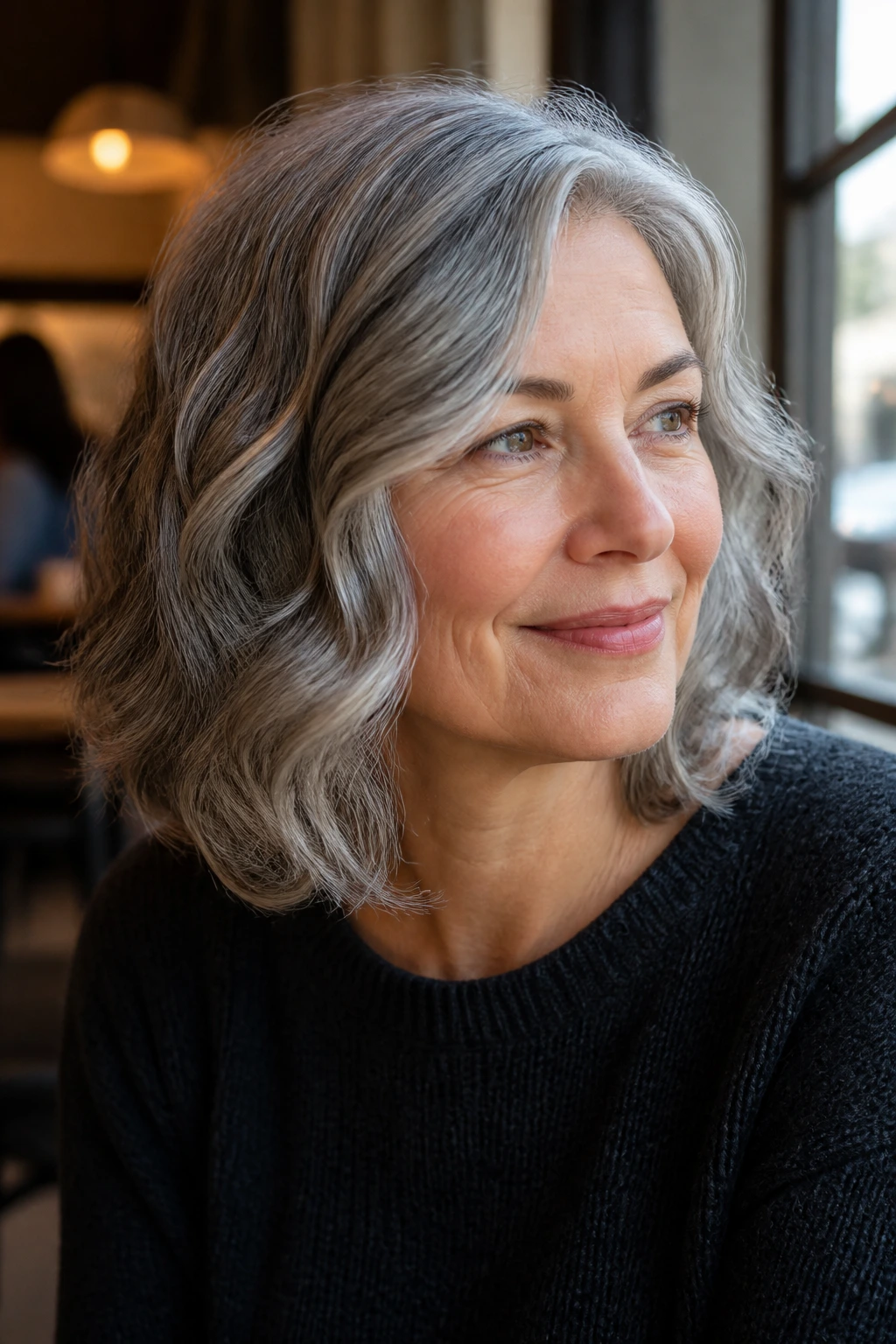
A side part does more for wavy hair than many people realize. It gives the hair a diagonal line to follow, which helps the style feel less boxy and more lifted. On gray strands, that diagonal also shows off the sheen in a way a center part sometimes doesn’t. The cut itself should land somewhere between the jaw and the collarbone, with ends that look softly beveled, not chopped off.
This is a smart choice if your hair grows in with a little more volume on one side than the other. The side part evens things out. A touch of mousse at the crown and a one-pass bend through the mid-lengths is enough. I’d skip stiff hairspray here. It takes the softness out of the whole point.
9. The Salt-and-Pepper Wolf Cut
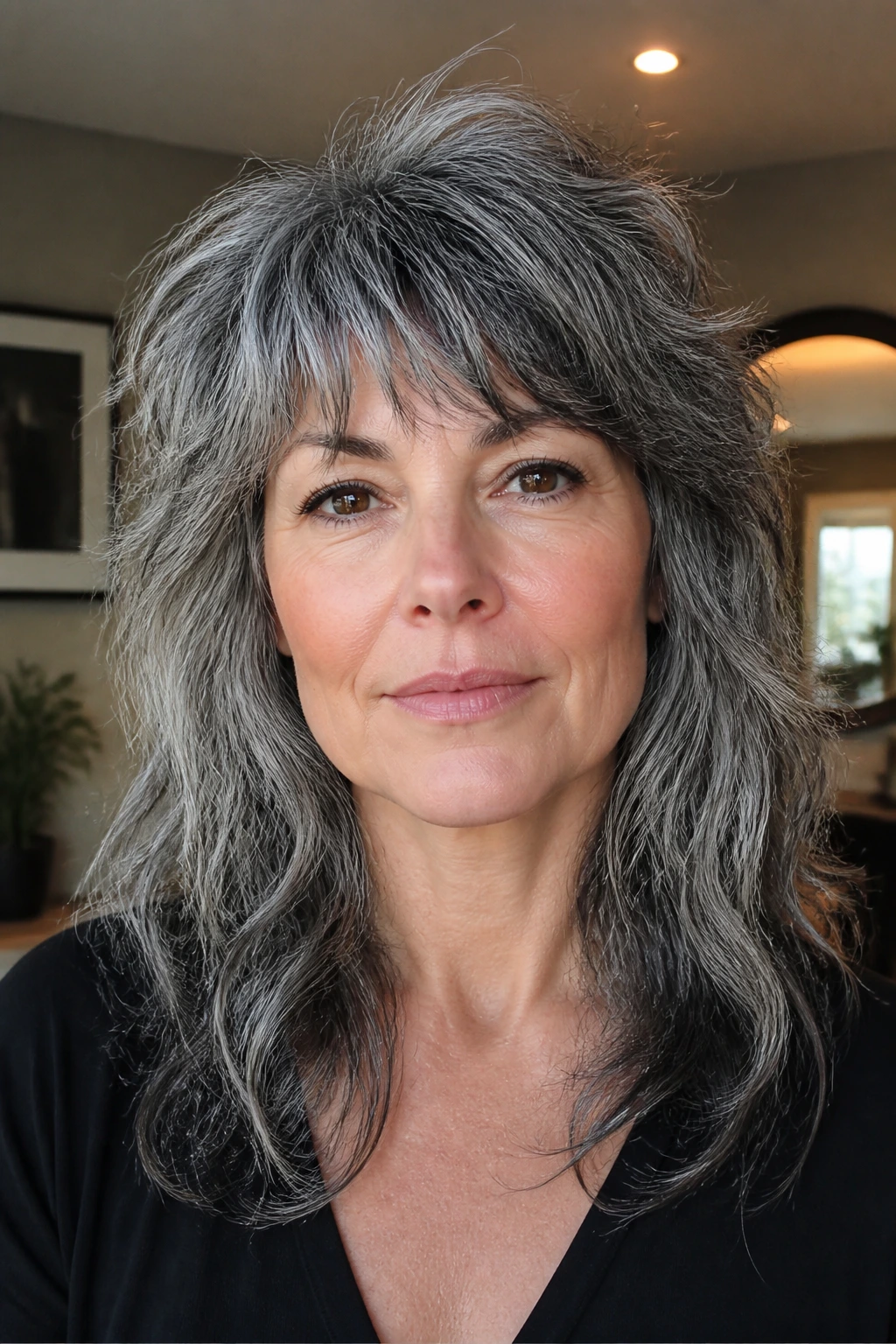
The wolf cut is not for everybody, and that’s fine. On wavy gray hair, though, it can look wonderfully alive when it’s softened just enough. The shape is all about shorter pieces at the top and around the face, with longer, shaggy ends underneath. That gives the hair a little wildness, but not chaos.
The trick is not to over-texturize. Gray hair can already be dry, so you want movement, not shredded ends. Ask for connected layers and a fringe that can be pushed to either side. A diffuser with a little curl cream is usually enough styling. If you like a bit of edge and do not mind some volume, this one has real personality.
10. The Tapered Wedge Bob
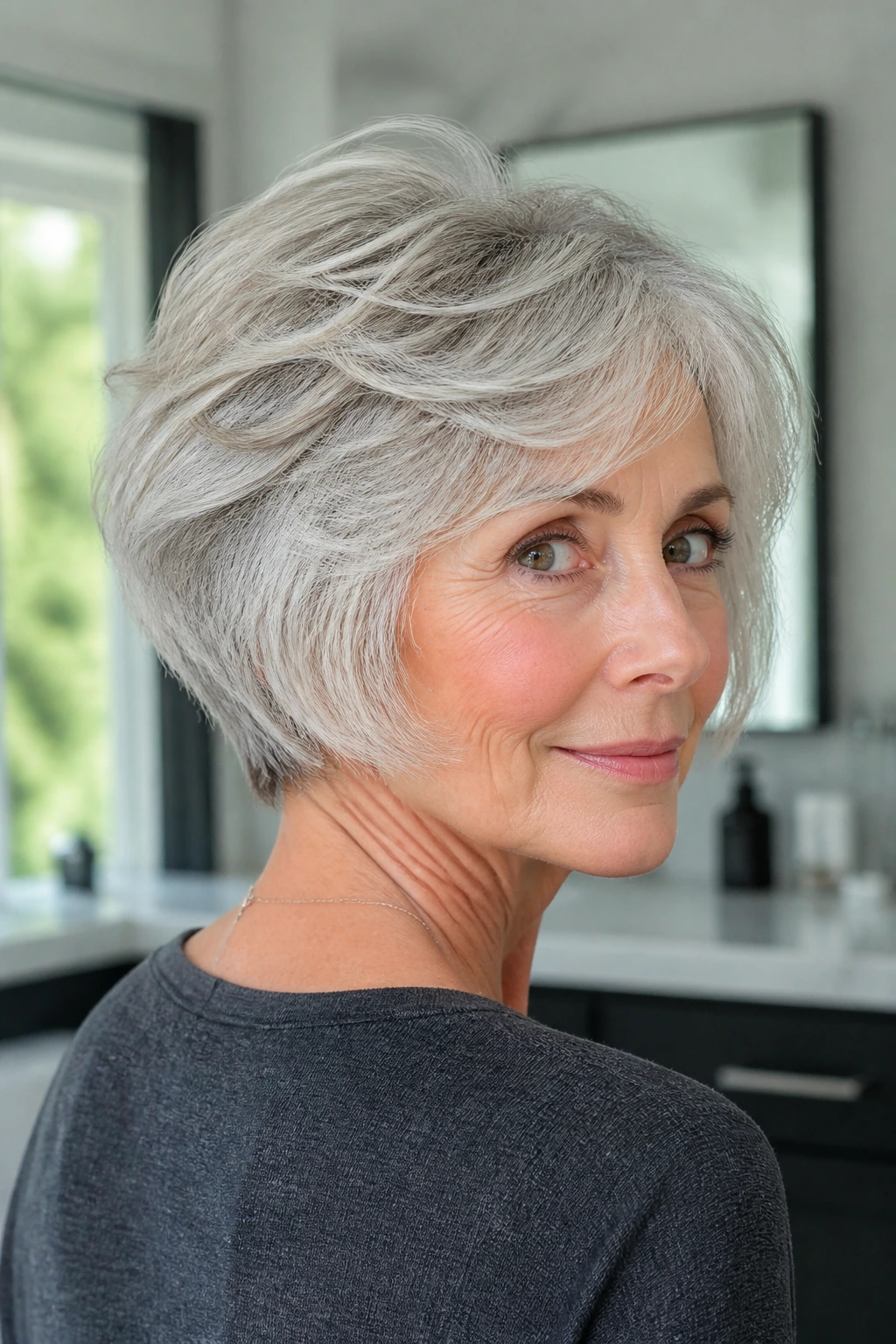
A wedge bob brings structure back into the conversation. The nape sits shorter and tucked in, while the top layers keep enough softness to follow the wave. On silver hair, that shape can look especially clean because the light catches the slope of the cut. It is one of the few styles that can tame thick gray wave without flattening it into boredom.
The caution here is simple: do not let the stack in the back get too high. A wedge that climbs too far up the head starts looking dated fast. Keep the line smooth, not steep. I like this cut for hair that puffs at the back of the neck or grows heavier near the neckline. It gives the whole head a neater outline with less daily work.
11. Feathered Layers with Flipped Ends
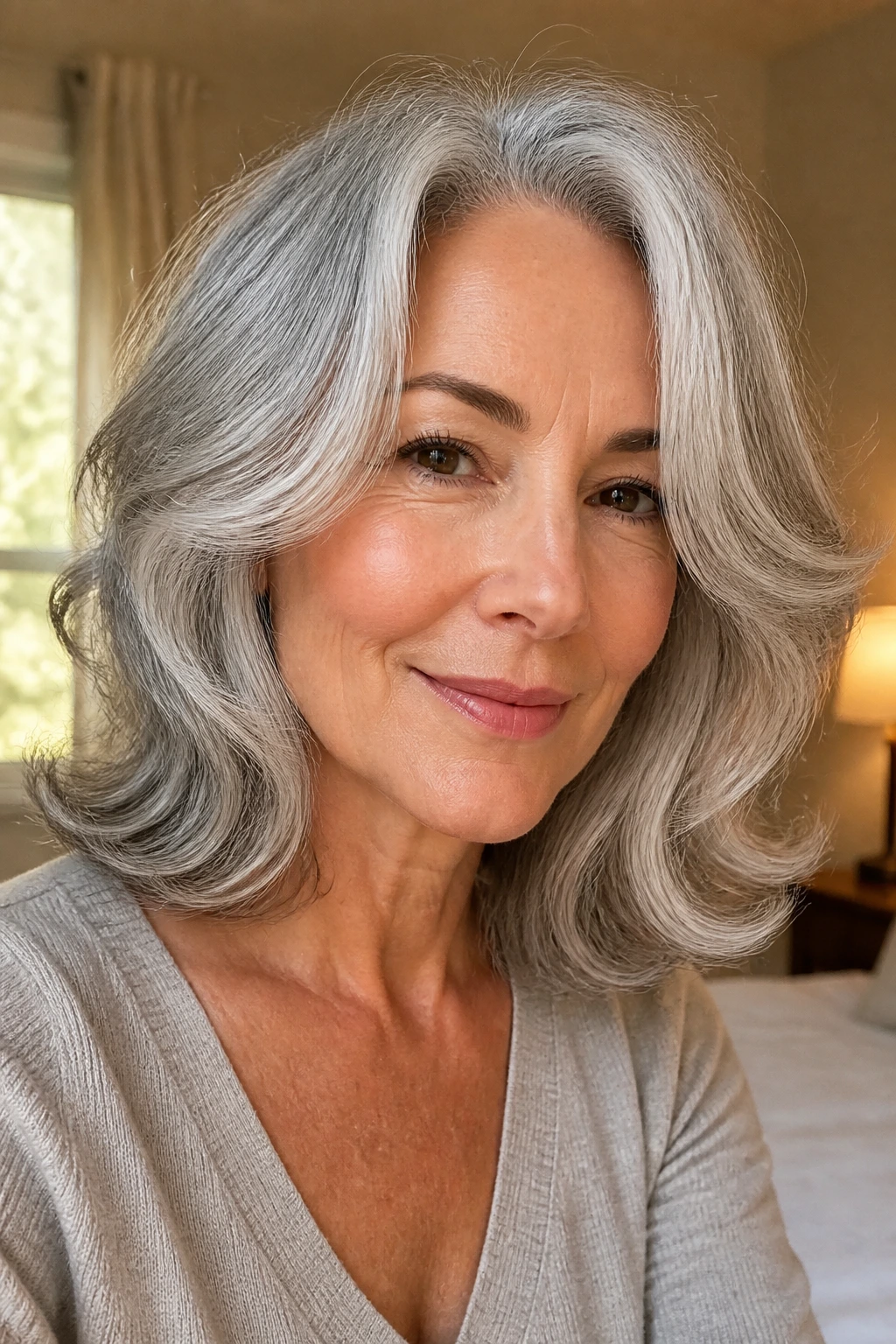
Feathering gets a bad reputation because people remember the over-airbrushed versions. But on gray waves, done lightly, feathering can be excellent. The ends move away from the face in soft curves, which gives the style a little lift without turning it into a retro costume. The best version uses layers that begin around the cheekbone and end just below the shoulder.
If you want this shape, ask for feathering in the front only, not through the whole head. That keeps the bottom from thinning out too much. Finish with a round brush, rolling the ends under or out by half an inch. A small flip at the edge is enough. Anything bigger starts to fight the natural wave.
12. The Soft Asymmetrical Bob
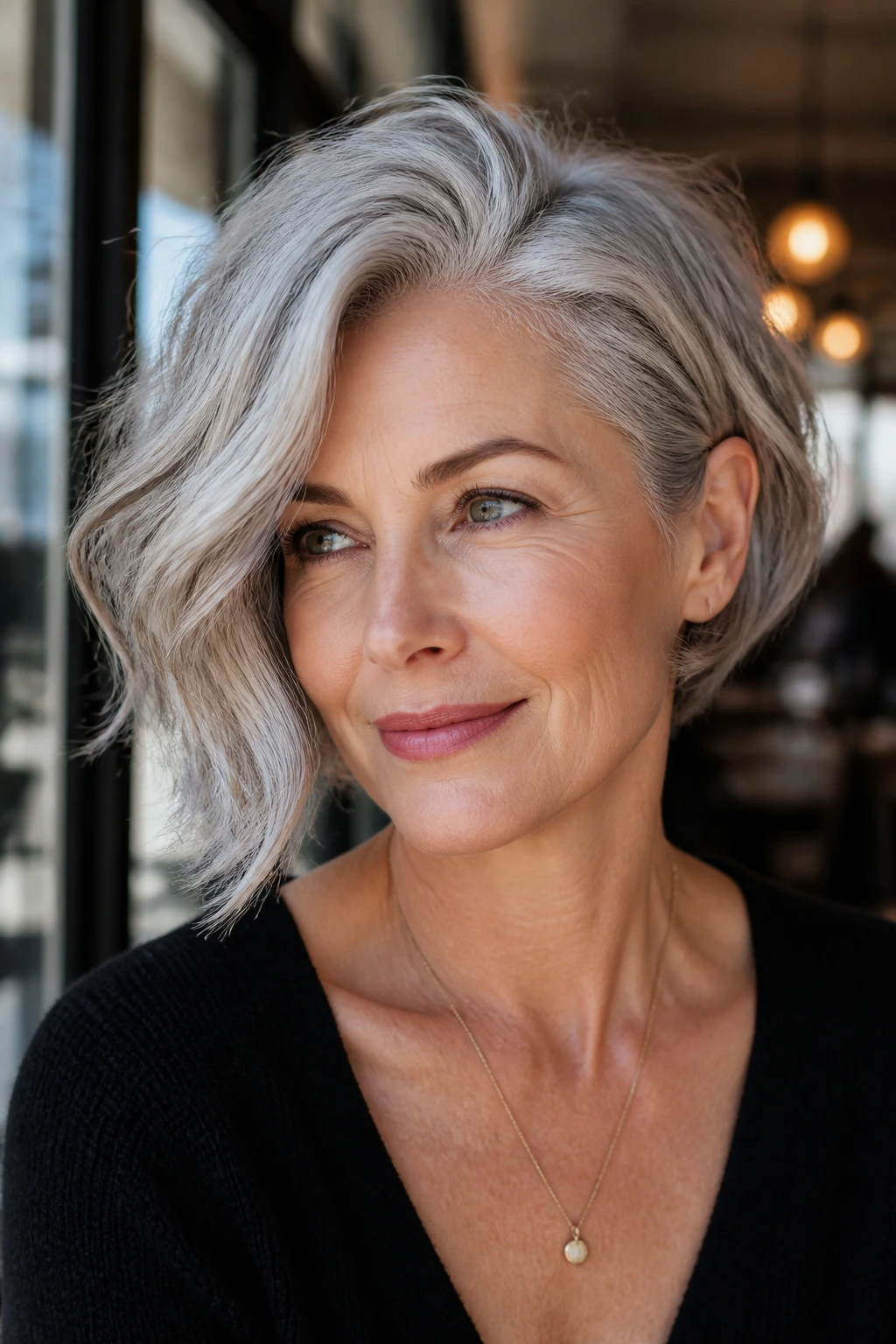
A slightly uneven bob can be a quiet little fix for hair that never falls the same way on both sides. One side stays about 1 to 2 inches longer, usually at the front, which gives the eye something to follow. On gray hair, that asymmetry makes the color variation look intentional. The silver pieces catch light, then the deeper strands anchor the shape.
I like this look for people who want polish without stiffness. It works especially well if one side of your wave pattern is stronger than the other. The longer side gives room for that bend to sit. Keep the styling simple: a smoothing cream, a quick bend at the ends, and a side part that leans toward the shorter side. It is subtle, which is why it works.
13. Bottleneck Bangs with Shoulder Waves
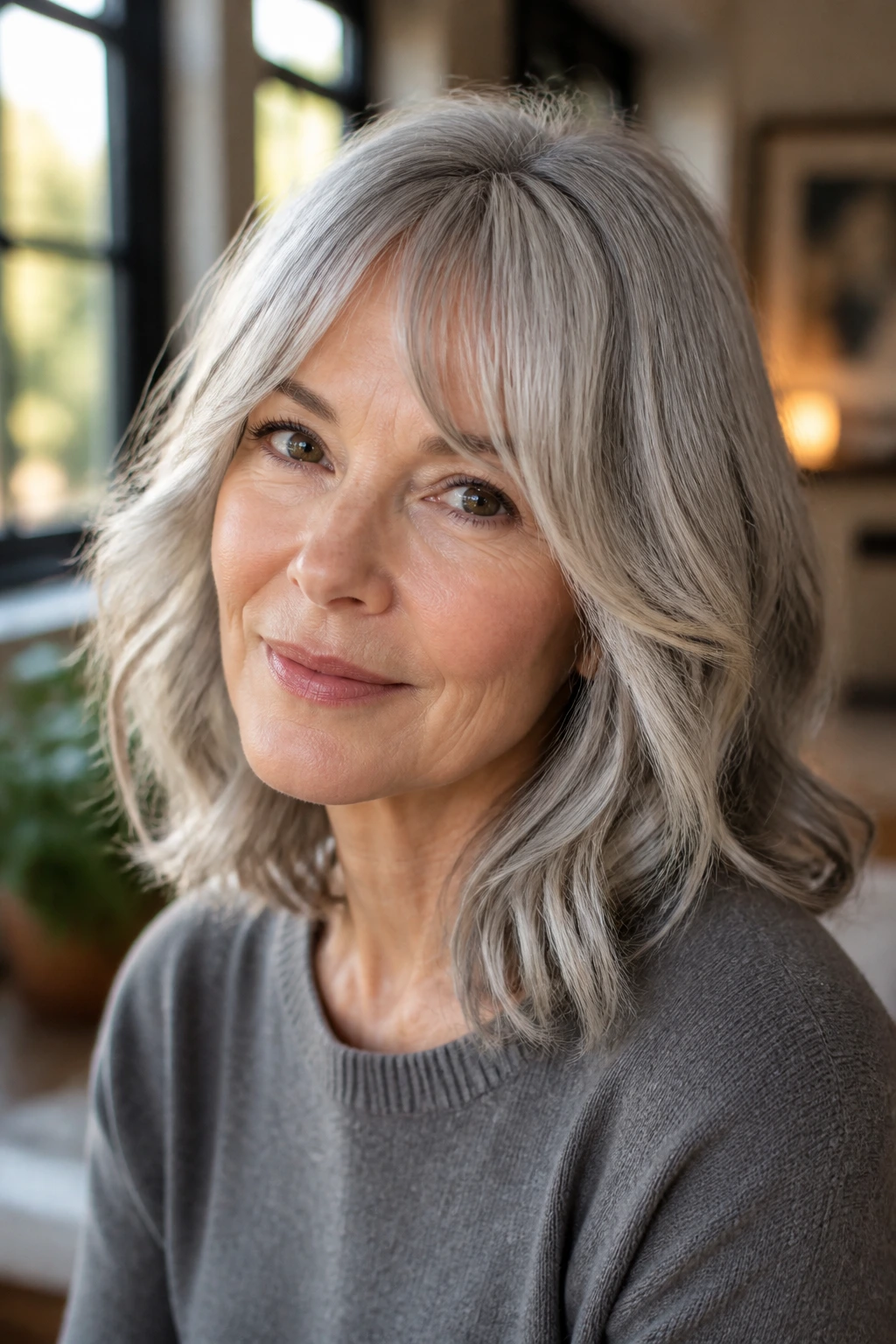
Bottleneck bangs are a smart compromise if you want fringe without a hard line across the forehead. They start narrow at the center and widen as they move out toward the cheekbones. That shape blends into shoulder-length waves beautifully, especially when the gray hair around the face has a few brighter pieces mixed in.
These bangs need regular trimming—every 4 to 6 weeks, if you want them to sit right. Let them get too long and they fall into the eyes; too short and they lose the shape that makes them useful. I think this style works best when the rest of the hair has soft movement, not tight curl. The whole look should feel like a frame, not a curtain.
14. The Blunt-Edge Long Bob with Internal Layers
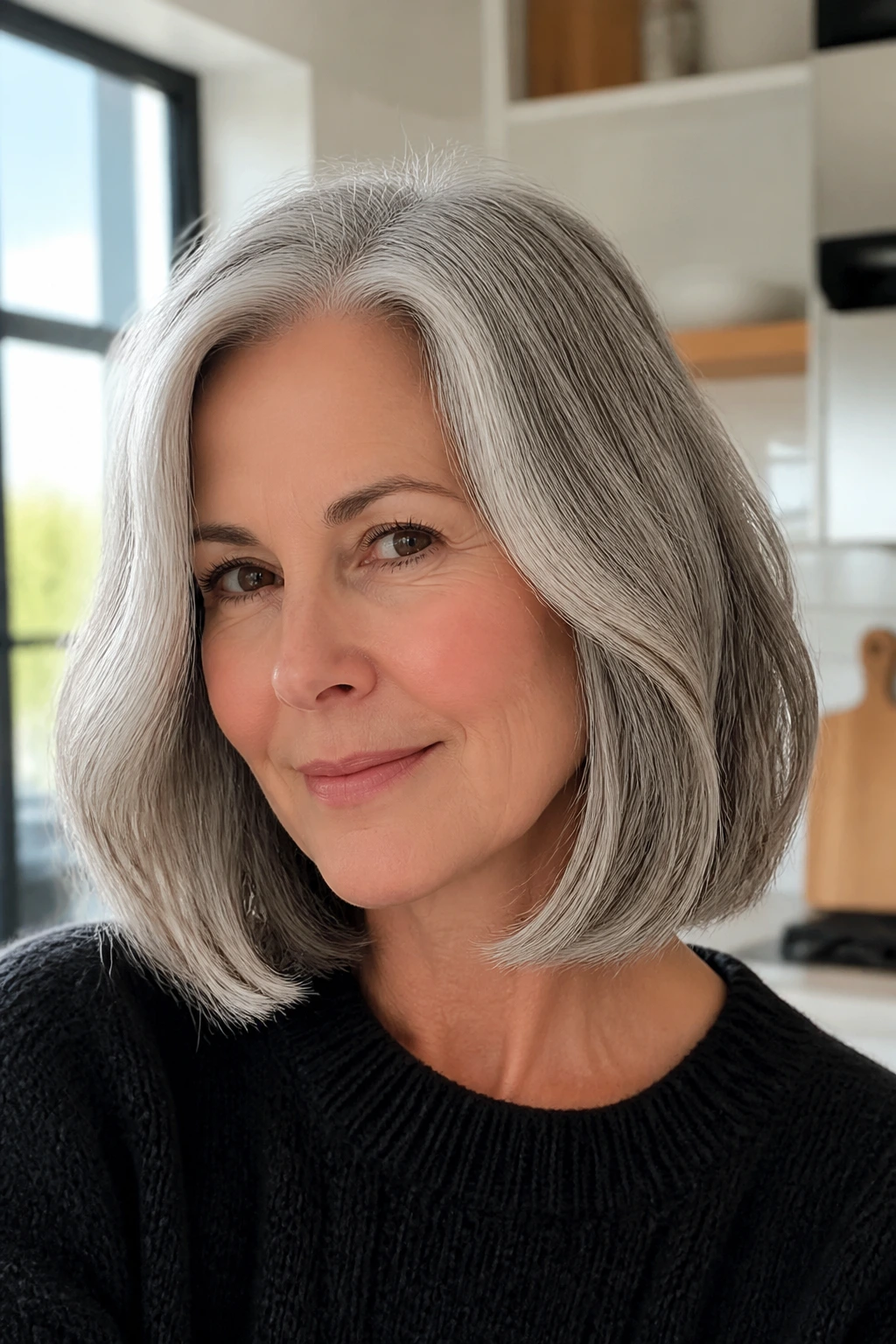
A blunt outer line sounds unforgiving, but when you hide a few internal layers underneath, the cut gets a much better personality. The perimeter stays clean, which makes gray hair look fuller at the edge. The hidden layers keep the body from ballooning at the sides. It’s one of the best choices if your waves are loose and your hair is medium to fine.
The mistake people make with this cut is over-layering it from the outside. Don’t. Keep the line visible. Let the inside do the work. A flat brush or paddle brush at the crown, then a soft bend through the ends, is enough. This is the look I’d choose for someone who wants the hair to look neat even when it air-dries a little messy.
15. The Rounded Mid-Length U-Shape Cut
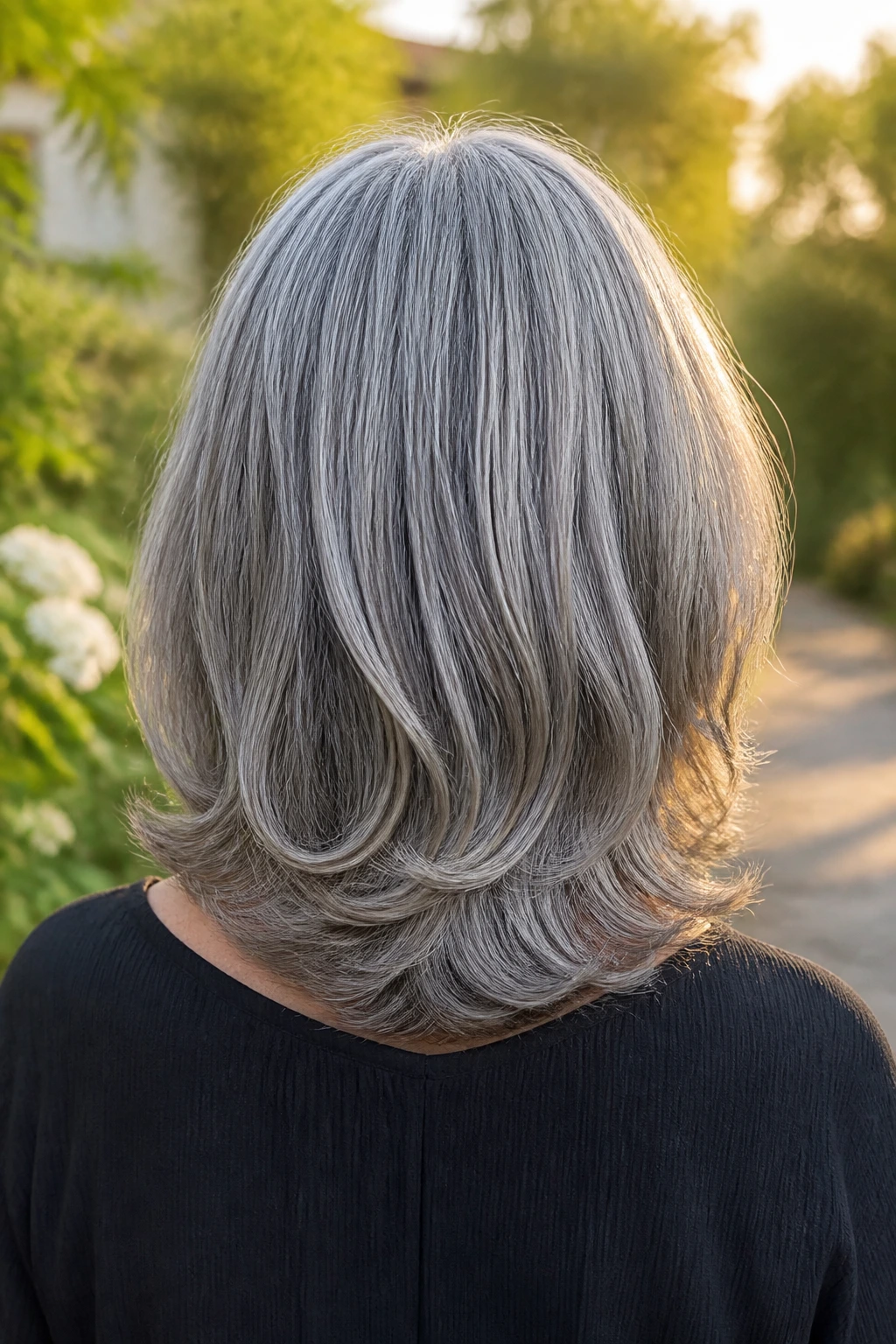
A U-shaped hemline sounds technical, but it’s really just a gentle curve at the back instead of a straight shelf. That curve helps wavy hair fall together in a softer way, which matters when the gray strands are a little coarse and need weight to settle. The side pieces stay slightly shorter, the back holds a bit more length, and the whole outline feels less boxy.
This cut is a quiet hero for thicker silver hair. It gives the ends a place to gather instead of spreading out sideways. If your hair has a strong wave and you like wearing it down, this shape keeps it from feeling heavy. Ask for long layers only if you need them. Too many will wreck the curve.
16. The Textured Crop with a Longer Top
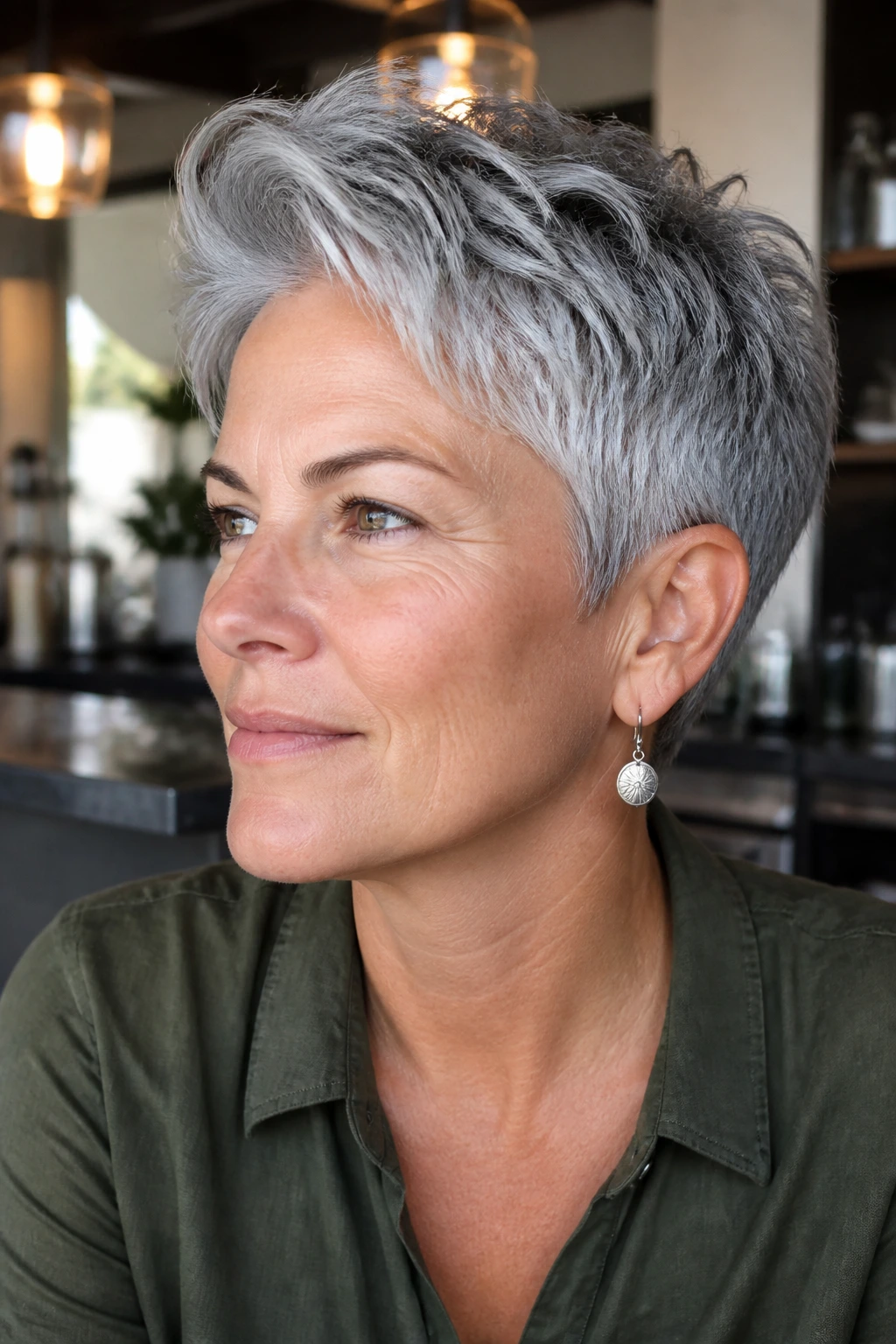
Short, but not too short. That’s the whole appeal here. The sides and back are tapered close while the top stays long enough—usually 2 to 4 inches—to sweep, spike gently, or fall in a soft wave. On gray hair, that top section catches light and creates a nice contrast with the shorter sides.
This is a good choice if you want easy mornings and do not mind a little product. A matte paste or lightweight cream keeps the top separated without turning it stiff. I’d avoid heavy gels unless your hair is very coarse. They can make silver hair look dry in a bad way. The point is texture, not crunch.
17. The Deep Side-Part Hollywood Wave
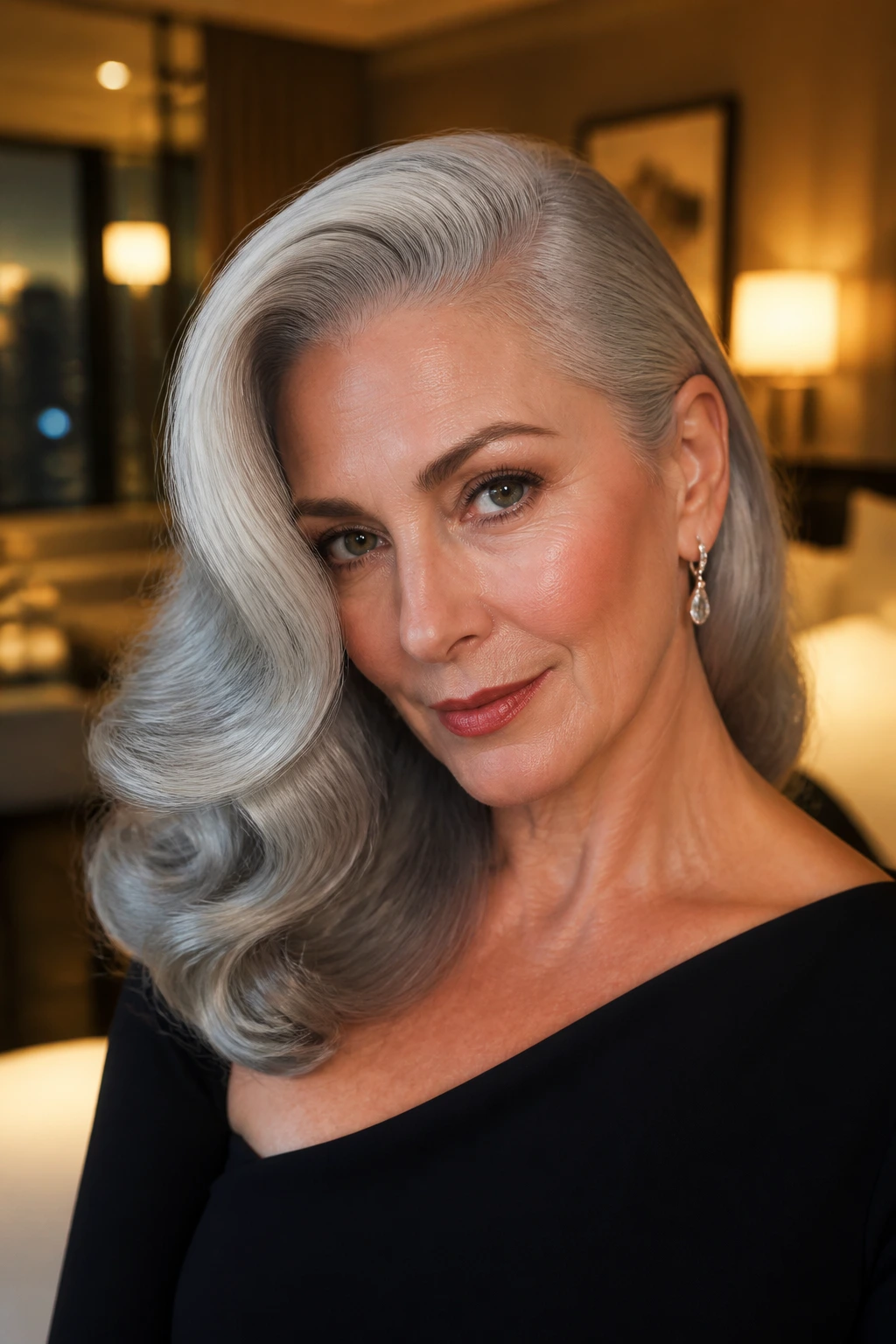
For an evening look, a deep side part gives gray waves a little drama without asking for a full updo. The hair sweeps across the forehead in a clean arc, then drops into one large bend through the lengths. It looks formal, but not fussy. That matters.
A 1.25-inch iron is usually the right size if you want a soft wave instead of tight curl. Wrap sections away from the face, pin them while they cool if you have the patience, then brush them out just enough to soften the line. A shine spray at the end is plenty. This style is one of the nicest ways to show off silver hair because the wave pattern and the color work together instead of competing.
18. The Air-Dried Silver Shag with Fringe
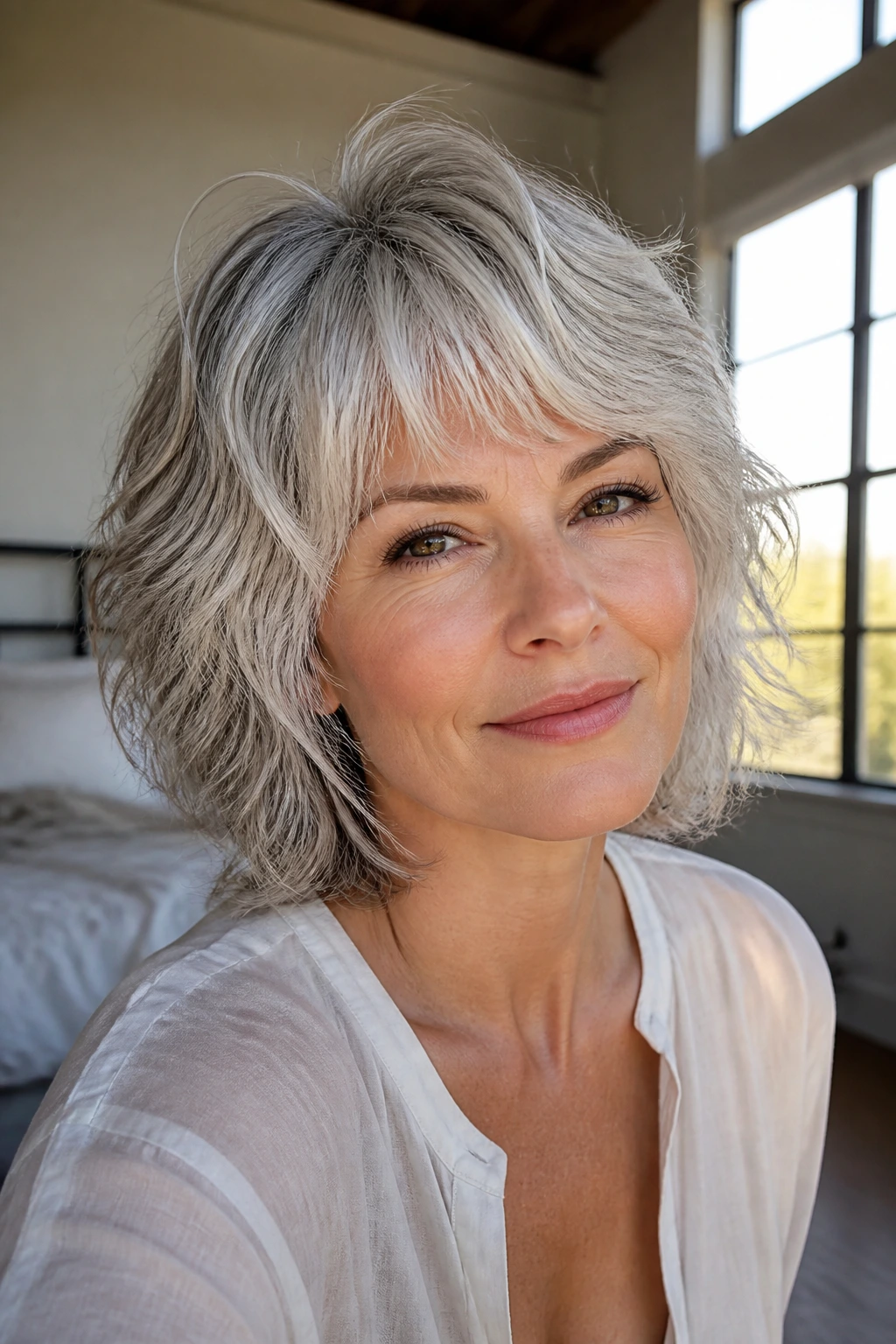
Some hair wants heat. Some doesn’t. The air-dried silver shag belongs to the second group. The cut itself carries the style: layers through the crown, a little fringe, and ends that are light enough to dry into soft bends on their own. If your natural wave is already there, this one saves time and usually looks better the less you mess with it.
Work a small amount of leave-in and mousse through damp hair, scrunch once or twice, and leave it alone. If the roots need help, a diffuser for 3 to 5 minutes is enough. That’s it. No need to keep touching it while it dries. Every extra touch encourages frizz, and gray hair does not need the invitation.
19. The Glossy Natural Gray with Light Bend
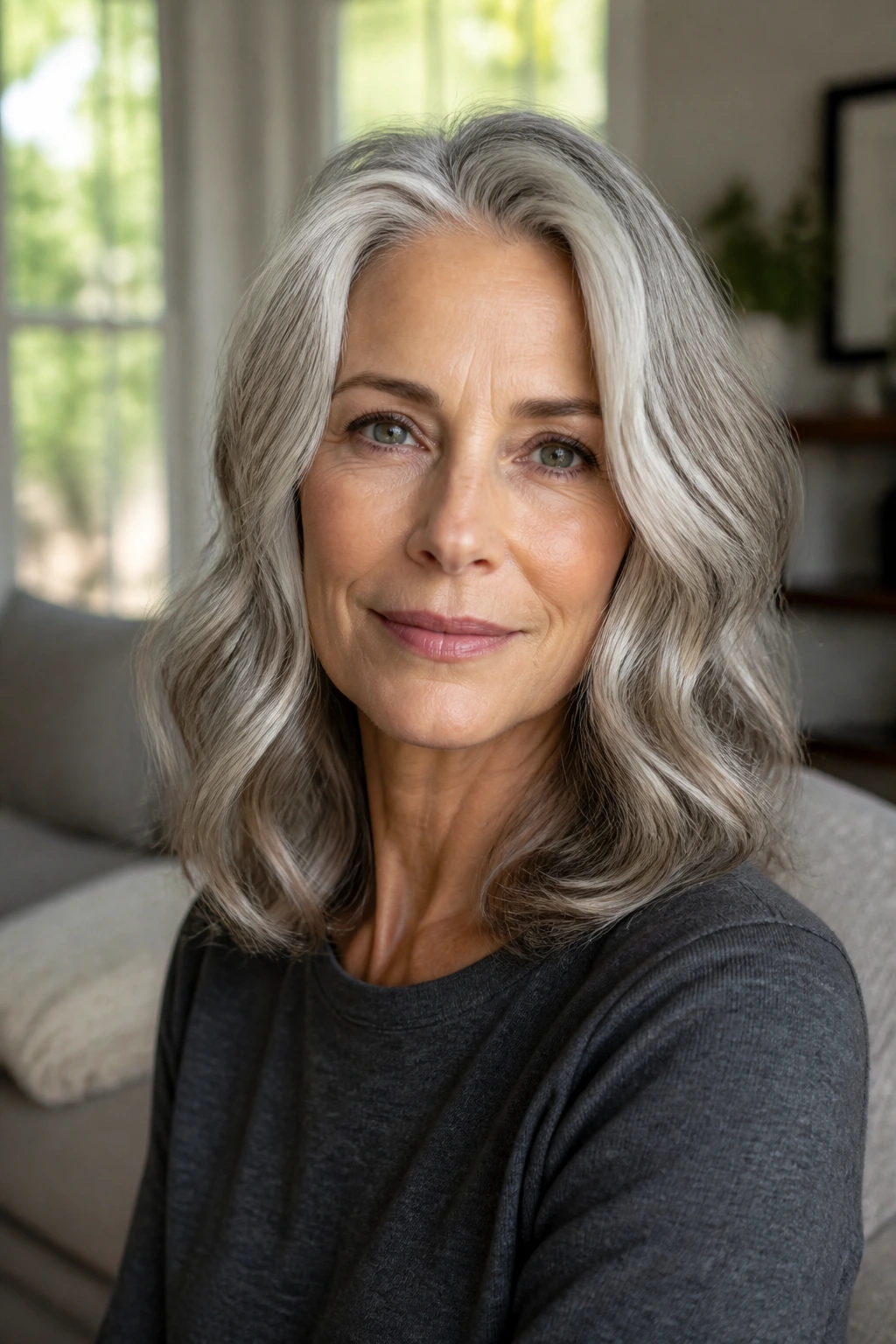
This is the look for someone who wants the color to speak first. The cut stays simple—often shoulder length or just below—and the styling stays low-key. A light bend through the mid-lengths, a clean part, and a serum on the ends are enough. The finish should look polished, not sprayed into place.
I love this approach when the gray is a strong, clean silver or a soft salt-and-pepper mix with good shine. The style does not fight the hair. It lets the natural texture sit where it wants, then tidies the edges. If your strands are dry, focus more on moisture than on shaping. The bend is just there to keep the length from hanging flat.
20. The Half-Up Wave for Dressier Days
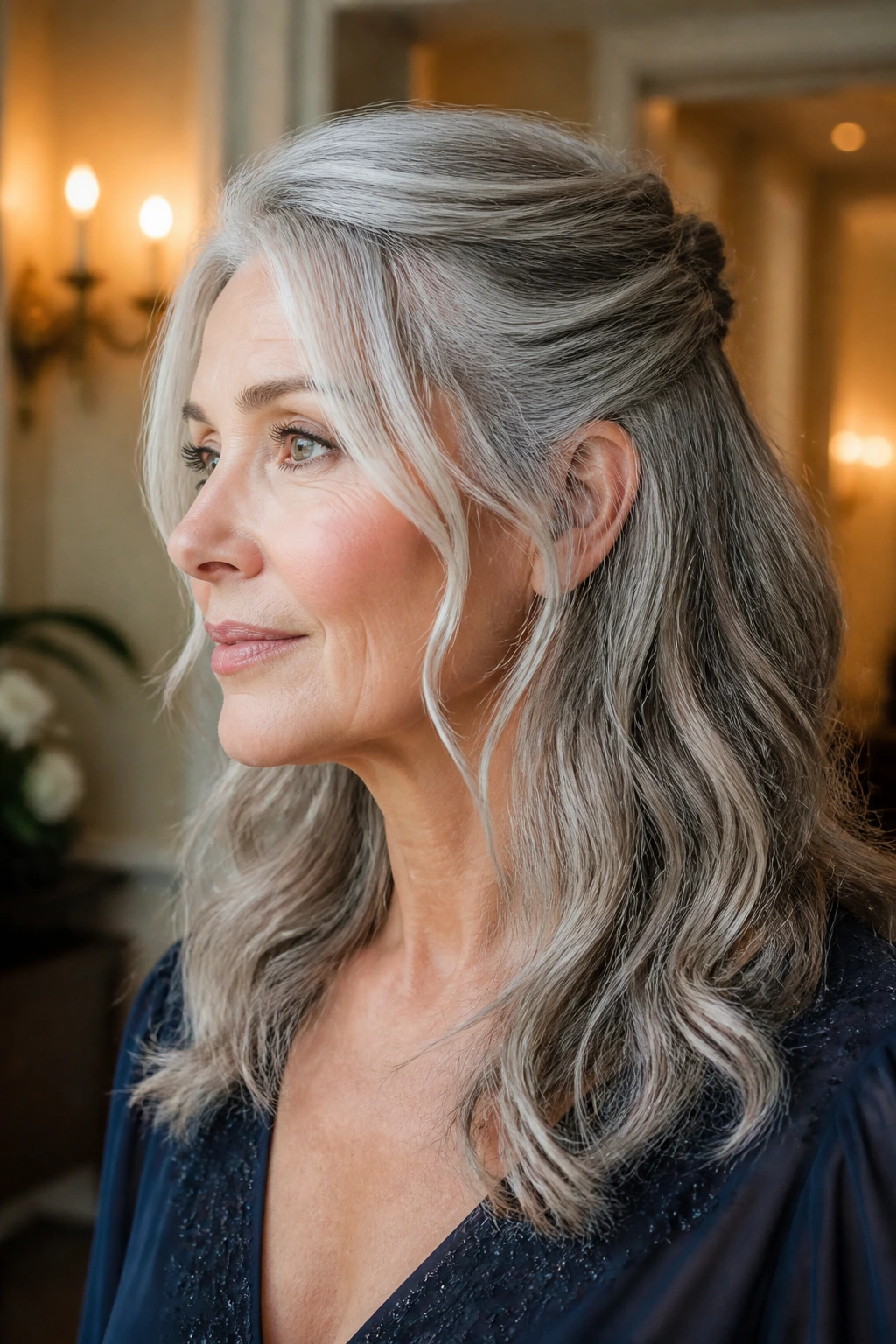
Half-up styles are underrated for gray waves because they pull the eye upward without hiding the length. A small section at the crown—usually from temple to temple—gets clipped or softly twisted back, while the rest of the hair stays loose. That gives the waves room to move and keeps the front pieces out of the face.
Place the clip a little lower than you think, around the occipital bone, not at the very top of the head. Too high, and you get a bump that looks awkward. Leave two face pieces out, each about an inch wide, and let them soften the jawline. This is a nice option when the roots are a day or two oily and the ends still look decent.
21. The Loose Twist-Back Style for Second-Day Hair

Second-day gray waves can look better than fresh wash day hair if you know where to pin them. Two loose twists from the temples, pinned back behind the ears, keep the front lifted while leaving the rest of the wave pattern intact. It is casual, but it does not look careless.
A little dry shampoo at the roots helps if the crown has gone flat. Use it sparingly; too much powder makes silver hair look chalky. I like this look for errands, lunch, or any day when the ends still have movement but the top needs a reset. It is one of those styles that makes people think you planned it more than you did.
Why Gray Waves Behave Differently After 50
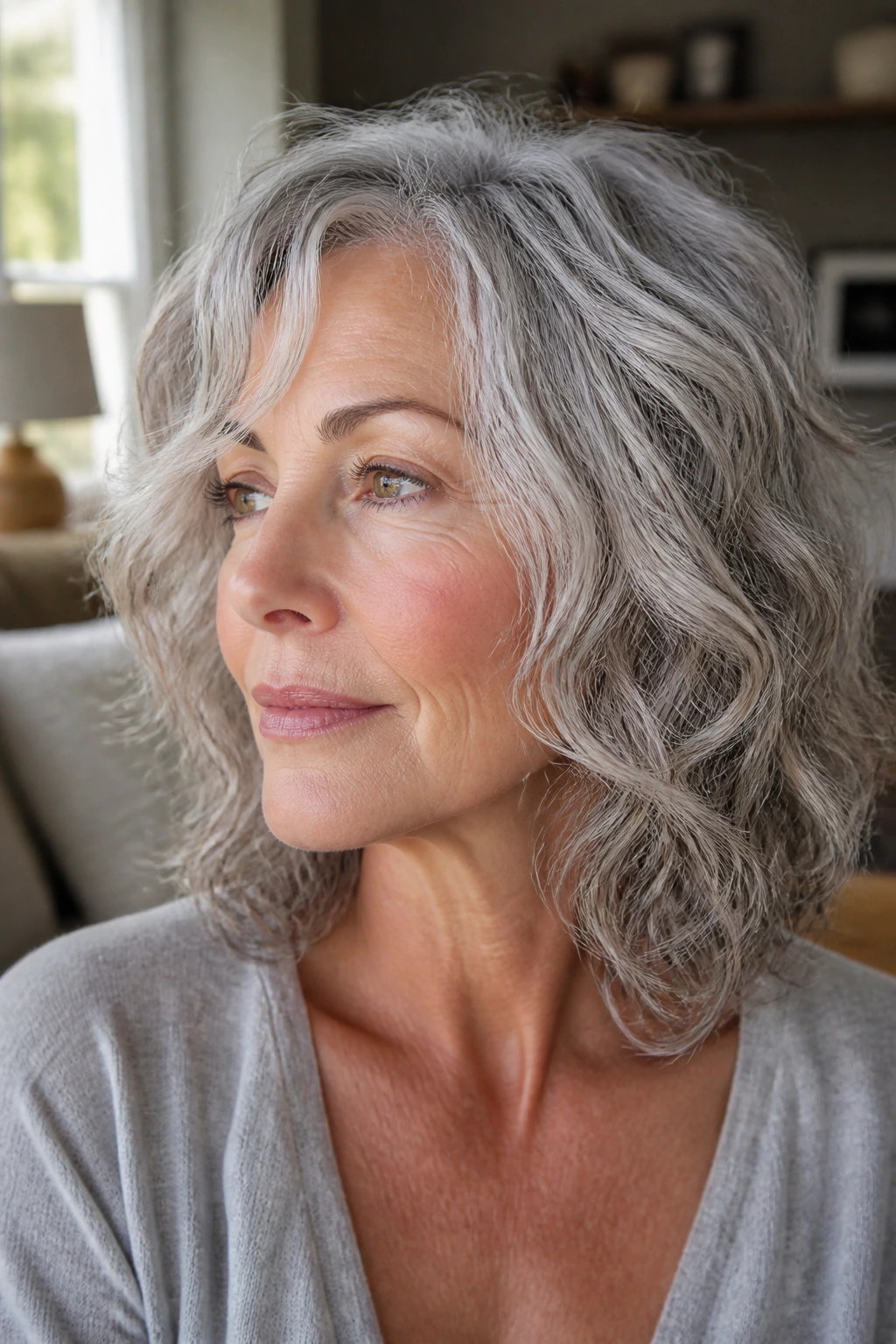
Gray hair can hold shine in a way younger hair often doesn’t. The tricky part is that it can also show every rough edge, every blunt chop, every stray frizz halo. That is why a good shape matters more than a trendy one. A cut that follows the wave and respects the density will usually look better than a more dramatic cut that ignores texture.
There is also the issue of volume distribution. Many women notice that hair gets puffier around the sides or flatter at the crown, and that isn’t your imagination. A well-placed layer or a small amount of graduation in the back changes the whole silhouette. It keeps the head from looking wide or top-heavy.
I’d rather see a plain cut with good proportions than a fancy one with bad balance. Every time.
Essential Tools for Styling Gray Wavy Hair
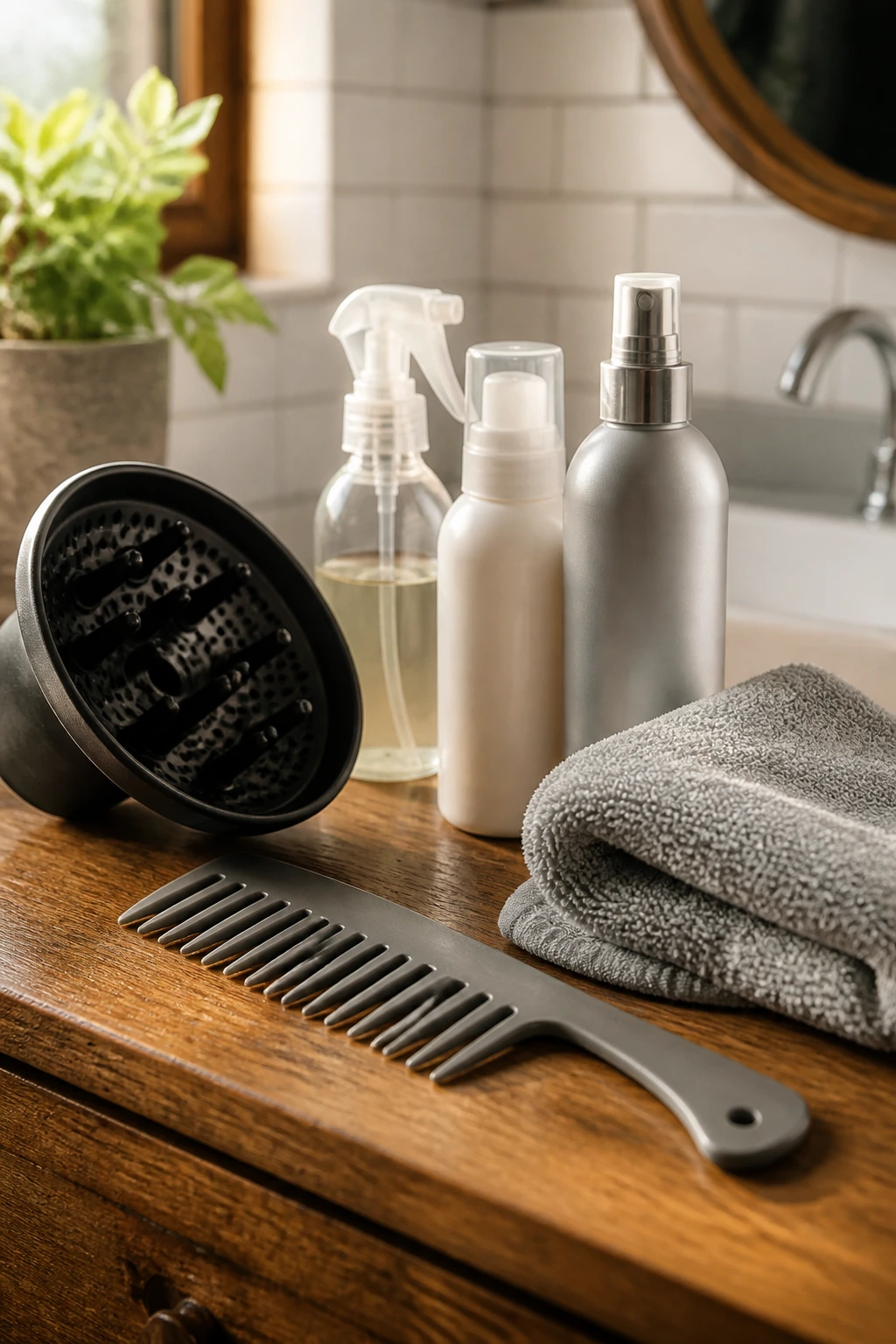
- Wide-tooth comb: Best for detangling damp waves without stretching them out.
- Microfiber towel or cotton T-shirt: Cuts down on rough frizz while hair dries.
- Diffuser attachment: Helps set wave shape without blasting it apart.
- Blow dryer with a nozzle: Good for lifting the roots and smoothing the front.
- 1-inch curling iron: Useful for loose bends on lobs, shags, and bobs.
- 1.25-inch curling iron: Better for softer, broader waves on medium to long hair.
- Duckbill clips or sectioning clips: Handy for setting crown lift and cooling curls.
- Tail comb: Makes clean parts and neat face-framing sections easier.
- Light mousse: Gives wave memory without heavy buildup.
- Leave-in conditioner: Helps drier gray strands stay flexible.
- Heat protectant: Non-negotiable if you use hot tools at all.
- Dry shampoo: Good for day-two roots, but use it lightly on silver hair.
- Shine serum or cream: Use from mid-lengths to ends only.
- Purple shampoo: Optional, useful if the gray picks up yellow tones.
- Silk or satin pillowcase: Helps preserve the shape overnight.
Smart Product Picks for Silver and Salt-and-Pepper Strands
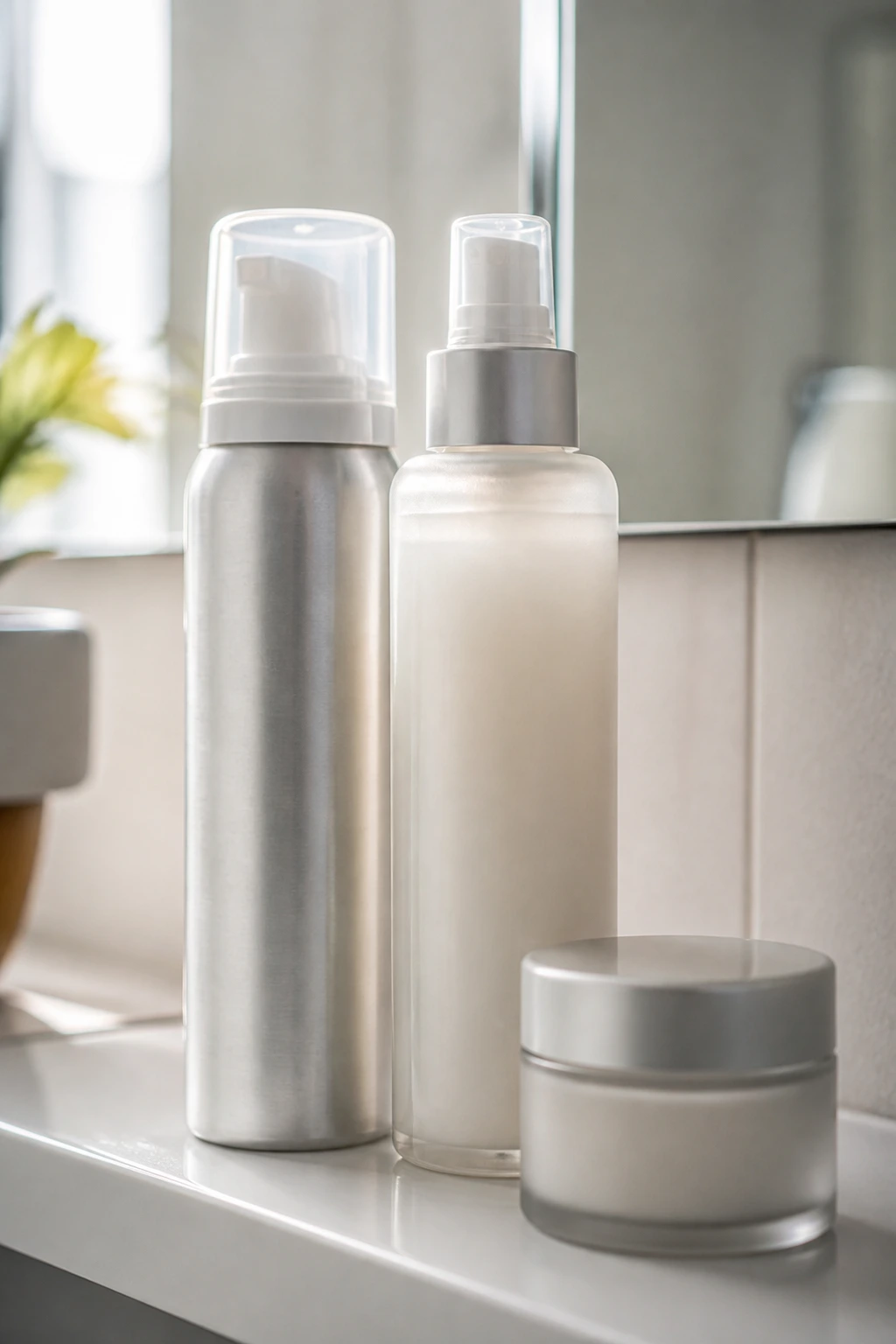
Gray and silver hair usually like lighter products than people expect. Heavy oils can sit on top of the strand and make the hair look greasy before the day is over. I reach for mousse, leave-in conditioner, and a small amount of cream long before I touch the thick serums. If the hair is coarse, a touch more cream can help, but keep it away from the roots.
Purple shampoo deserves a sane place in the routine. It can keep silver from turning yellow, especially if the hair picks up sun, heat, or hard-water dullness. Once a week is usually enough. More than that, and the hair can go flat or take on a slightly dingy cast. If your gray is bright and cool already, you may not need it at all.
For styling, flexible hold beats stiff hold almost every time. A spray that lets the wave move will look better by hour six than a hard shell that cracks the first time you tuck your hair behind your ear. If you use heat, choose a protectant that dries light, not sticky. Sticky products gum up gray hair fast, and the build-up shows more clearly on silver than on darker hair.
How to Wear These Looks Every Day, at Work, and for Dressier Nights

Everyday ease: The lob, the shoulder shag, and the air-dried shag are the easiest to live with when your mornings are busy and your hair has a strong natural wave. They look fine with a little root lift and a quick scrunch.
Office polish: The side-parted midi cut, the blunt-edge long bob, and the glossy natural gray style all read neat without looking severe. They’re the looks I’d pick if you want your hair to hold shape through a long day and still sit nicely when you take a coat off.
Dressier finish: The Hollywood wave, the half-up wave, and the feathered layers with flipped ends give gray hair a little ceremony. They work best when the rest of the outfit stays simple. A clean neckline helps the hair do the talking.
Low-maintenance days: The pixie-bob, textured crop, and loose twist-back style are the ones to reach for when you want to spend under five minutes in the mirror. Good shape, not more effort, is what makes them work.
Small Styling Tweaks That Make the Finish Look Intentional
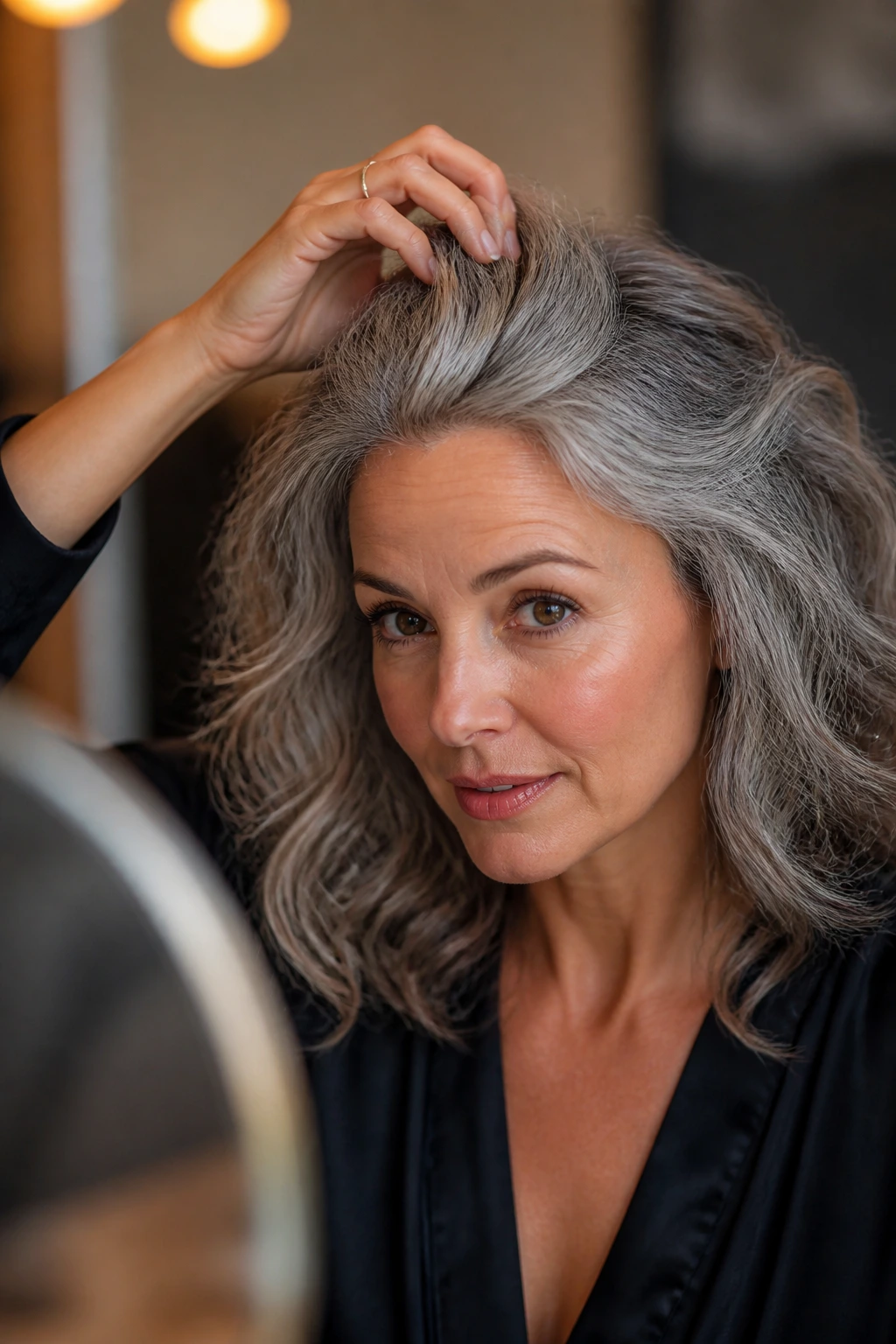
Root Lift: If the crown goes flat, spray a little mousse at the roots while the hair is damp and blow-dry upward with your fingers. A one-inch lift at the crown can change the whole shape.
Wave Definition: Gray waves often need a touch more encouragement than pigment-rich hair. Wrap only the mid-lengths around a curling iron, then leave the ends loose so the finish stays soft instead of ringed.
Shine Layer: A pea-size amount of serum rubbed between the palms and pressed lightly over the outer layer can calm flyaways without flattening the wave. Mid-lengths to ends only. Always.
Frizz Control: If the top layer keeps puffing up, use a tiny bit of cream on just the canopy and stop touching it while it dries. The more you rake through it, the bigger the frizz gets.
Make-It-Yours: Thick hair usually needs less layering and more shape at the edges. Fine hair often needs the opposite—more lift, fewer heavy products, and a cut that keeps the outline from collapsing by noon.
Keeping Gray Waves Fresh Between Washes

Day one is when the hair holds the most shape, so use that day to set the pattern you want. A little mousse, a diffuser, and a clean part make day two easier. If you sleep on cotton pillowcases, the bends break faster. Satin or silk keeps the surface smoother and saves you a lot of morning fixing.
By day two, concentrate on the roots. A quick spray of dry shampoo at the crown, then a few minutes with your fingers lifting the hair off the scalp, usually brings the style back. If the ends need help, mist them lightly with water and a drop of leave-in. Do not soak them. Gray hair that gets too wet on day two tends to frizz instead of resetting.
Day three is where smart styling pays off. Half-up looks, twist-backs, and clips near the temples can hide a little fatigue while still showing the wave pattern. If your hair starts feeling coated or dull, wash it. Product buildup sits on silver strands like dust on a mirror. A clarifying shampoo every 1 to 2 weeks helps, but follow it with conditioner so the hair does not feel stripped.
Variations and Adaptations to Try

The Fine-Hair Lift: If your waves are thin, stick with lobs, blunt-edge bobs, and crop styles that keep weight at the perimeter. Too many layers will make the ends look see-through, and that is hard to fix with product alone.
The Thick-Hair Thinner: If your gray hair feels dense or bulky, ask for internal layers and a little graduation in the back. You want shape removal, not shred work. That difference matters.
The Fringe Swap: If full bangs feel like too much commitment, try curtain bangs or bottleneck bangs instead. They soften the face without trapping heat on the forehead or requiring constant trims.
The No-Heat Routine: If you avoid hot tools, choose the shoulder shag, the air-dried silver shag, or the glossy natural gray cut. Those shapes do most of the work on their own. A mousse-and-scrunch routine is usually enough.
The Glasses-Friendly Shape: If you wear glasses, keep side pieces at or just below the cheekbone and avoid bangs that stop right where the frames sit. The hair should complement the glasses, not wrestle with them.
The Cool-Silver Finish: If your gray reads a little yellow in certain light, use purple shampoo sparingly and finish with a shine serum that does not add warmth. A cool silver finish looks crisp when the cut is clean.
Common Mistakes That Flatten Gray Waves
The first mistake is over-layering gray hair near the crown. The symptom is a top that looks fluffy while the ends feel thin and sad. The fix is a cleaner layer map: keep weight at the bottom, and remove bulk only where the wave truly needs it.
A close second is using too much purple shampoo. Gray hair can pick up a faint violet cast or just turn dull if you overdo it. Once a week is plenty for most people. If the hair is bright already, you may only need it every other week.
Another problem is choosing a blunt, one-length cut and expecting it to move on its own. Wavy gray hair usually needs at least a little internal shaping. Otherwise, it sits in a shelf. Ask for hidden movement or a slight bevel so the ends do not widen the face.
Heavy oils at the roots are another easy trap. Gray strands can absorb enough moisture to stay soft, but the scalp area does not need a slick finish. Keep oils and serums from the ear line down unless you are taming flyaways on purpose.
And then there’s skipping trims too long. Gray ends fray, curl under unevenly, and lose their clean line faster than people expect. A trim every 6 to 10 weeks keeps the shape tidy. Stretch it much beyond that and the style starts to wobble.
Gray Hair and Wavy Hair Over 50 FAQ

What gray hair look is most flattering for wavy hair over 50?
The best answer is usually the one that respects your density. For most people, a collarbone lob, a shoulder-length shag, or a soft bob gives enough movement without making the crown explode outward.
Should gray wavy hair be layered?
Yes, but lightly and for a reason. Too many layers can make the hair frizzy or thin at the ends, while a few well-placed internal layers help the wave sit better and stop the sides from ballooning.
Can I keep long gray waves after 50?
Absolutely, as long as the ends stay healthy and the shape has some movement. Long hair looks better when the layers start low and the hemline is not too blunt, because gray strands show breakage more easily.
What if my gray hair is coarse and puffy?
Go for a shape that keeps weight at the bottom, like a lob, a rounded U-shape, or a blunt-edge long bob with internal layers. Then use a leave-in and a small amount of cream rather than a pile of heavy oil.
Does purple shampoo help silver hair?
It helps if your gray is picking up yellow tones from sun, hard water, or heat styling. Use it once a week or less, and always follow with conditioner so the hair does not lose softness.
Can I wear bangs with wavy gray hair?
Yes, but soft bangs work better than blunt ones. Curtain bangs and bottleneck bangs blend with wave and grow out more gracefully, which matters if you do not want to trim them every few weeks.
How often should I trim gray wavy hair?
Most gray wavy cuts stay clean with trims every 6 to 10 weeks. Short crops may need a closer schedule, while longer styles can stretch a little farther if the ends are still healthy.
What if my waves are very fine and limp?
Choose cuts that keep shape at the edge, not cuts that rely on heavy layering. A blunt lob, piecey pixie-bob, or side-parted midi cut usually gives fine gray waves more body than a feathered look.
Do I need heat tools to make these styles work?
No. Some of the best looks here—especially the air-dried shag and the twist-back style—work with mousse, a little scrunching, and a decent cut. Heat tools help, but they are not the only route.
A Shape That Lets Silver Waves Move
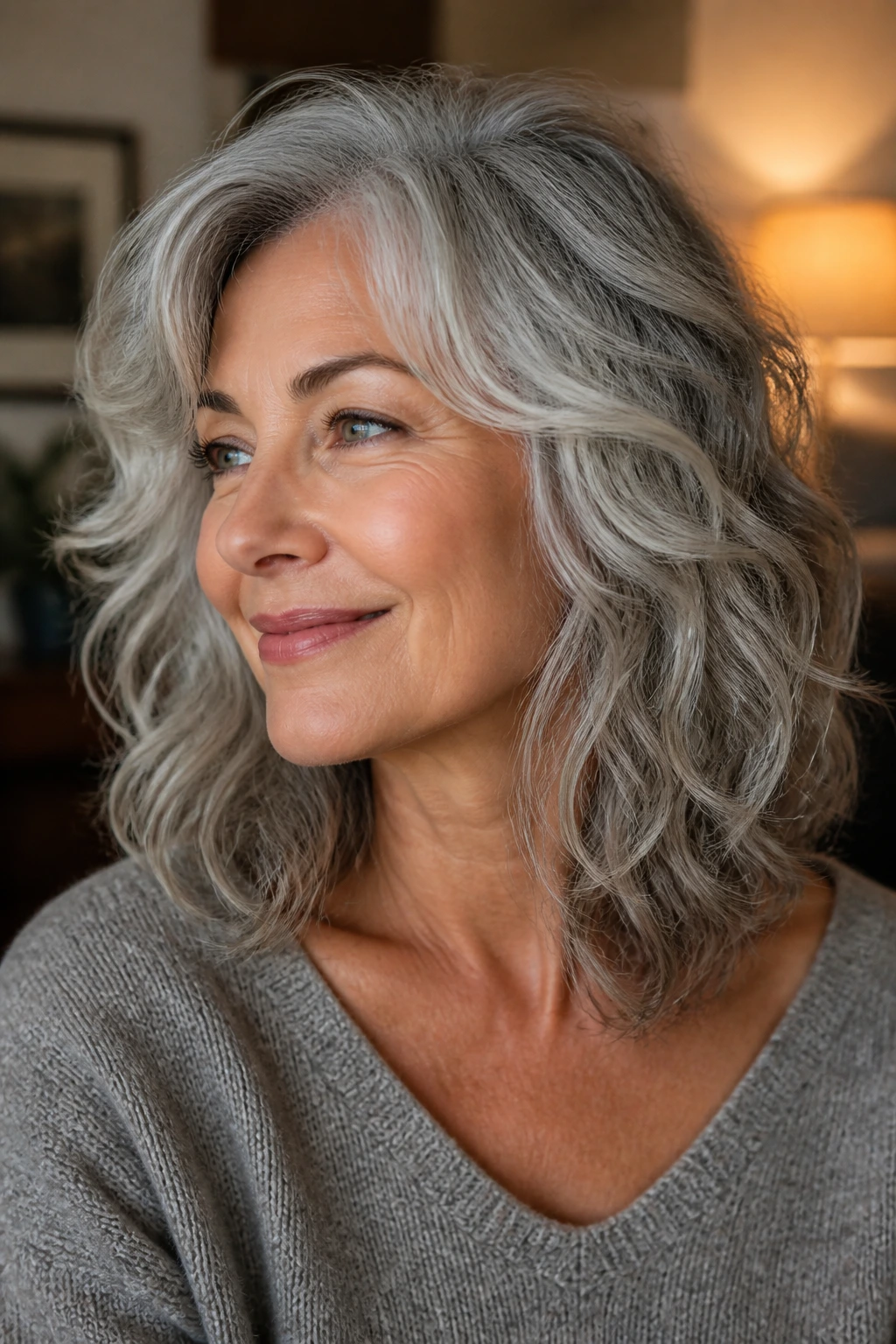
Gray hair does not need to be hidden, and wavy hair does not need to be tamed into something straight and obedient. The best looks here do the opposite. They give the wave a cleaner path, keep the silver bright, and leave enough softness that the style still feels like hair, not architecture.
The cuts that age well are usually the ones that understand restraint. A little lift, a little weight, a little air around the face. That’s the whole trick, really. Pick the shape that works with your wave pattern instead of fighting it, and the rest gets easier fast.
