



Braids for school have a very specific job: they need to look neat in the mirror at 7:10 a.m. and still look decent after a backpack strap, a sweaty gym class, and three hours of head-down note taking. That’s the real test. A style can be pretty and still fail by lunch if the parts are fuzzy, the tension is off, or the ends are left loose where they catch on everything.
The best braid hairstyles for school do three things at once. They keep hair off the face, they don’t demand a full restyle every morning, and they hold up without needing a heavy coat of product that flakes onto a dark sweatshirt. On straight hair, that often means a little texture spray or mousse so the braid doesn’t slip. On curls and coils, it usually means clean parting, enough moisture to keep the strands pliable, and a braid size that matches the hair’s density instead of fighting it.
And that part matters more than people admit. A tiny braid on thick hair can look strained and puff out fast. A huge braid on fine hair can sag before second period. Size, tension, and finish change everything. Get those right, and school hair stops being a daily argument.
Why These Braids Earn Their Place on School Mornings
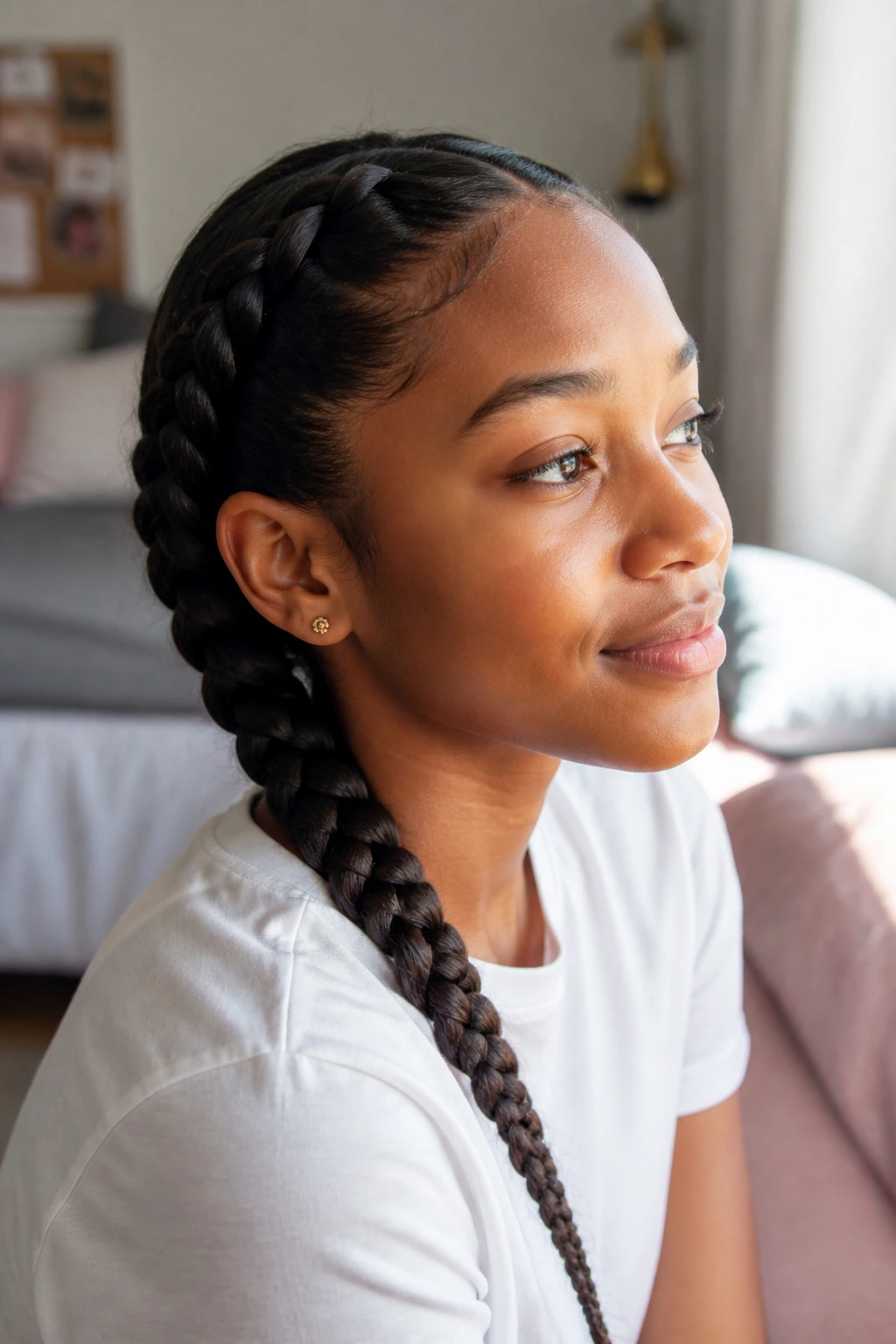
-
Fast resets: Most of these styles can be done in 5 to 15 minutes once your hands know the pattern, which is the difference between a calm morning and a scramble by the front door.
-
Face control: Braids keep bangs, curls, and baby hairs out of the eyes during reading, science labs, and bus rides where nobody wants to keep brushing hair back.
-
Backpack-friendly: A braid sits flatter than a loose ponytail, so it gets less crushed by straps, hoodies, and chair backs.
-
Works across textures: Fine straight hair, thick waves, curls, coils, and locs can all be braided into school-appropriate shapes with the right section size and product.
-
Easy to clean up: A braid looks intentional even when the hair isn’t freshly washed. Day-two hair often grips better than slippery clean hair.
-
Can be dressed up or down: A plain braid can stay plain, or you can add cuffs, a ribbon, or a clean center part without starting over.
1. The Classic Side Braid That Never Fights the Clock
A side braid is the style you reach for when the morning is already moving too fast. It pulls the hair over one shoulder, keeps the front pieces out of the face, and doesn’t require a perfect part to look tidy. On layered hair, it also hides a little frizz better than most people expect.
Why it works so well for school
The whole point is control without fuss. If the hair is a little damp, a little dry, or somewhere in between, the braid still holds. That makes it forgiving. A soft elastic at the end and a quick tug at the edges for shape are usually enough.
Best for: shoulder-length hair and longer.
Timing: about 4 to 6 minutes once the hands are warm.
Small trick: smooth the first two inches near the scalp with a touch of leave-in before you start braiding; that’s where the flyaways usually begin.
One honest note: if the hair is very silky, the braid may loosen by lunch. A light mist of texturizing spray fixes that better than piling on gel.
2. A French Braid Down the Back That Stays Neat Past Lunch
Can a single braid hold up through a full school day? Yes, if the sectioning is clean and the tension stays even from crown to nape. A French braid down the back is one of those styles that looks more polished than the effort it takes once your fingers know the rhythm.
Start with a clean center or slight off-center part, then add small sections as you braid downward. The braid sits close to the head, which keeps it from getting pulled around by backpacks and collars. That’s the secret, really. Less movement means less frizz.
What makes it stay neat longer
The braid should hug the scalp without digging in. If the crown feels sore before you’ve finished the second side, it’s too tight. If the braid puffs away from the head immediately, the added sections are too big and uneven.
- Works beautifully on medium to long hair
- Good for PE days because it stays secure
- Better on hair that has a little grip, not fresh-and-silky clean hair
- Looks especially neat when the nape is tucked flat
I like this braid on mornings when the schedule is packed. It does not need decoration to read as finished.
3. Twin Dutch Braids That Keep Everything in Place
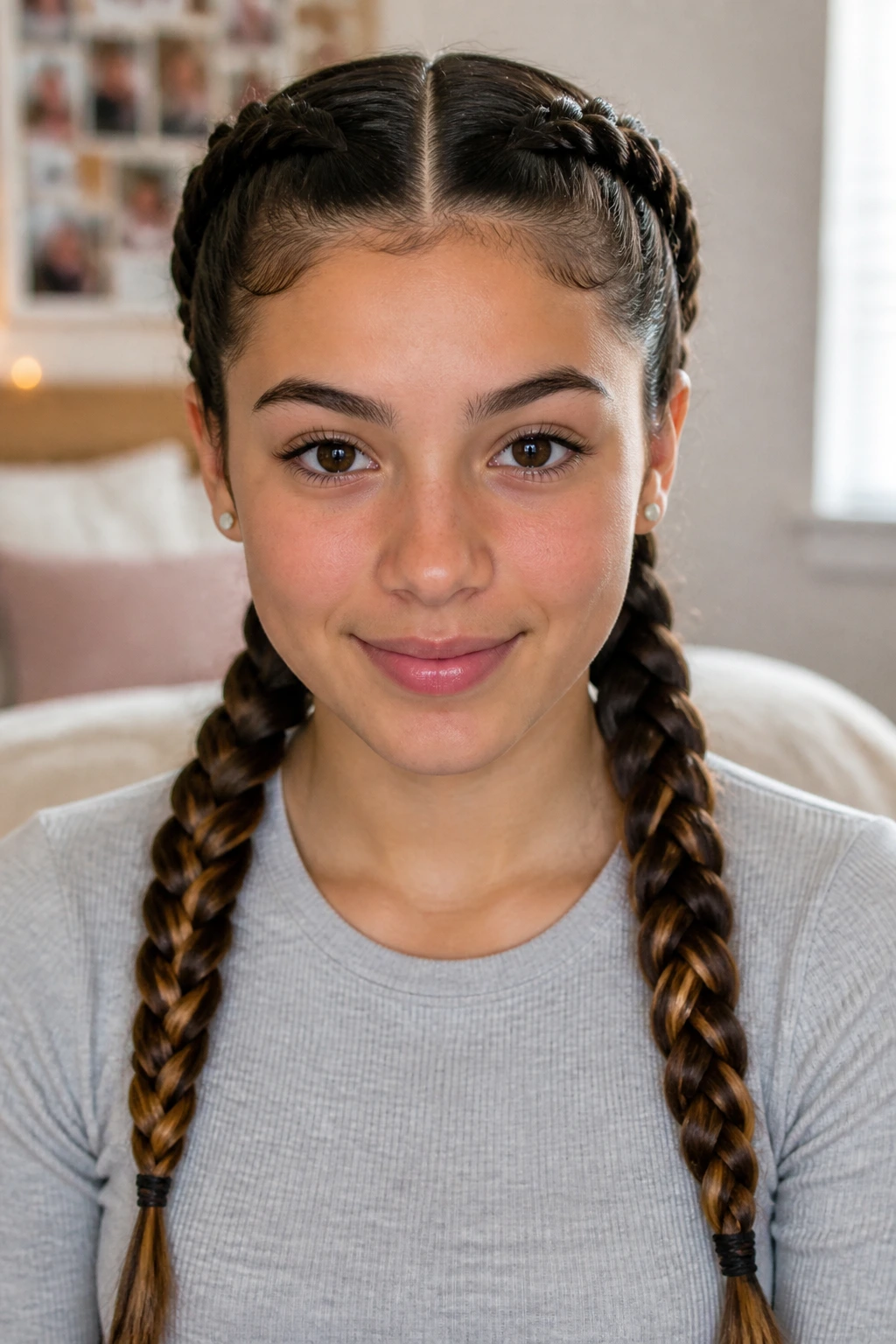
Dutch braids are the inside-out version of French braids, which gives them that raised, rope-like look. Two of them, one on each side, make a school style that holds hair down, splits the weight evenly, and handles long days with fewer complaints from the hairline.
The raised shape also gives you a little visual structure. On thick hair, that matters. A flat braid can disappear into the texture. A Dutch braid keeps its outline longer and looks deliberate even after a long bus ride.
How to make them school-friendly
Part the hair down the middle, clip one side away, and braid under instead of over. That underhand motion is what makes the braid pop. Secure each side with a snag-free elastic and stop before the ends get too wispy.
Pro tip: If the hair is very slippery, rough-dry it with a little mousse first. Not a helmet. Just enough hold to keep the braid from sliding apart.
These are especially useful when a student wants hair completely off the face without going all the way to a bun.
4. Boxer Braids into Low Ends for Gym Days
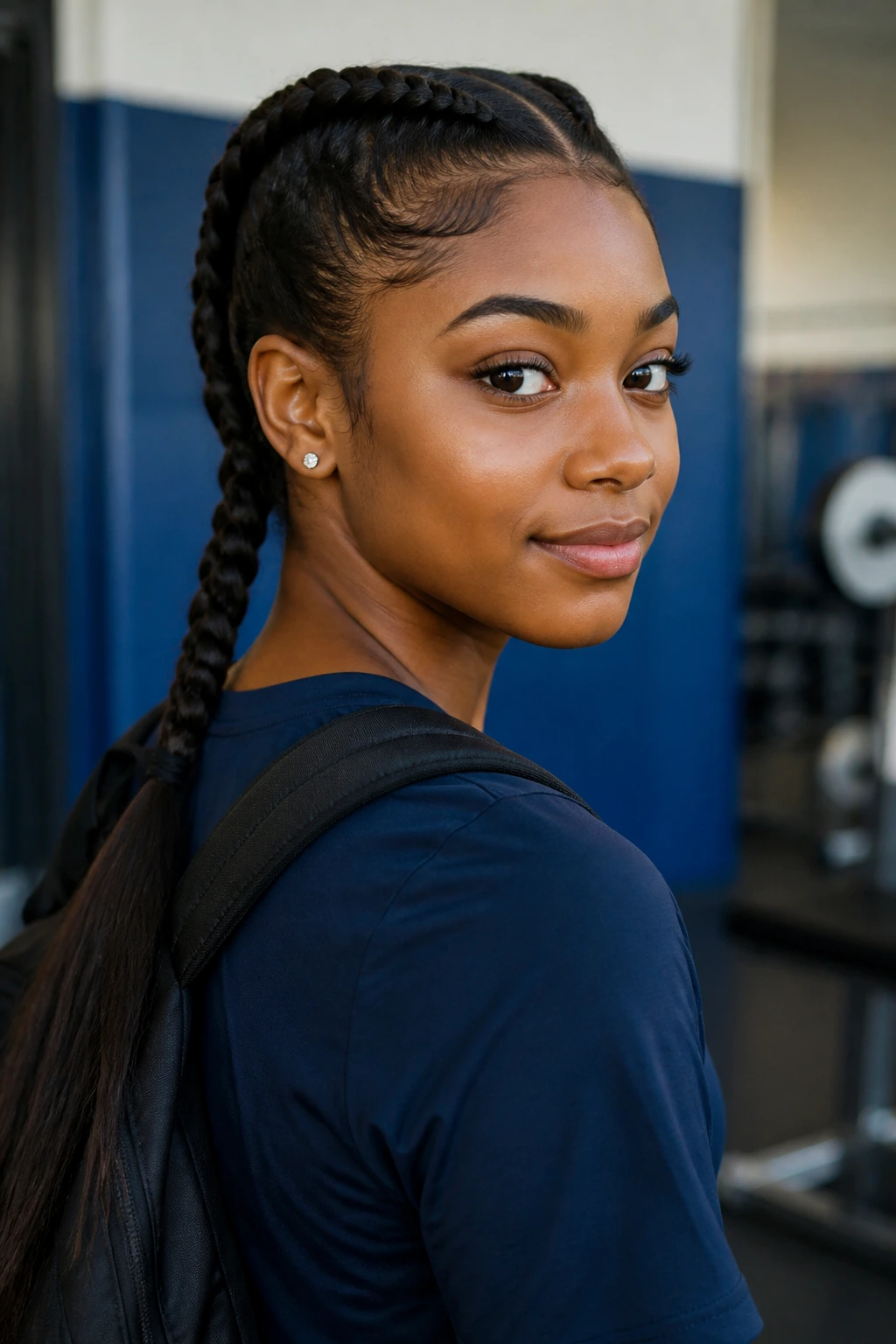
Boxer braids are just two tight Dutch braids, but the school-day version should be a little softer at the scalp and a little cleaner at the ends. If the braids are going to survive PE, recess, or dance practice, finish them with low ponytails or tucked ends instead of leaving them loose and frayed.
The style has a sporty look that still feels neat under a hoodie. That’s the appeal. It’s practical without looking thrown together.
A small detail that changes the whole style
Keep the tension firm near the roots and gentler once you pass the ears. That gives the braids their shape without making the temples ache by noon. A tiny bit of edge control or gel at the front can help, but only along the hairline — not through the whole braid.
If the hair is short, braid as far as you can and secure the rest with a small elastic. If it’s long, low braids at the nape keep the style from looking top-heavy.
One warning: if the scalp is tender, skip this one for a day or two. Tight braids should never feel heroic.
5. Feed-In Cornrows with a Center Part
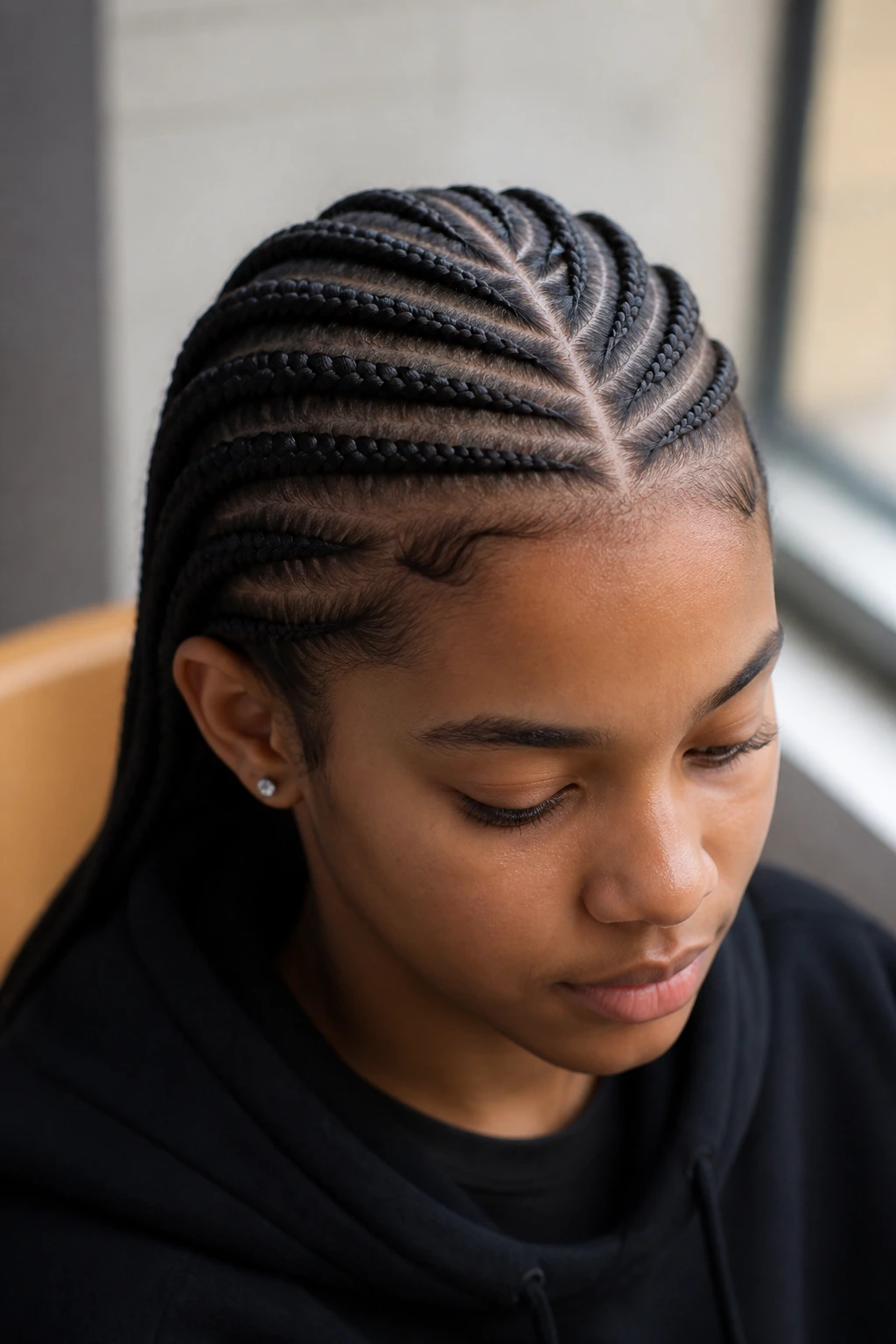
Feed-in cornrows are a school favorite for a reason. They sit close to the scalp, keep the front and sides neat, and can last longer than loose braids if they’re installed with a light hand and regular scalp care. The clean center part gives the whole style a built-in symmetry that reads sharp even when the rest of the day is chaotic.
The braid starts small and gradually grows as hair is added. That gradual build is what makes feed-ins look smooth instead of chunky at the root. It also lowers tension, which is kinder to the hairline than yanking all the hair into one hard start.
What to watch for: the first half-inch should lie flat, not pull. If you see little white dots or feel a tugging ache at the scalp, that’s your sign to loosen up next time.
These are good for natural hair that needs a style to sit still for several days. They are not the fastest option, but they repay the time.
6. A Braided Low Ponytail That Looks More Finished Than a Regular Pony
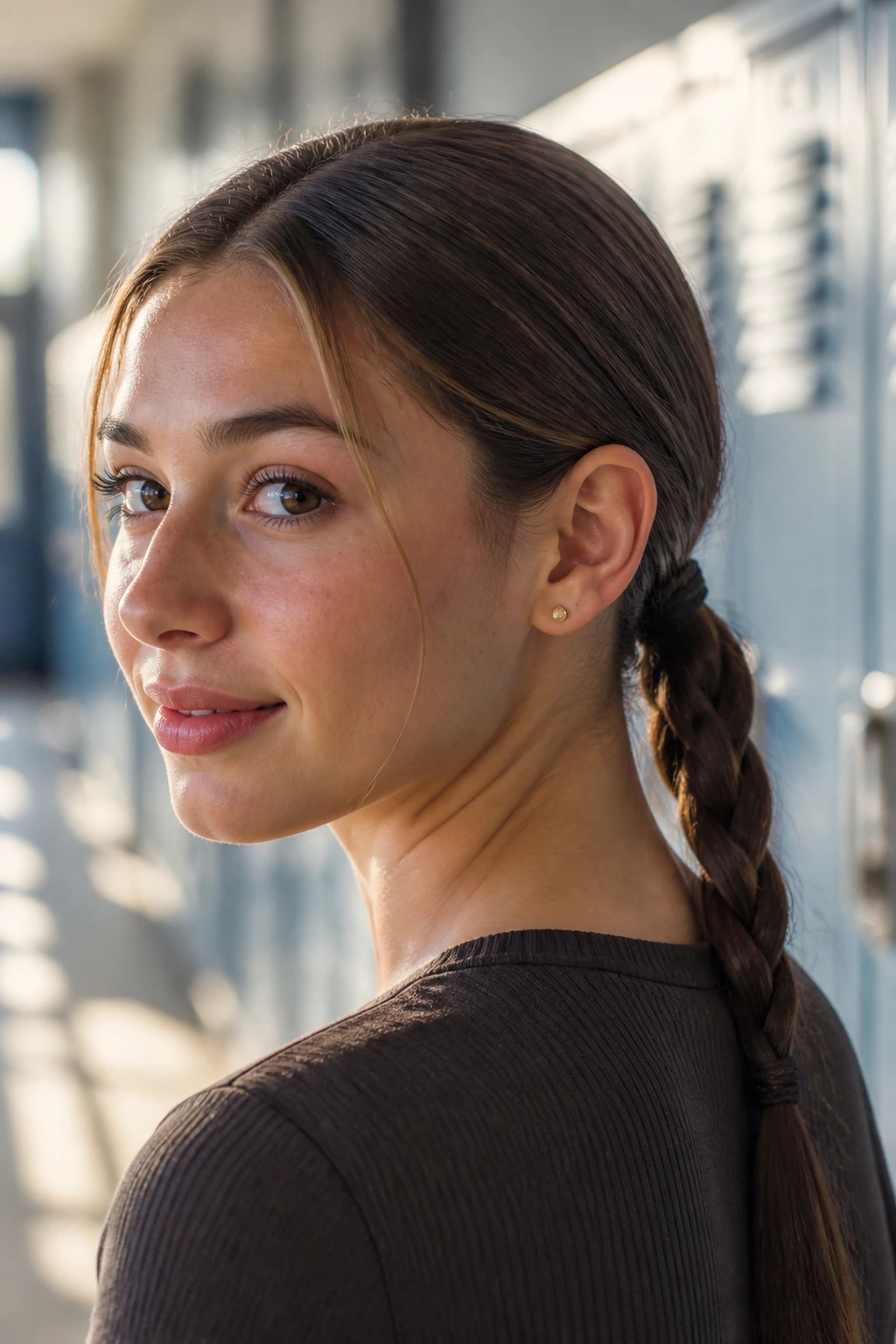
A low ponytail is fine. A braided low ponytail looks like somebody planned the morning. That is a useful difference.
Pull the hair to the nape, secure it smoothly, then braid the length into one clean plait. The braid keeps the tail from swinging around and tangling under jackets, and it gives the style a little more polish without turning it into a high-effort look. It’s especially nice on layered hair, where a loose ponytail can split and look thin at the ends.
If the front pieces keep escaping, brush them back with a tiny bit of water and leave-in before the pony goes up. Don’t drown the roots. A little slip goes farther than people think.
This one works on a test day, a field trip day, or any morning when the priority is “tidy and done” rather than “decorated.”
7. The Fishtail Side Braid for Longer Hair
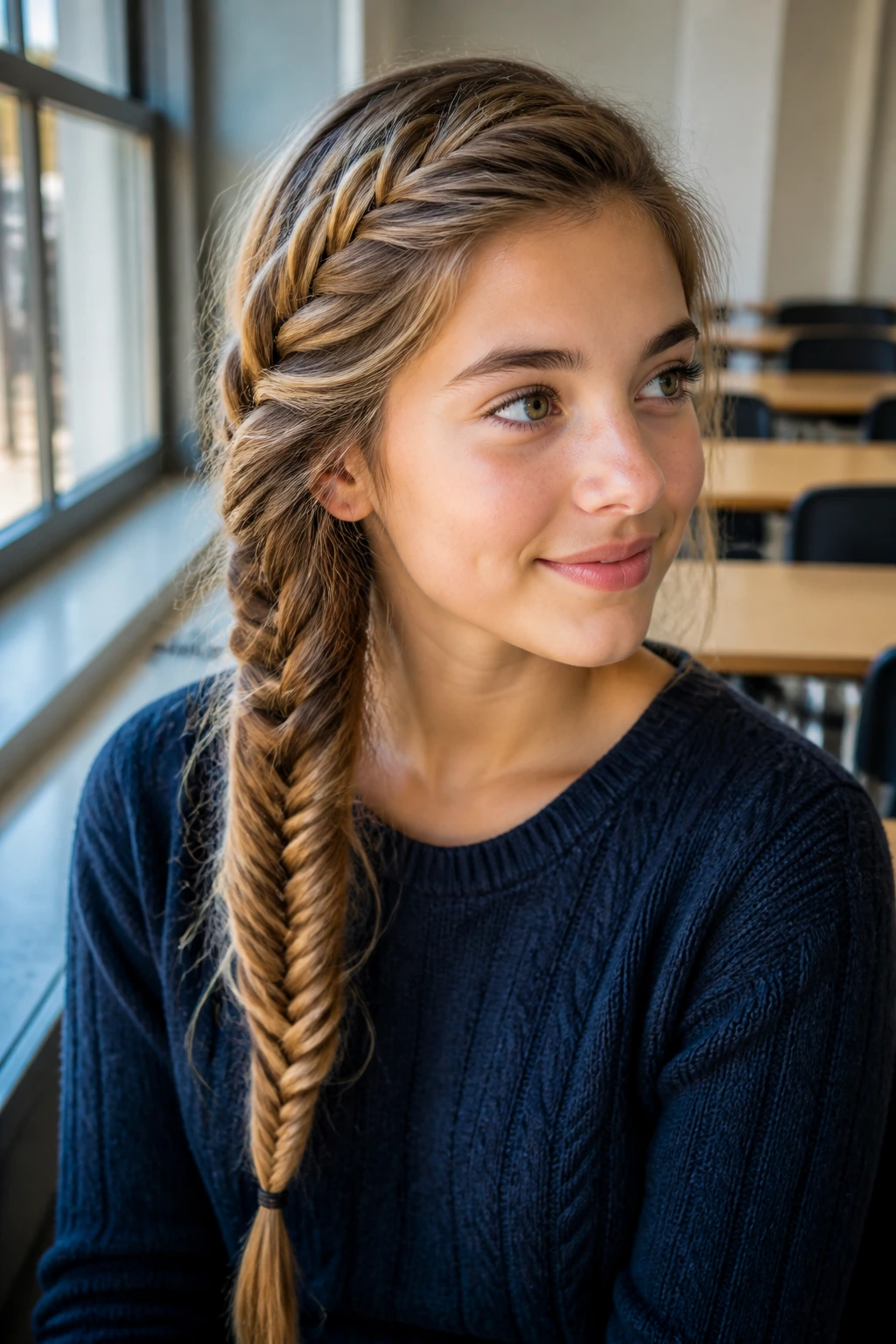
A fishtail braid looks intricate because the weave is tighter and finer than a normal three-strand braid. The pattern is the same every time: small pieces from the outside move to the opposite side, over and over, until the braid narrows into that pretty herringbone texture.
It’s lovely on long hair, but it’s also practical because the tighter weave holds shape well once secured. The braid can look a little soft and romantic without falling apart. That’s rare.
How to keep it from looking flat
After tying off the end, pinch the outer loops gently and pull them a little wider. Not a full pancake. Just enough to show the pattern. If you tug too hard, the braid gets lumpy fast.
A fishtail works best when the hair has a little grip. Day-two hair, light mousse, or a dusting of texturizing spray helps. On very silky hair, the braid can slide, so don’t skip the prep.
It’s the style I’d pick for a school presentation or picture day when you want something cleaner than loose hair but less strict than a full updo.
8. A Waterfall Braid Half-Up That Keeps Hair Soft and Controlled
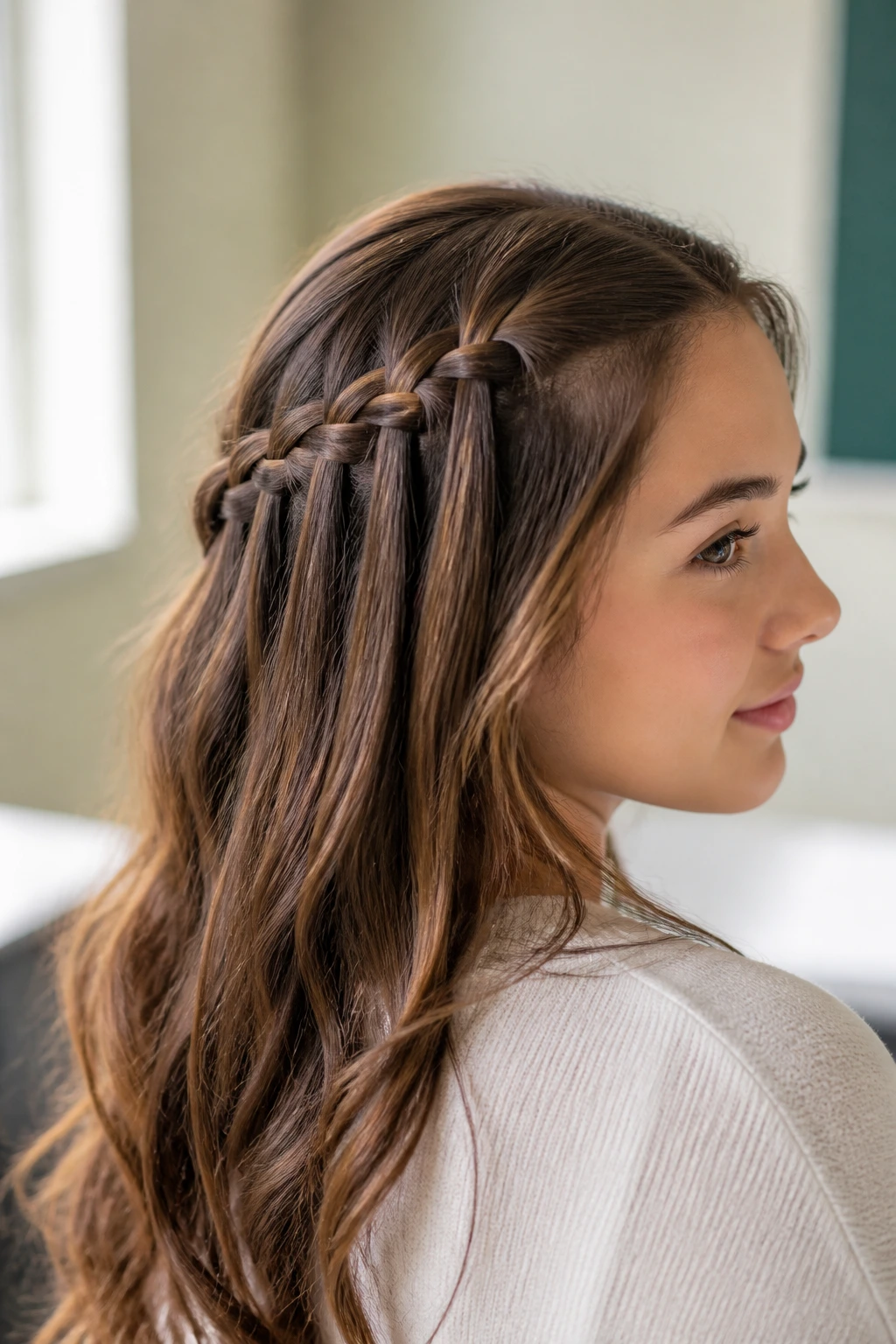
The waterfall braid is the softest-looking braid in this group. A section drops through the braid instead of being carried all the way through, which leaves strands cascading down while the top stays organized. It’s half-up, but with much more shape than a clipped-back top section.
That makes it a smart choice for shoulder-length hair and loose waves. The front is controlled. The back stays down. The style feels lighter than a full braid and doesn’t press on the neck.
Where it shines
This braid works on days when the dress code is relaxed but the hair still needs to stay out of the face. It’s not the best choice for a hard gym period, and I’d be honest about that. Loose pieces can get frizzy once the day gets active.
If you want it to survive longer, pin the braid a little more firmly than you think you need to. A small barrette or two hidden bobby pins keep the whole line from slipping backward.
The look is delicate, but the structure underneath matters. Without that structure, it falls apart fast.
9. A Milkmaid Crown Braid That Sits Like a Headband
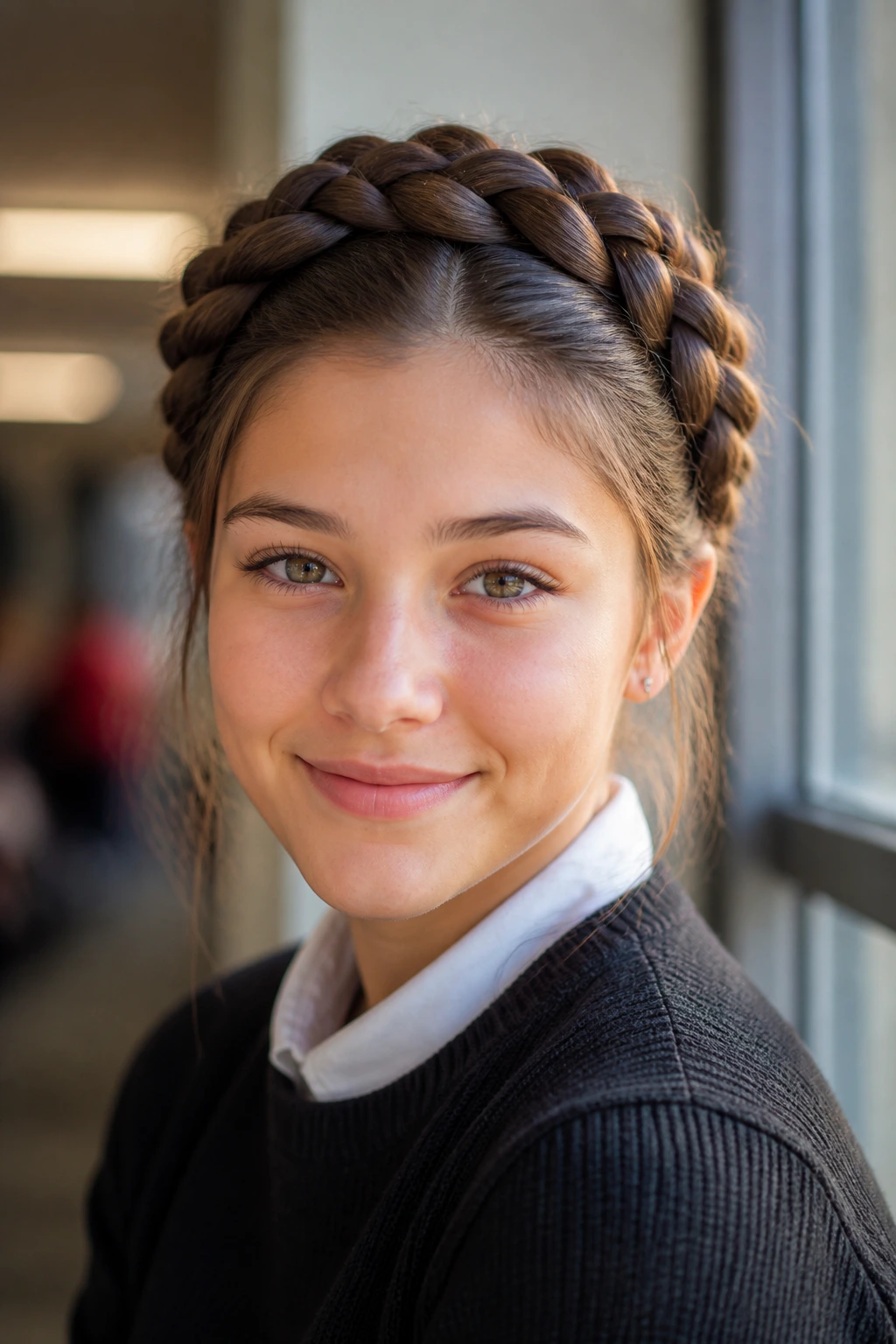
Wrap two braids around the head, pin them in place, and suddenly the whole style looks much more deliberate than the time it takes to build it. That’s the milkmaid crown braid in a nutshell.
It keeps the hairline neat, hides second-day roots well, and stays put because the braids support each other across the top of the head. The effect is tidy and a little old-school in the best way. No drama. No loose front pieces sliding into the eyes.
A useful detail most people skip
The braids hold better if the hair has a bit of grit. Freshly washed hair can be too soft, which makes the crown slip. A light mousse or a day of natural texture helps the pins bite.
Use bobby pins that match the hair color if you want the crown line to disappear into the style. If you want the braid to show, a few small pins at the back are enough.
This is a good pick for school events, concerts, or any day when the goal is neatness without looking severe.
10. A Braided Bun That Cuts Down on Morning Frizz
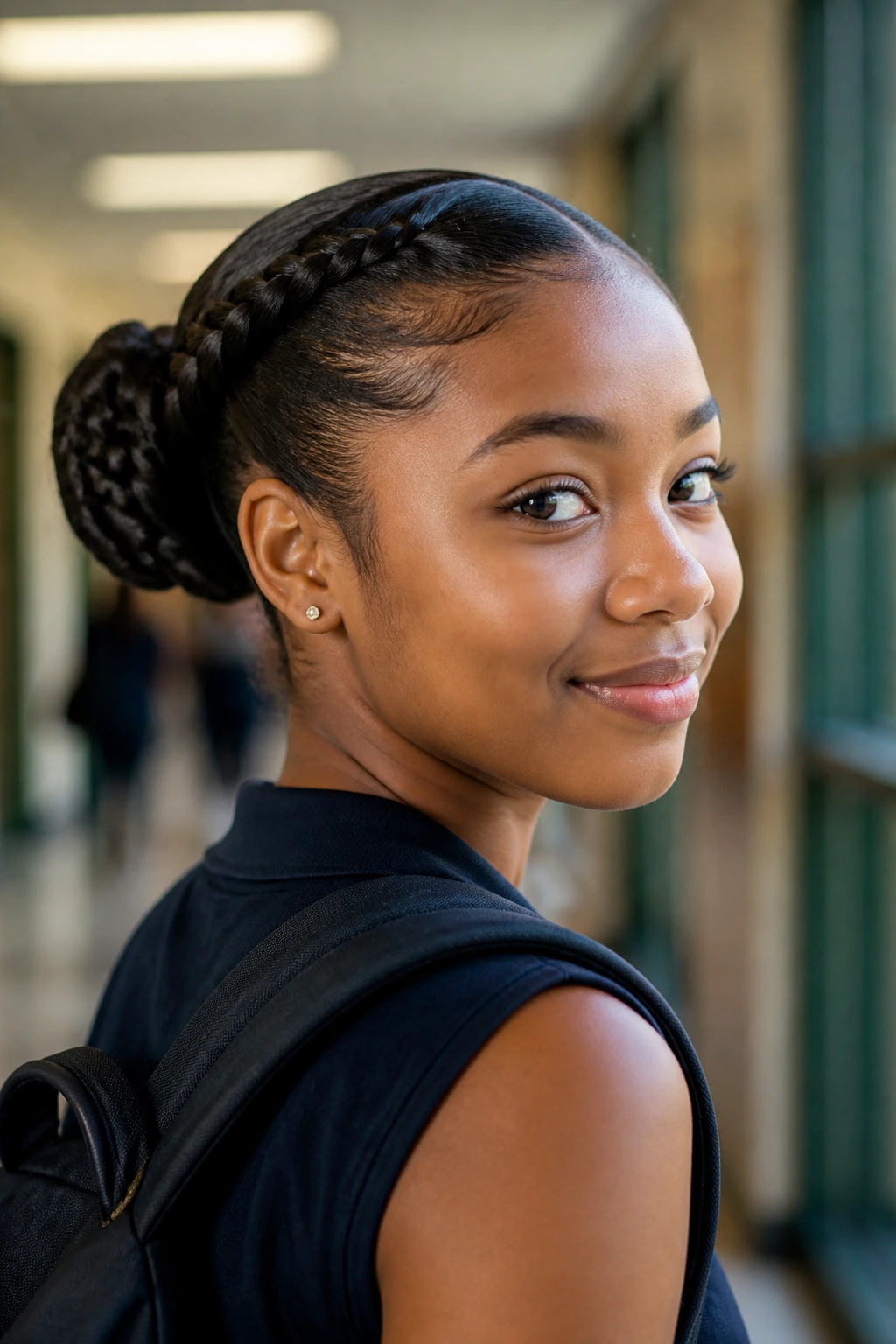
A braid wrapped into a bun solves two problems at once: the braid keeps the bun compact, and the bun keeps the braid from flopping around. That’s a smart pairing for school because it handles PE, windy walk-ins, and hoodie season better than a loose style.
Start with a ponytail, braid the tail, and wrap it into a low or high bun. If the hair is thick, a low bun usually sits more comfortably under a backpack strap. If the hair is fine, a higher bun can give the style more shape.
Best part: the braid makes the bun look more finished even when the bun itself is small.
A little hairspray around the perimeter can help, but do not soak the hair. A stiff shell is not the goal. A clean shape is.
11. Half-Up Braided Pigtails for Shorter School Days
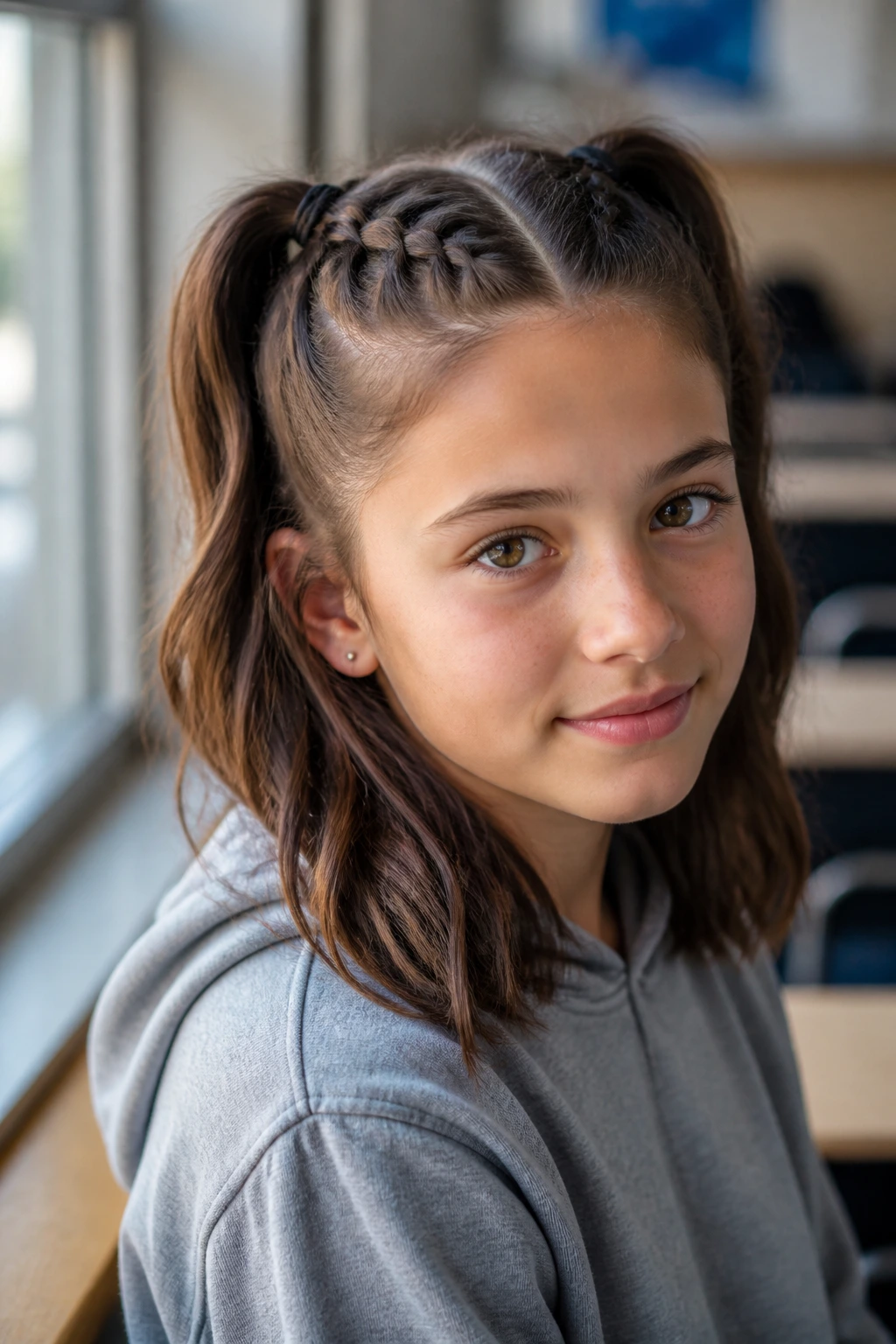
Half-up braided pigtails are one of the friendliest styles on the list. They keep the front and sides under control, but they leave enough hair down that the whole look still feels soft. On kids and younger students, that balance matters. It keeps the style practical without making it feel too severe.
You can do tiny braids from the temples back to the crown, then secure them into two little half-up tails. Or braid the top sections and leave the rest loose. Both versions work.
A clean center part helps. So does using soft elastics instead of the cheap hard ones that yank at the ends when it’s time to take them out.
This style is especially good for layered cuts, because the braids catch the shorter front pieces that usually escape first. It’s simple, but it solves a very specific problem.
12. The Halo Braid That Looks Calm Even on Busy Mornings
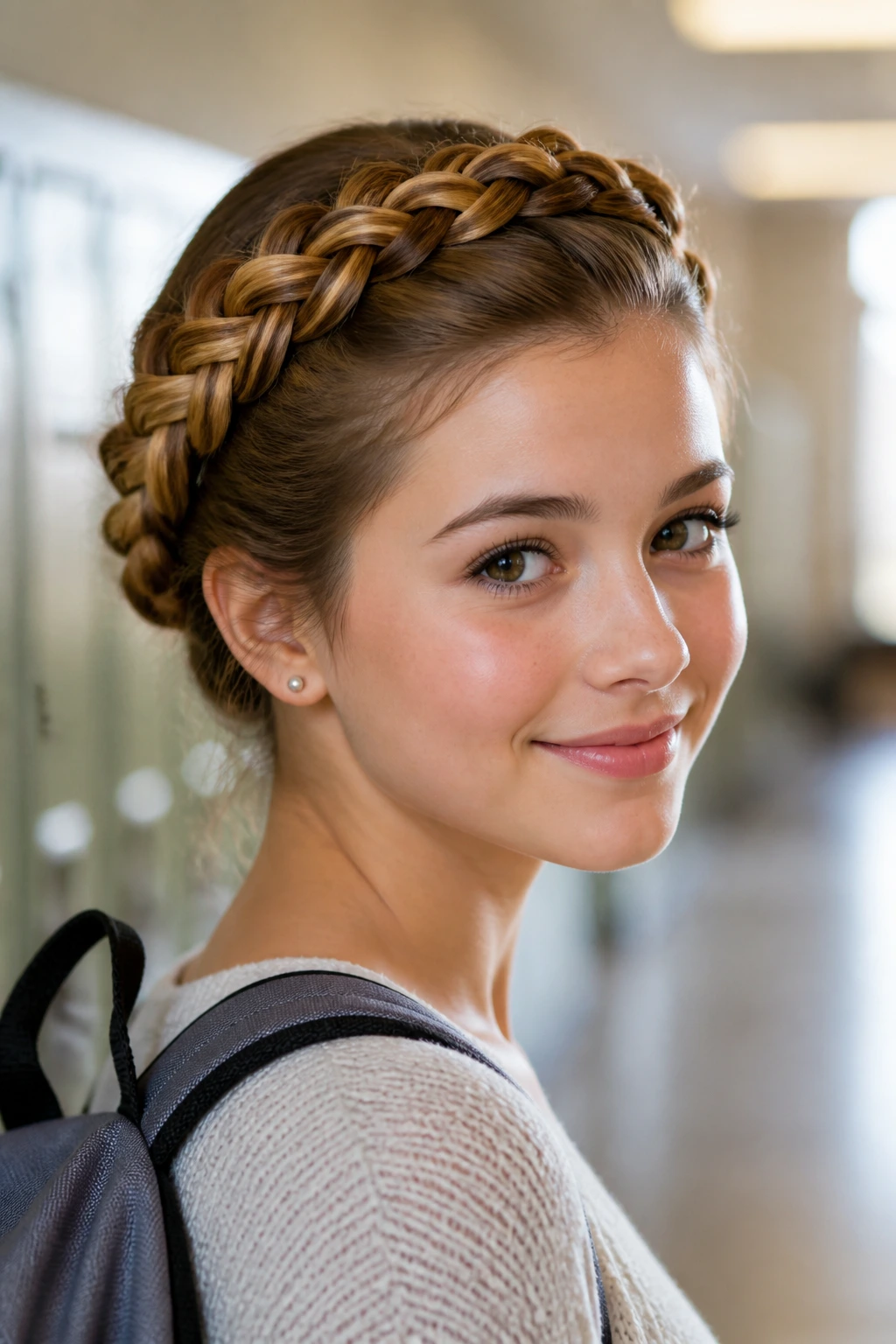
A halo braid wraps around the head like a full frame, which gives the whole style a calm, contained look. It keeps the hairline tidy and pushes all the movement to the braid itself. For school, that means fewer distractions and less constant fixing.
It does take more length than some of the other styles here. Long hair makes the wrap easier. Medium hair can work too, if the braid is pinned carefully and the ends are tucked under.
Why it’s worth the extra few minutes
The halo braid is one of those styles that looks more complicated than it is. Once the braid is started, the rest is mostly placement. Pin, check the mirror, pin again. That’s the real work.
If the hair is very slippery, braid it the night before and sleep in a satin bonnet so the shape sets. It makes the morning finish faster.
I’d pick this one for a presentation, a recital, or a day when the uniform wants something more polished than a loose braid.
13. The Pull-Through Braid for Thick Hair
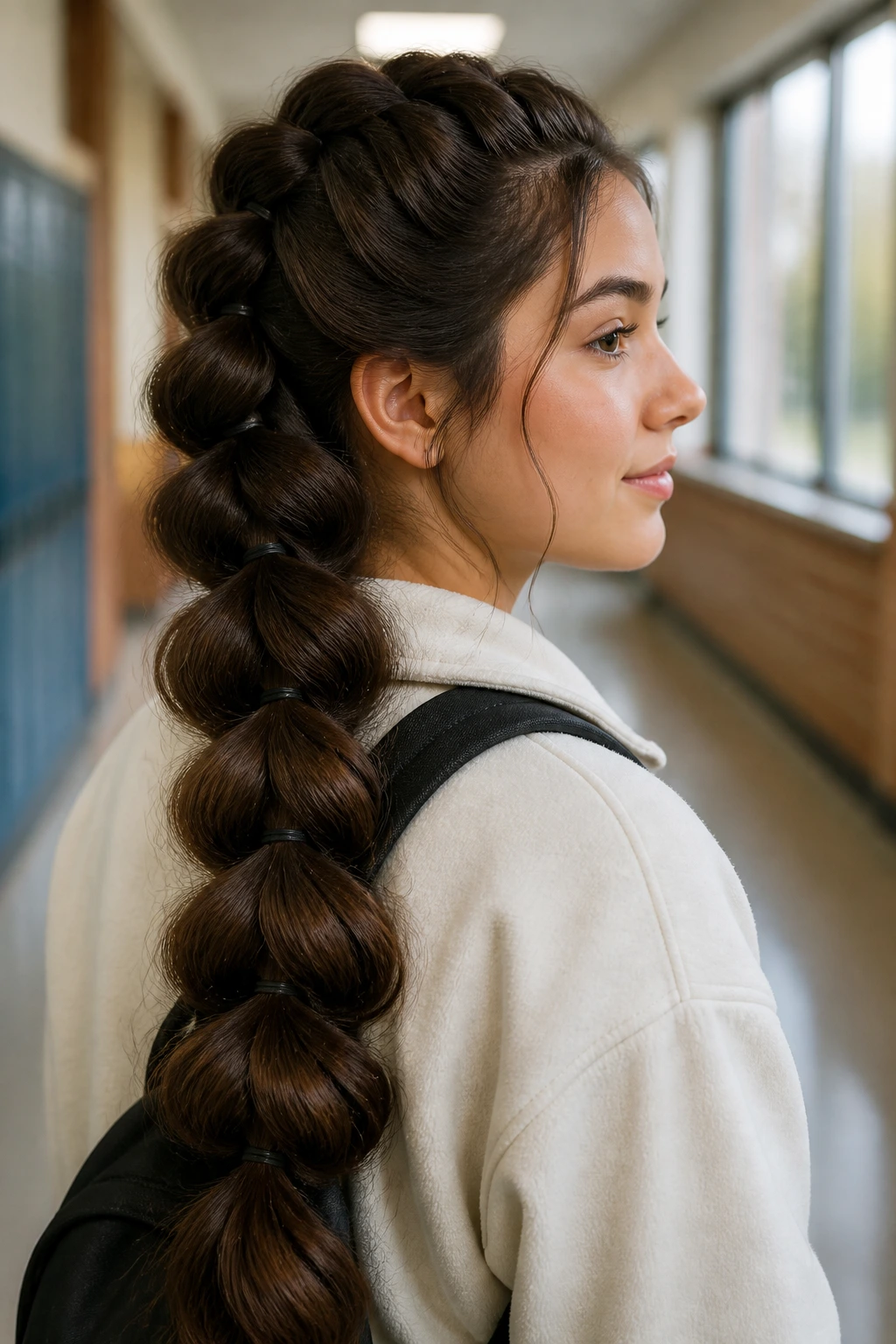
A pull-through braid isn’t a true braid at all. It’s a stacked series of ponytails that gets built into a thick, rounded braid shape. And for school, that fake-braid shortcut can be a gift, especially on very thick hair that refuses to stay neat in a regular plait.
The style creates a bold, full look with less finger work than a five-strand braid. It also holds its shape nicely because each section is secured with elastics.
What makes it different
The sections should be equal in size, or the braid starts looking lopsided halfway down. That’s the only part that matters more than anything else. The rest is repetition: secure, split, pull through, repeat.
This style works best when the hair has some length and density. On fine hair, it can look a little sparse unless you use tiny hidden elastics and gently loosen the sections.
If a student wants a braid that looks strong and stays visible all day, this one earns its spot.
14. Braided Space Buns That Keep the Head Clear
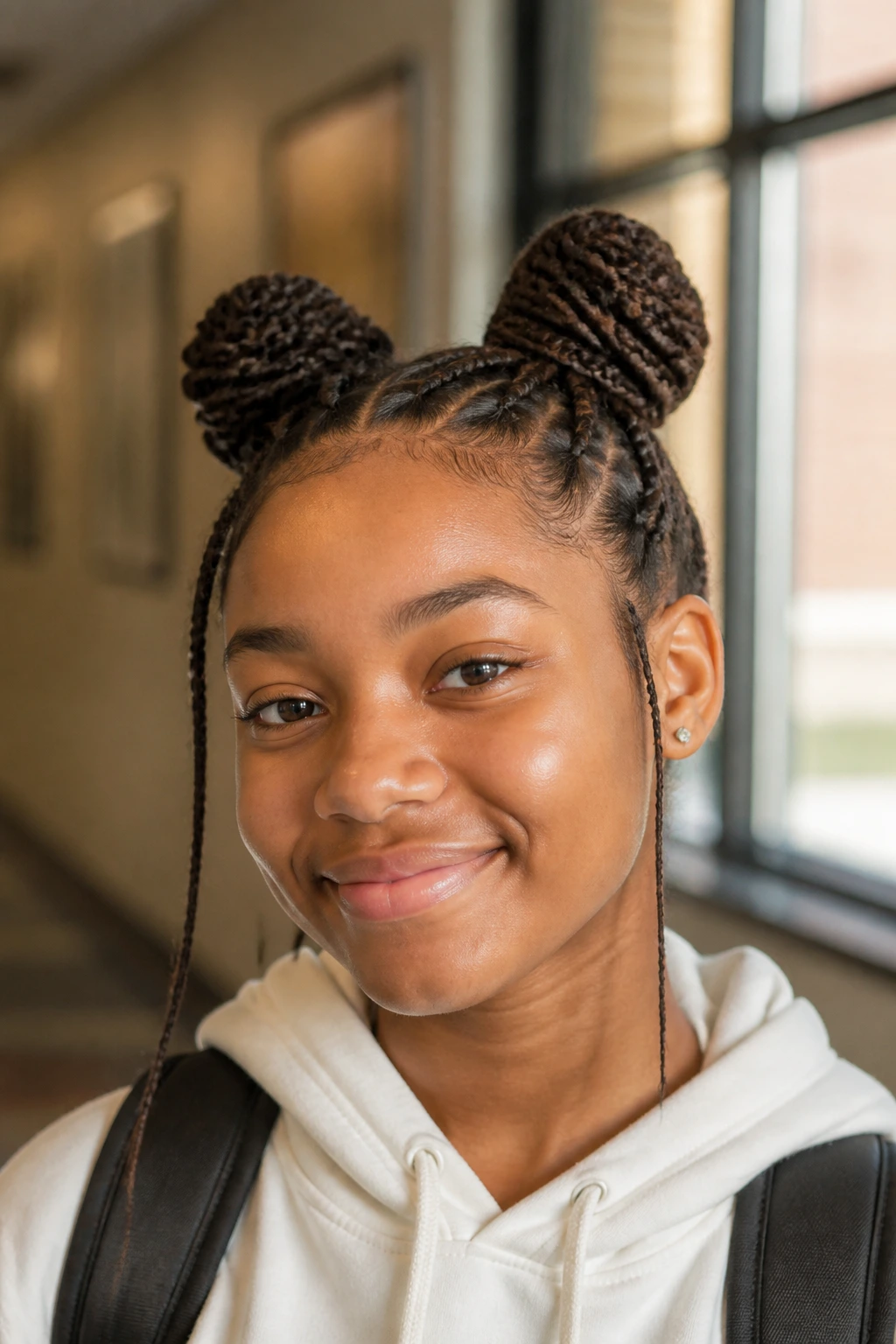
Braided space buns sit somewhere between playful and practical, which is why they keep showing up in school halls. Part the hair down the middle, braid each side, then twist or wrap each braid into a bun. The hair is off the neck, off the face, and less likely to get crushed flat by a hood.
They work especially well when the hair is medium to long and the student wants something that stays neat through a full day without looking too serious. The buns can sit high for a sharper shape or low for a softer one.
Small detail, big payoff
Braid each side tightly enough to hold, but don’t drag the scalp. The style should feel secure, not punishing. A few hidden pins under each bun keep them from leaning sideways by afternoon.
If the ends are short, tuck them under instead of chasing them with more elastic. That keeps the finish cleaner.
This is one of the best choices when the day includes movement, gym class, and a long walk between buildings.
15. Side Cornrows with a Puff
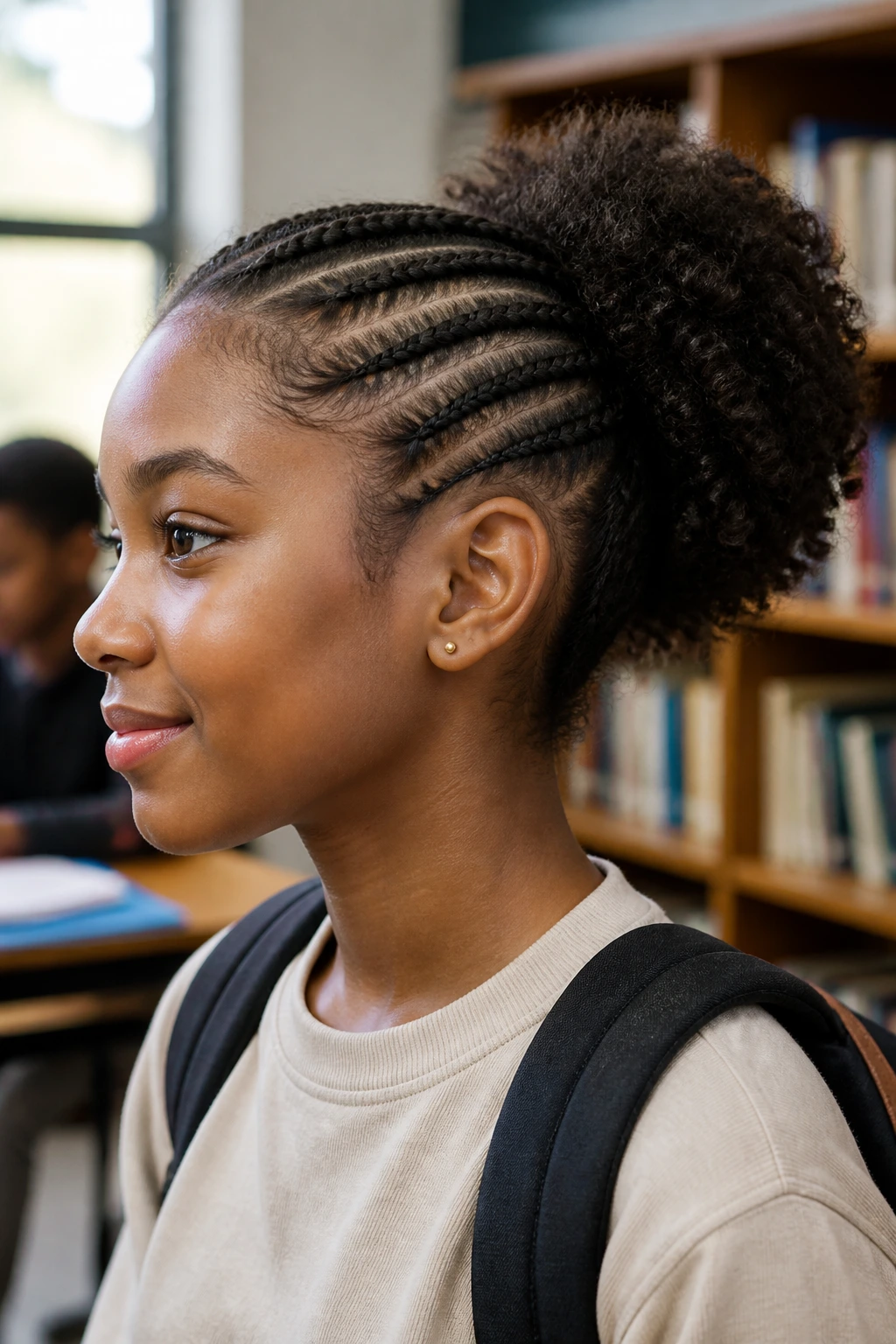
This is one of my favorite school styles on coily hair because it gives you two jobs done at once: the front stays controlled, and the puff at the back keeps the natural texture visible and alive. Side cornrows bring the hair away from the face, while the puff makes the style feel soft instead of severe.
The trick is balance. The cornrows should be neat and low-tension. The puff should stay moisturized and shaped with a light cream, not a heavy gel cap that flakes by lunch.
A middle or deep side part can change the whole mood of the style. A deep side part gives more drama. A middle part feels cleaner and easier to keep even.
This style works well for students who want a braided front but do not want to hide all their texture. It’s practical, but it still has a little personality.
16. Stitch Braids into a Ponytail
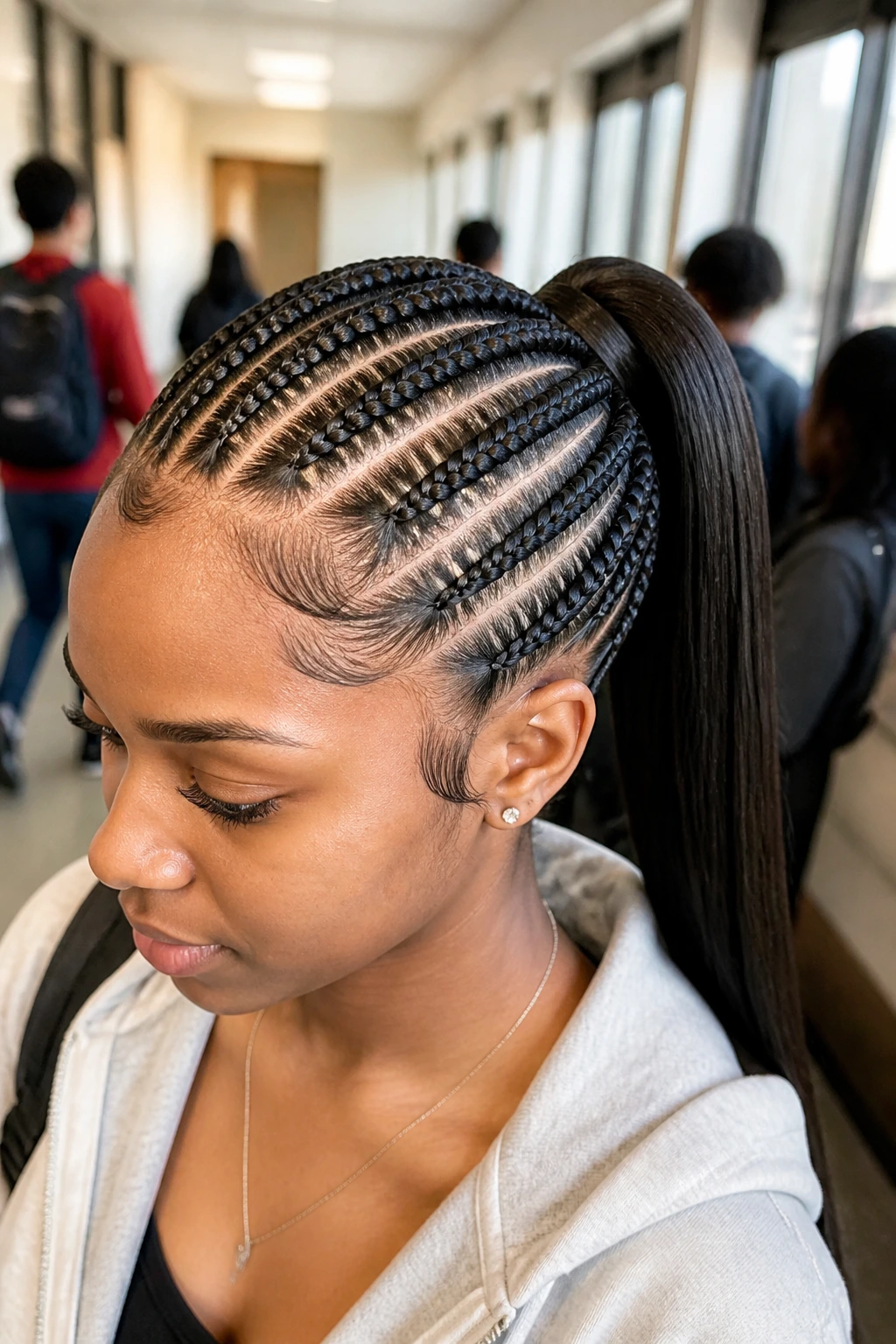
Stitch braids are the tidy, graphic version of cornrows. The parts look crisp because the comb tail creates small, visible “stitches” between each section. Once those rows are braided back into a ponytail, the style reads clean, modern, and strong.
This is the style to pick when precision matters. You can see the parting from across the room. That’s the point.
What to expect from this style
It takes longer than a simple braid, and it asks for a steady hand. But the payoff is a ponytail that feels locked in place. If the hairline is sensitive, keep the first row looser and let the ponytail do the heavy lifting.
- Great for thick natural hair
- Works well when the hair needs to stay off the neck
- Holds up through sports better than a loose braid
- Looks sharp even when the ponytail itself is simple
If you’ve got a lot to do before first period, this is not the fastest choice. It is one of the cleanest.
17. Box Braids Pulled Up for Class
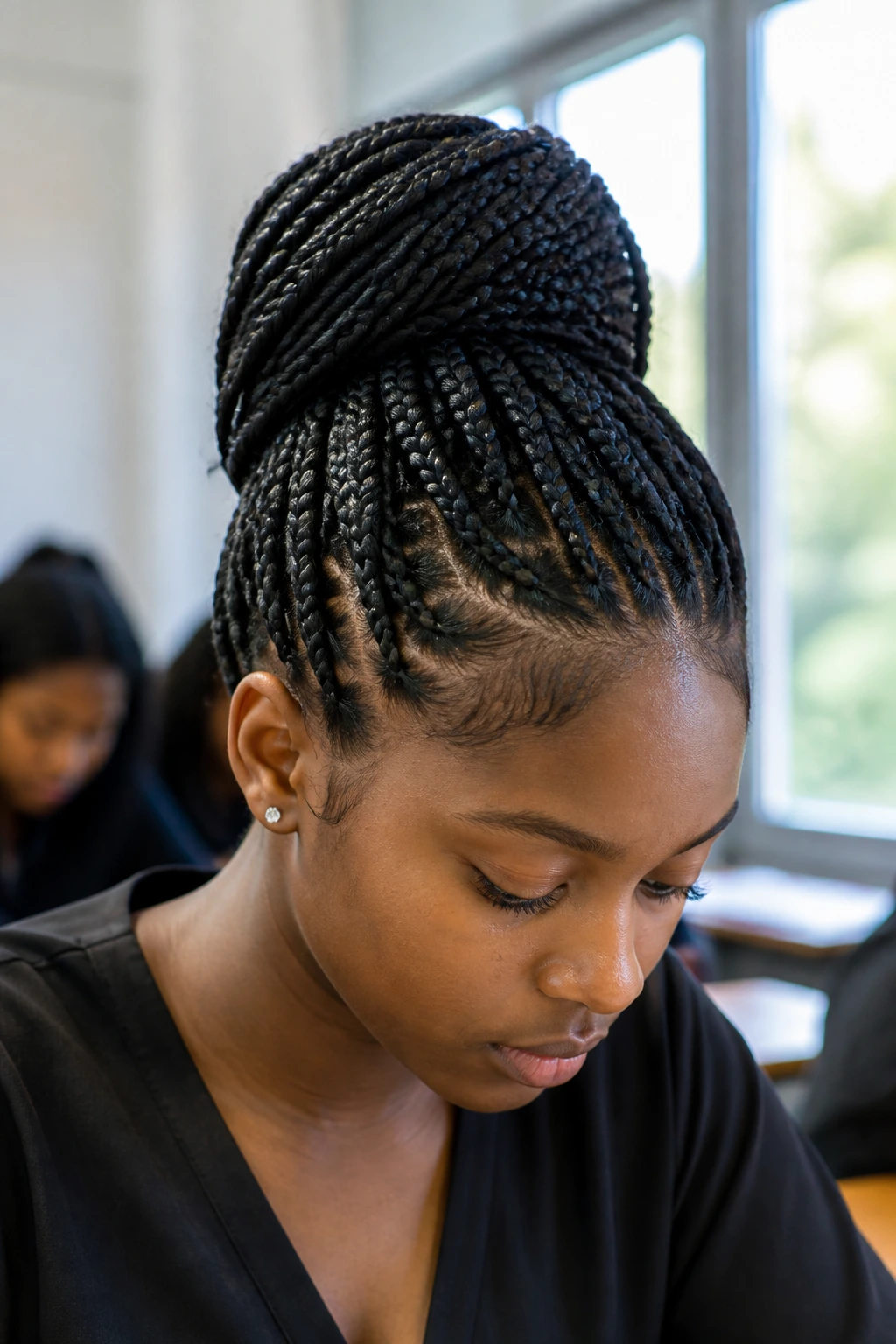
Box braids change the whole morning routine. Once they’re installed, the school style is mostly about how you wear them. A high ponytail, a half-up top knot, or a simple side sweep can turn the same set of braids into a week of different looks without starting from scratch.
That’s the point of a protective style: less daily handling, more reuse. The braids stay in place, the ends stay tucked, and the hair doesn’t need heat to look finished.
The only thing I’d watch is weight. A high ponytail can feel heavy if the braids are long and thick. Sometimes a low ponytail with a few braids pinned back is easier on the scalp.
This is a strong school option when the goal is longevity. It’s not about morning speed alone. It’s about reducing the work for the rest of the week.
18. Knotless Braids with a Quiet Finish
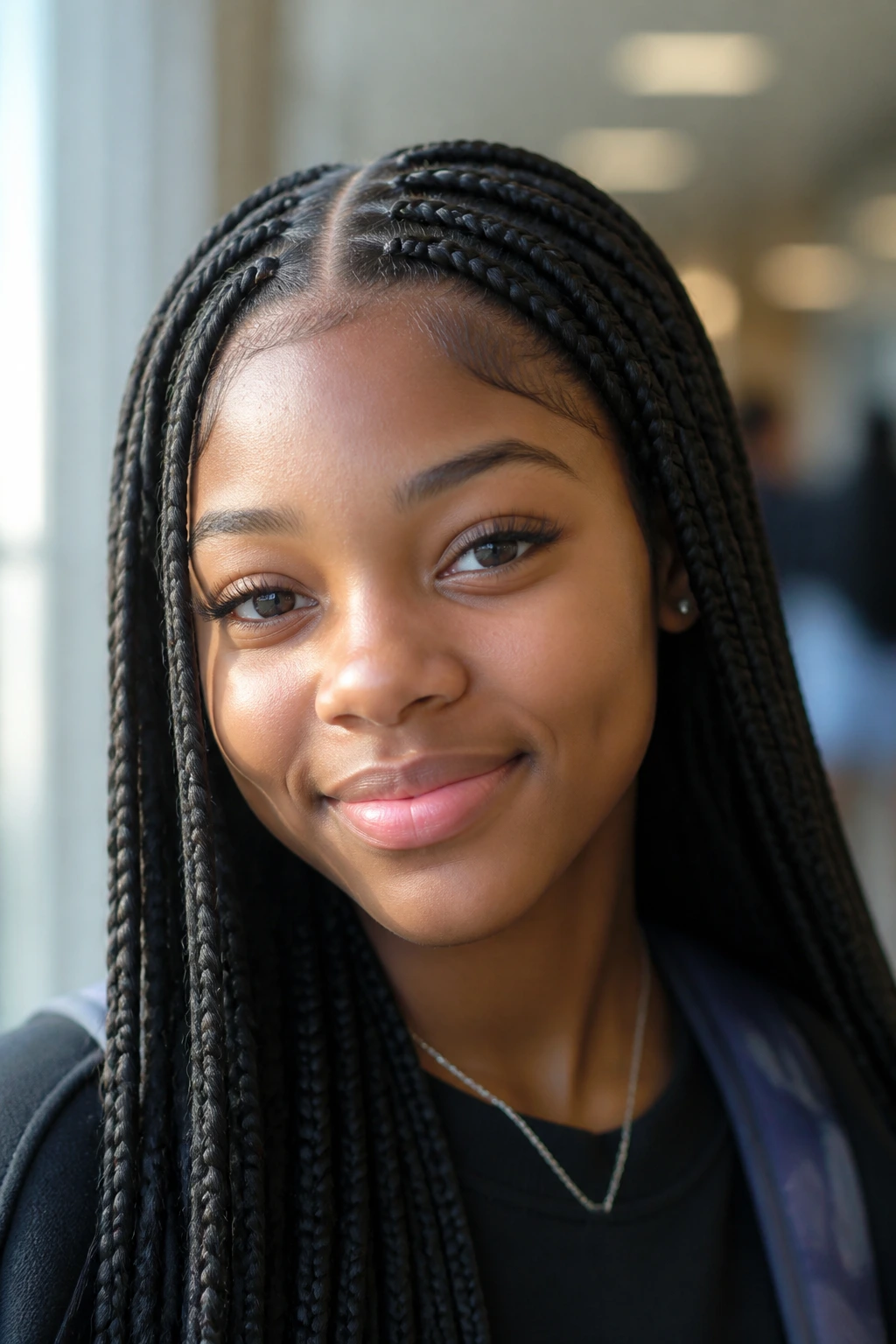
Knotless braids start with your own hair and gradually feed in added hair, which gives them a softer root and a lighter feel at the hairline. That matters. A lot. School styles should not hurt before the day begins, and knotless braids are known for sitting a little gentler than older, tighter braid starts.
The finish can be plain or dressed up with cuffs, but the style itself already reads clean. A center part gives it a neat, symmetrical look. A side part softens it.
Why students tend to love them
They move. That sounds simple, but it changes the whole feel of the style. The braids swing a little instead of sitting stiff, and that makes them easier to live in all day.
Use satin at night. The roots will thank you.
If someone wants a braid style that lasts beyond a single school day and still feels comfortable, this is one of the best places to start.
19. Triangle-Part Feed-In Braids
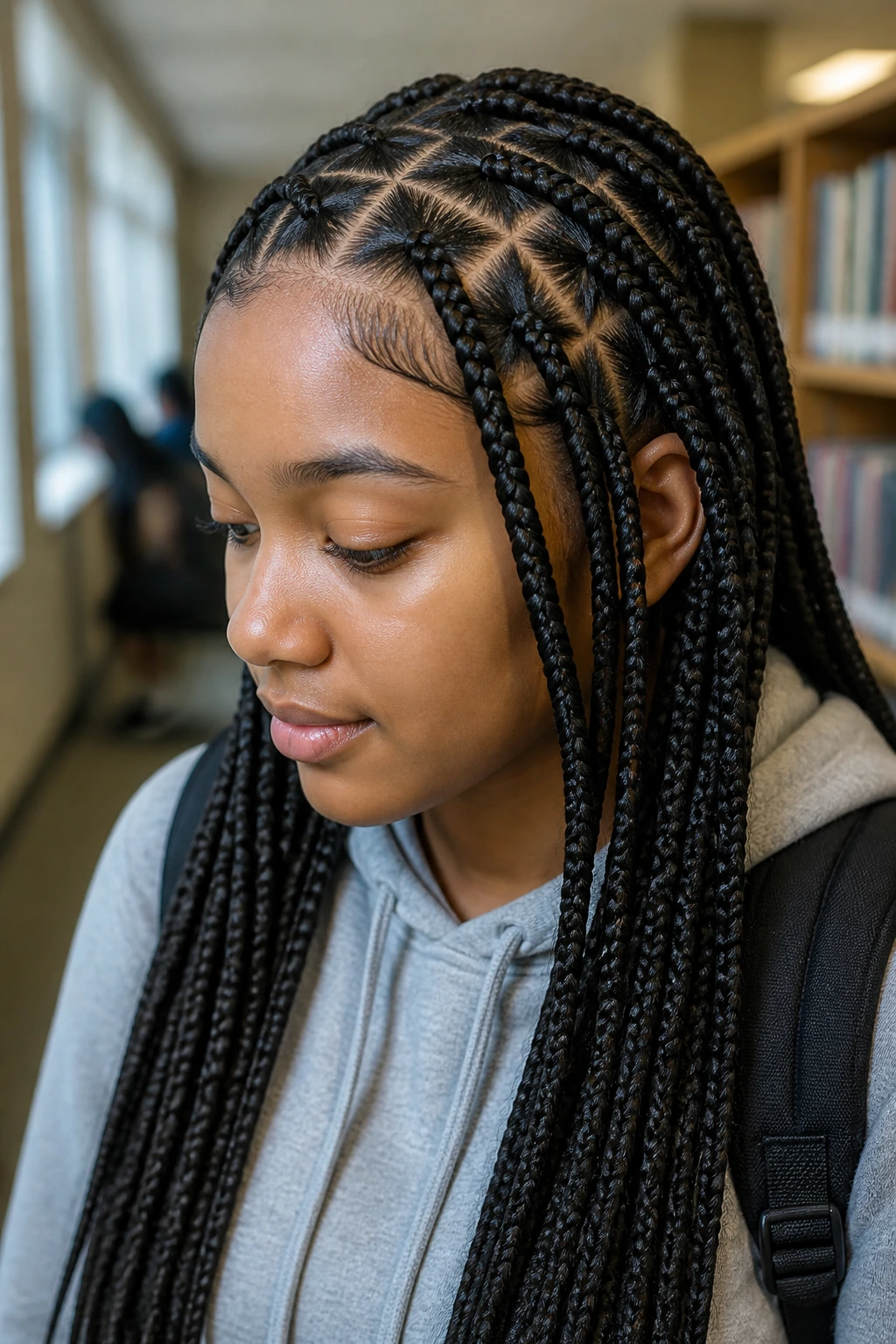
The braid itself matters, but sometimes the parting is what makes a style stand out. Triangle-part feed-in braids use crisp triangular sections instead of straight rows, and the shape gives the whole head a cleaner, more intentional look.
That little change makes a big visual difference. Straight parts are classic. Triangle parts feel sharper and a little more detailed, especially when the braids are medium size and evenly spaced.
This style is especially good for students who want a protective look that still has design in it. It’s neat, it lasts, and the parting stays interesting even after the braids soften a bit.
If you are going to spend time on braid work, triangle parts are a smart way to make it show.
20. A Five-Strand Braid for Long Hair That Needs More Grip
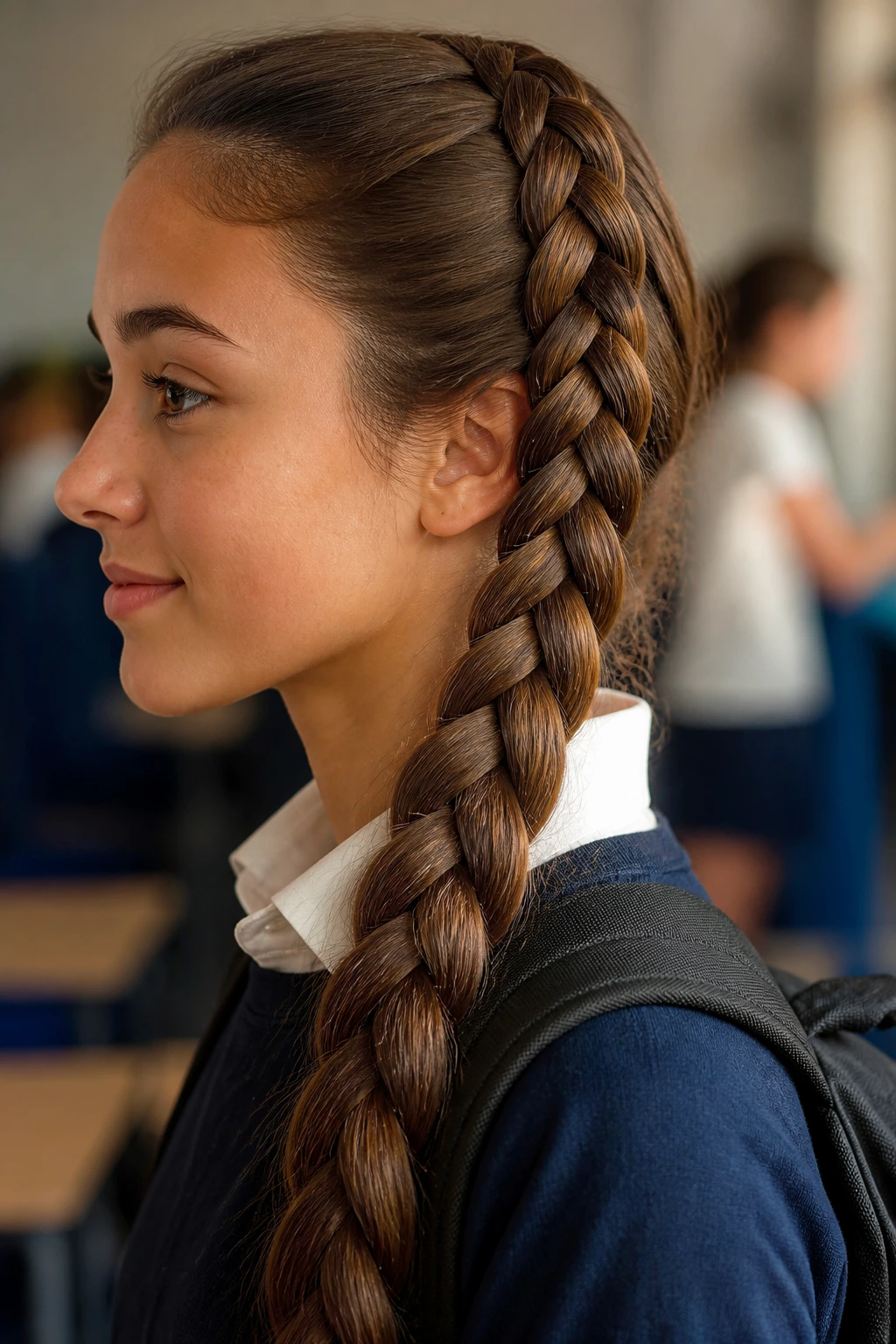
A five-strand braid has more texture than a regular braid because the pattern is denser and the weave shows up more clearly. It looks complicated, and honestly, it does take practice. But once the pattern clicks, it becomes a useful school style for long hair that needs extra hold.
The main thing is section control. Keep the strands even, don’t let the outer pieces drift, and braid with a steady rhythm. If you rush, the braid turns messy fast. If you slow down just enough, it turns into a clean rope of hair that feels secure all day.
Who should choose this one
Students with long, straight or wavy hair will usually get the most out of it. Curly hair can do it too, but the sectioning takes more care because texture changes the shape of each strand.
It is not the fastest braid on this list. It is one of the prettiest ways to make a simple braid look a little more special without adding accessories.
21. A Braided Headband on Short Hair
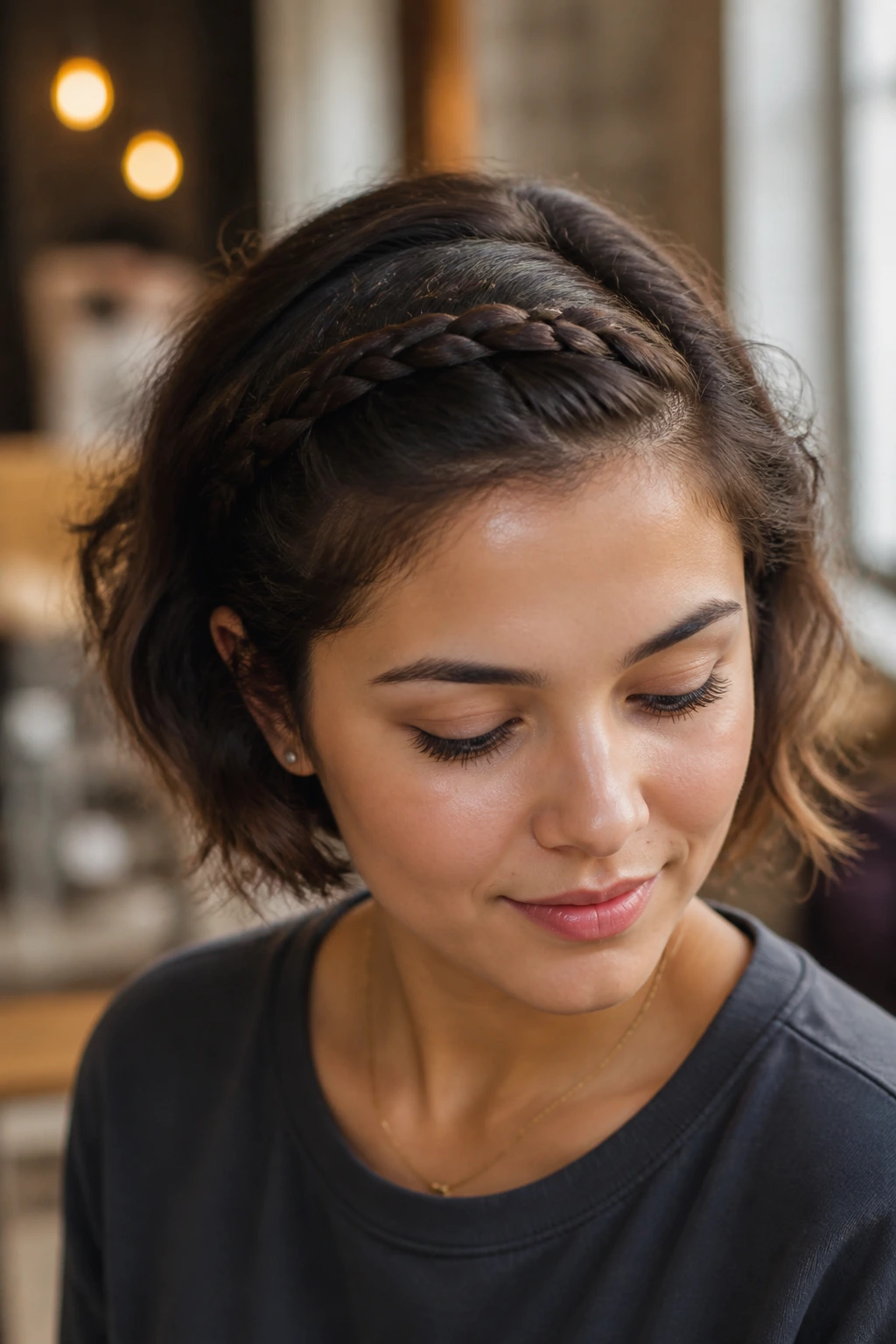
Short hair can absolutely wear braids to school. It just needs a different plan. A braided headband uses a small section across the front hairline, then pins it behind the ear so the rest of the hair can stay loose, tucked, or tied back.
That makes it a strong choice for bobs, lobs, and layered cuts that refuse to sit still. The braid controls the front pieces without asking the whole head of hair to become something it is not.
The part people miss
The braid should sit close enough to the hairline to act like a band, but not so tight that it creates a hard line across the forehead. A soft curve looks better and feels better.
You can pair it with a low ponytail, a half-up clip, or loose waves. It works as an accent, which is exactly why it’s useful on short hair. Not every school style has to be full coverage.
22. Loc-Friendly Braided Front Rows That Frame the Face
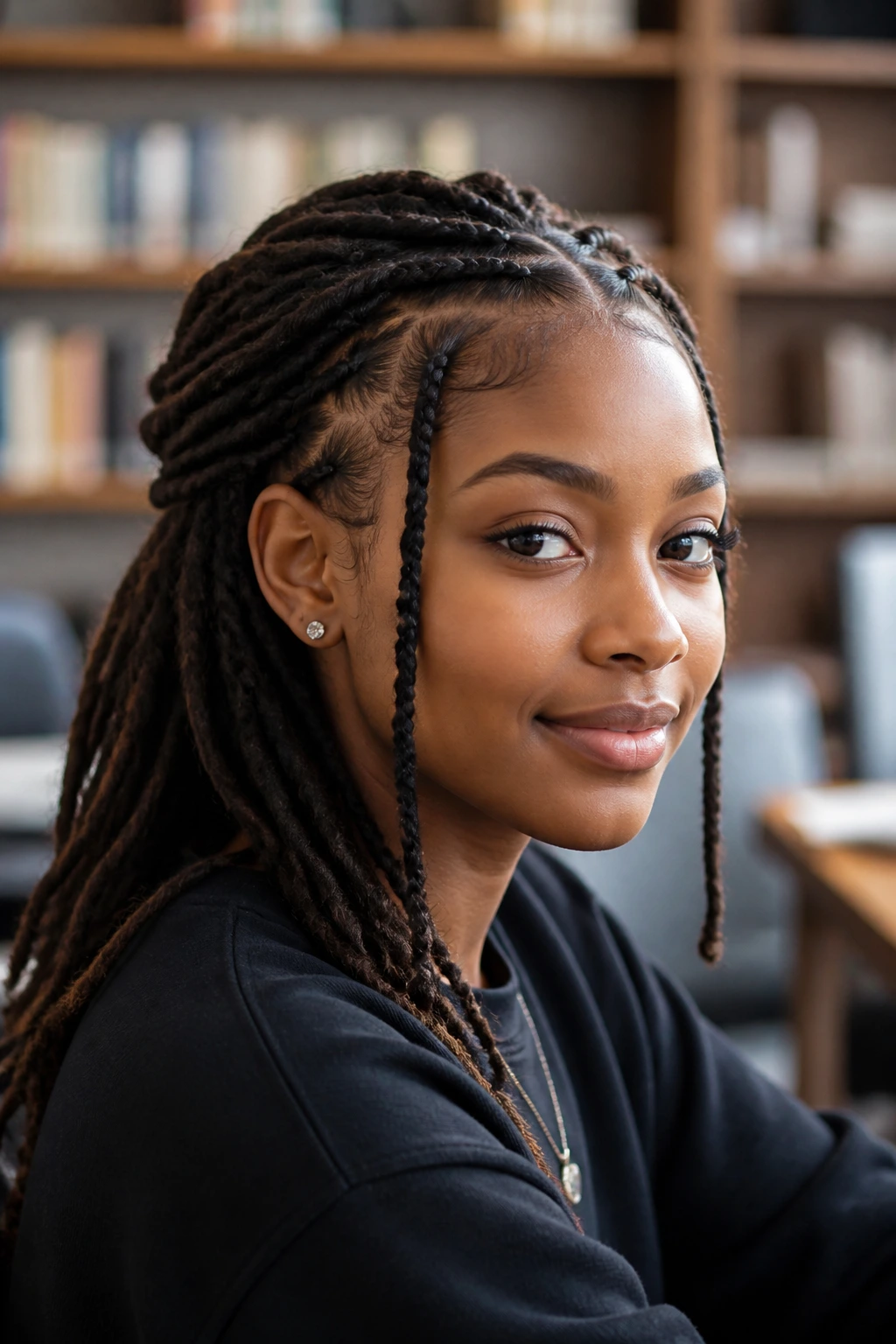
For students who wear locs, the braid options get a little different, but the school goal stays the same: keep the hairline neat, protect the roots, and make the style easy to live in. Braiding the front rows into small plaits or side rows gives the face a clean frame while the rest of the locs can hang, tie back, or go into a low bun.
This works especially well when the locs are medium length or long enough to gather without pulling hard at the roots. The braid pattern should be gentle at the temples. Tight front work on locs is one of those things that looks tidy for a day and bothers the scalp for a week. That trade is not worth it.
A satin scarf at night keeps the front neat longer, and a small amount of lightweight oil on the scalp is usually enough. Heavy product can leave residue around the parts fast.
How Braids Handle School Days Better Than Loose Hair
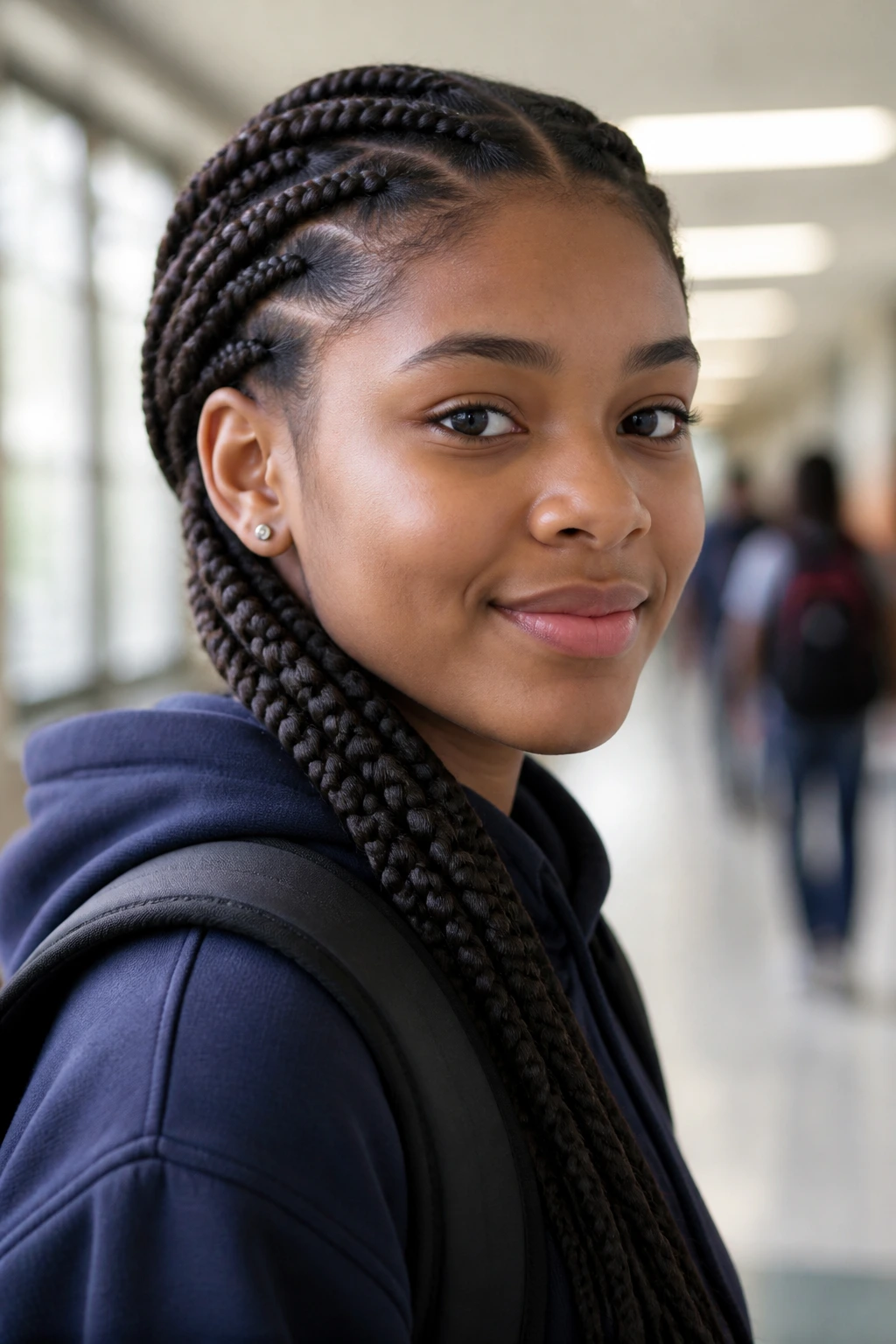
Braids win school mornings because they cut down on movement. Loose hair rubs against collars, jacket zippers, and backpack straps all day long, which is why it starts to puff and tangle before lunch. A braid gathers the strands into one shape, so the hair moves as a unit instead of fraying into a hundred little pieces.
That matters more on active days. Gym class, recess, lunch line, even a windy walk from the car to the door — all of that adds friction. Braids reduce the surface area that gets battered, and that means fewer knots and fewer mid-day fixes.
They also help with focus. Hair in the eyes is a small thing until it keeps happening every six minutes. A braid handles the problem once instead of asking for constant attention.
Essential Tools for Cleaner Parts and Less Frizz
-
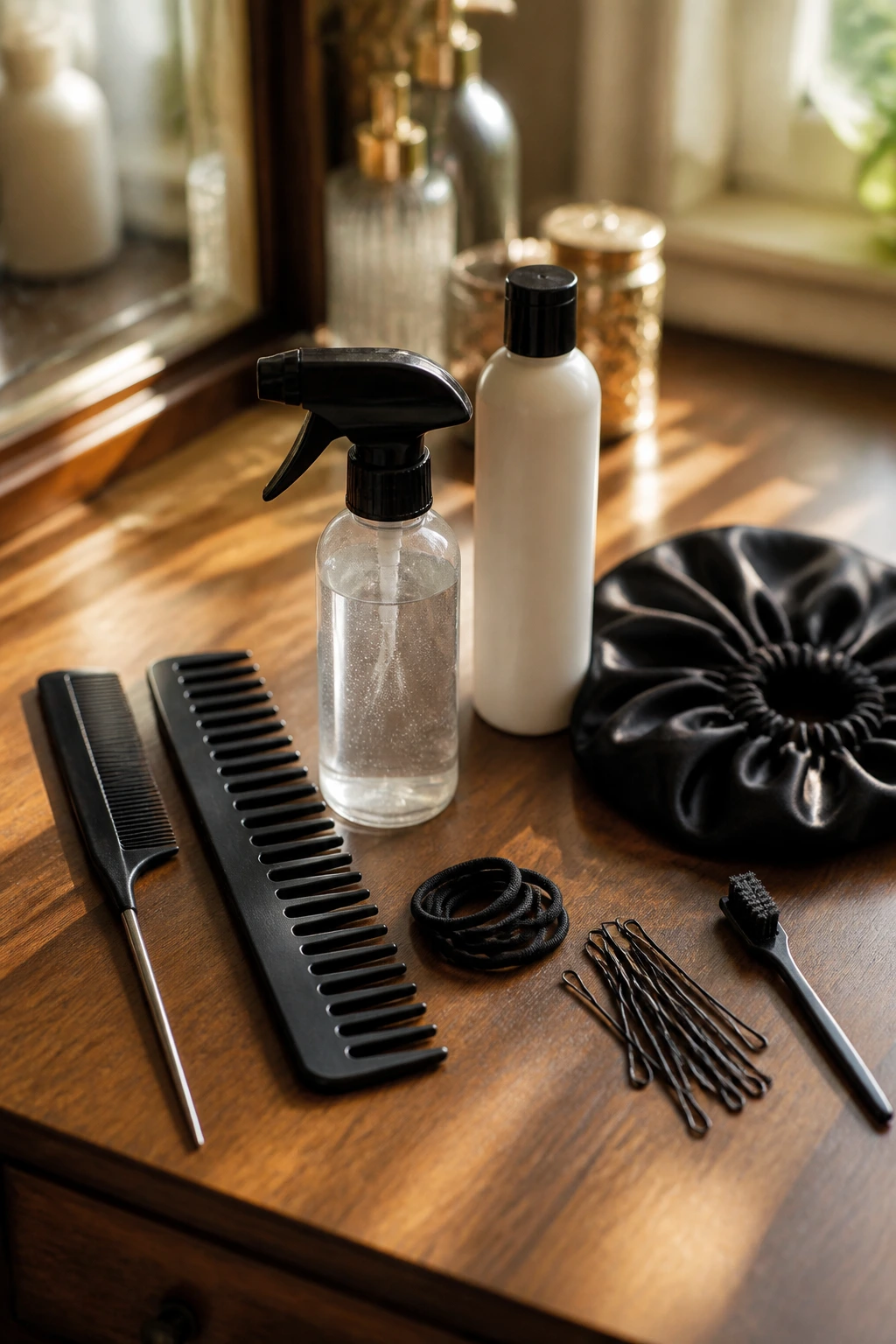
Rat-tail comb: The long tail makes clean parts and sharp sections much easier, especially for cornrows, stitch braids, and center parts.
-
Wide-tooth comb or detangling brush: Use this before braiding so the hair moves smoothly and doesn’t snag halfway through the pattern.
-
Spray bottle with water: A light mist softens dry hair and adds enough slip for braiding without soaking the roots.
-
Leave-in conditioner or light styling cream: A small amount keeps the braid smoother and helps the ends stay controlled.
-
Snag-free elastics: Soft, no-metal bands are kinder to the ends and easier to remove at night.
-
Bobby pins: Needed for halo braids, crown styles, and any braid that has to tuck back into place.
-
Edge brush or small soft brush: Good for smoothing the hairline without scraping the scalp raw.
-
Satin bonnet or scarf: The quickest way to keep braids from getting flattened, frizzy, or rough overnight.
How to Prep Hair So the Braid Holds Past Lunch
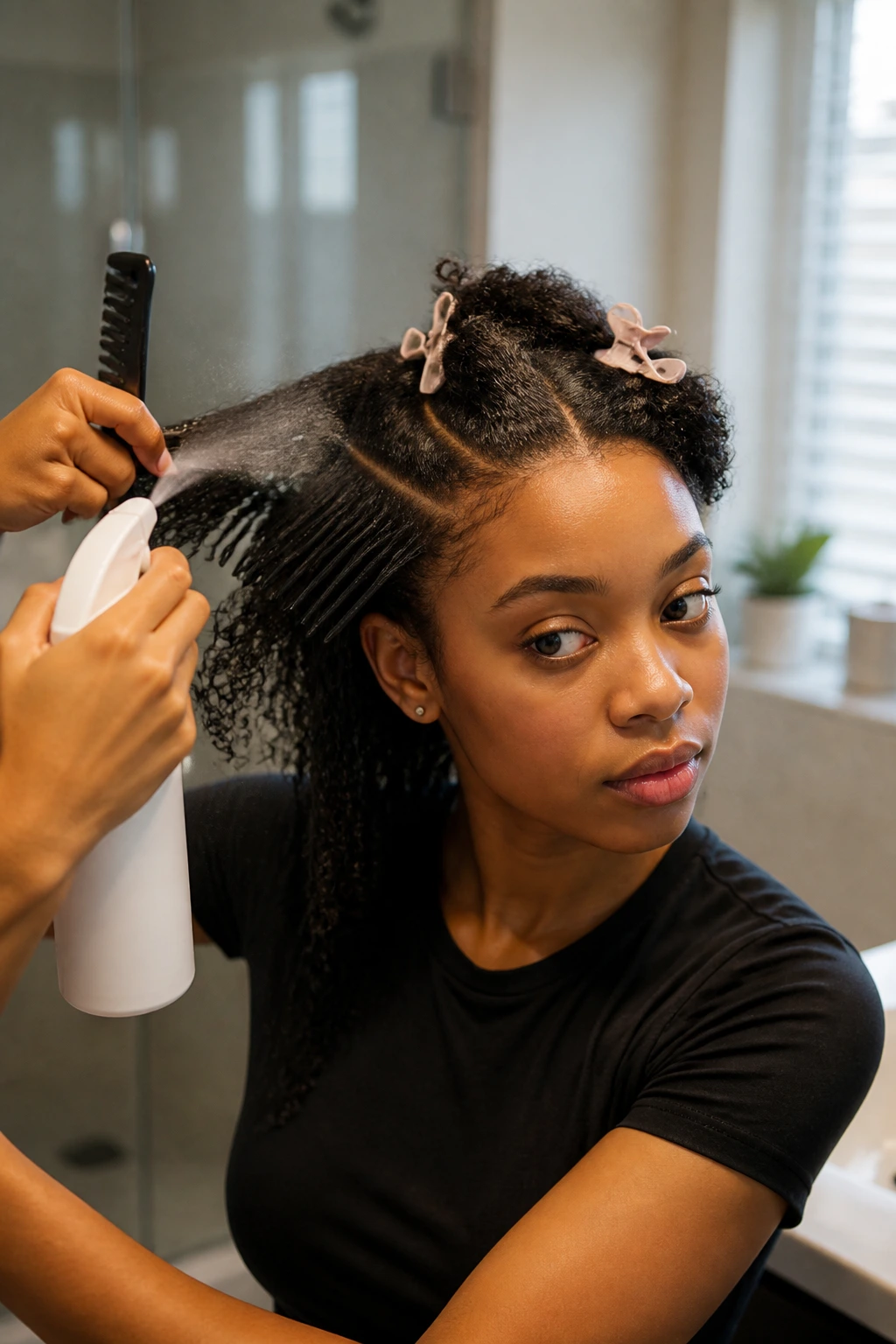
The braid starts before the braid starts. If the hair is a bird’s nest, the style will look tired before the school day is halfway done. Detangle in sections, not all at once. That alone cuts down on breakage and makes the braid line smoother.
A small amount of product matters more than a lot. Use leave-in where the hair feels dry, then add mousse or light cream only where you need grip. Heavy gel across the whole head tends to leave flakes and stiff patches. Nobody needs that by third period.
For straight or slippery hair, a little texture helps the braid hold. For curls and coils, moisture matters more than grip, but the hair still needs to be stretched enough to braid cleanly. Damp is fine. Soaking wet is not.
One more thing: if the style is supposed to sit flat, braid on hair that has been parted and brushed into the direction you want. Fighting the natural fall of the hair makes the morning longer and the braid messier.
Ways to Wear the Same Braid Three Different Ways
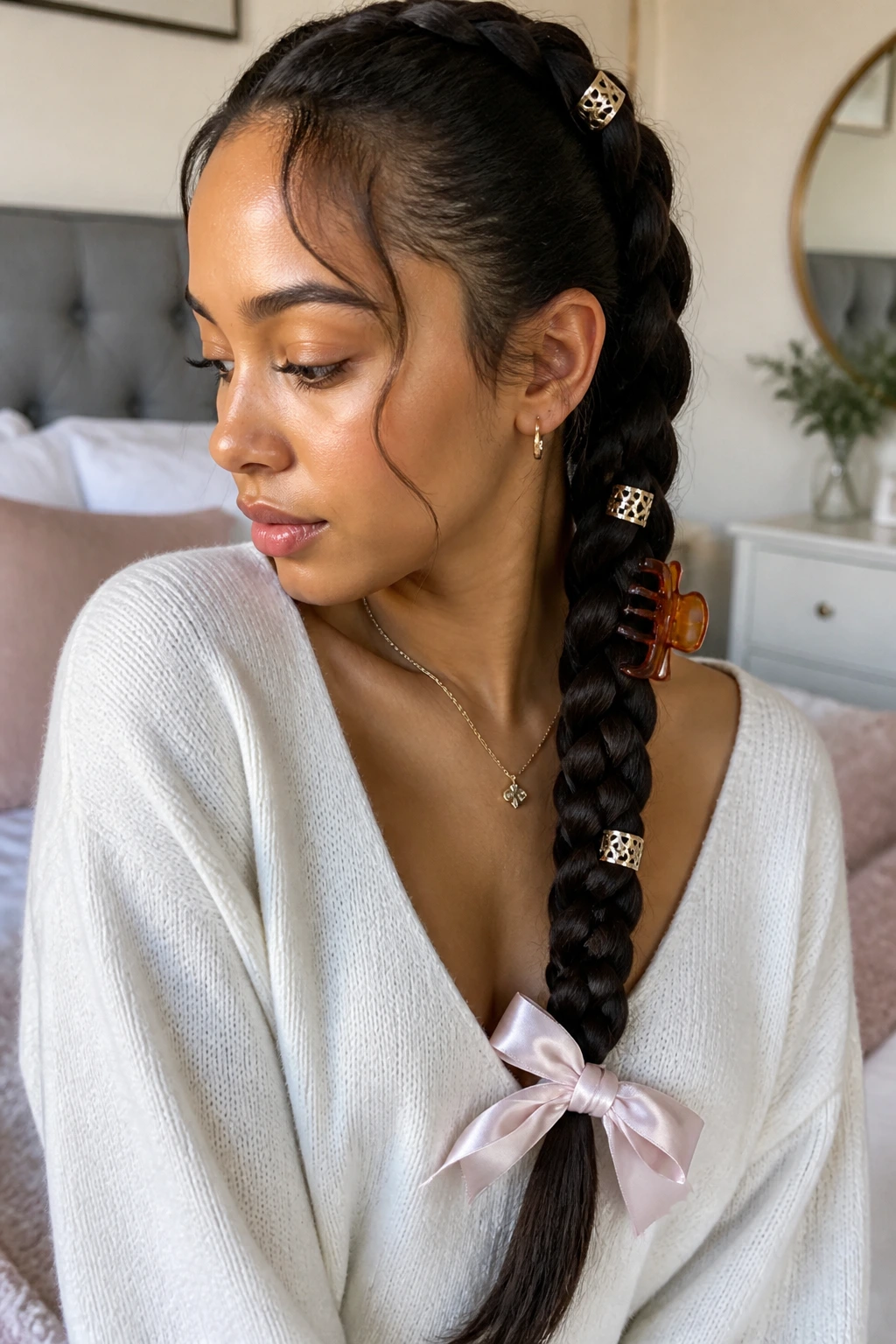
Low-Key Version: Keep the braid plain, use a clear elastic, and let the parting stay soft. This works best on days with uniforms, tests, or anything where hair should stay out of the way and stop there.
Dress-It-Up Version: Add a ribbon at the end, tuck in a small claw clip, or use two or three braid cuffs. That changes the whole mood without changing the structure.
Protective Version: On thicker or more fragile hair, choose a looser braid size, keep the edges soft, and finish with a satin wrap at night. The point is to keep the style neat without squeezing the scalp into a headache.
Gym-Friendly Version: Move the braid higher, tuck the ends, or turn it into a bun. That gives you a style that won’t slap the neck or unravel in motion.
The same braid can do all four jobs. That flexibility is the real reason it earns a spot in a school rotation.
How to Keep Braid Hairstyles for School Fresh All Week
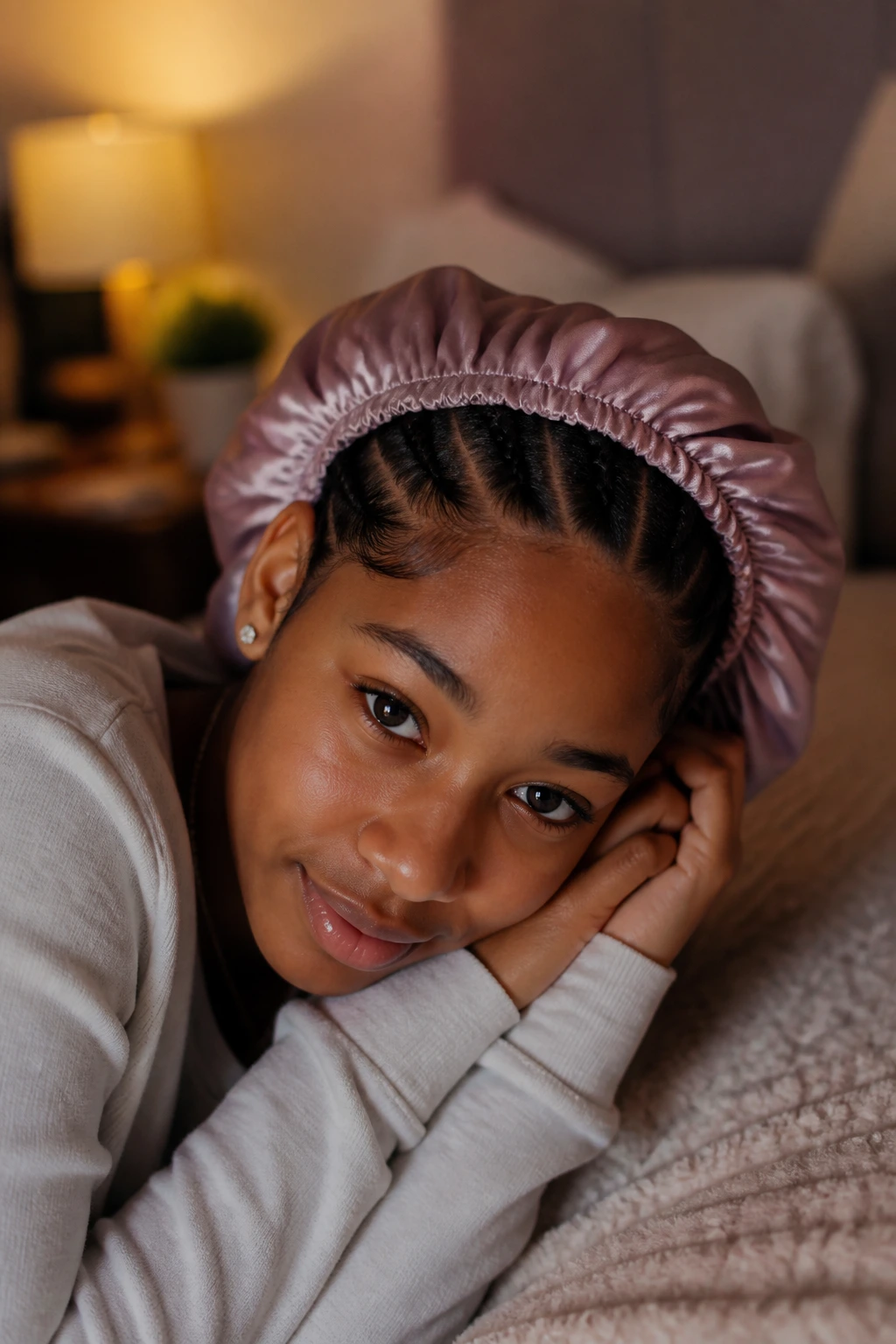
Loose braids usually need a nighttime reset. If the hair sleeps in a satin bonnet or scarf, the braid keeps its shape and the surface stays smoother. A quick morning mist from a spray bottle can wake up flattened sections, but don’t drench the style. Wet braids take forever to dry and can smell musty if they stay damp.
Protective styles last longer, but they still need care. Cornrows, knotless braids, and box braids usually do best with a gentle scalp refresh every 1 to 2 weeks, depending on how much product was used and how oily the scalp gets. Use a diluted shampoo or a scalp cleanser at the roots, then dry the area well. A damp scalp under extensions is asking for trouble.
Take loose styles out nightly if they are meant to be one-day styles. Don’t sleep in a side braid for four nights and act surprised when it turns into a tangled rope. If you want a braid to last more than a day, choose one of the styles meant for that.
When it’s time to remove protective braids, go slow. A small amount of oil or conditioner on the ends helps the knots slide apart without snapping the hair.
Common Mistakes That Make Braids Ache, Puff, or Sag
-
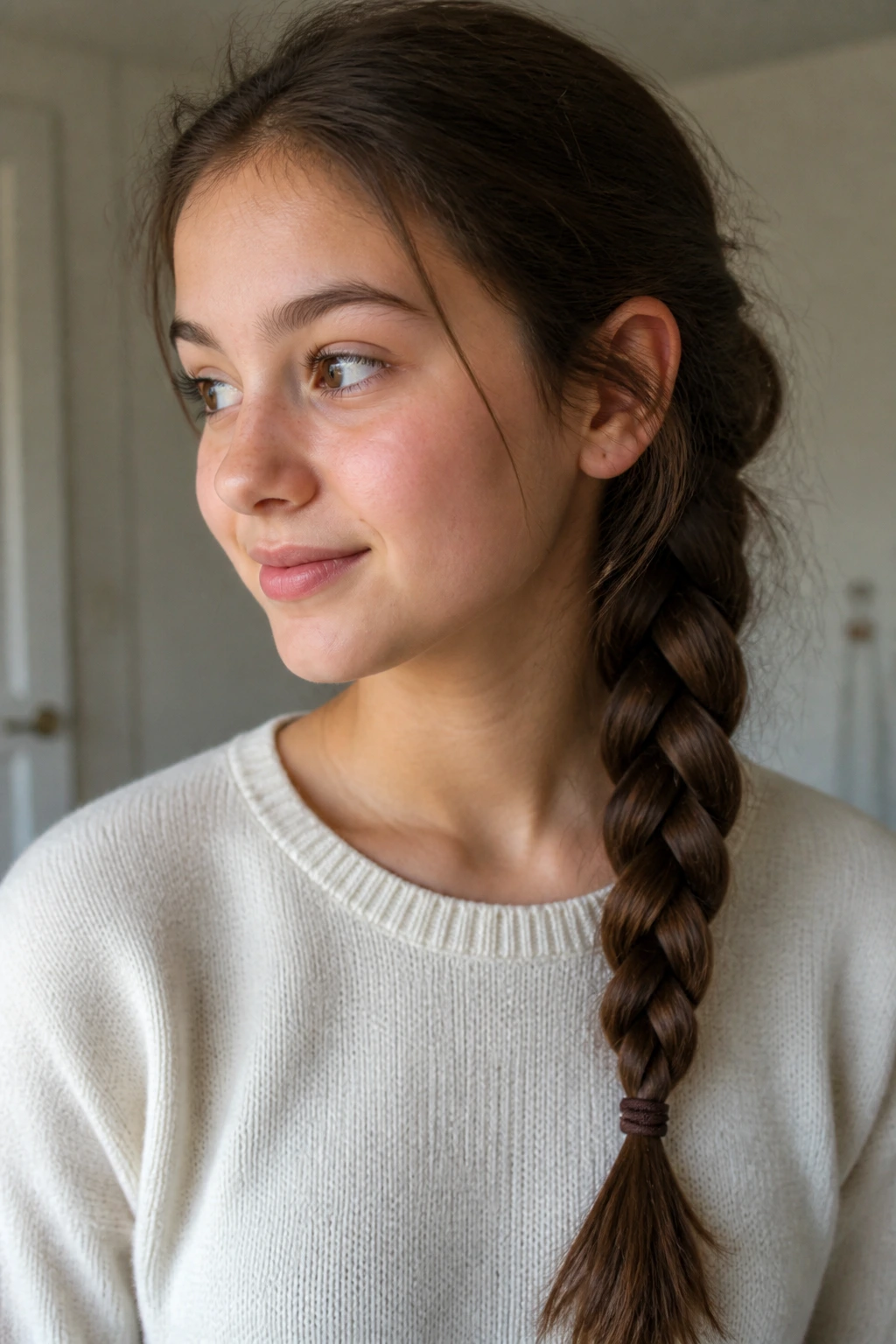
Braiding too tight at the hairline: The symptom is soreness, little white bumps, or a headache that shows up before lunch. The fix is simple: leave a small bit of softness at the scalp and stop pulling the braid tighter than the hair can handle.
-
Starting on tangled hair: The braid catches, frays, and looks fuzzy almost immediately. Detangle in sections first, even if it adds five minutes.
-
Using too much product at once: Heavy gel makes the braid stiff, flaky, or greasy by midday. Use a small amount near the front and a lighter product through the length.
-
Choosing the wrong braid size for the hair: Tiny braids on thick hair puff out fast; huge braids on fine hair collapse. Match the braid size to the density of the hair, not just the look you want.
-
Skipping nighttime protection: Braids flatten, frizz, and lose shape by morning. A satin scarf or bonnet fixes more than most people think.
-
Leaving elastic ends too tight: Snug is fine. Crushing the ends with a tiny band is not. The hair should secure, not scream.
Frequently Asked Questions About Braids for School
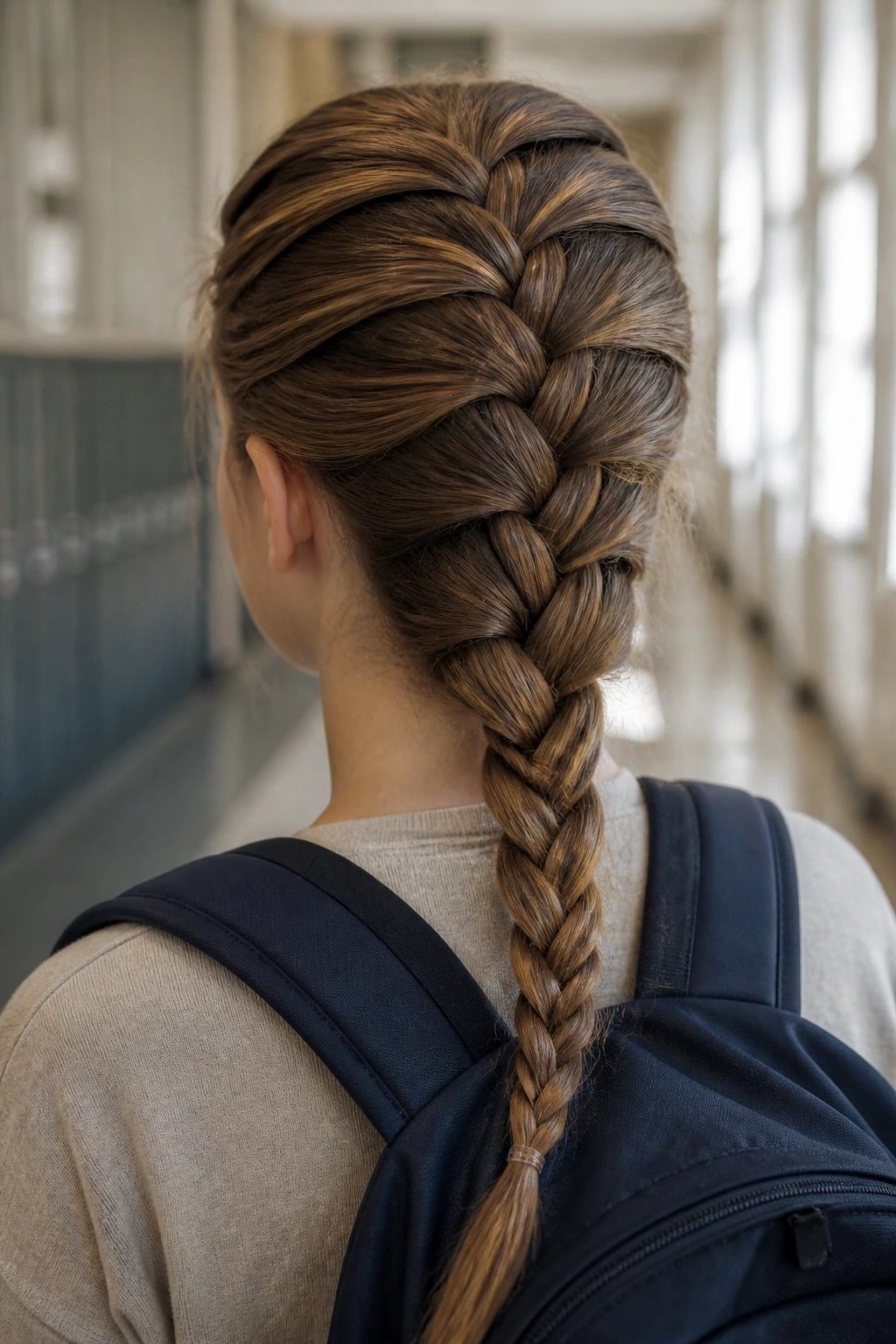
Which braid hairstyle is fastest on a busy morning?
A classic side braid or a single French braid usually wins for speed. Once your hands know the pattern, both can be finished in minutes, and they look intentional without much product.
What braid lasts the longest through a full school week?
Feed-in cornrows, knotless braids, and box braids tend to last the longest because they are built to stay in. Loose styles like side braids or fishtails are better as day styles unless you refresh them nightly.
Can these braid styles work on short hair?
Yes. Short hair often does better with accent braids, a braided headband, or half-up braids instead of full-length plaits. The trick is choosing a style that uses the hair’s length instead of fighting it.
How tight should school braids be?
Tight enough to hold, loose enough that the scalp doesn’t hurt. If the hairline feels sore, the scalp is visible in a strained way, or there are tiny bumps after styling, the braid is too tight.
What helps braids stay neat on slippery hair?
A light mist of texturizing spray or mousse gives the strands a little grip before braiding. Don’t overdo it. Too much product creates crunch and flakes, which is a trade nobody wants.
Can braids work for gym class and sports?
Absolutely, as long as the ends are secured. Boxer braids, braided buns, and cornrow styles are especially good when there’s a lot of movement, because they stay close to the head.
How do I keep braids from frizzing by lunch?
Start with clean parting, use a small amount of product, and protect the style overnight. Frizz often starts when the braid is rushed at the roots or slept on without a satin cover.
Are braided styles okay for locs?
Yes, if the braid pattern respects the weight and tenderness of the roots. Keep the front rows gentle, avoid pulling locs too hard at the temples, and use a scarf at night so the shape lasts longer.
A Neater End to the School Day
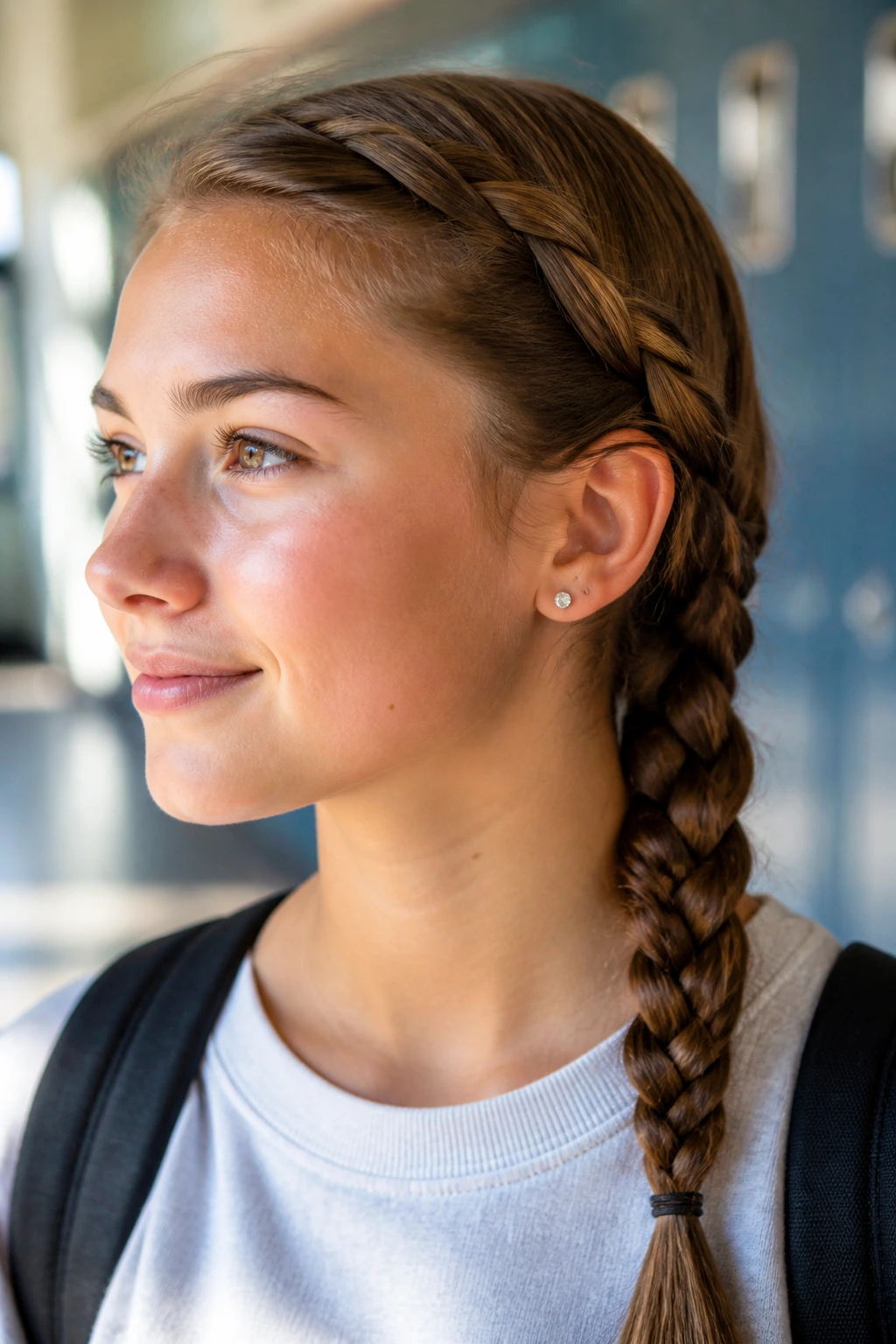
The best braid for school is the one that fits the morning you actually have. Sometimes that means a quick side braid and a soft elastic. Sometimes it means a set of feed-ins that stays put for days. Both are useful. Both solve a real problem.
What matters most is matching the braid to the hair, the schedule, and the amount of handling the style can tolerate. Get those three things in line, and hair stops being the thing that steals five extra minutes from the bus stop.
Pick one style, learn it well, and keep it in rotation until it feels easy. Then add another when you’re ready.
