



Short hair can braid. It just asks for cleaner sectioning, tighter control, and a little less ego from the hand holding the rat-tail comb. French braid styles for short hair look best when you treat the braid like structure, not decoration. A bob or lob won’t give you a long tail to hide mistakes, so every part, pinch, and pin matters more.
That’s also why short hair is more interesting to braid than people expect. You see the curve along the head. You see the ridges of the braid. You see the ends, which means the finish has to earn its keep instead of vanishing into the rest of the hair. When the cut is chin-length to collarbone-length, the braid starts acting like a built-in accessory.
These 32 French braid styles for short hair lean into that reality. Some are neat and practical. Some are soft and a little messy in the good way. A few are built for layers that won’t sit still, and a few are really just clever ways to make a small amount of hair look more deliberate than it felt ten minutes ago. Pick the ones that match your cut, then work outward from there.
Why These Styles Earn Their Keep
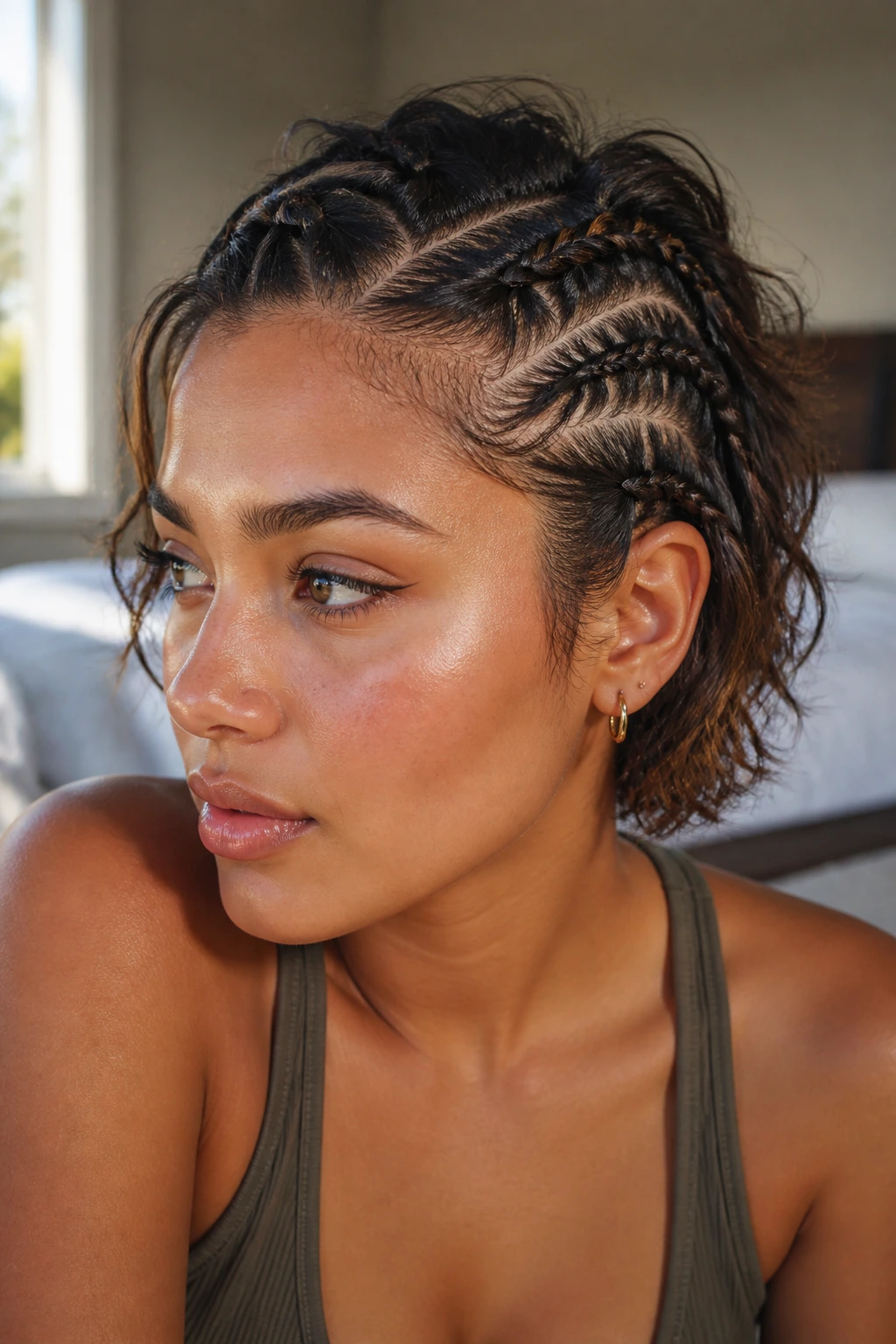
-
Shorter hair gives the braid shape: There’s less weight dragging the plaits flat, so the ridges stay visible instead of disappearing into a heavy curtain.
-
Layer control matters here: A good French braid can pin back bangs, side pieces, and grown-out layers without forcing every strand into one strict line.
-
Most of these need only basic tools: A comb, a few clear elastics, and two or three bobby pins can handle almost every style on this list.
-
They work with day-two texture: Slightly gritty roots help the braid grip, which is why freshly washed, silky hair is usually the hardest version to work with.
-
The finish can be simple or dressed up: Add a ribbon, scarf, clip, or a few hidden pins, and a basic braid turns into something much sharper.
-
They suit cuts people actually wear: Bob, lob, shag, grown-out pixie, and chin-length layers all show up better in braid form than they do in a flat ponytail.
1. Temple-Sweep Side French Braid
Start this one at the temple and let the braid travel along the hairline instead of diving straight back. On short hair, that narrow path matters. A wide side braid can look bulky fast, while a temple sweep feels clean and stays close to the head.
I like this style on jaw-length bobs because it tucks the front pieces away without hiding the whole cut. If the tail runs out too soon, stop at the ear and pin the end flat under a small section of loose hair. It looks deliberate that way, not unfinished.
2. Center-Run French Braid with a Tiny Tie-Off
A slim braid down the center of the head looks sharper on short hair than a heavy one. Part it cleanly with a rat-tail comb, then keep the added sections small so the braid sits narrow and neat.
This style works well on lobs that hit the collarbone, especially if the ends are a little blunt. The tiny tie-off matters. A mini clear elastic at the back keeps the finish from puffing out and gives you a clean little end instead of a frayed stop point.
3. Double French Braids on a Short Bob
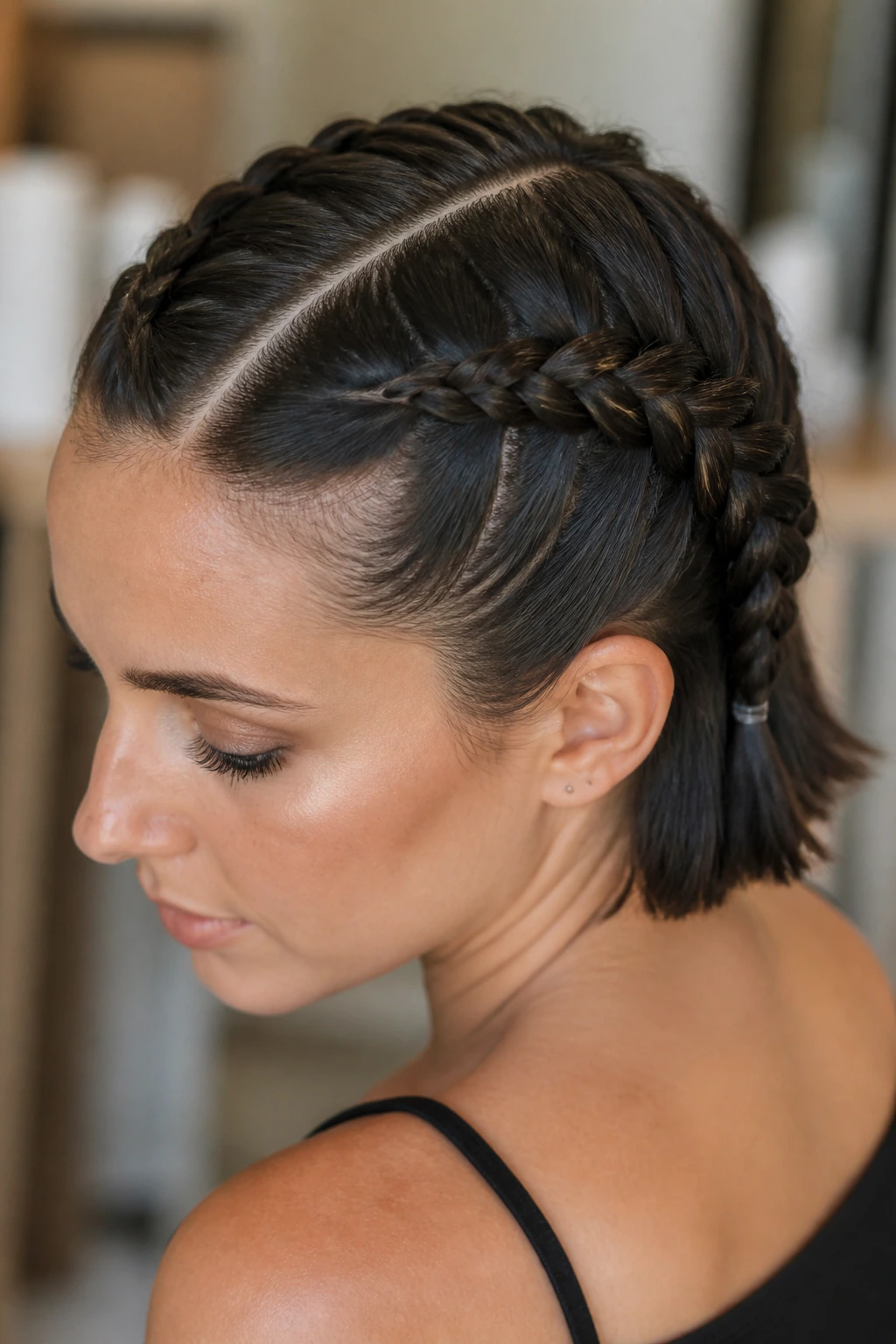
Two braids solve a lot of short-hair problems at once. They keep the front controlled, spread the weight out, and make a bob look intentional even when the ends kick out in different directions.
This is one of the best options for thick hair that keeps escaping a single braid. Best move: part the hair straight down the middle, braid close to the scalp, and stop each braid where the hair gets too short to stay neat. Secure with clear elastics, then pinch the first few loops gently if you want a little width.
4. Halo French Braid Around the Hairline
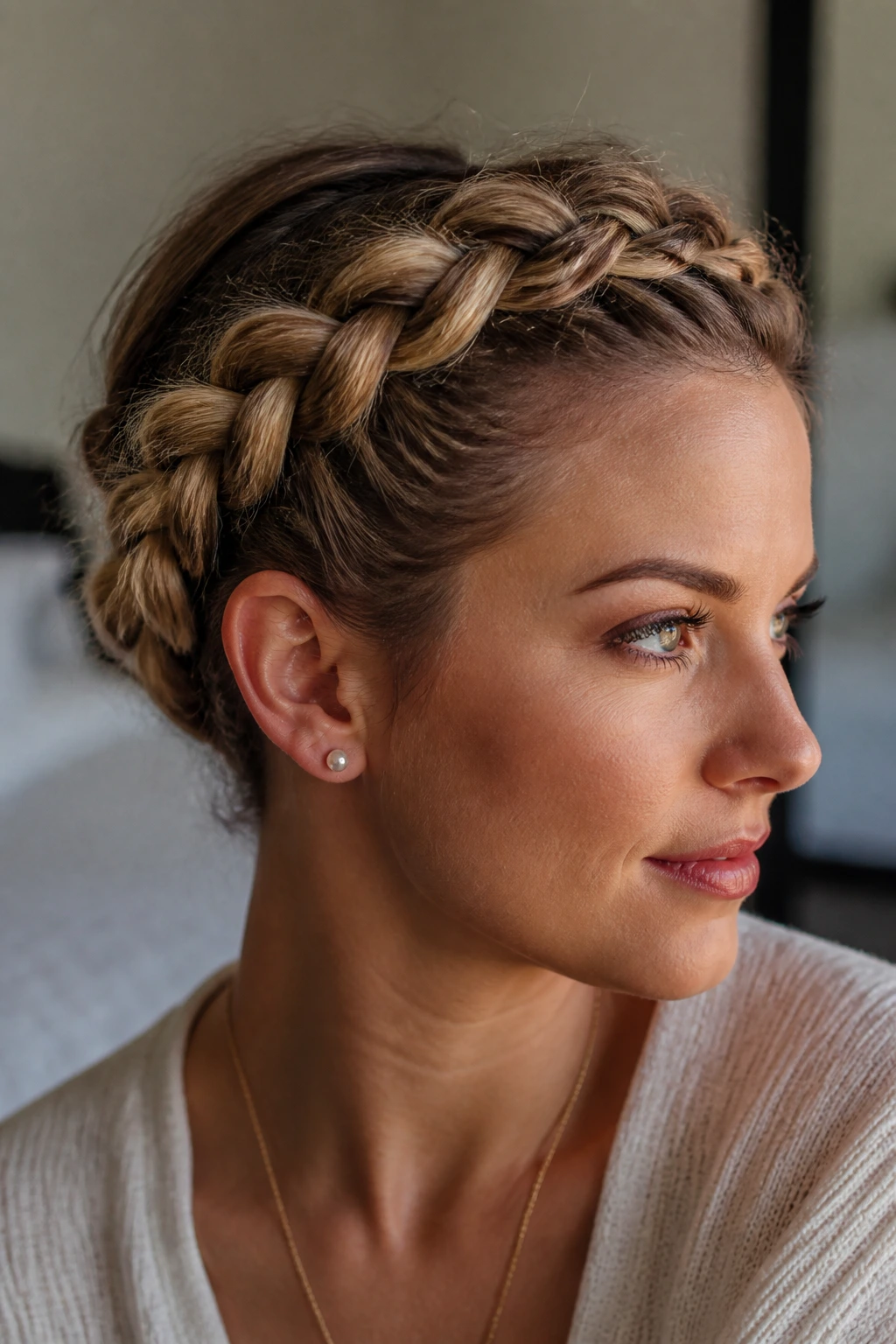
A halo braid gives short hair a more finished frame than almost anything else on this list. Instead of trying to fight the length at the back, you use the braid around the front and sides, where short layers tend to behave better.
It works because the braid follows the strongest part of the cut: the perimeter. Pin it every couple of inches, especially near the ears and nape, where shorter pieces love to pop loose. If the back length is too short to wrap fully, stop the braid under the opposite ear and hide the finish with a bobby pin.
5. Braid-Back Fringe French Braid
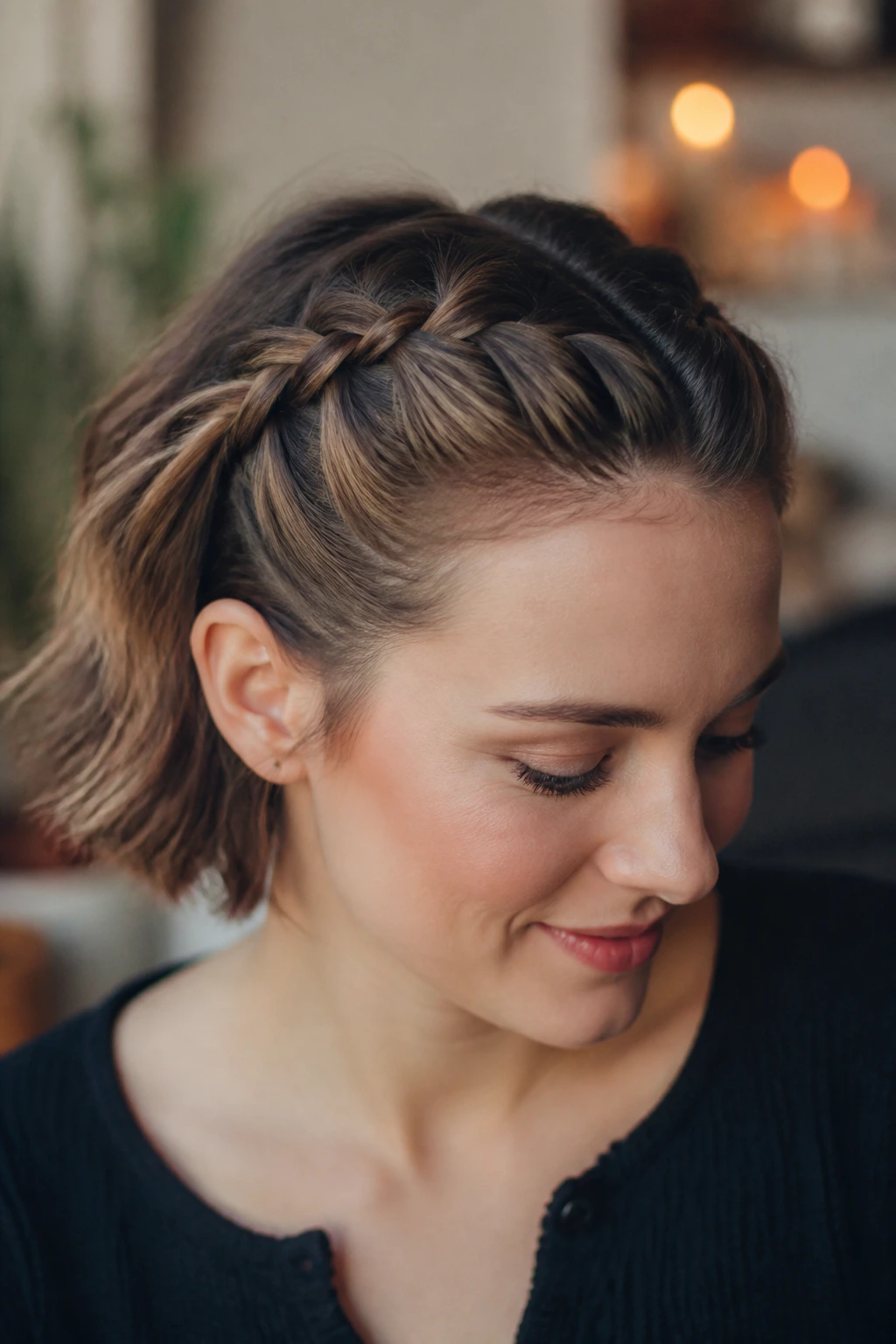
Grown-out bangs are annoying right up until you braid them back. This style starts with the fringe and pulls just enough hair into the braid to keep the front off your face without turning the whole style into a full head braid.
Use this when your shorter front pieces are at that awkward length between “grown out” and “too short to tuck neatly.” The trick is to stay small. Once the braid gets too wide, the fringe stops lying flat and the shape turns lumpy.
6. Faux Hawk French Braid
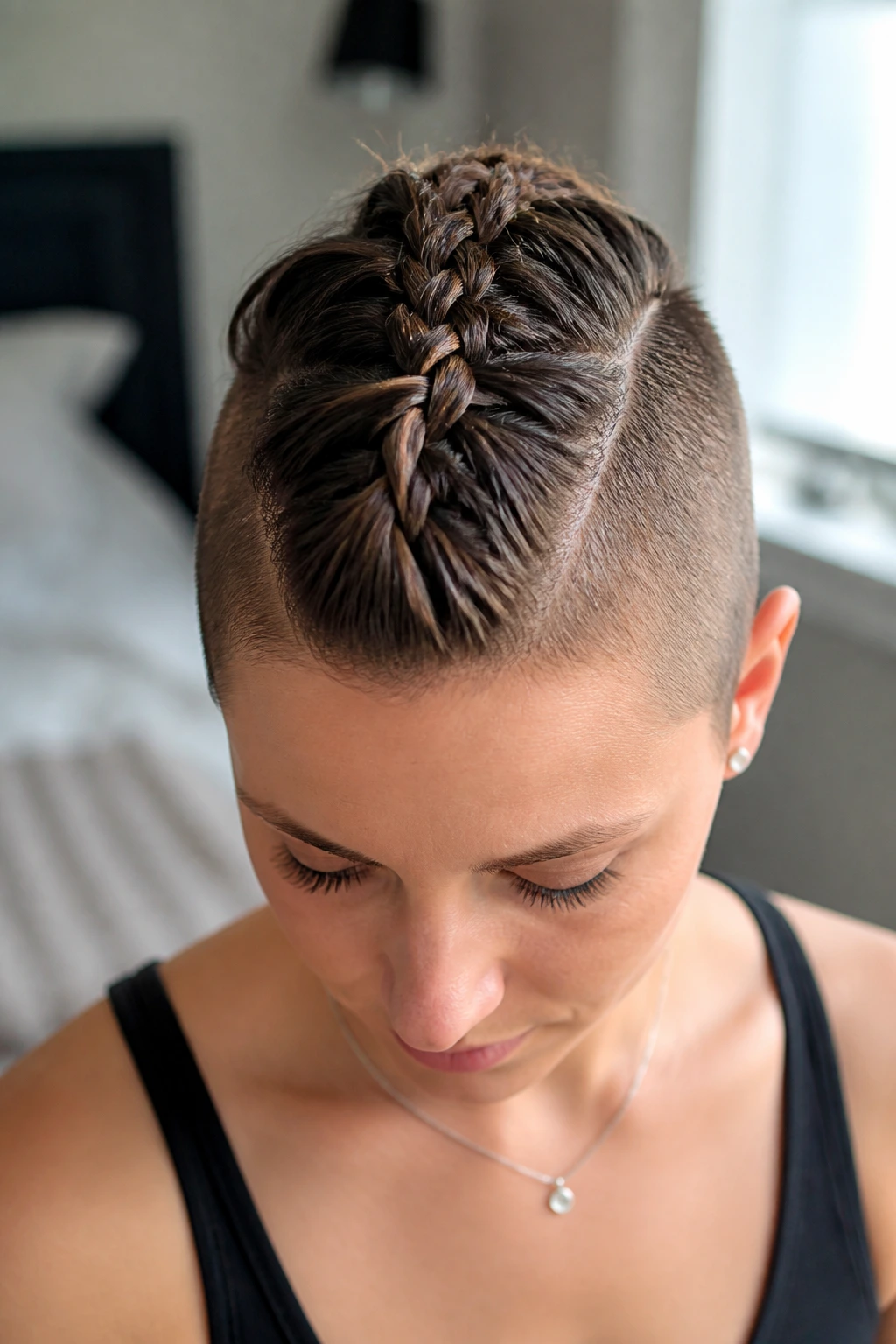
This is the one that wakes up flat roots. Keep the sides close to the head and build the braid straight down the center, so the shape lifts instead of spreading. Short hair gives the faux hawk extra attitude because the braid ridge has less length to collapse into.
A little dry shampoo at the roots helps here. So does a light mist of texturizing spray before you start. If you want more height, gently tug the outer edges of the braid after it’s secured. Don’t yank. Just widen the loops a touch so the center line stands up better.
7. Half-Up French Braid for a Lob
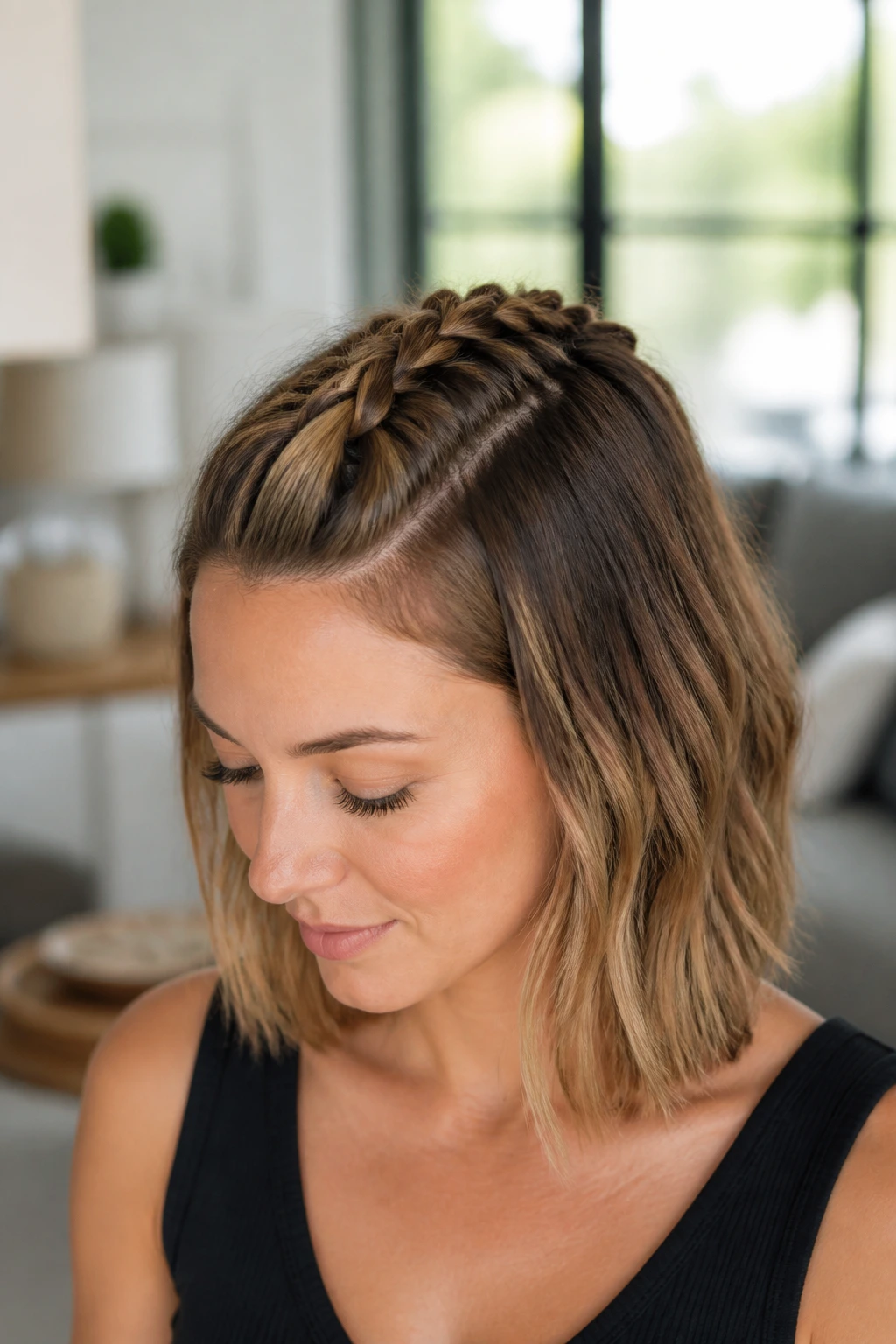
Half-up styles and lobs belong together. A small French braid from the front hairline to the crown gives you structure without having to rope in every last strand.
This one is especially good when your ends are curled or waved, because the braid creates a neat top section while the rest stays loose. Stop the braid at the crown, secure it, then let the loose hair fall over the shoulders. It’s a simple move, but the line from front to back looks clean.
8. French Braid Rolled into a Low Tuck
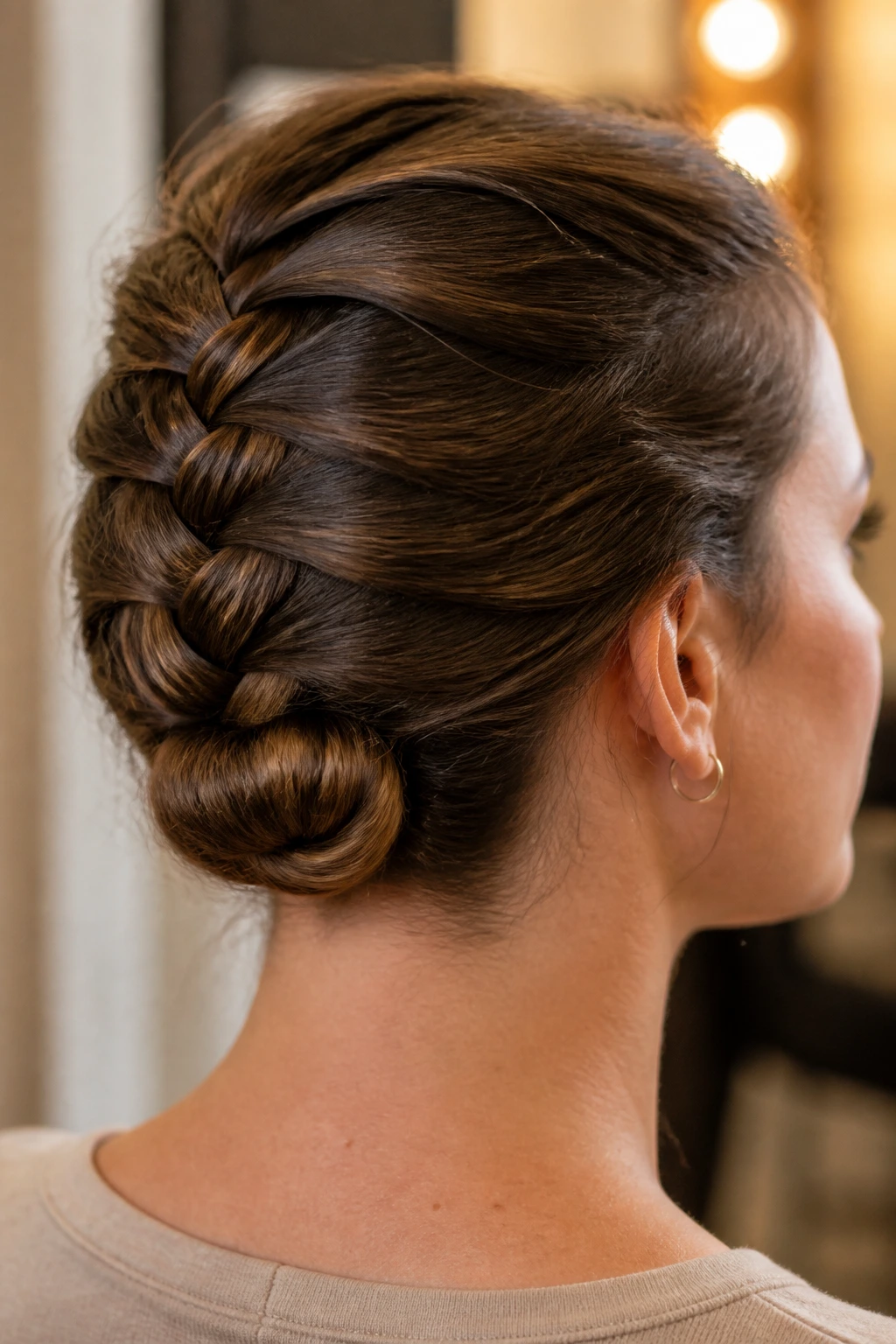
When the hair is too short for a full braid tail, roll the last few inches into itself. That’s the whole trick. Braid straight back to the nape, then fold the tail upward or inward and pin it into the base.
Use strong bobby pins, not the flimsy ones that bend if you look at them wrong. This style works because the tuck hides the short end and makes the braid look finished. On a blunt bob, it can create a tidy little bun shape without pretending the hair is longer than it is.
9. Pigtail French Braids with Short Ends
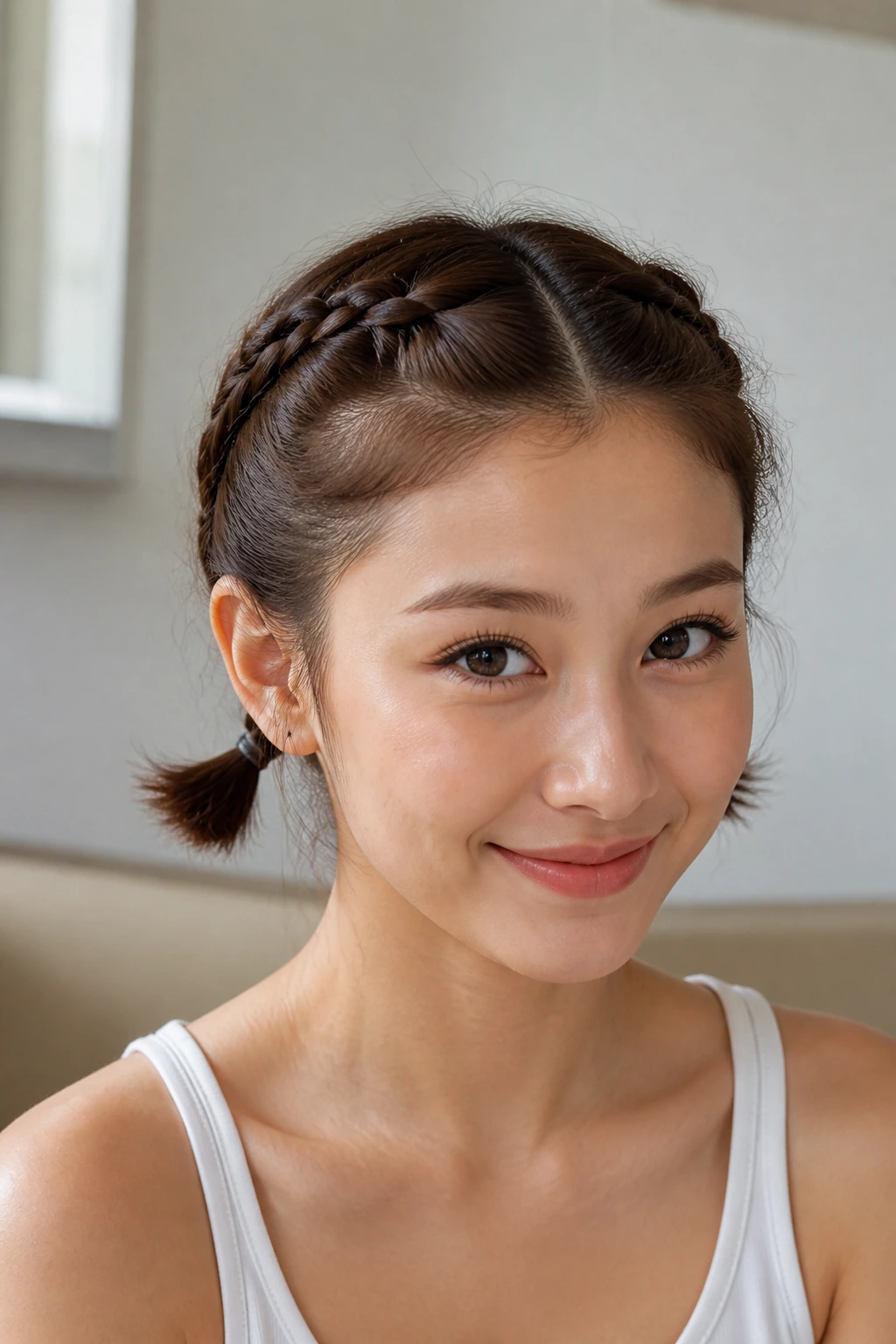
Two small French braids at once can look playful or practical, depending on how tight you make them. On short hair, they’re usually both. The key is to keep the sections even so the braids land at the same height.
This style is a good answer when a single braid feels too heavy or when your hair keeps splitting apart in back. The ends do not need to be long. Let them stick out, tie them off, or pin them under. Short ends can look cute here instead of awkward, which is a nice change.
10. Waterfall French Braid for Layered Hair
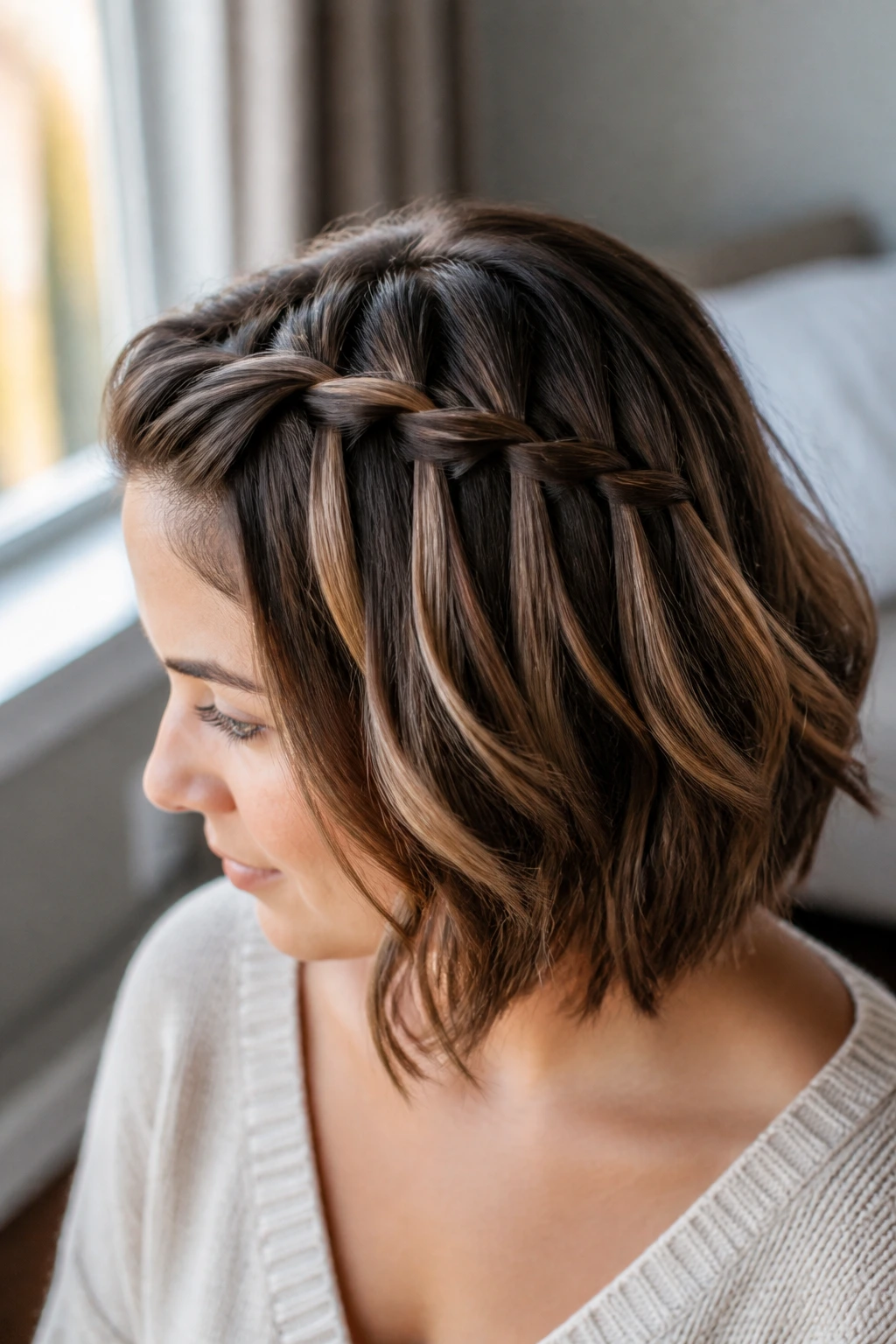
Layered short hair is where the waterfall braid earns its place. Instead of feeding every strand into the braid, you let one section drop and take a new section in from above. That keeps the style airy and lets the layers show.
It’s not the best choice if you want the hair locked down. It is the right choice if you want movement and a little softness around the face. Wavy hair holds this braid especially well because the dropped pieces don’t vanish into the rest of the cut.
11. Zigzag-Part French Braid
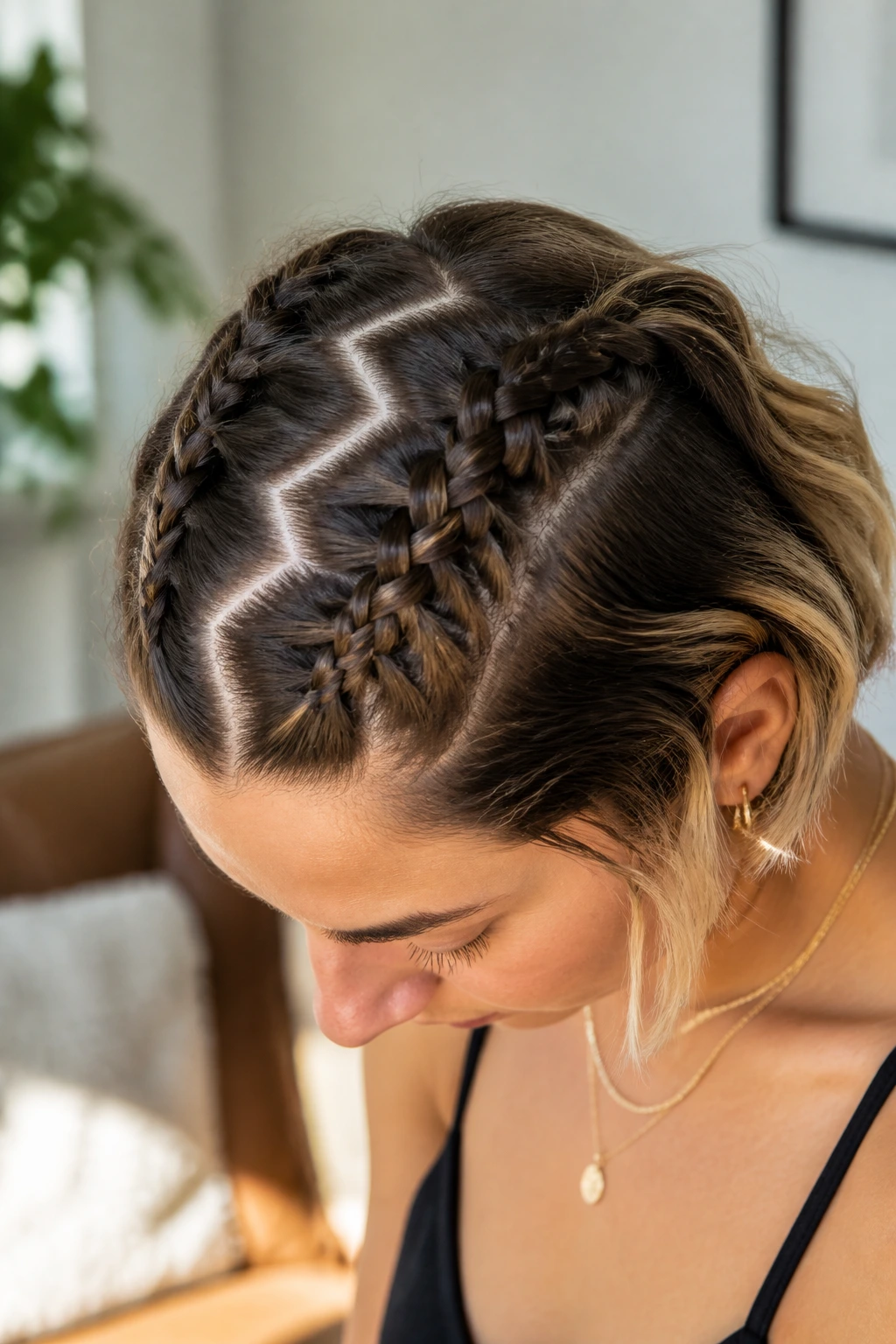
A zigzag part can make a basic braid feel more intentional in about thirty seconds. The shape is right there from the start, so you’re not relying on the braid alone to create interest.
Use the point of a rat-tail comb to sketch the part, then braid one or both sections depending on how dramatic you want the result. This is especially useful on fine hair, because the irregular part adds texture without piling on product. The whole thing looks a little sharper when the part is crisp and the sections are small.
12. French Braid Headband Across the Crown
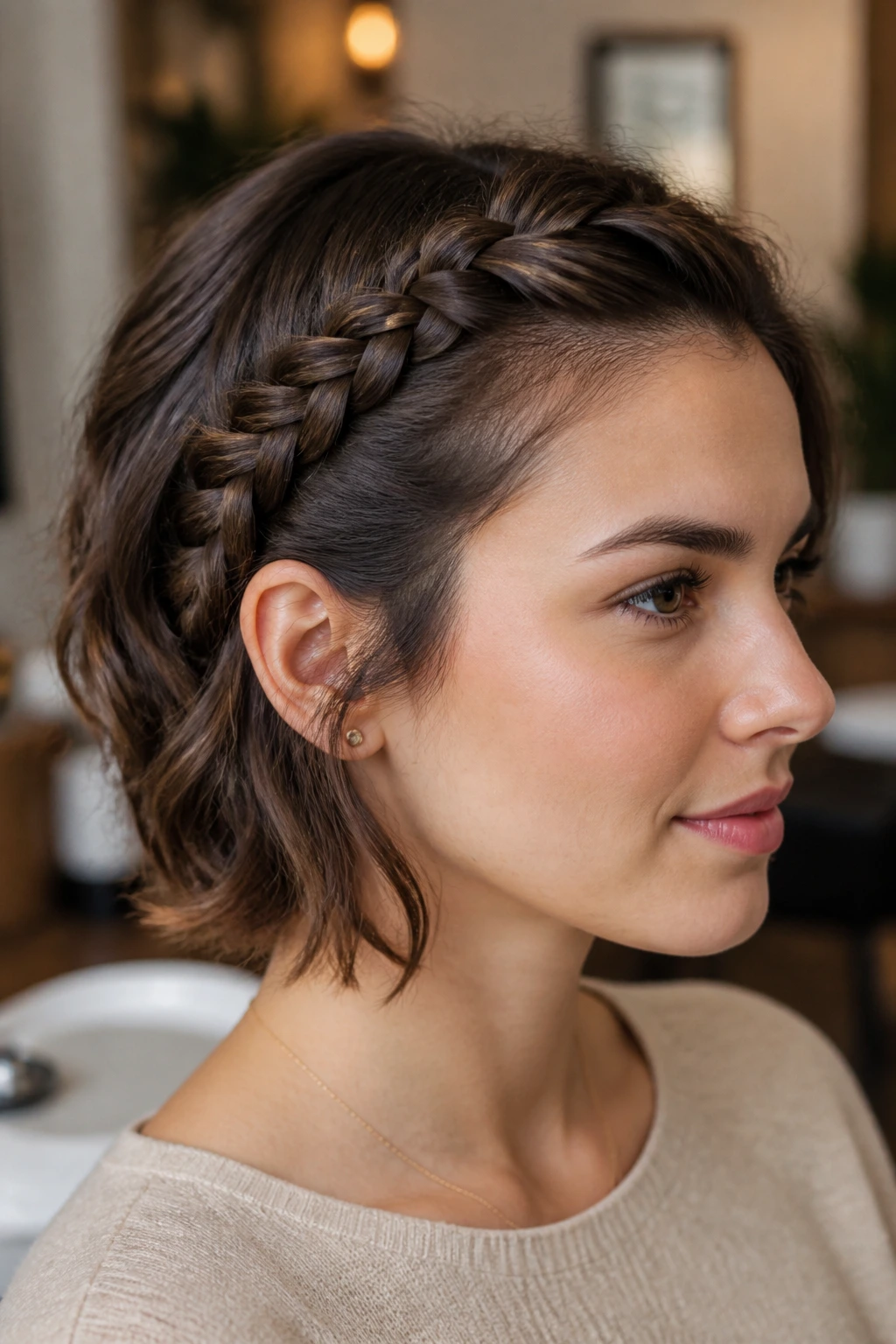
This one behaves like a built-in accessory. Start near one temple, braid across the front hairline, and anchor it behind the opposite ear so it sits like a headband.
It’s a smart move for short hair because the back length can stay loose while the front stays out of your eyes. Use pins that match your hair color if you can. They disappear better in the crown area, where the braid needs support more than shine.
13. Micro French Braids at the Temples
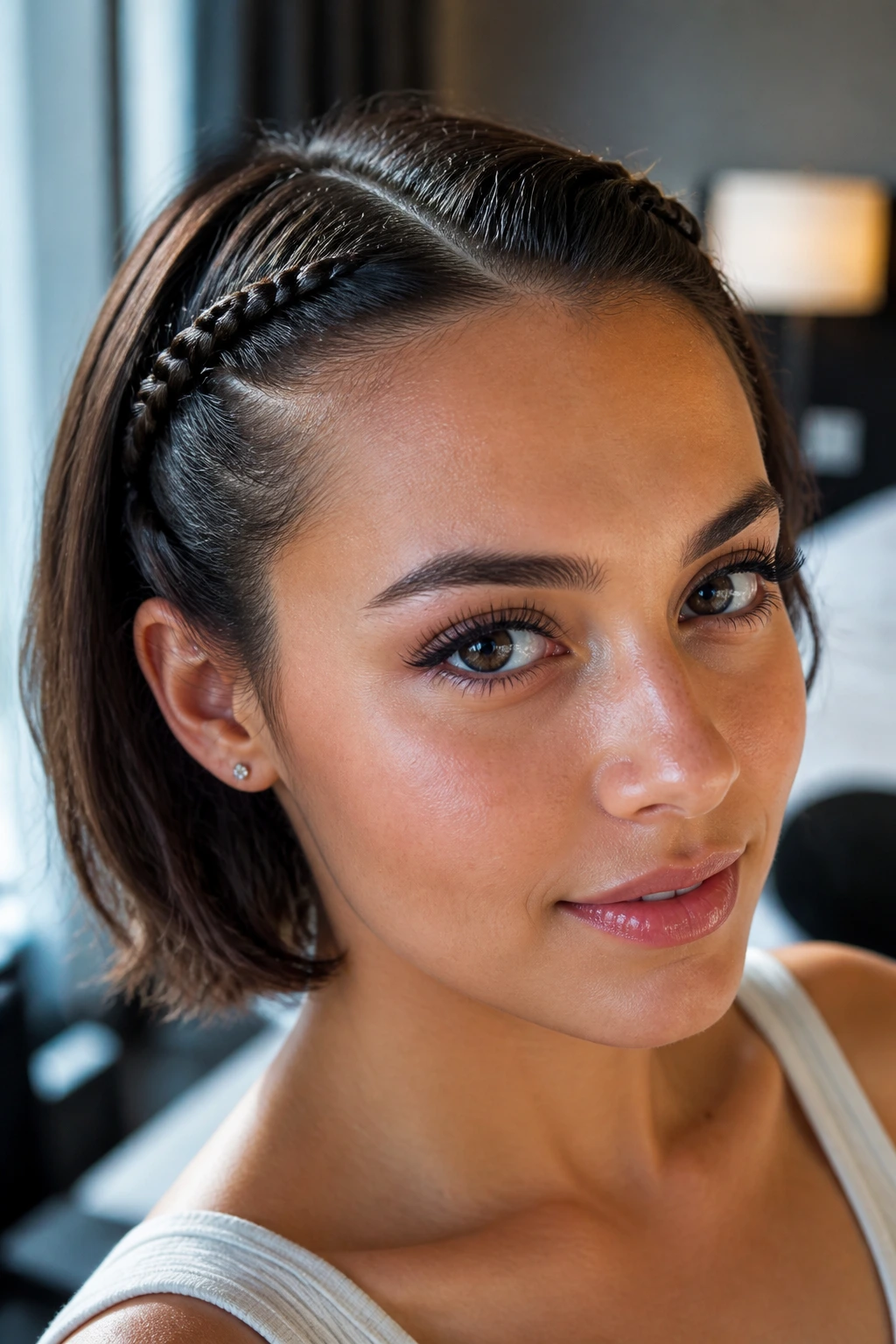
Tiny braids at the temples give short hair some edge without asking for much length. They’re small on purpose, which makes them ideal for pixie grow-outs, short bobs, and layered cuts that won’t sit still around the face.
You can do one on each side or keep it asymmetrical. Either way, feed in very small sections and stop early. Micro braids look best when they feel almost incidental, like they grew there naturally and just happened to behave.
14. French Braid Secured with a Claw Clip
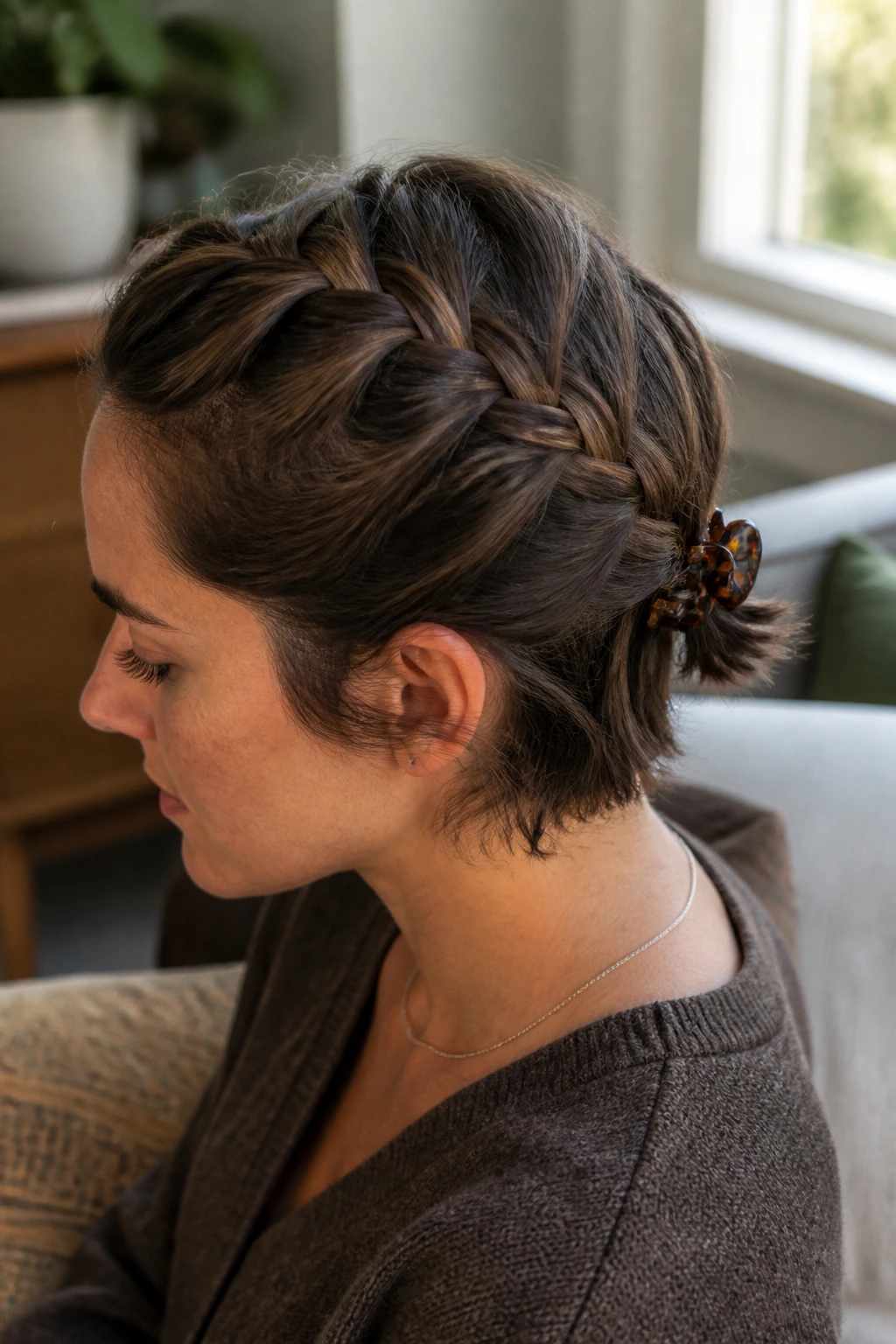
If the tail of the braid is too short to tie off cleanly, a claw clip solves the problem fast. Braid from the front or crown, then twist the remaining length and clamp it into place.
This style is built for casual days when you want the front controlled but don’t feel like fussing with pins. Use a small or medium clip, not an oversized one that swallows the whole back of the head. The braid gives structure; the clip gives you a place to stop.
15. Loose French Braid with Face-Framing Pieces
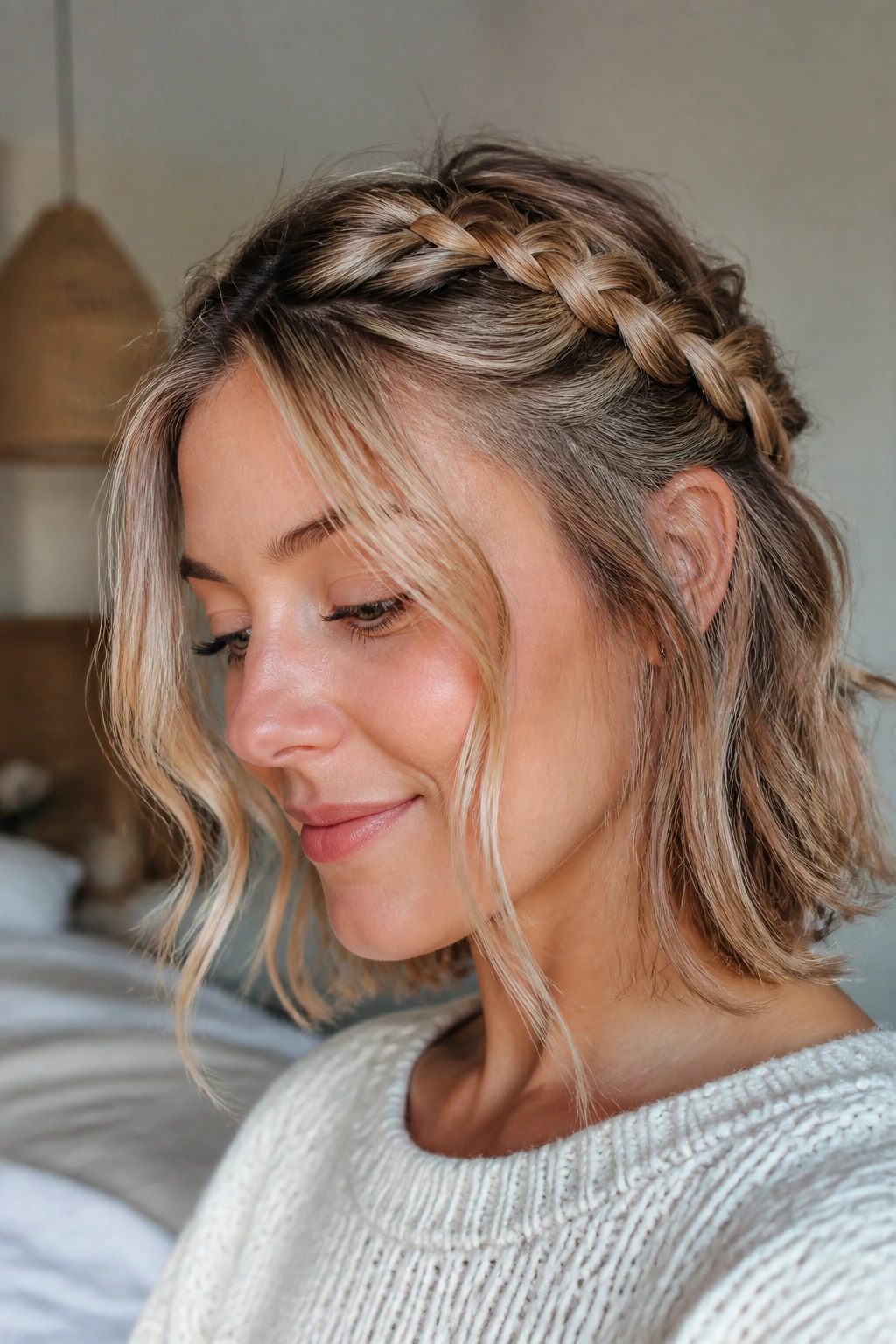
A loose French braid on short hair lives or dies by the face-framing pieces. Leave a few front strands out on purpose, then braid with a softer hand so the shape doesn’t cling too tightly to the scalp.
This style is less about control and more about shape. Gently pull at the outer edges of the braid once it’s secured, just enough to widen the loops. A light mist of flexible spray keeps the softened pieces from springing free before you leave the house.
16. Twisted Nape French Braid
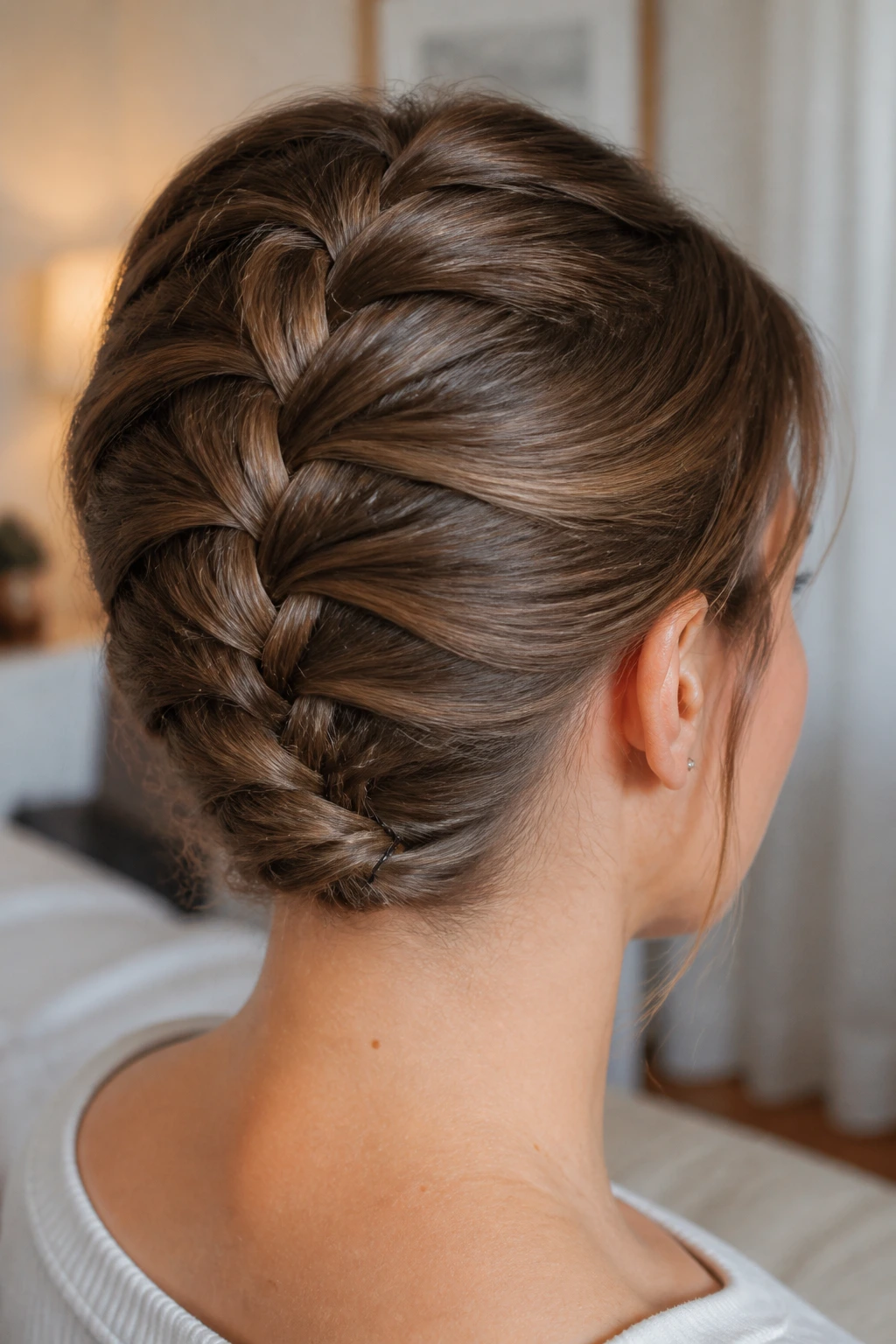
A braid that ends at the nape can look unfinished unless you give the tail a second move. Twist the last inch or two under itself, pin it flat, and let the nape disappear into the style.
This works well on chin-length bobs because the short finish becomes an advantage. You’re not fighting for a ponytail; you’re folding the last piece into the structure. It’s neat, quick, and a lot less fussy than trying to force a tiny tail into a bigger shape.
17. French Braid with Curled Ends
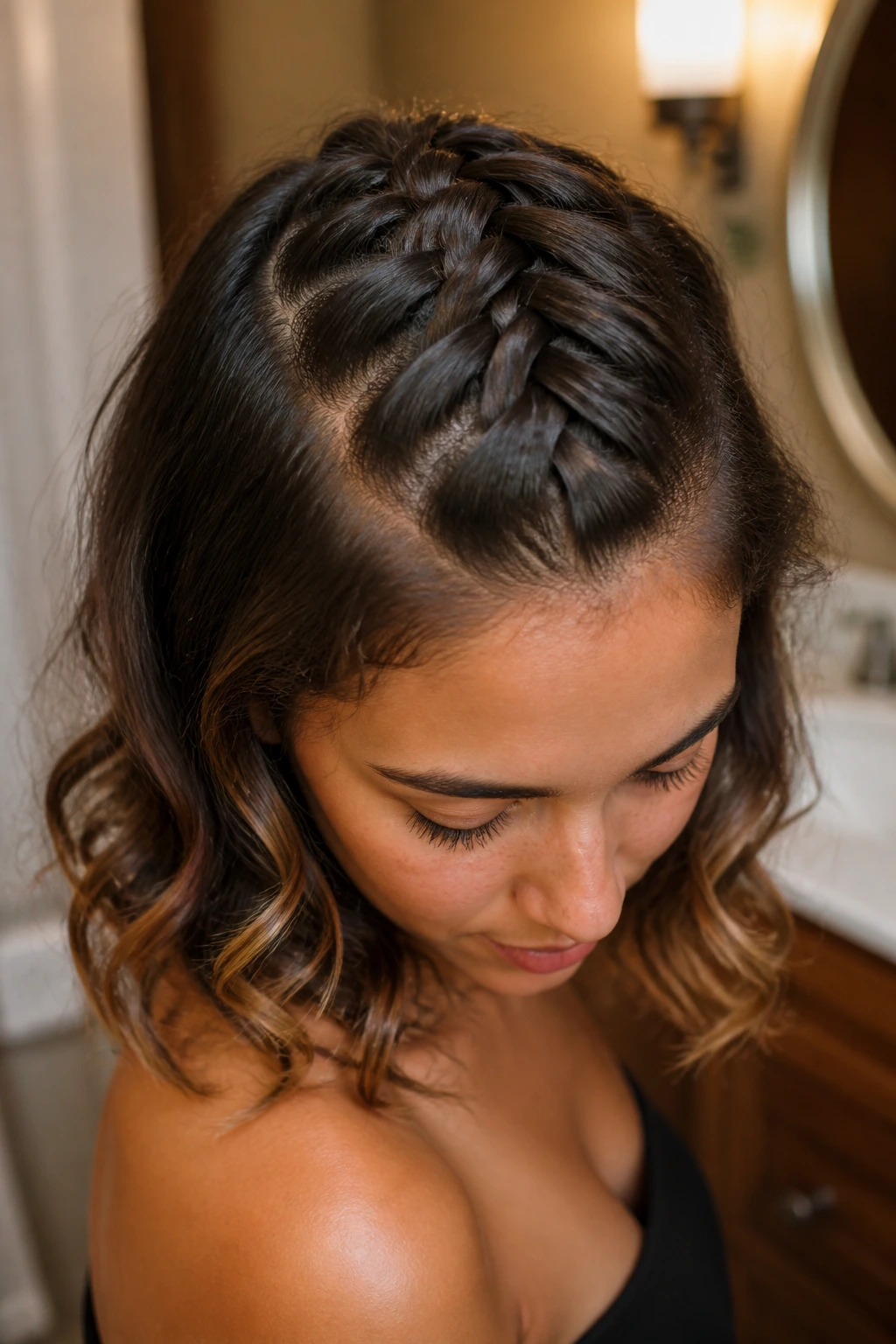
A braid on short hair doesn’t have to carry the whole look. Leave the ends loose, then curl them with a small iron or bend them with flexi rods for a softer finish.
This is one of my favorite fixes for blunt lob ends because the braid handles the top half and the curl handles the awkward bottom half. The contrast is what makes it work. Tight braid on top, soft curve at the ends. It reads as styled, not improvised.
18. Side-Swept Bang French Braid
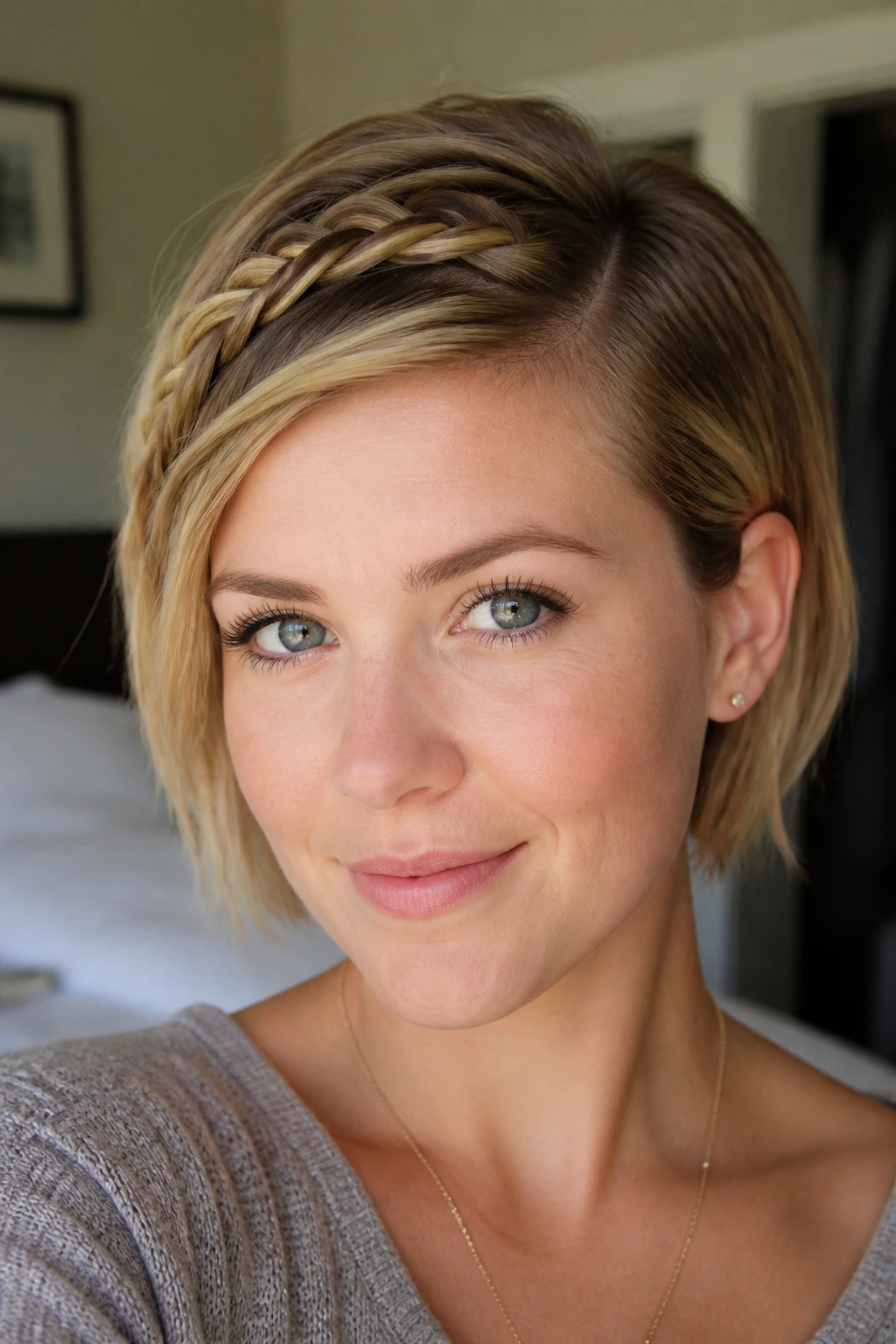
If your bangs have reached the point where they keep falling into your eyes, braid them off to the side and pin them into the rest of the hair. Keep the braid narrow so the front still lies flat.
This is the kind of style that looks simple and still saves the whole day. Use a tiny bit of styling cream on the front pieces first. That gives the short strands enough slip to join the braid without sticking straight up.
19. Pull-Through Faux French Braid
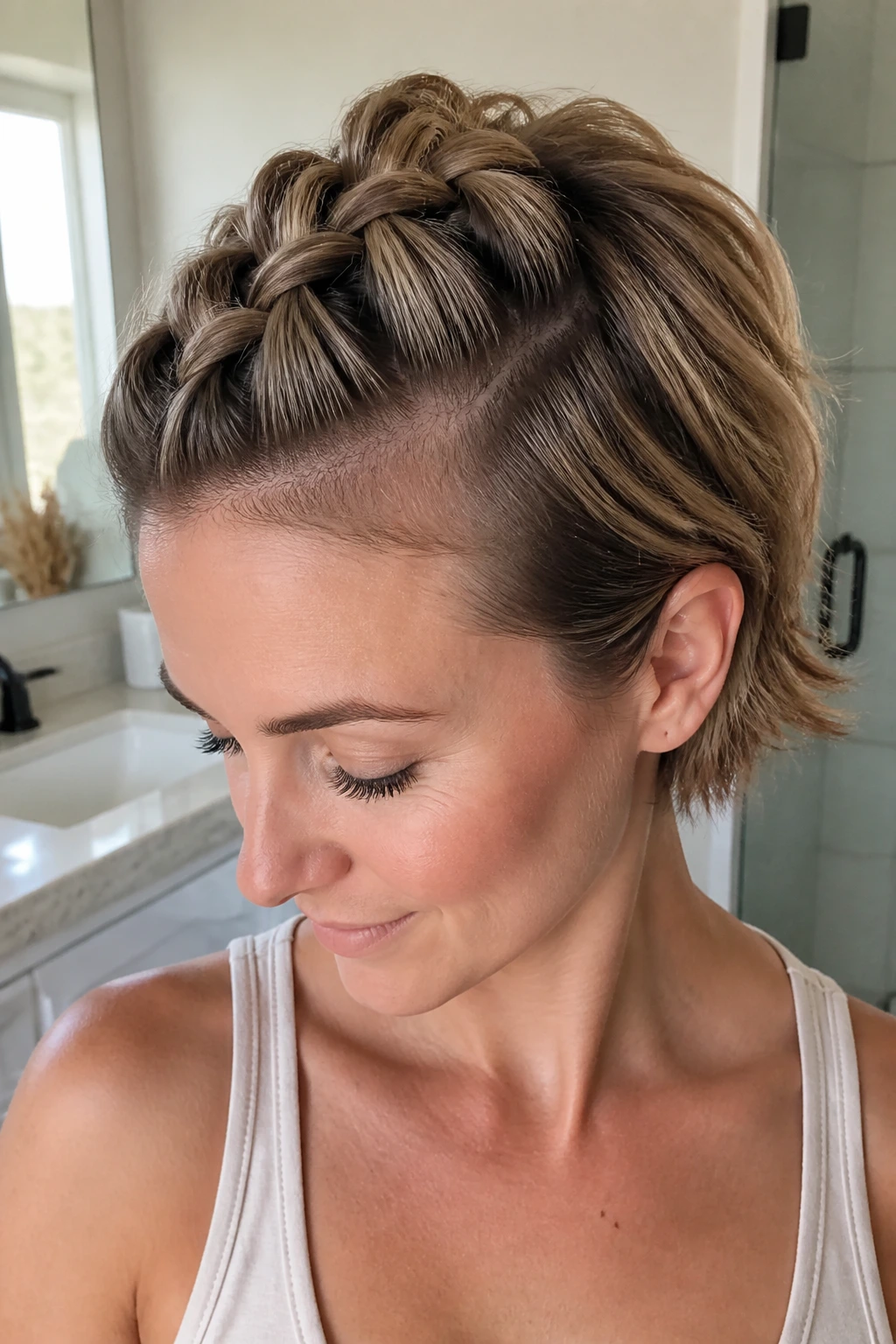
When the hair is too short or too slippery for an actual braid, the pull-through version behaves better. Make a line of small ponytails, flip each one through the next, and you get the same stacked look without weaving three strands in the usual way.
It’s a clever option for fine hair or slippery layers. The best part is that you can adjust the size of each section until the shape feels right. If one piece falls loose, you usually can fix it without starting over, which is worth a lot on short hair.
20. Asymmetrical French Braid Down One Side
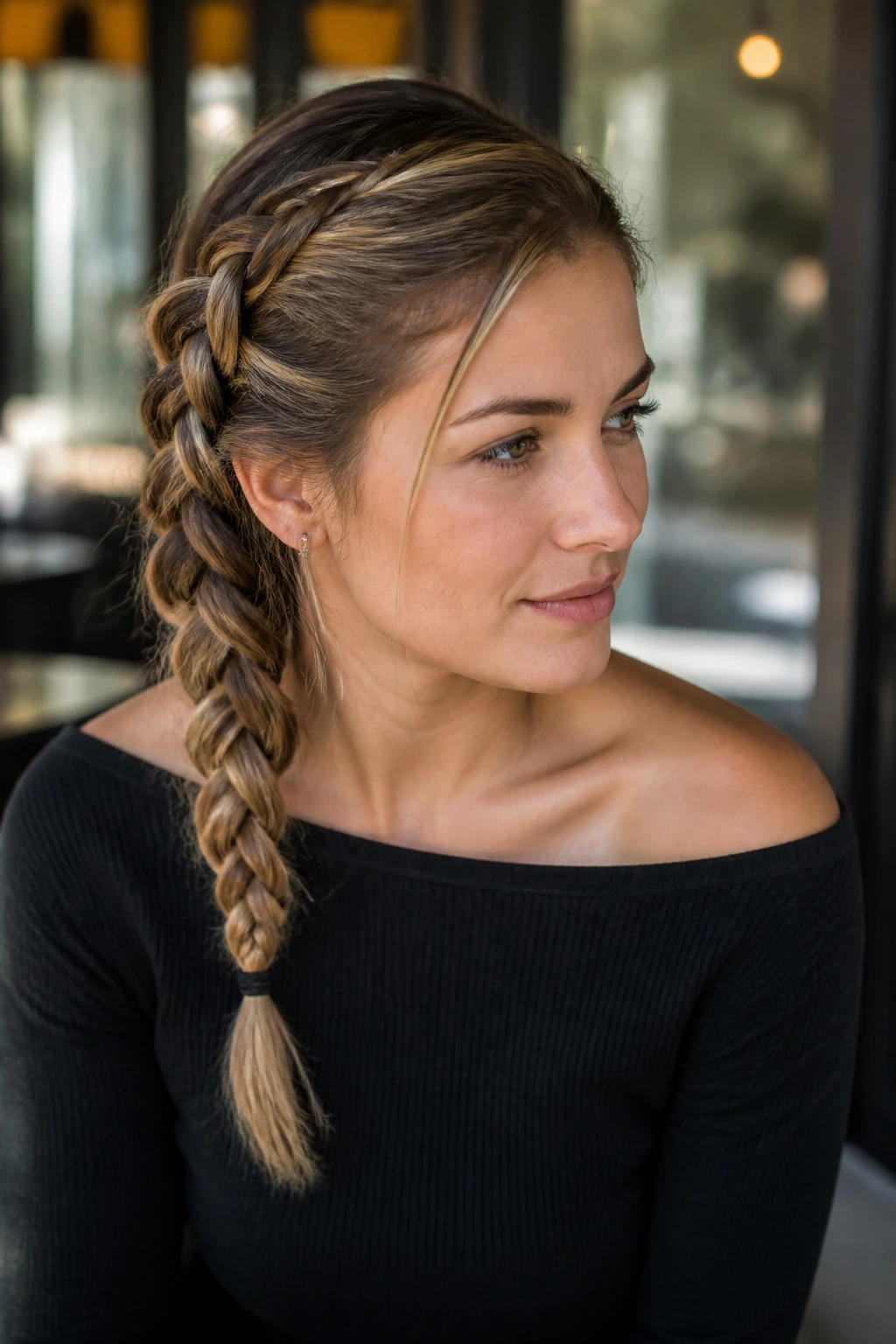
One-sided braids have a lot of personality for very little effort. Start near one part, track the braid diagonally across the head, and let it drop over one shoulder or behind the ear.
This look flatters uneven lengths because the eye reads the diagonal line first. The shape also works if one side of your cut is a little shorter than the other. Rather than hiding the asymmetry, this braid uses it. That’s the smarter move.
21. Rope-Tail French Braid Finish
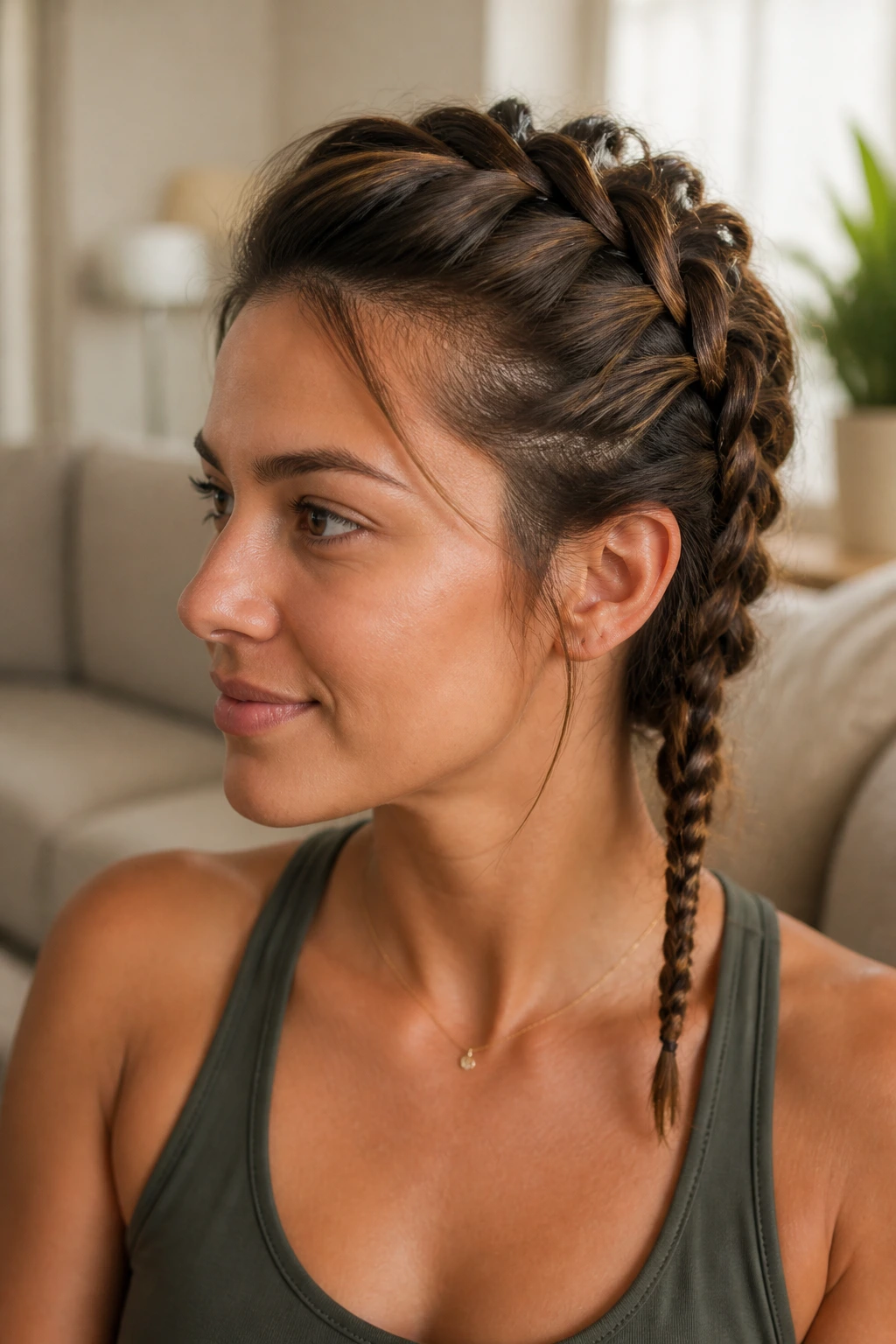
If your braid runs out of length before you want it to, switch the tail into a rope twist. Split the remaining hair into two sections, twist each one, then wrap them together in the opposite direction.
The change in texture at the end makes the style look deliberate. It’s a nice fix for hair that’s too short for a full three-strand finish, and it stays tidy better than a limp little tail. Secure it with a small elastic and keep the twist tight.
22. Braided Crown with Open Back Length
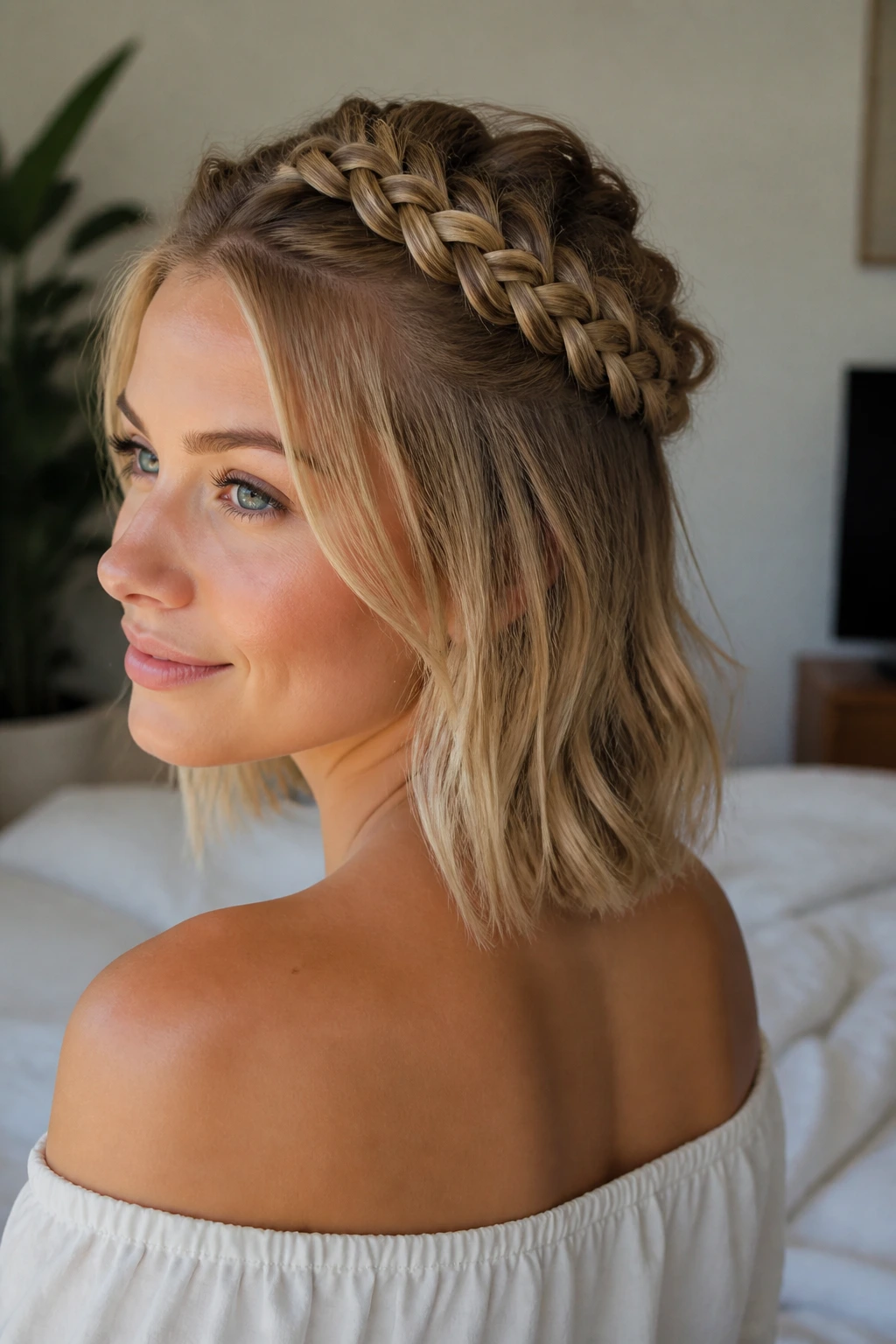
This crown version uses the top and front sections as the star while leaving the back loose. It’s a good compromise for short hair that doesn’t want to be fully pinned up.
The braid frames the face and crown, which gives the style shape, while the loose back keeps the cut visible. That matters on a bob or lob. You want the braid to decorate the haircut, not swallow it. A few hidden pins behind the ears usually do the trick.
23. Fishtail-Ended French Braid
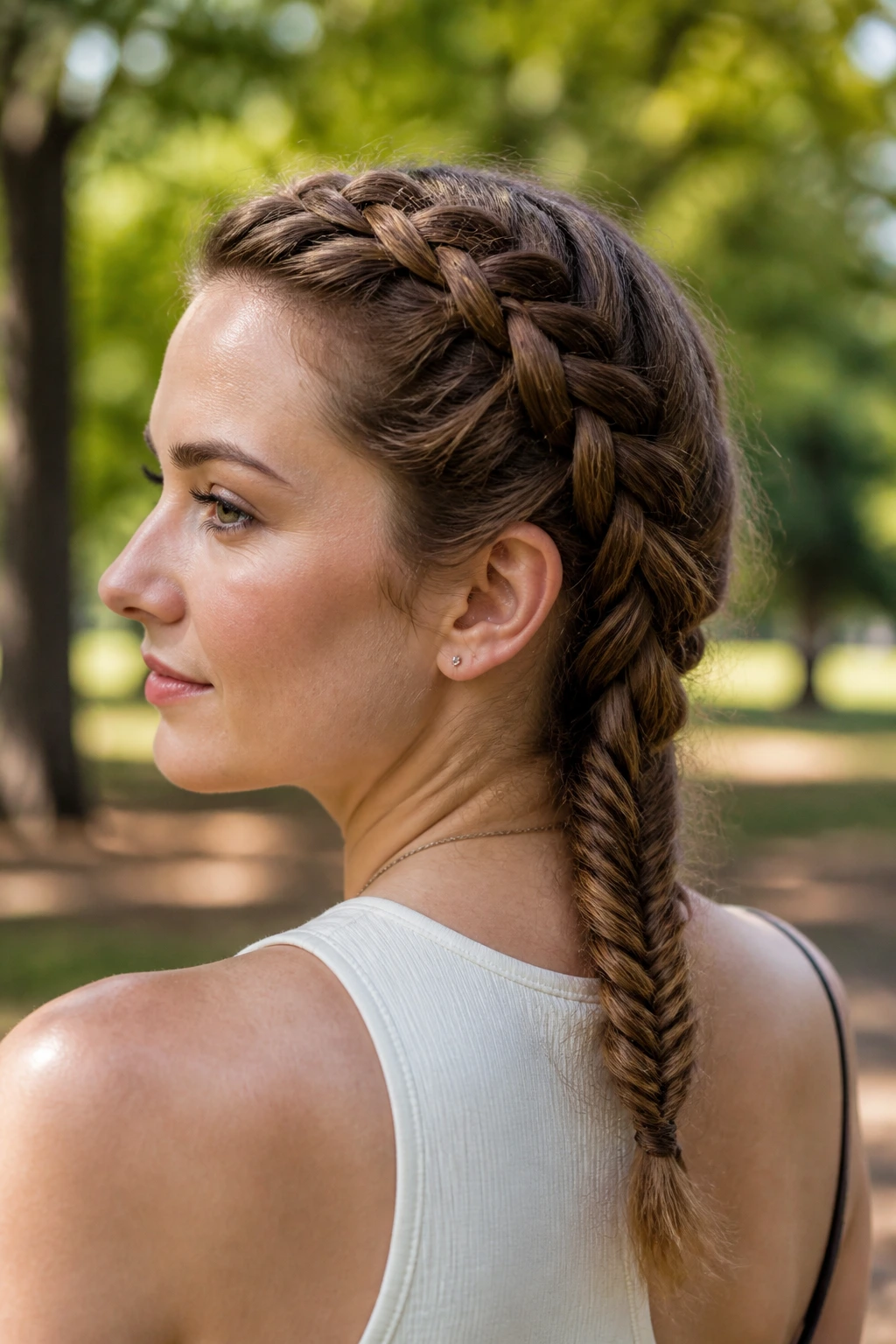
A French braid that turns into a fishtail at the end gives you detail where the hair gets thin. The top stays structured, then the tail becomes finer and more textured.
This works well when you want something a little more intricate without needing tons of length. The fishtail section is easier to manage once the braid is already anchored. On short hair, that transition often looks better than trying to force the whole style into one method.
24. French Braid into Low Space Buns
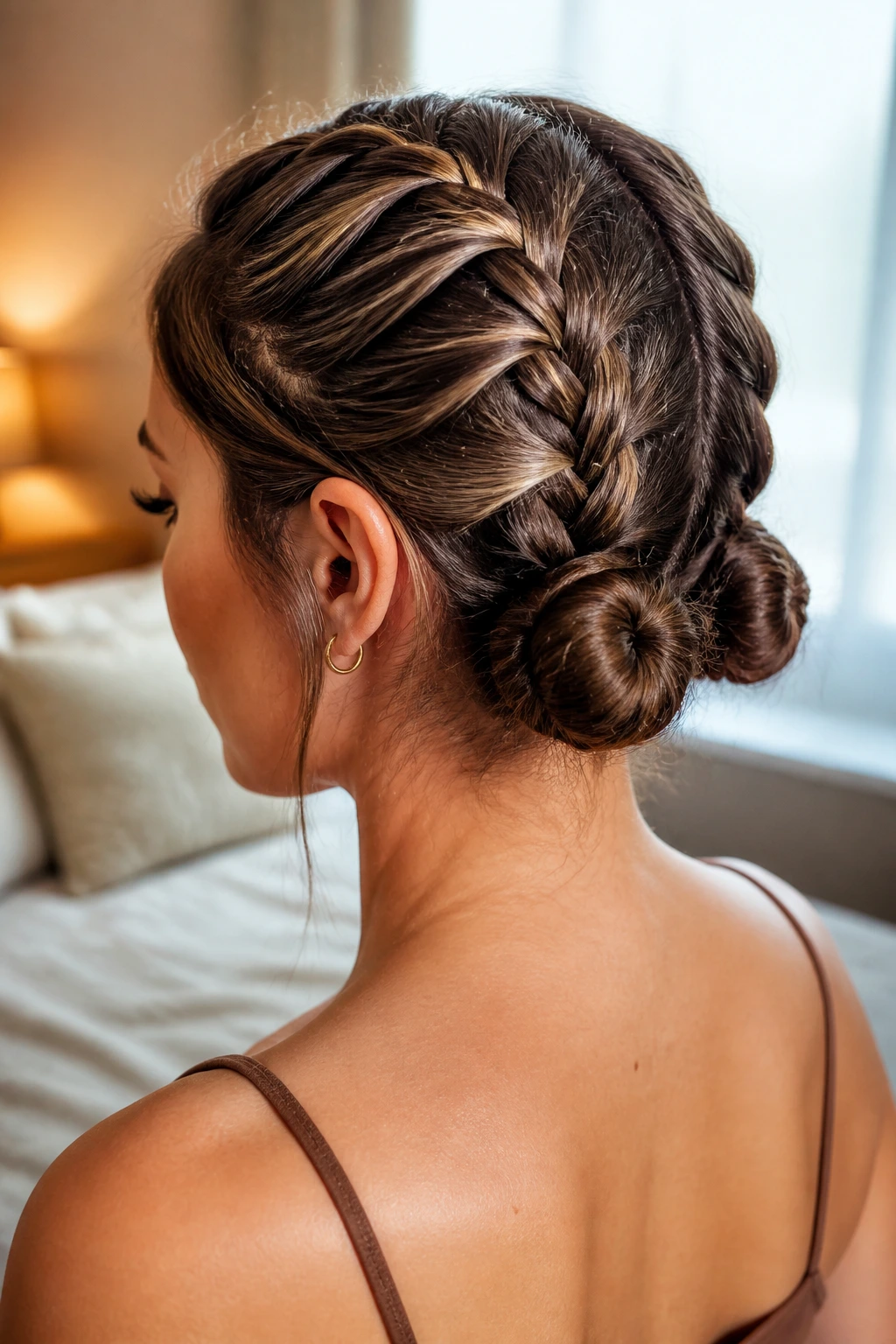
Space buns on short hair do not need to be big to work. Braid from the front or crown, split the remaining hair into two small bunches, and twist each one into a low bun near the nape.
This style is a little playful and a little structural, which is a good mix for shorter cuts. The buns will be small. Let them. Small buns on short hair can look cleaner than oversized ones that fight the length. Use pins to tuck in the ends and keep the shape compact.
25. One-Side Accent French Braid
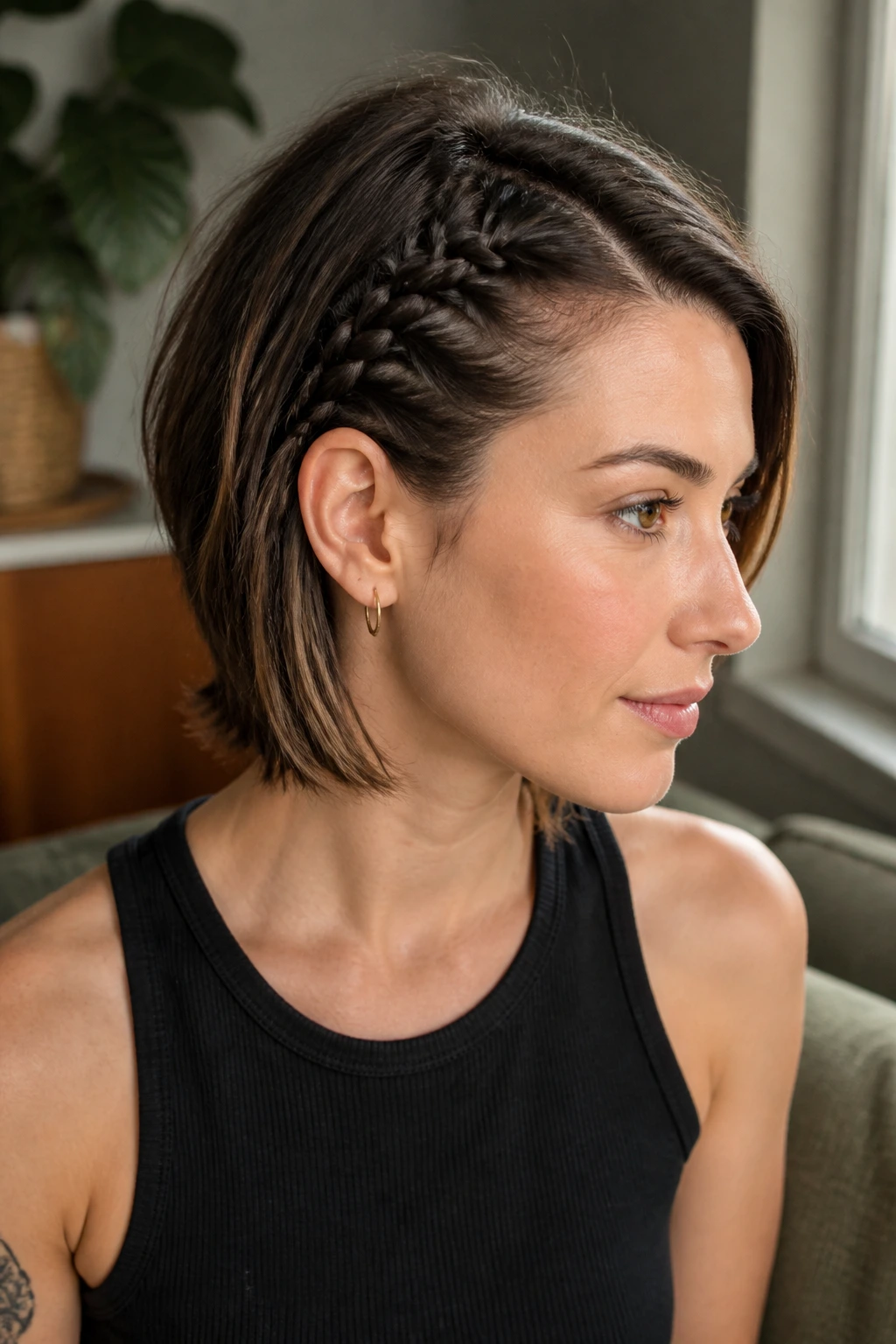
Sometimes you only need one clean line. A slim accent braid along one side of the head adds interest without changing the whole haircut, which is handy on days when you want the hair loose but not plain.
This is probably the fastest style on the list. Braid a narrow strip near the part, secure it behind the ear, and leave the rest alone. A little shine cream on the loose hair can make the contrast feel sharper, especially if the braid itself is matte from dry shampoo.
26. French Braid with a Scarf Woven Through
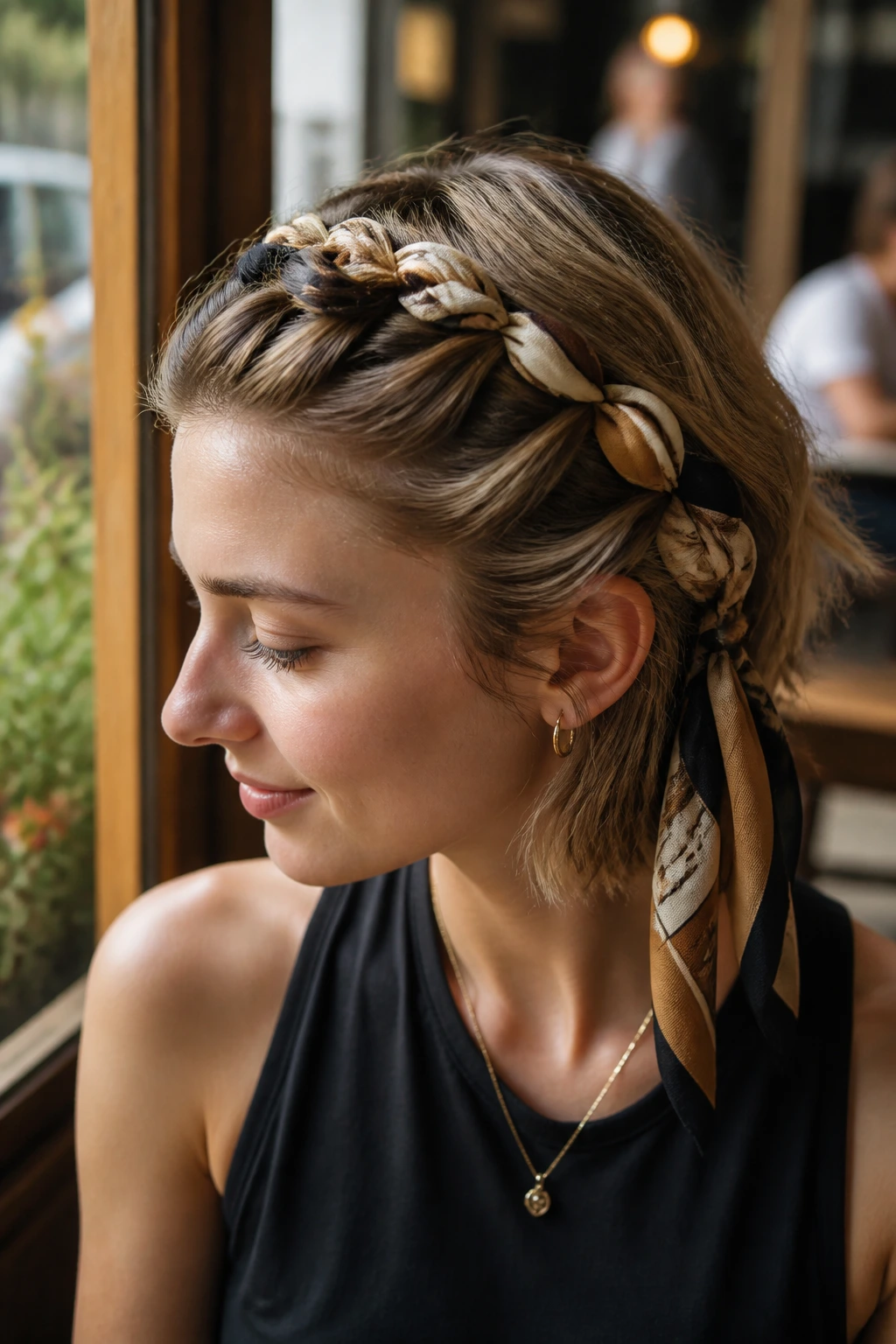
A scarf changes the mood fast. Thread a slim silk or cotton scarf through the braid as you work, or tie it at the end so it hangs like a tail.
This is especially useful on short hair because the scarf gives the eye something to follow when the braid ends sooner than you want. Keep the fabric narrow so it doesn’t bulk up the braid. A thick scarf can overwhelm a bob in seconds. A thin one sits better and looks cleaner.
27. French Braid Set for Heatless Waves
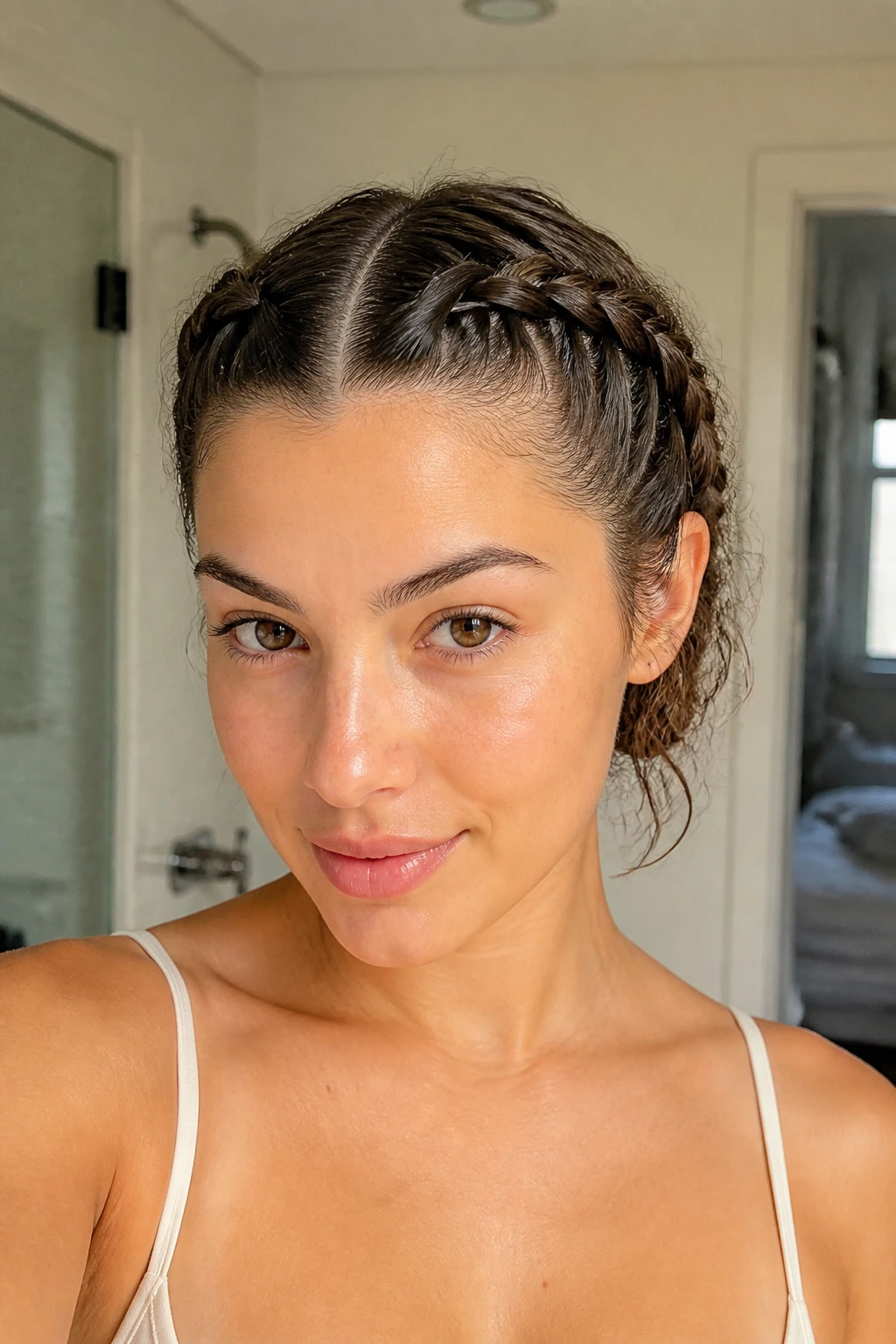
Braid damp hair loosely, let it dry, then take it out if you want soft waves instead of a permanent braid. Short hair needs a lighter hand here. A tight braid can leave a kinked bend that feels too harsh.
Use a touch of leave-in cream or light foam on the mids and ends before braiding, not the roots. That keeps the hair from drying into a crunchy shape. If your hair is very short, do two braids instead of one; the wave pattern usually looks softer that way.
28. Pancaked Chunky French Braid
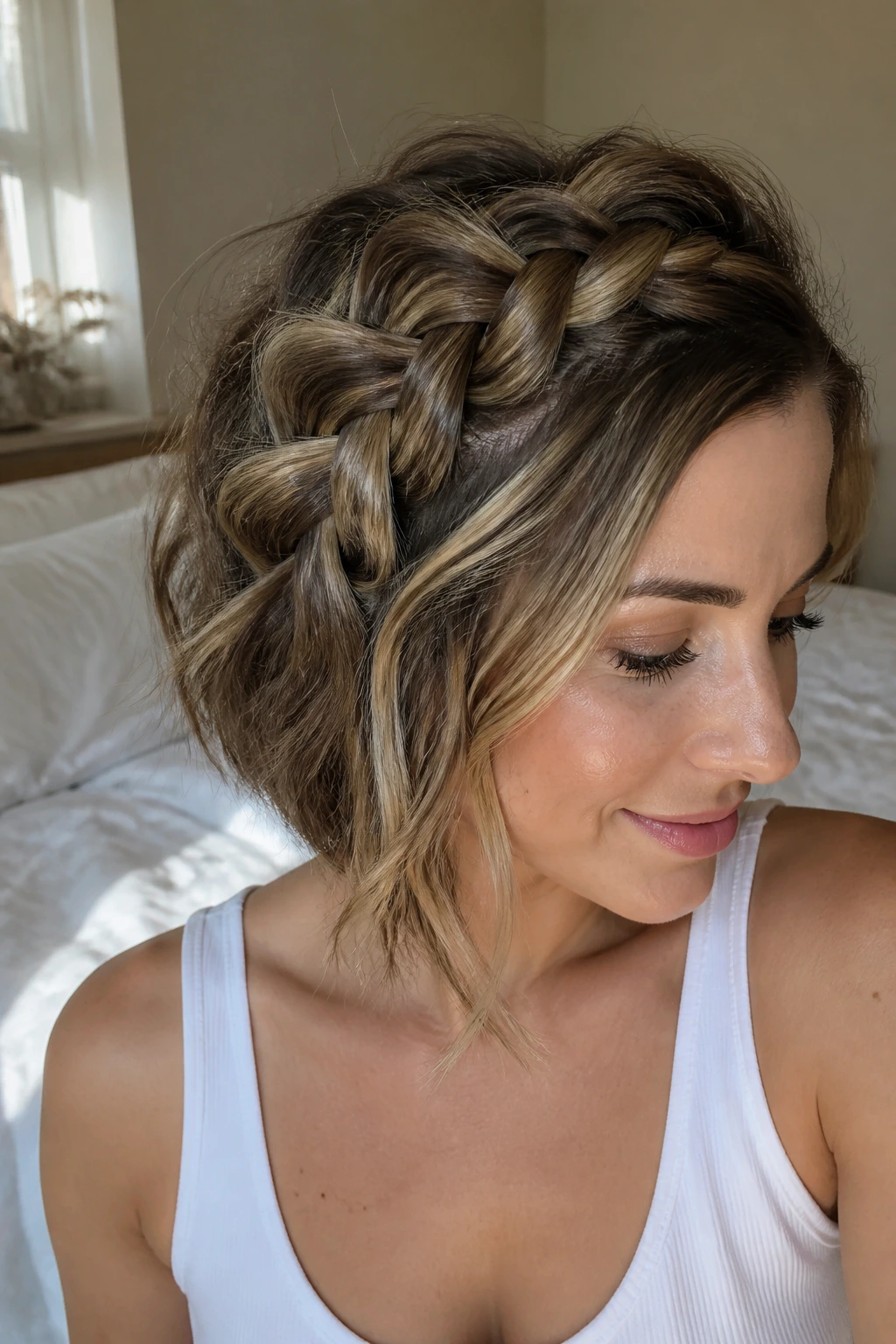
Pancaking means tugging the outer edges of the braid gently after it’s secured. On short hair, that tiny move can make a braid look thicker and more plush without adding any extra hair.
Start the braid a touch tighter than you think you need, because the widening comes later. Then pull the loops outward with your fingertips until the braid looks fuller. Don’t flatten the whole thing. You want width, not a shapeless rope.
29. Tight Sporty French Braid
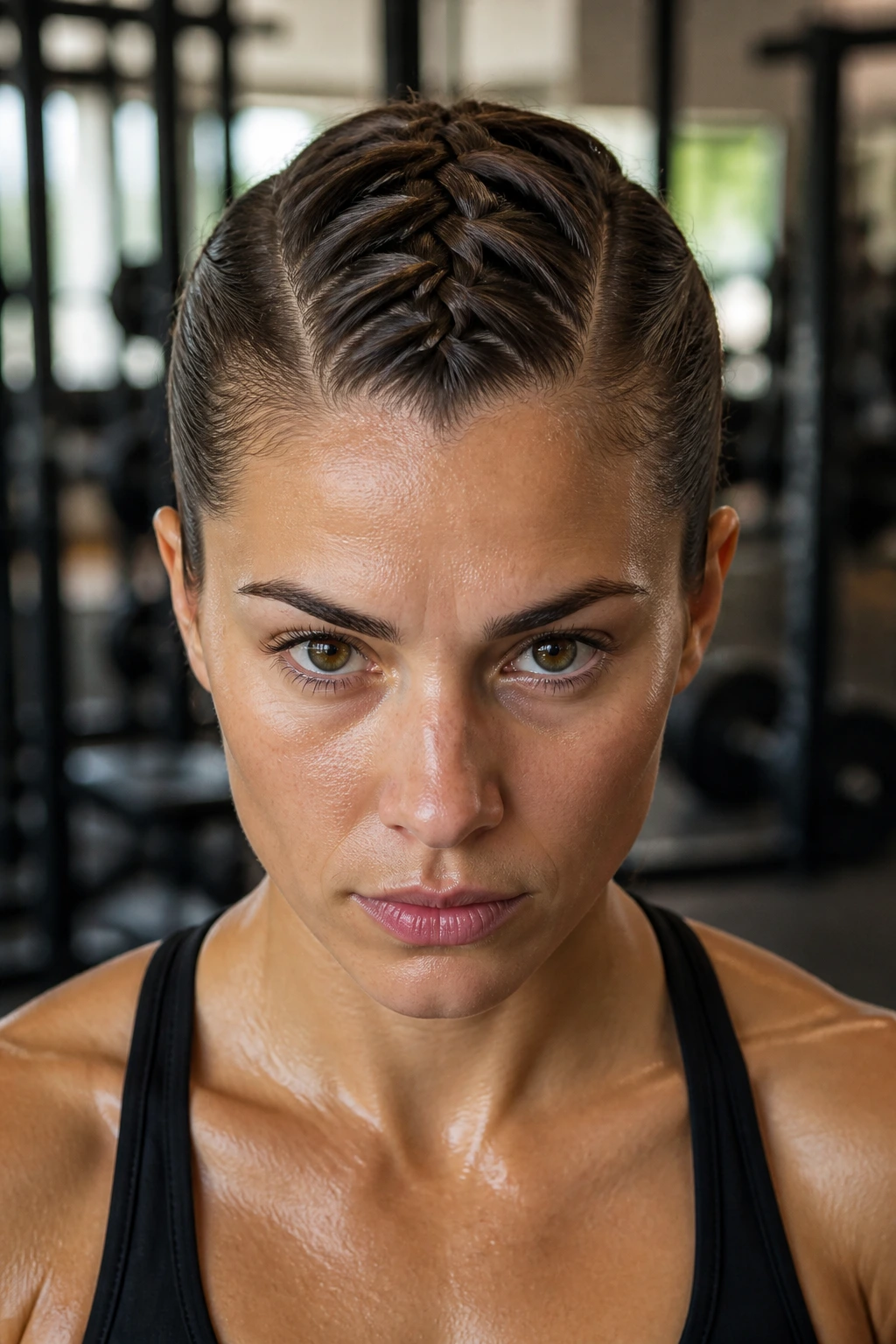
A tight braid has a different personality on short hair. It looks clean, stays put, and handles sweat, humidity, and movement better than looser versions.
This is the style I’d pick for a workout, a long walk, or a day when you know your hair will be touched a lot. Use gel or a smooth styling cream near the hairline, then braid with firm tension all the way back. If the scalp feels sore, you pulled too hard. A secure braid is enough; no need to wince through it.
30. French Braid with a Ribbon Tie
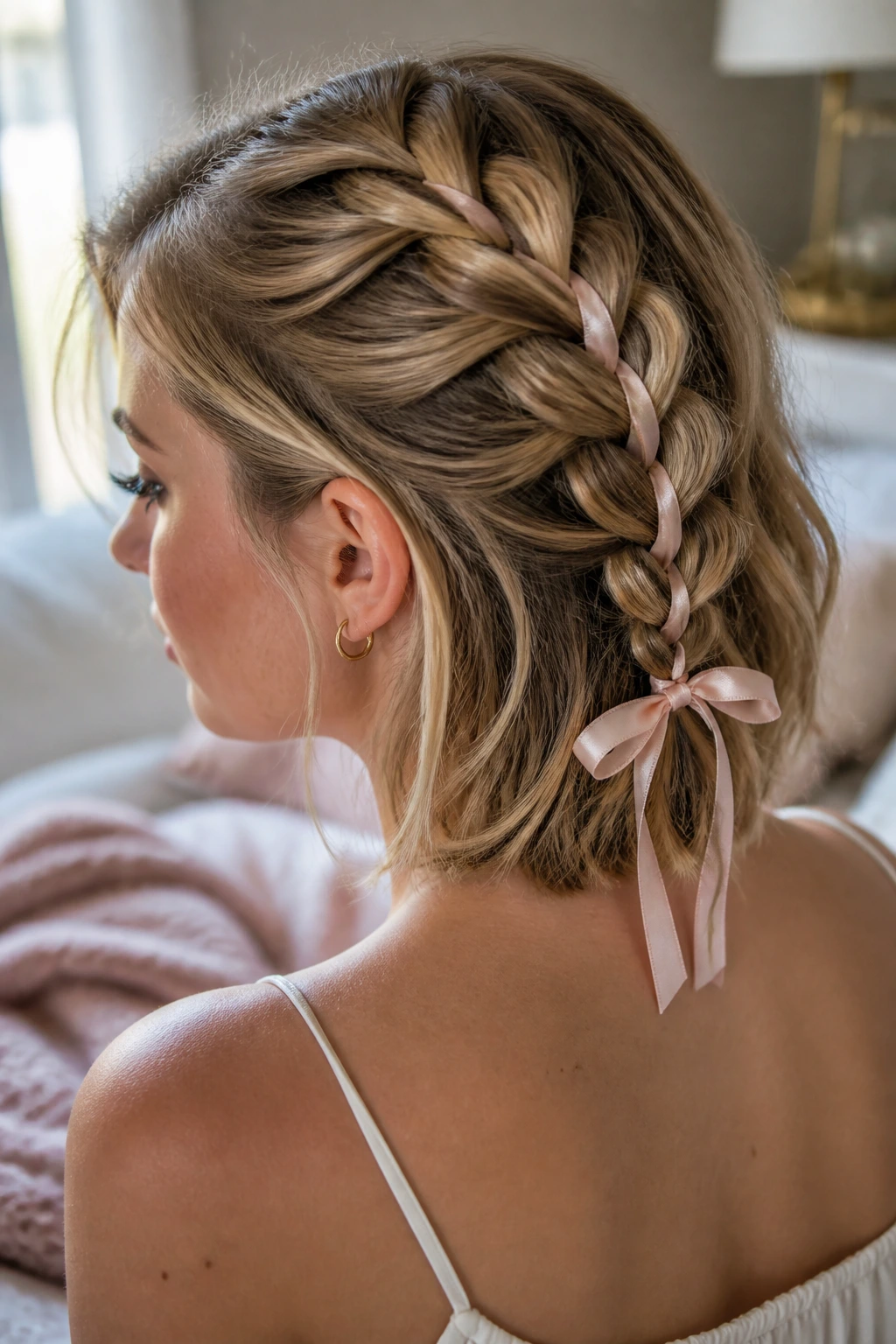
A ribbon is a neat solution when the tail is too short to do much on its own. Tie the braid off with a narrow ribbon, or weave the ribbon through the tail if there’s enough length.
Short hair benefits from this because the finish gains color and softness at the exact spot that usually feels abrupt. Satin ribbon works well if you want shine. Cotton ribbon gives a flatter, more casual look. Keep the width modest so the ribbon doesn’t crowd the braid.
31. Pin-Up French Braid Updo
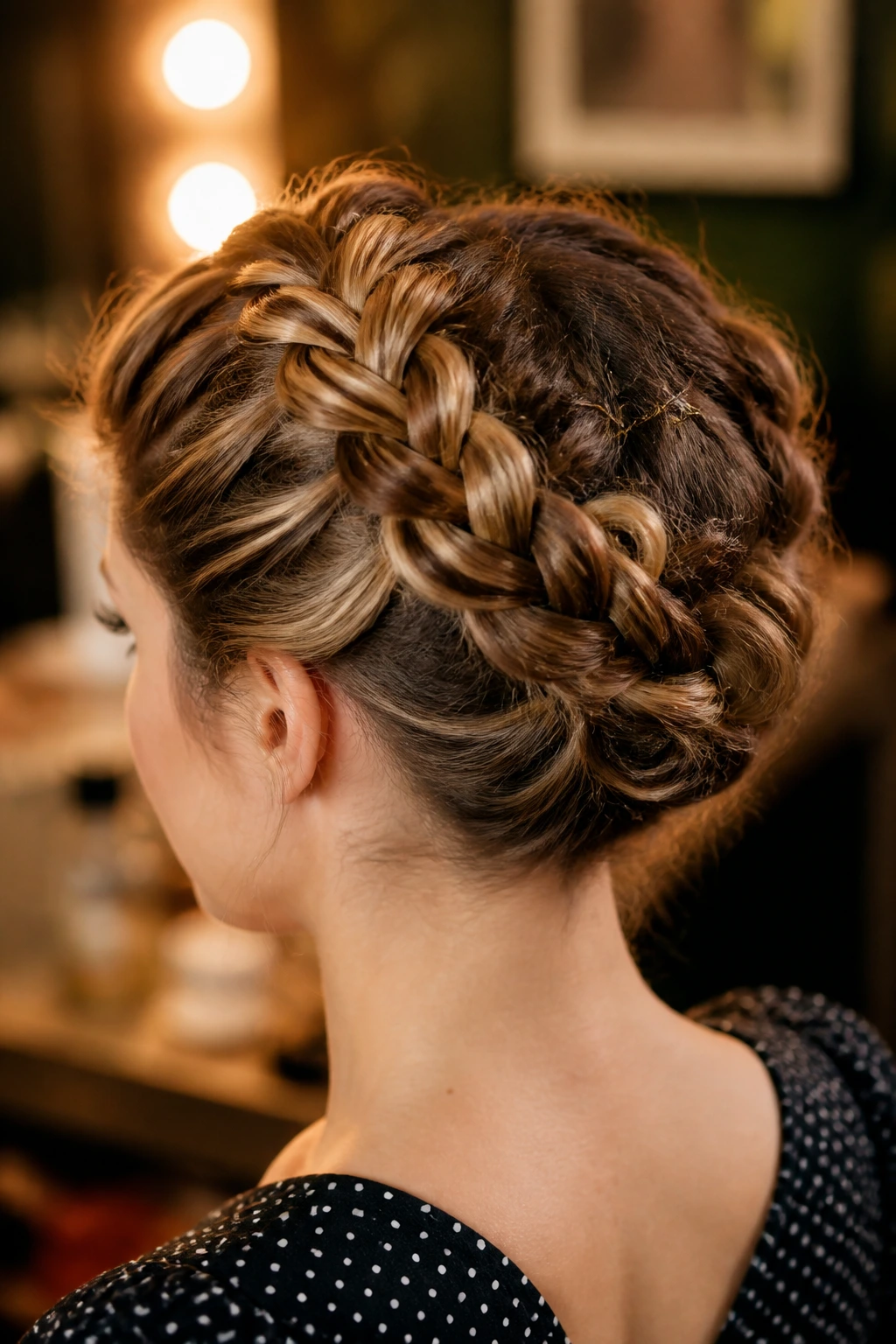
This is the most pin-heavy style on the list, and that’s fine. Braid from the front or crown, then fold the remaining hair into a compact shape and pin it close to the head.
On short hair, the updo ends up smaller than the classic version, which actually helps. It looks tidy instead of overloaded. Use bobby pins in an X pattern if the hair keeps slipping. The crossed pins hold better than a single straight one, especially near the nape.
32. French Braid Ponytail for a Lob
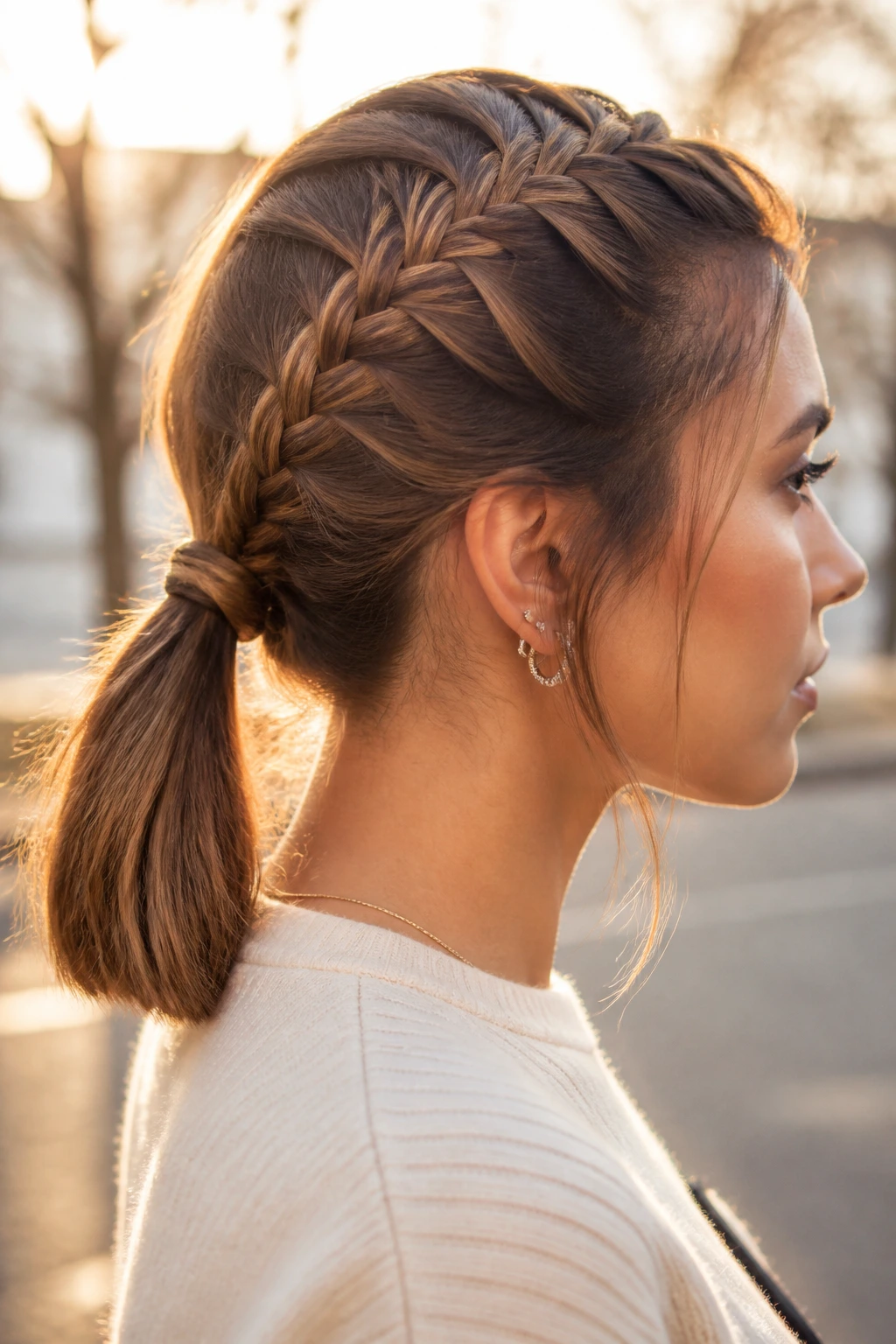
A braid into a ponytail is one of the cleanest choices for a lob because the braid creates shape and the ponytail gives the ends a place to live. Start the braid at the hairline or crown, then gather the rest into a mid or low ponytail.
This style works best when the ponytail hair has a little bend or wave. Straight ends can look flat next to the braid. If the tail is short, wrap a small strand around the elastic so the finish feels more intentional. It’s a simple style, but the handoff from braid to ponytail is what makes it work.
Why Short Hair Gives French Braids More Personality
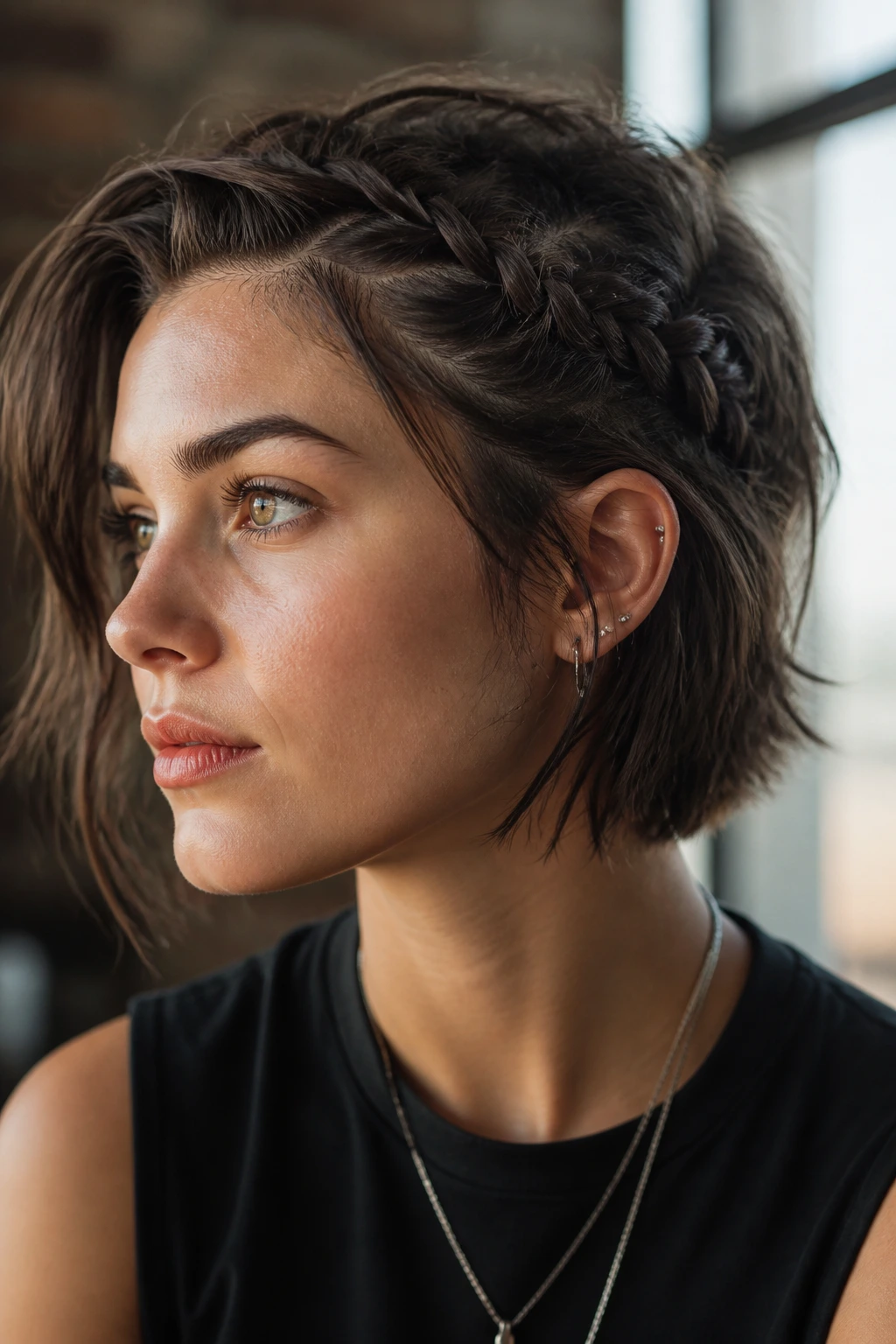
Short hair makes you notice the braid itself. That sounds obvious, but it changes everything. On long hair, the braid can hide inside the length. On a bob or lob, the braid becomes the hairstyle, so the pattern, the tension, and the pin placement all matter more than the amount of hair you started with.
There’s also a practical upside. Layers, bangs, and shorter face-framing pieces can be folded into a French braid in a way that looks sharp instead of messy. The braid becomes a way to organize the haircut. Grown-out fringe stays off your eyes. Side pieces stop sliding forward every five minutes. And blunt ends, which can look stubborn loose, become part of the style instead of a problem to work around.
The other thing short hair does well is reveal texture. A braid on sleek hair looks crisp. A braid on day-two waves looks fuller. A braid on curly hair gets more sculptural, almost architectural, because the coils give the plaits more body. That’s why the same French braid styles for short hair can look quiet, sporty, or dressed up without changing the core method.
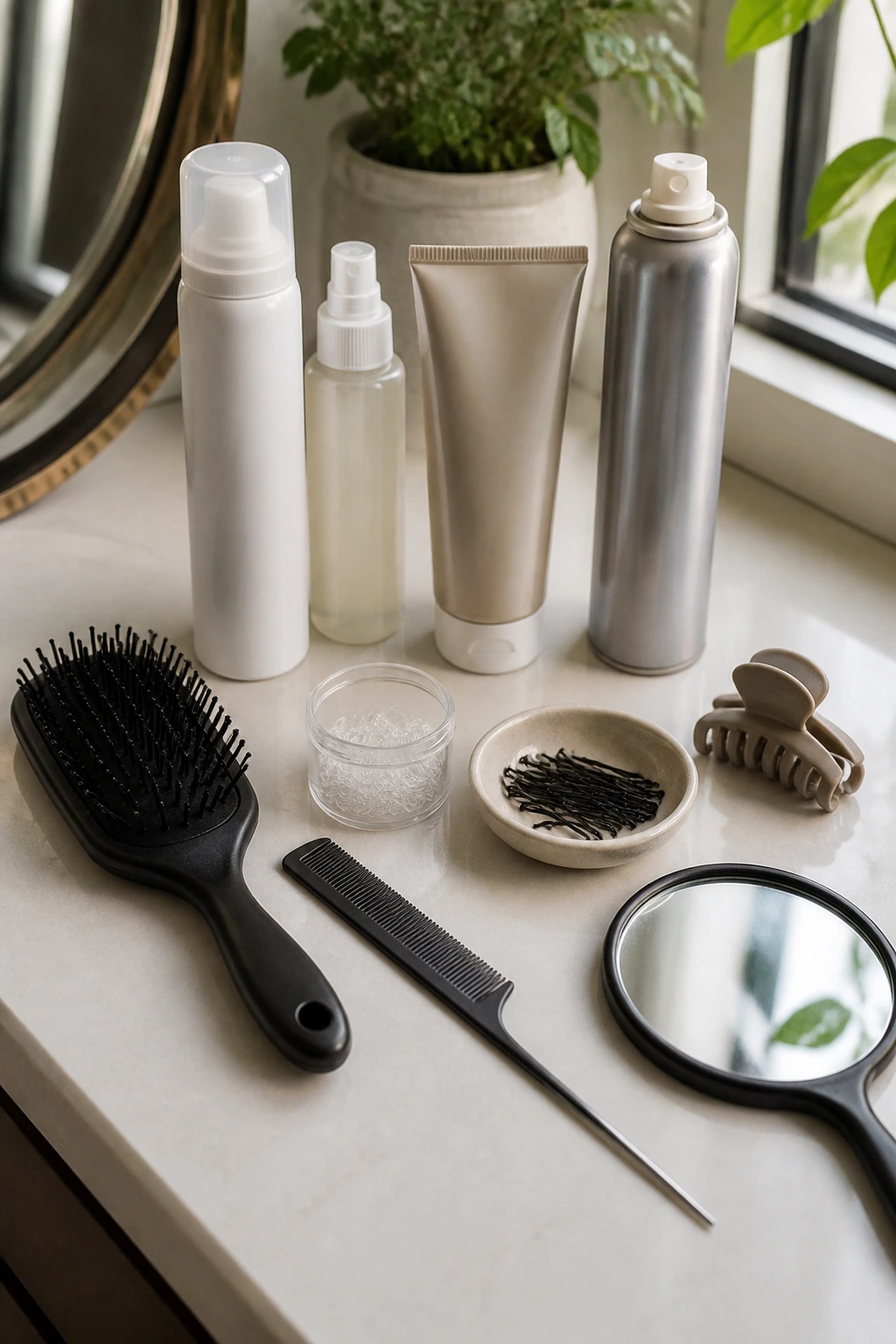
Essential Tools for These Styles
-
Rat-tail comb: The pointed end gives you clean parts, especially for center runs, zigzags, and crown sections.
-
Detangling brush: Smooths the hair before you start, which matters more on short hair because tangled ends show fast.
-
Mini clear elastics: These hold tiny tails without adding bulk at the finish.
-
Bobby pins: Use them for tucks, halo ends, hidden nape finishes, and anything that refuses to sit still.
-
Small claw clip: Handy for braid-and-clip styles or for holding the tail while you adjust the front.
-
Dry shampoo: Adds grip at the roots and takes shine down a notch so the braid doesn’t slide apart.
-
Texturizing spray: Gives short hair some bite, especially if it’s freshly washed or very fine.
-
Styling cream or light gel: Helps the front sections lie flat and keeps flyaways from sticking up around the hairline.
-
Flexible-hold hairspray: Good for sealing the finished braid without making it stiff and crunchy.
-
Hand mirror: Worth having for nape braids, low tucks, and anything you need to pin from the back.
Smart Prep and Product Choices
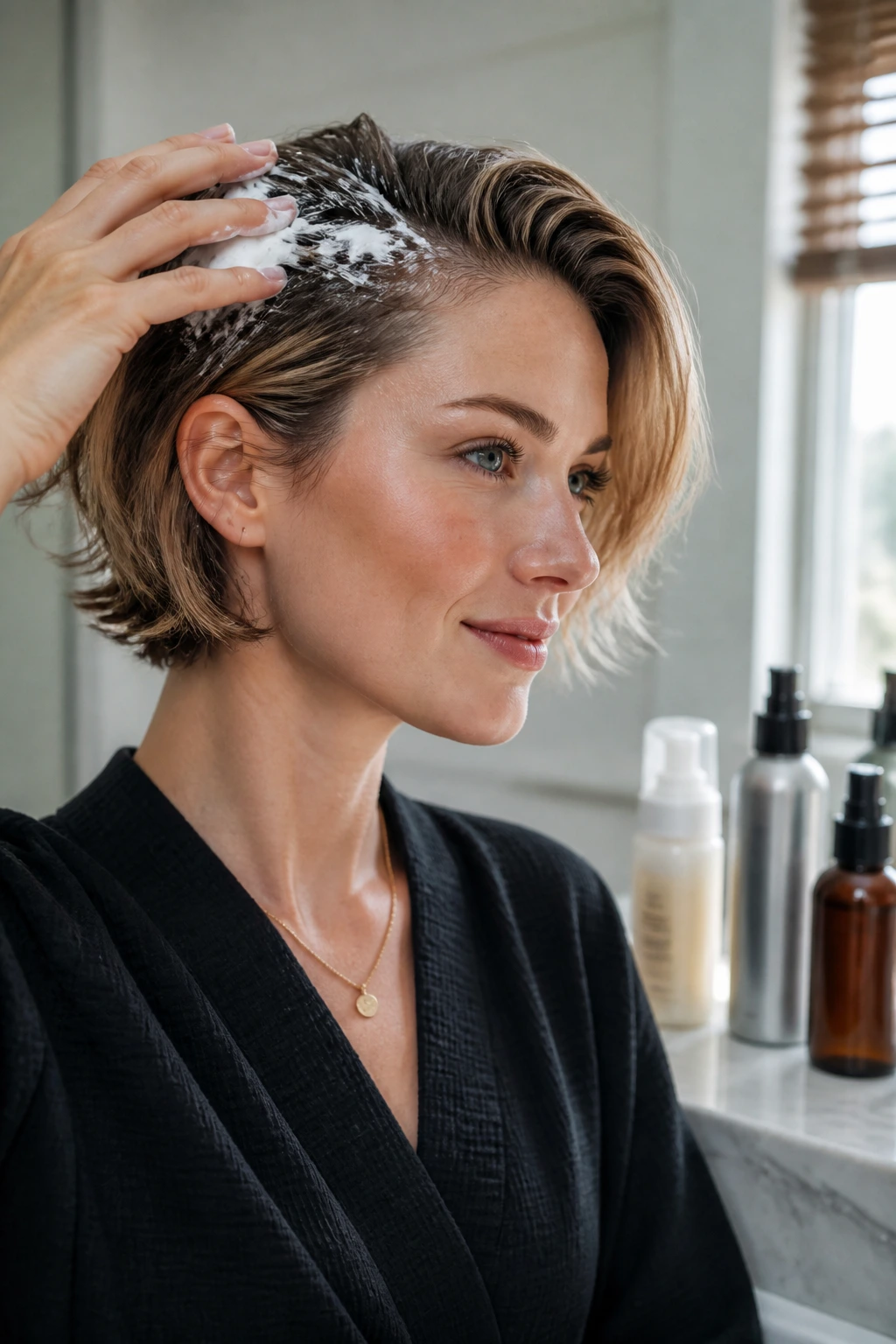
The braid starts before the braid starts. Short hair is less forgiving than long hair when the prep is sloppy, so the first few minutes matter. If your hair is freshly washed and slippery, add a little dry shampoo at the roots and a light mist of texturizing spray through the mids. If it’s fine and soft, a pea-sized amount of mousse at the roots can help the braid grip without turning the ends sticky.
Parting is half the battle. A clean center part suits double braids, faux hawks, and symmetry-heavy styles. A side part works better for halo braids, headband braids, and anything that needs to wrap around the face. Use the tip of the comb, not your finger. Fingers make blunt parts. Short hair shows blunt parts.
If your cut has layers, don’t fight every shorter piece into submission. Work with them. A slightly softer braid with a few tucked flyaways often looks better than a desperate, over-pinned version that tries too hard to hide the haircut. Short hair has a habit of telling the truth. You can either wrestle it or style around it.
How to Wear These Styles Without Them Feeling Fussy
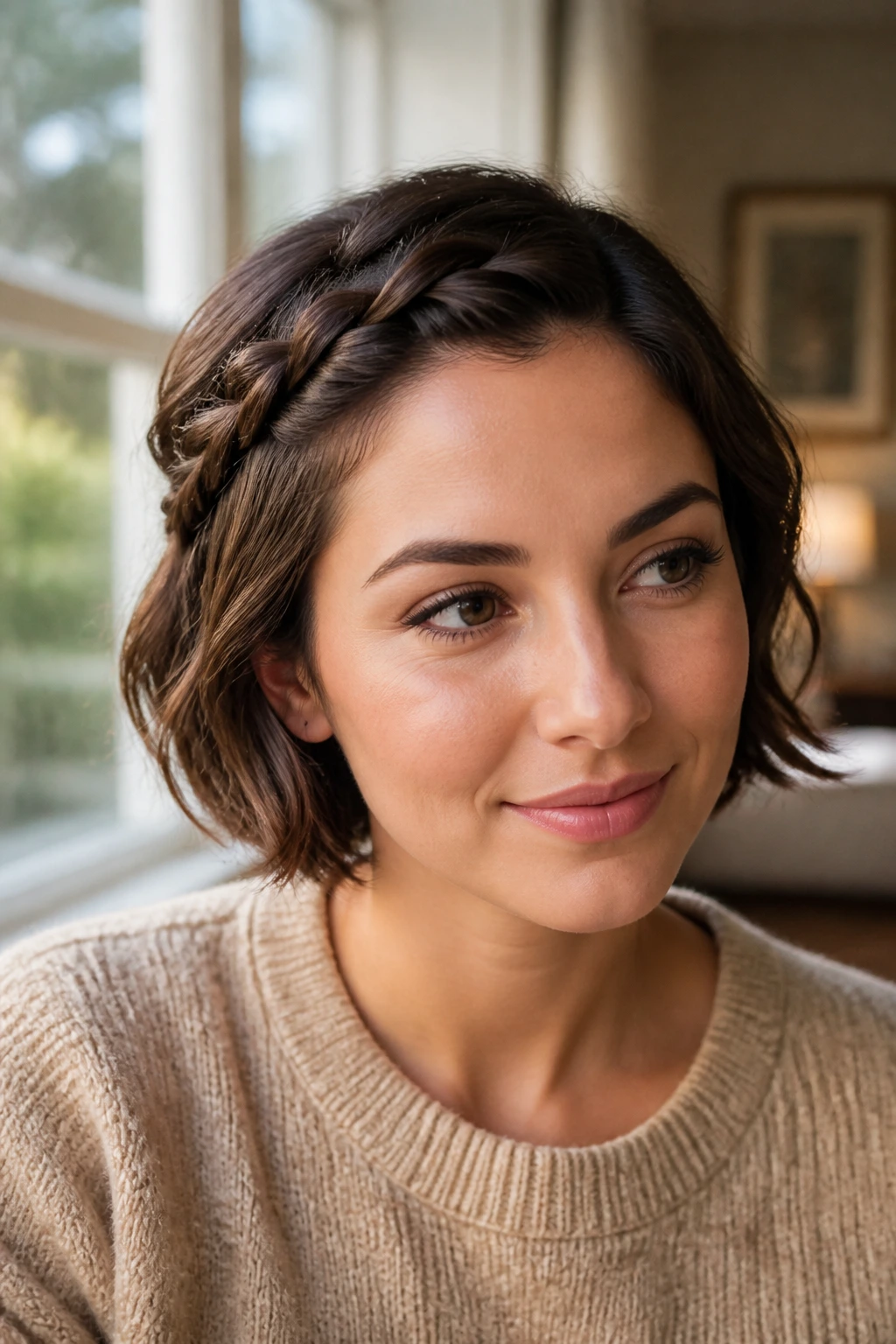
Everyday errands: The side sweep, accent braid, and braid-back fringe styles make sense here. They hold the front together, stay quick, and don’t need much cleanup.
Dressier moments: Halo braids, scarf-woven braids, and pin-up updos carry more presence without needing more length. They look finished even when the actual braid is fairly small.
Active days: Tight sporty braids, double braids, and pull-through faux braids stay put better than loose versions. If you know you’ll be moving around a lot, go for the styles with the cleanest anchors at the scalp.
When your haircut is awkward: Half-up braids, crown braids, and curled-end styles help a growing bob or lob look intentional. They work because they don’t pretend the cut is longer than it is. They use the length you have and stop there.
Extra Texture, Shine, and Hold Tricks
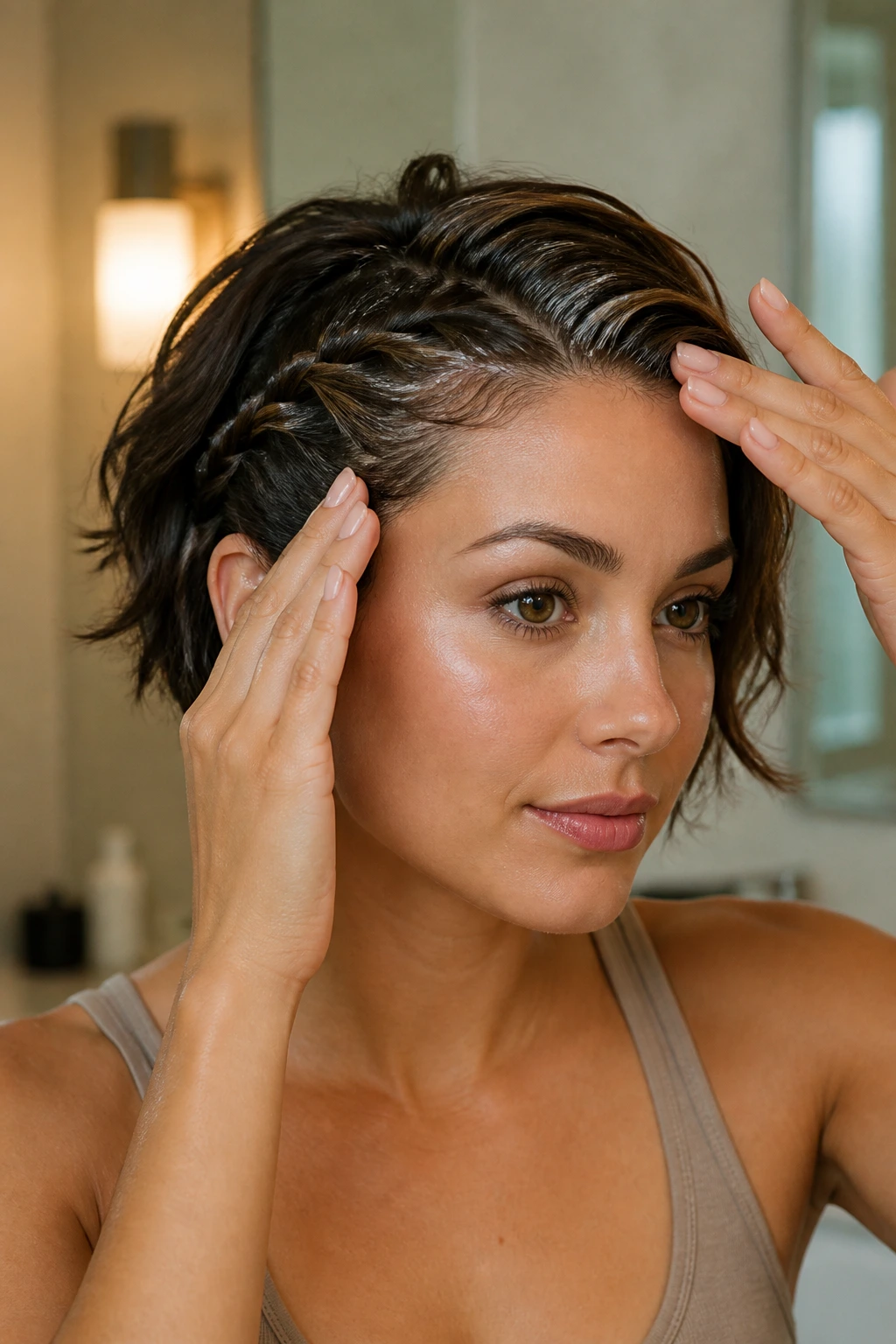
Texture boost: If the braid keeps slipping, add dry shampoo at the roots and work it in with your fingertips before you section the hair. That slightly gritty feel helps more than an extra spray of hairspray.
Slip control: Put a tiny amount of styling cream or gel on your hands, then smooth only the front pieces and part line. Too much product on the lengths can make the braid sag.
Accessory play: A narrow ribbon, a thin scarf, or a couple of small braid cuffs can change the mood fast. Short hair doesn’t have room for heavy accessories, so keep them slim.
Softening trick: After the braid is secure, tug the outer loops gently with two fingers. That little movement widens the braid and makes short hair look fuller without turning it messy.
Shine move: Finish with a light mist of flexible spray, then tap flyaways down with the palm of your hand. Don’t spray until the hair feels sealed. Short hair gets sticky quickly if you overdo it.
Making Them Last Through Sleep, Sweat, and Humidity
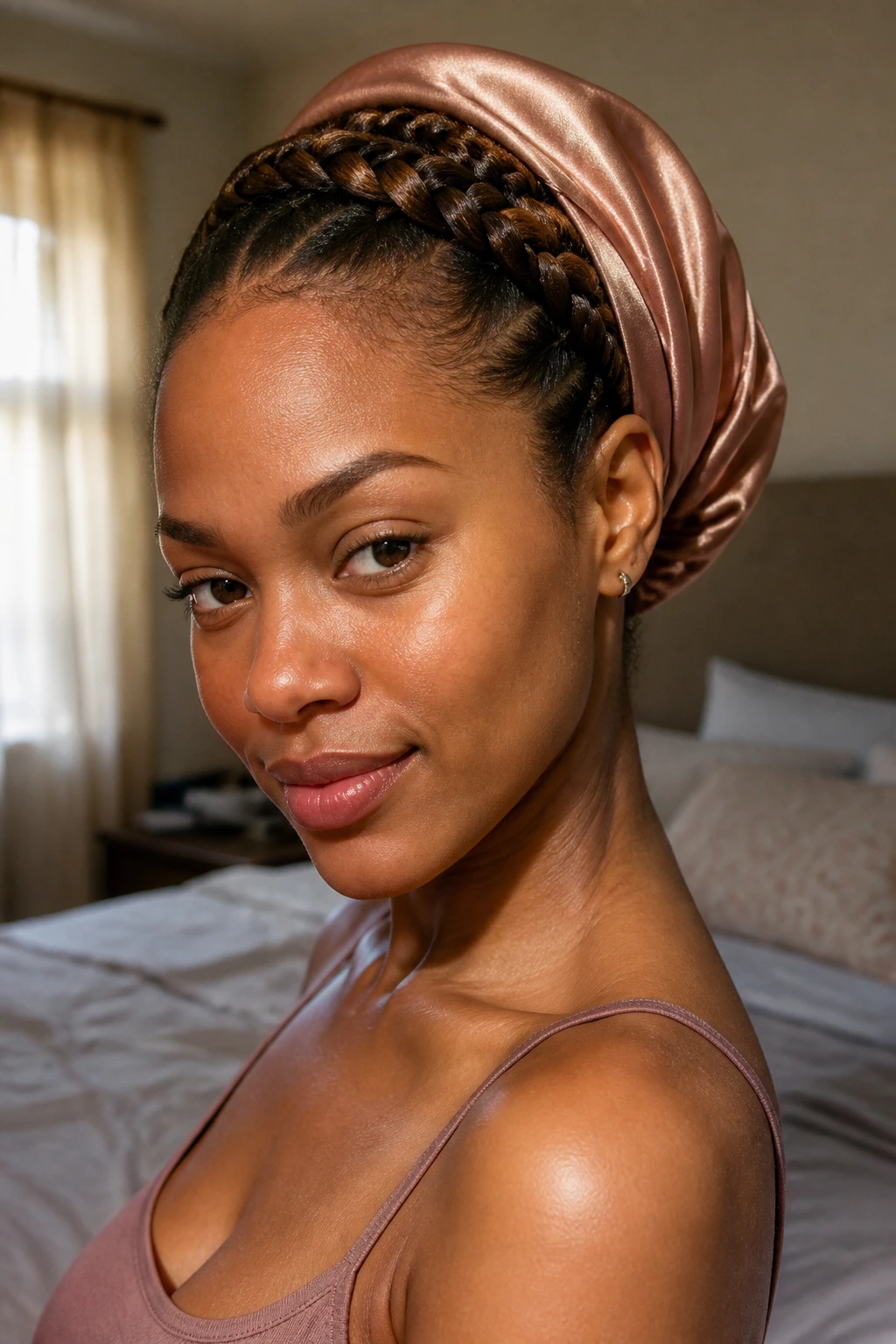
Most short-hair French braids hold best for a day, sometimes a little longer if the weather stays kind and you don’t keep touching them. If you want the style to make it through the night, sleep with a satin bonnet or a silk scarf tied loosely around the head. A satin pillowcase helps too, but a scarf gives the braid more protection at the nape, which is where short pieces usually unravel first.
If the braid feels flat the next morning, don’t start over right away. A few spritzes of water on the fingertips, then a tiny bit of cream or leave-in, can wake up the shape without soaking the hair. Press the loose pieces back into place, re-pin the nape if needed, and tighten only the spots that have actually loosened.
For heatless-wave styles, keep the braid in while the hair dries all the way. If you take it out early, the wave pattern goes soft in weird places and the ends can dry bent. On short hair, that half-dry stage is the worst stage. It’s where the braid looks fine and the takeout looks disappointing.
Variations and Adaptations to Try
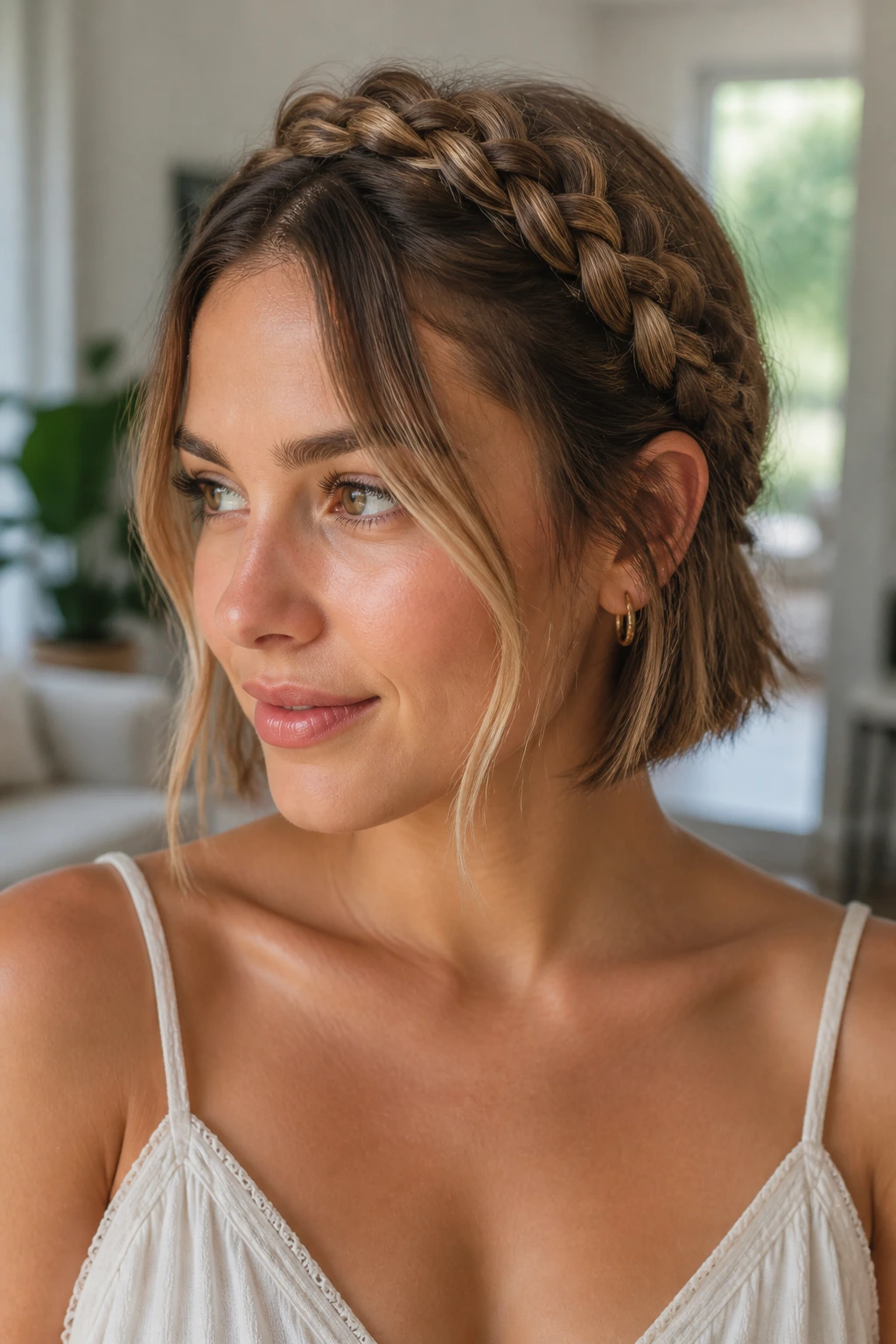
Fine-Hair Lift: Use dry shampoo before braiding, keep the sections small, and pancake the braid only after it’s secured. Fine short hair usually needs width more than tension.
Curly-Texture Crown: On curly or coily short hair, braid the front and crown while leaving the back textured and free. The contrast gives the style shape without flattening the curl pattern.
Workout Snugness: For gym days, start with gel at the hairline, braid tightly, and anchor the tail with a small elastic plus a hidden pin. This version is about hold, not softness.
Soft Romantic Finish: Leave two or three face-framing pieces out, then loosen the braid edges just enough to show the pattern. Good for bobs with a little wave and for evenings when you want less structure.
Accessory-First Version: Build the braid first, then add a ribbon, scarf, or small clip at the finish. This is the easiest way to make a short braid feel dressed up without changing the braid itself.
Grow-Out Saver: If your haircut is between lengths, braid the front, pin the tail, and leave the rest loose. It keeps the awkward middle stage from looking accidental.
Common Mistakes That Flatten the Braid
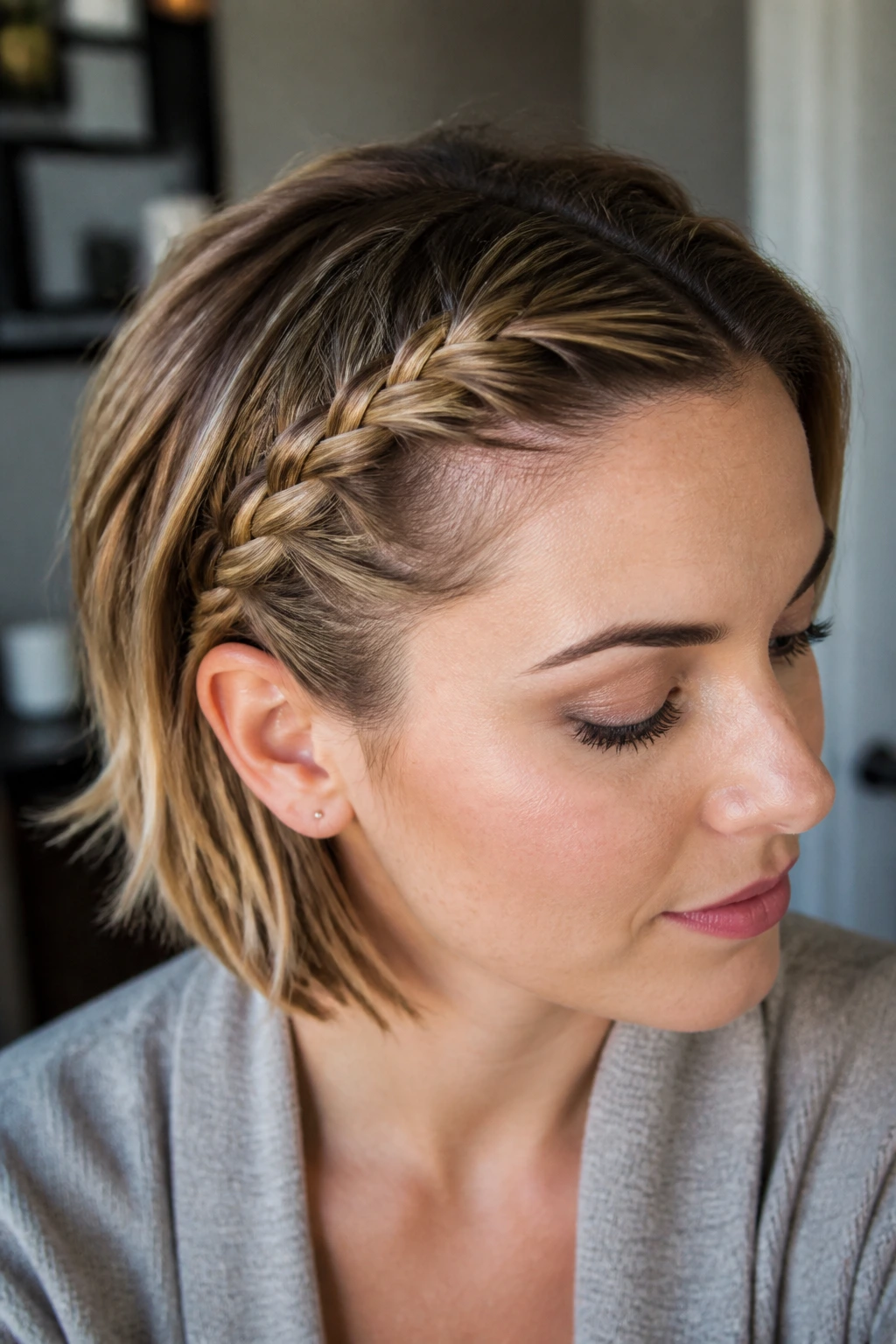
The first mistake is starting on hair that’s too clean and too soft. Newly washed hair can slip apart before you’re done with the second section. A little dry shampoo or texturizing spray gives the braid something to hold.
The second mistake is taking sections that are too big. On short hair, big sections create bulky lumps fast, and the braid loses its clean line. Smaller sections usually look better, even if they feel slower at first.
Another one: pulling the braid too tight from the start. That can make the scalp sore and leave the braid looking stretched instead of neat. Tight enough to hold, not so tight that the braid dents the head.
A lot of people also wait too long to pin the end. If the hair is short, that last bit needs help right away. Tie it off or tuck it before it starts springing loose.
And finally, too much product can ruin the shape. Heavy cream near the lengths makes the braid sag. Keep stronger product near the roots and the hairline, where the grip matters most.
Frequently Asked Questions
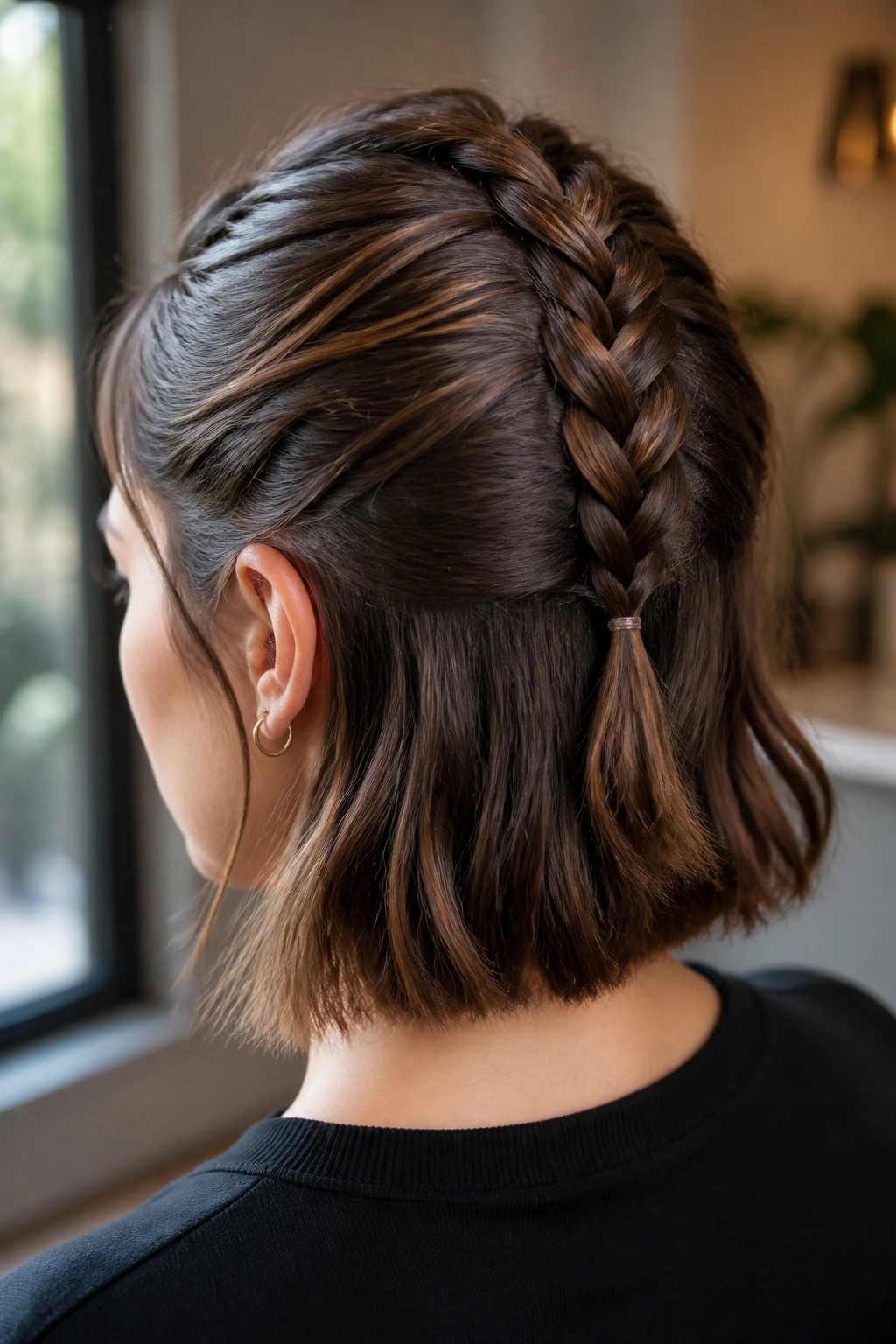
Can you French braid a bob?
Yes, and a bob often looks better in a braid than people expect. Keep the sections small, start close to the scalp, and plan to stop early with a tie, pin, or tuck. A chin-length bob usually works best with side braids, crown braids, and halo styles.
What is the shortest hair length that can hold a French braid?
It depends on texture, but hair around 4 to 6 inches can usually support small accents, temple braids, or fringe braids. Once the hair is closer to ear length, you may need to lean on pins, mini elastics, or pull-through versions to keep the finish neat.
Does day-old hair braid better than freshly washed hair?
Usually, yes. Day-old hair has more grip at the roots and less slip through the lengths, which helps the braid stay tight and clean. If your hair is freshly washed, dry shampoo or texturizing spray can make a big difference.
How do I keep layers from falling out of the braid?
Use smaller sections and keep a light amount of product on the front pieces before you start. Layers that refuse to stay put can also be pinned back after the braid is finished, especially around the temples and nape.
What if my braid keeps looking lumpy?
That usually means the sections are uneven or too large. Re-part with a comb, keep the sections similar in size, and smooth each new piece before you add it in. Short hair shows uneven tension fast, so slowing down for the first inch helps a lot.
Can I French braid curly short hair without blowing it out first?
Yes. In fact, many curly styles look better braided on their natural texture because the braid gets more body. You may need more pins at the hairline, and the finished braid will look fuller than a straight-hair version.
How do I make a short braid look fuller?
Braid it a little tighter than you want at first, then gently pancake the edges after it’s secured. Dry shampoo at the roots and a small amount of texturizing spray also help the braid stand off the head instead of lying flat.
Can I sleep in a French braid on short hair?
You can, especially if you want next-day waves. Use a loose satin scarf or bonnet so the short pieces at the nape do not fray or pop out overnight. If the braid feels too tight before bed, loosen it a touch so you don’t wake up with sore roots.
Why These Braids Work So Well on Short Hair
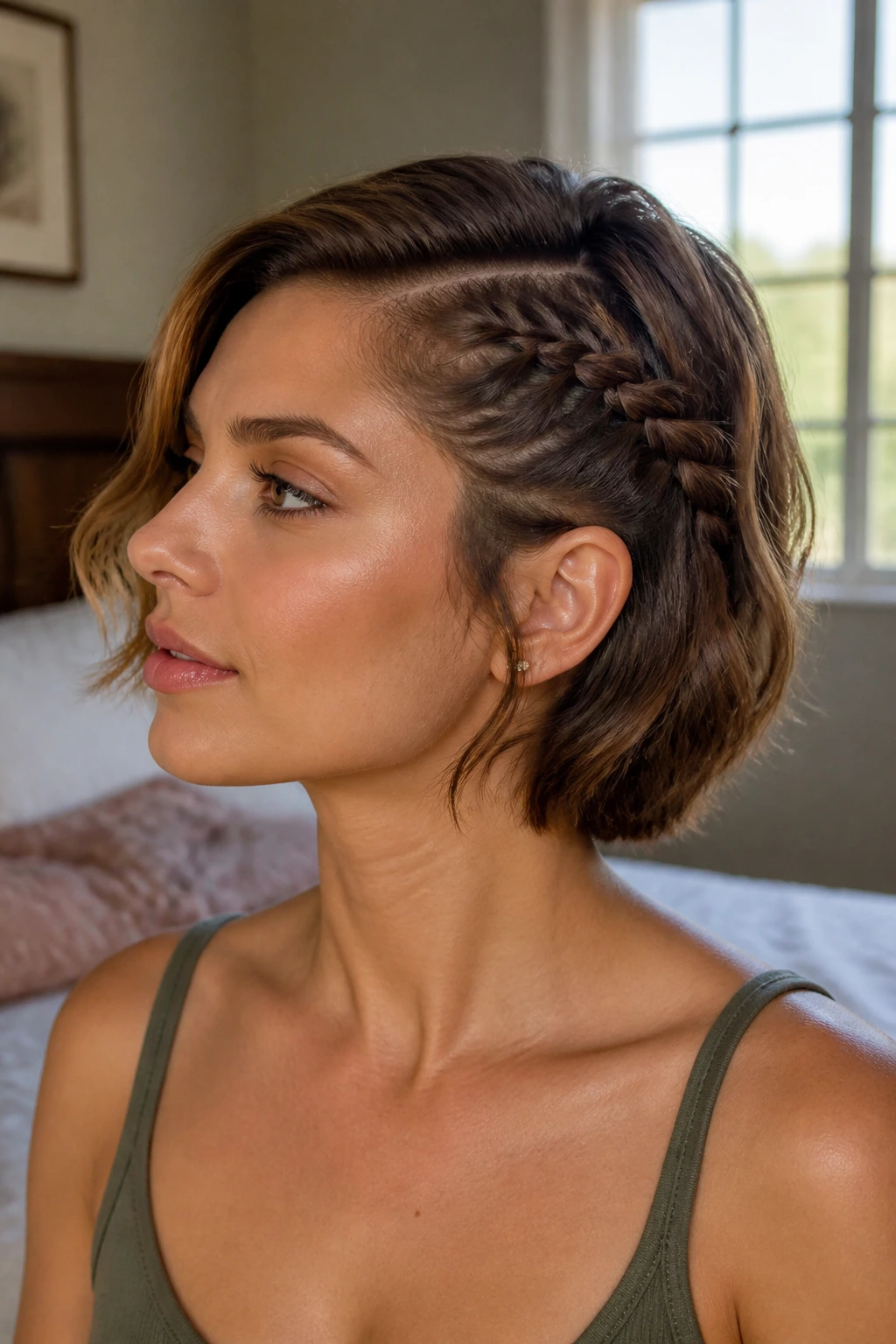
Short hair doesn’t need to be hidden. That’s the part people miss. A good French braid on a bob, lob, or short layered cut uses the haircut’s own shape, then sharpens it a little. The braid becomes a line, a frame, a piece of structure. That’s more interesting than trying to fake length.
The styles that work best here are the ones that respect the end of the hair instead of fighting it. Tucks, clips, ribbons, pin-ups, and short tails all make sense because they give the braid a clean stop. Once you stop chasing long-hair logic, the whole thing gets easier.
Pick one style that suits your cut, one that suits your texture, and one that solves a real problem you have in the mirror. Hair in your face. Layers that flip out. A bob that feels too plain. A braid can handle all of that, and short hair usually handles it better than people think.
