



Color changes braids faster than almost anything else. A simple three-strand plait can look soft and glossy in chestnut, sharp in cobalt, or almost molten when copper runs through the lengths. That’s the fun of it: the braid pattern gives the color somewhere to live instead of letting it sit flat on the surface.
Colored braid hairstyles for long hair hit a sweet spot that shorter styles can’t always reach. There’s room for gradients, streaks, hidden panels, and those little flashes of shade that show up when the hair swings over one shoulder. Long hair also lets the braid itself do more visual work, which is handy when you want the color to read from across a room instead of disappearing into the weave.
The best versions are not the loudest ones. They’re the ones where braid size, color placement, and length all agree with each other. Get that balance right and even a very bright shade looks deliberate rather than costume-y. Get it wrong and the whole thing starts to fight itself. That’s the difference.
Why These Braids Work So Well on Long Hair
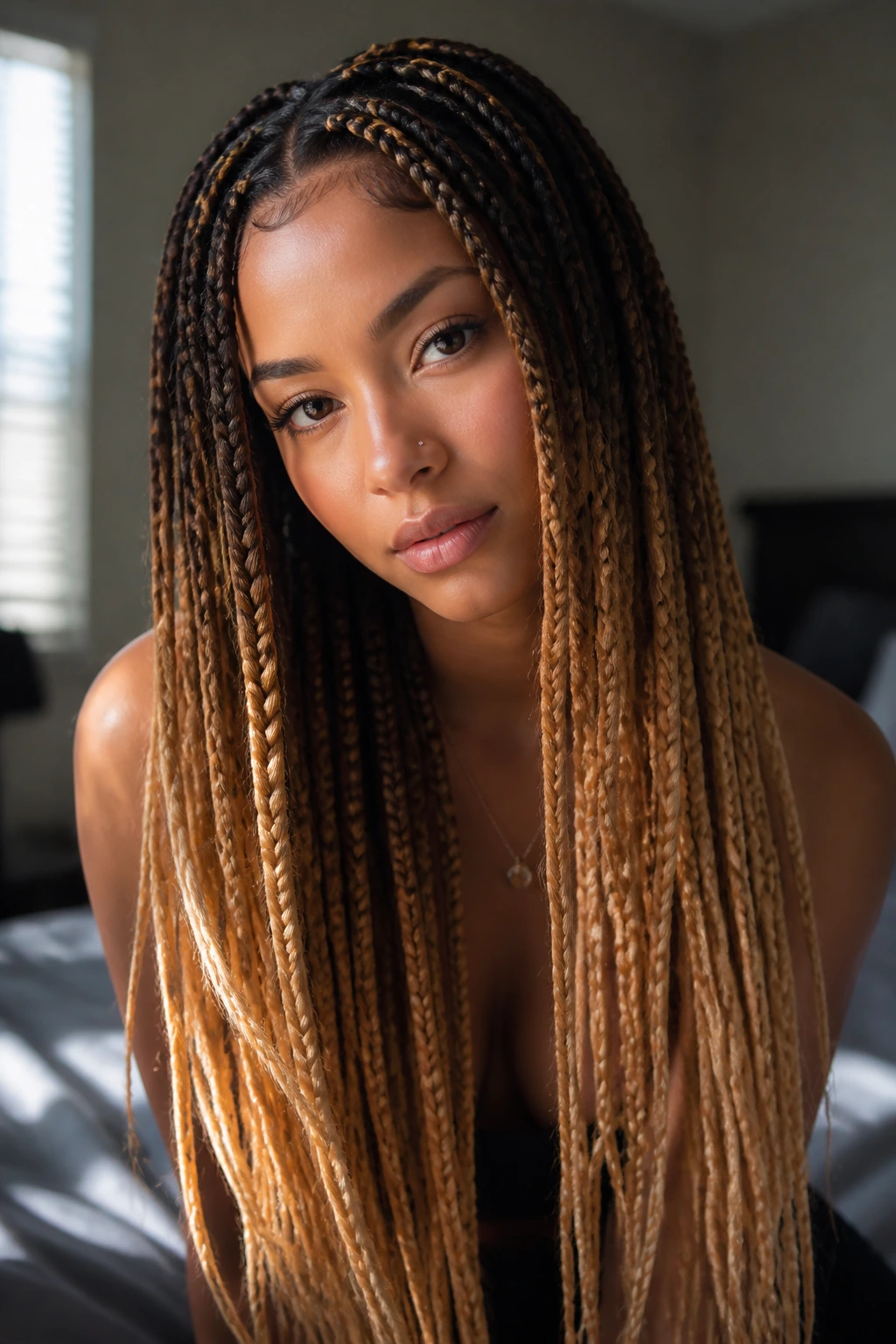
Length gives the color room to unfold. With long hair, a single shade can start at the crown and reveal itself gradually through the braid, which keeps the look from feeling flat or chopped up.
The braid pattern acts like a frame. Dark roots, lighter mids, and bright ends read cleanly when the hair has enough length to show each zone. On short hair, that same color plan can feel crowded.
You get more styling options. Long braids can hang straight, wrap into a bun, swing into a ponytail, or drape over one shoulder to show off the colored sections you actually want people to notice.
It’s easier to balance bold color with protection. A bright shade placed in the lengths instead of the scalp area gives you visual punch without making the parting look noisy.
Hair texture matters. Long natural hair can carry color in a softer way, while long extensions make sharp color blocking easier. Both work. They just give off different energy.
1. Midnight Blue Knotless Braids
Midnight blue is one of those shades that looks almost black until the light moves. Then the color wakes up. On long knotless braids, that shift is the whole point. The roots stay smooth and close to the scalp, and the long lengths give the blue enough space to read as rich instead of neon.
Why It Works
Knotless braids keep the base flatter, which matters when the color is deep and dark. You get a clean line at the scalp and a lot less bulk than you’d get from thicker starter knots.
- Best on waist-length hair or added extensions.
- Works well with a side part or center part.
- Looks strongest in dense, smooth braid hair.
- Pair with silver cuffs if you want the color to pop harder.
Style note: midnight blue is the rare bright shade that still looks polished in low light.
2. Cherry Cola Feed-In Cornrows
Cherry cola braids sit in that dark-red zone that looks expensive without trying too hard. Feed-in cornrows stretch the color across the scalp in thin ribbons, so the red-brown mix doesn’t just sit there — it moves.
That movement matters on long hair. The longer the tails, the more the shade shifts from root to end, and the whole style starts to look deeper than a single solid red ever could. It’s one of the easiest ways to wear color if you want something noticeable but not loud enough to shout.
The nice part is the finish. Smooth scalp braids, long ends, a little sheen spray, and the color does the rest. No drama needed.
3. Copper Ombré Box Braids
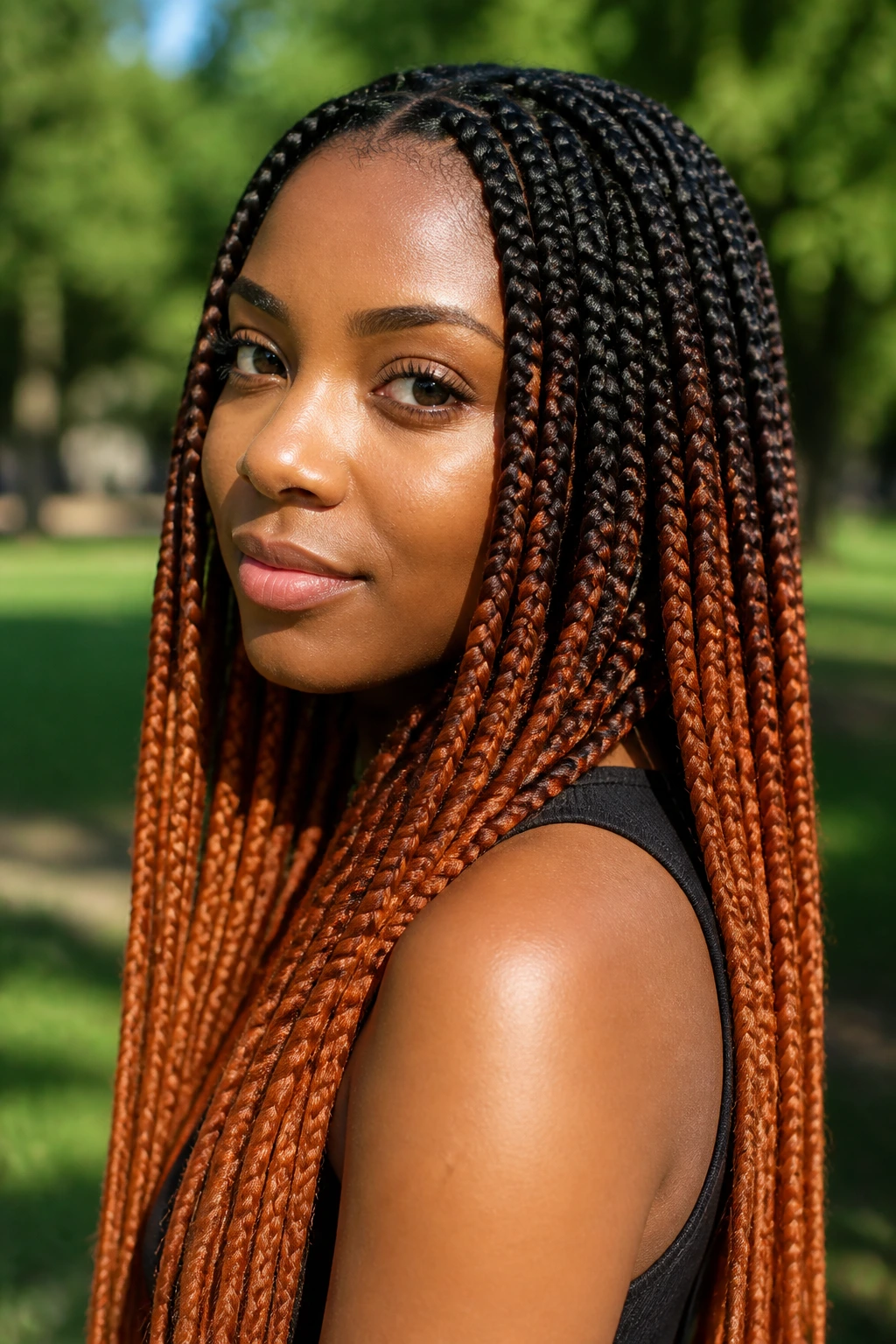
Why does copper work so well in box braids? Because it behaves like light on metal. Dark roots keep the style grounded, then the copper warms up at the mid-lengths and ends, which makes long braids look more textured than they really are.
How to Wear It
Wear copper ombré box braids loose over both shoulders if you want the gradient to show. Pull them into a half-up style when you want the lighter ends to frame the face instead of disappearing behind your back.
A center part gives the color a neat, even read. A deep side part makes the copper feel softer and a little more dramatic.
4. Emerald Accent Fulani Braids
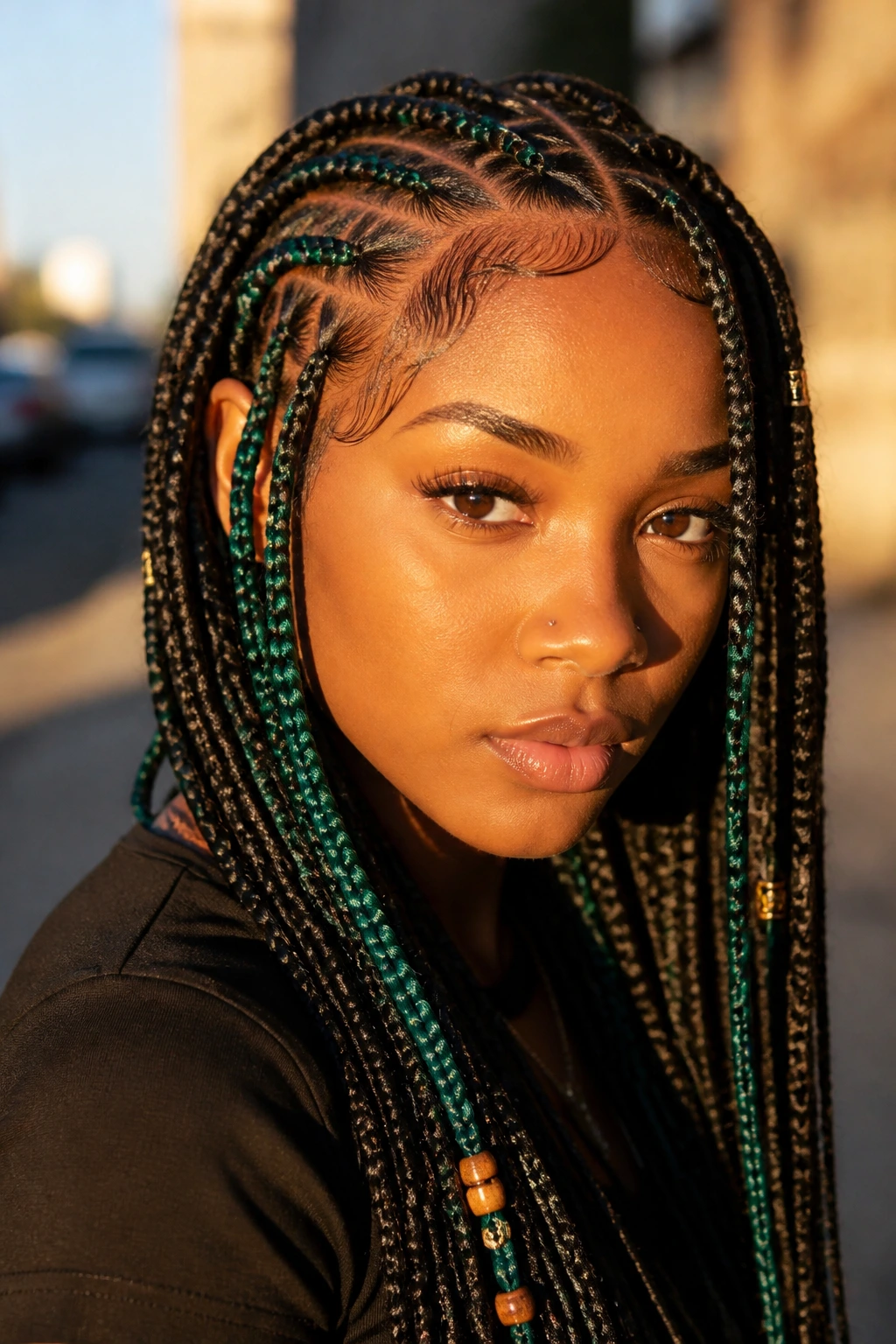
Emerald accent braids are for people who want color without turning the whole head into a neon block. The green usually works best as a set of thin accent pieces through the front or along one braid row, while the rest stays in a darker base.
That small hit of color does a lot. On long hair, it creates a trail instead of a patch, and Fulani braids already have enough shape that the green can sit in the pattern without looking random. Beads help, but don’t overload them. One or two strategic accents are better than a rattling mess.
This style has range. It can feel rooted and earthy or sharp and graphic, depending on how bright the emerald runs.
5. Lavender Goddess Braids
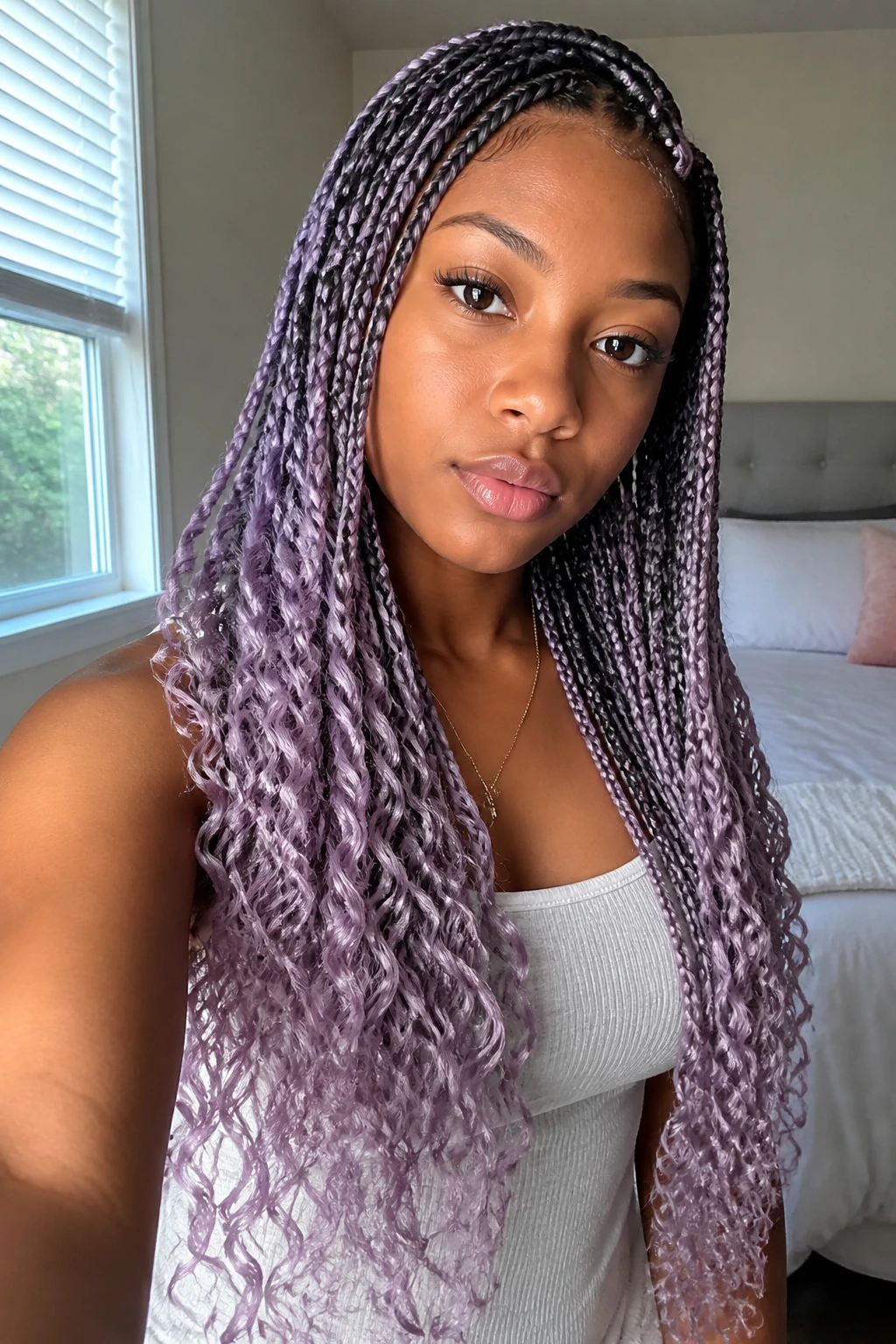
Lavender on long goddess braids has a soft, cool glow that feels very different from hot pink or electric blue. The loose curled pieces woven through the braids keep the color from looking too stiff, which is the mistake a lot of people make with pastels.
The braid itself does part of the job. Thick goddess braids give the lavender a broad surface, so the shade reads as a wash rather than a stripe. That matters if your hair is long, because the extra length can make pale colors disappear unless there’s enough braid width to hold them.
I like this one with minimal makeup and simple hoops. Let the braids do the talking.
6. Honey Blonde Jumbo Plaits
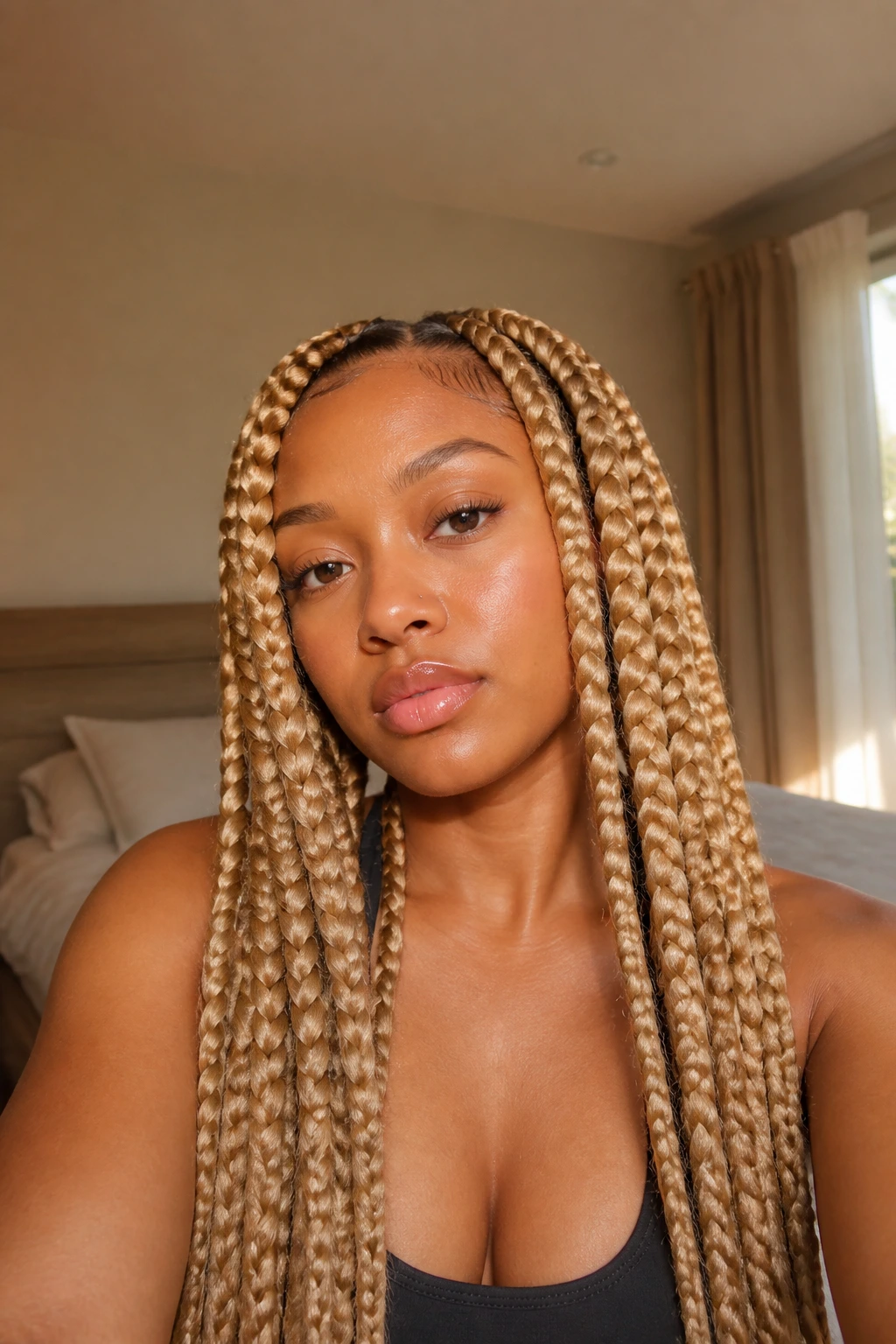
Honey blonde jumbo plaits are blunt in the best way. They are not trying to be subtle. The wide braid sections show off the blonde tone immediately, and on long hair the color looks richer because it has space to shift between warm gold and pale wheat.
This is the style you pick when you want braids that read from far away. Jumbo plaits sit heavier than small braids, so the honey tone looks even creamier against dark clothing and gold jewelry. A middle part keeps the whole thing tidy. A high ponytail pushes it into bolder territory fast.
If your hairline is delicate, keep the first inch of the braid soft. Jumbo color plus tight tension is a bad trade.
7. Teal Peekaboo Braids
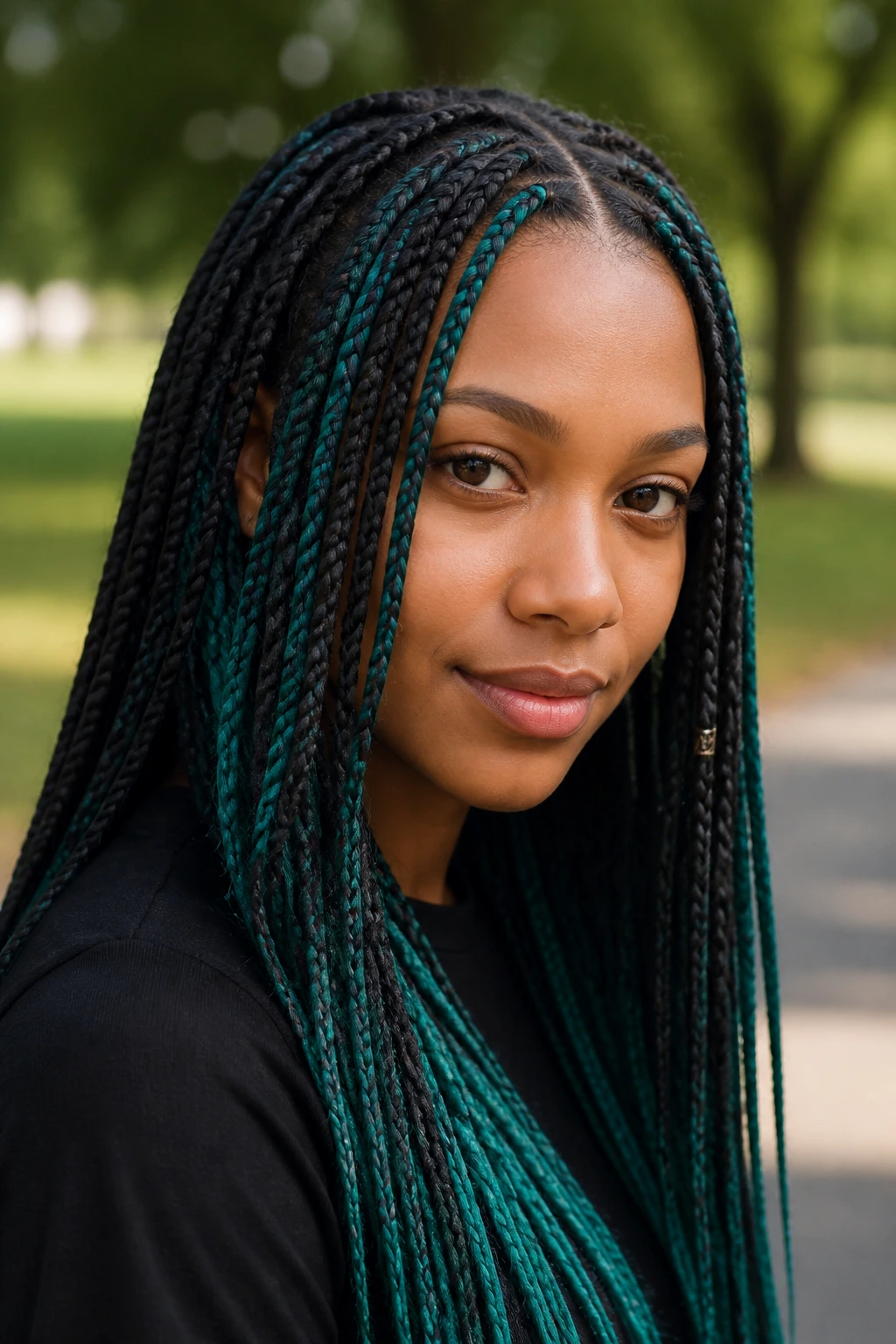
Teal peekaboo braids work because the color shows up in layers instead of all at once. You might only see a few teal strands when the hair is down, then the shade opens up when the braids are gathered into a ponytail or twisted back.
That hidden-reveal effect is especially good on long hair. The length gives the teal room to flash without dominating the whole head, and that makes the style feel playful instead of loud. It’s a good pick if you want color that doesn’t have to answer questions all day.
A dark base is the cleanest match here. The teal gets sharper, and the contrast holds better when the braids are smooth.
8. Burgundy Braided Ponytail
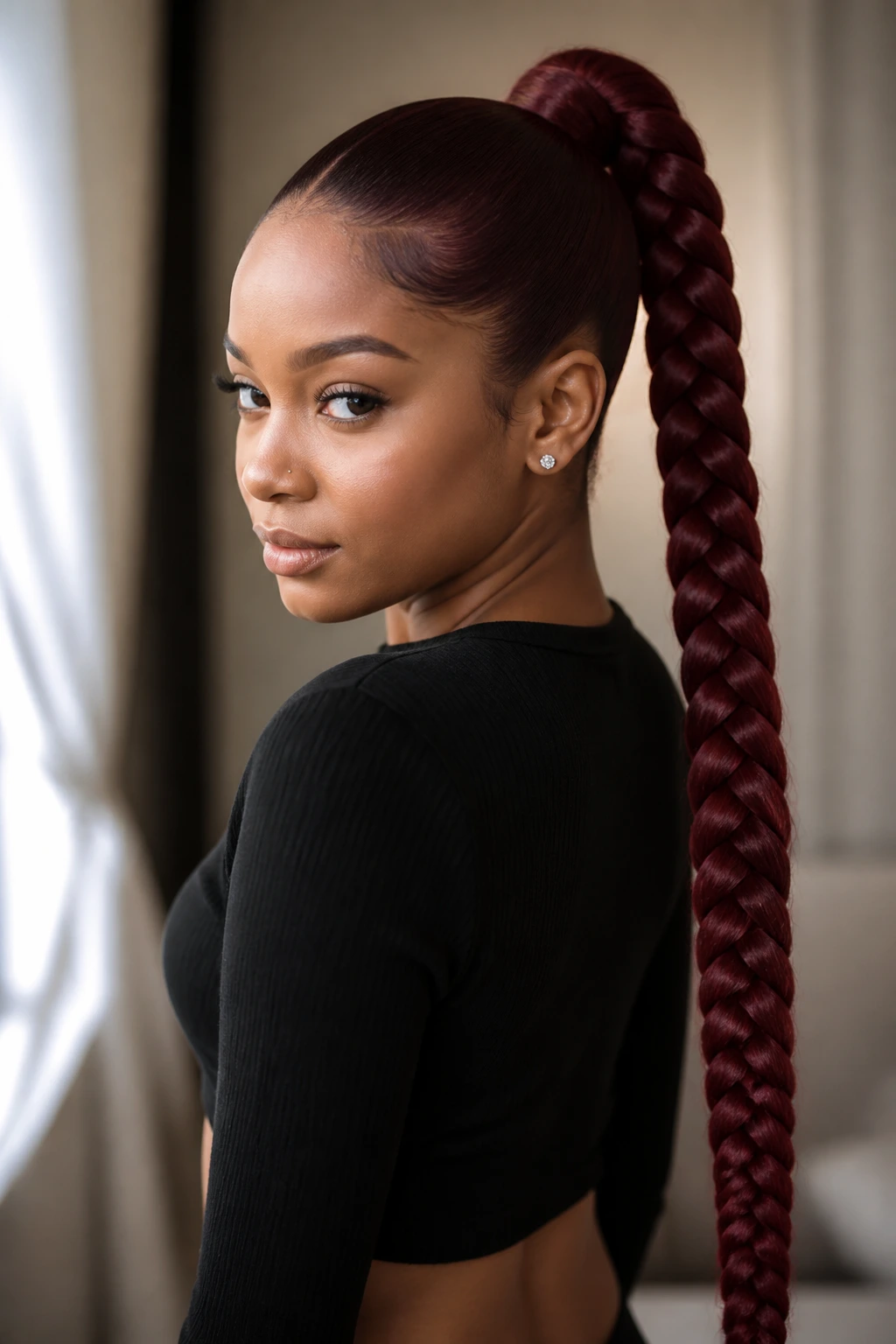
Burgundy braided ponytails are all about clean shape. The color is deep enough to stay wearable, but it still has enough red in it to catch attention when the ponytail swings.
On long hair, the ponytail length matters more than people think. A short braided ponytail can look neat. A long one looks intentional, almost architectural. Burgundy helps because the shade stays rich from root to tip without needing any extra decorations.
Keep the crown smooth and let the tail fall heavy. That’s the move. A few wrapped strands around the base can clean up the elastic, and that tiny detail makes the whole style look more finished.
9. Rainbow Micro Braids
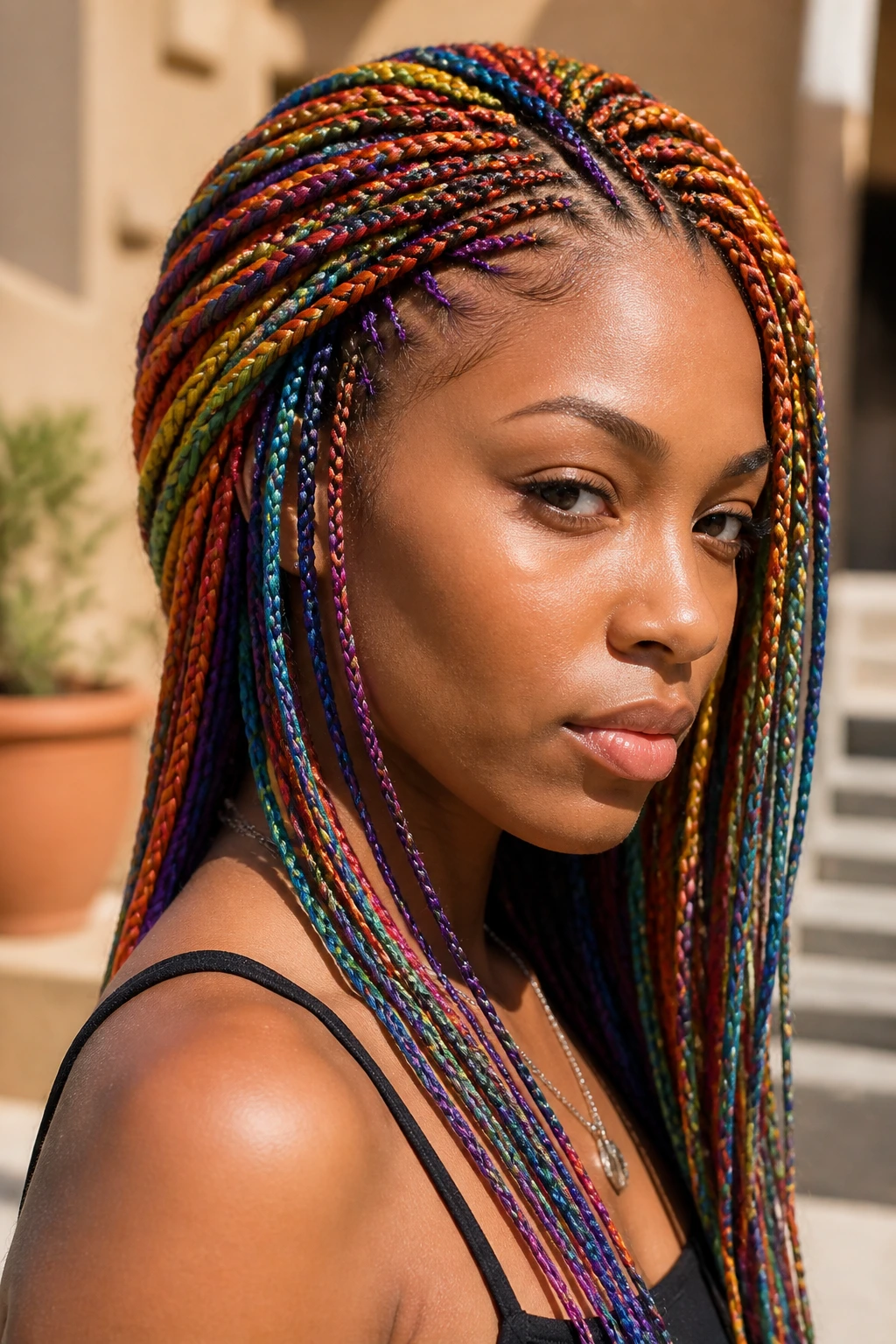
Rainbow micro braids are not shy, and that’s the point. The tiny braid size turns multiple colors into texture instead of chaos. On long hair, the mix has space to run from one shade to the next, so the effect feels like woven thread rather than a costume wig.
The trick is balance. If every section screams at once, the style loses shape. Keep the rainbow tight and ordered — maybe one color family near the face, another at the ends, and a quieter shade through the middle. Micro braids help because they naturally show detail when the hair moves.
This is a patience hairstyle. Small braids take time, but the result has a fine, almost textile-like look that larger braid patterns can’t fake.
10. Smoky Silver Dutch Braids
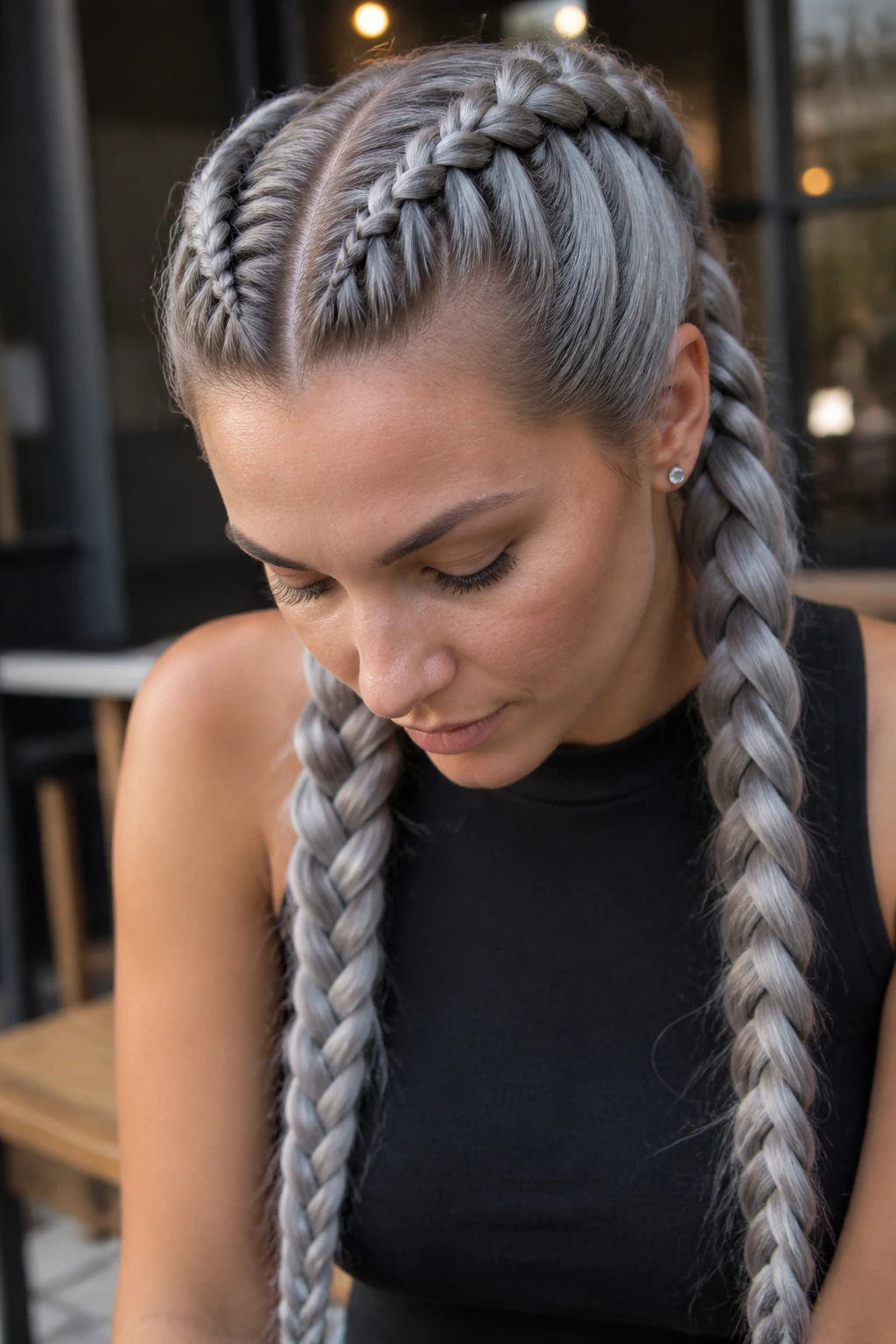
Smoky silver Dutch braids have a cool, almost frosted look that reads best on long hair because the braid ridges catch the shade in waves. Dutch braids sit up off the scalp, which gives the silver a little more shape than a flat braid would.
The color choice matters here. A flat, bright silver can look harsh if the braid pattern is too tight. Smoky silver has a little shadow in it, and that shadow keeps the braid from looking washed out. On long hair, especially, the braid needs that depth or it can start to look like one shiny rope.
Wear it over a sweater, a black tee, or anything with a clean neckline. The hair will take the attention anyway.
11. Rose Gold Fishtail Braid
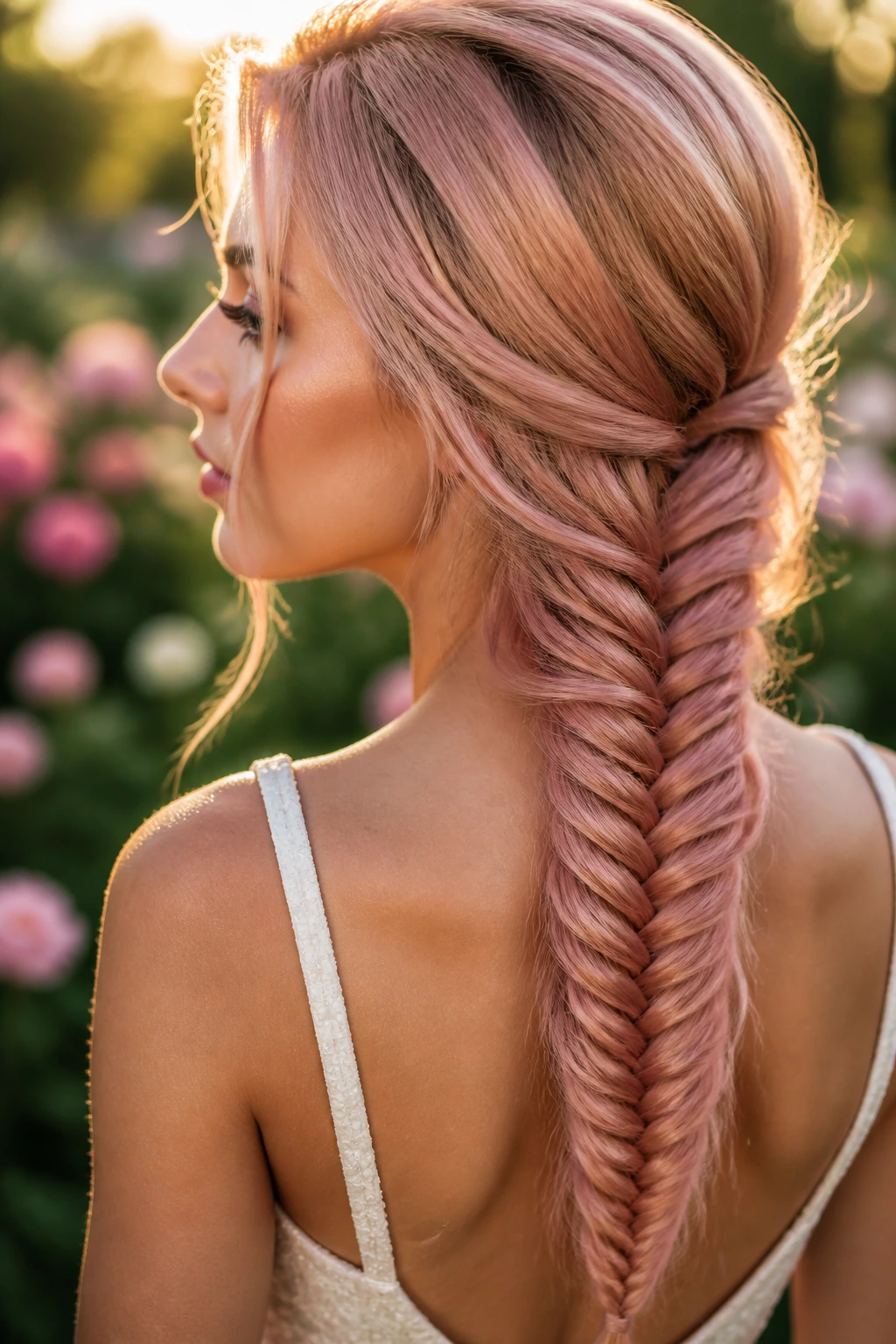
A rose gold fishtail braid has a softer edge than straight pink or peach. The weave is fine and detailed, so the color seems to shimmer between the strands instead of sitting on top of them.
That’s why it works so well on long hair. Fishtails need length to show off their pattern, and rose gold needs texture to keep from looking flat. Put them together and you get a braid that looks polished from the front and even better when it falls down the back.
If you want the color to read warmer, let a few face-framing pieces stay loose. If you want it more elegant, keep everything tucked tight and smooth the tail with a light mousse.
12. Two-Tone Ghana Braids
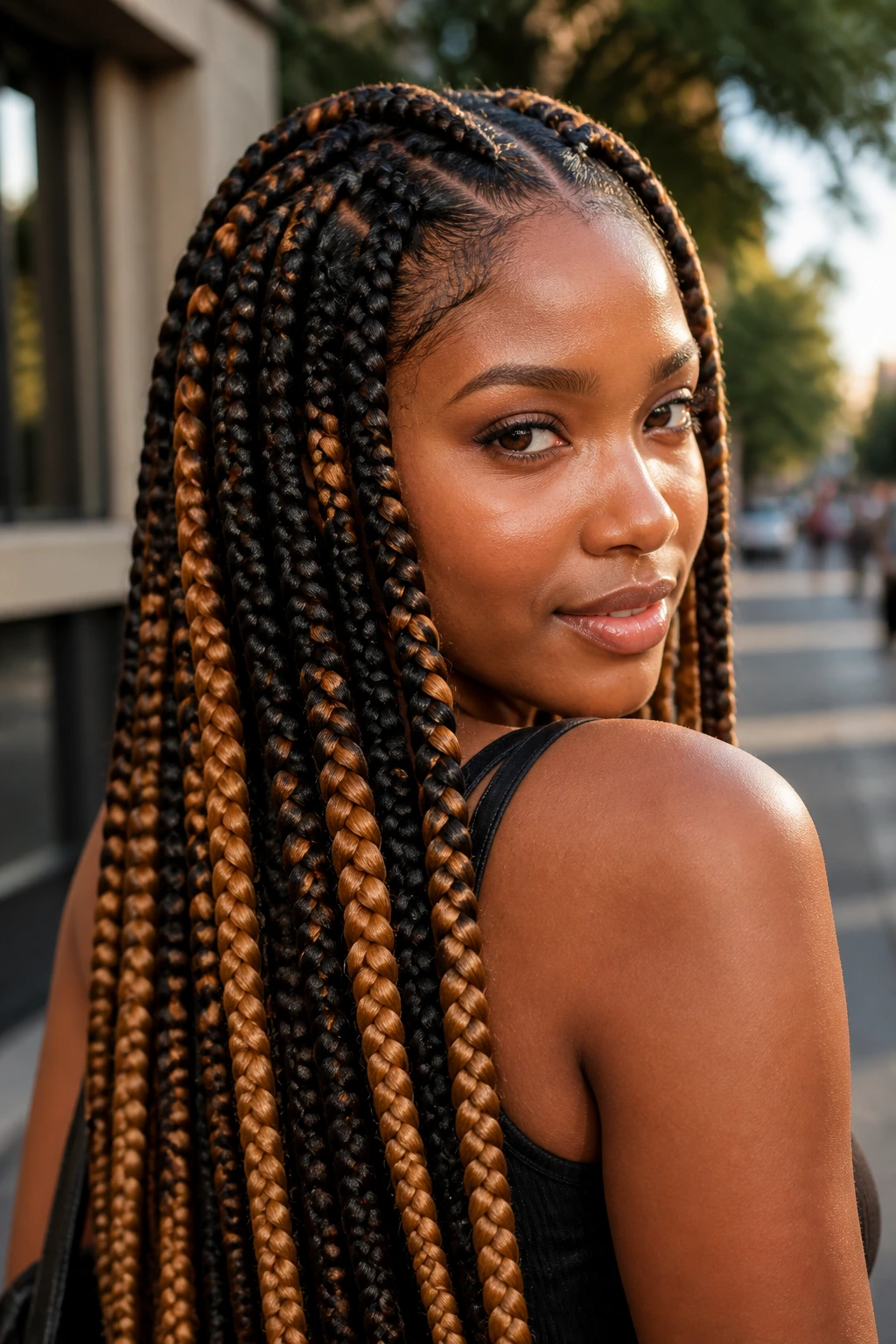
Two-tone Ghana braids do something clever: they turn the braid pattern into a color pattern too. The thick, feed-in structure already draws the eye, and adding two tones makes the braid feel more dimensional than a simple single-shade style.
Long hair gives you enough runway for both colors to show before the ends finish. That matters. If the braid is too short, the second color doesn’t get a chance to breathe. With length, the switch can happen slowly, which keeps the look smooth instead of abrupt.
I’d keep the tones close. Black and caramel. Brown and bronze. Deep auburn and chestnut. The closer the shades, the cleaner the braid line looks.
13. Mocha and Caramel Crown Braid
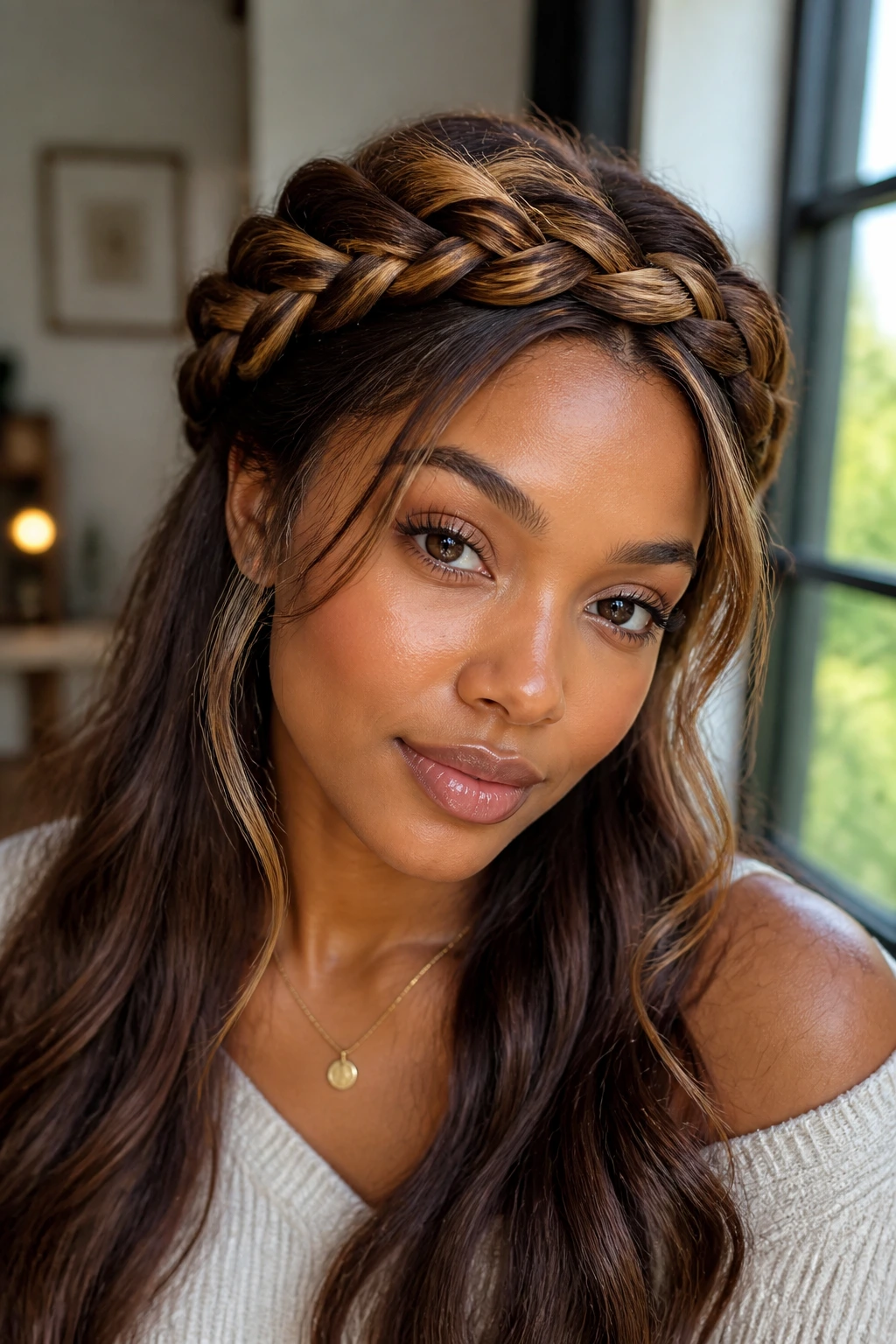
Mocha and caramel is one of my favorite combinations for a crown braid because it looks expensive without being flashy. The darker base holds the shape, and the caramel threads through the top and sides like warm light.
A crown braid already has a built-in sense of polish. On long hair, the wrap around the head can show the color change from different angles, which is half the fun. You get movement without needing loose length all the time.
This version works especially well if you wear gold earrings or a soft neckline. The braid frames the face, the color stays warm, and nothing fights for space.
14. Neon Accent Braided Space Buns
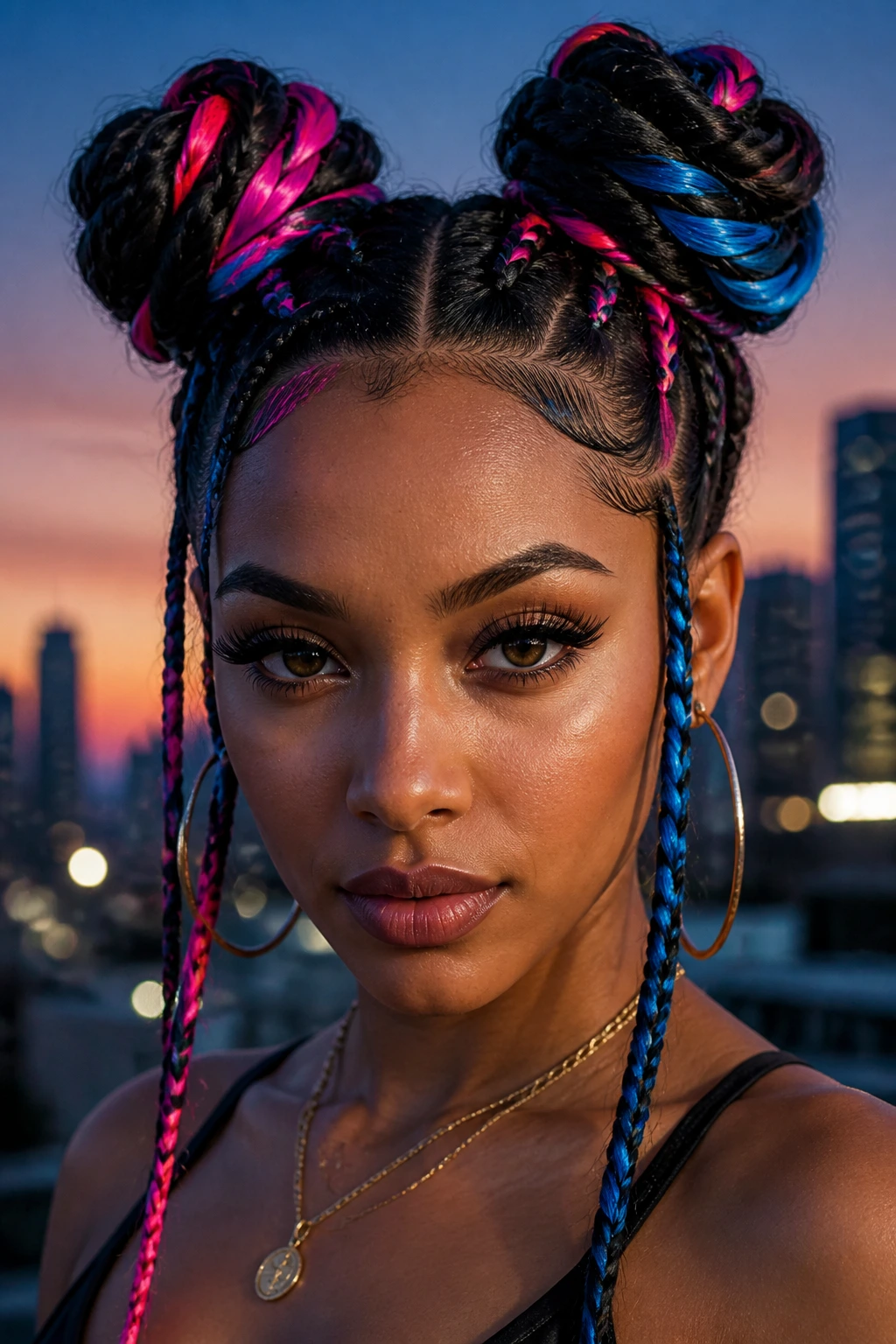
Neon accent braids are the exact opposite of subtle, and space buns give them a place to land. Keep the base braids in a dark or neutral color, then slip in small neon sections near the front, the bun wraps, or the tails.
Long hair helps because the braids have enough length to show the color before they’re coiled up. If the hair is too short, neon accents can disappear into the bun shape. With length, they peek out at the edges and create a sharp little burst of color.
This is a style that likes structure. Neat parting. Clean buns. A few bright sections, not twenty. Let the color hit in small doses and the whole look stays balanced.
15. Black-and-Blue Box Braids
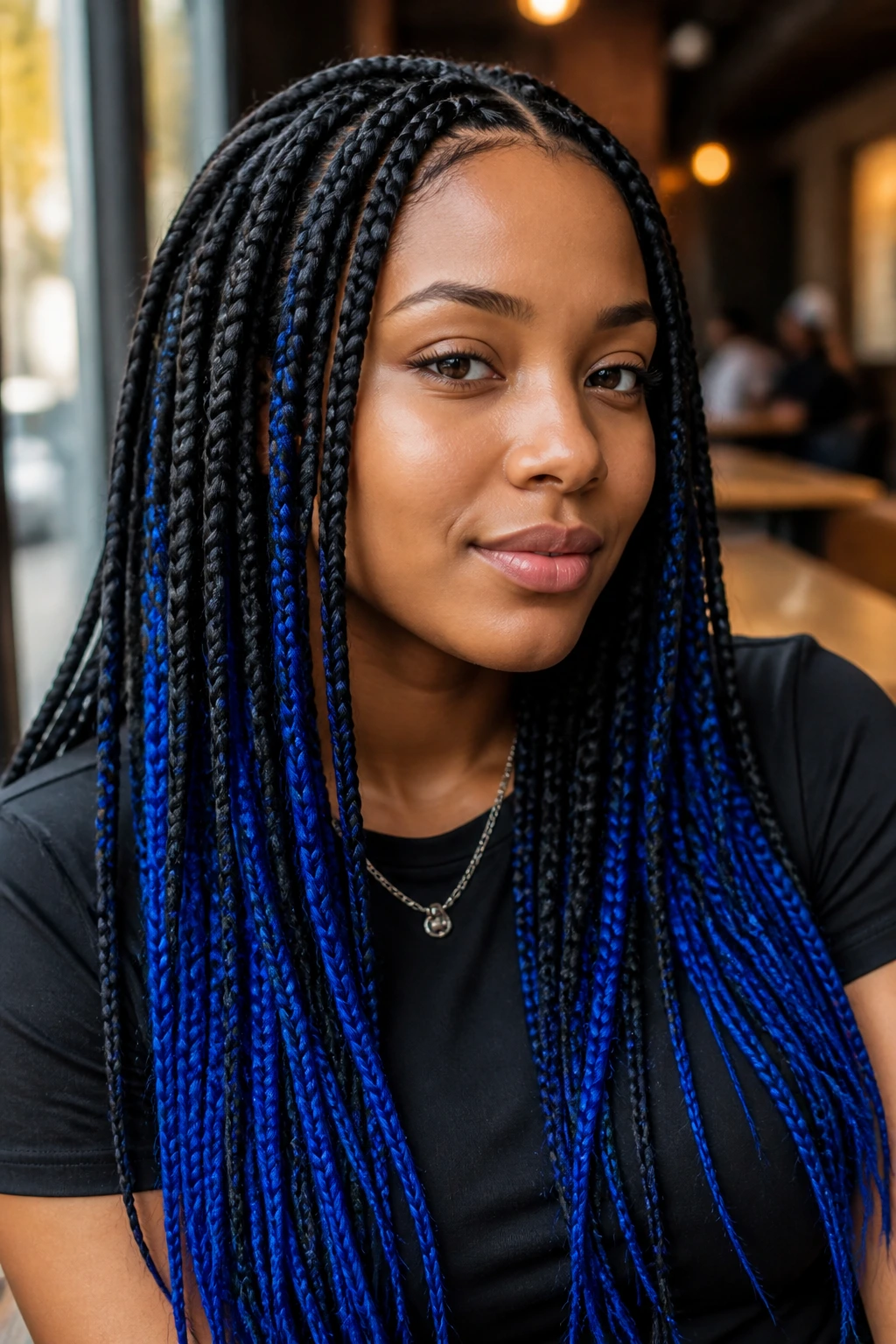
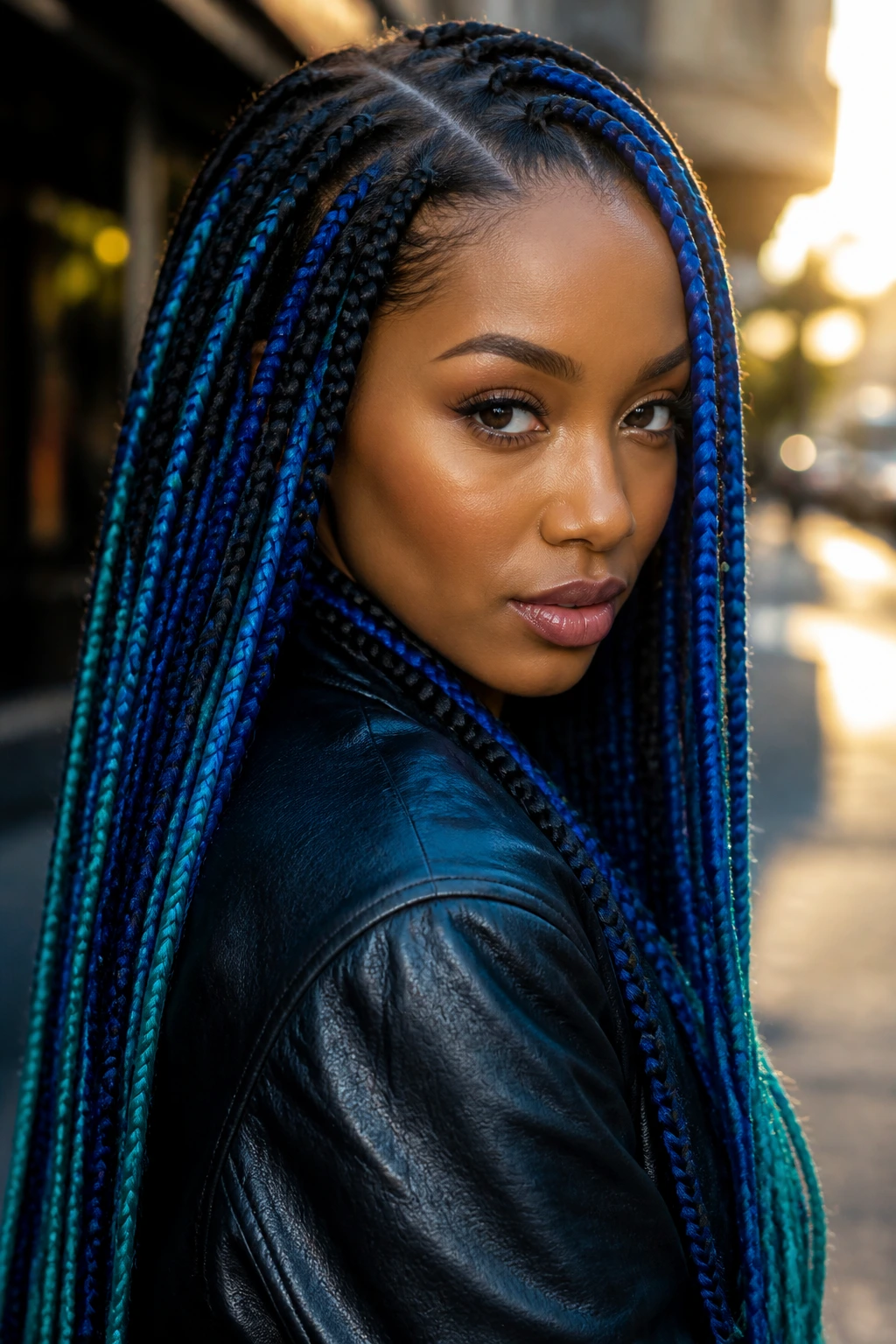
Black-and-blue box braids are a safer way to wear bold color. The black keeps the braid grounded, while the blue pieces cut through like streaks of ink. On long hair, that contrast reads strongest near the ends, where the color has room to spread out.
This is a good pick if you want something that can still work with a plain outfit. A hoodie, a blazer, a tank top — the braids carry the look. And because the blue is folded into a darker base, the style keeps changing depending on the light.
If you want more drama, use a brighter royal blue. If you want less, choose a navy or denim shade. Same idea, different volume.
16. Sunset Ombre Feed-In Braids
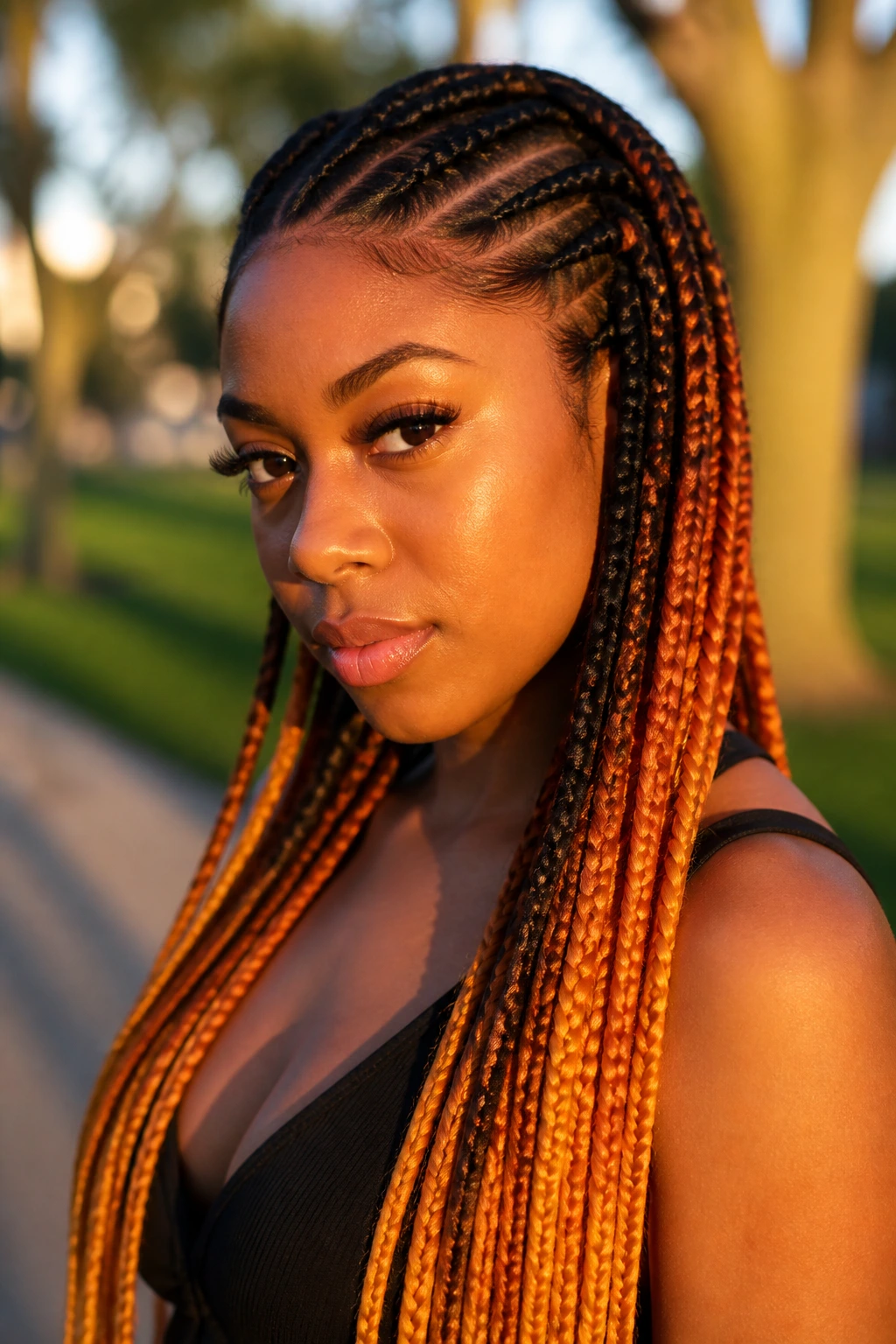
Sunset ombré feed-in braids are one of those styles that looks like it was built in layers, because it was. The color usually moves from deep brown or black into orange, gold, and a softer light end shade, which gives long braids a real sense of motion.
Feed-in braids help the ombré stay clean at the scalp. The gradual addition of hair makes the color change feel smoother, which matters when you’re mixing warm shades that can get muddy if they’re thrown together too fast.
This style loves long hair. The length acts like a color runway. If you want the ends to glow, keep them well separated and don’t overpack the braids with heavy accessories.
17. Plum Side-Swept Braid
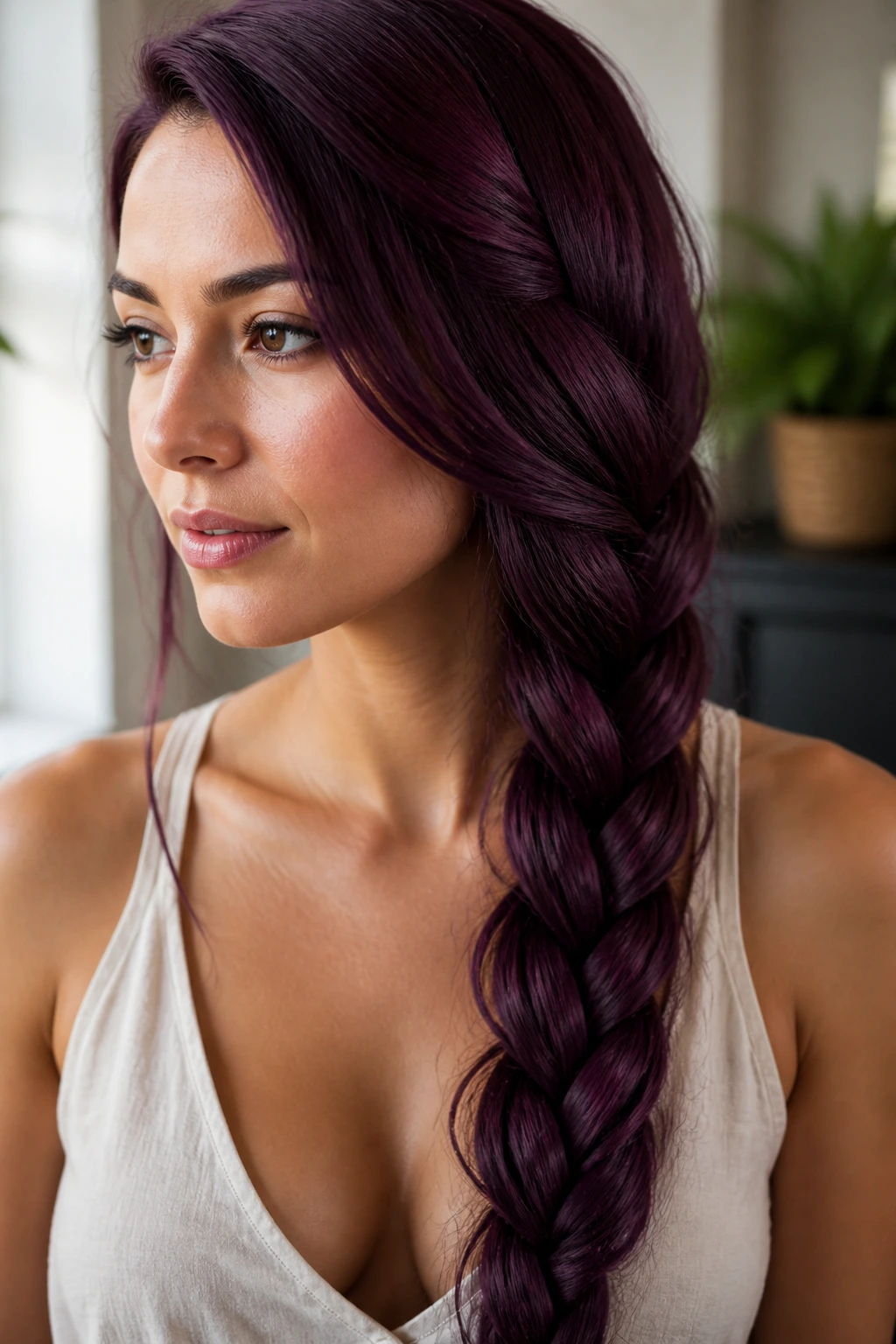
Plum is one of the easiest deep colors to wear because it has purple without going full violet. On a side-swept braid, the shade gets a lot of help from the angle. The hair falls across the body, and the color reads in one continuous line instead of breaking into pieces.
That line is the point. Long hair makes side-swept styles feel lush, almost draped. Plum gives that shape more mood. If the braid is thick, the color looks velvety. If it’s slimmer, it looks sharper and more defined.
Pull the braid over the shoulder, not too far forward. You want the plum to sit in the light, not crush itself against your clothes.
18. Peach Braided Half-Up
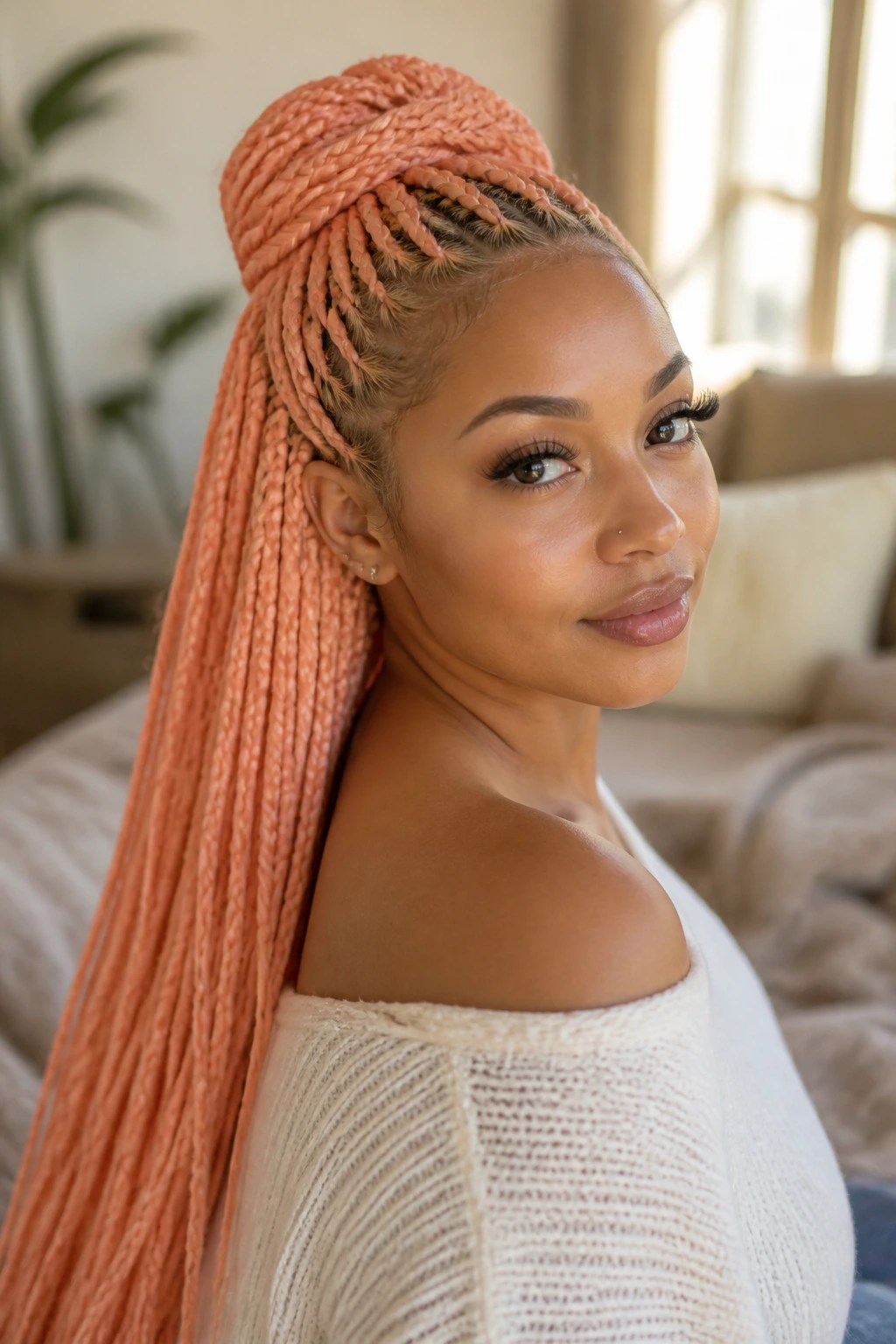
Peach is underrated in braids. It’s warm, soft, and a little playful without looking childish when the braid pattern is clean. A half-up style keeps the top lifted and lets the long lengths fall out behind it, so the color can show in both the crown and the tail.
The best part is how easy this is to wear. You get the face-opening shape of a pinned style and the visual payoff of long braids down the back. On long hair, peach can sometimes look too pale if it’s worn straight and loose. The half-up structure fixes that by creating more contrast around the head.
A few tiny gold cuffs work well here. Too many beads would steal the softness.
19. Cobalt and Black Rope Twists
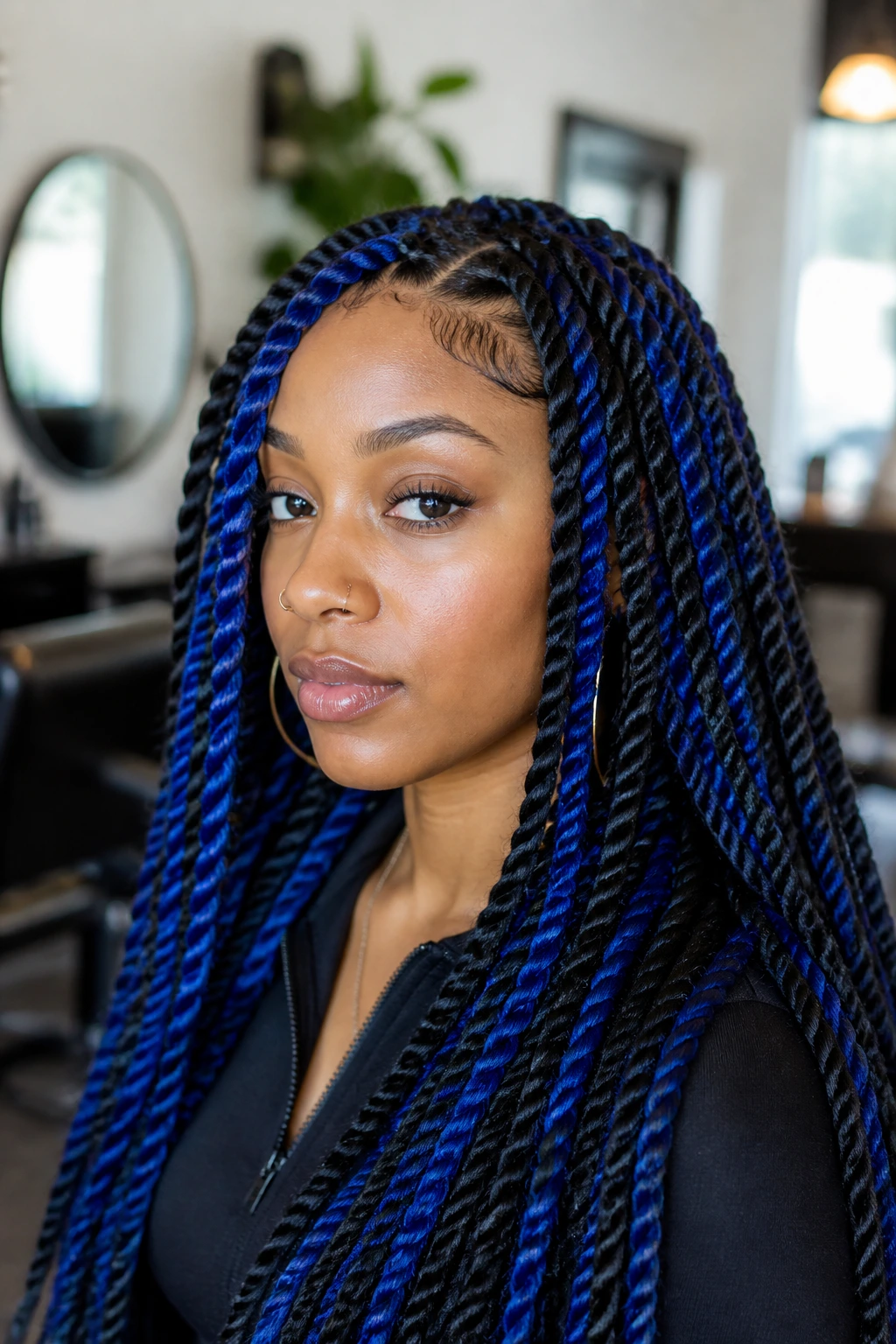
Cobalt rope twists have a tighter, spiraled look than classic braids, so the color lands differently. The twist catches the blue in bands, which makes the shade feel deeper and more textured on long hair.
The black base keeps the cobalt from drifting into toy-like territory. That balance matters. Rope twists already have a little shine, and blue can go flat fast if the base is too light. On long hair, the spiral length helps the color breathe.
This is a strong choice if you like a cleaner silhouette. Rope twists hang a little more smoothly than some braid styles, and the cobalt line stays visible even when the hair is tucked behind the shoulders.
20. Pastel Braided Waterfall
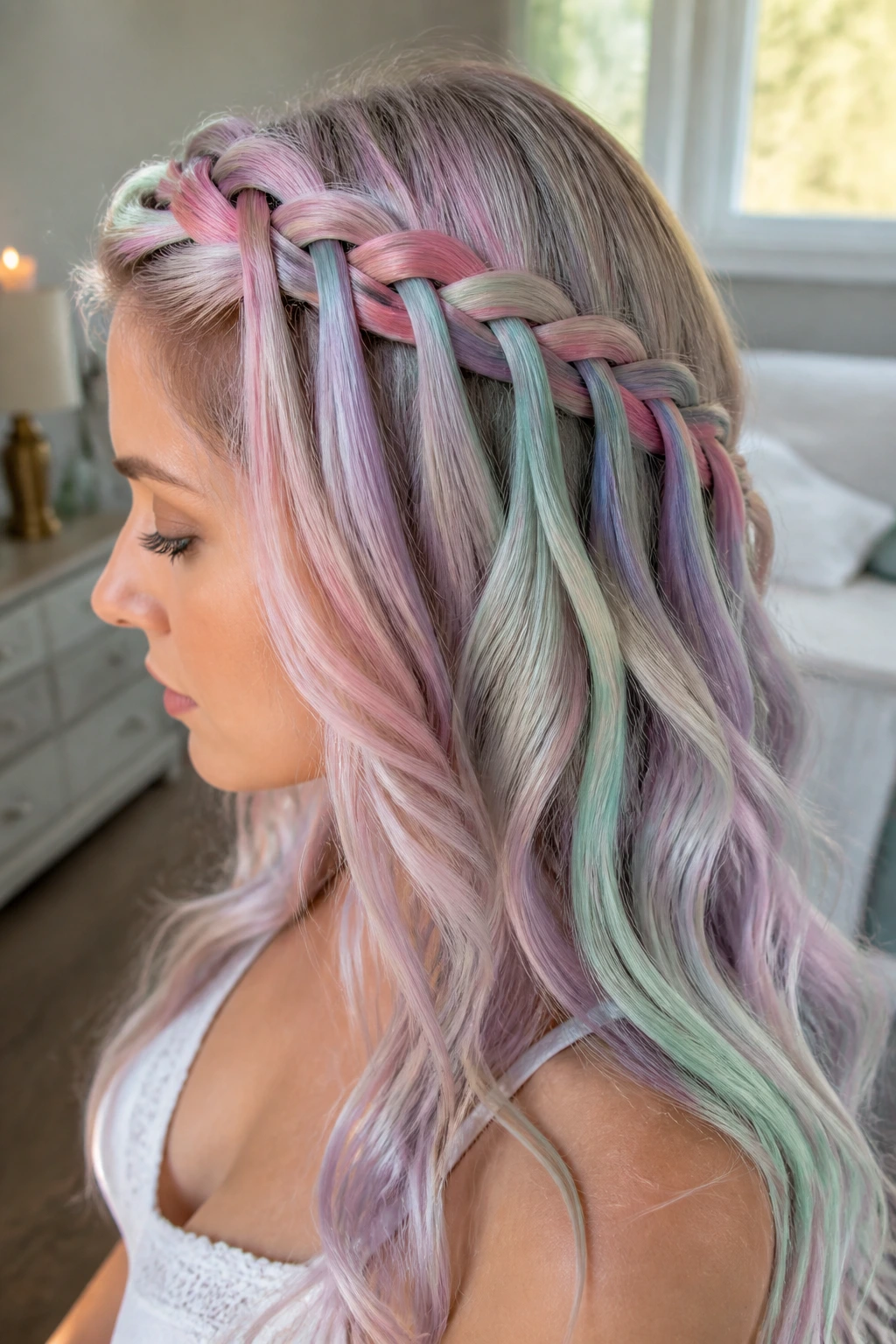
Pastel braids can be tricky on long hair because pale shades vanish if there isn’t enough structure around them. A waterfall braid solves that by giving the color a visible path down the head instead of letting it sprawl.
Soft pink, lilac, mint, and baby blue all work here if you keep the palette tight. Too many pastel shades and the braid starts to look washed. Two or three is enough. The falling strands also let you show off the color while keeping the top neatly controlled.
This style feels airy, but it still needs a crisp part and a careful hand. Sloppy sectioning ruins pastel faster than any other mistake.
21. Red Wine High Braided Ponytail
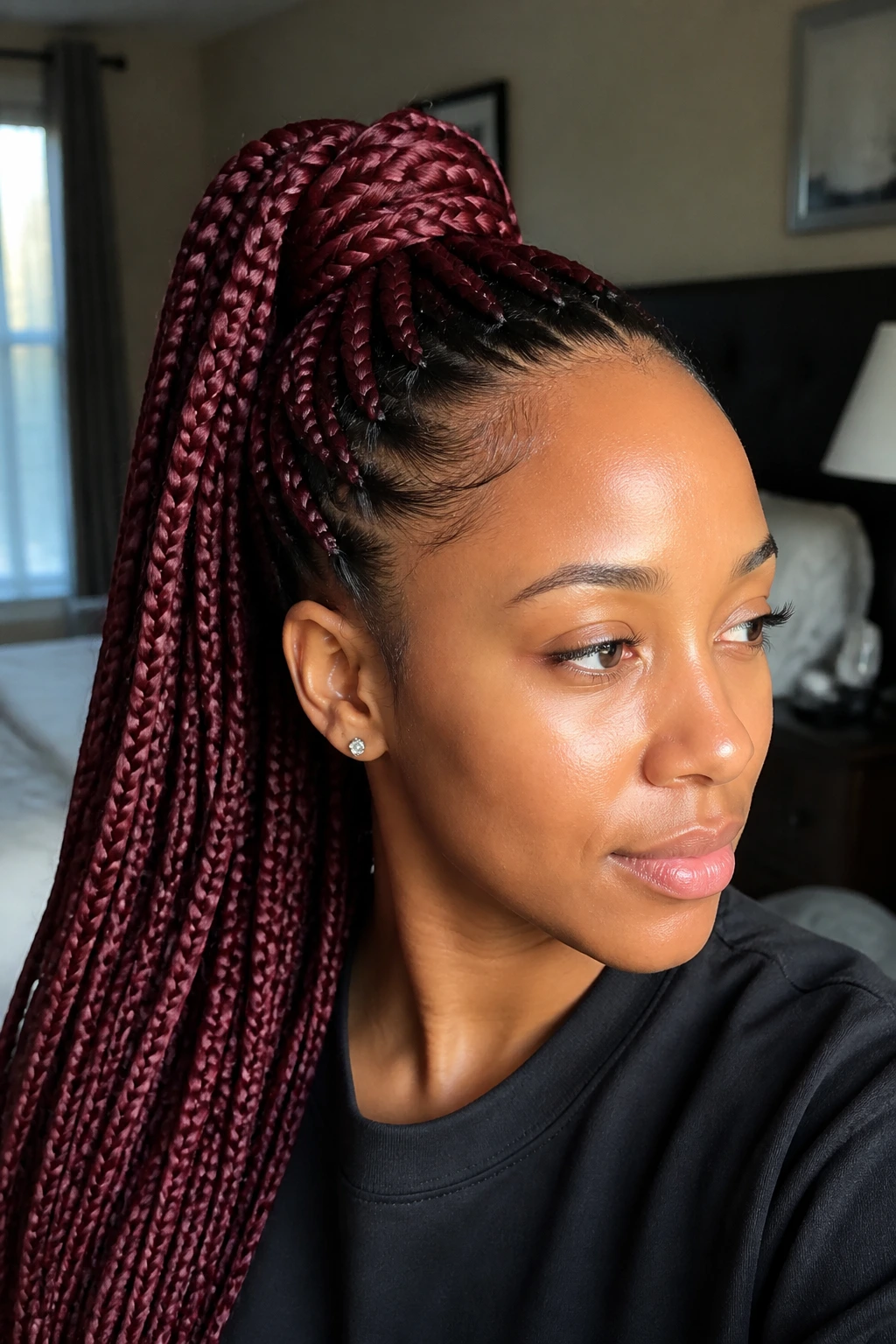
A high ponytail gives red wine color a lot of confidence. The braid pulls the shade upward, the tail swings cleanly, and the deep red reads richer because it sits against the face and neck where the light hits hardest.
Long hair makes the ponytail part matter as much as the braid itself. If the tail is long enough, it becomes the whole statement. If it’s shorter, the color has to do more work up top. Either way, red wine is one of those shades that can look sharp without being flashy.
Wrap a small braid or a strip of hair around the base. It hides the elastic and makes the style feel finished.
22. Electric Yellow Accent Cornrows
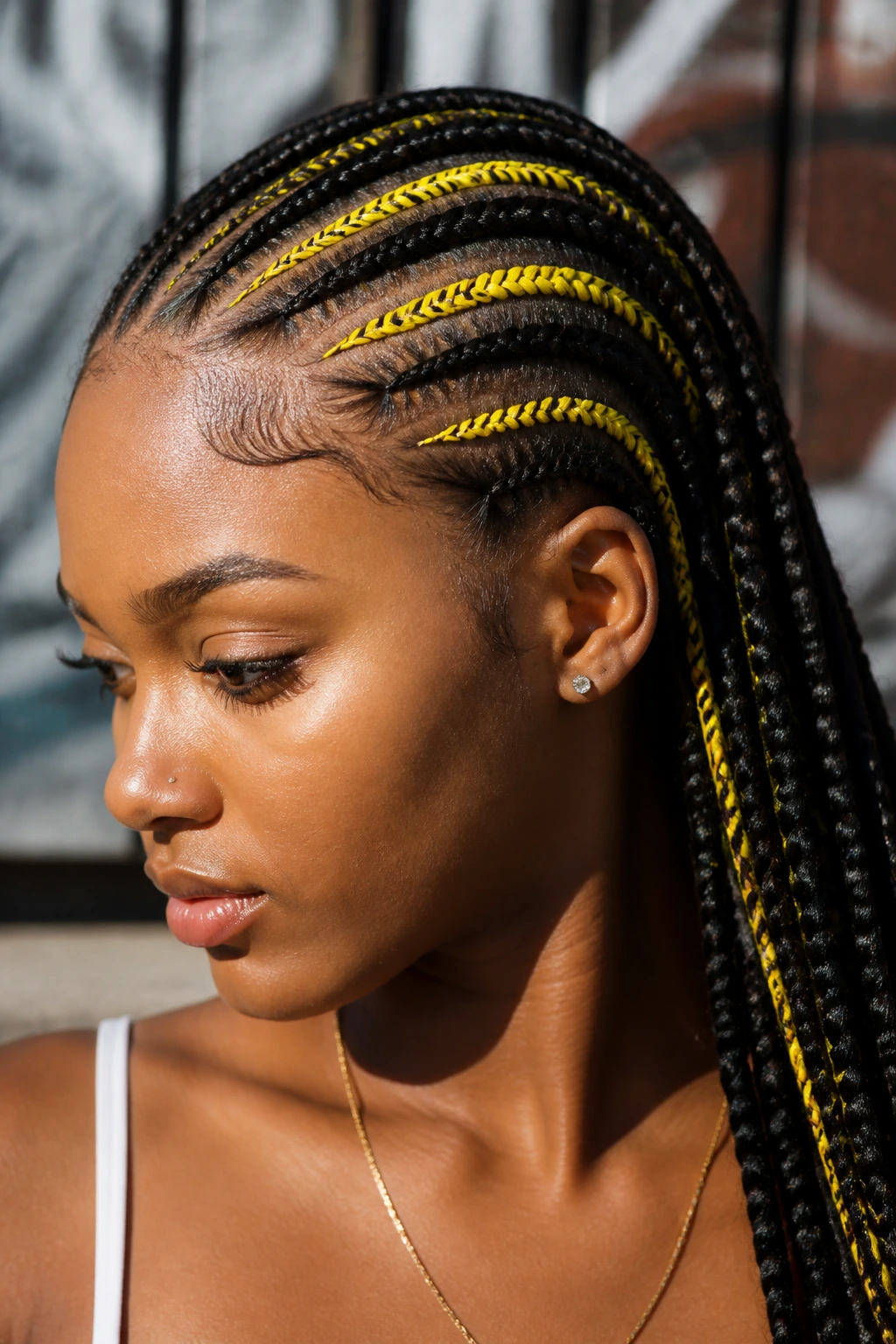
Electric yellow is not for the faint of heart, and that’s fine. Used as accent lines inside cornrows, it becomes graphic instead of chaotic. The dark base gives the yellow a place to stand, and long hair gives the accent lines enough distance to be seen.
A few narrow yellow rows are usually stronger than one giant block. That keeps the style from tipping into costume territory. It also makes the color easier to pair with black, white, denim, or leather — the usual suspects that keep bright hair from looking messy.
If you wear this one, keep the braid parting clean. Yellow exposes sloppy lines fast.
23. Multicolor Jumbo Feed-In Braids
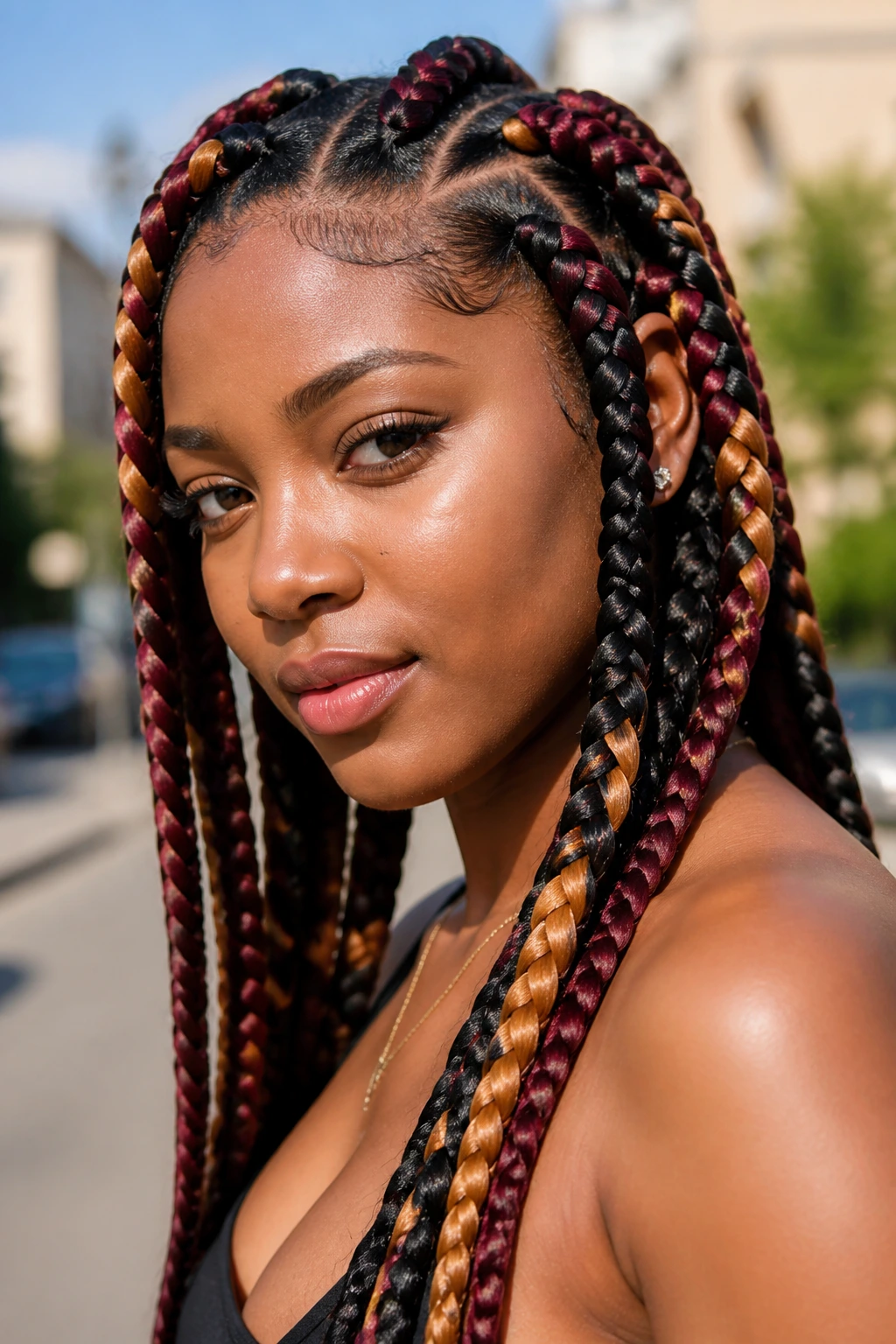
Multicolor jumbo feed-in braids are a bold choice, but jumbo size makes the color mix readable. With too many small braids, the shades can get noisy. With larger feed-ins, each color gets a clear lane.
That’s what makes this style work on long hair. The length gives the jumbo braids a place to settle, and the feed-in method keeps the base neat even when the colors are busy. Think of it like color blocking with a braid pattern underneath.
Keep the palette to three shades if you can. Four is possible, but it gets loud fast. The fewer the tones, the stronger the shape.
24. Green-Tinted Loc-Style Braids
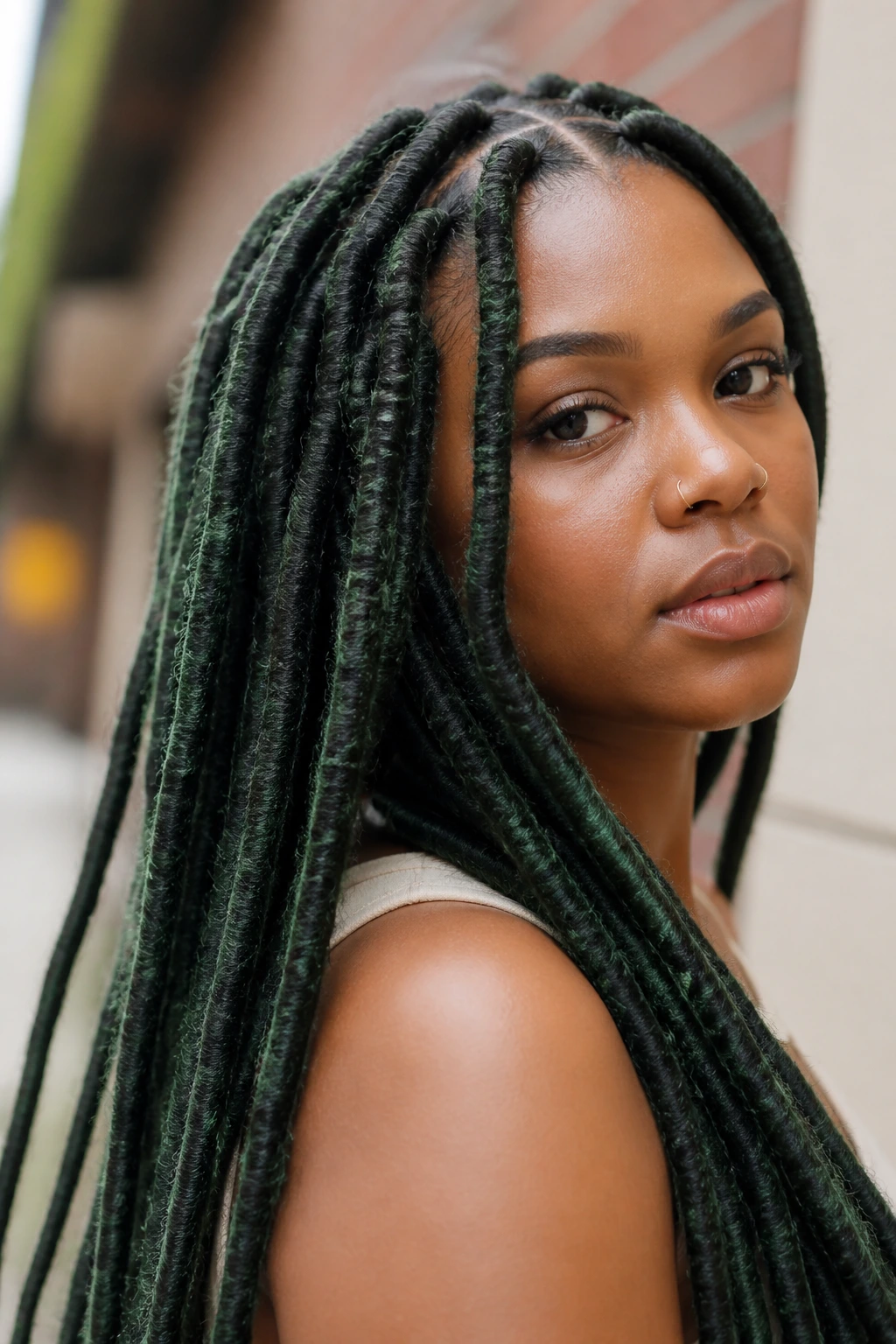
Green-tinted loc-style braids sit somewhere between braid and faux loc energy. The texture is chunkier, a little more matte, and the green overlay makes the whole style feel grounded instead of glossy.
Long hair helps because loc-style braids need enough length to show the texture. A short version can look stiff. A long version gives the green a chance to move and settle into the rope-like shape. Olive, forest, and moss tones work better here than neon green, unless you’re going for a much louder look.
If you like earthy clothes, this is a strong match. Linen, denim, black, brown. The hair does not need much help.
25. Silver-Gray Bubble Braid
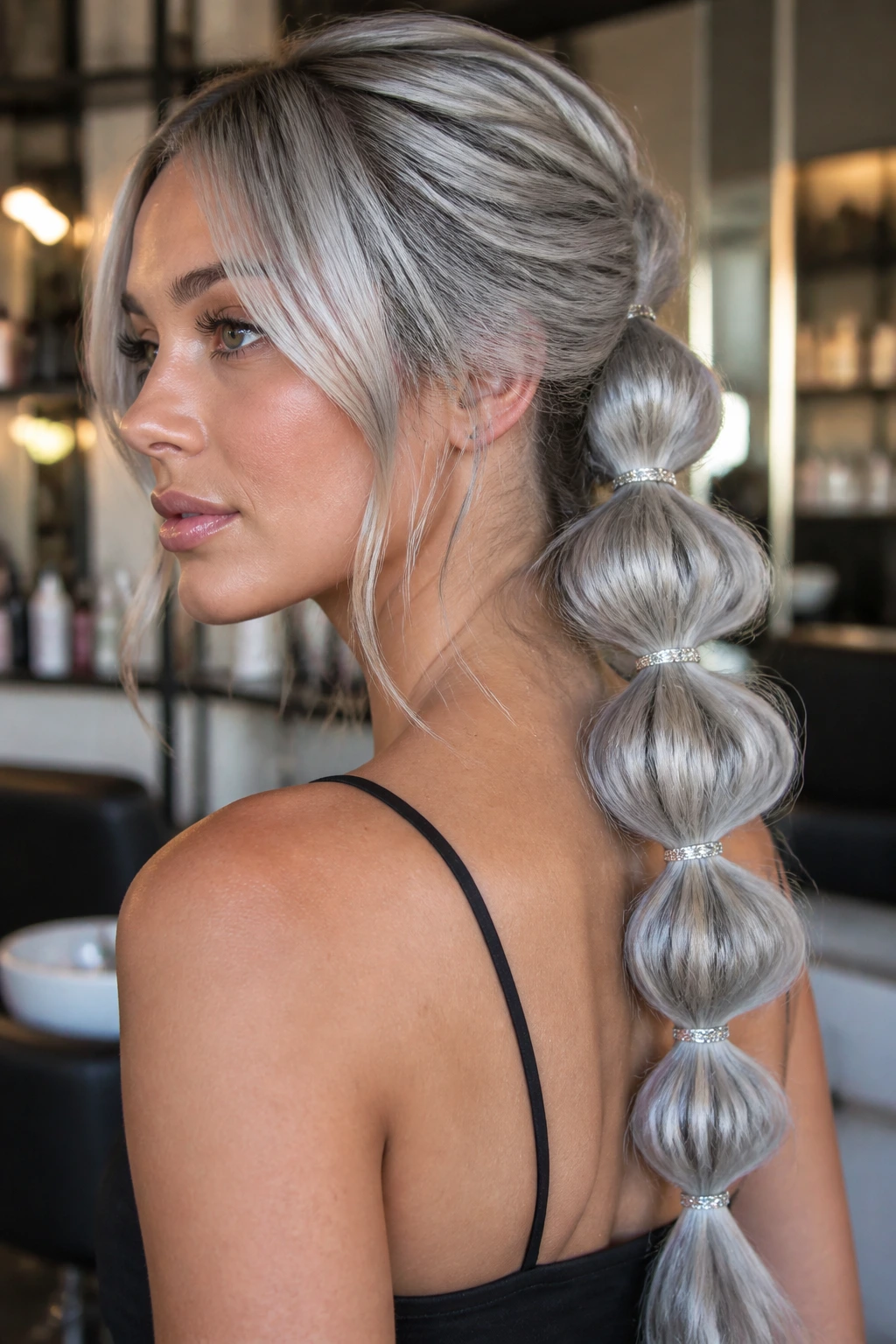
A bubble braid gives silver-gray color a very clean runway. Each band creates a little pause, so the gray doesn’t blur into one long sheet. On long hair, that segmentation is useful because it breaks up the length without making it feel chopped.
The color itself matters. Silver-gray can feel icy or smoky depending on the base, and bubble sections make both versions read more clearly. Add a small elastic every few inches and gently pull the sections fuller. Not too much. You want shape, not pouf.
This is one of the easiest styles to dress up. You can leave it plain or slip in metallic cuffs. Either way, the braid stays the center of the look.
26. Maple Brown Accent Braids
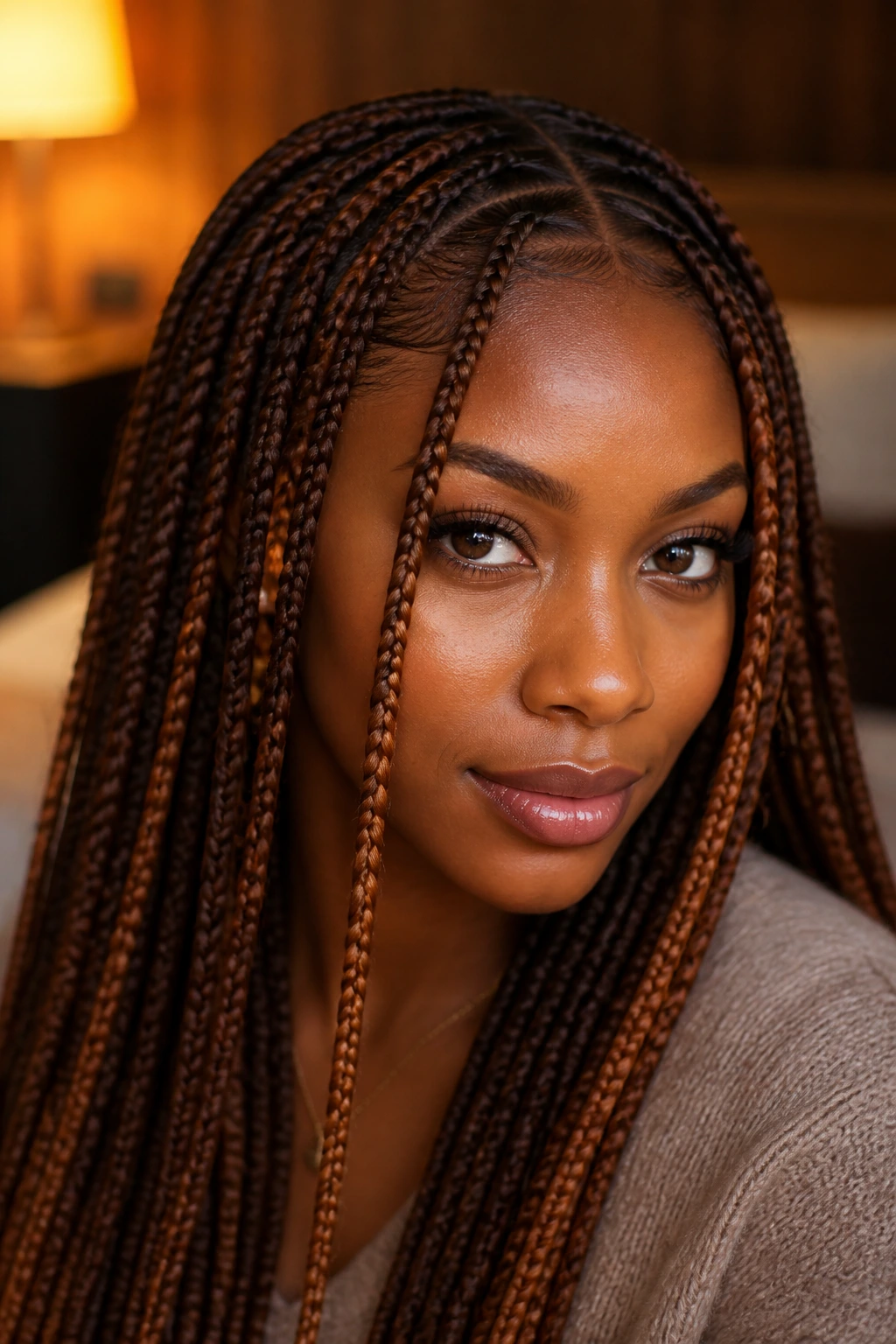
Maple brown sounds quiet, and that’s exactly why it works. This is the color for people who want dimension without making every braid shout. The warm brown tones show depth on long hair, especially when the braids are thick enough to hold the variation.
Accent braids can be tucked into darker lengths or scattered through the front where they frame the face. Either way, the shade catches enough light to keep the style from flattening out. It’s one of the best options if you want color that still feels work-appropriate.
This shade also ages well. It doesn’t get tired as fast as brighter tones, which matters if you plan to keep the style in for a stretch.
27. Icy Lilac Long Box Braids
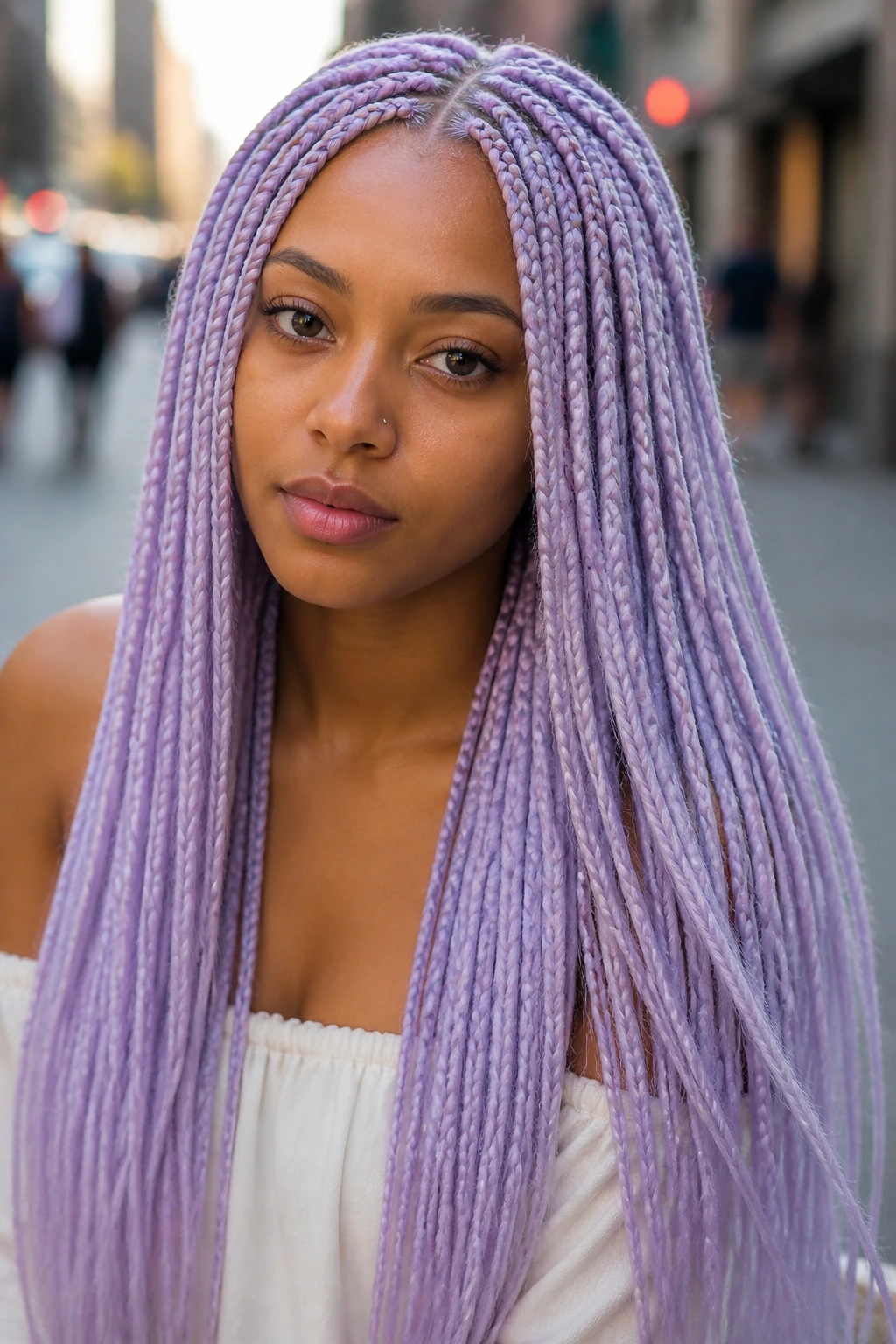
Icy lilac long box braids hit that sweet spot between pastel and cool-toned bold. The color looks soft at first glance, then turns sharper when you see it against dark clothes or in bright daylight.
Long box braids are the right setting for this shade because they let the lilac flow from root to end without losing definition. The box parting keeps the color organized, and the length makes the icy tone feel more luxurious than sugary. If you add a middle part and keep the ends smooth, the whole thing looks cleaner.
I’d avoid overcrowding this style with accessories. The color already has enough personality.
Why Color Placement Matters More Than People Think
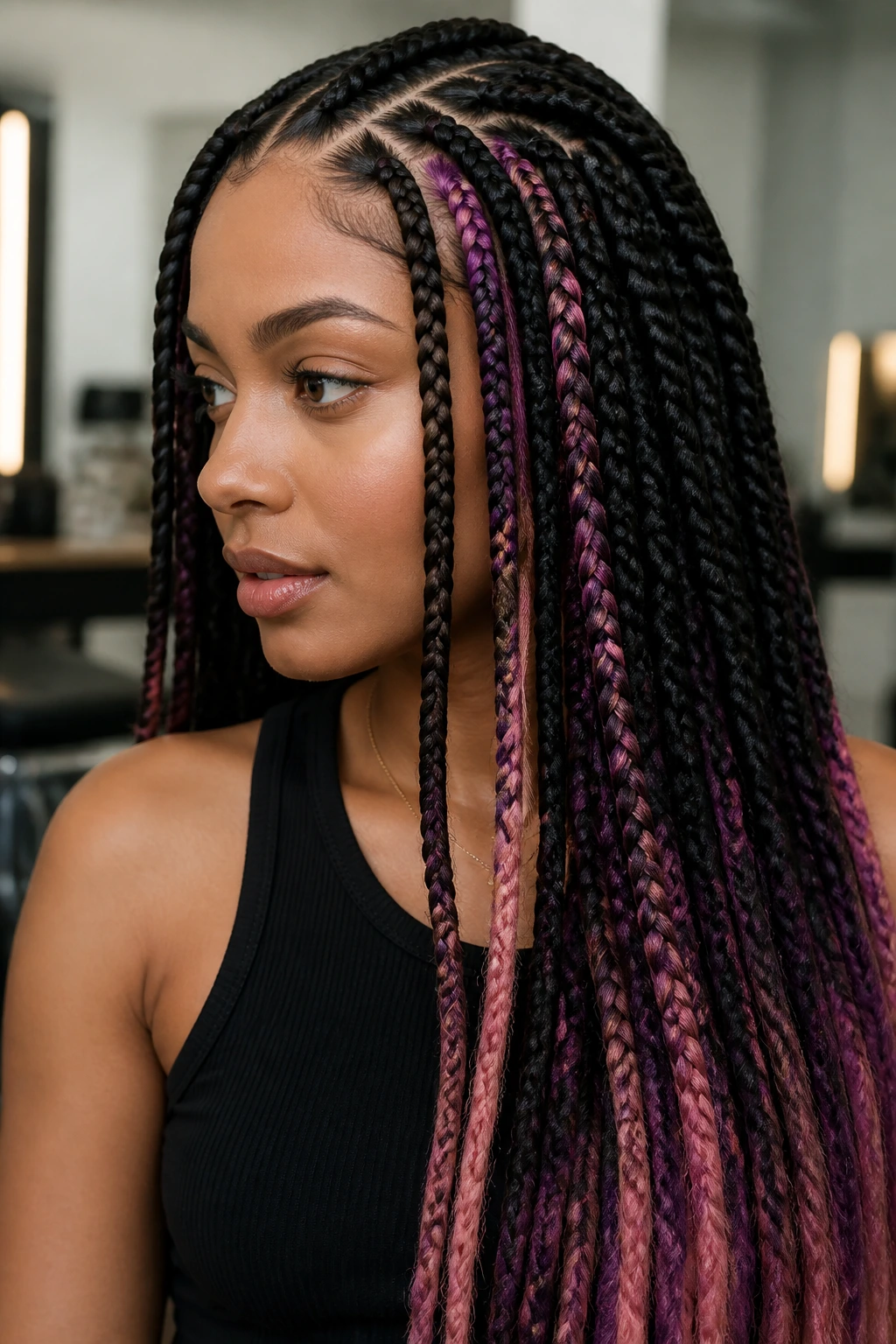
A braid can handle almost any color. The real question is where that color sits. Put the brightest shade at the ends and you get movement. Put it near the face and you get impact. Hide it underneath and you get a little surprise every time the hair swings forward.
Long hair makes this easier because the braid has space to build a story from top to bottom. Dark roots can anchor the look, mids can carry the transition, and lighter ends can keep the whole style from feeling heavy. That three-part rhythm is why ombré braids, peekaboo color, and accent rows keep showing up in real life instead of just on mood boards.
The other thing people miss is braid width. Tiny braids blur color together. Jumbo braids show each shade faster. Feed-ins land somewhere between the two. Pick the braid size before you pick the exact color if you want the result to look intentional. That order saves a lot of regret.
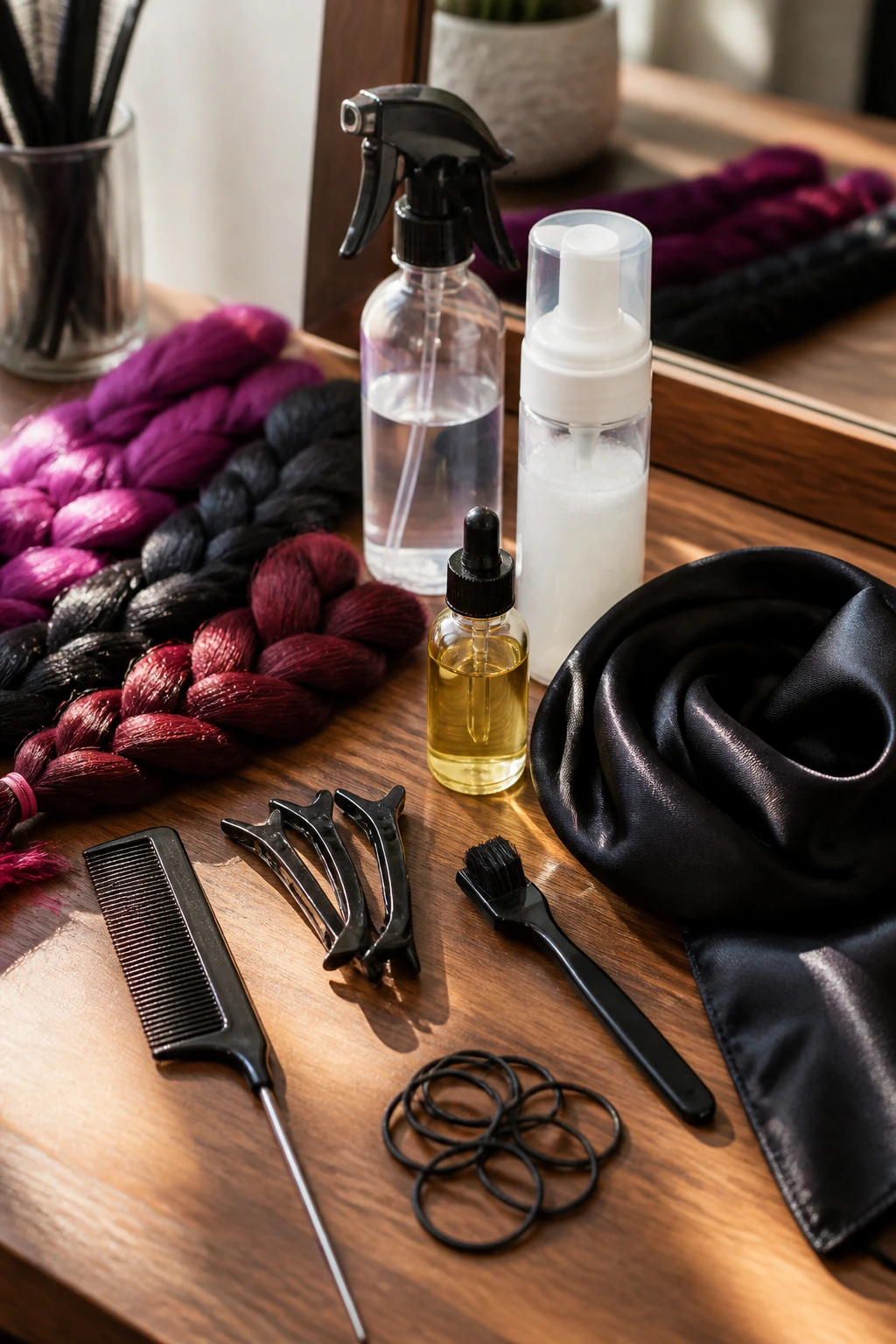
Essential Tools for Colored Braids
-
Rat-tail comb: Clean parts are the whole game with colored braids, and the thin tail gives you control around the hairline and crown.
-
Sectioning clips: Long hair tangles while you work, and clips keep the loose length from getting mixed into the section you’re braiding.
-
Spray bottle with water and leave-in: A light mist makes natural hair easier to detangle and braid without roughing up the ends.
-
Braiding hair or extension hair in chosen shades: Pre-colored synthetic hair gives the cleanest color payoff; pre-stretched hair saves time and cuts down on fuzz.
-
Edge brush: Useful for smoothing the front after the braid is done, though you can skip it if you prefer a softer hairline.
-
Braid mousse or light holding foam: This helps tame flyaways and gives the finished style a neater surface.
-
Scalp oil applicator: A narrow nozzle lets you place oil where the scalp feels dry without soaking the braid itself.
-
Satin scarf or bonnet: Nightly wrapping keeps the color looking smoother and reduces lint, which matters more than people admit.
-
Small elastics and braid cuffs: Optional, but useful when you want to decorate one or two sections instead of loading up the whole head.
Picking the Right Shade and Fiber
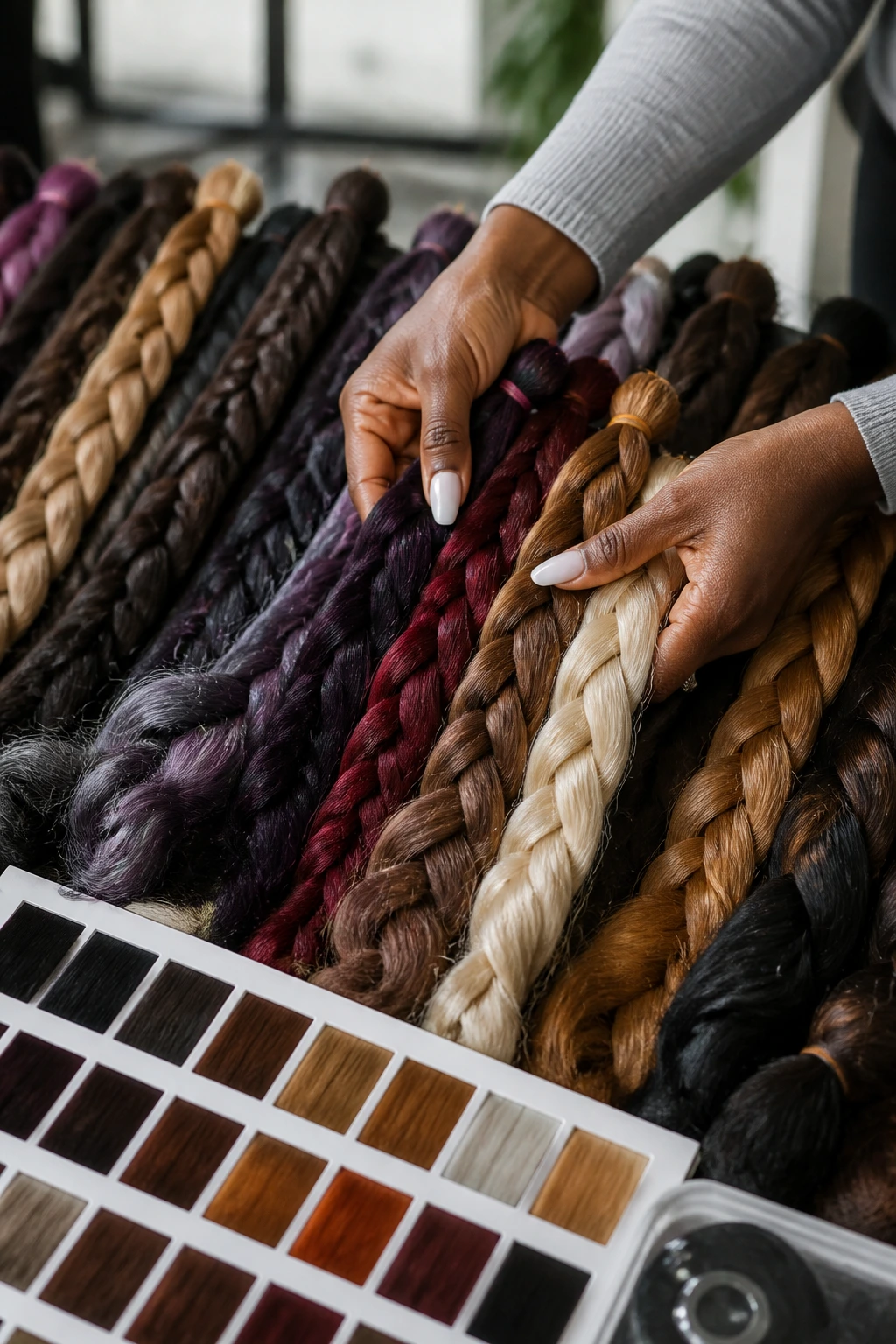
The smartest color choice starts with the fiber, not the shade. Synthetic braiding hair usually gives the cleanest bold color because the tone is built into the strand. If you try to dye every braid style after the fact, you lose time, and the finish can go patchy fast.
Match the finish too. Some colored hair has a glossy, plastic sheen. Some has a softer matte look. Mixing the two in one head is where things start to look odd. If you want a natural-looking blend, stay close to the same finish across all the bundles.
Shade choice should follow your base color and your skin undertone, but not in a fussy way. Warm browns, copper, burgundy, and honey blonde sit nicely against deeper natural hair. Cool colors like silver, icy lilac, teal, and midnight blue create sharper contrast. If you want the color to feel softer, choose shades one step darker or dustier than the brightest version you’re tempted to buy. They hold up better in everyday light.
And buy an extra pack. Always. Long hair eats braid hair faster than a first-time shopper expects, especially if you’re mixing two or three shades and need the color ratio to stay even from front to back.
How to Wear These Braids in Real Life
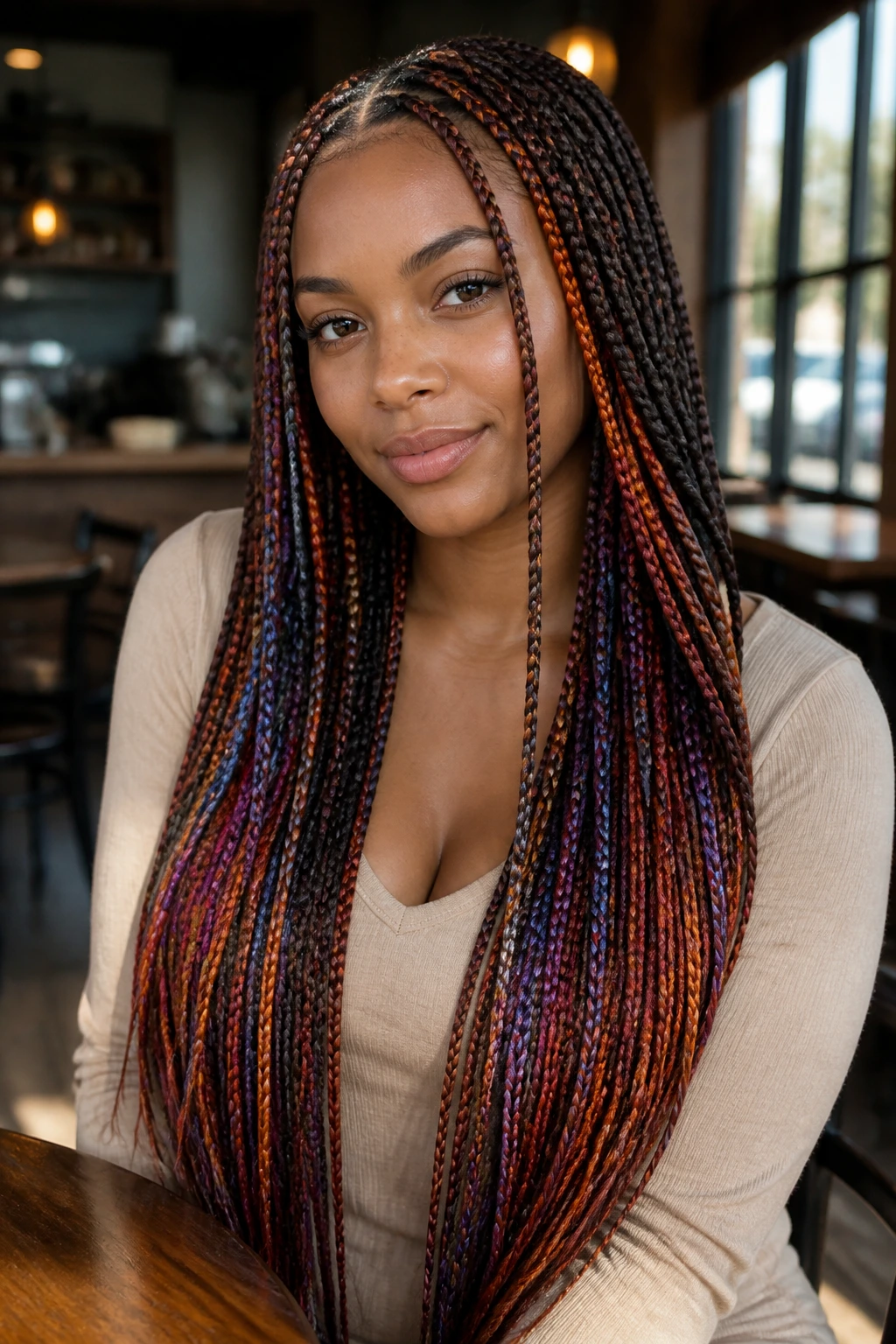
Presentation: Long colored braids look best when the parting is clean and the front is deliberate. A middle part makes the color feel symmetrical. A side part softens bright shades. Pulling one side behind the ear opens the face and shows off the braid pattern instead of just the color.
Pair With: Simple earrings, sharp collars, or a clean neckline usually work better than busy clothing. If the braids are loud — neon, rainbow, multicolor — let the outfit settle down a little. If the braids are more subdued, like maple brown or smoky silver, you can get away with bolder clothes or heavier jewelry.
Scale: Waist-length and hip-length braids give ombré and multi-shade styles the most room. If the hair is extremely long, a half-up, high ponytail, or braid wrap can keep the weight off the shoulders and stop the color from hiding under itself.
Mood: Keep the styling calm if the color is intense. Keep the color subtle if the styling is elaborate. That tradeoff keeps the look readable.
Extra Tips for Better Color and Longer Wear
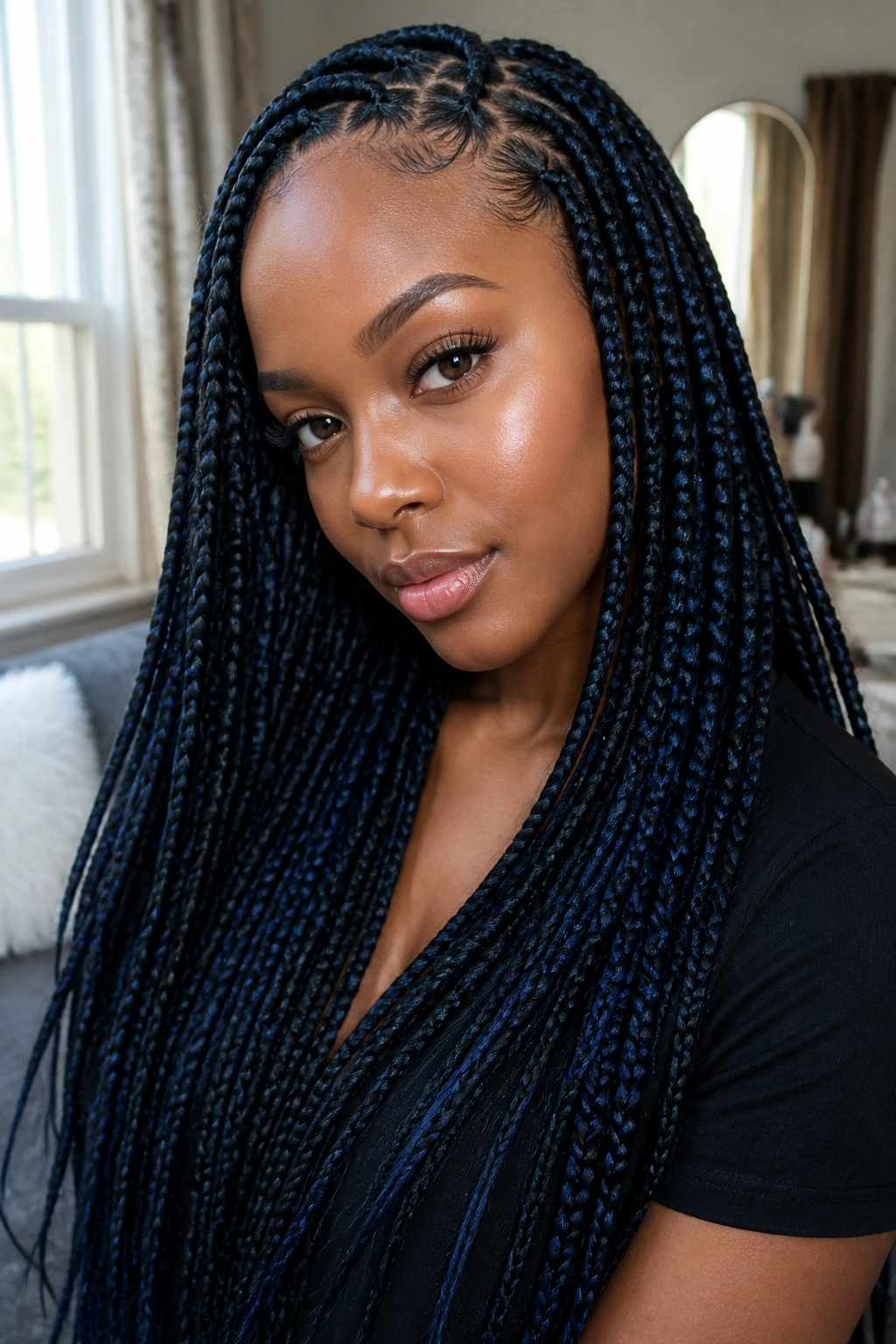
Color Placement: Put the boldest shade where the eye lands first — usually the face frame, the top layer, or the ends. A small burst in the wrong place can look accidental. A small burst in the right place looks planned.
Texture Trick: Mix braid sizes if you want a more expensive-looking result. One uniform size can work, but alternating a few thinner pieces with thicker ones gives the color a better rhythm.
Finish: Use braid mousse in a light hand, then a tiny bit of sheen spray. Too much product makes colored fibers clump together and steal the detail from the braid pattern.
Make-It-Yours: If you want a softer version, choose two shades one step apart — like brown and caramel. If you want a louder one, use a dark base plus one bright accent color. If you want something protective and low fuss, keep the color in the extensions and leave your natural hair in its own shade.
Common Mistakes That Make Colored Braids Look Off
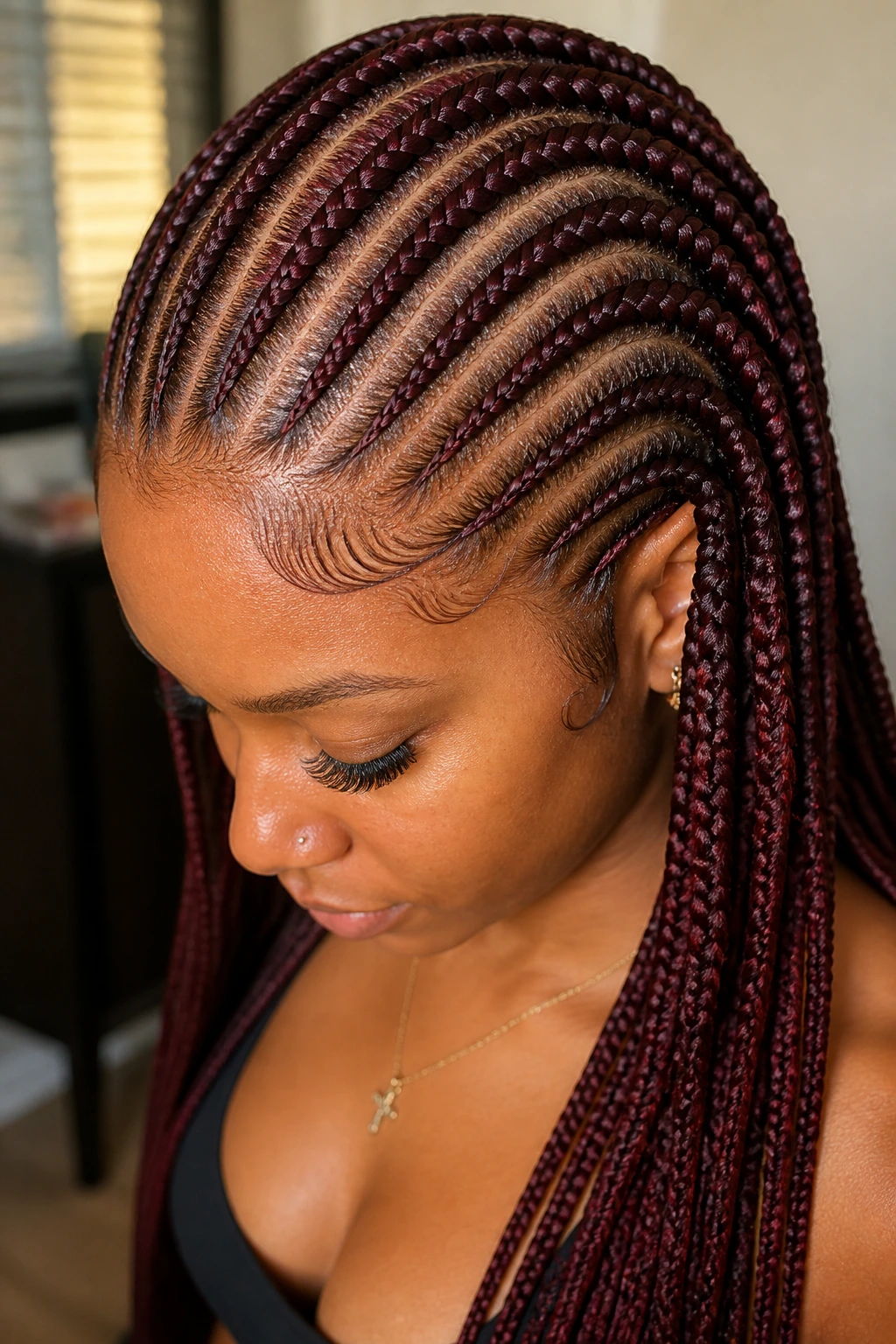
The biggest mistake is pulling the braid too tight at the scalp just because the color feels dramatic. Tight roots do not make bright hair look cleaner. They make the style hurt, flatten the hairline, and shorten the wear time. Keep the first section controlled, not strangled.
Another one: mixing finishes that don’t belong together. A matte braid next to a shiny synthetic strand can look patchy even when the color is good. Match the luster before you commit to the shade, especially if you’re blending more than one color.
People also overload the head with accents. Beads, cuffs, thread, and color all fight for space if they show up at once. Pick one hero. Maybe two. That’s enough.
Then there’s the issue of weight. Long braids already pull harder than short ones. Add jumbo sections, heavy beads, or extra-long tails and the style starts dragging at the hairline by day three. If the style feels heavy in the chair, it will feel worse after a week.
Last, don’t skip detangling before installation. Long hair hides knots under the braid, and those knots create lumps that show up every time the color shifts in the light.
Variations and Adaptations to Try
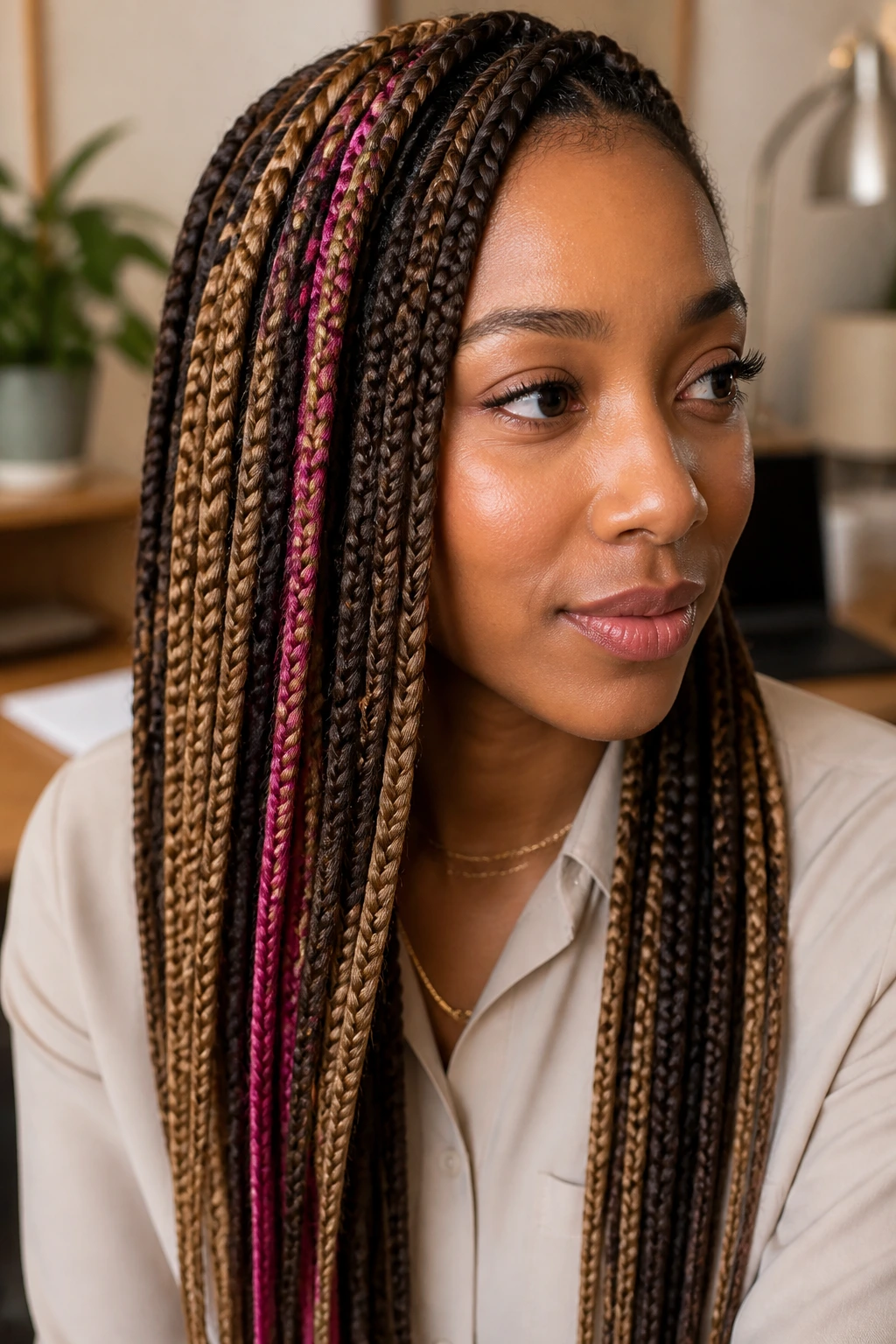
Soft Office Blend: Keep the braid pattern clean and use caramel, chestnut, or maple brown with one lighter accent shade tucked into the ends. It reads polished without losing the colored effect.
Neon Night Braids: Use a dark base with one bright shade — electric yellow, hot pink, or cobalt — placed only in face-framing pieces and the top layer. This keeps the style loud but controlled.
Low-Tension Protective Set: Choose knotless braids or feed-ins, skip heavy beads, and keep the color in lightweight extensions. This version is better if you want longer wear and less pull on the hairline.
Pastel Fade Version: Use two or three pale tones, like lilac, peach, and icy pink, and keep the braid size medium so the colors don’t disappear. This works best on hair that’s long enough to show a full gradient.
Earth-Tone Mix: Blend mocha, copper, honey blonde, and bronze for a warm, dimensional finish. It’s a good choice if you want colored braids that still sit close to natural shades.
Keeping the Color and Braids Fresh Between Wash Days
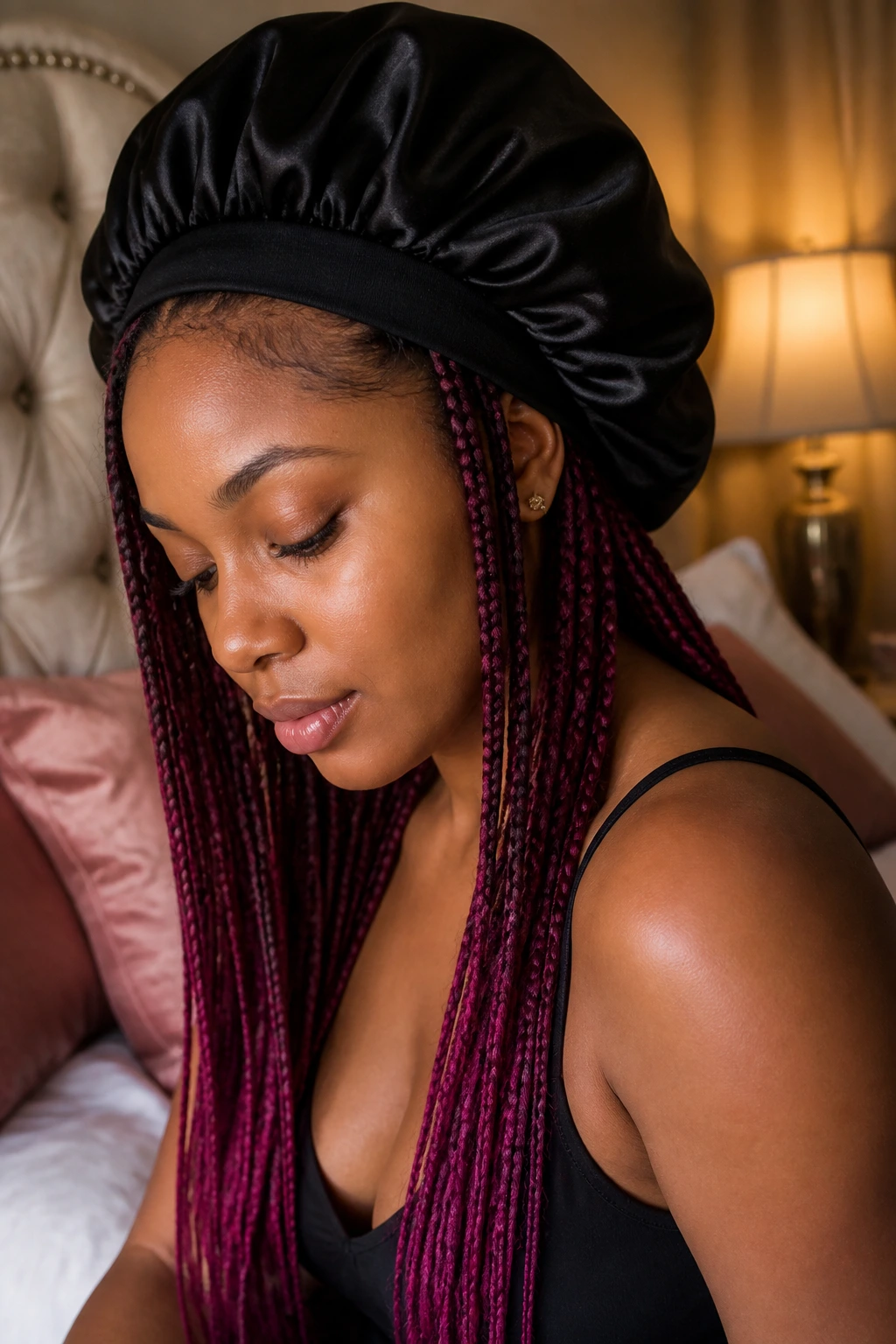
Long colored braids stay nicer when you treat the scalp and the braid itself as two different jobs. Clean the scalp every 7 to 10 days if product buildup starts showing, but use a diluted cleanser and rinse well so the color doesn’t get dull with residue. A squeeze bottle makes this easier than trying to pour shampoo through the hair.
At night, wrap the braids in a satin scarf or sleep in a bonnet. That protects the colored fibers from lint and friction, which is one of the fastest ways a bright braid starts looking tired. If the style is especially long, tuck the ends into the wrap so they do not snag on bedding.
Use scalp oil sparingly. A few drops every 3 to 4 days is enough for most people. Too much oil darkens the braid near the roots and makes light colors look greasy. If the style is synthetic, keep heavy creams away from the lengths. They collect dust and turn the braid dull fast.
Most braided styles last best when the edges are refreshed around week 3 or 4 and the full style is removed before the hair starts matting underneath. If the roots get fuzzy or the color starts tangling at the nape, it’s time to take them down instead of pretending they still look fresh.
Frequently Asked Questions
Can I wear colored braids on dark hair without bleaching it?
Yes. The easiest route is colored braiding hair or extensions, which lets you add blue, red, blonde, or pastel shades without touching your own hair color. That’s also the safer option if you want bright color for a few weeks instead of a long-term change.
Which colors look best on long braids if I want something subtle?
Mocha, maple brown, burgundy, copper, and smoky silver usually read as soft color rather than loud color. They still show dimension in long hair, but they don’t dominate your face the way neon shades do.
Do knotless braids work better than classic braids for colored styles?
Usually, yes, if comfort matters to you. Knotless braids keep the base flatter and lighter, which helps when the lengths are heavy with color or when you’re wearing the style for several weeks.
How many packs of braiding hair do I need for long colored braids?
It depends on the braid size and the length, but long styles often take more than people expect. For waist-length braids, buying one extra pack per color is the safest move, especially when you’re mixing shades and cannot afford to run short mid-style.
Can I wash colored braids?
You can, and sometimes you should. Use diluted shampoo on the scalp, rinse carefully, and avoid scrubbing the lengths unless there’s product buildup. Synthetic colored hair gets fuzzy if you rough it up, so keep the wash gentle.
What if the color looks too bright on me once the braids are in?
Add balance instead of panic. A low ponytail, side sweep, or half-up style can calm the look fast because it reduces how much color shows at once. If the shade still feels too loud, the next install should use a darker base or a smaller pop color.
How do I stop long braids from feeling heavy?
Choose lighter braid sizes, skip oversized beads, and keep the first inch or two near the scalp less packed. Long braids always carry some weight, but heavy accessories and thick sections make the pull worse than the color itself.
Can I mix synthetic and human hair in the same braid style?
You can, but the finish needs to be close. If the human hair is soft and the synthetic strands are very shiny, the difference will show. Mixed fiber works best when the colors are close and the textures are matched on purpose.
Braids With a Little More Attitude
Colored braids on long hair work because they give the shade a path to travel. That path can be smooth and quiet, like maple brown or smoky silver, or sharp and loud, like teal, cobalt, or electric yellow. The braid pattern matters just as much as the color choice. Get the parting clean, keep the tension sane, and let the length do what length does best.
The styles that last are the ones with a clear idea behind them. Not every braid needs ten colors and a pile of beads. Sometimes the strongest move is a dark base, one bright accent, and enough length for the color to breathe. That’s the version people remember.
