



Braid hairstyles for short hair get underestimated for one silly reason: people picture a single long plait hanging down the back, and short cuts obviously can’t do that. The truth is more useful. On a bob, lob, or pixie, braids sit closer to the scalp, show off the parting, and stay crisp in a way longer hair sometimes can’t manage.
A short cut also changes the job of the braid. It isn’t there to carry weight; it’s there to draw a line, pin a fringe back, clean up the sides, or give a blunt haircut a little movement. That means a 1-inch section at the temple can matter more than a giant braid running all the way down the back.
If your layers keep slipping, you probably don’t need more hair — you need better placement, a touch more grip, and a braid style that matches the cut instead of fighting it. The styles below are built for that exact problem, from tiny front braids to tucked crowns and slick boxer pairs.
Why These Braids Work on Short Hair
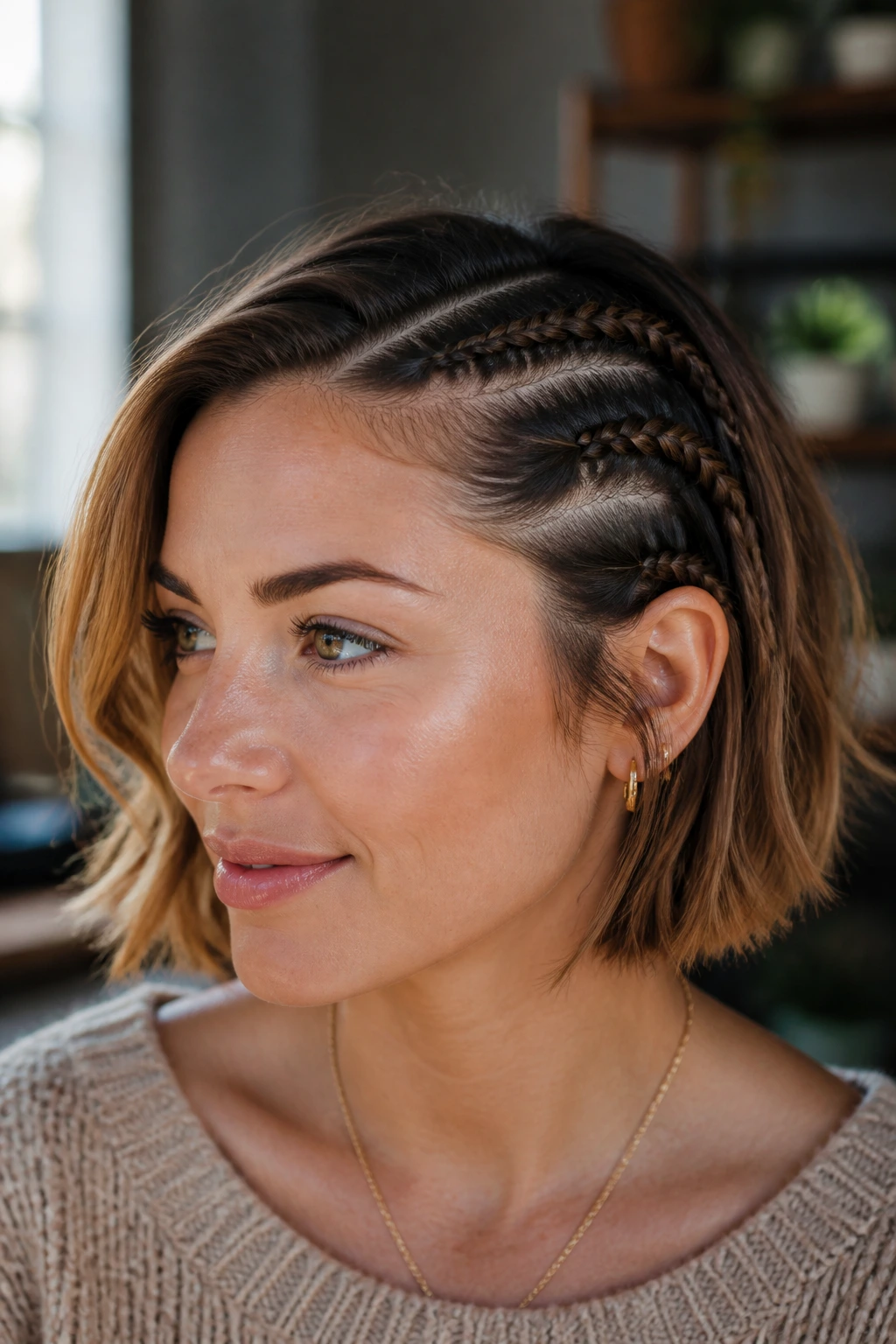
- Shorter length gives better control: Hair that sits at the jaw, chin, or nape doesn’t drag the braid down as much, so the shape stays sharper and the seams stay visible.
- Small sections do more work than big ones: A 1/2-inch braid near the hairline can tame a grown-out fringe or add shape to a blunt bob without swallowing the whole cut.
- Texture matters more than length: Day-old hair, a little mousse, or a light mist of dry shampoo gives braids something to grab. Freshly conditioned hair can be too slick.
- Layers stop being a problem when you plan for them: Instead of fighting short pieces, these styles tuck them into side braids, crown braids, and pin-finished shapes.
- You can switch between polished and loose fast: A braid that starts tight at the scalp and ends soft at the ear can move from office to dinner with one tug of a pin.
- Accessories actually help here: Tiny elastics, bobby pins, scarf tails, and clips become part of the design instead of afterthoughts.
1. Mini Side French Braid
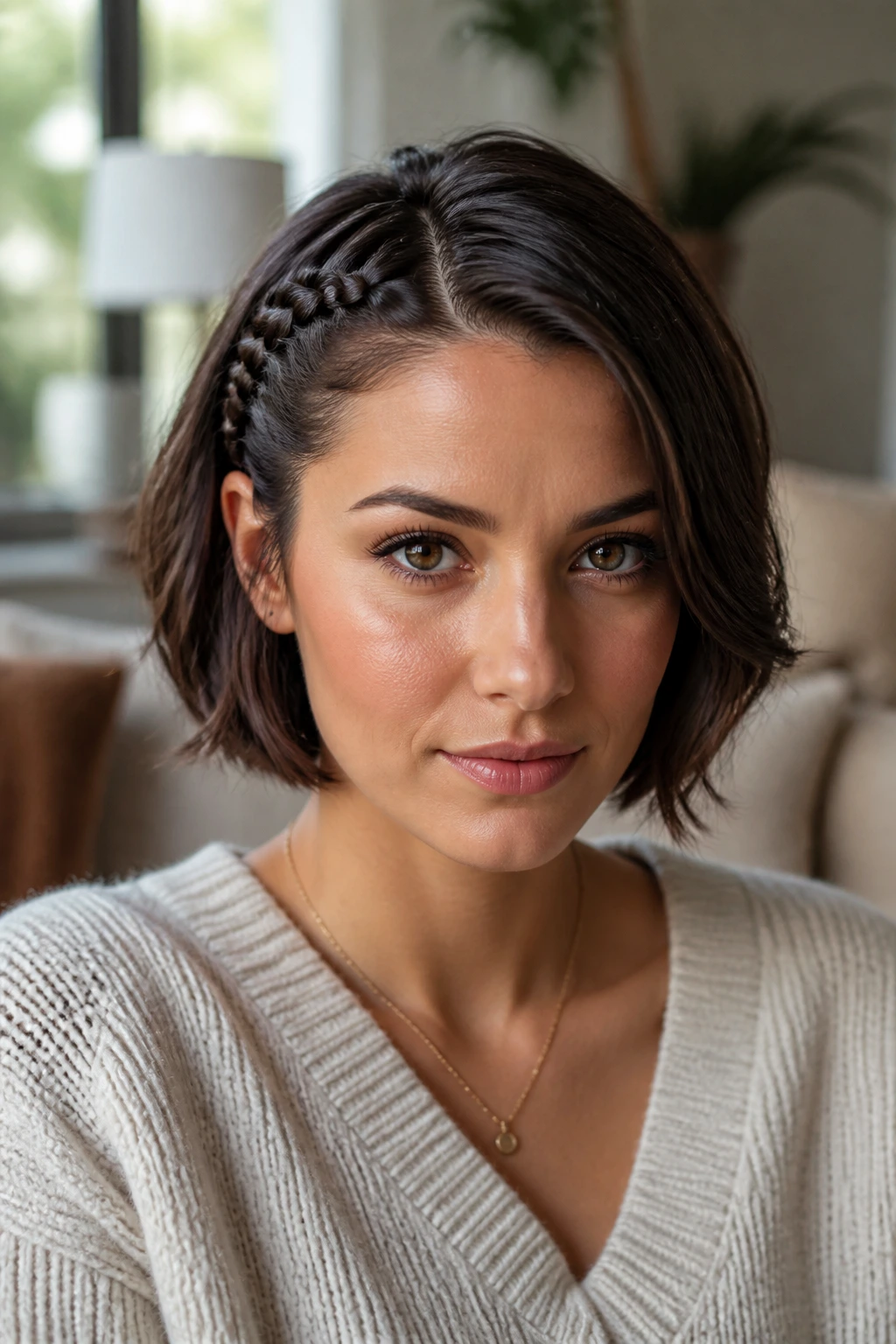
A mini side French braid is one of those styles I keep coming back to because it makes a short cut look deliberate instead of like you just tucked your hair behind one ear and hoped for the best. The braid starts near the temple, follows the curve of the head, and stops right where the hair naturally wants to fall. On a bob, that little line is enough.
Why it holds so well
The trick is keeping the section narrow — about 1 inch wide at the front — so the braid can actually grip the hair instead of slipping over it. If you’ve got a blunt bob, this is the style that gives it shape without asking for length you don’t have.
- Start on day-two hair if you can.
- Mist the section lightly with texture spray before braiding.
- Secure the end with a clear elastic and tuck it under the top layer.
Best tip: Pull the braid slightly wider with your fingertips once it’s tied off. Not much. Just enough to make it look like it belongs there.
2. Tiny Dutch Braids Along the Hairline
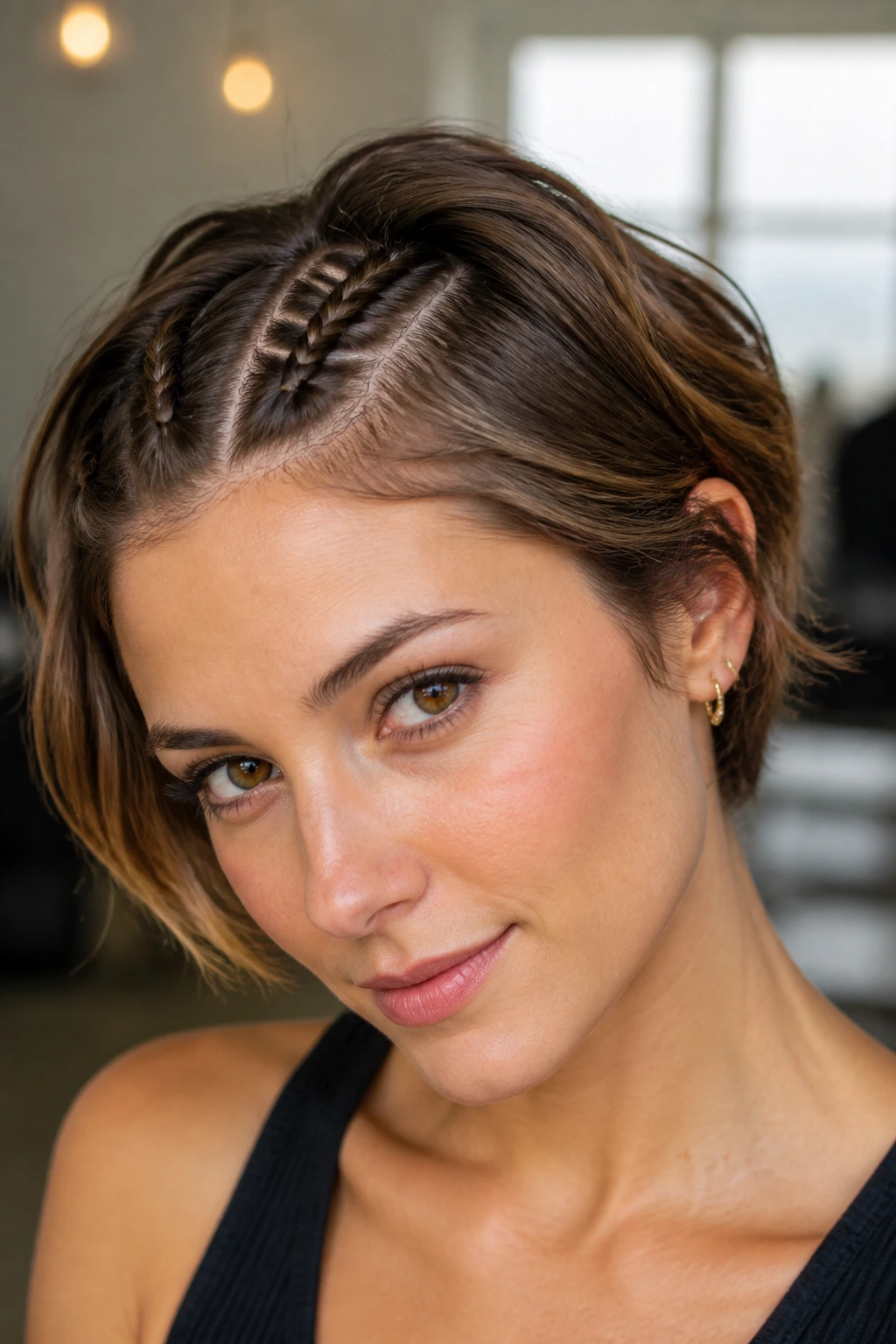
Two tiny Dutch braids along the hairline can make a short cut look sharper than a full updo, and that’s the point. The braid sits on top of the hair instead of disappearing into it, so the pattern shows up even when the rest of the cut is barely brushing the cheekbones. On a pixie-bob, that contrast looks clean and a little tough.
The cleanest version uses two sections about 1/2 inch wide, starting at the front hairline and tracking back toward the ears. Keep the braids tight for the first inch; that’s where they’re most likely to loosen. If the ends are too short to braid fully, finish with a tiny elastic and pin them flat.
This style loves a matte finish. A little dry shampoo at the roots keeps the braids from sliding, and it also stops the front from looking too shiny and flat. If your hair is very fine, the Dutch lift helps more than a traditional braid because the braid sits visibly on top of the part.
3. Braided Bang Sweep
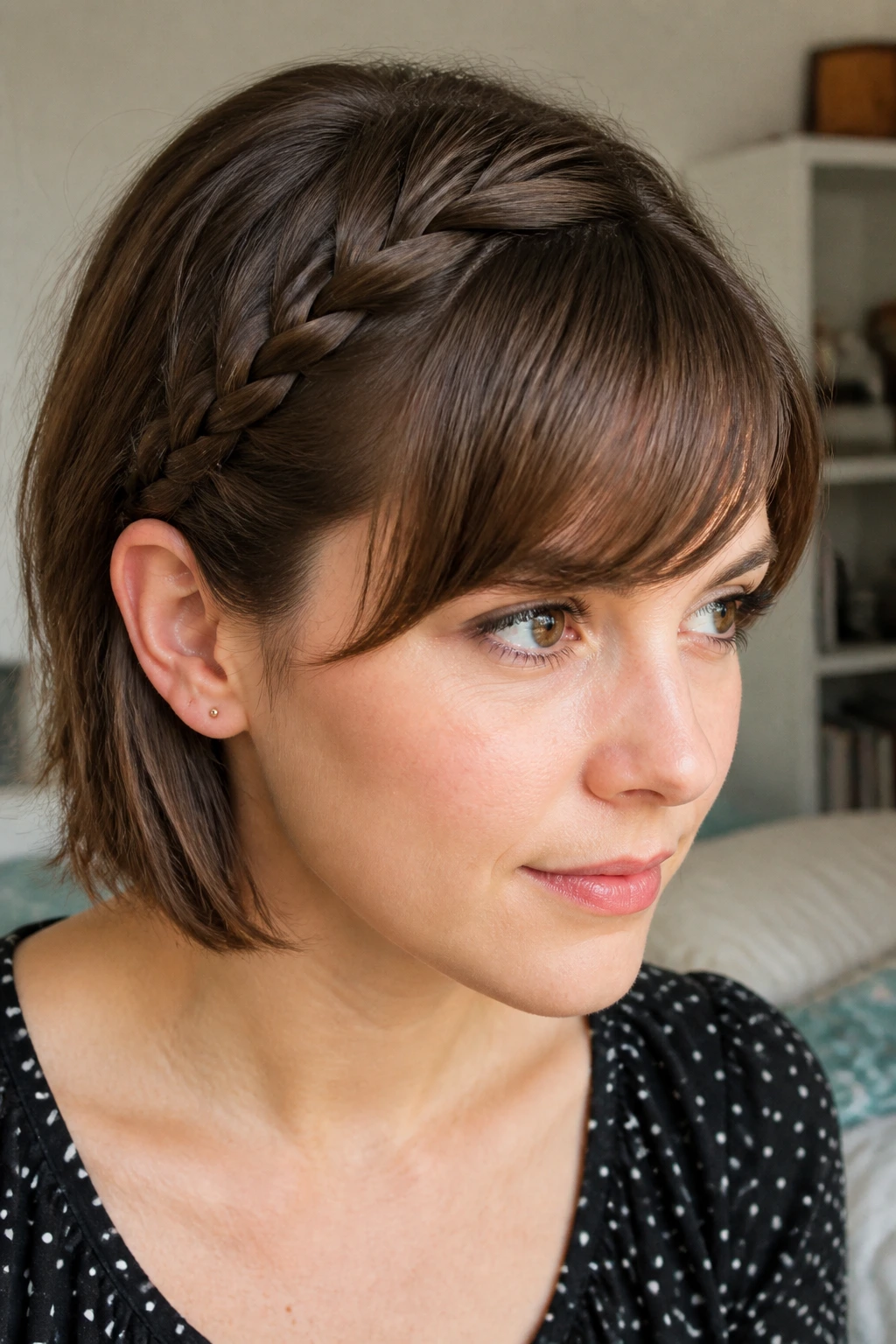
Got bangs or a fringe that keeps falling into your eyes? A braided bang sweep fixes that without making the front of your hair look overly styled. It’s one of the easiest braid hairstyles for short hair because it only asks for a narrow strip of hair, not a full crown or a long tail.
How to wear it
Take a 2-inch front section from a deep side part, braid it back toward the temple, and pin it just behind the ear with two crossed bobby pins. The rest of the hair can stay loose, wavy, or straight. That makes it especially useful on a growing-out fringe, where the front is always doing its own thing.
It works best when the bangs have a bit of bend. If they’re freshly washed and slippery, give them a quick blast with a blow-dryer and a round brush first. A soft curve at the root keeps the braid from feeling stiff.
4. Half-Up Crown Braid
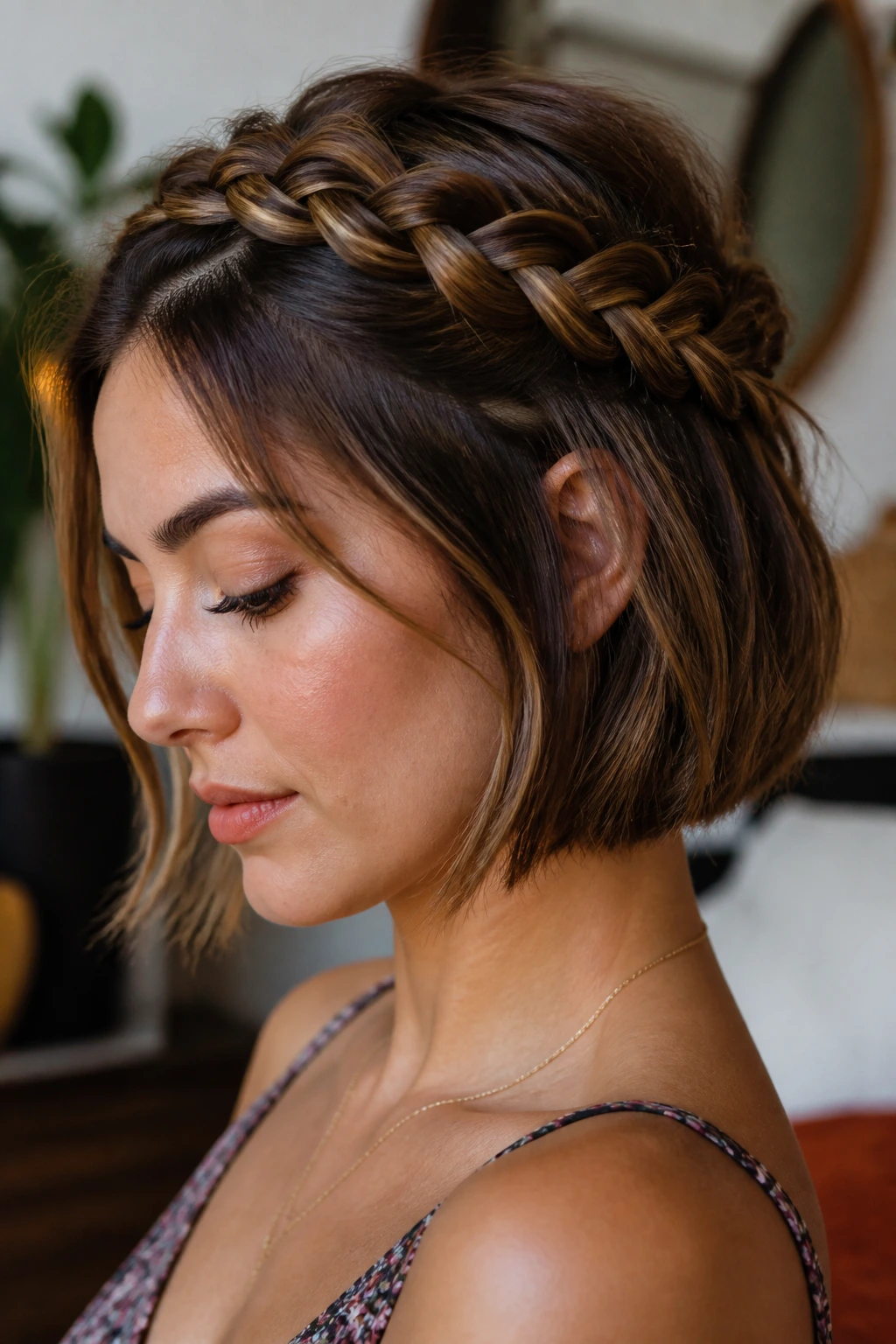
A half-up crown braid gives a short bob a little ceremony without hiding the haircut. That’s what I like about it. You still see the blunt line or soft layers, but the top edge gets a frame that makes the whole style feel finished.
Start by braiding two side sections from the temples back toward the crown, then connect them in the center with pins. On shoulder-length short hair, the braid can meet easily. On a chin-length cut, you may need to keep it slimmer and use 4 to 6 pins to tuck the ends under the back layer.
This style is especially good when the top is flat and the bottom has movement. The braid gives the eye something to follow. If your hair is thick, keep the braid tight at the root and stop adding pieces once you reach the ear; any wider and it starts to fight the cut.
5. Sleek Boxer Braids
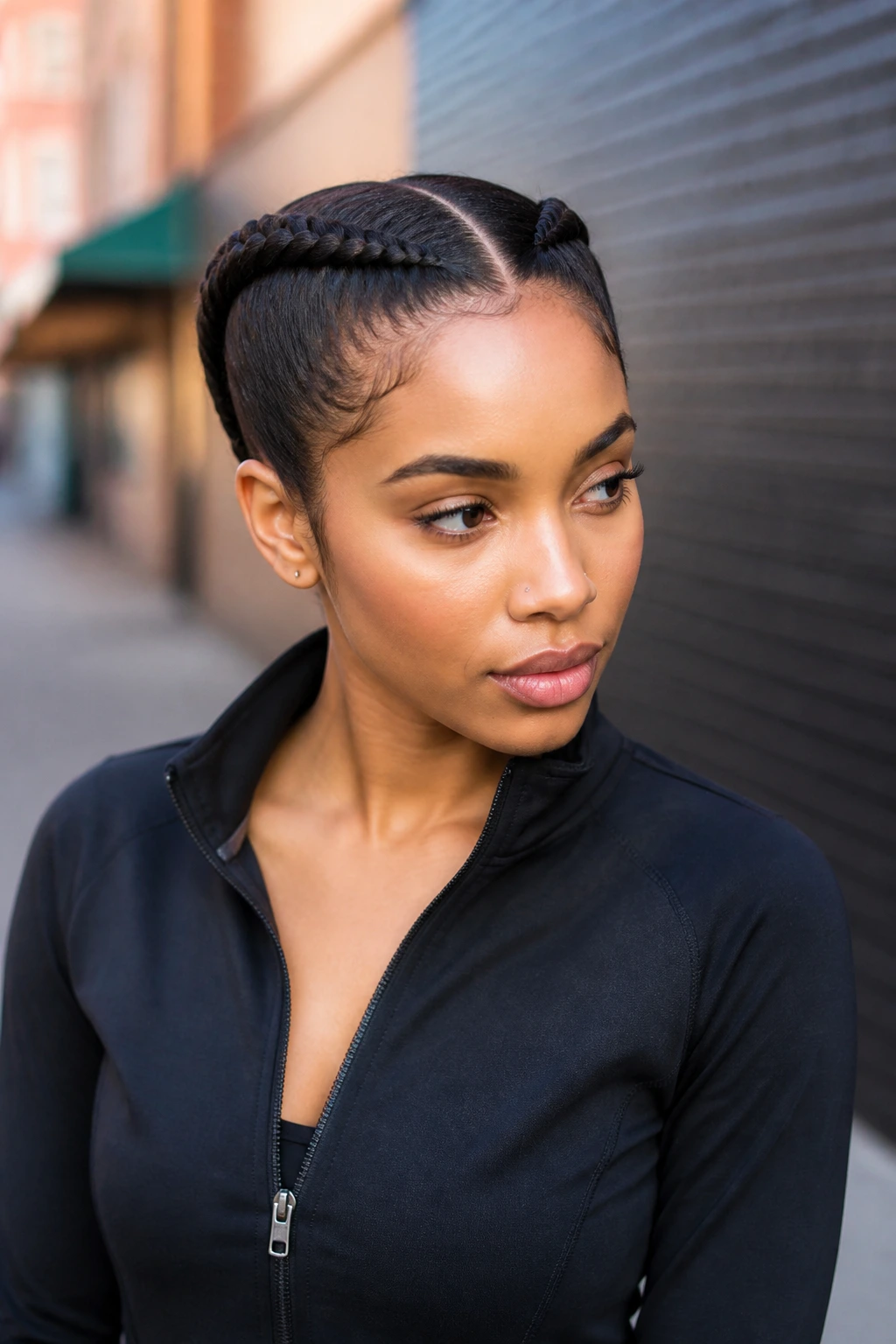
Boxer braids are the blunt instrument of short-hair styling — clean, tight, and stubborn. They’re not soft. They’re not fussy. And on a short lob, that’s exactly why they work.
The middle part should be precise, and the braids should start with enough product to tame flyaways without turning the scalp greasy. I’d use a pea-sized dab of gel per side, worked into the first 2 inches of hair, then braid straight back to the nape. If the ends are short, secure them with clear elastics and let them peek out a little. That tiny bit of texture keeps the style from looking sealed in plastic.
This is the style I reach for when the weather is humid or the hair needs to stay out of the face all day. It does expose the part, so if the scalp is flaky or dry, prep it first. A little scalp oil on the skin — not the braid — goes a long way.
6. Waterfall Braid on a Bob
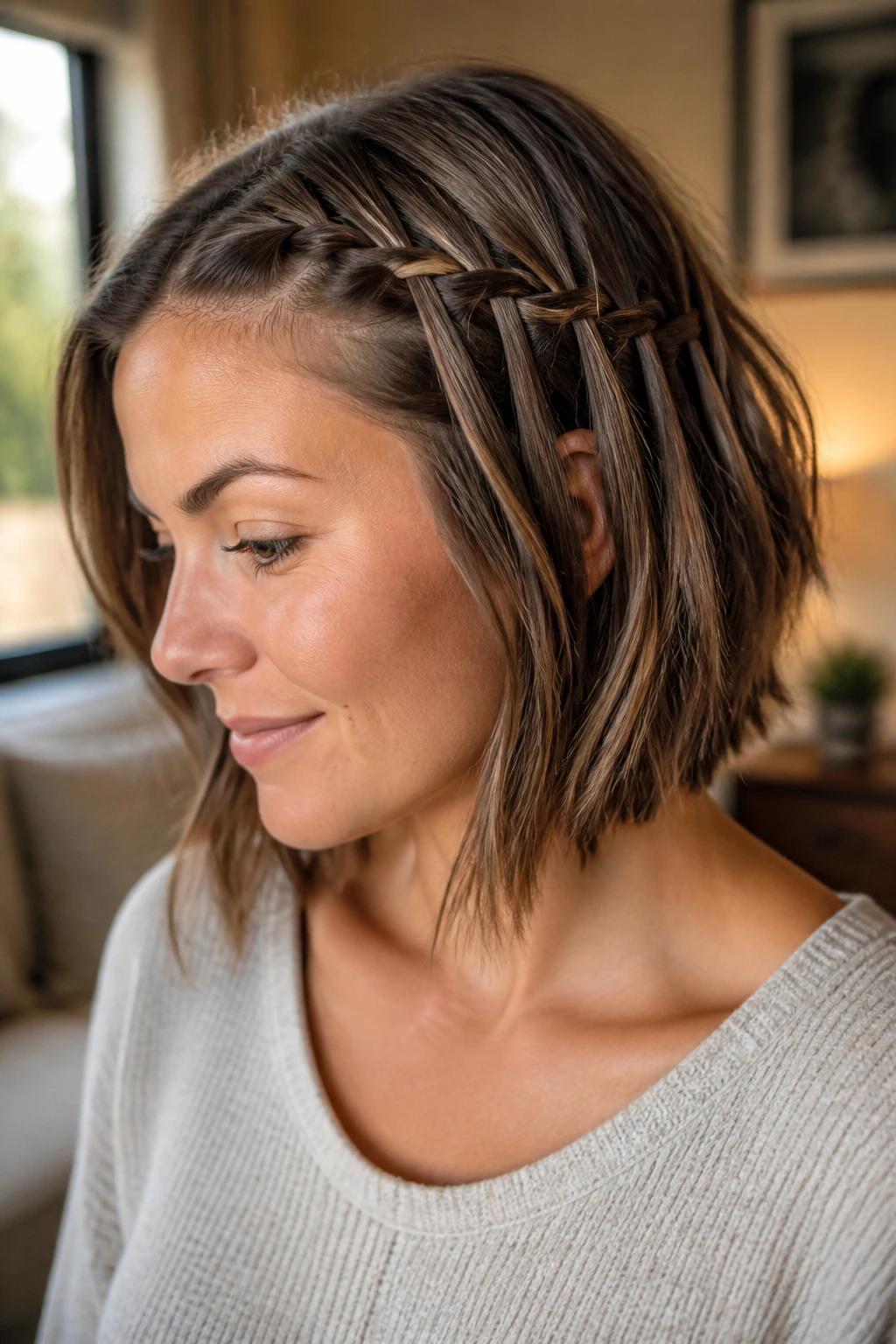
A waterfall braid on a bob looks delicate because the braid lets pieces drop as it moves along the head, but it only works well when the sectioning is clean. Messy waterfall braids on short layers tend to collapse into a knotty strip. Clean ones look like they were planned.
The best setup is a bob with some bend through the mid-lengths. A flat, stick-straight cut can do it, but the braid reads softer when the ends curve. Take a front section, cross the top strand over, and drop the bottom piece each time you weave. Keep the dropped pieces narrow so they don’t steal too much hair from the braid itself.
If the layers near your face are especially short, clip them out of the way first and leave them loose around the braid. That gives the style a little air. And if you want to make the pattern stand out, a single wave through the remaining hair is enough.
7. Halo Braid with Hidden Ends
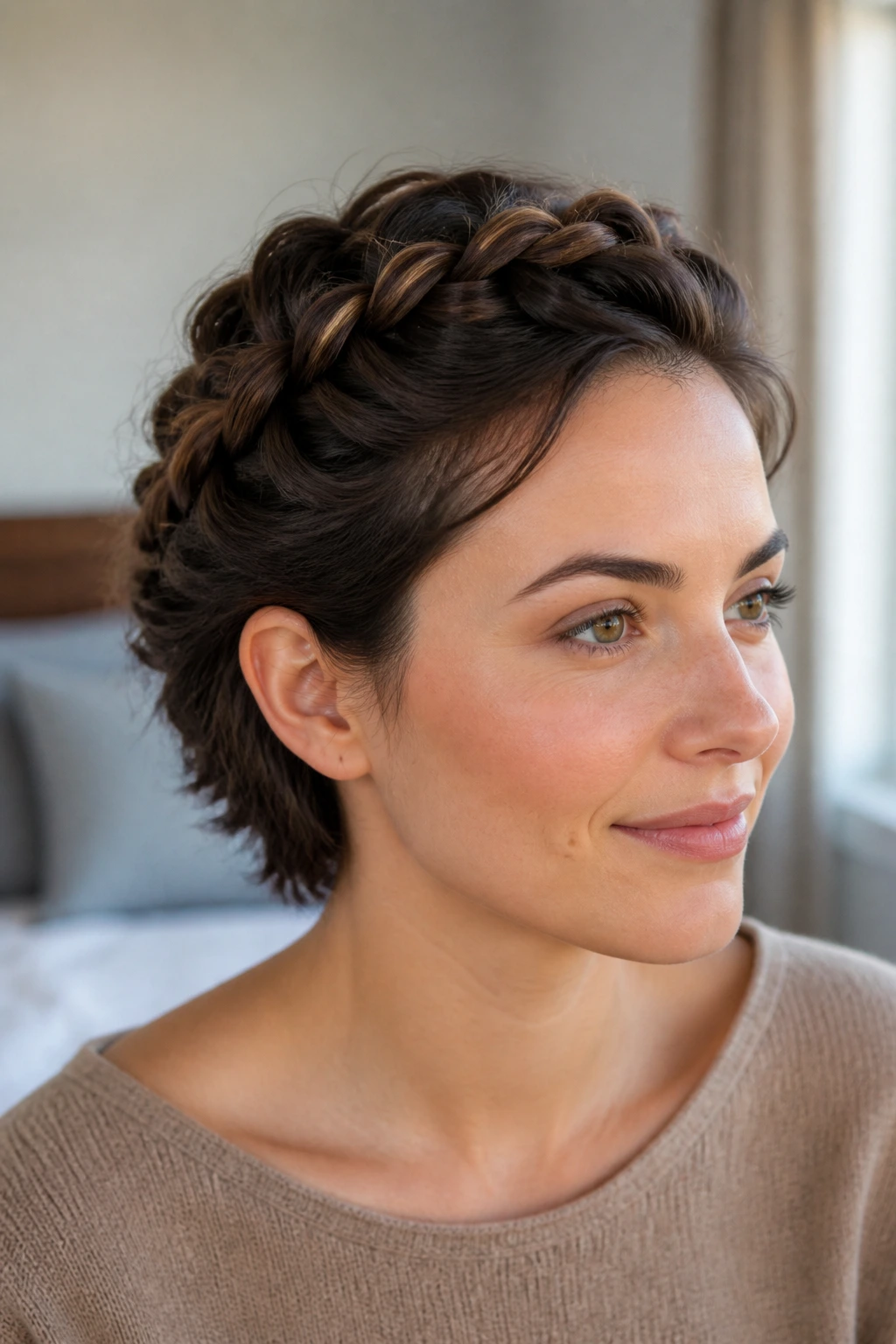
A halo braid on short hair looks more complicated than it really is. That’s part of its charm. It circles the head like a narrow crown, which gives a bob or lob a softer outline and makes the whole shape feel intentional even when the cut is growing out.
The part that matters most
The braid needs to stay close to the head. If it floats too far out, the short ends won’t have enough length to hide cleanly. I like to braid two side sections, bring them around the back, and pin the ends underneath the opposite side with 6 well-placed bobby pins. Small pins hold better than oversized ones here.
This is one of the best looks for fine hair because the braid itself creates structure. You don’t need bulk. You need patience and a mirror that lets you see the back of your head. A handheld mirror makes this much less annoying.
8. Tight Cornrow Rows
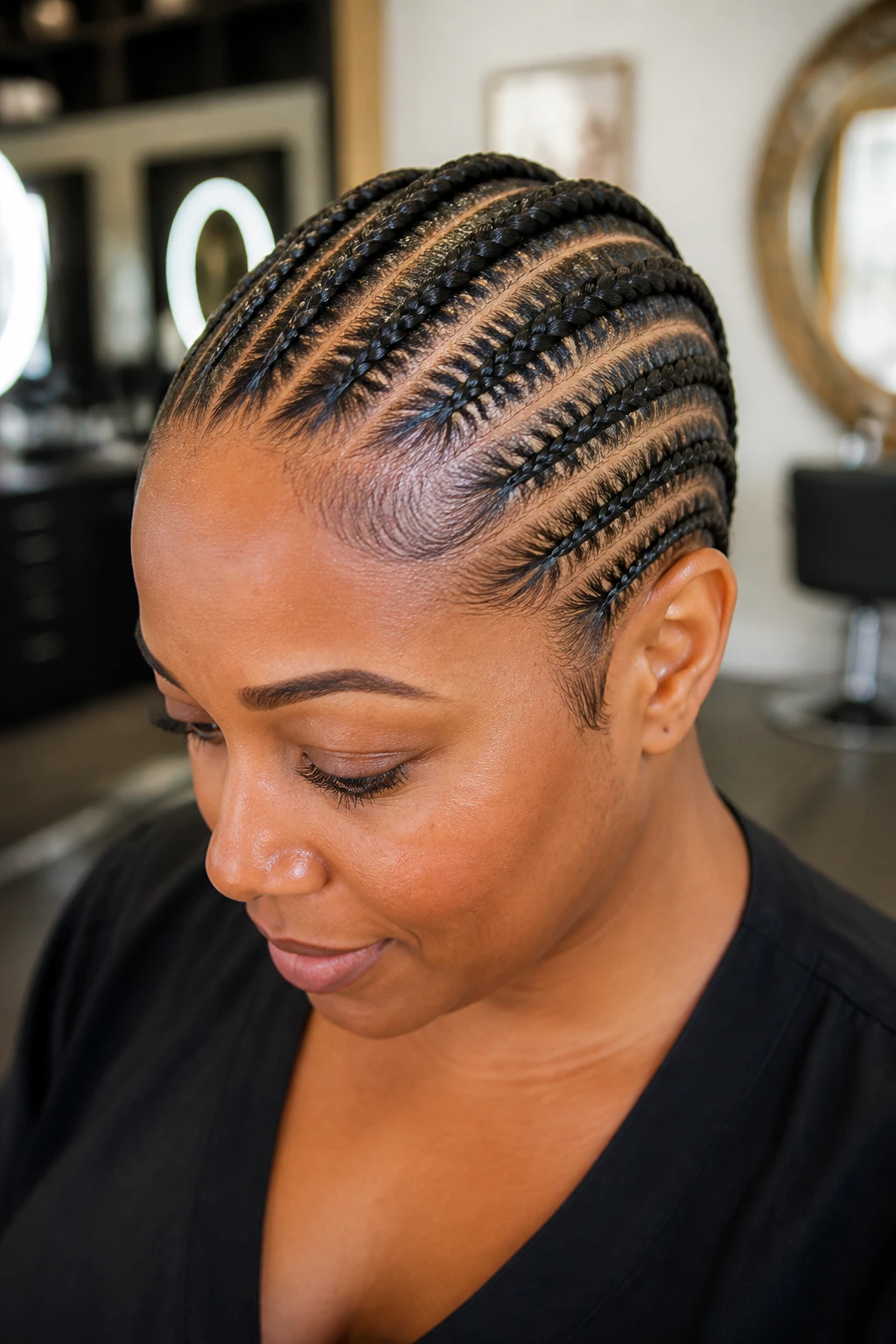
If your short cut is textured, tight cornrow rows give you structure that a loose braid can’t match. They sit flat, define the scalp, and keep the shape neat even when the hair itself is only a few inches long. On short natural hair, that clean geometry is the whole point.
The parting is everything. Use a rat-tail comb to make rows that are 1/4 to 1/2 inch wide, depending on how much hair you have to work with. Work from the front toward the crown or from the hairline toward the nape. A little braiding cream on each row keeps the strands from fraying before the braid catches.
Do not pull too hard at the scalp. Tight doesn’t mean painful. If the first few stitches feel like they’re tugging at the skin, loosen and restart. Short hair can handle definition, but the hairline has limits.
9. Feed-In Cornrows to a Nape Knot
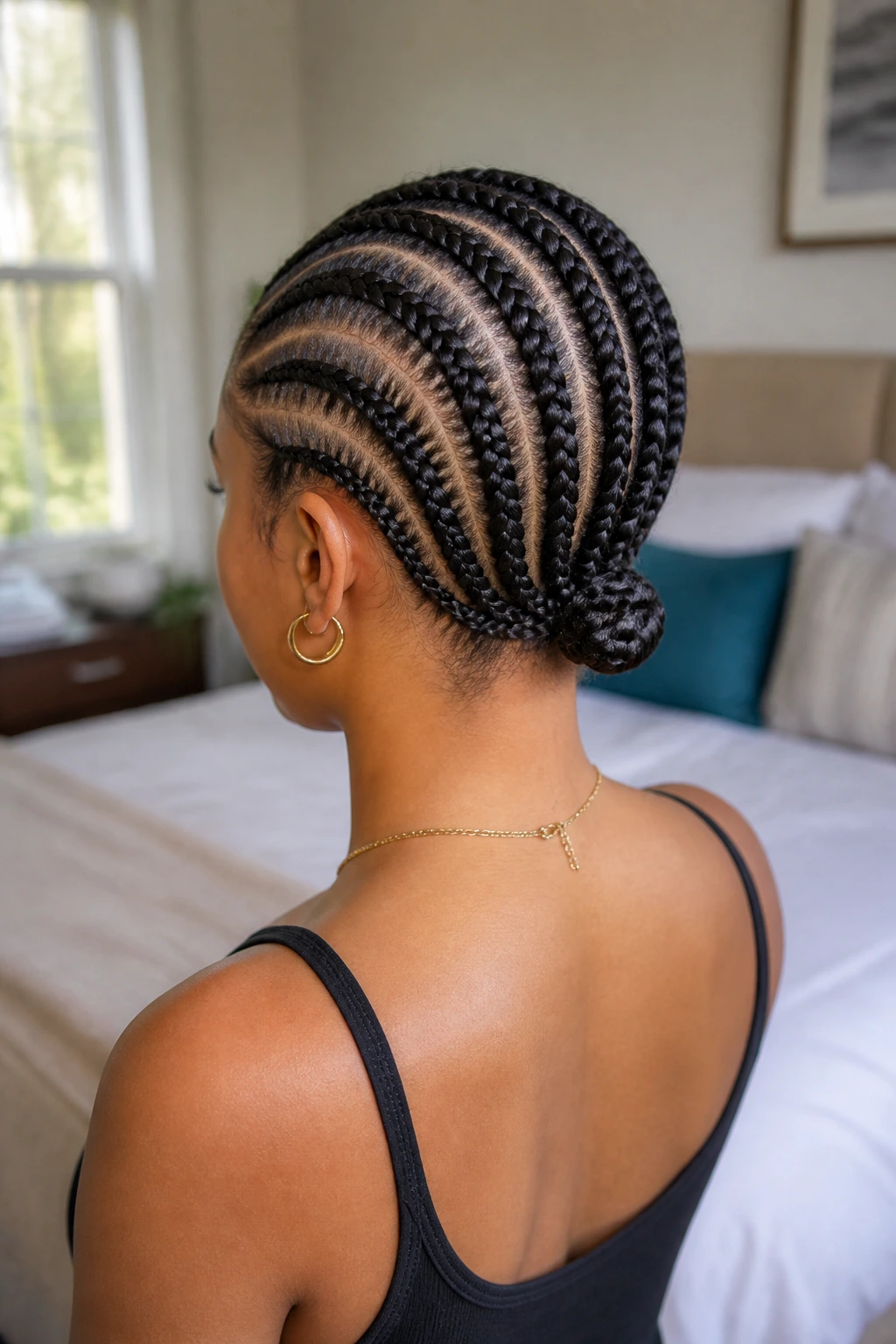
Feed-in cornrows are useful on short hair because they create the illusion of length without asking the hair to behave like it’s longer than it is. The braid starts tiny, then gradually takes in more hair over the first couple of inches, which gives the style a smooth, tapered base.
That taper matters. It keeps the braid from looking bulky at the front and lets the shorter strands disappear into the pattern instead of sticking out. I’d recommend this style if your hair is textured, at least a few inches long, and you want something that can stay tidy for several days without being stiff.
The nape knot is the smartest ending. Once the cornrows reach the back, gather the remaining length into a small knot or puff and pin it flat. It keeps the silhouette neat and avoids the sad little tail that short braids can sometimes end with.
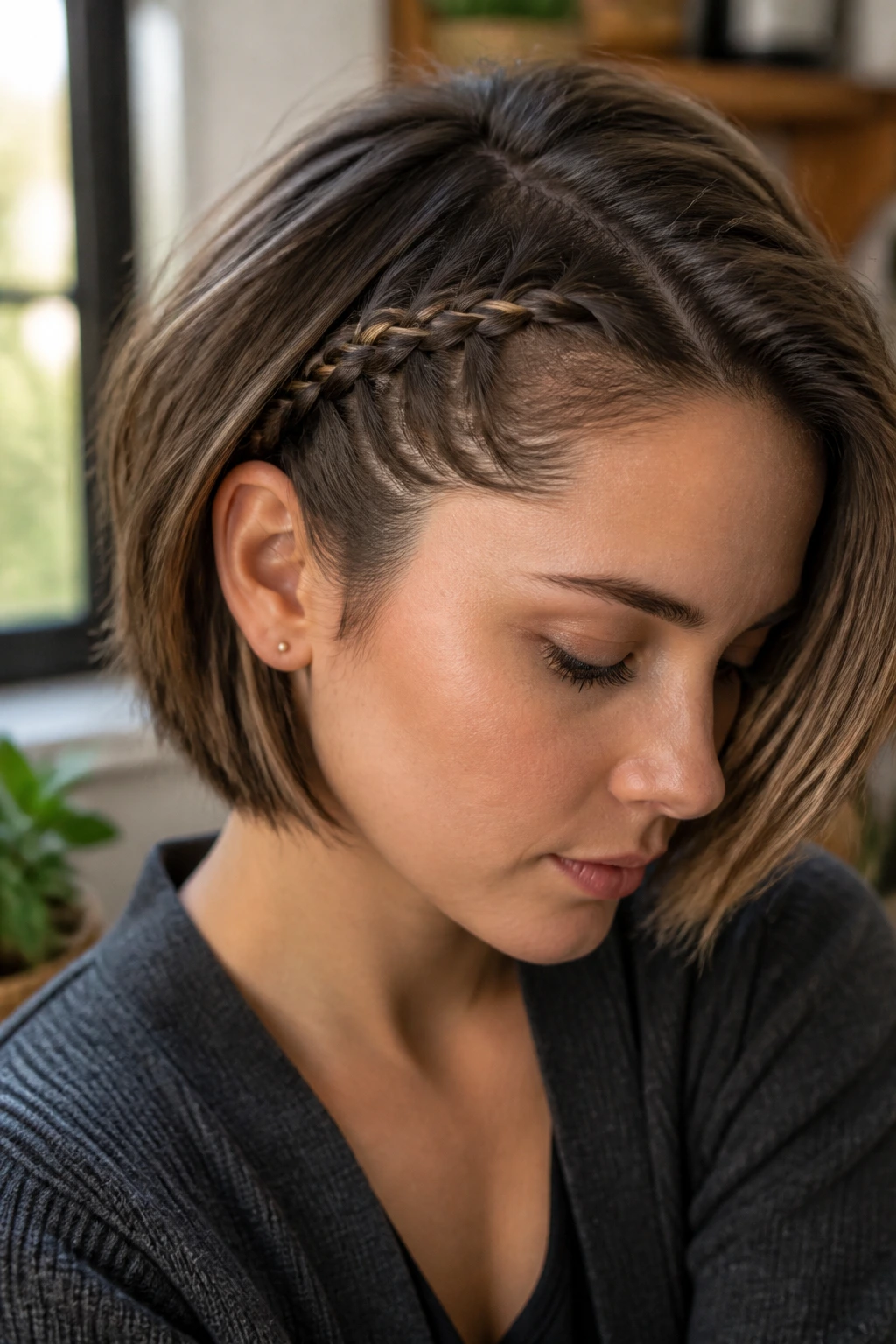
10. Fishtail Accent Braid
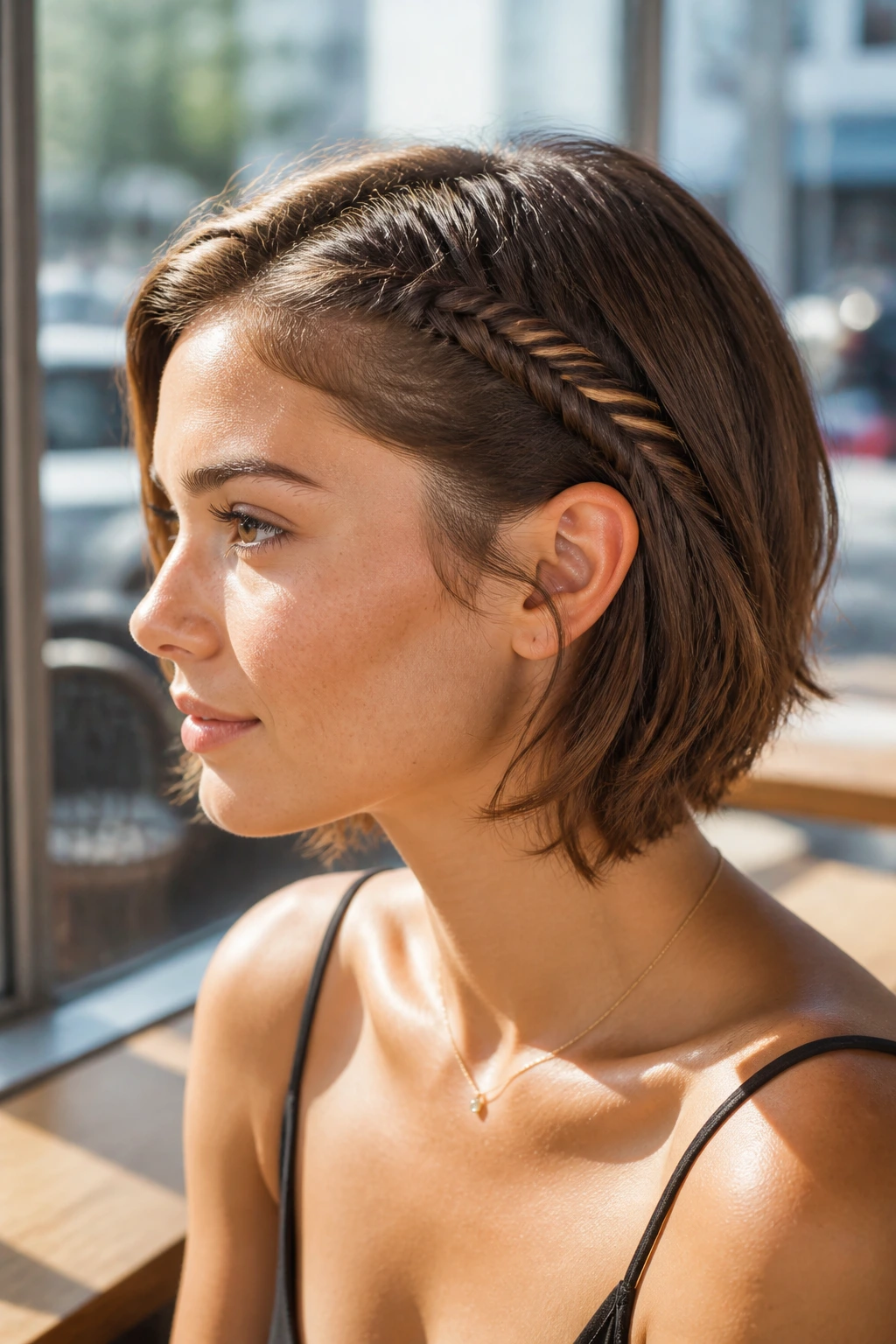
A fishtail accent braid on short hair reads detailed without needing much length, which is why I like it for bobs that feel a little too plain on their own. The weave is narrow and tidy, and the pattern looks more complicated than a standard three-strand braid even when it’s only 3 or 4 inches long.
The best version starts from a small side section near the temple and runs diagonally back toward the ear. Keep the braid tight for the first few passes, then ease up once you reach the ear so the tail doesn’t look pinched. A tiny elastic at the end is enough.
If the hair is very layered, the fishtail can fray. That’s where a light mist of flexible-hold spray helps. Don’t drench it. One quick pass keeps the braid from puffing out in the wrong spots.
11. Rope-Twist Braid Headband
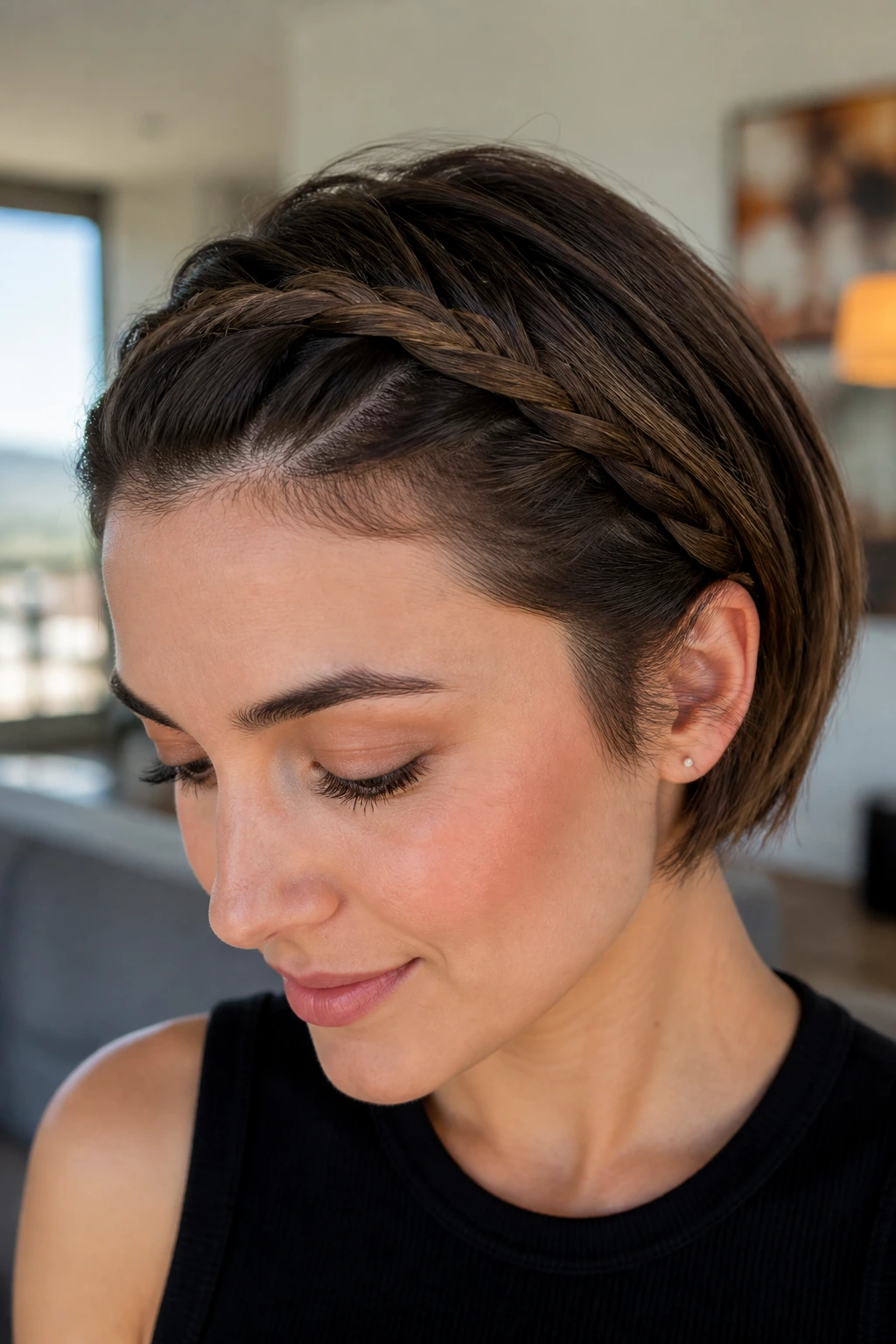
A rope-twist braid headband works beautifully on short hair because it needs less length than a full braid. Two strands twist around each other, which means the style can span the front of the head without swallowing the rest of the cut. It’s neat, quick, and useful when the front is doing that annoying half-fall into your eyes.
The section at each temple should be slim, about 3/4 inch wide, and the twist should sit right along the hairline. Pin it behind the opposite ear with one strong bobby pin on each side, then tuck any ends under the top layer. If your hair is fine, a little texture spray before twisting helps a lot.
This is one of the better styles for second-day hair because the slightly rough texture keeps the twist from slipping. Freshly washed hair can be too smooth. If you’re starting with clean hair, rough it up at the roots first.
12. Low Side Braid Into Tuck
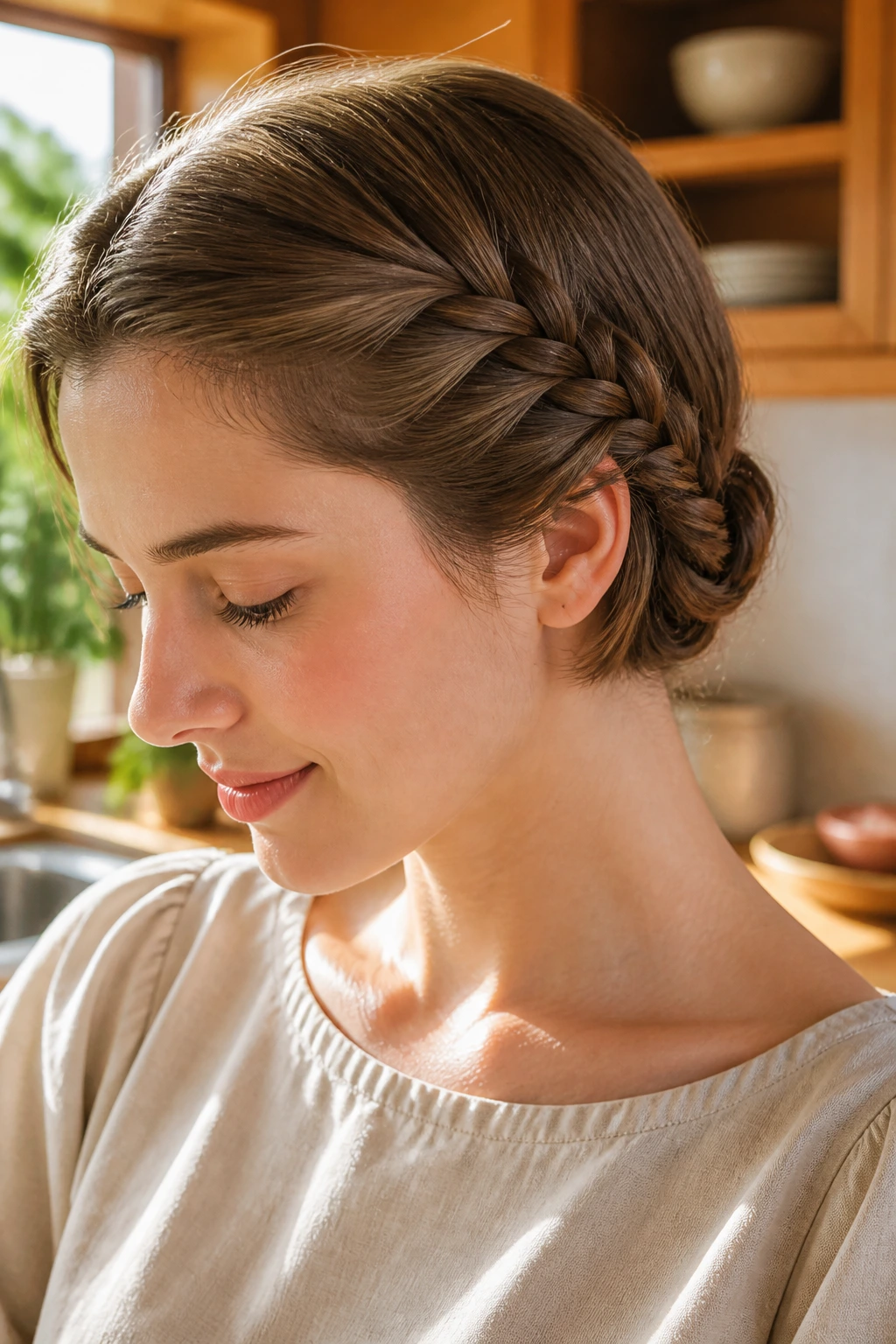
There’s a reason I keep recommending low side braids for short cuts: they use the shape of the head instead of fighting it. A braid that starts near the ear and disappears into a tuck at the nape feels softer than a straight-down braid, and it flatters a short bob in a way that longer styles sometimes don’t.
The braid itself should stay narrow and low. Once you reach the nape, fold the tail under and pin it flat so it disappears into the back layer. That tucked finish makes the style look cleaner than a tail left dangling below the cut.
This is the style I’d pick for dinner, a meeting, or any day when you want your hair contained without looking strict. It’s not loud. It’s tidy. And on short hair, tidy often wins.
13. Braided Pigtails
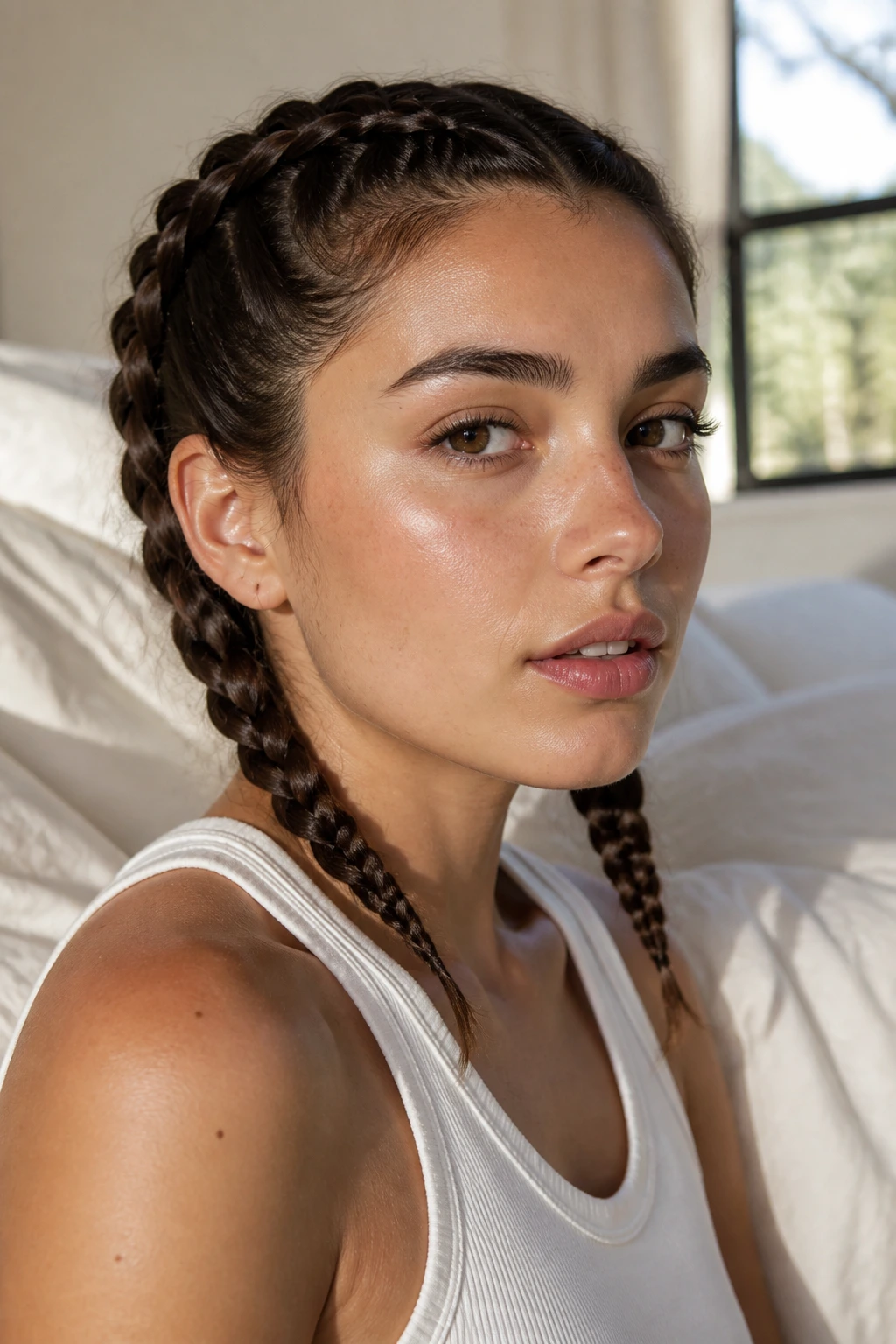
Two small braided pigtails on short hair can look playful without tipping into costume territory, as long as the sections stay slim. I’d keep each side section no wider than 1 1/2 inches if the cut sits around the jawline. Wider than that and the braid starts to eat the whole style.
Why they work
Short pigtail braids frame the face and make a blunt cut feel lighter. They also keep the crown neat, which matters if your hair tends to puff up around the top. Add a little mousse before braiding, especially if the ends are fluffy or the hair is freshly washed.
The ends don’t need to be long. Let them stick out a bit. That little unfinished edge reads modern on short hair. A tiny elastic with no visible metal works best here, because the braid tail is usually too short for anything bulky.
14. Braided Ponytail Stub
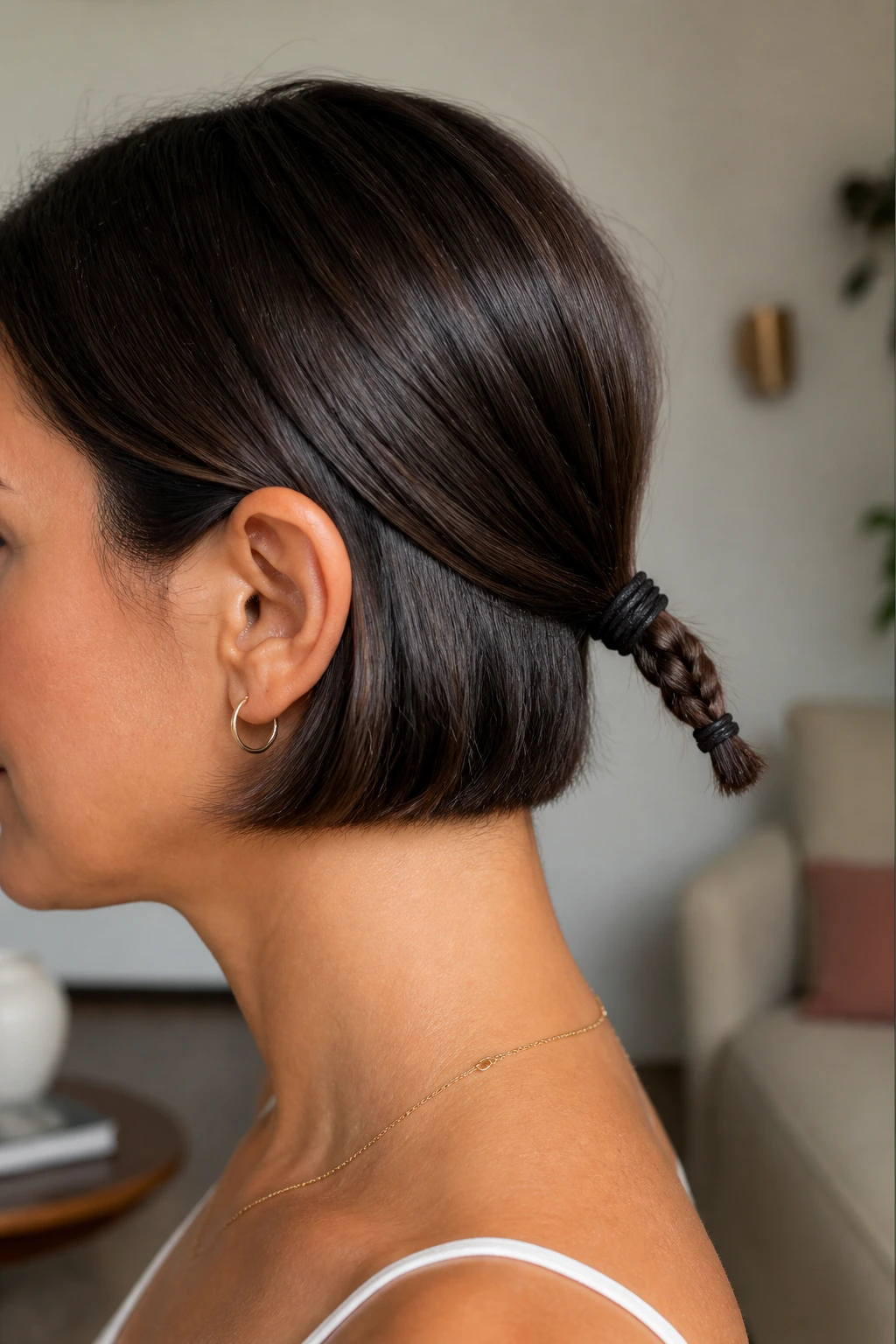
A braided ponytail stub is what happens when you want the polished look of a ponytail but the hair only gives you a short tail. I like this one because it stops pretending hair has to be long to be put together. Gather the hair into a small ponytail, braid the remaining length, and secure it with a second elastic right at the end.
The root matters more than the tail. If the base is sleek, the short braid at the back reads as a deliberate finish instead of a compromise. Use a little gel or cream around the crown and brush everything toward the tie point before you braid.
It works especially well on chin-length bobs or hair that barely brushes the shoulders. If the tail is too short for a clean braid, wrap it into a tiny loop and pin it instead. Don’t force a thin, stubby braid that’s going to unravel by lunch.
15. Mohawk Braid
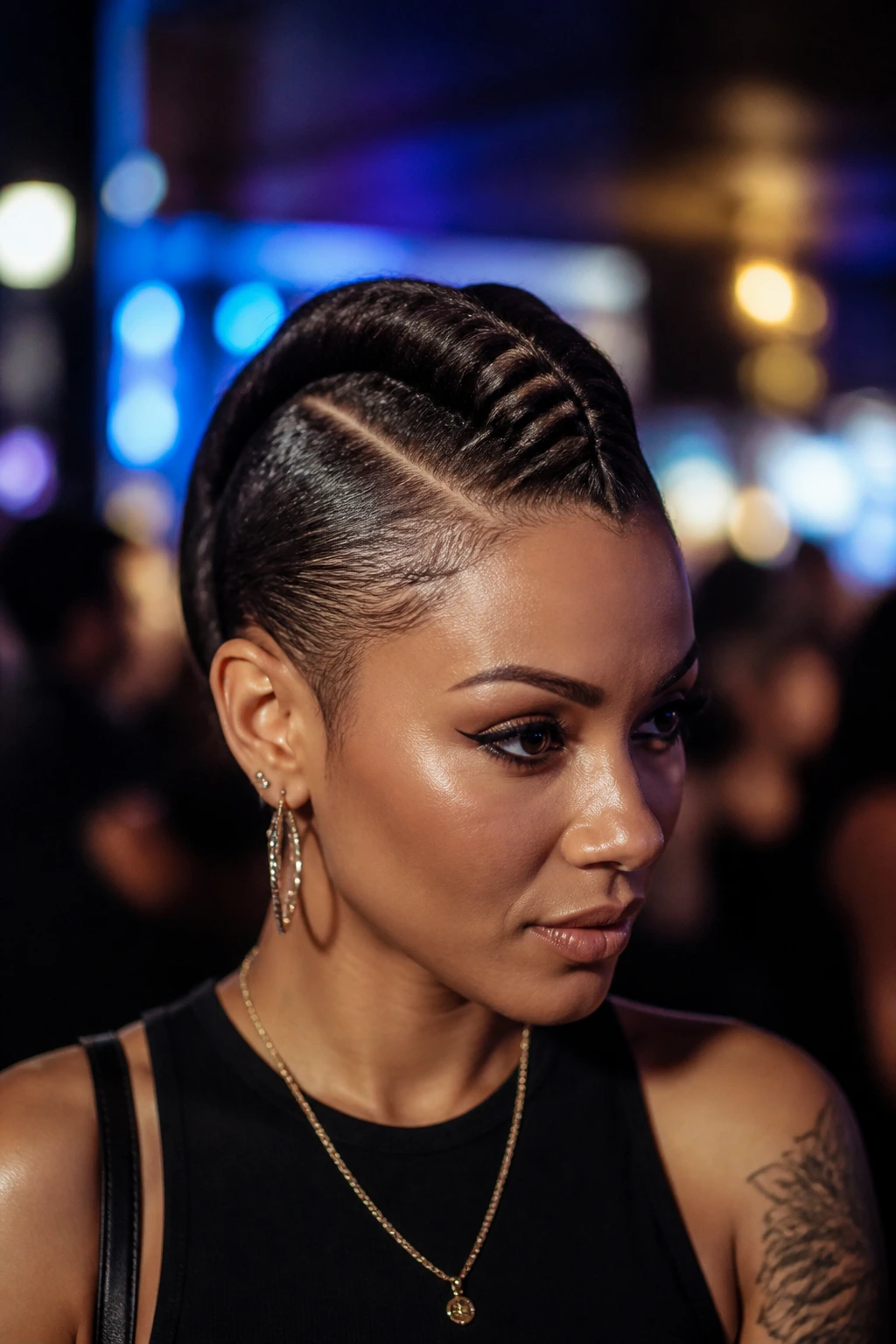
If your goal is height, the mohawk braid gives it to you without teasing the life out of the cut. The braid runs down the center of the head, and the sides are smoothed back or pinned close. Short hair suddenly looks sharper, taller, and more deliberate.
The center section should be the widest part of the style. On textured hair, a 1 1/2-inch strip is usually enough to build the braid without making the sides look sparse. On straight hair, you may need a little root spray and a bit more product at the temples so the side hair stays down.
This is a good style for a night out or any day you want a little edge. It doesn’t need decoration. The braid line does the work. If you want it softer, loosen the top few loops by a fraction of an inch after you secure it.
16. Faux Hawk Braid
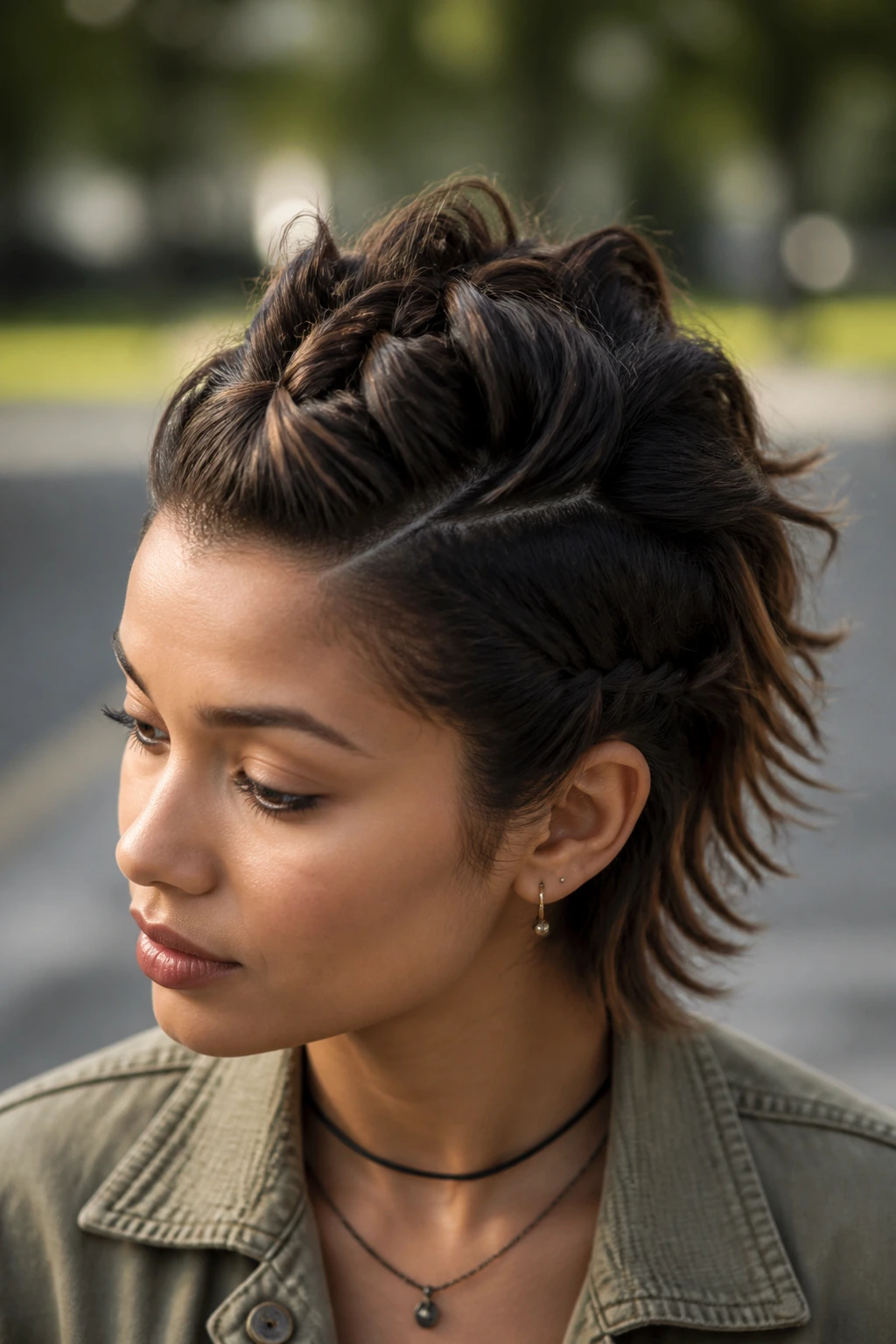
A faux hawk braid looks like the mohawk’s looser cousin, and that’s why it’s easier to wear. Instead of holding everything tightly in one rigid center line, you braid or twist the middle while letting the sides stay a little softer. On short hair, that softness matters.
Use the top ridge of the head as your guide. Braid from the front back, then add side twists or pin the temples in place so the center section feels raised without being stiff. The result is more casual than a formal mohawk braid and a bit less severe around the face.
This style is the one I’d choose if the hair is layered and you don’t want every shorter piece locked down. It gives shape without pretending the haircut is longer than it is.
17. Face-Framing Accent Braids
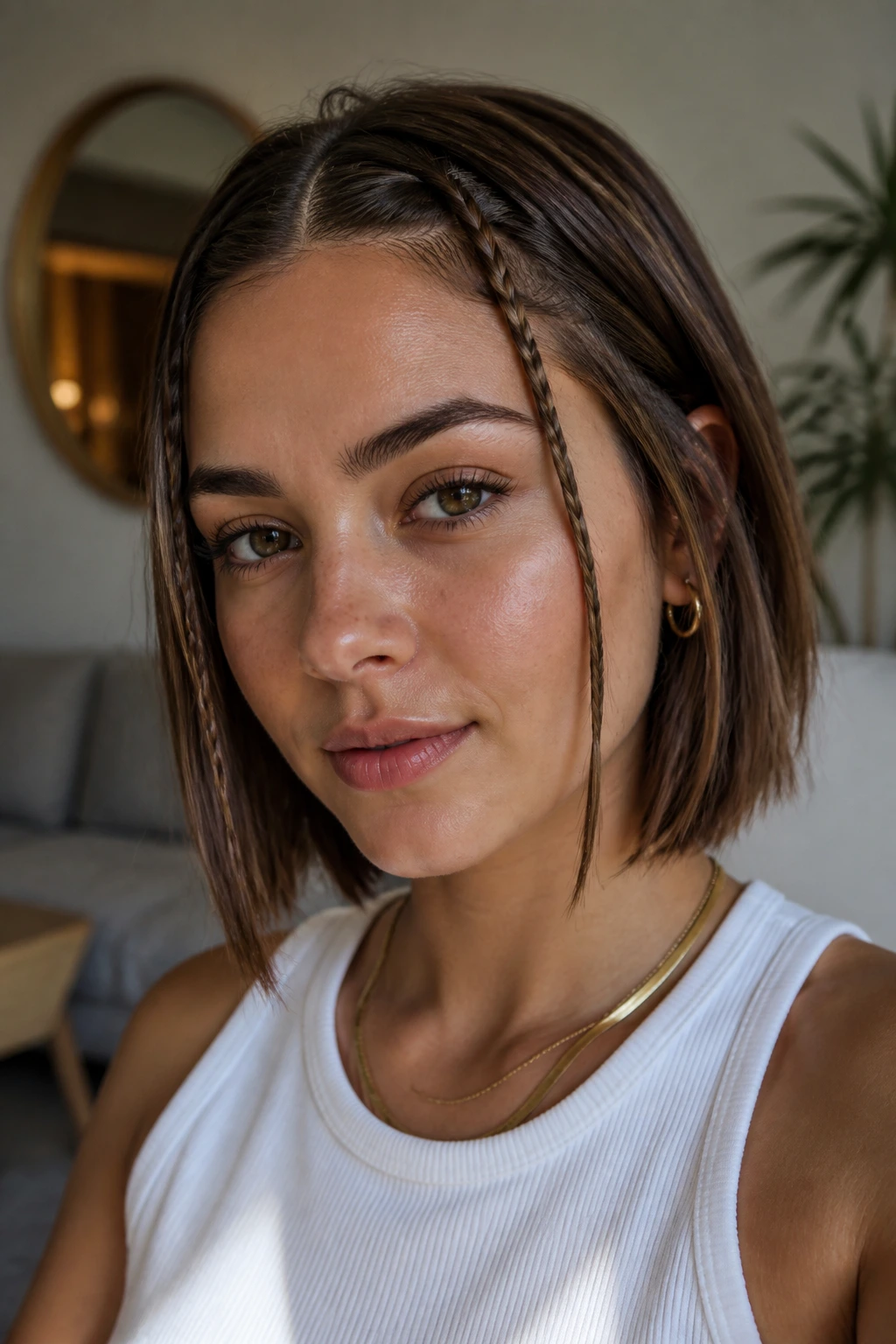
Two tiny face-framing braids can change the whole mood of a short cut. That sounds dramatic, but it’s true. A blunt bob with two slim braids near the cheekbones suddenly feels less flat and more personal, almost like the haircut has a detail built into it.
The braids should be thin — no more than 1/2 inch wide each. Start near the hairline, braid a few inches back, and let the rest of the hair fall loose. This style is excellent with waves because the loose lengths balance the neat front.
If you want the braids to stand out, use a drop of styling cream on the fingers only. Don’t smooth the whole head down. The contrast between the tiny braids and the softer rest of the hair is what makes the style interesting.
18. Braided Space Buns
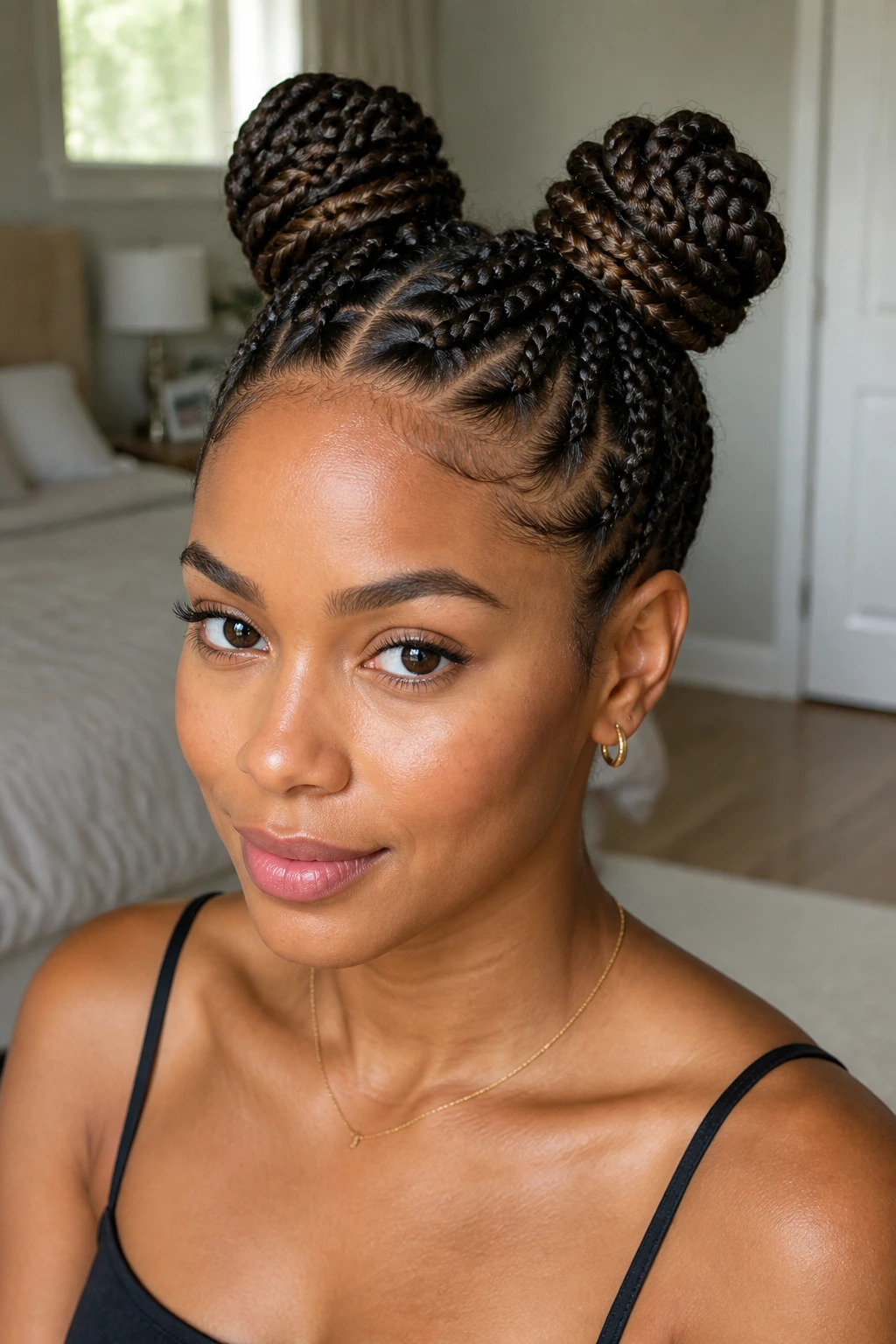
Braided space buns work better on short hair than people expect, mostly because the braids give the buns some shape before they get wrapped. You don’t need a ton of length. You need two tidy pigtails and enough hair to twist into small loops.
Start with a half-up or full pigtail section, braid each tail, then coil the braid into a bun and pin it with 3 to 4 pins per side. On a lob, the buns sit neatly. On a shorter bob, they stay smaller and more sculptural, which I actually like better.
The style feels playful, but it can still look clean if the part is straight and the buns are equal in size. Keep the base tight, or the buns will sag by the end of the day.
19. Zigzag-Part Braids
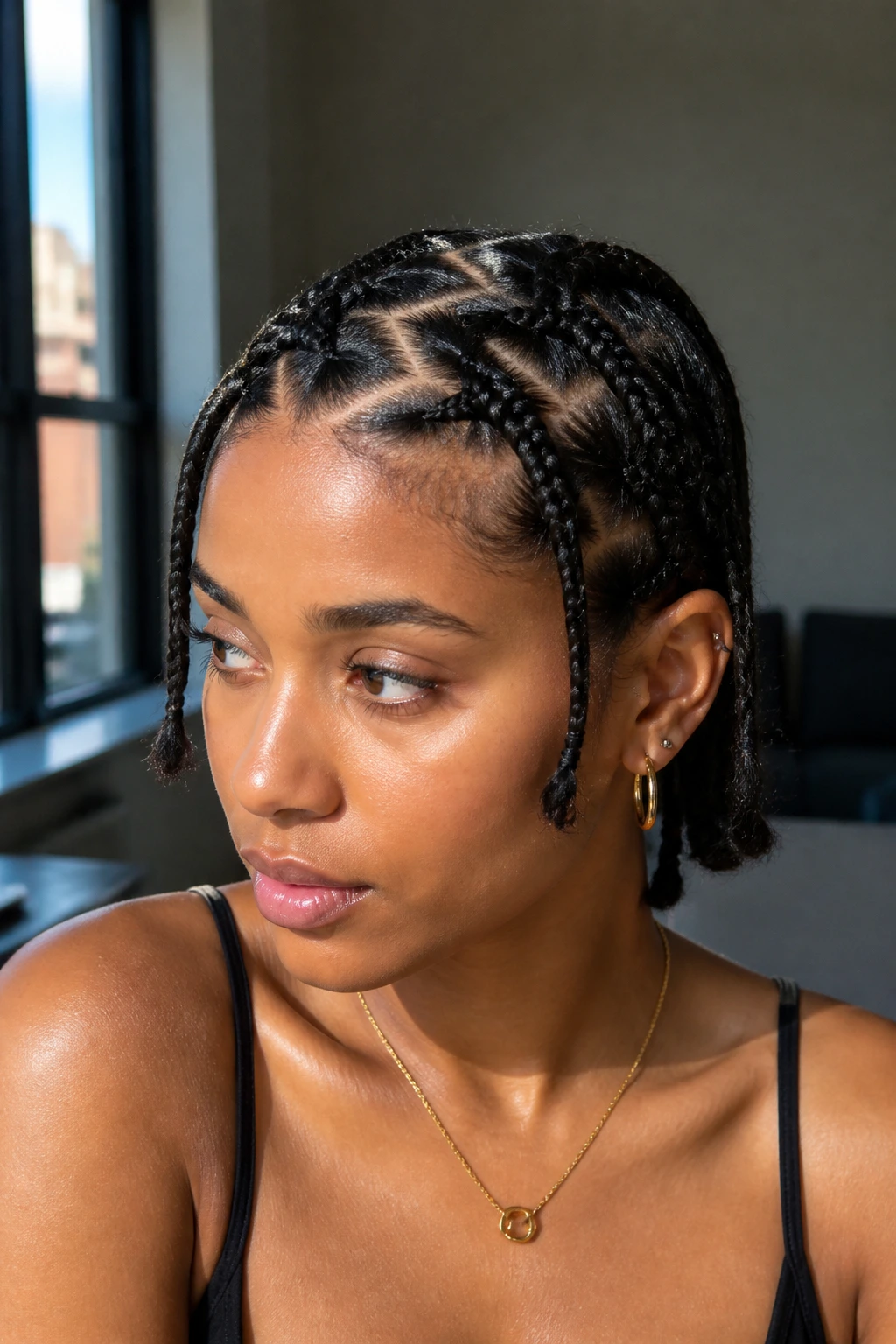
A zigzag part turns even simple braids into something with a little bite. Short hair benefits from that kind of detail because the parting becomes part of the style, not just the setup. On a straight bob, it’s a small change that makes a big visual difference.
What makes it work
The zigzag should be drawn with a rat-tail comb, not guessed at with your fingers. Crisp lines matter here. Once the part is set, braid the two sections in whatever style fits your length — tiny French braids, pigtails, or even accent braids along the front. The parting is the statement, not the braid size.
I like this on hair that needs a little attitude. It doesn’t read soft. It reads intentional. If your hair is thick, the zigzag can be slightly wider and still hold its shape. Fine hair needs a tighter, more precise part so the line doesn’t blur.
20. Curly Pixie Top Braid
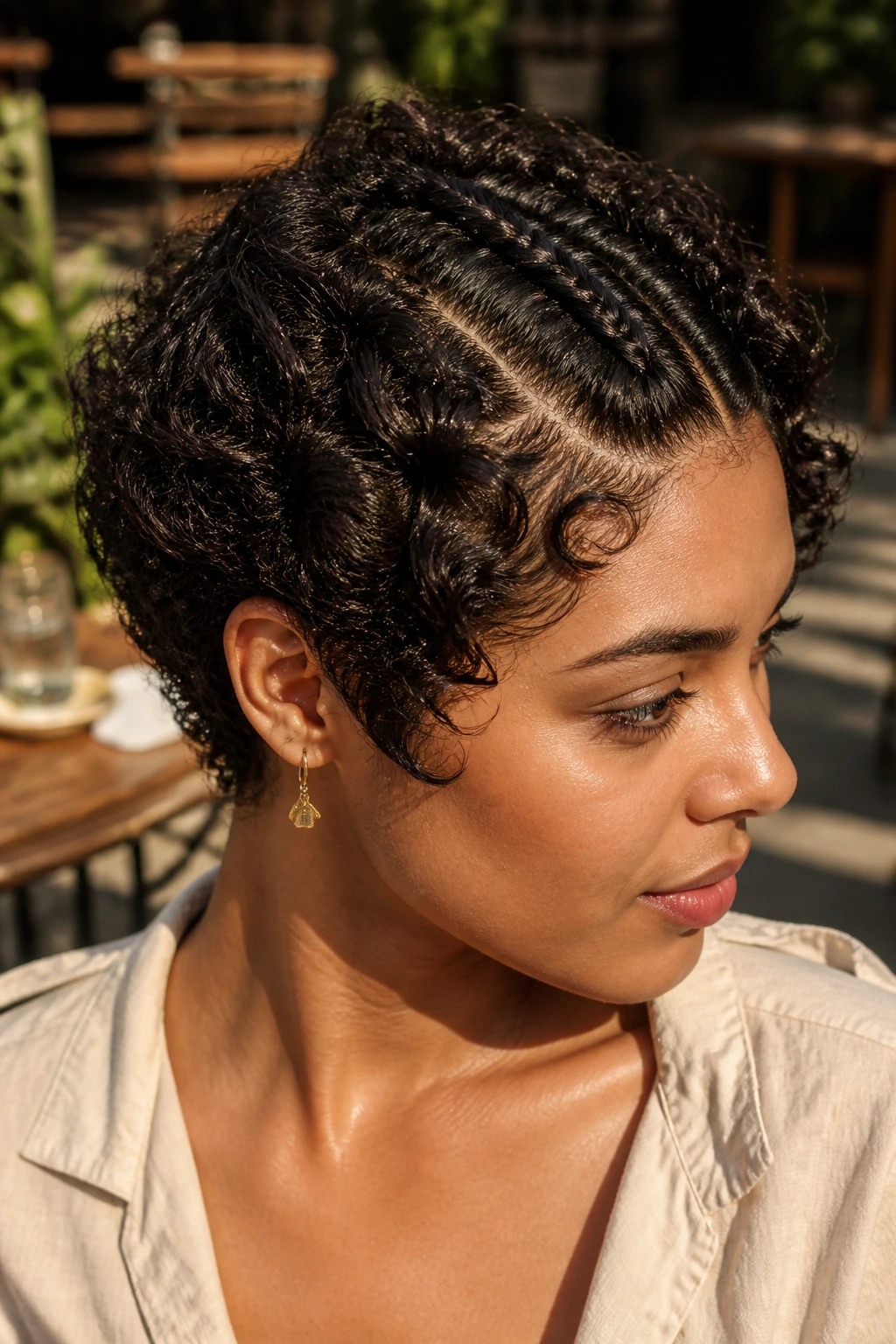
A curly pixie does not need a full braid to feel styled — one small top braid is enough. That’s the magic here. The braid sits along the top ridge, while the curls around the sides keep the cut from looking too severe.
Use a curl cream on the top section, then braid only the upper strip where the hair is longest. The sides can stay free or be gently slicked back with a small amount of gel. If the curls are springy, don’t try to force the whole top into one braid. Work with the natural direction instead.
This style is strongest when the braid is narrow and the curls are still visible. The braid gives the pixie a line; the curls keep it from looking flat. It’s a good answer for anyone who wants structure without losing texture.
21. Milkmaid Braid for a Lob
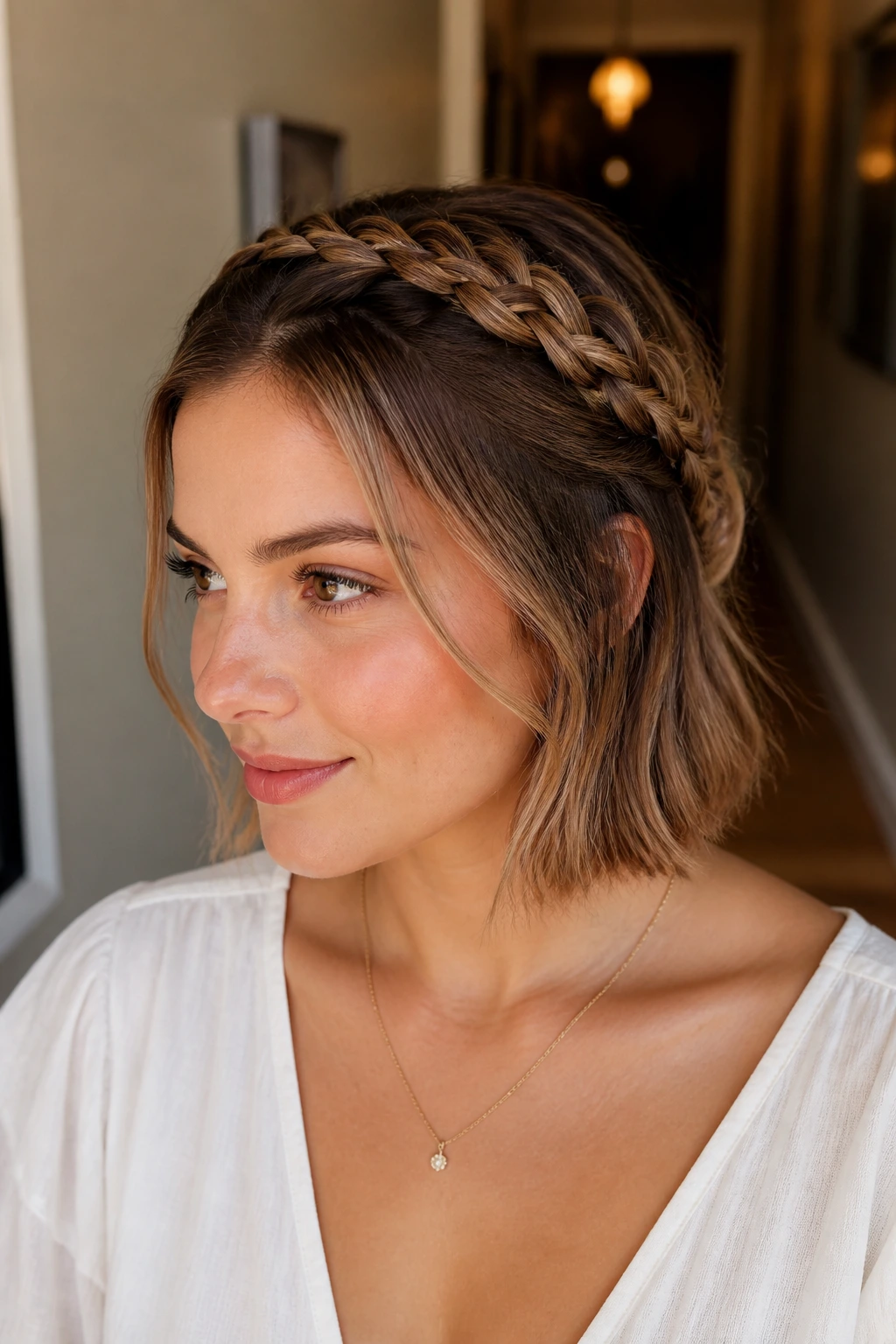
Can a lob really handle a milkmaid braid? Yes — if the braid starts clean and the pins do the hidden work. The trick is braiding two side sections, bringing them over the crown, and pinning the ends underneath so the style looks wrapped rather than forced.
You need enough length to reach from temple to ear and still have a braid tail left to tuck. If the lob is chin-length, keep the braids slim. If it hits the collarbone, you can widen them a bit. Either way, the crown should sit flat against the head, not float above it.
This style is one of my favorites for short hair that needs to look dressed up without becoming stiff. A milkmaid braid has that old-school outline, but on a shorter cut it feels lighter and more modern.
22. Side-Swept Pin Braid
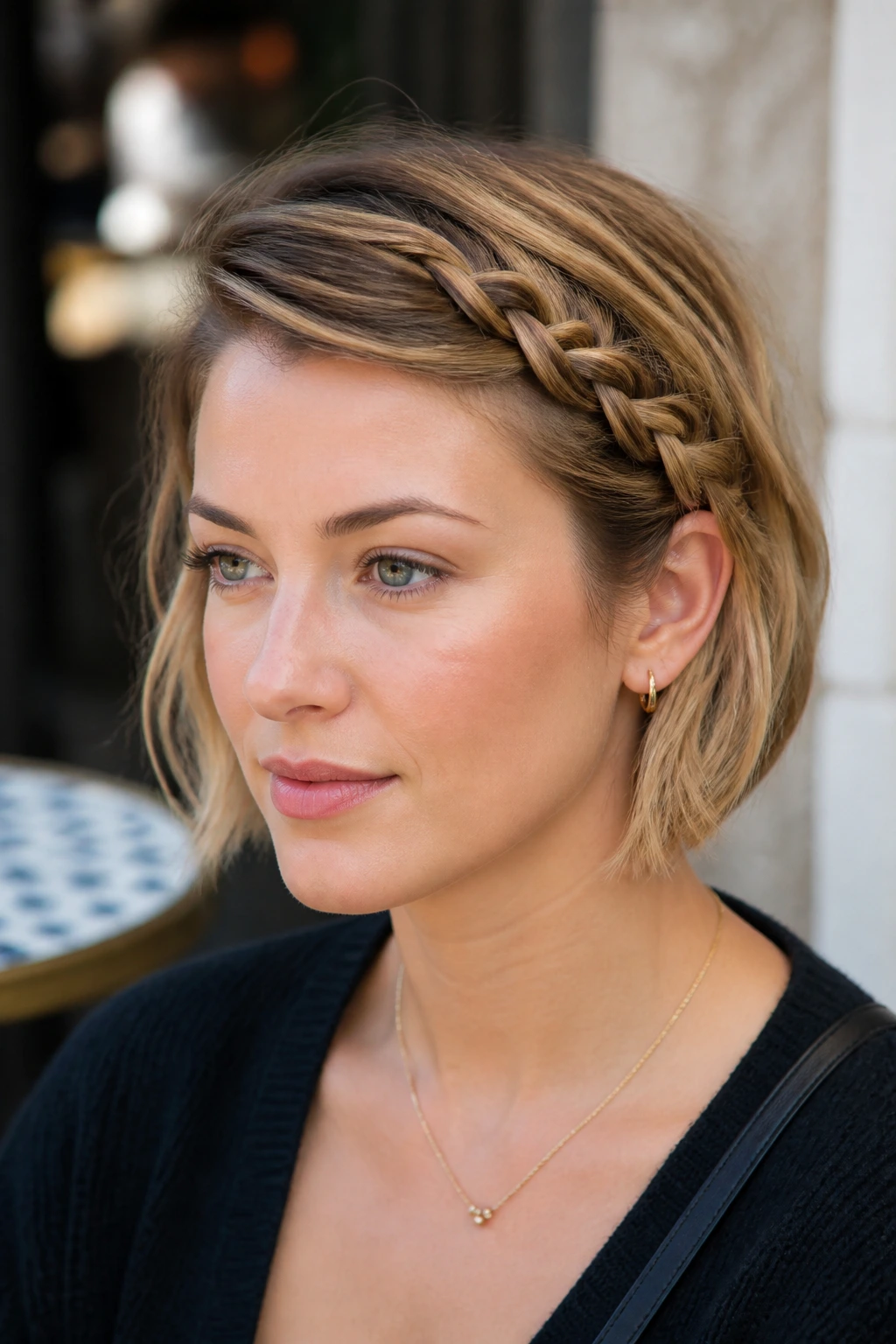
A side-swept pin braid is the answer when you want hair out of one eye but don’t want a full braided style taking over the whole head. The braid crosses the front diagonally, then disappears behind the ear with a pin. That’s enough.
The diagonal line matters. It draws the eye across the face and gives a short cut some motion. Keep the braid narrow if the hair is above shoulder length, and use a flat bobby pin to anchor the end underneath a top layer. If the front pieces are short, leave them soft around the braid rather than trying to trap every last strand.
This one works on almost any texture. Straight hair looks neat; wavy hair looks softer; curly hair gets a nice bit of contrast. It’s the sort of style that quietly does its job.
23. Temple Braids
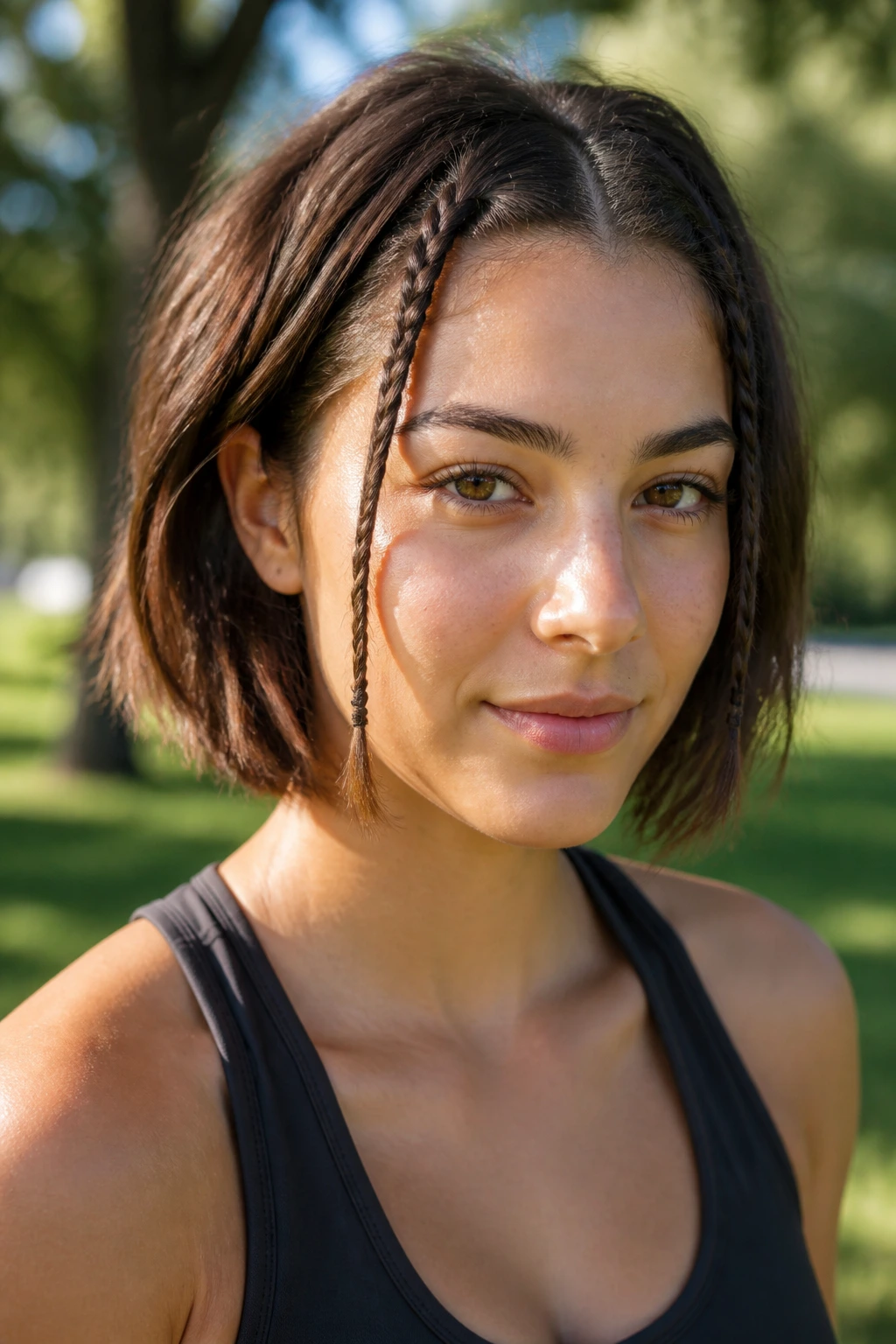
Temple braids are the low-effort, high-payoff style I recommend for anyone who wants some detail without committing to a full braid look. Two slim braids at the temples keep the front controlled, and the rest of the hair can stay loose, curly, wavy, or straight.
The sections should be tiny — think 3/8 to 1/2 inch wide — because the style is about precision, not bulk. Braid them back toward the ears and secure with clear elastics or tuck them behind the ear with pins. If your hair is textured, a small amount of braid cream or leave-in on the fingers helps the braids stay smooth.
This is a good choice for workouts, warm weather, or those days when your hair wants to get in the way but you still want it to look like a real style, not a fix.
24. Pull-Through Braid
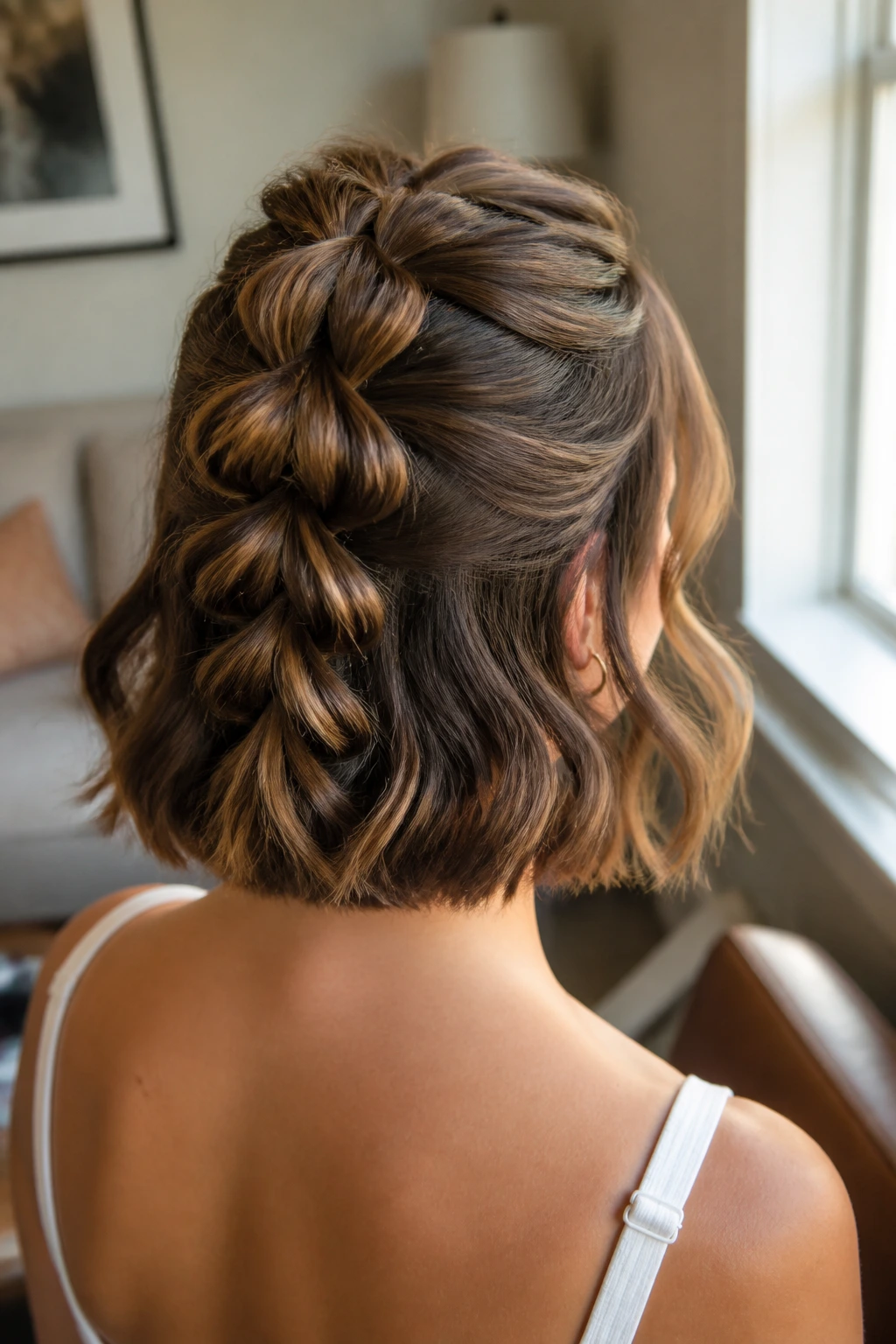
A pull-through braid is not a classic braid, and that’s exactly why it’s useful on short hair. Each section stays visible, so even a medium bob can fake the fullness of a bigger style. If your hair is too short for a regular braid to look substantial, this one often works better.
Use mini elastics about 2 inches apart down the center or back section, then split and loop each segment over the next one. Once it’s built, tug the loops gently to puff them out. The result has more volume than a normal braid, which short hair usually needs.
It’s especially good for thick hair because the shape stays round instead of collapsing into a narrow rope. If your hair is fine, don’t over-pancake the loops or the style will lose structure fast.
25. Faux Bob Braid
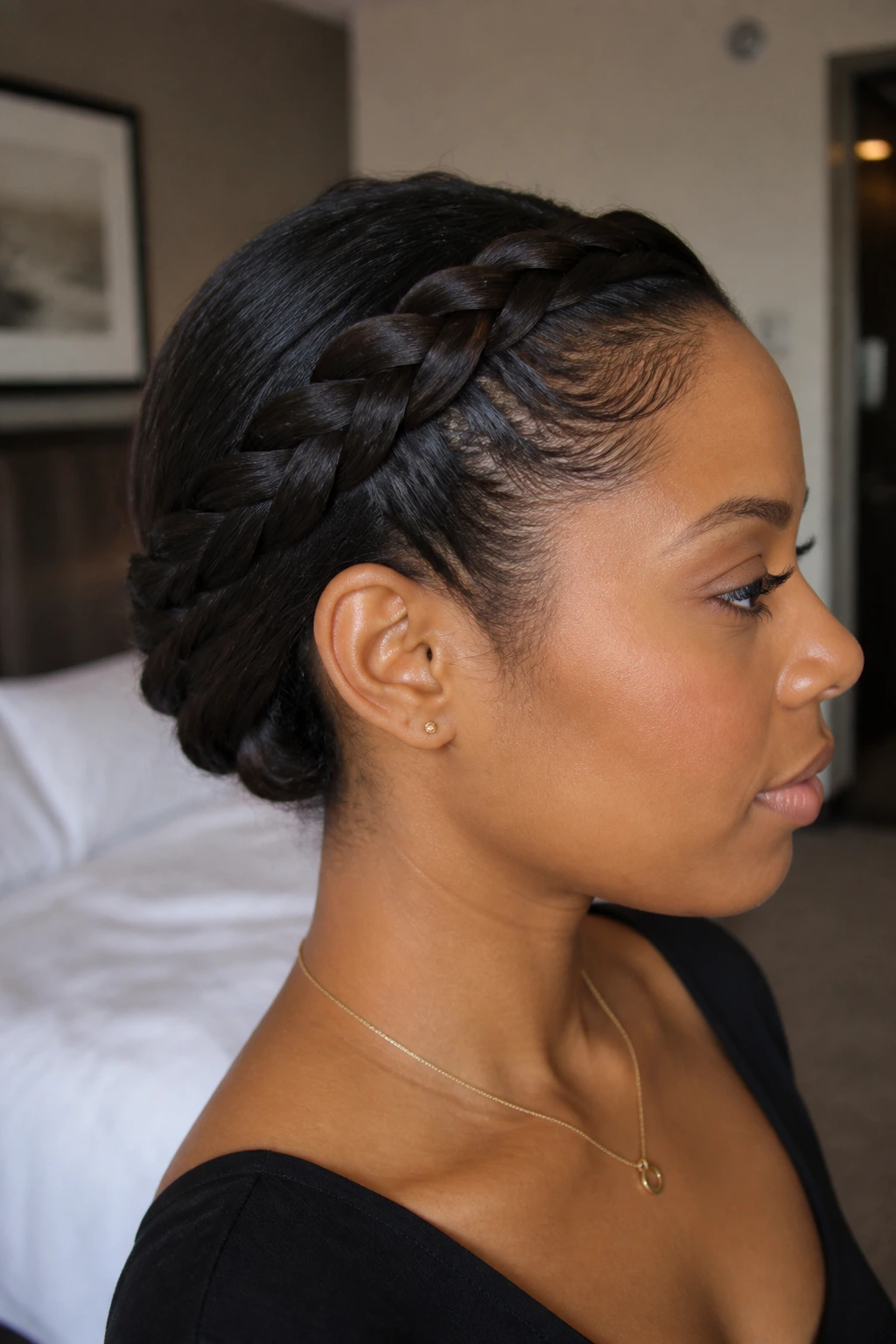
A faux bob braid is for transition lengths, or for anyone who wants the short-hair look without actually cutting anything shorter. The braid gets tucked underneath itself at the nape, which hides the length and creates a clean, compact shape.
I like this style when the hair is just long enough to reach the shoulders but needs to read shorter for an event. Braid the mid-lengths, fold the tail upward, and pin it under the back layer with hidden U-pins or sturdy bobby pins. The top should stay smooth so the tuck doesn’t show.
It’s a little more work than a side braid, but the payoff is obvious. The line at the back looks neat, and the front can still keep some movement.
26. Reverse Braid Tuck
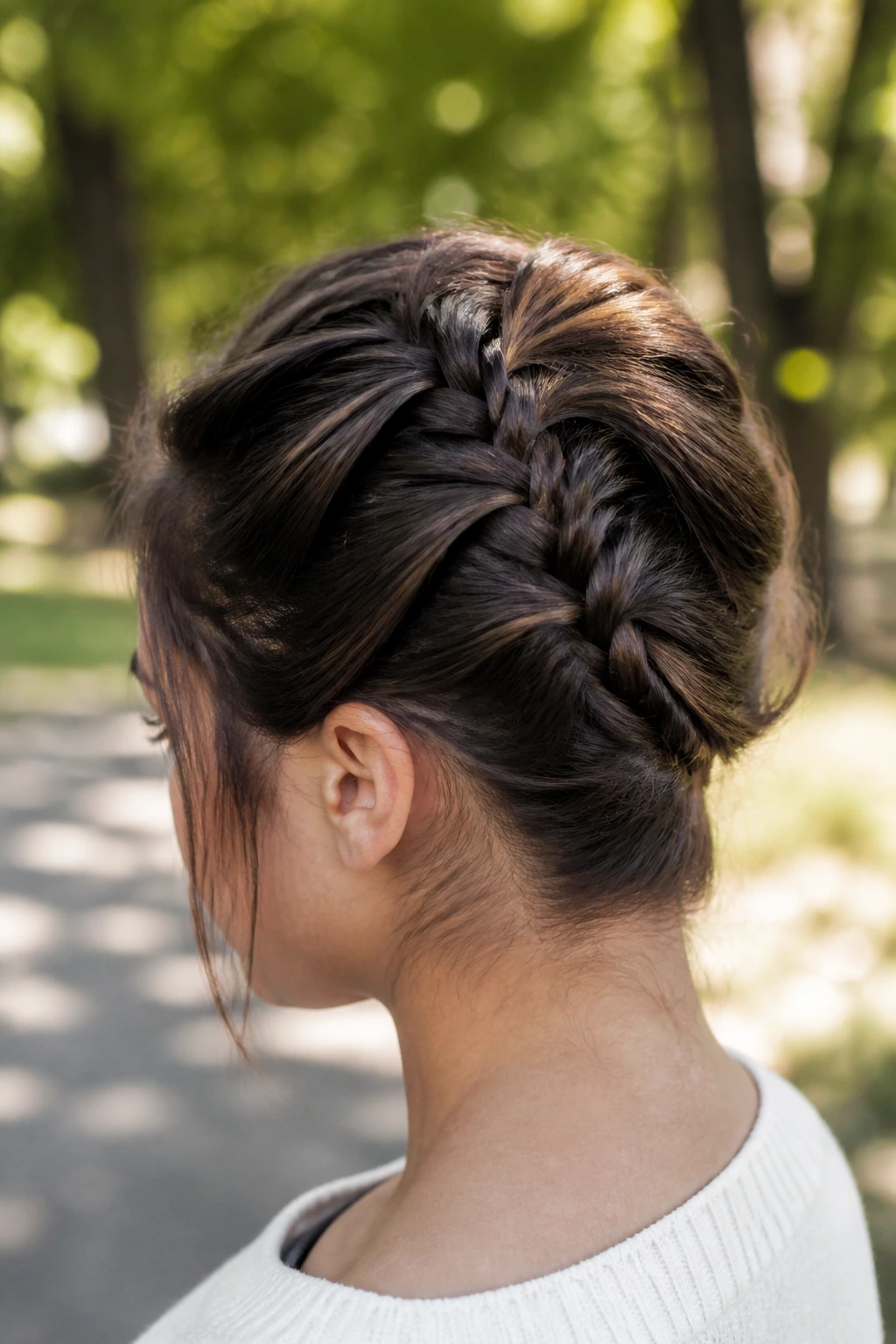
A reverse braid tuck gives short hair a lot of visual structure because the braid grows upward instead of down. That means the pattern sits on top of the hair where people can actually see it, which is useful when the length is limited.
Bend forward, start braiding from the nape toward the crown, then stand up and tuck the ends under the top section. This is the one style on the list that feels awkward for about thirty seconds, and then suddenly makes sense. The finished shape is compact and surprisingly polished.
It’s a strong choice for buns, tucked crowns, or a low topknot on a short lob. If your arms get tired halfway through, take a breath and clip the braid in place before finishing the tuck. No need to wrestle it.
27. Mixed Twist-and-Braid Crown
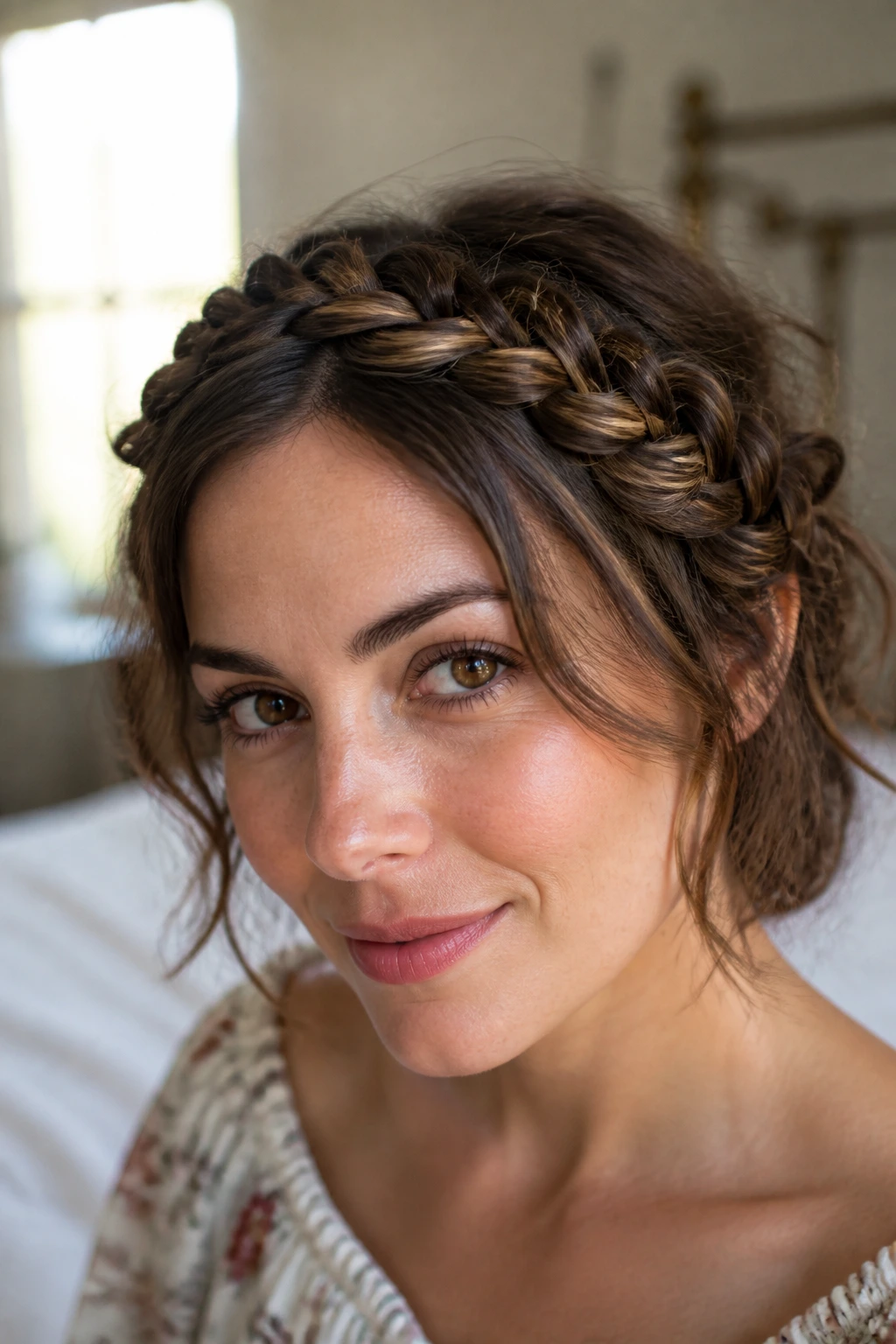
What if your layers are too short for a full crown braid? Mix twists into the pattern. That’s the whole trick. The twists catch the shorter pieces that would normally slip out of a pure braid and give the crown enough texture to stay put.
Work around the head in small segments, alternating between a two-strand twist and a narrow braid. Pin each finished section as you go so the shape doesn’t unravel before you reach the opposite side. This style is especially helpful on bobs with lots of face-framing layers.
The crown ends up looking softer than a strict braid and more forgiving around the hairline. I’d choose it when the haircut needs some romance but not too much polish.
28. Scarf-Woven Braid
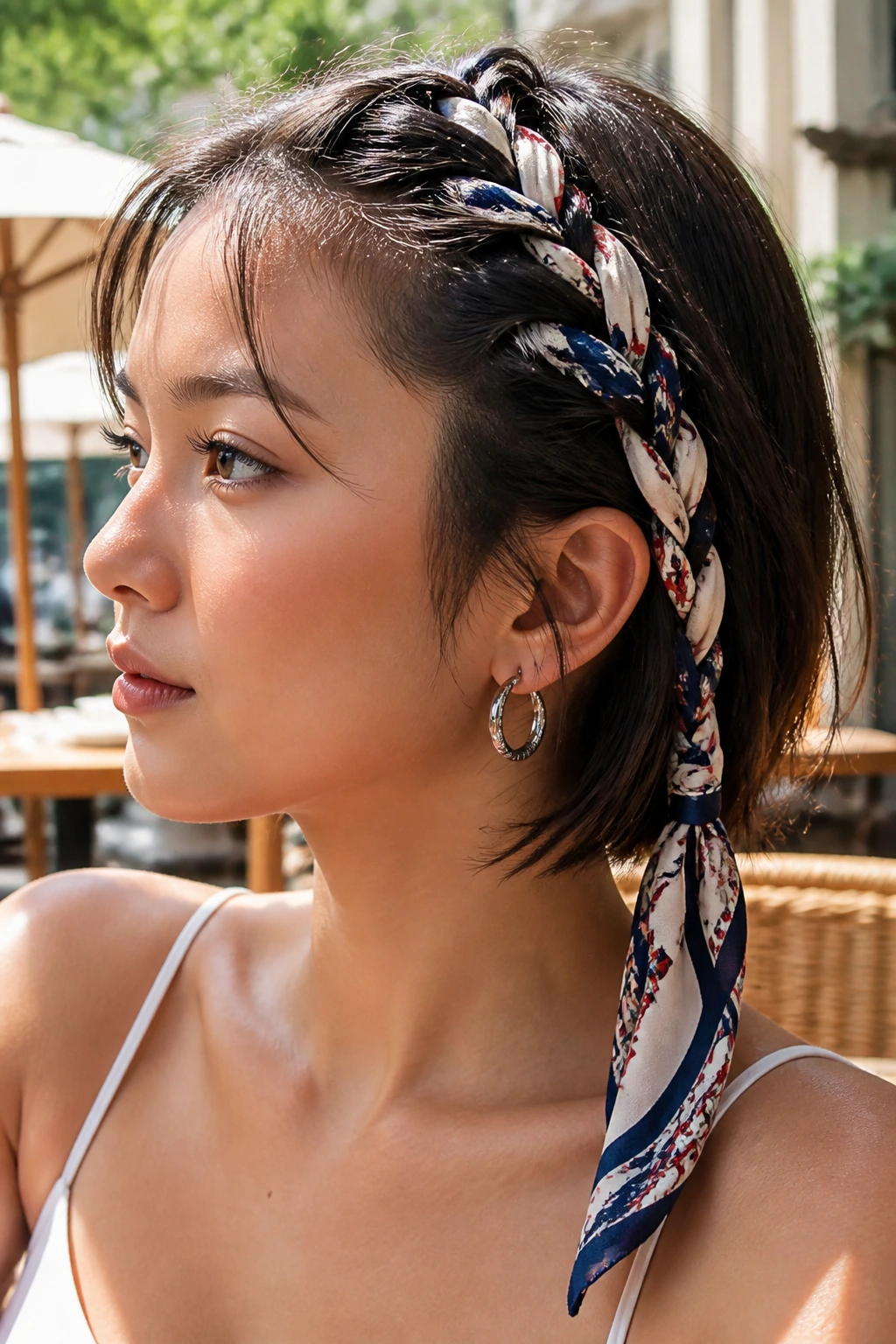
A scarf-woven braid solves one of the oldest short-hair problems: not enough length. A scarf or ribbon adds both visual length and grip, so the braid has something to hold onto even when the hair itself is stingy with inches.
Use a 1-inch silk or cotton scarf folded into a narrow strip, tie it into the top section, and braid it in with the hair down the side or back. The fabric should feel secure, not bulky. If it’s thick enough to make the braid feel clumsy, fold it narrower.
This is one of the easiest ways to make a short braid look more finished without adding accessories after the fact. The scarf is part of the braid from the first pass, which makes the whole thing feel intentional instead of decorative.
29. Claw-Clip Braid Sweep
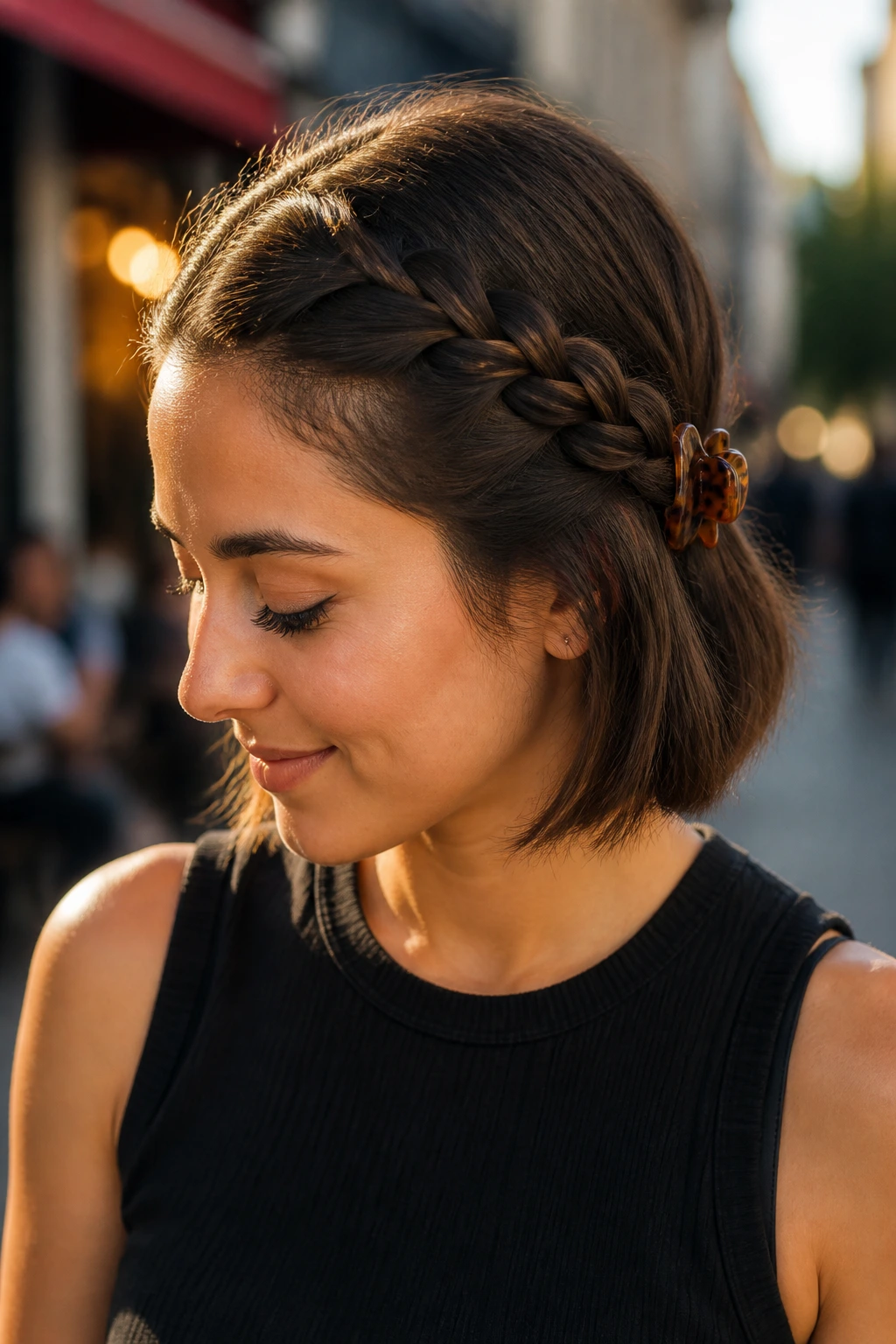
A claw-clip braid sweep is the quickest braid-adjacent style on this list, and I mean that as a compliment. Some days you don’t need a full braided look. You need one clean braided section and a clip that knows its job.
Braid one side or the back section, then twist or fold the remaining length into a medium claw clip. If the clip is too large for the cut, it will slide. Use one that matches the amount of hair, not the fantasy of how much hair you wish you had.
This works nicely on a bob because it keeps the style light and off the neck without requiring length. It’s casual, but not lazy. There’s a difference.
30. Micro Accent Braids
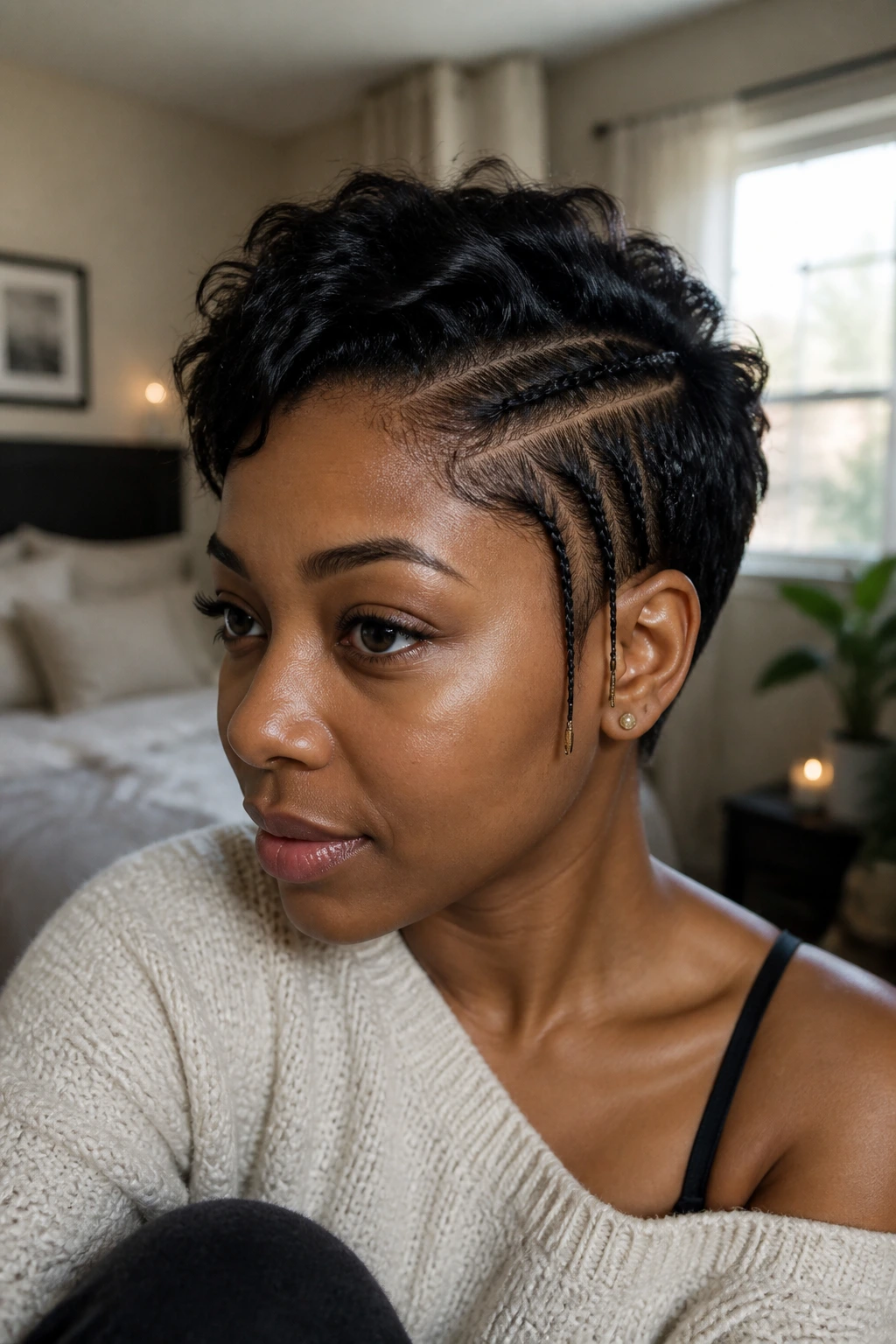
Micro accent braids are tiny, scattered braids that add texture without taking over the cut. On short hair, they act almost like punctuation marks. One near the part, one near the temple, maybe two tucked into a layer — that’s enough.
Best ways to place them
Place them where the haircut already has movement. If one side flips out more than the other, that’s where the braid should go. Use tiny sections and small elastics, or braid them close to the scalp if your hair texture allows it. Don’t overfill the head with them; too many small braids on short hair can start to look busy instead of cool.
This style is especially good on textured or curly hair because the braids hold better and the contrast between braid and curl gives the whole cut a little rhythm. Straight hair can wear them too, but the sections need to be very clean.
31. French Braid Into Bun
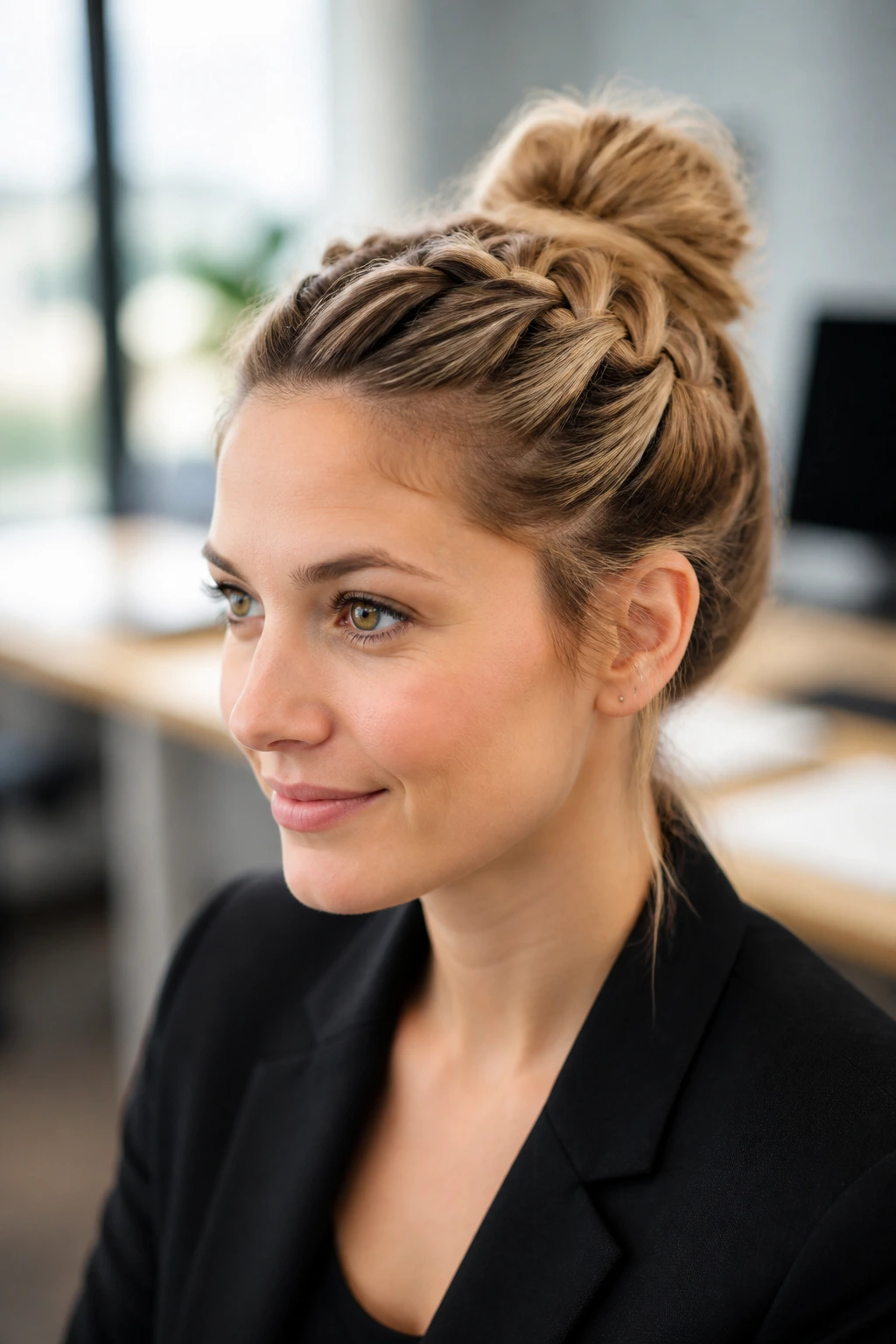
A French braid into a bun is one of the most practical braid hairstyles for short hair because it carries the whole style from front to back without needing extra length. The braid does the lifting, and the bun finishes it off in a compact knot.
Start at the hairline, braid back to the crown or nape depending on length, then gather what’s left into a small bun. A short bob may only make a tiny coil, and that’s fine. Use 3 to 5 pins to keep the bun flat and the braid line smooth.
This is a smart office style because it stays tidy while still looking like you made a decision. It also works well when the hair is a bit oily at the roots, since the braid can disguise that better than loose styles can.
32. Double Braided Headband

Two thin braids crossed over the crown can make a cropped cut look finished without hiding the length. That’s why the double braided headband works so well on short hair. It frames the face, controls the front, and lets the rest of the hair stay loose.
Braid one slim section from each temple, bring them across the head like a headband, and pin them behind the opposite ear. If the hair is too short for the braids to cross neatly, stop short of the center and let them meet visually instead. Nobody is measuring.
This style is a good answer when bangs or layers keep falling forward. It’s tidy, but not severe. And it plays well with earrings, which matters more than people think.
33. Tucked Crown Braid
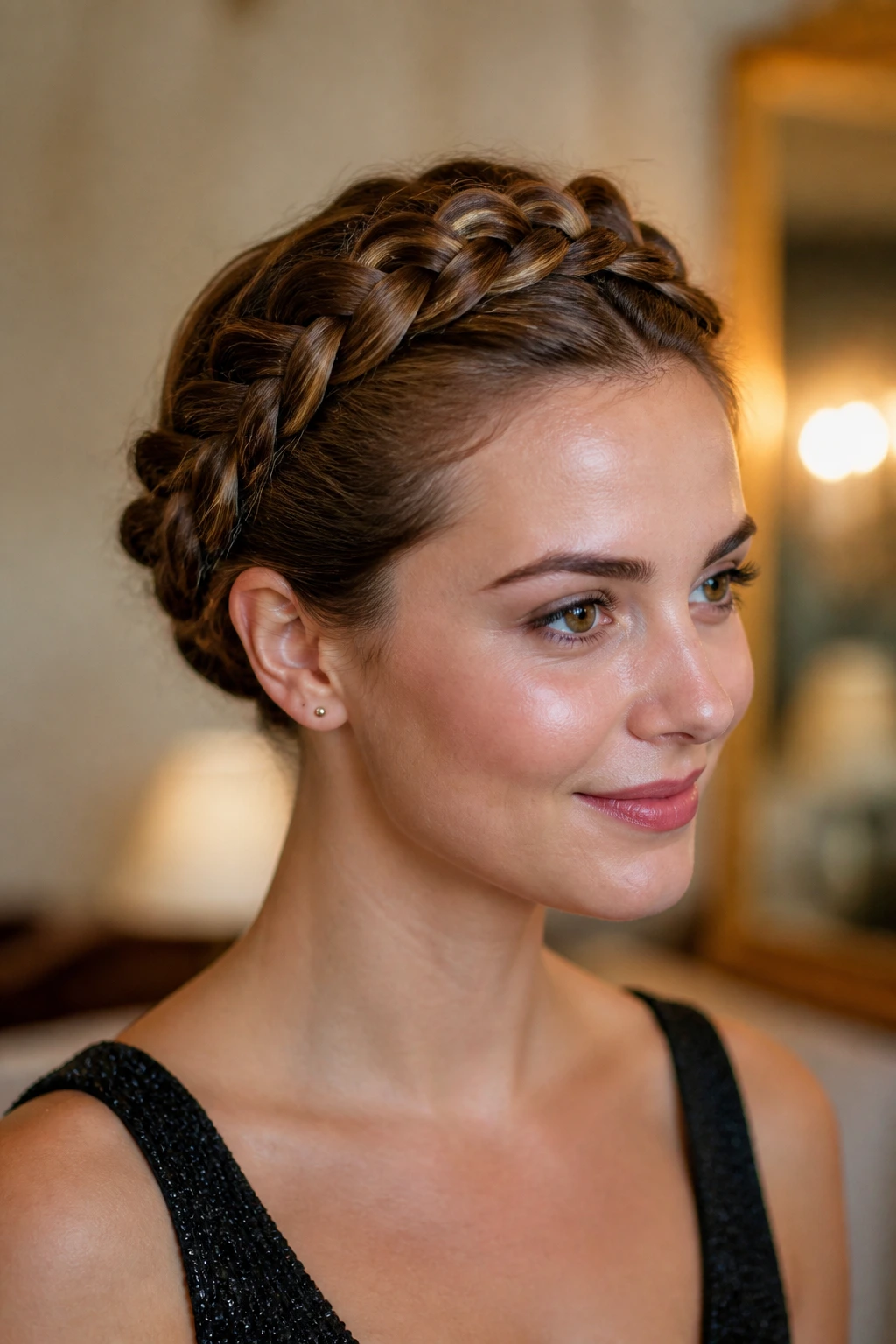
Want the most polished version of a short-hair braid? The tucked crown is probably it. The braid wraps around the head, the ends disappear underneath, and the whole style looks like it was built to stay put all day.
It works best on a bob or lob with enough length to circle the head at least once. Keep the braid close to the scalp, pin the end under the opposite side, and flatten any lifted spots with your fingers and a few hidden pins. The goal is a smooth ring, not a puffed halo.
This is the style I’d choose for weddings, dinners, or any event where you want the haircut to feel more formal without losing its shape. It doesn’t need much decoration. The braid line is the decoration.
Why Short Hair and Braids Get Along Better Than People Think
Short hair has a built-in advantage with braids: less weight means less sag. That sounds simple, but it changes everything. A braid on shoulder-length hair can drop, stretch, or go soft by lunchtime. On a bob or pixie, the structure often holds cleaner because there’s less length pulling at the weave.
The other advantage is visibility. On long hair, a braid can disappear into the rest of the style. On short hair, every turn shows. That makes the parting, tension, and finish matter more — and frankly, that’s a good thing. You can see whether the braid is tidy or sloppy, which makes it easier to improve.
Short hair also rewards a little planning. A 1-inch braid at the temple, a tucked end at the nape, a narrow Dutch line along the hairline — these are all small moves, but they change the silhouette fast. A short haircut doesn’t need a lot of braid to look styled. It needs the right braid in the right place.
Essential Tools for These Styles
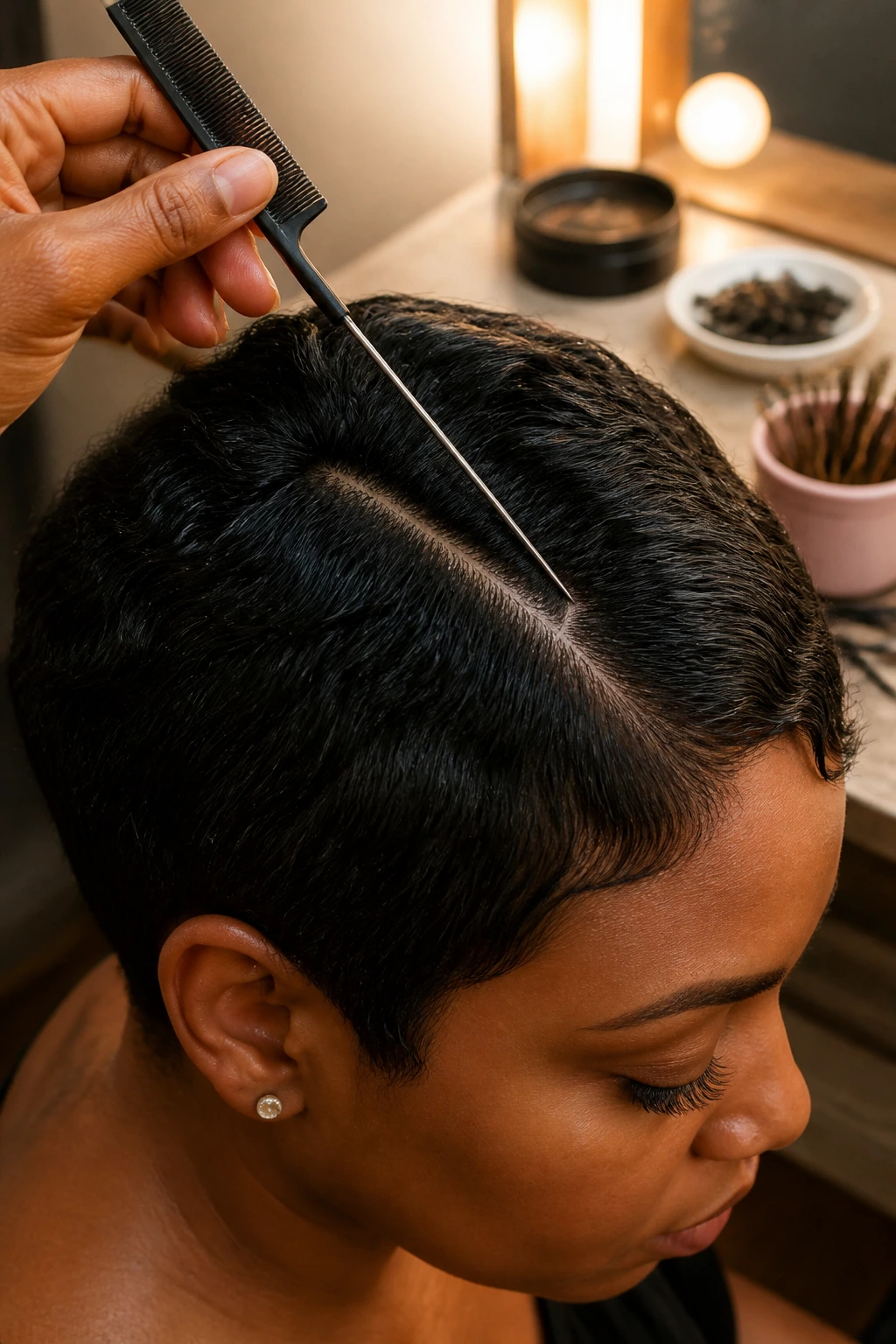
- Rat-tail comb: The tail gives you clean parts, and on short hair, clean parts are half the style.
- Small sectioning clips: Duckbill clips or alligator clips hold short layers out of the way while you braid one section at a time.
- Mini clear elastics: These are the best choice for tiny ends and accent braids because they disappear into the style.
- Bobby pins in two sizes: Standard pins hold tucked crowns; smaller pins help with bang braids and hidden ends.
- Texturizing spray: A few sprays give slippery hair something to grab without making it crunchy.
- Light mousse or braid cream: Use mousse on fine hair and braid cream on textured hair to control flyaways.
- Flexible-hold hairspray: One light mist keeps the braid in place without turning it stiff.
- Edge brush or soft toothbrush: Handy for smoothing the hairline on sleek styles and boxer braids.
- Hand mirror: Necessary for halo braids, crown tucks, and anything that wraps around the back.
- Tail comb with a metal tip, if you have one: It makes crisp zigzag parts and narrow temple sections much easier.
Smart Prep for Braid Hairstyles for Short Hair
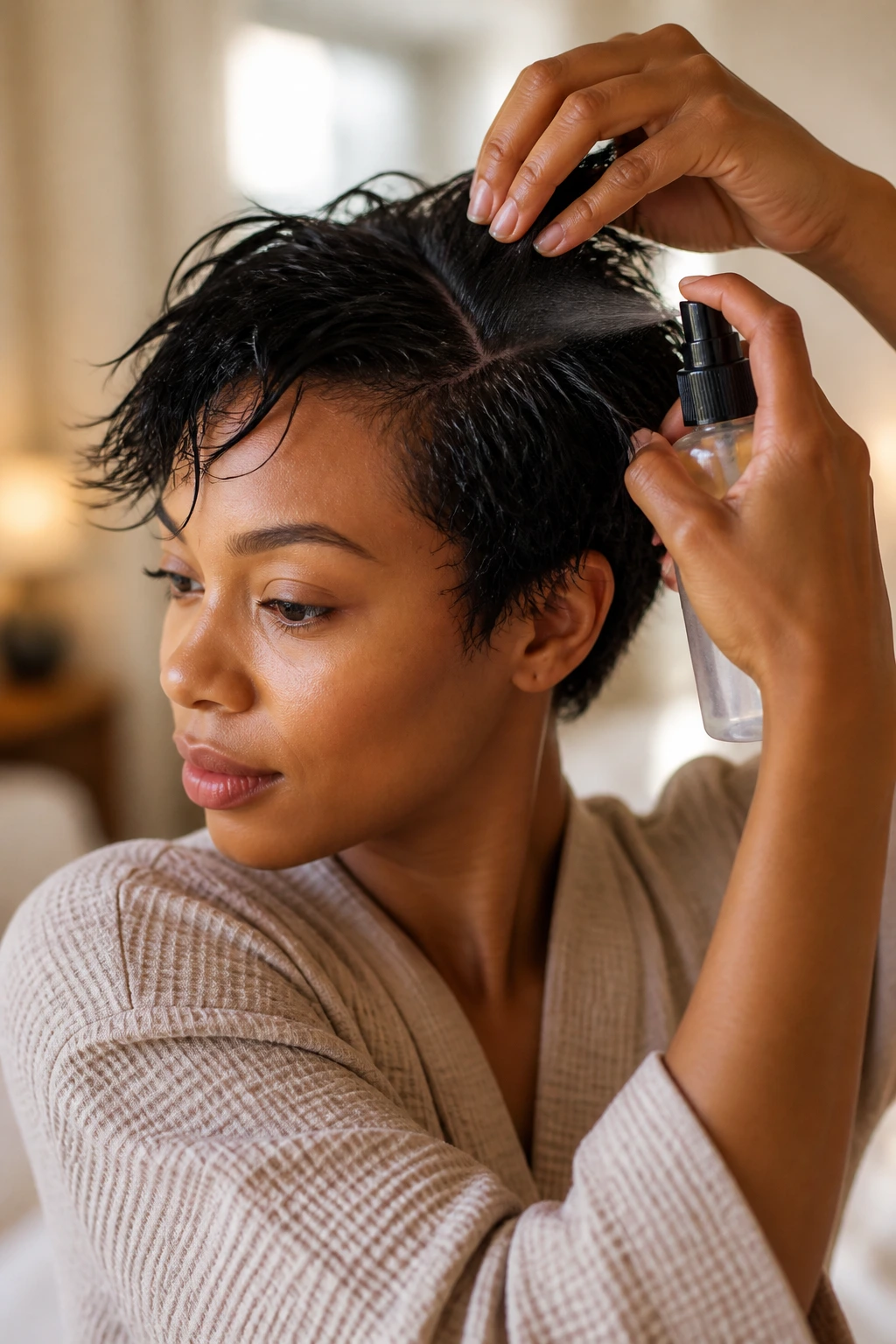
The biggest mistake with short hair braids is starting with hair that is either too slippery or too full of product. Freshly washed hair can be a dream for some styles and a nightmare for others. A loose waterfall braid may like clean, soft hair. A boxer braid or crown tuck usually wants day-two texture.
I’d think in textures, not in rules. Fine straight hair often needs dry shampoo at the roots and texture spray through the mid-lengths so the braid can grab. Curly and coily hair usually responds better to a little leave-in or braid cream, but not so much that the strands slide around. Thick hair may need clips and a tail comb more than product.
Sectioning matters more on short cuts than on long ones. If the section is too wide, the braid loses its shape fast. If it’s too narrow, the braid can feel flimsy. The sweet spot is usually somewhere between 1/2 inch and 1 1/2 inches, depending on the style and the haircut.
And a small opinion: don’t start with soaking wet hair unless the style specifically calls for it. Slightly damp can be useful. Wet enough to drip? That’s just going to make your braid weird while it dries.
How to Wear and Finish the Look
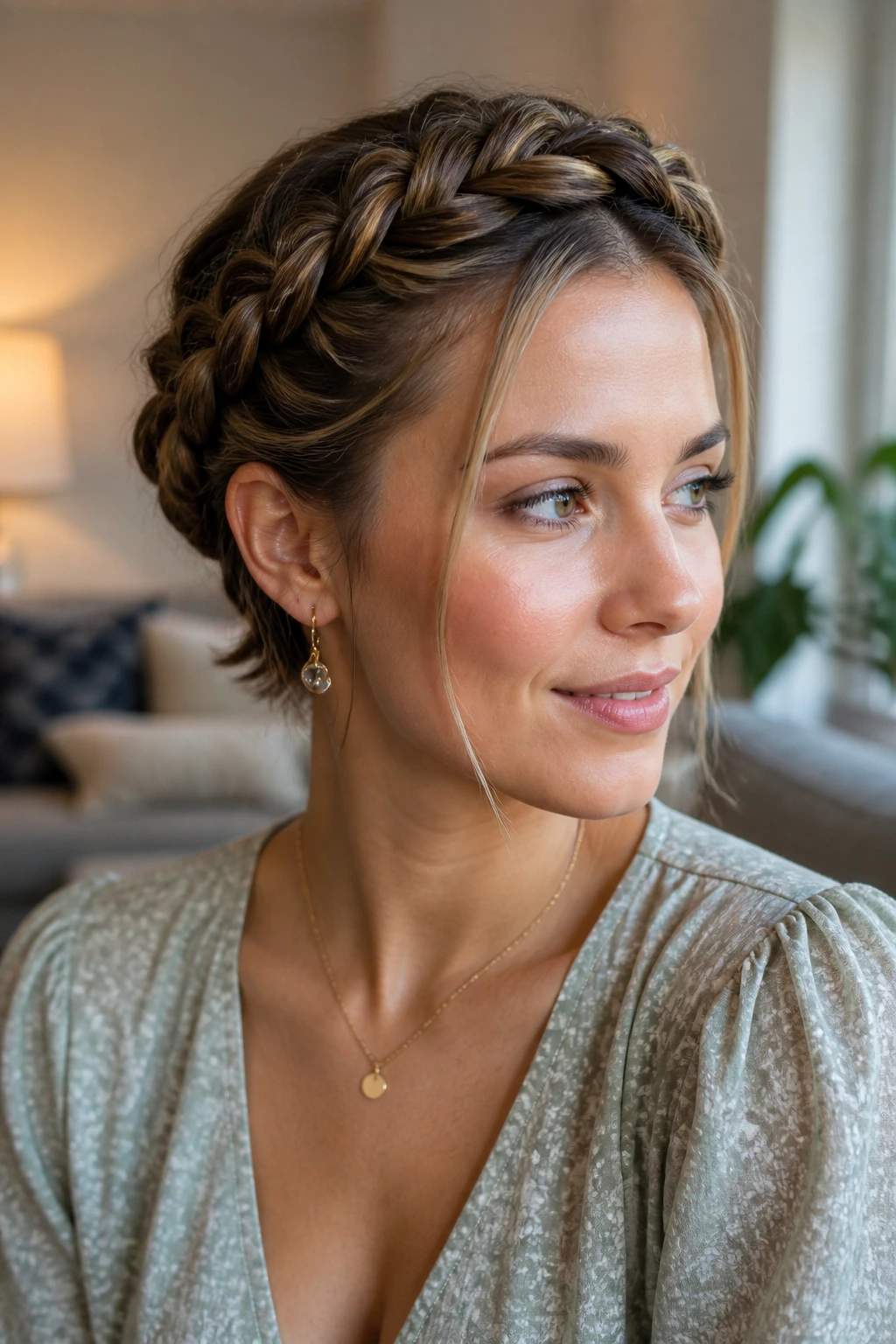
Everyday: Keep the braid narrow, low, and close to the head. A tiny side braid, temple braid, or braided bang sweep works best when you want the haircut to look neat without looking overdone.
Dressy: Go for crown shapes, tucked ends, and clean parts. Short hair looks especially good with a glossy finish here — one light pass of shine spray on the surface, not the roots, keeps the style from looking chalky.
Best with accessories: Small hoops, studs, hair cuffs, and one well-placed barrette suit short braids better than oversized clips. The braid is already doing a lot of visual work. Let the accessory support it, not fight it.
If the cut is layered: Keep a few face-framing pieces out on purpose. That softens the braid and stops shorter layers from sticking up in all the wrong places.
If you want more texture: Pancake the braid very gently by pulling at the outer loops. A little puff is fine. Too much and the braid starts looking loose before the day even begins.
Night Care, Refreshing, and How Long Each Style Lasts
Loose accent braids, side braids, and crown tucks usually hold best for one to two days on short hair, sometimes longer if the hair is textured and the braids are pinned well. Sleeker styles like boxer braids or cornrows can last longer, but only if the scalp feels comfortable. Pain is not a sign of success. It’s a sign to redo the style.
For overnight care, a satin scarf or bonnet is non-negotiable if you want the braid to survive. Short ends rub against pillowcases faster than long hair does, and that friction frays the braid line by morning. If the style is tucked, add one or two hidden pins before you wrap the scarf so the ends don’t shift around.
To refresh the next day, mist the surface lightly with water or flexible spray, then smooth flyaways with your fingertips. If the front pieces have puffed up, re-braid only the first inch and leave the rest. You do not need to start from scratch every time.
Tighter protective styles like cornrows or feed-ins need more care around the scalp. Wash the scalp gently, focus shampoo where oil collects, and avoid leaving a style in so long that the roots start to mat. Short hair is easier to clean than long hair. Use that fact.
Additional Tips and Personal Touches
Grip Boost: If the braid keeps slipping, start with a tiny amount of dry shampoo or texture spray at the roots, wait 30 seconds, then braid. That pause matters more than people think.
Softness: Pull out one or two ultra-thin face-framing strands if the style feels too severe. On a short cut, those strands can be the difference between “done” and “stiff.”
Accessory Move: One metallic cuff or a slim satin ribbon can do more for a short braid than a pile of clips. Pick one accent, not five.
Make-It-Yours: Shift the part. A deep side part gives a braid more drama; a center part makes double braids or boxer styles feel crisp and symmetrical.
Fast Fix: If the end won’t stay braided, fold it under and pin it. Short hair often looks better tucked than forced into a tail that’s too tiny to behave.
Common Mistakes That Ruin Braid Hairstyles for Short Hair
- Using hair that’s too slippery: Fresh conditioner, heavy oils, or a thick leave-in can make short strands slide apart before the braid even reaches the ear. Fix it with texture spray or dry shampoo at the roots, then braid on slightly lived-in hair.
- Making the sections too wide: Big sections on a short bob create chunky braids that collapse at the end. Keep the sections narrow and let the braid sit close to the scalp.
- Pulling too hard at the hairline: Tight braids can look neat for ten minutes and then leave the scalp sore. If it hurts, it’s too tight. Start over before the style starts fighting you.
- Leaving the ends dangling without a plan: Short tails can stick out at odd angles and make the braid look unfinished. Tuck them, pin them, or fold them into a knot.
- Forgetting the layers: Short layers pop out fast around the temples and nape. Either leave them loose on purpose or smooth them in with a small amount of cream and a pin.
- Overloading with product: Too much gel or pomade flattens the cut and makes the braid look greasy instead of neat. Use less than you think you need. Add more only at the root, not the whole head.
Variations and Adaptations to Try
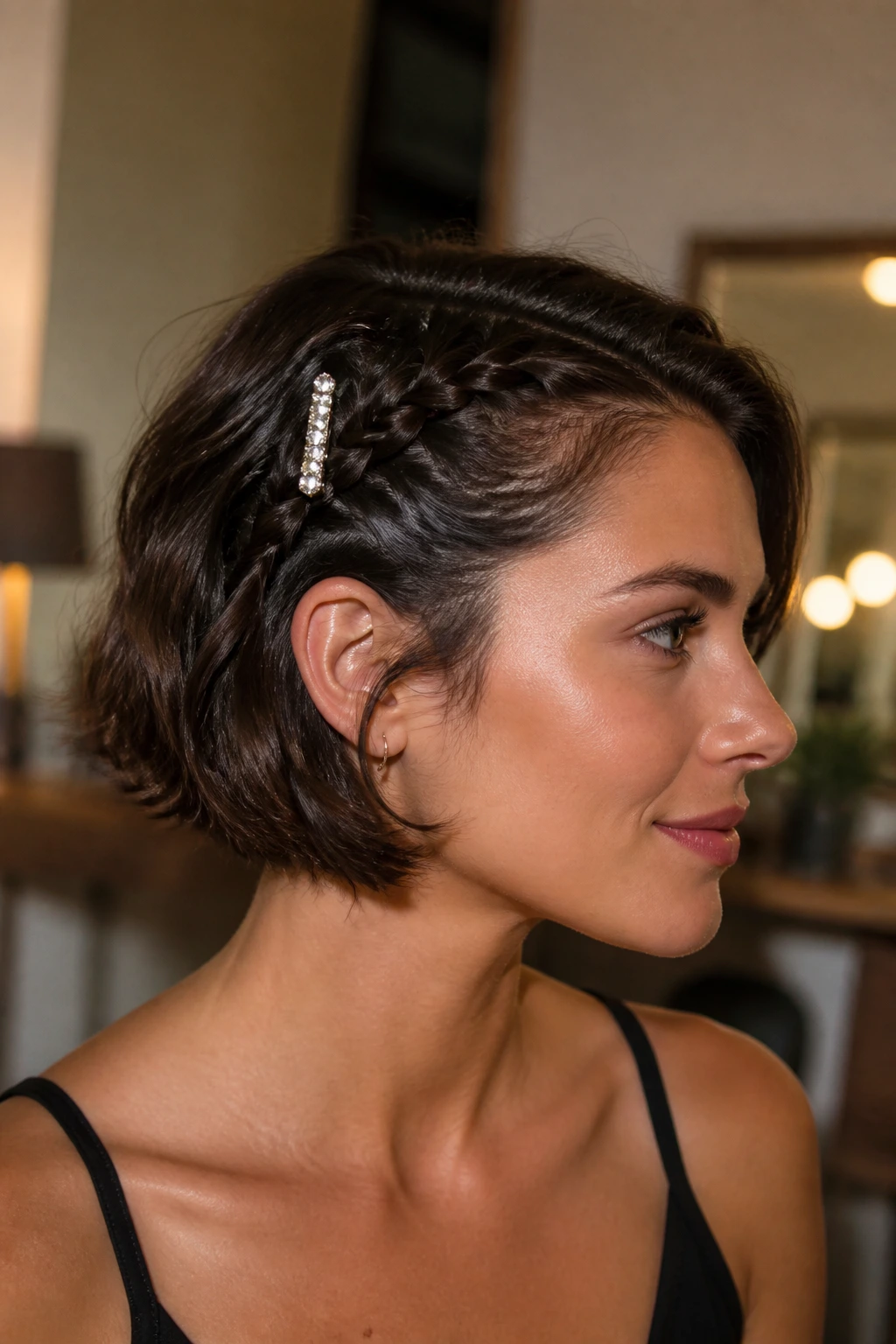
Fine-Hair Grip Version: Start with dry shampoo, keep the sections tiny, and use tighter braids with a little pancake at the end. Fine hair likes structure more than softness here.
Curly-Texture Version: Stretch the front lightly with your fingers, braid only the pieces that can reach cleanly, and let the rest stay full. This keeps the style from looking forced and protects the curl pattern.
Protective-Style Version: Use braid cream, keep tension low, and focus on scalp comfort first. For short natural hair, a style that lasts three days comfortably is better than one that lasts a week and hurts.
Accessory-Forward Version: Add cuffs, ribbon, a narrow scarf, or a single barrette to one side only. Short braids can get crowded fast, so one statement piece beats a pile of extras.
Gym-Ready Version: Choose temple braids, boxer braids, or tight cornrows with a satin wrap for afterward. These styles stay close to the head and won’t collapse the second you sweat.
Event-Night Version: Pick a halo braid, tucked crown, or French braid into bun, then finish with a light shine spray and a clean part. The goal is polish, not volume.
Frequently Asked Questions
How short is too short for braids?
If the hair is under about 2 inches all over, full braids get tricky fast. You can still do tiny accent braids or a braided fringe, but crown styles and tucked buns usually need more length.
What braid is best for a bob?
A side French braid, halo braid, or braided headband usually works best on a bob because they use the length you already have without demanding a long tail. If the bob is blunt, keep the braid narrow and close to the head.
Do braids hold better on clean or day-old hair?
Day-old hair is usually easier because it has a little grip. If the hair is freshly washed, add texture spray or dry shampoo first, especially for sleek styles that need staying power.
How do I stop short layers from sticking out?
Either leave them loose on purpose or tuck them with a small pin and a little styling cream. Trying to force every short layer into the braid usually makes the style look messier.
Can I braid fine hair without extensions?
Yes. Fine hair often needs smaller sections and more texture at the roots, but it can hold braids well once it’s prepped. Pulling the braid gently wider at the end helps it look fuller.
What if my braid keeps unraveling at the ends?
Stop pretending the tail is long enough. Fold it under, pin it flat, or finish with a mini elastic and a hidden bobby pin. Short ends behave better when they’re tucked.
Are braids bad for short hair?
Not if the tension is reasonable. The main risk is pulling too hard at the hairline or leaving a tight style in for too long. Comfort matters. If the scalp starts aching, redo it looser.
Can curly hair do these styles?
Absolutely, and some of them look better on curly hair than on straight hair. Cornrows, crown braids, temple braids, and braided pigtails all hold especially well when the texture has some grip.
Braids That Fit the Cut
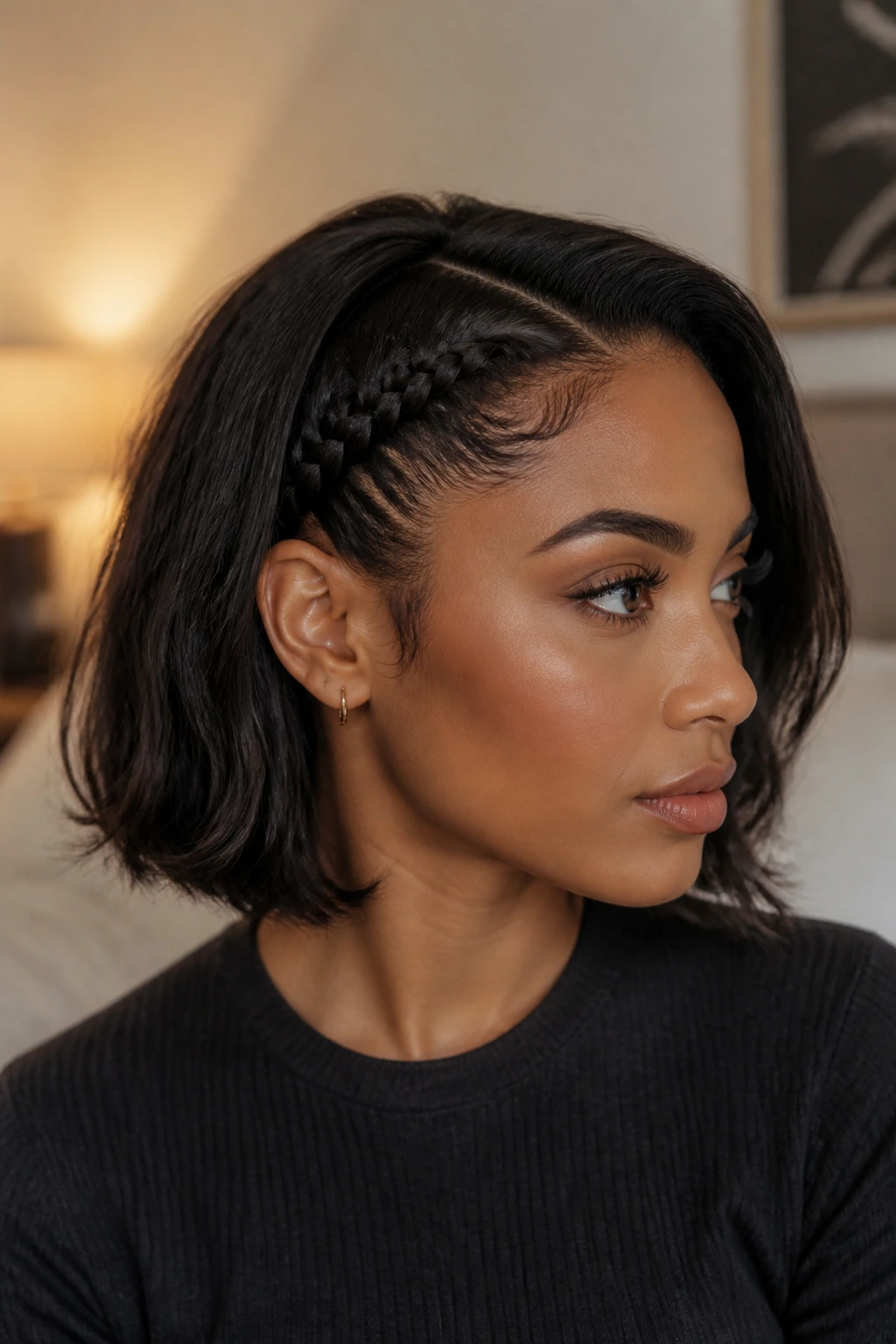
Short hair doesn’t need apology styling. It needs the right braid in the right place, and suddenly the whole cut looks sharper. A tiny temple braid can fix a fringe, a tucked crown can turn a bob into an event style, and a pair of slim cornrows can make a short textured cut feel clean and controlled.
The best part is that none of these styles ask your hair to be longer than it is. They use the cut you already have. That’s the whole point, really. Once you stop chasing long-hair braids and start working with the shape in front of you, the options open up fast — and the mirror gets more interesting.
