



Thick hair can look rich and glossy, then turn around and sit like a heavy blanket if the cut fights it. The right layered haircuts for thick hair change that story fast. They take away the bulk that sits in the wrong places, keep the ends from flaring out like a broom, and let the shape move instead of just occupying space.
That difference is bigger than people think. A blunt one-length cut on dense hair can feel polished for about ten minutes, then the weight starts dragging the shape down and the bottom edge looks wider than the rest of the head. Layers fix that by moving weight out of the interior, carving room near the crown, and giving the hair places to bend. When they’re cut well, you get swing, softness, and a cleaner outline. When they’re cut badly, you get puffed-out sides and a perimeter that looks chewed up. Tricky stuff.
The good news: thick hair gives a stylist more material to work with, which means more ways to shape it. Long, short, shaggy, sleek, curly, face-framing, razor-softened — thick hair can handle all of it, as long as the layers are placed with a purpose. That’s where the real craft lives, and that’s what makes the difference between a haircut that behaves and one that spends the next six weeks arguing with your brush.
Why These Layered Haircuts Work So Well on Thick Hair
-
Bulk Moves Out of the Wrong Spots: The best layers remove weight from the middle and lower sections, so the hair stops ballooning around the jaw and shoulders.
-
The Shape Stays Visible: Thick hair can hide a cut fast. Layers keep the silhouette readable, which matters whether you wear it air-dried, blown smooth, or curled at the ends.
-
You Get More Motion Without Losing Density: Good layering keeps the body of the hair while softening the outline. That means less helmet, more swing.
-
Styling Takes Less Force: A round brush, a blow-dryer nozzle, or even a quick bend with a flat iron works better when the haircut already has structure built in.
-
Color Shows Better Too: Balayage, highlights, and lowlights sit on layered hair in a more natural way because the shape creates movement and depth instead of one flat sheet.
-
Grow-Out Is Easier Than It Looks: A smart layered cut can blur its own line as it grows, which is handy if you do not want a hard, obvious “I need a trim” moment every few weeks.
1. Long Invisible Layers That Keep the Length but Lose the Bulk
These are the quiet workhorses of thick hair. The top still looks long and expensive, but the inside has enough movement that the ends don’t feel like a brick. If you like hair that still swishes over your shoulders, this is one of the safest places to start.
Why It Works
Invisible layers live under the surface, so they reduce weight without broadcasting themselves from the front. That matters on thick hair because the eye still sees a long line, but your hands feel less drag when you brush or blow-dry. The cut is especially useful if your hair gets puffy at the sides but you still want to keep the length around your collarbone or lower.
What to Ask For
- Long, internal layers that start below the chin
- Soft weight removal through the middle and back
- Minimal shortening around the perimeter
- No harsh shelf at the ends
A stylist who understands dense hair will usually point-cut or slide-cut just enough to remove mass without leaving ragged ends. The cut should look almost boring on the salon floor. That’s the point.
Best For
Straight or wavy thick hair that feels too heavy when it hangs all one length. It also helps if you wear your hair down most days and want the shape to stay calm between washes.
2. Butterfly Layers That Give Thick Hair Lift at the Crown
Butterfly layers are dramatic in the best way. The top section gets shorter, feathered layers that create a lifted, airy frame, while the lower length stays long enough to keep the cut looking full. On thick hair, that contrast can be gorgeous.
You get the visual effect of a shorter style without sacrificing the long ends. And because the crown gets more movement, the hair stops collapsing into one heavy sheet. Blow it out with a round brush, and the shortest face-framing pieces kick out with that soft, face-opening bend everyone keeps trying to fake with hot tools.
What Makes It Different
This cut is built to make thick hair look lighter at the top and fuller at the bottom. That sounds like a small detail. It isn’t. The whole silhouette changes because the upper layers lift away from the head, which gives the cut a little air around the crown and cheekbones.
Best For
People who like long hair but hate the way it can sit flat on top and heavy underneath. It’s a strong choice for oval, heart, and long face shapes, especially if you like a blowout that still looks good on day two.
3. A Soft Shag That Takes Thick Hair From Heavy to Cool
A shag on thick hair is a nice example of a cut that can look too edgy in photos and very wearable in real life. The trick is softness. You want choppy movement, not a hacked-up helmet.
The layers live all over the head, but the ends stay wispy enough that the shape feels light. Thick hair takes to this style beautifully because the density gives the haircut enough substance to keep from looking flimsy. If your hair is wavy, the cut comes alive fast. If it’s straight, you’ll need a bit more product and a rough-dry to get the separation.
Why It Works
The shag breaks up the mass in the mid-lengths, where thick hair usually starts to feel like too much. That’s why it’s so good for people who complain about “triangle hair.” The layer pattern pulls volume upward and inward instead of letting everything widen at the bottom.
The Best Version
Ask for soft face-framing layers, textured ends, and a little crown lift. Skip extreme chopping unless you like a stronger, rocker feel. A modern shag can still be polished if the ends are blended instead of shredded.
4. Curtain Bang Layers That Open the Face Without Sacrificing Weight
Curtain bangs can look effortless on thick hair, but they need a sensible frame around them. Put them with long layers, and the whole haircut starts breathing a little better. The bangs skim the cheekbones, the sides taper softly, and the rest of the hair stays long enough to keep the style versatile.
The best part is how the front changes the whole read of the haircut. Thick hair often feels blunt around the face, almost too solid. Curtain bangs break that line immediately.
How to Wear It
Style them with a blow-dryer and a medium round brush or a large Velcro roller if you want that curved, face-opening shape. They should part in the middle and fall away from the eyes, not stick straight down like a curtain rod. A tiny bit of bend is enough.
Who It Suits
If you want a style that looks dressed up with almost no real effort, this is a strong pick. It also helps if you like to wear your hair half-up, because the front pieces stay interesting even when the rest is pulled back.
5. Rounded U-Shaped Layers That Keep Thick Ends Smooth
A U-shape sounds simple because it is, and that’s part of its charm. The length stays fuller in the center and gently curves up around the sides, which keeps thick hair from looking boxy. Add layers inside that outline, and the cut gains movement without losing that polished edge.
This shape is especially useful if the ends of your hair tend to stick out or feel wider than the rest of the cut. A blunt line across the bottom can make thick hair look bottom-heavy. A rounded U softens that problem right away.
Why It Works
The U-shape follows the natural fall of the hair. Instead of forcing a hard horizontal line, it lets the longest point sit in the center and eases the sides up slightly. That means the silhouette feels smoother when the hair is down, and the layers inside can do their job without advertising themselves.
Best For
Long, thick hair that you want to keep sleek and easy to wear. It’s especially good if you straighten your hair sometimes and want the ends to look intentional rather than wide and blunt.
6. A Controlled Wolf Cut for People Who Want Texture, Not Chaos
The wolf cut can go wrong fast on thick hair if the layering gets too aggressive. Too much carving, too high up the head, and you end up with a shaggy shape that needs more styling than most people want to give it. But a controlled version? That’s a different story.
Keep the crown volume, keep the perimeter soft, and let the face-framing pieces do the loud work. Thick hair gives this cut enough body to hold the shape even when you air-dry. It’s one of the few layered looks that can feel edgy without getting thin at the ends.
What to Watch
The length between layers matters more here than almost anywhere else. Short upper layers should still connect to the longer sections smoothly, or you get a disconnected triangle that can be hard to tame. A good stylist will blend the transition instead of stacking the hair in obvious steps.
Best For
Wavy or slightly curly thick hair that likes to separate on its own. If your hair has some natural bend, this cut can look purposeful with very little heat styling.
7. A Collarbone Lob with Internal Layers for Heavy Hair
A collarbone lob is one of the best compromise cuts for thick hair. It’s not too short, not too long, and it sits in a zone where layers can actually change the shape without sacrificing all the weight. That matters if you want your hair to feel lighter but still be able to tuck it behind your ears.
Internal layers are the secret here. They take bulk from underneath the top layer, which keeps the outline smooth. You still get the blunt visual strength of a lob, but the head doesn’t feel like it’s wearing a brick.
Why It Works
Thick hair often gets bulky right at the collarbone because that’s where it rubs against clothing and flares out. Internal layers help the hair fall past that point with less resistance. The result is a shape that sits closer to the body and moves better when you turn your head.
Good if You Want
A cut that can be smoothed for work and bent for weekends. It also grows out well, which is a nice thing to say about a style that sits right at the line between short and long.
8. Shoulder-Grazing Layers That Flip at the Ends
Shoulder length can be a trap for thick hair. Too blunt, and the cut feels stiff. Too layered, and it can puff into a triangle. Shoulder-grazing layers with a slight flip sit in the middle, giving the ends enough movement to avoid that dead-straight wall.
This cut works because the hair’s natural swing has room to show up. The ends curl under or out depending on your brush, and the layers keep the body from collecting at the shoulders like a heavy shawl.
The Salon Cue
Ask for a shape that brushes the shoulders but doesn’t rest on them in one solid line. A little bevel at the bottom makes a big difference. On thick hair, that tiny bend keeps the perimeter from looking too blunt under bright light.
Style Note
A large round brush or even a blow-dryer brush will give the ends a nice flick. If you prefer air-drying, add a touch of cream to the mid-lengths and twist the front pieces while they dry so the flip doesn’t get lost.
9. C-Cut Layers That Hug the Face and Softly Curve the Back
C-cut layers are one of those styles that looks subtle until you turn your head and notice how the shape follows the neck and cheekbones. The front pieces curve inward around the face, then the back drops in a gentle arc. On thick hair, that curve matters because it breaks up the solid block effect.
The haircut feels refined without being stiff. You get softness where you want it and enough bulk left in the back to keep the style from thinning out at the ends.
Why It Works
The curved perimeter helps thick hair avoid that sudden shelf effect that can happen with straight-across layering. It keeps the eye moving instead of stopping at one hard line. That makes the cut feel more fluid, especially if you wear it blown out.
Best For
Anyone who wants a polished shape that still has movement. It works especially well with balayage because the curved layers let the lighter pieces sweep through the cut in a more natural way.
10. Razor-Softened Layers That Keep Thick Ends From Feeling Heavy
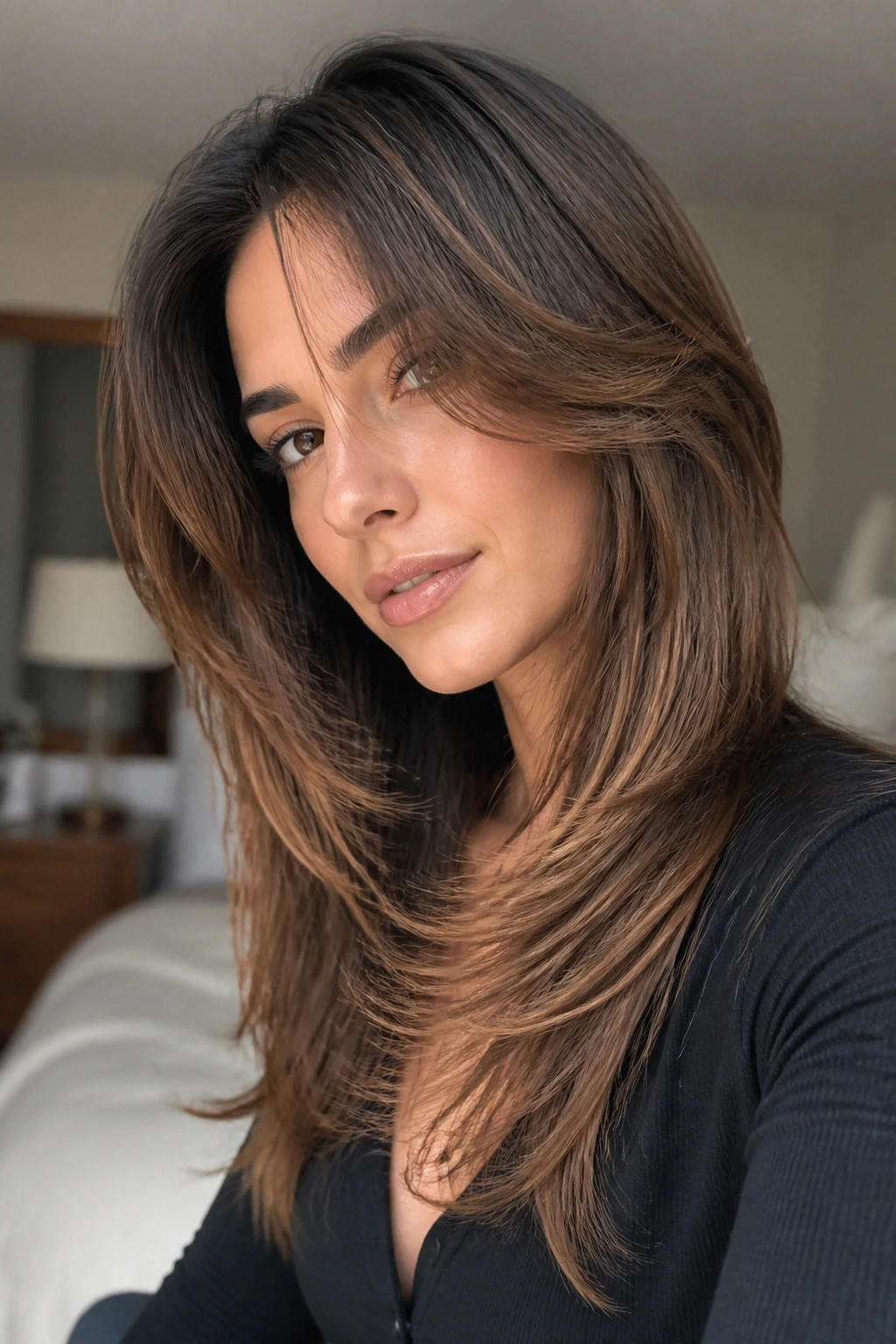
A razor cut can be brilliant on thick hair when the stylist uses it with care. The goal is to soften the ends and free up movement, not slice the hair into frizz. That distinction matters a lot. On coarse or dense hair, razor work can take a hard edge off the perimeter and make the layers fall more fluidly.
It’s best when the hair has some natural bend or when you like a slightly undone finish. On very straight, slippery hair, the effect can be less visible. On wavy hair, it can be lovely.
What to Ask For
Soft, feathered ends and light texturizing through the interior. Mention whether your hair frizzes easily, because that changes how much razor work makes sense. A skilled stylist will know when to stop before the cut gets wispy in a bad way.
Best For
Thick hair that feels stiff at the ends or hard to style into loose movement. If you’ve ever blown your hair out and still felt like the bottom looked too solid, this cut can help.
11. Face-Framing Layers That Leave the Rest of the Hair Long
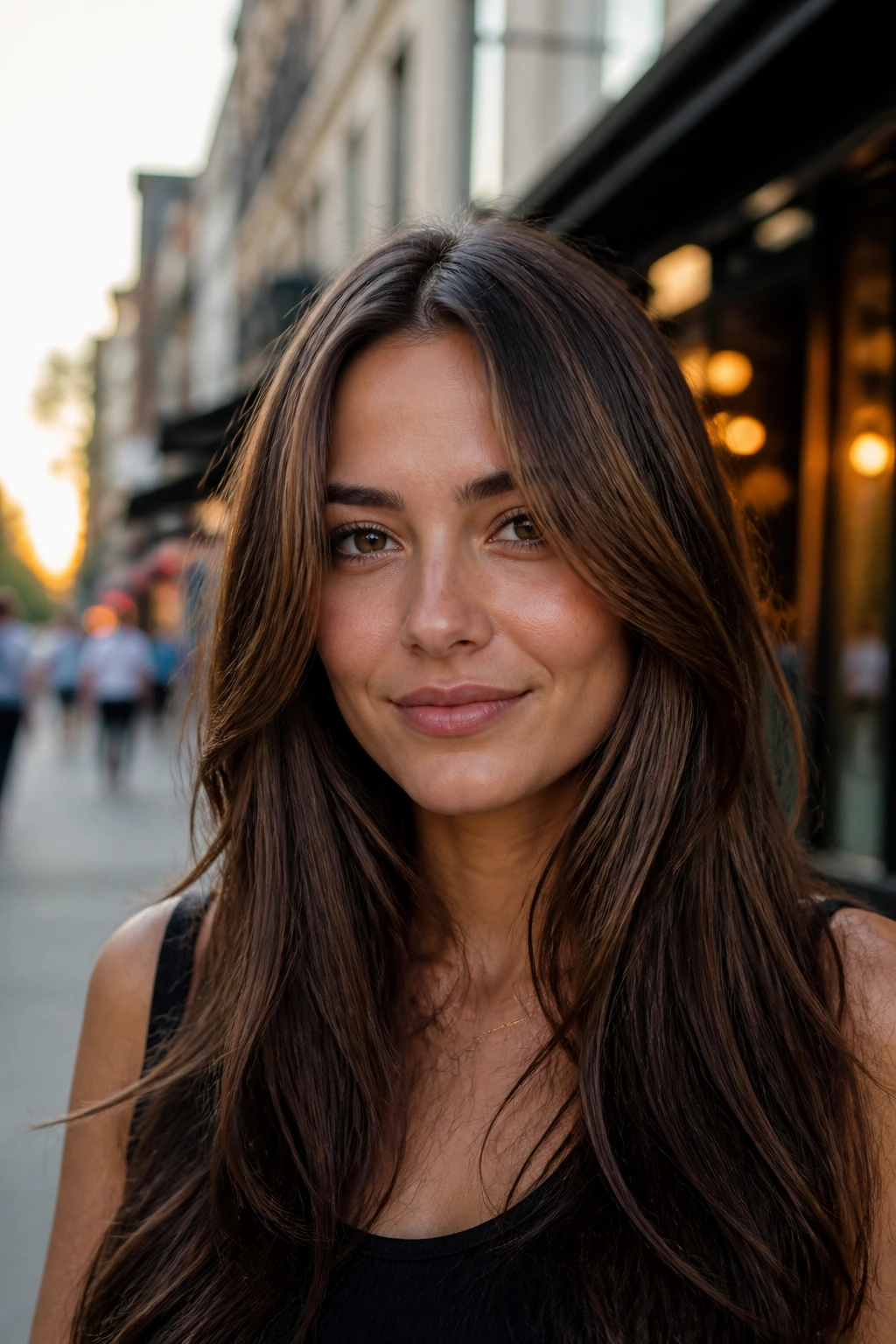
Sometimes the smartest move is to do less. A full head of layers is not always necessary. For thick hair that already has enough body, long face-framing pieces can do most of the work while the rest stays largely intact.
The result is a style that lightens the front, softens the line around the cheeks, and leaves the back long and controllable. That can be a relief if you like your hair long but think the front needs a little more life.
Why It Works
The front of the haircut is what people see first. If the sides are heavy, the whole style feels dense. Face-framing layers open that area up quickly, which can make the rest of the hair feel lighter even when very little length has been removed overall.
Good for
People who want low-maintenance styling and a haircut that still fits into a ponytail cleanly. If you’re nervous about losing length, this is one of the most forgiving options.
12. Choppy Textured Layers for a More Defined, Piecey Finish
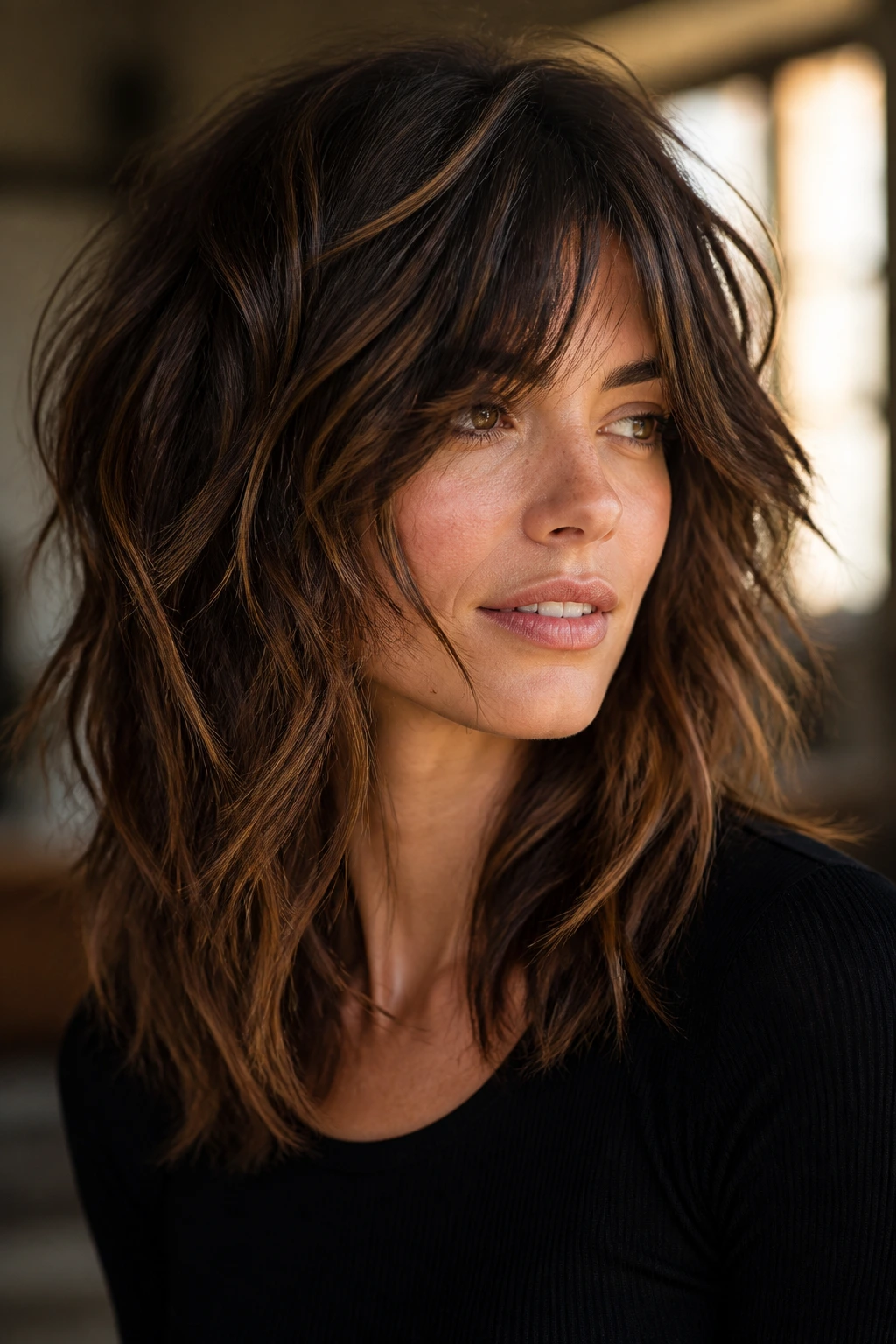
Choppy layers are not subtle. They announce themselves. Thick hair can handle that because there’s enough density to keep the style from looking stringy.
The piecey finish is what makes this cut feel alive. Instead of one heavy curtain, you get separate sections that move differently when you walk or turn your head. The key is balance: if the pieces are too short or too disconnected, the shape starts to float away from the head in a bad way. If they’re blended well, the cut looks lively and intentional.
Why It Works
Textured layers create separation, which is useful when thick hair tends to merge into one block. This style is especially good if your hair loves product. A little mousse, paste, or spray gives the layers definition that lasts all day.
Best For
Thick hair with some natural wave or bend. It also pairs well with highlights because the lighter pieces catch the edges of the layers and make the cut read more clearly.
13. V-Cut Layers That Keep Length in the Middle and Movement on the Sides
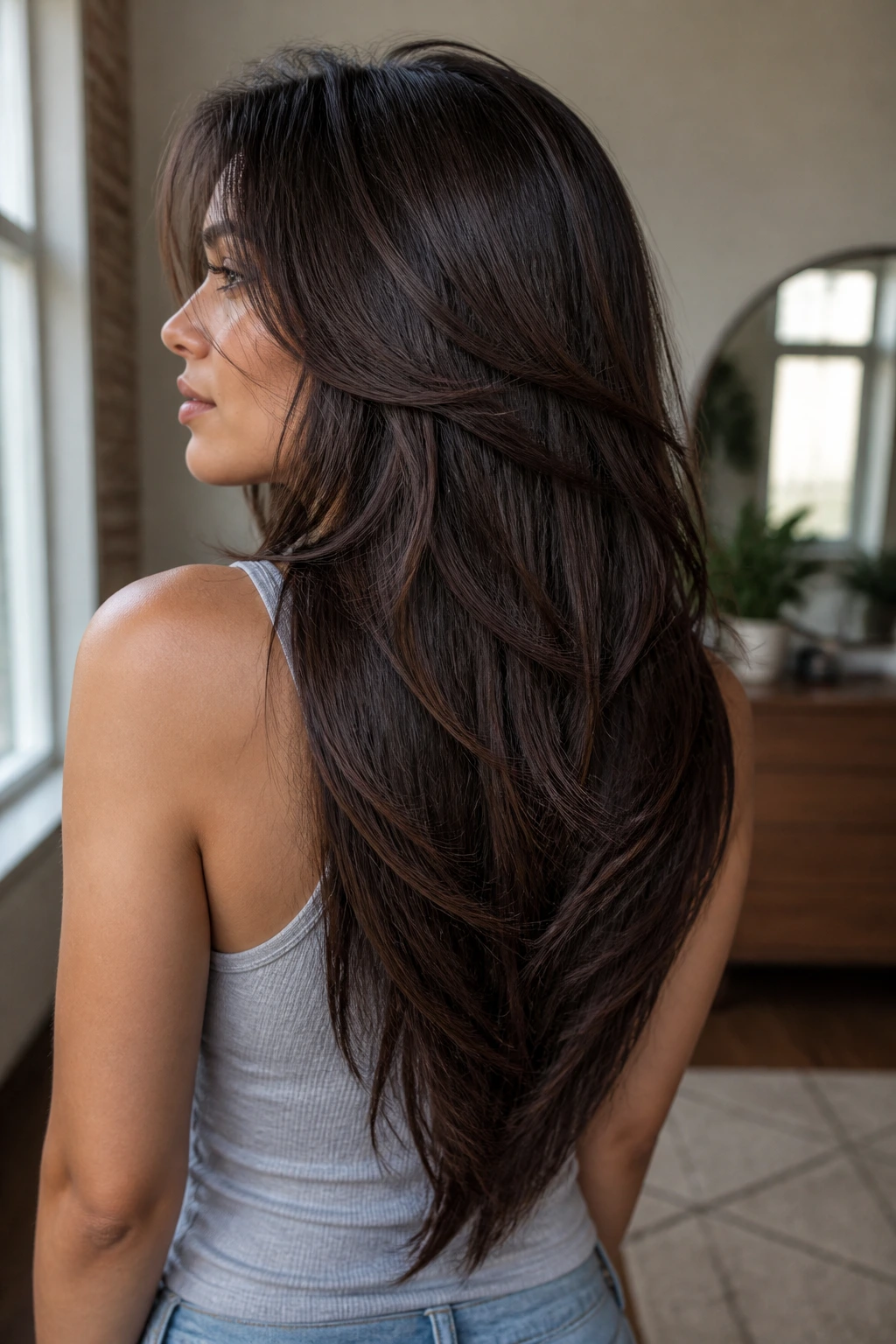
A V-cut is one of the easiest ways to make long thick hair feel less heavy without chopping it up too much. The center stays longest, while the sides taper up into a pointed shape. That gives the hair a nice fall down the back and stops the bottom edge from looking like a shelf.
This shape is a little more dramatic than a U-cut. It suits people who like a longer, sharper silhouette and don’t mind the back having a bit more definition. On thick hair, that point can be a feature, not a problem.
What Makes It Work
The taper helps distribute weight where the hair naturally wants to sit. Instead of all the bulk landing at the hemline, the outline narrows as it approaches the sides. That makes the cut move better when worn loose and keeps the ponytail looking neat when pulled back.
Best For
Long hair lovers who want movement without going short. If you wear your hair down more than up, the V-shape can make the ends look more interesting than a blunt line ever will.
14. Bottleneck Bang Layers That Lighten the Front Without Losing Thickness
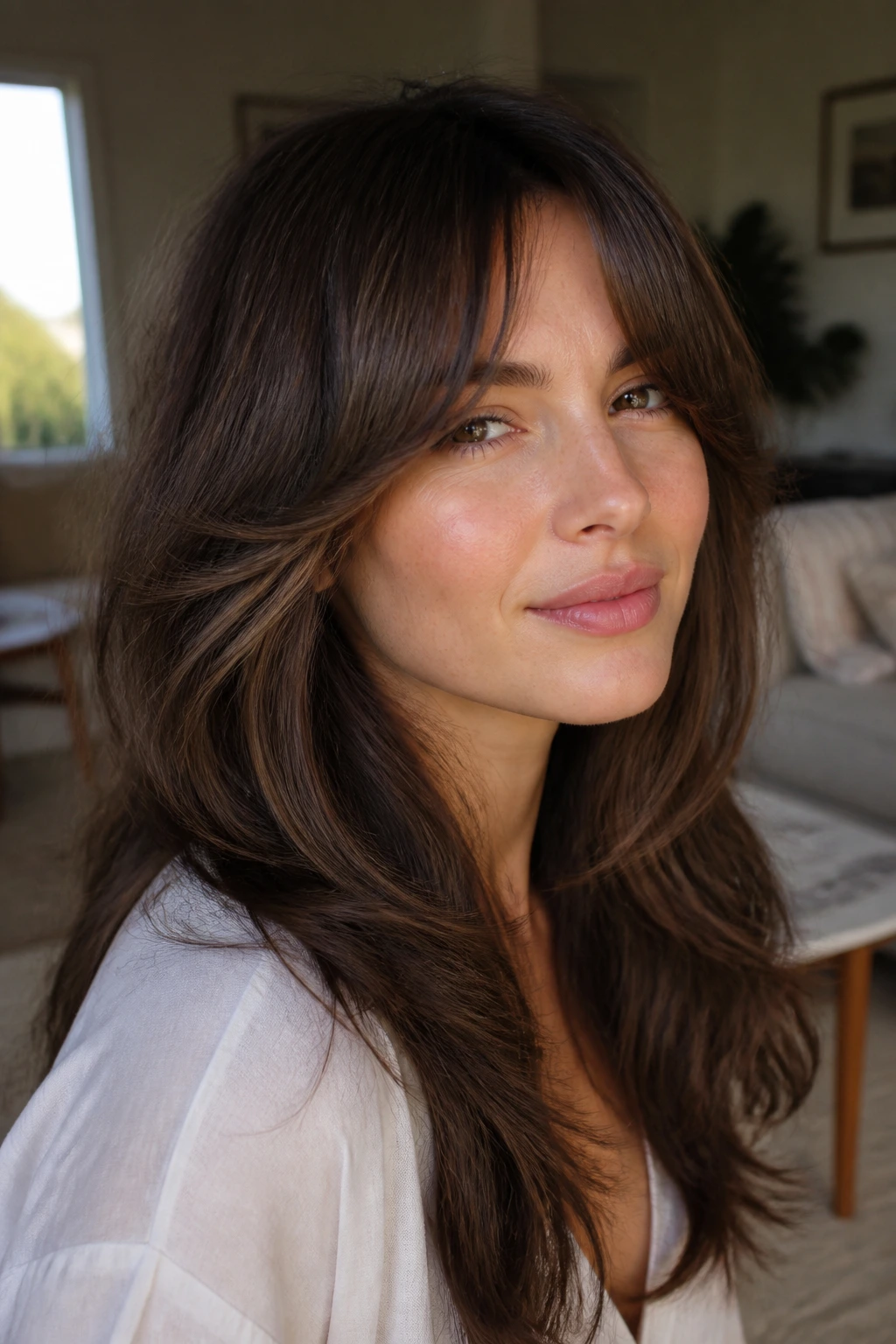
Bottleneck bangs are a smart middle ground for thick hair. They’re shorter in the center, then get longer toward the temples, which means they open the face without committing to a blunt fringe. Pair them with layers, and the front of the haircut gains shape fast.
The look is softer than straight-across bangs and more structured than curtain bangs alone. Thick hair tends to make bangs look dense quickly, so this tapered shape keeps them from feeling heavy on the forehead.
Why It Works
The narrow center prevents the bangs from sitting like a solid bar across the face. The longer sides blend into the rest of the haircut, which helps the front layers and perimeter work together instead of competing.
Styling Note
A small round brush or just a quick bend with a flat iron is usually enough. Keep the finish soft. If you over-style them into a stiff curve, they can lose the easy shape that makes the cut appealing.
15. A Stacked Layered Bob That Removes Weight at the Back
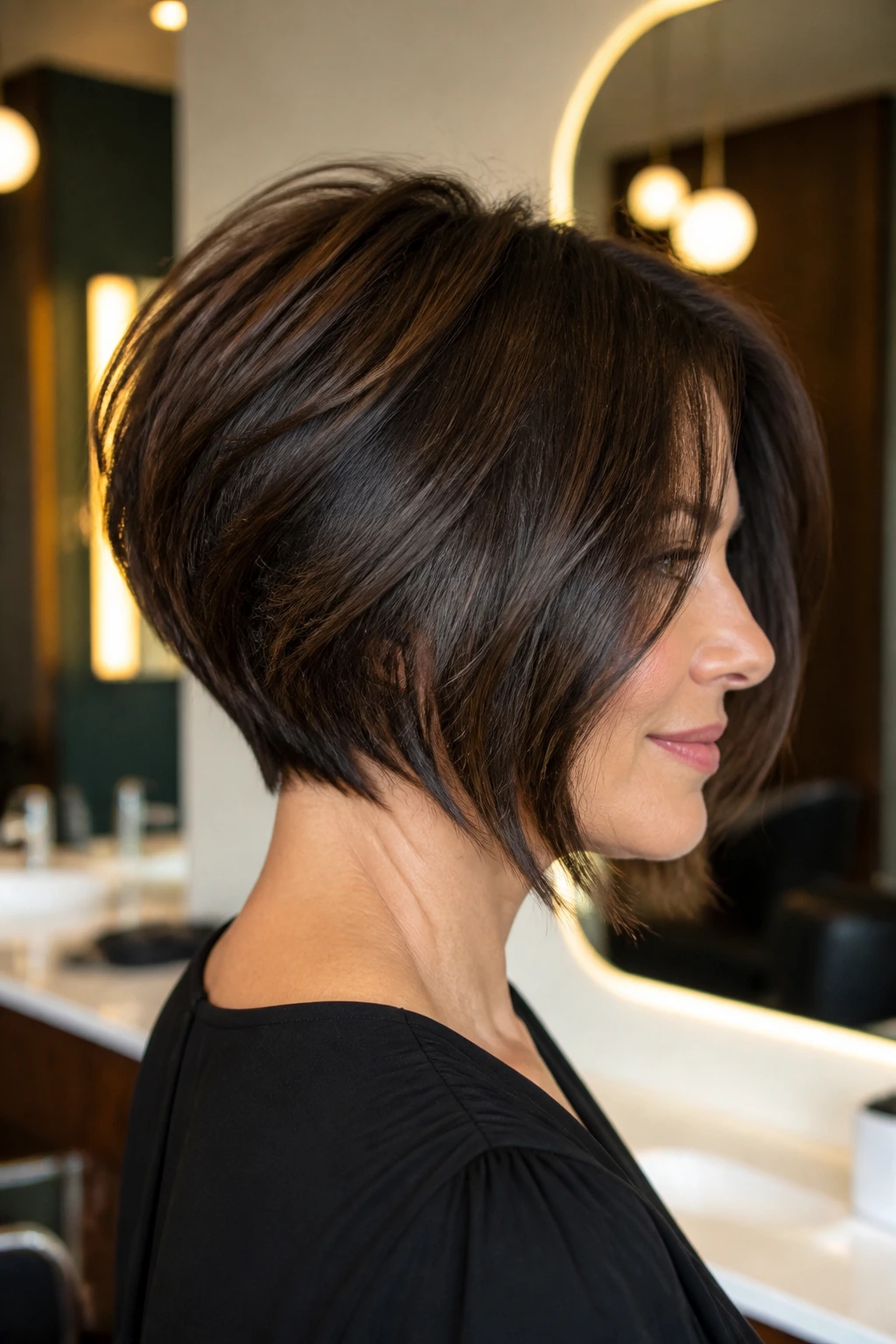
A stacked bob is one of the few short cuts that can make thick hair look crisp instead of bulky. The back is cut shorter and layered to build shape around the occipital bone, while the front stays longer to keep the style from puffing out around the ears. It’s sharp. It’s tidy. It means business.
The stacking is what gives it lift. Thick hair often needs that because short cuts can otherwise sit flat at the crown and then flare everywhere else. This version keeps the back from dragging down while preserving enough length in front to soften the edges.
Best For
People who want short hair but do not want a mushroom shape. It also works if you like a strong jawline frame, because the front pieces can be angled to flatter the face instead of hiding it.
Watch This
A stacked bob needs regular clean-up. The shape grows out faster than long layers because the back line becomes obvious once it starts dropping. If you want low maintenance, keep that in mind before you commit.
16. A Curly Layered Cut That Lets Thick Curls Stack Without Compacting
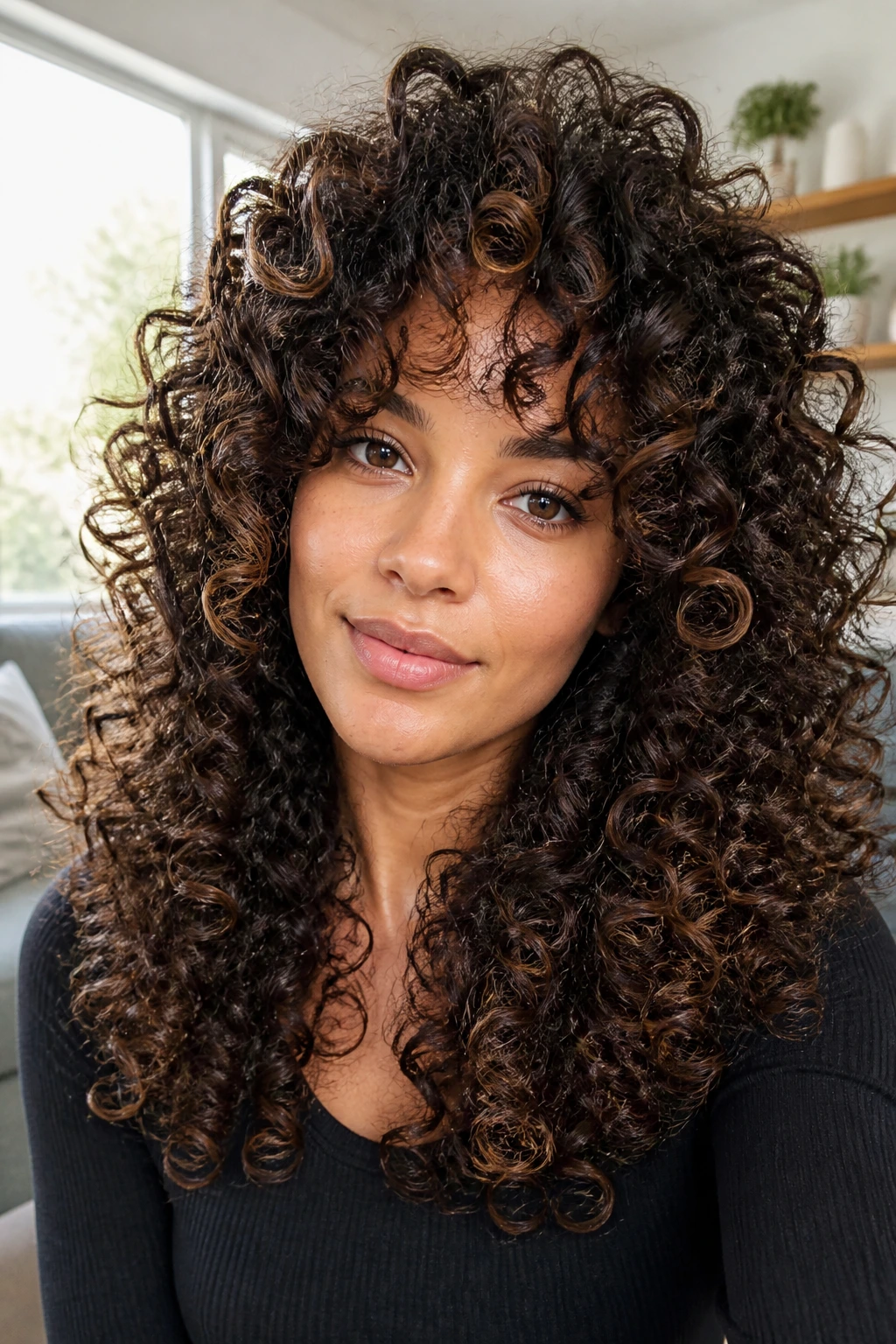
Curly thick hair needs a different kind of layering. Straight hair layers are about movement; curly layers are about space. If you cut curls too bluntly, they pile up into a round mass. Put in the right layers, and the curls can spring instead of clumping.
The trick is not to over-thin the hair. You want enough structure that the curl pattern stays intact and the lower sections do not collapse. A good curly cut often works with the hair dry or mostly dry, so the stylist can see where each curl sits.
Why It Works
Layers let thick curls fall into each other without building a giant pyramid. They also reduce that heavy “triangle” look that can happen when the bottom is dense and the top is too flat.
Best For
Wavy to coily hair that grows outward as much as it grows down. If your curls expand at the sides, this is the kind of haircut that gives them somewhere to go.
17. Hidden Undercut Layers That Take Bulk Out From Underneath
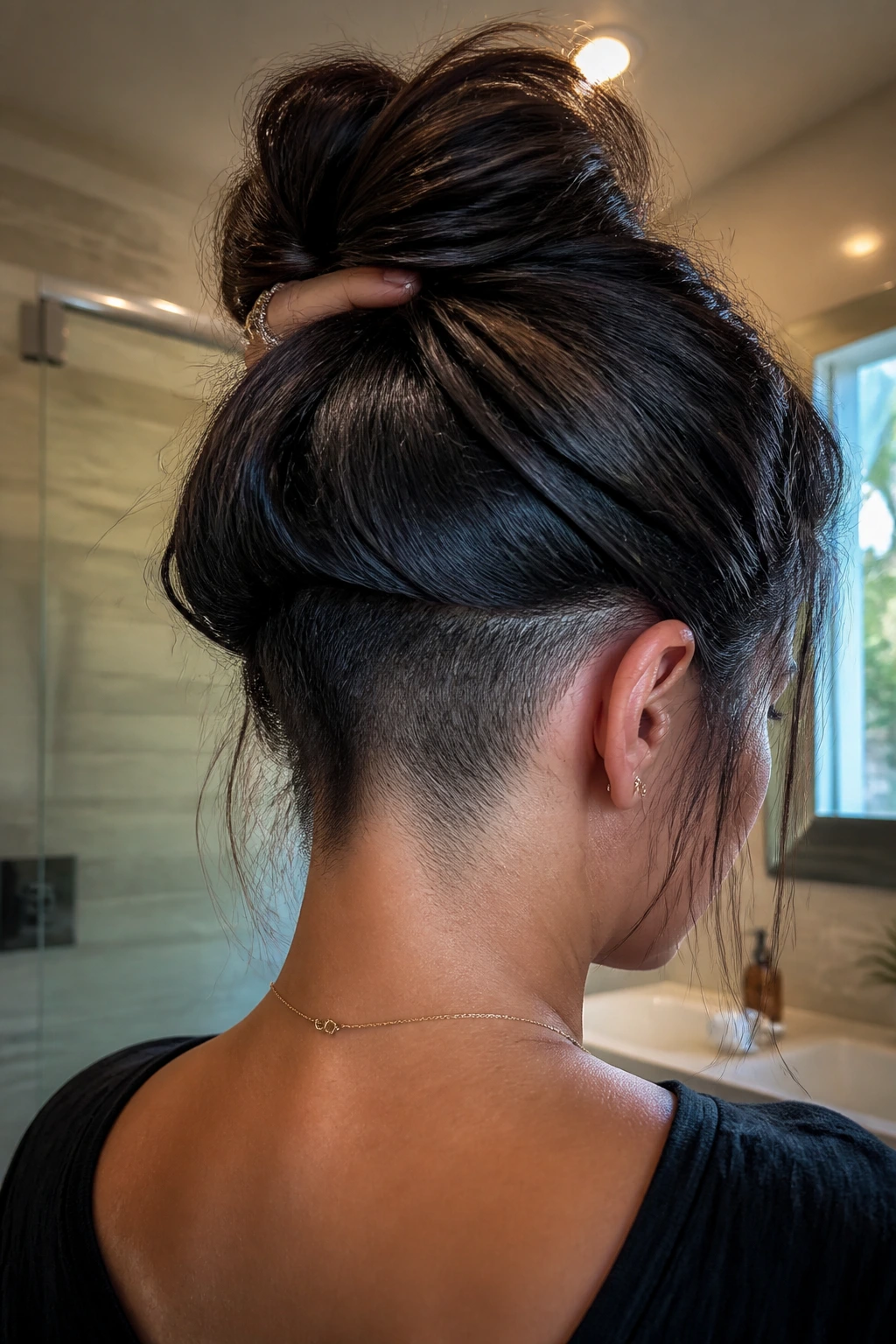
This one is for the person who says, “I want less hair, but I do not want it to look like less hair.” A hidden undercut or internal weight removal can make a huge difference on very thick hair. The outer shape stays intact while the underside loses a chunk of density.
It’s especially useful around the nape or lower back sections where thick hair tends to feel hot, heavy, and hard to dry. The surface still looks full. The head just feels lighter.
Why It Works
By removing bulk underneath, the stylist keeps the visible outline smoother and avoids that puffy halo that some layered cuts create. The haircut dries faster too, which is a practical bonus nobody complains about once they’ve lived with it.
Who Should Consider It
People with dense, coarse, or extremely heavy hair who want a cleaner shape without a dramatic change in length. If your ponytail feels like a small animal, this might be the cut you keep coming back to.
18. Side-Swept Layered Lob That Softens a Strong Hairline
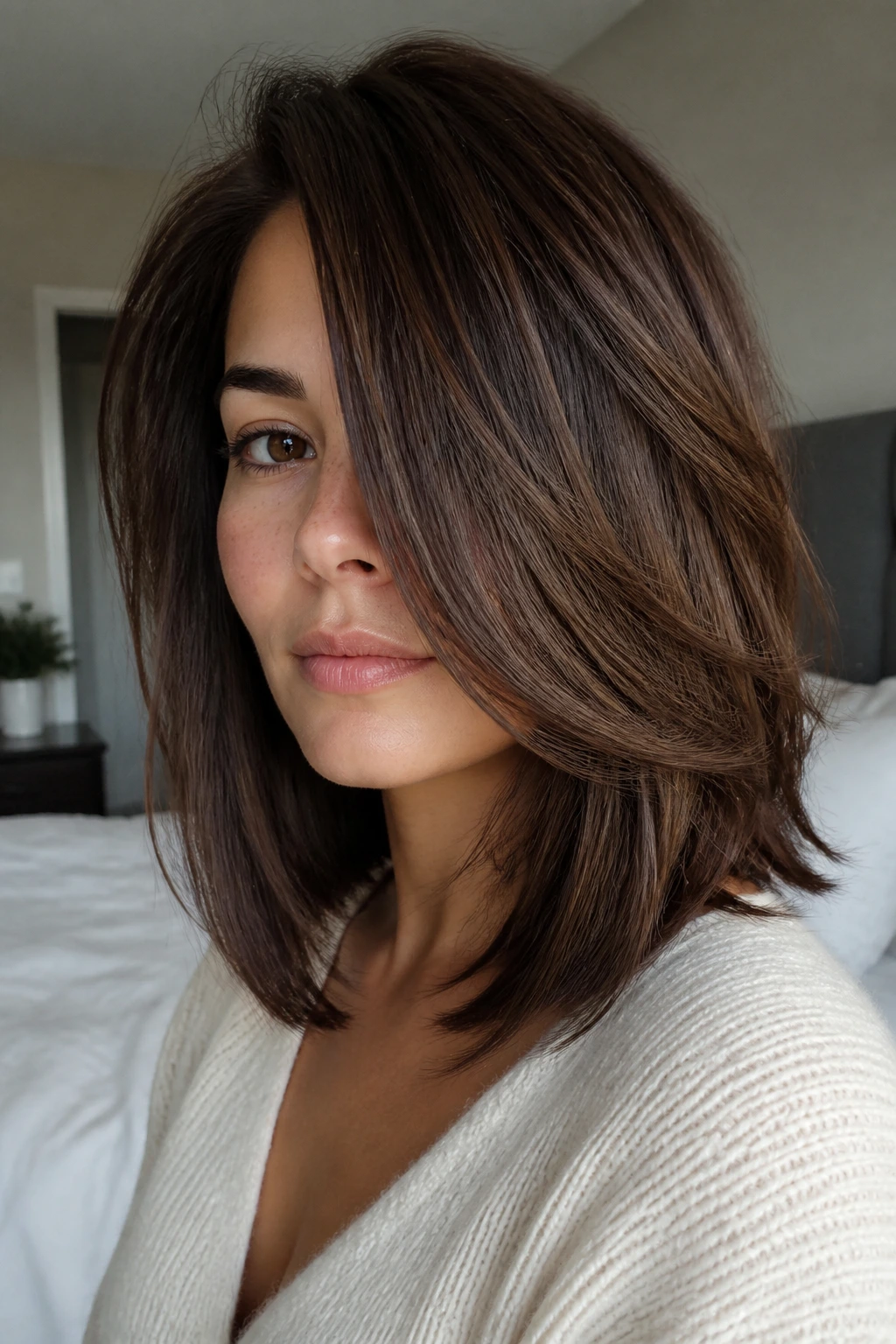
A side part can change the whole attitude of layered hair. On thick hair, a side-swept lob feels a little more relaxed and a little less symmetrical, which helps if your hair naturally fights the center part. The layers around the front fall over the cheek and jaw in a way that makes the cut feel fluid.
This is one of those cuts that can look polished at work and easy on a weekend without asking much from you. The side sweep also helps if one side of your hair tends to be denser than the other — a common annoyance, and a real one.
Why It Works
The diagonal line of a side part breaks up the mass and takes some of the pressure off the front. That means the layers can fall in a more flattering direction, especially if your hair tends to puff out near the temples.
Best For
Thick hair that has a stubborn cowlick or a strong natural part. The cut gives you enough shape that the part looks deliberate, not forced.
19. An Asymmetrical Layered Cut for a Stronger, Sharper Line
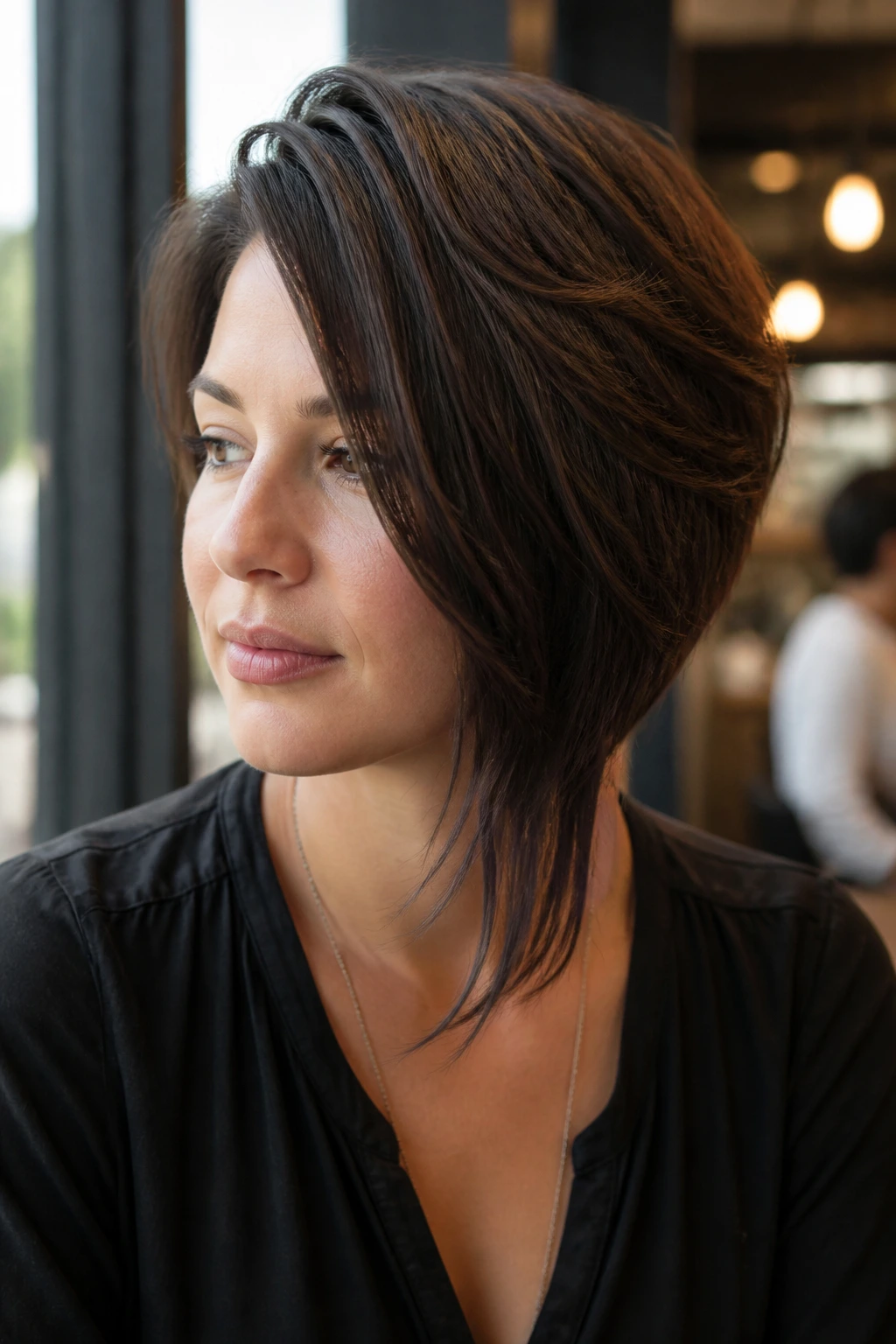
Asymmetry can be subtle or dramatic. On thick hair, even a small difference in length can change the whole energy of the cut. One side might sit a touch longer, or the front may angle more steeply on one side than the other. That slight imbalance can make dense hair feel modern without turning it into a novelty haircut.
The benefit is shape. Thick hair sometimes needs a point of interest so the eye doesn’t read the whole thing as one block. Asymmetry gives it that.
Why It Works
A slight angle removes the visual weight that can build evenly across both sides of a thick cut. It also works well with color placement because highlights can be concentrated where the line is strongest, which makes the shape easier to read.
Best For
Anyone who wants something sharper than a classic lob or shag but not as extreme as an undercut. It’s a nice choice if you like a haircut that feels a little more intentional from one side than the other.
20. A Long Pixie with Crown Layers for Thick Hair That Wants to Go Short
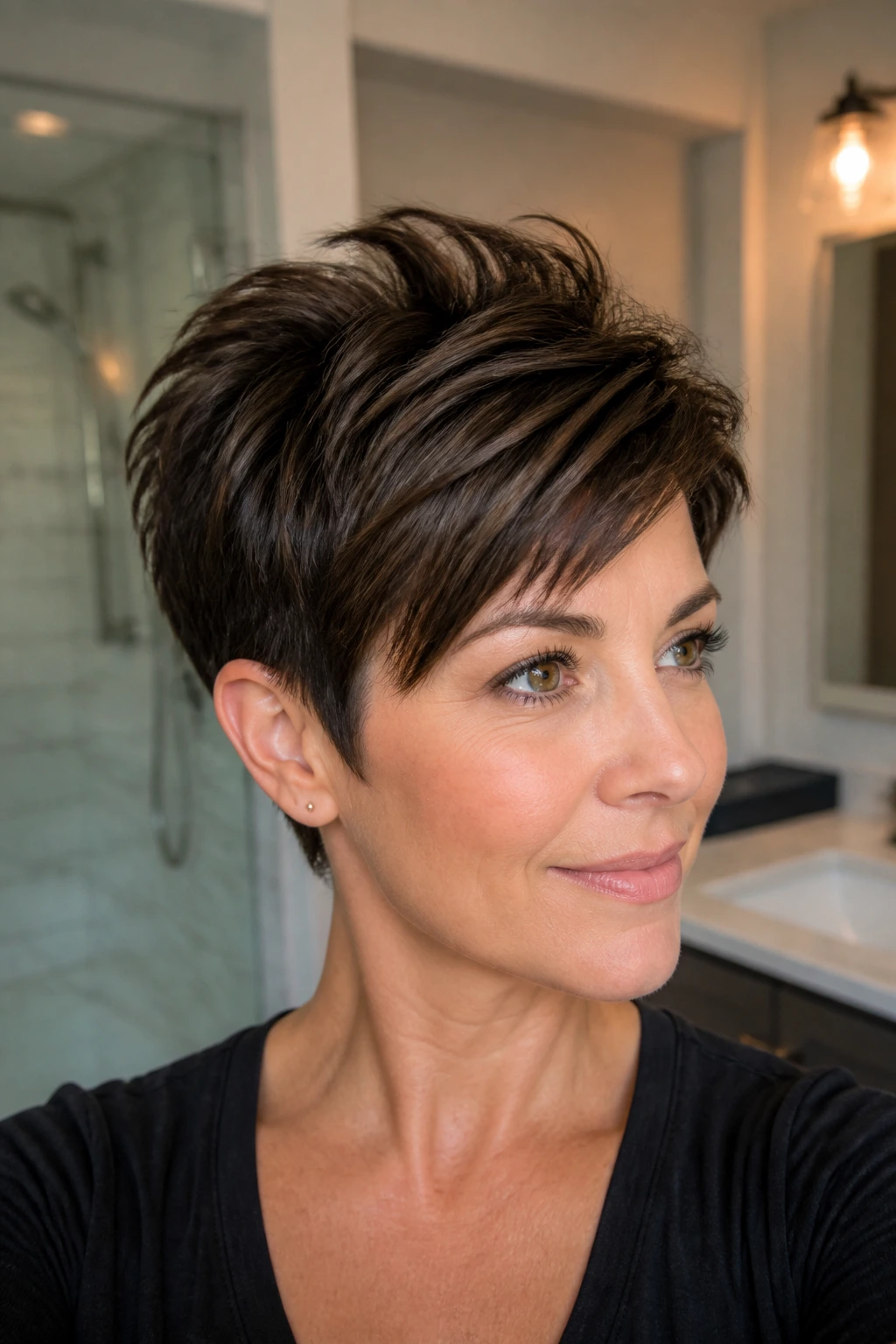
Short hair on thick density can be glorious, but only if the crown and sides are handled with care. A long pixie with crown layers keeps the hair close to the head while leaving enough length on top to avoid a flat, helmet-like finish. The top can be swept, separated, or softly tousled.
This cut is a good reminder that thick hair does not always need length to feel full. Sometimes the fullness is the point. The trick is removing the bulk at the sides and nape so the top can breathe.
Why It Works
The crown layers create lift where thick hair often collapses under its own weight. Meanwhile, the shorter sides and back reduce bulk where the head tends to puff outward. That makes the whole cut sit cleaner and dry faster.
Best For
People ready for a real change who still want styling options. You can wear it brushed smooth, tousled, or pushed back, and it won’t look flat if the layers are cut well.
21. Tapered Shoulder-Length Layers That Narrow the Outline
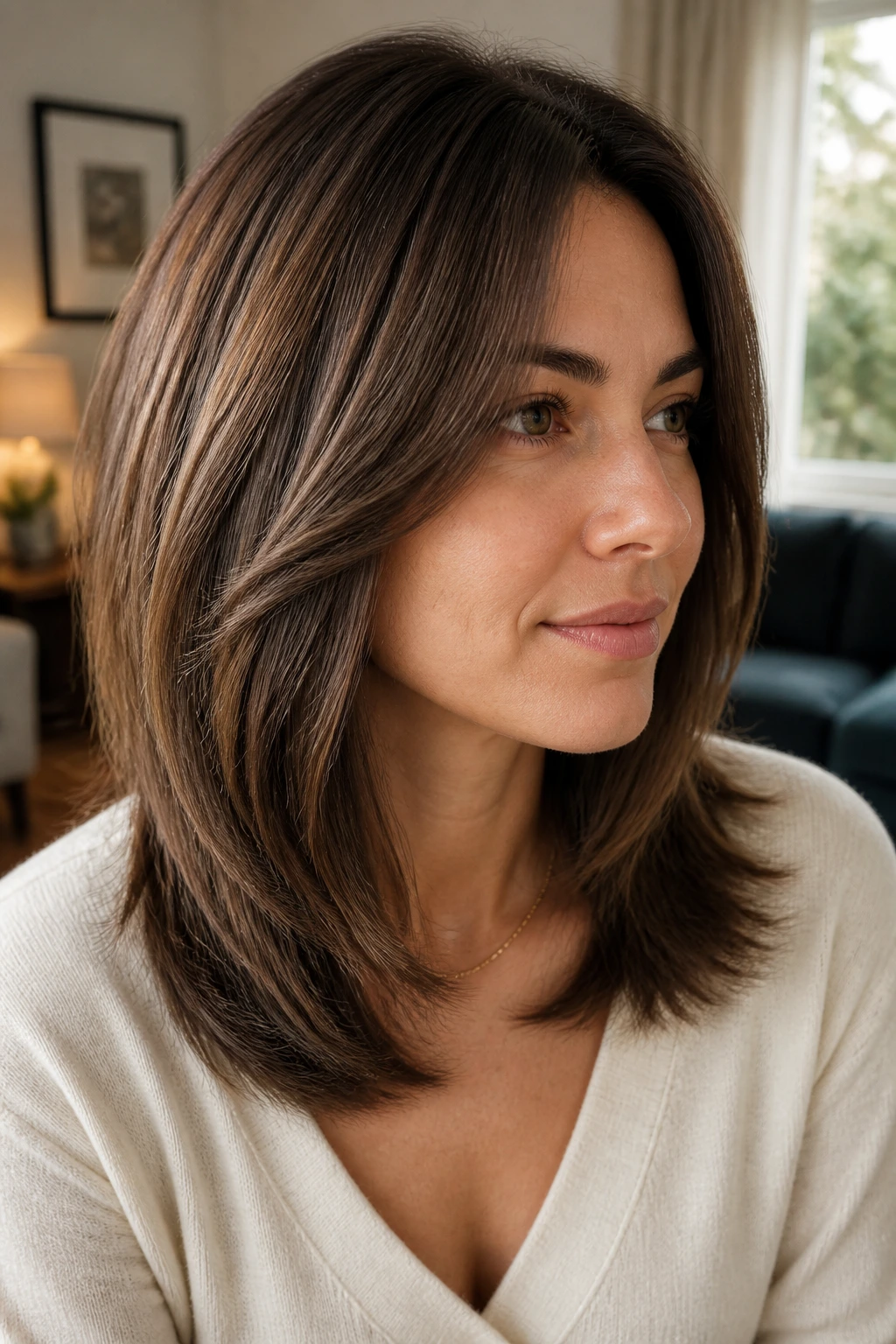
Shoulder length is a common stopping point for thick hair, and honestly, it can be a tricky one. The cut sits right where a lot of hair wants to widen. Tapered layers help by narrowing the outline toward the ends, so the style does not expand outward at the shoulders.
This approach is more controlled than a shag and softer than a bob. It gives you movement without too much texture, which makes it a good middle path for someone who wants shape but not drama.
Why It Works
The taper keeps the ends from hitting the shoulders in one blunt mass. Instead, the layers guide the hair down and in. That’s useful if your hair has some natural wave, because the cut can work with the bend instead of fighting it.
Best For
People who want a shoulder-length style that still feels neat when tucked behind the ears or clipped half up. It grows out nicely too, which is no small thing.
22. Airy Boho Layers with Fringe for Thick Hair That Loves Movement
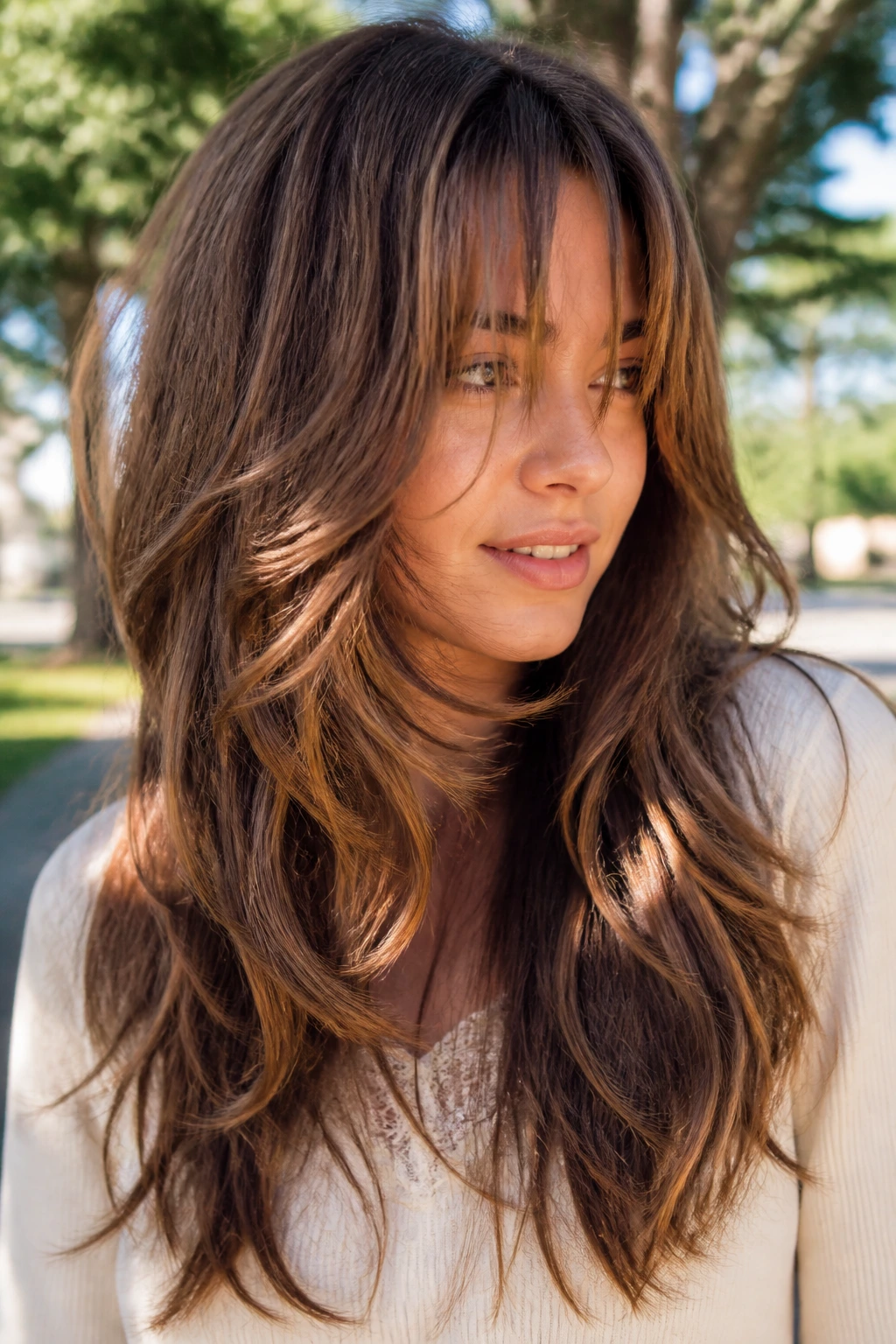
Boho layers are the relaxed cousin of the shag. They’re softer around the edges, a little freer in the lengths, and usually paired with a fringe that sits somewhere between bangs and curtain pieces. Thick hair gives this style the weight it needs so it does not fall flat.
The result is a haircut with movement in the front and back, but less harsh texture than a classic shag. It’s the kind of cut that looks better after a bit of walking, a bit of touching, a bit of life happening around it.
Why It Works
The fringe opens the face, while the airy layers keep the shape from feeling bottom-heavy. That balance is what makes the cut feel easy rather than messy. Thick hair supports the softness instead of swallowing it.
Best For
Wavy or straight thick hair that you like to wear loose, with a little bend. If you enjoy a piecey finish and don’t mind using a light styling cream or spray, this one has a lot going for it.
What Layering Actually Does to Thick Hair
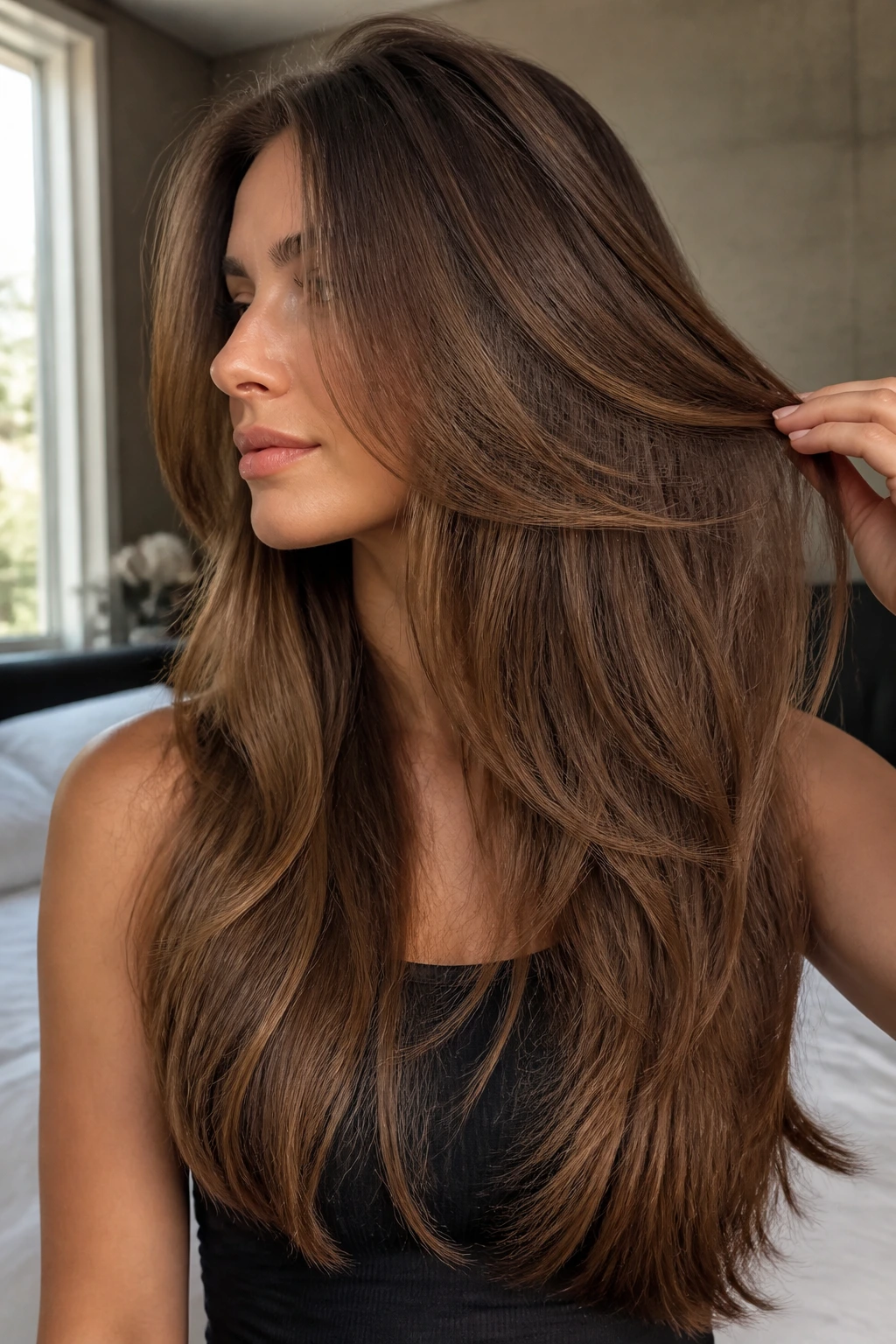
Thick hair is not one thing. That’s the first thing worth saying. You can have thick strands, high density, coarse texture, or some combination of all three, and each one behaves a little differently when scissors touch it. A layered haircut changes the weight map of the head, not just the outline. That’s why two people can get the same cut and end up with very different results.
The real goal is controlled release. Heavy sections lose enough mass to move, but not so much that the ends look see-through. A good cut keeps the surface smooth, the interior lighter, and the silhouette readable from six feet away. If the layers are too high or too disconnected, thick hair can puff. If they’re too timid, the hair still feels like a blanket. There’s a middle ground, and it’s worth finding.
Color plays into this too. Balayage, highlights, and lowlights look sharper on layered hair because the movement creates little shifts in tone as the hair swings. A flat cut can hide good color. Layers help it show up.
The Tools and Styling Helpers That Make Thick Layers Behave
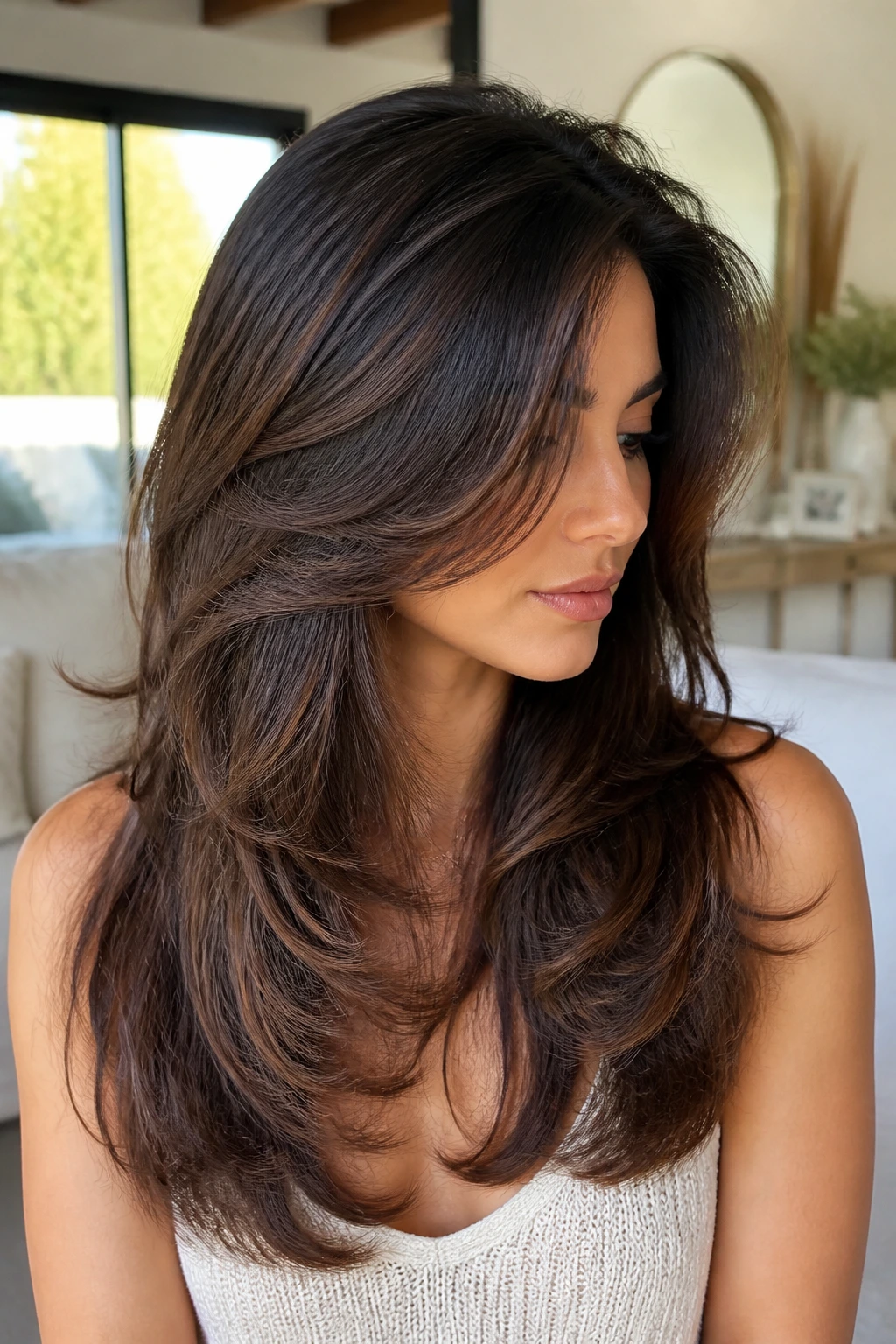
A layered cut on thick hair is only half the story. The styling tools matter, and the cheap, flimsy ones tend to fail first.
-
A blow dryer with a nozzle attachment: Directs airflow so the top layers smooth out before the bulk underneath starts drying into frizz.
-
A medium or large round brush: Gives the front pieces bend and keeps the ends from sticking out in a stiff line.
-
A wide-tooth comb: Helps detangle thick hair without ripping through the ends after washing.
-
Sectioning clips: Thick hair needs real sections, not one impatient pass with a brush.
-
A lightweight smoothing cream: Useful for long layers and lobs, especially if the cut is supposed to look soft rather than piecey.
-
Texturizing spray or mousse: Helps shag, wolf, and boho layers hold separation without getting crunchy.
-
A diffuser: Worth owning if your thick hair is wavy or curly and you want the layers to form without being blasted flat.
-
A flat iron with smooth plates: Best for bending the face-framing pieces or polishing the ends of a lob without frying the shape.
-
Reference photos: Not glamorous, but absolutely useful. A good picture of the shape tells your stylist more than three minutes of vague explaining.
How to Talk to a Stylist About Thick Hair Layers

Bring two photos, not ten. One should show the shape you want from the front. The other should show the back or the layers from the side. That’s enough. A pile of saved screenshots often muddies the conversation because one photo may have fine hair, another may have extensions, and a third may have been curled to within an inch of its life.
Say the words that matter: density, weight removal, face-framing, internal layers, and perimeter length. Those are the levers. If you say “I want layers,” you may get a very different result than if you say “I want the bulk removed from the interior but the length kept below my shoulders.”
Also tell the stylist how you wear your hair most days. Air-dried? Blowout? Curly? Half-up? A cut that looks beautiful in a salon chair can become annoying if it needs 20 minutes of heat every morning. And if your hair has a cowlick, a stubborn part, or one side that always flips, say so before the scissors come out.
Practical Ways to Get the Most From Thick Hair Layers
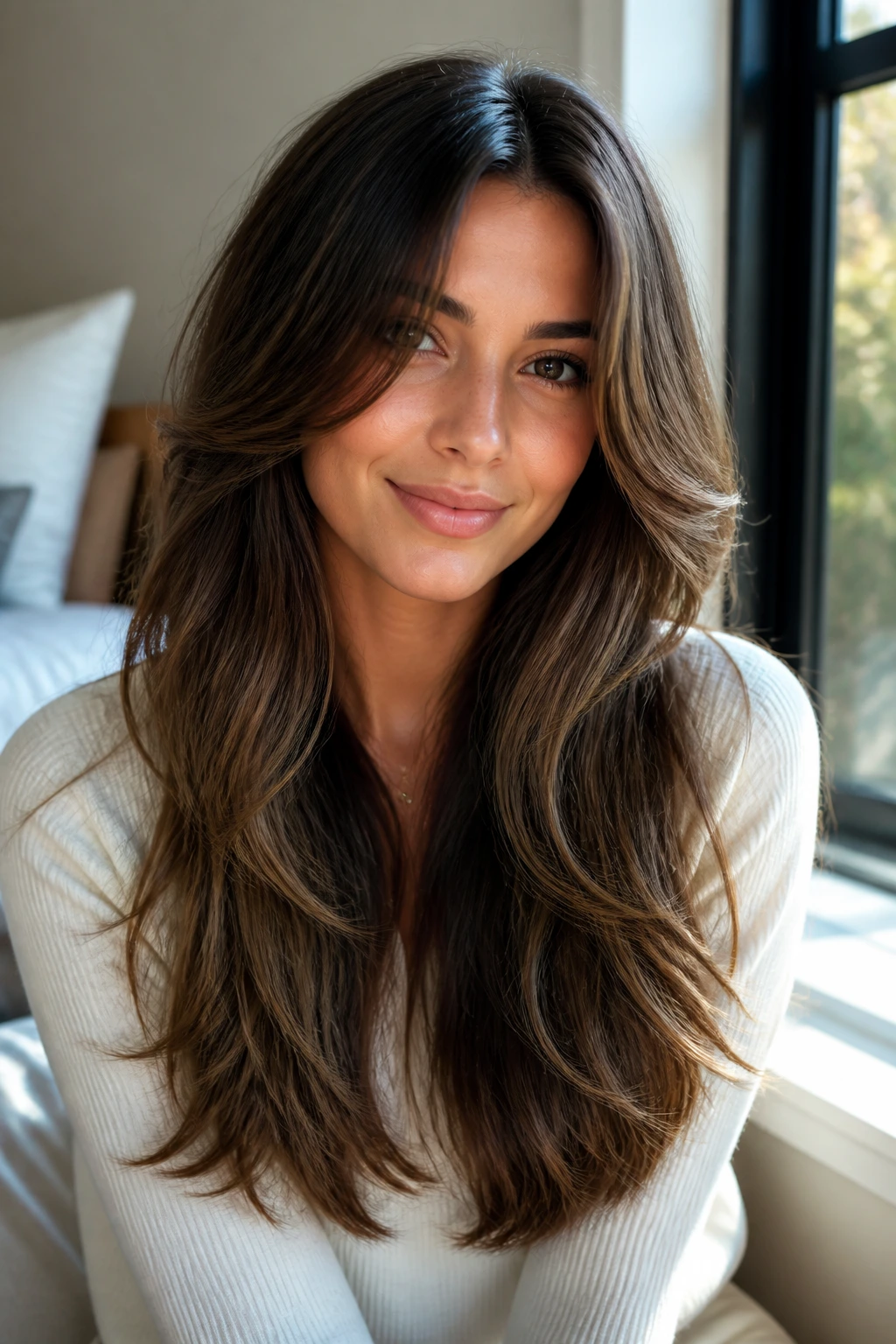
Blow-dry the roots first. Thick hair gets heavy fast when the roots dry flat. Lift the base with your fingers or a brush and dry the crown before you worry about the ends.
Don’t overload the ends. Thick hair often needs product at the mid-lengths more than the tips. A pea-sized amount of cream or oil is usually enough for the bottom third.
Use the cut’s own movement. If the layers want to bend inward, don’t force them into poker-straight submission every day. Work with the natural curve. Less fighting, better finish.
Refresh the front more often than the back. Face-framing pieces and bangs show wear first. A quick mist of water and a round brush can bring them back without restyling the whole head.
Ask for soft texturizing, not thinning by default. Thick hair can be over-thinned fast, and then the surface gets fuzzy while the interior still feels heavy. That’s a bad trade. Precision beats aggressive shearing.
Common Mistakes That Make Layers on Thick Hair Go Wrong
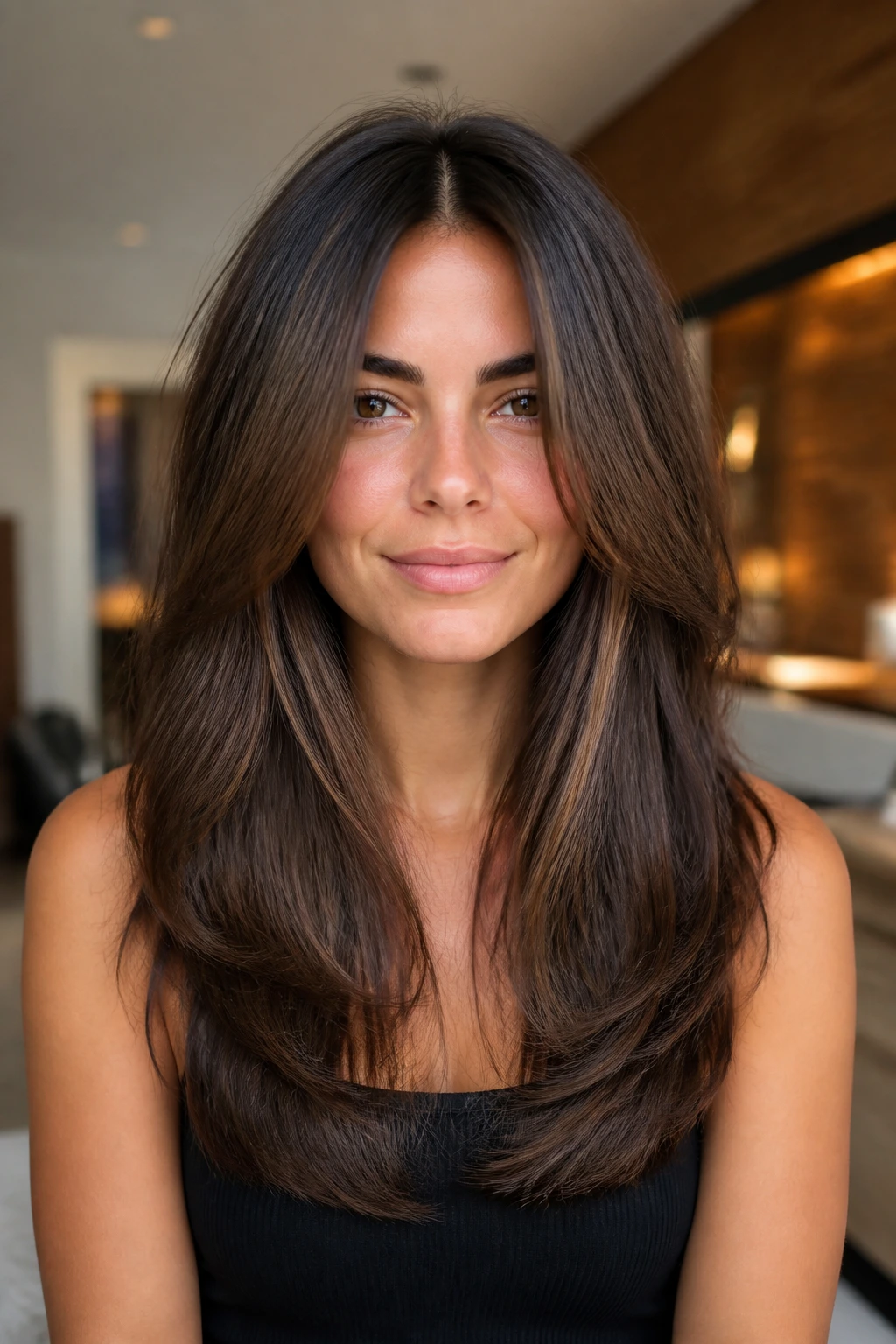
The first mistake is starting the layers too high. That can leave the lower half too thin and the sides too puffy, which is the opposite of what most thick-hair clients want. The fix is simple: keep the shortest layers below the cheekbones unless you’re intentionally going for a shag or wolf cut.
Another problem is over-thinning coarse hair. It sounds helpful, but too much texturizing can create a fuzzy halo around the ends. The hair looks lighter for a day, then frays. Better to remove weight in sections than to shred the whole cut.
A third mistake is ignoring the natural part and growth pattern. If one side of your hair always falls forward and the other tucks back, the layers need to respect that. Fighting the way the hair grows is how you get lopsided shape and constant styling frustration.
And then there’s this: people sometimes ask for “more layers” when what they really need is a better outline. If the perimeter is wrong, adding more layers just adds noise. Fix the silhouette first. Then layer it.
Variations and Alternative Approaches to Try
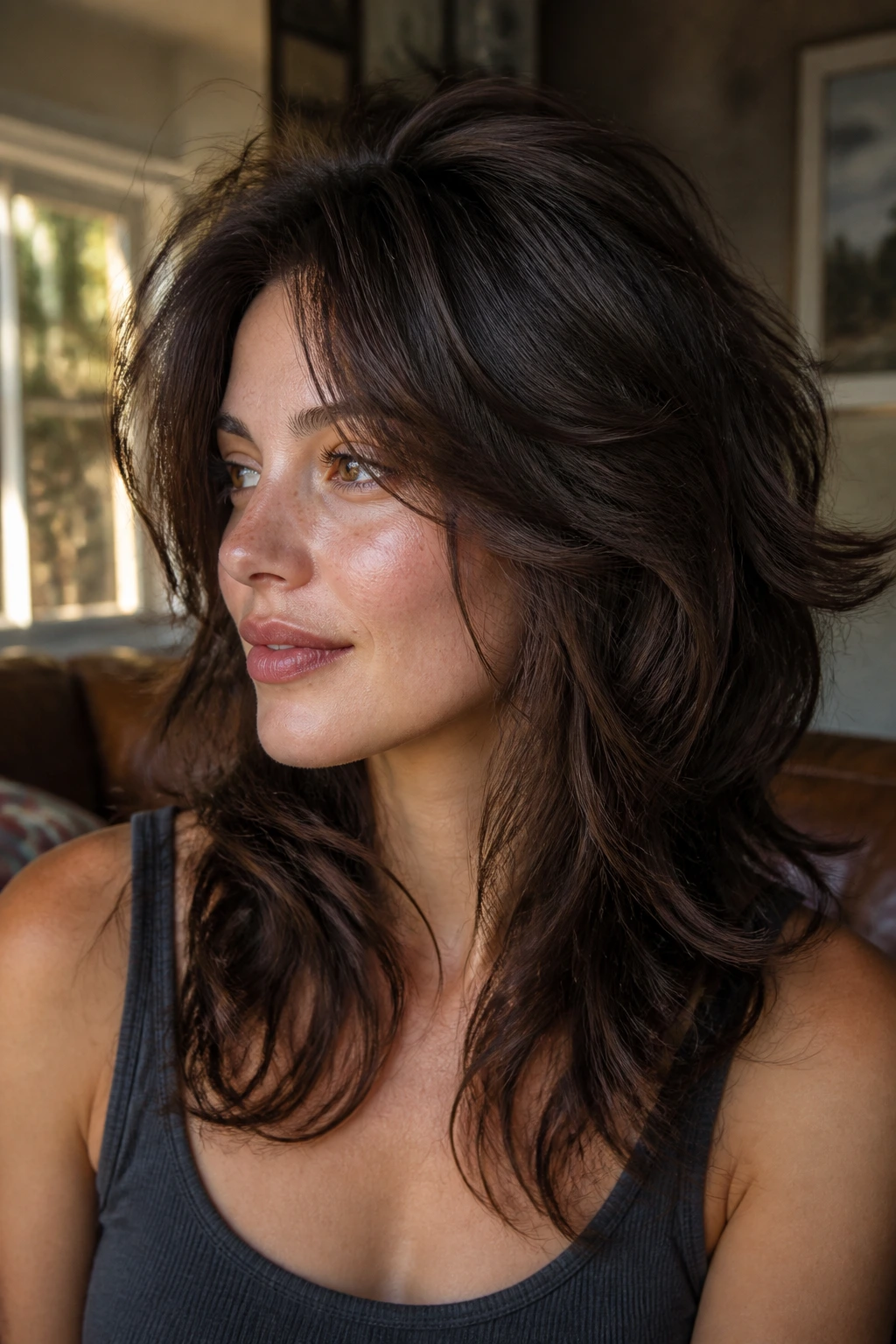
The Sleek-Cut Version: Keep the layers long and the ends blunt-ish. This is the best route if you like polished hair with only a little movement, especially for office wear or smooth blowouts.
The Messier Weekend Version: Ask for softer texturizing, more separation, and a piecey finish around the face. That version works well if you like your hair to look better after it has loosened up a bit.
The Curly-Friendly Version: Use shape and spring as the goal, not a perfect line. Dry-cutting or curl-by-curl shaping can give thick curls room to stack without turning into a pyramid.
The Low-Maintenance Version: Keep the layers under the chin and the perimeter long. This one grows out quietly and does not demand daily heat styling.
The Short-and-Sharp Version: Go for a stacked bob, long pixie, or asymmetrical cut. These are bolder, yes, but they can be a relief if long thick hair feels like too much to wash, dry, and live with.
Maintenance, Grow-Out, and Between-Cut Care
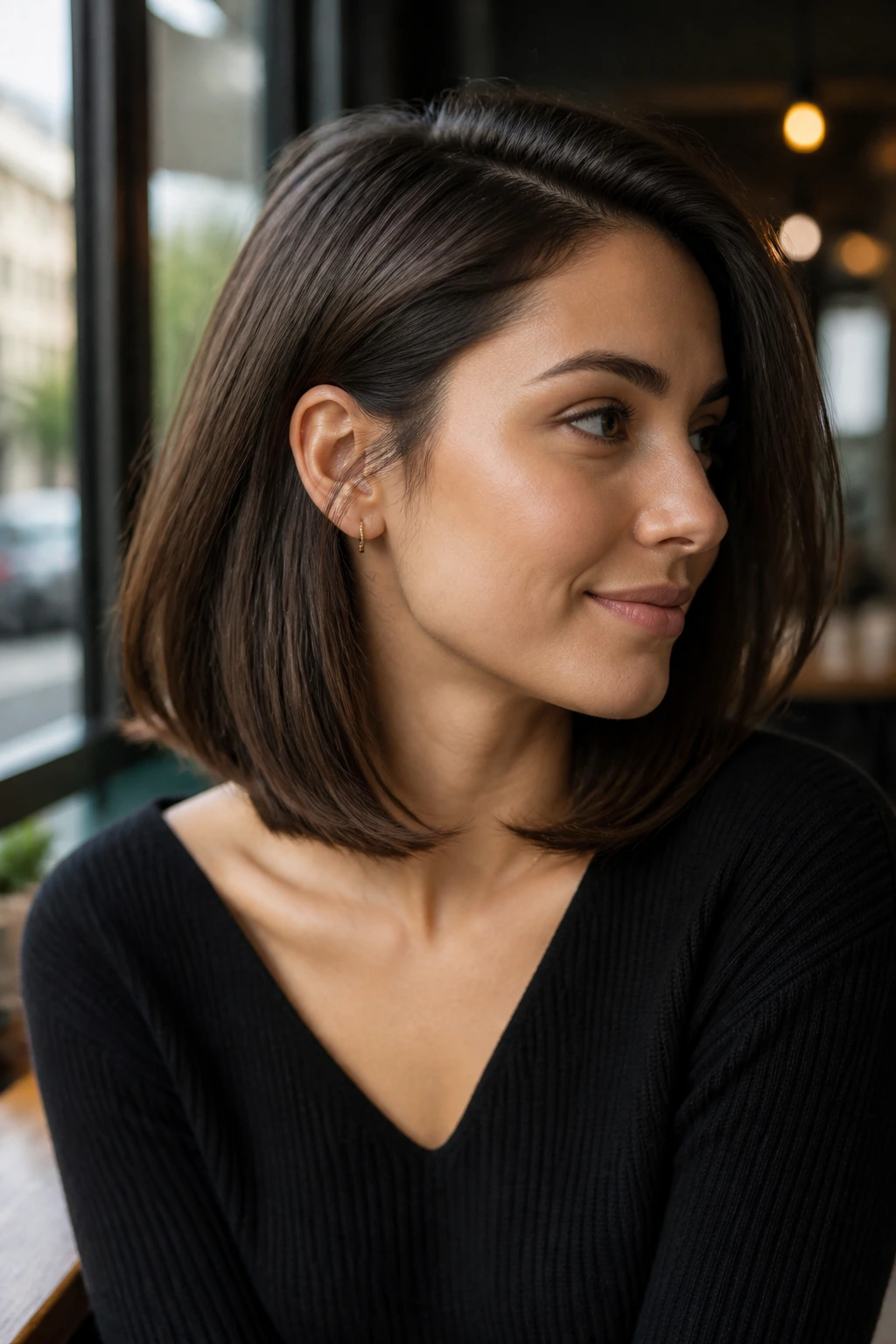
Thick layered hair usually holds its shape longer than fine hair, but that does not mean it can be ignored. Most layered cuts benefit from a trim every 8 to 12 weeks if you want the outline to stay clean. Shorter styles like stacked bobs and pixies need more frequent touch-ups, sometimes around 6 to 8 weeks, because the shape itself is the whole point.
Between appointments, the front tends to wear out before the back. Face-framing layers, curtain bangs, and bottleneck bangs can often be refreshed with a quick dry round-brush pass or a few minutes under a blow-dryer brush. If your cut is long and blended, sleeping with a loose braid or a silk scrunchie can stop the ends from turning into a puffball overnight.
Wash frequency matters too. Thick hair often doesn’t need daily shampooing, and over-washing can make the layers expand in a way that feels frizzy rather than clean. A light refresh on the roots, then a little smoothing cream on the ends, usually buys you another day or two of decent shape. And if you’re growing the cut out, ask for “dusting” rather than a major reshape so the layers soften instead of jumping into a new awkward stage.
Frequently Asked Questions
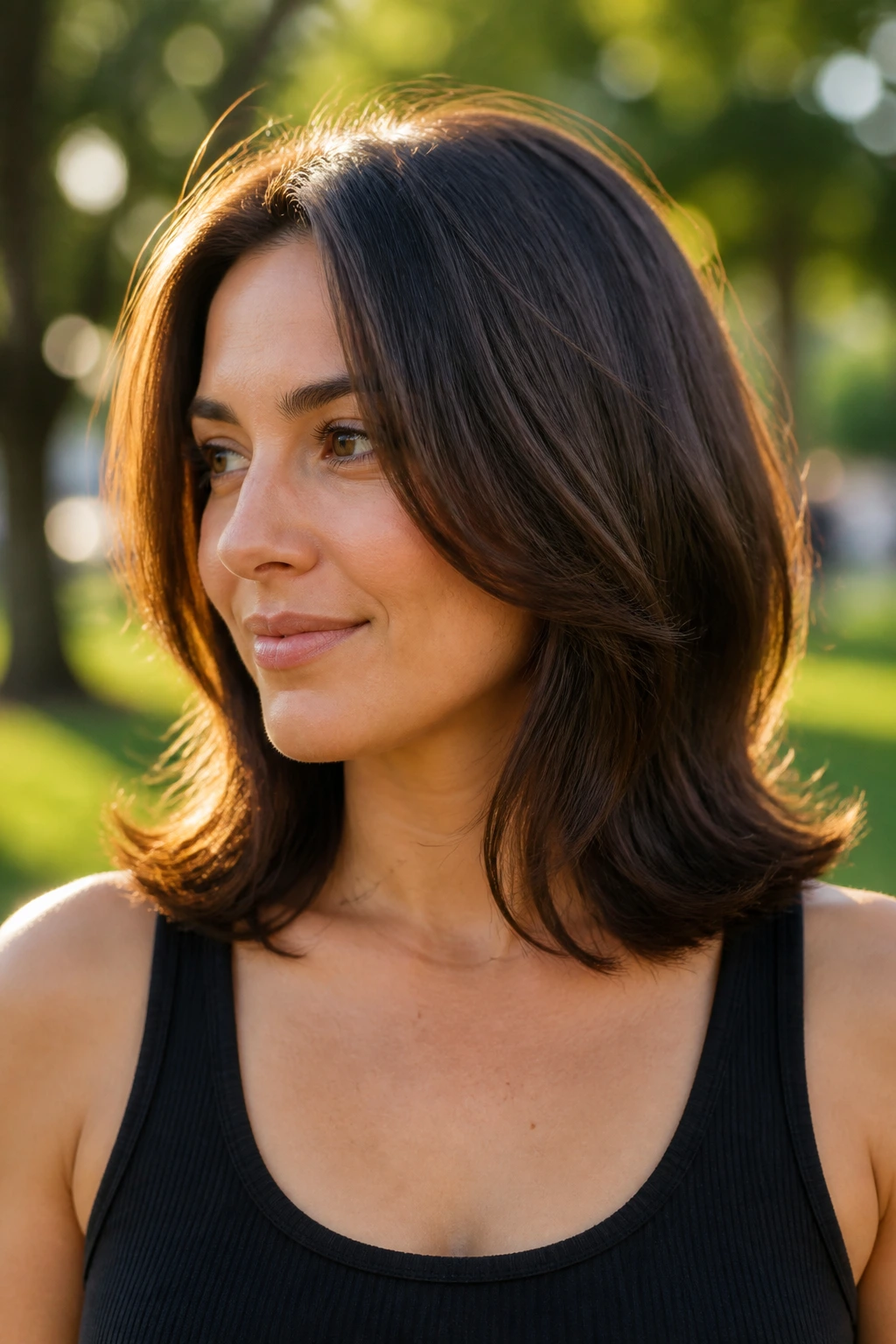
Do layers make thick hair thinner?
They make it lighter, which is not the same thing as making it thin. A good layered cut removes bulk from the right zones while keeping enough density at the ends and around the outline.
Are layers bad for thick straight hair?
Not if they’re placed well. Straight thick hair often needs internal layers or face-framing pieces more than choppy texture, because the goal is movement without frizz or a broken outline.
What layers work best if my hair is thick and wavy?
Long invisible layers, a shag, or a butterfly cut tend to work well because the wave pattern helps show the movement. You usually want enough length between layers that the hair can bend naturally rather than spring out in weird steps.
How do I stop layered thick hair from puffing out at the sides?
Keep the shortest layers lower, use a smoothing product in the mid-lengths, and dry the roots with direction. The puff usually comes from too much volume being cut too high around the head.
Can I get layers if I wear my hair in a ponytail often?
Yes, but tell your stylist. Long face-framing layers or soft internal layering usually work better than very short crown layers if you need the hair to pull back cleanly.
What if my stylist wants to thin my thick hair a lot?
Ask what they mean. Light texturizing and controlled weight removal are not the same as heavy thinning. If they can’t explain where the weight is coming out, that’s a red flag.
Do thick curly haircuts need different layering rules?
Absolutely. Curly layers need room for shrinkage and bounce, which means the cut often has to be shaped to the curl pattern rather than the wet length. Dry cutting or curl-by-curl shaping can make a huge difference.
How often should I trim thick layered hair?
Most people do well with 8 to 12 weeks. If you have bangs, a short bob, or a very structured shape, you may need touch-ups sooner because the outline changes faster than the length.
The Shape Thick Hair Loves Most
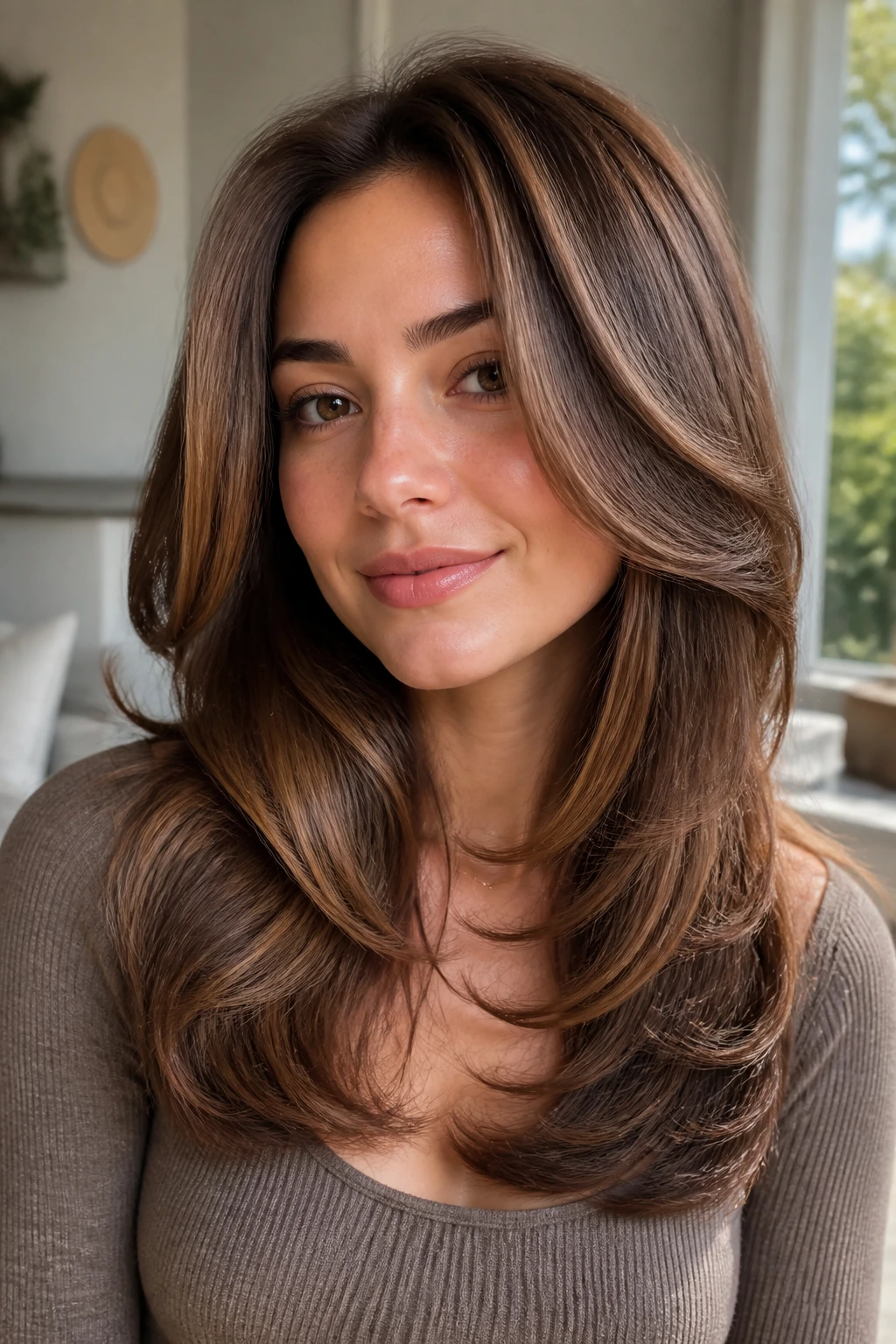
Thick hair usually does best when the cut respects its weight instead of trying to bully it into submission. That is the real thread running through all 22 of these looks: remove bulk where the hair gets too dense, keep strength where you want the silhouette to hold, and make sure the front has enough movement to keep the whole thing from feeling rigid.
The nicest layered haircut is not always the flashiest one. Sometimes it’s the long, invisible version that falls like a silk sheet. Sometimes it’s the shag that looks better after a little air-drying and a little living. Either way, the cut should make your hair feel easier to wear the moment you step out of the chair. If it does that, you found the right shape.
