



A good color melt doesn’t look “done.” It looks like your hair made smart decisions on its own. Darker roots ease into a softer middle, the ends stay readable, and the whole thing moves in one long ribbon instead of sitting there like three separate dye jobs. That’s the appeal of a color melt: it gives soft dimensional color the kind of depth that makes a blunt cut look richer and a wave pattern look more expensive without shouting for attention.
The part people miss is that the finish matters as much as the placement. A root melt, shadow root, balayage, babylights, toner, and gloss all do different jobs, and when they’re stacked with restraint, the result is clean. The wrong blend turns muddy or stripey. The right one has a little shadow near the scalp, a bridge shade through the mids, and ends that still catch light when you turn your head.
Hair texture changes the whole effect. Fine hair needs enough contrast to read from a few feet away. Curly hair can take wider ribbons because the curl pattern breaks up the color. Porous ends grab toner faster than healthier mids, which is why the same formula can look airy on one head and flat on another. Pick the idea that fits your base level and your upkeep habits, and the rest gets easier.
Why These Color Melt Ideas Feel Softer Than Standard Highlights
-
The root stays believable: A gentle shadow at the crown keeps the grow-out from looking like a hard line, which matters more than people think when the hair is pulled back.
-
The bridge shade does the heavy lifting: The middle tone is what makes a melt look blended instead of painted on; without it, you get a quick jump from dark to light.
-
The ends still need shape: A melt is not just “lighter on the bottom.” The tips should hold enough tone to avoid that dry, washed-out look some bright blondes get indoors.
-
Texture changes the read: Waves and curls scatter light across the strands, which means the same melt can look softer and more dimensional on textured hair than on pin-straight hair.
-
Maintenance stays saner: A well-built melt grows out with a softer edge, so you can stretch gloss appointments and root touch-ups without looking overdue.
-
Tone choice matters more than drama: Beige, mushroom, caramel, and muted copper tend to age better on most hair than super-bright, high-contrast blends that need constant correction.
1. Vanilla Latte Melt
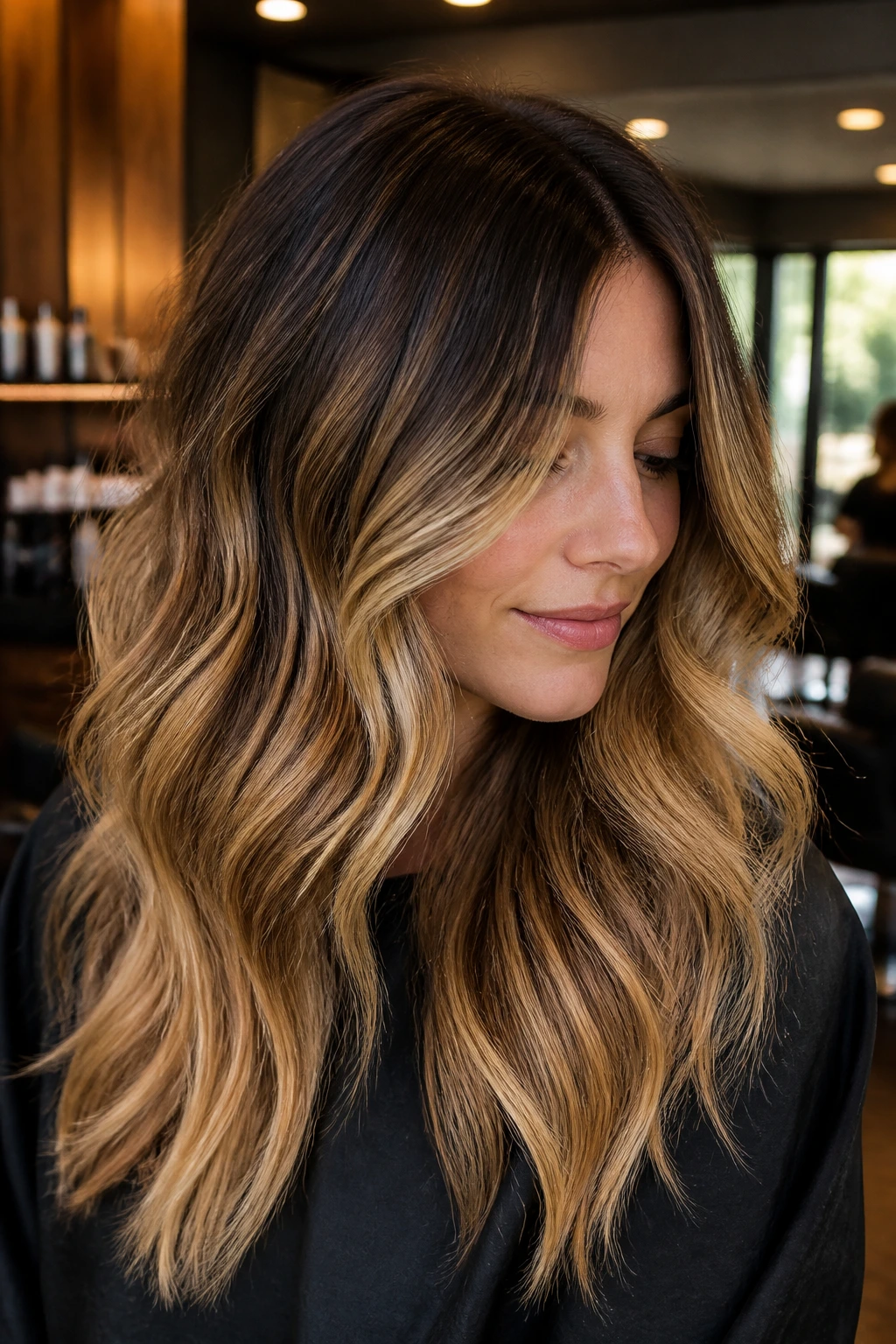
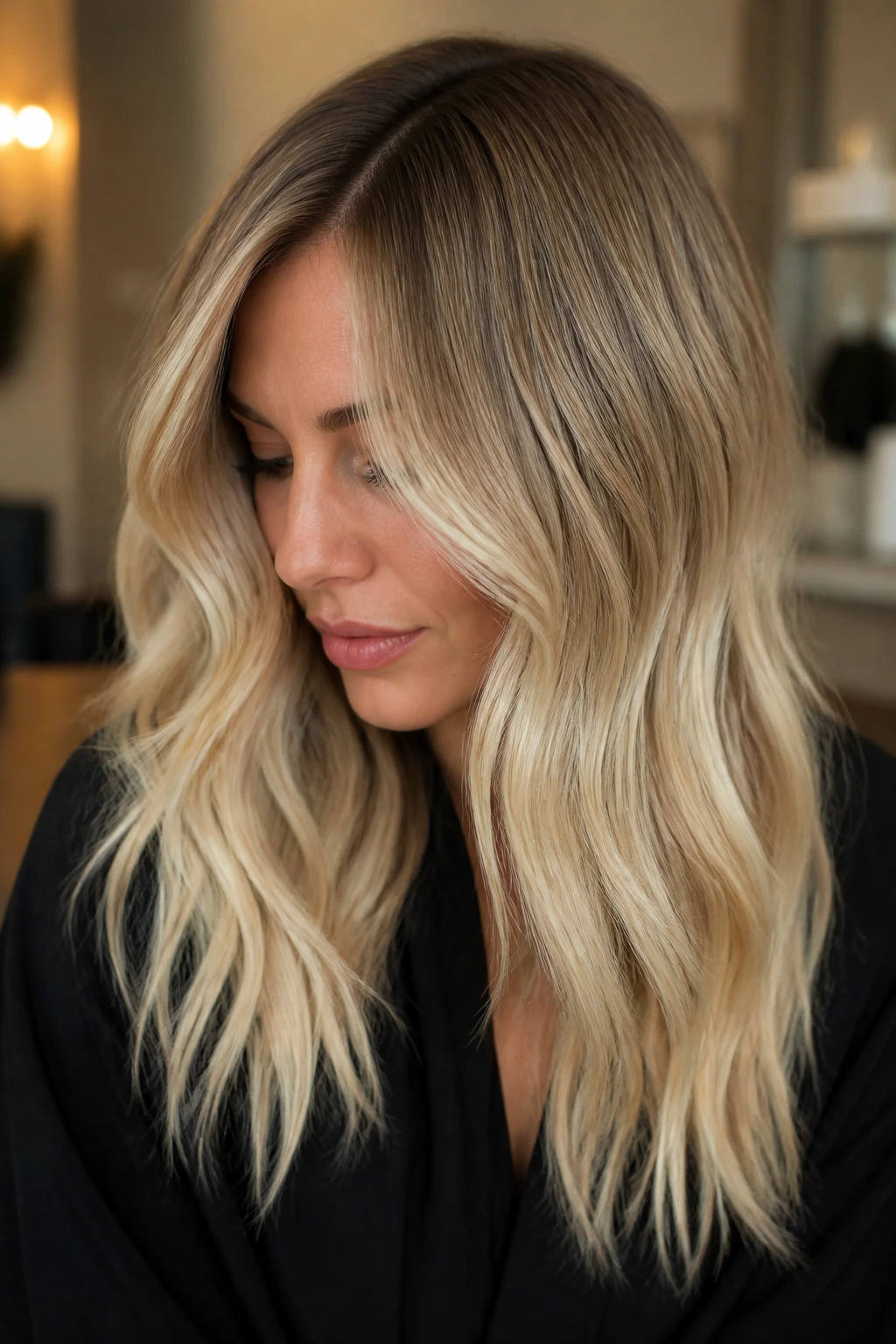
Vanilla Latte Melt is what I suggest when someone wants brightness but hates that obvious “highlighted” stripe around the face. The root stays a soft beige brunette or dark blonde, the mids drift into cream, and the ends land in a vanilla blonde that still looks expensive in indoor light. It is airy, but not fragile-looking. That distinction matters.
Best on: level 6 to 8 hair that already has some lightness through the mids.
Ask for: a soft root shadow, a beige bridge tone, and a creamy finish rather than icy platinum.
Skip it if: your hair is very porous and keeps swallowing toner too dark. You’ll want a lighter hand on the ends.
The reason this melt works is simple. Beige keeps the transition quiet. Cream keeps the blonde from tipping chalky. If you wear loose bends or a round-brush blowout, the color reads in layers instead of one flat sheet.
2. Mushroom Brown Melt
Mushroom Brown Melt has that cool, smoky brunette look that always seems calmer than it has any right to be. The root sits around level 4 or 5, the mids pick up a soft taupe-brown, and the ends stay ashier rather than golden. The whole thing feels understated, but there’s enough contrast to keep it from disappearing in the shadows.
Why do I like it? Because it forgives hair that leans orange when lightened. A mushroom finish gives you a place to park warmth without turning the whole head muddy. On straight hair, it looks crisp; on waves, it looks like ash smoke threaded through brown silk.
If your natural color is medium brunette and you want dimension without warmth, this is one of the cleanest options in the whole group. It also grows out in a civilized way, which is my way of saying the roots don’t turn into a problem before your next gloss.
3. Champagne Beige Melt
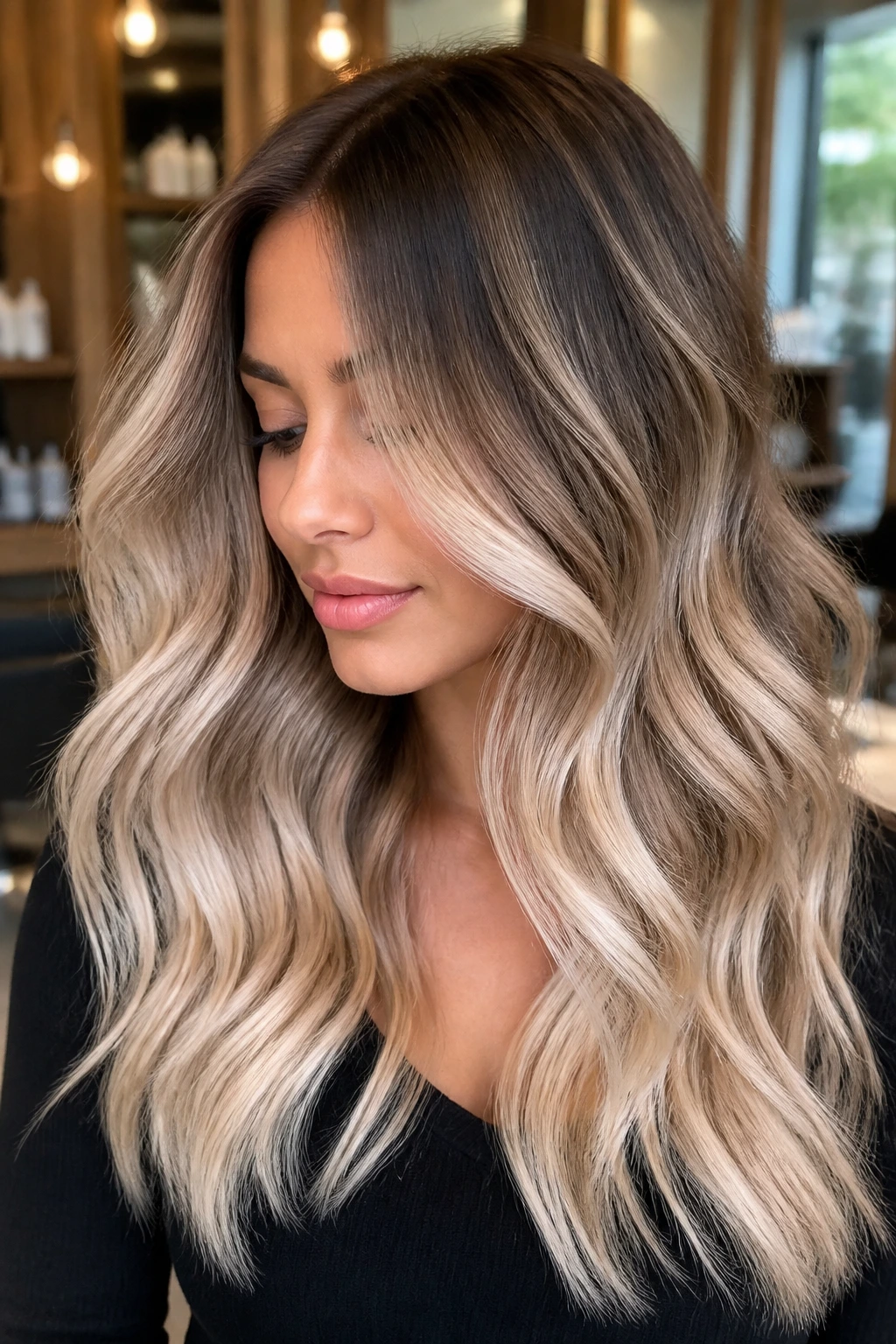
Champagne Beige Melt is all about sparkle without brass. The crown stays soft and slightly deeper, the mids are beige with a whisper of warmth, and the ends sit in that pale champagne zone that looks polished instead of over-processed. It is one of the easiest ways to make lighter hair feel layered without adding loud contrast.
This works especially well if your hair already has fine highlights and you want them to stop looking scattered. A champagne melt pulls the pieces together so the color reads as one idea. That matters on collarbone cuts and long bobs, where too many disjointed highlights can make the shape look busy.
Use this when you want brightness around the face but still want the hair to feel creamy, not icy. Ask for beige toning, not silver. Silver can drag the whole thing flat fast.
4. Caramel Ribbon Melt
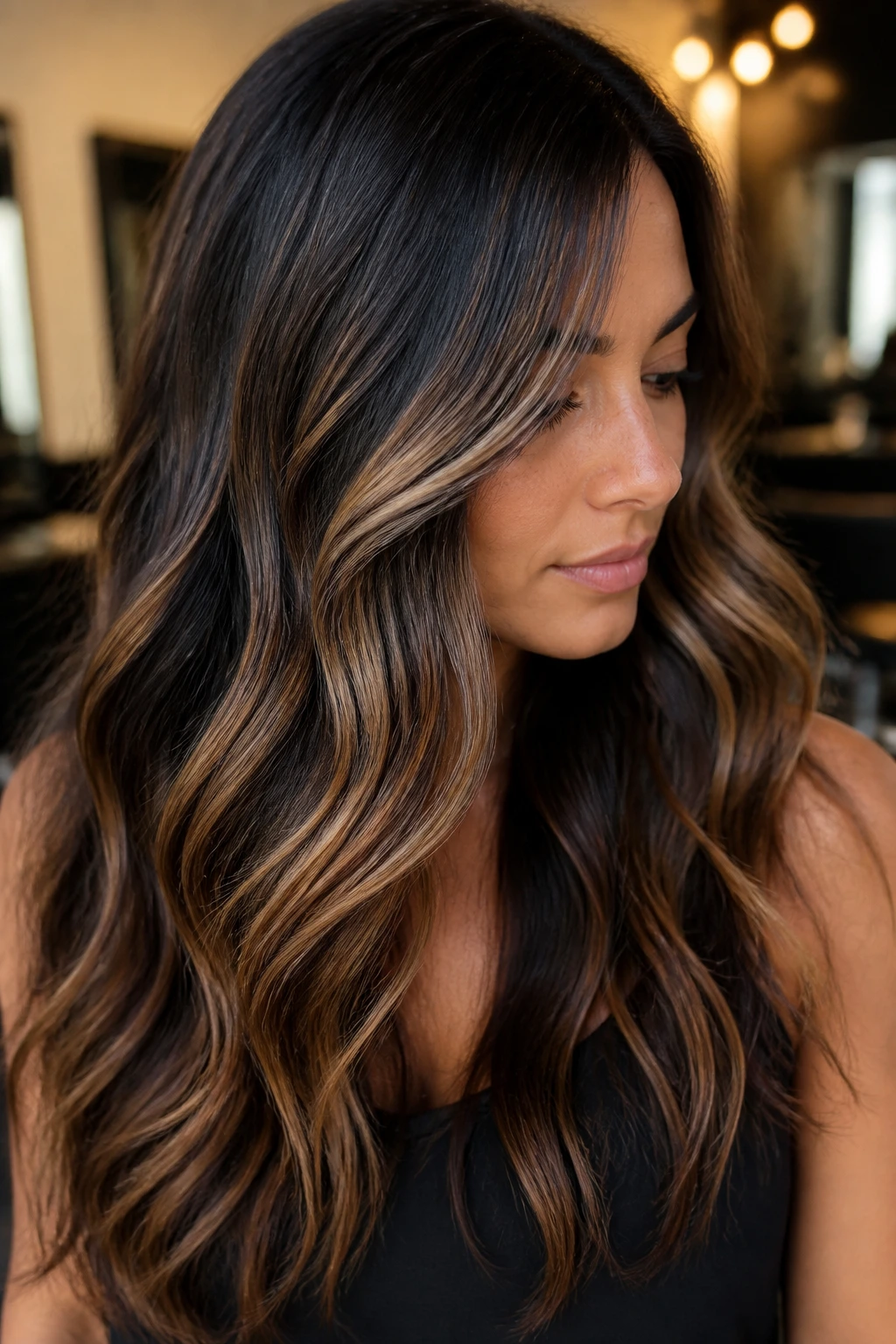
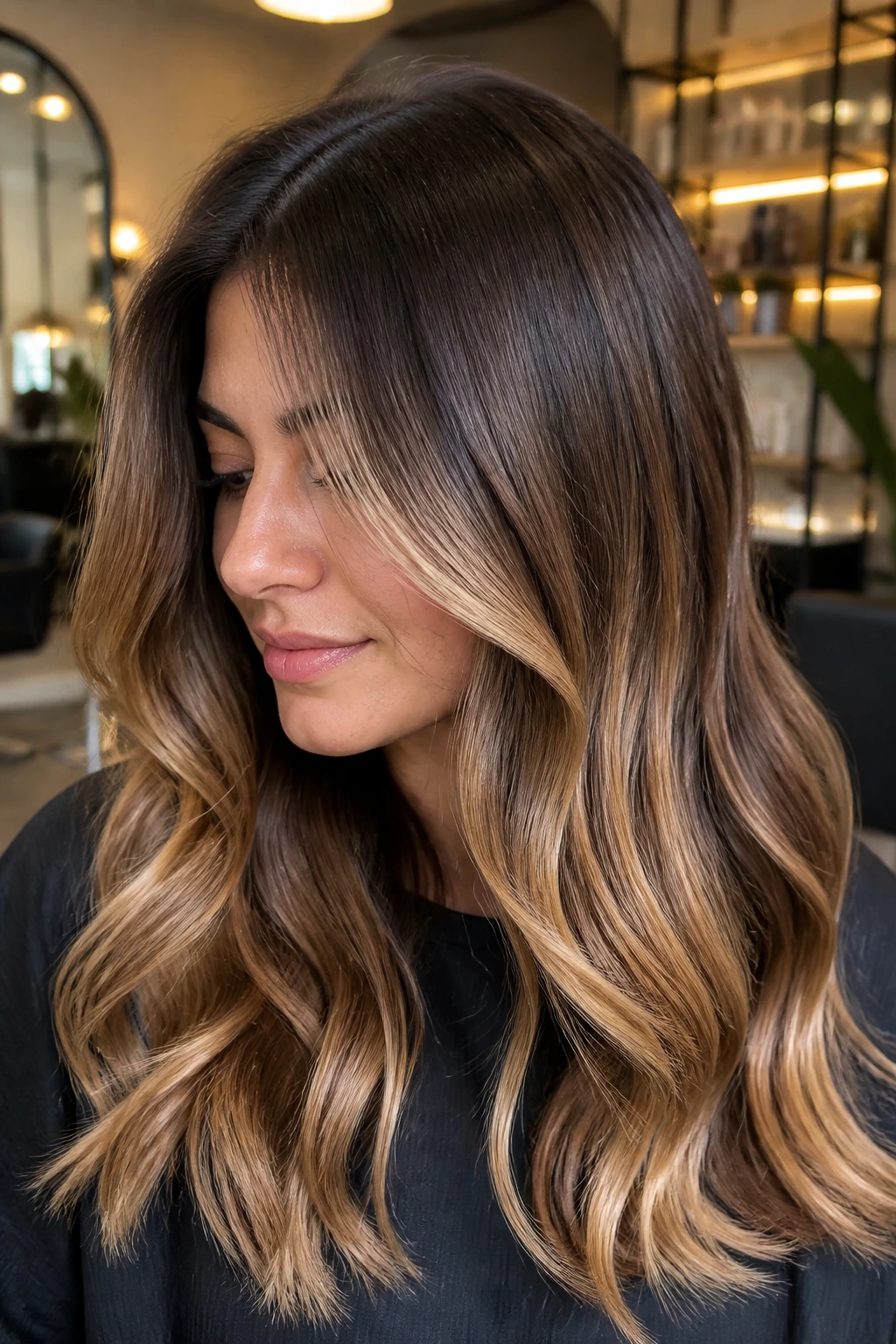
Caramel Ribbon Melt is the one that keeps brunettes from looking one-note. The darker base stays rich, then slim ribbons of caramel weave through the mids and ends so the color moves when the hair sways. It is warmer than mushroom brown, but not orange. That’s the sweet spot.
A good caramel melt does not flood the hair with light pieces. It places them where the eye wants motion: around the face, through the outer layers, and in the bottom half of the hair where curls and waves catch them best. On straight hair, the ribbons should be fine enough to read like texture, not streaks.
If your natural color is deep brown and you want dimension without a big blonde commitment, this is the most forgiving path. Caramel softens the transition and keeps the overall look edible, not stripy. That’s a weird word for hair, but it fits.
5. Copper Spice Melt
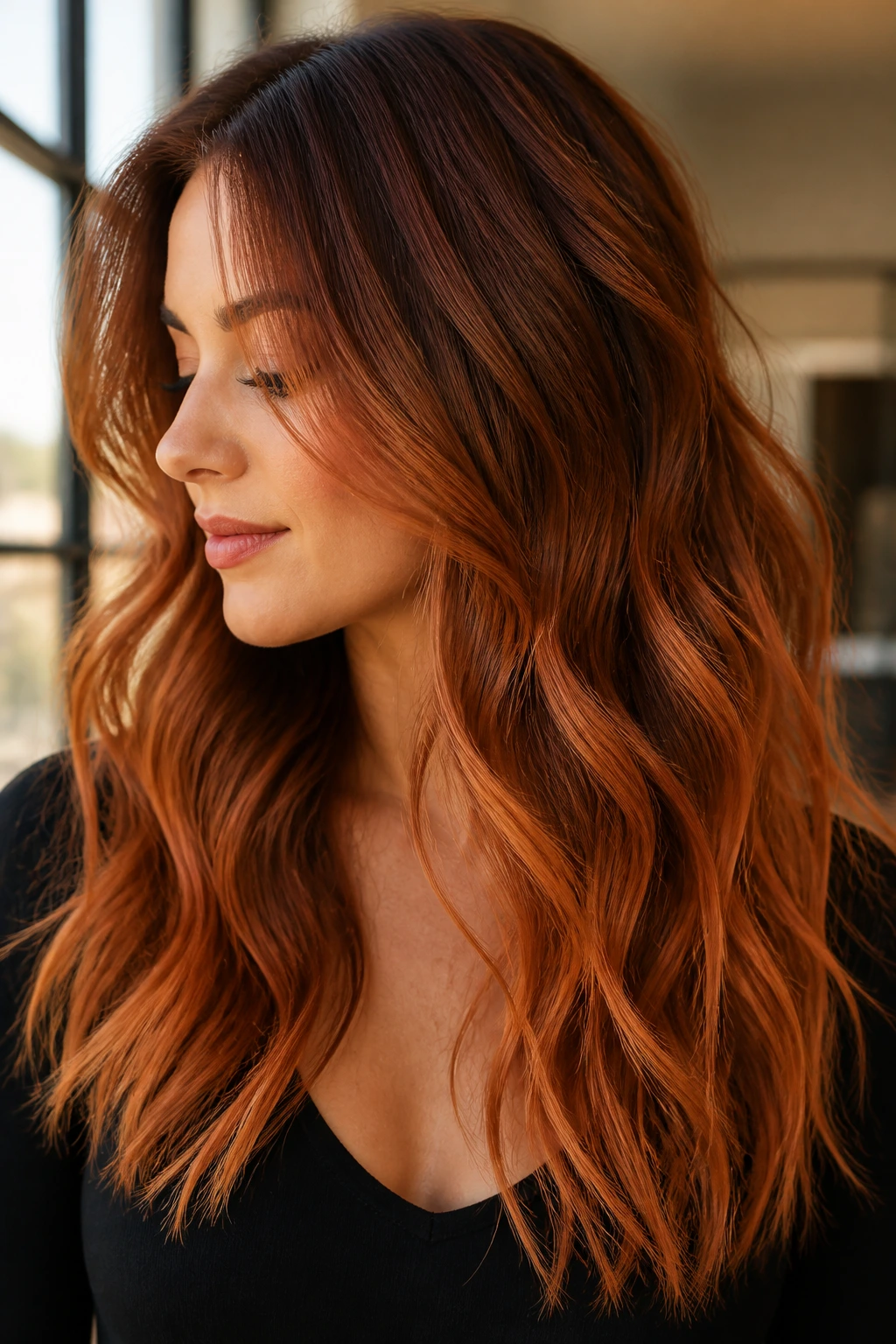
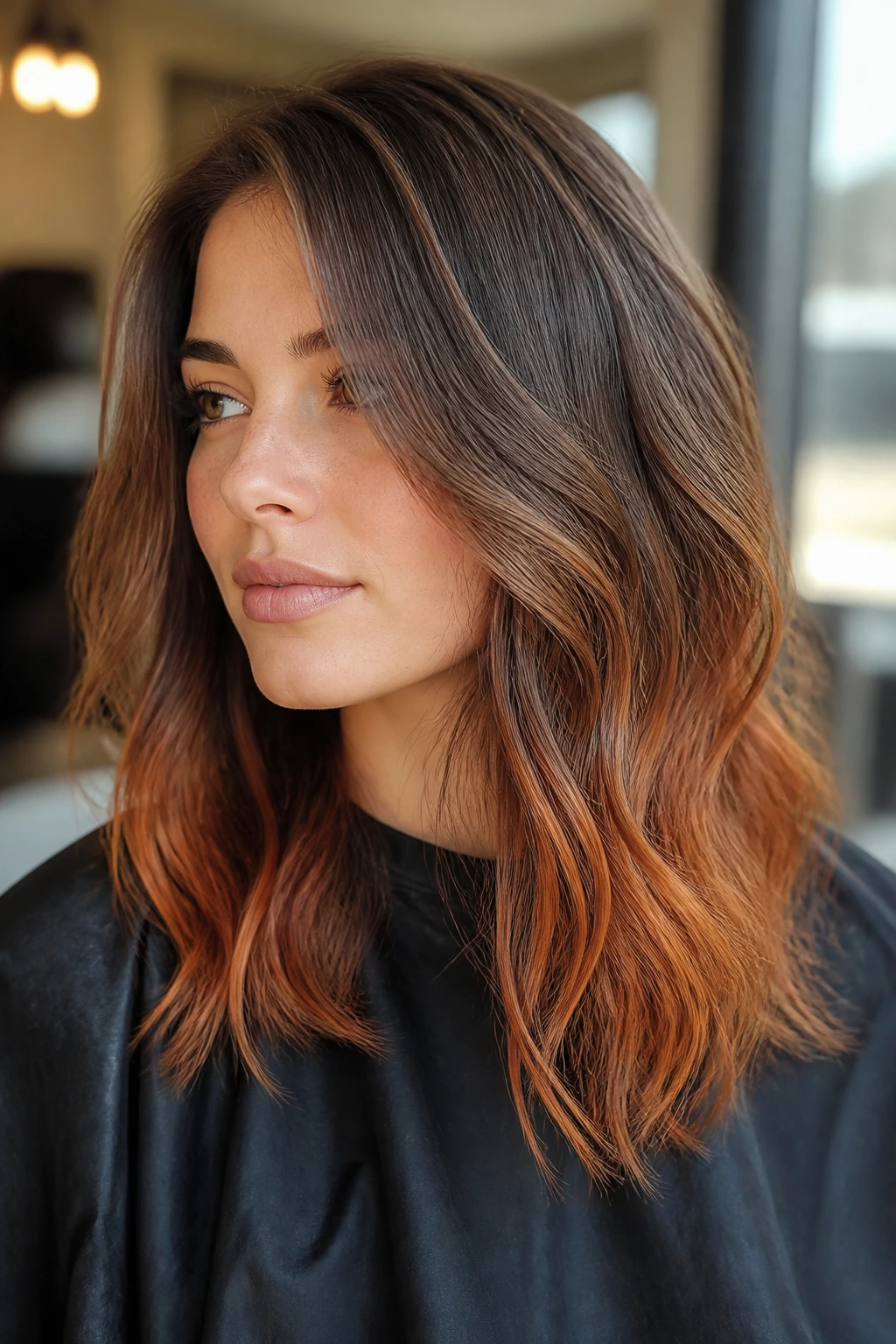
Copper Spice Melt has energy, but it still belongs in the soft-dimension camp when the root and mids are handled well. The roots stay a muted auburn or deep strawberry brown, the mids heat up into cinnamon, and the ends burn a little brighter with copper gloss. The result feels warm and alive, not neon.
This shade family is best when the stylist keeps the color rich near the scalp. If the root is too light, copper can lose its shape and start looking like one flat red panel. The melt works because the deeper base gives the brighter ends somewhere to land.
I like this on layered cuts and wavy shags more than on one-length hair. Copper needs movement. Without it, the color can read heavier than intended.
6. Rose Gold Melt
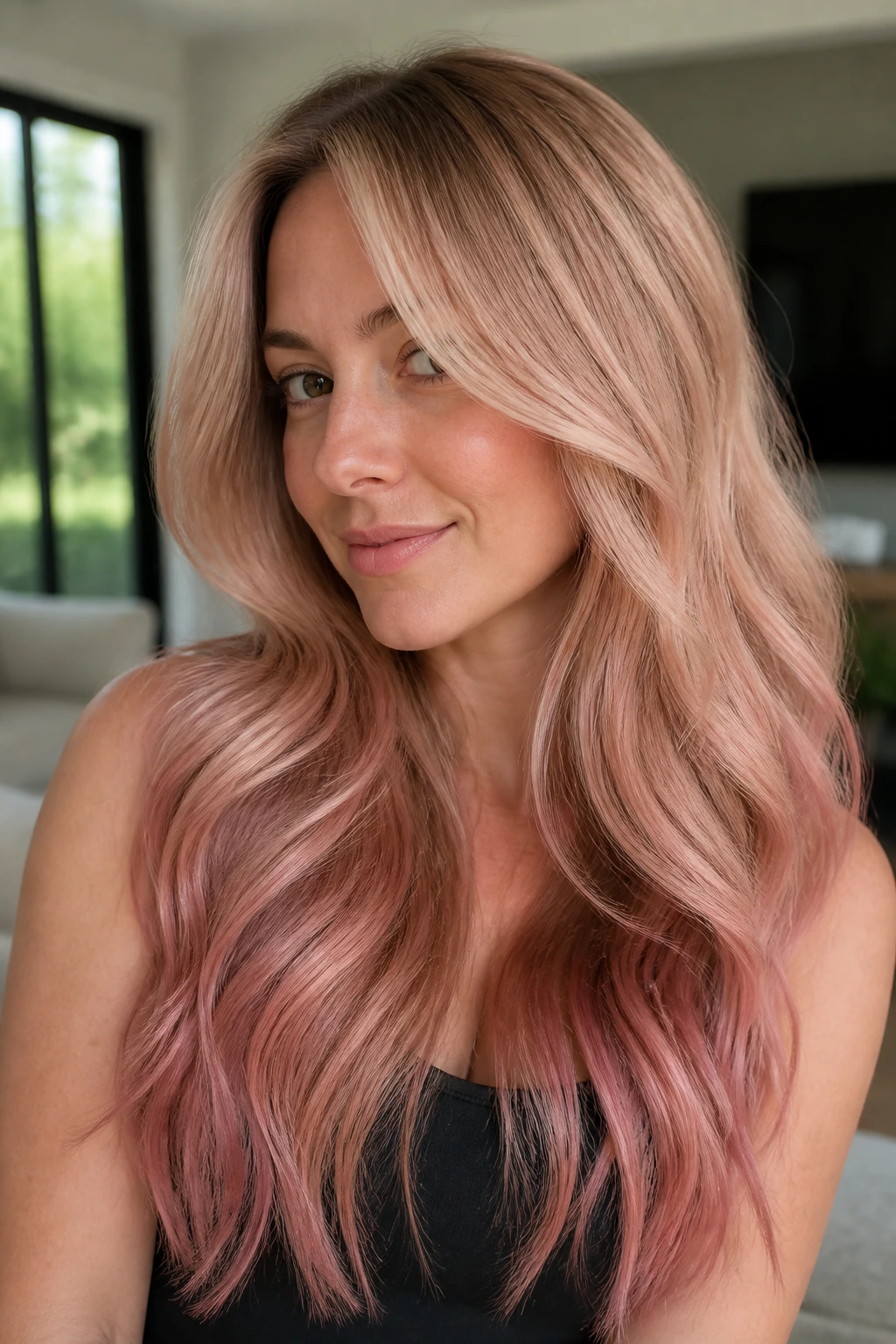
Rose Gold Melt walks a narrow line, and that’s why it’s fun. The base is usually a soft blonde or light brunette, the mids shift through peach-beige, and the ends pick up a muted rose tone that looks pink in some light and peach in others. It should never look candy-bright unless that’s the goal.
The best rose gold melts are wearable because the pink is tucked inside the tone rather than painted on top of it. You want the color to glow in daylight, not look like temporary dye. A gloss does most of the work here, which is why this shade can be easier to maintain than people assume.
This is a strong pick if your wardrobe leans neutral and you want the hair to do a little more talking. It reads especially well against black clothing and soft creams. A little contrast makes the tone feel richer.
7. Beige Bronde Melt
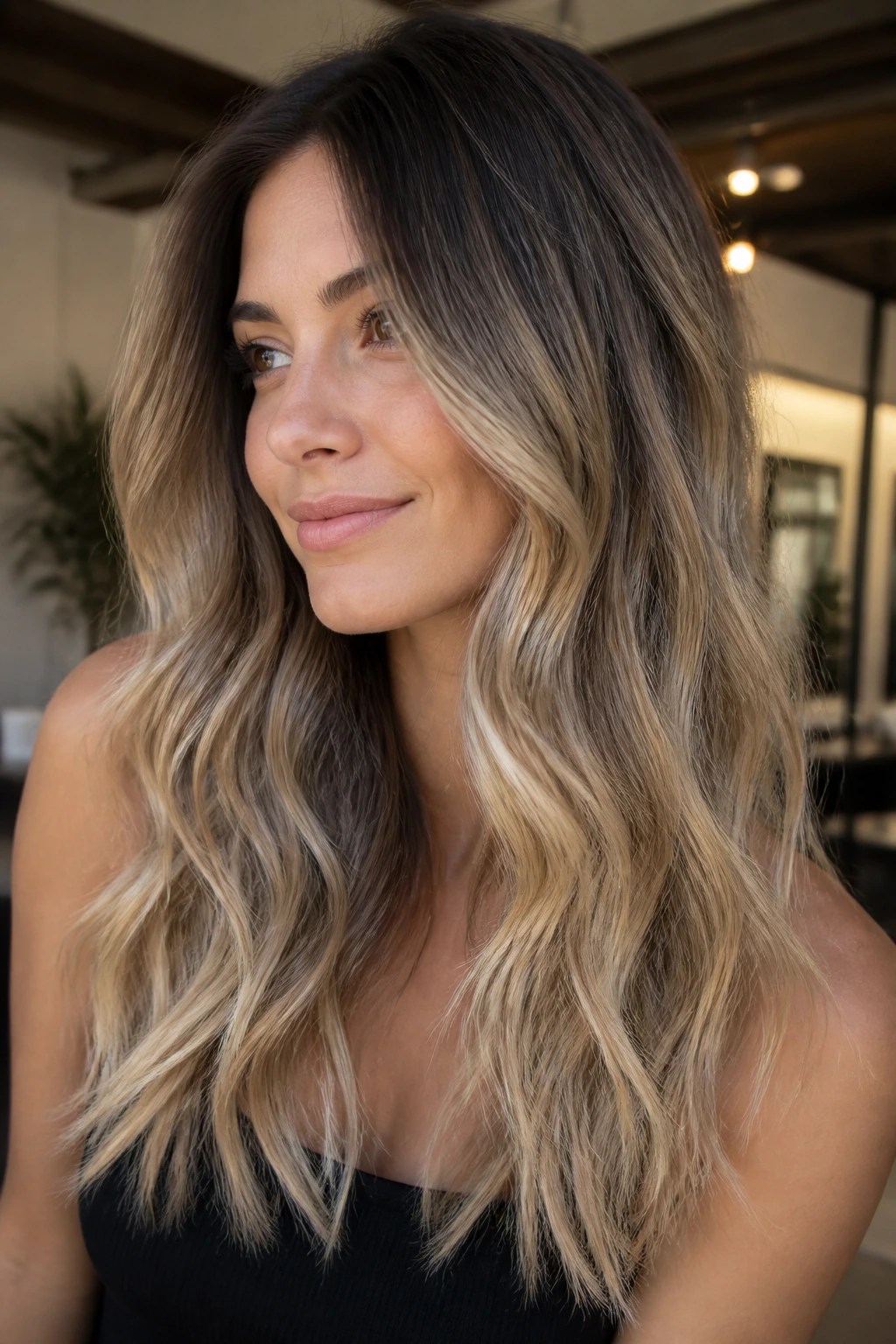
Beige Bronde Melt is the haircut equivalent of a good cashmere sweater: quiet, flattering, and annoyingly hard to mess up. The roots stay brunette, the mids shift into beige, and the ends hover between light brown and soft blonde. There is no hard jump. That is the entire point.
This look works because beige sits in the middle of the color wheel and keeps the hair from leaning too warm or too cool. If you hate gold but don’t want ash that looks dusty, beige is usually the right middle road. It also plays well with slightly grown-out highlights, which is why this melt is such a smart refresh option.
On long layers, beige bronde gives movement without making the cut feel thin. On a blunt lob, it stops the shape from looking heavy. It’s one of those shades that quietly improves almost everything around it.
8. Smoked Almond Melt
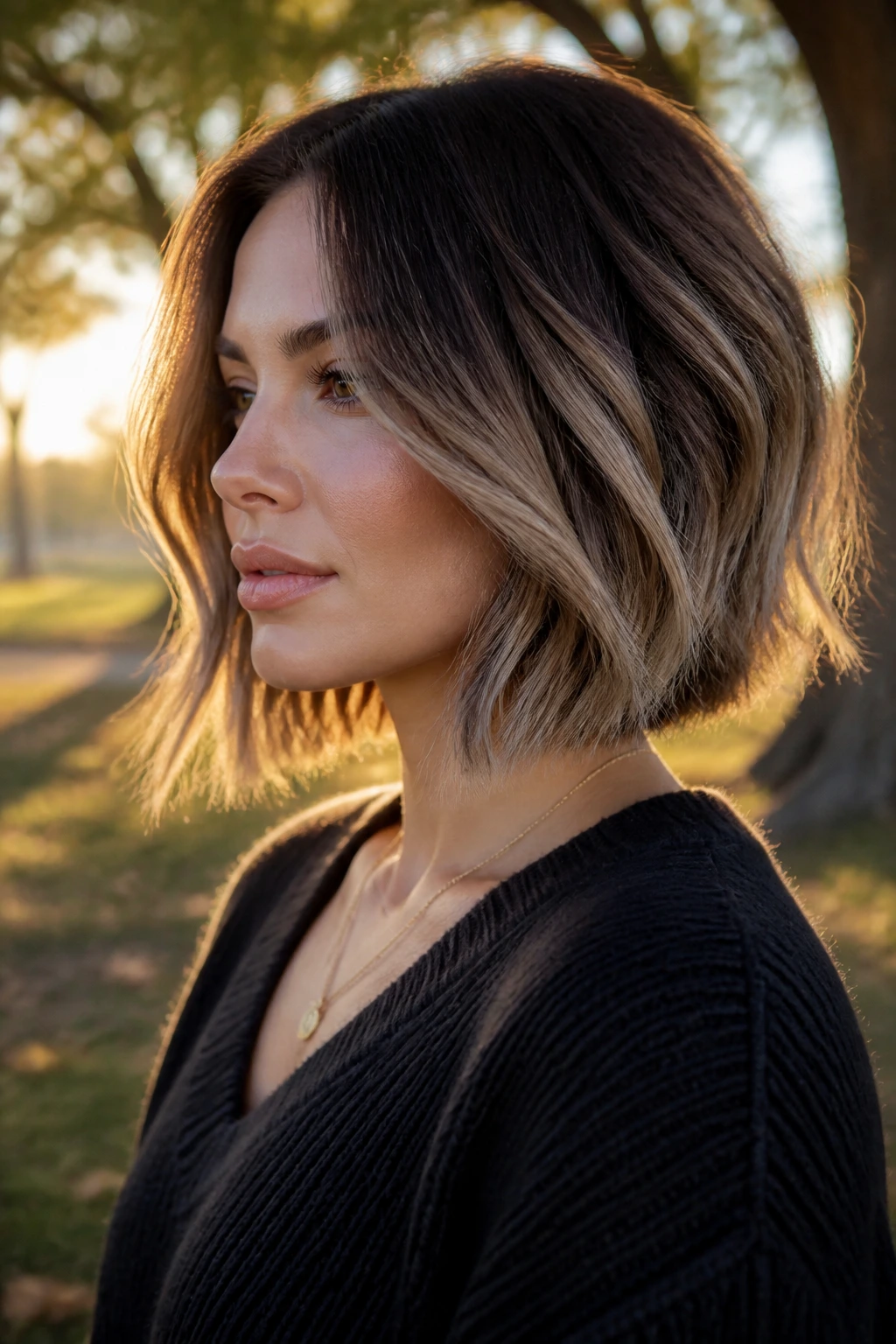
Smoked Almond Melt is for the brunette who wants depth with a cool edge. The root stays chocolate or medium brown, the mids soften into almond and muted taupe, and the ends finish with a smoky beige cast. It’s a cousin of mushroom brown, but a little warmer in the center and a touch softer at the tips.
What makes this shade special is the balance. Too much ash and you get flat, grayish hair. Too much warmth and you lose the smoked effect. Almond keeps it wearable. On a bob, it looks modern. On longer hair, it looks expensive in a very low-key way.
This is one of the better choices if your natural brown pulls orange when lightened. The almond note tames that warmth without erasing all the dimension. Good color, no drama. That’s the brief.
9. Espresso Mocha Melt
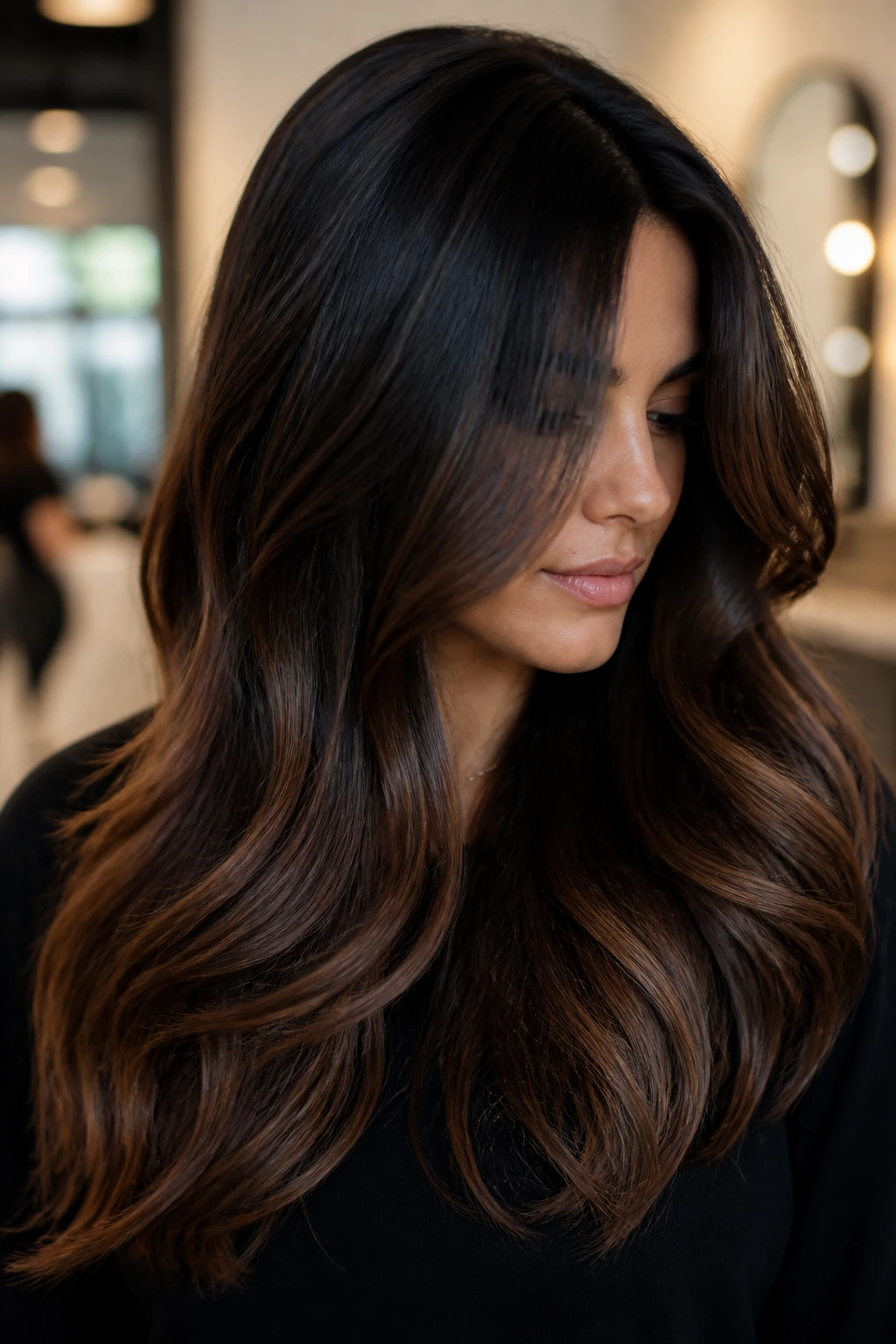
Espresso Mocha Melt is deep, glossy, and sharper than people expect from a soft melt. The root starts near espresso, the mids soften into mocha, and the ends pick up just enough lighter brown to catch light. It is not about obvious brightness. It is about making very dark hair move.
If your hair is naturally deep brunette, this is one of the most useful ways to add dimension without drifting into blonde territory. The contrast is there, but it stays inside the brown family. That keeps the finish rich instead of chunky.
Best base: level 3 to 5 hair that needs shape more than lift.
Best styling: a blowout with soft bend or a loose curl set that shows the mid-tones.
Watch for: ends that are too dark. If the color falls into one dark slab, ask for a slightly warmer mocha bridge.
10. Honey Butter Melt
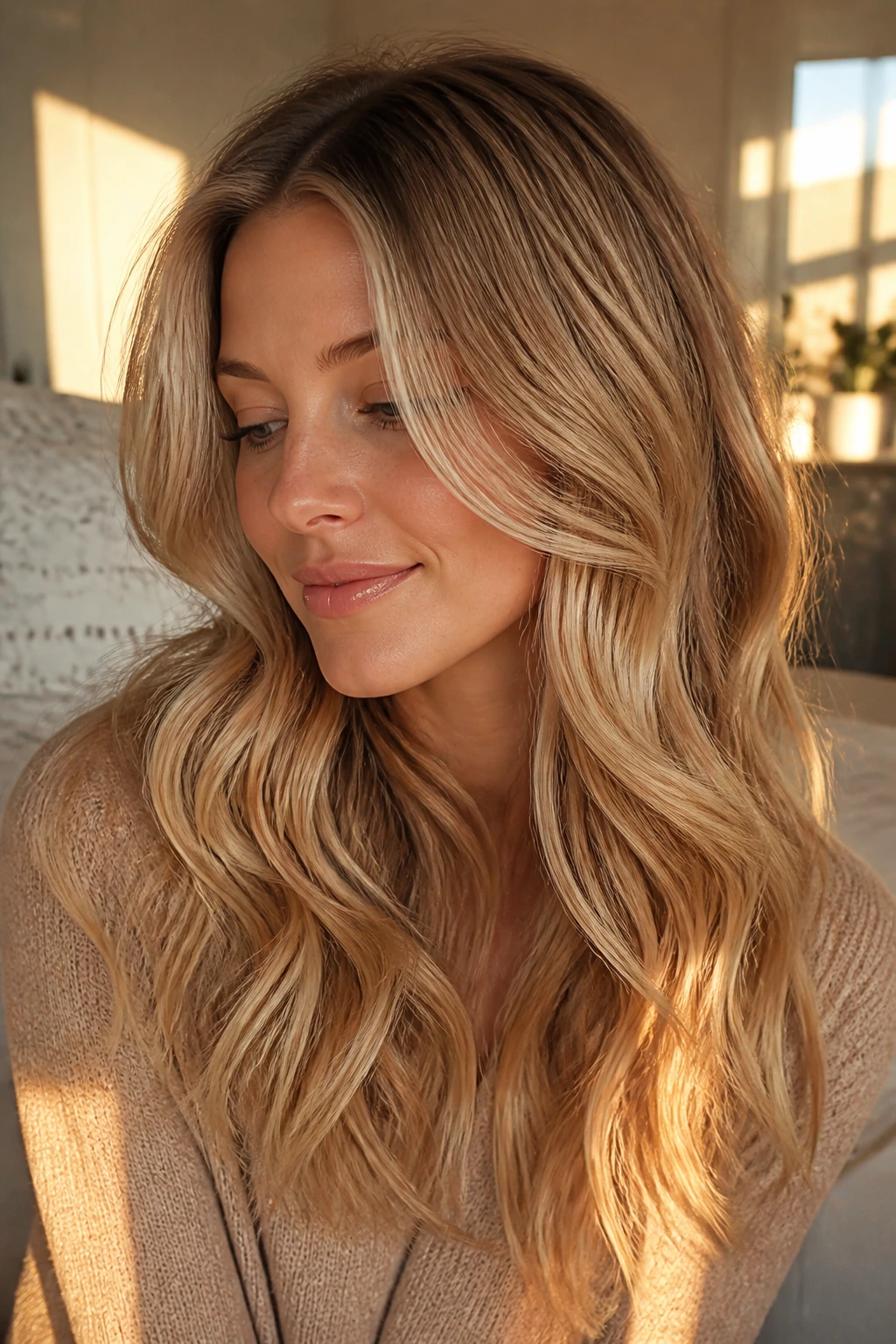
Honey Butter Melt gives blonde hair a warmer, softer glow without sending it full gold. The root stays a soft beige or light brunette, the mids move through honey, and the ends land in a buttery blonde that still feels touchable. It’s sunny, but the better kind of sunny.
This shade is especially useful on hair that looked too cool after a toner. Honey brings back warmth in a way that still looks refined. Butter keeps the ends from going brassy. Together, they make the blonde look cushioned instead of flat.
It’s a good choice if you wear your hair loose and airy more than sleek and glossy. Honey tones love movement. They catch a little light on every bend, which means the melt shows even when the style is casual.
11. Strawberry Cream Melt
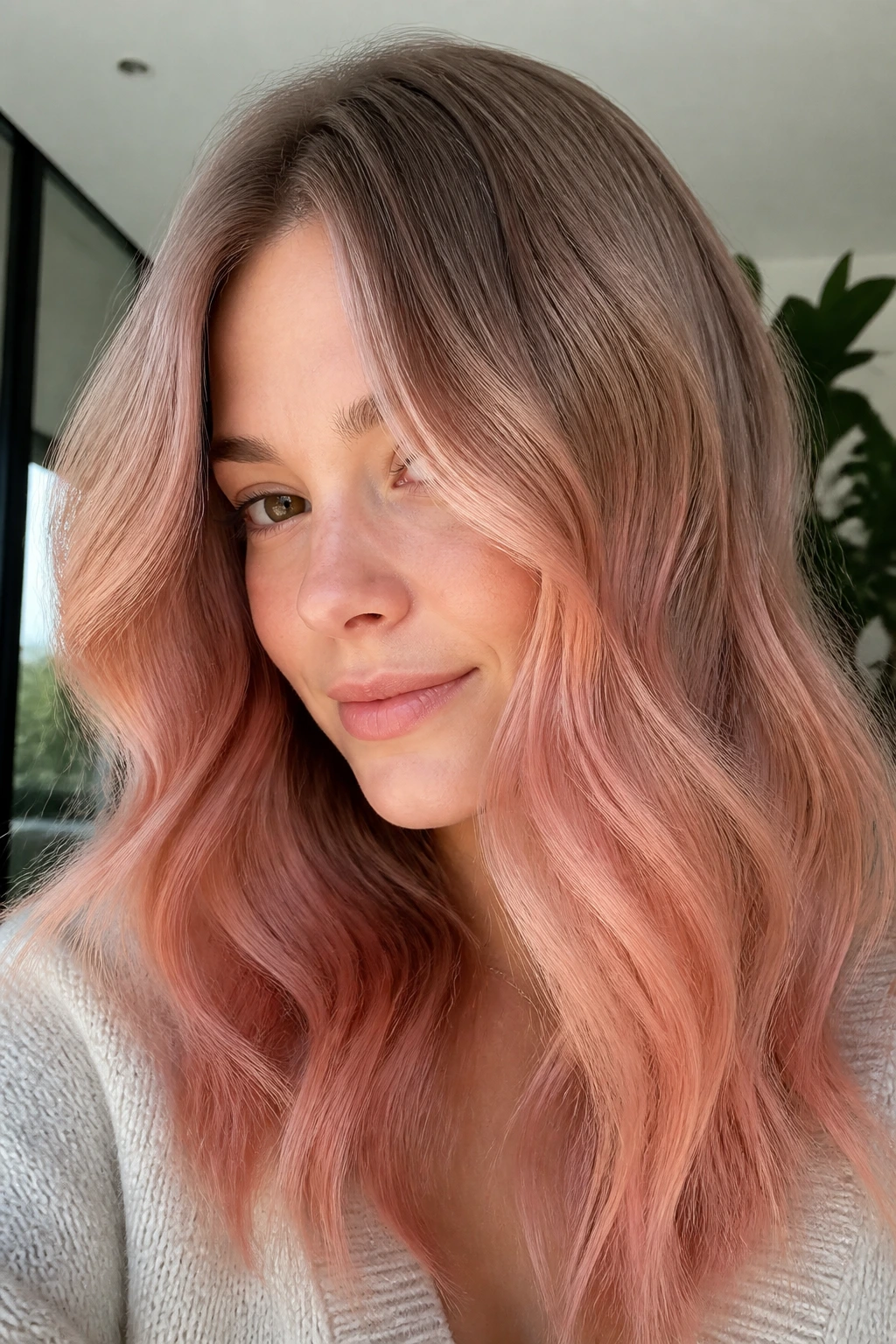
Strawberry Cream Melt is softer than a copper melt and more interesting than a plain strawberry blonde. The root tends to stay pale brunette or warm dark blonde, the mids move through peachy rose, and the ends brighten into creamy strawberry. The whole thing feels sweet without turning sugary.
This works best when the red tones are misted through the color, not blasted on. A cream base keeps the shade from getting too vivid, and that helps the melt stay wearable on daily life. If you’re nervous about red hair looking loud, this is the version that eases you in.
It reads especially well on soft waves and layered cuts. The pink-peach tones break up the shape of the hair and keep it from looking like one flat copper sheet. That little bit of softness is doing a lot.
12. Smoky Plum Melt
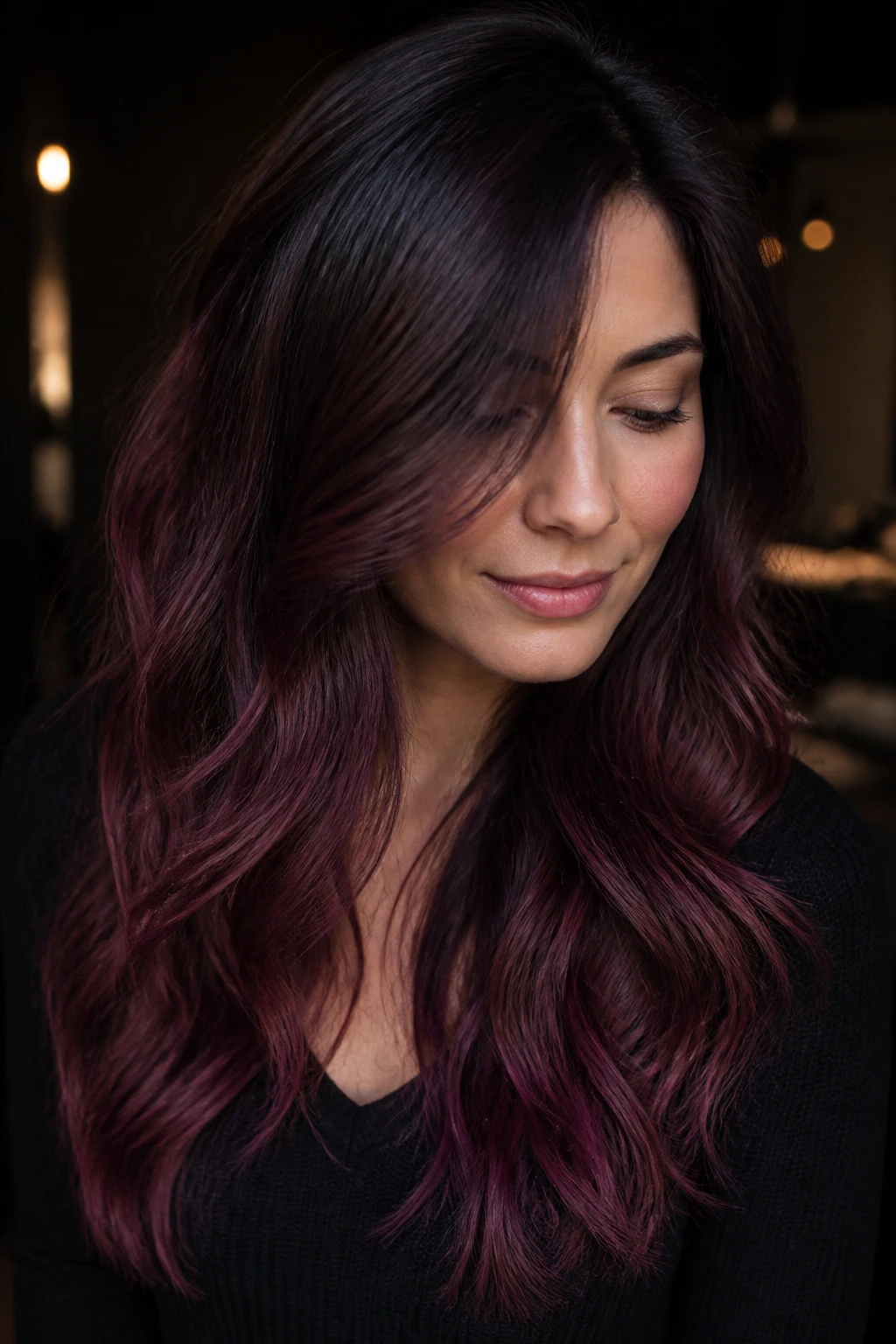
Smoky Plum Melt is one of the best ways to wear fashion color without crossing into costume territory. The root stays deep brunette, the mids take on a muted plum-violet, and the ends finish a shade lighter with a dusty berry cast. It should look mysterious, not bright purple.
The trick here is restraint. Plum works when it’s tucked inside the brunette rather than sitting on top of it. That gives the hair a shadowy edge that shows up in sun and disappears a bit indoors, which makes the color feel richer over time.
This is a smart pick for someone who wants something a little moody but still soft enough for regular wear. On layered hair, the plum catches in the movement. On curls, it looks even more dimensional because each coil reflects a slightly different tone.
13. Chestnut Cinnamon Melt
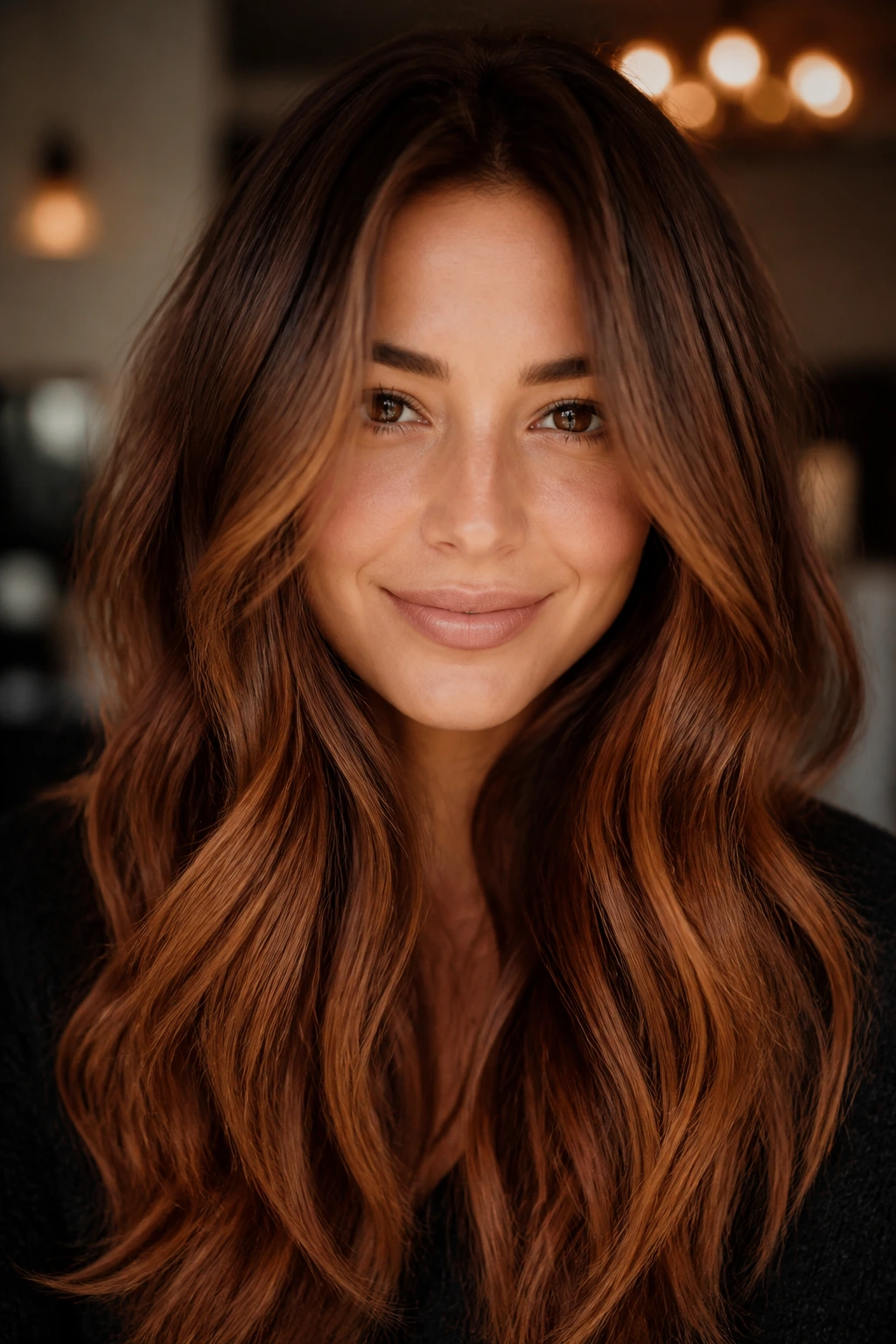
Chestnut Cinnamon Melt lives in warm brunette territory, but it has more lift than a plain brown gloss. The base is chestnut, the mids shift into cinnamon, and the ends pick up a soft copper-brown glow. It is warm in a grown-up way. No pumpkin patch energy.
The reason this melt works is the bridge. Chestnut gives the roots richness, cinnamon keeps the mids from going dead, and the slightly brighter ends stop the whole thing from blending into one brown block. It’s a very good option for someone who wants warmth but hates the look of obvious red.
Good for: thick hair, long layers, and anyone whose hair has lost shine after too many all-over dark dyes.
Not ideal for: extremely porous ends that suck up red too fast. Those lengths need a softer hand.
14. Toffee Melt
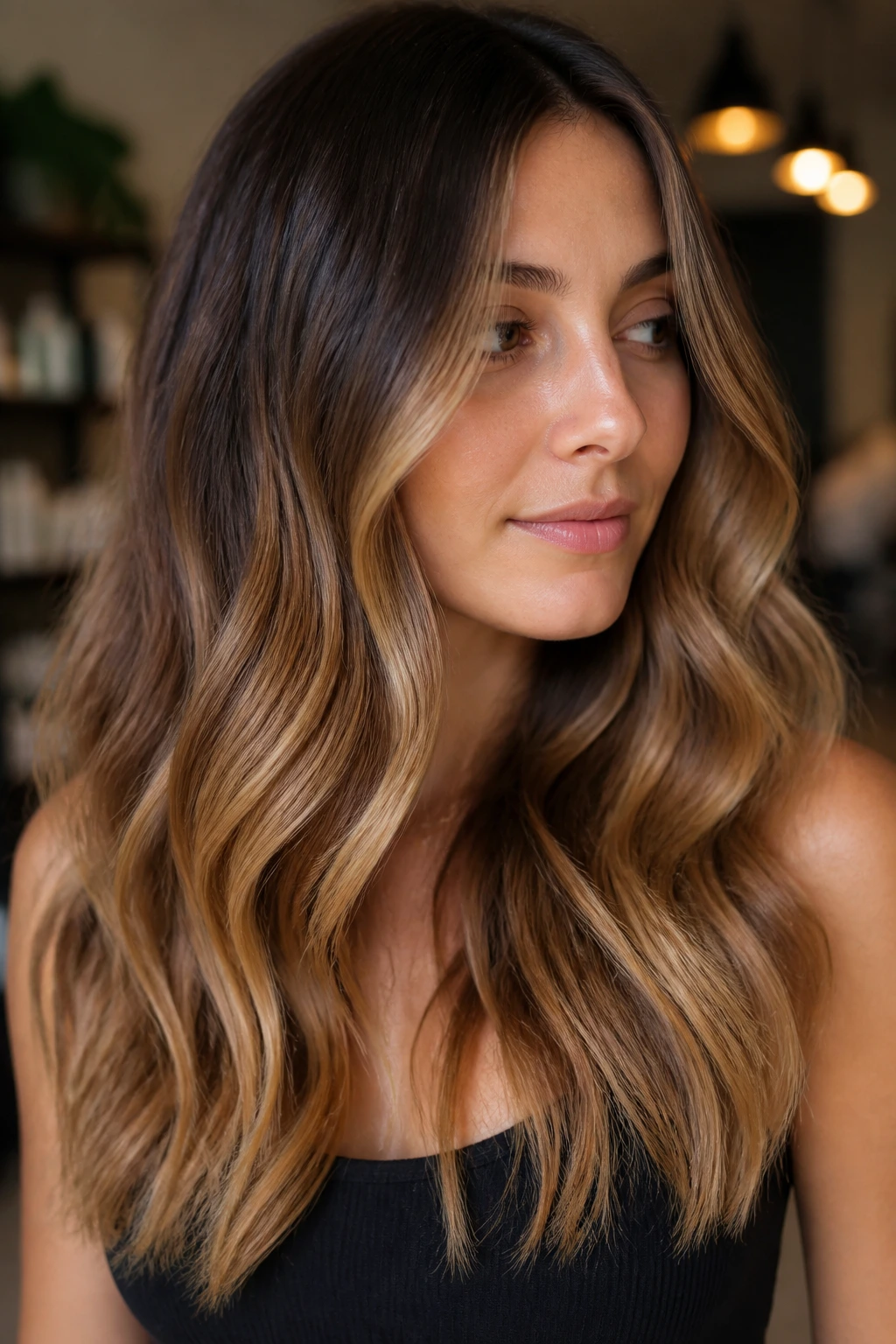
Toffee Melt is the edible one. Dark brunette roots melt into caramel-brown mids, then slide into a toasted toffee finish that has just enough gold to glow. It is warmer and a little sweeter than mocha, but still grounded enough for everyday wear.
This shade is especially good on medium to thick hair because the warmer pieces don’t disappear. You want the ribbons to show when the hair moves, and toffee does that without forcing the issue. It’s one of the easier brunette melts to wear if you like a little brightness near the face.
The best version keeps the roots soft and the ends glossy. Dry ends make toffee look noisy. Healthy, polished ends make it look rich. That’s a small difference on paper and a huge one in real life.
15. Sandstone Melt
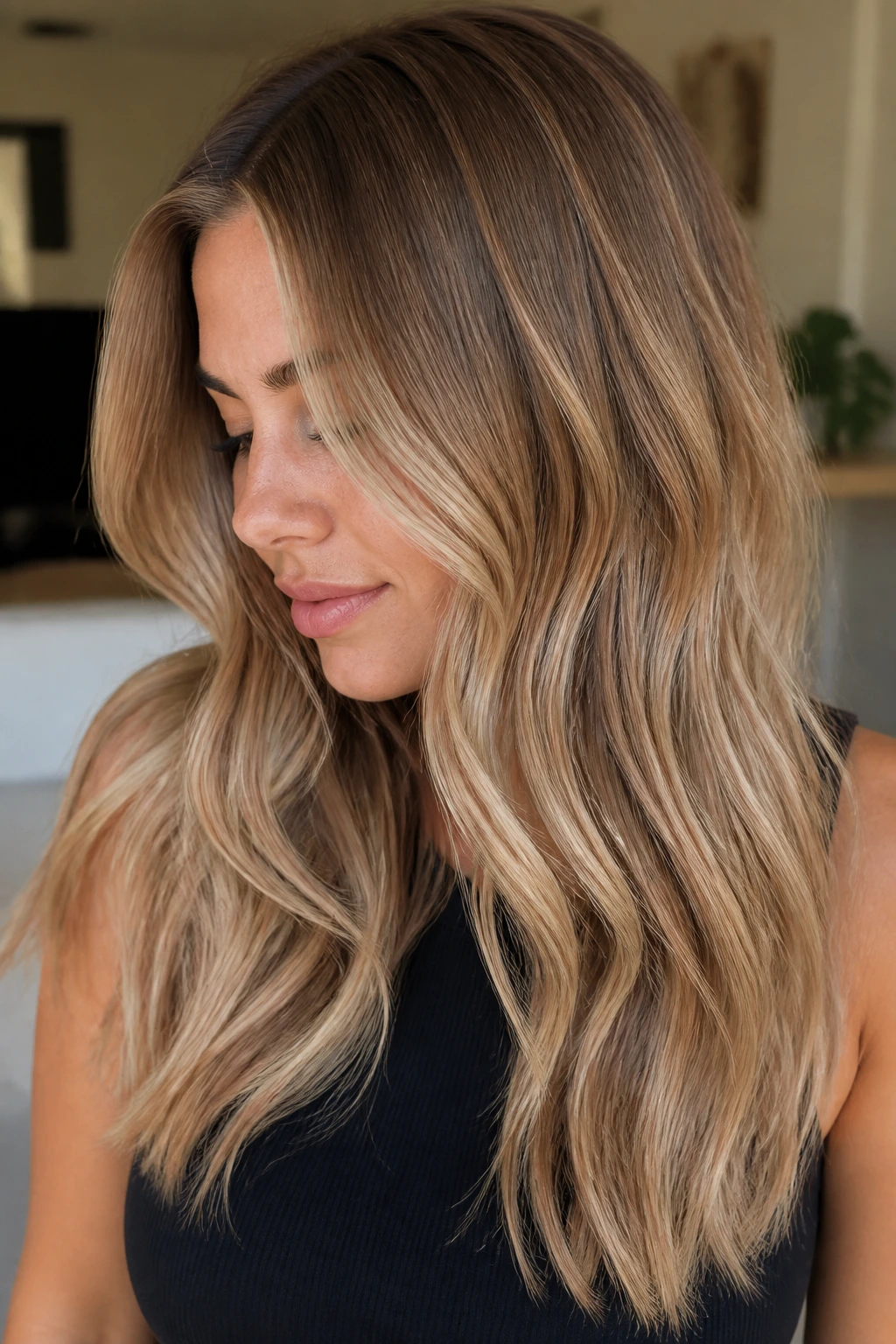
Sandstone Melt is one of those quiet shades that looks like it costs more than it does. The root is a soft beige brown, the mids drift into sandy taupe, and the ends carry a light, sun-warmed beige. It has texture without too much warmth, which is hard to get right.
This one is excellent for people who are tired of brass but don’t want to go icy. Sandstone sits in a neutral lane, so it doesn’t fight with skin tone as much as overly ash shades can. It also reads well on straight hair, where the flat surface can make subtle color changes harder to see.
If you’re showing this to a stylist, ask for neutral-beige bridges and avoid anything too silvery. Sandstone should feel soft and natural, not frosted.
16. Cool Ash Blonde Melt
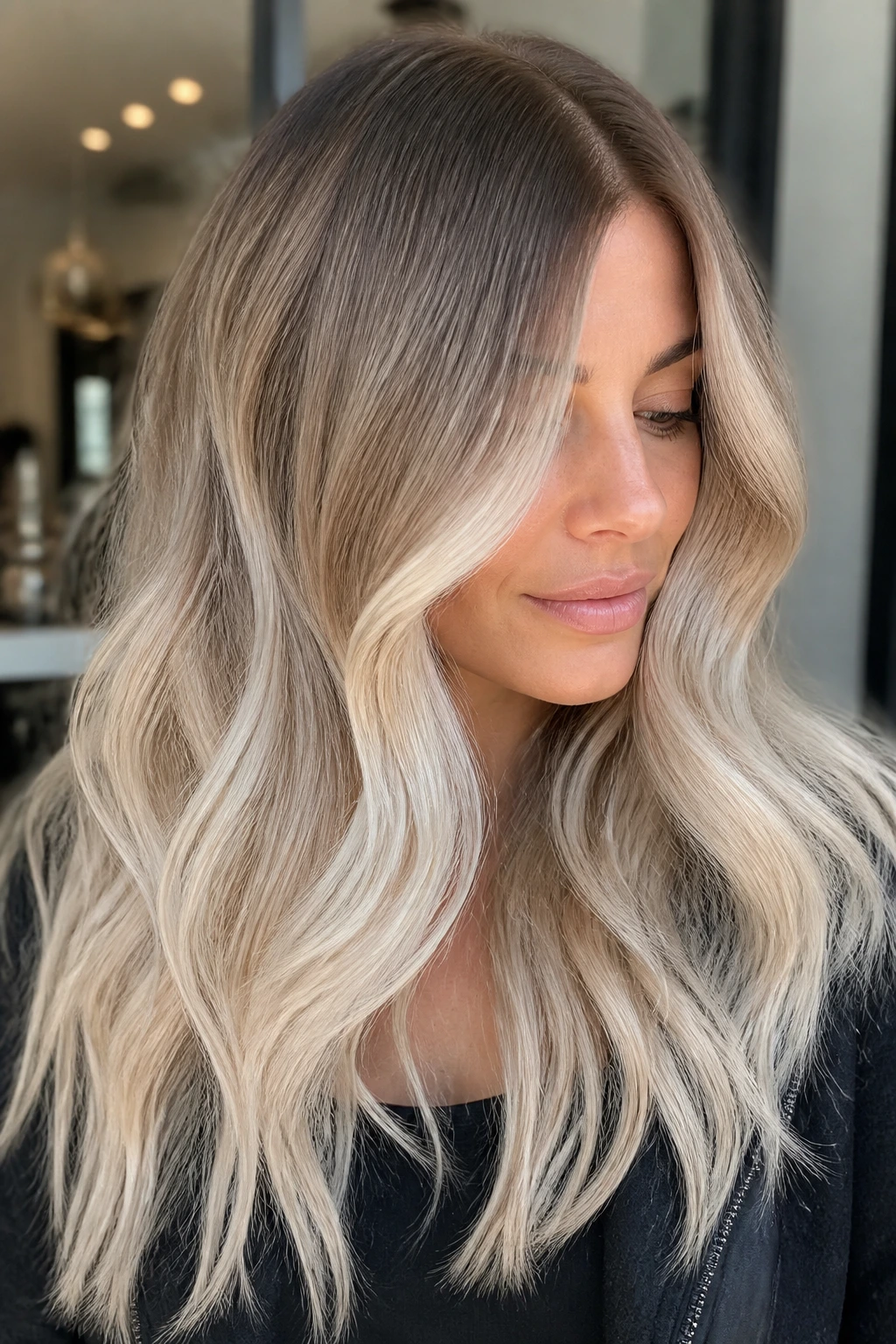
Cool Ash Blonde Melt is for people who like a cleaner, more polished blonde and don’t mind keeping brass on a short leash. The root shadow is soft beige-brown or dark ash blonde, the mids stay cool and creamy, and the ends tip into pearl or pale ash blonde. When it’s done well, it looks crisp rather than harsh.
This melt needs good toning. If the stylist overdoes the ash, the hair can go dull in indoor light. If they underdo it, the warmth comes back fast. The sweet spot is a blonde that still looks bright but has enough smoke in it to keep the brass from taking over.
It works best on hair that was lifted evenly. Patchy lightening shows up fast in cool tones. Even lift plus a careful gloss, though? That combination is clean.
17. Maple Brown Melt
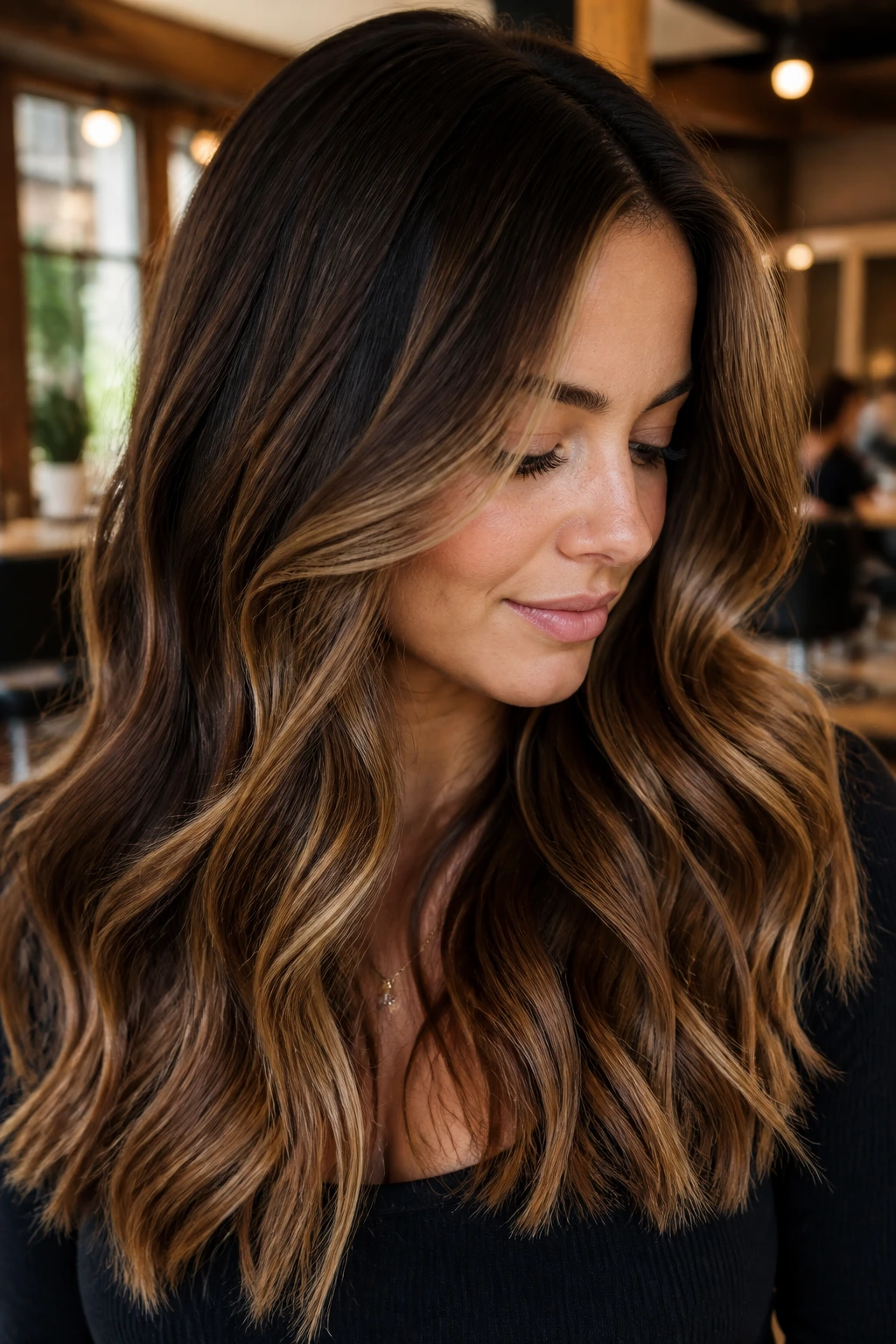
Maple Brown Melt is a warmer brunette look with a soft autumn feel, but it stays far away from the heavy, flat brown that can age hair. The root stays deep coffee, the mids drift into maple syrup warmth, and the ends brighten just enough to show the shape of the cut.
This is a strong choice if your natural color has a lot of red in it and you don’t want to fight that fact. Maple embraces warmth and makes it part of the blend. It is especially nice on long, layered hair where the warm mid-tones can move.
You’ll want the lighter pieces to stay transparent, not chunky. Thin ribbons work better than wide panels here. The goal is a warm brown that looks alive, not painted.
18. Peach Tea Melt
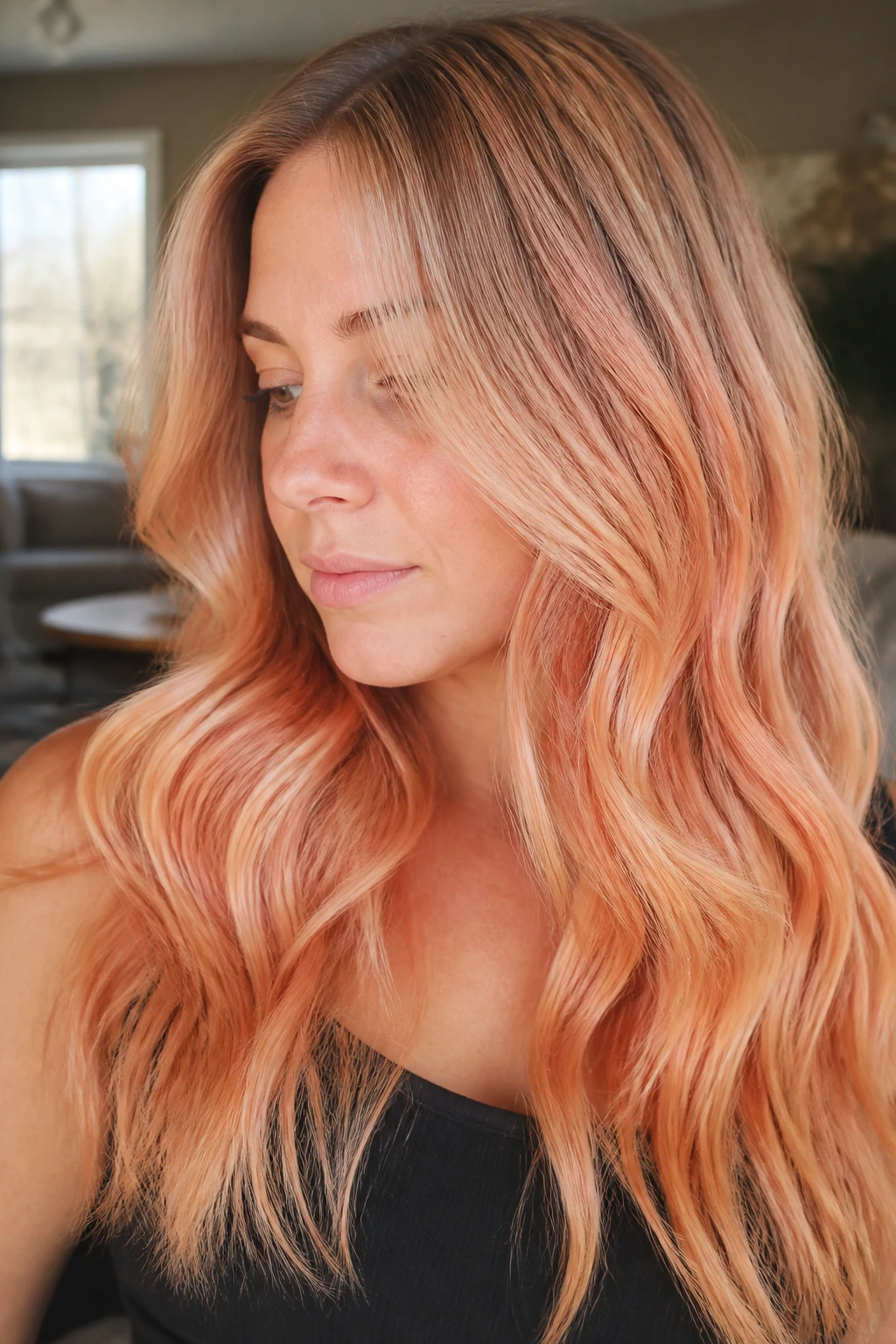
Peach Tea Melt has a soft, almost watercolor quality. The roots stay beige blonde or light brunette, the mids take on a peachy gold, and the ends finish with a pale apricot haze. It is subtle enough to wear often, but it still gives the hair a pretty warmth that plain blonde can’t.
The peach tone is what keeps this from looking ordinary. It gives the blonde a slight blush, which is especially nice on layered cuts and airy waves. You do not want strong coral here. Think tea stain, not marker ink.
This is one of the better options for someone who wants a fresh twist without committing to a loud fashion shade. It reads soft in daylight, glowy at dusk, and clean under indoor bulbs if the gloss is fresh.
19. Soft Black to Graphite Melt
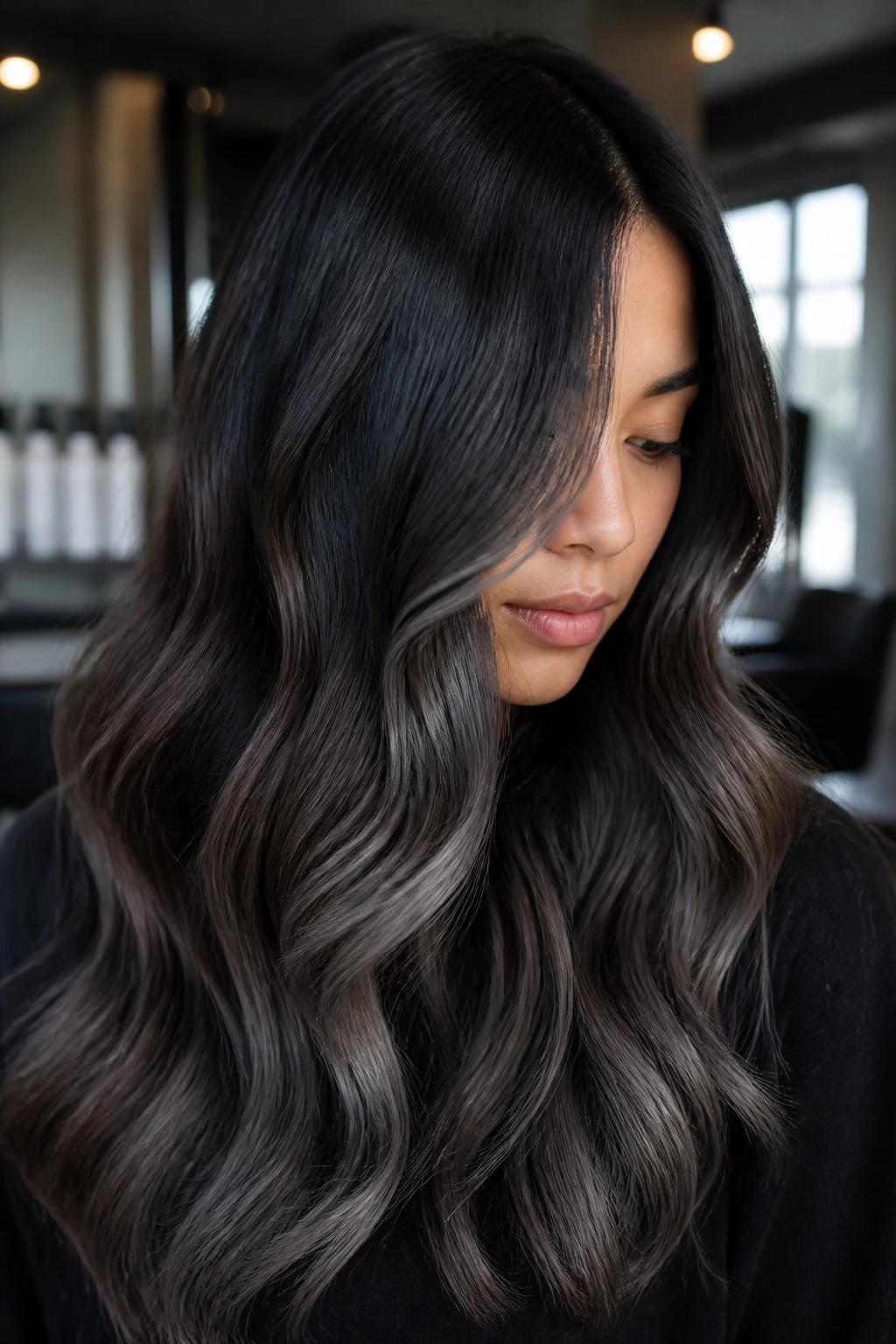
Soft Black to Graphite Melt is dark, yes, but it still counts as dimensional color when the transition is handled properly. The root stays soft black, the mids shift into graphite brown, and the ends pick up a smoky charcoal sheen. The result is glossy and sleek rather than one-note.
This is a very good choice for people who love dark hair but hate seeing a hard grow-out line. A graphite bridge makes the color look intentional from root to tip. It also gives straight styles a reflective finish that can look almost metallic in the right light.
The danger here is over-darkening the ends until the melt loses shape. Keep the graphite smoky and slightly lighter than the roots. That’s what gives the hair movement.
20. Coral Clay Melt
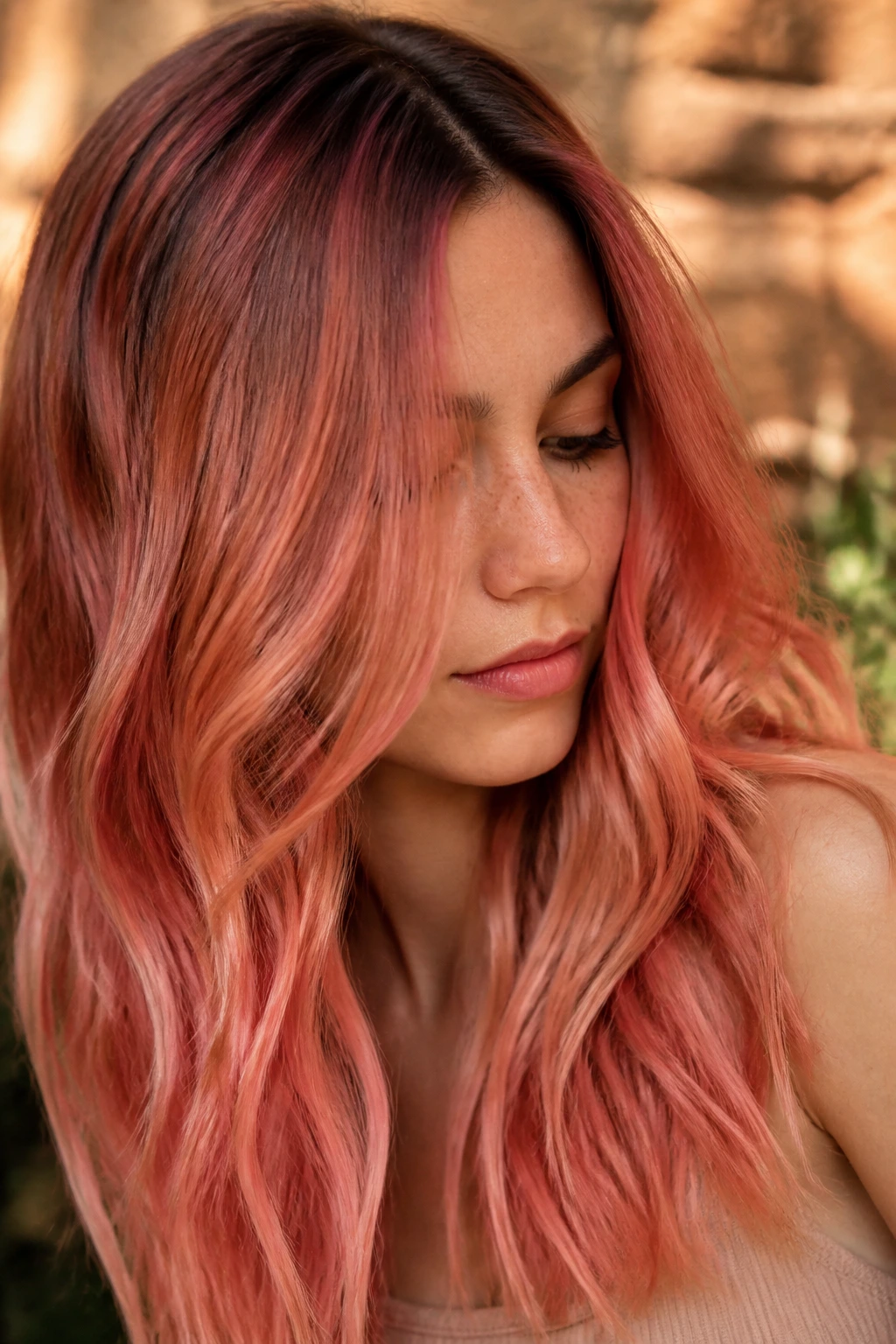
Coral Clay Melt is warmer and more playful, but it can still read soft if the shades are muted enough. The roots stay a reddish brown, the mids move into clay, and the ends pick up a coral-peach finish that is more dusty than bright. It should feel earthy, not neon.
This shade is a strong fit for wavy hair and medium to light brunettes who want something warmer than copper but less expected than caramel. Coral clay has a little energy to it. The muted base is what keeps that energy from getting loud.
Ask for softness around the face and a slightly deeper root. That keeps the color looking dimensional instead of washed out. The melt should feel sun-baked, not candy-colored.
21. Golden Hour Melt
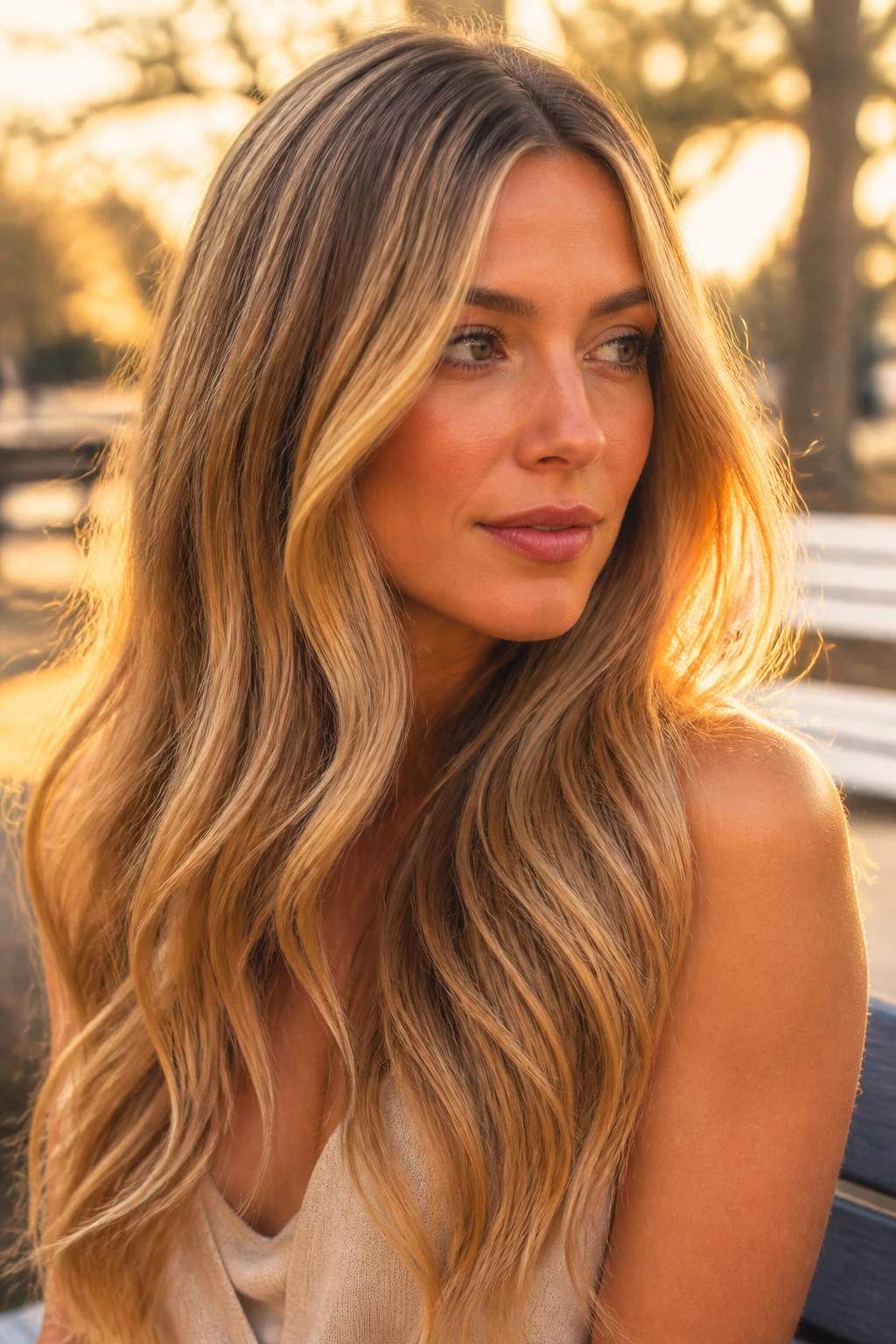
Golden Hour Melt is all about warm light. The root stays beige brunette or deep blonde, the mids warm into soft gold, and the ends brighten into a honeyed finish that catches every bit of movement. It’s sunny, but in a controlled way.
This one reads especially well on layered cuts because the lighter ends give the shape more motion. It can make hair look thicker than it is if the placements are clean and the tones stay soft. That is the nice part.
Best for: medium to light bases that want warmth without orange.
Ask for: gold that leans beige, not yellow.
Avoid: bright lemon tones. They break the melt and make the ends look disconnected from the root.
22. Hazelnut Cream Melt
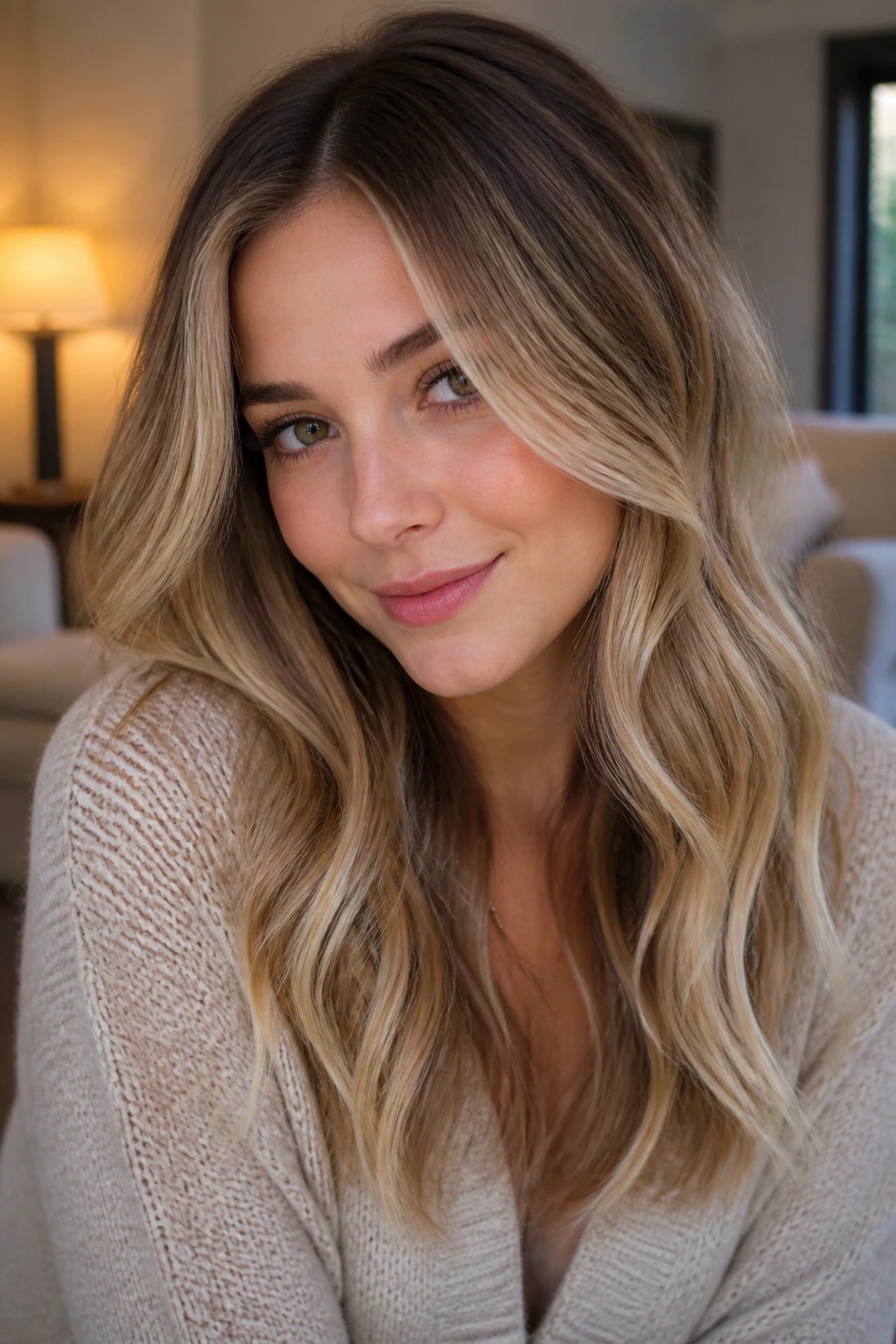
Hazelnut Cream Melt gives brunette hair a soft, polished lift without pushing it too warm or too light. The root is hazelnut brown, the mids bridge into cream-beige, and the ends stay luminous enough to show movement. It feels smooth, almost velvety.
This is one of the most flattering neutral options for people who want a lot of wearability. It doesn’t lean too cool, so it stays friendly to warmer skin tones. It doesn’t swing too gold, so it also works on cooler undertones. That middle ground is why it shows up so well in salon portfolios.
If you wear your hair in a loose bend or a soft blowout, the cream pieces frame the face without taking over. That is the ideal. A little glow, not a spotlight.
23. Lavender Smoke Melt
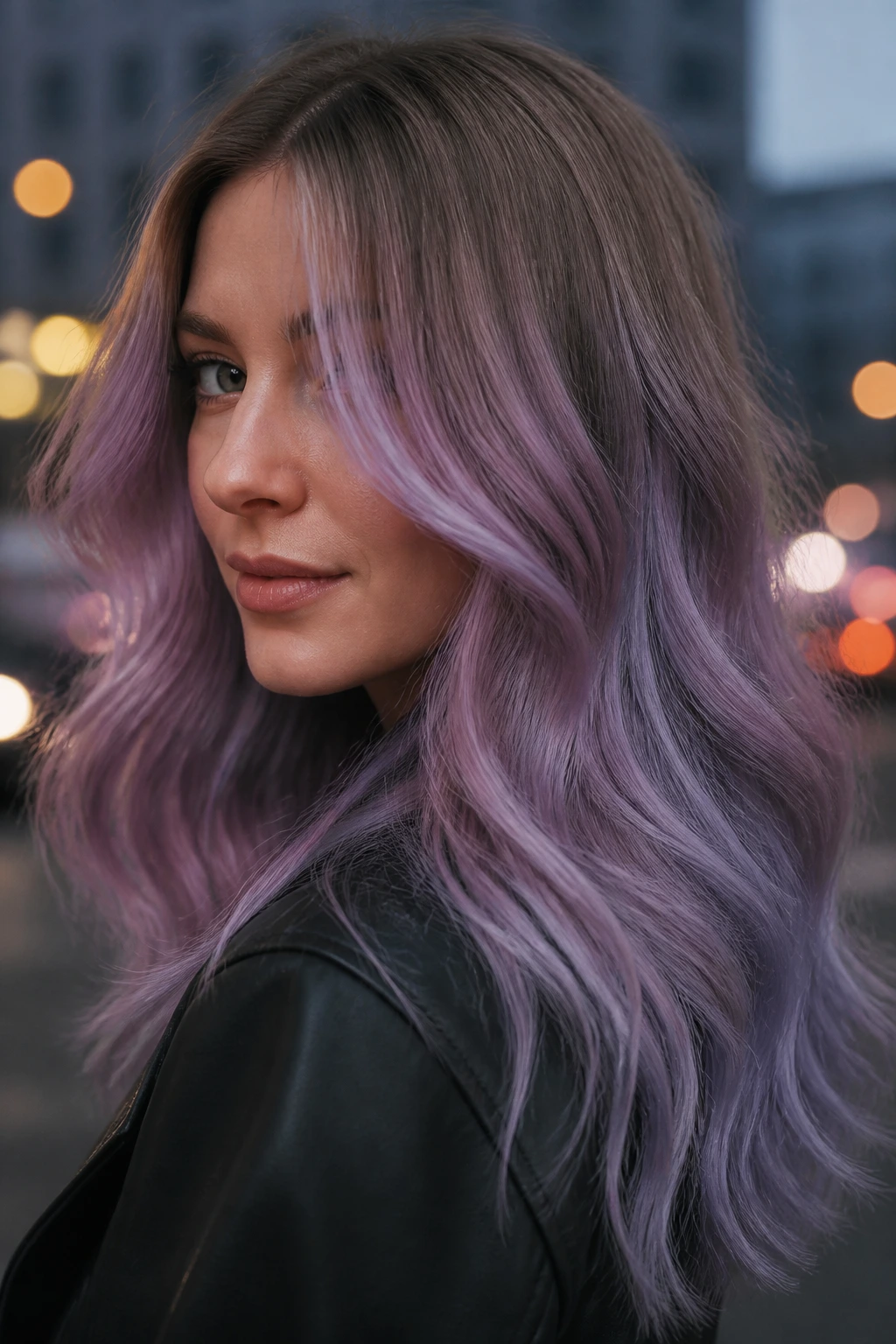
Lavender Smoke Melt is a cool-toned fashion look that still keeps the softness people want from a melt. The root stays deep blonde or light brunette, the mids shift into smoky lilac, and the ends fade into a hazy lavender-gray. It should feel misty and wearable, not costume-like.
This shade works because the smoke tone dulls the lavender just enough to make it elegant. Without that smoky layer, purple can read too bright and too separate. With it, the color turns into a soft veil that changes in different lighting.
It is a smart choice for pre-lightened hair that needs a fresh direction without going neon. It also photographs well under soft light, but more importantly, it still looks believable in person. That matters more than the photo.
24. Butterscotch Melt
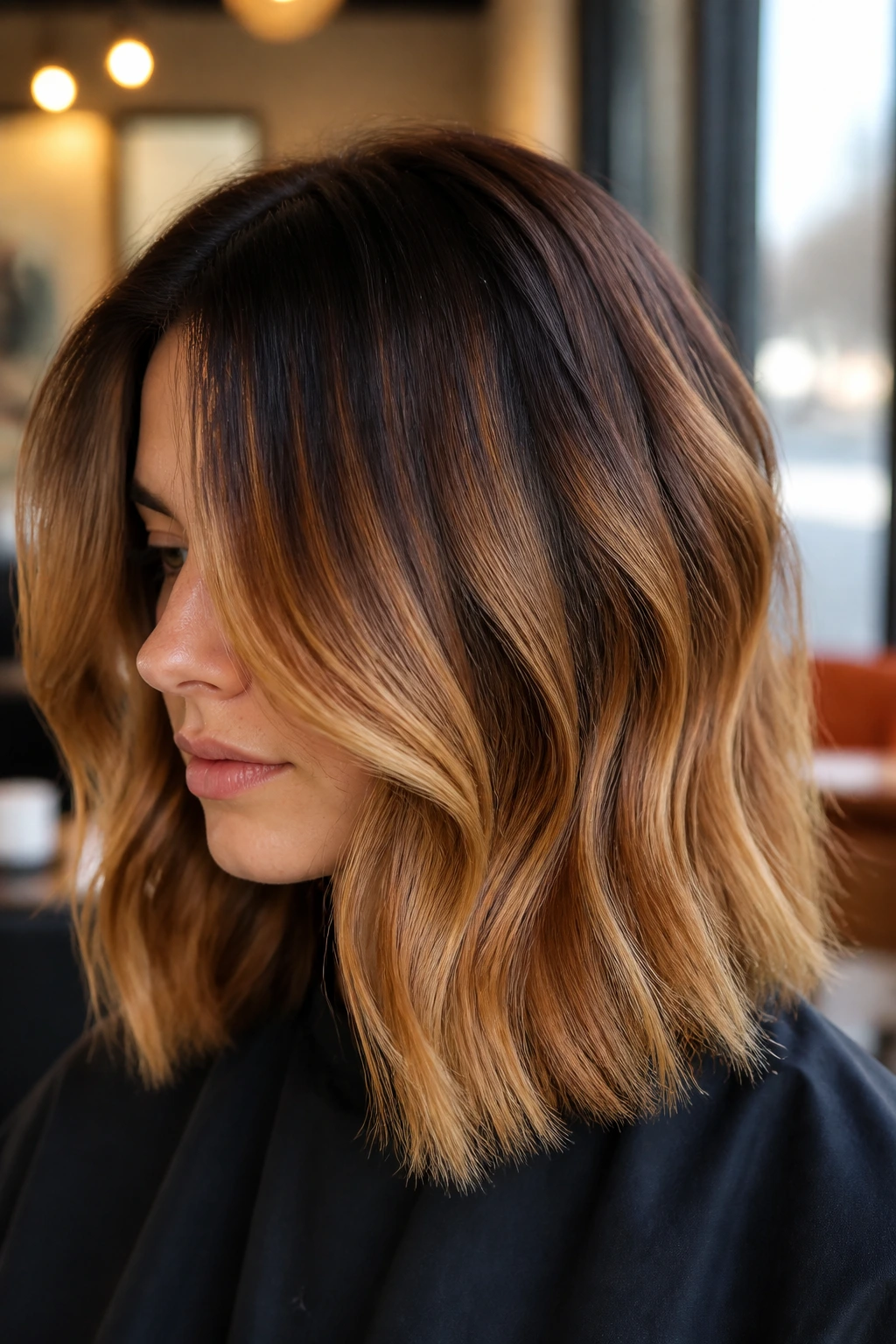
Butterscotch Melt sits between honey and caramel, which is why it flatters so many brunette bases. The roots stay rich, the mids warm into golden brown, and the ends finish in a buttery amber tone that gives the whole head a soft glow. It’s warmer than beige, but it doesn’t tip brassy.
I like this one for shoulder-length cuts because the warmth makes the shape feel fuller. It also helps fine hair look less wispy at the ends. Butterscotch has enough depth to read as color, not just brightness.
If your hair tends to go flat after highlighting, this melt gives it a better middle zone. That is where the movement lives. Not at the scalp. Not just at the tips. Right in the middle, where the eye actually notices it.
25. Midnight Cocoa Melt
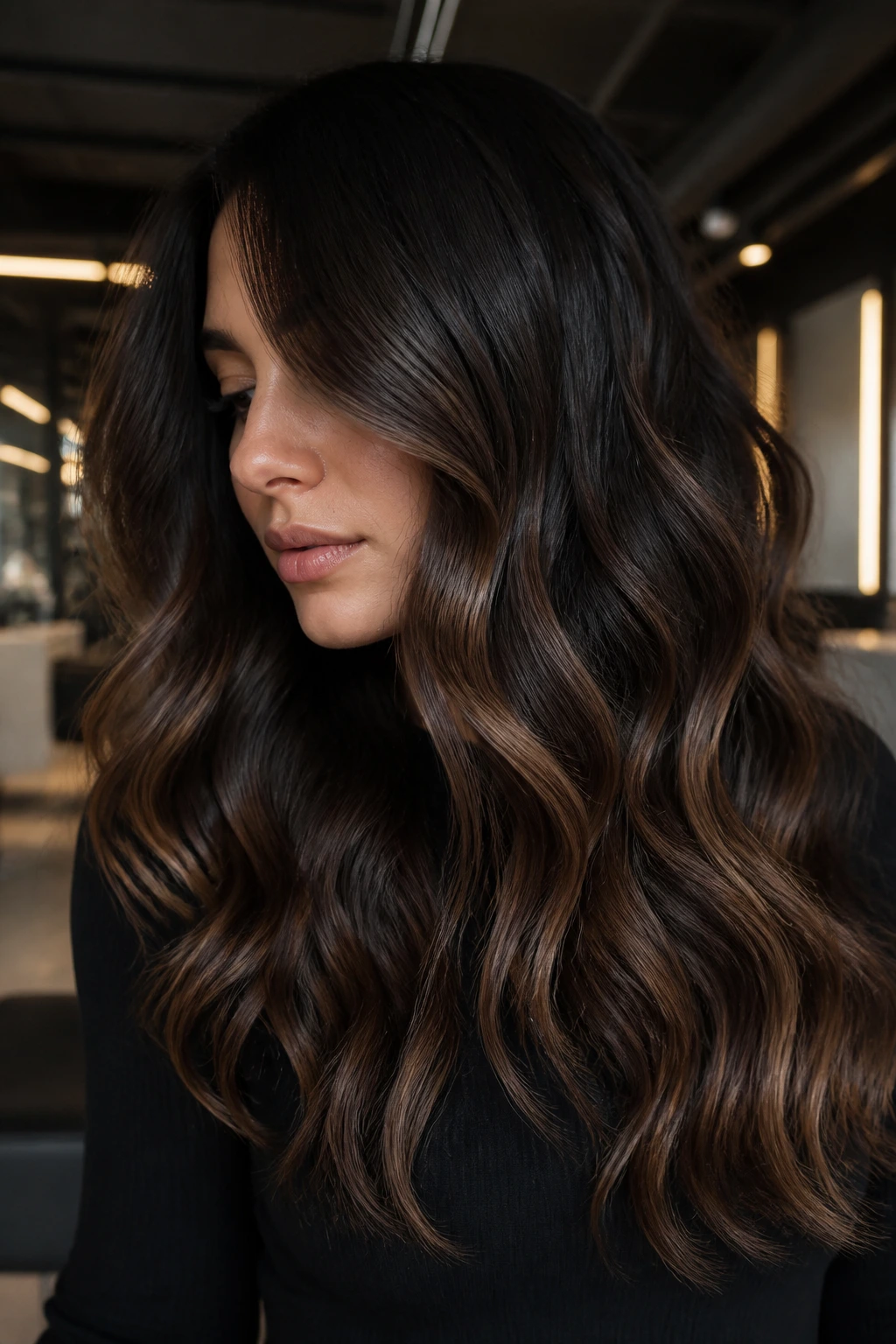
Midnight Cocoa Melt is dark, glossy, and a little moody in the best way. The root is deep cocoa, the mids soften into espresso-brown, and the ends hold a slightly lighter chocolate tone that keeps the hair from collapsing into one color block. It is subtle at first glance, then much richer when you move.
This is one of the strongest options for someone who wants dimension without lightening drama. The color still has range, even though the palette stays in the dark brown family. On sleek styling, it reflects light in a narrow, polished line. On curls, the tonal shift becomes much easier to see.
The key here is keeping the ends healthy. Cocoa shades punish dryness. If the tips are rough, the finish will look dull no matter how good the formula is. Smooth ends, though? That is where this melt really earns its keep.
Why a Color Melt Starts Looking Soft Instead of Stripy
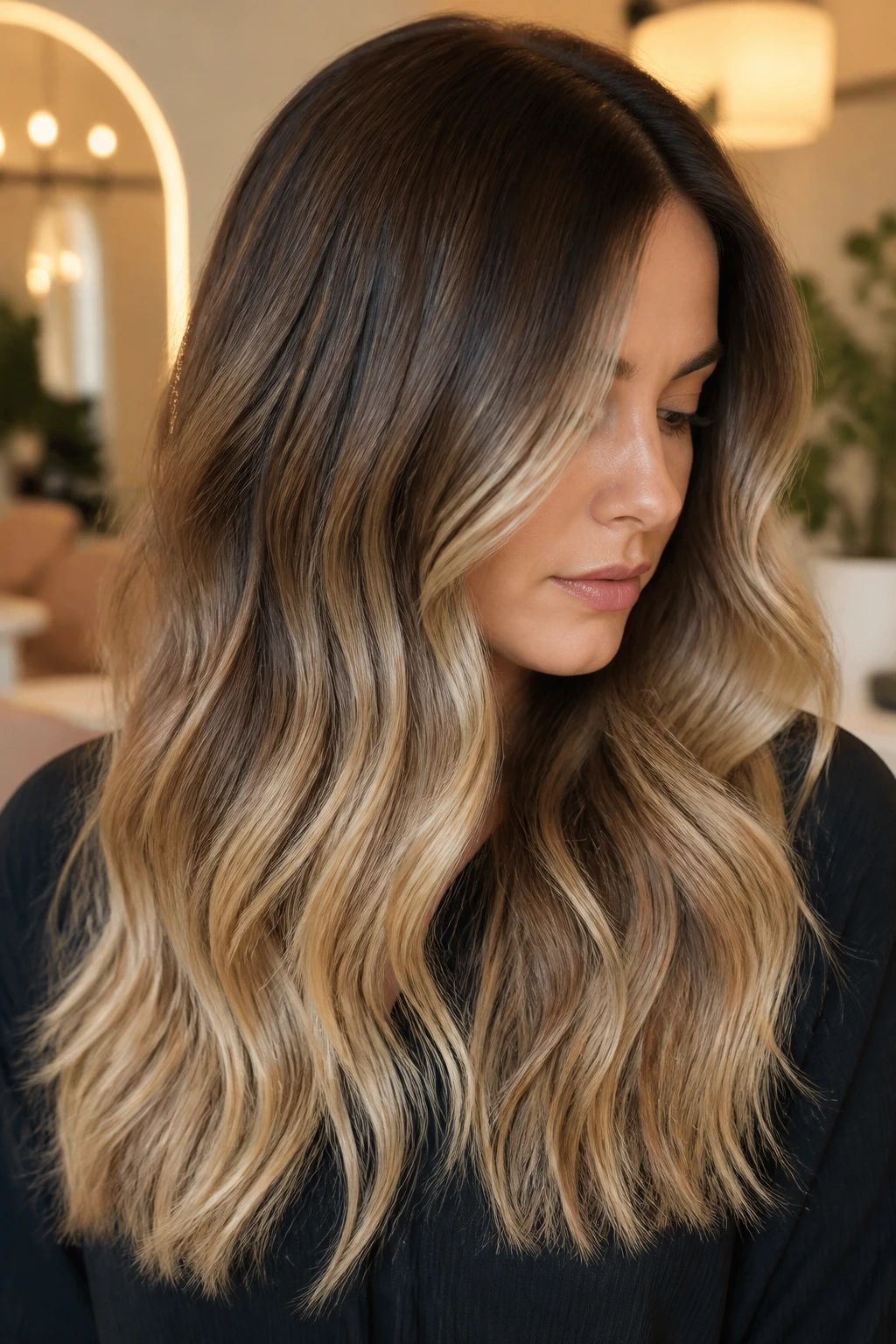
A melt looks soft because the transition shades do their work quietly. The root shadow anchors the style, the mid-tone bridges the gap, and the lighter pieces at the ends stay thin enough to read as movement instead of blocks. That sounds simple, but it’s where a lot of color jobs go off the rails.
The most useful thing to remember is that a melt is not one formula. It is a sequence. A brunette base can melt into beige, then vanilla, then cream. A copper base can melt into cinnamon, then peach, then apricot. The palette changes, but the job stays the same: give the eye a place to travel without a hard stop.
Texture changes the result, too. Loose waves blur the blend. Straight hair shows the seam if the bridge shade is wrong. Curls can hide a slightly stronger contrast, which is why many curly clients can go lighter in the ends without looking harsh. I’ve always thought of that as the real test of a good color melt: it should still look intentional when the hair is flat, not only when it’s styled.
Essential Tools for These Looks
-
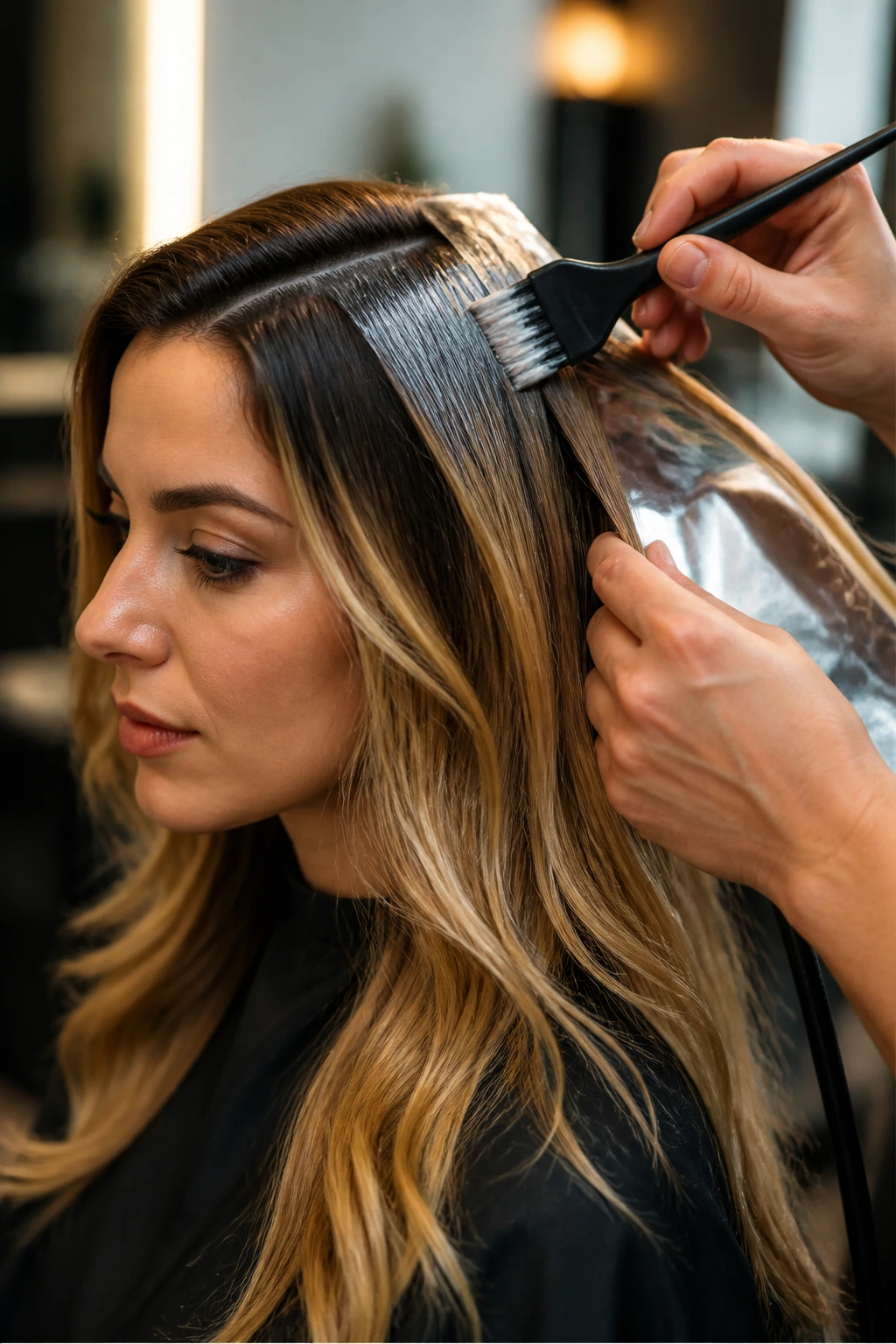
Tint brush set: A narrow brush for face-framing pieces and a wider one for soft blending keeps the placement from looking too blocky.
-
Color bowl or bottle applicator: Both matter, depending on whether you’re doing a gloss, toner, or a more controlled shadow root.
-
Tail comb: Clean sectioning is the difference between a soft melt and a stripey mess.
-
Balayage board or paddle: Optional, but it helps when you want a feathered, hand-painted finish through the mids and ends.
-
Foils: Use these when you need brighter lift in a few spots without lightening the entire head.
-
Sectioning clips: Cheap, boring, necessary. Hair that slides out of place ruins timing fast.
-
Bond builder: Helpful whenever lightener is involved, especially if the ends are already dry or previously colored.
-
Color-safe shampoo and conditioner: Not glamorous, but they keep toner from fading out in a week.
-
Purple or blue shampoo: Optional, and useful only when brass is actually showing up. Overusing it can dull the melt.
-
Heat protectant spray: If you want the dimension to show, you’ll probably style the hair. Protect it.
Smart Shopping and Color Selection Tips
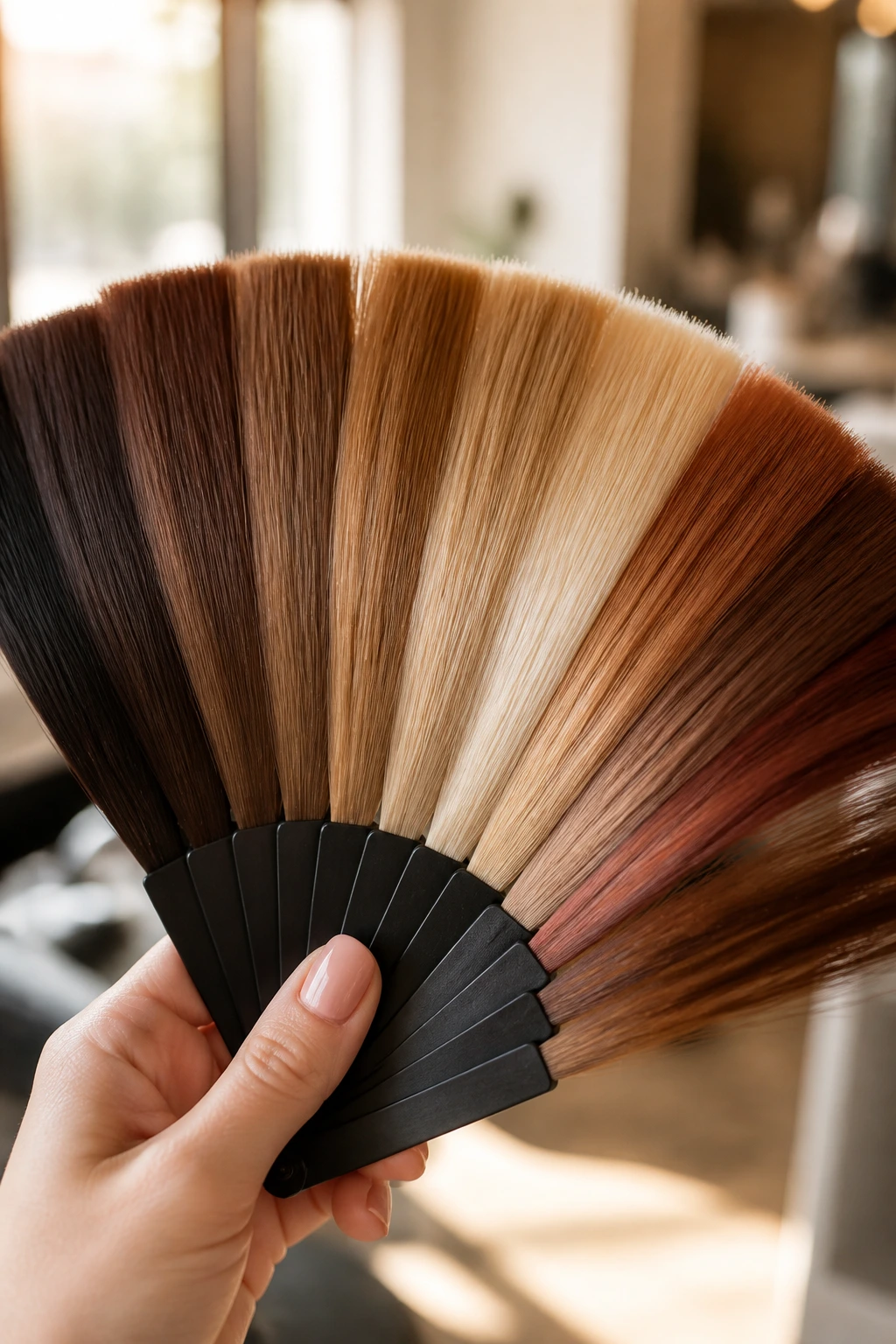
The smartest move is to shop for the color in the right lighting and on the right head. A photo of a level 8 blonde on pin-straight hair tells you almost nothing if your base is level 4 and your hair is dense with a wave pattern. Bring reference images that match your natural depth, not just your dream tone. One photo of the shade family, one of the brightness level, and one of the grow-out you can tolerate is a much better set.
Ask for tone words, not just “this exact photo.” Beige, mushroom, caramel, pearl, honey, graphite, taupe, cinnamon, and champagne all carry different jobs. Those words help a stylist build the bridge between your roots and ends. The photo gets the mood across. The words get the formula closer.
Hair history matters more than people like to admit. Box dye, old red tones, and heavily porous ends all change how a melt behaves. If your ends have taken a beating, the stylist may need to keep the bridge shade one step deeper so the lightest pieces do not vanish into dryness. That is not a problem. It is the job.
And yes, it helps to know your upkeep limit before you sit down. If you only want to visit the salon every three months, ask for a melt with a softer root shadow and a color family that fades gracefully. If you like being a little more exact with tone, you can go a touch cooler or brighter.
How to Style a Melt So the Dimension Shows
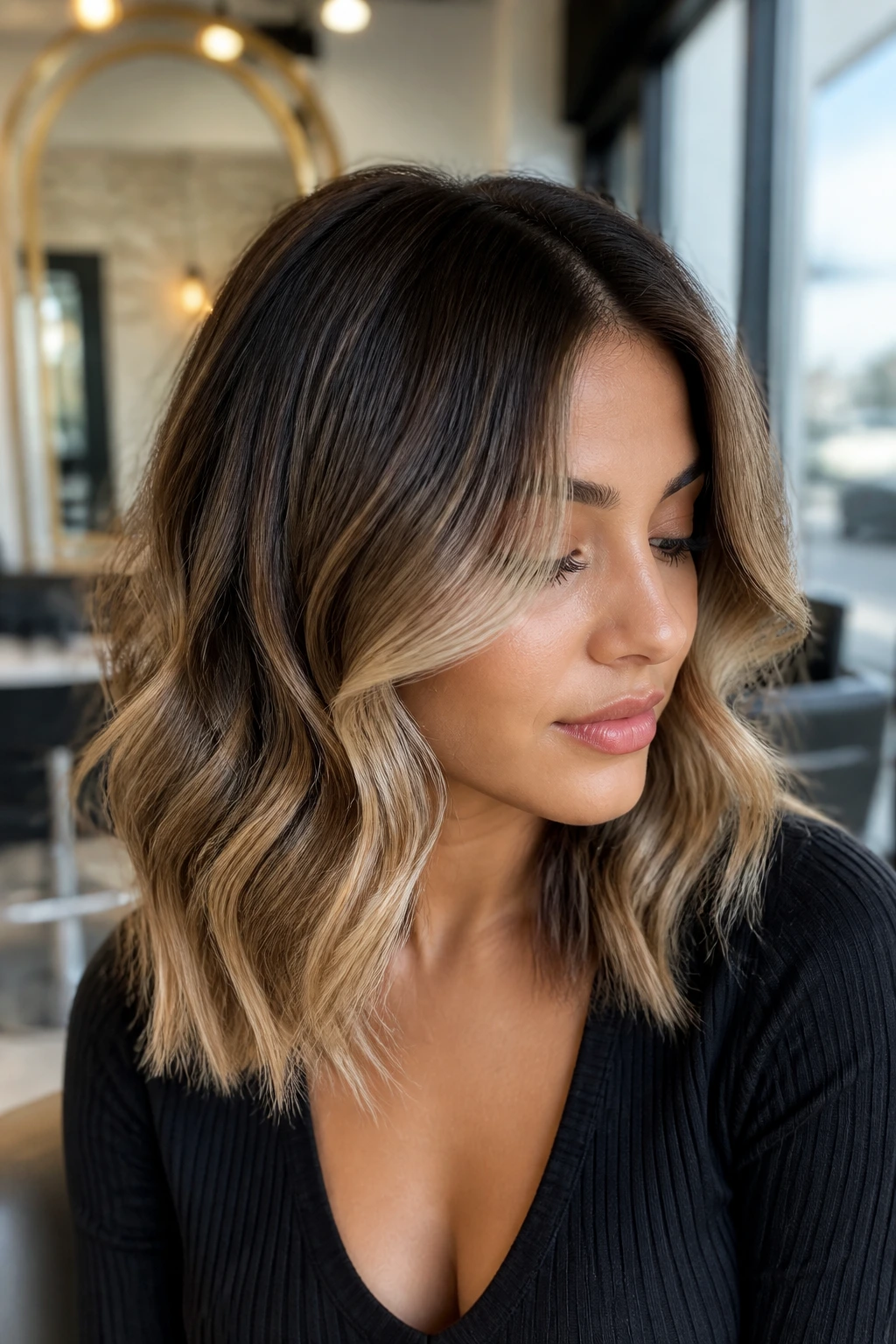
Presentation: Soft bends, loose waves, and a blown-out finish show a color melt better than a tight, polished curl pattern. The shift from root to mids to ends reads more clearly when the hair moves in broad, gentle curves.
Accompaniments: A collarbone lob, long layers, curtain bangs, and airy face-framing pieces give the color places to live. On one-length cuts, the melt has to work harder to show depth, so shape matters more than people expect.
Portions: If your hair is fine, keep the contrast smaller and the pieces tighter; a big jump from dark root to pale end can look loud fast. On thicker hair, you can ask for wider ribbons and a slightly deeper root shadow because the volume can carry it.
Beverage Pairing: A long salon appointment and a cold coffee do make a strange kind of sense, but the real pairing is styling time. If you finish with a blowout or a bend iron, the color will read more clearly than if you let it dry in a single straight sheet.
Additional Tips and Tone Boosters
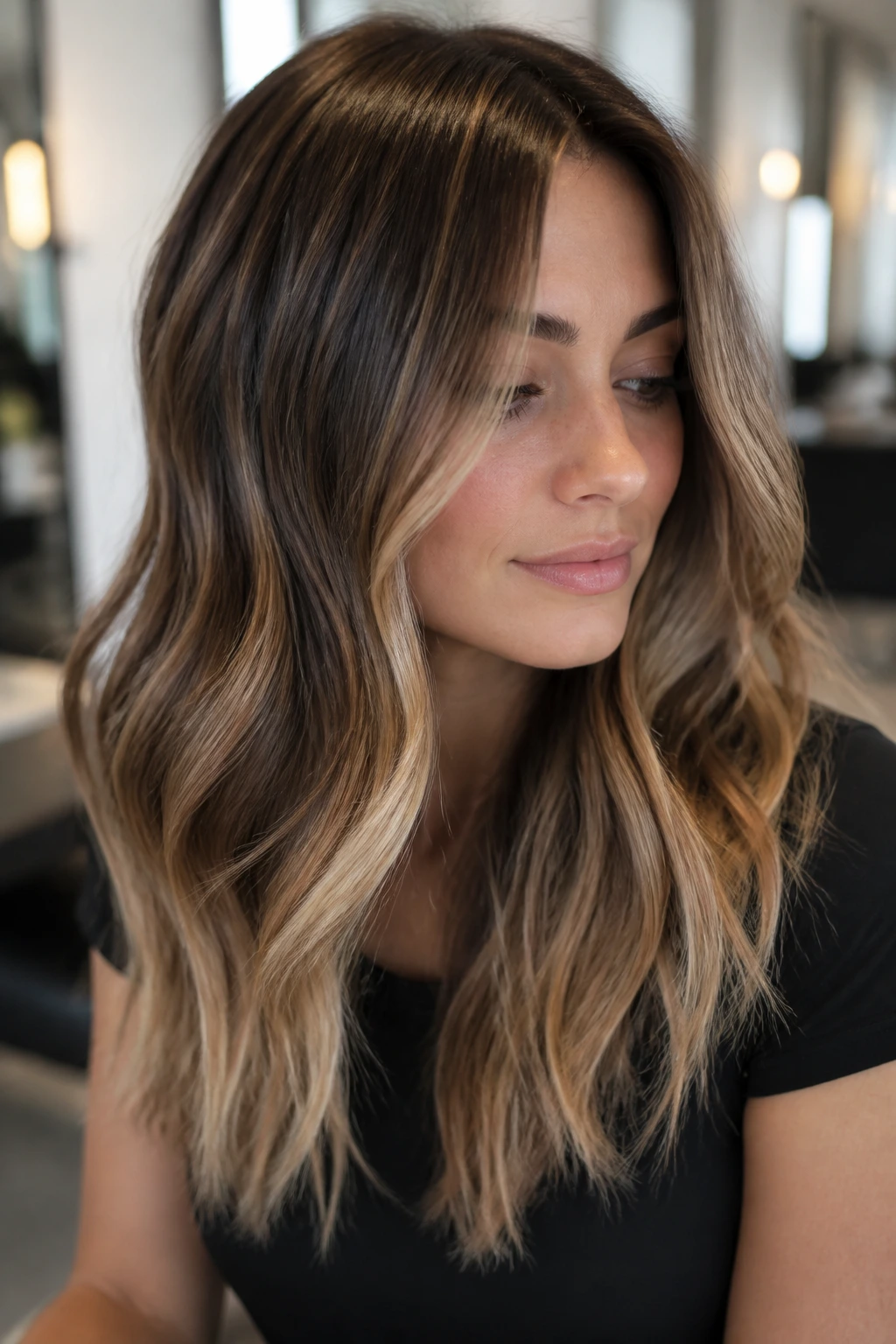
Tone Enhancement: A demi-permanent gloss every few weeks is the cleanest way to keep a melt shiny without rebuilding the whole head. That single service can push brass down, soften an ash tone, or warm up a beige finish before it goes flat.
Customization: Ask for extra brightness around the face if you want the color to lift your features. Ask for a deeper root and fewer light pieces if you want the grow-out to stay calm. Same technique, different feel.
Serving Suggestions: Soft curls show off ribbons. A tucked-behind-the-ear bob shows off the front blend. A sleek blowout shows off the tonal shift through the mids. Pick the style that lets the color breathe instead of fighting it.
Make-It-Yours: On curly hair, ask for wider painted sections so the tone reads after shrinkage. On straight hair, finer slices tend to look cleaner. If you need gray coverage, keep the melt close to your natural root and let the lighter pieces live lower down.
Maintenance, Glossing, and Touch-Up Timing
Freshly done color does not like to be scrubbed into the ground. Wait at least 48 hours before shampooing after an appointment if your stylist has just glossed or toned the hair. After that, color-safe shampoo 2 to 3 times a week is usually enough unless your scalp runs oily.
For blonde or caramel melts, a purple shampoo once every 7 to 10 days is plenty. For orange-prone brunettes and coppers, blue shampoo can help, but only if warmth is actually showing up. Overuse makes the hair dull. That’s the part nobody wants to admit.
Gloss refreshes usually land every 4 to 6 weeks for lighter melts and every 6 to 8 weeks for richer brunettes. Root touch-ups can stretch longer if the shadow is soft and the blend is built well. Trims matter too. Dry ends distort the finish, and a melt can look messy long before the color has truly faded.
Heat protectant is non-negotiable if you style with irons or a blow dryer. High heat blows through toner faster than a lot of people realize. Keep the iron moving, keep the setting moderate, and let the hair cool before you brush it out.
Common Mistakes to Avoid
-
Choosing the photo without checking the starting level. A champagne blonde on level 8 hair will not behave like the same photo on level 4 hair. Fix it by matching your current depth to the inspo image before you sit down.
-
Making the root shadow too dark. When the crown goes too deep, the melt stops looking soft and starts looking like a block. Ask for a shadow that is only one or two levels deeper than the mids, not a blackout effect.
-
Letting the ends get over-toned. If the tips turn gray, muddy, or hollow, the melt loses movement. The fix is a lighter hand at the bowl and a gloss that supports the bridge shade instead of swallowing it.
-
Ignoring old warmth under the color. Orange or red undertones push through fast if they are not neutralized properly. This is where mushroom, ash, or beige bridges matter.
-
Skipping trims. Split ends scatter light badly and make even a good melt look frayed. A clean trim every 8 to 12 weeks keeps the gradient readable.
-
Trying to make one formula do everything. Root, mids, and ends do not all need the same tone. They need a sequence.
Variations and Adaptations to Try
Smoky Brunette Shift: Keep the same melt structure, but push the mids into taupe and the ends into soft ash. This works if you like cool tones and want the hair to look calm in every light.
Warm Honey Sweep: Start with a beige brunette root, then move through honey and butterscotch at the ends. It’s a good option if your skin warms up with gold tones and you want the hair to feel sunnier.
Muted Red Veil: Use chestnut at the root, cinnamon through the mids, and a soft copper glaze at the ends. The color stays wearable because the red is layered, not blasted on.
Cool Fashion Veil: Keep the root deep and add smoky plum, lavender, or graphite through the lower half. This is for someone who wants personality without a hard contrast line.
Soft Gray Blend: For early grays or silver streaks, use a root shadow close to your natural color and let the lighter pieces blend into the grays instead of fighting them. It gives the grow-out a cleaner, less obvious edge.
Frequently Asked Questions
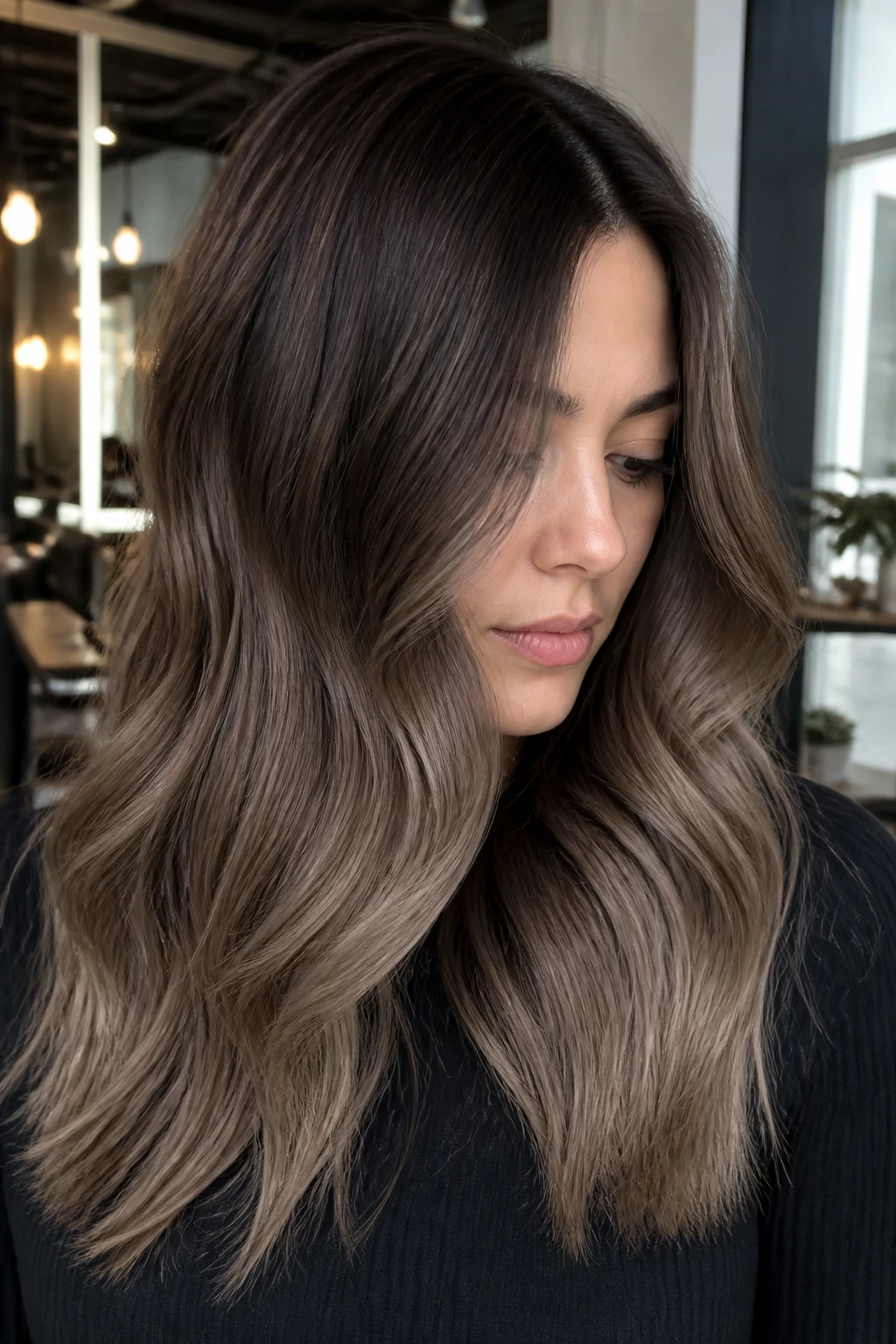
What is a color melt, exactly?
A color melt is a blended transition from one shade to another, usually from darker at the roots to lighter through the mids and ends. The point is to avoid a harsh line so the hair reads as one smooth gradient.
How is a color melt different from balayage?
Balayage is a placement technique where lightener is painted onto the hair. A melt is the finished blend of tones, and it can be built on top of balayage, foils, babylights, or even all-over color.
Can a color melt work on curly hair?
Yes, and curls often make the dimension look richer because the shape breaks up the color. The stylist usually needs to place the lighter pieces a little wider and account for shrinkage.
Will a color melt cover gray hair?
It can blend gray very well, but full coverage is a different job. If you need complete coverage at the root, ask for a root color or low-ammonia permanent shade with a melt layered over it.
How often does a melt need touching up?
A soft melt can often stretch 8 to 12 weeks before the roots start bothering you, with glosses in between if needed. Lighter blondes may want toner or gloss refreshes sooner than darker brunettes.
What if my ends go muddy after toning?
That usually means the toner sat too long, the formula was too dark, or the hair was porous. The fix is a lighter gloss next time and a better bridge shade so the ends keep their shape.
Can I ask for a melt if my hair has box dye on it?
You can, but the plan may need to be slower. Old box dye changes lift and tone, so a stylist may need to work in stages instead of forcing a single appointment to do too much.
What should I bring to the salon besides photos?
Bring a short note about how often you want to visit for maintenance, how much warmth you like, and whether you usually wear your hair straight, wavy, or curly. Those details matter as much as the picture.
The Soft Grow-Out That Keeps Its Shape
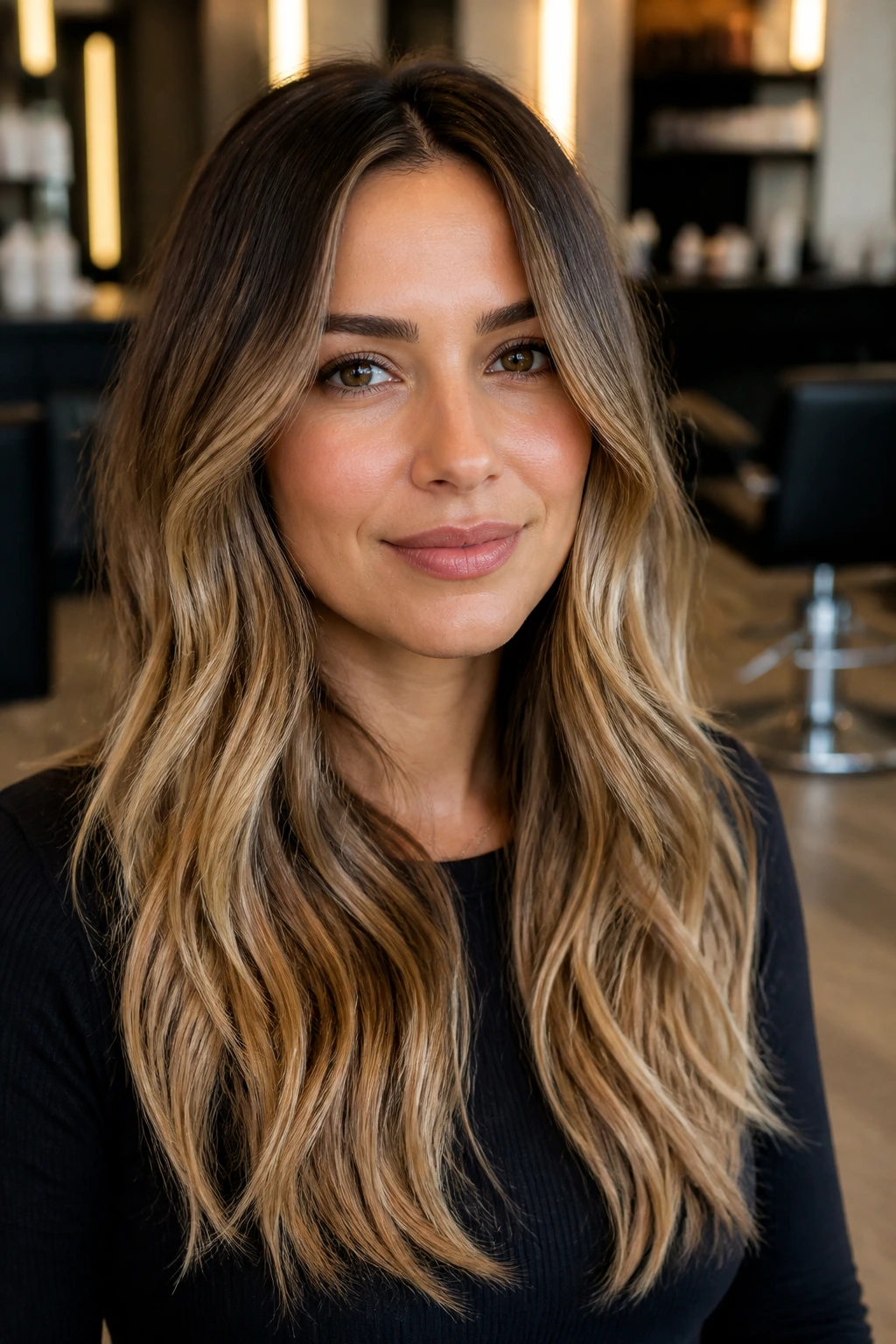
A good melt earns its place by still looking decent after the first few weeks of normal life. Roots grow. Toner fades. Hair gets tucked behind ears, tied up, brushed down, and slept on. If the blend was built with a real bridge shade and not just a quick color shift, it keeps its shape through all of that.
That’s why these color melt ideas work across so many base colors and hair textures. You can go warm, cool, smoky, creamy, coppery, or dark and glossy, but the logic stays the same: soften the root, protect the mids, and let the ends show just enough contrast to move. Pick the version that matches your upkeep and your natural depth, and the color will feel like it belongs there.
