



Short, thin hair and blonde can be a tricky pairing, and that’s exactly why it’s worth getting right. The best blonde hair looks for short thin hair do not rely on length to fake fullness; they build it with clean edges, a little shadow at the root, and blonde tones that bounce light instead of flattening the cut.
A one-note platinum crop can look sharp on the right head of hair. On fine strands, though, it can also expose every sparse spot and every dry end if the cut is too blunt or the toner goes too cool. That’s why the smartest looks use depth—champagne, butter, beige, root-smudge blondes—so the hair has places to rest visually.
I keep coming back to the same rule: shape first, shade second, shine last. If the cut is tight enough at the nape, soft enough through the top, and lightened in the right places, short hair starts reading fuller almost on contact. The 30 looks below range from feather-light pixies to polished bobs and grown-out minis, so there’s room here whether you like neat, messy, or somewhere in between.
Why These Blonde Looks Work So Well on Short, Thin Hair
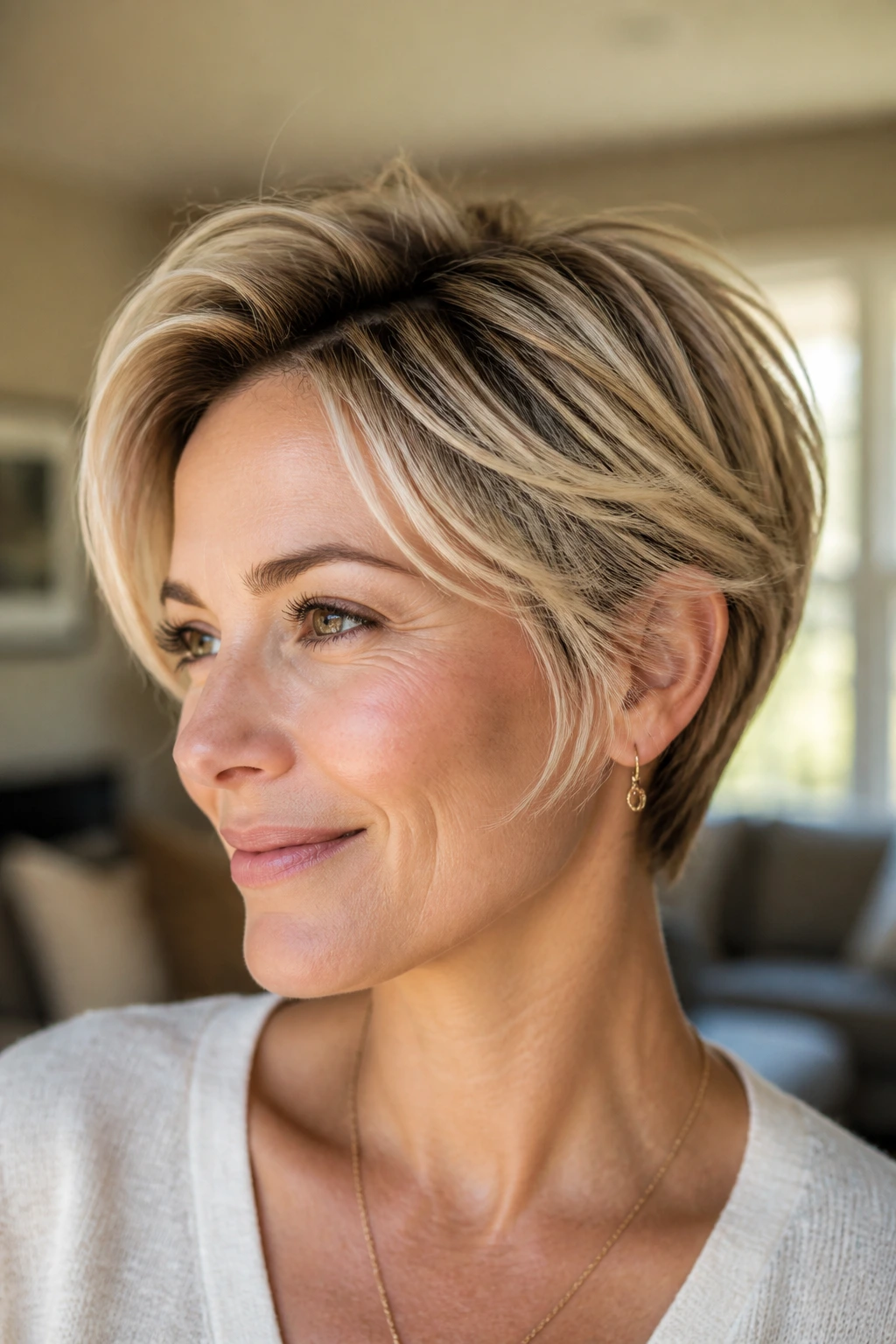
- They build width where you need it: A blunt line at the bob or a fuller crown on a pixie makes the hair look denser than it really is.
- They use light as a tool: Butter, beige, champagne, and soft gold reflect light without turning the whole cut into a flat yellow sheet.
- They keep the ends from disappearing: Choppy, feathered, or slightly beveled ends stop fine hair from looking stringy and over-processed.
- They leave room for regrowth: Rooty blondes and lived-in highlights buy you extra weeks before the color line gets annoying.
- They style fast: Short hair with the right blonde placement usually needs less round-brush wrestling and fewer hot-tool passes.
- They hide the scalp better: Dimension near the part line breaks up the see-through effect that can happen on very fine hair.
1. Feathered Butter-Blonde Pixie
This is the cut I reach for when someone wants short hair that feels airy, not severe. The top stays a touch longer, the sides hug the head, and the butter-blonde tone softens every edge so the whole thing reads plush instead of sparse.
Ask for feathering through the crown and a slightly piecey fringe. That little bit of movement matters more than another inch of length. Style it with a root-lift mousse at the roots, then blow-dry forward with your fingers. Finish with a pea-size of matte paste, pinching the ends so they don’t fall into one flat layer.
2. Root-Smoked Champagne Crop
A root-smoked blonde crop is one of the easiest ways to make thin hair look deliberate. The darker shadow at the scalp keeps the color from flashing every bit of scalp, while champagne ends stay bright enough to feel polished.
Why It Works
The contrast is mild, not harsh. That’s the point. You get brightness through the mid-lengths and ends, but the root stays soft, which keeps the cut from looking washed out on day one and patchy on day twenty-one.
This look especially suits hair that’s fine but not fragile. A light root melt, a level 8-to-9 champagne tone, and a crisp nape line give you movement without needing heavy layering. Keep the finish smooth with a round brush or a quick pass of a flat iron, then tuck one side behind the ear.
3. Micro-Lighted French Bob
A French bob can go flat fast on thin hair if the color is too solid. Micro-highlights fix that. Tiny blonde threads around the face and part line break up the shape just enough to make the bob look fuller, not heavier.
I like this on hair that sits between chin and jawline. It has enough polish for a clean shape, but the tiny lights stop it from looking like a helmet. If you wear glasses or like a center part, this one is especially good because the highlights frame the face without screaming for attention.
4. Icy Side-Swept Pixie
Icy blonde on a side-swept pixie has a bit of bite to it. The cool tone makes the shape feel sharper, and the side sweep gives the illusion of more lift at the front, which is exactly where fine hair usually needs help.
The catch: icy blonde shows dryness faster than warmer blondes. So this is the look for someone who is good about masks, bond care, and heat protection. Keep the top a little longer, sweep it across the forehead, and leave the nape tight. The cut gets the drama; the tone does the rest.
5. Honey Balayage Bob with Choppy Ends
If your hair is thin but not super sparse, a honey balayage bob is one of the smartest middle-ground choices. The honey ribbons warm up the face, while choppy ends keep the silhouette from feeling blunt in a boring way.
This works because the color moves in patches, not a sheet. The eye sees texture where there isn’t much natural bulk. Ask for the light pieces to sit around the crown and mid-lengths, not only on the very ends. That keeps the bob from looking see-through at the bottom.
6. Vanilla Blunt Bob
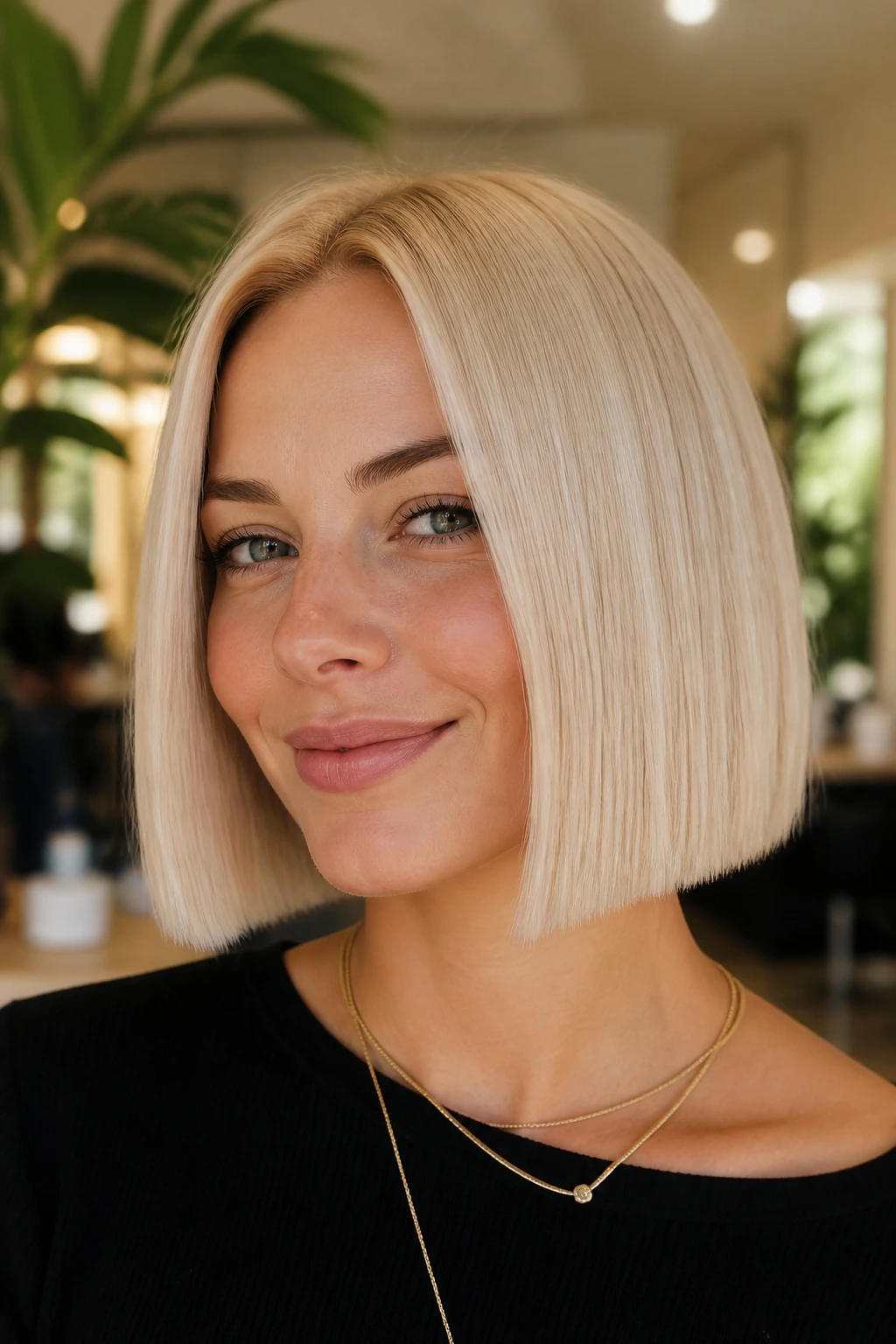
A blunt bob in soft vanilla blonde is all about clean edges. When the ends are even and the tone stays creamy, short thin hair suddenly looks denser because the eye gets one strong line instead of a wispy, broken outline.
I prefer this on hair that lies straight or only bends a little. If your texture is loose and soft, this cut can look expensive with almost no styling. A slight bevel under the chin keeps it from being boxy, and a shine spray at the finish makes the blonde read smooth rather than chalky.
7. Piecey Layered Bixie
The bixie—half bob, half pixie—was practically made for thin hair. It has enough length to play with, but it still sits close enough to the head to keep the shape intact. Add piecey blonde highlights, and the layers start doing visual work for you.
Best Bits of This Look
- Top length: Keep the crown long enough to push forward or over to one side.
- Layering: Ask for soft internal layers, not choppy razored ends that fray too much.
- Tone: Beige or buttery blonde keeps the cut from going harsh.
- Styling: A tiny amount of paste or cream on the fingertips is enough.
This is the cut I’d hand to someone who wants movement but hates spending twenty minutes styling hair.
8. Beige A-Line Bob
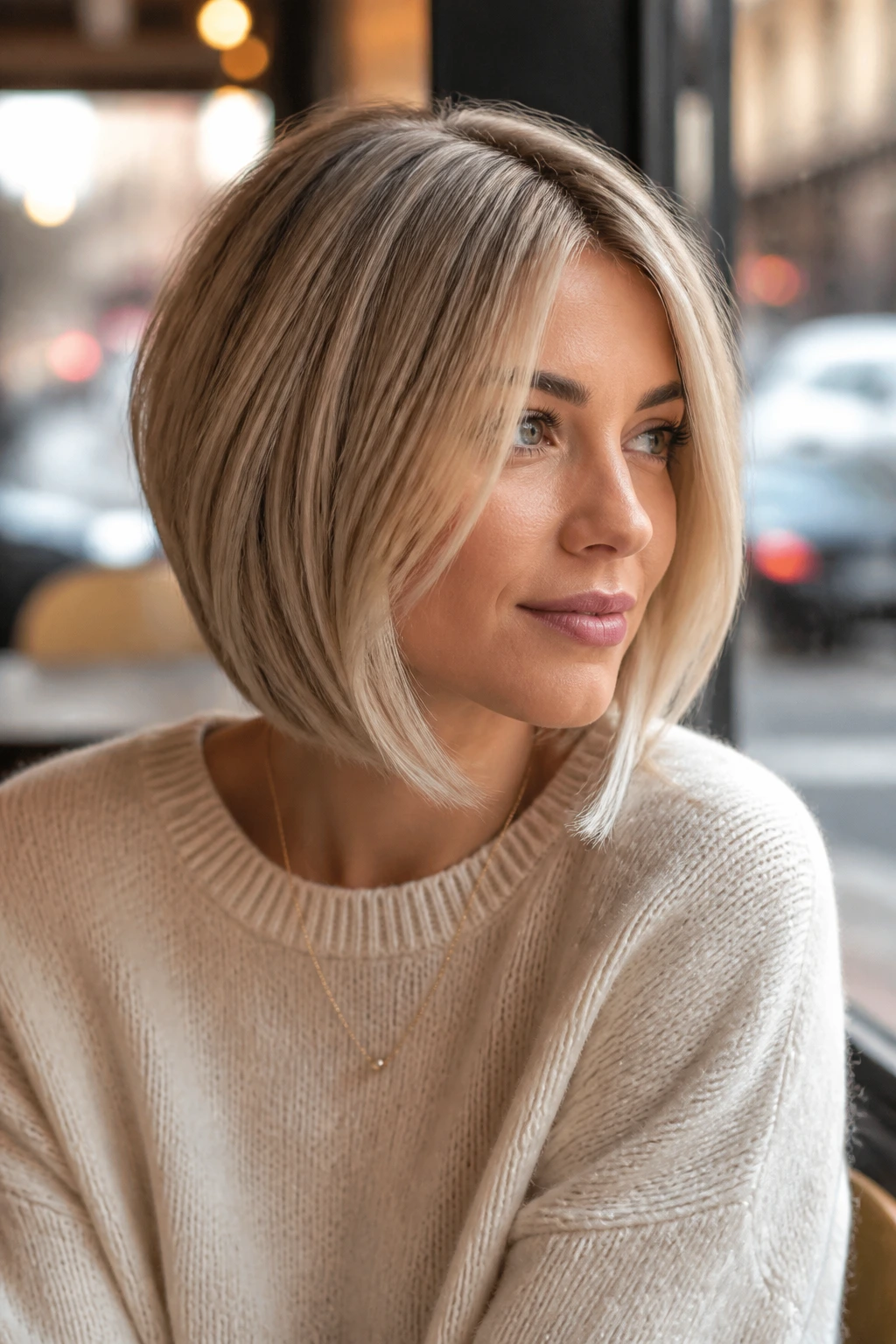
The A-line bob earns its keep by creating shape through angles. Shorter in the back, longer in the front, it gives thin hair a sense of fullness where you can actually see it. Beige blonde keeps the color soft and expensive-looking, not stark.
I like this look with a side part and a gentle bend toward the face. The longer front pieces can tuck behind one ear while the back stays neat and compact. If your hair tends to collapse by noon, this cut holds up better than a loose layered bob because the weight stays in the right place.
9. Platinum Mini Lob with Dense Ends
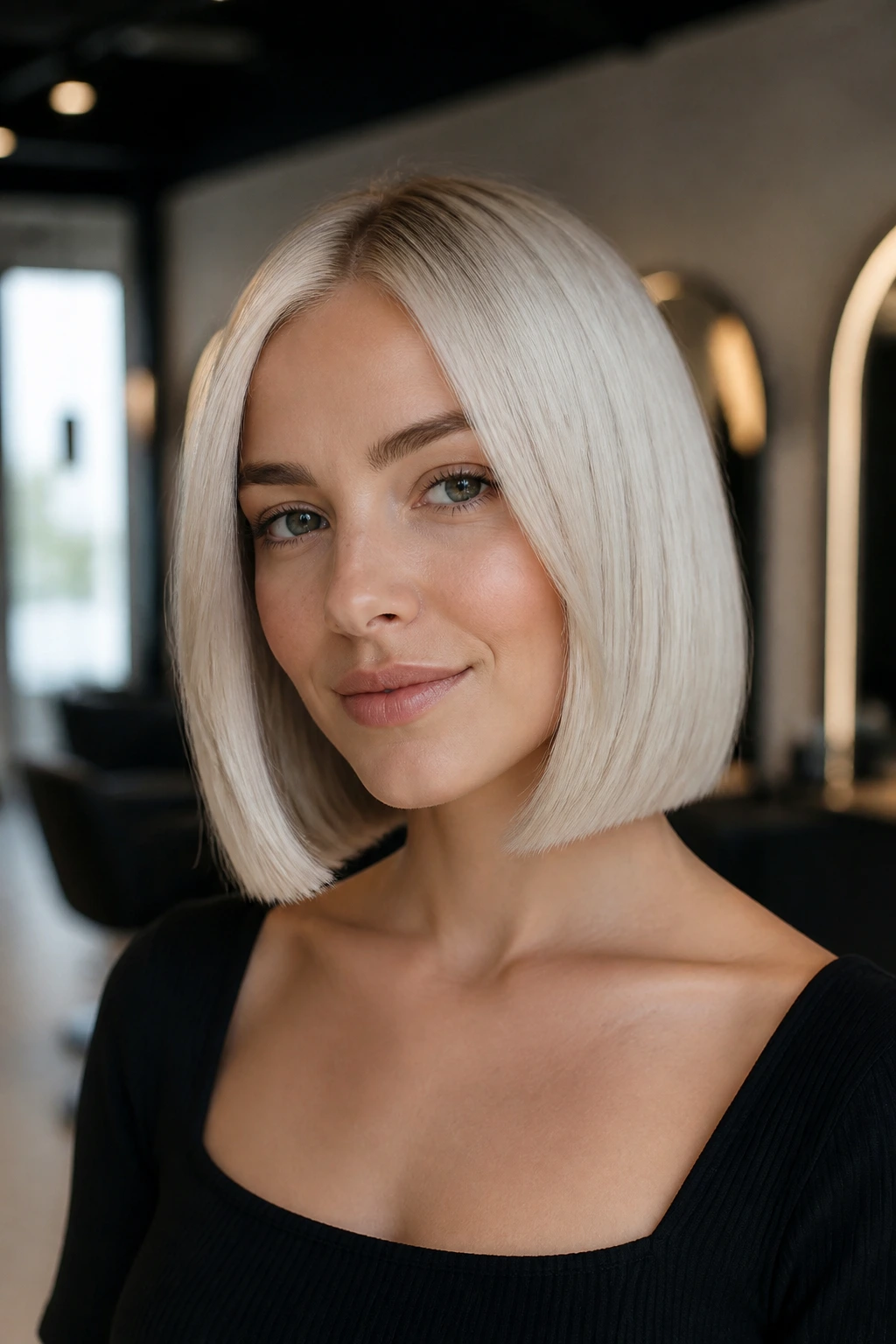
A mini lob that stops just below the jaw can be a good move if you want a little more length without losing the short-hair feeling. Platinum blonde makes the look crisp, but only if the ends are kept dense and blunt.
That last part matters. Thin hair can go stringy if the ends are over-thinned during the cut. Ask for a clean perimeter, then let the lightness come from the color placement instead of the scissors. The result feels modern and sharp, not wispy.
10. Curtain-Bang Bob in Soft Gold
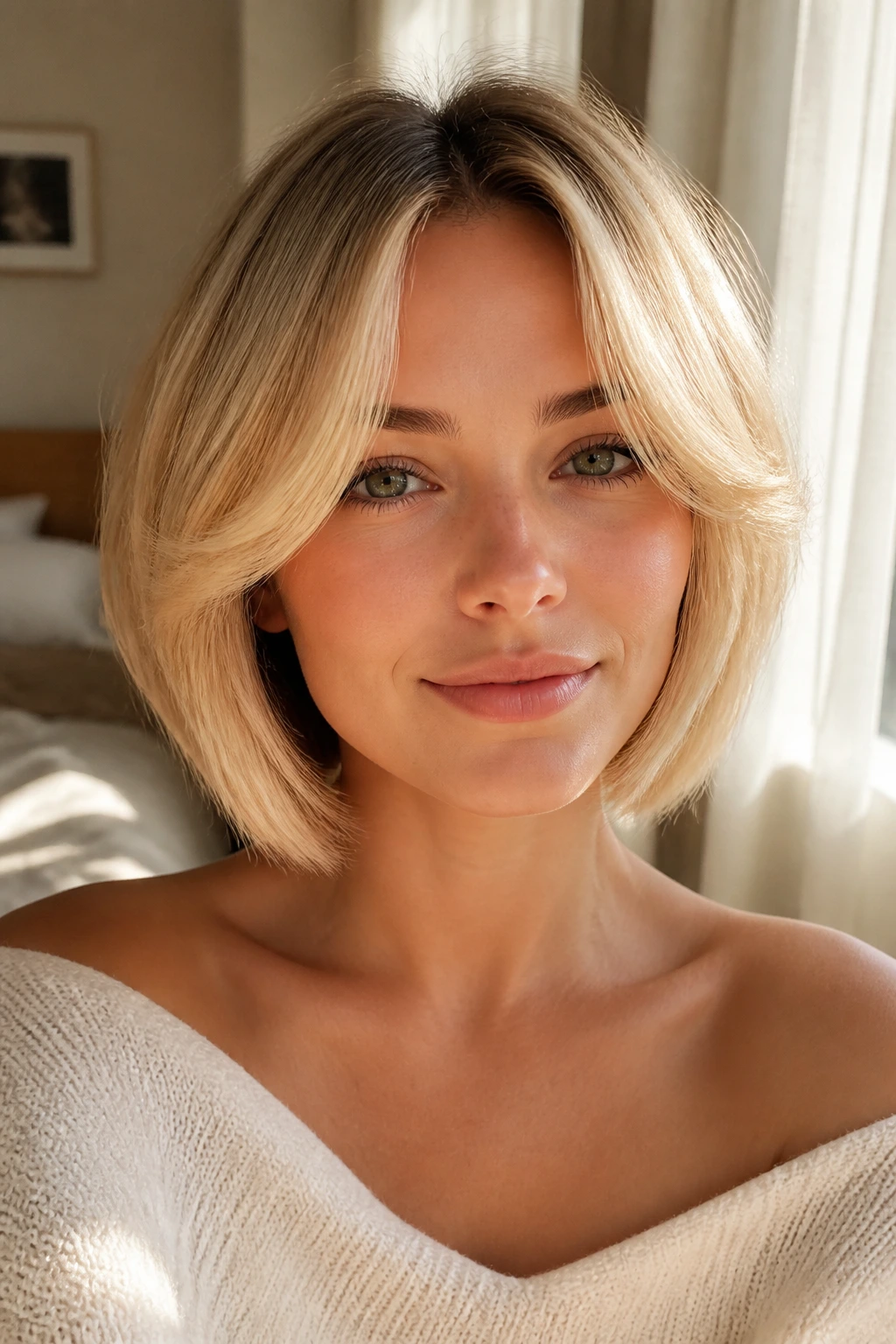
Curtain bangs are a lifesaver on fine hair because they create movement right where the eye lands first. Pair them with a soft gold blonde bob, and the whole cut starts to look wider through the front without needing extra bulk at the sides.
The bangs should skim the cheekbones, not sit heavy on the forehead. Too much bang density can make fine hair look flat. I like a light bend through the ends and a glossy finish here—nothing stiff, nothing crunchy. Just that easy, face-opening shape that makes the bob feel larger than it is.
11. Sandy Undercut Pixie
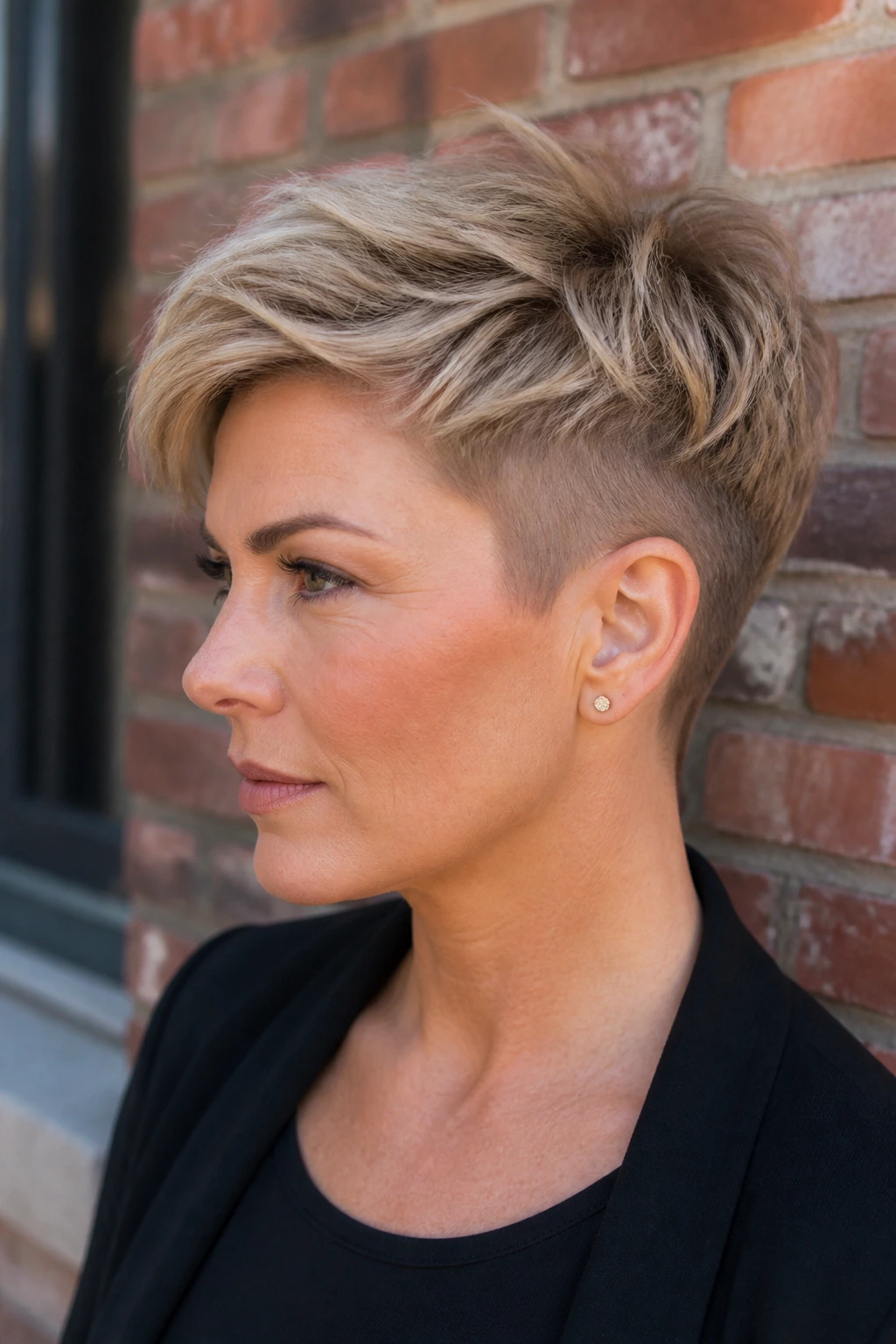
An undercut pixie is for someone who wants the top to look fuller by taking weight away underneath. Sandy blonde keeps it from feeling too severe, and the contrast between close sides and lifted top gives fine hair a little swagger.
This look is blunt in the best way. The undercut removes the puffiness that can happen around the ears, while the sandy tone softens the whole thing so it doesn’t feel too hard-edged. Style the crown with a root spray and blow-dry it forward, then separate the ends with your fingers. Easy. Sharp. Done.
12. Mushroom Blonde Crop
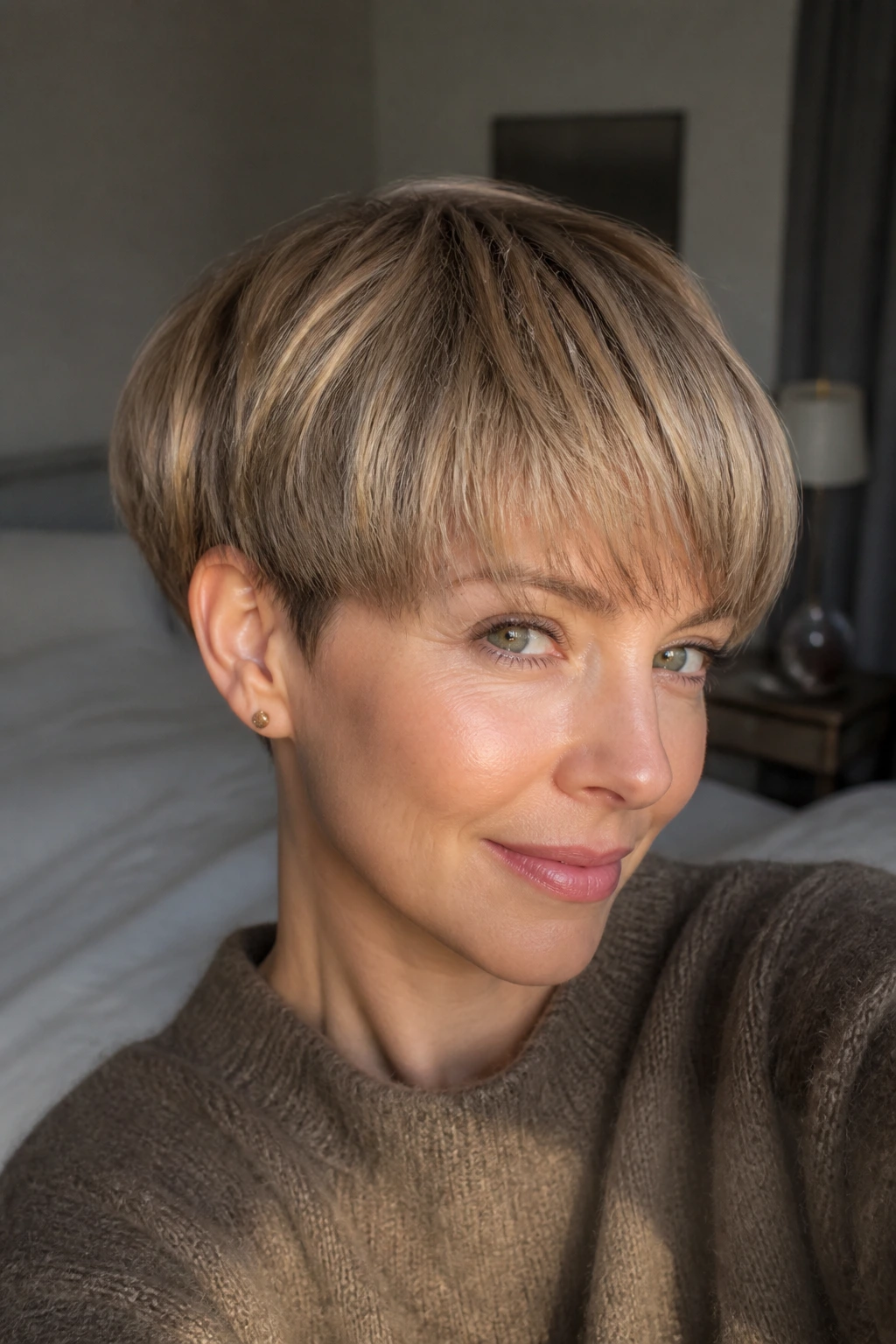
Mushroom blonde is a cooler beige-brown-blonde mix that does a sneaky amount of work on short hair. It’s one of my favorites for fine strands because it creates depth without going dark enough to look heavy.
The crop itself should stay rounded and close to the head, with just enough top length to move. Mushroom tones are especially useful if pure blonde makes your hair look too bright or see-through. The muted shade acts like a soft filter. It calms the whole cut down, in a good way.
13. Frosted Wedge Bob
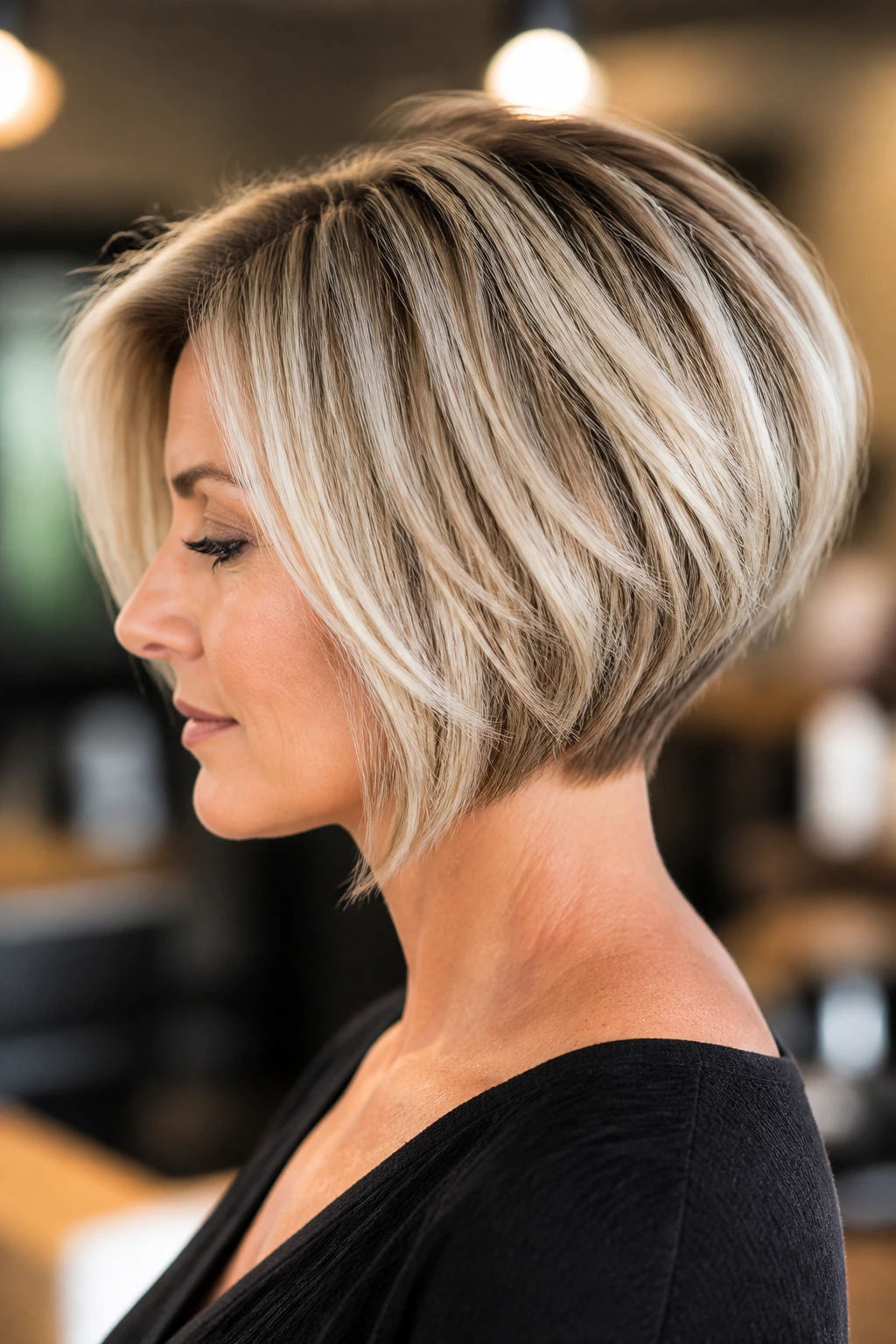
A wedge bob brings built-in shape, and frosted highlights sharpen the silhouette. The stacked back lifts the hair off the neck, while the lighter top sections keep the crown from looking flat.
This is one of those cuts that looks much fuller from the side than people expect. That’s why it works so well on thin hair. Keep the layers controlled, not fluffy, or the shape can start to lose its clean line. A light blowout at the crown and a smooth underbend through the ends make the blonde look intentional instead of overworked.
14. Golden Bixie with Piecey Texture
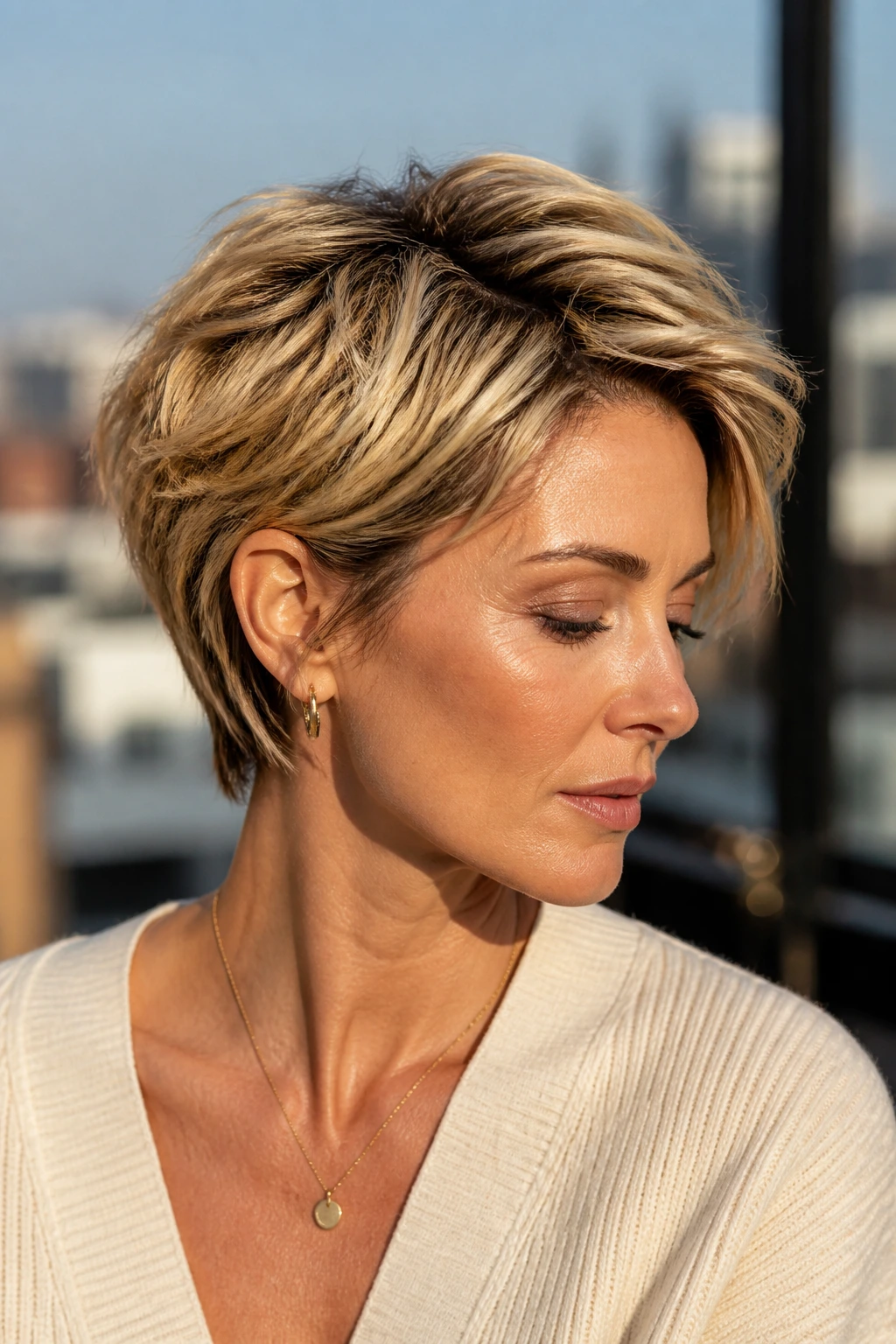
Golden blonde gives a bixie warmth and a little flash. On short thin hair, that warmth can be a gift because it makes the texture look richer, especially when the layers are pinched out into separate pieces.
I like this look with a deep side part or a soft push-back at the front. The color should stay brighter around the face and a little deeper underneath. That contrast is small, but it matters. It keeps the cut from reading as one flat sheet and helps the crown feel lifted.
15. Pearl Blonde Tapered Crop
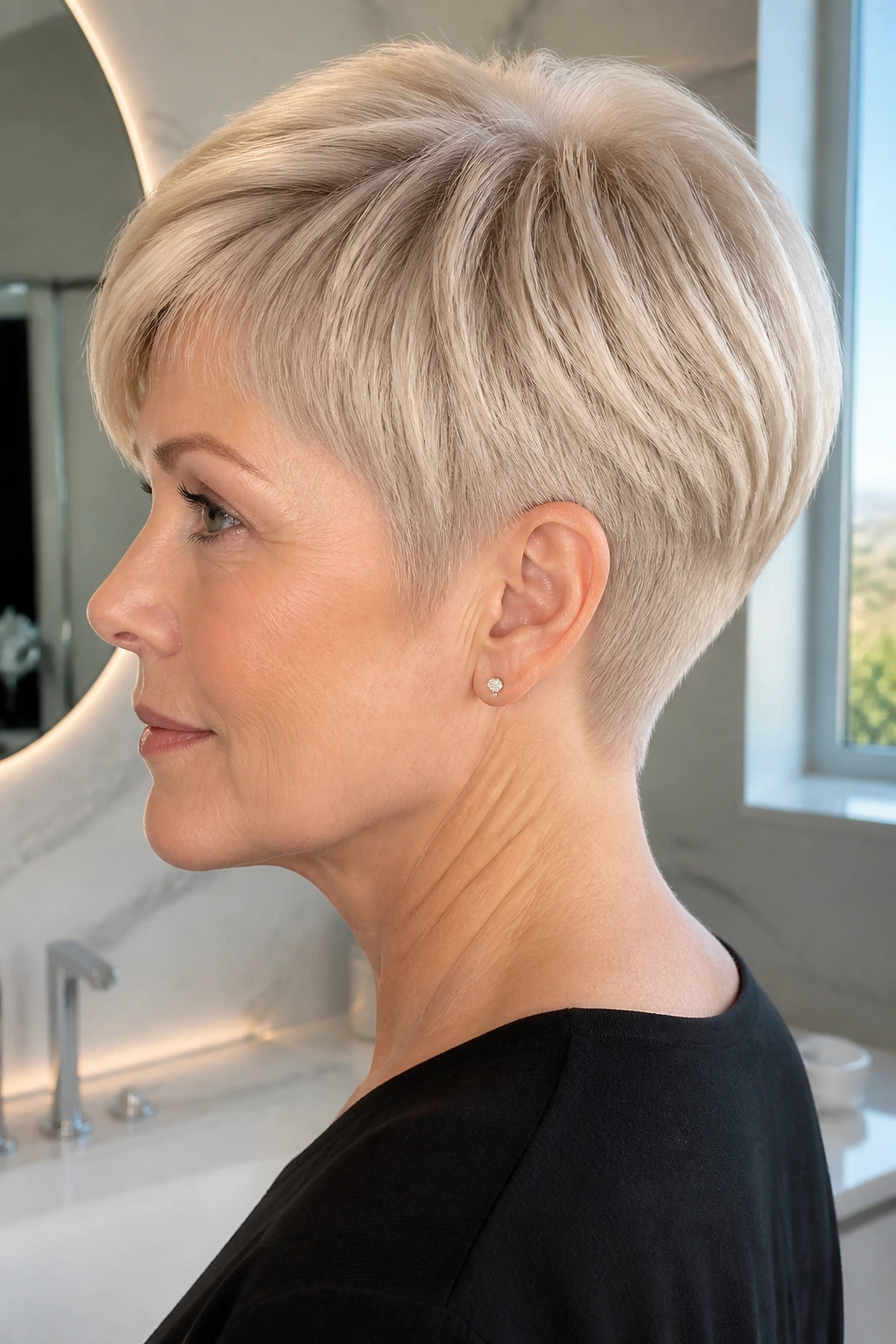
A tapered crop with pearl blonde color is sleek without being boring. The taper narrows the shape at the neck and sides, while the pearl tone adds enough sheen to make fine hair look delicate on purpose.
How to Wear It
Wear this one with smooth roots and a slightly separated top. If you try to puff it up too much, you lose the clean line that makes it good in the first place. I’d pair it with a light shine cream rather than a heavy oil, because fine hair can get stringy fast when product overloads the ends.
This is a neat, polished look. No fuss. No fluff.
16. Caramel-Root Short Shag
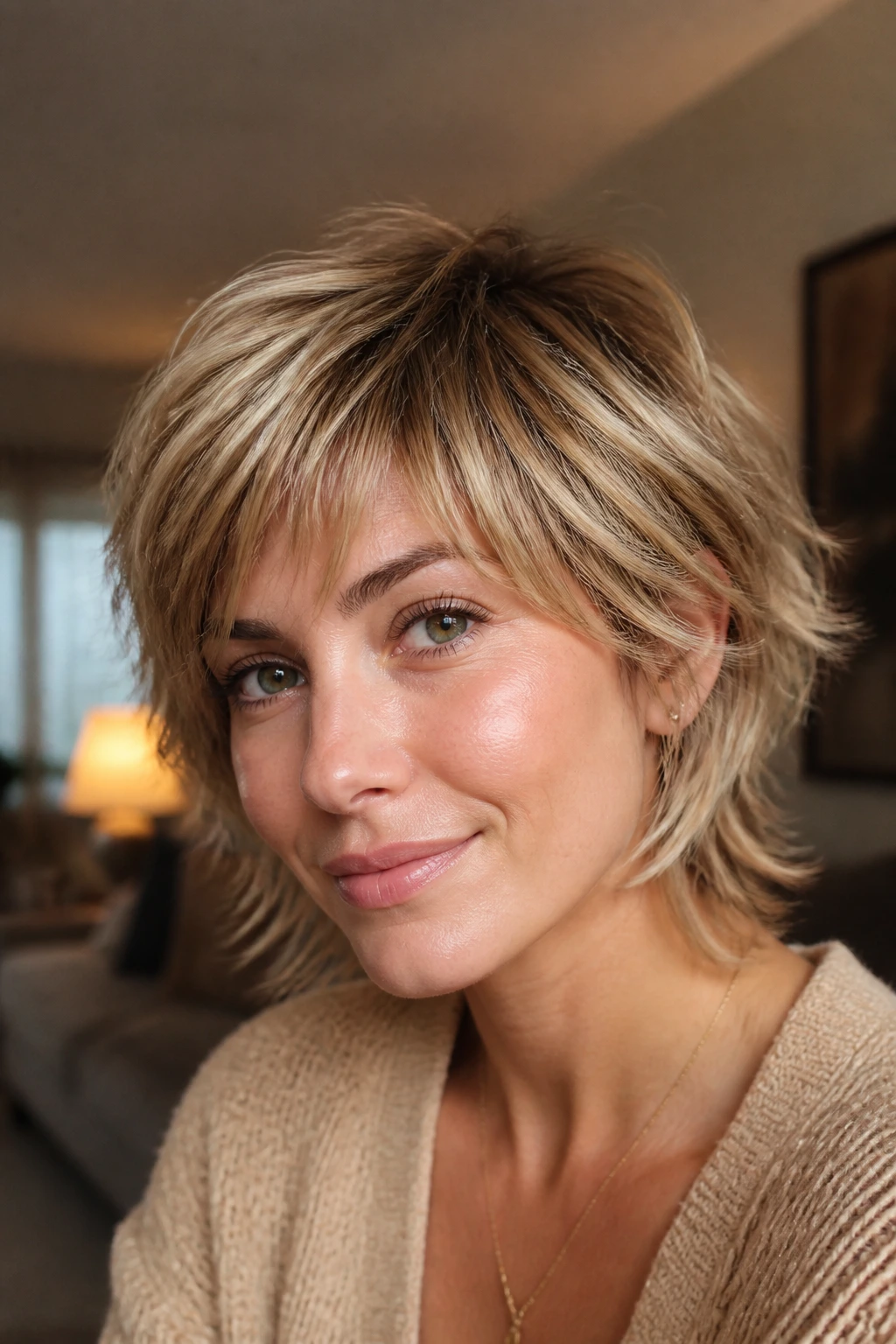
A short shag is usually good news for thin hair, but only if the layers are controlled. Too much razoring and the ends can disappear. A caramel root with blonde mids gives the shape some depth while the shaggy layers add movement around the face.
This is the option for people who hate a rigid bob. The texture is a little undone, a little lived-in, and that helps create the illusion of density because the hair isn’t sitting in one clean line. Ask for soft, broken layers around the cheekbones and crown, not a shredded mess through the ends.
17. Ash-Blonde Sleek Bob
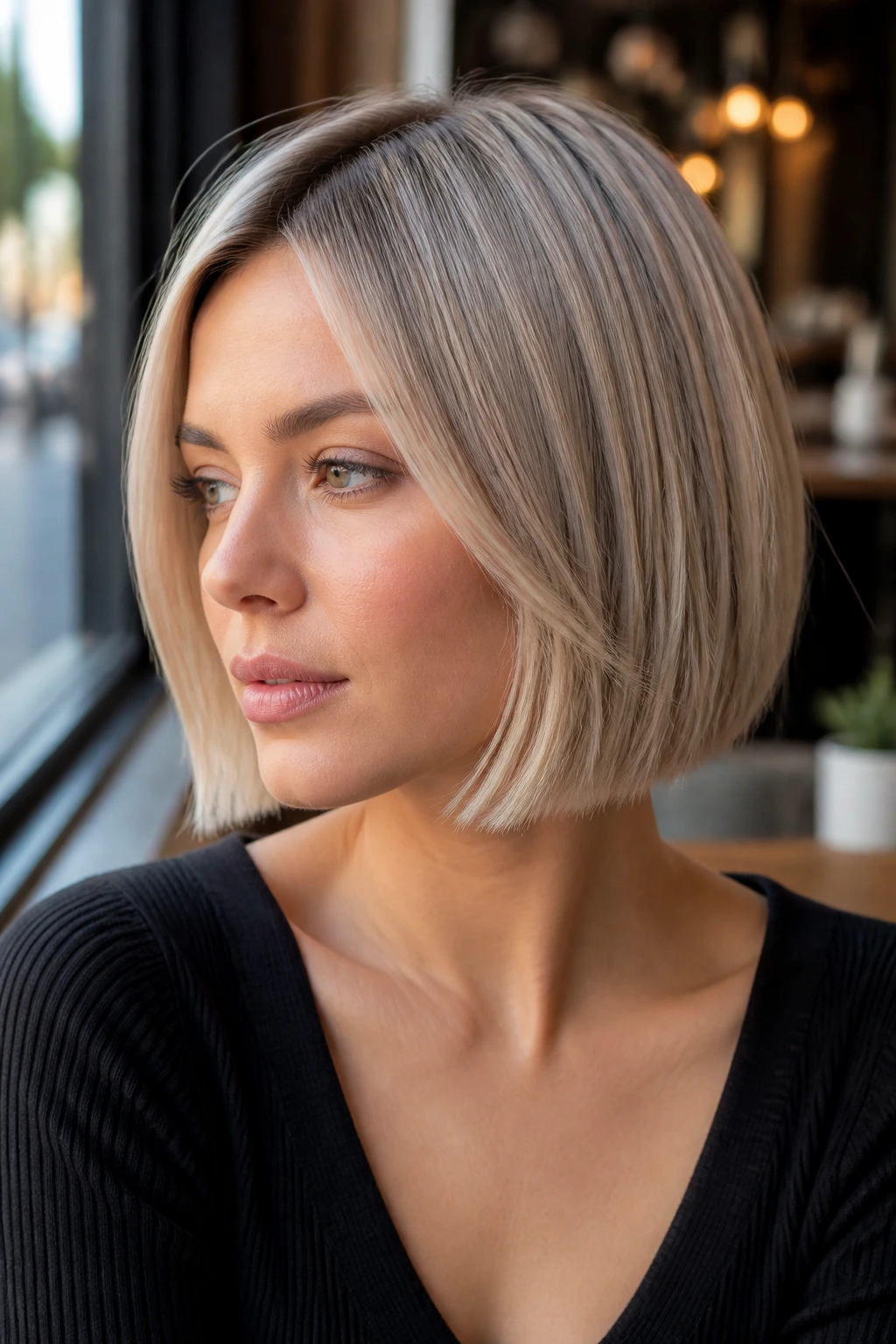
Ash blonde on a sleek bob can look expensive, but it needs discipline. The cut has to stay clean, and the color has to be cool without going dull. On thin hair, ash tones are useful because they mute redness and keep the overall look crisp.
I like this best when the ends sit right at the jaw or a touch below. Straighten it lightly, not pin-straight, so there’s still a hint of movement. If your hair tends to flip at the ends, a quick round-brush bend under fixes it. The whole style depends on that neat frame.
18. Sunlit Crop with Money Piece
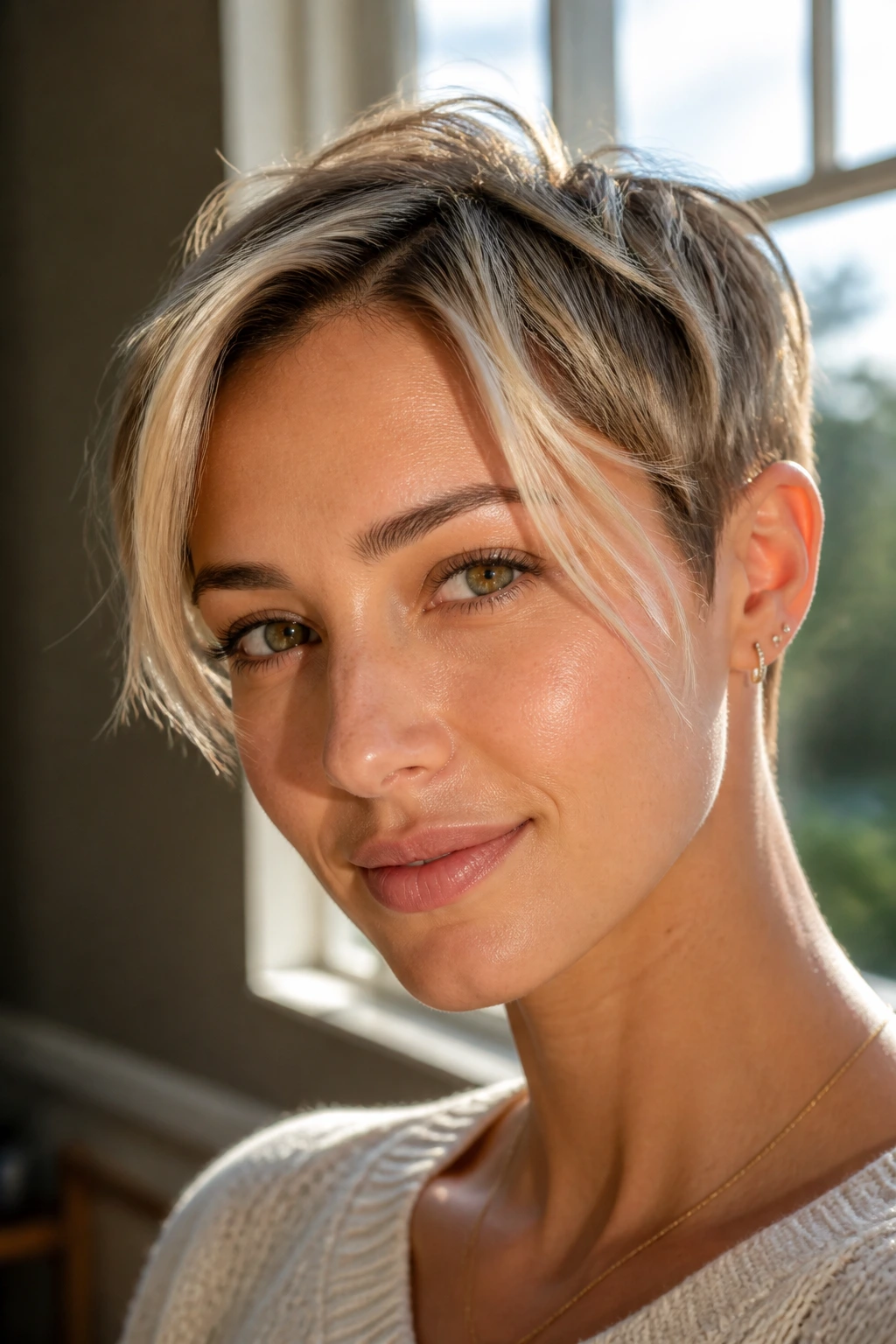
A money piece on a short crop is a fast way to fake brightness where people look first. The face-framing lights catch attention, while the rest of the cut stays a little softer and quieter. Sunlit blonde gives the style a warmer, more relaxed feel than icy platinum.
This is especially useful if you want blonde impact without bleaching every inch of your hair. The highlights near the face do most of the visual lifting. Keep the sides close and the top lightly textured. That keeps the crop from feeling too chunky around the temples.
19. Beige Tousled Bob
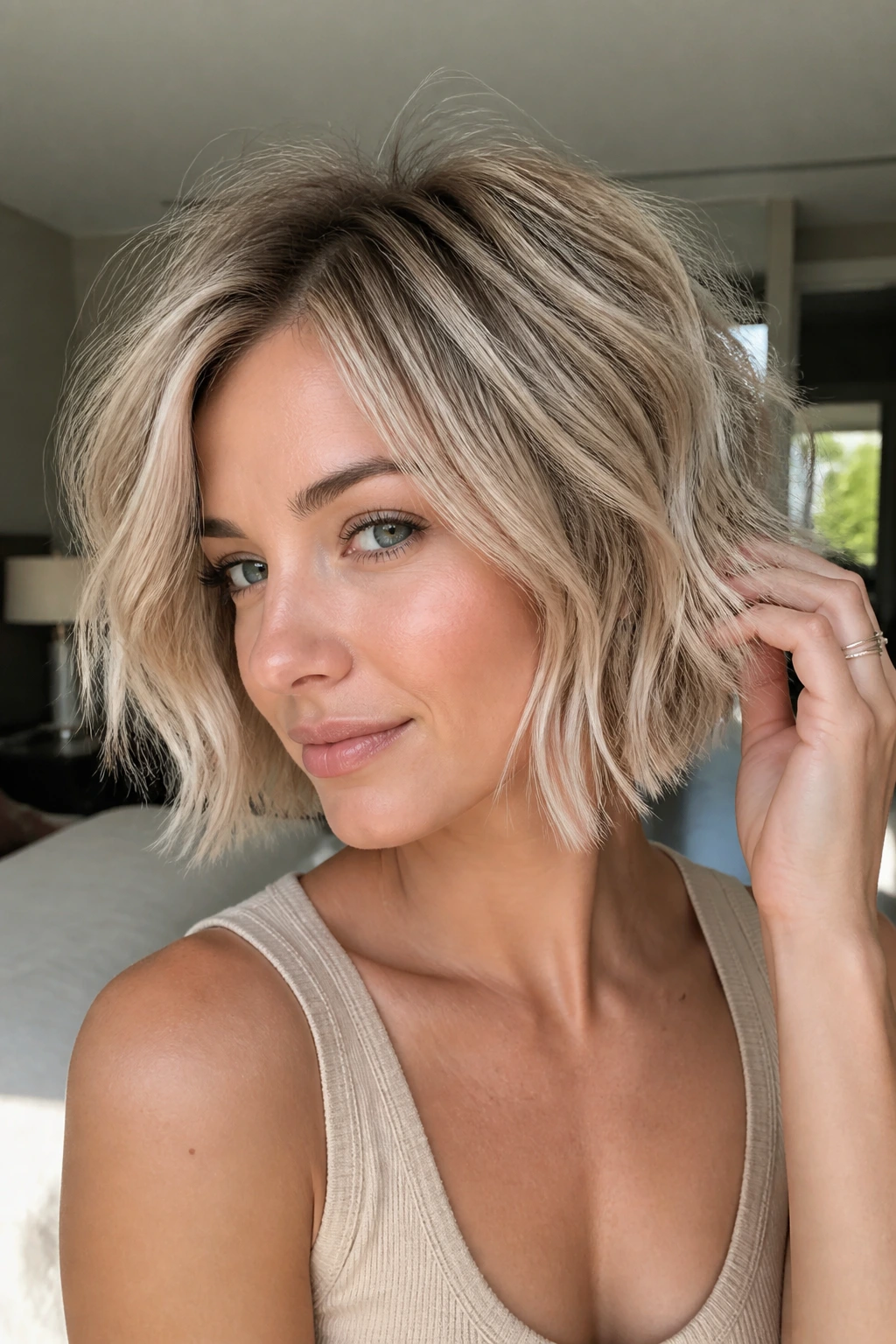
A tousled bob in beige blonde is one of the easiest looks to wear when your hair is fine and you don’t want to baby it. Beige tones are forgiving, and the tousled finish adds the kind of irregular texture that makes short hair look fuller than a perfectly straight bob would.
I like this with loose bends, not curls. Think one pass of a flat iron to create a wave, then break it up with your fingers. If you scrunch too hard, the ends can fray. A little bit of grit spray at the roots and a soft cream at the mids is usually enough.
20. Soft Blonde Bowl Cut
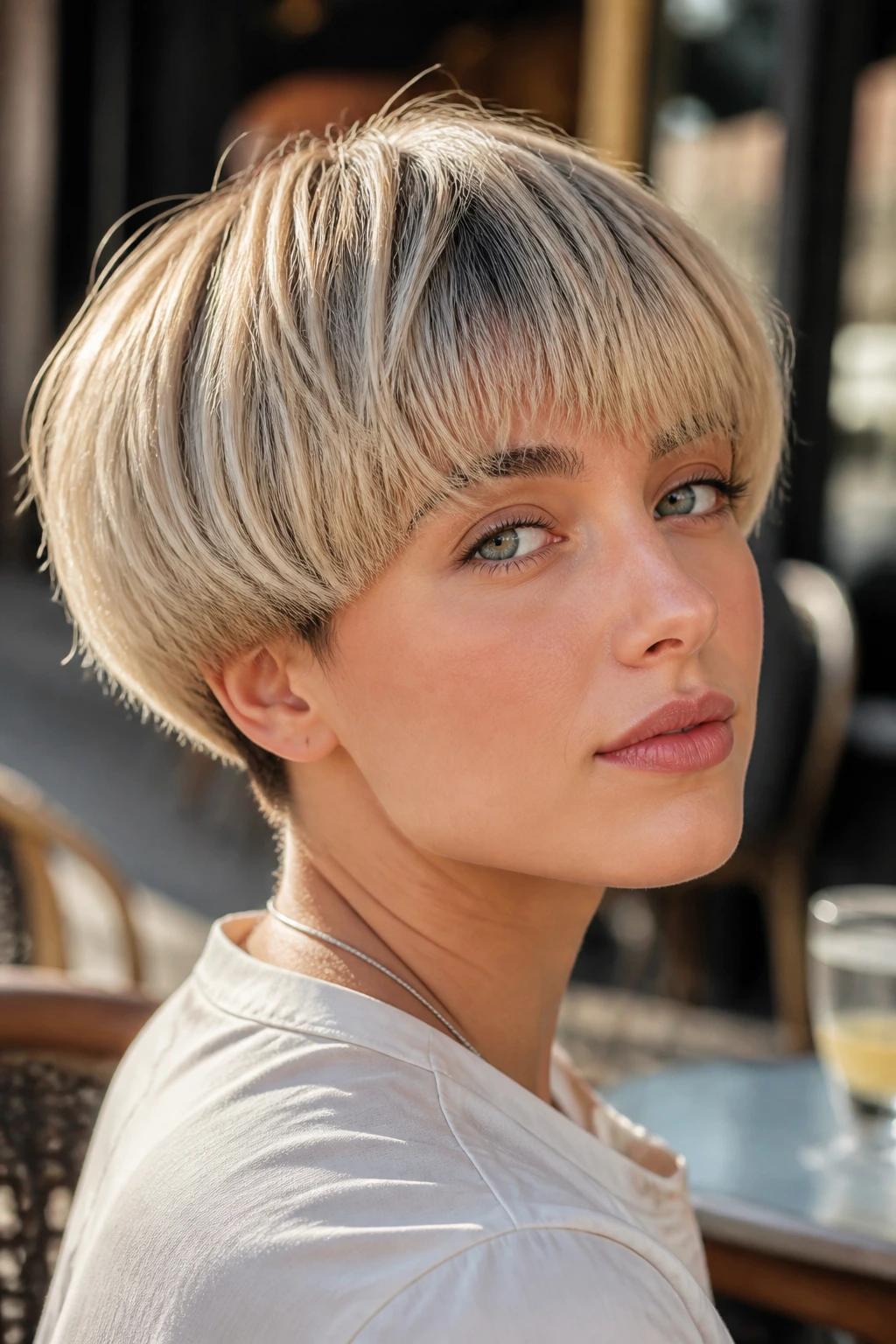
A bowl cut sounds harsh until you soften it. In blonde, especially a creamy soft blonde, the shape can feel architectural and modern instead of severe. The trick is keeping the line rounded and the fringe light enough to move.
This look works best when the color has a gentle shift from root to end, even if it’s subtle. That little bit of depth keeps the shape from looking like a helmet. If you’re nervous about very short hair, this is one of the boldest choices on the list—but it can also be one of the most flattering when the cut is precise.
21. Baby-Bang Pixie in Pale Blonde
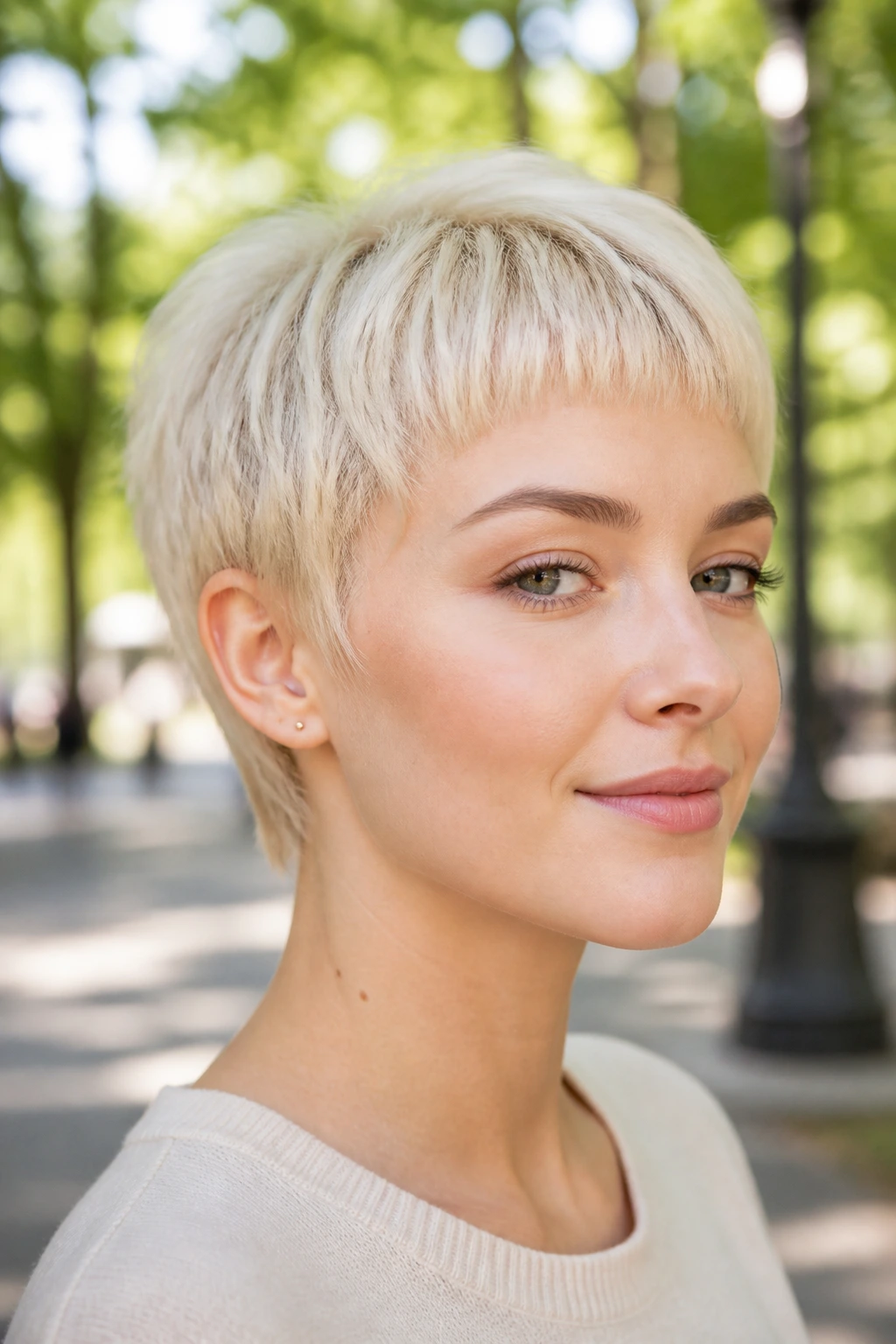
Baby bangs draw the eye upward, which is useful when you want the crown to look taller. Pair them with a pale blonde pixie, and you get a cut that feels crisp, playful, and a little unexpected.
The bangs should be short enough to show the brows but not so short that they stiffen the face. Fine hair does best when the fringe has a bit of softness at the edges. Keep the sides tight and the top light. Pale blonde makes the whole thing feel bright, so the cut needs to stay controlled.
22. Walnut-Root Frosted Bob
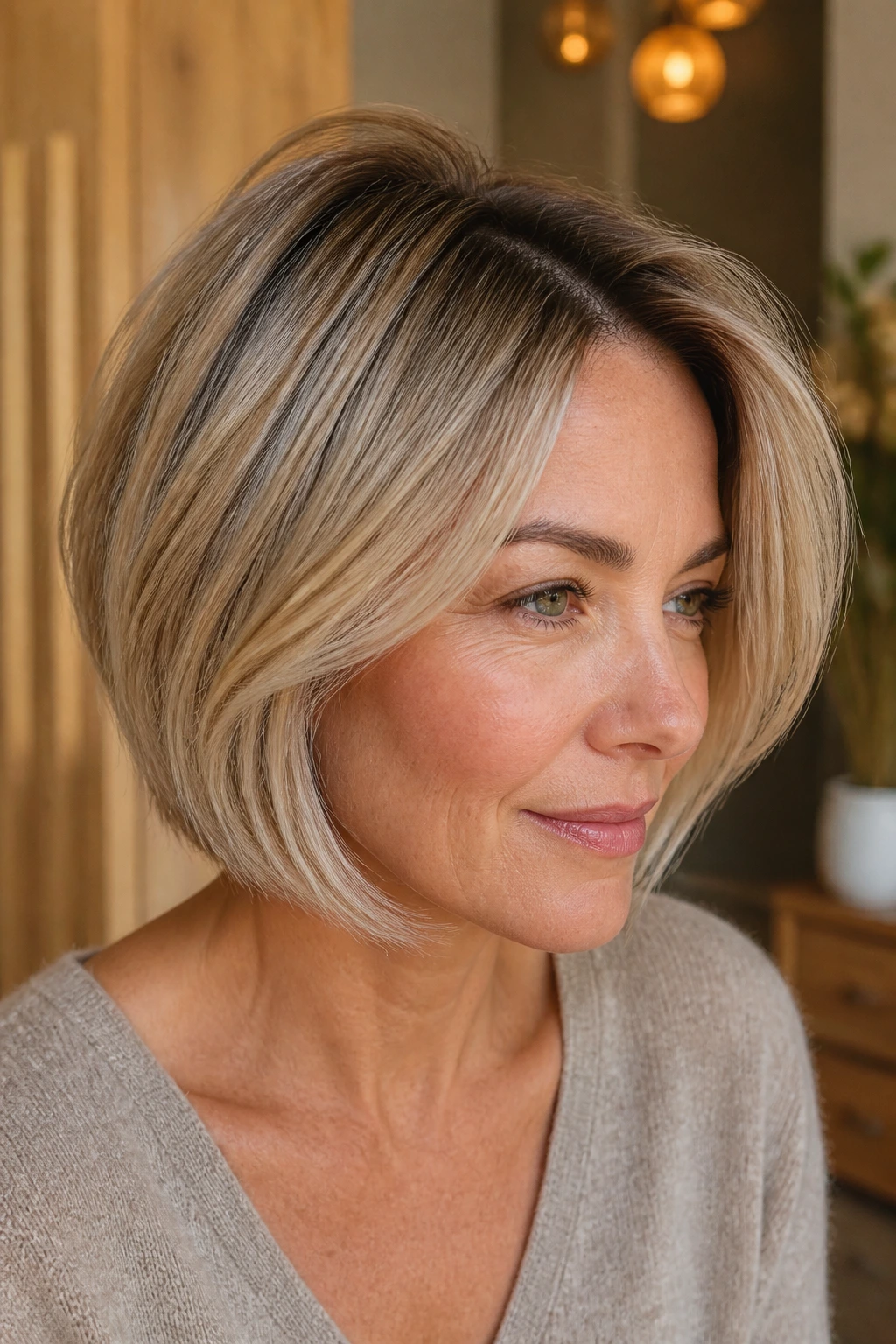
This one is all about contrast done carefully. A walnut root gives the bob a deeper base, while frosted lengths add lift and movement through the top layers. On short thin hair, that contrast can create the sense of a thicker head of hair without piling on product.
What Makes It Different
Unlike a fully lightened bob, this version keeps some visual weight at the scalp. That helps the part line. It also means the blonde looks brighter because it sits against something slightly deeper.
Ask for soft ribbons, not chunky streaks. Chunky pieces can start to look stripy fast on fine hair.
23. Feather Cut with Icy Tips
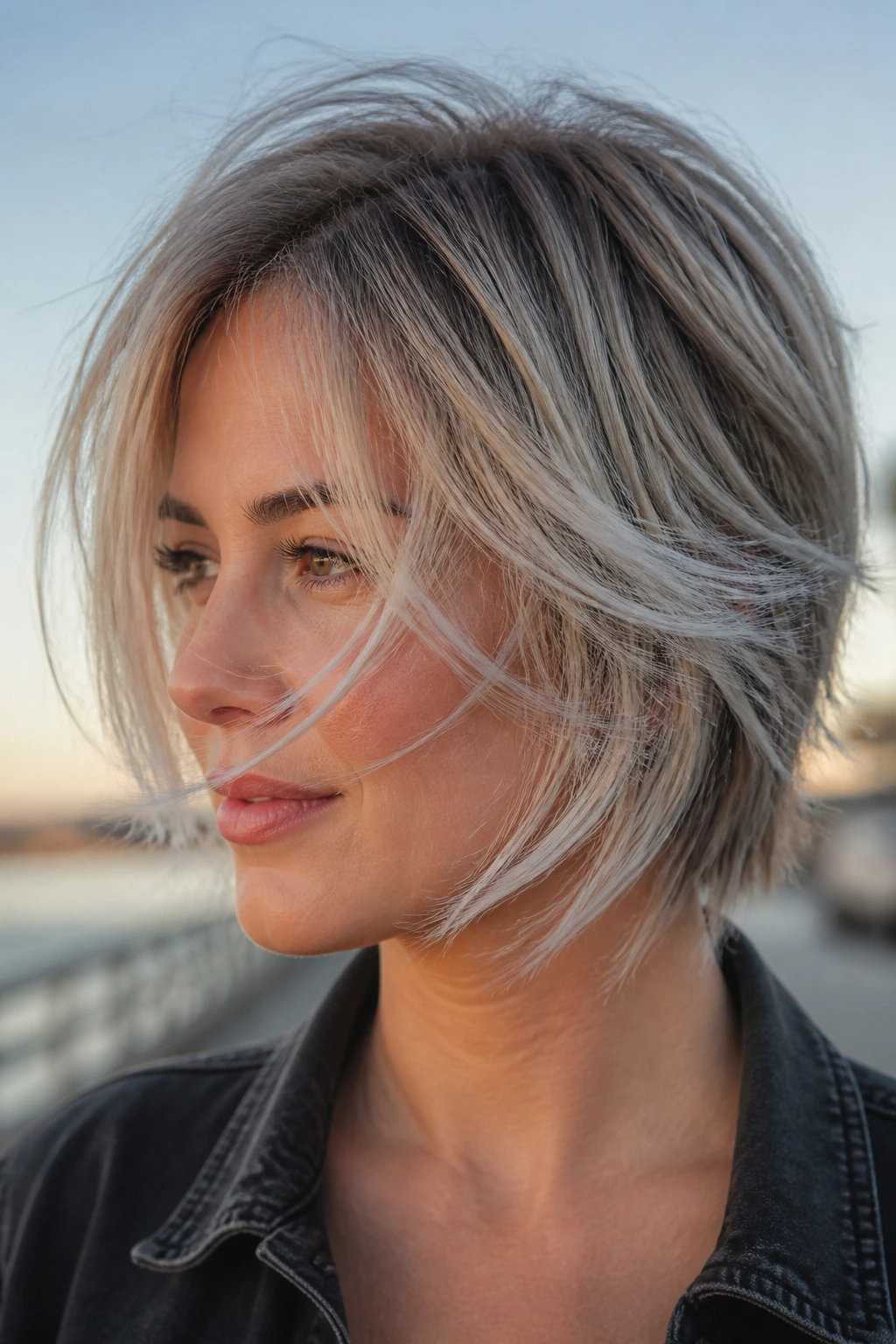
A feather cut already has motion built in, and icy tips make the ends feel sharp instead of wispy. This is the look for someone who wants a light, airy shape without giving up edge.
The shorter layers should fall in a soft cascade, especially around the crown and temples. Then the lighter tips finish the line so the hair reads as textured all the way through. I’d keep the root closer to your natural shade here. That little anchor helps the icy ends stand out more.
24. Cream Soda Crop
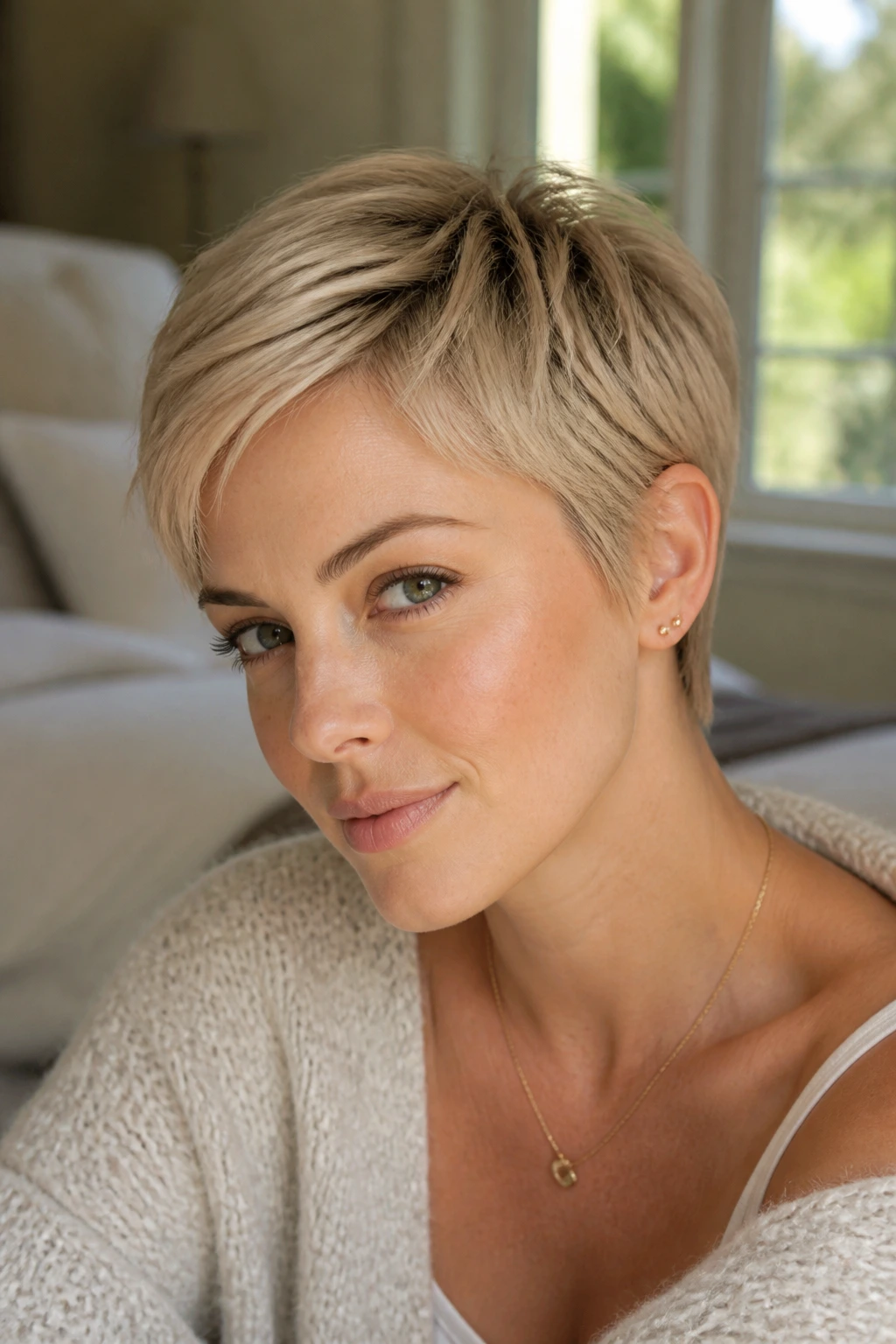
Cream soda blonde sits in that sweet spot between warm and cool. On a crop, it feels soft, creamy, and a little glossy, which is helpful when thin hair needs the illusion of body without looking over-bright.
This is one of the most forgiving blonde shades on the list. It handles grow-out nicely, and it doesn’t punish you if your hair has a little dryness at the ends. A small amount of texture cream at the top and a tucked ear on one side are enough to make it look finished.
25. Bright Asymmetrical Bob
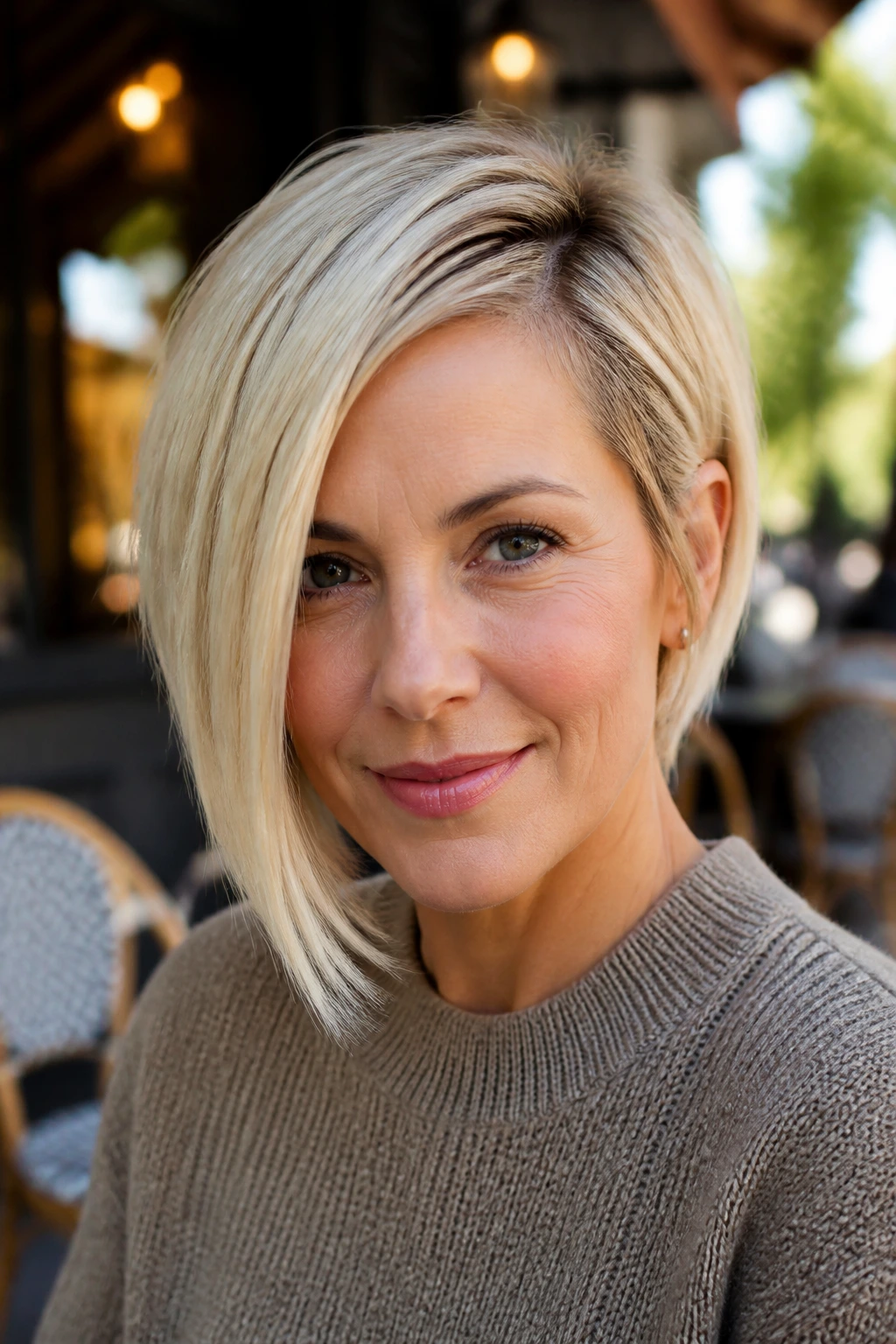
Asymmetry gives short thin hair a built-in trick: one side can look fuller because it carries more length. Add a bright blonde shade, and the angle becomes even more obvious in a good way.
I like this look with one side grazing the chin and the other sitting a bit shorter. The difference does not need to be dramatic. A subtle slant is enough. If the blonde is too flat, the cut loses its shape; if the color has just a little contrast near the roots, the line reads cleaner.
26. Melted Balayage Short Lob
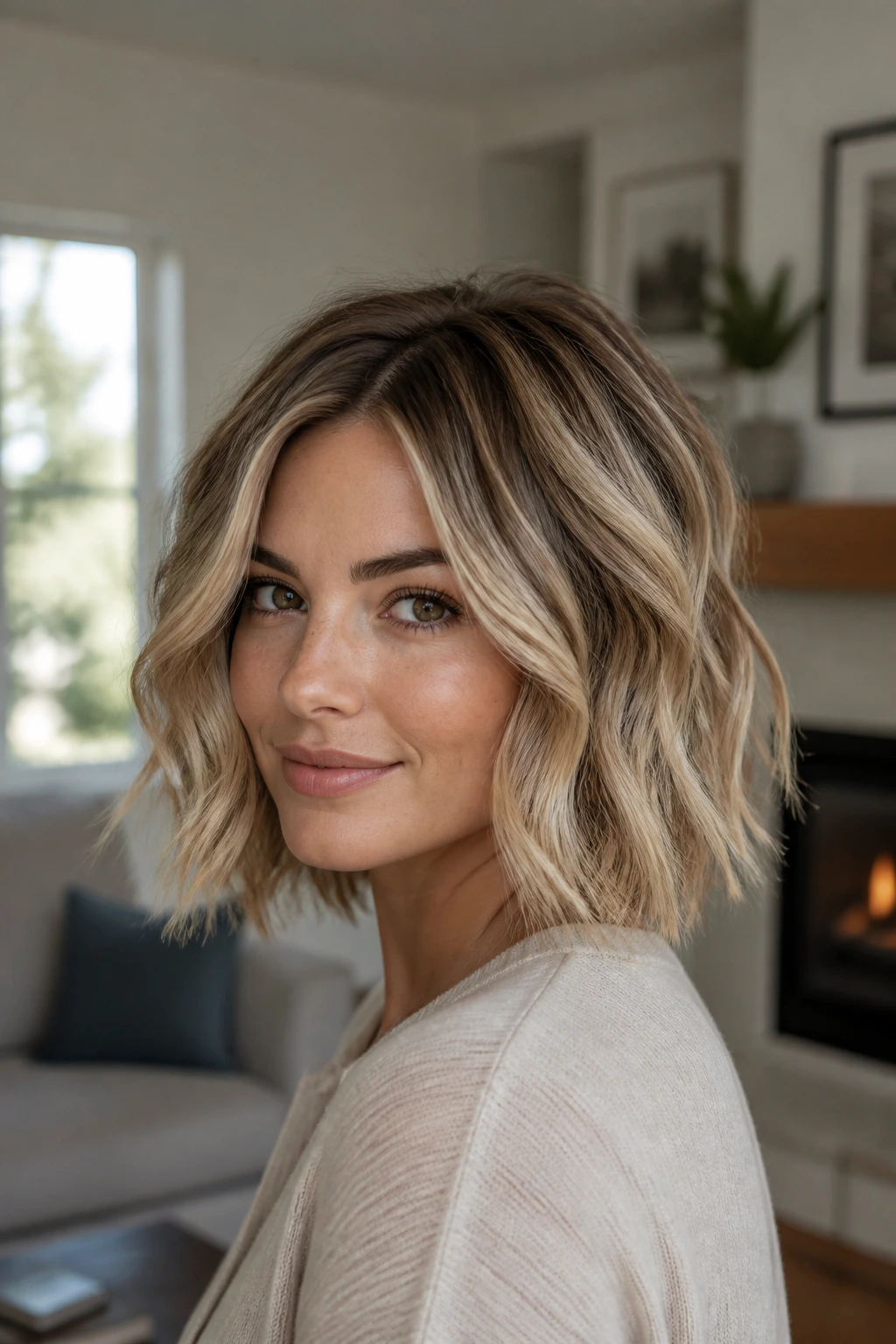
A short lob with melted balayage is the calm, easy answer for someone who wants movement without daily fuss. The blend from root to lighter ends should look soft, not stripy, and that blended fade helps thin hair keep some visual depth.
This cut works because the length stops before the hair gets too sparse at the ends. There’s enough body left to swish, but not so much length that gravity takes over. I like this with loose, brushed-out waves and a side part. The balayage does the talking.
27. Grown-Out Pixie with Shadow Root
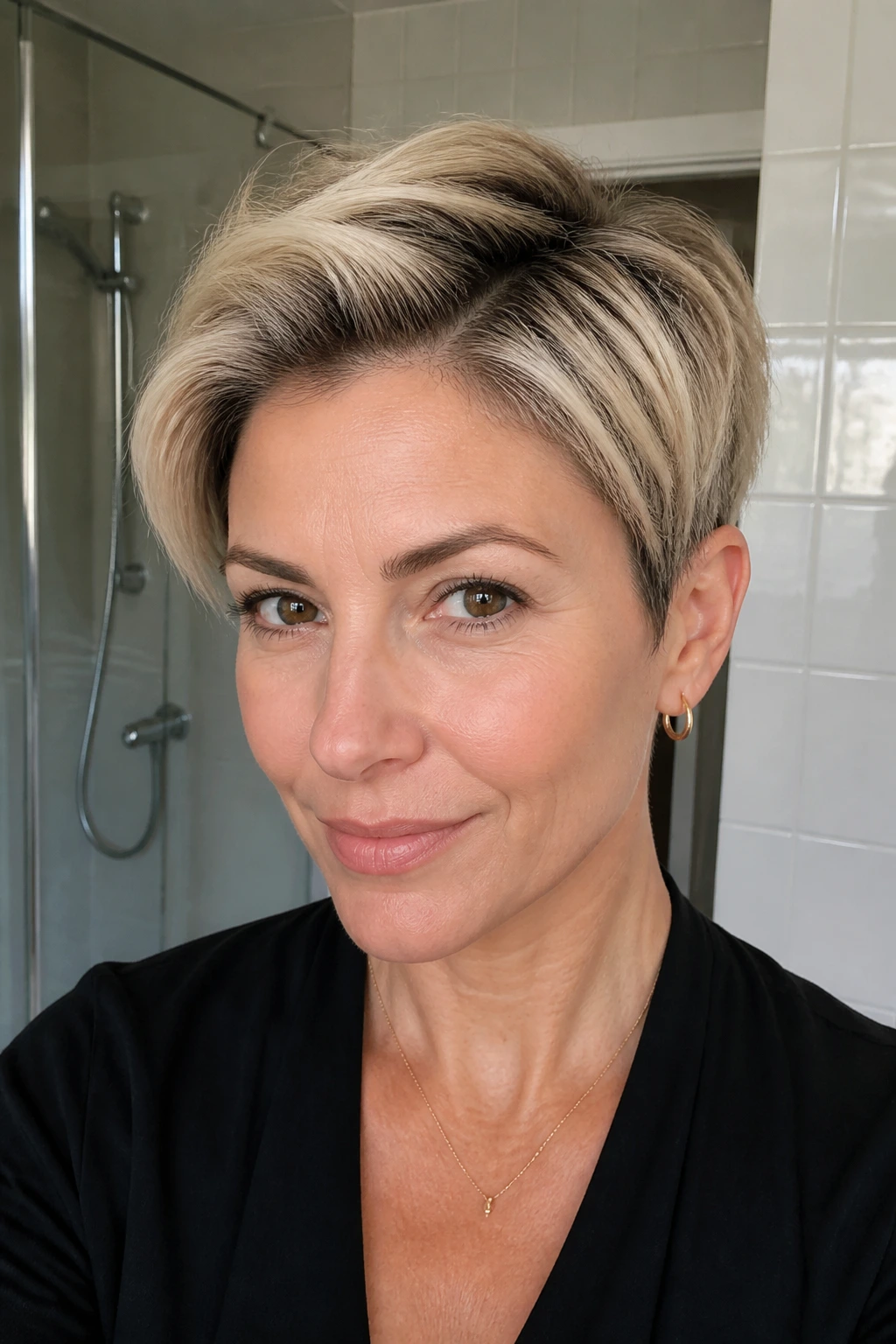
A grown-out pixie can look better than a freshly chopped one if the shape is kept tidy. The shadow root gives the blonde dimension, and the slightly longer top pieces soften the whole cut so it feels lived-in rather than awkward.
This is a good choice if you like low-maintenance color. The root line is supposed to be a little visible. That’s the charm. Style the top forward or diagonally across the forehead, and use a dry paste only where the hair needs separation. Leave the sides neat so the shape doesn’t puff out.
28. Short Wolf Bob in Blonde
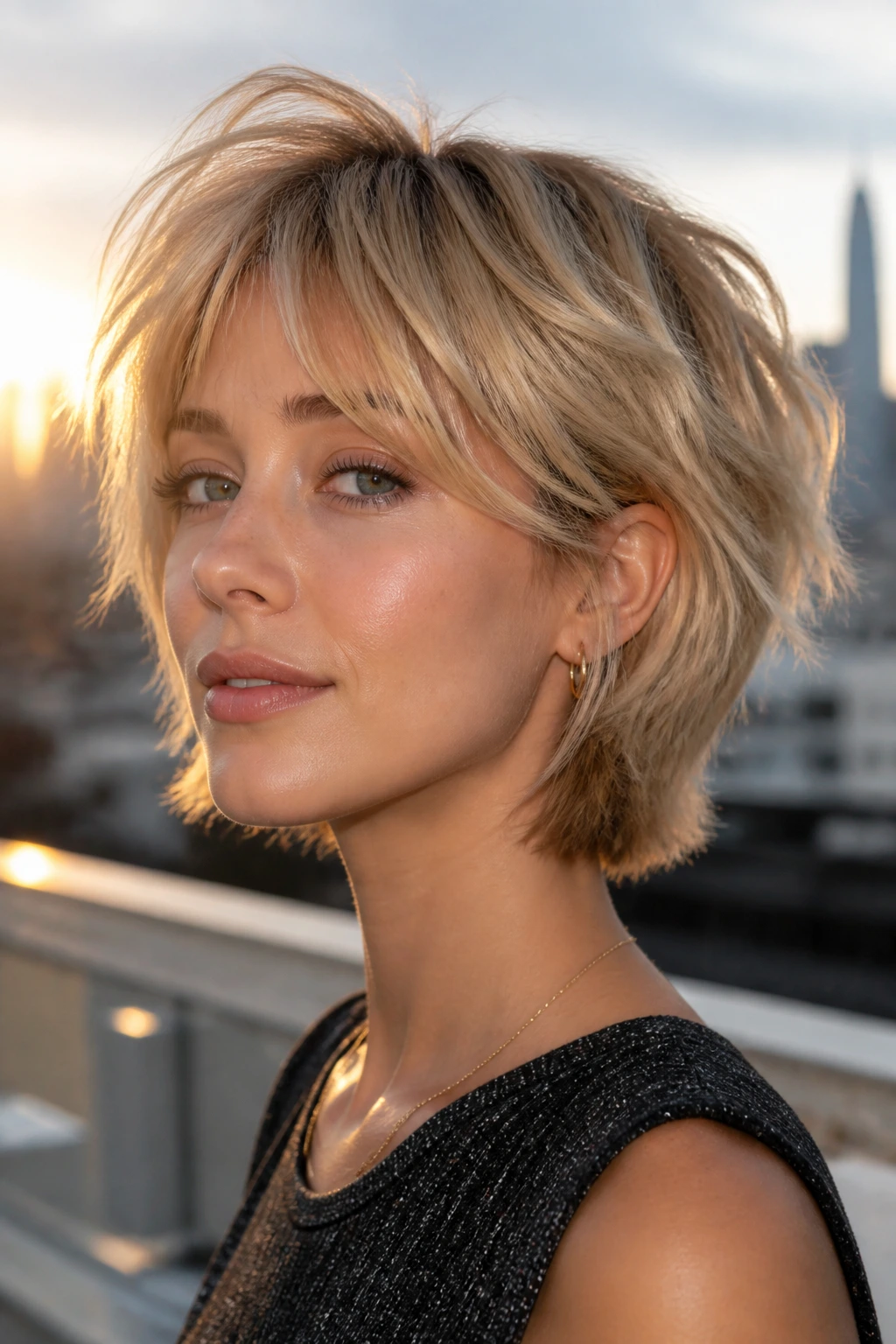
A wolf bob is edgier than the usual short cut, but it can work beautifully on thin hair if the layers are kept soft. The blonde tone should stay dimensional, with lighter pieces through the top and slightly deeper depth underneath.
The key is restraint. Too many choppy layers and fine hair gets stringy. Too much blonde and the texture goes flat. Done well, though, this look gives you crown lift, cheekbone framing, and a little attitude. It’s one of the few shag-adjacent cuts that can still feel polished.
29. Sliced Collarbone Bob with Blonde Ribbon Highlights
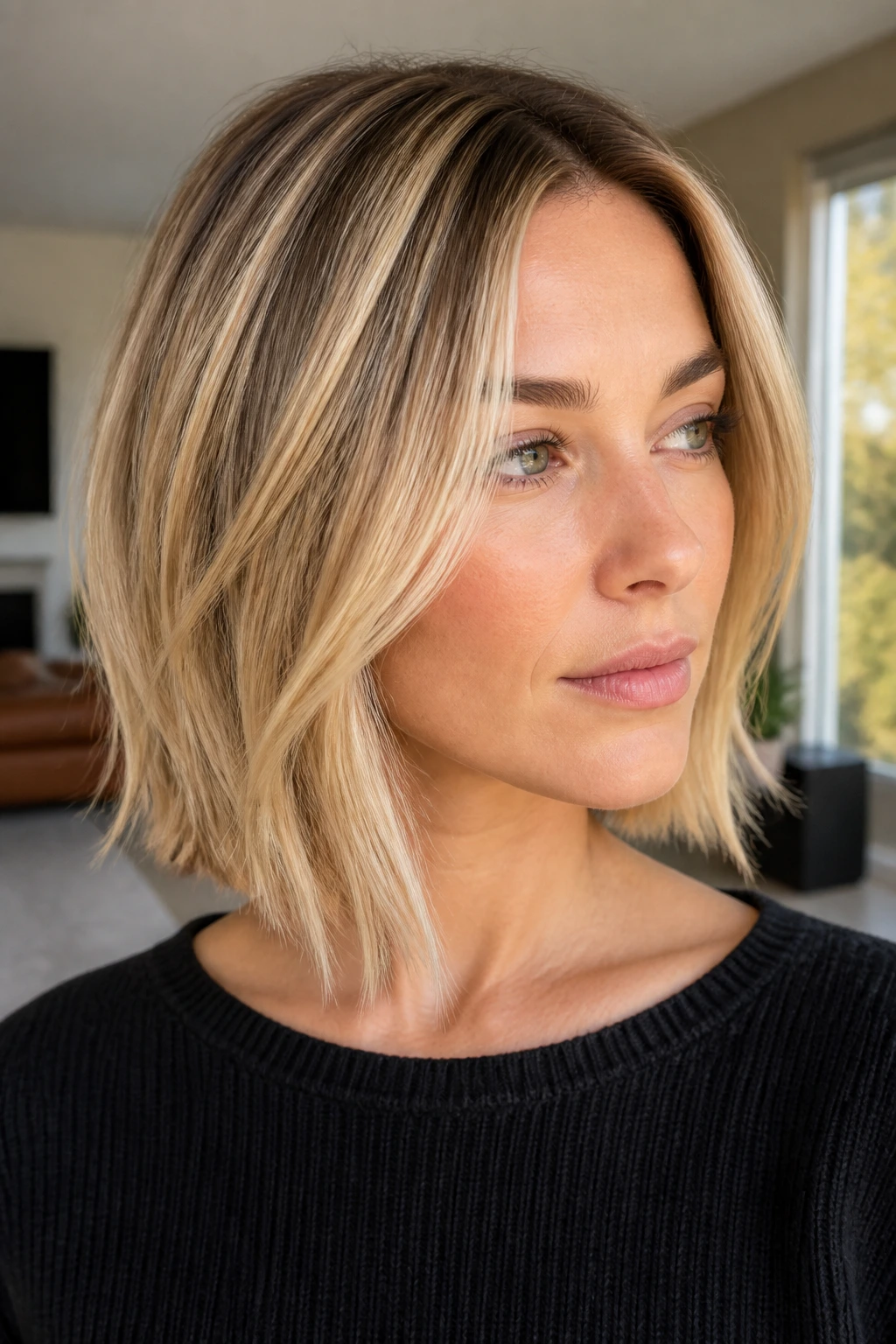
Technically this sits a touch longer, but it still reads as a short look on most people. The sliced ends keep the bob light, and ribbon highlights thread blonde through the cut in a way that looks airy, not stripy.
Ribbon highlights are a smart move for thin hair because they create visible lines of brightness without flooding the whole head. That gives the hair more movement when it swings. Keep the layers minimal and the perimeter clean. The whole point is to make the hair look like it has more strands, not more fuss.
30. Sandy Glaze Crop with Tucked Ends
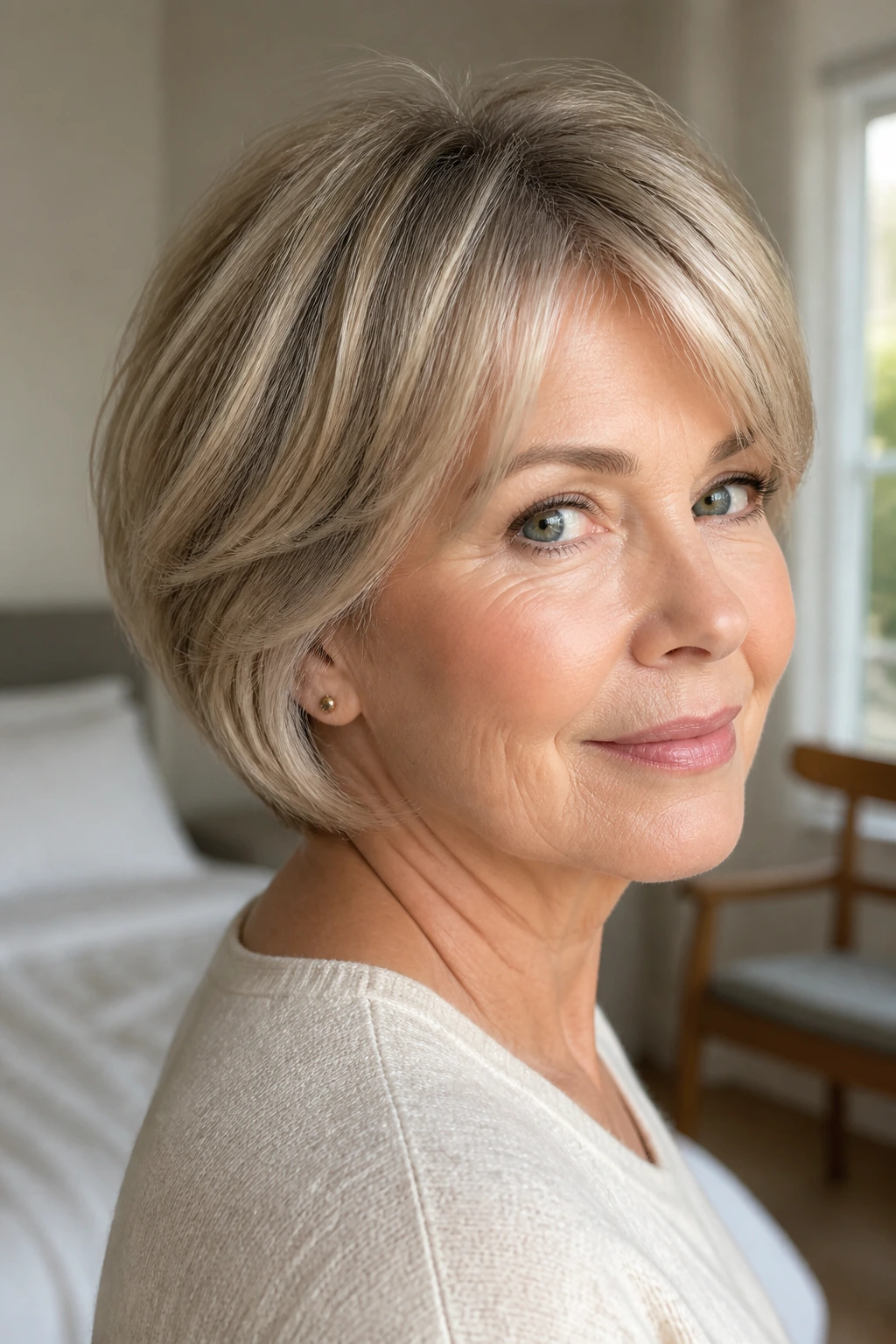
A sandy glaze crop is understated in the best way. It doesn’t shout. It just makes short thin hair look cleaner, smoother, and a bit more full because the tone is soft and the ends are tucked neatly under.
I’d choose this if you want a blonde look that won’t fight you at 7 a.m. The crop should be shaped so the top has a little lift and the sides stay close. Tuck the ends with a round brush or a quick pass of a dryer nozzle, and the cut gets a tidy finish that holds its own.
Why Blonde Dimension Helps Short Hair Read Fuller
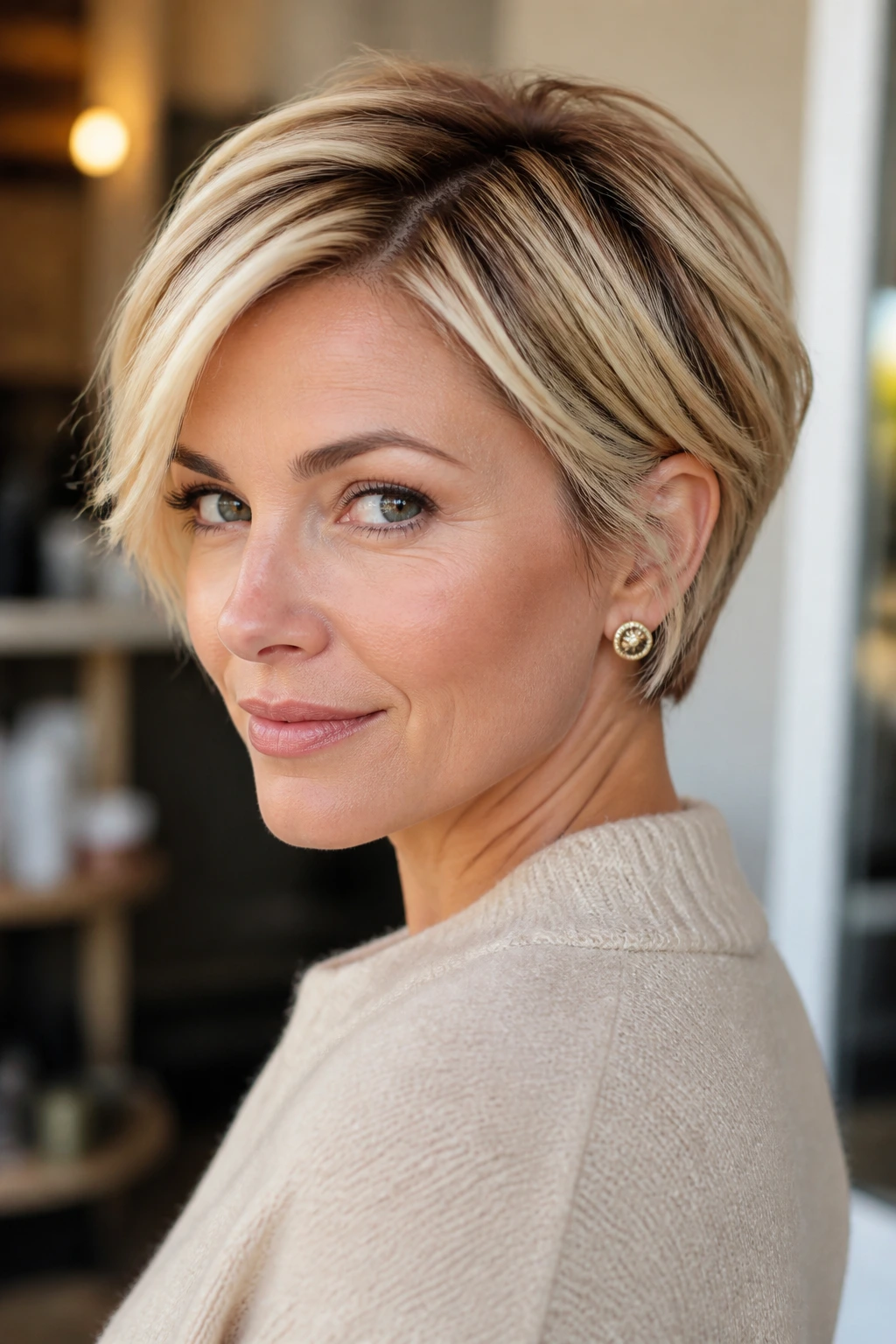
Short thin hair usually needs two things: a shape that holds, and color that doesn’t expose the gaps. Blonde can help with both, but only if the shade has some depth. A flat level-10 blonde on a delicate crop tends to show every scalp line and every dry end. A beige, butter, champagne, or rooted blonde gives the eye somewhere else to go.
The placement matters too. Light around the face, a little depth at the crown, and a softer end point can make the whole cut feel thicker. That’s why babylights, micro-highlights, and root melts show up again and again in these looks. They don’t add hair. They add structure. Big difference.
Essential Tools for Styling and Color Care
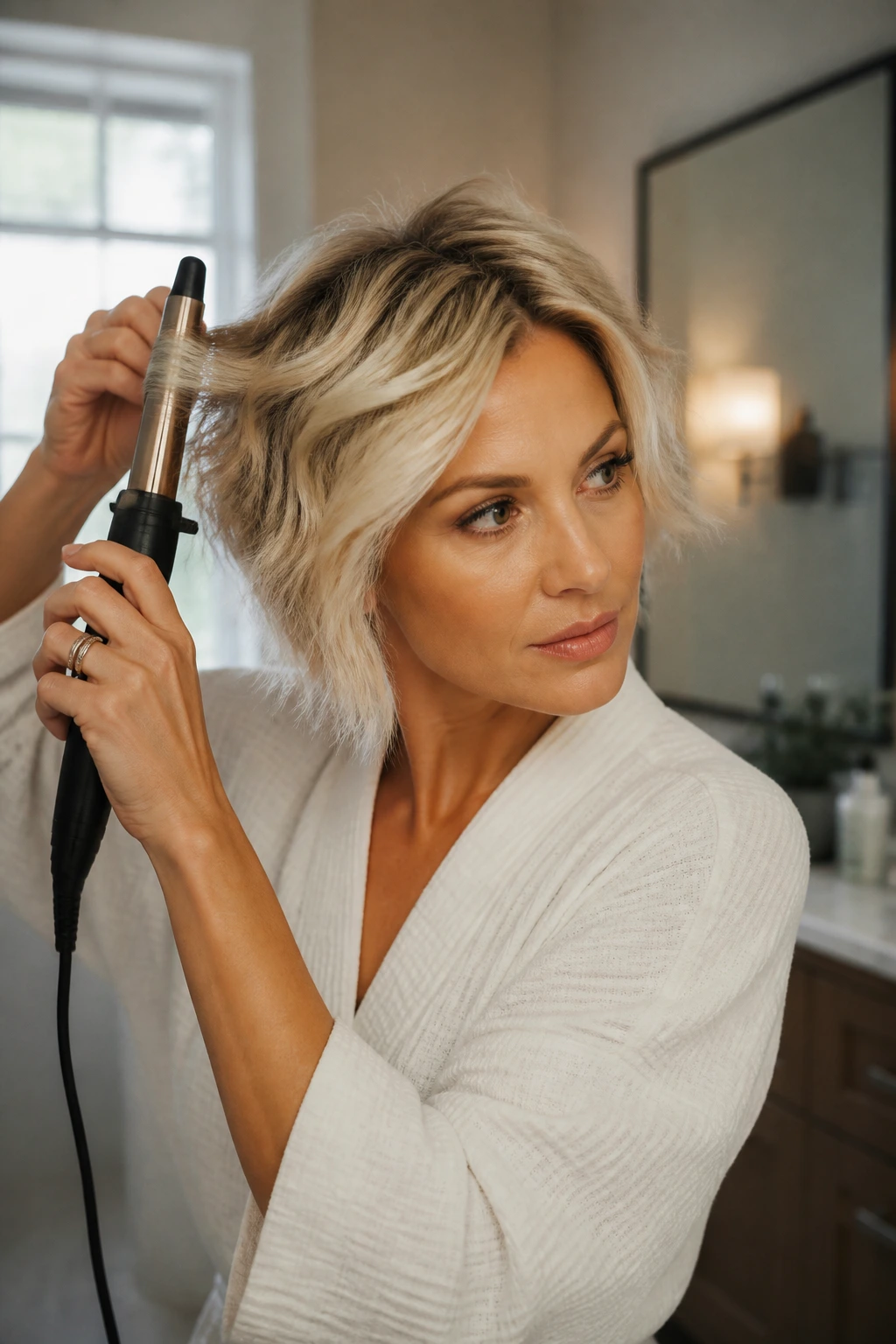
- 1-inch curling iron or wand: Best for creating loose bends that give short blonde hair movement without harsh ringlets.
- Small round brush: A 1-to-1.5-inch brush helps lift the crown and bevel bob ends under.
- Tail comb: Useful for clean parts, teasing a little lift at the root, and sectioning short layers neatly.
- Root-lift mousse: Gives fine hair grip before blow-drying, especially at the crown and fringe.
- Lightweight paste or cream: Keeps pixies and bixies piecey without weighing them down.
- Heat protectant spray: Use it every time you blow-dry or heat-style, even on short hair.
- Purple shampoo: Helps cool brass on icy, ash, and platinum blondes; use sparingly so hair doesn’t go dull.
- Color-safe conditioner: Fine hair needs slip, but not a heavy mask that leaves a greasy film.
- Dry shampoo: Handy for the second day, when blonde roots can start to separate and show too much scalp.
- Glossing spray or serum: A tiny amount at the ends makes creamy blondes look smoother.
Smart Shade and Cut Notes Before You Book
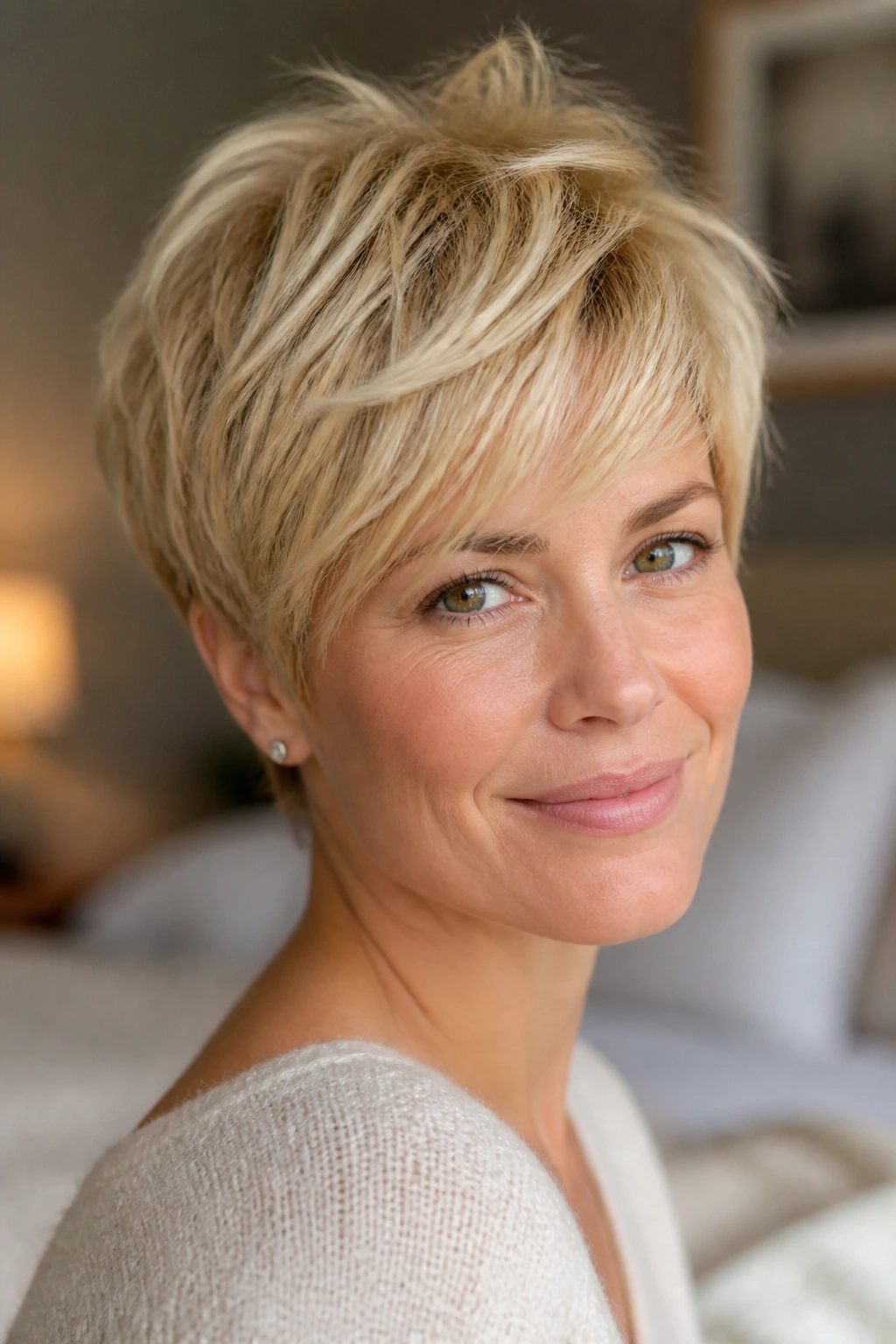
The biggest mistake with thin hair is treating blonde as only a color decision. It isn’t. The cut and shade have to talk to each other. If the cut is too layered, a bright blonde can make the ends look even lighter and thinner. If the color is too flat, the cut can look smaller than it is.
Start with the density of your hair, not the mood board. Hair that’s fine but plentiful can usually handle more blonde brightness than hair that’s fine and sparse. Hair that breaks easily often does better with rooted blondes, beige tones, or highlights that stay off the very ends. That little restraint keeps the shape intact.
Your face shape matters too, but not in the way people think. The real question is where you want the eye to land. If you want lift, keep the lightest pieces near the crown or front. If you want softness, blur the part line and keep the front pieces creamy instead of icy. Ask for dimension, not “just make it blonder.” That one sentence saves a lot of regret.
How to Style and Wear These Looks
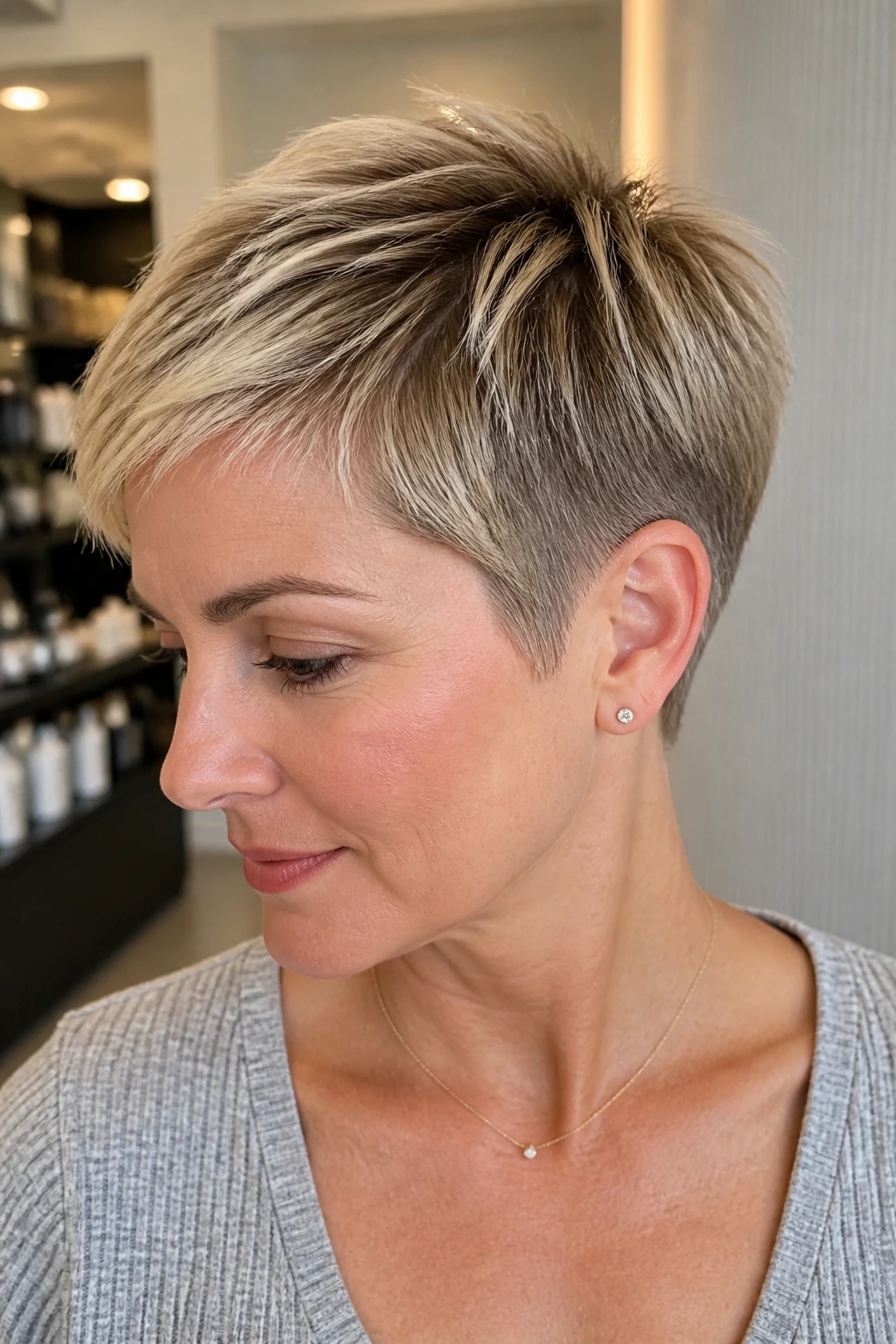
Parting: A deep side part gives the illusion of more volume at the crown. A soft center part works better on blunt bobs and French-style shapes because it makes the face look balanced instead of over-lifted.
Texture: For thin hair, loose bends beat tight curls almost every time. Tight curls can shrink the length and make the hair feel patchy; a soft wave gives you width and movement without eating the cut.
Finish: Go easy on oil. Fine blonde hair gets stringy fast if you pile on shine products. A mist of texture spray at the roots and a tiny bit of cream on the ends usually gets you farther.
Accessories: Small clips, slim headbands, and tucked-behind-the-ear styling all work well with these looks. Big, heavy accessories can overwhelm short thin hair and flatten the top.
Additional Tips and Texture Boosters
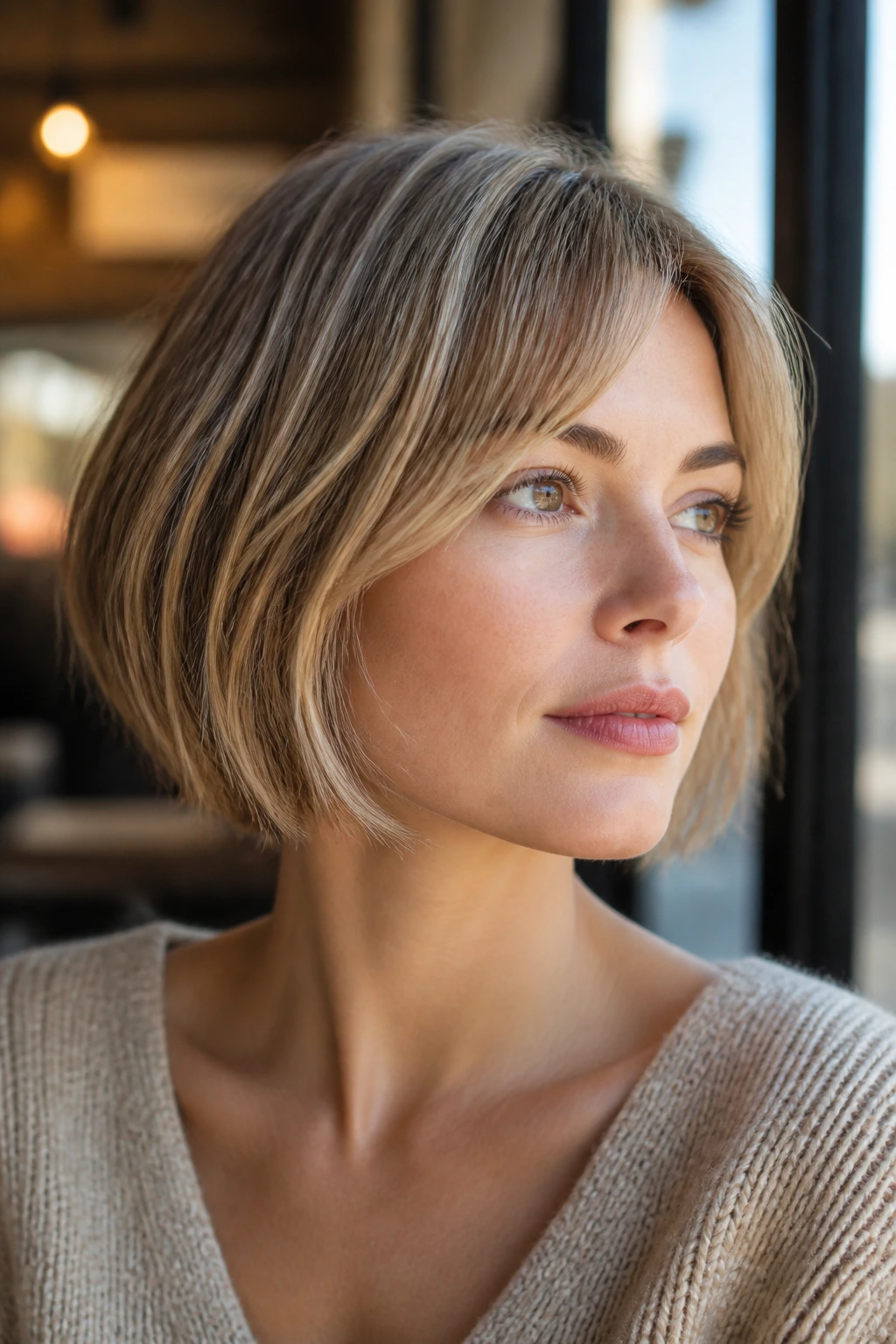
Flavor Enhancement: A clear gloss or demi-permanent glaze every few weeks can keep beige, butter, and champagne blondes looking clean instead of muddy. It also helps the color sit smoother on porous ends.
Customization: If icy blonde feels too stark, ask for a beige or pearl version of the same look. If warm blonde pulls brassy on you, shift the tone toward mushroom or ash instead of trying to fight it with extra purple shampoo.
Serving Suggestions: Tuck one side behind the ear, leave a few front pieces loose, and add a small clip at the temple. Those tiny moves make short hair look styled, not accidental.
Make-It-Yours: If you wear glasses, soften the bangs or front fringe so they don’t fight the frames. If your hair is very flat, keep a little more length in the crown than you think you need. If you prefer air-drying, choose the bobs and shags over the ultra-sleek looks.
Maintenance, Root Touch-Ups, and Grow-Out
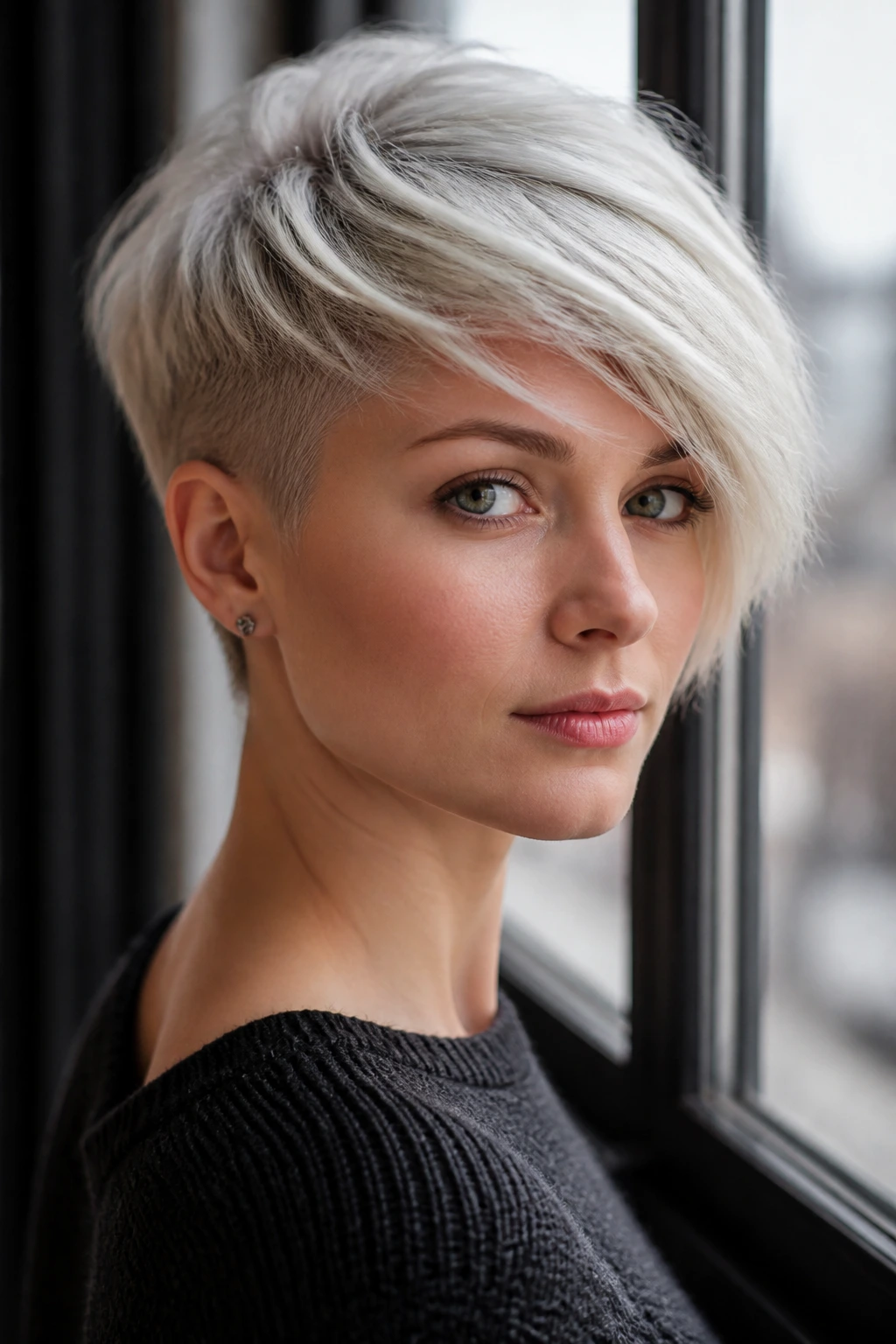
Short blonde cuts look sharp when they’re maintained on a schedule. Pixies and cropped bobs usually need shape trims every 4 to 6 weeks because the silhouette changes fast. If you skip too long, the crown starts to collapse and the nape loses its clean line.
Color timing depends on how bright the blonde is. A rooted beige or champagne look can often stretch to 6 to 8 weeks before a gloss or refresh. Platinum, icy, and ash blondes usually show brass or dullness sooner, so a 4 to 6 week toner rhythm makes more sense there. Purple shampoo once a week is enough for most people; more than that can leave fine hair flat and oddly matte.
For washing, fine blonde hair usually does better with a gentle shampoo two or three times a week rather than daily washing with heavy products. Use conditioner from the ears down, not at the scalp. And if the ends feel dry, a tiny leave-in on damp hair is better than smothering dry hair with oil later. Short blonde hair can handle a little care. It cannot handle a product swamp.
Variations and Adaptations to Try
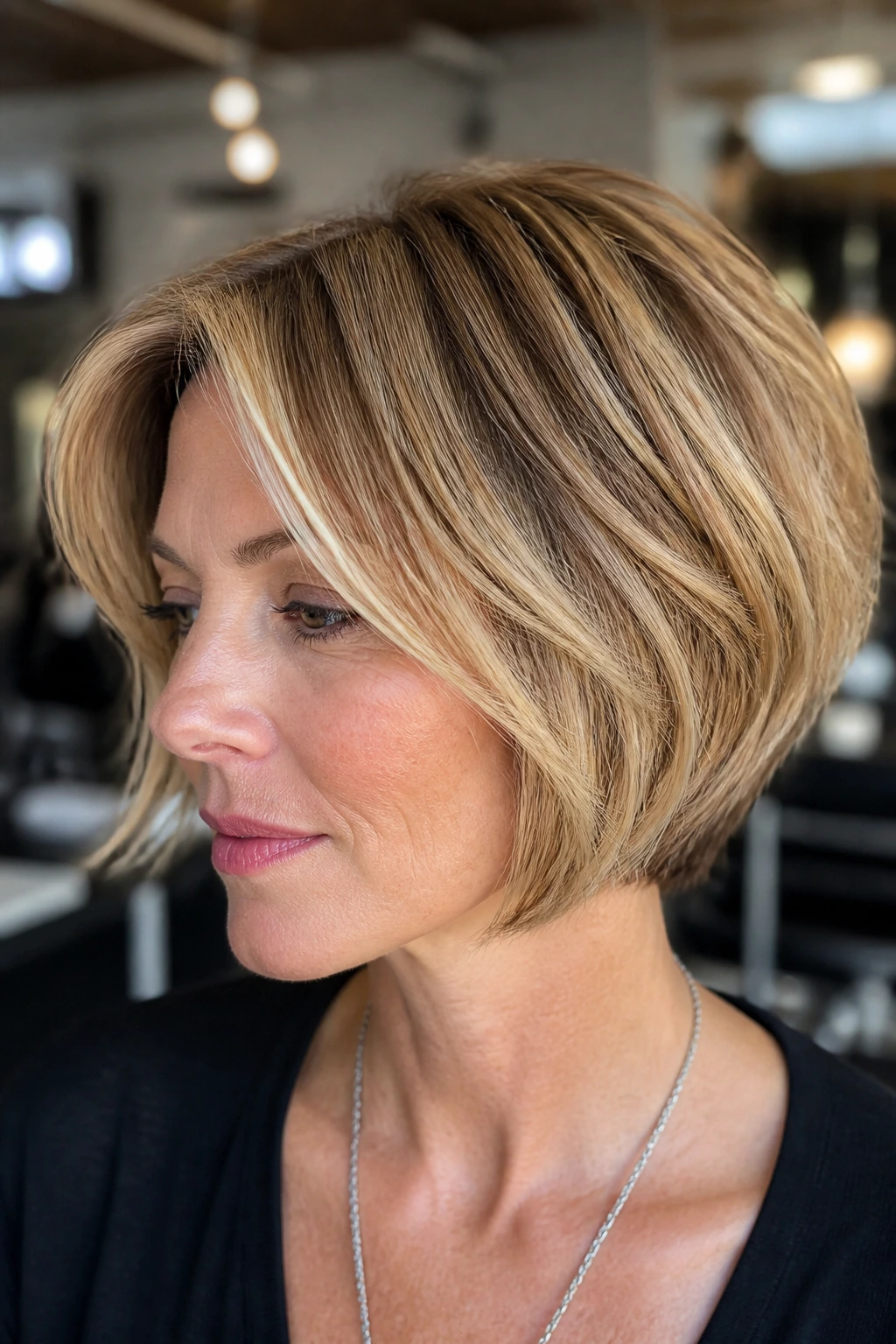
Warm Honey Remix: Swap any beige or champagne shade for a warmer honey tone if your skin likes gold. The cut can stay the same; the tone just gets softer and sunnier.
Cool Frost Version: Push butter or cream blonde toward pearl, ash, or icy tones if you want a sharper look. This works best on bobs and pixies with a clean shape.
Low-Maintenance Rooted Blend: Keep a deeper root and lighten only the mid-lengths and ends. This is the easiest version to live with if you don’t want constant touch-ups.
Curly-Fine Adaptation: If your short hair has a bend or curl, ask for more internal shape and fewer razor-cut ends. Blonde ribbons around the curls make the texture look fuller without puffing it up.
Gray-Blending Blonde: Add softer highlights around silver strands and leave a darker base underneath. The effect is gentler than full bleach and usually grows out with less fuss.
Common Mistakes to Avoid
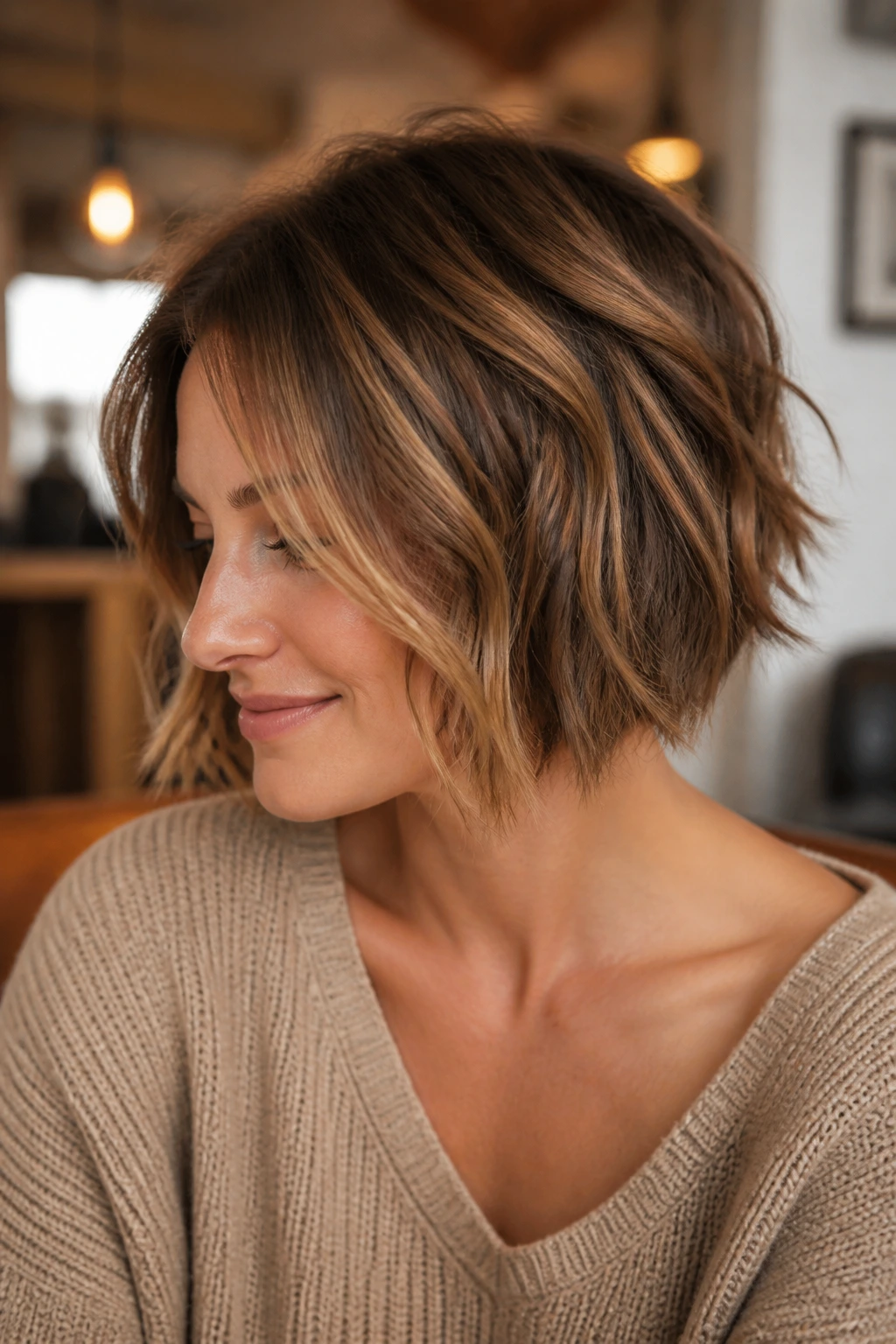
The first mistake is going too light everywhere. On short thin hair, a full-bleach platinum sheet can look airy at the roots and transparent at the ends. Leave some depth, even if it’s only a level or two darker at the scalp.
The second mistake is over-layering. Thin hair does not need every inch shredded. Too many razor cuts can make the ends disappear and turn a cute bob into a feathery cloud that won’t hold shape. Ask for controlled layers, not over-texturizing.
The third mistake is using heavy oils or creams to “fix” dryness. That usually just makes the hair collapse at the roots. Use a light conditioner in the shower, then a small leave-in or spray before drying. Less is more here.
The fourth mistake is over-toning blonde into gray. A cool toner can be nice, but when it gets too flat, short hair can lose shine and look dusty. If the blonde starts feeling dull, stop reaching for purple shampoo and book a gloss instead.
The fifth mistake is ignoring the cut when you change the color. A brighter blonde makes weak shape more obvious. If the ends are ragged or the crown is flat, color won’t save it. Shape first. Every time.
Frequently Asked Questions
Does blonde make short thin hair look thinner?
It can, if the color is too flat or too light from root to tip. A rooted blonde, micro-highlights, or a soft balayage usually gives the hair more depth and makes it read fuller.
Is a bob or a pixie better for thin hair?
Both can work. Pixies help if you want lift and low styling time, while bobs help if you want the ends to look denser and a little heavier.
What blonde shade is easiest to maintain on fine hair?
Rooted beige, champagne, and butter blondes are usually the least fussy. They grow out more softly than icy platinum and tend to look healthier between salon visits.
Can I go blonde if my hair is already fragile?
Yes, but the cut and lightener placement need to be careful. Fine fragile hair usually does better with highlights, balayage, or a root-smudged blonde than with full scalp bleach.
How often should I use purple shampoo?
Once a week is enough for most blondes. If your hair feels dry or starts looking dull, cut back and switch to a moisturizing, color-safe shampoo.
What if my short hair falls flat after styling?
Use less conditioner at the roots, add root-lift mousse before blow-drying, and finish with a cool shot at the crown. A small change in product placement can make a big difference.
Can short blonde hair still look soft instead of edgy?
Absolutely. Butter, vanilla, beige, and cream soda blondes keep the look gentle, especially on feathered pixies and rounded bobs. The cut decides the mood as much as the shade does.
How do I ask for a blonde look that makes hair seem thicker?
Ask for dimension near the roots, a clean perimeter, and lighter pieces concentrated around the face and crown. Those three things do more for fullness than asking for a brighter blonde all over.
The Shape Comes First
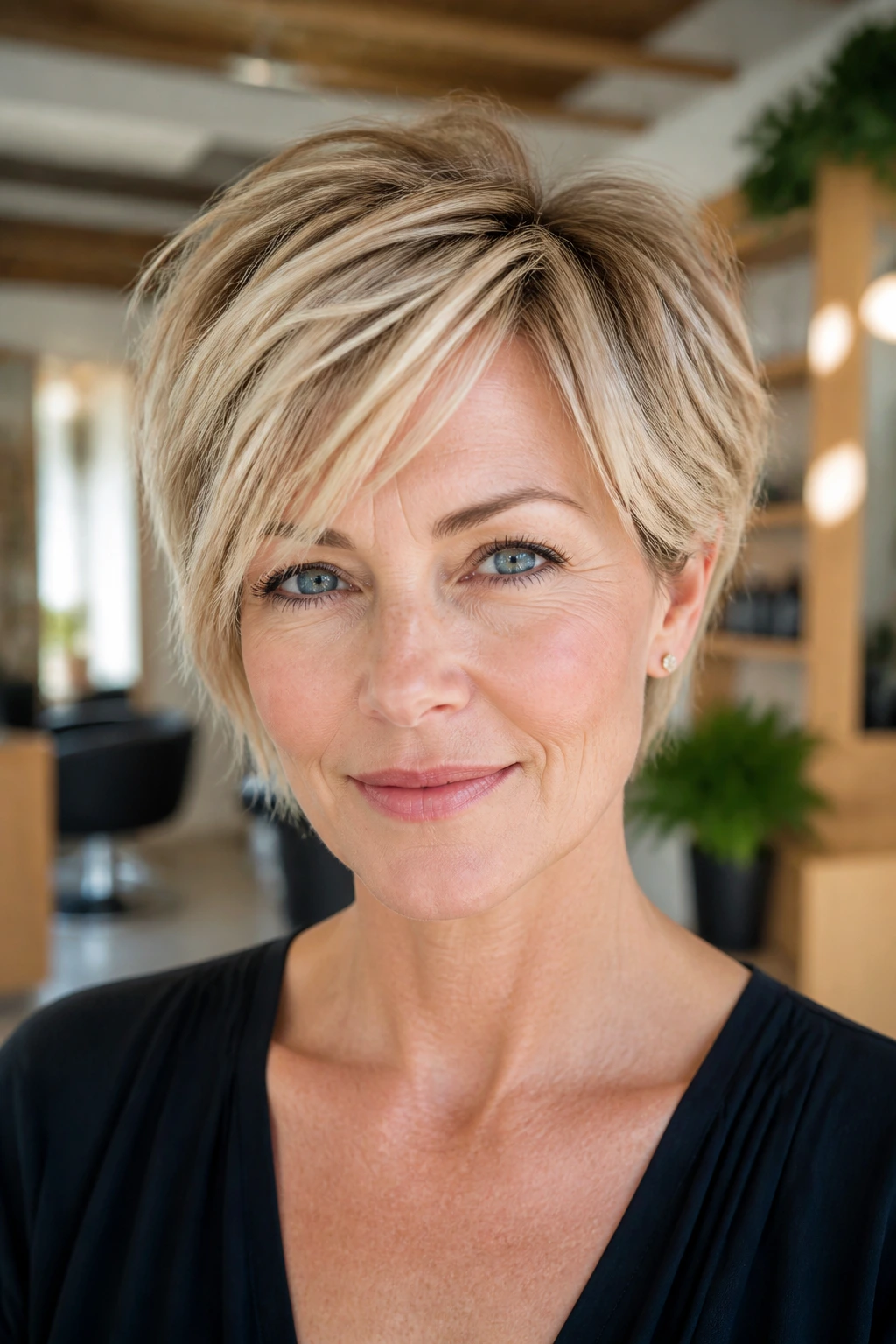
The best short blonde looks don’t beg for attention. They hold their shape, catch light in the right places, and make fine hair look more intentional than it has any business looking. That’s the real trick here. Not more bleach. Not more product. Better lines, softer depth, and color that understands where hair needs help.
If you’re choosing between two options, pick the one with the stronger cut and the quieter root. Short thin hair rarely rewards excess. It rewards control. Start there, and the blonde starts working for you instead of the other way around.
