



Short hair changes the whole conversation around blonde highlights for short hair over 50. On a pixie or a jaw-length bob, two foils too many can look busy, while the right half-inch of brightness near the fringe can make the whole cut breathe. Less length means less room for color to hide, so placement matters more than sheer amount.
That’s why the smartest blonde on a short cut rarely looks loud. It looks edited. A few champagne threads at the crown, a softer beige around the temples, maybe a cooler ribbon through the top layer — enough to catch the eye when the hair moves, not enough to turn the head into a striped flag.
And short hair is honest in a way longer hair isn’t. You see the nape. You see the part. You see the temples, the hairline, the crown that can flatten by noon. The best blonde choices work with those details instead of fighting them, which is why a soft, dimensional approach usually beats a one-note bleach job every time.
Why These Blonde Looks Work So Well on Short Hair
-
Placement matters more than volume: On short cuts, a few thin foils around the part and fringe can change the whole shape, while chunky strips tend to sit on top of the haircut instead of in it.
-
Gray blending looks softer when the tone is right: Beige, mushroom, champagne, and pearl blondes blend with white strands instead of outlining them, which keeps regrowth from looking harsh at the temple.
-
Short hair can look fuller with less lightness: Brightness at the crown and around the face gives the impression of lift, especially on fine hair that tends to collapse flat at the top.
-
Grow-out can be easier than people expect: Root shadow, babylights, and hand-painted pieces leave a softer edge than all-over blonde, so you’re not trapped in a hard maintenance cycle.
-
The mood changes fast with tone: Honey reads warmer and softer, pearl feels cooler and cleaner, and champagne sits in the middle with just enough glow to keep the cut from looking dull.
1. Champagne Pixie Pieces
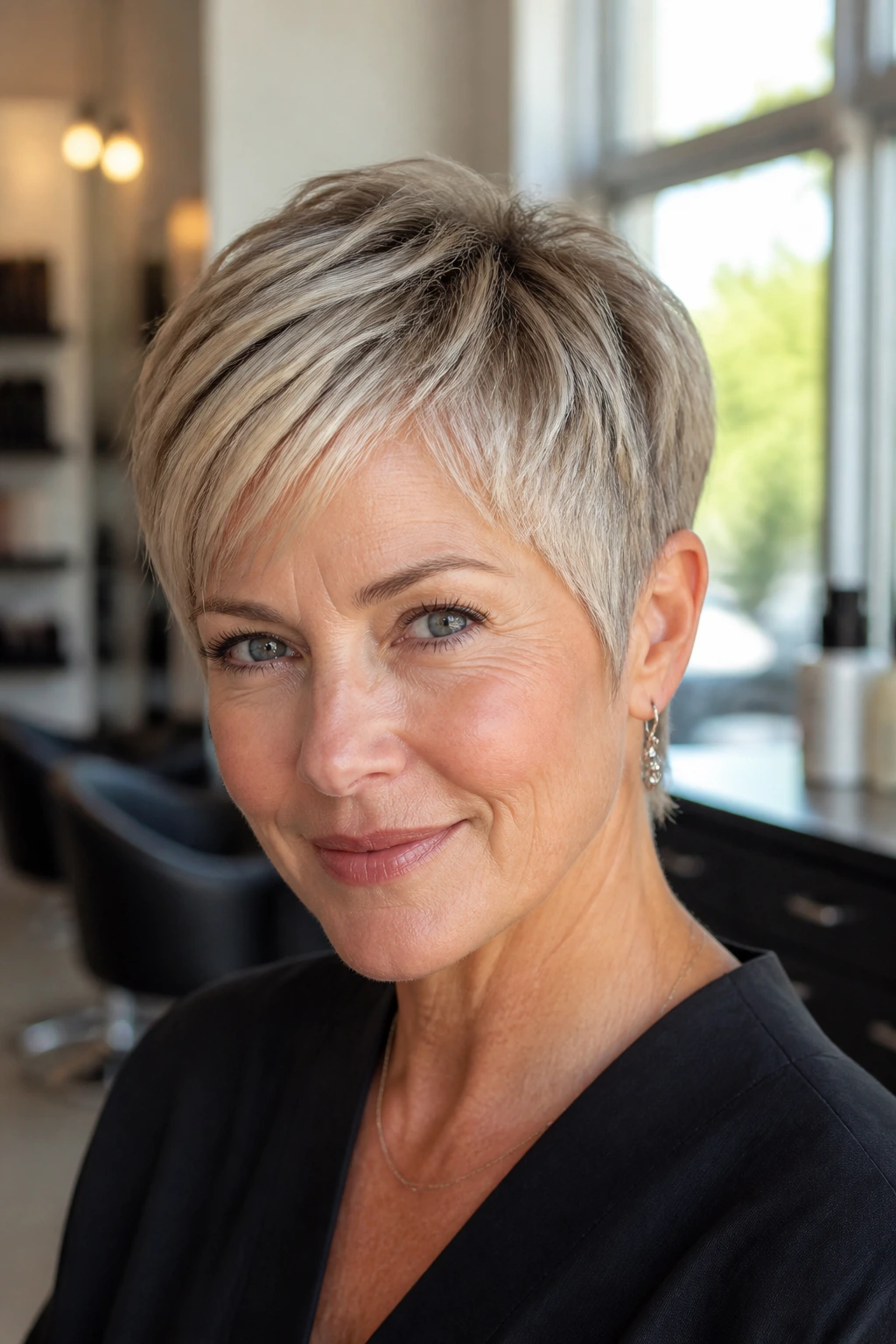
Champagne is the shade I reach for when someone wants brightness without the sharp edge of icy blonde. It sits in that easy middle ground between beige and pale gold, which means it flatters a pixie without making every strand shout for attention. On short hair, that balance matters. The pieces are small, the canvas is close to the face, and a heavy blonde can take over the whole cut.
Ask for thin foils through the top, then keep the nape a touch deeper so the shape still has definition. If your hair is fine, this placement adds lift where you need it most — right at the crown and around the fringe — without making the ends look wispy.
A pea-size matte paste or light cream will show the dimension nicely. Too much shine product makes champagne pieces look flat.
2. Honey-Lifted Layered Crop
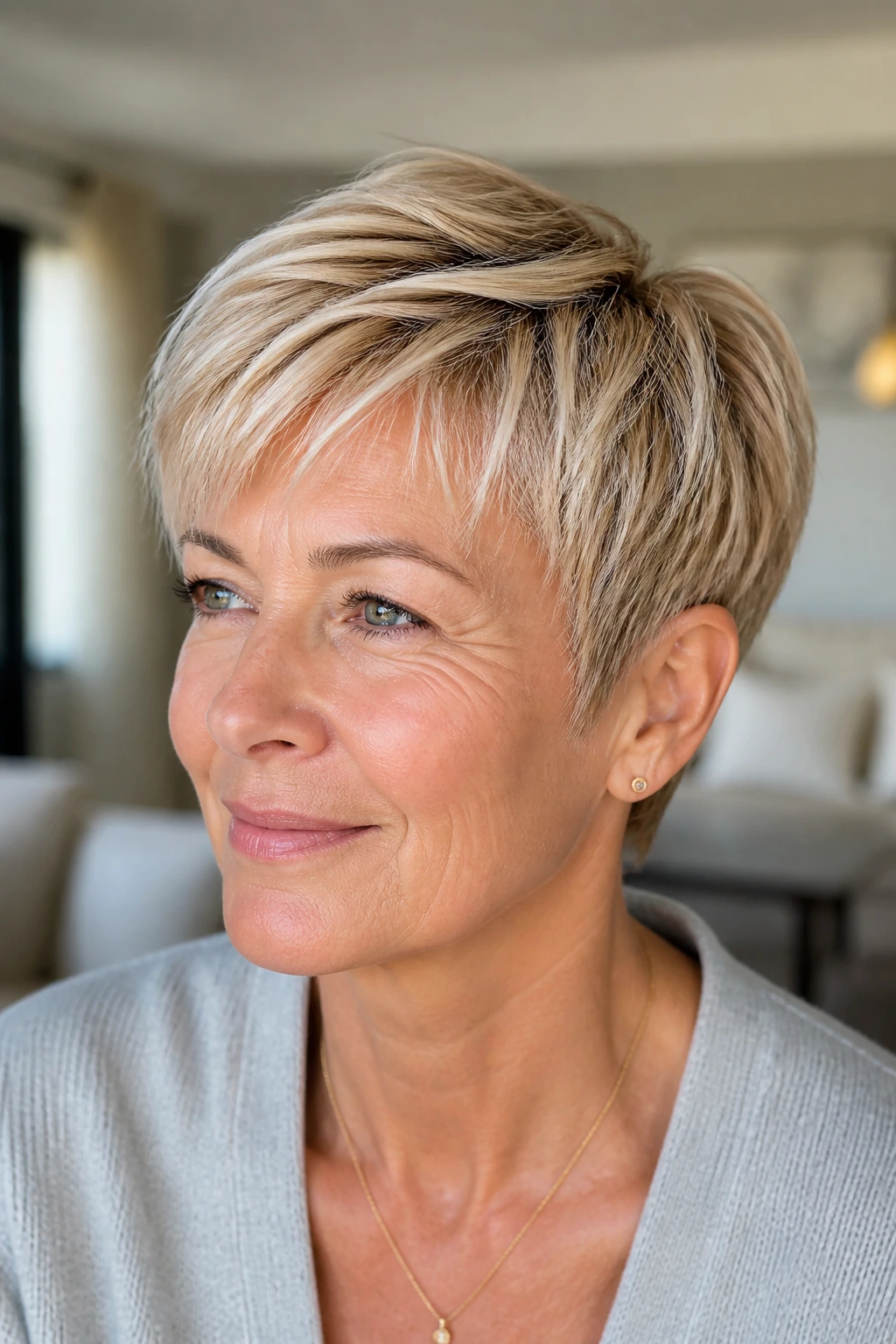
Honey blonde has a warmth that plays nicely with layered crops, especially if your hair already has some bend or natural movement. The color catches on the feathered ends and makes the layers read as texture instead of just haircut lines. On a short crop, that can be the difference between “flat” and “alive.”
Why the warmth works
Warm blondes are kind to skin that leans peach, gold, or olive. They also sit well next to freckles and deeper brows, which keeps the face from looking washed out. If your base color is light brown or dark blonde, honey highlights can lift the whole cut without pushing it into pale territory.
- Ask for soft golden-beige foils, not orange.
- Keep the brightest pieces around the top third of the head.
- Leave a little depth underneath so the crop doesn’t lose its shape.
A gloss at the end is the secret sauce here. It keeps the honey from turning brassy and gives the layers that fresh-cut sheen you notice when the light hits the side of the head.
3. Silver-Blond Babylights on a Feathered Bob
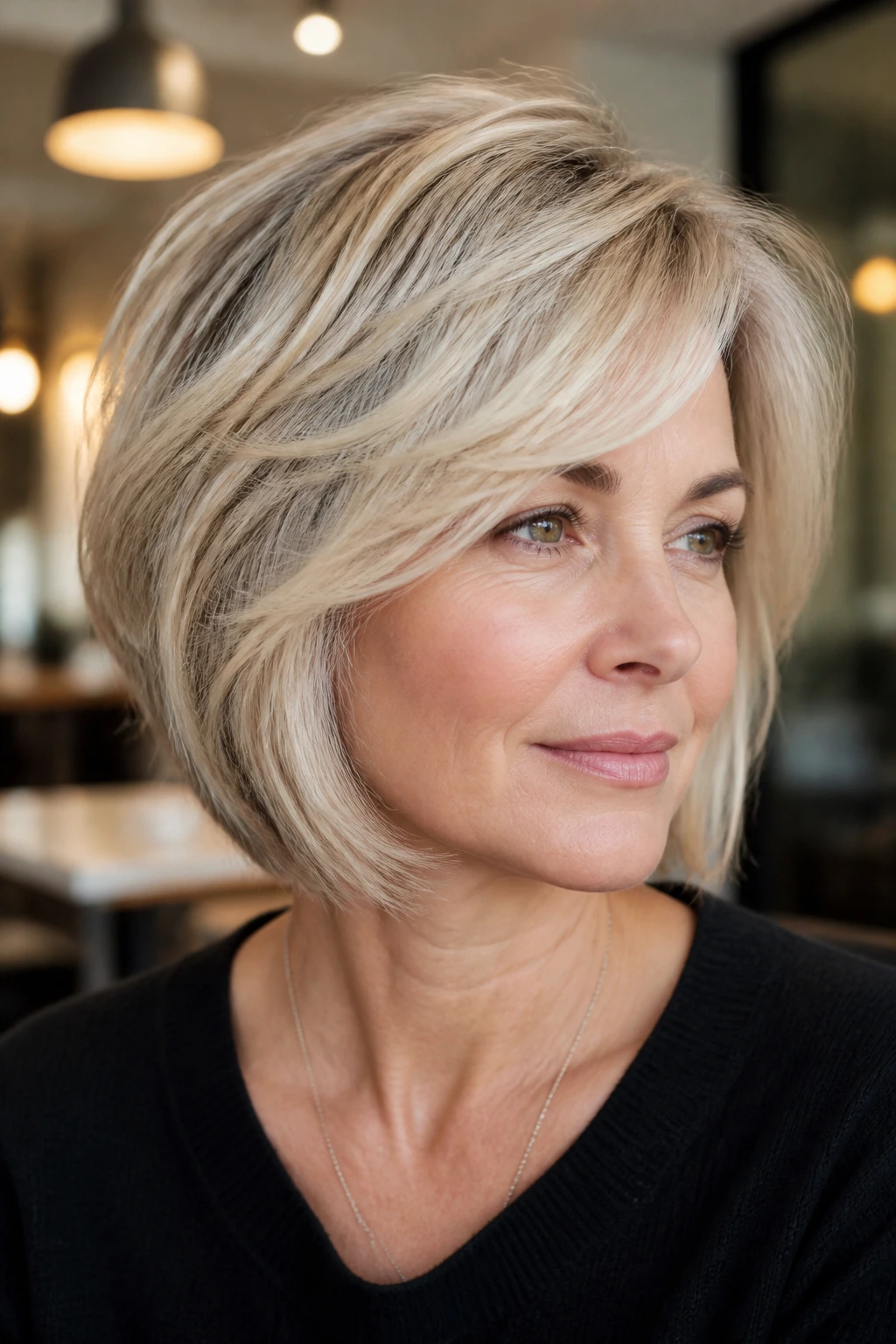
Why does this look so soft? Because babylights are tiny, and on a feathered bob, tiny is the whole point. The color sits in fine, narrow strands instead of chunky ribbons, so the gray and silver already in the hair blend into the blonde instead of fighting it. The result is movement, not stripes.
This style is a strong choice if your natural hair is transitioning gray at the temples or along the part. The coolest thing about it is that you don’t need a lot of lift to get a polished effect. A level 8 to 9 silver-blond toner over thin foils can give the hair a clean, airy finish without looking stark.
If you like to wear your bob tucked behind one ear, this one reads especially well. The light catches the feathered top layers, and the neckline stays neat. That contrast is part of the charm.
4. Butter Blonde Curtain Fringe on a Cropped Lob
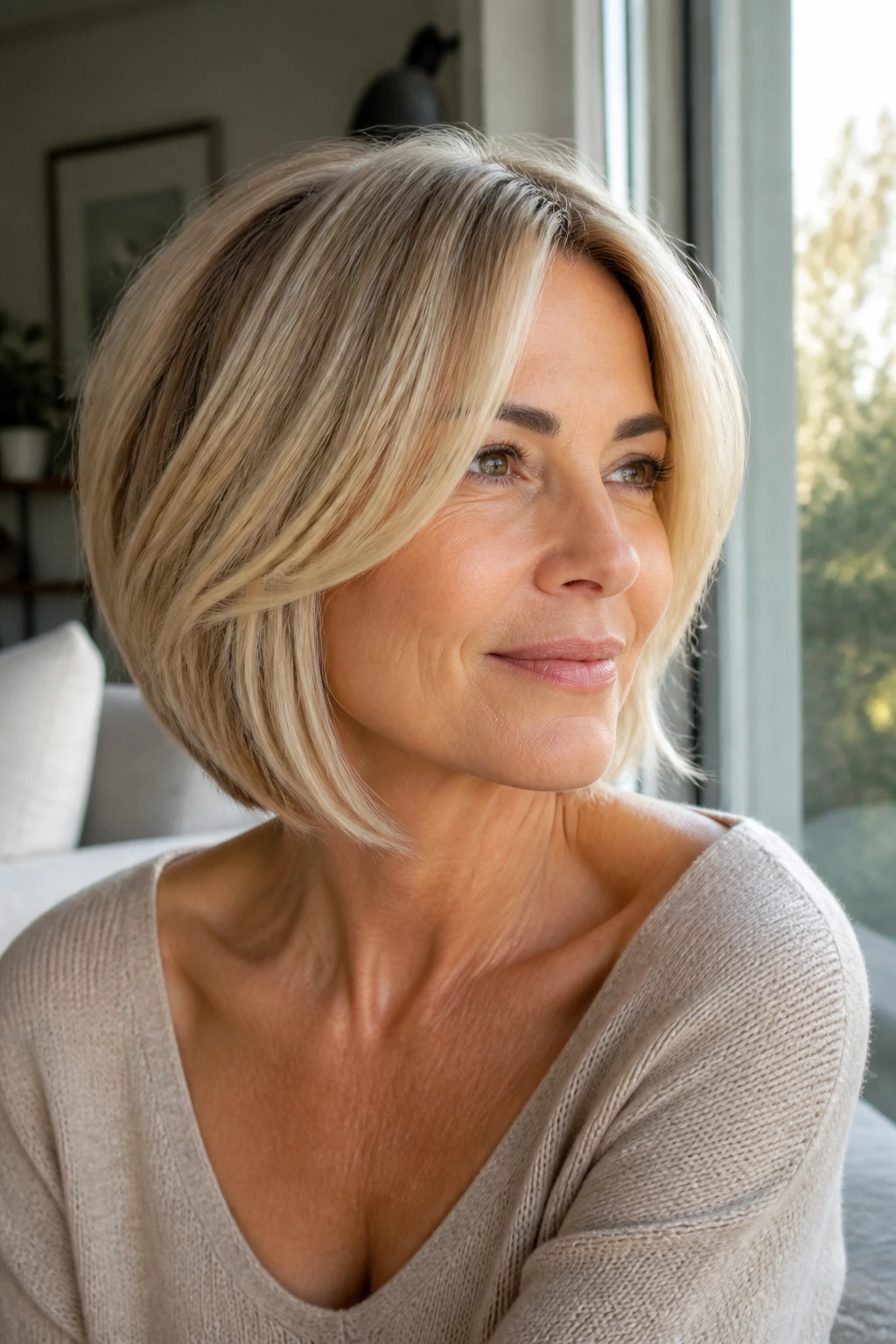
A cropped lob gives you a little extra length to play with, and curtain fringe gives you a place to hide brightness and release it only when the hair moves. Butter blonde works here because it softens the line around the eyes and cheekbones without turning the fringe into a solid block of color.
I like this look when the front of the haircut needs a little more presence than the back. Brighten the curtain pieces from the part down through the cheekbone area, then keep the crown a shade deeper. That gives the cut a relaxed swing instead of a helmet shape.
If you wear glasses, this version tends to behave well. The lighter pieces sit where they can be seen above the frame, and the rest stays calm.
5. Beige Blonde Tapered Cut
Beige blonde has one job: keep the cut from looking yellow, flat, or fussy. On a tapered cut, that neutral tone sharpens the silhouette without turning it harsh. The shorter nape and fuller top already create a nice line; beige just makes the geometry read more clearly.
This is one of my favorites for hair that has gone a little coarser around the crown. Beige absorbs some of that texture visually, which helps the haircut look smoother than a bright gold would. Ask for a soft root shadow if your natural shade is deeper than level 7. It’ll keep the top from looking too exposed as it grows.
It’s quiet color, not boring color. There’s a difference.
6. Sandy Money Piece Around a Soft Pixie
A money piece doesn’t have to be dramatic to work. On a soft pixie, sandy blonde around the hairline and side part gives you that little halo of brightness without forcing the rest of the cut lighter than it needs to be. It’s a smart choice if you want to see change fast and keep the appointment relatively simple.
The trick is to keep the bright pieces close to the face, then taper them into softer blonde through the top. If you go too wide at the temples, the style can start to look disconnected. Thin placement near the sideburn area does a better job of framing the face and keeping the cut light.
This one behaves well with minimal styling. A quick blow-dry in the direction you part your hair is enough to show the contrast.
7. Wheat Blonde Stacked Bob
A stacked bob already carries built-in lift through the back, so wheat blonde is a natural partner. The shade has enough warmth to feel soft, but not so much gold that it starts looking orange under indoor light. That matters on short hair, where the back of the bob often sits close to the neck and reflects less light.
You want the lighter pieces to follow the shape of the stack. Ask for slightly brighter mids and ends through the upper layers, then keep the lower back a shade deeper. That makes the bob appear fuller and more rounded without losing the clean line at the nape.
This style is especially nice if your hair is thick and tends to balloon at the back. The lighter tone breaks up the mass without cutting the shape apart.
8. Pearl Blonde Shaggy Crop
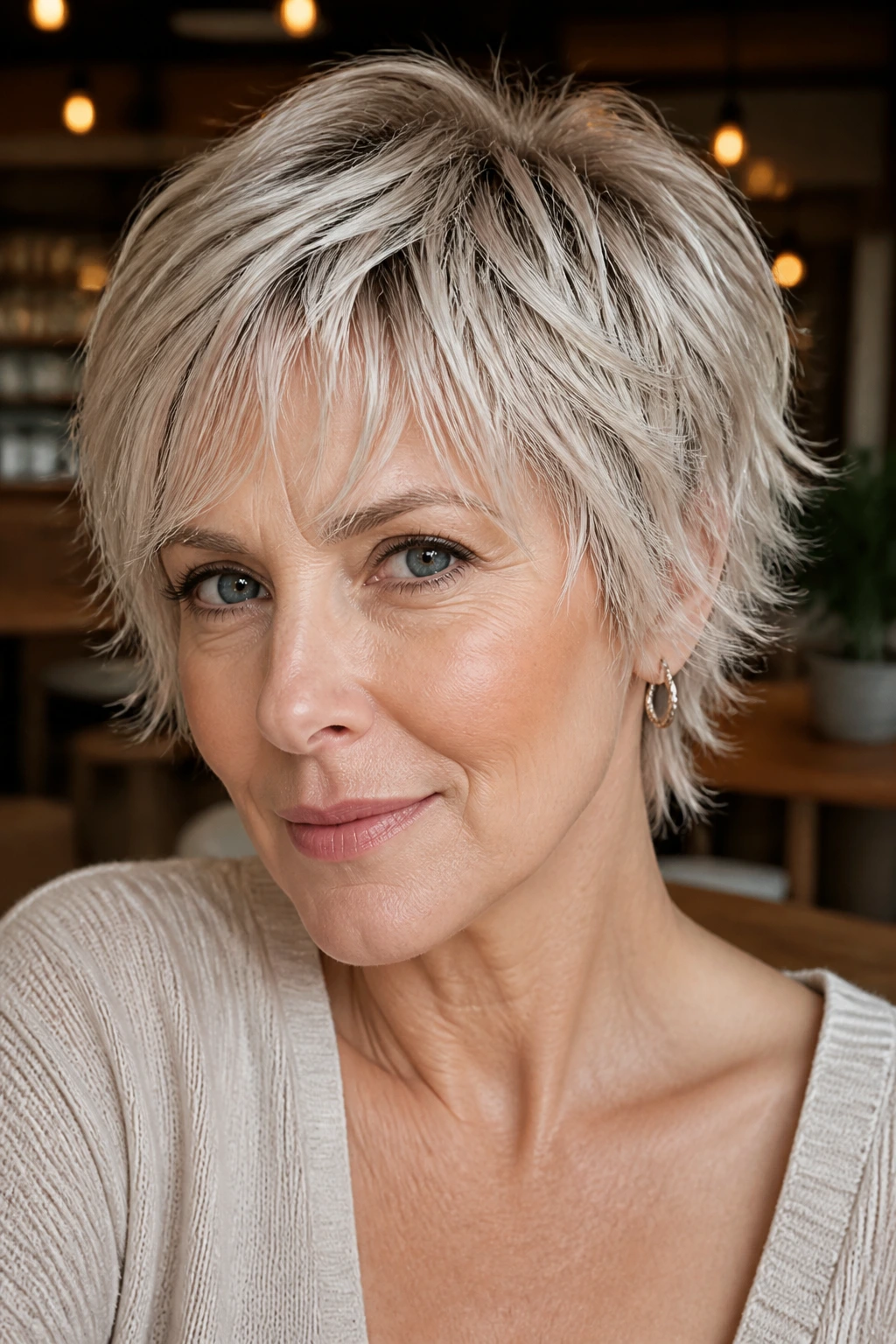
Pearl blonde has a cool, polished feel, but it isn’t icy in the way some platinum shades are. On a shaggy crop, that slight softness keeps the texture from looking crunchy or over-processed. The choppy layers and piecey ends do the visual work; pearl just sharpens them a little.
If your hair has a natural wave, this is one of those colors that makes the movement more obvious. A demi gloss with a violet-beige note can keep the tone creamy rather than blue. That’s the sweet spot. Too much violet and the hair starts looking dull; too little and the yellow creeps in.
A lightweight texturizing spray at the roots and a touch of serum on the ends will show the uneven layers without making the crop stiff.
9. Toffee-to-Blond Ribbon Highlights on a Jaw-Length Bob
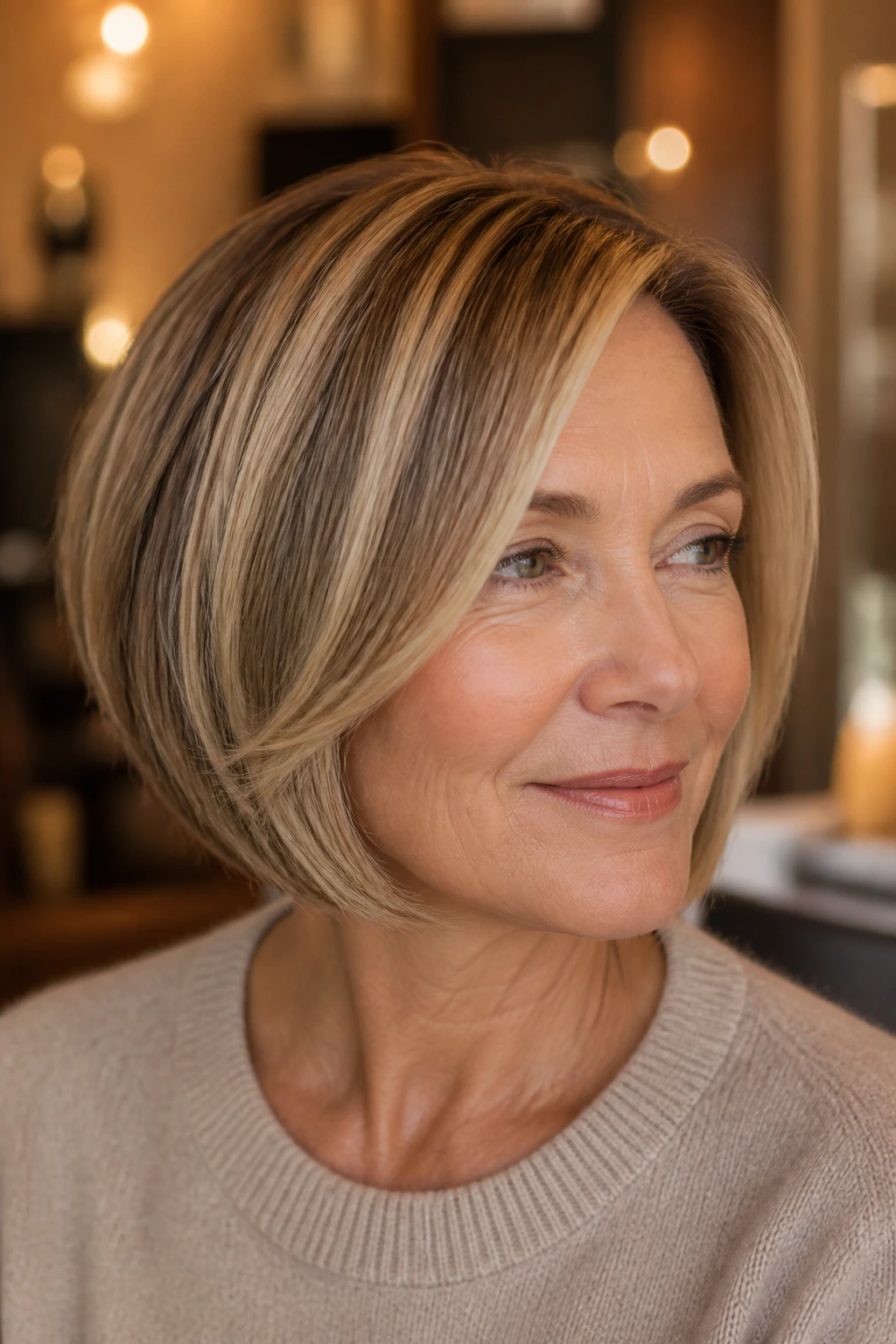
A jaw-length bob can feel flat if every piece is the same shade, and that’s where ribboning earns its keep. Toffee-to-blonde ribbons run through the mid-lengths and ends, leaving enough depth at the roots to give the hair shape. The contrast is soft, not stripey, which is exactly what a shorter bob needs.
What makes ribboning different
Unlike thin babylights, ribbons are a little wider and a little more visible. They’re useful when your hair is medium to thick and can handle a stronger color story. The toffee base keeps the look grounded, while the lighter ribbons move when the hair swings at the chin.
- Keep the ribbons uneven so they don’t look patterned.
- Ask for a soft gloss between tones to stop the blonde from turning too stark.
- Style with a round brush if you want the ribbons to show more clearly.
This is the kind of bob that looks best on day two, not hour one. The color settles, the shape loosens, and the whole thing looks easier.
10. Cool-Cream Ice Blonde on a Sleek Crop
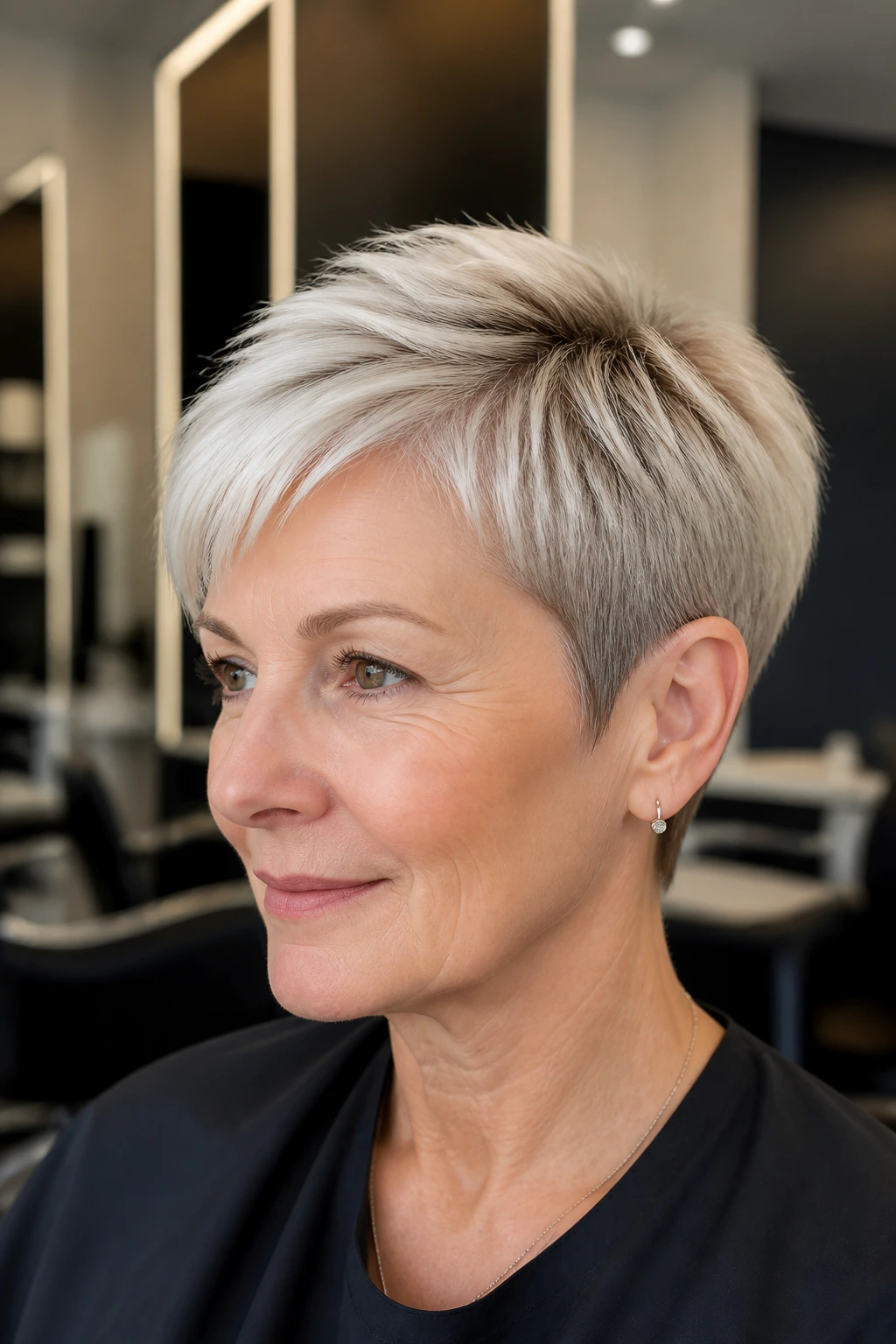
This one is for people who want a sharper, cleaner blonde on a short cut that already has smooth lines. Cool-cream ice blonde sits higher on the contrast scale, so it works best when the haircut is precise and the hair is in decent condition. If the ends are dry or porous, the tone can turn muddy fast.
I’d keep this look tight through the nape and brightest through the top surface. That gives the style a polished edge without bleaching every strand to the same level. A root smudge helps a lot here, because it softens the grow-out and keeps the head from looking like one bright block.
Be honest about upkeep. Ice-blonde short hair needs toner refreshes and careful heat styling. If you’re willing to treat it gently, it can look crisp in a way softer blondes never quite do.
11. Sunlit Face-Framing Foils on a Side-Swept Pixie
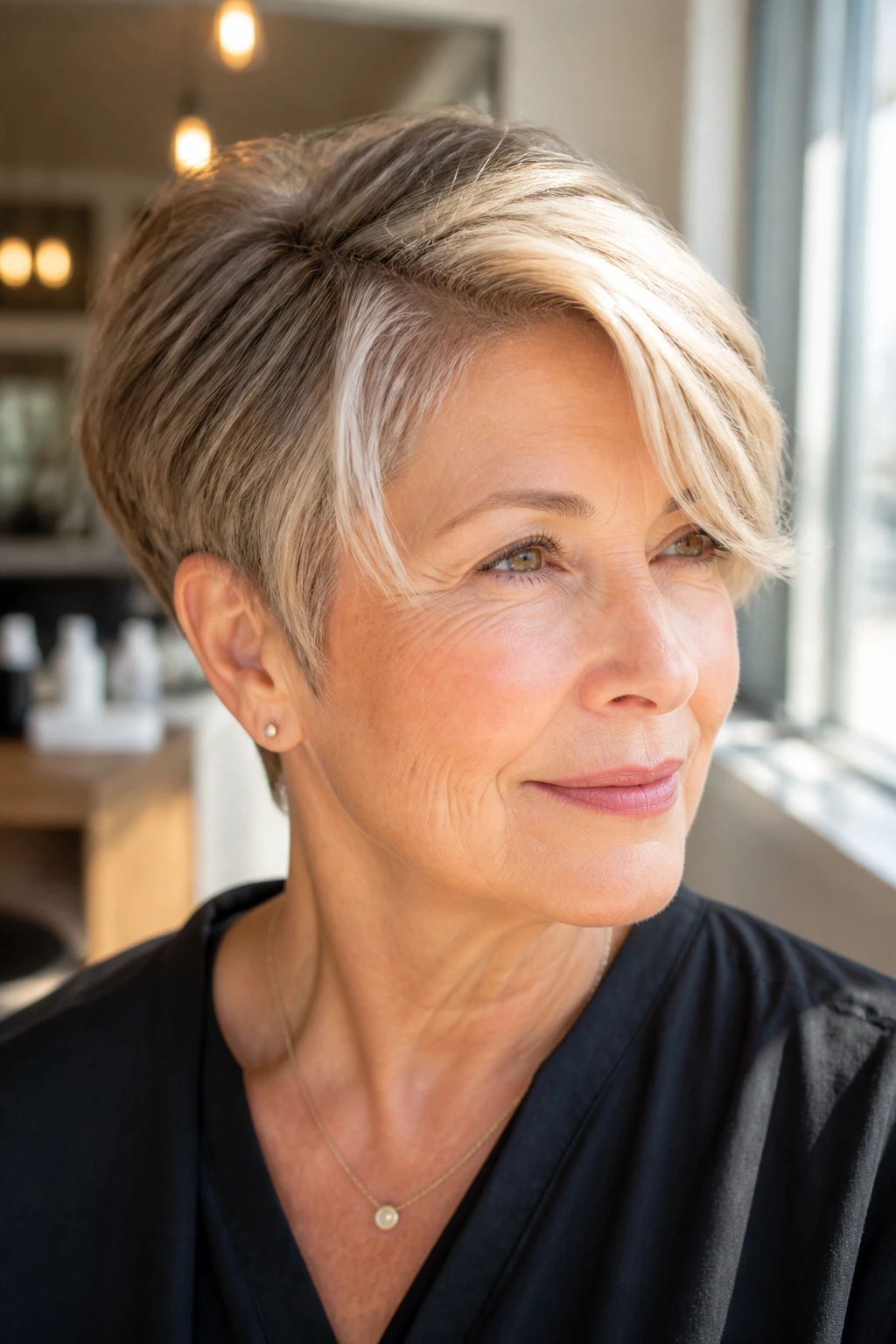
A side-swept pixie lives or dies by the front section. If the fringe falls across one eye or sweeps toward the cheek, that’s where the brightness should live. Sunlit foils along the part, temple, and front curve give the cut a lifted look without turning the whole head pale.
The nice part about this method is how targeted it is. You can keep the sides and nape deeper, which makes the top appear fuller. That’s useful if your hair is fine or if the crown tends to split. A few brighter strokes in the front break up the silhouette and pull attention upward.
I’d keep the tone in the champagne or soft beige family here. Too much ash can make the front disappear against the skin.
12. Soft Rose-Undertone Blonde on Short Waves
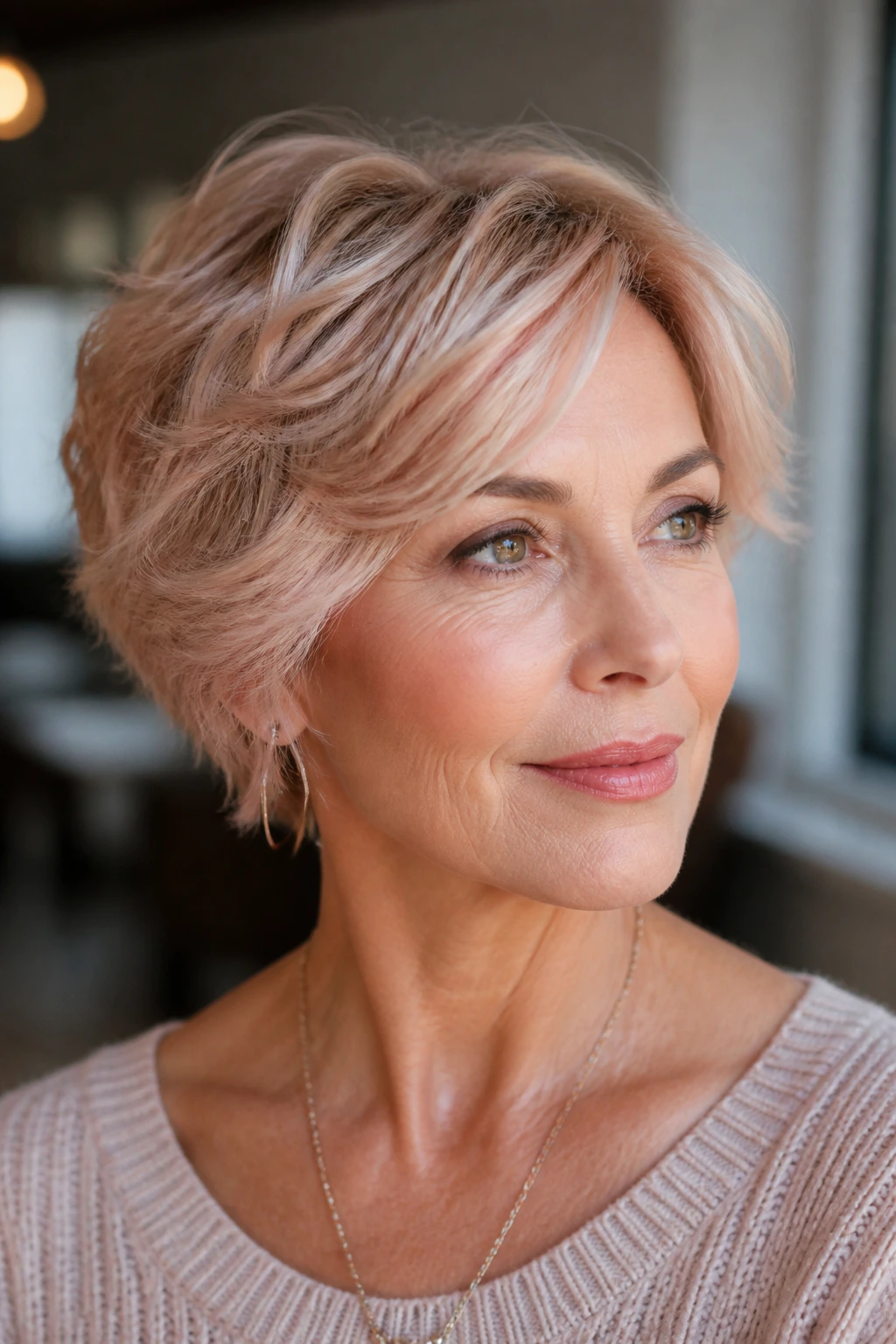
Can blonde have a blush to it? Yes, and on short waves, that tiny pink-beige undertone can be a little magic. It softens the edge of the wave pattern and keeps the blonde from feeling flat or icy. The color sits somewhere between beige and rose gold, but the idea is restraint, not sparkle.
This look works especially well on cuticle-friendly waves that already have texture. You don’t need a lot of lift; you need a tone that makes the curls or bends read clearly. A rosy beige gloss can brighten the complexion without leaning cartoonish. That’s the line to stay on.
If your hair is porous, ask for a gentler gloss rather than a strong toner. Short hair shows tone shifts faster than long hair, and this shade is lovely when it stays soft.
13. Mushroom Blonde Blending for Gray-Transition Hair
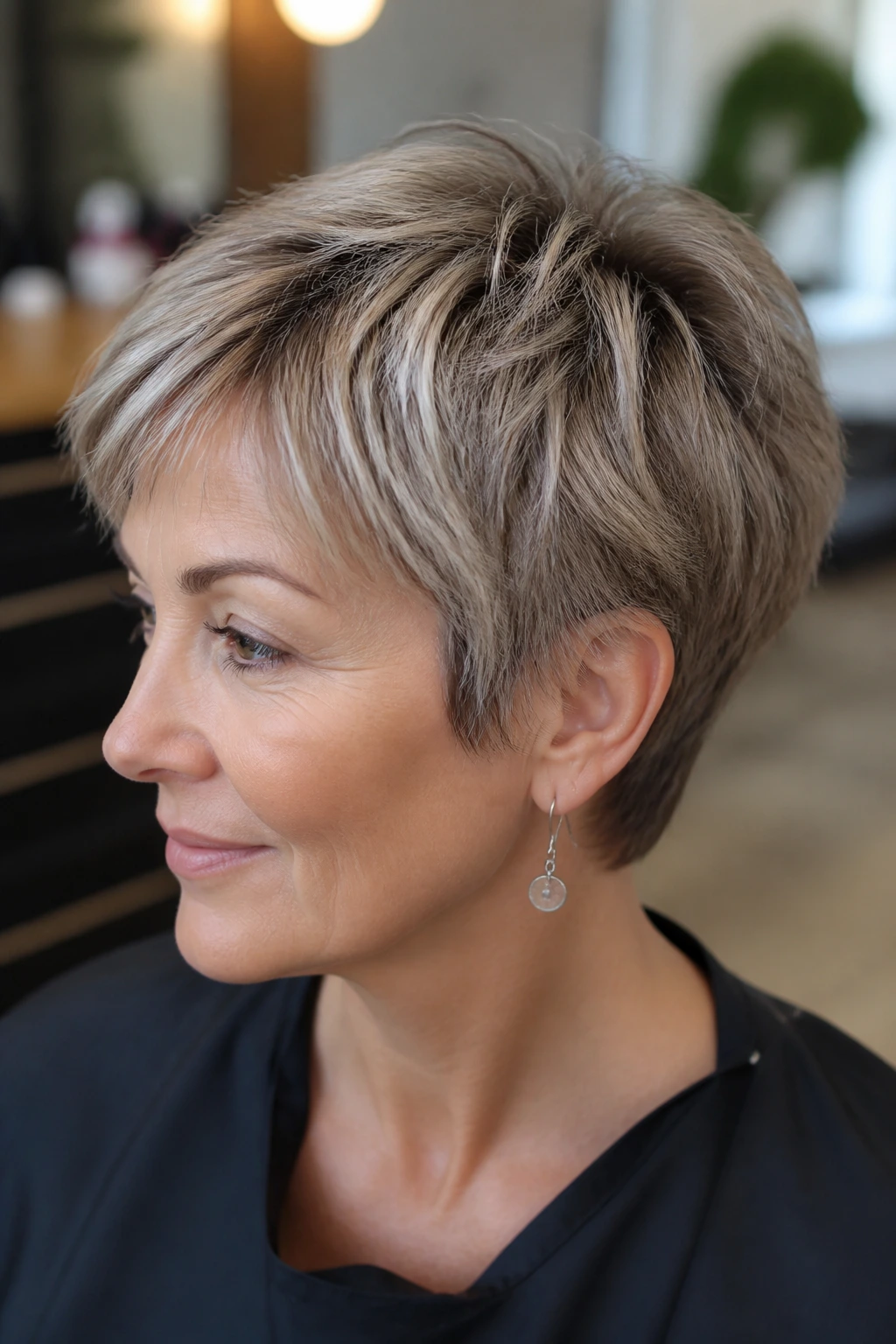
Mushroom blonde is one of the smartest choices for gray transition because it doesn’t pretend the gray isn’t there. It works with it. The cool-taupe base and pale beige pieces create a low-contrast blend that makes grow-out feel intentional instead of obvious.
This is especially good on short hair around the temples and crown, where white strands can pop up faster than you’d like. Instead of chasing those grays with heavy lightener, mushroom blonde lets them act like part of the dimension. The look is calm, textured, and much easier to live with than a high-contrast blonde.
Ask your colorist to keep the lightest pieces no farther than a few fingers from the hairline. That keeps the face bright while the rest of the head stays soft and believable.
14. Vanilla Blonde Slices on a Rounded Bob
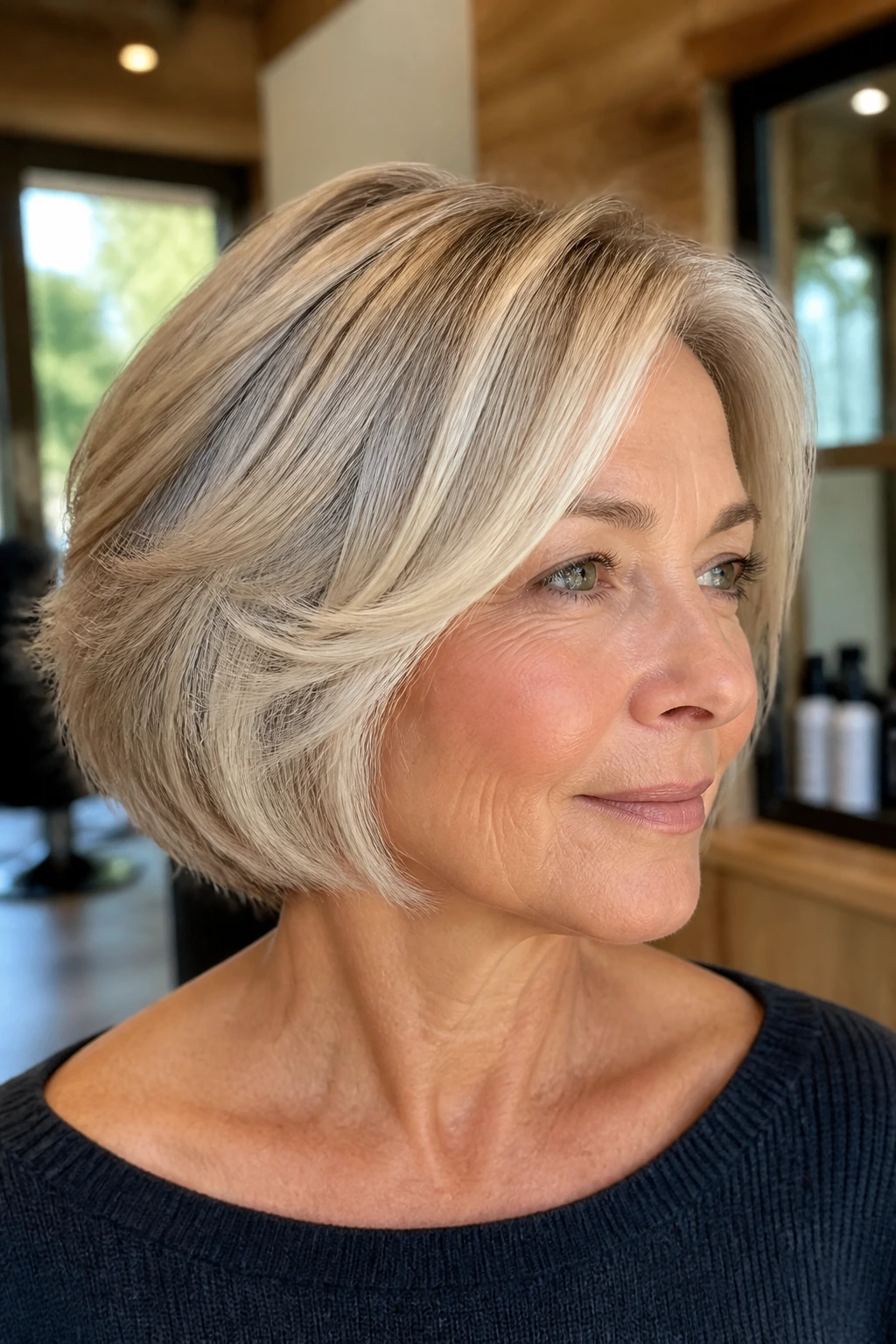
Vanilla blonde has a clean, creamy finish that suits a rounded bob really well. Unlike micro-babylights, slices give a little more visibility, which helps a rounded shape feel fuller from side to side. The trick is to keep the slices soft enough that they don’t turn into stripes.
If your hair is naturally straight, this approach adds rhythm. If it’s slightly wavy, even better — the vanilla pieces move with the curve of the bob and stop it from reading as one smooth helmet. A few deeper lowlights underneath can make the lighter slices stand out without needing extra bleach.
This is a good “looks simple, took some thought” kind of blonde. I like that.
15. Gilded Balayage on a Piecey Crop
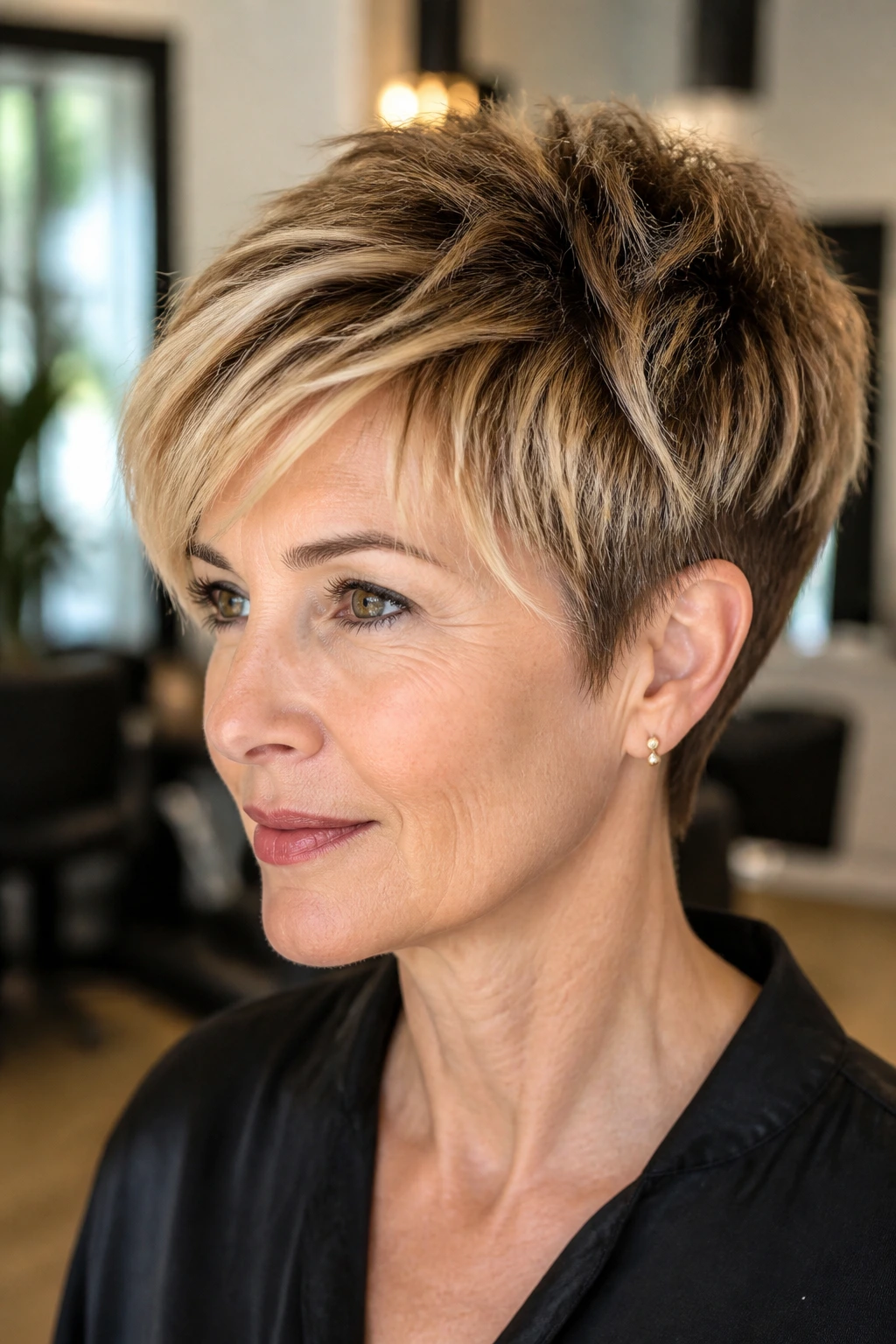
Balayage on a short crop has to be handled with a lighter hand than it would on long hair. Gilded balayage keeps the paint where movement naturally happens: top layers, fringe tips, and the edges that catch light when you turn your head. That makes the style look hand-finished rather than overdrawn.
How to get the most from it
Use it when you want visible dimension, but not a foil line. The ends can be a little brighter than the roots, with the crown left darker for shape. Piecey styling makes this one shine — a little paste, a little lift at the roots, and the whole cut looks intentional.
- Best on textured crops and shaggy pixies.
- Works well with a warm beige or soft gold tone.
- Needs less regular maintenance than a full-head blonde.
The charm here is in the unevenness. It should look brushed by light, not colored by a ruler.
16. Champagne-to-Platinum Brightening at the Crown
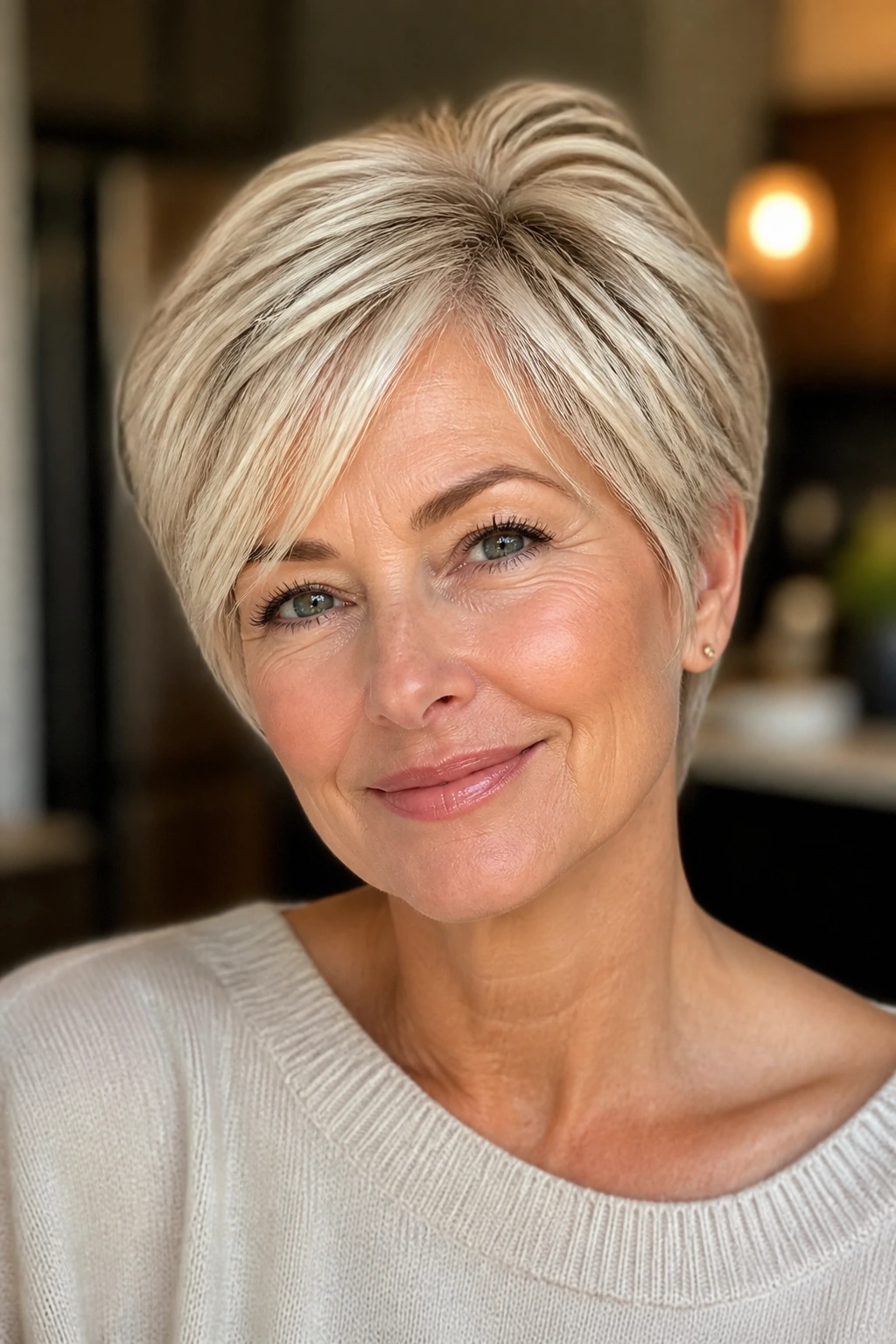
This is the bolder end of the short-hair blonde spectrum. Start with champagne through the front and underlayers, then let the crown go brighter — almost platinum, but not chalky. That shift draws the eye upward, which can make a short cut feel taller and more animated.
The key is restraint at the hairline. If the bright pieces sit too low, they can pull the face forward in a way that feels harsh. Put the boldest lightness where the head naturally rounds at the crown, then let the sides stay softer. That gives the style a lifted profile.
It’s a high-payoff look if your hair can handle it. Just don’t pretend it’s low maintenance. It isn’t.
17. Caramel Blonde Peekaboo Panels in a Textured Bob
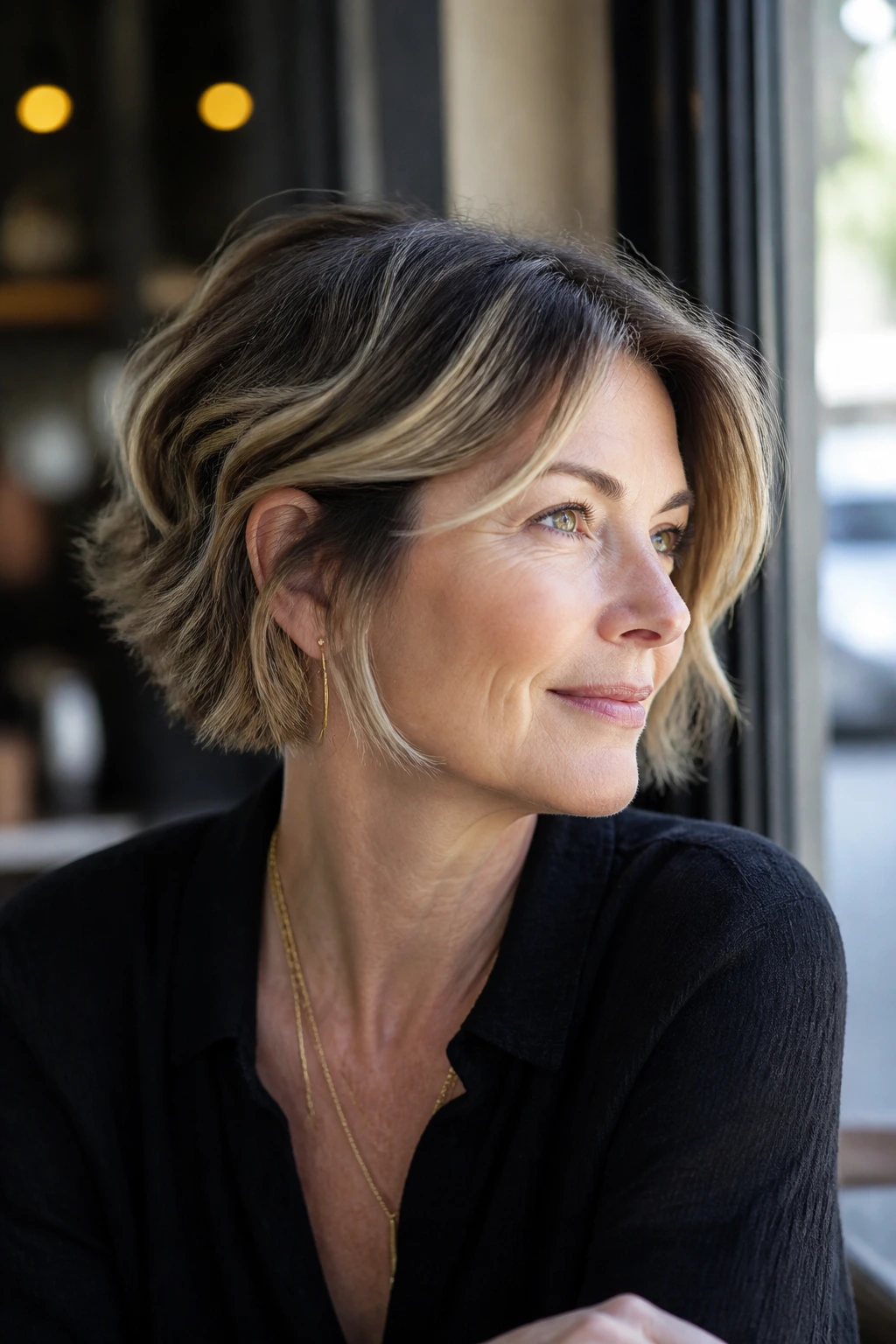
Peekaboo color is one of the most useful tricks for anyone who likes short hair but doesn’t want every highlight on display all the time. Caramel blonde panels tucked under the top layers show up when the bob moves, bends, or tucks behind the ear. That gives the haircut a second personality.
The base stays richer, which is a relief if you’re growing out darker color or want less upkeep. Caramel keeps the look warm and dimensional, and the lighter panels peek through instead of broadcasting themselves. That makes this style especially good for people who wear their bob wavy.
One quiet benefit: peekaboo placement can hide the fact that your hairline is a little thinner than it used to be. The top layer does the covering, the lighter panels do the work beneath.
18. Beige-and-Butter Blonde Mix for Fine Hair
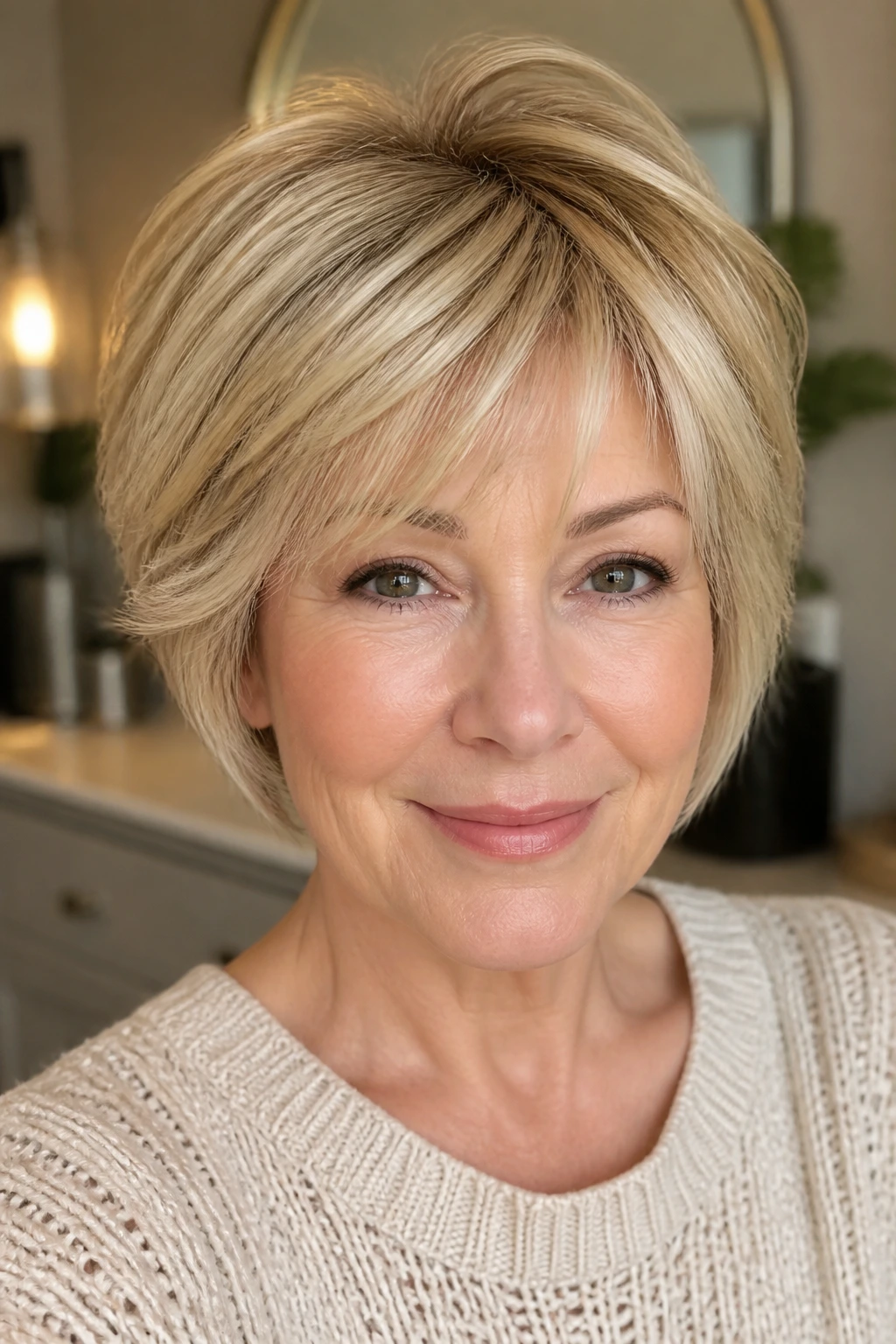
Fine hair needs dimension more than drama. A beige-and-butter mix gives you two tones that sit close enough together to avoid stripes, but different enough to make the cut look fuller. That matters on short hair, where every strand is visible and a single flat tone can make the whole style look thinner.
This kind of blend is especially good when the hair has lost a little density at the crown or around the part. The lighter butter pieces catch the eye, while the beige pieces keep the overall effect believable. If you push too pale, fine hair can turn see-through fast. I’d rather see a touch of depth than a washed-out finish.
Styling with a root-lift spray helps. Don’t overload the lengths. Fine hair needs air.
19. Smoky Blonde Root Shadow on a Short Lob
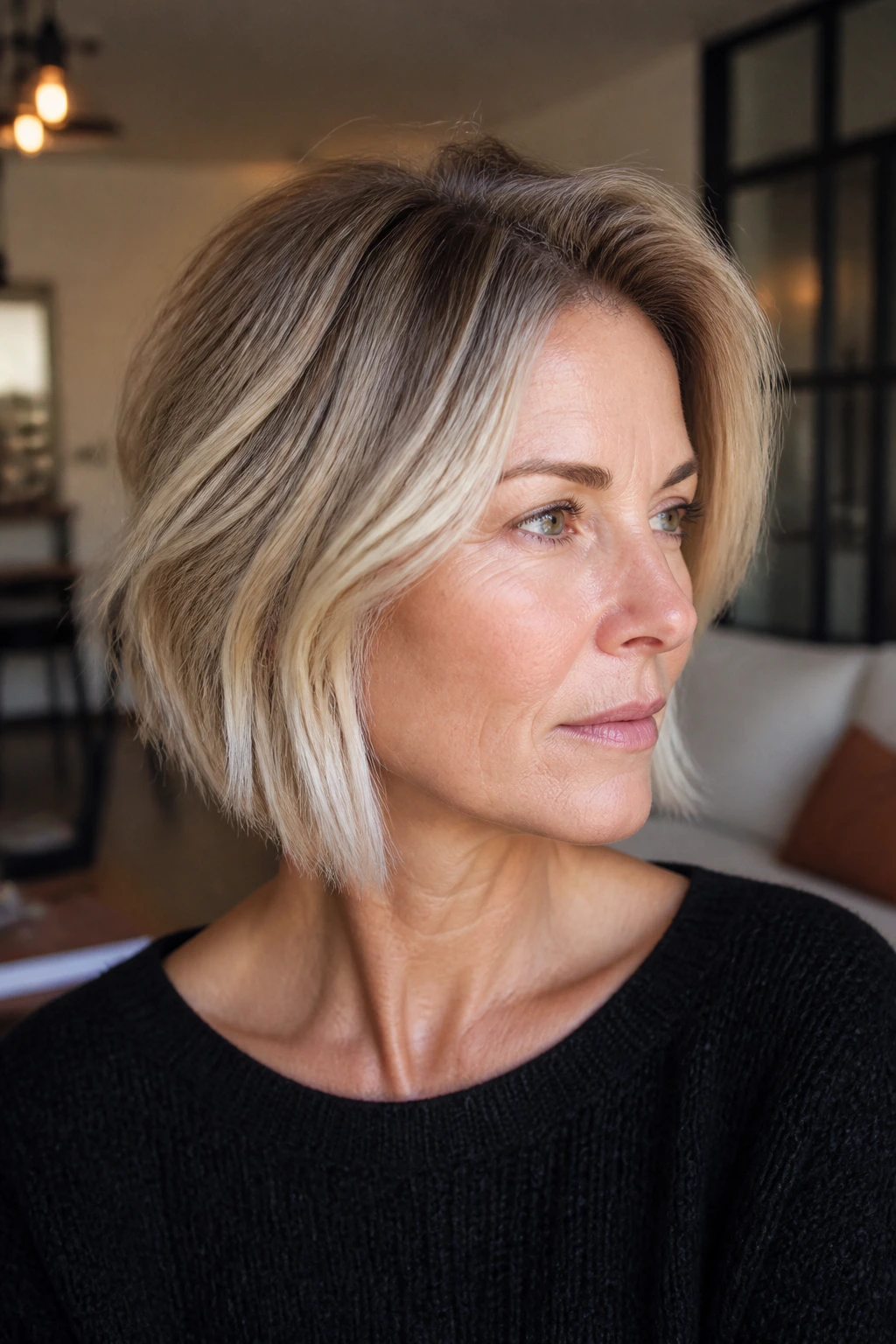
A root shadow is one of those salon tricks that earns its place fast. On a short lob, it keeps the regrowth line blurred and lets the lighter lengths sit underneath without looking pasted on. Smoky blonde — a cool beige with a gray-brown cast — makes that effect even softer.
This is a strong pick if you like a low-contrast look and don’t want to sit in the salon every few weeks. The darker root gives the cut depth near the scalp, which can be useful if the hair is naturally limp. Then the lighter ends do enough work to keep the whole thing from feeling heavy.
It’s a practical blonde. Not flashy. Practical often wins.
20. Cream Soda Highlights on a Feathered Pixie
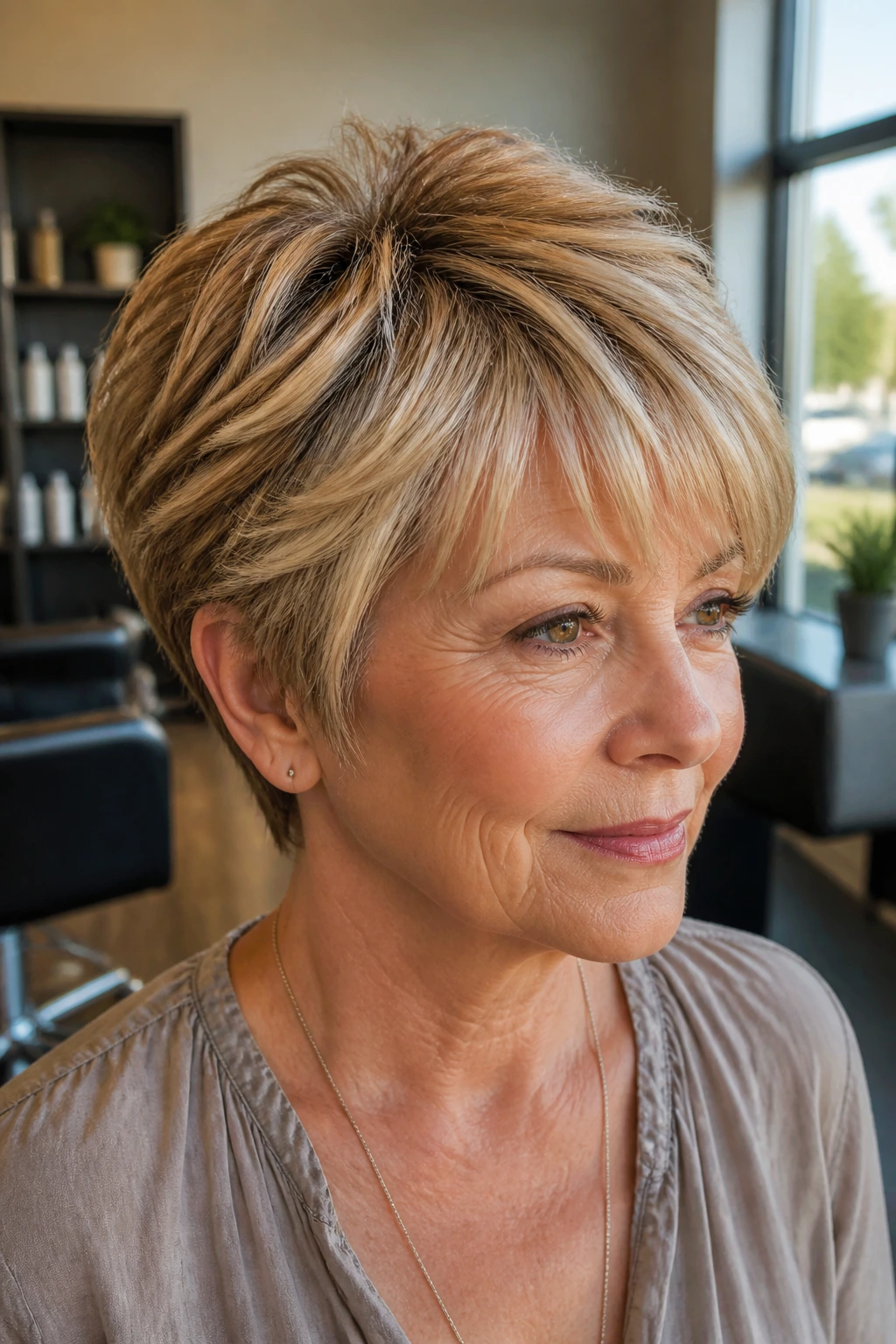
Cream soda blonde has a soft, glossy warmth that flatters feathered pixies better than harsher gold. The color sits in that easy zone where it looks sunny, not orange, and creamy, not pale. On a pixie, that warmth can make the layers look more visible without making the cut scream for attention.
I like this tone when the hair has a lot of texture around the crown. The lighter pieces pick up the feathering and show off the way the layers flip. Keep the base a shade deeper so the brightness doesn’t wash out the structure. That contrast is what keeps it pretty instead of puffy.
If you wear your pixie brushed forward, cream soda gives the fringe a little glow. If you wear it swept back, the crown lifts better.
21. Warm Wheat Balayage on a Curly Crop
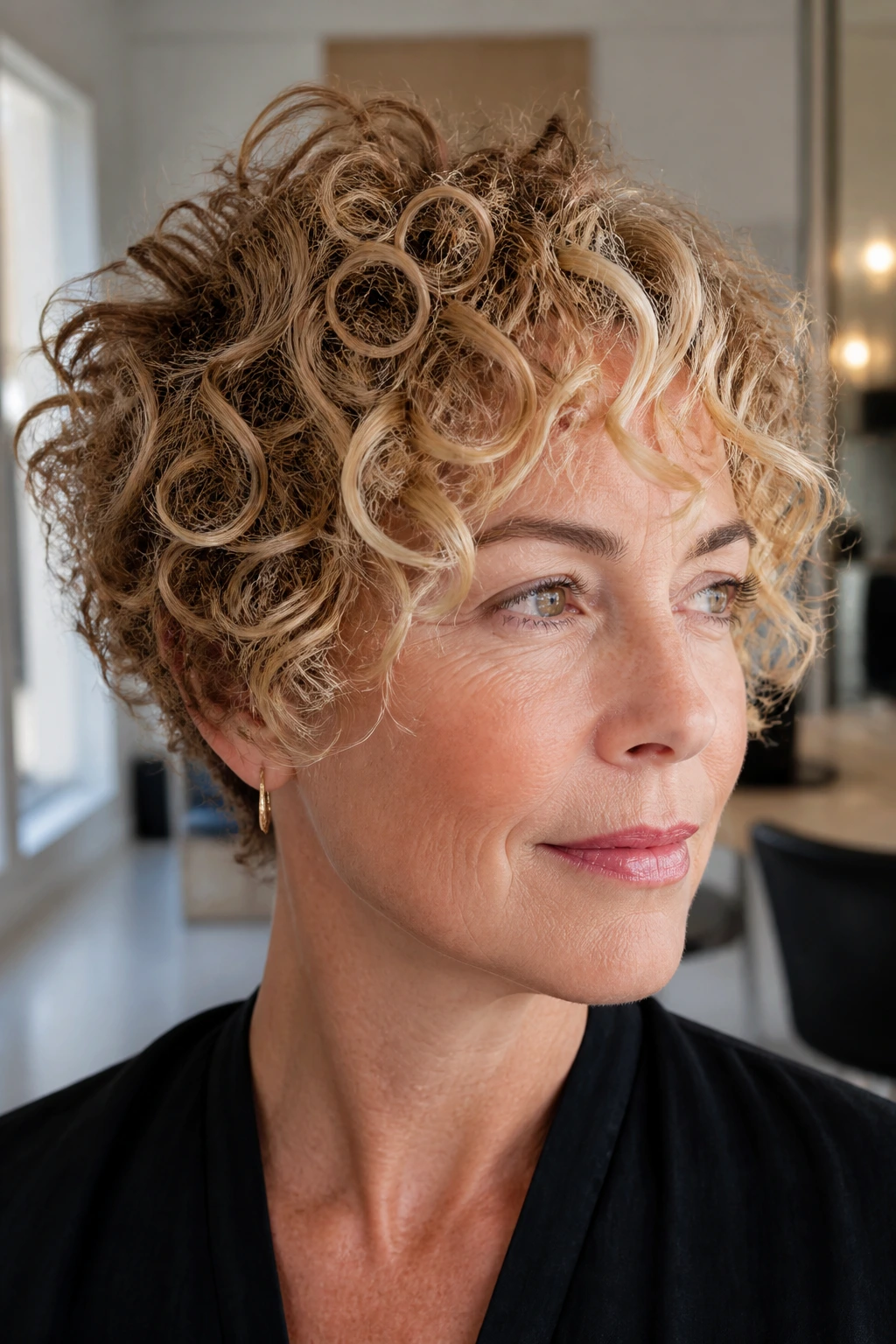
Curly short hair is a different animal. You do not want the highlights to sit in neat lines and disappear when the curl springs back. Warm wheat balayage follows the curl pattern instead, placing brightness where the coils or bends catch the light. That means the blonde looks woven in, not painted on.
The warm tone keeps the curls from looking dry. Curly texture tends to show damage faster, so a softer wheat blonde is often kinder than a pale ash. Ask for painted ends and a few brighter face-framing curls. The rest can stay a touch deeper for shape.
Diffusing the hair after coloring matters too. A curl pattern will make or break the way this color reads.
22. Nordic Blonde Accent Streaks on an Asymmetrical Cut
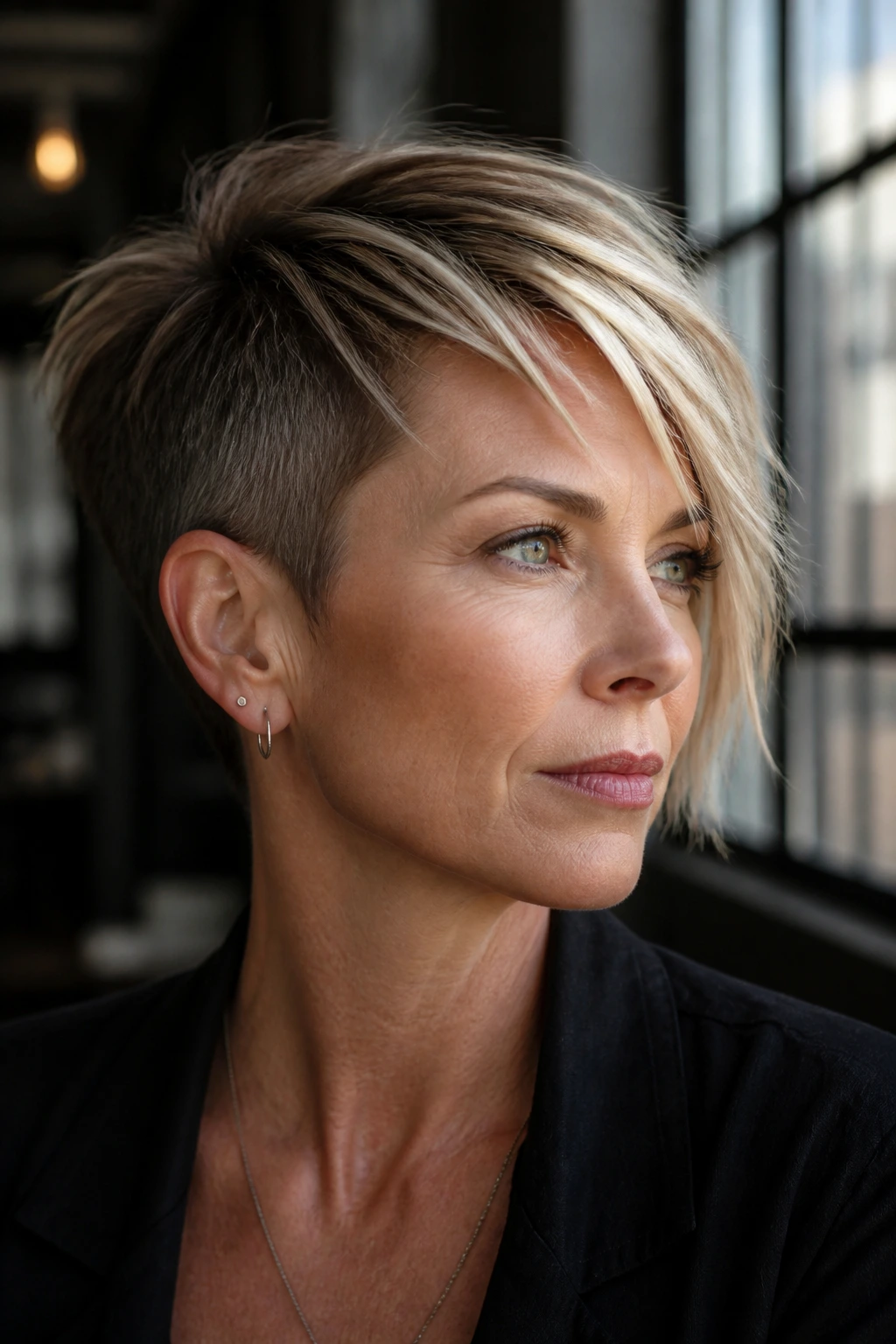
An asymmetrical cut can carry more edge than a standard bob or crop, so a few Nordic blonde accent streaks feel right at home. The cooler, paler pieces line up with the sharpness of the shape and make the diagonal lengths pop. Used well, they don’t flatten the haircut; they underline it.
This is not the look for someone who wants the color to disappear into the background. It’s more graphic. Keep the streaks focused on the longer side and the top plane, then let the shorter side stay a little deeper so the cut keeps its angles. That contrast is half the fun.
A light smoothing cream works better than a heavy oil here. You want the streaks to stay distinct.
23. Soft Mocha-to-Blonde Blend for Low-Contrast Depth
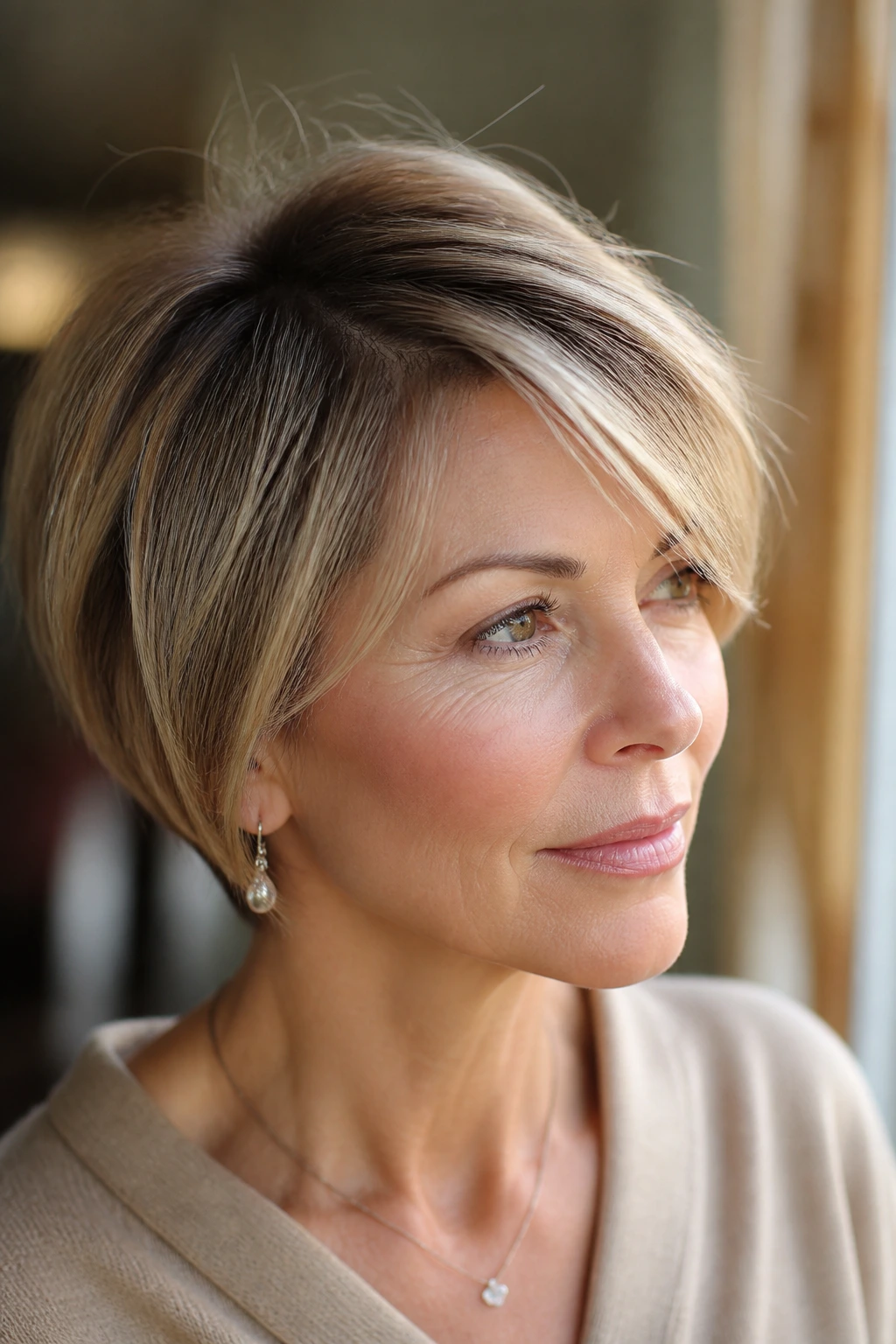
If you like dimension but hate obvious contrast, soft mocha-to-blonde blending is the move. The darker mocha root gives the short cut depth near the scalp, then the blonde lifts gradually through the top and ends. The transition should look brushed, not chopped.
This is one of the easiest ways to keep short blonde hair feeling grown-in instead of newly bleached. It also plays nicely with natural gray because the darker root can sit near the temple without looking like a mistake. On a bob or crop, the blend makes the haircut appear thicker than a single shade ever could.
It’s the kind of color that rewards movement. The more the hair shifts, the better it looks.
Why Short Hair Changes the Way Blonde Sits
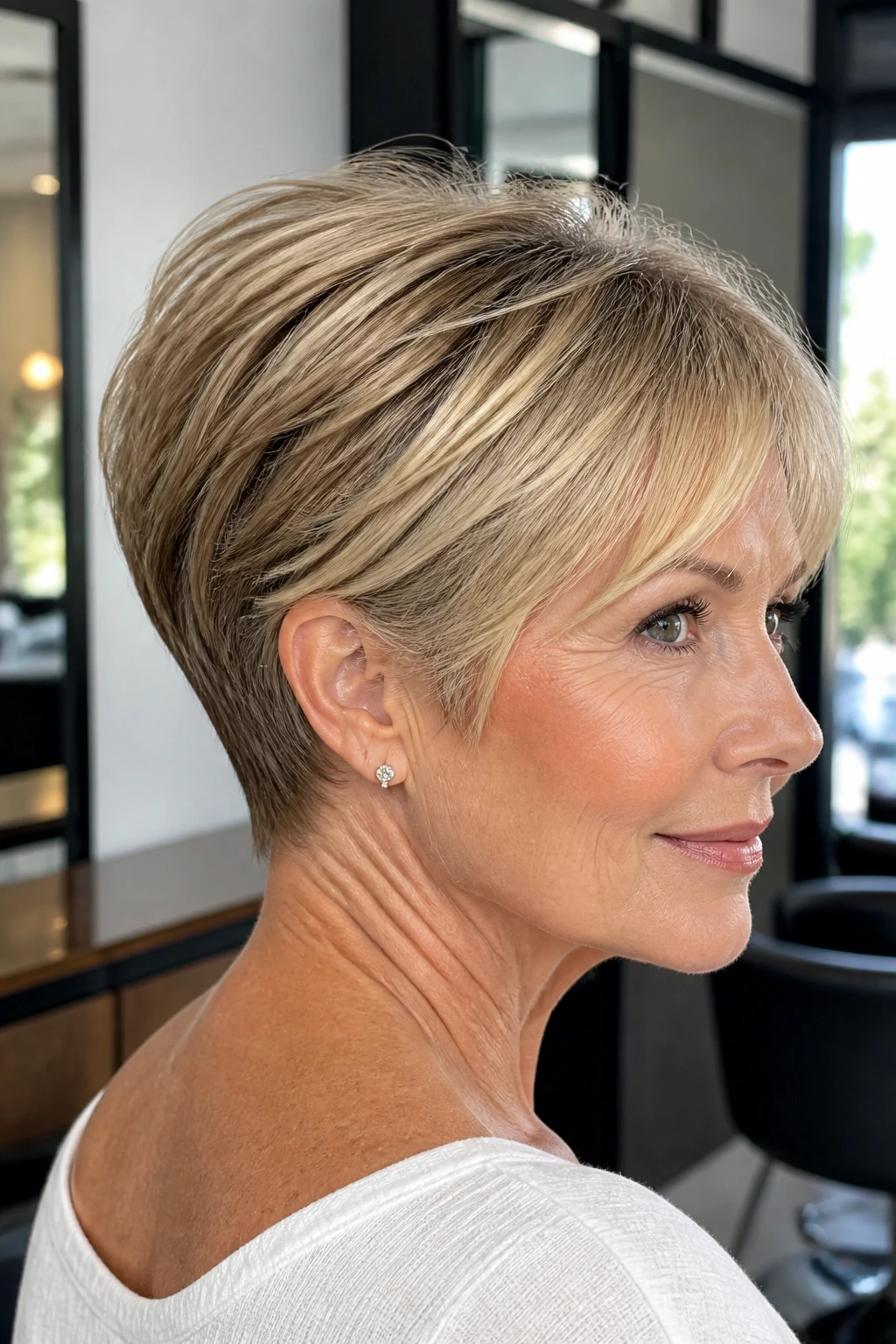
Short hair doesn’t give color much room to meander. Every foil line, every root shadow, every toner choice shows up faster because the cut is compressed into a smaller shape. That’s not a flaw. It’s the reason short blonde hair can look so polished when it’s done well.
A pixie with a bright crown and a deeper nape reads like a custom cut. A bob with soft face-framing light and a grounded root line feels finished, not washed out. The eye sees the whole shape at once, so color placement becomes part of the haircut instead of an add-on.
The other thing short hair does is expose texture. If the ends are dry, if the crown is over-lightened, or if the tone has gone brassy, you’ll notice it immediately. That’s why beige, champagne, mushroom, and pearl blondes are so useful here — they soften the hard edges without burying the shape.
Tools, Toners, and Salon Terms Worth Knowing
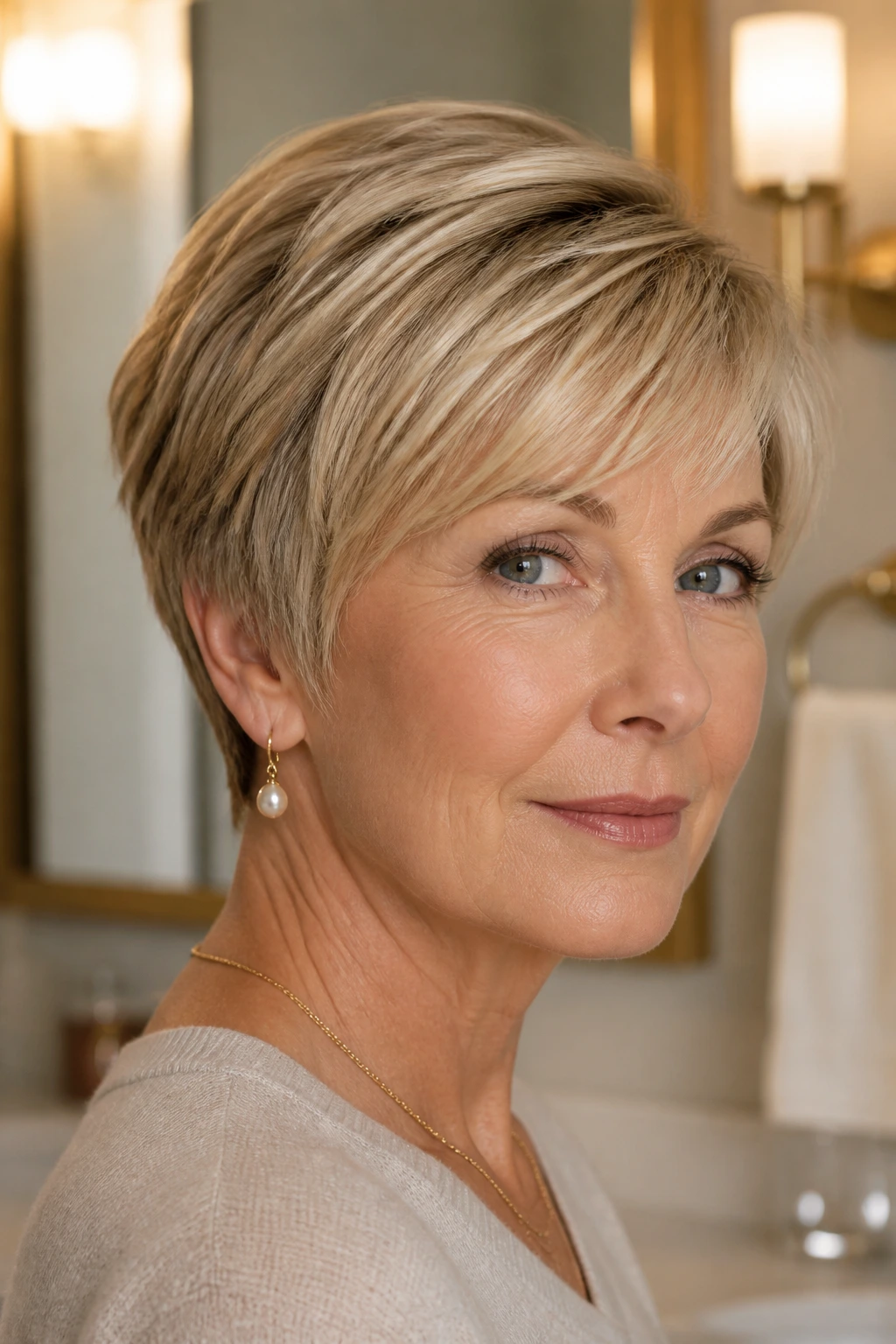
You don’t need to speak fluent colorist to get better results, but a few words make the conversation much easier.
- Tail comb: Helps section short hair cleanly, especially around the part and temple where highlights need to be placed precisely.
- Duckbill clips: Hold the top layers out of the way so the nape and crown can be worked separately.
- Foils: Best for controlled brightness, especially if you want tiny babylights or a brighter money piece.
- Balayage brush: Used for hand-painting softer pieces and blurred ends on crops and bobs.
- Demi-permanent gloss: A low-commitment toner that refreshes shade without the bite of permanent color.
- Purple or blue shampoo: Useful for keeping cool blondes from turning yellow or orange, though it should not replace toner.
- Bond-building treatment: Helpful if your hair is fine, porous, or already lightened; it can make the hair feel less brittle after blonding.
- Root shadow or root smudge: A soft darkening at the base that blurs regrowth and gives short hair depth near the scalp.
If a salon menu uses words like babylights, ribboning, foilayage, or gloss, that usually means the color is being described by placement and tone, not just “blonde.” That distinction matters on short cuts.
Choosing the Right Blonde Family for Your Skin Tone and Gray Pattern
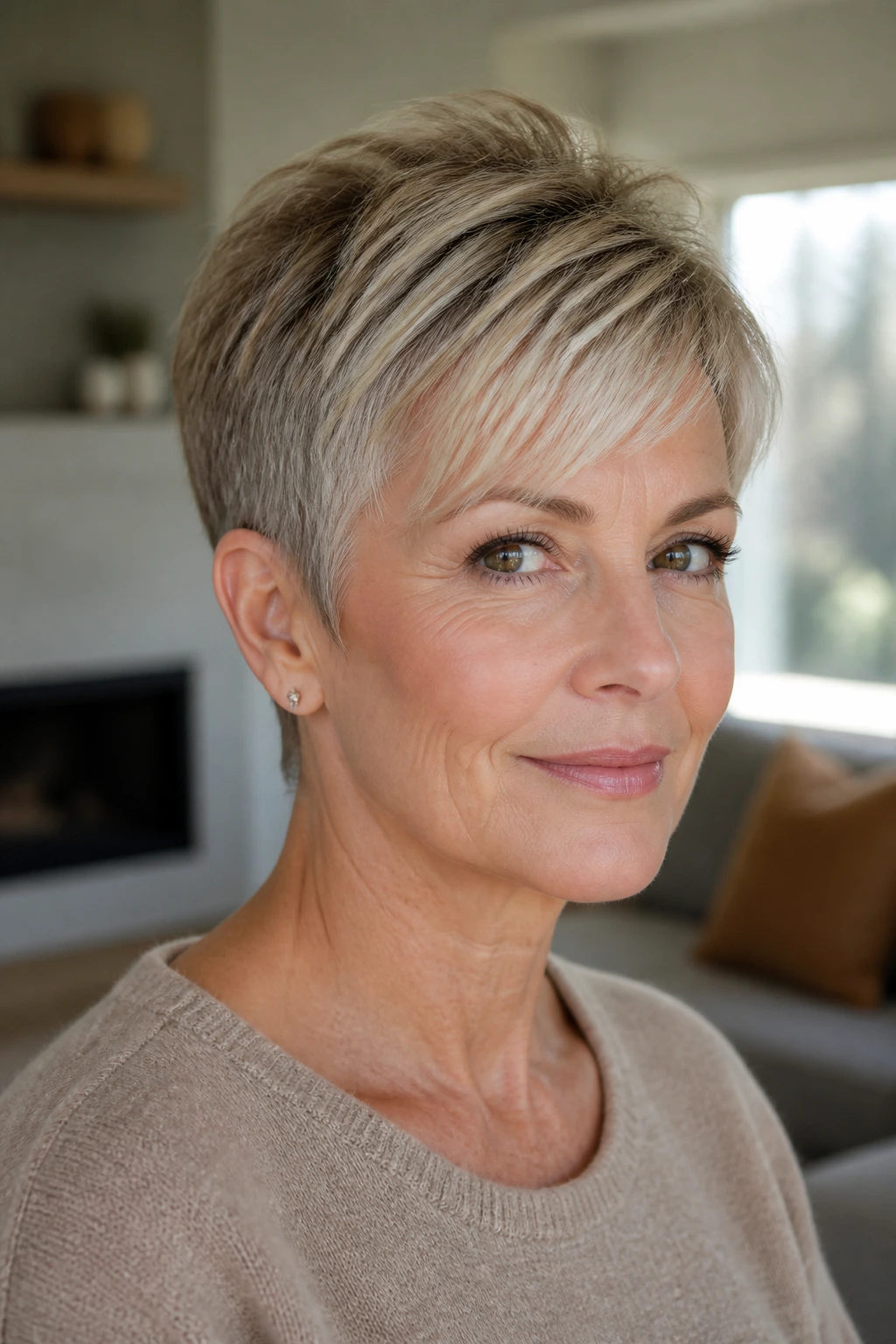
The easiest blonde to wear is usually the one that sits closest to your natural undertone. Short hair shows the face first, so tone and skin need to talk to each other.
Warm blondes
Honey, butter, cream soda, and wheat blondes work well if your skin leans golden, peach, or olive. They also soften freckles and can make layered crops look fuller because the warmth gives the hair a rounder visual feel.
Cool blondes
Pearl, silver-blond, mushroom, and smoky blondes suit cooler skin or a natural gray pattern that’s already silver at the temples. These shades keep the hair from looking yellow near the face and make white strands feel intentional instead of random.
Neutral blondes
Champagne, beige, and vanilla are the safest middle ground. They sit between warm and cool, which is useful if your skin changes with makeup, glasses, or simply how much sleep you got. Neutral blondes also age gracefully on short hair because they don’t swing too far one way.
Gray-transition hair
If you’re blending white or silver into darker natural hair, low-contrast blondes usually beat bright blondes. Micro-babylights, mushroom tones, and soft root shadows let the gray participate instead of standing apart. That is especially helpful around the part and temples, where new growth shows up first.
How to Keep Blonde Highlights from Looking Stripy
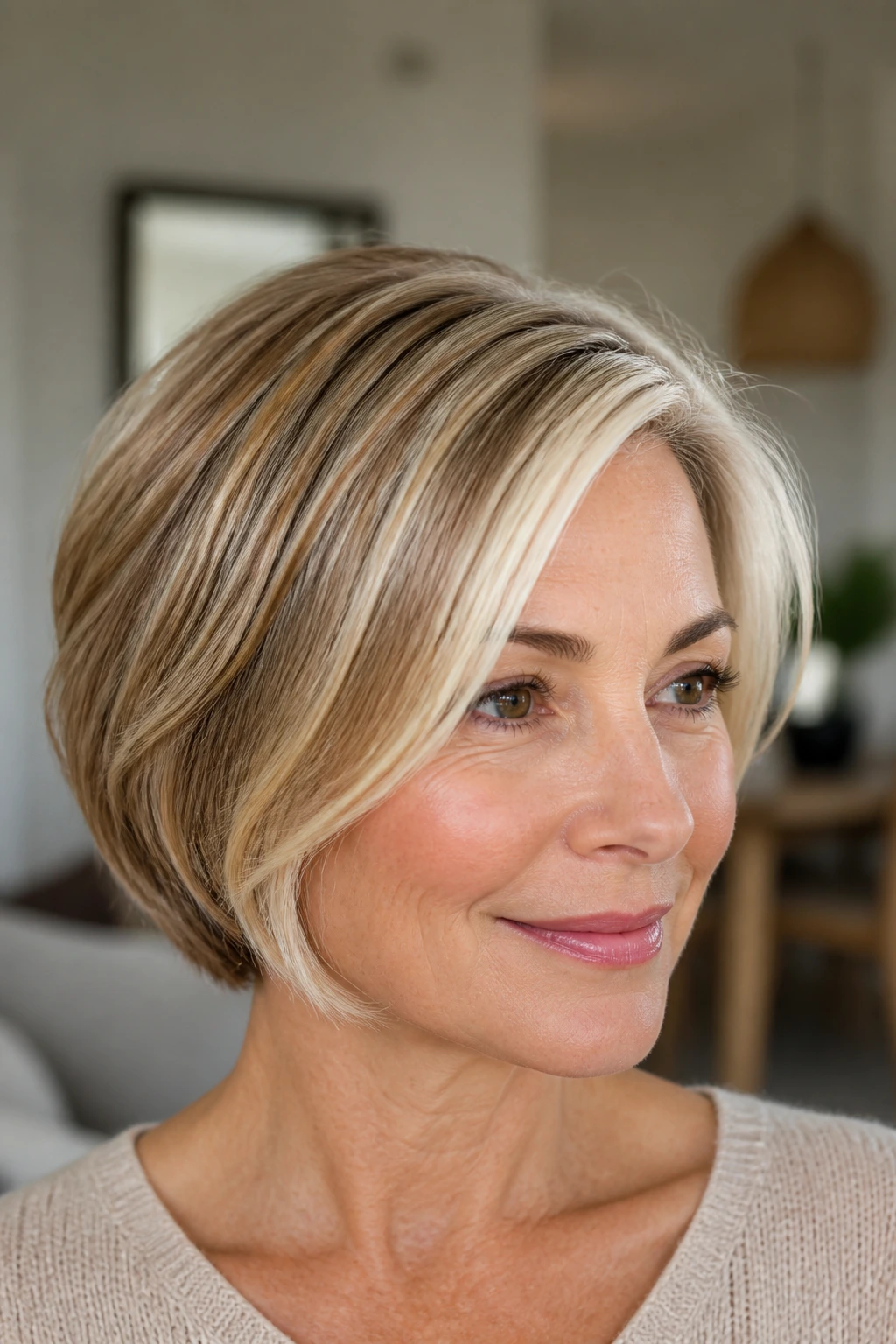
The fastest way to make short blonde hair look dated is to put the lightest pieces in the wrong places. Wide stripes at the part or temple can look harsh on a pixie and overdone on a bob. Smaller, less regular pieces tend to work better.
Think in layers. Brightest near the face, softer through the midsection, deeper underneath. That keeps the haircut from flattening and lets the light pieces move instead of sitting in a row. If the hair is fine, babylights are your friend. If the hair is thick, a few ribbons can add the depth babylights can’t.
Styling matters too. A round brush, a side part, or even a quick finger-tousle can stop the highlights from reading like a pattern. Air-dried hair tends to show off the blend best on shaggy cuts, while smooth blow-drying shows the placement more clearly on bobs and sleek crops.
Maintenance, Toning, and Regrowth Between Appointments
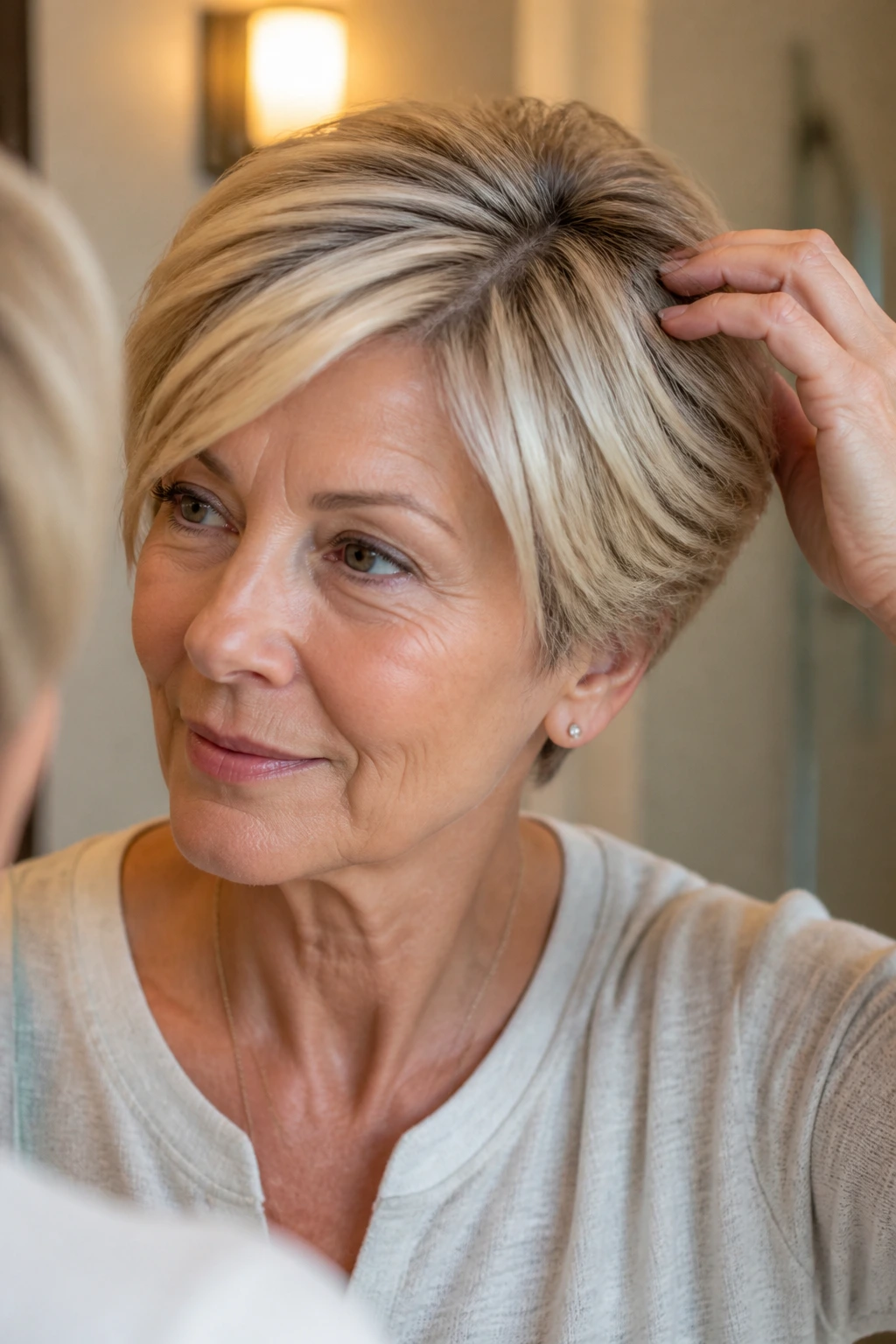
Short blonde hair usually needs a little more attention than people expect, mostly because the color sits so close to the face. A toner can fade before the root line becomes long enough to ignore, which is why maintenance is a planning issue, not just a beauty one.
Between salon visits
- Tone refresh: every 4 to 6 weeks if you wear cool blonde, a little longer if you prefer warm or beige tones.
- Partial highlight touch-up: often around 8 to 12 weeks, depending on how fast your hair grows and how visible your part is.
- Haircut maintenance: every 5 to 7 weeks for pixies and cropped bobs, because the shape changes fast.
At home
Use purple shampoo sparingly on cool blondes — once a week is usually enough. More than that can leave the hair dull or slightly purple at the ends. Warm blondes usually do better with a color-safe shampoo and an occasional glossing mask rather than heavy toning.
If your hair feels rough after lightening, skip a second bleach session and ask for a gloss or bond treatment next visit. Short hair gets trimmed often, but that doesn’t mean it can tolerate endless lifting.
What to Tell Your Colorist Before They Mix the Lightener
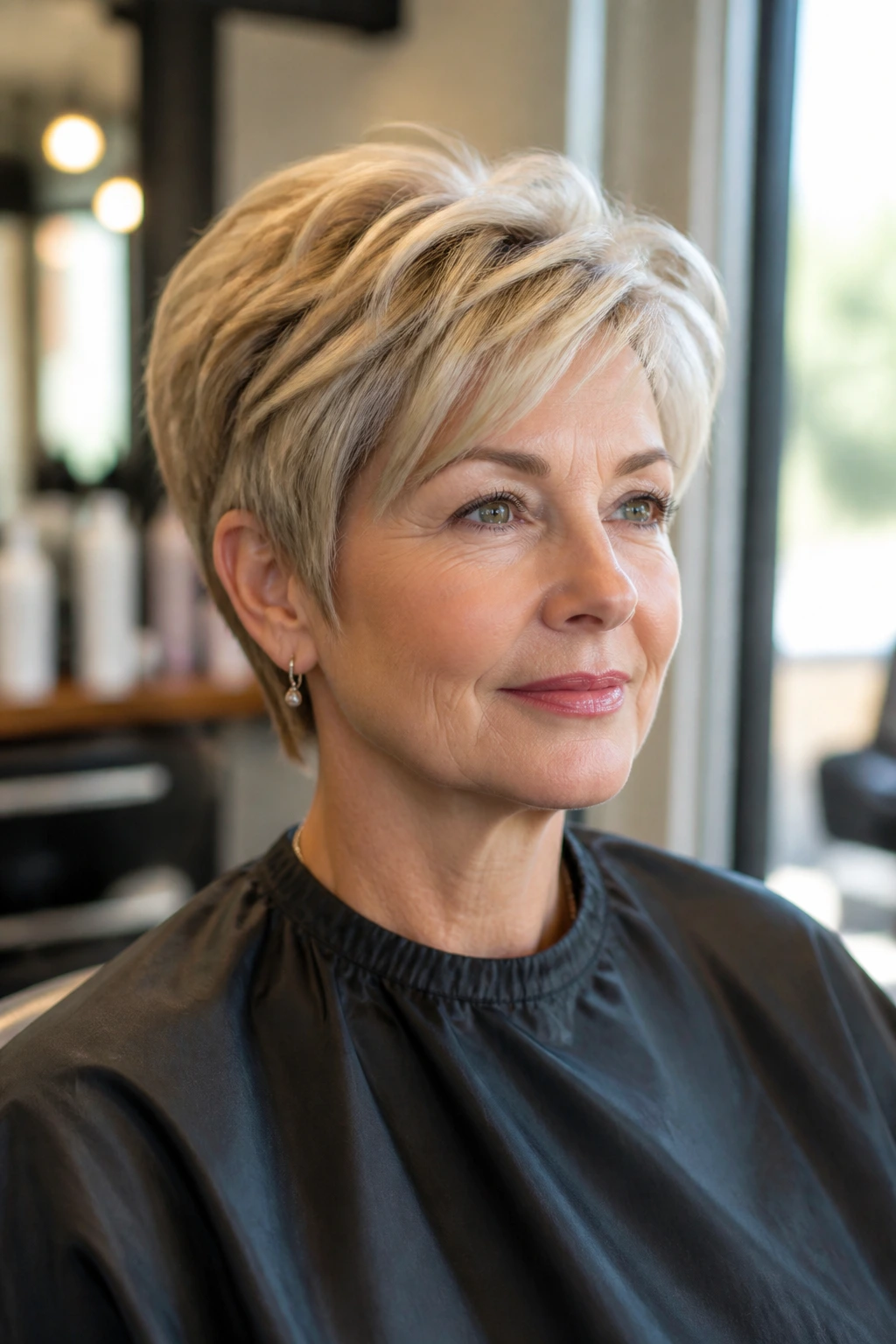
A good consult saves more bad hair days than almost anything else. Show your colorist where your hair parts, where it goes white first, and how much time you’ll actually spend styling it. That last part matters more than people think.
Bring two photos if you can: one for the tone you like and one for the placement. A photo of a perfect blonde bob doesn’t help much if the cut in the photo is twice as thick as yours. Also mention whether you wear glasses, tuck hair behind one ear, or prefer a side part. Those details change where the brightness should go.
A few useful phrases:
- “I want the front lighter, but not the whole head.”
- “I’m fine with a soft root shadow.”
- “My hairline is gray first.”
- “I don’t want chunky stripes.”
- “I need this to grow out cleanly.”
That kind of plain language helps the colorist choose the right foils, toner, and placement before the gloves even go on.
Common Mistakes That Make Short Blonde Hair Look Harsh
-
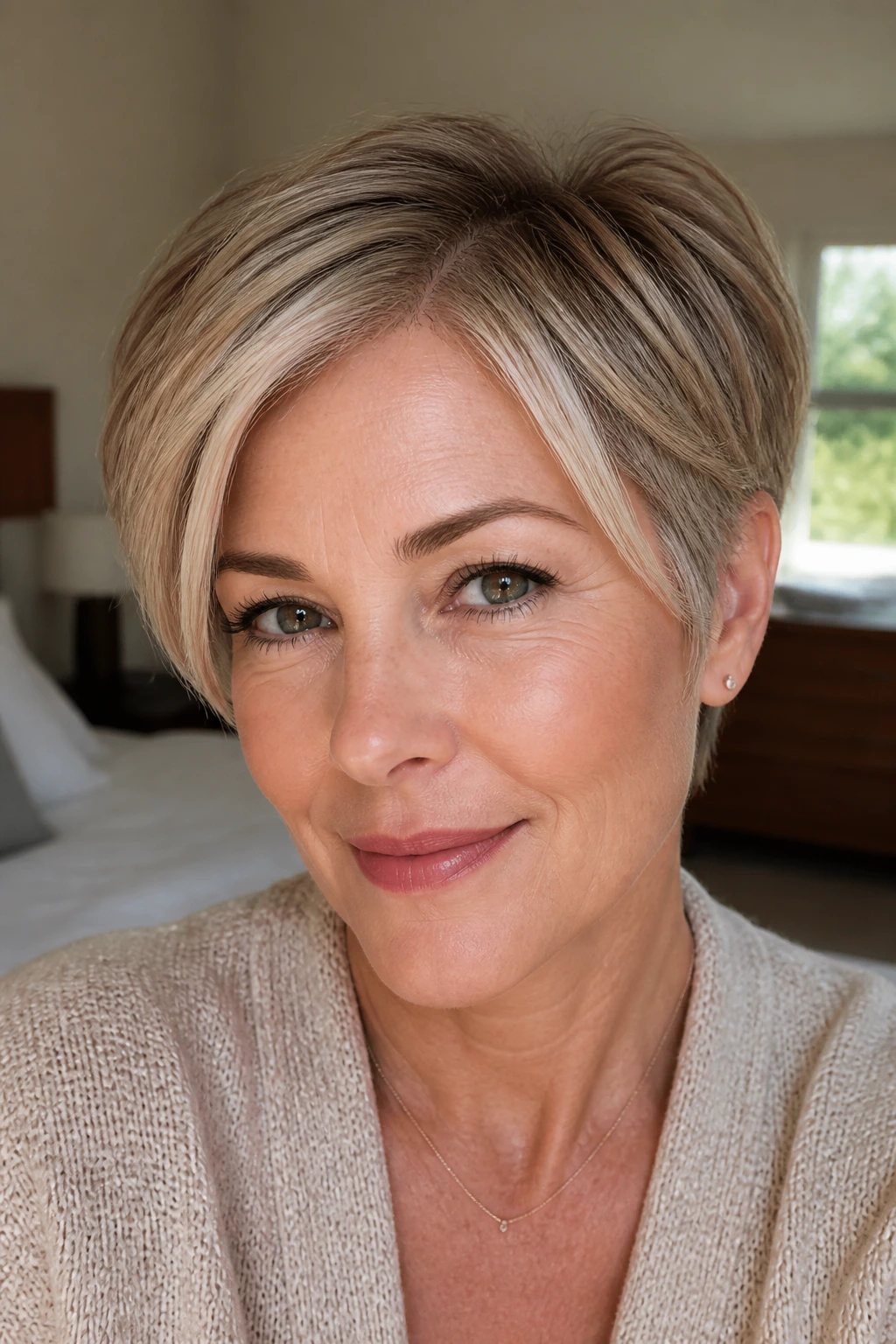
Making the hairline too light: When the temples and fringe are over-foiled, the face can look framed by a hard halo. The fix is softer pieces near the hairline and a little depth right at the edge.
-
Choosing one flat blonde tone: A single pale shade on short hair can look dense and wig-like. Ask for a mix of babylights, ribbons, or a shadow root so the color has breathing room.
-
Ignoring the haircut shape: Blonde on a pixie is not the same as blonde on a bob. If the cut is stacked, feathered, or asymmetrical, the highlight placement should follow those lines.
-
Using too much purple shampoo: The hair starts to look dull, smoky, or chalky at the ends. Use it less often and let a toner or gloss do the real correction.
-
Lightening fragile ends again and again: If the hair is already porous, more bleach can make the finish rough and frayed. Sometimes the better move is a glaze, a trim, and a new placement plan.
-
Going too cool or too warm by accident: A tone that fights your skin can make the face look tired. Beige and champagne fix a lot of those problems because they sit in the middle.
Variations and Alternatives Worth Trying
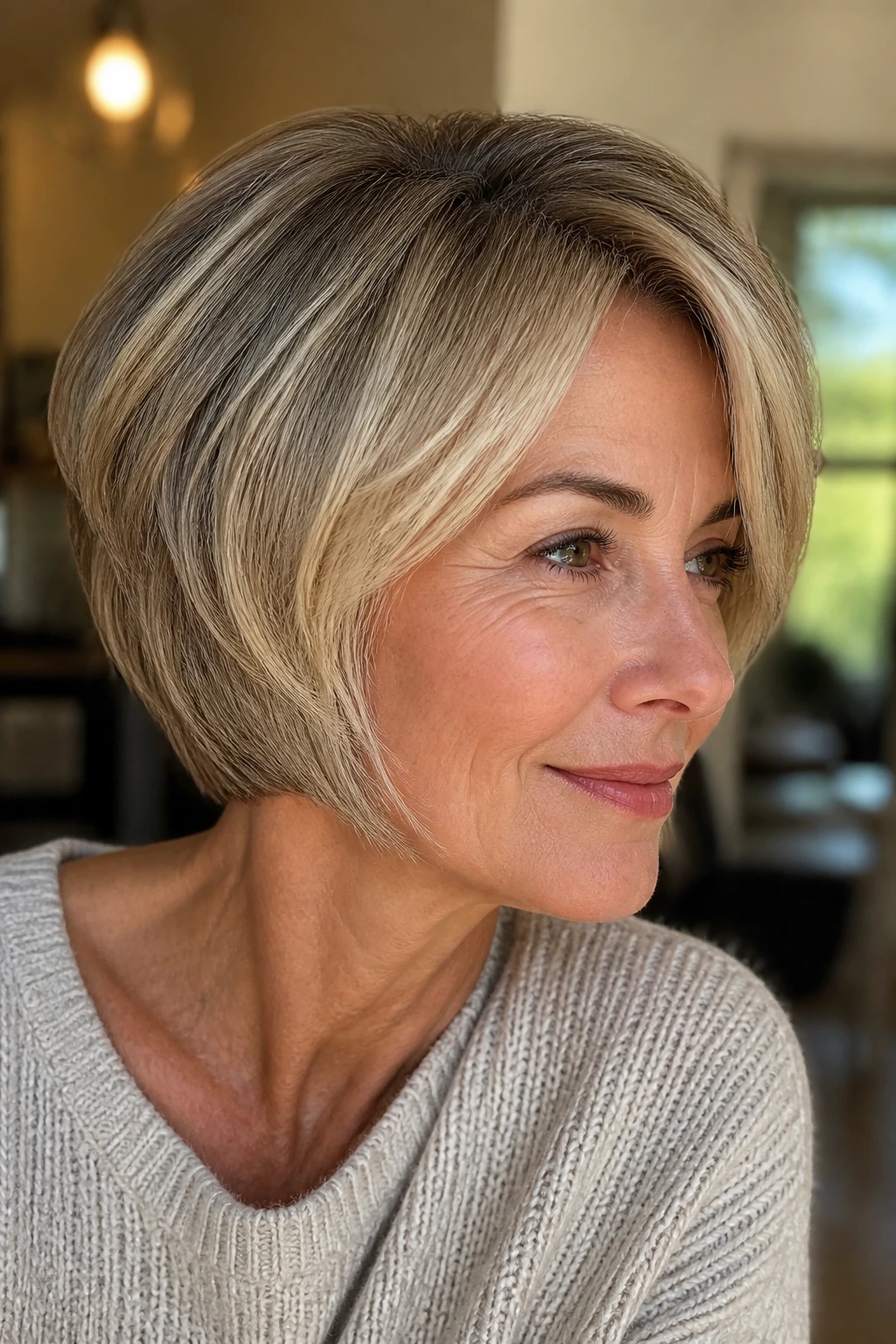
Barely-There Babylights: This version is for anyone who wants movement more than obvious color change. Ask for ultra-fine foils through the crown and fringe, then let the tone stay close to your natural base. It gives short hair a little shimmer without making the regrowth obvious.
Warm Honey Glow: If your skin likes gold and your haircut has texture, a honey gloss with soft highlights near the face can make the whole style feel richer. It works especially well on layered crops and feathered bobs that need a bit more warmth to look full.
Smoke-and-Silver Blend: This is the cooler, gray-friendly option. Mushroom and pearl tones with a root shadow can make silver strands feel like part of the design instead of something to cover up. It’s clean, calm, and easier to maintain than bright platinum.
Soft Money-Piece Pop: Keep the rest of the hair deeper and concentrate the light on the front curve, cheekbone, and part. This variation is useful if you wear bangs, side-swept fringe, or glasses, because it puts the brightness exactly where people look first.
Low-Contrast Beige Melt: A beige-to-vanilla transition is a good middle road when you want dimension but not drama. It works well on fine hair, gray transition hair, and any short cut that loses body when the color gets too pale.
Frequently Asked Questions
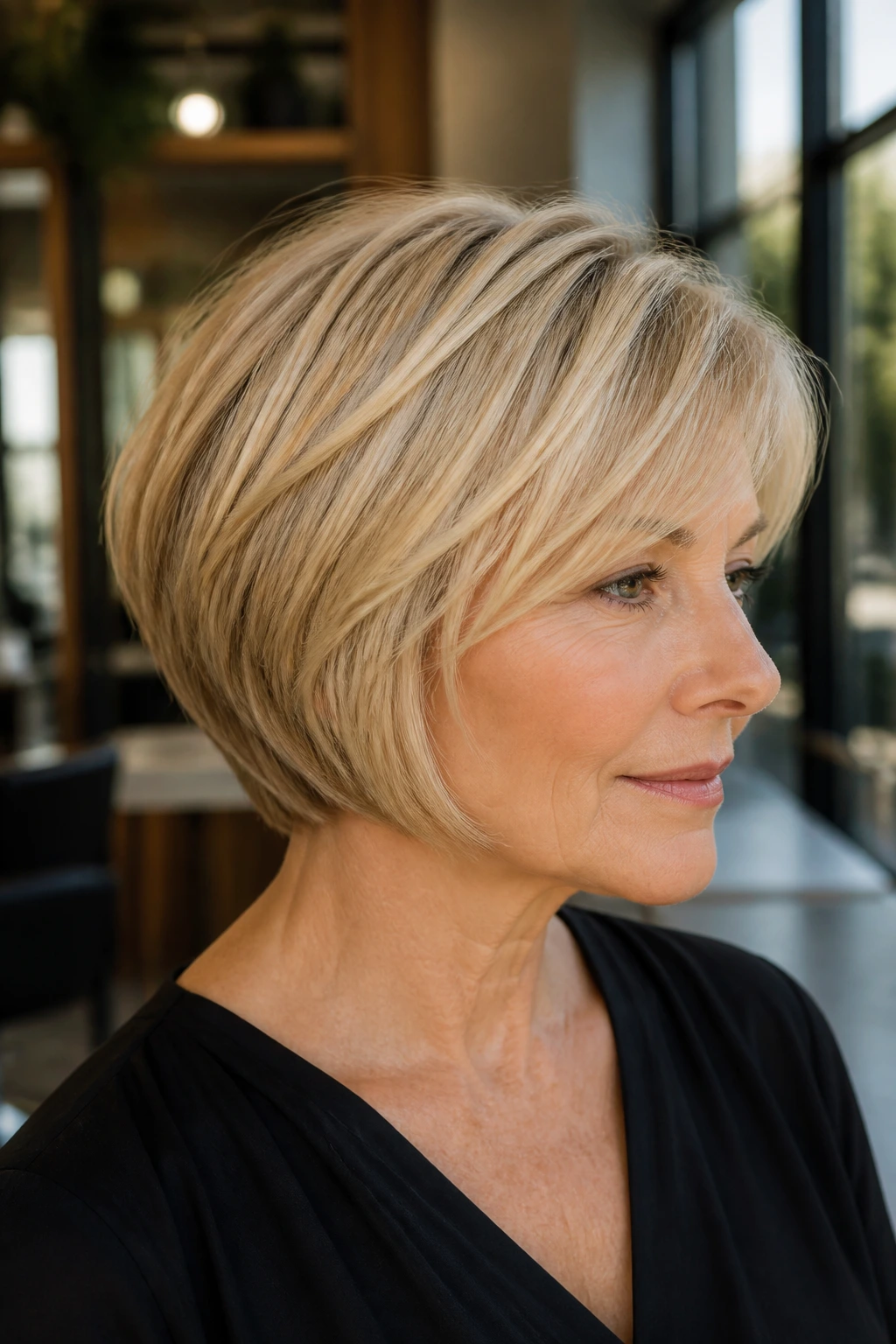
Can short hair really handle blonde highlights without looking chunky?
Yes, if the pieces are thin enough and the tone is chosen carefully. Babylights, fine ribbons, and soft root shadows usually look better on short cuts than thick strips.
What blonde shade is best for blending gray hair on short styles?
Mushroom, beige, champagne, and silver-blond are the safest starting points. They blend more naturally with white strands near the temples and part line than a very gold or very icy blonde.
Are highlights or balayage better for a pixie cut?
Highlights usually give more control on a pixie because the sections are small and the shape is tight. Balayage can work on a longer crop or bob, but on a very short cut, precise foils often look cleaner.
How often do short blonde highlights need toner?
Cool blondes usually need a refresh every 4 to 6 weeks, especially if you use heat tools. Beige and honey tones can often go a little longer before they start looking dull.
Will blonde highlights make fine hair look thinner?
They can if the contrast is too harsh or the lightness is pushed too far. Fine hair usually looks fuller with a mix of tones, a deeper root, and brightness concentrated around the crown rather than all over.
What if my highlights turn brassy?
Brass usually means the tone has faded or the hair was lifted only partway. A toner, gloss, or blue-purple shampoo can help, but if the hair is very warm, the colorist may need to correct it in the salon.
Can I go blonde if my hair is already dry or fragile?
Yes, but gently. Softer placement, fewer lightened pieces, and a bond-building treatment are smarter than trying to push the whole head to a pale blonde in one visit.
Do I need to bring photos to the salon?
Absolutely. Bring one photo for tone and one for placement, because those are not always the same thing. A good colorist can translate a photo better when they can see how you wear your hair in real life.
The Blonde That Fits the Cut
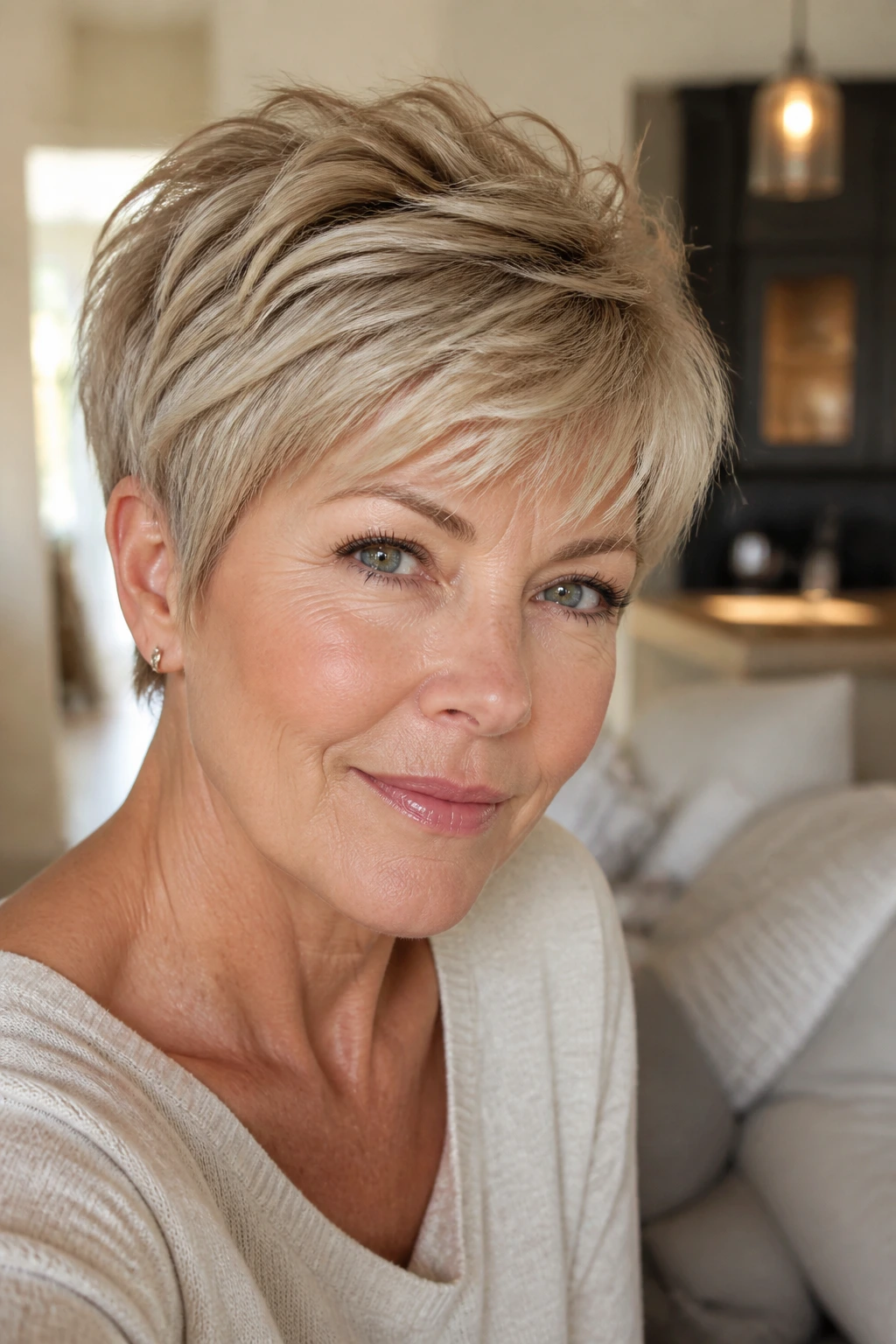
Short hair gives you very little room to fake it, which is exactly why the right blonde can look so good. When the tone matches the haircut, the whole style feels deliberate: the crown has lift, the temples have softness, and the nape still has shape. That’s the sweet spot.
The smartest choice is usually the one that respects your texture, your gray pattern, and how often you want to sit in the chair. A soft beige pixie, a pearl bob, or a honey crop can all look better than a brighter blonde if they suit the cut more honestly.
Start with less light than you think, especially around the hairline. You can always add brightness at the crown or front on the next visit, and short hair usually rewards that slower, cleaner approach.
