



Honey can do something on curls that straight hair rarely shows off as clearly: it changes personality from one bend to the next. A ribbon that looks soft and understated in the jar can flash gold, caramel, or amber once it lands on a spiral and catches the light at the curve. That’s why honey hair color ideas for curly hair are such a smart place to start when you want brightness without turning the whole head into one flat shade.
There’s a catch, though. Curly texture is not forgiving in the way salon mood boards pretend it is. A honey tone that’s too yellow can read brassy in the dry sections, while a placement that’s too dense at the root can make the top look puffy and the pattern underneath disappear. The good versions do the opposite. They frame the face, open up the curl pattern, and keep enough depth at the base that the color still looks like hair, not a highlighter pen.
I keep coming back to honey on curls because it gives you movement before you even style the hair. You can see the swirl. You can see the layers. You can see where the light lands and where the shadow stays. That’s the magic, and it starts with choosing the right shade and the right placement.
Why These Honey Shades Work So Well on Curls
- The curl pattern does half the work: Honey pieces bend around coils and ringlets, so a few well-placed ribbons can look richer than a full-head lift.
- Soft grow-out matters on texture: A rooted balayage or shadow root leaves less of a hard line when shrinkage makes regrowth pop up fast.
- There’s a match for every base color: Dark brunettes, medium browns, and lighter blond curls can all wear honey differently without fighting the natural depth.
- You can go subtle or bold: Some looks stay just one or two levels lighter than the base; others move into amber, apricot, or champagne if you want more contrast.
- Layers come alive with dimension: Honey around the face and through the mids keeps curls from reading like one big round shape.
- Maintenance can be as low or high as you want: A gloss-based honey tone is easier to live with than a full bleach pattern, and that matters when your hair already has enough personality.
1. Sunlit Honey Balayage for Loose Ringlets
Sunlit honey balayage is the look that makes loose curls look like they were spent an afternoon under a warm window, even if the appointment happened under fluorescent salon lights. The color lives mostly through the mid-lengths and ends, where ringlets naturally separate, so the brightness reads as soft and woven in rather than painted on top.
Why It Works on Curls
Honey balayage is forgiving because the hand-painted pieces don’t need to be perfectly uniform. On loose 2C to 3A curls, the movement breaks up the light, which keeps the highlights from looking stripey. The best versions stay one to two levels lighter than the base and leave the root a little deeper for contrast.
Ask for this: a level 7 to 8 golden honey with a soft root shadow and brighter face-framing pieces.
Best placement: mid-lengths, outer layers, and the front sections that fall near the cheekbones.
What to avoid: thick, blunt streaks right at the scalp. Curly hair doesn’t need that kind of noise.
If your curls are medium brown, this is a strong first step into honey tones. It gives you a lift without forcing the whole head into a high-maintenance blonde story.
2. Deep Root Honey Melt
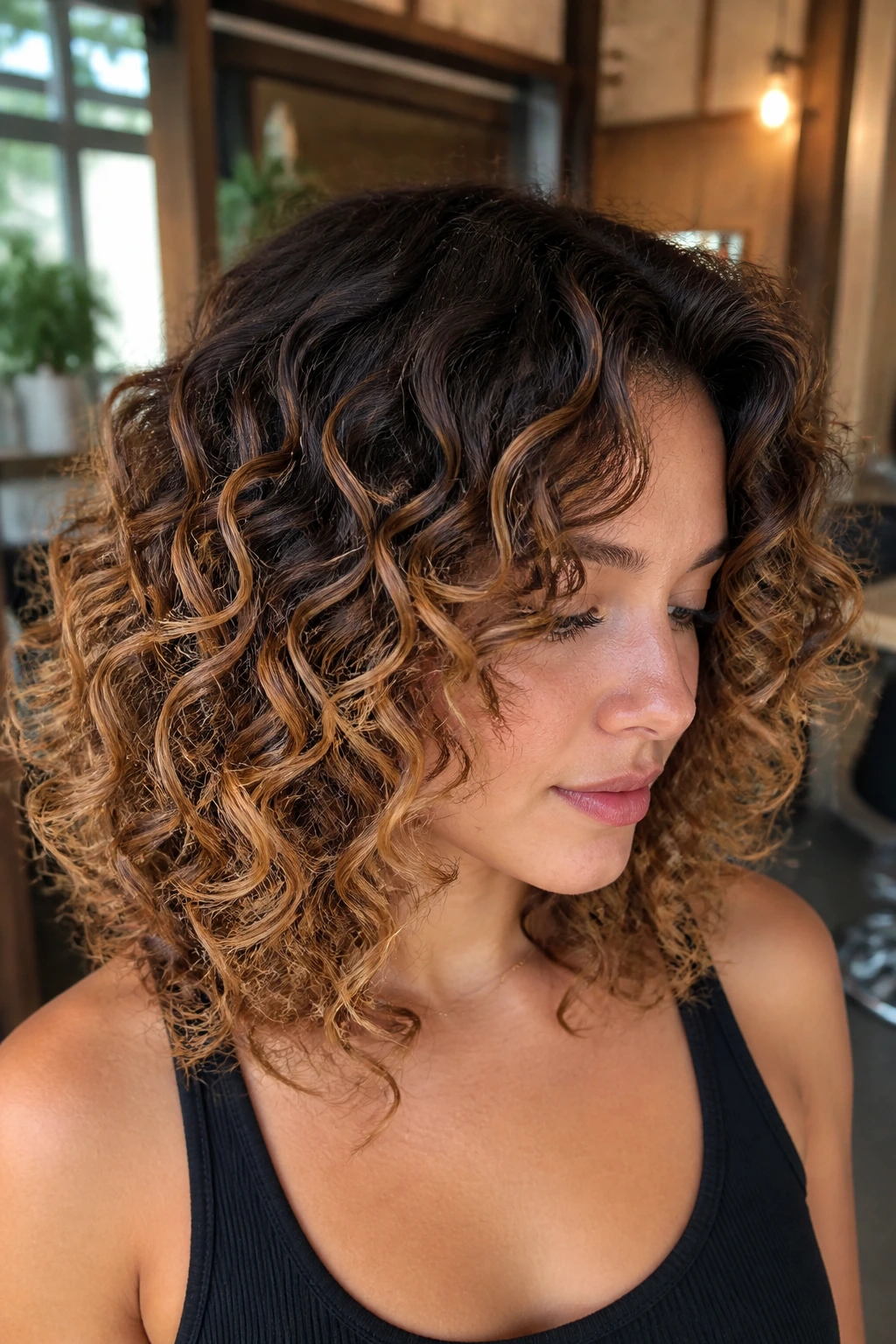
A deep root honey melt is for the person who wants lightness but refuses to give up depth. The root stays espresso, dark brown, or soft black, and the honey gradually warms up as it moves through the mids and ends. It’s one of my favorite options for curly hair because the darker base anchors the shape instead of making it puffier.
The effect is especially good on thick curls that expand a lot when dry. The root shadow keeps the crown from looking frayed, while the honey mids bring enough warmth that the hair doesn’t sink into one solid block of color. You get contrast without the hard line. That’s the whole game.
This look also grows out better than a lot of people expect. Because the transition is blurred, new growth doesn’t scream for attention. If you part your curls in different places, the melt still holds up from most angles, which is a small but useful victory.
3. Honey Money Pieces Around the Face
Why does a little brightness near the face change everything? Because curly hair tends to carry weight at the sides, and a pair of honey money pieces can break up that heaviness in two seconds flat. The result is a brighter frame, more visible curl definition, and less of that “all one shape” feeling.
What to Ask Your Colorist For
- Two to four front sections lifted to a warm honey, not pale yellow.
- A softer transition near the root so the front doesn’t look stripy when it grows.
- A tone that’s slightly warmer than the rest of the color if you want the face to pop.
- Extra attention around the longest front layers, because those pieces sit in view the most.
This idea works beautifully on curly shags, layered bobs, and long curly cuts with curtain bangs. The front becomes the focal point, and the rest of the hair can stay quieter. If you want a color change that shows on video, in photos, and in real life without repainting the entire head, this is one of the cleanest choices.
4. Caramel Honey Ribbons Through Medium Curls
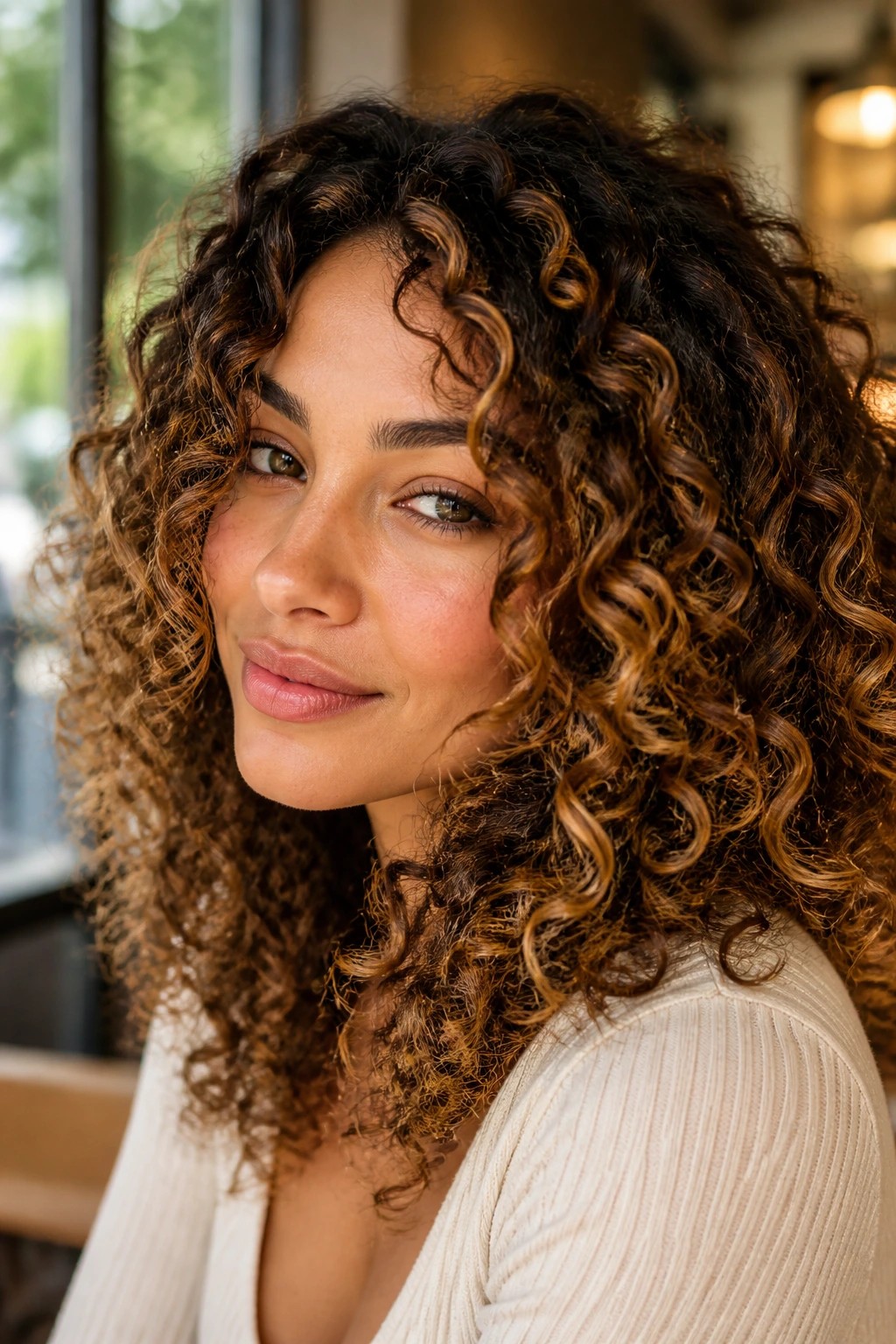
Caramel honey ribbons are less about big contrast and more about the way several warm tones sit together in the same curl cluster. You get amber, soft gold, and light caramel moving through the same section, which is exactly what medium curls need when they start looking a little too one-note.
The trick is spacing. If the ribbons are packed too tightly, they blur into a loud patch of brightness. If they’re too sparse, the color disappears once the curls shrink up. The sweet spot is enough ribboning to catch the bends of the curl without outlining every strand. Medium-density 3A to 3B hair tends to wear this beautifully.
I like this one for people who want dimension more than blonde. It reads warm and polished, but not loud. And that makes it surprisingly wearable with everyday makeup, denim, gold jewelry, and the kind of low-effort styling curls already love.
5. Toasted Honey Ombre for Long Lengths
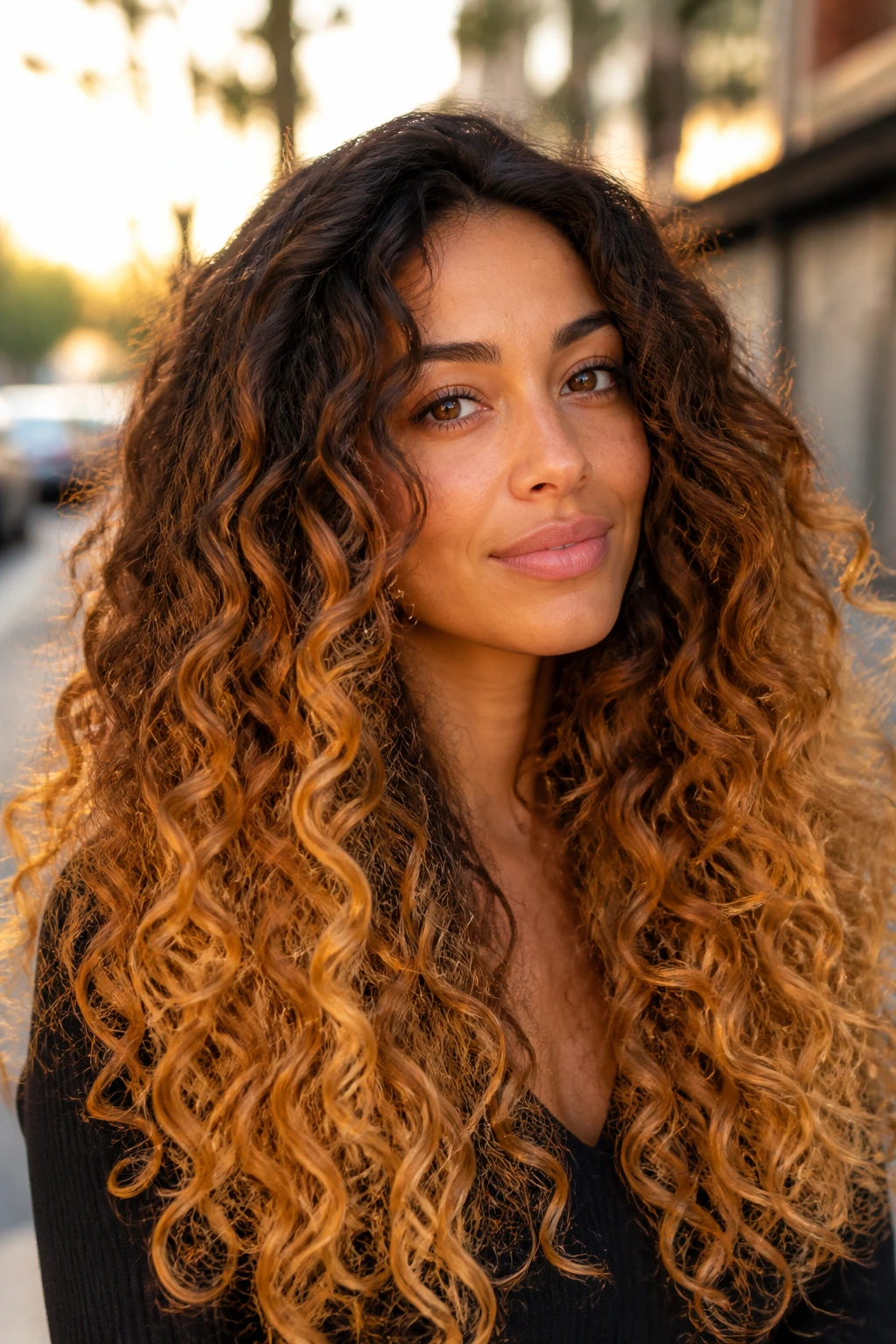
Toasted honey ombre is a good fit when the hair length gives you room to show a real transition. The roots stay deeper, the mids soften into a warm brown, and the ends turn into a toasted honey that looks like sunlight caught the very tips. Long curly hair can handle this better than short styles because the gradient has space to breathe.
The reason this works so well is simple: curls already create texture, and ombre adds another layer of movement. You do not need a lot of brightness to make it read. On a long 3B or 3C pattern, the color shifts every time the hair turns, so the ends can look almost golden in one light and more caramel in another.
If your ends are dry, be careful here. Toasted honey on the bottom of long curls looks best when the ends are trimmed clean and the lightening is done with a gentle hand. Scraggly ends and pale ombre do not get along.
6. Beige Honey for Soft Brown Ringlets
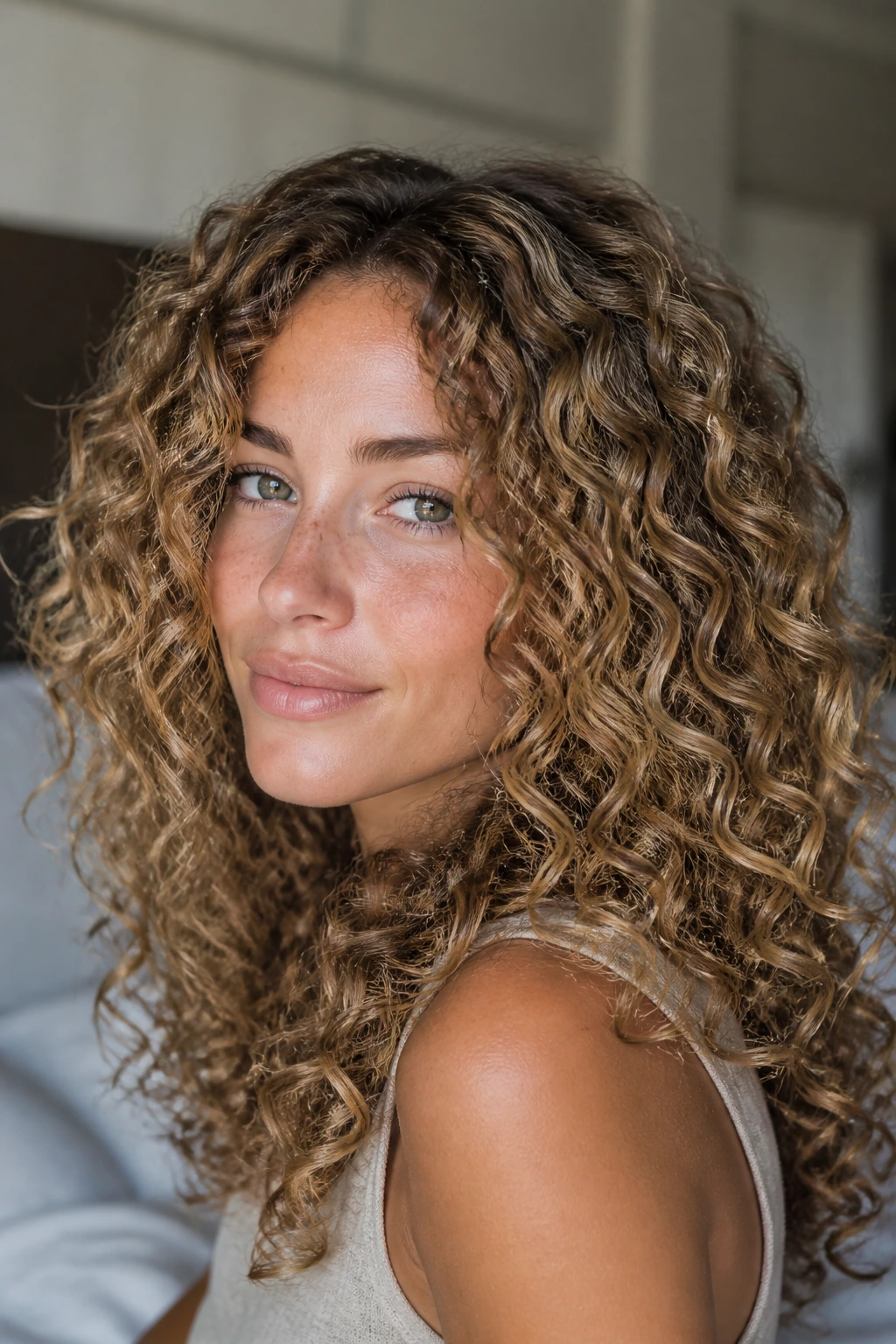
Not everybody wants warm gold. Some people want a honey tone that behaves more like beige, and on soft brown ringlets that choice can look calmer and cleaner than a true golden blonde. Beige honey sits between warm and neutral, which means it doesn’t scream orange if your base already leans warm.
This is the look I’d point to if you want dimension without a lot of contrast. It works well on finer curls that can get visually overwhelmed by brighter highlights. The shade gives the hair a lifted look, but it keeps the pattern readable instead of too busy.
Best Match
- Medium brown or light brown curls that already have some natural warmth.
- People who wear cooler makeup and don’t want the hair to fight it.
- Curls that have been lightened before and need a softer tone to blend everything together.
Beige honey is also a smart choice if you want the color to age gracefully between salon visits. It fades in a gentler way than some hotter golds, which is a small but welcome thing when your curls already need enough care.
7. Honey Bronde Spiral Refresh
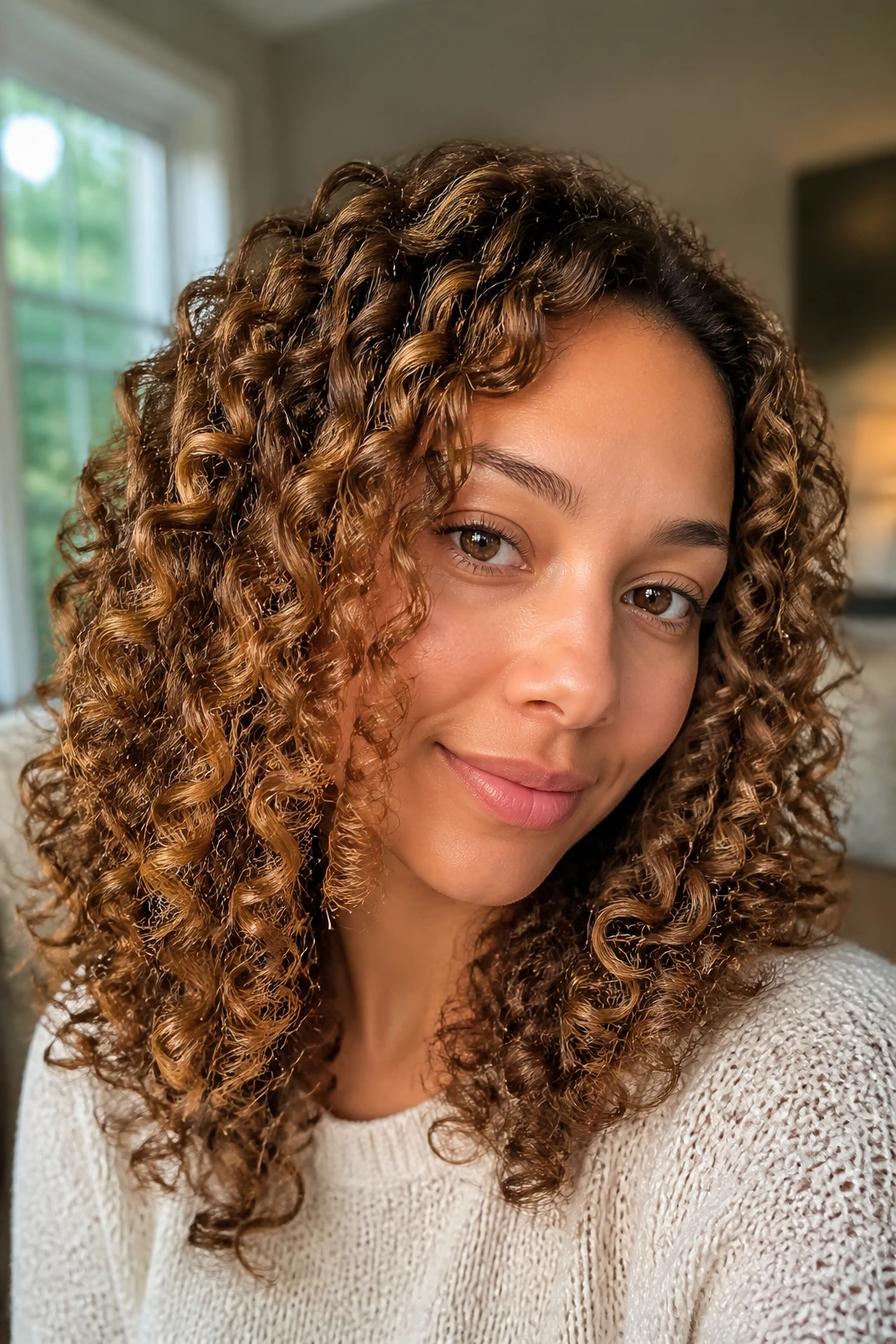
Bronde is one of those words that gets thrown around too loosely, but on curly hair it means something useful: a color that lives between brunette and blonde without fully committing to either side. A honey bronde spiral refresh keeps the base brown, then threads in warmer honey pieces that brighten the bends of the curls.
This works especially well if your curls are already lightened a little and you don’t want to start from scratch. The honey pieces make the existing color feel cleaner and more deliberate. If the hair has been faded by sun, hard water, or just a long stretch between glosses, this kind of refresh can pull the tone back into shape fast.
What to Tell Your Stylist
Ask for a dimensional bronde result, not a blanket blonde. The goal is to keep some brown showing through in every section so the curls don’t collapse into one flat level.
A good bronde refresh also lets you keep the curl pattern visible after styling. The brown gives the hair weight. The honey keeps it from looking heavy. That balance is the whole point.
8. Cinnamon Honey Lowlights
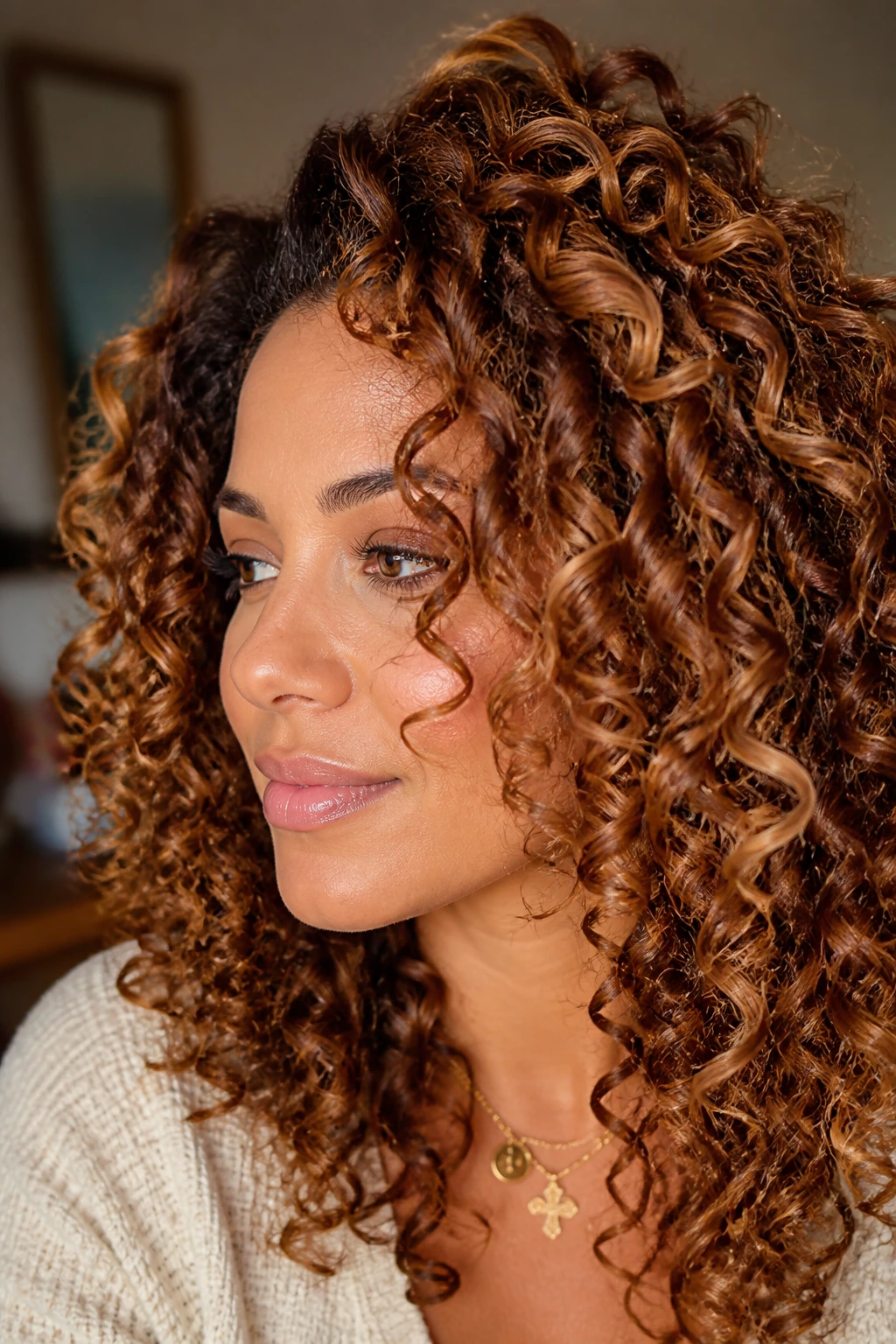
Here’s the part a lot of people miss: sometimes the fastest way to make honey look better is to add darker pieces, not more light ones. Cinnamon honey lowlights tuck warmth and depth back into the curl pattern so the brighter pieces have something to sit against. Without that, honey can drift toward a washed-out blond look, especially on dense curls.
The lowlights are especially useful on highlighted hair that has gone too flat. They bring the contrast back without sending the whole head darker. On 3B to 4A curls, a few cinnamon-toned panels can make each coil look more defined because the darker strands create shadows between the brighter ones.
If your hair is porous, this is worth paying attention to. Porous curls grab light pigment fast, and lowlights can help reconnect the color story when the mids start looking patchy. It’s not about hiding brightness. It’s about giving it shape.
9. Glossed Honey on Dark Curls
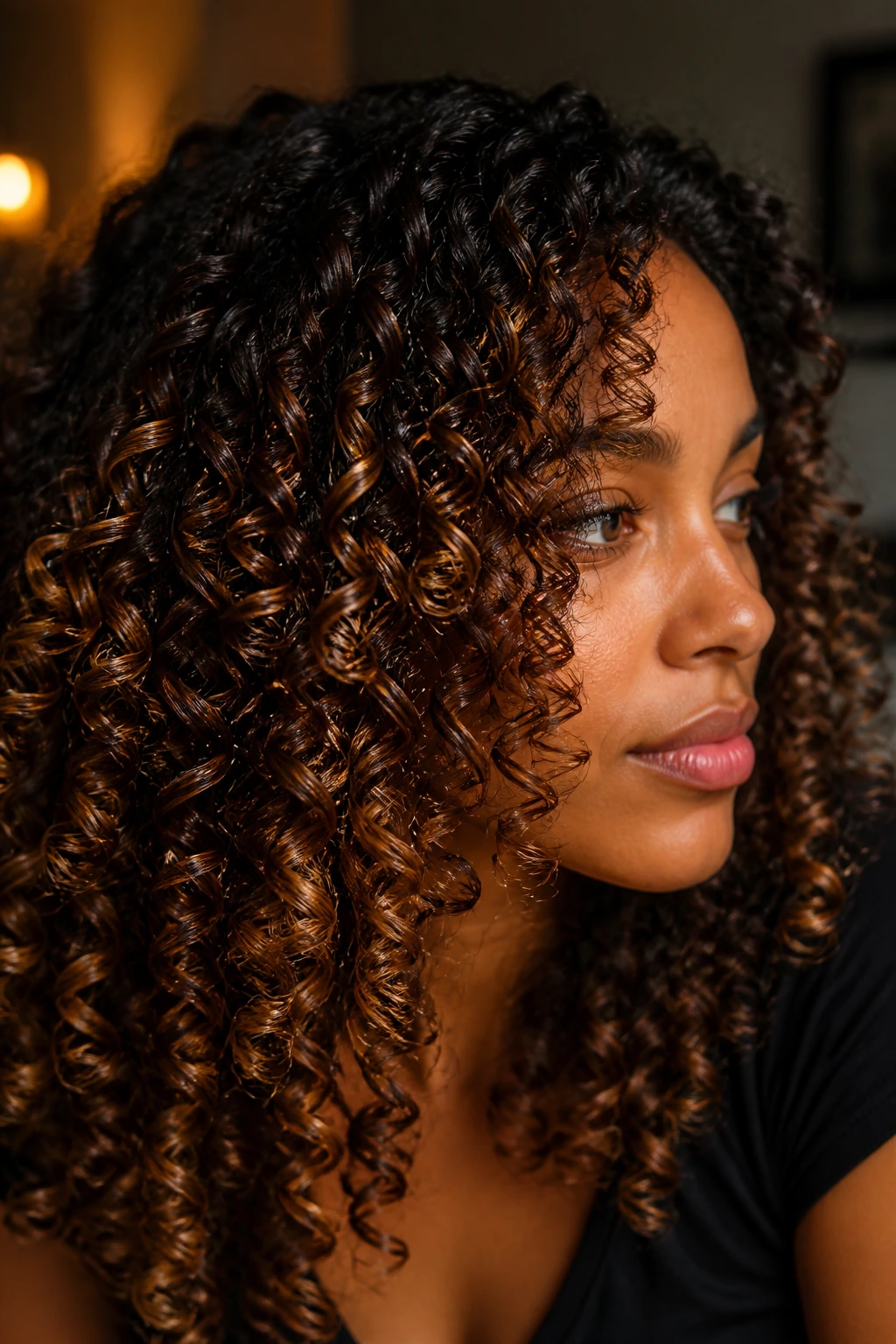
Not every honey idea needs bleach. A glossed honey finish on dark curls uses tone more than lift, which is a lifesaver if you want warmth without changing the hair structure much. The base stays dark, and a demi-permanent honey glaze adds a soft amber reflection that shows in the light.
This is a smart move for black or deep brown curls that need shine more than a big color shift. The result won’t read as blonde, and that’s the point. It reads as polished, warm, and dimensional in a way that still feels like your hair, not someone else’s photo reference.
A gloss is also the least aggressive way to test the honey lane. If you’re nervous about commitment, start here. The tone usually fades more softly than permanent color, and it can be refreshed without the drama of a full lightening session.
10. Apricot Honey Ends on Layered Curls
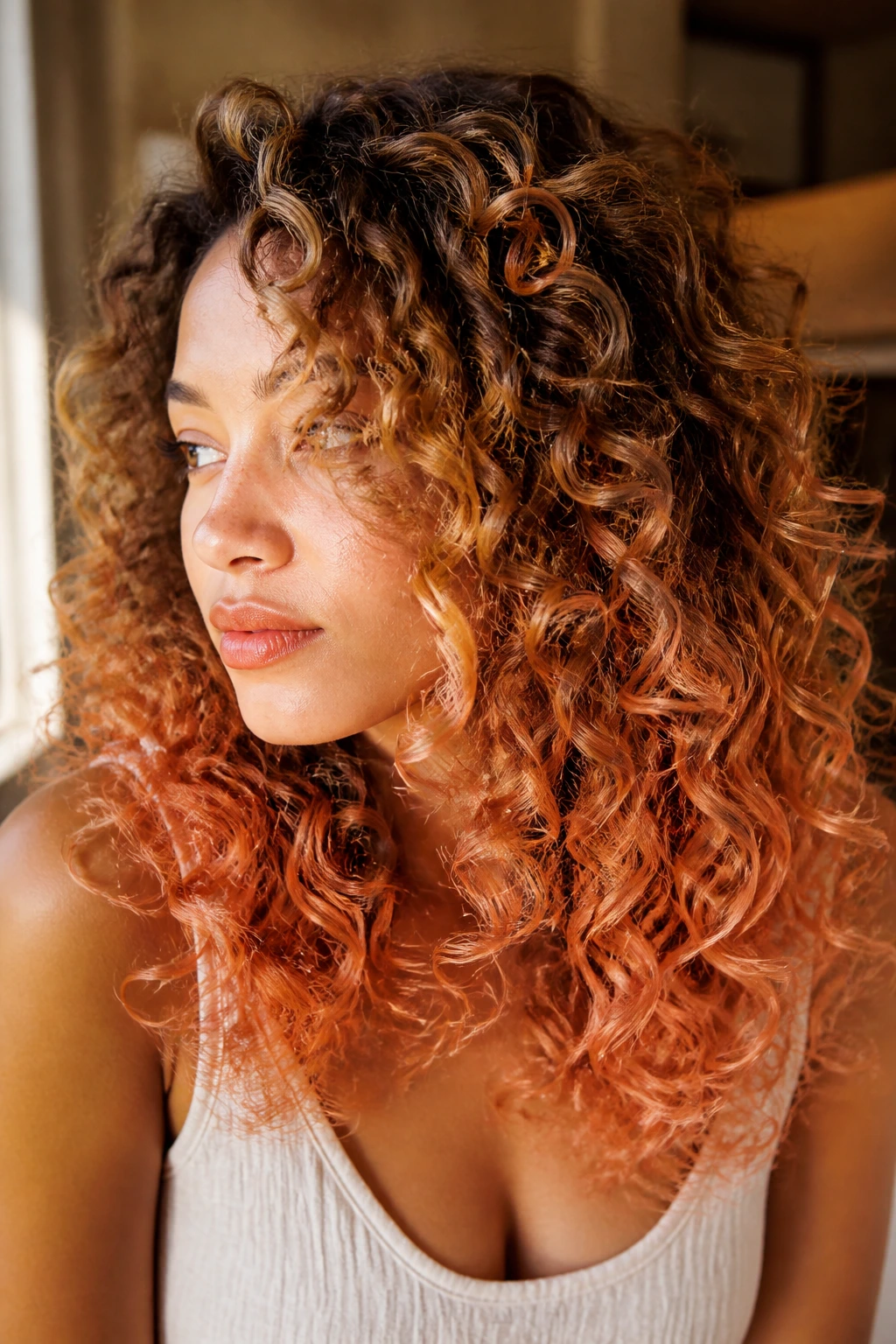
Apricot honey ends bring a tiny bit of peach into the warmth, and on layered curls that can look almost lit from within. The color stays honey at the root of the lighter sections, then shifts toward a soft apricot at the very tips. It’s warmer than beige, softer than copper, and a lot more interesting than plain gold.
This style works best on layered cuts where the ends separate enough to show the color change. On a blunt shape, the apricot can disappear. On a shag or long layers, it shows exactly where the hair turns and flicks outward.
Best for: curls that already have a warm undertone and people who want the ends to look brighter without bleaching the whole head.
Not ideal for: very dry ends that need trimming first. Apricot brings attention straight to the bottom edge, and that edge needs to be neat.
11. Smoky Honey with Ashy Undertones
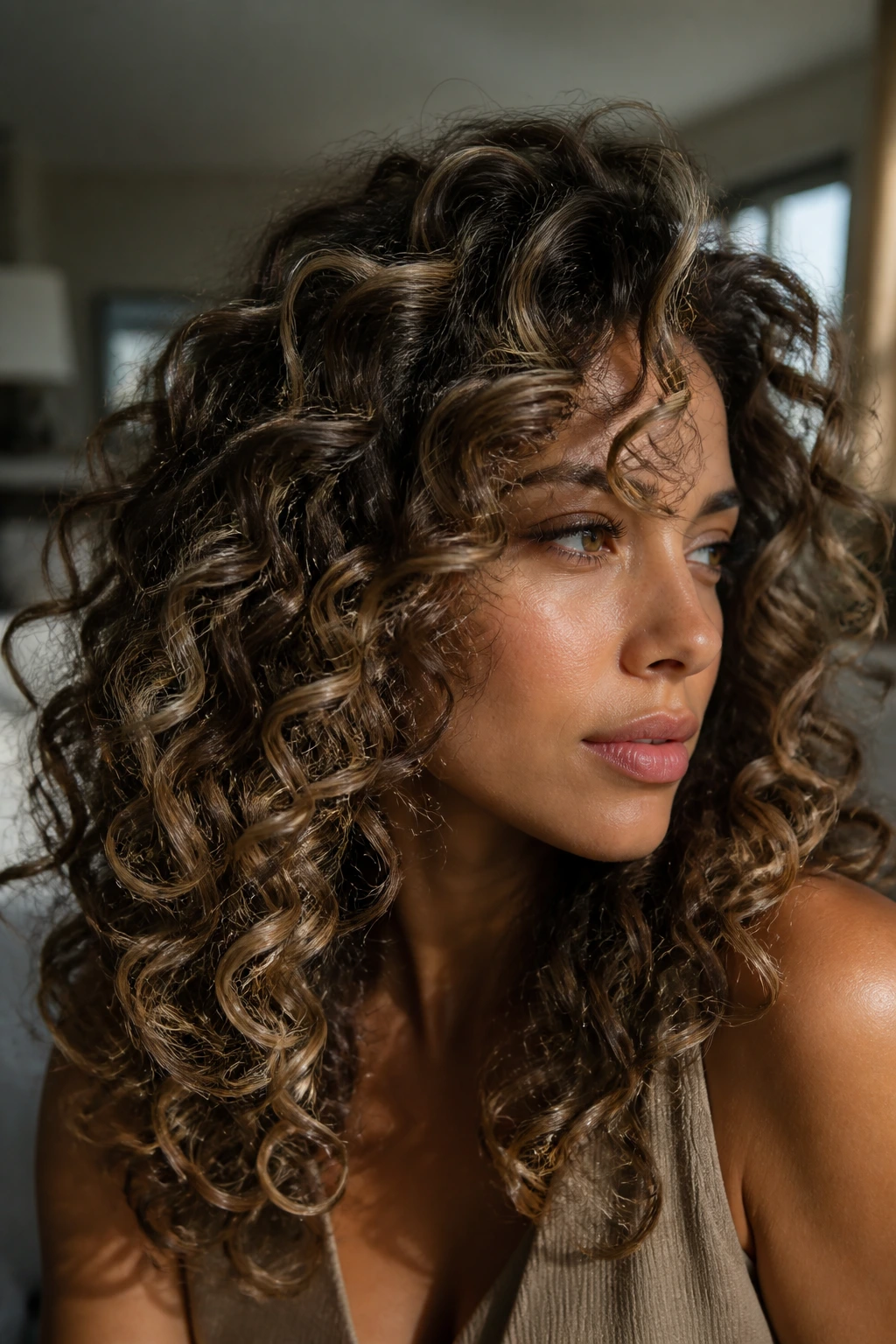
Who says honey has to be warm in the loud, gold-foil sense? Smoky honey takes the same idea and cools it down just enough to feel richer. The result is a honey-brown shade with ashier undertones that keeps brass in check while still holding a soft golden glow.
This is a nice option if your skin tone leans neutral or if you’ve tried warm highlights before and felt they went too orange. On curly hair, smoky honey can look expensive without looking shiny in a plastic way. The curls still catch light, but the reflection is muted and calmer.
I especially like this on layered brunettes that need depth around the face. It behaves more like a polished brown with a golden edge than a true blonde direction. That’s a useful middle ground when you want color change without walking straight into maintenance trouble.
12. Copper-Kissed Honey Panels
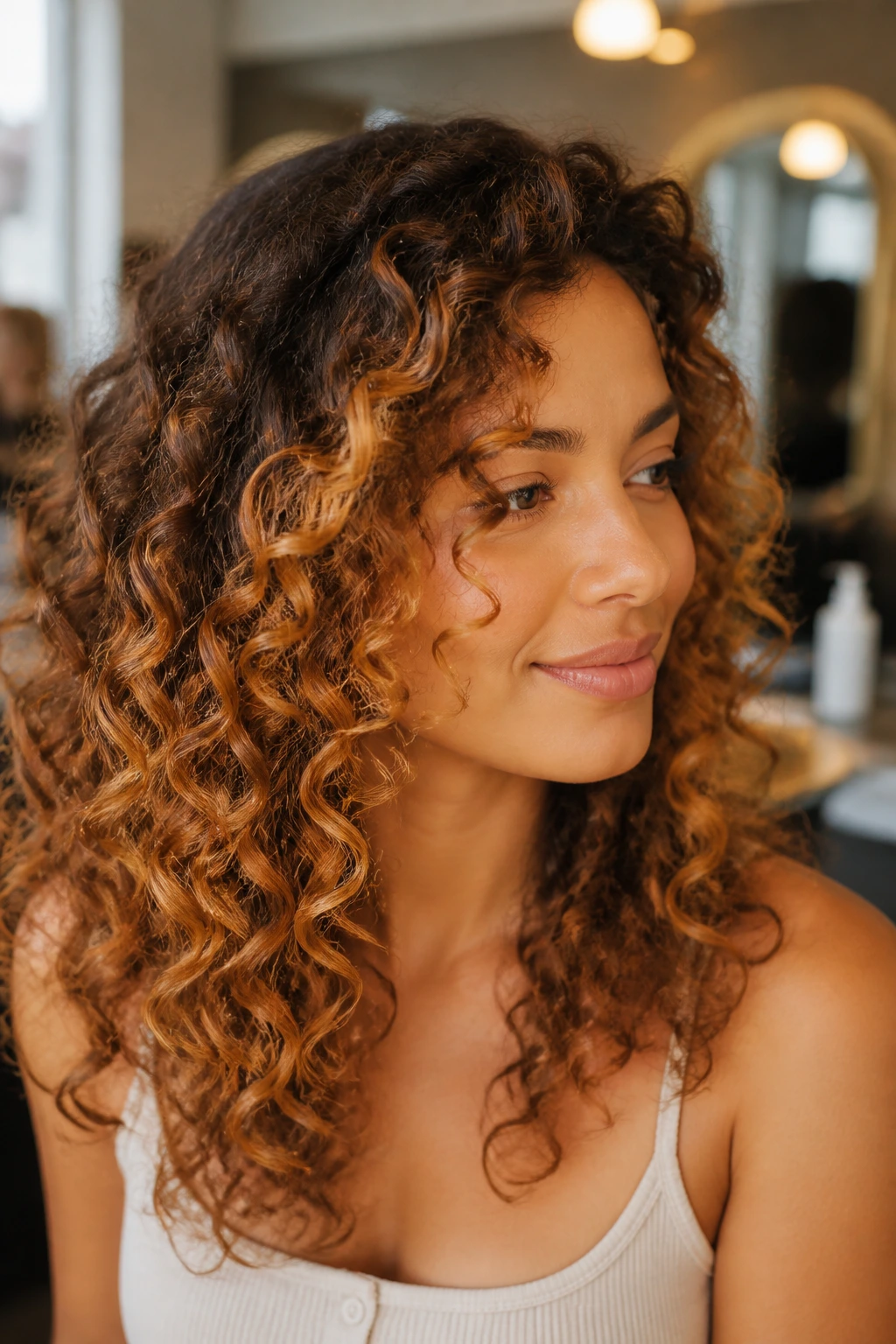
Copper-kissed honey is for someone who wants warmth with a little fire in it. The panels stay in the honey family, but a copper note pushes them toward amber and terracotta without going full red. On curly hair, that extra warmth can make the shape look almost glowing in sun or indoor light.
This idea is particularly strong on medium brown bases that already lean warm. The copper doesn’t need to cover the whole head; a few panels through the mids and around the face are enough to change the mood. The curls separate the color naturally, which keeps the look from feeling too solid.
If you’ve got olive or golden undertones and want the hair to echo that warmth, this is a good lane. Just keep the copper soft. Loud red roots and curly texture can argue with each other if the placement is too heavy.
13. Chunky Honey Highlights for Tight Coils
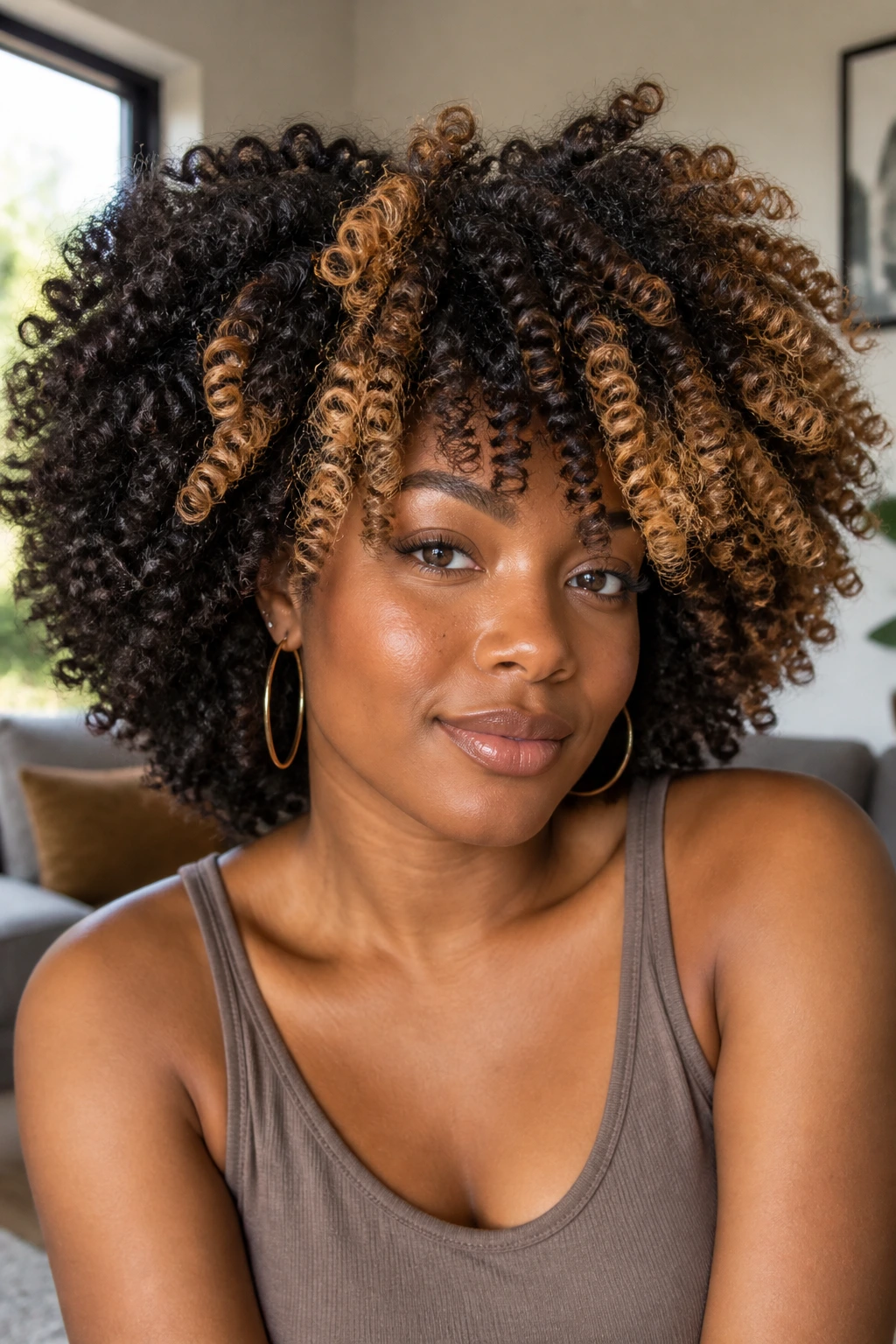
Chunky highlights can go wrong fast on coils if they’re too thin and too many. But when the placement is deliberate, chunky honey highlights give tight curls real graphic shape. The bigger ribbons show through the coil pattern and create a bright-dark rhythm that smaller foils often miss.
Why Tight Coils Wear This Differently
Tight 4A to 4C curls shrink enough that delicate, hairline-thin highlights can disappear. Larger sections hold their presence after shrinkage and make the color visible from more than one angle. That’s why chunky placement works here when subtle weaves might not.
Ask for this: broader honey sections around the crown, face frame, and upper mids, with enough depth left between them to keep the pattern from getting noisy.
Best styling move: twist-outs, diffused sets, and elongated wash-and-gos that let the bright pieces separate.
This look has attitude. It does not whisper. And on coils, that can be a very good thing when the colorist respects the hair’s density instead of trying to fight it.
14. Peekaboo Honey Panels Under the Top Layer
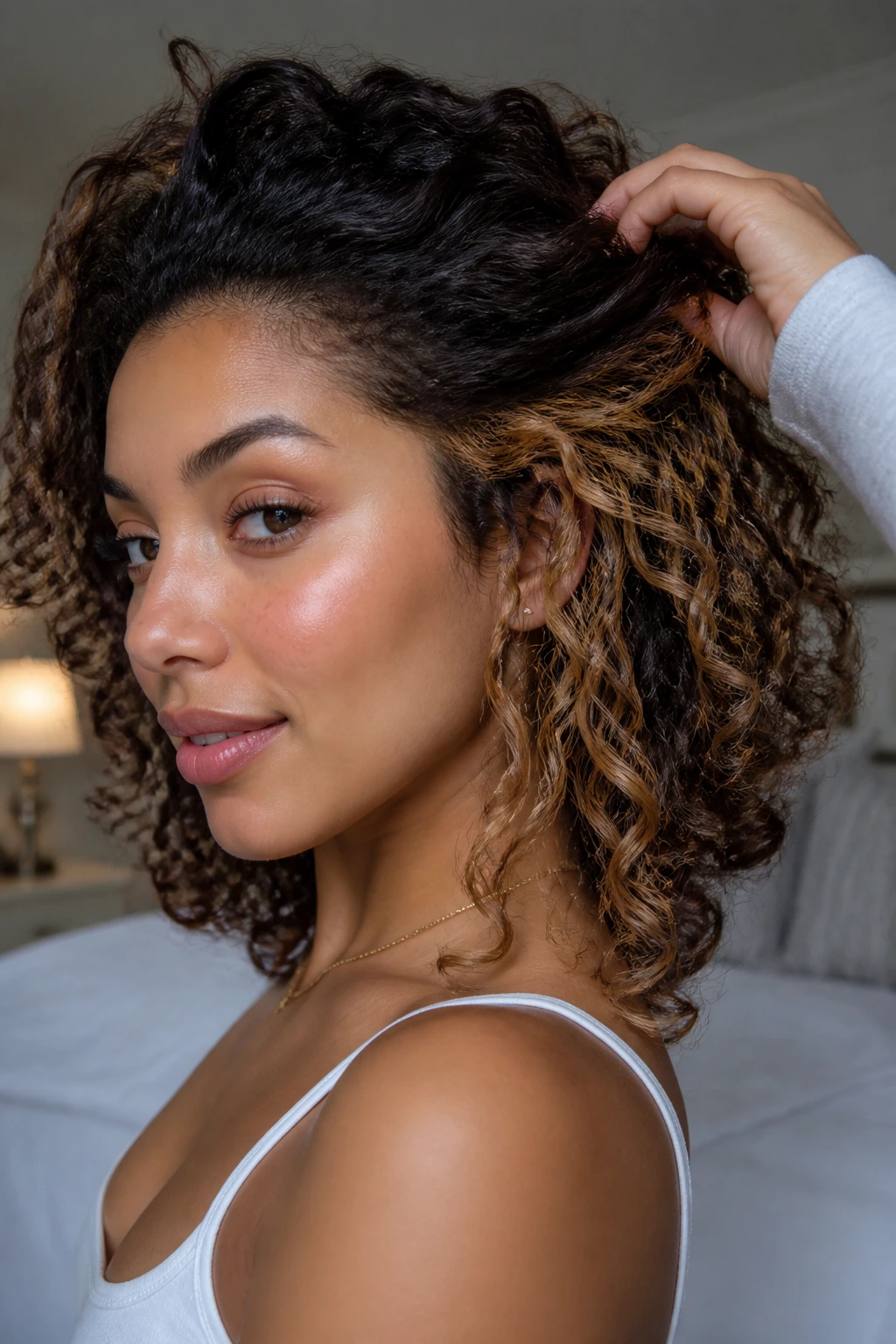
Peekaboo honey panels are for anyone who wants brightness with a little bit of surprise. The top layer stays deeper, while the hidden layers underneath carry honey or amber pieces that flash when the hair moves. On curls, that movement happens all the time, which makes the effect feel playful without looking juvenile.
This is a smart choice if you wear your curls in updos, half-up styles, or clipped-back shapes. The hidden honey appears when the hair shifts, so the color feels layered instead of obvious. You also keep more darkness around the outer surface, which can be helpful if you’re trying not to lighten the whole head.
I like this on medium to thick textures because the volume gives the hidden panels room to show. If the hair is very fine, the peekaboo effect can disappear under the top layer. In that case, you’d want the panels placed a little higher.
15. Honey Frosted Ends
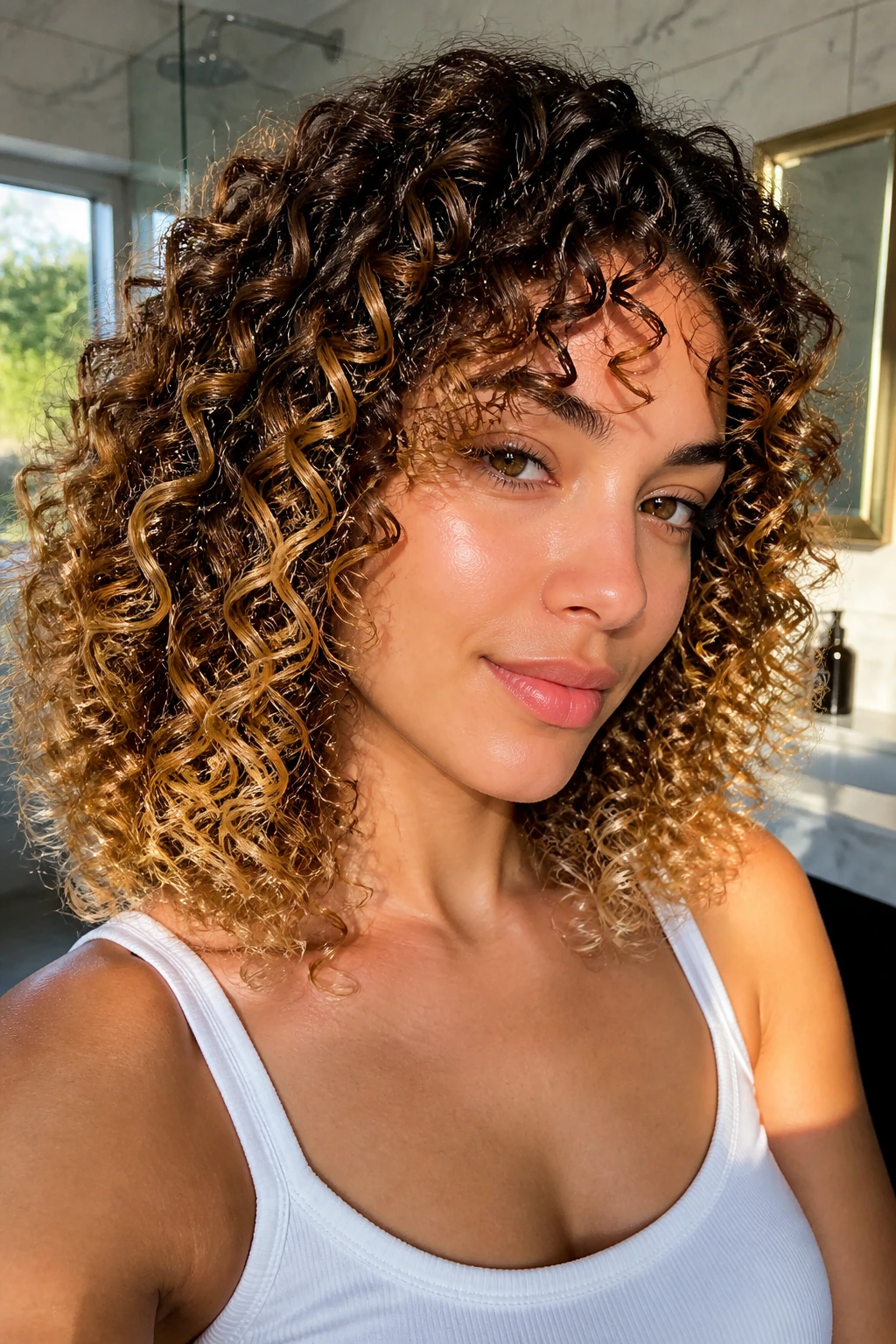
Honey frosted ends are a sharper, brighter version of the soft ombre idea. The color lives mostly at the bottom, with the ends lifted to a frosted honey that looks lighter and cooler than toasted gold. Done well, it gives a long curl pattern a real finish line instead of making the hair vanish at the bottom.
The downside is that the ends need to be in good shape. Frosted tips are the first thing to look dry, and curly hair shows that dryness fast. A trim before coloring can make the difference between elegant and frayed.
This style works best when the top stays deep enough to hold the weight of the curls. Think contrast, not all-over brightness. If you want your hair to look a little more styled even on low-effort days, frosted ends can do that with less commitment than a full highlight pattern.
16. Buttery Honey on a Curly Bob
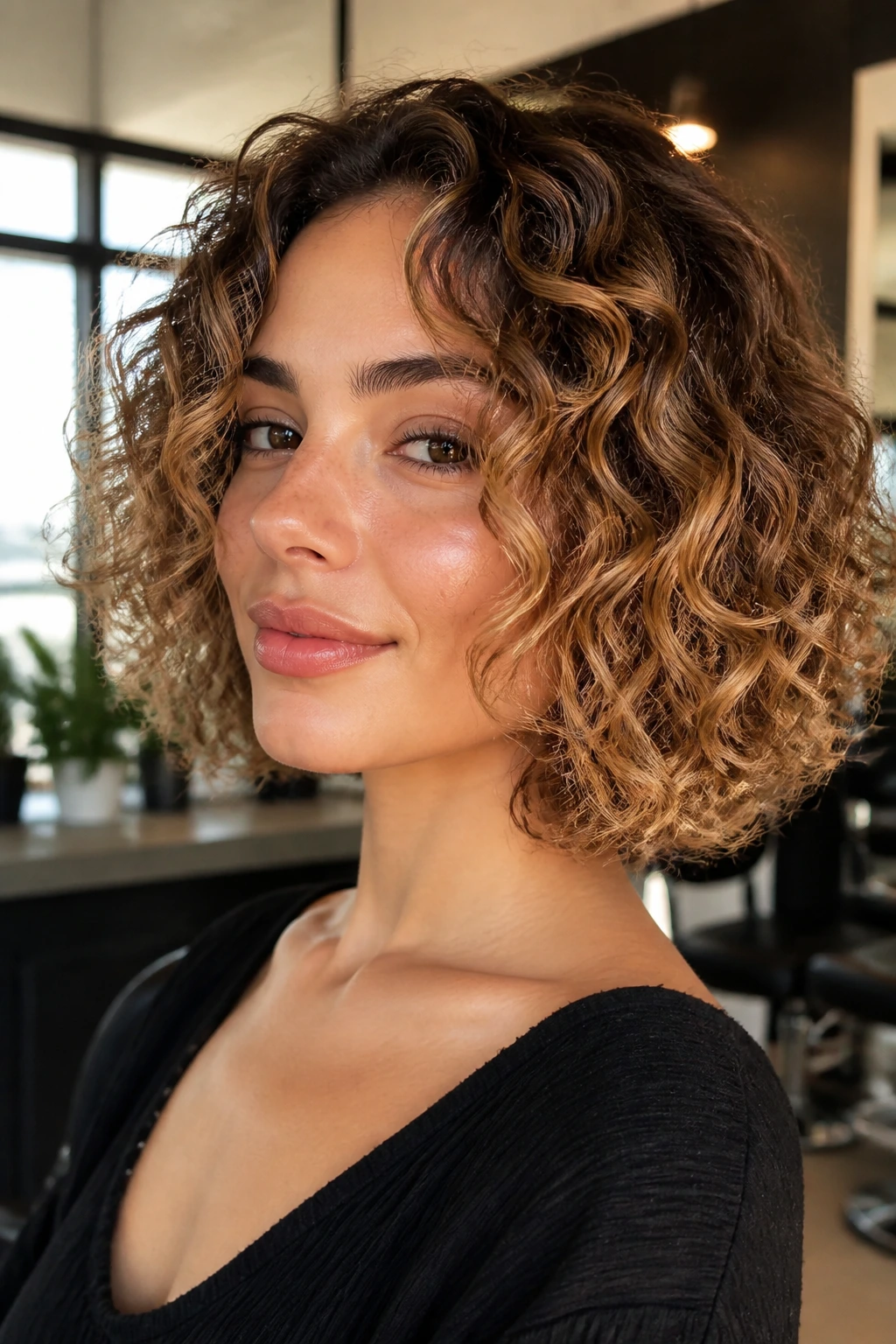
A curly bob can go flat when the color is too close to the base shade. Buttery honey fixes that by adding a soft, creamy warmth right where the shape needs it most. On a bob, every piece matters more because there’s less length to hide behind, so the placement has to be clean.
The best bob versions keep the honey around the outer curve of the cut and near the front. That makes the shape rounder and the curls look more defined, especially when the ends bounce around the jawline. Too much brightness underneath can make a bob look puffy. Brightness at the surface gives you shape.
This is one of the easier honey ideas to maintain if the cut stays sharp. A bob gets trimmed often enough that the color doesn’t drag the shape down, and the lighter pieces can be refreshed without reworking the whole head every time.
17. Shadow-Root Honey Sombre
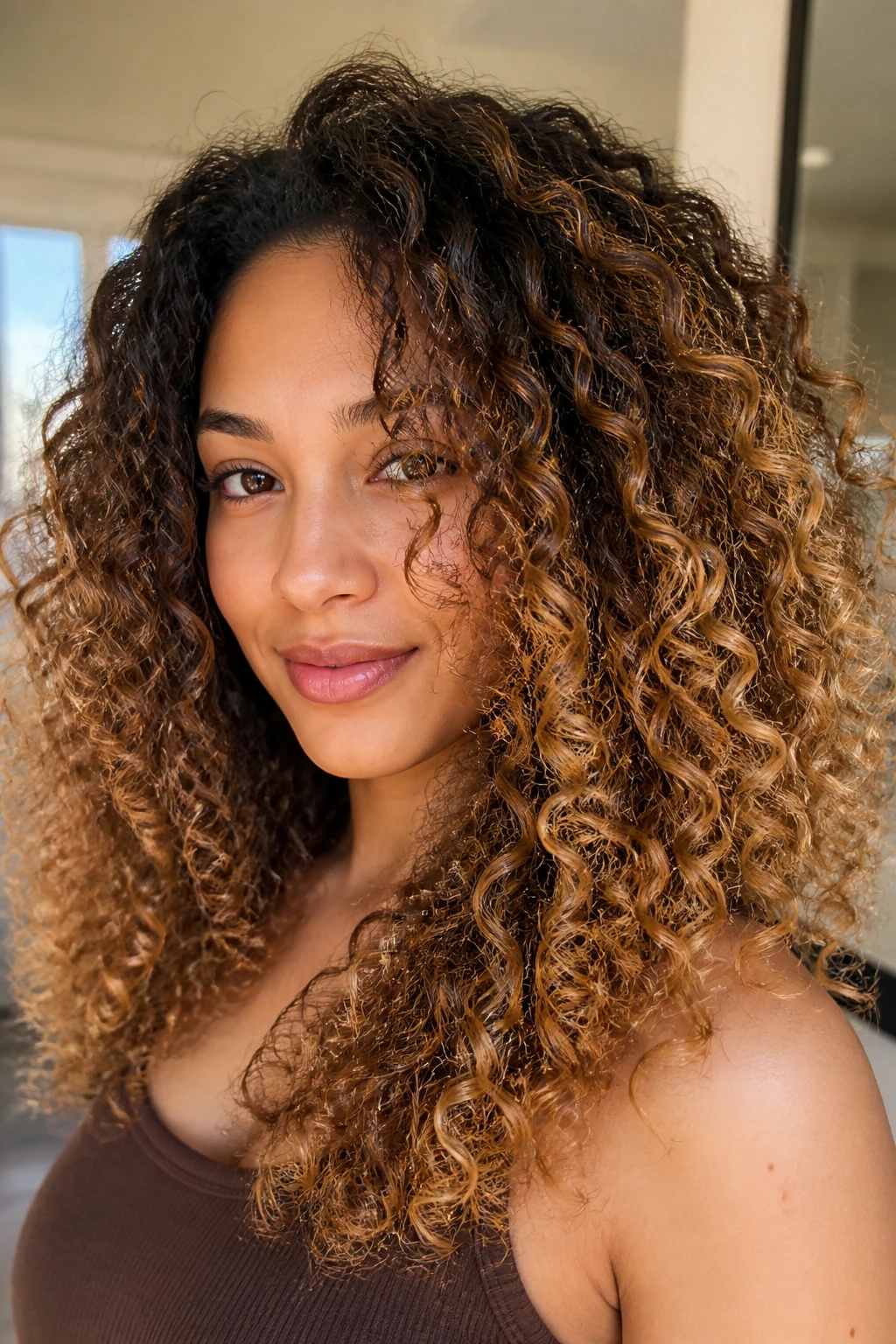
Sombre is the quieter cousin of ombre, and on curly hair that softness is a gift. A shadow-root honey sombre keeps the top close to the natural color, then eases into lighter honey through the mids and ends without a sharp break. The whole thing looks less like “color change” and more like “this hair naturally catches light here.”
That softness matters on curls because the pattern already creates a lot of visual movement. A hard color line can fight that movement. A sombre works with it. The result feels polished, but not overbuilt.
If you want honey but you hate obvious regrowth, this one sits near the top of the list. It’s also a good pick for people who wear their curls big. The more volume you have, the more a harsh color line can show. Shadow root solves that before it starts.
18. Champagne Honey Blend
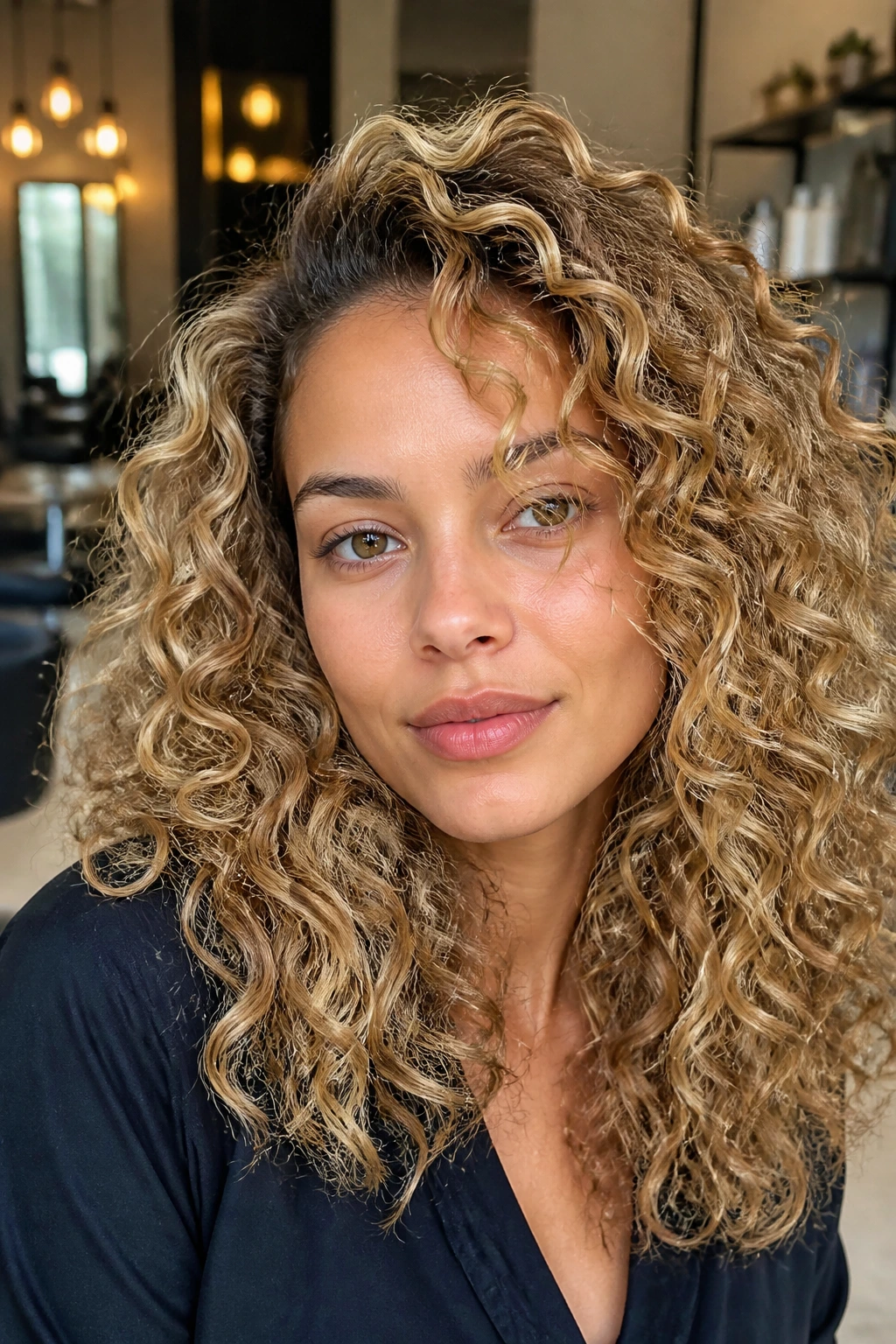
Champagne honey takes the warmth of honey and gives it a slightly brighter, lighter edge. It still sits in the golden family, but the finish is cleaner and more luminous, with a pale shimmer that can make lighter curls look expensive without tipping into icy blonde territory.
This shade works best on lighter brown, dark blonde, or already-lightened curls. On deeper bases, it can need more lift to show properly, which raises the maintenance level. On lighter curls, though, it can be a gorgeous way to brighten the whole pattern without going flat.
I like champagne honey when the goal is softness with a little polish. It’s not loud. It’s not muddy. It lives in that narrow zone where the hair looks like it caught a late patch of sun and decided to keep it.
19. Chestnut Honey with Warm Ribbons
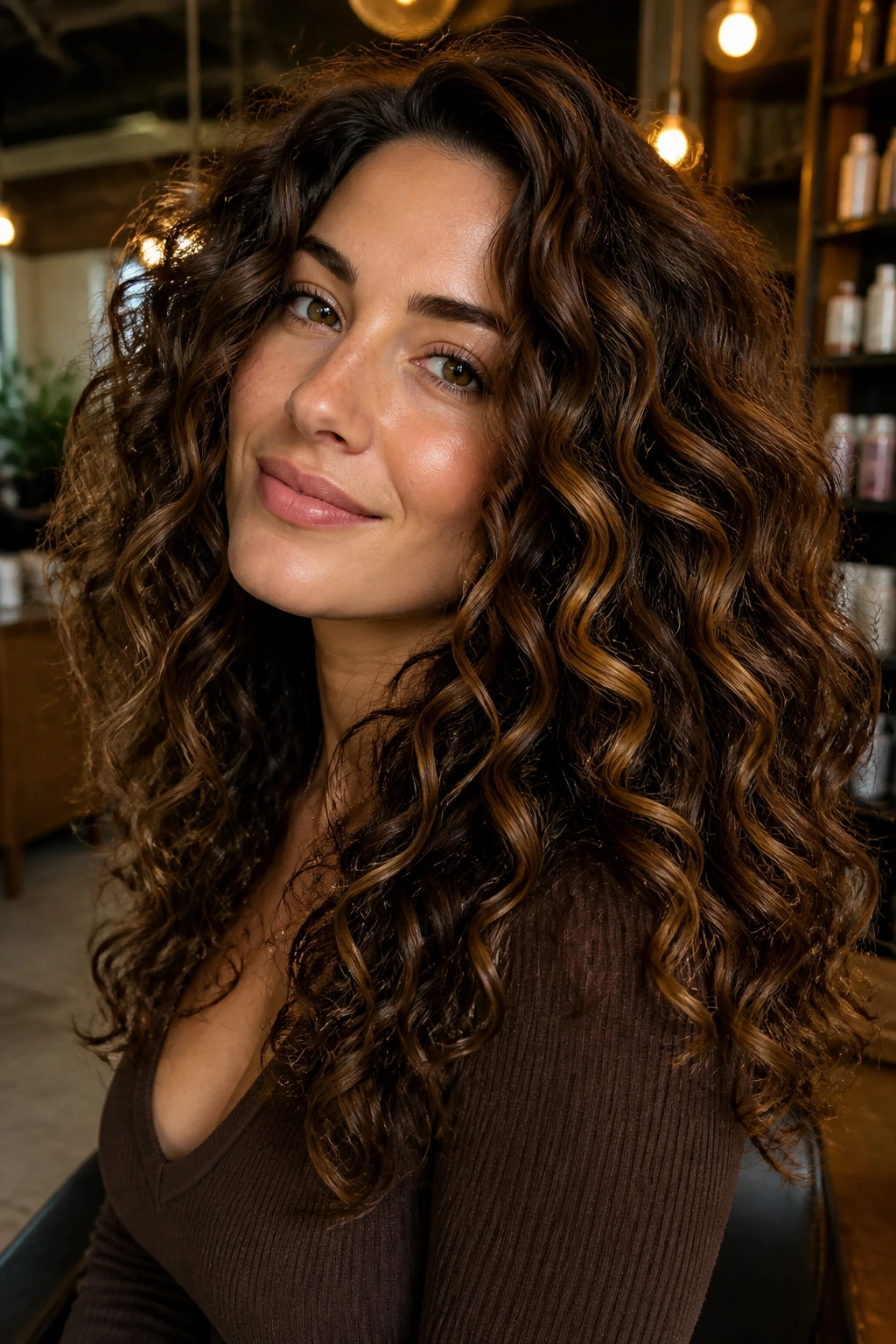
Chestnut honey is the brunette-friendly version of this whole family. The base stays chestnut, rich and brown, while warm honey ribbons move through the layers and front pieces. It gives you warmth without making the hair look predominantly light, which is handy if you want dimension but don’t want the upkeep of a stronger blonde effect.
This style is especially good on curls that already have a strong brown identity. Instead of fighting that, chestnut honey deepens it. The lighter ribbons keep the hair from going dull, while the darker chestnut helps the curl pattern stay crisp.
If you tend to wear natural makeup or little-to-no makeup, this shade is a nice fit. It looks finished on its own. No extra styling theatrics needed.
20. Honey Ribboning for High-Density Curls
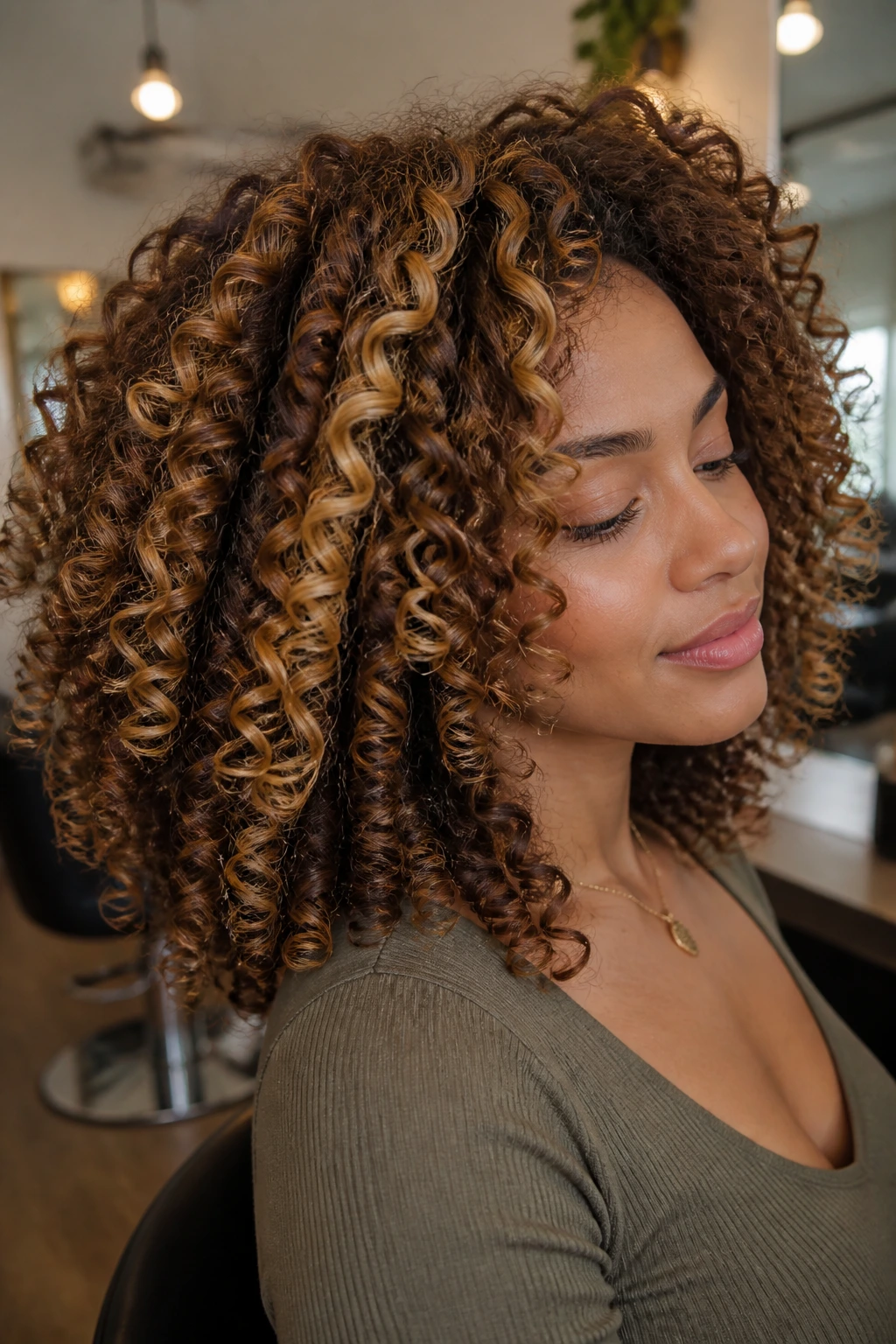
High-density curls need a different approach than low-density curls. If you paint too much lightening into dense hair, the result can turn fuzzy or visually crowded. Honey ribboning solves that by placing fewer, wider pieces through the most visible layers and letting the rest of the density stay dark.
The payoff is clean dimension. You can actually see where the color changes, because the ribbons have room to breathe between the coils. On thick 3C to 4B patterns, that spacing matters more than people realize. Dense hair is already visually busy. The color should organize it, not compete with it.
This is a good place for a stylist to use a mix of placement methods—some balayage, some foils, some freehand work—depending on how much contrast you want. The best dense-hair honey looks are controlled, not random.
21. Rose-Honey Glow
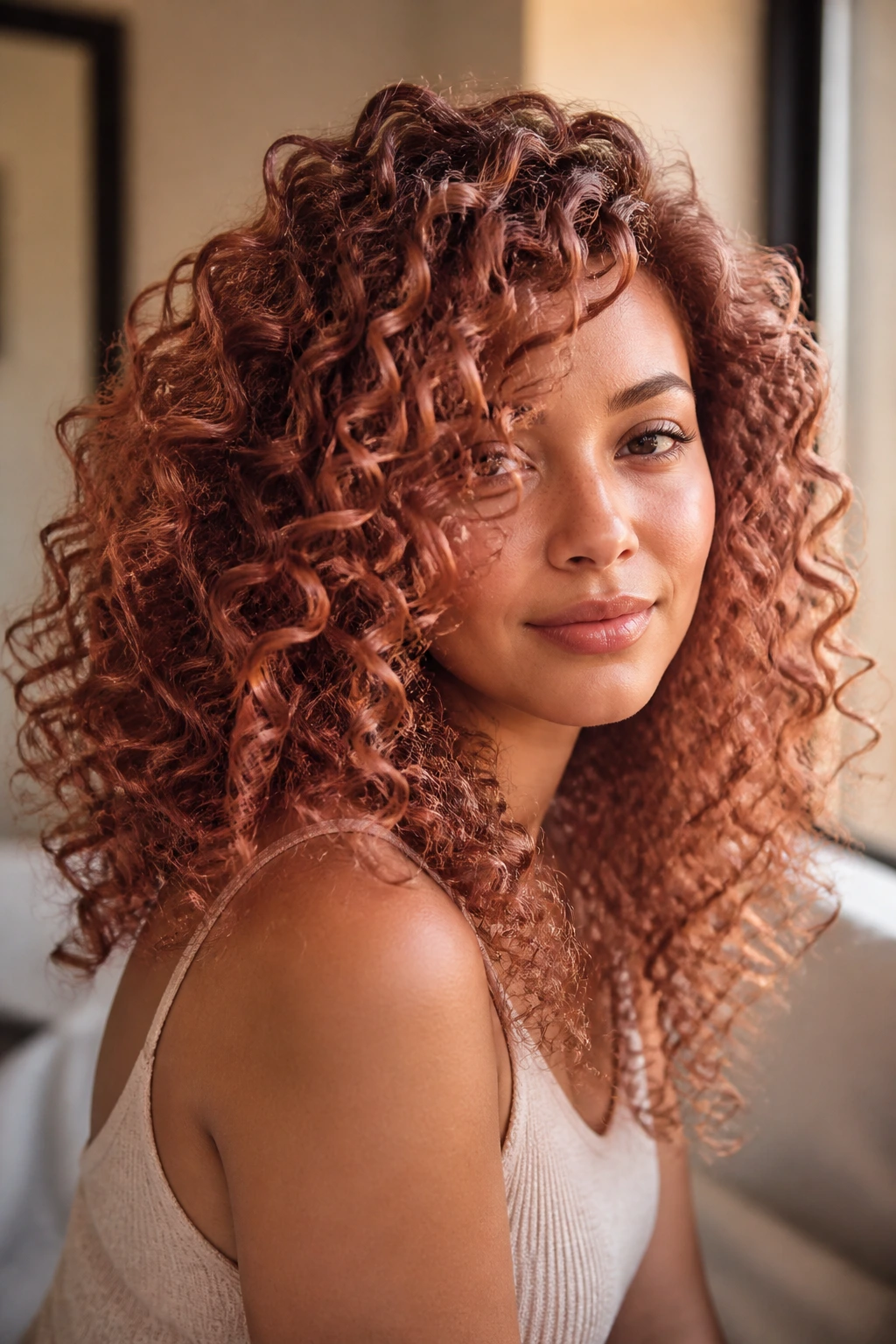
Rose-honey is the prettiest shade that people overlook because it sounds too specific. It’s honey with a whisper of blush, not pink-pink, and that makes it a nice fit for curls that need warmth but not the usual gold or caramel path. On the right base, it can look soft, modern, and a little unexpected.
I’d choose this if you want your curls to stand apart from the usual brunette-to-blonde story. The rose note adds interest in daylight and keeps the honey from reading too beige. It also pairs nicely with layered cuts because the color change is easier to spot where the curls separate.
The trick is restraint. A strong pink cast can take over fast. A rose-honey glaze, on the other hand, stays wearable. It feels like a twist, not a costume.
22. Amber Honey Veils with Bright Face-Frame
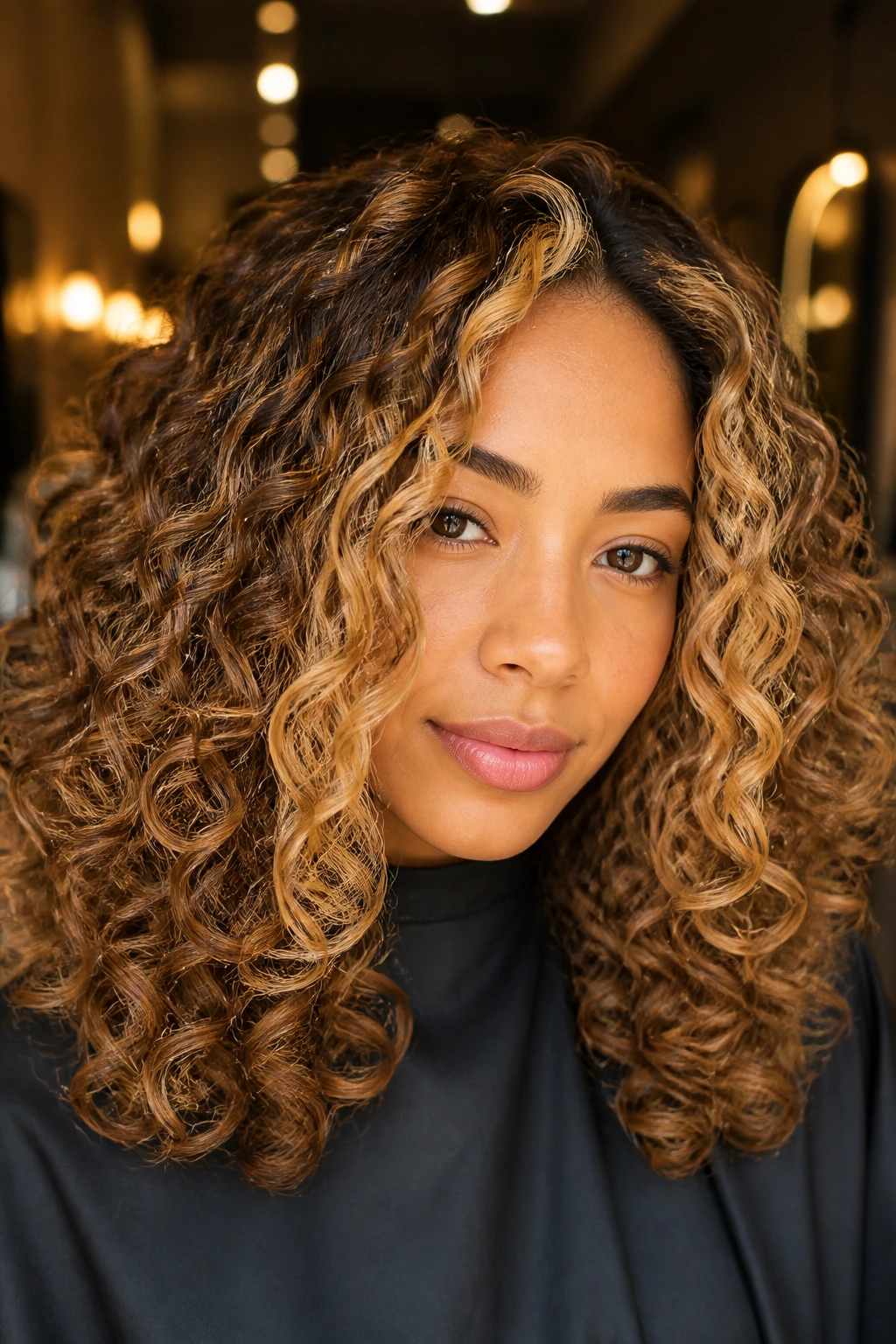
Amber honey veils are for the person who wants the warmest end of the honey spectrum. The shade leans richer, deeper, and more golden than classic honey, and a bright face-frame keeps it from feeling too heavy. On curly hair, that amber warmth can look lush—especially when the hair has dark roots and lots of movement.
This is one of the bolder looks in the collection, and I think that’s the right place to end. Amber honey is not shy. It works because the curls break the color into small flashes instead of one broad sheet, so the warmth feels alive instead of brassy.
If you want a strong seasonal shift without going into copper or red, amber honey is a solid middle path. Bright at the front, rich through the lengths, and warm enough to make the curl pattern look almost three-dimensional.
Why Honey Tones and Curls Play So Well Together
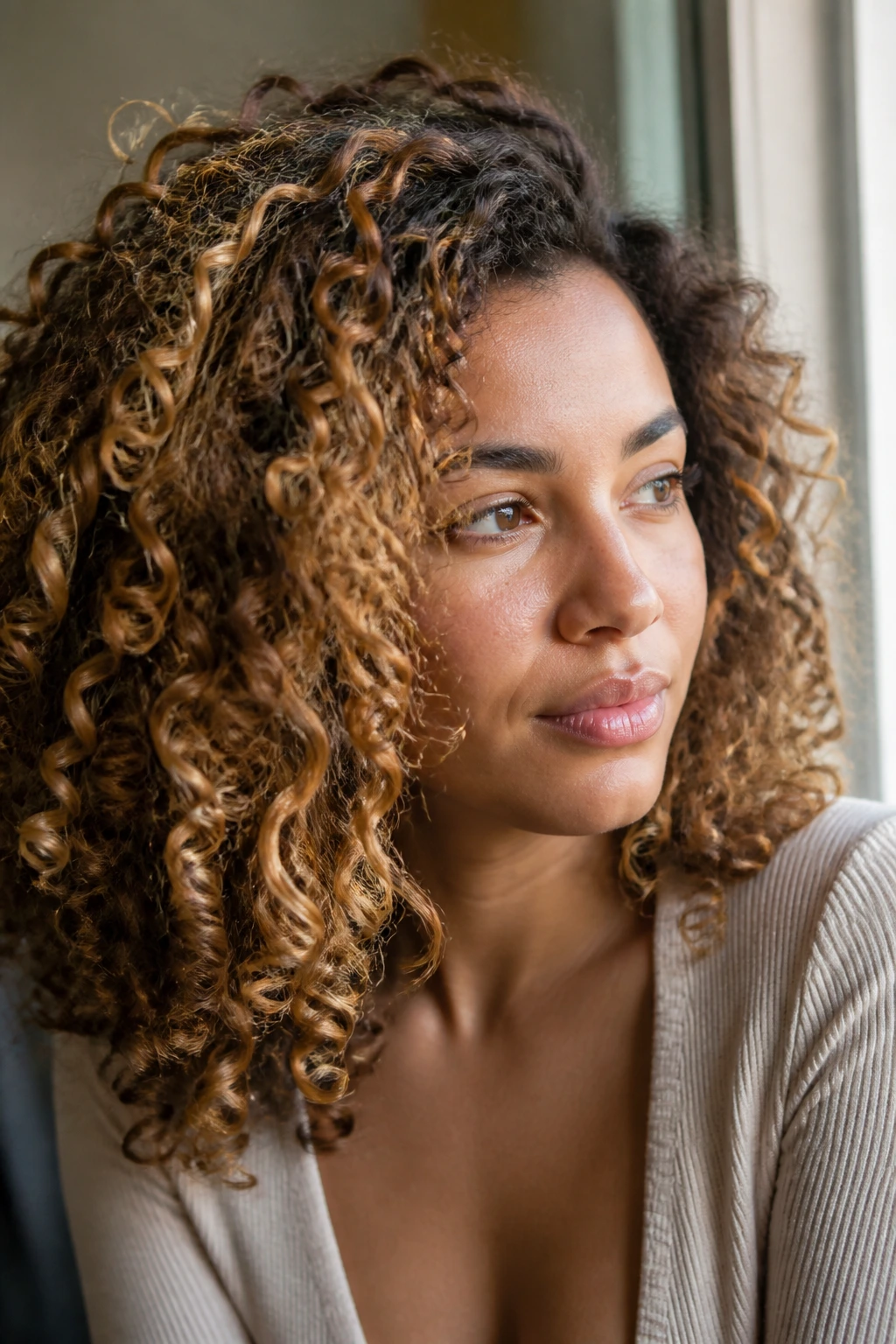
Curly hair does a strange, useful thing with color: it turns one shade into several. A strand on the outside of a coil catches light, while the strand tucked under it stays darker. That built-in shadow makes honey highlights, balayage, and glosses look richer than they do on a flat surface. You do not need a lot of lightener to get a lot of movement.
The other reason honey works is that it sits in a flexible part of the color family. Pure gold can look harsh. Pure beige can look washed out. Honey sits in the middle and can lean brighter, warmer, or softer depending on the base beneath it. On curly hair, that flexibility matters because porosity, density, and curl size all change how the color reads.
I also like honey because it lets the cut do some of the talking. Layers, shaggy shapes, bobs, and face-framing pieces all show the placement differently. The color is not fighting the shape. It’s pointing at it. That’s the part a lot of rushed color jobs miss.
Tools, Swatches, and Styling Gear
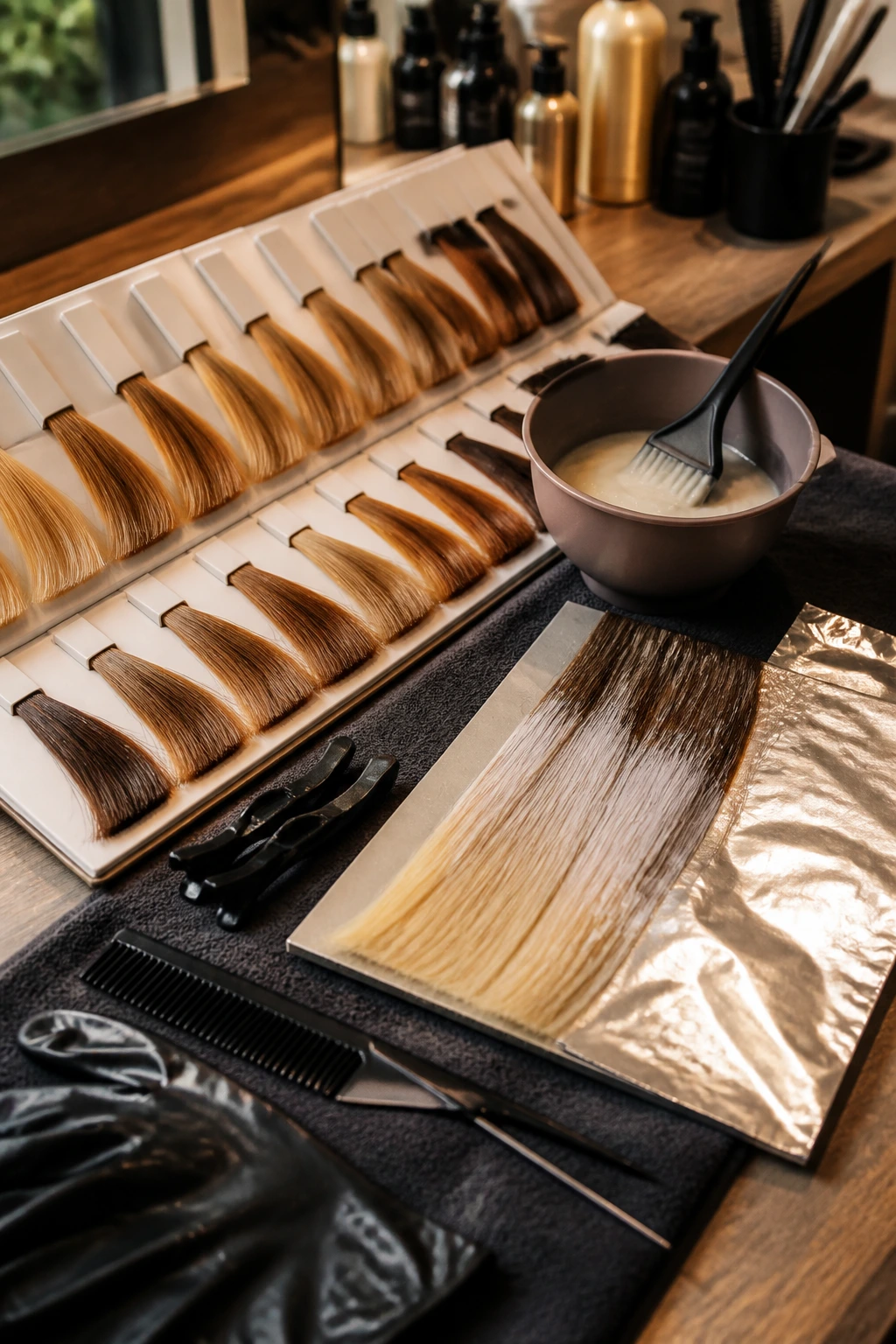
- Color swatch book or saved reference photos: Bring more than one image, since the right honey tone on dark brown curls is not the same as the right tone on light brown curls.
- Balayage board or foil sheets: These help separate sections cleanly, especially when the goal is a soft ribbon instead of an all-over lift.
- Tint brush and color bowl: Basic, but important for precise placement around the face and on narrower curl sections.
- Sectioning clips: Curly hair gets bulky fast when it’s wet or stretched; good clips keep the crown from turning into a knot of loose sections.
- Gloves: Non-negotiable when you’re handling lightener, gloss, toner, or developer.
- Wide-tooth comb and detangling brush: Use both, depending on the curl pattern and how fragile the hair feels before color.
- Microfiber towel or old cotton T-shirt: Helps after washing because rough terry cloth can make freshly colored curls look frayed.
- Diffuser: Handy if you want the honey pieces to show with a little volume instead of hanging flat.
- Color-safe shampoo and conditioner: Choose products that do not strip tone too fast; sulfate-free formulas usually make more sense here.
- Lightweight curl cream or mousse: Good styling products keep the hair defined without laying a greasy film over the lighter pieces.
- Heat protectant spray or cream: If you diffuse, stretch, or silk-press occasionally, this earns its spot on the counter.
How to Choose the Right Honey Shade for Your Base
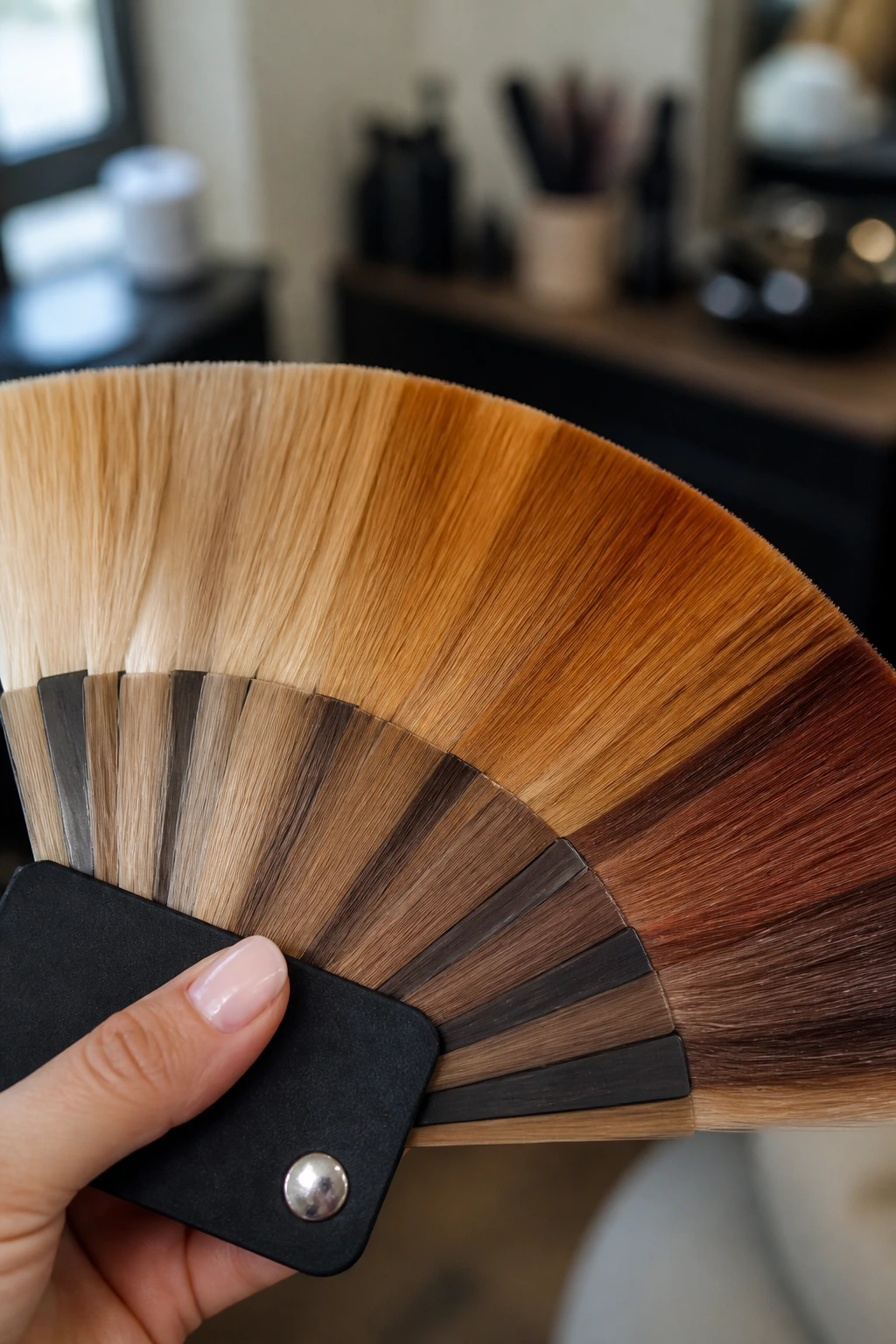
The easiest mistake is assuming all honey reads the same. It doesn’t. Honey on a level 4 dark brown curl is going to feel richer and deeper than honey on a level 8 light brown curl, and the same swatch can look warmer, cooler, or brighter depending on what it lands on.
If your base is dark brown or black, look for deeper honey, amber honey, or a glossed honey finish. Those tones show up without forcing a huge lift, which keeps the curls from getting dry and overprocessed. If you push too pale too fast, the color can lose the depth that makes curly hair look full.
Medium brown curls usually have the widest range. Beige honey, caramel honey, and bronde all make sense here because the base can hold the warmth without looking muddy. If the curls already lean warm, a cooler beige tone can keep the result from veering orange.
Lighter brown and dark blonde curls can wear champagne honey, apricot honey, or softer golden ribbons. That’s where the brighter end of the family becomes useful. You still want depth, though. If every piece is light, the curl pattern disappears. The best honey color ideas for curly hair always leave some darkness to work as a frame.
How to Show Off the Color on Wash Day
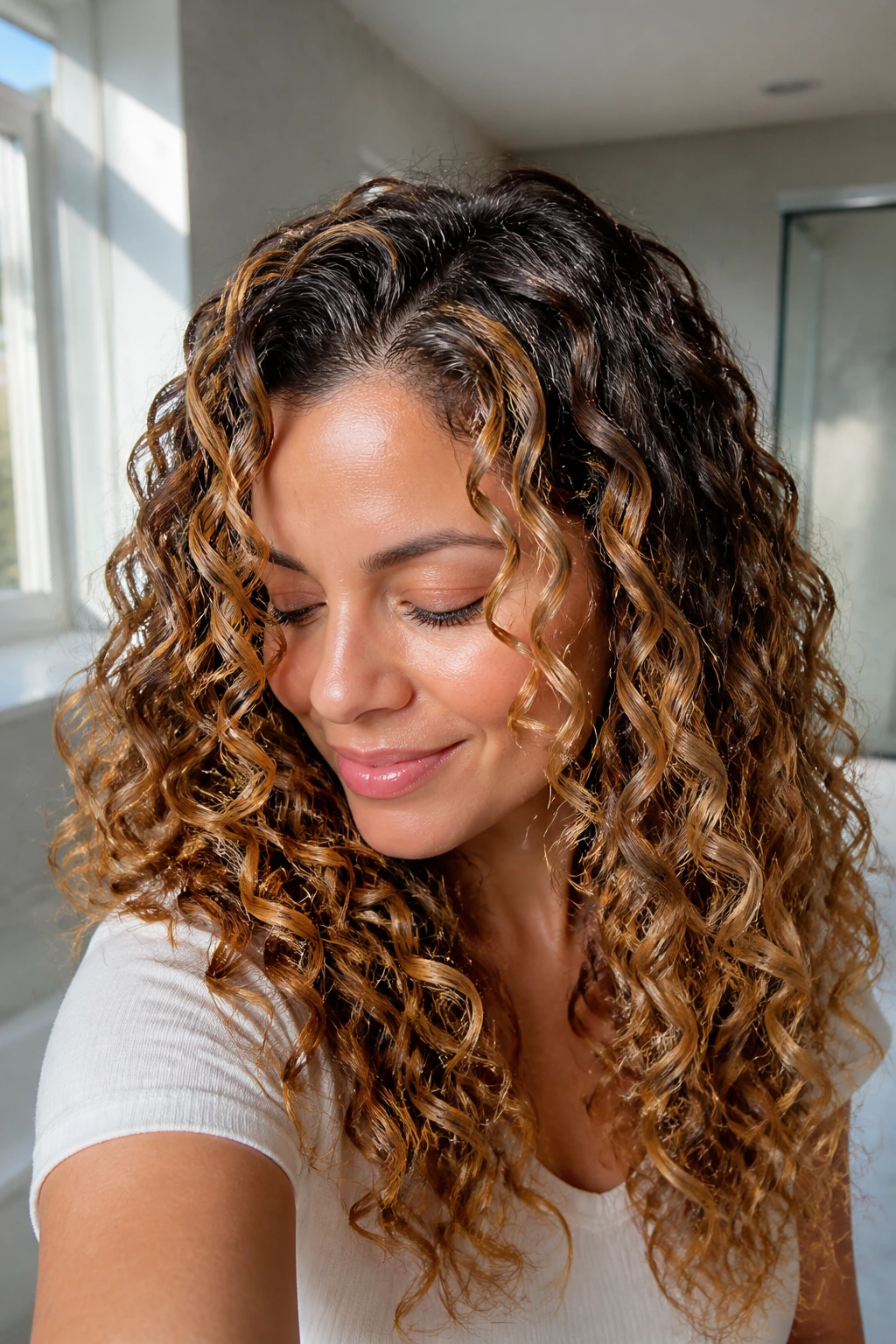
Presentation: Diffuse on low heat until the curl cast breaks, then scrunch in your finishing product so the honey ribbons separate instead of clumping into one shape. A side part or off-center part can expose the brightest front pieces, which is useful if your color lives around the face.
Accompaniments: Honey tones tend to look best with layered cuts, curtain bangs, shag shapes, and curly bobs that let the light hit several levels at once. If your hair is one blunt length, the color can feel heavier than it should. Shape helps the color breathe.
Portions: For a subtle look, keep the lightest pieces around the hairline and outer layers, then let the mids stay close to the base. For a bolder result, ask for the honey to travel deeper through the lengths and a little farther underneath, where movement will reveal it when the curls bounce.
Finish: Use a lightweight cream or mousse first, then a drop of oil only on the last few inches if the ends need shine. Too much oil can mute the lighter ribbons. That’s one of those small annoyances that shows up only after the hair dries, which is why I mention it here and not in the salon chair fantasy version.
Keep the Tone Warm, Not Brass
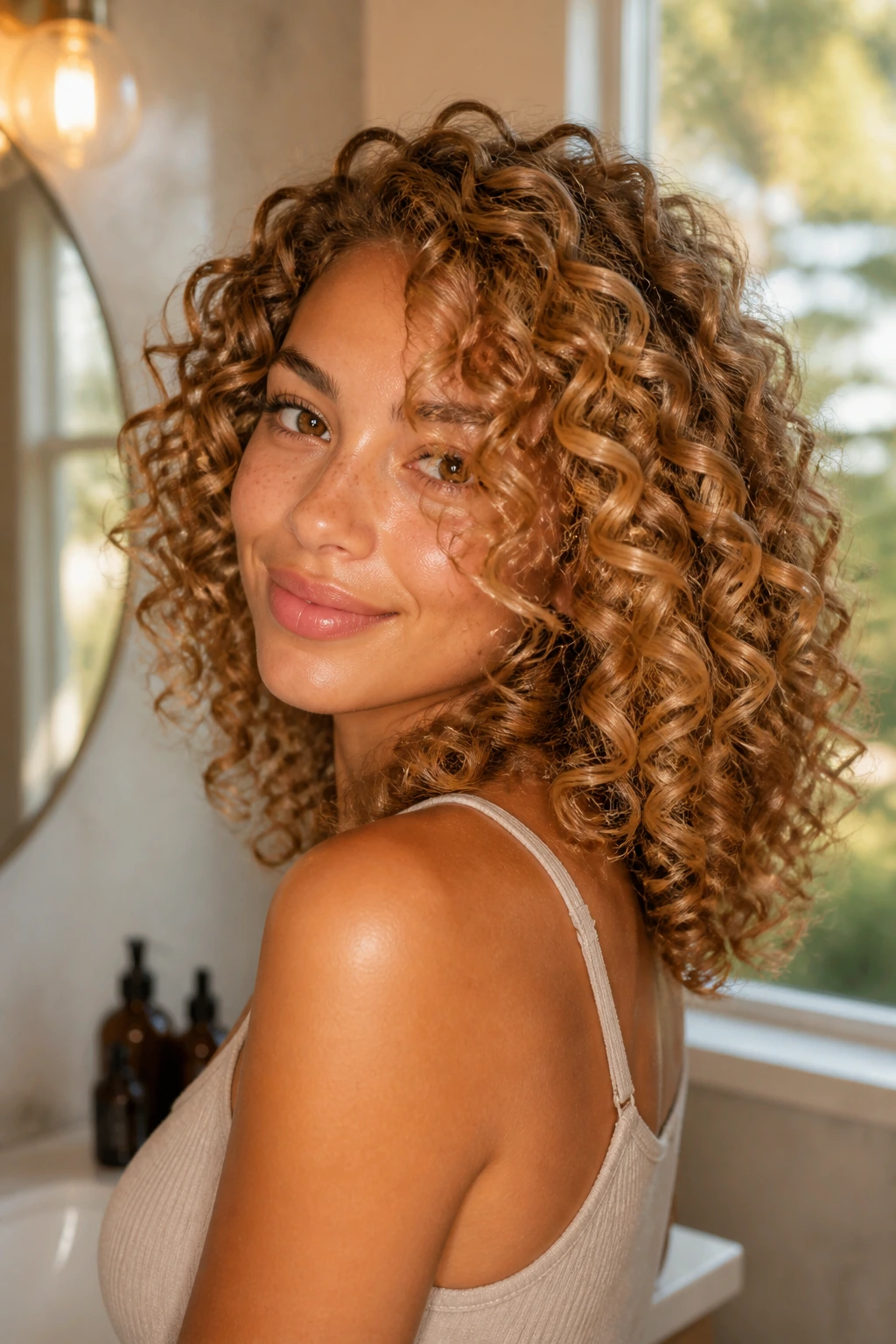
Honey color can slide into brass if you treat every wash like a chemistry experiment. The fix is usually gentler than people want to hear. Wash less often if your scalp allows it, use color-safe shampoo, and stop reaching for harsh clarifying products unless you actually need to remove buildup. Curly hair already loses moisture faster than straight hair, so stripping the tone and the curl in the same week is a bad bargain.
A purple shampoo can help if the honey is drifting too yellow, but I would use it sparingly on warm honey curls. Once or twice a week is often too much, and sometimes even once every two weeks is enough if the hair is porous. If the tone starts looking dull or muddy instead of golden, you may have cooled it too far.
A clear or soft-gold gloss between salon visits can bring the shine back without shifting the tone too much. That matters a lot on curls, where light is already broken up by texture. A glossy surface makes the honey read richer. A dry one makes it look tired.
Additional Shine and Dimension Tricks
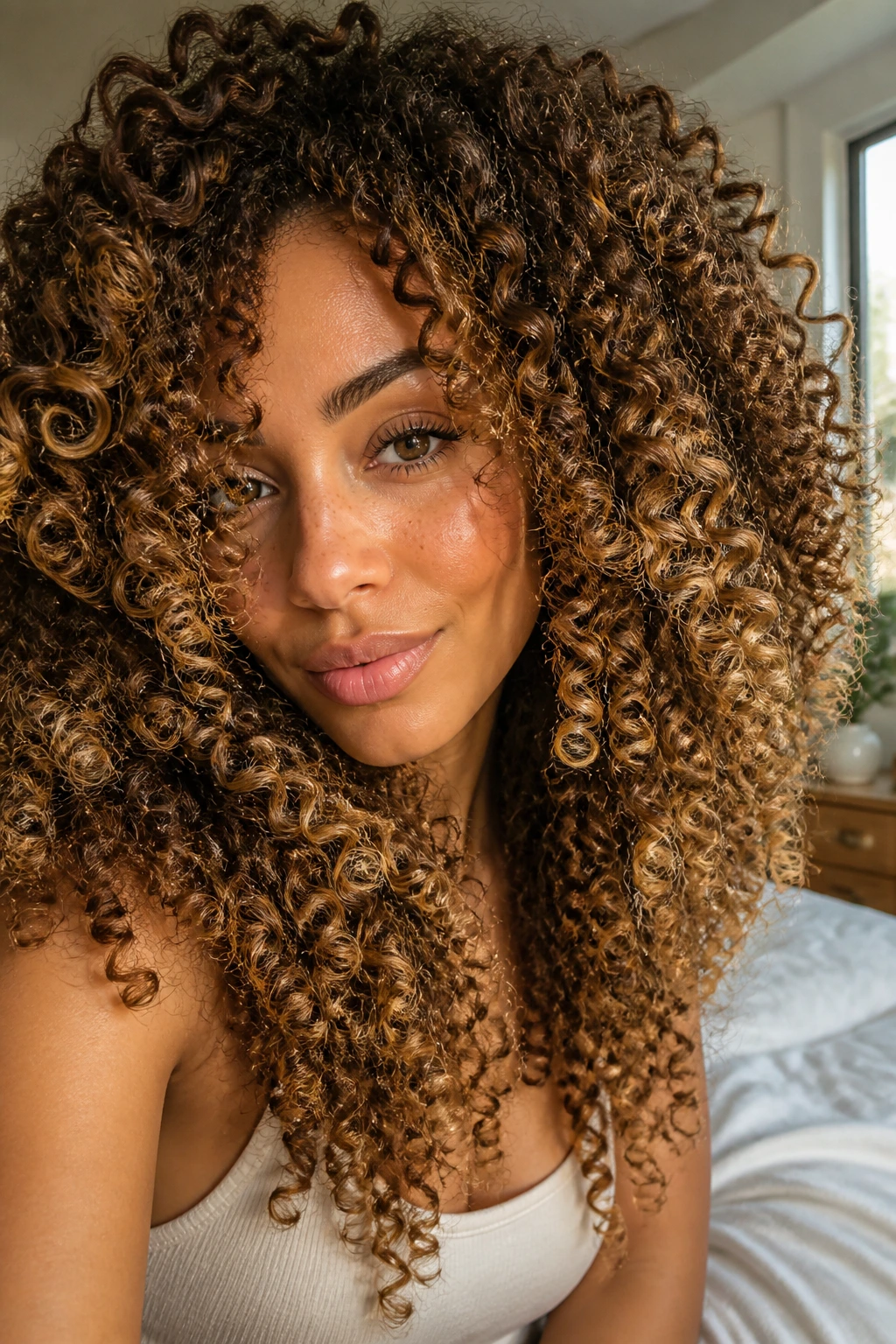
Gloss Refresh: If the honey starts looking flat after a few washes, a clear gloss or soft-gold glaze can revive the reflection without pushing the color in a whole new direction. It’s one of the fastest ways to make curls look fresh again.
Placement Trick: Put the brightest pieces where the curls separate naturally—around the face, on the outer layers, and through the mids where the pattern opens up. Brightness hidden only underneath often disappears once the hair is dry.
Part Change: Switch your part every so often. A deep side part can expose more color on one side, while a center part shows off the balance in the front pieces. It’s a small move that changes the whole read of the haircut.
Make-It-Yours: If your hair is fine, keep the color placement lighter and less dense so the curls don’t collapse visually. If your hair is thick, you can handle more ribbons and deeper contrast. If your curls are high-porosity, lean on glosses and low-volume developers; they hold tone better and feel less aggressive on the strand.
Common Color Mistakes That Flatten Curly Hair
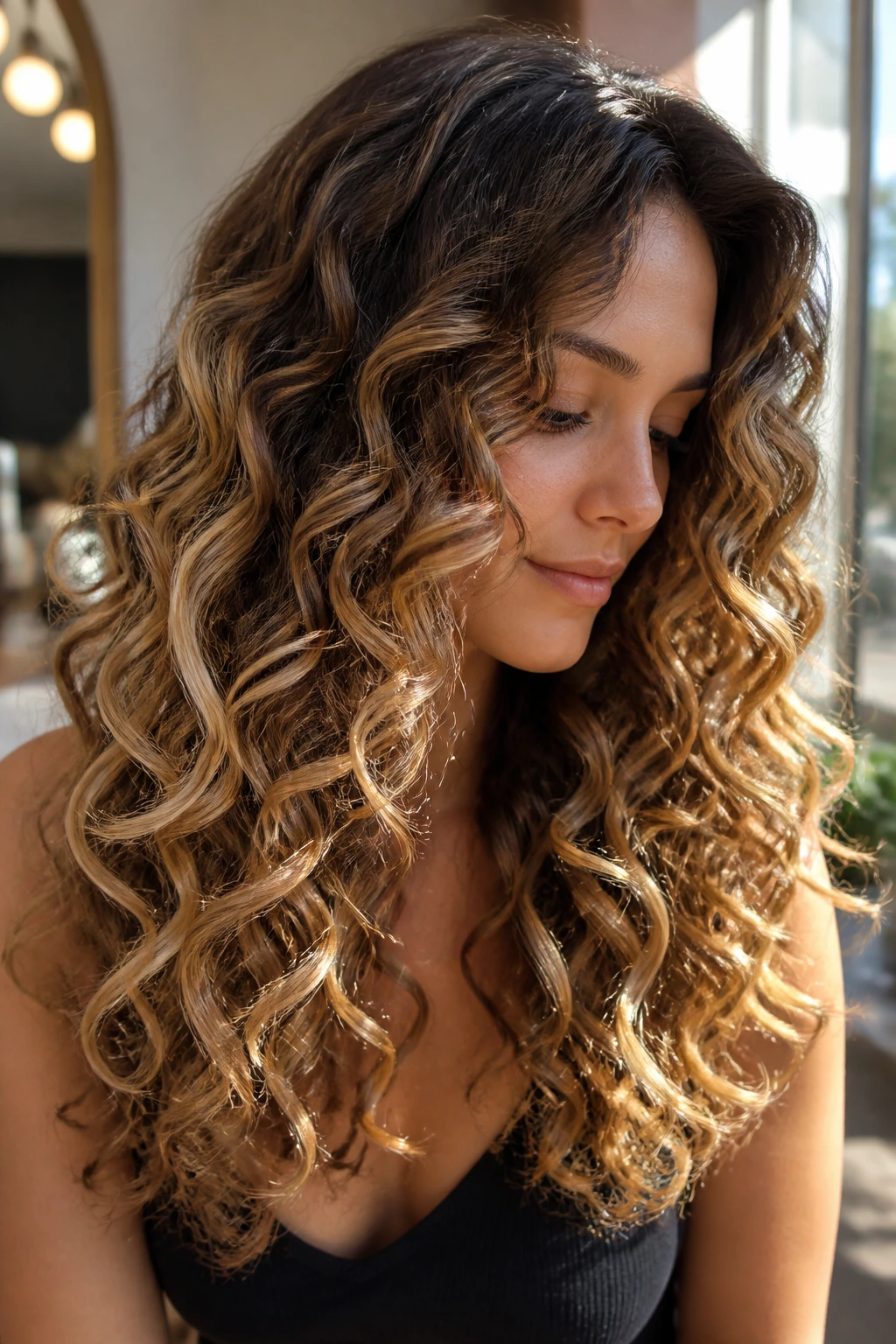
- Lightening too high at the root: The color can look bright in the chair and puffy a week later. The fix is a deeper root shadow or softer root placement so the crown keeps its shape.
- Using too many thin highlights on tight curls: Tiny streaks can vanish once the hair shrinks. Wider ribbons or larger panels hold up better on dense texture.
- Choosing a honey tone that’s too yellow for the base: That usually shows up as brass on the driest pieces. Ask for beige honey, golden honey, or amber depending on how warm the base already is.
- Skipping lowlights entirely: Without some darker pieces, honey can look washed out. A few cinnamon or chestnut lowlights give the brighter sections something to sit against.
- Overusing purple shampoo: Good in small doses, bad as a habit. Too much cool pigment strips the warmth right out of honey and leaves the curls looking dull.
- Rough-drying after color: Cotton towels, high heat, and too much friction make freshly colored curls look frizzy before they’ve even settled. Use a microfiber towel and diffuse gently.
Variations and Adaptations to Try
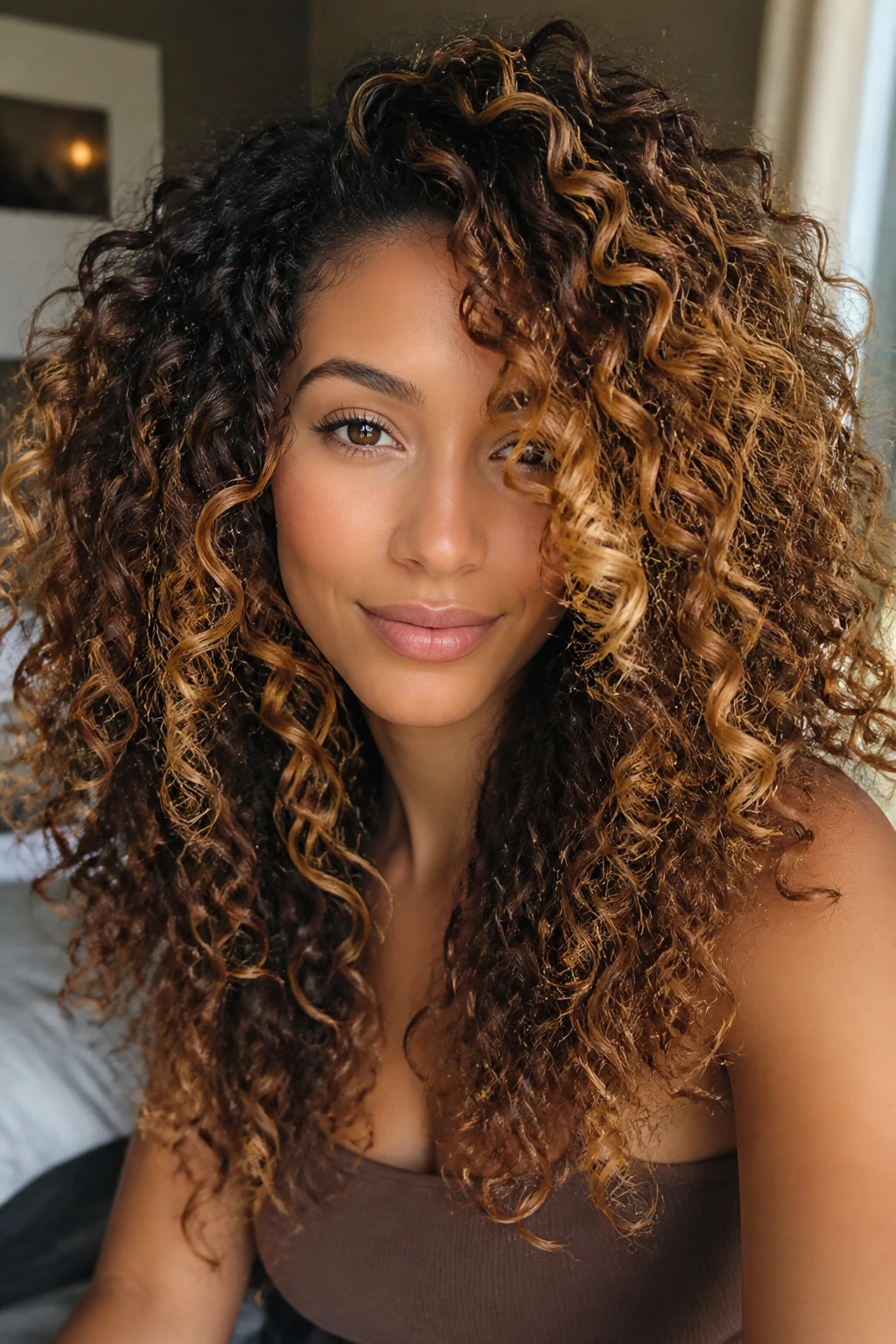
Low-Commitment Honey Gloss: This is the easiest entry point if you want warmth without a full lightening service. The color stays closer to your base and fades softly, which makes it a good test drive.
High-Contrast Halo Light: Brighten only the top layer and the face frame, then leave the underneath darker. The result is bolder from the front and less obvious when the hair is pulled back.
Brunette-Friendly Honey Veil: Keep the base rich brown and thread in a few narrow honey ribbons through the mids. This works well if you want dimension without stepping into blonde territory.
Gray-Blending Honey Sweep: Honey can soften the look of scattered gray when it’s placed in a fine balayage pattern rather than a blocky highlight. The warmer pieces blur the contrast and help everything read intentional.
Protective-Style Friendly Placement: If you wear twists, braids, or stretched styles, focus the lighter pieces on the parts that stay visible most often. You want the color to show in the styles you actually wear, not only when your hair is loose.
Cooler Honey Shift: If warm gold feels too loud, ask for beige honey or smoky honey instead. The result still reads bright, just with less orange pressure.
Questions People Ask About Honey Hair Color on Curls
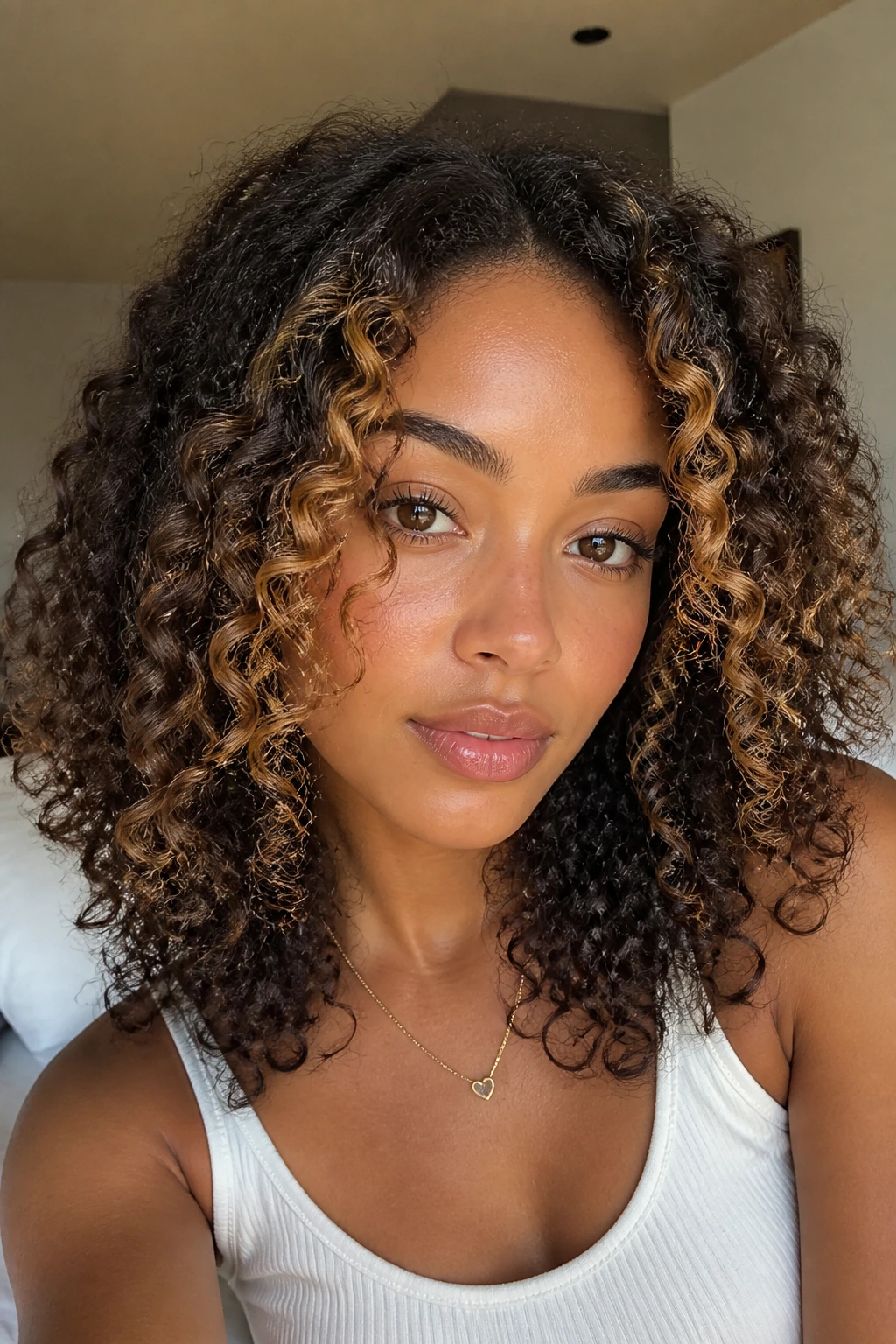
Can honey hair color work on black curly hair without looking flat?
Yes, but the placement matters more than the shade. On black curls, a deep honey gloss, amber ribbons, or a soft balayage around the face usually looks better than trying to lift every strand to blonde.
Does honey color damage curly hair less than lighter blonde shades?
Usually, yes, because you can stay closer to your natural base and avoid a high-lift blonde process. The less you have to lift the hair, the easier it is to keep the curl pattern springy and the ends in good shape.
What curl types wear honey highlights best?
Pretty much all of them, but the placement changes. Loose curls can wear finer ribbons, medium curls take caramel and honey balayage well, and tighter coils often look best with broader sections that survive shrinkage.
How often do honey tones need to be refreshed?
A gloss may need a refresh every 4 to 6 weeks if you wash often or use heat. Highlights and balayage can go longer between major appointments, but the tone itself usually benefits from a glaze or toner before the color turns dull.
What if the honey turns orange?
That means the warmth went too far for the base or the toner drifted. A beige or ash-beige gloss can calm it down, but don’t overcorrect with strong violet or blue products unless you want the color to get muddy.
Can you get a honey look without bleach?
You can, if your base is already light enough or if you’re happy with a gloss-only version. On darker hair, a no-bleach honey usually reads as warm reflection rather than a dramatic color shift.
Does this work on short curly cuts like pixies or bobs?
Yes, and sometimes even better because the shape shows the placement fast. Short curls need the light pieces placed with more precision, though, since there’s less length to spread the color out.
Should I pick warmer or cooler honey if my skin tone is neutral?
Neutral skin can usually wear either, which is a blessing and a trap. If you want the curls to look sunlit, go warmer; if you want them to look softer and a little more muted, choose beige or smoky honey.
Soft Curls, Warm Light
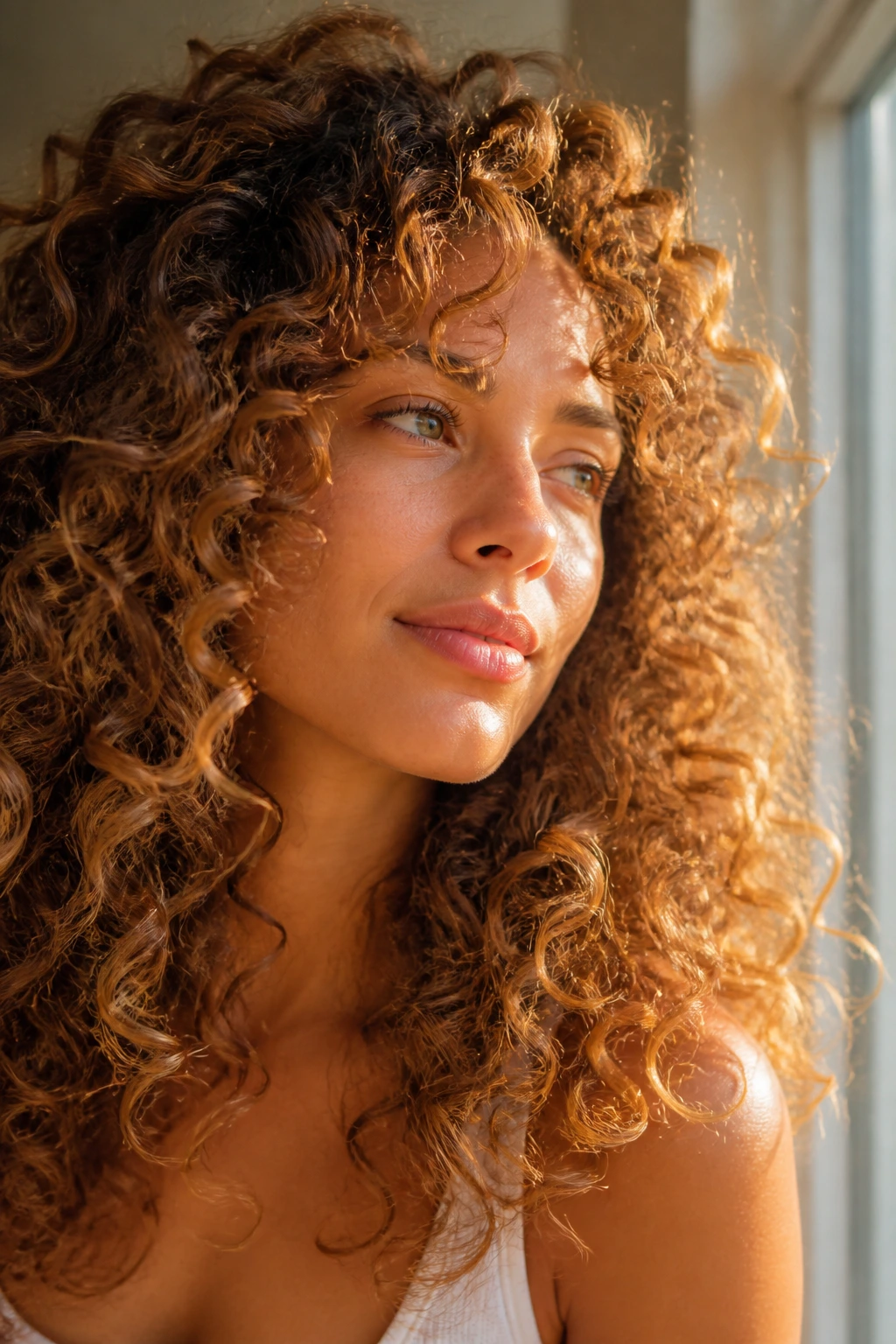
Honey color works on curls because it respects what curls already do well: bend, shadow, and move. The best versions do not cover that up. They make it easier to see. A good honey placement can sharpen a curl pattern, give a haircut more shape, and keep the whole look soft even when the color is doing a lot of work.
What I like most is how many directions it can go. You can stay subtle with a gloss, go brighter with face-framing ribbons, or push into amber and champagne if you want more contrast. None of those choices has to look harsh. That’s the charm here.
If you’re saving inspiration for your next appointment, start with the idea that matches your base and your maintenance tolerance, not the loudest photo on your camera roll. The right honey for curls is the one that still looks good three weeks later.
