



Gray hair looks for women with medium length hair can be far more flattering than people expect. The trick is that medium length sits in a sweet spot: long enough to show off silver movement and shine, short enough to keep the shape from collapsing into a heavy curtain. If you’ve ever seen gray hair turn flat, dry, or a little stern at the ends, you already know why length matters so much.
I like medium-length gray hair because it gives you room to work. You can bend it, wave it, tuck it, layer it, or let it air-dry with a bit of natural texture, and the cut still reads as intentional. Gray strands also behave differently from pigmented hair. They often feel drier, sometimes a little coarser, and they show every blunt edge and every lack of shine. That sounds unforgiving. It can be. But it also means the right shape looks crisp in a way dyed hair rarely does.
The best gray hair styles for medium-length hair don’t fight the texture. They use it. A good cut, a clean part, a gloss, maybe a few strategic layers, and suddenly the whole thing looks expensive without trying too hard. Some of these looks are sleek and sharp. Others are soft and lived-in. A few are for people who want to stop fussing and still look put together. All of them work because medium length gives gray hair enough body to move, and enough weight to keep it from floating away in frizz.
Why These Gray Hair Looks Work So Well on Medium-Length Hair
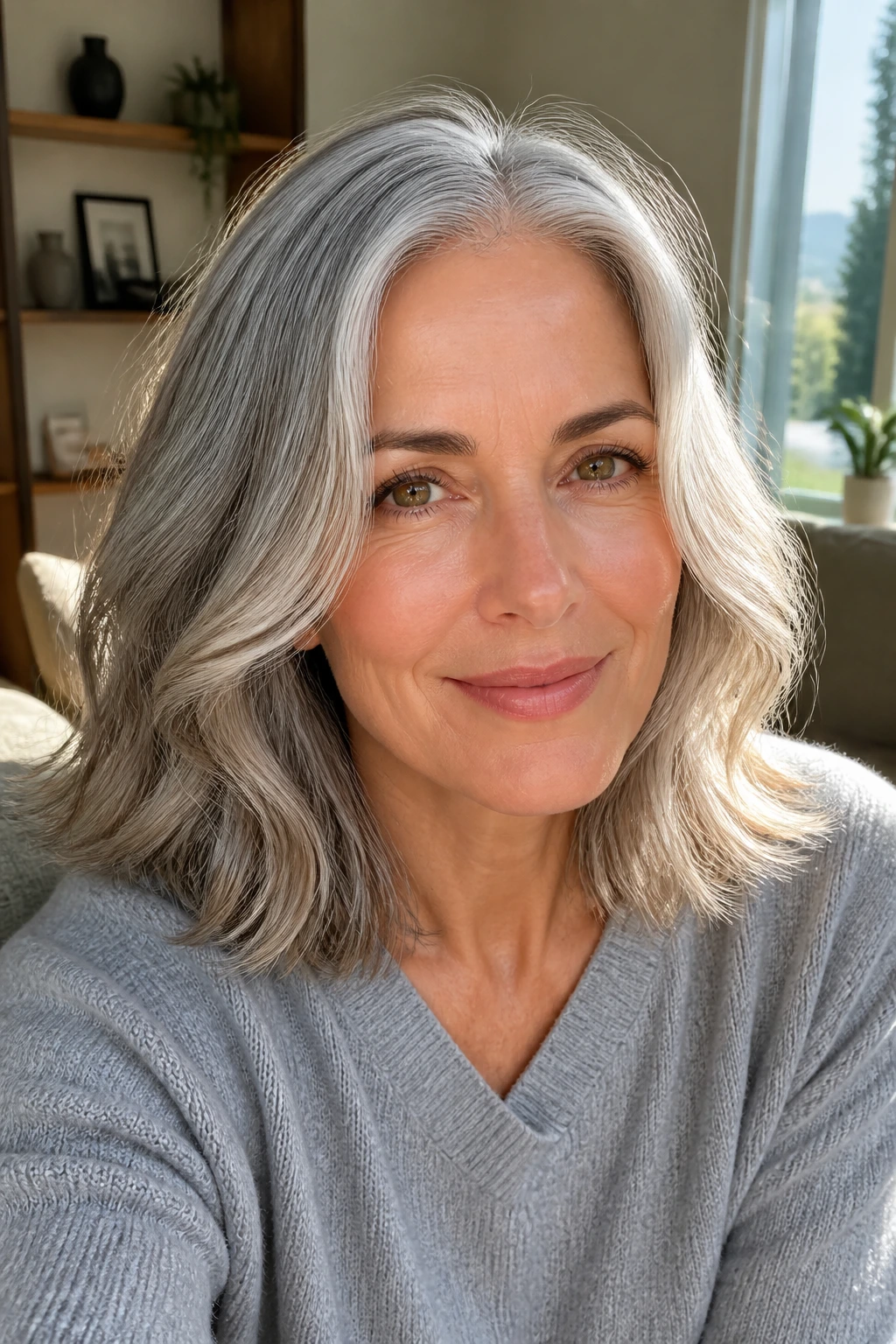
Shape holds better: Shoulder-grazing hair keeps enough weight to sit neatly, but not so much that gray strands get dragged down into a flat sheet.
Silver shows up cleanly: Medium length gives gray and silver tones room to catch light along the mid-lengths and ends, where the shine usually looks richest.
Styling stays sane: A one-inch wave, a quick blowout, or a tuck behind the ear can change the mood without a full salon-level routine.
The grow-out is easier: If your gray is still coming in, medium-length cuts blur the line between old color and new silver better than a sharp short cut or very long hair.
Texture gets a job: Fine hair gets lift, thick hair gets movement, and wavy hair gets to behave like wavy hair instead of being bullied straight.
How to Choose a Gray Look for Your Texture and Face Shape
Gray hair is not one single thing. Some heads of gray hair lean icy and bright. Others look smoky, peppered, or soft pewter. That matters, because the cut should match the way the hair actually falls, not the picture in your head. I’d start there before you get lost in style names and salon jargon.
Fine Hair Needs Structure, Not Thin Ends
If your hair is fine, avoid over-layering. That’s the fastest way to make medium-length gray hair look wispy in a bad way. A blunt-ish edge, a soft side part, or a few internal layers around the crown usually gives more shape without sacrificing the look of fullness.
Thick or Coarse Hair Wants Weight Removed in the Right Places
Dense gray hair can turn into a triangle if the cut is too blunt and too one-length. Ask for movement through the interior, not razored ends everywhere. The best version usually has shape around the face and enough length left at the perimeter to keep the style grounded.
Wavy and Curly Gray Hair Likes a Little Space
Gray waves and curls often need more room than people think. If the cut is too short, the texture can spring up and widen. Keep the layers long, and ask for a dry cut or a curl-by-curl trim if your hair shrinks a lot when it dries.
Face Shape Changes the Part, Not the Personality
A center part lengthens the face. A deep side part softens it. Curtain bangs can break up a forehead. Face-framing layers can give a square jaw some breathing room. None of that is complicated, but it does make the finished style feel deliberate instead of accidental.
1. Soft Silver Lob with a Center Part
A center part does more work than most people think. On a soft silver lob, it creates a straight, clean line that lets the gray color do the talking instead of the cut fighting for attention. The lob should hit around the collarbone, maybe just a touch below, so the ends can skim the shoulders rather than sit on top of them like a shelf.
Why It Flatters Gray
- The middle part creates symmetry, which makes silver tones look sharper and cleaner.
- Collarbone length keeps the hair light enough to move, but heavy enough to avoid puffing out at the ends.
- The style works especially well if your gray grows in with a lighter crown and darker lower sections.
- A straight lob shows off shine better than a heavily layered cut when the hair is smooth.
Best detail: Ask your stylist to keep the bottom line crisp, then soften the front by a half inch so it doesn’t read severe.
If you like a style that can go from tucked behind the ear to polished and straight in five minutes, this is one of the easiest gray hair looks to live with. A light smoothing cream and a medium pass with a flat iron are usually enough.
2. Feathered Shoulder-Length Layers
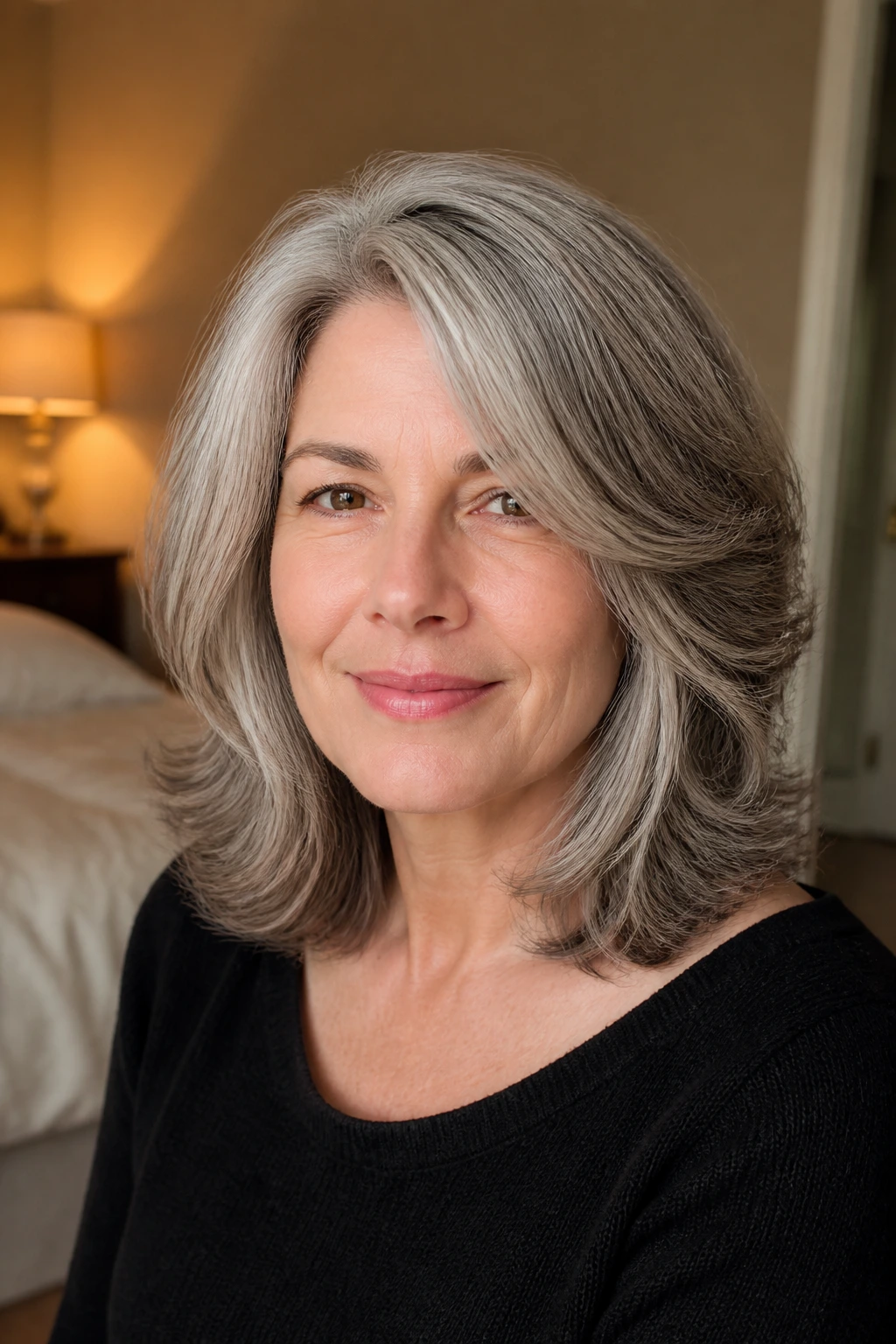
Feathered layers are the answer when gray hair feels too solid. The cut breaks up the bulk, especially around the cheeks and jawline, so the hair moves instead of sitting there with all the energy of a folded towel. On medium-length hair, feathering gives you motion without making the style look chopped to bits.
The key is softness. You do not want short, choppy layers that stick out in random places. You want the ends to blend, lift, and swing when you turn your head. That’s especially helpful if your gray hair has a coarse texture, because coarse silver can catch in blunt lines and make the whole cut feel stiff.
I like this look with a round-brush blowout or a loose air-dry and a small amount of leave-in conditioner. If your hair is frizzy, use a pea-sized amount of smoothing balm only at the ends. Too much at the roots and the feathering falls flat. Too much at the ends and it looks greasy by lunch. Gray hair is picky like that.
3. Blunt Steel Cut with a Gloss Finish
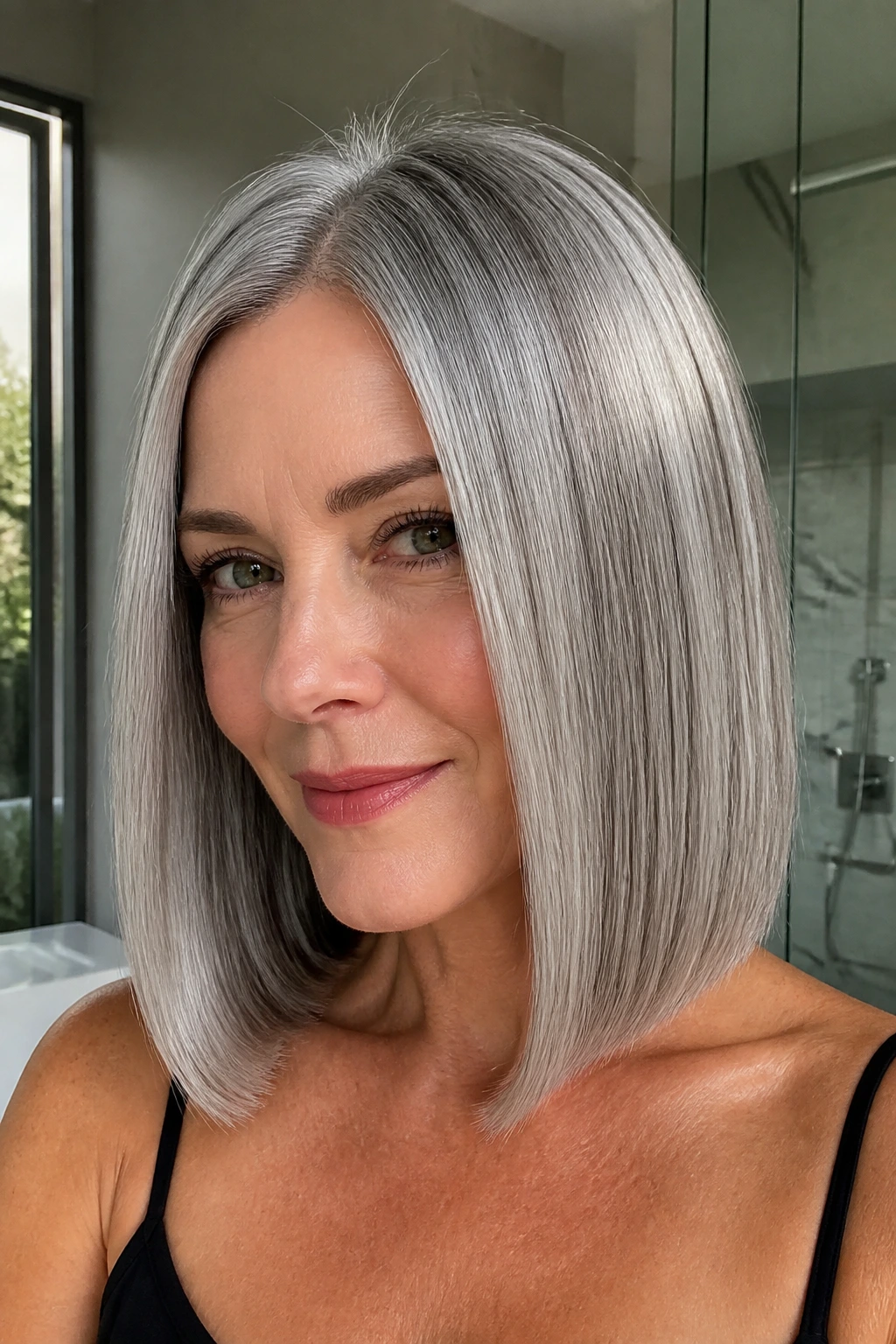
Why does a blunt gray cut look sharper on medium-length hair than on long hair? Because the perimeter actually gets seen. On hair that falls somewhere between the shoulders and the collarbone, a straight edge reads as a choice, not a compromise. It gives the steel-gray tone a surface to sit on.
Ask for This at the Salon
- A one-length or nearly one-length perimeter that lands at the collarbone.
- Very light internal shaping, if any, so the ends don’t look bulky.
- A gloss service or clear shine treatment if your gray is looking matte.
- A dry trim if your hair waves a lot and shrinks differently when wet.
This is the look for someone who likes clean lines and doesn’t mind regular trims. If the cut gets pushed past eight weeks, the ends start to fray and the whole thing loses its point. Keep it neat, keep it glossy, and keep the styling simple. A middle part and a smoothing pass are usually enough.
4. Salt-and-Pepper Shag with Soft Bangs

If your gray grows in patchy around the temples or front hairline, the shag is a friend. It hides awkward grow-out, makes mixed tones look deliberate, and gives medium-length hair enough messiness to feel modern without trying to be trendy. The soft bangs are the part I like most. They take the edge off the forehead and keep the cut from going too wild.
The shag only works if the layers are placed with some care. You want texture around the crown and through the sides, but not so much that the hair balloons out. Gray hair can already have a little roughness to it, and too many short layers make that roughness louder. A good shag should look airy, not ragged.
This style likes texture spray more than heavy cream. Scrunch a little into damp hair, rough-dry the roots, and let the ends do their own thing. If your hair is naturally wavy, even better. If it’s straight, the cut still works, but you’ll need a bit of bend from a round brush or a large-barrel iron.
5. Curtain Bangs and Collarbone Layers
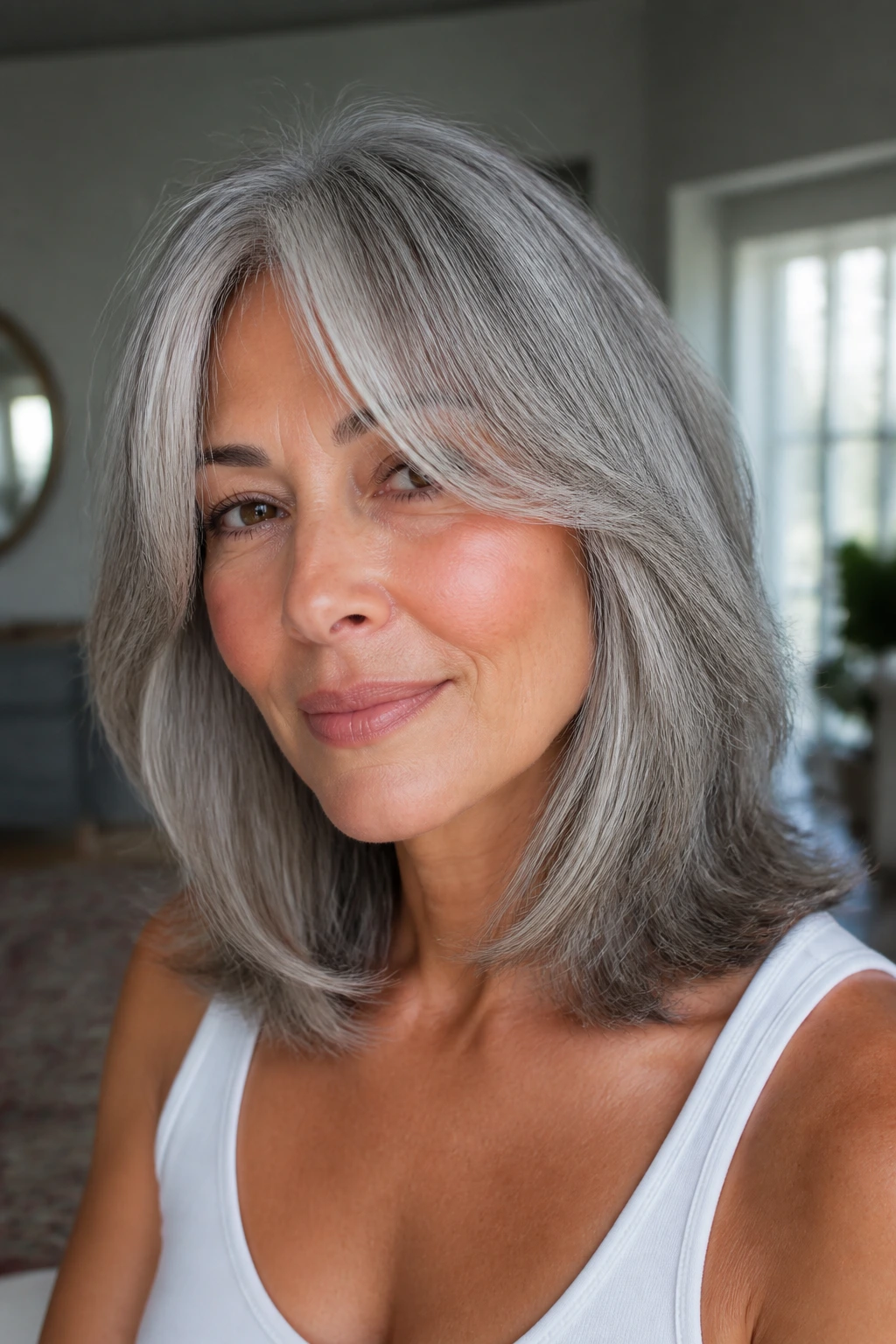
Curtain bangs are the friendly middle ground. They soften a gray haircut without locking you into a full fringe, and they grow out better than almost any other bang shape. On collarbone-length hair, they make the face look framed rather than covered, which matters when silver strands are doing all the visual work.
The best version starts the shortest point around the cheekbones and then melts into the longer lengths. That’s what keeps the bangs from feeling separate. If the front is cut too short, it can look disconnected from the rest of the style, and medium-length gray hair needs flow. It does not need a hard stop in the middle of the forehead.
I like this look for women who wear glasses, because the pieces can sit around the frames instead of fighting them. It also plays nicely with loose waves. A little bend through the front pieces gives the whole style a soft, expensive feel, even if the back is mostly air-dried.
6. Silver Balayage Waves
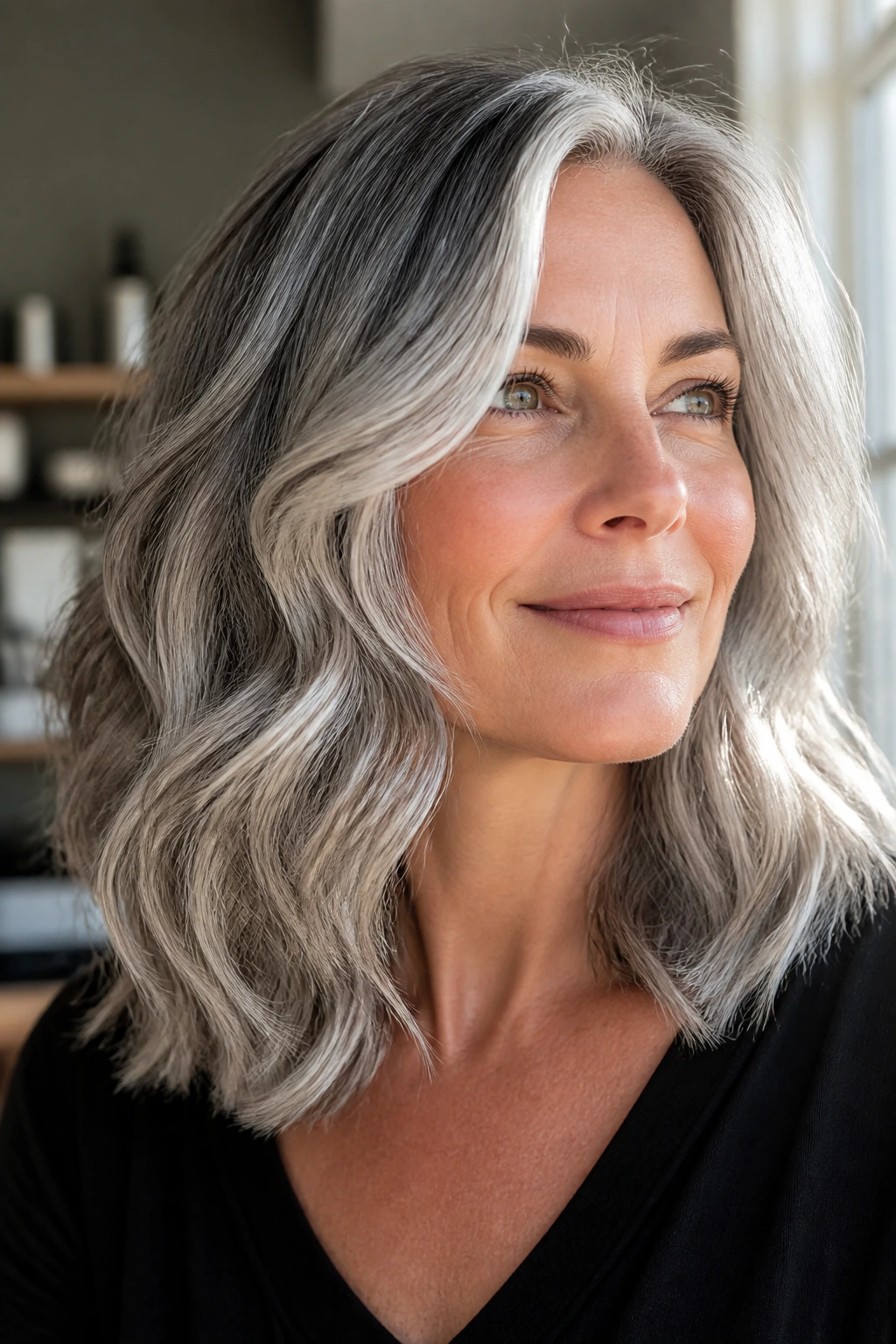
Balayage is the trick when your gray is mixed with older color and you want the transition to feel less abrupt. On medium-length hair, silver balayage waves can look like the color was always meant to be there. The hand-painted lightness adds softness around the face and lets the gray blend instead of announce itself.
How to Style the Bend
- Use a 1 to 1¼-inch curling iron and wrap sections away from the face.
- Leave the last inch out so the ends stay a little straighter and modern.
- Let the curls cool fully before brushing them out.
- Finish with a light mist of shine spray, not a heavy oil.
This is one of the best styles if you’re blending natural gray with dyed hair, because the wave pattern disguises tiny differences in tone. A flat style can make those contrasts look harsher. Waves blur them.
It also works if your hair has a few brighter silver streaks and a darker base. The movement lets the tones mix visually, which is half the reason this style always looks a little richer than a plain one-tone cut.
7. Side-Swept Gray Layers
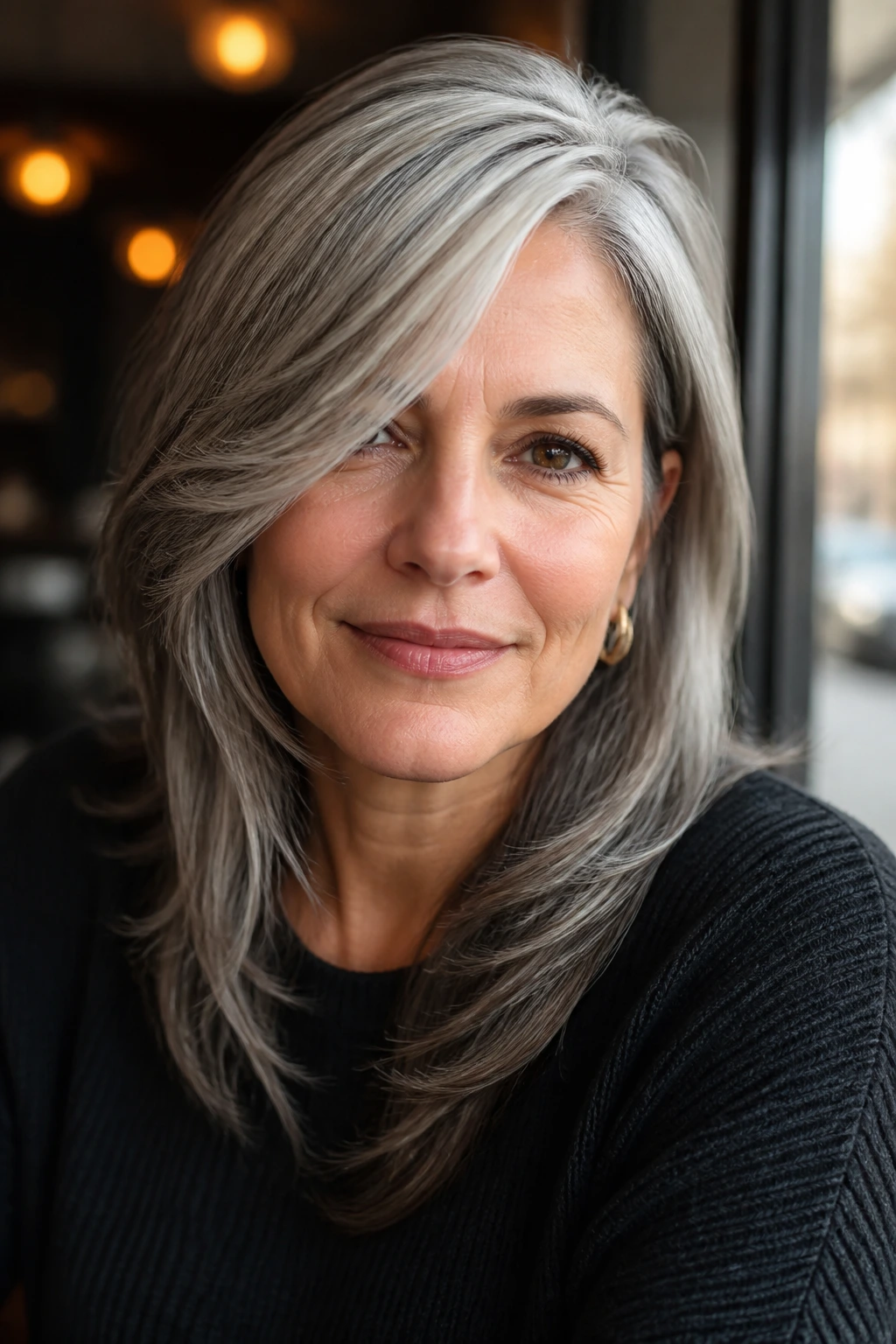
A deep side part can turn thin gray hair into a better-looking shape by lunch. That sounds dramatic, but it’s true. The part gives one side lift, the other side softness, and the whole cut suddenly looks fuller without adding much length or product.
If you have medium-length gray hair that falls flat at the crown, this is the style I’d try first. The layers should be long enough to tuck behind one ear or sweep across the forehead, but not so short that they kick out in odd directions. Gray hair tends to show every awkward angle. This one fixes a lot of that.
A root-lift spray at the part and a quick pass with a round brush usually do the job. If your hair resists volume, clip the lifted section while it cools. That little step makes a bigger difference than most people expect. It’s not glamorous, but it works.
8. Textured Midi Cut with Piecey Ends
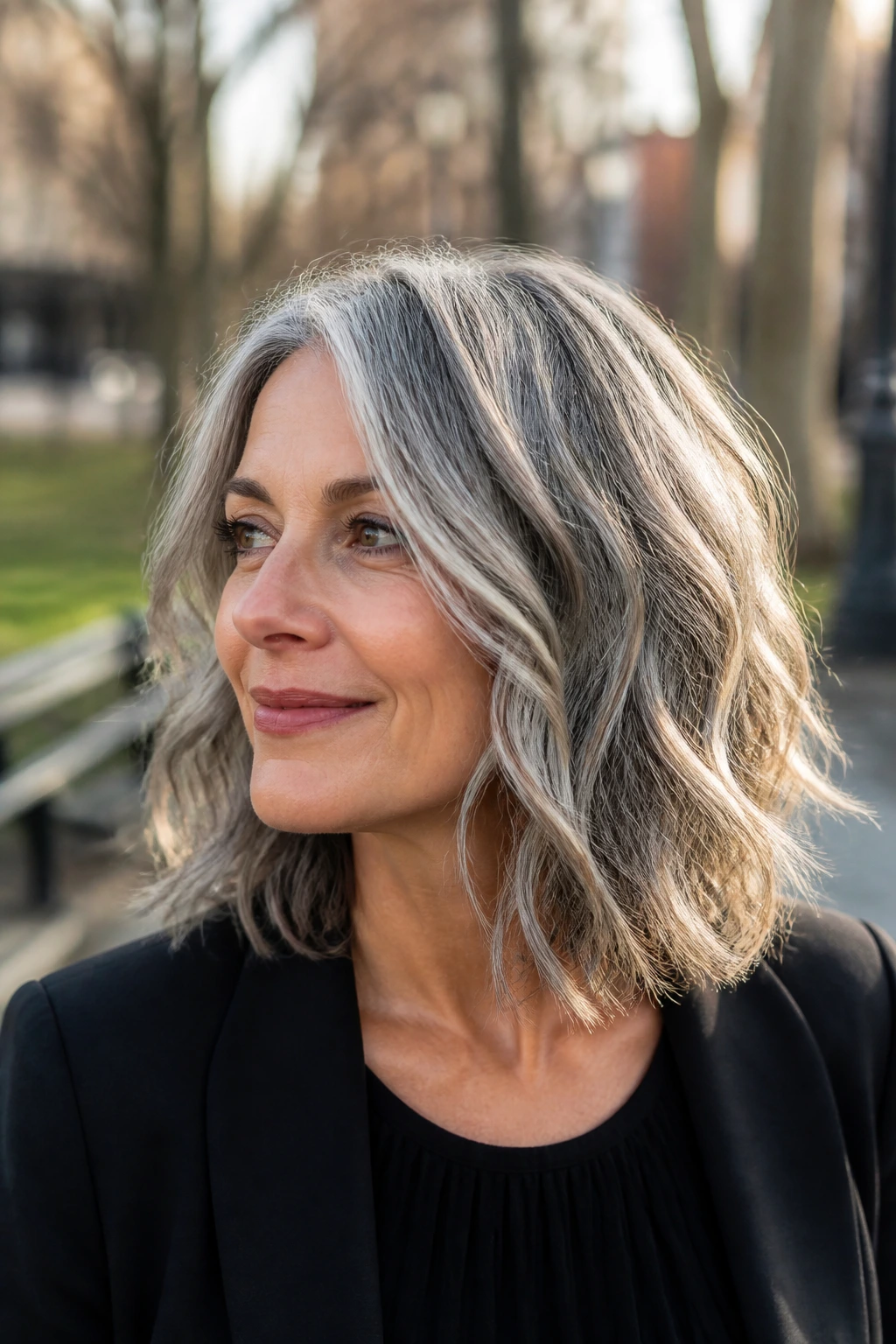
Piecey ends are not the same as thin ends. That’s the line people miss. A textured midi cut with medium-length gray hair should feel separated and touchable, not shredded. The shape gives movement without sacrificing the healthy look of the perimeter.
This cut suits women whose gray hair has a little natural wave or whose straight hair tends to go puffy when it’s all one length. The piecey finish breaks up the width and keeps the style from looking like a helmet. It also makes day-two hair easier, which is worth caring about because gray hair often likes a little more rest between washes.
A salt spray or lightweight texturizer at the mid-lengths is enough. Don’t blast the ends with too much product. Once gray hair gets overloaded, it loses the crispness that makes the style good in the first place. You want separation, not stiffness.
9. Smoky Razor Cut
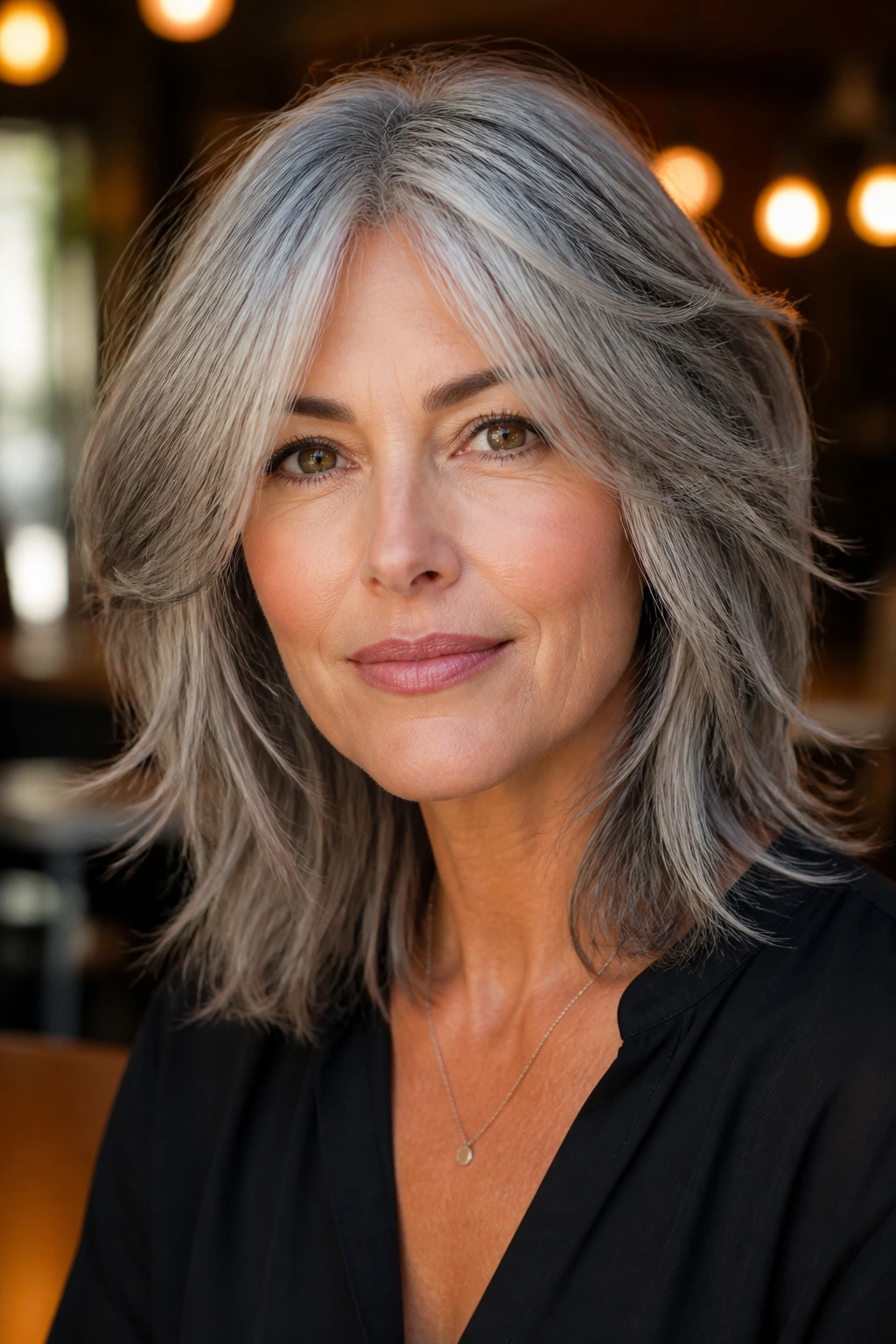
Razor cutting is a gamble on the wrong hair. On medium-length gray hair that’s thick, straight, and a bit stubborn, though, it can be exactly the right move. A smoky razor cut softens the perimeter and keeps the edges from looking blunt in a heavy way.
The word smoky matters here. You’re not chasing a shredded, edgy look unless that is your thing. You’re asking for a cut that feels soft, modern, and slightly undone. The razor helps remove bulk, but it should be used with restraint. Too much and the ends fray. Too little and you lose the shape.
I like this style when the gray is mixed — some silver, some pewter, some darker strands still hanging on. The soft edges let the colors blend instead of sitting in blocks. That makes the whole head of hair look more expensive, even though the trick is mostly in how the cut catches light.
10. Glossy Steel Waves
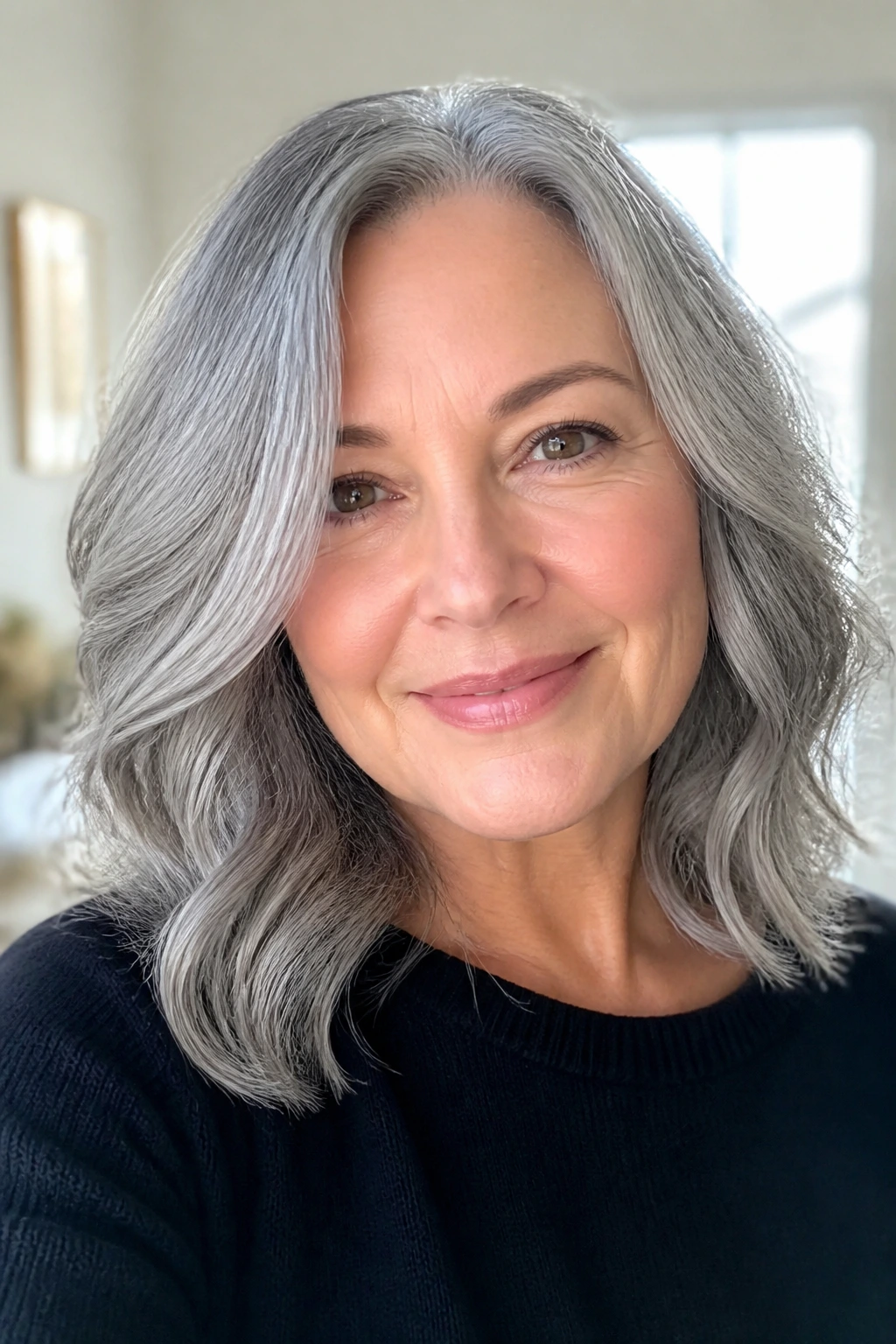
Glam waves on gray hair should look polished, not shellacked. There’s a difference. Steel waves on medium-length hair work because the shine follows the curves of the wave, which makes silver look reflective instead of flat. The best version has a smooth root, a soft bend through the middle, and ends that curl under just enough to stay controlled.
Start with a heat protectant. Gray hair can be dry, and dry hair shows heat damage faster than healthy pigmented hair. Then create loose waves with a curling iron, alternating directions so the shape doesn’t bunch up. After the curls cool, brush them out gently until the wave looks soft and continuous.
A tiny bit of shine serum on the palms is enough. If you use too much, the whole style collapses. This is one of those looks that only works when the product stays invisible.
11. Tapered Face-Framing Layers
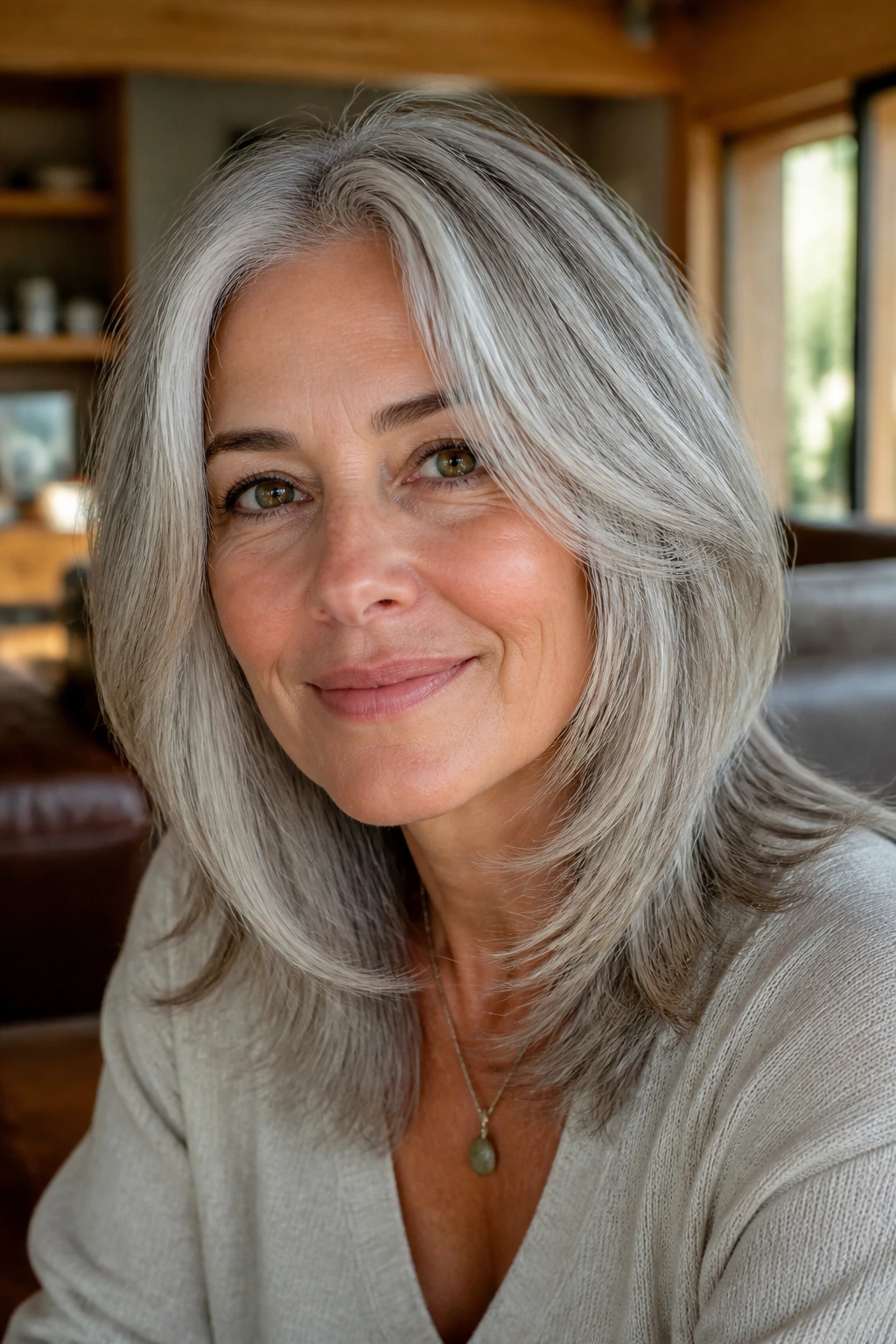
What happens when the cheekbones need the haircut to do some talking? You get tapered face-framing layers. They draw the eye to the face and keep medium-length gray hair from hanging in a single straight line. That makes the style feel lighter, especially if your hair is dense or a little flat around the crown.
Who Gets the Most Out of It
- Women with round faces who want a bit more length through the sides.
- Anyone whose gray hair feels heavy at the jaw.
- People who wear their hair tucked one day and loose the next.
- Glasses wearers, because the layers can sit around the frames instead of crowding them.
The taper should start around the chin or cheekbone, then blend into the length without obvious steps. If the front pieces are too short, they take over. If they’re too long, they disappear. That middle zone is the sweet spot.
This is one of my favorites for gray hair that still has enough density to hold shape. It looks intentional in a way that doesn’t need perfect styling. A quick blow-dry around the face is often all it takes.
12. Pewter Dimensional Lob
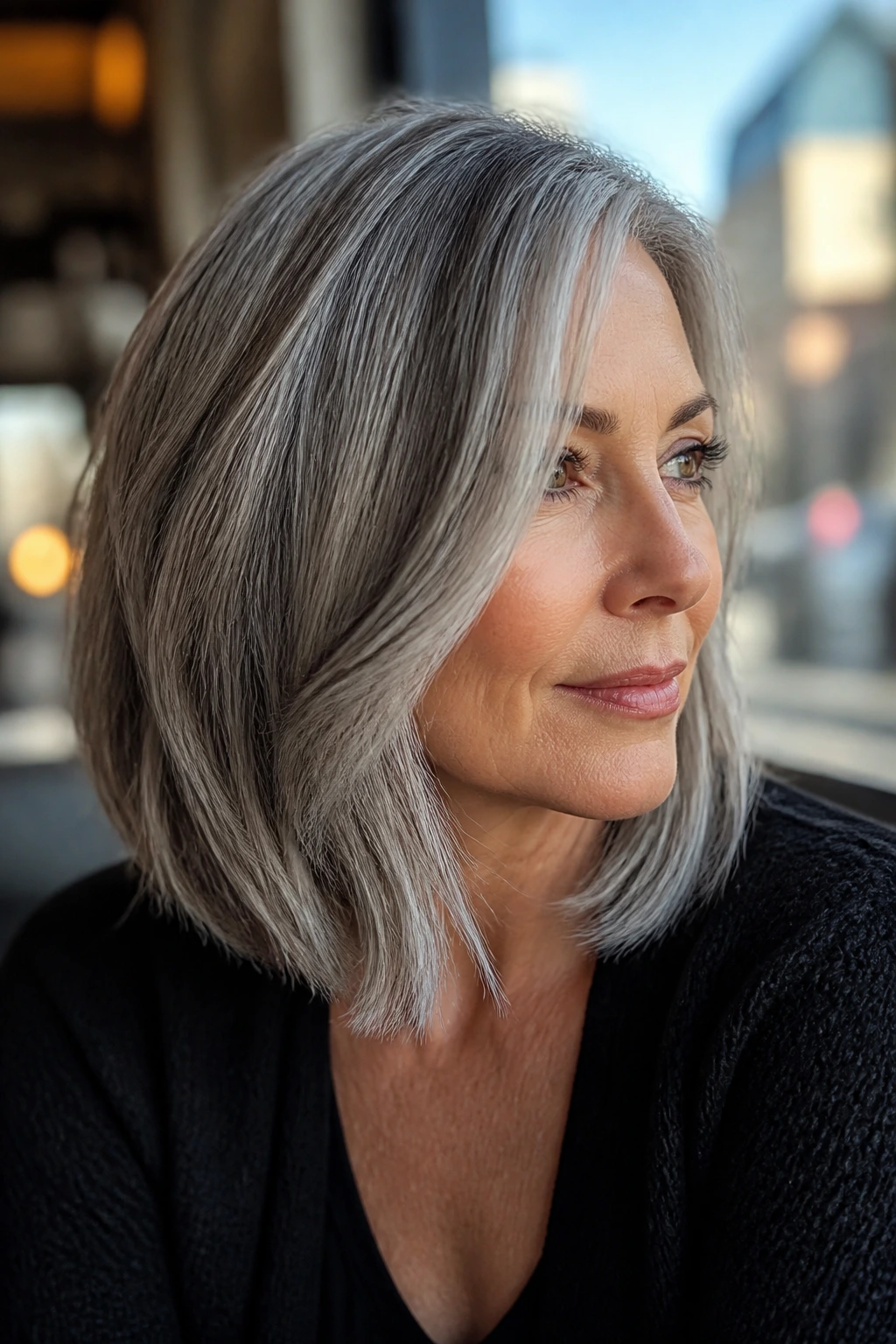
If your hair shows three different shades of gray, pewter tones can calm the whole thing down. A dimensional lob with pewter-like lowlights or a soft gloss makes the color look richer without making it darker. It’s not icy. It’s not flat. It has depth.
This look is especially good if you’re not fully silver yet and don’t want to force the issue with harsh toner. The dimension gives the eye somewhere to go, which is useful on medium-length hair because the length can otherwise turn into one big visual block. A little tonal variation keeps the shape alive.
The cut itself should stay easy: collarbone length, subtle layers, and ends that move when you do. The color and the cut need each other here. A dimensional gray tone on a blunt, unblended cut can feel too hard. On a layered lob, it looks calm and polished.
13. Air-Dried Natural Gray with Soft Volume
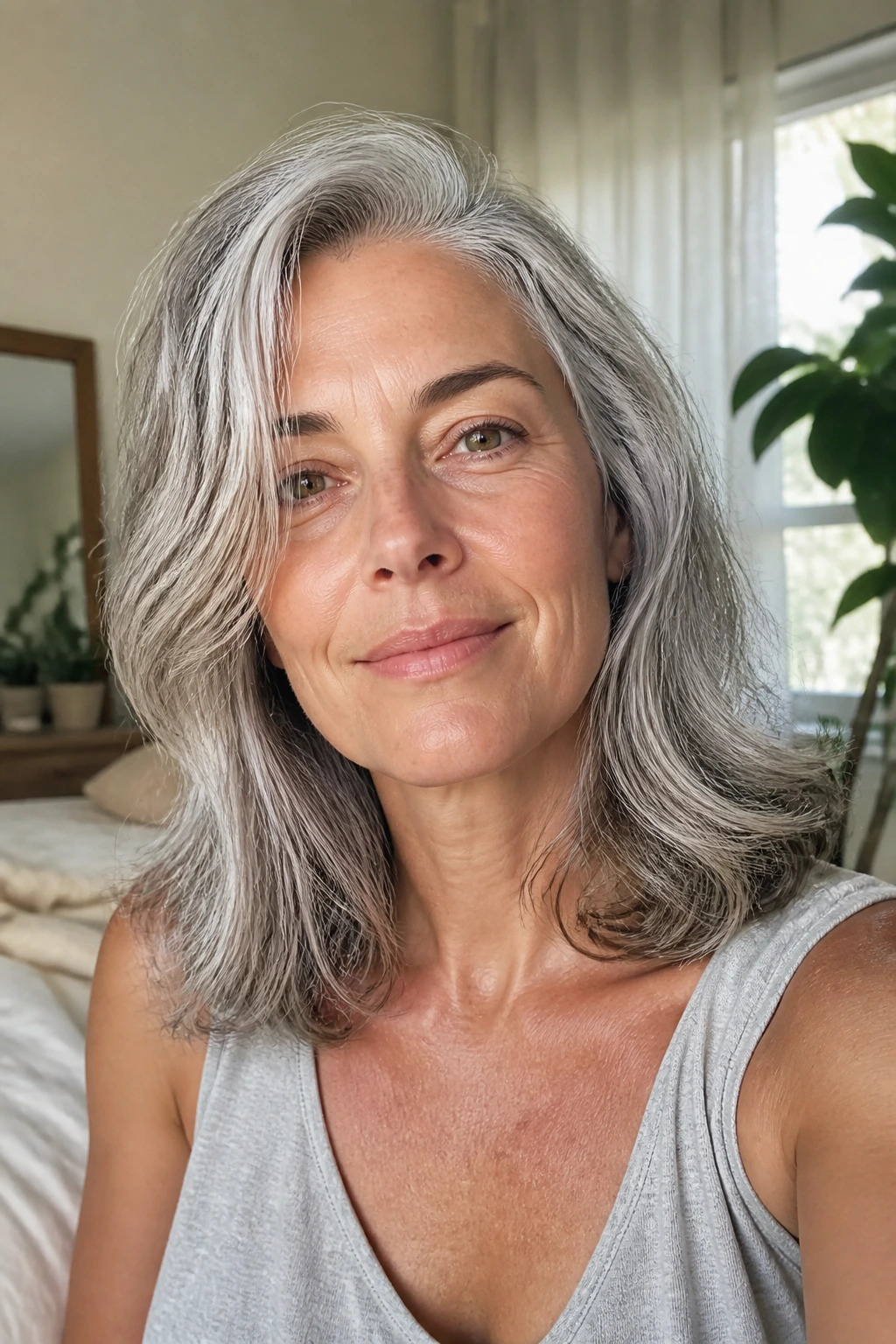
Air-dried gray hair looks best when it keeps a little bend at the ends. If it dries in a puff or a triangle, the styling gets away from you fast. Medium-length hair gives you enough length to smooth the top without crushing the body underneath, which is why this look can feel so good when the weather refuses to cooperate.
Use a leave-in conditioner on damp hair, then a small amount of curl cream or lightweight mousse through the mid-lengths. Scrunch the hair with a T-shirt instead of a rough towel. If your wave pattern is strong, clip the crown at the roots while it dries so the top doesn’t sink.
No need to overthink it. Gray hair often looks better with some softness left in it, and a perfectly stretched blowout can make it seem a little stern. The charm here is movement, not precision. That’s a nice change when your schedule does not want a full styling session.
14. Half-Up Twist on Medium Gray Hair
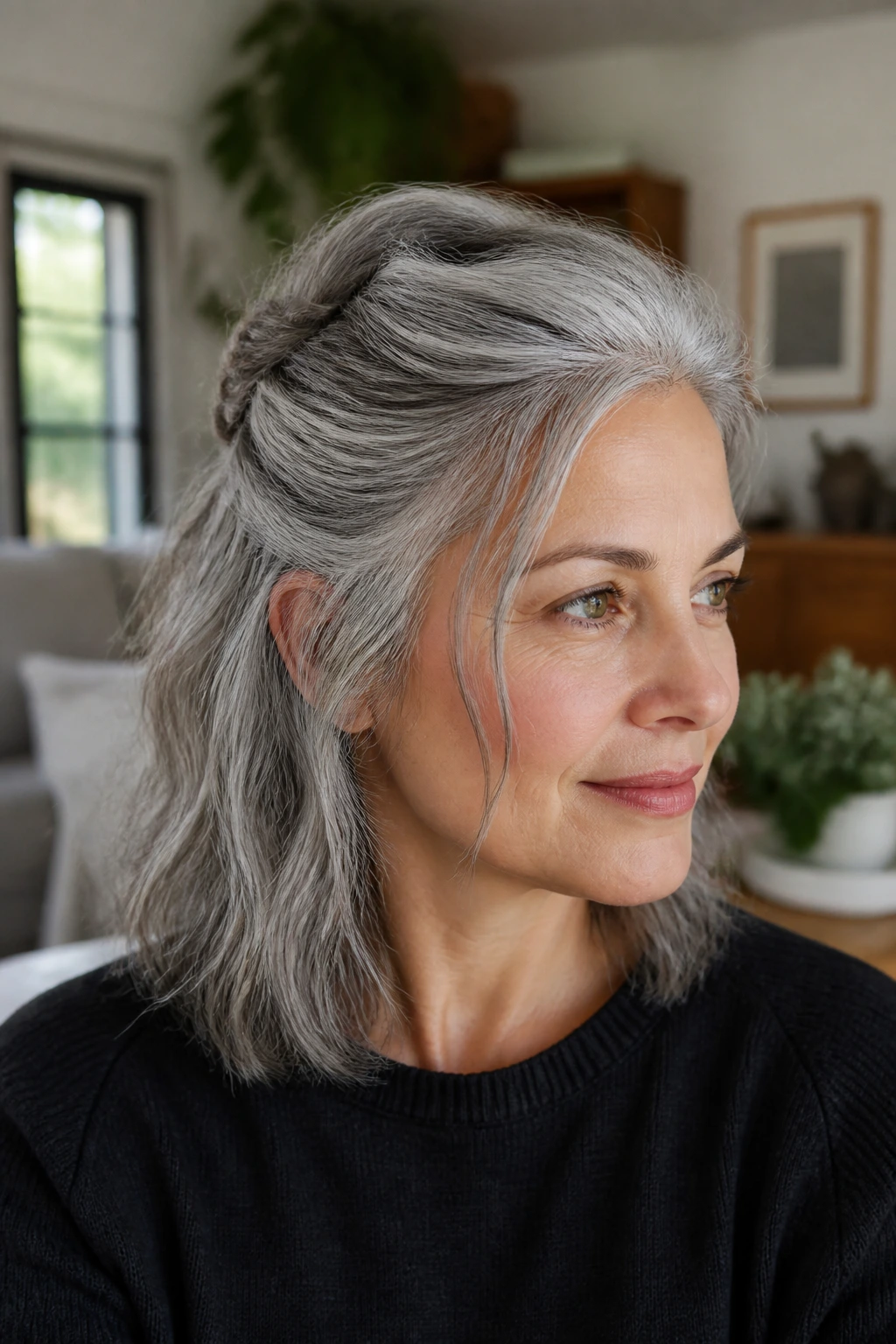
Second-day gray hair often looks better in a half-up twist than on wash day. The style hides flat roots, keeps the front pieces tidy, and gives medium-length hair a small lift without making it look formal. It’s the kind of thing that takes two minutes and still feels like a decision.
Gather the crown section loosely and twist it back, then pin it with two bobby pins or a small claw clip. Leave a few pieces out around the temples so it doesn’t feel too severe. If the ends are bent from yesterday’s styling, even better. Gray hair likes a bit of texture in these casual updo-style looks.
This is also one of the best ways to live with a grow-out. If your natural gray is coming in unevenly, the twist gives you a polished shape while the color sorts itself out underneath. Not fancy. Just practical, and that’s often the better look anyway.
15. Deep Side-Part Glam Waves
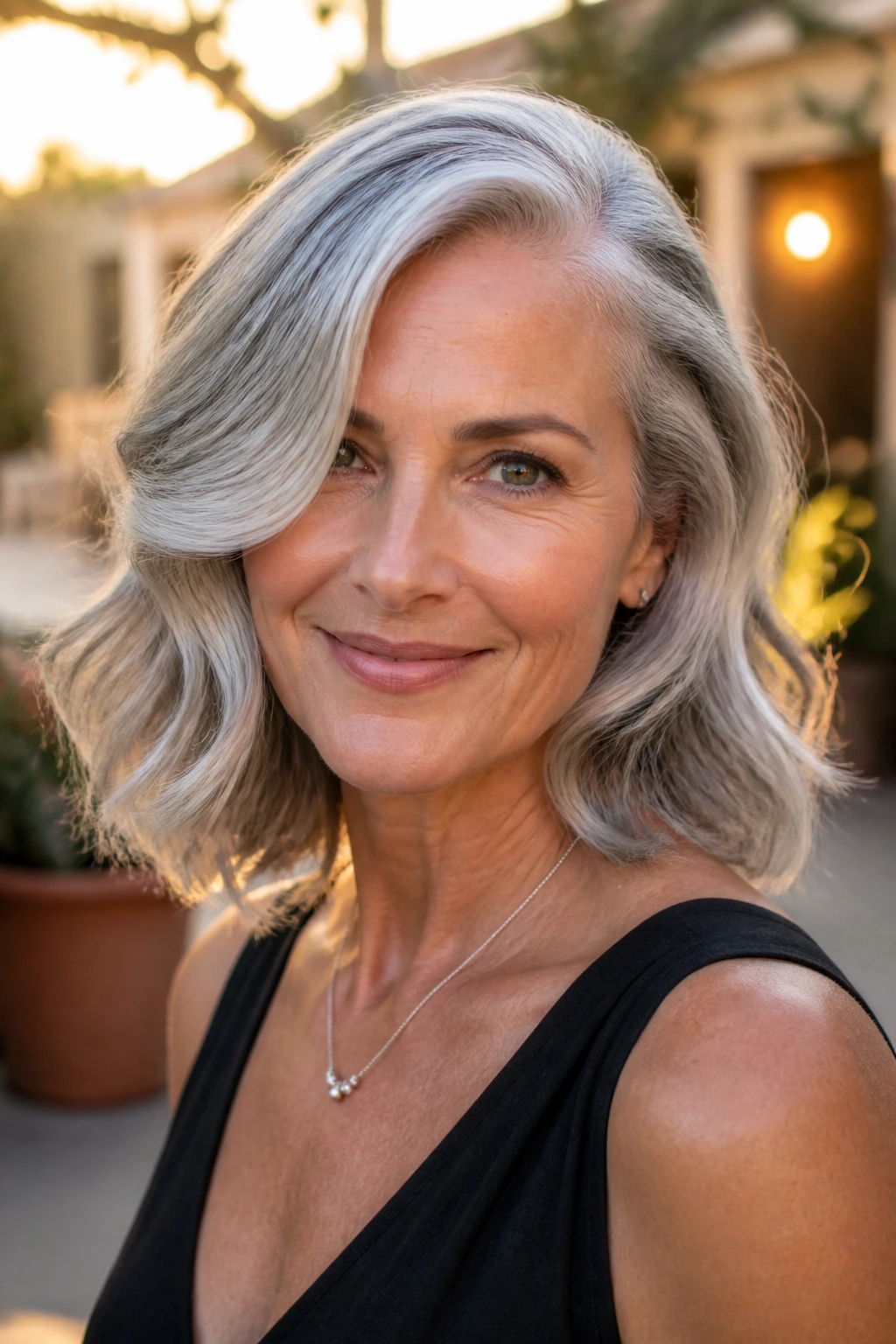
Deep side parts are dramatic; they can also be slippery if your hair is very fine. Still, on medium-length gray hair, they create that sweep across the forehead that makes waves feel bigger and the face look slightly lifted. It’s a strong look, and it works best when the waves are soft rather than crunchy.
The trick is to build the part at the crown and set the roots with a little heat while the hair cools. A duckbill clip or two can help hold the lift. Then shape the waves away from the face so the front section doesn’t collapse into your eye. Gray hair shows the line of the wave beautifully when it’s brushed into one smooth finish.
I like this for events, dinners, and the rare day when you want the hair to look a little richer than usual. It’s not an everyday style for everyone. But when it works, it looks very finished.
16. Sleek Tucked Ends with a Low Bend

Sleek tucked ends work when you want polish without losing length. On medium-length gray hair, the style feels clean, modern, and surprisingly low-fuss once the cut is right. The hair sits close to the head, the ends bend softly under, and the whole look stays neat around the jaw.
The Finishing Move
- Blow-dry with a paddle brush or smooth with a flat brush.
- Bend the very ends under with a round brush or flat iron, no more than a half-turn.
- Tuck one side or both sides behind the ears.
- Finish with a tiny drop of serum on the ends only.
This is a strong choice for people who want gray hair to look tidy at work without going into severe territory. The tucked shape keeps the length visible, which matters if you’re trying to grow out a shorter cut or just don’t want to lose the medium-length silhouette.
The low bend is the part that saves it. Straight ends can look unfinished. A little curve says you meant to do this.
17. Tousled Silver Layers with a Bit of Lift
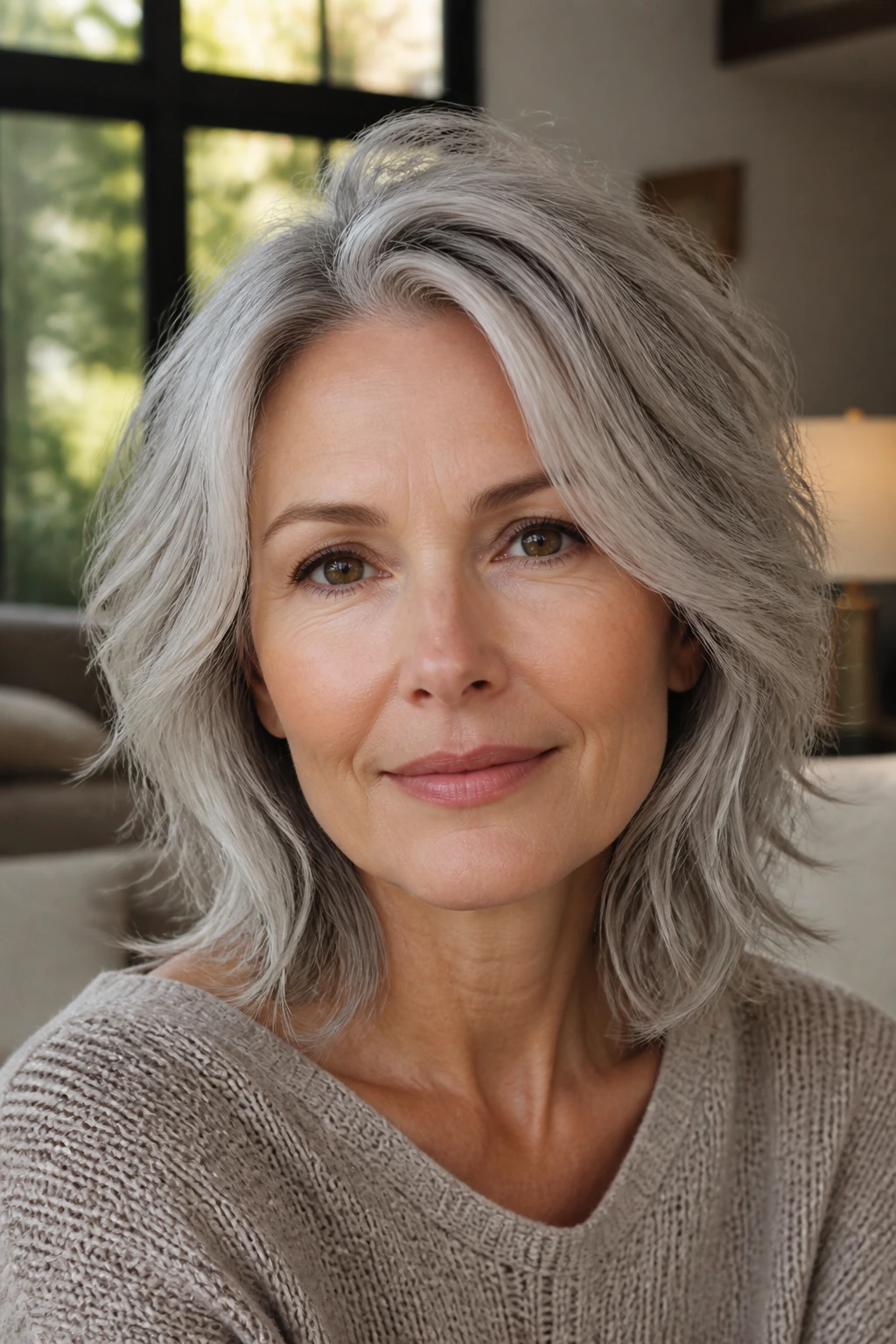
Tousled silver layers are what happens when movement matters more than symmetry. The look is easygoing, but it should still feel shaped. On medium-length hair, the layers give the silver color places to catch light, and the tousle keeps the whole thing from looking too formal or too precious.
This is the style I’d choose for hair that lives somewhere between straight and wavy. A root-lift spray, a loose scrunch with the hands, and a quick rough-dry are often enough. If you want more texture, use a medium curling iron on a few random pieces and leave the rest alone. That unevenness is part of the charm.
Gray hair can look stern when it’s too tidy. This style softens that. It’s a little undone, a little airy, and still controlled enough to wear anywhere. A good cut matters here more than a pile of product does.
Styling Tricks That Keep Gray Hair from Going Flat
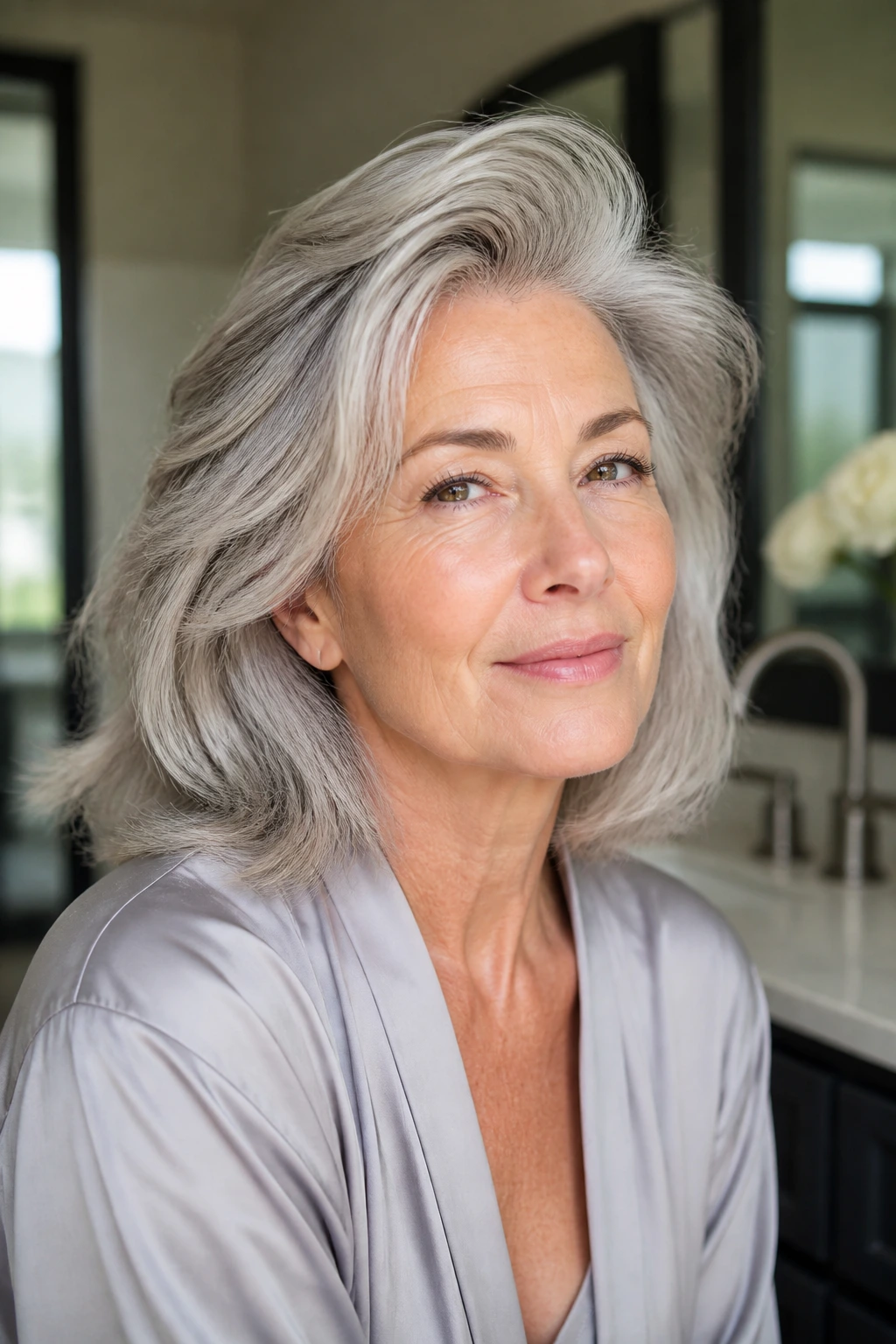
Gray and silver hair can look gorgeous when the shape has lift. Flat roots and dry ends are what drag it down. The fix is usually not more product. It’s the right product in the right place.
Root lift: Use mousse, root spray, or a light volumizer only at the crown and part line. Gray hair shows grease fast, so keep oily serums away from the top unless your hair is extremely dry.
Texture: Medium-length cuts do best with a little air in them. A diffuser, a round brush, or even two velcro rollers at the crown can give you height without making the style stiff.
Shine: Use a glossing serum on the last two inches only. That’s where the hair needs help most. If the whole head gets coated, the shape falls limp.
Heat control: Aim lower than you think. Around 300°F to 325°F is usually enough for gray hair, and the AAD’s basic heat-care advice is worth following here: protect the hair before the iron touches it. Dry silver strands do not forgive sloppy heat.
Common Mistakes That Make Gray Hair Look Dull or Heavy
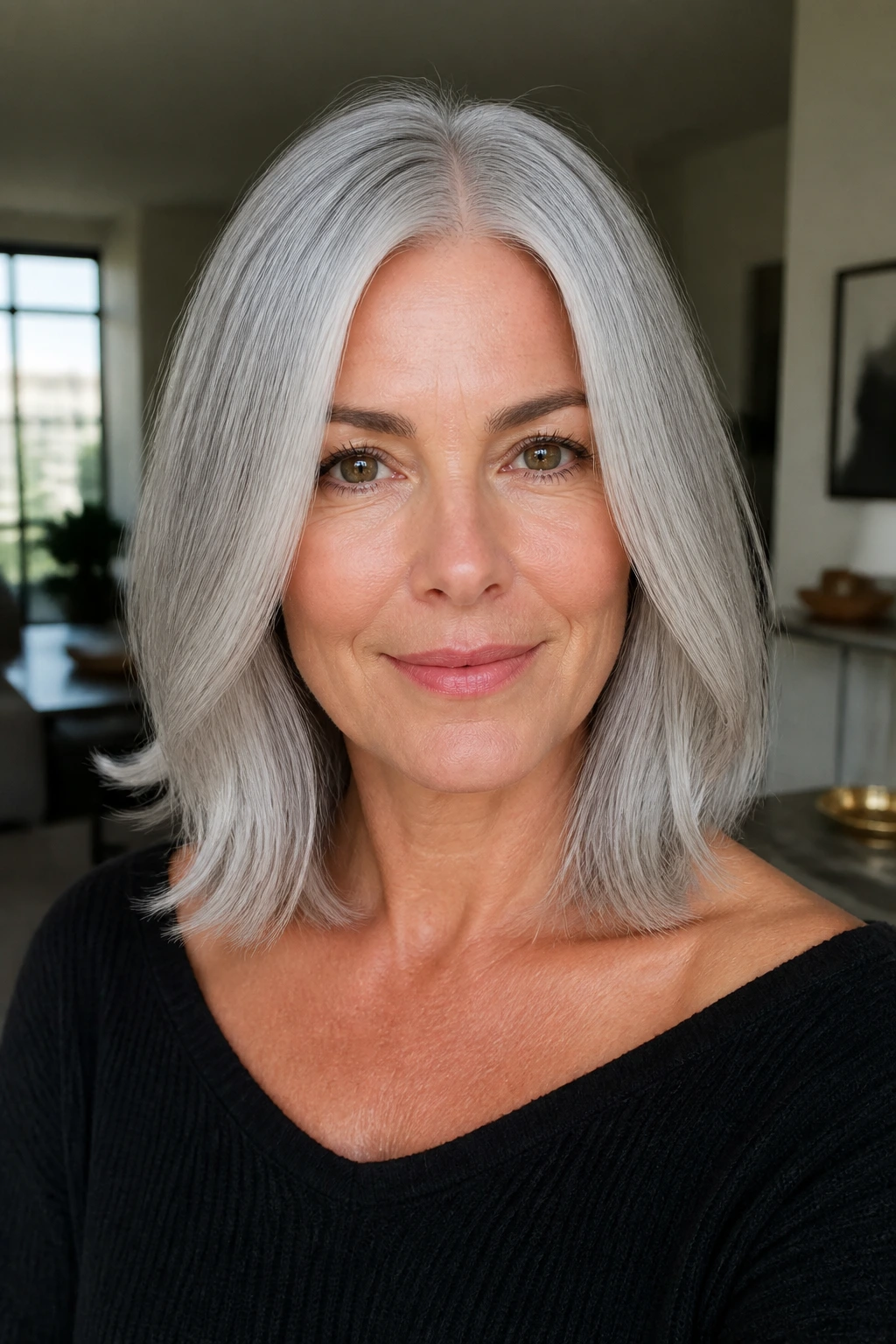
The same few mistakes show up again and again, and they all make gray hair look older than it needs to look.
- Using purple shampoo too often: The hair starts to look flat, chalky, or faintly lavender. Use it once every 1 to 2 weeks unless your hair pulls very yellow.
- Keeping the cut too one-length and too heavy: Medium-length gray hair can turn into a solid block. Ask for a little movement through the interior if the ends feel bulky.
- Styling with heat that’s too hot: Dry gray strands scorch faster, and once they go frizzy, it takes time to get the smoothness back. Lower the iron before you lower your standards.
- Skipping trims for months: Ends fray, layers lose shape, and the style starts looking more tired than lived-in. A 6- to 8-week trim schedule works better for most medium-length cuts.
- Overloading with oil or cream: Gray hair can be dry, but too much product makes it limp and dirty-looking at the roots. Use less than you think, then add only where needed.
- Ignoring hard water or buildup: If silver hair turns muddy or yellow fast, hard water may be part of the problem. A clarifying or chelating shampoo once a month can make a real difference.
Variations and Adaptations to Try
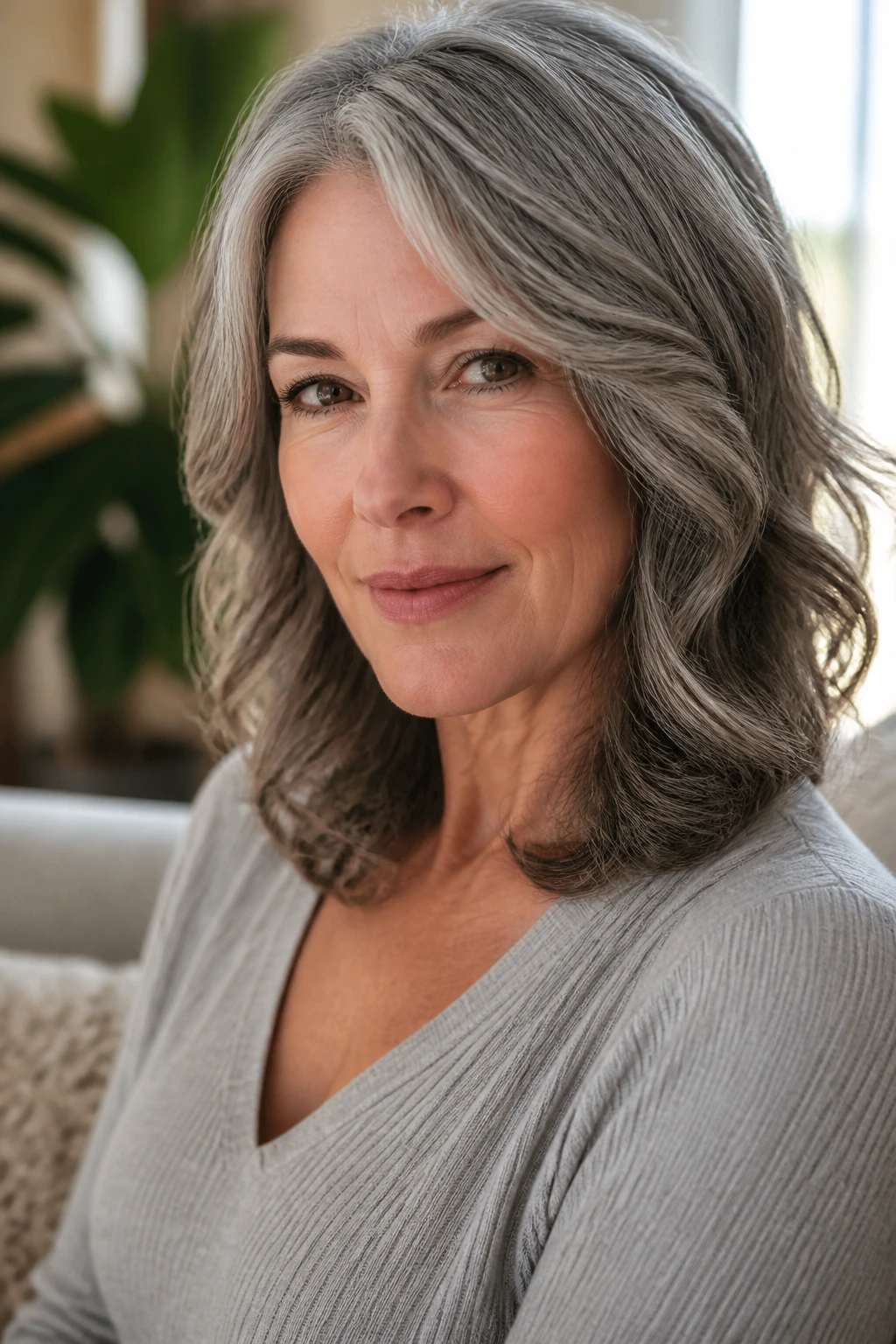
Cool-Ice Finish: If your gray pulls warm or yellow, add a soft ash gloss every so often and keep purple shampoo on a short leash. The point is clarity, not purple hair.
Soft Pewter Blend: Ask for a subtle lowlight through the underneath layers. That gives the gray depth and makes medium-length hair look thicker without changing the overall silver feel.
Curly Halo Layers: Keep the length a little longer and let the curl pattern build the shape. This version works best when the layers are cut with the curl, not against it.
Low-Maintenance Grow-Out: Keep the perimeter blunt, soften only the front, and let the color transition happen in stages. This is the calmest option if you are moving from dye to natural gray.
Event-Ready Sweep: For weddings, dinners, or nights when you want more polish, add a deep side part and set the waves away from the face. The same cut reads much more formal with a stronger finish.
Tools and Products Worth Having Nearby
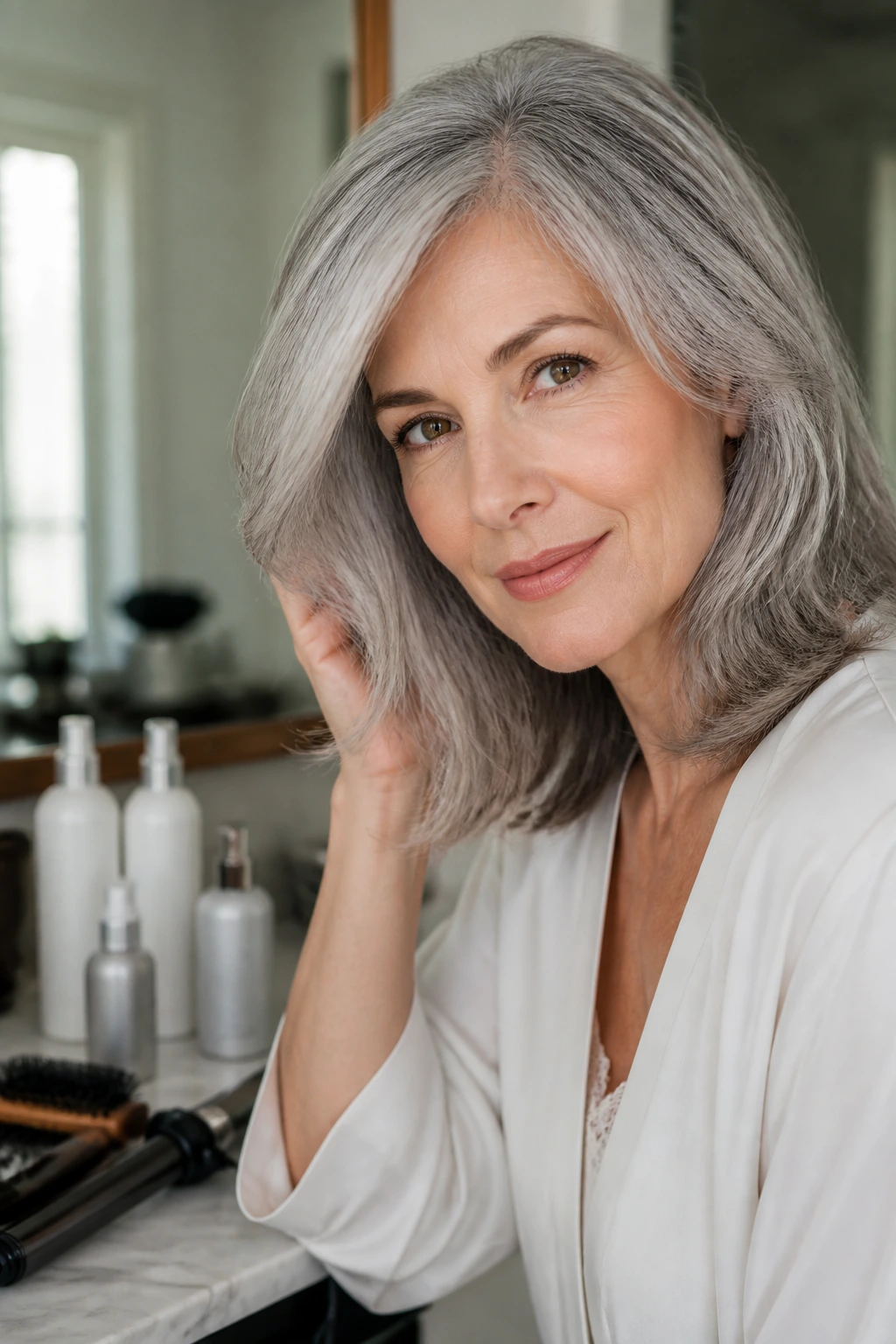
- Sulfate-free shampoo: Helps keep gray hair from feeling stripped after every wash.
- Purple shampoo: Useful for yellow tone, but best used sparingly.
- Moisturizing conditioner or mask: Gray strands often need extra slip and softness.
- Heat protectant spray: Non-negotiable if you use a flat iron or curling wand.
- Root-lift mousse or spray: Gives medium-length gray hair the height it needs.
- 1-inch or 1¼-inch curling iron: A good size for soft bends and polished waves.
- Round brush: Useful for blowouts, face-framing lift, and tucked ends.
- Wide-tooth comb: Safer on wet hair than yanking through with a fine comb.
- Microfiber towel or T-shirt: Cuts down on frizz after washing.
- Shine serum or lightweight oil: Best used on the ends, not the roots.
- Dry shampoo: Helpful on day two or three, especially near the crown.
- Clarifying shampoo: Good once a month if buildup or hard water dulls the silver.
- Clips and bobby pins: Tiny tools, big payoff for twists, tucks, and root setting.
Ongoing Care and Salon Maintenance
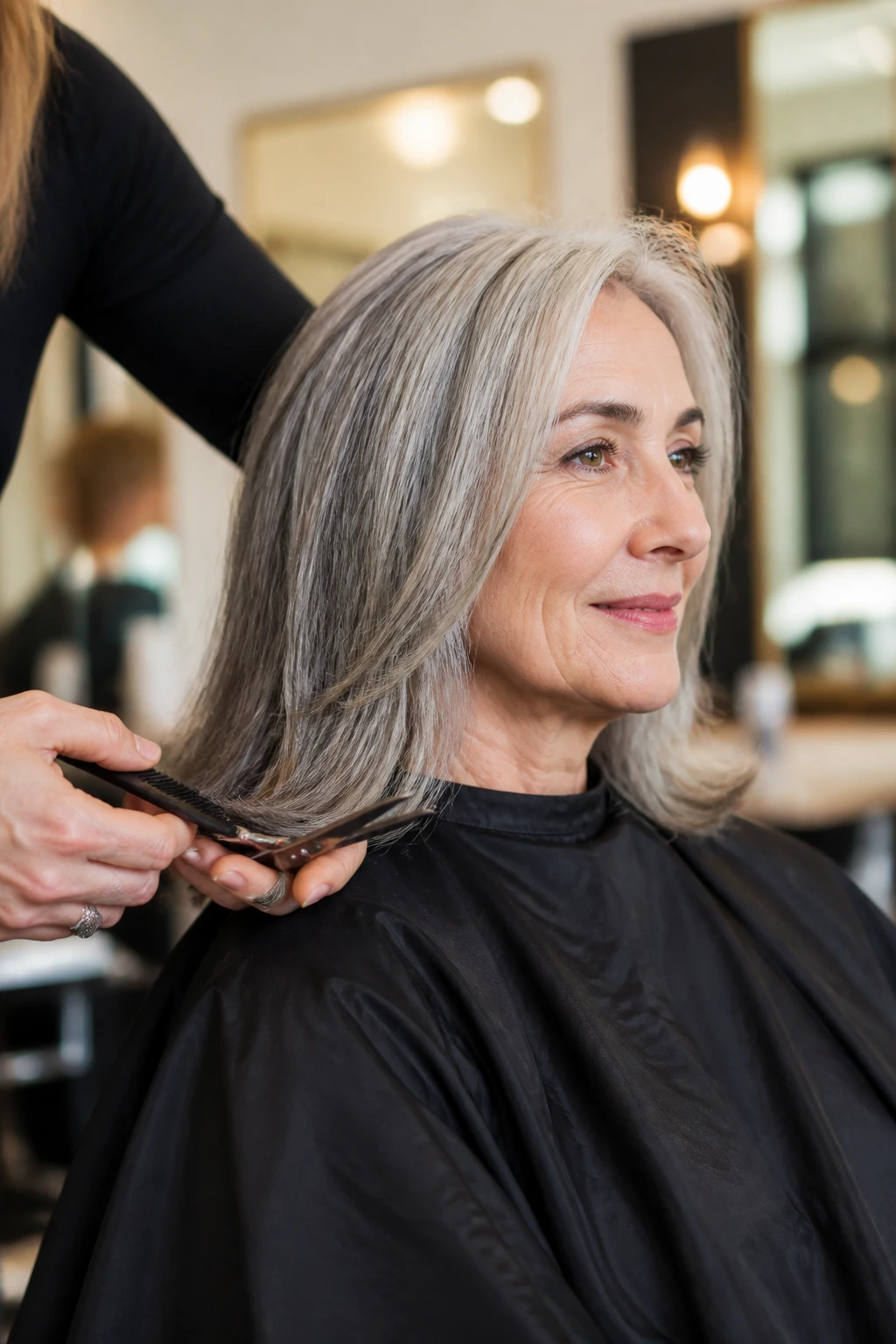
Gray hair looks best when the maintenance is boring and regular. Not dramatic. Just steady. Medium-length cuts usually need a trim every 6 to 8 weeks if you want the outline to stay fresh. If your hair grows fast or the ends start flipping in odd directions, shorten that gap a little.
Wash schedule matters too. A lot of gray hair does well with 2 to 4 washes a week, depending on scalp oil and texture. Too-frequent washing can make the ends feel like straw. Too-infrequent washing can let product buildup cloud the shine. If your scalp gets oily but your ends are dry, use a gentle shampoo on the roots and let the rinse clean the lengths.
Purple shampoo is useful, but not every wash. Once every 1 to 2 weeks is enough for many people. If the hair starts to look flat or cool in a lifeless way, back off and use a moisturizing wash instead. A weekly mask helps a lot, especially if you heat style or live in a place with hard water.
Salon glosses are worth considering every 6 to 10 weeks if your silver needs more shine or tone correction. They do not have to be heavy-duty color services. Sometimes a clear or slightly beige gloss is enough to make gray hair look clean instead of cloudy.
Questions People Ask About Medium-Length Gray Hair

What medium-length haircut makes gray hair look fullest?
A blunt lob with a little softness around the face usually gives the most fullness. If your hair is fine, too many short layers can make it look thinner than it is.
Should gray hair be layered or blunt?
Both can work, but the right answer depends on texture. Fine hair usually likes a cleaner edge with very light layering, while thick or wavy gray hair benefits from internal layers that remove bulk.
How often should I use purple shampoo?
For most people, once every 1 to 2 weeks is enough. Using it too often can make the hair look dull or overly cool.
Can I wear gray hair if some of it is still dark?
Yes, and medium-length cuts are good at blending that transition. Shags, waves, and soft layers make mixed tones look intentional instead of patchy.
What if my gray hair turns yellow?
First, check the obvious stuff: heat, hard water, and product buildup. Then bring in a purple shampoo or a salon gloss, but do not overdo the toner or the color can go flat.
Does heat styling damage gray hair more?
Usually, yes, because gray hair tends to be drier and more fragile. A heat protectant and lower iron settings make a real difference, especially on the ends.
What’s the easiest gray look to maintain?
A softly layered lob or a natural air-dried style is usually the least fussy. Both grow out well and do not demand perfect daily styling.
How do I keep gray hair from looking frizzy at the ends?
Use a moisturizing conditioner, limit rough towel drying, and keep hot tools away from the fragile tips. A tiny bit of serum on the ends only can help, but don’t flood the hair with oil.
A Better Way to Wear Silver

Medium-length gray hair has a very useful kind of honesty. It doesn’t hide much, and that’s the point. The right cut turns that honesty into polish, whether you lean sleek, shaggy, wavy, or softly undone. A collarbone length silhouette gives silver enough room to move and enough structure to stay graceful.
If you’ve been stuck between “too short” and “too long,” this is the zone worth trying. Bring one photo that matches your texture, not just your color, and be a little picky about layers, because those are what keep gray hair from feeling heavy. One good cut and a calmer styling routine can change the whole read of your hair, and it tends to hold up better than chasing some perfect shade ever does.
