



Subtle highlights for older women work best when they behave like light, not decoration. The minute the streaks get chunky, the eye lands on the color before it notices the cut; the minute the weave gets too icy and too fine, the hair can go flat, especially around the crown where mature strands often need a little lift. The sweet spot sits right between those two mistakes.
That’s why these ideas lean into babylights, soft ribbons, low-contrast balayage, and gray-blending placement instead of loud stripes. Mature hair usually has a mix of textures in one head of hair: a few coarse silver pieces, softer tinted lengths, maybe some porosity from past color, maybe a little thinning near the part. A good highlight plan has to respect all of that. It should brighten the face, soften regrowth, and keep the hair looking like hair, not a color chart.
The shades below move from champagne and beige to caramel, pearl, taupe, honey, and smoky brunette tones because “subtle” is not one look. It’s a whole range of quiet moves. Some of them barely change the base at all. Others add enough light around the face to wake up the eyes and soften the jawline without shouting for attention.
Why These Shades Read So Softly on Mature Hair
The nicest subtle highlights do something a louder color job usually can’t: they let the hair keep its shape over time. When the bright pieces sit close to the base color, regrowth blends instead of drawing a hard line across the part or temple. That matters more than people think. Hair grows. Color fades. The line between the two should not feel like a deadline.
There’s also a texture issue. Mature hair often gets a little drier, a little more porous, and a little more reflective in odd places because silver strands grab light differently than pigmented ones. Fine babylights and soft ribbons help distribute that reflection so the hair doesn’t read flat in one area and wiry in another. The result is less about “covering age” and more about making the hair look finished.
And no, the goal is not to make every head of hair look blonde. Some of the best options here are brunette-forward, some are silver-forward, and some barely nudge the base at all. The common thread is restraint. That’s what keeps the color from turning into a maintenance project that eats your calendar.
Why You’ll Love This Collection
- Low-contrast grow-out: Most of these looks stay within one to three levels of the base, so regrowth blends instead of forming a sharp stripe.
- Gray-blending options: Several ideas work with silver coming in at the part, temple, or crown instead of fighting it.
- Fine-hair friendly placement: Thin weaves and micro-lights keep the hair looking airy instead of blocky.
- Warm and cool choices: Beige, caramel, pearl, taupe, honey, and ash each solve a different undertone problem.
- Salon-ready language: The style names are specific enough to say out loud at an appointment without waving your hands around and hoping for the best.
1. Champagne Babylights at the Crown
Champagne babylights are the quietest kind of brightness, and that is exactly why they work. The color sits in that soft middle space between beige and pale gold, so it doesn’t shout “highlight” the second you walk into a room. On shorter layers and fine hair, I like this placement around the crown and part line because it gives the illusion of lift right where mature hair can start to look a little see-through.
Tell your colorist you want very fine weaves no wider than a sewing needle, with the brightest pieces staying near the top third of the head. The ends should be lighter, yes, but not much lighter than the base. If the color jumps too far, the effect goes from soft to stripey in a hurry.
Ask for a champagne or beige gloss, not a yellow toner. That tiny difference matters. Champagne reads airy. Yellow reads unfinished. The whole point is to catch light without making the hair look like it’s been painted in sections.
2. Beige Blonde Ribbons Through a Brown Base
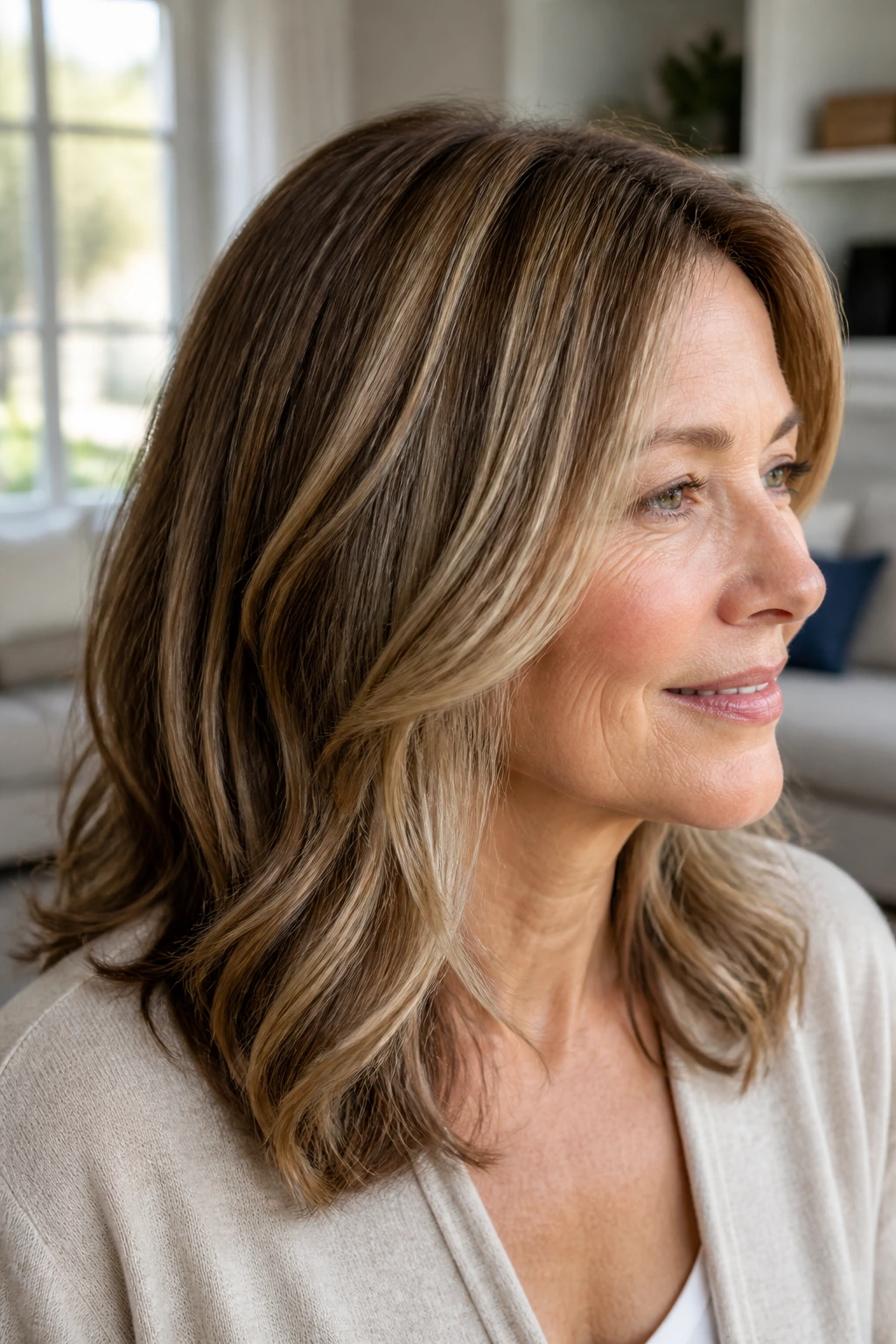
Beige blonde ribbons are what I reach for when a brunette wants lightness without that brassy, overcooked blonding effect. The shade has a little warmth, but not enough to go orange, and not so much ash that it washes the face out. On brown hair, that balance feels polished without being stiff.
This look works best when the ribbons start a couple of inches below the root and then open up through the mid-lengths. A soft root shadow keeps the grow-out from looking obvious, especially on women who wear their hair in a side part. You don’t need a lot of pieces. You need the right pieces, placed where the hair moves.
If your skin leans cool or neutral, beige blonde is kinder than honey. It brightens the hair without dragging warmth into the complexion. On shoulder-length cuts, it looks especially good when the ends are a touch brighter than the interior, because the movement shows up even on a simple blowout.
3. Caramel Veil Balayage on Mid-Length Waves
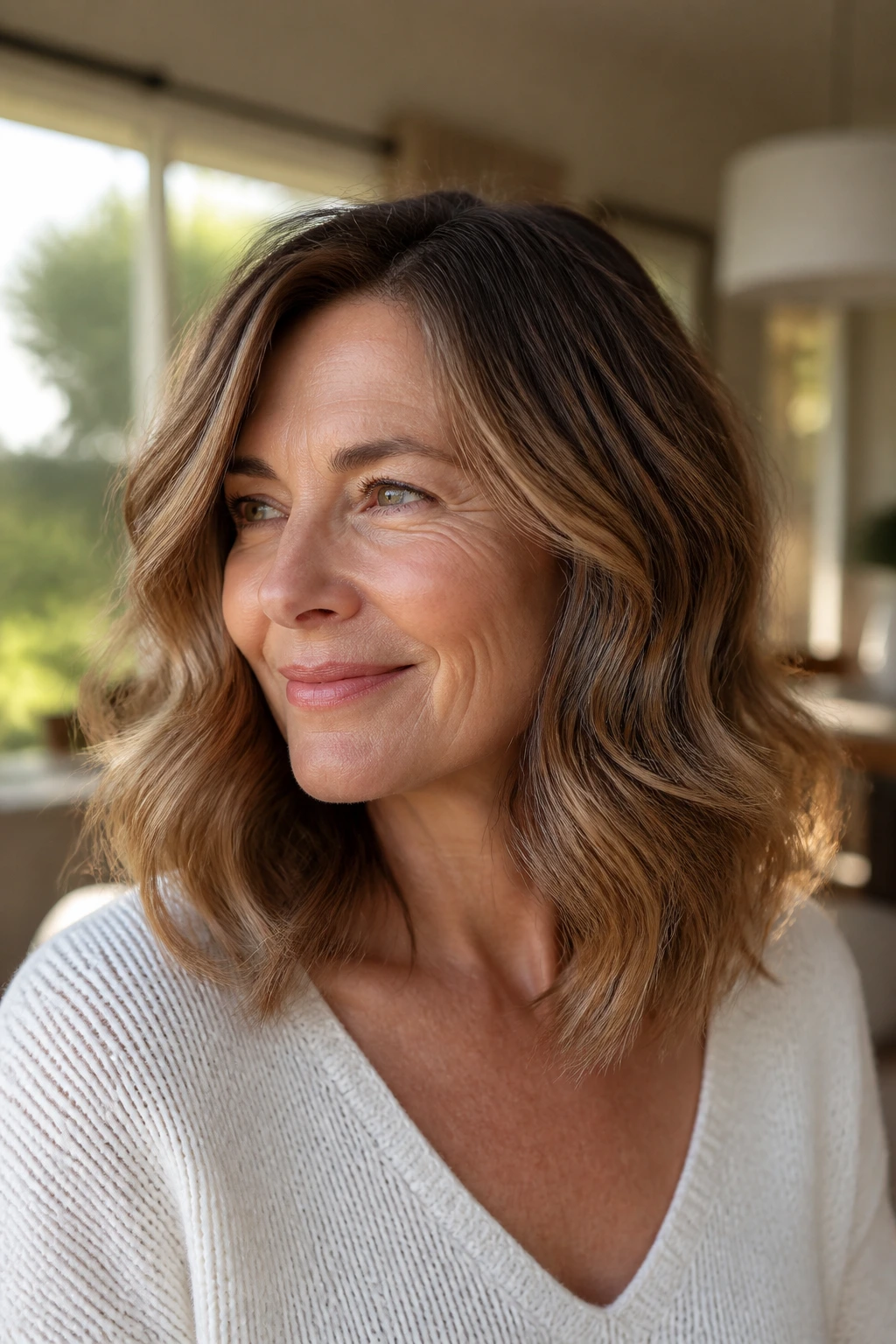
A caramel veil is one of those shades that looks casual until you see it in motion. Then it starts doing that lovely thing where the light catches the waves and each bend picks up a different note of brown, gold, and soft amber. It’s subtle, but not sleepy. That’s the difference.
This is the one I’d pick for women with natural brown hair who still want to see dimension when the hair is air-dried. Balayage placement matters here: the color should sit mid-shaft to ends, with the face frame kept a little brighter and the roots mostly untouched. If the color starts too high, the caramel can look chunky. Too low, and it disappears into the haircut.
Waves make this shade sing, but it still works on straight hair if the ribbons are fine. I like caramel when the goal is warmth around the face and softness through the lengths, especially on a layered cut that needs a little motion without a lot of upkeep.
4. Mushroom Brown Dimension for Cool Brunettes
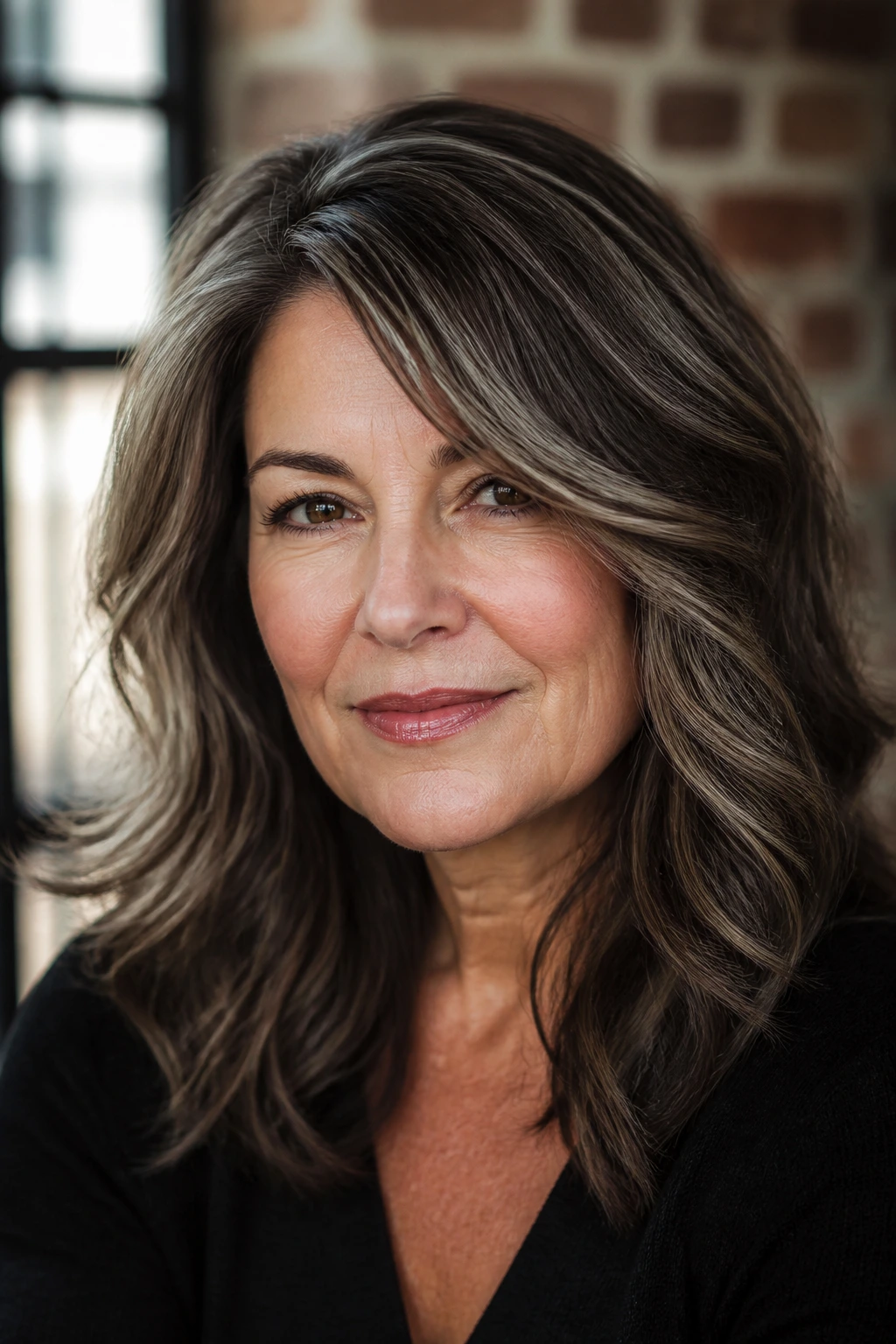
Mushroom brown is for the woman who looks in the mirror and thinks, “My hair has gone a bit dull,” not “I want to be blonde.” It keeps the brunette family intact, but the tone shifts cooler and more dimensional with ash-brown highlights, muted lowlights, and a soft beige glaze. The result looks expensive in the plainest possible sense: the hair has depth again.
A good mushroom brown job never tries to lighten everything. It uses contrast carefully. Ask for soft teasy lights through the top layers and a few deeper lowlights underneath so the color doesn’t collapse into one flat shade. If the base has a little natural gray, this is one of the easiest ways to let it exist without making it the whole story.
I especially like mushroom brown on straight or slightly wavy hair because the cool tone can otherwise disappear in strong curl. The dimensional pieces need room to move. Give them that, and the haircut starts doing more work for you.
5. Pearl-Gray Lowlights for Silver Hair
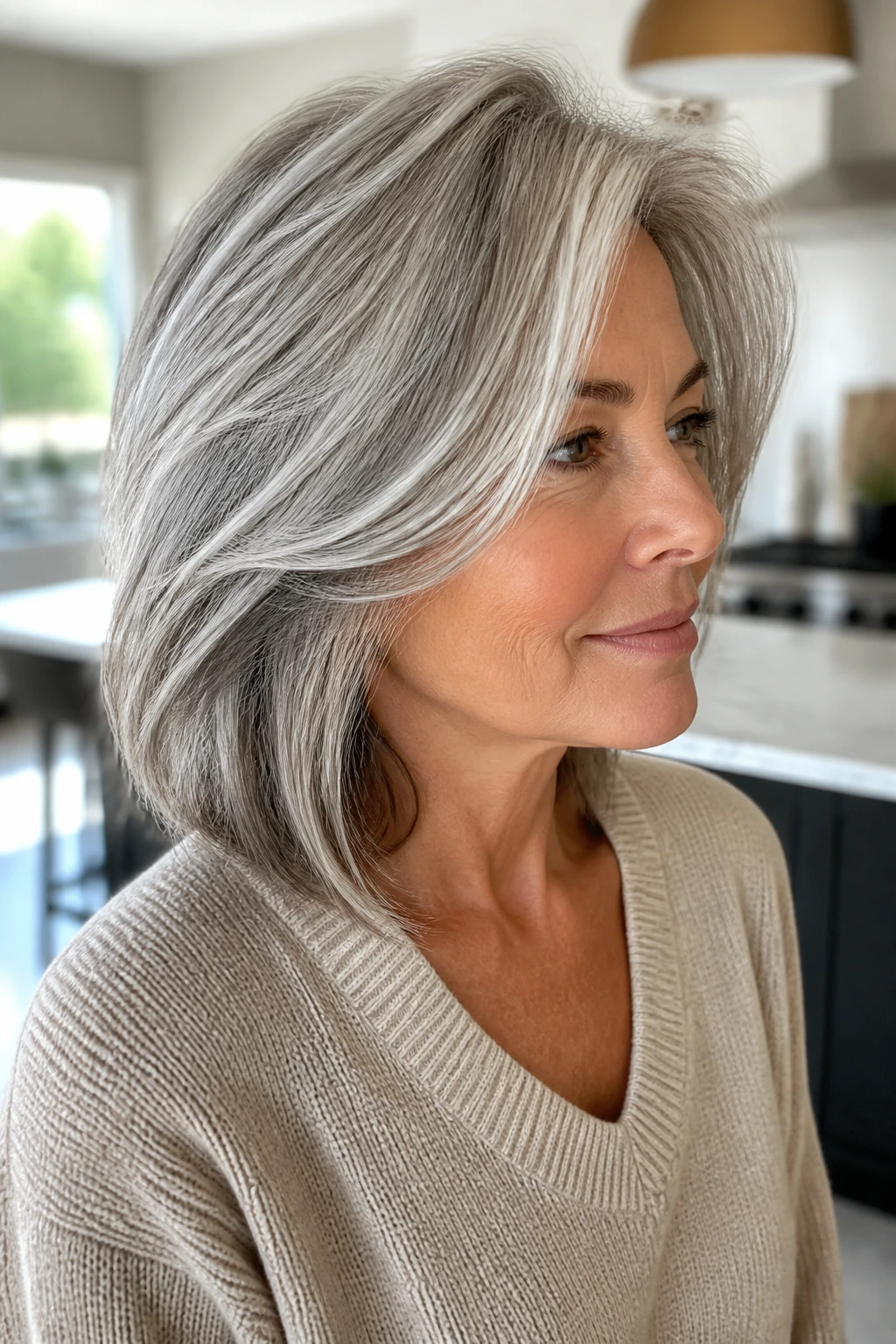
Silvery hair can be beautiful, but it gets tricky when every strand is the exact same value. One shade from roots to ends can make even thick hair look like a single sheet. Pearl-gray lowlights fix that by adding soft shadows inside the silver instead of painting over it. The effect is calm, not dark.
This is a smart move for women who already have a lot of white or silver coming in and don’t want to fight it. The lowlights should be translucent, almost smoky, so the natural silver still reads as the main event. A touch of brighter pearl around the face keeps the hair from turning murky. That balance is everything.
If your silver hair has gone a little coarse or dry, the gloss matters as much as the color placement. Pearl tones can turn flat if they’re too matte. A soft sheen makes the whole look feel intentional rather than accidental.
6. Creamy Face-Framing Pieces at the Temples
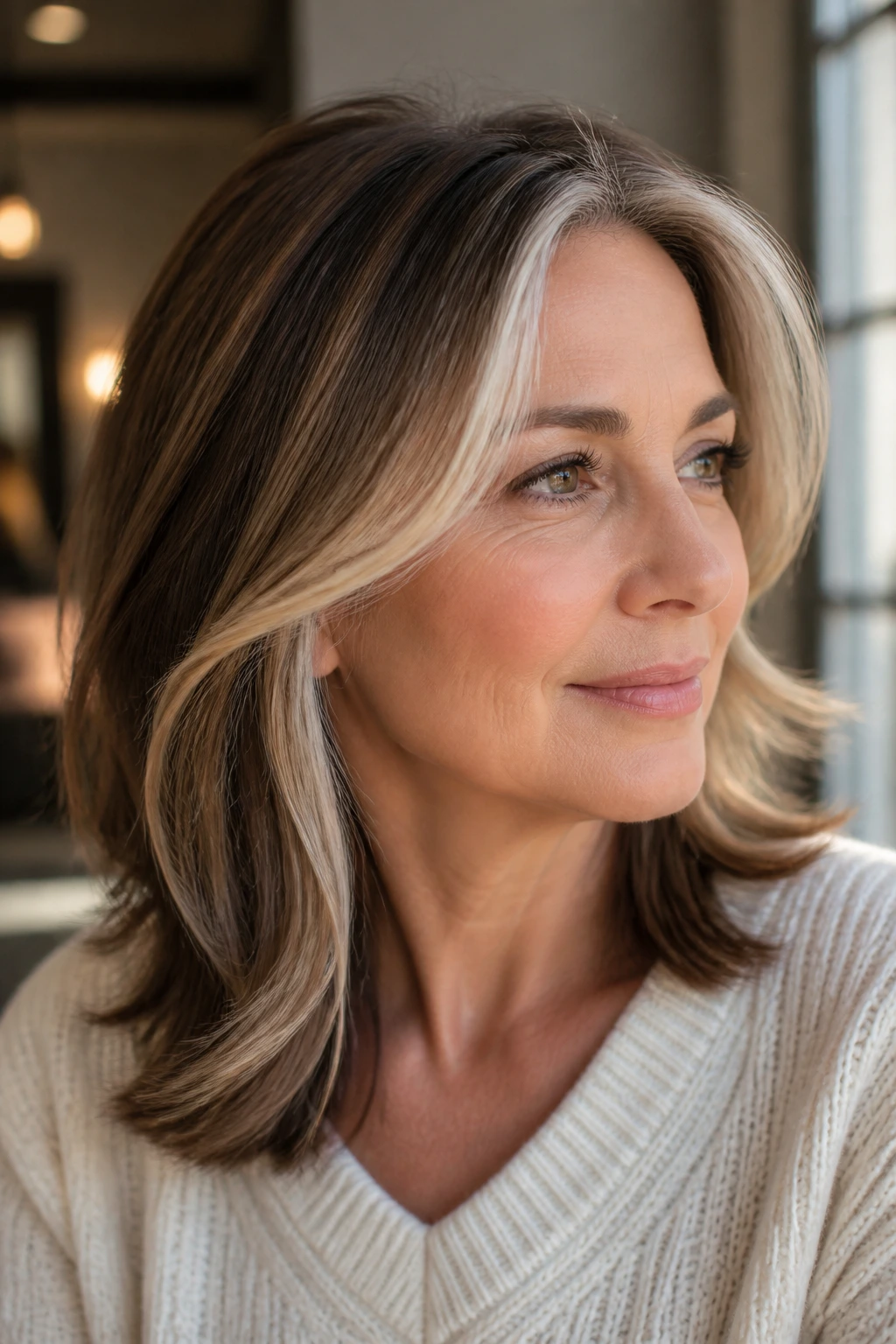
Sometimes you do not need a full head of highlights. You need two or three inches of brightness right where the face starts. Creamy face-framing pieces at the temples can wake up a bob, sharpen a jawline, and make the eyes look less tired without changing the rest of the color much at all. That’s why this is one of my favorites.
Ask for the lightest pieces to sit in the front triangle and along the cheekbone line, then soften the rest of the hair with barely-there reflection. If the front sections are too thick, they start reading like streaks. Keep them delicate, and they look like the sun found the face first.
This works especially well on side parts, curtain bangs, and chin-length cuts. You get brightness where people actually look, not buried in the back where nobody sees it. And because the rest of the hair stays close to the base, grow-out stays forgiving.
7. Vanilla Balayage Over Natural Gray
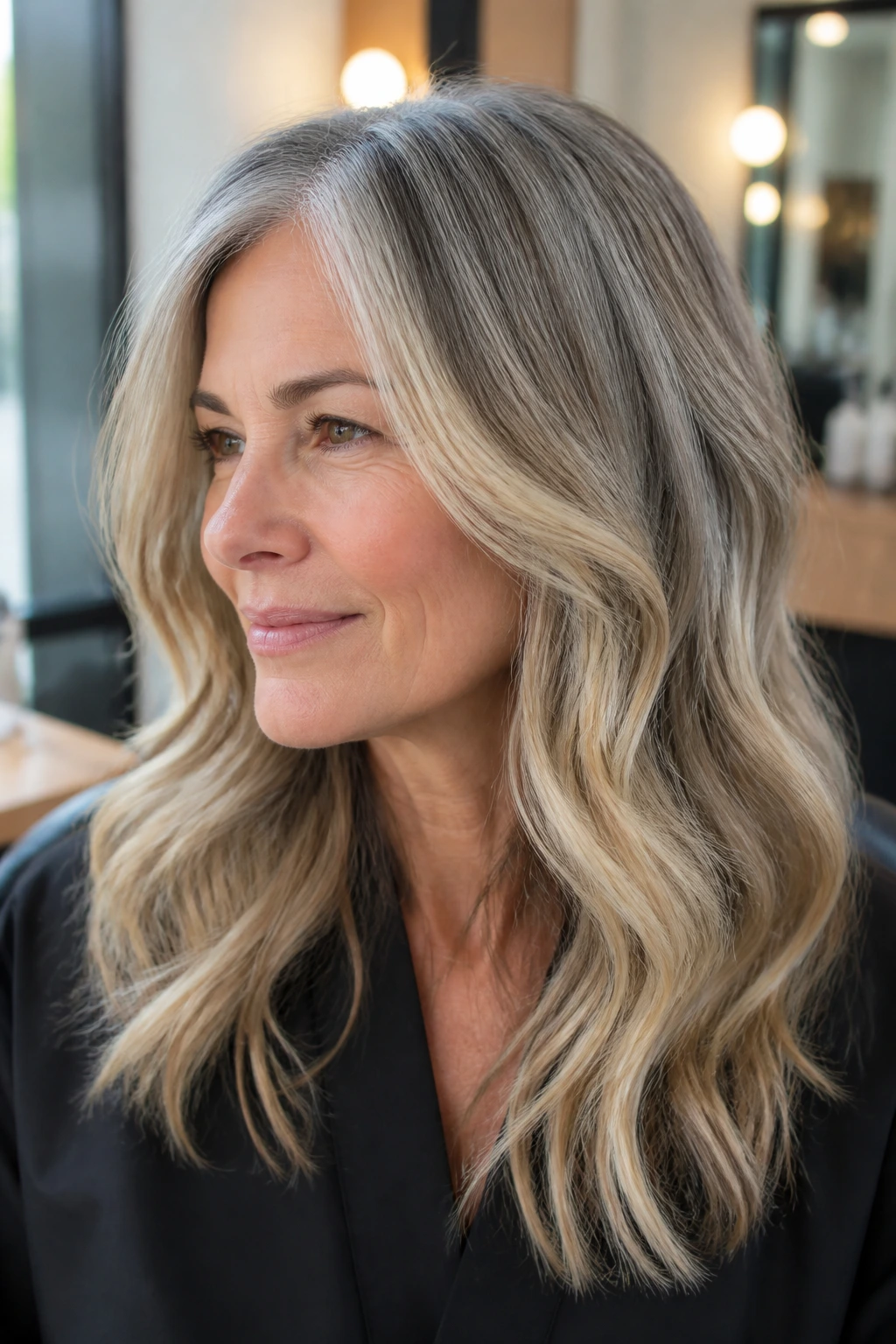
Vanilla is one of the easiest ways to blend gray without making the hair look yellow or stark white. The tone sits between pale blonde and creamy beige, so it feels soft against a natural silver base. On women who are easing out of permanent color, this shade gives the hair a lifted look while leaving enough depth for the regrowth to disappear.
The trick is to keep the root shadow gentle. You want the vanilla pieces to melt, not pop. That usually means a few brighter ribbons around the face, then more diffused paint through the lengths. The hair should look lived-in, not highlighted in blocks.
Vanilla balayage also has one practical advantage people forget: it grows out with a soft edge. If you are not excited about sitting in a salon every few weeks, this is one of the smarter choices. It gives a polished finish without demanding constant correction.
8. Honey Glaze on Warm Brown Hair
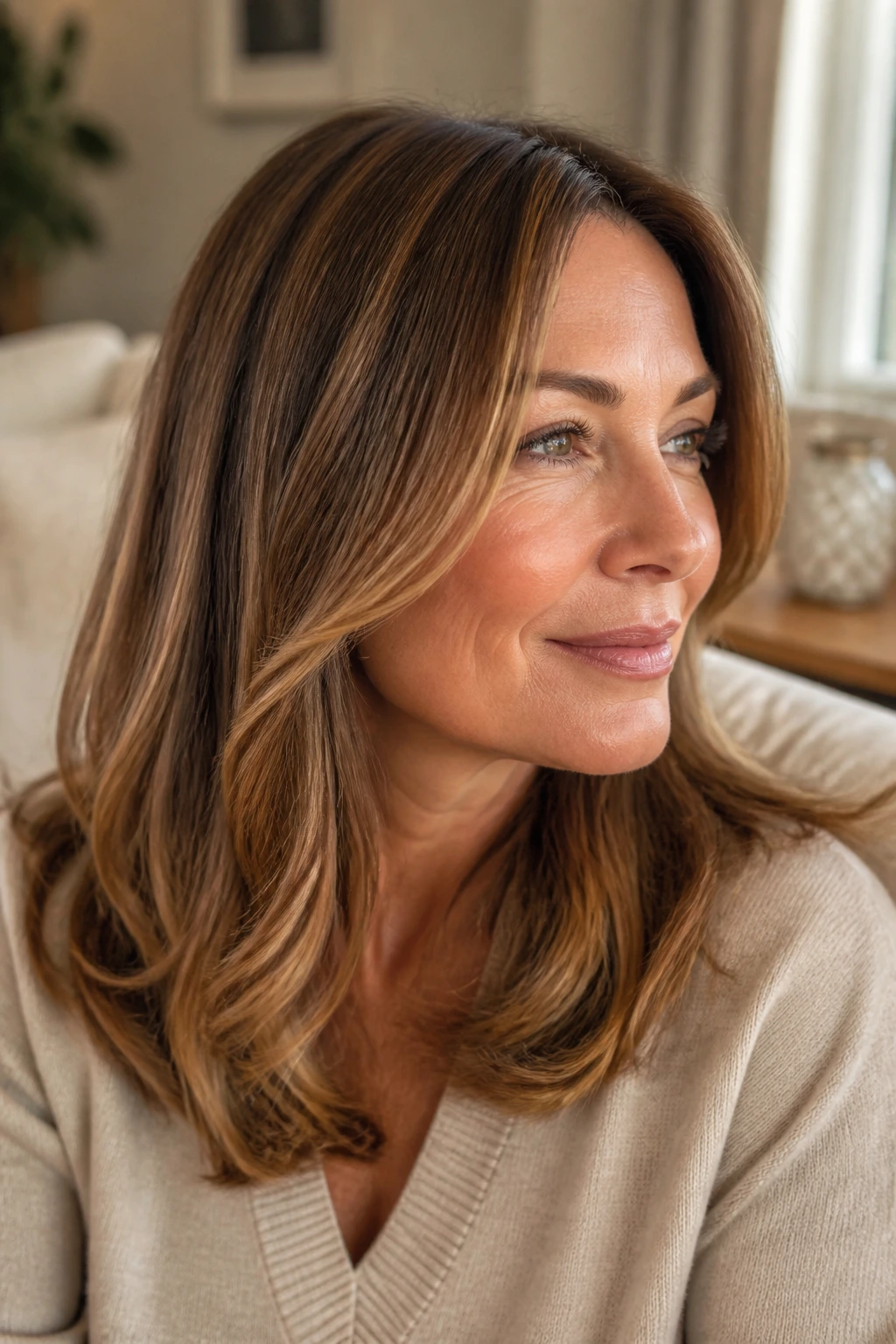
Honey is one of those shades that can go wrong fast if the lightener gets too yellow, so the restraint matters. On warm brown hair, a honey glaze should feel like sunlight through tea, not candy. It’s a warm, soft lift that makes brown eyes glow and gives the skin a little warmth back.
I like honey glaze when the base is chestnut, light brown, or a rich brunette that has started to look dull at the ends. The placement can be broad enough to show, but the tone itself should stay gentle. If you want subtle highlights for older women who prefer warmth over ash, this is a good lane.
The nice thing about honey is that it hides a little wear. Even when the gloss fades, it still looks softer than a high-contrast blonde. That makes it a friendly choice for women who wear their hair loose, in a low ponytail, or tucked behind the ears most of the day.
9. Sandy Beige Foilayage for Layered Cuts
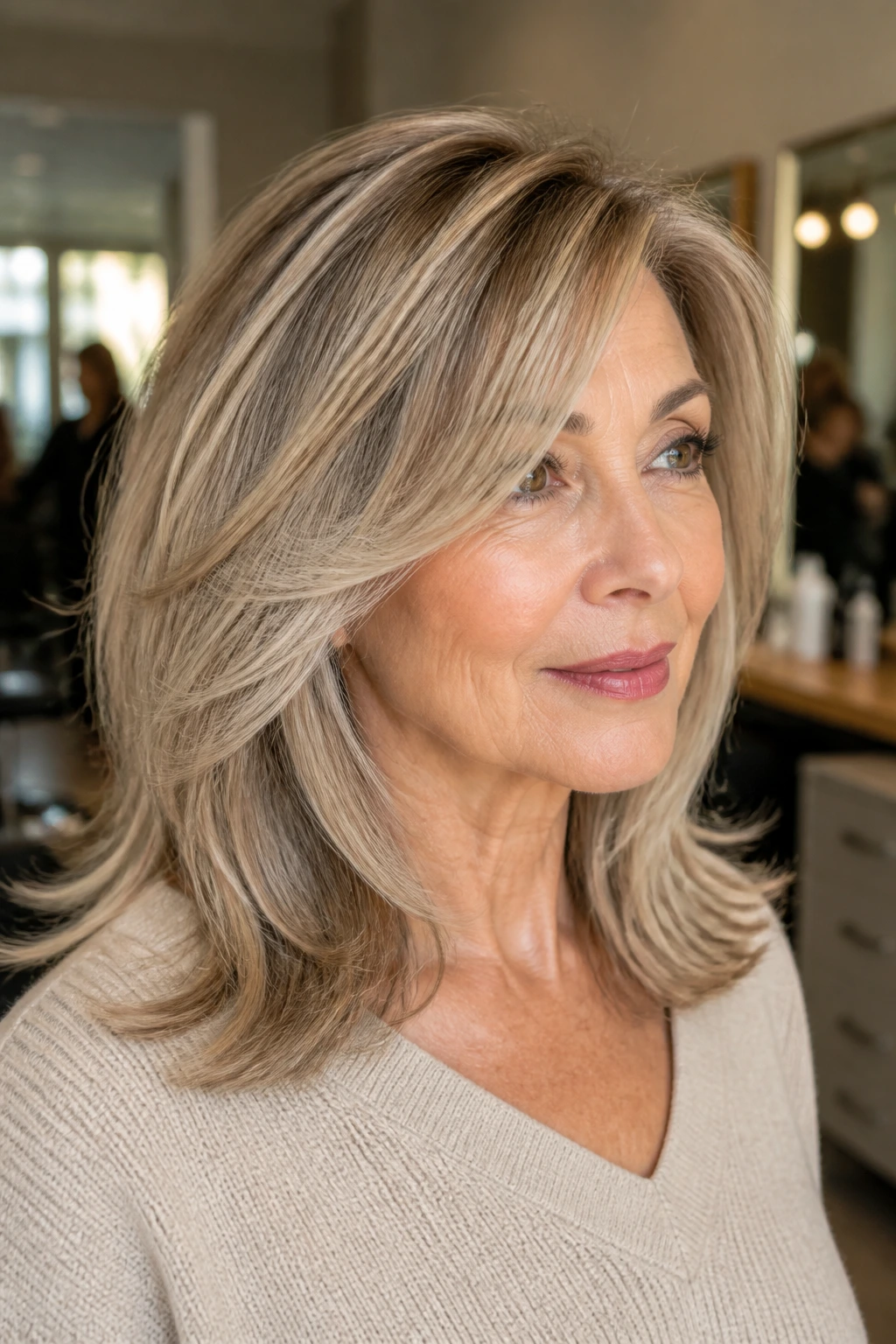
Foilayage gives you a little more lift than pure balayage, but it still keeps the finish soft. On layered cuts, sandy beige is the shade I’d use to thread the two methods together: foils for brightness, hand-painting for blur. The result is movement you can actually see in the haircut.
This is the option for women who want dimension through the whole head, not just the face frame. The top layers can carry a few brighter pieces, while the lower sections stay more muted. That keeps the color from looking puffy or overworked. Sand and beige are especially useful when the base hair has a touch of natural gold that you want to calm down, not erase.
If you wear your hair in loose bends or a round-brush blowout, this style shows beautifully. If you air-dry it, the color still holds together because the placement is doing the heavy lifting. That’s the part I like most.
10. Smoky Espresso Lowlights for Fine Hair
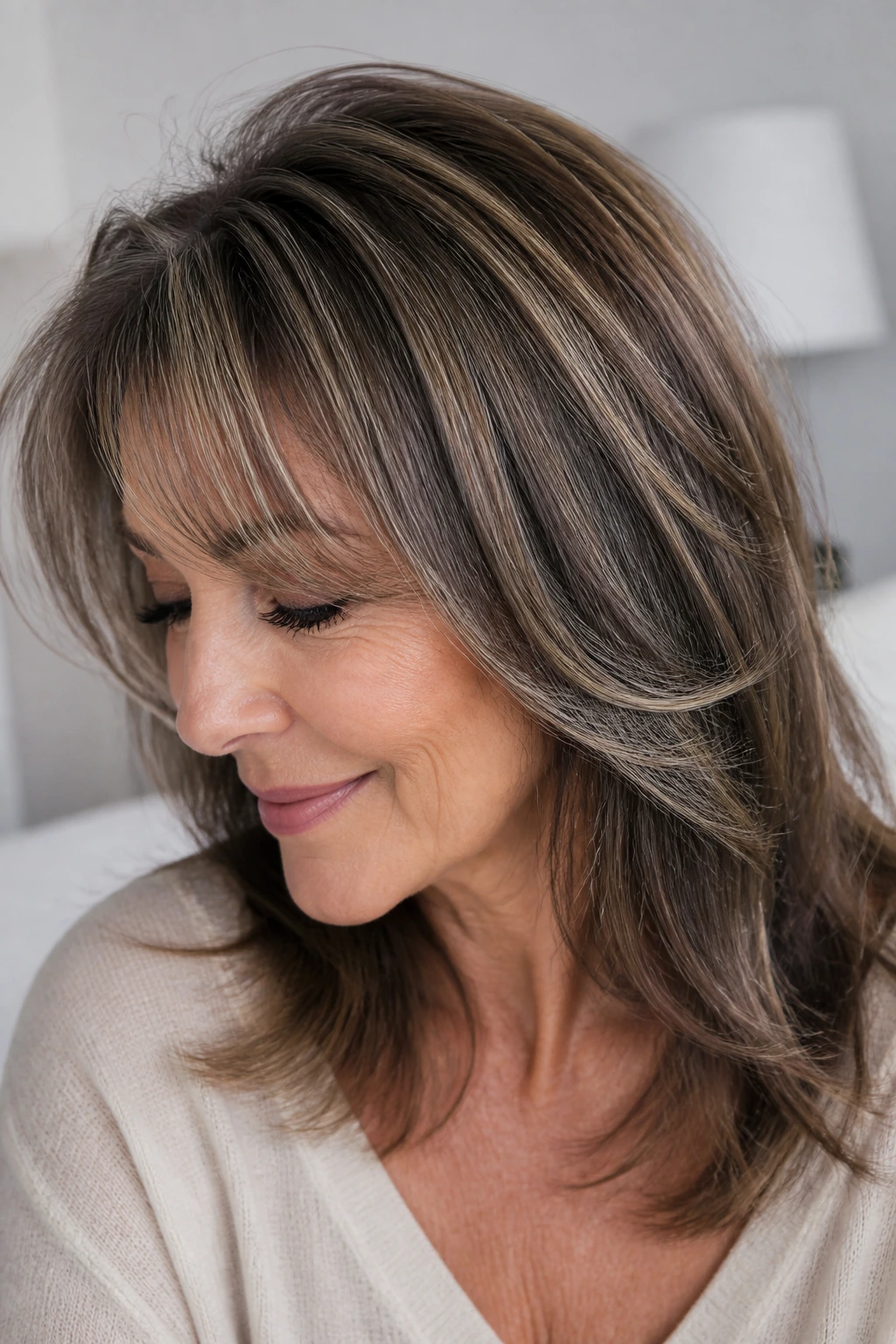
Fine hair often needs depth more than it needs brightness. That sounds backward until you see it done well. Smoky espresso lowlights create the look of fuller density by adding shadows between strands, which helps the hair read as thicker and more textured. Brighten too much, and the scalp can start showing through in awkward ways.
I’d use this on short to medium brunettes with a lot of soft ends or thinning at the crown. Keep the brighter pieces minimal and the espresso lowlights very fine so the overall result stays soft. The lowlights should sit underneath and through the interior, not painted in thick dark bands. Thick bands make the hair look smaller, not fuller.
This is also one of the better choices if you like an easy blow-dry. Espresso dimension tends to hold its shape even when the hair doesn’t get a lot of styling. That’s useful, because not every highlight has to do all the work by itself.
11. Rose Gold Whisper for Short Hair
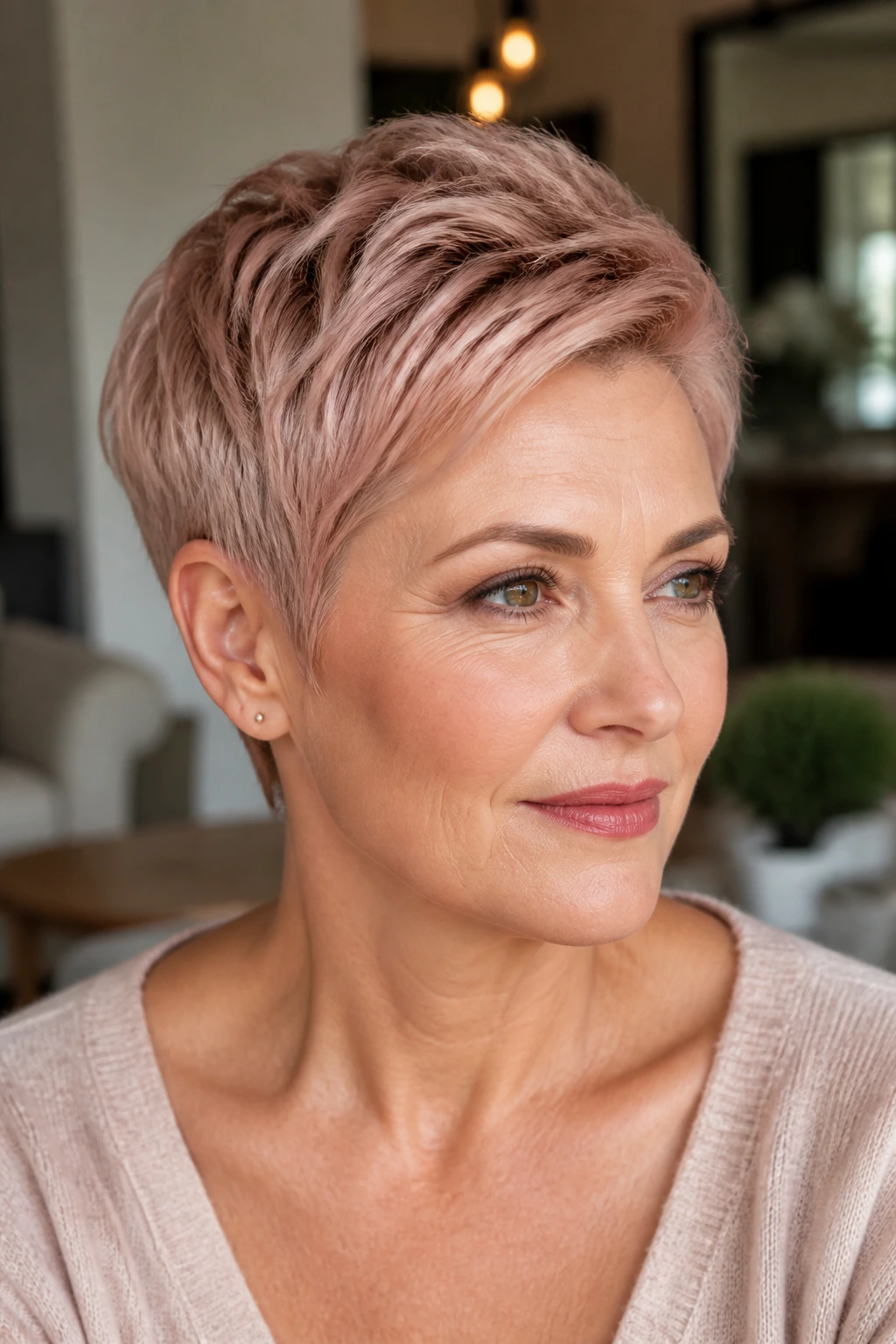
Rose gold can turn loud in a hurry, and that’s why the whisper version exists. On a short cut, a muted rose-beige gloss adds warmth and a little personality without tipping into pink candy territory. It’s a small shift, but on a bob or soft pixie, small shifts show.
The key is to keep the rose extremely diluted. Think beige first, rose second. That lets the color sit comfortably against gray strands, warm brunettes, or even darker blondes who want a softer edge around the face. On shorter hair, every piece is visible, so the color has to be disciplined.
I like this shade when a haircut is clean and simple and the wearer wants the color to do just a little talking. It gives movement to a straight bob and a kind of soft shimmer to layered crops. Not loud. Not timid either.
12. Toasted Almond Highlights for Dark Eyes
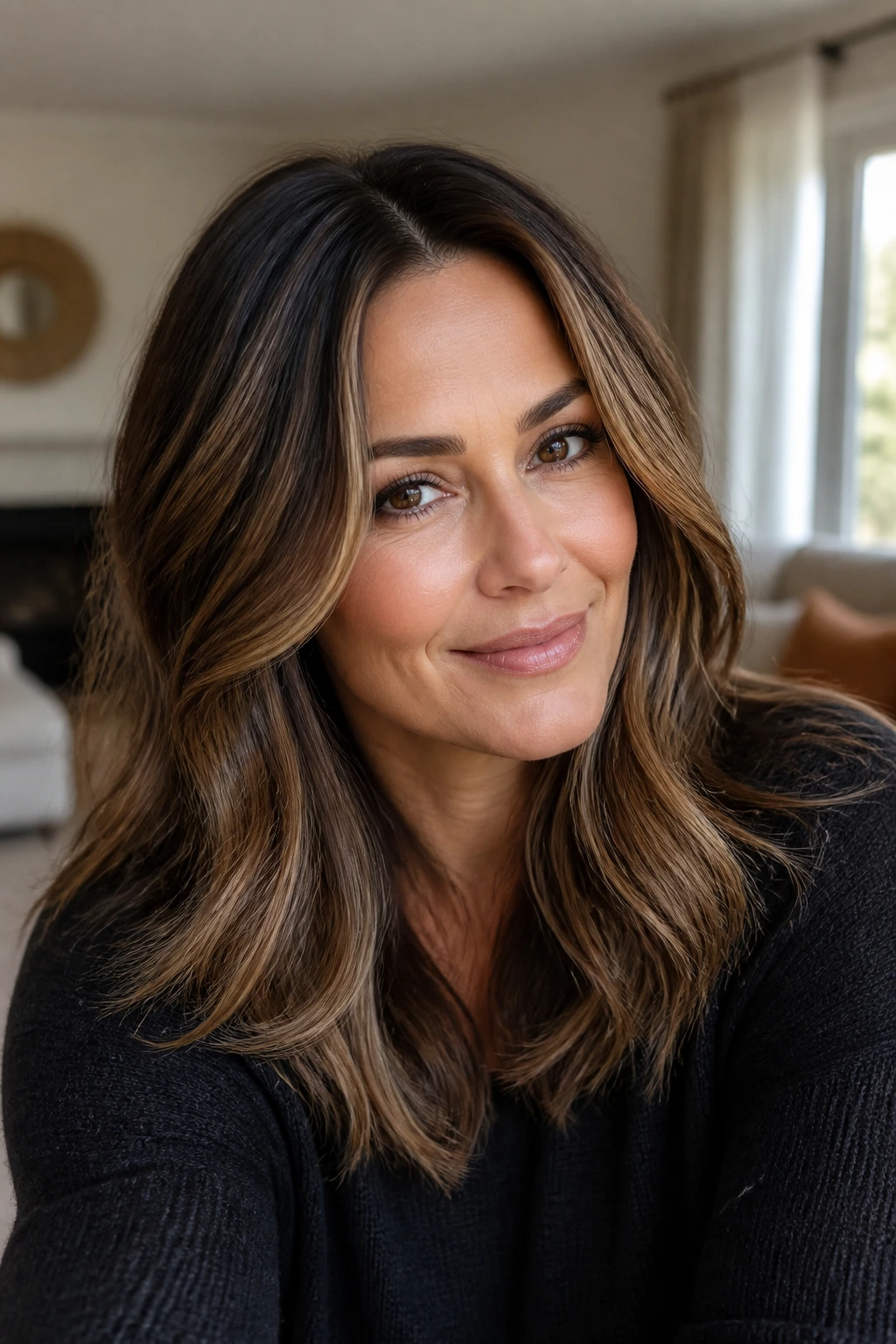
Toasted almond sits in that useful middle ground between beige and caramel. It’s warmer than mushroom brown, calmer than honey, and easier to wear than a pure blonde if your base is chestnut or dark brunette. The shade is especially flattering near dark eyes because it softens the whole face without stealing attention.
This works best when the brightest pieces live around the front and mid-lengths, then taper into softer ribbons through the back. You want the hair to look dimensional from every angle, not just in the salon mirror. Almond tones are good at hiding a little fade, which means they don’t get as blotchy as some warmer blondes.
If your skin has a little gold in it, toasted almond tends to look effortless in the plainest sense of the word. It doesn’t fight your undertone. It just gives the hair a softer finish and leaves the face alone to do its thing.
13. Ice Blonde Micro-Lights on a Cool Base
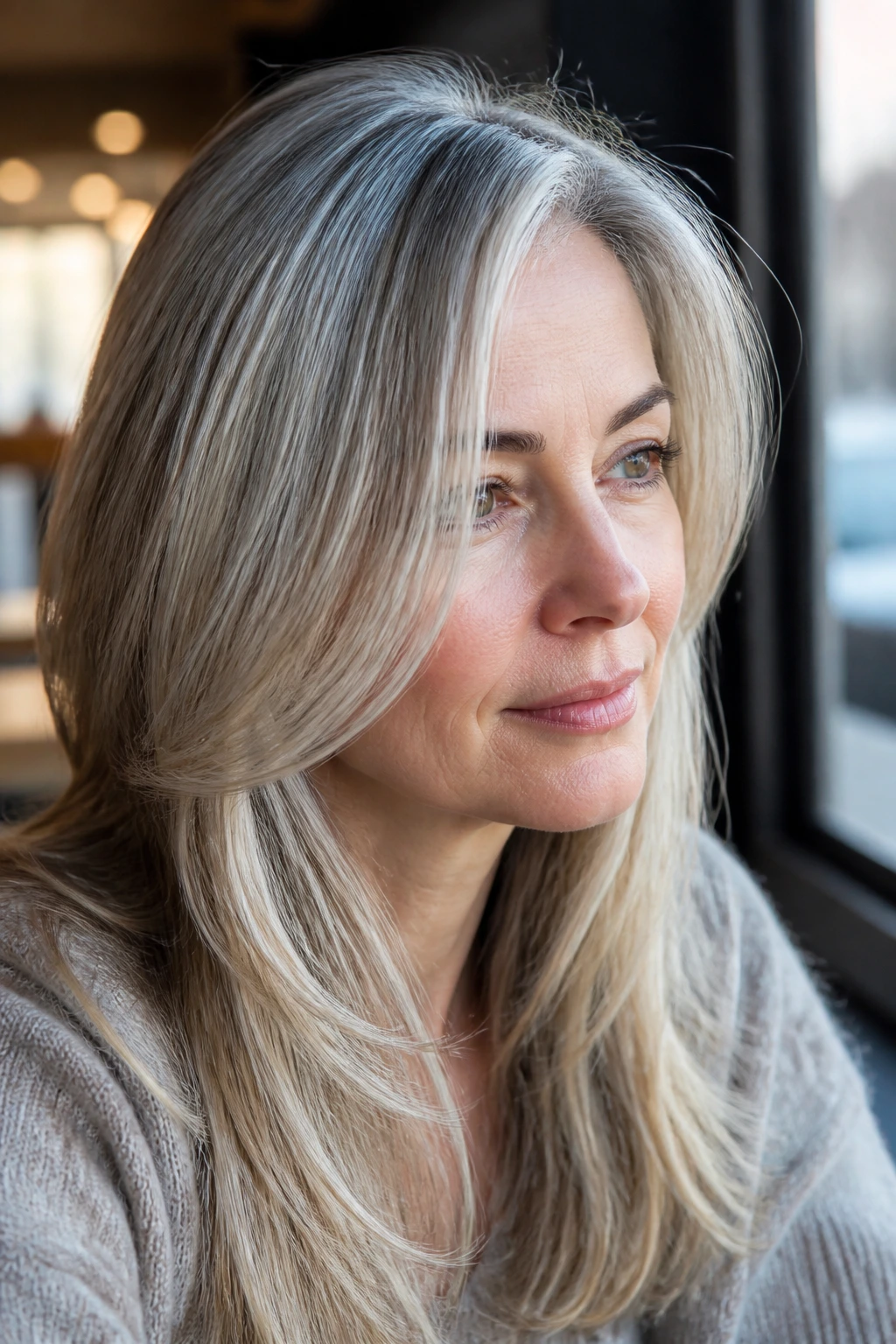
Ice blonde can look severe when it’s done in wide chunks. Micro-lights fix that. The pieces stay so fine that the color reads as brightness rather than stripes, which is a much kinder result on mature hair, especially when there’s already silver in the mix. You get a cool shimmer instead of a high-contrast block.
This style needs a disciplined hand. Keep the lightest pieces close to the part line, hairline, and top layers, then let the underneath remain quieter. On a cool base—ash brown, silver blonde, or deep gray—the effect is polished. On a warm base, it can get a little stark if the toner isn’t chosen carefully.
The maintenance is higher than with caramel or beige, and I’d say that plainly. Cool blonde shows brass fast. If you love a crisp, pale finish and don’t mind toner appointments, it can be a lovely option. If you want low fuss, look elsewhere.
14. Cinnamon Threads in Brunette Hair
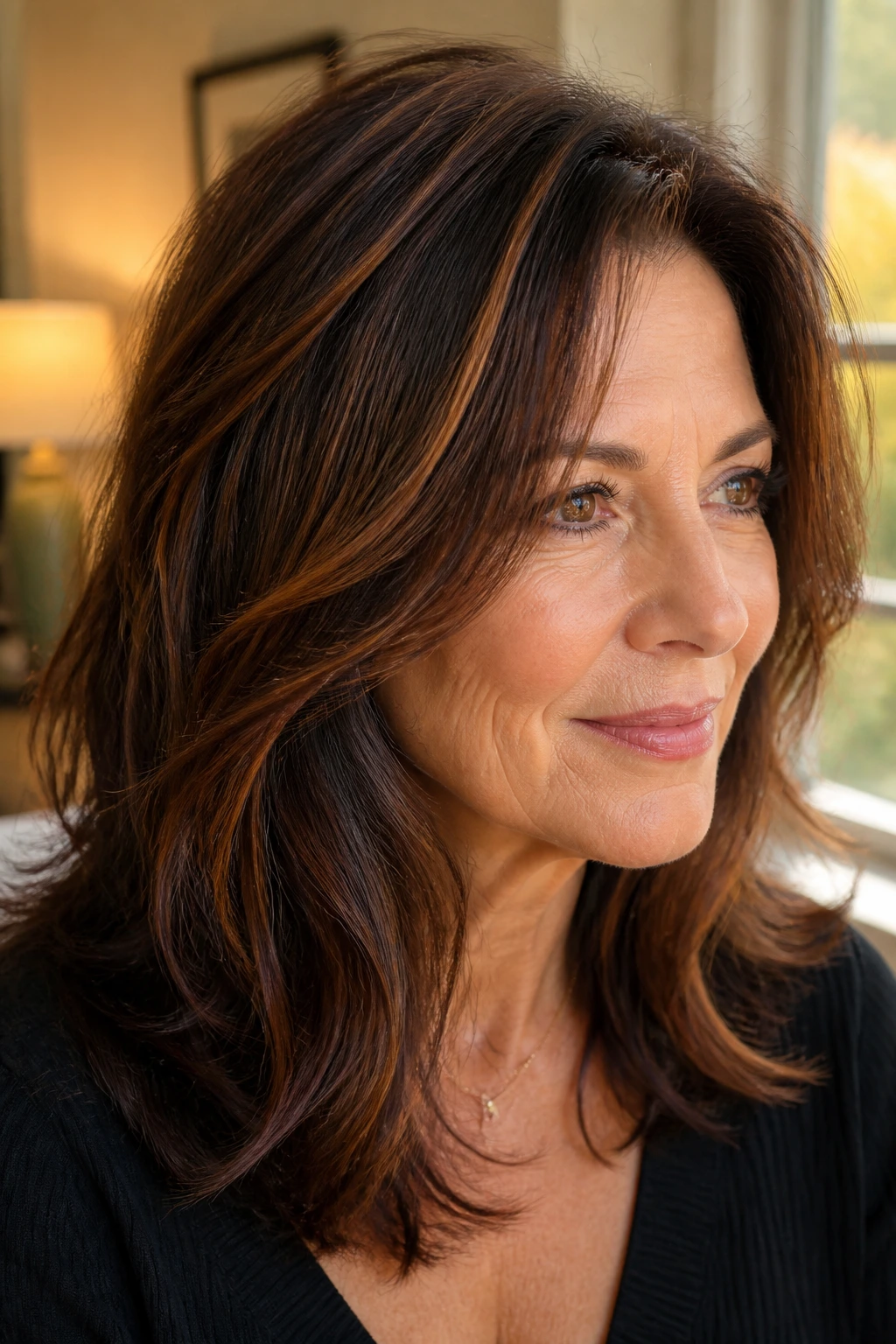
Cinnamon threads are for brunettes who want life, not lift. Instead of going lighter and lighter, the color adds thin copper-brown strands that catch the light in a warmer way. On hair that has gotten flat from too many dark dyes, that little bit of red-brown reflection wakes everything up.
The threads should be thin enough that you notice the movement before you notice the color. That’s the whole point. If they get chunky, cinnamon starts reading loud, and the subtle effect disappears. Keep the shade close to the base and let the warmth sit under the surface.
I like this on women whose skin still handles warmth well but who don’t want the hair to go orange. Cinnamon has more depth than copper and less brass than gold. It’s one of those in-between shades that gives brown hair a bit of spark without making it look dyed.
15. Linen Blonde for Fine, Straight Hair
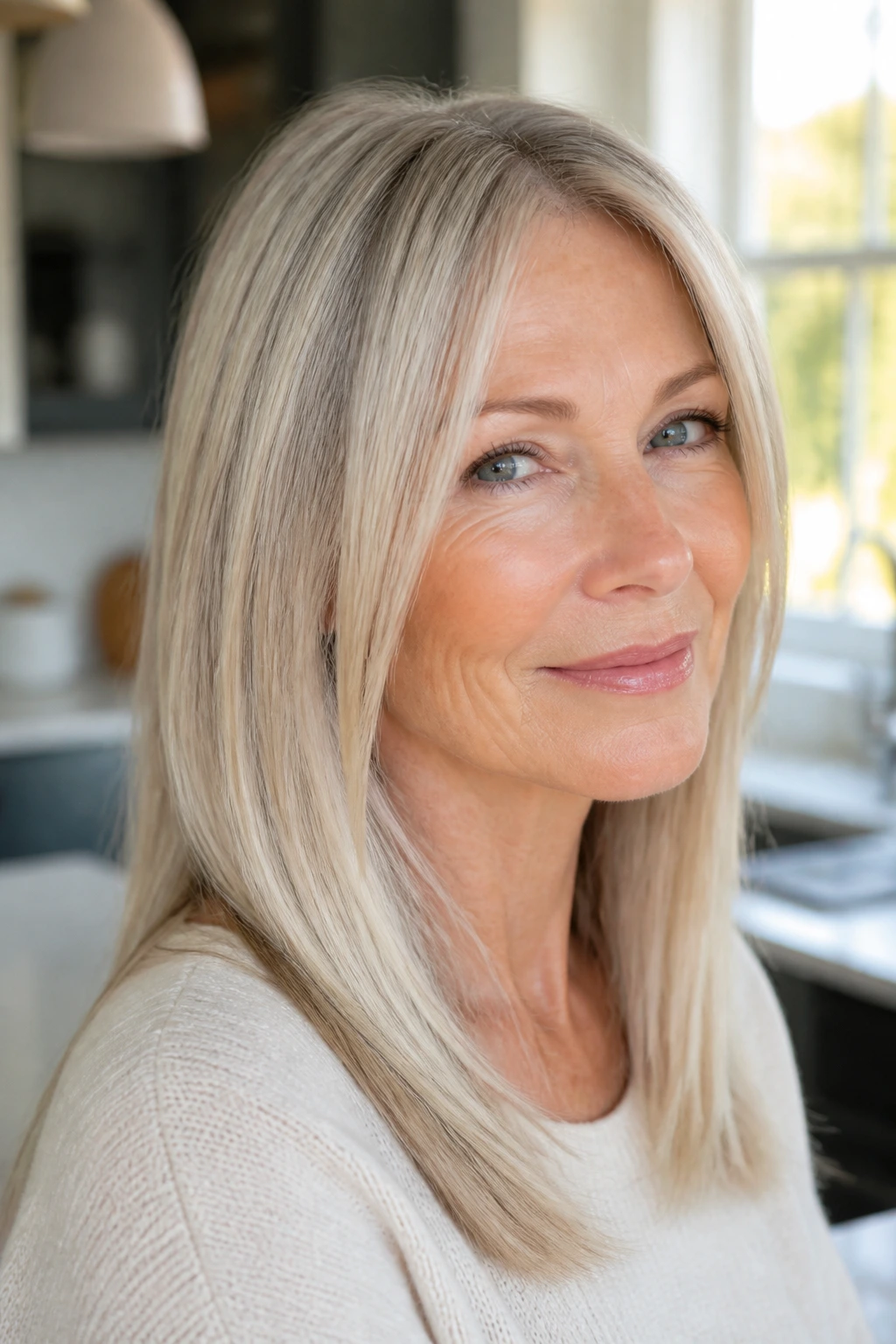
Linen blonde has the clean softness of pale fabric, and that’s the right way to think about it. It’s light, but not icy. Beige, but not muddy. On fine hair, the trick is to keep the pieces airy and spaced out so the style looks fuller, not stripped.
Straight hair shows every highlight line, which is why linen blonde should stay micro-fine. Think of it as texture through tone, not blocky color. A little brightness around the front and top layers helps the hair catch light without flattening the ends. If the hair has been overprocessed in the past, this is not the place to push it further.
This shade works especially well when the goal is softness rather than drama. It blends easily with grown-out blondes, early gray, or light brown bases that need a cleaner finish. The result is understated in the best practical way: you can wear it for weeks before it starts asking for attention.
16. Salt-and-Pepper Brighteners at the Part
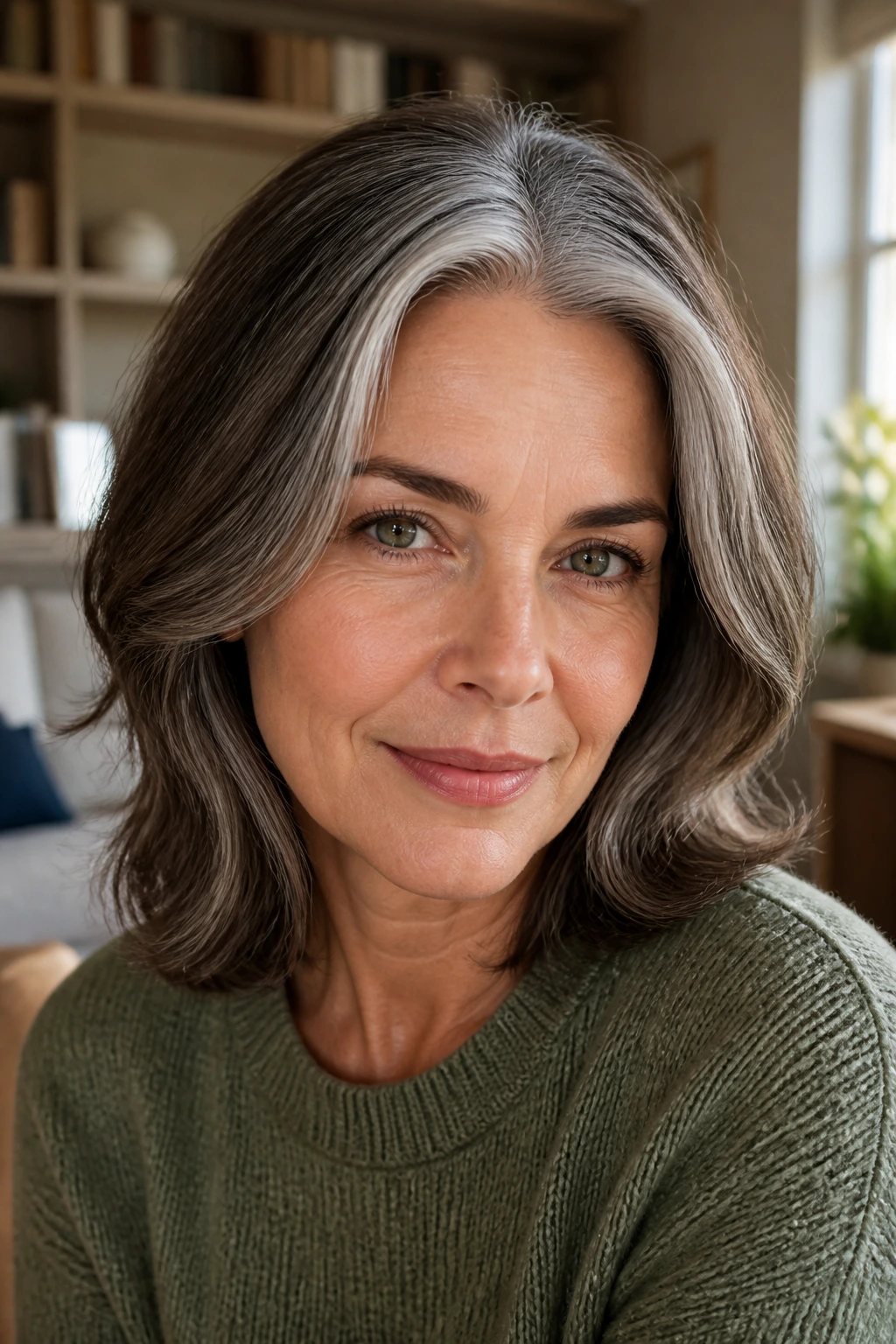
Salt-and-pepper hair doesn’t always need color all over. Sometimes it just needs a little lift where the silver gathers most densely. Brighteners at the part and crown soften that line so the regrowth and gray read as part of the style, not a problem to solve. I like this approach a lot because it respects the hair you already have.
The placement should be narrow and strategic. A few foils at the part, a few near the temples, maybe a gentle ribbon through the top layer. That’s enough. More than that, and the natural salt-and-pepper effect gets smothered.
This option is especially good for women who want to move toward natural gray but aren’t ready to look fully silver on day one. It makes the transition smoother. Also, it grows out with a very soft edge, which matters if you’re tired of obvious maintenance. And honestly, who wouldn’t be?
17. Peachy Beige Glow for Warm Skin
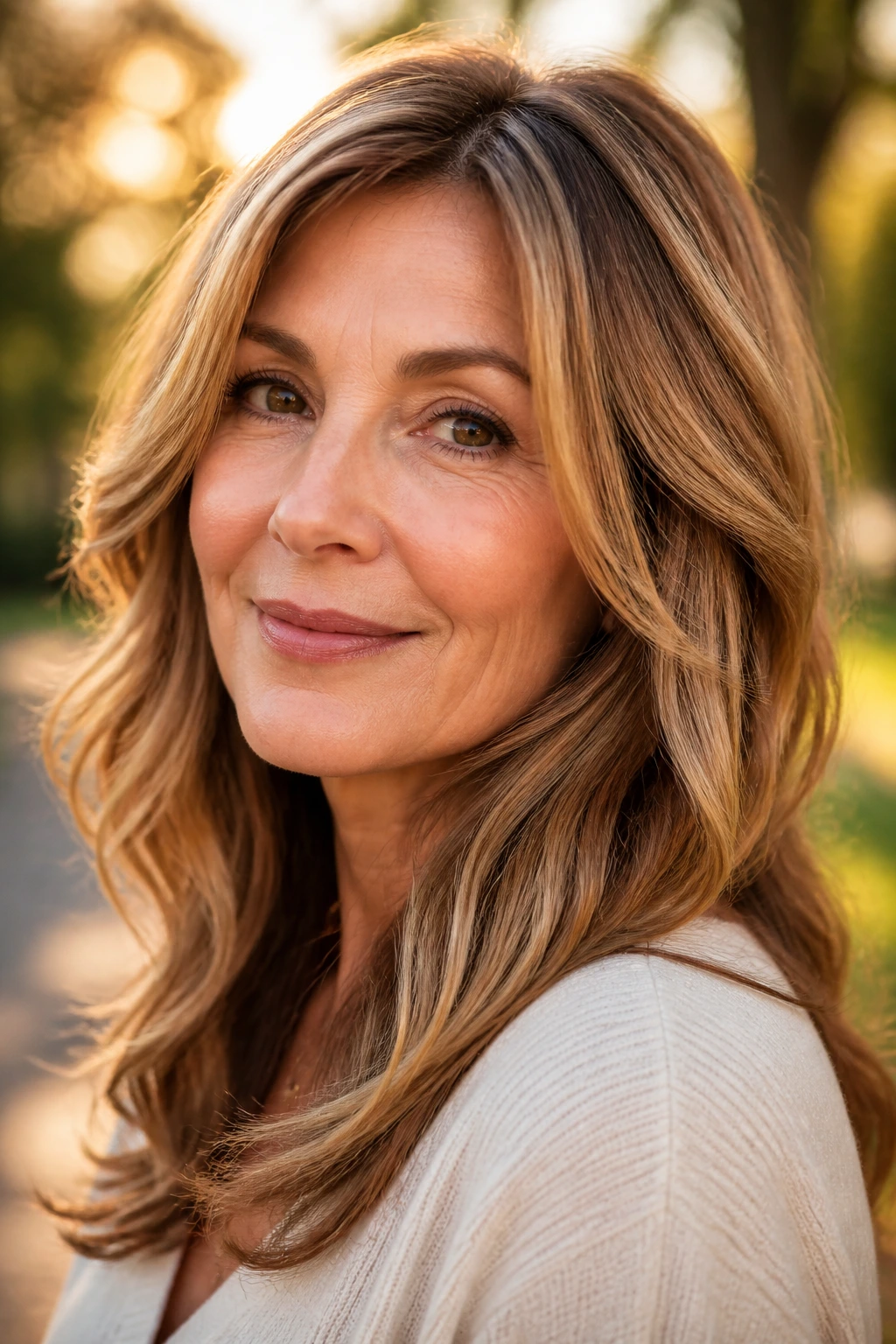
Peachy beige sounds playful, but done lightly, it reads as warmth and softness rather than color for color’s sake. The peach note should be faint, almost like a blush under the beige. That tiny warmth can be a gift for skin that looks better with gold than with ash.
I’d use this on light brown, dark blonde, or medium brunette hair that has started to look a little dull around the face. The peachy tone gives the hair a fresher surface without drifting into copper or strawberry blonde. Keep the highlights fine and the toner soft. If the color gets too orange, the whole thing loses its quiet charm.
This is one of the better ways to keep mature hair from looking washed out in cooler light. The warmth reflects back into the face. Just enough. Not too much. That restraint is what makes it wearable.
18. Bronzed Silver Blend for Mixed Gray
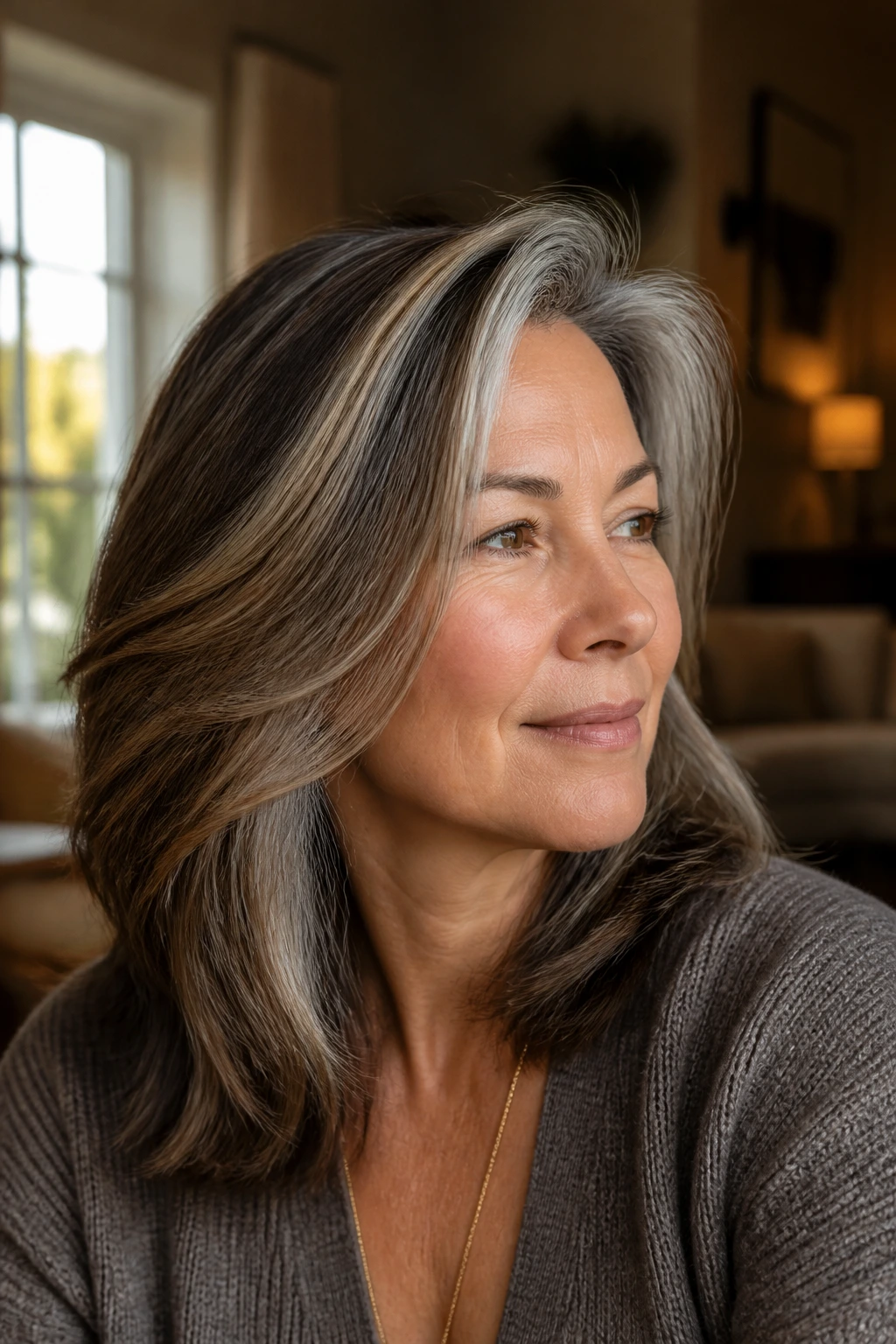
Bronzed silver blend sounds unusual because it is unusual, and that’s why it works. The goal is to marry warm bronze lowlights with cool silver or pearl highlights so the hair has both depth and lightness. On women with mixed gray and brown, that mix can look especially natural because it echoes what the hair is already doing.
The color should not be too shiny or too metallic. Bronze can go costume-y if it’s pushed too far. Keep it muted, almost smoke-brown, and let the silver pieces stay soft at the surface. The contrast should feel like texture, not a color block.
I like this on medium-length hair with layers because the different tones need movement to show. On a blunt cut, it can look more graphic. That’s not always bad, but it changes the mood fast. If you want softness, layers help.
19. Buttery Ribbon Lights Through the Ends
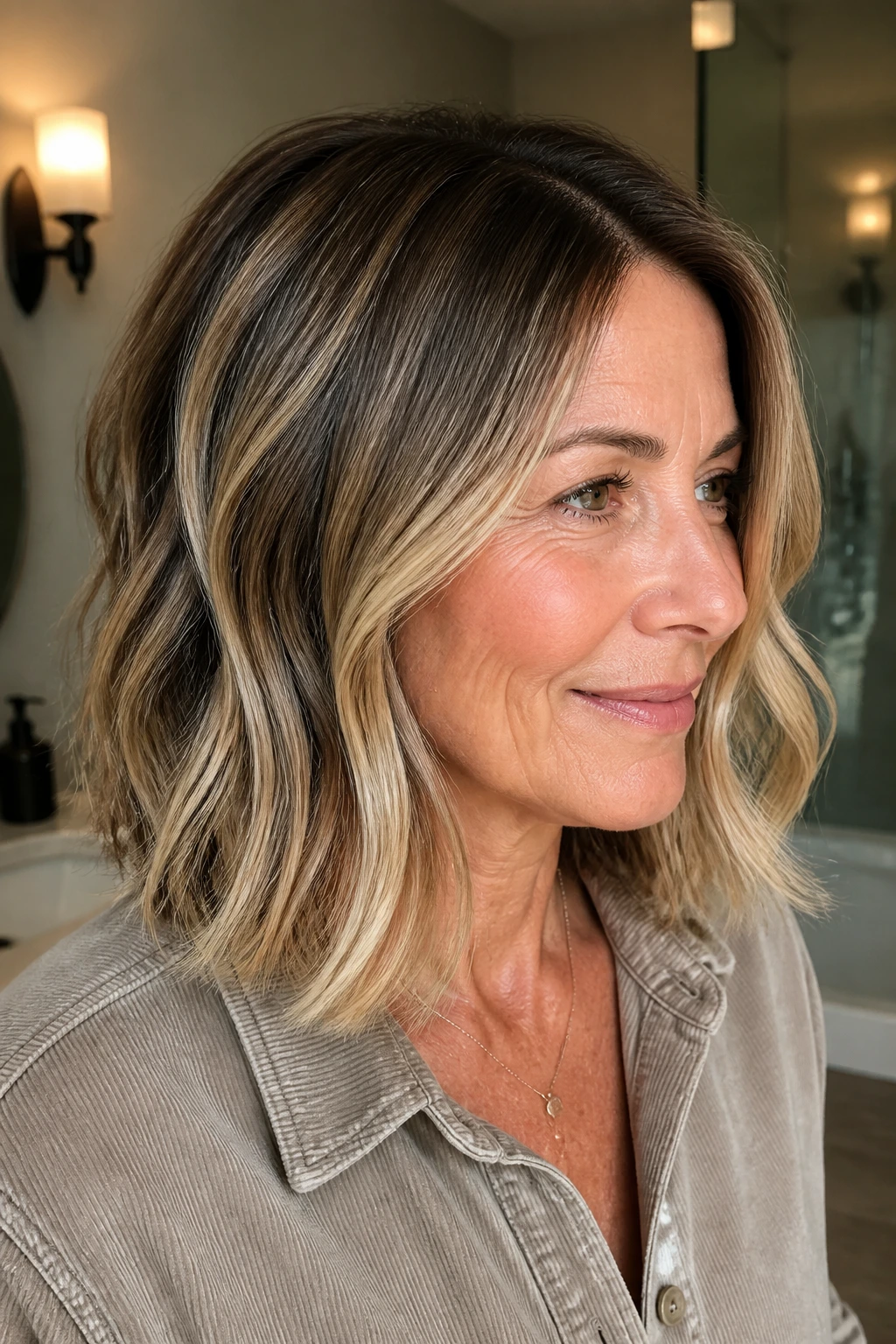
Buttery ribbons through the ends give the hair a warm finish without forcing brightness at the root. That is a smart move for women who prefer longer gaps between salon visits. The color sits where hair usually looks the driest and most faded, so the lift is visible without needing a full refresh up top.
This is a good fit for shoulder-length or longer layers. Keep the top mostly untouched, then open the color through the lower half and ends. If the ends are damaged, the butter tone should stay gentle. Too much lift on fragile ends is a bad trade.
The best thing about this look is how easy it is to wear. When the roots grow, the style still makes sense. That matters. Not every highlight has to be maintained like a houseplant.
20. Cool Taupe Balayage on Medium Brunette Hair
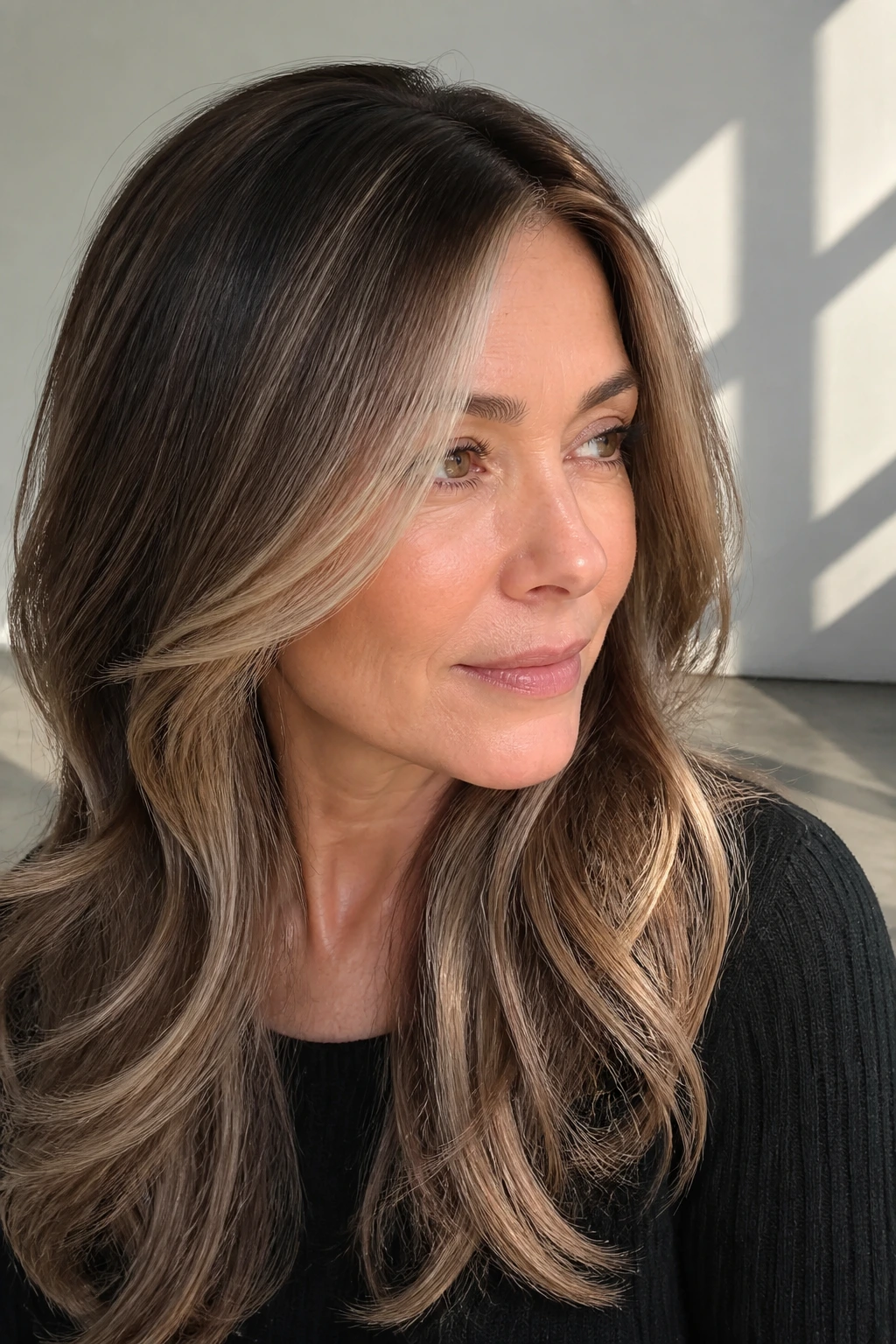
Cool taupe is one of the smartest shades for women whose brunette hair pulls red or orange when lightened. It keeps the warmth under control without going flat. On medium brunette hair, taupe balayage adds a soft gray-brown haze that looks clean in daylight and calm under indoor lights.
This works well with a side part and a smooth blowout because the movement of the hair lets the taupe show in layers. Ask for the brightest pieces around the face and top layers, then soften the rest into a root shadow. If the color is painted all the way through every strand, it stops looking taupe and starts looking dusty.
I’d pick this for someone who likes quiet hair with shape. It is not flashy. It is not trying to be. The tone does a better job when the cut is doing its own part.
21. Soft Auburn Sheen for Chestnut Hair
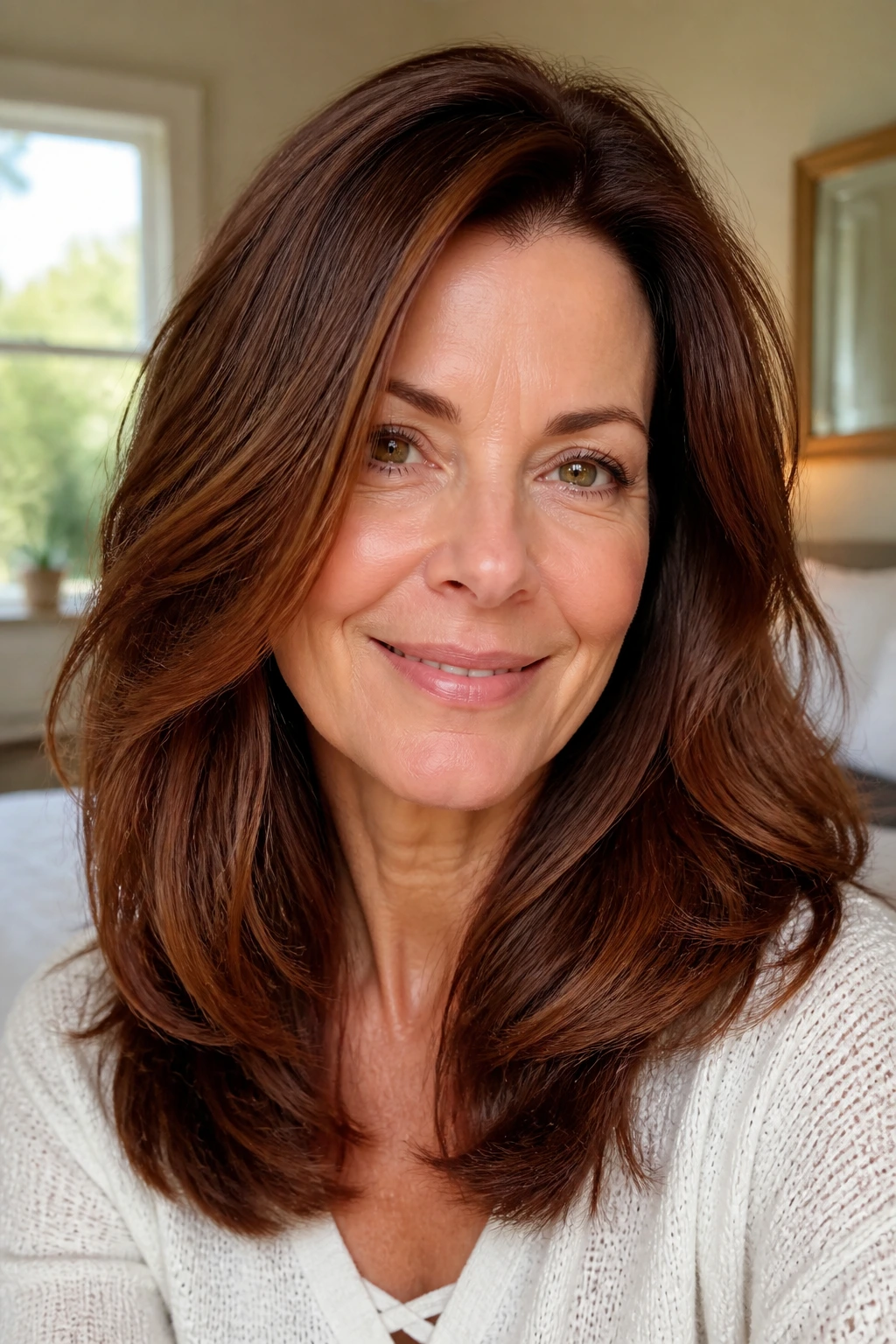
Auburn can be gorgeous on mature hair, but it should be used like a glaze, not a signal flare. The soft version adds a warm red-brown sheen to chestnut or dark brown bases and keeps the result close enough to the natural shade that it still feels like “your hair, only better.” That’s the lane.
The color shines most when it stays around the mid-lengths and ends, with just a little warmth near the face. Too much auburn at the root can make the regrowth obvious, especially if the natural base is cooler. A soft gloss or demi tone usually works better than a hard permanent shift.
This shade is lovely for women who miss warmth after years of darker color. It brings that back without looking coppery or vivid. I’d call it restrained, and that’s a compliment.
22. Dusty Mink Dimension for Deep Brunettes
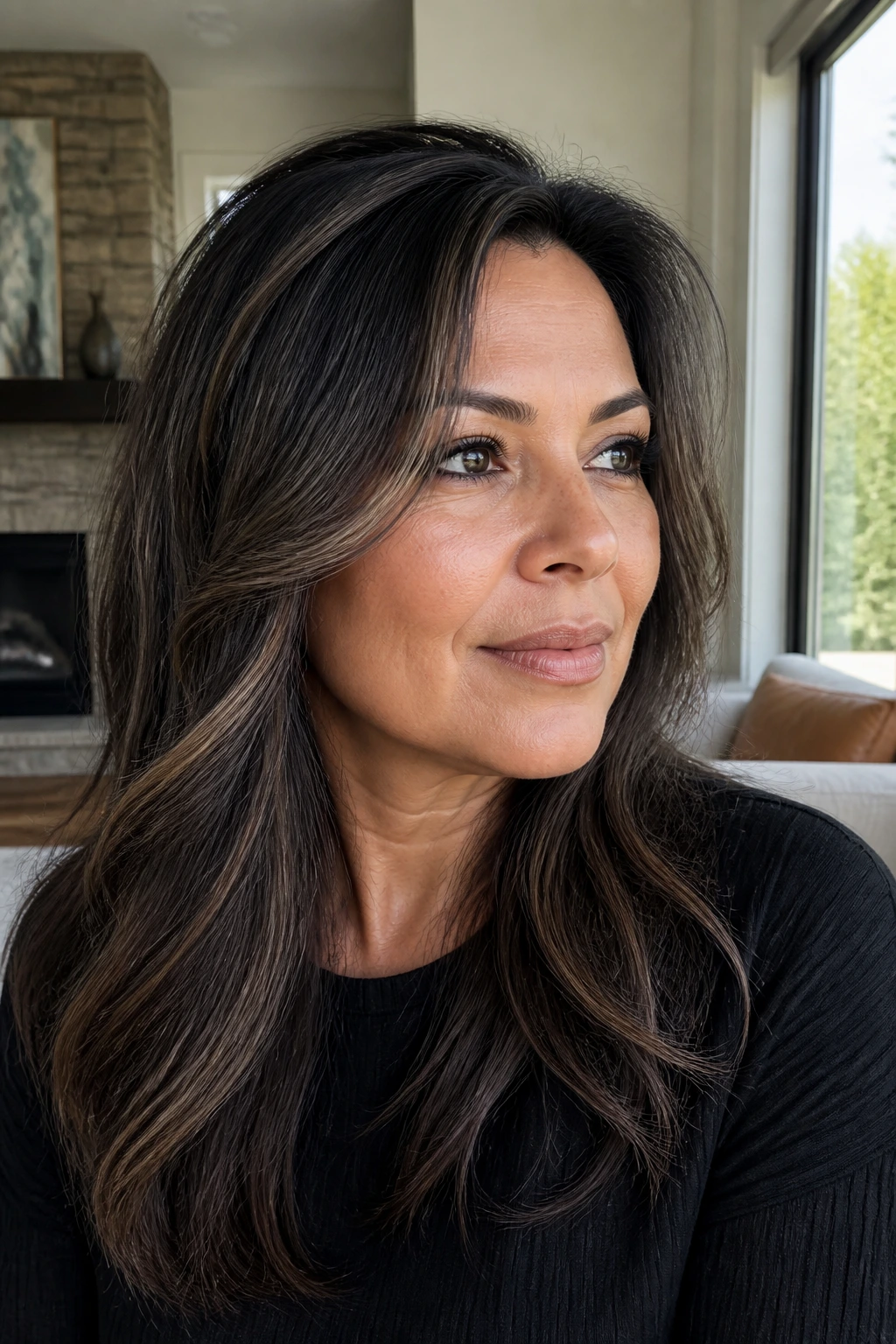
Dusty mink is for deep brunettes who want movement without handing the whole head over to lightener. The shade keeps the base rich, then adds smoky lowlights and a few muted bright pieces so the hair doesn’t read as one dark mass. It’s subtle in a different direction: less brightness, more depth.
The best placement is usually through the top layers and around the face, with the underlayers kept a touch darker. That gives the cut shape and keeps the color from flattening. If the hair is thick, this can be especially good because the multi-tone effect shows without needing a big contrast jump.
I like this on longer bobs, layered cuts, and wavy hair with some natural body. It makes dark hair look intentional and soft at the same time. No streaks. No hard edges. Just depth.
Why Subtle Highlights for Older Women Look Softer at the Hairline
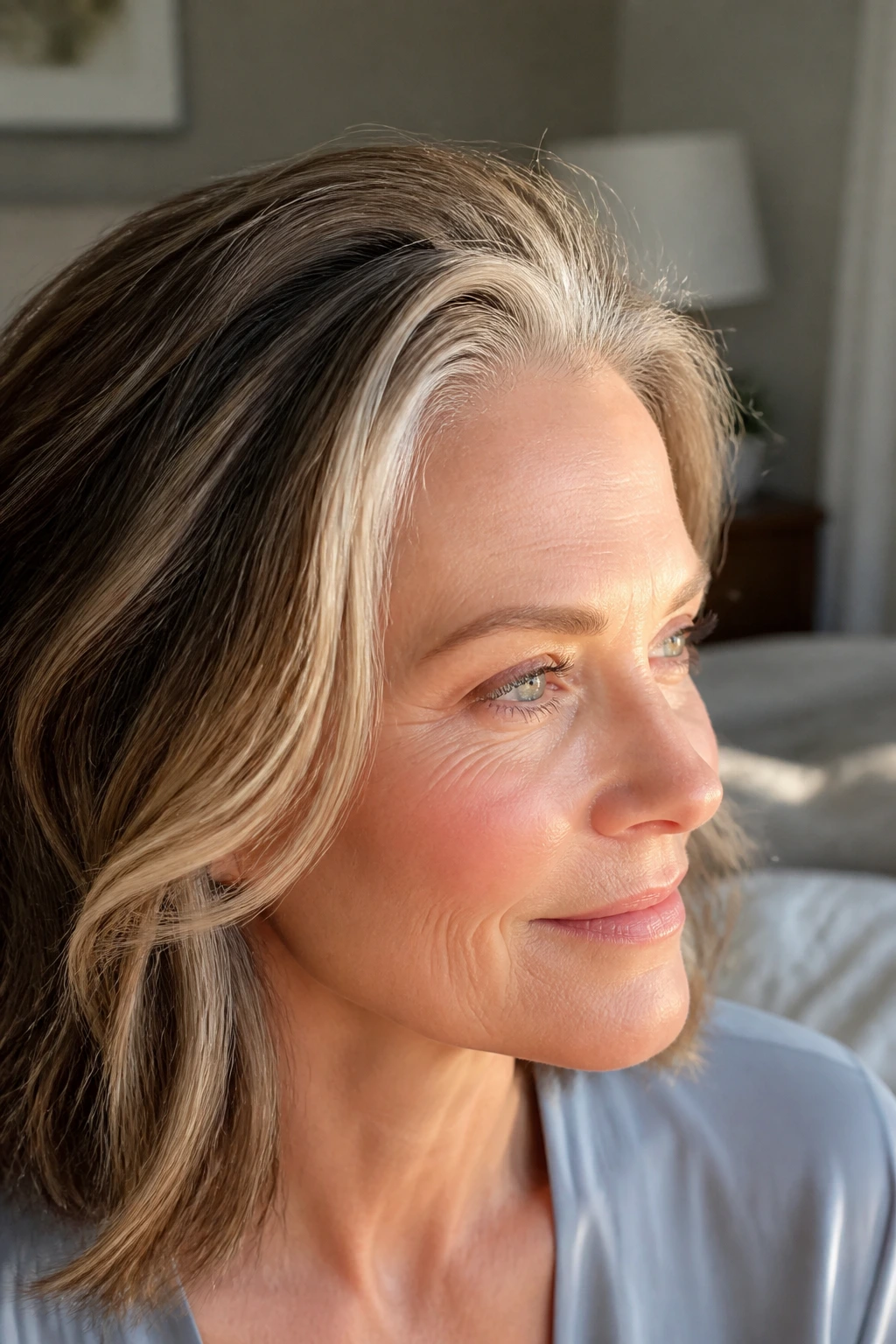
The hairline is where bad color gives itself away first. That’s why subtle highlights for older women usually look best when the brightest pieces sit close to the face but not in thick, obvious stripes. Fine babylights, soft face-framing ribbons, and low-contrast beige or pearl tones blur the edge between color and growth. The result is calmer, and calmer usually reads fresher.
There’s also a practical reason these softer placements age well: they do not force the eye to follow every individual highlight. Instead, the color creates a general glow, which is kinder to fine hair and easier on growing-out gray. When the contrast is too sharp, the hairline becomes the whole story. When it’s soft, the haircut gets to stay in charge.
I also think softer color looks better when the haircut has movement. A layered bob, soft lob, or cropped cut with a little bend gives the highlights something to sit on. Without that movement, even a good color can look too tidy. Hair should move a little. It’s more believable that way.
Essential Tools for Choosing and Maintaining the Color
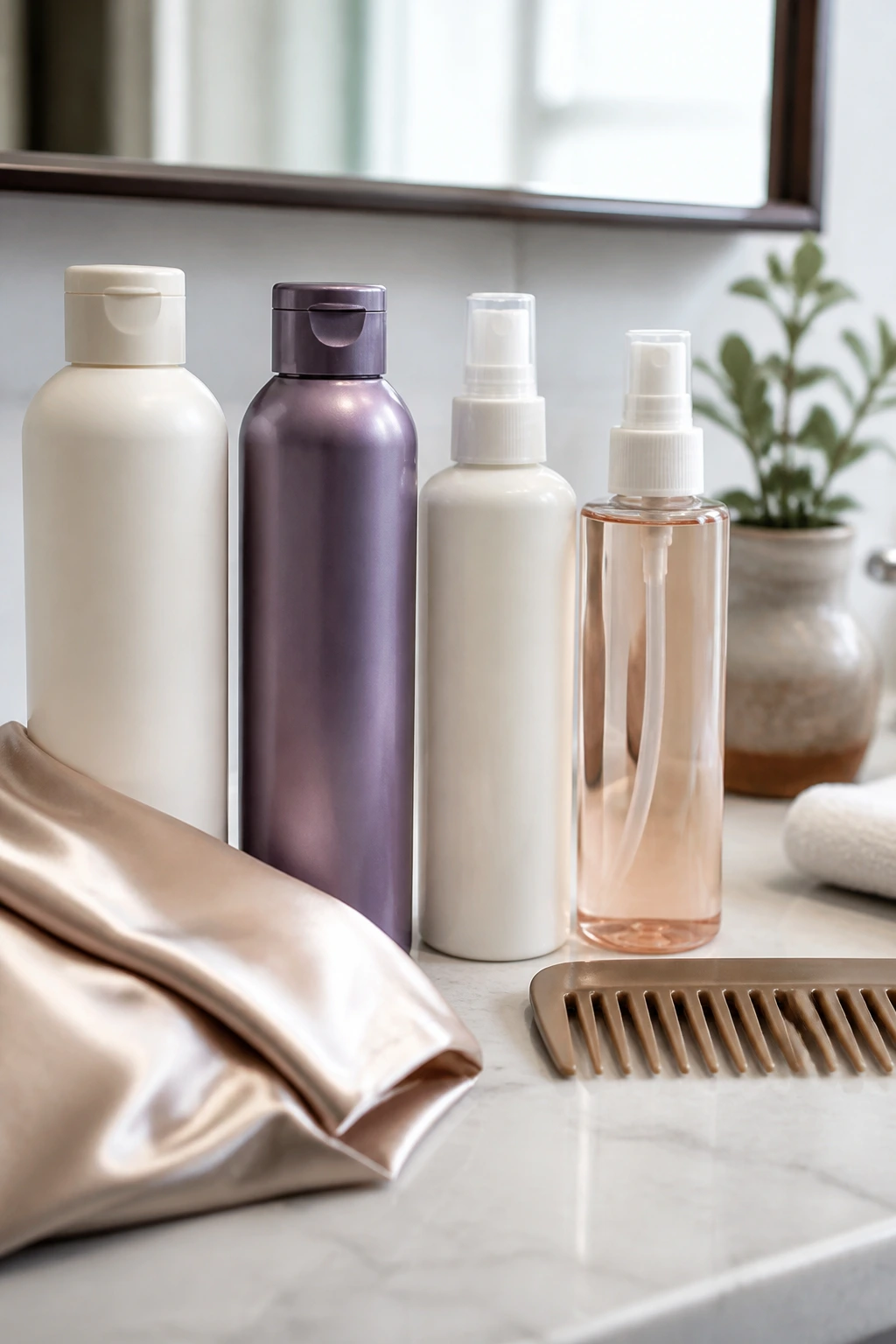
- Daylight mirror or window light — Color can look beige inside and yellow outside; checking it in daylight keeps surprises to a minimum.
- A few clear inspiration photos — Bring images that show the front, side, and back, because the placement matters as much as the shade.
- Color-safe shampoo — A gentle cleanser keeps soft highlights from fading to dull straw after a few washes.
- Purple or blue shampoo — Purple helps pale blonde and silver tones; blue is better if brunette highlights are drifting orange.
- Leave-in conditioner — Lightened strands need slip, especially around the ends and temples where hair gets rubbed the most.
- Heat protectant spray — Essential if you blow-dry or use a flat iron; highlighted hair burns and dulls faster than virgin hair.
- Wide-tooth comb — Better than a fine brush on damp, highlighted hair, which is usually more fragile than it looks.
- Microfiber towel or soft T-shirt — Cuts down on frizz and breakage after washing.
- Glossing appointment or at-home toner — A beige, pearl, or taupe gloss keeps the color soft instead of flat.
- Satin pillowcase — Not glamorous. Still useful. Less friction means fewer snapped ends and less fuzz around the hairline.
Picking the Right Shade Family for Your Base Color
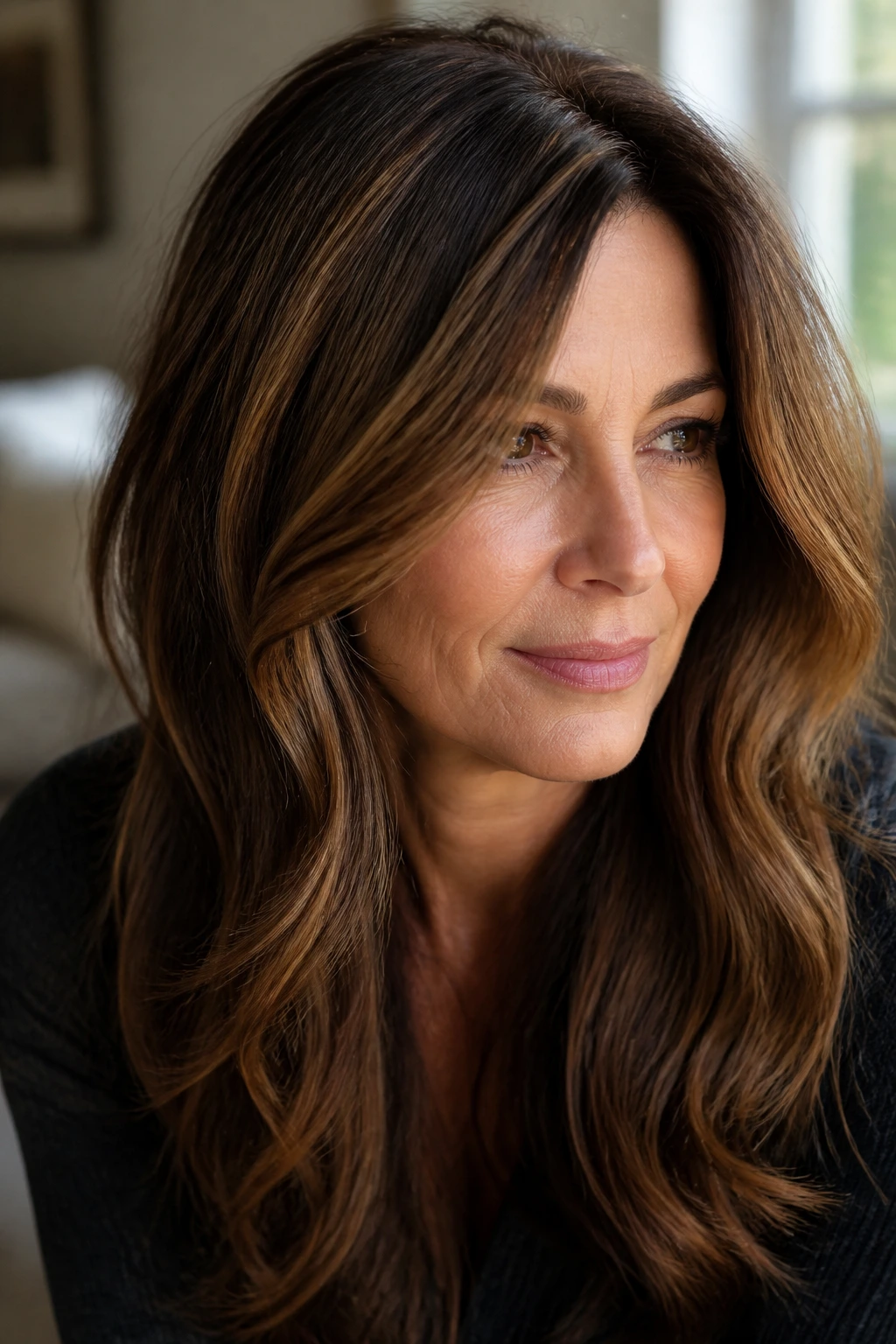
The easiest way to choose among subtle highlights is to start with your base, not the inspiration photo. A woman with a level 5 brunette base, for instance, usually looks better in caramel, beige, taupe, or mushroom tones than in a high-lift blonde that jumps four shades lighter. That tiny restraint keeps the hair looking connected to the scalp instead of detached from it.
If your hair is mostly silver or white, pearl, champagne, vanilla, and soft ice tones usually make more sense than gold. Warm blondes can work, but they need a careful gloss or they’ll drift yellow. On the other hand, if your hair naturally pulls warm and your skin likes warmth too, honey, almond, and auburn-based ribbons are easier to wear than ash-heavy tones that can drain color from the face.
Gray pattern matters as much as base color. If your silver shows mostly at the temples and part, you can get away with very fine brighteners there and leave the rest of the hair darker. If gray is spread more evenly through the head, a softer all-over blend tends to read better. Fine hair usually wants babylights and micro-lights. Coarse or dense hair can handle slightly wider ribbons and still look subtle.
What to Tell Your Colorist
Say the words out loud. Don’t just say “soft” and hope for telepathy.
- “I want highlights that blend with my grow-out.”
- “Keep the brightest pieces around the face and crown.”
- “Leave the roots soft so I’m not back here every month.”
- “Tone it beige/pearl/taupe, not yellow or orange.”
- “Please keep the weave fine.”
That last one matters more than people think. “Fine” and “soft” sound vague in conversation, but they translate into a very different foil pattern when the brush comes out.
How to Wear and Style the Dimension
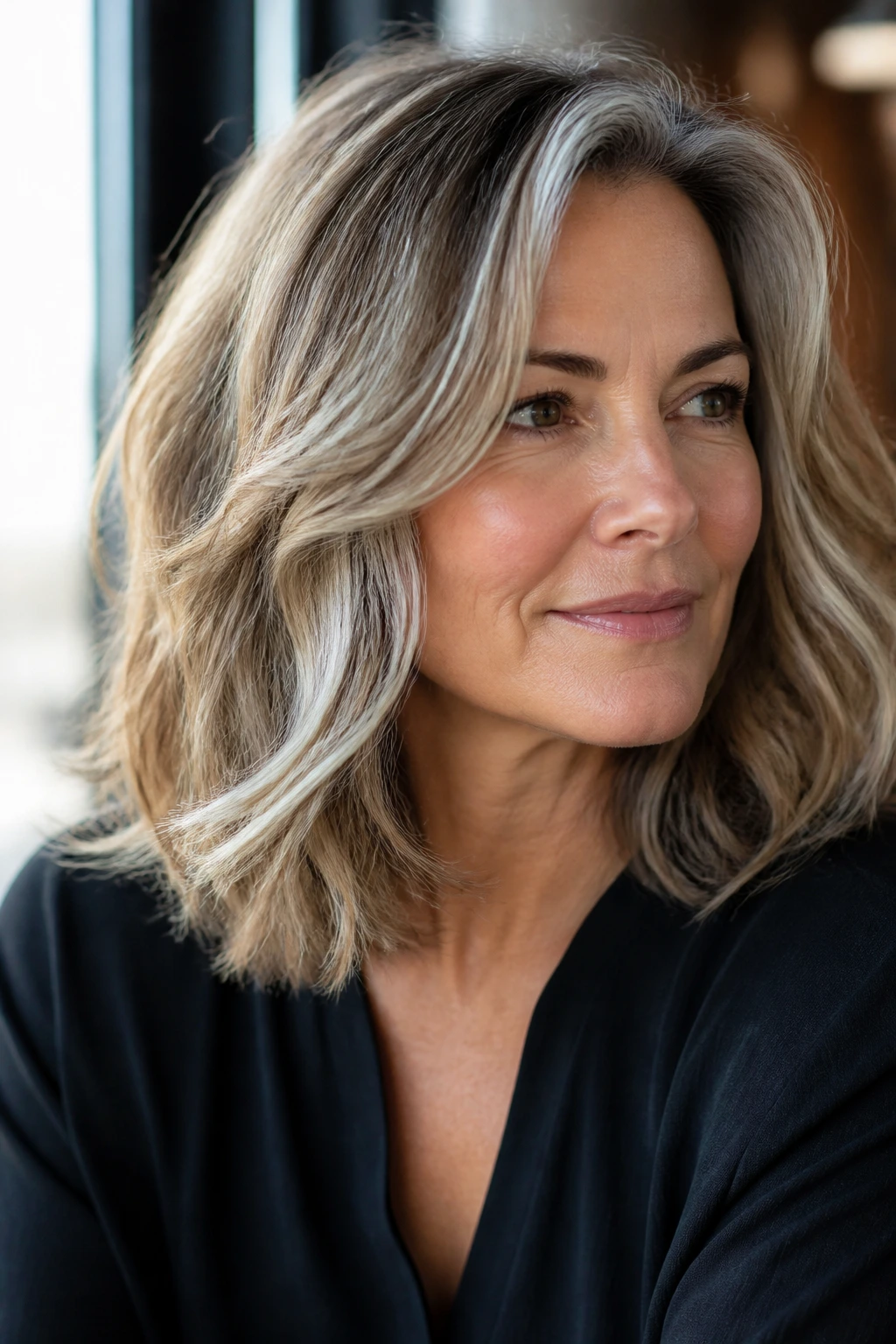
Parting: A soft side part or off-center part gives face-framing highlights somewhere to live. When the hair is split dead center, some of the most flattering pieces can disappear into the symmetry.
Styling: A loose bend from a 1-inch curling iron, a round brush blowout, or even a rough dry with a little smoothing cream helps subtle highlights show more clearly than pin-straight hair. Straight hair is honest. Sometimes too honest. If you want dimension to show, give it movement.
Cut Pairings: Bobs, lobs, soft layers, curtain bangs, and cropped cuts all take highlight placement differently. Shorter cuts love brightness near the temples. Longer cuts usually need ribbons through the mid-lengths and ends so the color doesn’t pool at the top.
Finish: Use shine spray on the mids and ends, not the roots. Heavy serum at the crown can flatten everything you just paid to brighten. A pea-sized amount is usually enough; if your hair is fine, even less.
The whole trick is to style the hair so the color can breathe. That’s it. Nothing fancy. Good placement does half the work, but the style has to let it be seen.
Extra Tone Boosters and Finishers
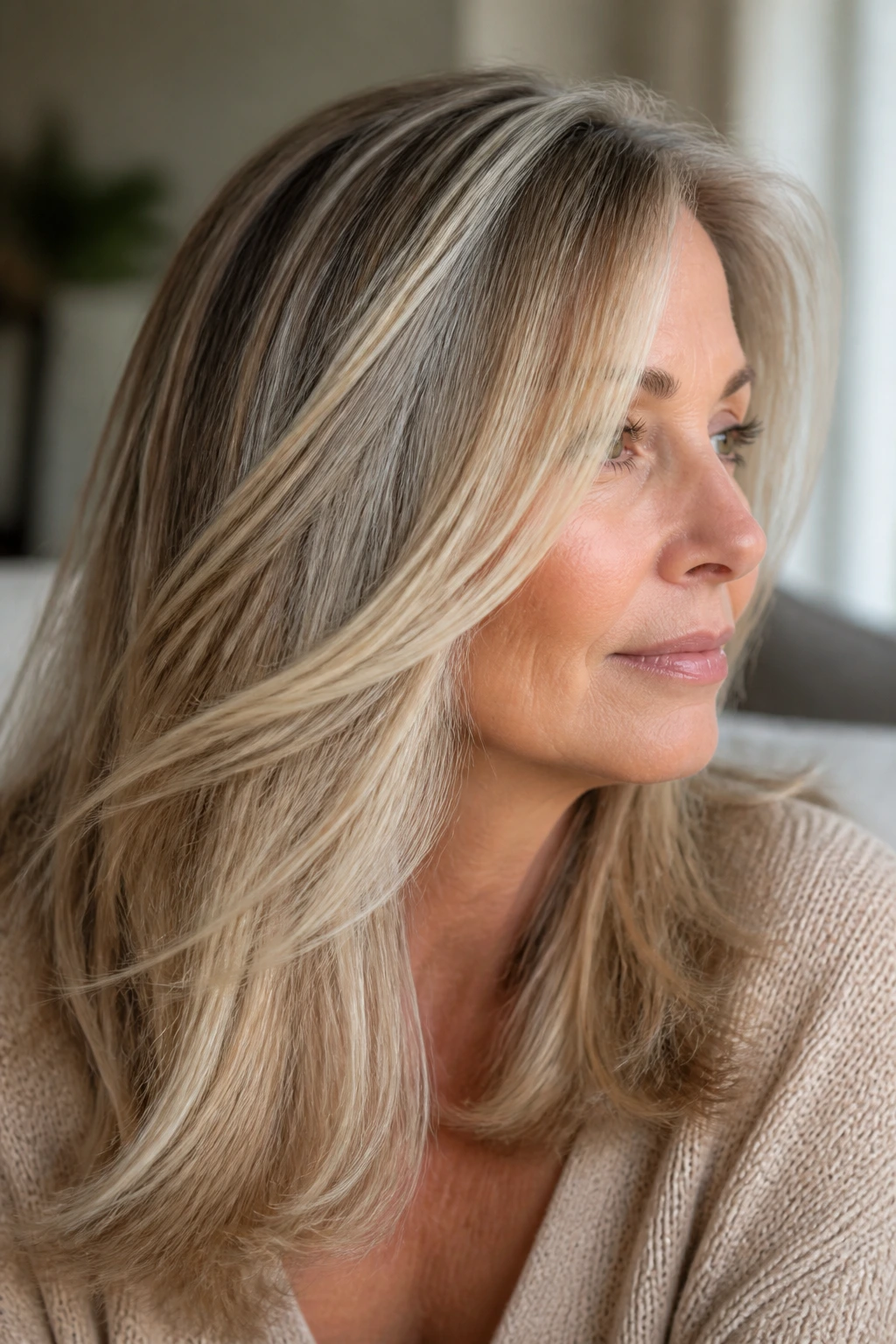
Glossing: A beige, pearl, taupe, or clear gloss every few weeks keeps the shade from turning dull. It’s the fastest way to revive subtle highlights after the first round of washing and heat styling.
Brightness Placement: If you want maximum effect with minimum upkeep, put the brightest pieces only at the face frame, part, and top layer. The back can stay softer. In fact, it often looks better that way because the front carries the visual weight.
Gray Blending: Let some of the silver show through. Fighting every gray strand usually creates more maintenance than the color is worth. Soft blending keeps the movement and gives the eye something interesting to follow.
Make-It-Yours: If you prefer cool tones, lean into champagne, pearl, taupe, and mushroom. If you look better in warmth, caramel, honey, almond, or soft auburn will usually sit more naturally against the skin. There is no badge of honor for choosing the trendiest tone if it makes your face look tired.
One thing I like about this category is how easy it is to adjust. You can keep the same placement and shift the tone warmer or cooler, lighter or darker, without rebuilding the whole look.
Maintenance, Refresh, and Grow-Out Guidance
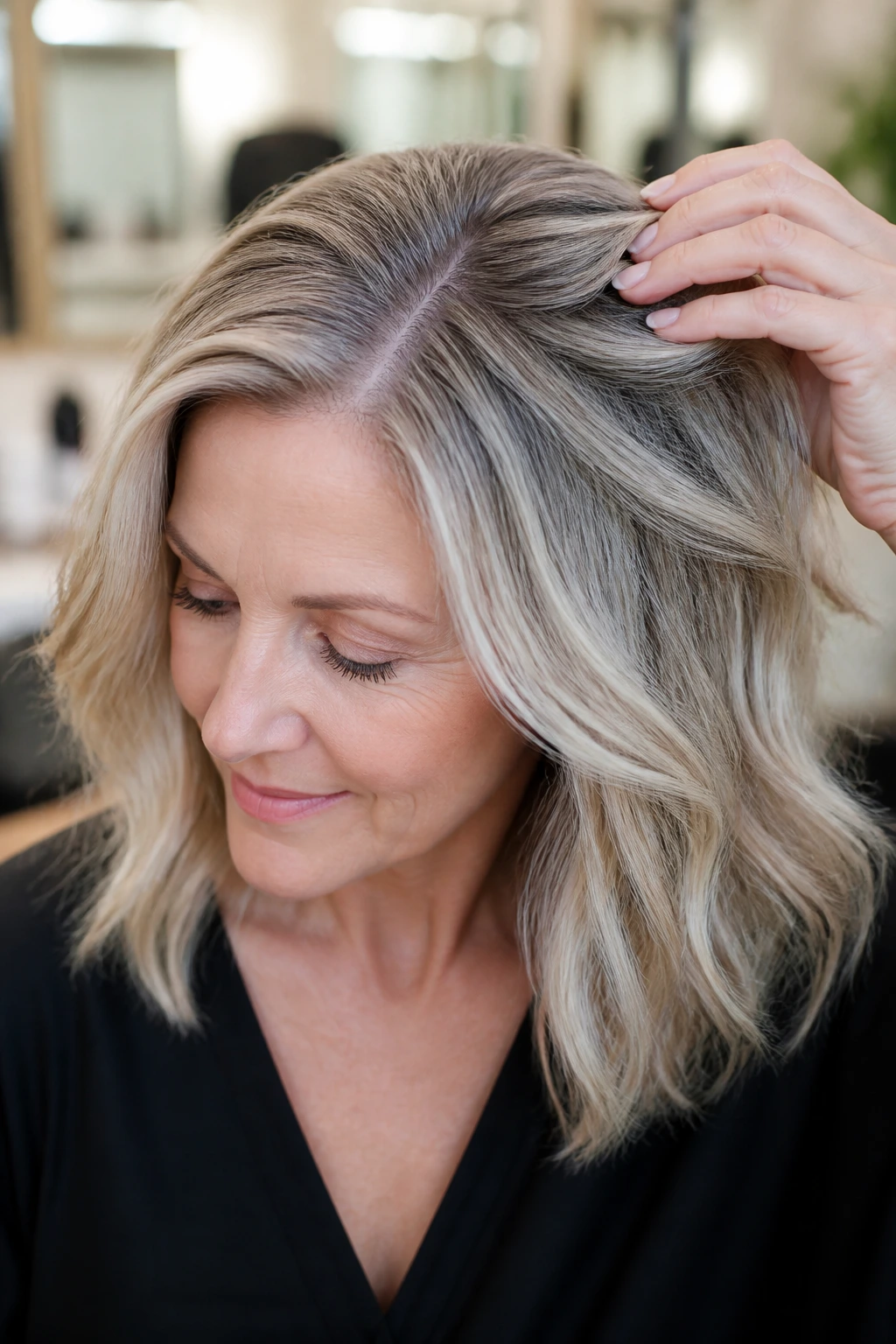
Soft highlights are only “low-maintenance” if you treat them like soft highlights. That means less constant correction, not no care at all. As a rule, fine babylights and gray-blending techniques can stretch farther between appointments than chunky, high-contrast highlights. Think in terms of 8 to 12 weeks for a soft refresh, sometimes longer if the color sits close to the base and the grow-out is intentionally blurred.
Blonde, pearl, and ice-toned pieces need the most tone control. A purple shampoo once every 7 to 10 days is usually enough for pale blonde or silver-blonde highlights; too much and the hair goes dull or violet at the ends. Brunette tones that drift orange can benefit from a blue shampoo every so often, but not every wash. Over-toning is a real thing, and it makes the hair look dusty.
Water temperature matters more than people like to admit. Lukewarm rinses are gentler on color than hot showers, and a color-safe conditioner on the mid-lengths and ends helps the highlights stay softer between salon visits. If the hair feels stretchy or rough, a bond-building or protein treatment can help, but don’t pile it on every wash. Hair can get stiff if you do.
Sun, swimming, and heat styling all dull subtle color faster than people expect. Rinse hair after pool time, use heat protectant before hot tools, and keep the iron lower if the hair is already lightened. None of that is glamorous. All of it works.
Variations and Adaptations to Try
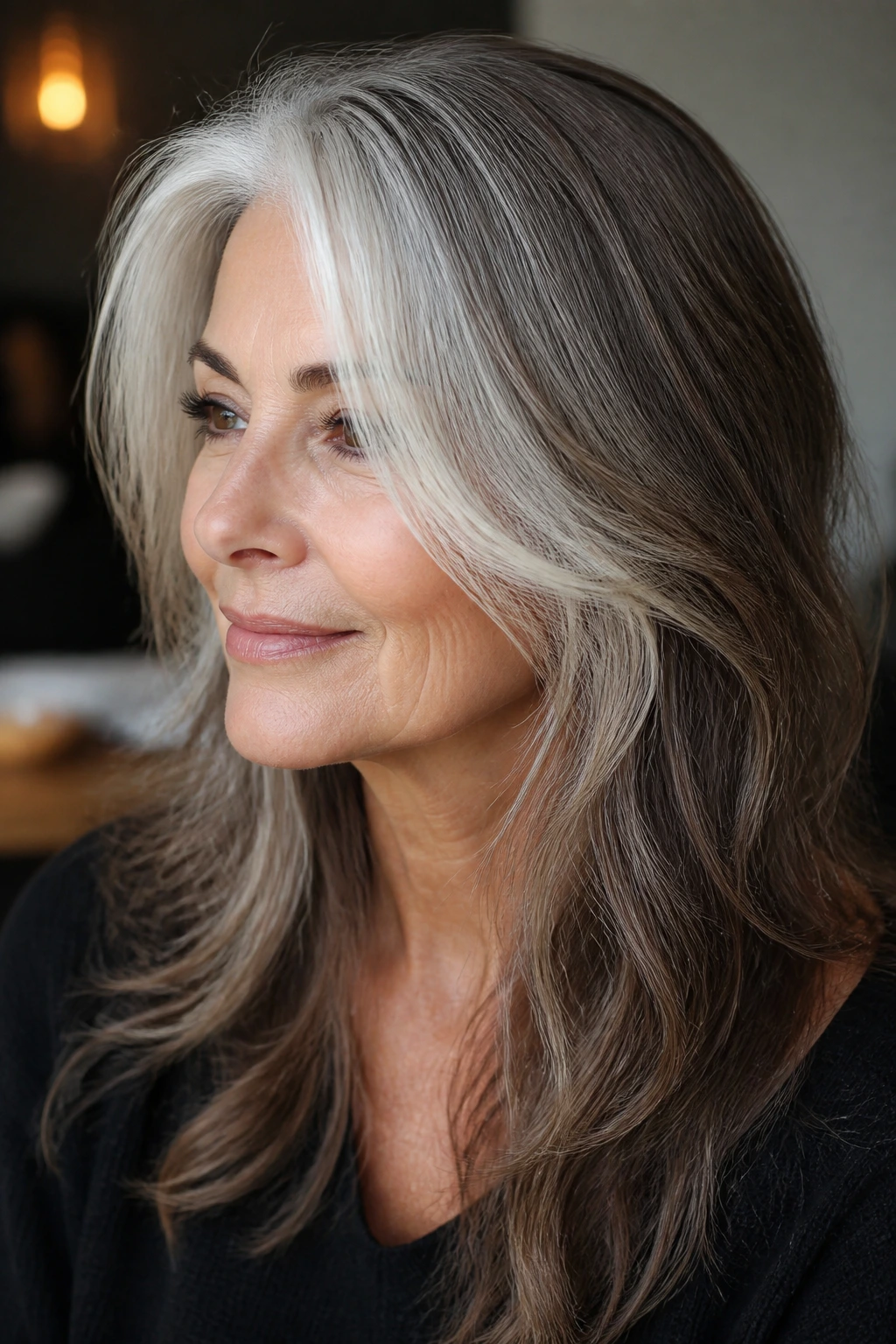
The Silver-First Blend: This version leaves most of the natural silver intact and uses champagne or pearl brighteners only around the face and part. It’s for women who want to lean into gray without looking washed out. The grow-out is soft, and the color feels modern without trying too hard.
The Warm Candle Glow: Swap in honey, caramel, or toasted almond tones if your skin looks best with warmth. The highlight placement stays the same, but the finish becomes richer and softer. This one works especially well on brunettes who feel flat in ash tones.
The Cool Quiet Brunette: Choose mushroom brown, taupe, and smoky espresso if your hair pulls red when lightened. The result is calm and grounded, with enough depth to keep the hair looking full. I like this on women who wear a simple cut and want the color to do the supporting, not the performing.
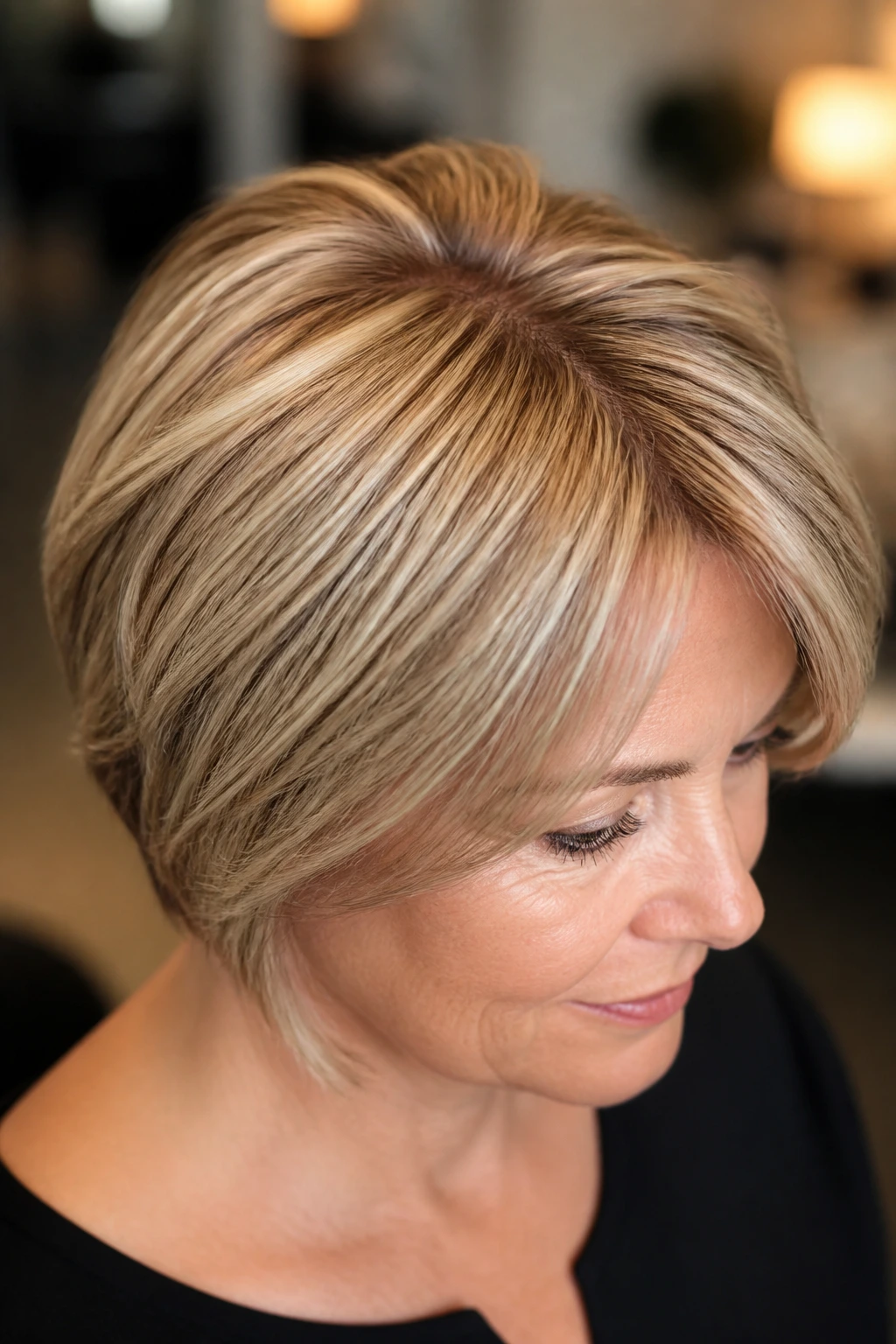
The Short-Cut Brightener: For pixies, bobs, and cropped layers, keep the front and crown brighter and let the back stay quieter. Short hair shows color fast, so fine placement matters more than broad sections. A few creamy pieces at the temples can change the whole haircut.
The Curly Soft-Frame: On curls and waves, keep the highlights where the curl opens naturally, especially around the perimeter and face. That keeps the color from disappearing into the pattern. Curly hair loves soft contrast, but it hates bad placement.
Common Mistakes With Subtle Highlights for Older Women
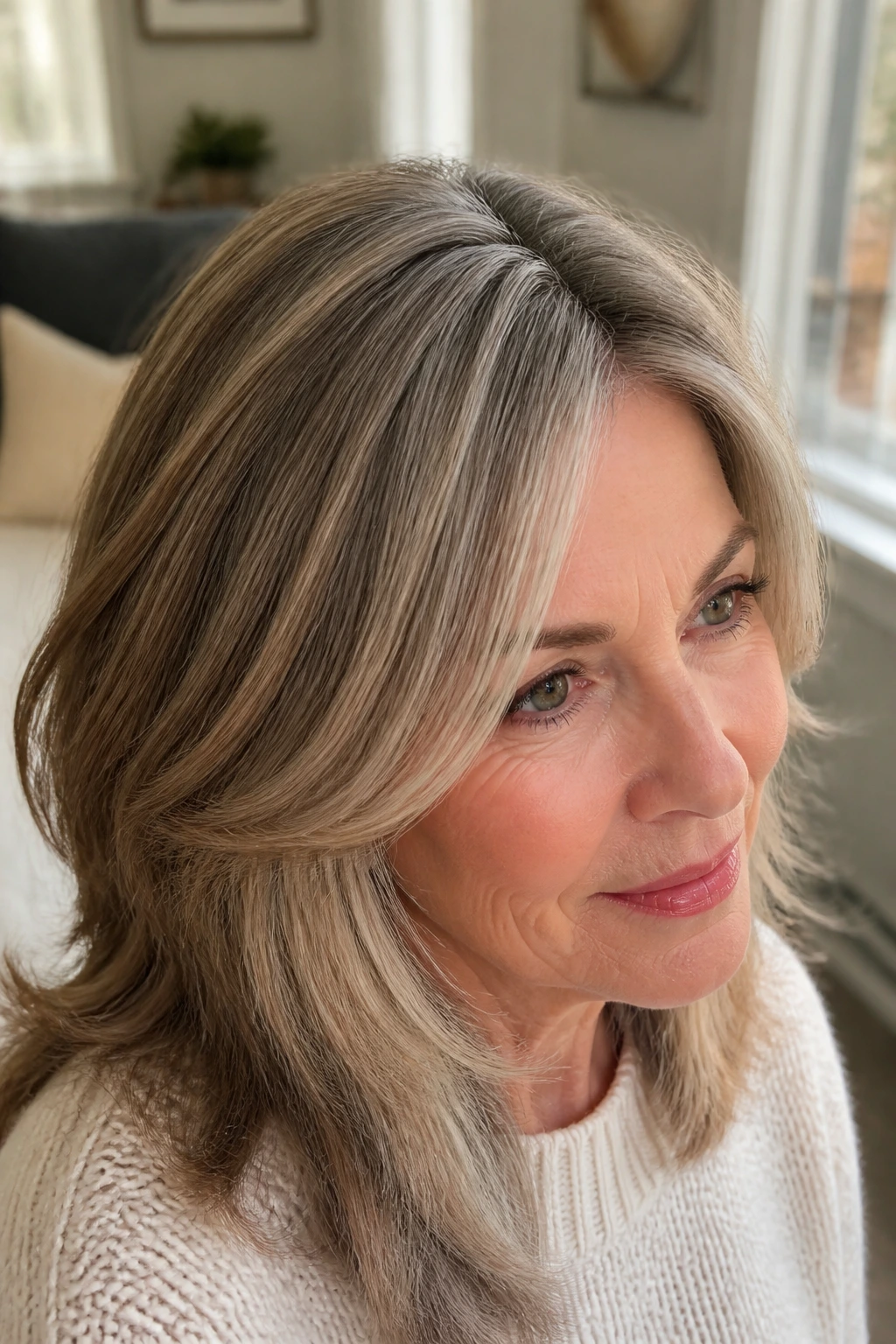
The biggest mistake is thinking “subtle” means “light all over.” It doesn’t. If the color lifts too far from the base, the eye goes straight to the regrowth line and the whole look starts working against you. The fix is simple: keep the brightness close to the natural shade and spread it where the haircut moves.
Another common problem is choosing the wrong tone for the base. Beige on a very warm brunette can look muddy. Gold on a cool silver base can look brassy. The solution is to match the undertone to the hair, not to the inspiration photo, which may have been shot in flattering light and edited into the next county.
People also overdo the front pieces. A heavy face frame can be too much if the rest of the hair stays soft. The hairline should brighten, yes, but it should still blend into the rest of the head. Think whispers, not billboards.
- Too much contrast: If the highlights are four shades lighter than the base, they stop looking soft. Ask for one to three levels of lift instead.
- Ignoring porosity: Dry or porous hair grabs toner fast and can turn muddy. Use a gloss and avoid over-processing the ends.
- Chunky placement on fine hair: Wide streaks can make the scalp more visible. Fine hair usually looks better with babylights and micro-lights.
- Skipping maintenance: Even low-key highlights need toning. If the shade starts to go yellow, orange, or flat, refresh it before the tone slides too far.
Frequently Asked Questions About Subtle Highlights for Older Women
What highlights look best on gray hair?
Pearl, champagne, vanilla, and soft beige tones usually blend best with gray because they echo the brightness of silver without turning harsh. If the gray is mostly at the temples or part, a few bright pieces in those spots can do more than an all-over foil job.
Are babylights better than balayage for mature hair?
Babylights are better when you want a very soft, blended result with little visible stripe pattern. Balayage is better when you want a gentler grow-out and a little more movement through the lengths. Many of the prettiest looks borrow from both.
Should subtle highlights be warm or cool?
Whichever tone matches your skin and base color. Warm browns usually like caramel, honey, and almond. Cooler brunettes and silver hair often look cleaner in beige, taupe, mushroom, or pearl.
Can highlights make fine hair look fuller?
Yes, but only if the placement is fine enough. Micro-lights, babylights, and a soft root shadow can create depth without exposing too much scalp. Chunky stripes tend to do the opposite.
How often do subtle highlights need touching up?
A soft highlight plan can usually go 8 to 12 weeks, sometimes longer if the grow-out is intentionally blurred. A gloss may need a refresh sooner, especially on cool blonde or silver tones.
What if the highlights turn brassy?
That usually means the toner faded or the lightening was warmer than you wanted. A blue or purple shampoo can help a little, but a salon gloss is often the cleaner fix. Don’t keep piling purple shampoo on every wash; that just makes the hair dull.
Can I keep my natural gray and still add highlights?
Absolutely. In fact, that’s one of the best uses for subtle highlighting. Silver and pearl pieces around the part or face can make natural gray look intentional rather than grown-out.
What should I ask for if I want very low maintenance color?
Ask for soft balayage, a gentle root shadow, and fine pieces that stay close to your base color. The goal is to create dimension that still looks good eight weeks later, not color that needs constant rescue.
Soft Light, Softer Grow-Out
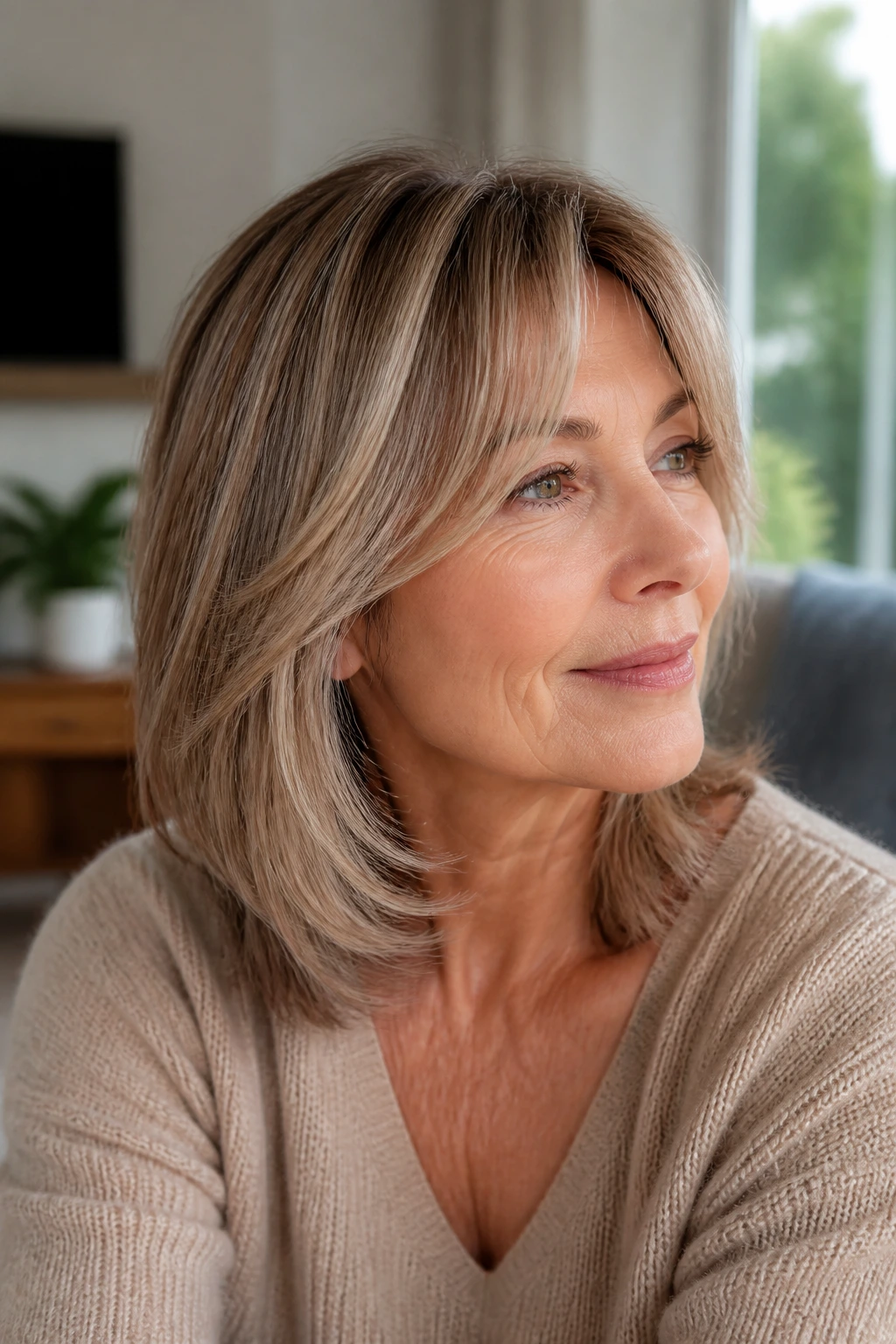
The best subtle highlights do a small but important trick: they make hair look more alive on day one and less obvious on month three. That’s why champagne babylights, taupe ribbons, pearl blends, and soft caramel veils keep showing up in real salons. They don’t fight the hair you have. They work with it.
If you’re standing between gray blending, a gentle blonde shift, or a richer brunette refresh, start with the softest version you can honestly live with. You can always brighten later. Taking brightness away is the part that gets expensive, time-consuming, and mildly annoying in the chair.
Pick the shade family that respects your base, keep the placement fine, and let the haircut show off the rest. That’s the whole game, and it’s a good one.
