



Brunette hair can look rich and expensive in one light, then flat in the next. That’s the little trap. A single brown shade often reads as one block from root to tip, which is why dimensional highlights for brunette hair matter so much: they break up the surface, catch movement, and make the cut look fuller without forcing you into a high-maintenance blonde situation.
The best brunette highlight jobs don’t scream. They shimmer. Warm caramel threads, cooler mushroom ribbons, soft mocha babylights, a bright money piece near the face—those tiny shifts do more work than a heavy chunk of blonde ever could. And when the placement is right, the grow-out stays soft instead of turning into a hard line you have to fight every six weeks.
The tricky part is choosing the right kind of dimension. Too light, and the brown base gets washed out. Too uniform, and the color looks striped. Too warm, and you drift into orange. Too cool, and the whole head can look dusty. The sweet spot is a mix of tone, placement, and contrast that plays well with your base shade, your cut, and how much upkeep you’re willing to tolerate.
Why This Collection Feels Different
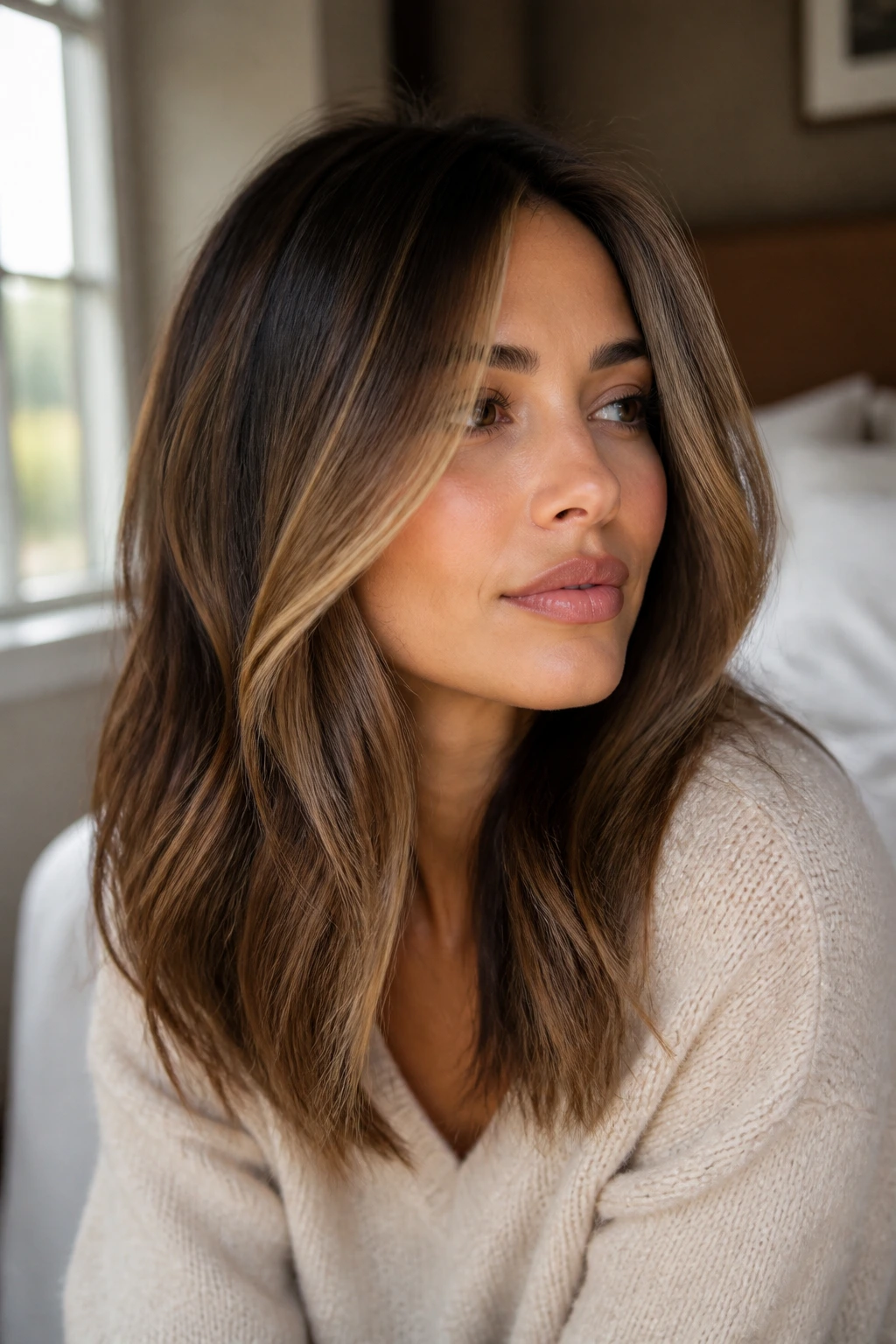
-
Placement matters more than brightness: A few well-placed ribbons around the face and mid-lengths can read richer than a full head of light streaks, especially on level 4 to 6 brunettes.
-
Tone changes the whole mood: Caramel, ash, copper, beige, and walnut all sit on the brown spectrum, but each one changes how the hair reflects indoor light and sunlight.
-
Some looks grow out cleaner than others: Balayage, shadow roots, and babylights leave softer regrowth than chunky foil stripes, which means fewer awkward weeks between appointments.
-
Lowlights are part of the plan: A brunette highlight job often looks better with a few deeper pieces added back in, because that darker note keeps the color from going hollow.
-
Texture changes the final read: The same color looks different on pin-straight hair, loose waves, curly layers, or a blunt lob, so style choice matters as much as the dye formula.
-
Not every brunette wants blonde: Some of the strongest-looking options barely lift past caramel or taupe, and that restraint is exactly what makes them flattering.
1. Caramel Ribbon Balayage
Caramel ribbon balayage is the one people ask for when they want brunette hair to move a little more in the light without turning gold all over. The painted pieces sit mainly through the mid-lengths and ends, which keeps the root grounded and gives the surface that soft, striped-glass effect you see on well-done waves. On a level 4 or 5 base, it reads warm and glossy, not brassy.
Why it works on dark brown hair
The contrast is gentle enough that the grow-out doesn’t shout. You get visible brightness, but the dark root still does the heavy lifting. Ask for ribbons, not chunks—that detail matters more than the actual shade name.
- Caramel pieces around levels 6 to 7 usually sit nicely on medium brunettes.
- A slightly deeper base keeps the look from flattening out.
- A loose wave shows the ribbon pattern better than a tight curl.
Best for: anyone who wants a soft, sun-touched result that doesn’t need constant toning.
2. Soft Mocha Babylights
Soft mocha babylights are the sneaky option. They barely announce themselves in the chair, then suddenly the whole head looks denser and more polished once the light hits. Instead of large painted sections, you’re working with very fine strands, often close to the natural brunette level, just a touch lighter.
What makes this one different
Babylights are the answer when you want dimension without obvious color blocks. They are especially good on fine hair, because the thin placement makes the hair look fuller rather than thinner. If you keep the toner neutral or slightly cool, the mocha tone stays plush instead of orange.
Good to know: this is one of the quietest brunette highlight options, which is exactly why it photographs as depth rather than dye.
3. Chestnut Money Piece
A chestnut money piece changes the whole face frame in one move. The front sections are brighter and warmer than the rest, and that little hit of chestnut light does a lot around cheekbones and eyes. The back can stay mostly brunette, which keeps the upkeep reasonable.
How to ask for it
Tell your colorist you want the front brightened just enough to show around the part and temple, but not so much that it disconnects from the lengths. Chestnut is a nice middle tone because it doesn’t look yellow against brown hair. It sits between red-brown and gold, which makes it easy to wear on both warm and neutral skin tones.
Pro tip: a center part shows the money piece most clearly, while a side part softens the contrast.
4. Honey Ombré Melt
Honey ombré melt is for the brunette who likes a little drama, but not from the root. The color shifts from deeper brown at the scalp into warmer honey through the ends, and the trick is making the transition look gradual rather than dipped. If the line is too sharp, the whole thing turns costume-y fast.
The best version uses a soft hand through the transition zone, usually around the cheekbone to collarbone area, depending on length. That gives the eye a slow fade. The goal is melt, not stripe.
For long layered hair, this one has real movement. Loose curls make the honey pieces catch and release light in a way that feels almost woven into the cut.
5. Toffee Contour Highlights
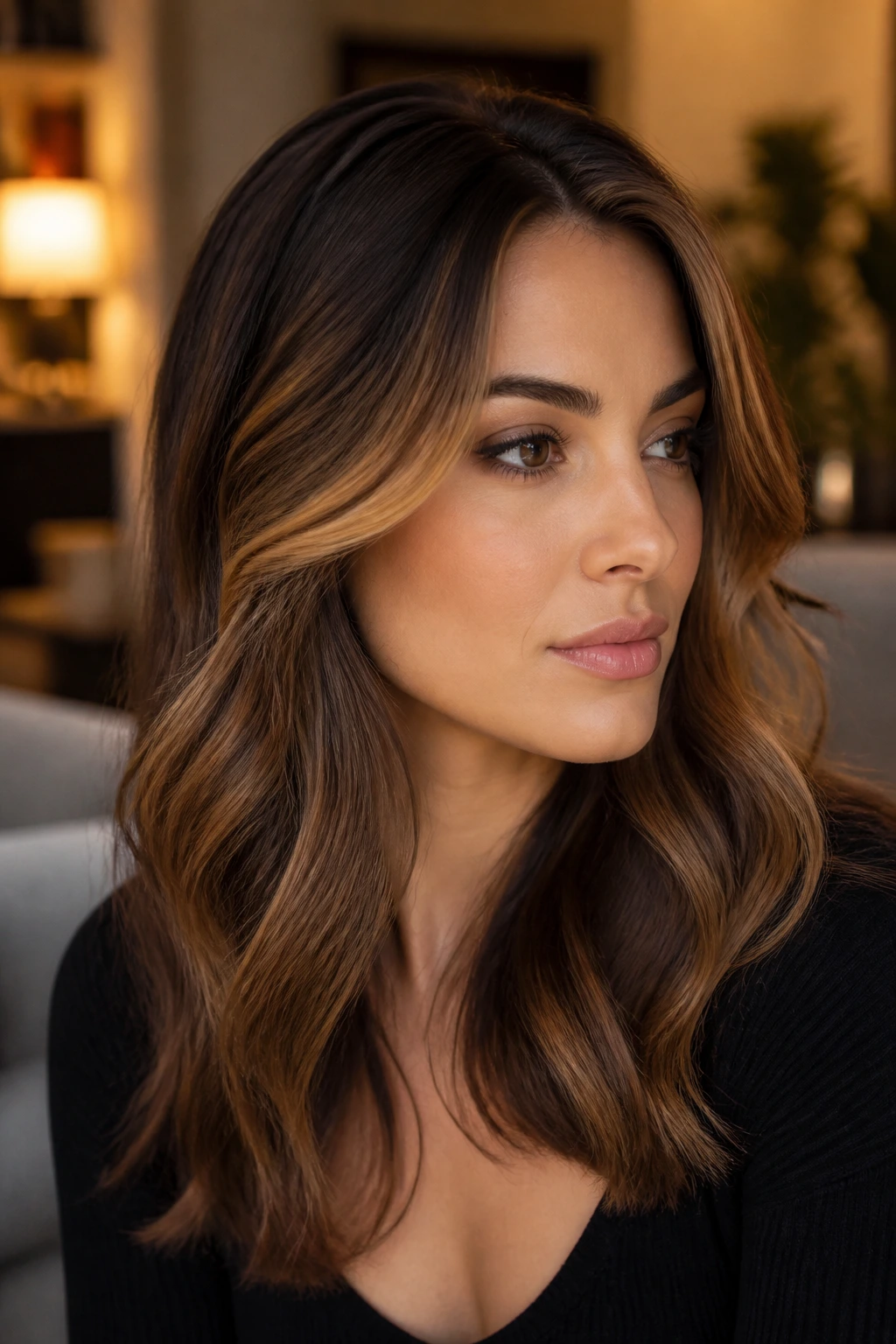
Toffee contour highlights sit where contour would on a face: around the temples, cheek area, and the outer layer of the hairline. That placement wakes up brunette hair without needing to lighten every inch of it. It’s a smart choice if you wear your hair up a lot, because the brighter pieces still show when the hair is pulled back.
Why it works
The eye reads light near the face as lift. That’s it. No magic. A few toffee ribbons can make the skin look warmer and the haircut look more deliberate, even if the rest of the hair stays quietly dark.
If you’ve got a layered cut, this style gives the ends some separation too. That stops brunette hair from reading as one solid curtain.
6. Cinnamon Foilyage
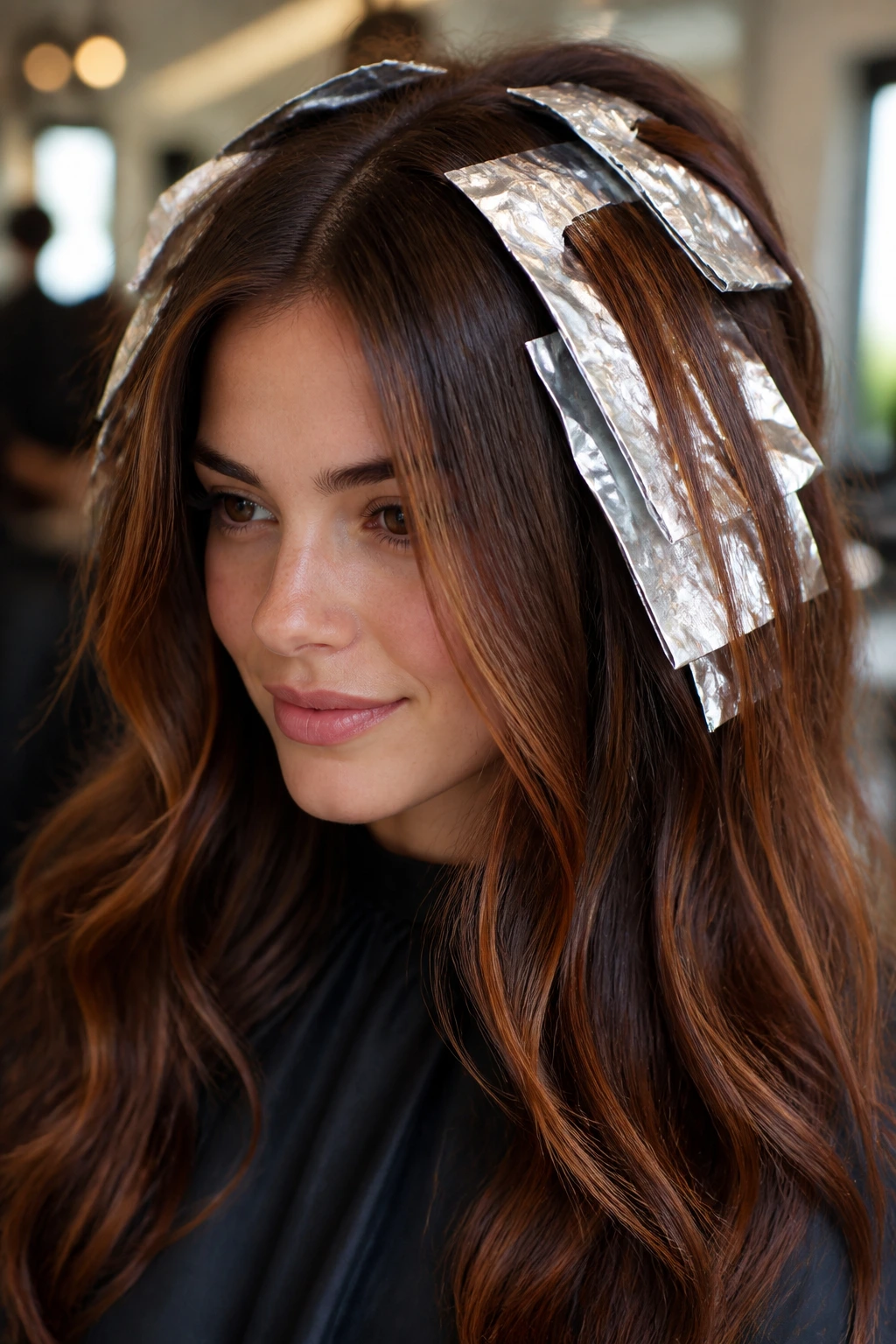
Cinnamon foilyage is warmer and a little bolder than basic caramel balayage. The foil part helps the hair lift a touch higher, while the painted part keeps the result soft at the root. The cinnamon tone brings a red-brown edge that looks rich on deeper brunettes and especially good in low light.
What to watch for
Because cinnamon sits on the warmer side, it can turn orange if the underlying lift is uneven. A colorist who knows how to tone red-brown shades matters here. If your hair tends to pull brass, ask for a softer cinnamon rather than a bright copper.
This is the look for someone who wants brunette hair to feel alive at dinner, not just in daylight.
7. Mushroom Brown Dimension
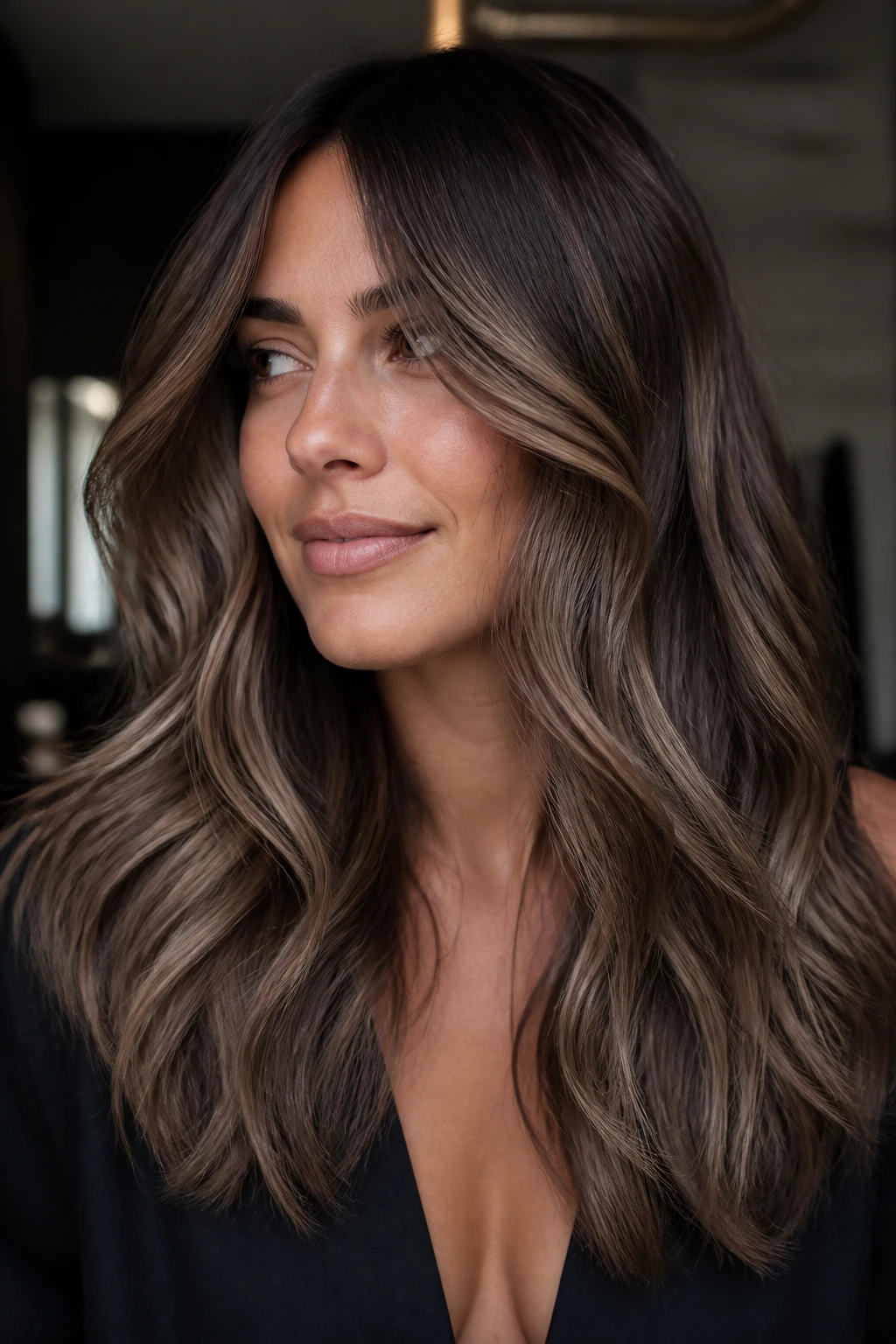
Mushroom brown dimension is the cooler cousin in the lineup. Think beige-brown, taupe, and smoky low-gloss ribbons layered over a brunette base. It’s a good choice when you want depth without any obvious gold or copper showing through.
How it reads in real life
On wavy hair, mushroom tones create a suede-like finish. They don’t flash as much as caramel, but they make the hair look expensive in a quieter way. That matters if your wardrobe leans black, gray, cream, or olive.
A lot of people ask for “ash” and end up too flat. Mushroom is better. It still has warmth in the background, which keeps the brunette from looking chalky.
8. Bronde Micro-Ribbons
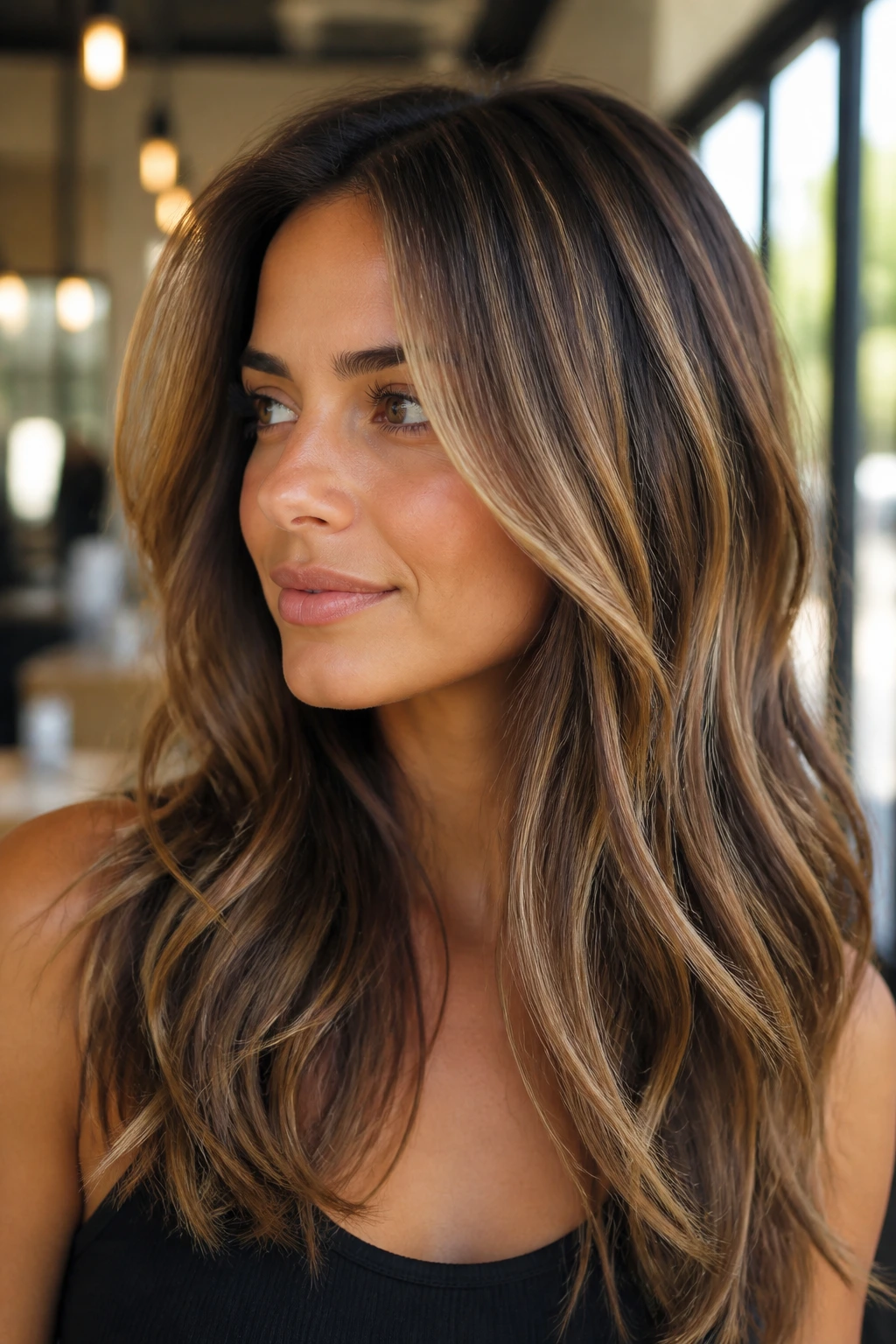
Bronde micro-ribbons are tiny, frequent streaks that sit between brunette and blonde. The color shift is lighter than mocha babylights, but the strands stay fine enough that the finish still feels blended. It’s the kind of look that should make people notice shine before they notice dye.
Why it works for darker brunettes
When the ribbons are thin, the contrast spreads out. Instead of one obvious highlight line, you get a soft veil of light. That’s useful on thicker hair, where a few larger pieces can disappear inside the density.
Best for: medium to thick brunette hair that needs brightness through the mids and ends, not just around the face.
9. Copper Penny Accents
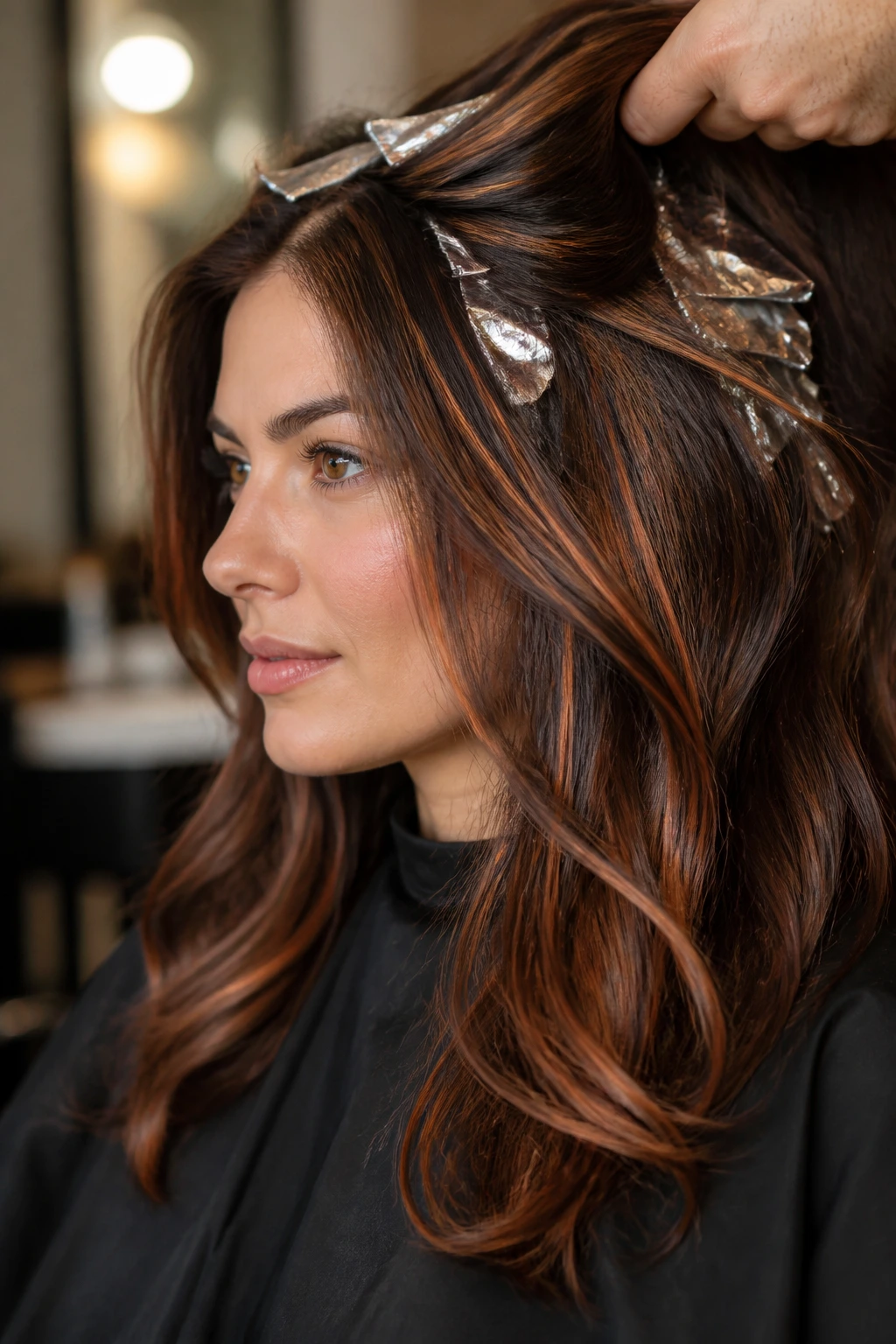
Copper penny accents are for brunettes who don’t want to play it safe. The copper pieces sit like sparks inside the brown, and because copper has both red and gold in it, it gives depth even when the light is dull. It looks especially strong on hair with naturally warm undertones.
The mechanism
Red-brown color has a way of making brunette hair feel denser. The shine reads almost metallic, especially when the hair is freshly blown out. If you have fair to medium skin with peachy undertones, this can be a knockout move.
Keep the pieces scattered and narrow. Too many copper streaks, and the result starts to look loud rather than dimensional.
10. Beige Blonde Balayage
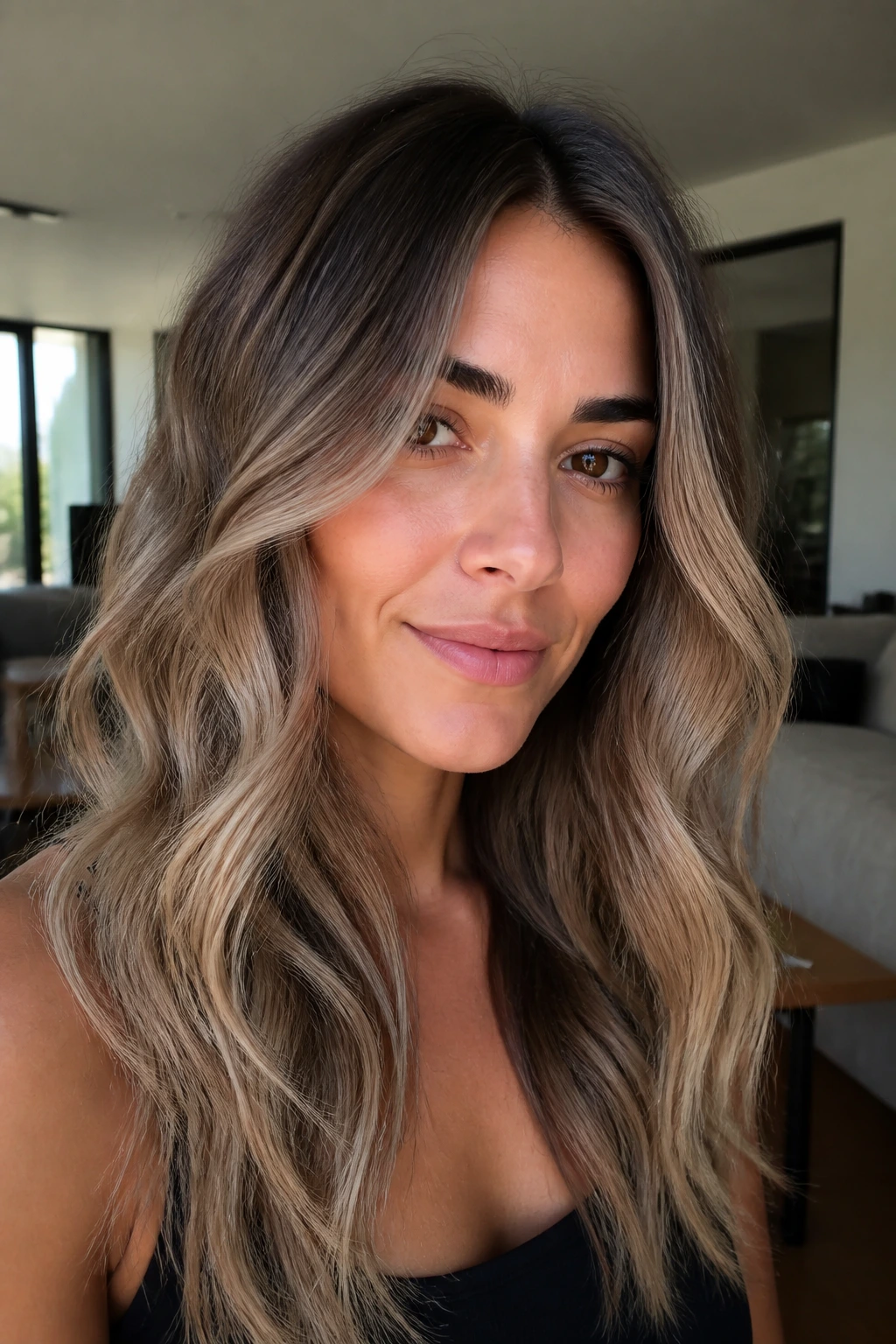
Beige blonde balayage sits in that useful middle ground between warm honey and cool ash. The beige tone keeps the lightness from turning yellow, while the balayage placement keeps the root soft and the grow-out manageable. This is one of the better choices if you want to feel lighter without losing the brunette identity.
A lot of brunettes go too golden when they chase brightness. Beige is the cleaner answer. It lets the color breathe without screaming “I went blonde.”
How to wear it
Loose blowouts show the beige ribbons best. Straight hair can look a little flatter unless there’s enough layering to separate the pieces. If you want the color to stay crisp, ask about a gloss after lightening.
11. Chocolate Lowlight Lacing
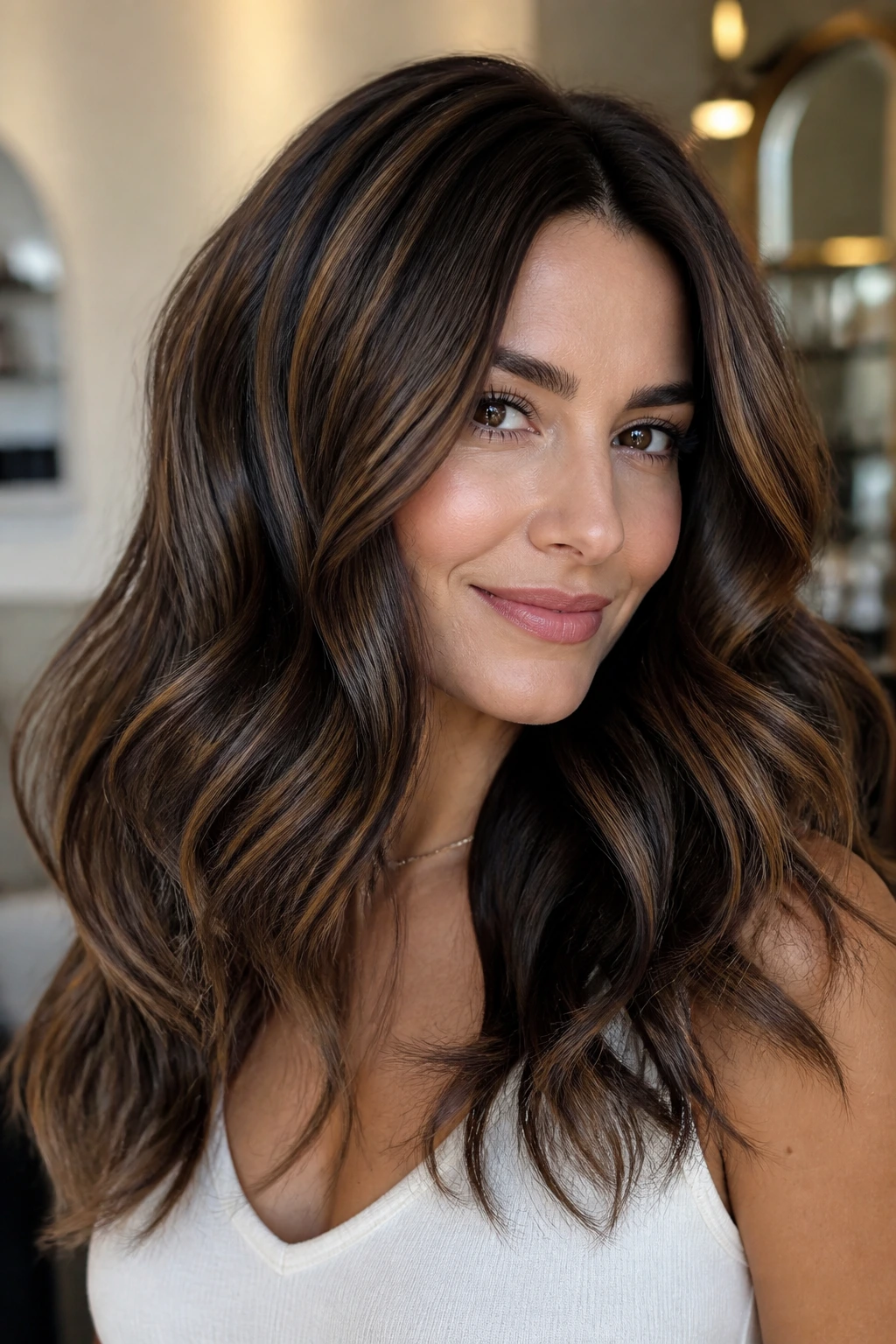
Chocolate lowlight lacing works in the opposite direction, and that’s why it matters. Instead of lifting pieces brighter, this technique adds deeper chocolate strands back into lighter brunette hair or into a previously highlighted base. The result is a fuller, denser look with more edge.
Why it belongs in a brunette highlight article
People forget that contrast comes from dark as much as light. If the whole head sits too close to the same tone, hair can look thin. Lowlights fix that fast. They also help a faded balayage job look grounded again.
This is a smart move after a summer-lightened service, or anytime the ends have gone too pale and need weight put back into them.
12. Walnut Shadow Balayage
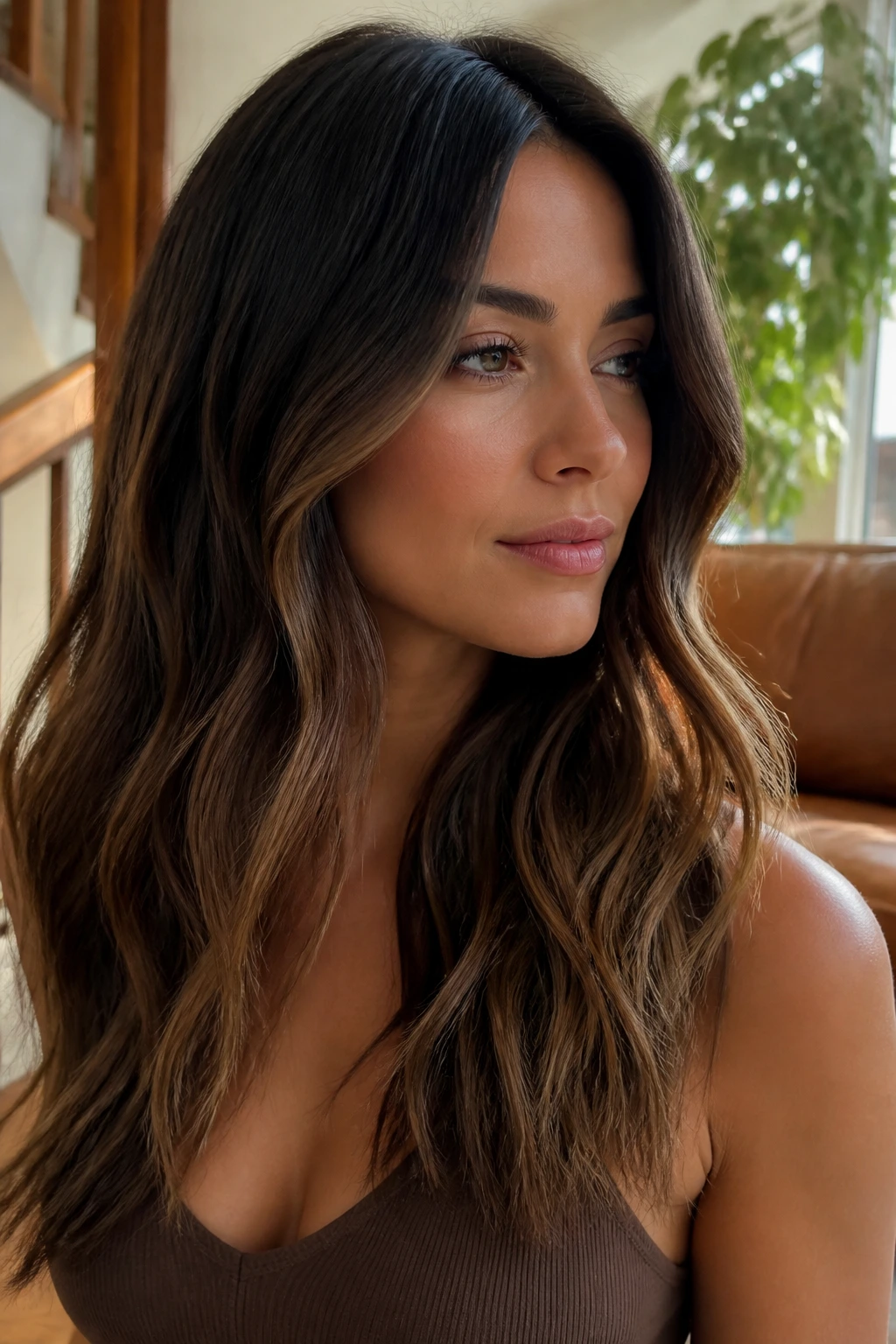
Walnut shadow balayage keeps the top darker and adds walnut-toned brightness farther down the hair shaft. It’s subtle, earthy, and good at hiding grow-out because the root area stays close to the natural brunette level. The walnut shade is warm enough to feel polished, but not so warm that it tips orange.
That shadow root matters. It makes the light pieces feel intentional instead of disconnected, especially on medium-length cuts where every inch is visible.
Best for: someone who wants dimension that stays neat for weeks, not days.
13. Golden Bronze Ends
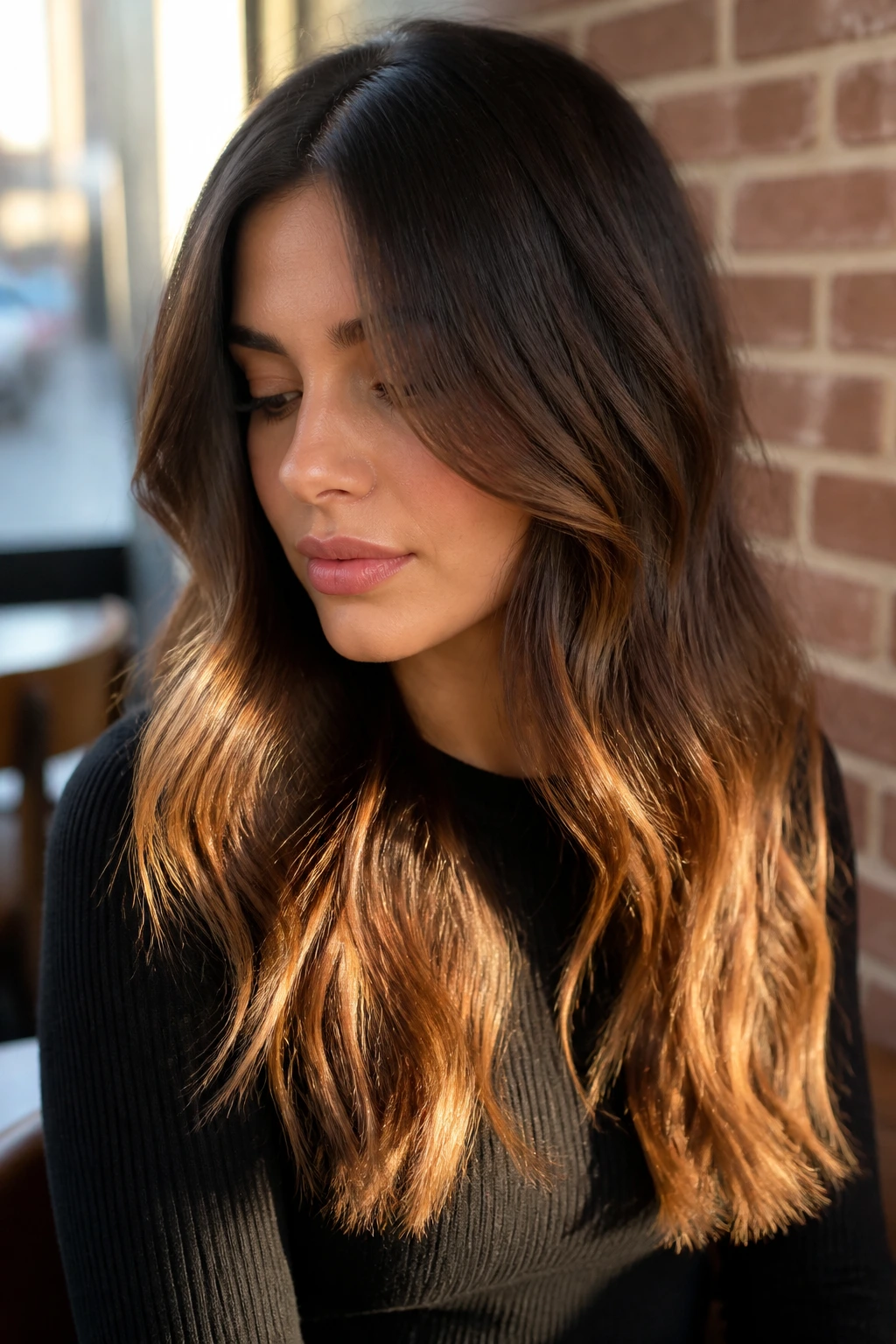
Golden bronze ends are the kind of finish that makes layered brunette hair look sunlit from the middle down. The brightness is concentrated at the bottom third, which gives the cut a finished, glowing edge. It’s bolder than a soft balayage, but still far from full blonde.
A practical note
This style works best when the ends are healthy enough to hold tone. If they’re already dry or porous, bronze can grab unevenly and skew dull. A trim before coloring helps the finish look smoother and keeps the lightness from sitting on rough tips.
If your hair is long and waved, this one has a lot of movement for the effort.
14. Ash Brunette Highlights
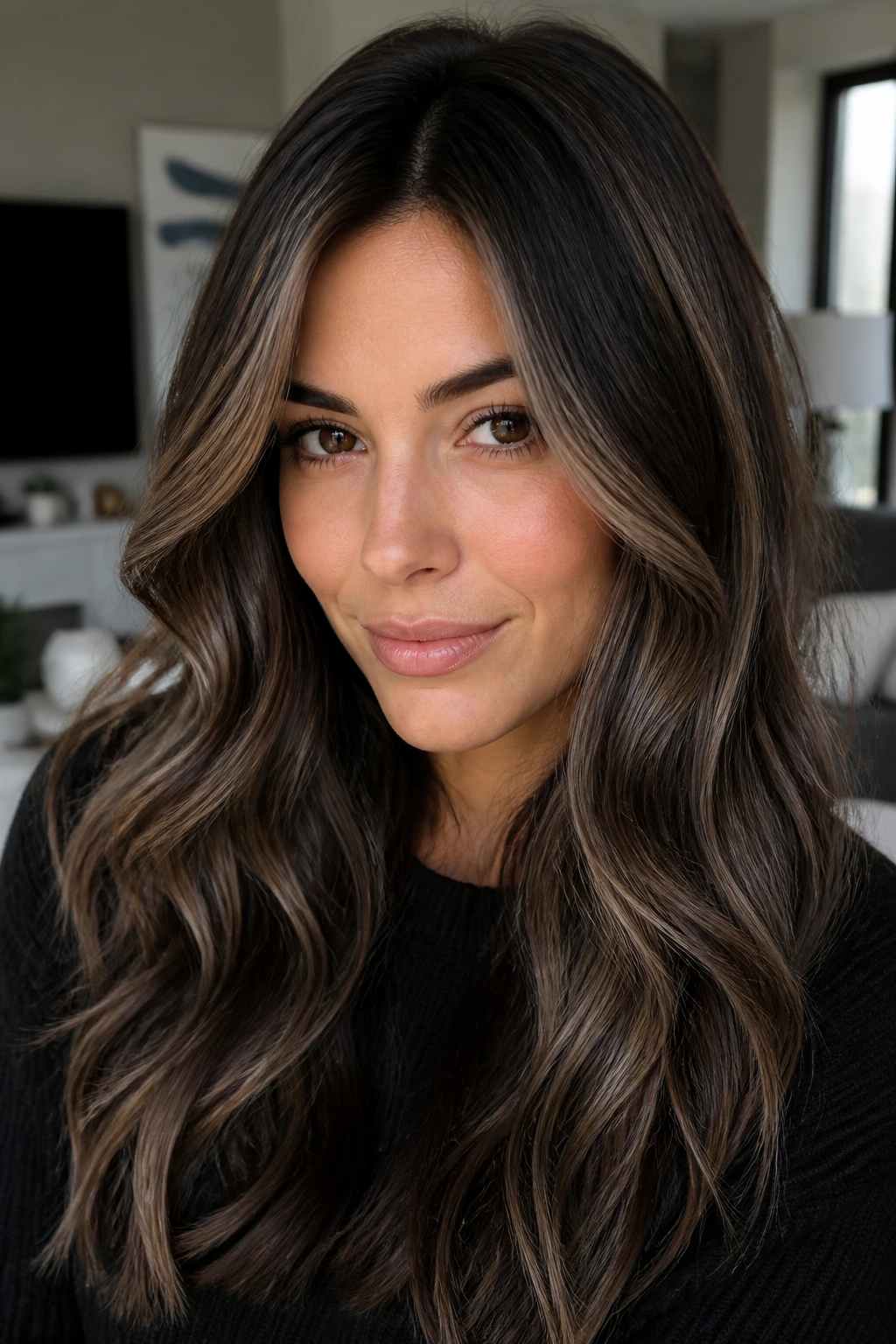
Ash brunette highlights are cleaner and cooler than most people expect. They’re not gray in the salon-chair sense; they’re muted beige-brown pieces that calm down warmth in the base. That makes them useful for naturally warm brunettes who are tired of brass creeping in after every shampoo.
Why they work
Cool highlights can create depth by contrast alone. On a dark base, they look like smoke threaded through chocolate. The key is not to over-tone them into flatness. Leave enough beige in the formula so the pieces still reflect light instead of disappearing.
This is a strong choice for silver jewelry wearers, cool-toned makeup, and anyone who likes a sharper, cleaner brunette.
15. Hazelnut Foilyage
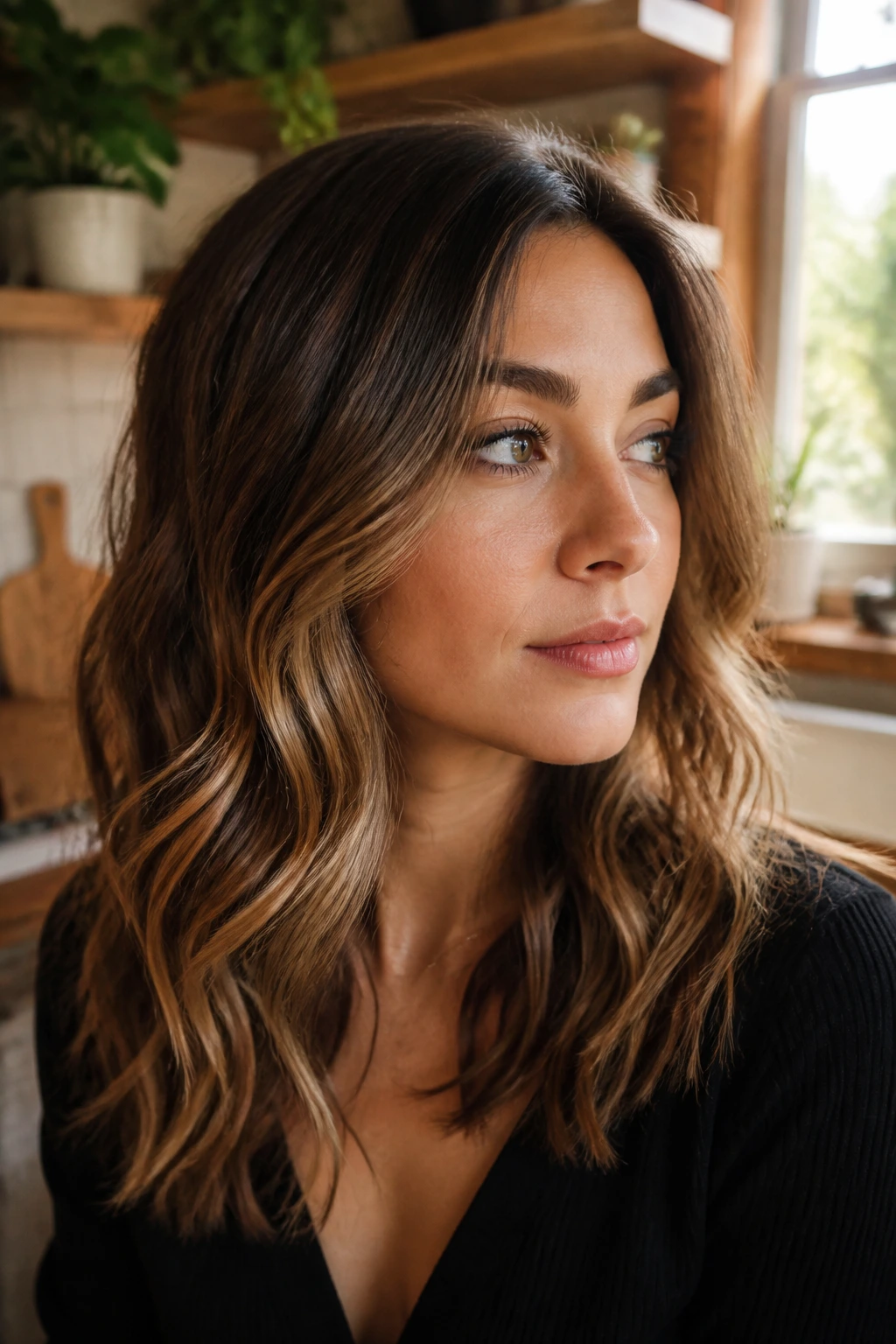
Hazelnut foilyage gives you more lift than basic hand painting, but less obvious lines than traditional foil highlights. That combination is useful on brunettes who need the hair to brighten past the mid-lengths without losing softness. Hazelnut sits in a warm-neutral zone, which helps the color look rich instead of yellow.
How it feels on the cut
This look shines on medium layers, because the different lengths break up the foiled pieces and keep them from reading too blocky. On one-length hair, it can look heavier, so add movement in the cut if you can.
If you want dimension that can still be worn sleek, hazelnut foilyage is a solid bet.
16. Maple Melt
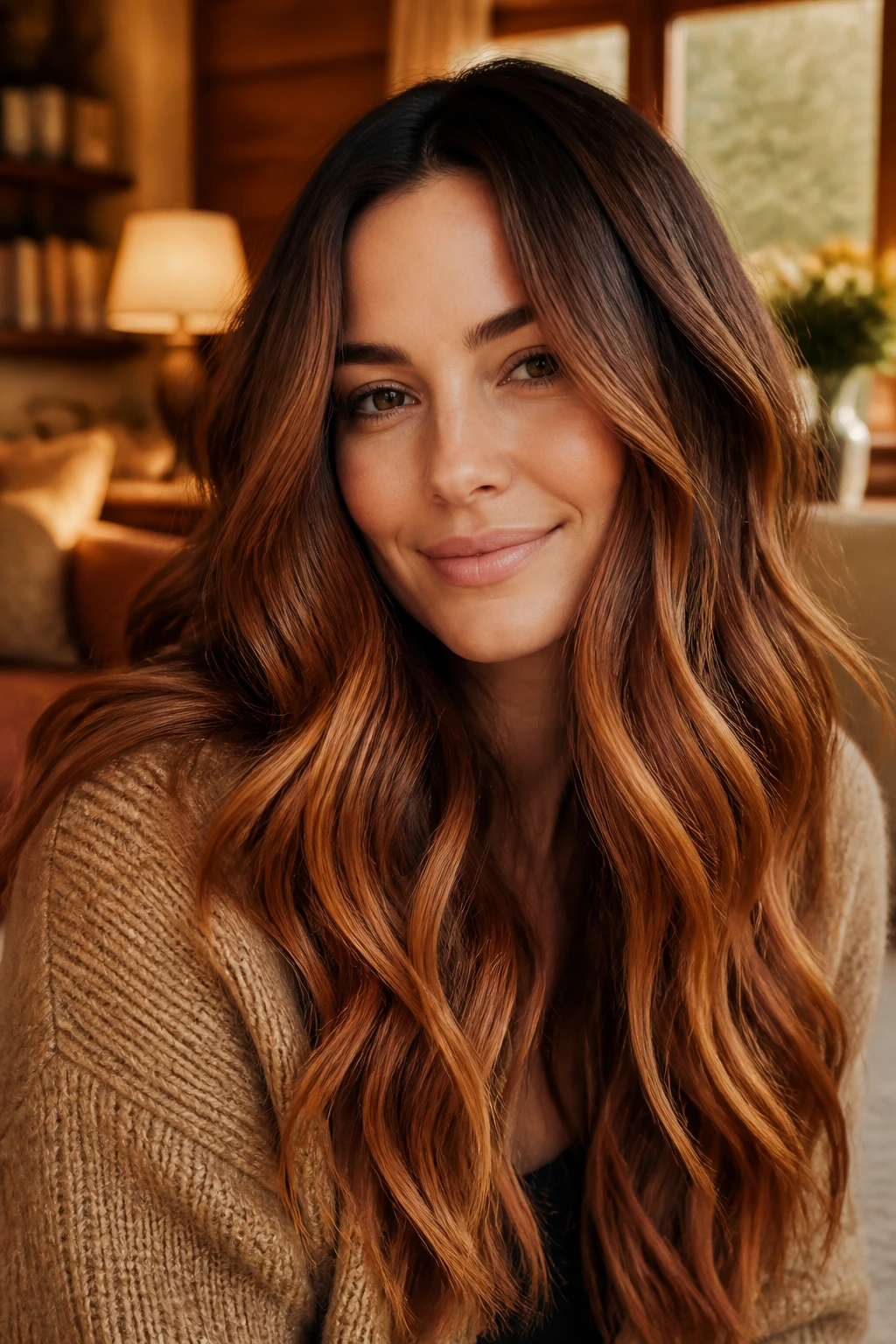
Maple melt is warmer than mushroom, softer than copper, and richer than plain caramel. The color slides from a deeper brunette root into maple-toned mids and ends, which gives the whole head a cozy, expensive warmth. It’s especially good on hair that tends to look dull indoors.
What makes it different
Maple has a red-gold base, so it reflects light with more warmth than beige does. That means the color stays visible even when the room is dim. If your skin tone has olive or golden notes, this one tends to flatter quickly.
Tip: ask for a gloss that keeps the red-orange side under control, not erased. Too much ash will kill the whole point.
17. Smoky Taupe Dimension
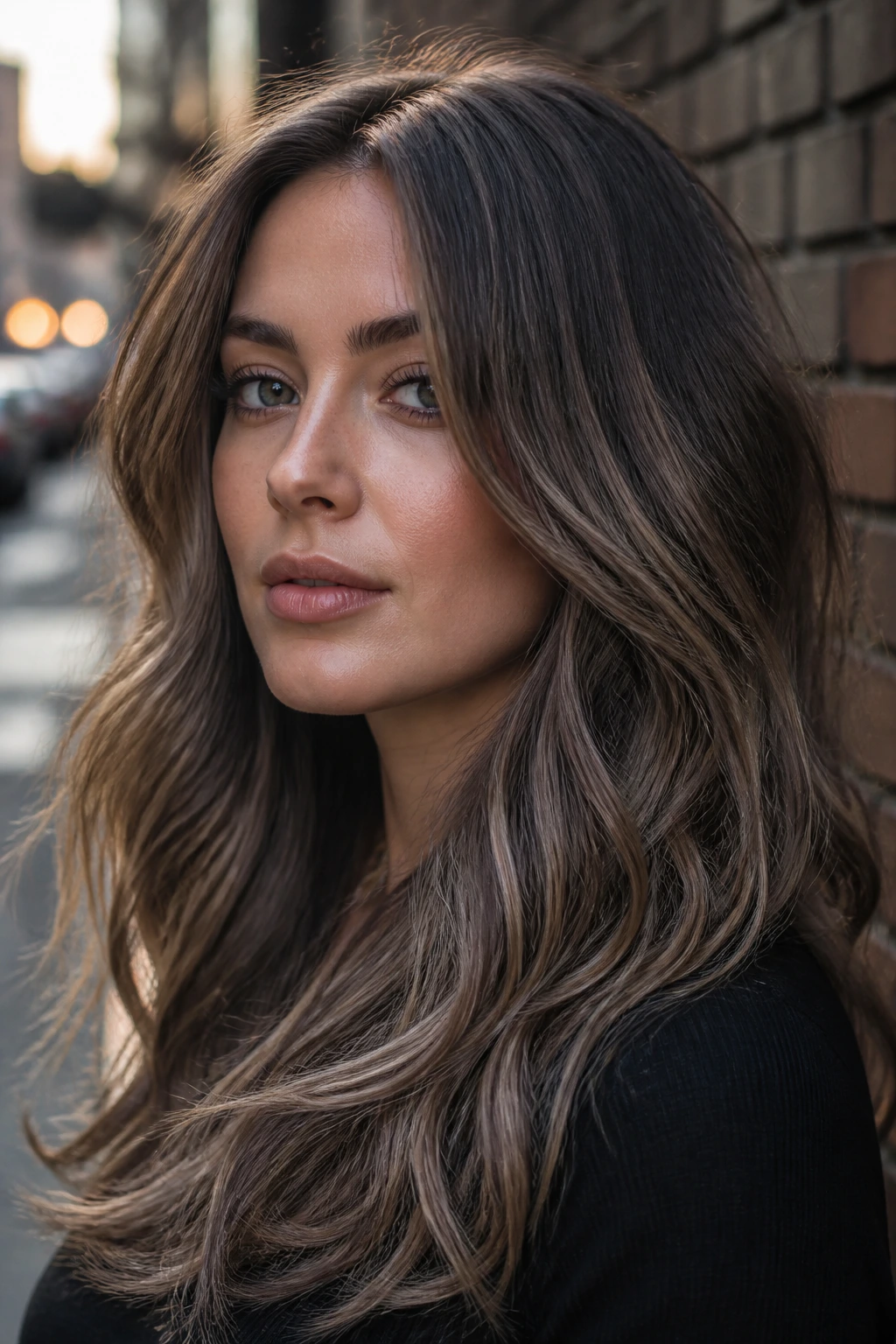
Smoky taupe dimension is for the brunette who wants something cooler, softer, and a little more editorial. Taupe sits between beige and gray-brown, which keeps it from looking flat or muddy. The smoked-out root makes the transition very forgiving.
The nice thing here is restraint. You don’t need bright pieces to get movement. The tonal shift does the work, especially on layered cuts where the mid-lengths separate naturally.
If caramel feels too sunny and ash feels too cold, taupe usually lands right between them.
18. Cocoa-and-Cream Contrast
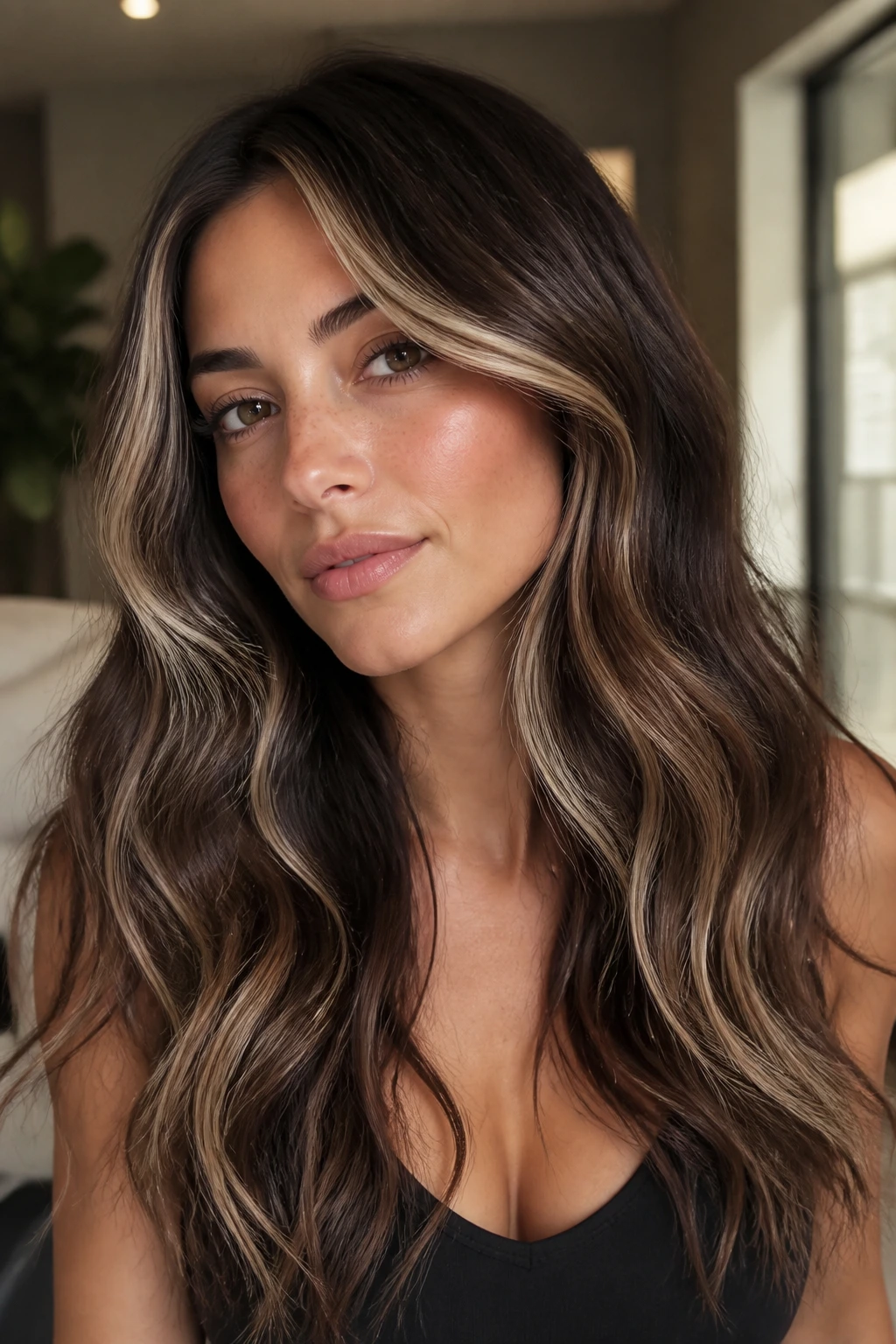
Cocoa-and-cream contrast is the boldest look so far, but it works because the contrast is controlled. The cocoa base stays deep, while the cream pieces sit in selected places—usually around the front, through the top layer, and at the ends. The result is high contrast with enough softness to keep it wearable.
Best use case
This is the look for someone who wants the highlights to show from across the room. It’s not shy. That said, keeping the brightest pieces sparse makes it feel intentional rather than streaky.
Wear it in loose waves. Straight and flat can make the cream pieces look sharper than you meant.
19. Brushed Walnut Babylights
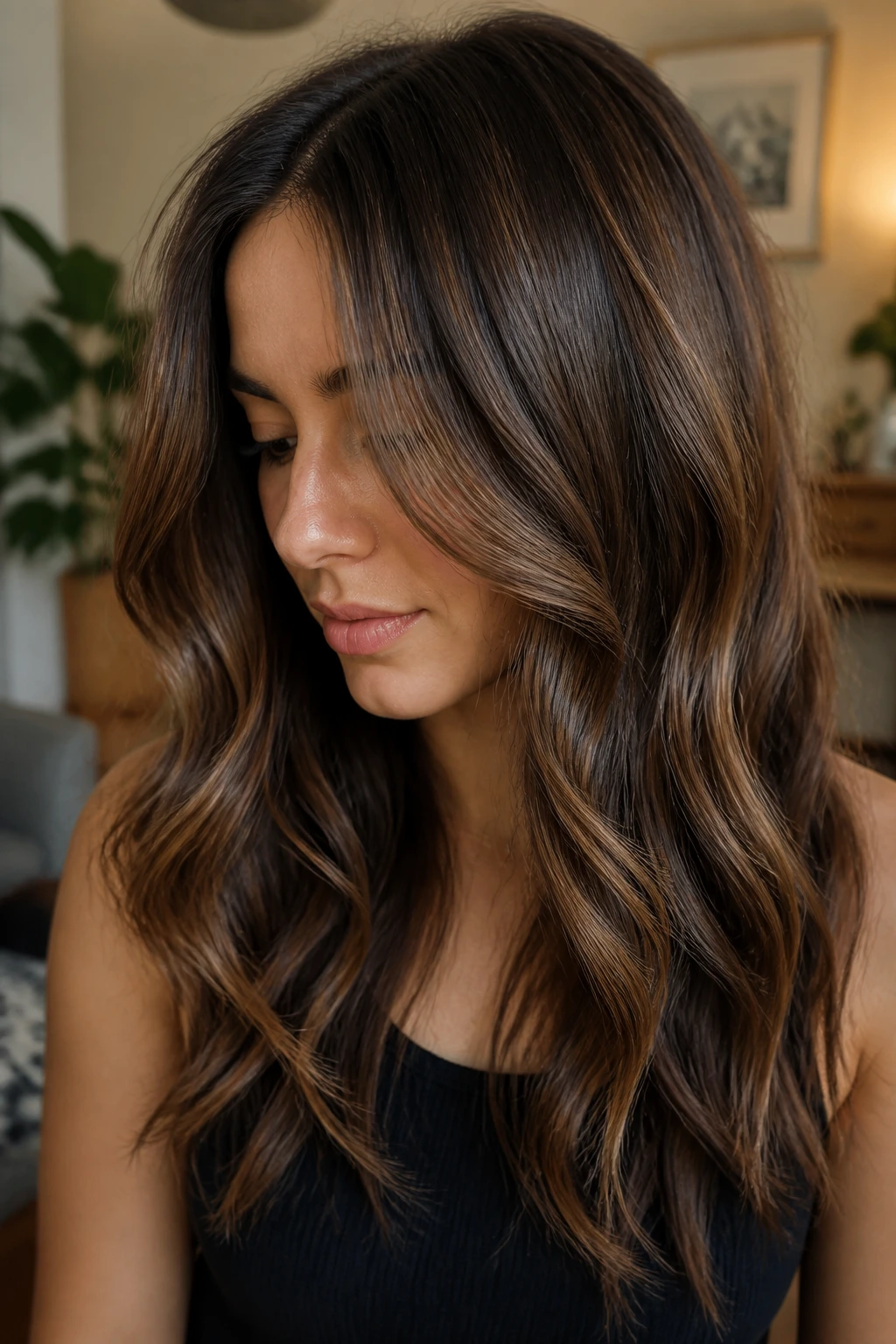
Brushed walnut babylights are one of the quietest ways to add depth. The strands are fine, the tone is walnut-brown, and the overall effect is a soft haze of color rather than obvious highlights. It’s a favorite for brunettes with fine hair because the density of tiny pieces makes the hair look fuller.
Why it works
Babylights spread the light out. That’s the whole trick. The eye sees softness and shine instead of obvious color blocks. Walnut keeps the result grounded so it doesn’t drift blonde.
If you want something that reads well in professional settings or under indoor lighting, this is a useful lane.
20. Vanilla Face Frame
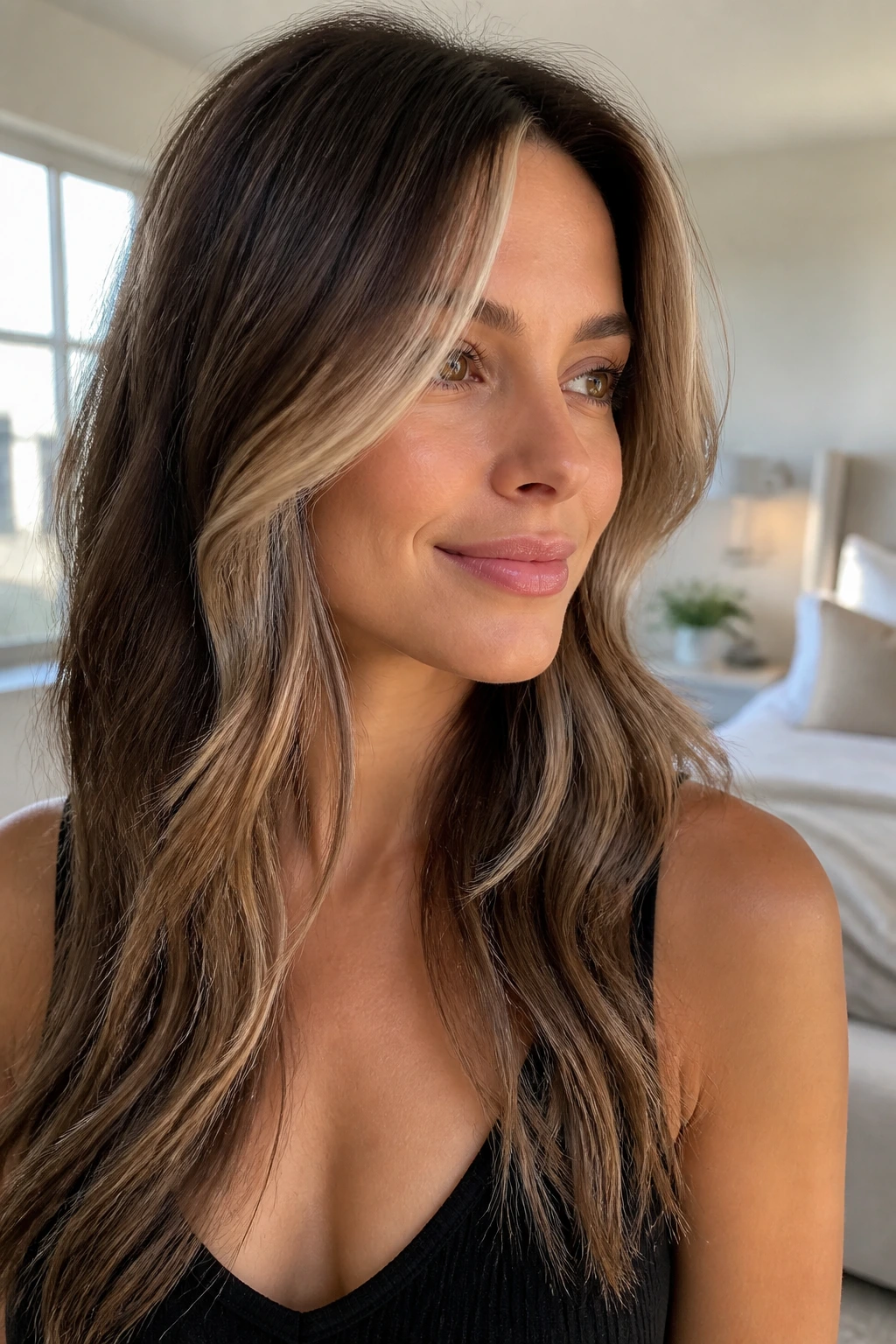
Vanilla face frame highlights brighten only the front perimeter, but they do it with a soft, creamy tone that keeps the brunette base intact. It’s a low-commitment way to change the mood of the haircut without touching the whole head. The front pieces can be as subtle or as bright as you want.
Why people keep coming back to it
A face frame changes the entire silhouette. The hair around the eyes and jaw gets lighter, which makes the cut appear cleaner and the complexion look more open. Vanilla is a smart tone because it stays soft on brown hair instead of turning harsh.
This style loves long layers and curtain bangs. They give the light pieces a place to move.
21. Toasted Almond Ombré
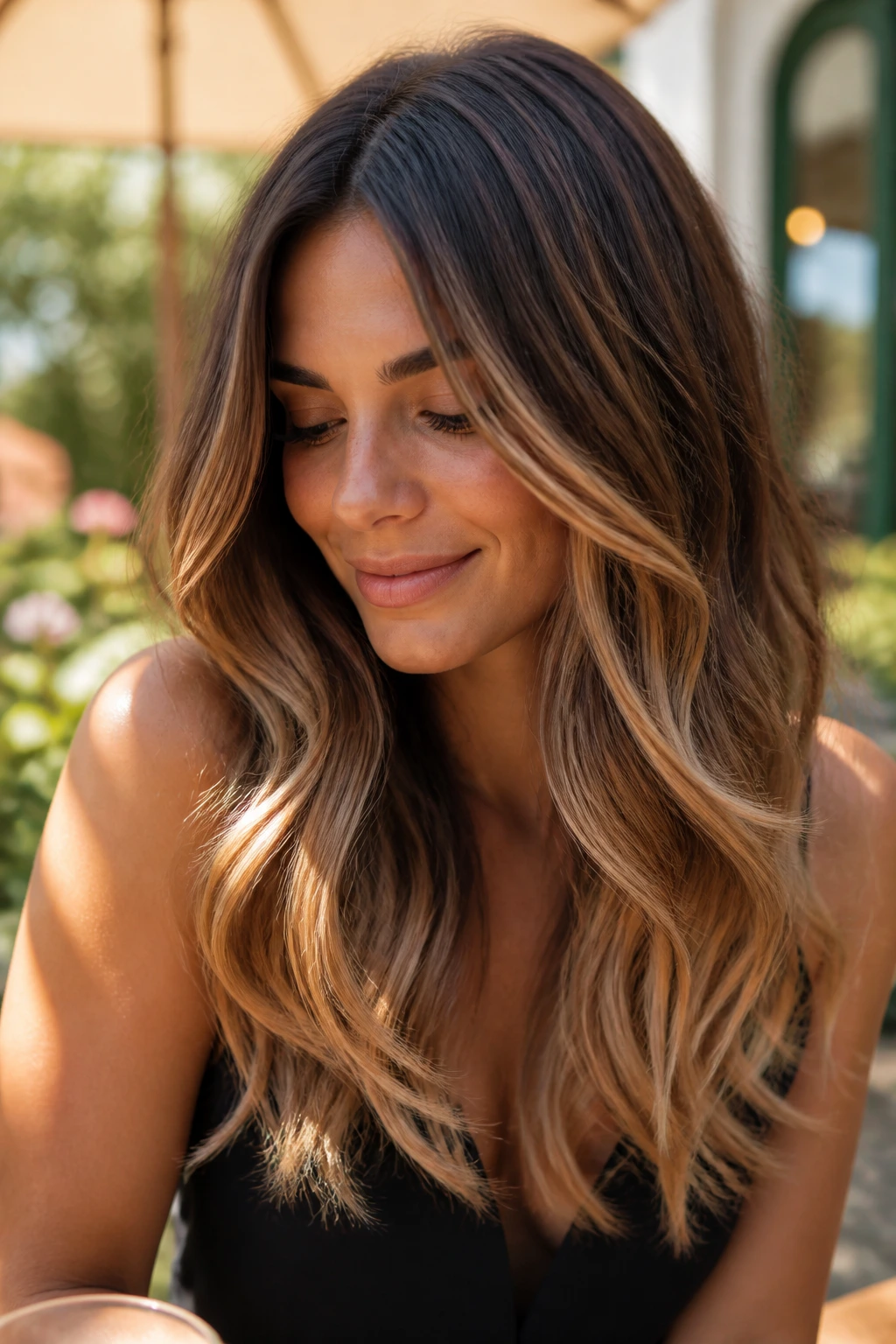
Toasted almond ombré leans creamy and warm without going yellow. The root stays brunette, the mids soften into almond, and the ends carry the most light. It’s a nice answer for anyone who wants brightness but hates having color near the scalp.
The growth line is soft, which helps a lot if you’re spacing salon visits. You can wear this one a little longer between refreshes than a high-contrast foil job.
Good match: medium to long brunette hair with movement through the ends.
22. Mocha Money Piece
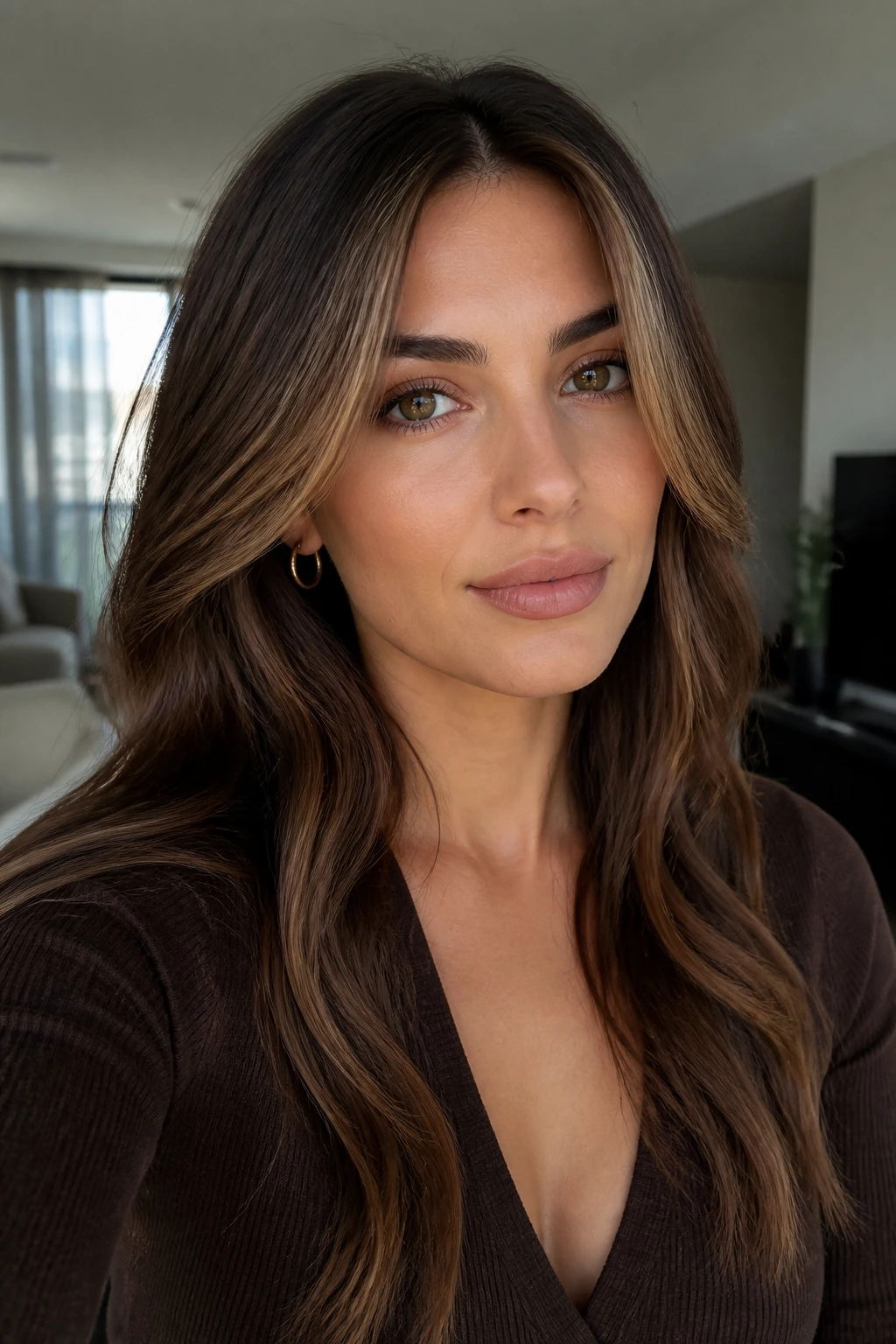
Mocha money piece is the moodier version of the bright front streak. Instead of light blonde, you get mocha-beige lightness framed by a deeper brunette base. That makes the front look polished and modern without stealing attention from the rest of the cut.
What to ask for
Ask for face-framing pieces that are a shade or two lighter than the base, not dramatically lighter. The result should be visible when your hair is down, but still blend into the top layer when it’s tucked back.
This is a good pick if you want dimension but prefer a darker, more grown-up finish.
23. Sandalwood Ribbons
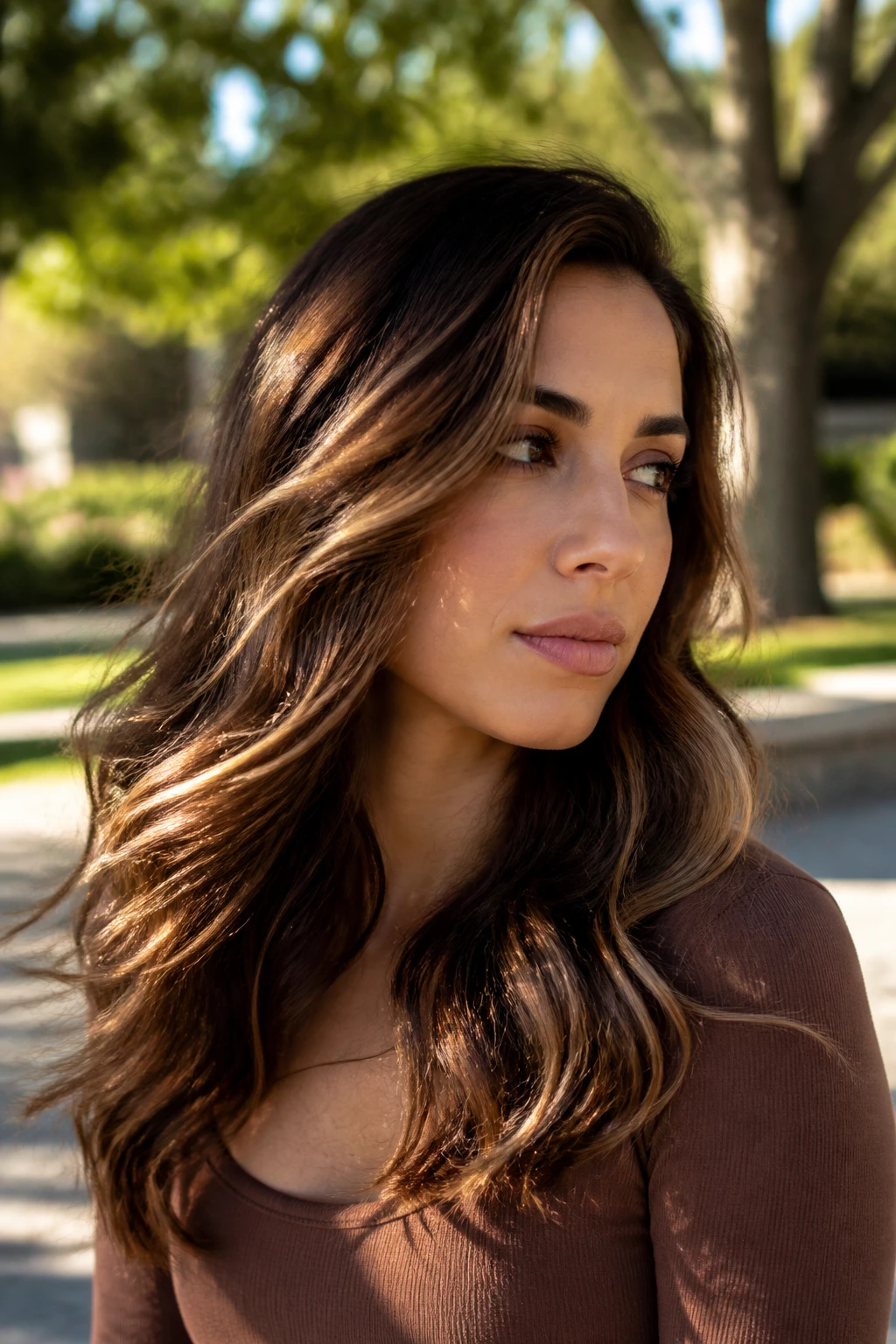
Sandalwood ribbons sit in that earthy, softly warm family that flatters a lot of brunette bases. The tone isn’t as golden as caramel and isn’t as red as cinnamon. It lands in the middle, which makes the color feel calm and wearable.
Why it holds up
Earthy tones tend to age well on brunette hair because they don’t depend on one perfect lighting setup. Sandalwood gives you movement in daylight, depth indoors, and a nice satin finish on curls. It also plays well with natural browns that already have a bit of warmth in them.
If you like soft neutrals in clothing, this is the hair color equivalent of that mood.
24. Smoky Caramel Sweep
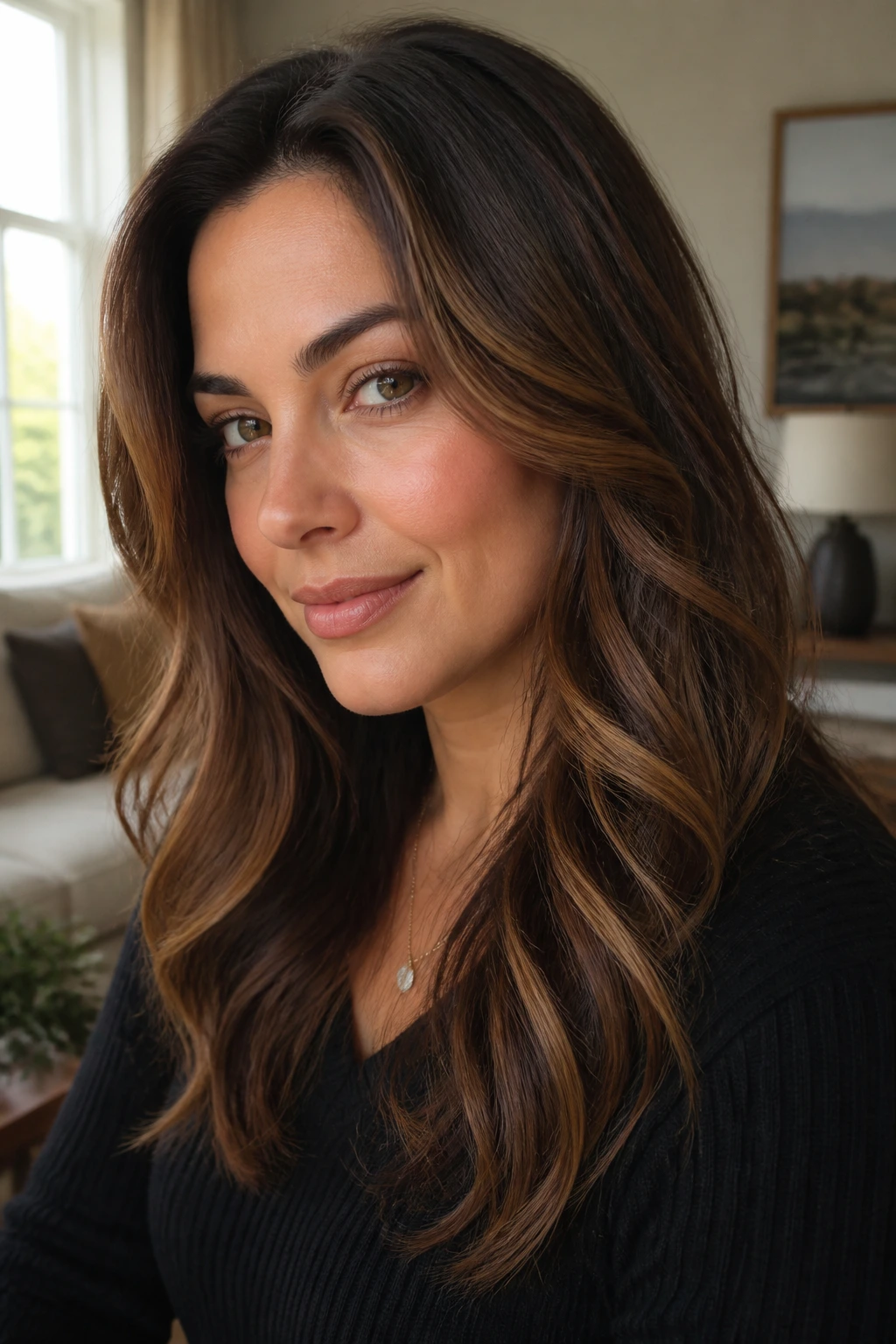
Smoky caramel sweep is what happens when warm caramel gets toned down just enough to stop it from turning sunny. The sweep placement pushes the light through the lengths, not just the ends, so the hair looks fuller from top to bottom. It’s less sweet than classic caramel and more refined.
Where it lands best
Medium brunettes often wear this beautifully because the contrast stays visible without going brassy. If your base is very dark, the smoky note helps the light pieces feel believable rather than stark. Keep the styling soft—big, brushed-out waves or a round-brush blowout both work.
This one is quietly flattering. It doesn’t need a lot of styling tricks.
25. Chestnut Underlights
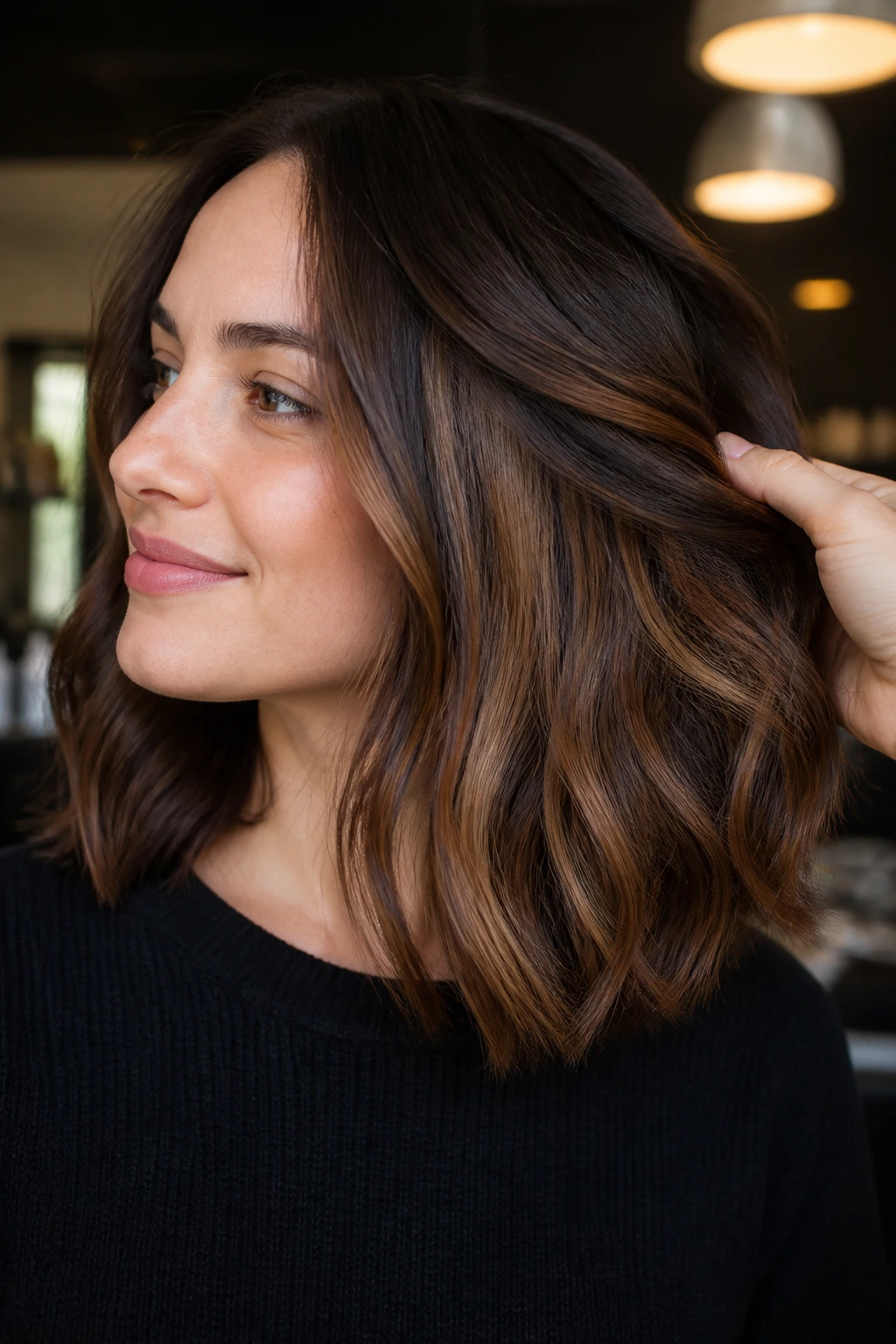
Chestnut underlights are the hidden dimension move. The brightest chestnut strands sit underneath the top layer, so you only catch them when the hair moves, flips, or is tucked behind the ears. It’s a clever way to add color without changing the first impression of the hair too much.
Why it works
Underlights give brunette hair a second mood. From the top, the color can still look rich and deep. From the side, the lighter chestnut flashes through and breaks up the surface. That makes it one of the best low-drama options for people who work in conservative settings but still want something interesting.
A shoulder-length cut or any layered style will show this best.
26. Bronze Balayage with Shadow Root
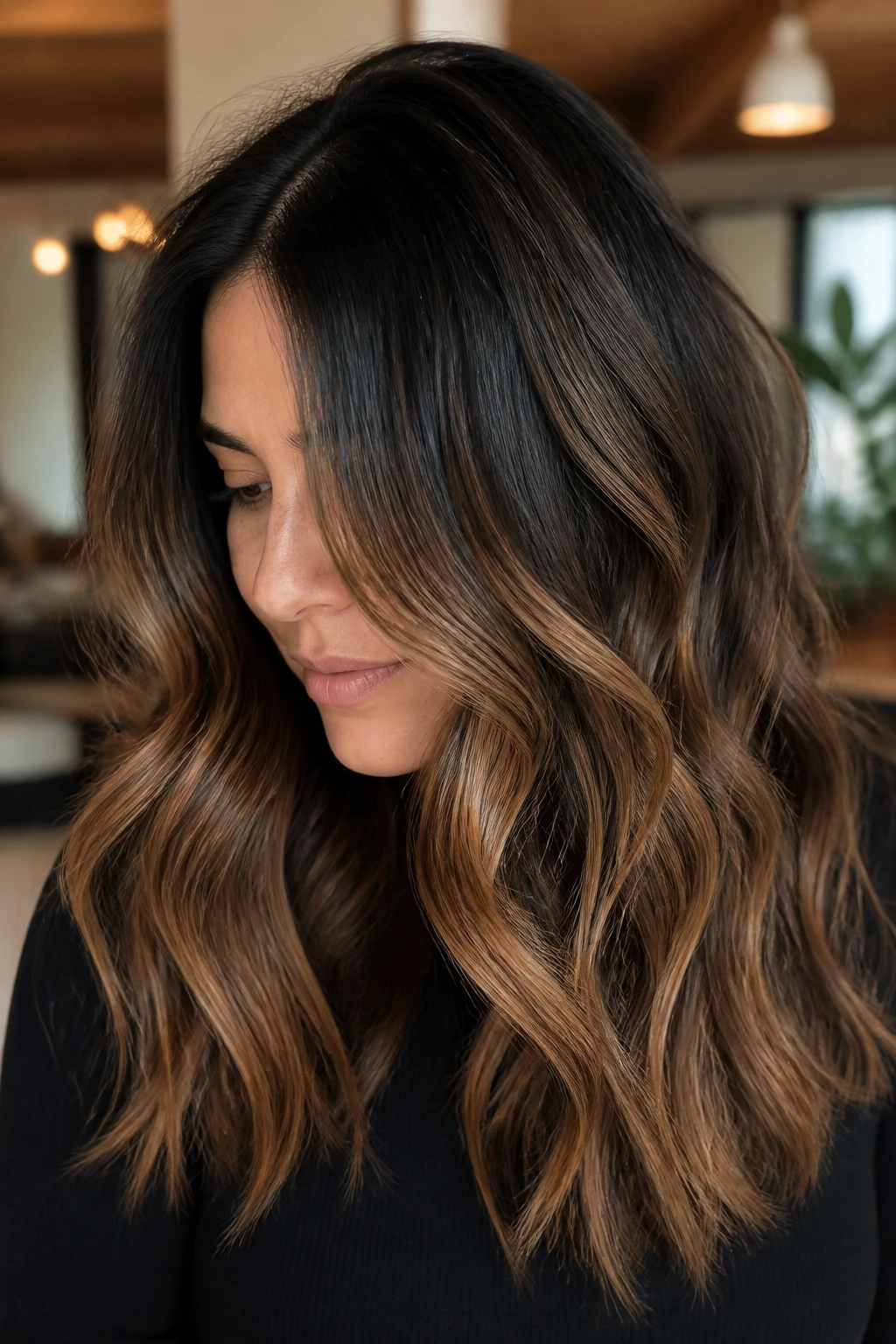
Bronze balayage with a shadow root is a workhorse look. The shadow root keeps the regrowth soft, while the bronze pieces through the mids and ends give enough brightness to change the whole feel of the cut. Bronze is a useful tone because it sits between gold and brown, so it feels rich rather than loud.
The practical part
This is the kind of color that can stretch between appointments better than a sharp highlight job. The root stays dark by design. If your schedule is busy or you hate obvious regrowth, this one is hard to beat.
It also looks good with heat styling, which is a nice bonus if you blow-dry often.
27. Espresso Gloss with Fine Highlights
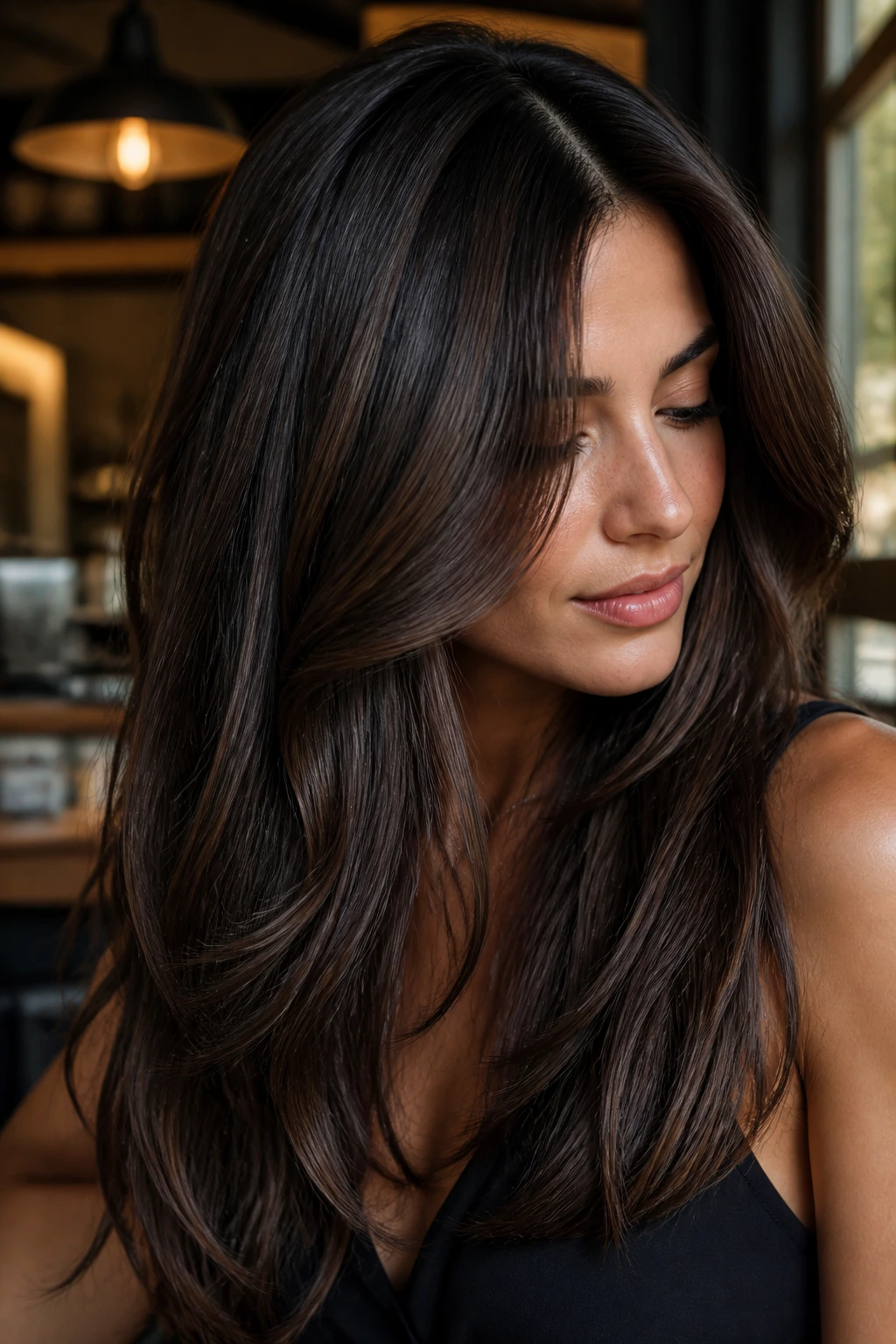
Espresso gloss with fine highlights is the sleek option for brunettes who want shine first and brightness second. A deep espresso gloss adds richness to the base, while very thin highlights peek through just enough to keep the hair from looking flat. The result feels polished and expensive without being busy.
Why it stands out
Some highlight jobs try to do too much. This one doesn’t. The gloss does half the work by making the base darker and shinier, and the fine light strands do the rest. It’s especially strong on straight or softly bent hair where the reflective surface matters more than obvious streaks.
If you’re nervous about lighter color, start here. It’s less of a leap.
28. Auburn-Copper Brunette
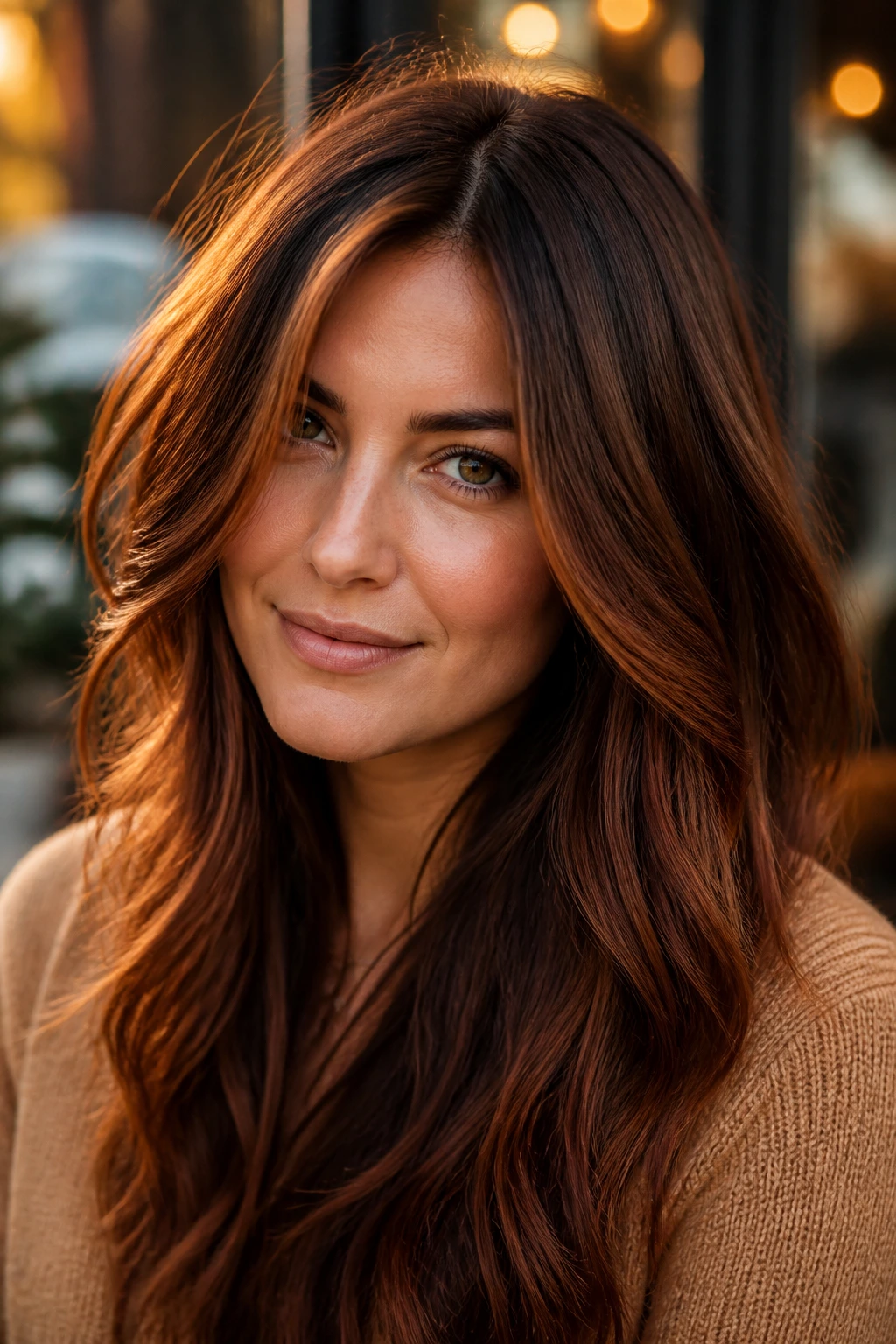
Auburn-copper brunette lives in the warmer red family, and it has a lot of personality. The base stays brown, but the lighter pieces carry auburn and copper notes that glow when light hits them. This is one of the few brunette highlight looks that can change mood dramatically between daylight and evening.
A good fit when
You want your hair to look rich, warm, and a little fiery without going full red. Auburn shades especially flatter hazel eyes and golden skin tones, but they can also make a cool complexion look more alive if the tone is balanced correctly. The key is moderation. Too much copper turns loud fast.
A layered blowout makes this one sing.
29. Sandy Mushroom Balayage
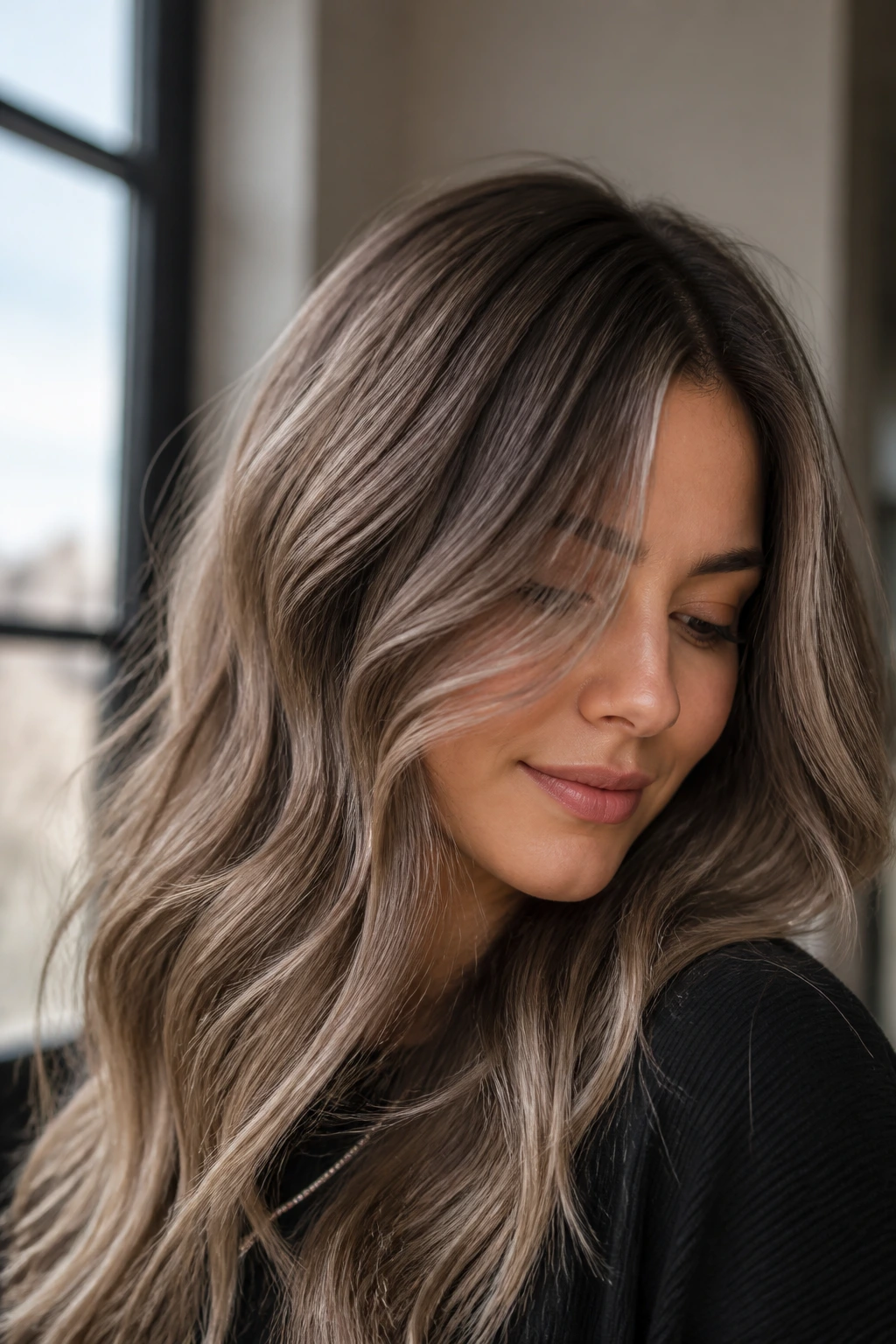
Sandy mushroom balayage mixes two worlds: the soft beige of sandy blonde and the smoky neutrality of mushroom brown. The combination keeps brunette hair from looking too warm or too flat, which is useful if your natural color sits in a tricky middle zone. The pieces are best kept fine to medium in width so the tones blend rather than compete.
What it gives you
A calm, wearable brightness. That may not sound glamorous, but it’s the reason this look gets worn for months. The color doesn’t fight with makeup, clothing, or skin undertone. It just sits there and looks expensive in a low-key way.
If you like a subtle finish with enough light to show texture, this one deserves a close look.
30. Peekaboo Espresso-to-Toffee Panels
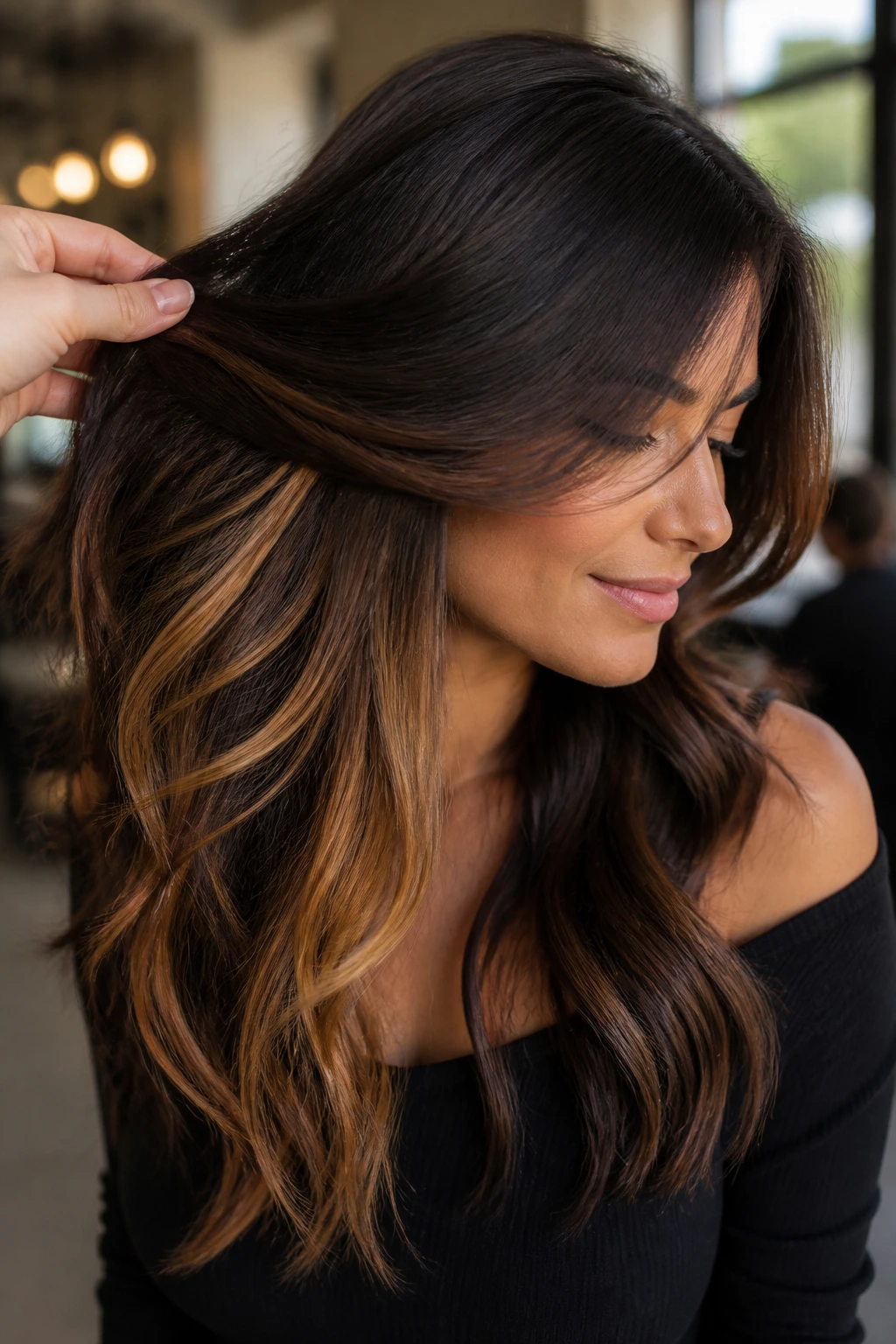
Peekaboo espresso-to-toffee panels are the hidden-contrast option for someone who wants surprise, not obvious brightness. The top layer stays espresso-dark, while underneath, larger toffee panels flash only when the hair moves or is parted a certain way. It’s a little more dramatic than underlights and a lot more playful than a standard balayage.
How it behaves in real life
This kind of placement gives you two looks in one. From the front, the brunette stays rich and dark. From the side or when the hair swings, the toffee panels show off enough light to make the cut feel layered and alive. It’s a strong choice for thick hair, where hidden color has room to live.
If you’ve worn subtle brunettes for years and want something with a bit of edge, this is the switch.
Why Dimension Changes the Whole Cut
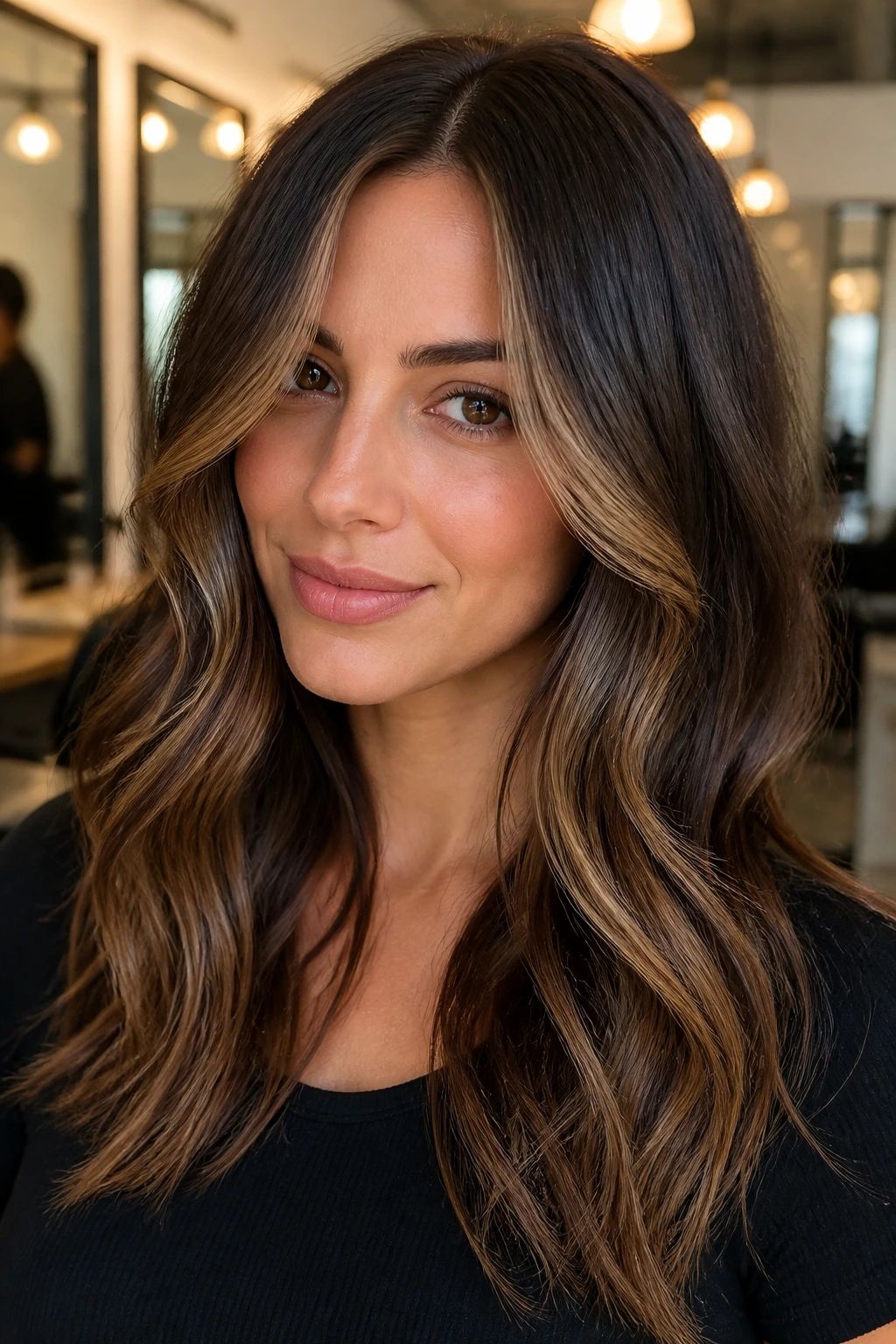
Brunette hair needs a little architecture. One flat tone can make a good haircut look heavier than it really is, especially when the light is bad or the ends are dense. Dimension changes that by giving the eye multiple landing spots: a lighter ribbon here, a deeper lowlight there, a brighter face frame up front.
That’s why the best brunette highlights are rarely the brightest ones. They’re the ones that create movement without making the hair look pieced together. A soft caramel sweep on layered hair, a cooler taupe ribbon on a blunt bob, a chestnut money piece around the face—each of those changes how the cut behaves.
If you’ve ever noticed that a brunette color looked richer in a salon mirror than it did at home, that isn’t random. Indoor light, porosity, and styling all change the read. Good dimension is built to survive that.
Tools and Products That Make Brunette Highlights Easier to Live With
-
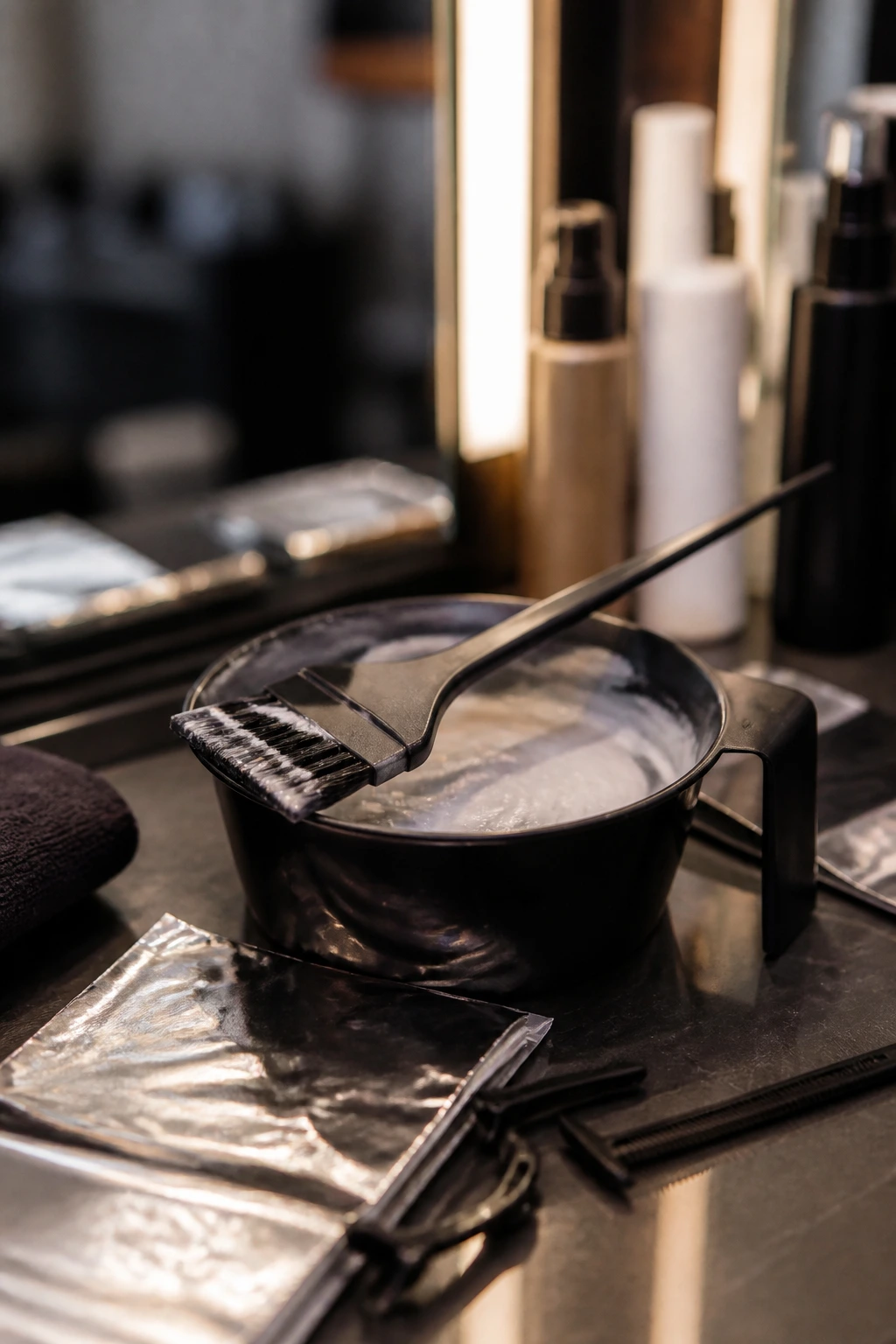
Tint brush and color bowl: Useful for glosses, toners, and root-smudge touch-ups if you color at home with experience.
-
Sectioning clips: Keep layers out of the way so highlights or styling products land where you want them.
-
Tail comb: Helps create neat partings and fine weave sections for babylights or money-piece placement.
-
Foils or balayage board: Foils give more lift; a board gives a cleaner painted surface for freehand lightening.
-
Color-safe shampoo: Choose a gentle cleanser without harsh sulfates if you want caramel, copper, or beige tones to hold longer.
-
Sulfate-free conditioner: Keeps highlighted brunette hair from feeling rough after lightening.
-
Heat protectant spray: Use it before blow-drying, curling, or flat-ironing. Highlights dry out faster than untouched hair.
-
Leave-in conditioner: Helpful on the mids and ends, where lightened pieces lose moisture first.
-
Purple or blue shampoo: Purple helps yellow tones in blonde-beige highlights; blue is better when brown hair leans orange.
-
Microfiber towel: Reduces friction when the hair is wet and weakest.
-
Wide-tooth comb: Safer than yanking through wet highlights with a small brush.
-
Glossing or toning treatment: Good for keeping brunette highlights shiny between appointments.
Smart Shade Selection for Brunette Hair
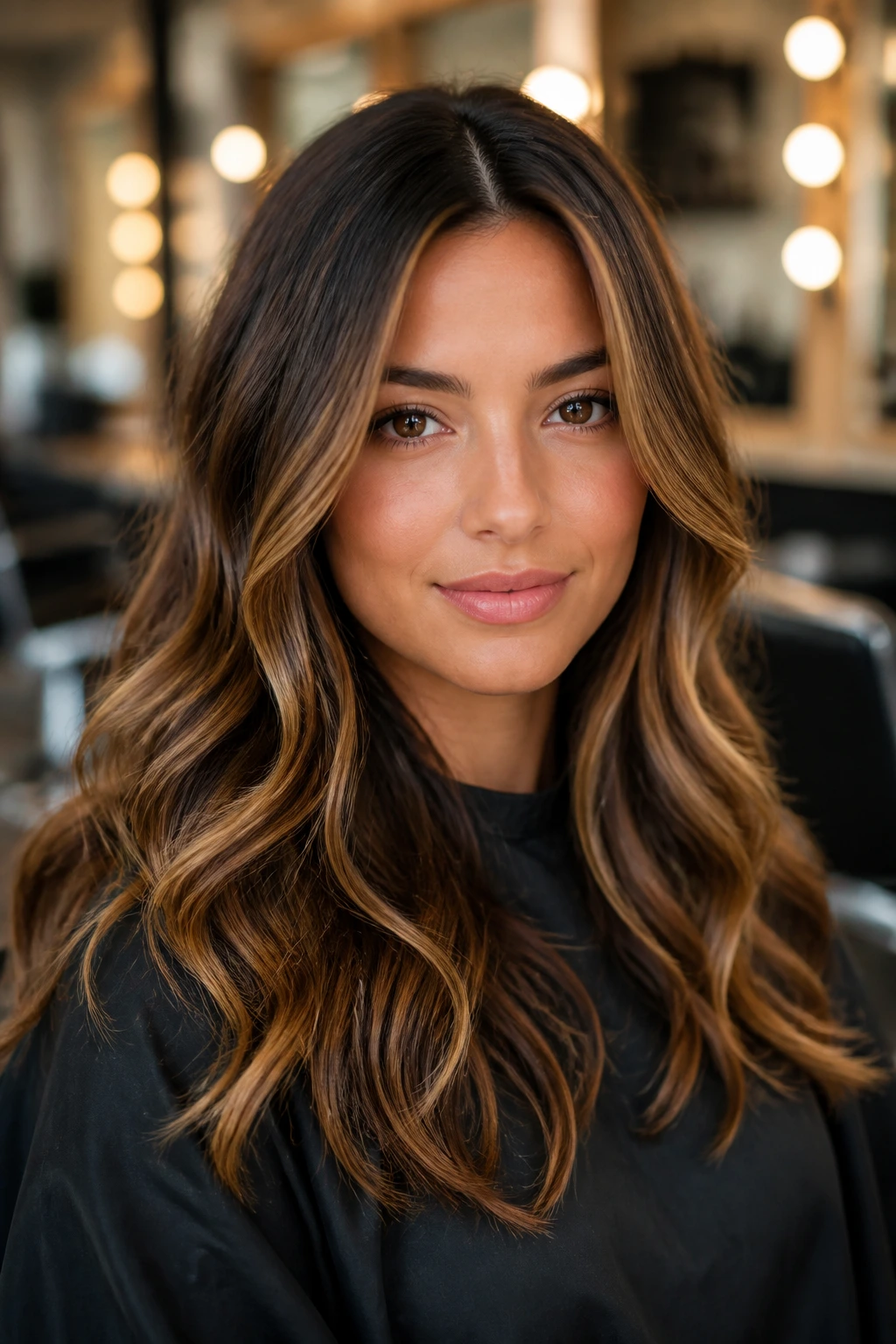
The cleanest brunette highlight jobs start with the base level, not the inspiration photo. A level 4 or 5 brunette can usually wear caramel, copper, bronze, mocha, and walnut tones without much trouble. A level 6 or 7 base can go softer and lighter with beige, honey, and creamier ribbons. If the base is very dark, ask whether the hair can lift in one sitting without losing condition. Sometimes the honest answer is “not all the way,” and that’s useful information.
Bring at least two photos to a consultation. One should show the color in daylight, the other indoors. Hair photos online often hide brass or over-toning that only shows in real life. Also say what you do not want. If orange scares you, say it. If blonde face frames look too harsh on you, say that too. A good colorist hears the negative notes and shapes the formula around them.
Tone words matter. Caramel, toffee, honey, bronze, chestnut, walnut, mushroom, taupe, ash, and beige all tell a different story. If your skin runs warm, lean into caramel, chestnut, bronze, or copper. If your skin is cool or neutral, mushroom, taupe, ash, or beige usually sit better. And if you like low maintenance more than drama, keep the lift close to your natural brunette level. That is where the grow-out behaves.
How to Wear Dimensional Brunette Hair So the Color Shows
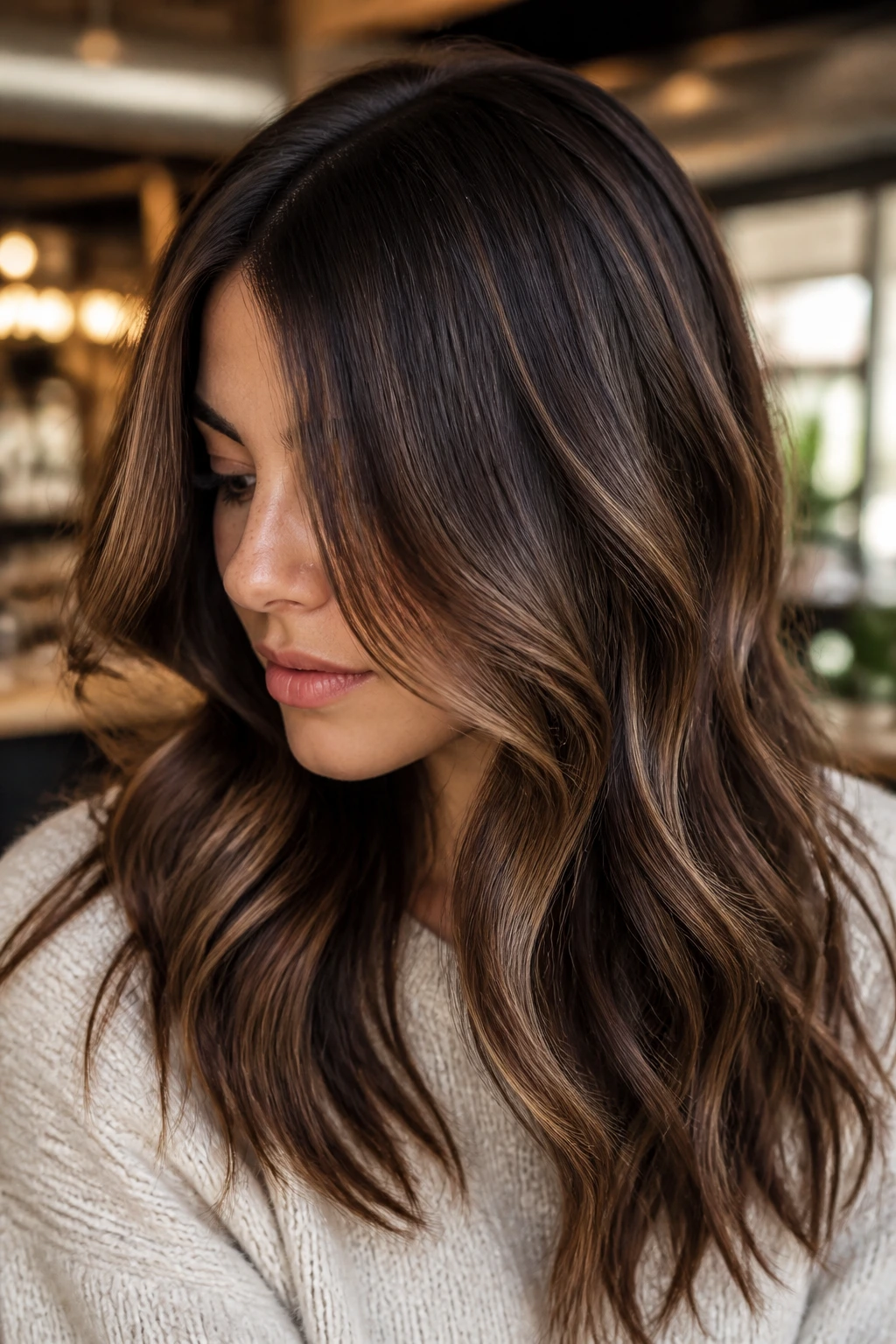
A color job can disappear under the wrong styling. Straight hair shows clean placement and fine babylights. Loose bends show ribbons and melts. Big curls show contrast, but they can hide hidden underlights if the layers are too tight. The style and the color should be making the same point.
Presentation: A soft off-center part usually shows face-framing pieces better than a dead-center split, unless the money piece is built for symmetry. Rounded blowouts lift the crown and let the lighter mids swing. Sleek styles are best when the highlights are fine and evenly distributed.
Best pairings: Long layers help balayage breathe. Curtain bangs make money pieces look deliberate. Bobs and lobs tend to show contour highlights beautifully because the light pieces sit close to the jaw and cheekbone.
Finish: A light gloss serum on the ends works. So does a matte texture spray if you want the ribbons to separate. Heavy oils can flatten the whole effect if you put them near the front.
Extra Ways to Make the Color Pop Without Lifting It Higher
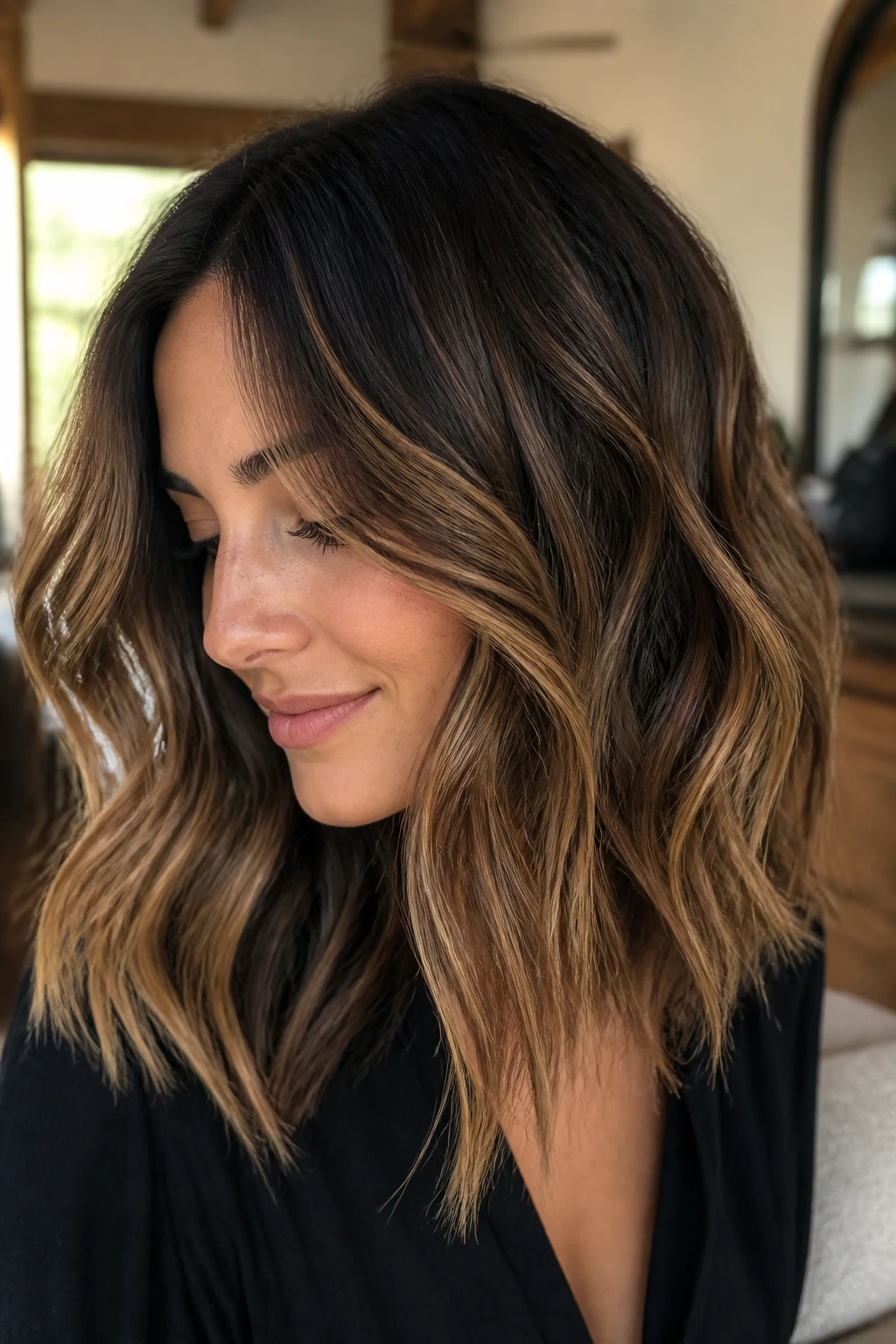
Gloss Boost: A clear or tinted gloss every 6 to 8 weeks can make caramel, bronze, and chestnut tones look fresher without adding more bleach. It also smooths the cuticle so the highlights reflect better.
Texture Shift: Soft waves show off dimension better than pin-straight hair in many brunette shades. The bends create little pockets of shadow and light, which is half the point of the color.
Root Smudge: A shadow root keeps the regrowth clean and helps the highlights blend into the base instead of sitting on top of it. That’s one of the easiest ways to make brunette balayage look lived-in.
Face-First Styling: If the color is subtle, tuck one side behind the ear and let the front pieces fall around the cheek. It changes the whole read of the color in seconds.
Make-It-Yours: If you want softer contrast, ask for finer placement and stay within two levels of your base. If you want more punch, keep the ribbons thinner but raise the brightness near the front and ends.
Touch-Up Timing, Fading, and Ongoing Care
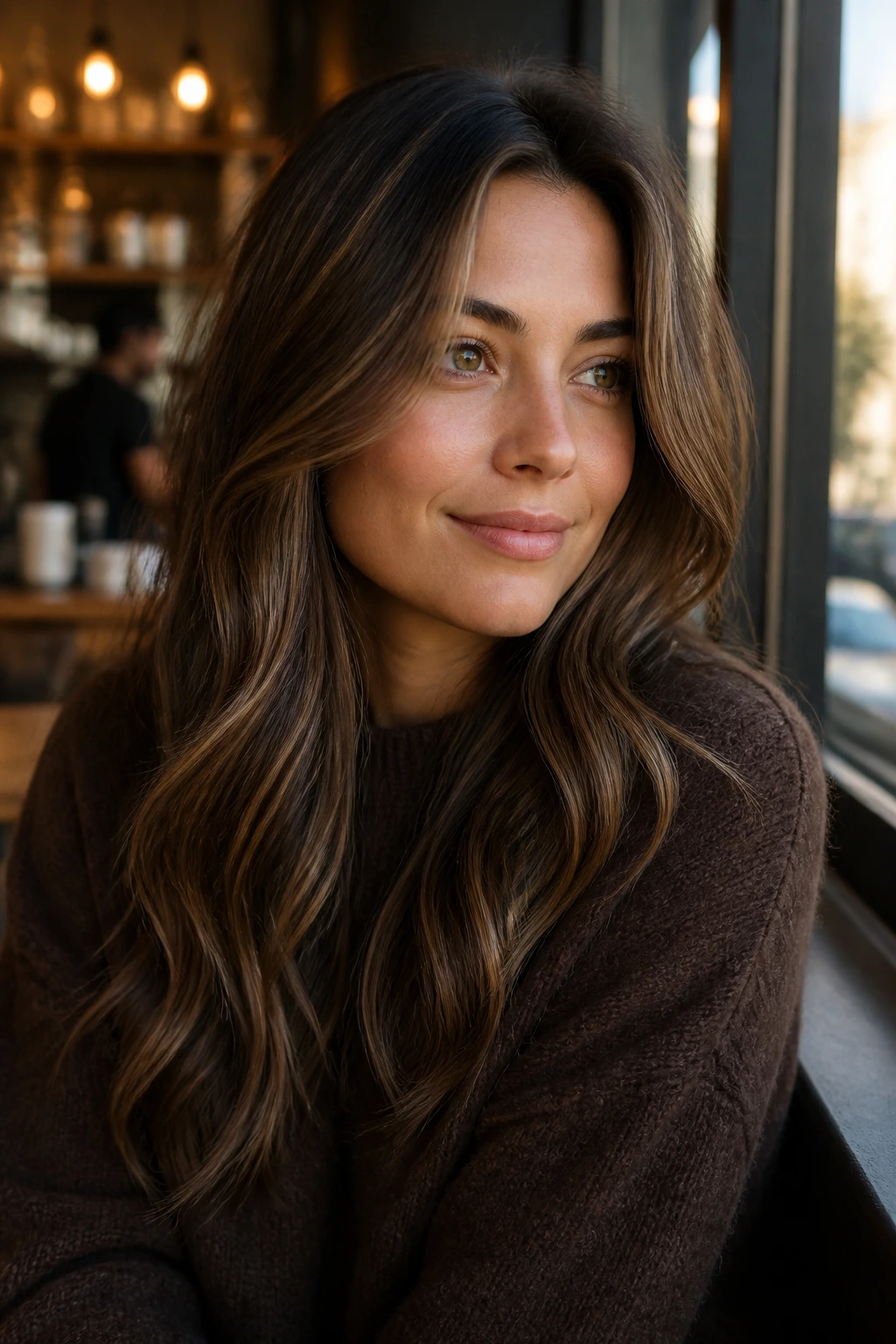
Brunette highlights last longer when you protect the tone, not just the shine. Most balayage and shadow-root looks can go 8 to 12 weeks before they need a refresh, while softer babylights may stretch longer if the grow-out is clean. A full tonal refresh or gloss often lands around 6 to 8 weeks, especially if the hair leans warm or porous.
Wash less if you can. Two or three shampoos a week is plenty for most highlighted brunettes, and dry shampoo helps when the roots get slick before the tone does. Hot water strips faster than people think, so rinse with lukewarm water and finish cooler if you can stand it.
For warm highlights, a color-safe shampoo and conditioner usually do the job. For cool beige or ash tones, a purple shampoo once every 1 to 2 weeks can keep brass in check. If the hair starts to look dull rather than brassy, stop the purple and switch back to moisture. Too much toning shampoo can make brunettes look dusty.
Heat styling is the other big issue. Blow-dryers and irons don’t just dry the hair out; they fade the subtle tonal differences that make dimension visible. Use a heat protectant every time, and keep hot tools lower than the max setting unless the hair is very coarse and healthy. A weekly deep-conditioning mask is not fancy. It’s maintenance.
Variations and Adaptations to Try
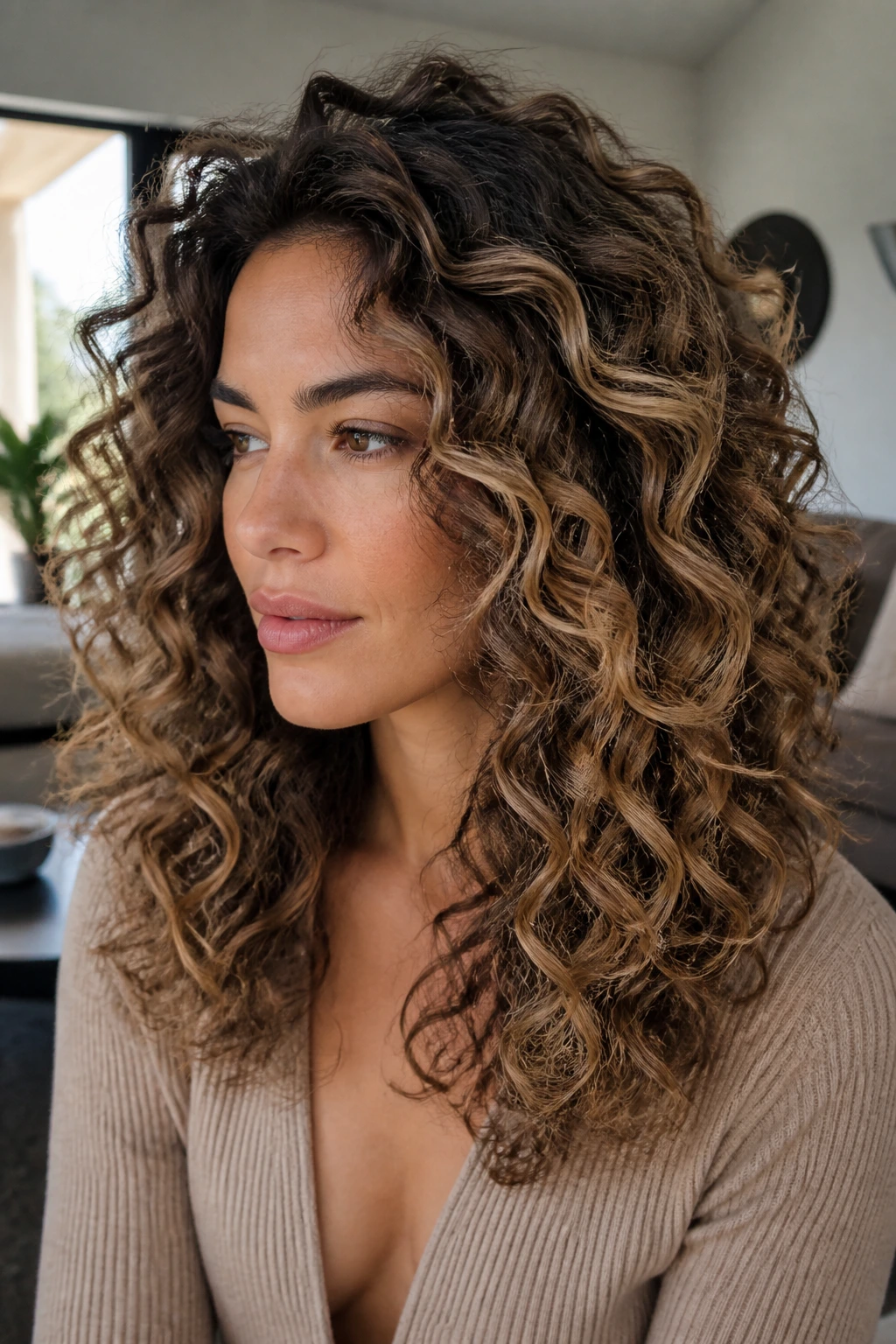
Curly Halo Lights: Keep the brightest pieces around the outer canopy and face frame so curls catch light without losing shape. This works especially well when the interior stays a shade deeper for contrast.
Fine-Hair Micro Weave: Use very thin highlights and a few lowlights to keep the hair from looking see-through. Fine hair usually looks fuller when the color is scattered rather than chunky.
Gray-Blending Brunette: Add cool beige, taupe, and soft ash pieces around the temples and top layer to blend new gray growth into the brunette base. The result looks softer than all-over dye.
Warm Espresso Glow: Keep the base rich and dark, then add only caramel and bronze ribbons through the mids and ends. This is the easy answer for anyone who wants warmth without copper.
High-Contrast Brunette Pop: Pair a dark espresso base with a few lighter beige or toffee money-piece strands. It’s bolder, but it stays grounded when the rest of the head remains deep.
Low-Maintenance Shadow Root: Leave the root close to natural and let the brightness start lower on the head. If you dislike salon upkeep, this is the version to ask for.
Common Mistakes That Flatten Brunette Highlights
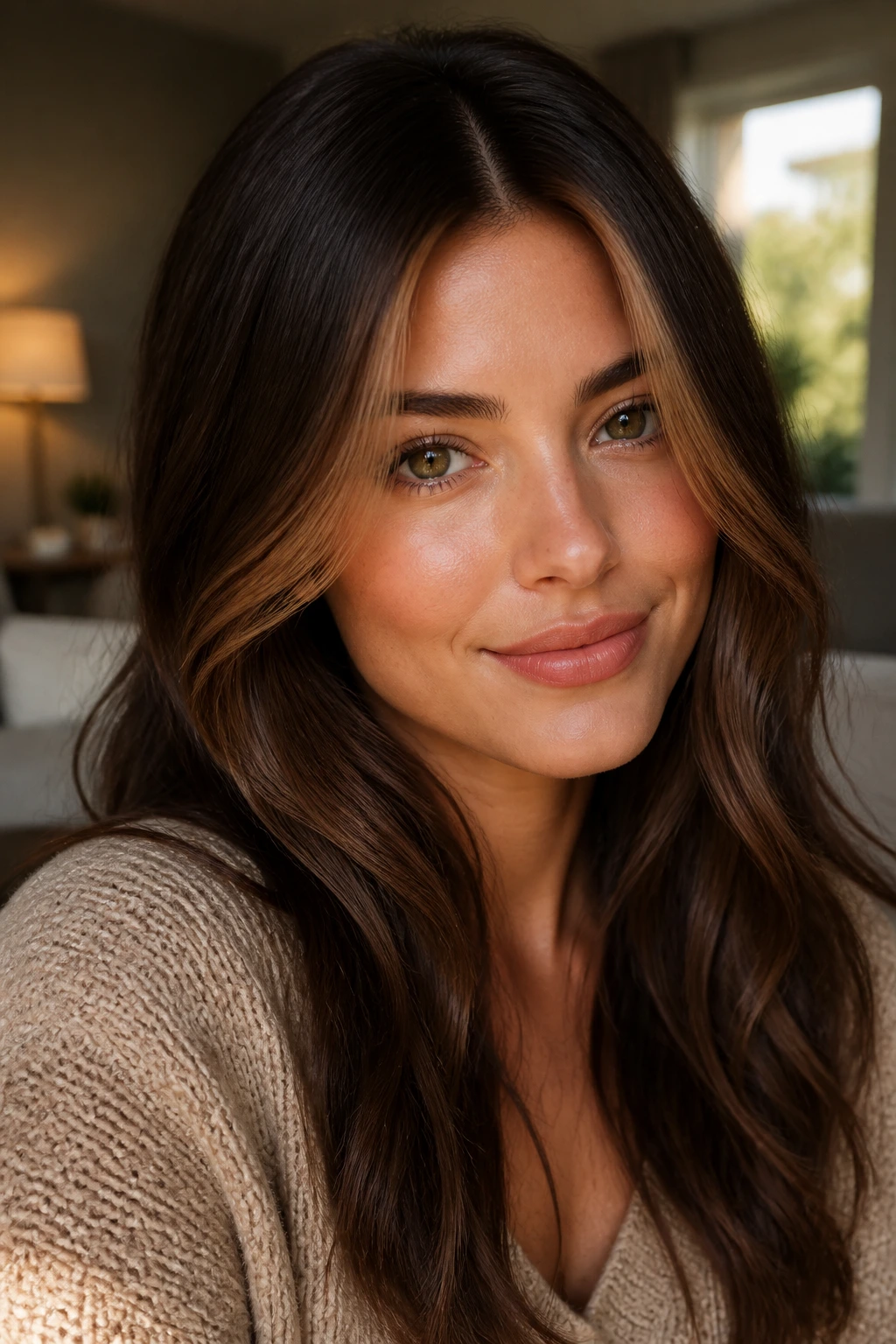
Going too light too fast: On brunette hair, an over-lifted highlight can look striped and fragile. The fix is simple: stay within a believable lift range unless you’re prepared for multiple sessions and more toning.
Using one width everywhere: If every highlight is the same thickness, the pattern looks stamped on. Mix fine and medium pieces so the hair moves. Real dimension needs unevenness.
Ignoring undertone: A warm brunette base with too much ash can look muddy. A cool brunette with too much gold can turn orange. Match the highlight tone to the base, not to a random inspiration photo.
Skipping lowlights: Bright pieces alone can leave the hair hollow. Add a few deeper strands back in and the whole style looks fuller, especially at the ends.
Over-toning beige or ash shades: If the toner is too heavy, the highlights can lose their lightness and go flat. Stop toning once the brass is under control. You want soft reflection, not chalk.
Frying porous ends first: The ends usually grab color faster than the mids. If they’re already dry, they can go too light or too dark in the same service. A trim and a careful formula help more than people think.
Questions People Ask Before Booking Brunette Highlights
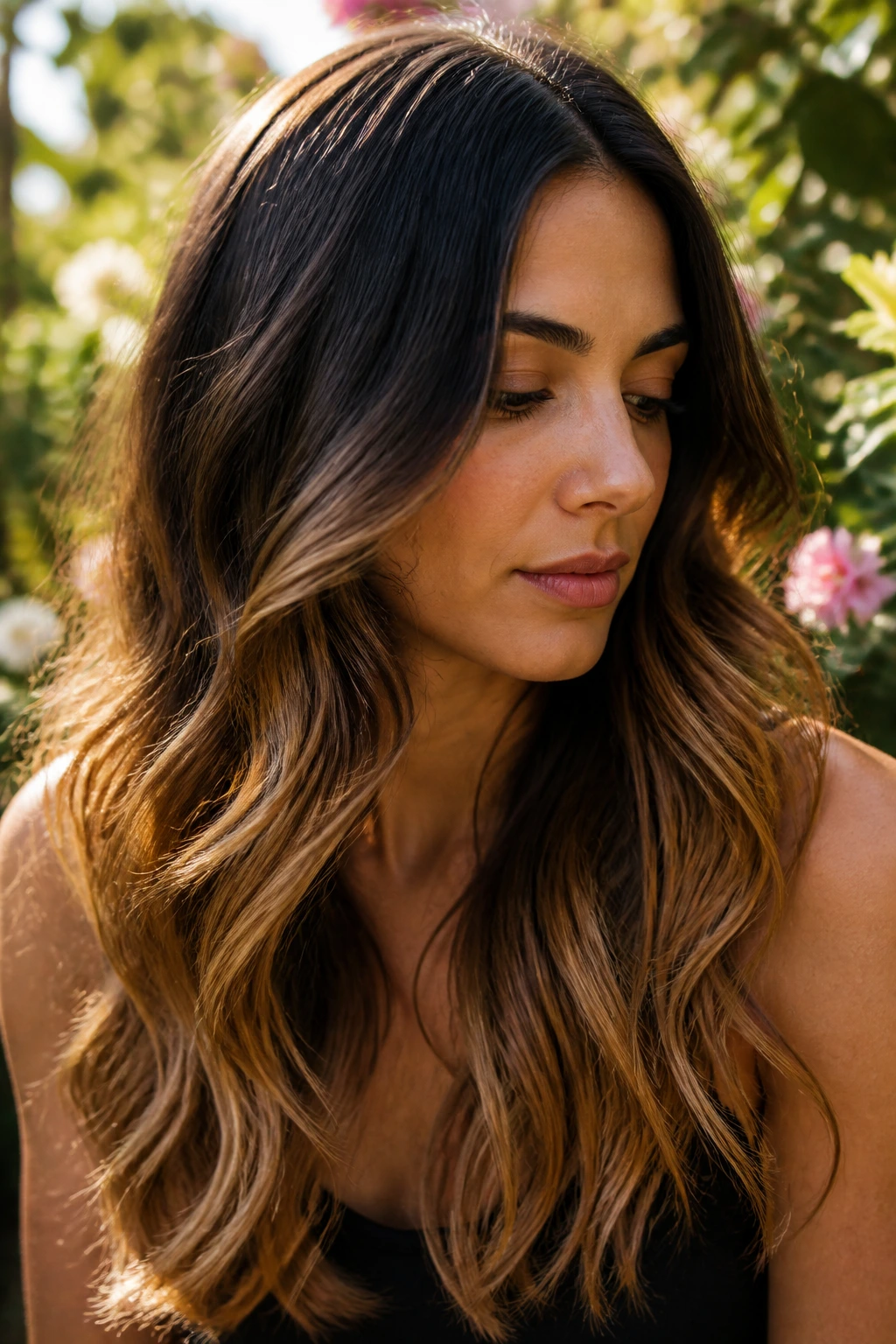
Which highlights are the lowest maintenance on brunette hair?
Balayage with a shadow root, babylights, and money pieces that stay close to your natural level are the easiest to live with. The grow-out line stays softer, so you can stretch appointments longer without the hair looking neglected.
Can brunette hair go lighter without becoming blonde?
Yes. Caramel, bronze, honey, hazelnut, maple, and walnut tones all brighten brunette hair without pushing it into full blonde territory. That’s usually the sweet spot if you want movement more than transformation.
What if my brunette hair turns orange when lightened?
That means the underlying pigment wasn’t lifted or toned enough. Blue shampoo can help at home, but if the color is already orange, a salon toner or gloss usually fixes it faster and more evenly.
Do highlights damage brunette hair more than all-over color?
Lightening is harder on hair than depositing color, so yes, highlights can be more drying. The damage is much more manageable when the lightener stays off the scalp, the ends are watched closely, and heat styling is kept under control.
What should I ask for if I want something subtle?
Ask for fine babylights or a soft balayage one to two levels lighter than your base. Say you want the result to show movement first and color second. That wording helps more than saying “natural,” because natural means different things to different stylists.
Can curly or coily hair wear dimensional highlights well?
Absolutely, but placement matters even more. Curly hair usually needs the lighter pieces placed where the curl clumps sit and where the outer layer catches light. A few bright sections around the face and crown often do more than a full highlight map.
How often should I refresh the color?
Most brunette highlight looks need a gloss or toner every 6 to 8 weeks and a highlight refresh every 8 to 12 weeks, depending on contrast and grow-out. If the hair starts looking dull before the roots show, the tone is fading, not the placement.
Is balayage better than foils for brunette hair?
Balayage gives softer edges and easier grow-out. Foils usually give more lift and brighter contrast. A lot of the best brunette results use both—foilayage—because the hair gets the brightness where it needs it and the softness where it doesn’t.
The Brunette Upgrade That Holds Its Shape
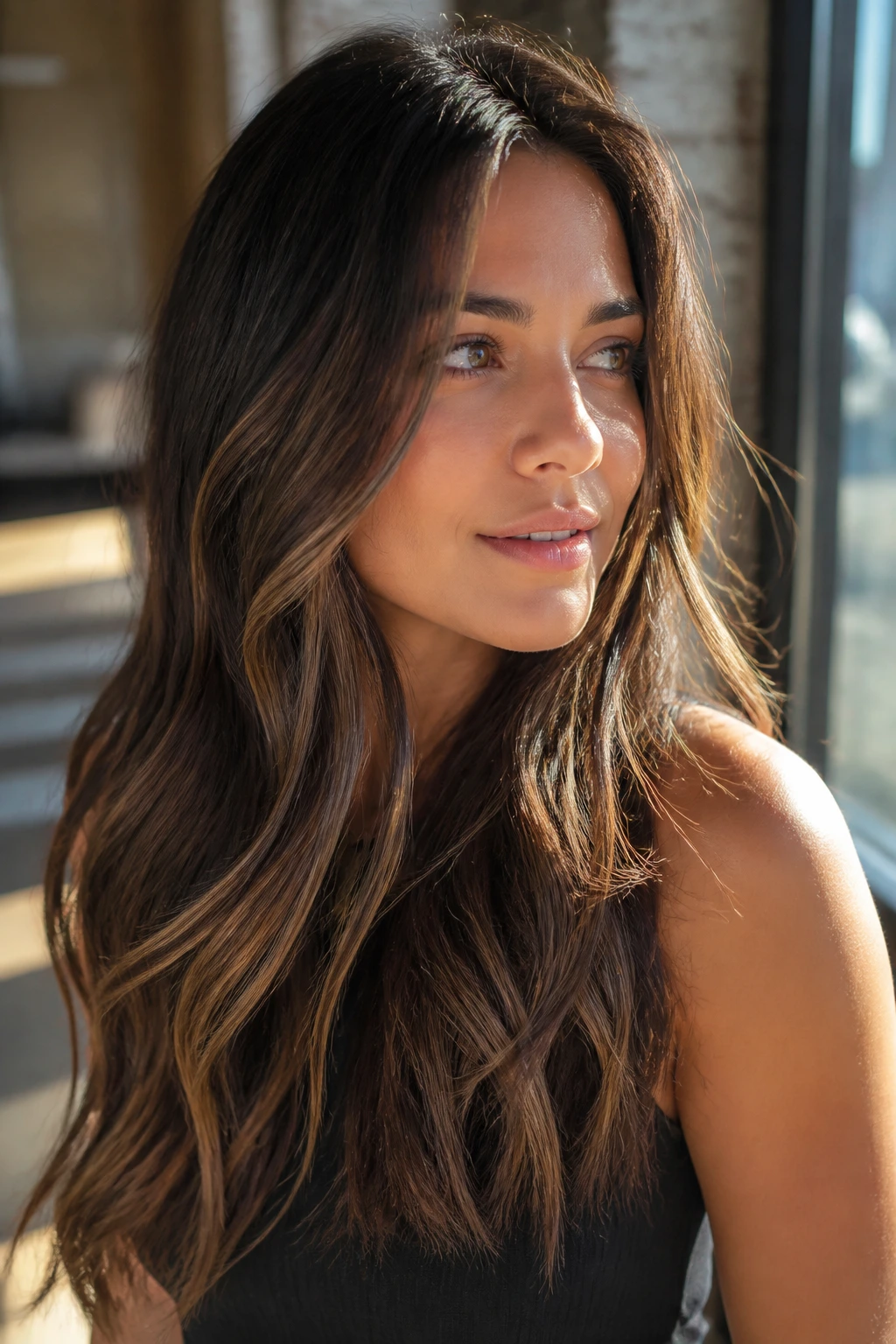
Good brunette highlights do one thing better than loud blonde pieces ever can: they keep the hair looking rich while giving it movement. That’s the real trick. The best looks in this lineup don’t just brighten the head. They change the way the haircut sits, the way waves separate, and the way the color shifts when you walk from daylight into a room with bad overhead bulbs.
If you choose the tone carefully, keep the placement a little uneven, and leave room for lowlights or a shadow root, brunette hair can look dimensional for a long time without turning fussy. That’s the version worth booking.
And when the light hits just right, the whole thing looks like the hair has more depth than it used to. Which, honestly, is the point.
