



Curly hair changes the rules. A foil stripe that looks neat on straight hair can disappear into a coil, while a skinny ribbon painted along the outside of a spiral can flash gold, copper, or beige every time the hair moves.
That’s the whole game with curly hair highlights: placement matters as much as shade. Sometimes more. The bend of the curl creates built-in shadow, and that shadow can make color look richer, softer, or sharper depending on where it lands. A color that feels flat on a swatch can come alive once it starts wrapping around a curl pattern.
And that’s why the best highlight ideas for curly hair are not one-size-fits-all. A loose 2c wave can carry a brighter blonde than a tight 4a coil. A shoulder-length shag can handle a face frame that would look too obvious on a one-length bob. Porosity, density, shrinkage, and styling habits all change the result. That’s the fun part. Also the annoying part.
Why These Highlight Ideas Work on Curls
-
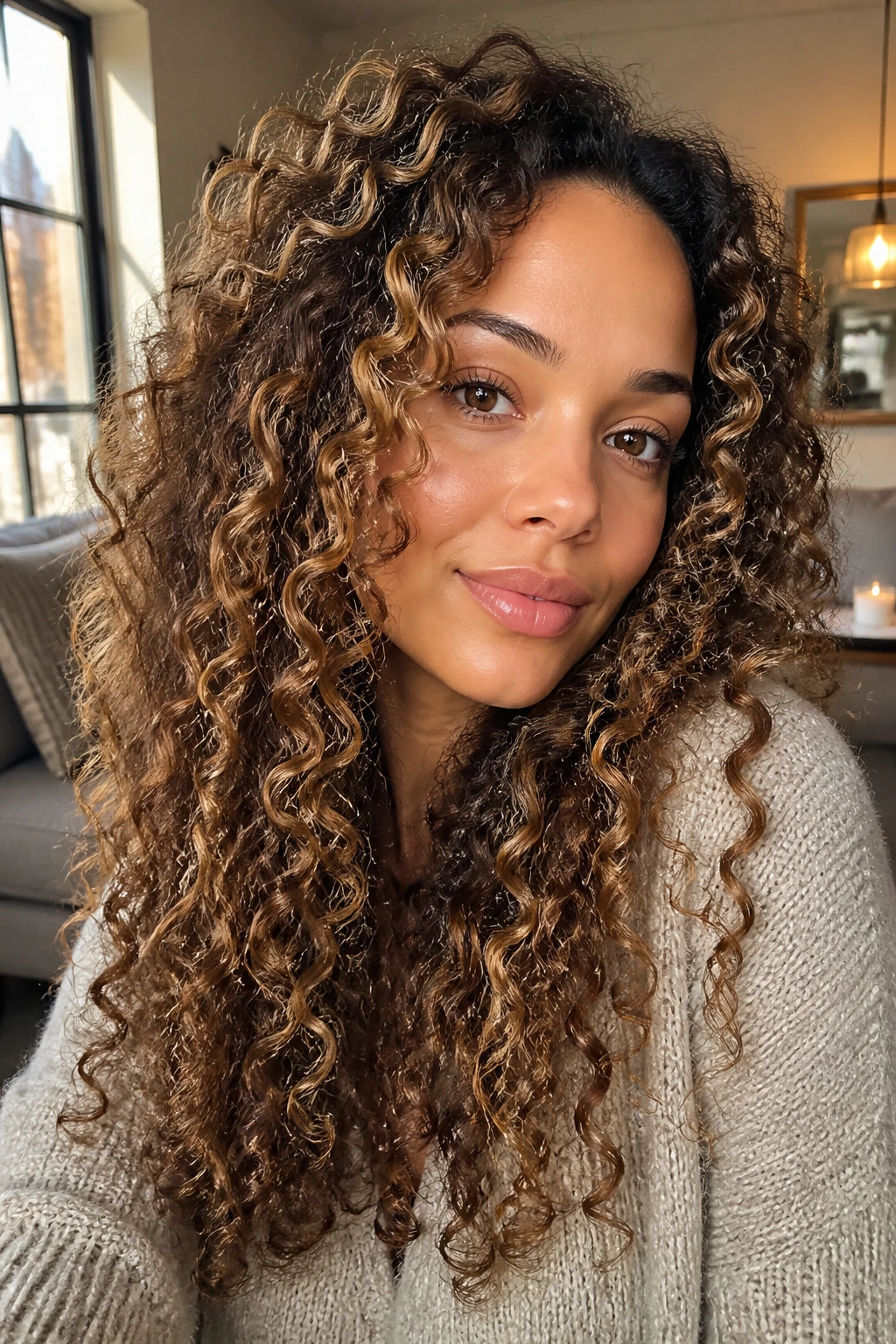
They follow the curl, not the cuticle map: Curly hair reads color in pieces, so a ribbon placed on the outside of the curl often looks richer than a wide streak hidden underneath.
-
They give you movement even on second-day hair: Highlights on curls keep shifting as the pattern loosens, which means the color still looks intentional when the roots are flat and the ends are doing their own thing.
-
They can be soft or bold without changing the technique much: A fine babylight, a face-framing money piece, and a hidden underlayer all use the same basic logic, but the visual effect is miles apart.
-
They let you work with grow-out instead of fighting it: Root smudges, balayage, and lowlights can blur the line between natural base and lighter pieces, so the color doesn’t shout at you every six weeks.
-
They respect curl health: Curly hair often needs more moisture and a gentler lift. Ideas built around partial placement or softer dimension keep the ends from looking fried and fuzzy.
-
They make shape matter more than length: A layered bob, a shag, and a long curl cascade all catch light differently, which is why the same honey tone can look delicate on one head and loud on another.
1. Honey Ribbon Balayage
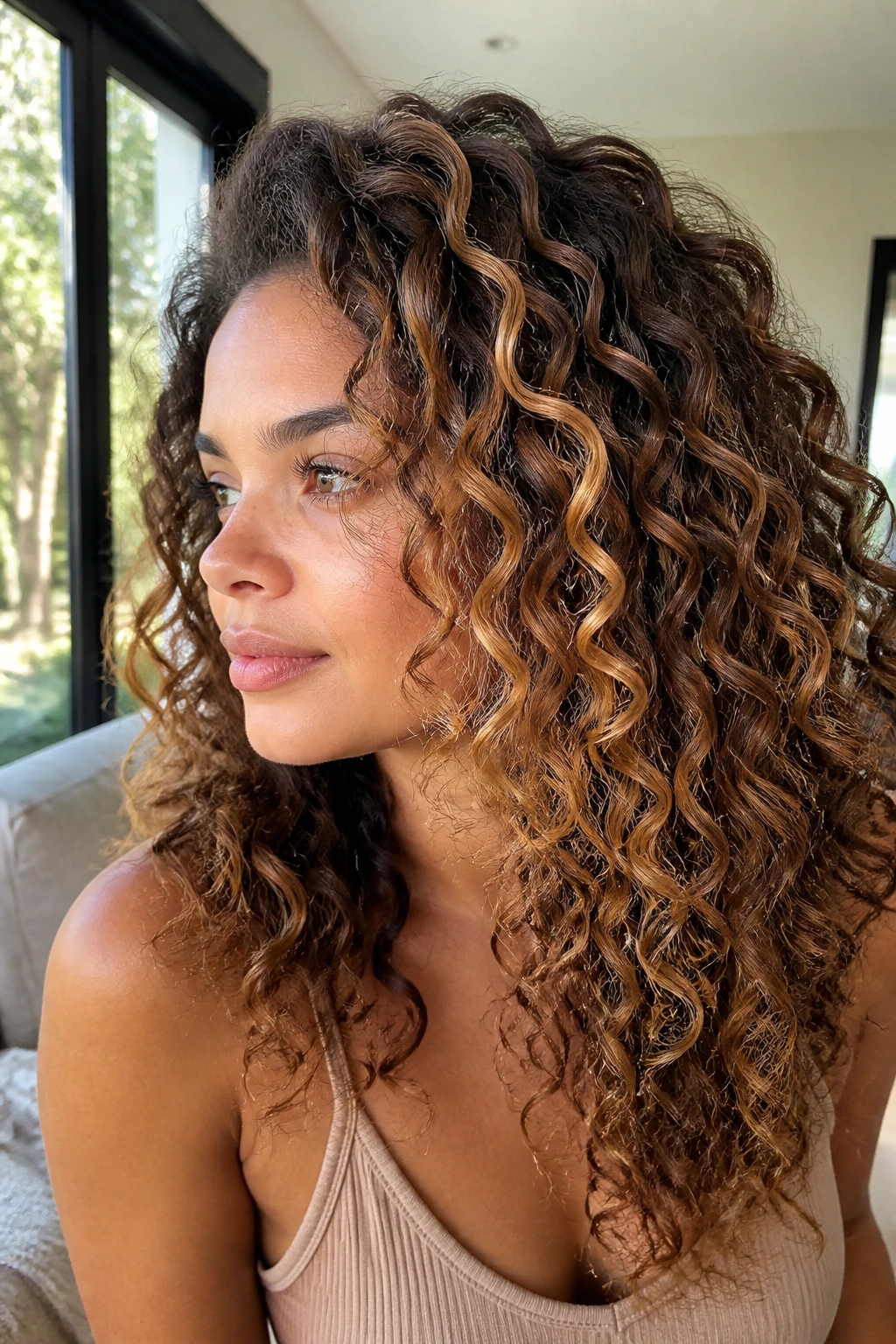
Honey ribbon balayage is the safe bet I reach for when someone wants brightness without that hard, stripey look that can sit awkwardly on curls. The color sits in soft, painted ribbons, not blunt slabs, so the bends of the hair do the work of breaking it up.
Why it flatters curls
Honey sits in that sweet spot between blonde and gold. On curly hair, that middle tone looks warmer at the curve of the curl and softer in the shadow, which keeps the whole head from looking overprocessed.
Ask for ribbons concentrated around the face, the top layer, and the mid-lengths of the ends. That keeps the light where curls move most.
A good version of this look needs a tone that feels like warm syrup, not yellow chalk. If the base is dark brown, honey shows up as glowy contrast. On lighter brown curls, it reads more like sunlit depth.
Best for: medium to dark brunettes, layered cuts, loose to medium curl patterns.
Skip the chunky weave: on curly hair, the ribbon should look painted, not striped.
2. Copper Veils That Warm Up Dark Curls
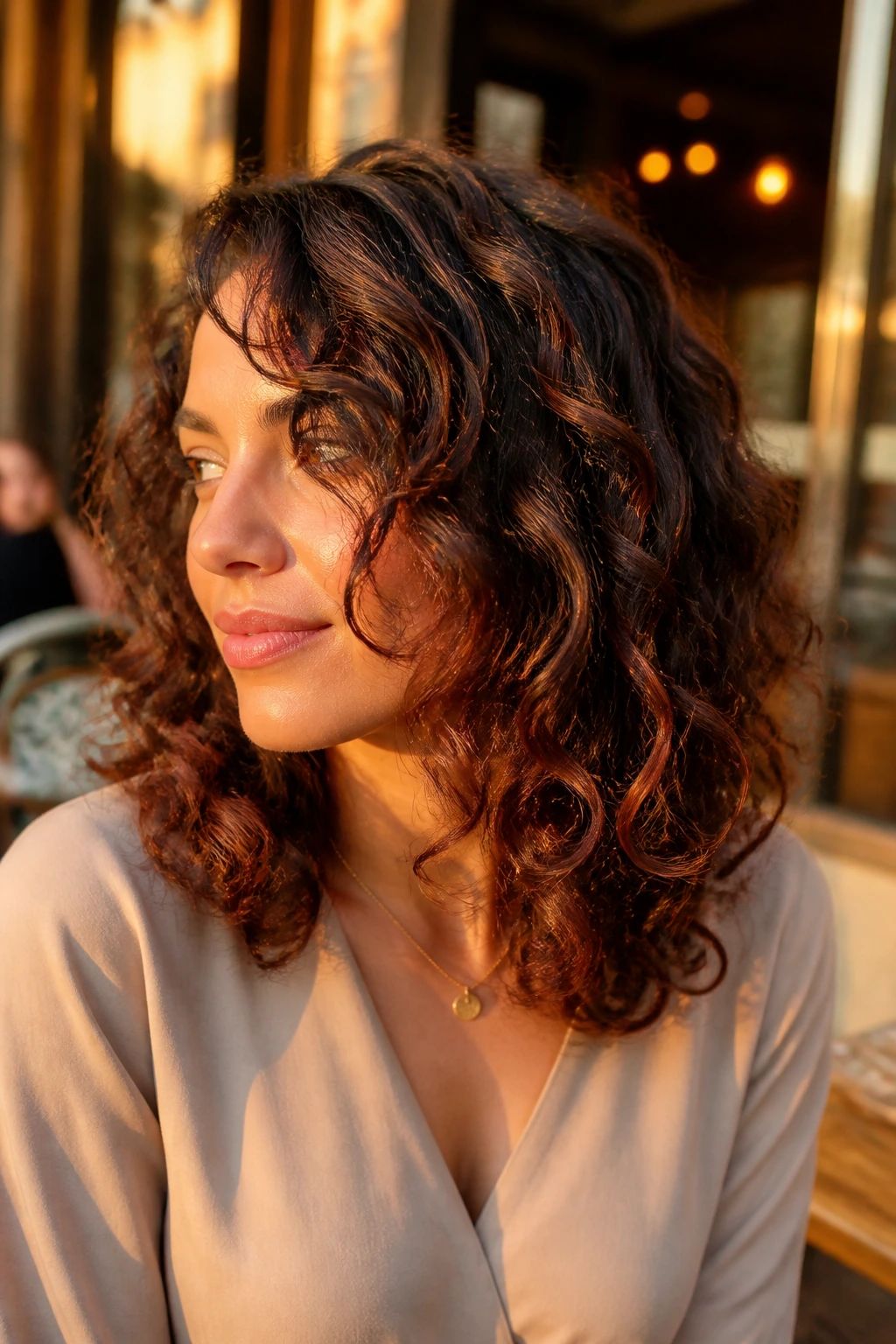
Copper on curls has attitude. Not the loud kind. The kind that makes dark spirals look richer at the roots and almost ember-like at the ends.
The trick is to keep the copper veils fine and slightly irregular. If every curl gets the same slice of orange-red, the whole style starts to look costume-y. But when the copper is placed in thin veils through the surface and around the face, the color glows without taking over.
What makes this one work
Copper is one of the few shades that can look dimensional even with a small amount of lift. It doesn’t need to go pale to be visible. On a deep brown base, that matters. The curl pattern gives the copper little points of brightness, then pulls it back into shadow.
I like this for shoulder-length or longer curls because the movement helps the color read as warm instead of flat. Tight coils can wear copper beautifully too, but the placement should stay closer to the outer layer so the shine shows.
Best for: dark brown bases, curly shags, layered lobs, people who want warmth without blonde.
3. Caramel Money Pieces
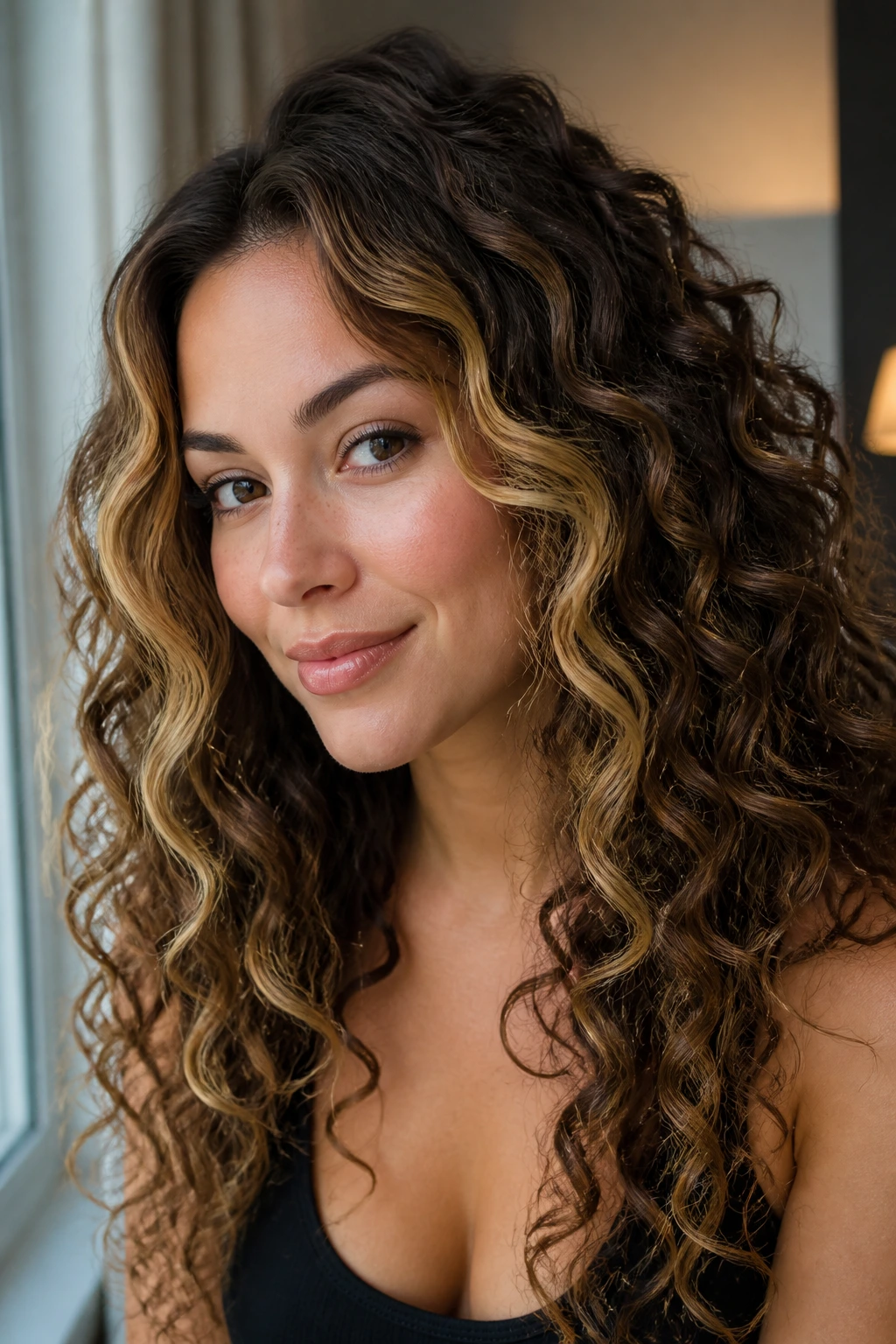
A caramel money piece is the fastest way to make curls look brighter near the face without touching the whole head. It’s also the easiest highlight idea to wear if you’re nervous about damage or upkeep.
How to place them
The lightest strands should sit around the cheekbones and temple, then fade into softer caramel through the crown. On curly hair, that frame gets amplified because the curl bends right beside the face.
Keep the money piece narrow if your curls are tight, wider if your pattern is loose. That’s not a theory thing. It’s a visual thing. Big curls can swallow a tiny face frame, while tighter coils can make a wide one look blocky.
This is the kind of color that rewards a good side part. Even a small shift in parting changes where the highlight falls, which means you get two looks out of one placement.
- Best on: bouncy ringlets, mid-length cuts, curly bangs.
- Best tone: caramel, not pale blonde.
- Maintenance: easy to refresh with glossing rather than full recoloring.
4. Mushroom Brown Babylights
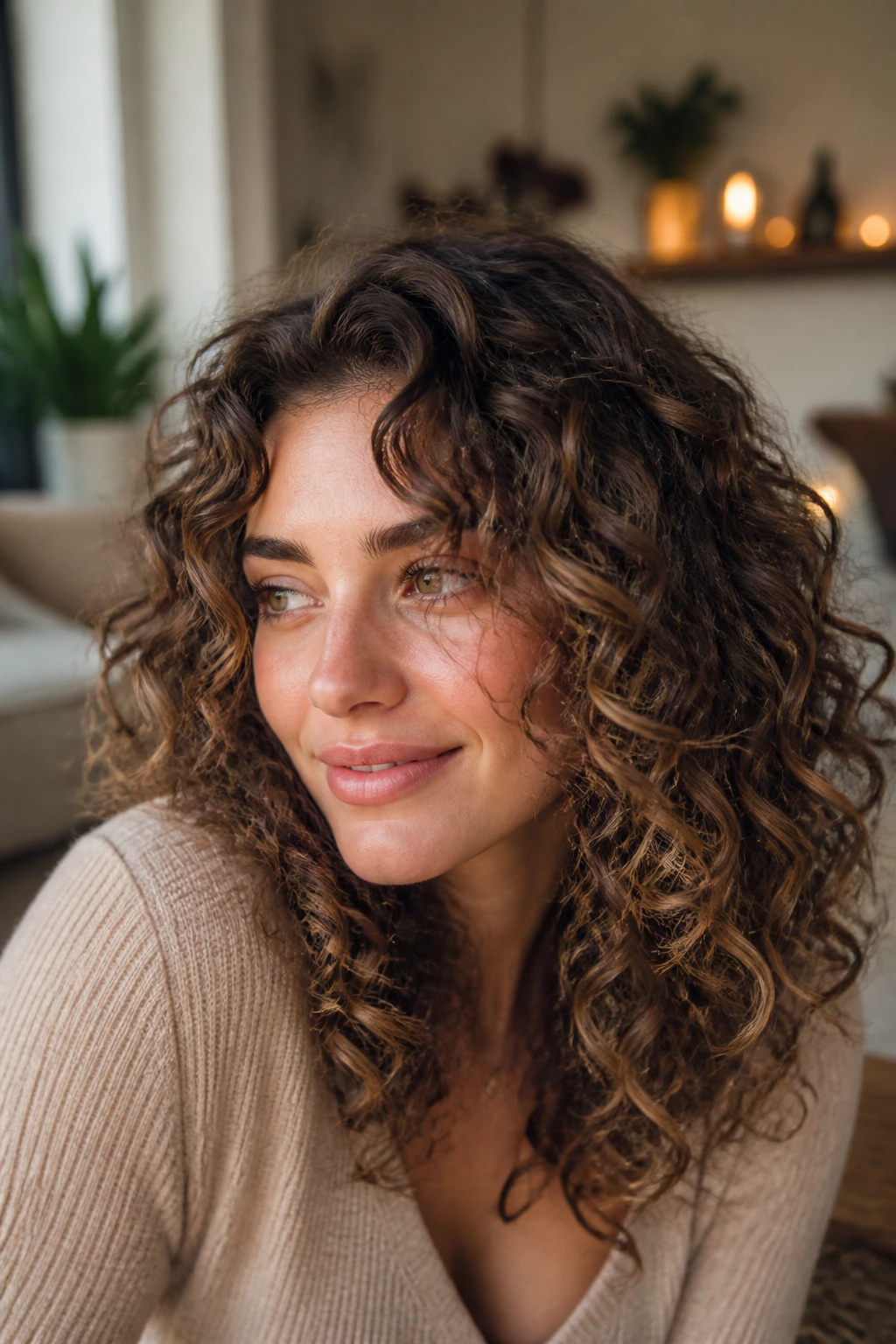
Mushroom brown is the quiet one in the room, and that’s exactly why it works on curls. It gives you dimension without announcing itself from across the street.
Babylights are the point here. Tiny. Fine enough that they melt into the curl pattern instead of sitting on top of it. On brown curls, those cool taupe-beige threads keep the hair from looking one-note, especially when the natural base has a little red or gold in it.
If you want something that looks expensive without looking flashy, this is it. The finish is softer than blonde and less warm than caramel, which makes it a smart choice if your skin leans cool or neutral.
A lot of people think curly hair needs brighter highlights to show. Not always. Sometimes the right move is taking the contrast down and letting the pattern do the showing.
5. Cinnamon Ombre on Shoulder-Length Curls
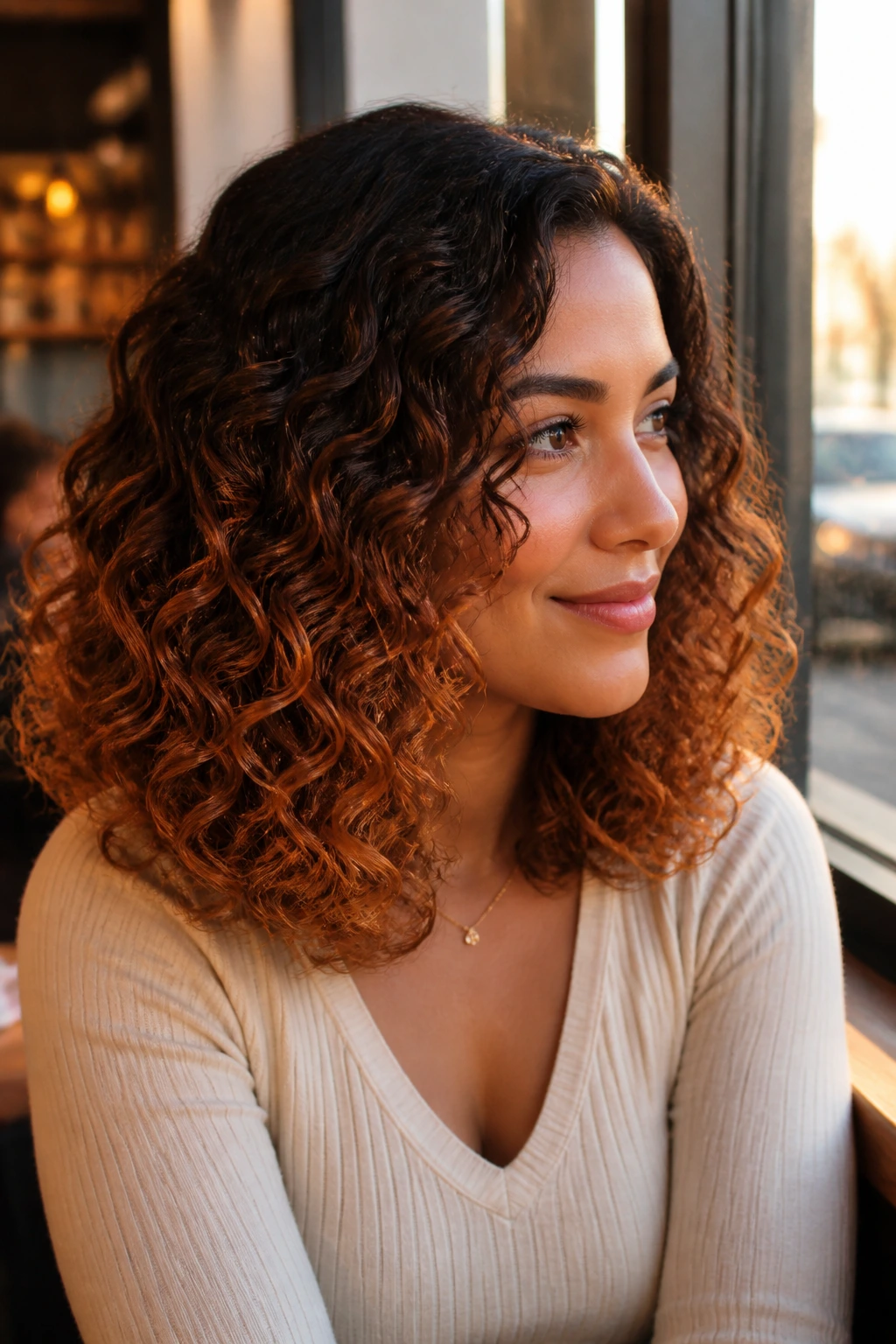
Cinnamon ombre is where the ends get the attention and the roots stay grounded. It works especially well on shoulder-length curls because the gradient has room to show before the curls spring back up.
The color shift should feel like spice warming up in a pan: deeper at the top, brighter and redder as it moves downward. That shape matters. If the transition is too sharp, the hair looks dipped instead of melted.
This idea is friendly to people who don’t want to retouch often. The root stays close to natural, and the lighter ends can be glossed back to life between appointments.
What to ask for: a soft fade from deep brown or chestnut into cinnamon, with the brightest pieces concentrated from the mid-lengths down. That keeps the crown believable and the ends lively.
6. Golden Bronde Ribbons
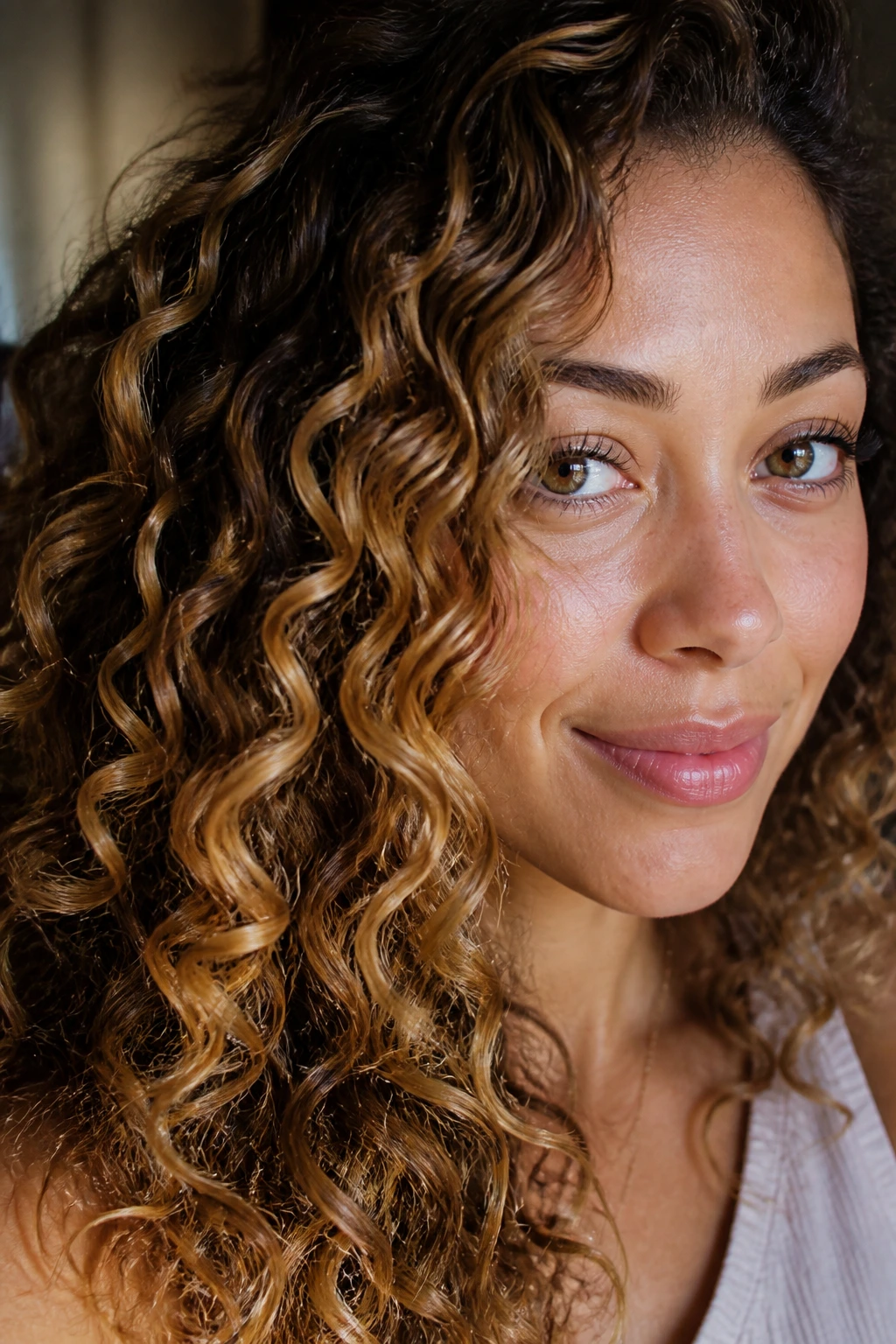
Golden bronde sits between brunette and blonde, which sounds wishy-washy until you see it on curls. Then it makes perfect sense. The light ribbons catch on each bend and stop the color from looking flat.
Unlike all-over blonde, bronde keeps the base visible. That’s a gift on curly hair, where density can make lighter color look hollow if the whole head is pushed too pale. The darker base gives the light ribbons a place to rest.
What makes it different
Bronde is best when the highlights are staggered rather than stacked in one section. A few pieces near the part, some through the sides, and a little brightness through the ends can make the whole style feel expensive in the old-school salon sense.
It’s also a good bridge shade. If you’re not ready for blonde but want something brighter than caramel, this lands right in the middle.
7. Platinum Peekaboo Panels
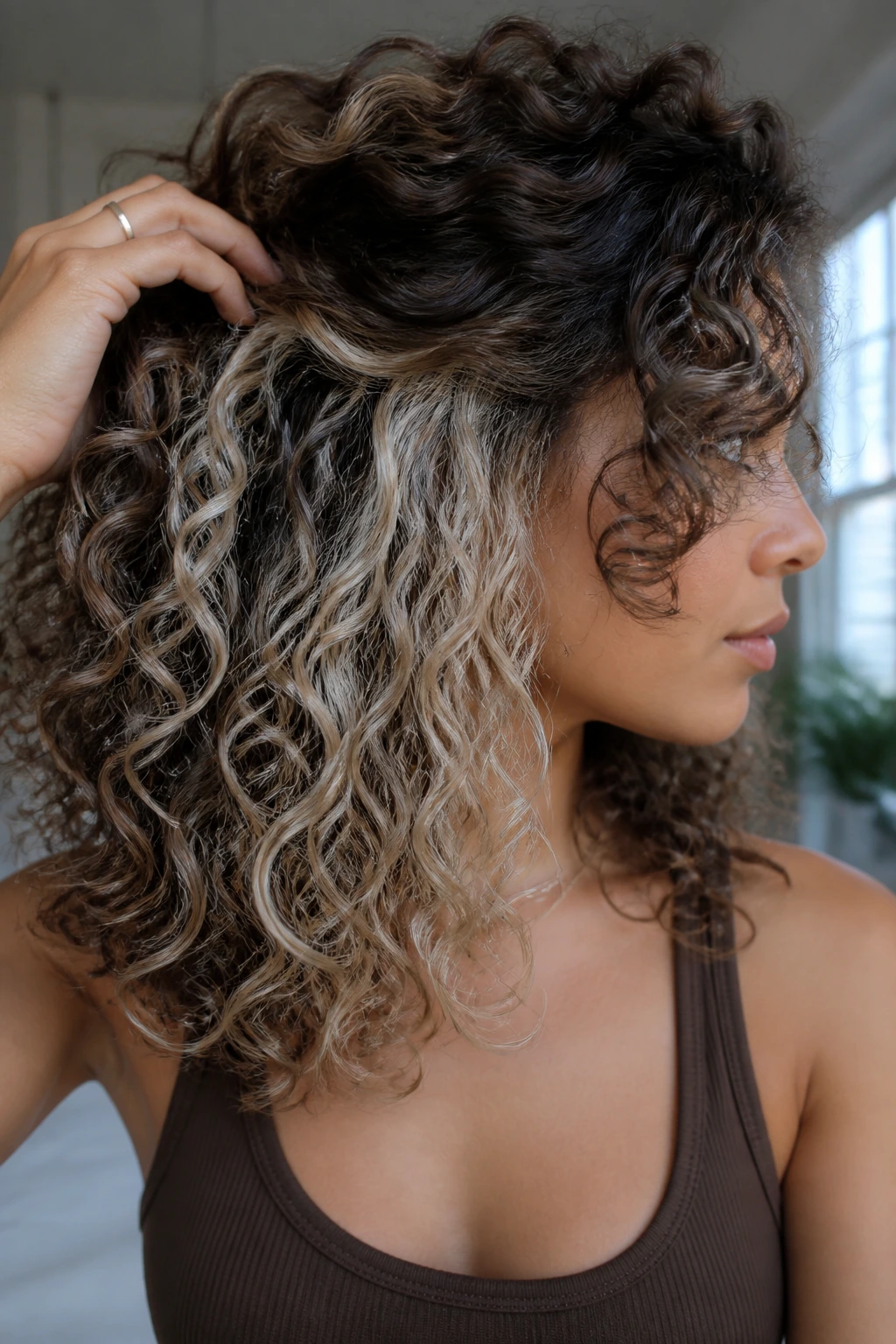
Platinum peekaboo panels are for people who want drama and don’t mind the commitment that comes with it. The color sits underneath the top layer, so it flashes when the curls move instead of staring at you all the time.
That hidden placement makes platinum more wearable on curly hair than a full head of icy blonde. The surface stays softer, while the underlayer gives you a hit of brightness when the hair lifts or gets pinned back.
How to keep it from looking harsh
The top layer should have enough depth to veil the platinum. If the hair is too short or too uniformly layered, the contrast can look harsh at the roots.
This works best on curls with a defined shape: a stacked bob, a curly shag, or a long layered cut that opens and closes as you move. The pop is half the point.
- Best for: people who like a bold flash of color.
- Best finish: glossy, not matte.
- Watch out for: toner fade, which can make platinum go yellow fast.
8. Rose Gold Ends
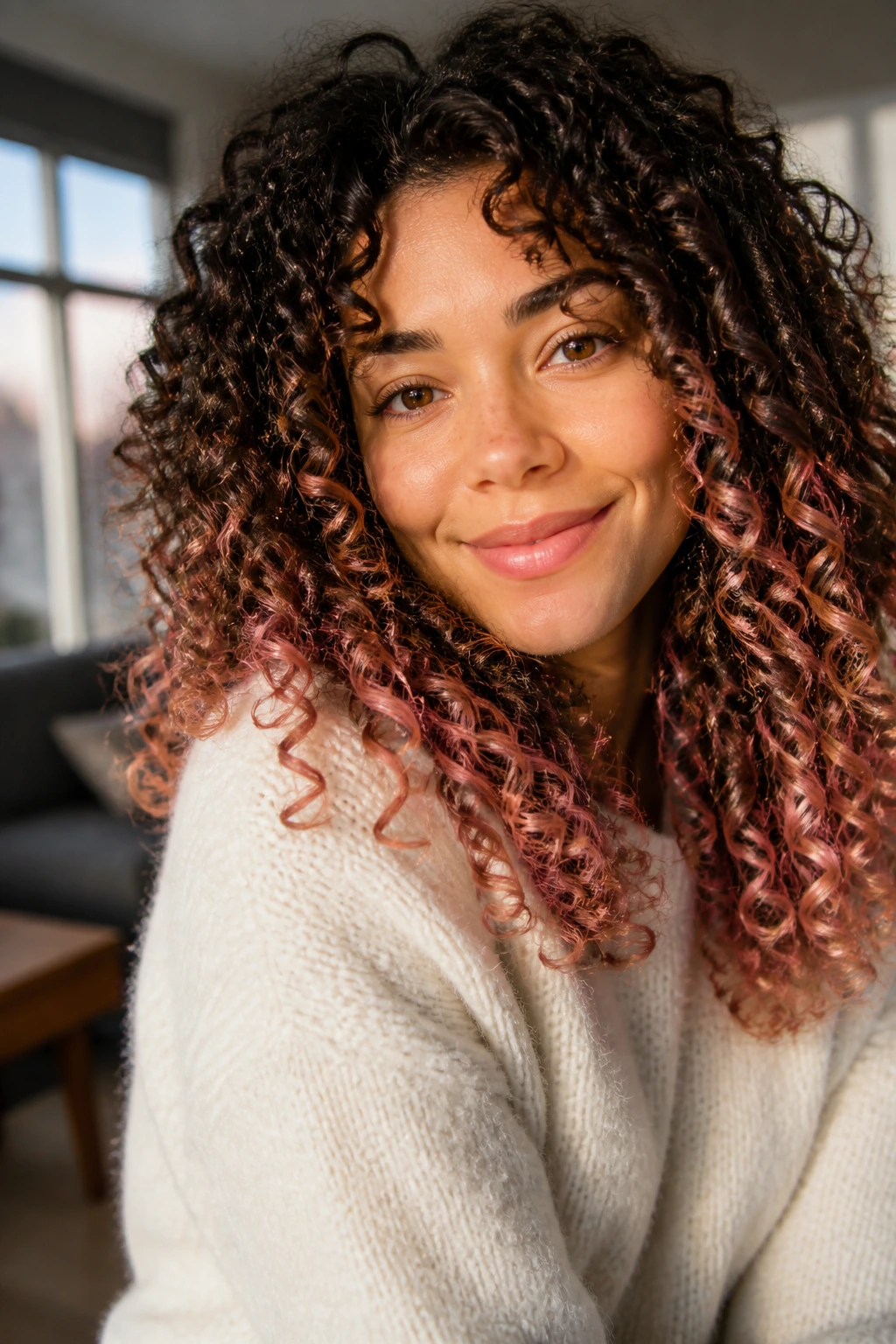
Rose gold on curls should look like a wash of blush and copper, not a pink dye job from a costume shop. The ends are where this shade earns its keep, because curls collect the color in tiny reflective points.
It’s a nice choice if you want something playful but still grown-up. The base can stay brunette, dark blonde, or even a soft copper; the rose gold only has to live on the last few inches to read clearly.
Why it works on curly hair
Curly ends tend to separate a little when they’re dry, which gives rose gold space to show. On straight hair, the same color can disappear into a single sheet. On curls, every twist catches a little more of the tint.
If the hair is porous, go lighter on the pink and richer on the gold. That keeps the tone from going muddy.
9. Auburn Halo Highlights
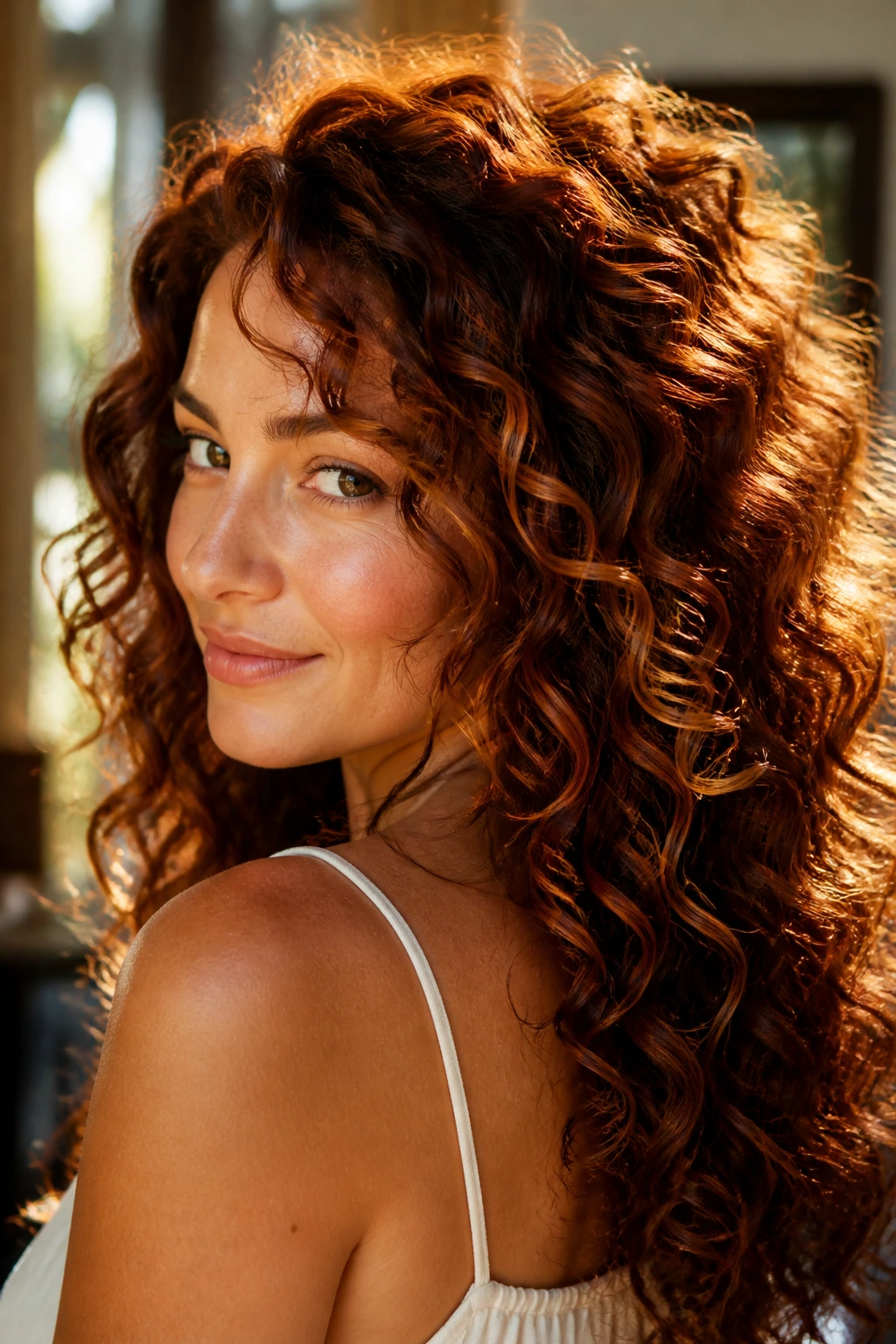
An auburn halo is one of my favorite ways to warm up curly hair without coloring every inch. The lightest auburn pieces sit around the crown and outer perimeter, so the head looks lit from above.
That halo effect is especially good for medium and darker bases. The curl pattern lifts the auburn off the scalp visually, which keeps the color from flattening into a single red block.
A good halo also gives shape. It draws the eye upward, which can make layered curls look fuller and more sculpted. That’s useful on finer textures that need a little visual density.
The tone should land between copper and chestnut. Too red, and it turns loud. Too brown, and you lose the glow.
10. Icy Beige Ribbons
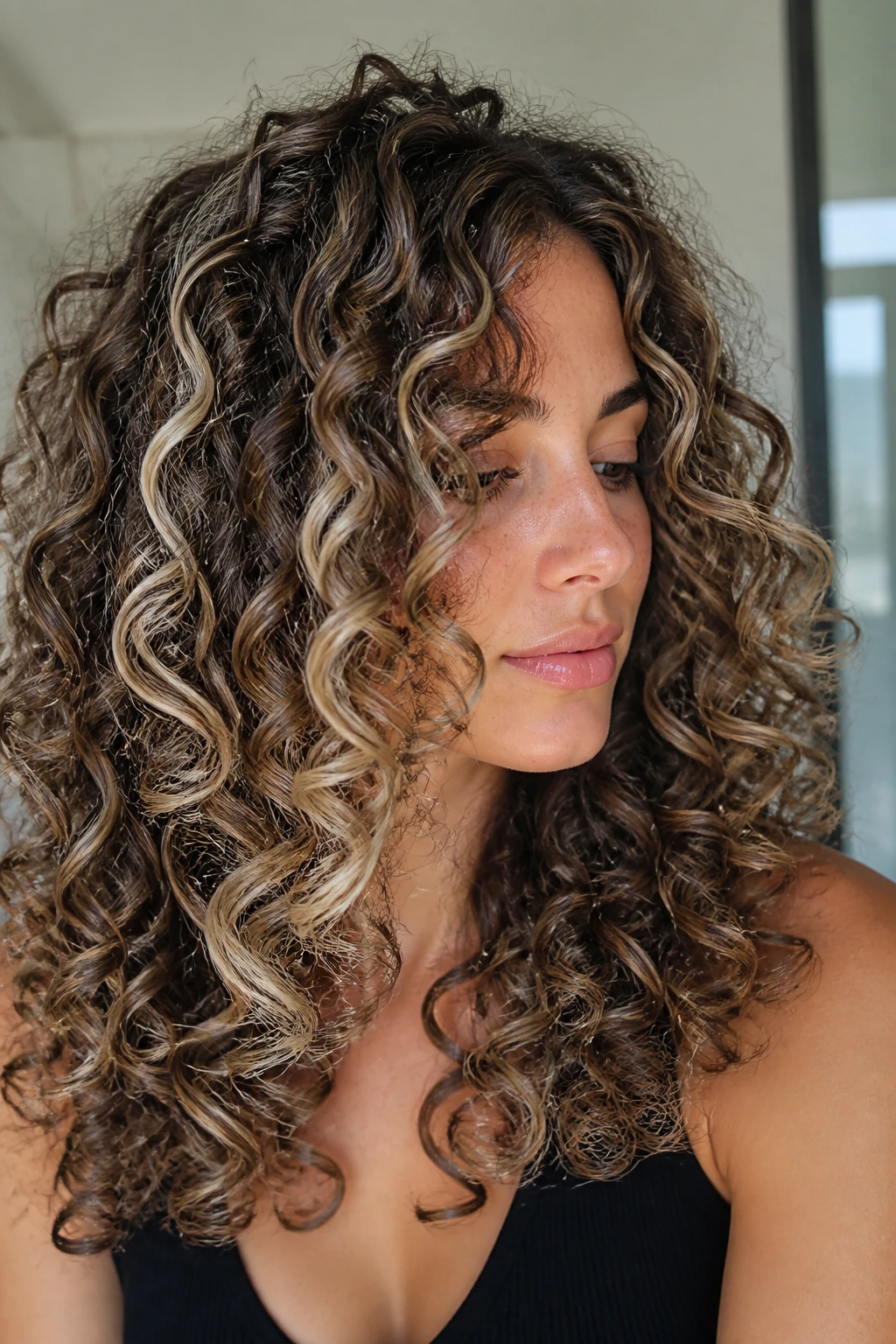
Icy beige ribbons are for curls that can hold contrast. Not every head can, and that’s fine. On the right base, these ribbons look clean, modern, and sharp without going full platinum.
The key is keeping the beige cool enough to avoid brass, but not so ash-heavy that it wipes out the warmth in the hair. Curly hair shows toner shift fast, especially on porous ends, so this shade needs a colorist who watches the rinse like a hawk.
A good use case
Loose curls and big waves handle this look better than very tight coils, because the light pieces need room to read. If the curl pattern is dense and compact, the beige can get lost unless the placement is close to the surface.
This one pairs well with layered cuts and a deep side part. The contrast looks deliberate when the curls fall over one shoulder.
11. Espresso Lowlights
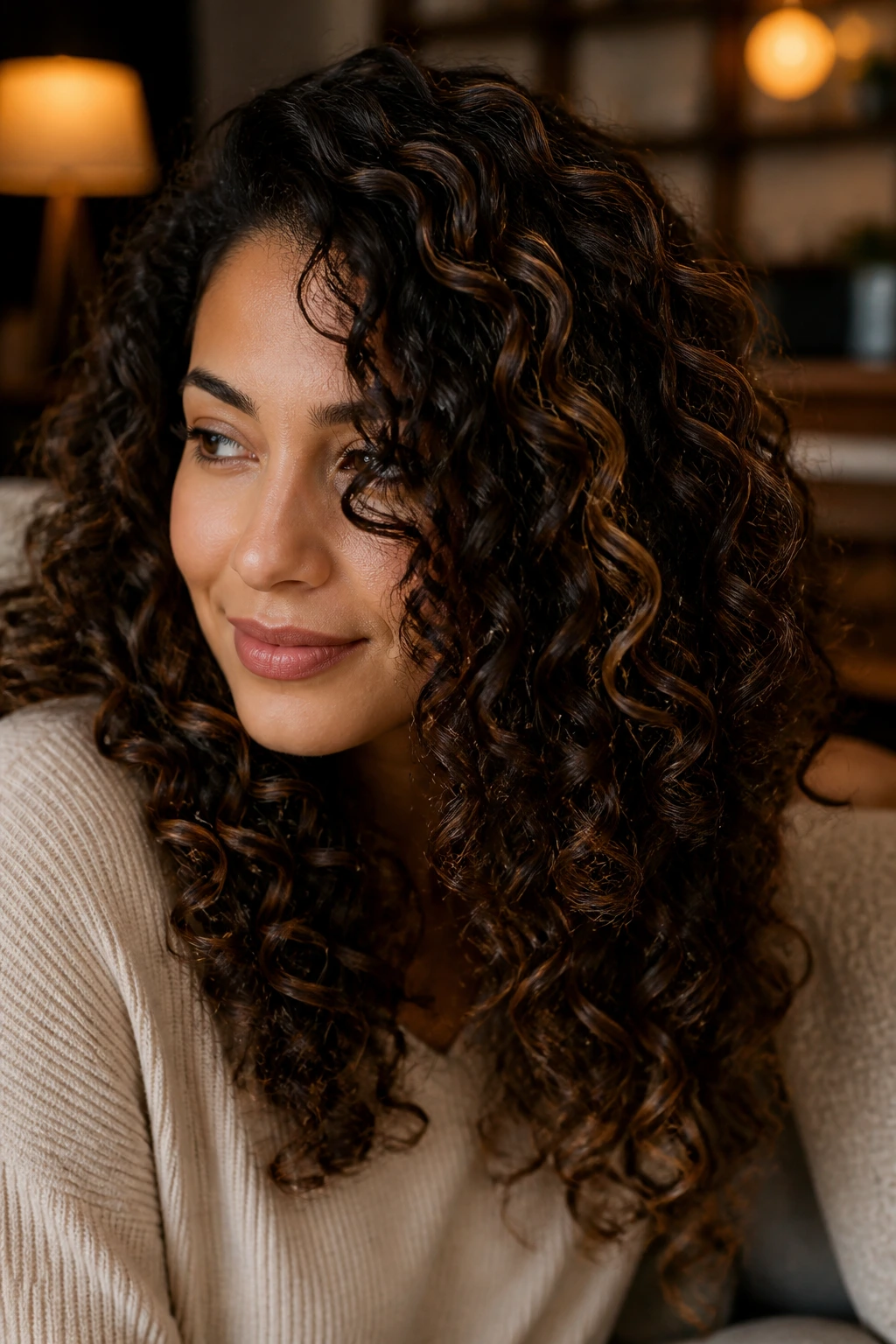
Most people talk about highlights and forget the value of lowlights. On curly hair, that’s a mistake. Espresso lowlights add the dark threads that keep light curls from looking washed out or too airy.
I like this for blonde, light brown, or heavily highlighted curls that need shape back. A few deeper pieces through the underside and toward the interior of the curl mass can make the whole style look thicker.
Why it’s worth the space
Curly hair already has natural shadow. Lowlights lean into that and make the brightest pieces stand out more. The result is less “single-color puff” and more dimensional curl cluster.
If your hair has gone too light, lowlights are also a correction tool. They bring the eye back into the shape of the cut instead of letting the light pieces do all the talking.
12. Peach Coral Dip-Dye
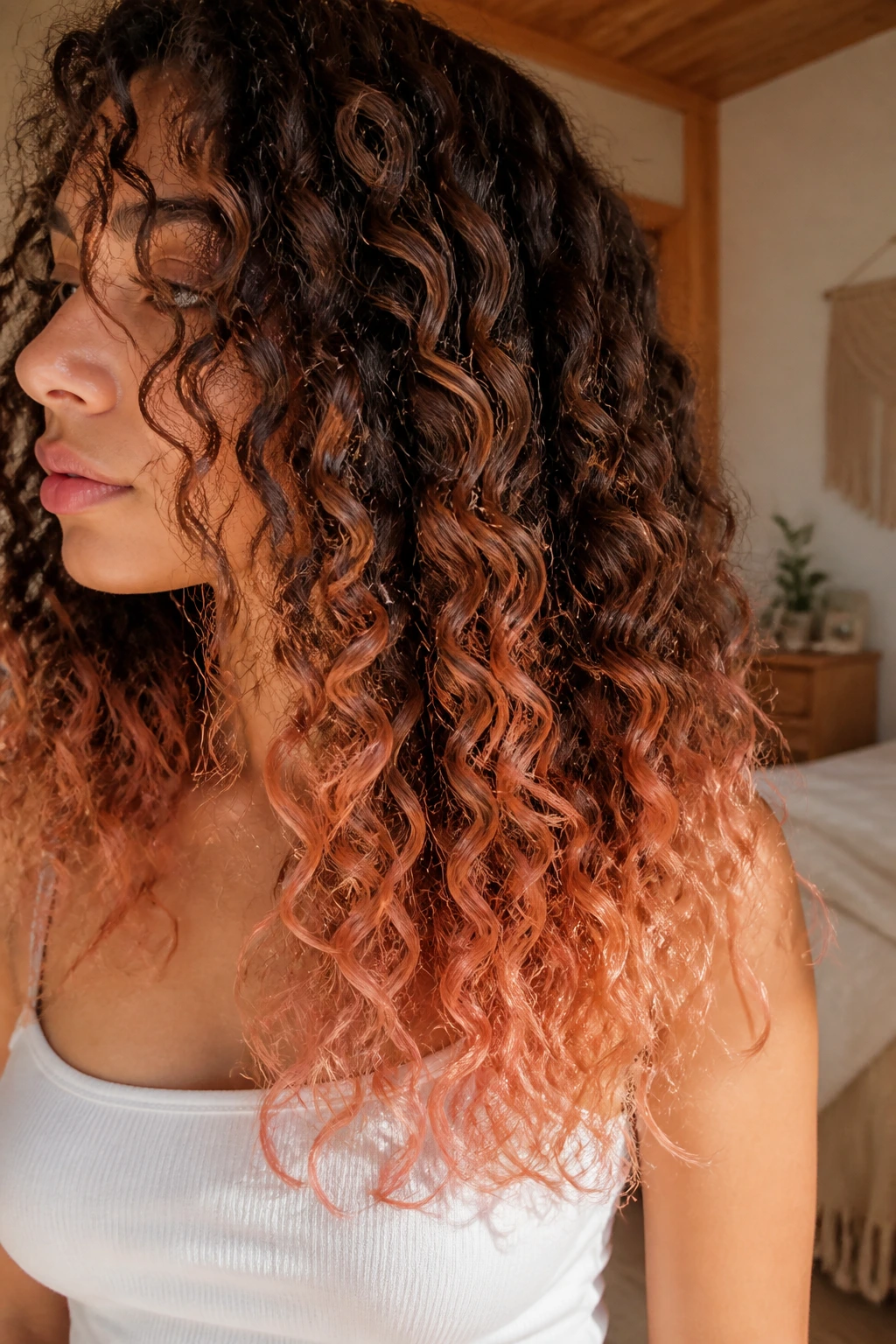
Peach coral on the ends is pure personality, but it works best when the color is applied as a soft dip rather than a hard line. Curly ends can make that transition look natural if the fade is feathered high enough.
This is the kind of color that gets better when the cut has movement. A blunt hemline fights it. Layers help it. So do springy ends that separate a little as they dry.
The peach should stay warm and bright, not neon. On darker bases, a slightly muted coral often reads better because it doesn’t disappear under the natural color at the root.
It’s a playful choice, but not a silly one. There’s a difference.
13. Strawberry Blonde Face Frame
Strawberry blonde is one of the prettiest face-framing tones for curly hair because it sits between gold, copper, and a whisper of pink. It gives the face a softer edge than straight blonde does.
The frame should be concentrated around the front hairline and a few curls that fall near the jaw. That keeps the color from feeling scattered. Curly hair already has enough visual texture; the highlight should guide the eye, not fight for it.
How to ask for it
Ask for lighter pieces that start a little below the root and brighten through the first few inches. If the roots are too pale, the style can look harsh once the curls shrink up.
This is especially flattering on layered cuts and curly curtain bangs. The bangs catch the strawberry tone early, which gives the whole style a warm, almost flushed look.
14. Champagne Highlights on Short Curls
Short curls need a different kind of highlight. Too much contrast and the shape turns busy. Champagne highlights solve that by adding brightness without making every coil shout.
The tone should be creamy, slightly cool, and luminous rather than pale yellow. On a curly bob, those notes matter. The color needs to live on the outer curve of the hair so it flashes when the head turns.
A short cut can also handle a tighter placement. A few well-placed champagne threads around the temples, crown, and fringe can make the cut look cleaner and more intentional. It’s a neat trick, and it keeps the haircut from disappearing into itself.
This is a smart choice if you wear glasses. The light near the face keeps the curls visible around the frames.
15. Bronze Waterfall Balayage
Bronze waterfall balayage looks rich because it falls in layers. The lighter bronze pieces sit higher on some curls, lower on others, and that uneven drop gives the hair motion even when it’s still.
This is a strong option for medium brown and deep brunette bases. Bronze has enough warmth to show on dark hair, but it doesn’t turn brassy as fast as straight gold can. On curls, that balance matters a lot.
Why it feels different
The “waterfall” part isn’t just a pretty name. The highlights should travel from the crown down the lengths in a staggered way, so no single section looks overdone. That makes the finish feel like light shifting through a curtain.
If you like diffusing your curls or wearing big, stretched-out twist-outs, this one pays off. The bronze catches in the long lines and the shorter bends alike.
16. Burgundy Hidden Panels
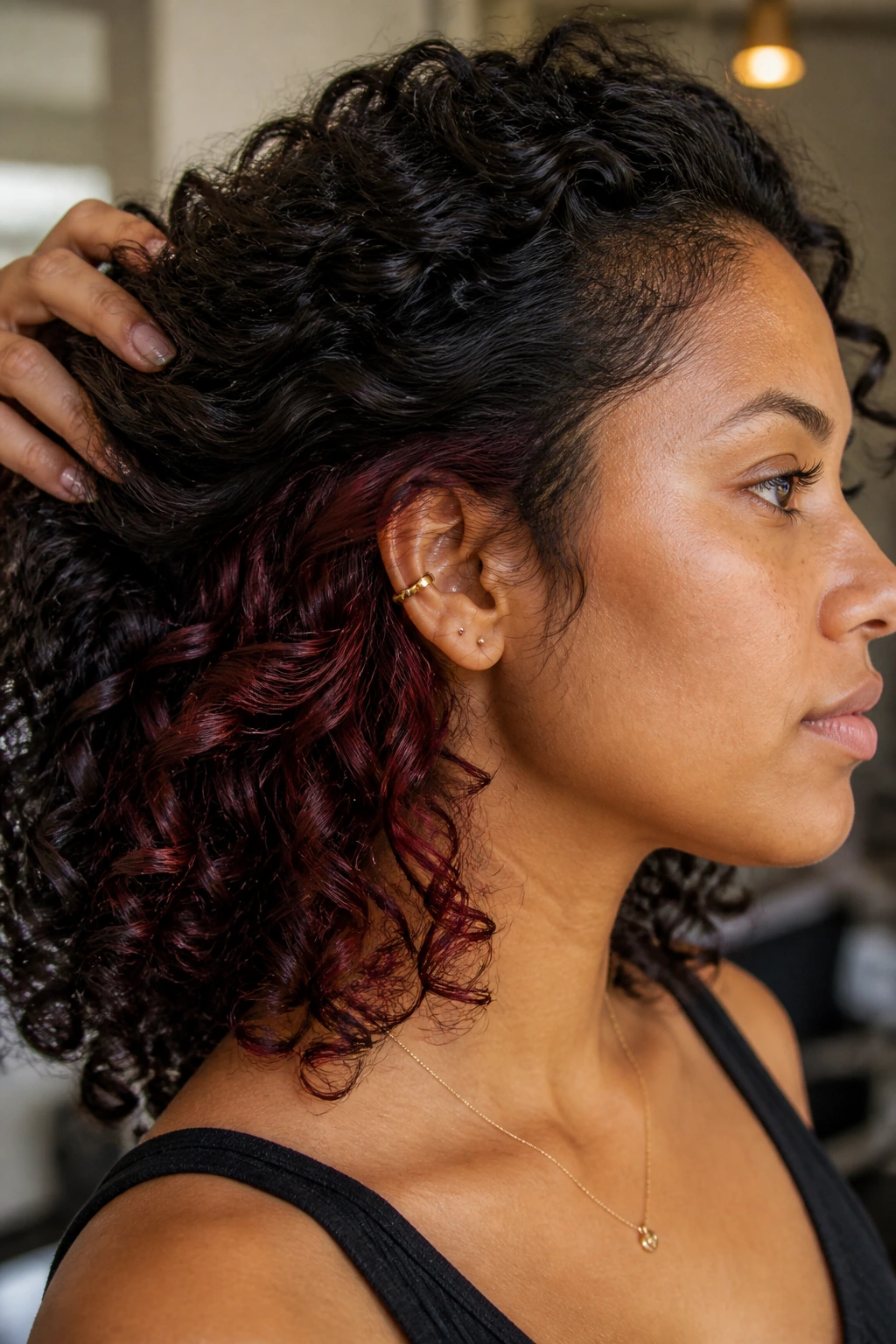
Burgundy hidden panels are for anyone who wants a darker, moodier color story that still has movement. The panels sit under the surface, so the red-violet shows only when the hair shifts or gets tucked back.
This is a good compromise if you want colored curls but don’t want the upkeep of all-over fashion red. The top layer can stay natural, which keeps the grow-out manageable and the style workplace-friendly if that matters to you.
The shade itself should lean wine, not plum-black. Burgundy with enough red in it looks plush on curls. Too much violet, and the color can disappear under low light.
Hidden panels are fun because they behave like an inside joke. You know they’re there. Everyone else gets the reveal when the hair moves.
17. Sand Blonde Babylights
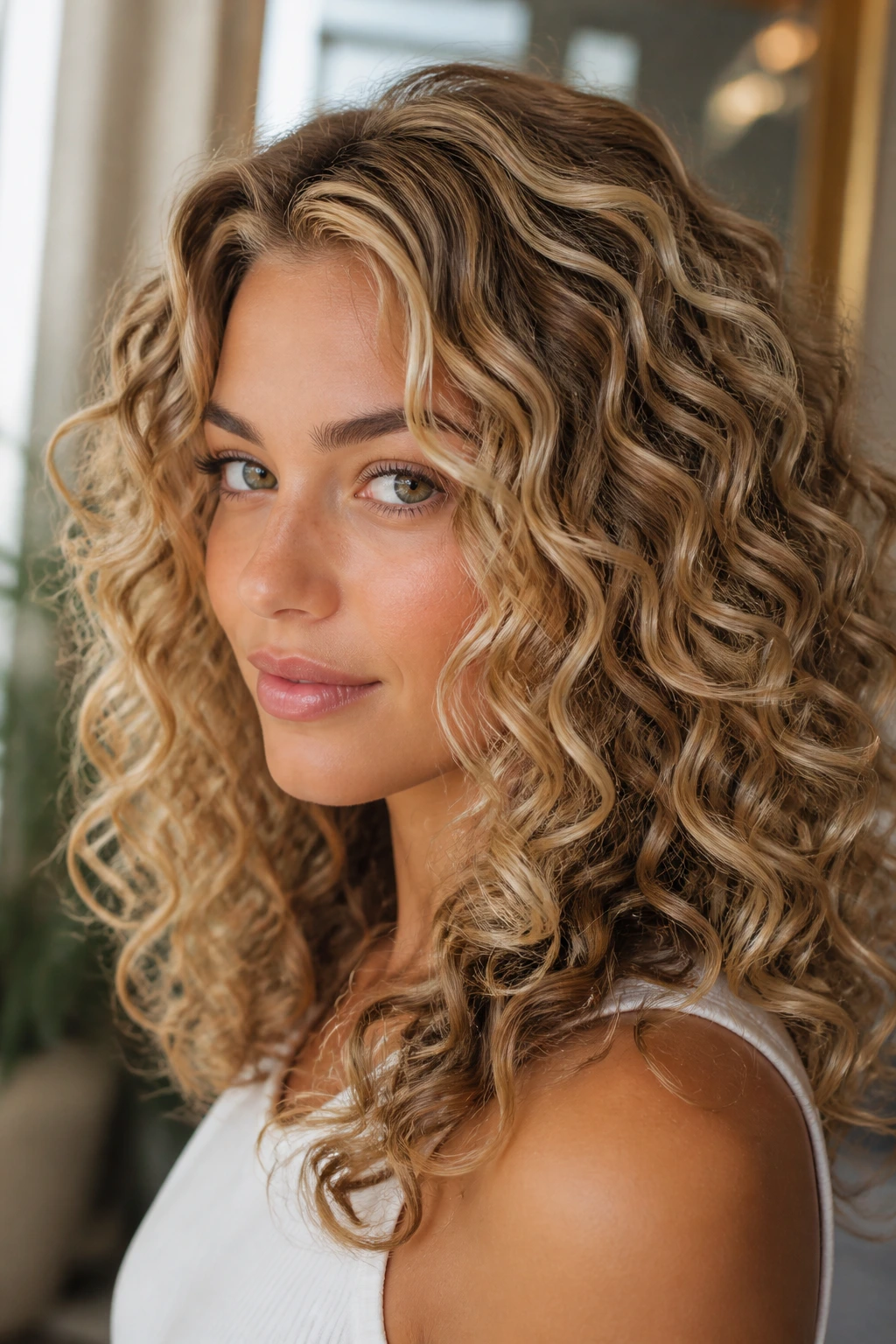
Sand blonde babylights give curly hair that soft, sun-touched look people keep asking for at salons, even when they can’t name the shade. The color is pale enough to brighten, but beige enough to stay grounded.
Babylights are the point again. Thin, tiny, carefully placed. On curls, that keeps the light pieces from forming obvious stripes. Instead, the hair reads as naturally lighter in a few places, which is much nicer than a hard foil pattern.
Best way to wear it
This shade looks strongest on layered cuts and medium-density curls. If the hair is very thick, you may need a few more pieces through the crown so the color doesn’t vanish into the mass.
Sand blonde is also one of the easiest blonde tones to live with because it doesn’t scream when the root grows in. That’s worth a lot, frankly.
18. Smoky Silver Ribbons
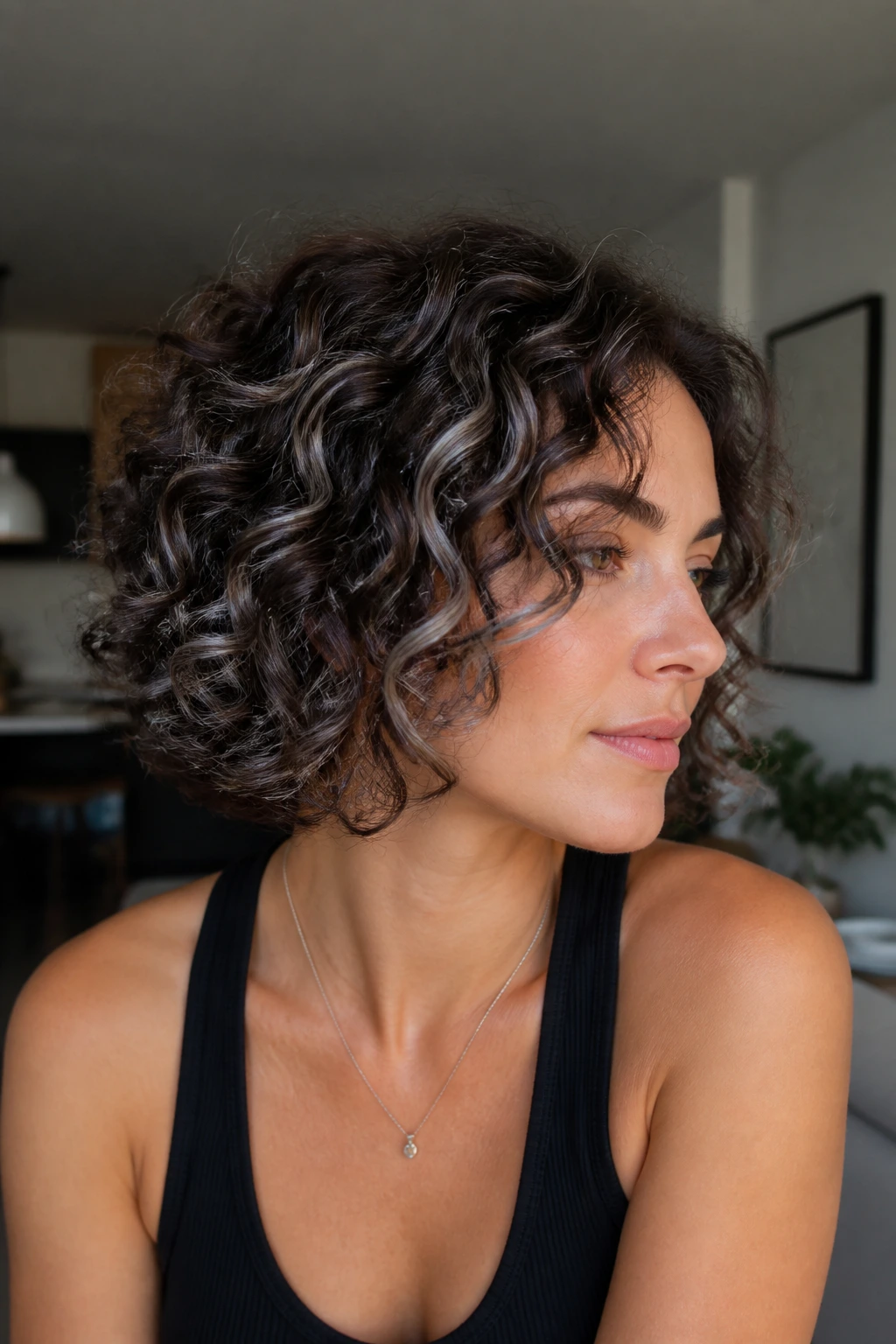
Smoky silver is not a timid choice. It’s a cool-toned, almost metallic look that can make curls feel sharp and modern without looking icy in a brittle way.
The “smoky” part matters. Pure silver on curly hair can drift into overprocessed territory fast, especially if the ends are porous. A gray-beige undertone softens it and keeps the texture looking touchable.
This works best when the silver sits in ribbons rather than blankets. You want flashes of cool light, not a solid silver cap. On darker bases, that contrast can be dramatic in a very clean way.
A curly bob with smoky silver is a favorite of mine. The shape gives the color enough movement to keep it from looking like one flat helmet.
19. Mocha Melt With a Soft Root
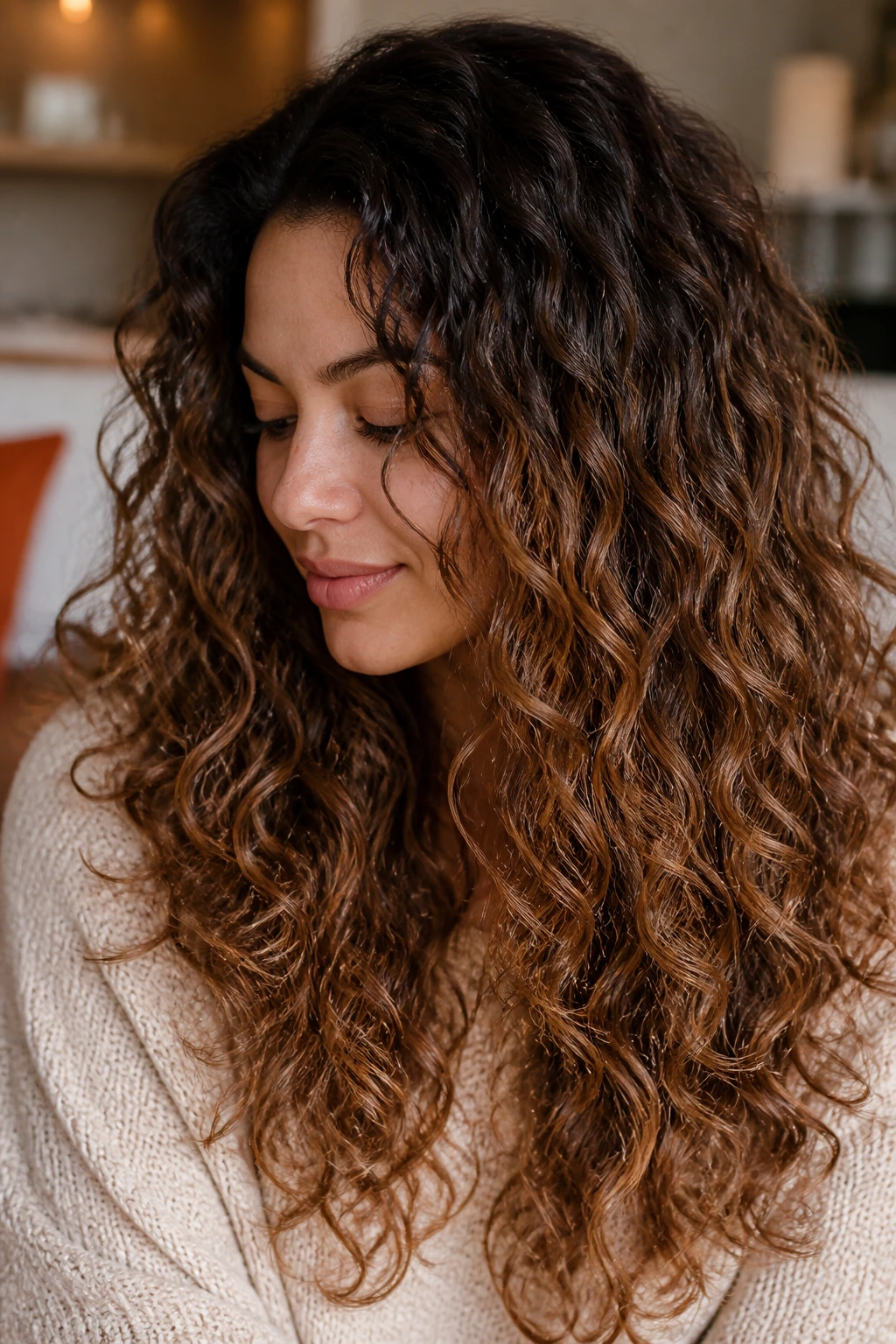
A mocha melt is the quietest highlight idea on this list, and maybe the most wearable. It keeps the root soft, deep, and close to natural, then lets the color melt into lighter mocha through the mid-lengths and ends.
Curly hair loves a soft root because it avoids the hard line that can form when highlights grow out against a dense texture. The transition feels smoother, and the curl pattern helps blur the shift even more.
Why I like this one
It is one of the few color ideas that can look expensive even when it’s barely noticeable from across the room. The interest comes from depth, not brightness. On curls, that depth is enough.
This is a smart move if your hair is prone to dryness. You can keep the lightest work away from the most fragile ends and still get movement through the hair.
20. Teal Peekaboo Underlayer
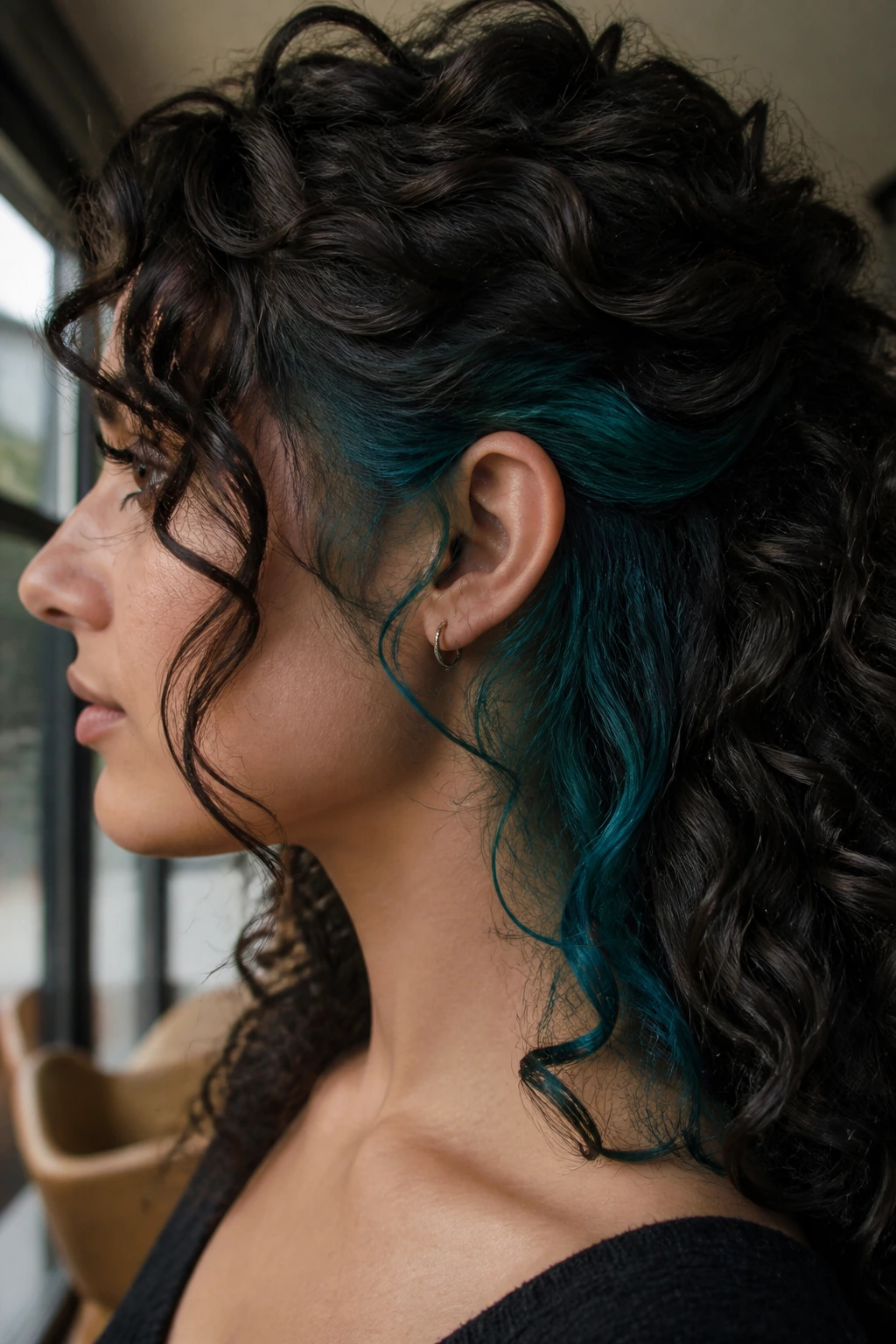
Teal underlayers are for people who want the hidden flash, not the full headline. On curly hair, the color peeks out when the hair lifts, falls over one shoulder, or gets pinned back.
The best version uses a deep jewel teal rather than a bright pool color. That way the tone reads rich under indoor light and still looks clean against dark curls. A soft underlayer also keeps the style from feeling juvenile.
This one is especially fun with asymmetrical cuts or curly lobs. The longer top pieces create a curtain over the teal, so the reveal feels deliberate rather than loud.
If you wear a lot of black, cream, denim, or olive, the color gets even better. The wardrobe doesn’t compete with the teal; it lets it breathe.
21. Apricot Glow Tips
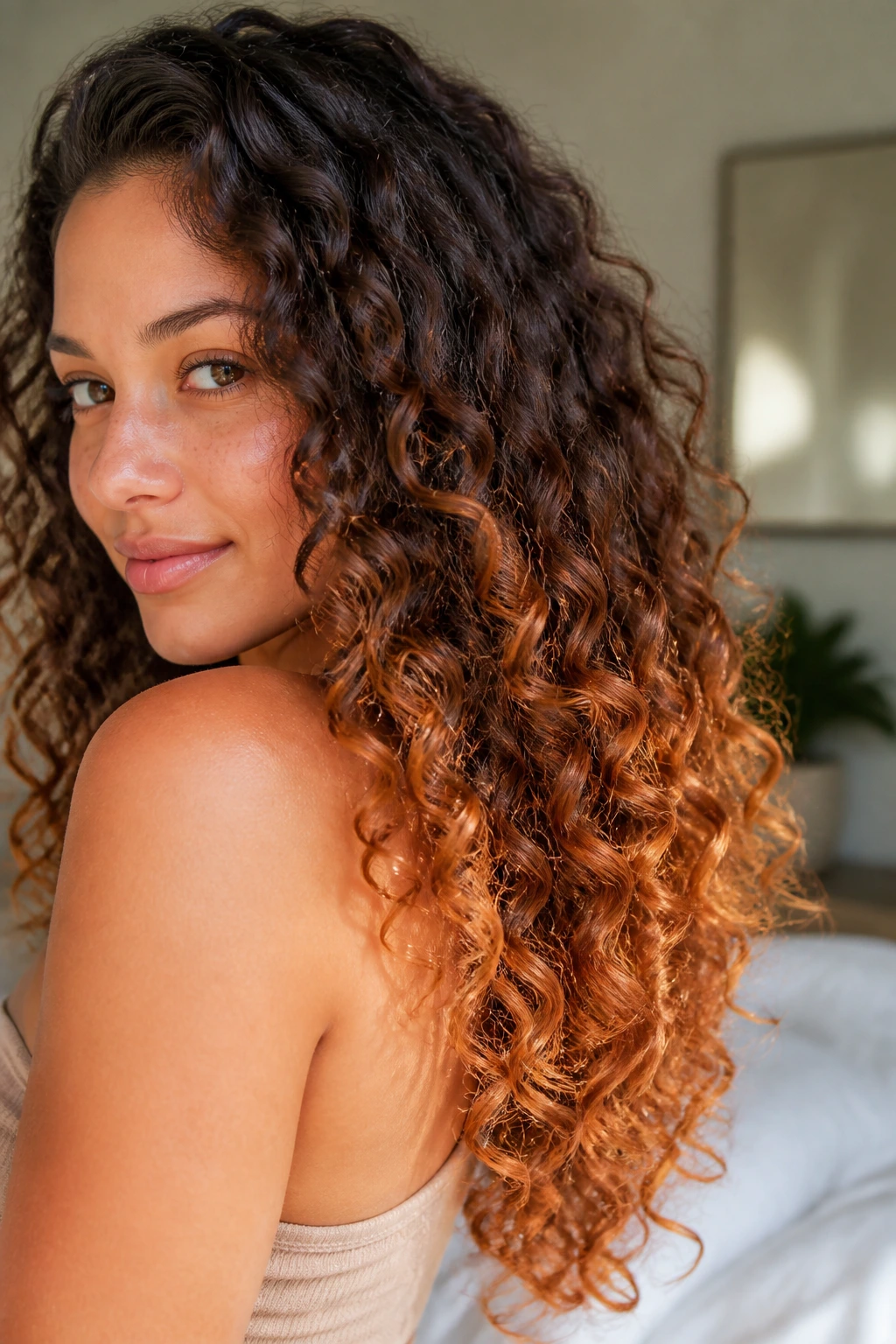
Apricot glow tips are a softer cousin of peach and coral. They’re warmer, less saturated, and a little easier to wear if you want a color statement that doesn’t feel shouty.
The ends should carry most of the brightness. On curly hair, that gives the color a natural, airy feel because the tips often separate a bit and catch the light first.
What makes it work
Apricot can lift a darker base without needing a huge amount of bleach if the goal is glow rather than neon brightness. That makes it kinder to the curl pattern, which is a real concern if the ends are already dry.
It’s a pretty choice for medium and long curls because the hue shifts a little as the hair moves. In soft daylight, it can lean peach. Under warmer indoor light, it looks closer to golden coral.
22. Tiger-Eye Caramel and Honey Mix
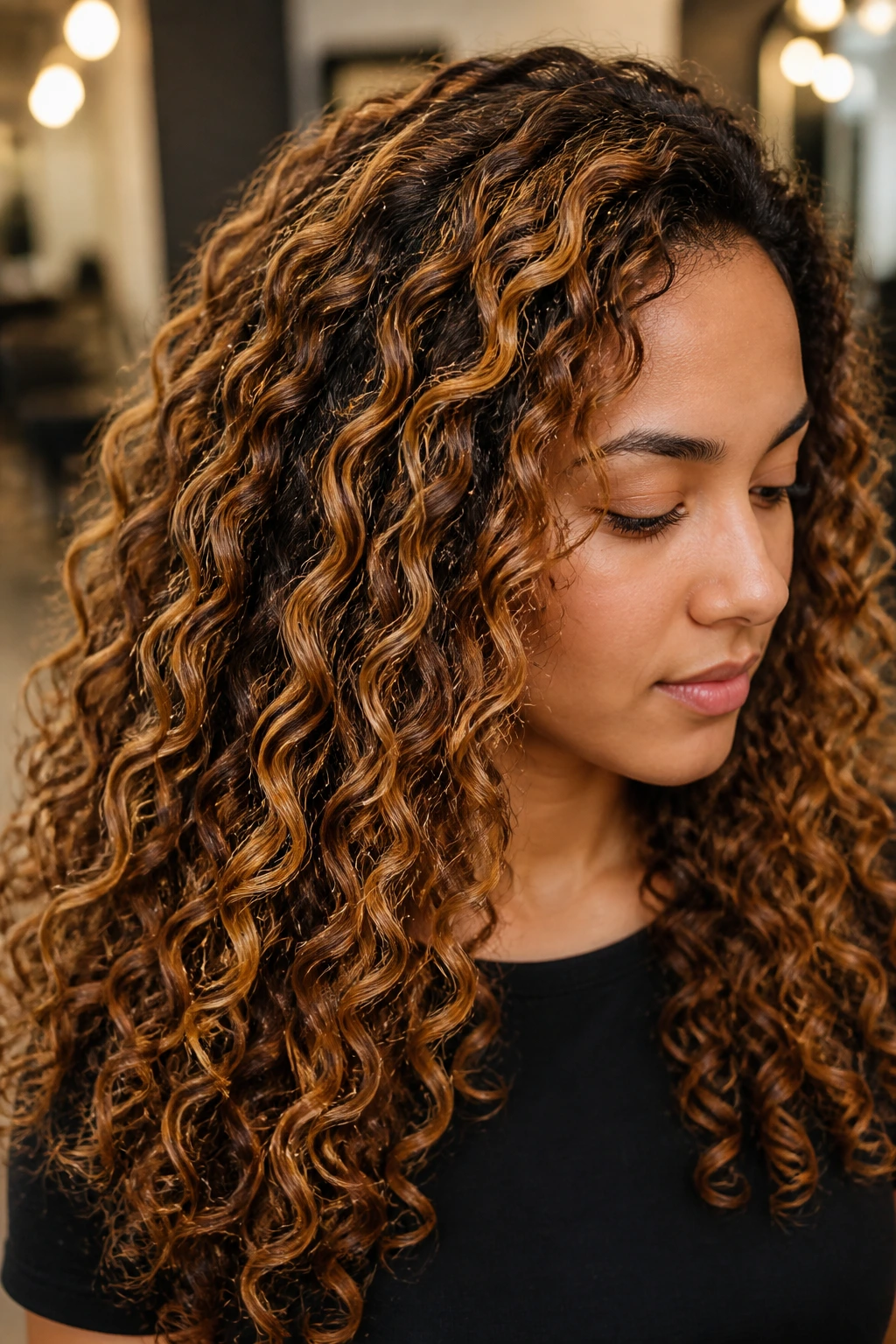
Tiger-eye highlights are the color equivalent of a good layered necklace: there’s more going on than you notice at first glance. The mix of caramel and honey gives curly hair a striped stone-like shimmer that feels rich rather than flashy.
The placement matters here. You want alternating ribbons of warmth that move through the curl pattern at different levels. That contrast keeps the color from turning into a single monotone brown-blonde blend.
This is a strong choice for medium brunettes who want dimension without going too light. The gold and caramel sit close enough to the base that the grow-out stays soft, which is a relief if you hate constant salon maintenance.
It also photographs well in the real-life sense, meaning the curls still read as curls when the lighting is bad. That’s worth noting because a lot of so-called dimensional color dies the second you step away from perfect light.
23. Pearl Sheen Glossed Highlights
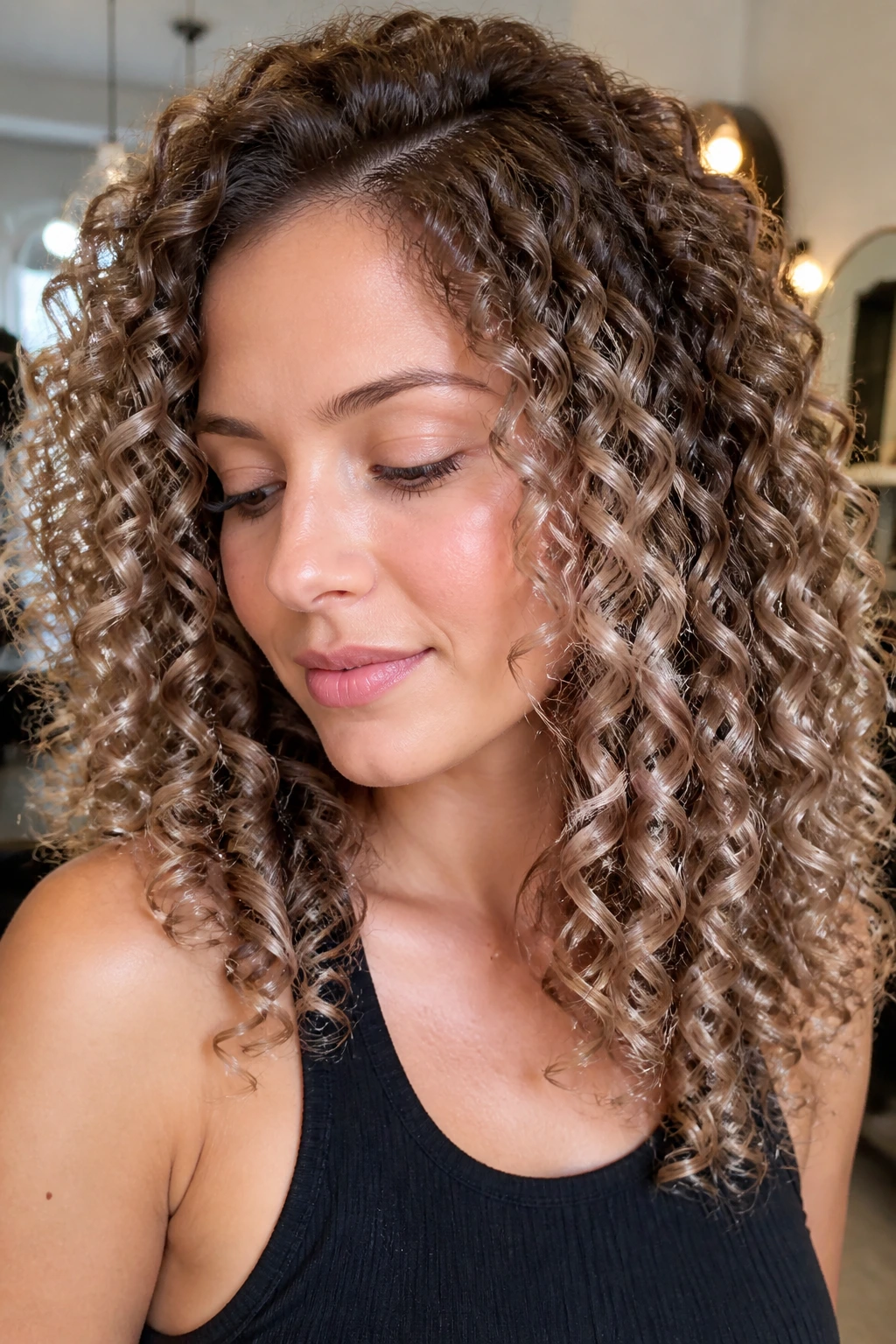
Pearl sheen highlights are less about a dramatic color jump and more about the finish. The hair gets a glossy, iridescent feel, with cool light reflecting off the curls instead of a blunt blonde stripe.
This works best when the highlights are already there and need a toner refresh, or when the base is light enough to support a pearly veil. On curly hair, that sheen can look especially clean because every curl catches a tiny bit of shine at a different angle.
The effect you’re chasing
Think polished stone, not chrome. Too much silver and the curls lose warmth. Too much beige and the pearl effect disappears. The middle is where it lives.
This is a lovely option for people who like subtle refinement over obvious contrast. It’s quiet, but not boring. There’s a difference, and the curls know it.
Why Curly Hair Handles Color Differently
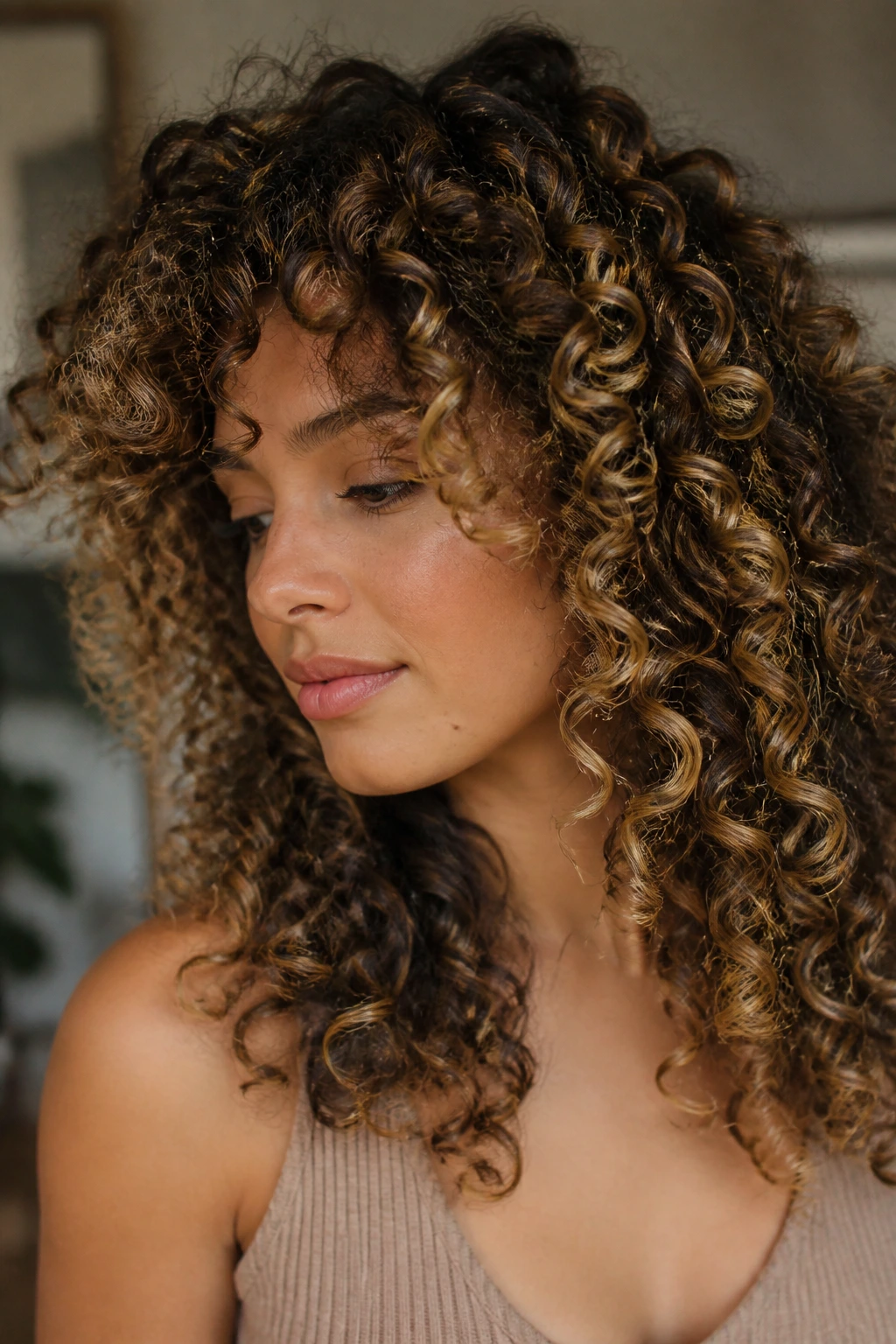
Curly hair does not expose color the way straight hair does. Straight strands show the whole ribbon at once. Curls show you fragments, edges, shadows, and bounce. That changes everything about highlight placement.
The curl pattern acts like a series of tiny reflectors. A light piece on the outer bend catches the eye fast, while the same piece hidden in the interior can vanish. This is why a colorist who understands curls will often paint differently than they would on straight hair. They’re not just coloring hair. They’re coloring movement.
Porosity matters too. Curly hair often has drier ends and more open cuticles, especially if it’s been heat-styled or colored before. Those ends grab toner fast and can go dull, pale, or muddy if they’re overworked. A good highlight plan protects the fragile ends and keeps the brightest lift where the hair can actually hold it.
Density changes the picture again. Dense curls need more intentional placement so the color isn’t swallowed. Fine curls often look fuller with fewer but sharper pieces. Neither one is better. They just ask for different maps.
And then there’s shrinkage. Everyone forgets shrinkage until the cut is dry and half the length disappears. A highlight that looked balanced when wet can bunch up once the curls spring back, so the placement has to account for how the hair lives in the real world, not just in the chair.
Essential Tools for Highlighted Curls
-
Color-safe shampoo: Keeps toner and lighter pieces from fading too fast, especially if your water runs hard.
-
Rich conditioner or mask: Curly highlighted hair drinks moisture, and a weekly mask helps keep the ends from looking fuzzy and pale.
-
Leave-in conditioner: Useful for detangling and for keeping highlighted sections from drying out into a rough halo.
-
Heat protectant: If you diffuse or stretch your curls, this is the thing that keeps repeated heat from chewing through the lifted pieces.
-
Wide-tooth comb: Gentler than a brush on freshly colored curls, and less likely to break up the curl clumps.
-
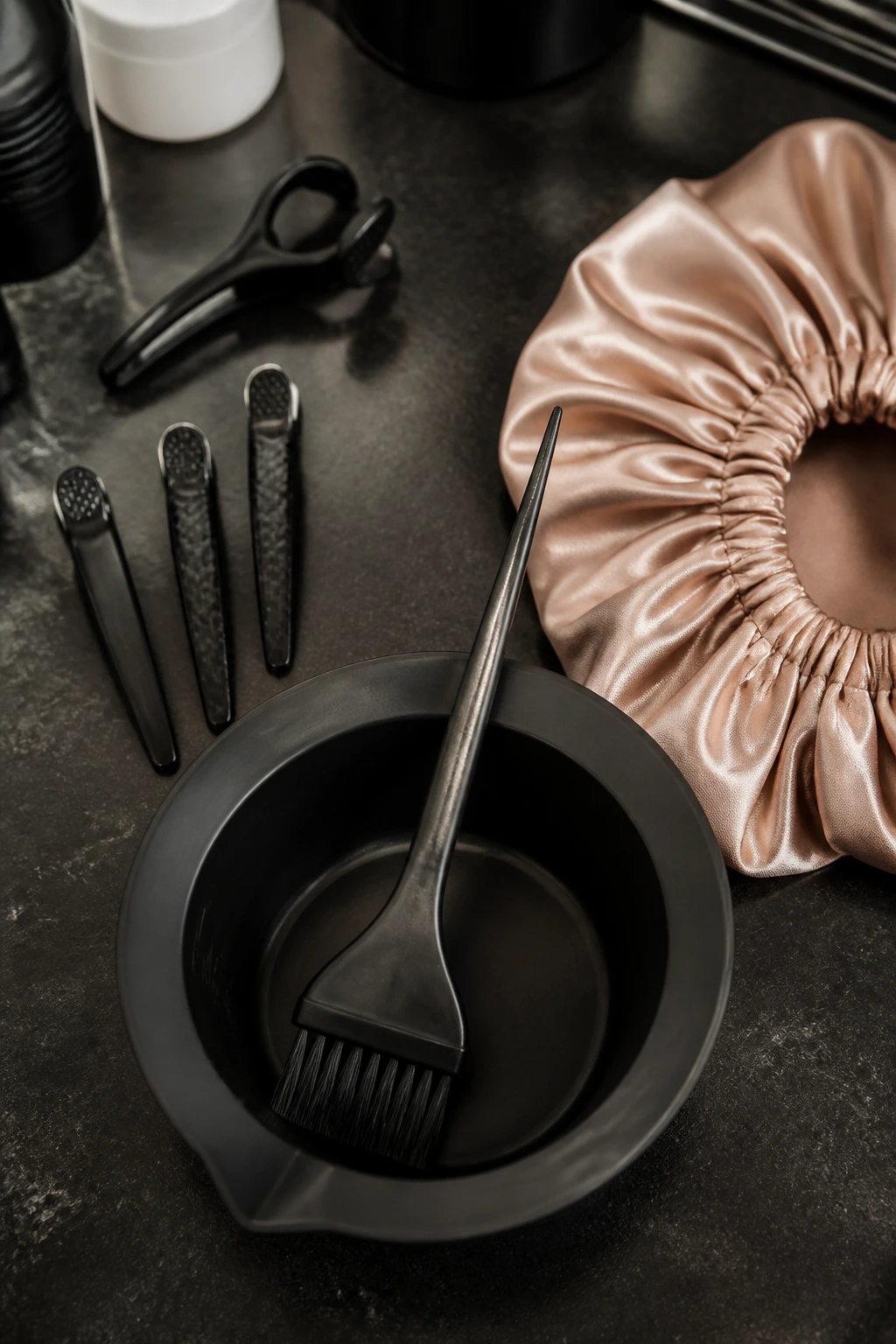
Sectioning clips: Helpful for styling and for any at-home gloss or toning touch-up.
-
Tint brush and bowl: Useful if you’re doing a color-depositing mask, root smudge, or partial gloss.
-
Satin bonnet or pillowcase: Not glamorous, but it keeps lightened ends from rubbing into frizz overnight.
-
Microfiber towel or cotton T-shirt: Cuts down on rough drying, which matters even more once hair has been lightened.
-
Diffuser: Helps you dry curls with less puff and more definition, so the highlights show as ribbons instead of fuzz.
Picking Shades Without Guessing
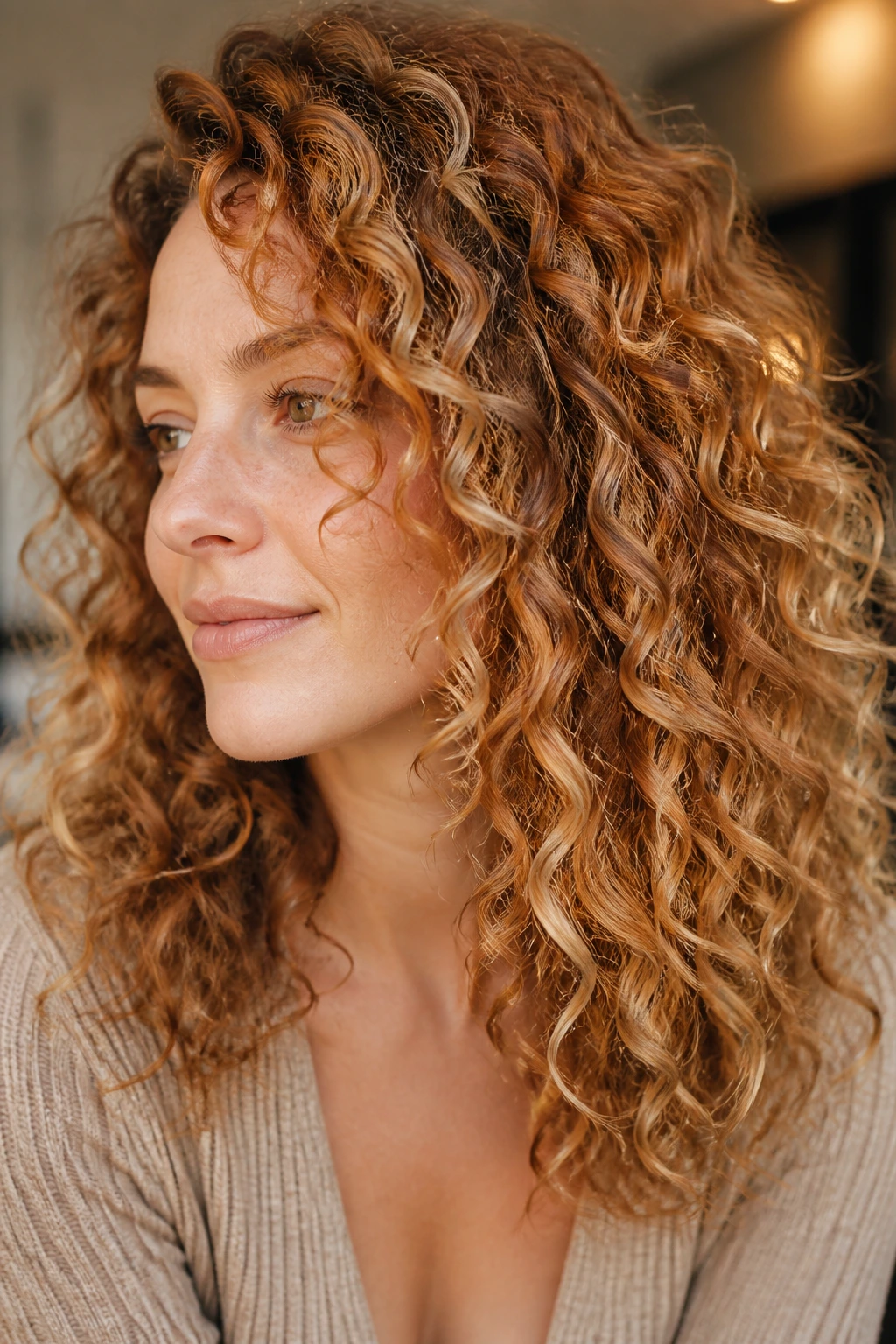
Shade choice gets easier when you stop staring at the color wheel like it owes you money and start looking at three things: your base color, your skin undertone, and how much contrast your curls can hold.
A dark brown base can carry honey, copper, bronze, auburn, and mocha tones with very little drama. If you go too pale too fast, the lighter pieces can look detached from the curl shape. On the other hand, lighter brown or dark blonde curls can take champagne, sand blonde, pearl gloss, or icy beige with less risk of looking hollow.
Skin tone matters, but not in the dull, oversimplified way people sometimes say it does. Warm undertones usually sing with copper, honey, apricot, and bronze. Cooler undertones often like mushroom brown, smoky silver, champagne beige, and pearl sheen. Neutral skin can wear almost any of them if the placement is right.
Then there’s maintenance. If you do not want regular toner appointments, stay closer to caramel, honey, bronze, and mocha. If you’re happy to keep a cool blonde in check with purple shampoo and glosses, the beige and silver family is fair game.
One more thing. Curls with a lot of porosity may take color brighter than expected. That sounds nice until a toner grabs too hard and goes muddy. A test strand, or at least a cautious first session, saves a lot of frustration.
How to Show Off Highlighted Curls at Their Best
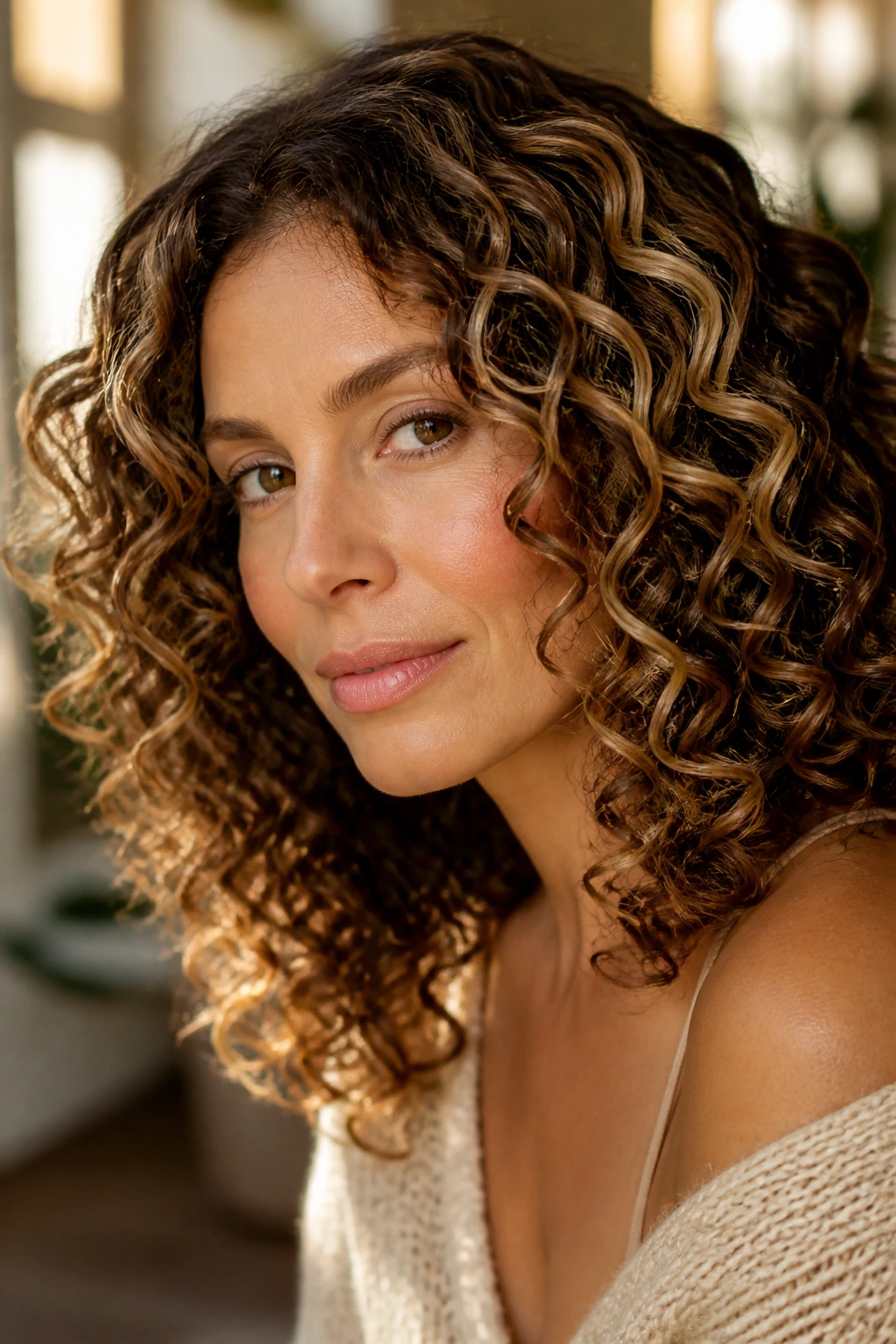
Styling Finish: Diffuse until the curls are about 80 percent dry, then stop and let the rest air-dry if you can. That keeps the light pieces defined instead of puffing into a halo. A light cast from gel or mousse is fine; crunch can be scrunched out once the curls are fully dry.
Best Cuts: Layered shapes show highlights better than blunt ones because the color has planes to sit on. A shag lets ribbons jump forward. A curly bob can use a strong face frame. Long curls need enough layering that the highlights don’t get buried in the lengths.
Placement Request: Ask for the lightest pieces around the front, crown, and top layer if you want visible contrast. If you want a softer result, ask for interior ribbons and a few brighter curls near the ends. That small distinction changes the whole mood.
Pairings That Help: Satin pillowcases, a good deep side part, and a little root lift at the crown can make the color read cleaner. A headband or clip can also reveal hidden panels when you want the fun part to show.
Additional Tips and Color Boosters
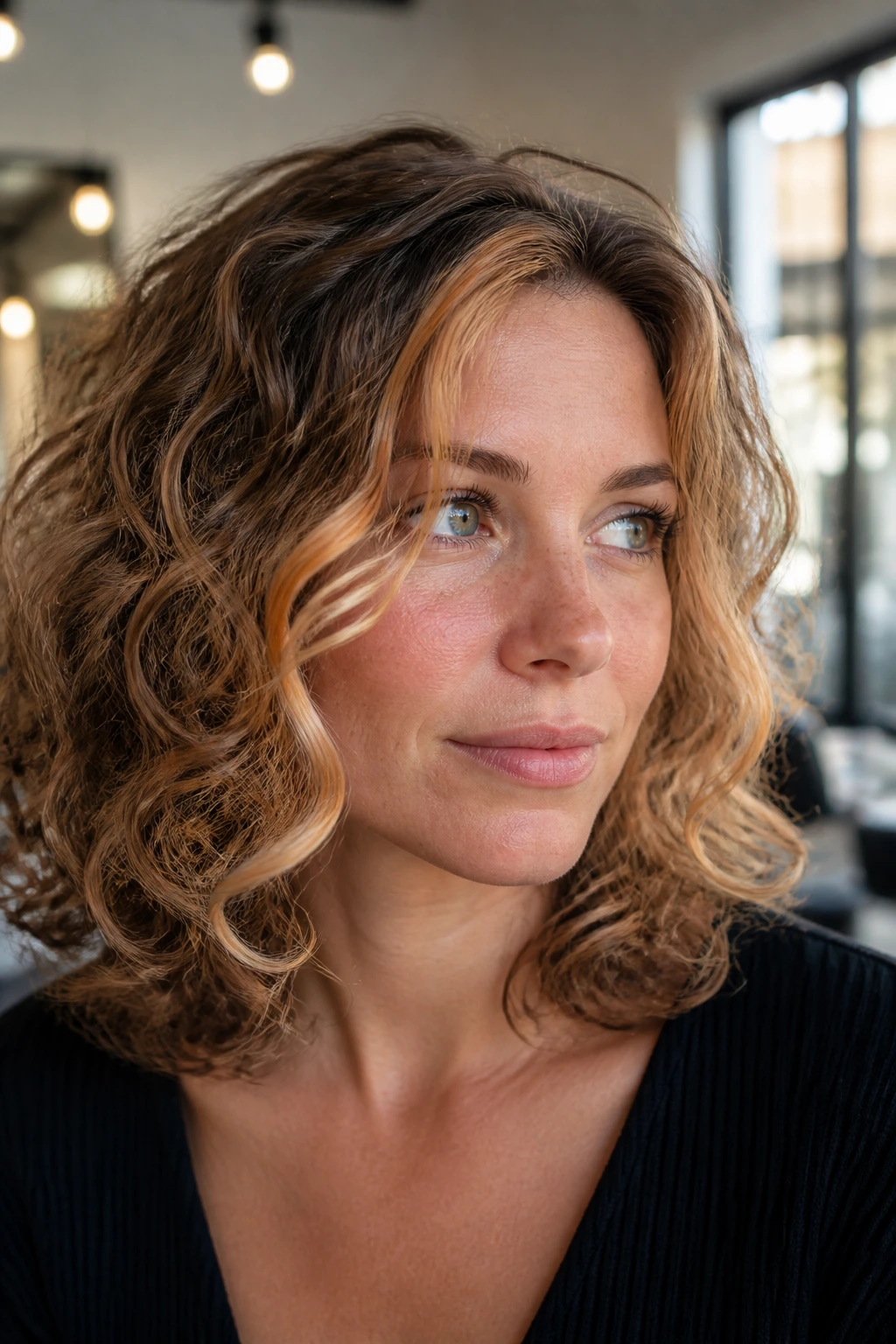
Depth Boost: If the highlights start to look too light or too flat, a gloss with beige, caramel, or amber undertones can put the depth back without darkening the whole head. On curls, a gloss often looks more natural than trying to repaint the same lightness.
Custom Tone: Warm highlights tend to look stronger on dry curls, while cooler tones can read softer once the hair expands. If you know your curls puff up a lot, you can usually go a little warmer than you think and still keep the final result balanced.
Styling Trick: Try pinning one side back when you want the highlight placement to show. It opens the surface and lets the lighter pieces flash without changing the color at all. Cheap trick. Works every time.
Make-It-Yours: If you prefer a lower-maintenance result, keep most of the brightness around the face and the top layer. If you like drama, push the contrast into the underlayer or the ends. Same palette. Different attitude.
Common Highlight Mistakes on Curly Hair
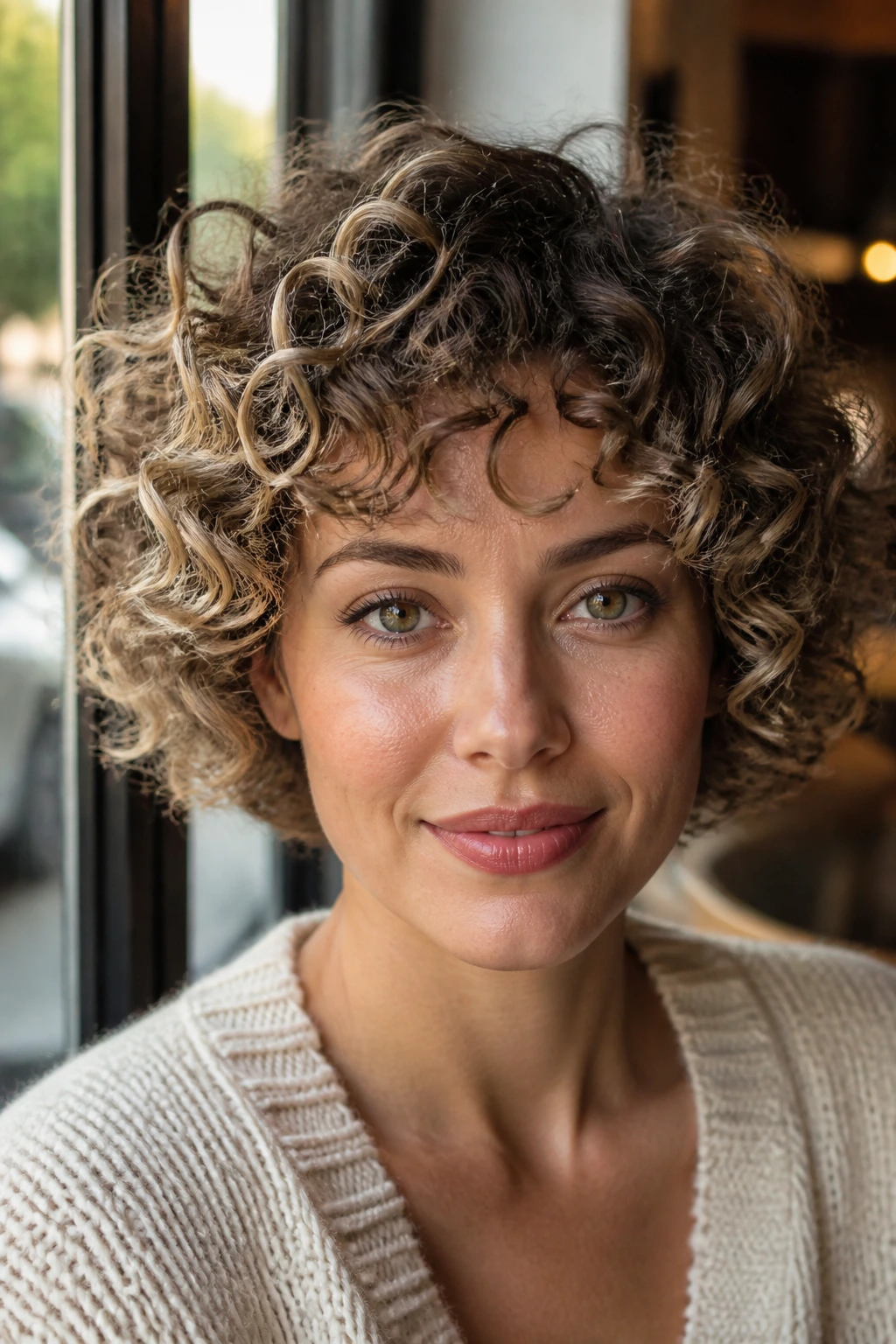
The first mistake is over-lightening the ends. Curly ends are usually the driest part of the head, so taking them too pale too fast can leave them rough, hollow, and frizzy. The fix is simple: keep the brightest lift away from the most fragile spots unless the hair is in excellent shape.
Another one is using chunky, even foils that ignore curl shrinkage. What looks balanced when wet can turn into stripes once the curls dry and compress. The cure is finer placement and a visual check while the hair is in its natural shape, not stretched flat in the sink.
People also chase brass too hard with ash toner. Curly hair that’s porous can grab ash and turn flat, gray, or muddy. A beige or soft gold toner often looks better than a hard ash correction, especially on warm bases.
There’s also the problem of ignoring the haircut. A color idea can be good and still fail if the cut is one heavy block. Layers give highlights air. Without them, the lighter pieces can vanish.
And please, do not skip moisture because the color “looks fine.” Lightened curls can look okay for a week, then suddenly dry out and fuzz up around the face. That is not the hair being dramatic. That’s the color asking for conditioner.
Variations and Adaptations to Try
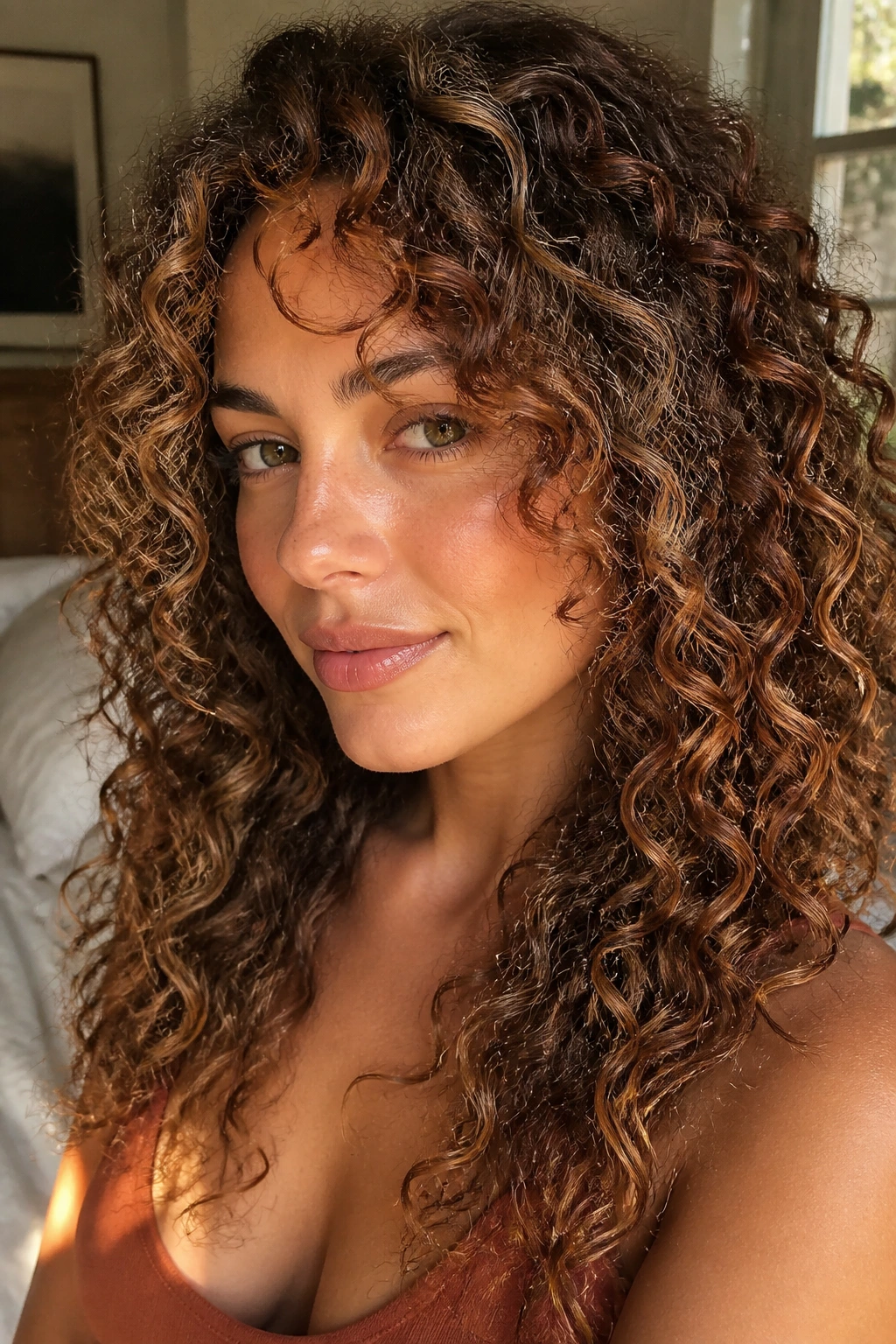
Soft Glam Version: Keep the same highlight idea but lower the contrast by one shade level. Honey becomes beige honey, copper shifts to cinnamon, and blonde moves to champagne. This is the route for anyone who wants movement without the salon chair screaming for a toner appointment every month.
Bold Fashion Panel Version: Swap subtle ribbons for a few stronger panels underneath or around the fringe. Teal, burgundy, rose gold, and smoky silver all fit here. The rest of the head can stay calmer so the bold color has a place to land.
Low-Maintenance Grow-Out Version: Ask for root smudging and balayage rather than full saturation near the scalp. This keeps the regrowth line soft and buys you a longer window between color sessions.
Warm-Only Version: If cool tones make your curls look dull, stay in the honey, caramel, bronze, apricot, and auburn family. Those shades work especially well on warm skin and hair with a natural gold base.
Cool-Only Version: For people who prefer crisp tones, mushroom brown, champagne, pearl sheen, icy beige, and smoky silver can sharpen the curl pattern without looking harsh. Use this one carefully on porous ends.
Maintenance, Refreshing, and Grow-Out Care
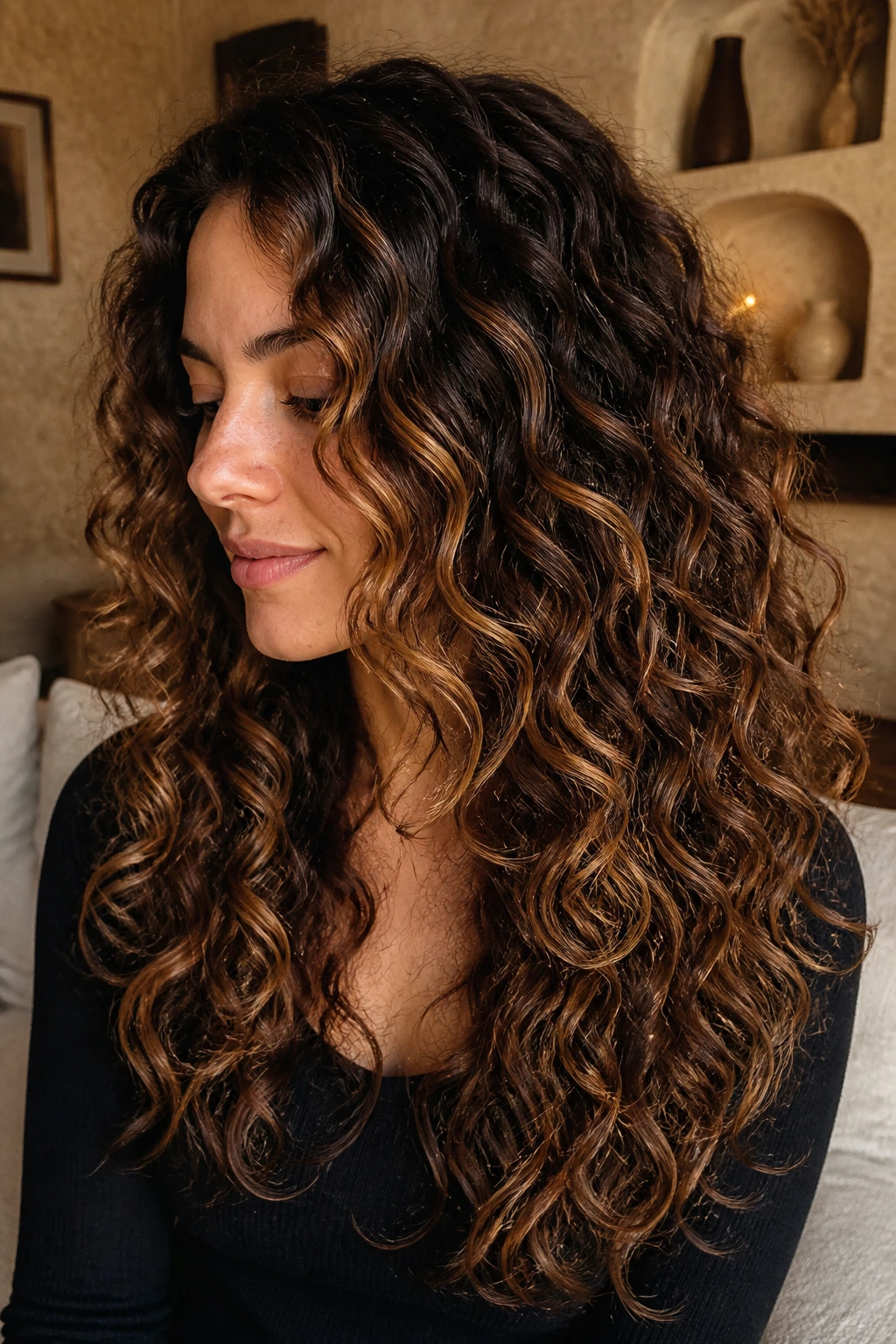
Curly highlighted hair likes a rhythm. A gentle one. If the hair is washed too often, the toner fades fast. If it’s never clarified, product buildup dulls the highlight. Once a week or every other week usually works well for shampooing, depending on how much styling product you use.
Toner and gloss refreshes matter more than full recoloring for most of these looks. Honey, caramel, bronze, and mocha tones can often be revived every 6 to 10 weeks with a quick gloss. Lighter blondes, silvers, and beige shades may need toner more often, especially if the water in your home pulls brass.
A deep mask once a week is worth the time. Not a ten-step ritual. One solid mask for 10 to 20 minutes on damp hair, concentrating on the mid-lengths and ends, will do more than a drawer full of pretty bottles. If the hair is very dry, add a leave-in afterward and keep the diffuser heat low.
At night, use a satin bonnet, pineapple, or pillowcase. It saves the shape and keeps lightened ends from rubbing into a frizzy halo. If you stretch your curls with heat, leave at least a few days between hotter styling sessions so the lighter pieces don’t get cooked into straw.
Frequently Asked Questions
Which highlight color is easiest to maintain on curly hair?
Caramel, honey, bronze, and mocha are usually the easiest because they soften the grow-out and don’t need constant toning. They also look forgiving when the curls flatten a little between washes.
Do highlights damage curly hair more than straight hair?
Not inherently, but curly hair often shows dryness faster because the ends are already more fragile. The real issue is how much lift the hair can take and whether the color plan respects porosity and curl shape.
Can I get highlights if my curls are very tight?
Yes, but the placement should be finer and more surface-focused. Tight curls can hide wide foils, so babylights, ribbons, or a soft face frame usually read better than chunky streaks.
What if my hair is already dry or color-treated?
Then the safest route is usually partial highlights, lowlights, or a glossed dimension look rather than full high lift. A good colorist will often start with a patch test or strand test so the hair doesn’t get pushed past its limit.
How do I stop blonde highlights from turning brassy?
Use color-safe shampoo, limit heat, and keep a toner or purple shampoo in the routine if your blonde is on the cool side. Also, don’t overdo it. Too much purple can dull the curls instead of brightening them.
Are peekaboo highlights a good idea for curly hair?
Yes, especially if you want color without an obvious grow-out line. Hidden panels and underlayers work well because curls reveal them in motion instead of all at once.
Should the stylist color curly hair stretched or in its natural state?
The hair should usually be evaluated in its natural curl pattern, even if parts of the service are done on stretched sections. Shrinkage changes everything, and a color map that ignores it can end up off-center once the hair dries.
Can I do highlight maintenance at home between salon visits?
You can refresh tone with a glossing mask, a color-depositing conditioner, or careful use of color-safe shampoo. What you should not do is keep bleaching over the same ends at home unless you already know the hair can handle it.
Keeping the Light in the Curls
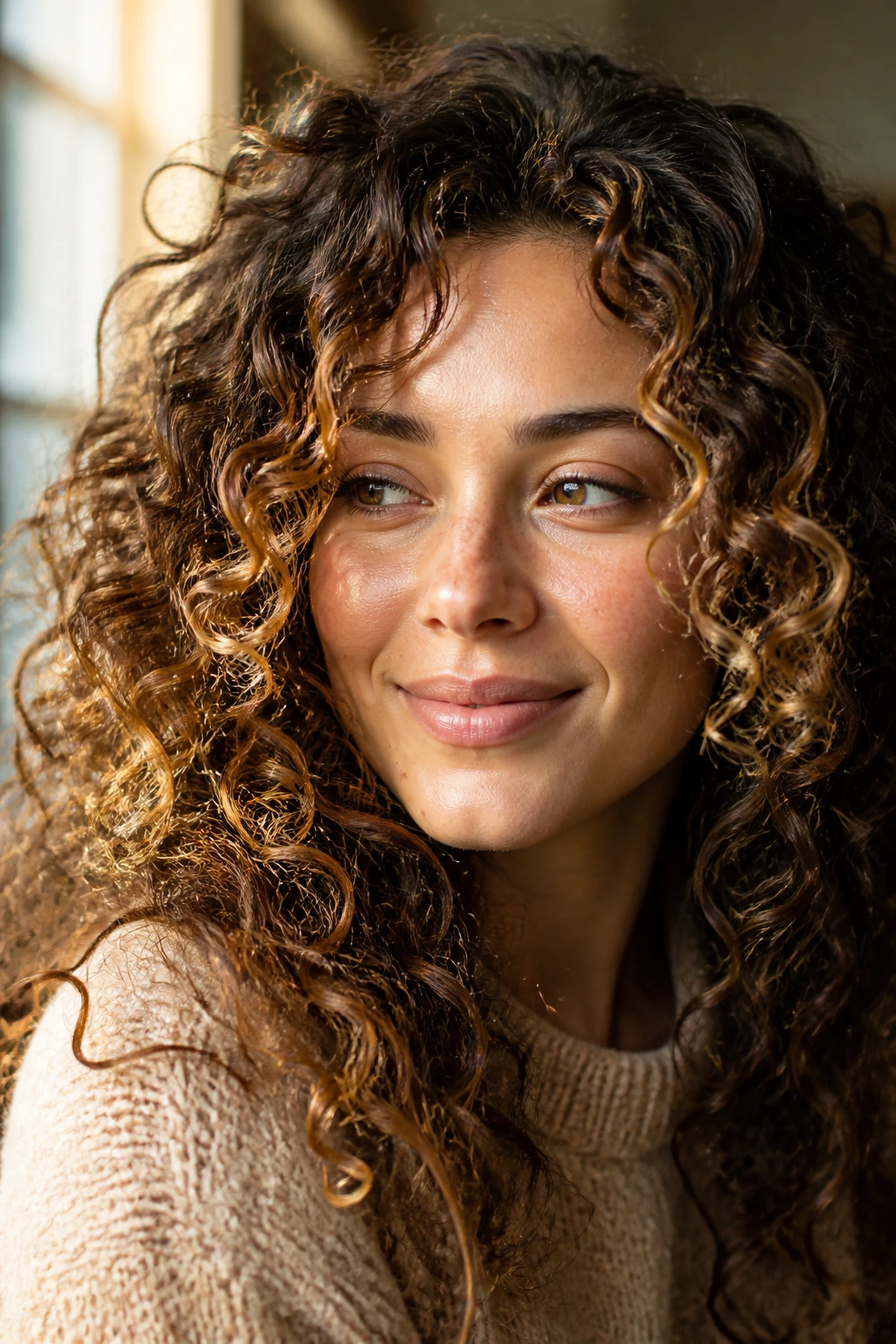
Good highlights on curly hair don’t fight the curl pattern. They ride it. That’s the difference between color that sits there and color that moves with you, catches the side light, and still looks right when the hair has been slept on, scrunched, or half-dried on the way out the door.
The best choice is the one that fits your curl type, your base color, and your tolerance for upkeep. Sometimes that means honey ribbons. Sometimes it means a hidden burgundy panel or a few soft babylights around the face. There’s a lot of room here, which is the fun part.
Pick the version that matches the way your curls actually live, not the way a salon photo looks under perfect lighting. That’s where the good stuff happens.
