



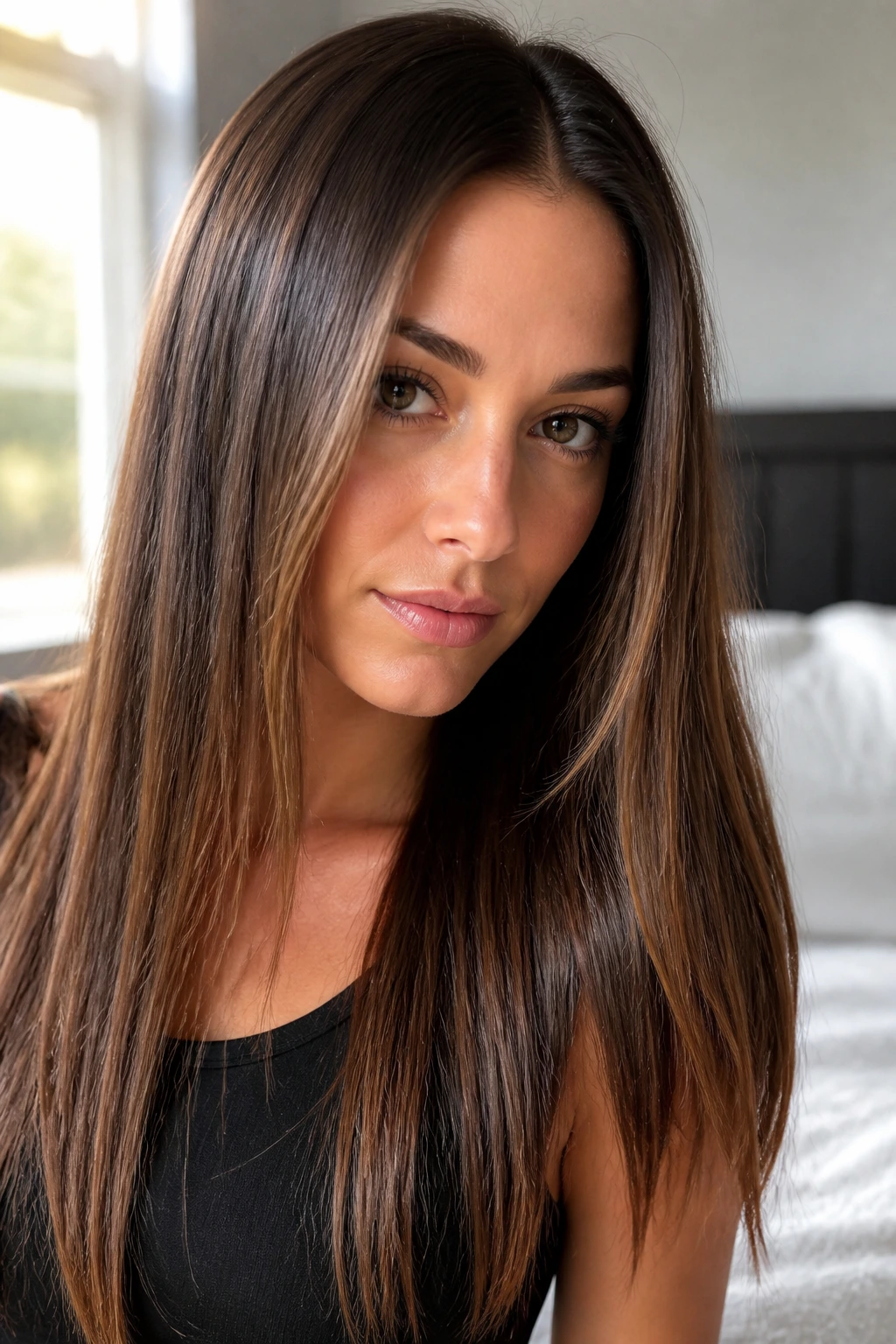
Straight hair does not forgive sloppy color, and that is half the appeal. With brunette hair looks for straight hair, every caramel ribbon, ash glaze, blunt edge, and root melt sits out in the open. You can see the tone from across the room. You can also see when the toner is too warm, the highlights are too chunky, or the cut and color are fighting each other instead of working together.
That honesty is what makes straight hair such a good canvas for brunette shades. A smooth center part can make a deep espresso base look almost lacquered. A narrow money piece can brighten the whole face without turning the rest of the hair into a patchwork. And a one-length lob, if the edges are clean, can make even the most modest chestnut gloss look intentional instead of flat.
The trick is knowing which brunette direction fits the kind of straight hair you actually have. Fine hair needs different contrast than thick hair. Cool skin tones handle mushroom and taupe differently than warm undertones handle caramel and honey. Some looks are built around shine. Others are built around placement. The best ones don’t shout. They just sit there looking expensive in that quiet, annoyingly hard-to-fake way.
Why This Collection Is Different
-
Straight hair shows placement, not just color. A ribbon highlight that would disappear in waves can look crisp and elegant on a smooth lob, which is why the exact width of the light pieces matters so much here.
-
The cut does half the work. On straight hair, a blunt bob, sharp lob, or long one-length cut gives brunette color a stronger frame than loose layers ever could.
-
Gloss matters more than volume. Brunette shades on straight hair live or die by shine, so a clear gloss, demi-permanent glaze, or smoothing serum changes the whole result.
-
There’s a version for every upkeep level. Some of these looks are a soft root shadow and a few face-framing pieces. Others lean into high contrast and need more salon time.
-
Warm, cool, and neutral brunettes all read differently on straight hair. That means you can choose caramel, ash, chestnut, mocha, walnut, or taupe without repeating the same effect over and over.
-
These looks work on short, medium, and long lengths. The same brunette palette can feel sharp on a bob, sleek on a lob, or dramatic on waist-skimming lengths, depending on where the light pieces land.
1. Espresso Blunt Lob with Center Part
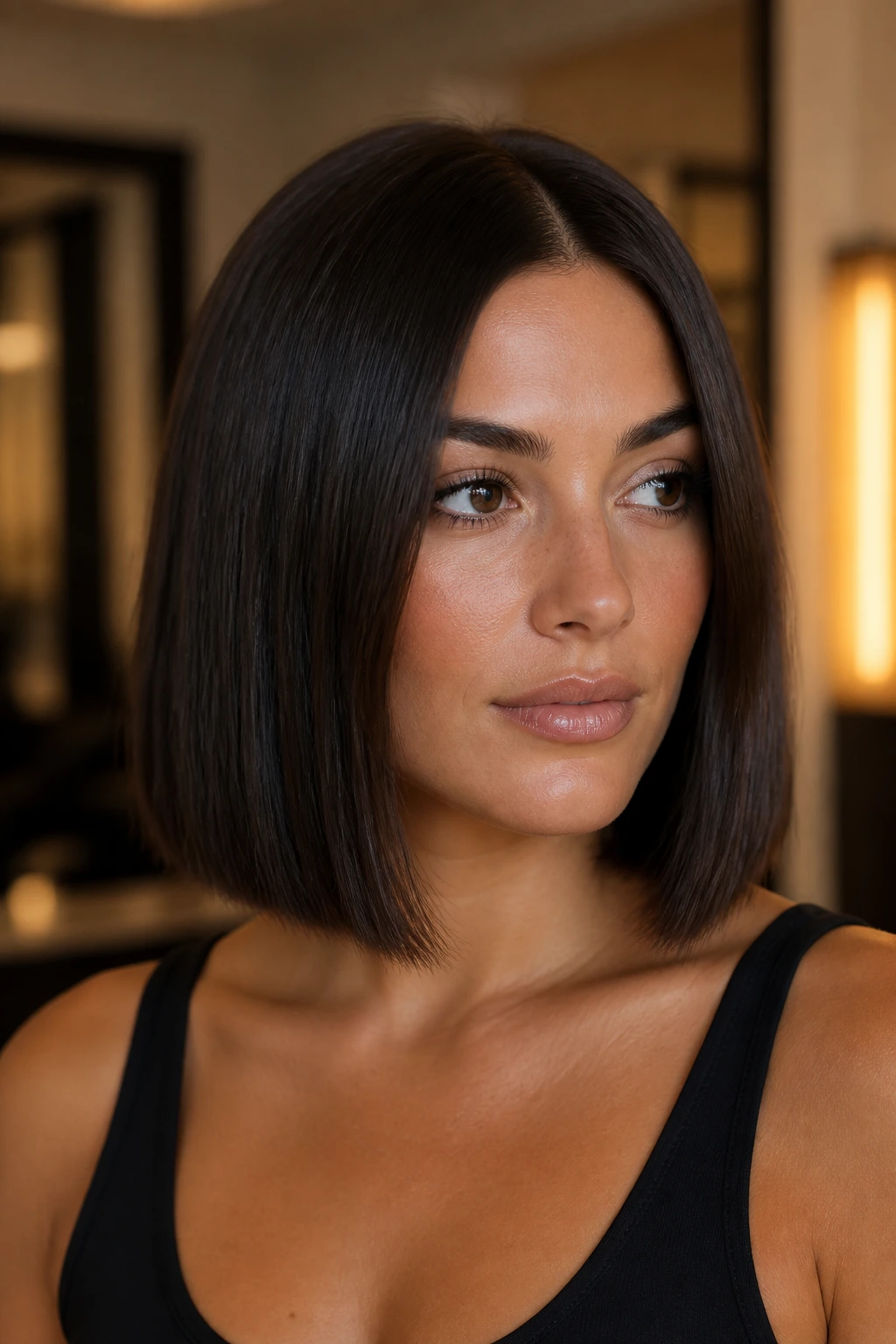
A deep espresso base on a blunt lob is one of those straight-hair looks that looks almost architectural. The color is dark enough to make the cut read as one clean line, but not so black that it loses warmth under indoor light. A center part keeps the whole thing taut and symmetrical. It’s sleek. No apology needed.
Why It Works
Straight hair shows every edge, which is exactly why this style lands so well. A blunt perimeter at the collarbone keeps the silhouette crisp, while a rich level 3 or 4 espresso tone gives the hair enough depth to look dense rather than muddy. If your ends are a little wispy, this cut hides that better than a heavily layered one.
Ask for a clear gloss or demi glaze after the color service. That extra shine is the difference between “dark brown hair” and “I know exactly what I’m doing.” On straight hair, the reflection sits on top like polished wood.
Best for: fine to medium hair that needs more visual weight.
Styling note: one pass of a flat iron at 320°F to 350°F is enough if the blowout is already smooth.
2. Chestnut Glass Hair with Long Ends
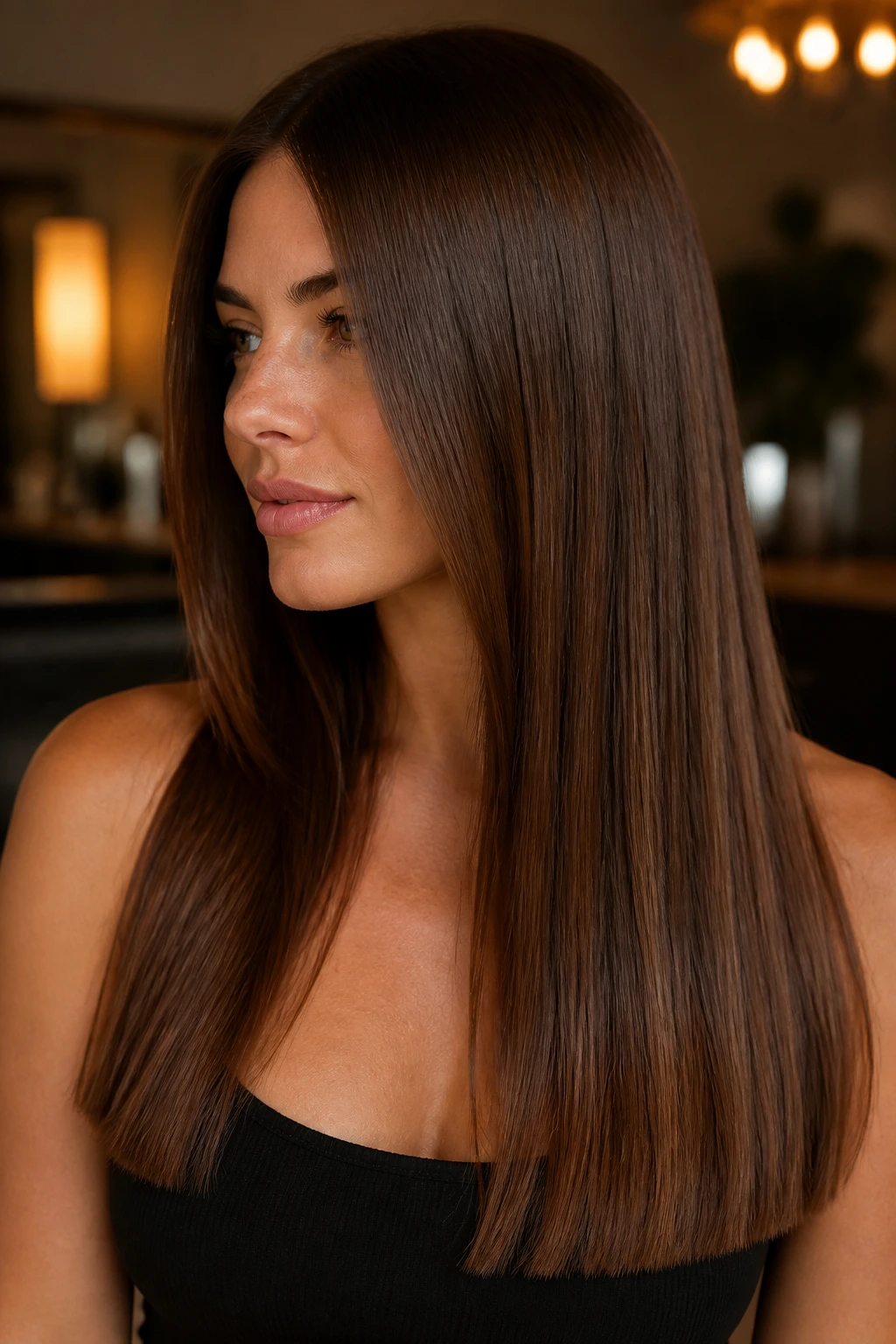
Chestnut is the brunette shade people forget to respect. It sits right between warm and neutral, so it doesn’t go orange unless the toner is wrong, and it doesn’t go flat if the finish is glossy enough. On straight hair, the color turns almost satin-like when it’s worn long and one-length.
The part should stay clean, and the ends should be trimmed blunt enough to catch light. I like this look best when the hair falls past the shoulders and barely moves. That lack of movement is part of the charm. It lets the color do all the talking.
How to Wear It
Ask for a chestnut base with a sheer gloss, not chunky highlights. If you want dimension, keep it subtle — a few face-framing pieces one shade lighter than the mids are enough. The result feels polished without turning stripey, which straight hair can do in a hurry if the contrast is too wide.
A light serum on the ends keeps the sheen consistent from roots to tips. Skip heavy oils near the crown. They flatten the whole effect.
3. Mocha Balayage on a Straight Mid-Length Cut
Mocha balayage on straight hair should look brushed on, not painted in strips. That’s the entire game. When it’s done well, the darker root area melts into soft mocha ribbons through the mid-lengths and ends, and the straight cut keeps the placement visible without making it loud.
Why It Works
This version works because it breaks up one solid brown surface without losing the clean look straight hair gives you. The lighter mocha pieces add movement to hair that doesn’t naturally bend much, and the mid-length cut gives the color enough room to show. If the light pieces start too close to the root, the whole thing can feel busy. Keep the brightness lower and the blend softer.
Ask for: a root shadow 1 to 2 levels deeper than the mid-lengths, plus hand-painted ribbons from cheekbone down.
Best for: medium to thick hair that needs dimension without heavy layering.
Tip: if your hair is very straight, ask for fine ribbons instead of broad panels. Broad panels can look painted on in a way that fights the shape.
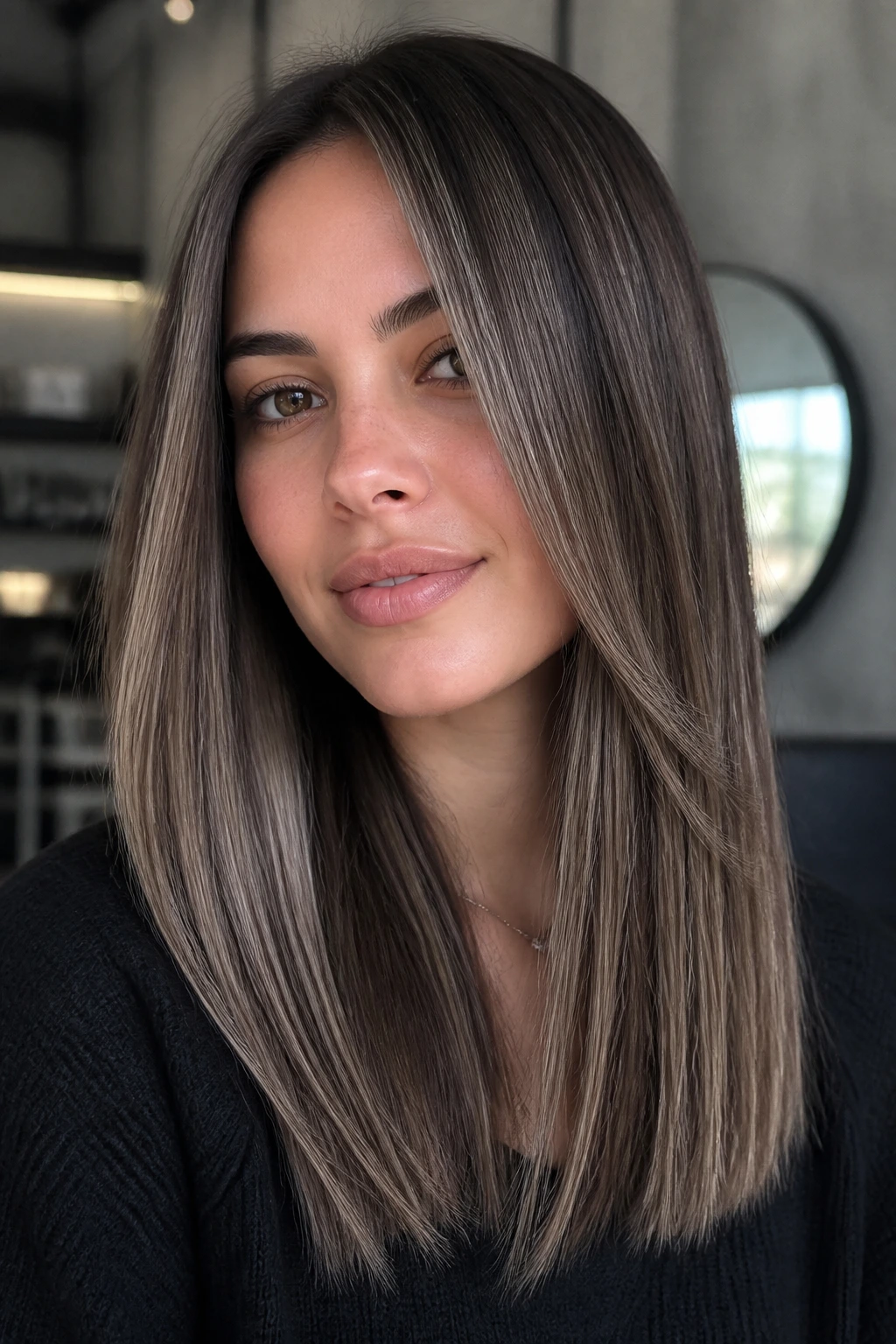
4. Mushroom Brunette with Soft Ash Ribbons
Mushroom brunette has become a favorite of mine for straight hair because it has that cool, smoky softness that looks almost tailored. The base lands in a muted brown-beige zone, and the ash ribbons keep the finish from going flat. It’s a little understated, a little moody, and far more interesting in person than it sounds on paper.
The clean lines of straight hair help the cool tones read clearly. You get the depth of brunette without the warmth pushing it toward copper. If your skin runs cool or neutral, this shade can look especially clean around the face.
What Makes It Different
The key is restraint. Mushroom brunette is not about bright contrast. It’s about tonal shifts: beige-brown through the mids, smoky ash through the top layer, and a soft gloss that keeps the cuticle smooth. On straight hair, that subtle change shows up better than most people expect.
Ask your colorist to keep the highlights very fine and the root area slightly deeper. Too much lift turns this shade into something brighter and less interesting. Too much darkness, and it just reads as plain brown.
5. Caramel Money Piece on a Sleek Bob
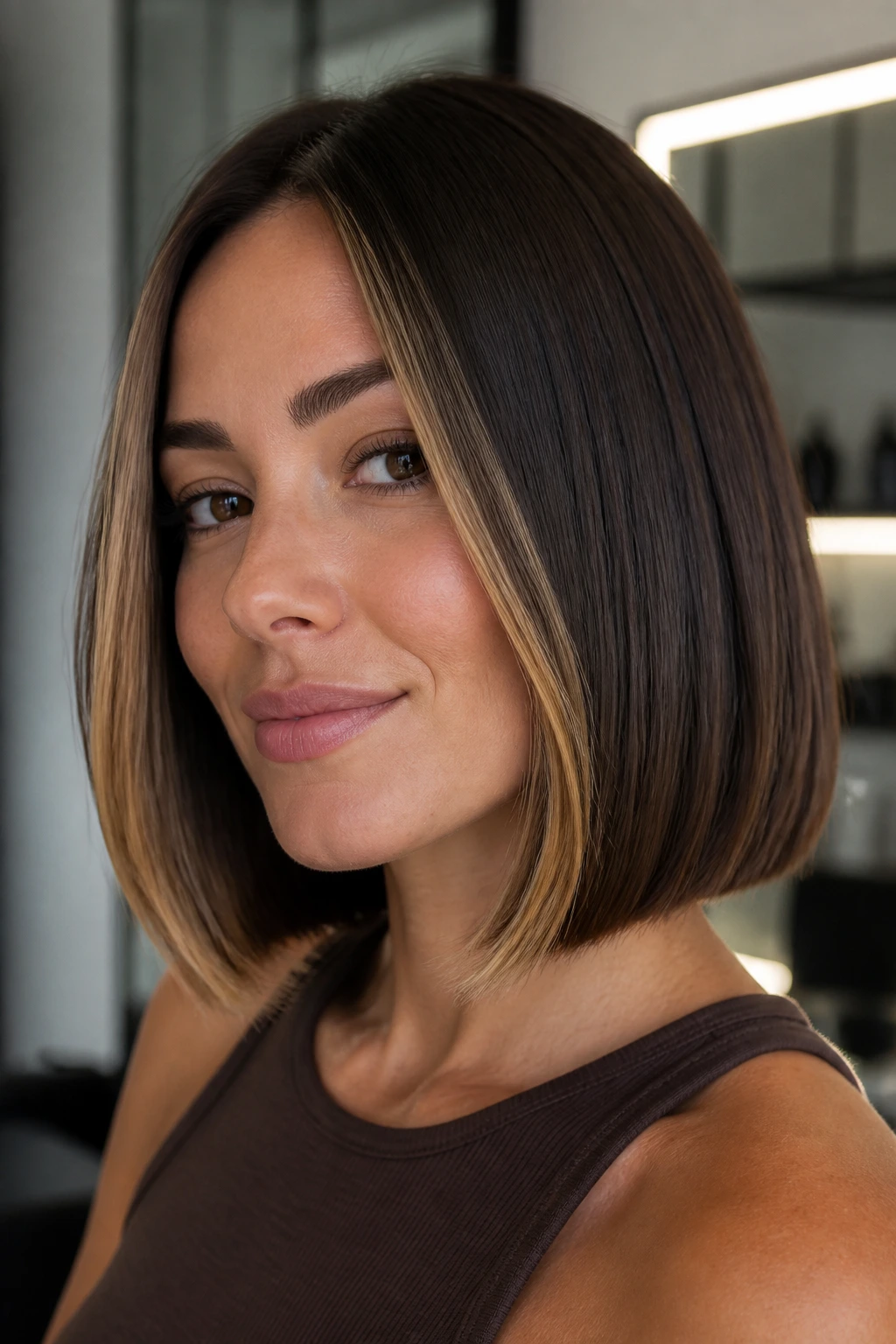
A sleek bob plus a caramel money piece is one of the fastest ways to make brunette hair look deliberate. The bob gives you a hard outline; the caramel pieces near the face soften it just enough. Straight hair is perfect for this because the front sections fall exactly where you place them, no waving and no hiding.
The money piece should not be thick enough to dominate the haircut. A narrow, bright ribbon at the cheekbone, maybe with a second slimmer piece next to it, is enough. That small hit of color makes the eyes and cheekbones pop without turning the whole head into a highlight map.
How to Get the Most From It
Keep the bob line blunt and the underside clean. That way the color has a polished frame instead of competing with choppy layers. If your natural brunette is dark, ask for a caramel that stays warm rather than gold. Gold can read brassy on straight hair if the gloss fades.
This one loves a tucked-behind-the-ear moment. It shows the face frame and the bob edge at the same time. Simple. Sharp. Done.
6. Cocoa Lob with Micro-Ends
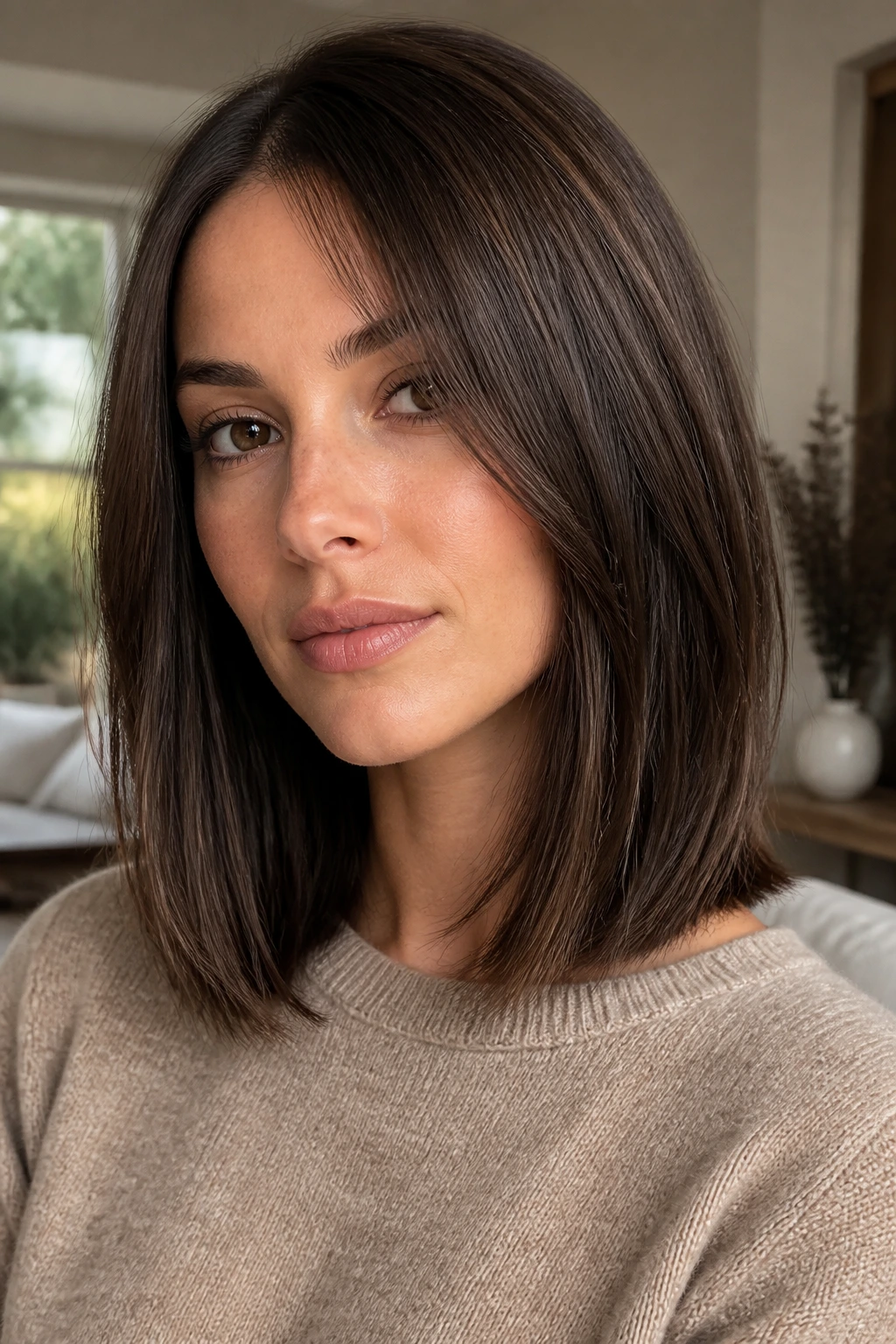
Cocoa brunette on a lob sounds basic until you see it on straight hair. Then it suddenly makes sense. The richness of cocoa gives the hair depth, and the micro-ends — just enough texture at the tips to keep them from looking blunt to the point of stiff — make the cut feel modern instead of severe.
Why It Works
The interesting part here is balance. A lob can look a little heavy if the color is too dark and the cut is too blunt. Cocoa softens the weight without washing out the brunette base. The ends stay clean, but they don’t look carved with a ruler.
What to ask for
- A level 4 to 5 cocoa base with a neutral gloss
- Subtle internal texture, not heavy layers
- Ends dusted just enough to move
- A flat, sleek finish around the face
The finish should feel smooth but not glassy in a fake way. That’s the difference between hair that looks styled and hair that looks shellacked. A single drop of serum on the mids and ends is plenty.
7. Vanilla Ribbon Highlights on Dark Brunette
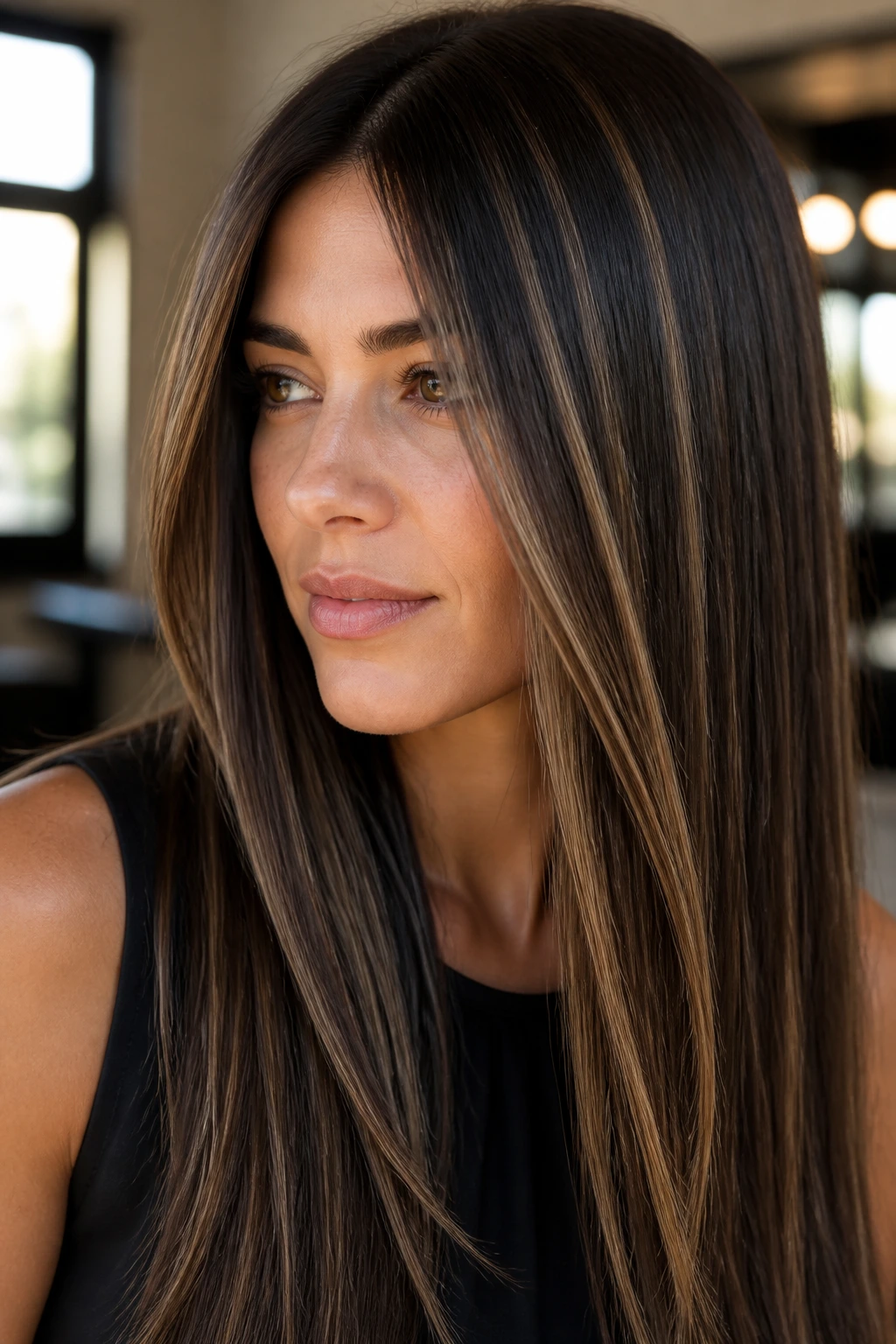
Vanilla ribbons on dark brunette hair are not for people who want subtlety to disappear. The whole point is that the contrast shows, but in thin enough lines that it still looks intentional on straight hair. Think of it as fine contrast, not chunky summer streaks from ten years ago.
The best version keeps the base deep and the ribbons narrow. You want the light pieces to sit where the straight hair falls naturally — around the cheekbones, over the top layer, and just through the ends. That way the highlights read as movement instead of a stripe pattern.
How to Wear It
This look gets strongest when the hair is exceptionally smooth. Blow-dry with a paddle brush, then pass a flat iron only where needed. If the hair frizzes, the vanilla pieces can look disconnected from the brunette base.
I’d avoid very wide face-framing sections here. They can make the color feel loud in the wrong way. A few slender ribbons, spread consistently, are enough.
8. Smoky Bronde on Long Straight Hair
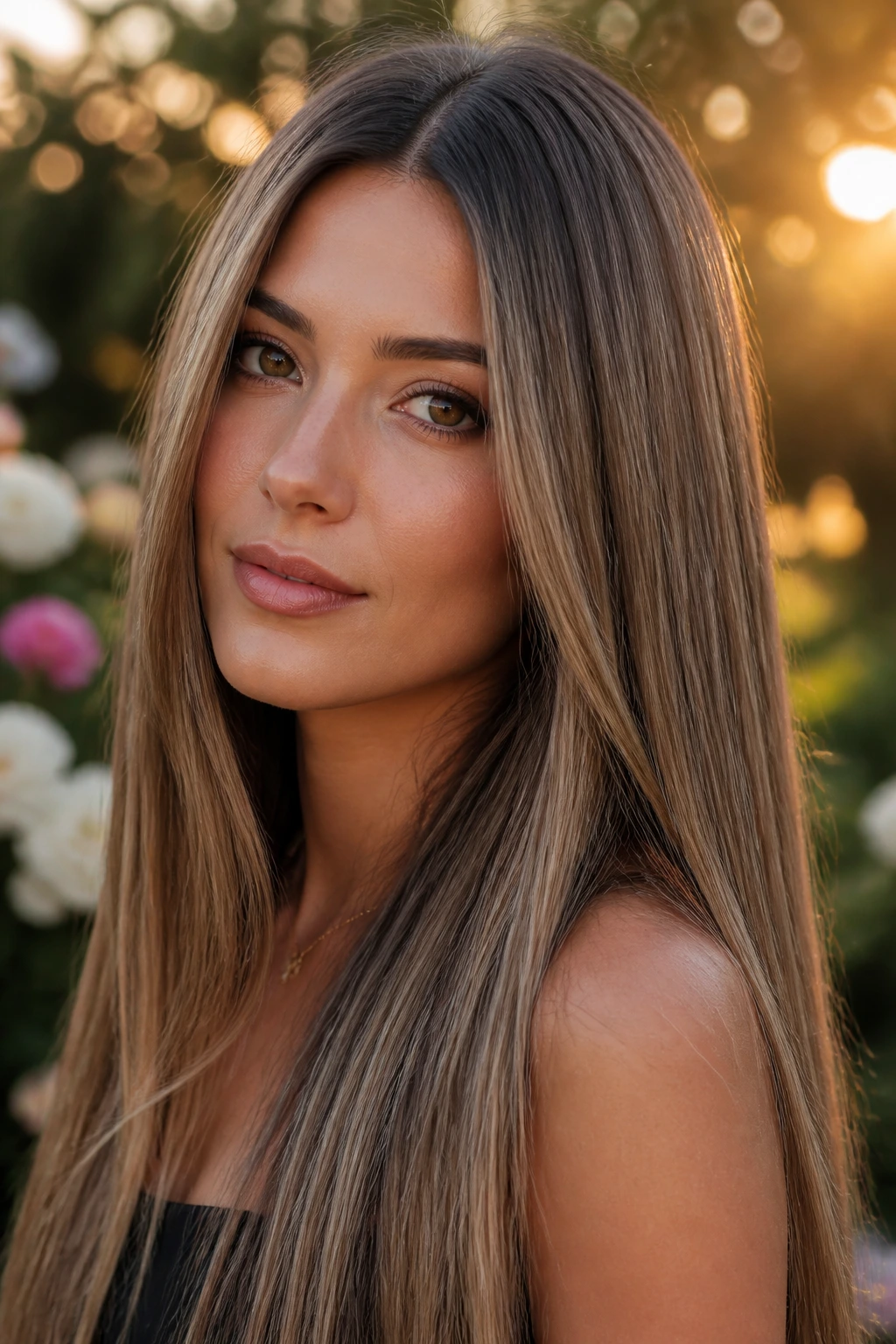
Smoky bronde is what happens when brunette takes a step toward blonde but stops before it gets beachy. On long straight hair, that in-between territory is the magic. You get the softness of lighter ends and the security of a brunette root, which means the look grows out without turning into a panic situation.
Long length helps the smoky tones breathe. If the hair is too short, the gradation can feel abrupt. With more length, the transition has room to soften. That’s the real trick here.
How to Get the Most From It
A root melt is your friend. Ask for a darker root shadow and then fine, muted ribbons through the lower half of the hair. The finish should stay beige-brown, not yellow. If you go too light, the whole thing loses the smoky part of smoky bronde.
This look is strong when the straight hair is only slightly beveled at the ends. Too much curl changes the mood. Keep it long, smooth, and slightly reflective.
9. Toffee Contour Layers
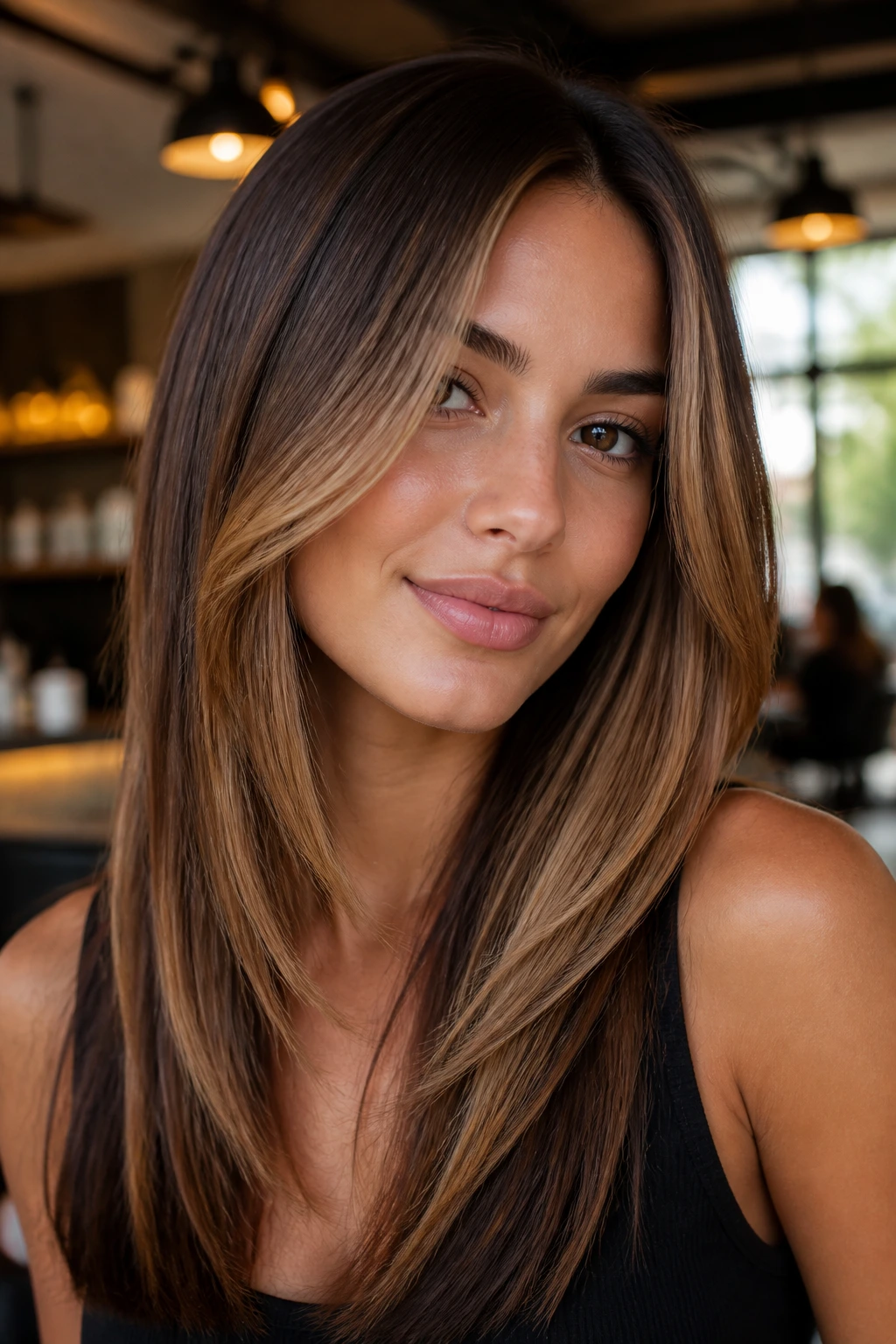
Toffee contour layers are for people who want brightness around the face without giving up a brunette base. The lightest pieces sit where the cheekbones and jawline need them, and the rest of the color stays controlled. Straight hair makes the contouring obvious in a good way — the line falls exactly where it should.
The cut matters here. Long layers that start under the chin keep the hair from feeling heavy, while the toffee pieces create a soft frame. If the front is cut too short, the color can jump out too hard. Keep it balanced.
Best for: medium to long hair with enough density to show contrast.
Color note: toffee should lean beige-gold, not orange. That small difference changes the whole mood.
A side part can make this look a little softer, but a center part keeps it sharper. I prefer center on very straight hair because it keeps the face frame symmetrical. No mystery. Just a clean frame and a warm glow.
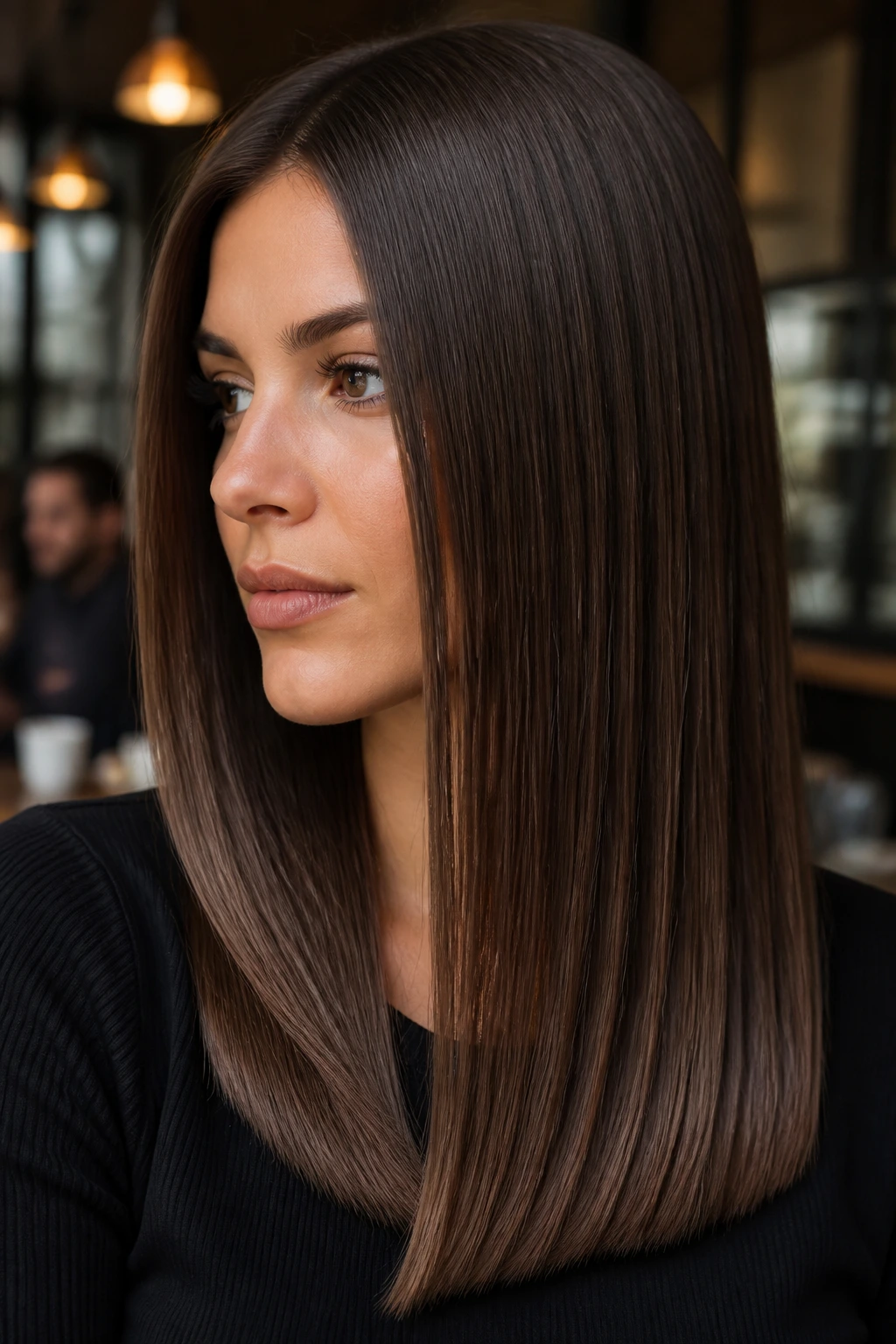
10. Deep Walnut Shine with a Sharp Lob
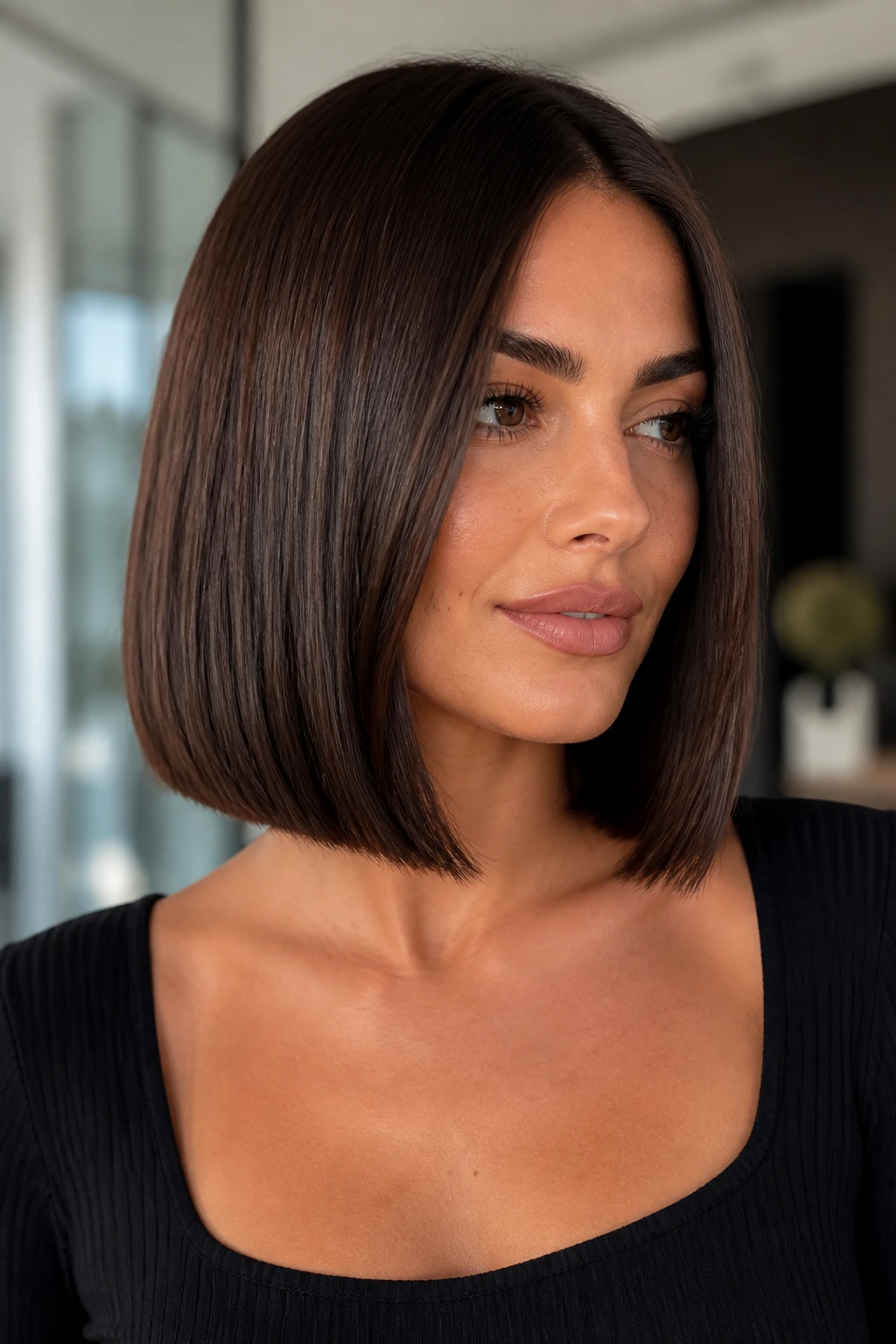
Walnut brunette is one of the best shades for straight hair when you want depth without harshness. It’s cooler than chestnut, softer than espresso, and rich enough to make a sharp lob look expensive without trying too hard. The cut should hit just below the jaw or at the collarbone, with a perimeter that stays crisp.
The shine matters more than the color shift. On straight hair, walnut reads almost like polished leather when the surface is smooth. If the hair is dull, the shade loses its appeal fast.
How to Wear It
Ask for a neutral brown gloss and keep the layers almost invisible. If you need movement, build it into the interior rather than the surface. That keeps the outline clean and avoids the little flip-outs that can make a lob look messy.
This is a good place for a center part, a tucked ear on one side, and one solid smoothing pass with a flat iron. The haircut does the heavy lifting. The color just makes it look more finished.
11. Cinnamon Peekaboo Panels
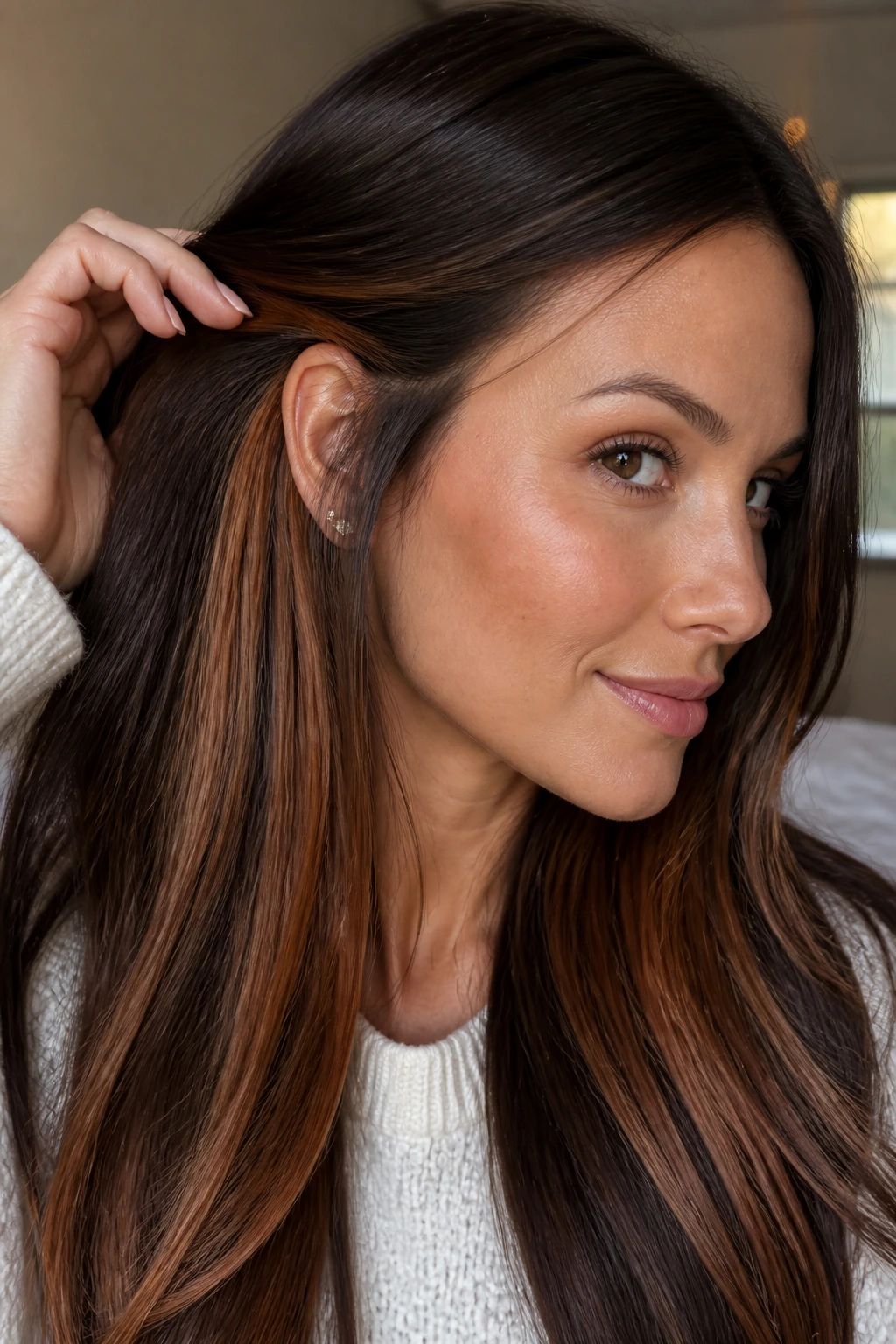
Cinnamon peekaboo panels are one of those looks that give straight hair a little secret. The top layer stays brunette and polished, while warm cinnamon sections live underneath and show only when the hair moves or gets tucked behind the ear. It’s color with a bit of personality, and straight hair lets that reveal happen in a controlled way.
Why It Works
Because straight hair lies flat, hidden panels stay hidden until you want them to show. That means the color never feels chaotic. It also means you can choose how bold to go. A tiny panel under the front can give a flash of warmth, while panels through the lower back sections create a richer reveal when the hair swings.
Ask for: cinnamon panels under the top layer, not placed all over.
Best for: people who want warmer brunette color without constant visibility.
Styling note: flip the ends under with a flat iron if you want the warm panels to peek from the interior. It looks deliberate, not accidental.
The main mistake here is making the cinnamon too orange. Keep it toasted, not neon. That’s the difference between interesting and messy.
12. Iced Coffee Brunette with Face-Framing Pieces
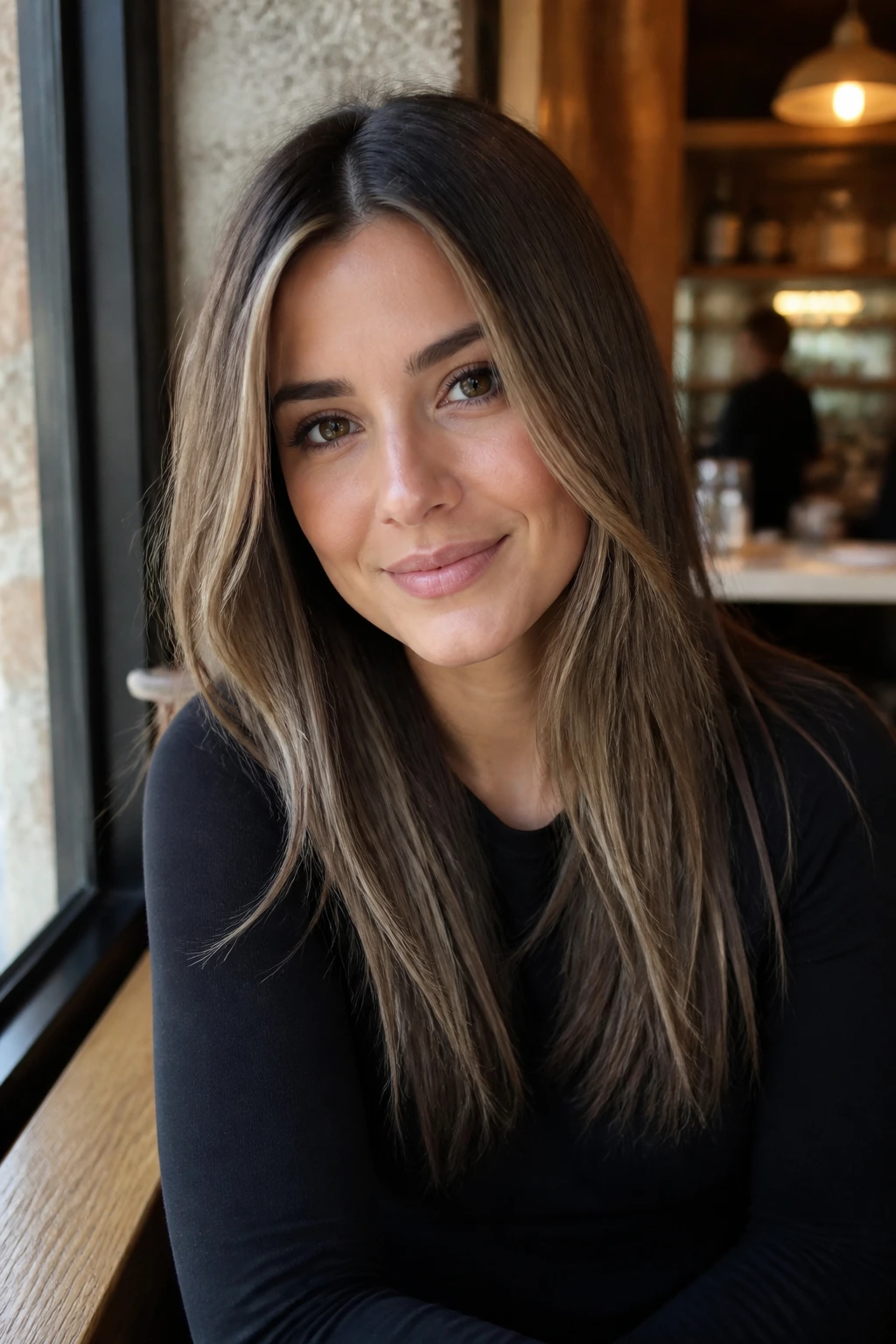
Iced coffee brunette is for anyone who likes cool brown shades with a little lift around the face. The base stays deep and creamy, while the front pieces get a softer, lighter coffee-beige tone. On straight hair, the effect is clean enough to feel refined and bright enough to keep the face from disappearing into the base.
The beauty of this look is how light it feels without going blonde. The color sits in that “yes, I changed something” zone without shouting. Straight hair gives the pieces a smooth surface, which helps the tonal differences show without blur.
If your skin tone leans neutral or cool, this is an easy place to start. Ask for a soft shadow root and a face frame that’s one to two levels lighter, not four. That keeps the whole thing grounded.
13. Dark Chocolate Ultra-Long Lengths
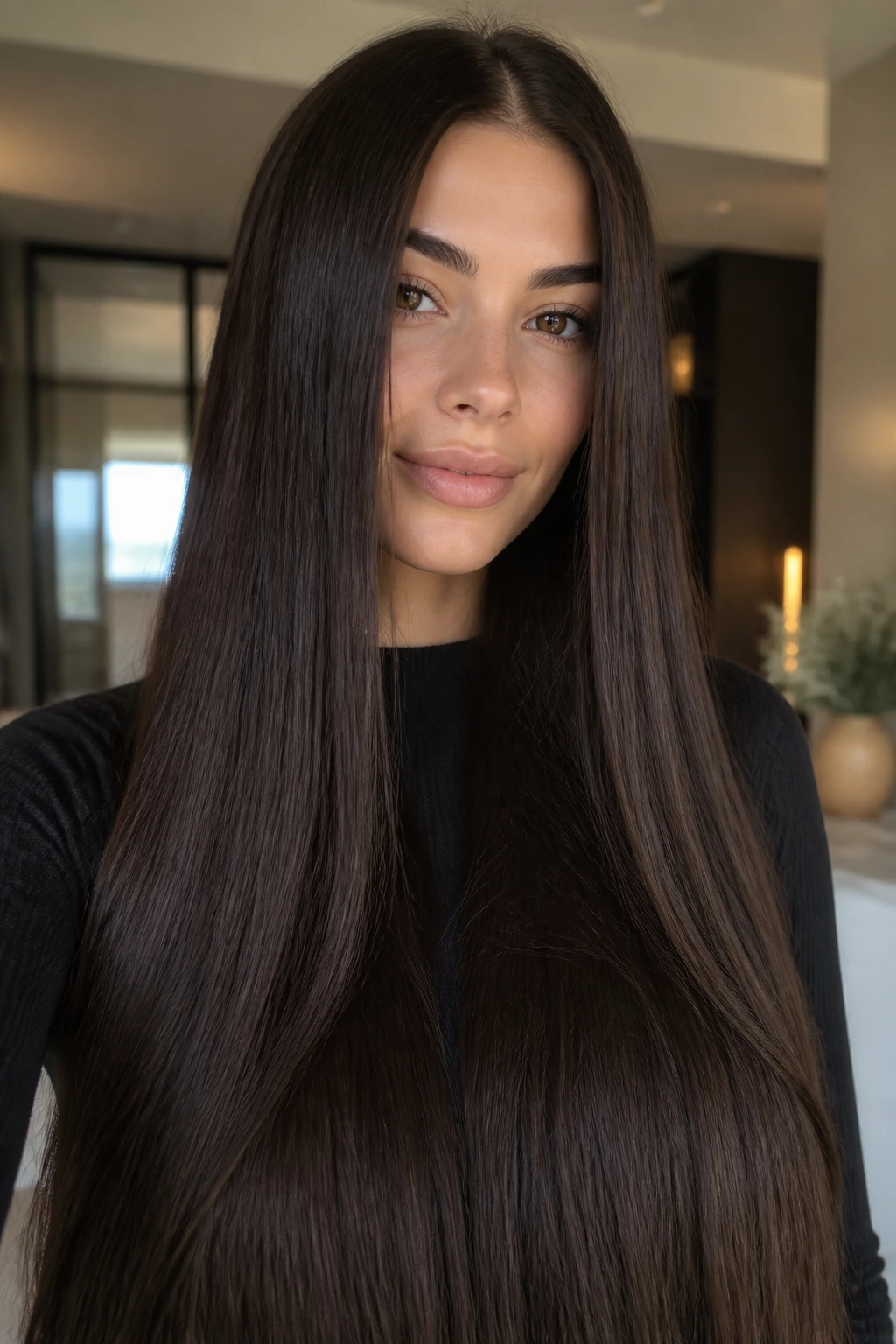
Dark chocolate on ultra-long straight hair is a power move when the hair is healthy enough to carry it. The shade is rich, dense, and almost velvety when the surface is smooth. The longer the length, the more the color feels dramatic, because the eye gets a long uninterrupted line of brown.
This look doesn’t need much styling beyond polish. A center part helps, but so does a slightly off-center part if you want the face to soften. The key is maintaining enough shine that the ends don’t look thirsty.
How to Wear It
Keep layers minimal and trims regular. Long chocolate hair can start to look stringy if the ends fray. A blunt dusting every 8 to 10 weeks is worth the trouble.
I’d skip too many light ribbons here unless you want contrast on purpose. The appeal is the monochrome richness. It’s not shy, but it isn’t busy either.
14. Hazelnut Balayage with Airy Ends
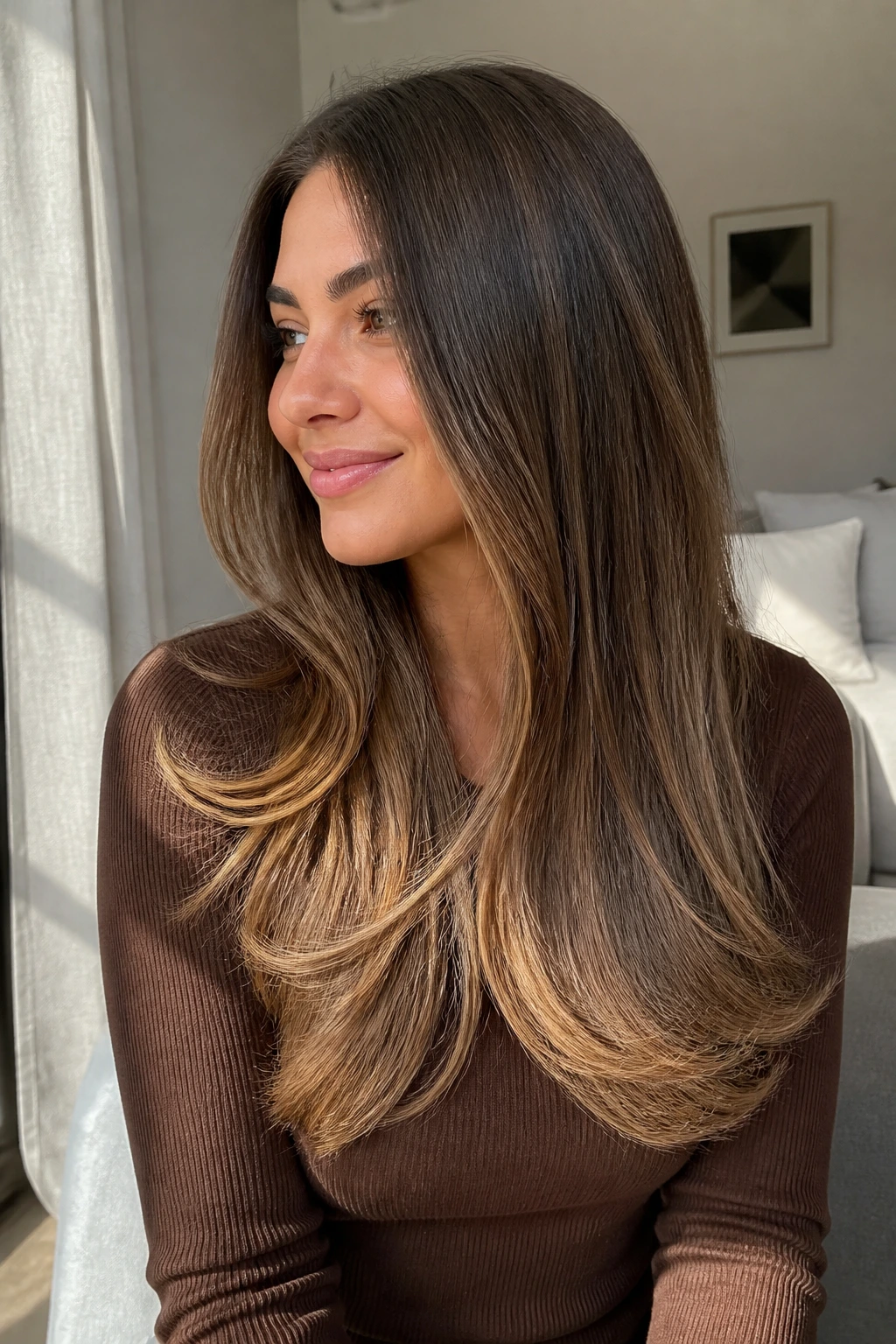
Hazelnut balayage gives straight hair a little lift without breaking the brunette base apart. The lighter pieces sit softly through the lower lengths, which is useful if you want movement but hate the sharpness of obvious highlights. Hazelnut is warm enough to feel inviting, but not so golden that it goes brassy fast.
The airy ends are the whole point. Straight hair can make the lower half look heavy if everything is the same depth. By placing the lighter color toward the ends, the hair looks lighter on its feet without losing shape.
What Makes It Different
This is a great look when the cut has only mild layering. The color provides the movement, so the haircut does not need to overwork itself. A smooth blow-dry and a little bend at the tips is enough.
Keep the roots natural or slightly shadowed. If the balayage starts too high, the effect turns louder and loses the hazelnut softness.
15. Maple Brunette with Tucked Ends
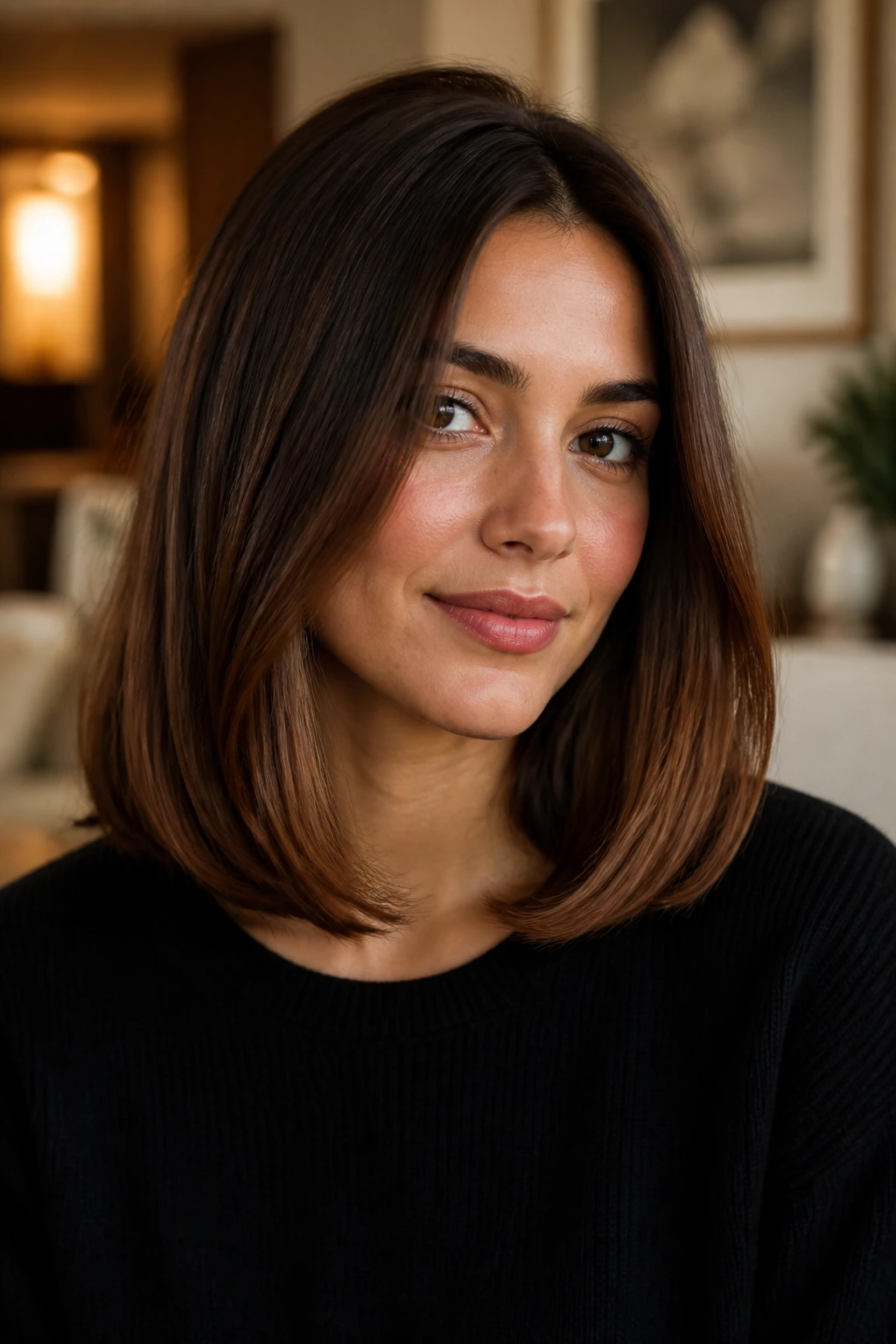
Maple brunette is warm, smooth, and a little glossy in a way that flatters straight hair almost instantly. Tucked ends make it feel neat instead of soft and sleepy. I like this one for shoulder-length hair because the color and the cut both show up without competing.
There’s a small but important detail here: the warmth should live in the tone, not in harsh copper streaks. Maple is about brown with a sweet, amber edge. On straight hair, that edge shows best when the surface is sleek and the ends curve under just a touch.
If you want the style to feel more polished, tuck both sides behind the ears or keep one side tucked and one side loose. It changes the whole shape without needing a haircut.
16. Satin Chestnut with Invisible Layers
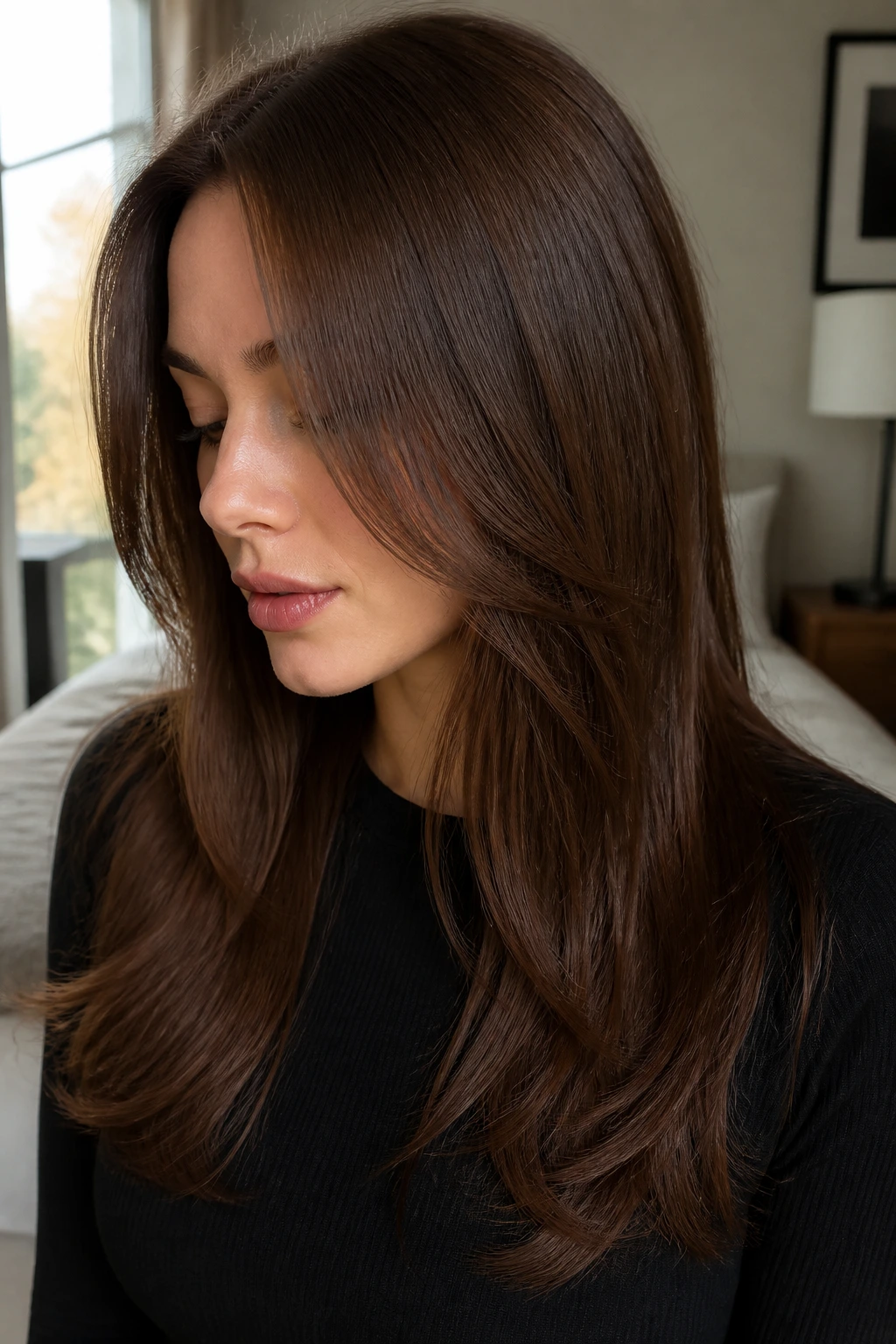
Satin chestnut is one of those shades that looks calm from a distance and rich up close. Invisible layers keep straight hair from collapsing into a heavy curtain, but they don’t interrupt the clean outline. The color stays chestnut and polished; the movement comes from the way the hair falls.
Why It Works
On straight hair, too many visible layers can make brunette color look scattered. Invisible layers solve that by giving the hair internal release while preserving the outside line. That means the cut moves, but the silhouette stays smooth.
A good request to make at the salon
- Chestnut brown with a neutral-to-warm gloss
- Internal layers only, especially through the crown
- Blunt perimeter at the bottom
- Minimal face framing
The finish should feel soft, not fluffy. If the crown starts to puff, the whole look gets older in a hurry. A smoothing cream before blow-drying keeps the satin effect intact.
17. Sable Brunette with a Curved Face Frame
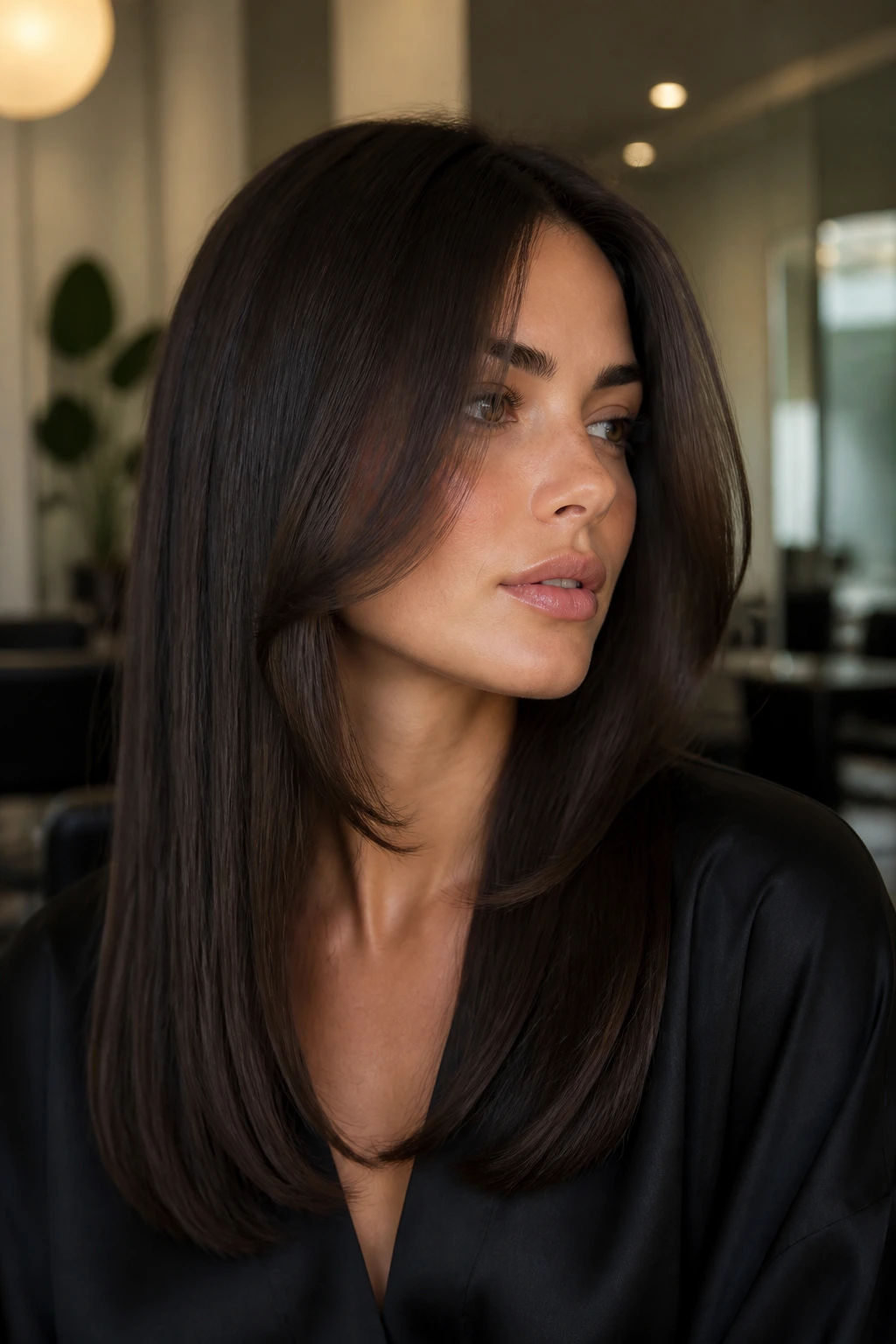
Sable brunette is dark, soft, and slightly cool without going flat. On straight hair, a curved face frame gives it shape right where you need it, especially if your jawline likes a little visual softening. The result is sleek, but not severe. That matters.
The curve should start around the chin and fall inward toward the collarbone or shoulders. Too much front layering and the shape gets flimsy. Too little and the hair can feel heavy beside the face.
How to Wear It
This look works well when the ends are blow-dried under just enough to create that smooth inward curve. It is not a curled style. It’s more like the hair has been persuaded into a better shape.
A center part keeps the sable tone formal; a slightly off-center part makes it gentler. If your color is naturally very dark, ask for a gloss rather than obvious highlights. The simplicity is the point.
18. Salted Caramel Ribbons on a Straight Cut
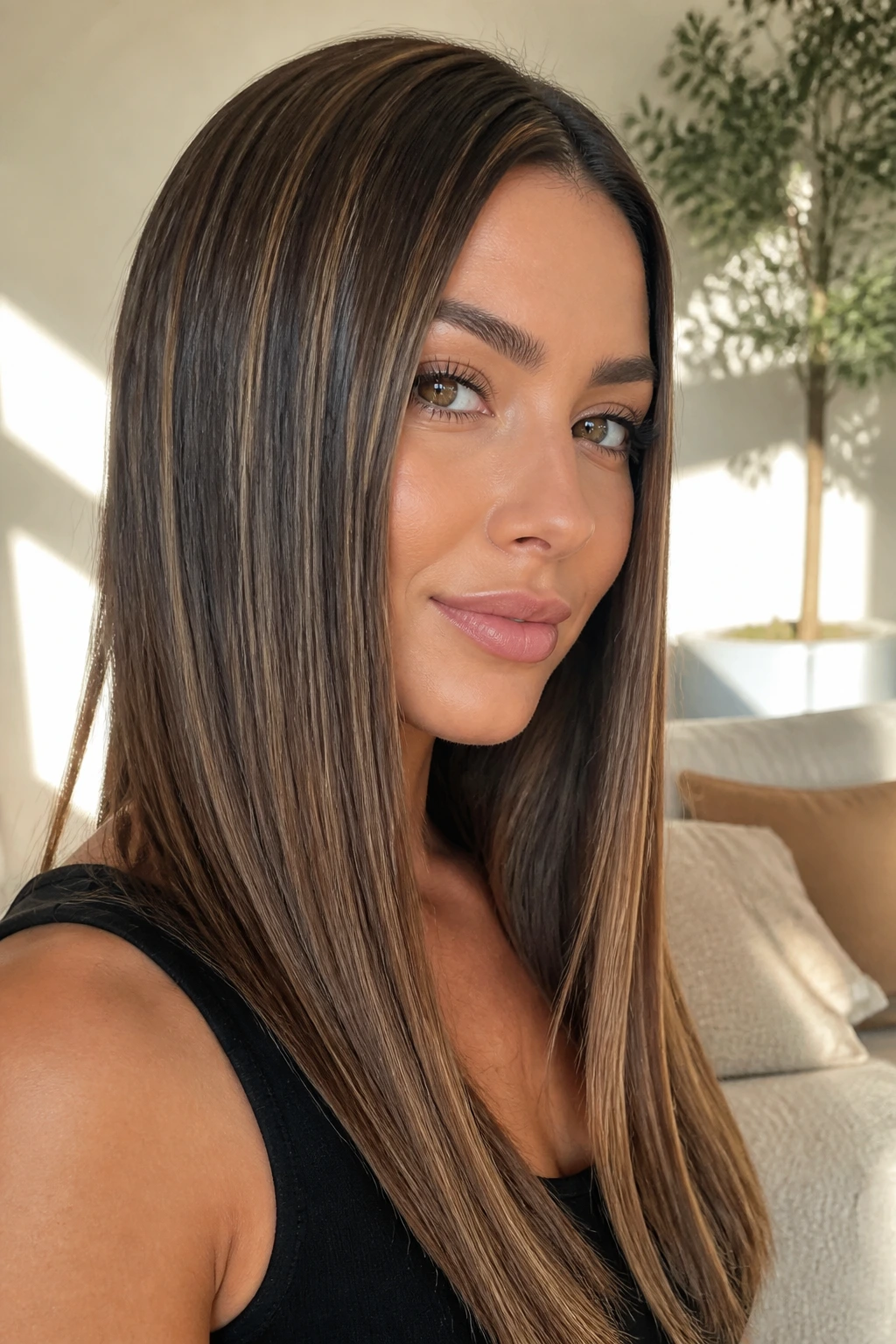
Salted caramel ribbons on straight hair can go wrong if the pieces are too wide, but when the placement is fine, the effect is gorgeous. The brunette base stays in charge while the caramel threads sit through the surface like light hitting a polished surface at just the right angle. Straight hair makes those ribbons easy to see, so placement has to be tidy.
The cut should stay clean. A straight cut or a gently beveled lob gives the ribbons a neat backdrop. If the haircut is too textured, the caramel can look overworked.
Tip: ask for ribbons that are narrow enough to be seen individually, but not so thin they vanish into the base.
This is one of those styles that looks best in daylight and indoor light for different reasons. Outside, the caramel glows. Indoors, it looks more restrained. That little shift is part of the fun.
19. Amber Brown with Subtle Money Pieces
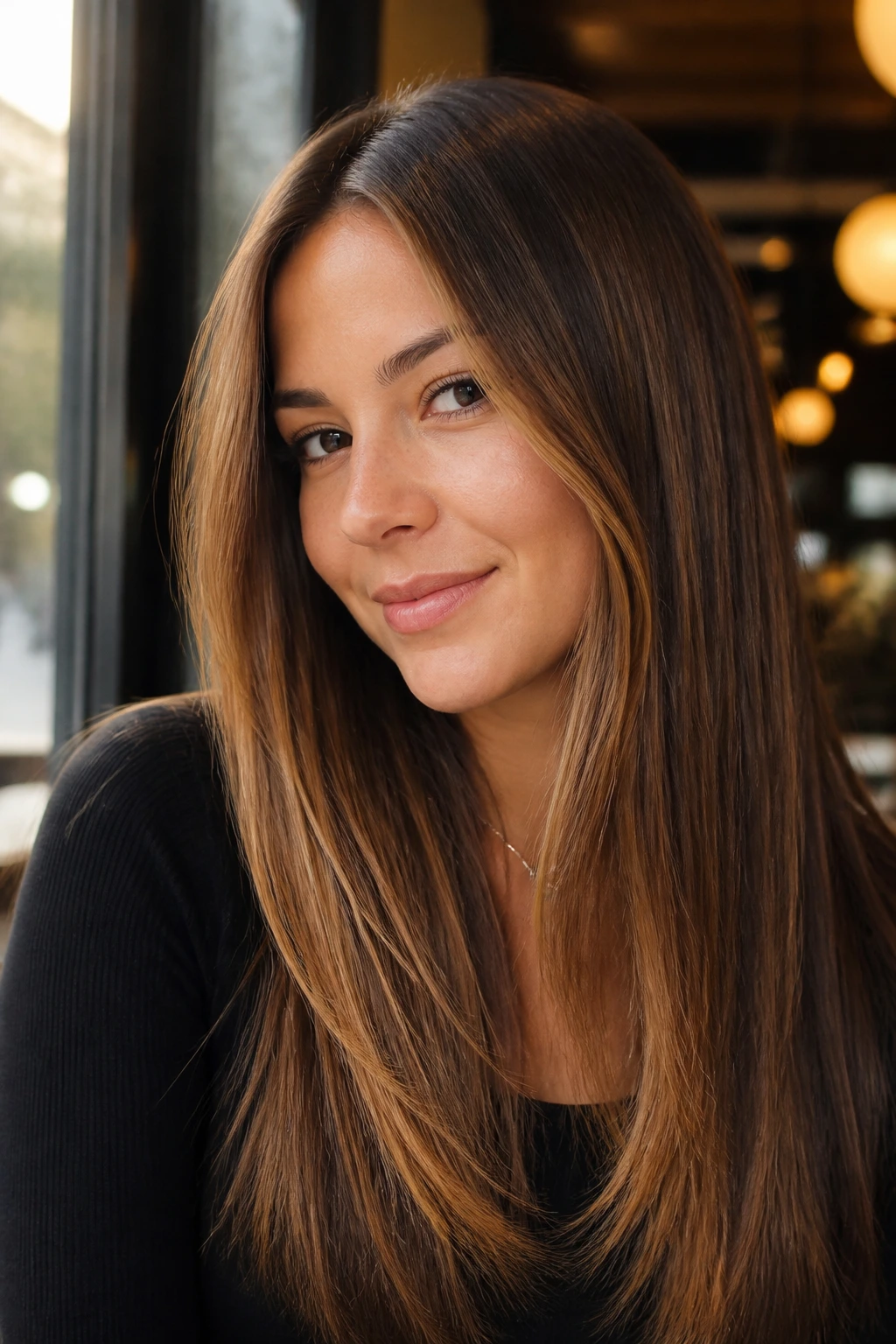
Amber brown is warmer than espresso and less sweet than honey, which makes it a nice middle path for straight hair. The subtle money pieces add brightness right where the hair frames the face, but the rest stays grounded in a rich brown base. It’s a good choice if you want warmth without turning orange.
The money piece should be feathered at the edges, not carved into a block. Straight hair will reveal every hard line, and that is not the mood here. Keep the pieces soft and narrow enough to blend as the hair falls.
This look plays especially well with warm makeup tones — peach blush, brown liner, a little gold shadow. Not because you have to match the hair, but because the whole effect feels cohesive when the skin and hair share the same warmth.
20. Cool Taupe Brunette with Clean Lines
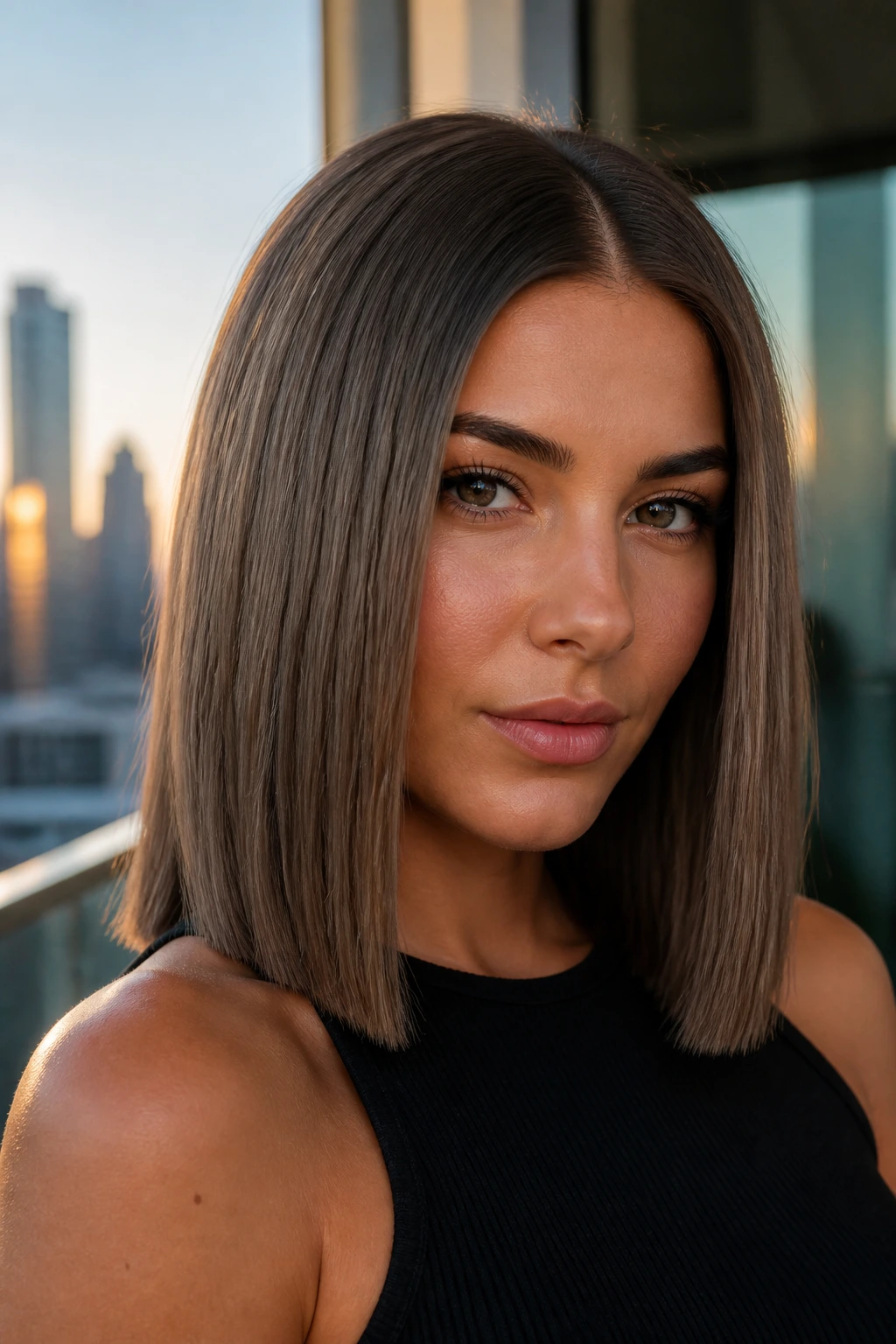
Cool taupe brunette on straight hair has that modern, almost tailored feel that some warmer browns never quite reach. The shade sits between brown and gray-beige, which means it can look very refined if the gloss is clean and the haircut is blunt. This is not a color for people who want a sun-kissed finish.
The clean lines are the real asset. A center part, tucked ends, or a sharp lob makes the taupe read as deliberate. If you add too much texture, the cool tones can start to look dusty rather than expensive.
How to Wear It
Ask for a neutral-to-cool gloss and keep the lighter pieces fine. Taupe can go flat quickly if there is too much darkness all over, so a little reflected light helps. On straight hair, even a subtle shift of tone is visible, which makes this one quietly strong.
Skip warm styling products here. Anything too golden in the serum or finishing spray can fight the cool finish.
21. French Roast Bob with Blunt Fringe
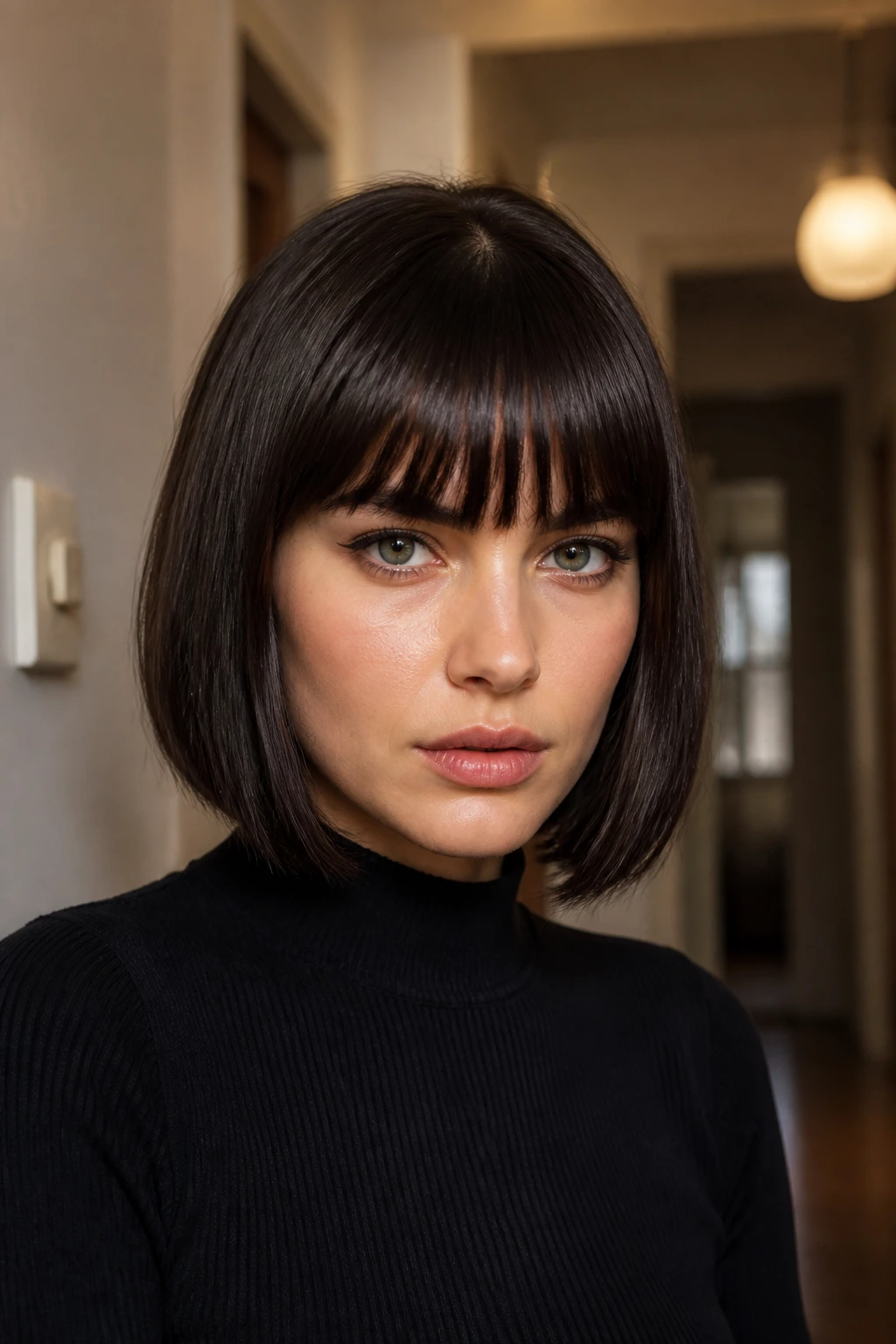
French roast brown is deep, dark, and just strong enough to give a bob some attitude. Add a blunt fringe, and the whole thing turns graphic. Straight hair is the right texture for it because the fringe sits cleanly instead of splitting apart or puffing up.
Why It Works
A bob with a blunt fringe works best when both pieces are equally precise. The color gives the haircut weight, and the fringe keeps the face frame sharp. If the brown is too soft or too warm, the cut can lose its edge.
Ask for: a deep roast brown base, a fringe cut straight across or slightly curved at the corners, and a sharp bob line at the jaw.
Best for: straight hair that naturally falls flat in a good way.
This look can feel a little editorial, which is exactly why it works. It is not trying to be easy. It is trying to be exact. That’s different.
22. Almond Milk Brunette with Soft Dimension
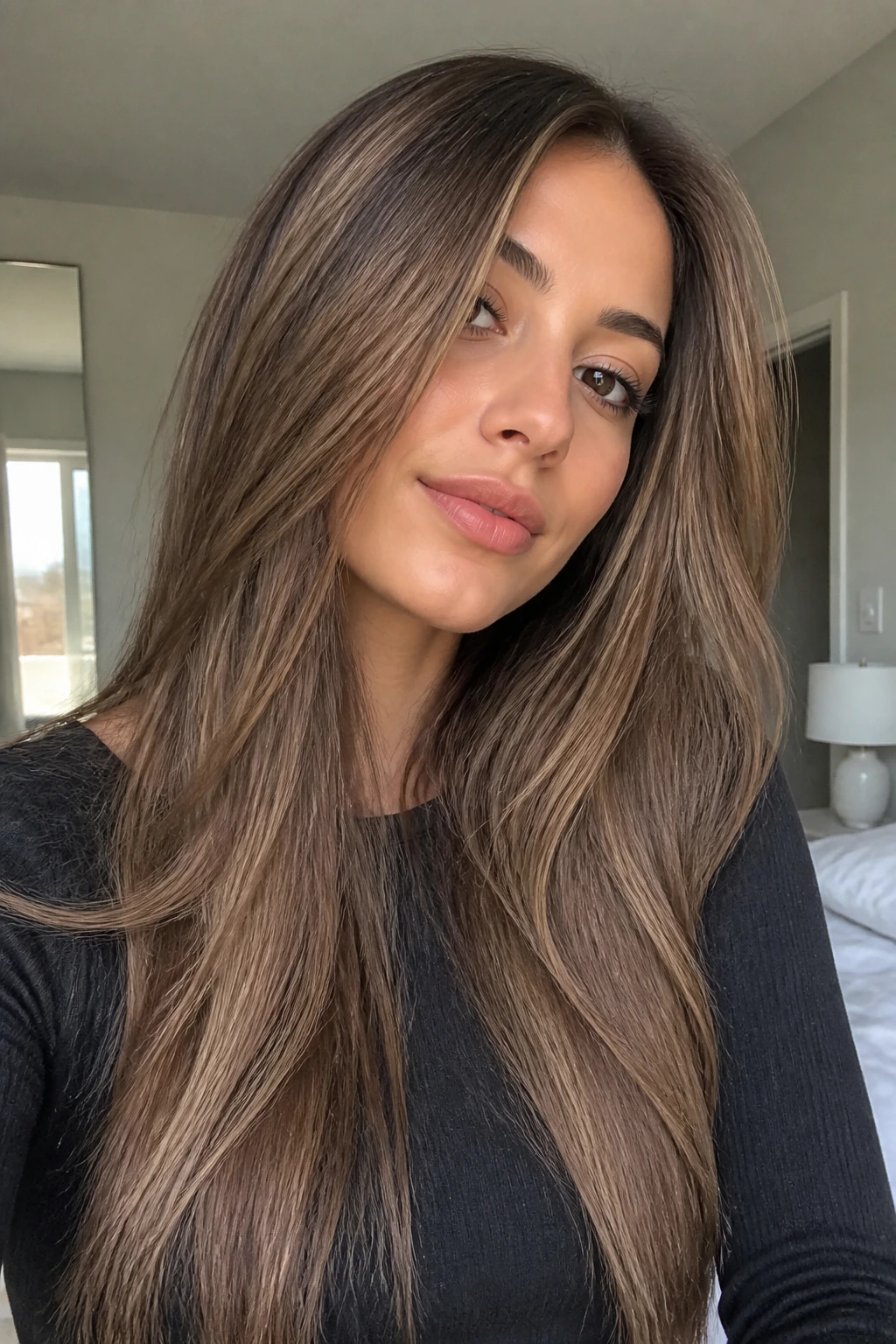
Almond milk brunette is a softer, creamier brown that reads light without turning blonde. On straight hair, the dimension comes from tiny shifts in tone rather than obvious highlights. That makes it a smart choice if you want a gentle effect that still looks designed.
The best version has a beige-brown base with a few almost invisible lighter threads through the top layer. Nothing chunky. Nothing abrupt. Straight hair can make every color move obvious, so here the subtlety is what keeps the look elegant.
The haircut should stay neat but not severe. A collarbone length cut with soft ends works well. If the hair is too long and too one-length, almond milk can drift toward plain.
23. Mulled Spice Brunette with a Gloss Finish
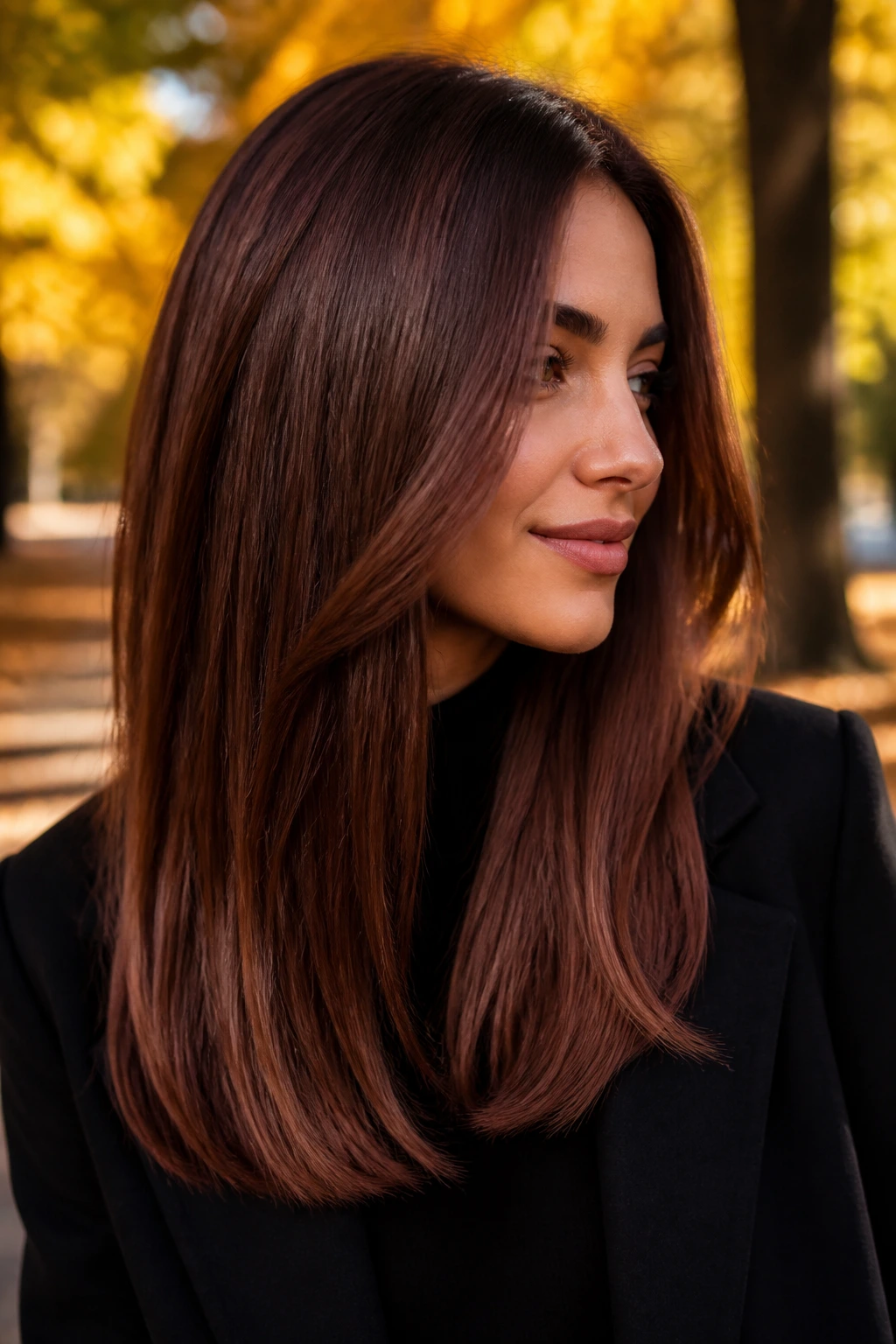
Mulled spice brunette gives straight hair a warmer, richer mood. Think brown with notes of cinnamon, clove, and a touch of red-brown depth — not cherry red, not copper overload. The gloss finish keeps the warmth controlled so it doesn’t edge into brass.
Straight hair makes this color look especially smooth because the warm tones reflect evenly. It’s a shade that looks best when the hair is very healthy and the ends are trimmed regularly. Dull ends will eat the whole effect.
How to Wear It
A soft blowout with the ends slightly turned under makes the spice tones look fuller. If you wear it pin-straight, the red-brown notes are more obvious. That can be good if you want drama.
Use a color-safe glossing conditioner or mask once a week. Warm brunette shades tend to fade unevenly if the hair is overwashed.
24. Smoke-Root Brunette with Long Straight Hair
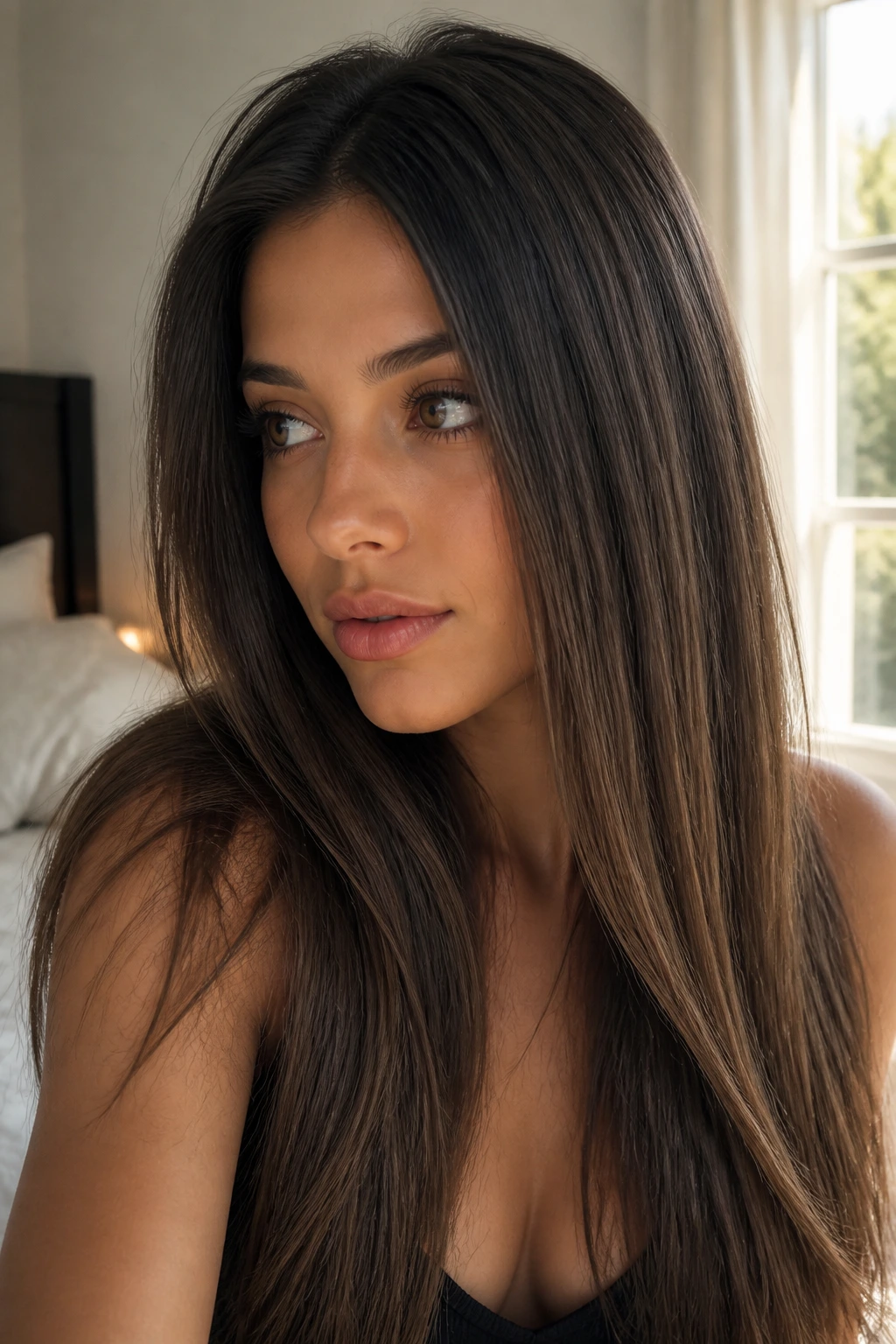
Smoke-root brunette is built around contrast, but the contrast stays muted. The roots remain deep and shadowy, then the color softens through smoky brown lengths that never look fully blonde. On long straight hair, the effect is sleek and grounded, with enough dimension to keep the hair from looking like one solid block.
The root area should not be harsh. You want a smudged transition, not a sharp line. Straight hair shows that line fast, and once you see it, you cannot unsee it.
This look is especially useful if you want grow-out to feel forgiving. The dark root makes the upkeep easier, while the smoky mids and ends keep the style from feeling heavy. It is a practical brunette, which I always respect.
25. Honeyed Brunette with Feathered Front Pieces
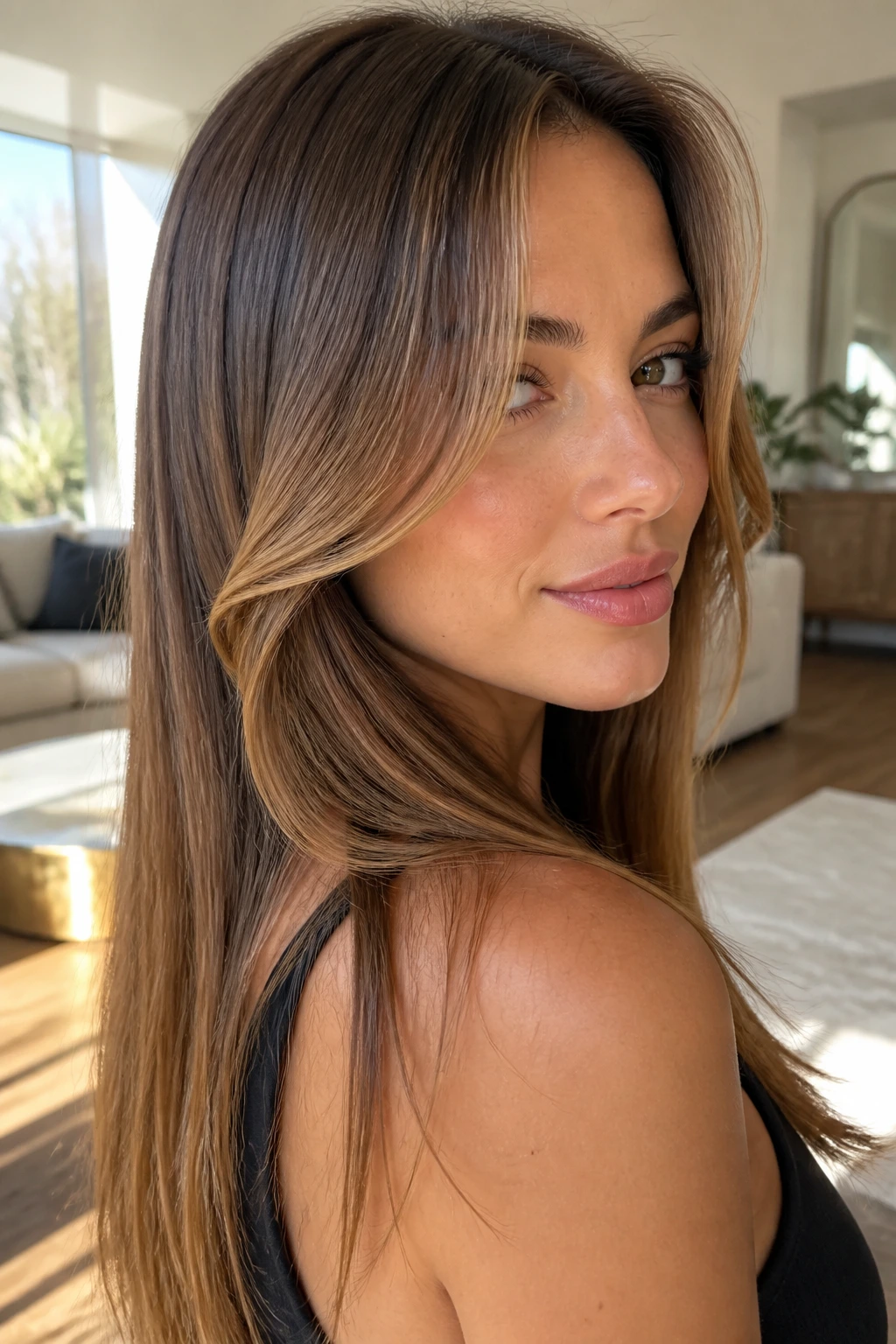
Honeyed brunette gives straight hair warmth in the front where people actually see it. Feathered pieces around the face soften the outline and stop the style from feeling too heavy. The honey tone should be golden-brown, not bright yellow. That part matters more than most people think.
The front pieces should be light enough to lift the face, but not so light that they break the brunette identity. Straight hair helps because the pieces fall exactly where the colorist placed them. There’s no wave hiding the placement or exaggerating it.
If you like a softer look, keep the rest of the hair a level or two deeper. That keeps the honey from spreading everywhere and makes the face frame do its job.
26. Black Cherry Brunette on Straight Hair
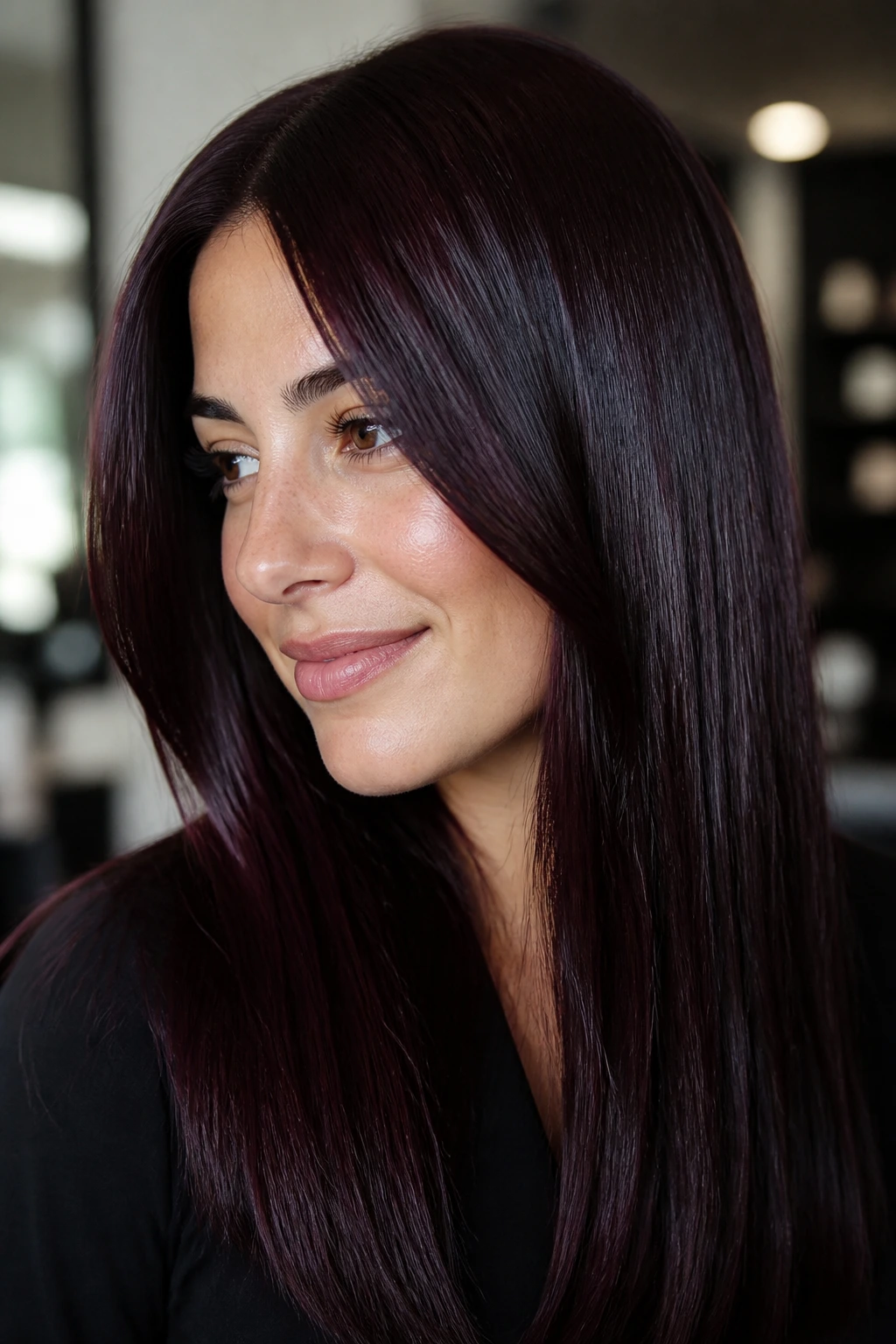
Black cherry brunette is a sneaky color. In low light, it can read as deep brown. In bright light, the red-violet undertone wakes up and gives the hair a richer, almost wine-dark edge. On straight hair, that shift is easy to spot because the surface is smooth and reflective.
Why It Works
The contrast here is not about light and dark pieces. It is about undertone. Straight hair lets the cherry depth show without needing heavy highlights, which is useful if you want something moody but still wearable.
A good black cherry brunette should stay deep at the root and slightly more reflective through the mids and ends. If the red is too strong, the look loses its brown base. If it’s too quiet, it just becomes plain dark hair.
Best for: people who want brunette with a little edge.
Styling note: pair it with a sleek finish and a center part if you want the red-violet tones to feel controlled rather than playful.
27. Latte Brunette with Curtain Pieces
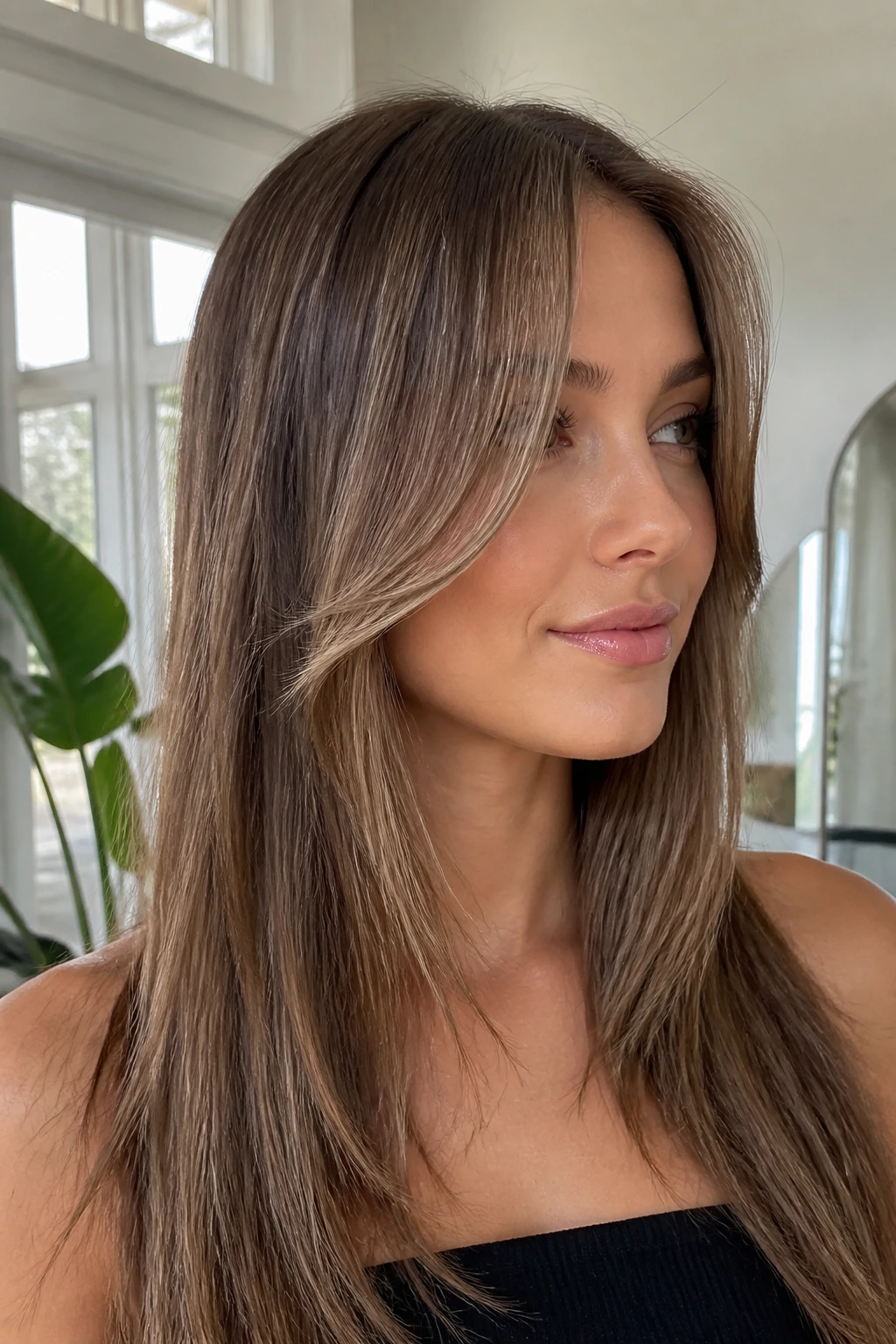
Latte brunette is softer than espresso, lighter than chocolate, and an easy fit for straight hair that needs some dimension without a big contrast jump. Curtain pieces around the face give the haircut shape and keep the color from disappearing into the rest of the brown. It’s a calm look, but not a boring one.
The pieces should graze the cheekbones and open slightly toward the jaw. Too short and they feel dated. Too long and they don’t frame much at all.
This look works especially well if you like a little part shift. A center part is clean, but a slight off-center part can make the curtain pieces fall in a more flattering way. Simple adjustment. Big difference.
28. Dark Mocha Pixie with Sleek Texture
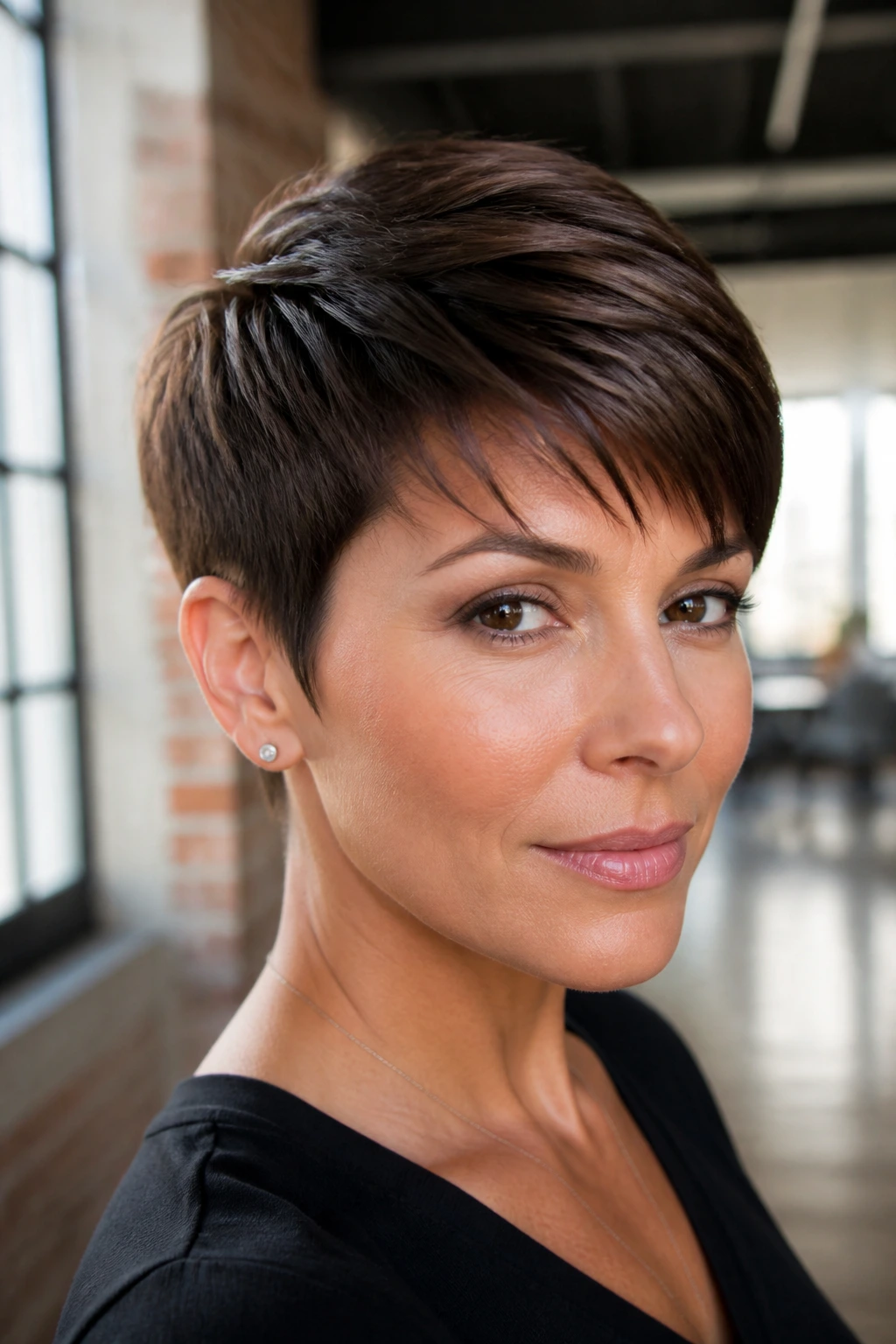
A dark mocha pixie on straight hair is sharp in the best sense. The color gives the crop richness, while the sleek texture keeps it from looking fuzzy or over-styled. Straight hair is almost unfairly good for this cut because the lines stay clean and the finish looks intentional with very little effort.
The mocha tone should stay deep enough to preserve the pixie’s shape. Too much lightness and the cut can lose definition. A touch of gloss on the top and fringe area brings out the texture without making the hair oily.
How to Wear It
Use a small amount of matte cream or light shine balm, depending on whether you want the look polished or slightly piecey. Keep the sides neat. Let the top show off the color.
This is one of the easiest brunette looks to maintain if you like short hair and crisp edges. Regular trims matter more than elaborate styling here.
29. Cocoa-Tinted Bob with Underlights
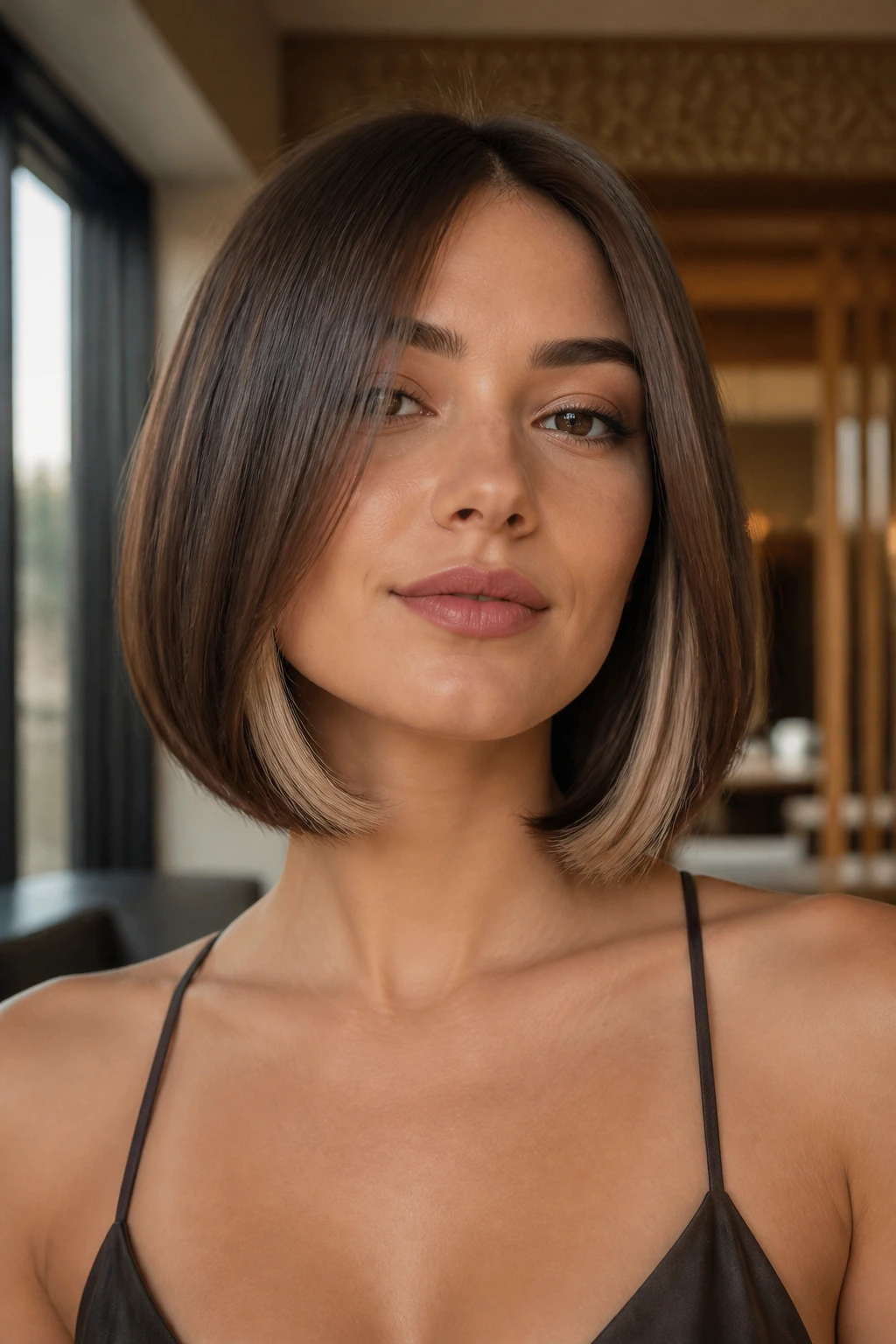
Cocoa-tinted bob with underlights is for people who want something a little secretive. The outer layer stays a smooth cocoa brown, while the underlights peek through when the hair moves or tucks under. Straight hair is excellent for this because the lower layers show only when they’re supposed to.
The bob itself should stay precise. If the cut gets too shaggy, the underlights can look accidental. Keep the cocoa top layer glossy and the hidden color one or two steps lighter or warmer, depending on the mood you want.
If you like a little contrast without committing to full highlight visibility, this one is a smart choice. It has range. It also looks better after a fresh blow-dry than it does when slept on, so a little upkeep is part of the deal.
30. Biscotti Brunette with Sandy Highlights
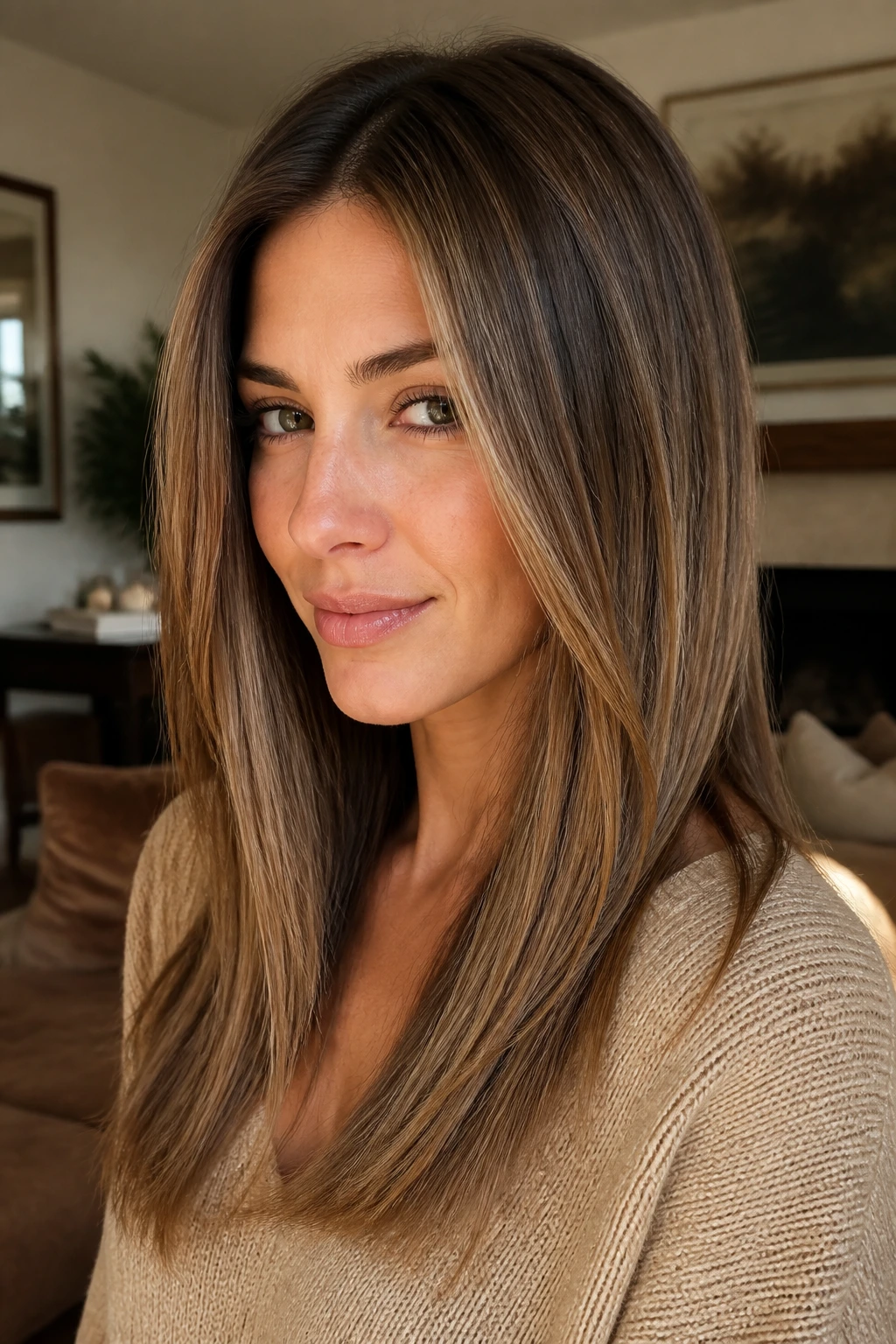
Biscotti brunette lives in that soft, neutral brown zone that flatters straight hair without looking overdone. Sandy highlights add just enough brightness to keep the color from becoming one-note. Think of it as a muted, edible-looking brown with lighter threads that stay beige rather than gold.
The highlights should be fine and scattered, not packed together. Straight hair can make grouped highlights look stripy fast. A better move is to spread the sandy pieces through the top layer and around the face so the overall effect stays airy.
This one is especially good if you like low-contrast color. It gives you change without a dramatic maintenance schedule. And yes, that matters.
31. Graphite Brown Straight Hair
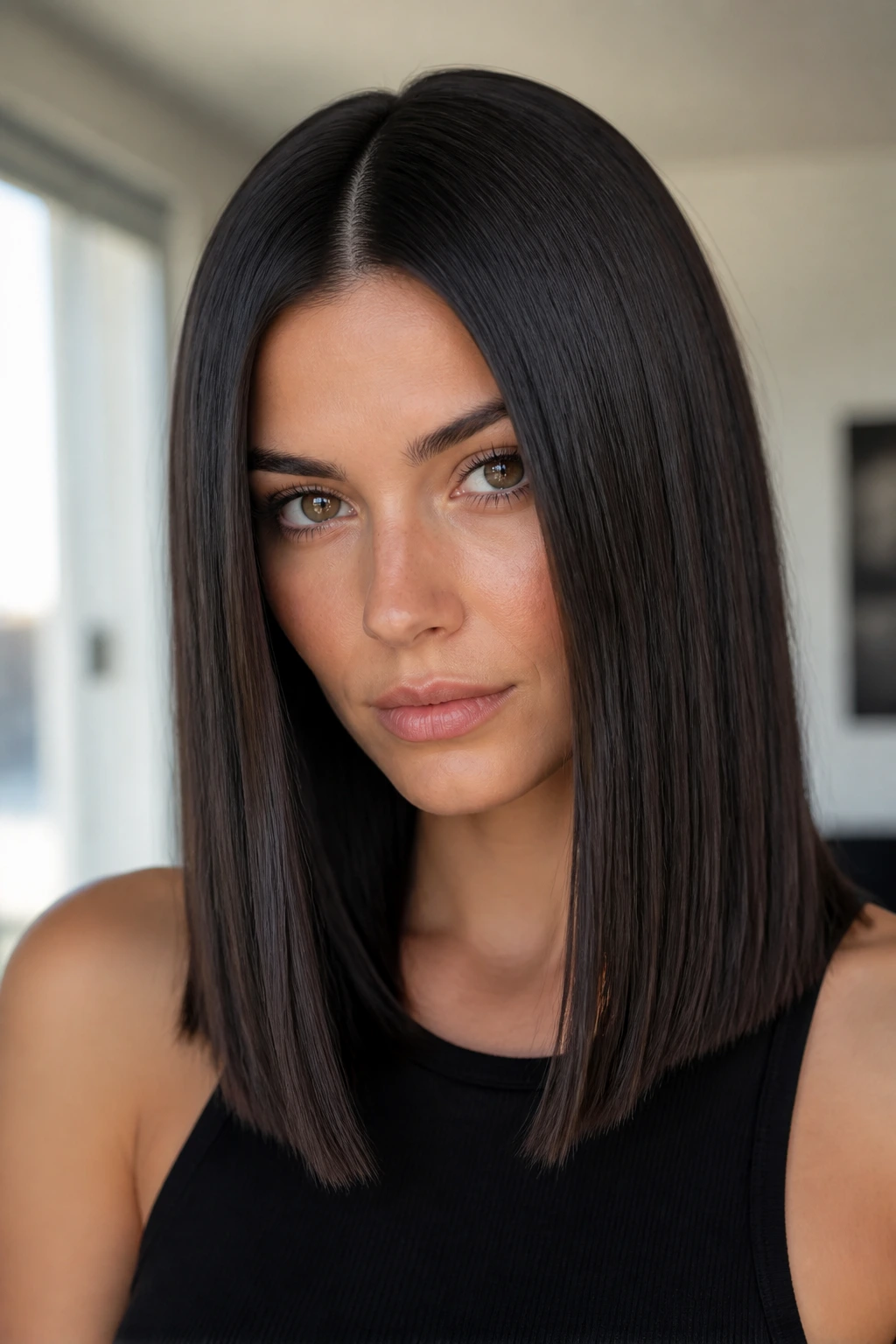
Graphite brown is one of my favorite brunette choices when you want something cool, dark, and a little severe in a good way. It sits close to black, but the brown cast keeps it softer and more dimensional. On straight hair, that subtle difference becomes visible immediately because the surface is smooth enough to catch it.
Why It Works
Graphite brown thrives on precision. A blunt cut, a straight part, and a glassy finish make the shade read cleanly. If the hair is frizzy or heavily layered, it loses the graphite mood and becomes just dark hair.
Ask for: a cool brown base with a smoky gloss and minimal warm reflect.
Best for: people who want dark hair without a jet-black edge.
You do need shine with this color. Without it, graphite can look flat. With it, the whole thing feels deliberate and strong.
32. Chestnut Ombre on Extra-Long Hair
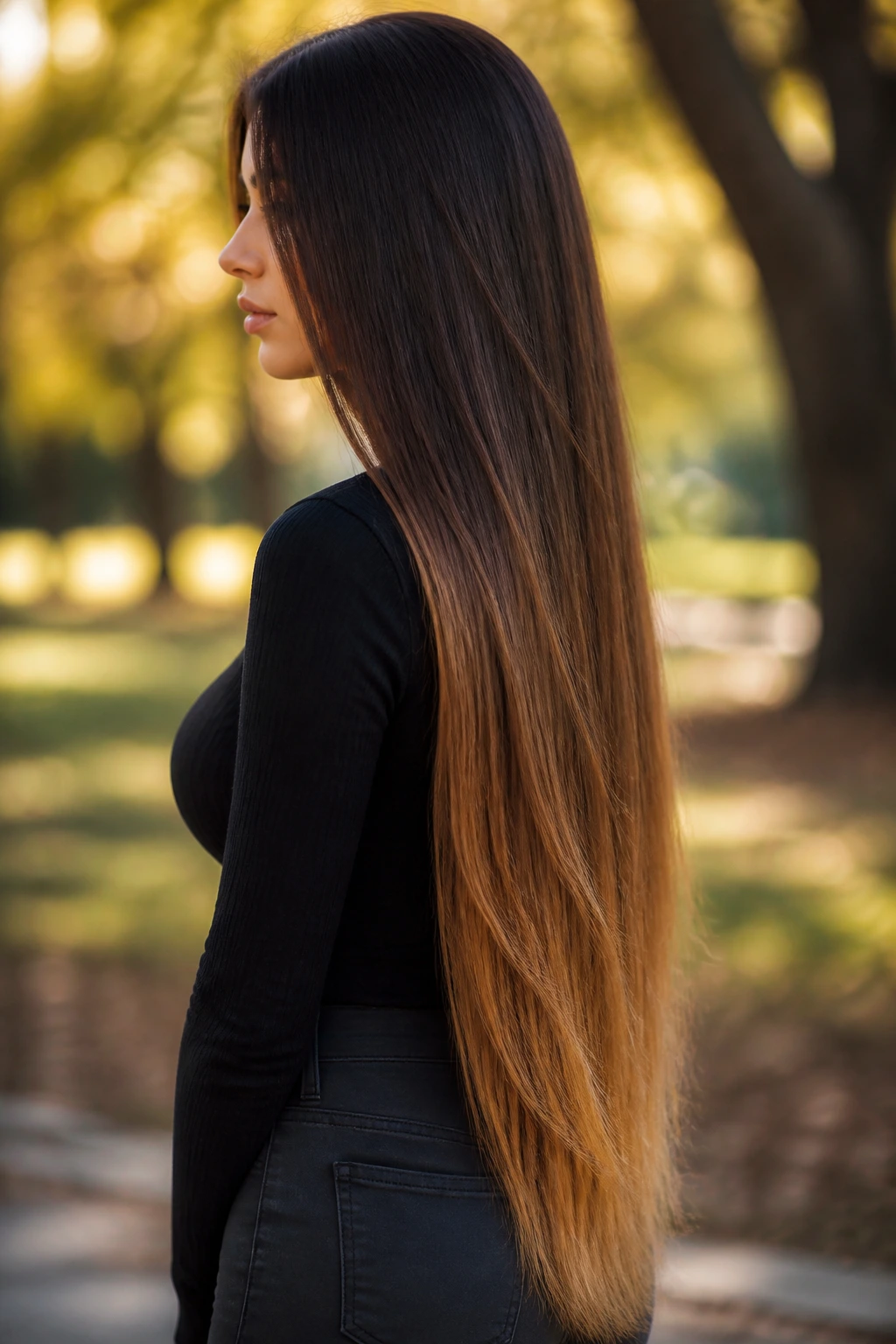
Chestnut ombre on extra-long straight hair gives you a gradual shift that feels soft rather than dramatic. The roots stay deeper and richer, then the color opens into lighter chestnut through the lengths and ends. Because the hair is long and straight, the fade has room to show properly.
The ombre should be slow, not abrupt. A hard line halfway down the hair will ruin the effect. Keep the transition blurred so the eye slides from dark to light instead of stopping at a shelf of color.
This look is best when the ends stay healthy. Extra-long hair can make any fade look tired if the last few inches are dry. Trim those ends, and the ombre looks far more expensive.
33. Brunette with Champagne Ends
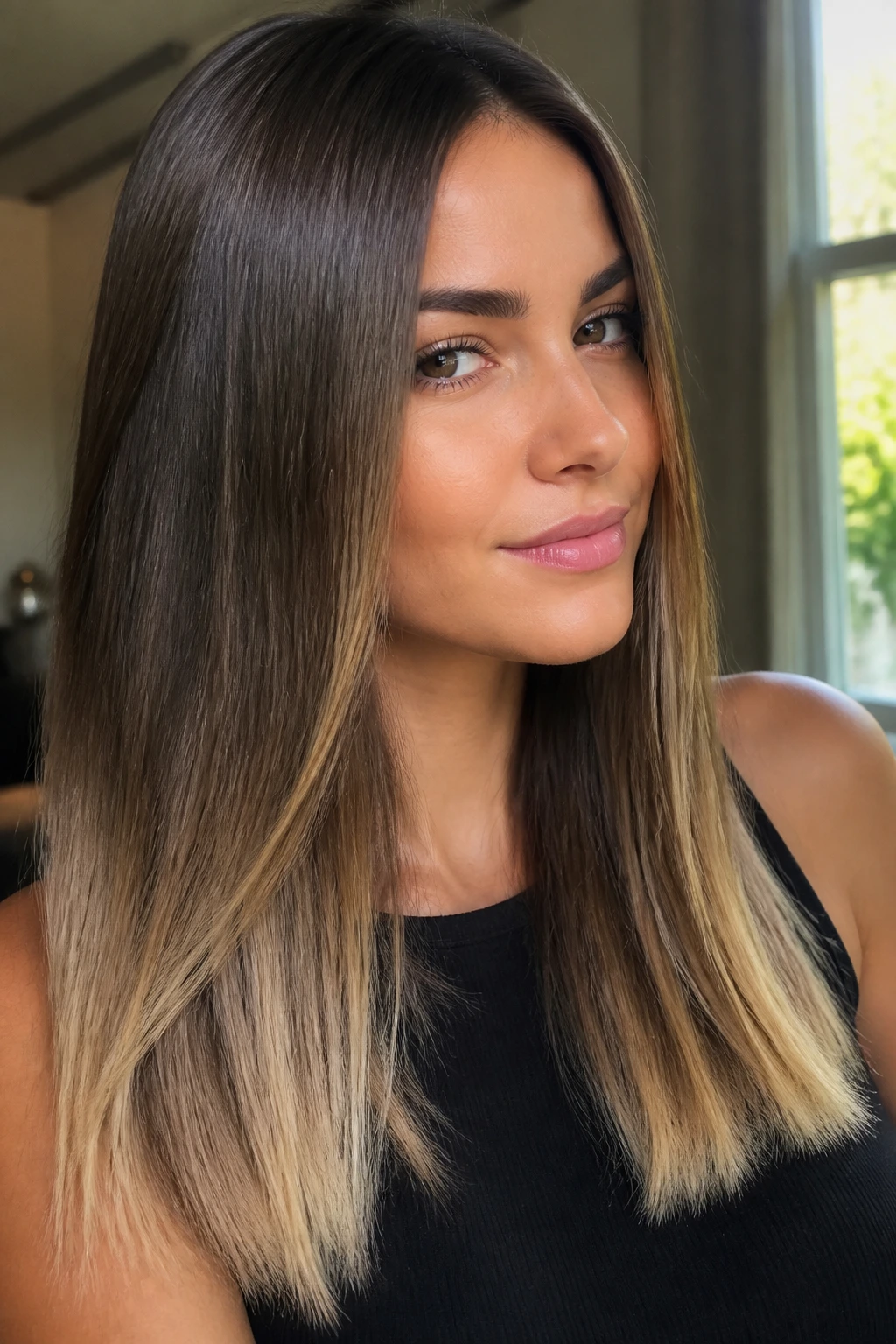
Champagne ends on brunette hair can look chic on straight hair if the lightness stays controlled. The base remains brown and rich, while the ends shift toward a pale beige-gold that feels airy rather than blonde-blonde. Straight hair helps the fade look smooth because there’s no curl pattern interrupting the transition.
How to Wear It
Keep the champagne at the very ends or through the lowest few inches. If it rises too high, the brunette base loses dominance and the whole look starts leaning beachy. That is not what this wants.
A middle or slightly off-center part works best because it keeps the gradient visible on both sides. The finish should be silky, not crunchy. Anything rough at the ends will make the light color look dry.
34. Velvet Brown with Precision Cut
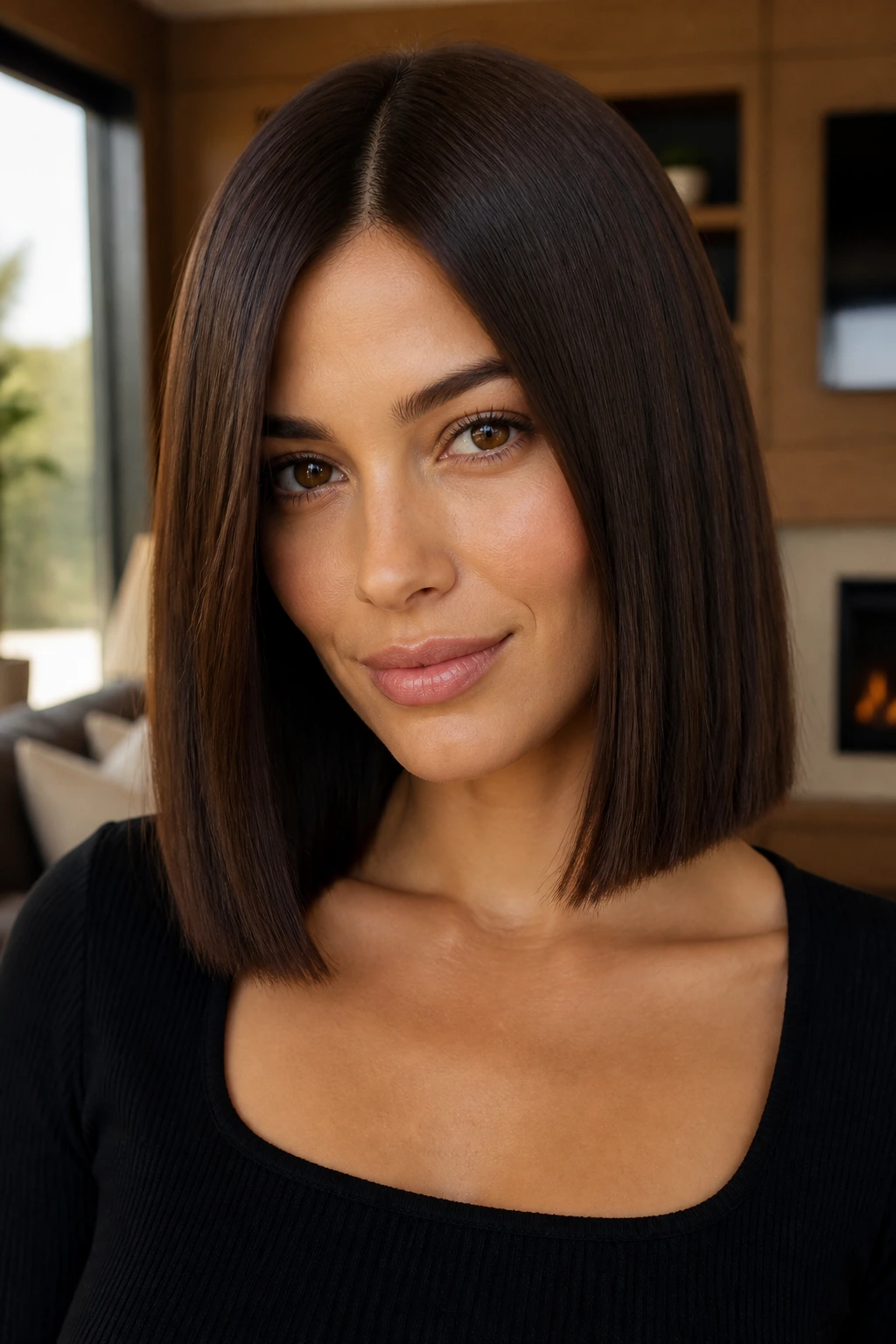
Velvet brown is rich, soft, and a little deeper than a standard chocolate shade. On straight hair, a precision cut makes it look nearly tailored. The edges should be clean enough to feel exact, while the color stays plush and even.
This look does not need obvious highlights. In fact, too many light pieces would take away from the velvet effect. The appeal is in the uniform richness and the sharpness of the cut. It feels calm, but it is not plain.
If you like hair that looks finished even when you haven’t done much to it, this is a strong option. A clean blow-dry, a dab of smoothing cream, and a trim that keeps the outline honest are enough.
35. Walnut Brunette with Minimalist Shine
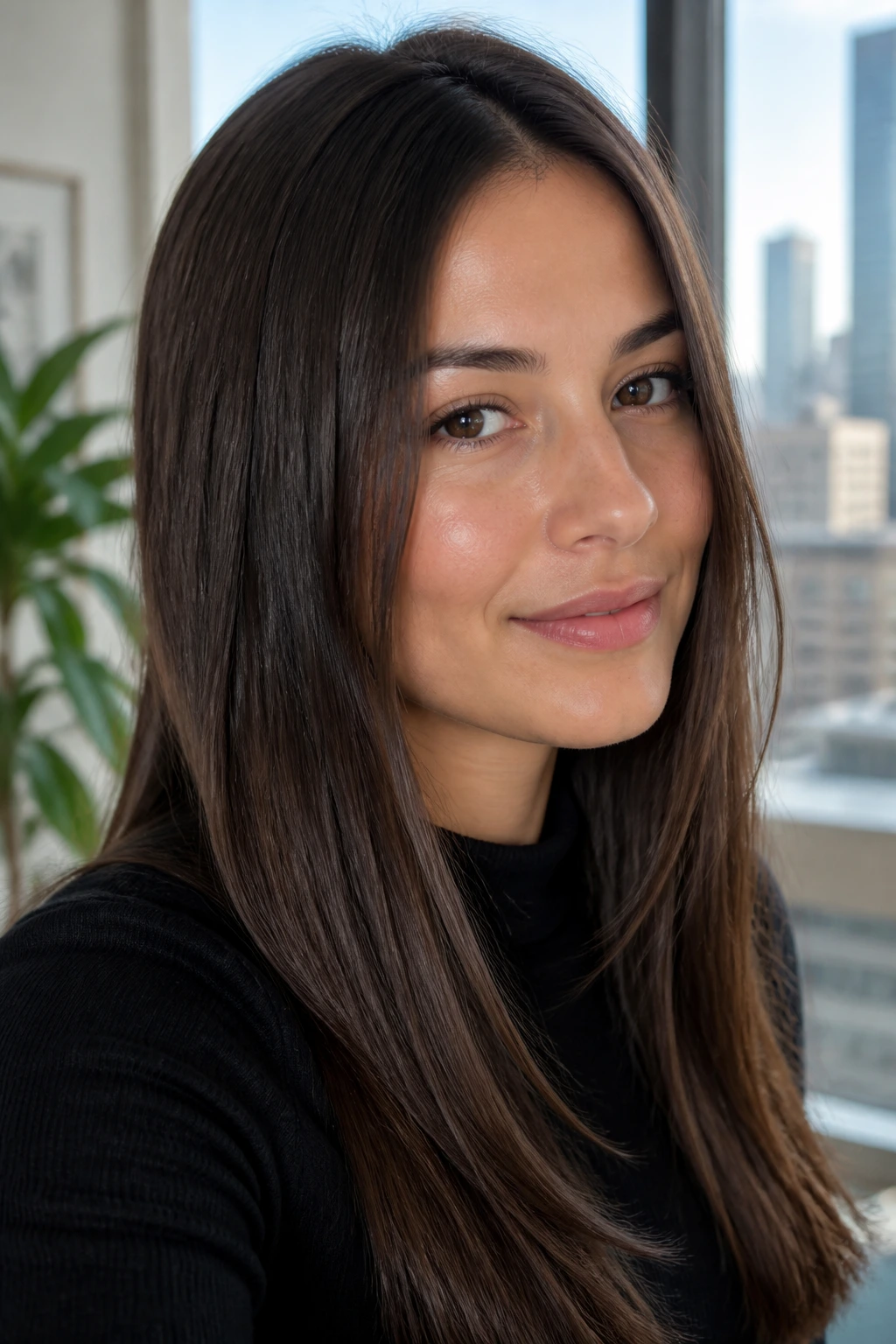
Walnut brunette is the quiet finish that still gets noticed because it looks so put together on straight hair. The tone is balanced — not too warm, not too cool — and the minimalist shine keeps it from becoming heavy. If you want brunette color that survives a workday, an evening out, and another day after that, this is a good one to keep in the rotation.
The haircut can stay simple: long and one-length, a lob, or a soft bob. What matters is that the ends are healthy and the surface is smooth. Walnut looks best when it has room to reflect light without being fussed over.
The smartest part of this look is its flexibility. You can keep it nearly natural or push it with a gloss, a slight root shadow, or a whisper of contour around the face. It never needs to become louder than it already is.
Why Straight Hair Changes the Brunette Conversation
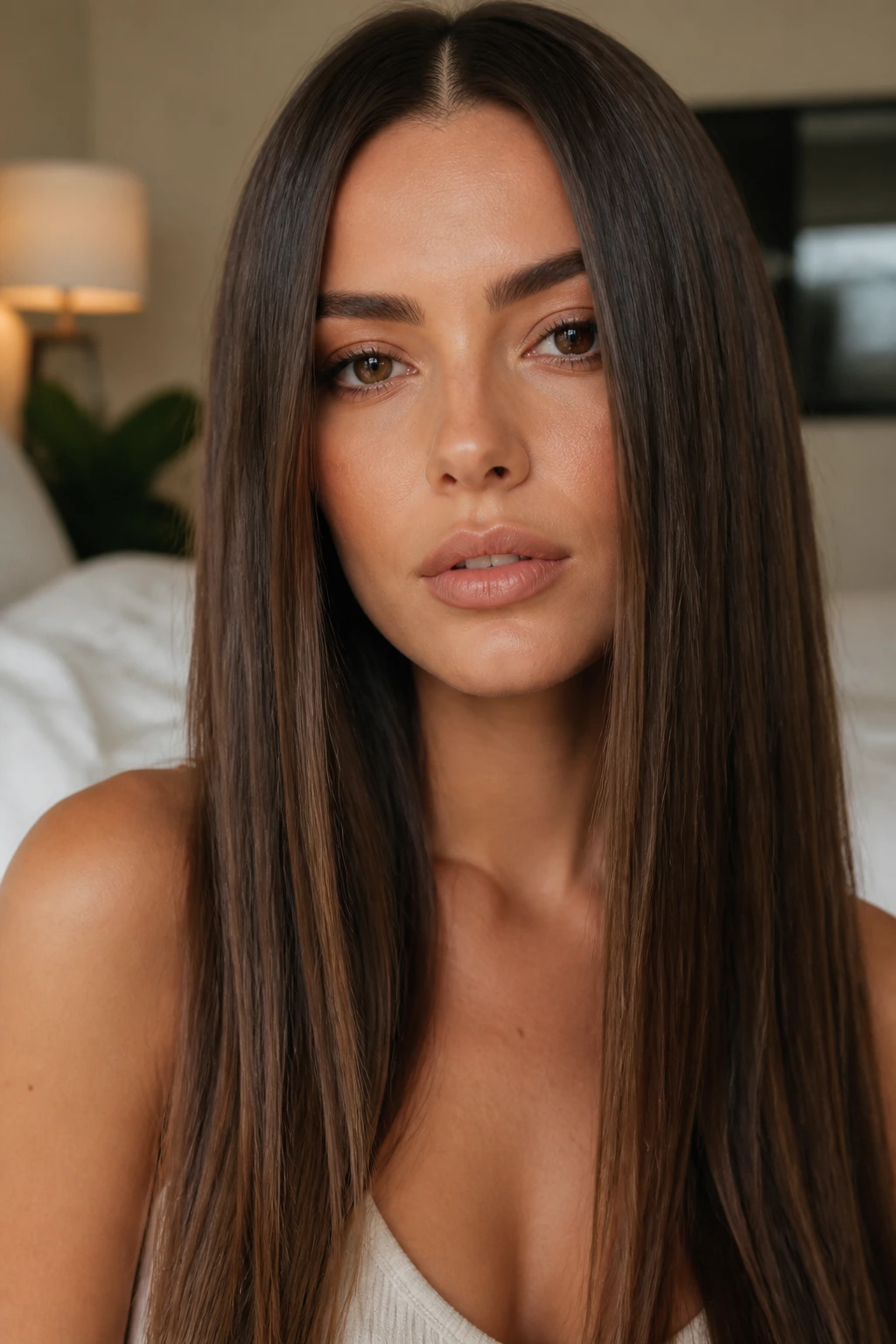
Straight hair is brutally honest about color placement. That sounds harsh, but it is actually useful. When the hair lies flat, you can see whether the brunette tone has depth, whether the highlights are too wide, and whether the gloss is doing anything at all. There is nowhere for muddy toner to hide, and no wave pattern to blur a sloppy foil.
That is why blunt cuts, center parts, and clean edges show up so often in these looks. Straight hair doesn’t need extra movement from the haircut if the color is already doing the work. A blunt lob can make espresso brown feel denser. A long one-length cut can make chestnut look expensive. A bob with a face frame can make caramel or honey pieces feel much sharper than they would on textured hair.
The shine piece matters too. Straight brunette hair reflects light in one long plane, which means a gloss or smoothing finish changes the whole mood. A dry brunette looks tired fast. A glossy brunette looks intentional. Small difference. Big payoff.
There’s also a practical side. If your hair naturally falls straight, you do not need to force your color into a high-maintenance, high-volume style just to make it interesting. You can let placement do the talking. Fine babylights, a root melt, a subtle money piece, or a simple ash glaze can all read beautifully when the shape is clean.
Essential Tools for These Looks
-
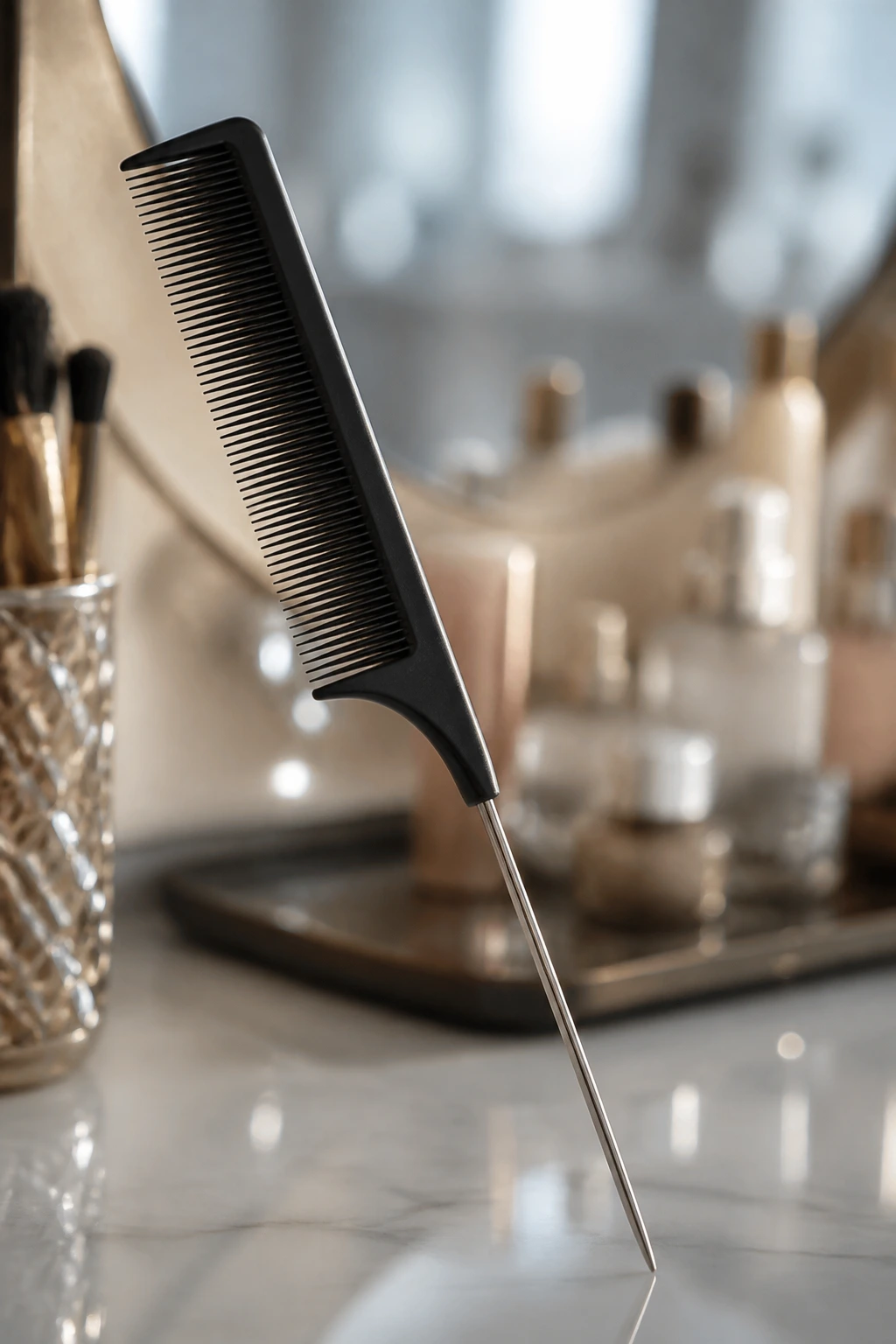
Fine-tooth tail comb — Use it to keep your center part, section hair cleanly, and smooth the top layer before heat styling.
-
1-inch flat iron with adjustable heat — Straight hair usually needs only one pass or two, and you want the temperature low enough to avoid chewing up the ends.
-
Heat protectant spray — A light mist before blow-drying or flat-ironing keeps brunette color looking smooth instead of dry.
-
Boar-bristle brush — This helps polish the surface, especially on bobs, lobs, and blunt cuts where shine matters.
-
Sectioning clips — Essential when you’re styling face-framing pieces or blow-drying a smooth part line.
-
Microfiber towel — Cuts down on rough drying and helps straight hair keep its shape before styling.
-
Color-safe shampoo and conditioner — Regular shampoo that strips too hard will fade brunette gloss faster than people expect.
-
Shine serum or lightweight oil — A small amount on mids and ends gives brunette shades a better finish without weighing down straight hair.
-
Root-lift spray or mousse — Useful if your straight hair tends to collapse at the crown and you want the cut and color to show.
-
Wide-tooth comb — Better than brushing wet hair aggressively, especially if you have highlighted pieces that need a gentler hand.
Smart Shade Shopping for Brunette Hair Looks for Straight Hair
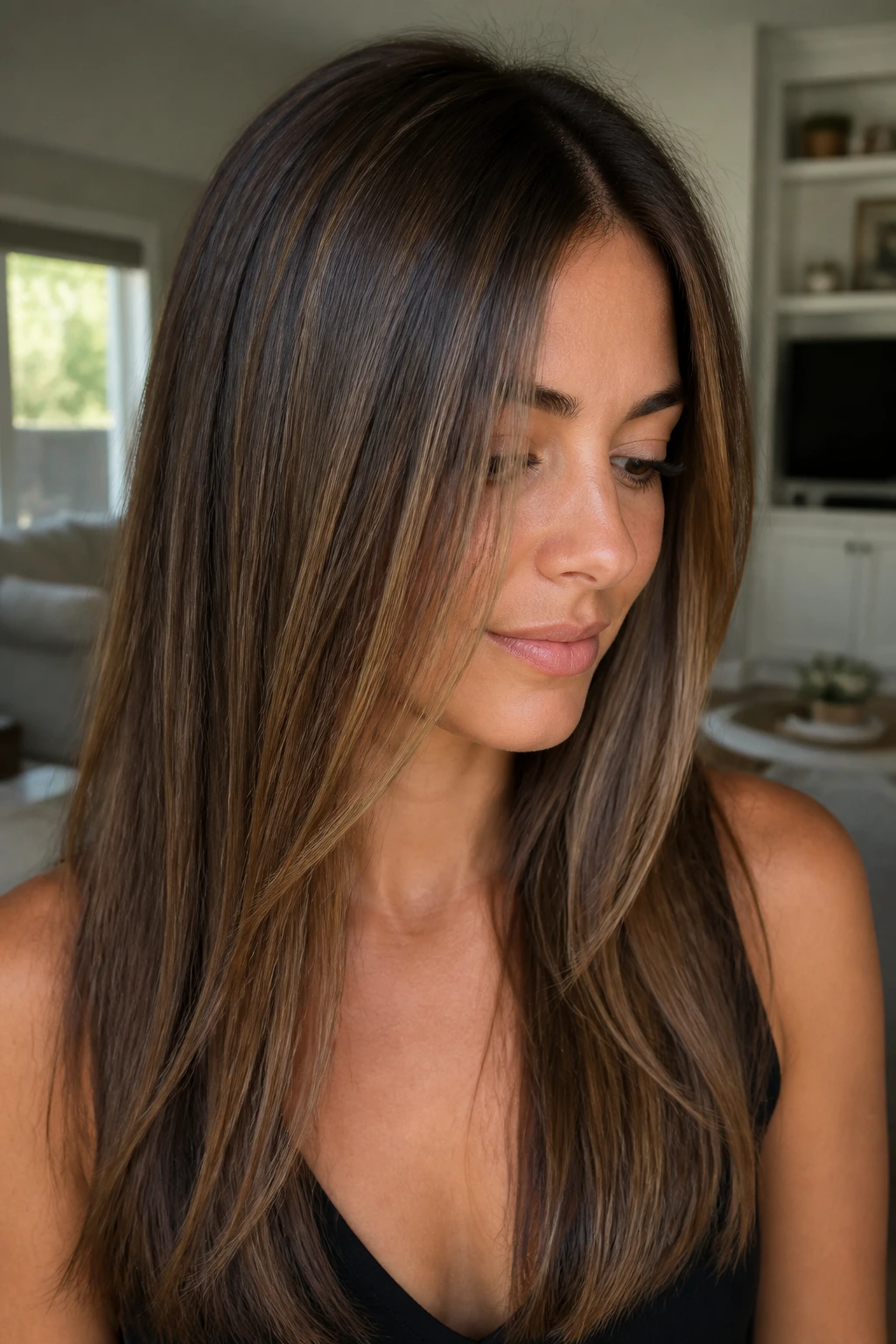
Straight hair makes shade choice more visible, so shopping for brunette color needs a little more precision than “brown, but lighter” or “brown, but darker.” If your natural base sits around a level 3 or 4, you can usually move up into espresso, mocha, chestnut, walnut, or caramel territory without losing the brunette identity. If your hair is already medium brown, you have room to play with taupe, biscuit, hazelnut, and smoked beige tones without needing a huge lift.
The biggest mistake people make is choosing contrast that looks great in a curly reference photo and then turning it into a stripe on straight hair. Straight strands show width. A highlight that feels soft on waves can feel obvious on a sleek lob. That is why babylights, narrow face frames, and softly painted ribbons usually beat chunky highlights on this texture.
Tone matters just as much. Warm brunettes — caramel, toffee, honey, maple, amber — usually flatter warm or olive undertones and can bring life to pale skin if the warmth stays controlled. Cool brunettes — mushroom, taupe, graphite, ash brown, smoky bronde — tend to suit cool undertones, but they need shine so they do not flatten out. Neutral brunettes — chestnut, walnut, cocoa, latte — are the easiest middle ground when you want something flexible.
Ask for a gloss or demi-permanent refresh when the color starts looking tired. That small service often matters more than a full re-color because straight hair shows dullness faster than it shows hidden damage. And one more thing: if your ends are porous, they will grab tone differently than your mids. That is why a good colorist keeps the lightest pieces away from the frayed bottom inch unless the whole look is meant to feel lived-in.
How to Wear These Looks
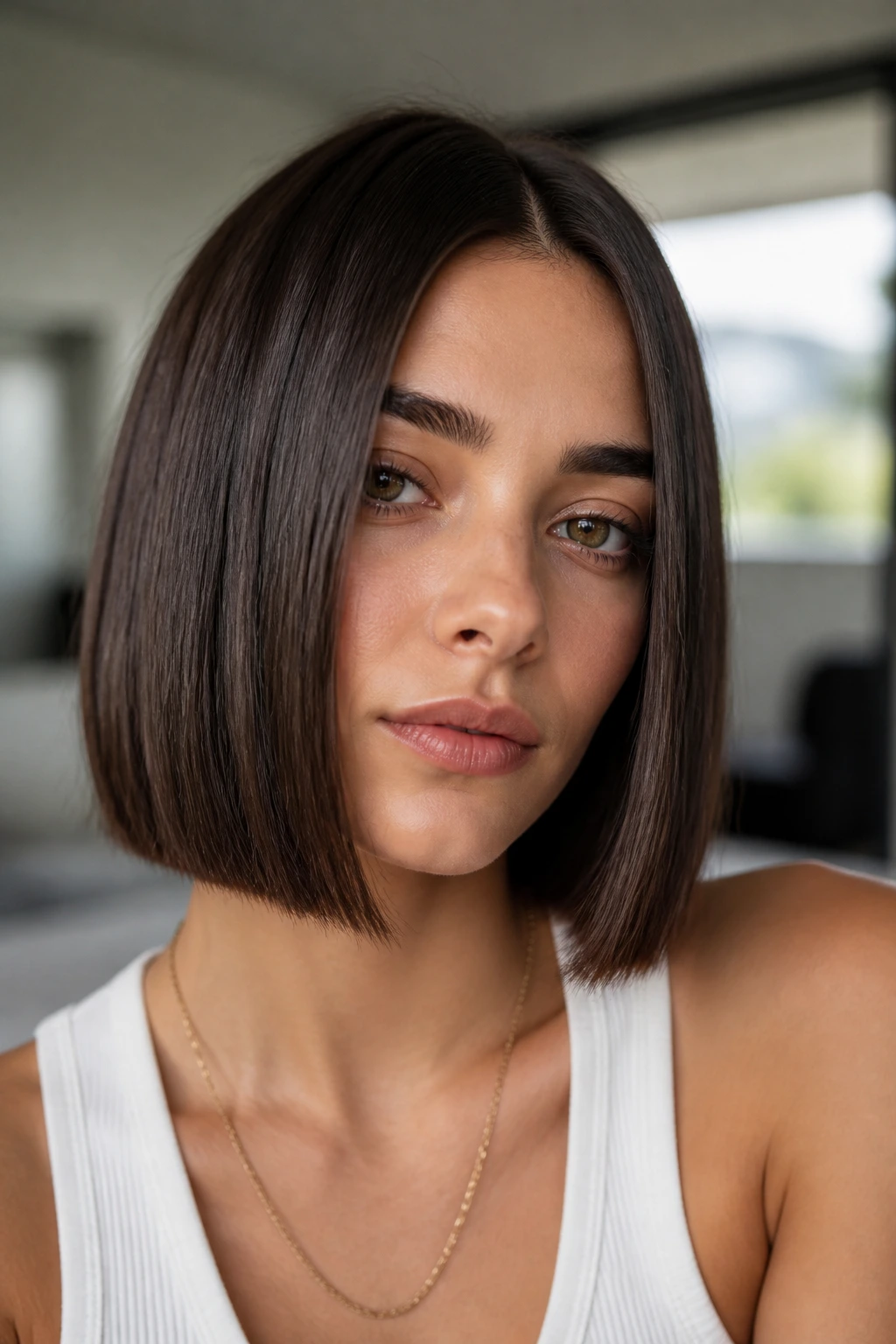
Presentation: Keep the part intentional. A crisp center part works for the blunt, glassy looks; a slight off-center part softens face-framing color and keeps the style from feeling too severe. If the finish is sleek, let the ends stay clean instead of over-styling them into a bend that fights the cut.
Accompaniments: Straight brunette hair reads best with simple necklines and clean earrings. Hoops, studs, or a sharp collar can make the hairline and color placement stand out. Heavy ruffles or busy patterns can steal focus from the exactness of a blunt bob or a polished lob.
Portions: On finer hair, keep color concentrated around the face, crown, and lower third so the hair doesn’t look overprocessed. On thicker hair, spread the dimension farther back through the interior layers; otherwise the color can sit only on the surface and feel flat from the side. Shorter cuts need tighter placement. Longer hair can handle a slower fade.
Beverage Pairing: If you want the whole mood to feel cohesive, think clean drinks — espresso, black coffee, cold brew, an iced tea with lemon. Yes, that sounds a little ridiculous, but the dark glossy mood of these brunette looks really does pair well with the same clean, no-fuss energy.
Additional Tips and Color Boosters
Shine Enhancement: A clear gloss every 4 to 6 weeks keeps straight brunette hair from going dusty, especially if you like ash or taupe tones. If you are styling at home, use a pea-sized amount of serum only on the mids and ends; too much at the root kills the lift.
Customization: Warm the look up with caramel, toffee, or amber pieces if your skin tends to look better next to gold. Cool it down with mushroom, graphite, or ash ribbons if orange tones show up too fast in your hair. The same base can look completely different with one tonal adjustment.
Face-Framing: Want more brightness? Widen the face frame by a shade, not four shades. Want it subtler? Keep the lightest pieces right around the cheekbone and stop there. Straight hair shows the frame line cleanly, so small changes matter.
Make-It-Yours: For fine hair, keep the contrast low and the placement narrow. For thick hair, ask for more interior dimension so the color shows when the hair swings. For shorter cuts, keep the perimeter sharp so the brunette shade has a clean border to live in.
How to Keep Brunette Color Fresh Between Visits
Brunette shades can fade in sneaky ways. They don’t always turn obviously lighter; sometimes they just lose their sheen and start looking tired. Straight hair shows that dulling faster than textured hair does, so maintenance is less about dramatic rescue and more about keeping the surface smooth.
Wash straight brunette hair two or three times a week if you can. More than that, and you’ll usually see the gloss disappear faster, especially on warm caramel or chestnut tones. Use lukewarm water, not hot water. Hot water opens the cuticle and sends tone down the drain faster than people expect. A color-safe shampoo and a moisturizing conditioner are the boring answer, and yes, boring is sometimes the right answer.
If your brunette leans cool — mushroom, taupe, graphite, ash brown — a blue or blue-violet shampoo once every 7 to 10 days can keep warmth from creeping in. Don’t overdo it. Straight hair can take on a flat, slightly dull finish if you use toning products too aggressively. If your color is warm instead, use a glossing mask or a soft pigment-depositing conditioner in the right brown family rather than a blue formula that fights the tone.
Heat styling needs a little restraint. A flat iron set between 320°F and 350°F is enough for most straight hair. If your hair is fine or color-treated, stay closer to the lower end. Repeated high heat makes brunette ends look pale and rough long before the root shade fades. A trim every 8 to 12 weeks keeps the cut clean, and that clean edge matters more on straight hair than almost anywhere else.
Sleep on a satin pillowcase if you can. It keeps the surface smoother and reduces the little bends and frays that make polished brunette hair look older than it is. A dry shampoo at the roots on day two or three can help, but don’t pile it on the mids and ends. The hair will look dusty, and straight brunette hair is too honest for that trick.
Variations and Adaptations to Try
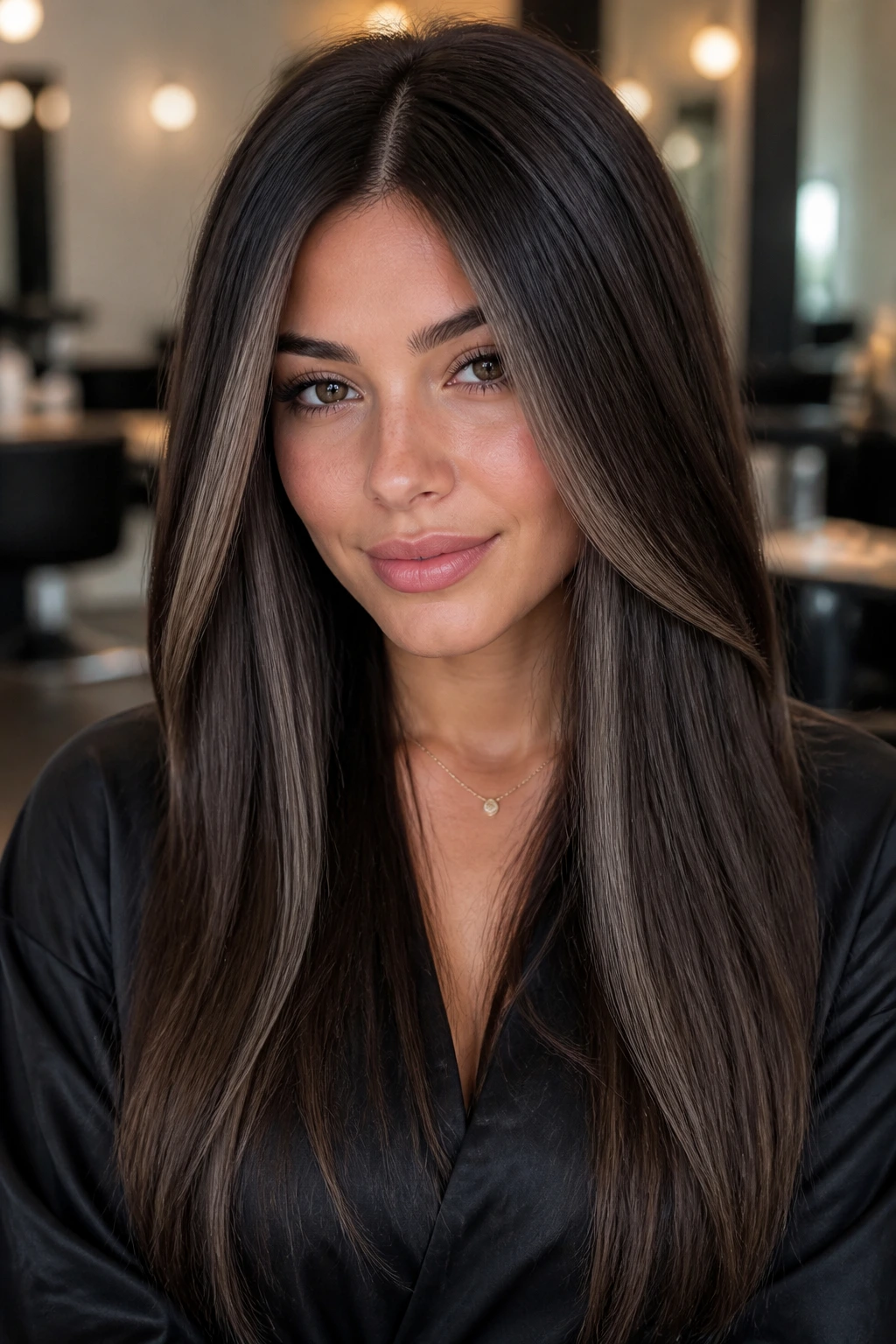
Cool Espresso Edit: Keep the base deep and dark, then add just a whisper of ash or taupe through the face frame. This version works if you like severe, glossy brunette hair but want the color to read a little softer in daylight.
Honeyed Latte Version: Swap the cooler pieces for soft honey and beige-brown ribbons. It’s a better fit when you want warmth around the face and a little lift without committing to full caramel.
Low-Contrast Shadow Root: Leave the roots 1 to 2 levels deeper than the mids and ends, then blur the transition. This version grows out well and keeps straight hair from looking overprocessed if you don’t want constant salon maintenance.
Gray-Blending Brunette: Fine silver-beige babylights over medium brown can help soften early gray without making the whole head lighter. On straight hair, the blend reads clean and polished, not streaky, if the pieces stay narrow.
Short-Length Switch: Any of these looks can be adapted to a bob or lob by narrowing the highlight width and keeping the perimeter blunt. Straight hair on shorter lengths needs sharper edges because there’s less visual movement to hide a fuzzy cut.
Warm Copper Threading: Add tiny cinnamon or amber threads only in the top layer if you want a brunette that leans richer in sun and softer indoors. The trick is to keep the copper thread-like, not blocky.
Common Mistakes to Avoid
-
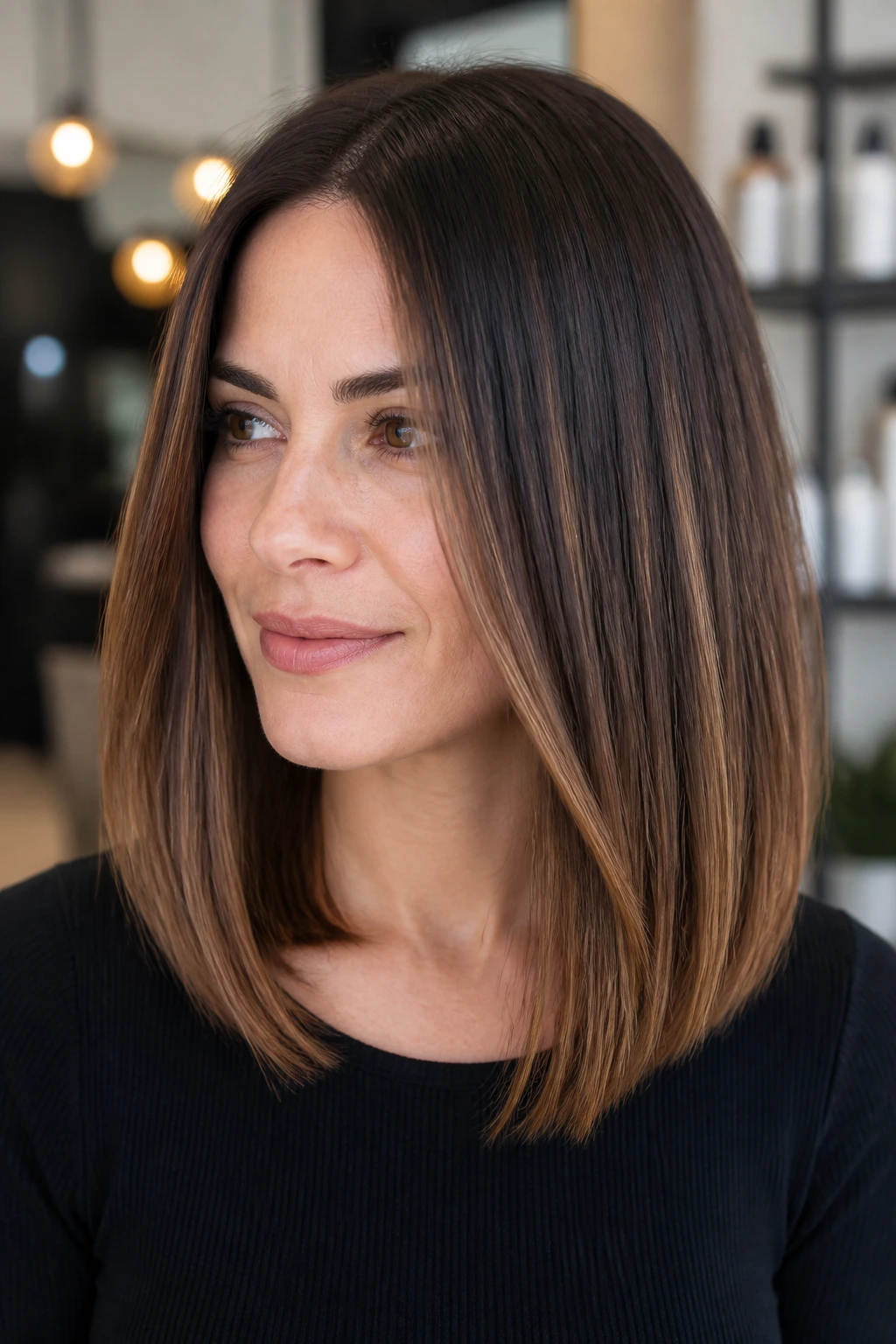
Making highlights too wide. Straight hair exposes wide ribbons fast, and the result can look striped instead of blended. Fix it by asking for babylights, micro-foils, or hand-painted pieces no wider than a pencil.
-
Ignoring undertone. A brunette can turn muddy, orange, or flat if the tone fights your skin or your natural base. Ask for warm, cool, or neutral direction on purpose, and make the colorist explain the gloss plan.
-
Forgetting the cut. A color can be gorgeous and still look unfinished if the ends are ragged or the shape is wrong. Straight hair needs a clean perimeter, even if the interior has soft layers.
-
Using too much heat every day. Flat-ironing over and over leaves the ends pale, rough, and frayed. Keep the iron lower, use heat protectant, and stop chasing every tiny kink.
-
Skipping gloss refreshes. Brunette tones often look dull before they look faded. A gloss or glaze brings the richness back faster than waiting for the whole service to wear out.
-
Overloading on oil. A heavy serum near the crown makes straight brunette hair look limp and greasy. Put the product only where the hair actually needs it: mids and ends.
Frequently Asked Questions
Which brunette shade looks best on straight hair?
The strongest choices are usually espresso, chestnut, walnut, mocha, or mushroom brunette because they show depth cleanly on a smooth surface. If you want brightness, caramel or honey face-framing pieces work especially well because straight hair shows placement so clearly.
Are highlights or balayage better for straight brunette hair?
Balayage usually looks softer on straight hair, while foils can give you more precision and brightness. If you want a natural-looking fade, go with fine balayage ribbons. If you want sharper contrast around the face, foiled pieces usually hold their shape better.
How do I keep brunette color from looking flat?
Ask for a gloss, keep the ends healthy, and avoid one-tone color that is too dark for your base. Straight hair looks better when there is a little tonal shift — even a subtle root shadow or a few lighter ribbons can keep the surface from looking like one block.
Can straight hair pull off balayage without waves?
Yes, but the placement has to be precise. Straight hair shows the transition line more clearly than wavy hair, so the blend needs to be soft and gradual. Fine ribbons, root melt, and controlled face framing work better than broad chunky panels.
What if my hair is fine?
Keep the color contrast lower and the haircut blunt. Fine straight hair can get overwhelmed by wide highlights or too many layers, so a lob with subtle dimension usually looks fuller and cleaner than a heavily textured cut.
How often should brunette highlights be toned?
A tone refresh every 4 to 8 weeks is common, depending on how warm your hair pulls and how often you wash it. Cool brunettes usually need toner sooner because brass shows quickly. Warm brunettes often need gloss more than corrective toning.
Can I go from dark brunette to caramel without bleaching everything?
Sometimes, but not all the way. A softer caramel money piece or a few warm ribbons may be possible with less lifting, but a dramatic caramel change usually needs lightening. Straight hair will reveal the level change clearly, so it’s better to go in stages than force one big jump.
What haircut makes brunette color look richest on straight hair?
Blunt lobs, one-length bobs, and clean long lengths all show brunette tones beautifully because they give the color a clear edge. If you want the color to feel denser, keep the cut precise. If you want more movement, add gentle internal layers rather than choppy surface texture.
The Clean-Line Payoff
Straight hair and brunette color have a special kind of relationship. They don’t hide from each other. That is the whole point. A blunt cut can make a brown shade look denser, a gloss can make the same color look richer, and a few well-placed ribbons can change the mood of the entire head without turning it into a maintenance project.
The best brunette looks for straight hair are the ones that respect the surface. Keep the lines clean, keep the tone intentional, and do not overload the hair with contrast just because you can see every strand. That restraint is what makes the color look polished instead of busy.
Pick one shade family, one cut shape, and one shine goal, then build from there. Straight hair will show you whether you got it right.
